WO2010047163A1 - 免疫学的測定方法および測定用試薬キット - Google Patents
免疫学的測定方法および測定用試薬キット Download PDFInfo
- Publication number
- WO2010047163A1 WO2010047163A1 PCT/JP2009/062865 JP2009062865W WO2010047163A1 WO 2010047163 A1 WO2010047163 A1 WO 2010047163A1 JP 2009062865 W JP2009062865 W JP 2009062865W WO 2010047163 A1 WO2010047163 A1 WO 2010047163A1
- Authority
- WO
- WIPO (PCT)
- Prior art keywords
- substance
- measured
- measurement
- bound
- complex
- Prior art date
- Legal status (The legal status is an assumption and is not a legal conclusion. Google has not performed a legal analysis and makes no representation as to the accuracy of the status listed.)
- Ceased
Links
Images
Classifications
-
- G—PHYSICS
- G01—MEASURING; TESTING
- G01N—INVESTIGATING OR ANALYSING MATERIALS BY DETERMINING THEIR CHEMICAL OR PHYSICAL PROPERTIES
- G01N33/00—Investigating or analysing materials by specific methods not covered by groups G01N1/00 - G01N31/00
- G01N33/48—Biological material, e.g. blood, urine; Haemocytometers
- G01N33/50—Chemical analysis of biological material, e.g. blood, urine; Testing involving biospecific ligand binding methods; Immunological testing
- G01N33/53—Immunoassay; Biospecific binding assay; Materials therefor
- G01N33/543—Immunoassay; Biospecific binding assay; Materials therefor with an insoluble carrier for immobilising immunochemicals
-
- G—PHYSICS
- G01—MEASURING; TESTING
- G01N—INVESTIGATING OR ANALYSING MATERIALS BY DETERMINING THEIR CHEMICAL OR PHYSICAL PROPERTIES
- G01N33/00—Investigating or analysing materials by specific methods not covered by groups G01N1/00 - G01N31/00
- G01N33/48—Biological material, e.g. blood, urine; Haemocytometers
- G01N33/50—Chemical analysis of biological material, e.g. blood, urine; Testing involving biospecific ligand binding methods; Immunological testing
- G01N33/53—Immunoassay; Biospecific binding assay; Materials therefor
- G01N33/543—Immunoassay; Biospecific binding assay; Materials therefor with an insoluble carrier for immobilising immunochemicals
- G01N33/54313—Immunoassay; Biospecific binding assay; Materials therefor with an insoluble carrier for immobilising immunochemicals the carrier being characterised by its particulate form
- G01N33/54326—Magnetic particles
Definitions
- the present invention relates to an immunoassay method using microparticles bound with a substance.
- the present invention relates to a method for immunological measurement of trace components using antigen-antibody reaction and a reagent kit for immunological measurement mainly in the fields of industry, environment, and clinical testing.
- a testing method a measuring method using an immune reaction is widely used to measure a substance in a biological sample.
- an immunological measurement method there are many methods such as a radioimmunoassay (RIA) method, an enzyme immunoassay (EIA) method, an immunoturbidimetric method, a latex agglutination method, a colloidal gold agglutination method, and an immunochromatography method.
- the latex agglutination method and the colloidal gold agglomeration method are suitable for automation of measurement and measurement in a short time because measurement can be performed in a homogeneous system that does not require separation or washing operation of the reaction solution.
- the colloidal gold particles have a size of 5 nm to 100 nm, which is smaller than the latex particles, and thus can be used for the measurement of trace substances (Patent Documents 1 and 2).
- the main reaction components in these measurement methods are fine particles such as latex particles and colloidal gold particles combined with a substance that specifically reacts (for example, binds) to the substance to be measured. If the substance that specifically reacts to the analyte to be bound on the microparticles has multiple sites that specifically react to the analyte, it is specific to the analyte to be bound to the microparticles. By reacting the reacting substance with the substance to be measured, microparticles are aggregated, and the concentration of the substance to be measured is calculated from the degree of aggregation.
- the competition method that measures the degree of aggregation depending on the concentration of the substance to be measured is caused by coagulation of fine particles by coexisting in the measurement system with a competitor having a plurality of sites that react with the substance to be measured. Measure the substance to be measured.
- Non-Patent Document 1 a method of measuring a substance to be measured by inhibiting the aggregation reaction by allowing the substance to be measured to coexist and measuring the degree of inhibition has been shown (Non-Patent Document 1).
- an antibody is used alone as a substance that specifically binds to a substance to be measured, agglutination caused by the binding of the substance to be measured, or latex particles or colloidal gold particles to which a plurality of haptens are bound, and the antibody. Is insufficient and practical measurement sensitivity may not be obtained.
- An object of the present invention is to provide a measurement method using a conventional reaction system using microparticles, that is, specifically to latex particles or colloidal gold particles in which a plurality of substances to be measured or analogs of the substances to be measured are combined and the substances to be measured.
- the measurement sensitivity is measured by inhibiting the aggregation reaction by allowing the substance to be measured to coexist in the reaction system that causes aggregation by reacting with the substance to be bound. It is to provide a measurement method and a measurement kit that enable measurement of a substance to be measured in a wider concentration range.
- the present invention does not use a substance that specifically binds to the substance to be measured in the above-described measurement method, but uses a complex in which a plurality of substances that specifically bind are bound. It was completed by finding that the agglutination reaction with the microparticles to which a plurality of analytes or analogues of the analyte were bound was dramatically accelerated and the measurement sensitivity of the analyte was significantly increased. That is, the present invention allows the agglutination reaction by coexisting such a complex, a microparticle having a plurality of analytes or analogs of the analyte, and the analyte in the specimen in the reaction solution. When generated, this is a measurement method based on a phenomenon in which the aggregation reaction is inhibited depending on the concentration of the substance to be measured derived from the specimen.
- the present invention provides a method for measuring a substance to be measured in a specimen, the method comprising: (A) binding a specimen containing the substance to be measured, a complex having a plurality of substances that specifically bind to the substance to be measured, and the substance to be measured or an analog of the substance to be measured on an insoluble carrier; (B) measuring the aggregation reaction of the microparticles in the mixed solution obtained in the step (a); including.
- the present invention also provides a reagent kit for measurement, the kit comprising: A first reagent comprising a complex having a plurality of substances that specifically bind to the substance to be measured; and a second reagent comprising fine particles having the substance to be measured or an analog of the substance to be measured bound on an insoluble carrier ; including.
- the complex is a substance in which a plurality of antibodies against the substance to be measured are bound.
- the substance to be measured is a hapten
- the analog of the substance to be measured is a hapten-binding protein
- the analog of the substance to be measured is a substance that can be recognized and bound by a substance that specifically binds to the substance to be measured, and (i) a substance having a site of the substance to be measured (Ii) a structural analog of the substance having the site, or (iii) a substance having the site or a substance in which a plurality of the structural analogs are bonded.
- the insoluble carrier is latex or gold colloid.
- a substance that specifically binds to a substance to be measured is not used alone, but a complex in which a plurality of substances are bound is used.
- Aggregation reaction with a plurality of fine particles (latex particles, colloidal gold particles, etc.) combined is dramatically accelerated, and the measurement sensitivity of the substance to be measured is significantly increased. Therefore, it becomes possible to measure in a low concentration range that could not be measured by the prior art, and the substance to be measured can be measured in a wider concentration range.
- an aggregation accelerator for example, polyethylene glycol, chondroitin sulfate
- aggregation proceeds sufficiently even without adding an aggregation accelerator, so that handling and reproducibility are good.
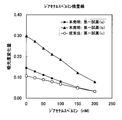
- diacetyl spermine measurement 1 it is a graph which shows the relationship between a diacetyl spermine density
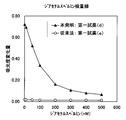
- diacetyl spermine measurement 2 it is a graph which shows the relationship between a diacetyl spermine density
- the sample containing the substance to be measured to be measured includes biological samples such as blood, plasma, serum, urine, feces (suspension), spinal fluid, ascites; samples obtained from the environment or extraction thereof Such as things.
- the substance to be measured is not particularly limited as long as a substance that specifically binds to the substance to be measured can be present or such a substance can be produced.
- substances to be measured include albumin, hemoglobin, hemoglobin A1c, myoglobin, transferrin, lactoferrin, cystatin C, ferritin, ⁇ -fetoprotein, carcinoembryonic antigen, CA19-9, prostate specific antigen, C-reactive protein (CRP) , Fibrinolytic products (FDP), pepsinogen I and II, proteins such as collagen; lipid proteins such as high density lipoprotein, low density lipoprotein, and ultra low density lipoprotein; nucleic acids such as deoxyribonucleic acid and ribonucleic acid; alkaline phosphatase , Enzymes such as lactate dehydrogenase, lipase, amylase; immunoglobulins such as IgG, IgM, IgA, IgD,
- Examples of the substance that specifically binds to the substance to be measured include an antibody or an antigen that can be used in an immunological assay utilizing an immune reaction. Examples thereof include substances having binding affinity such as antibodies or antigens, receptors, lectins, deoxyribonucleic acid (DNA), and ribonucleic acid (RNA).
- a polyclonal antibody or a monoclonal antibody is preferable because it can specifically recognize the substance to be measured and can easily recognize the substance to be measured or its analog bound to the insoluble carrier described in detail below.
- the complex of specific binding substances may be any substance that has a plurality of single bodies of specific binding substances.
- Examples of the complex include those in which simple substances are chemically bonded with a linker or the like; those in which a plurality of specific binding substances are bonded through a carrier capable of specifically binding; and a specific binding substance And a tag such as biotin by chemical modification, and a complex is formed through a substance that specifically binds to the tag.
- the term “plurality” means that there are more than one, and depending on the binding mode of the complex, the number of specific binding substances is 2, 3, 4, 5, 6, or More than that.
- the binding between the single substance of the specific binding substance is performed by directly connecting the substance to be measured or a part thereof to the carrier by using a functional group such as amino group, carboxyl group or thiol group present in the substance to be measured or a part thereof.
- a functional group such as amino group, carboxyl group or thiol group present in the substance to be measured or a part thereof.
- chemical bonds are made through a binding agent, and various substances are known depending on the substance to be measured or a part of the structure thereof (Biochemical Experimental Method 11, Enzyme Immunoassay, P. Tijssen, edited by Eiji Ishikawa) 252, 1989, Tokyo Chemical Doujin).
- the reagent for forming a chemical bond include acylating agents and alkylating agents. Preferred are N-hydroxysuccinimide esters obtained by activating carboxyl groups, maleimides used under weak alkaline conditions, and the like.
- a complex may be formed by biotinylating a specific binding substance and binding to a substance that specifically binds to biotin (for example, avidin, streptavidin, neutravidin).
- Examples of a carrier that can specifically bind a plurality of specific binding substances include, for example, an antibody that specifically binds to a specific binding substance; a substance in which a plurality of antibodies that are chemically bound by an anchor or the like are bound. A substance obtained by biotinylating the antibody and specifically binding to avidin, streptavidin, neutravidin or the like.
- the analog of the substance to be measured may be any substance that specifically binds to the specific binding substance.
- the analog of the substance to be measured is a substance that can be recognized and bound by a substance that specifically binds to the substance to be measured, and (i) a substance having a part of the substance to be measured, (ii) Or (iii) a substance having the site or a substance in which a plurality of the structural analogues are bonded.
- the analog of the substance to be measured is, for example, a hapten-binding protein.
- a plurality of substances to be measured or their analogs may be bound to a carrier different from the insoluble carrier described in detail below.
- a carrier is appropriately selected from various animal-derived albumins, hemocyanins, thyroglobulins, fibrinogen, enzymes and the like.
- bovine serum albumin BSA
- the binding between the substance to be measured or an analog thereof and these carriers can be produced by a method commonly used by those skilled in the art. This method is the same as the binding of the above-mentioned specific binding substances.
- the analog of the analyte can be bound to an insoluble carrier.
- the insoluble carrier for binding the substance to be measured or an analog thereof may be a fine particle that can be used as an immunoassay reagent.
- Latex and metal colloids are preferred.
- a gold colloid is preferable because it is generally easily used.
- the colloidal gold particles commercially available particles may be used, or those prepared by a method commonly used by those skilled in the art (for example, a method of reducing chloroauric acid with sodium citrate) may be used.
- the particle size of the colloidal gold particles is usually in the range of 10 nm to 100 nm, preferably 30 nm to 60 nm.
- the microparticles bound to the specific binding substance used in the method of the present invention are prepared as follows.
- bound microparticles in this case, bound gold colloidal particles
- the obtained bound microparticles are dispersed in a buffer solution so as to have a concentration necessary for measurement.
- the pH of the buffer is preferably 5 to 9, and the concentration is preferably 1 to 100 mM.
- the buffer include phosphate buffer, Tris-HCl buffer, succinate buffer, glycylglycine, MES (2- (N-morpholino) ethanesulfonic acid), HEPES (2- [4- (2 -Hydroxyethyl) -1-piperazinyl] ethanesulfonic acid), TES (N-tris (hydroxymethyl) methyl-2-aminoethanesulfonic acid), MOPS (3- (N-morpholino) propanesulfonic acid), PIPES (piperazine Good buffer solutions such as -1,4-bis (2-ethanesulfonic acid)) and Bis-Tris (bis (2-hydroxyethyl) iminotris (hydroxymethyl) methane) are preferably used.
- the buffer may contain additives such as sugars, sugar alcohols, sodium azide, albumin, sodium chloride and other preservatives as necessary.
- sugar and sugar alcohol include glucose, mannose, saccharose, lactose, maltose, mannitol, sorbitol and the like, and the concentration is preferably 0.01 to 10 w / v%.
- albumin bovine serum albumin (BSA) is preferable, and its concentration is preferably 0.001 to 1 w / v%.
- BSA bovine serum albumin
- sodium azide is preferable, and its concentration is preferably 0.01 to 0.5 w / v%.
- other additives include Tween 20, polyethylene glycol lauryl ether, 5-bromosalicylic acid, sodium salicylate, sodium benzoate, sodium benzenesulfonate, phenol and thymol.
- a method for measuring a substance to be measured in a specimen of the present invention includes: (A) a specimen containing the substance to be measured, a complex having a plurality of substances that specifically bind to the substance to be measured (that is, a specific binding substance), and the substance to be measured or a similarity of the substance to be measured Mixing microparticles (hereinafter also referred to as “bound microparticles”) having a body bound on an insoluble carrier; and (b) in the mixture obtained in step (a), Measuring the agglomeration reaction of microparticles; including.
- the reaction solution containing the complex and the bound microparticles when the substance to be measured coexists in the reaction solution containing the complex and the bound microparticles, the reaction between the specific binding substance of the complex and the substance to be measured or its analog on the bound microparticles. Since the aggregation reaction due to (for example, binding) is inhibited depending on the concentration of the substance to be measured contained in the specimen, the degree of inhibition is mechanically measured.
- the reaction conditions such as reaction temperature, pH, type of buffer, type and concentration of coexisting salts, and other coexisting substances are the same as those in the conventional method. It is the same as an immunological reaction and can be appropriately determined by those skilled in the art.
- a water-soluble polymer such as polyethylene glycol, polyvinyl alcohol, dextran, sodium chondroitin sulfate may be added to the reaction system for the purpose of promoting the reaction.
- the method of the present invention is performed, for example, as follows: As a first reaction, a sample containing a substance to be measured or a sample obtained by appropriately diluting the sample with a buffer or the like, and a plurality of specific binding substances. Mix with bound complex. Next, as a second reaction, the bound microparticles are added to the mixed solution and mixed. The specific binding substance of the complex that did not bind to the analyte or its analogue in the first reaction binds to the analyte or its analogue on the bound microparticle in this second reaction, Aggregation reaction of the bound microparticles occurs through the complex.
- this agglutination reaction depends on the amount of the complex bound to the bound microparticles, it depends on the amount of the complex that has not bound to the substance to be measured in the first reaction. That is, the aggregation reaction of the second reaction decreases depending on the amount of the substance to be measured in the specimen of the first reaction.
- a specimen containing a substance to be measured or a specimen obtained by appropriately diluting the specimen with a buffer solution and the bound microparticles are mixed, and then a plurality of specific binding substances are mixed into the mixture.
- the combined complex may be added and mixed. Since the aggregation reaction caused by the addition of the complex is competitively inhibited by the analyte derived from the sample coexisting in the reaction solution, the change in the concentration of the analyte can be measured by measuring the absorbance change caused by the aggregation reaction. Measurement is possible.
- the change in absorbance at a predetermined wavelength caused by this aggregation reaction is measured.
- a calibration curve representing the relationship between the change in absorbance of the colloidal gold agglutination reaction and the amount of the substance to be measured the amount of the substance to be measured in the sample can be easily obtained.
- the change in absorbance after the start of the reaction may be one-wavelength measurement or two-wavelength measurement.
- the measurement wavelengths are a first wavelength of 610 nm to 800 nm, preferably 630 nm to 750 nm, and a second wavelength of 360 nm to 580 nm, preferably 500 nm to 550 nm.
- the measurement can be performed at a wavelength in one of the first wavelength and the second wavelength in the case of the two-wavelength measurement.
- the absorbance change is a value obtained by the following two measurements, which may be any: (1) The absorbance of the reaction solution is measured twice at an appropriate interval after the start of the reaction, and the difference is taken as the change in absorbance; or (2) The absorbance of the reaction solution is continuously measured after the start of the reaction, and the absorbance per hour.
- the rate of change (the maximum rate of change may be used) is defined as the change in absorbance.
- Spectrophotometer, microplate reader, biochemical automatic analyzer, etc. can be used for the above measurement.
- the method of the present invention to measurement with a biochemical automatic analyzer, it is possible to measure a large number of specimens in a short time.
- a reagent kit for measurement for use in the method of the present invention.
- the kit includes a first reagent including a complex having a plurality of substances that can specifically bind to a substance to be measured; and microparticles in which the substance to be measured or an analog of the substance to be measured is bound on an insoluble carrier.
- the above reagents may be provided in any form, and are preferably provided individually sealed and packaged.
- the kit may include a standard product of a substance to be measured for preparing a calibration curve, a buffer solution for dissolving each substance at the time of use to prepare a solution having an appropriate concentration, an instruction manual, and the like.
- Example 1 Preparation of colloidal gold solution
- 2 mL of 10 w / v% chloroauric acid solution was added with stirring, and after 1 minute, 10 mL of 2 w / v% sodium citrate solution was added, stirred for another 20 minutes, and then cooled to 30 ° C. After cooling, the pH was adjusted to 7.1 with 0.1 w / v% potassium carbonate.
- Example 2 Preparation of colloidal gold reagent for diacetylspermine binding
- Diacetylspermine-binding BSA Transgenic
- 10 mM HEPES pH 7.1
- HEPES pH 7.1
- this solution was added to about 1 L of the gold colloid solution prepared in Example 1 and stirred at room temperature for 2 hours.
- Example 3 Preparation of anti-diacetylspermine antibody-anti-mouse IgG antibody complex
- Anti-diacetylspermine antibody Transgenic
- anti-mouse IgG antibody Production of Antibodies, Reagents for Immunology and Services
- Anti-mouse IgG antibody was biotinylated using Biotin Labeling Kit-SH (Dojindo Molecular Technologies, Inc.). Biotinylated IgG antibody and avidin were mixed at a molar concentration ratio of 4: 1 to prepare anti-mouse IgG antibody-bound avidin.
- Example 5 Preparation of anti-diacetylspermine antibody-anti-mouse IgG antibody-conjugated avidin complex
- the anti-mouse IgG antibody-conjugated avidin prepared in Example 3 and anti-diacetylspermine antibody were mixed at a molar concentration ratio of 1: 4 to prepare an anti-diacetylspermine antibody-anti-mouse IgG antibody-conjugated avidin complex.
- Example 6 Preparation of first reagent for diacetylspermine measurement 1
- the first reagent (a) for diacetylspermine measurement 1 was prepared.
- the anti-diacetylspermine antibody-anti-mouse IgG antibody-conjugated avidin complex prepared in Example 5 above was added to solution B at 2.47 ⁇ 10 ⁇ 12 mol / mL (the content of the anti-diacetylspermine antibody contained 1.48 ⁇ g / mL).
- 1st reagent (b) for diacetyl spermine measurement 1 was prepared.
- Example 7 Diacetylspermine measurement 1
- the first reagent (a), (b), and (c) for diacetylspermine measurement 1 prepared in Example 6 above was used as the first reagent
- the above Example 2 was used as the second reagent.
- the diacetylspermine-conjugated gold colloid reagent prepared in (1) was used.
- Diacetylspermine is dissolved in Bis-Tris (pH 7.4) containing 3.0 w / v% BSA and 1.0 w / v% sodium chloride to be 0, 25, 50, 75, 100, 150 and 200 nM, respectively. Then, a diacetylspermine-containing sample was prepared.
- FIG. 1 and Table 1 show the relationship between the diacetylspermine concentration and the amount of change in absorbance.
- the amount of change in absorbance due to the aggregation reaction changed depending on the concentration of diacetylspermine, which is the substance to be measured. That is, the higher the concentration of diacetylspermine, the smaller the amount of change in absorbance.
- the amount of change in absorbance is higher than the first reagent (c) containing the conventional antibody alone, the first reagent (a) containing the antibody in the form of a complex.
- Anti-diacetylspermine antibody was biotinylated using Biotin Labeling Kit-SH. Biotinylated anti-diacetylspermine antibody and avidin were mixed at a molar concentration ratio of 4: 1 to prepare anti-mouse IgG antibody-conjugated avidin.
- Example 9 Preparation of first reagent for diacetylspermine measurement 2
- 0.2 M Bis-Tris pH 6.5
- the first reagent (d) for diacetylspermine measurement 2 was prepared.
- an anti-diacetylspermine antibody was added to the solution C so as to have the same concentration (0.888 ⁇ g / mL reagent) as the first reagent (d), and the first reagent (e) for diacetylspermine measurement 2 was added.
- Example 10 Diacetylspermine measurement 2
- two kinds of first reagents (d) and (e) for diacetylspermine measurement 2 prepared in Example 9 as the first reagent were used, and diacetylspermine prepared in Example 2 was used as the second reagent.
- a bound colloidal gold reagent was used.
- Diacetylspermine is dissolved in Bis-Tris (pH 7.4) containing 3.0 w / v% BSA and 1.0 w / v% sodium chloride to be 0, 50, 100, 200, 300, 400 and 500 nM, respectively. Then, a diacetylspermine-containing sample was prepared.
- the antibody in the form of a complex by using the antibody in the form of a complex, the aggregation reaction is promoted, and in the presence of the substance to be measured, the aggregation reaction is inhibited depending on its concentration. From this, it was found that by using a complex in which a plurality of antibodies are bound, it is possible to measure with high sensitivity even in a low concentration range, and therefore it is possible to measure a wider concentration range.
- a substance that specifically binds to the substance to be measured (for example, an antibody) is not used alone, but is used as a complex having a plurality of substances that specifically bind to the substance to be measured.
- the agglutination reaction with latex particles or gold colloid particles to which a plurality of substances to be measured or their analogs are bound can be dramatically accelerated, and the measurement sensitivity of the substances to be measured is significantly increased. Therefore, according to the method of the present invention, it is possible to perform measurement in a low concentration region that could not be measured by the prior art.
- the method of the present invention does not require an aggregation accelerator, it is excellent in handling and reproducibility. Further, since B / F separation is not required, it is very suitable for automation. For example, an automatic analyzer widely used in the clinical examination field can be used. Therefore, it is suitable for an immunological measurement method for trace components using antigen-antibody reaction in the fields of industry, environment, and clinical examination.
Landscapes
- Health & Medical Sciences (AREA)
- Immunology (AREA)
- Life Sciences & Earth Sciences (AREA)
- Engineering & Computer Science (AREA)
- Molecular Biology (AREA)
- Biomedical Technology (AREA)
- Chemical & Material Sciences (AREA)
- Hematology (AREA)
- Urology & Nephrology (AREA)
- Biotechnology (AREA)
- Microbiology (AREA)
- Cell Biology (AREA)
- Food Science & Technology (AREA)
- Medicinal Chemistry (AREA)
- Physics & Mathematics (AREA)
- Analytical Chemistry (AREA)
- Biochemistry (AREA)
- General Health & Medical Sciences (AREA)
- General Physics & Mathematics (AREA)
- Pathology (AREA)
- Investigating Or Analysing Biological Materials (AREA)
- Investigating Or Analysing Materials By The Use Of Chemical Reactions (AREA)
Abstract
本発明の検体中の被測定物質を測定する方法は、(a)該被測定物質を含む検体と、該被測定物質に特異的に結合する物質を複数個有する複合体と、該被測定物質または該被測定物質の類似体を不溶性担体上に結合させた微小粒子とを混合する、工程;および(b)該工程(a)で得られた該混合液において、該微小粒子の凝集反応を測定する工程;を含む。本発明の方法によれば、例えば、抗体を単体で使用するのではなく、複数個の抗体の複合体として使用することにより、測定感度が上昇するため、低濃度域での測定が可能である。
Description
本発明は、物質を結合した微小粒子を用いる免疫学的測定法に関する。特に、主として工業、環境、および臨床検査の分野における、抗原抗体反応を利用した微量成分の免疫学的測定方法ならびに免疫学的測定用試薬キットに関する。
近年、臨床検査などの各種検査では自動化および測定時間の短縮が図られている。その検査の方法として、生体試料中の物質を測定するために免疫反応を利用する測定方法が広く用いられている。免疫学的測定方法としては、ラジオイムノアッセイ(RIA)法、エンザイムイムノアッセイ(EIA)法、免疫比濁法、ラテックス凝集法、金コロイド凝集法、イムノクロマト法などの多くの方法がある。その中でも、ラテックス凝集法や金コロイド凝集法は、反応液の分離や洗浄操作を必要としないホモジニアス系での測定が可能なため、測定の自動化や短時間での測定に適している。特に、金コロイド粒子は5nm~100nmの大きさであり、これはラテックス粒子より小さいため、より微量物質の測定に利用可能である(特許文献1および2)。
これらの測定法における主反応成分は、被測定物質に特異的に反応(例えば、結合)する物質を結合したラテックス粒子や金コロイド粒子などの微小粒子である。微小粒子上に結合されている被測定物質に特異的に反応する物質が、被測定物質に特異的に反応する部位を複数個有する場合は、微小粒子上に結合されている被測定物質に特異的に反応する物質と被測定物質とを反応させることにより微小粒子の凝集を生じさせ、その凝集の程度から被測定物質の濃度を算出する。
しかし、微小粒子上に結合されている被測定物質に特異的に反応する物質が、被測定物質に特異的に反応する部位を一箇所しか有さない場合は、この物質が被測定物質と反応しても、その一箇所でしか反応(例えば、結合)しないため、微小粒子の凝集が生じない。そのため、被測定物質に反応する部位を複数個有する競合体を測定系に共存させることによって微粒子の凝集を生じさせて、被測定物質の濃度に依存した凝集の程度を測定するという、競合法により被測定物質を測定する。
あるいは、被測定物質または被測定物質の類似体を複数個結合させたラテックス粒子や金コロイド粒子などの微小粒子と被測定物質に特異的に結合する物質とを反応させることにより凝集を生じさせる反応系において、被測定物質を共存させることにより、その凝集反応を阻害させ、その阻害の程度を測定することによって被測定物質を測定する方法が示されている(非特許文献1)。この方法では、被測定物質に特異的に結合する物質として抗体を単体で使用した場合に、被測定物質と、あるいはハプテンを複数個結合したラテックス粒子や金コロイド粒子と抗体との結合により生じる凝集が不十分であり、実用的な測定感度が得られないことがあった。
山田満廣、医療と検査機器・試薬,19巻,4号,523-528頁,1996年
本発明の目的は、微小粒子を用いる従来の反応系による測定方法、すなわち、被測定物質または被測定物質の類似体を複数個結合させたラテックス粒子や金コロイド粒子と被測定物質に特異的に結合する物質とを反応させることで凝集を生じさせる反応系に被測定物質を共存させることによって、その凝集反応を阻害させ、その阻害の程度を測定する被測定物質の測定方法において、その測定感度を上昇させ、そしてより広い濃度域での被測定物質の測定を可能にする測定方法および測定用キットを提供することである。
本発明は、上記の測定方法において、被測定物質に特異的に結合する物質を単体で使用するのではなく、該特異的に結合する物質を複数個結合した複合体を使用することによって、被測定物質または被測定物質の類似体を複数個結合した微小粒子との凝集反応が劇的に促進され、被測定物質の測定感度が著しく上昇することを見出したことにより、完成した。すなわち、本発明は、このような複合体と、被測定物質または被測定物質の類似体を複数個結合した微小粒子と、検体中の被測定物質とを反応液中で共存させて凝集反応を生じさせると、検体由来の被測定物質の濃度依存的に凝集反応が阻害される現象に基づく測定方法である。
本発明は、検体中の被測定物質を測定する方法を提供し、該方法は、
(a)該被測定物質を含む検体と、該被測定物質に特異的に結合する物質を複数個有する複合体と、該被測定物質または該被測定物質の類似体を不溶性担体上に結合させた微小粒子とを混合する、工程;および
(b)該工程(a)で得られた該混合液において、該微小粒子の凝集反応を測定する工程;
を含む。
(a)該被測定物質を含む検体と、該被測定物質に特異的に結合する物質を複数個有する複合体と、該被測定物質または該被測定物質の類似体を不溶性担体上に結合させた微小粒子とを混合する、工程;および
(b)該工程(a)で得られた該混合液において、該微小粒子の凝集反応を測定する工程;
を含む。
本発明はまた、測定用試薬キットを提供し、該キットは、
被測定物質に特異的結合する物質を複数個有する複合体を含む、第一試薬;および
被測定物質または該被測定物質の類似体を不溶性担体上に結合させた微小粒子を含む、第二試薬;
を含む。
被測定物質に特異的結合する物質を複数個有する複合体を含む、第一試薬;および
被測定物質または該被測定物質の類似体を不溶性担体上に結合させた微小粒子を含む、第二試薬;
を含む。
1つの実施態様では、上記複合体は、上記被測定物質に対する抗体を複数個結合させた物質である。
ある実施態様では、上記被測定物質はハプテンであり、そして上記被測定物質の類似体はハプテン結合蛋白質である。
他の実施態様では、上記被測定物質の類似体は、上記被測定物質に特異的に結合する物質が認識しそして結合し得る物質であって、(i)該被測定物質の部位を有する物質、(ii)該部位を有する物質の構造類似体、または(iii)該部位を有する物質または該構造類似体が複数個結合した物質である。
さらなる実施態様では、上記不溶性担体は、ラテックスまたは金コロイドである。
本発明によれば、被測定物質に特異的に結合する物質を単体で使用するのではなく、この物質を複数個結合した複合体を使用するため、被測定物質または被測定物質の類似体を複数個結合させた微小粒子(ラテックス粒子、金コロイド粒子など)との凝集反応が劇的に促進され、被測定物質の測定感度が著しく上昇する。したがって、従来技術では測定できなかった低濃度域での測定が可能になり、被測定物質をより広い濃度域で測定できる。
さらに、従来の方法では、凝集反応が進まない場合に凝集促進剤(例えば、ポリエチレングリコール、コンドロイチン硫酸)を反応液に添加するため、反応液の粘度が増して、取り扱いにくいという問題や再現性に影響するという問題がある。これに対して、本発明の方法では、凝集促進剤を添加しなくても十分に凝集が進行するため、取り扱いや再現性が良好である。
(検体)
本発明において、測定に供する被測定物質を含む検体としては、血液、血漿、血清、尿、糞便(懸濁液)、髄液、腹水などの生体試料;環境中より得られたサンプルまたはその抽出物などが挙げられる。
本発明において、測定に供する被測定物質を含む検体としては、血液、血漿、血清、尿、糞便(懸濁液)、髄液、腹水などの生体試料;環境中より得られたサンプルまたはその抽出物などが挙げられる。
(被測定物質)
被測定物質は、該被測定物質に特異的に結合する物質が存在し得、またはこのような物質を製造し得るものであれば、特に限定されない。被測定物質としては、例えば、アルブミン、ヘモグロビン、ヘモグロビンA1c、ミオグロビン、トランスフェリン、ラクトフェリン、シスタチンC、フェリチン、α-フェトプロテイン、癌胎児性抗原、CA19-9、前立腺特異抗原、C反応性蛋白質(CRP)、繊維素分解産物(FDP)、ペプシノーゲンIおよびII、コラーゲンなどの蛋白質;高比重リポ蛋白質、低比重リポ蛋白質、超低比重リポ蛋白質などの脂質蛋白質;デオキシリボ核酸、リボ核酸などの核酸;アルカリ性ホスファターゼ、乳酸脱水素酵素、リパーゼ、アミラーゼなどの酵素;IgG、IgM、IgA、IgD、IgEなどの免疫グロブリン;B型肝炎ウイルス、C型肝炎ウイルス、ヒト免疫不全ウイルス、ヘリコバクターピロリ、これらに対する抗体などの、感染症に関する抗原や抗体;スペルミン、スペルミジン、プトレッシン、ジアセチルスペルミンなどのポリアミン、および生理活性物質;ハロペリドール、ブロムペリドールなどの薬物;性ホルモンなどのホルモンなどが挙げられる。
被測定物質は、該被測定物質に特異的に結合する物質が存在し得、またはこのような物質を製造し得るものであれば、特に限定されない。被測定物質としては、例えば、アルブミン、ヘモグロビン、ヘモグロビンA1c、ミオグロビン、トランスフェリン、ラクトフェリン、シスタチンC、フェリチン、α-フェトプロテイン、癌胎児性抗原、CA19-9、前立腺特異抗原、C反応性蛋白質(CRP)、繊維素分解産物(FDP)、ペプシノーゲンIおよびII、コラーゲンなどの蛋白質;高比重リポ蛋白質、低比重リポ蛋白質、超低比重リポ蛋白質などの脂質蛋白質;デオキシリボ核酸、リボ核酸などの核酸;アルカリ性ホスファターゼ、乳酸脱水素酵素、リパーゼ、アミラーゼなどの酵素;IgG、IgM、IgA、IgD、IgEなどの免疫グロブリン;B型肝炎ウイルス、C型肝炎ウイルス、ヒト免疫不全ウイルス、ヘリコバクターピロリ、これらに対する抗体などの、感染症に関する抗原や抗体;スペルミン、スペルミジン、プトレッシン、ジアセチルスペルミンなどのポリアミン、および生理活性物質;ハロペリドール、ブロムペリドールなどの薬物;性ホルモンなどのホルモンなどが挙げられる。
(被測定物質に特異的に結合する物質の複合体)
被測定物質に特異的に結合する物質(以下、「特異的結合物質」という場合がある)としては、免疫反応を利用する免疫学的測定法に使用され得る抗体または抗原が挙げられる。例えば、抗体または抗原、レセプター、レクチン、デオキシリボ核酸(DNA)、リボ核酸(RNA)などの結合親和性を有する物質が挙げられる。被測定物質を特異的に認識できかつ以下で詳述する不溶性担体に結合させた被測定物質またはその類似体を認識しやすい点で、ポリクローナル抗体またはモノクローナル抗体が好ましい。
被測定物質に特異的に結合する物質(以下、「特異的結合物質」という場合がある)としては、免疫反応を利用する免疫学的測定法に使用され得る抗体または抗原が挙げられる。例えば、抗体または抗原、レセプター、レクチン、デオキシリボ核酸(DNA)、リボ核酸(RNA)などの結合親和性を有する物質が挙げられる。被測定物質を特異的に認識できかつ以下で詳述する不溶性担体に結合させた被測定物質またはその類似体を認識しやすい点で、ポリクローナル抗体またはモノクローナル抗体が好ましい。
特異的結合物質の複合体(以下、単に「複合体」という場合がある)は、特異的結合物質の単体を複数個有するものであればよい。複合体としては、例えば、単体同士をリンカーなどにより化学的結合させたもの;特異的結合物質を特異的に複数個結合し得るキャリアを介して結合させたもの;および、特異的結合物質に対して化学修飾によりビオチンなどのタグを付け、このタグに特異的に結合する物質を介して複合体を形成させたものが挙げられる。ここで、複数個とは、1個よりも多いことを表し、複合体の結合様式に応じて、特異的結合物質の単体が、2個、3個、4個、5個、6個、あるいはそれより多く存在することをいう。
特異的結合物質の単体同士の結合は、被測定物質またはその一部に存在するアミノ基、カルボキシル基またはチオール基などの官能基を利用して、被測定物質またはその一部と担体とを直接または結合剤を介して化学結合させるものであり、被測定物質またはその一部の構造に応じて種々のものが知られている(生化学実験法11 エンザイムイムノアッセイ、P. Tijssen著、石川栄治編、252頁、1989年、東京化学同人)。化学結合を形成させるための試薬としては、アシル化剤、アルキル化剤などが挙げられる。好ましくは、カルボキシル基を活性化することにより得られるN-ヒドロキシスクシンイミドエステル、弱アルカリ条件下で用いられるマレイミド類などである。
特異的結合物質をビオチン化し、ビオチンに特異的に結合する物質(例えば、アビジン、ストレプトアビジン、ニュートラビジン)に結合させることによって複合体を形成してもよい。
特異的結合物質を特異的に複数個結合し得るキャリアとしては、例えば、特異的結合物質に特異的に結合する抗体;その抗体をアンカーなどにより化学的に結合させたものを複数個結合した物質;その抗体をビオチン化し、アビジン、ストレプトアビジン、ニュートラビジンなどに特異的に結合させた物質などが挙げられる。
(被測定物質の類似体)
被測定物質の類似体は、特異的結合物質に特異的に結合するものであればよい。被測定物質の類似体とは、被測定物質に特異的に結合する物質が認識しそして結合し得る物質であって、(i)該被測定物質の部位を有する物質、(ii)該部位を有する物質の構造類似体、または(iii)該部位を有する物質または該構造類似体が複数個結合した物質である。被測定物質がハプテンである場合は、被測定物質の類似体は、例えば、ハプテン結合蛋白質である。
被測定物質の類似体は、特異的結合物質に特異的に結合するものであればよい。被測定物質の類似体とは、被測定物質に特異的に結合する物質が認識しそして結合し得る物質であって、(i)該被測定物質の部位を有する物質、(ii)該部位を有する物質の構造類似体、または(iii)該部位を有する物質または該構造類似体が複数個結合した物質である。被測定物質がハプテンである場合は、被測定物質の類似体は、例えば、ハプテン結合蛋白質である。
また、被測定物質またはその類似体は 以下で詳述する不溶性担体とは異なる担体に複数個結合されていてもよい。このような担体としては、各種動物由来のアルブミン、ヘモシアニン、サイログロブリン、フィブリノーゲン、酵素などから適宜選ばれる。本発明においては、ウシ血清アルブミン(BSA)が好ましい。担体1分子当たり、4~40程度の被測定物質またはその類似体が結合していることが好ましい。被測定物質またはその類似体とこれらの担体との結合は、当業者が通常用いる方法により製造することができる。この方法としては、上記の特異的結合物質の単体同士の結合と同様である。被測定物質の類似体は、不溶性担体に結合され得る。
(微小粒子)
本発明において、被測定物質またはその類似体を結合させるための不溶性担体は、免疫測定試薬に使用され得る微小粒子であればよい。ラテックスおよび金属コロイドが好ましい。金属コロイドの場合、金コロイドが一般的に利用されやすい点で好ましい。金コロイド粒子は、市販されているものを用いてもよく、あるいは当業者が通常用いる方法(例えば、塩化金酸をクエン酸ナトリウムで還元する方法)により調製したものを用いてもよい。金コロイド粒子の粒径は、通常10nm~100nm、好ましくは30nm~60nmの範囲である。
本発明において、被測定物質またはその類似体を結合させるための不溶性担体は、免疫測定試薬に使用され得る微小粒子であればよい。ラテックスおよび金属コロイドが好ましい。金属コロイドの場合、金コロイドが一般的に利用されやすい点で好ましい。金コロイド粒子は、市販されているものを用いてもよく、あるいは当業者が通常用いる方法(例えば、塩化金酸をクエン酸ナトリウムで還元する方法)により調製したものを用いてもよい。金コロイド粒子の粒径は、通常10nm~100nm、好ましくは30nm~60nmの範囲である。
本発明の方法に用いられる上記特異的結合物質を結合させた微小粒子(以下、「結合微小粒子」という場合がある)は、例えば、微小粒子として金コロイド粒子を用いる場合、以下のように調製し得る:金コロイド粒子溶液(540nmにおける吸光度が約2.0)1Lに対して、通常、0.1mg~100mg、好ましくは1mg~10mgの被測定物質または被測定物質の類似体を添加し、冷蔵または室温下で5分~24時間撹拌する。次いで、ウシ血清アルブミンなどでブロッキングし、遠心分離を行うことにより、目的の結合微小粒子(この場合は、結合金コロイド粒子)を得ることができる。得られた結合微小粒子は、測定に必要な濃度となるように緩衝液に分散させる。緩衝液のpHは5~9が好ましく、濃度は1~100mMが好ましい。緩衝液としては、例えば、リン酸緩衝液、トリス塩酸緩衝液、コハク酸緩衝液、あるいはグリシルグリシン、MES(2-(N-モルホリノ)エタンスルホン酸)、HEPES(2-[4-(2-ヒドロキシエチル)-1-ピペラジニル]エタンスルホン酸)、TES(N-トリス(ヒドロキシメチル)メチル-2-アミノエタンスルホン酸)、MOPS(3-(N-モルホリノ)プロパンスルホン酸)、PIPES(ピペラジン-1,4-ビス(2-エタンスルホン酸))、Bis-Tris(ビス(2-ヒドロキシエチル)イミノトリス(ヒドロキシメチル)メタン)などのグッド緩衝液が好適に用いられる。
緩衝液は、必要に応じて、糖および糖アルコール、アジ化ナトリウム、アルブミン、塩化ナトリウムなどの塩類、防腐剤などの添加物を含有してもよい。糖および糖アルコールとしては、グルコース、マンノース、サッカロース、ラクトース、マルトース、マンニトール、ソルビトールなどが挙げられ、その濃度は、0.01~10w/v%が好ましい。アルブミンとしては、ウシ血清アルブミン(BSA)が好ましく、その濃度は0.001~1w/v%が好ましい。防腐剤としてはアジ化ナトリウムが好ましく、その濃度は、0.01~0.5w/v%が好ましい。その他の添加物としては、Tween20、ポリエチレングリコールラウリルエーテル、5-ブロモサリチル酸、サリチル酸ナトリウム、安息香酸ナトリウム、ベンゼンスルホン酸ナトリウム、フェノール、チモールなどが挙げられる。
(被測定物質の測定方法)
本発明の検体中の被測定物質を測定する方法は、
(a)該被測定物質を含む検体と、該被測定物質に特異的に結合する物質(すなわち、特異的結合物質)を複数個有する複合体と、該被測定物質または該被測定物質の類似体を不溶性担体上に結合させた微小粒子(以下、「結合微小粒子」という場合がある)とを混合する、工程;および
(b)該工程(a)で得られた該混合液において、該微小粒子の凝集反応を測定する工程;
を含む。
本発明の検体中の被測定物質を測定する方法は、
(a)該被測定物質を含む検体と、該被測定物質に特異的に結合する物質(すなわち、特異的結合物質)を複数個有する複合体と、該被測定物質または該被測定物質の類似体を不溶性担体上に結合させた微小粒子(以下、「結合微小粒子」という場合がある)とを混合する、工程;および
(b)該工程(a)で得られた該混合液において、該微小粒子の凝集反応を測定する工程;
を含む。
この方法においては、被測定物質が、複合体と結合微小粒子とを含む反応液中に共存した場合、複合体の特異的結合物質と結合微小粒子上の被測定物質またはその類似体との反応(例えば、結合)による凝集反応が、検体に含まれる被測定物質の濃度に依存して阻害されるので、その阻害の程度を機械的に測定する。
被測定物質と複合体との結合反応、および結合微小粒子の凝集反応において、反応温度、pH、緩衝液の種類、共存する塩の種類や濃度、その他の共存物質などの反応条件は、従来の免疫学的反応と同様であり、当業者により適宜決定され得る。例えば、一般的に行われているように、反応促進の目的で、ポリエチレングリコール、ポリビニルアルコール、デキストラン、コンドロイチン硫酸ナトリウムなどの水溶性高分子を反応系に添加してもよい。
本発明の方法は、例えば、以下のように行われる:第1の反応として、被測定物質を含む検体または該検体を緩衝液などで適切に希釈したものなどと、特異的結合物質を複数個結合させた複合体とを混合する。次いで、第2の反応として、この混合液に、結合微小粒子を添加して混合する。第1の反応において被測定物質またはその類似体と結合しなかった複合体の特異的結合物質は、この第2の反応において結合微小粒子上の被測定物質またはその類似体と結合することにより、複合体を介して結合微小粒子の凝集反応が生じる。この凝集反応は、結合微小粒子に結合する複合体の量に依存するので、第1反応において被測定物質と結合しなかった複合体の量に依存することになる。すなわち、第1の反応の検体中の被測定物質の量に依存して第2の反応の凝集反応が減少する。
あるいは、本発明の測定方法は、まず被測定物質含む検体または該検体を緩衝液などで適切に希釈したものと結合微小粒子とを混合し、次いで、この混合液に特異的結合物質を複数個結合させた複合体を添加して混合してもよい。複合体の添加により生じる凝集反応は、反応液中に共存する検体由来の被測定物質により競合的に阻害されるので、凝集反応に起因する吸光度変化を測定することにより、被測定物質の濃度の測定が可能である。
結合微小粒子として金コロイドを用いる場合は、この凝集反応に起因する所定の波長における吸光度変化を測定する。測定結果を、予め作成しておいた金コロイド凝集反応の吸光度変化と被測定物質の量との関係を表す検量線に当てはめることにより、容易に検体中の被測定物質の量を求めることができる。なお、吸光度変化が一定値未満であれば陰性、一定値以上であれば陽性として判定を行う、定性および半定量を行うことも可能である。
金コロイドを用いる場合、反応開始後の吸光度変化は、一波長測定であっても二波長測定であってもよい。二波長測定の場合は、測定波長は、第一波長610nm~800nm、好ましくは630nm~750nm、ならびに第二波長360nm~580nm、好ましくは500nm~550nmである。一波長測定の場合は、上記二波長測定の場合の第一波長または第二波長のいずれか一方の波長領域の波長で測定することができる。本発明の方法において吸光度変化とは、以下の2通りの測定により得られた値であり、いずれであってもよい:
(1)反応開始後に反応液の吸光度を適当な間隔で2回測定し、その差を吸光度変化とする;または
(2)反応開始後に反応液の吸光度を連続的に測定し、時間当たりの吸光度変化率(その最大変化率を用いる場合もある)を吸光度変化とする。
(1)反応開始後に反応液の吸光度を適当な間隔で2回測定し、その差を吸光度変化とする;または
(2)反応開始後に反応液の吸光度を連続的に測定し、時間当たりの吸光度変化率(その最大変化率を用いる場合もある)を吸光度変化とする。
上記測定には、分光光度計、マイクロプレートリーダー、生化学自動分析装置などが利用できる。特に、本発明の方法を生化学自動分析装置での測定に適用することにより、多数の検体を短時間に測定することが可能である。
(測定用試薬キット)
本発明によれば、本発明の方法に用いるための測定用試薬キットが提供される。このキットは、被測定物質に特異的に結合し得る物質を複数個有する複合体を含む第一試薬;および、被測定物質または被測定物質の類似体を不溶性担体上に結合させた微小粒子を含む第二試薬;を含む。
本発明によれば、本発明の方法に用いるための測定用試薬キットが提供される。このキットは、被測定物質に特異的に結合し得る物質を複数個有する複合体を含む第一試薬;および、被測定物質または被測定物質の類似体を不溶性担体上に結合させた微小粒子を含む第二試薬;を含む。
上記の試薬は、どのような形態で提供されてもよく、それぞれ個別に密封包装されて提供されることが好ましい。上記キットは、検量線作成用の被測定物質の標準品、使用時に各物質を溶解して適切な濃度の溶液を調製するための緩衝液、使用説明書などを含んでいてもよい。
以下、実施例に基づいて本発明をさらに具体的に説明するが、本発明はこれらによって限定されるものではない。
(実施例1:金コロイド液の調製)
95℃の蒸留水1Lに10w/v%塩化金酸溶液2mLを撹拌しながら加え、1分後に2w/v%クエン酸ナトリウム溶液10mLを加え、さらに20分間撹拌した後、30℃に冷却した。冷却後、0.1w/v%炭酸カリウムでpH7.1に調節した。
95℃の蒸留水1Lに10w/v%塩化金酸溶液2mLを撹拌しながら加え、1分後に2w/v%クエン酸ナトリウム溶液10mLを加え、さらに20分間撹拌した後、30℃に冷却した。冷却後、0.1w/v%炭酸カリウムでpH7.1に調節した。
(実施例2:ジアセチルスペルミン結合金コロイド試薬の調製)
ジアセチルスペルミン結合BSA(株式会社トランスジェニック)を、0.25w/v%アジ化ナトリウムを含む10mM HEPES(pH7.1)で希釈して5mg/mLの濃度にした。この液の100mLを、上記実施例1で調製した約1Lの金コロイド液に加えて2時間室温で撹拌した。さらに5.46w/v%マンニトール、0.5w/v%BSA、および0.05w/v%アジ化ナトリウムを含む10mM HEPES(pH7.1)を110mL添加して、室温にて1時間撹拌し、8000回転で40分間遠心分離して、上清を除去した。次いで、得られた残渣に、3w/v%マンニトール、0.1w/v%BSA、および0.05w/v%アジ化ナトリウムを含む5mM HEPES(pH7.5)(A溶液)を約1L加え、金コロイド粒子を分散させた後、8000回転で40分間遠心分離し、上清を除去した。さらに、残渣にA溶液を加えて金コロイド粒子を分散させ、全量を70mLとし、ジアセチルスペルミン結合金コロイド溶液を調製した。
ジアセチルスペルミン結合BSA(株式会社トランスジェニック)を、0.25w/v%アジ化ナトリウムを含む10mM HEPES(pH7.1)で希釈して5mg/mLの濃度にした。この液の100mLを、上記実施例1で調製した約1Lの金コロイド液に加えて2時間室温で撹拌した。さらに5.46w/v%マンニトール、0.5w/v%BSA、および0.05w/v%アジ化ナトリウムを含む10mM HEPES(pH7.1)を110mL添加して、室温にて1時間撹拌し、8000回転で40分間遠心分離して、上清を除去した。次いで、得られた残渣に、3w/v%マンニトール、0.1w/v%BSA、および0.05w/v%アジ化ナトリウムを含む5mM HEPES(pH7.5)(A溶液)を約1L加え、金コロイド粒子を分散させた後、8000回転で40分間遠心分離し、上清を除去した。さらに、残渣にA溶液を加えて金コロイド粒子を分散させ、全量を70mLとし、ジアセチルスペルミン結合金コロイド溶液を調製した。
次いで、ジアセチルスペルミン結合金コロイド溶液70mLに、A溶液を280mL添加し、ジアセチルスペルミン結合金コロイド試薬を調製した。
(実施例3:抗ジアセチルスペルミン抗体-抗マウスIgG抗体複合体の調製)
抗ジアセチルスペルミン抗体(株式会社トランスジェニック)と抗マウスIgG抗体(Production of Antibodies, Reagents for Immunology and Services社)とをモル濃度比2:1で混合し、抗ジアセチルスペルミン抗体-抗マウスIgG抗体複合体を調製した。
抗ジアセチルスペルミン抗体(株式会社トランスジェニック)と抗マウスIgG抗体(Production of Antibodies, Reagents for Immunology and Services社)とをモル濃度比2:1で混合し、抗ジアセチルスペルミン抗体-抗マウスIgG抗体複合体を調製した。
(実施例4:抗マウスIgG抗体結合アビジンの調製)
抗マウスIgG抗体をBiotin Labeling Kit-SH(Dojindo Molecular Technologies, Inc.)を用いてビオチン化した。ビオチン化IgG抗体とアビジンとをモル濃度比4:1で混合し、抗マウスIgG抗体結合アビジンを調製した。
抗マウスIgG抗体をBiotin Labeling Kit-SH(Dojindo Molecular Technologies, Inc.)を用いてビオチン化した。ビオチン化IgG抗体とアビジンとをモル濃度比4:1で混合し、抗マウスIgG抗体結合アビジンを調製した。
(実施例5:抗ジアセチルスペルミン抗体-抗マウスIgG抗体結合アビジン複合体の調製)
上記実施例3で調製した抗マウスIgG抗体結合アビジンと抗ジアセチルスペルミン抗体とをモル濃度比1:4で混合し、抗ジアセチルスペルミン抗体-抗マウスIgG抗体結合アビジン複合体を調製した。
上記実施例3で調製した抗マウスIgG抗体結合アビジンと抗ジアセチルスペルミン抗体とをモル濃度比1:4で混合し、抗ジアセチルスペルミン抗体-抗マウスIgG抗体結合アビジン複合体を調製した。
(実施例6:ジアセチルスペルミン測定1用第一試薬の調製)
1.0w/v%塩化ナトリウム、0.5w/v%EDTA、2.5w/v%ポリエチレングリコールおよび0.35w/v%ポリオキシエチレンラウリルエーテルを含む0.2M PIPES(pH6.5)の溶液(B溶液)に、上記実施例3で調製した抗ジアセチルスペルミン抗体-抗マウスIgG抗体複合体を4.94×10⁻¹²モル/mL(含有抗ジアセチルスペルミン抗体量:1.48μg/mL試薬)になるように添加して、ジアセチルスペルミン測定1用第一試薬(a)を調製した。
1.0w/v%塩化ナトリウム、0.5w/v%EDTA、2.5w/v%ポリエチレングリコールおよび0.35w/v%ポリオキシエチレンラウリルエーテルを含む0.2M PIPES(pH6.5)の溶液(B溶液)に、上記実施例3で調製した抗ジアセチルスペルミン抗体-抗マウスIgG抗体複合体を4.94×10⁻¹²モル/mL(含有抗ジアセチルスペルミン抗体量:1.48μg/mL試薬)になるように添加して、ジアセチルスペルミン測定1用第一試薬(a)を調製した。
これとは別に、B溶液に上記実施例5で調製した抗ジアセチルスペルミン抗体-抗マウスIgG抗体結合アビジン複合体を2.47×10⁻¹²モル/mL(含有抗ジアセチルスペルミン抗体量1.48μg/mL試薬)になるように添加して、ジアセチルスペルミン測定1用第一試薬(b)を調製した。
対照として、B溶液に抗ジアセチルスペルミン抗体を単体で、上記第一試薬(a)および(b)と同様の濃度(1.48μg/mL試薬)になるように添加して、ジアセチルスペルミン測定1用第一試薬(c)を調製した。
(実施例7:ジアセチルスペルミン測定1)
本実施例では、第一試薬として上記実施例6で調製したジアセチルスペルミン測定1用の第一試薬(a)、(b)、および(c)の3種を、第二試薬として上記実施例2で調製したジアセチルスペルミン結合金コロイド試薬を用いた。ジアセチルスペルミンを、それぞれ0、25、50、75、100、150および200nMになるように3.0w/v%BSAおよび1.0w/v%塩化ナトリウムを含むBis-Tris(pH7.4)に溶解して、ジアセチルスペルミン含有試料を調製した。各ジアセチルスペルミン含有試料10μLに、第一試薬を160μL添加し、37℃で約5分間加温した後、第二試薬を80μL加えて37℃にて反応させて、日立7070自動分析装置により、波長546nmおよび660nmでの測光ポイントとして18から31ポイントにおける吸光度変化量を測定した。図1および表1にジアセチルスペルミン濃度と吸光度変化量との関係を示す。
本実施例では、第一試薬として上記実施例6で調製したジアセチルスペルミン測定1用の第一試薬(a)、(b)、および(c)の3種を、第二試薬として上記実施例2で調製したジアセチルスペルミン結合金コロイド試薬を用いた。ジアセチルスペルミンを、それぞれ0、25、50、75、100、150および200nMになるように3.0w/v%BSAおよび1.0w/v%塩化ナトリウムを含むBis-Tris(pH7.4)に溶解して、ジアセチルスペルミン含有試料を調製した。各ジアセチルスペルミン含有試料10μLに、第一試薬を160μL添加し、37℃で約5分間加温した後、第二試薬を80μL加えて37℃にて反応させて、日立7070自動分析装置により、波長546nmおよび660nmでの測光ポイントとして18から31ポイントにおける吸光度変化量を測定した。図1および表1にジアセチルスペルミン濃度と吸光度変化量との関係を示す。
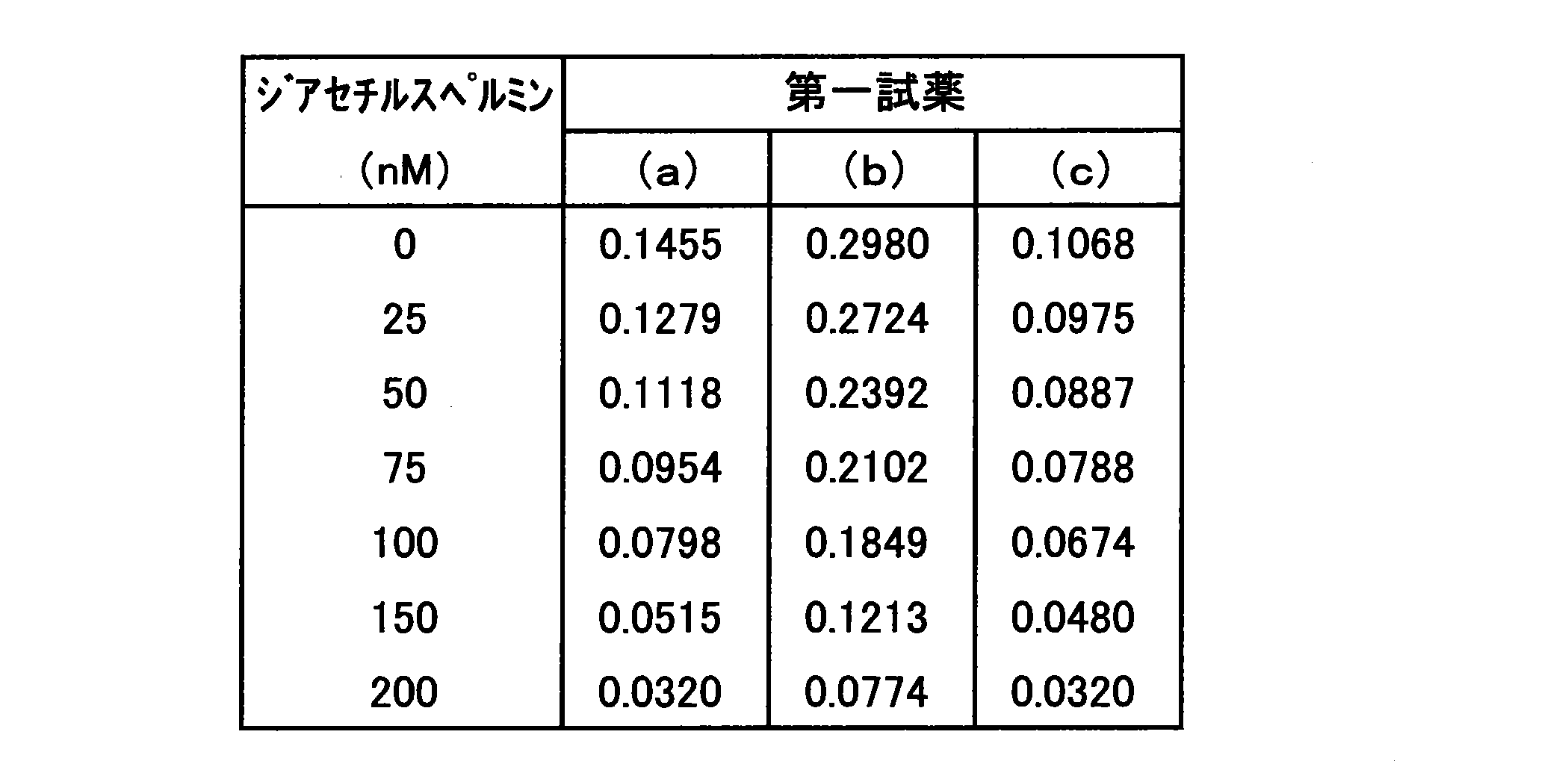
図1および表1に示すように、被測定物質であるジアセチルスペルミンの濃度依存的に、凝集反応による吸光度変化量が変化した。すなわち、ジアセチルスペルミンの濃度が高いほど、吸光度変化量が少なくなった。同量の抗体を含む各第一試薬において、その吸光度変化量は、従来の抗体を単体で含有する第一試薬(c)よりも、抗体を複合体の形態で含有する第一試薬(a)および(b)を使用した場合の方が大きく、ジアセチルスペルミンの低濃度域を高感度で測定できることがわかる。したがって、試料中の被測定物質であるジアセチルスペルミン量を、凝集反応の吸光度変化量として測定する場合、抗体を複数個結合した複合体を使用することにより、低濃度域についても高感度で測定でき、そのためより幅広い濃度域の測定が可能であることがわかった。
(実施例8:抗ジアセチルスペルミン抗体-アビジン複合体の調製)
抗ジアセチルスペルミン抗体をBiotin Labeling Kit-SHを用いてビオチン化した。ビオチン化抗ジアセチルスペルミン抗体とアビジンとをモル濃度比4:1で混合し、抗マウスIgG抗体結合アビジンを調製した。
抗ジアセチルスペルミン抗体をBiotin Labeling Kit-SHを用いてビオチン化した。ビオチン化抗ジアセチルスペルミン抗体とアビジンとをモル濃度比4:1で混合し、抗マウスIgG抗体結合アビジンを調製した。
(実施例9:ジアセチルスペルミン測定2用第一試薬の調製)
1.0w/v%塩化ナトリウム、0.2w/v%BSA、2.5w/v%ポリエチレングリコールおよび0.35w/v%ポリオキシエチレンラウリルエーテルを含む0.2M Bis-Tris(pH6.5)の溶液(C溶液)に、上記実施例8で調製した抗ジアセチルスペルミン抗体-アビジン複合体を2.96×10⁻¹²モル/mL(含有抗ジアセチルスペルミン抗体量:0.888μg/mL試薬)になるように添加して、ジアセチルスペルミン測定2用第一試薬(d)を調製した。
1.0w/v%塩化ナトリウム、0.2w/v%BSA、2.5w/v%ポリエチレングリコールおよび0.35w/v%ポリオキシエチレンラウリルエーテルを含む0.2M Bis-Tris(pH6.5)の溶液(C溶液)に、上記実施例8で調製した抗ジアセチルスペルミン抗体-アビジン複合体を2.96×10⁻¹²モル/mL(含有抗ジアセチルスペルミン抗体量:0.888μg/mL試薬)になるように添加して、ジアセチルスペルミン測定2用第一試薬(d)を調製した。
対照として、C溶液に抗ジアセチルスペルミン抗体を、上記第一試薬(d)と同様の濃度(0.888μg/mL試薬)になるように添加してジアセチルスペルミン測定2用第一試薬(e)を調製した。
(実施例10:ジアセチルスペルミン測定2)
本実施例では、第一試薬として上記実施例9で調製したジアセチルスペルミン測定2用の第一試薬(d)および(e)の2種を、第二試薬として上記実施例2で調製したジアセチルスペルミン結合金コロイド試薬を用いた。ジアセチルスペルミンを、それぞれ0、50、100、200、300、400および500nMになるように3.0w/v%BSAおよび1.0w/v%塩化ナトリウムを含むBis-Tris(pH7.4)に溶解して、ジアセチルスペルミン含有試料を調製した。各ジアセチルスペルミン含有試料10μLに、第一試薬を160μL添加し、37℃で約5分間加温した後、第二試薬を80μL加えて37℃にて反応させて、日立7070自動分析装置により、波長546nmおよび660nmでの測光ポイントとして18から31ポイントにおける吸光度変化量を測定した。図2および表2にジアセチルスペルミン濃度と吸光度変化量との関係を示す。
本実施例では、第一試薬として上記実施例9で調製したジアセチルスペルミン測定2用の第一試薬(d)および(e)の2種を、第二試薬として上記実施例2で調製したジアセチルスペルミン結合金コロイド試薬を用いた。ジアセチルスペルミンを、それぞれ0、50、100、200、300、400および500nMになるように3.0w/v%BSAおよび1.0w/v%塩化ナトリウムを含むBis-Tris(pH7.4)に溶解して、ジアセチルスペルミン含有試料を調製した。各ジアセチルスペルミン含有試料10μLに、第一試薬を160μL添加し、37℃で約5分間加温した後、第二試薬を80μL加えて37℃にて反応させて、日立7070自動分析装置により、波長546nmおよび660nmでの測光ポイントとして18から31ポイントにおける吸光度変化量を測定した。図2および表2にジアセチルスペルミン濃度と吸光度変化量との関係を示す。

図2および表2に示すように、抗ジアセチルスペルミン抗体を単体で含有する第一試薬(e)を使用した場合、凝集反応がほとんど生じず、凝集反応による吸光度変化量がジアセチルスペルミンの濃度依存的に変化しなかったので、濃度測定ができなかった。これに対し、第一試薬(e)と同様の抗体量で抗ジアセチルスペルミン抗体-アビジン複合体を含有する第一試薬(d)を使用した場合は、凝集反応が生じ、凝集反応による吸光度変化量が、被測定物質であるジアセチルスペルミンの濃度依存的に変化した。このように、抗体を複合体の形態で使用することにより、凝集反応が促進され、そして被測定物質の存在下では、その濃度依存的に凝集反応の阻害が生じる。このことから、抗体を複数個結合した複合体を使用することにより、低濃度域についても高感度で測定でき、したがって、より幅広い濃度域の測定が可能であることがわかった。
本発明の方法では、被測定物質に特異的に結合する物質(例えば、抗体)を単体で使用するのではなく、被測定物質に特異的に結合する物質を複数個有する複合体として使用することにより、被測定物質またはその類似体を複数個結合したラテックス粒子や金コロイド粒子との凝集反応を劇的に促進することができ、被測定物質の測定感度が著しく上昇する。したがって、本発明の方法によれば、従来技術では測定できなかった低濃度域での測定が可能である。
本発明の方法は、凝集促進剤を必要としないため、取り扱いや再現性にも優れる。また、B/F分離を必要としないため、自動化にも非常に適し、例えば、臨床検査分野で普及している自動分析装置を利用できる。したがって、工業、環境、および臨床検査の分野における、抗原抗体反応を利用した微量成分の免疫学的測定方法に好適である。
Claims (7)
- 検体中の被測定物質を測定する方法であって、
(a)該被測定物質を含む検体と、該被測定物質に特異的に結合する物質を複数個有する複合体と、該被測定物質または該被測定物質の類似体を不溶性担体上に結合させた微小粒子とを混合する、工程;および
(b)該工程(a)で得られた該混合液において、該微小粒子の凝集反応を測定する工程;
を含む、方法。 - 前記複合体が、前記被測定物質に対する抗体を複数個結合させた物質である、請求項1に記載の方法。
- 前記被測定物質がハプテンであり、そして前記被測定物質の類似体がハプテン結合蛋白質である、請求項1または2に記載の方法。
- 前記被測定物質の類似体が、前記被測定物質に特異的に結合する物質が認識しそして結合し得る物質であって、(i)該被測定物質の部位を有する物質、(ii)該部位を有する物質の構造類似体、または(iii)該部位を有する物質または該構造類似体が複数個結合した物質である、請求項1から3のいずれかの項に記載の方法。
- 前記不溶性担体が、ラテックスまたは金コロイドである、請求項1から4のいずれかの項に記載の方法。
- 被測定物質に特異的結合する物質を複数個有する複合体を含む、第一試薬;および
被測定物質または該被測定物質の類似体を不溶性担体上に結合させた微小粒子を含む、第二試薬;
を含む、測定用試薬キット。 - 前記複合体が、前記被測定物質に対する抗体を複数個結合させた物質である、請求項6に記載のキット。
Priority Applications (3)
| Application Number | Priority Date | Filing Date | Title |
|---|---|---|---|
| US13/125,131 US20110212544A1 (en) | 2008-10-22 | 2009-07-16 | Method and Reagent Kit for Immunological Measurement |
| EP09821863A EP2352027A4 (en) | 2008-10-22 | 2009-07-16 | METHOD AND REAGENT KIT FOR IMMUNOLOGICAL MEASUREMENT |
| CN2009801424075A CN102203611A (zh) | 2008-10-22 | 2009-07-16 | 免疫学测定方法和测定用试剂盒 |
Applications Claiming Priority (2)
| Application Number | Priority Date | Filing Date | Title |
|---|---|---|---|
| JP2008272270A JP2010101703A (ja) | 2008-10-22 | 2008-10-22 | 免疫学的測定方法および測定用試薬キット |
| JP2008-272270 | 2008-10-22 |
Publications (1)
| Publication Number | Publication Date |
|---|---|
| WO2010047163A1 true WO2010047163A1 (ja) | 2010-04-29 |
Family
ID=42119212
Family Applications (1)
| Application Number | Title | Priority Date | Filing Date |
|---|---|---|---|
| PCT/JP2009/062865 Ceased WO2010047163A1 (ja) | 2008-10-22 | 2009-07-16 | 免疫学的測定方法および測定用試薬キット |
Country Status (5)
| Country | Link |
|---|---|
| US (1) | US20110212544A1 (ja) |
| EP (1) | EP2352027A4 (ja) |
| JP (1) | JP2010101703A (ja) |
| CN (1) | CN102203611A (ja) |
| WO (1) | WO2010047163A1 (ja) |
Cited By (1)
| Publication number | Priority date | Publication date | Assignee | Title |
|---|---|---|---|---|
| CN106483299A (zh) * | 2016-10-03 | 2017-03-08 | 王贤俊 | 一种用于检测人血清中超氧化物歧化酶含量的方法 |
Families Citing this family (4)
| Publication number | Priority date | Publication date | Assignee | Title |
|---|---|---|---|---|
| JP2014122851A (ja) * | 2012-12-21 | 2014-07-03 | Sysmex Corp | 免疫測定方法および免疫測定装置 |
| CN104316685B (zh) * | 2014-10-10 | 2017-04-12 | 辽宁迈迪生物科技有限公司 | 一种二乙酰精胺的检测试剂盒及制备方法和应用 |
| US20210116465A1 (en) * | 2018-04-26 | 2021-04-22 | Eiken Kagaku Kabushik! Kaisha | Stool specimen test device and method for stool specimen test |
| CN115541895B (zh) * | 2022-11-29 | 2023-05-19 | 天津德祥生物技术股份有限公司 | 一种提高微流控反定检测卡灵敏度的配方液及应用 |
Citations (5)
| Publication number | Priority date | Publication date | Assignee | Title |
|---|---|---|---|---|
| JPS5552945A (en) * | 1978-10-14 | 1980-04-17 | Teikoku Hormone Mfg Co Ltd | Immuno-chemical measuring reagent and method of novel haptene |
| JPS57206859A (en) * | 1981-03-16 | 1982-12-18 | Intanashiyonaru Inst Obu Seriy | Method of examining grain coagulation reaction |
| JPH0735752A (ja) * | 1993-07-22 | 1995-02-07 | S R L:Kk | 凝集イムノアッセイ法 |
| JP2004325192A (ja) | 2003-04-23 | 2004-11-18 | Azwell Inc | 金コロイド凝集法によるハプテンの測定方法および測定キット |
| JP2005283250A (ja) | 2004-03-29 | 2005-10-13 | Alfresa Pharma Corp | 金コロイド凝集反応の測定方法 |
Family Cites Families (13)
| Publication number | Priority date | Publication date | Assignee | Title |
|---|---|---|---|---|
| JPS5341420A (en) * | 1976-09-29 | 1978-04-14 | Mochida Pharm Co Ltd | Immunochemically measuring methoa of hapten |
| AU528246B2 (en) * | 1978-10-14 | 1983-04-21 | Teikoku Hormone Mfg. Co., Ltd. | Stable immunoassay reagent for hapten determination |
| US4401765A (en) * | 1981-09-01 | 1983-08-30 | E. I. Du Pont De Nemours And Company | Covalently bonded high refractive index particle reagents and their use in light scattering immunoassays |
| US5100805A (en) * | 1989-01-26 | 1992-03-31 | Seradyn, Inc. | Quantitative immunoassay system and method for agglutination assays |
| US5518887A (en) * | 1992-03-30 | 1996-05-21 | Abbott Laboratories | Immunoassays empolying generic anti-hapten antibodies and materials for use therein |
| DE69331570T2 (de) * | 1992-10-21 | 2002-10-02 | Dade Behring Inc., Deerfield | Agglutinationstest unter Anwendung eines multivalenten Liganden |
| EP0679892B1 (en) * | 1994-04-29 | 2002-08-28 | Seradyn, Inc. | Microparticle immunoassay reagents, sensitive and specific immunoassay reagents and immunoassay methods using these reagents |
| US5851777A (en) * | 1996-02-05 | 1998-12-22 | Dade Behring Inc. | Homogeneous sol-sol assay |
| CN1178580A (zh) * | 1996-02-05 | 1998-04-08 | 达德国际有限公司 | 均相溶胶-溶胶测定 |
| AU5811498A (en) * | 1996-12-31 | 1998-07-31 | Robert L. Stephon | Microsphere-enhanced immunoassay for the detection of veterinary diseases |
| CN1556408A (zh) * | 2004-01-08 | 2004-12-22 | 张晓膺 | 检测载脂蛋白m的免疫比浊法 |
| GB2432211B (en) * | 2005-11-12 | 2009-04-22 | Platform Diagnostics Ltd | Agglutination based assay system |
| CA2629290C (en) * | 2005-11-12 | 2014-05-06 | Carolyn Jennifer Ruddell | Agglutination assay |
-
2008
- 2008-10-22 JP JP2008272270A patent/JP2010101703A/ja active Pending
-
2009
- 2009-07-16 CN CN2009801424075A patent/CN102203611A/zh active Pending
- 2009-07-16 EP EP09821863A patent/EP2352027A4/en not_active Withdrawn
- 2009-07-16 US US13/125,131 patent/US20110212544A1/en not_active Abandoned
- 2009-07-16 WO PCT/JP2009/062865 patent/WO2010047163A1/ja not_active Ceased
Patent Citations (5)
| Publication number | Priority date | Publication date | Assignee | Title |
|---|---|---|---|---|
| JPS5552945A (en) * | 1978-10-14 | 1980-04-17 | Teikoku Hormone Mfg Co Ltd | Immuno-chemical measuring reagent and method of novel haptene |
| JPS57206859A (en) * | 1981-03-16 | 1982-12-18 | Intanashiyonaru Inst Obu Seriy | Method of examining grain coagulation reaction |
| JPH0735752A (ja) * | 1993-07-22 | 1995-02-07 | S R L:Kk | 凝集イムノアッセイ法 |
| JP2004325192A (ja) | 2003-04-23 | 2004-11-18 | Azwell Inc | 金コロイド凝集法によるハプテンの測定方法および測定キット |
| JP2005283250A (ja) | 2004-03-29 | 2005-10-13 | Alfresa Pharma Corp | 金コロイド凝集反応の測定方法 |
Non-Patent Citations (3)
| Title |
|---|
| MITSUHIRO YAMADA, THE JOURNAL OF CLINICAL LABORATORY INSTRUMENTS AND REAGENTS, vol. 19, no. 4, 1996, pages 523 - 528 |
| P. TIJSSEN: "Enzyme Immunoassay", vol. 11, 1989, TOKYO KAGAKU DOZIN CO., LTD., article "Seikagaku Jikken Hou", pages: 252 |
| See also references of EP2352027A4 * |
Cited By (1)
| Publication number | Priority date | Publication date | Assignee | Title |
|---|---|---|---|---|
| CN106483299A (zh) * | 2016-10-03 | 2017-03-08 | 王贤俊 | 一种用于检测人血清中超氧化物歧化酶含量的方法 |
Also Published As
| Publication number | Publication date |
|---|---|
| EP2352027A4 (en) | 2012-10-03 |
| EP2352027A1 (en) | 2011-08-03 |
| CN102203611A (zh) | 2011-09-28 |
| JP2010101703A (ja) | 2010-05-06 |
| US20110212544A1 (en) | 2011-09-01 |
Similar Documents
| Publication | Publication Date | Title |
|---|---|---|
| JP5364310B2 (ja) | 反応性物質が結合した微小粒子の安定化方法および該微小粒子含有試薬 | |
| JP5442179B2 (ja) | 反応性物質が結合した微小粒子の沈降抑制方法および該微小粒子含有試薬 | |
| WO2010047163A1 (ja) | 免疫学的測定方法および測定用試薬キット | |
| JP3899029B2 (ja) | 免疫学的分析方法 | |
| US20120214257A1 (en) | Reagent Kit for Determining an Analyte in a Sample by Agglutination | |
| CN101836113B (zh) | 利用免疫学微粒凝集反应的样品中丙烯醛加合物的测定方法及测定用试剂盒 | |
| JP2005283250A (ja) | 金コロイド凝集反応の測定方法 | |
| JP5586232B2 (ja) | 微小粒子の凝集反応を用いる検体の免疫学的測定方法および測定用キット | |
| JP5085736B2 (ja) | 複合体の測定方法およびそれに用いるキット | |
| JP7658077B2 (ja) | 免疫比濁法測定用試薬及び測定用キット | |
| US20080261328A1 (en) | Method of preventing precipitation of a reactive substance-bound microparticle, and reagent containing the micro particle | |
| JP3328053B2 (ja) | 免疫凝集反応による抗体又は抗原の濃度定量法 | |
| EP4541895A1 (en) | Method for detecting analyte using polynucleotide | |
| JP5137880B2 (ja) | 結合性物質を固定化した乾燥粒子の製造方法 | |
| CN121311766A (zh) | 免疫学测定方法、免疫学测定用试剂、免疫学测定用样本预处理液、以及免疫学测定用试剂盒、非特异反应抑制剂 | |
| JP2001349893A (ja) | 免疫測定試薬 | |
| JP2001343387A (ja) | 複合体を形成する物質の測定方法及び測定試薬 |
Legal Events
| Date | Code | Title | Description |
|---|---|---|---|
| WWE | Wipo information: entry into national phase |
Ref document number: 200980142407.5 Country of ref document: CN |
|
| 121 | Ep: the epo has been informed by wipo that ep was designated in this application |
Ref document number: 09821863 Country of ref document: EP Kind code of ref document: A1 |
|
| WWE | Wipo information: entry into national phase |
Ref document number: 13125131 Country of ref document: US |
|
| NENP | Non-entry into the national phase |
Ref country code: DE |
|
| WWE | Wipo information: entry into national phase |
Ref document number: 2009821863 Country of ref document: EP |