WO2010055781A1 - 提供装置、システム、サーバ装置、プログラム及び方法 - Google Patents
提供装置、システム、サーバ装置、プログラム及び方法 Download PDFInfo
- Publication number
- WO2010055781A1 WO2010055781A1 PCT/JP2009/068602 JP2009068602W WO2010055781A1 WO 2010055781 A1 WO2010055781 A1 WO 2010055781A1 JP 2009068602 W JP2009068602 W JP 2009068602W WO 2010055781 A1 WO2010055781 A1 WO 2010055781A1
- Authority
- WO
- WIPO (PCT)
- Prior art keywords
- data
- client terminal
- page
- server device
- unit
- Prior art date
- Legal status (The legal status is an assumption and is not a legal conclusion. Google has not performed a legal analysis and makes no representation as to the accuracy of the status listed.)
- Ceased
Links
Images




Classifications
-
- G—PHYSICS
- G06—COMPUTING OR CALCULATING; COUNTING
- G06F—ELECTRIC DIGITAL DATA PROCESSING
- G06F16/00—Information retrieval; Database structures therefor; File system structures therefor
- G06F16/90—Details of database functions independent of the retrieved data types
- G06F16/95—Retrieval from the web
- G06F16/953—Querying, e.g. by the use of web search engines
- G06F16/9535—Search customisation based on user profiles and personalisation
-
- G—PHYSICS
- G06—COMPUTING OR CALCULATING; COUNTING
- G06F—ELECTRIC DIGITAL DATA PROCESSING
- G06F21/00—Security arrangements for protecting computers, components thereof, programs or data against unauthorised activity
- G06F21/60—Protecting data
- G06F21/602—Providing cryptographic facilities or services
-
- G—PHYSICS
- G06—COMPUTING OR CALCULATING; COUNTING
- G06F—ELECTRIC DIGITAL DATA PROCESSING
- G06F15/00—Digital computers in general; Data processing equipment in general
- G06F15/16—Combinations of two or more digital computers each having at least an arithmetic unit, a program unit and a register, e.g. for a simultaneous processing of several programs
- G06F15/161—Computing infrastructure, e.g. computer clusters, blade chassis or hardware partitioning
-
- G—PHYSICS
- G06—COMPUTING OR CALCULATING; COUNTING
- G06F—ELECTRIC DIGITAL DATA PROCESSING
- G06F16/00—Information retrieval; Database structures therefor; File system structures therefor
- G06F16/90—Details of database functions independent of the retrieved data types
- G06F16/95—Retrieval from the web
- G06F16/958—Organisation or management of web site content, e.g. publishing, maintaining pages or automatic linking
- G06F16/972—Access to data in other repository systems, e.g. legacy data or dynamic Web page generation
-
- H—ELECTRICITY
- H04—ELECTRIC COMMUNICATION TECHNIQUE
- H04L—TRANSMISSION OF DIGITAL INFORMATION, e.g. TELEGRAPHIC COMMUNICATION
- H04L63/00—Network architectures or network communication protocols for network security
- H04L63/02—Network architectures or network communication protocols for network security for separating internal from external traffic, e.g. firewalls
- H04L63/0272—Virtual private networks
-
- H—ELECTRICITY
- H04—ELECTRIC COMMUNICATION TECHNIQUE
- H04L—TRANSMISSION OF DIGITAL INFORMATION, e.g. TELEGRAPHIC COMMUNICATION
- H04L63/00—Network architectures or network communication protocols for network security
- H04L63/04—Network architectures or network communication protocols for network security for providing a confidential data exchange among entities communicating through data packet networks
- H04L63/0428—Network architectures or network communication protocols for network security for providing a confidential data exchange among entities communicating through data packet networks wherein the data content is protected, e.g. by encrypting or encapsulating the payload
-
- H—ELECTRICITY
- H04—ELECTRIC COMMUNICATION TECHNIQUE
- H04L—TRANSMISSION OF DIGITAL INFORMATION, e.g. TELEGRAPHIC COMMUNICATION
- H04L63/00—Network architectures or network communication protocols for network security
- H04L63/06—Network architectures or network communication protocols for network security for supporting key management in a packet data network
- H04L63/062—Network architectures or network communication protocols for network security for supporting key management in a packet data network for key distribution, e.g. centrally by trusted party
-
- H—ELECTRICITY
- H04—ELECTRIC COMMUNICATION TECHNIQUE
- H04L—TRANSMISSION OF DIGITAL INFORMATION, e.g. TELEGRAPHIC COMMUNICATION
- H04L63/00—Network architectures or network communication protocols for network security
- H04L63/08—Network architectures or network communication protocols for network security for authentication of entities
- H04L63/0807—Network architectures or network communication protocols for network security for authentication of entities using tickets, e.g. Kerberos
Definitions
- the present invention relates to a providing device, a system, a server device, a program, and a method for providing a page to a client terminal.
- Mashup service providers that provide a service called mashup are known.
- the mashup service provider combines the data provided by the separate server device designated by the user into one web page and provides it to the client terminal. For example, when the weather data provided by the server apparatus A and the stock price data provided by the server apparatus B are designated in advance from the user and a page acquisition request is received from the user, the web page including the weather data and the stock price data is received. Is provided to the user.
- Such a mashup service provider can provide a unique web page for each user.
- the intranet server device in the company is blocked from the outside by a firewall, it cannot be accessed from an external general server device. Therefore, the mashup service provider cannot provide a web page including data provided by a server device in a company and data provided by an external server device.
- the browser is configured so that data acquired from multiple server devices cannot be displayed on one screen due to a cross-domain problem. Therefore, the client device cannot generate a screen in which the data acquired from the external server device and the data provided by the server device in the company are combined.
- Patent Document 1 describes a method in which a client device acquires information on another domain by dynamically generating a script.
- the method described in Patent Document 1 is not limited to access intended for mashups, and the server device returns data for any access from the client. There is a possibility.
- a providing apparatus that provides a client terminal with a page including data acquired from a server apparatus, the page acquisition request being received from the client terminal And a page that returns a page including a code that is executed on the client terminal and transmits a data transmission instruction from the client terminal to the server apparatus to instruct transmission of the data to the providing apparatus.
- a providing device is provided. Furthermore, a program and a method for causing a computer to function as such a providing device are provided.
- the server device provides data to the providing device of the first aspect, and is transmitted by the client terminal that has received the page including the code from the providing device.
- a transmission instruction receiving unit that receives the data transmission instruction, and a data transmission unit that transmits the data specified by the data transmission instruction to the providing apparatus in response to receiving the data transmission instruction;
- a server apparatus comprising: Furthermore, a program and a method for causing a computer to function as such a server device are provided.
- a system including the providing apparatus of the first aspect and the server apparatus of the second aspect. It should be noted that the above summary of the invention does not enumerate all the necessary features of the present invention. In addition, a sub-combination of these feature groups can also be an invention.
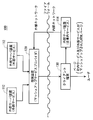
- FIG. 1 shows a configuration of an information providing system 100 according to the present embodiment.
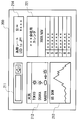
- An example of the web page 200 provided by the providing apparatus 120 according to the present embodiment is shown.
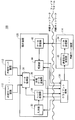
- Functional configurations of the providing device 120 and the internal server device 114 in the information providing system 100 according to the first example are shown together with the external server device 112 and the client terminal 130.
- the flow of a page providing process in the information providing system 100 according to the first example is shown.
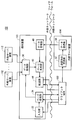
- Functional configurations of the providing device 120 and the internal server device 114 in the information providing system 100 according to the second example are shown together with the external server device 112 and the client terminal 130.
- FIG. 6 shows a flow of page providing processing in the information providing system 100 according to the second example.
- An example of pseudo code of an HTML page returned by the providing apparatus 120 in response to a page acquisition request transmitted from the client terminal 130 according to the first example is shown.
- An example of pseudo code of a script called from the HTML page of FIG. 7 is shown.
- An example of pseudo code of a push broker module in the internal server device 114 according to the first example and the second example is shown.
- An example of the pseudo code of the service bridge module in the providing apparatus 120 according to the first example and the second example is shown.
- An example of pseudo code of the first HTML page returned by the providing apparatus 120 in response to a page acquisition request transmitted from the client terminal 130 according to the second example is shown.
- An example of pseudo code of the second HTML page returned by the providing apparatus 120 in response to a page acquisition request retransmitted from the client terminal 130 according to the second example is shown.
- 2 shows an exemplary hardware configuration of a computer 1900 according to an embodiment of the present invention.
- FIG. 1 shows a configuration of an information providing system 100 according to the present embodiment.
- the information providing system 100 includes one or more external server devices 112, an internal server device 114, a providing device 120, and a client terminal 130.
- Each external server device 112 and internal server device 114 are an example of a server device, and provide data in response to a given request.
- the providing device 120 provides the client terminal 130 with a page including data acquired from each external server device 112 and the internal server device 114.
- the providing device 120 provides a web page to the client terminal 130 via a network.
- the client terminal 130 displays the page provided by the providing device 120 to the user.
- each external server device 112 and the providing device 120 are connected to an external network in which information exchange is not interrupted. Note that being connected on the network means being able to communicate with other devices on the network, whether wired or wireless.
- the internal server device 114 and the client terminal 130 are connected to an internal network in which access from devices connected to the external network is blocked by, for example, a firewall. Therefore, the internal server device 114 and the client terminal 130 can communicate with each other, but do not accept access from devices connected on the external network. Note that the internal server device 114 and the client terminal 130 can transmit information to a device connected to the external network, and can acquire information from the device connected to the external network.
- the providing apparatus 120 receives from the user designation of at least one server apparatus (external server apparatus 112 and internal server apparatus 114) that provides data that the user desires to acquire.
- the providing device 120 acquires data from the designated external server device 112 and internal server device 114 in response to a page acquisition request from the user, and provides the client terminal 130 with a page including the acquired data.
- the providing device 120 may provide a mashup service. That is, the providing device 120 provides the client terminal 130 with a web page obtained by mashing up data provided by an external service and data provided by an in-company service.
- FIG. 2 shows an example of a web page 200 provided by the providing device 120 according to the present embodiment.
- the providing apparatus 120 may provide the page 200 to the client terminal 130 as illustrated in FIG.
- the page 200 includes data provided by the external server device 112 and data provided by the internal server device 114.
- the page 200 includes search data 211, weather data 212, stock price data 213, and exchange data 214, which are provided by different external server devices 112, respectively.
- the page 200 includes in-house calendar data 221 provided by the internal server device 114.
- the providing apparatus 120 receives in advance from the client terminal 130 designation of data to be included in the page 200 and arrangement of each data on the page.
- the providing device 120 receives a page acquisition request from the client terminal 130, the providing device 120 provides the client terminal 130 with a page displaying the designated data at the designated arrangement position.
- FIG. 3 shows functional configurations of the providing device 120 and the internal server device 114 in the information providing system 100 according to the first example, together with the external server device 112 and the client terminal 130.
- the providing device 120 according to the first example includes an input unit 32, a page reply unit 34, a data acquisition unit 36, an external data transmission unit 38, a data reception unit 40, and a transfer unit 44.
- the input unit 32 inputs designation of data to be included in the page provided by the providing apparatus 120 from the client terminal 130 prior to provision of the page.
- the input unit 32 may also input the arrangement of data to be included in the page from the client terminal 130.
- the page reply unit 34 returns a page including a code executed on the client terminal 130 in response to receiving a page acquisition request from the client terminal 130. More specifically, the page reply unit 34 is executed on the client terminal 130 and sends a data transmission instruction from the client terminal 130 to the internal server device 114 to instruct to transmit the designated data to the providing device 120. Reply to the page that contains the code to send. That is, the page includes a code for transmitting a data transmission instruction to the internal server device 114 connected to the internal network that blocks the data acquisition request from the providing device 120 together with the client terminal 130.
- the page return unit 34 transmits a data transmission instruction to the internal server device 114 and returns a page including a code for transmitting a data acquisition request to the providing device 120.
- the page reply unit 34 is executed on the client terminal 130, and returns a page including a code for calling a script on the internal server device 114 including the encryption key of the client terminal 130 as a parameter as a data transmission instruction. It's okay.
- the data acquisition unit 36 receives the specified data from the external server device 112 connected to the external network where the data acquisition request from the providing device 120 is not blocked. get.
- the external data transmission unit 38 transmits the data acquired by the data acquisition unit 36 to the client terminal 130 and is displayed in a page returned by the page reply unit 34.
- the providing device 120 may be configured not to acquire data from the external server device 112 depending on the designated content of data to be included in the page.
- the data receiving unit 40 receives data transmitted by the internal server device 114 that has received a data transmission instruction from the client terminal 130.
- the data receiving unit 40 is an encrypted data that the internal server device 114 that has received the script acquisition request called by the client terminal 130 transmits to the providing device 120 in response to the script acquisition request. Data may be received.
- the transfer unit 44 In response to receiving the data acquisition request from the client terminal 130, the transfer unit 44 transfers the data received from the internal server device 114 to the client terminal 130, and displays it in the page returned by the page reply unit 34. .
- the transfer unit 44 may transfer the encrypted data received from the internal server device 114 to the client terminal 130.
- the internal server device 114 includes a transmission instruction receiving unit 52 and a data transmitting unit 54.
- the transmission instruction receiving unit 52 receives a data transmission instruction transmitted from the client terminal 130 that has received the page including the code from the providing apparatus 120.
- the data transmission unit 54 transmits the data specified by the data transmission instruction to the providing apparatus 120.
- the data transmission unit 54 may acquire data from another server device connected on the internal network and transmit the data to the providing device 120, or may transmit data provided by the internal server device 114 itself. You may transmit to the provision apparatus 120.
- FIG. 4 shows a flow of page providing processing in the information providing system 100 according to the first example.
- the client terminal 130 transmits a page acquisition request to the providing apparatus 120 (S11).
- the page reply unit 34 of the providing apparatus 120 generates a page in response to receiving the page acquisition request from the client terminal 130 (S12).
- the page return unit 34 of the providing apparatus 120 returns the generated page to the client terminal 130 (S13).
- the page return unit 34 of the providing device 120 returns a page including a code executed on the client terminal 130. More specifically, the page reply unit 34 of the providing device 120 is provided with a code for causing the internal server device 114 to transmit a data transmission instruction that instructs to transmit the designated data to the providing device 120, and the designated data. A page including a code for transmitting the data acquisition request from the client terminal 130 to the providing apparatus 120 is returned.
- the code for transmitting the data transmission instruction to the internal server device 114 causes the data transmission instruction including the encryption key of the client terminal 130 as a parameter to be transmitted to the internal server device 114.
- the code for transmitting the data transmission instruction to the internal server device 114 may be a code for calling a script from the internal server device 114, such as a script tag.
- the code for transmitting the data transmission instruction to the internal server device 114 may be a code for calling image data from the internal server device 114 such as an image tag.
- the data acquisition unit 36 of the providing device 120 transmits an acquisition request for data to be included in the page to the external server device 112 (S14). Subsequently, the data acquisition unit 36 of the providing device 120 acquires the data returned from the external server device 112 in response to the data acquisition request (S15). For example, the data acquisition unit 36 of the providing device 120 may acquire an acquisition request for weather data or the like from the designated external server device 112. Subsequently, the external data transmission unit 38 of the providing apparatus 120 transmits the data acquired by the data acquisition unit 36 to the client terminal 130 (S16).
- the client terminal 130 displays the page returned from the providing apparatus 120 in response to the page acquisition request, including the data transmitted in step S16 (S17). That is, the client terminal 130 displays a page including data provided by the external server device 112.
- the client terminal 130 executes the code included in the page returned from the providing device 120. That is, the client terminal 130 transmits to the internal server device 114 a data transmission instruction that instructs transmission of the designated data to the providing device 120 (S18). At the same time, the client terminal 130 transmits a data acquisition request for the designated data to the providing apparatus 120 (S19). The client terminal 130 generates an encryption key prior to transmission of the data transmission instruction. Then, the client terminal 130 includes the generated encryption key as a data transmission instruction parameter, and transmits it to the internal server device 114.
- the transmission instruction receiving unit 52 of the internal server device 114 receives the data transmission instruction transmitted by the client terminal 130. Then, the transmission instruction receiving unit 52 acquires data specified by the received data transmission instruction (S20). The transmission instruction receiving unit 52 may acquire, for example, in-house calendar data.
- the transmission instruction receiving unit 52 of the internal server device 114 encrypts the acquired data with the encryption key included as a parameter in the data transmission instruction (S21).
- the data transmitting unit 54 of the internal server device 114 transmits the data encrypted by the transmission instruction receiving unit 52 to the providing device 120 (S22).
- the transfer unit 44 of the providing apparatus 120 receives a data acquisition request for the designated data from the client terminal 130. Then, the transfer unit 44 waits for processing until preparation for a response of the designated data is completed (S23).
- the data receiving unit 40 of the providing device 120 receives the encrypted data transmitted by the internal server device 114. Subsequently, when the data receiving unit 40 receives the encrypted data transmitted from the internal server device 114, the transfer unit 44 of the providing device 120 transfers the data received by the data receiving unit 40 to the client terminal 130 ( S24).
- the client terminal 130 receives the encrypted data transmitted by the providing device 120. Then, the client terminal 130 decrypts the encrypted data with the encryption key of the client terminal 130 (S25).
- the client terminal 130 inserts the decrypted data into the displayed page (S26). Thereby, the client terminal 130 can display a page including data provided by the internal server device 114.
- data provided by different server devices can be included and displayed in one page. Therefore, according to the information providing system 100 according to the first example, data (for example, weather data) provided by the external server device 112 connected to the external network and the internal server device 114 connected to the internal network in the company.
- the data provided by for example, in-house calendar data
- data provided by the internal server device 114 (for example, in-house calendar data) is encrypted with the encryption key of the client terminal 130 and transmitted to the providing device 120.
- the confidentiality of the provided data can also be maintained.
- the information providing system 100 may be configured not to encrypt the data provided by the internal server device 114 when the data provided by the internal server device 114 need not be kept secret.
- the page reply unit 34 of the providing apparatus 120 instructs to acquire the display contents of the predetermined area in the page from the providing apparatus 120 and include it in the page together with the code for transmitting the data transmission instruction to the internal server apparatus 114.
- the configuration may be such that a page including a code to be returned is returned.
- the page reply unit 34 obtains display contents from the providing device 120 and sends back a page including a code for displaying the obtained display contents in an IF frame (inline frame) formed in the page. Also good.
- the providing device 120 further includes a display content generation unit that generates display content including encrypted data received from the internal server device 114.
- the transfer unit 44 displays the display content generated by the display content generation unit including the data received from the internal server device 114 in response to the reception of the data acquisition request from the client terminal 130. The data is transferred to the terminal 130 and included in the page returned by the page reply unit 34 to be displayed.
- FIG. 5 shows functional configurations of the providing device 120 and the internal server device 114 in the information providing system 100 according to the second example, together with the external server device 112 and the client terminal 130.
- the information providing system 100 according to the second example employs substantially the same configuration and function as the information providing system 100 according to the first example shown in FIG. 3, and therefore the information according to the first example shown in FIG.
- Members having substantially the same configuration and function as the members provided in the providing system 100 are denoted by the same reference numerals, and the description thereof will be omitted except for differences.
- the providing device 120 includes an input unit 32, a page reply unit 34, a data acquisition unit 36, a data reception unit 40, a page generation unit 60, and a transfer unit 44.
- the page return unit 34 is executed on the client terminal 130 to transmit a data transmission instruction to the internal server device 114 and to return a page including a code for resending the page acquisition request to the providing device 120.
- the code for retransmitting the page acquisition request may be a code for retransmitting (that is, redirecting) the same page, or a code for transmitting a different page.
- the page generation unit 60 generates a page including the data acquired by the data acquisition unit 36 from the external server device 112 and the encrypted data received by the data reception unit 40 from the internal server device 114.
- the transfer unit 44 returns the page generated by the page generation unit 60 in response to receiving the retransmission of the page acquisition request from the client terminal 130.
- FIG. 6 shows a flow of page providing processing in the information providing system 100 according to the second example.
- the client terminal 130 transmits a page acquisition request to the providing apparatus 120 (S31).
- the page return unit 34 of the providing apparatus 120 generates an initial page in response to receiving the page acquisition request from the client terminal 130 (S32).
- the page return unit 34 of the providing apparatus 120 returns the generated initial page to the client terminal 130 (S33).
- the page return unit 34 of the providing device 120 returns a page including a code executed on the client terminal 130. More specifically, the page reply unit 34 of the providing device 120 includes a code for causing the internal server device 114 to transmit a data transmission instruction instructing transmission of the designated data to the providing device 120, and the providing device. An initial page including a code for resending the page acquisition request is returned to 120.
- the providing device 120 transmits an acquisition request for data (weather data or the like) to be included in the page to the external server device 112 (S34). Subsequently, the data acquisition unit 36 of the providing apparatus 120 acquires the data returned from the external server apparatus 112 in response to the data acquisition request (S35).
- the client terminal 130 executes the code included in the page returned from the providing device 120. That is, the client terminal 130 transmits to the internal server device 114 a data transmission instruction that instructs transmission of the designated data to the providing device 120 (S36). At the same time, the client terminal 130 retransmits the page acquisition request to the providing apparatus 120 (S37). The client terminal 130 generates an encryption key prior to transmission of the data transmission instruction. Then, the client terminal 130 includes the generated encryption key as a data transmission instruction parameter, and transmits it to the internal server device 114.
- the transmission instruction receiving unit 52 of the internal server device 114 receives the data transmission instruction transmitted by the client terminal 130. Then, the transmission instruction receiving unit 52 acquires data (in-house calendar data or the like) specified by the received data transmission instruction (S38). Subsequently, the transmission instruction receiving unit 52 of the internal server device 114 encrypts the acquired data with the encryption key included as a parameter in the data transmission instruction (S39). Subsequently, the data transmitting unit 54 of the internal server device 114 transmits the data encrypted by the transmission instruction receiving unit 52 to the providing device 120 (S40).
- the transfer unit 44 of the providing apparatus 120 receives the page acquisition request retransmitted by the client terminal 130. Then, the transfer unit 44 waits for processing until the preparation for returning the page requested to be retransmitted is completed (S41).
- the data receiving unit 40 of the providing device 120 receives the encrypted data transmitted by the internal server device 114.
- the page generation unit 60 of the providing device 120 acquires the data (such as weather data) acquired by the data acquisition unit 36 from the external server device 112 in step S35 and the data reception unit 40 acquires from the internal server device 114 in step S40.
- a page including the generated data is generated (S42).
- the page generation unit 60 includes the encrypted data as it is in the page.
- the page generation unit 60 may include encrypted data as text data.
- the transfer unit 44 of the providing apparatus 120 transmits the page generated by the page generation unit 60 to the client terminal 130 (S43).
- the client terminal 130 receives the page retransmitted by the transfer unit 44 of the providing apparatus 120 as a page corresponding to the retransmitted page acquisition request. Then, the client terminal 130 displays the page returned from the providing device 120 in response to the retransmitted page acquisition request (S44). In this case, the client terminal 130 decrypts the data encrypted by the internal server device 114 included in the page with the encryption key of the client terminal 130 and reinserts the data into the page.
- the information providing system 100 according to the second example has the same effect as the first example. That is, according to the information providing system 100 according to the second example, data provided by different server devices can be displayed in one page. Therefore, according to the information providing system 100, data provided by the external server device 112 connected to the external network (for example, weather data) and data provided by the internal server device 114 connected to the internal network in the company. (For example, in-house calendar data) can be included in one page and displayed.
- the data provided by the internal server device 114 (for example, in-house calendar data) is encrypted with the encryption key of the client terminal 130 and transmitted to the providing device 120.
- the confidentiality of the data provided by the internal server device 114 can also be maintained.
- the information providing system 100 may be configured not to encrypt the data provided by the internal server device 114 when the data provided by the internal server device 114 need not be kept secret.
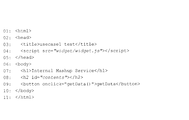
- FIG. 7 shows an example of pseudo code of an HTML (Hypertext Markup Language) page returned by the providing apparatus 120 in response to a page acquisition request transmitted from the client terminal 130 according to the first example.
- FIG. 8 shows an example of pseudo code of a script called from the HTML page of FIG. The codes shown in FIGS. 7 and 8 are returned in response to the client terminal 130 according to the first example transmitting a page acquisition request to the providing apparatus 120 and executed by the client terminal 130 according to the first example. .
- HTML Hypertext Markup Language
- the code on line 04 in Fig. 7 calls the script in Fig. 8.
- the code on line 08 in FIG. 7 displays data having the contents shown in “contents”.
- the code in line 09 in FIG. 7 executes the function “getData ()” on condition that the “getData” button is clicked.
- the code on lines 05 to 08 in FIG. 8 indicates the function “getData ()”.
- the function “getData ()” executes the function “callPushBroker ()” and the function “makeRequest ()”.
- the code on lines 09 to 14 in FIG. 8 indicates the function “onReceive (evt)”.
- the function “onReceive (evt)” stores the data received from the providing apparatus 120 in the variable “data”, decrypts the data stored in the variable “data”, and displays “contents” indicated by line 08 in FIG. Is inserted into an element with id attribute.
- the data received from the providing device 120 includes encrypted data provided by the internal server device 114 (for example, an encrypted in-house calendar). Therefore, the client terminal 130 can display the data provided by the internal server device 114 in the page by executing the function “onReceive (evt)”.
- the code on lines 15 to 20 in FIG. 8 indicates the function “callPushBroker ()”.
- the client terminal 130 can transmit a data transmission instruction to the push broker module of the internal server device 114 by executing the function “callPushBroker ()”.
- the push broker module is a module executed in the internal server device 114 and realizes the functions of the transmission instruction receiving unit 52 and the data transmitting unit 54 shown in FIGS. 3 and 4.
- the client terminal 130 may be configured so that a script cannot actually be acquired from the push broker module, as long as at least a trigger for starting operation is given to the push broker module.
- the function “callPushBroker ()” includes a script acquisition request to the push broker module, the address of the data reception transfer module (service bridge module) of the providing device 120 (variable “serviceBridge”), and the data provided by the internal server device 114. Address (variable “internalService”) and the encryption key (variable “encryptionKey”) of the client terminal 130 are transmitted.
- the service bridge module is a module executed in the providing apparatus 120, and functions of the data receiving unit 40 and the transfer unit 44 shown in FIG. 3, or the data receiving unit 40 and page generation shown in FIG. The functions of the unit 60 and the transfer unit 44 are realized. Accordingly, the internal server device 114 that has received the data transmission instruction from the client terminal 130 can acquire the specified data, encrypt the acquired data, and transmit the encrypted data to the providing device 120.
- the code on lines 22 to 27 in FIG. 8 indicates the function “makeRequest ()”.
- the function “makeRequest ()” calls a library that acquires specified data from the providing device 120.
- the client terminal 130 can transmit a data acquisition request to the providing apparatus 120 by executing the function “makeRequest ()”.
- the library called by the function “makeRequest ()” is given the address of the data provided by the internal server device 114 to which the client terminal 130 has given a data transmission instruction (variable “internalService”). Accordingly, the providing apparatus 120 that has received the data acquisition request can transfer the data transmitted by the internal server apparatus 114 to which the client terminal 130 has given a data transmission instruction, to the client terminal 130.
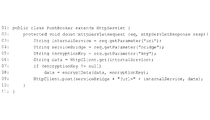
- FIG. 9 shows an example of the pseudo code of the push broker module in the internal server device 114 according to the first example and the second example.
- the code shown in FIG. 9 is called when the client terminal 130 executes the function “callPushBroker ()”, and is executed by the internal server device 114 according to the first example and the second example.
- the code of line 06 in FIG. 9 acquires data from the address specified by the variable “internalService” and stores it in the variable “data”.
- the code on lines 07 to 08 in FIG. 9 encrypts the data stored in the variable “data” with the encryption key stored in the variable “encryptionKey” on condition that the value of the variable “encryptionKey” is not null. And write it back to the variable “data”.
- the code on line 09 in FIG. 9 transmits the variable “data” to the service bridge module in the providing device 120 at the address specified by the variable “serviceBridge”.
- the internal server device 114 can acquire the data designated by the client terminal 130, encrypt the acquired data, and transmit the encrypted data to the providing device 120.
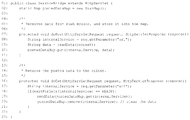
- FIG. 10 shows an example of pseudo code of the service bridge module in the providing device 120 according to the first example and the second example.
- the code shown in FIG. 10 is executed by the providing apparatus 120 according to the first example and the second example.
- the code in line 09 in FIG. 10 reads the data transmitted from the internal server device 114 and stores it in the variable “data”.
- the code on line 10 in FIG. 10 stores the read data in the table (postedDataMap), identified by the address (variable “internalService”) provided with the data.
- the providing apparatus 120 can receive data transmitted by the internal server apparatus 114 that has received a data transmission instruction from the client terminal 130 by executing such a code.
- the code on line 18 in FIG. 10 waits for processing until data is received from the internal server device 114.
- the code on line 19 in FIG. 10 indicates that when data corresponding to the variable “internalService” specified by the data acquisition request transmitted from the client terminal 130 is stored in the table (postedDataMap), the data is stored in the client terminal 130. Forward to.
- the providing apparatus 120 can transfer the data received from the internal server apparatus 114 to the client terminal 130 in response to receiving a data acquisition request from the client terminal 130.
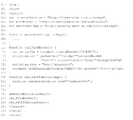
- FIG. 11 shows an example of pseudo code of the first HTML page returned by the providing apparatus 120 in response to the page acquisition request transmitted from the client terminal 130 according to the second example.
- the code shown in FIG. 11 is returned in response to the client terminal 130 according to the second example transmitting a page acquisition request to the providing apparatus 120, and is executed by the client terminal 130 according to the second example.
- the code on lines 08 to 10 in FIG. 11 indicates the function “generateEncryptionKey ()”.
- the function “generateEncryptionKey ()” generates an encryption key (variable “encryptionKey”).
- the code on lines 11 to 17 in FIG. 11 indicates the function “callPushBroker ()”.
- the function “callPushBroker ()” is the same as that shown in FIG.
- the code on lines 18 to 20 in FIG. 11 indicates the function “redirectToActualPage ()”.
- the saddle function “redirectToActualPage ()” redirects the providing apparatus 120 to acquire the HTML page again.
- the client terminal 130 can retransmit the page acquisition request to the providing apparatus 120 by executing the saddle function “redirectToActualPage ()”. Note that the address of the page acquired by resending may be the same as or different from the first page.
- the client terminal 130 can transmit a data transmission instruction to the internal server device 114 and retransmit the page acquisition request to the providing device 120 by executing such a code.
- FIG. 12 shows an example of pseudo code of the second HTML page returned by the providing apparatus 120 in response to the page acquisition request retransmitted from the client terminal 130 according to the second example.
- the code shown in FIG. 12 is returned in response to the client terminal 130 according to the second example resending the page acquisition request to the providing apparatus 120, and is executed by the client terminal 130 according to the second example.
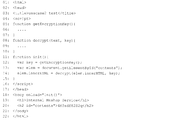
- the code on lines 05 to 07 in FIG. 12 indicates the function “getEncryptionKey ()”.
- the function “getEncryptionKey ()” acquires the encryption key (variable “encryptionKey”) generated by executing the function “generateEncryptionKey ()” of FIG. 11 by some method.
- the code on lines 08 to 10 in FIG. 12 indicates a function “decrypt (text, key)”.
- the function “decrypt (text, key)” decrypts the text “text” with the encryption key acquired by the function “getEncryptionKey ()”.
- the code on line 20 in FIG. 12 displays the data shown in “contents”. Note that encrypted data is inserted into the tag in the page transmitted from the providing device 120.
- the code on lines 11 to 15 in FIG. 12 indicates the function “init ()”.
- the function “init ()” calls the function “decrypt (text, key)”, decodes the content of the “contents”, and reinserts it into the element.
- the client terminal 130 decrypts the data encrypted by the internal server device 114 included in the page with the encryption key of the client terminal 130 and reinserts the data into the page. be able to.
- FIG. 13 shows an example of the hardware configuration of a computer 1900 according to this embodiment.
- a computer 1900 according to this embodiment is connected to a CPU peripheral unit having a CPU 2000, a RAM 2020, a graphic controller 2075, and a display device 2080 that are connected to each other by a host controller 2082, and to the host controller 2082 by an input / output controller 2084.
- Input / output unit having communication interface 2030, hard disk drive 2040, and CD-ROM drive 2060, and legacy input / output unit having ROM 2010, flexible disk drive 2050, and input / output chip 2070 connected to input / output controller 2084 With.
- the host controller 2082 connects the RAM 2020 to the CPU 2000 and the graphic controller 2075 that access the RAM 2020 at a high transfer rate.
- the CPU 2000 operates based on programs stored in the ROM 2010 and the RAM 2020 and controls each unit.
- the graphic controller 2075 acquires image data generated by the CPU 2000 or the like on a frame buffer provided in the RAM 2020 and displays it on the display device 2080.
- the graphic controller 2075 may include a frame buffer for storing image data generated by the CPU 2000 or the like.
- the input / output controller 2084 connects the host controller 2082 to the communication interface 2030, the hard disk drive 2040, and the CD-ROM drive 2060, which are relatively high-speed input / output devices.
- the communication interface 2030 communicates with other devices via a network.
- the hard disk drive 2040 stores programs and data used by the CPU 2000 in the computer 1900.
- the CD-ROM drive 2060 reads a program or data from the CD-ROM 2095 and provides it to the hard disk drive 2040 via the RAM 2020.
- the ROM 2010, the flexible disk drive 2050, and the relatively low-speed input / output device of the input / output chip 2070 are connected to the input / output controller 2084.
- the ROM 2010 stores a boot program that the computer 1900 executes at startup and / or a program that depends on the hardware of the computer 1900.
- the flexible disk drive 2050 reads a program or data from the flexible disk 2090 and provides it to the hard disk drive 2040 via the RAM 2020.
- the input / output chip 2070 connects the flexible disk drive 2050 to the input / output controller 2084 and inputs / outputs various input / output devices via, for example, a parallel port, a serial port, a keyboard port, a mouse port, and the like. Connect to controller 2084.
- the program provided to the hard disk drive 2040 via the RAM 2020 is stored in a recording medium such as the flexible disk 2090, the CD-ROM 2095, or an IC card and provided by the user.
- the program is read from the recording medium, installed in the hard disk drive 2040 in the computer 1900 via the RAM 2020, and executed by the CPU 2000.
- a program that is installed in the computer 1900 and causes the computer 1900 to function as the providing apparatus 120 according to the first example includes an input module, a page reply module, a data acquisition module, an external data transmission module, a data reception module, and a transfer module.
- These programs or modules work with the CPU 2000 or the like to cause the computer 1900 to function as the input unit 32, the page return unit 34, the data acquisition unit 36, the external data transmission unit 38, the data reception unit 40, and the transfer unit 44, respectively.
- a program that is installed in the computer 1900 and causes the computer 1900 to function as the providing apparatus 120 according to the second example includes an input module, a page reply module, a data acquisition module, a data reception module, a page generation module, and a transfer Module. These programs or modules work on the CPU 2000 or the like to cause the computer 1900 to function as the input unit 32, the page return unit 34, the data acquisition unit 36, the data reception unit 40, the page generation unit 60, and the transfer unit 44, respectively.
- the information processing described in these programs functions as the providing device 120 which is a specific means in which the software and the various hardware resources described above cooperate with each other by being read by the computer 1900.
- the specific provision apparatus 120 according to the intended purpose is constructed
- the program installed in the computer 1900 and causing the computer 1900 to function as the internal server device 114 includes a transmission instruction receiving module and a data transmission module. These programs or modules work on the CPU 2000 or the like to cause the computer 1900 to function as the transmission instruction reception unit 52 and the data transmission unit 54, respectively.
- the information processing described in these programs functions as the internal server device 114, which is a specific means in which the software and the various hardware resources described above cooperate with each other by being read by the computer 1900.
- the specific internal server apparatus 114 according to the intended use is constructed
- the CPU 2000 executes a communication program loaded on the RAM 2020 and executes a communication interface based on the processing content described in the communication program.
- a communication process is instructed to 2030.
- the communication interface 2030 reads transmission data stored in a transmission buffer area or the like provided on a storage device such as the RAM 2020, the hard disk drive 2040, the flexible disk 2090, or the CD-ROM 2095, and sends it to the network.
- the reception data transmitted or received from the network is written into a reception buffer area or the like provided on the storage device.
- the communication interface 2030 may transfer transmission / reception data to / from the storage device by a DMA (direct memory access) method. Instead, the CPU 2000 transfers the storage device or the communication interface 2030 as a transfer source.
- the transmission / reception data may be transferred by reading the data from the data and writing the data to the communication interface 2030 or the storage device of the transfer destination.
- the CPU 2000 is all or necessary from among files or databases stored in an external storage device such as a hard disk drive 2040, a CD-ROM drive 2060 (CD-ROM 2095), and a flexible disk drive 2050 (flexible disk 2090).
- This portion is read into the RAM 2020 by DMA transfer or the like, and various processes are performed on the data on the RAM 2020. Then, CPU 2000 writes the processed data back to the external storage device by DMA transfer or the like.
- the RAM 2020 and the external storage device are collectively referred to as a memory, a storage unit, or a storage device.
- the CPU 2000 can also store a part of the RAM 2020 in the cache memory and perform reading and writing on the cache memory. Even in such a form, the cache memory bears a part of the function of the RAM 2020. Therefore, in the present embodiment, the cache memory is also included in the RAM 2020, the memory, and / or the storage device unless otherwise indicated. To do.
- the CPU 2000 performs various operations, such as various operations, information processing, condition determination, information search / replacement, etc., described in the present embodiment, specified for the data read from the RAM 2020 by the instruction sequence of the program. Is written back to the RAM 2020. For example, when performing the condition determination, the CPU 2000 determines whether the various variables shown in the present embodiment satisfy the conditions such as large, small, above, below, equal, etc., compared to other variables or constants. When the condition is satisfied (or not satisfied), the program branches to a different instruction sequence or calls a subroutine.
- the CPU 2000 can search for information stored in a file or database in the storage device. For example, in the case where a plurality of entries in which the attribute value of the second attribute is associated with the attribute value of the first attribute are stored in the storage device, the CPU 2000 displays the plurality of entries stored in the storage device. The entry that matches the condition in which the attribute value of the first attribute is specified is retrieved, and the attribute value of the second attribute that is stored in the entry is read, thereby associating with the first attribute that satisfies the predetermined condition The attribute value of the specified second attribute can be obtained.
- the program or module shown above may be stored in an external recording medium.
- an optical recording medium such as DVD or CD
- a magneto-optical recording medium such as MO
- a tape medium such as an IC card, and the like
- a storage device such as a hard disk or RAM provided in a server system connected to a dedicated communication network or the Internet may be used as a recording medium, and the program may be provided to the computer 1900 via the network.
Landscapes
- Engineering & Computer Science (AREA)
- General Engineering & Computer Science (AREA)
- Theoretical Computer Science (AREA)
- Databases & Information Systems (AREA)
- Computer Hardware Design (AREA)
- Computer Security & Cryptography (AREA)
- Physics & Mathematics (AREA)
- General Physics & Mathematics (AREA)
- Signal Processing (AREA)
- Computing Systems (AREA)
- Computer Networks & Wireless Communication (AREA)
- Data Mining & Analysis (AREA)
- Software Systems (AREA)
- Health & Medical Sciences (AREA)
- Bioethics (AREA)
- General Health & Medical Sciences (AREA)
- Mathematical Physics (AREA)
- Information Transfer Between Computers (AREA)
Abstract
Description
112 外部サーバ装置
114 内部サーバ装置
120 提供装置
130 クライアント端末
32 入力部
34 ページ返信部
36 データ取得部
38 外部データ送信部
40 データ受信部
44 転送部
52 送信指示受信部
54 データ送信部
60 ページ生成部
200 ページ
211 検索データ
212 天気データ
213 株価データ
214 為替データ
221 社内カレンダデータ
1900 コンピュータ
2000 CPU
2010 ROM
2020 RAM
2030 通信インターフェイス
2040 ハードディスクドライブ
2050 フレキシブルディスク・ドライブ
2060 CD-ROMドライブ
2070 入出力チップ
2075 グラフィック・コントローラ
2080 表示装置
2082 ホスト・コントローラ
2084 入出力コントローラ
2090 フレキシブルディスク
2095 CD-ROM
Claims (14)
- サーバ装置から取得したデータを含むページをクライアント端末に提供する提供装置であって、
前記クライアント端末からページ取得要求を受信したことに応じて、前記クライアント端末上で実行されて、当該提供装置へと前記データを送信することを指示するデータ送信指示を前記クライアント端末から前記サーバ装置へと送信するコードを含むページを返信するページ返信部と、
前記クライアント端末から前記データ送信指示を受け取った前記サーバ装置が送信する前記データを受信するデータ受信部と、
前記サーバ装置から受信した前記データを前記クライアント端末に転送する転送部と、 を備える提供装置。 - 前記ページ返信部は、前記クライアント端末上で実行されて、前記データ送信指示を前記サーバ装置へと送信すると共に、前記データの取得要求を当該提供装置へと送信する前記コードを含むページを返信し、
前記転送部は、前記クライアント端末からデータ取得要求を受信したことに応じて、前記サーバ装置から受信した前記データを前記クライアント端末に転送して、前記ページ返信部が返信したページに含めて表示させる
請求項1に記載の提供装置。 - 前記ページ返信部は、前記クライアント端末上で実行されて、前記データ送信指示を前記サーバ装置へと送信すると共に、当該提供装置に対して前記ページ取得要求を再送する前記コードを含むページを返信し、
当該提供装置は、前記サーバ装置から受信した前記データを含むページを生成するページ生成部を更に備え、
前記転送部は、前記クライアント端末から前記ページ取得要求の再送を受けたことに応じて、前記ページ生成部が生成したページを返信する
請求項1または2に記載の提供装置。 - 前記ページ返信部は、前記クライアント端末から前記ページ取得要求を受信したことに応じて、前記クライアント端末上で実行されて、前記データ送信指示を、当該提供装置からのデータ取得要求を遮断する内部ネットワークに前記クライアント端末と共に接続された内部サーバ装置へと送信するコードを含むページを返信し、
当該提供装置は、
前記クライアント端末から前記ページ取得要求を受信したことに応じて、当該提供装置からのデータ取得要求が遮断されない外部ネットワークに接続された外部サーバ装置からデータを取得するデータ取得部と、
前記データ取得部が取得したデータを前記クライアント端末に送信する外部データ送信部と、
を更に備える請求項1から3のいずれかに記載の提供装置。 - 当該提供装置は、当該提供装置が提供するページに含めるべきデータの指定を前記クライアント端末から入力する入力部を更に備え、
前記ページ返信部は、前記クライアント端末からページ取得要求を受信したことに応じて、前記クライアント端末上で実行されて、指定された前記データを当該提供装置へと送信することを指示する前記データ送信指示を前記クライアント端末から前記サーバ装置へと送信する前記コードを含むページを返信する請求項1から4のいずれかに記載の提供装置。 - 前記ページ返信部は、前記クライアント端末上で実行されて、前記データ送信指示として前記サーバ装置上のスクリプトを呼び出すコードを含むページを返信し、
前記データ受信部は、前記クライアント端末によって呼び出されるスクリプトの取得要求を受け取った前記サーバ装置が、スクリプトの取得要求を受けたことに応じて当該提供装置へと送信する前記データを受信する
請求項1から5のいずれかに記載の提供装置。 - 前記ページ返信部は、前記クライアント端末上で実行されて、前記データ送信指示として、前記クライアント端末の暗号化キーをパラメータとして含んで前記サーバ装置上のスクリプトを呼び出すコードを含むページを返信し、
前記データ受信部は、前記クライアント端末によって呼び出されるスクリプトの取得要求を受け取った前記サーバ装置が、スクリプトの取得要求を受けたことに応じて当該提供装置へと送信する暗号化された前記データを受信し、
前記転送部は、前記サーバ装置から受信した暗号化された前記データを前記クライアント端末に転送する
請求項1から6のいずれかに記載の提供装置。 - 前記ページ返信部は、前記クライアント端末上で実行されて、前記データ送信指示を前記サーバ装置へと送信する前記コードと、当該提供装置から前記ページ内における所定領域の表示内容を取得して前記ページに含めることを指示するコードを含むページを返信し、
当該提供装置は、前記サーバ装置から受信した前記データを含む前記表示内容を生成する表示内容生成部を更に備え、
前記転送部は、前記コードにより指定された表示内容の取得要求を前記クライアント端末から受信したことに応じて、前記表示内容生成部が生成した表示内容を返信する
請求項1から7のいずれかに記載の提供装置。 - データを提供するサーバ装置と、前記データを含むページをクライアント端末に提供する提供装置とを備えるシステムであって、
前記提供装置は、
前記クライアント端末からページ取得要求を受信したことに応じて、前記クライアント端末上で実行されて、当該提供装置へと前記データを送信することを指示するデータ送信指示を前記クライアント端末から前記サーバ装置へと送信するコードを含むページを返信するページ返信部と、
前記クライアント端末から前記データ送信指示を受け取った前記サーバ装置が送信する前記データを受信するデータ受信部と、
前記サーバ装置から受信した前記データを前記クライアント端末に転送する転送部と、 を備え、
前記サーバ装置は、前記クライアント端末から前記データ送信指示を受信したことに応じて、前記データを前記提供装置へと送信するデータ送信部を備える
システム。 - 請求項1から8のいずれかに記載の提供装置に対してデータを提供するサーバ装置であって、
前記提供装置から前記コードを含むページを受信した前記クライアント端末が送信する前記データ送信指示を受信する送信指示受信部と、
前記データ送信指示を受信したことに応じて、前記データ送信指示により指定された前記データを、前記提供装置へと送信するデータ送信部と、
を備えるサーバ装置。 - サーバ装置から取得したデータを含むページをクライアント端末に提供する提供装置として、コンピュータを機能させるプログラムであって、
前記コンピュータを、
前記クライアント端末からページ取得要求を受信したことに応じて、前記クライアント端末上で実行されて、当該提供装置へと前記データを送信することを指示するデータ送信指示を前記クライアント端末から前記サーバ装置へと送信するコードを含むページを返信するページ返信部と、
前記クライアント端末から前記データ送信指示を受け取った前記サーバ装置が送信する前記データを受信するデータ受信部と、
前記サーバ装置から受信した前記データを前記クライアント端末に転送する転送部と、 して機能させるプログラム。 - 請求項1から8のいずれかに記載の提供装置に対してデータを提供するサーバ装置として、コンピュータを機能させるプログラムであって、
前記コンピュータを、
前記提供装置から前記コードを含むページを受信した前記クライアント端末が送信する前記データ送信指示を受信する送信指示受信部と、
前記データ送信指示を受信したことに応じて、前記データ送信指示により指定された前記データを、前記提供装置へと送信するデータ送信部と、
して機能させるプログラム。 - サーバ装置から取得したデータを含むページをクライアント端末に提供する提供装置において実行される方法であって、
前記クライアント端末からページ取得要求を受信したことに応じて、前記クライアント端末上で実行されて、当該提供装置へと前記データを送信することを指示するデータ送信指示を前記クライアント端末から前記サーバ装置へと送信するコードを含むページを返信するページ返信ステップと、
前記クライアント端末から前記データ送信指示を受け取った前記サーバ装置が送信する前記データを受信するデータ受信ステップと、
前記サーバ装置から受信した前記データを前記クライアント端末に転送する転送ステップと、
を実行する方法。 - 請求項1から8のいずれかに記載の提供装置に対してデータを提供するサーバ装置において実行される方法であって、
前記提供装置から前記コードを含むページを受信した前記クライアント端末が送信する前記データ送信指示を受信する送信指示受信ステップと、
前記データ送信指示を受信したことに応じて、前記データ送信指示により指定された前記データを、前記提供装置へと送信するデータ送信ステップと、
を実行する方法。
Priority Applications (3)
| Application Number | Priority Date | Filing Date | Title |
|---|---|---|---|
| EP09826031.8A EP2365443B1 (en) | 2008-11-11 | 2009-10-29 | Data providing device, system, server device, program, and method |
| CN200980142597.0A CN102203750B (zh) | 2008-11-11 | 2009-10-29 | 提供装置、系统、服务器装置和方法 |
| JP2010537752A JP5132782B2 (ja) | 2008-11-11 | 2009-10-29 | 提供装置、システム、サーバ装置、プログラム及び方法 |
Applications Claiming Priority (2)
| Application Number | Priority Date | Filing Date | Title |
|---|---|---|---|
| JP2008-289087 | 2008-11-11 | ||
| JP2008289087 | 2008-11-11 |
Publications (1)
| Publication Number | Publication Date |
|---|---|
| WO2010055781A1 true WO2010055781A1 (ja) | 2010-05-20 |
Family
ID=42166313
Family Applications (1)
| Application Number | Title | Priority Date | Filing Date |
|---|---|---|---|
| PCT/JP2009/068602 Ceased WO2010055781A1 (ja) | 2008-11-11 | 2009-10-29 | 提供装置、システム、サーバ装置、プログラム及び方法 |
Country Status (6)
| Country | Link |
|---|---|
| US (3) | US8713111B2 (ja) |
| EP (1) | EP2365443B1 (ja) |
| JP (1) | JP5132782B2 (ja) |
| KR (1) | KR101555083B1 (ja) |
| CN (1) | CN102203750B (ja) |
| WO (1) | WO2010055781A1 (ja) |
Cited By (1)
| Publication number | Priority date | Publication date | Assignee | Title |
|---|---|---|---|---|
| JP2013069006A (ja) * | 2011-09-21 | 2013-04-18 | Kanata Ltd | 情報システム、端末装置、第一サーバ装置、およびプログラム |
Families Citing this family (12)
| Publication number | Priority date | Publication date | Assignee | Title |
|---|---|---|---|---|
| CN102203750B (zh) * | 2008-11-11 | 2015-05-20 | 国际商业机器公司 | 提供装置、系统、服务器装置和方法 |
| TW201106251A (en) | 2009-04-24 | 2011-02-16 | Ibm | Editing apparatus, editing method and program |
| KR20120001336A (ko) * | 2010-06-29 | 2012-01-04 | 삼성전자주식회사 | 컨텐트 변환 방법 및 그 장치 |
| US8930475B1 (en) | 2012-03-30 | 2015-01-06 | Signiant Inc. | Systems and methods for secure cloud-based media file sharing |
| US9692799B2 (en) | 2012-07-30 | 2017-06-27 | Signiant Inc. | System and method for sending and/or receiving digital content based on a delivery specification |
| CN104166822B (zh) * | 2013-05-20 | 2017-10-13 | 阿里巴巴集团控股有限公司 | 一种数据保护的方法和装置 |
| KR101436496B1 (ko) * | 2013-09-02 | 2014-10-14 | 주식회사 안랩 | 악성 코드 원격 진단 시스템 |
| JP6295785B2 (ja) * | 2014-03-31 | 2018-03-20 | ブラザー工業株式会社 | 処理実行システムおよび中継サーバ |
| WO2016115543A2 (en) * | 2015-01-16 | 2016-07-21 | University Of Washington | Novel micro-dystrophins and related methods of use |
| CN106202586A (zh) * | 2015-04-29 | 2016-12-07 | 中兴通讯股份有限公司 | 一种信息采集方法和装置 |
| US20190041950A1 (en) * | 2018-03-28 | 2019-02-07 | Intel Corporation | System, Apparatus And Method For Data Driven Low Power State Control Based On Performance Monitoring Information |
| US10735516B1 (en) | 2019-02-15 | 2020-08-04 | Signiant Inc. | Cloud-based authority to enhance point-to-point data transfer with machine learning |
Citations (3)
| Publication number | Priority date | Publication date | Assignee | Title |
|---|---|---|---|---|
| JP2005182364A (ja) * | 2003-12-18 | 2005-07-07 | Canon Software Inc | Www中継サーバおよび情報閲覧時間計測方法およびプログラムおよび記録媒体 |
| JP2007047988A (ja) * | 2005-08-09 | 2007-02-22 | Nippon Telegr & Teleph Corp <Ntt> | Webページ再編集方法及びシステム |
| JP2007334842A (ja) | 2006-06-19 | 2007-12-27 | Vision Arts Kk | 別ドメインの情報を取得する方法並びにこの方法に用いるサーバシステム及びサーバ用プログラム |
Family Cites Families (14)
| Publication number | Priority date | Publication date | Assignee | Title |
|---|---|---|---|---|
| CN1050553C (zh) | 1994-02-28 | 2000-03-22 | 财团法人金属工业研究发展中心 | 自动浇铸机 |
| US5944823A (en) * | 1996-10-21 | 1999-08-31 | International Business Machines Corporations | Outside access to computer resources through a firewall |
| US6397220B1 (en) * | 1998-10-01 | 2002-05-28 | Unisys Corporation | Common gateway which allows JAVA applets to make program calls to OLTP applications executing on an enterprise server reference to co-pending applications |
| US6775687B1 (en) * | 1999-10-12 | 2004-08-10 | International Business Machines Corporation | Exchanging supplemental information fields between a client and a server |
| US7152203B2 (en) * | 2000-09-11 | 2006-12-19 | Appeon Corporation | Independent update and assembly of web page elements |
| EP1327191B1 (en) * | 2000-09-22 | 2013-10-23 | Lumension Security, Inc. | Non-invasive automatic offsite patch fingerprinting and updating system and method |
| US20070022155A1 (en) * | 2002-08-22 | 2007-01-25 | Owens David H | Method and system for integrating enterprise software applications with desktop software applications |
| US7962354B2 (en) * | 2003-06-06 | 2011-06-14 | Orbitz Llc | Booking engine for booking airline tickets on multiple host environments |
| US8055612B2 (en) * | 2003-09-03 | 2011-11-08 | Hyperformix, Inc. | System and method for aligning data frames in time |
| GB2406399A (en) * | 2003-09-23 | 2005-03-30 | Ibm | Seaching within a computer network by entering a search term and optional URI into a web browser |
| US20070094267A1 (en) * | 2005-10-20 | 2007-04-26 | Glogood Inc. | Method and system for website navigation |
| JP4823015B2 (ja) * | 2006-10-26 | 2011-11-24 | 富士通株式会社 | 遠隔制御プログラム、携帯端末装置およびゲートウェイ装置 |
| US20080178278A1 (en) * | 2007-01-22 | 2008-07-24 | Doron Grinstein | Providing A Generic Gateway For Accessing Protected Resources |
| CN102203750B (zh) * | 2008-11-11 | 2015-05-20 | 国际商业机器公司 | 提供装置、系统、服务器装置和方法 |
-
2009
- 2009-10-29 CN CN200980142597.0A patent/CN102203750B/zh active Active
- 2009-10-29 EP EP09826031.8A patent/EP2365443B1/en active Active
- 2009-10-29 JP JP2010537752A patent/JP5132782B2/ja active Active
- 2009-10-29 WO PCT/JP2009/068602 patent/WO2010055781A1/ja not_active Ceased
- 2009-10-29 KR KR1020117012991A patent/KR101555083B1/ko active Active
- 2009-11-09 US US12/614,491 patent/US8713111B2/en not_active Expired - Fee Related
-
2012
- 2012-09-13 US US13/614,358 patent/US8694582B2/en not_active Expired - Fee Related
-
2014
- 2014-03-04 US US14/197,001 patent/US9009247B2/en active Active
Patent Citations (3)
| Publication number | Priority date | Publication date | Assignee | Title |
|---|---|---|---|---|
| JP2005182364A (ja) * | 2003-12-18 | 2005-07-07 | Canon Software Inc | Www中継サーバおよび情報閲覧時間計測方法およびプログラムおよび記録媒体 |
| JP2007047988A (ja) * | 2005-08-09 | 2007-02-22 | Nippon Telegr & Teleph Corp <Ntt> | Webページ再編集方法及びシステム |
| JP2007334842A (ja) | 2006-06-19 | 2007-12-27 | Vision Arts Kk | 別ドメインの情報を取得する方法並びにこの方法に用いるサーバシステム及びサーバ用プログラム |
Non-Patent Citations (2)
| Title |
|---|
| KOHEI ARIGA: "Application no Tamago", TSUKAIKATA, GEKKAN SOLUTION IT, vol. 19, no. 6, 1 June 2007 (2007-06-01), pages 26, XP008169819 * |
| See also references of EP2365443A4 * |
Cited By (1)
| Publication number | Priority date | Publication date | Assignee | Title |
|---|---|---|---|---|
| JP2013069006A (ja) * | 2011-09-21 | 2013-04-18 | Kanata Ltd | 情報システム、端末装置、第一サーバ装置、およびプログラム |
Also Published As
| Publication number | Publication date |
|---|---|
| US20130013672A1 (en) | 2013-01-10 |
| JPWO2010055781A1 (ja) | 2012-04-12 |
| KR20110084295A (ko) | 2011-07-21 |
| US8713111B2 (en) | 2014-04-29 |
| US9009247B2 (en) | 2015-04-14 |
| US20100122180A1 (en) | 2010-05-13 |
| EP2365443A1 (en) | 2011-09-14 |
| US20140189344A1 (en) | 2014-07-03 |
| CN102203750B (zh) | 2015-05-20 |
| EP2365443B1 (en) | 2018-07-04 |
| KR101555083B1 (ko) | 2015-09-22 |
| CN102203750A (zh) | 2011-09-28 |
| US8694582B2 (en) | 2014-04-08 |
| JP5132782B2 (ja) | 2013-01-30 |
| EP2365443A4 (en) | 2016-04-06 |
Similar Documents
| Publication | Publication Date | Title |
|---|---|---|
| JP5132782B2 (ja) | 提供装置、システム、サーバ装置、プログラム及び方法 | |
| JP5315062B2 (ja) | セッションを管理するウェブサーバおよびその方法 | |
| JP4025268B2 (ja) | クライアント/サーバシステム、クライアントモジュール及び暗号化通信プログラム | |
| JP5306348B2 (ja) | データ発信源の追跡及びデータ伝送の制御 | |
| JP6960993B2 (ja) | アプリケーション間のデータ共有方法及びウェブブラウザ | |
| JP5058492B2 (ja) | 分散情報管理方法および分散情報管理装置 | |
| US7783751B2 (en) | Communication system, proxy server, method of controlling same and control program therefor | |
| US20070282965A1 (en) | Method for sharing communication information using local proxy | |
| US7996892B2 (en) | Method and apparatus for using a proxy to manage confidential information | |
| US12355865B2 (en) | Hybrid cloud-based security service method and apparatus for security of confidential data | |
| US11386214B2 (en) | Web application execution with secure element extension | |
| US20030081788A1 (en) | Secure printing to a web-based imaging print service | |
| JP5936103B2 (ja) | クライアントでJavaメソッドを呼び出すシステム、コンピュータ、方法及びプログラム | |
| CN109656989A (zh) | 多数据源整合方法、装置、计算机设备和存储介质 | |
| US8103954B2 (en) | Proxy server, and method and program for controlling same | |
| JP5737788B2 (ja) | 紛失通信によりメッセージを送信するシステム | |
| US20100115584A1 (en) | Information processing system | |
| CN117592086A (zh) | 数据库的数据读写方法、系统及存储介质 | |
| JP2006039794A (ja) | ファイル管理システム | |
| WO2008068976A1 (ja) | ネットワークシステム、サーバ、クライアント及びネットワークシステムにおける通信方法 | |
| KR102558208B1 (ko) | 과격한 광고 차단 기능에 대응하여 광고를 제공하기 위한 방법 및 장치 | |
| JP2005004629A (ja) | ページ生成方法及びその装置 | |
| JP2024006370A (ja) | 情報処理装置、情報処理システム、および、情報処理方法 | |
| KR20090000555A (ko) | 암호화 통신을 하는 시스템에 성능 테스트를 할 때 필요한클라이언트의 요청을 평문 형태로 레코딩하기 위한 시스템및 방법. | |
| CN121561930A (zh) | 一种数据处理方法及装置 |
Legal Events
| Date | Code | Title | Description |
|---|---|---|---|
| WWE | Wipo information: entry into national phase |
Ref document number: 200980142597.0 Country of ref document: CN |
|
| 121 | Ep: the epo has been informed by wipo that ep was designated in this application |
Ref document number: 09826031 Country of ref document: EP Kind code of ref document: A1 |
|
| ENP | Entry into the national phase |
Ref document number: 2010537752 Country of ref document: JP Kind code of ref document: A |
|
| NENP | Non-entry into the national phase |
Ref country code: DE |
|
| ENP | Entry into the national phase |
Ref document number: 20117012991 Country of ref document: KR Kind code of ref document: A |
|
| WWE | Wipo information: entry into national phase |
Ref document number: 2009826031 Country of ref document: EP |