WO2010058655A1 - テープ記録装置におけるデータの上書き制御方法、上書き制御プログラム、及びテープ記録装置 - Google Patents
テープ記録装置におけるデータの上書き制御方法、上書き制御プログラム、及びテープ記録装置 Download PDFInfo
- Publication number
- WO2010058655A1 WO2010058655A1 PCT/JP2009/066781 JP2009066781W WO2010058655A1 WO 2010058655 A1 WO2010058655 A1 WO 2010058655A1 JP 2009066781 W JP2009066781 W JP 2009066781W WO 2010058655 A1 WO2010058655 A1 WO 2010058655A1
- Authority
- WO
- WIPO (PCT)
- Prior art keywords
- unit
- data
- data unit
- overwrite
- overwriting
- Prior art date
- Legal status (The legal status is an assumption and is not a legal conclusion. Google has not performed a legal analysis and makes no representation as to the accuracy of the status listed.)
- Ceased
Links
Images



Classifications
-
- G—PHYSICS
- G11—INFORMATION STORAGE
- G11B—INFORMATION STORAGE BASED ON RELATIVE MOVEMENT BETWEEN RECORD CARRIER AND TRANSDUCER
- G11B20/00—Signal processing not specific to the method of recording or reproducing; Circuits therefor
- G11B20/10—Digital recording or reproducing
- G11B20/18—Error detection or correction; Testing, e.g. of drop-outs
-
- G—PHYSICS
- G11—INFORMATION STORAGE
- G11B—INFORMATION STORAGE BASED ON RELATIVE MOVEMENT BETWEEN RECORD CARRIER AND TRANSDUCER
- G11B15/00—Driving, starting or stopping record carriers of filamentary or web form; Driving both such record carriers and heads; Guiding such record carriers or containers therefor; Control thereof; Control of operating function
- G11B15/02—Control of operating function, e.g. switching from recording to reproducing
- G11B15/04—Preventing, inhibiting, or warning against accidental erasing or double recording
-
- G—PHYSICS
- G11—INFORMATION STORAGE
- G11B—INFORMATION STORAGE BASED ON RELATIVE MOVEMENT BETWEEN RECORD CARRIER AND TRANSDUCER
- G11B20/00—Signal processing not specific to the method of recording or reproducing; Circuits therefor
- G11B20/10—Digital recording or reproducing
-
- G—PHYSICS
- G11—INFORMATION STORAGE
- G11B—INFORMATION STORAGE BASED ON RELATIVE MOVEMENT BETWEEN RECORD CARRIER AND TRANSDUCER
- G11B5/00—Recording by magnetisation or demagnetisation of a record carrier; Reproducing by magnetic means; Record carriers therefor
- G11B5/02—Recording, reproducing, or erasing methods; Read, write or erase circuits therefor
- G11B5/09—Digital recording
-
- G—PHYSICS
- G11—INFORMATION STORAGE
- G11B—INFORMATION STORAGE BASED ON RELATIVE MOVEMENT BETWEEN RECORD CARRIER AND TRANSDUCER
- G11B20/00—Signal processing not specific to the method of recording or reproducing; Circuits therefor
- G11B20/10—Digital recording or reproducing
- G11B2020/10898—Overwriting or replacing recorded data
-
- G—PHYSICS
- G11—INFORMATION STORAGE
- G11B—INFORMATION STORAGE BASED ON RELATIVE MOVEMENT BETWEEN RECORD CARRIER AND TRANSDUCER
- G11B20/00—Signal processing not specific to the method of recording or reproducing; Circuits therefor
- G11B20/10—Digital recording or reproducing
- G11B20/18—Error detection or correction; Testing, e.g. of drop-outs
- G11B20/1816—Testing
- G11B2020/183—Testing wherein at least one additional attempt is made to read or write the data when a first attempt is unsuccessful
-
- G—PHYSICS
- G11—INFORMATION STORAGE
- G11B—INFORMATION STORAGE BASED ON RELATIVE MOVEMENT BETWEEN RECORD CARRIER AND TRANSDUCER
- G11B2220/00—Record carriers by type
- G11B2220/90—Tape-like record carriers
Definitions
- the present invention relates to a data overwriting method in a tape recording apparatus, and more particularly to a data overwriting technique that makes it easy to determine whether data is new or old during reading.
- Some tape drives such as LTO (Linear Tape Open) compliant tape drives, read data from the tape medium in order to read the data, and the interval between the data units, which is the unit of data read, is a predetermined length. Within 4 m (LTO standard). Each data unit written to the tape medium is assigned a consecutive number, and the number is recorded on the tape medium together with the data unit as management information.
- LTO Linear Tape Open
- TWP TapeWritePass
- the following method is employed in some tape drives such as a conventional LTO-compliant tape drive.
- this method writes the data unit of number N + 1 having a new TWP in a predetermined range (several millimeters) from the end of the data unit of number N. Request that. This ensures that the old data with the number N + 1 is overwritten.
- TWP (i) indicates the TWP of the data unit with number i.
- the cartridge memory included in the tape medium may be physically broken, and even if it is not broken, it may not be accessible due to poor contact. If the cartridge memory cannot be accessed, there is no other way of knowing whether or not the overwrite position has been shifted. Eventually, it is necessary to confirm whether or not there is a data unit having a larger TWP within a predetermined length. Therefore, it cannot be said that the above conventional method is a complete solution for avoiding a complicated reading method.
- an object of the present invention is to provide a tape recording apparatus, a data overwrite control method, and a data overwrite control program that can solve the above-described problems. That is, an object of the present invention is to facilitate the determination of the validity of read data regardless of whether or not the cartridge memory can be accessed.
- the present inventor paid attention to the fact that the sequential access device is based on the fact that data is appended from the end of the data already recorded on the tape medium, so that the data overwrite location can be predicted to some extent in advance. Therefore, the present inventor prepares a tape medium in which redundancy is ensured by preliminarily writing one or more empty (NULL) data units before EOD (End Of Data) when the data writing is completed. It was decided.
- NULL empty
- the present inventor has conceived that the above object is achieved by a tape recording apparatus that overwrites data on such a tape medium by a certain method.
- This tape recording apparatus determines the start position of a data unit, which is a data writing unit recorded on a tape medium, on the basis of information on an overwrite start position and a reception unit that receives an overwrite request, and information on an overwrite start position.
- the overwrite execution part that executes overwriting from the confirmed overwrite start position, and in response to failure of confirmation by the trial part, recorded in the overwrite start position
- a type determination unit that determines whether or not the data unit is an empty data unit. Then, in response to the determination that the data unit is an empty data unit, the trial unit attempts to determine the overwrite start position using the start of the next data unit following the data unit as the overwrite start position. .
- the type determination unit determines whether or not the next data unit is an empty data unit in response to a failure to determine the head of the next data unit by the trial unit. Further, in response to the determination that the next data unit is an empty data unit, the trial unit sets the start of the next data unit following the next data unit as the overwrite start position, and the overwrite start position. Try to confirm.
- the processing by the type determination unit is repeated every time the trial unit fails to determine the head of the determination target data set until it is determined that the determination target data set is not an empty data unit. .
- the tape recording apparatus further includes an error notification unit that notifies an error in response to a determination by the type determination unit that the data unit is not an empty data unit.
- the tape recording apparatus is a data unit that is a data unit that has failed to overwrite in response to a result determination unit that determines whether or not the overwrite by the overwrite execution unit is successful and a failure that is determined by the result determination unit.
- an overwrite retry unit that causes the overwrite execution unit to retry overwriting from the beginning of the next second data unit following the first data unit on condition that one data unit is an empty data unit.
- the overwriting retry by the overwriting retry unit includes a process of determining the start position of the second data unit.
- the tape recording apparatus further includes an error notification unit for notifying an error when the first data unit is not an empty data unit.
- the overwrite retry unit causes the error notification unit to notify the error in response to the second determination that the result determination unit fails.
- the present invention has been described above as a tape recording apparatus, the present invention is understood as a control method, a control program, or a storage medium storing a control program for controlling overwriting of data executed in such a tape recording apparatus. You can also.
- the data unit recorded at the position is an empty data unit (prepared in advance to provide redundancy at the overwrite location).
- the area is skipped, and overwriting of the data in the subsequent area is retried. Since the old data unit recorded in the overwritten area is an empty data unit that can be distinguished from the user data, even if the data unit is read at the time of data reading, it is sent to the host device as user data. None returned. Therefore, according to the present invention, it is possible to increase resistance to errors at the overwrite start location, and it is not necessary to record that the overwrite position is shifted in the cartridge memory. As a result, regardless of whether or not the cartridge memory can be accessed, the determination process for the validity of data at the time of data reading is facilitated. Other effects of the present invention will be understood from the description of each embodiment.
- (A) is a figure which shows an example of a structure of the recording area of the tape medium 10 according to a LTO specification.
- (B) is a figure which shows an example of a structure of the band 15 in a LTO data format.
- (C) is a figure which shows an example of a structure of the block 30 in a LTO data format.
- (A) is a figure which shows the state by which data was first written in the tape medium 10 of a LTO specification.
- (B) is a diagram showing a state after data is overwritten on the tape medium 10 shown in (a).
- (C) is a diagram showing a state in which data is overwritten after a part of the tape medium 10 shown in (a) is damaged.
- (D) is a diagram showing another state in which data is overwritten after a part of the tape medium 10 shown in (a) is damaged. It is a figure which shows an example of the hardware constitutions of the tape recording apparatus 100 which concerns on embodiment of this invention. It is a figure which shows an example of a function structure of the tape recording device 100 (control part 150) which concerns on embodiment of this invention.
- (A) is a figure which shows an example of the tape medium 10 by which redundancy was ensured in the place expected to become an overwriting start place of future data.
- (B) is a diagram showing a state after data is overwritten from the top of the DS designated to be overwritten.
- (A) is a figure which shows the state by which the head position of the next DS following DS overwritten was specified in the tape medium 10 by which redundancy was ensured.
- (B) is a diagram showing a state after data is overwritten on the tape medium 10 shown in (a).
- (A) is a figure which shows the state which failed in the data overwrite in the overwrite designation
- (B) is a diagram showing a state after successfully overwriting data on the tape medium 10 shown in (a) again.
- (C) is a figure which shows the state after failing to overwrite data on the tape medium 10 shown to (a) again.
- (A) is a figure which shows the state in which the overwriting designation
- (B) is a diagram showing a state after successfully overwriting data on the tape medium 10 shown in (a) again.
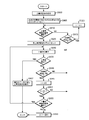
- 6 is a flowchart showing a flow of data overwriting processing in the tape recording apparatus 100 according to the present embodiment.
- the present invention will be described by taking an LTO (Linear Tape Open) standard tape recording apparatus as an example, but the application of the present invention is not limited to an LTO standard tape recording apparatus.
- the present invention relates to a tape recording apparatus capable of reading and writing data on a tape medium in which an empty data unit that can be distinguished from user data is written before a data unit (EOD in the LTO standard) indicating the end of user data. Any tape recording device can be applied.
- the LTO standard is an open format standard jointly developed by Hewlett-Packard, IBM, and Seagate (currently Quantum).
- the tape medium 10 has a plurality of bands 15 arranged along the longitudinal direction of the tape medium 10 from BOT (Beginning Of Tape) to EOT (End Of Tape).
- Servo tracks 20 for controlling the data writing position are provided on both sides of each of the plurality of bands 15 along the longitudinal direction.
- the band 15 has a plurality of data tracks 25 arranged along the longitudinal direction of the tape medium 10 as shown in FIG.
- the width in the short direction of the tape medium 10 in the data track 25 is a width in which data is written at a time by the tape recording apparatus.
- the data track 25 has a plurality of blocks 30 along the longitudinal direction of the tape medium 10.
- the block 30 includes a plurality of data sets (Data Set, DS) 35.
- a tape recording device compliant with the LTO standard reads and writes data in units of DS35. That is, in the LTO standard, a data unit that is a unit of data reading / writing is called DS35. As shown in FIG. 1C, the DS 35 is assigned a consecutive number, that is, a DS number, in order from the head position of the tape medium 10.
- the DS 35 includes two areas, a data area and a Data Set Information Table (DSIT). As the name suggests, user data is recorded in the data area, and management information for managing the DS 35 is recorded in the DSIT area.
- DSIT Data Set Information Table
- the management information included in the DSIT includes a DS number and TapeWitePass (TWP).
- TWP is information used to determine whether or not the data is old. The value is 1 when the data is recorded for the first time, and the value is incremented by 1 each time the data is overwritten thereafter.
- FIG. 2 a method for determining whether data is new or old by TWP and a problem in conventional data overwriting will be described.
- data is recorded in the order of DS # N-1, DS # N,... In a certain part (position 200 to position 206) of the tape medium 10.
- Each DS is data that is written to the tape medium 10 for the first time, and therefore the TWP value is 1.
- FIG. 2B shows the result of overwriting data from the beginning of the DS # N recorded at the position 202 on the tape medium 10 in the state shown in FIG.
- DS # N, DS # N + 1, and DS # N + 2 recorded in the positions 202 to 206 are overwritten data, their TWP values are all incremented by one.
- the present invention firstly provides redundancy in a place that is expected to be a place where future data is overwritten on the tape medium 10. That is, since the sequential access device is based on the fact that data is appended from the end of the data already recorded on the tape medium 10, as shown in FIG. One or more empty DSs that can be distinguished from user data are written in advance at the end of a series of DSs, that is, before the EOD.
- NULL DS An empty DS (NULL DS) is not returned to the host device even if it is read at the time of reading.
- the number of DSs to be written to provide redundancy is obtained from experience and is, for example, two. Even if about two NULL DSs are written at the end of writing, the influence on the writing performance is very small. Further, since this NULL DS is overwritten later by user data unless an error occurs when data is overwritten, the capacity of the tape medium 10 is not reduced by the NULL DS.
- the data overwriting method according to the embodiment of the present invention for such a tape medium 10 will be described later with reference to FIGS.
- FIG. 3 shows an example of the hardware configuration of the tape recording apparatus 100 to which the embodiment of the present invention is applied.
- the tape recording apparatus 100 includes an interface 110, a buffer 120, a recording channel 130, a read / write head 140, a control unit 150, a positioning unit 160, a motor driver 170, and a motor 180.
- the communication interface 110 communicates with a host device via a network. For example, the communication interface 110 receives, from the host device, a write command that instructs writing of data to the tape medium 10 and user data to be written. The communication interface 110 receives a read command for instructing data read from the tape medium 10 from the host device. Further, the communication interface 110 also receives a position designation command for designating a writing position and a reading position from the host device. If data has already been recorded at a position where data writing is instructed, it can be said that the write command is an overwrite command.
- the write command corresponds to the Write command
- the read command corresponds to the Read command
- the position designation command corresponds to the Locate command
- the buffer 120 is a memory that temporarily stores data to be written to the tape medium 10 and data read from the tape medium 10.
- the buffer 120 is configured by a DRAM (Dynamic Random Access Memory).
- the recording channel 130 is a communication path used for writing data stored in the buffer 120 to the tape medium 10 or temporarily storing data read from the tape medium 10 in the buffer 120.
- the read / write head 140 has a data read / write element, and writes data to the tape medium 10 and reads data from the tape medium 10.
- the read / write head 140 according to the present embodiment also has a servo read element, and reads a signal from a servo track provided on the tape medium 10.
- the positioning unit 160 instructs the read / write head 140 to move in the short direction (width direction) of the tape medium 10.
- the motor driver 170 drives the motor 180.
- the control unit 150 performs overall control of the tape recording apparatus 100. That is, the control unit 150 controls writing and overwriting of data on the tape medium 10 and reading of data from the tape medium 10 according to commands received by the communication interface 110. Further, the control unit 150 controls the positioning unit 160 in accordance with the read servo track signal. Further, the control unit 150 controls the operation of the motor 180 via the positioning unit 160 and the motor driver 170. The motor driver 170 may be directly connected to the control unit 150. The data overwrite control by the control unit 150 according to the embodiment of the present invention will be described later with reference to FIGS.
- Such a control unit 150 is realized by a CPU, RAM, and ROM (not shown).
- the ROM causes the control unit 150 to provide the functions described above after startup, including a boot program executed by the CPU when the tape recording apparatus 100 is started up and a control program that controls overwriting of data according to the embodiment of the present invention. Store the program for The CPU executes these programs using the RAM.
- FIG. 4 shows an example of the functional configuration of the control unit 150 of the tape recording apparatus 100 according to the embodiment of the present invention.
- the control unit 150 includes a reception unit 400, a trial unit 405, a type determination unit 410, an overwrite execution unit 415, a result determination unit 420, an overwrite retry unit 425, and an error notification unit 430.
- the accepting unit 400 accepts information related to the overwrite start position and an overwrite request. Such information is transferred from the communication interface 110 to the control unit 150, that is, the reception unit 400. The information on the overwrite start position and the overwrite request received from the receiving unit 400 are then passed to the trial unit 405 described later.
- the trial unit 405 attempts to determine the data unit that is a data writing unit recorded on the tape medium 10, that is, the head position of the DS, based on the information regarding the overwrite start position passed from the reception unit 400.
- the head position of the DS that is the overwrite start position it is necessary to determine the detailed end position of the DS immediately before the DS. This is because existing valid data may be deleted.
- the reading of the signal from the servo track becomes unstable due to damage on the surface of the tape medium 10 or foreign matter such as dust, the detailed end position of the previous DS cannot be determined. As a result, the trial unit 405 cannot determine the leading position of the DS that is the overwrite start position.
- the trial unit 405 When the trial unit 405 cannot determine the DS start position as the overwrite start position, the trial unit 405 passes the DS number of the DS designated as the overwrite start position to the type determination unit 410 described later. On the other hand, when the trial unit 405 can determine the DS start position as the overwrite start position, the trial unit 405 passes the determined overwrite start position to the overwrite execution unit 415 described later.
- the type determination unit 410 is a DS that can be distinguished from user data by the DS recorded at the overwrite start position, that is, an empty DS (NULL DS). It is determined whether or not there is. For example, the type determination unit 410 reads such a determination from a flag indicating the type of the DS written in the DSIT. Instead, the type determination unit 410 may determine whether the DS is a NULL DS from information recorded other than the DSIT.
- the type determination unit 410 informs the trial unit 405 of the determination result.
- the trial unit 405 tries to determine the head of the next DS following the DS as a new overwrite start position in response to the determination result by the type determination unit 410 that it is a NULL DS.
- the type determination unit 410 responds to the failure of the determination of the beginning of the next DS by the trial unit 405, and whether the next DS is a NULL DS. Determine whether or not.
- the trial unit 405 again determines the start of the next DS following the next DS as the latest overwrite start position. Try.
- the process by the type determination unit 410 is repeatedly performed every time the determination of the head of the determination target DS by the trial unit 405 fails until it is determined that the determination target DS is not a NULL DS.
- the type determination unit 410 notifies the determination result to an error notification unit 430 described later.
- the tape recording apparatus 100 when the tape recording apparatus 100 according to the embodiment of the present invention cannot determine the designated overwrite start position, the DS recorded at the designated overwrite position is distinguished from the user data. On the condition that it is a possible NULL DS, it tries to continue overwriting by skipping the area. This is because if the DS recorded at the position where overwriting is specified is a NULL DS, even if the NULL DS remains on the tape medium 10, the remaining DS placed at the time of data reading is used by the user. This is because the data is not returned to the host device.
- the overwrite execution unit 415 executes overwriting from the confirmed overwrite start position in response to the successful determination of the overwrite start position by the trial unit 405.
- Data overwriting itself by the overwriting execution unit 415 is the same as data overwriting, that is, writing by a conventional tape recording apparatus. Note that the overwrite execution unit 415 holds the end position of the DS overwriting data before overwriting is started.
- the result determination unit 420 determines whether or not the overwrite by the overwrite execution unit 415 is successful. In other words, the result determination unit 420 confirms that when the DS is written at the overwrite start position of the tape medium 10 by the overwrite execution unit 415, the result determination unit 420 immediately confirms that the DS can be read, and determines whether the DS is recorded.
- the result determination unit 420 When the DS is correctly written, the result determination unit 420 notifies the overwrite execution unit 415 of the determination result that overwrite is successful. In this case, the overwrite execution unit 415 continues the overwrite process. On the other hand, if the DS is not written correctly, the result determination unit 420 notifies the determination result that the overwrite has failed to the overwrite retry unit 425 described later.
- the overwrite retry unit 425 follows the first DS to the overwrite execution unit 415 on condition that the first DS that is the overwrite failed DS is a NULL DS. Overwriting is tried again from the beginning of the second DS which is the next DS. On the other hand, if the first DS is not a NULL DS, the overwrite retry unit 425 informs the error notification unit 430, which will be described later, to that effect. Note that the overwrite execution unit 415 attempts to determine the position of the head of the second DS based on the DS end position where the overwrite has failed.
- the overwrite retry unit 425 permits the DS overwrite failure at the overwrite start position only once. This is due to the following reason. Normally, a DS partially overwritten is not a complete DS and is therefore recognized by the tape recording apparatus 100 as dust. However, there is a case where the DS in which this part is overwritten is accidentally read out by the tape recording apparatus 100. Here, if there is only one DS that is partially overwritten, there will be a DS that has the same DS number as that DS and a large TWP value immediately after that. The validity of the read DS can be immediately determined.
- the overwrite retry unit 425 permits a DS overwrite failure at the overwrite start position only once.
- the overwrite execution unit 415 fails to overwrite from the top of the second DS
- the determination result that the overwrite has failed is transmitted from the result determination unit 420 to the overwrite retry unit 425 again.
- the overwrite retry unit 425 notifies the error notification unit 430, which will be described later, of the determination result of the overwrite failure without permitting retry of the overwrite because it is the second overwrite failure.
- the error notification unit 430 In response to the determination by the type determination unit 410 that the DS is not a NULL DS, the error notification unit 430 notifies the host device of an error indicating that the overwriting has failed. The error notification unit 430 also notifies the host device of an error indicating that the overwriting has failed in response to receiving the determination result of overwriting failure from the overwriting retry unit 425.
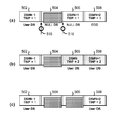
- FIG. 5A shows an example of the tape medium 10 in which the tape recording apparatus 100 according to the embodiment of the present invention has the effect.
- the accepting unit 400 accepts an overwrite request with the DS recorded at the position 504 as the overwrite start position for the tape medium 10 in such a state.
- the trial unit 405 succeeds in determining the head of the DS recorded at the position 504 (see the arrow 510) and the overwrite execution unit 415 succeeds in overwriting.
- FIG. 5B shows the tape medium 10 that has been overwritten in such a situation and has been overwritten. In this case, since overwriting is started from the position 504 initially designated as the overwriting start position, there is no DS that is old and therefore not valid in the tape medium 10 shown in FIG.
- the specified overwriting start position is unsuccessful (see arrow 512), but the DS recorded at position 504 is NULL DS by the type determination unit 410.
- the DS recorded at position 504 is NULL DS by the type determination unit 410.
- FIG. 6B shows the tape medium 10 that has been overwritten in such a situation and has been overwritten.
- the DS at position 504 is skipped and overwriting is started from the DS at position 506.
- the old DS remains at the position 504, but since this DS is a NULL DS, it is not returned to the host device even if it is read at the time of reading, and the validity judgment process is complicated. Absent.
- FIG. 7B shows the tape medium 10 that has been overwritten in such a situation and has been overwritten.
- the overwriting starts from the DS at the position 506, the DS at the partially overwritten position 504 remains as it is.
- the DS having the same DS number having a TWP having a value larger than the TWP of the DS exists at the position 506 immediately after the DS. Will not be complicated.
- the specified overwrite start position is unsuccessfully determined (see arrow 520), but the type determination unit 410 determines that the DS recorded at position 504 is NULL.
- the overwriting execution unit 415 fails to overwrite the DS at the position 506 and succeeds in overwriting the DS at the position 508 for the first time.
- FIG. 8B shows the tape medium 10 that has been overwritten in such a situation and has been overwritten.
- the DS at position 504 is skipped and overwriting is started from the DS at position 506.
- the old DS remains at the position 504, but since this DS is a NULL DS, it is not returned to the host device even if it is read at the time of reading, and the validity judgment process is complicated. Absent. Since overwriting starts from the DS at the position 508, the DS at the partially overwritten position 506 remains as it is.
- the flowchart shown in FIG. 9 starts when a data overwrite request is received from the host device (step 900).
- the tape recording apparatus 100 sets the DS number X of the DS for starting data overwriting to the counter i (step 905).
- the tape recording apparatus 100 tries to determine the head position of the DS with the DS number i (step 910).
- the tape recording apparatus 100 determines whether the DS with the DS number i is a NULL DS (step 915). When the DS of the DS number i is NULL DS (step 915: YES), the tape recording apparatus 100 increments the value of the counter i by 1 (step 920) and returns to step 910. As described above, when the overwrite start position cannot be determined, the tape recording apparatus 100 shifts the overwrite start position to the next DS and determines the start position as long as the DS where the start position cannot be determined is a NULL DS. Try.
- the tape recording apparatus 100 sets the value of the counter i to the overwrite start position A and holds the overwrite start position (step 925). Then, the tape recording apparatus 100 executes overwriting from the head position of the DS with the determined DS number i (step 930). The tape recording apparatus 100 determines whether or not the DS with the DS number i has been successfully overwritten (step 935). When the overwriting of the DS with the DS number i is successful (step 935: YES), the tape recording apparatus 100 continues the overwriting process until there is no remaining data (step 937). Then, the process ends.
- the tape recording apparatus 100 determines whether the DS for which the overwriting has failed is a NULL DS (S940). If it is NULL DS (S940: YES), the process proceeds to step 945, and the tape recording apparatus 100 increments the value of the counter i by 1, and is the counter i equal to the value obtained by incrementing the overwrite start position A by 1? It is determined whether or not (step 950).
- the tape recording apparatus 100 tries to determine the DS start position with the DS number i as a new overwrite start position (Ste 955).
- step 955 YES
- the process returns to step 930, and the tape recording apparatus 100 executes overwriting from the head position of the DS with the determined DS number i.
- the DS of the DS number i is not NULL DS in step 915, or if the DS that failed to overwrite in step 940 is not NULL DS, the value of the counter i increments the overwrite start position A by 1 in step 905.
- step 955 If it is not equal to the determined value, or if the head position of the DS with the DS number i cannot be determined in step 955, the process proceeds to step 960, and the tape recording apparatus 100 notifies the host device of an overwrite error. . Then, the process ends.
- the tape recording apparatus 100 it is not necessary to access the cartridge memory and check whether or not the overwrite start position is shifted when reading data. Therefore, when the cartridge memory cannot be accessed, the process for determining the validity of the data is not complicated. Further, considering that the process for determining the validity of the data becomes complicated when the cartridge memory cannot be accessed, it is not necessary to prohibit the retry of overwriting. According to the tape recording apparatus 100 according to the embodiment of the present invention, as long as it is a specific type of data unit that can be distinguished from user data, overwriting can be retried by skipping the unit.
Landscapes
- Engineering & Computer Science (AREA)
- Signal Processing (AREA)
- Signal Processing For Digital Recording And Reproducing (AREA)
- Digital Magnetic Recording (AREA)
- Management Or Editing Of Information On Record Carriers (AREA)
Abstract
Description
Claims (9)
- テープ記録装置であって、
上書き開始位置に関する情報及び上書き要求を受け付ける受付部と、
前記上書き開始位置に関する情報に基づいて、テープ媒体上に記録されたデータ書込み単位であるデータユニットの先頭の位置の確定を試みる試行部と、
前記試行部による前記確定の成功に応答して、確定された前記上書き開始位置から上書きを実行する上書き実行部と、
前記試行部による確定の失敗に応答して、前記上書き開始位置に記録されている前記データユニットが、空のデータユニットであるか否かを判定する種別判定部とを含み、
前記試行部は、前記データユニットが前記空のデータユニットであるとの判定に応答して、前記データユニットに続く次のデータユニットの先頭を前記上書き開始位置として、その上書き開始位置の確定を試みる
テープ記録装置。 - 前記種別判定部は、前記試行部による前記次のデータユニットの先頭の確定の失敗に応答して、前記次のデータユニットが、前記空のデータユニットであるか否かを判定し、
前記試行部は、前記次のデータユニットが前記空のデータユニットであるとの判定に応答して、前記次のデータユニットに続く更に次のデータユニットの先頭を前記上書き開始位置として、その上書き開始位置の確定を試みる、請求項1に記載のテープ記録装置。 - 前記種別判定部による処理は、判定対象のデータセットが前記空のデータユニットではないと判定するまで、前記試行部による前記判定対象のデータセットの先頭の確定が失敗する度に繰り返し行われる、請求項2に記載のテープ記録装置。
- 前記データユニットが前記空のデータユニットでないとの前記種別判定部による判定に応答して、エラーを通知するエラー通知部を更に含む、請求項1に記載のテープ記録装置。
- 前記上書き実行部による上書きが成功したか否かを判定する結果判定部と、
前記結果判定部による失敗との判定に応答して、上書きを失敗したデータユニットである第1データユニットが空のデータユニットであることを条件に、前記上書き実行部に第1データユニットに続く次のデータユニットである第2データユニットの先頭から上書きを再度試行させる上書き再試行部とを更に含む、請求項1に記載のテープ記録装置。 - 前記第1データユニットが空のデータユニットではない場合に、エラーを通知するエラー通知部を更に含む、請求項5に記載のテープ記録装置。
- 前記上書き再試行部は、前記結果判定部による失敗との2度目の判定に応答して、前記エラー通知部にエラーを通知させる、請求項6に記載のテープ記録装置。
- テープ記録装置におけるデータの上書きを制御する制御方法であって、
上書き開始位置に関する情報及び上書き要求を受け付けるステップと、
前記上書き開始位置に関する情報に基づいて、テープ媒体上に記録されたデータ書込み単位であるデータユニットの先頭の位置の確定を試みるステップと、
前記確定の成功に応答して、確定された前記上書き開始位置から上書きを実行するステップと、
前記確定の失敗に応答して、前記上書き開始位置に記録されている前記データユニットが、空のデータユニットであるか否かを判定するステップと、
前記データユニットが前記空のデータユニットであるとの判定に応答して、前記データユニットに続く次のデータユニットの先頭を前記上書き開始位置として、その上書き開始位置の確定を再度試みるステップと、
を含む制御方法。 - テープ記録装置においてデータの上書きを制御する制御プログラムであって、前記制御プログラムは、前記テープ記録装置に
上書き開始位置に関する情報及び上書き要求を受け付けるステップと、
前記上書き開始位置に関する情報に基づいて、テープ媒体上に記録されたデータ書込み単位であるデータユニットの先頭の位置の確定を試みるステップと、
前記確定の成功に応答して、確定された前記上書き開始位置から上書きを実行するステップと、
前記確定の失敗に応答して、前記上書き開始位置に記録されている前記データユニットが、空のデータユニットであるか否かを判定するステップと、
前記データユニットが前記空のデータユニットであるとの判定に応答して、前記データユニットに続く次のデータユニットの先頭を前記上書き開始位置として、その上書き開始位置の確定を再度試みるステップと
を実行させる、制御プログラム。
Priority Applications (7)
| Application Number | Priority Date | Filing Date | Title |
|---|---|---|---|
| EP09827436.8A EP2337025A4 (en) | 2008-11-21 | 2009-09-28 | METHOD FOR CONTROLLING THE OVERWRITING OF DATA BY A TAPE RECEIVING DEVICE, OVERWRITE CONTROL PROGRAM AND TAPE RECORDING DEVICE |
| CN200980145381.XA CN102216985B (zh) | 2008-11-21 | 2009-09-28 | 磁带记录装置中的数据覆写控制方法以及磁带记录装置 |
| JP2010539185A JP5179596B2 (ja) | 2008-11-21 | 2009-09-28 | テープ記録装置におけるデータの上書き制御方法、上書き制御プログラム、及びテープ記録装置 |
| KR1020117013865A KR101475993B1 (ko) | 2008-11-21 | 2009-09-28 | 테이프 기록 장치에 있어서 데이터의 덮어쓰기 제어 방법, 덮어쓰기 제어 프로그램, 및 테이프 기록 장치 |
| US13/128,875 US8416663B2 (en) | 2008-11-21 | 2009-09-28 | Overwrite control for data in a tape recording apparatus |
| US13/453,314 US8493829B2 (en) | 2008-11-21 | 2012-04-23 | Overwrite control method for data in tape recording apparatus, and tape recording apparatus |
| US13/772,231 US8687473B2 (en) | 2008-11-21 | 2013-02-20 | Overwrite control for data in tape recording apparatus |
Applications Claiming Priority (2)
| Application Number | Priority Date | Filing Date | Title |
|---|---|---|---|
| JP2008298477 | 2008-11-21 | ||
| JP2008-298477 | 2008-11-21 |
Related Child Applications (2)
| Application Number | Title | Priority Date | Filing Date |
|---|---|---|---|
| US13/128,875 A-371-Of-International US8416663B2 (en) | 2008-11-21 | 2009-09-28 | Overwrite control for data in a tape recording apparatus |
| US13/453,314 Continuation US8493829B2 (en) | 2008-11-21 | 2012-04-23 | Overwrite control method for data in tape recording apparatus, and tape recording apparatus |
Publications (1)
| Publication Number | Publication Date |
|---|---|
| WO2010058655A1 true WO2010058655A1 (ja) | 2010-05-27 |
Family
ID=42198094
Family Applications (1)
| Application Number | Title | Priority Date | Filing Date |
|---|---|---|---|
| PCT/JP2009/066781 Ceased WO2010058655A1 (ja) | 2008-11-21 | 2009-09-28 | テープ記録装置におけるデータの上書き制御方法、上書き制御プログラム、及びテープ記録装置 |
Country Status (7)
| Country | Link |
|---|---|
| US (3) | US8416663B2 (ja) |
| EP (1) | EP2337025A4 (ja) |
| JP (1) | JP5179596B2 (ja) |
| KR (1) | KR101475993B1 (ja) |
| CN (1) | CN102216985B (ja) |
| TW (1) | TW201025309A (ja) |
| WO (1) | WO2010058655A1 (ja) |
Families Citing this family (8)
| Publication number | Priority date | Publication date | Assignee | Title |
|---|---|---|---|---|
| CN102216985B (zh) | 2008-11-21 | 2014-04-09 | 国际商业机器公司 | 磁带记录装置中的数据覆写控制方法以及磁带记录装置 |
| US10282297B2 (en) * | 2017-02-08 | 2019-05-07 | Arm Limited | Read-with overridable-invalidate transaction |
| US10490218B1 (en) * | 2018-12-12 | 2019-11-26 | Amazon Technologies, Inc. | Concurrent read/write apparatus |
| US10818314B1 (en) | 2019-05-07 | 2020-10-27 | International Business Machines Corporation | Storing multiple instances of a housekeeping data set on a magnetic recording tape |
| US11176968B2 (en) | 2019-10-22 | 2021-11-16 | International Business Machines Corporation | Buffered writing of datasets and end longitudinal positions (end LPOSs) on a magnetic recording tape and validating the end LPOSs during reading of a later dataset thereafter |
| US12555598B2 (en) | 2023-11-07 | 2026-02-17 | International Business Machines Corporation | Symmetrical magnetic head and magnetic media for use with such head |
| US12148457B1 (en) | 2023-11-07 | 2024-11-19 | International Business Machines Corporation | Magnetic tape reuse across products |
| US12300284B1 (en) | 2023-11-07 | 2025-05-13 | International Business Machines Corporation | Single data band data storage |
Citations (4)
| Publication number | Priority date | Publication date | Assignee | Title |
|---|---|---|---|---|
| JPH1011908A (ja) * | 1996-03-12 | 1998-01-16 | Internatl Business Mach Corp <Ibm> | 磁気テープ媒体上にデータを分布させる方法およびデータ記憶装置 |
| JP2000285407A (ja) * | 1999-03-30 | 2000-10-13 | Fujitsu Ltd | 磁気テープのギャップずれ補正方法及び補正装置 |
| JP2007095231A (ja) * | 2005-09-30 | 2007-04-12 | Internatl Business Mach Corp <Ibm> | テープ記録装置のデータ書込み読取り制御方法 |
| JP2007265476A (ja) * | 2006-03-27 | 2007-10-11 | Fujitsu Ltd | 磁気テープ記録方法、磁気テープ記録装置及びコンピュータシステム |
Family Cites Families (19)
| Publication number | Priority date | Publication date | Assignee | Title |
|---|---|---|---|---|
| JPH0686609B2 (ja) | 1987-07-03 | 1994-11-02 | アデカ・ファインケミカル株式会社 | 射出成形用バインダ |
| JP2949747B2 (ja) * | 1990-01-21 | 1999-09-20 | ソニー株式会社 | 情報入力装置 |
| KR0167587B1 (ko) * | 1993-07-26 | 1999-03-20 | 모리시타 요이찌 | 디지털데이터기록재생장치 |
| US5999354A (en) * | 1995-05-02 | 1999-12-07 | Sony Corporation | Method and apparatus for recording/reproducing digital data and header information to/from areas of a tape record medium |
| US5710676A (en) * | 1996-03-12 | 1998-01-20 | International Business Machines Corporation | Pre-formatting of a storage media having fixed-size partitions |
| US6091698A (en) * | 1997-07-17 | 2000-07-18 | Hewlett Packard Company | Overwriting phase change media by varying data patterns |
| DE69841745D1 (de) * | 1997-10-21 | 2010-08-12 | Sony Corp | Aufzeichnungsgerät, Aufzeichnungsverfahren, Aufzeichnungsmedium |
| US6349356B2 (en) * | 1997-12-10 | 2002-02-19 | International Business Machines Corporation | Host-available device block map for optimized file retrieval from serpentine tape drives |
| JP4066289B2 (ja) * | 1999-01-08 | 2008-03-26 | パイオニア株式会社 | 情報記録方法 |
| CN1643606B (zh) | 2002-04-03 | 2010-06-30 | 国际商业机器公司 | 磁带存储设备、控制单元及控制方法 |
| JP4848419B2 (ja) * | 2006-03-03 | 2011-12-28 | インターナショナル・ビジネス・マシーンズ・コーポレーション | 読み出しエラーを処理する読出装置、システム、その方法及びプログラム |
| US7372657B2 (en) * | 2006-05-24 | 2008-05-13 | Sun Microsystems, Inc. | Mechanism for minimizing unload times in a tape drive system |
| US7483231B2 (en) * | 2006-10-26 | 2009-01-27 | International Business Machines Corporation | Apparatus, system, and method for redundant identification of a storage medium format |
| CN100504799C (zh) * | 2006-12-19 | 2009-06-24 | 英业达股份有限公司 | 以快照指针进行磁盘快照的方法 |
| JP4432088B2 (ja) * | 2007-02-28 | 2010-03-17 | インターナショナル・ビジネス・マシーンズ・コーポレーション | 一連の処理を所定の順序で行うための処理システム、ストレージ装置、及び方法 |
| JP4939364B2 (ja) * | 2007-10-17 | 2012-05-23 | インターナショナル・ビジネス・マシーンズ・コーポレーション | テープ記録装置のデータ書込みを制御する装置、方法及びプログラム |
| CN102216985B (zh) | 2008-11-21 | 2014-04-09 | 国际商业机器公司 | 磁带记录装置中的数据覆写控制方法以及磁带记录装置 |
| US8054572B2 (en) * | 2009-08-27 | 2011-11-08 | International Business Machines Corporation | Data storage drive overwrite protection of non-worm cartridges |
| JP5005023B2 (ja) * | 2009-12-25 | 2012-08-22 | インターナショナル・ビジネス・マシーンズ・コーポレーション | 読出し及び書込み命令の混在するコマンド列を受け取った場合の最適な書込みを実行するリニア記録方式の装置、その方法、及びプログラム。 |
-
2009
- 2009-09-28 CN CN200980145381.XA patent/CN102216985B/zh not_active Expired - Fee Related
- 2009-09-28 EP EP09827436.8A patent/EP2337025A4/en not_active Ceased
- 2009-09-28 WO PCT/JP2009/066781 patent/WO2010058655A1/ja not_active Ceased
- 2009-09-28 KR KR1020117013865A patent/KR101475993B1/ko not_active Expired - Fee Related
- 2009-09-28 JP JP2010539185A patent/JP5179596B2/ja not_active Expired - Fee Related
- 2009-09-28 US US13/128,875 patent/US8416663B2/en not_active Expired - Fee Related
- 2009-09-30 TW TW098133293A patent/TW201025309A/zh unknown
-
2012
- 2012-04-23 US US13/453,314 patent/US8493829B2/en not_active Expired - Fee Related
-
2013
- 2013-02-20 US US13/772,231 patent/US8687473B2/en not_active Expired - Fee Related
Patent Citations (4)
| Publication number | Priority date | Publication date | Assignee | Title |
|---|---|---|---|---|
| JPH1011908A (ja) * | 1996-03-12 | 1998-01-16 | Internatl Business Mach Corp <Ibm> | 磁気テープ媒体上にデータを分布させる方法およびデータ記憶装置 |
| JP2000285407A (ja) * | 1999-03-30 | 2000-10-13 | Fujitsu Ltd | 磁気テープのギャップずれ補正方法及び補正装置 |
| JP2007095231A (ja) * | 2005-09-30 | 2007-04-12 | Internatl Business Mach Corp <Ibm> | テープ記録装置のデータ書込み読取り制御方法 |
| JP2007265476A (ja) * | 2006-03-27 | 2007-10-11 | Fujitsu Ltd | 磁気テープ記録方法、磁気テープ記録装置及びコンピュータシステム |
Also Published As
| Publication number | Publication date |
|---|---|
| KR20110095364A (ko) | 2011-08-24 |
| US8493829B2 (en) | 2013-07-23 |
| US8687473B2 (en) | 2014-04-01 |
| TW201025309A (en) | 2010-07-01 |
| US20130163397A1 (en) | 2013-06-27 |
| EP2337025A1 (en) | 2011-06-22 |
| US8416663B2 (en) | 2013-04-09 |
| US20110222379A1 (en) | 2011-09-15 |
| JP5179596B2 (ja) | 2013-04-10 |
| KR101475993B1 (ko) | 2014-12-23 |
| JPWO2010058655A1 (ja) | 2012-04-19 |
| CN102216985B (zh) | 2014-04-09 |
| EP2337025A4 (en) | 2013-10-30 |
| US20120212848A1 (en) | 2012-08-23 |
| CN102216985A (zh) | 2011-10-12 |
Similar Documents
| Publication | Publication Date | Title |
|---|---|---|
| JP5179596B2 (ja) | テープ記録装置におけるデータの上書き制御方法、上書き制御プログラム、及びテープ記録装置 | |
| US8397136B2 (en) | Method for appending data to tape medium, and apparatus employing the same | |
| JP5172960B2 (ja) | テープ媒体にデータを書き込む装置及び方法 | |
| US9471255B2 (en) | Tape storage device and writing method therefor | |
| JP4131517B2 (ja) | テープ媒体にデータを書き込むための装置 | |
| US8081396B2 (en) | Processing data recorded on a tape medium | |
| JP5567260B2 (ja) | テープ媒体にデータを書き込む装置及び方法 | |
| US10009574B2 (en) | Transferring multiple records including video data to/from host | |
| US20040165304A1 (en) | Method, system, and program for maintaining a directory for data written to a storage medium | |
| JP5473269B2 (ja) | テープ媒体に記録されたデータを読み出す装置及び方法 | |
| JP4452269B2 (ja) | データ書込みパフォーマンスが改善されたテープ記録装置、及びそのデータ書込み制御方法 | |
| JP5044822B2 (ja) | データをテープ媒体に書き込む装置及び方法 |
Legal Events
| Date | Code | Title | Description |
|---|---|---|---|
| WWE | Wipo information: entry into national phase |
Ref document number: 200980145381.X Country of ref document: CN |
|
| 121 | Ep: the epo has been informed by wipo that ep was designated in this application |
Ref document number: 09827436 Country of ref document: EP Kind code of ref document: A1 |
|
| WWE | Wipo information: entry into national phase |
Ref document number: 2010539185 Country of ref document: JP |
|
| WWE | Wipo information: entry into national phase |
Ref document number: 2009827436 Country of ref document: EP |
|
| WWE | Wipo information: entry into national phase |
Ref document number: 13128875 Country of ref document: US |
|
| NENP | Non-entry into the national phase |
Ref country code: DE |
|
| WWE | Wipo information: entry into national phase |
Ref document number: 3609/CHENP/2011 Country of ref document: IN |
|
| ENP | Entry into the national phase |
Ref document number: 20117013865 Country of ref document: KR Kind code of ref document: A |