WO2010066840A1 - SPIRO AZEPANE-OXAZOLIDINONES AS Kv1.3 POTASSIUM CHANNEL BLOCKERS - Google Patents
SPIRO AZEPANE-OXAZOLIDINONES AS Kv1.3 POTASSIUM CHANNEL BLOCKERS Download PDFInfo
- Publication number
- WO2010066840A1 WO2010066840A1 PCT/EP2009/066836 EP2009066836W WO2010066840A1 WO 2010066840 A1 WO2010066840 A1 WO 2010066840A1 EP 2009066836 W EP2009066836 W EP 2009066836W WO 2010066840 A1 WO2010066840 A1 WO 2010066840A1
- Authority
- WO
- WIPO (PCT)
- Prior art keywords
- formula
- compound
- compounds
- diazaspiro
- oxa
- Prior art date
- Legal status (The legal status is an assumption and is not a legal conclusion. Google has not performed a legal analysis and makes no representation as to the accuracy of the status listed.)
- Ceased
Links
- 0 **(CCC1)CCC1(CN1*)OC1=O Chemical compound **(CCC1)CCC1(CN1*)OC1=O 0.000 description 1
Classifications
-
- C—CHEMISTRY; METALLURGY
- C07—ORGANIC CHEMISTRY
- C07D—HETEROCYCLIC COMPOUNDS
- C07D498/00—Heterocyclic compounds containing in the condensed system at least one hetero ring having nitrogen and oxygen atoms as the only ring hetero atoms
- C07D498/02—Heterocyclic compounds containing in the condensed system at least one hetero ring having nitrogen and oxygen atoms as the only ring hetero atoms in which the condensed system contains two hetero rings
- C07D498/10—Spiro-condensed systems
-
- A—HUMAN NECESSITIES
- A61—MEDICAL OR VETERINARY SCIENCE; HYGIENE
- A61K—PREPARATIONS FOR MEDICAL, DENTAL OR TOILETRY PURPOSES
- A61K31/00—Medicinal preparations containing organic active ingredients
- A61K31/33—Heterocyclic compounds
- A61K31/395—Heterocyclic compounds having nitrogen as a ring hetero atom, e.g. guanethidine or rifamycins
- A61K31/55—Heterocyclic compounds having nitrogen as a ring hetero atom, e.g. guanethidine or rifamycins having seven-membered rings, e.g. azelastine, pentylenetetrazole
-
- A—HUMAN NECESSITIES
- A61—MEDICAL OR VETERINARY SCIENCE; HYGIENE
- A61P—SPECIFIC THERAPEUTIC ACTIVITY OF CHEMICAL COMPOUNDS OR MEDICINAL PREPARATIONS
- A61P17/00—Drugs for dermatological disorders
- A61P17/06—Antipsoriatics
-
- A—HUMAN NECESSITIES
- A61—MEDICAL OR VETERINARY SCIENCE; HYGIENE
- A61P—SPECIFIC THERAPEUTIC ACTIVITY OF CHEMICAL COMPOUNDS OR MEDICINAL PREPARATIONS
- A61P19/00—Drugs for skeletal disorders
- A61P19/02—Drugs for skeletal disorders for joint disorders, e.g. arthritis, arthrosis
-
- A—HUMAN NECESSITIES
- A61—MEDICAL OR VETERINARY SCIENCE; HYGIENE
- A61P—SPECIFIC THERAPEUTIC ACTIVITY OF CHEMICAL COMPOUNDS OR MEDICINAL PREPARATIONS
- A61P25/00—Drugs for disorders of the nervous system
-
- A—HUMAN NECESSITIES
- A61—MEDICAL OR VETERINARY SCIENCE; HYGIENE
- A61P—SPECIFIC THERAPEUTIC ACTIVITY OF CHEMICAL COMPOUNDS OR MEDICINAL PREPARATIONS
- A61P29/00—Non-central analgesic, antipyretic or antiinflammatory agents, e.g. antirheumatic agents; Non-steroidal antiinflammatory drugs [NSAID]
-
- A—HUMAN NECESSITIES
- A61—MEDICAL OR VETERINARY SCIENCE; HYGIENE
- A61P—SPECIFIC THERAPEUTIC ACTIVITY OF CHEMICAL COMPOUNDS OR MEDICINAL PREPARATIONS
- A61P3/00—Drugs for disorders of the metabolism
- A61P3/04—Anorexiants; Antiobesity agents
-
- A—HUMAN NECESSITIES
- A61—MEDICAL OR VETERINARY SCIENCE; HYGIENE
- A61P—SPECIFIC THERAPEUTIC ACTIVITY OF CHEMICAL COMPOUNDS OR MEDICINAL PREPARATIONS
- A61P3/00—Drugs for disorders of the metabolism
- A61P3/08—Drugs for disorders of the metabolism for glucose homeostasis
- A61P3/10—Drugs for disorders of the metabolism for glucose homeostasis for hyperglycaemia, e.g. antidiabetics
-
- A—HUMAN NECESSITIES
- A61—MEDICAL OR VETERINARY SCIENCE; HYGIENE
- A61P—SPECIFIC THERAPEUTIC ACTIVITY OF CHEMICAL COMPOUNDS OR MEDICINAL PREPARATIONS
- A61P37/00—Drugs for immunological or allergic disorders
-
- A—HUMAN NECESSITIES
- A61—MEDICAL OR VETERINARY SCIENCE; HYGIENE
- A61P—SPECIFIC THERAPEUTIC ACTIVITY OF CHEMICAL COMPOUNDS OR MEDICINAL PREPARATIONS
- A61P37/00—Drugs for immunological or allergic disorders
- A61P37/02—Immunomodulators
-
- A—HUMAN NECESSITIES
- A61—MEDICAL OR VETERINARY SCIENCE; HYGIENE
- A61P—SPECIFIC THERAPEUTIC ACTIVITY OF CHEMICAL COMPOUNDS OR MEDICINAL PREPARATIONS
- A61P37/00—Drugs for immunological or allergic disorders
- A61P37/02—Immunomodulators
- A61P37/06—Immunosuppressants, e.g. drugs for graft rejection
Definitions
- Embodiments of the present invention relate to, and provide spiro azepane-oxazolidinones (1-oxa-3,8-diazaspiro- [4.6]undecan-2-ones) as voltage gated Kv1.3 potassium channel blockers, and intermediates, formulations and methods.
- Blockers of voltage gated Kv1.3 potassium channels based on the benzamidomethylene- cyclohexyl scaffold were disclosed in WO 00/25786 ⁇ Merck & Co., 2000), by Schmalhofer et al. ⁇ Biochemistry, 41, 7781-7794, 2002), by Baell ⁇ Expert Opin. Ther. Patents, 15(9), 1209-1220, 2005) and Harvey ⁇ J. Med. Chem., 49(4), 1433-1441, 2006).
- substituted spiro azepane-oxazolidinones (1-oxa-3,8-diazaspiro[4.6]undecan- 2-ones) are novel voltage gated Kv1.3 potassium channel blockers.
- This invention relates to a compound of formula (1 ), or a tautomer, stereoisomer, or a pharmacologically acceptable salt of any of the foregoing,
- R 1 and R 2 independently are hydrogen, deuterium, fluorine, CF 3 or alkyl(Ci -3 ), unsubstituted or substituted with one or more fluorine atoms, n is 0 (zero), 1 or 2,
- R 3 is chosen from halogen, alkyl(C 1-3 ), CF 3 , CN, NH 2 , NHAc, OH, OCH 3 , or OCF 3 - m is O (zero), 1 , 2 or 3,
- R 4 is chosen from halogen, alkyl(C 1-3 ), CF 3 , CN, NH 2 , NHAc, OH, OCH 3 , or OCF 3 , or
- the invention also relates, in some embodiments, to a compound of formula (1 ), or a tautomer, stereoisomer, or a pharmacologically acceptable salt of any of the foregoing, wherein R 1 and R 2 independently are hydrogen or methyl, n is 0 (zero) or 1 , R 3 is halogen, m is 1 or 2, and R 4 is chosen from halogen, CF 3 , CN, OCH 3, or OCF 3 , or (R 4 ) m and the phenyl ring to which it is attached form a naphthyl group.
- R 1 and R 2 independently are hydrogen, deuterium, fluorine, CF 3 or alkyl(C 1-3 ), unsubstituted or substituted with on or more fluorine atoms; n is 0 (zero), 1 or 2; R 3 is chosen from halogen, alkyl(C 1-3 ), CF 3 , CN, NH 2 , NHAc, OH, OCH 3 , or OCF 3 ; m is 0 (zero), 1 , 2 or 3; R 4 is chosen from halogen, alkyl(C 1-3 ), CF 3 , CN, NH 2 , NHAc, OH, OCH 3, or OCF 3 , or (R 4 ) m and the phenyl ring to which it is attached form a naphthyl group.
- the invention also relates, in some embodiments, to a compound of formula (1 ), or a tautomer, stereoisomer, or a pharmacologically acceptable salt of any of the foregoing, wherein R 1 and R 2 independently are hydrogen or methyl, n is O (zero) or 1 , R 3 is halogen, m is 1 or 2, and R 4 is chosen from halogen, CF 3 , CN, OCH 3, or OCF 3 , or (R 4 ) m and the phenyl ring to which it is attached form a naphthyl group.
- the invention also relates, in some embodiments, to a compound of formula (1 ) or a pharmacologically acceptable salt thereof, wherein the carbon atom attached to the nitrogen atom of the oxazolinone ring is the (R) or (S) enantiomer.
- the invention also relates, in some embodiments, to a compound of formula (1 ) or a pharmaco- logically acceptable salt thereof, wherein the central quaternary spiro-carbon atom is the (R) or (S) enantiomer.
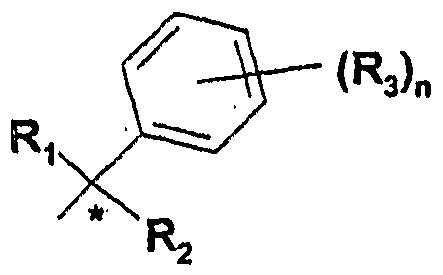
- R 1 , R 2 , n and R3 have the meanings as given above, such compounds being useful in the synthesis of compounds of formula (1 ).
- Another embodiment provides a process to prepare compounds of formula (1 ), comprising the steps of:
- R 1 and R 2 independently are hydrogen, deuterium, fluorine, CF 3 or alkyl(Ci_ 3 ), unsubstituted or substituted with on or more fluorine atoms; n is 0 (zero), 1 or 2; R 3 is chosen from halogen, alkyl(C 1-3 ), CF 3 , CN, NH 2 , NHAc, OH, OCH 3 , or OCF 3 ; m is 0 (zero), 1 , 2 or 3, to yield an aminoalcohol of formula 5:
- a medicament comprising a compound of formula (1 ), or a pharmacologically acceptable salt thereof.
- the invention also relates, in some embodiments, to a pharmaceutical composition
- a pharmaceutical composition comprising, at least one pharmaceutically acceptable carrier, or at least one pharmaceutically acceptable auxiliary substance, or a combination of two or more thereof; and a pharmacologically active amount of at least one compound of formula (1 ), or a pharmacologically acceptable salt thereof.
- Further embodiments provide one the use of a compound of formula (1 ), to prepare a pharmaceutical composition for treating diabetes, psoriasis, obesity, transplant rejection, and inflammatory neuropathies, including T-cell mediated autoimmune diseases such as rheumatoid arthritis and multiple sclerosis.
- inventions include: methods for treating diabetes, psoriasis, obesity, transplant rejection, and inflammatory neuropathies, including T-cell mediated autoimmune diseases such as rheumatoid arthritis and multiple sclerosis, the methods comprising administering to a patient in need of such treating a compound of formula (1 ).
- methods of blocking Kv1.3 potassium channels comprising administering to a subject in need thereof, an pharmaceutically effective amount of a compound of formula (1 );
- the invention further relates to combination therapies comprising a compound of formula (1 ), or a pharmaceutical composition or formulation comprising a compound of formula (1 ), is administered concurrently or sequentially or as a combined preparation with another therapeutic agent or agents, for treating one or more of the conditions listed above.
- Such other therapeutic agent(s) may be administered prior to, simultaneously with, or following the administration of the compounds of the invention.
- the invention also provides compounds, pharmaceutical compositions, kits and methods for treating diabetes, psoriasis, obesity, transplant rejection, and inflammatory neuropathies, including T-cell mediated autoimmune diseases such as rheumatoid arthritis and multiple sclerosis, the method comprising administering to a patient in need of such treating a compound of formula (1 ).
- the compounds of the invention possess Kv1.3 potassium channel blocking activity.
- the inhibiting activities of the compounds of the invention can be readily demonstrated, for example, using one or more of the assays described herein or known in the art.
- the invention also provides methods of preparing the compounds of the invention and the intermediates used in those methods.
- Isolation and purification of the compounds and intermediates described herein can be affected, if desired, by any suitable separation or purification procedure such as, for example, filtration, extraction, crystallization, column chromatography, thin-layer chromatography, thick- layer chromatography, preparative low or high-pressure liquid chromatography, or a combination of these procedures.
- suitable separation and isolation procedures can be taken from the preparations and examples. However, other equivalent separation or isolation procedures could, of course, also be used.
- the compounds of the present invention may contain one or more asymmetric centers and can thus occur as racemates and racemic mixtures, single enantiomers, diastereomeric mixtures and individual diastereomers.
- All compounds of the present invention do contain at least one chiral center at their quaternary spiro-carbon atom.
- a chiral with unknown absolute chirality is named 'conf 1 ' or 'configuration 1 ', and the other enantiomer 'conf 2' or 'configuration 2'.
- 'Conf(iguration) V and 'conf(iguration) 2' can correlate to the (R) or the (S) assignments respectively, on conversely to the (S) or (R).
- the molecule can have additional asymmetric centers. Each such asymmetric center will independently produce two optical isomers. All of the possible optical isomers, enantiomers and diastereomers, in mixtures and as pure or partially purified compounds, belong to this invention. The present invention comprehends all such isomeric forms of these compounds.
- Formula (1 ) shows the structure of the class of compounds without preferred stereochemistry. The independent syntheses of these optical isomers, or their chromatographic separations, may be achieved as known in the art by appropriate modification of the methodology disclosed therein.
- Racemic mixtures of the compounds can be separated into the individual enantiomers by methods well-known in the art, such as the coupling of a racemic mixture of compounds to an enantiomerically pure compound to form a diastereomeric mixture, followed by separation of the individual diastereomers by standard methods, such as fractional crystallization or chromatography.
- the racemic mixture of the compounds can also be separated directly by chromatographic methods utilizing chiral stationary phases, which are well-known in the art.
- any enantiomer of a compound may be obtained by stereoselective synthesis using optically pure starting materials or reagents of known configuration by methods well-known in the art.
- Cis and trans isomers of the compound of formula (1 ), or a pharmaceutically acceptable salt thereof, also belong to the invention, and this also applies to tautomers of the compounds of formula (1 ).
- the compounds of the invention may also be used as reagents or standards in the biochemical study of neurological function, dysfunction and disease.
- alkyl denotes a univalent saturated, branched or straight, hydrocarbon chain. Unless otherwise stated, such chains can contain from 1 to 18 carbon atoms.
- alkyl groups are methyl, ethyl, propyl, isopropyl, butyl, isobutyl, sec-butyl, te/f-butyl, pentyl, isopentyl, neopentyl, hexyl, isohexyl, heptyl, octyl, nonyl, decyl, undecyl, dodecyl, tridecyl, tetradecyl, pentadecyl, hexadecyl, heptadecyl, octadecyl, etc.
- the alkyl group When qualified 'lower', the alkyl group will contain from 1 to 6 carbon atoms. The same carbon content applies to the parent term 'alkane', and to derivative terms such as 'alkoxy'.
- the carbon content of various hydrocarbon containing moieties is indicated by a prefix designating the minimum and maximum number of carbon atoms in the moiety, i.e., the prefix C x-y defines the number of carbon atoms present from the integer "x" to the integer "y” inclusive.
- ⁇ lkyl(Ci -3 )' for example, includes methyl, ethyl, n-propyl or isopropyl
- 'alkyl(Ci -4 )' includes 'methyl, ethyl, n-propyl, isopropyl, n-butyl, 2-butyl, isobutyl or tert-butyl'.
- 'Halo' or 'Halogen' refers to chloro, fluoro, bromo or iodo;
- 'hetero' as in 'heteroalkyl, heteroaromatic', etc. includes containing one or more N, O or S atoms, 'heteroalkyl' includes alkyl groups with heteroatoms in any position, thus including N-bound O-bound or S-bound alkyl groups.
- substituted means that the specified group or moiety bears one or more substituents. Where any group may carry multiple substituents, and a variety of possible substituents can be provided, the substituents are independently selected, and need not to be the same.
- unsubstituted means that the specified group bears no substituents.
- substituents the term “independently” means that when more than one of such substituents are possible, they may be the same or different from each other.
- amino refers to a nitrogen atom that may be either terminal, or a linker between two other groups, wherein the group may be a primary, secondary or tertiary (two hydrogen atoms bonded to the nitrogen atom, one hydrogen atom bonded to the nitrogen atom and no hydrogen atoms bonded to the nitrogen atom, respectively) amine.
- the terms 'compound' or 'compounds' include tautomers, stereoisomers, or pharmacologically acceptable salts, also when not explicitly mentioned.
- 'Form' is a term encompassing all solids: polymorphs, solvates, amorphous forms.
- 'Crystal form' refers to various solid forms of the same compound, for example polymorphs, solvates and amorphous forms.
- 'Cocrystals' are multicomponent crystals with a unique lattice: new chemical species produced with neutral compounds.
- 'Amorphous forms' are non-crystalline materials with no long range order, and generally do not give a distinctive powder X-ray diffraction pattern.
- Different polymorphs usually have different X-ray diffraction patterns, solid state NMR spectra, infrared or Raman spectra, melting points, density, hardness, crystal shape, optical and electrical properties, stability, and solubility. Recrystallization solvent, rate of crystallization, storage temperature, and other factors may cause one crystal form to dominate.
- the present invention provides a pharmaceutical composition comprising at least one compound of formula (1 ), at least one pharmaceutically acceptable salt thereof, or a mixture of any of the foregoing, together with one or more pharmaceutically acceptable carriers thereof, and with or without one or more other therapeutic ingredients.
- the carrier(s) must be 'acceptable' in the sense of being compatible with the other ingredients of the formulation and not deleterious to the recipient thereof.
- composition encompasses a product comprising specified ingredients in predetermined amounts or proportions, as well as any product that results, directly or indirectly, from combining specified ingredients in specified amounts.
- this term encompasses a product comprising one or more active ingredients, and an optional carrier comprising inert ingredients, as well as any product that results, directly or indirectly, from combination, complexation or aggregation of any two or more of the ingredients, or from dissociation of one or more of the ingredients, or from other types of reactions or interactions of one or more of the ingredients.
- compositions are prepared by uniformly and intimately bringing the active ingredient into association with a liquid carrier or a finely divided solid carrier or both, and then, if necessary, shaping the product into the desired formulation.
- the pharmaceutical composition includes enough of the active object compound to produce the desired effect upon the progress or condition of diseases.
- the pharmaceutical compositions of the present invention encompass any composition made by admixing a compound of the present invention and a pharmaceutically acceptable carrier.
- pharmaceutically acceptable it is meant the carrier, diluent or excipient must be compatible with the other ingredients of the formulation and not deleterious to the recipient thereof.
- the term 'combination preparation' comprises both true combinations, meaning a compound of formula (1 ) and one or more other medicaments physically combined in one preparation such as a tablet or injection fluid, as well as 'kit-of-parts', comprising a compound of formula (1 ) and one or more other medicaments in separate dosage forms, together with instructions for use, with or without further means for facilitating compliance with the administration of the component compounds, e.g. label or drawings.
- the pharmacotherapy by definition is simultaneous.
- the contents of 'kit-of-parts' can be administered either simultaneously or at different time intervals.
- the potency of the compounds of the invention as inhibitors of voltage gated Kv1.3 channels was determined below. From the potency measured for a given compound of formula (1 ), one can estimate a theoretical lowest effective dose. At a concentration of the compound equal to twice the measured inhibition constant, nearly 100% of the Kv1.3 channels will be blocked by the compound. By converting that concentration to mg of compound per kg of patient one obtains a theoretical lowest effective dose, assuming ideal bioavailability.
- the typical daily dose of the active ingredients varies within a wide range and will depend on various factors such as the relevant indication, the route of administration, the age, weight and sex of the patient, and may be determined by a physician.
- total daily dose administration to a patient in single or individual doses may be in amounts, for example, from 0.001 to 10 mg/kg body weight daily, and more usually from 0.01 to 1 ,000 mg per day, of total active ingredients.
- Such dosages will be administered to a patient in need of treatment from one to three times each day, or as often as needed for efficacy, and for periods of at least two months, more typically for at least six months, or chronically.
- terapéuticaally effective amount refers to an amount of a therapeutic agent to treat a condition treatable by administrating a composition of the invention. That amount includes the amount sufficient to exhibit a detectable therapeutic or ameliorative response in a tissue system, animal or human. The effect may include, for example, treating the conditions listed herein.
- the precise pharmaceutically effective amount for a subject will depend upon the subject's size and health, the nature and extent of the condition being treated, recommendations of the treating physician (researcher, veterinarian, medical doctor or other clinician), and the therapeutics, or combination of therapeutics, selected for administration. Thus, it is not useful to specify an exact pharmaceutically effective amount in advance.
- a “pharmaceutical salt' refers to an acid:base complex containing an active pharmaceutical ingredient (API) along with additional non-toxic molecular species in the same crystal structure.
- pharmaceutically acceptable salt refers to those salts that are, within the scope of sound medical judgment, suitable for use in contact with the tissues of humans and lower animals without undue toxicity, irritation, allergic response, etc., and are commensurate with a reasonable benefit/risk ratio.
- Pharmaceutically acceptable salts are well-known in the art. They can be prepared in situ when finally isolating and purifying the compounds of the invention, or separately by reacting them with pharmaceutically acceptable non-toxic bases or acids, including inorganic or organic bases and inorganic or organic acids (Berge, S.
- Common cations used as counterions in pharmaceutically acceptable salts include: sodium, potassium, calcium, magnesium, lithium, zinc, aluminum, arginine, lysine, histidine, triethylamine, ethanolamine, triethanolamine, ethilenediamine, meglumine, procaine and benzathine.
- the 'free base' form may be regenerated by contacting the salt with a base or acid, and isolating the parent compound in the conventional matter.
- the parent form of the compound differs from the various salt forms in certain physical properties, such as solubility in polar solvents, but otherwise the salts are equivalent to the parent form of the compound for the purposes of the present invention.
- treatment refers to any treatment of a human condition or disease, and includes: (1 ) inhibiting the disease or condition, i.e., arresting its development, (2) relieving the disease or condition, i.e., causing the condition to regress, or (3) stopping the symptoms of the disease.
- the term 'inhibit' includes its generally accepted meaning which includes restraining, alleviating, ameliorating, and slowing, stopping or reversing progression, severity, or a resultant symptom.
- medical therapy intendeds to include diagnostic and therapeutic regimens carried out in vivo or ex vivo on humans.
- Nuclear magnetic resonance spectra ( 1 H NMR and 13 C NMR, APT) were determined in the indicated solvent using a Bruker ARX 400 ( 1 H: 400 MHz, 13 C: 100 MHz) at 300 K, unless indicated otherwise.
- 19 F NMR and 13 C NMR experiments were carried out on a Varian Inova 500 spectrometer operating at 1 1.74 T (499.9 MHz for 1 H; 125.7 MHz for 13 C; 50.7 Mhz, 470.4 MHz for 19 F) using a 5 mm SW probe.
- the spectra were determined in deuterated chloroform or dichloromethane obtained from Cambridge Isotope Laboratories Ltd.
- Flash chromatography refers to purification using the indicated eluent and silica gel (either
- Reactions were monitored by using thin-layer chromatography (TLC) on silica coated plastic sheets (Merck precoated silica gel 60 F254) with the indicated eluent. Spots were visualised by UV light (254 nm) or I 2 .
- TLC thin-layer chromatography
- Mass spectra and accurate masses were measured with a JEOL JMS-SX/SX 102 A Tandem Mass Spectrometer using Fast Atom Bombardement (FAB). A resolving power of 10,000 (10% valley definition) for high resolution FAB mass spectrometry was used.
- FAB Fast Atom Bombardement
- the LC-MS system consisted of a Waters 1525 ⁇ pump, connected to a Waters 2777 auto sampler.
- the LC methode was:
- the auto sampler had a 10 ⁇ l injection loop, the injection volume was 10 ⁇ l.
- the auto sampler was connected to a Waters Sunfire C18 30 * 4.6 mm column with 2.5 urn particles.
- the column was thermostated at room temperature (about 23 0 C).
- the column was connected to a Waters 2996 PDA.
- the wavelength was scanned from 240 to 320 nm.
- the resolution was 1.2 nm and the sampling rate was 20 Hz.
- the flow was split 1 :1 and connected to a Waters 2424 ELSD, having the following parameters: gas pressure: 40 psi; data rate 20 points/sec; gain 500; time constant 0.2 sec; nebulizer mode cooling; drift tube 50 0 C.
- V Multiplier
- CHO cells expressing either Kv1.3, Kv1.5 or hERG ion channels were cultured at 37°C/5% CO 2 . Prior to the experiment cells were seeded in 96 well plates (Corning, New York, USA) and cultured for 24h. Medium was discarded and replaced by 10O ⁇ l Rb buffer (1 OmM HEPES pH 7.4, 5mM Glucose, 5mM RbCI, 14OmM NaCI , 2mM CaCI 2 , 1 mM MgSO 4 ) per well.
- the supernatant was transferred in a 96 well plate and the Rb concentration was measured using a ZEEnit Atomic Absorption Spectrometer (Analytik Jena, Germany). By comparing control vs. depolarized w/o compound, the ion channel inhibition was determined. Measurements were done in triplicate.
- Hexahydro-(1 H)-azepin-4-one 1 can be synthesized from the commercially available piperidin-4- one as described (Roglans, A. et al., Synth. Commun. 22, 1249-1258, 1992; Ashwood, M.S. et al., J. Chem. Soc. Perkin Trans. I, 641-644, 1995).
- the amino group in 1 can be protected with a protecting group, such as the te/f-Butyloxycarboyl (t-Boc) or benzyloxycarbonyl (Cbz) group to give a compound of formula 2.
- such a protection is carried out in the presence of a base, such as aqueous sodium hydroxide or triethylamine in an inert organic solvent such as dichloromethane or methanol.
- a base such as aqueous sodium hydroxide or triethylamine
- the carbonyl moiety in compound 2 can be epoxidized to afford the epoxide 3, applying trimethyl sulfoxonium iodide in the presence of a base, such as sodium hydride.
- a base such as sodium hydride
- the title compounds can be prepared by aminolysis of the spiro-epoxide 3 with amines of general formula 4, followed by ring-closure of the formed aminoalcohols 5 using a carbonylating agent such as carbonyldiimidazole (CDI).
- a carbonylating agent such as carbonyldiimidazole (CDI).
- CDI carbonyldiimidazole
- This ring-closure reaction wherein a [4,6]diazaspiro- undecane spirocycle is formed — in general proceeds more sluggishly in comparison with the analogous reaction for the formation of [4.5]diazaspirodecanes ⁇ Caroon, J. M. et al., J. Med. Chem. 1981, 24, 1320-1328).
- traces of remaining starting material 4 are removed from the aminoalcohol 5 in order to increase the yields of the conversion of 5 to 6.
- the resulting spiro oxazolidinones 6 can be deprotected by acidic hydrolysis of the f-butyloxy carbonyl group, a or ng compoun s o genera ormu a .
- ompoun o genera ormu a can e reac e with a acetylating agent such as an acid chloride derivative of general formula 8 to give a compound of formula 9.
- a reaction is preferably carried out in an inert organic solvent such as acetonitrile in the presence of a base such as DIPEA or triethylami ⁇ e in order to scavenge the liberated hydrochloric acid.
- compositions may be obtained using procedures well-known in the art, for example by mixing a compound of the present invention with a suitable acid, for instance an inorganic acid or an organic acid.
- a suitable acid for instance an inorganic acid or an organic acid.
- EXAMPLE 4 SYNTHESES OF INTERMEDIATES t-Butyl hexahydr ⁇ ' 4-oxo-(4H)-azepine-1-carboxylate (2): hexahydro-(4H)-azepin-4-one monohydrochloride (30 g, 200 mmol) was suspended in methanol (200 mL) and cooled to. O 0 C. Sodium hydroxide (8.02g, 200 mmol) dissolved in water (20 ml) was added dropwise. Di-tert- butyl dicarbonate (Boc anhydride) (43.76g, 200 mmol) was added portionwise and the resulting solution was stirred for 16 hours.
- Boc anhydride Di-tert- butyl dicarbonate
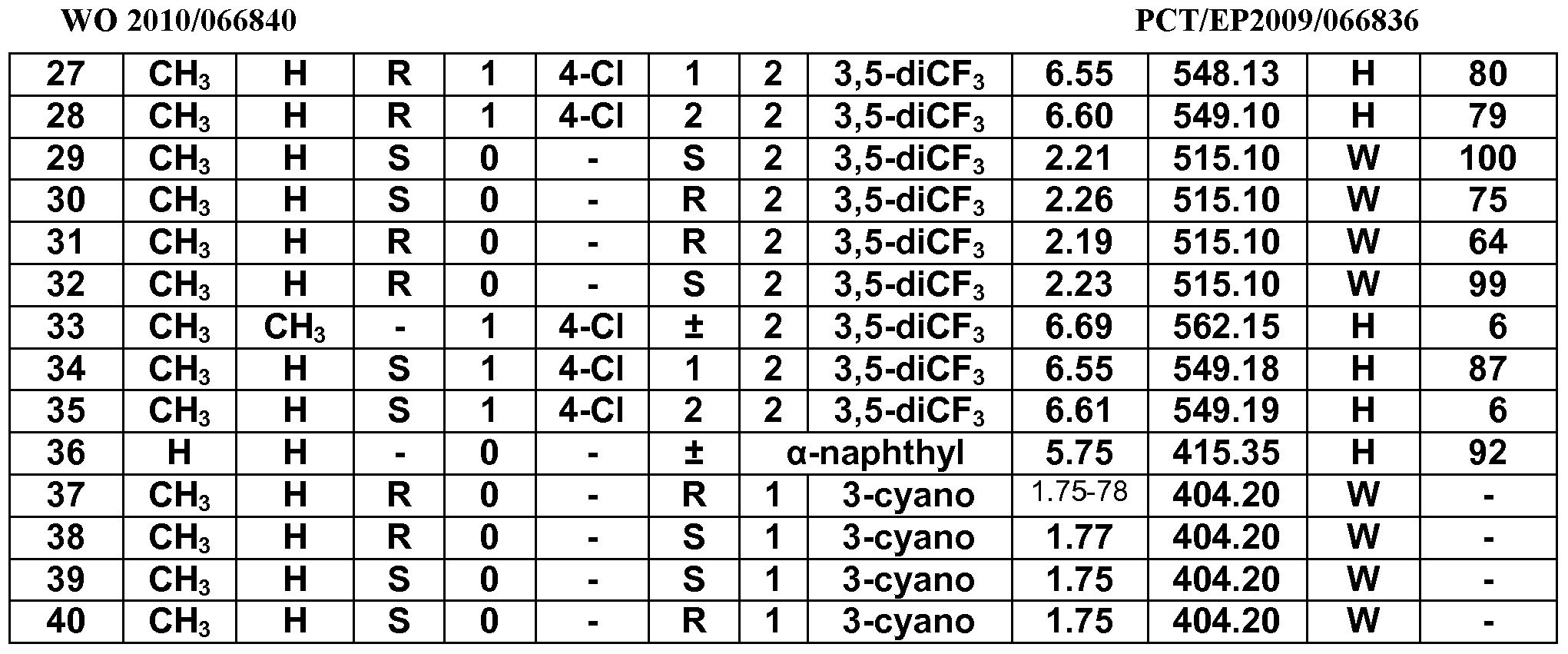
- Compounds 6a and 6b are mixtures of two diastereoisomers that were separated by chiral column chromatography.
- the protocol (“Method A”) for the R-mixture 6a was different from the protocol (“Method B”) used for the S-mixture 6b.
- Detection was performed by using UV at a ⁇ of 220 nm. The separation was checked by a chiral analytical system based on Chiralpak AD-H ® , 5 ⁇ (250*4.6 mm) and the same mobile phase (detection UV, ⁇ 210 nm) @ 1 ml/min and room temperature. The retention times from the analytical system were 5.2 and 8.2 min respectively
- VCD Vibrational Circular Dichroism
- EXAMPLE 6 PHARMACEUTICAL PREPARATIONS
- compounds of formula (1 ) are formulated into pharmaceutical compositions, which are novel embodiments of the invention because they contain the compounds, more particularly specific compounds disclosed herein.
- Types of pharmaceutical compositions that may be used include: tablets, chewable tablets, capsules (including microcapsules), solutions, parenteral solutions, ointments (creams and gels), suppositories, suspensions, and other types disclosed herein, or are apparent to a person skilled in the art from the specification and general knowledge in the art.
- the active ingredient for instance, may also be in the form of an inclusion complex in cyclodextrins, their ethers or their esters.
- compositions are used for oral, intravenous, subcutaneous, tracheal, bronchial, intranasal, pulmonary, transdermal, buccal, rectal, parenteral or other ways to administer.
- the pharmaceutical formulation contains at least one compound of formula (1 ) in admixture with at least one pharmaceutically acceptable adjuvant, diluent and/or carrier.
- the total amount of active ingredients can be in the range of from about 0.1% (w/w) to about 95% (w/w) of the formulation, such as from 0.5% to 50% (w/w) and preferably from 1 % to 25% (w/w). In some embodiments, the amount of active ingredient can be greater than about 95% (w/w) or less than about 0.1 % (w/w).
- the compounds of the invention can be brought into forms suitable for administration by means of usual processes using auxiliary substances such as liquid or solid, powdered ingredients, such as the pharmaceutically customary liquid or solid fillers and extenders, solvents, emulsifiers, lubricants, flavorings, colorings and/or buffer substances.
- auxiliary substances such as liquid or solid, powdered ingredients, such as the pharmaceutically customary liquid or solid fillers and extenders, solvents, emulsifiers, lubricants, flavorings, colorings and/or buffer substances.
- auxiliary substances include magnesium carbonate, titanium dioxide, lactose, saccharose, sorbitol, mannitol and other sugars or sugar alcohols, talc, lactoprotein, gelatin, starch, amylopectin, cellulose and its derivatives, animal and vegetable oils such as fish liver oil, sunflower, groundnut or sesame oil, polyethylene glycol and solvents such as, for example, sterile water and mono- or polyhydric alcohols such as glycerol, as well as with disintegrating agents and lubricating agents such as magnesium stearate, calcium stearate, sodium stearyl fumarate and polyethylene glycol waxes.
- the mixture may then be processed into granules or pressed into tablets.
- a tablet can be prepared using the ingredients below:
- the components are blended and compressed to form tablets each weighing 230 mg.
- the active ingredients may be separately premixed with the other non-active ingredients, before being mixed to form a formulation.
- the active ingredients may also be mixed with each other, before being mixed with the non-active ingredients to form a formulation.
- Soft gelatin capsules may be prepared with capsules containing a mixture of the active ingredients of the invention, vegetable oil, fat, or other suitable vehicle for soft gelatin capsules.
- Hard gelatin capsules may contain granules of the active ingredients.
- Hard gelatin capsules may also contain the active ingredients together with solid powdered ingredients such as lactose, saccharose, sorbitol, mannitol, potato starch, corn starch, amylopectin, cellulose derivatives or gelatin.
- Dosage units for rectal administration may be prepared (i) in the form of suppositories that contain the active substance mixed with a neutral fat base; (ii) in the form of a gelatin rectal capsule that contains the active substance in a mixture with a vegetable oil, paraffin oil or other suitable vehicle for gelatin rectal capsules; (iii) in the form of a ready-made micro enema; or (iv) in the form of a dry micro enema formulation to be reconstituted in a suitable solvent just prior to administration.
- Liquid preparations may be prepared in the form of syrups, elixirs, concentrated drops or suspensions, e.g. solutions or suspensions containing the active ingredients and the remainder consisting, for example, of sugar or sugar alcohols and a mixture of ethanol, water, glycerol, propylene glycol and polyethylene glycol. If desired, such liquid preparations may contain coloring agents, flavoring agents, preservatives, saccharine and carboxymethyl cellulose or other thickening agents. Liquid preparations may also be prepared in the form of a dry powder, reconstituted with a suitable solvent prior to use. Solutions for parenteral administration may be prepared as a solution of a formulation of the invention in a pharmaceutically acceptable solvent.
- solutions for parenteral administration may also be prepared as a dry preparation, reconstituted with a suitable solvent before use.
- formulations and 'kits of parts' comprising one or more containers filled with one or more of the ingredients of a pharmaceutical composition of the invention, for use in medical therapy.
- container(s) can be various written materials such as instructions for use, or a notice in the form prescribed by a governmental agency regulating the manufacture, use or sale of pharmaceuticals products, which notice reflects approval by the agency of manufacture, use, or sale for human or veterinary administration.
- formulations of the present invention in the manufacture of medicaments for use in treating a condition in which blocking of voltage gated Kv1.3 potassium channel is required or desired, and methods of medical treatment, comprise the administration of a therapeutically effective total amount of at least one compound of formula (1 ) to a patient suffering from, or susceptible to, a condition in which blocking of voltage gated Kv1.3 potassium channel is required or desired.
Landscapes
- Health & Medical Sciences (AREA)
- Chemical & Material Sciences (AREA)
- Organic Chemistry (AREA)
- Medicinal Chemistry (AREA)
- Pharmacology & Pharmacy (AREA)
- Veterinary Medicine (AREA)
- Public Health (AREA)
- General Health & Medical Sciences (AREA)
- Animal Behavior & Ethology (AREA)
- Life Sciences & Earth Sciences (AREA)
- General Chemical & Material Sciences (AREA)
- Engineering & Computer Science (AREA)
- Nuclear Medicine, Radiotherapy & Molecular Imaging (AREA)
- Chemical Kinetics & Catalysis (AREA)
- Bioinformatics & Cheminformatics (AREA)
- Immunology (AREA)
- Diabetes (AREA)
- Rheumatology (AREA)
- Hematology (AREA)
- Obesity (AREA)
- Pain & Pain Management (AREA)
- Transplantation (AREA)
- Biomedical Technology (AREA)
- Neurology (AREA)
- Neurosurgery (AREA)
- Child & Adolescent Psychology (AREA)
- Emergency Medicine (AREA)
- Endocrinology (AREA)
- Orthopedic Medicine & Surgery (AREA)
- Physical Education & Sports Medicine (AREA)
- Dermatology (AREA)
- Epidemiology (AREA)
- Pharmaceuticals Containing Other Organic And Inorganic Compounds (AREA)
- Nitrogen Condensed Heterocyclic Rings (AREA)
- Plural Heterocyclic Compounds (AREA)
- Nitrogen And Oxygen Or Sulfur-Condensed Heterocyclic Ring Systems (AREA)
Abstract
Description


Claims




Priority Applications (11)
| Application Number | Priority Date | Filing Date | Title |
|---|---|---|---|
| AU2009324358A AU2009324358A1 (en) | 2008-12-12 | 2009-12-10 | Spiro azepane-oxazolidinones as Kv1.3 potassium channel blockers |
| CN2009801494792A CN102333782A (en) | 2008-12-12 | 2009-12-10 | Spiro azepane-oxazolidinones as kv1.3 potassium channel blockers |
| MX2011006221A MX2011006221A (en) | 2008-12-12 | 2009-12-10 | SPIRO AZEPANE-OXAZOLIDINONES AS Kv1.3 POTASSIUM CHANNEL BLOCKERS. |
| JP2011540106A JP2012511546A (en) | 2008-12-12 | 2009-12-10 | Spiroazepan-oxazolidinone as a Kv1.3 potassium channel blocker |
| EA201170801A EA201170801A1 (en) | 2008-12-12 | 2009-12-10 | SPYROAZEPANOXAZOLIDINONES AS KALIUS CHANNEL BLOCKERS Kv1.3 |
| EP09765127A EP2376501A1 (en) | 2008-12-12 | 2009-12-10 | SPIRO AZEPANE-OXAZOLIDINONES AS Kv1.3 POTASSIUM CHANNEL BLOCKERS |
| US13/133,042 US8575148B2 (en) | 2008-12-12 | 2009-12-10 | Spiro azepane-oxazolidinones as Kv1.3 potassium channel blockers |
| BRPI0922714A BRPI0922714A2 (en) | 2008-12-12 | 2009-12-10 | compound, process for preparing a compound, drug, use of a compound, and pharmaceutical composition |
| CA2743557A CA2743557A1 (en) | 2008-12-12 | 2009-12-10 | Spiro azepane-oxazolidinones as kv1.3 potassium channel blockers |
| IL212948A IL212948A0 (en) | 2008-12-12 | 2011-05-17 | SPIRO AZEPANE-OXAZOLIDINONES AS Kv1.3 POTASSIUM CHANNEL BLOCKERS |
| ZA2011/04041A ZA201104041B (en) | 2008-12-12 | 2011-05-31 | Spiro azepane-oxazolidinones as kv1.3 potassium channel blockers |
Applications Claiming Priority (4)
| Application Number | Priority Date | Filing Date | Title |
|---|---|---|---|
| US12191308P | 2008-12-12 | 2008-12-12 | |
| EP08171421 | 2008-12-12 | ||
| US61/121,913 | 2008-12-12 | ||
| EP08171421.4 | 2008-12-12 |
Publications (1)
| Publication Number | Publication Date |
|---|---|
| WO2010066840A1 true WO2010066840A1 (en) | 2010-06-17 |
Family
ID=40513443
Family Applications (1)
| Application Number | Title | Priority Date | Filing Date |
|---|---|---|---|
| PCT/EP2009/066836 Ceased WO2010066840A1 (en) | 2008-12-12 | 2009-12-10 | SPIRO AZEPANE-OXAZOLIDINONES AS Kv1.3 POTASSIUM CHANNEL BLOCKERS |
Country Status (20)
| Country | Link |
|---|---|
| US (1) | US8575148B2 (en) |
| EP (1) | EP2376501A1 (en) |
| JP (1) | JP2012511546A (en) |
| KR (1) | KR20110110165A (en) |
| CN (1) | CN102333782A (en) |
| AR (1) | AR074558A1 (en) |
| AU (1) | AU2009324358A1 (en) |
| BR (1) | BRPI0922714A2 (en) |
| CA (1) | CA2743557A1 (en) |
| CO (1) | CO6390036A2 (en) |
| CR (1) | CR20110302A (en) |
| DO (1) | DOP2011000164A (en) |
| EA (1) | EA201170801A1 (en) |
| EC (1) | ECSP11011118A (en) |
| IL (1) | IL212948A0 (en) |
| MX (1) | MX2011006221A (en) |
| PE (1) | PE20110772A1 (en) |
| TW (1) | TW201026708A (en) |
| WO (1) | WO2010066840A1 (en) |
| ZA (1) | ZA201104041B (en) |
Cited By (6)
| Publication number | Priority date | Publication date | Assignee | Title |
|---|---|---|---|---|
| WO2013052507A1 (en) * | 2011-10-03 | 2013-04-11 | The Regents Of The University Of California | TREATMENT OF OBESITY AND OBESITY-RELATED DISORDERS BY PHARMACOLOGICAL TARGETING OF Kv1.3 POTASSIUM CHANNELS |
| WO2016146575A1 (en) | 2015-03-13 | 2016-09-22 | 4Sc Discovery Gmbh | Kv1.3 inhibitors and their medical application |
| WO2016146583A1 (en) | 2015-03-13 | 2016-09-22 | 4Sc Discovery Gmbh | Kv1.3 inhibitors and their medical application |
| US9611232B2 (en) | 2012-10-29 | 2017-04-04 | Hoffmann-La Roche Inc. | Oxazolidinone and imidazolidinone compounds |
| WO2020252130A1 (en) * | 2019-06-12 | 2020-12-17 | Lieber Institute, Inc. | Kv11.1-3.1 inhibiting methods and compositions |
| EP4415706A4 (en) * | 2021-10-13 | 2025-08-27 | Vanqua Bio Inc | Small molecule modulators of glucocerebrosidase activity and uses thereof |
Families Citing this family (4)
| Publication number | Priority date | Publication date | Assignee | Title |
|---|---|---|---|---|
| CN109053751A (en) * | 2018-08-30 | 2018-12-21 | 成都海博锐药业有限公司 | FXR regulator with spirane structure |
| CN114728177B (en) * | 2019-10-07 | 2025-06-24 | D·E·萧尔研究有限责任公司 | Aryl heterobicyclic compounds as Kv1.3 potassium Shaker channel blockers |
| JP7822940B2 (en) * | 2019-10-07 | 2026-03-03 | ディー.イー.ショウ リサーチ,エルエルシー | Arylmethylene heterocycles as Kv1.3 potassium shaker channel blockers |
| CN111574537B (en) * | 2020-05-20 | 2022-11-15 | 成都药明康德新药开发有限公司 | Synthesis method of tert-butyl-8-oxa-3,11-diazaspiro [5.6] dodecane-3-formylate |
Citations (1)
| Publication number | Priority date | Publication date | Assignee | Title |
|---|---|---|---|---|
| WO2000025786A1 (en) * | 1998-10-30 | 2000-05-11 | Merck & Co., Inc. | Heterocyclic potassium channel inhibitors |
-
2009
- 2009-12-09 TW TW098142079A patent/TW201026708A/en unknown
- 2009-12-09 AR ARP090104760A patent/AR074558A1/en unknown
- 2009-12-10 US US13/133,042 patent/US8575148B2/en not_active Expired - Fee Related
- 2009-12-10 EA EA201170801A patent/EA201170801A1/en unknown
- 2009-12-10 KR KR1020117016047A patent/KR20110110165A/en not_active Withdrawn
- 2009-12-10 PE PE2011001198A patent/PE20110772A1/en not_active Application Discontinuation
- 2009-12-10 EP EP09765127A patent/EP2376501A1/en not_active Withdrawn
- 2009-12-10 BR BRPI0922714A patent/BRPI0922714A2/en not_active IP Right Cessation
- 2009-12-10 CN CN2009801494792A patent/CN102333782A/en active Pending
- 2009-12-10 WO PCT/EP2009/066836 patent/WO2010066840A1/en not_active Ceased
- 2009-12-10 AU AU2009324358A patent/AU2009324358A1/en not_active Abandoned
- 2009-12-10 JP JP2011540106A patent/JP2012511546A/en active Pending
- 2009-12-10 MX MX2011006221A patent/MX2011006221A/en not_active Application Discontinuation
- 2009-12-10 CA CA2743557A patent/CA2743557A1/en not_active Abandoned
-
2011
- 2011-05-17 IL IL212948A patent/IL212948A0/en unknown
- 2011-05-31 DO DO2011000164A patent/DOP2011000164A/en unknown
- 2011-05-31 ZA ZA2011/04041A patent/ZA201104041B/en unknown
- 2011-06-03 CR CR20110302A patent/CR20110302A/en not_active Application Discontinuation
- 2011-06-08 CO CO11070889A patent/CO6390036A2/en not_active Application Discontinuation
- 2011-06-09 EC EC2011011118A patent/ECSP11011118A/en unknown
Patent Citations (1)
| Publication number | Priority date | Publication date | Assignee | Title |
|---|---|---|---|---|
| WO2000025786A1 (en) * | 1998-10-30 | 2000-05-11 | Merck & Co., Inc. | Heterocyclic potassium channel inhibitors |
Non-Patent Citations (3)
| Title |
|---|
| BAEL J B: "Potassium channel blockers as immunosuppressants", EXPERT OPINION ON THERAPEUTIC PATENTS 200509 GB, vol. 15, no. 9, September 2005 (2005-09-01), pages 1209 - 1220, XP002523188, ISSN: 1354-3776 * |
| HARVEY ANDREW J ET AL: "A new class of blockers of the voltage-gated potassium channel Kv1.3 via modification of the 4- or 7-position of khellinone.", JOURNAL OF MEDICINAL CHEMISTRY 23 FEB 2006, vol. 49, no. 4, 23 February 2006 (2006-02-23), pages 1433 - 1441, XP002523187, ISSN: 0022-2623 * |
| SCHMALHOFER WILLIAM A ET AL: "Identification of a new class of inhibitors of the voltage-gated potassium channel, Kv1.3, with immunosuppressant properties.", BIOCHEMISTRY 18 JUN 2002, vol. 41, no. 24, 18 June 2002 (2002-06-18), pages 7781 - 7794, XP002523189, ISSN: 0006-2960 * |
Cited By (8)
| Publication number | Priority date | Publication date | Assignee | Title |
|---|---|---|---|---|
| WO2013052507A1 (en) * | 2011-10-03 | 2013-04-11 | The Regents Of The University Of California | TREATMENT OF OBESITY AND OBESITY-RELATED DISORDERS BY PHARMACOLOGICAL TARGETING OF Kv1.3 POTASSIUM CHANNELS |
| CN103987408A (en) * | 2011-10-03 | 2014-08-13 | 加州大学评议会 | Treatment of obesity and obesity-related disorders by pharmacological targeting of Kv1.3 potassium channels |
| US9878006B2 (en) | 2011-10-03 | 2018-01-30 | The Regents Of The University Of California | Treatment of obesity and obesity related disorders by pharmalogical targeting of Kv1.3 potassium channels |
| US9611232B2 (en) | 2012-10-29 | 2017-04-04 | Hoffmann-La Roche Inc. | Oxazolidinone and imidazolidinone compounds |
| WO2016146575A1 (en) | 2015-03-13 | 2016-09-22 | 4Sc Discovery Gmbh | Kv1.3 inhibitors and their medical application |
| WO2016146583A1 (en) | 2015-03-13 | 2016-09-22 | 4Sc Discovery Gmbh | Kv1.3 inhibitors and their medical application |
| WO2020252130A1 (en) * | 2019-06-12 | 2020-12-17 | Lieber Institute, Inc. | Kv11.1-3.1 inhibiting methods and compositions |
| EP4415706A4 (en) * | 2021-10-13 | 2025-08-27 | Vanqua Bio Inc | Small molecule modulators of glucocerebrosidase activity and uses thereof |
Also Published As
| Publication number | Publication date |
|---|---|
| BRPI0922714A2 (en) | 2016-01-05 |
| ZA201104041B (en) | 2012-11-28 |
| IL212948A0 (en) | 2011-07-31 |
| DOP2011000164A (en) | 2011-06-30 |
| ECSP11011118A (en) | 2011-07-29 |
| JP2012511546A (en) | 2012-05-24 |
| US20110237569A1 (en) | 2011-09-29 |
| EA201170801A1 (en) | 2011-12-30 |
| AR074558A1 (en) | 2011-01-26 |
| TW201026708A (en) | 2010-07-16 |
| CA2743557A1 (en) | 2010-06-17 |
| CR20110302A (en) | 2011-10-27 |
| KR20110110165A (en) | 2011-10-06 |
| MX2011006221A (en) | 2011-06-28 |
| CO6390036A2 (en) | 2012-02-29 |
| PE20110772A1 (en) | 2011-10-19 |
| AU2009324358A1 (en) | 2011-06-23 |
| CN102333782A (en) | 2012-01-25 |
| EP2376501A1 (en) | 2011-10-19 |
| US8575148B2 (en) | 2013-11-05 |
Similar Documents
| Publication | Publication Date | Title |
|---|---|---|
| US8575148B2 (en) | Spiro azepane-oxazolidinones as Kv1.3 potassium channel blockers | |
| US20250376483A1 (en) | Prodrugs of pan-kras inhibitors | |
| IL303036A (en) | Malt-1 modulators | |
| US10851116B2 (en) | Bicyclic amines as novel JAK kinase inhibitors | |
| CA2959747C (en) | Compounds as crth2 antagonist and uses thereof | |
| JP7667147B2 (en) | AMINOPYRIMIDINE COMPOUNDS AS TRIPLE CDK2/4/6 INHIBITORS | |
| US20220087996A1 (en) | Histone acetylase p300 inhibitor and use thereof | |
| WO2018130563A1 (en) | Novel amino-imidazopyridine derivatives as janus kinase inhibitors and pharmaceutical use thereof | |
| EP4259632B1 (en) | N-(imidazo[1,2-b]pyridazin-3-yl)-1-cyclohexyl-2h-indazole-5-carboxamide and n-(pyrazolo[1,5-a]pyrimidin-3-yl)-1-cyclohexyl-2h-indazole-5-carboxamide derivatives as irak4 inhibitors for the treatment of asthma | |
| US12258343B2 (en) | Method for preparing 2-[(3R)-3-methylmorpholin-4-yl]-4-[1-methyl-1H-pyrazol-5-yl)-8-(1H-pyrazol-5-yl)-1,7-naphthyridine | |
| US20250188079A1 (en) | Inhibiting cyclic amp-responsive element-binding protein (creb) | |
| US8729095B2 (en) | 3-(biaryloxy)propionic acid derivatives for prevention and/or treatment of thromboembolic diseases | |
| EP3720855B1 (en) | Imidazopyridine derivatives and the use thereof as medicament | |
| EP4327814A2 (en) | Morpholinyl, piperazinyl, oxazepanyl and diazepanyl o-glycoprotein-2-acetamido-2-deoxy-3-d-glucopyranosidase inhibitors | |
| WO2022117678A1 (en) | Octahydroisoquinolinyl derivatives | |
| HK1161258A (en) | Spiro azepane-oxazolidinones as kv1.3 potassium channel blockers | |
| RU2803284C1 (en) | Benzimidazole derivatives | |
| EA048052B1 (en) | DERIVATIVES OF N-(IMIDAZO[1,2-b]PYRIDAZINE-3-YL)-1-CYCLOHEXYL-2H-INDAZOLE-5-CARBOXAMIDE AND N-(PYRAZOLO[1,5-a]PYRIMIDINE-3-YL)-1-CYCLOHEXYL-2H-INDAZOLE-5-CARBOXAMIDE AS IRAK4 INHIBITORS FOR THE TREATMENT OF ASTHMA | |
| HK40102588B (en) | N-(imidazo[1,2-b]pyridazin-3-yl)-1-cyclohexyl-2h-indazole-5-carboxamide and n-(pyrazolo[1,5-a]pyrimidin-3-yl)-1-cyclohexyl-2h-indazole-5-carboxamide derivatives as irak4 inhibitors for the treatment of asthma | |
| HK40102588A (en) | N-(imidazo[1,2-b]pyridazin-3-yl)-1-cyclohexyl-2h-indazole-5-carboxamide and n-(pyrazolo[1,5-a]pyrimidin-3-yl)-1-cyclohexyl-2h-indazole-5-carboxamide derivatives as irak4 inhibitors for the treatment of asthma | |
| HK40123293A (en) | Malt1 inhibitors | |
| CN118546132A (en) | Sulfoxide imide compound and application thereof as LRRK2 protein kinase inhibitor | |
| KR20250069999A (en) | Substituted pyridazine-3-carboxamide compounds as TYK2 inhibitors | |
| HK40033047A (en) | Imidazopyridine derivatives and the use thereof as medicament | |
| HK40033047B (en) | Imidazopyridine derivatives and the use thereof as medicament |
Legal Events
| Date | Code | Title | Description |
|---|---|---|---|
| WWE | Wipo information: entry into national phase |
Ref document number: 200980149479.2 Country of ref document: CN |
|
| 121 | Ep: the epo has been informed by wipo that ep was designated in this application |
Ref document number: 09765127 Country of ref document: EP Kind code of ref document: A1 |
|
| WWE | Wipo information: entry into national phase |
Ref document number: 12011500804 Country of ref document: PH |
|
| WWE | Wipo information: entry into national phase |
Ref document number: 592496 Country of ref document: NZ |
|
| WWE | Wipo information: entry into national phase |
Ref document number: 2743557 Country of ref document: CA |
|
| WWE | Wipo information: entry into national phase |
Ref document number: 212948 Country of ref document: IL |
|
| WWE | Wipo information: entry into national phase |
Ref document number: 2011540106 Country of ref document: JP |
|
| WWE | Wipo information: entry into national phase |
Ref document number: CR2011-000302 Country of ref document: CR |
|
| WWE | Wipo information: entry into national phase |
Ref document number: 13133042 Country of ref document: US |
|
| WWE | Wipo information: entry into national phase |
Ref document number: 11070889 Country of ref document: CO |
|
| WWE | Wipo information: entry into national phase |
Ref document number: 2011001408 Country of ref document: CL Ref document number: 4001/CHENP/2011 Country of ref document: IN Ref document number: 001198-2011 Country of ref document: PE |
|
| WWE | Wipo information: entry into national phase |
Ref document number: MX/A/2011/006221 Country of ref document: MX |
|
| NENP | Non-entry into the national phase |
Ref country code: DE |
|
| WWE | Wipo information: entry into national phase |
Ref document number: 2009765127 Country of ref document: EP |
|
| ENP | Entry into the national phase |
Ref document number: 2009324358 Country of ref document: AU Date of ref document: 20091210 Kind code of ref document: A |
|
| WWE | Wipo information: entry into national phase |
Ref document number: DZP2011000439 Country of ref document: DZ |
|
| ENP | Entry into the national phase |
Ref document number: 20117016047 Country of ref document: KR Kind code of ref document: A |
|
| WWE | Wipo information: entry into national phase |
Ref document number: 201170801 Country of ref document: EA |
|
| WWE | Wipo information: entry into national phase |
Ref document number: a201108790 Country of ref document: UA |
|
| ENP | Entry into the national phase |
Ref document number: PI0922714 Country of ref document: BR Kind code of ref document: A2 Effective date: 20110606 |