WO2010071988A1 - Plasmalogen compounds, pharmaceutical compositions containing the same and methods for treating diseases of the aging - Google Patents
Plasmalogen compounds, pharmaceutical compositions containing the same and methods for treating diseases of the aging Download PDFInfo
- Publication number
- WO2010071988A1 WO2010071988A1 PCT/CA2009/001853 CA2009001853W WO2010071988A1 WO 2010071988 A1 WO2010071988 A1 WO 2010071988A1 CA 2009001853 W CA2009001853 W CA 2009001853W WO 2010071988 A1 WO2010071988 A1 WO 2010071988A1
- Authority
- WO
- WIPO (PCT)
- Prior art keywords
- compound
- ppi
- chch
- group
- pharmaceutically acceptable
- Prior art date
- Legal status (The legal status is an assumption and is not a legal conclusion. Google has not performed a legal analysis and makes no representation as to the accuracy of the status listed.)
- Ceased
Links
- 0 C[C@](C*(CCCC1C[C@](C*)CC1)C(C)(C)C1CCCCC1)C(C)(C)C Chemical compound C[C@](C*(CCCC1C[C@](C*)CC1)C(C)(C)C1CCCCC1)C(C)(C)C 0.000 description 7
- YSDMYBZPCDNZEN-UHFFFAOYSA-N CC(CC(C[N](C)(C)C)SC(C)=O)=O Chemical compound CC(CC(C[N](C)(C)C)SC(C)=O)=O YSDMYBZPCDNZEN-UHFFFAOYSA-N 0.000 description 2
- IYJRDJISNCCFMB-UHFFFAOYSA-N C[N](C)(C)CCO[O](C)(C)(O)=O Chemical compound C[N](C)(C)CCO[O](C)(C)(O)=O IYJRDJISNCCFMB-UHFFFAOYSA-N 0.000 description 2
- UDPWTGFLPHHVQM-UHFFFAOYSA-N CC(CC(CN(C)C)O)=O Chemical compound CC(CC(CN(C)C)O)=O UDPWTGFLPHHVQM-UHFFFAOYSA-N 0.000 description 1
- PWXUNKYFCQAKJS-UHFFFAOYSA-N CC(CC(CN)OC(C)=O)=O Chemical compound CC(CC(CN)OC(C)=O)=O PWXUNKYFCQAKJS-UHFFFAOYSA-N 0.000 description 1
- FMWPQZPFBAHHMB-UHFFFAOYSA-N CC(NC(CSCCCO)C(O)=O)=O Chemical compound CC(NC(CSCCCO)C(O)=O)=O FMWPQZPFBAHHMB-UHFFFAOYSA-N 0.000 description 1
- RNVYQYLELCKWAN-UHFFFAOYSA-N CC1(C)OC(CO)CO1 Chemical compound CC1(C)OC(CO)CO1 RNVYQYLELCKWAN-UHFFFAOYSA-N 0.000 description 1
- CVSVTCORWBXHQV-UHFFFAOYSA-N CN(CC(O)=O)C(N)=N Chemical compound CN(CC(O)=O)C(N)=N CVSVTCORWBXHQV-UHFFFAOYSA-N 0.000 description 1
- UWKFESMFEBQMAG-APPZFPTMSA-N OC(CCC[C@H](C1)[C@@]11SSCC1)=O Chemical compound OC(CCC[C@H](C1)[C@@]11SSCC1)=O UWKFESMFEBQMAG-APPZFPTMSA-N 0.000 description 1
Classifications
-
- C—CHEMISTRY; METALLURGY
- C07—ORGANIC CHEMISTRY
- C07C—ACYCLIC OR CARBOCYCLIC COMPOUNDS
- C07C323/00—Thiols, sulfides, hydropolysulfides or polysulfides substituted by halogen, oxygen or nitrogen atoms, or by sulfur atoms not being part of thio groups
- C07C323/50—Thiols, sulfides, hydropolysulfides or polysulfides substituted by halogen, oxygen or nitrogen atoms, or by sulfur atoms not being part of thio groups containing thio groups and carboxyl groups bound to the same carbon skeleton
- C07C323/51—Thiols, sulfides, hydropolysulfides or polysulfides substituted by halogen, oxygen or nitrogen atoms, or by sulfur atoms not being part of thio groups containing thio groups and carboxyl groups bound to the same carbon skeleton having the sulfur atoms of the thio groups bound to acyclic carbon atoms of the carbon skeleton
- C07C323/57—Thiols, sulfides, hydropolysulfides or polysulfides substituted by halogen, oxygen or nitrogen atoms, or by sulfur atoms not being part of thio groups containing thio groups and carboxyl groups bound to the same carbon skeleton having the sulfur atoms of the thio groups bound to acyclic carbon atoms of the carbon skeleton the carbon skeleton being further substituted by nitrogen atoms, not being part of nitro or nitroso groups
- C07C323/58—Thiols, sulfides, hydropolysulfides or polysulfides substituted by halogen, oxygen or nitrogen atoms, or by sulfur atoms not being part of thio groups containing thio groups and carboxyl groups bound to the same carbon skeleton having the sulfur atoms of the thio groups bound to acyclic carbon atoms of the carbon skeleton the carbon skeleton being further substituted by nitrogen atoms, not being part of nitro or nitroso groups with amino groups bound to the carbon skeleton
- C07C323/59—Thiols, sulfides, hydropolysulfides or polysulfides substituted by halogen, oxygen or nitrogen atoms, or by sulfur atoms not being part of thio groups containing thio groups and carboxyl groups bound to the same carbon skeleton having the sulfur atoms of the thio groups bound to acyclic carbon atoms of the carbon skeleton the carbon skeleton being further substituted by nitrogen atoms, not being part of nitro or nitroso groups with amino groups bound to the carbon skeleton with acylated amino groups bound to the carbon skeleton
-
- C—CHEMISTRY; METALLURGY
- C07—ORGANIC CHEMISTRY
- C07D—HETEROCYCLIC COMPOUNDS
- C07D339/00—Heterocyclic compounds containing rings having two sulfur atoms as the only ring hetero atoms
- C07D339/02—Five-membered rings
- C07D339/04—Five-membered rings having the hetero atoms in positions 1 and 2, e.g. lipoic acid
-
- A—HUMAN NECESSITIES
- A61—MEDICAL OR VETERINARY SCIENCE; HYGIENE
- A61K—PREPARATIONS FOR MEDICAL, DENTAL OR TOILETRY PURPOSES
- A61K31/00—Medicinal preparations containing organic active ingredients
- A61K31/185—Acids; Anhydrides, halides or salts thereof, e.g. sulfur acids, imidic, hydrazonic or hydroximic acids
- A61K31/19—Carboxylic acids, e.g. valproic acid
- A61K31/20—Carboxylic acids, e.g. valproic acid having a carboxyl group bound to a chain of seven or more carbon atoms, e.g. stearic, palmitic, arachidic acids
- A61K31/202—Carboxylic acids, e.g. valproic acid having a carboxyl group bound to a chain of seven or more carbon atoms, e.g. stearic, palmitic, arachidic acids having three or more double bonds, e.g. linolenic
-
- A—HUMAN NECESSITIES
- A61—MEDICAL OR VETERINARY SCIENCE; HYGIENE
- A61K—PREPARATIONS FOR MEDICAL, DENTAL OR TOILETRY PURPOSES
- A61K31/00—Medicinal preparations containing organic active ingredients
- A61K31/33—Heterocyclic compounds
- A61K31/395—Heterocyclic compounds having nitrogen as a ring hetero atom, e.g. guanethidine or rifamycins
- A61K31/435—Heterocyclic compounds having nitrogen as a ring hetero atom, e.g. guanethidine or rifamycins having six-membered rings with one nitrogen as the only ring hetero atom
- A61K31/44—Non condensed pyridines; Hydrogenated derivatives thereof
- A61K31/445—Non condensed piperidines, e.g. piperocaine
-
- A—HUMAN NECESSITIES
- A61—MEDICAL OR VETERINARY SCIENCE; HYGIENE
- A61P—SPECIFIC THERAPEUTIC ACTIVITY OF CHEMICAL COMPOUNDS OR MEDICINAL PREPARATIONS
- A61P25/00—Drugs for disorders of the nervous system
-
- A—HUMAN NECESSITIES
- A61—MEDICAL OR VETERINARY SCIENCE; HYGIENE
- A61P—SPECIFIC THERAPEUTIC ACTIVITY OF CHEMICAL COMPOUNDS OR MEDICINAL PREPARATIONS
- A61P25/00—Drugs for disorders of the nervous system
- A61P25/14—Drugs for disorders of the nervous system for treating abnormal movements, e.g. chorea, dyskinesia
- A61P25/16—Anti-Parkinson drugs
-
- A—HUMAN NECESSITIES
- A61—MEDICAL OR VETERINARY SCIENCE; HYGIENE
- A61P—SPECIFIC THERAPEUTIC ACTIVITY OF CHEMICAL COMPOUNDS OR MEDICINAL PREPARATIONS
- A61P25/00—Drugs for disorders of the nervous system
- A61P25/28—Drugs for disorders of the nervous system for treating neurodegenerative disorders of the central nervous system, e.g. nootropic agents, cognition enhancers, drugs for treating Alzheimer's disease or other forms of dementia
-
- A—HUMAN NECESSITIES
- A61—MEDICAL OR VETERINARY SCIENCE; HYGIENE
- A61P—SPECIFIC THERAPEUTIC ACTIVITY OF CHEMICAL COMPOUNDS OR MEDICINAL PREPARATIONS
- A61P27/00—Drugs for disorders of the senses
- A61P27/02—Ophthalmic agents
-
- A—HUMAN NECESSITIES
- A61—MEDICAL OR VETERINARY SCIENCE; HYGIENE
- A61P—SPECIFIC THERAPEUTIC ACTIVITY OF CHEMICAL COMPOUNDS OR MEDICINAL PREPARATIONS
- A61P3/00—Drugs for disorders of the metabolism
- A61P3/06—Antihyperlipidemics
-
- A—HUMAN NECESSITIES
- A61—MEDICAL OR VETERINARY SCIENCE; HYGIENE
- A61P—SPECIFIC THERAPEUTIC ACTIVITY OF CHEMICAL COMPOUNDS OR MEDICINAL PREPARATIONS
- A61P35/00—Antineoplastic agents
-
- A—HUMAN NECESSITIES
- A61—MEDICAL OR VETERINARY SCIENCE; HYGIENE
- A61P—SPECIFIC THERAPEUTIC ACTIVITY OF CHEMICAL COMPOUNDS OR MEDICINAL PREPARATIONS
- A61P9/00—Drugs for disorders of the cardiovascular system
-
- A—HUMAN NECESSITIES
- A61—MEDICAL OR VETERINARY SCIENCE; HYGIENE
- A61P—SPECIFIC THERAPEUTIC ACTIVITY OF CHEMICAL COMPOUNDS OR MEDICINAL PREPARATIONS
- A61P9/00—Drugs for disorders of the cardiovascular system
- A61P9/10—Drugs for disorders of the cardiovascular system for treating ischaemic or atherosclerotic diseases, e.g. antianginal drugs, coronary vasodilators, drugs for myocardial infarction, retinopathy, cerebrovascula insufficiency, renal arteriosclerosis
-
- C—CHEMISTRY; METALLURGY
- C07—ORGANIC CHEMISTRY
- C07C—ACYCLIC OR CARBOCYCLIC COMPOUNDS
- C07C229/00—Compounds containing amino and carboxyl groups bound to the same carbon skeleton
- C07C229/02—Compounds containing amino and carboxyl groups bound to the same carbon skeleton having amino and carboxyl groups bound to acyclic carbon atoms of the same carbon skeleton
- C07C229/04—Compounds containing amino and carboxyl groups bound to the same carbon skeleton having amino and carboxyl groups bound to acyclic carbon atoms of the same carbon skeleton the carbon skeleton being acyclic and saturated
- C07C229/22—Compounds containing amino and carboxyl groups bound to the same carbon skeleton having amino and carboxyl groups bound to acyclic carbon atoms of the same carbon skeleton the carbon skeleton being acyclic and saturated the carbon skeleton being further substituted by oxygen atoms
-
- C—CHEMISTRY; METALLURGY
- C07—ORGANIC CHEMISTRY
- C07C—ACYCLIC OR CARBOCYCLIC COMPOUNDS
- C07C279/00—Derivatives of guanidine, i.e. compounds containing the group, the singly-bound nitrogen atoms not being part of nitro or nitroso groups
- C07C279/04—Derivatives of guanidine, i.e. compounds containing the group, the singly-bound nitrogen atoms not being part of nitro or nitroso groups having nitrogen atoms of guanidine groups bound to acyclic carbon atoms of a carbon skeleton
- C07C279/14—Derivatives of guanidine, i.e. compounds containing the group, the singly-bound nitrogen atoms not being part of nitro or nitroso groups having nitrogen atoms of guanidine groups bound to acyclic carbon atoms of a carbon skeleton being further substituted by carboxyl groups
-
- C—CHEMISTRY; METALLURGY
- C07—ORGANIC CHEMISTRY
- C07F—ACYCLIC, CARBOCYCLIC OR HETEROCYCLIC COMPOUNDS CONTAINING ELEMENTS OTHER THAN CARBON, HYDROGEN, HALOGEN, OXYGEN, NITROGEN, SULFUR, SELENIUM OR TELLURIUM
- C07F9/00—Compounds containing elements of Groups 5 or 15 of the Periodic Table
- C07F9/02—Phosphorus compounds
- C07F9/06—Phosphorus compounds without P—C bonds
- C07F9/08—Esters of oxyacids of phosphorus
- C07F9/09—Esters of phosphoric acids
- C07F9/10—Phosphatides, e.g. lecithin
- C07F9/106—Adducts, complexes, salts of phosphatides
Definitions
- the present invention relates to the synthesis and utility of novel chemical entities with useful biochemical, physiochemical, and clinical properties. More specifically, a series of 1-alkyl, 2-acyl glycerol derivatives are provided which can be used for the treatment or prevention of disease. The invention also relates to pharmaceutical compositions and kits incorporating such compounds.
- Subjects suffering from increased membrane cholesterol demonstrate an increased prevalence of neurodegenerative diseases (e.g. Alzheimer's, Parkinson's, multiple sclerosis and age- related macular degeneration), cognitive impairment, dementia, cancers (e.g. prostate, lung, breast, ovarian, and kidney), osteoporosis, bipolar disorder and vascular diseases (atherosclerosis, hypercholesterolemia).
- neurodegenerative diseases e.g. Alzheimer's, Parkinson's, multiple sclerosis and age- related macular degeneration
- cognitive impairment e.g. Alzheimer's, Parkinson's, multiple sclerosis and age- related macular degeneration
- dementia e.g. Alzheimer's, Parkinson's, multiple sclerosis and age- related macular degeneration
- cancers e.g. prostate, lung, breast, ovarian, and kidney
- osteoporosis e.g., bipolar disorder and vascular diseases (atherosclerosis, hypercholesterolemia).
- cholesterol accumulates in the brain membranes of Alzheimer's patients in a severity-dependent manner 12"14 .
- lowering membrane cholesterol has been shown to decrease the activities of beta- and gamma-secretases, blocking the pathogenic processing of beta-amyloid 15"16 .
- cholesterol binds to the transmembrane domain of amyloid precursor protein (APP), activating the trafficking of APP to cholesterol-rich membrane domains rich in beta- and gamma-secretases, resulting in amyloid-beta production 17 .
- APP amyloid precursor protein
- Synaptic membrane changes resulting from increased cholesterol may also be an important factor in the utilization of membrane phospholipids to support cholinergic neurotransmission (autocannibalism concept) 18 .
- oxysterols are cytotoxic (apoptosis and necrosis), pro-inflammatory, deplete GSH and induce phospholipidosis 23"26 .
- Diseases in which these toxic oxysterols might be involved include neurodegeneration (both neuronal and demyelinating), osteoporosis, age-related macular degeneration and cardiovascular diseases, particularly atherosclerosis 23 .
- the present invention relates to compounds and methods for treating diseases of aging associated with abnormal membrane cholesterol levels.
- the described compounds include novel plasmalogen precursors which decrease membrane free cholesterol levels and augment cholesterol esterification for transport from cell membranes. These compounds therefore are useful for reducing membrane cholesterol levels in subjects suffering from elevated membrane cholesterol levels.
- the compounds can also be used to treat or prevent diseases associated with increased membrane cholesterol such as neurodegenerative diseases (including but not limited to Alzheimer's disease, Parkinson's disease, multiple sclerosis and age-related macular degeneration), cognitive impairment, dementia, cancers (including but not limited to prostate, lung, breast, ovarian, and kidney cancer), osteoporosis, bipolar disorder and vascular diseases (including but not limited to atherosclerosis and hypercholesterolemia).
- these compounds are useful in the treatment of disorders resulting from abnormal genetic expression of cholesterol transport proteins, such as apolipoprotein E.
- plasmalogen precursors contain a glycerol backbone with an alkyl or alkenyl lipid substitution at sn-1 and an acyl lipid substitution at sn-2.
- a polar substituent is provided at sn-3 to improve pharmaceutical properties (such as to improve stability and/or bioavailability, or for formulation as a salt).
- the sn-3 substituent is cleaved by lipases and the resulting 1 -alkyl, 2-acyl glycerol or 1 -alkenyl, 2-acyl glycerol is then converted to plasmalogens in the endoplasmic reticulum, thereby bypassing the peroxisomal compartment which can demonstrate decreased function with ageing.
- Ri and R 2 can be the same or different; and are an alkyl or alkenyl hydrocarbon chain selected from Table 1 or 2; Table 1 : Alkyl and alkenyl hydrocarbon groups
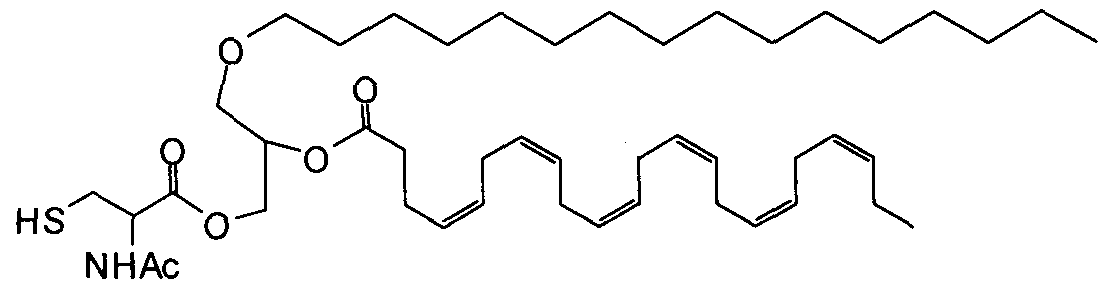
- R 3 is a group selected from fatty acids, carnitine, acetyl-D/L-carnitine, thiocarnitine, acetyl-D/L-thiocarnitine, creatine, norcarnitine, phosphocholine, lipoic acid, dihydrolipoic acid, phosphoethanolamine, phosphoserine, N-acetylcysteine, substituted or unsubstituted amino acids and groups of the structures shown below in Table 3.
- R 4 and R 5 are either the same or different and may be hydrogen or lower alkyl, for example methyl or ethyl;
- R 6 is hydrogen or lower alkyl, for example methyl or ethyl
- R 7 and Rg are either the same or different and may be hydrogen or lower alkyl, for example methyl and ethyl, and also including racemates or isolated stereoisomers and pharmaceutically acceptable salts or esters thereof.
- DHA docosahexaenoic acid
- the compound in another embodiment, can be 2-acetoxy-4-(2-((4Z,7Z,10Z,13Z,16Z,19Z)- docosa-4, 7,10, 13, 16, 19-hexaenoyloxy)-3-(hexadecyloxy)propoxy)-N,N,N-trimethyl-4- oxobutan-1-aminium.
- the compound may be (4Z, 7Z, 1OZ, 13Z, 16Z, 19Z)-I -(5-((R)- 1,2- dithiolan-3-yl)pentanoyloxy)-3-(hexadecyloxy)propan-2-yl docosa-4, 7, 10, 13, 16, 19- hexaenoate:
- the invention also includes pharmaceutical compositions comprising PPI-1009, PPI-1011, PPI-1014, or combinations thereof.
- certain embodiments of the compounds described herein are believed to increase plasmalogen levels and the hydrolysis of acetyl-L-carnitine from sn-3 position, and may participate in potential molecular mechanisms that include: (i) acetylation of -NH 2 and -OH functional groups in amino acids and N-terminal amino acids in peptides and proteins resulting in modification of their structure, dynamic, function and turnover; and/or (ii) acting as a molecular chaperone to larger molecules resulting in a change in the structure, molecular dynamics, and function of the larger molecule.
- Carnitine is important in the beta oxidation of fatty acids and the acetyl moiety can be used to maintain acetyl-CoA levels.
- Acetyl-L-carnitine (ALCAR) actions include modulation of: (i) brain energy and phospholipid metabolism; (iii) cellular macromolecules, including neurotrophic factors and hormones; (iii) synaptic morphology; and (iv) synaptic transmission of multiple neurotransmitters.
- a method of treating or preventing diseases of aging mediated by plasmalogen deficiency comprising administering to a patient in need thereof an effective amount of a compound or composition as described above.
- a method of treating diseases of aging associated with increased membrane cholesterol, increased amyloid and decreased plasmalogen levels comprising administering to a patient in need thereof, an effective amount of a compound or composition as described above.
- the invention also relates to a process for preparing a compound according to the structure of formula II:
- the blocking agent may be a silane blocking agent, for instance a tert-butyldimethylsilyl halide which then gives rise to R9 being a tert- butyldimethylsilyl group.
- the nucleophilic catalyst may be DMAP
- the base may be triethylamine
- the solvent may comprise dimethylformamide (DMF) and CH 2 Cl 2 .
- a solution including the compound of formula III, the nucleophilic catalyst, and the base in the appropriate solvent at from 0 to 5 0 C prior to addition of the blocking agent, followed by addition of the blocking agent and then carrying out the reaction at a temperature of from about 15 to about 25 0 C, for example at about 20 0 C.
- the reaction will then preferably be allowed to proceed to completion, which may be up to 20 hours.
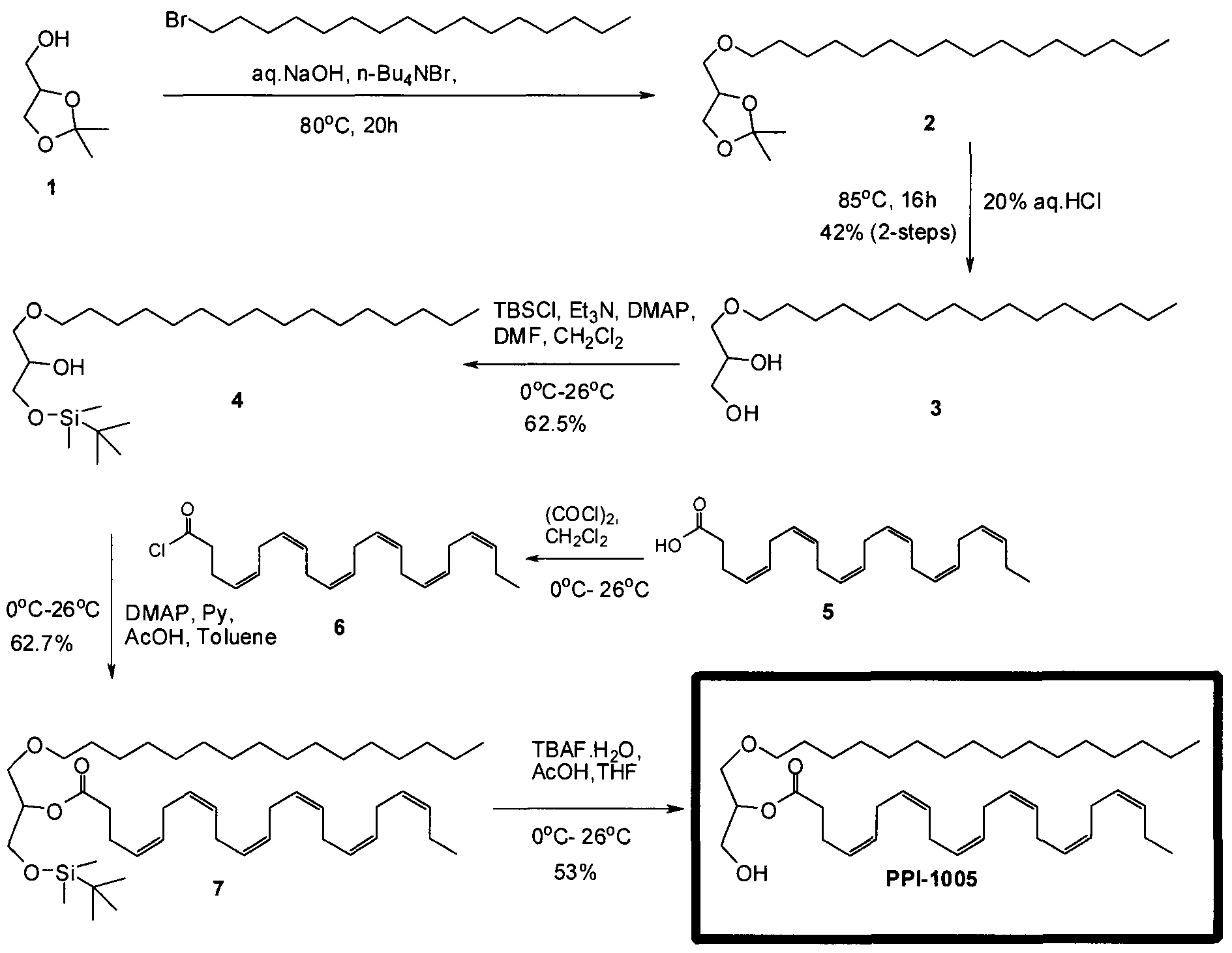
- FIGURE 1 shows the general experimental procedure for preparation of PPI- 1009: 2- acetoxy-4-(2-((4Z,7Z,10Z,13Z,16Z,19Z)-docosa-4, 7,10, 13, 16, 19-hexaenoyloxy)-3- (hexadecyloxy)propoxy)-N,N,N-trimethyl-4-oxobutan- 1 -aminium, in accordance with an embodiment of the present invention.
- FIGURE 3 shows (A) a time course of PPI- 1009 (10 ⁇ M) incorporation into plasmalogens and lack of effect on cellular levels of chimyl alcohol or the associated alkenyl-acyl-glycerol (B) of N-ReI cells (0, 6, 12, 24, 48 and 72 hr).
- B alkenyl-acyl-glycerol
- FIGURE 4 shows (A) the concentration-dependent (72 hr) increase of DHA plasmalogens in CHO cells with PPI-1005 and PPI- 1009. While chimyl alcohol increased DHA-plasmalogens in N-ReI cells there was no effect in CHO cells (B). Cellular plasmalogens were quantitated by LC-MS and expressed relative to CHO controls or N-ReI controls.
- FIGURE 5 shows the concentration response for the decrease in membrane cholesterol in N- ReI cells after a 48 hr incubation with 16:0(sn-l alkyl)/DHA(sn-2 acyl) glycerol (PLM-05). Note that cholesterol levels are significantly elevated (p ⁇ 0.05) in NReI cells relative to CHO cells and that at 20 ⁇ M (PLM-05) decreases membrane free cholesterol and increases membrane cholesterol esters (p ⁇ 0.05).
- the fatty acid substitutions at sn-2 also underwent deacylation and reacylation to form the associated plasmalogens with 20:4, 18:3, 18:2 and 18:1 at sn-2.
- Cellular plasmalogens were quantitated by LC-MS/MS and normalized relative to N-ReI cells treated with vehicle.
- FIGURE 7 shows that membrane cholesterol is increased in mutant N-ReI cells relative to control CHO cells.
- Membrane cholesterol in N-ReI cells is decreased (p ⁇ 0.05) after a 48 hr incubation (20 ⁇ M) with plasmalogen precursors possessing either palmitic (16:0) or stearic (18:0) acid at sn-1 in combination with unsaturated fatty acids, particularly DHA, at sn-2.
- free DHA was ineffective in altering membrane free cholesterol levels.
- the diacyl analog (16:0*:DHA glycerol) was inactive.
- PPI-1009 (16:0/DHA/ ALCAR) produced the most robust decreases in free cholesterol and augmentation of esterified cholesterol.
- V vehicle.
- FIGURE 8 shows the decrease (p ⁇ 0.04) in membrane cholesterol in HEK293 cells after a 48 hr incubation with 20 ⁇ M 16:0(sn-l alkyl)/DHA(sn-2 acyl) glycerol, 18:0/DHA glycerol, or 16:0/18:3 glycerol.
- 16:0/18:1 glycerol, 16:0/18:2 glycerol, 16:0/20:4 glycerol and free DHA were ineffective in altering membrane free cholesterol levels.
- the diacyl analog (16:0*:DHA glycerol) was inactive.
- FIGURE 9 shows the concentration response for the decrease in membrane cholesterol in HEK293 cells after a 48 hr incubation with 16:0(sn-l alkyl)/DHA(sn-2 acyl)/acetyl-L- carnitine (sn-3 acyl) glycerol (PPI-1009).
- FIGURE 10 shows PPI-1005 (5a, 20 ⁇ M) decreases basal and cholesterol (25.8 ⁇ M) - stimulated A ⁇ 42 secretion by HEK293 cells (A).
- PPI-1009 (PLM09, 10 ⁇ M) acted in a similar manner (B).
- FIGURE 11 illustrates the effect of PPI-1011 on plasmalogens in rabbit plasma.
- PPI-IOl 1 was incorporated into plasma ethanolamine plasmalogens (PlsEtn) and phosphatidylethanolamines (PtdEtn) 1, 3, 6, and 12 hours after a 200 mg/kg dose orally in a gelatin capsule.
- FIGURE 12 shows a plot of the timecourse of incorporation of pasmalogen precursor PPI- 1011 into circulating PIs 16:0/22:6, DHA, PIs 18:0/22:6, PIs 18:1/22:6 and Ptd 16:0/22:6.
- Incorporation of PPI-1011 in plasma ethanolamine plasmalogens (PIs) and phosphatidylethanolamines (Ptd) was measured 1, 3, 6, 12, 18, 24 and 48 hours after a 200 mg/kg dose orally in a gelatin capsule.
- the release of DHA from sn-2, via deacylases, was also monitored. Groups consisted of 3 to 5 rabbits except the 12 hour timepoint which includes 7 rabbits from 2 separate experiments.
- FIGURE 13 illustrates the dose-dependent incorporation of PPI-1011 into plasma plasmalogens and phosphatidylethanolamines.
- Incorporation of PPI-1011 in plasma ethanolamine plasmalogens (PIs) and phosphatidylethanolamines (Ptd) was measured 6 hours after doses of 10, 75, 200, 500, and 1000 mg/kg orally in a gelatin capsule.
- FIGURE 14 shows augmentation of tissue plasmalogens and DHA by PPI-1011 in rabbit kidney.
- Incorporation of PPI-1011 in kidney ethanolamine plasmalogens (PlsEtn) and phosphatidylethanolamines (PtdEtn) was measured 1, 3, 6, and 12 hours after a 200 mg/kg dose orally in a gelatin capsule.
- FIGURE 15 shows a timecourse of the tissue plasmalogens and DHA augmentation by PPI- 1011 in rabbit kidney.
- Incorporation of PPI-1011 in kidney ethanolamine plasmalogen (16:0/22:6) was measured 1, 3, 6, 12, 18, 24 and 48 hours after a 200 mg/kg dose orally in a gelatin capsule. Groups consisted of 3 to 5 rabbits.
- FIGURE 16 shows a timecourse of the tissue plasmalogens and DHA augmentation by PPI- 1011 in rabbit liver. Incorporation of PPI-1011 in liver ethanolamine plasmalogen (16:0/22:6) was measured 12, 18, 24 and 48 hours after a 200 mg/kg dose orally in a gelatin capsule. Groups consisted of 3 to 5 rabbits.
- FIGURE 17 shows structure-specific and concentration-dependent incorporation of PPI-1014 in N-ReI ethanolamine plasmalogens (PlsEtn) and phosphatidylethanolamines (PtdEtn) after 72 hours (5, 10 and 20 ⁇ M). Cellular plasmalogens were quantitated by LC-MS/MS and normalized relative to N-ReI cells treated with vehicle. Groups consisted of three 10 cm 2 plates.
- FIGURE 18 shows (A) effects of increasing PPI- 1005 concentration on membrane resident proteins in cholesterol loaded HEK293 cells, (B) effects of PPI- 1005 on membrane resident proteins in wild-type HEK293 cells, and (C) effects of pravastatin on membrane-resident proteins ADAMlO and SOATl. ⁇ -actin was used as a loading control.
- R 3 is a group selected from fatty acids, carnitine, acetyl-D/L-carnitine, thiocarnitine, acetyl-D/L-thiocarnitine, creatine, norcarnitine, phosphocholine, lipoic acid, dihydrolipoic acid, phosphoethanolamine, phosphoserine, N-acetylcysteine, substituted or unsubstituted amino acids and groups of the structures shown below:
- R 4 and R 5 are independently hydrogen or lower alkyl
- R 6 is hydrogen or lower alkyl
- R 7 and Rg are independently hydrogen or lower alkyl, and including racemates or isolated stereoisomers and pharmaceutically acceptable salts or esters thereof.
- Such compounds are useful for treating or preventing diseases of aging associated with increased membrane cholesterol, increased amyloid or decreased plasmalogen levels.
- Such compounds are also useful for treating or preventing diseases of aging mediated by plasmalogen deficiency.
- Such compounds can also be used to treat neurodegenerative diseases (including but not limited to Alzheimer's disease, Parkinson's disease and age-related macular degeneration), cognitive impairment, dementia, cancer (including but not limited to prostate, lung, breast, ovarian, and kidney cancers), osteoporosis, bipolar disorder and vascular diseases (including but not limited to atherosclerosis and hypercholesterolemia).
- neurodegenerative diseases including but not limited to Alzheimer's disease, Parkinson's disease and age-related macular degeneration
- cognitive impairment dementia
- cancer including but not limited to prostate, lung, breast, ovarian, and kidney cancers
- osteoporosis including but not limited to atherosclerosis and hypercholesterolemia.
- compounds as described herein may contain one or more chiral centers.
- such compounds will be prepared as a racemic mixture.
- such compounds can be prepared or isolated as pure stereoisomers, i.e., as individual enantiomers or diastereomers, or as stereoisomer-enriched mixtures. All such stereoisomers (and enriched mixtures) of the compounds of formula I are included within the scope of this invention.
- Pure stereoisomers (or enriched mixtures) may be prepared using, for example, optically active starting materials or stereoselective reagents well known in the art.
- racemic mixtures of such compounds can be separated using, for example, chiral column chromatography, chiral resolving agents and the like.
- “Fatty acids” are aliphatic monocarboxylic acids, derived from, or contained in esterified form in an animal or vegetable fat, oil or wax. Natural fatty acids commonly have a chain of 4 to 28 carbons (usually unbranched and even numbered), which may be saturated or unsaturated. These are known as acyclic aliphatic carboxylic acids.
- saturated fatty acids refers to carbons (apart from the initial carboxylic [-COOH] group) containing as many hydrogens as possible.
- the omega ( ⁇ ) end contains 3 hydrogen atoms (CH 3 -), and carbon within the chain contains 2 hydrogen atoms.
- Unsubstituted and substituted amino acids refers to an optionally substituted amino acid moiety containing an amino group, a carboxylic acid group and a variable side chain, which side chain may include common amino acid side chains, i.e., those used in forming proteins, or others as are known in the art.
- Protein forming amino acid moieties are particularly preferred, and include alanine, arginine, asparagine, aspartic acid, cysteine, glutamine, glutamic acid, glycine, histidine, isoleucine, leucine, lysine, methionine, phenylalanine, proline, serine, threonine, tryptophan, tyrosine and valine amino acid groups. Substitutions on the amino acid moieties are also possible, including substitutions with functional groups including but not limited to lower alkyl, acetate, phosphate, lipids and carbohydrates.]
- lower alkyl refers to a cyclic, branched or straight chain monovalent alkyl radical of one to seven carbon atoms (Ci-C 7 ), and in certain non-limiting embodiments from one to four carbon atoms (C 1 -C 4 ). This term is further exemplified by such radicals as methyl, ethyl, n-propyl, i-propyl, n-butyl, t-butyl, i-butyl (or 2-methylpropyl), cyclopropylmethyl, i-amyl, n- amyl, hexyl and heptyl. Lower alkyl groups can also be unsubstituted or substituted, where a specific example of a substituted alkyl is 1,1 -dimethyl heptyl.
- “Hydroxyl” refers to -OH.
- “Pharmaceutically-acceptable salt” refers to any salt of a compound of this invention which retains its biological properties and which is not biologically or otherwise undesirable. Such salts may be derived from a variety of organic and inorganic counter-ions well known in the art and include, by way of example, sodium, potassium, calcium, magnesium, ammonium, tetraalkylammonium, and the like; and when the molecule contains a basic functionality, salts of organic or inorganic acids, such as hydrochloride, hydrobromide, tartrate, mesylate, acetate, maleate, oxalate and the like.
- pharmaceutically- acceptable cation refers to a pharmaceutically acceptable cationic counter-ion of an acidic functional group. Such cations are exemplified by sodium, potassium, calcium, magnesium, ammonium, tetraalkylammonium cations, and the like.
- “Pharmaceutically acceptable ester” refers to a conventionally esterified compound of Formula I having a carboxyl group, which esters retain the biological effectiveness and properties of the compounds of Formula I and are cleaved in vivo (in the organism) to the corresponding active carboxylic acid. Information concerning esters and the use of esters for the delivery of pharmaceutical compounds is available in Design of Prodrugs. Bundgaard H ed. (Elsevier 1985). See also, H. Ansel et. al., Pharmaceutical Dosage Forms and Drug Delivery Systems (6th Ed. 1995) at pp. 108-109; Krogsgaard-Larsen, et. al. Textbook of Drug Design and Development (2d Ed. 1996) at pp. 152-191.
- a “pharmaceutical agent” or “drug” refers to a chemical compound or composition capable of inducing a desired therapeutic or prophylactic effect when properly administered to a subject.
- an effective amount means that amount of a drug or pharmaceutical agent that will elicit the biological or medical response of a tissue, system, animal, or human that is being sought, for instance, by a researcher or clinician.
- therapeutically effective amount means any amount which, as compared to a corresponding subject who has not received such amount, results in improved treatment, healing, prevention, or amelioration of a disease, disorder, or side effect, or a decrease in the rate of advancement of a disease or disorder.
- the term also includes within its scope amounts effective to enhance normal physiological function.
- the compounds described herein which include plasmalogen precursors derived from a glycerol back-bone with substitution at sn-1 and sn-2 with fatty acids, and sn-3 with fatty acids or endogenous metabolic intermediate compounds, can be prepared from readily available starting materials using the following general methods and procedures shown in Figure 1. It will be appreciated that where typical or preferred process conditions (i.e., reaction temperatures, times, mole ratios of reactants, solvents, pressures, etc.) are given, other process conditions can also be used unless otherwise stated. Optimum reaction conditions may vary with the particular reactants or solvent used, but such conditions can be determined by one skilled in the art by routine optimization procedures.
- protecting groups may be necessary to prevent certain functional groups from undergoing undesired reactions.
- the choice of a suitable protecting group for a particular functional group as well as suitable conditions for protection and de-protection are well known in the art. For example, numerous protecting groups, and their introduction and removal, are described in T. W. Greene and G. M. Wuts, Protecting Groups in Organic Synthesis, Second Edition, Wiley, New York, 1991, and references cited therein.
- a preferred method of synthesis of the compounds described herein which include glycerol substitutions at sn-1 and sn-2 with fatty acids and sn-3 with fatty acids or endogenous metabolic intermediate compounds as described herein, are prepared by protection/deprotection of hydroxyl groups of the glycerol back-bone with suitable protecting groups, followed by O-alkylation and O-acylation of the compound; for example PPI- 1009, PPI-1011 and PPI-1014.
- compositions When employed as pharmaceuticals, compounds as described herein are typically administered in the form of a pharmaceutical composition.
- Such compositions can be prepared using procedures well known in the pharmaceutical art and comprise at least one active compound.
- the compounds of this invention are administered in a pharmaceutically effective amount.
- the amount of the compound actually administered will typically be determined by a physician, in the light of the relevant circumstances, including the condition to be treated, the chosen route of administration, the actual compound administered, the age, weight, and response of the individual patient, the severity of the patient's symptoms, and the like.
- the compounds and compositions described herein can be administered to a subject, preferably a mammal, more preferably a human, to treat and/or prevent disease by any suitable routes including, by way of illustration, oral, topical, rectal, transdermal, subcutaneous, intravenous, intramuscular, intranasal, and the like.
- the compounds of this invention are preferably formulated as either oral, topical or injectable compositions.
- compositions for oral administration can take the form of bulk liquid solutions or suspensions, or bulk powders. More commonly, however, such compositions are presented in unit dosage forms to facilitate accurate dosing.
- unit dosage forms refers to physically discrete units suitable as unitary dosages for human subjects and other mammals, each unit containing a predetermined quantity of active material calculated to produce the desired therapeutic effect, in association with a suitable pharmaceutical excipient.
- Typical unit dosage forms include prefilled, premeasured ampoules or syringes of the liquid compositions or pills, tablets, capsules or the like in the case of solid compositions.
- Liquid forms suitable for oral administration may include a suitable aqueous or non aqueous vehicle with buffers, suspending and dispensing agents, colorants, flavors and the like.
- Solid forms may include, for example, any of the following ingredients, or compounds of a similar nature: a binder such as microcrystalline cellulose, gum tragacanth or gelatin; an excipient such as starch or lactose, a disintegrating agent such as alginic acid, Primogel, or corn starch; a lubricant such as magnesium stearate; a glidant such as colloidal silicon dioxide; a sweetening agent such as sucrose or saccharin; or a flavoring agent such as peppermint, methyl salicylate, or orange flavoring.
- a binder such as microcrystalline cellulose, gum tragacanth or gelatin
- an excipient such as starch or lactose, a disintegrating agent such as alginic acid, Primogel, or corn starch
- Topical compositions are typically formulated as a topical ointment or cream containing the active ingredient(s), generally in an amount ranging from about 0.01 to about 20% by weight, preferably from about 0.1 to about 10% by weight, and more preferably from about 0.5 to about 15% by weight.
- the active ingredients When formulated as an ointment, the active ingredients will typically be combined with either a paraffinic or a water-miscible ointment base. Alternatively, the active ingredients may be formulated in a cream with, for example, an oil-in-water cream base.
- Such topical formulations are well-known in the art and generally include additional ingredients to enhance the dermal penetration or stability of the active ingredients or the formulation. All such known topical formulations and ingredients are included within the scope of this invention.
- the compounds of this invention can also be administered by a transdermal device. Accordingly, topical administration can be accomplished using a patch either of the reservoir or porous membrane type or of a solid matrix variety.
- Injectable compositions are typically based upon injectable sterile saline or phosphate- buffered saline or other injectable carriers known in the art.
- the alkyl nitrone compound in such compositions is typically a minor component, often being from about 0.05 to 10% by weight with the remainder being the injectable carrier and the like.
- the compounds of this invention can also be administered in sustained release forms or from sustained release drug delivery systems.
- sustained release materials can be found in the incorporated materials in Remington's Pharmaceutical Sciences.
- compositions of this invention can be formulated into tablets, capsules, liquid, injection formulation, or an ointment.
- the present invention is not limited to the following pharmaceutical compositions.
- the compound of formula I can be dissolved in a buffered sterile saline injectable aqueous medium to a appropriate concentration of approximately 5 mg/niL.
- kits that can simplify the administration of a pharmaceutically active agent to an animal.
- a typical kit of the invention comprises a unit dosage form of a pharmaceutical composition according to the invention.
- the unit dosage form is a container (such as a vial, a pouch, a tube, a syringe, or the like), which can advantageously be sterile, containing a pharmaceutical composition of the invention.
- the kit can further comprise a label or printed instructions instructing the use of the pharmaceutically active agent to treat or prevent a condition.
- the kit comprises a unit dosage form of a pharmaceutical composition of the invention and a dropper, syringe, or other applicator for administering the pharmaceutical composition.
- the components of the kit for example, the unit dosage form and instructions, are contained within a suitable packaging material.
- bioavailable plasmalogen precursors with docosahexaenoic acid (22:6) substituition at sn-2 decreased membrane cholesterol levels.
- stearic acid (18:0), oleic acid (18:1), linoeic acid (18:2), arachidonic acid (20:4) or linolenic (18:3), at sn-2 were much less active and free DHA was inactive.
- the fatty acid substitution at sn-1 demonstrated an absolute requirement for an alkenyl linkage, with an acyl linkage completely eliminating cholesterol-lowering activity.
- the alkenyl linkage can be generated in the endoplasmic reticulum from the alkyl precursor (e.g.
- these targeted plasmalogen precursors can also be improved with the addition of a polar substituent to sn-3.
- This substitution provides improved pharmaceutical properties including: i) stabilization of the sn-2 substitution from migration to sn-3 27"28 ii) the ability to generate a pharmaceutically- acceptable salt to improve formulation and drug dissolution and absorption; and iii) the ability of sn-3 substituents to be readily removed by lipases 29 such that the precursor can be converted to the corresponding endogenous plasmalogen.
- administering compounds of the present invention to mammalian biological systems results in increased cellular concentrations of specific sn-2 substituted ethanolamine plasmalogens independent of the ether lipid synthesis capacity of the system.
- the elevated levels of these specific sn-2 substituted species give rise to lowering of membrane cholesterol levels and lowering of amyloid secretion, therefore making these compounds useful for the treatment or prevention of diseases of aging associated with increased membrane cholesterol, increased amyloid, and decreased plasmalogen levels.
- the compounds described herein are capable of bypassing peroxisomal ether lipid biosynthesis pathways enabling both the restoration of plasmalogen levels in plasmalogen deficient subjects, as well as the delivery of pharmaceutically effective cholesterol lowering levels of specific cholesterol lowering plasmalogens. Accordingly, these molecules can be used to treat or prevent diseases associated with either decreased levels of plasmalogens, increased levels of membrane cholesterol or increased amyloid levels. These factors are believed to be causal in a wide variety of human diseases such as neurodegeneration (including without limitation
- the present invention relates to the treatment of these diseases using the described plasmalogen precursors. Furthermore, these derivatives have utility in the treatment of disorders resulting from abnormal genetic expression of cholesterol transport proteins such as apolipoprotein E.
- the ether bond at sn-1 is stable and is further processed by a desaturase (endoplasmic reticulum) to generate the essential alkenyl bond at sn-1 characteristic of plasmalogens but that this desaturation occurs after the addition of phosphoethanolamine by CDP- ethanolamine transferase (endoplasmic reticulum);
- a desaturase endoplasmic reticulum
- the fatty acid substituent at sn-2 is able to undergo deacylation and reacylation by other fatty acids in cells; 5) DHA substitution at sn-2 is optimal for lowering membrane cholesterol, and
- the compounds of the present invention are effectively converted to PlsEtn species in cells with impaired plasmalogen biosynthesis capacity and in cells with unimpaired plasmalogen biosynthesis capacity. These results are in direct contrast to the prior art regarding other plasmalogen precursors.
- 1-alkyl, 2-hydroxy glycerols (chimyl, batyl, salachyl alcohols) have been shown to increase PlsEtn levels in PlsEtn deficient systems to control levels but not to above control levels in either PlsEtn deficient or PlsEtn sufficient systems. Therefore, the compounds of the present invention can be useful in the prevention of diseases of the aging mediated by plasmalogen deficiency, but increasing PlsEtn levels to above control levels in either PlsEtn deficient or PlsEtn sufficient systems.
- the compounds described herein are suitable for use in a variety of drug delivery systems; however, without wishing to be limiting, the compounds are especially useful for oral delivery in a capsule or tablet. In such embodiments the maximum total dose is not expected to exceed 2 g/day for a 40 to 80 kg human patient.
- PPI-1009 2-acetoxy-4-(2-((4Z,7Z,10Z,13Z,16Z,19Z)-docosa-4, 7,10, 13, 16, 19- hexaenoyloxy)-3 -(hexadecyloxy)propoxy)-N,N,N-trimethyl-4-oxobutan- 1 -aminium was prepared according to the following general experimental procedure.
- reaction mixture was quenched with water (1OmL), extracted with EtOAc (2 x 5OmL), organic layer washed with brine (2OmL), dried (Na 2 SO 4 ) and evaporated to obtain crude compound 6 that was purified by flash column chromatography (100-200 mesh silica gel, EtO Ac-Pet ether(3:7) to obtain compound 5 (850 mg, 65%) as a light yellow oil.
- R f 0.54 (EtO Ac-Pet ether (3:7).
- CHO Chinese hamster ovary
- N-ReI 30 a mutant CHO cell line deficient in the peroxisomal enzyme dihydroxyacetonephosphate acyltransferase
- human embryonic kidney a mutant CHO cell line deficient in the peroxisomal enzyme dihydroxyacetonephosphate acyltransferase
- HEK293 cells were grown in 10 cm 2 dishes in DMEM/Ham's F12 (1 :1) containing 10% FBS. Cells were incubated with plasmalogen precursors dissolved in ethanol (final ethanol concentration of 0.1%) and harvested for plasmalogen analysis by LC-MS-MS 31 , and cholesterol and cholesterol ester analyses utilizing a commercial colorimetric kit (BioVision #K613).
- PPI- 1009 is a plasmalogen precursor with improved pharmaceutical properties. This molecule exists at room temperatures as a salt and represents the first non-oil based plasmalogen precursor ever reported.
- PPI- 1009 was also demonstrated to concentration-dependently decrease membrane cholesterol levels in NReI ( Figure 7) and HEK293 cells ( Figure 9). These results indicate that the membrane lowering effect of elevated PlsEtn levels requires the administration of plasmalogen precursor capable of selectively elevating PlsEtn levels with specific sn-2 substitutions.
- PPI-1014 A structure-specific and concentration-dependent incorporation of PPI-1014 in N-ReI ethanolamine plasmalogens (PlsEtn) and phosphatidylethanolamines (PtdEtn) was also observed after 72 hours using 5, 10 and 20 ⁇ M concentrations of PPI-1014 (Figure 17).
- reaction mixture was allowed to RT and stirred for 24h.(The reaction progress was monitored by quenching small aliquots with H 2 O, extracting with ethyl acetate and spotting on an analytical silica gel TLC plate (15% THF in pet-ether), and visualizing spots using 254 nm UV light and Hanessian 's stain).
- Reaction step Procedure: A solution of compound 1 (2.0 Kg, 15.15 mol, Alfa Aesar) in 10% NaOH solution (10.0 L) was stirred at 8O 0 C for Ih, added TBAB (992.Og, 3.03 mol, Rajdhani scientific) and stirred for 15 min. Added cetyl bromide (5.5 kg, 18.18 mol, Alfa Aesar) slowly and the reaction mixture was stirred at 8O 0 C for 2Oh.
- TBAB 992.Og, 3.03 mol, Rajdhani scientific
- reaction progress was monitored by diluting small aliquots with water, extracting with ethyl acetate and spotting over an analytical silica gel TLC plate (30 % Ethyl acetate in pet-ether) and visualizing respective spots using Mo stain and KMnO U solution).
- the following are the R f S of the components of the mixture: compound 1 (0.1), compound 2 (0.7).
- the reaction mixture was cooled to RT, extracted with CH 2 Cl 2 (3 x 3.0 L).
- reaction progress was monitored by quenching small aliquots with water, extracting with CH2CI2 and spotting over an analytical silica gel TLC plate (20% Ethyl acetate in pet ether) and visualizing spots using Mo stain and KMn ⁇ 4 ).
- the reaction mixture was diluted with CH 2 Cl 2 (2.0 L), washed with water (3 x 3.0 L), brine solution (1.0 L), dried over anhydrous Na 2 SO 4 and concentrated.
- the obtained crude compound was purified by column chromatography (silica gel 100-200 mesh) using 5 % ethyl acetate in pet ether as eluent to afford compound 4 (850 g, 90%) obtained as pale yellow oil.
- reaction mixture was diluted with ethyl acetate (2.5 L), washed with water (2 x 1.0 L), brine (1.0 L), dried over anhydrous Na 2 SO 4 and concentrated to afford crude compound, which was purified by column chromatography (silica gel 100-200 mesh) using 7 % ethyl acetate in pet ether as eluent to afford compound 6 (330 g, 48% from 2 steps) obtained as pale yellow oil.
- reaction mixture was diluted with CH 2 Cl 2 (2.0 L), washed with brine solution (250 mL), dried over anhydrous Na 2 S ⁇ 4 and concentrated to obtain crude compound which was purified by column chromatography (silica gel 100-200 mesh) using 5 % MeOH in chloroform as eluent to afford compound 10 (153.0 g, 31.5%) obtained as pale yellow oil.
- reaction mixture was filtered off through celite bed, washed the cake with ethanol (2 x 200 mL), the combined filtrate was concentrated to obtain crude compound, was purified by column chromatography (silica gel 100-200 mesh) using 10 % Methanol in chloroform as eluent to afford compound 11 (75 g, 60%) obtained as pale yellow oil.
- Reaction time 17h
- Reaction temperature O 0 C to 26 0 C
- Triphenyl phosphene 7.5 g, 28.75 mmol
- DIEAD 5.8g, 28.75 mmol
- the reaction mixture was added N- Acetyl cystine (4.6 g, 28.75 mmol) and allowed to stir at RT for 16h.
- amyloid precursor protein (APP) modulating enzyme ADAMlO and cholesterol esterification protein SOATl was observed with an increase in plasmalogen precursor concentration. Similar effects were observed in a cholesterol-loaded model. Additionally, a different APP processing enzyme, BACEl, showed a decrease in abundance only in cholesterol loaded cells. Without wishing to be bound by theory, this evidence supports a method of reducing the amyloid load in the context of Alzheimer's disease and simultaneously re-equilibrating the membrane cholesterol content of the system, thereby offering potential benefits in the treatment of diseases like atherosclerosis and hypercholesterolemia, in addition to Alzheimer's disease.
- diseases like atherosclerosis and hypercholesterolemia in addition to Alzheimer's disease.
- APP is predominantly processed by a canonical pathway comprised of sequential cleavage by ⁇ -secretases (encoded by presenilinl/2 genes) and ⁇ -secretase (encoded by ADAMlO).
- This non-pathological processing of APP results in the formation of a neutotrophic peptide (sAPP ⁇ ) which exhibits protection against glutamate toxicity and hypoglycemia (Araki et al., 1991; Mattson et al., 1993; Postina et al., 2004; Fahrenholz, 2007).
- An alternate APP processing pathway manifests itself in Alzheimer's disease, wherein APP is cleaved by ⁇ - and ⁇ -secretases in cholesterol-rich lipid rafts.
- This "non-canonical" pathway results in the formation of A ⁇ peptides 38-43 amino acids long which tend to aggregate into plaques in the extracellular matrix, a hallmark of AD (Selkoe, 2002; Walsh et al., 2002; Selkoe, 2003; Meyer-Luehmann et al., 2008). While early-onset familial AD is explained by genetic lesions in APP or APP processing enzymes (PSEN1/2, BACE, ADAM), the underlying cause of late- onset sporadic AD (switch from non-pathogenic to pathogenic APP processing) remains unclear.
- Elevated brain cholesterol was shown in subjects with AD (Mori et al., 2001), while rabbits fed on a cholesterol-rich diet have been shown to develop plaques in the brain (Ghribi et al., 2006).
- In vitro data showed that plasmalogen deficient cells possess elevated free-cholesterol in the membrane, while in humans, serum-plasmalogen deficiency has been shown to correlate with a decline in cognition status (Goodenowe et al., 2007). Based on these observations, we investigated the interplay between cholesterol and plasmalogens, and identify how the balance between the two affects the pathological manifestations of AD, measured in terms of secreted A ⁇ .
- Proposed mode of action A shift in APP processing via membrane lipid modulation
- HEK293 Human embryonic kidney (HEK293) cells express APP and the membrane-bound machinery required to process APP, making it a good model to study APP processing.
- Cholesterol loading of HEK293 cells increases the amount of free cholesterol by 17% (compared with Control) in the cells following a 48 hour incubation period. This elevation is accompanied with a parallel and significant increase (p ⁇ 0.05) in the A ⁇ 42 content in the conditioned medium compared with control.
- the 65% increase in amyloid is primarily due to 22 % increase in ⁇ -secretase concentration ( Figure 18A, lane 2); the basal APP levels remain unchanged with cholesterol loading.
- the A ⁇ 42 content in the conditioned medium dropped 70% below cholesterol-loaded levels at the 20 ⁇ M concentration (p 0.0001), while the sAPP ⁇ content in the conditioned medium was elevated.
- the effects on APP processing do not appear to be due to a change in APP expression, rather it appears to be due to a shift in the APP processing pathway by virtue of changes in the abundance of APP processing enzymes.
- the abundance of membrane-resident proteins can be altered in vitro by modulating the cellular plasmalogen content, which is achieved by treating cells with plasmalogen precursors as described herein.
- HEK 293 cells cultured in DMEM, 10% FBS at 37°C, 5% CO 2 , were seeded the day before the treatment. The following day, cells membranes were loaded with exogenous cholesterol at a concentration of lO ⁇ g/ml media using methyl- ⁇ -cyclodextrin as the carrier to deliver cholesterol as described (Rong et al., 2003).
- HEK293 cells were loaded with exogenous cholesterol as described, and treated with a PPI 1005 or with ethanol as a control.
- Conditioned media from the treated cells was collected at the end of a 48 hour incubation period.
- the conditioned media was enriched using Amicon ultracentrifugal filter devices (Millipore, Billerica, MA) prior to loading into the microplate.
- ELISA was carried out as per the manufacturer's recommendations (Covance Labs, Princeton, NJ). The reactions were quenched 25 minutes after addition of the substrate, and the absorbance was read at 495nm. The experiment was carried out in triplicate. Values were calculated as pg/ml of conditioned media, and were normalized to the amount of A ⁇ detected in the conditioned media from untreated, cholesterol loaded control HEK293 cells.
- HEK293 cells were treated as described in the amyloid assay.
- the cell pellet was washed in PBS and lysed in a RIPA buffer containing a protease inhibitor cocktail (Sigma, St. Louis, MI). Protein in the cell lysate was quantified using the Bio-Rad Protein Assay (Bio-Rad, Hercules, CA).
- the following antibodies were used for western analyses: APP (Calbiochem, Darmstadt, Germany), BACEl and ADAMlO (Millipore, Temecula, CA), sAPP ⁇ (IBL, Gunma, Japan), SOATl (Santa Cruz Biotechnology Inc., CA), and ⁇ -actin (Sigma, St. Louis, MI).
- Immunoprecipitation was carried out to estimate sAPP ⁇ in the conditioned medium. Briefly, antibody to sAPP ⁇ was added to conditioned media and incubated for 16 hours at 4 0 C. IP was carried out by incubating with protein A/G agarose beads for 6 hours at 4 0 C. Beads were washed with PBS and the eluted proteins were detected by immunoblotting with anti-sAPP ⁇ antibody. Band intensities were quantified using Image Processing and Analysis in Java (ImageJ) software (National Institutes of Health, Bethesda, MD) Statistical analysis
- Kessler AR Changes in the cholesterol level, cholesterol-to- phospholipid mole ratio, and membrane lipid microviscosity in rat brain induced by age and a plant oil mixture. Biochem Pharmacol. 34: 1120-1.
- Corrigan FM, Horrobin DF, Skinner ER, Besson JA, Cooper MB ( 1998) Abnormal content of n-6 and n-3 long-chain unsaturated fatty acids in the phosphoglycerides and cholesterol esters of parahippocampal cortex from Alzheimer's disease patients and its relationship to acetyl CoA content. Int J Biochem Cell Biol. 30: 197-207.
Landscapes
- Chemical & Material Sciences (AREA)
- Organic Chemistry (AREA)
- Health & Medical Sciences (AREA)
- General Health & Medical Sciences (AREA)
- Life Sciences & Earth Sciences (AREA)
- Medicinal Chemistry (AREA)
- Pharmacology & Pharmacy (AREA)
- Animal Behavior & Ethology (AREA)
- Public Health (AREA)
- Veterinary Medicine (AREA)
- Engineering & Computer Science (AREA)
- Bioinformatics & Cheminformatics (AREA)
- Nuclear Medicine, Radiotherapy & Molecular Imaging (AREA)
- General Chemical & Material Sciences (AREA)
- Chemical Kinetics & Catalysis (AREA)
- Biomedical Technology (AREA)
- Neurosurgery (AREA)
- Neurology (AREA)
- Molecular Biology (AREA)
- Biochemistry (AREA)
- Heart & Thoracic Surgery (AREA)
- Epidemiology (AREA)
- Cardiology (AREA)
- Diabetes (AREA)
- Hospice & Palliative Care (AREA)
- Psychology (AREA)
- Hematology (AREA)
- Vascular Medicine (AREA)
- Urology & Nephrology (AREA)
- Ophthalmology & Optometry (AREA)
- Obesity (AREA)
- Psychiatry (AREA)
- Acyclic And Carbocyclic Compounds In Medicinal Compositions (AREA)
- Pharmaceuticals Containing Other Organic And Inorganic Compounds (AREA)
- Organic Low-Molecular-Weight Compounds And Preparation Thereof (AREA)
- Heterocyclic Compounds Containing Sulfur Atoms (AREA)
- Medicines That Contain Protein Lipid Enzymes And Other Medicines (AREA)
Abstract
Description













Claims


Priority Applications (12)
| Application Number | Priority Date | Filing Date | Title |
|---|---|---|---|
| CN200980157183.5A CN102369193B (en) | 2008-12-22 | 2009-12-18 | Plasmalogen compounds, pharmaceutical compositions comprising plasmalogen compounds and methods for treating diseases of aging |
| KR1020117015617A KR101810988B1 (en) | 2008-12-22 | 2009-12-18 | Plasmalogen Compounds, Pharmaceutical Compositions Containing The Same and Methods for Treating Diseases of the Aging |
| RU2011124579/04A RU2546108C2 (en) | 2008-12-22 | 2009-12-18 | Plasmalogen compounds, pharmaceutical compositions containing them and methods of treating age-related diseases |
| CA2746831A CA2746831C (en) | 2008-12-22 | 2009-12-18 | Plasmalogen compounds, pharmaceutical compositions containing the same and methods for treating diseases of the aging |
| SG2011045994A SG172340A1 (en) | 2008-12-22 | 2009-12-18 | Plasmalogen compounds, pharmaceutical compositions containing the same and methods for treating diseases of the aging |
| AU2009329784A AU2009329784B2 (en) | 2008-12-22 | 2009-12-18 | Plasmalogen compounds, pharmaceutical compositions containing the same and methods for treating diseases of the aging |
| EP09833973.2A EP2382201B1 (en) | 2008-12-22 | 2009-12-18 | Plasmalogen compounds, pharmaceutical compositions containing the same and methods for treating diseases of the aging |
| BRPI0922619A BRPI0922619A8 (en) | 2008-12-22 | 2009-12-18 | PLASMALOGEN COMPOUNDS, PHARMACEUTICAL COMPOSITIONS CONTAINING THEM AND METHODS FOR TREATING DISEASES OF AGING |
| MX2011006795A MX350291B (en) | 2008-12-22 | 2009-12-18 | Plasmalogen compounds, pharmaceutical compositions containing the same and methods for treating diseases of the aging. |
| JP2011541046A JP5740312B2 (en) | 2008-12-22 | 2009-12-18 | Plasmalogen compounds, pharmaceutical compositions containing the same, and methods for treating diseases due to aging |
| US13/141,035 US9334235B2 (en) | 2008-12-22 | 2009-12-18 | Plasmalogen compounds, pharmaceutical compositions containing the same and methods for treating diseases of the aging |
| IL213409A IL213409A0 (en) | 2008-12-22 | 2011-06-06 | Plasmalogen compounds, pharmaceutical compositions containing the same and methods for treating diseases of the aging |
Applications Claiming Priority (2)
| Application Number | Priority Date | Filing Date | Title |
|---|---|---|---|
| US13969508P | 2008-12-22 | 2008-12-22 | |
| US61/139,695 | 2008-12-22 |
Publications (2)
| Publication Number | Publication Date |
|---|---|
| WO2010071988A1 true WO2010071988A1 (en) | 2010-07-01 |
| WO2010071988A8 WO2010071988A8 (en) | 2011-07-21 |
Family
ID=42286823
Family Applications (1)
| Application Number | Title | Priority Date | Filing Date |
|---|---|---|---|
| PCT/CA2009/001853 Ceased WO2010071988A1 (en) | 2008-12-22 | 2009-12-18 | Plasmalogen compounds, pharmaceutical compositions containing the same and methods for treating diseases of the aging |
Country Status (17)
| Country | Link |
|---|---|
| US (1) | US9334235B2 (en) |
| EP (1) | EP2382201B1 (en) |
| JP (2) | JP5740312B2 (en) |
| KR (1) | KR101810988B1 (en) |
| CN (2) | CN105859680A (en) |
| AR (2) | AR074854A1 (en) |
| AU (1) | AU2009329784B2 (en) |
| BR (1) | BRPI0922619A8 (en) |
| CA (1) | CA2746831C (en) |
| IL (1) | IL213409A0 (en) |
| MX (1) | MX350291B (en) |
| MY (1) | MY169797A (en) |
| RU (1) | RU2546108C2 (en) |
| SG (1) | SG172340A1 (en) |
| TW (1) | TWI475989B (en) |
| UY (1) | UY32359A (en) |
| WO (1) | WO2010071988A1 (en) |
Cited By (8)
| Publication number | Priority date | Publication date | Assignee | Title |
|---|---|---|---|---|
| JP2013053110A (en) * | 2011-09-05 | 2013-03-21 | Teikyo Univ | Oral administration preparation |
| JP2013053109A (en) * | 2011-09-05 | 2013-03-21 | Teikyo Univ | Agent for increasing phospholipid-bound dha |
| WO2016041013A1 (en) * | 2014-09-16 | 2016-03-24 | Baker Idi Heart And Diabetes Institute Holdings Limited | Glycerolipids and uses therefor |
| US10024857B2 (en) | 2009-10-01 | 2018-07-17 | Med-Life Discoveries Lp | Serum-based biomarkers of pancreatic cancer and uses thereof for disease detection and diagnosis |
| WO2019208392A1 (en) | 2018-04-27 | 2019-10-31 | 株式会社レオロジー機能食品研究所 | Novel plasmalogen derivative |
| WO2023027021A1 (en) * | 2021-08-23 | 2023-03-02 | 株式会社レオロジー機能食品研究所 | Novel plasmalogen derivative |
| WO2023089986A1 (en) | 2021-11-22 | 2023-05-25 | 株式会社 レオロジー機能食品研究所 | Compound, racemate of said compound, salt of said compound or said racemate, composition, anti-inflammatory agent, therapeutic agent for dementia, and therapeutic agent for rett syndrome |
| WO2024111529A1 (en) * | 2022-11-21 | 2024-05-30 | 株式会社 レオロジー機能食品研究所 | Agent for increasing brain plasmalogen, and use of oral composition and compound for increasing brain plasmalogen |
Families Citing this family (10)
| Publication number | Priority date | Publication date | Assignee | Title |
|---|---|---|---|---|
| WO2010100060A2 (en) * | 2009-03-04 | 2010-09-10 | Nestec S.A. | Method for increasing endogenous plasmalogen levels in mammals |
| WO2015064960A1 (en) | 2013-10-29 | 2015-05-07 | 울산대학교 산학협력단 | Pharmaceutical composition for preventing or treating liver diseases, containing plasmalogen precursor, plasmalogen or plasmalogen analog as effective component |
| CN108276438B (en) * | 2018-02-02 | 2020-05-22 | 中国海洋大学 | A kind of preparation method of EPA plasmalogen and application thereof |
| WO2020009173A1 (en) * | 2018-07-06 | 2020-01-09 | 丸大食品株式会社 | Plasmalogen-containing composition |
| US11116737B1 (en) | 2020-04-10 | 2021-09-14 | University Of Georgia Research Foundation, Inc. | Methods of using probenecid for treatment of coronavirus infections |
| CN112321446A (en) * | 2020-11-25 | 2021-02-05 | 华南理工大学 | Synthesis method of amide derivative |
| CN113150270A (en) * | 2021-03-19 | 2021-07-23 | 广东丁沃生医疗器械有限公司 | Phospholipid polymer and preparation method and application thereof |
| JP7704407B2 (en) * | 2021-08-04 | 2025-07-08 | 株式会社 レオロジー機能食品研究所 | Cancer treatment composition |
| WO2025057845A1 (en) * | 2023-09-11 | 2025-03-20 | 株式会社 レオロジー機能食品研究所 | Anti-aging agent, oral composition for anti-aging, and use of compound |
| CN119876292B (en) * | 2025-03-27 | 2025-06-03 | 浙江省白马湖实验室有限公司 | Preparation method and application of amide plasmalogen compound |
Citations (1)
| Publication number | Priority date | Publication date | Assignee | Title |
|---|---|---|---|---|
| WO2008095275A1 (en) | 2007-02-08 | 2008-08-14 | Phenomenome Discoveries Inc. | Methods for the treatment of senile dementia of the alzheimer's type |
Family Cites Families (11)
| Publication number | Priority date | Publication date | Assignee | Title |
|---|---|---|---|---|
| US4827011A (en) | 1984-12-10 | 1989-05-02 | American Cyanamid Company | Antihypertensive phosphate derivatives |
| FR2736265B1 (en) | 1995-07-07 | 1997-09-26 | Forgeot Marcel | NOVEL COMPOSITIONS BASED ON PHOSPHOGLYCERO ETHERS AND THEIR USE IN THE TREATMENT OF NEURO-DEGENERATIVE DISEASES |
| US6835750B1 (en) | 2000-05-01 | 2004-12-28 | Accera, Inc. | Use of medium chain triglycerides for the treatment and prevention of alzheimer's disease and other diseases resulting from reduced neuronal metabolism II |
| US6838452B2 (en) * | 2000-11-24 | 2005-01-04 | Vascular Biogenics Ltd. | Methods employing and compositions containing defined oxidized phospholipids for prevention and treatment of atherosclerosis |
| JP2004026803A (en) | 2002-03-29 | 2004-01-29 | Nof Corp | Nerve cell death preventive |
| US20080020472A1 (en) | 2005-11-22 | 2008-01-24 | Frantz Biomarkers, Llc | Method for detecting an inflammatory disease or cancer |
| CA2689848A1 (en) | 2006-02-28 | 2007-09-07 | Phenomenome Discoveries Inc. | Methods for the diagnosis of dementia and other neurological disorders |
| US20080021000A1 (en) | 2006-07-19 | 2008-01-24 | Su Chen | Mixtures of and methods of use for polyunsaturated fatty acid-containing phospholipids and alkyl ether phospholipids species |
| JP2008125365A (en) * | 2006-11-16 | 2008-06-05 | Kagoshima Univ | High purity plasmalogen preparation method |
| US20100105635A1 (en) | 2007-01-30 | 2010-04-29 | Tohoku University | Composition for prevention or treatment of disease associated with amyloidosis through inhibition of amyloid protein aggregation and promotion of amyloid protein degradation |
| CA2680748C (en) | 2007-04-13 | 2012-08-28 | Phenomenome Discoveries Inc. | Methods for the diagnosis and risk assessment of plasmalogen deficiency mediated diseases of aging |
-
2009
- 2009-12-16 TW TW098143152A patent/TWI475989B/en active
- 2009-12-18 CN CN201610221350.XA patent/CN105859680A/en active Pending
- 2009-12-18 MX MX2011006795A patent/MX350291B/en active IP Right Grant
- 2009-12-18 JP JP2011541046A patent/JP5740312B2/en active Active
- 2009-12-18 CN CN200980157183.5A patent/CN102369193B/en active Active
- 2009-12-18 US US13/141,035 patent/US9334235B2/en active Active
- 2009-12-18 AU AU2009329784A patent/AU2009329784B2/en active Active
- 2009-12-18 KR KR1020117015617A patent/KR101810988B1/en active Active
- 2009-12-18 WO PCT/CA2009/001853 patent/WO2010071988A1/en not_active Ceased
- 2009-12-18 MY MYPI2011002904A patent/MY169797A/en unknown
- 2009-12-18 SG SG2011045994A patent/SG172340A1/en unknown
- 2009-12-18 CA CA2746831A patent/CA2746831C/en active Active
- 2009-12-18 EP EP09833973.2A patent/EP2382201B1/en active Active
- 2009-12-18 BR BRPI0922619A patent/BRPI0922619A8/en not_active Application Discontinuation
- 2009-12-18 RU RU2011124579/04A patent/RU2546108C2/en active
- 2009-12-22 UY UY0001032359A patent/UY32359A/en not_active Application Discontinuation
- 2009-12-22 AR ARP090105048A patent/AR074854A1/en active IP Right Grant
-
2011
- 2011-06-06 IL IL213409A patent/IL213409A0/en active IP Right Grant
-
2015
- 2015-03-16 JP JP2015052549A patent/JP2015145388A/en active Pending
-
2019
- 2019-05-16 AR ARP190101307A patent/AR117572A2/en unknown
Patent Citations (1)
| Publication number | Priority date | Publication date | Assignee | Title |
|---|---|---|---|---|
| WO2008095275A1 (en) | 2007-02-08 | 2008-08-14 | Phenomenome Discoveries Inc. | Methods for the treatment of senile dementia of the alzheimer's type |
Non-Patent Citations (60)
| Title |
|---|
| "Remington's Pharmaceutical Sciences", 1990, MACK PUBLISHING COMPANY, pages: 18042 |
| "The Condensed Chemical Dictionary", 1981 |
| ARAKI WKITAGUCHI NTOKUSHIMA YISHII KARATAKE HSHIMOHAMA SNAKAMURA SKIMURA J: "Trophic effect of beta-amyloid precursor protein on cerebral cortical neurons in culture", BIOCHEM BIOPHYS RES COMMUN, vol. 181, 1991, pages 265 - 271, XP001148994, DOI: 10.1016/S0006-291X(05)81412-3 |
| BEEL AJMOBLEY CKKIM HJTIAN FHADZISELIMOVIC AJAP BPRESTEGARD JHSANDERS CR: "Structural studies of the transmembrane C-terminal domain of the amyloid precursor protein (APP): does APP function as a cholesterol sensor?", BIOCHEMISTRY, vol. 47, 2008, pages 9428 - 46 |
| BLACKER D, HAINES JL, RODES L, TERWEDOW H, GO RC, HARRELL LE, PERRY RT, BASSETT SS, CHASE G, MEYERS D, ALBERT MS, TANZI R: " ApoE-4 and age at onset of Alzheimer's disease: the NIMH genetics initiative", NEUROLOGY, vol. 48, pages 139 - 147, XP055250816, DOI: 10.1212/WNL.48.1.139 |
| CALDERINI GBONETTI ACBATTISTELLA ACREWS FTTOFFANO G: "Biochemical changes of rat brain membranes with aging", NEUROCHEM RES, vol. 8, 1983, pages 483 - 92 |
| CAMPBELL AMCHAN SH: "Mitochondrial membrane cholesterol, the voltage dependent anion channel (VDAC), and the Warburg effect", J BIOENERG BIOMEMBR, 2008 |
| CORDER EHSAUNDERS AMSTRITTMATTER WJSCHMECHEL DEGASKELL PCSMALL GWROSES ADHAINES JLPERICAK-VANCE MA: "Gene dose of apolipoprotein E type 4 allele and the risk of Alzheimer's disease in late onset families", SCIENCE, vol. 261, 1993, pages 921 - 923, XP000619874, DOI: 10.1126/science.8346443 |
| CORRIGAN FMHORROBIN DFSKINNER ERBESSON JACOOPER MB: "Abnormal content of n-6 and n-3 long-chain unsaturated fatty acids in the phosphoglycerides and cholesterol esters of parahippocampal cortex from Alzheimer's disease patients and its relationship to acetyl CoA content", INT J BIOCHEM CELL BIOL, vol. 30, 1998, pages 197 - 207, XP001064439, DOI: 10.1016/S1357-2725(97)00125-8 |
| CULTLER RGKELLY JSTORIE KPEDERSEN WATAMMARA AHATANPAA KTRONCOSO JCMATTSON MP: "Involvement of oxidative stress-induced abnormalities in ceramide and cholesterol metabolism in brain aging and Alzheimer's disease", PROC NATL ACAD SCI U S A., vol. 101, 2004, pages 2070 - 5, XP008041296, DOI: 10.1073/pnas.0305799101 |
| DIESTEL AAKTAS OHACKEL DHAKE IMEIER SRAINE CSNITSCH RZIPP FULLRICH O: "Activation of microglial poly(ADP-ribose)-polymerase-1 by cholesterol breakdown products during neuroinflammation: a link between demyelination and neuronal damage", J EXP MED, vol. 198, 2003, pages 1729 - 40 |
| DISTL RMESKE VOHM TG: "Tangle-bearing neurons contain more free cholesterol than adjacent tangle-free neurons", ACTA NEUROPATHOL, vol. 101, 2001, pages 547 - 54 |
| FAHRENHOLZ F: "Alpha-secretase as a therapeutic target", CURR ALZHEIMER RES, vol. 4, 2007, pages 412 - 417 |
| GHRIBI OLARSEN BSCHRAG MHERMAN MM: "High cholesterol content in neurons increases BACE, beta-amyloid, and phosphorylated tau levels in rabbit hippocampus", EXP NEUROL, vol. 200, 2006, pages 460 - 467 |
| GOODENOWE DBCOOK LLLIU JLU YJAYASINGHE DAAHIAHONU PWHEATH DYAMAZAKI YFLAX JKRENITSKY KF: "Peripheral ethanolamine plasmalogen deficiency: a logical causative factor in Alzheimer's disease and dementia", J LIPID RES, vol. 48, 2007, pages 2485 - 98, XP008122068, DOI: 10.1194/JLR.P700023-JLR200 |
| GRIMM MOGRIMM HSTOMIC IBEYREUTHER KHARTMANN TBERGMANN C: "Independent inhibition of Alzheimer disease beta- and gamma-secretase cleavage by lowered cholesterol levels", J BIOL CHEM, vol. 283, 2008, pages 11302 - 11 |
| GUO JCHI SXU HJIN GQI Z: "Effects of cholesterol levels on the excitability of rat hippocampal neurons", MOL MEMBR BIOL, vol. 25, 2008, pages 216 - 23 |
| GUPTA CMRADHAKRISHNAN RKHORANA HG: "Glycerophospholipid synthesis: improved general method and new analogs containing photoactivable groups", PROC NATL ACAD SCI U S A., vol. 74, 1977, pages 4315 - 9 |
| H. ANSEL: "Pharmaceutical Dosage Forms and Drug Delivery Systems", 1995, pages: 108 - 109 |
| HAGER MHSOLOMON KRFREEMAN MR: "The role of cholesterol in prostate cancer", CURR OPIN CLIN NUTR METAB CARE, vol. 9, 2006, pages 379 - 85 |
| HASHIMOTO MHOSSAIN SMASUMURA S: "Effect of aging on plasma membrane fluidity of rat aortic endothelial cells", EXP GERONTOL, vol. 34, 1999, pages 687 - 98 |
| HASHIMOTO MHOSSAIN STANABE YSHIDO O: "Effects of aging on the relation of adenyl purine release with plasma membrane fluidity of arterial endothelial cells. Prostoglandins Leukot", ESSENT. FATTY ACIDS., vol. 73, 2005, pages 475 - 83 |
| HOFMAN AOTT ABRETELER MMBOTS MLSLOOTER AJVAN HARSKAMP FVAN DUIJN CNVAN BROECKHOVEN CGROBBEE DE: "Atherosclerosis, apolipoprotein E, and prevalence of dementia and Alzheimer's disease in the Rotterdam Study", LANCET, vol. 349, 1997, pages 151 - 154, XP005061658, DOI: 10.1016/S0140-6736(96)09328-2 |
| JOYCE CWAMAR MJLAMBERT GVAISMAN BLPAIGEN BNAJIB-FRUCHART JHOYT RF, JR.NEUFELD EDREMALEY ATFREDRICKSON DS: "The ATP binding cassette transporter A1 (ABCA1) modulates the development of aortic atherosclerosis in C57BL/6 and apoE-knockout mice", PROC NATL ACAD SCI U S A, vol. 99, 2002, pages 407 - 412 |
| KESSLER ARKESSLER BYEHUDA S: "Changes in the cholesterol level, cholesterol-to-phospholipid mole ratio, and membrane lipid microviscosity in rat brain induced by age and a plant oil mixture", BIOCHEM PHARMACOL, vol. 34, 1985, pages 1120 - 1, XP023849135, DOI: 10.1016/0006-2952(85)90620-3 |
| KROGSGAARD-LARSEN: "Textbook of Drug Design and Development", 1996, pages: 152 - 191 |
| LANGE YYE JSTECK TL: "How cholesterol homeostasis is regulated by plasma membrane cholesterol in excess of phospholipids", PROC NATL ACAD SCI U S A, vol. 101, 2004, pages 11664 - 11667 |
| LEWIN MBTIMIRAS PS: "Lipid changes with aging in cardiac mitochondrial membranes", MECH AGEING DEV, vol. 24, 1984, pages 343 - 51, XP025442246, DOI: 10.1016/0047-6374(84)90119-2 |
| LI CMCLARK MERUDOLF MCURCIO CA: "Distribution and composition of esterified and unesterified cholesterol in extra-macular drusen", EXP EYE RES, vol. 85, 2007, pages 192 - 201, XP022169757, DOI: 10.1016/j.exer.2007.04.002 |
| MATTSON MP, CHENG B, CULWELL AR, ESCH FS, LIEBERBURG I, RYDEL RE: "Evidence for excitoprotective and intraneuronal calcium-regulating roles for secreted forms of the beta-amyloid precursor protein", NEURON, vol. 10, 1993, pages 243 - 254 |
| MEYER-LUEHMANN M, SPIRES-JONES TL, PRADA C, GARCIA-ALLOZA M, DE CALIGNON A, ROZKALNE A, KOENIGSKNECHT-TALBOO J, HOLTZMAN DM, BACSK: "Rapid appearance and local toxicity of amyloid-beta plaques in a mouse model of Alzheimer's disease", NATURE, vol. 451, 2008, pages 720 - 724 |
| MIERSCH SESPEY MGCHAUBE RAKARCA ATWETEN RANANVORANICH SMUTUS B: "Plasma membrane cholesterol content affects nitric oxide diffusion dynamics and signaling", J BIOL CHEM, vol. 283, 2008, pages 18513 - 21 |
| MODI HRKATYARE SSPATEL MA: "Ageing-induced alterations in lipid/phospholipid profiles of rat brain and liver mitochondria: implications for mitochondrial energy-linked functions", J MEMBR BIOL, vol. 221, 2008, pages 51 - 60, XP019585671 |
| MORI TPARIS DTOWN TROJIANI AMSPARKS DLDELLEDONNE ACRAWFORD FABDULLAH LIHUMPHREY JADICKSON DW: "Cholesterol accumulates in senile plaques of Alzheimer disease patients and in transgenic APP(SW) mice", J NEUROPATHOL, vol. 60, 2001, pages 778 - 785 |
| NAGAN NHAJRA AKLARKINS LKLAZAROW PPURDUE PERIZZO WBZOELLER RA: "Isolation of a Chinese hamster fibroblast variant defective in dihydroxyacetonephosphate acyltransferase activity and plasmalogen biosynthesis: use of a novel two-step selection protocol", BIOCHEM J, vol. 332, 1998, pages 273 - 9 |
| POSTINA R, SCHROEDER A, DEWACHTER I, BOHL J, SCHMITT U, KOJRO E, PRINZEN C, ENDRES K, HIEMKE C, BLESSING M, FLAMEZ P, DEQUENNE A, : "A disintegrin-metalloproteinase prevents amyloid plaque formation and hippocampal defects in an Alzheimer disease mouse model", J CLIN INVEST, vol. 113, 2004, pages 1456 - 1464 |
| RONG JXSHAPIRO MTROGAN EFISHER EA: "Transdifferentiation of mouse aortic smooth muscle cells to a macrophage-like state after cholesterol loading", PROC NATL, vol. 100, 2003, pages 13531 - 13536 |
| SANTIAGO JGUZMAN GRROJAS LVMARTI RASMAR-ROVIRA GASANTANA LFMCNAMEE MLASALDE-DOMINICCI JA: "Probing the effects of membrane cholesterol in the Torpedo californica acetylcholine receptor and the novel lipid-exposed mutation alpha C418W in Xenopus oocytes", J BIOL CHEM, vol. 276, 2001, pages 46523 - 32 |
| SAUNDERS AM, STRITTMATTER WJ, SCHMECHEL D, GEORGE-HYSLOP PH, PERICAK-VANCE MA, JOO SH, ROSI BL, GUSELLA JF, CRAPPER-MACLACHLAN DR,: "Association of apolipoprotein E allele epsilon 4 with late-onset familial and sporadic Alzheimer's disease", NEUROLOGY, vol. 43, 1993, pages 1467 - 1472, XP000198203 |
| SCANLON SMWILLIAMS DCSCHLOSS P: "Membrane cholesterol modulates serotonin transporter activity", BIOCHEMISTRY, vol. 40, 2001, pages 10507 - 10513 |
| See also references of EP2382201A4 |
| SELKOE DJ: "Alzheimer's disease is a synaptic failure", SCIENCE, vol. 298, 2002, pages 789 - 791, XP008075043, DOI: 10.1126/science.1074069 |
| SELKOE DJ: "Folding proteins in fatal ways", NATURE, vol. 426, 2003, pages 900 - 904, XP002534016, DOI: 10.1038/nature02264 |
| SHIN JTHOMPSON DH: "Direct synthesis of plasmenylcholine from allyl-substituted glycerols", J ORG CHEM, vol. 68, 2003, pages 6760 - 6 |
| SIGLE JPZANDER JEHRET AHONEGGER JJACKISCH RFEUERSTEIN TJ: "High potassium-induced activation of choline-acetyltransferase in human neocortex: implications and species differences", BRAIN RES BULL, vol. 60, 2003, pages 255 - 62 |
| SIMONS MKELLER PDE STROOPER BBEYREUTHER KDOTTI CGSIMONS K: "Cholesterol depletion inhibits the generation of beta-amyloid in hippocampal neurons", PROC NATL ACAD SCI USA, vol. 95, 1998, pages 6460 - 4, XP002992103, DOI: 10.1073/pnas.95.11.6460 |
| SINGARAJA RRFIEVET CCASTRO GJAMES ERHENNUYER NCLEE SMBISSADA NCHOY JCFRUCHART JCMCMANUS BM: "Increased ABCA1 activity protects against atherosclerosis", J CLIN INVEST, vol. 110, 2002, pages 35 - 42 |
| STAMATOV, SD ET AL.: "Regioselective and stereospecific acylation across oxirane- and silyloxy systems as a novel strategy to the synthesis of enantiomerically pure mono-, di- and triglycerides", ORGANIC AND BIOMOLECULAR CHEMISTRY, vol. 5, 2007, pages 3787 - 3800, XP008152333 * |
| STREIT WJSPARKS DL: "Activation of microglia in the brains of humans with heart disease and hypercholesterolemic rabbits", J MOL MED, vol. 75, 1997, pages 130 - 8 |
| THIRUMANGALAKUDI LPRAKASAM AZHANG RBIMONTE-NELSON HSAMBAMURTI KKINDY MSBHAT NR: "High cholesterol-induced neuroinflammation and amyloid precursor protein processing correlate with loss of working memory in mice", J NEUROCHEM, vol. 106, 2008, pages 475 - 85 |
| THOMPSON, DH ET AL.: "Synthesis ofChiral Diether and Tetraether Phospholipids: Regiospecific Ring Opening of Epoxy Alcohol intermediates derived from Asymmetric Epoxidation", JOURNAL OF ORGANIC CHEMISTRY, vol. 59, 1994, pages 2945 - 2955, XP002231653 * |
| VAN ECK M, SINGARAJA RR, YE D, HILDEBRAND RB, JAMES ER, HAYDEN MR, VAN BERKEL TJ: "Macrophage ATP-binding cassette transporter Al overexpression inhibits atherosclerotic lesion progression in low-density lipoprotein receptor knockout mice", ARTERIOSCLER THROMB VASC BIOL, vol. 26, 2006, pages 929 - 934 |
| VEJUX AMALVITTE LLIZARD G: "Side effects of oxysterols: cytotoxicity, oxidation, inflammation, and phospholipidosis", BRAZ J MED BIOL RES, vol. 41, 2008, pages 545 - 56 |
| WAHRLE SE, JIANG H, PARSADANIAN M, KIM J, LI A, KNOTEN A, JAIN S, HIRSCH-REINSHAGEN V, WELLINGTON CL, BALES KR, PAUL SM AND HOLTZM: "Overexpression of ABCA1 reduces amyloid deposition in the PDAPP mouse model of Alzheimer disease", CLIN INVEST, vol. 118, 2008, pages 671 - 682 |
| WALSH DMKLYUBIN IFADEEVA JVCULLEN WKANWYL RWOLFE MSROWAN MJSELKOE DJ: "Naturally secreted oligomers of amyloid beta protein potently inhibit hippocampal long-term potentiation in vivo", NATURE, vol. 416, 2002, pages 535 - 539, XP002348771, DOI: 10.1038/416535a |
| WATT MJSTEINBERG GR: "Regulation and function of triacylglycerol lipases in cellular metabolism", BIOCHEM J, vol. 414, 2008, pages 313 - 25 |
| WOLOZIN BWANG SWLI NCLEE ALEE TAKAZIS LE: "Simvastatin is associated with a reduced incidence of dementia and Parkinson's disease", BMC MED, vol. 5, 2007, pages 20, XP021030239, DOI: 10.1186/1741-7015-5-20 |
| WU CCSU MJCHI JFWU MHLEE YT: "Comparison of aging and hypercholesterolemic effects on the sodium inward currents in cardiac myocytes", LIFE SCI, vol. 61, 1997, pages 1539 - 51 |
| XIA, J ET AL.: "The chemical synthesis of ether phospholipids from D-mannitol and their properties", TETRAHEDRON: ASYMMETRY, vol. 8, no. 18, 1997, pages 3131 - 3142, XP008156201 * |
| XIU JNORDBERG AQI XGUAN ZZ: "Influence of cholesterol and lovastatin on alpha-form of secreted amyloid precursor protein and expression of alpha7 nicotinic receptor on astrocytes", NEUROCHEM INT, vol. 49, 2006, pages 459 - 65 |
Cited By (16)
| Publication number | Priority date | Publication date | Assignee | Title |
|---|---|---|---|---|
| US10024857B2 (en) | 2009-10-01 | 2018-07-17 | Med-Life Discoveries Lp | Serum-based biomarkers of pancreatic cancer and uses thereof for disease detection and diagnosis |
| US10656155B2 (en) | 2009-10-01 | 2020-05-19 | Med-Life Discoveries Lp | Serum-based biomarkers of pancreatic cancer and uses thereof for disease detection and diagnosis |
| US11079385B2 (en) | 2009-10-01 | 2021-08-03 | Med-Life Discoveries Lp | Serum-based biomarkers of pancreatic cancer and uses thereof for disease detection and diagnosis |
| JP2013053109A (en) * | 2011-09-05 | 2013-03-21 | Teikyo Univ | Agent for increasing phospholipid-bound dha |
| JP2013053110A (en) * | 2011-09-05 | 2013-03-21 | Teikyo Univ | Oral administration preparation |
| WO2016041013A1 (en) * | 2014-09-16 | 2016-03-24 | Baker Idi Heart And Diabetes Institute Holdings Limited | Glycerolipids and uses therefor |
| US12060379B2 (en) | 2018-04-27 | 2024-08-13 | Institute of Rheological Functions of Food | Plasmalogen derivatives |
| WO2019208392A1 (en) | 2018-04-27 | 2019-10-31 | 株式会社レオロジー機能食品研究所 | Novel plasmalogen derivative |
| KR20210005190A (en) | 2018-04-27 | 2021-01-13 | 가부시키가이샤 레오로지 키노쇼쿠힝겐큐죠 | Novel Plasmalogen Derivatives |
| WO2023027021A1 (en) * | 2021-08-23 | 2023-03-02 | 株式会社レオロジー機能食品研究所 | Novel plasmalogen derivative |
| JPWO2023027021A1 (en) * | 2021-08-23 | 2023-03-02 | ||
| JP7629164B2 (en) | 2021-08-23 | 2025-02-13 | 株式会社 レオロジー機能食品研究所 | New plasmalogen derivatives |
| WO2023089986A1 (en) | 2021-11-22 | 2023-05-25 | 株式会社 レオロジー機能食品研究所 | Compound, racemate of said compound, salt of said compound or said racemate, composition, anti-inflammatory agent, therapeutic agent for dementia, and therapeutic agent for rett syndrome |
| KR20240113765A (en) | 2021-11-22 | 2024-07-23 | 가부시키가이샤 레오로지 키노쇼쿠힝겐큐죠 | Compounds, racemates thereof, salts thereof, compositions, anti-inflammatory agents, therapeutic agents for dementia and therapeutic agents for Rett syndrome |
| EP4438610A4 (en) * | 2021-11-22 | 2025-11-19 | Inst Of Rheological Function Of Food Co Ltd | Compound, racemate of this compound, salt of this compound or this racemate, composition, anti-inflammatory, therapeutic agent for dementia and therapeutic agent for Rett syndrome |
| WO2024111529A1 (en) * | 2022-11-21 | 2024-05-30 | 株式会社 レオロジー機能食品研究所 | Agent for increasing brain plasmalogen, and use of oral composition and compound for increasing brain plasmalogen |
Also Published As
| Publication number | Publication date |
|---|---|
| KR101810988B1 (en) | 2017-12-20 |
| CN105859680A (en) | 2016-08-17 |
| JP2012512816A (en) | 2012-06-07 |
| AU2009329784A1 (en) | 2011-07-07 |
| TWI475989B (en) | 2015-03-11 |
| RU2546108C2 (en) | 2015-04-10 |
| EP2382201A4 (en) | 2015-11-18 |
| US9334235B2 (en) | 2016-05-10 |
| CA2746831A1 (en) | 2010-07-01 |
| CN102369193B (en) | 2016-05-04 |
| MX2011006795A (en) | 2011-09-26 |
| US20130116312A2 (en) | 2013-05-09 |
| US20120035250A1 (en) | 2012-02-09 |
| CN102369193A (en) | 2012-03-07 |
| AR074854A1 (en) | 2011-02-16 |
| MY169797A (en) | 2019-05-15 |
| RU2011124579A (en) | 2013-01-27 |
| TW201034662A (en) | 2010-10-01 |
| AU2009329784B2 (en) | 2016-08-25 |
| CA2746831C (en) | 2013-11-26 |
| SG172340A1 (en) | 2011-07-28 |
| EP2382201B1 (en) | 2022-08-24 |
| EP2382201A1 (en) | 2011-11-02 |
| WO2010071988A8 (en) | 2011-07-21 |
| JP2015145388A (en) | 2015-08-13 |
| JP5740312B2 (en) | 2015-06-24 |
| AR117572A2 (en) | 2021-08-18 |
| BRPI0922619A8 (en) | 2023-01-10 |
| UY32359A (en) | 2010-05-31 |
| KR20110104002A (en) | 2011-09-21 |
| MX350291B (en) | 2017-09-04 |
| IL213409A0 (en) | 2011-07-31 |
| BRPI0922619A2 (en) | 2016-09-13 |
Similar Documents
| Publication | Publication Date | Title |
|---|---|---|
| EP2382201B1 (en) | Plasmalogen compounds, pharmaceutical compositions containing the same and methods for treating diseases of the aging | |
| EP2348866B1 (en) | Oxidized lipid compounds and uses thereof | |
| US20220273682A1 (en) | Acefapc for the treatment of acetylcholine-dependent diseases | |
| US8999960B2 (en) | Oxidized thiophospholipid compounds and uses thereof | |
| EP3066106B1 (en) | Stable pantetheine derivatives for the treatment of pantothenate kinase associated neurodegeneration (pkan) and methods for the synthesis of such compounds | |
| CA2817362A1 (en) | Lipoyl compounds and their use for treating ischemic injury | |
| KR20090112631A (en) | Omega-3 Lipid Compound | |
| WO2016130417A1 (en) | Omega-3 fatty acid prodrug compounds and uses thereof | |
| HK1157762B (en) | Plasmalogen compounds, pharmaceutical compositions containing the same and methods for treating diseases of the aging | |
| HK1157762A (en) | Plasmalogen compounds, pharmaceutical compositions containing the same and methods for treating diseases of the aging | |
| US8629175B2 (en) | Functional food additives | |
| HK1155906B (en) | Oxidized lipid compounds and uses thereof |
Legal Events
| Date | Code | Title | Description |
|---|---|---|---|
| WWE | Wipo information: entry into national phase |
Ref document number: 200980157183.5 Country of ref document: CN |
|
| 121 | Ep: the epo has been informed by wipo that ep was designated in this application |
Ref document number: 09833973 Country of ref document: EP Kind code of ref document: A1 |
|
| WWE | Wipo information: entry into national phase |
Ref document number: 593285 Country of ref document: NZ |
|
| WWE | Wipo information: entry into national phase |
Ref document number: 2011541046 Country of ref document: JP |
|
| WWE | Wipo information: entry into national phase |
Ref document number: 2009329784 Country of ref document: AU |
|
| WWE | Wipo information: entry into national phase |
Ref document number: 2746831 Country of ref document: CA |
|
| NENP | Non-entry into the national phase |
Ref country code: DE |
|
| WWE | Wipo information: entry into national phase |
Ref document number: MX/A/2011/006795 Country of ref document: MX Ref document number: 12011501298 Country of ref document: PH |
|
| ENP | Entry into the national phase |
Ref document number: 20117015617 Country of ref document: KR Kind code of ref document: A |
|
| ENP | Entry into the national phase |
Ref document number: 2009329784 Country of ref document: AU Date of ref document: 20091218 Kind code of ref document: A |
|
| WWE | Wipo information: entry into national phase |
Ref document number: 2009833973 Country of ref document: EP |
|
| WWE | Wipo information: entry into national phase |
Ref document number: 3038/KOLNP/2011 Country of ref document: IN |
|
| WWE | Wipo information: entry into national phase |
Ref document number: 2011124579 Country of ref document: RU |
|
| WWE | Wipo information: entry into national phase |
Ref document number: 13141035 Country of ref document: US |
|
| REG | Reference to national code |
Ref country code: BR Ref legal event code: B01E Ref document number: PI0922619 Country of ref document: BR Free format text: SOLICITA-SE A REGULARIZACAO DA PROCURACAO, TENDO EM VISTA QUE A APRESENTADA ESTA DATADA DE 14/07/2011, SENDO QUE A PETICAO DE ENTRADA NA FASE NACIONAL OCORREU EM 22/06/2011, E O TEXTO DA MESMA NAO POSSUI CLAUSULA QUE RATIFICA OS ATOS PRATICADOS ANTERIORMENTE. |
|
| REG | Reference to national code |
Ref country code: BR Ref legal event code: ERR Ref document number: PI0922619 Country of ref document: BR Kind code of ref document: A2 Free format text: ANULACAO DA PUBLICACAO CODIGO 1.5 NA RPI NO 2368 DE 24/05/2016, POR TER SIDO INDEVIDA. |
|
| ENP | Entry into the national phase |
Ref document number: PI0922619 Country of ref document: BR Kind code of ref document: A2 Effective date: 20110622 |