WO2010101025A1 - 無線基地局装置及び無線通信方法 - Google Patents
無線基地局装置及び無線通信方法 Download PDFInfo
- Publication number
- WO2010101025A1 WO2010101025A1 PCT/JP2010/052440 JP2010052440W WO2010101025A1 WO 2010101025 A1 WO2010101025 A1 WO 2010101025A1 JP 2010052440 W JP2010052440 W JP 2010052440W WO 2010101025 A1 WO2010101025 A1 WO 2010101025A1
- Authority
- WO
- WIPO (PCT)
- Prior art keywords
- retransmission
- base station
- radio base
- transmission
- broadcast service
- Prior art date
- Legal status (The legal status is an assumption and is not a legal conclusion. Google has not performed a legal analysis and makes no representation as to the accuracy of the status listed.)
- Ceased
Links
Images


Classifications
-
- H—ELECTRICITY
- H04—ELECTRIC COMMUNICATION TECHNIQUE
- H04L—TRANSMISSION OF DIGITAL INFORMATION, e.g. TELEGRAPHIC COMMUNICATION
- H04L1/00—Arrangements for detecting or preventing errors in the information received
- H04L1/12—Arrangements for detecting or preventing errors in the information received by using return channel
- H04L1/16—Arrangements for detecting or preventing errors in the information received by using return channel in which the return channel carries supervisory signals, e.g. repetition request signals
- H04L1/18—Automatic repetition systems, e.g. Van Duuren systems
- H04L1/1867—Arrangements specially adapted for the transmitter end
- H04L1/1893—Physical mapping arrangements
-
- H—ELECTRICITY
- H04—ELECTRIC COMMUNICATION TECHNIQUE
- H04L—TRANSMISSION OF DIGITAL INFORMATION, e.g. TELEGRAPHIC COMMUNICATION
- H04L1/00—Arrangements for detecting or preventing errors in the information received
- H04L1/02—Arrangements for detecting or preventing errors in the information received by diversity reception
- H04L1/06—Arrangements for detecting or preventing errors in the information received by diversity reception using space diversity
- H04L1/0606—Space-frequency coding
-
- H—ELECTRICITY
- H04—ELECTRIC COMMUNICATION TECHNIQUE
- H04L—TRANSMISSION OF DIGITAL INFORMATION, e.g. TELEGRAPHIC COMMUNICATION
- H04L1/00—Arrangements for detecting or preventing errors in the information received
- H04L1/02—Arrangements for detecting or preventing errors in the information received by diversity reception
- H04L1/06—Arrangements for detecting or preventing errors in the information received by diversity reception using space diversity
- H04L1/0618—Space-time coding
-
- H—ELECTRICITY
- H04—ELECTRIC COMMUNICATION TECHNIQUE
- H04B—TRANSMISSION
- H04B7/00—Radio transmission systems, i.e. using radiation field
- H04B7/02—Diversity systems; Multi-antenna system, i.e. transmission or reception using multiple antennas
- H04B7/04—Diversity systems; Multi-antenna system, i.e. transmission or reception using multiple antennas using two or more spaced independent antennas
- H04B7/06—Diversity systems; Multi-antenna system, i.e. transmission or reception using multiple antennas using two or more spaced independent antennas at the transmitting station
- H04B7/0686—Hybrid systems, i.e. switching and simultaneous transmission
- H04B7/0689—Hybrid systems, i.e. switching and simultaneous transmission using different transmission schemes, at least one of them being a diversity transmission scheme
-
- H—ELECTRICITY
- H04—ELECTRIC COMMUNICATION TECHNIQUE
- H04L—TRANSMISSION OF DIGITAL INFORMATION, e.g. TELEGRAPHIC COMMUNICATION
- H04L1/00—Arrangements for detecting or preventing errors in the information received
- H04L2001/0092—Error control systems characterised by the topology of the transmission link
- H04L2001/0093—Point-to-multipoint
-
- H—ELECTRICITY
- H04—ELECTRIC COMMUNICATION TECHNIQUE
- H04W—WIRELESS COMMUNICATION NETWORKS
- H04W88/00—Devices specially adapted for wireless communication networks, e.g. terminals, base stations or access point devices
- H04W88/08—Access point devices
Definitions
- the present invention relates to a radio base station apparatus and a radio communication method in a next-generation mobile communication system.
- 3GPP 3rd Generation Partnership Project
- MBMS Multimedia Broadcast Multicast Service
- This MBMS technology is a technology that enables a broadcast message service and a high-speed video streaming service, and is therefore a technology expected in an IMT-Advanced system and an LTE (Long Term Evolution) system.
- the MBMS data rate is determined by the quality at the edge of the cell to which the MBMS is applied or a specific area (area composed of a plurality of cells). For this reason, it is important to improve the reception quality of users at the edge of a cell or a specific area.
- the wireless communication method of the present invention is a wireless communication method corresponding to a multimedia broadcast service, the step of receiving feedback information for downlink transmission data, the step of determining retransmission using the feedback information, and the determination of retransmission
- the first multimedia broadcast service data to be transmitted and the retransmission data are transmitted in a spatial multiplexing manner, and the multimedia broadcast service data to be transmitted for the first time is determined by transmission diversity when it is determined not to be retransmitted. And a step of transmitting.
- a wireless communication method corresponding to a multimedia broadcast service receives feedback information for downlink transmission data, determines retransmission using the feedback information, and when it is determined to retransmit,
- the multimedia broadcast service data to be transmitted for the first time and the retransmission data are transmitted by spatial multiplexing, and when it is determined not to retransmit, the multimedia broadcast service data to be transmitted for the first time is transmitted by transmission diversity. While maintaining the data rate, the reception quality of users at the edge of a cell or a specific area in MBMS can be improved.
- FIG. 1 is a diagram for explaining an MBMS cell according to Embodiment 1 of the present invention.
- a radio base station apparatus 1 corresponding to the multimedia broadcast service and a plurality of mobile terminals 2 communicating with the radio base station apparatus 1 in one cell.
- Hybrid ARQ that is control using feedback information from each mobile terminal 2 is performed between the radio base station apparatus 1 and the plurality of mobile terminals 2. That is, when downlink transmission data is transmitted from the radio base station apparatus 1 and the mobile terminal 2 receives the downlink transmission data, the mobile terminal 2 detects an error after data decoding. If the mobile terminal 2 has successfully decoded, the mobile terminal 2 transmits an ACK (Acknowledgement) to the radio base station apparatus 1.
- ACK Acknowledgement
- the mobile terminal 2 transmits a NACK (Negative-Acknowledgement) to the radio base station apparatus 1.
- NACK Negative-Acknowledgement
- the radio base station apparatus 1 retransmits the packet data.
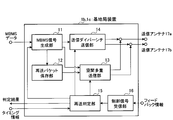
- FIG. 2 is a diagram for explaining the configuration of the radio base station apparatus according to Embodiment 1 of the present invention.
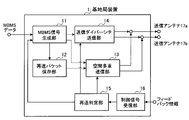
- the radio base station apparatus shown in FIG. 2 includes an MBMS signal generation unit 11 that generates an MBMS signal, a retransmission packet storage unit 12 that stores a transmission packet for retransmission, and a first transmission packet and a retransmission packet that are spatially multiplexed and transmitted.
- a spatial multiplexing transmitter 13 that performs transmission
- a transmission diversity transmitter 14 that transmits an MBMS signal transmitted for the first time by transmission diversity
- a control signal receiver 16 that receives feedback information (here, ACK information or NACK information), and feedback.
- the MBMS signal generator 11 generates data (MBMS signal: multimedia broadcast service data) to be distributed to the mobile terminal 2.
- the MBMS signal generation unit 11 sends the MBMS signal to the retransmission packet storage unit 12 and also sends it to the spatial multiplexing transmission unit 13 or the transmission diversity transmission unit 14.
- the MBMS signal packet transmitted for the first time: initial transmission packet
- the MBMS signal is sent to the spatial multiplexing transmitter 13 and is transmitted after being subjected to spatial multiplexing processing together with the retransmission packet. Is done.
- the retransmission packet is output from the retransmission packet storage unit 12 to the spatial multiplexing transmission unit 13.
- the MBMS signal (initial transmission packet) is sent to the transmission diversity transmission unit 14 and is transmitted from the two antennas 17a and 17b to which transmission diversity is applied.
- the retransmission packet storage unit 12 stores a transmission packet for retransmission when a NACK is sent from the mobile terminal 2.
- the retransmission packet stored in the retransmission packet storage unit 12 is sent to the spatial multiplexing transmission unit 13 when the retransmission determination unit 15 determines that retransmission is necessary.
- the retransmission packet is transmitted using a part of the band originally given to the initial transmission packet, so additional radio resources are used for the retransmission packet. Absent. For this reason, the transmission rate can be kept constant (fixed transmission rate).
- the spatial multiplexing transmitter 13 transmits the spatially multiplexed packet from the transmission antennas 17a and 17b.
- the transmission diversity transmitting unit 14 transmits an MBMS signal (initial transmission packet) from the transmission antennas 17a and 17b by applying transmission diversity.
- the control signal receiving unit 16 receives ACK information or NACK information that is feedback information for downlink transmission data.
- the control signal receiving unit 16 outputs the feedback information to the retransmission determining unit 15.
- the retransmission determination unit 15 determines retransmission using the feedback information.
- a retransmission determination method for example, a method for determining that retransmission is required when at least one user (one mobile terminal 2) transmits a NACK, a threshold is provided for the number of NACKs, and this threshold is set.
- a method for determining that it is necessary to retransmit when the number of NACKs exceeds the value, and setting a threshold for the NACK reception power, and it is necessary to retransmit when the NACK reception power exceeds the threshold The method of determining that there exists is mentioned.
- the retransmission determination unit 15 outputs the retransmission determination result (retransmitted / not retransmitted) to the MBMS signal generation unit 11, the spatial multiplexing transmission unit 13, and the transmission diversity transmission unit 14.
- a service is provided by the following procedure.
- the MBMS user service information (parameters) acquired in advance by service subscription is used to request the network to join the service and join the multicast group.
- the network connects the user's mobile terminal to the multicast route.
- the session start procedure from the network side activates the resources of the MBMS bearer in the network, and the data distributed in the session is transferred to the mobile terminal.
- MBMS transmission In such MBMS transmission, feedback information for downlink transmission data is received, retransmission is determined using the feedback information, and when it is determined to retransmit, an MBMS signal (initial transmission packet) to be transmitted for the first time and retransmission data (retransmission) Packet) is transmitted in a spatial multiplexing manner, and when it is determined not to be retransmitted, an MBMS signal to be transmitted for the first time is transmitted by transmission diversity.
- MBMS signal initial transmission packet
- the radio base station apparatus 1 transmits an initial transmission packet to each mobile terminal 2 on the downlink.
- the first transmission packet is received and decoded, and it is determined whether or not an error is detected. If an error is detected, the feedback information is NACK, and if no error is detected, the feedback information is ACK.
- Each mobile terminal 2 in the cell transmits this feedback information (ACK information or NACK information) to the radio base station apparatus 1 on the uplink.
- the control signal receiving unit 16 receives feedback information. This feedback information is output to the retransmission determination unit 15.
- the retransmission determination unit 15 determines whether or not to retransmit the initial transmission packet based on the feedback information.
- the retransmission determination method is as described above.
- the result of the retransmission determination is output to the MBMS signal generator 11, the spatial multiplexing transmitter 13, and the transmission diversity transmitter 14.
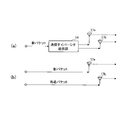
- the spatial multiplexing transmission unit 13 spatially multiplexes the initial transmission packet from the MBMS signal generation unit 11 and the retransmission packet from the retransmission packet storage unit 12. Then, the spatially multiplexed packets are transmitted from the transmission antennas 17a and 17b. For example, as shown in FIG. 3B, an initial transmission packet (new packet) is transmitted from one transmission antenna 17a, and a retransmission packet is transmitted from the other transmission antenna 17b. At this time, the same packet is transmitted to all portable terminals 2 in the cell.
- the transmission diversity transmitter 14 transmits the initial transmission packet from the MBMS signal generator 11 from the transmission antennas 17a and 17b by applying transmission diversity. To do. That is, as shown in FIG. 3A, the initial transmission packet (new packet) is transmitted from the transmission antennas 17a and 17b, respectively. At this time, the same packet is transmitted to all portable terminals 2 in the cell. Thus, the reception quality in the mobile terminal can be improved by applying transmission diversity only to the initial transmission packet.
- the transmission diversity is preferably open-loop transmission diversity that does not require feedback information.
- open-loop transmission diversity include FSTD (Frequency Switched Transmit Diversity), TSTD (Time Switched Transmit Diversity), SFBC (Space Frequency Block Code), STBC (Space Time Block Code), CDD (Cyclic Delay Diversity), etc. be able to.
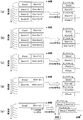
- FSTD is a method of switching transmission antennas alternately with two adjacent subcarrier signals in the same OFDM symbol period, and TSTD is adjacent as shown in FIG. 4 (b). In this method, transmission antennas are switched alternately using OFDM symbols.
- SFBC is a method of performing space / frequency coding (Alamouti coding) by setting two data symbols of the same time of two adjacent subcarriers as a set.
- STBC is a scheme that performs space / frequency coding (Alamouti coding) by setting two subcarriers of adjacent OFDM symbols as a set.
- CDD is a method for delaying the timing of the transmission signal of the transmission antenna 17b with respect to the transmission signal of the transmission antenna 17a. The amount of delay is within CP (Cyclic Prefix).
- FIG. 5 is a diagram for explaining a specific area of MBMS according to Embodiment 2 of the present invention.
- the specific area is composed of three cells.
- each cell there are radio base station apparatuses 1a, 1b, 1c corresponding to the multimedia broadcast service, and a plurality of mobile terminals 2a communicating with the radio base station apparatus 1a in each cell, and the radio base station apparatus 1b
- Hybrid ARQ which is control using the feedback information
- the mobile terminals 2a, 2b, and 2c indicate errors after data decoding. To detect.
- the mobile terminals 2a, 2b, and 2c If the mobile terminals 2a, 2b, and 2c are able to decode correctly, the mobile terminals 2a, 2b, and 2c transmit ACKs to the radio base station apparatuses 1a, 1b, and 1c. On the other hand, when the mobile terminal 2 is decoded in error, the mobile terminals 2a, 2b, and 2c transmit NACK to the radio base station apparatuses 2a, 2b, and 2c. When receiving the NACK, the radio base station apparatus 1 retransmits the packet data and does not transmit the next packet until the ACK is received.
- each radio base station apparatus performs retransmission determination, and one of the plurality of radio base station apparatuses determines whether or not to retransmit to a specific area.
- the timing is determined, and the timing information is transmitted to another radio base station apparatus. Then, all the radio base station devices in the specific area transmit packets to the mobile terminal at the same timing.
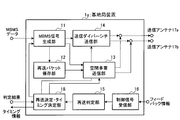
- FIG. 6 shows the configuration of one radio base station apparatus 1a among a plurality of radio base station apparatuses 1a, 1b, and 1c.
- the radio base station apparatus 1a includes its own apparatus and another radio base station apparatus 1b, A retransmission determination / timing determination unit 18 that determines retransmission for a specific area using the retransmission determination result from 1c and determines transmission timing is provided.
- the retransmission determination unit 15 determines retransmission using the feedback information.
- the retransmission determination method is as described above.
- the retransmission determination unit 15 outputs the retransmission determination result (retransmit / do not retransmit) to the retransmission determination / timing determination unit 18. Also, retransmission determination results from the other radio base station apparatuses 1 b and 1 c are also sent to the retransmission determination / timing determination unit 18.
- the retransmission determination / timing determination unit 18 determines retransmission for a specific area by using retransmission determination results from the own apparatus 1a and other radio base station apparatuses 1b and 1c, and also determines transmission timing. The method for determining retransmission is as described above.
- the retransmission determination / timing determination unit 18 determines retransmission, and outputs the timing information to the MBMS signal generation unit 11, the spatial multiplexing transmission unit 13, and the transmission diversity transmission unit 14 of the own apparatus 1a when the timing is determined. Also, the retransmission determination / timing determination unit 18 determines retransmission, and when the timing is determined, transmits timing information to the other radio base station apparatuses 1b and 1c.
- the retransmission determination / timing determination unit 18 also determines the transmission timing even when retransmission is not performed, and transmits timing information to the other radio base station apparatuses 1b and 1c.
- FIG. 7 shows the configuration of radio base station apparatuses 1b and 1c other than one radio base station apparatus 1a among a plurality of radio base station apparatuses 1a, 1b and 1c.
- the determination unit 15 transmits a retransmission determination result to the radio base station apparatus 1a and receives timing information from the radio base station apparatus 1a.
- the retransmission determination unit 15 outputs timing information (including retransmission determination information as necessary) to the MBMS signal generation unit 11, the spatial multiplexing transmission unit 13, and the transmission diversity transmission unit 14.
- the plurality of radio base station apparatuses 1a, 1b, 1c corresponding to the multimedia broadcast service within a specific area receive feedback information for downlink transmission data, and the feedback information
- the feedback information In one radio base station apparatus 1a among the plurality of radio base station apparatuses 1a, 1b, and 1c, retransmission determination results from the own apparatus 1a and the other radio base station apparatuses 1b and 1c are obtained.
- the retransmission for the specific area is determined and the transmission timing is determined, and when it is determined to retransmit, the first transmitted MBMS signal (initial transmission packet) and the retransmission data (retransmission packet) are spatially multiplexed and transmitted.
- an MBMS signal to be transmitted for the first time is transmitted by transmission diversity.
- the spatial multiplexing is performed.
- the MBMS signal and the retransmission data are spatially multiplexed according to the timing information from the one radio base station apparatus 1a and transmitted.
- the radio base station apparatus 1a determines the transmission timing even when retransmission is not performed, and transmits timing information to the other radio base station apparatuses 1b and 1c.
- the plurality of radio base station apparatuses 1a, 1b, and 1c transmit the packet in synchronization.
- the radio base station apparatuses 1a, 1b, and 1c transmit initial transmission packets to the mobile terminals 2a, 2b, and 2c on the downlink, respectively.
- the first transmission packet is received and decoded, and it is determined whether or not an error is detected. If an error is detected, the feedback information is NACK, and if no error is detected, the feedback information is ACK.
- Each mobile terminal 2a, 2b, 2c in the specific area transmits this feedback information (ACK information or NACK information) to the radio base station apparatuses 1a, 1b, 1c on the uplink.
- the control signal receiving unit 16 receives feedback information.
- This feedback information is output to the retransmission determination unit 15.
- the retransmission determination unit 15 determines whether or not to retransmit the initial transmission packet based on the feedback information.
- the retransmission determination method is as described above.
- the result of the retransmission determination is output to the retransmission determination / timing determination unit 18 of the radio base station apparatus 1a.
- the spatial multiplexing transmission unit 13 of each radio base station apparatus 1a, 1b, 1c The first transmission packet and the retransmission packet from the retransmission packet storage unit 12 are spatially multiplexed and transmitted from the transmission antennas 17a and 17b. For example, as shown in FIG. 3B, an initial transmission packet (new packet) is transmitted from one transmission antenna 17a, and a retransmission packet is transmitted from the other transmission antenna 17b. At this time, the same packet is transmitted to all the mobile terminals 2a, 2b, and 2c in the specific area at the same timing.
- transmission diversity transmission unit 14 of each of radio base station apparatuses 1a, 1b, and 1c receives an MBMS signal generation unit 11 Are transmitted from the transmission antennas 17a and 17b by applying transmission diversity. That is, as shown in FIG. 3A, the initial transmission packet (new packet) is transmitted from the transmission antennas 17a and 17b, respectively. At this time, the same packet is transmitted to all the mobile terminals 2a, 2b, and 2c in the specific area at the same timing. Thus, the reception quality in the portable terminal can be improved by applying transmission diversity to the initial transmission packet.
- the present invention is not limited to the above embodiment, and can be implemented with various modifications.
- the present invention is not limited to this, and the present invention is also applicable when there are three or more transmission antennas. Can do.
- the case where the initial transmission packet and the retransmission packet are transmitted by being spatially multiplexed and the initial transmission packet and the retransmission packet are respectively transmitted to the two transmission antennas is described.
- the present invention is not limited to this, and can also be applied to a case where the initial transmission packet and the retransmission packet are combined and the combined signal is transmitted from two transmission antennas.
- Embodiment 2 described above a case has been described in which the retransmission determination is performed by each radio base station apparatus and then the final retransmission determination is performed using the retransmission determination result.
- the present invention is not limited to this. Instead, feedback information of all cells may be transmitted to one radio base station apparatus, and retransmission determination may be performed in the one radio base station apparatus.
Landscapes
- Engineering & Computer Science (AREA)
- Computer Networks & Wireless Communication (AREA)
- Signal Processing (AREA)
- Mobile Radio Communication Systems (AREA)
- Radio Transmission System (AREA)
- Detection And Prevention Of Errors In Transmission (AREA)
Abstract
MBMSにおいてセルや特定のエリアの端にいるユーザの受信品質を改善することができる無線基地局装置及び無線通信方法を提供すること。本発明の無線基地局装置は、マルチメディア同報サービスに対応しており、下り送信データに対するフィードバック情報を受信する制御信号受信部(16)と、前記フィードバック情報を用いて再送判定する再送判定部(15)と、再送すると判定された際に、初めて送信するマルチメディア同報サービスデータと再送データとを空間多重して送信する空間多重送信部(13)と、再送しないと判定された際に、初めて送信するマルチメディア同報サービスデータを送信ダイバーシチで送信する送信ダイバーシチ送信部(14)と、を具備することを特徴とする。
Description
本発明は、次世代移動通信システムにおける無線基地局装置及び無線通信方法に関する。
移動通信ネットワークでは、近年動画像コンテンツを配信するサービスが提供されている。これまでのサービスでは、ポイント・ツー・ポイント接続によるストリーミング技術が適用されており、コンテンツも回線交換ドメインで転送される形態が主となっている。このため、多くのユーザにマルチメディア・サービスとして提供するためには、ネットワーク資源を効率的に使用したサービスが必要である。
3GPP(3rd Generation Partnership Project)では、パケット交換ドメインで、マルチキャスト接続によりサービスを提供するMBMS(Multimedia Broadcast Multicast Service)を標準化している。このMBMS技術は、ブロードキャストメッセージサービスや高速ビデオストリーミングサービスを可能とする技術であるので、IMT-AdvancedシステムやLTE(Long Term Evolution)システムにおいて期待されている技術である。
3GPP, TR36.300
MBMSでは、複数のユーザに同一のデータを同時に送信する。このため、各ユーザからのフィードバック情報に基づいて送信を制御することが難しい。したがって、各ユーザからのフィードバック情報を用いる適応変復調・チャネル符号化、ハイブリッドARQ(Hybrid Automatic Repeat reQuest)の適用は一般的に難しい。
しかしながら、MBMSのデータレートは、MBMSを適用するセルや特定のエリア(複数のセルで構成される領域)の端における品質により決まる。このため、セルや特定のエリアの端にいるユーザの受信品質を改善することが重要となる。
本発明はかかる点に鑑みてなされたものであり、MBMSにおいてセルや特定のエリアの端にいるユーザの受信品質を改善することができる無線基地局装置及び無線通信方法を提供することを目的とする。
本発明の無線基地局装置は、マルチメディア同報サービスに対応する無線基地局装置であって、下り送信データに対するフィードバック情報を受信する受信手段と、前記フィードバック情報を用いて再送判定する再送判定手段と、再送すると判定された際に、初めて送信するマルチメディア同報サービスデータと再送データとを空間多重して送信する空間多重送信手段と、再送しないと判定された際に、初めて送信するマルチメディア同報サービスデータを送信ダイバーシチで送信する送信ダイバーシチ送信手段と、を具備することを特徴とする。
本発明の無線通信方法は、マルチメディア同報サービスに対応する無線通信方法であって、下り送信データに対するフィードバック情報を受信する工程と、前記フィードバック情報を用いて再送判定する工程と、再送すると判定された際に、初めて送信するマルチメディア同報サービスデータと再送データとを空間多重して送信する工程と、再送しないと判定された際に、初めて送信するマルチメディア同報サービスデータを送信ダイバーシチで送信する工程と、を具備することを特徴とする。
本発明によれば、マルチメディア同報サービスに対応する無線通信方法であって、下り送信データに対するフィードバック情報を受信し、前記フィードバック情報を用いて再送判定し、再送すると判定された際には、初めて送信するマルチメディア同報サービスデータと再送データとを空間多重して送信し、再送しないと判定された際には、初めて送信するマルチメディア同報サービスデータを送信ダイバーシチで送信するので、一定のデータレートを保ちつつMBMSにおいてセルや特定のエリアの端にいるユーザの受信品質を改善することができる。
以下、本発明の実施の形態について、添付図面を参照して詳細に説明する。
(実施の形態1)
本実施の形態においては、一つのセル内の携帯端末(UE:User Equipment)に対して同一のデータを同時に送信するMBMSについて説明する。
(実施の形態1)
本実施の形態においては、一つのセル内の携帯端末(UE:User Equipment)に対して同一のデータを同時に送信するMBMSについて説明する。
図1は、本発明の実施の形態1におけるMBMSのセルを説明するための図である。図1から分かるように、一つのセルに、マルチメディア同報サービスに対応する無線基地局装置1と、この無線基地局装置1と通信する複数の携帯端末2が存在する。無線基地局装置1と複数の携帯端末2との間では、各携帯端末2からのフィードバック情報を用いる制御である、ハイブリッドARQを行う。すなわち、無線基地局装置1から下り送信データを送信し、携帯端末2が下り送信データを受信すると、携帯端末2においてデータの復号後の誤りを検出する。携帯端末2において、正しく復号できた場合は、携帯端末2は、ACK(Acknowledgement:確認応答)を無線基地局装置1に送信する。一方、携帯端末2において、誤って復号された場合は、携帯端末2は、NACK(Negative-Acknowledgement:否定応答)を無線基地局装置1に送信する。無線基地局装置1は、NACKを受信した場合には、そのパケットデータを再送信する。
図2は、本発明の実施の形態1に係る無線基地局装置の構成を説明するための図である。図2に示す無線基地局装置は、MBMS信号を生成するMBMS信号生成部11と、送信パケットを再送用に保存する再送パケット保存部12と、初めて送信するパケットと再送パケットを空間多重して送信するする空間多重送信部13と、初めて送信するMBMS信号を送信ダイバーシチで送信する送信ダイバーシチ送信部14と、フィードバック情報(ここでは、ACK情報又はNACK情報)を受信する制御信号受信部16と、フィードバック情報を用いて再送判定する再送判定部15と、2つの送信アンテナ17a、17bとから主に構成されている。
MBMS信号生成部11は、携帯端末2に配信するデータ(MBMS信号:マルチメディア同報サービスデータ)を生成する。MBMS信号生成部11は、MBMS信号を再送パケット保存部12に送ると共に、空間多重送信部13又は送信ダイバーシチ送信部14に送る。この場合において、再送判定部15で再送が必要と判定されたときには、MBMS信号(初めて送信されるパケット:初回送信パケット)は空間多重送信部13に送られ、再送パケットと共に空間多重処理されて送信される。この再送パケットは、再送パケット保存部12から空間多重送信部13に出力される。一方、再送判定部15で再送が不要と判定されたときには、MBMS信号(初回送信パケット)は送信ダイバーシチ送信部14に送られ、送信ダイバーシチが適用されて2つのアンテナ17a、17bから送信される。
再送パケット保存部12は、携帯端末2からNACKが送られてきたときに再送するために、送信パケットを保存する。再送パケット保存部12に保存された再送用のパケットは、再送判定部15で再送が必要と判定されたときに、空間多重送信部13に送られる。
空間多重送信部13は、再送すると判定された際に、初めて送信するMBMS信号(初回送信パケット)と再送データ(再送パケット)とを空間多重する。すなわち、空間多重送信部13では、再送判定部15で再送すると判定された際(再送パケットがある場合)に、初回送信パケットと再送パケットを空間多重する。このとき、初回送信パケット(新パケット)はMBMS信号生成部11から出力され、再送パケットは再送パケット保存部12から出力される。このように、初回送信パケットと再送パケットを空間多重することにより、初回送信パケットにもともと与えられていた帯域の一部を使って再送パケットを送信するので、再送パケット用に追加で無線リソースを使わない。このため、伝送レートを一定に保つことができる(固定の伝送レート)。空間多重送信部13は、空間多重処理されたパケットを送信アンテナ17a、17bから送信する。
送信ダイバーシチ送信部14は、再送判定部15で再送しないと判定された際に、MBMS信号(初回送信パケット)を、送信ダイバーシチを適用して送信アンテナ17a、17bから送信する。
制御信号受信部16は、下り送信データに対するフィードバック情報であるACK情報又はNACK情報を受信する。制御信号受信部16は、フィードバック情報を再送判定部15に出力する。
再送判定部15は、フィードバック情報を用いて再送判定する。再送判定の方法としては、例えば、少なくとも1ユーザ(1つの携帯端末2)がNACKを送信した場合に再送する必要があると判定する方法、NACKの数にしきい値を設けておき、このしきい値を超えるNACK数になったときに再送する必要があると判定する方法、NACKの受信パワにしきい値を設けておき、このしきい値を超えるNACK受信パワになったときに再送する必要があると判定する方法などが挙げられる。再送判定部15は、再送判定結果(再送する/再送しない)をMBMS信号生成部11、空間多重送信部13、送信ダイバーシチ送信部14に出力する。
上記構成を有する無線基地局装置1を備えた無線通信システムにおいては、次のような手順でサービス(MBMS)が提供される。マルチキャストモードでは、サービス加入により予め取得したMBMSユーザサービスの情報(パラメータ)を用いてサービスへの参加をネットワークに要求してマルチキャストグループに加わる。これにより、ネットワークがユーザの携帯端末をマルチキャストルートに接続する。次いで、ネットワーク側からのセッション開始手順により、ネットワーク内のMBMSベアラのリソースが活性化され、当該セッションで配信されるデータが携帯端末に転送される。
一方、放送モードの場合には、提供されるサービスエリア全体に配信されるので、サービス加入などの手順は不要であり、各携帯端末上で、受信したサービスアナウンスメントから接続に必要なパラメータを得て、それぞれの放送サービスのチャネルに合わせることでサービスを受けることができる。
このようなMBMS伝送において、下り送信データに対するフィードバック情報を受信し、前記フィードバック情報を用いて再送判定し、再送すると判定された際に、初めて送信するMBMS信号(初回送信パケット)と再送データ(再送パケット)とを空間多重して送信し、再送しないと判定された際に、初めて送信するMBMS信号を送信ダイバーシチで送信する。
具体的には、無線基地局装置1が初回送信パケットを下り回線で各携帯端末2に送信する。携帯端末2においては、初回送信パケットを受信して復号し、誤りが検出されるかどうかを判定する。誤りが検出されれば、フィードバック情報をNACKとし、誤りが検出されなければ、フィードバック情報をACKとする。セル内の各携帯端末2は、このフィードバック情報(ACK情報又はNACK情報)を上り回線で無線基地局装置1に送信する。無線基地局装置1において、制御信号受信部16がフィードバック情報を受信する。このフィードバック情報は再送判定部15に出力される。再送判定部15においては、フィードバック情報に基づいて初回送信パケットを再送するか否かを判定する。再送判定の方法は上述した通りである。再送判定の結果は、MBMS信号生成部11、空間多重送信部13、送信ダイバーシチ送信部14に出力される。
再送が必要と判定された場合(再送パケットがある場合)には、空間多重送信部13において、MBMS信号生成部11からの初回送信パケットと、再送パケット保存部12からの再送パケットとを空間多重し、空間多重されたパケットを送信アンテナ17a、17bから送信する。例えば、図3(b)に示すように、初回送信パケット(新パケット)を一方の送信アンテナ17aから送信し、再送パケットを他方の送信アンテナ17bから送信する。このとき、同じパケットをセル内のすべての携帯端末2に対して送信する。このように、再送時に空間多重を適用することにより、再送用の無線リソースを使う必要がないので、データレートを落とさずに再送を適用することができる。そして、再送を適用することができるので、マルチキャスト伝送におけるセル端の携帯端末の受信品質を改善することができる。
再送が不要と判定された場合(再送パケットがない場合)には、送信ダイバーシチ送信部14において、MBMS信号生成部11からの初回送信パケットを、送信ダイバーシチを適用して送信アンテナ17a、17bから送信する。すなわち、図3(a)に示すように、初回送信パケット(新パケット)をそれぞれ送信アンテナ17a、17bから送信する。このとき、同じパケットをセル内のすべての携帯端末2に対して送信する。このように、初回送信パケットのみに送信ダイバーシチを適用することにより、携帯端末における受信品質を改善することができる。
ここで、送信ダイバーシチについては、フィードバック情報が不要なオープンループ型の送信ダイバーシチであることが好ましい。オープンループ型の送信ダイバーシチとしては、FSTD(Frequency Switched Transmit Diversity)、TSTD(Time Switched Transmit Diversity)、SFBC(Space Frequency Block Code)、STBC(Space Time Block Code)、CDD(Cyclic Delay Diversity)などを挙げることができる。
FSTDは、図4(a)に示すように、同一OFDMシンボル区間の隣接する2サブキャリア信号で交互に送信アンテナを切り替える方式であり、TSTDは、図4(b)に示すように、隣接するOFDMシンボルで交互に送信アンテナを切り替える方式である。SFBCは、図4(c)に示すように、隣接する2サブキャリアの同じ時間の2データシンボルをセットにして、空間・周波数符号化(Alamouti符号化)を行う方式である。STBCは、図4(d)に示すように、隣接するOFDMシンボルの2サブキャリア分をセットにして、空間・周波数符号化(Alamouti符号化)を行う方式である。CDDは、図4(e)に示すように、送信アンテナ17aの送信信号に対して、送信アンテナ17bの送信信号のタイミングを遅延させる方式である。なお、遅延量はCP(Cyclic Prefix)以内である。
(実施の形態2)
本実施の形態においては、複数のセルで構成される特定エリア内の携帯端末に対して同一のデータを同時に送信するMBMSについて説明する。
本実施の形態においては、複数のセルで構成される特定エリア内の携帯端末に対して同一のデータを同時に送信するMBMSについて説明する。
図5は、本発明の実施の形態2におけるMBMSの特定エリアを説明するための図である。図5から分かるように、ここでは、3つのセルで特定エリアを構成している。それぞれのセルに、マルチメディア同報サービスに対応する無線基地局装置1a、1b、1cと、各セルにおいて無線基地局装置1aと通信する複数の携帯端末2aが存在し、無線基地局装置1bと通信する複数の携帯端末2bが存在し、無線基地局装置1cと通信する複数の携帯端末2cが存在する。無線基地局装置1aと複数の携帯端末2aとの間、無線基地局装置1bと複数の携帯端末2bとの間、無線基地局装置1cと複数の携帯端末2cとの間では、各携帯端末からのフィードバック情報を用いる制御である、ハイブリッドARQを行う。すなわち、無線基地局装置1a、1b、1cから下り送信データを送信し、携帯端末2a、2b、2cがそれぞれ下り送信データを受信すると、携帯端末2a、2b、2cにおいてデータの復号後の誤りを検出する。携帯端末2a、2b、2cにおいて、正しく復号できた場合は、携帯端末2a、2b、2cは、ACKを無線基地局装置1a、1b、1cに送信する。一方、携帯端末2において、誤って復号された場合は、携帯端末2a、2b、2cは、NACKを無線基地局装置2a、2b、2cに送信する。無線基地局装置1は、NACKを受信した場合には、そのパケットデータを再送信し、ACKを受信するまで次のパケットを送信しない。
このシステムにおいては、各無線基地局装置で再送判定を行い、複数の無線基地局装置のうちの一つの無線基地局装置で特定エリアに再送するか否かの決定を行い、再送する場合にそのタイミングを決定し、そのタイミング情報を他の無線基地局装置に伝送する。そして、特定エリア内のすべての無線基地局装置がタイミングを合わせて携帯端末にパケットを送信する。
図6及び図7は、本発明の実施の形態2に係る無線基地局装置の構成を説明するための図である。図6及び図7において、図2と同じ部分については図2と同じ符号を付して、その詳細な説明は省略する。
図6は、複数の無線基地局装置1a、1b、1cのうちの一つの無線基地局装置1aの構成を示しており、無線基地局装置1aは、自装置及び他の無線基地局装置1b、1cからの再送判定結果を用いて特定エリアに対する再送を決定すると共に、送信タイミングを決定する再送決定・タイミング決定部18を備えている。
再送判定部15は、フィードバック情報を用いて再送判定する。再送判定の方法としては、上述した通りである。再送判定部15は、再送判定結果(再送する/再送しない)を再送決定・タイミング決定部18に出力する。また、他の無線基地局装置1b、1cからの再送判定結果も再送決定・タイミング決定部18に送られる。
再送決定・タイミング決定部18は、自装置1a及び他の無線基地局装置1b、1cからの再送判定結果を用いて特定エリアに対する再送を決定すると共に、送信タイミングを決定する。再送決定の方法としては上述した通りである。再送決定・タイミング決定部18は、再送を決定し、そのタイミングを決定したときは、タイミング情報を自装置1aのMBMS信号生成部11、空間多重送信部13、送信ダイバーシチ送信部14に出力する。また、再送決定・タイミング決定部18は、再送を決定し、そのタイミングを決定したときは、他の無線基地局装置1b、1cにタイミング情報を送信する。なお、再送決定・タイミング決定部18は、再送を行わないときも、送信タイミングを決定し、他の無線基地局装置1b、1cにタイミング情報を送信する。
図7は、複数の無線基地局装置1a、1b、1cのうちの一つの無線基地局装置1a以外の無線基地局装置1b、1cの構成を示しており、無線基地局装置1b、1cの再送判定部15は、再送判定結果を無線基地局装置1aに送信すると共に、無線基地局装置1aからのタイミング情報を受信する。再送判定部15は、タイミング情報(必要に応じて再送決定情報も含む)をMBMS信号生成部11、空間多重送信部13、送信ダイバーシチ送信部14に出力する。
図5に示すシステムでのMBMS伝送においては、特定エリア内においてマルチメディア同報サービスに対応する複数の無線基地局装置1a、1b、1cにおいて、下り送信データに対するフィードバック情報を受信し、前記フィードバック情報を用いて再送判定し、前記複数の無線基地局装置1a、1b、1cのうちの一つの無線基地局装置1aにおいて、自装置1a及び他の無線基地局装置1b、1cからの再送判定結果を用いて前記特定エリアに対する再送を決定すると共に送信タイミングを決定し、再送すると判定された際に、初めて送信するMBMS信号(初回送信パケット)と再送データ(再送パケット)とを空間多重して送信し、再送しないと判定された際に、初めて送信するMBMS信号を送信ダイバーシチで送信する。この場合において、複数の無線基地局装置1a、1b、1cのうちの前記一つの無線基地局装置1a以外の無線基地局装置1b、1cにおいて、再送すると判定された際に、前記空間多重されたMBMS信号と再送データを、前記一つの無線基地局装置1aからのタイミング情報にしたがって空間多重して送信する。また、無線基地局装置1aは、再送を行わないときも、送信タイミングを決定し、他の無線基地局装置1b、1cにタイミング情報を送信する。このように、パケット送信の際に、複数の無線基地局装置1a、1b、1cで同期してパケットを送信する。
具体的には、無線基地局装置1a、1b、1cが初回送信パケットを下り回線で各携帯端末2a、2b、2cにそれぞれ送信する。携帯端末2a、2b、2cにおいては、初回送信パケットを受信して復号し、誤りが検出されるかどうかを判定する。誤りが検出されれば、フィードバック情報をNACKとし、誤りが検出されなければ、フィードバック情報をACKとする。特定エリア内の各携帯端末2a、2b、2cは、このフィードバック情報(ACK情報又はNACK情報)を上り回線で無線基地局装置1a、1b、1cにそれぞれ送信する。無線基地局装置1a、1b、1cにおいて、制御信号受信部16がフィードバック情報を受信する。このフィードバック情報は再送判定部15に出力される。再送判定部15においては、フィードバック情報に基づいて初回送信パケットを再送するか否かを判定する。再送判定の方法は上述した通りである。再送判定の結果は、無線基地局装置1aの再送決定・タイミング決定部18に出力される。
再送決定・タイミング決定部18で再送が必要と判定された場合(再送パケットがある場合)には、各無線基地局装置1a、1b、1cの空間多重送信部13において、MBMS信号生成部11からの初回送信パケットと、再送パケット保存部12からの再送パケットとを空間多重して送信アンテナ17a、17bから送信する。例えば、図3(b)に示すように、初回送信パケット(新パケット)を一方の送信アンテナ17aから送信し、再送パケットを他方の送信アンテナ17bから送信する。このとき、同じパケットを特定エリア内のすべての携帯端末2a、2b、2cに対してタイミングを合わせて送信する。このように、再送時に空間多重を適用することにより、再送用の無線リソースを使う必要がないので、データレートを落とさずに再送を適用することができる。そして、再送を適用することができるので、マルチキャスト伝送におけるセル端の携帯端末の受信品質を改善することができる。
再送決定・タイミング決定部18で再送が不要と判定された場合(再送パケットがない場合)には、各無線基地局装置1a、1b、1cの送信ダイバーシチ送信部14において、MBMS信号生成部11からの初回送信パケットを、送信ダイバーシチを適用して送信アンテナ17a、17bから送信する。すなわち、図3(a)に示すように、初回送信パケット(新パケット)をそれぞれ送信アンテナ17a、17bから送信する。このとき、同じパケットを特定エリア内のすべての携帯端末2a、2b、2cに対してタイミングを合わせて送信する。このように、初回送信パケットに送信ダイバーシチを適用することにより、携帯端末における受信品質を改善することができる。
本発明は上記実施の形態に限定されず、種々変更して実施することが可能である。例えば、上記実施の形態1、2においては、送信アンテナが2本である場合について説明しているが、本発明はこれに限定されず、送信アンテナが3本以上である場合にも適用することができる。また、上記実施の形態1、2において、初回送信パケットと再送パケットを空間多重して送信する場合において、初回送信パケットと再送パケットを2つの送信アンテナにそれぞれ割り当てて送信する場合について説明しているが、本発明はこれに限定されず、初回送信パケットと再送パケットを合成し、合成信号を2つの送信アンテナから送信する場合にも適用することができる。また、上記実施の形態2においては、各無線基地局装置で再送判定を行った後にその再送判定結果を用いて最終の再送決定を行う場合について説明しているが、本発明はこれに限定されず、一つの無線基地局装置にすべてのセルのフィードバック情報を送信し、その一つの無線基地局装置において再送判定を行うようにしても良い。
本発明の範囲を逸脱しない限りにおいて、上記説明における処理部の数、処理手順については適宜変更して実施することが可能である。また、図に示される要素の各々は機能を示しており、各機能ブロックがハードウエアで実現されても良く、ソフトウエアで実現されてもよい。その他、本発明の範囲を逸脱しないで適宜変更して実施することが可能である。
本出願は、2009年3月3日出願の特願2009-049040に基づく。この内容は、全てここに含めておく。
Claims (10)
- マルチメディア同報サービスに対応する無線基地局装置であって、下り送信データに対するフィードバック情報を受信する受信手段と、前記フィードバック情報を用いて再送判定する再送判定手段と、再送すると判定された際に、初めて送信するマルチメディア同報サービスデータと再送データとを空間多重して送信する空間多重送信手段と、再送しないと判定された際に、初めて送信するマルチメディア同報サービスデータを送信ダイバーシチで送信する送信ダイバーシチ送信手段と、を具備することを特徴とする無線基地局装置。
- 特定エリア内においてマルチメディア同報サービスに対応する複数の無線基地局装置のうちの一つの無線基地局装置であって、下り送信データに対するフィードバック情報を受信する受信手段と、前記フィードバック情報を用いて再送判定する再送判定手段と、自装置及び他の無線基地局装置からの再送判定結果を用いて前記特定エリアに対する再送を決定すると共に送信タイミングを決定する再送決定・タイミング決定手段と、再送すると判定された際に、初めて送信するマルチメディア同報サービスデータと再送データとを空間多重して送信する空間多重送信手段と、再送しないと判定された際に、初めて送信するマルチメディア同報サービスデータを送信ダイバーシチで送信する送信ダイバーシチ送信手段と、を具備することを特徴とする無線基地局装置。
- 特定エリア内においてマルチメディア同報サービスに対応する複数の無線基地局装置のうちの一つの無線基地局装置であって、下り送信データに対するフィードバック情報を受信する受信手段と、前記フィードバック情報を用いて再送判定する再送判定手段と、再送すると判定された際に、初めて送信するマルチメディア同報サービスデータと再送データとを空間多重して送信する空間多重送信手段と、再送しないと判定された際に、初めて送信するマルチメディア同報サービスデータを、請求項2記載の無線基地局装置からのタイミング情報にしたがって送信ダイバーシチで送信する送信ダイバーシチ送信手段と、を具備することを特徴とする無線基地局装置。
- 前記送信ダイバーシチ送信手段は、再送しないと判定された際に、前記マルチメディア同報サービスデータを送信することを特徴とする請求項1から請求項3のいずれかに記載の無線基地局装置。
- 前記送信ダイバーシチがオープンループ型の送信ダイバーシチであることを特徴とする請求項1から請求項4のいずれかに記載の無線基地局装置。
- マルチメディア同報サービスに対応する無線通信方法であって、下り送信データに対するフィードバック情報を受信する工程と、前記フィードバック情報を用いて再送判定する工程と、再送すると判定された際に、初めて送信するマルチメディア同報サービスデータと再送データとを空間多重して送信する工程と、再送しないと判定された際に、初めて送信するマルチメディア同報サービスデータを送信ダイバーシチで送信する工程と、を具備することを特徴とする無線通信方法。
- 特定エリア内においてマルチメディア同報サービスに対応する複数の無線基地局装置において、下り送信データに対するフィードバック情報を受信する工程と、前記フィードバック情報を用いて再送判定する工程と、前記複数の無線基地局装置のうちの一つの無線基地局装置において、自装置及び他の無線基地局装置からの再送判定結果を用いて前記特定エリアに対する再送を決定すると共に送信タイミングを決定する工程と、再送すると判定された際に、初めて送信するマルチメディア同報サービスデータと再送データとを空間多重して送信する工程と、再送しないと判定された際に、初めて送信するマルチメディア同報サービスデータを送信ダイバーシチで送信する工程と、を具備することを特徴とする無線通信方法。
- 前記複数の無線基地局装置のうちの前記一つの無線基地局装置以外の無線基地局装置において、再送すると判定された際に、前記空間多重された前記マルチメディア同報サービスデータ及び前記再送データを、前記一つの無線基地局装置からのタイミング情報にしたがって送信することを特徴とする請求項7記載の無線通信方法。
- 再送しないと判定された際に、前記マルチメディア同報サービスデータを、送信ダイバーシチを適用して送信することを特徴とする請求項6から請求項8のいずれかに記載の無線通信方法。
- 前記送信ダイバーシチがオープンループ型の送信ダイバーシチであることを特徴とする請求項6から請求項9のいずれかに記載の無線通信方法。
Priority Applications (2)
| Application Number | Priority Date | Filing Date | Title |
|---|---|---|---|
| EP10748621.9A EP2405676B1 (en) | 2009-03-03 | 2010-02-18 | Radio base station apparatus and wireless communication method |
| US13/254,226 US20120087294A1 (en) | 2009-03-03 | 2010-02-18 | Radio base station apparatus and radio communication method |
Applications Claiming Priority (2)
| Application Number | Priority Date | Filing Date | Title |
|---|---|---|---|
| JP2009049040A JP5150530B2 (ja) | 2009-03-03 | 2009-03-03 | 無線基地局装置及び無線通信方法 |
| JP2009-049040 | 2009-03-03 |
Publications (1)
| Publication Number | Publication Date |
|---|---|
| WO2010101025A1 true WO2010101025A1 (ja) | 2010-09-10 |
Family
ID=42709586
Family Applications (1)
| Application Number | Title | Priority Date | Filing Date |
|---|---|---|---|
| PCT/JP2010/052440 Ceased WO2010101025A1 (ja) | 2009-03-03 | 2010-02-18 | 無線基地局装置及び無線通信方法 |
Country Status (4)
| Country | Link |
|---|---|
| US (1) | US20120087294A1 (ja) |
| EP (1) | EP2405676B1 (ja) |
| JP (1) | JP5150530B2 (ja) |
| WO (1) | WO2010101025A1 (ja) |
Families Citing this family (5)
| Publication number | Priority date | Publication date | Assignee | Title |
|---|---|---|---|---|
| US9307427B2 (en) * | 2013-07-22 | 2016-04-05 | Qualcomm Incorporated | Method and apparatus for use of a relay schemed to facilitate efficient broadcast communication in device to device environment |
| WO2015103746A1 (en) * | 2014-01-08 | 2015-07-16 | Qualcomm Incorporated | Small mbsfn enhancement |
| WO2016119198A1 (en) * | 2015-01-30 | 2016-08-04 | Qualcomm Incorporated | Support of transmission mode and impact on pdcch blind decodes of ptm (point-to-multipoint) transmission |
| WO2020063665A1 (en) * | 2018-09-28 | 2020-04-02 | Mediatek Inc. | Shared nack resource for groupcast and multicast in new radio v2x communications |
| CN110912654B (zh) * | 2019-11-28 | 2022-10-11 | 京东方科技集团股份有限公司 | 数据重发方法、网关设备、终端设备、存储介质 |
Citations (5)
| Publication number | Priority date | Publication date | Assignee | Title |
|---|---|---|---|---|
| JP2006513639A (ja) * | 2003-01-06 | 2006-04-20 | インターディジタル テクノロジー コーポレイション | マルチメディア放送サービスの配信を制御する方法およびシステム |
| WO2007143753A2 (en) * | 2006-06-09 | 2007-12-13 | Qualcomm Incorporated | Cell specific retransmission of single frequency network mbms data |
| JP2008079262A (ja) * | 2006-08-22 | 2008-04-03 | Ntt Docomo Inc | 下りリンクmimo伝送制御方法および基地局装置 |
| WO2008142733A1 (ja) * | 2007-05-21 | 2008-11-27 | Fujitsu Limited | データ再送方法及び,これを適用する無線通信システム |
| JP2009049040A (ja) | 2007-08-13 | 2009-03-05 | Sumitomo Electric Ind Ltd | 超電導コイルおよび該超電導コイルの製造方法 |
Family Cites Families (2)
| Publication number | Priority date | Publication date | Assignee | Title |
|---|---|---|---|---|
| US7058407B2 (en) * | 2003-05-12 | 2006-06-06 | Motorola, Inc. | Adapting a diversity transmission mode in a wireless communication system |
| EP2051409A1 (en) * | 2006-08-08 | 2009-04-22 | Panasonic Corporation | Radio communication mobile station device and resource allocation method |
-
2009
- 2009-03-03 JP JP2009049040A patent/JP5150530B2/ja not_active Expired - Fee Related
-
2010
- 2010-02-18 WO PCT/JP2010/052440 patent/WO2010101025A1/ja not_active Ceased
- 2010-02-18 US US13/254,226 patent/US20120087294A1/en not_active Abandoned
- 2010-02-18 EP EP10748621.9A patent/EP2405676B1/en not_active Not-in-force
Patent Citations (5)
| Publication number | Priority date | Publication date | Assignee | Title |
|---|---|---|---|---|
| JP2006513639A (ja) * | 2003-01-06 | 2006-04-20 | インターディジタル テクノロジー コーポレイション | マルチメディア放送サービスの配信を制御する方法およびシステム |
| WO2007143753A2 (en) * | 2006-06-09 | 2007-12-13 | Qualcomm Incorporated | Cell specific retransmission of single frequency network mbms data |
| JP2008079262A (ja) * | 2006-08-22 | 2008-04-03 | Ntt Docomo Inc | 下りリンクmimo伝送制御方法および基地局装置 |
| WO2008142733A1 (ja) * | 2007-05-21 | 2008-11-27 | Fujitsu Limited | データ再送方法及び,これを適用する無線通信システム |
| JP2009049040A (ja) | 2007-08-13 | 2009-03-05 | Sumitomo Electric Ind Ltd | 超電導コイルおよび該超電導コイルの製造方法 |
Non-Patent Citations (1)
| Title |
|---|
| See also references of EP2405676A4 * |
Also Published As
| Publication number | Publication date |
|---|---|
| JP2010206455A (ja) | 2010-09-16 |
| US20120087294A1 (en) | 2012-04-12 |
| EP2405676A4 (en) | 2012-07-25 |
| EP2405676A1 (en) | 2012-01-11 |
| JP5150530B2 (ja) | 2013-02-20 |
| EP2405676B1 (en) | 2013-06-26 |
Similar Documents
| Publication | Publication Date | Title |
|---|---|---|
| US8909226B2 (en) | Handoffs and handoff selection in a wireless access network | |
| KR101332403B1 (ko) | 패킷 기반 셀룰라 시스템에서 방송 및 멀티캐스트 서비스 데이터의 전송 및 수신 방법 | |
| RU2419211C2 (ru) | Способ совместной ретрансляции данных в сотовых сетях для широковещательных многоадресных услуг | |
| US8719676B2 (en) | Communication network element and method for transmitting data | |
| WO2013095355A1 (en) | Multicast service using unicast subframe | |
| US12476741B2 (en) | Methods and apparatus of HARQ operation for transmission of multicast broadcast service | |
| JP4834081B2 (ja) | 複数キャリアのスケジューリング | |
| JP5150530B2 (ja) | 無線基地局装置及び無線通信方法 | |
| US9660769B2 (en) | Scalable service in a wireless communication system | |
| US10135577B2 (en) | Scalable service in a wireless communication system | |
| WO2009152673A1 (zh) | 上行混合自动重传请求的实现方法和系统 | |
| Lianghai et al. | Feasibility study of enabling V2X communications by LTE-Uu radio interface | |
| US8488610B2 (en) | System and method for communicating packet in a wireless multicast and broadcast communication network | |
| CN113810161B (zh) | 一种副链路无线通信的方法和装置 | |
| JP5032678B2 (ja) | 複数キャリアのスケジューリング | |
| CN114978448B (zh) | 一种被用于无线通信的节点中的方法和装置 | |
| CN114785468A (zh) | 一种被用于无线通信的节点中的方法和装置 | |
| Makharia et al. | Experimental study on wireless multicast scalability using merged hybrid ARQ with staggered adaptive FEC | |
| CN115967994A (zh) | 一种被用于无线通信中的方法和装置 | |
| Lu et al. | CHARQ: Cooperative Hybrid ARQ for wireless video streaming |
Legal Events
| Date | Code | Title | Description |
|---|---|---|---|
| 121 | Ep: the epo has been informed by wipo that ep was designated in this application |
Ref document number: 10748621 Country of ref document: EP Kind code of ref document: A1 |
|
| NENP | Non-entry into the national phase |
Ref country code: DE |
|
| WWE | Wipo information: entry into national phase |
Ref document number: 2010748621 Country of ref document: EP |
|
| WWE | Wipo information: entry into national phase |
Ref document number: 13254226 Country of ref document: US |