WO2010114007A1 - 携帯端末装置、並びに、その制御プログラム及び複数表示画面制御方法 - Google Patents
携帯端末装置、並びに、その制御プログラム及び複数表示画面制御方法 Download PDFInfo
- Publication number
- WO2010114007A1 WO2010114007A1 PCT/JP2010/055819 JP2010055819W WO2010114007A1 WO 2010114007 A1 WO2010114007 A1 WO 2010114007A1 JP 2010055819 W JP2010055819 W JP 2010055819W WO 2010114007 A1 WO2010114007 A1 WO 2010114007A1
- Authority
- WO
- WIPO (PCT)
- Prior art keywords
- display
- screen
- display screen
- unit
- main
- Prior art date
- Legal status (The legal status is an assumption and is not a legal conclusion. Google has not performed a legal analysis and makes no representation as to the accuracy of the status listed.)
- Ceased
Links
Images




Classifications
-
- H—ELECTRICITY
- H04—ELECTRIC COMMUNICATION TECHNIQUE
- H04M—TELEPHONIC COMMUNICATION
- H04M1/00—Substation equipment, e.g. for use by subscribers
- H04M1/02—Constructional features of telephone sets
- H04M1/0202—Portable telephone sets, e.g. cordless phones, mobile phones or bar type handsets
- H04M1/0206—Portable telephones comprising a plurality of mechanically joined movable body parts, e.g. hinged housings
- H04M1/0247—Portable telephones comprising a plurality of mechanically joined movable body parts, e.g. hinged housings comprising more than two body parts
-
- G—PHYSICS
- G06—COMPUTING OR CALCULATING; COUNTING
- G06F—ELECTRIC DIGITAL DATA PROCESSING
- G06F1/00—Details not covered by groups G06F3/00 - G06F13/00 and G06F21/00
- G06F1/16—Constructional details or arrangements
- G06F1/1613—Constructional details or arrangements for portable computers
- G06F1/1615—Constructional details or arrangements for portable computers with several enclosures having relative motions, each enclosure supporting at least one I/O or computing function
- G06F1/1616—Constructional details or arrangements for portable computers with several enclosures having relative motions, each enclosure supporting at least one I/O or computing function with folding flat displays, e.g. laptop computers or notebooks having a clamshell configuration, with body parts pivoting to an open position around an axis parallel to the plane they define in closed position
-
- G—PHYSICS
- G06—COMPUTING OR CALCULATING; COUNTING
- G06F—ELECTRIC DIGITAL DATA PROCESSING
- G06F3/00—Input arrangements for transferring data to be processed into a form capable of being handled by the computer; Output arrangements for transferring data from processing unit to output unit, e.g. interface arrangements
- G06F3/01—Input arrangements or combined input and output arrangements for interaction between user and computer
- G06F3/048—Interaction techniques based on graphical user interfaces [GUI]
- G06F3/0481—Interaction techniques based on graphical user interfaces [GUI] based on specific properties of the displayed interaction object or a metaphor-based environment, e.g. interaction with desktop elements like windows or icons, or assisted by a cursor's changing behaviour or appearance
-
- H—ELECTRICITY
- H04—ELECTRIC COMMUNICATION TECHNIQUE
- H04M—TELEPHONIC COMMUNICATION
- H04M1/00—Substation equipment, e.g. for use by subscribers
- H04M1/02—Constructional features of telephone sets
- H04M1/0202—Portable telephone sets, e.g. cordless phones, mobile phones or bar type handsets
- H04M1/0206—Portable telephones comprising a plurality of mechanically joined movable body parts, e.g. hinged housings
- H04M1/0241—Portable telephones comprising a plurality of mechanically joined movable body parts, e.g. hinged housings using relative motion of the body parts to change the operational status of the telephone set, e.g. switching on/off, answering incoming call
- H04M1/0245—Portable telephones comprising a plurality of mechanically joined movable body parts, e.g. hinged housings using relative motion of the body parts to change the operational status of the telephone set, e.g. switching on/off, answering incoming call using open/close detection
-
- G—PHYSICS
- G06—COMPUTING OR CALCULATING; COUNTING
- G06F—ELECTRIC DIGITAL DATA PROCESSING
- G06F2203/00—Indexing scheme relating to G06F3/00 - G06F3/048
- G06F2203/048—Indexing scheme relating to G06F3/048
- G06F2203/04803—Split screen, i.e. subdividing the display area or the window area into separate subareas
-
- H—ELECTRICITY
- H04—ELECTRIC COMMUNICATION TECHNIQUE
- H04M—TELEPHONIC COMMUNICATION
- H04M1/00—Substation equipment, e.g. for use by subscribers
- H04M1/02—Constructional features of telephone sets
- H04M1/0202—Portable telephone sets, e.g. cordless phones, mobile phones or bar type handsets
- H04M1/0206—Portable telephones comprising a plurality of mechanically joined movable body parts, e.g. hinged housings
- H04M1/0208—Portable telephones comprising a plurality of mechanically joined movable body parts, e.g. hinged housings characterized by the relative motions of the body parts
- H04M1/0214—Foldable telephones, i.e. with body parts pivoting to an open position around an axis parallel to the plane they define in closed position
-
- H—ELECTRICITY
- H04—ELECTRIC COMMUNICATION TECHNIQUE
- H04M—TELEPHONIC COMMUNICATION
- H04M2250/00—Details of telephonic subscriber devices
- H04M2250/16—Details of telephonic subscriber devices including more than one display unit
Definitions
- the present invention is based on the priority claim of Japanese Patent Application No. 2009-086635 (filed on Mar. 31, 2009), the entire contents of which are incorporated herein by reference. Shall.
- the present invention relates to a mobile terminal device such as a mobile phone, a control program thereof, and a multiple display screen control method.
- the present invention relates to a mobile terminal device that can display a plurality of screens simultaneously.
- various application software such as a mailer and a browser are displayed on the main display screen of the display unit.
- the user performs a predetermined operation while browsing the screen displayed in the display area using the operation unit.
- it is necessary to work using another application during the work it is necessary to once terminate the currently working application and start another application again.
- Patent Document 1 proposes a portable terminal device that can switch the main display screen by selecting an icon corresponding to each application generated on the sub display screen.
- the 2nd main display part which has the 2nd main display screen connected with the main display part and the hinge part, or the slide type was provided.
- a portable terminal device for display is disclosed. According to these inventions, the user can perform an operation while viewing two screens simultaneously.
- Patent Documents 1 to 3 are incorporated herein by reference. The following analysis is given by the present invention.
- the portable terminal device described in Patent Document 1 has only one main display screen, and applications can be switched by icon selection only on the same screen.
- the portable terminal device that simultaneously displays two foldable screens connected by the hinge portion in Patent Document 2 and Patent Document 3 has two main display screens, this point is improved. It is not practically used in reality. The reason is that it is difficult to control the two screens with a small number of keys of the mobile terminal device. For example, a new application can be displayed on the second main display screen by selecting an icon from the main display screen.
- Patent Literature 2 and Patent Literature 3 the operation target screen is moved to the second main display screen, and the original main display screen is operated until the function of the second main display screen is terminated. I can't.
- a portable terminal device with a small number of keys it is difficult to provide a dedicated key for switching the operation target screen. This two-screen switching control method is not mentioned in Patent Document 1.
- the mobile terminal device includes a first main display unit having a first display screen, and a second display screen capable of displaying the same as the first display screen, A second main display unit connected to the display unit so as to be juxtaposed, a display state detection unit for detecting whether or not both the first display screen and the second display screen can be displayed simultaneously; Of the first display screen and the second display screen, an operation target screen selection unit that executes a function of selecting a screen to be operated, and the display state detection unit are both the first display screen and the second display screen.
- An operation target screen switching icon display unit that executes at least a function of displaying an operation target screen switching icon on the screen selected by the operation target screen selection unit when it is detected that the display is possible.
- Said operation pair Screen selection unit switches the selection of the operation target screen when the operation target screen switching icon is selected.
- a control program for a mobile terminal device has a first main display unit having a first display screen and a second display screen capable of display equivalent to the first display screen. And a second main display unit connected to the first main display unit so as to be juxtaposed, and a display state for detecting whether both the first display screen and the second display screen are displayable.
- the display state detection unit displays both the first display screen and the second display screen from a single screen display state.
- control program may be stored in a computer-readable recording medium.
- a method for controlling a plurality of display screens of a mobile terminal device comprising: a first main display unit having a first display screen; and a second display screen capable of display equivalent to the first display screen.
- a second main display unit connected to the first main display unit so as to be juxtaposed with each other, and a display for detecting whether both the first display screen and the second display screen are in a displayable state.
- the display state detection unit changes the display screen state from the one-screen display state to the first display screen.
- a display in which an operation target screen switching icon is added to the content displayed in the one-screen display state is displayed on the first display screen or Second display screen While displaying the of, when the operation target screen switching icon is selected by the icon selection means is switched to other screens to be operated from one of the first display screen and the second display screen.
- the present invention it is possible to easily switch the operation of the display screen in a portable terminal device capable of displaying a plurality of screens simultaneously.
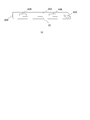
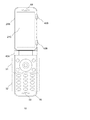
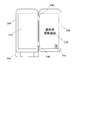
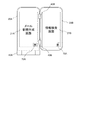
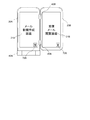
- FIG. 1 is a side view of a mobile terminal device according to an embodiment of the present invention (folded state when not in use). It is a top view (1 screen display state, at the time of use) of the portable terminal device by one Example of this invention. It is a block diagram which shows the internal structure of the portable terminal device by one Example of this invention. It is a display example (program guide display in a one-screen display state) of the portable terminal device by one Example of this invention. It is another example of a display of the portable terminal device by one Example of the present invention (program table 1 screen display in a 2 screen display state).
- a display of the portable terminal device by one Example of the present invention one segment + program table display in a two-screen display state. It is another example of a display (new mail + information search display in a 2 screen display state) of the portable terminal device by one Example of this invention. It is another example of a display (the new mail + received mail display in a 2 screen display state) of the portable terminal device by one Example of this invention.
- (Form 1) As already described in the first aspect.
- (Form 2) It is preferable that the second main display unit is connected to the first main display unit by a hinge or in a sliding manner.
- (Form 3) Preferably, an operation unit having an input key is further provided, and the first main display unit and the operation unit are foldably connected by a hinge unit.
- the first main display unit and the second main display unit are connected by a hinge unit, the second main display unit includes a third display screen on the back side of the second display screen, and the display state detection unit When it is detected that the first main display section and the second main display section are folded, the display of the first display screen and the second display screen is stopped, and the third display screen is stopped. It is preferable to display a display screen.
- the display state detection unit detects a change from the folded state to the open state, the display content displayed on the third display screen is displayed on the second display screen, and It is preferable that the operation target screen switching icon display unit displays the operation target screen switching icon on the second display screen.
- the second main display unit is configured to be detachable from the first main display unit.
- the first main display unit and the second main display unit are folded by the hinge unit so that the first display screen and the second display screen face each other, and instead of the first display screen,
- the third display screen provided on the back side of the second display screen is a portable terminal device configured to be exposed on the surface, When the display state detection unit detects that the first main display unit and the second main display unit are in a folded state, the display of the first main display unit and the second main display unit is performed.
- Stopping and displaying on the third display screen When the display state detection unit detects a change from the folded state to the open state, the display content displayed on the third display screen is displayed on the second display screen, and Displaying an operation target screen switching icon on the second display screen; Is preferably a program of a portable terminal device that causes the control unit to execute. (Form 9) As already described in the third aspect.
- the first main display unit and the second main display unit are folded by the hinge unit so that the first display screen and the second display screen face each other, and instead of the first display screen,
- the third display screen provided on the back side of the second display screen is a portable terminal device configured to be exposed on the surface,
- the display state detection unit detects that the first main display unit and the second main display unit are in a folded state
- the display of the first main display unit and the second main display unit is performed. Stop and display on the third display screen
- the display state detection unit detects a change from the folded state to the open state
- the display content displayed on the third display screen is displayed on the second display screen, and It is preferable to display an operation target screen switching icon on the second display screen.
- the portable terminal device of the above aspect has a first main display section having a first display screen, and a second display screen capable of display equivalent to the first display screen, and is foldable with respect to the first main display section.
- a second main display unit is provided. That is, a first main display section having a first display screen and a second main display section having a second display screen are provided, and the second main display section can be folded with respect to the first main display section. Therefore, it is possible to display twice the normal amount of information without increasing the storage area.
- folding (display) state detection unit (3 in FIG. 4) for detecting whether or not both the first display screen and the second display screen can be displayed simultaneously is provided, folding (display) is provided. It is possible to automatically determine whether or not two-screen display is possible by the state detection unit, and perform appropriate display.
- the folding (display) state detection unit detects that the display is possible on both the first display screen and the second display screen, the operation is performed among the first display screen and the second display screen.
- An operation target screen selection unit (5 in FIG. 4) that executes a function of selecting a target screen, and an operation target screen switching icon (70A and 70B in FIGS. 6 to 9) at least on the screen selected by the operation target screen selection unit
- An operation target screen switching icon display unit (6 in FIG. 4) that executes a function for displaying the operation target screen, and the operation target screen selection unit switches the selection of the operation target screen when the operation target screen switching icon is selected. .
- the first main display part (20A) and the second main display part (20B) are connected by a hinge part (40B), and the second main display part is the second main display part.
- the second display screen (21B) has a third display screen (21C) on the back side, and the folding (display) state detection unit is folded by the hinge portion between the first main display unit and the second main display unit.
- the third display screen is displayed (see FIG. 5). That is, the present invention is not limited to this configuration, but when the first main display unit and the second main display unit are folded with the first display screen and the second display screen facing each other, the first main display unit is folded. Since both the display screen and the second display screen are not visible from the outside, display is performed on the third display screen provided on the back side of the second display screen.
- the folding (display) state detecting unit detects that the folded state is changed from the folded state to the opened state
- the display content displayed on the third display screen (21C in FIG. 5) is displayed as the second display content.
- the operation target screen switching icon display unit displays the operation target screen switching icon on the second display screen.
- the mobile terminal device of the above embodiment includes at least a control unit (4 in FIG. 4) that controls the functional operation of the mobile terminal device, the screen to be operated can be switched also by the control program.
- the operation target screen switching icon is displayed on the screen.
- the screen to be operated can be switched from the displayed screens by selecting the displayed icon by the icon selection means.
- FIG. 1 shows a state when the portable terminal device 10 is used (terminal is opened), and FIG. 2 shows a state when the portable terminal device 10 is not used (terminal is closed).
- the first main display portion 20A is also connected to the second main display portion 20B via a hinge portion 40B, and the first main display portion 20B is rotated around the hinge portion 40B to rotate the first main display portion 20B.
- the second main display unit 20B is opened and closed with respect to the display unit 20A.
- the first main display unit 20A and the second main display unit 20B have a first display screen 21A and a second display screen 21B on which various applications are displayed, respectively.
- the operation unit 30 has an operation key 31 and an input key.
- a microphone 50 is installed.
- a folding (display) state detection unit (3 in FIG. 4 described later), which is a sensor that reacts depending on the opening / closing angle of the second main display unit 20B, for example, is incorporated in the first main display unit 20A.
- FIG. 3 is an external view of the mobile terminal device 10 in which only the second main display unit 20B of the terminal is closed.
- the 2nd main display part 20B has the 3rd display screen 21C provided in the back side of the 2nd display screen 21B, and the speaker (receiver) 60 for a call, and a user is the 1st main display part 20A.
- the second main display portion 20B is overlaid on the foldable portable terminal device, it can be used without any difference from the conventional folding portable terminal device having only one display portion. That is, the second main display portion 20B is provided with a second display screen 21B and a third display screen 21C on the front and back sides, respectively.
- the screen display switching between the front and back display areas is performed by a folding (display) state detection unit (3 in FIG. 4 described later) that is a sensor built in the first main display unit 20A. Is detected and switched automatically.
- FIG. 4 is a block diagram showing an internal configuration of the mobile terminal device 10 according to the present embodiment.
- the mobile terminal device 10 is roughly composed of a first main display unit 20A, a second main display unit 20B, and an operation unit 30.
- the first main display unit 20A includes a first display screen 21A, a first display screen control unit 1 that directly controls the first display screen 21A, and a folding (display) state detection unit 3.
- the folded (display) state detection unit 3 the first main display unit 20A and the second main display unit 20B are opened with the hinge 40B as an axis, and both the first display screen 21A and the second display screen 21B are provided. It can be displayed on the screen at the same time, or the first main display portion 20A and the second main display portion 20B are folded by the hinge portion 40B so that the user cannot visually recognize them even if they are displayed simultaneously. Is output as a folding (display) state detection signal.
- the second main display unit 20B includes a second display screen 21B and a second display screen control unit 2 that directly controls the second display screen 21B.
- the operation unit 30 includes a control unit (CPU) 4, a key input unit 8, and a program memory 7.
- the operation keys 31 and the input keys 32 described with reference to FIGS. 1 and 3 are connected to the key input unit 8, and information input from the keys is transmitted to the control unit 4.
- the control unit 4 functions as an operation target screen selection unit 5 and an operation target screen switching icon display unit 6 according to a program stored in the program memory 7.
- the operation target screen selection unit 5 detects the key input unit 8. Has a function of switching to which display screen of the two screens the key input input from. Based on the key input from the key input unit 8 and the information (processing) of the operation target screen selection unit 5, the control unit 4 operates the application displayed on either of the two screens. The first display screen control unit 1 or the second display screen control unit 2 is instructed to display the result on the corresponding screen. Further, when the operation target screen switching icon (70A, 70B in FIGS. 6 to 9) is selected by a signal from the key input unit 8, the operation target screen selection unit 5 displays two screens displayed simultaneously. Among them, the screen to be subjected to the subsequent key operation is switched. Since the operation target screen is switched by the operation target screen selection unit 5, the user can perform an operation on the operation target screen that is not different from normal one-screen display.
- the operation target screen switching icon display unit 6 controls the first display screen so that the operation target screen switching icon is displayed on the screen that is the operation target by the operation target screen selection unit 5 when two-screen display is possible.
- the unit 1 or the second display screen control unit 2 is controlled.
- the operation target screen switching icon may remain displayed on the screen that is not the operation target. Since the operation target screen switching icon is displayed on the operation target screen by the operation target screen switching icon display unit 6, the user can easily switch the screen to be operated among the two screen displays. That is, the operation target screen selection unit 5 and the operation target screen switching icon display unit 6 allow the user to perform operations on either screen while a plurality of screens are open at the same time.
- the first display screen control unit 1 and the second display screen control unit 2 are separated from the control unit 4, but the functions of the first display screen control unit 1 and the second display screen control unit 2 are separated. May be provided to the control unit 4. 4, the first display screen control unit 1 and the folded (display) state detection unit 3 are in the first main display unit 20A, the second display screen control unit 2 is in the second main display unit 20B, and the control unit 4 Are provided in the operation unit 30.
- the first display screen control unit 1, the second display screen control unit 2, the folded (display) state detection unit 3, and the control unit 4 include the first main display unit 20 ⁇ / b> A and the second display unit. You may provide anywhere in the main display part 20B and the operation part 30.
- the operation is switched when the user performs a predetermined operation as the operation of the preferred embodiment, and the first display screen 21A and the second display of the first main display unit 20A and the second main display unit 20B are switched.
- the applications displayed on the screen 21B and the third display screen 21C are shown.
- the user starts the browser and browses the program guide.
- the user rotates the second main display unit 20B around the hinge unit 40B, and the browser is opened by the folding (display) state detection unit 3 (for example, an angle detection sensor).
- the folding (display) state detection unit 3 for example, an angle detection sensor.
- an operation target screen switching icon 70A to be selected when switching the operation target screen is newly generated in the second display screen 21B.
- a predetermined operation that is, the operation key 31 is used to move and select the operation target screen switching icon 70A in the second display screen 21B, and the screen switching is determined. Further, after switching the operation target screen to the first display screen 21A, one-segment (one-segment partial reception service such as terrestrial digital television broadcasting for mobile terminal devices such as mobile phones) is displayed on the first display screen 21A. The screen is switched to a desired channel while checking the program displayed on the first display screen 21A while viewing the program table on the second display screen 21B.
- an operation target screen switching icon 70B is newly generated in the first display screen 21A.
- the 1seg viewing screen is displayed on the first display screen 21A, and the program table by the browser is displayed on the second display screen 21B (FIG. 7).
- the operation target screen switching icon 70B on the first display screen 21A can be selected, and the operation target screen can be moved to the second display screen 21B on which the program guide is displayed again to continue browsing. If it is desired to view another broadcast, the operation can be transferred again to the one-segment viewing screen by the same procedure.
- the second display screen 21B is switched to the search screen by selecting the link, and the search is executed.
- the operation target screen switching icon 70A in the second display screen 21B is selected, the mailer is activated on the first display screen 21A, and the text is written. Implementation of creation. At this time, the mail can be created while looking at the search result of the browser (FIG. 8).
- the operation target screen switching icon 70B in the first display screen 21A is selected, and the contents of the received mail are displayed on the second display screen 21B.
- copy the desired excerpt from the reference mail on the second display screen 21B and paste it on the created mail on the first display screen 21A is performed while switching the screen by appropriately selecting the operation target screen switching icons 70A and 70B (FIG. 9).
- the display screen (1) and the display screen (2) can be displayed on either the first display screen 21A or the second display screen 21B.
- the second main display portion 20B is foldably connected to the first main display portion 20A by the hinge portion 40B.
- the second main display portion 20B is slid in place of the hinge portion 40B. May be connected to the first main display portion 20A.
- the second main display unit 20B can be configured to be detachable from the first main display unit 20A.
- the present invention is not limited only to the configurations of the above embodiments, and of course includes various modifications and corrections that can be made by those skilled in the art within the scope of the present invention. It is. In other words, within the scope of the entire disclosure (including claims) of the present invention, the embodiments and examples can be changed and adjusted based on the basic technical concept. Various combinations and selections of various disclosed elements are possible within the scope of the claims of the present invention.
- First display screen control unit 2 Second display screen control unit 3: Folding (display) state detection unit 4: Control unit (CPU) 5: Operation target screen selection unit 6: Operation target screen switching icon display unit 7: Program memory 8: Key input unit 10: Mobile terminal device 20A: First main display unit 20B: Second main display unit 21A: First display screen 21B: 2nd display screen 21C: 3rd display screen 30: Operation part 31: Operation key 32: Input key 40A, 40B: Hinge part 50: Microphone 60: Speaker for call (receiver) 70A, 70B: Operation target screen switching icon
Landscapes
- Engineering & Computer Science (AREA)
- Theoretical Computer Science (AREA)
- General Engineering & Computer Science (AREA)
- Physics & Mathematics (AREA)
- Human Computer Interaction (AREA)
- Computer Hardware Design (AREA)
- General Physics & Mathematics (AREA)
- Signal Processing (AREA)
- Mathematical Physics (AREA)
- Telephone Function (AREA)
- User Interface Of Digital Computer (AREA)
- Telephone Set Structure (AREA)
- Controls And Circuits For Display Device (AREA)
Abstract
Description
本発明は、日本国特許出願:特願2009-086635号(2009年 3月31日出願)の優先権主張に基づくものであり、同出願の全記載内容は引用をもって本書に組み込み記載されているものとする。
本発明は、携帯電話機等の携帯端末装置、並びに、その制御プログラム及び複数表示画面制御方法に関する。特に、複数の画面を同時に表示することのできる携帯端末装置に関する。
以下の分析は本発明により与えられる。上記特許文献1に記載されている携帯端末装置は、メイン表示画面を1つしか有しておらず、アイコン選択によるアプリケーションの切り替えは同一画面上でしかできない。上記特許文献2、特許文献3にある、ヒンジ部によって接続された折りたたみ可能な2画面を同時に表示する携帯端末装置は、メイン表示画面を2画面携えているためこの点は改善されているが、現実には実用化されていない。その理由は、携帯端末装置の少ないキーで2画面を制御するには、操作性に難があることが考えられる。たとえば、メイン表示画面からアイコンを選択するなどの方法により第2メイン表示画面に新たなアプリケーションを表示させることは可能である。しかし、特許文献2や特許文献3によれば、第2メイン表示画面に操作対象画面が移ってしまい、第2メイン表示画面の機能を終了させるまでは、元のメイン表示画面の操作をすることはできない。特にキー数の少ない携帯端末装置においては、操作対象画面切り替え専用のキーを設けることは難しい。この2画面の切り替え制御方法については、特許文献1でも言及されていない。
(形態1)
第1の側面に既述のとおり。
(形態2)
前記第2メイン表示部は、前記第1メイン表示部に対しヒンジ部によって、あるいはスライド式に接続されていることが好ましい。
(形態3)
入力キーを有する操作部を更に備え、前記第1メイン表示部と前記操作部とがヒンジ部によって折りたたみ可能に接続されていることが好ましい。
(形態4)
前記第1メイン表示部と第2メイン表示部は、ヒンジ部によって接続されており、前記第2メイン表示部は前記第2表示画面の裏側に第3表示画面を備え、前記表示状態検出部が、前記第1メイン表示部と第2メイン表示部とが折りたたまれている状態にあることを検出したときは、前記第1表示画面、第2表示画面の表示をいずれも停止し、前記第3表示画面を表示させることが好ましい。
(形態5)
前記表示状態検出部が、折りたたまれている状態から開いた状態に変化したことを検出したときは、前記第3表示画面に表示されていた表示内容を前記第2表示画面に表示するとともに、前記操作対象画面切り替えアイコン表示部が、前記操作対象画面切り替えアイコンを前記第2表示画面に表示させることが好ましい。
(形態6)
前記第2メイン表示部は、前記第1メイン表示部に対し着脱自在に構成されていることが好ましい。
(形態7)
第2の側面に既述のとおり。
(形態8)
前記携帯端末装置は、前記第1メイン表示部と第2メイン表示部とが、ヒンジ部によって前記第1表示画面と第2表示画面とを向かい合わせて折りたたまれ、前記第1表示画面に代えて前記第2表示画面の裏側に設けられた第3表示画面が、表面に露出するように構成された携帯端末装置であって、
前記表示状態検出部が、前記第1メイン表示部と第2メイン表示部とが折りたたまれている状態にあることを検出したときに、前記第1メイン表示部及び第2メイン表示部の表示を停止し、前記第3表示画面により表示を行うステップと、
前記表示状態検出部が、折りたたまれている状態から開いた状態に変化したことを検出したときは、前記第3表示画面に表示されていた表示内容を前記第2表示画面に表示するとともに、前記操作対象画面切り替えアイコンを前記第2表示画面に表示させるステップと、
を更に前記制御部に実行させる携帯端末装置のプログラムであることが好ましい。
(形態9)
第3の側面に既述のとおり。
(形態10)
前記携帯端末装置は、前記第1メイン表示部と第2メイン表示部とが、ヒンジ部によって前記第1表示画面と第2表示画面とを向かい合わせて折りたたまれ、前記第1表示画面に代えて前記第2表示画面の裏側に設けられた第3表示画面が、表面に露出するように構成された携帯端末装置であって、
前記表示状態検出部が、前記第1メイン表示部と第2メイン表示部とが折りたたまれている状態にあることを検出したときに、前記第1メイン表示部及び第2メイン表示部の表示を停止し、前記第3表示画面により表示を行い、
前記表示状態検出部が、折りたたまれている状態から開いた状態に変化したことを検出したときは、前記第3表示画面に表示されていた表示内容を前記第2表示画面に表示するとともに、前記操作対象画面切り替えアイコンを前記第2表示画面に表示することが好ましい。
(形態11)
上記形態7又は8の制御プログラムを格納したコンピュータ読み取り可能な記録媒体であることが好ましい。
上記形態1~形態11について補足説明をする。なお、この補足説明において必要に応じて図面を参照して説明する。なお、補足説明において引用する図面及び図面の符号は実施形態の一例として示すものであり、それにより本発明による実施形態のバリエーションを制限するものではない。

2:第2表示画面制御部
3:折りたたみ(表示)状態検出部
4:制御部(CPU)
5:操作対象画面選択部
6:操作対象画面切り替えアイコン表示部
7:プログラムメモリ
8:キー入力部
10:携帯端末装置
20A:第1メイン表示部
20B:第2メイン表示部
21A:第1表示画面
21B:第2表示画面
21C:第3表示画面
30:操作部
31:操作キー
32:入力キー
40A、40B:ヒンジ部
50:マイク
60:通話用スピーカ(レシーバ)
70A、70B:操作対象画面切り替えアイコン
Claims (11)
- 第1表示画面を有する第1メイン表示部と、
前記第1表示画面と同等な表示が可能な第2表示画面を有し、前記第1メイン表示部に対し並置可能に接続された第2メイン表示部と、
前記第1表示画面と第2表示画面の双方が同時に表示可能な状態にあるか否かを検出する表示状態検出部と、
前記第1表示画面と第2表示画面のうち、操作対象となる画面を選択する機能を実行する操作対象画面選択部と、
前記表示状態検出部が、前記第1表示画面、第2表示画面の双方に表示が可能な状態であることを検出したときに、少なくとも前記操作対象画面選択部が選択した画面に操作対象画面切り替えアイコンを表示させる機能を実行する操作対象画面切り替えアイコン表示部と、を備え、
前記操作対象画面選択部は、前記操作対象画面切り替えアイコンが選択されたときに操作対象画面の選択を切り替えることを特徴とする携帯端末装置。 - 前記第2メイン表示部は、前記第1メイン表示部に対しヒンジ部によって、あるいはスライド式に接続されていることを特徴とする請求項1に記載の携帯端末装置。
- 入力キーを有する操作部を更に備え、前記第1メイン表示部と前記操作部とがヒンジ部によって折りたたみ可能に接続されていることを特徴とする請求項1又は2に記載の携帯端末装置。
- 前記第1メイン表示部と第2メイン表示部は、ヒンジ部によって接続されており、前記第2メイン表示部は前記第2表示画面の裏側に第3表示画面を備え、前記表示状態検出部が、前記第1メイン表示部と第2メイン表示部とが折りたたまれている状態にあることを検出したときは、前記第1表示画面、第2表示画面の表示をいずれも停止し、前記第3表示画面を表示させることを特徴とする請求項1~3いずれか1項に記載の携帯端末装置。
- 前記表示状態検出部が、折りたたまれている状態から開いた状態に変化したことを検出したときは、前記第3表示画面に表示されていた表示内容を前記第2表示画面に表示するとともに、前記操作対象画面切り替えアイコン表示部が、前記操作対象画面切り替えアイコンを前記第2表示画面に表示させることを特徴とする請求項4に記載の携帯端末装置。
- 前記第2メイン表示部は、前記第1メイン表示部に対し着脱自在に構成されていることを特徴とする請求項1~5いずれか1項に記載の携帯端末装置。
- 第1表示画面を有する第1メイン表示部と、
前記第1表示画面と同等な表示が可能である第2表示画面を有し、前記第1メイン表示部に対し並置可能に接続された第2メイン表示部と、
前記第1表示画面と第2表示画面の双方が表示可能な状態にあるか否かを検出する表示状態検出部と、
全体を制御する制御部と、
を備える携帯端末装置において、
前記表示状態検出部が、表示画面の状態が1画面表示状態から前記第1表示画面と第2表示画面の双方が表示可能な状態に変化したことを検出したときに、前記1画面表示状態にて表示されていた内容に操作対象画面切り替えアイコンを付加した表示を前記第1表示画面又は第2表示画面の一方に表示するステップと、
前記操作対象画面切り替えアイコンが選択されたことを検出したときに、操作対象とする画面を前記第1表示画面又は第2表示画面の一方から他方に切り替えるステップと、
を前記制御部に実行させることを特徴とする携帯端末装置の制御プログラム。 - 前記携帯端末装置は、前記第1メイン表示部と第2メイン表示部とが、ヒンジ部によって前記第1表示画面と第2表示画面とを向かい合わせて折りたたまれ、前記第1表示画面に代えて前記第2表示画面の裏側に設けられた第3表示画面が、表面に露出するように構成された携帯端末装置であって、
前記表示状態検出部が、前記第1メイン表示部と第2メイン表示部とが折りたたまれている状態にあることを検出したときに、前記第1メイン表示部及び第2メイン表示部の表示を停止し、前記第3表示画面により表示を行うステップと、
前記表示状態検出部が、折りたたまれている状態から開いた状態に変化したことを検出したときは、前記第3表示画面に表示されていた表示内容を前記第2表示画面に表示するとともに、前記操作対象画面切り替えアイコンを前記第2表示画面に表示させるステップと、
を更に前記制御部に実行させることを特徴とする請求項7に記載の携帯端末装置の制御プログラム。 - 第1表示画面を有する第1メイン表示部と、
前記第1表示画面と同等な表示が可能である第2表示画面を有し、前記第1メイン表示部に対し並置可能に接続された第2メイン表示部と、
前記第1表示画面と第2表示画面の双方が表示可能な状態にあるか否かを検出する表示状態検出部と、
表示画面に表示されるアイコンを選択するアイコン選択手段と、
を備える携帯端末装置において、
前記表示状態検出部が、表示画面の状態が1画面表示状態から前記第1表示画面と第2表示画面の双方が表示可能な状態に変化したことを検出したときに、前記1画面表示状態にて表示されていた内容に操作対象画面切り替えアイコンを付加した表示を前記第1表示画面又は第2表示画面の一方に表示し、
前記アイコン選択手段により前記操作対象画面切り替えアイコンが選択されたときに、操作対象とする画面を前記第1表示画面又は第2表示画面の一方から他方に切り替えることを特徴とする携帯端末装置の複数表示画面制御方法。 - 前記携帯端末装置は、前記第1メイン表示部と第2メイン表示部とが、ヒンジ部によって前記第1表示画面と第2表示画面とを向かい合わせて折りたたまれ、前記第1表示画面に代えて前記第2表示画面の裏側に設けられた第3表示画面が、表面に露出するように構成された携帯端末装置であって、
前記表示状態検出部が、前記第1メイン表示部と第2メイン表示部とが折りたたまれている状態にあることを検出したときに、前記第1メイン表示部及び第2メイン表示部の表示を停止し、前記第3表示画面により表示を行い、
前記表示状態検出部が、折りたたまれている状態から開いた状態に変化したことを検出したときは、前記第3表示画面に表示されていた表示内容を前記第2表示画面に表示するとともに、前記操作対象画面切り替えアイコンを前記第2表示画面に表示することを特徴とする請求項9に記載の携帯端末装置の複数表示画面制御方法。 - 請求項7又は8に記載の制御プログラムを格納したコンピュータ読み取り可能な記録媒体。
Priority Applications (4)
| Application Number | Priority Date | Filing Date | Title |
|---|---|---|---|
| JP2011507251A JP5765224B2 (ja) | 2009-03-31 | 2010-03-31 | 携帯端末装置、並びに、その制御プログラム及び複数表示画面制御方法 |
| EP10758778.4A EP2416232B1 (en) | 2009-03-31 | 2010-03-31 | Mobile terminal device, control program and multiple display screen control method |
| CN201080014317.0A CN102369504B (zh) | 2009-03-31 | 2010-03-31 | 便携终端装置、其控制程序以及多个显示画面的控制方法 |
| US13/262,052 US20120026069A1 (en) | 2009-03-31 | 2010-03-31 | Mobile terminal device, and control program and multiple display screen control method therefor |
Applications Claiming Priority (2)
| Application Number | Priority Date | Filing Date | Title |
|---|---|---|---|
| JP2009086635 | 2009-03-31 | ||
| JP2009-086635 | 2009-03-31 |
Publications (1)
| Publication Number | Publication Date |
|---|---|
| WO2010114007A1 true WO2010114007A1 (ja) | 2010-10-07 |
Family
ID=42828296
Family Applications (1)
| Application Number | Title | Priority Date | Filing Date |
|---|---|---|---|
| PCT/JP2010/055819 Ceased WO2010114007A1 (ja) | 2009-03-31 | 2010-03-31 | 携帯端末装置、並びに、その制御プログラム及び複数表示画面制御方法 |
Country Status (5)
| Country | Link |
|---|---|
| US (1) | US20120026069A1 (ja) |
| EP (1) | EP2416232B1 (ja) |
| JP (1) | JP5765224B2 (ja) |
| CN (1) | CN102369504B (ja) |
| WO (1) | WO2010114007A1 (ja) |
Cited By (6)
| Publication number | Priority date | Publication date | Assignee | Title |
|---|---|---|---|---|
| CN103099414A (zh) * | 2011-11-10 | 2013-05-15 | 亚旭电子科技(江苏)有限公司 | 用于装设多个手持式电子装置的承载装置 |
| JP2014503891A (ja) * | 2010-12-10 | 2014-02-13 | ヨタ デバイセズ アイピーアール リミテッド | ユーザインターフェースを有する携帯機器 |
| CN104346023A (zh) * | 2013-07-23 | 2015-02-11 | 深圳海棠通信技术有限公司 | 一种触控进入分类桌面的方法以及装置 |
| WO2016047860A1 (en) * | 2014-09-22 | 2016-03-31 | Lg Electronics Inc. | Foldable display device displayng stored image by folding or unfolding action and method of therefor |
| US10534531B2 (en) | 2011-02-10 | 2020-01-14 | Samsung Electronics Co., Ltd. | Portable device comprising a touch-screen display, and method for controlling same |
| US11132025B2 (en) | 2011-02-10 | 2021-09-28 | Samsung Electronics Co., Ltd. | Apparatus including multiple touch screens and method of changing screens therein |
Families Citing this family (31)
| Publication number | Priority date | Publication date | Assignee | Title |
|---|---|---|---|---|
| US9098437B2 (en) | 2010-10-01 | 2015-08-04 | Z124 | Cross-environment communication framework |
| US9047102B2 (en) | 2010-10-01 | 2015-06-02 | Z124 | Instant remote rendering |
| US8726294B2 (en) | 2010-10-01 | 2014-05-13 | Z124 | Cross-environment communication using application space API |
| US8819705B2 (en) | 2010-10-01 | 2014-08-26 | Z124 | User interaction support across cross-environment applications |
| US8933949B2 (en) | 2010-10-01 | 2015-01-13 | Z124 | User interaction across cross-environment applications through an extended graphics context |
| US8966379B2 (en) | 2010-10-01 | 2015-02-24 | Z124 | Dynamic cross-environment application configuration/orientation in an active user environment |
| US8555201B2 (en) * | 2008-06-05 | 2013-10-08 | Qualcomm Incorporated | Wireless communication device having deterministic control of foreground access of the user interface |
| US9405444B2 (en) | 2010-10-01 | 2016-08-02 | Z124 | User interface with independent drawer control |
| WO2012044557A2 (en) | 2010-10-01 | 2012-04-05 | Imerj, Llc | Auto-configuration of a docked system in a multi-os environment |
| US8761831B2 (en) | 2010-10-15 | 2014-06-24 | Z124 | Mirrored remote peripheral interface |
| US9618972B2 (en) * | 2011-01-20 | 2017-04-11 | Blackberry Limited | Three-dimensional, multi-depth presentation of icons in association with differing input components of a user interface |
| JP5580227B2 (ja) * | 2011-02-24 | 2014-08-27 | 京セラ株式会社 | 携帯端末装置 |
| US9351237B2 (en) | 2011-09-27 | 2016-05-24 | Z124 | Displaying of charging status on dual screen device |
| CN103309399B (zh) * | 2012-03-12 | 2017-09-22 | 联想(北京)有限公司 | 一种双屏幕电子设备 |
| JP6022214B2 (ja) * | 2012-05-31 | 2016-11-09 | 任天堂株式会社 | プログラム、情報処理方法、情報処理装置及び表示システム |
| US20150242117A1 (en) * | 2012-08-08 | 2015-08-27 | Keiichi Nakashima | Portable electronic device, and control method and program therefor |
| US20140253412A1 (en) * | 2013-03-11 | 2014-09-11 | Bluebox Security Inc. | Method for Displaying Confidential Data on an Auxiliary Device |
| KR102311221B1 (ko) * | 2014-04-28 | 2021-10-13 | 삼성전자주식회사 | 오브젝트 운용 방법 및 이를 지원하는 전자 장치 |
| CN104239138A (zh) * | 2014-08-21 | 2014-12-24 | 深圳市金立通信设备有限公司 | 一种终端 |
| CN104408385A (zh) * | 2014-11-10 | 2015-03-11 | 广州三星通信技术研究有限公司 | 在终端中隐藏隐私内容的设备和方法 |
| US9686384B2 (en) * | 2014-12-09 | 2017-06-20 | Sukjun Song | Electronic device with rotating input unit and method for operating the same |
| JP6565219B2 (ja) * | 2015-03-03 | 2019-08-28 | 株式会社ジェイテクト | 操作盤 |
| KR102466990B1 (ko) * | 2015-11-06 | 2022-11-14 | 삼성전자주식회사 | 복수의 화면을 표시하는 전자장치 및 그 제어 방법 |
| KR20170053513A (ko) * | 2015-11-06 | 2017-05-16 | 삼성전자주식회사 | 복수의 디스플레이들을 포함하는 전자 장치 및 그 동작 방법 |
| CN105389085A (zh) * | 2015-12-03 | 2016-03-09 | 广东欧珀移动通信有限公司 | 移动终端的解锁方法及装置 |
| CN105528035A (zh) * | 2015-12-31 | 2016-04-27 | 联想(北京)有限公司 | 一种电子设备 |
| US20170220307A1 (en) * | 2016-02-02 | 2017-08-03 | Samsung Electronics Co., Ltd. | Multi-screen mobile device and operation |
| US10942696B2 (en) * | 2017-05-15 | 2021-03-09 | Microsoft Technology Licensing, Llc | Display device selection based on hardware configuration |
| US10761799B2 (en) * | 2017-06-09 | 2020-09-01 | Microsoft Technology Licensing, Llc | Inference of an intended primary display of a hinged mobile device |
| CN109714813A (zh) * | 2019-01-08 | 2019-05-03 | 京东方科技集团股份有限公司 | 电子设备 |
| US20230385009A1 (en) * | 2022-05-27 | 2023-11-30 | READTYCH Corp. | Device, method, and system for portable interactive device |
Citations (2)
| Publication number | Priority date | Publication date | Assignee | Title |
|---|---|---|---|---|
| JP2003198685A (ja) * | 2001-12-25 | 2003-07-11 | Kyocera Corp | 携帯端末 |
| WO2003077098A1 (en) * | 2002-03-08 | 2003-09-18 | Mitsubishi Denki Kabushiki Kaisha | Mobile communication device, display control method of mobile communication device, and program therefor |
Family Cites Families (16)
| Publication number | Priority date | Publication date | Assignee | Title |
|---|---|---|---|---|
| JP2000278373A (ja) * | 1999-03-29 | 2000-10-06 | Ricoh Co Ltd | 携帯型電子機器 |
| JP3501710B2 (ja) * | 2000-02-23 | 2004-03-02 | 日本電気通信システム株式会社 | 携帯電話機 |
| JP3530475B2 (ja) * | 2000-09-25 | 2004-05-24 | 三洋電機株式会社 | 折畳式通信端末装置および情報表示方法 |
| JP2003152840A (ja) * | 2001-11-13 | 2003-05-23 | Nec Corp | 携帯電話機 |
| US20050083642A1 (en) * | 2002-03-08 | 2005-04-21 | Tsuyoshi Senpuku | Mobile communications device, and display-control method and program for mobile communications device |
| EP1540840A4 (en) * | 2002-09-17 | 2008-04-16 | Si Han Kim | MULTI-DISPLAY DEVICE |
| JP2004135177A (ja) * | 2002-10-11 | 2004-04-30 | Sharp Corp | 携帯電話機 |
| US7460108B2 (en) * | 2003-12-10 | 2008-12-02 | Panasonic Corporation | Portable information terminal device |
| JP2005229349A (ja) * | 2004-02-13 | 2005-08-25 | Hitachi Electronics Service Co Ltd | 表示部が着脱可能な携帯電話機 |
| KR100690726B1 (ko) * | 2004-09-14 | 2007-03-09 | 엘지전자 주식회사 | 멀티태스킹이 구현된 휴대 단말기와 그 제어 방법 |
| KR100677382B1 (ko) * | 2004-11-09 | 2007-02-02 | 엘지전자 주식회사 | 휴대단말기에서의 화면전환 방법 |
| KR100706676B1 (ko) * | 2004-12-13 | 2007-04-11 | 엘지.필립스 엘시디 주식회사 | 접철식 액정 디스플레이 화면을 구비한 모바일 단말기 |
| KR100703514B1 (ko) * | 2006-04-07 | 2007-04-03 | 삼성에스디아이 주식회사 | 듀얼 화면 모바일 디스플레이 기기 |
| JP4719644B2 (ja) * | 2006-08-11 | 2011-07-06 | 富士通東芝モバイルコミュニケーションズ株式会社 | 携帯端末装置 |
| CN101241427A (zh) * | 2008-02-18 | 2008-08-13 | 倚天资讯股份有限公司 | 可携式电子装置及其运作方法 |
| US8866840B2 (en) * | 2008-09-08 | 2014-10-21 | Qualcomm Incorporated | Sending a parameter based on screen size or screen resolution of a multi-panel electronic device to a server |
-
2010
- 2010-03-31 CN CN201080014317.0A patent/CN102369504B/zh active Active
- 2010-03-31 JP JP2011507251A patent/JP5765224B2/ja active Active
- 2010-03-31 WO PCT/JP2010/055819 patent/WO2010114007A1/ja not_active Ceased
- 2010-03-31 US US13/262,052 patent/US20120026069A1/en not_active Abandoned
- 2010-03-31 EP EP10758778.4A patent/EP2416232B1/en active Active
Patent Citations (2)
| Publication number | Priority date | Publication date | Assignee | Title |
|---|---|---|---|---|
| JP2003198685A (ja) * | 2001-12-25 | 2003-07-11 | Kyocera Corp | 携帯端末 |
| WO2003077098A1 (en) * | 2002-03-08 | 2003-09-18 | Mitsubishi Denki Kabushiki Kaisha | Mobile communication device, display control method of mobile communication device, and program therefor |
Cited By (14)
| Publication number | Priority date | Publication date | Assignee | Title |
|---|---|---|---|---|
| JP2014503891A (ja) * | 2010-12-10 | 2014-02-13 | ヨタ デバイセズ アイピーアール リミテッド | ユーザインターフェースを有する携帯機器 |
| US11093132B2 (en) | 2011-02-10 | 2021-08-17 | Samsung Electronics Co., Ltd. | Portable device comprising a touch-screen display, and method for controlling same |
| US10534531B2 (en) | 2011-02-10 | 2020-01-14 | Samsung Electronics Co., Ltd. | Portable device comprising a touch-screen display, and method for controlling same |
| US10642485B1 (en) | 2011-02-10 | 2020-05-05 | Samsung Electronics Co., Ltd. | Portable device comprising a touch-screen display, and method for controlling same |
| US10845989B2 (en) | 2011-02-10 | 2020-11-24 | Samsung Electronics Co., Ltd. | Portable device comprising a touch-screen display, and method for controlling same |
| US10852942B2 (en) | 2011-02-10 | 2020-12-01 | Samsung Electronics Co., Ltd. | Portable device comprising a touch-screen display, and method for controlling same |
| US11132025B2 (en) | 2011-02-10 | 2021-09-28 | Samsung Electronics Co., Ltd. | Apparatus including multiple touch screens and method of changing screens therein |
| US11237723B2 (en) | 2011-02-10 | 2022-02-01 | Samsung Electronics Co., Ltd. | Portable device comprising a touch-screen display, and method for controlling same |
| US11640238B2 (en) | 2011-02-10 | 2023-05-02 | Samsung Electronics Co., Ltd. | Portable device comprising a touch-screen display, and method for controlling same |
| US12131017B2 (en) | 2011-02-10 | 2024-10-29 | Samsung Electronics Co., Ltd. | Portable device comprising a touch-screen display, and method for controlling same |
| CN103099414A (zh) * | 2011-11-10 | 2013-05-15 | 亚旭电子科技(江苏)有限公司 | 用于装设多个手持式电子装置的承载装置 |
| CN104346023A (zh) * | 2013-07-23 | 2015-02-11 | 深圳海棠通信技术有限公司 | 一种触控进入分类桌面的方法以及装置 |
| WO2016047860A1 (en) * | 2014-09-22 | 2016-03-31 | Lg Electronics Inc. | Foldable display device displayng stored image by folding or unfolding action and method of therefor |
| US9911054B2 (en) | 2014-09-22 | 2018-03-06 | Lg Electronics Inc. | Foldable display device displaying stored image by folding or unfolding action and method of therefor |
Also Published As
| Publication number | Publication date |
|---|---|
| JPWO2010114007A1 (ja) | 2012-10-11 |
| CN102369504B (zh) | 2016-10-26 |
| JP5765224B2 (ja) | 2015-08-19 |
| EP2416232B1 (en) | 2019-05-08 |
| EP2416232A4 (en) | 2014-04-09 |
| CN102369504A (zh) | 2012-03-07 |
| EP2416232A1 (en) | 2012-02-08 |
| US20120026069A1 (en) | 2012-02-02 |
Similar Documents
| Publication | Publication Date | Title |
|---|---|---|
| JP5765224B2 (ja) | 携帯端末装置、並びに、その制御プログラム及び複数表示画面制御方法 | |
| JP5215502B2 (ja) | 入力装置 | |
| US8350965B2 (en) | Portable terminal device | |
| US20080207273A1 (en) | Sliding-type mobile phone with a supplemental display secreen | |
| JP5206670B2 (ja) | 携帯端末装置、その機能起動方法及びプログラム | |
| KR20040044143A (ko) | 휴대 단말 장치 | |
| US20100255889A1 (en) | Portable apparatus and display control method thereof | |
| JP3965383B2 (ja) | 携帯端末装置 | |
| CN108132747A (zh) | 一种屏幕内容切换方法和双屏移动终端 | |
| JP5596914B2 (ja) | 端末装置、表示制御方法、及び表示機能を備えたプログラム | |
| JP2008198040A (ja) | 携帯端末装置及びその表示制御方法 | |
| US20090044148A1 (en) | Portable terminal and menu display method | |
| JP2014168271A (ja) | 携帯通信端末及びそれに用いる入力操作画面制御方法並びにそのプログラム | |
| US8558812B2 (en) | Portable terminal device | |
| WO2012093549A1 (ja) | 情報処理端末とその制御方法 | |
| JP2008283444A (ja) | 携帯情報機器 | |
| KR20050017132A (ko) | 이동 통신 단말기의 분할 화면 출력 방법 | |
| JP2006279361A (ja) | 携帯端末装置及び携帯端末装置用プログラム | |
| JP2004179870A (ja) | 携帯端末装置 | |
| JP5420846B2 (ja) | 電子メール機能付き機器および電子メール機能付き機器の制御方法 | |
| JP2002369252A (ja) | 携帯電話端末およびその表示制御方法 | |
| JP2010108320A (ja) | 携帯情報端末 | |
| JP2008289081A (ja) | 携帯情報端末 | |
| JP5626424B2 (ja) | 端末装置、表示制御方法、及び表示機能を有するプログラム | |
| KR101346889B1 (ko) | 조이스틱을 갖는 이동통신단말기 및 그 입력 처리방법 |
Legal Events
| Date | Code | Title | Description |
|---|---|---|---|
| WWE | Wipo information: entry into national phase |
Ref document number: 201080014317.0 Country of ref document: CN |
|
| 121 | Ep: the epo has been informed by wipo that ep was designated in this application |
Ref document number: 10758778 Country of ref document: EP Kind code of ref document: A1 |
|
| WWE | Wipo information: entry into national phase |
Ref document number: 2011507251 Country of ref document: JP |
|
| WWE | Wipo information: entry into national phase |
Ref document number: 13262052 Country of ref document: US |
|
| NENP | Non-entry into the national phase |
Ref country code: DE |
|
| WWE | Wipo information: entry into national phase |
Ref document number: 2010758778 Country of ref document: EP |