WO2010125743A1 - ポリメチレンポリフェニレンポリイソシアネート系ポリウレア化合物の分解処理方法 - Google Patents
ポリメチレンポリフェニレンポリイソシアネート系ポリウレア化合物の分解処理方法 Download PDFInfo
- Publication number
- WO2010125743A1 WO2010125743A1 PCT/JP2010/002350 JP2010002350W WO2010125743A1 WO 2010125743 A1 WO2010125743 A1 WO 2010125743A1 JP 2010002350 W JP2010002350 W JP 2010002350W WO 2010125743 A1 WO2010125743 A1 WO 2010125743A1
- Authority
- WO
- WIPO (PCT)
- Prior art keywords
- polymeric mdi
- polyurea compound
- water
- decomposing
- based polyurea
- Prior art date
- Legal status (The legal status is an assumption and is not a legal conclusion. Google has not performed a legal analysis and makes no representation as to the accuracy of the status listed.)
- Ceased
Links
- 0 C*(C)CC(C(C)=N)c1cccc(N=C=O)c1 Chemical compound C*(C)CC(C(C)=N)c1cccc(N=C=O)c1 0.000 description 1
Images


Classifications
-
- C—CHEMISTRY; METALLURGY
- C08—ORGANIC MACROMOLECULAR COMPOUNDS; THEIR PREPARATION OR CHEMICAL WORKING-UP; COMPOSITIONS BASED THEREON
- C08J—WORKING-UP; GENERAL PROCESSES OF COMPOUNDING; AFTER-TREATMENT NOT COVERED BY SUBCLASSES C08B, C08C, C08F, C08G or C08H
- C08J11/00—Recovery or working-up of waste materials
- C08J11/04—Recovery or working-up of waste materials of polymers
- C08J11/10—Recovery or working-up of waste materials of polymers by chemically breaking down the molecular chains of polymers or breaking of crosslinks, e.g. devulcanisation
- C08J11/14—Recovery or working-up of waste materials of polymers by chemically breaking down the molecular chains of polymers or breaking of crosslinks, e.g. devulcanisation by treatment with steam or water
-
- C—CHEMISTRY; METALLURGY
- C08—ORGANIC MACROMOLECULAR COMPOUNDS; THEIR PREPARATION OR CHEMICAL WORKING-UP; COMPOSITIONS BASED THEREON
- C08G—MACROMOLECULAR COMPOUNDS OBTAINED OTHERWISE THAN BY REACTIONS ONLY INVOLVING UNSATURATED CARBON-TO-CARBON BONDS
- C08G18/00—Polymeric products of isocyanates or isothiocyanates
- C08G18/06—Polymeric products of isocyanates or isothiocyanates with compounds having active hydrogen
- C08G18/08—Processes
- C08G18/0838—Manufacture of polymers in the presence of non-reactive compounds
- C08G18/0842—Manufacture of polymers in the presence of non-reactive compounds in the presence of liquid diluents
- C08G18/0847—Manufacture of polymers in the presence of non-reactive compounds in the presence of liquid diluents in the presence of solvents for the polymers
- C08G18/0852—Manufacture of polymers in the presence of non-reactive compounds in the presence of liquid diluents in the presence of solvents for the polymers the solvents being organic
-
- C—CHEMISTRY; METALLURGY
- C08—ORGANIC MACROMOLECULAR COMPOUNDS; THEIR PREPARATION OR CHEMICAL WORKING-UP; COMPOSITIONS BASED THEREON
- C08G—MACROMOLECULAR COMPOUNDS OBTAINED OTHERWISE THAN BY REACTIONS ONLY INVOLVING UNSATURATED CARBON-TO-CARBON BONDS
- C08G18/00—Polymeric products of isocyanates or isothiocyanates
- C08G18/06—Polymeric products of isocyanates or isothiocyanates with compounds having active hydrogen
- C08G18/70—Polymeric products of isocyanates or isothiocyanates with compounds having active hydrogen characterised by the isocyanates or isothiocyanates used
- C08G18/72—Polyisocyanates or polyisothiocyanates
- C08G18/74—Polyisocyanates or polyisothiocyanates cyclic
- C08G18/76—Polyisocyanates or polyisothiocyanates cyclic aromatic
- C08G18/7657—Polyisocyanates or polyisothiocyanates cyclic aromatic containing two or more aromatic rings
- C08G18/7664—Polyisocyanates or polyisothiocyanates cyclic aromatic containing two or more aromatic rings containing alkylene polyphenyl groups
-
- C—CHEMISTRY; METALLURGY
- C08—ORGANIC MACROMOLECULAR COMPOUNDS; THEIR PREPARATION OR CHEMICAL WORKING-UP; COMPOSITIONS BASED THEREON
- C08G—MACROMOLECULAR COMPOUNDS OBTAINED OTHERWISE THAN BY REACTIONS ONLY INVOLVING UNSATURATED CARBON-TO-CARBON BONDS
- C08G18/00—Polymeric products of isocyanates or isothiocyanates
- C08G18/06—Polymeric products of isocyanates or isothiocyanates with compounds having active hydrogen
- C08G18/83—Chemically modified polymers
- C08G18/831—Chemically modified polymers by oxygen-containing compounds inclusive of carbonic acid halogenides, carboxylic acid halogenides and epoxy halides
- C08G18/832—Chemically modified polymers by oxygen-containing compounds inclusive of carbonic acid halogenides, carboxylic acid halogenides and epoxy halides by water acting as hydrolizing agent
-
- C—CHEMISTRY; METALLURGY
- C08—ORGANIC MACROMOLECULAR COMPOUNDS; THEIR PREPARATION OR CHEMICAL WORKING-UP; COMPOSITIONS BASED THEREON
- C08J—WORKING-UP; GENERAL PROCESSES OF COMPOUNDING; AFTER-TREATMENT NOT COVERED BY SUBCLASSES C08B, C08C, C08F, C08G or C08H
- C08J11/00—Recovery or working-up of waste materials
- C08J11/04—Recovery or working-up of waste materials of polymers
- C08J11/10—Recovery or working-up of waste materials of polymers by chemically breaking down the molecular chains of polymers or breaking of crosslinks, e.g. devulcanisation
- C08J11/16—Recovery or working-up of waste materials of polymers by chemically breaking down the molecular chains of polymers or breaking of crosslinks, e.g. devulcanisation by treatment with inorganic material
-
- C—CHEMISTRY; METALLURGY
- C08—ORGANIC MACROMOLECULAR COMPOUNDS; THEIR PREPARATION OR CHEMICAL WORKING-UP; COMPOSITIONS BASED THEREON
- C08J—WORKING-UP; GENERAL PROCESSES OF COMPOUNDING; AFTER-TREATMENT NOT COVERED BY SUBCLASSES C08B, C08C, C08F, C08G or C08H
- C08J2375/00—Characterised by the use of polyureas or polyurethanes; Derivatives of such polymers
- C08J2375/02—Polyureas
-
- Y—GENERAL TAGGING OF NEW TECHNOLOGICAL DEVELOPMENTS; GENERAL TAGGING OF CROSS-SECTIONAL TECHNOLOGIES SPANNING OVER SEVERAL SECTIONS OF THE IPC; TECHNICAL SUBJECTS COVERED BY FORMER USPC CROSS-REFERENCE ART COLLECTIONS [XRACs] AND DIGESTS
- Y02—TECHNOLOGIES OR APPLICATIONS FOR MITIGATION OR ADAPTATION AGAINST CLIMATE CHANGE
- Y02P—CLIMATE CHANGE MITIGATION TECHNOLOGIES IN THE PRODUCTION OR PROCESSING OF GOODS
- Y02P20/00—Technologies relating to chemical industry
- Y02P20/50—Improvements relating to the production of bulk chemicals
- Y02P20/54—Improvements relating to the production of bulk chemicals using solvents, e.g. supercritical solvents or ionic liquids
-
- Y—GENERAL TAGGING OF NEW TECHNOLOGICAL DEVELOPMENTS; GENERAL TAGGING OF CROSS-SECTIONAL TECHNOLOGIES SPANNING OVER SEVERAL SECTIONS OF THE IPC; TECHNICAL SUBJECTS COVERED BY FORMER USPC CROSS-REFERENCE ART COLLECTIONS [XRACs] AND DIGESTS
- Y02—TECHNOLOGIES OR APPLICATIONS FOR MITIGATION OR ADAPTATION AGAINST CLIMATE CHANGE
- Y02W—CLIMATE CHANGE MITIGATION TECHNOLOGIES RELATED TO WASTEWATER TREATMENT OR WASTE MANAGEMENT
- Y02W30/00—Technologies for solid waste management
- Y02W30/50—Reuse, recycling or recovery technologies
- Y02W30/62—Plastics recycling; Rubber recycling
Definitions
- the present invention hydrolyzes a polymethylene polyphenylene polyisocyanate (hereinafter abbreviated as polymeric MDI) -based polyurea compound in carbon dioxide in a supercritical state or subcritical state, thereby polymethylene polyphenyl polyamine (hereinafter abbreviated as PMDA). ) Is recovered, and the method of decomposing the polymeric MDI-based polyurea compound.
- polymeric MDI polymethylene polyphenylene polyisocyanate
- PMDA polymethylene polyphenyl polyamine
- Polyurethane is a polymer material synthesized by polyaddition reaction of polyisocyanate and polyol. Polyurethane can be imparted with various physical properties by blending, formulation, molding method and the like. For this reason, it is used in a wide variety of forms such as foams, elastomers, paints, and adhesives.
- Polyisocyanate which is a raw material for polyurethane, is obtained by reacting a corresponding polyamine with phosgene, and a polyurea residue is produced as a by-product at this time.
- This residue is a tar-like substance that solidifies at room temperature and is difficult to handle, so that it has conventionally been a waste that is exclusively incinerated. In this incineration process, not only CO 2 but also NO x is generated, so that there is a problem from the viewpoint of environmental protection.
- Patent Document 1 proposes a method of treating polyurea residue using water in a supercritical state or a subcritical state.
- the object of the present invention is to recover a reusable polyamine without adding a hydrolysis accelerator such as an alkali to the residue containing a polyurea compound by-produced during the production of the polymeric MDI, which until now had only been disposed of.
- Another object of the present invention is to provide a method for decomposing a polymeric MDI-based polyurea compound that does not cause the corrosive problem of the reactor.
- the inventors of the present invention added a polymeric MDI-based polyurea compound in supercritical or subcritical carbon dioxide (supercritical point: 31 ° C., 7.4 MPa). By decomposing, the PMDA was efficiently recovered and suitable conditions therefor were found, and the present invention was completed. That is, the present invention is shown in the following (1) to (4).
- the method of the present invention makes it possible to efficiently convert the residue during the production of polymeric MDI, which has been conventionally disposed of as industrial waste, into PMDA without using an additive such as an alkali.
- the polymeric MDI-based polyurea compound is represented by the following formula (1): —NH—CO—NH— (urea group) is — (C 6 H 4 ) n — (polymethylene polyphenylene) A group adjacent to the group), and a part of the urea group is a biuret group. Specifically, it is mainly generated as a by-product residue during the production of polymeric MDI. The residue means a residue generated during the production of polymeric MDI.
- the polymeric MDI-based polyurea compound used for the decomposition of the present invention may be generated in any process as long as it is a by-product residue during the production of the polymeric MDI. Specifically, it is a residue produced as a by-product in any of the PMDA production process, the PMDA and phosgene reaction process, the polymeric MDI purification process, and the like. These residues may be melted and dissolved in each step.
- the residue applicable to the present invention is not limited to the polymeric MDI produced using phosgene, and when produced by the non-phosgene method, the residue produced as a by-product in any of these steps should be decomposed. Needless to say, you can.
- Any residue may be used, but it is usually used after the residue generated in each step is separated from the liquid component by a solid-liquid separation step, a distillation step or the like.
- the residue produced as a by-product during the production of these polymeric MDIs is a mixture mainly composed of thermal polycondensation products such as polyamines and polyisocyanates.
- the thermal polycondensate has groups or rings such as urea (urethane), biuret, carbodiimide, isocyanurate and the like. In particular, many compounds having a complicated structure having a plurality of these groups or rings are contained.
- the polymeric MDI-based polyurea compound such as the above residue is hydrolyzed into PMDA using liquid or gaseous water in supercritical or subcritical carbon dioxide.
- water / polymeric MDI-based polyurea compound 10/1 to 50/1, and particularly preferably 20/1 to 40/1.
- the temperature during hydrolysis is preferably 180 ° C. or higher and lower than 374 ° C., more preferably 190 ° C. or higher and lower than 374 ° C. When the temperature is lower than 180 ° C., the decomposition rate becomes slow.
- the pressure is preferably 5 MPa to 11 MPa, and more preferably 7.4 to 9.2 MPa. When the pressure is low, carbon dioxide does not sufficiently permeate the polymeric MDI-based polyurea compound, and when the pressure is high, water does not sufficiently permeate the polymeric MDI-based polyurea compound, so the decomposition rate decreases.
- the hydrolysis time of the polymeric MDI-based polyurea compound is not particularly limited, but is 1 minute to 300 minutes, preferably 1 minute to 150 minutes after reaching a predetermined temperature.
- Mixing and heating of water and the polymeric MDI polyurea compound may be performed by any of the following methods, but 3) is preferable.
- 1) Water and a polymeric MDI-based polyurea compound are mixed at a predetermined temperature.
- 2) Water is heated to a predetermined temperature when mixed with the polymeric MDI-based polyurea compound, and the decomposition temperature is set by mixing the heated water and the polymeric MDI-based polyurea compound.
- 3) Water and a polymeric MDI-based polyurea compound are mixed in advance at a predetermined concentration in a slurry preparation drum or the like to prepare a slurry, and then heated to a decomposition temperature.
- PMDA is contained as a main component in the aqueous solution obtained by decomposing the polymeric MDI-based polyurea compound in this way, and PMDA is easily recovered by a method such as ordinary distillation or extraction. be able to.
- the recovered PMDA can be used as a raw material in the polymeric MDI production process after further purification if necessary.
- a light boiling component mainly composed of carbon dioxide is dissolved in the aqueous solution from which PMDA is separated, but it can be used for hydrolysis after removing it by performing steam stripping or the like. It can also be recycled as water. Or it can also drain after carrying out normal wastewater treatment.
- the distillation residue during the production of the polymeric MDI may be any distillation residue generated by distillation in any step of the production facility of the polymeric MDI. Normal, It is mainly produced by distilling the reaction solution obtained in the amine production step or the step of reacting an amine with a carbonyl source such as phosgene.
- the amount of by-products of this distillation residue varies depending on the production method, but is about 10% by mass relative to the produced polymeric MDI.
- This distillation residue is usually liquid.
- examples of an apparatus for recovering from the above distillation residue to a state that does not substantially contain a volatile component include those used in a normal volatile recovery process such as a thin film evaporator, an apparatus having a stirring and heating means such as a kneader. .
- a two-phase flow evaporator having piston flow properties it is particularly preferable to use a two-phase flow evaporator having piston flow properties.
- the evaporation device having piston flow means a facility through which an evaporation target flows in a certain direction from upstream to downstream of the device.
- the two-phase flow type evaporator is an evaporator having at least a gas-liquid or gas-solid two-phase flow, and gas-liquid-solid three phases may coexist.
- Typical examples of these include kneaders and double tube heat exchangers.
- a tubular evaporator that forms at least one of a wavy flow, a slag flow, an annular flow, and a spray flow is particularly preferable.
- An apparatus in which the flow state is formed by a gas generated inside the evaporation apparatus is most preferable, and for example, a double tube heat exchanger or the like is suitably used.
- the polymeric MDI based polyurea compound 12.83g of a brown solid was obtained 97.9% yield in dried under reduced pressure.
- the obtained polymeric MDI-based polyurea compound swelled in DMF, dimethyl sulfoxide (DMSO), N, N-dimethylformamide (DMA), and did not dissolve in organic solvents such as methanol and chloroform.
- Decomposition ratio (%) was defined as the weight reduction rate from the charged amount.
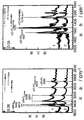
- Table 1 Methanol insoluble matter (filtered material) (brown powder) was subjected to FT-IR measurement (FIG. 1), and no significant difference was found from the chart of the polymeric MDI-based polyurea compound (brown solid) before decomposition.
- the component soluble in methanol obtained by concentrating using a rotary evaporator was a brown viscous substance.
- the substance could be identified as polymethylene polyphenyl polyamine (PMDA).
- the weight loss temperature of the polymeric MDI-based polyurea compound measured using a thermogravimetric loss (TGA) measuring device is 296.6 ° C., 10% weight loss (T d10 ) of 5% weight loss (T d5 ). Was 320.5 ° C. Similar results were obtained for the methanol-insoluble component obtained after the decomposition test.
- FT-IR measurement conditions Measuring instrument: FTS3000 type FT-IR measuring device (manufactured by Bio-Rad) Measurement method: KBr method detector: MCT Measurement range: 400 to 4000 cm -1 Sensitivity: 2 Resolution: 4cm -1 Integration count: 32
- Thermogravimetric loss (TGA) measurement conditions Measuring instrument: Thermo Plus station and TG8120 (manufactured by Rigaku Corporation) Standard sample: Alumina (Al 2 O 3 ) Temperature range: 30-450 ° C Temperature increase rate: 10 ° C./min Nitrogen flow rate: 20 ml / min
- Comparative Example 3 without water addition
- Examples 3, 6 to 8 water addition amount (ml) 10, 20, 40, 80) in Table 1 were reacted at a temperature of 190 ° C. and a pressure of 7.3 MPa for 2 hours.
- FIG. 3 shows the influence of the amount of water added on the decomposition rate of the polymeric MDI-based polyurea compound. In Comparative Example 3 (without addition of water), it is hardly decomposed, and when 20 to 40 ml of water is added, it is almost completely decomposed.
- the degradation rate decreased when the amount of water added was 10 ml or less, or 40 ml or more.
- the amount of water is too small, the diffusion of water into the polymeric MDI-based polyurea compound becomes insufficient, and when there is too much water, the diffusion of carbon dioxide becomes insufficient.
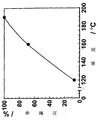
- FIG. 4 shows a graph with the vertical axis representing the decomposition rate and the horizontal axis representing the temperature for Comparative Example 1 and Examples 1 and 3 in Table 1.
- the weight loss rate at 120 ° C. was 6.8.
- the decomposition rate increased remarkably with heating. From FIG. 4, the decomposition reaction of the polymeric MDI-based polyurea compound is accelerated by heating.
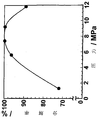
- FIG. 5 shows a graph in which the vertical axis represents the decomposition rate and the horizontal axis represents the pressure based on Comparative Example 2 and Examples 2 to 5 in Table 1. This shows the weight loss rate under various pressures at 190 ° C., 20 ml of water, and reaction time of 2 hours. As the pressure increased, the decomposition rate also increased. The decomposition rate was close to 100% at 7.4 to 9.2 MPa, but the decomposition rate decreased to 89.2% at 11.8 MPa. This is because when the pressure is low, carbon dioxide does not sufficiently permeate the polymeric MDI-based polyurea compound, and when the pressure is high, water does not sufficiently permeate the polymeric MDI-based polyurea compound. It is done.
- 2 is an FT-IR spectrum of a polymeric MDI-based polyurea compound before decomposition and a filtrate after decomposition in Example 1.
- 1 is a 1 H-NMR chart of a deuterated chloroform (CDCl 3 ) soluble material. This is the decomposition result of the polymeric MDI-based polyurea compound when the amount of water added was changed under a constant temperature (190 ° C.), a substantially constant pressure (7.0 to 7.4 MPa), and a reaction time of 2 hours. This is a result of decomposition of a polymeric MDI-based polyurea compound when the temperature was changed under a substantially constant pressure (7.2 to 7.4 MPa), a constant amount of water added (20 ml), and a reaction time of 2 hours. It is the decomposition result of a polymeric MDI type
- FIG. 2 FT-IR chart of a polymeric MDI-based polyurea compound before decomposition. 2. : FT-IR chart of the filtrate after decomposition.
- a is a hydrogen peak of a methylene group adjacent to the amino group.
- b A hydrogen peak of a methylene group adjacent to a methyl group.
Landscapes
- Chemical & Material Sciences (AREA)
- Health & Medical Sciences (AREA)
- Chemical Kinetics & Catalysis (AREA)
- Medicinal Chemistry (AREA)
- Polymers & Plastics (AREA)
- Organic Chemistry (AREA)
- Sustainable Development (AREA)
- Life Sciences & Earth Sciences (AREA)
- Manufacturing & Machinery (AREA)
- Engineering & Computer Science (AREA)
- General Chemical & Material Sciences (AREA)
- Separation, Recovery Or Treatment Of Waste Materials Containing Plastics (AREA)
- Organic Low-Molecular-Weight Compounds And Preparation Thereof (AREA)
Abstract
【課題】 これまで廃棄処分するしかなかったポリメチレンポリフェニレンポリイソシアネート(ポリメリックMDI)製造時に副生するポリウレア残さに、アルカリ等の加水分解促進剤を添加することなく、再利用可能なポリメチレンポリフェニルポリアミン(PMDA)を回収でき、また、反応装置の腐食性の問題を起こすことのないポリメリックMDI系ポリウレア化合物の分解処理方法を提供する。 【解決手段】 ポリメリックMDI系ポリウレア化合物を超臨界状態又は亜臨界状態の二酸化炭素中で加水分解することを特徴とする、ポリメリックMDI系ポリウレア化合物の分解処理方法により解決する。
Description
本発明は、超臨界状態又は亜臨界状態の二酸化炭素中でポリメチレンポリフェニレンポリイソシアネート(以後、ポリメリックMDIと略称する)系ポリウレア化合物を加水分解してポリメチレンポリフェニルポリアミン(以後、PMDAと略称する)を回収する、ポリメリックMDI系ポリウレア化合物の分解処理方法に関する。
ポリウレタンは、ポリイソシアネートとポリオールとの重付加反応により合成される高分子材料である。ポリウレタンは、配合、処方、成形方法等により、種々の物性を付与することが可能である。このため、フォーム、エラストマー、塗料、接着剤等多種多様に利用されている。
ポリウレタンの原料であるポリイソシアネートは、対応するポリアミンをホスゲンと反応させることにより得られているが、この際の副生成物として、ポリウレア残さが生成する。この残さは、常温下で固化するタール状の物質であり、ハンドリングが難しいため、従来はもっぱら焼却処理される廃棄物であった。
この焼却処理では、CO2だけでなくNOXが発生することから、環境保護の観点からも問題があった。
この焼却処理では、CO2だけでなくNOXが発生することから、環境保護の観点からも問題があった。
この残さを分解・回収する方法として、超臨界状態又は亜臨界状態の水を用いてポリウレア残さを処理する方法が特許文献1に提案されている。
しかしながら、特許文献1の方法では、超臨界状態又は亜臨界状態の水とするためには、高温(臨界温度=374.2℃)・高圧(臨界圧力=22.1MPa)の下で行うという過酷な条件が必要であるため、重厚な設備を必要とする。また超臨界状態又は亜臨界状態の水は、金属腐食の問題を内包しており、反応容器他の装置の維持管理が煩雑となり、多大な費用を要する。
本発明の目的は、これまで廃棄処分するしかなかったポリメリックMDI製造時に副生するポリウレア化合物を含有する残さに、アルカリ等の加水分解促進剤を添加することなく、再利用可能なポリアミンを回収でき、また、反応装置の腐食性の問題を起こすことのないポリメリックMDI系ポリウレア化合物の分解処理方法を提供することにある。
本発明者らは上記課題を解決するべく鋭意検討した結果、ポリメリックMDI系ポリウレア化合物を、超臨界状態又は亜臨界状態の二酸化炭素(超臨界点:31℃、7.4MPa)中にて、加水分解させることにより、PMDAの効率的な回収、及びそのための好適条件を見い出し、本発明を完成するに至った。すなわち本発明は、以下の(1)~(4)に示されるものである。
(1)ポリメリックMDI系ポリウレア化合物を超臨界状態又は亜臨界状態の二酸化炭素中で、液体または気体状態の水を用いて加水分解し、PMDAを回収することを特徴とする、ポリメリックMDI系ポリウレア化合物の分解処理方法。
(2)加水分解時の圧力が5~11MPaであることを特徴とする、前記(1)のポリメリックMDI系ポリウレア化合物の分解処理方法。
(3)加水分解時のポリメリックMDI系ポリウレア化合物と水の質量比は、水/ポリメリックMDI系ポリウレア化合物=10/1~50/1であることを特徴とする、前記(1)、(2)のポリメリックMDI系ポリウレア化合物の分解処理方法。
(4)前記(1)~(3)記載のポリメリックMDI系ポリウレア化合物の分解処理方法により回収されたPMDAを用いて、ポリメリックMDIを製造する方法。
本発明の方法により、従来産業廃棄物として処分されていたポリメリックMDI製造時の残さをアルカリ等の添加剤を使うことなく、PMDAに効率よく変換することが可能となった。
本発明において、ポリメリックMDI系ポリウレア化合物とは、下記の式(1)に示されるように、-NH-CO-NH-(ウレア基)が、-(C6H4)n-(ポリメチレンポ
リフェニレン基)の間に隣接する化合物であり、前記ウレア基の一部がビウレット基となっているものも含む。具体的には、主にポリメリックMDI製造時に副生する残さとして生成するものである。また残さとは、ポリメリックMDI製造時に発生する残さを意味する。

リフェニレン基)の間に隣接する化合物であり、前記ウレア基の一部がビウレット基となっているものも含む。具体的には、主にポリメリックMDI製造時に副生する残さとして生成するものである。また残さとは、ポリメリックMDI製造時に発生する残さを意味する。
本発明の分解に用いられるポリメリックMDI系ポリウレア化合物としてはポリメリックMDI製造時に副生する残さであればいずれの工程で発生したものでもよい。具体的には、PMDA製造工程、PMDAとホスゲンの反応工程、ポリメリックMDI精製工程等のいずれかで副生する残さである。これら残さは各工程においては溶融、溶解していてもよい。なお本発明に適用できる残さとしてはホスゲンを用いて製造されるポリメリックMDIには限定されず、非ホスゲン法で製造する場合それらの各工程のいずれかの工程で副生する残さをも分解することができることは言うまでもない。
残さとしてはいずれを用いても良いが通常、各工程で発生した残さを固液分離工程、蒸留工程等により液状成分と分離した後に用いられる。
これらポリメリックMDI製造時に副生する残さは主としてポリアミン、ポリイソシアネート等の熱重縮合物からなる混合物である。熱重縮合物は例えばウレア(ウレタン)、ビウレット、カルボジイミド、イソシアヌレート等の基又は環を有している。特にこれらの基又は環を複数有する複雑な構造を有する化合物が多く含有されている。
上記の残さのようなポリメリックMDI系ポリウレア化合物は、超臨界又は亜臨界状態の二酸化炭素中で、液体または気体状態の水を用いて、PMDAに加水分解される。
加水分解時のポリメリックMDI系ポリウレア化合物と水の質量比は、水/ポリメリックMDI系ポリウレア化合物=10/1~50/1であることが好ましく、20/1~40/1が特に好ましい。水の量が少なすぎる場合は、ポリメリックMDI系ポリウレア化合物への水の拡散が不十分になり、水が多すぎる場合は二酸化炭素の拡散が不十分になる。
加水分解時の温度は180℃以上、374℃未満が好ましく、特に190℃以上、374℃未満がより好ましい。温度が180℃よりも低い場合は分解速度が遅くなる。
なお、圧力は5MPa~11MPaが好ましく、特に7.4~9.2MPaがより好ましい。圧力が低い時は二酸化炭素がポリメリックMDI系ポリウレア化合物に十分浸透しておらず、圧力が高い時は水がポリメリックMDI系ポリウレア化合物に十分浸透していないため、分解率は低下する。
なお、圧力は5MPa~11MPaが好ましく、特に7.4~9.2MPaがより好ましい。圧力が低い時は二酸化炭素がポリメリックMDI系ポリウレア化合物に十分浸透しておらず、圧力が高い時は水がポリメリックMDI系ポリウレア化合物に十分浸透していないため、分解率は低下する。
ポリメリックMDI系ポリウレア化合物の加水分解時間は、特に制限されないが、所定温度に達した後、1分~300分、好ましくは1分~150分の範囲で行う。
水と、ポリメリックMDI系ポリウレア化合物の混合加熱は、以下のいずれの方法によっても良いが、3)が好ましい。
1)水とポリメリックMDI系ポリウレア化合物とを予め所定の温度にしておいて混合する。
2)水を、ポリメリックMDI系ポリウレア化合物と混合したときに所定温度になるように加熱しておき、加熱された水とポリメリックMDI系ポリウレア化合物とを混合することにより分解温度とする。
3)水とポリメリックMDI系ポリウレア化合物を予めスラリー調製ドラム等において所定濃度になるように混合してスラリーを調製した後、分解温度まで加熱する。
1)水とポリメリックMDI系ポリウレア化合物とを予め所定の温度にしておいて混合する。
2)水を、ポリメリックMDI系ポリウレア化合物と混合したときに所定温度になるように加熱しておき、加熱された水とポリメリックMDI系ポリウレア化合物とを混合することにより分解温度とする。
3)水とポリメリックMDI系ポリウレア化合物を予めスラリー調製ドラム等において所定濃度になるように混合してスラリーを調製した後、分解温度まで加熱する。
このようにしてポリメリックMDI系ポリウレア化合物を分解して得られた水溶液中には、PMDAが主成分として含まれていることは言うまでもなく、PMDAを通常の蒸留や抽出等の方法によって容易に回収することができる。回収されたPMDAは、必要によりさらに精製されたのち、ポリメリックMDI製造工程に原料として用いることができる。
PMDAが分離された水溶液中には二酸化炭素を主成分とする軽沸点成分が溶解しているが、これをスチームストリッピング等を実施することにより除去したのち、あるいは除去することなく、加水分解用の水として循環使用することもできる。あるいは、通常の廃水処理をしたのち排水することもできる。
ポリメリックMDI製造時の蒸留残さとは、ポリメリックMDIの製造設備のいずれかの工程において蒸留することによって発生した蒸留残さであればいずれでもよい。通常、
主にアミン製造工程又はアミンとカルボニル源例えばホスゲンとを反応する工程で得られた反応液を蒸留することにより生じる。
主にアミン製造工程又はアミンとカルボニル源例えばホスゲンとを反応する工程で得られた反応液を蒸留することにより生じる。
この蒸留残さの副生量はその製造方法によって異なるが、製造されるポリメリックMDIに対して約10質量%程度の量である。この蒸留残さは通常は液状である。
本発明において、上記蒸留残さから揮発成分を実質的に含有しない状態までに回収する装置としては薄膜蒸発器、ニーダー等攪拌及び加熱手段を有する装置等通常の揮発回収工程において用いられるものが挙げられる。これらの中で特にピストンフロー性を有する二相流型蒸発装置を用いることが好ましい。
ピストンフロー性を有する蒸発装置とは、装置の上流から下流への一定方向に向かって被蒸発体が流れる設備のことを意味する。二相流型蒸発装置とは、少なくとも気液、気固のいずれかの二相の流れを有する蒸発装置であり、気液固の三相が共存してもよい。
これらの代表例としてはニーダーや二重管型熱交換器等が挙げられる。これらのなかでも波状流、スラグ流、環状流、噴霧流の少なくともいずれか一つの流動状態を形成する管型蒸発装置が特に好ましい。前記流動状態が蒸発装置内部で発生する気体により形成される装置が最も好ましく、例えば二重管型熱交換器等が好適に用いられる。
以下実施例により本発明を更に詳細に説明するが、下記実施例は本発明を何等制限するものではない。
〔ポリメリックMDI系ポリウレア化合物の合成〕
メカニカルスターラーをつけた500mlセパラブルフラスコ中、窒素気流下でポリメチレンポリフェニレンポリイソシアネート(ポリメリックMDI)(日本ポリウレタン工業(株)製「MR-200」〕16.35gをジメチルホルムアミド(DMF)(和光純薬(株)製)50mlに溶解させた。ポリメリックMDIのDMF溶液を撹拌しながら、80℃のオイルバスにて蒸留水2.49g/DMF50mlの混合液を、滴下ロートを用いて、約30分かけてポリメリックMDIのDMF溶液に加えた。その後、80℃のオイルバスにて8時間、撹拌しながら加熱混合を続け、反応させたところ褐色固体が生成された。反応終了後、得られた褐色固体を吸引濾過により回収し、ソックスレー抽出により精製した。精製後、デシケーター内で減圧乾燥して褐色固体のポリメリックMDI系ポリウレア化合物12.83gを収率97.9%で得た。
得られたポリメリックMDI系ポリウレア化合物は、DMF、ジメチルスホキサイド(DMSO)、N,N-ジメチルホルムアミド(DMA)に膨潤し、メタノールおよびクロロホルムなどの有機溶剤には溶解しなかった。
メカニカルスターラーをつけた500mlセパラブルフラスコ中、窒素気流下でポリメチレンポリフェニレンポリイソシアネート(ポリメリックMDI)(日本ポリウレタン工業(株)製「MR-200」〕16.35gをジメチルホルムアミド(DMF)(和光純薬(株)製)50mlに溶解させた。ポリメリックMDIのDMF溶液を撹拌しながら、80℃のオイルバスにて蒸留水2.49g/DMF50mlの混合液を、滴下ロートを用いて、約30分かけてポリメリックMDIのDMF溶液に加えた。その後、80℃のオイルバスにて8時間、撹拌しながら加熱混合を続け、反応させたところ褐色固体が生成された。反応終了後、得られた褐色固体を吸引濾過により回収し、ソックスレー抽出により精製した。精製後、デシケーター内で減圧乾燥して褐色固体のポリメリックMDI系ポリウレア化合物12.83gを収率97.9%で得た。
得られたポリメリックMDI系ポリウレア化合物は、DMF、ジメチルスホキサイド(DMSO)、N,N-ジメチルホルムアミド(DMA)に膨潤し、メタノールおよびクロロホルムなどの有機溶剤には溶解しなかった。
〔ポリメリックMDI系ポリウレア化合物の分解〕
実施例1~8、比較例1~3
マグネットスターラーを入れた容量:200mlのステンレス製オートクレーブに、前記ポリメリックMDI系ポリウレア化合物0.5g及び所定量の水(比較例1は不使用)を仕込み、容器内の空気を二酸化炭素ガスで置換した。その後、オートクレーブに液化炭酸ガスを仕込み、バンドヒーターを取り付けて30分加熱し、所定の内圧及び温度に達したところで、2時間撹拌した。その後、氷浴にオートクレーブを浸けて、すばやく冷却した後、常圧に戻し、反応混合物をメタノールで濾過して、メタノールへの可溶物と不溶物に分けて回収した。可溶物は、ロータリーエバポレータを用いて濃縮し、残った残さを回収した。分解率(Decomposition ratio(%))は、仕込量からの重量減少率とした。
実施例の結果(実施例1~8、比較例1~3、比較例3は水を用いず)を表1に示す。メタノール不溶物(濾物)(褐色粉末)をFT-IR測定したところ(図1)、分解前のポリメリックMDI系ポリウレア化合物(褐色固体)のチャートと大きな差は見られなかった。
また、ロータリーエバポレータを用いて濃縮して得られた、メタノールへ可溶な成分は褐色の粘稠物であった。該可溶物を 1H-NMR測定したところ(図2)、当該物質はポリメチレンポリフェニルポリアミン(PMDA)と同定できた。
熱重量損失(TGA)測定装置を用いて測定した、ポリメリックMDI系ポリウレア化合物の重量損失温度は、5%重量損失(Td5)が296.6℃、10%重量損失(Td10)
が320.5℃であった。分解試験後に得られたメタノール不溶解成分も同様の結果が得られた。
実施例1~8、比較例1~3
マグネットスターラーを入れた容量:200mlのステンレス製オートクレーブに、前記ポリメリックMDI系ポリウレア化合物0.5g及び所定量の水(比較例1は不使用)を仕込み、容器内の空気を二酸化炭素ガスで置換した。その後、オートクレーブに液化炭酸ガスを仕込み、バンドヒーターを取り付けて30分加熱し、所定の内圧及び温度に達したところで、2時間撹拌した。その後、氷浴にオートクレーブを浸けて、すばやく冷却した後、常圧に戻し、反応混合物をメタノールで濾過して、メタノールへの可溶物と不溶物に分けて回収した。可溶物は、ロータリーエバポレータを用いて濃縮し、残った残さを回収した。分解率(Decomposition ratio(%))は、仕込量からの重量減少率とした。
実施例の結果(実施例1~8、比較例1~3、比較例3は水を用いず)を表1に示す。メタノール不溶物(濾物)(褐色粉末)をFT-IR測定したところ(図1)、分解前のポリメリックMDI系ポリウレア化合物(褐色固体)のチャートと大きな差は見られなかった。
また、ロータリーエバポレータを用いて濃縮して得られた、メタノールへ可溶な成分は褐色の粘稠物であった。該可溶物を 1H-NMR測定したところ(図2)、当該物質はポリメチレンポリフェニルポリアミン(PMDA)と同定できた。
熱重量損失(TGA)測定装置を用いて測定した、ポリメリックMDI系ポリウレア化合物の重量損失温度は、5%重量損失(Td5)が296.6℃、10%重量損失(Td10)
が320.5℃であった。分解試験後に得られたメタノール不溶解成分も同様の結果が得られた。

FT-IR測定条件
測定機器:FTS3000型FT-IR測定装置(Bio-Rad社製)
測定法 :KBr法
検出器 :MCT
測定範囲:400~4000cm-1
感度 :2
分解能 :4cm-1
積算回数:32
測定機器:FTS3000型FT-IR測定装置(Bio-Rad社製)
測定法 :KBr法
検出器 :MCT
測定範囲:400~4000cm-1
感度 :2
分解能 :4cm-1
積算回数:32
1H-NMR測定条件
溶媒 :重クロロホルム(CDCl3)
測定装置:超伝導多核種磁気共鳴装置JNM-GC400(400MHz,日本電子(株)製)
積算回数:16回
溶媒 :重クロロホルム(CDCl3)
測定装置:超伝導多核種磁気共鳴装置JNM-GC400(400MHz,日本電子(株)製)
積算回数:16回
熱重量損失(TGA)測定条件
測定機器:Thermo Plus ステーション及びTG8120(理学電気(株)製)
標準試料:アルミナ(Al2O3)
温度範囲:30~450℃
昇温速度:10℃/分
窒素流量:20ml/分
測定機器:Thermo Plus ステーション及びTG8120(理学電気(株)製)
標準試料:アルミナ(Al2O3)
温度範囲:30~450℃
昇温速度:10℃/分
窒素流量:20ml/分
表1に示されている温度と圧力は、水の臨界条件(374℃、22.1MPa)に達していないので、水は超臨界状態にはなっていないと判断できる。表1の比較例3(水添加なし)、および実施例3,6~8(水添加量(ml)10,20,40,80)は、温度190℃,圧力7.3MPaで2時間反応させた時のポリメリックMDI系ポリウレア化合物の分解率に対する水添加量の影響を図3に示す。比較例3(水添加なし)ではほとんど分解せず、水を20~40ml添加するとほぼ完全に分解する。水添加量が10ml以下、もしくは40ml以上になると分解率は低下した。水の量が少なすぎる場合は、ポリメリックMDI系ポリウレア化合物への水の拡散が不十分になり、水が多すぎる場合は二酸化炭素の拡散が不十分になる。
表1の比較例1、実施例1,3について、縦軸に分解率、横軸に温度をとったグラフを図4に示す。一定の圧力下で温度を120℃(比較例1),160℃(実施例1),190℃(実施例3)に加熱したところ、120℃(比較例1)の重量減少率は6.8%と低かったのに対して、加熱に伴って分解率は顕著に上昇した。図4から、ポリメリックMDI系ポリウレア化合物の分解反応は加熱により促進される。
表1の比較例2、実施例2~5を基に、縦軸に分解率、横軸に圧力をとったグラフを図5に示す。これは190℃、水20ml、反応時間2時間における種々の圧力下での重量減少率を示している。
圧力の上昇に伴い、分解率も増加し、7.4~9.2MPaでは100%に近い分解率を示したが、11.8MPaでは分解率は89.2%と低下した。これは、圧力が低いときは二酸化炭素がポリメリックMDI系ポリウレア化合物に十分浸透しておらず、圧力が高いときは水がポリメリックMDI系ポリウレア化合物に十分浸透していないため分解率が低下したと考えられる。
圧力の上昇に伴い、分解率も増加し、7.4~9.2MPaでは100%に近い分解率を示したが、11.8MPaでは分解率は89.2%と低下した。これは、圧力が低いときは二酸化炭素がポリメリックMDI系ポリウレア化合物に十分浸透しておらず、圧力が高いときは水がポリメリックMDI系ポリウレア化合物に十分浸透していないため分解率が低下したと考えられる。
図1において
1.:分解前のポリメリックMDI系ポリウレア化合物のFT-IRチャートである。
2.:分解後の濾物のFT-IRチャートである。
図2において
a:アミノ基に隣接するメチレン基の水素のピークである。
b:メチル基に隣接するメチレン基の水素のピークである。
1.:分解前のポリメリックMDI系ポリウレア化合物のFT-IRチャートである。
2.:分解後の濾物のFT-IRチャートである。
図2において
a:アミノ基に隣接するメチレン基の水素のピークである。
b:メチル基に隣接するメチレン基の水素のピークである。
Claims (4)
- ポリメチレンポリフェニレンポリイソシアネート系ポリウレア化合物を超臨界状態又は亜臨界状態の二酸化炭素中で、液体または気体状態の水を用いて加水分解し、ポリメチレンポリフェニルポリアミンを回収することを特徴とする、ポリメチレンポリフェニレンポリイソシアネート系ポリウレア化合物の分解処理方法。
- 加水分解時の圧力が5~11MPaであることを特徴とする、請求項1記載のポリメチレンポリフェニレンポリイソシアネート系ポリウレア化合物の分解処理方法。
- 加水分解時のポリメチレンポリフェニレンポリイソシアネート系ポリウレア化合物と水の質量比は、水/ポリメチレンポリフェニレンポリイソシアネート系ポリウレア化合物=10/1~50/1であることを特徴とする、請求項1又は2記載のポリメチレンポリフェニレンポリイソシアネート系ポリウレア化合物の分解処理方法。
- 請求項1~3記載のポリメチレンポリフェニレンポリイソシアネート系ポリウレア化合物の分解処理方法により回収されたポリメチレンポリフェニルポリアミンを用いて、ポリメチレンポリフェニレンポリイソシアネートを製造する方法。
Applications Claiming Priority (2)
| Application Number | Priority Date | Filing Date | Title |
|---|---|---|---|
| JP2009-109835 | 2009-04-28 | ||
| JP2009109835A JP2010254924A (ja) | 2009-04-28 | 2009-04-28 | ポリメチレンポリフェニレンポリイソシアネート系ポリウレア化合物の分解処理方法 |
Publications (1)
| Publication Number | Publication Date |
|---|---|
| WO2010125743A1 true WO2010125743A1 (ja) | 2010-11-04 |
Family
ID=43031903
Family Applications (1)
| Application Number | Title | Priority Date | Filing Date |
|---|---|---|---|
| PCT/JP2010/002350 Ceased WO2010125743A1 (ja) | 2009-04-28 | 2010-03-31 | ポリメチレンポリフェニレンポリイソシアネート系ポリウレア化合物の分解処理方法 |
Country Status (2)
| Country | Link |
|---|---|
| JP (1) | JP2010254924A (ja) |
| WO (1) | WO2010125743A1 (ja) |
Cited By (1)
| Publication number | Priority date | Publication date | Assignee | Title |
|---|---|---|---|---|
| EP4711408A1 (de) | 2024-09-16 | 2026-03-18 | Covestro Deutschland AG | Verfahren zur aufarbeitung einer rohprodukt-fraktion aus einem wiederverwertungsprozess eines polyurethanprodukts |
Citations (5)
| Publication number | Priority date | Publication date | Assignee | Title |
|---|---|---|---|---|
| JP2001192495A (ja) * | 2000-01-06 | 2001-07-17 | Chubu Electric Power Co Inc | 架橋ポリオレフィンの再生方法 |
| WO2003035592A1 (en) * | 2001-10-26 | 2003-05-01 | Teijin Limited | Method of depolymerizing aromatic polycarbonate |
| JP2004043744A (ja) * | 2002-07-16 | 2004-02-12 | Nippon Polyurethane Ind Co Ltd | ポリメチレンポリフェニルポリイソシアネートの製造方法 |
| JP2005082710A (ja) * | 2003-09-09 | 2005-03-31 | Keio Gijuku | 超臨界流体を用いるポリエステル、ポリカーボネート又はポリ乳酸の連続解重合方法、及び連続解重合装置 |
| JP2006248998A (ja) * | 2005-03-10 | 2006-09-21 | Mitsui Chemicals Polyurethanes Inc | ポリイソシアネートの製造方法 |
-
2009
- 2009-04-28 JP JP2009109835A patent/JP2010254924A/ja active Pending
-
2010
- 2010-03-31 WO PCT/JP2010/002350 patent/WO2010125743A1/ja not_active Ceased
Patent Citations (5)
| Publication number | Priority date | Publication date | Assignee | Title |
|---|---|---|---|---|
| JP2001192495A (ja) * | 2000-01-06 | 2001-07-17 | Chubu Electric Power Co Inc | 架橋ポリオレフィンの再生方法 |
| WO2003035592A1 (en) * | 2001-10-26 | 2003-05-01 | Teijin Limited | Method of depolymerizing aromatic polycarbonate |
| JP2004043744A (ja) * | 2002-07-16 | 2004-02-12 | Nippon Polyurethane Ind Co Ltd | ポリメチレンポリフェニルポリイソシアネートの製造方法 |
| JP2005082710A (ja) * | 2003-09-09 | 2005-03-31 | Keio Gijuku | 超臨界流体を用いるポリエステル、ポリカーボネート又はポリ乳酸の連続解重合方法、及び連続解重合装置 |
| JP2006248998A (ja) * | 2005-03-10 | 2006-09-21 | Mitsui Chemicals Polyurethanes Inc | ポリイソシアネートの製造方法 |
Cited By (2)
| Publication number | Priority date | Publication date | Assignee | Title |
|---|---|---|---|---|
| EP4711408A1 (de) | 2024-09-16 | 2026-03-18 | Covestro Deutschland AG | Verfahren zur aufarbeitung einer rohprodukt-fraktion aus einem wiederverwertungsprozess eines polyurethanprodukts |
| WO2026057831A1 (de) | 2024-09-16 | 2026-03-19 | Covestro Deutschland Ag | Verfahren zur aufarbeitung einer rohprodukt-fraktion aus einem wiederverwertungsprozess eines polyurethanprodukts |
Also Published As
| Publication number | Publication date |
|---|---|
| JP2010254924A (ja) | 2010-11-11 |
Similar Documents
| Publication | Publication Date | Title |
|---|---|---|
| CN109748822B (zh) | 一种制备异氰酸酯单体的方法和系统 | |
| JP6144204B2 (ja) | トルエンジイソシアネートの合成工程から排出されるタール廃棄物残渣からのトルエンジアミンの回収 | |
| CN103787894B (zh) | 从甲苯二异氰酸酯制备过程中形成的残渣废料中回收甲苯二胺的方法 | |
| JP2002518369A (ja) | トリレンジイソシアネートの合成で生成する蒸留残渣の後処理 | |
| US20100324336A1 (en) | Process for the production of aromatic amines | |
| Pan et al. | High‐performance segmented polyurea by transesterification of diphenyl carbonates with aliphatic diamines | |
| JP4096080B2 (ja) | イソシアナート基とウレタン基とを含むプレポリマーの製造方法 | |
| Liu et al. | Degradation process investigation of thermoplastic polyurethane elastomer in supercritical methanol | |
| CN103435504B (zh) | 一种可降解伯胺固化剂的制备方法 | |
| US20250313659A1 (en) | Method for recovering raw materials from isocyanurate-containing polyurethane products | |
| WO2010125743A1 (ja) | ポリメチレンポリフェニレンポリイソシアネート系ポリウレア化合物の分解処理方法 | |
| JP5240678B2 (ja) | ウレア化合物の分解処理方法 | |
| Wang et al. | The preparation of hybrid trimer by cyclo-oligomerization of TDI and HDI and its curing process with polyols to form elastic PU coating | |
| WO2010103720A1 (ja) | トリレンジイソシアネート系ポリウレア化合物の分解処理方法 | |
| WO2010023922A1 (ja) | ヘキサメチレンジイソシアネート系ポリウレア化合物の分解処理方法 | |
| JP4112750B2 (ja) | 固体残さ分解方法 | |
| JP2004262835A (ja) | 芳香族イソシアネートの製造方法 | |
| EP3572397A1 (en) | Method for producing n-( -hydroxyethyl)formamide and method for producing n-vinylformamide | |
| TWI766384B (zh) | 源自回收寶特瓶之熱可塑性聚氨酯、其製備配方和製造方法 | |
| RU2479599C1 (ru) | Способ получения фторсодержащего форполимера с изоцианатными группами | |
| JP6669159B2 (ja) | ジアミン化合物及びその中間体の製造方法 | |
| JP4518853B2 (ja) | ポリアミド樹脂の製造方法 | |
| CN105797643A (zh) | 一种非离子型聚氨酯Gemini表面活性剂的制备方法 | |
| KR101600557B1 (ko) | 폴리우레탄 반응용 촉매 및 이의 합성방법 | |
| RU2479597C1 (ru) | Способ получения фторсодержащего форполимера с изоцианатными группами |
Legal Events
| Date | Code | Title | Description |
|---|---|---|---|
| 121 | Ep: the epo has been informed by wipo that ep was designated in this application |
Ref document number: 10769445 Country of ref document: EP Kind code of ref document: A1 |
|
| NENP | Non-entry into the national phase |
Ref country code: DE |
|
| 122 | Ep: pct application non-entry in european phase |
Ref document number: 10769445 Country of ref document: EP Kind code of ref document: A1 |