WO2010137673A1 - Composition and method for controlling plant diseases - Google Patents
Composition and method for controlling plant diseases Download PDFInfo
- Publication number
- WO2010137673A1 WO2010137673A1 PCT/JP2010/059052 JP2010059052W WO2010137673A1 WO 2010137673 A1 WO2010137673 A1 WO 2010137673A1 JP 2010059052 W JP2010059052 W JP 2010059052W WO 2010137673 A1 WO2010137673 A1 WO 2010137673A1
- Authority
- WO
- WIPO (PCT)
- Prior art keywords
- compound
- diseases
- group
- amino
- phenylethyl
- Prior art date
- Legal status (The legal status is an assumption and is not a legal conclusion. Google has not performed a legal analysis and makes no representation as to the accuracy of the status listed.)
- Ceased
Links
Classifications
-
- A—HUMAN NECESSITIES
- A01—AGRICULTURE; FORESTRY; ANIMAL HUSBANDRY; HUNTING; TRAPPING; FISHING
- A01N—PRESERVATION OF BODIES OF HUMANS OR ANIMALS OR PLANTS OR PARTS THEREOF; BIOCIDES, e.g. AS DISINFECTANTS, AS PESTICIDES OR AS HERBICIDES; PEST REPELLANTS OR ATTRACTANTS; PLANT GROWTH REGULATORS
- A01N25/00—Biocides, pest repellants or attractants, or plant growth regulators, characterised by their forms, or by their non-active ingredients or by their methods of application, e.g. seed treatment or sequential application; Substances for reducing the noxious effect of the active ingredients to organisms other than pests
-
- A—HUMAN NECESSITIES
- A01—AGRICULTURE; FORESTRY; ANIMAL HUSBANDRY; HUNTING; TRAPPING; FISHING
- A01N—PRESERVATION OF BODIES OF HUMANS OR ANIMALS OR PLANTS OR PARTS THEREOF; BIOCIDES, e.g. AS DISINFECTANTS, AS PESTICIDES OR AS HERBICIDES; PEST REPELLANTS OR ATTRACTANTS; PLANT GROWTH REGULATORS
- A01N37/00—Biocides, pest repellants or attractants, or plant growth regulators containing organic compounds containing a carbon atom having three bonds to hetero atoms with at the most two bonds to halogen, e.g. carboxylic acids
- A01N37/18—Biocides, pest repellants or attractants, or plant growth regulators containing organic compounds containing a carbon atom having three bonds to hetero atoms with at the most two bonds to halogen, e.g. carboxylic acids containing the group —CO—N<, e.g. carboxylic acid amides or imides; Thio analogues thereof
- A01N37/30—Biocides, pest repellants or attractants, or plant growth regulators containing organic compounds containing a carbon atom having three bonds to hetero atoms with at the most two bonds to halogen, e.g. carboxylic acids containing the group —CO—N<, e.g. carboxylic acid amides or imides; Thio analogues thereof containing the groups —CO—N< and, both being directly attached by their carbon atoms to the same carbon skeleton, e.g. H2N—NH—CO—C6H4—COOCH3; Thio-analogues thereof
-
- A—HUMAN NECESSITIES
- A01—AGRICULTURE; FORESTRY; ANIMAL HUSBANDRY; HUNTING; TRAPPING; FISHING
- A01N—PRESERVATION OF BODIES OF HUMANS OR ANIMALS OR PLANTS OR PARTS THEREOF; BIOCIDES, e.g. AS DISINFECTANTS, AS PESTICIDES OR AS HERBICIDES; PEST REPELLANTS OR ATTRACTANTS; PLANT GROWTH REGULATORS
- A01N37/00—Biocides, pest repellants or attractants, or plant growth regulators containing organic compounds containing a carbon atom having three bonds to hetero atoms with at the most two bonds to halogen, e.g. carboxylic acids
- A01N37/36—Biocides, pest repellants or attractants, or plant growth regulators containing organic compounds containing a carbon atom having three bonds to hetero atoms with at the most two bonds to halogen, e.g. carboxylic acids containing at least one carboxylic group or a thio analogue, or a derivative thereof, and a singly bound oxygen or sulfur atom attached to the same carbon skeleton, this oxygen or sulfur atom not being a member of a carboxylic group or of a thio analogue, or of a derivative thereof, e.g. hydroxy-carboxylic acids
-
- A—HUMAN NECESSITIES
- A01—AGRICULTURE; FORESTRY; ANIMAL HUSBANDRY; HUNTING; TRAPPING; FISHING
- A01N—PRESERVATION OF BODIES OF HUMANS OR ANIMALS OR PLANTS OR PARTS THEREOF; BIOCIDES, e.g. AS DISINFECTANTS, AS PESTICIDES OR AS HERBICIDES; PEST REPELLANTS OR ATTRACTANTS; PLANT GROWTH REGULATORS
- A01N37/00—Biocides, pest repellants or attractants, or plant growth regulators containing organic compounds containing a carbon atom having three bonds to hetero atoms with at the most two bonds to halogen, e.g. carboxylic acids
- A01N37/44—Biocides, pest repellants or attractants, or plant growth regulators containing organic compounds containing a carbon atom having three bonds to hetero atoms with at the most two bonds to halogen, e.g. carboxylic acids containing at least one carboxylic group or a thio analogue, or a derivative thereof, and a nitrogen atom attached to the same carbon skeleton by a single or double bond, this nitrogen atom not being a member of a derivative or of a thio analogue of a carboxylic group, e.g. amino-carboxylic acids
- A01N37/50—Biocides, pest repellants or attractants, or plant growth regulators containing organic compounds containing a carbon atom having three bonds to hetero atoms with at the most two bonds to halogen, e.g. carboxylic acids containing at least one carboxylic group or a thio analogue, or a derivative thereof, and a nitrogen atom attached to the same carbon skeleton by a single or double bond, this nitrogen atom not being a member of a derivative or of a thio analogue of a carboxylic group, e.g. amino-carboxylic acids the nitrogen atom being doubly bound to the carbon skeleton
-
- A—HUMAN NECESSITIES
- A01—AGRICULTURE; FORESTRY; ANIMAL HUSBANDRY; HUNTING; TRAPPING; FISHING
- A01N—PRESERVATION OF BODIES OF HUMANS OR ANIMALS OR PLANTS OR PARTS THEREOF; BIOCIDES, e.g. AS DISINFECTANTS, AS PESTICIDES OR AS HERBICIDES; PEST REPELLANTS OR ATTRACTANTS; PLANT GROWTH REGULATORS
- A01N43/00—Biocides, pest repellants or attractants, or plant growth regulators containing heterocyclic compounds
- A01N43/48—Biocides, pest repellants or attractants, or plant growth regulators containing heterocyclic compounds having rings with two nitrogen atoms as the only ring hetero atoms
- A01N43/54—1,3-Diazines; Hydrogenated 1,3-diazines
-
- A—HUMAN NECESSITIES
- A01—AGRICULTURE; FORESTRY; ANIMAL HUSBANDRY; HUNTING; TRAPPING; FISHING
- A01N—PRESERVATION OF BODIES OF HUMANS OR ANIMALS OR PLANTS OR PARTS THEREOF; BIOCIDES, e.g. AS DISINFECTANTS, AS PESTICIDES OR AS HERBICIDES; PEST REPELLANTS OR ATTRACTANTS; PLANT GROWTH REGULATORS
- A01N43/00—Biocides, pest repellants or attractants, or plant growth regulators containing heterocyclic compounds
- A01N43/72—Biocides, pest repellants or attractants, or plant growth regulators containing heterocyclic compounds having rings with nitrogen atoms and oxygen or sulfur atoms as ring hetero atoms
- A01N43/88—Biocides, pest repellants or attractants, or plant growth regulators containing heterocyclic compounds having rings with nitrogen atoms and oxygen or sulfur atoms as ring hetero atoms six-membered rings with three ring hetero atoms
-
- A—HUMAN NECESSITIES
- A01—AGRICULTURE; FORESTRY; ANIMAL HUSBANDRY; HUNTING; TRAPPING; FISHING
- A01N—PRESERVATION OF BODIES OF HUMANS OR ANIMALS OR PLANTS OR PARTS THEREOF; BIOCIDES, e.g. AS DISINFECTANTS, AS PESTICIDES OR AS HERBICIDES; PEST REPELLANTS OR ATTRACTANTS; PLANT GROWTH REGULATORS
- A01N47/00—Biocides, pest repellants or attractants, or plant growth regulators containing organic compounds containing a carbon atom not being member of a ring and having no bond to a carbon or hydrogen atom, e.g. derivatives of carbonic acid
- A01N47/08—Biocides, pest repellants or attractants, or plant growth regulators containing organic compounds containing a carbon atom not being member of a ring and having no bond to a carbon or hydrogen atom, e.g. derivatives of carbonic acid the carbon atom having one or more single bonds to nitrogen atoms
- A01N47/10—Carbamic acid derivatives, i.e. containing the group —O—CO—N<; Thio analogues thereof
- A01N47/12—Carbamic acid derivatives, i.e. containing the group —O—CO—N<; Thio analogues thereof containing a —O—CO—N< group, or a thio analogue thereof, neither directly attached to a ring nor the nitrogen atom being a member of a heterocyclic ring
Definitions
- the present invention relates to a composition for controlling plant diseases and a method for controlling plant diseases .
- An object of the present invention is to provide a composition for controlling plant diseases and a method for controlling plant diseases, having excellent control efficacy for plant diseases.
- the present invention provides a composition for controlling plant diseases and a method for controlling plant diseases, in which control efficacy for plant diseases has been increased by the combined use of 4-oxo-4-[(2- phenylethyl) amino] -butyric acid and QoI.
- the present invention takes the following constitutions :
- composition for controlling plant diseases comprising, as active ingredients, 4-oxo-4-[(2- phenylethyl) amino] -butyric acid and a quinone outside inhibitor;
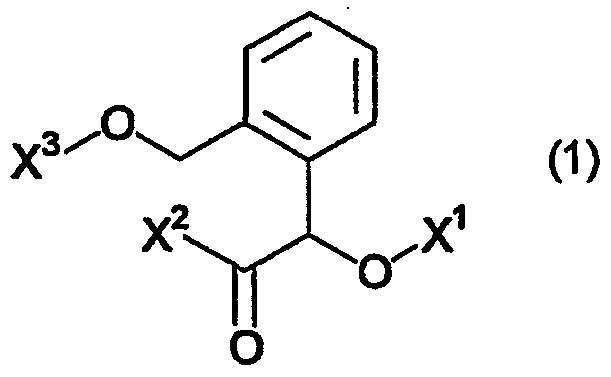
- the quinone outside inhibitor is at least one quinone outside inhibitor selected from the group consisting of kresoxim- methyl, azoxystrobin, trifloxystrobin, fluoxastrobin, picoxystrobin, pyraclostrobin, dimoxystrobin, pyribencarb, metominostrobin, orysastrobin, enestrobin, and a compound of formula (1) :
- X 1 represents a methyl group, a difluoromethyl group or an ethyl group
- X 2 represents a methoxy group or a methylamino group
- X 3 represents a phenyl group, a 2- methylphenyl group or a 2, 5-dimethylphenyl group
- a weight ratio of 4-oxo-4- [ (2-phenylethyl) amino] -butyric acid to the quinone outside inhibitor is in the range of 0.005:1 to 1000:1;
- a seed treatment agent comprising, as active ingredients, 4-oxo-4- [ (2-phenylethyl) amino] -butyric acid and a quinone outside inhibitor;
- a method for controlling plant diseases which comprises applying effective amounts of 4-oxo-4-[(2- phenylethyl) amino] -butyric acid and a quinone outside inhibitor to a plant or soil for growing plant; and [7] Combined use for controlling plant diseases of 4- oxo-4- [ (2-phenylethyl) amino] -butyric acid and a quinone outside inhibitor; and so on.
- composition of the present invention exhibits an excellent control efficacy for plant diseases.
- One of the compounds for use in the composition for controlling plant diseases of the present invention is 4-oxo- 4- [ (2-phenylethyl) amino] -butyric acid (hereinafter, referred to as the compound I in some cases) , which is a compound disclosed in Japanese Patent No. 4,087,942 and can be produced, for example, by the method described in the patent publication.
- the compound I, 4-oxo-4- [ (2-phenylethyl) amino] -butyric acid may be a salt with a base.
- Examples of the basic salt of 4-OXO-4- [ (2-phenylethyl) amino] -butyric acid include the followings : metal salts such as alkali metal salts and alkali earth metal salts, including salts of sodium, potassium or magnesium; salts with ammonia; and salts with organic amines such as morpholine, piperidine, pyrrolidine, mono lower alkylamine, di lower alkylamine, tri lower alkylamine, monohydroxy lower alkylamine, dihydroxy lower alkylamine and trihydroxy lower alkylamine.
- Examples of the QoI for use in the composition for controlling plant diseases of the present invention include at least one quinone outside inhibitor selected from the group consisting of kresoxim-methyl, azoxystrobin, trifloxystrobin, fluoxastrobin, picoxystrobin, pyraclostrobin, dimoxystrobin, pyribencarb, metominostrobin, orysastrobin, enestrobin, and the compound of formula (1) .
- QoIs are compounds known in the art and disclosed at pages 54, 351, 499, 636, 719, 842, 900, 982 and 1074 of "the Pesticide Manual-14th edition” published by British Crop Protection Council (BCPC) , ISBN1901396142; or in WO 95/27693. These QoIs can be obtained from commercial agents or prepared using methods known in the art .
- Examples of the compound of formula (1) include the following compounds: a compound in which X 1 is a methyl group, a difluoromethyl group or an ethyl group in formula (1); a compound in which X 1 is a methyl group in formula (1) ; a compound in which X 2 is a methoxy group or a methylamino group in formula (1) ; a compound in which X 1 is a methyl group and X 2 is a methoxy group in formula (1); a compound in which X 1 is a methyl group and X 2 is methylamino group in formula (1); a compound in which X 3 is a phenyl group, a 2- methylphenyl group or a 2, 5-dimethylphenyl group in formula
- X 1 , X 2 and X 3 are one of the combinations of members shown in Table 1.
- the compound of formula (1) may have isomers such as tautomers and stereoisomers including optical isomers based on an asymmetric carbon atoms, and any isomer can be contained and used singly or in a mixture of any isomer ratio in the present invention.
- the compound of formula (1) may be in a form of a solvate (for example, hydrate) and it can be used in a form of a solvate in the present invention.
- a solvate for example, hydrate
- the compound of formula (1) may be in a form of a crystal form and/or an amorphous form and it can be used in any form in the present invention.
- the compound of formula (1) is a compound described in WO95/27,693 pamphlet. These compounds can be synthesized, for example, by a method described in the pamphlet.
- the weight ratio of the compound I to QoI is typically in the range of 0.005:1 to 1000:1, preferably 0.02:1 to 500:1.
- the weight ratio is typically in the range of 0.005:1 to 1000:1, preferably 0.02:1 to 500:1.
- the weight ratio is typically in the range of 0.02:1 to 500:1, preferably 0.1:1 to 200:1.
- the composition for controlling plant diseases of the present invention may be a simple mixture of the compound I and QoI.
- the composition for controlling plant diseases is typically produced by mixing the compound I and QoI with an inert carrier, and adding to the mixture a surfactant and other adjuvants as needed so that the mixture can be formulated into an oil agent, an emulsion, a flowable agent, a wettable powder, a granulated wettable powder, a powder agent, a granule agent and so on.
- the composition for controlling plant diseases mentioned above can be used as a seed treatment agent as it is or added with other inert ingredients.
- the total amount of the compound I and QoI is typically in the range of 0.1 to 99% by weight, preferably 0.2 to 90% by weight.
- the solid carrier used in formulation include fine powders or granules such as minerals such as kaolin clay, attapulgite clay, bentonite, montmorillonite, acid white clay, pyrophyllite, talc, diatomaceous earth and calcite; natural organic materials such as corn rachis powder and walnut husk powder; synthetic organic materials such as urea; salts such as calcium carbonate and ammonium sulfate; synthetic inorganic materials such as synthetic hydrated silicon oxide; and as a liquid carrier, aromatic hydrocarbons such as xylene, alkylbenzene and methylnaphthalene; alcohols such as 2-propanol, ethyleneglycol, propylene glycol, and ethylene glycol monoethyl ether; ketones such as acetone, cyclohexan
- surfactant examples include anionic surfactants such as alkyl sulfate ester salts, alkylaryl sulfonate salts, dialkyl sulfosuccinate salts, polyoxyethylene alkylaryl ether phosphate ester salts, lignosulfonate salts and naphthalene sulfonate formaldehyde polycondensates; and nonionic surfactants such as polyoxyethylene alkyl aryl ethers, polyoxyethylene alkylpolyoxypropylene block copolymers and sorbitan fatty acid esters and cationic surfactants such as alkyltrimethylammonium salts.
- anionic surfactants such as alkyl sulfate ester salts, alkylaryl sulfonate salts, dialkyl sulfosuccinate salts, polyoxyethylene alkylaryl ether phosphate ester salts, lignosulfonate salts and naphthalene
- the other formulation auxiliary agents include water-soluble polymers such as polyvinyl alcohol and polyvinylpyrrolidone, polysaccharides such as Arabic gum, alginic acid and the salt thereof, CMC (carboxymethyl- cellulose) , Xanthan gum, inorganic materials such as aluminum magnesium silicate and alumina sol, preservatives, coloring agents and stabilization agents such as PAP (acid phosphate isopropyl) and BHT.
- water-soluble polymers such as polyvinyl alcohol and polyvinylpyrrolidone
- polysaccharides such as Arabic gum, alginic acid and the salt thereof
- CMC carboxymethyl- cellulose
- Xanthan gum inorganic materials
- preservatives such as aluminum magnesium silicate and alumina sol
- coloring agents and stabilization agents such as PAP (acid phosphate isopropyl) and BHT.
- composition for controlling plant diseases of the present invention is effective for the following plant diseases .
- Diseases of rice blast (Magnaporthe grisea) ,
- hordei loose smut (Ustilago nuda) , scald (Rhynchosporium secalis), net blotch (Pyrenophora teres), spot blotch (Cochliobolus sativus) , leaf stripe (Pyrenophora graminea) , and Rhizoctonia damping-off (Rhizoctonia solani) .
- smut Ustilago maydis
- brown spot Cochliobolus heterostrophus
- copper spot Gloeocercospora sorghi
- southern rust Puccinia polysora
- gray leaf spot Cercospora zeae-maydis
- Rhizoctonia damping-off Rhizoctonia solani
- blossom blight (Monilinia mali) , canker (Valsa ceratosperma) , powdery mildew (Podosphaera leucotricha) , Alternaria leaf spot (Alternaria alternata apple pathotype) , scab (Venturia inaequalis) , bitter rot (Colletotrichum acutatum) , crown rot (Phytophtora cactorum) , blotch (Diplocarpon mali) , ring rot (Botryosphaeria berengeriana) , and violet root rot (Helicobasidium mompa) .
- kidney bean anthracnose (Colletotrichum lindemthianum) .
- Diseases of peanut leaf spot (Cercospora personata) , brown leaf spot (Cercospora arachidicola) and southern blight (Sclerotium rolfsii) .
- Rhizoctonia damping-off (Rhizoctonia solani) .
- Diseases of sugar beet Cercospora leaf spot (Cercospora beticola) , leaf blight (Rhizoctonia solani) , Root rot (Rhizoctonia solani) , and Aphanomyces root rot (Aphanomyces cochlioides) .
- Diseases of rose black spot (Diplocarpon rosae) , powdery mildew (Sphaerotheca pannosa) , and downy mildew (Peronospora sparsa) .
- Alternaria leaf spot Alternaria brassicicola
- sigatoka Mycosphaerella fijiensis, Mycosphaerella musicola
- examples of the diseases for which highly effective control of the present invention is expected include Rhizoctonia damping-off (Rhizoctonia solani) of wheat, corn, rice, soybean, cotton, rapeseed, sugar beet and turfgrass, seed diseases and diseases in the early stages of the growth of wheat, barley, corn, cotton, soybean, rapeseed and turfgrass caused by Fusarium spp., blast (Magnaporthe grisea) and bakanae disease (Gibberella fujikuroi) of rice, pink snow mold (Micronectriella nivale) , powdery mildew (Erysiphe graminis) , Fusarium head blight (Fusarium graminearum, F.
- avenacerum F. culmorum, Microdochium nivale
- eyespot Pseudocercosporella herpotrichoides
- leaf blotch Mycosphaerella graminicola
- wheat powdery mildew (Erysiphe graminis)
- Fusarium head blight Fusarium graminearum, F. avenacerum, F. culmorum, Microdochium nivale
- rust Puccinia striiformis, P. graminis, P.
- Plant diseases can be controlled by applying effective amounts of the compound I and QoI to the plant pathogens or to such a place as plant and soil where the plant pathogens inhabit or may inhabit.
- Plant diseases can be controlled by applying effective amounts of the compound I and QoI to a plant or soil for growing plant.
- a plant which is the object of the application include foliages of plant, seeds of plant, bulbs of plant.
- the bulb means a bulb, corm, rhizoma, stem tuber, root tuber and rhizophore.
- the compound I and QoI may be separately applied for the same period, but they are typically applied as a composition for controlling plant diseases of the present invention for simplicity of the application.
- Examples of the controlling method of the present invention include treatment of foliage of plants, such as foliage application; treatment of cultivation lands of plants, such as soil treatment; treatment of seeds, such as seed sterilization and seed coating; and treatment of bulbs such as seed tuber.
- Examples of the treatment of foliage of plants in the controlling method of the present invention include treatment methods of applying to surfaces of plants, such as foliage spraying and trunk spraying.
- Examples of the treatment method of directly absorbing to plants before transplantation include a method of soaking entire plants or roots. A formulation obtained by using a solid carrier such as a mineral powder may be adhered to the roots.
- Examples of the soil treatment method in the controlling method of the present invention include spraying onto the soil, soil incorporation, and perfusion of a chemical liquid into the soil (irrigation of chemical liquid, soil injection, and dripping of chemical liquid) .
- Examples of the place to be treated include planting hole, furrow, around a planting hole, around a furrow, entire surface of cultivation lands, the parts between the soil and the plant, area between roots, area beneath the trunk, main furrow, growing soil, seedling raising box, seedling raising tray and seedbed.
- Examples of the treating period include before seeding, at the time of seeding, immediately after seeding, raising period, before settled planting, at the time of settled planting, and growing period after settled planting.
- active ingredients may be simultaneously applied to the plant, or a solid fertilizer such as a paste fertilizer containing active ingredients may be applied to the soil.
- active ingredients may be mixed in an irrigation liquid, and, examples thereof include injecting to irrigation facilities such as irrigation tube, irrigation pipe and sprinkler, mixing into the flooding liquid between furrows and mixing into a water culture medium.
- an irrigation liquid is mixed with active ingredients in advance and, for example, used for treatment by an appropriate irrigating method including the irrigating method mentioned above and the other methods such as sprinkling and flooding.
- Examples of the method of treating seeds or bulbs in the controlling method of the present invention include a method for treating seeds or bulbs to be protected from plant diseases with the composition for controlling plant diseases of the present invention and specific examples thereof include a spraying treatment in which a suspension of the composition for controlling plant diseases of the present invention is atomized and sprayed on the seed surface or the bulb surface; a smearing treatment in which a wettable powder, an emulsion or a flowable agent of the composition for controlling plant diseases of the present invention is applied to seeds or bulbs with a small amount of water added or without dilution; an immersing treatment in which seeds are immersed in a solution of the composition for controlling plant diseases of the present invention for a certain period of time; film coating treatment; and pellet coating treatment.
- the amounts of the compound I and QoI used for the treatment may be changed depending on the kind of the plant to be treated, the kind and the occurring frequency of the diseases to be controlled, formulation form, treatment period, climatic condition and so on, but the total amount of the compound I and QoI (hereinafter referred to as the amount of the active ingredients) per 10,000m 2 is typically 1 to 10,000 g and preferably 2 to 1,000 g.
- the emulsion, wettable powder and flowable agent are typically diluted with water, and then sprinkled for the treatment. In these case, the total concentration of the compound I and QoI is typically in the range of 0.0001 to 3% by weight and preferably 0.0005 to 1% by weight.
- the powder agent and granule agent are typically used for the treatment without being diluted.
- the amount of the active ingredients to be applied is typically in the range of 0.001 to 10 g, preferably 0.01 to 3 g per 1 kg of seeds.
- the control method of the present invention can be used in agricultural lands such as fields, paddy fields, lawns and orchards or in non-agricultural lands.
- the present invention can be used to control diseases in agricultural lands for cultivating the following "plant” and the like without adversely affecting the plant and so on.
- crops corn, rice, wheat, barley, rye, oat, sorghum, cotton, soybean, peanut, buckwheat, beet, rapeseed, sunflower, sugar cane, tobacco, etc.; vegetables: solanaceous vegetables (eggplant, tomato, pimento, pepper, potato, etc.), cucurbitaceous vegetables (cucumber, pumpkin, zucchini, water melon, melon, squash, etc.), cruciferous vegetables (Japanese radish, white turnip, horseradish, kohlrabi, Chinese cabbage, cabbage, leaf mustard, broccoli, cauliflower, etc.), asteraceous vegetables (burdock, crown daisy, artichoke, lettuce, etc.), liliaceous vegetables (green onion, onion, garlic, and asparagus) , ammiaceous vegetables (carrot, parsley, celery, parsnip, etc.), chenopodiaceous vegetables (spinach, Swiss chard, etc.) , lamiaceous vegetables (eggplant, tomato,
- control method of the present invention can be used to control diseases in agricultural lands for cultivating corn, rice, wheat, barley, sorghum, cotton, soybean, beet, rapeseed, turf grasses or potato.
- plants include plants, to which resistance to HPPD inhibitors such as isoxaflutole, ALS inhibitors such as imazethapyr or thifensulfuron-methyl, EPSP synthetase inhibitors such as glyphosate, glutamine synthetase inhibitors such as the glufosinate, acetyl-CoA carboxylase inhibitors such as sethoxydim, and herbicides such as bromoxynil, dicamba, 2,4-D, etc. has been conferred by a classical breeding method or genetic engineering technique.
- HPPD inhibitors such as isoxaflutole
- ALS inhibitors such as imazethapyr or thifensulfuron-methyl
- EPSP synthetase inhibitors such as glyphosate
- glutamine synthetase inhibitors such as the glufosinate
- acetyl-CoA carboxylase inhibitors such as sethoxydim
- herbicides such as brom
- Examples of a "plant” on which resistance has been conferred by a classical breeding method include rape, wheat, sunflower and rice resistant to imidazolinone ALS inhibitory herbicides such as imazethapyr, which are already commercially available under a product name of Clearfield (registered trademark) .
- rape, wheat, sunflower and rice resistant to imidazolinone ALS inhibitory herbicides such as imazethapyr which are already commercially available under a product name of Clearfield (registered trademark) .
- soybean on which resistance to sulfonylurea ALS inhibitory herbicides such as thifensulfuron-methyl has been conferred by a classical breeding method, which is already commercially available under a product name of STS soybean.
- examples on which resistance to acetyl-CoA carboxylase inhibitors such as trione oxime or aryloxy phenoxypropionic acid herbicides has been conferred by a classical breeding method include SR corn.
- the plant on which resistance to acetyl-CoA carboxylase inhibitors has been conferred is described in Proceedings of the National Academy of Sciences of the United States of America (Proc. Natl. Acad. Sci. USA), vol. 87, pp. 7175-7179 (1990).
- a variation of acetyl-CoA carboxylase resistant to an acetyl-CoA carboxylase inhibitor is reported in Weed Science, vol. 53, pp.
- plants resistant to acetyl-CoA carboxylase inhibitors can be generated by introducing a gene of such an acetyl-CoA carboxylase variation into a plant by genetically engineering technology, or by introducing a variation conferring resistance into a plant acetyl-CoA carboxylase.
- plants resistant to acetyl-CoA carboxylase inhibitors or ALS inhibitors or the like can be generated by introducing a site-directed amino acid substitution variation into an acetyl-CoA carboxylase gene or the ALS gene of the plant by introduction a nucleic acid into which has been introduced a base substitution variation represented Chimeraplasty Technique (Gura T. 1999. Repairing the Genome's Spelling Mistakes. Science 285: 316-318) into a plant cell.
- Examples of a plant on which resistance has been conferred by genetic engineering technology include corn, soybean, cotton, rape, sugar beet resistant to glyphosate, which is already commercially available under a product name of RoundupReady (registered trademark), AgrisureGT, etc.
- corn, soybean, cotton and rape which are made resistant to glufosinate by genetic engineering technology, a kind, which is already commercially available under a product name of LibertyLink (registered trademark) .
- a cotton made resistant to bromoxynil by genetic engineering technology is already commercially available under a product name of BXN likewise.
- plants include genetically engineered crops produced using such genetic engineering techniques, which, for example, are able to synthesize selective toxins as known in genus Bacillus.
- toxins expressed in such genetically engineered crops include: insecticidal proteins derived from Bacillus cereus or Bacillus popilliae; ⁇ -endotoxins such as CrylAb, CrylAc, CrylF, CrylFa2, Cry2Ab, Cry3A, Cry3Bbl or Cry9C, derived from Bacillus thuringiensis; insecticidal proteins such as VIPl, VIP2, VIP3, or VIP3A; insecticidal proteins derived from nematodes; toxins generated by animals, such as scorpion toxin, spider toxin, bee toxin, or insect- specific neurotoxins; mold fungi toxins; plant lectin; agglutinin; protease inhibitors such as a trypsin inhibitor, a serine protease inhibitor, patat
- Toxins expressed in such genetically engineered crops also include: hybrid toxins of ⁇ -endotoxin proteins such as CrylAb, CrylAc, CrylF, CrylFa2, Cry2Ab, Cry3A, Cry3Bbl, Cry9C, Cry34Ab or Cry35Ab and insecticidal proteins such as VIPl, VIP2, VIP3 or VIP3A; partially deleted toxins; and modified toxins .
- hybrid toxins are produced from a new combination of the different domains of such proteins, using a genetic engineering technique.
- CrylAb comprising a deletion of a portion of an amino acid sequence has been known.
- a modified toxin is produced by substitution of one or multiple amino acids of natural toxins.
- Toxins contained in such genetically engineered plants are able to confer resistance particularly to insect pests belonging to Coleoptera, Hemiptera, Diptera, Lepidoptera and Nematodes, to the plants.
- Genetically engineered plants which comprise one or multiple insecticidal pest-resistant genes and which express one or multiple toxins, have already been known, and some of such genetically engineered plants have already been on the market.
- Examples of such genetically engineered plants include YieldGard (registered trademark) (a corn variety for expressing CrylAb toxin) , YieldGard Rootworm (registered trademark) (a corn variety for expressing Cry3Bbl toxin) , YieldGard Plus (registered trademark) (a corn variety for expressing CrylAb and Cry3Bbl toxins) , Herculex I (registered trademark) (a corn variety for expressing phosphinotricine N- acetyl transferase (PAT) so as to confer resistance to CrylFa2 toxin and glufosinate) , NuCOTN33B (registered trademark) (a cotton variety for expressing CrylAc toxin) , Bollgard I
- plants also include crops produced using a genetic engineering technique, which have ability to generate antipathogenic substances having selective action.
- PRPs antipathogenic substances
- EP-A-O 392 225 antipathogenic substances
- Such antipathogenic substances and genetically engineered crops that generate them are described in EP-A-O 392 225, WO 95/33818, EP-A-O 353 191, etc.
- antipathogenic substances expressed in genetically engineered crops include: ion channel inhibitors such as a sodium channel inhibitor or a calcium channel inhibitor (KPl, KP4 and KP6 toxins, etc., which are produced by viruses, have been known) ; stilbene synthase; bibenzyl synthase; chitinase; glucanase; a PR protein; and antipathogenic substances generated by microorganisms, such as a peptide antibiotic, an antibiotic having a hetero ring, a protein factor associated with resistance to plant diseases (which is called a plant disease-resistant gene and is described in WO 03/000906) .
- ion channel inhibitors such as a sodium channel inhibitor or a calcium channel inhibitor (KPl, KP4 and KP6 toxins, etc., which are produced by viruses, have been known)
- stilbene synthase such as a sodium channel inhibitor or a calcium channel inhibitor
- bibenzyl synthase such as a peptide antibiotic, an antibiotic
- plants which antipathogenic substances and genetically engineered plants producing such substances are described in EP-A-0392225, WO95/33818, EP-A-0353191, etc.
- the "plant” mentioned above includes plants on which advantageous characters such as characters improved in oil stuff ingredients or characters having reinforced amino acid content have been conferred by genetically engineering technology. Examples thereof include VISTIVE (registered trademark) low linolenic soybean having reduced linolenic content) or high-lysine (high-oil) corn (corn with increased lysine or oil content) .
- Stack varieties are also included in which a plurality of advantageous characters such as the classic herbicide characters mentioned above or herbicide tolerance genes, harmful insect resistance genes, antipathogenic substance producing genes, characters improved in oil stuff ingredients or characters having reinforced amino acid content are combined.
- the compound (Ia) is a compound represented by formula (1) wherein X 1 is a methyl group, X 2 is a methylamino group, and X 3 is a 2, 5-dimethylphenyl group and the compound has an R type steric structure according to Cahn-Ingold-Prelog order rule, and represented by the following formula (Ia).
- the compound (Ib) is a compound represented by formula (1), wherein X 1 is a methyl group, X 2 is a methylamino group, and X 3 is a 2, 5-dimethylphenyl group and the compound is an racemic body and represented by the following formula (Ib) .
- Fully mixed are 2.5 parts of fluoxastrobin, 1.25 parts of the compound I, 14 parts of polyoxyethylene styrylphenyl ether, 6 parts of calcium dodecyl benzene sulfonate and 76.25 parts of xylene, so as to obtain an emulsion.
- azoxystrobin Five (5) parts of azoxystrobin, 5 parts of the compound I, 35 parts of a mixture of white carbon and a polyoxyethylene alkyl ether sulfate ammonium salt (weight ratio 1:1) and 55 parts of water are mixed, and the mixture is subjected to fine grinding according to a wet grinding method, so as to obtain a flowable formulation.
- An emulsion prepared as in Formulation example 1 is used for smear treatment in an amount of 500 ml per 100 kg of dried sorghum seeds using a rotary seed treatment machine (seed dresser, produced by Hans-Ulrich Hege GmbH) so as to obtain treated seeds.
- a rotary seed treatment machine seed dresser, produced by Hans-Ulrich Hege GmbH
- a flowable formulation prepared as in Formulation example 2 is used for smear treatment in an amount of 50 ml per 10 kg of dried rape seeds using a rotary seed treatment machine (seed dresser, produced by Hans-Ulrich Hege GmbH) so as to obtain treated seeds.
- a rotary seed treatment machine seed dresser, produced by Hans-Ulrich Hege GmbH
- Seed treatment example 3 A flowable formulation prepared as in Formulation example 3 is used for smear treatment in an amount of 40 ml per 10 kg of dried corn seeds using a rotary seed treatment machine (seed dresser, produced by Hans-Ulrich Hege GmbH) so as to obtain treated seeds.
- a rotary seed treatment machine seed dresser, produced by Hans-Ulrich Hege GmbH
- Formulation example 4 5 parts of pigment BPD6135 (manufactured by Sun Chemical) and 35 parts of water are mixed to prepare a mixture.
- the mixture is used for smear treatment in an amount of 60 ml per 10 kg of dried cotton seeds using a rotary seed treatment machine (seed dresser, produced by Hans- Ulrich Hege GmbH) so as to obtain treated seeds.
- a powder agent prepared as in Formulation example 5 is used for powder coating treatment in an amount of 50 g per 10 kg of dried corn seeds so as to obtain treated seeds.
- a powder agent prepared as in Formulation example 7 is used for powder coating treatment in an amount of 40 g per 100 kg of dried rice seeds so as to obtain treated seeds.
- a flowable formulation prepared as in Formulation example 2 is used for smear treatment in an amount of 50 ml per 10 kg of dried soybean seeds using a rotary seed treatment machine (seed dresser, produced by Hans-Ulrich Hege GmbH) so as to obtain treated seeds.
- a rotary seed treatment machine seed dresser, produced by Hans-Ulrich Hege GmbH
- Seed treatment example 8 A flowable formulation prepared as in Formulation example 3 is used for smear treatment in an amount of 50 ml per 10 kg of dried wheat seeds using a rotary seed treatment machine (seed dresser, produced by Hans-Ulrich Hege GmbH) so as to obtain treated seeds.
- a rotary seed treatment machine seed dresser, produced by Hans-Ulrich Hege GmbH
- a powder prepared as in Formulation example 5 is used for powder coating treatment in an amount of 40 g per 10 kg of dried sugar beet seeds so as to obtain treated seeds.
- a DMSO solution of the compound I and a DMSO solution of the compound (Ib) were respectively prepared. These solutions were mixed to prepare a DMSO solution containing predetermined concentrations of the compound I and the compound (Ib) .
- Ten (10) ⁇ L of the DMSO solution and 10 g of seeds of Pisum sativum L were mixed by shaking in a 50-ml conical tube and then allowed to stand overnight to prepare treated seeds.
- a plastic pot was filled with sandy soil and the treated seeds were sown on it and then covered with sandy soil which had been mixed with a bran culture of Fusarium solani f. sp. pisi. The sown seeds were watered and then cultured in a greenhouse at 20 to 24 0 C.
- a DMSO solution containing a predetermined concentration of the compound (Ib) was prepared and subjected to the same test and then the incidence of disease was determined.
- the same test was conducted in which the plants had been treated with none of the test compounds and the incidence of disease was determined.
- Control value 100 * (A-B) /A
- a plastic pot was filled with sandy soil and seeds of wheat (SHIROGANEKOMUGI) were sown on it, followed by cultivation in a greenhouse for 10 days.
- a wettable powder of the compound I was prepared by mixing 10 parts of the compound I, 35 parts of a mixture of white carbon and a polyoxyethylene alkyl ether sulfate ammonium salt (weight ratio of 1:1) and 55 parts of water, followed by grinding the mixture.
- a wettable powder of the compound (Ib) was prepared by mixing 10 parts of the compound (Ib), 35 parts of a mixture of white carbon and a polyoxyethylene alkyl ether sulfate ammonium salt (weight ratio of 1:1) and 55 parts of water, followed by grinding the mixture.
- Each of the wettable powder thus prepared was diluted with water, respectively, followed by mixing together to prepare a mixed solution containing predetermined concentrations of the compound I and the compound (Ib).
- the mixed solution was sprayed on leaves of the wheat so that the solution can sufficiently adhere on the surfaces of the wheat leaves. After the spraying followed by air drying, spores of wheat leaf rust mixed with talc were sprayed on the surfaces of the wheat leaves. After allowing to stand overnight at 23 0 C under high humidity followed by cultivation in an artificial climate laboratory at 23 0 C for 8 days, leaf area and lesion area of the wheat leaves were checked and the incidence of disease was calculated by Equation 3.
- the wettable powder of the compound (Ib) was diluted with water to prepare a solution containing predetermined concentration of the compound (Ib) and subjected to the same test to determine the incidence of disease.
- a DMSO solution of the compound I, a DMSO solution of the compound (Ib), a DMSO solution of kresoxim-methyl, a DMSO solution of pyraclostrobin, a DMSO solution of trifloxystrobin and a DMSO solution of pyribencarb were respectively prepared.
- DMSO solution containing predetermined concentrations of the compound I and the compound (Ib) were mixed to prepare a DMSO solution containing predetermined concentrations of the compound I and the compound (Ib), a DMSO solution containing predetermined concentrations of the compound I and kresoxim-methyl, a DMSO solution containing predetermined concentrations of the compound I and pyraclostrobin, a DMSO solution containing predetermined concentrations of the compound I and trifloxystrobin and a DMSO solution containing predetermined concentrations of the compound I and pyribencarb. Twenty-five (25) ⁇ L of each of the DMSO solution and 10 g of seeds of corn (Pioneer) were mixed by shaking in a 50-ml conical tube and then allowed to stand overnight to prepare treated seeds.
- a plastic pot was filled with sandy soil and the treated seeds were sown on it and then covered with sandy soil which had been mixed with a bran culture of Fusarium graminearum.
- the sown seeds were watered and then cultured in a greenhouse at 15 0 C for 15 days. The number of emerged seedlings was checked and the incidence of disease was calculated by Equation 4.
- a DMSO solution containing a predetermined concentration of each of the compound (Ib), kresoxim-methyl, pyraclostrobin, trifloxystrobin or pyribencarb was prepared respectively and subjected to the same test and then the incidence of disease was determined.
- the control value was calculated by the Equation 2 based on the incidence of disease thus determined.
- a DMSO solution of the compound I and a DMSO solution of azoxystrobin were respectively prepared. These solutions were mixed to prepare a DMSO solution containing predetermined concentrations of the compound I and azoxystrobin. Twenty- five (25) ⁇ L of each of the DMSO solution and 10 g of seeds of corn (Pioneer) were mixed by shaking in a 50-ml conical tube and then allowed to stand overnight to prepare treated seeds. A plastic pot was filled with sandy soil and the treated seeds were sown on it and then covered with sandy soil which had been mixed with a bran culture of Fusarium avenaceum. The sown seeds were watered and then cultured in a greenhouse at 15 0 C for 15 days. The number of emerged seedlings was checked and the incidence of disease was calculated by Equation 4.
- a DMSO solution containing a predetermined concentration of azoxystrobin was prepared and subjected to the same test and then the incidence of disease was determined.
- the control value was calculated by the Equation 2 based on the incidence of disease thus determined.
- composition for controlling plant diseases having high activity and a method for effectively controlling plant diseases can be provided.
Landscapes
- Life Sciences & Earth Sciences (AREA)
- General Health & Medical Sciences (AREA)
- Health & Medical Sciences (AREA)
- Dentistry (AREA)
- Pest Control & Pesticides (AREA)
- Plant Pathology (AREA)
- Engineering & Computer Science (AREA)
- Agronomy & Crop Science (AREA)
- Wood Science & Technology (AREA)
- Zoology (AREA)
- Environmental Sciences (AREA)
- Toxicology (AREA)
- Agricultural Chemicals And Associated Chemicals (AREA)
- Pretreatment Of Seeds And Plants (AREA)
- Acyclic And Carbocyclic Compounds In Medicinal Compositions (AREA)
- Organic Low-Molecular-Weight Compounds And Preparation Thereof (AREA)
Abstract
Description


Claims
Priority Applications (12)
| Application Number | Priority Date | Filing Date | Title |
|---|---|---|---|
| NZ596279A NZ596279A (en) | 2009-05-25 | 2010-05-21 | COMPOSITION AND METHOD FOR CONTROLLING PLANT DISEASES comprising 4-oxo-4-[(2-phenylethyl)amino]-butyric acid and a quinone outside inhibitor |
| AU2010253036A AU2010253036B2 (en) | 2009-05-25 | 2010-05-21 | Composition and method for controlling plant diseases |
| ES10780627.5T ES2464517T3 (en) | 2009-05-25 | 2010-05-21 | Composition and method to control plant diseases |
| EP10780627.5A EP2434879B1 (en) | 2009-05-25 | 2010-05-21 | Composition and method for controlling plant diseases |
| CN201080024919.4A CN102448299B (en) | 2009-05-25 | 2010-05-21 | Composition and method for controlling plant diseases |
| BRPI1010623A BRPI1010623A2 (en) | 2009-05-25 | 2010-05-21 | composition and method for the control of plant diseases |
| CA2761083A CA2761083A1 (en) | 2009-05-25 | 2010-05-21 | Composition and method for controlling plant diseases |
| RU2011152929/13A RU2011152929A (en) | 2009-05-25 | 2010-05-21 | COMPOSITION AND METHOD FOR COMBATING PLANT DISEASES |
| US13/321,588 US8802593B2 (en) | 2009-05-25 | 2010-05-21 | Composition and method for controlling plant diseases |
| PL10780627T PL2434879T3 (en) | 2009-05-25 | 2010-05-21 | Composition and method for controlling plant diseases |
| MX2011012181A MX2011012181A (en) | 2009-05-25 | 2010-05-21 | Composition and method for controlling plant diseases. |
| ZA2011/08078A ZA201108078B (en) | 2009-05-25 | 2011-11-03 | Composition and method for controlling plant diseases |
Applications Claiming Priority (2)
| Application Number | Priority Date | Filing Date | Title |
|---|---|---|---|
| JP2009-125900 | 2009-05-25 | ||
| JP2009125900 | 2009-05-25 |
Publications (1)
| Publication Number | Publication Date |
|---|---|
| WO2010137673A1 true WO2010137673A1 (en) | 2010-12-02 |
Family
ID=43222778
Family Applications (1)
| Application Number | Title | Priority Date | Filing Date |
|---|---|---|---|
| PCT/JP2010/059052 Ceased WO2010137673A1 (en) | 2009-05-25 | 2010-05-21 | Composition and method for controlling plant diseases |
Country Status (19)
| Country | Link |
|---|---|
| US (1) | US8802593B2 (en) |
| EP (1) | EP2434879B1 (en) |
| JP (1) | JP5618183B2 (en) |
| KR (1) | KR20120030387A (en) |
| CN (1) | CN102448299B (en) |
| AR (1) | AR076696A1 (en) |
| AU (1) | AU2010253036B2 (en) |
| BR (1) | BRPI1010623A2 (en) |
| CA (1) | CA2761083A1 (en) |
| CL (2) | CL2011002958A1 (en) |
| CO (1) | CO6470818A2 (en) |
| ES (1) | ES2464517T3 (en) |
| MX (1) | MX2011012181A (en) |
| MY (1) | MY156772A (en) |
| NZ (1) | NZ596279A (en) |
| PL (1) | PL2434879T3 (en) |
| RU (1) | RU2011152929A (en) |
| WO (1) | WO2010137673A1 (en) |
| ZA (1) | ZA201108078B (en) |
Cited By (5)
| Publication number | Priority date | Publication date | Assignee | Title |
|---|---|---|---|---|
| CN102405806A (en) * | 2011-05-23 | 2012-04-11 | 湖北省烟草科研所 | A slow-release application method of tobacco red spot disease control agent |
| US9089130B2 (en) | 2011-10-27 | 2015-07-28 | Sumitomo Chemical Company, Limited | Composition and method for controlling plant diseases |
| EP2936981A4 (en) * | 2012-12-21 | 2016-09-21 | Sumitomo Chemical Co | PROCESS FOR INCREASING THE NUMBER OR WEIGHT OF SEEDS OR FRUIT |
| CN106258660A (en) * | 2016-08-16 | 2017-01-04 | 颍上县德强葡萄种植专业合作社 | A kind of downy mildew of garpe prevention and controls |
| CN110574609A (en) * | 2019-09-11 | 2019-12-17 | 贵州省植物园 | Green prevention and control method for edible rose powdery mildew by combining physical means |
Families Citing this family (10)
| Publication number | Priority date | Publication date | Assignee | Title |
|---|---|---|---|---|
| JP5853363B2 (en) * | 2009-12-11 | 2016-02-09 | 住友化学株式会社 | How to reduce the effects of temperature stress on plants |
| BR112013024604A2 (en) * | 2011-03-25 | 2016-07-19 | Bayer Ip Gmbh | active compound combinations |
| JP2014019680A (en) * | 2012-07-20 | 2014-02-03 | Sumitomo Chemical Co Ltd | Composition for controlling plant disease and application therefor |
| JP6106976B2 (en) * | 2012-07-20 | 2017-04-05 | 住友化学株式会社 | Plant disease control composition and use thereof |
| JP2014097975A (en) * | 2012-10-16 | 2014-05-29 | Sumitomo Chemical Co Ltd | Method of controlling sweet potato fusarium wilt |
| CN104303908B (en) * | 2014-10-16 | 2016-09-21 | 山西桃运扁桃技术开发研究所 | The prevention and controls of almond bleeding disease |
| BR112018005986B1 (en) * | 2015-09-28 | 2021-12-28 | Basf Se | COTTON SEED NEUTRALIZATION METHOD |
| CN105409992B (en) * | 2015-12-31 | 2017-12-01 | 青岛瀚生生物科技股份有限公司 | A kind of bactericidal composition and its application |
| CN107047576A (en) * | 2017-03-07 | 2017-08-18 | 南京华洲药业有限公司 | A kind of bactericidal composition and its application containing fluoxastrobin and kresoxim-methyl |
| CN112930753A (en) * | 2021-03-15 | 2021-06-11 | 双鸭山东昊农业科技有限责任公司 | Method for preventing and treating radix sileris root rot or leaf spot disease caused by alternaria alternata |
Citations (6)
| Publication number | Priority date | Publication date | Assignee | Title |
|---|---|---|---|---|
| JPS5939803A (en) * | 1982-08-27 | 1984-03-05 | Nissan Chem Ind Ltd | Plant growth regulator |
| WO1995027693A1 (en) | 1994-04-06 | 1995-10-19 | Shionogi & Co., Ltd. | α-SUBSTITUTED PHENYLACETIC ACID DERIVATIVE, PROCESS FOR PRODUCING THE SAME, AND AGRICULTURAL BACTERICIDE CONTAINING THE SAME |
| JPH11255607A (en) * | 1998-03-11 | 1999-09-21 | Yukijirushi Shubyo Kk | Regulator of plant growth |
| US20020065228A1 (en) * | 2000-11-30 | 2002-05-30 | Linderman Russell J. | Insecticidal peptidomimetics of trypsin modulating oostatic factor |
| JP2005524603A (en) * | 2001-08-24 | 2005-08-18 | バイエル・クロツプサイエンス・アクチエンゲゼルシヤフト | Fungicidal active substance combination |
| WO2009055044A1 (en) * | 2007-10-25 | 2009-04-30 | Valent Biosciences Corporation | Enhancement of plant growth |
Family Cites Families (3)
| Publication number | Priority date | Publication date | Assignee | Title |
|---|---|---|---|---|
| JPH0829778B2 (en) | 1990-07-24 | 1996-03-27 | 凸版印刷株式会社 | Plastic container with steps |
| US6313150B1 (en) | 1994-04-06 | 2001-11-06 | Shionogi & Co., Ltd. | α-substituted phenylacetic acid derivative, its production and agricultural fungicide containing it |
| JP5650721B2 (en) * | 2009-04-20 | 2015-01-07 | バレント・バイオサイエンシーズ・コーポレイションValent Biosciences Corporation | Disinfectant composition |
-
2010
- 2010-05-21 AR ARP100101792A patent/AR076696A1/en unknown
- 2010-05-21 MX MX2011012181A patent/MX2011012181A/en not_active Application Discontinuation
- 2010-05-21 RU RU2011152929/13A patent/RU2011152929A/en not_active Application Discontinuation
- 2010-05-21 AU AU2010253036A patent/AU2010253036B2/en not_active Ceased
- 2010-05-21 NZ NZ596279A patent/NZ596279A/en not_active IP Right Cessation
- 2010-05-21 JP JP2010117530A patent/JP5618183B2/en not_active Expired - Fee Related
- 2010-05-21 PL PL10780627T patent/PL2434879T3/en unknown
- 2010-05-21 MY MYPI2011005666A patent/MY156772A/en unknown
- 2010-05-21 US US13/321,588 patent/US8802593B2/en active Active
- 2010-05-21 EP EP10780627.5A patent/EP2434879B1/en not_active Not-in-force
- 2010-05-21 KR KR1020117027954A patent/KR20120030387A/en not_active Withdrawn
- 2010-05-21 BR BRPI1010623A patent/BRPI1010623A2/en not_active Application Discontinuation
- 2010-05-21 ES ES10780627.5T patent/ES2464517T3/en active Active
- 2010-05-21 CN CN201080024919.4A patent/CN102448299B/en not_active Expired - Fee Related
- 2010-05-21 CA CA2761083A patent/CA2761083A1/en not_active Abandoned
- 2010-05-21 WO PCT/JP2010/059052 patent/WO2010137673A1/en not_active Ceased
-
2011
- 2011-11-03 ZA ZA2011/08078A patent/ZA201108078B/en unknown
- 2011-11-23 CL CL2011002958A patent/CL2011002958A1/en unknown
- 2011-11-24 CO CO11161346A patent/CO6470818A2/en active IP Right Grant
- 2011-11-24 CL CL2011002964A patent/CL2011002964A1/en unknown
Patent Citations (7)
| Publication number | Priority date | Publication date | Assignee | Title |
|---|---|---|---|---|
| JPS5939803A (en) * | 1982-08-27 | 1984-03-05 | Nissan Chem Ind Ltd | Plant growth regulator |
| WO1995027693A1 (en) | 1994-04-06 | 1995-10-19 | Shionogi & Co., Ltd. | α-SUBSTITUTED PHENYLACETIC ACID DERIVATIVE, PROCESS FOR PRODUCING THE SAME, AND AGRICULTURAL BACTERICIDE CONTAINING THE SAME |
| JPH11255607A (en) * | 1998-03-11 | 1999-09-21 | Yukijirushi Shubyo Kk | Regulator of plant growth |
| JP4087942B2 (en) | 1998-03-11 | 2008-05-21 | 雪印種苗株式会社 | Plant growth regulator |
| US20020065228A1 (en) * | 2000-11-30 | 2002-05-30 | Linderman Russell J. | Insecticidal peptidomimetics of trypsin modulating oostatic factor |
| JP2005524603A (en) * | 2001-08-24 | 2005-08-18 | バイエル・クロツプサイエンス・アクチエンゲゼルシヤフト | Fungicidal active substance combination |
| WO2009055044A1 (en) * | 2007-10-25 | 2009-04-30 | Valent Biosciences Corporation | Enhancement of plant growth |
Non-Patent Citations (2)
| Title |
|---|
| "The Pesticide Manual", BRITISH CROP PROTECTION COUNCIL (BCPC |
| See also references of EP2434879A4 * |
Cited By (7)
| Publication number | Priority date | Publication date | Assignee | Title |
|---|---|---|---|---|
| CN102405806A (en) * | 2011-05-23 | 2012-04-11 | 湖北省烟草科研所 | A slow-release application method of tobacco red spot disease control agent |
| US9089130B2 (en) | 2011-10-27 | 2015-07-28 | Sumitomo Chemical Company, Limited | Composition and method for controlling plant diseases |
| EP2936981A4 (en) * | 2012-12-21 | 2016-09-21 | Sumitomo Chemical Co | PROCESS FOR INCREASING THE NUMBER OR WEIGHT OF SEEDS OR FRUIT |
| US10485233B2 (en) | 2012-12-21 | 2019-11-26 | Sumitomo Chemical Company, Limited | Method for increasing yield of crop seeds or fruits in number or weight |
| CN106258660A (en) * | 2016-08-16 | 2017-01-04 | 颍上县德强葡萄种植专业合作社 | A kind of downy mildew of garpe prevention and controls |
| CN110574609A (en) * | 2019-09-11 | 2019-12-17 | 贵州省植物园 | Green prevention and control method for edible rose powdery mildew by combining physical means |
| CN110574609B (en) * | 2019-09-11 | 2021-06-15 | 贵州省植物园 | Green prevention and control method for edible rose powdery mildew by combining physical means |
Also Published As
| Publication number | Publication date |
|---|---|
| CN102448299A (en) | 2012-05-09 |
| NZ596279A (en) | 2013-06-28 |
| US20120122677A1 (en) | 2012-05-17 |
| EP2434879A4 (en) | 2013-03-06 |
| JP5618183B2 (en) | 2014-11-05 |
| CN102448299B (en) | 2015-01-28 |
| ZA201108078B (en) | 2013-01-30 |
| CO6470818A2 (en) | 2012-06-29 |
| EP2434879A1 (en) | 2012-04-04 |
| EP2434879B1 (en) | 2014-05-07 |
| KR20120030387A (en) | 2012-03-28 |
| BRPI1010623A2 (en) | 2015-09-08 |
| CA2761083A1 (en) | 2010-12-02 |
| CL2011002958A1 (en) | 2012-10-05 |
| MY156772A (en) | 2016-03-31 |
| AR076696A1 (en) | 2011-06-29 |
| ES2464517T3 (en) | 2014-06-03 |
| AU2010253036A1 (en) | 2011-12-01 |
| AU2010253036B2 (en) | 2015-04-09 |
| PL2434879T3 (en) | 2014-09-30 |
| MX2011012181A (en) | 2011-12-08 |
| US8802593B2 (en) | 2014-08-12 |
| JP2011006392A (en) | 2011-01-13 |
| RU2011152929A (en) | 2013-07-10 |
| CL2011002964A1 (en) | 2012-08-24 |
Similar Documents
| Publication | Publication Date | Title |
|---|---|---|
| AU2010253036B2 (en) | Composition and method for controlling plant diseases | |
| EP2367424A2 (en) | Composition for controlling plant diseases and method for controlling plant diseases | |
| CA2744572C (en) | Composition and method for controlling plant diseases comprising mandestrobin and tolclofos-methyl | |
| WO2010061935A2 (en) | Composition and method for controlling plant diseases | |
| US20120270913A1 (en) | Composition and method for controlling plant diseases | |
| US20120270734A1 (en) | Composition and method for controlling plant diseases | |
| US8658566B2 (en) | Composition and method for controlling plant diseases | |
| AU2009320722B2 (en) | Composition and method for controlling plant diseases | |
| US8669205B2 (en) | Composition and method for controlling plant diseases |
Legal Events
| Date | Code | Title | Description |
|---|---|---|---|
| WWE | Wipo information: entry into national phase |
Ref document number: 201080024919.4 Country of ref document: CN |
|
| 121 | Ep: the epo has been informed by wipo that ep was designated in this application |
Ref document number: 10780627 Country of ref document: EP Kind code of ref document: A1 |
|
| WWE | Wipo information: entry into national phase |
Ref document number: 2761083 Country of ref document: CA |
|
| WWE | Wipo information: entry into national phase |
Ref document number: 2010253036 Country of ref document: AU |
|
| WWE | Wipo information: entry into national phase |
Ref document number: 596279 Country of ref document: NZ |
|
| WWE | Wipo information: entry into national phase |
Ref document number: MX/A/2011/012181 Country of ref document: MX |
|
| WWE | Wipo information: entry into national phase |
Ref document number: 2010780627 Country of ref document: EP |
|
| ENP | Entry into the national phase |
Ref document number: 20117027954 Country of ref document: KR Kind code of ref document: A |
|
| WWE | Wipo information: entry into national phase |
Ref document number: 2011002964 Country of ref document: CL Ref document number: 11161346 Country of ref document: CO Ref document number: 8689/CHENP/2011 Country of ref document: IN |
|
| NENP | Non-entry into the national phase |
Ref country code: DE |
|
| ENP | Entry into the national phase |
Ref document number: 2010253036 Country of ref document: AU Date of ref document: 20100521 Kind code of ref document: A |
|
| WWE | Wipo information: entry into national phase |
Ref document number: A201115310 Country of ref document: UA |
|
| ENP | Entry into the national phase |
Ref document number: 2011152929 Country of ref document: RU Kind code of ref document: A |
|
| WWE | Wipo information: entry into national phase |
Ref document number: 13321588 Country of ref document: US |
|
| REG | Reference to national code |
Ref country code: BR Ref legal event code: B01A Ref document number: PI1010623 Country of ref document: BR |
|
| ENP | Entry into the national phase |
Ref document number: PI1010623 Country of ref document: BR Kind code of ref document: A2 Effective date: 20111124 |