WO2010143539A1 - 氷結晶化阻害物質 - Google Patents
氷結晶化阻害物質 Download PDFInfo
- Publication number
- WO2010143539A1 WO2010143539A1 PCT/JP2010/059005 JP2010059005W WO2010143539A1 WO 2010143539 A1 WO2010143539 A1 WO 2010143539A1 JP 2010059005 W JP2010059005 W JP 2010059005W WO 2010143539 A1 WO2010143539 A1 WO 2010143539A1
- Authority
- WO
- WIPO (PCT)
- Prior art keywords
- ice crystallization
- crystallization inhibitor
- ice
- inhibitor according
- molecular weight
- Prior art date
- Legal status (The legal status is an assumption and is not a legal conclusion. Google has not performed a legal analysis and makes no representation as to the accuracy of the status listed.)
- Ceased
Links
Classifications
-
- C—CHEMISTRY; METALLURGY
- C07—ORGANIC CHEMISTRY
- C07K—PEPTIDES
- C07K14/00—Peptides having more than 20 amino acids; Gastrins; Somatostatins; Melanotropins; Derivatives thereof
- C07K14/415—Peptides having more than 20 amino acids; Gastrins; Somatostatins; Melanotropins; Derivatives thereof from plants
-
- A—HUMAN NECESSITIES
- A23—FOODS OR FOODSTUFFS; TREATMENT THEREOF, NOT COVERED BY OTHER CLASSES
- A23B—PRESERVATION OF FOODS, FOODSTUFFS OR NON-ALCOHOLIC BEVERAGES; CHEMICAL RIPENING OF FRUIT OR VEGETABLES
- A23B2/00—Preservation of foods or foodstuffs, in general
- A23B2/70—Preservation of foods or foodstuffs, in general by treatment with chemicals
- A23B2/725—Preservation of foods or foodstuffs, in general by treatment with chemicals in the form of liquids or solids
- A23B2/729—Organic compounds; Microorganisms; Enzymes
- A23B2/733—Compounds of undetermined constitution obtained from animals or plants
-
- A—HUMAN NECESSITIES
- A23—FOODS OR FOODSTUFFS; TREATMENT THEREOF, NOT COVERED BY OTHER CLASSES
- A23B—PRESERVATION OF FOODS, FOODSTUFFS OR NON-ALCOHOLIC BEVERAGES; CHEMICAL RIPENING OF FRUIT OR VEGETABLES
- A23B2/00—Preservation of foods or foodstuffs, in general
- A23B2/70—Preservation of foods or foodstuffs, in general by treatment with chemicals
- A23B2/725—Preservation of foods or foodstuffs, in general by treatment with chemicals in the form of liquids or solids
- A23B2/729—Organic compounds; Microorganisms; Enzymes
- A23B2/762—Organic compounds containing nitrogen
-
- A—HUMAN NECESSITIES
- A23—FOODS OR FOODSTUFFS; TREATMENT THEREOF, NOT COVERED BY OTHER CLASSES
- A23B—PRESERVATION OF FOODS, FOODSTUFFS OR NON-ALCOHOLIC BEVERAGES; CHEMICAL RIPENING OF FRUIT OR VEGETABLES
- A23B2/00—Preservation of foods or foodstuffs, in general
- A23B2/80—Freezing; Subsequent thawing; Cooling
-
- A—HUMAN NECESSITIES
- A23—FOODS OR FOODSTUFFS; TREATMENT THEREOF, NOT COVERED BY OTHER CLASSES
- A23L—FOODS, FOODSTUFFS OR NON-ALCOHOLIC BEVERAGES, NOT OTHERWISE PROVIDED FOR; PREPARATION OR TREATMENT THEREOF
- A23L29/00—Foods or foodstuffs containing additives; Preparation or treatment thereof
-
- A—HUMAN NECESSITIES
- A23—FOODS OR FOODSTUFFS; TREATMENT THEREOF, NOT COVERED BY OTHER CLASSES
- A23L—FOODS, FOODSTUFFS OR NON-ALCOHOLIC BEVERAGES, NOT OTHERWISE PROVIDED FOR; PREPARATION OR TREATMENT THEREOF
- A23L33/00—Modifying nutritive qualities of foods; Dietetic products; Preparation or treatment thereof
- A23L33/10—Modifying nutritive qualities of foods; Dietetic products; Preparation or treatment thereof using additives
- A23L33/17—Amino acids, peptides or proteins
- A23L33/18—Peptides; Protein hydrolysates
-
- A—HUMAN NECESSITIES
- A61—MEDICAL OR VETERINARY SCIENCE; HYGIENE
- A61K—PREPARATIONS FOR MEDICAL, DENTAL OR TOILETRY PURPOSES
- A61K8/00—Cosmetics or similar toiletry preparations
- A61K8/18—Cosmetics or similar toiletry preparations characterised by the composition
- A61K8/30—Cosmetics or similar toiletry preparations characterised by the composition containing organic compounds
- A61K8/64—Proteins; Peptides; Derivatives or degradation products thereof
- A61K8/645—Proteins of vegetable origin; Derivatives or degradation products thereof
-
- A—HUMAN NECESSITIES
- A61—MEDICAL OR VETERINARY SCIENCE; HYGIENE
- A61Q—SPECIFIC USE OF COSMETICS OR SIMILAR TOILETRY PREPARATIONS
- A61Q19/00—Preparations for care of the skin
-
- C—CHEMISTRY; METALLURGY
- C07—ORGANIC CHEMISTRY
- C07K—PEPTIDES
- C07K1/00—General methods for the preparation of peptides, i.e. processes for the organic chemical preparation of peptides or proteins of any length
- C07K1/14—Extraction; Separation; Purification
- C07K1/16—Extraction; Separation; Purification by chromatography
- C07K1/18—Ion-exchange chromatography
Definitions
- the present invention relates to an ice crystallization inhibitor, a method for producing the ice crystallization inhibitor, a polypeptide that is an active part of the ice crystallization inhibitor, and an ice crystallization inhibitor containing the ice crystallization inhibitor or polypeptide.
- the present invention relates to a composition, a food, a biological sample protective agent, and a cosmetic.
- ice crystallization inhibiting protein As one of the body defense substances at low temperatures, an ice crystallization inhibiting protein is known.
- the ice crystallization inhibitor protein is also called “antifreeze protein” or “Anti-Freeze Protein”.
- AFP has a function of adsorbing to the surface of ice crystals generated in the cells to stop its growth and preventing the cells from freezing in a temperature range below freezing where water freezes.
- AFPs are found, for example, from fish, insects, plants, fungi, microorganisms, and the like.
- Type I AFP is found, for example, in fishes of the flounder family and sika family. As type I AFP, one having a single-chain ⁇ -helical structure containing continuous Ala residues and having a molecular weight of 3.3 to 5.0 kDa has been reported (Non-patent Document 1).
- Type II AFP is found in, for example, cucumber fish and Atlantic herring. As type II AFP, one having an SS bond and high homology with a sugar recognition region of a calcium-dependent lectin and having a molecular weight of 14 kDa or more has been reported (Non-patent Document 1).
- Type III AFP is a globular protein from which a lot of three-dimensional structural information is obtained, and is classified into those that bind to an anion exchange resin and those that bind to a cation exchange resin. For example, it is found in Macrozo Arcelus americanus. A type III AFP having a molecular weight of 6 to 7 kDa has been reported (Non-patent Document 1).
- Type IV AFP is rich in Glu and Gln, shows high homology with apolipoprotein E3, and contains many ⁇ -helix structures. Ice crystals formed in the presence of type IV AFP are characteristic hexagonal polarized tetrahedron types. As a type IV AFP, for example, a thing derived from Myocokephalus okotodeken spinos of the Kajika family having a molecular weight of 12 kDa consisting of 108 residues has been reported (Non-patent Document 1).
- ⁇ -helix type AFP is composed of a repetitive amino acid sequence of 12 to 13 residues containing -Thr-Xaa-Thr- (wherein "Xaa” represents an arbitrary amino acid) and Cys at a specific position. Have been reported to exhibit high thermal hysteresis. For example, it is found in the larvae of the white rice leafworm and the larvae of the grain pests. A ⁇ -helix type AFP having a molecular weight of about 9 kDa has been reported (Non-patent Document 1).
- antifreeze glycoprotein is composed mainly of repeating -Ala-Ala-Thr-, and the side chain of Thr is modified with a disaccharide involved in ice crystal bonding. For example, it is found in fish of the family Notocenidae. Antifreeze glycoproteins having a molecular weight of 2.2 to 33 kDa have been reported (Non-patent Document 1).
- AFP plant-derived AFP
- winter rye contains glucanase, chitinase, and thaumatin-like protein, forms a complex, and has a subunit molecular weight of 16 to 35 kDa
- Carrot-derived AFP is known to exist as a monomer having a molecular weight of 36 kDa (Non-patent Document 3).
- AFP derived from fungi for example, those derived from basidiomycetes such as Ishikarigamanotake and Antarctic enoki (Flamulina berutipes KUAF-1) are known. These AFPs are extracellular secreted proteins. It has been reported that those derived from Ishikarigamanototake have a molecular weight of 15 to 30 kDa (Patent Documents 1 and 2).
- Non-patent Document 3 the antifreeze protein secreted from Pseudomonas putida GR12-2 is a novel lipoglycoprotein having a molecular weight of 164 kDa.
- Patent Documents 4 and 5 There is also a report that the productivity of fish or insect AFP is increased by using genetic recombination technology.
- Patent Documents 4 and 5 there is currently a need for a method that can provide AFP efficiently and inexpensively by a simpler method without using such a recombination technique.
- the conventionally known ice crystallization inhibitor is not sufficient, and the development of a new and more useful ice crystallization inhibitor is strongly demanded.
- An object of the present invention is to provide an ice crystallization inhibitor having an excellent ice crystallization inhibitory activity suitable for practical use, which can be easily, efficiently and inexpensively manufactured in a safe process that can be used for food production. To do.
- the present invention also relates to a method for producing the ice crystallization inhibitor, a polypeptide that is an active part of the ice crystallization inhibitor, an ice crystallization inhibitor composition or a food containing the ice crystallization inhibitor or polypeptide.
- Another object is to provide a biological sample protective agent and a cosmetic.
- the present inventors have intensively studied to solve the above problems. As a result, the inventors have found an ice crystallization inhibitor that can be easily obtained from plants and can be produced efficiently by an industrially very simple method, and has completed the present invention.
- the ice crystallization inhibitor according to the present invention is derived from a plant and has a molecular weight measured by gel filtration chromatography of 400 kDa or more.
- the method for producing an ice crystallization inhibitor according to the present invention includes a step of separating an ice crystallization inhibitor from a plant using a separation membrane having a molecular weight cut off of 5,000 or more.
- the polypeptide according to the present invention is a part of the above ice crystallization inhibitor and has an ice crystallization inhibitory activity.
- the ice crystallization inhibiting composition, food, biological sample protecting agent and cosmetic according to the present invention are characterized by containing the above ice crystallization inhibiting substance and / or the above polypeptide.
- the ice crystallization inhibitor according to the present invention is derived from a plant and has a molecular weight measured by gel filtration chromatography of 400 kDa or more.
- the ice crystallization inhibitor according to the present invention is a protein having a function of inhibiting the growth of ice crystals.
- AFP antifreeze protein
- AFP generally acts on the surface of the initial ice crystal to prevent its growth, or controls its shape by controlling the shape of the ice crystal. Therefore, the ice crystallization inhibitory activity in the present invention can be confirmed by observing the ice crystal structure. Of course, the inhibition of ice crystal growth may be measured directly.
- the ice crystallization inhibitor according to the present invention is derived from a plant and can be extracted from the plant.
- the plant containing the ice crystallization inhibitor according to the present invention is not particularly limited, for example, one or more plants selected from the group consisting of Brassicaceae, Aceraceae, Lilyaceae and Asteraceae, and their related varieties And improved varieties.
- the plants belonging to the Brassicaceae family include one or more plants selected from the group consisting of Chinese cabbage, Japanese radish, broccoli, Chingensai, Komatsuna, turnip, Sirona, Nozawana, Hiroshima rape, Mizuna and mustard (Brassica juncea), and their similarities Varieties and improved varieties can be mentioned.
- Examples of the plant belonging to the family Aceraceae include carrots
- examples of the plant belonging to the family Liliaceae include leeks
- examples of the plant belonging to the family Asteraceae include spring chrysanthemums.
- mustard As the cruciferous plant, mustard (Brassica juncea), and these related varieties and improved varieties are suitable.
- the above-mentioned Brassica juncea species plants are not particularly limited. For example, mustard green (Brassica juncea mustard greens), Takana (Brassica juncea integrifolia), Zasai (Brassica juncea tumaid brown, etc.). (Brassica juncea). All of the Brassica juncea species are readily available, and the use of the Brassica juncea species can efficiently obtain the ice crystallization inhibitor according to the present invention.
- Brassica juncea is preferable. Brassica juncea is more easily available. Moreover, Brassica juncea is further excellent in the ice crystallization inhibitory activity which the extract obtained from the unit weight of a plant body has.
- related varieties refers to, for example, family-related varieties that belong to the same genus even if they belong to the same genus in the scientific classification, and specific plant-related varieties belong to the same family. Plants also refer to varieties that are close in academic classification.
- the “improved variety” refers to a plant that has been improved by artificial selection, crossing, mutation, genetic recombination, or the like.
- These plants may be used in a state where an ice crystallization inhibitor in the plant is induced by a known method such as acclimation at low temperature.
- the temperature for the low temperature acclimation is not particularly limited, but the lower limit temperature is preferably 0 ° C. or higher, and the upper limit temperature is preferably 20 ° C. or lower.
- the period of low temperature acclimation is not particularly limited, but it is preferably 3 days or more.
- the plant-derived ice crystallization inhibitor actually obtained by the present inventors has a molecular weight measured by gel filtration chromatography of 400 kDa or more, and at least a low molecular subunit having a molecular weight of 34000 ⁇ 500 Da or 71000 ⁇ 1000 Da.
- a complex comprising one or more.
- the subunit is recognized as a low molecular band when the above-mentioned ice crystallization inhibitor having a molecular weight of 400 kDa or more is analyzed by SDS-PAGE in the presence of a reducing agent such as dithiothreitol, and the molecular weight is 400 kDa or more.
- the ice crystallization inhibitor of the present invention may be a monomer comprising these subunits, a complex containing two or more subunits, or a part of the complex. Examples of the complex include subunits of 34000 ⁇ 500 Da and 71000 ⁇ 1000 Da, but are not particularly limited as long as they have ice crystallization inhibitory activity.
- Examples of the polypeptide that is a part of the ice crystallization inhibitor and has the ice crystallization inhibitory activity include the above subunits of 34000 ⁇ 500 Da and 71000 ⁇ 1000 Da. That is, the ice crystallization inhibitory polypeptide according to the present invention can be produced by dissociating the ice crystallization inhibitor.
- ice crystallization inhibitor of the present invention those having the following properties are suitable: ⁇ Adsorbed fraction obtained by chromatography using various anion exchange resins at pH 8.0 ⁇ Non-adsorbed fraction obtained by chromatography using various cation exchange resins at pH 6.0 -It does not bind to or adsorb various sugar-binding proteins under the condition of pH 7.4.
- the anion exchanger is not particularly limited, and examples thereof include DEAE (Diethylaminoethyl) and Q (Quaternary Ammonium).
- the cation exchanger is not particularly limited, and examples thereof include CM (Carboxymethyl) and SP (Sulphopropyl).
- a sugar-binding protein (lectin) is a general term for proteins that specifically recognize and bind to a sugar chain to form a cross-link, and such a sugar-binding protein is not particularly limited. Examples thereof include ConA (Tachinama bean lectin), RCA 120 (Hima bean lectin), WGA (wheat germ lectin), and the like.
- the above-mentioned ice crystallization inhibitor binds to the crystal plane of the ice crystal and suppresses the ice crystal growth.
- the bond also inhibits ice crystal growth by preventing further binding of free water to the ice crystal.
- an ice crystallization inhibitor having such properties can prevent deterioration of the taste of the food by suppressing the ice crystallization of water contained in the food.
- starch aging can be prevented, or deterioration in taste, quality, and the like caused by changing the structure of water in foods by crystallizing ice to physically press proteins and fat components and the like can be suppressed.
- the method for producing an ice crystallization inhibitor according to the present invention includes a step of separating an ice crystallization inhibitor from a plant using a separation membrane having a molecular weight cut off of 5,000 or more.
- the ice crystallization inhibitor of the present invention can be suitably recovered through a process of separating an ice crystallization inhibitor containing solution obtained from a plant by extraction or the like, and further, an ice crystallization inhibitor from the separated solution It can also be suitably recovered through a purification step for purifying the product.
- the method for obtaining the solution containing the ice crystallization inhibitor according to the present invention is not particularly limited, but it is preferable to extract from a plant such as Brassica juncea using water or an organic solvent.
- the form of the plant used for extraction is not particularly limited, and may be the whole plant body or a part thereof such as a bud, a leaf, or a petiole.
- the solvent for extracting the ice crystallization inhibitor is not particularly limited, but preferably one or more solvents selected from the group consisting of water, hydrophilic organic solvents, supercritical carbon dioxide, subcritical water and the like. Can be used in combination.
- the hydrophilic organic solvent include methanol, ethanol, and the like, but those that can be used for food processing are preferable, and ethanol and the like are exemplified. Of these solvents, water and ethanol are preferred. It is also possible to use a mixture of water and an organic solvent. When using water, it is preferable to use heated water, particularly hot water, and when using an organic solvent, it is preferable to use a heated organic solvent.
- the temperature of the heated water or organic solvent is not particularly limited.
- the lower limit is preferably 0 ° C. or higher, and more preferably 20 ° C. or higher.
- the upper limit is preferably 160 ° C. or lower, and more preferably 120 ° C. or lower.
- examples of the aqueous solvent include various buffer solutions such as a sodium acetate buffer solution and a mixed solvent of alcohol and water, but are not limited thereto.
- the type and amount of the extraction solvent can be appropriately selected depending on the type and amount of the plant body subjected to extraction.
- the ice crystallization inhibitor according to the present invention is a polymer complex, it is easily purified by membrane separation using various ultrafiltration membranes or dialysis membranes after separation from plants by the above means. It is possible to recover. Although it does not specifically limit as the purification method, For example, reverse osmosis, ultrafiltration, microfiltration etc. can be used combining suitably.
- the molecular weight cutoff for membrane separation is not particularly limited.
- the lower limit of the molecular weight cut off when the target product is recovered in the membrane-impermeable material is preferably 5,000 or more, more preferably 10,000 or more, very preferably 50,000 or more, most preferably 100,000 or more, and the upper limit does not exceed 400,000. It can be used suitably.
- a component having a low molecular weight selectively permeates through the membrane, and as a result, purification and concentration of a component having a high molecular weight in the solution is achieved.
- the permeation performance decreases with time due to accumulation (concentration polarization), adsorption onto the membrane surface and pores, and the like.
- the molecular weight cut off of the membrane used is less than 5000, the removal of contaminant components in the solution is insufficient, and the membrane is likely to be clogged. Therefore, it is not preferable.
- the molecular weight cut off exceeds 400,000, it is substantially difficult to purify and recover the ice crystallization inhibitor having a molecular weight of 400 kDa or more.
- the ice crystallization inhibitor of the present invention may be further purified as necessary.
- contaminant components may be removed by suitably combining decantation, filtration, centrifugation, and the like. Further, for example, salting out, precipitation with an organic solvent, purification by affinity chromatography, ion exchange column chromatography, gel filtration, etc., and concentration by dialysis or ultrafiltration may be suitably combined.
- the above-described extract is powdered according to a conventional method such as spray drying or freeze-drying, or the extract is adsorbed and supported on an excipient to form powder or granules.
- the method include solidification.
- the ice crystallization inhibitor according to the present invention can be used for the purpose of suppressing this failure in various fields in which failure occurs due to ice crystallization of water.
- the present invention can be used in the food field, machine field, civil engineering field, cosmetic field, medical field using biological samples, and the like.
- the taste of the food can be prevented from deteriorating. For example, it prevents starch aging, or suppresses deterioration in taste, quality, etc. caused by changing the structure of water in foods by crystallizing ice and physically pressing proteins and oil components. can do.
- the cosmetics field it can be used as an additive to prevent deterioration of cosmetic quality and as a skin protection agent.
- a cosmetic containing an oil / fat component when frozen, water contained in the cosmetic may crystallize in ice, and the oil / fat component may be physically pressed to break the structure, thereby deteriorating the quality and feeling of use.
- the ice crystallization inhibitor according to the present invention is used, the structure of the oil and fat component is maintained by preventing ice crystallization of water, so that deterioration of quality and the like can be suppressed.
- the medical field it can be used as a protective agent when cryopreserving a biological sample.
- a biological sample such as a cell, blood, platelet, or organ
- the water in the preservation solution freezes to produce ice crystals, and the ice crystals form biological samples. May be damaged.
- the ice crystallization inhibitor according to the present invention is added, the generation and growth of ice crystals can be suppressed, so that the biological sample can be protected from damage due to ice crystals.
- the form of the ice crystallization inhibitor of the present invention varies depending on its use, and may be a solution, a concentrated solution, a suspension, a lyophilized product, a powder, a granule, a tablet, or the like as it is.
- the method for measuring the ice crystallization inhibitory activity of the ice crystallization inhibitor of the present invention an appropriate method is used according to the type of plant. For example, it can be performed by a known method such as observation of ice crystal structure or direct measurement of ice crystallization inhibition, and if any method shows improvement in ice crystallization inhibition activity, it is within the scope of the present invention. Shall be included.
- the ice crystallization inhibitory activity is measured, for example, by cooling the plant extract solution containing 30 w / v sucrose to ⁇ 40 ° C., raising the temperature to ⁇ 6 ° C., and measuring the average area of ice crystals observed with a microscope. This can be done.
- the ice crystallization inhibitory activity of the plant extract can be quantitatively evaluated using this value as an index. Compared to the control, if the formation of ice crystals is inhibited even a little when the ice crystallization inhibitor is added, it is judged to have ice crystallization inhibitory activity.
- the method for measuring the protein amount of the extract of the present invention is not particularly limited, and can be performed by a known method such as the Lowry method, the bicinchoninic acid (BCA) method, the Bradford method (Coomassie method), or the like. .
- BCA bicinchoninic acid
- Bradford method oomassie method
- BSA bovine serum albumin
- the ice crystallization inhibitor according to the present invention can be easily obtained from plants. For this reason, the ice crystallization inhibitor according to the present invention is very safe for a living body. Moreover, the ice crystallization inhibitor according to the present invention can be easily purified and can be produced very simply industrially. Furthermore, by adding the ice crystallization inhibitor of the present invention to foods, it can be used for maintaining the quality of frozen foods. Moreover, the ice crystallization inhibitor of the present invention can be effectively used for biological sample protective agents and cosmetics (skin protective agents) in the cryopreservation of biological samples such as organs, cells, blood, and platelets.
- Activated carbon 500 mg was added to the extract (50 mL, protein content: 400 mg) obtained in Example 1, and shaken at 150 rpm for 30 minutes. Next, the activated carbon was removed by centrifuging at 10,000 ⁇ g for 30 minutes, and the solution (45 mL) was recovered.
- Example 2 The solution obtained in Example 2 was concentrated with an ultrafiltration membrane (Amicon Ultra-15, manufactured by MILLIPORE). A protein having a molecular weight of 10 kDa or less was removed, and when the liquid volume reached 10 mL, the ultrafiltration treatment was terminated to obtain a filtrate (35 mL). Further, the membrane was washed with deionized water (6 mL), and the concentrated solution (16 mL) was recovered.
- an ultrafiltration membrane A protein having a molecular weight of 10 kDa or less was removed, and when the liquid volume reached 10 mL, the ultrafiltration treatment was terminated to obtain a filtrate (35 mL). Further, the membrane was washed with deionized water (6 mL), and the concentrated solution (16 mL) was recovered.
- the protein concentration and the ice crystallization inhibitory activity were measured.
- the protein concentration was measured by the BCA method.
- Ice crystallization inhibitory activity was measured as follows. Each solution of Examples 1 to 3 was mixed with a 60 w / v% sucrose solution at a ratio of 1: 1 (v / v). The mixture (1 ⁇ L) was sandwiched between cover glasses. Keep the glass petri dish of an optical microscope (OLYMPUS, BX50) equipped with a heating / cooling stage (LINKAM, LK-600PM) at 20 ° C., and place the cover glass on top of the glass dish. Cooled to -40 ° C at a rate. Next, the temperature was raised to ⁇ 6 ° C. at a rate of 100 ° C./min. The time when the temperature reached ⁇ 6 ° C. was set to 0 minute.
- Example 3 The solvent of the concentrated liquid obtained in Example 3 was replaced with 10 mM Tris-HCl buffer (100 mL, pH 8.0). This solution (50 mL) was charged on a DEAE column (1.6 ⁇ 10 cm, manufactured by GE Healthcare), which was an anion exchange column equilibrated with the same buffer, and then 10 mM Tris-HCl buffer containing 1 M NaCl. Elute at (pH 8.0). The flow rate of the eluate was 5.0 mL / min. The NaCl concentration in the eluate was gradually increased from 0M to 1M. As a result, peaks were obtained at NaCl concentrations of about 100 mM and about 150 mM.
- DEAE peak 1 the fraction obtained at a NaCl concentration of about 100 mM is referred to as DEAE peak 2
- DEAE peak 2 the fraction obtained at about 150 mM is referred to as DEAE peak 2.
- ice crystallization inhibitory activity was measured by the method described in Example 4.
- Example 4 As a control, the same measurement was performed for a 30 w / v% sucrose solution. The results are shown in Table 2.
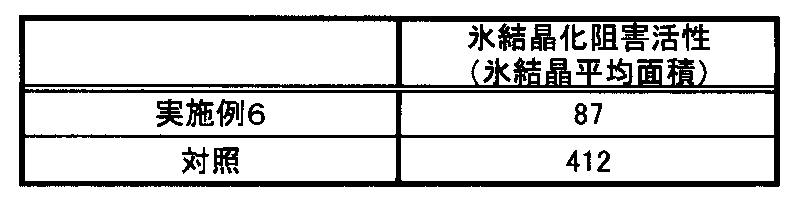
- the active fraction of DEAE adsorption (DEAE peak 2,100 ⁇ L) obtained in Example 5 was diluted 10-fold with acetone at ice temperature, and the precipitate that appeared in the solution was 15 ⁇ 10,000 ⁇ g. Recovered by centrifuging for minutes. The supernatant was removed, 50 v / v% aqueous acetone solution was added to the precipitate, and the mixture was stirred and then centrifuged at 10,000 ⁇ g for 15 minutes to collect the supernatant. After drying the liquid, the solid content was redissolved with distilled water (100 ⁇ L), and this was used as the acetone precipitation active fraction. The ice crystallization inhibitory activity of this acetone precipitation active fraction was measured by the method described in Example 4. As a control, the same measurement was performed for a 30 w / v% sucrose solution. The results are shown in Table 3.
- gel filtration peak 1 a fraction of 440 kDa or more is referred to as gel filtration peak 1
- gel filtration peak 2 a fraction of 158 kDa or more and less than 440 kDa is referred to as gel filtration peak 3
- gel filtration peak 3 a fraction of less than 43 kDa is referred to as gel filtration peak 3.
- ice crystallization inhibitory activity was measured by the method described in Example 4. The results are shown in Table 4.
- a mustard bud extract (700 mL, protein concentration 8.0 mg / mL) prepared by the same method as in Example 1 was treated with activated carbon according to the method of Example 3 and concentrated to obtain a solution (50 mL). After replacing the solvent of this solution with 10 mM Tris-HCl buffer (pH 8.0, 800 mL), mixing with equilibrated DEAE carrier (Bed volume: 180 mL), and stirring at low speed for 1 hour at 250 rpm, batch operation was used to adsorb an ice crystallization inhibitor. After removing the non-adsorbed fraction by filtration under reduced pressure, the carrier was washed with 180 mL (1 Bed volume) buffer solution.
- the adsorbed fraction was eluted with 10 mM Tris-HCl buffer (pH 8.0) containing 1 M NaCl to obtain a solution (200 mL).
- This solution was dialyzed with deionized water (5 L) three times for 8 hours, further desalted by ultrafiltration, and deionized water was added to make the total volume 200 mL.
- the deionized aqueous solution of the ice crystallization inhibitor obtained in Example 8 was subjected to the ice-binding substance concentration operation shown below. That is, the deionized aqueous solution of Example 8 containing an ice crystallization inhibitor was cooled from ⁇ 0.5 ° C. to ⁇ 2.0 ° C. in 24 hours while circulating at low speed with a circulation cooling device (manufactured by Neslab). After 24 hours, ice adsorbed by the produced ice crystallization inhibitor was collected. The recovered ice was dissolved and used as an ice crystallization inhibitor concentrate.
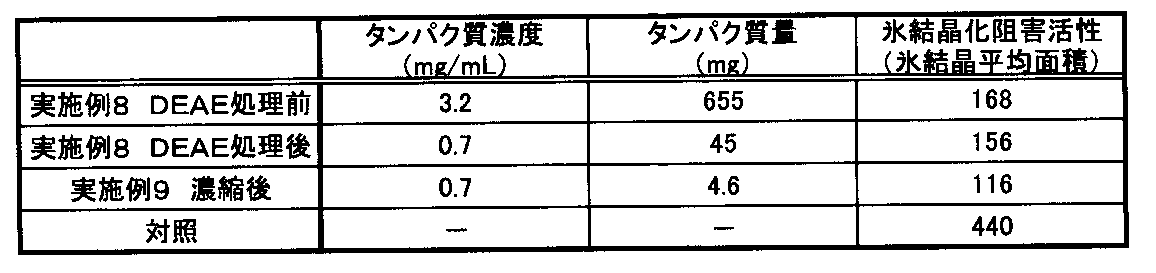
- Example 8 For each of the solutions obtained in Example 8 and Example 9, the protein concentration and ice crystallization inhibitory activity were measured in the same manner as in Example 4. As a control, the same measurement was performed for a 30 w / v% sucrose solution. The results are shown in Table 5.
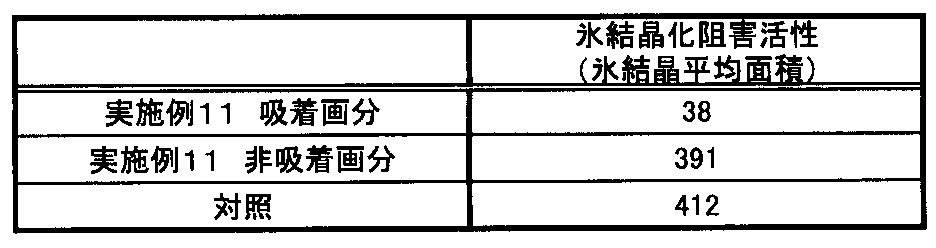
- Example 9 The ice crystallization inhibitor concentrated liquid obtained in Example 9 was subjected to DEAE column treatment in the same manner as in Example 5. With respect to the obtained adsorbed fraction and non-adsorbed fraction, the ice crystallization inhibitory activity was measured by the method described in Example 4. The results are shown in Table 6.
- Comparative Example 1 Commercially available mustard buds (400 g in wet weight) were extracted with deionized water (800 g) in the same manner as in Example 1 without inducing acclimation. In the same manner as in Examples 1 to 6, the obtained extract was concentrated and purified to the fraction corresponding to the fraction from which the ice crystallization inhibitor was obtained, and the purified fraction of Comparative Example 1 was obtained.
- the acetone precipitation active fraction of Example 6, the gel filtration column chromatography active fraction of Example 7, the adsorbed fraction and the non-adsorbed fraction of Example 11, and the purified fraction of Comparative Example 1 were respectively analyzed by SDS-poly Electrophoresis was performed on an acrylamide gel (10-20% gradient gel, manufactured by Atto Corporation) at 20 mA for 85 minutes. The gel after electrophoresis was stained with silver stain to visualize protein bands. From the gel staining result, a band having an apparent molecular weight of 34 kDa was confirmed in the active fractions of Examples 6 and 7 where the ice crystallization inhibitory active substance was concentrated.
- Example 11 Since this 34 kDa band was not observed in the purified fraction of Comparative Example 1, it is clear that the protein was specifically contained in the fraction exhibiting ice crystallization inhibitory activity. Further, in Example 11, a band was confirmed at a position of 71 kDa in the adsorption fraction showing strong activity. Since this band does not exist in the non-adsorbed fraction in which almost no activity is observed in this Example, it is clear that the protein is specifically contained in the fraction exhibiting ice crystallization inhibitory activity.
- the active fraction obtained by gel filtration chromatography in Example 7 is a fraction having a molecular weight of 400 kDa or more
- the ice crystallization inhibitor has a subunit having a molecular weight of 34 kDa or a molecular weight of 71 kDa. It is clear that a complex comprising at least one subunit having the above is formed.
- Example 7 After replacing the solvent of the deionized aqueous solution (5 mL) of the ice crystallization inhibitor obtained in Example 8 with 20 mM Tris-HCl buffer (50 mL, pH 7.4, containing 0.5 M NaCl), equilibrated ConA It was mixed with Sepharose carrier (Bed vol: 5 mL) and stirred at a low speed for 1 hour at 200 rpm with a stirrer. After collecting the non-adsorbed fraction by filtration under reduced pressure, washing was repeated with the same buffer until the absorbance at 280 nm fell below 0.05, and a Tris-HCl buffer solution (20 mM, pH 7.4, 0.5 M NaCl containing 2 M glucose) was used. The adsorbed fraction was eluted and collected. Table 7 shows the results of measuring ice crystallization inhibitory activity of the obtained fraction in the same manner as in Example 4.
Landscapes
- Life Sciences & Earth Sciences (AREA)
- Chemical & Material Sciences (AREA)
- Health & Medical Sciences (AREA)
- Engineering & Computer Science (AREA)
- Polymers & Plastics (AREA)
- Food Science & Technology (AREA)
- Organic Chemistry (AREA)
- General Health & Medical Sciences (AREA)
- Zoology (AREA)
- Wood Science & Technology (AREA)
- Proteomics, Peptides & Aminoacids (AREA)
- Molecular Biology (AREA)
- Biochemistry (AREA)
- Genetics & Genomics (AREA)
- Veterinary Medicine (AREA)
- Animal Behavior & Ethology (AREA)
- Medicinal Chemistry (AREA)
- Public Health (AREA)
- Biophysics (AREA)
- Nutrition Science (AREA)
- Gastroenterology & Hepatology (AREA)
- Botany (AREA)
- Birds (AREA)
- Epidemiology (AREA)
- Dermatology (AREA)
- Mycology (AREA)
- Analytical Chemistry (AREA)
- Peptides Or Proteins (AREA)
- Freezing, Cooling And Drying Of Foods (AREA)
- General Preparation And Processing Of Foods (AREA)
Abstract
Description
・pH8.0の条件で、各種の陰イオン交換樹脂を用いたクロマトグラフィーにより吸着画分として得られる
・pH6.0の条件で、各種の陽イオン交換樹脂を用いたクロマトグラフィーにより非吸着画分として得られる
・pH7.4の条件で、各種糖結合タンパク質と結合、吸着しない。



市販のマスタード芽(湿重量で400g)を馴化誘導せずに、実施例1と同様にして脱イオン水(800g)で抽出した。得られた抽出液を実施例1~6と同様の操作により、氷結晶化阻害物質が得られる画分に対応する画分を濃縮、精製し、比較例1の精製画分を得た。

Claims (21)
- 植物に由来し、かつ、ゲル濾過クロマトグラフィーにより測定した分子量が400kDa以上であることを特徴とする氷結晶化阻害物質。
- 複数のサブユニットから構成されるものである請求項1に記載の氷結晶化阻害物質。
- 少なくとも1つのサブユニットの分子量が、SDS-PAGEで34000±500Daまたは71000±1000Daである請求項2に記載の氷結晶化阻害物質。
- 植物が、アブラナ科、セリ科、ユリ科およびキク科に属する植物からなる群から選ばれる1以上の植物、または、これらの類縁品種もしくは改良品種である請求項1~3のいずれか1項に記載の氷結晶化阻害物質。
- アブラナ科に属する植物が、ハクサイ、ダイコン、ブロッコリー、チンゲンサイ、コマツナ、カブ、シロナ、野沢菜、広島菜、ミズナ、および、マスタードからなる群から選ばれる1以上の植物、または、これらの類縁品種もしくは改良品種である請求項4に記載の氷結晶化阻害物質。
- アブラナ科に属する植物が、マスタード(Brassica juncea種)、または、これの類縁品種もしくは改良品種である請求項5に記載の氷結晶化阻害物質。
- pH8において、陰イオン交換カラムに吸着するものである請求項1~6のいずれか1項に記載の氷結晶化阻害物質。
- 陰イオン交換カラムがDEAEカラムである請求項7に記載の氷結晶化阻害物質。
- 陰イオン交換カラムがQカラムである請求項7に記載の氷結晶化阻害物質。
- pH6において、陽イオン交換カラムに吸着しないものである請求項1~9のいずれか1項に記載の氷結晶化阻害物質。
- 陽イオン交換カラムがSPカラムである請求項10に記載の氷結晶化阻害物質。
- pH7.4において、糖結合タンパク質に吸着しないものである請求項1~11のいずれか1項に記載の氷結晶化阻害物質。
- 糖結合タンパク質がConAである請求項12に記載の氷結晶化阻害物質。
- 分画分子量5,000以上の分離膜を用いて植物から氷結晶化阻害物質を分離する工程を含むことを特徴とする、請求項1~13のいずれか1項に記載の氷結晶化阻害物質の製造方法。
- 限外濾過または逆浸透により分離する請求項14に記載の製造方法。
- 請求項1~13のいずれか1項に記載の氷結晶化阻害物質の一部であり、かつ氷結晶化阻害活性を有することを特徴とするポリペプチド。
- SDS-PAGEで測定される分子量が34000±500Daまたは71000±1000Daである請求項16に記載のポリペプチド。
- 請求項1~13のいずれか1項に記載の氷結晶化阻害物質、および/または、請求項16~17のいずれか1項に記載のポリペプチドを含むことを特徴とする氷結晶化阻害組成物。
- 請求項1~13のいずれか1項に記載の氷結晶化阻害物質、および/または、請求項16~17のいずれか1項に記載のポリペプチドを含むことを特徴とする食品。
- 請求項1~13のいずれか1項に記載の氷結晶化阻害物質、および/または、請求項16~17のいずれか1項に記載のポリペプチドを含むことを特徴とする生体試料保護剤。
- 請求項1~13のいずれか1項に記載の氷結晶化阻害物質、および/または、請求項16~17のいずれか1項に記載のポリペプチドを含むことを特徴とする化粧品。
Priority Applications (3)
| Application Number | Priority Date | Filing Date | Title |
|---|---|---|---|
| CN2010800256234A CN102459319A (zh) | 2009-06-09 | 2010-05-27 | 冰结晶化抑制物质 |
| EP10786070.2A EP2441772A4 (en) | 2009-06-09 | 2010-05-27 | FROST PROTECTION SUBSTANCE |
| US13/377,405 US20120136138A1 (en) | 2009-06-09 | 2010-05-27 | Ice-crystal growth inhibiting substance |
Applications Claiming Priority (2)
| Application Number | Priority Date | Filing Date | Title |
|---|---|---|---|
| JP2009138459A JP2010285359A (ja) | 2009-06-09 | 2009-06-09 | 植物由来氷結晶化阻害剤 |
| JP2009-138459 | 2009-06-09 |
Publications (1)
| Publication Number | Publication Date |
|---|---|
| WO2010143539A1 true WO2010143539A1 (ja) | 2010-12-16 |
Family
ID=43308794
Family Applications (1)
| Application Number | Title | Priority Date | Filing Date |
|---|---|---|---|
| PCT/JP2010/059005 Ceased WO2010143539A1 (ja) | 2009-06-09 | 2010-05-27 | 氷結晶化阻害物質 |
Country Status (6)
| Country | Link |
|---|---|
| US (1) | US20120136138A1 (ja) |
| EP (1) | EP2441772A4 (ja) |
| JP (1) | JP2010285359A (ja) |
| KR (1) | KR20120027232A (ja) |
| CN (1) | CN102459319A (ja) |
| WO (1) | WO2010143539A1 (ja) |
Cited By (3)
| Publication number | Priority date | Publication date | Assignee | Title |
|---|---|---|---|---|
| EP2682402A4 (en) * | 2011-03-04 | 2014-09-03 | Kaneka Corp | PLANT SENSORY RECOVERED ICE CRYSTALLIZATION INHIBITOR |
| WO2016178426A1 (ja) * | 2015-05-07 | 2016-11-10 | 学校法人 関西大学 | 抗氷核活性剤 |
| CN110250162A (zh) * | 2019-07-05 | 2019-09-20 | 北京太东生物科技有限公司 | 生物样品冷冻保护剂及其应用 |
Families Citing this family (2)
| Publication number | Priority date | Publication date | Assignee | Title |
|---|---|---|---|---|
| JP6151918B2 (ja) * | 2011-01-13 | 2017-06-21 | 株式会社カネカ | 生地物性改善剤及びそれを用いた食品用生地 |
| JP6016343B2 (ja) | 2011-09-08 | 2016-10-26 | 株式会社ロッテ | 口腔用組成物 |
Citations (9)
| Publication number | Priority date | Publication date | Assignee | Title |
|---|---|---|---|---|
| WO1992016618A1 (en) | 1991-03-15 | 1992-10-01 | Hsc Research And Development Limited Partnership | Gene construct for production of transgenic fish |
| WO1997028260A1 (en) | 1996-01-31 | 1997-08-07 | Hsc Research And Development Limited Partnership | Intracellular antifreeze polypeptides and nucleic acids |
| JP2001245659A (ja) * | 2000-03-03 | 2001-09-11 | Hitoshi Obata | 野菜由来の不凍活性物質 |
| JP2004024237A (ja) | 2002-03-15 | 2004-01-29 | National Institute Of Advanced Industrial & Technology | 担子菌類の産生する不凍タンパク質 |
| JP2004161761A (ja) | 2002-10-25 | 2004-06-10 | Ikeda Shokken Kk | 微生物由来の不凍タンパク質 |
| JP2004275008A (ja) | 2003-03-12 | 2004-10-07 | Univ Kansai | 抗凍結活性を有する担子菌の培養液 |
| JP2007153834A (ja) * | 2005-12-07 | 2007-06-21 | Univ Kansai | カイワレ大根由来の不凍活性を有する抽出物、その製造方法、ならびにその用途 |
| JP2007169246A (ja) * | 2005-12-26 | 2007-07-05 | Univ Kansai | 冬野菜スプラウトからの機能性抽出物の製造およびその用途 |
| JP2009296902A (ja) * | 2008-06-10 | 2009-12-24 | Kaneka Corp | 品質改良剤 |
Family Cites Families (3)
| Publication number | Priority date | Publication date | Assignee | Title |
|---|---|---|---|---|
| WO1992022581A1 (en) * | 1991-06-13 | 1992-12-23 | University Of Waterloo | Cold tolerances in plants |
| EP0843010A1 (en) * | 1996-11-19 | 1998-05-20 | Unilever Plc | Carrot anti-freeze polypeptides |
| AU719506B2 (en) * | 1996-07-26 | 2000-05-11 | Unilever Plc | Frozen food product |
-
2009
- 2009-06-09 JP JP2009138459A patent/JP2010285359A/ja active Pending
-
2010
- 2010-05-27 US US13/377,405 patent/US20120136138A1/en not_active Abandoned
- 2010-05-27 EP EP10786070.2A patent/EP2441772A4/en not_active Withdrawn
- 2010-05-27 WO PCT/JP2010/059005 patent/WO2010143539A1/ja not_active Ceased
- 2010-05-27 CN CN2010800256234A patent/CN102459319A/zh active Pending
- 2010-05-27 KR KR1020117027085A patent/KR20120027232A/ko not_active Withdrawn
Patent Citations (9)
| Publication number | Priority date | Publication date | Assignee | Title |
|---|---|---|---|---|
| WO1992016618A1 (en) | 1991-03-15 | 1992-10-01 | Hsc Research And Development Limited Partnership | Gene construct for production of transgenic fish |
| WO1997028260A1 (en) | 1996-01-31 | 1997-08-07 | Hsc Research And Development Limited Partnership | Intracellular antifreeze polypeptides and nucleic acids |
| JP2001245659A (ja) * | 2000-03-03 | 2001-09-11 | Hitoshi Obata | 野菜由来の不凍活性物質 |
| JP2004024237A (ja) | 2002-03-15 | 2004-01-29 | National Institute Of Advanced Industrial & Technology | 担子菌類の産生する不凍タンパク質 |
| JP2004161761A (ja) | 2002-10-25 | 2004-06-10 | Ikeda Shokken Kk | 微生物由来の不凍タンパク質 |
| JP2004275008A (ja) | 2003-03-12 | 2004-10-07 | Univ Kansai | 抗凍結活性を有する担子菌の培養液 |
| JP2007153834A (ja) * | 2005-12-07 | 2007-06-21 | Univ Kansai | カイワレ大根由来の不凍活性を有する抽出物、その製造方法、ならびにその用途 |
| JP2007169246A (ja) * | 2005-12-26 | 2007-07-05 | Univ Kansai | 冬野菜スプラウトからの機能性抽出物の製造およびその用途 |
| JP2009296902A (ja) * | 2008-06-10 | 2009-12-24 | Kaneka Corp | 品質改良剤 |
Non-Patent Citations (8)
| Title |
|---|
| BIOCHEM. J., vol. 340, 1999, pages 385 - 391 |
| BIOPHYSICS, vol. 43, no. 3, 2003, pages 130 - 135 |
| BOOTH, J. G. ET AL.: "Expression of a Low- Temperature-Induced Protein in Brassica napus.", PLANT PHYSIOL., vol. 108, 1995, pages 795 - 803, XP002027264 * |
| CAN. J. MICROBIOL., vol. 44, 1998, pages 64 |
| GRIFFITH, M. ET AL.: "Antifreeze proteins in overwintering plants: a tale of two activities.", TRENDS IN PLANT SCIENCE, vol. 9, no. 8, 2004, pages 399 - 405, XP004552541 * |
| ORR, W. ET AL.: "Complementary DNA Sequence of a Low Temperature-Induced Brassica napus Gene with Homology to the Arabidopsis thaliana kin1 Gene.", PLANT PHYSIOL., vol. 98, 1992, pages 1532 - 1534, XP008148075 * |
| PLANT PHYSIOLOGY, vol. 119, 1999, pages 1361 - 1369 |
| See also references of EP2441772A4 |
Cited By (5)
| Publication number | Priority date | Publication date | Assignee | Title |
|---|---|---|---|---|
| EP2682402A4 (en) * | 2011-03-04 | 2014-09-03 | Kaneka Corp | PLANT SENSORY RECOVERED ICE CRYSTALLIZATION INHIBITOR |
| WO2016178426A1 (ja) * | 2015-05-07 | 2016-11-10 | 学校法人 関西大学 | 抗氷核活性剤 |
| JPWO2016178426A1 (ja) * | 2015-05-07 | 2018-03-01 | 学校法人 関西大学 | 抗氷核活性剤 |
| CN110250162A (zh) * | 2019-07-05 | 2019-09-20 | 北京太东生物科技有限公司 | 生物样品冷冻保护剂及其应用 |
| CN110250162B (zh) * | 2019-07-05 | 2021-04-06 | 北京太东生物科技有限公司 | 生物样品冷冻保护剂及其应用 |
Also Published As
| Publication number | Publication date |
|---|---|
| KR20120027232A (ko) | 2012-03-21 |
| EP2441772A1 (en) | 2012-04-18 |
| US20120136138A1 (en) | 2012-05-31 |
| JP2010285359A (ja) | 2010-12-24 |
| EP2441772A4 (en) | 2014-10-29 |
| CN102459319A (zh) | 2012-05-16 |
Similar Documents
| Publication | Publication Date | Title |
|---|---|---|
| EP2565200B1 (en) | Antifreeze protein | |
| CN103068256B (zh) | 担子菌来源的冰结晶化抑制剂 | |
| WO2010143539A1 (ja) | 氷結晶化阻害物質 | |
| CN101962634B (zh) | 一种从宣木瓜果实中提取木瓜蛋白酶和sod粗酶的方法 | |
| Garcia et al. | Gene expression and spatiotemporal localization of antifungal chitin-binding proteins during Moringa oleifera seed development and germination | |
| CA2617052C (en) | Protein extracted from plants of the genus lupinus or produced in recombinant form, nucleotide sequence encoding it and its use in animal nutrition, as a plant growth promoter andin the fight against pathogenic fungi | |
| US20110278492A1 (en) | Plant extract containing antifreeze substance and method for producing same | |
| JP2017043551A (ja) | 生体材料保護用ペプチド | |
| EP3849995B1 (en) | Methods for separation of chlorophyll and soluble proteins | |
| JP5009594B2 (ja) | 抗菌性のある不凍タンパク質含有植物抽出物 | |
| JP2007153834A (ja) | カイワレ大根由来の不凍活性を有する抽出物、その製造方法、ならびにその用途 | |
| WO2012121172A1 (ja) | 植物種子由来の氷結晶化阻害物質 | |
| JP5747374B2 (ja) | 氷結晶化抑制タンパク質 | |
| CN108840928A (zh) | 一种太子参胰蛋白酶抑制剂及其制备方法 | |
| CN118546228A (zh) | 一种抗菌肽、该抗菌肽的重组抗菌肽及制备方法和应用 | |
| JP2011231089A (ja) | 氷結晶化阻害物質 | |
| WO2012023486A1 (ja) | 氷結晶化阻害タンパク質 | |
| JPS58500737A (ja) | 植物の葉から蛋白質の単離法 | |
| US9290752B2 (en) | Process for enhancing the amylase inhibitory efficacy from phaseolus vulgaris extracts | |
| JP2006225315A (ja) | 地衣類からの氷結晶制御物質の製造方法 | |
| CN108659119B (zh) | 一种太子参抗真菌胰蛋白酶抑制剂的分离与纯化方法 | |
| CN108117597A (zh) | 一种新型鲮鱼胶原抗氧化肽的制备工艺 |
Legal Events
| Date | Code | Title | Description |
|---|---|---|---|
| WWE | Wipo information: entry into national phase |
Ref document number: 201080025623.4 Country of ref document: CN |
|
| 121 | Ep: the epo has been informed by wipo that ep was designated in this application |
Ref document number: 10786070 Country of ref document: EP Kind code of ref document: A1 |
|
| ENP | Entry into the national phase |
Ref document number: 20117027085 Country of ref document: KR Kind code of ref document: A |
|
| WWE | Wipo information: entry into national phase |
Ref document number: 2647/MUMNP/2011 Country of ref document: IN |
|
| NENP | Non-entry into the national phase |
Ref country code: DE |
|
| WWE | Wipo information: entry into national phase |
Ref document number: 13377405 Country of ref document: US |
|
| WWE | Wipo information: entry into national phase |
Ref document number: 2010786070 Country of ref document: EP |