WO2010147145A1 - 抗グラム陰性菌剤 - Google Patents
抗グラム陰性菌剤 Download PDFInfo
- Publication number
- WO2010147145A1 WO2010147145A1 PCT/JP2010/060207 JP2010060207W WO2010147145A1 WO 2010147145 A1 WO2010147145 A1 WO 2010147145A1 JP 2010060207 W JP2010060207 W JP 2010060207W WO 2010147145 A1 WO2010147145 A1 WO 2010147145A1
- Authority
- WO
- WIPO (PCT)
- Prior art keywords
- gram
- negative
- bacteria
- amino acid
- negative bacterial
- Prior art date
- Legal status (The legal status is an assumption and is not a legal conclusion. Google has not performed a legal analysis and makes no representation as to the accuracy of the status listed.)
- Ceased
Links
Images






Classifications
-
- A—HUMAN NECESSITIES
- A61—MEDICAL OR VETERINARY SCIENCE; HYGIENE
- A61K—PREPARATIONS FOR MEDICAL, DENTAL OR TOILETRY PURPOSES
- A61K45/00—Medicinal preparations containing active ingredients not provided for in groups A61K31/00 - A61K41/00
- A61K45/06—Mixtures of active ingredients without chemical characterisation, e.g. antiphlogistics and cardiaca
-
- A—HUMAN NECESSITIES
- A61—MEDICAL OR VETERINARY SCIENCE; HYGIENE
- A61K—PREPARATIONS FOR MEDICAL, DENTAL OR TOILETRY PURPOSES
- A61K38/00—Medicinal preparations containing peptides
- A61K38/04—Peptides having up to 20 amino acids in a fully defined sequence; Derivatives thereof
- A61K38/07—Tetrapeptides
-
- A—HUMAN NECESSITIES
- A61—MEDICAL OR VETERINARY SCIENCE; HYGIENE
- A61K—PREPARATIONS FOR MEDICAL, DENTAL OR TOILETRY PURPOSES
- A61K38/00—Medicinal preparations containing peptides
- A61K38/04—Peptides having up to 20 amino acids in a fully defined sequence; Derivatives thereof
- A61K38/08—Peptides having 5 to 11 amino acids
-
- A—HUMAN NECESSITIES
- A61—MEDICAL OR VETERINARY SCIENCE; HYGIENE
- A61P—SPECIFIC THERAPEUTIC ACTIVITY OF CHEMICAL COMPOUNDS OR MEDICINAL PREPARATIONS
- A61P31/00—Antiinfectives, i.e. antibiotics, antiseptics, chemotherapeutics
- A61P31/04—Antibacterial agents
-
- Y—GENERAL TAGGING OF NEW TECHNOLOGICAL DEVELOPMENTS; GENERAL TAGGING OF CROSS-SECTIONAL TECHNOLOGIES SPANNING OVER SEVERAL SECTIONS OF THE IPC; TECHNICAL SUBJECTS COVERED BY FORMER USPC CROSS-REFERENCE ART COLLECTIONS [XRACs] AND DIGESTS
- Y02—TECHNOLOGIES OR APPLICATIONS FOR MITIGATION OR ADAPTATION AGAINST CLIMATE CHANGE
- Y02A—TECHNOLOGIES FOR ADAPTATION TO CLIMATE CHANGE
- Y02A50/00—TECHNOLOGIES FOR ADAPTATION TO CLIMATE CHANGE in human health protection, e.g. against extreme weather
- Y02A50/30—Against vector-borne diseases, e.g. mosquito-borne, fly-borne, tick-borne or waterborne diseases whose impact is exacerbated by climate change
Definitions
- the present invention relates to a drug effective for the prevention / treatment of Gram-negative bacterial infection. More specifically, a drug capable of exerting a bactericidal action, a growth inhibitory action, and / or a drug excretion inhibitory action against Gram-negative bacteria by inhibiting the formation of a YaeT complex present in the outer membrane of Gram-negative bacteria. About.
- Gram-negative bacteria such as multidrug-resistant Pseudomonas aeruginosa and Acinetobacter baumannii are the main causative agents of nosocomial infections, leading to serious pathological conditions in patients with reduced immunity There is. Since these bacteria exhibit multidrug resistance, it is difficult to treat infections, which is a big problem. Gram-negative bacteria have two membranes, an inner membrane and an outer membrane. In order for antibiotics to work effectively, antibiotics must pass through the complex membrane structure of Gram-negative bacteria to reach the inside of the cell. There is. However, it is thought that the effect of antibiotics decreases due to drug-modifying enzymes, decreased permeability of the outer membrane, changes in targets, drug discharge by a drug discharge pump, etc., and multidrug resistance is acquired.
- the multidrug drainage pump is a major contributor to the acquisition of multidrug resistance by Pseudomonas aeruginosa. This pump positively transports and discharges the drug that has entered the inside of the bacterium using energy.
- Multidrug evacuation pumps are classified into several families. Among them, the RND (resistance nodition division) family pumps, which are known to evacuate various antibiotics, are composed of three types of subunits. Yes. Pseudomonas aeruginosa has multiple RND type pumps, of which the main pump is the MexAB-OprM pump.
- the present inventors focused on the MexAB-OprM pump of Pseudomonas aeruginosa and inhibited the drug efflux pump function of Pseudomonas aeruginosa by modifying the amino acid sequence of OprM, a subunit constituting the multidrug efflux pump. Then, a method for enhancing the efficacy of antibiotics was developed, and a drug having the effect and a method for screening the drug were proposed (Patent Document 1). However, if a mutation occurs in the target sequence, the effect of the method may be lost.
- the present invention has been made in view of the above circumstances, and by blocking the formation of YaeT complex in the outer membrane of Gram-negative bacteria, it blocks the transport of outer membrane protein (OMP) necessary for the survival of the bacteria. It is an object of the present invention to provide a method and a drug therefor, thereby fundamentally solving the problem of multidrug resistance of gram-negative bacteria.
- the present invention provides an anti-gram negative bacterial agent characterized by exhibiting a bactericidal action, a growth inhibitory action and / or a drug excretion inhibitory action against gram negative bacteria by inhibiting the formation of YaeT complex.
- YaeT complex formation of Gram-negative bacteria is inhibited in the presence and / or absence of conventional antibiotics, thereby bactericidal action, growth-inhibiting action and / or drugs against Gram-negative bacteria. Since the excretion inhibitory action is exerted, the problem of multidrug resistance due to mutation of the outer membrane protein is fundamentally solved.
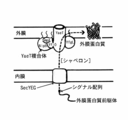
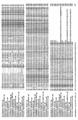
- FIG. 1 It is a schematic diagram explaining the outer membrane and inner membrane of Gram-negative bacteria, and the relationship between a YaeT complex and outer membrane protein (cited from nonpatent literature 1). It is a figure which compares the amino acid sequence of the binding site of various Gram-negative bacteria YfgL with YaeT. It is a figure which compares the amino acid sequence of the conserved region of YfiO of various gram-negative bacteria.
- 2 is a graph showing the concentration dependency of bactericidal action of LTLR and LTLR-NH 2 on PAO1 strain.
- FIG. 6 is a graph of the change in sensitivity of nalB strain to OFLX in the presence and absence of LTLR-NH 2 (5 mM).
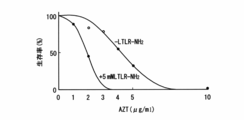
- FIG. 6 is a graph of the change in sensitivity of nalB strain to AZT in the presence and absence of LTLR-NH 2 (5 mM).
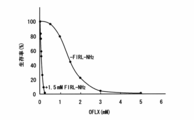
- FIG. 6 is a graph of the change in sensitivity of the nalB strain to OFLX in the presence and absence of FIRL-NH 2 (1.5 mM).
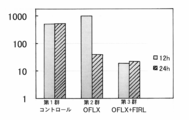
- It is a graph which shows the bacterial number change in a corneal ulcer model (Example 7).
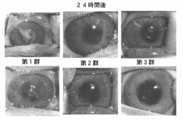
- It is a photograph which shows the external appearance of the cornea 24 hours after in a corneal ulcer model (Example 7).
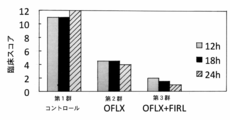
- It is a graph which shows the clinical score change in a corneal ulcer model (Example 7).
- It is a graph which shows the bacterial number change in a pneumonia model (Example 8).
- It is a graph which shows the bacterial number change in a pneumonia model (Example 8).
- the anti-gram-negative bacterial agent of the present invention exhibits a bactericidal action, growth inhibitory action, and / or drug excretion inhibitory action against gram-negative bacteria by inhibiting the formation of the YaeT complex.
- Gram-negative bacteria is used in a commonly used meaning. That is, it is a general term for bacteria whose staining with crystal violet is decolored in Gram staining.
- Representative gram-negative bacteria include E. coli (Escherichia coli), Salmonella, Pseudomonas, Helicobacter and other proteobacteria and cyanobacteria.
- E. coli Esscherichia coli
- Salmonella Salmonella
- Pseudomonas Salmonella
- Pseudomonas aeruginosa
- Haemophilus influenzae that cause respiratory damage
- Examples include Helicobacter pylori and Gertonel bacteria.
- cocci include Neisseria meningitidis, Catalaris bacteria, and Neisseria gonorrhoeae.
- the YaeT complex in Gram-negative bacteria is composed of four lipoproteins, YfgL, YfiO, NlpB, and SmpA, gathered on YaeT, which is a membrane protein.
- YaeT which is a membrane protein.
- the first aspect of the present invention is an anti-gram-negative bacterial agent characterized by inhibiting the binding between YaeT and YfgL.
- the present inventors compared the amino acid sequences of the binding sites of various gram-negative bacteria YfgL to YaeT (see FIG. 2), and examined highly conserved regions. In FIG. 2, the region surrounded by a square indicates highly conserved amino acid residues. Among these, various peptide molecules were synthesized based on the amino acid sequence of the region indicated by “A”. The effect was confirmed.
- the anti-gram negative bacterial agent of the present invention is preferably a peptide containing an amino acid sequence consisting of at least LTLR.
- FIG. 3 compares the amino acid sequences of YfiO of various gram-negative bacteria. It was found that within a highly conserved region, peptide molecules having the amino acid sequence “FIRLHP” compete with the binding of YaeT and YfiO and can effectively inhibit their binding. Even if the peptide molecule does not contain the entire amino acid sequence “FIRLHP”, it was confirmed that the peptide molecule was effective if it contained a partial amino acid sequence “FIRL” or “IRLH”.
- the anti-gram negative bacterial agent of the present invention is preferably a peptide containing an amino acid sequence consisting of at least FIRL or IRLH, and particularly preferably a peptide containing an amino acid sequence consisting of at least FIRLHP.
- the above peptide molecule may be chemically modified.
- those obtained by amidating the C terminus of a peptide molecule have a significantly improved bactericidal action as compared to an unmodified peptide molecule.
- the present inventors consider that the negative charge at the C-terminal is canceled out by the amide group, resulting in improved membrane permeability.
- the anti-gram-negative bacterial agent of the present invention is preferably one obtained by amidating the C-terminus of the peptide molecule.
- the site of interaction between YaeT and YfgL and YfiO targeted in the present invention is present in the periplasm between the outer and inner membranes of the fungus (see FIG. 1). Therefore, in order for the drug (peptide molecule) of the present invention to reach the action site from the outside, it is necessary to pass through the outer membrane. In particular, in the case of non-modification, it is preferable to co-administer with a drug that improves the permeability of the outer membrane in order to exert its effectiveness at a practical concentration.
- the drug having the action of improving the permeability of the outer membrane is not particularly limited, and examples thereof include antibiotics having a cell membrane alteration action. Specific examples include polymyxin B and colistin.
- the amidated peptide molecule of the present invention when used, the peptide molecule passes through the outer membrane and reaches the YaeT complex formation site without simultaneous administration of an antibiotic having a membrane altering action. It seems to inhibit the biosynthesis of. Therefore, for example, when an antibiotic that does not have a membrane altering action is administered simultaneously, the membrane becomes weak due to the action of the amidated peptide molecule of the present invention, and as a result, it becomes more sensitive to the antibiotic and exhibits a bactericidal effect. Conceivable.
- the third aspect of the present invention is characterized by containing the anti-gram negative bacterial agent (modified / unmodified) of the present invention and an antibiotic (not depending on the presence or absence of membrane alteration). It is a treatment for negative bacterial infections.
- Antibiotics having no membrane alteration action are not particularly limited and those conventionally used in general can be used. Examples include cephalosporin antibiotics cephalexin, cefotaxime, etc., fluoroquinolone antibiotics ofloxacin, ciprofloxacin, etc., aminoglycoside antibiotics such as amikamin, carbopenem antibiotics such as meropenem .
- the method for measuring the viable count of Gram-negative bacteria is as follows. A part of the bacteria cultured overnight at 37 ° C. is added to fresh MH medium, and the culture is continued at the same temperature. When the turbidity of the bacterium (absorbance at 600 nm) reaches 0.7 to 0.8, the microbial solution is added to the MH medium to prepare a microbial solution diluted 100 to 200 times and used for the experiment.
- a solution obtained by adding 60-80 ⁇ L of the bacterial solution and a peptide or the like to a final concentration of 100 ⁇ L is cultured for a certain time (3 hours) with stirring at 37 ° C. After the culture, the bacterial solution is diluted with a PBS solution, and the diluted solution is plated on an MH agar plate and cultured at 37 ° C. overnight. The viable cell count is obtained by counting the number of colonies growing on the plate the next day.
- Example 1 In the above experimental system, polymyxin B (final concentration is 0.4 ⁇ g / mL) (this concentration does not affect the survival of Pseudomonas aeruginosa), and Pseudomonas aeruginosa (PAO1 strain) is cultured. did.
- the peptide LTLR peptide consisting of 4 amino acid residues having the sequence of leucine-threonine-leucine-arginine
- the viable cell count of Pseudomonas aeruginosa was measured, and how the viable cell count was changed by the addition of the peptide was measured as compared to the viable cell count when the peptide was not added. The results are shown in the graph of FIG.
- Example 1 In Example 1, peptide LTLE in which the fourth amino acid (R) of peptide LTLR was substituted with glutamic acid (E) was synthesized, and under the same conditions as in Example 1, 2.5 mM LTLE was added to change the number of viable bacteria. Was measured. As a result, a decrease in the survival rate of Pseudomonas aeruginosa was not observed. Therefore, it was suggested that the antibacterial action observed in Example 1 is specific to the amino acid sequence (LTLR). (Comparative Example 2) In Example 1, peptide LRTL in which the amino acid sequence of peptide LTLR was randomized was synthesized.
- Example 1 Under the same conditions as in Example 1, 2.5 mM LRTL was added, and the change in the number of viable bacteria was measured. As a result, a decrease in the survival rate of Pseudomonas aeruginosa was not observed. Therefore, it was suggested that the antibacterial action observed in Example 1 is specific to the amino acid sequence (LTLR).
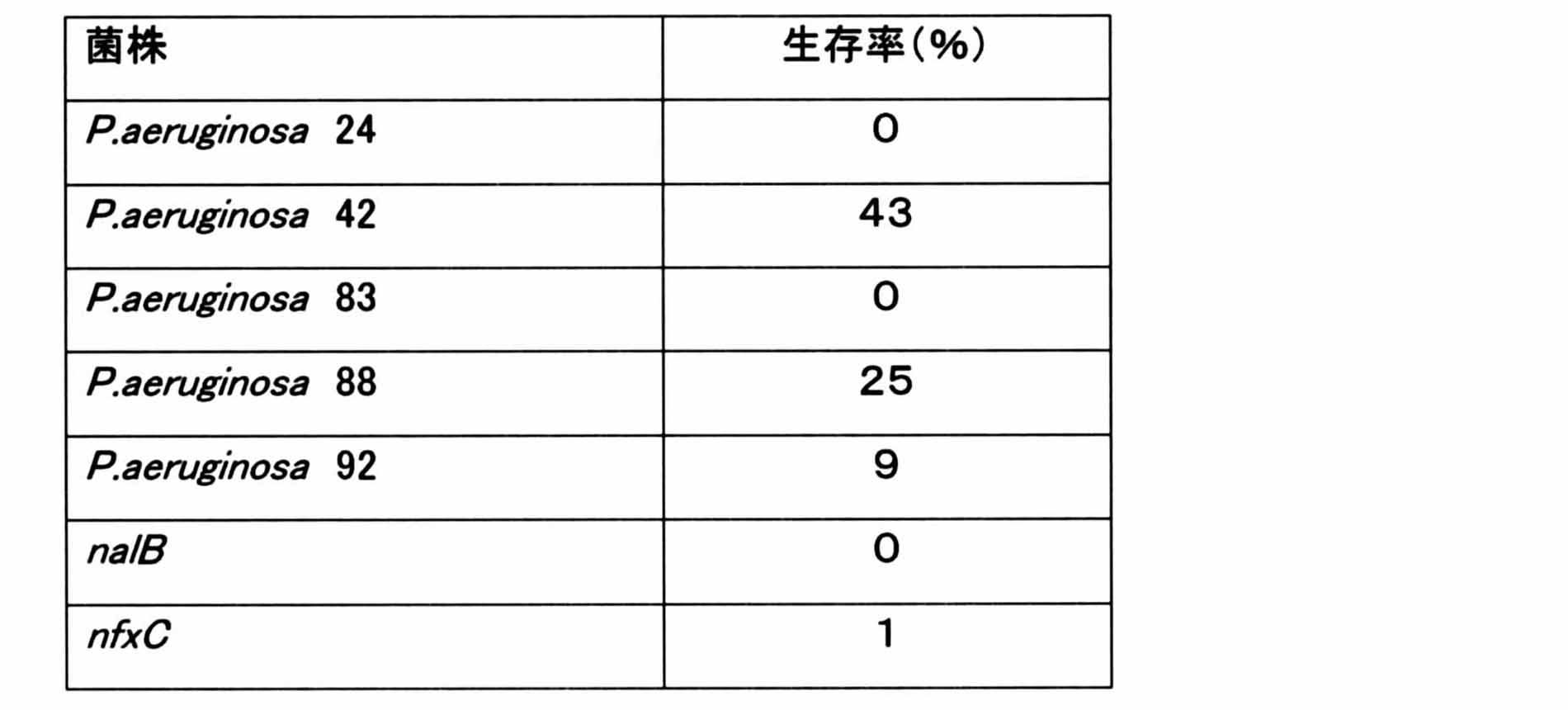
- Example 2 Instead of Pseudomonas aeruginosa of the PA01 strain (standard strain) used in Example 1, clinical isolates (P. aeruginosa 24, 42, 83, 88 and 92) and nalB strain (MexAB-OprM which is a drug efflux pump) were used. Highly expressed strain that became highly multidrug resistant) and nfxC strain (strain that highly expressed MexEF-OprN, a drug efflux pump that became highly multidrug resistant), and measured the effect of LTLR on them did. In this experiment, the final concentration of polymyxin B was 0.2 ⁇ g / mL, and 3 mM LTLR was added to examine changes in survival rate. The results are shown in Table 1 below.
- Example 3 The same measurement as in Example 2 was performed using E. coli (ATCC 25922) instead of Pseudomonas aeruginosa. As a result, the survival rate of E. coli was about 1%. Thereby, it was suggested that LTLR acts not only on Pseudomonas aeruginosa but also on all Gram-negative bacteria including E. coli.
- LTLR having an amino terminal acetylation was synthesized and its action was examined. Under the same conditions as in Example 1, LTLR was changed to acetylated LTLR, and the survival rate of Pseudomonas aeruginosa was examined. As a result, no decrease in survival rate was observed, and it was shown that the activity of anti-gram negative bacteria was significantly reduced by acetylation.
- Example 4 An LTLR with an amidated carboxy terminus was synthesized and its action was investigated. Under the same conditions as in Example 1, various concentrations of amidated LTLR were added to examine changes in the survival rate of Pseudomonas aeruginosa. The result is shown in FIG. It was shown that the activity of LTLR was increased by amidation, and it was revealed that amidation at the carboxy terminus is involved in the increase of the activity as well as the protective action of the peptide. Similar experimental results were obtained for E. coli.
- Example 5 An experiment similar to that of Example 4 was conducted in a system using ofloxacin (OFLX) or aztreonam (AZT) instead of polymyxin B having a membrane alteration action as an antibiotic. The results are shown in FIGS.
- OFLX a system using ofloxacin
- AZT aztreonam
- FIGS. In the system using either OFLX or AZT, when amidated peptide molecules (LTLR) are added, the survival rate of Pseudomonas aeruginosa in a multidrug-resistant strain (NalB) at the same antibiotic concentration is compared to when not added. Remarkably reduced. That is, it was suggested that the amidated peptide molecule of the present invention reached the target site through the outer membrane and weakened the bacteria. Therefore, it was confirmed that the amidated peptide molecule of the present invention has an action of improving the effect of an antibiotic such as aztreonam.
- Example 6 The same experiment as in Example 1 was performed with P. aeruginosa (nalB) using FIRL (Yf2B1) that inhibits the binding between YeaT and YfiO as a peptide molecule. The results are shown in FIG. It was confirmed that a peptide molecule that inhibits the binding of YeaT and YfiO exhibits a further excellent anti-gram-negative bacterial action.
- Example 7 An experiment using a model of rabbit corneal ulcer caused by Pseudomonas aeruginosa infection An ulcer was formed by injuring multidrug-resistant Pseudomonas aeruginosa (MDRP) by damaging the central cornea of a Japanese white rabbit (2 kg, male). . Rabbits were divided into the following 3 groups (5 animals each), and instillation of the next drug was started in each group 6 hours after inoculation. Instillation was performed three times, 6 hours, 12 hours, and 18 hours after MDRP inoculation. Group 1: Saline (control) Group 2: Ofloxatin (OFLX) eye drops (Taribit ophthalmic solution 0.3%, Santen Pharmaceutical) Group 3: A mixture of OFLX eye drops and 50 mM FIRL / saline
- the number of bacteria was measured for each group 12 hours after ulcer formation (6 hours after instillation) and 24 hours after ulcer formation (18 hours after instillation).
- the measuring method is as follows. The eye fat and cornea were collected, 5 mL of physiological saline was added, emulsified in a mortar, and seeded on a NAC agar medium, and the number of bacteria was counted after 24 hours. The results are shown in the graph of FIG.
- the corneal opacity of each group was observed 12 hours after ulcer formation (6 hours after instillation), 18 hours after ulcer formation (12 hours after instillation) and 24 hours after ulcer formation (18 hours after instillation).
- the clinical score was determined by the following method. The observation area is divided into 12 quadrants with the corneal ulcer as the axis, and the presence or absence of turbidity in each quadrant is quantified by turbidity: 1 and turbidity: 0, and the clinical score (total value of 12 quadrants) for each specimen is calculated. To do.
- the appearance of the cornea in each group of specimens 12 hours and 24 hours after ulcer formation is shown in FIGS. 9 and 10, and the change in clinical score from 12 hours to 24 hours after ulcer formation is shown in FIG.
- mice Experiment using mouse pneumonia model by Pseudomonas aeruginosa infection 10 7 CFU / mouse Pseudomonas aeruginosa (PAO1 strain) was allowed to act on the trachea of Balb / C mice (7-8 weeks old, female) did. Mice were divided into the following 4 groups (5 animals each), and the following drug and 30 ⁇ L each were administered to each group via the trachea simultaneously with Pseudomonas aeruginosa infection.
- Pseudomonas aeruginosa infection 10 7 CFU / mouse Pseudomonas aeruginosa (PAO1 strain) was allowed to act on the trachea of Balb / C mice (7-8 weeks old, female) did. Mice were divided into the following 4 groups (5 animals each), and the following drug and 30 ⁇ L each were administered to each group via the trachea simultaneously with Pseudomonas aeruginosa infection.
- Group 1 Saline (control)
- Group 2 amidated FIRL (2.5 mM)
- Group 3 colistin sulfate (4.7 mg / kg)
- Group 4 Mixed solution of amidated FIRL (2.5 mM) and colistin sulfate (4.7 mg / kg)
- amidated FIRL alone did not show immediate effects on the pneumonia model (second group), but a synergistic effect was obtained by coadministration with other antibacterial agents. It can be seen that the number of bacteria was reduced to about 1/10 compared to the third group in which only other antibacterial drugs were administered.
Landscapes
- Health & Medical Sciences (AREA)
- Life Sciences & Earth Sciences (AREA)
- Chemical & Material Sciences (AREA)
- Medicinal Chemistry (AREA)
- Pharmacology & Pharmacy (AREA)
- Animal Behavior & Ethology (AREA)
- General Health & Medical Sciences (AREA)
- Public Health (AREA)
- Veterinary Medicine (AREA)
- Epidemiology (AREA)
- Bioinformatics & Cheminformatics (AREA)
- Engineering & Computer Science (AREA)
- Gastroenterology & Hepatology (AREA)
- Immunology (AREA)
- Proteomics, Peptides & Aminoacids (AREA)
- Chemical Kinetics & Catalysis (AREA)
- Oncology (AREA)
- Communicable Diseases (AREA)
- General Chemical & Material Sciences (AREA)
- Nuclear Medicine, Radiotherapy & Molecular Imaging (AREA)
- Organic Chemistry (AREA)
- Medicines That Contain Protein Lipid Enzymes And Other Medicines (AREA)
- Peptides Or Proteins (AREA)
- Pharmaceuticals Containing Other Organic And Inorganic Compounds (AREA)
Abstract
Description
この態様の薬剤を探索するに当たり、本発明者等は、各種グラム陰性菌のYfgLのYaeTへの結合部位のアミノ酸配列を比較し(図2参照)、高度に保存されている領域を検討した。図2において、四角で囲んだ領域が高度に保存されたアミノ酸残基を示しているが、これらの中で「A」で示した領域のアミノ酸配列を基にして様々なペプチド分子を合成し、その作用を確認した。
従って、本発明の抗グラム陰性菌剤は、前記のペプチド分子のC末端をアミド化したものであるのが好ましい。
特に未修飾の場合、実用的な濃度で有効性を発揮させるためには、外膜の透過性を向上させる薬剤と同時投与するのが好ましい。
以下に示す実施例等において、グラム陰性菌(緑膿菌又は大腸菌)の生菌数の測定方法は次の通りである。
37℃で一晩培養した菌の一部をフレッシュなMH培地に添加して、同じ温度で培養を続ける。菌の濁度(600nmでの吸光度)が0.7?0.8に達したとき、その菌液をMH培地に加えて100?200倍希釈した菌液を調製し、実験に供する。
菌液60?80μLとペプチド等の溶液を加えて最終的に100μLにした溶液を37℃で攪拌しながら一定時間(3時間)培養する。培養後、菌液をPBS溶液で希釈し、その希釈液をMH寒天プレートに播き、37℃で一晩培養する。翌日プレートに生えたコロニーの数をカウントすることで生菌数を求める。
上記の実験系で、ポリミキシンB(polymyxin B)(最終濃度は0.4μg/mL)(この濃度では緑膿菌の生存に影響がない)を添加して、緑膿菌(PAO1株)を培養した。この時、さらにペプチドLTLR(ロイシンースレオニンーロイシンーアルギニンの配列をもつ4アミノ酸残基からなるペプチド)を種々の濃度で加えた条件で培養した。それぞれの条件下で、緑膿菌の生菌数を測定し、ペプチドを添加しないときの生菌数に比べて、ペプチド添加によって生菌数がどのように変化するかを測定した。結果を図4(A)のグラフに示した。
実施例1において、ペプチドLTLRの4番目のアミノ酸(R)をグルタミン酸(E)に置換したペプチドLTLEを合成し、実施例1と同条件で、2.5mMのLTLEを加えて生菌数の変化を測定した。その結果、緑膿菌の生存率の減少は観察されなかった。従って、実施例1で観察された抗菌作用はアミノ酸配列(LTLR)に特異的であることが示唆された。
(比較例2)
実施例1において、ペプチドLTLRのアミノ酸配列をランダム化したペプチドLRTLを合成し、実施例1と同条件で、2.5mM のLRTLを加えて生菌数の変化を測定した。その結果、緑膿菌の生存率の減少は観察されなかった。従って、実施例1で観察された抗菌作用はアミノ酸配列(LTLR)に特異的であることが示唆された。
実施例1で使用したPA01株(標準株)の緑膿菌に代えて、臨床分離株(P.aeruginosa 24,42,83,88および92)、nalB 株(薬剤排出ポンプであるMexAB-OprMを高発現し、高度多剤耐性となった株)、及びnfxC株(薬剤排出ポンプであるMexEF-OprNを高発現し、高度多剤耐性となった株)を用い、それらに対するLTLRの作用を測定した。この実験ではpolymyxin Bの最終濃度を0.2μg/mLし、3mMのLTLRを添加して生存率の変化を調べた。その結果を下記の表1に示す。
緑膿菌のかわりに大腸菌(ATCC25922)を用い、実施例2と同様の測定を行った。その結果、大腸菌の生存率は約1%という結果が得られた。これによりLTLRは、緑膿菌のみならず大腸菌を含むグラム陰性菌全般にも作用することが示唆された。
アミノ末端をアセチル化したLTLRを合成し、その作用を調べた。実施例1と同じ条件下で、LTLRをアセチル化LTLRに変えて緑膿菌の生存率を調べた。その結果、生存率の減少は観察されず、アセチル化することで抗グラム陰性菌活性が著しく低下したことが示された。
カルボキシ末端をアミド化したLTLRを合成し、その作用を調べた。実施例1と同じ条件下で、種々濃度のアミド化LTLRを加えて、緑膿菌の生存率の変化を検討した。その結果を図4(B)に示す。アミド化によってLTLRの活性が増加した事を示しており、カルボキシ末端のアミド化はペプチドの保護作用とともにその活性の増大にも関与することが明らかとなった。
同様の実験結果は大腸菌に対しても得られた。
LTLRの長さを変えたときに活性にどのように影響するかを調べるために、カルボキシ末端をアミド化したTLRおよびLRをそれぞれ合成し、その活性を測定した。実施例4と同様の条件下で、アミド化したTLRあるいはLRを10mMの濃度加えて、緑膿菌に対する作用を調べた。その結果、菌の生存率の減少は見られなかった。
抗生剤として、膜変質作用を有するポリミキシンBに代えて、オフロキサシン(OFLX)又はアズトレオナム(AZT)を使用した系で、実施例4と同様の実験を行った。結果を図5及び図6に示す。OFLX又はAZTのいずれを用いた系でも、アミド化ペプチド分子(LTLR)を添加した場合、同じ抗生剤濃度における多剤耐性株(NalB)の緑膿菌の生存率は添加しない場合に比較して格段に低下した。即ち、本発明のアミド化ペプチド分子は、外膜を通過して標的部位に到達し、菌を脆弱化したことが示唆された。従って、本発明のアミド化ペプチド分子は、アズトレオナム等の抗生剤の効果を向上させる作用を有することが確認された。
ペプチド分子として、YeaTとYfiOとの結合を阻害するFIRL(Yf2B1)を用い、緑膿菌(nalB)で実施例1と同様の実験を行った。結果を図7に示す。
YeaTとYfiOとの結合を阻害するペプチド分子は更に優れた抗グラム陰性菌作用を示すことが確認された。
緑膿菌感染によるウサギ角膜潰瘍モデルを用いた実験
日本白色家ウサギ(2kg、雄)の角膜中央部に傷をつけて多剤耐性緑膿菌(MDRP)を接種することにより潰瘍を形成させた。ウサギを以下の3群(5匹ずつ)に分け、接種の6時間後から各群に次の薬剤の点眼を開始した。点眼はMDRP接種後6時間、12時間、18時間の3回行った。
第1群:生理食塩水(コントロール)
第2群:オフロキサチン(OFLX)点眼薬(タリビット点眼液0.3%、参天製薬)
第3群:OFLX点眼薬と50mMのFIRL/生理食塩水の混合液
眼脂と角膜を回収し、5mLの生理食塩水を加えてすり鉢で乳化し、NAC寒天培地に播種し、24時間後に菌数をカウントした。結果を図8のグラフに示す。
角膜潰瘍部を軸に観察領域を12象限に分割し、各象限における混濁の有無を、混濁有り:1、混濁無し:0により数値化し、各検体に関する臨床スコア(12象限の合計値)を算出する。
潰瘍形成12時間後及び24時間後の各群の検体における角膜の外観を図9及び図10に示し、潰瘍形成後12時間から24時間の臨床スコアの変化を図11に示す。
緑膿菌感染によるマウス肺炎モデルを用いた実験
Balb/Cマウス(7-8週齢、雌)の気管に、107CFU/マウスの緑膿菌(PAO1株)を作用させて肺炎モデルマウスとした。マウスを以下の4群(5匹ずつ)に分け、各群に次の薬剤、各30μLを緑膿菌感染と同時に経気管投与した。
第1群:生理食塩水(コントロール)
第2群:アミド化FIRL(2.5mM)
第3群:硫酸コリスチン(4.7mg/kg)
第4群:アミド化FIRL(2.5mM)と硫酸コリスチン(4.7mg/kg)の混合液
6時間後にマウスを屠殺し、細菌数(CFU)を測定した。結果を図12に示す。
Claims (8)
- YaeT複合体の形成を阻害することによりグラム陰性菌に対する殺菌作用、増殖阻害作用、及び/又は薬剤排出阻害作用を発揮することを特徴とする抗グラム陰性菌剤。
- YaeTとTfgLとの結合を阻害することを特徴とする、請求項1に記載の抗グラム陰性菌剤。
- 少なくともLTLRからなるアミノ酸配列を含むペプチド分子である、請求項2に記載の抗グラム陰性菌剤。
- YaeTとYfiOとの結合を阻害することを特徴とする、請求項1に記載の抗グラム陰性菌剤。
- 少なくともFIRL又はIRLHからなるアミノ酸配列を含むペプチド分子である、請求項4に記載の抗グラム陰性菌剤。
- 少なくともFIRLHPからなるアミノ酸配列を含むペプチド分子である、請求項5に記載の抗グラム陰性菌剤。
- 前記ペプチド分子のC末端がアミド化されていることを特徴とする、請求項3、5又は6に記載の抗グラム陰性菌剤。
- 請求項1から7のいずれか一項に記載の項グラム陰性菌剤と、抗生剤を含有することを特徴とする、グラム陰性菌感染症の治療薬。
Priority Applications (6)
| Application Number | Priority Date | Filing Date | Title |
|---|---|---|---|
| SG2011091477A SG176783A1 (en) | 2009-06-16 | 2010-06-16 | Anti-gram-negative bacteria agent |
| EP10789519.5A EP2444105A4 (en) | 2009-06-16 | 2010-06-16 | ANTI-GRAM-NEGATIVE BACTERIAL AGGREGATE |
| US13/377,057 US20120135917A1 (en) | 2009-06-16 | 2010-06-16 | Anti-Gram Negative Bacteria Agent |
| JP2011519813A JPWO2010147145A1 (ja) | 2009-06-16 | 2010-06-16 | 抗グラム陰性菌剤 |
| CA2765657A CA2765657A1 (en) | 2009-06-16 | 2010-06-16 | Anti-gram-negative bacteria agent |
| CN201080026464XA CN102481369A (zh) | 2009-06-16 | 2010-06-16 | 抗革兰氏阴性菌剂 |
Applications Claiming Priority (2)
| Application Number | Priority Date | Filing Date | Title |
|---|---|---|---|
| JP2009143600 | 2009-06-16 | ||
| JP2009-143600 | 2009-06-16 |
Publications (1)
| Publication Number | Publication Date |
|---|---|
| WO2010147145A1 true WO2010147145A1 (ja) | 2010-12-23 |
Family
ID=43356461
Family Applications (1)
| Application Number | Title | Priority Date | Filing Date |
|---|---|---|---|
| PCT/JP2010/060207 Ceased WO2010147145A1 (ja) | 2009-06-16 | 2010-06-16 | 抗グラム陰性菌剤 |
Country Status (7)
| Country | Link |
|---|---|
| US (1) | US20120135917A1 (ja) |
| EP (1) | EP2444105A4 (ja) |
| JP (1) | JPWO2010147145A1 (ja) |
| CN (1) | CN102481369A (ja) |
| CA (1) | CA2765657A1 (ja) |
| SG (1) | SG176783A1 (ja) |
| WO (1) | WO2010147145A1 (ja) |
Cited By (2)
| Publication number | Priority date | Publication date | Assignee | Title |
|---|---|---|---|---|
| WO2012118070A1 (ja) * | 2011-03-01 | 2012-09-07 | 学校法人 東海大学 | 抗グラム陰性菌剤 |
| WO2016152764A1 (ja) * | 2015-03-20 | 2016-09-29 | 学校法人東海大学 | 抗グラム陰性菌剤、それを含有するグラム陰性菌感染症に対する治療薬および予防薬、ならびにグラム陰性菌に対する消毒薬 |
Families Citing this family (5)
| Publication number | Priority date | Publication date | Assignee | Title |
|---|---|---|---|---|
| CN112368376A (zh) | 2018-03-29 | 2021-02-12 | 康特拉费克特公司 | 溶素-抗微生物肽(amp)多肽构建体、溶素、其分离的编码多核苷酸及其用途 |
| WO2020046747A1 (en) * | 2018-08-23 | 2020-03-05 | Contrafect Corporation | Lysin-antimicrobial peptide (amp) polypeptide constructs, lysins, isolated polynucleotides encoding same and uses thereof |
| CN109517046B (zh) * | 2018-11-28 | 2021-09-14 | 福建师范大学 | 一种基于外膜蛋白生成机制的抗菌多肽及其应用 |
| CN109734812B (zh) * | 2019-01-22 | 2021-10-22 | 福建师范大学 | 基于破坏革兰氏阴性菌外膜蛋白组装复合物bam的抗菌多肽 |
| US20210324359A1 (en) * | 2020-04-17 | 2021-10-21 | Contrafect Corporation | Use of gram-negative lysin-antimicrobial peptide (amp) polypeptide constructs in treating endocarditis |
Citations (1)
| Publication number | Priority date | Publication date | Assignee | Title |
|---|---|---|---|---|
| WO2007091395A1 (ja) | 2006-02-10 | 2007-08-16 | Tokai University | 緑膿菌の薬剤排出ポンプの機能を阻害する方法及び薬剤 |
Family Cites Families (6)
| Publication number | Priority date | Publication date | Assignee | Title |
|---|---|---|---|---|
| US5849510A (en) * | 1994-04-26 | 1998-12-15 | Selectide Corporation | Factor Xa inhibitors |
| EP0958305B1 (en) * | 1996-07-05 | 2008-06-04 | Cancer Research Technology Limited | Inhibitions of the interaction between p53 and mdm2 |
| US20040235745A1 (en) * | 2001-06-22 | 2004-11-25 | Deber Charles M | Antimicrobial Peptides |
| FI118263B (fi) * | 2002-10-09 | 2007-09-14 | Timo Kalevi Korpela | Kaspaasiaktiivisuutta säätelevät peptidit |
| GB0229151D0 (en) * | 2002-12-13 | 2003-01-15 | St Georges Entpr Ltd | Product and method |
| GB0723712D0 (en) * | 2007-12-04 | 2008-01-16 | Apitope Technology Bristol Ltd | Peptides |
-
2010
- 2010-06-16 CA CA2765657A patent/CA2765657A1/en not_active Abandoned
- 2010-06-16 WO PCT/JP2010/060207 patent/WO2010147145A1/ja not_active Ceased
- 2010-06-16 US US13/377,057 patent/US20120135917A1/en not_active Abandoned
- 2010-06-16 CN CN201080026464XA patent/CN102481369A/zh active Pending
- 2010-06-16 JP JP2011519813A patent/JPWO2010147145A1/ja active Pending
- 2010-06-16 SG SG2011091477A patent/SG176783A1/en unknown
- 2010-06-16 EP EP10789519.5A patent/EP2444105A4/en not_active Withdrawn
Patent Citations (1)
| Publication number | Priority date | Publication date | Assignee | Title |
|---|---|---|---|---|
| WO2007091395A1 (ja) | 2006-02-10 | 2007-08-16 | Tokai University | 緑膿菌の薬剤排出ポンプの機能を阻害する方法及び薬剤 |
Non-Patent Citations (5)
| Title |
|---|
| RAJEEV MISRA, ACS CHEMICAL BIOLOGY, vol. 2, 2007, pages 649 - 651 |
| See also references of EP2444105A4 |
| SEOKHEE KIM ET AL., SCIENCE, vol. 317, 2007, pages 961 - 964 |
| SHIN'ICHI MATSUYAMA: "Gram Insei Saikin no Saibo Hyoso o Hyoteki to suru Kagaku Ryohozai ni Kansuru Kiso Kenkyu", SANKYO FOUNDATION OF LIFE SCIENCE KENKYU HOKOKUSHU, vol. 21, 2005, pages 156 - 167, XP008159060 * |
| TOKUDA, H.: "Biogenesis of outer membranes in Gram-negative bacteria", BIOSCI BIOTECHNOL BIOCHEM, vol. 73, no. 3, 7 March 2009 (2009-03-07), pages 465 - 473, XP008158818 * |
Cited By (2)
| Publication number | Priority date | Publication date | Assignee | Title |
|---|---|---|---|---|
| WO2012118070A1 (ja) * | 2011-03-01 | 2012-09-07 | 学校法人 東海大学 | 抗グラム陰性菌剤 |
| WO2016152764A1 (ja) * | 2015-03-20 | 2016-09-29 | 学校法人東海大学 | 抗グラム陰性菌剤、それを含有するグラム陰性菌感染症に対する治療薬および予防薬、ならびにグラム陰性菌に対する消毒薬 |
Also Published As
| Publication number | Publication date |
|---|---|
| JPWO2010147145A1 (ja) | 2012-12-06 |
| SG176783A1 (en) | 2012-01-30 |
| CN102481369A (zh) | 2012-05-30 |
| CA2765657A1 (en) | 2010-12-23 |
| EP2444105A1 (en) | 2012-04-25 |
| EP2444105A4 (en) | 2013-08-21 |
| US20120135917A1 (en) | 2012-05-31 |
Similar Documents
| Publication | Publication Date | Title |
|---|---|---|
| Yuan et al. | A novel membrane-disruptive antimicrobial peptide from frog skin secretion against cystic fibrosis isolates and evaluation of anti-MRSA effect using Galleria mellonella model | |
| CN102871996B (zh) | 一种抗菌药物组合物及其应用 | |
| CN102205126B (zh) | 儿茶素类物质联合后与抗菌药物的联合的应用 | |
| WO2010147145A1 (ja) | 抗グラム陰性菌剤 | |
| Casciaro et al. | Esculentin-1a derived antipseudomonal peptides: limited induction of resistance and synergy with aztreonam | |
| CN104837860A (zh) | 肽及其用途 | |
| CN105963680B (zh) | 用于抑制/瓦解生物被膜的抑制剂及其应用 | |
| Kamel et al. | Characterization of bee venom and its synergistic effect combating antibiotic resistance of Pseudomonas aeruginosa | |
| JP5397881B2 (ja) | グラム陽性細菌用抗菌剤及び抗菌活性増強剤 | |
| Wu et al. | Interaction of antimicrobial peptide s-thanatin with lipopolysaccharide in vitro and in an experimental mouse model of septic shock caused by a multidrug-resistant clinical isolate of Escherichia coli | |
| CN117442734A (zh) | 一种抗多重耐药鲍曼不动杆菌的组合物及其应用 | |
| Liu et al. | Immunomodulator AS101 restores colistin susceptibility of clinical colistin-resistant Escherichia coli and Klebsiella pneumoniae in vitro and in vivo | |
| Alharbi et al. | Novel circular antimicrobial peptides to combat a critical listed bacterial pathogen multi drug resistant Acinetobacter baumannii | |
| US8796323B2 (en) | Defensin-like molecules as novel antimicrobial agents | |
| CN112438989B (zh) | 一种非抗生素类抗菌组合物及其应用 | |
| CN104971342A (zh) | 一种抗甲氧西林耐药的金黄色葡萄球菌的药物组合物 | |
| CN115645414A (zh) | 抗菌药物组合物及其应用 | |
| Dasagrandhi et al. | Sclerotiorin: A novel Azaphilone with demonstrated membrane targeting and DNA binding activity against methicillin-resistant Staphylococcus aureus | |
| US20220160842A1 (en) | Method of treating infective endocarditis | |
| WO2016146037A1 (zh) | 用于抑制/瓦解生物被膜的抑制剂及其应用 | |
| Hernandez-Romero et al. | Rifampicin and N-acteylcisteyne inhibit oral bacterial growth and biofilm formation | |
| JP2012180302A (ja) | 抗グラム陰性菌剤 | |
| Jia et al. | In vitro activity of allicin combined with two antibiotics on intestinal Shigella | |
| KR101461096B1 (ko) | 스트렙토마이세스속 또는 크리벨라속을 포함하는 생물막 형성 방지 또는 억제제 및 이를 이용한 생물막 형성 방지 또는 억제 방법 | |
| Naser | Synergistic effect of silver nanoparticles and polymyxin B on multidrug-resistant Acinetobacter baumannii isolated from burn wound infections |
Legal Events
| Date | Code | Title | Description |
|---|---|---|---|
| WWE | Wipo information: entry into national phase |
Ref document number: 201080026464.X Country of ref document: CN |
|
| 121 | Ep: the epo has been informed by wipo that ep was designated in this application |
Ref document number: 10789519 Country of ref document: EP Kind code of ref document: A1 |
|
| WWE | Wipo information: entry into national phase |
Ref document number: 2011519813 Country of ref document: JP Ref document number: 2695/MUMNP/2011 Country of ref document: IN |
|
| WWE | Wipo information: entry into national phase |
Ref document number: 2765657 Country of ref document: CA |
|
| NENP | Non-entry into the national phase |
Ref country code: DE |
|
| WWE | Wipo information: entry into national phase |
Ref document number: 2010789519 Country of ref document: EP |
|
| WWE | Wipo information: entry into national phase |
Ref document number: 13377057 Country of ref document: US |