WO2011001772A1 - 酸化触媒、還元触媒及び排気ガス浄化触媒 - Google Patents
酸化触媒、還元触媒及び排気ガス浄化触媒 Download PDFInfo
- Publication number
- WO2011001772A1 WO2011001772A1 PCT/JP2010/059124 JP2010059124W WO2011001772A1 WO 2011001772 A1 WO2011001772 A1 WO 2011001772A1 JP 2010059124 W JP2010059124 W JP 2010059124W WO 2011001772 A1 WO2011001772 A1 WO 2011001772A1
- Authority
- WO
- WIPO (PCT)
- Prior art keywords
- catalyst
- nitrogen
- carbon material
- carbon
- transition metal
- Prior art date
- Legal status (The legal status is an assumption and is not a legal conclusion. Google has not performed a legal analysis and makes no representation as to the accuracy of the status listed.)
- Ceased
Links
Images



Classifications
-
- B—PERFORMING OPERATIONS; TRANSPORTING
- B01—PHYSICAL OR CHEMICAL PROCESSES OR APPARATUS IN GENERAL
- B01D—SEPARATION
- B01D53/00—Separation of gases or vapours; Recovering vapours of volatile solvents from gases; Chemical or biological purification of waste gases, e.g. engine exhaust gases, smoke, fumes, flue gases, aerosols
- B01D53/34—Chemical or biological purification of waste gases
- B01D53/92—Chemical or biological purification of waste gases of engine exhaust gases
- B01D53/94—Chemical or biological purification of waste gases of engine exhaust gases by catalytic processes
- B01D53/944—Simultaneously removing carbon monoxide, hydrocarbons or carbon making use of oxidation catalysts
-
- B—PERFORMING OPERATIONS; TRANSPORTING
- B01—PHYSICAL OR CHEMICAL PROCESSES OR APPARATUS IN GENERAL
- B01D—SEPARATION
- B01D53/00—Separation of gases or vapours; Recovering vapours of volatile solvents from gases; Chemical or biological purification of waste gases, e.g. engine exhaust gases, smoke, fumes, flue gases, aerosols
- B01D53/34—Chemical or biological purification of waste gases
- B01D53/92—Chemical or biological purification of waste gases of engine exhaust gases
- B01D53/94—Chemical or biological purification of waste gases of engine exhaust gases by catalytic processes
- B01D53/9445—Simultaneously removing carbon monoxide, hydrocarbons or nitrogen oxides making use of three-way catalysts [TWC] or four-way-catalysts [FWC]
- B01D53/945—Simultaneously removing carbon monoxide, hydrocarbons or nitrogen oxides making use of three-way catalysts [TWC] or four-way-catalysts [FWC] characterised by a specific catalyst
-
- B—PERFORMING OPERATIONS; TRANSPORTING
- B01—PHYSICAL OR CHEMICAL PROCESSES OR APPARATUS IN GENERAL
- B01J—CHEMICAL OR PHYSICAL PROCESSES, e.g. CATALYSIS OR COLLOID CHEMISTRY; THEIR RELEVANT APPARATUS
- B01J23/00—Catalysts comprising metals or metal oxides or hydroxides, not provided for in group B01J21/00
- B01J23/70—Catalysts comprising metals or metal oxides or hydroxides, not provided for in group B01J21/00 of the iron group metals or copper
- B01J23/89—Catalysts comprising metals or metal oxides or hydroxides, not provided for in group B01J21/00 of the iron group metals or copper combined with noble metals
-
- B—PERFORMING OPERATIONS; TRANSPORTING
- B01—PHYSICAL OR CHEMICAL PROCESSES OR APPARATUS IN GENERAL
- B01J—CHEMICAL OR PHYSICAL PROCESSES, e.g. CATALYSIS OR COLLOID CHEMISTRY; THEIR RELEVANT APPARATUS
- B01J23/00—Catalysts comprising metals or metal oxides or hydroxides, not provided for in group B01J21/00
- B01J23/70—Catalysts comprising metals or metal oxides or hydroxides, not provided for in group B01J21/00 of the iron group metals or copper
- B01J23/89—Catalysts comprising metals or metal oxides or hydroxides, not provided for in group B01J21/00 of the iron group metals or copper combined with noble metals
- B01J23/8913—Cobalt and noble metals
-
- B—PERFORMING OPERATIONS; TRANSPORTING
- B01—PHYSICAL OR CHEMICAL PROCESSES OR APPARATUS IN GENERAL
- B01J—CHEMICAL OR PHYSICAL PROCESSES, e.g. CATALYSIS OR COLLOID CHEMISTRY; THEIR RELEVANT APPARATUS
- B01J27/00—Catalysts comprising the elements or compounds of halogens, sulfur, selenium, tellurium, phosphorus or nitrogen; Catalysts comprising carbon compounds
- B01J27/20—Carbon compounds
-
- B—PERFORMING OPERATIONS; TRANSPORTING
- B01—PHYSICAL OR CHEMICAL PROCESSES OR APPARATUS IN GENERAL
- B01J—CHEMICAL OR PHYSICAL PROCESSES, e.g. CATALYSIS OR COLLOID CHEMISTRY; THEIR RELEVANT APPARATUS
- B01J27/00—Catalysts comprising the elements or compounds of halogens, sulfur, selenium, tellurium, phosphorus or nitrogen; Catalysts comprising carbon compounds
- B01J27/24—Nitrogen compounds
-
- B—PERFORMING OPERATIONS; TRANSPORTING
- B01—PHYSICAL OR CHEMICAL PROCESSES OR APPARATUS IN GENERAL
- B01J—CHEMICAL OR PHYSICAL PROCESSES, e.g. CATALYSIS OR COLLOID CHEMISTRY; THEIR RELEVANT APPARATUS
- B01J37/00—Processes, in general, for preparing catalysts; Processes, in general, for activation of catalysts
- B01J37/02—Impregnation, coating or precipitation
- B01J37/0201—Impregnation
-
- B—PERFORMING OPERATIONS; TRANSPORTING
- B01—PHYSICAL OR CHEMICAL PROCESSES OR APPARATUS IN GENERAL
- B01J—CHEMICAL OR PHYSICAL PROCESSES, e.g. CATALYSIS OR COLLOID CHEMISTRY; THEIR RELEVANT APPARATUS
- B01J37/00—Processes, in general, for preparing catalysts; Processes, in general, for activation of catalysts
- B01J37/08—Heat treatment
- B01J37/082—Decomposition and pyrolysis
- B01J37/084—Decomposition of carbon-containing compounds into carbon
-
- F—MECHANICAL ENGINEERING; LIGHTING; HEATING; WEAPONS; BLASTING
- F01—MACHINES OR ENGINES IN GENERAL; ENGINE PLANTS IN GENERAL; STEAM ENGINES
- F01N—GAS-FLOW SILENCERS OR EXHAUST APPARATUS FOR MACHINES OR ENGINES IN GENERAL; GAS-FLOW SILENCERS OR EXHAUST APPARATUS FOR INTERNAL-COMBUSTION ENGINES
- F01N13/00—Exhaust or silencing apparatus characterised by constructional features
- F01N13/009—Exhaust or silencing apparatus characterised by constructional features having two or more separate purifying devices arranged in series
-
- F—MECHANICAL ENGINEERING; LIGHTING; HEATING; WEAPONS; BLASTING
- F01—MACHINES OR ENGINES IN GENERAL; ENGINE PLANTS IN GENERAL; STEAM ENGINES
- F01N—GAS-FLOW SILENCERS OR EXHAUST APPARATUS FOR MACHINES OR ENGINES IN GENERAL; GAS-FLOW SILENCERS OR EXHAUST APPARATUS FOR INTERNAL-COMBUSTION ENGINES
- F01N13/00—Exhaust or silencing apparatus characterised by constructional features
- F01N13/011—Exhaust or silencing apparatus characterised by constructional features having two or more purifying devices arranged in parallel
-
- F—MECHANICAL ENGINEERING; LIGHTING; HEATING; WEAPONS; BLASTING
- F01—MACHINES OR ENGINES IN GENERAL; ENGINE PLANTS IN GENERAL; STEAM ENGINES
- F01N—GAS-FLOW SILENCERS OR EXHAUST APPARATUS FOR MACHINES OR ENGINES IN GENERAL; GAS-FLOW SILENCERS OR EXHAUST APPARATUS FOR INTERNAL-COMBUSTION ENGINES
- F01N3/00—Exhaust or silencing apparatus having means for purifying, rendering innocuous, or otherwise treating exhaust
- F01N3/08—Exhaust or silencing apparatus having means for purifying, rendering innocuous, or otherwise treating exhaust for rendering innocuous
- F01N3/10—Exhaust or silencing apparatus having means for purifying, rendering innocuous, or otherwise treating exhaust for rendering innocuous by thermal or catalytic conversion of noxious components of exhaust
- F01N3/103—Oxidation catalysts for HC and CO only
-
- H—ELECTRICITY
- H01—ELECTRIC ELEMENTS
- H01M—PROCESSES OR MEANS, e.g. BATTERIES, FOR THE DIRECT CONVERSION OF CHEMICAL ENERGY INTO ELECTRICAL ENERGY
- H01M4/00—Electrodes
- H01M4/86—Inert electrodes with catalytic activity, e.g. for fuel cells
- H01M4/90—Selection of catalytic material
- H01M4/9008—Organic or organo-metallic compounds
-
- H—ELECTRICITY
- H01—ELECTRIC ELEMENTS
- H01M—PROCESSES OR MEANS, e.g. BATTERIES, FOR THE DIRECT CONVERSION OF CHEMICAL ENERGY INTO ELECTRICAL ENERGY
- H01M8/00—Fuel cells; Manufacture thereof
- H01M8/06—Combination of fuel cells with means for production of reactants or for treatment of residues
- H01M8/0662—Treatment of gaseous reactants or gaseous residues, e.g. cleaning
- H01M8/0668—Removal of carbon monoxide or carbon dioxide
-
- B—PERFORMING OPERATIONS; TRANSPORTING
- B01—PHYSICAL OR CHEMICAL PROCESSES OR APPARATUS IN GENERAL
- B01D—SEPARATION
- B01D2255/00—Catalysts
- B01D2255/10—Noble metals or compounds thereof
- B01D2255/102—Platinum group metals
- B01D2255/1023—Palladium
-
- B—PERFORMING OPERATIONS; TRANSPORTING
- B01—PHYSICAL OR CHEMICAL PROCESSES OR APPARATUS IN GENERAL
- B01D—SEPARATION
- B01D2255/00—Catalysts
- B01D2255/10—Noble metals or compounds thereof
- B01D2255/102—Platinum group metals
- B01D2255/1025—Rhodium
-
- B—PERFORMING OPERATIONS; TRANSPORTING
- B01—PHYSICAL OR CHEMICAL PROCESSES OR APPARATUS IN GENERAL
- B01D—SEPARATION
- B01D2255/00—Catalysts
- B01D2255/20—Metals or compounds thereof
- B01D2255/207—Transition metals
- B01D2255/20746—Cobalt
-
- B—PERFORMING OPERATIONS; TRANSPORTING
- B01—PHYSICAL OR CHEMICAL PROCESSES OR APPARATUS IN GENERAL
- B01D—SEPARATION
- B01D2255/00—Catalysts
- B01D2255/70—Non-metallic catalysts, additives or dopants
- B01D2255/702—Carbon
-
- B—PERFORMING OPERATIONS; TRANSPORTING
- B01—PHYSICAL OR CHEMICAL PROCESSES OR APPARATUS IN GENERAL
- B01D—SEPARATION
- B01D2258/00—Sources of waste gases
- B01D2258/01—Engine exhaust gases
- B01D2258/014—Stoichiometric gasoline engines
-
- Y—GENERAL TAGGING OF NEW TECHNOLOGICAL DEVELOPMENTS; GENERAL TAGGING OF CROSS-SECTIONAL TECHNOLOGIES SPANNING OVER SEVERAL SECTIONS OF THE IPC; TECHNICAL SUBJECTS COVERED BY FORMER USPC CROSS-REFERENCE ART COLLECTIONS [XRACs] AND DIGESTS
- Y02—TECHNOLOGIES OR APPLICATIONS FOR MITIGATION OR ADAPTATION AGAINST CLIMATE CHANGE
- Y02E—REDUCTION OF GREENHOUSE GAS [GHG] EMISSIONS, RELATED TO ENERGY GENERATION, TRANSMISSION OR DISTRIBUTION
- Y02E60/00—Enabling technologies; Technologies with a potential or indirect contribution to GHG emissions mitigation
- Y02E60/30—Hydrogen technology
- Y02E60/50—Fuel cells
-
- Y—GENERAL TAGGING OF NEW TECHNOLOGICAL DEVELOPMENTS; GENERAL TAGGING OF CROSS-SECTIONAL TECHNOLOGIES SPANNING OVER SEVERAL SECTIONS OF THE IPC; TECHNICAL SUBJECTS COVERED BY FORMER USPC CROSS-REFERENCE ART COLLECTIONS [XRACs] AND DIGESTS
- Y02—TECHNOLOGIES OR APPLICATIONS FOR MITIGATION OR ADAPTATION AGAINST CLIMATE CHANGE
- Y02T—CLIMATE CHANGE MITIGATION TECHNOLOGIES RELATED TO TRANSPORTATION
- Y02T10/00—Road transport of goods or passengers
- Y02T10/10—Internal combustion engine [ICE] based vehicles
- Y02T10/12—Improving ICE efficiencies
Definitions
- the present invention relates to an oxidation catalyst, a reduction catalyst, and an exhaust gas purification catalyst.
- a noble metal exhaust gas purification catalyst in particular, a three-way catalyst in which Pt, Rh, Pd, etc. are supported on a carrier is useful (for example, Patent Document 1).
- the exhaust gas from the automobile contains NO x , CO, hydrocarbon (HC) and the like, and in order to purify such exhaust gas, CO and HC are oxidized and NO x (NO, NO 2 ). Need to be reduced. Since this oxidation / reduction reaction is carried out under severe conditions, platinum (Pt) is used as the main catalyst component for maintaining high activity.
- an object of the present invention is to provide a catalyst capable of purifying exhaust gas containing NO x , CO, HC, etc. without using Pt.
- the present invention relates to an oxidation catalyst comprising a carbon material formed by firing a transition metal compound and a nitrogen-containing organic substance, or a transition metal compound, a nitrogen-containing organic substance and a nitrogen-free carbon compound, and oxidizing CO and / or hydrocarbons.
- a transition metal compound formed by firing a transition metal compound and a nitrogen-containing organic substance, or a transition metal compound, a nitrogen-containing organic substance and a nitrogen-free carbon compound, and oxidizing CO and / or hydrocarbons.
- the present invention also provides a carbon material obtained by firing a transition metal compound and a nitrogen-containing organic substance or a transition metal compound, a nitrogen-containing organic substance and a nitrogen-free carbon compound, and Pd, Rh, Ru, Ni supported on the carbon material. , Co, Fe, Ce, Cu, Ti, Zr, Sn, V, Nb, Ta, Cr, Mo, W, Bi, Mn and at least one support material selected from the group consisting of compounds thereof, A reduction catalyst for reducing NO x is provided.
- JP-A-2004-362802 discloses that carbon alloy fine particles obtained by heat-treating phthalocyanine-containing furan resin as a carbon material can be used as a base material for fuel cell electrodes. And (ii) a carbon material obtained by calcining a transition metal compound and a nitrogen-containing organic substance, or (ii) a transition metal compound, a nitrogen-containing organic substance and a nitrogen-free carbon compound, itself has an oxidation catalytic action, Further, the inventors have found a surprising performance that when the predetermined supporting material is supported on the carbon material, a reduction catalytic action is exhibited, and the invention has been completed based on this finding.
- the oxidation temperature is preferably 200 ° C. or higher, and for the reduction catalyst, the reduction temperature is preferably 200 ° C. or higher.
- the oxidation temperature is 200 ° C. or higher, the activity of the oxidation catalyst is improved, and the oxidation ability of CO and hydrocarbons is significantly improved. Further, when the temperature for reduction is 200 ° C. or higher, the activity of the reduction catalyst is improved, and the ability to reduce NO x is remarkably improved.
- the reduction catalyst when the support material is at least one selected from the group consisting of Pd and Rh, and the amount of the support material is 0.01 to 15% by mass based on the mass of the carbon material, the reduction activity Is particularly excellent, and the ability to reduce NO x is extremely good.
- the present invention also provides an exhaust gas purification catalyst including at least one of the above-described oxidation catalyst and reduction catalyst.
- an exhaust gas purification catalyst including at least one of the above-described oxidation catalyst and reduction catalyst.
- an oxidation catalyst, a reduction catalyst, and an exhaust gas purification catalyst that can purify NO x , CO, or hydrocarbons that are made of a carbon material without using Pt.
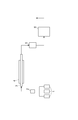
- Example 2 It purified the NO x and CO, is a schematic diagram of a device for measuring the concentration of hydrocarbons. It is the schematic of the reaction tube in the apparatus to measure.
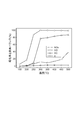
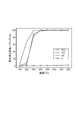
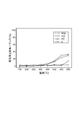
- Example 1 showing the NO x, CO, measurement results of the conversion and carbon balance of the hydrocarbon (C 3 H 6). It is a figure which shows the time-dependent change of the activity on a catalyst in Example 1.
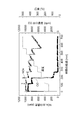
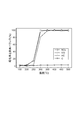
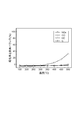
- Example 2 a diagram illustrating a NO x, CO, measurement results of the conversion and carbon balance of the hydrocarbon (C 3 H 6). It is a figure which shows the time-dependent change of the activity on a catalyst in Example 2. It is a figure which shows the long-term test result in 350 degreeC in Example 2.
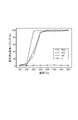
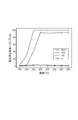
- Example 3 a diagram illustrating a NO x, CO, measurement results of the conversion and carbon balance of the hydrocarbon (C 3 H 6).
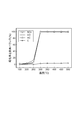
- Example 4 a diagram illustrating a NO x, CO, measurement results of the conversion and carbon balance of the hydrocarbon (C 3 H 6).
- Example 5 a diagram illustrating a NO x, CO, measurement results of the conversion and carbon balance of the hydrocarbon (C 3 H 6).
- Comparative Example 1 showing the NO x, CO, measurement results of the conversion and carbon balance of the hydrocarbon (C 3 H 6).
- Comparative Example 2 a diagram illustrating a NO x, CO, measurement results of the conversion and carbon balance of the hydrocarbon (C 3 H 6).
- Comparative Example 3 a diagram illustrating a NO x, CO, measurement results of the conversion and carbon balance of the hydrocarbon (C 3 H 6).
- the carbon material constituting the oxidation catalyst, reduction catalyst or exhaust gas purification catalyst used in this embodiment is (i) a transition metal compound and a nitrogen-containing organic substance, or (ii) a transition metal compound, a nitrogen-containing organic substance and a nitrogen-free carbon compound. Is fired.
- a carbon material is a carbon alloy catalyst having a carbon skeleton doped with nitrogen atoms and containing a transition metal element, and has high activity.
- the transition metal compound and the nitrogen-containing organic substance are used as raw materials, and the carbon source is more If necessary, a transition metal compound, a nitrogen-containing organic substance, and a nitrogen-free carbon compound are fired as raw materials.
- the nitrogen-free carbon compound is not particularly limited.
- cellulose, carboxymethyl cellulose, polyvinyl alcohol, polyacrylic acid, polyfurfuryl alcohol, furan resin, phenol resin, phenol formaldehyde resin, epoxy resin, pitch, poly General-purpose plastics such as vinylidene chloride and polymethacrylic acid, engineering plastics, super engineering plastics such as polysulfone, or ionomer resins can be used.
- inorganic substances, such as coal can also be used. These compounds can be used individually by 1 type or in combination of 2 or more types.
- polymethacrylic acid is preferable from the viewpoints of cost and carbonization yield.
- nitrogen-containing organic substance examples include pyrrole compounds such as polypyrrole, phthalocyanine complexes, imide compounds such as polyimide and polycarbodiimide, amide compounds such as polyamide, imidazole compounds such as polyimidazole, lignin, biomass, polyvinylpyridine, and melamine resins.
- pyrrole compounds such as polypyrrole
- phthalocyanine complexes imide compounds
- amide compounds such as polyamide
- imidazole compounds such as polyimidazole
- lignin lignin
- biomass polyvinylpyridine
- melamine resins examples include melamine resins.
- the transition metal an element belonging to the fourth period of Group 3 to Group 12 of the periodic table can be used.
- cobalt (Co), iron (Fe), manganese (Mn), nickel (Ni), copper ( Cu), titanium (Ti), chromium (Cr), and zinc (Zn) are preferable.
- the transition metal compound include salts, hydroxides, oxides, nitrides, sulfides, carbonides, complexes of the above transition metals, A polymer complex can be used, and among these, cobalt chloride, cobalt oxide, cobalt phthalocyanine, iron chloride, iron oxide, and phthalocyanine iron are particularly preferable.
- Co, Fe, Mn, Ni, Cu, Ti, Cr, Zn and their compounds improve the catalytic activity of the carbon catalyst.
- the transition metal compound and the nitrogen-containing organic substance, or (ii) the transition metal compound, the nitrogen-containing organic substance, and the nitrogen-free carbon compound may be dissolved in a solvent and mixed to form a precursor composition.
- the solvent is not particularly limited as long as it can dissolve these nitrogen-free carbon compounds, nitrogen-containing organic substances and transition metal compounds.
- dimethylformamide, dimethylacetamide, dimethyl sulfoxide, N-methylpyrrolidone, cyclohexanone , Methyl ethyl ketone and the like can be used.
- a carbon additive such as carbon black to a mixture of (i) transition metal compound and nitrogen-containing organic substance, or (ii) transition metal compound, nitrogen-containing organic substance and nitrogen-free carbon compound.
- a carbon additive By adding a carbon additive, the activity of the carbon material can be improved.
- the generated carbon material can be made into fine particles by pulverization with a ball mill or the like. Furthermore, by using a sieve having different openings to remove coarse substances and making uniform fine particles, the surface area of the carbon material is increased, and the activity as an oxidation catalyst, a reduction catalyst, and an exhaust gas purification catalyst is improved.
- the blending ratio of the nitrogen-free carbon compound and the nitrogen-containing organic material is such that the amount of nitrogen atoms in the carbon material after firing is 0.5% by mass or more and 20% by mass or less, more preferably 5% by mass with respect to the total mass of the carbon material. It is preferable to blend so as to be 20% by mass or less.
- the carbonization treatment of the nitrogen-free carbon compound, the nitrogen-containing organic substance and the transition metal compound, or the precursor composition in which they are dissolved and mixed in a solvent is preferably performed at 800 to 1000 ° C. for 0.5 to 5 hours, In particular, it is preferably carried out at 900 ° C. to 1000 ° C. for 0.5 to 2 hours.
- the residue produced when the carbonized carbon material is further calcined in an air atmosphere at a high temperature of about 400 to 800 ° C. for about 2 to 5 hours can also be used as an oxidation catalyst.
- the carbon material may be doped with boron atoms and / or chalcogen compounds.
- the carbon material doped with boron atoms and / or chalcogen compounds has higher activity than the carbon material doped with nitrogen atoms.
- boron-containing organic substances such as boric acid, borates, halogenated borates, etc., oxides, sulfides, etc. as chalcogen compounds, transition metals What is necessary is just to add to the mixture of a compound and nitrogen-containing organic substance, or a transition metal compound, nitrogen-containing organic substance, and nitrogen-free carbon compound.
- This oxidation catalyst can oxidize CO to CO 2 in an oxidizing atmosphere, and when the oxidation temperature reaches 200 ° C. or higher, the activity is improved to improve the conversion rate from CO to CO 2 . If it becomes above, a conversion rate will improve further, and if it becomes 300 degreeC or more, a conversion rate will be about 100% and it can purify
- the present oxidizing catalyst when the temperature for oxidizing the 200 ° C. or higher, more efficiently oxidize hydrocarbons such as propane and butane, can be water and CO 2. Becomes a 250 ° C. or higher to improve the conversion of water and CO 2. When the temperature is 300 ° C. or higher, the conversion rate is almost 100%, and hydrocarbons can be purified almost completely.
- the reduction catalyst in this embodiment includes a carbon material obtained by firing a transition metal compound and a nitrogen-containing organic substance or a transition metal compound, a nitrogen-containing organic substance and a nitrogen-free carbon compound, and Pd, Rh, Ru supported on the carbon material.
- the temperature at which NO x is reduced is preferably 200 ° C. or higher, more preferably 250 ° C. or higher, and even more preferably 300 ° C. or higher.
- Pd or Rh is preferable because of its high reduction activity.
- Pd or Rh is preferably supported on the carbon material at a rate of 0.01 to 15% by mass, more preferably 0.1 to 10% by mass, It is particularly preferable that 0.5 to 2% by mass is supported.
- an aqueous solution of PdCl 2 containing an amount of Pd to be supported or Rh (NO 3 ) 3 containing an amount of Rh to be supported is prepared. To do.
- the carbon material is mixed with the aqueous solution at room temperature and stirred for 1 to 5 hours.
- the aqueous solution is kept at 70-100 ° C. for 10-20 hours to evaporate the water.
- a carbon material carrying Pd or Rh can be obtained.
- the above metal atoms such as Ni other than Pd and Rh can be supported on the carbon material by preparing an aqueous solution and mixing it with the carbon material.
- the loading amount of metal atoms or the like can be obtained by simple calculation from the amount of sample added, and an ICP emission analyzer or the like can also be used when analyzing with high accuracy.
- the exhaust gas purification catalyst in the present embodiment includes at least one of the oxidation catalyst and the reduction catalyst, and can purify NO x, CO, or hydrocarbons contained in the exhaust gas.
- the exhaust gas purification catalyst including both the oxidation catalyst and the reduction catalyst functions as a three-way catalyst that simultaneously purifies NO x, CO, and hydrocarbons in an oxidation-reduction atmosphere in which oxygen and a reducing agent coexist. To do.
- the exhaust gas containing NO x , CO, and hydrocarbons for example, exhaust gas from an automobile is assumed.
- CO is oxidized to CO 2 in an oxidizing atmosphere
- hydrocarbons are oxidized to water and CO 2
- NO x is reduced to nitrogen in a reducing atmosphere. It is limited near the air-fuel ratio. Therefore, in order for this catalyst to function as a three-way catalyst for automobile exhaust gas, the composition of the automobile exhaust gas is preferably controlled in the vicinity of the stoichiometric air-fuel ratio.
- the catalyst can not limited to purification applications automotive exhaust gas, NO x and CO contained in other gases, also to purify hydrocarbons.
- it is suitable for use as an oxidation catalyst that oxidizes a small amount of CO contained in hydrogen obtained by reforming natural gas as a fuel for fuel cells together with the supply of corresponding oxygen, and supplies gas to the fuel electrode of the fuel cell
- This oxidation catalyst is arranged in a CO removal device for the purpose of this, or the oxidation catalyst is mixed with the fuel electrode catalyst of the fuel cell and used in the fuel electrode portion, so that CO in hydrogen is oxidized to CO 2 and the electrode catalyst Can also be prevented.
- NO x, CO, or hydrocarbons and measuring the ratio which is converted to be oxidized or reduced CO 2 or nitrogen by the catalyst can also be used automobile exhaust gas directly, included are NO x Model gas can also be used because it is difficult to control the concentration of CO, hydrocarbons, and hydrocarbons.
- the model gas preferably has a composition similar to, for example, actual exhaust gas of a gasoline vehicle.
- Figure 1 shows a schematic diagram of the NO x and CO, a device for measuring the concentration of model gas containing C 3 H 6 as hydrocarbon.
- the measuring device including the standard gas cylinder 1, the mass flow controller 2, the reaction tube 3, the cooler 5, the gas analyzer 6 and the like first generates each model gas from the standard gas cylinder 1, and the gas is mixed by the mass flow controller 2. And introduced into the reaction tube 3. Then, the reaction tube 3 containing the model gas is heated by the electric heating furnace 4. Each model gas is oxidized or reduced by the catalyst 10 in the reaction tube 3. The gas after the reaction is analyzed for composition by the gas analyzer 6 after the water vapor is extracted in the cooler 5.
- the gas analyzer 6 can perform quantitative analysis of O 2 , CO, N 2 O, CO 2 , hydrocarbon (C 3 H 6 ), etc. by gas chromatography, for example, and NO x , NO, NO 2. , CO, SO 2 and the like can be quantitatively analyzed by, for example, a NO x analyzer.
- FIG. 2 shows a schematic diagram of a reaction tube which is a part of the measuring apparatus.
- the reaction tube 3 is made of quartz, and the exhaust gas purification catalyst 10 is preferably filled in the center thereof. Further, quartz sand 11 and quartz wool 12 can be packed on both sides of the catalyst 10 in order to distribute the model gas in the portion filled with the catalyst.
- the purification performance of the catalyst can be evaluated as the conversion rate of each gas by the following calculation formula.
- NO x conversion rate ⁇ (NO molar flow rate at the inlet + NO 2 molar flow rate) ⁇ (NO molar flow rate at the outlet + NO 2 molar flow rate) ⁇ / (NO molar flow rate at the inlet + NO 2 molar flow rate) ⁇ 100%
- C 3 H 6 conversion (inlet of C 3 H 6 molar flow rate - C 3 H 6 molar flow rate of the outlet) / (inlet of C 3 H 6 molar flow rate) ⁇ 100%
- CO conversion rate (Inlet CO molar flow rate ⁇ Outlet CO molar flow rate) / (Inlet CO molar flow rate) ⁇ 100%
- Carbon balance (total carbon molar flow rate at outlet-total carbon molar flow rate at inlet) / (total carbon molar flow rate at inlet) x 100%
- the carbon material used in this example was prepared as follows.
- the precursor composition was carbonized. That is, the precursor composition was put in a quartz tube, and the quartz tube was purged with nitrogen for 50 minutes in an elliptical reflection type infrared gold image furnace. Then, heating was started, and the temperature of the gold image furnace was increased from room temperature to 900 ° C. at a rate of 1 ° C./min. Thereafter, the quartz tube was held at 900 ° C. for 1 hour. Thus, a carbon material produced by carbonizing the precursor composition was obtained.
- the carbon material was pulverized. That is, a silicon nitride ball having a diameter of 1.5 cm was set in a planetary ball mill (product name: P-7, Fritsch Japan Co., Ltd.), and the carbon material obtained by the carbonization treatment was pulverized for 60 minutes at a rotation speed of 800 rpm. The pulverized carbon material was taken out and classified with a sieve having an opening of 46 ⁇ m to obtain a catalyst.
- aqueous solution of PdCl 2 containing an amount of Pd to be supported or Rh (NO 3 ) 3 containing an amount of Rh to be supported is used.
- the carbon material was mixed with the aqueous solution at room temperature of 25 ° C. and stirred for 2 hours.
- the aqueous solution was kept at 80 ° C. for 10 hours to evaporate the water and polished to obtain a catalyst supporting Pd or Rh.
- the catalyst obtained above was filled in 0.1 g at the center of a quartz reaction tube having an inner diameter of 6 mm, and 0.5 g of quartz sand was packed on each side of the catalyst layer for gas distribution.
- the model gas was analyzed by quantitative analysis of O 2 , CO, N 2 O, CO 2 , hydrocarbons, etc. by gas chromatography (product name: GC-14B, manufactured by Shimadzu Corporation).
- NO x , NO, NO 2 , CO, SO 2 and the like were quantitatively analyzed with a NO x analyzer (product name: PG-250, manufactured by Horiba, Ltd.).
- the temperature is from 150 ° C. to 500 ° C. as compared with the case of the Pt-based catalyst. Data after reaction with the model gas for 1 hour at each temperature of 50 ° C. in the range of ° C. were collected, and the conversion rate and carbon balance of NO x , CO, hydrocarbon (C 3 H 6 ) were calculated.
- Example 1 A catalyst made of a carbon material was placed in the reaction tube, a model gas was introduced into the reaction tube, and the conversion rate and carbon balance of NO x , CO, and hydrocarbon (C 3 H 6 ) were measured. The result is shown in FIG.
- the time-dependent change of the activity on a catalyst is shown in FIG.
- the CO concentration at the outlet dropped to about 8000 ppm after about 100 minutes (200 ° C.), and dropped to about 2000 ppm or less between 150 and 250 minutes (250 ° C.). After that, it was almost 0 ppm after 250 minutes.
- NO x concentration at the outlet is from the beginning of 1000ppm after 550 minutes (500 ° C.) was reduced to about 500 ppm.
- Example 2 A catalyst made of a carbon material supporting 2% by mass of Pd was placed in the reaction tube, a model gas was flowed, and measurement was performed in the same manner as described above. The result is shown in FIG.
- FIG. 6 shows the change over time of the activity on the catalyst at 500 ° C.
- FIG. 7 shows the long-term test results at 350 ° C. of the catalyst when 2% by mass of Pd is supported. The conversion rate of about 100% was maintained for 85 hours for NO x , CO, and C 3 H 6 , and it was confirmed that the present catalyst has high durability.
- Example 3 A catalyst made of a carbon material carrying 0.5% by mass of Rh was placed in the reaction tube, a model gas was flowed, and measurement was performed in the same manner as described above. The result is shown in FIG.
- Example 4 A catalyst made of a carbon material carrying 0.1% by mass of Rh less than that in Example 3 was placed in the reaction tube, a model gas was allowed to flow, and measurement was performed in the same manner as described above. The result is shown in FIG.
- the conversion rate of the three components of NO x , CO, and C 3 H 6 was as low as 20% or less, but at 300 ° C., the conversion rate was almost 100% except for C 3 H 6. Thus, the conversion rate was almost 100% at 350 ° C. or higher.
- Example 5 A catalyst composed of a residue obtained by calcining a catalyst composed of a carbon material at 500 ° C. for 3 hours in an air atmosphere was prepared, put into a reaction tube, and a model gas was flowed, and measurement was performed in the same manner as described above. The result is shown in FIG.
- Comparative Example 1 As a comparative example, a Pt-alumina catalyst was put in a reaction tube as a catalyst made of Pt without using a carbon material, and a reaction gas was flowed, and measurement was performed in the same manner as described above. The amount of Pt supported was 1.7% by mass, which is about 8 to 10 times that of a commercially available three-way catalyst. The result is shown in FIG.
- an oxidation catalyst, a reduction catalyst, and an exhaust gas purification catalyst that can purify NO x , CO, or hydrocarbons that are made of a carbon material without using Pt.
Landscapes
- Chemical & Material Sciences (AREA)
- Engineering & Computer Science (AREA)
- Chemical Kinetics & Catalysis (AREA)
- Materials Engineering (AREA)
- Organic Chemistry (AREA)
- Combustion & Propulsion (AREA)
- General Chemical & Material Sciences (AREA)
- Health & Medical Sciences (AREA)
- Mechanical Engineering (AREA)
- General Engineering & Computer Science (AREA)
- Oil, Petroleum & Natural Gas (AREA)
- Analytical Chemistry (AREA)
- Environmental & Geological Engineering (AREA)
- Biomedical Technology (AREA)
- Electrochemistry (AREA)
- Toxicology (AREA)
- Physics & Mathematics (AREA)
- Thermal Sciences (AREA)
- Sustainable Energy (AREA)
- Sustainable Development (AREA)
- Manufacturing & Machinery (AREA)
- Life Sciences & Earth Sciences (AREA)
- Catalysts (AREA)
- Exhaust Gas Treatment By Means Of Catalyst (AREA)
- Exhaust Gas After Treatment (AREA)
Abstract
Description
NOx転化率={(入口のNOモル流量+NO2モル流量)-(出口のNOモル流量+NO2モル流量)}/(入口のNOモル流量+NO2モル流量)×100%
C3H6転化率=(入口のC3H6モル流量-出口のC3H6モル流量)/(入口のC3H6モル流量)×100%
CO転化率=(入口のCOモル流量-出口のCOモル流量)/(入口のCOモル流量)×100%
炭素バランス=(出口の炭素総モル流量-入口の炭素総モル流量)/(入口の炭素総モル流量)×100%

反応管内に炭素材料からなる触媒を入れ、モデルガスを反応管に導入し、NOx、CO、炭化水素(C3H6)の転化率及び炭素バランスを測定した。その結果を図3に示す。
反応管内に、Pdを2質量%担持した炭素材料からなる触媒を入れ、モデルガスを流し、上記と同様に測定した。その結果を図5に示す。
反応管内に、Rhを0.5質量%担持した炭素材料からなる触媒を入れ、モデルガスを流し、上記と同様に測定した。その結果を図8に示す。
反応管内に、Rhを実施例3よりも少ない0.1質量%担持した炭素材料からなる触媒を入れ、モデルガスを流し、上記と同様に測定した。その結果を図9に示す。
炭素材料からなる触媒を空気雰囲気において500℃で3時間焼成した残渣からなる触媒を準備し、反応管に入れて、モデルガスを流し、上記と同様に測定した。その結果を図10に示す。
比較例として、炭素材料を用いずPtからなる触媒として、反応管内にPt-アルミナ触媒を入れて、反応ガスを流し、上記と同様に測定した。Ptの担持量は市販の三元触媒の約8~10倍である、1.7質量%とした。その結果を図11に示す。
反応管内に、炭素材料からなる触媒にさらに窒素ドープを行った触媒を入れて、反応ガスを流し、上記と同様に測定した。窒素ドープの条件は空気とアンモニアの割合を7:2.3、500℃、3時間とした。その結果を図12に示す。
反応管内に触媒を入れないで、反応ガスを流し、NOx、CO、炭化水素(C3H6)、炭素マスバランスを測定した。その結果を図13に示す。
Claims (6)
- 遷移金属化合物及び窒素含有有機物、又は、
遷移金属化合物、窒素含有有機物及び窒素非含有炭素化合物、
を焼成させてなる炭素材料から構成され、CO及び/又は炭化水素を酸化する、酸化触媒。 - 前記CO及び/又は炭化水素を酸化する温度が200℃以上である、請求項1に記載の酸化触媒。
- 遷移金属化合物及び窒素含有有機物、又は、
遷移金属化合物、窒素含有有機物及び窒素非含有炭素化合物、
を焼成させてなる炭素材料と、
該炭素材料に担持された、Pd、Rh、Ru、Ni、Co、Fe、Ce、Cu、Ti、Zr、Sn、V、Nb、Ta、Cr、Mo、W、Bi、Mn及びその化合物からなる群より選ばれる少なくとも一種の担持材料と、から構成され、NOxを還元する、還元触媒。 - 前記NOxを還元する温度が200℃以上である、請求項3に記載の還元触媒。
- 前記担持材料が、Pd及びRhからなる群より選ばれる少なくとも一種であり、
前記炭素材料の質量を基準とする、該担持材料の量が0.01~15質量%である、請求項3又は4に記載の還元触媒。 - 請求項1又は2に記載の酸化触媒及び請求項3~5のいずれか一項に記載の還元触媒の少なくとも一方を含む、排気ガス浄化触媒。
Priority Applications (4)
| Application Number | Priority Date | Filing Date | Title |
|---|---|---|---|
| EP10793943A EP2452747A4 (en) | 2009-07-03 | 2010-05-28 | OXIDATION CATALYST, REDUCING CATALYST AND CATALYST FOR EXHAUST GAS BLEEDING |
| CA2766015A CA2766015A1 (en) | 2009-07-03 | 2010-05-28 | Oxidation catalyst, reduction catalyst, and catalyst for purging exhaust gas |
| US13/381,558 US20120196743A1 (en) | 2009-07-03 | 2010-05-28 | Oxidation catalyst, reduction catalyst, and catalyst for purging exhaust gas |
| CN2010800296195A CN102481553A (zh) | 2009-07-03 | 2010-05-28 | 氧化催化剂、还原催化剂及废气净化催化剂 |
Applications Claiming Priority (2)
| Application Number | Priority Date | Filing Date | Title |
|---|---|---|---|
| JP2009-158814 | 2009-07-03 | ||
| JP2009158814A JP5538760B2 (ja) | 2009-07-03 | 2009-07-03 | 酸化触媒、還元触媒及び排気ガス浄化触媒 |
Publications (1)
| Publication Number | Publication Date |
|---|---|
| WO2011001772A1 true WO2011001772A1 (ja) | 2011-01-06 |
Family
ID=43410852
Family Applications (1)
| Application Number | Title | Priority Date | Filing Date |
|---|---|---|---|
| PCT/JP2010/059124 Ceased WO2011001772A1 (ja) | 2009-07-03 | 2010-05-28 | 酸化触媒、還元触媒及び排気ガス浄化触媒 |
Country Status (6)
| Country | Link |
|---|---|
| US (1) | US20120196743A1 (ja) |
| EP (1) | EP2452747A4 (ja) |
| JP (1) | JP5538760B2 (ja) |
| CN (1) | CN102481553A (ja) |
| CA (1) | CA2766015A1 (ja) |
| WO (1) | WO2011001772A1 (ja) |
Cited By (2)
| Publication number | Priority date | Publication date | Assignee | Title |
|---|---|---|---|---|
| CN113304770A (zh) * | 2021-06-28 | 2021-08-27 | 四川大学 | 一种氮改性含铬革屑制备富氮金属催化剂的方法及应用 |
| CN115672267A (zh) * | 2021-07-27 | 2023-02-03 | 无锡蓝海工程设计有限公司 | 一种氮掺杂碳材料及其制备与在重金属离子吸附中的应用 |
Families Citing this family (4)
| Publication number | Priority date | Publication date | Assignee | Title |
|---|---|---|---|---|
| JP5538761B2 (ja) * | 2009-07-03 | 2014-07-02 | 清蔵 宮田 | 酸化触媒、吸着材及び有害物質浄化材 |
| CN105762376B (zh) * | 2016-04-20 | 2018-04-24 | 青岛大学 | 氮磷共掺杂碳纳米片的制备方法及其应用 |
| CN106334573A (zh) * | 2016-09-18 | 2017-01-18 | 黑龙江大学 | 选择性催化还原氮氧化物的催化剂的制备方法 |
| CN114477089B (zh) * | 2020-10-26 | 2023-10-27 | 中国石油化工股份有限公司 | 一种低温脱除微量co的方法 |
Citations (9)
| Publication number | Priority date | Publication date | Assignee | Title |
|---|---|---|---|---|
| JPS57118009A (en) * | 1981-01-16 | 1982-07-22 | Kanebo Ltd | Manufacture of activated carbon having network structure |
| JPS59132943A (ja) * | 1983-01-19 | 1984-07-31 | Gosei Kagaku Kenkyusho:Kk | 一酸化炭素の酸化触媒 |
| JPH0338892B2 (ja) | 1985-09-24 | 1991-06-12 | Matsuda Kk | |
| JP2004362802A (ja) | 2003-06-02 | 2004-12-24 | Japan Science & Technology Agency | 燃料電池用電極およびその製造方法 |
| JP2005125300A (ja) * | 2003-10-24 | 2005-05-19 | Michio Uemura | 金属炭化物による窒素酸化物の除去方法 |
| JP2007026746A (ja) * | 2005-07-13 | 2007-02-01 | Gunma Univ | 燃料電池用電極触媒の製造方法及びその方法で製造された電極触媒並びにその電極触媒を用いた燃料電池 |
| WO2007049549A1 (ja) | 2005-10-27 | 2007-05-03 | Nisshinbo Industries, Inc. | 塩、水酸化物又は酸化物の微粒子の製造方法及び該製造方法で得られた塩、水酸化物又は酸化物の微粒子 |
| JP2007207662A (ja) * | 2006-02-03 | 2007-08-16 | Gunma Univ | 燃料電池用電極触媒及びその製造方法並びに該触媒を用いた燃料電池 |
| JP2008282725A (ja) * | 2007-05-11 | 2008-11-20 | Gunma Univ | 炭素系燃料電池用電極触媒の製造方法 |
Family Cites Families (9)
| Publication number | Priority date | Publication date | Assignee | Title |
|---|---|---|---|---|
| DE3727642A1 (de) * | 1987-08-19 | 1989-03-02 | Bayer Ag | Katalysator, verfahren zu seiner herstellung und dessen verwendung |
| ZA981883B (en) * | 1997-03-07 | 1998-09-01 | Univ Kansas | Catalysts and methods for catalytic oxidation |
| US6689711B2 (en) * | 2001-10-09 | 2004-02-10 | Metallic Power, Inc. | Methods of producing oxygen reduction catalyst |
| MX261990B (es) * | 2002-02-14 | 2008-11-07 | Monsanto Technology Llc | Catalizador de oxidacion y procedimiento para su preparacion y procedimiento para oxidacion mediante el uso del mismo. |
| US7390920B2 (en) * | 2002-02-14 | 2008-06-24 | Monsanto Technology Llc | Oxidation catalyst and process |
| US7108939B2 (en) * | 2002-12-12 | 2006-09-19 | Hitachi, Ltd. | Covalently bonded catalyst carrier and catalytic component |
| CN102276644B (zh) * | 2003-08-14 | 2014-09-03 | 孟山都技术公司 | 含有过渡金属-碳化物和氮化物的催化剂、它们的制备方法和作为氧化和脱氢催化剂的用途 |
| AR051926A1 (es) * | 2004-09-15 | 2007-02-21 | Monsanto Technology Llc | Catalizadores de oxidacion, procedimientos de preparacion de dichos catalizadores y proceso para la elaboracion de n-( fosfonometil)glicina o una sal de la misma |
| JP5538761B2 (ja) * | 2009-07-03 | 2014-07-02 | 清蔵 宮田 | 酸化触媒、吸着材及び有害物質浄化材 |
-
2009
- 2009-07-03 JP JP2009158814A patent/JP5538760B2/ja active Active
-
2010
- 2010-05-28 WO PCT/JP2010/059124 patent/WO2011001772A1/ja not_active Ceased
- 2010-05-28 EP EP10793943A patent/EP2452747A4/en not_active Withdrawn
- 2010-05-28 US US13/381,558 patent/US20120196743A1/en not_active Abandoned
- 2010-05-28 CN CN2010800296195A patent/CN102481553A/zh active Pending
- 2010-05-28 CA CA2766015A patent/CA2766015A1/en not_active Abandoned
Patent Citations (9)
| Publication number | Priority date | Publication date | Assignee | Title |
|---|---|---|---|---|
| JPS57118009A (en) * | 1981-01-16 | 1982-07-22 | Kanebo Ltd | Manufacture of activated carbon having network structure |
| JPS59132943A (ja) * | 1983-01-19 | 1984-07-31 | Gosei Kagaku Kenkyusho:Kk | 一酸化炭素の酸化触媒 |
| JPH0338892B2 (ja) | 1985-09-24 | 1991-06-12 | Matsuda Kk | |
| JP2004362802A (ja) | 2003-06-02 | 2004-12-24 | Japan Science & Technology Agency | 燃料電池用電極およびその製造方法 |
| JP2005125300A (ja) * | 2003-10-24 | 2005-05-19 | Michio Uemura | 金属炭化物による窒素酸化物の除去方法 |
| JP2007026746A (ja) * | 2005-07-13 | 2007-02-01 | Gunma Univ | 燃料電池用電極触媒の製造方法及びその方法で製造された電極触媒並びにその電極触媒を用いた燃料電池 |
| WO2007049549A1 (ja) | 2005-10-27 | 2007-05-03 | Nisshinbo Industries, Inc. | 塩、水酸化物又は酸化物の微粒子の製造方法及び該製造方法で得られた塩、水酸化物又は酸化物の微粒子 |
| JP2007207662A (ja) * | 2006-02-03 | 2007-08-16 | Gunma Univ | 燃料電池用電極触媒及びその製造方法並びに該触媒を用いた燃料電池 |
| JP2008282725A (ja) * | 2007-05-11 | 2008-11-20 | Gunma Univ | 炭素系燃料電池用電極触媒の製造方法 |
Non-Patent Citations (3)
| Title |
|---|
| "Abstracts of 30th Annual Meeting of the Carbon Society of Japan, 04 December 2003 (04.12.2003)", article ATSUYA FURUICHI ET AL.: "Kinzoku Dope Tanso no Chosei to Sanso Kangen Kassei", pages: 30 - 31, XP008151156 * |
| H.NIWA ET AL.: "X-ray absorption analysis of nitrogen contribution to oxygen reduction reaction in carbon alloy cathode catalysts for polymer electrolyte fuel cells", JOURNAL OF POWER SOURCES, vol. 187, no. 1, 1 February 2009 (2009-02-01), pages 93 - 97, XP025866076 * |
| See also references of EP2452747A4 |
Cited By (4)
| Publication number | Priority date | Publication date | Assignee | Title |
|---|---|---|---|---|
| CN113304770A (zh) * | 2021-06-28 | 2021-08-27 | 四川大学 | 一种氮改性含铬革屑制备富氮金属催化剂的方法及应用 |
| CN113304770B (zh) * | 2021-06-28 | 2022-04-12 | 四川大学 | 一种氮改性含铬革屑制备富氮金属催化剂的方法及应用 |
| CN115672267A (zh) * | 2021-07-27 | 2023-02-03 | 无锡蓝海工程设计有限公司 | 一种氮掺杂碳材料及其制备与在重金属离子吸附中的应用 |
| CN115672267B (zh) * | 2021-07-27 | 2024-05-17 | 无锡蓝海工程设计有限公司 | 一种氮掺杂碳材料及其制备与在重金属离子吸附中的应用 |
Also Published As
| Publication number | Publication date |
|---|---|
| JP5538760B2 (ja) | 2014-07-02 |
| EP2452747A4 (en) | 2012-12-19 |
| US20120196743A1 (en) | 2012-08-02 |
| CN102481553A (zh) | 2012-05-30 |
| CA2766015A1 (en) | 2011-01-06 |
| JP2011011165A (ja) | 2011-01-20 |
| EP2452747A1 (en) | 2012-05-16 |
Similar Documents
| Publication | Publication Date | Title |
|---|---|---|
| JP5538761B2 (ja) | 酸化触媒、吸着材及び有害物質浄化材 | |
| JP5538760B2 (ja) | 酸化触媒、還元触媒及び排気ガス浄化触媒 | |
| JP5864443B2 (ja) | 排気ガス浄化用触媒 | |
| US8461073B2 (en) | Catalyst support and method of producing same | |
| JP5453732B2 (ja) | 触媒前駆体、触媒材料およびそれらの製造方法 | |
| JP2012050980A (ja) | 触媒、酸化触媒、還元触媒及び排気ガス浄化触媒 | |
| JP6087784B2 (ja) | 酸素吸放出材及びそれを含む排ガス浄化用触媒 | |
| WO2013153915A1 (ja) | 排気ガス浄化用触媒 | |
| JP5899525B2 (ja) | 排気ガス浄化用触媒およびそれを担持する触媒体 | |
| EP2094384A1 (en) | Potassium oxide-incorporated alumina catalysts with enganced storage capacities of nitrogen oxide and a producing method therefor | |
| EP2155365B1 (en) | Oxygen storage/release material and exhaust gas purifying catalyst comprising the same | |
| US9889432B2 (en) | Method for producing catalyst for exhaust gas removal and catalyst obtained by the production method | |
| CN107088408A (zh) | 废气净化用催化剂及其制造方法 | |
| JP2019166498A (ja) | 排ガス浄化触媒 | |
| JP5215880B2 (ja) | 排ガス浄化触媒及びこれを用いた排ガス浄化装置 | |
| JP7136070B2 (ja) | 排ガス浄化システム | |
| JP4204521B2 (ja) | 排ガス浄化触媒 | |
| JP2020093232A (ja) | No吸着材 | |
| JP2010094626A (ja) | 排気ガス浄化用触媒 | |
| Jegadheesan et al. | Alternate Catalyst for DOC in a Catalytic Converter | |
| JP2015211960A (ja) | 被処理ガス中の可燃成分の酸化触媒、被処理ガス中の可燃成分の酸化触媒の製造方法、被処理ガス中の可燃成分の酸化方法、及び、被処理ガス中の窒素酸化物の除去方法 | |
| JP2005218976A (ja) | 排ガス浄化触媒及びその製造方法 | |
| TW200825271A (en) | Exhaust gas purifying device for diesel engine | |
| Tan et al. | Rh-Based Catalyst Supported by Reduced Nanocage Mnfeox for Low-Temperature Direct Catalytic Decomposition of No | |
| JP2012217936A (ja) | Nox浄化用触媒および触媒装置 |
Legal Events
| Date | Code | Title | Description |
|---|---|---|---|
| WWE | Wipo information: entry into national phase |
Ref document number: 201080029619.5 Country of ref document: CN |
|
| 121 | Ep: the epo has been informed by wipo that ep was designated in this application |
Ref document number: 10793943 Country of ref document: EP Kind code of ref document: A1 |
|
| WWE | Wipo information: entry into national phase |
Ref document number: 2766015 Country of ref document: CA |
|
| NENP | Non-entry into the national phase |
Ref country code: DE |
|
| WWE | Wipo information: entry into national phase |
Ref document number: 2010793943 Country of ref document: EP |
|
| WWE | Wipo information: entry into national phase |
Ref document number: 13381558 Country of ref document: US |