WO2011004828A1 - セル再選択方法および移動局装置 - Google Patents
セル再選択方法および移動局装置 Download PDFInfo
- Publication number
- WO2011004828A1 WO2011004828A1 PCT/JP2010/061502 JP2010061502W WO2011004828A1 WO 2011004828 A1 WO2011004828 A1 WO 2011004828A1 JP 2010061502 W JP2010061502 W JP 2010061502W WO 2011004828 A1 WO2011004828 A1 WO 2011004828A1
- Authority
- WO
- WIPO (PCT)
- Prior art keywords
- base station
- cell
- priority
- station device
- frequency
- Prior art date
- Legal status (The legal status is an assumption and is not a legal conclusion. Google has not performed a legal analysis and makes no representation as to the accuracy of the status listed.)
- Ceased
Links
Images




Classifications
-
- H—ELECTRICITY
- H04—ELECTRIC COMMUNICATION TECHNIQUE
- H04W—WIRELESS COMMUNICATION NETWORKS
- H04W36/00—Hand-off or reselection arrangements
- H04W36/0005—Control or signalling for completing the hand-off
- H04W36/0083—Determination of parameters used for hand-off, e.g. generation or modification of neighbour cell lists
- H04W36/0085—Hand-off measurements
-
- H—ELECTRICITY
- H04—ELECTRIC COMMUNICATION TECHNIQUE
- H04W—WIRELESS COMMUNICATION NETWORKS
- H04W36/00—Hand-off or reselection arrangements
- H04W36/0005—Control or signalling for completing the hand-off
- H04W36/0083—Determination of parameters used for hand-off, e.g. generation or modification of neighbour cell lists
- H04W36/00835—Determination of neighbour cell lists
-
- H—ELECTRICITY
- H04—ELECTRIC COMMUNICATION TECHNIQUE
- H04W—WIRELESS COMMUNICATION NETWORKS
- H04W36/00—Hand-off or reselection arrangements
- H04W36/0005—Control or signalling for completing the hand-off
- H04W36/0083—Determination of parameters used for hand-off, e.g. generation or modification of neighbour cell lists
- H04W36/00837—Determination of triggering parameters for hand-off
-
- H—ELECTRICITY
- H04—ELECTRIC COMMUNICATION TECHNIQUE
- H04W—WIRELESS COMMUNICATION NETWORKS
- H04W36/00—Hand-off or reselection arrangements
- H04W36/04—Reselecting a cell layer in multi-layered cells
-
- H—ELECTRICITY
- H04—ELECTRIC COMMUNICATION TECHNIQUE
- H04W—WIRELESS COMMUNICATION NETWORKS
- H04W36/00—Hand-off or reselection arrangements
- H04W36/24—Reselection being triggered by specific parameters
- H04W36/30—Reselection being triggered by specific parameters by measured or perceived connection quality data
- H04W36/302—Reselection being triggered by specific parameters by measured or perceived connection quality data due to low signal strength
-
- H—ELECTRICITY
- H04—ELECTRIC COMMUNICATION TECHNIQUE
- H04W—WIRELESS COMMUNICATION NETWORKS
- H04W84/00—Network topologies
- H04W84/02—Hierarchically pre-organised networks, e.g. paging networks, cellular networks, WLAN [Wireless Local Area Network] or WLL [Wireless Local Loop]
- H04W84/04—Large scale networks; Deep hierarchical networks
- H04W84/042—Public Land Mobile systems, e.g. cellular systems
- H04W84/045—Public Land Mobile systems, e.g. cellular systems using private Base Stations, e.g. femto Base Stations, home Node B
Definitions
- the present invention relates to a cell reselection method and a mobile station apparatus.
- This application claims priority on July 7, 2009 based on Japanese Patent Application No. 2009-160926 for which it applied to Japan, and uses the content here.
- ⁇ ⁇ Whether or not to connect to the CSG can be arbitrarily set for each mobile station apparatus by the CSG owner or operator.
- the available area time is managed on the network side, and when the available area time expires, the mobile station apparatus is not allowed to be in the CSG cell.
- the available time is managed on the network side, and when the available area time expires, the mobile station apparatus is not allowed to be in the CSG cell.
- the communication call is forcibly disconnected.
- connection permission CSG list (allowed CSG list) held by the mobile station apparatus is updated.
- the detailed update procedure of the connection permission CSG list is not defined in 3GPP.
- the determination of whether or not connection to the CSG is possible is performed in the following three steps when the mobile station apparatus executes the cell transition process to the CSG cell. Step 1) Acquire CSG identification information (CSG identity) broadcasted by system information of the CSG cell. Step 2) Check whether the received CSG identification information is included in the connection-permitted CSG list held by the mobile station apparatus. Step 3) If included, determine that connection to the CSG cell is possible. If not included, it is determined that connection to the CSG cell is not allowed.
- each service frequency has a priority, and the priority is taken into account when measuring neighboring cells and when evaluating cell reselection.
- the correspondence between the service frequency and the priority is notified in the system information from the base station apparatus. Details of parameters notified by system information are defined in Non-Patent Document 3.
- the measurement start conditions for the peripheral cells are defined as follows in Chapter 5.2.4.2 of Non-Patent Document 2. 1) For frequencies with a higher priority than the frequency priority of the serving cell, -Always measure. 2) For frequencies with a priority lower than or equal to the frequency priority of the serving cell, -Measure only when the reception quality of the serving cell falls below a certain threshold.
- the cell reselection evaluation method is defined as follows in Chapters 5.2.4.5 and 5.2.4.6 of Non-Patent Document 2. a) If the frequency priority of the cell for which reselection evaluation is performed> If the frequency priority of the cell being located is -When the reception level (S nonServingCell, x) of the evaluation cell is continuously higher than the threshold (Thresh x, high ) for a certain period of time (Treselection RAT ), the cell shifts to the evaluation cell.
- - receiving level (S ServingCell) is a threshold (Thresh serving, low) of the serving cell from the low and the reception level (S nonServingCell, x) different thresholds (Thresh x, low) higher than the state of the evaluation cell Is continued for a certain time (Treselection RAT ).
- Cell selection / reselection in GSM, W-CDMA, and LTE employs the concept of selecting a cell having the highest reception level, which is called “best cell principal”. Also, in LTE, a frequency with high priority is always measured during cell search, and cell transition conditions are relaxed as the priority is higher, thereby realizing a situation where it is easier to select a frequency with higher priority. ing.
- the following three patterns exist for cell arrangement in one frequency band. Pattern A) Place CSG only in frequency Place pattern B) Place only normal cells ( macro cells) in frequency Pattern C) Place macro cells and CSG in frequency
- 3GPP RAN2 (TSG RAN WG2; Technical Specification Group Radio Access Network Working Group 2) agrees to use absolute priority (implicit priority) during cell reselection (4).
- the concept of absolute priority consists of the following two rules. Rule 1) When the reception level of CSG is the best at a certain frequency, the priority of that frequency shall have the highest value. Rule 2) When the cell in the service area is a CSG, the priority of the frequency is assumed to have the highest value. In introducing absolute priority, it is not defined how to select a cell when the CSG becomes the cell having the best reception level at a plurality of frequencies. In RAN2, it is agreed that the operation in this case depends on the mounting of the mobile station apparatus.
- Patent Document 1 describes a method in which a priority is set for each cell, and a terminal determines a migration destination based on the priority of the cell.
- a priority is set for each cell, and a terminal determines a migration destination based on the priority of the cell.
- no priority is set for the cell, and even if the frequency priority is considered as the cell priority, multiple CSGs have the same priority under the condition that the absolute priority is applied. The conventional method cannot be applied.
- 3GPP TS 22.011 v8.5.0 “Service Accessibility”
- 3GPP TS 36.304 v8.5.0 “User Equipment (UE) procedures in idle mode”
- RRC Radio Resource Control
- the cell reselection method when the CSG becomes the cell having the best reception level at a plurality of frequencies is not defined. For this reason, in LTE, when a CSG becomes the best cell at multiple frequencies, for example, using a selection method such as selecting the highest reception level among CSGs based on “best cell principle” Two problems occur.
- the mobile station apparatus has a high cell reception level, but after shifting to a CSG having a low priority, the mobile station apparatus shifts to a macro cell having the same frequency as the CSG reception level deteriorates. It is necessary to measure as many different frequencies as possible. This increases the power consumption of the mobile station device.
- the cell shifts to another cell as the reception level of the cell deteriorates, and then shifts to the cell when the reception level of the cell improves. There is a problem that a so-called ping-pong phenomenon that frequently repeats cell transition may occur.
- the present invention has been made in view of such circumstances, and an object thereof is to provide a cell reselection method and a mobile station apparatus capable of suppressing the number of frequencies to be measured and suppressing the occurrence of a ping-pong phenomenon. There is.
- the present invention has been made to solve the above-described problems, and the cell reselection method of the present invention is a base station apparatus in which the mobile station apparatus limits the mobile station apparatus that allows access.
- the second base station apparatus re-selects the base station apparatus to be accessed from among the plurality of base station apparatuses for specific contractors using the association between the preset frequency and priority. Process.
- the cell reselection method of the present invention is the above-described cell reselection method, wherein the mobile station apparatus measures a reception level of a signal from each of the base station apparatuses, The mobile station apparatus is preset when the base station apparatus having the highest reception level measured in the first process among the base station apparatuses of the same frequency is the base station apparatus for the specific subscriber. And a fourth step of updating the priority associated with the frequency of the base station apparatus for specific subscribers to the highest priority among the associations between the frequencies and the priorities, In the first process, the mobile station apparatus refers to the association updated in the fourth process, and selects a base station apparatus that satisfies a predetermined transition condition.
- the cell reselection method of this invention is the above-mentioned cell reselection method, and the association in the second step is the association before being updated in the fourth step. It is.
- the cell reselection method of the present invention is the above-described cell reselection method, and in the second step, the mobile station device sets the base station device selected in the first step.
- the mobile station apparatus of this invention is a base accessed from a plurality of base station apparatuses including a base station apparatus for a specific contractor that is a base station apparatus that restricts the mobile station apparatuses that allow access.
- a mobile station device that reselects a station device, and selects a base station device that satisfies a predetermined transition condition based on a reception level of a signal from each of the base station devices, and the selected base station device
- a base station apparatus to access from among the plurality of base stations for specific contractors by using a correspondence between a preset frequency and priority
- a reselection unit for reselecting is accessed from a plurality of base station apparatuses including a base station apparatus for a specific contractor that is a base station apparatus that restricts the mobile station apparatuses that allow access.
- the present invention after the transition due to cell reselection, when the reception level of the cell decreases and further shifts to the base station apparatus of the same frequency, it is possible to suppress the lowering of priority and perform measurement. In addition to reducing the number of frequencies, it is possible to suppress the occurrence of a ping-pong phenomenon that repeats cell transitions frequently.
- FIG. 1 It is a figure which shows the example of the content of the updated frequency priority table which the cell reselection part 234 in the same embodiment memorize
- FIG. 1 It is a schematic block diagram which shows the structure of the mobile station apparatus 20a in 2nd Embodiment of this invention. It is a flowchart explaining the process in which the control part 23a in the same embodiment determines the cell of re-selection object. It is a flowchart explaining the reselection process in the embodiment.
- FIG. 1 is a schematic diagram showing the configuration of a mobile communication system according to the first embodiment of the present invention.
- the mobile communication system in the present embodiment includes base stations for specific subscribers 10 and 11, base station apparatuses 30 and 31, and mobile station apparatus 20.
- the specific contractor base station apparatus 10 is a closed subscriber group (CSG) that restricts accessible mobile station apparatuses, and is a base station apparatus that uses the cell A0 as a communication range.
- the specific contractor base station apparatus 11 is a CSG that restricts accessible mobile station apparatuses, and is a base station apparatus that uses the cell A1 as a communication range.
- the base station device 30 is a base station device that does not limit the accessible mobile station devices, and is a base station device that uses the macro cell B0 as a communication range.
- the base station apparatus 31 is a base station apparatus that does not limit the accessible mobile station apparatuses, and is a base station apparatus that uses the macro cell B1 as a communication range.
- the mobile station device 20 is a mobile station device that can access the base station devices 10 and 11 for specific subscribers. In the following, in the mobile station device 20, the cell A0 of the base station device 10 for the specific subscriber, the cell A1 of the base station device 11 for the specific subscriber, and the cell B0 of the base station device 30 overlap. The description will be made assuming that the area is located.
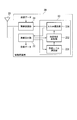
- FIG. 2 is a schematic block diagram showing the configuration of the mobile station apparatus 20 in the present embodiment.
- the mobile station apparatus 20 includes an antenna 21, a radio reception unit 22, a control unit 23, and a radio transmission unit 24.
- the control unit 23 includes a reception level measurement unit 231, a determination condition storage unit 232, and a cell reselection unit 234.
- the radio reception unit 22 receives a signal from the base station apparatus corresponding to the frequency band according to the setting by the control unit 23 via the antenna 21, down-converts the signal to a baseband frequency, demodulates, and receives the received data And get control data.
- the wireless reception unit 22 outputs control data to the control unit 23.
- the wireless transmission unit 24 modulates the control data received from the control unit 23 and the transmission data, and then up-converts the control data to a frequency band according to the setting by the control unit 23 and transmits it via the antenna 21. Thereby, the wireless transmission part 24 transmits control data and transmission data to the base station apparatus corresponding to this frequency band.
- the control part 23 determines the cell which communicates so that it may mention later.
- the control unit 23 further sets the frequency band of the cell in the radio reception unit 22 and the radio transmission unit 24 to enable communication with the base station apparatus of the cell.
- the reception level measuring unit 231 measures the reception level of the cell in the service area and the cell of the neighboring base station, and stores the measurement result in the determination condition storage unit 232.
- the reception level measurement unit 231 sets the frequency band of the cell to be measured in the radio reception unit 22, and uses a reference signal (Reference Signal) in the frequency band to determine a signal-to-noise ratio (Signal to Noise Ratio).
- S / N may be calculated as the reception level, or similarly, the reception signal power (Reference / Signal / Receive / Power / RSRP) may be calculated using the reference signal in the frequency band as the reception level.
- an S value calculated from a downlink Pathloss calculated using RSRP, RSRP, and a parameter notified by system information may be used.
- the reference signal is a known signal in the mobile station device 20.
- the determination condition storage unit 232 stores the frequency priority information and the neighboring cell information notified from the base station apparatus by system information (System information) which is a type of control data.
- the determination condition storage unit 232 also stores cell information related to the cell in the service area and information indicating the reception level of each cell measured by the reception level measurement unit 231.
- the frequency priority information is information indicating the frequency band (for example, the center frequency or the center frequency and the bandwidth) and the original priority of the frequency band (here, a value of 0 to 7 is large) This information is associated with information indicating higher priority).
- the neighboring cell information and the cell information are information in which information for identifying a cell, a cell type, and information indicating a frequency band are associated with each other.
- the cell information is information about a cell in the area
- the neighboring cell information is information about a neighboring cell of the cell in the area.
- the cell reselection unit 234 determines whether or not it is necessary to reselect a cell (reselection of an access base station device) based on information stored in the determination condition storage unit 232. When cell reselection is to be performed, the cell reselection unit 234 determines a cell to be reselected based on information stored in the determination condition storage unit 232. Details of the reselection necessity determination method and the cell reselection method will be described later.
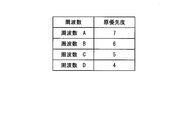
- FIG. 3 is a diagram illustrating an example of the contents of the frequency priority table stored in the determination condition storage unit 232 according to the present embodiment.
- the frequency priority table includes, for example, frequency A and original priority “7” in the first row, frequency B and original priority “6” in the second row, frequency C and original priority “5” in the third row,
- the frequency priority information (first association) in which the center frequency indicating the frequency band is associated with the original priority is stored in each row, such as the frequency D and the original priority “4” in the fourth row. .
- FIG. 4 is a diagram illustrating a content example of the cell information table stored in the determination condition storage unit 232 according to the present embodiment.
- the cell identification “cell A0”, the cell type “specific subscriber cell”, the frequency C, the reception level L2, and the cell identification are in the second row.
- “cell B0”, its cell type “macro cell”, frequency B and reception level which are cell identification L0
- cell identification information, cell type, and frequency band of the cell are shown in each row, such as cell “cell B1”, its cell type “macro cell”, frequency A, and reception level L3.
- the center frequency and the reception level of the cell are stored in association with each other. That is, the cell information table stores, in each row, cell information and the reception level of the serving cell, or the neighboring cell information and the reception level of the neighboring cell.
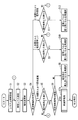
- FIG. 5 is a flowchart for explaining a determination method for reselection necessity and a cell reselection method by the control unit 23 in the present embodiment.
- the mobile station apparatus 20 is located in the cell B1 and acquires cell information and stores it in the determination condition storage unit 232 during the location registration process with the base station apparatus 30.
- the radio reception unit 22 of the mobile station device 20 receives system information transmitted from the base station device 31 of the cell B1 via the antenna 21 (S1), and outputs the system information to the determination condition storage unit 232 of the control unit 23.
- the determination condition storage unit 232 stores at least frequency priority information and neighboring cell information among the received system information.
- the reception level measurement unit 231 measures the reception level of each cell stored in the cell information table of the determination condition storage unit 232 (S2). As a result, the reception levels of the cell in the service area and the neighboring cells are measured. The reception level measurement unit 231 stores these measurement results in the cell information table.
- the cell reselection unit 234 reads the frequency priority table of the determination condition storage unit 232 and temporarily stores it. Further, the cell reselection unit 234 refers to the cell information table for each frequency stored in the table, and acquires the cell type of the cell having the highest reception level among the cells of the frequency. The cell reselection unit 234 has the highest priority from the original priority for the frequency of the specified subscriber cell in the frequency priority table that has been read and stored temporarily. The update priority is updated to “8”, and the other frequencies are updated to the update priority having the same value as the original priority (S3).
- the cell A1 that is the specific subscriber cell is at the reception level L1
- the cell B0 that is the macro cell is at the reception level L0
- the reception level L1 > Reception level L0. Therefore, among the cells of frequency B, the cell with the highest reception level is cell A1, and the cell type of cell A1 is “cell for specific subscriber”, so cell reselection unit 234 updates frequency B.
- the priority is set to “8”. Further, since the cell of the frequency C is only the cell A0 and the cell type of the cell A0 is “specific subscriber cell”, the cell reselection unit 234 updates and updates the original priority of the frequency C. The priority is “8”.
- the update priority of the frequency A is left as “7” as the original priority.
- the original update priority is kept at “4” as the original priority. Therefore, when the process of step S3 is performed, in the frequency priority table temporarily stored in the cell reselection unit 234, the update priority “7” is assigned to the frequency A as shown in FIG. Is associated with the update priority “8”, the frequency C is associated with the update priority “8”, and the frequency D is associated with the update priority “4”.
- the cell reselection unit 234 performs cell reselection evaluation. As described above, since the transition condition is determined from the priorities of the serving cell and the evaluation cell, the cell reselection unit 234 temporarily stores and updates the frequency priority table and the determination condition storage previously stored. With reference to the cell information table stored in the unit 232, frequency priority determination is performed to compare priorities of the cell in the service area and the neighboring cells (S4). Here, since the cell in the area is the cell B1 of the frequency A, the update priority is “7” from FIG.
- the evaluation cell is a cell having the best reception level at each frequency, and corresponds to cell A1 of frequency B and cell A0 of frequency C. As shown in FIG. 6, the update priority is updated to the update priority “8” for both the frequency B and the frequency C in step S3. For this reason, in frequency priority determination, it determines with a priority higher than a serving cell.
- step S4 If it is determined in step S4 that the priority is higher than the cell in the service area (S4-0), the process proceeds to step S5.
- step S5 the cell reselection unit 234 determines whether the reception level of the evaluation cell (and the serving cell) satisfies the cell transition condition. In this embodiment, since the priority of the evaluation cell is higher than the priority of the serving cell, the transition condition a) is used. Transition conditions a) Continue to satisfy equation (1) during the Treselection RAT .
- S NonServingCell, x represents the reception level of the neighboring cell x
- Thresh x, high represents the threshold value notified by the system information from the serving base station apparatus
- the Reselection RAT is Represents the determination period notified by the system information from the base station apparatus in the service area.
- step S6 the cell reselection unit 234 selects a cell whose cell type is “cell for specific subscriber” from the cells determined to satisfy the transition condition in the previous step, and there are a plurality of selected cells. It is determined whether or not.
- the cell reselection unit 234 refers to the frequency priority table stored in the determination condition storage unit 232, and performs step S6.
- the cell having the highest original priority is reselected from the cells selected in (S7), and the cell transition process is executed. That is, in step S7, among the cells selected in step S6, the cell having the highest priority before updating in step S3 is selected as a reselection target, and the cell transition process is executed.
- step S6 when it is determined in step S6 that there are not a plurality of selected cells, that is, among the cells determined to satisfy the transition condition, there is no cell type of “specified subscriber cell” or one cell
- the cell reselection unit 234 temporarily stores the data in step S3 and refers to the updated frequency priority table, and among the cells determined to satisfy the transition condition, The cell having the highest update priority is selected as a reselection target (S8), and the cell migration process is executed.
- the cell having the highest reception level is selected as a target for reselection according to the 3GPP specifications. To do.
- step S4 when it is determined that the priority of the evaluation cell is equal to the cell in the serving area (S4-1), and when it is determined that the priority is lower than the cell in the serving area (S4). -2) performs cell reselection evaluation using the above-described transition condition b) and transition condition c), respectively (S9 to S12). This operation is as described above. If it is determined in step S5 that there is no cell that satisfies the transition condition a) (S5-No), the process returns to step S2 and the process is repeated.
- the transition is made based on the original priority instead of the update priority in step S7. Since the previous cell is selected, it is possible to suppress the lowering of the priority when the cell reception level is lowered after the cell reselection and the cell is further shifted to the macro cell of the same frequency, and measurement is performed. It is possible to suppress the number of frequencies and the occurrence of the ping-pong phenomenon.
- step S7 it is most preferable to select the destination cell based on the original priority, but the destination cell is selected based on another association (second association) between the frequency and the priority. You may make it do.
- the second embodiment of the present invention will be described below with reference to the drawings.
- the first embodiment when a plurality of base stations for specific subscribers satisfy the conditions for cell reselection, selection is performed considering only the frequency priority.
- the second embodiment when there is a clear difference between the reception levels of the base station device for a specific subscriber with a low priority frequency and the base station device for a specific subscriber with a high priority frequency, From the viewpoint of the communication speed after reselection and the transmission power of the mobile station apparatus, a base station apparatus for a specific subscriber with a high reception level is selected. Therefore, in this embodiment, in addition to the operation of the first embodiment, the reselection destination is determined in consideration of the frequency priority according to the reception level of the base station device for specific subscribers, or the frequency priority is considered. Switch whether to determine only by the reception level.
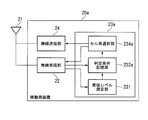
- FIG. 7 is a schematic block diagram showing the configuration of the mobile station device 20a in the present embodiment.
- the mobile station device 20 a includes an antenna 21, a radio reception unit 22, a control unit 23 a, and a radio transmission unit 24.
- the control unit 23a includes a reception level measurement unit 231, a determination condition storage unit 232a, and a cell reselection unit 234a.
- the same reference numerals (21, 22, 24, 231) are assigned to portions corresponding to the respective portions in FIG. 2, and the description thereof is omitted.
- the determination condition storage unit 232a holds a threshold Th select for switching the cell reselection method in addition to the frequency priority information and neighboring cell information stored in the determination condition storage unit 232 of FIG.
- This threshold Th select may be uniquely held by the mobile station device 20a, or may be designated from the base station device by system information or the like.
- the cell reselection unit 234 when reselecting a cell, if there is a base station device for a specific contractor whose reception level is equal to or higher than the threshold Th select, the original priority is the highest among the base station devices for the specific contractor. Choose a higher destination.
- the threshold Th reselect or more specific subscriber for the base station apparatus does not exist, without considering the priority, it selects the highest reception level specific subscriber for the base station apparatus as the migration destination.
- FIG. 8 is a flowchart illustrating a process in which the control unit 23a in the present embodiment determines a cell to be reselected.
- the same reference numerals S1 to S6, S8 to S12
- the process for determining the reselection target cell in this embodiment is different from the process in the first embodiment only in that it has step S7a instead of step S7 in FIG.
- FIG. 9 is a flowchart for explaining the reselection processing in this embodiment, that is, step S7a of FIG.
- step S71 the cell reselection unit 234, whether or not the cell type selected in step S6 in FIG. 8 is a base station apparatus of the "particular subscriber cell", there is the reception level exceeds the threshold value Th reselect Determine. If it is determined in this determination that there is an excess (S71—Yes), the cell reselection unit 234 refers to the frequency priority table stored in the determination condition storage unit 232, and in step S71. Of the base station devices determined to exceed, the cell having the highest original priority is reselected (S72), and the reselection process is terminated.
- step S71-No the cell with the highest reception level among the base station apparatuses whose cell type selected in step S6 is “cell for specific subscriber” Is reselected (S73), and the reselection process is terminated.
- the reception levels of the base station apparatuses A, B, and C whose cell type is “specific subscriber cell” are S A , S B , and S C , respectively, and the original frequency priority is base station apparatus A> base station
- the mobile station device 20a reselects as follows. If ⁇ reception level S C> of S A> Th reselect> S B >
- the base station apparatus A is selected according to the original priority from the base station apparatuses A and C whose reception level is equal to or higher than the threshold Th select.
- the base station apparatus B having the highest reception level is selected without considering the original priority.
- the transition condition is satisfied cell, when the type there are multiple cells is "for a particular subscriber", at step S71, when there is no reception level of these cells is higher than the threshold value Th reselect Reduces the possibility of having to perform cell reselection during access to the migrated cell as the highest reception level, and if there is one exceeding the threshold Th select, it is based on the original priority. Since the migration destination cell is selected, it is possible to suppress the lowering of the priority when the reception level of the cell is lowered after the migration and the transition to the macro cell of the same frequency is performed. In addition to suppressing the occurrence of ping-pong phenomenon.
- the original frequency priority is notified by system information in accordance with LTE specifications.
- the base station apparatus notifies other messages (such as individual signaling).
- the mobile station device 20 or 20a may be uniquely determined.
- the frequency priority may be set for each component carrier (Channel defined in 3GPP TS 36.101. Bandwidth such as 5 MHz, 10 MHz, etc.), or frequency band (Frequency band, TS defined in 3GPP TS 25.101). Operating band defined in 36.101.) It may be set for each.
- a program for realizing the functions of the cell reselection unit 234 in FIG. 2 and the cell reselection unit 234a in FIG. 7 is recorded on a computer-readable recording medium, and the program recorded on the recording medium is recorded on the computer.
- the processing of each unit may be performed by reading it into the system and executing it.
- the “computer system” includes an OS and hardware such as peripheral devices.
- the “computer-readable recording medium” means a storage device such as a flexible disk, a magneto-optical disk, a portable medium such as a ROM and a CD-ROM, and a hard disk incorporated in a computer system. Furthermore, the “computer-readable recording medium” dynamically holds a program for a short time like a communication line when transmitting a program via a network such as the Internet or a communication line such as a telephone line. In this case, a volatile memory in a computer system serving as a server or a client in that case, and a program that holds a program for a certain period of time are also included.
- the program may be a program for realizing a part of the functions described above, and may be a program capable of realizing the functions described above in combination with a program already recorded in a computer system.
Landscapes
- Engineering & Computer Science (AREA)
- Computer Networks & Wireless Communication (AREA)
- Signal Processing (AREA)
- Mobile Radio Communication Systems (AREA)
Abstract
Description
本願は、2009年7月7日に、日本に出願された特願2009-160926号に基づき優先権を主張し、その内容をここに援用する。
以下で、CSGに関する3GPP規格について説明する。
CSGへの接続可否の判定は、移動局装置がCSGセルへのセル移行処理を実行する際に、以下の3ステップで実施される。
ステップ1)CSGセルのシステム情報(System information)で報知されているCSG識別情報(CSG identity)を取得する。
ステップ2)移動局装置が保持している接続許可CSGリスト内に、受信したCSG識別情報が含まれるかを確認する。
ステップ3)含まれる場合、そのCSGセルへの接続が可能であると判定する。含まれない場合、そのCSGセルへの接続は許容されていないと判定する。
周辺セルの測定開始条件は非特許文献2の5.2.4.2章で次のように定義されている。
1) 在圏セルの周波数優先度より高い優先度を持つ周波数の場合、
- 常に測定する。
2) 在圏セルの周波数優先度より低いか等しい優先度を持つ周波数の場合、
- 在圏セルの受信品質がある閾値を下回った場合のみ測定する。
また、セル再選択評価方法は非特許文献2の5.2.4.5章、5.2.4.6章で次のように定義されている。
a)再選択評価を行うセルの周波数優先度 > 在圏しているセルの周波数優先度の場合、
- 評価セルの受信レベル(SnonServingCell,x)がある時間(TreselectionRAT)継続して閾値(Threshx, high)より高い場合に評価セルに移行する。
b)再選択評価を行うセルの周波数優先度= 在圏しているセルの周波数優先度の場合、
- 受信レベルに応じてセルのランク付けを行い、評価セルのランクが在圏中のセルのランクより高い状態をある時間(TreselectionRAT)継続した場合に評価セルに移行する。
c)再選択評価を行うセルの周波数優先度 < 在圏しているセルの周波数優先度の場合、
- 在圏セルの受信レベル(SServingCell)がある閾値(Threshserving, low)より低く、かつ、評価セルの受信レベル(SnonServingCell,x)が別の閾値(Threshx, low)よりも高い状態をある時間(TreselectionRAT)継続した場合に評価セルに移行する。
パターンA)周波数内にCSGのみを配置
パターンB)周波数内に通常のセル(=マクロセル)のみを配置
パターンC)周波数内にマクロセルとCSGを配置
ルール1)ある周波数でCSGの受信レベルが最も良い場合、その周波数の優先度は、最も高い値を持つものとする。
ルール2)在圏中のセルがCSGだった場合、その周波数の優先度は最も高い値を持つものとする。
絶対優先度の導入にあたり、複数の周波数で、CSGが最も受信レベルが良いセルとなった場合にどのようにセルを選択するかという点については、定義されていない。RAN2ではこの場合の動作を移動局装置の実装依存とすることで合意されている。
また、優先度が低い周波数のセルを再選択すると、当該セルの受信レベル劣化に伴い、他のセルに移行し、その後、当該セルの受信レベルが向上すると、当該セルに移行するというように、頻繁にセル移行を繰り返す、いわゆるピンポン現象が発生することがあるという問題がある。
以下、図面を参照して、本発明の第1の実施形態について説明する。図1は、この発明の第1の実施形態による移動通信システムの構成を示す概略図である。本実施形態における移動通信システムは、特定契約者用基地局装置10、11、基地局装置30、31、移動局装置20を有する。特定契約者用基地局装置10は、アクセス可能な移動局装置を制限しているCSG(Closed Subscriber Group)であり、セルA0を通信範囲とする基地局装置である。特定契約者用基地局装置11は、アクセス可能な移動局装置を制限しているCSGであり、セルA1を通信範囲とする基地局装置である。基地局装置30は、アクセス可能な移動局装置の制限を行っていない基地局装置であり、マクロセルB0を通信範囲とする基地局装置である。基地局装置31は、アクセス可能な移動局装置の制限を行っていない基地局装置であり、マクロセルB1を通信範囲とする基地局装置である。移動局装置20は、特定契約者用基地局装置10、11にアクセス可能な移動局装置である。なお、以下では、移動局装置20が、特定契約者用基地局装置10のセルA0と、特定契約者用基地局装置11のセルA1と、基地局装置30のセルB0とが重複している領域に位置しているとして説明する。
次に、受信レベル測定部231は、判定条件記憶部232のセル情報テーブルに記憶されているセル各々の受信レベルを測定する(S2)。これにより、在圏中のセルおよび周辺セルの受信レベルが測定される。受信レベル測定部231は、これらの測定結果を、セル情報テーブルに記憶させる。
移行条件a)
TreselectionRATの間、継続して(1)式を満たすこと。
SNonServingCell,x>Threshx,high ・・・(1)
但し、移行条件a)において、SNonServingCell,xは、周辺セルxの受信レベルを表し、Threshx,highは、在圏中の基地局装置からシステム情報で通知される閾値を表し、TreselectionRATは、在圏中の基地局装置からシステム情報で通知される判定期間を表す。
ステップS5にて、移行条件a)を満たすセルがないと判定したときは(S5-No)、ステップS2に戻って、処理を繰り返す。
以下、図面を参照して、本発明の第2の実施形態について説明する。第1の実施形態では複数の特定契約者用基地局装置がセル再選択の条件を満たす場合に、周波数優先度のみを考慮して選択している。第2の実施形態では、優先度の低い周波数の特定契約者用基地局装置と、優先度の高い周波数の特定契約者用基地局装置の受信レベルに明らかな差があるような場合は、セル再選択後の通信速度、移動局装置の送信電力の観点から、受信レベルの高い特定契約者用基地局装置を選択する。そのため、本実施形態では、第1の実施形態の動作に加えて、特定契約者用基地局装置の受信レベルによって周波数優先度を考慮して再選択先を決定するか、周波数優先度を考慮せず受信レベルだけで決定するかを切り替える。
セル再選択部234は、セル再選択の際、受信レベルが閾値Threselect以上の特定契約者用基地局装置が存在する場合、それらの特定契約者用基地局装置の中から原優先度がもっとも高いものを移行先として選択する。一方、閾値Threselect以上の特定契約者用基地局装置が存在しない場合、優先度を考慮せず、最も受信レベルの高い特定契約者用基地局装置を移行先として選択する。
<受信レベルがSC>SA>Threselect>SBの場合>
ステップS72にて、受信レベルが閾値Threselect以上の基地局装置A、Cの中から原優先度に従い基地局装置Aを選択する。
<受信レベルがThreselect>SB>SC>SAの場合>
ステップS73にて、原優先度を考慮せず、受信レベルが最も高い基地局装置Bを選択する。
さらに周波数の優先度はコンポーネントキャリア(3GPP TS 36.101で定義されるChannel。5MHz、10MHz等の帯域幅)毎に設定されたものでも良いし、周波数バンド(3GPP TS 25.101で定義されるFrequency band、TS 36.101で定義されるOperating band。)毎に設定されたものであっても良い。
20、20a…移動局装置
21…アンテナ
22…無線受信部
23、23a…制御部
231…受信レベル測定部
232、232a…判定条件記憶部
234、234a…セル再選択部
24…無線送信部
30、31…基地局装置
Claims (5)
- 移動局装置が、アクセスを許容する移動局装置を制限している基地局装置である特定契約者用基地局装置を含む複数の基地局装置の中からアクセスする基地局装置を再選択するセル再選択方法であって、
前記移動局装置が、前記基地局装置各々からの信号の受信レベルに基づき、予め決められた移行条件を満たす基地局装置を選択する第1の過程と、
前記移動局装置が、前記第1の過程にて選択した基地局装置に、前記特定契約者用基地局装置が複数含まれるときは、予め設定された周波数と優先度との対応付けを用いて、前記複数の特定契約者用基地局装置の中から、アクセスする基地局装置を再選択する第2の過程と
を有する、セル再選択方法。 - 前記移動局装置が、前記基地局装置各々からの信号の受信レベルを測定する第3の過程と、
前記移動局装置が、同じ周波数の基地局装置の中で、前記第1の過程にて測定した受信レベルが最も高い基地局装置が、前記特定契約者用基地局装置であるときは、予め設定された周波数と優先度との対応付けのうち、該特定契約者用基地局装置の周波数と対応付けられた優先度を、最も高い優先度に更新する第4の過程と、
を有し、
前記第1の過程において、前記移動局装置は、前記第4の過程にて更新した対応付けを参照して、予め決められた移行条件を満たす基地局装置を選択する、
請求項1に記載のセル再選択方法。 - 前記第2の過程の前記対応付けは、前記第4の過程にて更新される前の前記対応付けである、請求項2に記載のセル再選択方法。
- 前記第2の過程において、前記移動局装置は、前記第1の過程にて選択した基地局装置に、前記特定契約者用基地局装置が複数含まれ、かつ、該特定契約者用基地局装置の受信レベルが予め設定された閾値よりも低いときは、該特定契約者用基地局装置のうち、最も受信レベルの高いものをアクセスする基地局装置とする、請求項3に記載のセル再選択方法。
- アクセスを許容する移動局装置を制限している基地局装置である特定契約者用基地局装置を含む複数の基地局装置の中からアクセスする基地局装置を再選択する移動局装置であって、
前記基地局装置各々からの信号の受信レベルに基づき、予め決められた移行条件を満たす基地局装置を選択し、該選択した基地局装置に、前記特定契約者用基地局装置が複数含まれるときは、予め設定された周波数と優先度との対応付けを用いて、前記複数の特定契約者用基地局装置の中から、アクセスする基地局装置を再選択する再選択部
を具備する、移動局装置。
Priority Applications (5)
| Application Number | Priority Date | Filing Date | Title |
|---|---|---|---|
| JP2011521933A JP5629922B2 (ja) | 2009-07-07 | 2010-07-07 | セル再選択方法および移動局装置 |
| US13/382,198 US8731554B2 (en) | 2009-07-07 | 2010-07-07 | Cell reselecting method and mobile station device |
| EP10797139.2A EP2453704B1 (en) | 2009-07-07 | 2010-07-07 | Cell reselecting method and mobile station device |
| CN201080029982.7A CN102474788B (zh) | 2009-07-07 | 2010-07-07 | 小区重选方法以及移动台装置 |
| ZA2012/00057A ZA201200057B (en) | 2009-07-07 | 2012-01-04 | Cell reselecting method and mobile station device |
Applications Claiming Priority (2)
| Application Number | Priority Date | Filing Date | Title |
|---|---|---|---|
| JP2009-160926 | 2009-07-07 | ||
| JP2009160926 | 2009-07-07 |
Publications (1)
| Publication Number | Publication Date |
|---|---|
| WO2011004828A1 true WO2011004828A1 (ja) | 2011-01-13 |
Family
ID=43429252
Family Applications (1)
| Application Number | Title | Priority Date | Filing Date |
|---|---|---|---|
| PCT/JP2010/061502 Ceased WO2011004828A1 (ja) | 2009-07-07 | 2010-07-07 | セル再選択方法および移動局装置 |
Country Status (6)
| Country | Link |
|---|---|
| US (1) | US8731554B2 (ja) |
| EP (1) | EP2453704B1 (ja) |
| JP (1) | JP5629922B2 (ja) |
| CN (1) | CN102474788B (ja) |
| WO (1) | WO2011004828A1 (ja) |
| ZA (1) | ZA201200057B (ja) |
Cited By (5)
| Publication number | Priority date | Publication date | Assignee | Title |
|---|---|---|---|---|
| CN103597878A (zh) * | 2011-04-11 | 2014-02-19 | 三星电子株式会社 | 用于有效控制闭合用户群小区中用户设备的小区重新选择优先级的方法和装置 |
| JP2014512752A (ja) * | 2011-04-01 | 2014-05-22 | ルネサスモバイル株式会社 | 異なる無線アクセス技術ネットワーク間での高速再選択 |
| WO2016013591A1 (ja) * | 2014-07-24 | 2016-01-28 | 京セラ株式会社 | ユーザ端末及び基地局 |
| JP2016534677A (ja) * | 2013-09-19 | 2016-11-04 | クアルコム,インコーポレイテッド | Rat間およびrat内スモールセル再選択 |
| JP2017523734A (ja) * | 2014-08-11 | 2017-08-17 | インテル アイピー コーポレイション | アイドル・モードのユーザー装置に関するロード・バランシング・スキーム |
Families Citing this family (13)
| Publication number | Priority date | Publication date | Assignee | Title |
|---|---|---|---|---|
| EP2710849A1 (en) * | 2011-05-20 | 2014-03-26 | Apple Inc. | Apparatus and methods for optimizing scheduled operations in hybrid network environments |
| KR101626267B1 (ko) | 2011-05-20 | 2016-05-31 | 애플 인크. | 하이브리드 네트워크 동작에 있어서의 우선순위 기반 태스크 스케줄링을 위한 장치 및 방법들 |
| US8855632B2 (en) * | 2012-02-09 | 2014-10-07 | Telefonaktiebolaget L M Ericsson (Publ) | Measurement termination of higher-prioritized layers for priority-based cell reselection algorithms in cellular communication systems |
| EP2760236A1 (en) * | 2013-01-25 | 2014-07-30 | Alcatel-Lucent | A method for controlling handovers of a user equipment in a heterogeneous radio access network |
| IN2014MU01113A (ja) * | 2014-03-28 | 2015-10-02 | Tech Mahindra Ltd | |
| US10004018B2 (en) * | 2015-12-18 | 2018-06-19 | Mediatek Inc. | Method and communications apparatus for performing a cell reselection process |
| CN108093453B (zh) | 2016-11-21 | 2020-03-03 | 北京小米移动软件有限公司 | 小区重选方法及装置 |
| CN108289316B (zh) | 2017-01-10 | 2020-10-16 | 中国移动通信有限公司研究院 | 一种小区选择或重选方法、小区切换参数的设置方法及装置 |
| CN109729558B (zh) * | 2017-10-27 | 2021-08-31 | 中国电信股份有限公司 | 多频组网中的小区重选方法、系统和终端 |
| WO2019144398A1 (zh) * | 2018-01-29 | 2019-08-01 | Oppo广东移动通信有限公司 | 控制ue搜索小区的方法、ue及网络设备 |
| CN112888046B (zh) * | 2018-08-07 | 2023-06-09 | Oppo广东移动通信有限公司 | 一种小区搜索方法及装置、终端 |
| US11122478B2 (en) | 2019-03-28 | 2021-09-14 | Qualcomm Incorporated | User equipment camping in a virtual cell |
| CN110268746B (zh) * | 2019-05-08 | 2021-08-31 | 北京小米移动软件有限公司 | 小区切换方法及装置、切换配置方法及装置和用户设备 |
Citations (4)
| Publication number | Priority date | Publication date | Assignee | Title |
|---|---|---|---|---|
| JP2004159304A (ja) * | 2002-10-18 | 2004-06-03 | Ntt Docomo Inc | 移動局、移動通信システム、及びセル選択方法 |
| JP2007043754A (ja) | 2006-11-06 | 2007-02-15 | Fujitsu Ltd | 移動局 |
| JP2009141945A (ja) * | 2007-11-16 | 2009-06-25 | Ntt Docomo Inc | セル選択方法及び移動局 |
| JP2009160926A (ja) | 2007-12-12 | 2009-07-23 | Ricoh Co Ltd | 画像形成装置、泡塗布装置 |
Family Cites Families (14)
| Publication number | Priority date | Publication date | Assignee | Title |
|---|---|---|---|---|
| US5761618A (en) * | 1994-12-22 | 1998-06-02 | Bell Atlantic Mobile Systems, Inc. | Updating technique for downloading new system identification (SID) list into a handset |
| US6298235B1 (en) * | 1995-12-12 | 2001-10-02 | At&T Wireless Services, Inc. | Powered down selection of a preferable wireless communications service provider in a multi-service provider environment |
| JP2693940B2 (ja) * | 1995-12-21 | 1997-12-24 | 静岡日本電気株式会社 | 無線選択呼出受信機 |
| US6119005A (en) * | 1998-05-27 | 2000-09-12 | Lucent Technologies Inc. | System for automated determination of handoff neighbor list for cellular communication systems |
| FI108104B (fi) * | 1999-01-15 | 2001-11-15 | Nokia Networks Oy | Solunvalinta pakettiradioverkossa |
| CN100450238C (zh) * | 2002-10-18 | 2009-01-07 | 株式会社Ntt都科摩 | 移动站、移动通信系统和网络选择方法 |
| JP4534695B2 (ja) * | 2004-09-28 | 2010-09-01 | 日本電気株式会社 | 移動通信端末装置及びその周波数検出方法 |
| JP2006140689A (ja) | 2004-11-11 | 2006-06-01 | Matsushita Electric Ind Co Ltd | マルチアンテナ通信装置および通信相手選択方法 |
| GB0713391D0 (en) * | 2007-07-11 | 2007-08-22 | Vodafone Plc | Measurement and reselection in idle mode |
| EP2077690B1 (en) * | 2008-01-07 | 2015-03-18 | LG Electronics Inc. | Method of reselecting a cell based on priorities |
| EP2241130B1 (en) * | 2008-02-08 | 2016-10-26 | Telefonaktiebolaget LM Ericsson (publ) | Method and user equipment in a communication network |
| US8588773B2 (en) * | 2008-08-04 | 2013-11-19 | Qualcomm Incorporated | System and method for cell search and selection in a wireless communication system |
| US8254923B2 (en) * | 2009-02-01 | 2012-08-28 | Lg Electronics Inc. | Method and apparatus for performing cell selection in wireless communication system |
| US9615321B2 (en) * | 2011-06-21 | 2017-04-04 | Qualcomm Incorporated | Apparatus and methods for facilitating cell reselection for higher priority layers |
-
2010
- 2010-07-07 WO PCT/JP2010/061502 patent/WO2011004828A1/ja not_active Ceased
- 2010-07-07 CN CN201080029982.7A patent/CN102474788B/zh active Active
- 2010-07-07 US US13/382,198 patent/US8731554B2/en active Active
- 2010-07-07 EP EP10797139.2A patent/EP2453704B1/en not_active Not-in-force
- 2010-07-07 JP JP2011521933A patent/JP5629922B2/ja active Active
-
2012
- 2012-01-04 ZA ZA2012/00057A patent/ZA201200057B/en unknown
Patent Citations (4)
| Publication number | Priority date | Publication date | Assignee | Title |
|---|---|---|---|---|
| JP2004159304A (ja) * | 2002-10-18 | 2004-06-03 | Ntt Docomo Inc | 移動局、移動通信システム、及びセル選択方法 |
| JP2007043754A (ja) | 2006-11-06 | 2007-02-15 | Fujitsu Ltd | 移動局 |
| JP2009141945A (ja) * | 2007-11-16 | 2009-06-25 | Ntt Docomo Inc | セル選択方法及び移動局 |
| JP2009160926A (ja) | 2007-12-12 | 2009-07-23 | Ricoh Co Ltd | 画像形成装置、泡塗布装置 |
Non-Patent Citations (6)
| Title |
|---|
| "Proposed CR for hybrid cell (36.304)", 3GPP TSG-RAN WG2 MEETING #66BIS R2-093755, 29 June 2009 (2009-06-29), XP050351987 * |
| "Radio Resource Control (RRC)-Protocol Specification", 3GPP TS 36.331 V8.5.0 |
| "Report of 3GPP TSG RAN WG2 meeting #64", R2-090810 |
| "Service accessibility", 3GPP TS 22.011 V8.5.0 |
| "User Equipment (UE) procedures in idle mode", 3GPP TS 36.304 V8.5.0 |
| See also references of EP2453704A4 |
Cited By (12)
| Publication number | Priority date | Publication date | Assignee | Title |
|---|---|---|---|---|
| JP2014512752A (ja) * | 2011-04-01 | 2014-05-22 | ルネサスモバイル株式会社 | 異なる無線アクセス技術ネットワーク間での高速再選択 |
| CN103597878A (zh) * | 2011-04-11 | 2014-02-19 | 三星电子株式会社 | 用于有效控制闭合用户群小区中用户设备的小区重新选择优先级的方法和装置 |
| JP2014514850A (ja) * | 2011-04-11 | 2014-06-19 | サムスン エレクトロニクス カンパニー リミテッド | Csgセルで端末がセル再選択優先順位を効率的に制御する方法及び装置 |
| US9432927B2 (en) | 2011-04-11 | 2016-08-30 | Samsung Electronics Co., Ltd. | Method and apparatus for effectively controlling cell reselection priority of user equipment in CSG cell |
| US9578563B2 (en) | 2011-04-11 | 2017-02-21 | Samsung Electronics Co., Ltd. | Method and apparatus for effectively controlling cell reselection priority of user equipment in CSG cell |
| CN103597878B (zh) * | 2011-04-11 | 2017-12-08 | 三星电子株式会社 | 用于有效控制闭合用户群小区中用户设备的小区重新选择优先级的方法和装置 |
| JP2016534677A (ja) * | 2013-09-19 | 2016-11-04 | クアルコム,インコーポレイテッド | Rat間およびrat内スモールセル再選択 |
| US10237801B2 (en) | 2013-09-19 | 2019-03-19 | Qualcomm Incorporated | Inter-RAT and intra-RAT small cell reselection |
| WO2016013591A1 (ja) * | 2014-07-24 | 2016-01-28 | 京セラ株式会社 | ユーザ端末及び基地局 |
| US10028331B2 (en) | 2014-07-24 | 2018-07-17 | Kyocera Corporation | User terminal, communication control method and chipset |
| JP2017523734A (ja) * | 2014-08-11 | 2017-08-17 | インテル アイピー コーポレイション | アイドル・モードのユーザー装置に関するロード・バランシング・スキーム |
| US10390261B2 (en) | 2014-08-11 | 2019-08-20 | Intel IP Corporation | Load balancing schemes for idle mode user equipment |
Also Published As
| Publication number | Publication date |
|---|---|
| US20120135737A1 (en) | 2012-05-31 |
| EP2453704A1 (en) | 2012-05-16 |
| CN102474788A (zh) | 2012-05-23 |
| EP2453704A4 (en) | 2016-11-16 |
| EP2453704B1 (en) | 2018-09-05 |
| US8731554B2 (en) | 2014-05-20 |
| JP5629922B2 (ja) | 2014-11-26 |
| CN102474788B (zh) | 2014-10-01 |
| ZA201200057B (en) | 2013-04-24 |
| JPWO2011004828A1 (ja) | 2012-12-20 |
Similar Documents
| Publication | Publication Date | Title |
|---|---|---|
| JP5629922B2 (ja) | セル再選択方法および移動局装置 | |
| CN102484803B (zh) | 通信系统 | |
| JP5883088B2 (ja) | Lte待機モードにおいて動作するための手順 | |
| KR101652618B1 (ko) | 이종 네트워크들에서의 이동성 파라미터 조정 및 이동성 상태 추정 | |
| CN101772974B (zh) | 无线通信系统中的小区重选 | |
| KR101606245B1 (ko) | 폐쇄형 가입자 그룹에 인바운드 이동성을 제공하기 위한 pci 혼동을 해결하는 방법 및 장치 | |
| US8731606B2 (en) | Communication system, mobile station device, connection destination evaluating method, connection destination evaluating program, and base station device | |
| US11683750B2 (en) | Systems and methods for base station selection in licensed and unlicensed spectrums | |
| US20080227453A1 (en) | Cell reselection process for wireless communications | |
| JP2016511618A (ja) | 小規模セルにおける動的な電力調整のためのシステムおよび方法 | |
| KR20090106571A (ko) | 금지된 이웃 셀 리스트를 위한 방법, 장치, 시스템 및 컴퓨터 판독 가능한 저장 매체 | |
| CN112566179A (zh) | Ul/dl不平衡场景中的增强的连接性能 | |
| WO2017033882A1 (ja) | ユーザ装置、移動通信システム、及びセル選択方法 | |
| KR20110092296A (ko) | Csg 셀들의 존재 하에서의 효율적 재선택 | |
| JPWO2019194297A1 (ja) | セル再選択制御方法 | |
| JP2012506165A (ja) | セル再選択方法および装置 | |
| JP5577540B2 (ja) | ハンドオーバ制御方法、移動局装置、及び基地局装置 | |
| HK1160568A (en) | Procedures for operating in long term evolution idle mode | |
| HK1137103A (en) | Cell reselection process for wireless communications |
Legal Events
| Date | Code | Title | Description |
|---|---|---|---|
| WWE | Wipo information: entry into national phase |
Ref document number: 201080029982.7 Country of ref document: CN |
|
| 121 | Ep: the epo has been informed by wipo that ep was designated in this application |
Ref document number: 10797139 Country of ref document: EP Kind code of ref document: A1 |
|
| WWE | Wipo information: entry into national phase |
Ref document number: 2011521933 Country of ref document: JP |
|
| WWE | Wipo information: entry into national phase |
Ref document number: 2010797139 Country of ref document: EP |
|
| NENP | Non-entry into the national phase |
Ref country code: DE |
|
| WWE | Wipo information: entry into national phase |
Ref document number: 13382198 Country of ref document: US |