WO2011021388A1 - 移動通信システム、ネットワーク管理装置、マクロセル基地局装置、および干渉制御方法 - Google Patents
移動通信システム、ネットワーク管理装置、マクロセル基地局装置、および干渉制御方法 Download PDFInfo
- Publication number
- WO2011021388A1 WO2011021388A1 PCT/JP2010/005100 JP2010005100W WO2011021388A1 WO 2011021388 A1 WO2011021388 A1 WO 2011021388A1 JP 2010005100 W JP2010005100 W JP 2010005100W WO 2011021388 A1 WO2011021388 A1 WO 2011021388A1
- Authority
- WO
- WIPO (PCT)
- Prior art keywords
- base station
- macro cell
- connection terminal
- femtocell
- interference
- Prior art date
- Legal status (The legal status is an assumption and is not a legal conclusion. Google has not performed a legal analysis and makes no representation as to the accuracy of the status listed.)
- Ceased
Links
Images




Classifications
-
- H—ELECTRICITY
- H04—ELECTRIC COMMUNICATION TECHNIQUE
- H04W—WIRELESS COMMUNICATION NETWORKS
- H04W72/00—Local resource management
- H04W72/50—Allocation or scheduling criteria for wireless resources
- H04W72/54—Allocation or scheduling criteria for wireless resources based on quality criteria
- H04W72/541—Allocation or scheduling criteria for wireless resources based on quality criteria using the level of interference
-
- H—ELECTRICITY
- H04—ELECTRIC COMMUNICATION TECHNIQUE
- H04W—WIRELESS COMMUNICATION NETWORKS
- H04W24/00—Supervisory, monitoring or testing arrangements
- H04W24/10—Scheduling measurement reports ; Arrangements for measurement reports
-
- H—ELECTRICITY
- H04—ELECTRIC COMMUNICATION TECHNIQUE
- H04W—WIRELESS COMMUNICATION NETWORKS
- H04W84/00—Network topologies
- H04W84/02—Hierarchically pre-organised networks, e.g. paging networks, cellular networks, WLAN [Wireless Local Area Network] or WLL [Wireless Local Loop]
- H04W84/04—Large scale networks; Deep hierarchical networks
- H04W84/042—Public Land Mobile systems, e.g. cellular systems
- H04W84/045—Public Land Mobile systems, e.g. cellular systems using private Base Stations, e.g. femto Base Stations, home Node B
Definitions
- the present invention relates to a mobile communication system, a network management device, a macro cell base station device, and an interference control method for reducing interference on an uplink radio channel.
- FIG. 1 shows a radio system configuration when a femtocell base station is installed.
- the mobile terminal 102 hereinafter referred to as “femtocell connected terminal” or “HUE”) existing in the building where the femtocell base station 101 is installed transmits data to and from the femtocell base station 101 via a wireless channel. Perform transmission.
- the femtocell base station 101 uses a fixed network 103 (for example, xDSL, FTTH, etc.) such as an optical fiber drawn into a home as a backbone, and is connected to the core network 105 via the Internet 104 or the like.
- the installation information of the femtocell base station 101 is managed by the network management device 106 in the core network.
- the femto cell Compared with a wide-area cell (that is, a macro cell) having a cell radius of about 0.5 to 1.5 kilometers that has been conventionally used, the femto cell has the following technical features.
- the transmission power of the femtocell base station is low and the cell radius is narrow.
- the number of terminals that can be simultaneously connected to the femtocell base station is small. Specifically, the number of terminals that can be connected simultaneously is several tens of terminals or more in a macro cell, whereas it is about several terminals in a femto cell.
- the user's fixed network is incorporated in the network configuration.
- the terminal 108 is connected to the core network 105 via the base station 107 and the radio access network 109 managed by the communication carrier.
- radio interference between the macro cell and the femto cell radio interference on the uplink that the macro cell connection terminal gives to the femto cell base station can be considered.
- the radio transmission power of the macro cell connection terminal increases, so that the problem of interference given to the femto cell base station by the macro cell connection terminal becomes serious.
- a CSG femtocell base station it is necessary to take measures against interference from the macro cell connection terminal that cannot be connected to the femtocell base station to the femtocell base station.
- FIG. 2 shows a sequence diagram of the interference reduction method described in Patent Document 1.
- the adjacent base stations 203 Node-B1 and 204 (Node-B2) measure the interference amount of the uplink radio channel (ST201), and the interference amount measured by the network management device 205 (NW Node) is measured. Notification is made (ST202).
- terminals 201 UE1 and 202 (UE2) connected to base stations 203 and 204 respectively measure the downlink reception level (ST203) and report the measurement results to network management apparatus 205 via the base station.
- network management apparatus 205 Based on the notification information from the base station or terminal, assigns an uplink frequency band used in each cell so that interference between cells is reduced most (ST205).
- network management apparatus 205 notifies base stations 203 and 204 of frequency band allocation (that is, used band) (ST206).
- Base stations 203 and 204 perform uplink scheduling according to the notification (ST207), and allocate the uplink use frequency band to the terminal (ST208).
- the network management device 205 adjusts the used frequency band based on the interference information of all cells.
- the network management device 205 adjusts the used frequency band based on the interference information of all cells.
- LTE Long Term Evolution
- OFI uplink interference amount information
- HII HII
- UL Interference Overload Indication is defined as a signal for reporting uplink interference amount information for each band.
- UL High Interference Indication is defined as a signal for notifying an adjacent cell that the own cell uses a specific frequency band. Receiving these signals, the base station performs frequency band allocation different from that of the adjacent cell (ST210), and transmits information regarding frequency band allocation to the terminal (ST211). As described above, the amount of uplink interference is reduced.
- a terminal serving as an interference source for the femto cell does not necessarily exist at the macro cell edge.
- the main interference source for the femtocell base station 203 is not the macrocell connection terminal 202 (MUE1) existing at the macrocell edge but the macrocell connection terminal 202 (MUE2) existing in the vicinity of the femtocell base station 203.
- the macro cell connection terminal 202 (MUE1) existing at the cell edge is identified as the interference source terminal. Therefore, interference control is performed using this method. Even if implemented, the femtocell base station and the macrocell base station cannot specify a terminal that actually becomes an interference source in the hierarchical cell arrangement. Therefore, when the method of reducing interference between adjacent cells shown in FIG. 3 is used, not only the appropriate frequency band limitation is not performed on the macro cell connection terminal 202 (MUE2) that is an interference source, Frequency band limitation is performed on the macro cell connection terminal 202 (MUE1) that is not an interference source, and transmission throughput is unnecessarily reduced.
- An object of the present invention is to provide a mobile communication system, a network management device, a macro cell base station device, and an interference control method that reduce uplink radio channel interference from a macro cell connection terminal to a femto cell base station.
- the mobile communication system of the present invention includes a macro cell base station, a macro cell connection terminal that is wirelessly connected to the macro cell base station, a femto cell base station, a femto cell connection terminal that is wirelessly connected to the femto cell base station, and the femto cell.
- a mobile communication system comprising a base station and a network management device connected to the macro cell base station, wherein the macro cell connection terminal detects whether a femto cell base station exists in the vicinity, and A transmission unit that sends a detection result of a neighboring femtocell base station to the macrocell base station when the presence of the femtocell base station is detected, and the detection that the macrocell base station is transmitted from the macrocell connection terminal.
- the identifier of the macro cell connected terminal and the surrounding femto cell detection result are A transmission unit for transmitting to a network management device, a reception unit for receiving an interference reduction instruction transmitted from the network management device, and a scheduler for limiting frequency band allocation to the macro cell connection terminal based on the interference reduction instruction
- An interference control unit that transmits an interference reduction request to the network management device when the femtocell base station determines that the uplink quality of the own cell cannot be maintained, and the network management A scheduler unit that restricts allocation of frequency bands to the femtocell connected terminal based on an interference control instruction transmitted from a device, and the network management device includes an identifier of the macrocell connected terminal, the femtocell A storage unit for storing correspondence information with an identifier of a base station, and the femtocell base A reception unit that receives the interference reduction request transmitted from the base station, and the macro cell connection terminal that is in a correspondence relationship with the femtocell base station based on the
- An interference control unit for determining frequency band allocation so that the frequency bands used by the femtocell base station and the macro cell base station do not overlap, and an interference reduction instruction including information on the frequency band allocation to the macro cell base station And a transmitting unit that transmits the data.
- the network management apparatus of the present invention includes a storage unit that holds correspondence information of an identifier of a macro cell connection terminal that is wirelessly connected to the macro cell base station, an identifier of the femto cell base station detected by the macro cell connection terminal, and the femto cell base
- a receiving unit that receives an interference reduction request transmitted from a station, a selection unit that selects an identifier of the macro cell connection terminal corresponding to a femtocell base station that is a transmission source of the interference reduction request, and
- An interference control unit that determines frequency band allocation so that use frequency bands of the femtocell base station and the macrocell base station do not overlap based on the interference reduction request and correspondence information held in the storage unit; Interference including identifier of the macro cell connected terminal selected by the selection unit and information on the frequency band allocation A reduced instruction, and a transmitting unit for sending to the macrocell base station.
- the macro cell base station apparatus of the present invention is directed to a macro cell connection terminal connected to its own cell, an instruction unit for instructing detection of a cell identifier of a nearby femto cell base station, and a peripheral femto cell transmitted from the macro cell connection terminal Based on the detection result of the base station, the reception unit that receives the interference reduction instruction and the terminal identifier information transmitted from the network management device, and the identifier of the macro cell connection terminal and the surrounding area based on the detection result from the macro cell connection terminal
- a transmission unit that transmits a femtocell detection result to the network management apparatus; an interference control unit that adjusts radio resource allocation to the macro cell connection terminal specified by the identifier information based on the interference reduction instruction; and the interference control Limit frequency band allocation to the macro cell connected terminal It includes a scheduler unit.
- An interference control method of the present invention is an interference control method used in a mobile communication system including a macro cell base station, a femto cell base station, and a network management device, and is a macro cell connection for wirelessly connecting to the macro cell base station.
- the terminal detects whether the femtocell base station exists in the vicinity, and when detecting the presence of the femtocell base station, sends a detection result of the peripheral femtocell base station to the macrocell base station, In the base station, based on the detection result transmitted from the macro cell connection terminal, the identifier of the macro cell connection terminal and the surrounding femto cell detection result are transmitted to the network management apparatus, and the interference reduction transmitted from the network management apparatus is performed.
- the macro When the femtocell base station determines that the uplink quality of its own cell cannot be maintained, it transmits an interference reduction request to the network management device. Restricting the allocation of frequency bands to terminals that are wirelessly connected to the jurisdiction femtocell based on the interference control instruction transmitted from the network management apparatus.
- the identifier of the macrocell connection terminal and the femto Holding correspondence information with the identifier of the cell base station receiving an interference reduction request transmitted from the femtocell base station, based on the received correspondence reduction request and the correspondence information held in the storage unit,
- the femtocell base station and the femtocell base station in a corresponding relationship with the femtocell base station Serial determines the frequency band allocated to the frequency band used does not overlap with the macrocell base station transmits an interference reduction instruction including information of the frequency band allocated to the macrocell base station.
- the present invention it is possible to provide a mobile communication system, a network management device, a base station device, and an interference control method that reduce uplink radio channel interference from a macro cell connected terminal to a femtocell base station.
- FIG. 5 is a block diagram showing a configuration of the mobile communication system according to Embodiment 1 of the present invention.
- description of functional blocks not directly related to interference reduction is omitted.
- a mobile communication system includes a macro cell connection terminal (MUE) 401, a macro cell base station (MNB) 402, a femto cell base station (HNB) 403, a network management device (NW node) 404, and a femto cell connection.
- MUE macro cell connection terminal
- MNB macro cell base station
- HNB femto cell base station
- NW node network management device
- HUE femto cell connection terminal
- the macro cell connection terminal 401 includes a transmission unit 4011, a measurement unit 4012, and a reception unit 4013.
- the transmission unit 4011 transmits a signal to the macro cell base station 402 via an uplink.
- the frequency band used for this transmission is set based on an uplink allocation instruction received from the macrocell base station 402 via the receiving unit 4013.
- the measuring unit 4012 detects the femtocell base station 403 existing in the vicinity. That is, the measurement unit 4012 detects whether a femtocell exists in the vicinity. This detection may be performed based on an instruction from the macro cell base station 402 received via the receiving unit 4013, or conditions set in each macro cell connection terminal 401 (for example, specified by a cell search procedure or the like). It may be performed based on a predetermined cycle. Specifically, the measurement unit 4012 measures the reception level of the downlink common signal (reference signal etc.) transmitted from the femtocell base station 403 of each cell for each cell, and based on the measurement result, It is determined whether a downlink common signal can be received.
- the downlink common signal reference signal etc.
- the measurement part 4012 determines with the femtocell existing in the periphery, when a reception level is more than predetermined level. Also, measurement section 4012 detects femtocell base station identification information (that is, femtocell base station identifier) included in a downlink common signal whose reception level is equal to or higher than a predetermined level. Thereby, the presence of a femto cell in the vicinity and the femto cell base station 403 corresponding to the femto cell are specified. The detection result is transmitted to the macro cell base station 402 via the transmission unit 4011 after identification information (that is, a terminal identifier) of the own device is added.
- identification information that is, a terminal identifier
- the macrocell base station 402 includes a transmission unit 4021, an instruction unit 4022, a scheduler unit 4023, an interference control unit 4024, and a reception unit 4025.
- the instructing unit 4022 creates information instructing each terminal connected to the own device to detect a neighboring femto cell, and transmits the information to each terminal through the transmitting unit 4021.
- the receiving unit 4025 receives the femto cell detection result detected in each terminal.
- the received femtocell detection result (including the femtocell base station identifier and the terminal identifier) is transmitted to the network management apparatus 404 through the transmission unit 4021.
- the receiving unit 4025 receives an interference reduction instruction received from the network management device 404.
- the interference reduction instruction includes the identifier of the target terminal for frequency band assignment and interference control.
- the identifier of the target terminal for interference control may be transmitted together with the interference reduction instruction as information different from the interference reduction instruction without being included in the interference reduction instruction.
- the interference control unit 4024 extracts an interference reduction instruction from the reception signal received by the reception unit 4025, and outputs the interference reduction instruction to the scheduler unit 4023.
- the scheduler unit 4023 restricts the allocation of frequency bands to the macro cell connection terminal 401 subject to interference control based on the interference reduction instruction received from the interference control unit 4024. Specifically, scheduler section 4023 allocates a use band to macro cell connection terminal 401 subject to interference control from the bands indicated by the frequency band allocation information included in the interference reduction instruction. This use band allocation result is transmitted to the macro cell connection terminal 401 subject to interference control via the transmission unit 4021 via the downlink radio channel.
- the femtocell base station 403 includes a transmission unit 4031, an interference control unit 4032, a scheduler unit 4033, and a reception unit 4034.
- the reception unit 4034 Based on the reception level of the uplink reference signal transmitted from the femtocell connection terminal 405 existing in the femtocell of the own device, the reception unit 4034 receives an uplink from another cell connection terminal (for example, the macro cell connection terminal 401). Detect the interference level. Specifically, the expected value of the reception level of the uplink reference signal transmitted from the femtocell connection terminal 405 existing in the femtocell of the own apparatus is known in advance. Therefore, by subtracting the expected value from the actually measured reception level of the uplink reference signal transmitted from the femtocell connection terminal 405, the uplink interference level from another cell connection terminal can be obtained.
- the interference control unit 4032 compares the uplink interference level obtained by the receiving unit 4034 with a predetermined threshold value. If the uplink interference level is greater than the predetermined threshold, the interference control unit 4032 determines that the uplink quality of the own cell cannot be maintained because the uplink interference level is large, and sends the transmission unit to the network management apparatus 404.
- An interference reduction request is transmitted via 4031. This interference reduction request includes at least information related to the uplink interference level, and may further include the uplink traffic amount of the femtocell or a desired frequency band in the femtocell.
- the receiving unit 4034 receives an interference control instruction received from the network management device 404.
- This interference control instruction includes frequency band allocation.
- the interference control unit 4032 extracts an interference control instruction from the reception signal received by the reception unit 4034 and outputs the interference control instruction to the scheduler unit 4033.
- the scheduler unit 4033 Based on the interference control instruction received from the interference control unit 4032, the scheduler unit 4033 restricts the allocation of frequency bands used for uplink transmission to the femtocell connection terminal 405 that is the object of interference control. Specifically, the scheduler unit 4033 allocates a use band to the femtocell connection terminal 405 targeted for interference control from the band indicated by the frequency band allocation information included in the interference control instruction. This use band allocation result is transmitted to the femtocell connection terminal 405 subject to interference control via the transmission unit 4031 on the downlink radio channel.
- the network management apparatus 404 includes a transmission unit 4041, a selection unit 4042, a storage unit 4043, a reception unit 4044, and an interference control unit 4045.
- the receiving unit 4044 receives the femto cell detection result transmitted from the macro cell base station 402.
- the femto cell detection result includes the terminal identifier of the macro cell connection terminal 401 that has detected the femto cell and the identifier of the detected femto cell base station 403.
- the receiving unit 4044 receives an interference reduction request transmitted from the femtocell base station 403.
- the storage unit 4043 stores the femto detection result received by the receiving unit 4044. Specifically, the storage unit 4043 stores the identifier of each femto cell existing in the macro cell of the own device and the identifier of the macro cell connection terminal existing in the vicinity of the femto cell in association with each other.
- the selection unit 4042 selects a terminal identifier associated with the identifier of the transmission source femtocell base station 403 of the interference reduction request received by the reception unit 4044 in the storage unit 4043.
- the interference control unit 4045 When the reception unit 4044 receives an interference reduction request from the femtocell base station 403, the interference control unit 4045 exists in the vicinity of the femtocell base station 403 and the used frequency band of the transmission source femtocell of the interference reduction request. Uplink frequency band allocation is determined so that the use frequency bands of the macro cell connected terminals do not overlap. Then, the interference control unit 4045 transmits an interference reduction instruction to the macro cell base station 402. This interference reduction instruction includes the identifier of the target terminal for frequency band assignment and interference control.
- the interference control unit 4045 transmits an interference reduction instruction to the macro cell base station 402 and also transmits an interference control instruction (frequency band assignment) to the femtocell base station 403 that is the transmission source of the interference reduction request. It is also possible to do.
- the femtocell connection terminal 405 includes a transmission unit 4051, a measurement unit 4052, and a reception unit 4053.
- the function of each part is equivalent to each function part of the macro cell connection terminal 401.
- the identifier of the femtocell connection terminal 405 is registered in the femtocell base station 403 in advance.
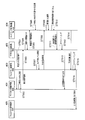
- FIG. 6 is a sequence diagram showing an interference control procedure.
- association between the femtocell and the macro cell connection terminal 401 existing around the femtocell is performed, and the association is stored in the storage unit 4043 of the network management apparatus 404.
- instructing section 4022 of macro cell base station 402 instructs macro cell connecting terminal 401 to detect neighboring cells by downlink measurement (ST501).
- the macro cell connection terminal 401 to be instructed is selected only for the macro cell connection terminal 401 whose measured downlink quality of the own cell is insufficient compared to the channel quality expected from the measured value of the spatial propagation loss. .
- the measurement unit 4012 of the macro cell connection terminal 401 performs peripheral cell downlink measurement based on an instruction from the macro cell base station 402 (ST502). That is, the measurement unit 4012 detects the femtocell base station 403 existing in the vicinity. As described above, the process of detecting the femtocell base station 403 is automatically performed based on conditions set in each macro cell connection terminal 401 (for example, a predetermined period defined by a cell search procedure or the like). It may be broken.
- Measurement unit 4012 of macro cell connection terminal 401 notifies detection result to macro cell base station 402 (ST503).
- This detection result includes the detected femtocell base station identifier, and more preferably includes the reception strength of the downlink reference signal of the femtocell. Further, identification information (that is, a terminal identifier) of the own device is added to the detection result.
- Macro cell base station 402 associates the terminal identifier with the femtocell identifier detected by the terminal (ST504).
- Macro cell base station 402 notifies identifier association information to network management apparatus 404 (ST505).
- the storage unit 4043 of the network management device 404 stores the association between the femtocell and the macrocell connection terminal 401 (ST506).
- the interference from the macro cell connection terminal 401 to the femto cell is small, it may be specified that the notification in step ST503 or ST505 is not performed, and the amount of signaling may be reduced. Specific specific examples will be described in detail in the second and subsequent embodiments.
- interference control is performed with reference to association information stored in advance.
- the receiving unit 4034 of the femtocell base station 403 uses another cell connecting terminal (for example, the macrocell connecting terminal 401). ) Is measured (ST507).
- This interference reduction request includes at least information related to the uplink interference level, and may further include the uplink traffic amount of the femtocell or a desired frequency band in the femtocell.
- the selection unit 4042 of the network management device 404 selects the macro cell connection terminal 401 associated with the identifier of the transmission source femtocell base station 403 of the interference reduction request received by the reception unit 4044 in the storage unit 4043 (ST509).
- the interference control unit 4045 of the network management device 404 considers the content of the interference reduction request from the femtocell base station 403, and uses the frequency band of the transmission source femtocell of the interference reduction request and the vicinity of the femtocell base station 403.
- the uplink frequency band allocation is determined so that the use frequency bands of the macro cell connection terminals existing in the network do not overlap (ST510).
- Interference control section 4045 of network management apparatus 404 includes the identifier of the terminal selected in step ST509 and the frequency band assignment determined in step ST510 in the interference reduction instruction and notifies macro cell base station 402 (ST511). Note that network management apparatus 404 may also notify the femtocell base station 403 of the frequency band allocation determined in step ST510 (ST514). Thereby, the femtocell base station 403 can grasp
- This step ST514 is not an essential component for carrying out the present invention, and can be omitted.
- the scheduler unit 4023 of the macrocell base station 402 performs frequency scheduling according to the notification from the network management apparatus 404 (that is, interference reduction instruction) (ST512). That is, the scheduler unit 4023 assigns the frequency band specified by the notification to the macro cell connection terminal 401 specified by the notification.
- Scheduler section 4023 transmits an uplink allocation instruction to macro cell connected terminal 401 based on the scheduling result (ST513). As a result, a specific frequency band is not assigned to the macro cell connection terminal 401. Therefore, for this specific frequency band, interference with femtocells existing around the macrocell connection terminal 401 is reduced.
- the scheduler unit 4033 of the femtocell base station 403 avoids the frequency band used by the macro cell connection terminal 401 based on the notification from the network management apparatus 404 (that is, the interference control instruction in ST514) or the uplink measurement result, and performs frequency scheduling. Implement (ST515). Based on the scheduling result, scheduler section 4033 transmits an uplink allocation instruction to femtocell connected terminal 405 (ST516).
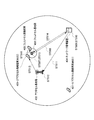
- FIG. 7 and 8 are diagrams showing an example of hierarchical cell arrangement and interference control procedures.
- FIG. 7 shows the association processing of ST501 to ST506, and
- FIG. 8 shows the interference control procedure after ST507.
- the macro cell connection terminal 401-2 (MUE 2), not the macro cell connection terminal 401-1 (MUE 1), is an interference source to the femto cell base station 403.
- the downlink quality of MUE2 is deteriorated from the quality expected from the spatial propagation loss between the macrocell base station 402 and MUE2 due to the presence of interference from the femtocell base station 403. Therefore, the macro cell base station 402 selects the MUE 2 from the plurality of macro cell connection terminals 401 and instructs the neighboring cell measurement (ST501).
- MUE2 measures the reception level of the downlink common signal (that is, the reference signal and the like) transmitted from femtocell base station 403, and receives the femtocell identifier (ST502). Then, MUE2 notifies the neighboring cell detection result to macro cell base station 402 (ST503). Macrocell base station 402 associates the identifier of MUE2 with the identifier of the femtocell (ST504), and transmits the association information to network management apparatus 404 (ST505). Network management apparatus 404 stores the association information for a predetermined period (ST506).
- the downlink common signal that is, the reference signal and the like
- the femtocell base station 403 measures the reception level of the uplink reference signal (ST507). As a result, femtocell base station 403 determines that the uplink quality of the own cell cannot be maintained because the uplink interference level is high, and sends an interference reduction request to network management apparatus 404 (ST508).
- Network management apparatus 404 receives the interference reduction request from femtocell base station 403, and selects MUE2, which is a macro cell connection terminal associated with the femtocell (ST509). Then, the network management apparatus 404 considers the content of the interference reduction request from the femtocell base station 403, and allocates frequency bands so that the frequency band used by the femtocell connection terminal 405 is different from the frequency band used by the MUE2. Is determined (ST510). Then, network management apparatus 404 notifies macro cell base station 402 of the identifier of macro cell connection terminal MUE2 and the frequency band assignment determined in step ST510 (ST511).
- network management apparatus 404 also notifies femtocell base station 403 of the frequency band assignment determined in step ST510 (ST514).
- Each of the macrocell base station 402 and the femtocell base station 403 performs frequency scheduling of the own cell connection terminal according to the contents notified from the network management device 404.
- the terminal existing in the vicinity of the femtocell is recorded in the network management apparatus before the interference reduction request from the femtocell is generated, information from all the terminals is newly renewed.
- the frequency band limitation can be performed only for the specific terminal that is the interference source without collecting. As a result, it is possible to suppress radio resource consumption due to increased signaling while maintaining responsiveness of interference control with respect to changes in the radio environment, and to reduce uplink radio channel interference from the macro cell connected terminal to the femto cell base station.
- Embodiment 2 of the present invention the necessity of association is determined in identifier association step ST504 described in Embodiment 1. For this determination, the reception level of the downlink signal of the femto cell in the macro cell connected terminal is used. Therefore, in the detection result notification step ST503, the macro cell connection terminal notifies the macro cell base station of the reception strength of the downlink reference signal transmitted from the femto cell base station in addition to the identifier of the detected femto cell base station. .
- the basic configuration and operation of the mobile communication system in the second embodiment of the present invention are the same as those in the first embodiment.
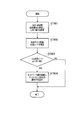
- FIG. 9 is a flowchart showing an identifier association step and an association information notification step according to Embodiment 2 of the present invention.
- the flow in which the macro cell base station 402 determines whether to perform identifier association based on the detection result of the femtocell base station 403 in the macro cell connection terminal 401 and notify the network management device 404 is made clear.
- the transmitter 4021 of the macrocell base station 402 adjusts the determination threshold 1 in accordance with the downlink transmission power adjustment of the femtocell base station 403 (ST601). Specifically, the transmitter 4021 makes a determination in accordance with the increase in spatial propagation loss between the macro cell base station 402 and the macro cell connection terminal 401 measured by the receiver 4025 using the uplink reference signal. Decrease threshold value 1. That is, the transmitter 4021 decreases the determination threshold 1 as the spatial propagation loss between the macrocell base station 402 and the macrocell connection terminal 401 increases.
- the threshold reduction width is proportional to the downlink transmission power adjustment width of the femtocell base station 403.
- Macro cell connection terminal 401 measures the reception level of the downlink reference signal transmitted from femtocell base station 403 (ST602). The reception strength measured here is notified to the macro cell base station 402.
- Macro cell base station 402 determines whether or not to perform identifier association based on the detection result of femtocell base station 403 in macro cell connection terminal 401 and notify network management apparatus 404 (ST603).
- the reception level of the downlink signal of the femto cell in the macro cell connection terminal 401 is used as a criterion.
- transmitter 4021 of macro cell base station 402 compares the reception level of the downlink signal of the femto cell with determination threshold value 1. If the reception level is greater than or equal to determination threshold 1 (ST603: YES), transmission section 4021 associates macrocell connection terminal 401 with femtocell base station 403, and sends the association information to network management apparatus 404. (ST604).
- the downlink transmission power and cell coverage of the femtocell base station 403 may change depending on the installation position of the femtocell base station 403 in the macro cell. For example, when the femtocell base station 403 is installed at the macro cell edge, the downlink interference level from the macro cell base station 402 is reduced, so that the control for reducing the downlink transmission power of the femtocell base station 403 is performed. Can be considered. At this time, in order to correctly perform the determination in step ST603, it is necessary to consider the influence of the position in the macro cell of the femtocell base station 403.
- the determination threshold 1 is adjusted in accordance with the adjustment of the downlink transmission power of the femtocell base station 403 in ST601. Thereby, the determination accuracy of ST603 is improved.
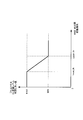
- FIG. 10 shows an example of the above-described function for adjusting the determination threshold.
- the horizontal axis represents the spatial propagation loss between the macro cell base station and the macro cell connection terminal
- the vertical axis represents the magnitude of the determination threshold value 1.
- an upper limit and a lower limit are set for the determination threshold 1.
- the determination threshold 1 becomes smaller in proportion to the value of the spatial propagation loss.
- the function shape and adjustment width are matched with the function for adjusting the downlink transmission power of the femtocell base station 403.
- the macro cell base station 402 performs the determination on the association between the identifier and the notification to the network management device 404, but the present invention is not limited to this.
- the macro cell connection terminal 401 may determine the identifier association based on the reception level of the downlink reference signal transmitted from the femtocell base station 403.
- the present embodiment by performing condition determination using the reception level of the downlink reference signal transmitted from the femtocell base station, only terminals that can be interference sources are associated with the femtocell base station. And the amount of signaling required for notification of association information can be reduced.
- Embodiment 3 of the present invention the necessity of association is determined in identifier association step ST504 described in Embodiment 1.
- the transmission power level of the macro cell connected terminal is used. Specifically, if the transmission power of a macro cell connection terminal is large, it is expected that the amount of uplink interference given to nearby femto cell base stations will also increase. Associate with a station. With this additional function, it is possible to further narrow down the macro cell connection terminals associated with the femtocell base station. Note that the basic configuration and operation of the mobile communication system in the third embodiment of the present invention are the same as those in the first embodiment.
- FIG. 11 is a flowchart showing an identifier association step and an association information notification step according to Embodiment 3 of the present invention.
- FIG. 11 discloses a determination method that reflects the transmission power level of the macro cell connection terminal 401 based on the uplink transmission rate of the macro cell connection terminal 401 and the propagation loss between the macro cell base station 402 and the macro cell connection terminal 401. ing.
- the transmitter 4021 of the macro cell base station 402 adjusts the threshold 2 according to the spatial propagation loss between the macro cell base station 402 and the macro cell connection terminal 401 (ST801). Specifically, the transmitter 4021 makes a determination in accordance with the increase in spatial propagation loss between the macro cell base station 402 and the macro cell connection terminal 401 measured by the receiver 4025 using the uplink reference signal. Lower threshold value 2. That is, the transmitter 4021 decreases the determination threshold 2 as the spatial propagation loss between the macrocell base station 402 and the macrocell connection terminal 401 increases.
- the receiving unit 4025 of the macro cell base station 402 measures the uplink transmission rate of the macro cell connection terminal 401 (ST802).
- Macro cell base station 402 determines whether or not to perform identifier association based on the detection result of femtocell base station 403 in macro cell connection terminal 401 and notify network management apparatus 404 (ST803).
- the uplink transmission rate of the macro cell connection terminal 401 is used as a criterion.
- transmitting section 4021 compares the measured uplink transmission rate with threshold value 2 (ST803). Then, when the uplink transmission rate is equal to or higher than threshold value 2 (ST803: YES), transmission section 4021 associates macrocell connection terminal 401 with femtocell base station 403, and transmits the corresponding to network management apparatus 404.
- the association information is notified (ST804). This is due to the following reason.
- the transmission power of the macro cell connection terminal 401 may be used as a criterion.
- transmission section 4021 does not associate macro cell connection terminal 401 with femtocell base station 403, and does not connect to network management apparatus 404. Do not notify.
- the transmission power to satisfy the required data error rate increases as the spatial propagation loss between the terminal and the base station increases.
- the macro cell base station 402 The threshold value 2 is adjusted according to the spatial propagation loss with the macro cell connection terminal 401.
- FIG. 12 shows an example of a function for adjusting the above-described determination threshold value.
- the horizontal axis represents the spatial propagation loss between the macro cell base station and the macro cell connected terminal, and the vertical axis represents the magnitude of the determination threshold value 2.
- the determination threshold 2 has an upper limit and a lower limit. Then, when the value of the spatial propagation loss is in a certain range (the range between lower_th and upper_th in FIG. 12), the determination threshold 2 becomes smaller in proportion to the value of the spatial propagation loss.
- the function shape and adjustment range are calculated as follows. First, the allowable amount of uplink interference in the femtocell base station 403 is defined. One macro cell connection terminal 401 is virtually arranged so that the spatial propagation loss with the femto cell base station 403 becomes a fixed value. The maximum value of the terminal transmission rate that does not exceed the femtocell allowable interference amount is set as the determination threshold value at the virtual placement position. If the above is calculated according to the position in a macrocell, the function of FIG. 12 can be calculated
- the above method employs a configuration in which the macro cell base station performs a determination regarding identifier association and notification to the network management device, but the present invention is not limited to this.
- the macro cell connection terminal 401 may directly determine the identifier association using the transmission power of the own device.
- the present embodiment it is possible to associate only the macro cell connection terminal 401 that can be an interference source with the femtocell base station 403 by performing the condition determination according to the transmission power of the macro cell connection terminal 401.
- the amount of signaling required for notification of association information can be reduced.
- the reception level at the macro cell connection terminal 401 of the downlink reference signal transmitted from the femto cell base station 403 is used as a determination condition for associating the femto cell base station 403 with the macro cell connection terminal 401.
- the transmission power of the macro cell connection terminal 401 is used.
- the present invention is not limited to the above-described form.
- the position information of the femtocell base station 403 and the macro cell connection terminal 401 is acquired by GPS or the like, and the association may be performed only when the geographical position is close. Is possible. As a result, it is possible to remove the influence of the variation in the wireless measurement accuracy of the macro cell connection terminal 401 and the temporal variation of the wireless environment, and to obtain an effect that the stable association can be performed.
- the detection of neighboring femtocells in the macrocell connection terminal 401 is performed based on an instruction from the macrocell base station 402, and the macrocell connection terminal 401 is defined by, for example, a cell search procedure.
- a method of automatically executing at a predetermined cycle was described.
- the macro cell base station 402 can periodically instruct the macro cell connection terminal 401 to detect neighboring femto cells and update the association information of the network management device 404.
- the update period can be changed by the network management apparatus 404 based on, for example, the number of femtocells installed in the macrocell or the number of terminals.
- the association between the femtocell and the macro cell connection terminal changes, it is also possible to send signaling for updating the content of the interference reduction instruction from the network management device 404 to the macro cell base station 402. As a result, it is possible to cope with a change in association due to movement of the macro cell connection terminal 401 and to appropriately perform frequency band limitation on the macro cell connection terminal 401 serving as an interference source.
- the purpose is to reduce the uplink radio channel interference from the macro cell connection terminal 401 to the femtocell base station 403, but the gist of the present invention is the uplink radio channel interference between adjacent femtocells. It is also possible to apply to. That is, in the femtocell base station 403 or the femtocell connection terminal 405, it is possible to measure the downlink signal of the adjacent femtocell and detect information, and to perform association between the adjacent femtocells.
- the femtocell base station 403 When the femtocell base station 403 wants to reduce uplink radio channel interference, it first sends an interference reduction request to the adjacent femtocell base station 403 to attempt interference control between the adjacent femtocell base stations 403. When the desired interference reduction cannot be achieved, an interference reduction request is sent to the macrocell base station 402 through the network management device 404. Thereby, the effect that the interference reduction by appropriate frequency band allocation can be implemented also between adjacent femtocells is acquired.
- frequency band allocation to the macro cell connection terminal 401 or the femto cell connection terminal 405 is performed.
- transmission power allocation or transmission timing allocation to the macro cell connection terminal 401 or the femto cell connection terminal 405 is also adjusted in the network management device 404 and sent to the macro cell base station 402 or the femto cell base station 403. It is also possible to indicate. Thereby, it is possible to further reduce uplink interference between the macro cell base station 402 and the femto cell base station 403.
- the storage unit 4043 of the network management apparatus 404 stores the association between the femtocell base station 403 and the macrocell connection terminal 401, the selection unit 4042 selects a terminal that is an interference source, and the interference
- the control unit 4045 adopts a configuration in which frequency band allocation is performed, but without changing the gist of the present invention, adopts a configuration in which all the functions of the above units are moved to the macro cell base station 402 or the femto cell base station 403. Is also possible.
- each functional block used in the description of each of the above embodiments is typically realized as an LSI which is an integrated circuit. These may be individually made into one chip, or may be made into one chip so as to include a part or all of them. Although referred to as LSI here, it may be referred to as IC, system LSI, super LSI, or ultra LSI depending on the degree of integration.
- the method of circuit integration is not limited to LSI, and implementation with a dedicated circuit or a general-purpose processor is also possible.
- An FPGA Field Programmable Gate Array
- a reconfigurable processor that can reconfigure the connection and setting of circuit cells inside the LSI may be used.
- the mobile communication system, network management device, base station device, and interference control method of the present invention are useful for reducing uplink radio channel interference from a macro cell connection terminal to a femto cell base station.
Landscapes
- Engineering & Computer Science (AREA)
- Quality & Reliability (AREA)
- Computer Networks & Wireless Communication (AREA)
- Signal Processing (AREA)
- Mobile Radio Communication Systems (AREA)
Abstract
Description
(1)フェムトセル基地局の送信電力が低く、セル半径が狭い。
(2)フェムトセル基地局に対して同時接続可能な端末数が少ない。具体的には、同時接続可能な端末数は、マクロセルでは数十端末以上であるのに対し、フェムトセルでは数端末程度となる。
(3)通信事業者によって事前にフェムトセルの置局設計を行うことが困難である。
(4)ユーザの固定網をネットワーク構成に組み込んでいる。因みに、マクロセルにおいては、端末108は、通信事業者管理の基地局107および無線アクセスネットワーク109を介してコアネットワーク105と接続する。
図5は、本発明の実施の形態1に係る移動通信システムの構成を示すブロック図である。図5においては、干渉低減に直接関係しない機能ブロックの記載は省略されている。
本発明の実施の形態2においては、実施の形態1で記述した識別子関連付けステップST504で関連付けの必要性が判定される。この判定には、マクロセル接続端末における、フェムトセルの下り回線信号の受信レベルが利用される。従って、検出結果通知ステップST503において、マクロセル接続端末は、マクロセル基地局に対して、検出フェムトセル基地局の識別子に加えて、当該フェムトセル基地局から送信された下り参照信号の受信強度を通知する。なお、本発明の実施の形態2における移動通信システムの基本的な構成および動作は、実施の形態1と同様である。
本発明の実施の形態3においては、実施の形態1で記述した識別子関連付けステップST504で関連付けの必要性が判定される。この判定には、マクロセル接続端末の送信電力レベルが利用される。具体的には、マクロセル接続端末の送信電力が大きければ、近傍のフェムトセル基地局に与える上り回線干渉量も大きくなることが見込まれるため、そのような端末については、事前に近傍のフェムトセル基地局と関連付けておく。この追加機能により、フェムトセル基地局と関連付けるマクロセル接続端末を更に絞り込むことができる。なお、本発明の実施の形態3における移動通信システムの基本的な構成および動作は、実施の形態1と同様である。
(1)実施の形態2および3では、フェムトセル基地局403とマクロセル接続端末401との関連付けの判定条件として、フェムトセル基地局403から送信された下り参照信号のマクロセル接続端末401における受信レベル、または、マクロセル接続端末401の送信電力を使用した。本発明は上記の形態に限定されることなく、例えば、フェムトセル基地局403とマクロセル接続端末401の位置情報をGPS等により取得し、地理上の位置が近接する場合にのみ関連付けを行うことも可能である。これにより、マクロセル接続端末401の無線測定精度のばらつきや無線環境の時間的変動等の影響を除去し、安定した関連付けを行うことができるという効果が得られる。
402 マクロセル基地局
403 フェムトセル基地局
404 ネットワーク管理装置
405 フェムトセル接続端末
4011,4021,4031,4041,4051 送信部
4012,4052 測定部
4013,4025,4034,4044,4053 受信部
4022 指示部
4023,4033 スケジューラ部
4024,4032,4045 干渉制御部
4042 選定部
4043 記憶部
Claims (9)
- マクロセル基地局と、
前記マクロセル基地局に無線接続するマクロセル接続端末と、
フェムトセル基地局と、
前記フェムトセル基地局に無線接続するフェムトセル接続端末と、
前記フェムトセル基地局及び前記マクロセル基地局と接続されたネットワーク管理装置と、
を備えた移動通信システムであって、
前記マクロセル接続端末は、
周辺にフェムトセル基地局が存在するかどうか検出する測定部と、
前記フェムトセル基地局の存在を検出した場合に、前記マクロセル基地局に周辺フェムトセル基地局の検出結果を送付する送信部と、
を備え、
前記マクロセル基地局は、
前記マクロセル接続端末から送信された検出結果に基づいて、前記マクロセル接続端末の識別子及び前記周辺フェムトセル検出結果を前記ネットワーク管理装置に送信する送信部と、
前記ネットワーク管理装置から送信された干渉低減指示を受信する受信部と、
前記干渉低減指示に基づいて前記マクロセル接続端末に対して周波数帯域の割り当てを制限するスケジューラ部と、
を備え、
前記フェムトセル基地局は、
自セルの上り回線品質の維持ができないと判断した場合に、前記ネットワーク管理装置に対して干渉低減要求を送信する干渉制御部と、
前記ネットワーク管理装置から送信された干渉制御指示に基づいて、前記フェムトセル接続端末に対して周波数帯域の割り当てを制限するスケジューラ部と、
を備え、
前記ネットワーク管理装置は、
前記マクロセル接続端末の識別子と前記フェムトセル基地局の識別子との対応関係情報を保持する記憶部と、
前記フェムトセル基地局から送信された干渉低減要求を受信する受信部と、
前記受信した干渉低減要求と前記記憶部に保持された対応関係情報に基づき、前記フェムトセル基地局と対応関係にある前記マクロセル接続端末に対して前記フェムトセル基地局と前記マクロセル基地局との使用周波数帯域が重ならないように周波数帯域割り当てを決定する干渉制御部と、
前記周波数帯域割り当ての情報を含む干渉低減指示を前記マクロセル基地局に対して送信する送信部と、
を備える、移動通信システム。 - 前記マクロセル基地局は、マクロセル接続端末において測定されたフェムトセルの下り参照信号の受信強度が第一しきい値以上の場合、当該フェムトセル基地局の識別子をネットワーク管理装置に送付する、請求項1に記載の移動通信システム。
- 前記第一しきい値は、マクロセル基地局とマクロセル接続端末との間の伝搬損失の増大に比例して引き下げられる、請求項2記載の移動通信システム。
- 前記マクロセル基地局は、マクロセル接続端末の送信電力が第二しきい値以上のときに限り、フェムトセル基地局の識別子をネットワーク管理装置に送付する、請求項1記載の移動通信システム。
- 前記マクロセル基地局は、マクロセル接続端末において上り回線伝送レートが第三しきい値以上のときに限り、フェムトセル基地局の識別子をマクロセル基地局からネットワーク管理装置に送付する、請求項1記載の移動通信システム。
- 前記第三しきい値は、マクロセルセル基地局とマクロセル接続端末間の伝搬損失の増大に比例して引き下げられる、請求項5記載の移動通信システム。
- マクロセル基地局に無線接続するマクロセル接続端末の識別子と、前記マクロセル接続端末が検出したフェムトセル基地局の識別子の対応関係情報を保持する記憶部と、
前記フェムトセル基地局から送信された干渉低減要求を受信する受信部と、
前記干渉低減要求の送付元であるフェムトセル基地局に対応する前記マクロセル接続端末の識別子を前記対応関係情報に基づき選定する選定部と、
前記干渉低減要求と前記記憶部に保持された対応関係情報に基づき、前記フェムトセル基地局と前記マクロセル基地局との使用周波数帯域が重ならないように周波数帯域割り当てを決定する干渉制御部と、
前記選定部で選定された前記マクロセル接続端末の識別子および前記周波数帯域割り当ての情報を含む干渉低減指示を、前記マクロセル基地局に送付する送信部と、
を具備するネットワーク管理装置。 - 自セルに接続するマクロセル接続端末に対し、周辺にあるフェムトセル基地局のセル識別子検出を指示する指示部と、
前記マクロセル接続端末から送信されてきた周辺フェムトセル基地局の検出結果と、前記ネットワーク管理装置から送信された干渉低減指示および端末識別子情報を受信する受信部と、
前記マクロセル接続端末からの検出結果に基づいて、前記マクロセル接続端末の識別子及び前記周辺フェムトセル検出結果を前記ネットワーク管理装置に送信する送信部と、
前記干渉低減指示に基づき、前記識別子情報で指定された前記マクロセル接続端末への無線資源割り当てを調整する干渉制御部と、
前記干渉制御部の調整に従って前記マクロセル接続端末に対して周波数帯域の割り当てを制限するスケジューラ部と、
を具備するマクロセル基地局装置。 - マクロセル基地局と、フェムトセル基地局と、ネットワーク管理装置と、を備えた移動通信システムに用いられる干渉制御方法であって、
前記マクロセル基地局に無線接続するマクロセル接続端末において、
周辺に前記フェムトセル基地局が存在するかどうか検出し、前記フェムトセル基地局の存在を検出した場合に、前記マクロセル基地局に周辺フェムトセル基地局の検出結果を送付し、
前記マクロセル基地局において、
前記マクロセル接続端末から送信された検出結果に基づいて、前記マクロセル接続端末の識別子及び前記周辺フェムトセル検出結果を前記ネットワーク管理装置に送信し、
前記ネットワーク管理装置から送信された干渉低減指示を受信し、
前記受信した干渉低減指示に基づいて、前記マクロセル接続端末に対して周波数帯域の割り当てを制限し、
前記フェムトセル基地局において、
自セルの上り回線品質の維持ができないと判断した場合に、前記ネットワーク管理装置に対して干渉低減要求を送信し、
前記ネットワーク管理装置から送信された干渉制御指示に基づいて、管轄フェムトセルに無線接続する端末に対して周波数帯域の割り当てを制限し、
前記ネットワーク管理装置において、
前記マクロセル接続端末の識別子と前記フェムトセル基地局の識別子との対応関係情報を保持し、
前記フェムトセル基地局から送信された干渉低減要求を受信し、
前記受信した干渉低減要求と記憶部に保持された対応関係情報に基づき、前記フェムトセル基地局と対応関係にある前記マクロセル接続端末に対して前記フェムトセル基地局と前記マクロセル基地局との使用周波数帯域が重ならないように周波数帯域割り当てを決定し、
前記周波数帯域割り当ての情報を含む干渉低減指示を前記マクロセル基地局に対して送信する、
干渉制御方法。
Priority Applications (4)
| Application Number | Priority Date | Filing Date | Title |
|---|---|---|---|
| JP2011527584A JPWO2011021388A1 (ja) | 2009-08-19 | 2010-08-18 | 移動通信システム、ネットワーク管理装置、マクロセル基地局装置、および干渉制御方法 |
| CN201080035106.5A CN102474731B (zh) | 2009-08-19 | 2010-08-18 | 移动通信系统、网络管理装置、宏小区基站装置及干扰控制方法 |
| US13/389,312 US8700046B2 (en) | 2009-08-19 | 2010-08-18 | Mobile communication system, network management apparatus, macrocell base station apparatus, and interference control method |
| EP10809734.6A EP2469911A4 (en) | 2009-08-19 | 2010-08-18 | MOBILE COMMUNICATION SYSTEM, NETWORK MANAGEMENT DEVICE, MACROCELLENT BASISSTATION DEVICE AND INTERFERENCE CONTROL METHOD |
Applications Claiming Priority (2)
| Application Number | Priority Date | Filing Date | Title |
|---|---|---|---|
| JP2009-190431 | 2009-08-19 | ||
| JP2009190431 | 2009-08-19 |
Publications (1)
| Publication Number | Publication Date |
|---|---|
| WO2011021388A1 true WO2011021388A1 (ja) | 2011-02-24 |
Family
ID=43606847
Family Applications (1)
| Application Number | Title | Priority Date | Filing Date |
|---|---|---|---|
| PCT/JP2010/005100 Ceased WO2011021388A1 (ja) | 2009-08-19 | 2010-08-18 | 移動通信システム、ネットワーク管理装置、マクロセル基地局装置、および干渉制御方法 |
Country Status (5)
| Country | Link |
|---|---|
| US (1) | US8700046B2 (ja) |
| EP (1) | EP2469911A4 (ja) |
| JP (1) | JPWO2011021388A1 (ja) |
| CN (1) | CN102474731B (ja) |
| WO (1) | WO2011021388A1 (ja) |
Cited By (16)
| Publication number | Priority date | Publication date | Assignee | Title |
|---|---|---|---|---|
| WO2012127586A1 (ja) * | 2011-03-18 | 2012-09-27 | 富士通株式会社 | 無線通信システム、移動局、基地局、及び無線通信方法 |
| CN102905302A (zh) * | 2011-07-25 | 2013-01-30 | 上海无线通信研究中心 | 一种混合网中上行干扰控制方法 |
| JP2013085247A (ja) * | 2011-10-05 | 2013-05-09 | Samsung Electronics Co Ltd | 重畳無線ネットワーク環境におけるリソース割り当て方法及び装置 |
| WO2013065838A1 (ja) * | 2011-11-03 | 2013-05-10 | 京セラ株式会社 | 移動通信システム及び移動通信方法 |
| CN103167537A (zh) * | 2011-12-12 | 2013-06-19 | 中国移动通信集团公司 | 一种上行干扰测量方法、系统及装置 |
| CN103228050A (zh) * | 2012-01-25 | 2013-07-31 | 株式会社日立制作所 | 无线通信基站、无线通信系统及上行通信干扰控制方法 |
| WO2013115252A1 (ja) * | 2012-01-30 | 2013-08-08 | 株式会社エヌ・ティ・ティ・ドコモ | 移動通信方法、無線基地局及び移動局 |
| WO2013134946A1 (zh) * | 2012-03-16 | 2013-09-19 | 富士通株式会社 | 操作载波的选择方法、微基站及宏基站 |
| JP2014033249A (ja) * | 2012-08-01 | 2014-02-20 | Ntt Docomo Inc | 無線通信システムおよび上りリンクリソース割り当て方法 |
| WO2014033854A1 (ja) * | 2012-08-29 | 2014-03-06 | 富士通株式会社 | 基地局装置、通信システム及び通信方法 |
| JP2014507101A (ja) * | 2011-03-02 | 2014-03-20 | クゥアルコム・インコーポレイテッド | マルチ無線共存(multi−radiocoexistence)へのサポートを可能にするための方法および装置 |
| CN103716858A (zh) * | 2012-09-29 | 2014-04-09 | 中兴通讯股份有限公司 | 一种实现小小区为ue服务的方法、装置和系统 |
| CN103733670A (zh) * | 2011-10-07 | 2014-04-16 | 松下电器产业株式会社 | 小型基站及被干扰终端装置检测方法 |
| JP2015524637A (ja) * | 2012-08-08 | 2015-08-24 | テレフオンアクチーボラゲット エル エム エリクソン(パブル) | マルチ標準無線アクセスネットワークのための無線アクセス技術間干渉協調 |
| WO2016059867A1 (ja) * | 2014-10-16 | 2016-04-21 | ソニー株式会社 | 通信制御装置、基地局、端末装置、通信制御方法及び無線通信方法 |
| JP2016524368A (ja) * | 2013-05-03 | 2016-08-12 | クアルコム,インコーポレイテッド | 高性能WiFiを使用した協調メッセージングのためのシステムおよび方法 |
Families Citing this family (18)
| Publication number | Priority date | Publication date | Assignee | Title |
|---|---|---|---|---|
| EP2485517B1 (en) * | 2009-10-01 | 2018-11-14 | Nec Corporation | Configuration of a home base station as a target for measurement by a mobile station connected to a macro base station |
| US9572045B2 (en) * | 2010-09-14 | 2017-02-14 | Fujitsu Limited | Method and system for activating a femto base station |
| JP5432883B2 (ja) * | 2010-11-26 | 2014-03-05 | 株式会社Nttドコモ | 基地局及び方法 |
| KR101808090B1 (ko) * | 2012-03-28 | 2017-12-13 | 한국전자통신연구원 | 펨토셀 기지국의 제어 방법 및 장치 |
| WO2014012222A1 (zh) * | 2012-07-17 | 2014-01-23 | 华为技术有限公司 | 一种上行干扰管理方法、节点及系统 |
| EP2884789B1 (en) * | 2012-08-13 | 2021-05-19 | Sony Corporation | Communication control device, terminal device, and communication control method |
| US8744464B2 (en) * | 2012-09-12 | 2014-06-03 | Verizon Patent And Licensing Inc. | Interference coordination in heterogeneous networks |
| EP2709393B1 (en) * | 2012-09-13 | 2019-05-22 | Alcatel Lucent | Frequency band selection in heterogeneous networks |
| JP6065521B2 (ja) * | 2012-10-25 | 2017-01-25 | 富士通株式会社 | 基地局、通信システムおよび通信方法 |
| TWI467936B (zh) * | 2012-11-22 | 2015-01-01 | Ind Tech Res Inst | 光載無線通訊系統中抑制干擾的方法與裝置 |
| US9813178B2 (en) | 2012-11-26 | 2017-11-07 | Qualcomm Incorporated | Systems and methods for small cell uplink interference cancellation using cooperation between small cells |
| US20150358976A1 (en) * | 2013-01-28 | 2015-12-10 | Telefonaktiebolaget L M Ericsson (Publ) | Protecting UL Control Channels in Dynamic/Flexible TDD |
| EP2773055B1 (en) * | 2013-02-27 | 2018-07-04 | Telefónica, S.A. | Method, system and computer program for cancelling uplink interference in a wireless network |
| US20150334612A1 (en) * | 2014-05-13 | 2015-11-19 | Qualcomm Incorporated | Small cell channel selection |
| CN107171880A (zh) * | 2016-03-08 | 2017-09-15 | 中兴通讯股份有限公司 | 一种节省基站基带资源和功率资源的方法及装置 |
| US10736119B2 (en) * | 2017-02-21 | 2020-08-04 | Northwestern University | Radio resource management in large wireless networks |
| CN109831783B (zh) * | 2017-11-23 | 2022-03-04 | 中国电信股份有限公司 | 开通微基站的方法和系统 |
| KR102273913B1 (ko) * | 2018-08-20 | 2021-07-07 | 한양대학교 산학협력단 | 무선통신 시스템에서 단말 정보 수집장치의 상향링크 간섭제어 방법 및 장치 |
Citations (5)
| Publication number | Priority date | Publication date | Assignee | Title |
|---|---|---|---|---|
| WO2008121037A1 (en) * | 2007-03-30 | 2008-10-09 | Telefonaktiebolaget Lm Ericsson (Publ) | A method and a device for dynamic frequency use in a cellular network |
| JP2008252253A (ja) * | 2007-03-29 | 2008-10-16 | Kddi Corp | 基地局制御装置、無線通信システムおよび基地局制御方法 |
| US20090081970A1 (en) | 2007-09-21 | 2009-03-26 | Qualcomm Incorporated | Interference management employing fractional frequency reuse |
| JP2009190431A (ja) | 2008-02-12 | 2009-08-27 | Hitachi Ltd | 鉄道システムの情報表示方法 |
| JP2010016420A (ja) * | 2008-06-30 | 2010-01-21 | Fujitsu Ltd | 基地局装置、無線端末、無線通信管理装置および無線通信システム |
Family Cites Families (6)
| Publication number | Priority date | Publication date | Assignee | Title |
|---|---|---|---|---|
| CN101094213A (zh) | 2006-06-20 | 2007-12-26 | 华为技术有限公司 | 一种频率软复用系统及方法 |
| US8909279B2 (en) * | 2007-08-10 | 2014-12-09 | Qualcomm Incorporated | Adaptation of transmit power for neighboring nodes |
| US9622192B2 (en) * | 2008-02-01 | 2017-04-11 | Qualcomm Incorporated | Virtual scheduling in heterogeneous networks |
| US8521206B2 (en) * | 2008-04-22 | 2013-08-27 | Qualcomm Incorporated | Interference management with reduce interference requests and interference indicators |
| US8838116B2 (en) * | 2009-05-19 | 2014-09-16 | Qualcomm Incorporated | Minimizing interference to non-associated users |
| US9155049B2 (en) * | 2009-08-17 | 2015-10-06 | Nokia Solutions And Networks Oy | Method and apparatus for power reduction control in home network environment |
-
2010
- 2010-08-18 CN CN201080035106.5A patent/CN102474731B/zh not_active Expired - Fee Related
- 2010-08-18 EP EP10809734.6A patent/EP2469911A4/en not_active Withdrawn
- 2010-08-18 US US13/389,312 patent/US8700046B2/en not_active Expired - Fee Related
- 2010-08-18 WO PCT/JP2010/005100 patent/WO2011021388A1/ja not_active Ceased
- 2010-08-18 JP JP2011527584A patent/JPWO2011021388A1/ja active Pending
Patent Citations (5)
| Publication number | Priority date | Publication date | Assignee | Title |
|---|---|---|---|---|
| JP2008252253A (ja) * | 2007-03-29 | 2008-10-16 | Kddi Corp | 基地局制御装置、無線通信システムおよび基地局制御方法 |
| WO2008121037A1 (en) * | 2007-03-30 | 2008-10-09 | Telefonaktiebolaget Lm Ericsson (Publ) | A method and a device for dynamic frequency use in a cellular network |
| US20090081970A1 (en) | 2007-09-21 | 2009-03-26 | Qualcomm Incorporated | Interference management employing fractional frequency reuse |
| JP2009190431A (ja) | 2008-02-12 | 2009-08-27 | Hitachi Ltd | 鉄道システムの情報表示方法 |
| JP2010016420A (ja) * | 2008-06-30 | 2010-01-21 | Fujitsu Ltd | 基地局装置、無線端末、無線通信管理装置および無線通信システム |
Non-Patent Citations (2)
| Title |
|---|
| See also references of EP2469911A4 |
| TS36.423 VER.8.4.0, December 2008 (2008-12-01) |
Cited By (32)
| Publication number | Priority date | Publication date | Assignee | Title |
|---|---|---|---|---|
| JP2014507101A (ja) * | 2011-03-02 | 2014-03-20 | クゥアルコム・インコーポレイテッド | マルチ無線共存(multi−radiocoexistence)へのサポートを可能にするための方法および装置 |
| WO2012127586A1 (ja) * | 2011-03-18 | 2012-09-27 | 富士通株式会社 | 無線通信システム、移動局、基地局、及び無線通信方法 |
| US9204318B2 (en) | 2011-03-18 | 2015-12-01 | Fujitsu Limited | Wireless communication system, mobile station, base station, and wireless communication method for reducing interference of data |
| JP5565521B2 (ja) * | 2011-03-18 | 2014-08-06 | 富士通株式会社 | 無線通信システム、移動局、基地局、及び無線通信方法 |
| CN102905302B (zh) * | 2011-07-25 | 2017-02-22 | 上海无线通信研究中心 | 一种混合网中上行干扰控制方法 |
| CN102905302A (zh) * | 2011-07-25 | 2013-01-30 | 上海无线通信研究中心 | 一种混合网中上行干扰控制方法 |
| JP2013085247A (ja) * | 2011-10-05 | 2013-05-09 | Samsung Electronics Co Ltd | 重畳無線ネットワーク環境におけるリソース割り当て方法及び装置 |
| CN103733670A (zh) * | 2011-10-07 | 2014-04-16 | 松下电器产业株式会社 | 小型基站及被干扰终端装置检测方法 |
| EP2733977A4 (en) * | 2011-10-07 | 2015-04-22 | Panasonic Corp | MICROBASE STATION AND METHOD FOR DETECTING A SURGE THERAPY EQUIPMENT |
| US9491630B2 (en) | 2011-11-03 | 2016-11-08 | Kyocera Corporation | Mobile communication system and mobile communication method |
| WO2013065838A1 (ja) * | 2011-11-03 | 2013-05-10 | 京セラ株式会社 | 移動通信システム及び移動通信方法 |
| CN103167537A (zh) * | 2011-12-12 | 2013-06-19 | 中国移动通信集团公司 | 一种上行干扰测量方法、系统及装置 |
| WO2013086948A1 (zh) * | 2011-12-12 | 2013-06-20 | 中国移动通信集团公司 | 一种上行干扰测量方法、系统及装置 |
| JP2013153334A (ja) * | 2012-01-25 | 2013-08-08 | Hitachi Ltd | 無線通信基地局、無線通信システム及び上り通信干渉制御方法 |
| CN103228050A (zh) * | 2012-01-25 | 2013-07-31 | 株式会社日立制作所 | 无线通信基站、无线通信系统及上行通信干扰控制方法 |
| US9083450B2 (en) | 2012-01-25 | 2015-07-14 | Hitachi, Ltd. | Base station, system, and method of macro and pico base station interference coordination using uplink prohibition period |
| EP2621236A3 (en) * | 2012-01-25 | 2014-06-25 | Hitachi Ltd. | Base station, system, and method of uplink interference coordination in wireless communication |
| WO2013115252A1 (ja) * | 2012-01-30 | 2013-08-08 | 株式会社エヌ・ティ・ティ・ドコモ | 移動通信方法、無線基地局及び移動局 |
| WO2013134946A1 (zh) * | 2012-03-16 | 2013-09-19 | 富士通株式会社 | 操作载波的选择方法、微基站及宏基站 |
| JP2014033249A (ja) * | 2012-08-01 | 2014-02-20 | Ntt Docomo Inc | 無線通信システムおよび上りリンクリソース割り当て方法 |
| JP2015524637A (ja) * | 2012-08-08 | 2015-08-24 | テレフオンアクチーボラゲット エル エム エリクソン(パブル) | マルチ標準無線アクセスネットワークのための無線アクセス技術間干渉協調 |
| WO2014033854A1 (ja) * | 2012-08-29 | 2014-03-06 | 富士通株式会社 | 基地局装置、通信システム及び通信方法 |
| CN103716858B (zh) * | 2012-09-29 | 2018-12-14 | 中兴通讯股份有限公司 | 一种实现小小区为ue服务的方法、装置和系统 |
| CN103716858A (zh) * | 2012-09-29 | 2014-04-09 | 中兴通讯股份有限公司 | 一种实现小小区为ue服务的方法、装置和系统 |
| JP2016524368A (ja) * | 2013-05-03 | 2016-08-12 | クアルコム,インコーポレイテッド | 高性能WiFiを使用した協調メッセージングのためのシステムおよび方法 |
| JPWO2016059867A1 (ja) * | 2014-10-16 | 2017-07-27 | ソニー株式会社 | 通信制御装置、基地局、端末装置、通信制御方法及び無線通信方法 |
| US10075853B2 (en) | 2014-10-16 | 2018-09-11 | Sony Corporation | Communication control device, base station, terminal device, communication control method, and wireless communication method |
| WO2016059867A1 (ja) * | 2014-10-16 | 2016-04-21 | ソニー株式会社 | 通信制御装置、基地局、端末装置、通信制御方法及び無線通信方法 |
| US10397806B2 (en) | 2014-10-16 | 2019-08-27 | Sony Corporation | Communication control device, base station, terminal device, communication control method, and wireless communication method |
| US11064369B2 (en) | 2014-10-16 | 2021-07-13 | Sony Corporation | Communication control device, base station, terminal device, communication control method, and wireless communication method |
| US11736958B2 (en) | 2014-10-16 | 2023-08-22 | Sony Group Corporation | Communication control device, and communication control method for determining a frequency range to be used by a base station |
| US12069491B2 (en) | 2014-10-16 | 2024-08-20 | Sony Group Corporation | Communication control device, and communication control method for determining a frequency range to be used by a base station |
Also Published As
| Publication number | Publication date |
|---|---|
| US20120135743A1 (en) | 2012-05-31 |
| EP2469911A1 (en) | 2012-06-27 |
| EP2469911A4 (en) | 2016-08-17 |
| JPWO2011021388A1 (ja) | 2013-01-17 |
| US8700046B2 (en) | 2014-04-15 |
| CN102474731A (zh) | 2012-05-23 |
| CN102474731B (zh) | 2015-01-07 |
Similar Documents
| Publication | Publication Date | Title |
|---|---|---|
| CN102474731B (zh) | 移动通信系统、网络管理装置、宏小区基站装置及干扰控制方法 | |
| US9237477B2 (en) | Method and apparatus providing multi-level proximity indication and small cell discovery | |
| KR101479596B1 (ko) | 무선 통신 네트워크의 측정 보고 방법 및 장치 | |
| JP5388955B2 (ja) | 通信制御方法、通信システム、及び基地局装置 | |
| CN102498732B (zh) | 干扰控制方法、宏终端、宏基站以及毫微微基站 | |
| KR101476576B1 (ko) | 기지국 장치가 중계 장치의 식별 정보를 브로드캐스트하는 무선 통신 시스템 | |
| US8996007B2 (en) | Method and apparatus for reassigning frequency resource in a femto base station during handover | |
| US9084130B2 (en) | Mobile communication system, base station, network device, and control method and program thereof | |
| KR101723133B1 (ko) | 간섭 피해 단말 보호 및 펨토 기지국간 간섭을 제어하기 위한 펨토 기지국 자원 제어 방법 및 장치 | |
| JP5488690B2 (ja) | 通信品質の測定方法、無線基地局及び移動端末、並びに無線通信システム | |
| CN101816202A (zh) | 无线通信系统、无线通信方法、基站、移动站、基站控制方法、移动站控制方法及控制程序 | |
| WO2010099028A2 (en) | Determining time varying radio frequency isolation characteristics between network cells | |
| CN103181212A (zh) | 无线通信系统、基站、管理服务器和无线通信方法 | |
| CN102598756A (zh) | 大小区基站和通信控制方法 | |
| CN102273244A (zh) | 移动通信方法以及无线基站 | |
| US9668259B2 (en) | Small-scale base station, communication system, and communication method | |
| CN102598742A (zh) | 大小区基站和通信控制方法 | |
| CN102612846A (zh) | 移动通信系统、家庭无线基站以及运行频率决定方法 | |
| KR20120119828A (ko) | 인터넷?인트라넷 서비스를 동시 지원하는 패킷 데이터 네트워크 게이트웨이 장치 및 펨토 기지국 | |
| ES2985049T3 (es) | Una entidad controladora, un dispositivo de comunicación, un sistema y métodos correspondientes | |
| CN102835168A (zh) | 低功率基站和通信控制方法 | |
| KR20140010551A (ko) | 이종 네트워크 시스템에서 제어정보 전송방법 및 장치 | |
| CN102598820A (zh) | 大小区基站和通信控制方法 | |
| KR20140059769A (ko) | 인터넷·인트라넷 서비스를 동시 지원하는 패킷 데이터 네트워크 게이트웨이 장치 및 펨토 기지국 | |
| KR20160013611A (ko) | 이동 통신 시스템에서 셀 서비스 영역이 작은 셀간 핸드오버를 효율적으로 수행하기 위한 방법 및 장치 |
Legal Events
| Date | Code | Title | Description |
|---|---|---|---|
| WWE | Wipo information: entry into national phase |
Ref document number: 201080035106.5 Country of ref document: CN |
|
| 121 | Ep: the epo has been informed by wipo that ep was designated in this application |
Ref document number: 10809734 Country of ref document: EP Kind code of ref document: A1 |
|
| WWE | Wipo information: entry into national phase |
Ref document number: 2011527584 Country of ref document: JP |
|
| WWE | Wipo information: entry into national phase |
Ref document number: 13389312 Country of ref document: US |
|
| NENP | Non-entry into the national phase |
Ref country code: DE |
|
| WWE | Wipo information: entry into national phase |
Ref document number: 2010809734 Country of ref document: EP |