WO2011027708A1 - 車両用灯具 - Google Patents
車両用灯具 Download PDFInfo
- Publication number
- WO2011027708A1 WO2011027708A1 PCT/JP2010/064487 JP2010064487W WO2011027708A1 WO 2011027708 A1 WO2011027708 A1 WO 2011027708A1 JP 2010064487 W JP2010064487 W JP 2010064487W WO 2011027708 A1 WO2011027708 A1 WO 2011027708A1
- Authority
- WO
- WIPO (PCT)
- Prior art keywords
- light
- lens body
- incident
- dark boundary
- emitted
- Prior art date
- Legal status (The legal status is an assumption and is not a legal conclusion. Google has not performed a legal analysis and makes no representation as to the accuracy of the status listed.)
- Ceased
Links
Images



Classifications
-
- F—MECHANICAL ENGINEERING; LIGHTING; HEATING; WEAPONS; BLASTING
- F21—LIGHTING
- F21S—NON-PORTABLE LIGHTING DEVICES; SYSTEMS THEREOF; VEHICLE LIGHTING DEVICES SPECIALLY ADAPTED FOR VEHICLE EXTERIORS
- F21S41/00—Illuminating devices specially adapted for vehicle exteriors, e.g. headlamps
- F21S41/30—Illuminating devices specially adapted for vehicle exteriors, e.g. headlamps characterised by reflectors
- F21S41/32—Optical layout thereof
- F21S41/322—Optical layout thereof the reflector using total internal reflection
-
- F—MECHANICAL ENGINEERING; LIGHTING; HEATING; WEAPONS; BLASTING
- F21—LIGHTING
- F21S—NON-PORTABLE LIGHTING DEVICES; SYSTEMS THEREOF; VEHICLE LIGHTING DEVICES SPECIALLY ADAPTED FOR VEHICLE EXTERIORS
- F21S41/00—Illuminating devices specially adapted for vehicle exteriors, e.g. headlamps
- F21S41/10—Illuminating devices specially adapted for vehicle exteriors, e.g. headlamps characterised by the light source
- F21S41/14—Illuminating devices specially adapted for vehicle exteriors, e.g. headlamps characterised by the light source characterised by the type of light source
- F21S41/141—Light emitting diodes [LED]
- F21S41/143—Light emitting diodes [LED] the main emission direction of the LED being parallel to the optical axis of the illuminating device
-
- F—MECHANICAL ENGINEERING; LIGHTING; HEATING; WEAPONS; BLASTING
- F21—LIGHTING
- F21S—NON-PORTABLE LIGHTING DEVICES; SYSTEMS THEREOF; VEHICLE LIGHTING DEVICES SPECIALLY ADAPTED FOR VEHICLE EXTERIORS
- F21S41/00—Illuminating devices specially adapted for vehicle exteriors, e.g. headlamps
- F21S41/10—Illuminating devices specially adapted for vehicle exteriors, e.g. headlamps characterised by the light source
- F21S41/14—Illuminating devices specially adapted for vehicle exteriors, e.g. headlamps characterised by the light source characterised by the type of light source
- F21S41/141—Light emitting diodes [LED]
- F21S41/147—Light emitting diodes [LED] the main emission direction of the LED being angled to the optical axis of the illuminating device
-
- F—MECHANICAL ENGINEERING; LIGHTING; HEATING; WEAPONS; BLASTING
- F21—LIGHTING
- F21S—NON-PORTABLE LIGHTING DEVICES; SYSTEMS THEREOF; VEHICLE LIGHTING DEVICES SPECIALLY ADAPTED FOR VEHICLE EXTERIORS
- F21S41/00—Illuminating devices specially adapted for vehicle exteriors, e.g. headlamps
- F21S41/10—Illuminating devices specially adapted for vehicle exteriors, e.g. headlamps characterised by the light source
- F21S41/14—Illuminating devices specially adapted for vehicle exteriors, e.g. headlamps characterised by the light source characterised by the type of light source
- F21S41/141—Light emitting diodes [LED]
- F21S41/147—Light emitting diodes [LED] the main emission direction of the LED being angled to the optical axis of the illuminating device
- F21S41/148—Light emitting diodes [LED] the main emission direction of the LED being angled to the optical axis of the illuminating device the main emission direction of the LED being perpendicular to the optical axis
-
- F—MECHANICAL ENGINEERING; LIGHTING; HEATING; WEAPONS; BLASTING
- F21—LIGHTING
- F21S—NON-PORTABLE LIGHTING DEVICES; SYSTEMS THEREOF; VEHICLE LIGHTING DEVICES SPECIALLY ADAPTED FOR VEHICLE EXTERIORS
- F21S41/00—Illuminating devices specially adapted for vehicle exteriors, e.g. headlamps
- F21S41/10—Illuminating devices specially adapted for vehicle exteriors, e.g. headlamps characterised by the light source
- F21S41/14—Illuminating devices specially adapted for vehicle exteriors, e.g. headlamps characterised by the light source characterised by the type of light source
- F21S41/141—Light emitting diodes [LED]
- F21S41/155—Surface emitters, e.g. organic light emitting diodes [OLED]
-
- F—MECHANICAL ENGINEERING; LIGHTING; HEATING; WEAPONS; BLASTING
- F21—LIGHTING
- F21V—FUNCTIONAL FEATURES OR DETAILS OF LIGHTING DEVICES OR SYSTEMS THEREOF; STRUCTURAL COMBINATIONS OF LIGHTING DEVICES WITH OTHER ARTICLES, NOT OTHERWISE PROVIDED FOR
- F21V5/00—Refractors for light sources
- F21V5/04—Refractors for light sources of lens shape
-
- F—MECHANICAL ENGINEERING; LIGHTING; HEATING; WEAPONS; BLASTING
- F21—LIGHTING
- F21V—FUNCTIONAL FEATURES OR DETAILS OF LIGHTING DEVICES OR SYSTEMS THEREOF; STRUCTURAL COMBINATIONS OF LIGHTING DEVICES WITH OTHER ARTICLES, NOT OTHERWISE PROVIDED FOR
- F21V7/00—Reflectors for light sources
- F21V7/0091—Reflectors for light sources using total internal reflection
-
- F—MECHANICAL ENGINEERING; LIGHTING; HEATING; WEAPONS; BLASTING
- F21—LIGHTING
- F21Y—INDEXING SCHEME ASSOCIATED WITH SUBCLASSES F21K, F21L, F21S and F21V, RELATING TO THE FORM OR THE KIND OF THE LIGHT SOURCES OR OF THE COLOUR OF THE LIGHT EMITTED
- F21Y2101/00—Point-like light sources
-
- F—MECHANICAL ENGINEERING; LIGHTING; HEATING; WEAPONS; BLASTING
- F21—LIGHTING
- F21Y—INDEXING SCHEME ASSOCIATED WITH SUBCLASSES F21K, F21L, F21S and F21V, RELATING TO THE FORM OR THE KIND OF THE LIGHT SOURCES OR OF THE COLOUR OF THE LIGHT EMITTED
- F21Y2115/00—Light-generating elements of semiconductor light sources
- F21Y2115/10—Light-emitting diodes [LED]
Definitions
- the present invention relates to a vehicular lamp, and in particular, uses a light emitting diode (LED: Light Emitting Diode) as a light source, and uses a light guide (a lens body having a reflection surface that internally reflects light from the LED light source).
- LED Light Emitting Diode
- the present invention relates to a vehicular lamp that irradiates illumination light that forms a light distribution pattern for passing light (low beam).
- Patent Document 1 discloses a vehicular lamp that uses a light emitting diode (LED) as a light source and controls light distribution of the LED light using a light guide.
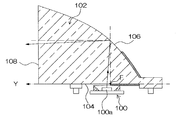
- FIG. 7 is a vertical sectional view showing the configuration of the vehicular lamp.
- the light emitting element 100 a of the light source 100 is disposed upward of the vehicle, and the light guide 102 is disposed above the light source 100.
- the light guide 102 includes an incident surface 104 on the vehicle lower side where light from the light source 100 enters the inside of the light guide 102, and a reflection surface 106 on the rear side of the vehicle where light incident on the inside from the incident surface 104 is reflected forward of the vehicle.
- the light reflected by the reflecting surface is emitted from the light guide 102 to the outside of the light guide 102, and the light emitting surface 108 on the vehicle front side.
- chromatic aberration chromatic aberration
- chromatic aberration chromatic aberration
- a blue or red strip-shaped illumination area appears above the light / dark boundary, and color separation is observed.
- the color separation appears at the light / dark boundary of the light distribution pattern by the light guide, and hinders the uniformity of the light distribution pattern. For this reason, there is a fear that the legal requirement as a headlamp cannot be satisfied.
- the problem of such unintended illumination areas is not limited to the case where the light guide is molded from a polycarbonate material, but is the case where the light guide is molded from another transparent material (glass, acrylic, etc.). However, it also occurs in a similar manner.
- the present invention has been made in view of such circumstances, and in the case of irradiating light in the direction of the light / dark boundary of a light distribution pattern by an optical system using a light guide (a lens body having a reflection surface for internal reflection).
- An object of the present invention is to provide a vehicular lamp that reduces the problem that an unintended illumination region is generated due to color dispersion above a light / dark boundary.
- the vehicular lamp according to the first aspect of the present invention irradiates light used for forming a partial light distribution pattern constituting a predetermined white low beam light distribution pattern.
- a lens body including a reflecting surface, and the reflecting surface is radiated from an end of the light source corresponding to the bright / dark boundary line and is incident perpendicularly to the incident surface without being refracted.
- the first reflection region configured to internally reflect the reflected light, and the reflected light is emitted from the emission surface to form the light / dark boundary line, and emitted from an end of the light source corresponding to the light / dark boundary line
- a second reflection region configured to distribute light below the light-dark boundary line, and is emitted from an end of the light source corresponding to the light-dark boundary line and is incident at an angle other than perpendicular to the incident surface.
- the light having a wavelength shorter than the reference wavelength that is refracted according to the incident angle and is incident on the inside of the lens body is internally reflected so that the reflected light is emitted from the emission surface and is distributed below the light / dark boundary line.
- a third reflective region configured to There.
- a vehicular lamp according to a second aspect of the present invention is a lens body having a light source that emits visible light having a plurality of wavelength components, an incident surface, a reflective surface, and an output surface, and passes through the incident surface.
- the shape of the surface and the exit surface is such that the light of the green wavelength included in the light in the visible light region emitted from the end of the light source and incident on the entrance surface is emitted in the direction of the light / dark boundary line of the predetermined light distribution pattern.
- Light that is configured to be emitted from a surface and that is reflected at a substantially central position in the vertical direction of the reflecting surface among light of a green wavelength emitted from the emitting surface in the direction of the light-dark boundary line causes refraction at the entrance and exit surfaces.
- a light that passes through a non-refractive optical path and is reflected at positions above and below the reflective surface relative to the light of the non-refractive optical path passes through a refractive optical path that causes refraction at the incident surface or the exit surface.
- at least one of the entrance surface, the reflection surface, and the exit surface of the lens body includes light having a wavelength component other than the green wavelength component that is color-dispersed by refraction among light passing through the refraction light path. It has a shape corrected so that light of the green wavelength component passing through the refractive light path is distributed below the direction of the light / dark boundary line so as not to be distributed above the light / dark boundary line. .
- the refractive index for green wavelength light is used as the refractive index of the lens body.
- the green wavelength included in the light ray white light ray
- the shapes of the entrance surface, the reflection surface, and the exit surface of the lens body are formed such that the light beam is irradiated in the direction of the light / dark boundary.
- the present invention corrects the shapes of the entrance surface, the reflection surface, and the exit surface of such a lens body so that the light having the green wavelength that has passed through the refractive optical path in which chromatic dispersion occurs is more than the direction of the light / dark boundary line. Irradiate in the downward direction. As a result, it is possible to prevent a problem that light rays other than the green wavelength generated by chromatic dispersion are directed upward from the direction of the light / dark boundary, and to prevent a problem that an unintended illumination region is generated above the light / dark boundary.
- the position of the reflecting surface where the light beam of the non-refractive optical path where chromatic dispersion does not occur is approximately the center in the vertical direction of the reflecting surface, the position of the reflecting surface where the light beam of the non-refractive optical path is reflected is reflected.
- chromatic dispersion generated in the refractive light path can be reduced as a whole, and the occurrence of an unintended illumination region occurring above the light / dark boundary is reduced. be able to.
- the magnitude of correction when correcting the shape of any one of the incident surface, the reflective surface, and the exit surface in a direction downward from the direction of the light-dark boundary for the light having the green wavelength passing through the refractive optical path is also large. Can be small.
- the vehicular lamp according to a third aspect of the present invention is the vehicle lamp according to the first or second aspect, wherein the incident surface has an arc whose cross-sectional shape is centered on a position away from the end of the light source, or
- the concave curved surface is an elliptical arc.
- the incident surface by forming the incident surface with a concave curved surface, the incident angle of the light beam incident on the incident surface from the LED light source can be reduced, and the chromatic dispersion caused by the refraction of the incident surface can be reduced. A problem that an unintended illumination area is generated above the boundary is prevented.
- a vehicular lamp is a lens body having a light source that emits visible light having a plurality of wavelength components, an incident surface, a reflective surface, and an exit surface, and the lens body from the incident surface.
- the incident surface includes a non-refractive optical path where light radiated from the end of the light source and incident on the incident surface does not cause refraction at the incident surface, and a refractive light path that causes refraction at the incident surface.
- the reflecting surface is a non-refractive optical path reflecting part that reflects light passing through the non-refractive optical path, a refractive optical path reflecting part that reflects light passing through the refractive optical path, and a lens body.
- an upper refractive light path reflecting portion positioned on the reflecting surface above the vehicle with respect to the non-refracting light path reflecting portion, and the upper refractive light path reflecting portion is arranged in the case where the light emitted from the light source is green.
- the light passing through the refractive light path is slightly downward relative to the light emitted to the outside of the lens body, and the light emitted from the light source is refracted smaller than the refractive index of the green wavelength in the lens body.
- the light emitted to the outside of the lens body through the non-refractive optical path is emitted on the light / dark boundary line of the light distribution pattern or toward the light distribution pattern.
- the problem of the unintended illumination region above the light / dark boundary becomes remarkable in the light beam reflected by the upper refractive light path reflecting portion above the non-refracting light path reflecting portion.
- visible light rays having a refractive index smaller than the green wavelength are light rays having a green wavelength.
- the visible light beam emitted in the upward direction from the light having the green wavelength is emitted on the light / dark boundary of the light distribution pattern or in the light distribution pattern.
- An upper refractive optical path reflecting portion is formed in Therefore, it is possible to prevent a problem that an unintended illumination region is generated above the light / dark boundary.
- the vehicular lamp according to a fifth aspect of the present invention is the vehicle lamp according to the fourth aspect, wherein the reflection surface further reflects the reflection on the vehicle lower side of the non-refractive optical path reflection portion in the vertical section of the lens body.
- the reflection surface further reflects the reflection on the vehicle lower side of the non-refractive optical path reflection portion in the vertical section of the lens body.
- green light is reflected from the lower refractive light path reflecting portion and emitted to the outside of the lens body.
- Visible light rays having a refractive index wavelength greater than the wavelength of the light are emitted upward from the green light rays, but visible light rays emitted upward from the green wavelength light are emitted.
- the lower refractive optical path reflecting portion is formed so as to be emitted on the light / dark boundary of the light distribution pattern or in the light distribution pattern. Therefore, it is possible to prevent a problem that an unintended illumination region is generated above the light / dark boundary.
- the non-refractive optical path reflection part is formed near the center in the vertical direction of the reflection surface sandwiched between the upper refractive optical path reflection part and the lower refractive optical path reflection part, the non-refractive optical path reflection surface is the upper end or lower end of the reflection surface.
- the chromatic dispersion which arises in a refractive light path can be made small entirely, and generation
- the lens body in the second or fourth aspect, includes a second reflecting surface different from the reflecting surface, and the second reflecting surface is an incident surface. Is provided in the optical path that travels through the lens body and reaches the reflecting surface.
- the width of the light source arrangement location can be widened.
- a vehicle lamp according to a seventh aspect of the present invention is the vehicle lamp according to any one of the first to sixth aspects, wherein the light source is an LED light source including a light emitting diode element and a wavelength conversion material.
- This aspect shows an aspect in which a light emitting diode element and a wavelength conversion material are used as a light source in order to reduce the size and power consumption of a vehicular lamp.
- a vehicular lamp according to an eighth aspect of the present invention is the vehicle lamp according to the first to seventh aspects, wherein the lens body is formed of a polycarbonate material. Since the polycarbonate material is a transparent resin having high heat resistance, the polycarbonate material is suitable as a material for a lens body in a situation where the temperature in the lamp body is high. On the other hand, the polycarbonate material has a large chromatic dispersion, so there is a high possibility that an unintended illumination area will be generated above the light / dark boundary line due to the chromatic dispersion. However, in the vehicular lamp configured as in the first to seventh aspects, When used in a lens body, such an unintended illumination region is prevented from being generated, so that it can be used as a lens body material without any problems.
- the present invention it is possible to prevent problems due to chromatic dispersion caused by the difference in refractive index for each wavelength, so that when the refractive index changes with temperature, the lens body material has birefringent properties. In this case, it is possible to reduce a problem that an unintended illumination area is generated above the light / dark boundary.
- the vertical sectional view which showed the structure of 1st Embodiment of the vehicle lamp which concerns on this invention.
- the vertical sectional view which showed the structure of 2nd Embodiment of the vehicle lamp which concerns on this invention.
- the vertical sectional view which showed the structure of 3rd Embodiment of the vehicle lamp which concerns on this invention.
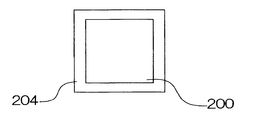
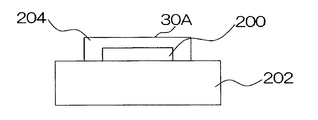
- the front view which showed the structure of the LED light source.
- FIG. 1 is a vertical sectional view showing the configuration of a first embodiment of a vehicular lamp according to the present invention.
- a vehicle lamp 1 shown in FIG. 1 is applied to a headlamp that emits illumination light having a light distribution pattern for passing light (low beam) in, for example, an automobile or a motorcycle, and is made of a transparent resin having high heat resistance.
- the lens body 10 (light guide) injection-molded with a certain polycarbonate material and the LED light source 30 are provided.
- the lens body 10 is, for example, disposed on the bottom surface 14 including the incident surface 12, the reflecting surface 16 disposed on the vehicle rear side (lamp rear side), the emission surface 18 disposed on the vehicle front side, and the vehicle upper side. And a three-dimensional shape surrounded by two side surfaces (not shown) arranged on both sides of the vehicle.
- the incident surface 12 is an incident surface on which the light emitted from the LED light source 30 is incident on the inside of the lens body 10 and is formed by a plane inclined obliquely with respect to the horizontal direction (vehicle longitudinal direction).
- the other surface constituting the bottom surface 14 is a horizontal plane.
- the reflection surface 16 reflects the light emitted from the LED light source 30 and passing through the incident surface 12 and entering the lens body 10 in a predetermined direction.
- the reflecting surface 16 is formed based on, for example, the shape of a rotating paraboloid system.
- the reflection surface 16 may be configured to totally reflect the incident light on its inner surface, or a metal reflection film such as aluminum is provided on the outer surface of the reflection surface 16 in a portion where the incident light is not totally reflected. It may be formed and reflected by the reflective film.
- the emission surface 18 is a surface from which the reflected light from the reflection surface 16 is emitted, and is formed by a vertical plane orthogonal to the vehicle longitudinal direction in this embodiment.
- the LED light source 30 is, for example, a light source that emits white light in which one or a plurality of LED chips are packaged, and a planar light emitting surface 30A that emits light is disposed substantially upward in the vertical direction.
- a light source that emits white light in which one or a plurality of LED chips are packaged
- a planar light emitting surface 30A that emits light is disposed substantially upward in the vertical direction.
- an InGaN-based LED chip that emits blue light is used as the LED chip
- the wavelength change material layer 204 is provided in a planar shape on the LED chip 200 mounted on the circuit board 202 as shown in FIGS. 6A and 6B.
- the wavelength conversion material layer 204 for example, a YAG (Yttrium Aluminum Garnet) phosphor dispersed in a silicone resin is used.
- the light emitting surface 30A is not limited to a flat shape, and may be a convex shape.
- the vehicular lamp 1 configured as described above irradiates the light emitted from the LED light source 30 with illumination light having a light distribution pattern for passing light as shown in FIG. It is configured.
- FIG. 2 shows an H line indicating a horizontal angle with respect to a direction directly in front of the vehicular lamp 1 and a V line indicating an angle in the vertical direction.
- the light distribution pattern of FIG. 2 includes light distribution regions P (regions P1 to P4 in which light intensity values decrease in order) that are irradiated with light spread on both the left and right sides of the V line within an angle range downward from the H line. Contains.
- a light-dark boundary line (cut-off line) CL indicating a light-dark boundary between a bright region irradiated with light and a dark region not irradiated with light is formed in the horizontal direction.
- the line CL is formed in the vicinity of the H line (for example, downward 0.57 degrees).
- the light distribution pattern P formed by the vehicular lamp 1 of the present embodiment is a part of the light distribution pattern in FIG. 2 (for example, any one of the regions P1 to P4).
- a plurality of lamps configured in the same manner as the vehicular lamp 1 of the present embodiment may be arranged in a predetermined direction such as a vertical direction or a horizontal direction, and the light distribution pattern of FIG. 2 may be formed as a whole. .
- the optical design of the vehicular lamp 1 when the optical design of the vehicular lamp 1 is performed, first, with respect to white light rays (light rays having a wavelength in the visible light region) emitted in each direction from the light emission surface 30A of the LED light source 30, FIG.
- the positional relationship between the LED light source 30 and the lens body 10 and the target irradiation direction of those white light rays (the target emission direction when the white light rays are emitted from the lens body 10) It is decided.
- the shapes of the entrance surface 12, the reflection surface 16, and the exit surface 18 of the lens body 10 are set so that each white light beam emitted from the light emitting surface 30A in each direction becomes the target exit direction.
- the light emitting point 30B which is the rearmost end of the light emitting surface 30A in the vehicle front-rear direction, is enlarged and projected onto the light / dark boundary line CL so that a cut-off line is formed.
- a reflecting surface 16 is set. If the last end is the light / dark boundary line CL, the light emitted from the front end of the light emitting surface 30A is directed downward from the light / dark boundary line CL, and glare light upward from the H line is not generated. .
- the refractive angle with respect to the incident angle of the incident surface 12 or the exit surface 18 of the white light beam is determined according to the refractive index according to the material of the lens body 10 and specified when the refractive index varies depending on the wavelength of the light.
- the refractive index with respect to the reference wavelength (hereinafter referred to as the reference refractive index) is approximately used as a constant refractive index in the entire wavelength range of white light (visible light region).
- a green wavelength which is a substantially central wavelength in the wavelength region of white light, is set as a reference wavelength
- a refractive index of the green wavelength is set as a reference refractive index.
- the lens body 10 is formed of a transparent resin material as in the present embodiment
- the difference in refractive index for each wavelength of light is larger than that of a glass lens that is an inorganic material.
- the polycarbonate material when formed from a polycarbonate material with excellent transparency, heat resistance, and weather resistance, the polycarbonate material has a large difference in refractive index for each wavelength of light and large color dispersion. If the optical design is made so that a light distribution pattern as shown in FIG. 2 is obtained assuming that the reference refractive index is a constant refractive index for the entire wavelength range of white light, a light / dark boundary line as shown in FIG.
- chromatic dispersion refers to dispersion of light (dispersion of light), and refers to a phenomenon in which, when light enters a lens or the like, the refractive index varies depending on the wavelength.
- the lens body 10 basically forms a light distribution pattern (or a part thereof) as shown in FIG. 2 by enlarging and projecting the light emitting surface 30A of the LED light source 30. Accordingly, the optical design was performed so that the light distribution pattern of FIG. 2 can be obtained without considering the chromatic dispersion of the lens body 10 assuming a constant reference refractive index for the entire wavelength range of white light as described above. In this case, the positional relationship between the light emitting surface 30A of the LED light source 30 and the lens body 10 is determined so that the light emitting point 30B which is the rearmost end in the vehicle longitudinal direction of the light emitting surface 30A is the focal point of the entire lens body 10.
- the focal point of the entire lens body 10 refers to a focal position that is adjusted in consideration of the influence of refraction by the incident surface 12 with respect to the focal position of the reflecting surface 16 of the paraboloidal system.
- the white light beam emitted in each direction from the light emission point 30B is irradiated as a light beam substantially parallel to the angular direction of the light / dark boundary line CL which is the design target.
- the white light beam emitted from each point of the light emission surface 30A on the vehicle front side from the light emission point 30B is designed to illuminate an angular range below the design target light / dark boundary line CL.
- the light passing through the optical path refracted on the incident surface 12 or the light exit surface 18 is a light beam having a wavelength other than the green light beam (green light beam) used as the reference refractive index, that is, longer than the green wavelength.
- the red or blue light rays on the wavelength side or the short wavelength side are separated in a direction different from the green light rays on the surface where the refraction of the lens body 10 occurs because the actual refractive index of those wavelengths is different from the reference refractive index. .
- a part of red and blue light rays are irradiated in an upward angle direction with respect to the light / dark boundary line CL which is the design target, causing chromatic aberration (color blur) above the light / dark boundary line CL, and the light / dark boundary line CL.
- the basic configuration of the vehicular lamp 1 designed without considering chromatic dispersion assuming a constant reference refractive index for the entire wavelength range of white light that is, With respect to the positional relationship between the LED light source 30 and the lens body 10, the configuration of the lens body 10, etc. (shapes of the incident surface 12, the reflective surface 16, and the exit surface 38),
- the incident surface of the lens body 10 does not cause chromatic aberration (unintended illumination region Q) above the light-dark boundary line CL. 12, the shapes of the reflecting surface 16 and the emitting surface 18 are adjusted (corrected).
- the polycarbonate material has a characteristic that the refractive index decreases as the wavelength increases in the range of about 380 to 780 nm, which is the wavelength region of white light (visible light wavelength region).
- the refractive index of a polycarbonate material for a blue wavelength of 435.8 nm is 1.6115
- the refractive index of a polycarbonate material for a green wavelength of 546.1 nm is 1.5855
- the refractive index of the polycarbonate material for a blue wavelength of 706.5 nm is 1. .576.
- the basic shapes of the entrance surface 12, the reflection surface 16, and the exit surface 18 of the lens body 10 for example, green light (wavelength 546.1 nm) is used as the reference wavelength light, and the reference refractive index is Set to 1.5855.
- the longest wavelength is, for example, the wavelength of red light (706.5 nm)
- the shortest wavelength is, for example.
- the basic shape of the entrance surface 12, the reflection surface 16, and the exit surface 18 of the lens body 10 is adjusted as the wavelength of the blue light (435.8 nm).
- light described by designating colors such as green light, red light, and blue light shall indicate light having the wavelengths listed above. However, the values of these specific wavelengths can be changed as appropriate.
- the basic shapes of the entrance surface 12, the reflection surface 16, and the exit surface 18 of the lens body 10 are adjusted only by adjusting the reflection surface 16. That is, the shapes of the entrance surface 12 and the exit surface 18 are both fixed to the surface shape (plane) when designed so as to obtain the light distribution pattern of FIG. Is adjusted, for example, with respect to the paraboloid obtained as a basic shape.
- the exit surface 18 of the lens body 10 of the present embodiment is formed as a substantially vertical plane as described above. Since the light reflected from the reflecting surface 16 in the vicinity of the light-dark boundary line CL is irradiated substantially horizontally, the refraction by the emitting surface 18 is small and the degree of chromatic dispersion is also small. Therefore, for the sake of simplicity, it is assumed that color dispersion and color separation are not caused by the exit surface 18, and the direction of the light beam emitted from the exit surface 18 is equal to the direction of the light beam reflected by the reflective surface 16. And
- the lens body 10 in FIG. 1 has a shape of the reflecting surface 16 of the lens body 10 in consideration of chromatic dispersion (difference in refractive index for each wavelength) so that an unintended illumination region Q does not occur above the light / dark boundary line CL.
- white light emitted from the light emission point 30 ⁇ / b> B at the rearmost end of the LED light source 30 is incident on the incident surface 12 perpendicularly (incidence angle 0 degree).
- each white light beam X ⁇ b> 1, X ⁇ b> 2, X ⁇ b> 3 emitted from the light emission point 30 ⁇ / b> B of the LED light source 30 enters the lens body 10 from the incident surface 12 and is reflected by the reflecting surface 16.
- the lens body 10 is irradiated from the exit surface 18.
- the optical paths corresponding to the white light rays X1, X2 and X3 in the case where chromatic dispersion is not taken into consideration are shown as the optical paths CLD1, CLD2 and CLD3. It is described as.
- CLD1 has the same optical path as X1, and CLD2 and CLD3 irradiate light beams parallel to CLD1 from the exit surface 18 to the outside.
- Such optical paths CLD1, CLD2, and CLD3 are focused on the position of the light emission point 30B as the reflecting surface 16 (strictly, the position in the slightly lower left direction of the drawing 30B considering refraction by the incident surface 12).
- This shape is a basic shape.
- the optical paths CLD1, CLD2, and CLD3 indicated by alternate long and short dash lines indicate the optical paths for emitting the white light rays X1, X2, and X3 from the emission surface 18 in the angular direction of the design target bright / dark boundary line CL, as described above. Since light rays in the vicinity of the light / dark boundary line CL are not refracted at the exit surface 18, their optical paths CLD 1, CLD 2, and CLD 3 are shown as straight lines from the position of the reflective surface 16 to the outside of the lens body 10 via the exit surface 18. .
- the shape of the reflecting surface 16 is set in consideration of chromatic dispersion. That is, for the white light beam X1 that is perpendicularly incident on the incident surface 12 and is not refracted at the incident surface 12 and the exit surface 18 of the lens body 10, the target irradiation direction is the design target light / dark boundary line CL without any change. Is set in the angle direction. As shown in FIG. 1, the shape (position and inclination) of the reflecting surface 16 at the position T1 is such that the white light beam X1 incident on the position T1 of the reflecting surface 16 is reflected in the angular direction of the light / dark boundary line CL along the optical path CLD1. Is formed in accordance with the basic shape.
- the angle of the incident surface 12 is set so that the position T1 of the reflective surface 16 where the white light ray X1 that does not cause refraction at the incident surface 12 is reflected is approximately the center of the range in the vertical direction of the reflective surface 16. Yes.
- the incident angle (refractive angle) of all light rays reflected by the reflecting surface 16 on the incident surface 12 is considered to be as small as possible, and the occurrence of chromatic dispersion is reduced. That is, the position T1 is a reflection part of a non-refractive optical path where refraction does not occur on the incident surface 12, and coincides with the basic shape described above.
- white light rays (white light rays X2 and X3) that are incident on the incident surface 12 toward the vehicle front side or vehicle rear side with respect to the white light ray X1 and are refracted at the incident surface 12, color dispersion (color separation) caused by the refraction.
- the target irradiation direction is set to an angle direction downward from the design target light / dark boundary line CL. Assuming that a constant reference refractive index is assumed for the entire wavelength range of white light as shown in FIG.
- white light rays X2 and X3 that is, incident on positions T2 and T3 above and below the position T1 of the reflecting surface 16 (ie, The shape of the reflecting surface 16 is designed so that the green light rays are irradiated (reflected) in the angular direction downward from the angular direction of the light-dark boundary line CL (optical paths CLD2, CLD3).
- a position T1 where no correction is applied to the reflecting surface of the basic shape is used as a reference point. Assume that points on the reflecting surface are set as correction points in order above the reference point. Then, at a certain correction point, the inclination of the reflecting surface 16 is corrected so as to reflect the white light incident on the correction point in the corrected target irradiation direction, and the correction amount of the inclination is corrected.
- the position and inclination of each point on the entire reflecting surface above the correction point are corrected without changing the overall shape.
- white light rays X1, X2, and X3 emitted from the light emission point 30B of the LED light source 30 are designed. Will be described in detail as to how the lens is actually irradiated through the lens body 10.
- the white light beam X1 travels through the lens body 10 without causing chromatic dispersion (color separation) as it is, and reaches the position T1 of the reflecting surface 16. Incident.
- the white light beam X1 incident on the reflecting surface 16 is reflected in the direction along the optical path CLD1, and is irradiated (emitted from the emitting surface 18) in the angular direction of the design target light / dark boundary line CL.
- the green light ray G1 included in the white light ray X1 passes through the same optical path as the white light ray X1 shown in FIG. 1 regardless of the presence or absence of refraction, and is irradiated in the angular direction of the light / dark boundary line CL of the design target.
- light rays such as red and blue other than the green wavelength included in the white light beam X1 are not refracted at the incident surface 12 (and the output surface 18), and thus are not separated and are the same as the white light beam X1.
- the light passes through the optical path and is irradiated in the angular direction of the light / dark boundary line CL which is the design target. Accordingly, the white light beam X1 emitted from the light emission point 30B and perpendicularly incident on the incident surface 12 is irradiated in the angular direction of the light / dark boundary line CL as a design target while being white, thereby forming a white light / dark boundary line CL. To do.
- the white light beam X2 obliquely incident on the incident surface 12 from the front side of the vehicle is incident on the incident surface 12, refraction occurs and color separation occurs inside the lens body 10 due to chromatic dispersion.
- the green light ray G2 included in the white light ray X2 travels along the same optical path as the white light ray X2 when a constant reference refractive index is assumed, and enters the position T2 of the reflecting surface 16. .
- the light is reflected by the reflecting surface 16 in the downward angular direction with respect to the optical path CLD2, and is irradiated in the downward angular direction with respect to the angular direction of the light / dark boundary line CL which is the design target.
- the incident surface 12 has a lower refractive index than the green light ray G2.
- the light beam is refracted at a small refraction angle, travels along the optical path in the angular direction that is on the vehicle front side of the optical path of the white light beam X2 (the optical path of the green light beam G2), and enters the vicinity (upper side) of the reflective surface 16 at the position T2.
- the red light ray R2 is reflected in the upward angle direction than the white light ray X2 (green light ray G2). The At this time, considering how much the red light ray R2 is reflected in the upward angular direction with respect to the white light ray X2 (green light ray G2), the red light ray R2 is upward from the light / dark boundary line CL of the design target.
- the red light beam R2 substantially follows the optical path CLD2.
- the light is reflected by the reflecting surface 16 in the angular direction or in an angular direction downward from the optical path CLD2.
- the red light ray R2 is emitted from the emission surface 18 in an angular direction that is not upward from the design target light / dark boundary line CL.
- a blue light beam (not shown) included in the white light beam X2 is also separated by the incident surface 12, and passes through a different optical path from the white light beam X2 (green light beam G2) shown in FIG.
- the red light ray R2 is emitted from the emission surface 18 in the downward angle direction with respect to the white light ray X2 (green light ray G2) as opposed to the red light ray R2
- the red light ray R2 is more than the light / dark boundary line CL of the design target.
- the white light beam X3 obliquely incident on the incident surface 12 from the rear side of the vehicle is incident on the incident surface 12, refraction occurs and color separation occurs inside the lens body 10 due to chromatic dispersion.
- the green light ray G3 included in the white light ray X3 travels along the same optical path as the white light ray X3 when a constant reference refractive index is assumed, and is incident on the position T3 of the reflecting surface 16. .
- the light is reflected by the reflecting surface 16 in the downward angle direction with respect to the optical path CLD3 and irradiated in the downward angle direction with respect to the angular direction of the light / dark boundary line CL which is the design target.
- the incident surface 12 has a higher refractive index than the green light ray G3.
- the light beam is refracted at a large refraction angle, travels along an optical path in the angular direction that is on the vehicle front side of the optical path of the white light beam X3 (the optical path of the green light beam G3), and enters the vicinity (upper side) of the position T3 of the reflecting surface 16.
- the blue light ray B3 is reflected in an angle direction upward from the white light ray X3 (green light ray G3) because the angle of incidence on the reflecting surface 16 is larger than that of the white light ray X3 (green light ray G3).
- the blue light ray B3 is directed upward from the light / dark boundary line CL of the design target.
- the target irradiation direction of the white light beam X3 (green light beam G3) is set so as not to be irradiated in the angular direction, and the shape of the reflection surface 16 is set.
- the blue light beam B3 is reflected by the reflecting surface 16 in an angular direction substantially along the optical path CLD3 or in an angular direction downward from the optical path CLD3.
- the blue light beam B3 is emitted from the emission surface 18 in an angular direction that is not upward from the design target light / dark boundary line CL.
- a red light beam (not shown) included in the white light beam X3 is separated by the incident surface 12, and passes through an optical path different from that of the white light beam X3 (green light beam G3) shown in FIG. Then, the red light beam is emitted from the emission surface 18 in the angular direction downward from the white light beam X3 (green light beam G3), opposite to the blue light beam B3. For this reason, the blue light ray B3 is irradiated in an angular direction that does not face upward from the light / dark boundary line CL of the design target, so that the red light light inevitably does not face upward from the light / dark boundary line CL of the design target. Irradiated in the direction.
- the vehicular lamp 1 of the present embodiment among the white light rays emitted in the respective directions from the light emission point 30B of the LED light source 30, no refraction occurs in the lens body 10 and color dispersion occurs.
- a light beam such as the white light beam X1 passing through an optical path where no (color separation) occurs is irradiated in the angle direction of the light / dark boundary line CL, and a clear light / dark boundary line CL is formed by the white light. Further, the formation of the light / dark boundary line CL by the white light beam X1 maintains the chromaticity of the light / dark boundary line CL in the white range.
- the target irradiation direction (irradiation direction of the green light beam) assuming a constant reference refractive index in the entire wavelength range of the white light rays Is set in an angle direction downward from the light-dark boundary line CL.
- red or blue light rays radiated in an upward angle direction with respect to the green light rays due to chromatic dispersion are radiated in an angle direction downward with respect to the light / dark boundary line CL. That is, the light of the wavelength region that is color-separated irradiates the light distribution pattern below the light / dark boundary line CL.
- the light is mixed with irradiation light or the like from a place other than the light emission point 30B. Therefore, a problem that an unintended illumination region Q due to color dispersion occurs above the light / dark boundary line CL is prevented.
- an LED light source using a wavelength conversion material as a light source when used to form a light / dark boundary, it is energy to form the light / dark boundary by using it as effectively as possible without shielding the light flux emitted from the LED chip. It is also preferable from the viewpoint of utilization efficiency. Therefore, it is preferable to use the end portion of the LED light source as a light / dark boundary, in particular, as a light / dark boundary line CL in the vicinity of the H line of the headlamp for passing light distribution. In this case, since the LED light source is provided with the wavelength conversion material layer up to the LED end as shown in FIG. 6, color unevenness is more likely to occur at the LED light source end than at the center.
- the lens body considering the chromatic dispersion in the light / dark boundary line CL is used. Therefore, even when the color unevenness occurs at the end of the LED light source, the color unevenness can be reduced. Become.
- FIG. 4 is a vertical sectional view showing the configuration of the second embodiment of the vehicular lamp according to the present invention. Elements that are the same as or similar to those in the vehicular lamp 1 of the first embodiment in FIG. 4 is different from the vehicle lamp 1 of FIG. 1 in the shape of the incident surface 12 '.
- the incident surface 12 ′ of the vehicular lamp 50 in FIG. 4 is not a flat surface but a concave surface.
- the other components of the vehicular lamp 50 of FIG. 4 are configured in the same manner as the vehicular lamp 1 of the first embodiment, and the reflecting surface 16 ′ of the lens body 10 is formed so as to form the light distribution pattern of FIG. The shape is formed.
- the incident surface 12 ' is, for example, in the shape of a circular arc (light from the LED light source 30) centered at a position away from the light emission point 30B of the LED light source 30 with respect to the incident surface 12' on the vertical sectional view of FIG.
- the center 52 of the arc of the incident surface 12 ' is formed as an arc-shaped concave surface located on a straight line passing through the light emitting point 30B and the position T1' near the center of the reflecting surface 16 '.
- the incident angle when white light emitted in each direction from the light emitting point 30B is incident on the incident surface 12 ' is generally smaller than that in the case of the vehicular lamp 1 of the first embodiment, and the incident surface.
- the chromatic dispersion due to refraction at 12 ' is reduced.
- the shape of the reflecting surface 16 ′ is designed in consideration of chromatic dispersion generated in the lens body 10.
- the white light rays X1 ′ that are perpendicularly incident on the incident surface 12 ′ and are not refracted on the incident surface 12 ′ and the emission surface 18 of the lens body 10 are as follows.
- the target irradiation direction is set to the angular direction of the light / dark boundary line CL. As shown in FIG.
- the position T1 ′ is such that the white light beam X1 ′ (green light beam G1 ′) incident on the position T1 ′ of the reflecting surface 16 ′ is reflected in the angle direction of the light / dark boundary line CL along the optical path CLD1 ′.
- the shape (position and inclination) of the reflecting surface 16 ' is formed.
- white light rays (white light rays X2 ′ and X3 ′) that are incident on the incident surface 12 ′ at the front side or the rear side of the vehicle with respect to the white light ray X1 and are refracted at the incident surface 12 ′ are caused by the refraction.
- the target irradiation direction is set to an angle direction downward from the design target light / dark boundary line CL in accordance with the magnitude of color dispersion (color separation) to be generated.
- white light rays X2 'and X3' (green) incident on positions T2 'and T3' above and below the position T1 'of the reflecting surface 16'.
- the reflection surface 16 ' is designed so that the light rays G2', G3 ') are irradiated (reflected) in the angle direction downward from the angle direction of the light-dark boundary line CL (optical path CLD2', CLD3 ').
- the light dispersion at the incident surface 12 ′ can be further reduced, it is possible to more reliably prevent the illumination region Q from being generated above the light / dark boundary line CL. Moreover, in order to prevent the generation of the illumination region Q almost completely, the degree of downward direction of the irradiation direction of the white light (green light) (the size of the downward angle) can be made relatively small. Changes to the shape of the reflecting surface 16 ′ can be reduced, and the influence on the light distribution in other illumination areas other than the light / dark boundary line CL can be reduced.
- the incident surface 12 ' may have an elliptical arc or a circular section in the vertical direction. If the concave surface is viewed from the light emission point 30B, the same effect as described above can be obtained. If the shape of the incident surface 12 'is a spherical surface with the light emission point 30B as the center point, the incident angle from the light emission point 30B is 0 degrees and no refraction occurs. For this reason, it is possible to prevent color separation caused by the incident angle. However, in this case, the light utilization efficiency is lowered unless the reflecting surface is set so as to cover the spherical surface corresponding to the spherical surface corresponding to the light incident from the spherical incident surface. That is, the lens body is increased in size.
- the concave curved surface so as to reduce the chromatic dispersion in consideration of the balance between the amount of light emitted from the light emitting surface 30A and the size of the reflecting surface 16. More preferably, the curvature of the incident surface close to the reflecting surface is close to a spherical surface with the light emission point 30B as the center point as shown in FIG.
- FIG. 5 is a vertical sectional view showing the configuration of the third embodiment of the vehicular lamp according to the present invention. Elements that are the same as or similar to those of the vehicular lamp 1 according to the first embodiment of FIG. 1 are given the same reference numerals or double prime symbols.
- the vehicle lamp 100 of FIG. 5 differs from the vehicle lamp 1 of FIG. 1 in the configuration until the light emitted from the LED light source 30 is guided to the reflective surface 16 ′′ corresponding to the reflective surface 16 of FIG.
- the incident surface 12 ′′ is formed on the back side (vehicle rear side) of the lens body 10, and the LED light source 30 is arranged on the back side of the lens body 10 with the light emission surface 30A facing the vehicle front side. .
- the light from the LED light source 30 that has entered the lens body 10 from the incident surface 12 ′′ is not directly incident on the reflecting surface 16 ′′, but is reflected once by the reflecting surface 102 different from the reflecting surface 16 ′′.
- the light from the LED light source 30 that has entered the lens body 10 from the incident surface 12 ′′ is reflected twice inside the lens body 10, and then is emitted from the exit surface 18.
- Aluminum is vapor-deposited on the outer surface portion where the reflecting surface 102 is formed, and the reflecting surface 102 that reflects light inside the lens body 10 is formed.
- the vehicular lamp 100 having such a configuration similarly to the first embodiment, it is possible to prevent a problem that the illumination area Q due to color dispersion is generated above the light / dark boundary line CL.
- the shape of the reflecting surface 16 ′′ is designed in consideration of the chromatic dispersion generated in the lens body 10.
- the reflecting surface 16 ′′ enters the incident surface 12 ′′ perpendicularly.
- the target irradiation direction is set to the angular direction of the light / dark boundary line CL. As shown in FIG.
- the position T1 is such that the white light beam X1 ′′ (green light beam G1 ′′) incident on the position T1 ′′ of the reflecting surface 16 ′′ is reflected in the angular direction of the light / dark boundary line CL along the optical path CLD1 ′′.
- the shape (position and inclination) of the reflecting surface 16 "at” is formed.
- white light rays (white light rays X2 ′′ and X3 ′′) that enter the incident surface 12 ′′ from the position above or below the vehicle with respect to the white light beam X1 ′′ and are refracted at the incident surface 12 ′′ are refracted.
- the target irradiation direction is set to an angle direction downward from the design target light / dark boundary line CL in accordance with the magnitude of the chromatic dispersion (color separation) caused by the above.
- white light rays X2 ′′ and X3 ′′ (green light rays G2 ′′ and G3 ′′) incident on the positions T2 ′′ and T3 ′′ above and below the position T1 ′′ of the reflecting surface 16 ′′ are bright and dark boundary lines.
- the shape of the reflecting surface 16 ′′ is designed so that it is irradiated (reflected) in the angle direction downward from the angle direction of the CL (optical paths CLD2 ′′, CLD3 ′′).
- the selection range of the LED light source 30 can be widened.
- the location of the LED light source 30 can be changed to a position different from that shown in FIG. 5 by changing the positions of the incident surface 12 ′′ and the reflecting surface 102.
- the irradiation direction of the green light ray (white light ray when a fixed reference refractive index is assumed) passing through the optical path where refraction occurs is the angle direction of the light-dark boundary line CL
- the shape of the reflecting surface 16 ′′ is set (corrected from the basic shape) so as to be in a downward angle direction, it is possible to prevent the illumination region Q from being generated above the light / dark boundary line CL.
- the lens body 10 having a configuration in which the light incident on the lens body 10 is reflected twice inside the lens body 10 and emitted from the exit surface 18 is shown. Even in the case of a vehicular lamp that uses a lens body that reflects incident light three times or more inside the lens body 10 and emits the light from the exit surface 18, it is above the light / dark boundary line CL in the same manner as in the above embodiment. Generation of the illumination area Q can be prevented.
- the lens body 10 is formed of a polycarbonate material.
- the lens body 10 is made of a material other than the polycarbonate material (for example, glass, Even in the case of being formed of a transparent material such as acrylic), the present invention can be applied in the same manner as in the above embodiment as long as color dispersion occurs. Accordingly, it is possible to prevent the unintended illumination region Q above the bright / dark boundary line from occurring regardless of the degree of chromatic dispersion that may occur for each material of the lens body 10.
- the vehicular lamp according to the present invention not only prevents the unintended illumination region Q above the light / dark boundary line from being generated due to the color dispersion in the lens body 10, but also the material of the lens body 10 is a polycarbonate material.
- the birefringence has a birefringence property, blurring of a bright / dark boundary line caused by the birefringence can be reduced.
- a polycarbonate material has a large residual stress at the time of molding, and has a birefringence property due to the high photoelasticity characteristic of the material. Due to the birefringence, the polycarbonate material is emitted from the light emission point 30B of the LED light source 30.
- the light rays obliquely incident on the incident surface 12 (12 ', 12 ") (light rays refracted by the incident surface 12) are complicatedly separated in a plurality of directions. If the design is such that white light (green light) is assumed to be irradiated in the angular direction of the light / dark boundary line CL without assuming birefringence and assuming a constant reference refractive index, the separated light rays are caused by birefringence. Causes blurring of the light / dark boundary line CL.
- the light beam refracted on the incident surface 12 (12 ′, 12 ′′) to be irradiated in the angle direction downward from the light / dark boundary line CL as in the above-described embodiment, the light beam becomes a light / dark boundary.
- the influence on the line CL is reduced, thereby preventing an unintended illumination region Q due to chromatic dispersion and preventing blurring of the bright / dark boundary line CL due to birefringence.
- the irradiation direction of the green light ray (white light ray assuming a constant reference refractive index) that passes through the optical path in which refraction occurs is greater than the angular direction of the light / dark boundary line CL.
- the shape of the reflecting surface 16 (16 ') is corrected from the basic shape so that the angle direction is downward, but the incident surface 12 (12'), the reflecting surface 16 (16 ') and the exit surface 18 are corrected.
- the shape of at least one surface (any one or a plurality of surfaces) of (18 ′) with respect to the basic shape the green light ray passing through the optical path where refraction occurs becomes the light / dark boundary line CL.
- the angle direction may be lower than the angle direction.
- the light exit surface 18 of the lens body 10 is a flat surface, and the light rays irradiated from the reflective surface 16 in the angular direction near the design target light / dark boundary line CL are not refracted by the light exit surface 18.
- the present invention can be applied even when the exit surface 18 is not flat (for example, a concave surface or a convex surface) and refraction occurs on the exit surface 18.
- the incident surface 12 (12 ', 12 ") and the exit surface 18 are incident vertically and no refraction occurs.
- the irradiation direction of the green light beam (white light beam) passing through the optical path is defined as the direction of the light / dark boundary line CL.
- the light ray refracted at the entrance surface 12 (12 ') or the exit surface 18 (refractive light path) is a green ray (a constant reference refractive index). If the irradiation direction of white light (when white light is assumed) is set to be an angle direction downward from the angle direction of the light / dark boundary line CL, an unintended illumination region Q is prevented from being generated above the light / dark boundary line CL.
- the position T1 (T1 ′, T1 ′′) of the non-refractive optical path reflecting portion where the light beam passing through the non-refractive optical path is reflected by the reflecting surface 16 (16 ′, 16 ′′) is approximately the center in the vertical direction of the reflecting surface 16. Although it is desirable, it does not necessarily have to be in the center.
- an unintended illumination region Q is generated when the reflecting surface 16 has an upper refractive light path reflecting portion and a lower refractive light path reflecting portion that reflect light rays passing through the refractive light path above and below the non-refractive light path reflecting portion.
- the influence of the light beam on the refracted optical path reflected by the upper refracted optical path reflector is larger.
- only the irradiation direction of the green light beam (white light beam assuming a constant reference refractive index) reflected by the upper refracted light path reflecting portion is set to be an angular direction downward from the angular direction of the light / dark boundary line CL. You may make it correct
- the vehicular lamp is applied to a headlamp that emits illumination light having a light distribution pattern for passing light.
- the present invention is limited to a vehicular lamp that is a headlamp. Is not to be done.
- the present invention can be applied not only to the headlamp for passing light distribution but also to other types of vehicle lamps such as a headlamp for a traveling beam and a fog lamp.
- SYMBOLS 1, 50 100 ... Vehicle lamp, 10 ... Lens body, 12, 12 ', 12 "... Incident surface, 16, 16', 16", 102 ... Reflecting surface, 18 ... Output surface, 30 ... LED light source, 30A ... light emission surface, 30B ... light emission point
Landscapes
- Engineering & Computer Science (AREA)
- General Engineering & Computer Science (AREA)
- Physics & Mathematics (AREA)
- Microelectronics & Electronic Packaging (AREA)
- Optics & Photonics (AREA)
- Non-Portable Lighting Devices Or Systems Thereof (AREA)
Abstract
Description
Claims (8)
- 予め定められた白色のロービーム用配光パターンを構成する部分配光パターンの形成に用いられる光を照射するための車両用灯具であって、
複数の波長成分の可視光を放射する光源と、
中実のレンズ体であって、前記光源から放射された光が前記レンズ体の内部に入射する入射面と、出射面と、前記入射面から前記レンズ体の内部に入射した光を内部反射し、当該内部反射した光が前記出射面から出射して明暗境界線を有する所定配光パターンを形成するように構成された反射面とを含むレンズ体とを備え、
前記反射面は、
前記明暗境界線に対応する前記光源の端部から放射され前記入射面に対して垂直に入射し屈折することなく前記レンズ体の内部に入射した基準波長の光を内部反射し当該反射光が前記出射面から出射し前記明暗境界線を形成するように構成された第1反射領域と、
前記明暗境界線に対応する前記光源の端部から放射され前記入射面に対して垂直以外の角度で入射しその入射角度に応じて屈折して前記レンズ体の内部に入射した基準波長よりも長い波長の光を内部反射し当該反射光が前記出射面から出射した場合に前記明暗境界線以下に配光されるように構成された第2反射領域と、
前記明暗境界線に対応する前記光源の端部から放射され前記入射面に対して垂直以外の角度で入射しその入射角度に応じて屈折して前記レンズ体の内部に入射した基準波長よりも短い波長の光を内部反射し当該反射光が前記出射面から出射した場合に前記明暗境界線以下に配光されるように構成された第3反射領域と、
を含む車両用灯具。 - 車両用灯具であって、
複数の波長成分の可視光を放射する光源と、
入射面、反射面及び出射面を有するレンズ体であって、前記入射面を通過して前記レンズ体の内部に入射した前記光源からの光を前記反射面によって所定方向に反射して前記出射面から前記レンズ体の外部に出射するレンズ体とを備え、
前記レンズ体の入射面、反射面及び出射面の形状が、前記光源の端部から放射されて前記入射面に入射した可視光領域の光に含まれる緑色の波長の光が所定配光パターンの明暗境界線の方向に前記出射面から出射されるように構成され、かつ、前記明暗境界線の方向に前記出射面から出射される緑色の波長の光のうち、前記反射面の上下方向の略中央の位置で反射される光が前記入射面及び出射面において屈折を生じない非屈折光路を通過し、該非屈折光路の光よりも前記反射面の上側及び下側の位置で反射される光が前記入射面又は出射面において屈折を生じる屈折光路を通過するように構成されており、
前記レンズ体の入射面、反射面及び出射面のうち少なくとも1つの面が、前記屈折光路を通過する光のうち、屈折により色分散された緑色の波長成分以外の波長成分の光が前記明暗境界線よりも上側に配光されないように、前記屈折光路を通過する緑色の波長成分の光が前記明暗境界線の方向よりも下側に配光されるように補正された形状を有する車両用灯具。 - 前記入射面は、その断面形状が前記光源の前記端部よりも離れた位置を中心とする円弧、又は、楕円弧となる凹曲面である、請求項1又は2記載の車両用灯具。
- 車両用灯具であって、
複数の波長成分の可視光を放射する光源と、
入射面、反射面及び出射面を有するレンズ体であって、前記入射面より前記レンズ体の内部に入射した前記光源からの光を前記反射面で所定方向に反射して前記出射面から前記レンズ体の外部に出射することによって形成される配光パターンが明暗境界線を形成するレンズ体とを備え、
前記入射面は、前記光源の端部から放射されて前記入射面に入射する光が、該入射面において屈折を生じない非屈折光路と、該入射面において屈折を生じる屈折光路を形成する平面および/または凹曲面とされ、
前記反射面は、前記非屈折光路を通る光が反射する非屈折光路反射部と、前記屈折光路を通る光が反射する屈折光路反射部と、レンズ体の上下方向断面において、非屈折光路反射部よりも車両上側の当該反射面に位置する上側屈折光路反射部とを備え、
前記上側屈折光路反射部は、前記光源から放射される光が緑色と仮定した場合において、前記非屈折光路を通る光が前記レンズ体の外部に出射する光に対して僅かに下向きとなり、且つ、前記光源から放射される光が、前記レンズ体における前記緑色の波長の屈折率に比べて小さな屈折率となる波長の可視光色と仮定した場合において、前記非屈折光路を通ってレンズ体の外部に出射する光が構成する配光パターンの明暗境界線上もしくは配光パターン内に向かって出射するように形成される車両用灯具。 - 前記反射面は、更に、前記レンズ体の上下方向断面において、非屈折光路反射部よりも車両下側の当該反射面に下側屈折光路反射部が位置しており、
前記下側屈折光路反射部は、前記光源から放射される光が緑色とした場合において、前記非屈折光路を通る光がレンズ体の外部に出射する光に対して僅かに下向きとなり、かつ、前記光源から放射される光が、レンズ体における前記緑色の波長成分の光の屈折率に比べて大きな屈折率となる波長の可視光色とした場合において、前記非屈折光路を通ってレンズ体の外部に出射する光が構成する配光パターンの明暗境界線上もしくは配光パターン内に向かって出射するように形成される、請求項4記載の車両用灯具。 - 前記レンズ体は、前記反射面と異なる第二反射面を備え、
前記第二反射面は、入射面から入射した光がレンズ体内を進んで前記反射面に到る光路内に設けられている、請求項2又は4記載の車両用灯具。 - 前記光源が、発光ダイオード素子と波長変換材料を含むLED光源である、請求項1から6のいずれか1項記載の車両用灯具。
- 前記レンズ体は、ポリカーボネート材により形成される、請求項1から7のいずれか1項記載の車両用灯具。
Priority Applications (4)
| Application Number | Priority Date | Filing Date | Title |
|---|---|---|---|
| EP10813657.3A EP2474779B1 (en) | 2009-09-04 | 2010-08-26 | Vehicle lamp fitting |
| KR1020127005793A KR101772238B1 (ko) | 2009-09-04 | 2010-08-26 | 차량용 조명기구 |
| CN201080039228.1A CN102483209B (zh) | 2009-09-04 | 2010-08-26 | 用于车辆的灯具 |
| US13/412,579 US8702287B2 (en) | 2009-09-04 | 2012-03-05 | Lighting fixture |
Applications Claiming Priority (2)
| Application Number | Priority Date | Filing Date | Title |
|---|---|---|---|
| JP2009-204822 | 2009-09-04 | ||
| JP2009204822A JP5445923B2 (ja) | 2009-09-04 | 2009-09-04 | 車両用灯具 |
Related Child Applications (1)
| Application Number | Title | Priority Date | Filing Date |
|---|---|---|---|
| US13/412,579 Continuation US8702287B2 (en) | 2009-09-04 | 2012-03-05 | Lighting fixture |
Publications (1)
| Publication Number | Publication Date |
|---|---|
| WO2011027708A1 true WO2011027708A1 (ja) | 2011-03-10 |
Family
ID=43649246
Family Applications (1)
| Application Number | Title | Priority Date | Filing Date |
|---|---|---|---|
| PCT/JP2010/064487 Ceased WO2011027708A1 (ja) | 2009-09-04 | 2010-08-26 | 車両用灯具 |
Country Status (6)
| Country | Link |
|---|---|
| US (1) | US8702287B2 (ja) |
| EP (1) | EP2474779B1 (ja) |
| JP (1) | JP5445923B2 (ja) |
| KR (1) | KR101772238B1 (ja) |
| CN (1) | CN102483209B (ja) |
| WO (1) | WO2011027708A1 (ja) |
Cited By (4)
| Publication number | Priority date | Publication date | Assignee | Title |
|---|---|---|---|---|
| EP2503224A3 (en) * | 2011-03-25 | 2018-03-21 | Stanley Electric Co., Ltd. | Vehicle lighting unit |
| CN108613125A (zh) * | 2016-12-23 | 2018-10-02 | 市光法雷奥(佛山)汽车照明系统有限公司 | 用于机动车辆的发光装置 |
| TWI841372B (zh) * | 2022-05-04 | 2024-05-01 | 乾坤科技股份有限公司 | 一種導光組件 |
| WO2025142367A1 (ja) * | 2023-12-27 | 2025-07-03 | 株式会社小糸製作所 | 車両用前照灯 |
Families Citing this family (46)
| Publication number | Priority date | Publication date | Assignee | Title |
|---|---|---|---|---|
| JP5562120B2 (ja) * | 2010-05-21 | 2014-07-30 | スタンレー電気株式会社 | 車両用灯具ユニット |
| JP5919685B2 (ja) * | 2011-08-31 | 2016-05-18 | 市光工業株式会社 | 車両用前照灯 |
| DE102012209172A1 (de) * | 2012-05-31 | 2013-12-05 | Osram Gmbh | Linse mit innenreflektierender Reflexionslage |
| DE102012218179A1 (de) * | 2012-10-05 | 2014-04-10 | Osram Gmbh | Vorrichtung zur Strahlformung von Licht |
| DE102012218684B9 (de) * | 2012-10-12 | 2016-05-25 | Automotive Lighting Reutlingen Gmbh | Lichtmodul |
| DE102013013995B4 (de) * | 2013-01-23 | 2023-06-07 | Docter Optics Se | Scheinwerferlinse für einen Fahrzeugscheinwerfer |
| US9222637B2 (en) | 2013-03-14 | 2015-12-29 | Valeo North America, Inc. | Lightguide with horizontal cutoff and horizontal spread |
| JP6409259B2 (ja) * | 2013-09-05 | 2018-10-24 | 市光工業株式会社 | 車両用灯具 |
| DE102013220192B4 (de) * | 2013-10-07 | 2015-04-30 | Automotive Lighting Reutlingen Gmbh | LED-Modul eines Kraftfahrzeugscheinwerfers |
| CN104654119A (zh) * | 2013-11-25 | 2015-05-27 | 上海航空电器有限公司 | 二次配光的大角度入射led照明灯具 |
| CN103759202A (zh) * | 2013-12-09 | 2014-04-30 | 广东雪莱特光电科技股份有限公司 | 一种车用前照灯的照明结构和散热结构 |
| FR3019264B1 (fr) * | 2014-03-31 | 2019-04-05 | Morpho | Optique d'eclairage |
| EP3333477B1 (en) | 2014-05-23 | 2024-07-03 | Stanley Electric Co., Ltd. | Lens body, vehicle lighting feature |
| KR102243936B1 (ko) * | 2014-07-04 | 2021-04-23 | 에스엘 주식회사 | 차량용 램프의 렌즈 및 이를 이용한 차량용 램프 |
| FR3023600B1 (fr) * | 2014-07-11 | 2021-04-16 | Valeo Vision | Module lumineux d'un vehicule automobile |
| JP6081519B2 (ja) * | 2014-08-27 | 2017-02-15 | 三菱電機株式会社 | 前照灯モジュール及び前照灯 |
| DE102014226647A1 (de) * | 2014-12-19 | 2016-06-23 | Osram Gmbh | LED-Träger mit einer LED und Leuchte mit einem derartigen LED-Träger |
| CN104633572B (zh) * | 2014-12-27 | 2017-08-25 | 长城汽车股份有限公司 | 光线处理装置和车灯以及车辆 |
| KR102289727B1 (ko) * | 2015-05-22 | 2021-08-13 | 에스엘 주식회사 | 차량용 헤드램프 |
| CN107735615B (zh) * | 2015-06-29 | 2021-02-09 | 株式会社小糸制作所 | 车辆用灯具 |
| US9939563B2 (en) * | 2015-07-15 | 2018-04-10 | Coelux S.R.L. | Sky-dome lighting system |
| JP6987044B2 (ja) * | 2015-09-05 | 2021-12-22 | レイア、インコーポレイテッドLeia Inc. | 二面コリメータ、および同コリメータを用いた格子ベースの背面照明を使用した3d電子ディスプレイ |
| DE102015015360A1 (de) * | 2015-11-27 | 2017-06-01 | GM Global Technology Operations LLC (n. d. Ges. d. Staates Delaware) | Scheinwerfer für ein Kraftfahrzeug |
| FR3048485B1 (fr) * | 2016-03-02 | 2019-04-05 | Valeo Vision | Lentille amelioree pour dispositif d'eclairage de vehicule automobile |
| JP6818542B2 (ja) * | 2016-12-26 | 2021-01-20 | スタンレー電気株式会社 | レンズ保持構造、及び、車両用灯具 |
| CN107062119A (zh) * | 2017-01-09 | 2017-08-18 | 成都恒坤光电科技有限公司 | 一种出光透镜及双光车灯 |
| KR101906526B1 (ko) | 2017-02-03 | 2018-10-10 | 영남대학교 산학협력단 | 차량용 조명 장치의 일체형 광학계 |
| CN108916805B (zh) * | 2017-03-22 | 2021-03-30 | 堤维西交通工业股份有限公司 | 车灯透镜 |
| JP6840606B2 (ja) * | 2017-04-14 | 2021-03-10 | スタンレー電気株式会社 | レンズ体および車両用灯具 |
| DE102017109079B4 (de) * | 2017-04-27 | 2024-02-22 | OSRAM Opto Semiconductors Gesellschaft mit beschränkter Haftung | Optoelektronisches Bauelement und Bauteil mit solch einem Bauelement |
| KR102439106B1 (ko) * | 2017-09-05 | 2022-09-05 | 현대자동차주식회사 | 차량의 리어 램프 장치 |
| CN107781781B (zh) * | 2017-11-21 | 2023-11-10 | 华域视觉科技(上海)有限公司 | 反射式聚光器、车灯及汽车 |
| JP6523417B2 (ja) * | 2017-12-07 | 2019-05-29 | スタンレー電気株式会社 | 車両用前照灯 |
| WO2019147276A1 (en) * | 2018-01-27 | 2019-08-01 | Leia Inc. | Polarization recycling backlight, method and multiview display employing subwavelength gratings |
| EP3567307B1 (en) * | 2018-05-08 | 2026-03-04 | Marelli Automotive Lighting Italy S.P.A. | Automotive lighting and/or signaling device |
| DE102018127610A1 (de) * | 2018-11-06 | 2020-05-07 | HELLA GmbH & Co. KGaA | Verfahren zur Herstellung eines Optikbausteins, Optikbaustein sowie Abbildungseinheit |
| KR102757872B1 (ko) * | 2019-06-13 | 2025-01-21 | 현대자동차주식회사 | 차량용 슬림형 램프장치 |
| CN211575020U (zh) * | 2019-12-04 | 2020-09-25 | 华域视觉科技(上海)有限公司 | 透镜及车灯照明系统 |
| JP7402119B2 (ja) * | 2020-05-27 | 2023-12-20 | 株式会社小糸製作所 | 車両用灯具 |
| JP7192836B2 (ja) * | 2020-09-10 | 2022-12-20 | カシオ計算機株式会社 | 投影装置 |
| KR102880909B1 (ko) * | 2020-10-06 | 2025-11-03 | 현대자동차주식회사 | 차량용 발광 모듈 및 이를 포함하는 램프 장치 |
| US11454367B2 (en) * | 2020-12-10 | 2022-09-27 | Hyundai Motor Company | Slim type lamp apparatus for vehicle |
| US12209725B2 (en) * | 2021-05-12 | 2025-01-28 | Mitsubishi Electric Corporation | Light source distribution element for headlight device, headlight device, and headlight module |
| JP7787035B2 (ja) * | 2022-08-09 | 2025-12-16 | 株式会社小糸製作所 | 光学部材および車両用灯具 |
| CN222937655U (zh) * | 2024-07-12 | 2025-06-03 | 深圳光峰科技股份有限公司 | 车灯 |
| CN121676898A (zh) * | 2026-02-09 | 2026-03-17 | 深圳循光科技有限公司 | 一种照明装置 |
Citations (4)
| Publication number | Priority date | Publication date | Assignee | Title |
|---|---|---|---|---|
| JPH0650107U (ja) * | 1992-12-10 | 1994-07-08 | 株式会社小糸製作所 | プロジェクタ型前照灯 |
| JP2005228502A (ja) * | 2004-02-10 | 2005-08-25 | Koito Mfg Co Ltd | 車両用灯具ユニット |
| JP2006324013A (ja) * | 2005-05-17 | 2006-11-30 | Koito Mfg Co Ltd | 車両用照明灯具 |
| JP2007250233A (ja) * | 2006-03-14 | 2007-09-27 | Koito Mfg Co Ltd | 車両用灯具ユニット |
Family Cites Families (15)
| Publication number | Priority date | Publication date | Assignee | Title |
|---|---|---|---|---|
| US3818210A (en) * | 1972-03-06 | 1974-06-18 | Westinghouse Electric Corp | Vehicular road-lighting system having a headlamp with a dual-segment reflector |
| DE3507013A1 (de) * | 1985-02-28 | 1986-08-28 | Robert Bosch Gmbh, 7000 Stuttgart | Scheinwerfer fuer abblendlicht oder nebellicht von kraftfahrzeugen |
| EP0221416B1 (de) * | 1985-11-07 | 1995-09-27 | Robert Bosch Gmbh | Scheinwerfer für Abblendlicht oder Nebellicht von Kraftfahrzeugen |
| CN2045813U (zh) * | 1988-12-17 | 1989-10-11 | 王志臣 | 双抛物面防眩目前灯 |
| JP2707391B2 (ja) * | 1992-09-01 | 1998-01-28 | 株式会社小糸製作所 | プロジェクタ型前照灯 |
| US5307247A (en) * | 1992-09-22 | 1994-04-26 | Autopal, Statni Podnik | Headlamp for motor vehicles |
| JP2002214563A (ja) | 2001-01-12 | 2002-07-31 | Mitsubishi Electric Corp | ランプ、偏光変換光学系、集光光学系および画像表示装置 |
| DE60236976D1 (de) * | 2001-01-22 | 2010-08-26 | Ichikoh Industries Ltd | Fahrzeugscheinwefer |
| JP4068387B2 (ja) * | 2002-04-23 | 2008-03-26 | 株式会社小糸製作所 | 光源ユニット |
| JP4138586B2 (ja) * | 2003-06-13 | 2008-08-27 | スタンレー電気株式会社 | 光源用ledランプおよびこれを用いた車両用前照灯 |
| KR100813959B1 (ko) * | 2004-10-19 | 2008-03-14 | 삼성전자주식회사 | 조명장치 |
| JP2006127856A (ja) | 2004-10-27 | 2006-05-18 | Koito Mfg Co Ltd | 車両用照明灯具 |
| JP2007335311A (ja) * | 2006-06-16 | 2007-12-27 | Koito Mfg Co Ltd | 車輌用灯具 |
| JP4798784B2 (ja) | 2006-09-25 | 2011-10-19 | スタンレー電気株式会社 | 車両用灯具 |
| KR20080053712A (ko) * | 2006-12-11 | 2008-06-16 | 삼성전기주식회사 | Led 광원장치 |
-
2009
- 2009-09-04 JP JP2009204822A patent/JP5445923B2/ja not_active Expired - Fee Related
-
2010
- 2010-08-26 KR KR1020127005793A patent/KR101772238B1/ko active Active
- 2010-08-26 EP EP10813657.3A patent/EP2474779B1/en not_active Not-in-force
- 2010-08-26 CN CN201080039228.1A patent/CN102483209B/zh active Active
- 2010-08-26 WO PCT/JP2010/064487 patent/WO2011027708A1/ja not_active Ceased
-
2012
- 2012-03-05 US US13/412,579 patent/US8702287B2/en active Active
Patent Citations (4)
| Publication number | Priority date | Publication date | Assignee | Title |
|---|---|---|---|---|
| JPH0650107U (ja) * | 1992-12-10 | 1994-07-08 | 株式会社小糸製作所 | プロジェクタ型前照灯 |
| JP2005228502A (ja) * | 2004-02-10 | 2005-08-25 | Koito Mfg Co Ltd | 車両用灯具ユニット |
| JP2006324013A (ja) * | 2005-05-17 | 2006-11-30 | Koito Mfg Co Ltd | 車両用照明灯具 |
| JP2007250233A (ja) * | 2006-03-14 | 2007-09-27 | Koito Mfg Co Ltd | 車両用灯具ユニット |
Cited By (5)
| Publication number | Priority date | Publication date | Assignee | Title |
|---|---|---|---|---|
| EP2503224A3 (en) * | 2011-03-25 | 2018-03-21 | Stanley Electric Co., Ltd. | Vehicle lighting unit |
| CN108613125A (zh) * | 2016-12-23 | 2018-10-02 | 市光法雷奥(佛山)汽车照明系统有限公司 | 用于机动车辆的发光装置 |
| CN108613125B (zh) * | 2016-12-23 | 2023-11-21 | 市光法雷奥(佛山)汽车照明系统有限公司 | 用于机动车辆的发光装置 |
| TWI841372B (zh) * | 2022-05-04 | 2024-05-01 | 乾坤科技股份有限公司 | 一種導光組件 |
| WO2025142367A1 (ja) * | 2023-12-27 | 2025-07-03 | 株式会社小糸製作所 | 車両用前照灯 |
Also Published As
| Publication number | Publication date |
|---|---|
| EP2474779B1 (en) | 2018-10-10 |
| US8702287B2 (en) | 2014-04-22 |
| CN102483209A (zh) | 2012-05-30 |
| EP2474779A1 (en) | 2012-07-11 |
| CN102483209B (zh) | 2014-10-22 |
| JP5445923B2 (ja) | 2014-03-19 |
| EP2474779A4 (en) | 2015-09-09 |
| KR20120056840A (ko) | 2012-06-04 |
| US20120176809A1 (en) | 2012-07-12 |
| KR101772238B1 (ko) | 2017-09-12 |
| JP2011054527A (ja) | 2011-03-17 |
Similar Documents
| Publication | Publication Date | Title |
|---|---|---|
| JP5445923B2 (ja) | 車両用灯具 | |
| JP5481764B2 (ja) | 車両用灯具 | |
| JP5516854B2 (ja) | 車両用灯具 | |
| US10371334B2 (en) | Vehicle lamp | |
| JP4970136B2 (ja) | 車両用前照灯の灯具ユニット | |
| US8517581B2 (en) | Vehicle light with LED light source | |
| JP5883623B2 (ja) | レーザ光源装置 | |
| JP2009059700A (ja) | 車両用ヘッドライトの投光モジュール | |
| US10281103B2 (en) | Body and lighting tool for vehicle | |
| JP2012256491A (ja) | 車両用灯具ユニット | |
| JP5497408B2 (ja) | 車両用前照灯 | |
| WO2018084269A1 (ja) | 車両用灯具 | |
| US12460785B2 (en) | Lamp | |
| JP5829478B2 (ja) | 車両用灯具 | |
| JP5445049B2 (ja) | 車両用灯具 | |
| JP5446757B2 (ja) | 車両用灯具 | |
| JP5793822B2 (ja) | 車両用前照灯用の光源ユニット及びこれを用いた車両用前照灯 | |
| US10697603B2 (en) | Vehicular light with projection lens | |
| JP5397174B2 (ja) | 車両用灯具 | |
| US12460782B2 (en) | Lamp | |
| KR20230036354A (ko) | 램프 모듈 및 이를 구비한 차량용 램프 |
Legal Events
| Date | Code | Title | Description |
|---|---|---|---|
| WWE | Wipo information: entry into national phase |
Ref document number: 201080039228.1 Country of ref document: CN |
|
| 121 | Ep: the epo has been informed by wipo that ep was designated in this application |
Ref document number: 10813657 Country of ref document: EP Kind code of ref document: A1 |
|
| WWE | Wipo information: entry into national phase |
Ref document number: 2010813657 Country of ref document: EP |
|
| ENP | Entry into the national phase |
Ref document number: 20127005793 Country of ref document: KR Kind code of ref document: A |
|
| NENP | Non-entry into the national phase |
Ref country code: DE |