WO2011103453A2 - Vaccines for use in the prophylaxis and treatment of influenza virus disease - Google Patents

Vaccines for use in the prophylaxis and treatment of influenza virus disease Download PDF

Info

Publication number
WO2011103453A2
WO2011103453A2 PCT/US2011/025467 US2011025467W WO2011103453A2 WO 2011103453 A2 WO2011103453 A2 WO 2011103453A2 US 2011025467 W US2011025467 W US 2011025467W WO 2011103453 A2 WO2011103453 A2 WO 2011103453A2
Authority
WO
WIPO (PCT)
Prior art keywords
polypeptide
amino acid
core polypeptide
flu
core
Prior art date
Legal status (The legal status is an assumption and is not a legal conclusion. Google has not performed a legal analysis and makes no representation as to the accuracy of the status listed.)
Ceased
Application number
PCT/US2011/025467
Other languages
French (fr)
Other versions
WO2011103453A3 (en
Inventor
Adolfo Garcia-Sastre
Peter Palese
Taia T. Wang
Gene S. Tan
Current Assignee (The listed assignees may be inaccurate. Google has not performed a legal analysis and makes no representation or warranty as to the accuracy of the list.)
Icahn School of Medicine at Mount Sinai
Original Assignee
Mount Sinai School of Medicine
Priority date (The priority date is an assumption and is not a legal conclusion. Google has not performed a legal analysis and makes no representation as to the accuracy of the date listed.)
Filing date
Publication date
Priority claimed from US12/788,103 external-priority patent/US8673314B2/en
Priority to JP2012554060A priority Critical patent/JP2013520172A/en
Priority to KR1020127024205A priority patent/KR20120132506A/en
Priority to BR112012020839A priority patent/BR112012020839A2/en
Priority to US13/579,845 priority patent/US9701723B2/en
Priority to MX2012009581A priority patent/MX342716B/en
Application filed by Mount Sinai School of Medicine filed Critical Mount Sinai School of Medicine
Priority to EP11745345.6A priority patent/EP2536425B1/en
Priority to AU2011217903A priority patent/AU2011217903B2/en
Priority to CN201180019658.1A priority patent/CN102939096B/en
Priority to CA2790380A priority patent/CA2790380A1/en
Publication of WO2011103453A2 publication Critical patent/WO2011103453A2/en
Publication of WO2011103453A3 publication Critical patent/WO2011103453A3/en
Anticipated expiration legal-status Critical
Ceased legal-status Critical Current

Links

Classifications

    • CCHEMISTRY; METALLURGY
    • C07ORGANIC CHEMISTRY
    • C07KPEPTIDES
    • C07K14/00Peptides having more than 20 amino acids; Gastrins; Somatostatins; Melanotropins; Derivatives thereof
    • C07K14/005Peptides having more than 20 amino acids; Gastrins; Somatostatins; Melanotropins; Derivatives thereof from viruses
    • C07K14/08RNA viruses
    • C07K14/11Orthomyxoviridae, e.g. influenza virus
    • AHUMAN NECESSITIES
    • A61MEDICAL OR VETERINARY SCIENCE; HYGIENE
    • A61KPREPARATIONS FOR MEDICAL, DENTAL OR TOILETRY PURPOSES
    • A61K38/00Medicinal preparations containing peptides
    • A61K38/16Peptides having more than 20 amino acids; Gastrins; Somatostatins; Melanotropins; Derivatives thereof
    • AHUMAN NECESSITIES
    • A61MEDICAL OR VETERINARY SCIENCE; HYGIENE
    • A61KPREPARATIONS FOR MEDICAL, DENTAL OR TOILETRY PURPOSES
    • A61K39/00Medicinal preparations containing antigens or antibodies
    • A61K39/12Viral antigens
    • AHUMAN NECESSITIES
    • A61MEDICAL OR VETERINARY SCIENCE; HYGIENE
    • A61PSPECIFIC THERAPEUTIC ACTIVITY OF CHEMICAL COMPOUNDS OR MEDICINAL PREPARATIONS
    • A61P31/00Antiinfectives, i.e. antibiotics, antiseptics, chemotherapeutics
    • A61P31/12Antivirals
    • A61P31/14Antivirals for RNA viruses
    • A61P31/16Antivirals for RNA viruses for influenza or rhinoviruses
    • CCHEMISTRY; METALLURGY
    • C07ORGANIC CHEMISTRY
    • C07KPEPTIDES
    • C07K14/00Peptides having more than 20 amino acids; Gastrins; Somatostatins; Melanotropins; Derivatives thereof
    • C07K14/005Peptides having more than 20 amino acids; Gastrins; Somatostatins; Melanotropins; Derivatives thereof from viruses
    • AHUMAN NECESSITIES
    • A61MEDICAL OR VETERINARY SCIENCE; HYGIENE
    • A61KPREPARATIONS FOR MEDICAL, DENTAL OR TOILETRY PURPOSES
    • A61K39/00Medicinal preparations containing antigens or antibodies
    • A61K2039/51Medicinal preparations containing antigens or antibodies comprising whole cells, viruses or DNA/RNA
    • A61K2039/53DNA (RNA) vaccination
    • AHUMAN NECESSITIES
    • A61MEDICAL OR VETERINARY SCIENCE; HYGIENE
    • A61KPREPARATIONS FOR MEDICAL, DENTAL OR TOILETRY PURPOSES
    • A61K39/00Medicinal preparations containing antigens or antibodies
    • A61K2039/555Medicinal preparations containing antigens or antibodies characterised by a specific combination antigen/adjuvant
    • A61K2039/55511Organic adjuvants
    • A61K2039/55566Emulsions, e.g. Freund's adjuvant, MF59
    • AHUMAN NECESSITIES
    • A61MEDICAL OR VETERINARY SCIENCE; HYGIENE
    • A61KPREPARATIONS FOR MEDICAL, DENTAL OR TOILETRY PURPOSES
    • A61K39/00Medicinal preparations containing antigens or antibodies
    • A61K2039/60Medicinal preparations containing antigens or antibodies characteristics by the carrier linked to the antigen
    • A61K2039/6012Haptens, e.g. di- or trinitrophenyl (DNP, TNP)
    • AHUMAN NECESSITIES
    • A61MEDICAL OR VETERINARY SCIENCE; HYGIENE
    • A61KPREPARATIONS FOR MEDICAL, DENTAL OR TOILETRY PURPOSES
    • A61K39/00Medicinal preparations containing antigens or antibodies
    • A61K2039/60Medicinal preparations containing antigens or antibodies characteristics by the carrier linked to the antigen
    • A61K2039/6031Proteins
    • A61K2039/6081Albumin; Keyhole limpet haemocyanin [KLH]
    • CCHEMISTRY; METALLURGY
    • C12BIOCHEMISTRY; BEER; SPIRITS; WINE; VINEGAR; MICROBIOLOGY; ENZYMOLOGY; MUTATION OR GENETIC ENGINEERING
    • C12NMICROORGANISMS OR ENZYMES; COMPOSITIONS THEREOF; PROPAGATING, PRESERVING, OR MAINTAINING MICROORGANISMS; MUTATION OR GENETIC ENGINEERING; CULTURE MEDIA
    • C12N2760/00MICROORGANISMS OR ENZYMES; COMPOSITIONS THEREOF; PROPAGATING, PRESERVING, OR MAINTAINING MICROORGANISMS; MUTATION OR GENETIC ENGINEERING; CULTURE MEDIA ssRNA viruses negative-sense
    • C12N2760/00011Details
    • C12N2760/16011Orthomyxoviridae
    • C12N2760/16111Influenzavirus A, i.e. influenza A virus
    • CCHEMISTRY; METALLURGY
    • C12BIOCHEMISTRY; BEER; SPIRITS; WINE; VINEGAR; MICROBIOLOGY; ENZYMOLOGY; MUTATION OR GENETIC ENGINEERING
    • C12NMICROORGANISMS OR ENZYMES; COMPOSITIONS THEREOF; PROPAGATING, PRESERVING, OR MAINTAINING MICROORGANISMS; MUTATION OR GENETIC ENGINEERING; CULTURE MEDIA
    • C12N2760/00MICROORGANISMS OR ENZYMES; COMPOSITIONS THEREOF; PROPAGATING, PRESERVING, OR MAINTAINING MICROORGANISMS; MUTATION OR GENETIC ENGINEERING; CULTURE MEDIA ssRNA viruses negative-sense
    • C12N2760/00011Details
    • C12N2760/16011Orthomyxoviridae
    • C12N2760/16111Influenzavirus A, i.e. influenza A virus
    • C12N2760/16122New viral proteins or individual genes, new structural or functional aspects of known viral proteins or genes
    • CCHEMISTRY; METALLURGY
    • C12BIOCHEMISTRY; BEER; SPIRITS; WINE; VINEGAR; MICROBIOLOGY; ENZYMOLOGY; MUTATION OR GENETIC ENGINEERING
    • C12NMICROORGANISMS OR ENZYMES; COMPOSITIONS THEREOF; PROPAGATING, PRESERVING, OR MAINTAINING MICROORGANISMS; MUTATION OR GENETIC ENGINEERING; CULTURE MEDIA
    • C12N2760/00MICROORGANISMS OR ENZYMES; COMPOSITIONS THEREOF; PROPAGATING, PRESERVING, OR MAINTAINING MICROORGANISMS; MUTATION OR GENETIC ENGINEERING; CULTURE MEDIA ssRNA viruses negative-sense
    • C12N2760/00011Details
    • C12N2760/16011Orthomyxoviridae
    • C12N2760/16111Influenzavirus A, i.e. influenza A virus
    • C12N2760/16134Use of virus or viral component as vaccine, e.g. live-attenuated or inactivated virus, VLP, viral protein

Definitions

  • polypeptides comprising portions of the influenza virus hemagglutinin, compositions comprising such polypeptides that can be used as immunogens in vaccines and methods of their use to generate an immune response against multiple influenza subtypes in a subject.
  • Influenza viruses are enveloped RNA viruses that belong to the family of Orthomyxoviridae (Palese and Shaw (2007) Orthomyxoviridae: The Viruses and Their Replication, 5th ed. Fields' Virology, edited by B.N. Fields, D.M. nipe and P.M.
  • influenza viruses are avians, but influenza viruses (including those of avian origin) also can infect and cause illness in humans and other animal hosts (canines, pigs, horses, sea mammals, and mustelids).
  • H5 1 avian influenza virus circulating in Asia has been found in pigs in China and Indonesia and has also expanded its host range to include cats, leopards, and tigers, which general ly have not been considered susceptible to influenza A (CIDRAP - Avian Influenza: Agricultural and Wildlife Considerations).
  • CIDRAP - Avian Influenza Agricultural and Wildlife Considerations.
  • the occurrence of influenza virus infections in animals could potentially give rise to human pandemic influenza strains.
  • influenza viruses infect an estimated 10- 1 5% of the population (Glezen and Couch RB ( 1978) Interpandemic influenza in the Houston area, 1974-76. N Engl J Med 298: 587-592; Fox et al. ( 1982) influenza virus infections in Seattle families, 1975- 1979.
  • influenza viruses are the cause of infrequent pandem ics.
  • influenza A viruses can cause pandemics such as those that occurred in 1 91 8, 1957 and 1968.
  • pandemic influenza viruses Due to the lack of pre-formed immunity against the major viral antigen, hemagglutinin (HA), pandemic influenza viruses can affect greater than 50% of the population in a single year and often cause more severe disease than seasonal influenza viruses.
  • HA hemagglutinin
  • pandemic influenza viruses can affect greater than 50% of the population in a single year and often cause more severe disease than seasonal influenza viruses.
  • a stark example is the pandemic of 191 8, in which an estimated 50- 1 00 million people were killed (Johnson and Mueller (2002) Updating the Accounts: Global Mortality of the 191 8- 1 920 "Spanish" Influenza Pandemic Bulletin of the History of Medicine 76: 105- 1 1 5).
  • influenza viruses are constantly undergoing change: every 3-5 years the predominant strain of influenza A virus is replaced by a variant that has undergone sufficient antigenic drift to evade existing antibody responses. Isolates to be included in vaccine preparations must therefore be selected each year based on the intensive surveillance efforts of the World Health Organization (WHO) collaborating centers. Second, to allow sufficient time for vaccine manufacture and distribution, strains must be selected approximately six months prior to the initiation of the influenza season. Occasionally, the predictions of the vaccine strain selection committee are inaccurate, resulting in a substantial drop in the efficacy of vaccination.
  • WHO World Health Organization
  • flu polypeptide compositions are described that can be used in a subject (animal subjects, including human subjects) to generate an immune response that is cross-reactive with a plurality of influenza virus strains of a particular subtype or strains from different subtypes.
  • the flu polypeptides comprise "core polypeptides” that correspond in am ino acid sequence and/or structure to a region of the long alpha helix of the HA2 subunit of influenza hemagglutinin described herein, or modified core polypeptides.
  • the invention is based, in part, on the design of flu polypeptides that mimic the structure and function/activity of the long alpha helix region of the HA2 subunit of influenza hemagglutinin. Surprisingly, immunization with a flu polypeptide
  • the flu polypeptides provided herein may be used in immunogenic compositions (e.g., vaccines) capable of generating immune responses against a plurality of different influenza strains and subtypes - in other words, a "universal" flu vaccine.
  • the long alpha helix region of the HA2 subunit of influenza hemagglutinin contains a conserved epitope(s)/region recognized by rare, cross reactive antibodies (e.g. , such as monoclonal antibody 12D1 which has broad neutralizing activity against H3 influenza viruses).
  • nucleic acids encoding a fluoride
  • polypeptide(s), viruses and immunogenic compositions comprising a flu polypeptide(s) and methods of immunization.
  • amino acid or any reference to a specific amino acid is meant to include naturally occurring proteogenic amino acids as well as non-naturally occurring amino acids such as amino acid analogs.
  • Those skilled in the art would know that this definition includes, unless otherwise specifically noted, naturally occurring proteogenic (L)-amino acids, their optical (D)-isomers, chemically modified amino acids, including amino acid analogs such as penicillamine (3-mercapto-D-valine), naturally occurring non-proteogenic amino acids such as norleucine and chemically synthesized amino acids that have properties known in the art to be characteristic of an amino acid.
  • amino acid equivalent refers to compounds that depart from the structure of the naturally occurring amino acids, but which have substantially the structure of an amino acid, such that they can be substituted within a peptide, which retains its biological activity despite the substitution.
  • amino acid equivalents can include amino acids having side chain modifications or substitutions, and also include related organic ac ids, amides or the like.
  • amino acid is intended to include amino acid equivalents.
  • amino acid sequence identity refers to the degree of identity or similarity between a pair of aligned am ino acid sequences, usually expressed as a percentage. As used herein, the terms “percent identity,” “percent identical,”
  • % identity and “% identical” with respect to amino acid sequence refer to the percentage of amino acid residues in a candidate sequence that are identical (i. e. , the amino acid residues at a given position in the alignment are the same residue) to the corresponding amino acid residue in the peptide after aligning the sequences and introducing gaps, if necessary, to achieve the maximum percent sequence homology.
  • percent similarity percent similar
  • percent similarity percent similar
  • % similarity % similarity
  • % simi lar with respect to amino acid sequence refer to the percentage of amino acid residues in a candidate sequence that are similar (i. e.
  • sequence homology including percentages of sequence identity and similarity, are determined using sequence alignment techniques well-known in the art, preferably computer algorithms designed for this purpose, using the default parameters of said computer algorithms or the software packages containing them.
  • Non-limiting examples of computer algorithms and software packages incorporating such algorithms include the following.
  • the BLAST family of programs exemplify a particular, non-limiting example of a mathematical algorithm utilized for the comparison of two sequences (e.g., Karlin & A ltschul, 1990, Proc. Natl.
  • FASTA program Pearson W. R. and Lipman D.J., Proc. Nat. Acad. Sci. USA, 85 :2444-2448, 1 988
  • BESTFIT uses the "local homology” algorithm of Smith and Waterman (Advances in Applied Mathematics, 2:482-489, 1981 ) to find the best single region of similarity between two sequences, and which is preferable where the two sequences being compared are dissimilar in length
  • GAP which aligns two sequences by finding a "maximum similarity” according to the algorithm of Neddleman and Wunsch (J. Mol. Biol.
  • Constant substitution refers to replacement of an amino acid of one class is with another amino acid of the same class.
  • a conservative substitution does not alter the structure or function, or both, of a polypeptide.
  • Classes of amino acids for the purposes of conservative substitution include hydrophobic (Met, A la, Val, Leu, l ie), neutral hydroph ilic (Cys, Ser, Thr), acidic (Asp, Glu), basic (Asn, G in, His, Lys, Arg), conformation disrupters (Gly, Pro) and aromatic (Trp, Tyr, Phe).
  • core polypeptide refers to a polypeptide segment that corresponds to a region of an influenza hemagglutinin HA2 polypeptide, i.e., core polypeptides as referred to herein do not comprise an entire influenza hemagglutinin HA2 polypeptide.
  • the term refers to a polypeptide segment that corresponds to a region of the long alpha helix region of an influenza hemagglutinin HA2 polypeptide. See Section 5.1 .1 for examples of core polypeptides.
  • fragment refers to a portion of a particular polypeptide.
  • a fragment of a polypeptide e.g. , a core polypeptide
  • a fragment of a polypeptide e.g.
  • a core polypeptide is between 8 to 1 5, 8 to 20, 8 to 25, 8 to 30, 8 to 40, 1 0 to 1 5, 1 0 to 20, 10 to 25, 10 to 30, 1 0 to 40, 1 0 to 45, 10 to 50, 1 5 to 20, 1 5 to 25, 1 5 to 30, 1 5 to 35, 1 5 to 40,
  • modified core polypeptide refers to a core polypeptide that has been modified in some manner to extend or increase the half-life of the core polypeptide in vivo. Techniques of modifying a polypeptide to extend or increase the half-life of the core polypeptide are known to those of skill in the art.
  • the core polypeptide may be modified by substitution of terminal L- amino acids with D-amino acids, by pegylation of the polypeptide, by amidation of the C-terminus of the polypeptide, or by acetylation of the N-terminus of the polypeptide. See Section 5. 1 .2 for examples of modified core polypeptides.
  • flu polypeptide refers to a polypeptide comprising a core polypeptide or a modified core polypeptide.
  • the flu polypeptide consists of a core polypeptide.
  • the flu polypeptide consists of a modified core polypeptide.
  • the flu polypeptide comprises a peglylated core polypeptide.
  • the flu polypeptide is pegylated at its N- and/or C- terminus.
  • the flu polypeptide comprises a core polypeptide acetylated at its N- and/or C- terminus.
  • the flu polypeptide is acetylated at its N- and/or C- terminus.
  • the flu polypeptide comprises a core polypeptide or modified core polypeptide and a linker.
  • the flu polypeptide comprises a core polypeptide or modified core polypeptide linked to a carrier.
  • the flu polypeptide comprises one, two, three or more core polypeptides and/or modified core polypeptides and one, two, three or more or all of the following: 1 ) one, two, or more T cell epitopes (e.g. , CD8 T cell epitope); 2) one, two, or more immunogenic polypeptides; 3) a polypeptide that facilitates multimerization of the flu polypeptide; 4) one, two, or more protein tags that facilitate purification and/or solubility of the flu polypeptide; 5) one, two or more carriers; and 6) one, two or more linkers.
  • T cell epitopes e.g. , CD8 T cell epitope
  • immunogenic polypeptides e.g., CD8 T cell epitope
  • 3) a polypeptide that facilitates multimerization of the flu polypeptide e.g., CD8 T cell epitope
  • 3) a polypeptide that facilitates multimerization of the flu polypeptide 4) one,
  • an "effective amount" in the context of administering a therapy to a subject refers to the amount of a therapy which has a prophylactic and/or therapeutic effect(s).
  • an "effective amount" in the context of administration of a therapy to a subject refers to the amount of a therapy which is sufficient to achieve one, two, three, four, or more of the following effects: (i) reduce or ameliorate the severity of an influenza virus infection, disease or symptom associated therewith; ii) reduce the duration of an influenza virus infection, disease or symptom associated therewith; (i ii) prevent the progression of an influenza virus infection, disease or symptom associated therewith; (iv) cause regression of an influenza virus infection, disease or symptom associated therewith; (v) prevent the development or onset of an influenza virus infection, disease or symptom associated therewith; (vi) prevent the recurrence of an influenza virus infection, disease or symptom associated therewith; (vii) reduce or prevent the spread of an influenza virus from one cel l to
  • the effective amount does not result in complete protection from an influenza virus disease, but results in a lower titer or reduced number of influenza viruses compared to an untreated subject. In certain embodiments, the effective amount results in a 0.5 fold, 1 fold, 2 fold, 4 fold, 6 fold, 8 fold, 1 0 fold, 1 5 fold, 20 fold, 25 fold, 50 fold, 75 fold, 100 fold, 125 fold, 1 50 fold, 1 75 fold, 200 fold, 300 fold, 400 fold, 500 fold, 750 fold, or 1 ,000 fold or greater reduction in titer of influenza virus relative to an untreated subject. In some embodiments, the effective amount results in a reduction in titer of influenza virus relative to an untreated subject of approximately 1 log or more, approximately 2 logs or more, approximately 3 logs or more,
  • Benefits of a reduction in the titer, number or total burden of influenza virus include, but are not limited to, less severe symptoms of the infection
  • Hemagglutinin and “HA” refer to any hemagglutinin known to those of skill in the art.
  • the hemagglutinin is influenza hemagglutinin, such as an influenza A hemagglutinin, an influenza B hemagglutinin or an influenza C hemagglutinin.
  • influenza hemagglutinin such as an influenza A hemagglutinin, an influenza B hemagglutinin or an influenza C hemagglutinin.
  • a typical hemagglutinin comprises domains known to those of skil l in the art including a signal peptide (optional herein), a stem domain, a globular head domain, a luminal domain (optional herein), a transmembrane domain (optional herein) and a cytoplasmic domain (optional herein).
  • a hemagglutinin consists of a single polypeptide chain, such as HAO.
  • a hemagglutinin consists of more than one polypeptide chain in quaternary association, e.g. , HA 1 and HA2.
  • hemagglutininin HAO (approximately 20 amino ac ids) yielding a mature hemagglutinin HAO.
  • a hemagglutinin HAO might be cleaved at another site to yield HA 1 polypeptide (approximately 320 amino acids, including the globular head domain and a portion of the stem domain) and HA2 polypeptide (approximately 220 amino acids, including the remainder of the stem domain, a luminal domain, a transmembrane domain and a cytoplasmic domain).
  • a hemagglutinin comprises a signal peptide, a transmembrane domain and a cytoplasmic domain.
  • a hemagglutinin lacks a signal peptide, i.e. the hemagglutinin is a mature hemagglutinin. In certain embodiments, a hemagglutinin lacks a transmembrane domain or cytoplasmic domain, or both.
  • the terms "hemagglutinin” and "HA” encompass hemagglutinin polypeptides that are modified by post-translational processing such as signal peptide cleavage, disulfide bond formation, glycosylation ⁇ e.g. , N-linked glycosylation), protease cleavage and lipid modification (e.g. , S-palmitoylation).
  • HA2 refers to a polypeptide domain that corresponds to the HA2 domain of an influenza hemagglutinin polypeptide known to those of skill in the art.
  • an HA2 consists of a stem domain, a luminal domain, a transmembrane domain and a cytoplasmic domain (see, e.g., Scheiffle et ai, 2007, EMBO J. 1 6( 1 8):5501 -5508, the contents of which are incorporated by reference in their entirety).
  • an HA2 consists of a stem domain, a luminal domain and a transmembrane domain.
  • an HA2 consists of a stem domain and a luminal domain; in such embodiments, the HA2 might be soluble. In certain embodiments, an HA2 consists of a stem domain; in such embodiments, the HA2 might be soluble.
  • heterologous in the context of a polypeptide, nucleic acid or virus refers to a polypeptide, nucleic acid or virus, respectively, that is not normally found in nature or not normally associated in nature with a polypeptide, nucleic acid or virus of interest.
  • a “heterologous polypeptide” may refer to a polypeptide derived from a different virus, e.g. , a different influenza strain or subtype, or an unrelated virus or different species.
  • the term "in combination,” in the context of the administration of two or more therapies to a subject, refers to the use of more than one therapy (e.g. , more than one prophylactic agent and/or therapeutic agent).
  • the use of the term “in combination” does not restrict the order in which therapies are administered to a subject.
  • a first therapy e.g. , a first prophylactic or therapeutic agent
  • can be administered prior to e.g.
  • an infection means the invasion by, multiplication and/or presence of a virus in a cell or a subject.
  • an infection is an "active" infection, i.e. , one in which the virus is replicating in a cell or a subject.
  • An infection is characterized by the spread of the virus to other cells, tissues, and/or organs, from the cells, tissues, and/or organs initially infected by the virus.
  • An infection may also be a latent infection, i. e. , one in which the virus is not replicating.
  • an infection refers to the pathological state resulting from the presence of the virus in a cell or a subject, or by the invasion of a cell or subject by the virus.
  • influenza virus disease refers to the pathological state resulting from the presence of an influenza (e.g. , influenza A or B virus) virus in a cell or subject or the invasion of a cell or subject by an influenza virus.
  • influenza virus disease refers to a respiratory illness caused by an influenza virus.
  • I FN deficient system or "I FN-deficient substrate” refer to systems, e.g. , cells, cell lines and animals, such as pigs, mice, chickens, turkeys, rabbits, rats, etc., which do not produce one or more types of interferon (l FN)(e.g. , lFN- ⁇ ) or produce low levels of I FN (i.e.
  • the numeric term "log" refers to logio-
  • MOI multiplicity of infection
  • the MOI is determined by dividing the number of infectious virus particles added (ml added x PFU/ml) by the number of cells added (m l added x cells/ml).
  • nucleic acid is intended to include DNA molecules (e.g. , cDNA or genom ic DNA) and RNA molecules (e.g., mRNA) and analogs of the DNA or RNA generated using nucleotide analogs.
  • the nucleic acid can be single- stranded or double-stranded.
  • a nucleic acid may include natural (e.g., A, G, C, or .T) or modified nucleotide bases (6-dimethylamino purine, 5-fluoro cystine, 2- pyridone, 7-deazaguanosine, inosine, etc.).
  • Polypeptide refers to a polymer of amino acids linked by amide bonds as is known to those of skill in the art.
  • the polypeptide can be a polymer of 5, 6, 7, 8, 9, 10, 1 5, 20, 25, 30, 35, 40, 45, 50, 55, 60, 65, 70, 75, 80, 85, 90, 95, 1 00, 150, 200, 250, 300, 350, 400, 450, 500, 550 or more amino acids linked by covalent amide bonds.
  • the polypeptide is a polymer of 10 to 25, 1 0 to 30, 1 0 to 40, 10 to 50, or 25 to 50 amino acids linked by covalent amide bonds.
  • the polypeptide is a polymer of 1 00 to 1 50, 100 to 200, 100 to 250, 1 00 to 300, 1 00 to 350, 1 00 to 400, 1 00 to 450, 100 to 500, 1 00 to 550, 100 to 600, 100 to 650, 100 to 700, or 100 to 750 amino acids linked by covalent amide bonds.
  • the polypeptide is a polymer of 50 to 55, 50 to 60, 50 to 65, 50 to 75, 50 to 80, 50 to 85, 50 to 90, 50 to 95, 50 to 1 00, 75 to 80, 75 to 85, 75 to 90, 75 to 95, or 75 to 1 00 amino acids linked by covalent amide bonds.
  • the polypeptide is 55 to 60, 55 to 65, 55 to 70, 55 to 75, 55 to 80, 55 to 85, 55 to 90, 55 to 95, 55 to 1 00, or 60 to 75 amino acids linked by covalent amide bonds.
  • the term can refer to a single polypeptide chain linked by covalent amide bonds.
  • the term can also refer to multiple polypeptide chains associated by non-covalent interactions such as ionic contacts, hydrogen bonds, Van der Waals contacts and hydrophobic contacts.
  • Those of skill in the art wi ll recognize that the term includes polypeptides that have been modified, for example by post-translational processing such as signal peptide cleavage, disulfide bond formation, glycosylation (e.g. , N-linked glycosylation), protease cleavage and lipid modification (e.g., S-palmitoylation).
  • the terms "purified” and “isolated” when used in the context of a polypeptide (including antibody) that is obtained from a natural source, e.g. , cells refers to a polypeptide which is substantially free of contaminating materials from the natural source, e.g. , soil particles, minerals, chemicals from the environment, and/or cel lular materials from the natural source, such as but not l imited to cell debris, cell wall materials, membranes, organelles, the bulk of the nucleic acids, carbohydrates, proteins, and/or lipids present in cells.
  • a polypeptide that- is isolated includes preparations of a polypeptide having less than about 30%, 20%, 10%, 5%, 2%, or 1 % (by dry weight) of cellular materials and/or contam inating materials.
  • the terms "purified” and "isolated” when used in the context of a polypeptide (including antibody) that is chemical ly synthesized refers to a polypeptide which is substantially free of chemical precursors or other chemicals which are involved in the syntheses of the polypeptide. Accordingly, such preparations of the polypeptide have less than about 30%, 20%, 10%, or 5% (by dry weight) of chemical precursors or compounds other than the peptide of interest.
  • a flu polypeptide is chemically synthesized.
  • a flu polypeptide is recombinantly expressed.
  • a flu polypeptide is isolated.
  • replication refers to one or more, or all, of the stages of a viral life cycle which result in the propagation of virus.
  • the steps of a viral life cycle include, but are not limited to, virus attachment to the host cell surface, penetration or entry of the host cell (e.g., through receptor mediated endocytosis or membrane fusion), uncoating (the process whereby the viral capsid is removed and degraded by viral enzymes or host enzymes thus releasing the viral genomic nucleic acid), genome replication, synthesis of viral messenger RNA (mRNA), viral protein synthesis, and assembly of viral ribonucleoprotein complexes for genome replication, assembly of virus particles, post- translational modification of the viral proteins, and release from the host cell by lysis or budding and acquisition of a phospholipid envelope which contains embedded viral glycoproteins.
  • the terms “replication,” “viral replication” and “virus replication” refer to the replication of the viral genome. In other embodiments, the terms “replication,” “viral repl ication” and “virus replication” refer to the synthesis of viral proteins. In other embodiments, the terms “replication,” “viral replication” and “virus replication” refer to the synthesis of new viral particles.
  • a subject or “patient” are used interchangeably to refer to an animal (e.g., birds, reptiles, and mammals).
  • a subject is a bird.
  • a subject is a mammal including a non-primate (e.g., a camel, donkey, zebra, cow, pig, horse, goat, sheep, cat, dog, rat, and mouse) and a primate (e.g., a monkey, chimpanzee, and a human).
  • a subject is a non-human animal.
  • a subject is a farm animal or pet (e.g., a dog, cat, horse, goat, sheep, pig, donkey, or chicken).
  • a subject is a human.
  • a subject is a human infant.
  • a subject is a human child.
  • a subject is a human adult.
  • a subject is an elderly human.
  • a subject is a premature human infant.
  • premature human infant refers to a human infant born at less than 37 weeks of gestational age.
  • human infant refers to a newborn to 1 year old human.
  • human toddler refers to a human that is 1 years to 3 years old.
  • human child refers to a human that is 1 year to 1 8 years old.
  • human adult refers to a human that is 1 8 years or older.
  • yielderly human refers to a human 65 years or older.
  • Tertiary structure and “quaternary structure” have the meanings understood by those of skill in the art.
  • Tertiary structure refers to the three-dimensional structure of a single polypeptide chain.
  • Quaternary structure refers to the three dimensional structure of a polypeptide having multiple polypeptide chains.
  • the terms “therapies” and “therapy” can refer to any protocol(s), method(s), compound(s), composition(s), formulation(s), and/or agent(s) that can be used in the prevention or treatment of a viral infection or a disease or symptom associated therewith.
  • the terms “therapies” and “therapy” refer to biological therapy, supportive therapy, and/or other therapies useful in the treatment or prevention of a viral infection or a disease or symptom associated therewith known to one of skil l in the art.
  • the term “therapy” refers to a nucleic acid encoding a flu polypeptide, or a vector, or composition comprising said nucleic acid encod ing a flu polypeptide.
  • the term “therapy” refers to an antibody that specifically binds to a flu polypeptide.
  • the terms “prevent,” “preventing” and “prevention” in the context of the administration of a therapy(ies) to a subject to prevent an influenza virus disease refer to one or more of the fol lowing effects resulting from the adm inistration of a therapy or a combination of therapies: (i) the inhibition of the development or onset of an influenza virus disease or a symptom thereof; (i i) the inhibition of the recurrence of an influenza virus disease or a symptom associated therewith; and (iii) the reduction or inhibition in influenza virus infection and/or replication.
  • the terms “prevent”, “preventing” and “prevention” in the context of administering a therapy to a subject to prevent an influenza virus infection refers to the inhibition or reduction of onset or development of one or more symptoms associated with influenza virus infection.
  • the terms “treat,” “treatment,” and “treating” refer in the context of administration of a therapy(ies) to a subject to treating an influenza virus disease to obtain a beneficial or therapeutic effect of a therapy or a combination of therapies.
  • such terms refer to one, two, three, four, five or more of the following effects resulting from the administration of a therapy or a combination of therapies: (i) the reduction or amelioration of the severity of an influenza virus infection or a disease or a symptom associated therewith; (ii) the reduction in the duration of an influenza virus infection or a disease or a symptom associated therewith; (i ii) the regression of an influenza virus infection or a disease or a symptom associated therewith; (iv) the reduction of the titer of an influenza virus; (v) the reduction in organ failure associated with an influenza virus.
  • the terms “treat”, “treatment” and “treating” in the context of administering a therapy to a subject to treat an influenza virus infection refers to: (i) the reduction in influenza virus repl ication; (i i) the reduction in influenza virus titers; (iii) the reduction in the spread of influenza virus from one cell, organ or tissue to another cell, organ or tissue; (iv) the reduction in the severity and/or number of symptoms associated with an influenza virus infection; (v) the reduction in the duration of a symptom(s) associated with an influenza virus infection; and/or (vi) the inhibition or reduction in the progression of an influenza virus infection.
  • wild-type in the context of a virus refers to the types of a virus that are prevalent, circulating naturally and producing typical outbreaks of disease.
  • wild-type in the context of a virus refers to a parental virus.
  • Fig. 1 MAb 1 2D 1 reacts by Western blot with truncated hemagglutinin constructs. 1 2D 1 makes dominant contacts with the HA2 subunit in the region of amino acids 30 to 1 06 (H3 numbering (see, e.g. , Wilson et al., Nature 1981 ; 289 (5796):
  • Fig. 2 Monoclonal antibody (mAb) 1 2D 1 reacts with the long alpha-helix of HA2. Lysates from 293T cells transfected with GFP or GFP HA76- 1 30 were incubated with mAb 1 2D 1 and pulled-down with protein G beads. Pulled-down fractions were blotted with mAb 1 2D 1 or rabbit anti-GFP. Anti-mouse HRP used to detect 1 2D 1 binding reacts with the mouse Ig heavy and light chains within the pulled-down fraction (A). Structural integrity of the 12D1 epitope within the HApep- LH conjugate was confirmed by direct binding ELISA. MAb 36A7 binds outside of the 76- 1 30 region of HA2 (B).
  • Fig.4 Immunization with flu polypeptide (76- 130)- LH (“HApep-KLH”) protects mice against lethal challenge. Average weight change of mice infected with lethal dose of H3N2 virus (A). Vaccination with HApep-KLH protects H3N2-infected mice against death (B). HApep-KLH vaccine protects 80% of mice against lethal dose of H1N1 virus (C). Anti-HI titer correlates with weight loss after PR8 challenge (D).
  • Fig.5 Sequence alignment between various influenza A virus subtypes using selected strains from subtypes HI, H2, H3, H5 and H7 (A). Sequence alignment shows conserved amino acids between the different subtypes (B).
  • Fig.6 Sequence alignment between strains of various influenza A virus subtypes including H1N1 (A) (SEQ ID NOS: 8-11), H2N2 (B) (SEQ ID NOS: 13 and 14), H3N2(C) (SEQIDNOS: 16 and 18), H5N1 (D) (SEQ ID NO: 22), H7 (E) (SEQ ID NOS: 31-35), H4 (F) (SEQ ID NOS: 20 and 21), H6 (G) (SEQ ID NOS: 24-29), H8 (H) SEQ ID NOS: 37 and 38), H9 (I) (SEQ ID NOS: 40 and 41), HI 0 (J) (SEQ ID NOS: 43 and 44), HI 1 (K) (SEQ ID NOS: 46 and 47), H12 (L) (SEQ ID NOS: 49 and 50), H13 (M) (SEQ IDS NO: 52-54), H14 (N) (SEQ ID NO: 55), HI 5 (O) (A)
  • [0058J Fig.7 Monoclonal antibody 12D1 reacts with the long alpha-helix of HA2.
  • A Hemagglutinin monomer. Amino acids 76-130 of HA2 are depicted.
  • B Lysates from 293T cells were transfected with pCAGGs-GFP or pCAGGs-GFP HA276-130, incubated with mAb 12D1 and pulled-down with protein G beads. Pulled-down fractions were blotted with mAb 12D1 or rabbit anti-GFP. Arrows indicate location of 76-130 GFP fusion protein. Anti-mouse HRP was used to detect 12D1 binding with the mouse Ig heavy and light chains within the pulled-down fraction.
  • C Structural integrity of the 12D1 epitope within the LAH-KLH conjugate was confirmed by direct binding ELISA. Hemagglutinin specific mAb 36A7 does not bind within the 76-130 region of HA2.
  • Fig.8 LAH-KLH vaccine acts as a robust immunogen and serum antibody elicited reacts with multiple hemagglutinin subtypes.
  • A, B Sera from individual mice were taken 10-days post primary and secondary immunization and were tested for binding to H3 or H I hemagglutinin by ELISA.
  • Gray highlight/white letters residue conserved in 4/5 HAs OR less stringent conservation (R vs H near middle conserves charge but change in size).
  • mice Immunization with LAH-KLH protects mice in vivo.
  • A, B Two weeks following secondary immunization, mice were challenged with 4 x 10 5 pfu of X3 1 , a mouse adapted H3 influenza virus, (C, D) 500 pfu of the mouse adapted H I virus PR8, or (E, F) with 500 pfu of an H5 highly-pathogenic avian influenza virus modified to remove the poly-basic cleavage site in the viral hemagglutinin (HAlo virus) (see Steel J, et al. (2009) J Virol 83(4): 1 742- 1 753). Each experimental group comprises 5 BALB/c mice. Because of differences in pathogenicity, survival was defined as 20% weight loss for X3 I (H3) and PR8 (H I ) viruses, 30% weight loss for VN/2004 virus (H5).
  • Fig. 10 Antibody mediates protection afforded by immunization with LA H- KLH.
  • A Analysis of pre-challenge serum from mice infected with PR8 reveals a positive correlation between hemagglutinin-specific antibody titer and increase in body weight on days 1 -3 following infection.
  • B, C Pooled sera from mice immunized with LAH-KLH, mice infected with H I or H3 virus, or from mice immunized with KLH alone were transferred to mice two hours prior to infection with A/Georgia/81 , a seasonal human H3 virus, or with the H I virus PR8. Lung titers were evaluated on day 2 post infection.
  • LAH-KLH antiserum reacts with both Group 1 and Group 2 hemagglutinin proteins while HA2 antiserum reacts with Group 2 hemagglutinin proteins only.
  • A, B, and C Activity of antisera against Group 2 hemagglutinin proteins.
  • HA2 and LAH-KLH serum pools demonstrate comparable binding activity against the HK/68 H3 hemagglutinin but have different binding activities against other Group 2
  • flu polypeptides are useful for presenting one or more relatively conserved antigenic regions of the HA2 hemagglutinin subunit (e.g., the HA2 hemagglutinin subunit long alpha-helix) to a subject's immune system in order to generate an immune response that is capable of cross reacting with, and preferably protecting against, a plurality of influenza virus strains from a single subtype or 2, 3 , 4 or more different subtypes. , ⁇
  • a flu polypeptide comprises a core polypeptide or modified core polypeptide.
  • a flu polypeptide is acetylated at its N- and/or C- terminus. In certain embodiments, a flu polypeptide is pegylated.
  • a flu polypeptide comprises one, two, three or more core polypeptides and/or modified polypeptides.
  • a flu polypeptide comprises one, two, three or more core polypeptides or modified polypeptides and one, two, three or more T cell epitopes.
  • a flu polypeptide comprises one, two, three or more core polypeptides or modified polypeptides and one, two, three or more immunogenic polypeptides.
  • a flu polypeptide comprises one, two, three or more core polypeptides or modified core polypeptides and a polypeptide that facilitates multimerization (e.g. , trimerization of the flu polypeptide).
  • a flu polypeptide comprises one, two, three or more core polypeptides or modified core polypeptides and one, two, three or more, or all of the following: 1 ) one, two, three or more carriers; 2) one, two, three or more T cell epitopes (e.g. , CD8 T cell epitopes); 3) one, two, three or more immunogenic polypeptides (e.g. , Salmonella flagellin, see, Section 5.1 .6); 4) one, two, three or more protein tags (e.g. , His- or FLAG-tag, see, Section 5. 1 .3); 5) one or more polypeptides that facil itate multimerization of the flu polypeptide (e.g. , T4 foldon domain, see, Section 5. 1 .8)
  • a flu polypeptide comprises a core polypeptide or a modified core polypeptide linked to a linker polypeptide. In certain embodiments, a flu polypeptide comprises a core polypeptide or modified core polypeptide linked to a carrier protein.
  • the flu polypeptide comprises a core polypeptide.
  • the core polypeptide comprises one or more relatively conserved antigenic regions of the HA2 hemagglutinin subunit long alpha-helix.
  • the core polypeptide is capable of generating an immune response in a subject that is capable of cross reacting with, and preferably protecting against, a plurality of influenza virus strains from a single subtype, or strains from 2, 3, 4 or more subtypes.
  • a core polypeptide to generate an immune response in avsubject that is capable of cross reacting with, and preferably protecting against, a plurality of influenza virus strains from a single subtype, or strains from 2, 3 , 4 or more subtypes can be assessed using methods known to those of skill in the art and described herein (see Sections 5. 1 3 and 6, infra).
  • the core polypeptide is capable of generating an immune response in a subject that is capable of neutralizing a plural ity of influenza virus strains from a single subtype, or strains from 2, 3, 4 or more subtypes.
  • a core polypeptide to generate an immune response that is capable of neutralizing a plurality of influenza virus strains from a single subtype, or strains from 2, 3, 4 or more subtypes can be assessed using methods known to those of skill in the art and described herein (see Sections 5.13 and 6, infra).
  • the core polypeptide is capable of generating an immune response in a subject that is capable of inhibiting or reducing the replication of a plurality of influenza virus strains from a single subtype, or strains from 2, 3, 4 or more subtypes.
  • a core polypeptide to generate an immune response that is capable of inhibiting or reducing the replication of a plurality of influenza virus strains from a single subtype, or strains from 2, 3, 4 or more subtypes can be assessed using methods known to those of skill in the art and described herein (see Sections 5.13 and 6, infra).
  • a core polypeptide comprises the long alpha-helix of the HA2 hemagglutinin subunit of an influenza virus. In a specific embodiment, a core polypeptide comprises a portion of the long alpha-helix of the HA2 hemagglutinin subunit of an influenza virus. In a specific embodiment, a core polypeptide comprises a portion of the long alpha-helix of the HA2, wherein the native conformation of the portion is maintained. In a specific embodiment, a core polypeptide comprises a portion of the long alpha-helix of the HA2, wherein the portion maintains a native alpha-helix conformation.
  • alpha-helix conformation is maintained using any method known in the art such as, e.g., NMR, X-ray crystal lographic methods, or secondary structure prediction methods, e.g., circular dichroism.
  • a core polypeptide does not include the amino acid sequence of a full length influenza virus hemagglutinin.
  • a core polypeptide comprises or consists of between 25 to 50, 50 to 55, 50 to 60, 50 to 65, 50 to 70, 50 to 75, 50 to 80, 50 to 85, 50 to 90, 50 to 95, 50 to 1 00, 100 to 1 50, 1 00 to 200, or 100 to 250 amino acids.
  • a core polypeptide comprises or consists of between 50 to 55, 50 to 60, 50 to 65, 50 to 75, 50 to 80, 50 to 85, 50 to 90, 50 to 95, 50 to 100, 75 to 80, 75 to 85, 75 to 90, 75 to 95, or 75 to 100 amino acids
  • a core polypeptide comprises or consists of amino acids 1 ( ⁇ 5) to 1 84( ⁇ 5), 16( ⁇ 5) to 1 84( ⁇ 5), 30( ⁇ 5) to 184( ⁇ 5), 31 ( ⁇ 5) to 184( ⁇ 5), 46( ⁇ 5) to 184( ⁇ 5), 61 ( ⁇ 5) to 1 84( ⁇ 5), 70( ⁇ 5) to 1 10( ⁇ 5), 76( ⁇ 5) to 106( ⁇ 5), 76( ⁇ 5) to 130( ⁇ 5) or 76( ⁇ 5) to 1 84( ⁇ 5) of a hemagglutinin polypeptide numbered according to the classic H3 subtype numbering system.
  • a core polypeptide comprises or consists of amino acids 1 ( ⁇ 5) to 1 84( ⁇ 5), 16( ⁇ 5) to 184( ⁇ 5), 30( ⁇ 5) to 184( ⁇ 5), 31 ( ⁇ 5) to 1 84( ⁇ 5), 46( ⁇ 5) to 184( ⁇ 5), 61 ( ⁇ 5) to 184( ⁇ 5), 70( ⁇ 5) to 1 84( ⁇ 5), (70( ⁇ 5) to 1 10( ⁇ 5), 76( ⁇ 5) to 1 06( ⁇ 5), 76( ⁇ 5) to 1 30( ⁇ 5) or 76( ⁇ 5) to 1 84( ⁇ 5) of a hemagglutinin polypeptide numbered according to the classic H3 subtype numbering system, wherein the core polypeptide is less than 300, 275, 250, 200, 190, 1 85, or 1 80 amino acids in length.
  • a core polypeptide comprises or consists of amino acids 76 to 106 of a hemagglutinin polypeptide numbered according to the classic H3 subtype number
  • a core polypeptide comprises amino acids 76 to 130 of a hemagglutinin polypeptide numbered according to the classic H3 subtype numbering system.
  • a core polypeptide comprises or consists of amino acids 76 to 1 30 of a hemagglutinin polypeptide numbered according to the classic H3 subtype numbering system, wherein the core polypeptide is less than 300, 275, 250, 200, 1 90, 1 85, 1 80, 1 75, 1 50, 145, 130, 130, 125, 100, or 75 amino acids in length.
  • a core polypeptide consists of amino acids 76 to 1 30 of a hemagglutinin polypeptide numbered according to the classic H3 subtype numbering system.
  • a core polypeptide comprises or consists of amino acids 70( ⁇ 5) to 125( ⁇ 5), 80( ⁇ 5) to 1 1 5( ⁇ 5), 90( ⁇ 5) to 1 05( ⁇ 5), or 76( ⁇ 5) to 95( ⁇ 5) of a hemagglutinin polypeptide numbered according to the classic H3 subtype numbering system.
  • a core polypeptide comprises or consists of amino acids 70( ⁇ 5) to 1 25( ⁇ 5), 80( ⁇ 5) to 1 15( ⁇ 5), 90( ⁇ 5) to 1 05( ⁇ 5), or 76( ⁇ 5) to 95( ⁇ 5) of a hemagglutinin polypeptide numbered according to the classic H3 subtype numbering system, wherein the core polypeptide is less than 300, 275, 250, 200, 190, 1 85, 1 80, 1 75, 1 50, 145, 1 30, 1 30, 1 25, 1 00, or 75 amino acids in length.
  • a core polypeptide comprises or consists of amino acids 70( ⁇ 5) to 1 30( ⁇ 5), 70( ⁇ 5) to 1 20( ⁇ 5), 70( ⁇ 5) to 1 10( ⁇ 5), 70( ⁇ 5) to 100( ⁇ 5), or 70( ⁇ 5) to 95( ⁇ 5) of a hemagglutinin polypeptide numbered according to the classic H3 subtype numbering system.
  • a core polypeptide comprises or consists of amino acids 70( ⁇ 5) to 1 30( ⁇ 5), 70( ⁇ 5) to 120( ⁇ 5), 70( ⁇ 5) to 1 10( ⁇ 5), 70( ⁇ 5) to 100( ⁇ 5), or 70( ⁇ 5) to 95( ⁇ 5) of a hemagglutinin polypeptide numbered according to the classic H3 subtype numbering system, wherein the core polypeptide is less than 300, 275, 250, 200, 190, 1 85, 1 80, 1 75, 1 50, 145, 1 30, 1 30, 125, 100, or 75 amino acids in length.
  • a core polypeptide comprises or consists of amino acids 70( ⁇ 5) to 1 30( ⁇ 5), 80( ⁇ 5) to 1 30( ⁇ 5), 90( ⁇ 5) to 130( ⁇ 5), 1 00( ⁇ 5) to 1 30( ⁇ 5), or 1 10( ⁇ 5) to 1 30( ⁇ 5) of a hemagglutinin polypeptide numbered according to the classic H3 subtype numbering system.
  • a core polypeptide comprises or consists of amino acids 70( ⁇ 5) to 130( ⁇ 5), 80( ⁇ 5) to 1 30( ⁇ 5), 90( ⁇ 5) to 1 30( ⁇ 5), 1 00( ⁇ 5) to 1 30( ⁇ 5), or 1 1 0( ⁇ 5) to 1 30( ⁇ 5) of a hemagglutinin polypeptide numbered according to the classic H3 subtype numbering system, wherein the core polypeptide is less than 300, 275, 250, 200, 1 0, 1 85, 1 80, 1 75, 1 50, 145, 130, 130, 125, 100, or 75 amino acids in length.
  • a core polypeptide comprises or consists of amino acids 1 - 1 84, 1 0( ⁇ 5) to 1 84, 20( ⁇ 5) to 1 84, 30( ⁇ 5) to 1 84, 40( ⁇ 5) to 1 84, 50( ⁇ 5) to 1 84, 60( ⁇ 5) to 1 84, 70( ⁇ 5) to 1 84 or 80( ⁇ 5) to 1 84 of a hemagglutinin polypeptide numbered according to the classic H3 subtype numbering system.
  • a core polypeptide comprises or consists of amino acids 1 - 1 84, 1 0( ⁇ 5) to 1 84, 20( ⁇ 5) to 1 84, 30( ⁇ 5) to 1 84, 40( ⁇ 5) to 1 84, 50( ⁇ 5) to 1 84, 60( ⁇ 5) to 1 84, 70( ⁇ 5) to 1 84 or 80( ⁇ 5) to 1 84 of a hemagglutinin polypeptide numbered according to the classic H3 subtype numbering system, wherein the core polypeptide is less than 300, 275, 250, 200, 190, 1 85, 1 80, 1 75, 1 50, 145, 130, 1 30, 125, 1 00, or 75 amino acids in length.
  • a core polypeptide comprises or consists of the long alpha-helix of the HA2 hemagglutinin subunit of the influenza virus strain A/Hong Kong/1 /1968 (H3) or a fragment thereof (i.e., amino acids 76- 1 30, numbered according to the classic H3 subtype numbering system or a fragment thereof), i. e. , the core polypeptide comprises or consists of the following amino acid sequence:
  • the core polypeptide comprising the amino acid sequence SEQ ID NO: 2 comprises at least 56 amino acids or more.
  • the core polypeptide corresponding to SEQ ID NO:2 can be modified at the N-terminus, at the C-terminus, or both.
  • the core polypeptide is modified at the N-terminus.
  • the core polypeptide is modified at the C-terminus.
  • the core polypeptide is acetylated at the N-term inus.
  • the core polypeptide is linked to a linker, such as a FLAG-tag, at the C-terminus.
  • a linker such as a FLAG-tag
  • the C- terminus of the core polypeptide is linked to a linker, e.g. , a FLAG-tag, and a cysteine residue which can be used, e.g. , to couple/link the core polypeptide to a carrier (e.g. , KLH).
  • a core polypeptide comprises or consists of a region of hemagglutinin subunit of the influenza virus strain A/Hong Kong/1 /1968 (H3) or a fragment thereof that corresponds to amino acids 79-134, numbered according to the classic H3 subtype numbering system or a fragment thereof (i.e. , the core polypeptide comprises or consists of the following amino acid sequence:
  • a core polypeptide is linked to a FLAG-tag and a C- terminal cysteine residue, and such a polypeptide with the FLAG-tag and cysteine residue comprises or consists of the following amino acid sequence:
  • the core polypeptide shares at least 50% amino acid sequence identity with the amino acid sequence of SEQ ID NO: 1 or SEQ ID NO: 2 and maintains the native conformation of amino acids 76- 130 of the influenza virus strain A/Hong Kong/1 /1968 (H3), numbered according to the classic H3 subtype numbering system. In certain embodiments, the core polypeptide shares at least 60% amino acid sequence identity with the amino acid sequence of SEQ ID NO: 1 or SEQ ID NO:2 and maintains the native conformation of amino acids 76- 130 of the influenza virus strain A/Hong Kong/1 /1968 (H3), numbered according to the classic H3 subtype numbering system.
  • the core polypeptide shares at least 65% amino acid sequence identity with the amino acid sequence of SEQ ID NO: 1 or SEQ ID NO:2 and maintains the native conformation of amino acids 76- 130 of the influenza virus strain A/Hong Kong/1 /1968 (H3), numbered according to the classic H3 subtype numbering system. In certain embodiments, the core polypeptide shares at least 70% amino acid sequence identity with the amino acid sequence of SEQ ID NO: l or SEQ ID NO:2 and maintains the native conformation of amino acids 76- 130 of the influenza virus strain A/Hong Kong/1 /1968 (H3), numbered according to the classic H3 subtype numbering system.
  • the core polypeptide shares at least 75% amino acid sequence identity with the amino acid sequence of SEQ ID NO: l or SEQ ID NO:2 and maintains the native conformation of amino acids 76- 130 of the influenza virus strain A/Hong Kong/1 /1968 (H3), numbered according to the classic H3 subtype numbering system. In certain embodiments, the core polypeptide shares at least 80% amino acid sequence identity with the amino acid sequence of SEQ ID NO: 1 or SEQ ID NO:2 and maintains the native conformation of am ino acids 76- 130 of the influenza virus strain A/Hong Kong/1 /1 968 (H3), numbered according to the classic H3 subtype numbering system.
  • the core polypeptide shares at least 85% amino acid sequence identity with the amino acid sequence of SEQ I D NO: 1 or SEQ ID NO:2 and maintains the native conformation of amino acids 76- 130 of the influenza virus strain A/Hong Kong/1 /1968 (H3), numbered according to the classic H3 subtype numbering system.
  • the core polypeptide shares at least 90% amino acid sequence identity with the amino acid sequence of SEQ ID NO: 1 or SEQ ID NO:2 and maintains the native conformation of amino acids 76- 130 of the influenza virus strain A/Hong Kong/1 /1968 (H3), numbered according to the classic H3 subtype numbering system.
  • the core polypeptide shares at least 95% am ino acid sequence identity with the amino acid sequence of SEQ ID NO: l or SEQ I D NO:2 and maintains the native conformation of amino acids 76- 130 of the influenza virus strain A/Hong Kong/1 /1 968 (H3), numbered according to the classic H3 subtype numbering system. In certain embodiments, the core polypeptide shares at least 98% amino acid sequence identity with the amino acid sequence of SEQ I D NO: 1 or SEQ I D NO:2 and maintains the native conformation of amino acids 76- 130 of the influenza virus strain A/Hong Kong/1 /1 968 (H3), numbered according to the classic H3 subtype numbering system.
  • the core polypeptide shares at least 99% amino acid sequence identity with the amino acid sequence of SEQ I D NO: l or SEQ ID NO:2 and maintains the native conformation of amino acids 76- 130 of the influenza virus strain A/Hong Kong/1 /1968 (H3), numbered according to the classic H3 subtype numbering system.
  • the core polypeptide shares at least 50% amino acid sequence simi larity with the amino acid sequence of SEQ I D NO: 1 or SEQ I D NO:2 and maintains the native conformation of amino acids 76- 130 of the influenza virus strain A/Hong Kong/1 /1968 (H3), numbered according to the classic H3 subtype numbering system.
  • the core polypeptide shares at least 60% amino acid sequence simi larity with the amino acid sequence of SEQ ID NO: l or SEQ ID NO:2 and maintains the native conformation of amino acids 76- 1 30 of the influenza virus strain A/Hong Kong/1 /1 968 (H3), numbered according to the classic H3 subtype numbering system.
  • the core polypeptide shares at least 65% amino acid sequence similarity with the amino acid sequence of SEQ I D NO: 1 or SEQ ID NO:2 and maintains the native conformation of amino acids 76- 1 30 of the influenza virus strain A/Hong Kong/1 /1 968 (H3), numbered according to the classic H3 subtype numbering system.
  • the core polypeptide shares at least 70% amino acid sequence simi larity with the amino acid sequence of SEQ I D NO: 1 or SEQ I D NO:2 and maintains the native conformation of amino ac ids 76- 130 of the influenza virus strain A/Hong Kong/1 /1 968 (H3), numbered according to the classic H3 subtype numbering system.
  • the core polypeptide shares at least 75% amino acid sequence simi larity with the amino acid sequence of SEQ I D NO: l or SEQ ID NO:2 and maintains the native conformation of amino acids 76- 130 of the influenza virus strain A/Hong Kong/1 /1968 (H3), numbered according to the classic H3 subtype numbering system.
  • the core polypeptide shares at least 80% amino acid sequence similarity with the amino acid sequence of SEQ I D NO: 1 or SEQ I D NO:2 and maintains the native conformation of amino acids 76- 130 of the influenza virus strain A/Hong Kong/1 /1 968 (H3), numbered according to the classic H3 subtype numbering system.
  • the core polypeptide shares at least 85% amino acid sequence simi larity with the amino acid sequence of SEQ I D NO: 1 or SEQ ID NO:2 and maintains the native conformation of amino acids 76- 130 of the influenza virus strain A/Hong Kong/1 /1968 (H3), numbered according to the classic H3 subtype numbering system.
  • the core polypeptide shares at least 90% amino acid sequence simi larity with the amino acid sequence of SEQ I D NO: 1 or SEQ I D NO:2 and maintains the native conformation of amino acids 76- 130 of the influenza virus strain A/Hong Kong/1 / 1968 (H3), numbered according to the classic H3 subtype numbering system.
  • the core polypeptide shares at least 95% amino acid sequence similarity with the amino acid sequence of SEQ I D NO: 1 or SEQ ID NO:2 and maintains the native conformation of amino acids 76- 130 of the influenza virus strain A/Hong Kong/1 /1968 (H3), numbered according to the classic H3 subtype numbering system.
  • the core polypeptide shares at least 98% amino acid sequence similarity with the amino acid sequence of SEQ I D NO: 1 or SEQ ID NO:2 and maintains the native conformation of amino acids 76- 1 30 of the influenza virus strain A/Hong Kong/1 /1968 (H3), numbered according to the classic H3 subtype numbering system.
  • the core polypeptide shares at least 99% amino acid sequence similarity with the amino acid sequence of SEQ I D NO: 1 or SEQ I D NO:2 and maintains the native conformation of amino acids 76- 130 of the influenza virus strain A/Hong Kong/1 /1968 (H3), numbered according to the classic H3 subtype numbering system.
  • a core polypeptide does not comprise the long alpha-hel ix of the HA2 hemagglutinin subunit of the influenza virus strain A/Hong Kong/ 1 /1 968 (H3) (i.e., amino acids 76- 130, numbered according to the classic H3 subtype numbering system), i. e. , the core polypeptide does not comprise the following amino acid sequence:
  • a core polypeptide is not l inked to a FLAG-tag and a C-terminal cysteine residue which can be used, e.g. , to couple/link the core polypeptide to a carrier ⁇ e.g. , KLH).
  • a core polypeptide described herein does not comprise the following amino acid sequence:
  • a core polypeptide is not acetylated at the N-terminus.
  • a core polypeptide does not comprise amino acids 70( ⁇ 5) to 1 25( ⁇ 5) of a hemagglutinin polypeptide numbered according to the classic H3 subtype numbering system.
  • a core polypeptide does not comprise amino acids 80( ⁇ 5) to 1 1 5( ⁇ 5) of a hemagglutinin polypeptide numbered according to the classic H3 subtype numbering system.
  • a core polypeptide does not comprise amino acids 90( ⁇ 5) to 105( ⁇ 5) of a hemagglutinin polypeptide numbered according to the classic H3 subtype numbering system.
  • a core polypeptide does not comprise amino acids 76( ⁇ 5) to 95( ⁇ 5), of a hemagglutinin polypeptide numbered according to the classic H3 subtype numbering system.
  • a core polypeptide does not comprise amino acids 70( ⁇ 5) to 1 30( ⁇ 5) of a hemagglutinin polypeptide numbered according to the classic H3 subtype numbering system. In a specific embodiment, a core polypeptide does not comprise amino acids 70( ⁇ 5) to 120( ⁇ 5) of a hemagglutinin polypeptide numbered according to the classic H3 subtype numbering system. In a specific embodiment, a core polypeptide does not comprise amino acids 70( ⁇ 5) to 1 1 0( ⁇ 5) of a hemagglutinin polypeptide numbered according to the classic H3 subtype numbering system.
  • a core polypeptide does not comprise amino acids 70( ⁇ 5) to 1 00( ⁇ 5) of a hemagglutinin polypeptide numbered according to the classic H3 subtype numbering system. In a specific embodiment, a core polypeptide does not comprise amino acids 70( ⁇ 5) to 95( ⁇ 5) of a hemagglutinin polypeptide numbered according to the classic H3 subtype numbering system.
  • a core polypeptide does not comprise amino acids 70( ⁇ 5) to 1 30( ⁇ 5) of a hemagglutinin polypeptide numbered according to the classic H3 subtype numbering system. In a specific embodiment, a core polypeptide does not comprise amino acids 80( ⁇ 5) to 130( ⁇ 5) of a hemagglutinin polypeptide numbered according to the classic H3 subtype numbering system. In a specific embodiment, a core polypeptide does not comprise amino acids 90( ⁇ 5) to 130( ⁇ 5) of a hemagglutinin polypeptide numbered according to the classic H3 subtype numbering system.
  • a core polypeptide does not comprise amino acids 1 00( ⁇ 5) to 1 30( ⁇ 5) of a hemagglutinin polypeptide numbered according to the classic H3 subtype numbering system. In a specific embodiment, a core polypeptide does not comprise amino acids 1 1 0( ⁇ 5) to 130( ⁇ 5) of a hemagglutinin polypeptide numbered according to the classic H3 subtype numbering system.
  • a core polypeptide does not comprise amino acids 1 - 1 84 of a hemagglutinin polypeptide numbered according to the classic H3 subtype numbering system. In a specific embodiment, a core polypeptide does not comprise amino acids 1 0( ⁇ 5) to 1 84 of a hemagglutinin polypeptide numbered according to the classic H3 subtype numbering system. In a specific embodiment, a core polypeptide does not comprise amino acids 20( ⁇ 5) to 1 84 of a hemagglutinin polypeptide numbered according to the classic H3 subtype numbering system.
  • a core polypeptide does not comprise amino acids 30( ⁇ 5) to 1 84 of a hemagglutinin polypeptide numbered according to the classic H3 subtype numbering system. In a specific embodiment, a core polypeptide does not comprise amino acids 40( ⁇ 5) to 1 84 of a hemagglutinin polypeptide numbered according to the classic H3 subtype numbering system. I n a specific embodiment, a core polypeptide does not comprise amino acids 50( ⁇ 5) to 1 84 of a hemagglutinin polypeptide numbered according to the classic H3 subtype numbering system.
  • a core polypeptide does not comprise amino acids 60( ⁇ 5) to 1 84 of a hemagglutinin polypeptide numbered according to the classic H3 subtype numbering system. In a specific embodiment, a core polypeptide does not comprise amino acids 70( ⁇ 5) to 1 84 of a hemagglutinin polypeptide numbered according to the classic H3 subtype numbering system. In a specific embodiment, a core polypeptide does not comprise amino acids 80( ⁇ 5) to 1 84 of a hemagglutinin polypeptide numbered according to the classic H3 subtype numbering system.
  • a core polypeptide does not comprise amino acids 1 ( ⁇ 5) to 1 84( ⁇ 5) of a hemagglutinin polypeptide numbered according to the classic H3 subtype number system. In a specific embodiment, a core polypeptide does not comprise amino acids 1 6( ⁇ 5) to 1 84( ⁇ 5) of a hemagglutinin polypeptide numbered according to the classic H3 subtype number system. In a specific embodiment, a core polypeptide does not comprise amino acids 30( ⁇ 5) to 1 84( ⁇ 5) of a hemagglutinin polypeptide numbered according to the classic H3 subtype number system.
  • a core polypeptide does not comprise amino acids 3 1 ( ⁇ 5) to 1 84( ⁇ 5) of a hemagglutinin polypeptide numbered according to the classic H3 subtype number system. In a specific embodiment, a core polypeptide does not comprise amino acids 46( ⁇ 5) to 1 84( ⁇ 5) of a hemagglutinin polypeptide numbered according to the classic H3 subtype number system. In a specific embodiment, a core polypeptide does not comprise amino acids 6 1 ( ⁇ 5) to 1 84( ⁇ 5) of a hemagglutinin polypeptide numbered according to the classic H3 subtype number system.
  • a core polypeptide does not comprise amino acids 70( ⁇ 5) to 1 84( ⁇ 5) of a hemagglutinin polypeptide numbered according to the classic H3 subtype number system. In a specific embodiment, a core polypeptide does not comprise amino acids 76( ⁇ 5) to 1 06( ⁇ 5) of a hemagglutinin polypeptide numbered according to the classic H3 subtype number system. In a specific embodiment, a core polypeptide does not comprise amino acids 76( ⁇ 5) to 1 84( ⁇ 5) of a hemagglutinin polypeptide numbered according to the classic H3 subtype number system.
  • the core polypeptide is a generic core polypeptide comprising the amino acid sequence:
  • X is a hydrophil ic amino acid
  • X2 is a hydrophobic amino acid
  • X3 is a hydroph i lic amino acid
  • X4 is a hydrophilic amino acid
  • X5 is a hydrophobic amino acid
  • is N, E or I
  • X 7 is a hydrophilic amino acid
  • X & is , R, Y or W
  • X9 is M, V or T
  • X 10 is a hydrophilic residue
  • X n is A, G, T or S
  • X 12 is F, I, , L or M
  • X 13 is L, I or T
  • X i4 is a hydrophilic, acidic amino acid
  • 5 is a hydrophobic amino acid
  • 6 is a hydrophilic amino acid
  • 7 is a hydrophilic amino acid
  • Xi 8 is a hydrophobic amino acid
  • X 1 is a hydrophobic amino acid
  • 5 is V, I or L; X
  • X ig is L or M
  • X 2 o is E or Q
  • X22 is L or I
  • X23 is F, V, M, Y or L
  • X 24 is H, T or A
  • X25 is N or E
  • X26 is V or M
  • X 27 is K , N , R or S
  • X 28 is or N
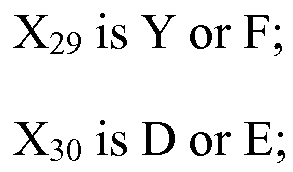
  • X29 is Y or F
  • X30 is D or E
  • X31 is or R
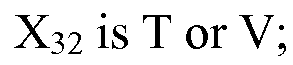
  • X 32 is T or V
  • X33 is K or R
  • X34 is K, L, M, S or R
  • X35 is K or R
  • the core polypeptide is acetylated at the N-term inus.
  • the core polypeptide is a fragment of a generic core polypeptide.
  • the core polypeptide is a fragment of a generic core polypeptide, wherein the fragment lacks 1 , 2, 3, 4, 5, 6, 7, 8, 9, 1 0( ⁇ 5), 1 5( ⁇ 5), 20( ⁇ 5), 25( ⁇ 5), 30( ⁇ 5), or 35( ⁇ 5) amino acids from either of a generic core polypeptide's N- or C- terminus.
  • the core polypeptide is a fragment of a generic core polypeptide, wherein the fragment lacks 24( ⁇ 5) amino acids from its C- terminus.
  • the core polypeptide is a fragment of a generic core polypeptide, wherein the fragment lacks 1 , 2, 3, 4, 5, 6, 7, 8, 9, 1 0( ⁇ 5), 1 5( ⁇ 5), 20( ⁇ 5) or 25( ⁇ 5)amino acids from a generic core polypeptide's N-terminus and 1 , 2, 3, 4, 5, 6, 7, 8, 9, 10( ⁇ 5), 1 5( ⁇ 5), 20( ⁇ 5) or 25( ⁇ 5) amino acids from a generic core polypeptide 's C- term inus.
  • the core polypeptide has an alpha-helical conformation.
  • the core polypeptide is a generic core polypeptide that is not ful l length influenza virus HA. In some embodiments, the core polypeptide is a generic core polypeptide that is between 5 1 to 300, 5 1 to 275, 5 1 to 250, 5 1 to 225, 5 1 to 200, 5 1 to 1 75, 5 1 to 1 50, 5 1 to 125, 5 1 to 1 00, or 5 1 to 75, 1 5 to 50, 20 to 50, 25 to 50, 1 5 to 37, 1 5 to 35, 20 to 37, 20 to 35, 1 5 to 30, 20 to 30 or 20 to 25 amino acids in length.
  • the core polypeptide is a generic core polypeptide that is less than 500, 450, 400, 350, 300, 275, 250, 225, 200, 1 75, 1 50, 125, 100, 95, 90, 85, 80, 75, 70, 65, 60, 55, 50, 45, 40, 35, 30 or 25 amino acids in length.
  • the core polypeptide is a generic core polypeptide less than 1 50, 1 25, 95, 90, 85, 80, 75, 65, 60, 55, 50, 45 or 40 am ino acids in length but at least 1 5, 20, 25, 30 or 35 amino acids in length.
  • the core polypeptide is a derivative of the generic core polypeptide, wherein the derivative comprises a generic core polypeptide with 1 , 2, 3, 4, 5, 6, 7, 8, 9, or 10( ⁇ 5) amino acids attached to either of a generic core polypeptide's N- or C- terminus and wherein the core polypeptide maintains an alpha-helical conformation.
  • the core polypeptide is a derivative of the generic core polypeptide, wherein the derivative comprises a generic core polypeptide with 1 , 2, 3, 4, 5, 6, 7, 8, 9, or 1 0( ⁇ 5) amino acids attached to the generic core polypeptide's N-terminus and 1 , 2, 3, 4, 5, 6, 7, 8, 9, or 1 0( ⁇ 5) amino acids attached to the generic core polypeptide's C- terminus and wherein the core polypeptide maintains an alpha-helical conformation.
  • the core polypeptide is a consensus core polypeptide comprising or consisting of the amino acid sequence:
  • X is M, V, T; 2 is a hydrophobic amino acid; X 3 is L, M, S, K, R; and X is a hydroph ilic amino acid.
  • is , V, T; X? is F, Y or L; X3 is L, , S, K, R; and X is D, N or E.
  • the core polypeptide is acetylated at the N-terminus.
  • the core polypeptide is a fragment of the consensus core polypeptide.
  • the core polypeptide is a fragment of a consensus core polypeptide, wherein the fragment lacks 1 , 2, 3, 4, 5, 6, 7, 8, 9, 1 0( ⁇ 5), 1 5( ⁇ 5), 20( ⁇ 5), 25( ⁇ 5), 30( ⁇ 5), or 35( ⁇ 5) amino acids from either of a consensus core polypeptide's N- or C- terminus.
  • the core polypeptide is a fragment of a consensus core polypeptide, wherein the fragment lacks 24( ⁇ 5) amino acids from its C- terminus.
  • the core polypeptide is a fragment of a consensus core polypeptide, wherein the fragment lacks 1 , 2, 3 , 4, 5, or more amino acids from both of a consensus core polypeptide's N- and C- termini.
  • the core polypeptide has an alpha-helical conformation.
  • the core polypeptide is a consensus core polypeptide that is not full length influenza virus HA. In some embodiments, the core polypeptide is a consensus core polypeptide that is between 51 to 300, 5 1 to 275, 51 to 250, 5 1 to 225, 5 1 to 200, 5 1 to 1 75, 5 1 to 150, 51 to 125, 5 1 to 100, or 5 1 to 75, 1 5 to 50, 20 to 50, 25 to 50, 1 5 to 37, 1 5 to 35, 20 to 37, 20 to 35, 1 5 to 30, 20 to 30 or 20 to 25 amino acids in length.
  • the core polypeptide is a consensus core polypeptide that is less than 500, 450, 400, 350, 300, 275, 250, 225, 200, 1 75, 1 50, 1 25, 100, 95, 90, 85, 80, 75, 70, 65, 60, 55, 50, 45, 40, 35, 30 or 25 amino acids in length.
  • the core polypeptide is a consensus core polypeptide less than 1 50, 125, 95, 90, 85, 80, 75, 65, 60, 55, 50, 45 or 40 amino acids in length but at least 1 5, 20, 25, 30 or 35 amino acids in length.
  • the core polypeptide is a derivative of the consensus core polypeptide, wherein the derivative comprises a consensus core polypeptide with 1 , 2, 3, 4, 5, 6, 7, 8, 9, or 10( ⁇ 5) amino acids attached to either of a consensus core polypeptide's N- or C- terminus and wherein the core polypeptide maintains an alpha- helical conformation.
  • the core polypeptide is a derivative of the consensus core polypeptide, wherein the derivative comprises a consensus core polypeptide with 1 , 2, 3, 4, 5, 6, 7, 8, 9, or 1 0( ⁇ 5) amino acids attached to both of the consensus core polypeptide's N- and C- termini and wherein the core polypeptide maintains an alpha- helical conformation.
  • the core polypeptide is a group 1 core polypeptide comprising or consisting of the amino acid sequence:
  • is a hydrophobic amino acid
  • X 2 is a hydrophobic amino acid
  • X3 is a hydrophilic amino acid
  • X4 is a hydrophobic amino acid
  • X5 is a hydrophobic amino acid
  • X 6 is a hydrophobic acidic amino acid
  • X 7 is a hydrophilic, acidic amino acid
  • Xg is L, M, or S
  • X9 is a hydrophilic, basic amino acid
  • Xio is a hydrophilic amino acid
  • X n is a hydrophobic am ino acid.
  • is L or I ; X 2 or V; X3 is E or D; X 4 V or I ; X 5 is or L; X 6 is F or Y; X 7 is D or E; X 8 L, or S; X 9 R or ; X )0 is D or N and X
  • this core polypeptide can be used to induce an immune response against group 1 hemagglutinin subtypes. In certain embodiments, the immune response induced neutralizes 2 or more influenza virus group 1 hemagglutinin subtypes. In certain embodiments, the core polypeptide is acetylated at the N-terminus.
  • the core polypeptide is a fragment of a group 1 core polypeptide.
  • the core polypeptide is a fragment of a group 1 core polypeptide, wherein the fragment lacks 1 , 2, 3, 4, 5, 6, 7, 8, 9, 1 0( ⁇ 5), 1 5( ⁇ 5), 20( ⁇ 5), 25( ⁇ 5), 30( ⁇ 5), or 35( ⁇ 5) amino acids from either of a group 1 core polypeptide's N- or C- terminus.
  • the core polypeptide is a fragment of a group 1 core polypeptide, wherein the fragment lacks 24( ⁇ 5) amino acids from its C- terminus.
  • the core polypeptide is a fragment of the group 1 core polypeptide, wherein the fragment lacks 1 , 2, 3, 4, 5, or more amino acids from both of a group 1 core polypeptide's N- and C- termini.
  • the core polypeptide has an alpha-helical conformation.
  • the core polypeptide is a group 1 core polypeptide that is less than 500, 450, 400, 350, 300, 275, 250, 225, 200, 1 75, 1 50, 1 25, 100, 95, 90, 85, 80, 75, 70, 65, 60, 55, 50, 45, 40, 35, 30 or 25 amino acids in length.
  • the core polypeptide is a group 1 core polypeptide less than 1 50, 1 25, 95, 90, 85, 80, 75, 65, 60, 55, 50, 45 or 40 amino acids in length but at least 1 5, 20, 25, 30 or 35 amino acids in length.
  • the core polypeptide is a derivative of the group 1 core polypeptide, wherein the derivative comprises a group 1 core polypeptide with either 1 , 2, 3, 4, 5, 6, 7, 8, 9, or 1 0( ⁇ 5) am ino acids attached to either of a group 1 core polypeptide 's N- or C- term inus and wherein the core polypeptide maintains an alpha- helical conformation.
  • the core polypeptide is a derivative of the group 1 core polypeptide, wherein the derivative comprises a group 1 core polypeptide with either 1 , 2, 3, 4, 5, 6, 7, 8, 9, or 1 0( ⁇ 5) am ino acids attached to both of a group 1 core polypeptide's N- and C- termini and wherein the core polypeptide maintains an alpha- helical conformation.
  • the core polypeptide is a group 2 core polypeptide comprising or consisting of the amino acid sequence:
  • Xi is a hydrophilic amino acid
  • X 2 is a hydrophilic amino acid
  • X3 is a hydrophilic amino acid
  • X 4 is a hydrophobic amino acid
  • X5 is E or I
  • Xe is a hydrophilic amino acid
  • X7 is a hydrophobic amino acid
  • X 8 is V or T
  • X9 is a hydrophilic amino acid
  • X10 is a hydrophil ic amino acid
  • Xn is or M
  • X 12 is I or T
  • X 13 is a hydrophilic, acidic amino acid
  • X] 4 is a hydrophobic amino acid
  • X 15 is a hydrophobic am ino acid
  • X i 6 is T or A
  • 7 is a hydrophobic amino acid
  • 8 is a hydrophilic basic amino acid
  • X 19 is T or V
  • X20 is a hydrophil ic, basic amino acid.
  • this core polypeptide can be used to induce an immune response against group 2 hemagglutinin subtypes.
  • the immune response induced neutralizes 2 or more influenza virus group 2 hemagglutinin subtypes.
  • the core polypeptide is acetylated at the N-terminus.
  • the core polypeptide is a fragment of a group 2 core polypeptide.
  • the core polypeptide is a fragment of a group 2 core polypeptide, wherein the fragment lacks 1 , 2, 3, 4, 5, 6, 7, 8, 9, 1 0( ⁇ 5), 1 5( ⁇ 5), 20( ⁇ 5), 25( ⁇ 5), 30( ⁇ 5), or 35( ⁇ 5) amino acids from either of a group 2 core polypeptide's N- or C- terminus.
  • the core polypeptide is a fragment of a group 2 core polypeptide, wherein the fragment lacks 24( ⁇ 5) amino acids from its C- terminus.
  • the core polypeptide is a fragment of a group 2 core polypeptide, wherein the fragment lacks 1 , 2, 3, 4, 5, or more amino acids from both of a group 2 core polypeptide's N- and C- termini.
  • the core polypeptide has an alpha-helical conformation.
  • the core polypeptide is a group 2 core polypeptide that is not full length influenza virus HA. In some embodiments, the core polypeptide is a group 2 core polypeptide that is between 5 1 to 5 1 1 , 51 to 500, 5 1 to 450, 51 to 400, 5 1 to 350, 5 1 to 300, 5 1 to 275, 5 1 to 250, 51 to 225, 51 to 200, 51 to 1 75, 51 to 1 50, 5 1 to 1 25, 5 1 to 1 00, or 5 1 to 75, 1 5 to 50, 20 to 50, 25 to 50, 1 5 to 37, 1 5 to 35, 20 to 37, 20 to 35, 1 5 to 30, 20 to 30 or 20 to 25 amino acids in length.
  • the core polypeptide is a group 2 core polypeptide that is less than 500, 450, 400, 350, 300, 275, 250, 225, 200, 1 75, 1 50, 1 25, 100, 95, 90, 85, 80, 75, 70, 65, 60, 55, 50, 45, 40, 35, 30 or 25 am ino acids in length.
  • the core polypeptide is a group 2 core polypeptide less than 1 50, 1 25, 95, 90, 85, 80, 75, 65, 60, 55, 50, 45 or 40 amino acids in length but at least 1 5, 20, 25, 30 or 35 amino acids in length.
  • the core polypeptide is a derivative of a group 2 core polypeptide, wherein the derivative comprises a group 2 core polypeptide with either 1 , 2, 3, 4, 5, 6, 7, 8, 9, or 1 0( ⁇ 5) amino acids attached to either of a group 2 core polypeptide's N- or C- terminus and wherein the core polypeptide maintains an alpha-helical conformation.
  • the core polypeptide is a derivative of a group 2 core polypeptide, wherein the derivative comprises a group 2 core polypeptide with either 1 , 2, 3, 4, 5, 6, 7, 8, 9, or 1 0( ⁇ 5) amino acids attached to both of a group 2 core polypeptide's N- and C- termini and wherein the core polypeptide maintains an alpha-helical conformation.
  • the core polypeptide is an H I core polypeptide comprising or consisting of the amino acid sequence:
  • RX 1 ENLNKKVDDGFX2DIWTYNAELLVLLENERTLDX 3 HDSNVX4NLY EKVX5SQL NNA (SEQ ID NO: 7),
  • is a hydrophobic amino acid
  • X2 is a hydrophobic amino acid
  • X3 is a hydrophobic amino acid
  • X 4 is a hydrophil ic, basic amino acid
  • X5 is a hydrophi lic, basic amino acid.
  • is M or I
  • X 2 is L or I
  • X3 is F or Y
  • X 4 is K or R
  • X5 is K or R.
  • This sequence corresponds with amino acids 76- 130 of an H I subtype hemagglutinin numbered according to the classic H3 subtype numbering system.
  • the core polypeptide is acetylated at the N- terminus.
  • a core polypeptide comprises any one of the amino acid sequences shown in Figure 6A (SEQ I D NOS: 8- 1 1 ) or a fragment thereof.
  • the core polypeptide is acetylated at the N-terminus.
  • this core polypeptide can be used to induce an immune response against influenza virus strains of subtype H I .
  • the immune response induced neutralizes strains of influenza virus subtype H 1 .
  • the core polypeptide is a fragment of an H I core polypeptide.
  • the core polypeptide is a fragment of a H I core polypeptide, wherein the fragment lacks 1 , 2, 3, 4, 5, 6, 7, 8, 9, 10( ⁇ 5), 1 5( ⁇ 5), 20( ⁇ 5), 25( ⁇ 5), 30( ⁇ 5), or 35( ⁇ 5) amino acids from either of an H 1 core polypeptide's N- or C- term inus.
  • the core polypeptide is a fragment of an H I core polypeptide, wherein the fragment lacks 24( ⁇ 5) amino acids from its C- terminus.
  • the core polypeptide is a fragment of an H I core polypeptide, wherein the fragment lacks 1 , 2, 3, 4, 5, or more amino acids from both of an H I core polypeptide's N- and C- termini.
  • the core polypeptide has an alpha-helical conformation.
  • the core polypeptide is an H I core polypeptide that is not ful l length influenza virus HA. In some embodiments, the core polypeptide is an H I core polypeptide that is between 5 1 to 300, 5 1 to 275, 5 1 to 250, 5 1 to 225, 5 1 to 200, 51 to 1 75, 5 1 to 1 50, 5 1 to 1 25, 5 1 to 1 00, or 51 to 75, 1 5 to 50, 20 to 50, 25 to 50, 1 5 to 37, 1 5 to 35, 20 to 37, 20 to 35, 1 5 to 30, 20 to 30 or 20 to 25 amino acids in length.
  • the core polypeptide is an H I core polypeptide that is less than 500, 450, 400, 350, 300, 275, 250, 225, 200, 1 75, 1 50, 125, 100, 95, 90, 85, 80, 75, 70, 65, 60, 55, 50, 45, 40, 35, 30 or 25 amino acids in length.
  • the core polypeptide is an H I polypeptide less than 1 50, 125, 95, 90, 85, 80, 75, 65, 60, 55, 50, 45 or 40 amino acids in length but at least 1 5, 20, 25, 30 or 35 amino acids in length.
  • the core polypeptide is a derivative of an H I core polypeptide, wherein the derivative comprises an H I core polypeptide with 1 , 2, 3, 4, 5, 6, 7, 8, 9, or 1 0( ⁇ 5) amino acids attached to either of the H I core polypeptide's N- or C- terminus and wherein the core polypeptide maintains an alpha-helical conformation.
  • the core polypeptide is a derivative of an H I core polypeptide, wherein the derivative comprises an H I core polypeptide with 1 , 2, 3, 4, 5, 6, 7, 8, 9, or 10( ⁇ 5) amino acids attached to both of the H I core polypeptide's N- or C- termini and wherein the core polypeptide maintains an alpha-helical conformation.
  • the core polypeptide is an H2 core polypeptide comprising or consisting of the amino acid sequence:
  • X is a hydrophilic, acidic amino acid.
  • X is D or E.
  • the core polypeptide is acetylated at the N-terminus.
  • a core polypeptide comprises any one of the amino acid sequences shown in Figure 6B (SEQ I D NO: 1 3 or 14) or a fragment thereof.
  • the core polypeptide is acetylated at the N-terminus.
  • this core polypeptide can be used to induce an immune response against influenza virus strains of subtype H2. In certain embodiments, the immune response induced neutral izes strains of influenza virus subtype H2.
  • the core polypeptide is a fragment of an H2 core polypeptide.
  • the core polypeptide is a fragment of an H2 core polypeptide, wherein the fragment lacks 1 , 2, 3, 4, 5, 6, 7, 8, 9, 1 0( ⁇ 5), 1 5( ⁇ 5), 20( ⁇ 5), 25( ⁇ 5), 30( ⁇ 5), or 35( ⁇ 5) amino acids from either of an H2 core polypeptide's N- or C- terminus.
  • the core polypeptide is a fragment of an H2 core polypeptide, wherein the fragment lacks 24( ⁇ 5) amino acids from its C- term inus.
  • the core polypeptide is a fragment of an H2 core polypeptide, wherein the fragment lacks 1 , 2, 3, 4, 5, or more am ino acids from both of an H2 core polypeptide's N- and C- term ini.
  • the core polypeptide has an alpha-hel ical conformation.
  • the core polypeptide is an H2 core polypeptide that is not full length influenza virus HA. In some embodiments, the core polypeptide is an H2 core polypeptide that is between 5 1 to 300, 51 to 275, 5 1 to 250, 51 to 225, 5 1 to 200, 51 to 1 75, 5 1 to 1 50, 51 to 125, 5 1 to 100, or 51 to 75, 1 5 to 50, 20 to 50, 25 to 50, 1 5 to 37, 1 5 to 35, 20 to 37, 20 to 35, 1 5 to 30, 20 to 30 or 20 to 25 amino acids in length.
  • the core polypeptide is an H2 core polypeptide that is less than 500, 450, 400, 350, 300, 275, 250, 225, 200, 1 75, 1 50, 125, 1 00, 95, 90, 85, 80, 75, 70, 65, 60, 55, 50, 45, 40, 35, 30 or 25 amino acids in length.
  • the core polypeptide is an H2 polypeptide less than 1 50, 125, 95, 90, 85, 80, 75, 65, 60, 55, 50, 45 or 40 amino acids in length but at least 1 5, 20, 25, 30 or 35 amino acids in length.
  • the core polypeptide is a derivative of an H2 core polypeptide, wherein the derivative comprises an H2 core polypeptide with 1 , 2, 3, 4, 5, 6, 7, 8, 9, or 1 0( ⁇ 5) amino acids attached to either of the H2 core polypeptide's N- or C- terminus and wherein the core polypeptide maintains an alpha-helical conformation.
  • the core polypeptide is a derivative of an H2 core polypeptide, wherein the derivative comprises an H2 core polypeptide with 1 , 2, 3, 4, 5, 6, 7, 8, 9, or 10( ⁇ 5) amino acids attached to both of the H2 core polypeptide's N- and C- termini and wherein the core polypeptide maintains an alpha-helical conformation.
  • the core polypeptide is an H3 core polypeptide comprising or consisting of the amino acid sequence:
  • Xi is a hydrophilic, basic amino acid
  • X 2 is a hydrophilic, basic amino acid
  • X3 is a hydrophilic, basic amino acid.
  • Xi is K or R
  • X 2 is or R
  • X3 is K or R.
  • the core polypeptide is acetylated at the N-terminus.
  • a core polypeptide comprises any one of the amino acid sequences shown in Figure 6C (SEQ ID NOS: 1 6- 1 8) or a fragment thereof.
  • the core polypeptide is acetylated at the N- terminus.
  • this core polypeptide can be used to induce an immune response against influenza virus strains of subtype H3.
  • the immune response induced neutralizes strains of influenza virus subtype H3.
  • the core polypeptide is a fragment of an H3 core polypeptide.
  • the core polypeptide is a fragment of an H3 core polypeptide, wherein the fragment lacks 1 , 2, 3, 4, 5, 6, 7, 8, 9, 10( ⁇ 5), 1 5( ⁇ 5), 20( ⁇ 5), 25( ⁇ 5), 30( ⁇ 5), or 35( ⁇ 5) amino acids from either of an H3 core polypeptide's N- or C- terminus.
  • the core polypeptide is a fragment of an H3 core polypeptide, wherein the fragment lacks 24( ⁇ 5) amino acids from its C- terminus.
  • the core polypeptide is a fragment of an H3 core polypeptide, wherein the fragment lacks 1 , 2, 3, 4, 5, or more amino acids from both of an H3 core polypeptide's N- and C- termini.
  • the core polypeptide has an alpha-helical conformation.
  • the core polypeptide is an H3 core polypeptide that is not full length influenza virus HA. In some embodiments, the core polypeptide is an H3 core polypeptide that is between 51 to 300, 51 to 275, 5 1 to 250, 51 to 225, 51 to 200, 51 to 1 75, 51 to 1 50, 5 1 to 125, 5 1 to 100, or 51 to 75, 1 5 to 50, 20 to 50, 25 to 50, 1 5 to 37, 1 5 to 35, 20 to 37, 20 to 35, 1 5 to 30, 20 to 30 or 20 to 25 amino acids in length.
  • the core polypeptide is an H3 core polypeptide that is less than 500, 450, 400, 350, 300, 275, 250, 225, 200, 1 75, 1 50, 125, 100, 95, 90, 85, 80, 75, 70, 65, 60, 55, 50, 45, 40, 35, 30 or 25 amino acids in length.
  • the core polypeptide is an H3 polypeptide less than 1 50, 125, 95, 90, 85, 80, 75, 65, 60, 55, 50, 45 or 40 amino acids in length but at least 1 5, 20, 25, 30 or 35 amino acids in length.
  • the core polypeptide is a derivative of an H3 core polypeptide, wherein the derivative comprises an H3 core polypeptide with 1 , 2, 3, 4, 5, 6, 7, 8, 9, or 1 0( ⁇ 5) amino acids attached to either of the H3 core polypeptide's N- or C- terminus and wherein the core polypeptide maintains an alpha-helical conformation.
  • the core polypeptide is a derivative of an H3 core polypeptide, wherein the derivative comprises an H3 core polypeptide with 1 , 2, 3, 4, 5, 6, 7, 8, 9, or 1 0( ⁇ 5) amino acids attached to both of the H3 core polypeptide's N- and C- term in i and wherein the core polypeptide maintains an alpha-helical conformation.
  • the core polypeptide is an H4 core polypeptide comprising or consisting of the amino acid sequence:
  • is a hydrophilic, basic amino acid.
  • is R or H .
  • the core polypeptide is acetylated at the N-terminus.
  • a core polypeptide comprises any one of the amino acid sequences shown in Figure 6F (SEQ ID NOS: 20 and 21 ) or a fragment thereof.
  • the core polypeptide is acetylated at the N-terminus.
  • this core polypeptide can be used to induce an immune response against influenza virus strains of subtype H4. In certain embodiments, the immune response induced neutralizes strains of influenza virus subtype H4.
  • the core polypeptide is a fragment of an H4 core polypeptide.
  • the core polypeptide is a fragment of an H4 core polypeptide, wherein the fragment lacks 1 , 2, 3, 4, 5, 6, 7, 8, 9, 10( ⁇ 5), 1 5( ⁇ 5), 20( ⁇ 5), 25( ⁇ 5), 30( ⁇ 5), or 35( ⁇ 5) amino acids from either of an H4 core polypeptide's N- or C- terminus.
  • the core polypeptide is a fragment of an H4 core polypeptide, wherein the fragment lacks 24( ⁇ 5) amino acids from its C- terminus.
  • the core polypeptide is a fragment of an H4 core polypeptide, wherein the fragment lacks 1 , 2, 3, 4, 5, or more amino acids from both of an H4 core polypeptide's N- and C- term ini.
  • the core polypeptide has an alpha-helical conformation.
  • the core polypeptide is an H4 core polypeptide that is not ful l length influenza virus HA.
  • the core polypeptide is an H4 core polypeptide that is between 5 1 to 300, 5 1 to 275, 5 1 to 250, 5 1 to 225, 5 1 to 200, 51 to 1 75, 5 1 to 1 50, 5 1 to 1 25, 51 to 1 00, or 5 1 to 75, 1 5 to 50, 20 to 50, 25 to 50, 1 5 to 37, 1 5 to 35, 20 to 37, 20 to 35, 1 5 to 30, 20 to 30 or 20 to 25 amino acids in length.
  • the core polypeptide is an H4 core polypeptide that is less than 500, 450, 400, 350, 300, 275, 250, 225, 200, 1 75, 1 50, 125, 1 00, 95, 90, 85, 80, 75, 70, 65, 60, 55, 50, 45, 40, 35, 30 or 25 am ino acids in length.
  • the core polypeptide is an H4 polypeptide less than 1 50, 1 25, 95, 90, 85, 80, 75, 65, 60, 55, 50, 45 or 40 amino acids in length but at least 1 5, 20, 25, 30 or 35 amino acids in length.
  • the core polypeptide is a derivative of an H4 core polypeptide, wherein the derivative comprises an H4 core polypeptide with 1 , 2, 3, 4, 5, 6, 7, 8, 9, or 1 0( ⁇ 5) amino acids attached to either of the H4 core polypeptide's N- or C- terminus and wherein the core polypeptide maintains an alpha-helical conformation.
  • the core polypeptide is a derivative of an H4 core polypeptide, wherein the derivative comprises an H4 core polypeptide with 1 , 2, 3, 4, 5, 6, 7, 8, 9, or 10( ⁇ 5) amino acids attached to both of the H4 core polypeptide's N- and C- termini and wherein the core polypeptide maintains an alpha-helical conformation.
  • the core polypeptide is an H5 core polypeptide comprising or consisting of the amino acid sequence:
  • the core polypeptide is acetylated at the N-terminus.
  • a core polypeptide comprises any one of the amino acid sequences shown in Figure 6D (SEQ ID NO: 22) or a fragment thereof.
  • the core polypeptide is acetylated at the N-terminus.
  • this core polypeptide can be used to induce an immune response against influenza virus strains of subtype H5. In certain embodiments, the immune response induced neutralizes strains of influenza virus subtype H5.
  • the core polypeptide is a fragment of an H5 core polypeptide.
  • the core polypeptide is a fragment of an H5 core polypeptide, wherein the fragment lacks 1 , 2, 3, 4, 5, 6, 7, 8, 9, 1 0( ⁇ 5), 1 5( ⁇ 5), 20( ⁇ 5), 25( ⁇ 5), 30( ⁇ 5), or 35( ⁇ 5) amino acids from either of an H5 core polypeptide's N- or C- terminus.
  • the core polypeptide is a fragment of an H5 core polypeptide, wherein the fragment lacks 24( ⁇ 5) amino acids from its C- terminus.
  • the core polypeptide is a fragment of an H5 core polypeptide, wherein the fragment lacks 1 , 2, 3, 4, 5, or more am ino acids from both of the H5 core polypeptide's N- and C- termini.
  • the core polypeptide has an alpha-hel ical conformation.
  • In some embodiments, the core polypeptide is an H5 core polypeptide that is not ful l length influenza virus HA.
  • the core polypeptide is an H5 core polypeptide that is between 51 to 51 1 , 5 1 to 500, 5 1 to 450, 5 1 to 400, 5 1 to 350, 5 1 to 300, 5 1 to 275, 51 to 250, 51 to 225, 5 1 to 200, 51 to 1 75, 5 1 to 1 50, 51 to 125, 51 to 1 00, or 5 1 to 75, 1 5 to 50, 20 to 50, 25 to 50, 1 5 to 37, 1 5 to 35, 20 to 37, 20 to 35, 1 5 to 30, 20 to 30 or 20 to 25 amino acids in length.
  • the core polypeptide is an H5 core polypeptide that is less than 500, 450, 400, 350, 300, 275, 250, 225, 200, 1 75, 1 50, 1 25, 100, 95, 90, 85, 80, 75, 70, 65, 60, 55, 50, 45, 40, 35, 30 or 25 amino acids in length.
  • the core polypeptide is an H5 polypeptide less than 1 50, 125, 95, 90, 85, 80, 75, 65, 60, 55, 50, 45 or 40 amino acids in length but at least 1 5, 20, 25, 30 or 35 amino acids in length.
  • the core polypeptide is a derivative of an H5 core polypeptide, wherein the derivative comprises an H5 core polypeptide with 1 , 2, 3, 4, 5, 6, 7, 8, 9, or 1 0( ⁇ 5) amino acids attached to either of the H5 core polypeptide's N- or C- terminus and wherein the core polypeptide maintains an alpha-helical conformation.
  • the core polypeptide is a derivative of an H5 core polypeptide, wherein the derivative comprises an H5 core polypeptide with 1 , 2, 3, 4, 5, 6, 7, 8, 9, or 10( ⁇ 5) amino acids attached to both of the H5 core polypeptide's N- and C- termini and wherein the core polypeptide maintains an alpha-helical conformation.
  • the core polypeptide is an H6 core polypeptide comprising or consisting of the amino acid sequence:
  • the core polypeptide is acetylated at the N- terminus.
  • a core polypeptide comprises any one of the amino acid sequences shown in Figure 6G (SEQ I D NOS: 24-29)or a fragment thereof.
  • the core polypeptide is acetylated at the N-terminus.
  • this core polypeptide can be used to induce an immune response against influenza virus strains of subtype H6.
  • the core polypeptide is a fragment of an H6 core polypeptide.
  • the core polypeptide is a fragment of an H6 core polypeptide, wherein the fragment lacks 1 , 2, 3, 4, 5, 6, 7, 8, 9, 10( ⁇ 5), 1 5( ⁇ 5), 20( ⁇ 5), 25( ⁇ 5), 30( ⁇ 5), or 35( ⁇ 5) amino acids from either of an H6 core polypeptide's N- or C- terminus.
  • the core polypeptide is a fragment of an H6 core polypeptide, wherein the fragment lacks 24( ⁇ 5) amino acids from its C- terminus.
  • the core polypeptide is a fragment of an H6 core polypeptide, wherein the fragment lacks 1 , 2, 3, 4, 5, or more amino acids from both of an H6 core polypeptide's N- and C- termini.
  • the core polypeptide has an alpha-helical conformation.
  • the core polypeptide is an H6 core polypeptide that is not full length influenza virus HA. In some embodiments, the core polypeptide is an H6 core polypeptide that is between 5 1 to 300, 51 to 275, 5 1 to 250, 51 to 225, 5 1 to 200, 51 to 1 75, 5 1 to 1 50, 5 1 to 125, 5 1 to 100, or 51 to 75, 1 5 to 50, 20 to 50, 25 to 50, 1 5 to 37, 1 5 to 35, 20 to 37, 20 to 35, 1 5 to 30, 20 to 30 or 20 to 25 amino acids in length.
  • the core polypeptide is an H6 core polypeptide that is less than 500, 450, 400, 350, 300, 275, 250, 225, 200, 1 75, 1 50, 1 25, 1 00, 95, 90, 85, 80, 75, 70, 65, 60, 55, 50, 45, 40, 35, 30 or 25 amino ac ids in length.
  • the core polypeptide is an H6 polypeptide less than 1 50, 1 25, 95, 90, 85, 80, 75, 65, 60, 55, 50, 45 or 40 amino acids in length but at least 1 5, 20, 25, 30 or 35 amino acids in length.
  • the core polypeptide is a derivative of an H6 core polypeptide, wherein the derivative comprises an H6 core polypeptide with 1 , 2, 3, 4, 5, 6, 7, 8, 9, or 1 0( ⁇ 5) amino acids attached to either of the H6 core polypeptide's N- or C- term inus and wherein the core polypeptide maintains an alpha-helical conformation.
  • the core polypeptide is a derivative of an H6 core polypeptide, wherein the derivative comprises an H6 core polypeptide with 1 , 2, 3, 4, 5, 6, 7, 8, 9, or 10( ⁇ 5) amino acids attached to both of the H6 core polypeptide's N- and C- termini and wherein the core polypeptide maintains an alpha-helical conformation.
  • the core polypeptide is an H7 core polypeptide comprising or consisting of the amino acid sequence:
  • X is a hydrophobic amino acid or a hydrophi lic amino acid
  • X 2 is a hydrophobic amino acid
  • X3 is a hydrophilic amino acid
  • X 4 is a hydrophilic, basic amino acid.
  • Xi is A or S
  • X 2 is V or I
  • X3 is N or S
  • X 4 is or R.
  • the core polypeptide is acetylated at the N-terminus.
  • a core polypeptide comprises any one of the amino acid sequences shown in Figure 6E (SEQ I D NOS: 3 1 -35) or a fragment thereof.
  • the core polypeptide is acetylated at the N-terminus.
  • this core polypeptide can be used to induce an immune response against influenza virus strains of subtype H7.
  • the core polypeptide is a fragment of an H7 core polypeptide.
  • the core polypeptide is a fragment of an H7 core polypeptide, wherein the fragment lacks 1 , 2, 3, 4, 5, 6, 7, 8, 9, 1 0( ⁇ 5), 1 5( ⁇ 5), 20( ⁇ 5), 25( ⁇ 5), 30( ⁇ 5), or 35( ⁇ 5) amino acids from either of an H7 core polypeptide's N- or C- terminus.
  • the core polypeptide is a fragment of an H7 core polypeptide, wherein the fragment lacks 24( ⁇ 5) amino acids from its C- terminus.
  • the core polypeptide is a fragment of an H7 core polypeptide, wherein the fragment lacks 1 , 2, 3, 4, 5, or more amino acids from both of an H7 core polypeptide's N- and C- term ini.
  • the core polypeptide has an alpha-hel ical conformation.
  • the core polypeptide is an H7 core polypeptide that is not full length influenza virus HA. In some embodiments, the core polypeptide is an H7 core polypeptide that is between 5 1 to 300, 51 to 275, 51 to 250, 51 to 225, 51 to 200, 51 to 1 75, 5 1 to 1 50, 5 1 to 1 25, 5 1 to 100, or 51 to 75, 1 5 to 50, 20 to 50, 25 to 50, 1 5 to 37, 1 5 to 35, 20 to 37, 20 to 35, 1 5 to 30, 20 to 30 or 20 to 25 amino acids in length.
  • the core polypeptide is an H7 core polypeptide that is less than 500, 450, 400, 350, 300, 275, 250, 225, 200, 1 75, 1 50, 125, 100, 95, 90, 85, 80, 75, 70, 65, 60, 55, 50, 45, 40, 35, 30 or 25 amino acids in length.
  • the core polypeptide is an H7 polypeptide less than 1 50, 125, 95, 90, 85, 80, 75, 65, 60, 55, 50, 45 or 40 amino acids in length but at least 1 5, 20, 25, 30 or 35 amino acids in length.
  • the core polypeptide is a derivative of an H7 core polypeptide, wherein the derivative comprises an H7 core polypeptide with 1 , 2, 3, 4, 5, 6, 7, 8, 9, or 10( ⁇ 5) amino acids attached to either of the H7 core polypeptide's N- or C- terminus and wherein the core polypeptide maintains an alpha-helical conformation.
  • the core polypeptide is a derivative of an H7 core polypeptide, wherein the derivative comprises an H7 core polypeptide with either 1 , 2, 3, 4, 5, 6, 7, 8, 9, or 1 0( ⁇ 5) amino acids attached to both of the H7 core polypeptide's N- and C- termini and wherein the core polypeptide maintains an alpha-helical
  • the core polypeptide is an H8 core polypeptide comprising or consisting of the amino acid sequence:
  • RINM INDKIDDQI EX LWAYNAELLVLLENQ TLDEHDSNV NLFDEVKRRLSAN A (SEQ ID NO: 36), wherein X , is a hydrophilic amino acid.
  • X is D or N .
  • a core polypeptide comprises any one of the am ino acid sequences shown in Figure 6H (SEQ ID NOS: 37 and 38) or a fragment thereof.
  • this core polypeptide can be used to induce an immune response against influenza virus strains of subtype H8.
  • the core polypeptide is a fragment of an H8 core polypeptide.
  • the core polypeptide is a fragment of an H8 core polypeptide, wherein the fragment lacks 1 , 2, 3, 4, 5, 6, 7, 8, 9, 1 0( ⁇ 5), 1 5( ⁇ 5), 20( ⁇ 5), 25( ⁇ 5), 30( ⁇ 5), or 35( ⁇ 5) amino acids from either of an H8 core polypeptide's N- or C- terminus.
  • the core polypeptide is a fragment of an H8 core polypeptide, wherein the fragment lacks 24( ⁇ 5) amino acids from its C- terminus.
  • the core polypeptide is a fragment of an H8 core polypeptide, wherein the fragment lacks 1 , 2, 3, 4, 5, or more amino acids from both of an H8 core polypeptide's N- and C- termini.
  • the core polypeptide has an alpha-helical conformation.
  • the core polypeptide is an H8 core polypeptide that is not ful l length influenza virus HA. In some embodiments, the core polypeptide is an H8 core polypeptide that is between 51 to 300, 5 1 to 275, 5 1 to 250, 51 to 225, 5 1 to 200, 51 to 1 75, 5 1 to 1 50, 5 1 to 1 25, 51 to 100, or 51 to 75, 1 5 to 50, 20 to 50, 25 to 50, 1 5 to 37, 1 5 to 35, 20 to 37, 20 to 35, 1 5 to 30, 20 to 30 or 20 to 25 amino acids in length.
  • the core polypeptide is an H8 core polypeptide that is less than 500, 450, 400, 350, 300, 275, 250, 225, 200, 1 75, 1 50, 125, 1 00, 95, 90, 85, 80, 75, 70, 65, 60, 55, 50, 45, 40, 35, 30 or 25 amino acids in length.
  • the core polypeptide is an H8 polypeptide less than 1 50, 125, 95, 90, 85, 80, 75, 65, 60, 55, 50, 45 or 40 amino acids in length but at least 1 5, 20, 25, 30 or 35 amino acids in length.
  • the core polypeptide is a derivative of an H8 core polypeptide, wherein the derivative comprises an H8 core polypeptide with 1 , 2, 3, 4, 5, 6, 7, 8, 9, or 1 0( ⁇ 5) amino acids attached to either of the H8 core polypeptide's N- or C- term inus and wherein the core polypeptide maintains an alpha-helical conformation.
  • the core polypeptide is a derivative of an H8 core polypeptide, wherein the derivative comprises an H8 core polypeptide with 1 , 2, 3, 4, 5, 6, 7, 8, 9, or 1 0( ⁇ 5) amino acids attached to both of the H8 core polypeptide's N- and C- term ini and wherein the core polypeptide maintains an alpha-helical conformation.
  • the core polypeptide is an H9 core polypeptide comprising or consisting of the amino acid sequence:
  • is a hydrophobic amino acid.
  • is V or I .
  • the core polypeptide is acetylated at the N-terminus.
  • a core polypeptide comprises any one of the amino acid sequences shown in Figure 61 (SEQ ID NOS: 40 and 41 ) or a fragment thereof.
  • the core polypeptide is acetylated at the N-terminus.
  • this core polypeptide can be used to induce an immune response against influenza virus strains of subtype H9. In certain embodiments, the immune response induced neutralizes strains of influenza virus subtype H9.
  • the core polypeptide is a fragment of an H9 core polypeptide.
  • the core polypeptide is a fragment of an H9 core polypeptide, wherein the fragment lacks 1 , 2, 3, 4, 5, 6, 7, 8, 9, 10( ⁇ 5), 1 5( ⁇ 5), 20( ⁇ 5), 25( ⁇ 5), 30( ⁇ 5), or 35( ⁇ 5) amino acids from either of an H9 core polypeptide's N- or C- terminus.
  • the core polypeptide is a fragment of an H9 core polypeptide, wherein the fragment lacks 24( ⁇ 5) amino acids from its C- terminus.
  • the core polypeptide is a fragment of an H9 core polypeptide, wherein the fragment lacks 1 , 2, 3, 4, 5, or more am ino acids from both of an H9 core polypeptide's N- and C- term in i.
  • the core polypeptide has an alpha-helical conformation.
  • the core polypeptide is an H9 core polypeptide that is not full length influenza virus HA. In some embodiments, the core polypeptide is an H9 core polypeptide that is between 5 1 to 300, 5 1 to 275, 5 1 to 250, 5 1 to 225, 51 to 200, 5 1 to 1 75, 5 1 to 1 50, 5 1 to 125, 5 1 to 100, or 51 to 75, 1 5 to 50, 20 to 50, 25 to 50, 1 5 to 37, 1 5 to 35, 20 to 37, 20 to 35, 1 5 to 30, 20 to 30 or 20 to 25 amino acids in length.
  • the core polypeptide is an H9 core polypeptide that is less than 500, 450, 400, 350, 300, 275, 250, 225, 200, 1 75, 1 50, 125, 100, 95, 90, 85, 80, 75, 70, 65, 60, 55, 50, 45, 40, 35, 30 or 25 amino acids in length.
  • the core polypeptide is an H9 polypeptide less than 1 50, 1 25, 95, 90, 85, 80, 75, 65, 60, 55, 50, 45 or 40 amino acids in length but at least 1 5, 20, 25, 30 or 35 amino acids in length.
  • the core polypeptide is a derivative of an H9 core polypeptide, wherein the derivative comprises an H9 core polypeptide with 1 , 2, 3, 4, 5, 6, 7, 8, 9, or 1 0( ⁇ 5) amino acids attached to either of the H9 core polypeptide's N- or C- terminus and wherein the core polypeptide maintains an alpha-helical conformation.
  • the core polypeptide is a derivative of an H9 core polypeptide, wherein the derivative comprises an H9 core polypeptide with 1 , 2, 3, 4, 5, 6, 7, 8, 9, or 1 0( ⁇ 5) amino acids attached to both of the H9 core polypeptide's N- and C- termini and wherein the core polypeptide maintains an alpha-helical conformation.
  • the core polypeptide is an H 10 core polypeptide comprising or consisting of the amino acid sequence:
  • X is a hydrophilic amino acid.
  • X i is Q or N.
  • the core polypeptide is acetylated at the N-terminus.
  • a core polypeptide comprises any one of the amino acid sequences shown in Figure 6J (SEQ ID NOS: 43 and 44) or a fragment thereof.
  • the core polypeptide is acetylated at the N-terminus.
  • this core polypeptide can be used to induce an immune response against influenza virus strains of subtype H 10. In certain embodiments, the immune response induced neutralizes strains of influenza virus subtype H 1 0.
  • the core polypeptide is a fragment of an H 10 core polypeptide.
  • the core polypeptide is a fragment of an H 10 core polypeptide, wherein the fragment lacks 1 , 2, 3, 4, 5, 6, 7, 8, 9, 1 0( ⁇ 5), 1 5( ⁇ 5), 20( ⁇ 5), 25( ⁇ 5), 30( ⁇ 5), or 35( ⁇ 5) amino acids from either of an H 1 0 core polypeptide's N- or C- terminus.
  • the core polypeptide is a fragment of an H 1 0 core polypeptide, wherein the fragment lacks 24( ⁇ 5) amino acids from its C- terminus.
  • the core polypeptide is a fragment of an H 1 0 core polypeptide, wherein the fragment lacks 1 , 2, 3, 4, 5, or more amino acids from both of an H 10 core polypeptide's N- and C- termini.
  • the core polypeptide has an alpha-helical conformation.
  • the core polypeptide is an H 10 core polypeptide that is not ful l length influenza virus HA.
  • the core polypeptide is an H 1 0 core polypeptide that is between 51 to 300, 5 1 to 275, 5 1 to 250, 5 1 to 225, 5 1 to 200, 5 1 to 1 75, 5 1 to 1 50, 5 1 to 125, 5 1 to 1 00, or 5 1 to 75, 1 5 to 50, 20 to 50, 25 to 50, 1 5 to 37, 1 5 to 35, 20 to 37, 20 to 35, 1 5 to 30, 20 to 30 or 20 to 25 amino acids in length.
  • the core polypeptide is an H 1 0 core polypeptide that is less than 500, 450, 400, 350, 300, 275, 250, 225, 200, 1 75, 1 50, 125, 1 00, 95, 90, 85, 80, 75, 70, 65, 60, 55, 50, 45, 40, 35, 30 or 25 am ino acids in length.
  • the core polypeptide is an H 1 0 polypeptide less than 1 50, 1 25, 95, 90, 85, 80, 75, 65, 60, 55, 50, 45 or 40 amino acids in length but at least 1 5, 20, 25, 30 or 35 amino acids in length.
  • the core polypeptide is a derivative of an H 1 0 core polypeptide, wherein the derivative comprises an H 1 0 core polypeptide with 1 , 2, 3, 4, 5, 6, 7, 8, 9, or 1 0( ⁇ 5) amino acids attached to either of the H 10 core polypeptide's N- or C- term inus and wherein the core polypeptide maintains an alpha-helical conformation.
  • the core polypeptide is a derivative of an H 1 0 core polypeptide, wherein the derivative comprises an H 1 0 core polypeptide with 1 , 2, 3, 4, 5, 6, 7, 8, 9, or 10( ⁇ 5) amino acids attached to both of the H 1 0 core polypeptide's N- and C- termini and wherein the core polypeptide maintains an alpha-helical conformation.
  • the core polypeptide is an H I 1 core polypeptide comprising or consisting of the amino acid sequence:
  • is a hydrophobic amino acid.
  • is V or I .
  • the core polypeptide is acetylated at the N-terminus.
  • a core polypeptide comprises any one of the amino acid sequences shown in Figure 6 (SEQ ID NOS: 46 and 47) or a fragment thereof.
  • the core polypeptide is acetylated at the N-term inus.
  • this core polypeptide can be used to induce an immune response against influenza virus strains of subtype H I 1 .
  • the core polypeptide is a fragment of an H 1 1 core polypeptide.
  • the core polypeptide is a fragment of an H I 1 core polypeptide, wherein the fragment lacks 1 , 2, 3, 4, 5, 6, 7, 8, 9, 1 0( ⁇ 5), 1 5( ⁇ 5), 20( ⁇ 5), 25( ⁇ 5), 30( ⁇ 5), or 35( ⁇ 5) amino acids from either of an H I 1 core polypeptide's N- or C- terminus.
  • the core polypeptide is a fragment of an H I 1 core polypeptide, wherein the fragment lacks 24( ⁇ 5) amino acids from its C- terminus.
  • the core polypeptide is a fragment of an H I 1 core polypeptide, wherein the fragment lacks 1 , 2, 3, 4, 5, or more amino acids from both of an H I 1 core polypeptide's N- and C- termini.
  • the core polypeptide has an alpha-helical conformation.
  • the core polypeptide is an H I 1 core polypeptide that is not full length influenza virus HA. In some embodiments, the core polypeptide is an H I 1 core polypeptide that is between 5 1 to 300, 5 1 to 275, 5 1 to 250, 5 1 to 225, 5 1 to 200, 5 1 to 1 75, 5 1 to 1 50, 5 1 to 125, 5 1 to 100, or 51 to 75, 1 5 to 50, 20 to 50, 25 to 50, 1 5 to 37, 1 5 to 35, 20 to 37, 20 to 35, 1 5 to 30, 20 to 30 or 20 to 25 amino acids in length.
  • the core polypeptide is an H I 1 core polypeptide that is less than 500, 450, 400, 350, 300, 275, 250, 225, 200, 1 75, 1 50, 125, 100, 95, 90, 85, 80, 75, 70, 65, 60, 55, 50, 45, 40, 35, 30 or 25 amino acids in length.
  • the core polypeptide is an H I 1 polypeptide less than 1 50, 125, 95, 90, 85, 80, 75, 65, 60, 55, 50, 45 or 40 amino acids in length but at least 1 5, 20, 25, 30 or 35 amino acids in length.
  • the core polypeptide is a derivative of an H I 1 core polypeptide, wherein the derivative comprises an H I 1 core polypeptide with 1 , 2, 3, 4, 5, 6, 7, 8, 9, or 1 0( ⁇ 5) amino acids attached to either of the H 1 1 core polypeptide's N- or C- terminus and wherein the core polypeptide maintains an alpha-helical conformation.
  • the core polypeptide is a derivative of an H I 1 core polypeptide, wherein the derivative comprises an H I 1 core polypeptide with 1 , 2, 3, 4, 5, 6, 7, 8, 9, or 1 0( ⁇ 5) amino acids attached to both of the H I 1 core polypeptide's N- and C- termini and wherein the core polypeptide maintains an alpha-helical conformation.
  • the core polypeptide is an H I 2 core polypeptide comprising or consisting of the amino acid sequence:
  • Xi is a hydrophobic amino acid and X 2 is a hydrophilic, basic amino acid.
  • X is V or I and X 2 is R or .
  • the core polypeptide is acetylated at the N-terminus.
  • a core polypeptide comprises any one of the amino acid sequences shown in Figure 6L (SEQ ID NOS: 49 and 50) or a fragment thereof.
  • the core polypeptide is acetylated at the N-terminus.
  • this core polypeptide can be used to induce an immune response against influenza virus strains of subtype H I 2. In certain embodiments, the immune response induced neutralizes strains of influenza virus subtype H 1 2.
  • the core polypeptide is a fragment of an H I 2 core polypeptide.
  • the core polypeptide is a fragment of an H 12 core polypeptide, wherein the fragment lacks 1 , 2, 3, 4, 5, 6, 7, 8, 9, 1 0( ⁇ 5), 1 5( ⁇ 5), 20( ⁇ 5), 25( ⁇ 5), 30( ⁇ 5), or 35( ⁇ 5) amino acids from either of an H I 2 core polypeptide's N- or C- terminus.
  • the core polypeptide is a fragment of an H I 2 core polypeptide, wherein the fragment lacks 24( ⁇ 5) amino acids from its C- terminus.
  • the core polypeptide is a fragment of an H I 2 core polypeptide, wherein the fragment lacks 1 , 2, 3, 4, 5, or more amino acids from both of an H I 2 core polypeptide's N- and C- termini.
  • the core polypeptide has an alpha-hel ical conformation.
  • the core polypeptide is an H I 2 core polypeptide that is less than 500, 450, 400, 350, 300, 275, 250, 225, 200, 1 75, 1 50, 125, 100, 95, 90, 85, 80, 75, 70, 65, 60, 55, 50, 45, 40, 35, 30 or 25 amino acids in length.
  • the core polypeptide is an H I 2 polypeptide less than 1 50, 125, 95, 90, 85, 80, 75, 65, 60, 55, 50, 45 or 40 amino acids in length but at least 1 5, 20, 25, 30 or 35 amino acids in length.
  • the core polypeptide is a derivative of an H I 2 core polypeptide, wherein the derivative comprises an H 12 core polypeptide with 1 , 2, 3, 4, 5, 6, 7, 8, 9, or 10( ⁇ 5) amino acids attached to either of the H 1 2 core polypeptide's N- or C- terminus and wherein the core polypeptide maintains an alpha-helical conformation.
  • the core polypeptide is a derivative of an H I 2 core polypeptide, wherein the derivative comprises an H 12 core polypeptide with 1 , 2, 3, 4, 5, 6, 7, 8, 9, or 10( ⁇ 5) amino acids attached to both of the H I 2 core polypeptide's N- and C- termini and wherein the core polypeptide maintains an alpha-helical conformation.
  • the core polypeptide is an H 13 core polypeptide comprising or consisting of the amino acid sequence: 100204] RINMLADRIDDAVTDXi WSY AKLLVLLEND TLDMHDANVRNLHX 2 QVRR X 3 L X 4 NA (SEQ ID NO: 5 1 ),
  • X is a hydrophobic amino acid; ⁇ is a hydrophi lic, acidic amino acid; X3 is A, S or E and X 4 is a hydrophil ic amino acid.
  • X i is V or I ; X2 is D or E; X3 is A, S or E and X4 is T or D.
  • the core polypeptide is acetylated at the N-terminus.
  • a core polypeptide comprises any one of the amino acid sequences shown in Figure 6M (SEQ ID NOS: 52- 54) or a fragment thereof.
  • the core polypeptide is acetylated at the N-terminus.
  • this core polypeptide can be used to induce an immune response against influenza virus strains of subtype H I 3.
  • the immune response induced neutralizes strains of influenza virus subtype H 1 3.
  • the core polypeptide is a fragment of an H 1 3 core polypeptide.
  • the core polypeptide is a fragment of an H 13 core polypeptide, wherein the fragment lacks 1 , 2, 3, 4, 5, 6, 7, 8, 9, 1 0( ⁇ 5), 1 5( ⁇ 5), 20( ⁇ 5), 25( ⁇ 5), 30( ⁇ 5), or 35( ⁇ 5) amino acids from either of an H I 3 core polypeptide's N- or C- terminus.
  • the core polypeptide is a fragment of an H I 3 core polypeptide, wherein the fragment lacks 24( ⁇ 5) amino acids from its C- terminus.
  • the core polypeptide is a fragment of an H I 3 core polypeptide, wherein the fragment lacks 1 , 2, 3, 4, 5, or more amino acids from both of an H I 3 core polypeptide's N- and C- termini.
  • the core polypeptide has an alpha-helical conformation.
  • the core polypeptide is an H I 3 core polypeptide that is not ful l length influenza virus HA. In some embodiments, the core polypeptide is an H I 3 core polypeptide that is between 5 1 to 300, 51 to 275, 51 to 250, 5 1 to 225, 5 1 to 200, 51 to 1 75, 51 to 1 50, 51 to 1 25, 5 1 to 1 00, or 51 to 75, 1 5 to 50, 20 to 50, 25 to 50, 1 5 to 37, 1 5 to 35, 20 to 37, 20 to 35, 1 5 to 30, 20 to 30 or 20 to 25 amino acids in length.
  • the core polypeptide is an H I 3 core polypeptide that is less than 500, 450, 400, 350, 300, 275, 250, 225, 200, 1 75, 1 50, 1 25, 100, 95, 90, 85, 80, 75, 70, 65, 60, 55, 50, 45, 40, 35, 30 or 25 amino acids in length.
  • the core polypeptide is an H 1 3 polypeptide less than 1 50, 125, 95, 90, 85, 80, 75, 65, 60, 55, 50, 45 or 40 amino acids in length but at least 1 5, 20, 25, 30 or 35 amino acids in length.
  • the core polypeptide is a derivative of an H I 3 core polypeptide, wherein the derivative comprises an H I 3 core polypeptide with 1 , 2, 3, 4, 5, 6, 7, 8, 9, or 1 0( ⁇ 5) amino acids attached to either of the H I 3 core polypeptide's N- or C- terminus and wherein the core polypeptide maintains an alpha-helical conformation.
  • the core polypeptide is a derivative of an H I 3 core polypeptide, wherein the derivative comprises an H I 3 core polypeptide with 1 , 2, 3, 4, 5, 6, 7, 8, 9, or 1 0( ⁇ 5) amino acids attached to both of the H 13 core polypeptide's N- and C- termini and wherein the core polypeptide maintains an alpha-helical conformation.
  • the core polypeptide is an H 14 core polypeptide comprising or consisting of the amino acid sequence:
  • the core polypeptide is acetylated at the N-terminus.
  • a core polypeptide comprises any one of the amino acid sequences shown in Figure 6N (SEQ I D NO: 55) or a fragment thereof.
  • the core polypeptide is acetylated at the N-terminus.
  • this core polypeptide can be used to induce an immune response against influenza virus strains ' of subtype H I 4. In certain embodiments, the immune response induced neutralizes strains of influenza virus subtype H 1 .
  • the core polypeptide is a fragment of an H 14 core polypeptide.
  • the core polypeptide is a fragment of an H 14 core polypeptide, wherein the fragment lacks 1 , 2, 3, 4, 5, 6, 7, 8, 9, 1 0( ⁇ 5), 1 5( ⁇ 5), 20( ⁇ 5), 25( ⁇ 5), 30( ⁇ 5), or 35( ⁇ 5) amino acids from either of an H 14 core polypeptide's N- or C- terminus.
  • the core polypeptide is a fragment of an H 14 core polypeptide, wherein the fragment lacks 24( ⁇ 5) amino acids from its C- terminus.
  • the core polypeptide is a fragment of an H I 4 core polypeptide, wherein the fragment lacks 1 , 2, 3, 4, 5, or more amino acids from both of an H I 4 core polypeptide 's N- and C- termini.
  • the core polypeptide has an alpha-hel ical conformation.
  • the core polypeptide is an H 14 core polypeptide that is not ful l length influenza virus HA. In some embodiments, the core polypeptide is an H 14 core polypeptide that is between 5 1 to 300, 51 to 275, 5 1 to 250, 5 1 to 225, 5 1 to 200, 51 to 1 75, 5 1 to 1 50, 5 1 to 125, 51 to 100, or 51 to 75, 1 5 to 50, 20 to 50, 25 to 50, 1 5 to 37, 1 5 to 35, 20 to 37, 20 to 35, 1 5 to 30, 20 to 30 or 20 to 25 amino acids in length.
  • the core polypeptide is an H I 4 core polypeptide that is less than 500, 450, 400, 350, 300, 275, 250, 225, 200, 1 75, 1 50, 1 25, 1 00, 95, 90, 85, 80, 75, 70, 65, 60, 55, 50, 45, 40, 35, 30 or 25 amino acids in length.
  • the core polypeptide is an H 14 polypeptide less than 1 50, 125, 95, 90, 85, 80, 75, 65, 60, 55, 50, 45 or 40 amino acids in length but at least 1 5, 20, 25, 30 or 35 amino acids in length.
  • the core polypeptide is a derivative of an H 14 core polypeptide, wherein the derivative comprises an H 14 core polypeptide with 1 , 2, 3, 4, 5, 6, 7, 8, 9, or 1 0( ⁇ 5) amino acids attached to either of the H 14 core polypeptide's N- or C- terminus and wherein the core polypeptide maintains an alpha-helical conformation.
  • the core polypeptide is a derivative of an H I 4 core polypeptide, wherein the derivative comprises an H 14 core polypeptide with 1 , 2, 3, 4, 5, 6, 7, 8, 9, or 1 0( ⁇ 5) amino acids attached to both of the H 14 core polypeptide's N- and C- termini and wherein the core polypeptide maintains an alpha-helical conformation.
  • the core polypeptide is an H I 5 core polypeptide comprising or consisting of the am ino acid sequence:
  • the core polypeptide is acetylated at the N-terminus.
  • a core polypeptide comprises any one of the amino acid sequences shown in Figure 60 or a fragment thereof.
  • the core polypeptide is acetylated at the N-terminus.
  • this core polypeptide can be used to induce an immune response against influenza virus strains of subtype H I 5.
  • the immune response induced neutralizes strains of influenza virus subtype H I 5
  • the core polypeptide is a fragment of an H 1 5 core polypeptide.
  • the core polypeptide is a fragment of an H I 5 core polypeptide, wherein the fragment lacks 1 , 2, 3, 4, 5, 6, 7, 8, 9, 1 0( ⁇ 5), 1 5( ⁇ 5), 20( ⁇ 5), 25( ⁇ 5), 30( ⁇ 5), or 35( ⁇ 5) amino acids from either of an H 15 core polypeptide's N- or C- term inus.
  • the core polypeptide is a fragment of an H I 5 core polypeptide, wherein the fragment lacks 24( ⁇ 5) amino acids from its C- terminus.
  • the core polypeptide is a fragment of an H I 5 core polypeptide, wherein the fragment lacks 1 , 2, 3, 4, 5, or more amino acids from both of an H I 5 core polypeptide's N- and C- termini.
  • the core polypeptide has an alpha-helical conformation.
  • the core polypeptide is an H I 5 core polypeptide that is not full length influenza virus HA .
  • the core polypeptide is an H I 5 core polypeptide that is between 5 1 to 300, 5 1 to 275, 5 1 to 250, 5 1 to 225, 5 1 to 200, 5 1 to 1 75, 5 1 to 1 50, 5 1 to 125, 5 1 to 100, or 51 to 75, 1 5 to 50, 20 to 50, 25 to 50, 1 5 to 37, 1 5 to 35, 20 to 37, 20 to 35, 1 5 to 30, 20 to 30 or 20 to 25 amino acids in length.
  • the core polypeptide is an H I 5 core polypeptide that is less than 500, 450, 400, 350, 300, 275, 250, 225, 200, 1 75, 1 50, 1 25, 1 00, 95, 90, 85, 80, 75, 70, 65, 60, 55, 50, 45, 40, 35, 30 or 25 amino acids in length.
  • the core polypeptide is an H I 5 polypeptide less than 1 50, 125, 95, 90, 85, 80, 75, 65, 60, 55, 50, 45 or 40 amino acids in length but at least 15, 20, 25, 30 or 35 amino acids in length.
  • the core polypeptide is a derivative of an H I 5 core polypeptide, wherein the derivative comprises an H I 5 core polypeptide with 1 , 2, 3, 4, 5, 6, 7, 8, 9, or 10( ⁇ 5) amino acids attached to either of the H I 5 core polypeptide's N- or C- terminus and wherein the core polypeptide maintains an alpha-helical conformation.
  • the core polypeptide is a derivative of an H I 5 core polypeptide, wherein the derivative comprises an H I 5 core polypeptide with 1 , 2, 3, 4, 5, 6, 7, 8, 9, or 1 0( ⁇ 5) amino acids attached to both of the H I 5 core polypeptide's N- and C- term ini and wherein the core polypeptide maintains an alpha-helical conformation.
  • the core polypeptide is an H I 6 core polypeptide comprising or consisting of the amino acid sequence:
  • Xi is a hydrophobic amino acid
  • X2 is a hydrophilic, basic amino acid
  • X3 is a hydrophilic, acidic amino acid
  • X 4 is a hydrophilic amino acid.
  • is L or I
  • X 2 is K or R
  • X 3 is D or E
  • X4 is S or N.
  • the core polypeptide is acetylated at the N-terminus.
  • a core polypeptide comprises any one of the amino acid sequences shown in Figure 6P (SEQ I D NOS: 58-60) or a fragment thereof.
  • the core polypeptide is acetylated at the N-terminus.
  • this core polypeptide can be used to induce an immune response against influenza virus strains of subtype H I 6. In certain embodiments, the immune response induced neutralizes strains of influenza virus subtype H 1 6.
  • the core polypeptide is a fragment of an H I 6 core polypeptide.
  • the core polypeptide is a fragment of an H 16 core polypeptide, wherein the fragment lacks 1 , 2, 3, 4, 5, 6, 7, 8, 9, 10( ⁇ 5), 1 5( ⁇ 5), 20( ⁇ 5), 25( ⁇ 5), 30( ⁇ 5), or 35( ⁇ 5) amino acids from either of an H 16 core polypeptide's N- or C- terminus.
  • the core polypeptide is a fragment of an H 16 core polypeptide, wherein the fragment lacks 24( ⁇ 5) amino acids from its C- terminus.
  • the core polypeptide is a fragment of an H I 6 core polypeptide, wherein the fragment lacks 1 , 2, 3, 4, 5, or more amino acids from both of an H 16 core polypeptide's N- and C- termini.
  • the core polypeptide has an alpha-hel ical conformation.
  • the core polypeptide is an H I 6 core polypeptide that is not ful l length influenza virus HA. In some embodiments, the core polypeptide is an H I 6 core polypeptide that is between 5 1 to 300, 5 1 to 275, 5 1 to 250, 5 1 to 225, 5 1 to 200, 51 to 1 75, 5 1 to 1 50, 5 1 to 125, 5 1 to 100, or 5 1 to 75, 1 5 to 50, 20 to 50, 25 to 50, 1 5 to 37, 1 5 to 35, 20 to 37, 20 to 35, 1 5 to 30, 20 to 30 or 20 to 25 amino acids in length.
  • the core polypeptide is an H I 6 core polypeptide that is less than 500, 450, 400, 350, 300, 275, 250, 225, 200, 1 75, 1 50, 125, 1 00, 95, 90, 85, 80, 75, 70, 65, 60, 55, 50, 45, 40, 35, 30 or 25 amino acids in length.
  • the core polypeptide is an H 1 6 polypeptide less than 1 50, 1 25, 95, 90, 85, 80, 75, 65, 60, 55, 50, 45 or 40 amino acids in length but at least 1 5, 20, 25, 30 or 35 amino acids in length.
  • the core polypeptide is a derivative of an H 16 core polypeptide, wherein the derivative comprises an H 16 core polypeptide with 1 , 2, 3, 4, 5, 6, 7, 8, 9, or 10( ⁇ 5) amino acids attached to either of an H I 6 core polypeptide's N- or C- term inus and wherein the core polypeptide maintains an alpha-helical conformation.
  • the core polypeptide is a derivative of an HI 6 core polypeptide, wherein the derivative comprises an H I 6 core polypeptide with 1 , 2, 3, 4, 5, 6, 7, 8, 9, or 1 0( ⁇ 5) amino acids attached to both of an H I 6 core polypeptide's N- and C- termini and wherein the core polypeptide maintains an alpha-helical conformation.
  • the core polypeptide comprises or consists of the sequence:
  • the core polypeptide is acetylated at the N-terminus.
  • a core polypeptide comprises or consists of any one of the amino acid sequences shown in Figure 5A or a fragment thereof. In certain embodiments, the core polypeptide is acetylated at the N-terminus. In a specific embodiment, a core polypeptide comprises or consists of any one of the amino acid sequences shown in Figure 5 B or fragment thereof.
  • the core polypeptide is between 5 1 to 300, 51 to 275, 51 to 250, 51 to 225, 51 to 200, 51 to 1 75, 5 1 to 1 50, 5 1 to 125, 5 1 to 1 00, or 51 to 75, 1 5 to 50, 20 to 50, 25 to 50, 1 5 to 37, 1 5 to 35, 20 to 37, 20 to 35, 1 5 to 30, 20 to 30 or 20 to 25 amino acids in length.
  • the core polypeptide is less than 500, 450, 400, 350, 300, 275, 250, 225,
  • the core polypeptide is less than 1 50, 1 25, 95,
  • the flu polypeptides and core polypeptides described herein are modified to have an extended (or increased) half-life in vivo (i.e., modified core polypeptides).
  • modified core polypeptides which have a half-life in a subject of from about 3 days to about 1 80 days (or more), and in some embodiments greater than 3 days, greater than 7 days, greater than 1 0 days, greater than 1 5 days, greater than 20 days, greater than 25 days, greater than 30 days, greater than 35 days, greater than 40 days, greater than 45 days, greater than 50 days, at least about 60 days, greater than 75 days, greater than 90 days, greater than 105 days, greater than 1 20 days, greater than 135 days, greater than 1 50 days, greater than 1 65 days, or greater than 1 80 days.
  • flu or core polypeptides having an increased half-life in vivo are generated by acetylation of the N- terminus of the flu or core polypeptides.
  • Acetylation of polypeptides is a technique well-known to those of skill in the art and comprises the addition of an acetyl group to the N- terminus of the polypeptide.
  • Acetylation of the core polypeptide can render the core polypeptide less vulnerable to degradation by exopeptidases.
  • flu or core polypeptides having an increased half-life in vivo are generated by amidation of the C-terminus of the flu or core polypeptides.
  • flu or core polypeptides having an increased half-life in vivo are generated by pegylation, i.e., attaching inert polymer molecules such as high molecular weight polyethyleneglycol (PEG) to the flu or core polypeptides with or without a multifunctional linker either through site-specific conjugation of the PEG to the N- or C-terminus of the flu or core polypeptides or via epsilon-amino groups present on lysine residues.
  • PEG polyethyleneglycol
  • PEG polyethyleneglycol
  • the N-terminus of the flu or core polypeptides is pegylated.
  • Linear or branched polymer derivatization that results in minimal loss of biological activity can be used.
  • the degree of conjugation can be closely monitored by SDS-PAGE and mass spectrometry to ensure proper conjugation of PEG molecules to the flu or core polypeptides.
  • Unreacted PEG can be separated from flu or core polypeptide-PEG conjugates by size-exclusion or by ion-exchange chromatography.
  • PEG-derivatized flu or core polypeptides can be tested for in vivo efficacy using methods well-known to those of skill in the art, for example, by using animal model systems described herein.
  • flu or core polypeptides can be conjugated to albumin in order to make the core polypeptides more stable in vivo or have a longer half-life in vivo.
  • albumin Such techniques are well-known in the art, see, e.g., International Publication Nos. WO 93/1 5199, WO 93/1 5200, and WO 01 /77137; and European Patent No. EP 41 3,622, all of which are incorporated herein by reference.
  • flu or core polypeptides having an increased half-life in vivo are generated by substitution of terminal L-amino acids of the core polypeptides with D-amino acids.
  • the flu polypeptides described herein comprises a core polypeptide or modified core polypeptide linked to a linker.
  • the linkers encompassed herein can be any linker known to those of skill in the art that does not interfere with the native structure of the core polypeptide with which the linker is associated. In specific embodiments, the linkers encompassed herein are not hydrophobic.
  • the length of the linker may be varied to provide optimal linkage between a core polypeptide or a modified core polypeptide described herein and a substrate (e.g. , carrier protein, T cell epitope, immunogenic polypeptide) to which the core polypeptide or modified core polypeptide is to be linked. Further, the length of the linker may be optimized to prevent immunogenic responses due to linker.
  • Linker molecules are commonly known in the art and described in Denardo et ai , 1998, Clin. Cancer Res. 4:2483-90; Peterson et ai , 1999, Bioconjug. Chem. 1 0:553 ; and Zimmerman et ai, 1999, Nucl. Med. Biol. 26:943-50 each of which is incorporated by reference herein in its entirety.
  • Linkers may be one, two, three, four, five, six, seven, eight, nine, ten, eleven, twelve, thirteen, fourteen, fifteen, twenty, or more than twenty amino acids in length. In some embodiments, the linker is less than 20 amino acids in length. In some
  • the linker is less than 1 5 amino acids in length. In some embodiments, the linker is less than 1 0 amino acids in length. In some embodiments, the linker is less than 9 amino acids in length. In some embodiments, the linker is less than 8 amino acids in length. I n some embodiments, the linker is less than 7 amino acids in length. In some embodiments, the linker is less than 6 amino acids in length. In some embodiments, the linker is less than 5 amino acids in length. In some embodiments, the linker is less than 4 am ino acids in length. In some embodiments, the linker is less than 3 amino acids in length. In some embodiments, the linker is less than 2 amino acids in length.
  • a linker is between 1 and 50 amino acids in length. In some embodiments, a linker is between 1 to 40 amino acids, 1 to 30 amino acids, 1 to 20 amino acids, 1 to 1 0 amino acids, 1 to 5 amino acids, 1 to 4 amino acids, 1 to 3 amino acids, 1 to 2 amino ac ids or I amino acid in length.
  • the linker is covalently attached to the core polypeptide or modified core polypeptide.
  • the linker is attached to the core polypeptide or modified core polypeptide through a peptide bond.
  • the linker is attached to the N-terminus of the core polypeptide or modified core polypeptide.
  • the linker is attached to the C-terminus of the core polypeptide or modified core polypeptide.
  • the linker comprises one or more glycine residues. In some embodiments, the linker comprises two or more glycine residues. In some embodiments, the linker comprises three or more glycine residues. In some
  • the linker comprises four or more glycine residues. In some embodiments, the linker comprises five or more glycine residues. In some embodiments, the linker comprises ten or more glycine residues. In some embodiments, the linker comprises 1 , 2, 3, 4, 5, 6, 7, 8, 9, or 1 0 or more glycine residues. In some embodiments, the linker comprises 2 to 4, 2 to 6, 2 to 1.0, 3 to 6, 3 to 8, 3 to 10, 5 to 1 0, 8 to 10, 1 0 to 1 5 or 10 to 20 glycine residues. I n a specific embodiment, the linker comprises three glycine residues.
  • the linker comprises one or more cysteine amino acid residues. In some embodiments, the linker comprises 1 , 2, 3, 4, 5, 6, 7, 8, 9, or 1 0 or more cysteine residues. In some embodiments, the linker comprises 2 to 4, 2 to 6, 2 to 1 0, 3 to 6, 3 to 8, 3 to 1 0, 5 to 10, 8 to 1 0, 10 to 1 5 or 1 0 to 20 cysteine residues.
  • the linker comprises a protein tag.
  • Protein tags can be useful for the isolation of protein complexes, isolation of a flu polypeptide, affinity chromatography and/or localization studies.
  • protein tags may increase the solubility of a flu polypeptide. Examples of protein tags include, but are not limited to, His tag, Strep II tag, T7-tag, FLAG-tag, S-tag, HA tag, c-Myc tag, DHFR tag, and green fluorescent protein (GFP). Protein tags may be covalently attached to the N- or C- terminus of the flu polypeptide.
  • the linker comprises a FLAG- Tag protein tag, i.e., the linker comprises the amino acid DY DDDDK.
  • the l inker comprises a FLAG-Tag covalently linked to a cysteine residue (i.e., DYKDDDDKC).
  • a flu polypeptide comprises 1 , 2, 3, 4 or more protein tags.
  • the protein tag is not used as a linker in a flu polypeptide.
  • flu polypeptides comprising two or more core polypeptides or modified core polypeptides.
  • the two or more core polypeptides or modified core polypeptides can be directly or indirectly linked/coupled to each other. Without being bound to any particular theory of operation, it is believed that administration of flu polypeptides comprising two, three or more core polypeptides or modified core polypeptides can elicit serum antibodies with broad reactivity within a subject without co-administration of a carrier protein.
  • the core polypeptides or modified core polypeptides are linked together via a linker such as described in Section 5. 1 .3 supra.
  • a flu polypeptide can comprise, for example, a core polypeptide or modified core polypeptide, linked to a l inker, which is in turned linked to a core polypeptide or modified core polypeptide.
  • the flu polypeptide comprises the sequence X-L-X.
  • the flu polypeptide comprises the sequence X-L-X-L-X.
  • the flu polypeptide comprises the sequence X-L-X-L-X-L-X.
  • the flu polypeptide comprises the sequence X-L-X-L-X-L-X-L-X. In a specific embodiment, the flu polypeptide comprises the sequence X-L-X-L-X-L-X- L-X. In a specific embodiment, the flu polypeptide comprises the sequence X-L-X-L-X- L-X-L-X-L-X-L-X. In a specific embodiment, the flu polypeptide comprises the sequence X-L-X-L-X-L-X-L-X-L-X-L-X.
  • the flu polypeptide comprises the sequence X-L-X-L-X-L-X-L-X-L-X-L-X-L-X-L-X-L-X. In a specific embodiment, the flu polypeptide comprises the sequence X-L-X-L-X-L-X-L-X- L-X-L-X-L-X-L-X-L-X. In a specific embodiment, the flu polypeptide comprises the sequence X-L-X-L-X-L-X-L-X-L-X-L-X-L-X-L-X-L-X-L-X-L-X-L-X.
  • L is absent.
  • each of the core polypeptide or modified core polypeptide of the flu polypeptide is directly linked to one or more other core polypeptide (e.g., X-X, X-X-X, X-X-X-X, X-X-X-X-X, etc.)
  • a flu polypeptide comprises two or more of the same core polypeptides or modified core polypeptides. In other embodiments, the flu polypeptide comprises or two or more different core polypeptides or core polypeptides. In a specific embodiment, the flu polypeptide comprises two or more of the same core polypeptides or modified core polypeptides. In a specific embodiment, the flu polypeptide comprises three or more of the same core polypeptides or modified core polypeptides. I n a specific embodiment, the flu polypeptide comprises four or more of the same core polypeptides or modified core polypeptides. In a specific embodiment, the flu polypeptide comprises five or more of the same core polypeptides or modified core polypeptides. In a specific embodiment, each of the core polypeptide or modified core polypeptide of the flu polypeptide is the same.
  • the flu polypeptide comprises two or more different core polypeptides or modified core polypeptides. In a specific embodiment, the flu polypeptide comprises three or more different core polypeptides or modified core polypeptides. In a specific embodiment, the flu polypeptide comprises four or more different core polypeptides or modified core polypeptides. In a specific embodiment, the flu polypeptide comprises five or more different core polypeptides or modified core polypeptides.
  • a flu polypeptide comprises the sequence X-L-X-L-X wherein X is a core polypeptide comprising the amino acid sequence
  • RIQDLEKYVEDTKI DLWSYNAELLVALENQHTIDLTDSEMNKLFEKT RRQLRENA (SEQ I D NO:2) and L is a linker consisting of three glycine residues.
  • X is not
  • a flu polypeptide in addition to comprising two or more modified core polypeptides, comprises one, two, three or more or al l of the following: a T cell epitope, a polypeptide that facilitates multimerization (e.g. , a T4 foldon domain), a protein tag, or an immunogenic polypeptide as described herein.
  • the flu polypeptide comprises a His-tag at its N-terminus.
  • a flu polypeptide comprises a FLAG-tag at its C-terminus.
  • a flu polypeptide comprises a His-tag at its N-terminus and a FLAG-tag at its C-terminus.
  • a flu polypeptide comprises an influenza A nuclear protein (NP) at its C-terminus.
  • a flu polypeptide comprises an FljB flagellin at its C-terminus.
  • a flu polypeptide comprises the amino acid sequence H-X-L-X-L-X-F, wherein H is a His tag or another protein tag that faci litates purification and/or solubil ity of the flu polypeptide, X is a core polypeptide or a modified core polypeptide, L is a linker and F is a FLAG-tag or another protein tag different from H that facilitates the purification and/or solubility of the flu polypeptide.
  • L is 3 glycine residues.
  • L is the same and in other embodiments L is different.
  • a flu polypeptide comprises a core polypeptide or modified core polypeptide described herein and a T cell epitope (e.g. , CD4 or CD8 T cell epitope).
  • a flu polypeptide comprises a core polypeptide or modified core polypeptide and a CD4 T cell epitope.
  • a flu polypeptide comprises a core polypeptide or modified core polypeptide and a CD8 T cell epitope.
  • the T-cell epitope is an influenza virus CD8 T cell epitope (e.g. , an influenza virus protein that contains a highly conserved T cell epitope).
  • the T cell epitope can be directly or indirectly linked/coupled to a core polypeptide by a modified core polypeptide.
  • flu polypeptides comprising a core polypeptide or modified core polypeptide and a CD8 T cell epitope can elicit broadly neutralizing antibodies and prime for a broad spectrum CD8 T cel l response.
  • Highly conserved influenza virus regions that contain CD8 T cell epitopes are found, for example, in influenza nuclear protein (NP), matrix 1 (M l ), neuraminidase (NA) and polymerase basic- 1 (PB 1 ).
  • NP nuclear protein
  • M l matrix 1
  • NA neuraminidase
  • PB 1 polymerase basic- 1
  • the CD8 T cell epitope is a nuclear protein (NP) or fragment thereof.
  • the CD8 T cell epitope polypeptide is a matrix 1 (M l ) protein or fragment the or fragment thereof
  • a flu polypeptide comprises a core polypeptide or a modified core polypeptide linked to a T cel l epitope.
  • the T cell epitope e.g. , CD8 T cell epitope
  • the T cell epitope can be attached to the core polypeptide or modified core polypeptide described herein using any technique known to one of skill in the art, including, but not limited to, single point attachment to a primary amino group or sulfhydryl group using amine to amine crossl inker BS (Bis[sulfosuccinimidyl] suberate), an amine-to-sulfhydryl NHS- PEG-Maleimide crosslinker, or a sulfhydryl-to-sulfhydryl BM(PEG) n PEG crosslinker.
  • the T cell epitope (e.g. , CD8 T cell epitope) is covalently linked to the N- or C- terminus of a flu polypeptide.
  • the T cell epitope (e.g. , CD8 T cell epitope) is linked to a core polypeptide or modified core polypeptide via a linker as described herein in Section 5. 1 .3 supra.
  • a flu polypeptide in addition to comprising one or more core polypeptides or modified core polypeptides and a T cell epitope comprises one, two, three or more or al l of the following: a protein tag, an immunogenic polypeptide, a carrier and/or a polypeptide that facilitates the multimerization of the flu polypeptide (e.g. , a T4 foldon domain).
  • a flu polypeptide comprises one, two, three, four or more core polypeptides or modified core polypeptides and a T cell epitope(s).
  • a flu polypeptide comprises the formula H-X-L-X-L-X-F-T, wherein H (which is optional) is a His tag or another protein tag that facilitates purification and/or solubility, X is a core polypeptide or a modified core polypeptide, L is a linker (such as described in Section 5.1 .3), F (which is optional) is a FLAG-tag or another protein tag different that H which facilitates purification and/or solubility, and T is a T cell epitope.
  • the polypeptide comprises the formula H-X-L-X-L-X-T, wherein H (which is optional) is a His tag or another protein tag that facilitates purification and/or solubility, X is a core polypeptide or a modified core polypeptide, L is a linker (such as described in Section 5. 1 .3), and T is a T cell epitope.
  • L is three glycine residues. In some embodiments, L is the same each time it occurs in the formula and in other embodiments, L is different or varies each time it occurs in the formula. In certain embodiments, there is linker between F and T. I n other embodiments, F is directly linked to T. In certain embodiments, the core polypeptide or modified core polypeptide is the same each time it occurs in the formula. In other embodiments, the core polypeptide or modified core polypeptide is different or varies each time it occurs in the formula.
  • X there is a linker between X and T.
  • X is directly linked to T.
  • a flu polypeptide comprises one or more core polypeptides or modified core polypeptides and an immunogenic polypeptide.
  • a flu polypeptide comprises a core polypeptide or a modified core polypeptide directly or indirectly linked/coupled to an immunogenic polypeptide.
  • the immunogenic polypeptide can be linked/coupled to the N- and/or C- terminus of the core polypeptide or modified core polypeptide.
  • immunogenic polypeptide is linked to the core polypeptide or modified core polypeptide via a l inker such as described in Section 5. 1 .3 supra.
  • immunogenic polypeptides include, but are not limited to, Toll Like Receptor (TLR) l igands, such as the Salmonella flagellin (a Toll like receptor 5 ligand). See, e.g. , Huleatt et al , 2008, Vaccine 26: 201 - 14; Song et al , 2009, Vaccine 27: 5875-84; and Wang ⁇ ?i ⁇ a/. , 201 0, PLos One 5 : e l 3972.
  • a flu polypeptide comprises a core polypeptide linked to FljB flagellin from Salmonella ent erica.
  • a flu polypeptide comprises one or more core polypeptides or modified core polypeptides and an immunogenic polypeptide.
  • a flu polypeptide in addition to comprising one or more core polypeptides or modified polypeptides and an immunogenic polypeptide, comprises one, two three, or more or al l of the following: a protein tag that facilitates purification and/or increases solubi lity of the flu polypeptide, a T cell epitope and/or a polypeptide ⁇ e.g. , a T4 foldon domain) that facilitates multimerization of the flu polypeptide.
  • a flu polypeptide comprises two, three, four or more core polypeptides or modified core polypeptides and an immunogenic polypeptide(s).
  • a flu polypeptide comprises H-X-L-X-L-X-F-I, wherein H is an optional His tag or another protein tag that facilitates purification and/or solubility, X is a core polypeptide or modified core polypeptide, L is an optional linker, such as described in Section 5. 1 .3, F is an optional FLAG-tag or another protein tag different than H that facilitates purification and/or solubility of the flu polypeptide, and I is an immunogenic polypeptide.
  • L is three glycine residues.
  • L is the same throughout the flu polypeptide and in other embodiments, L is different throughout the polypeptide.
  • F is directly linked to I.
  • a flu polypeptide comprises H-X-L-X-L-X-I, wherein H is an optional His tag or another protein tag that facilitates purification and/or solubility, X is a core polypeptide or modified core polypeptide, L is an optional l inker, such as described in Section 5.1 .3, and I is an immunogenic polypeptide.
  • L is three glycine residues.
  • L is the same throughout the flu polypeptide and in other embodiments, L is different throughout the polypeptide.
  • X is directly linked to I .
  • a flu polypeptides comprise a core polypeptide or modified core polypeptide described herein and a carrier.
  • a flu polypeptide comprises a core polypeptide or a modified core polypeptide coupled/linked to a carrier.
  • the core polypeptide or modified core polypeptide can be directly or indirectly linked/coupled to a carrier.
  • a core polypeptide or modified core polypeptide described herein can be coupled/linked (e.g. , directly linked by a linker) to a carrier, including but not limited to, tetanus toxoid (e.g. , chemically-inactivated tetanus toxin), diphtheria toxin (e.g.
  • a core chemically-inactivated diphtheria toxoid or CRM 197 - a non-toxic diphtheria toxin point mutant
  • keyhole limpet hemocyanin LH
  • bovine serum albumin ovalbum in, thyroglobulin or meningococcal outer membrane protein, using methods known to those of skill in the art.
  • a core chemically-inactivated diphtheria toxoid or CRM 197 - a non-toxic diphtheria toxin point mutant
  • LH keyhole limpet hemocyanin
  • bovine serum albumin ovalbum in, thyroglobulin or meningococcal outer membrane protein
  • polypeptide(s) or modified core polypeptide(s) described herein are linked to KLH.
  • a core polypeptide(s) or modified core polypeptide(s) described herein are directly linked to a carrier protein, i.e., the core polypeptide or modified core polypeptide and carrier protein are linked to one another without an intervening l inker molecule.
  • the core polypeptide(s) or modified core polypeptide(s) described herein are linked to a carrier protein by a linker.
  • a core polypeptide(s) or modified core polypeptide(s) described herein is l inked to a carrier protein by a linker described in section 5.1 .3, supra.
  • a flu polypeptide comprises a core polypeptide or modified core polypeptide coupled/linked to more than one carrier.
  • a flu polypeptide comprises a core polypeptide or modified core polypeptide coupled/linked to 2, 3, 4, 5 or more carriers.
  • 2, 3, 4, 5, 6 or more of the same core polypeptide or modified core polypeptide described herein are linked to a carrier.
  • 2, 3, 4, 5, 6 or more different core polypeptides or modified core polypeptides described herein are l inked to a carrier.
  • the core polypeptides or modified core polypeptides described herein are couple/linked to a carrier by chemical cross-linking.
  • a carrier by chemical cross-linking.
  • the cross-linker l -ethyl-3-(3-dimethylaminopropyl) carbodiimide (“EDC”) or the cross- l inker Sulfosuccinimidyl 4-[N-maleimidomethyl]cyclohexane- l -carboxylate (“Sulfo- SMCC”) can be used to cross-link a core polypeptide to a carrier.
  • EDC cross-linker l -ethyl-3-(3-dimethylaminopropyl) carbodiimide
  • Sulfo- SMCC Sulfosuccinimidyl 4-[N-maleimidomethyl]cyclohexane- l -carboxylate
  • Other cross-linkers include Glutaraldehyde and Bis
  • a flu polypeptide comprises (i) the long alpha- helix of the HA2 hemagglutinin subunit of the influenza virus strain A/Hong
  • H3 Kong/1 /1 968 (i.e., amino acids 76- 130, numbered according to the classic H3 subtype numbering system); (ii) a FLAG-tag; and (iii) a C-terminal cysteine residue which can be used, e.g., to couple/link the core polypeptide to a carrier (e.g., KLH).
  • a flu polypeptide comprises the following amino acid sequence: RIQDLEKYVEDTKIDLWSYNAELLVALENQHTIDLTDSEM KLFEKT RRQLRENADYKDDDDKC (SEQ ID NO: l ), wherein the FLAG-tag is represented by the amino acid sequence DYKDDDDK.
  • the N-terminus of the modified core polypeptide is acetylated.
  • a flu polypeptide comprises a core polypeptide or a modified core polypeptide described herein and a polypeptide that facilitates the formation of multimers (e.g. , trimers).
  • the core polypeptide or modified polypeptide is coupled/linked to a polypeptide, such as a T4 foldon domain, to allow/facilitate the the formation of a trimer.
  • the core polypeptide or modified core polypeptide is indirectly or directly linke/coupled to a polypeptide that facilitates multimerization (e.g. , trimerization, such as by a T4 foldon domain) at its C-terminus.
  • a T4 foldon domain may allow for the formation of the trimeric configuration of the influenza A long alpha helix seen in the native hemagglutinin molecule.
  • a flu polypeptide comprises two or more core polypeptides or modified polypeptides and a polypeptide that facilitates the formation of a trimer.
  • the polypeptide that facilitates formation of a trimer is a T4 foldon domain.
  • the polypeptide that facilitates the formation of a multimer is l inked/coupled to a core polypeptide or a modified pore polypeptide by a linker, such as described in section 5.1 .3 supra.
  • the flu polypeptide comprises a core polypeptide or a modified core polypeptide, a linker and a polypeptide, such as a T4 foldon domain, that facilitates the formation of multimers.
  • a flu polypeptide in addition to comprising 2, 3, 4 or more core polypeptides or modified core polypeptides and a polypeptide that facilitates multimerization, such as a T4 foldon domain comprises one, two, three or more, or all of the following: a protein tag facilitates purification and/or solubility of the flu polypeptide, an immunogenic polypeptide, and/or carrier such as described herein.
  • a flu polypeptide comprises a protein tag ⁇ e.g. , a His tag) that facilitates purification and/or solubility, a core polypeptide or a modified core polypeptide and a polypeptide that facilitates trimerization, such as a T4 foldon domain.
  • nucleic acids that encode flu polypeptides described herein are encompassed herein.
  • nucleic acids corresponding to naturally occurring influenza virus nucleic acids encoding a region of the HA2 domain (e.g. , the long alpha helix region) of the hemagglutinin protein are used to produce a flu polypeptide.
  • nucleic acids capable of hybridizing to a nucleic acid encoding a flu polypeptide are also provided herein.
  • nucleic acids capable of hybridizing to a fragment of a nucleic acid encoding a flu polypeptide. In other embodiments, provided herein are nucleic acids capable of hybridizing to the full length of a nucleic acid encoding a flu polypeptide.
  • General parameters for hybridization conditions for nucleic acids are described in Sambrook et ai , Molecular Cloning - A Laboratory Manual (2nd Ed.), Vols. 1 -3, Cold Spring Harbor Laboratory, Cold Spring Harbor, New York ( 1 989), and in Ausubel et al , Current Protocols in Molecular Biology, vol. 2, Current Protocols Publishing, New York ( 1 994).
  • Hybridization may be performed under high stringency conditions, medium stringency conditions, or low stringency conditions.
  • high stringency conditions may include temperatures within 5°C melting temperature of the nucleic acid(s), a low salt concentration (e.g. , less than 250 mM), and a high co-solvent concentration (e.g. , 1 -20% of co-solvent, e.g. , DMSO).
  • Low stringency conditions may include temperatures greater than 1 0°C below the melting temperature of the nucleic acid(s), a high salt concentration (e.g. , greater than 1 000 mM) and the absence of co-solvents.
  • a nucleic acid encoding an influenza virus flu polypeptide is isolated, i.e., a flu polypeptide described herein is isolated.
  • a nucleic acid encoding an influenza virus core polypeptide or modified core polypeptide as described herein is isolated.
  • an "isolated" nucleic acid refers to a nucleic acid molecule which is separated from other nucleic acid molecules which are present in the natural source of the nucleic acid.
  • the isolated nucleic acid can comprise heterologous nucleic acids that are not associated with it in nature.
  • an "isolated" nucleic acid such as a cDNA molecule
  • substantially free of cellular material includes preparations of nucleic acid in which the nucleic acid is separated from cellular components of the cells from which it is isolated or recombinantly produced.
  • nucleic acid that is substantially free of cellular material includes preparations of nucleic acid having less than about 30%, 20%, 1 0%, or 5% (by dry weight) of other nucleic acids.
  • substantially free of culture medium includes preparations of nucleic acid in which the culture medium represents less than about 50%, 20%, 10%, or 5% of the volume of the preparation.
  • substantially free of chemical precursors or other chemicals includes preparations in which the nucleic acid is separated from chemical precursors or other chemicals which are involved in the synthesis of the nucleic acid. In specific embodiments, such preparations of the nucleic acid have less than about 50%, 30%, 20%, 1 0%, 5% (by dry weight) of chemical precursors or compounds other than the nucleic acid of interest.
  • nucleic acids that encode a flu polypeptide comprising a core polypeptide and one or more additional components, e.g. , a linker, a carrier, a protein tag, and/or a protein that is/are associated with a core polypeptide.
  • the flu polypeptides described herein can be produced by any method known in the art for the synthesis of polypeptides, in particular, by chemical synthesis or by recombinant expression techniques.
  • the methods provided herein encompass, unless otherwise indicated, conventional techniques in molecular biology, microbiology, genetic analysis, recombinant DNA, organic chemistry, biochemistry, PCR, oligonucleotide synthesis and modification, nucleic acid hybridization, and related fields within the skill of the art. These techniques are described in the references cited herein and are fully explained in the literature. See, e.g., Maniatis et al. ( 1 982) Molecular Cloning: A Laboratory Manual, Cold Spring Harbor Laboratory Press; Sambrook et al. ( 1989), Molecular Cloning: A Laboratory Manual, Second Edition, Cold Spring Harbor
  • the flu polypeptides described herein may be prepared using conventional step-wise solution or solid phase synthesis (see, e.g. , Chemical Approaches to the Synthesis of Peptides and Proteins, Wil liams et al., Eds., 1997, CRC Press, Boca Raton Fla., and references cited therein; Solid Phase Peptide Synthesis: A Practical Approach, Atherton & Sheppard, Eds., 1 989, IRL Press, Oxford, England, and references cited therein).
  • the flu polypeptides described herein may be prepared by way of segment condensation, as described, for example, in Liu et al., 1996, Tetrahedron Lett. 37(7):933-936; Baca, et al., 1995, J. Am. Chem. Soc. 1 1 7: 1 881 - 1 887; Tam et al., 1995, Int. J.. Peptide Protein Res. 45 :209-21 6; Schnolzer and Kent, 1 992, Science 256:221 -225; Liu and Tam, 1994, J. Am. Chem. Soc. 1 16( 10):4149-41 53 ; Liu and Tam, 1994, Proc. Natl. Acad. Sci.
  • Flu polypeptides comprising core polypeptides and linkers can be synthesized by adding the linker(s) to the core polypeptide chain at the appropriate step in the synthesis.
  • Suitable protecting schemes and chemistries are well known, and will be apparent to those of skill in the art.
  • Formation of disulfide linkages is generally conducted in the presence of mild oxidizing agents. Chemical oxidizing agents may be used, or the compounds may simply be exposed to atmospheric oxygen to effect these linkages.
  • oxidizing agents may be used, or the compounds may simply be exposed to atmospheric oxygen to effect these linkages.
  • Various methods are known in the art, including those described, for example, by Tam et al., 1979, Synthesis 955-957; Stewart et al., 1984, Solid Phase Peptide Synthesis, 2d Ed., Pierce Chemical Company Rockford, III.; Ahmed et al., 1975, J. Biol. Chem. 250: 8477- 8482; and Pennington et al., 1991 Peptides 1990 164- 1 66, Giralt and Andreu, Eds., ESCOM Leiden, The Netherlands.
  • Recombinant expression of a flu polypeptide requires construction of an expression vector containing a polynucleotide that encodes the flu polypeptide. Once a polynucleotide encoding a flu polypeptide has been obtained, the vector for the production of the flu polypeptide may be produced by recombinant DNA technology using techniques well-known in the art. Thus, methods for preparing a flu polypeptide by expressing a polynucleotide containing a flu polypeptide-encoding nucleotide sequence are described herein. Methods which are well known to those skilled in the art can be used to construct expression vectors containing flu polypeptide coding sequences and appropriate transcriptional and translational control signals.
  • replicable expression vectors comprising a nucleotide sequence encoding a flu polypeptide operably linked to a promoter.
  • An expression vector comprises a nucleic acid encoding a flu polypeptide in a form suitable for expression of the nucleic acid in a host cell.
  • the host cell is an isolated host cell.
  • an expression vector includes one or more regulatory sequences, selected on the basis of the host cells to be used for expression, which is operably linked to the nucleic acid to be expressed.
  • "operably linked" is intended to mean that a nucleic acid of interest is linked to the regulatory sequence(s) in a manner which allows for expression of the nucleic acid (e.g. , in an in vitro transcription/translation system or in a host cell when the vector is introduced into the host cell).
  • Regulatory sequences include promoters, enhancers and other expression control elements (e.g. , polyadenylation signals).
  • Regulatory sequences include those which direct constitutive expression of a nucleic acid in many types of host cells, those which direct expression of the nucleic acid only in certain host cel ls (e.g. , tissue-specific regulatory sequences), and those which direct the expression of the nucleic acid upon stimulation with a particular agent (e.g. , inducible regulatory sequences). It will be appreciated by those skilled in the art that the design of the expression vector can depend on such factors as the choice of the host cell to be transformed, the level of expression of protein desired, etc.
  • the term "host cell” is intended to include a particular subject cell transformed or transfected with a nucleic acid and the progeny or potential progeny of such a cell.
  • Progeny of such a cell may not be identical to the parent cell transformed or transfected with the nucleic acid due to mutations or environmental influences that may occur in succeeding generations or integration of the nucleic acid into the host cell genome.
  • the host cell is isolated.
  • An expression vector can be introduced into host cells via conventional transformation or transfection techniques. Such techniques include, but are not limited to, calcium phosphate or calcium chloride co-precipitation, DEAE-dextran-mediated transfection, lipofection, and electroporation.
  • a host cell is transiently transfected with an expression vector containing a nucleic acid encoding a flu polypeptide.
  • a host cell is stably transfected with an expression vector containing a nucleic acid encoding a flu polypeptide.
  • host cel ls contain ing a polynucleotide encoding a flu polypeptide described herein or generated in accordance with the methods provided herein.
  • a variety of host-expression vector systems may be utilized to express a flu polypeptide.
  • Such host-expression systems represent vehicles by which the coding sequences of interest may be produced and subsequently purified, but also represent cells which may, when transformed or transfected with the appropriate nucleotide coding sequences, express a flu polypeptide in situ.
  • These include but are not limited to microorganisms such as bacteria (e.g. , E. coli and B.
  • subtilis transformed with recombinant bacteriophage DNA, plasmid DNA or cosmid DNA expression vectors containing flu polypeptide coding sequences; yeast ⁇ e.g., Saccharomyces Pichia) transformed with recombinant yeast expression vectors containing flu polypeptide coding sequences; insect cell systems infected with recombinant virus expression vectors ⁇ e.g., baculovirus) containing flu polypeptide coding sequences; plant cell systems infected with recombinant virus expression vectors ⁇ e.g., cauliflower mosaic virus, CaMV;
  • bacterial cells such as tobacco mosaic virus, TMV or transformed with recombinant plasmid expression vectors ⁇ e.g., Ti plasmid) containing flu polypeptide coding sequences; or mammalian cell systems ⁇ e.g., COS, CHO, BH , 293, NS0, and 3T3 cells) harboring recombinant expression constructs containing promoters derived from the genome of mammalian cells ⁇ e.g. , metallothionein promoter) or from mammalian viruses ⁇ e.g., the adenovirus late promoter; the vaccinia virus 7.5 promoter).
  • bacterial cells such as
  • Escherichia coli and more preferably, eukaryotic cells are used for the expression of a flu polypeptide.
  • mammalian cells such as Chinese hamster ovary cells (CHO), in conjunction with a vector such as the major intermediate early gene promoter element from human cytomegalovirus is an effective expression system for flu polypeptides (Foecking et al. , 1986, Gene 45 : 101 ; and Cockett et al. , 1990,
  • nucleotide sequences encoding the flu polypeptides described herein or generated in accordance with the methods provided herein is regulated by a constitutive promoter, inducible promoter or tissue specific promoter.
  • a number of expression vectors may be advantageously selected depending upon the use intended for the flu polypeptide being expressed. For example, when a large quantity of flu polypeptide is to be produced, for the generation of pharmaceutical compositions of a flu polypeptide, vectors which direct the expression of high levels of fusion protein products that are readily purified may be desirable.
  • vectors include, but are not limited to, the E. coli expression vector pUR278 (Ruther et al.
  • pGEX vectors may also be used to express foreign polypeptides as fusion proteins with glutathione 5- transferase (GST).
  • fusion proteins are soluble and can easily be purified from lysed cells by adsorption and binding to matrix glutathione agarose beads followed by elution in the presence of free glutathione.
  • the pGEX vectors are designed to include thrombin or factor Xa protease cleavage sites so that the cloned target gene product can be released from the GST moiety.
  • AcNPV Autographa californica nuclear polyhedrosis virus
  • the virus grows in Spodoptera frugiperda cells.
  • the flu polypeptide coding sequence may be cloned individually into non-essential regions (for example the polyhedrin gene) of the virus and placed under control of an AcNPV promoter (for example the polyhedrin promoter).
  • a number of viral-based expression systems may be utilized.
  • the flu polypeptide coding sequence of interest may be ligated to an adenovirus
  • transcription/translation control complex e.g., the late promoter and tripartite leader sequence.
  • This chimeric gene may then be inserted in the adenovirus genome by in vitro or in vivo recombination. Insertion in a non-essential region of the viral genome (e.g., region El or E3) wil l result in a recombinant virus that is viable and capable of expressing the flu polypeptide in infected hosts (e.g., see Logan & Shenk, 1984, Proc. Natl. Acad. Sci. USA 8 1 :355-359). Specific initiation signals may also be required for efficient translation of inserted flu polypeptide coding sequences.
  • These signals include the ATG initiation codon and adjacent sequences. Furthermore, the initiation codon must be in phase with the reading frame of the desired coding sequence to ensure translation of the entire insert.
  • exogenous translational control signals and initiation codons can be of a variety of origins, both natural and synthetic. The efficiency of expression may be enhanced by the inclusion of appropriate transcription enhancer elements, transcription terminators, etc. (see, e.g. , Bittner et al , 1987, Methods in Enzymol. 1 53 :51 -544).
  • a host cel l strain may be chosen which modulates the expression of the inserted sequences, or modifies and processes the gene product in the specific fashion desired. Such modifications (e.g., glycosylation) and processing (e.g. , cleavage) of protein products may be important for the function of the flu polypeptide.
  • Different host cells have characteristic and specific mechanisms for the post-translational processing and modification of proteins and gene products. Appropriate cell lines or host systems can be chosen to ensure the correct modification and processing of the foreign protein expressed. To this end, eukaryotic host cells which possess the cellular machinery for proper processing of the primary transcript, glycosylation, and
  • Such mammalian host cells include but are not limited to CHO, VERY, BHK, Hela, COS, Vero, MDC , 293, 3T3, W l 38, BT483, Hs578T, HTB2, BT20 and T47D, NSO (a murine myeloma cell line that does not endogenously produce any immunoglobulin chains), CRL7030 and HsS78Bst cells.
  • telomeres For long-term, high-yield production of recombinant flu polypeptide, stable expression is preferred.
  • cell lines which stably express the flu polypeptide molecule may be engineered.
  • host cells can be transformed with DNA controlled by appropriate expression control elements (e.g., promoter, enhancer, sequences, transcription terminators, polyadenylation sites, etc.), and a selectable marker.
  • appropriate expression control elements e.g., promoter, enhancer, sequences, transcription terminators, polyadenylation sites, etc.
  • engineered cells may be allowed to grow for 1 -2 days in an enriched media, and then are switched to a selective media.
  • the selectable marker in the recombinant plasmid confers resistance to the selection and allows cells to stably integrate the plasmid into their chromosomes and grow to form foci which in turn can be cloned and expanded into cell l ines.
  • This method may advantageously be used to engineer cell lines which express the flu polypeptide.
  • engineered cell lines may be particularly useful in screening and evaluation of compositions that interact directly or indirectly with the flu polypeptide. Methods commonly known in the art of recombinant DNA technology may be routinely applied to select the desired recombinant clone, and such methods are described, for example, in Ausubel et al.
  • the expression levels of a flu polypeptide can be increased by vector amplification (for a review, see Bebbington and Hentschel, The use of vectors based on gene amplification for the expression of cloned genes in mammalian cells in DNA cloning, Vol. 3 (Academic Press, New York, 1987)).
  • vector amplification for a review, see Bebbington and Hentschel, The use of vectors based on gene amplification for the expression of cloned genes in mammalian cells in DNA cloning, Vol. 3 (Academic Press, New York, 1987)).
  • a marker in the vector system expressing the flu polypeptide is amplifiable
  • increase in the level of inhibitor present in culture of host cell will increase the number of copies of the marker gene. Since the ampl ified region is associated with the flu polypeptide, production of the flu polypeptide will also increase (Crouse et al, 1983, Mol. Cell. Biol. 3 :257).
  • an expression vector containing a nucleic acid encoding a flu polypeptide can be transcribed and translated in vitro using, e.g. , T7 promoter regulatory sequences and T7 polymerase.
  • a coupled transcription/translation system such as Promega TNT®, or a cell lysate or cell extract comprising the components necessary for transcription and translation may be used to produce a flu polypeptide.
  • the method comprises culturing a host cell containing a nucleic acid encoding the polypeptide in a suitable medium such that the polypeptide is produced. In some embodiments, the method further comprises isolating the polypeptide from the medium or the host cel l.
  • plants may be engineered to express a flu polypeptide described herein.
  • plants are engineered to express a flu polypeptide described herein via an agroinfiltration procedure using methods known in the art. For example, nucleic acids encoding a gene of interest, e.g. , a gene encoding a flu polypeptide described herein, are introduced into a strain of Agrobacterium. Subsequently the strain is grown in a liquid culture and the resulting bacteria are washed and suspended into a buffer solution. The plants are then exposed (e.g.
  • the plant is , a tobacco plant (i.e., Nicotiana tabacum).
  • the plant is a relative of the tobacco plant ⁇ e.g. , Nicotiana benthamiana).
  • a plant cell culture system is used for expression of a flu polypeptide. See, e.g. , U.S. Patent Nos. 5,929,304; 7,504,560; 6,770,799; 6,551 ,820; 6, 1 36,320; 6,034,298; 5,91 4,935; 5,612,487; and 5,484,71 9, U. S. patent application publication Nos. 2009/0208477, 2009/0082548, 2009/0053762, 2008/0038232,
  • carrot cells are engineered to express a flu polypeptide.
  • algae e.g. ,
  • Chlamydomonas reinhardtii may be engineered to express a flu polypeptide (see, e.g. , Rasala et al., 201 0, Plant Biotechnology Journal (Published online March 7, 201 0, which is incorporated herein by reference in its entirety).
  • the flu polypeptides described herein and generated using the approaches described in Sections 5.3.1 and 5.3. 1 , supra, may be purified by any method known in the art for purification of a polypeptide, for example, by chromatography (e.g., ion exchange, affinity, particularly by affinity for the specific antigen after Protein A, and sizing column chromatography), centrifugation, differential solubility, or by any other standard technique for the purification of proteins.
  • the flu polypeptides may be fused to heterologous polypeptide sequences described herein or otherwise known in the art to faci litate purification. The actual conditions used to purify a particular flu polypeptide will depend, in part, on the synthesis strategy (e.g.
  • influenza viruses containing a flu polypeptide.
  • the flu polypeptide is incorporated into the virions of the influenza virus.
  • the influenza viruses may be conjugated to moieties that target the viruses to particular cel l types, such as immune cells.
  • the virions of the influenza virus have incorporated into them or express a heterologous polypeptide in addition to a flu polypeptide.
  • the heterologous polypeptide may be a polypeptide that has immunopotentiating activity, or that targets the influenza virus to a particular cell type, such as an antibody that binds to an antigen on a specific cell type or a l igand that binds a specific receptor on a specific cell type.
  • Influenza viruses containing a flu polypeptide may be produced by supplying in trans the flu polypeptide during production of virions using techniques known to one ski l led in the art, such as reverse genetics and helper-free plasmid rescue.
  • a parental influenza virus comprises a genome engineered to express a flu polypeptide in cells susceptible to infection with the virus wherein hemagglutinin function is provided in trans to produce progeny influenza viruses containing the influenza flu polypeptide.
  • influenza viruses comprising a genome engineered to express a flu polypeptide.
  • the genome of a parental influenza virus is engineered to encode a flu polypeptide, which is expressed by progeny influenza virus.
  • the genome of a parental influenza virus is engineered to encode a flu polypeptide, which is expressed and incorporated into the virions of progeny influenza virus.
  • the progeny influenza virus resulting from the replication of the parental influenza virus contain a flu polypeptide.
  • the virions of the parental influenza virus have incorporated into them a heterologous polypeptide.
  • the genome of a parental influenza virus is engineered to encode a heterologous polypeptide and an influenza virus flu polypeptide, which are expressed by progeny influenza virus.
  • influenza flu polypeptide, the heterologous polypeptide or both are incorporated into virions of the progeny influenza virus.
  • the heterologous polypeptide may be a polypeptide that targets the influenza virus to a particular cell type, such as an antibody that recognizes an antigen on a specific cell type or a ligand that binds a specific receptor on a specific cell type.
  • the targeting polypeptide replaces the target cell recognition function of the virus.
  • the heterologous polypeptide targets the influenza virus to the same cell types that influenza virus infects in nature.
  • the heterologous polypeptide targets the progeny influenza virus to immune cells, such as B cells, T cells, macrophages or dendritic cells.
  • the heterologous polypeptide recognizes and binds to cell-specific markers of antigen presenting cells, such as dendritic cells (e.g. , such as CD44).
  • the heterologous polypeptide is DC-SIGN which targets the virus to dendritic cells.
  • the heterologous polypeptide is an antibody (e.g., a single-chain antibody) that targets the virus to an immune cell, which may be fused with a transmembrane domain from another polypeptide so that it is incorporated into the influenza virus virion.
  • the antibody is a CD20 antibody, a CD34 antibody, or an antibody against DEC-205.
  • the heterologous polypeptide is a viral attachment protein.
  • viruses whose attachment protein(s) can be used in this aspect are viruses selected from the group of: Lassa fever virus, Hepatitis B virus, Rabies virus, Newcastle disease virus (NDV), a retrovirus such as human
  • immunodeficiency virus tick-borne encephalitis virus, vaccinia virus, herpesvirus, pol iovirus, alphaviruses such as Sem liki Forest virus, Ross River virus, and Aura virus (which comprise surface glycoproteins such as El , E2, and E3), Borna disease virus, Hantaan virus, foamyvirus, and SARS-CoV virus.
  • an influenza A virus is engineered to encode a flu polypeptide and an influenza C HEF protein, wherein the influenza C HEF protein is substituted for the influenza A neuraminidase (NA) protein.
  • NA neuraminidase
  • a flavivirus surface glycoprotein may be used, such as Dengue virus (DV) E protein.
  • DV Dengue virus
  • Sindbis virus glycoprotein from the alphavirus family is used (K. S. Wang, R. J. Kuhn, E. G. Strauss, S. Ou, J. H. Strauss, J. Virol. 66, 4992 ( 1 992)).
  • the heterologous polypeptide is derived from an NDV HN or F protein; a human immunodeficiency virus (HIV) gp l 60 (or a product thereof, such as gp41 or gpl 20); a hepatitis B virus surface antigen (HBsAg); a glycoprotein of herpesvirus (e.g. , gD, gE); or VP1 of poliovirus.
  • HIV human immunodeficiency virus
  • HBsAg hepatitis B virus surface antigen
  • a glycoprotein of herpesvirus e.g. , gD, gE
  • VP1 of poliovirus poliovirus
  • the heterologous polypeptide is derived from any non-viral targeting system known in the art.
  • a protein of a nonviral pathogen such as an intracel lular bacteria or protozoa is used.
  • the bacterial polypeptide is provided by, e.g. , Chlamydia, Rikettsia, Coxelia, Listeria, Brucella, or Legionella.
  • protozoan polypeptide is provided by, e.g. , Plasmodia species, Leishmania spp., Toxoplasma gondii, or
  • the heterologous polypeptide expressed by an influenza virus has immunopotentiating (immune stimulating) activity.
  • immunopotentiating polypeptides include, but are not limited to, stimulation molecules, cytokines, chemokines, antibodies and other agents such as Flt-3 ligands.
  • polypeptides with immunopotentiating activity include: interferon type 1 , alpha, beta, or gamma interferon, colony stimulating factors such as granulocyte- macrophage colony-stimulating factor (GM-CSF), interleukin (IL)- l , IL-2, IL-4, IL-5, I L-6, I L-7, IL- 1 2, 1 L- 1 5, IL- 1 8, I L-21 , IL-23, tumor necrosis factor (TNF)-P, TNFa., B7. 1 , B7.2, 4- 1 BB, CD40 ligand (CD40L), and drug-inducible CD40 (iCD40) (see, e.g. , Hanks, B. A., et al. 2005. Nat Med 1 1 : 1 30- 1 37, which is incorporated herein by reference in its entirety.)
  • GM-CSF granulocyte- macrophage colony-stimulating factor
  • IL interleukin
  • influenza A and B viruses consist of eight (8) single- stranded, negative sense segments (influenza C viruses consist of seven (7) single- stranded, negative sense segments)
  • the genome of a parental influenza virus may be engineered to express a flu polypeptide (and any other polypeptide, such as a
  • the recombinant segment comprises a nucleic acid encoding the flu polypeptide as wel l as the 3 ' and 5 ' incorporation signals which are required for proper replication, transcription and packaging of the vRNAs (Gao et al. , 201 0, J. of Virology 84:8062-8074, Fujii et al. , 2003, Proc. Natl. Acad. Sci.
  • the recombinant segment encoding the flu polypeptide may replace the HA.segment of a parental influenza virus. In some embodiments, the recombinant segment encoding the flu polypeptide may replace the NS 1 gene of the parental influenza virus. In some embodiments, the recombinant segment encoding the flu polypeptide may replace the NA gene of the parental influenza virus.
  • Exemplary influenza virus strains that can be used to express the flu polypeptides include Ann Arbor/1 /50, A/Puerto Rico/8/34, A/South
  • the genome of a parental influenza virus may be engineered to express a flu polypeptide using a recombinant segment that is bicistronic.
  • Bicistronic techniques allow the engineering of coding sequences of multiple proteins into a single mRNA through the use of internal ribosome entry site (I RES) sequences.
  • I RES sequences direct the internal recruitment of ribosomes to the RNA molecule and allow downstream translation in a cap independent manner. Briefly, a coding region of one protein is inserted into the open reading frame (ORF) of a second protein. The insertion is flanked by an IRES and any untranslated signal sequences necessary for proper expression and/or function. The insertion must not disrupt the ORF,
  • a parental influenza virus is engineered to contain a bicistronic RNA segment that expresses a flu polypeptide and another polypeptide, such as gene expressed by the parental influenza virus.
  • reverse genetics techniques may be used to generate such an influenza virus.
  • reverse genetics techniques generally involve the preparation of synthetic recombinant viral RNAs that contain the non-coding regions of the negative-strand, viral RNA which are essential for the recognition by viral . polymerases and for packaging signals necessary to generate a mature virion.
  • RNAs are synthesized from a recombinant DNA template and reconstituted in vitro with purified viral polymerase complex to form recombinant ribonucleoproteins (RN Ps) which can be used to transfect cells.
  • RNPs ribonucleoproteins
  • a more efficient transfection is achieved if the viral polymerase proteins are present during transcription of the synthetic RNAs either in vitro or in vivo.
  • the synthetic recombinant RNPs can be rescued into infectious virus particles.
  • helper-free plasmid technology may be used to produce an influenza virus containing a flu polypeptide and/or an influenza virus comprising a genome engineered to express a flu polypeptide.
  • full length cDNAs of viral segments are ampl ified using PCR with primers that include unique restriction sites, which allow the insertion of the PCR product into the plasmid vector (Flandorfer et al. , 2003, J. Virol. 77:91 1 6-9123; Nakaya el al. , 2001 , J. Virol. 75 : 1 1 868- 1 1 873 ; both of which are incorporated herein by reference in their entireties).
  • the plasmid vector is designed so that an exact negative (vRNA sense) transcript is expressed.
  • the plasmid vector may be designed to position the PCR product between a truncated human RNA polymerase I promoter and a hepatitis delta virus ribozyme sequence such that an exact negative (vRNA sense) transcript is produced from the polymerase I promoter.
  • Separate plasmid vectors comprising each viral segment as well as expression vectors comprising necessary viral proteins may be transfected into cells leading to production of recombinant viral particles.
  • plasmid vectors from which both the viral genomic RNA and mRNA encoding the necessary viral proteins are expressed may be used.
  • helper-free plasmid technology see, e.g. , International Publication No. WO 01 /04333; U.S. Patent Nos. 6,951 ,754, 7,384,774, 6,649,372, and 7,3 12,064; Fodor e/ al. , 1999, J. Virol. 73 :9679-9682; Quinlivan et al , 2005, J . Virol. 79:8431 -8439; Hoffmann et al. , 2000, Proc. Natl. Acad. Sci. USA 97:6108-61 1 3 ; and Neumann et ai , 1999, Proc. Natl. Acad. Sci. USA 96:9345-9350, which are incorporated herein by reference in their entireties.
  • influenza viruses described herein may be propagated in any substrate that allows the virus to grow to titers that permit their use in accordance with the methods described herein.
  • the substrate allows the viruses to grow to titers comparable to those determined for the corresponding wild-type viruses.
  • the substrate is one which is biologically relevant to the influenza virus.
  • an attenuated influenza virus by virtue of, e.g. , a mutation in the NS 1 gene, may be propagated in an I FN-deficient substrate.
  • a suitable I FN-defic ient substrate may be one that is defective in its ability to produce or respond to interferon, or is one which an I FN-deficient substrate may be used for the growth of any number of viruses which may require interferon-deficient growth environment. See, for example, U.S. Patent Nos. 6,573,079, issued June 3, 2003, 6,852,522, issued February 8, 2005, and 7,494,808, issued February 24, 2009, the entire contents of each of which is incorporated herein by reference in its entirety.
  • influenza viruses described herein may be isolated and purified by any method known to those of skill in the art.
  • the virus is removed from cell culture and separated from cellular components, typically by well known clarification procedures, e.g. , such as gradient centrifugation and column chromatography, and may be further purified as desired using procedures well known to those skilled in the art, e.g. , plaque assays.
  • influenza viruses, or influenza virus polypeptides, genes or genome segments for use as described herein are obtained or derived from an influenza A virus. In certain embodiments, the influenza viruses, or influenza virus polypeptides, genes or genome segments for use as described herein are obtained or derived from a single influenza A virus subtype or strain. In other embodiments, the influenza viruses, or influenza virus polypeptides, genes or genome segments for use as described herein are obtained or derived from two or more influenza A virus subtypes or strains.
  • influenza viruses, or influenza virus polypeptides, genes or genome segments for use as described herein are obtained or derived from an influenza B virus.
  • influenza viruses, or influenza virus polypeptides, genes or genome segments for use as described herein are obtained or derived from a single influenza B virus subtype or strain.
  • influenza viruses, or influenza virus polypeptides, genes or genome segments for use as described herein are obtained or derived from two or more influenza B virus subtypes or strains.
  • influenza viruses, or influenza virus polypeptides, genes or genome segments for use as described herein are obtained or derived from a combination of influenza A and influenza B virus subtypes or strains.
  • influenza viruses, or influenza virus polypeptides, genes or genome segments for use as described herein are obtained or derived from an influenza C virus.
  • influenza viruses, or influenza virus polypeptides, genes or genome segments for use as described herein are obtained or derived from a single influenza C virus subtype or strain.
  • influenza viruses, or influenza virus polypeptides, genes or genome segments for use as described herein are obtained or derived from two or more influenza C virus subtypes or strains.
  • influenza viruses, or influenza virus polypeptides, genes or genome segments for use as described herein are obtained or derived from a combination of influenza C virus and influenza A virus and/or influenza B virus subtypes or strains.
  • influenza A viruses include subtype H10N4, subtype H10N5, subtype H10N7, subtype H10N8, subtype H10N9, subtype HI INI, subtype HI IN 13, subtype HI 1N2, subtype HI 1N4, subtype HI 1N6, subtype HI 1N8, subtype HI 1N9, subtype H12 1, subtype H12N4, subtype H12N5, subtype H12N8, subtype H13N2, subtype H13N3, subtype H13N6, subtype H13N7, subtype H14N5, subtype H14N6, subtype H 15N8, subtype H15N9, subtype H16N3, subtype H1N1, subtype H1N2, subtype H1N3, subtype H1N6, subtype H1N9, subtype H2N1, subtype H2N2, subtype H2N3, subtype H2N5, subtype H2N7, subtype H2N8, subtype H2N9, subtype H3N1,
  • strains of influenza A virus include, but are not limited to: A/sw/lowa/15/30(HlNl); A/WSN/33 (HlNl); A/eq/Prague/1/56 (H7N7);
  • H3N2 d'Armor/3633/84
  • H3N2 A/sw/Gent 1/84
  • H3N2 A/sw/Netherlands/12/85
  • HlNl A/sw/Karrenzien/2/87
  • H3N2 A/sw/Schwerin/103/89
  • Hl l A/turkey/Germany/3/91
  • HlNl A/sw/Germany/8533/91
  • HlNl A/sw/Belgium/220/92 (H3N2);
  • HlNl A/sw/Gent/V230/92
  • H3N2 A/sw/Leipzig/ 145/92
  • H3N2 A/sw/Re220/92hp
  • H3N2 A/sw/Bakum/909/93
  • H3N2 A/sw/Schleswig-Holstein/1/93
  • A/sw/Scotland/419440/94 H1N2; A/sw/Bakum/5/95 (HlNl); A/sw/Best/5C/96 (HlNl); A/sw/England/17394/96 (H1N2); A/sw/Jena/5/96 (H3N2);
  • A/sw/Oedenrode/7C/96 H3N2
  • A/sw/Lohne/1/97 H3N2
  • A/sw/Cote d'Armor/790/97 H1N2
  • A/sw/Bakum/1362/98 H3N2
  • A/sw/ltaly/1521/98 H1N2
  • A/sw/Italy/1553- 2/98 H3N2
  • A/sw/Italy/1566/98 HlNl
  • A/sw/Italy/1589/98 HlNl
  • H3N2 A/sw/Hong Kong/9745/01
  • H3N2 A/sw/Spain/33601/01
  • H3N2 A/sw/Hong Kong/1144/02
  • H3N2 A/sw/Hong Kong/1197/02 (H3N2);
  • A/sw/Spain/50047/03 Hl l
  • A/sw/Spain/51915/03 Hl l
  • A/sw/Vechta/2623/03 Hl l
  • A/sw/VisbekIDT2869/03 H1 2
  • A/sw/Waltersdorf/IDT2527/03 H1N2
  • A/sw/Damme/lDT2890/04 H3N2
  • A/sw/Geldern/IDT2888/04 HlNl
  • H3N2 A/sw/Herzlake/IDT5337/06
  • H3N2 A/wild boar/Germany/R 169/2006
  • strains of influenza A virus include, but are not limited to: A/Toronto/3141/2009 (HlNl); A/Regensburg/D6/2009 (HlNl);
  • A/Firenze/10/2009 Hl l
  • HlNl A/Hong Kong/2369/2009
  • Hltaly/85/2009 Hl l
  • A/Santo Domingo/572N/2009 H 1 N 1
  • A/Catalonia/385/2009 H1N1;
  • A/Stockholm/36/2009 HINI
  • A/Stockholm/38/2009 HINI
  • A/Stockholm/39/2009 H1 1
  • A/Stockholm/40/2009 H 1 N 1 ;
  • A/Stockholm/42/2009 HI I
  • A/Stockholm/43/2009 HINI
  • A/Stockholm/44/2009 HI I
  • A/Utsunomiya2/2009 HINI
  • A/WRAIR/0573N/2009 HINI
  • A/Zhejiang/DTlD-ZJUO 1/2009 HINI
  • influenza B viruses include strain Aichi/5/88, strain Akita/27/2001, strain Akita/5/2001, strain Alaska/ 16/2000, strain Alaska/1777/2005, strain Argentina/69/2001, strain Arizona/146/2005, strain Arizona/148/2005, strain Bangkok/163/90, strain Bangkok/34/99, strain Bangkok/460/03, strain Bangkok/54/99, strain Barcelona/215/03, strain Beijing/15/84, strain Beijing/184/93, strain
  • strain Finland/161/2002 strain Finland/162/03, strain Finland/162/2002, strain Finland/162/91, strain Finland/164/2003, strain Finland/172/91 , strain Finland/173/2003, strain
  • strain Gyeonggi/592/2005 Guangzhou/87/92, strain Gyeonggi/592/2005, strain Hannover/2/90, strain Harbin/07/94, strain Hawaii/10/2001 , strain Hawaii/ 1990/2004, strain Hawaii/38/2001 , strain
  • strain Henan/22/97 strain Hiroshima/23/2001, strain Hong Kong/110/99, strain Hong Kong/1115/2002, strain Hong Kong/112/2001, strain Hong Kong/123/2001 , strain Hong Kong/1351/2002, strain Hong Kong/ 1434/2002, strain Hong Kong/147/99, strain Hong Kong/156/99, strain Hong Kong/157/99, strain Hong Kong/22/2001, strain Hong Kong/22/89, strain Hong Kong
  • strains Houston/1/91, strain Houston/1/96, strain Houston/2/96, strain Hunan/4/72, strain lbaraki/2/85, strain ncheon/297/2005, strain India/3/89, strain India/77276/2001, strain Israel/95/03, strain Israel/WVl 87/2002, strain Japan/1224/2005, strain Jiangsu/10/03, strain Africa/1/99, strain Africa/96/01, strain Kadoma 1076/99, strain Kadoma/ 122/99, strain Kagoshima/15/94, strain Kansas/22992/99, strain
  • Taiwan/97271 /2001 strain Tehran/80/02, strain Tokyo/6/98, strain Trieste/28/02, strain U lan Ude/4/02, strain United Kingdom/34304/99, strain USSR/1 00/83, strain
  • influenza C viruses include strain Aichi/1 /81 , strain Ann Arbor/1 /50, strain Aomori/74, strain California/78, strain England/83, strain Greece/79, strain Hiroshima/246/2000, strain Hiroshima/252/2000, strain Hyogo/1 /83, strain Africa/66, strain Kanagawa/1 /76, strain Kyoto/1 /79, strain Mississippi/80, strain Miyagi/1 /97, strain Miyagi/5/2000, strain Miyagi/9/96, strain Nara/2/85, strain NewJersey/76, strain pig/Beijing/1 1 5/81 , strain Saitama/3/2000) , strain Shizuoka/79, strain Yamagata/2/98, strain Yamagata/6/2000, strain Yamagata/9/96, strain
  • influenza viruses provided herein have an attenuated phenotype.
  • the attenuated influenza virus is based on influenza A virus. I n other embodiments, the attenuated influenza virus is based on influenza B virus. In yet other embodiments, the attenuated influenza virus is based on influenza C virus. In other embodiments, the attenuated influenza virus may comprise genes or genome segments from one or more strains or subtypes of influenza A, influenza B, and/or influenza C virus. In some embodiments, the attenuated backbone virus comprises genes from an influenza A virus and an influenza B virus.
  • Attenuation of influenza virus is desired such that the virus remains, at least partially, infectious and can replicate in vivo, but only generate low titers resulting in subclinical levels of infection that are non-pathogenic.
  • Such attenuated viruses are especially suited for embodiments described herein wherein the virus or an immunogenic composition thereof is administered to a subject to induce an immune response.
  • Attenuation of the influenza virus can be accomplished according to any method known in the art, such as, e.g., selecting viral mutants generated by chemical mutagenesis, mutation of the genome by genetic engineering, selecting reassortant viruses that contain segments with attenuated function, or selecting for conditional virus mutants (e.g., cold-adapted viruses).
  • naturally occurring attenuated influenza viruses may be used as influenza virus backbones for the influenza virus vectors.
  • an influenza virus may be attenuated, at least in part, by engineering the influenza virus to express a mutated NSl gene that impairs the ability of the virus to antagonize the cellular interferon (IFN) response.
  • IFN cellular interferon
  • Examples of the types of mutations that can be introduced into the influenza virus NSl gene include deletions, substitutions, insertions and combinations thereof.
  • One or more mutations can be introduced-any where throughout the NSl gene (e.g., the N-terminus, the C-terminus or somewhere in between) and/or the regulatory element of the NSl gene.
  • an attenuated influenza virus comprises a genome having a mutation in an influenza virus NSl gene resulting in a deletion consisting of 5, preferably 10, 15, 20, 25, 30,35,40,45, 50,55,60, 65,75,80, 85,90, 95,99, 100, 105, 110, 115, 120, 125, 126, 130, 135, 140, 145, 1 0, 155, 160, 165, 170 or 175 amino acid residues from the C- terminus of NSl, or a deletion of between 5-170, 25-170, 50-170, 100-170, 100-160, or 105-160 amino acid residues from the C-terminus.
  • an attenuated influenza virus comprises a genome having a mutation in an influenza virus NSl gene such that it encodes an NSl protein of amino acid residues 1-130, amino acid residues 1- 126, amino acid residues 1-120, amino acid residues 1-115, amino acid residues 1-110, amino acid residues 1-100, amino acid residues 1-99, amino acid residues 1-95, amino acid residues 1-85, amino acid residues 1-83, amino acid residues 1-80, amino acid residues 1-75, amino acid residues 1-73, amino acid residues 1-70, amino acid residues 1- 65, or amino acid residues 1 -60, wherein the N-terminus amino acid is number 1.
  • the amino acid residues of NSl are counted based on the PR8 virus.
  • NSl mutations and influenza viruses comprising a mutated NSl
  • non-influenza viruses containing a flu polypeptide.
  • the flu polypeptide is incorporated into the virions of the non-influenza virus.
  • the non-influenza viruses may be conjugated to moieties that target the viruses to particular cell types, such as immune cells.
  • the virions of the non-influenza virus have incorporated into them or express a heterologous polypeptide in addition to a flu polypeptide.
  • the heterologous polypeptide may be a polypeptide that has immunopotentiating activity, or that targets the non-influenza virus to a particular cell type, such as an antibody that recognizes an antigen on a specific cell type or a ligand that binds a specific receptor on a specific cell type. See Section 5.4, supra, for examples of such heterologous polypeptides.
  • Non-influenza viruses containing a flu polypeptide may be produced by supplying in trans the flu polypeptide during production of virions using techniques known to one skilled in the art.
  • a parental non-influenza virus comprises a genome engineered to express a flu polypeptide in cells susceptible to infection with the virus wherein hemagglutinin function is provided in trans to produce progeny viruses containing the influenza flu polypeptide.
  • any virus type, subtype or strain including, but not limited to, naturally occurring strains, variants or mutants, mutagenized viruses, reassortants and/or genetically modified viruses may be used as a non-influenza virus vector.
  • the parental non-influenza virus is not a naturally occurring virus.
  • the parental non-influenza virus is a genetically engineered virus.
  • an enveloped virus is preferred for the expression of a membrane bound flu polypeptide described herein.
  • the non-influenza virus vector is a Newcastle disease virus (NDV).
  • NDV Newcastle disease virus
  • the non-influenza virus vector is a vaccinia virus.
  • the non-influenza virus vector is adenovirus, adeno-associated virus (AAV), hepatitis B virus, retrovirus (such as, e.g. , a gammaretrovirus such as Mouse Stem Cell Virus (MSCV) genome or Murine Leukemia Virus (MLV), e.g. , Moloney murine leukemia virus, oncoretrovirus, or lentivirus), an alphavirus (e.g.
  • AAV adenovirus
  • AAV adeno-associated virus
  • retrovirus such as, e.g. , a gammaretrovirus such as Mouse Stem Cell Virus (MSCV) genome or Murine Leukemia Virus (MLV), e.g. , Moloney murine leukemia virus, oncoretrovirus, or
  • a rhabdovirus such as vesicular stomatitis virus or papillomaviruses, poxvirus (such as, e.g. , vaccinia virus, a VA-T7 vector, or fowlpox), metapneumovirus, measles virus, herpesvirus, such as herpes simplex virus, or foamyvirus.
  • poxvirus such as, e.g. , vaccinia virus, a VA-T7 vector, or fowlpox
  • metapneumovirus such as, e.g. , vaccinia virus, a VA-T7 vector, or fowlpox
  • metapneumovirus such as, e.g. , vaccinia virus, a VA-T7 vector, or fowlpox
  • metapneumovirus such as, e.g. , vaccinia virus, a VA-T7 vector, or fowlpox
  • the non-influenza virus vector is NDV.
  • Any N DV type, subtype or strain may serve as the backbone that is engineered to express a flu polypeptide, including, but not limited to, naturally-occurring strains, variants or mutants, mutagenized viruses, reassortants and/or genetically engineered viruses.
  • the NDV that serves as the backbone for genetic engineering is a naturally- occurring strain.
  • the NDV that serves as the backbone for genetic engineering is a lytic strain.
  • the NDV that serves as the backbone for genetic engineering is a non-lytic strain.
  • the NDV that serves as the backbone for genetic engineering is lentogenic strain.
  • the NDV that serves as the backbone for genetic engineering is a mesogenic strain. In other embodiments, the NDV that serves as the backbone for genetic engineering is a velogenic strain.
  • NDV strains include, but are not limited to, the 73-T strain, Ulster strain, MTH-68 strain, hemp strain, Hickman strain, PV701 strain, Hitchner B l strain, La Sota strain, YG97 strain, MET95 strain, and F48E9 strain.
  • the NDV that serves as the backbone for genetic engineering is the Hitchner B 1 strain.
  • the NDV that serves as the backbone for genetic engineering is the La Sota strain.
  • the NDV used as the backbone for a non-influenza virus vector is engineered to express a modified F protein in which the cleavage site of the F protein is replaced with one containing one or two extra arginine residues, al lowing the mutant cleavage site to be activated by ubiquitously expressed proteases of the furin fam i ly.
  • Specific examples of N DVs that express such a modified F protein include, but are not l imited to, rNDV/F2aa and rNDV/F3aa.
  • the non-influenza virus vector is a poxvirus.
  • a poxvirus vector may be based on any member of the poxviridae, in particular, a vaccinia virus or an avipox virus (e.g. , such as canarypox, fowlpox, etc.) that provides suitable sequences for vaccine vectors.
  • the poxviral vector is a vaccinia virus vector. Suitable vaccinia viruses include, but are not limited to, the Copenhagen (VC-2) strain (Goebel, et al. , Virol 1 79: 247-266, 1990; Johnson, et al , Virol.
  • Suitable poxviruses include fowlpox strains such as ALVAC and TROVAC vectors that provide desirable properties and are highly attenuated (see, e.g. , U.S. Pat. No. 6,265, 1 89; Tartagl ia ei al. , In AIDS Research Reviews, Koff, et al , eds., Vol. 3, Marcel Dekker, N.Y., 1993; and Tartaglia et al , 1990, Reviews in Immunology 10: 1 3-30, 1 990).
  • the non-influenza virus is attenuated.
  • Exemplary considerations for the selection of a non-influenza virus vector, particularly for use in compositions for administration to a subject, are safety, low toxicity, stabil ity, cell type specificity, and immunogenicity, particularly, antigenicity of the flu polypeptide expressed by the non-influenza virus vector.
  • VLPs general ly comprise a viral polypeptide(s) typically derived from a structural protein(s) of a virus.
  • the VLPs are not capable of replicating. I n certain embodiments, the VLPs may lack the complete genome of a virus or comprise a portion of the genome of a virus. In some embodiments, the VLPs are not capable of infecting a cel l.
  • the VLPs express on their surface one or more of viral (e.g. , virus surface glycoprotein) or non-viral (e.g. , antibody or protein) targeting moieties known to one ski lled in the art or described herein.
  • the VLP comprises a flu polypeptide and a viral structural protein such as HIV gag.
  • VLPs (00337] Methods for producing and characterizing recombinantly produced VLPs have been described based on several viruses, including influenza virus (Bright et al. (2007) Vaccine. 25 :3871 ), human papilloma virus type 1 (Hagnesee et al. ( 1 991 ) J. Virol.
  • a flu polypeptide may be incorporated into a virosome.
  • a virosome containing a flu polypeptide may be produced using techniques known to those skilled in the art.
  • a virosome may be produced by disrupting a purified virus, extracting the genome, and reassembl ing particles with the viral proteins (e.g. , a flu polypeptide) and lipids to form lipid particles containing viral proteins.
  • bacteria may be engineered to express a flu polypeptide described herein.
  • Suitable bacteria for expression of a flu polypeptide include, but are not limited to, Listeria, Salmonella, Shigella sp., Mycobacterium tuberculosis, E. coli, Neisseria meningitides, Brucella abortus, Brucella melitensis, Borrelia burgdorferi, and Francisella tularensis.
  • the bacteria engineered to express a flu polypeptide are attenuated.
  • the flu polypeptides, nucleic acids encoding such polypeptides, or vectors comprising such nucleic acids or polypeptides described herein may be used to el icit neutralizing antibodies against influenza, for example, against the long alpha-helix region of the HA2 domain of the flu polypeptide.
  • the flu polypeptides, nucleic acids encoding such polypeptides, or vectors comprising such nucleic acids or polypeptides described herein may be used to el icit neutralizing antibodies against influenza, for example, against the long alpha-helix region of the HA2 domain of the flu polypeptide.
  • the fluoride for example, against the long alpha-helix region of the HA2 domain of the flu polypeptide.
  • polypeptides, nucleic acids encoding such polypeptides, or vectors comprising such nucleic acids or polypeptides described herein may be administered to a non-human subject ⁇ e.g. , a mouse, rabbit, rat, guinea pig, etc.) to induce an immune response that includes the production of antibodies which may be isolated using techniques known to one of ski ll in the art (e.g. , immunoaffinity chromatography, centrifugation, precipitation, etc.).
  • the flu polypeptides described herein may be used to screen for antibodies from antibody libraries.
  • an isolated flu polypeptide comprising a flu polypeptide may be immobilized to a solid support ⁇ e.g. , a silica gel, a resin, a derivatized plastic film, a glass bead, cotton, a plastic bead, a polystyrene bead, an alum ina gel, or a polysaccharide, a magnetic bead), and screened for binding to antibodies.
  • the antibodies may be immobilized to a solid support and screened for binding to the isolated flu polypeptide.
  • Any screening assay such as a panning assay, ELISA, surface plasmon resonance, or other antibody screening assay known in the art may be used to screen for antibodies that bind to the flu polypeptide.
  • the antibody library screened may be a commercially available antibody library, an in vitro generated library, or a library obtained by identifying and cloning or isolating antibodies from an individual infected with influenza.
  • the antibody library is generated from a survivor of an influenza virus outbreak.
  • Antibody l ibraries may be generated in accordance with methods known in the art.
  • the antibody library is generated by cloning the antibodies and using them in phage display libraries or a phagemid display library.
  • Antibodies identified in the methods described herein may be tested for neutralizing activity and lack of autoreactivity using the biological assays known in the art or described herein.
  • an antibody isolated from a non-human animal or an antibody library neutral izes a hemagglutinin polypeptide from more than one influenza subtype.
  • an antibody elicited or identified using a flu polypeptide, a nucleic acid encoding such a polypeptide, or a vector encoding such a nucleic acid or polypeptide neutralizes an influenza H3 virus.
  • an antibody elicited or identified using a flu polypeptide, a nucleic acid encoding such a polypeptide, or a vector comprising such a nucleic acid or polypeptide neutralizes 1 , 2, 3, 4, 5, 6, 7, 8, 9, 1 0, 1 1 , 1 2, 1 3, 14, 1 5, or 1 6 or more subtypes or strains of influenza virus.
  • the neutralizing antibody neutralizes one or more influenza A viruses and one or more influenza B viruses.
  • the neutral izing antibody is not an antibody described in Wang et al. (201 0) "Broadly Protective
  • immunoglobulin molecules i. e. , molecules that contain an antigen binding site that specifically binds to a flu polypeptide.
  • the immunoglobulin molecules may be of any type ⁇ e.g. , IgG, lgE, IgM, IgD, IgA and IgY), class ⁇ e.g. , Igd , lgG 2 , IgG 3 , lgG 4 , IgA i and IgA 2 ) or subclass of immunoglobulin molecule.
  • Antibodies include, but are not l imited to, monoclonal antibodies, multispecific antibodies, human antibodies, humanized antibodies, chimeric antibodies, single-chain Fvs (scFv), single chain antibodies, Fab fragments, F(ab') fragments, disulfide-linked Fvs (sdFv), and anti- idiotypic (anti-Id) antibodies (including, e.g. , anti-Id antibodies to antibodies elicited or identified using a method described herein), and epitope-binding fragments of any of the above.
  • an antibody elicited or identified using a flu polypeptide, a nucleic acid encoding such a polypeptide, or a vector comprising such a nucleic acid or polypeptide is a human or humanized monoclonal antibody.
  • Antibodies elicited or identified using a flu polypeptide, a nucleic acid encoding such a polypeptide, or a vector comprising such a nucleic acid or polypeptide may be used to monitor the efficacy of a therapy and/or disease progression.
  • any immunoassay system known in the art may be used for this purpose including, but not l imited to, competitive and noncompetitive assay systems using techniques such as radioimmunoassays, ELISA (enzyme linked immunosorbent assays), "sandwich” immunoassays, precipitin reactions, gel diffusion precipitin reactions, immunodiffusion assays, agglutination assays, complement fixation assays, immunoradiometric assays, fluorescent immunoassays, protein A immunoassays and Immunoelectrophoresis assays, to name but a few.
  • radioimmunoassays ELISA (enzyme linked immunosorbent assays), "sandwich” immunoassays, precipitin reactions, gel diffusion precipitin reactions, immunodiffusion assays, agglutination assays, complement fixation assays, immunoradiometric assays, fluorescent immunoassays, protein A immunoassays and Immunoelectrophores
  • Antibodies el icited or identified using a flu polypeptide, a nucleic acid encoding such a polypeptide, or a vector comprising such a nucleic acid or polypeptide may be used to detect influenza virus, for example, from a plurality of influenza virus strains from a single subtype or 2, 3, 4 or more different subtypes and/or to diagnosis an influenza virus infection by, for example, a plurality of influenza virus strains from a single subtype or 2, 3, 4 or more different subtypes.
  • Antibodies el icited or identified using a flu polypeptide, a nucleic acid encoding such a polypeptide, or a vector comprising such a nucleic acid or polypeptide may be used in the production of antiid iotypic antibody.
  • the antiidiotypic antibody can then in turn be used for immunization, in order to produce a subpopulation of antibodies that bind a particular antigen of influenza, e.g., a flu polypeptide (Jerne, 1974, Ann. I mmunol. (Paris) 1 25c:373; Jerne et ai , 1982, EMBO J. 1 :234, incorporated herein by reference in its entirety).
  • the non-human subjects administered flu polypeptides, nucleic acids encoding such polypeptides, or vectors comprising such nucleic acids or polypeptides to generate antibodies in accordance with the methods described herein are transgenic animals (e.g., transgenic mice) that are capable of producing human antibodies.
  • transgenic animals e.g., transgenic mice
  • Human antibodies can be produced using transgenic mice which are incapable of expressing functional endogenous immunoglobul ins, but which can express human immunoglobulin genes.
  • the human heavy and light chain immunoglobulin gene complexes may be introduced randomly or by homologous recombination into mouse embryonic stem cells.
  • the human variable region, constant region, and diversity region may be introduced into mouse embryonic stem cel ls in addition to the human heavy and light chain genes.
  • the mouse heavy and light chain immunoglobulin genes may be rendered non-functional separately or simultaneously with the introduction of human immunoglobulin loci by homologous recombination. In particular, homozygous deletion of the JH region prevents endogenous antibody production.
  • the modified embryonic stem cells are expanded and microinjected into blastocysts to produce chimeric mice. The chimeric mice are then bred to produce homozygous offspring which express human antibodies.
  • the human immunoglobulin transgenes harbored by the transgenic mice rearrange during B cell differentiation, and subsequently undergo class switching and somatic mutation.
  • a flu polypeptide described herein may be used in vitro to generate antibodies against the flu polypeptide or may themselves be
  • the cells are not mammalian cells (e.g. , CB- 1 cells).
  • cells that have been stimulated ex vivo with a flu polypeptide described herein are administered to a subject by, e.g. , an adoptive transfer technique known in the art. See, e.g. , United States patent application Publication No. 2008001 9998, published January 24, 2008, which is incorporated herein by reference in its entirety, for a description of adoptive transfer techniques.
  • the cells are not mammalian cells (e.g. , CB- 1 cells).
  • cells that have been stimulated ex vivo with a flu polypeptide described herein are administered to a subject by, e.g. , an adoptive transfer technique known in the art. See, e.g. , United States patent application Publication No. 2008001 9998, published January 24, 2008, which is incorporated herein by reference in its entirety, for a description of adoptive transfer techniques.
  • the cells are not mammalian cells (e.g.
  • the cells are mammalian cells (e.g. , CB- 1 cells).
  • a vector e.g. , an influenza virus vector, engineered to express a flu polypeptide described herein can be used to generate dendritic cells (DCs) that express the flu polypeptide and display immunostimulatory properties directed against a flu polypeptide.
  • DCs may be used to expand memory T cells and are potent stimulators of T cells, including influenza flu polypeptide-specific cytotoxic T lymphocyte clones. See Strobel et al. , 2000, Human Gene Therapy 1 1 .2207-22 1 8, which is incorporated herein by reference in its entirety.
  • a flu polypeptide described herein may be delivered to a target cell in any way that allows the polypeptide to contact the target cell, e.g. , a DC, and deliver the polypeptide to the target cell.
  • the flu polypeptide is delivered to a subject, as described herein.
  • cells contacted with the polypeptide may be isolated and propagated.
  • a flu polypeptide is delivered to a target cel l in vitro.
  • Techn iques known to one of skill in the art may be used to del iver the polypeptide to target cells.
  • target cells may be contacted with the polypeptide in a tissue culture plate, tube or other container.
  • the polypeptide may be suspended in media and added to the wel ls of a culture plate, tube or other container.
  • the media containing the polypeptide may be added prior to plating of the cells or after the cel ls have been plated.
  • the target cells are preferably incubated with the polypeptide for a sufficient amount of time to allow the polypeptide to contact the cells.
  • the cells are incubated with the polypeptide for about 1 hour or more, about 5 hours or more, about 1 0 hours or more, about 1 2 hours or more, about 1 6 hours or more, about 24, hours or more, about 48 hours or more, about 1 hour to about 12 hours, about 3 hours to about 6 hours, about 6 hours to about 1 2 hours, about 12 hours to about 24 hours, or about 24 hours to about 48 hours.
  • the contacting of the target cells comprises infecting the cells with the virus.
  • the target cel ls may be from any species, including, e.g. , humans, mice, rats, rabbits and guinea pigs.
  • target cells are DCs obtained from a healthy subject or a subject in need of treatment.
  • target cells are DCs obtained from a subject in whom it is desired to stimulate an immune response to the polypeptide. Methods of obtaining cells from a subject are well known in the art. 5.10 COMPOSITIONS
  • compositions are pharmaceutical compositions, such as immunogenic compositions (e.g., vaccine formulations).
  • immunogenic compositions e.g., vaccine formulations.
  • the pharmaceutical compositions provided herein can be in any form that allows for the composition to be admin istered to a subject.
  • the pharmaceutical compositions are suitable for veterinary and/or human administration.
  • the compositions may be used in methods of preventing or treating an influenza virus disease.
  • a pharmaceutical composition comprises a flu polypeptide, in an admixture with a pharmaceutically acceptable carrier.
  • a pharmaceutical composition comprises a nucleic acid encoding a flu polypeptide described herein, in an admixture with a pharmaceutically acceptable carrier.
  • a pharmaceutical composition comprises an expression vector comprising a nucleic acid encoding a flu polypeptide, in an admixture with a
  • a pharmaceutical composition comprises an influenza virus or non-influenza virus containing a flu polypeptide, in an admixture with a pharmaceutically acceptable carrier.
  • a pharmaceutical composition comprises an influenza virus or non- influenza virus having a genome engineered to express a flu polypeptide, in admixture with a pharmaceutically acceptable carrier.
  • a pharmaceutical composition comprises a viral-like particle or virosome containing a flu polypeptide, in an admixture with a pharmaceutically acceptable carrier.
  • a pharmaceutical composition comprises a bacteria expressing or engineered to express a flu polypeptide, in an admixture with a pharmaceutically acceptable carrier.
  • a pharmaceutical composition comprises cells stimulated with a flu polypeptide, in an admixture with a pharmaceutically acceptable carrier.
  • a pharmaceutical composition may comprise one or more other therapies in addition to an active compound.
  • the term "pharmaceutically acceptable” means approved by a regulatory agency of the Federal or a state government or listed in the U.S. Pharmacopeia or other generally recognized pharmacopeiae for use in animals, and more particularly in humans.
  • carrier refers to a diluent, adjuvant, excipient, or vehicle with which the pharmaceutical composition is administered. Saline solutions and aqueous dextrose and glycerol solutions can also be employed as liquid carriers, particularly for injectable solutions.
  • Suitable excipients include starch, glucose, lactose, sucrose, gelatin, malt, rice, flour, chalk, sil ica gel, sodium stearate, glycerol monostearate, talc, sodium chloride, dried skim m ilk, glycerol, propylene, glycol, water, ethanol and the like.
  • suitable pharmaceutical carriers are described in "Remington's Pharmaceutical Sciences” by E.W. Martin. The formulation should suit the mode of administration.
  • compositions are formulated to be suitable for the intended route of administration to a subject.
  • the pharmaceutical composition may be formulated to be suitable for subcutaneous, parenteral, oral, intradermal, transdermal, colorectal, intraperitoneal, and rectal administration.
  • the pharmaceutical composition may be formulated for intravenous, oral, intraperitoneal, intranasal, intratracheal, subcutaneous, intramuscular, topical, intradermal, transdermal or pulmonary administration.
  • biodegradable polymers such as ethylene vinyl acetate, polyanhydrides, polyethylene glycol (PEGylation), polymethyl methacrylate polymers, polylactides, poly(lactide-co-glycolides), polyglycolic acid, collagen, polyorthoesters, and polylactic acid
  • the active compounds are prepared with carriers that increase the protection of the compound against rapid el imination from the body, such as a controlled release formulation, including implants and microencapsulated del ivery systems. Methods for preparation of such formulations will be apparent to those skilled in the art.
  • Liposomes or micelles can also be used as pharmaceutically acceptable carriers. These can be prepared according to methods known to those skilled in the art, for example, as described in U.S. Pat. No. 4,522,81 1 .
  • the pharmaceutical compositions comprise one or more adjuvants.
  • immunogenic compositions described herein are monovalent formulations. In other embodiments, immunogenic compositions described herein are multivalent formulations. In one example, a multivalent formulation comprises one or more vectors expressing a flu polypeptide derived from an influenza A virus and one or more vectors expressing a flu polypeptide derived from an influenza B virus. In another example, a multivalent formulation comprises a vector expressing a flu polypeptide derived from an H3 influenza A virus and a vector expressing a flu polypeptide derived from an H I influenza A virus.
  • a multivalent formulation comprises a vector expressing a flu polypeptide derived from an H3 influenza A virus, a vector expressing a flu polypeptide derived from an H I influenza A virus, and a vector expressing a flu polypeptide derived from an influenza B virus.
  • a multivalent formulation may comprise one or more different flu polypeptides expressed using a single vector.
  • the pharmaceutical compositions described herein additionally comprise a preservative, e.g., the mercury derivative thimerosal.
  • the pharmaceutical compositions described herein comprises 0.001 % to 0.01 % thimerosal.
  • the pharmaceutical compositions described herein do not comprise a preservative.
  • thimerosal is used during the manufacture of a pharmaceutical composition described herein and the thimerosal is removed via purification steps following production of the pharmaceutical composition, i.e., the pharmaceutical composition contains trace amounts of thimerosal ( ⁇ 0.3 ⁇ g of mercury per dose after purification; such pharmaceutical compositions are considered thimerosal-free products).
  • the pharmaceutical compositions described herein additionally comprise egg protein (e.g. , ovalbumin or other egg proteins).
  • egg protein e.g. , ovalbumin or other egg proteins.
  • the amount of egg protein in the pharmaceutical compositions described herein may range from about 0.0005 to about 1 .2. ⁇ g of egg protein to 1 ml of pharmaceutical composition. In other embodiments, the pharmaceutical compositions described herein do not comprise egg protein.
  • the pharmaceutical compositions described herein additionally comprise one or more antimicrobial agents (e.g., antibiotics) including, but not limited to gentamicin, neomycin, polymyxin (e.g. , polymyxin B), and kanamycin, streptomycin.
  • the pharmaceutical compositions described herein do not comprise any antibiotics.
  • the pharmaceutical compositions described herein additionally comprise one or more components used to inactivate a virus, e.g. , formal in or formaldehyde or a detergent such as sodium deoxycholate, octoxynol 9 (Triton X- 1 00), and octoxynol 1 0.
  • the pharmaceutical compositions described herein do not comprise any components used to inactivate a virus.
  • the pharmaceutical compositions described herein additionally comprise gelatin. In other embodiments, the pharmaceutical compositions described herein do not comprise gelatin.
  • the pharmaceutical compositions described herein additionally comprise one or more buffers, e.g., phosphate buffer and sucrose phosphate glutamate buffer. In other embodiments, the pharmaceutical compositions described herein do not comprise buffers.
  • the pharmaceutical compositions described herein additional ly comprise one or more salts, e.g., sodium chloride, calcium chloride, sodium phosphate, monosodium glutamate, and aluminum salts (e.g., aluminum hydroxide, alum inum phosphate, alum (potassium aluminum sulfate), or a mixture of such aluminum salts).
  • the pharmaceutical compositions described herein do not comprise salts.
  • the pharmaceutical compositions described herein are low-additive influenza virus vaccines, i.e., the pharmaceutical compositions do not comprise one or more additives commonly found in influenza virus vaccines.
  • Low- additive influenza vaccines have been described (see, e.g., International Application No. PCT/I B2008/002238 published as International Publication No. WO 09/001 21 7 which is herein incorporated by reference in its entirety).
  • compositions described herein can be included in a container, pack, or dispenser together with instructions for administration.
  • compositions described herein can be stored before use, e.g. , the pharmaceutical compositions can be stored frozen (e.g. , at about -20°C or at about -70°C); stored in refrigerated conditions (e.g. , at about 4 ° C); or stored at room temperature (see International Application No. PCT/1 B2007/001 149 published as International Publ ication No. WO 07/1 10776, which is herein incorporated by reference in its entirety, for methods of storing compositions comprising influenza vaccines without refrigeration).
  • frozen e.g. , at about -20°C or at about -70°C
  • refrigerated conditions e.g. , at about 4 ° C
  • room temperature see International Application No. PCT/1 B2007/001 149 published as International Publ ication No. WO 07/1 10776, which is herein incorporated by reference in its entirety, for methods of storing compositions comprising influenza vaccines without refrigeration.
  • the cells in the pharmaceutical composition are not mammalian cells (e.g. , CB- 1 cells). In certain embodiments, when the active compound in a pharmaceutical composition described herein is a cell engineered to express a flu polypeptide, the cells in the pharmaceutical composition are mammalian cells. 5.10.1 Subunit Vaccines
  • subunit vaccines comprising a core polypeptide described herein.
  • a subunit vaccine comprises a flu polypeptide and one or more surface glycoproteins (e.g. , influenza virus
  • a subunit vaccine comprises a single influenza flu polypeptide.
  • a subunit vaccine comprises two, three, four or more influenza flu polypeptides.
  • the influenza flu polypeptide(s) used in a subunit vaccine is not membrane-bound, i.e. , it is soluble.
  • subun it vaccines comprising about 1 0 ⁇ g to about 60 ⁇ g of one or more flu polypeptides described herein, about 0.001 % to 0.01 % th imerosal, about 0. 1 ⁇ g to about 1 .0 ⁇ g chicken egg protein, about 1 .0 ⁇ g to about 5.0 ⁇ g polymyxin, about 1 .0 ⁇ g to about 5.0 ⁇ g neomycin, about 0. 1 ⁇ g to about 0.5 ⁇ g betapropiolactone, and about .001 to about .05 % w/v of nonylphenol ethoxylate per dose.
  • a subunit vaccine provided herein comprises or consists of a 0.5 ml dose that comprises 45 ⁇ g of a flu polypeptide(s) provided herein, ⁇ 1 .0 ⁇ g of mercury (from thimerosal), ⁇ 1 .0 ⁇ g chicken egg protein (i.e., ovalbumin), ⁇ 3.75 ⁇ g polymyxin, and ⁇ 2.5 ⁇ g neomycin.
  • a subunit vaccine provided herein additionally comprises or consists of not more than 0.5 ⁇ g
  • the 0.5 ml dose subunit vaccine is packaged in a pre-filled syringe.
  • a subunit vaccine provided herein consists of a 5.0 ml multidose vial (0.5 ml per dose) that comprises 45 ⁇ g of a flu polypeptide(s) provided herein, 25.0 ⁇ g of mercury (from thimerosal), ⁇ 1 .0 ⁇ g chicken egg protein (i.e., ovalbumin), ⁇ 3.75 ⁇ g polymyxin, and ⁇ 2.5 ⁇ g neomycin.
  • a subunit vaccine provided herein additionally comprises or consists of not more than 0.5 ⁇ g betapropiolactone, and not more than 0.01 5 % w/v of nonylphenol ethoxylate per dose.
  • the subunit vaccine is prepared using influenza virus that was propagated in embryonated chicken eggs (i.e., the components of the subunit vaccine (e.g. , a flu polypeptide) are isolated from virus that was propagated in embryonated chicken eggs).
  • the subunit vaccine is prepared using influenza virus that was not propagated in embryonated chicken eggs (i.e., the components of the subunit vaccine (e.g. , a flu polypeptide) are isolated from virus that was not propagated in embryonated chicken eggs).
  • the subunit vaccine is prepared using influenza virus that was propagated in mammalian cells, e.g. , immortalized human cells (see, e.g. , International Application No.
  • the components of the subunit vaccine e.g. , a flu polypeptide
  • the flu polypeptide(s) in a subunit vaccine are prepared using an expression vector, e.g. , a viral vector, plant vector or a bacterial vector (i.e., the flu polypeptide(s) in the subunit vaccine are obtained/isolated from an expression vector).
  • immunogenic compositions comprising live virus containing a flu polypeptide.
  • immunogenic compositions comprising l ive virus that is engineered to encode a flu polypeptide, which is expressed by progeny virus produced in the subjects administered the compositions.
  • the flu polypeptide is membrane-bound.
  • the influenza virus flu polypeptide is not membrane-bound, i. e. , soluble.
  • the live virus is an influenza virus, such as described in Section 5.4, supra. In other
  • the live virus is a non-influenza virus, such as described in Section 5.5, supra. In some embodiments, the live virus is attenuated. In some embodiments, an immunogenic composition comprises two, three, four or more live viruses containing or engineered to express two, three, four or more different flu polypeptides.
  • immunogenic compositions comprising about 10 5 to about l O 10 fluorescent focus units (FFU) of live attenuated influenza virus containing one or more flu polypeptides described herein, about 0. 1 to about 0.5 mg monosodium glutamate, about 1 .0 to about 5.0 mg hydrolyzed procine gelatin, about 1 .0 to about 5.0 mg arginine, about 1 0 to about 1 5 mg sucrose, about 1 .0 to about 5.0 mg dibasic potassium phosphate, about 0.5 to about 2.0 mg monobasic potassium phosphate, and about 0.001 to about 0.05 g/ml gentamicin sulfate per dose.
  • the immunogenic compositions e.g. , vaccines
  • immunogenic compositions comprising I 0 6 S to 1 0 7 5 FFU of live attenuated influenza virus containing one or more flu polypeptides described herein, 0. 1 88 mg monosodium glutamate, 2.0 mg hydrolyzed procine gelatin, 2.42 mg arginine, 1 3.68 mg sucrose, 2.26 mg dibasic potassium phosphate, 0.96 mg monobasic potassium phosphate, and ⁇ 0.01 5 ⁇ g/m ! gentamic in sulfate per dose.
  • the immunogenic compositions e.g. , vaccines
  • the l ive virus that contains a flu polypeptide is propagated in embryonated chicken eggs before its use in an immunogenic composition described herein.
  • the live virus that contains a flu polypeptide is not propagated in embryonated chicken eggs before its use in an immunogenic composition described herein.
  • the live virus that contains a flu polypeptide is propagated in mammalian cells, e.g. , immortalized human cells (see, e.g. , International Application No. PCT/EP2006/067566 published as International Publication No. WO 07/045674 which is herein incorporated by reference in its entirety) or canine kidney cel ls such as MDC cells (see, e.g. , International
  • An immunogenic composition comprising a live virus for administration to a subject may be preferred because multiplication of the virus in the subject may lead to a prolonged stimulus of similar kind and magnitude to that occurring in natural infections, and therefore, confer substantial, long lasting immunity.
  • immunogenic compositions comprising an inactivated virus containing a flu polypeptide.
  • the flu polypeptide is membrane-bound.
  • the . inactivated virus is an influenza virus, such as described in Section 5.4, supra.
  • the inactivated virus is a non-influenza virus, such as described in Section 5.5, supra.
  • an immunogenic composition comprises two, three, four or more inactivated viruses containing two, three, four or more different flu polypeptides.
  • the inactivated virus immunogenic compositions comprise one or more adjuvants.
  • Techn iques known to one of skill in the art may be used to inactivate viruses containing a flu polypeptide.
  • Common methods use formal in, heat, or detergent for inactivation. See, e.g. , U. S. Patent No. 6,635,246, which is herein incorporated by reference in its entirety.
  • Other methods include those described in U.S. Patent Nos. 5,891 ,705; 5, 1 06,619 and 4,693,981 , which are incorporated herein by reference in their entireties.
  • immunogenic compositions ⁇ e.g. , vaccines
  • each dose of the immunogenic composition comprises about 1 5 to about 60 ⁇ g of flu polypeptide described herein, about 1 .0 to about 5.0 mg sodium chloride, about 20 to about 1 00 ⁇ 3 ⁇ 4 monobasic sodium phosphate, about 1 00 to about 500 ⁇ g dibasic sodium phosphate, about 5 to about 30 ⁇ g monobasic potassium phosphate, about 5 to about 30 ⁇ g potassium chloride, and about .5 to about 3.0 ⁇ g calcium chloride.
  • the immunogenic compositions ⁇ e.g. , vaccines
  • the immunogenic compositions are packaged as single 0.25 ml or single 0.5 ml doses.
  • the immunogenic compositions ⁇ e.g. , vaccines) are packaged as multi-dose formulations.
  • immunogenic compositions ⁇ e.g. , vaccines
  • each dose of the immunogenic composition comprises about 1 5 to about 60 ⁇ g of flu polypeptide described herein, about 0.001 % to 0.01 % thimerosal, about 1 .0 to about 5.0 mg sodium chloride, about 20 to about 1 00 ⁇ g monobasic sodium phosphate, about 1 00 to about 500 ⁇ g dibasic sodium phosphate, about 5 to ' about 30 ⁇ g monobasic potassium phosphate, about 5 to about 30 ⁇ g potassium chloride, and about 0.5 to about 3.0 ⁇ g calcium chloride per dose.
  • the immunogenic compositions ⁇ e.g. , vaccines
  • the immunogenic compositions are packaged as single 0.25 ml or single 0.5 ml doses.
  • the immunogenic compositions are packaged as multi-dose formulations.
  • immunogenic compositions e.g. , vaccines
  • immunogenic compositions are packaged as single 0.25 ml doses and comprise 22.5 ⁇ g of flu polypeptide described herein, 2.05 mg sodium chloride, 40 ⁇ g monobasic sodium phosphate, 1 50 ⁇ g dibasic sodium phosphate, 1 0 ⁇ g monobasic potassium phosphate, 10 g potassium chloride, and 0.75 ⁇ g calcium chloride per dose.
  • immunogenic compositions e.g. , vaccines
  • immunogenic compositions are packaged as multi-dose formulations comprising or consisting of 5.0 ml of vaccine (0.5 ml per dose) and comprise 24.5 ⁇ g of mercury (from thimerosal), 45 ⁇ g of flu polypeptide described herein, 4. 1 mg sodium chloride, 80 ⁇ g monobasic sodium phosphate, 300 ⁇ g dibasic sodium phosphate, 20 ⁇ g monobasic potassium phosphate, 20 ⁇ g potassium chloride, and 1 .5 ⁇ g calcium chloride per dose.
  • the inactivated virus that contains a flu polypeptide was propagated in embryonated chicken eggs before its inactivation and subsequent use in an immunogenic composition described herein.
  • the inactivated virus that contains a flu polypeptide was not propagated in embryonated chicken eggs before its inactivation and subsequent use in an immunogenic composition described herein.
  • the inactivated virus that contains a flu polypeptide was propagated in mammalian cells, e.g., immortalized human cells (see, e.g., International Application No. PCT/EP2006/067566 published as International Publication No.
  • WO 07/045674 which is herein incorporated by reference in its entirety
  • canine kidney cells such as MDCK cells
  • canine kidney cells such as MDCK cells
  • an immunogenic composition comprising a flu polypeptide is a split virus vaccine.
  • split virus vaccine contains two, three, four or more different flu polypeptides.
  • the flu polypeptide is/was membrane-bound.
  • the split virus vaccines comprise one or more adjuvants.
  • Techniques for producing split virus vaccines are known to those skilled in the art.
  • an influenza virus split vaccine may be prepared using inactivated particles disrupted with detergents.
  • a split virus vaccine that can be adapted for use in accordance with the methods described herein is the Fluzone®, Influenza Virus Vaccine (Zonal Purified, Subvirion) for intramuscular use, which is formulated as a sterile suspension prepared from influenza viruses propagated in embryonated chicken eggs. The virus-containing fluids are harvested and inactivated with formaldehyde. Influenza virus is concentrated and purified in a linear sucrose density gradient solution using a continuous flow centrifuge.
  • the virus is then chemically disrupted using a nonionic surfactant, octoxinol-9, (Triton® X- 1 00 - A registered trademark of Union Carbide, Co.) producing a "split virus.”
  • octoxinol-9 Triton® X- 1 00 - A registered trademark of Union Carbide, Co.
  • the split virus is then further purified by chemical means and suspended in sodium phosphate-buffered isotonic sodium chloride solution.
  • split virus vaccines comprising about 10 ⁇ g to about 60 ⁇ g of one or more flu polypeptides described herein, about 0.01 to about 1 .0 mg octoxynol- 10 (TRITON X- 100®, about 0.5 to 0.5 mg a-tocopheryl hydrogen succinate, about 0.
  • polysorbate 80 (Tween 80), about 0.001 to about 0.003 ⁇ g hydrocortisone, about 0.05 to about 0.3 ⁇ g gentamcin sulfate, about 0.5 to about 2.0 ⁇ gchicken egg protein (ovalbumin), about 25 to 75 ⁇ g formaldehyde, and about 25 to 75 ⁇ g sodium deoxycholate.
  • a split virus vaccine provided herein comprises or consists of a 0.5 ml dose that comprises 45 ⁇ g of influenza flu polypeptide(s) provided herein, ⁇ 0.085 mg octoxynol- 1 0 (TRITON X- 100®, ⁇ 0. 1 mg a-tocopheryl hydrogen succinate, ⁇ .41 5 mg polysorbate 80 (Tween 80), ⁇ 0.001 6 ⁇ g hydrocortisone, ⁇ 0.1 5 ⁇ g gentamcin sulfate, ⁇ 1 .0 chicken egg protein (ovalbumin), ⁇ 50 g formaldehyde, and ⁇ 50 ⁇ g sodium deoxycholate.
  • the 0.5 ml dose subunit vaccine is packaged in a pre-filled syringe.
  • the split virus vaccine is prepared using influenza virus that was propagated in embryonated chicken eggs. In another specific embodiment, the split virus vaccine is prepared using influenza virus that was not propagated in embryonated chicken eggs. In another specific embodiment, the split virus vaccine is prepared using influenza virus that was propagated in mammalian cells, e.g. ,
  • the compositions described herein comprise, or are administered in combination with, an adjuvant.
  • the adjuvant for administration in combination with a composition described herein may be administered before, concomitantly with, or after administration of said composition.
  • the term "adjuvant" refers to a compound that when administered in conjunction with or as part of a composition described herein augments, enhances and/or boosts the immune response to a flu polypeptide, but when the compound is administered alone does not generate an immune response to the polypeptide.
  • the adjuvant generates an immune response to the polypeptide and does not produce an allergy or other adverse reaction .
  • Adjuvants can enhance an immune response by several mechanisms including, e.g. , lymphocyte recruitment, stimulation of B and/or T cells, and stimulation of macrophages.
  • an adjuvant augments the intrinsic response to the flu polypeptide without causing conformational changes in the polypeptide that affect the qualitative form of the response.
  • adjuvants include, but are not limited to, aluminum salts (alum) (such as aluminum hydroxide, aluminum phosphate, and aluminum sulfate), 3 De-O-acylated monophosphoryl lipid A (MPL) (see GB 22202 1 1 ), MF59 (Novartis), AS03 (GlaxoSmithKline), AS04 (GlaxoSmithKline), polysorbate 80 (Tween 80; ICL Americas, Inc.), imidazopyridine compounds (see International Application No. PCT/US2007/064857, published as International
  • the adjuvant is Freund's adjuvant (complete or incomplete).
  • Other adjuvants are oil in water emulsions (such as squalene or peanut oi l), optionally in combination with immune stimulants, such as
  • monophosphoryl lipid A see Stoute et al , N. Engl. J. Med. 336, 86-91 ( 1997)).
  • Another adjuvant is CpG (Bioworld Today, Nov. 1 5, 1998).
  • Such adjuvants can be used with or without other specific immunostimulating agents such as MPL or 3-DMP, QS2 1 , polymeric or monomeric amino acids such as polyglutam ic acid or polylysine, or other immunopotentiating agents described in Section 5.4, supra. It should be understood that different formulations of flu polypeptide may comprise different adjuvants or may comprise the same adjuvant.
  • a method for inducing an immune response in a subject comprises administering to a subject in need thereof an effective amount of a flu polypeptide or an immunogenic composition thereof.
  • a method for inducing an immune response to an influenza virus in a subject comprises administering to a subject in need thereof an effective amount of a nucleic acid encoding a flu polypeptide or an immunogenic composition thereof.
  • a method for inducing an immune response to an influenza virus in a subject comprises admin istering to a subject in need thereof an effective amount of a viral vector containing or expressing a flu polypeptide or an immunogenic composition thereof.
  • a method for inducing an immune response to an influenza virus in a subject comprises administering to a subject in need thereof an effective amount of cells stimulated with a flu polypeptide or a pharmaceutical composition thereof.
  • a flu polypeptide used in the method is a purified flu polypeptide derived from a mammalian cell, a plant cell, or an insect cell.
  • a method for inducing an immune response to an influenza virus in a subject comprises administering to a subject in need thereof a subunit vaccine described herein.
  • a method for inducing an immune response to an influenza virus in a subject comprises administering to a subject in need thereof a live virus vaccine described herein.
  • the live virus vaccine comprises an attenuated virus.
  • a method for inducing an immune response to an influenza virus in a subject comprises administering to a subject in need thereof an inactivated virus vaccine described herein.
  • a method for inducing an immune response to an influenza virus in a subject comprises administering to a subject in need thereof a spl it virus vaccine described herein.
  • a method for inducing an immune response to an influenza virus in a subject comprises administering to a subject in need thereof a viral-l ike particle vaccine described herein.
  • a method for inducing an immune response to an influenza virus in a subject comprises administering to a subject in need thereof a virosome described herein.
  • a method for inducing an immune response to an influenza virus in a subject comprises administering to a subject in need thereof a bacteria expressing or engineered to express a flu polypeptide or a composition thereof.
  • a flu polypeptide used in the method is a purified flu polypeptide derived from a mammalian cell, a plant cell, or an insect cel l.
  • the immune response induced by an active compound or a composition described herein is effective to prevent and/or treat an influenza virus infection caused by any subtype or strain of influenza virus.
  • the immune response induced by an active compound or a composition described herein is effective to prevent and/or treat an influenza virus infection caused by a subtype of influenza virus that belongs to one HA group (e.g. , Group 1 , which comprises H I , H2, H5, H6, H8, H9, H I 1 , H I 2, H I 3, and H I 6) and not the other HA group (e.g. , Group 2, which comprises H3, H4, H7, H 10, H I 4, and H I 5).
  • the immune response induced may be effective to prevent and/or treat an influenza virus infection caused by an influenza virus that belongs to the HA group consisting of H I 1 , H I 3, H I 6, H9, H8, H I 2, H6, H I , H5 and H2.
  • the immune response induced may be effective to prevent and/or treat an influenza virus infection caused by an influenza virus that belongs to the HA group consisting of H3, H4, H I 4, H 1 0, H I 5 and H7.
  • the immune response induced by an active compound or a composition described herein is effective to prevent and/or treat an influenza virus infection caused by one, two, three, four or five subtypes of influenza virus.
  • the immune response induced by an active compound or a composition described herein is effective to prevent and/or treat an influenza virus infection caused by six, seven, eight, nine, ten, eleven, twelve, thirteen, fourteen or fifteen subtypes of influenza virus. In some embodiments, the immune response induced by an active compound or a composition described herein is effective to prevent and/or treat an influenza virus infection caused by one or more variants within the same subtype of influenza virus.
  • the immune response induced by an active compound or a composition described herein is effective to prevent and/or treat an influenza virus infection caused by both H l l and H2N2 subtypes. In other embodiments, the immune response induced by an active compound or a composition described herein is not effective to prevent and/or treat an influenza virus infection caused by both H l l and H2N2 subtypes. In some embodiments, the immune response induced by an active compound or a composition described herein is effective to prevent and/or treat an influenza virus infection caused by H l l , H2N2, and H3N2 subtypes.
  • the immune response induced by an active compound or a composition described herein is effective to prevent and/or treat an influenza virus infection caused by H3N2 subtypes. In other embodiments, the immune response induced by an active compound or a composition described herein is not effective to prevent and/or treat an influenza virus infection caused by H3N2 subtypes.
  • the immune response induced by an active compound or a composition described herein is effective to prevent and/or treat an influenza virus disease caused by any subtype or strain of influenza virus.
  • the immune response induced by an active compound or a composition described herein is effective to prevent and/or treat an influenza virus disease caused by a subtype of influenza virus that belongs to one HA group and not the other HA group.
  • the immune response induced may be effective to prevent and/or treat an influenza virus disease caused by an influenza virus that belongs to the HA group consisting of H I 1 , H I 3, H I 6, H9, H8, H I 2, H6, H I , H5 and H2.
  • the immune response induced may be effective to prevent and/or treat an influenza virus disease caused by an influenza virus that belongs to the HA group consisting of H3, H4, H 14, H 10, H 1 5 and H7.
  • the immune response induced by an active compound or a composition described herein is effective to prevent and/or treat an influenza virus disease caused by any of one, two, three, four or five subtypes of influenza virus.
  • the immune response induced by an active compound or a composition described herein is effective to prevent and/or treat an influenza virus disease caused by any of six, seven, eight, nine, ten, eleven, twelve, thirteen, fourteen or fifteen subtypes of influenza virus.
  • the immune response induced by an active compound or a composition described herein is effective to prevent and/or treat an influenza virus disease caused by one or more variants within the same subtype of influenza virus.
  • the immune response induced by an active compound or a composition described herein is effective to reduce symptoms resulting from an influenza virus disease/infection.
  • Symptoms of influenza virus disease/infection include, but are not limited to, body aches (especially joints and throat), fever, nausea, headaches, irritated eyes, fatigue, sore throat, reddened eyes or skin, and abdominal pain.
  • the immune response induced by an active compound or a composition described herein is effective to reduce the hospitalization of a subject suffering from an influenza virus disease/infection. In some embodiments, the immune response induced by an active compound or a composition described herein is effective to reduce the duration of hospitalization of a subject suffering from an influenza virus disease/infection.
  • a method for preventing or treating an influenza virus infection in a subject comprises administering to a subject in need thereof a flu polypeptide, a nucleic acid encoding such a polypeptide, a vector containing or expressing such a polypeptide, or a composition of any one of the foregoing.
  • a method for preventing or treating an influenza virus infection in a subject comprises administering to a subject in need thereof a subunit vaccine, a live virus vaccine, an inactivated virus vaccine, a split virus vaccine or a viral- like particle vaccine.
  • the influenza virus infection is caused by an influenza A virus.
  • the influenza virus infection is caused by an influenza B or C virus.
  • a method for preventing or treating an influenza virus disease in a subject comprises administering to a subject in need thereof an effective amount of a flu polypeptide or an immunogenic composition thereof.
  • a method for preventing or treating an influenza virus disease in a subject comprises administering to a subject in need thereof an effective amount of a nucleic acid encoding a flu polypeptide or an immunogen ic composition thereof.
  • a method for preventing or treating an influenza virus disease in a subject comprises administering to a subject in need thereof an effective amount of a viral vector containing or expressing a flu polypeptide or an immunogenic composition thereof.
  • a method for preventing or treating an influenza virus disease in a subject comprises administering to a subject in need thereof an effective amount of cells stimulated with a flu polypeptide or a pharmaceutical composition thereof.
  • a method for preventing or treating an influenza virus disease in a subject comprises administering to a subject in need thereof a subunit vaccine described herein.
  • a method for preventing or treating an influenza virus disease in a subject comprises administering to a subject in need thereof a live virus vaccine described herein.
  • the live virus vaccine comprises an attenuated virus.
  • a method for preventing or treating an influenza virus disease in a subject comprises administering to a subject in need thereof an inactivated virus vaccine described herein.
  • a method for preventing or treating an influenza virus disease in a subject comprises administering to a subject in need thereof a split virus vaccine described herein.
  • a method for preventing or treating an influenza virus disease comprises administering to a subject in need thereof a viral-like particle vaccine described herein.
  • a method for preventing or treating an influenza virus disease in a subject comprising administering to a subject in need thereof - a virosome described herein.
  • a method for preventing or treating an influenza virus disease in a subject comprising administering to a subject in need thereof a bacteria expressing or engineered to express a flu polypeptide or a composition thereof.
  • the influenza virus disease is caused by or associated with the presence of an influenza A virus.
  • the influenza virus disease is caused by or associated with the presence of an influenza B virus.
  • a method for preventing or treating an influenza virus disease in a subject comprises administering to a subject in need thereof an effective amount of a neutralizing antibody described herein, or a pharmaceutical composition thereof.
  • the neutralizing antibody is a monoclonal antibody.
  • the neutralizing antibody is not an antibody described in Wang et al. (201 0) "Broadly Protective Monoclonal Antibodies against H3 Influenza Viruses fol lowing Sequential Immunization with Different Hemagglutinins," PLOS Pathogens 6(2): 1 -9.
  • the neutralizing antibody is not an antibody described in PCT/US201 0/0361 70.
  • the methods for preventing or treating an influenza virus d isease or infection in a subject result in a reduction in the replication of the influenza virus in the subject as measured by in vivo and in vitro assays known to those of skill in the art and described herein.
  • the replication of the influenza virus is reduced by approximately 1 log or more, approximately 2 logs or more, approximately 3 logs or more, approximately 4 logs or more, approximately 5 logs or more, approximately 6 logs or more, approximately 7 logs or more, approximately 8 logs or more, approximately 9 logs or more, approximately 1 0 logs or more, 1 to 3 logs, 1 to 5 logs, 1 to 8 logs, 1 to 9 logs, 2 to 1 0 logs, 2 to 5 logs, 2 to 7 logs, 2 logs to 8 logs, 2 to 9 logs, 2 to 1 0 logs 3 to 5 logs, 3 to 7 logs, 3 to 8 logs, 3 to 9 logs, 4 to 6 logs, 4 to 8 logs, 4 to 9 logs, 5 to 6 logs, 5 to 7 logs, 5 to 8 logs, 5 to 9 logs, 6 to 7 logs, 6 to 8 logs, 6 to 9 logs, 7 to 8 logs, 7 to 9 logs, or 8 to 9 logs.
  • a flu polypeptide described herein, a nucleic acid encoding such a polypeptide, a vector (e.g. , a viral vector or a bacteria) containing or expressing such a polypeptide, cells stimulated with such a polypeptide, or a neutralizing antibody may be administered to a subject in combination with one or more other therapies (e.g. , antiviral, antibacterial, or immunomodulatory therapies).
  • a pharmaceutical composition e.g. , an immunogenic composition
  • the one or more other therapies may be beneficial in the treatment or prevention of an influenza virus disease or may ameliorate a symptom or condition associated with an influenza virus disease.
  • the one or more other therapies are pain relievers, anti-fever medications, or therapies that alleviate or assist with breath ing.
  • the therapies are.
  • admin istered less than 5 minutes apart, less than 30 m inutes apart, 1 hour apart, at about 1 hour apart, at about 1 to about 2 hours apart, at about 2 hours to about 3 hours apart, at about 3 hours to about 4 hours apart, at about 4 hours to about 5 hours apart, at about 5 hours to about 6 hours apart, at about 6 hours to about 7 hours apart, at about 7 hours to about 8 hours apart, at about 8 hours to about 9 hours apart, at about 9 hours to about 10 hours apart, at about 1 0 hours to about 1 1 hours apart, at about 1 1 hours to about 1 2 hours apart, at about 12 hours to 1 8 hours apart, 1 8 hours to 24 hours apart, 24 hours to 36 hours apart, 36 hours to 48 hours apart, 48 hours to 52 hours apart, 52 hours to 60 hours apart, 60 hours to 72 hours apart, 72 hours to 84 hours apart, 84 hours to 96 hours apart, or 96 hours to 120 hours part.
  • two or more therapies are administered within the same patent visit.
  • anti-viral agents well-known to one of skill in the art may be used in combination with an active compound or pharmaceutical composition described herein.
  • Non-limiting examples of anti-viral agents include proteins, polypeptides, peptides, fusion proteins antibodies, nucleic acid molecules, organic molecules, inorganic molecules, and small molecules that inhibit and/or reduce the attachment of a virus to its receptor, the internalization of a virus into a cell, the replication of a virus, or release of virus from a cel l.
  • anti-viral agents include, but are not limited to, nucleoside analogs (e.g., zidovudine, acyclovir, gangcyclovir, vidarabine, idoxuridine, trifluridine, and ribavirin), foscarnet, amantadine, peramivir, rimantadine, saquinavir, indinavir, ritonavir, alpha-interferons and other interferons, AZT, zanamivir (Relenza®), and oseltam ivir (Tamiflu®).
  • nucleoside analogs e.g., zidovudine, acyclovir, gangcyclovir, vidarabine, idoxuridine, trifluridine, and ribavirin
  • foscarnet e.g., amantadine, peramivir, rimantadine, saquinavir, indinavir, riton
  • Fluarix® (GlaxoSmithKline), FluMist® (Medlmmune Vaccines), Fluvirin® (Chiron Corporation), Flulaval® (GlaxoSmithKline), Afluria® (CSL Biotherapies Inc.), Agriflu® (Novartis)or Fluzone® (Aventis Pasteur).
  • the anti-viral agent is an immunomodulatory agent that is specific for a viral antigen.
  • the viral antigen is an influenza virus polypeptide other than a hemagglutinin polypeptide.
  • the viral antigen is an flu polypeptide.
  • anti-bacterial agents Any anti-bacterial agents known to one of skill in the art may used in combination with an active compound or pharmaceutical composition described herein.
  • anti-bacterial agents include Amikacin, Amoxicillin,
  • Erythromycin Flucloxacill in, Fluconazol, Flucytosin, Fosfomycin, Fusidic acid, Garenoxacin, Gatifloxacin, Gemifloxacin, Gentamicin, Imipenem, Itraconazole, Kanamycin, Ketoconazole, Levofloxacin, Lincomycin, Linezolid, Loracarbef, Mecillnam (amdinocillin), Meropenem, Metronidazole, Meziocillin, Mezlocillin-sulbactam, Minocycline, Moxifloxacin, Mupirocin, Nalidixic acid, Neomycin, Netilm icin,
  • Sparfloxacin Sparfloxacin, Spectinomycin, Spiramycin, Streptomycin, Sulbactam, Sulfamethoxazole, Teicoplan in, Telavancin, Telithromycin, Temocillin, Tetracyklin, Ticarcillin, Ticarcillin- clavulanic acid, Tigecycline, Tobramycin, Trimethoprim, Trovafloxacin, Tylosin, Vancomycin, Virginiamycin, and Voriconazole.
  • a combination therapy comprises administration of two or more different vectors described in Sections 5.4-5.7.
  • one or more vectors expressing a flu polypeptide derived from an influenza A virus and one or more vectors expressing a flu polypeptide derived from an influenza B virus are administered in combination.
  • a combination therapy comprises administration of a vector expressing a flu polypeptide derived from an H3 influenza A virus and a vector expressing a flu polypeptide derived from an H I influenza A virus.
  • the combination therapy comprises administration of a vector expressing a flu polypeptide derived from an H3 influenza A virus, a vector expressing a flu polypeptide derived from an H I influenza A virus, and a vector expressing a flu polypeptide derived from an influenza B virus.
  • a combination therapy comprises active immunization with an active compound that induces an immune response to one, two, three, or more HA subtypes in one HA group e.g. , Group 1 ) in combination with an active compound that induces an immune response to one, two, three, or more HA subtypes in the other HA group (e.g. , Group 2).
  • a combination therapy comprises active immunization with two or more flu polypeptides described in Section 5. 1 .
  • an active compound or composition described herein may be adm inistered to a naive subject, i. e. , a subject that does not have a disease caused by influenza virus infection or has not been and is not currently infected with an influenza virus infection.
  • an active compound or composition described herein is administered to a naive subject that is at risk of acquiring an influenza virus infection.
  • an active compound or composition described herein is administered to a subject that does not have a disease caused by the specific influenza virus, or has not been and is not infected with the specific influenza virus to which the flu polypeptide induces an immune response.
  • An active compound or composition described herein may also be administered to a subject that is and/or has been infected with the influenza virus or another type, subtype or strain of the influenza virus to which the flu polypeptide induces an immune response.
  • an active compound or composition described herein is administered to a patient who has been diagnosed with an influenza virus infection. In some embodiments, an active compound or composition described herein is administered to a patient infected with an influenza virus before symptoms manifest or symptoms become severe ⁇ e.g. , before the patient requires hospitalization). In some embodiments, an active compound or composition described herein is administered to a patient that is infected with or has been diagnosed with a different type of influenza virus than that of the influenza virus from which the flu polypeptide of the active compound or composition was derived.
  • an active compound or composition described herein is administered to a patient that may be or is infected with an influenza virus that belongs to the same HA group as that of the influenza flu polypeptide. In certain embodiments, an active compound or composition described herein is administered to a patient that may be or is infected with an influenza virus of the same subtype as that of the influenza flu polypeptide.
  • a subject to be administered an active compound or composition described herein is an animal.
  • the animal is a bird.
  • the animal is a canine.
  • the animal is a feline.
  • the animal is a horse.
  • the animal is a cow.
  • the animal is a mammal, e.g. , a horse, swine, mouse, or primate, preferably a human.
  • a subject to be administered an active compound or composition described herein is a human adult. In certain embodiments, a subject to be administered an active compound or composition described herein is a human adult more than 50 years old. In certain embodiments, a subject to be administered an active compound or composition described herein is an elderly human subject.
  • a subject to be administered an active compound or composition described herein is a human-child.
  • a subject to be administered an active compound or composition described herein is a human infant.
  • a subject to be administered an active compound or composition described herein is a premature human infant.
  • a patient treated or prevented in accordance with the methods provided herein is a human toddler.
  • a subject to whom an active compound or composition described herein is administered is not an infant of less than 6 months old.
  • a subject to be administered an active compound or composition described herein is 2 years old or younger.
  • a subject to be administered an active compound or composition described herein is any infant or child more than 6 months of age and any adult over 50 years of age.
  • the subject is an individual who is pregnant.
  • the subject is an individual who may or will be pregnant during the influenza season (e.g. , November to April).
  • a subject to be administered an active compound or composition described herein is a woman who has given birth 1 , 2, 3, 4, 5, 6, 7, or 8 weeks earlier.
  • the human subject to be administered an active compound or composition described herein is any individual at increased risk of influenza virus infection or disease resulting from influenza virus infection (e.g. , an immunocompromised or immunodeficient individual). In some embodiments, the human subject to be administered an active compound or composition described herein is any individual in c lose contact with an individual with increased risk of influenza virus infection or disease resulting from influenza virus infection (e.g. , immunocompromised or immunosuppressed individuals). [00424) In some embodiments, the human subject to be administered an active compound or composition described herein is an individual affected by any condition that increases susceptibility to influenza virus infection or complications or disease resulting from influenza virus infection.
  • an active compound or composition described herein is administered to a subject in which an influenza virus infection has the potential to increase complications of another condition that the individual is affected by, or for which they are at risk.
  • such conditions that increase susceptibility to influenza virus complications or for which influenza virus increases complications associated with the condition are, e.g. , conditions that affect the lung, such as cystic fibrosis, emphysema, asthma, or bacterial infections (e.g. , infections caused by Haemophilus influenzae, Streptococcus pneumoniae,
  • cardiovascular disease e.g. , congenital heart disease, congestive heart failure, and coronary artery disease
  • endocrine disorders e.g. , diabetes
  • neurological and neuron-developmental conditions e.g. , disorders of the brain, the spinal cord, the peripheral nerve, and muscle (such as cerebral palsy, epilepsy (seizure disorders), stroke, intellectual disability (e.g. , mental retardation), muscular dystrophy, and spinal cord injury)).
  • the human subject to be administered an active compound or composition described herein is an individual that resides in a group home, such as a nursing home. In some embodiments, the human subject to be administered an active compound or composition described herein works in, or spends a significant amount of time in, a group home, e.g. , a nursing home. In some embodiments, the human subject to be administered an active compound or composition described herein is a health care worker (e.g. , a doctor or nurse). In some embodiments, the human subject to be administered an active compound or composition described herein is a smoker. In a specific embodiment, the human subject to be administered an active compound or composition described herein is immunocompromised or immunosuppressed.
  • subjects at increased risk of developing complications from influenza who may be administered an active compound or composition described herein include: any individual who can transmit influenza viruses to those at high risk for complications, such as, e.g. , members of households with high-risk individuals, including households that will include infants younger than 6 months, individuals coming into contact with infants less than 6 months of age, or individuals who will come into contact with individuals who live in nursing homes or other long-term care facilities; individuals with long-term disorders of the lungs, heart, or circulation; individuals with metabolic diseases (e.g.
  • diabetes diabetes
  • kidney disorders including anemia or sickle cel l disease
  • individuals with weakened immune systems including immunosuppression caused by medications, malignancies such as cancer, organ transplant, or HIV infection
  • children who receive long-term aspirin therapy and therefore have a higher chance of developing Reye syndrome if infected with influenza.
  • subjects for administration of an active compound or composition described herein include healthy individuals six months of age or older, who: plan to travel to foreign countries and areas where flu outbreaks may be occurring, such, e.g. , as the tropics and the Southern Hemisphere from April through September; travel as a part of large organized tourist groups that may include persons from areas of the world where influenza viruses are circulating; attend school or college and reside in dormitories, or reside in institutional settings; or wish to reduce their risk of becoming ill with influenza.
  • a subject for whom administration of an active compound or composition described herein is contraindicated include any individual for whom influenza vaccination is contraindicated, such as: infants younger than six months of age; and individuals who have had an anaphylactic reaction (allergic reactions that cause difficulty breath ing, which is often followed by shock) to eggs, egg products, or other components used in the production of the immunogenic formulation.
  • anaphylactic reaction allergic reactions that cause difficulty breath ing, which is often followed by shock
  • the active compound or composition may be produced in a manner that does not include the component that causes the administration of an active compound or composition to be contraindicated (e.g., the active compound or composition may be produced without the use of eggs or egg products).
  • a live virus vaccine to one or more of the following patient populations: elderly humans; infants younger than 6 months old; pregnant individuals; infants under the age of 1 years old; children under the age of 2 years old; children under the age of 3 years old; children under the age of 4 years old; children under the age of 5 years old; adults under the age of 20 years old; adults under the age of 25 years old; adults under the age of 30 years old; adults under the age of 35 years old; adults under the age of 40 years old; adults under the age of 45 years old; adults under the age of 50 years old; elderly humans over the age of 70 years old; elderly humans over the age of 75 years old; elderly humans over the age of 80 years old; elderly humans over the age of 85 years old; elderly humans over the age of 90 years old; elderly humans over the age of 95 years old; children and adolescents (2- 1 7 years of age) receiving aspirin or aspirin-containing medications, because of the complications associated with aspirin and wild-type influenza virus infections
  • subjects preferably administered a live virus vaccine may include healthy children and adolescents, ages 2- 1 7 years, and healthy adults, ages 1 8-49.
  • an immunogenic formulation comprising a live virus vector is not given concurrently with other live-virus vaccines.
  • An active compound or composition described herein may be delivered to a subject by a variety of routes. These include, but are not l im ited to, intranasal, intratracheal, oral, intradermal, intramuscular, intraperitoneal, transdermal, intravenous, conjunctival and subcutaneous routes. In a specific embodiment, an active compound or composition described herein is delivered to a subject by the subcutaneous route. In some embodiments, a composition is formulated for topical administration, for example, for application to the skin. In specific embodiments, the route of administration is nasal, e.g. , as part of a nasal spray. In certain embodiments, a composition is formulated for intramuscular administration.
  • a composition is formulated for subcutaneous administration. In certain embodiments, a composition is not formulated for administration by injection. In specific embodiments for live virus vaccines, the vaccine is formulated for administration by a route other than injection. (00432)
  • the antigen is a viral vector, a virus-like particle vector, or a bacterial vector
  • the ability of an antigen, particularly a viral vector, to induce a vigorous secretory and cellular immune response can be used advantageously.
  • infection of the respiratory tract by a viral vector may induce a strong secretory immune response, for example in the urogenital system, with concomitant protection against an influenza virus.
  • a viral vector may induce a strong secretory immune response, for example in the urogenital system, with concomitant protection against an influenza virus.
  • Pulmonary administration can also be employed, e.g. , by use of an inhaler or nebulizer, and formulation with an aerosolizing agent for use as a spray.
  • a subunit vaccine is administered intranasally. In a specific embodiment, a subunit vaccine is administered intramuscularly. In another specific embodiment, a subunit vaccine is administered subcutaneously. In another specific embodiment, a subunit vaccine is administered intradermally.
  • a live virus vaccine is administered intranasally. In a specific embodiment, a live virus vaccine is administered intramuscularly. In another specific embodiment, a live virus vaccine is administered subcutaneously. In another specific embodiment, a l ive virus vaccine is administered intradermally.
  • an inactivated virus vaccine is administered intranasal ly. In a specific embodiment, an inactivated virus vaccine is administered intramuscularly. In another specific embodiment, an inactivated virus vaccine is administered subcutaneously. In another specific embodiment, an inactivated virus vaccine is administered intradermally.
  • a split virus vaccine is administered intranasally.
  • a spl it virus vaccine is administered intramuscularly.
  • a split virus vaccine is administered subcutaneously.
  • a split virus vaccine is administered intradermally.
  • a viral-like particle or composition thereof is administered intranasally. In a specific embodiment, a viral-like particle or composition thereof is administered intramuscularly. In another specific embodiment, a sp viral-like particle or composition thereof is administered subcutaneously. In another specific embodiment, a viral-like particle or composition thereof is administered intradermally.
  • cells stimulated with a flu polypeptide in vitro may be introduced (or re-introduced) into a subject using techniques known to one of ski ll in the art.
  • the cells can be introduced into the dermis, under the dermis, or into the peripheral blood stream.
  • the cells introduced into a subject are preferably cells derived from that subject, to avoid an adverse immune response.
  • cells also can be used that are derived from a donor host having a similar immune background. Other cells also can be used, including those designed to avoid an adverse immunogenic response.
  • an active compound or composition which will be effective in the treatment and/or prevention of an influenza virus infection or an influenza virus disease wil l depend on the nature of the disease, and can be determined by standard clinical techniques.
  • the precise dose to be employed in the formulation will also depend on the route of administration, and the seriousness of the infection or disease caused by it, and should be decided according to the judgment of the practitioner and each subject's circumstances.
  • effective doses may also vary depending upon means of administration, target site, physiological state of the patient (including age, body weight, health), whether the patient is human or an animal, other medications administered, and whether treatment is prophylactic or therapeutic.
  • the patient is a human but nonhuman mammals including transgenic mammals can also be treated. Treatment dosages are optimally titrated to optimize safety and efficacy.
  • an in vitro assay is employed to help identify optimal dosage ranges.
  • Effective doses may be extrapolated from dose response curves derived from in vitro or animal model test systems.
  • Exemplary doses for nucleic acids encoding flu polypeptides range from about 1 0 ng to I g, 1 00 ng to 1 00 mg, 1 ⁇ g to 1 0 mg, or 30-300 ⁇ g nucleic acid, e.g. , DNA, per patient.
  • exemplary doses for flu polypeptide(s) range from about 5 ⁇ g to 1 00 mg, 1 5 ⁇ g to 50 mg, 1 5 ⁇ g to 25 mg, 1 5 ⁇ g to 1 0 mg, 1 5 ⁇ g to 5 mg, 1 5 ⁇ g to 1 mg, 1 5 ⁇ g to 1 00 ⁇ g, 1 5 Hg to 75 ⁇ g, 5 ⁇ g to 50 ⁇ g, 10 ⁇ g to 50 ⁇ g, 1 5 ⁇ g to 45 ⁇ g, 20 ⁇ g to 40 ⁇ g ! or 25 to 35 ⁇ g per kilogram of the patient.
  • exemplary doses for flu polypeptide(s) range from about 1 ⁇ g to 50 mg, 5 ⁇ g to 50 mg, 1 ⁇ g to 1 00 mg, 5 ⁇ g to 1 00 mg, 1 5 ⁇ g to 50 mg, 1 5 g to 25 mg, 1 5 ⁇ g to 1 0 mg, 1 5 ⁇ g to 5 mg, 1 5 ⁇ g to 1 mg, 1 5 ⁇ g to 1 00 ⁇ g, 1 5 ⁇ g to 75 ⁇ g, 5 ⁇ g to 50 ⁇ g, 1 0 ⁇ g to 50 ⁇ g, 1 5 ⁇ g to 45 ⁇ g, 20 ⁇ g to 40 ⁇ g, or 25 to 35 ⁇ g of flu polypeptide(s) per dose.
  • an exemplary dose for a flu polypeptide(s) comprises 1 , 2, 3, 4, 5, 6, 7, 8, 9, 10, 1 1 , 1 2, 1 3, 14, 1 5, 1 6, 1 7, 1 8, 19, 20, 21 , 22, 23, 24, 25, 26, 27, 28, 29, 30, 3 1 , 32, 33, 34, 35, 36, 37, 38, 39, 40, 41 , 42, 43, 44, 45, 46, 47, 48, 49, or 50 ⁇ g of flu polypeptide(s) per dose.
  • an exemplary dose for a flu polypeptide(s) comprises 50, 55, 60, 65, 70, 75, 80, 85, 90, 95, or 1 00 ⁇ g of flu polypeptide(s) per dose.
  • Doses for infectious viral vectors may vary from 1 0- 100, or more, virions per dose.
  • suitable dosages of a virus vector are 10 " , 5 x 10 , 10 , 5 x 1 1 0 4 , 5 x 1 0 4 , 1 0 5 , 5 x 1 0 5 , 1 0 6 , 5 x 1 0 6 , 1 0 7 , 5 x 1 0 7 , 1 0 8 , 5 x 1 0 8 , 1 x 10 9 , 5 x 1 0 9 , 1 x 1 0'°, 5 x 1 0 10 , 1 x l O " , 5 x l O" or l O 12 pfu, and can be administered to a subject once, twice, three or more times with intervals as often as needed.
  • exemplary doses for VLPs range from about 0.01 ⁇ g to about 1 00 mg, about 0. 1 ⁇ g to about 100 mg, about 5 ⁇ g to about 1 00 mg, about 1 5 ⁇ & to about 50 mg, about 1 5 ⁇ g to about 25 mg, about 1 5 ⁇ g to about 1 0 mg, about 1 5 ⁇ g to about 5 mg, about 1 5 ⁇ g to about 1 mg, about 1 5 ⁇ g to about 100 ⁇ g, about 1 5 ⁇ g to about 75 ⁇ g, about 5 ⁇ g to about 50 ⁇ g, about 10 ⁇ g to about 50 ⁇ g, about 1 5 ⁇ g to about 45 ⁇ g, about 20 ⁇ g to about 40 ⁇ g, or about 25 to about 35 ⁇ g per kilogram of the patient.
  • exemplary doses for flu polypeptides range from about 1 ⁇ g to about 50 mg, about 5 ⁇ g to about 50 mg, about 1 ⁇ g to about 1 00 mg, about 5 ⁇ g to about 1 00 mg, about 1 5 ⁇ g to about 50 mg, about 1 5 ⁇ g to about 25 mg, about 1 5 ⁇ g to about 1 0 mg, about 1 5 ⁇ g to about 5 mg, about 1 5 ⁇ g to about 1 mg, about 1 5 ⁇ g to about 1 00 ⁇ g, about 1 5 ⁇ g to about 75 ⁇ g, about 5 ⁇ g to about 50 ⁇ g, about 10 ⁇ g to about 50 ⁇ g, about 1 5 ⁇ g to about 45 ⁇ g, about 20 ⁇ g to about 40 ⁇ g, or about 25 to about 35 ⁇ g of flu polypeptide(s) per dose, and can be administered to a subject once, twice, three or more times with intervals as often as needed.
  • an inactivated vaccine is formulated such that it contains about 5 ⁇ g to about 50 ⁇ g, about 10 ⁇ g to about 50 ⁇ g, about 1 5 ⁇ g to about 100 ⁇ g, about 1 5 ⁇ g to about 75 ⁇ g, about 1 5 ⁇ g to about 50 ⁇ g, about 1 5 ⁇ g to about 30 ⁇ g, about 20 ⁇ g to about 50 ⁇ g, about 25 ⁇ g to about 40 ⁇ g, about 25 ⁇ g to about 35 ⁇ g of a flu polypeptide(s).
  • a vaccine may contain a combination of one or more different flu polypeptides, for example, one or more flu polypeptides from an influenza A virus and one or more flu polypeptides from an influenza B virus.
  • a live attenuated influenza-vaccine is formulated such that a 0.2-mL dose contains I Q6 5-7 5 f
  • an active compound or composition is administered to a subject once as a single dose.
  • an active compound or composition is administered to a subject as a single dose followed by a second dose 3 to 6 weeks later.
  • booster inoculations may be administered to the subject at 6 to 12 month intervals following the second inoculation.
  • the booster inoculations may utilize a different active compound or composition.
  • the administration of the same active compound or composition may be repeated and the administrations may be separated by at least 1 day, 2 days, 3 days, 5 days, 10 days, 1 5 days, 30 days, 45 days, 2 months, 75 days, 3 months, or at least 6 months.
  • an active compound or composition is administered to a subject as a single dose once per year.
  • two doses of an active compound or composition, given at least one month apart are administered to a child.
  • a single dose is given.
  • two doses of an active compound or composition, given at least one month apart are administered to an adult.
  • a young child may be administered an active compound or composition for the first time in two doses given one month apart.
  • a child who received only one dose in their first year of vaccination should receive two doses in the following year.
  • two doses administered 4 weeks apart are preferred for children 2 -8 years of age who are administered an influenza vaccine, e.g., an influenza vaccine, e.g., an influenza vaccine, e.g., an influenza vaccine, e.g., an influenza vaccine, e.g., an influenza vaccine, e.g., an influenza vaccine, e.g., an influenza vaccine, e.g., an influenza vaccine, e.g., an influenza vaccine, e.g., an influenza vaccine, e.g., an influenza vaccine, e.g., an influenza vaccine
  • immunogenic formulation described herein for the first time.
  • a half dose (0.25 ml) may be preferred, in contrast to 0.5 ml which may be preferred for subjects over three years of age.
  • an active compound or composition is
  • a subject in the fall or winter i.e., prior to or during the influenza season in each hemisphere.
  • children are administered their first dose early in the season, e.g. , late September or early October, so that the second dose can be given prior to the peak of the influenza season.
  • an active compound or composition thereof is administered to a subject as 2, 3, 4, 5 or more doses 2 weeks, 3 weeks, 4 weeks, 5 weeks or 6 weeks apart.
  • 2, 3, 4, 5 or more doses of an active compound or compositions thereof are administered to a subject 2, 3, 4, 5 or 6 weeks apart at a dosage of 1 ⁇ g to 20 mg, 1 0 ⁇ g to 20 mg, 500 ⁇ to 20 mg, 1 mg to 20 mg or 5 mg to 20 mg.
  • the active compounds or compositions thereof administered is the same each time.
  • the flu polypeptides or compositions thereof administered are different each time.
  • the dosage ranges from about 0.0001 to 1 00 mg/kg, and more usually 0.01 to 5 mg/kg, of the patient body weight.
  • dosages can be 1 mg/kg body weight or 1 0 mg/kg body weight or within the range of 1 - 10 mg/kg or in other words, 70 mg or 700 mg or within the range of 70-700 mg, respectively, for a 70 kg patient.
  • An exemplary treatment regime entails administration once per every two weeks or once a month or once every 3 to 6 months for a period of one year or over several years, or over several year-intervals.
  • two or more monoclonal antibodies with different binding specificities are administered simultaneously, in which case the dosage of each antibody administered falls within the ranges indicated.
  • Antibody is usually administered on multiple occasions. Intervals between single dosages can be weekly, monthly or yearly. Intervals can also be irregular as indicated by measuring blood levels of antibody to the flu polypeptide in the patient.
  • Assays for testing the expression of a flu polypeptide in a vector disclosed herein may be conducted using any assay known in the art.
  • an assay for incorporation into a viral vector comprises growing the virus as described in this section or Sections 5.4 or 5.5, purifying the viral particles by centrifugation through a sucrose cushion, and subsequent analysis for flu polypeptide expression by an immunoassay, such as Western blotting, using methods well known in the art.
  • a flu polypeptide disclosed herein is assayed for proper folding and functionality by testing its ability to bind specifical ly to an antibody directed to a flu polypeptide using any assay for antibody-antigen interaction known in the art.
  • Antibodies for use in such assays include, for example the neutralizing antibodies described in Wang el al. (201 0) "Broadly Protective Monoclonal Antibodies against H3 Influenza Viruses fol lowing Sequential Immunization with Different Hemagglutinins," PLOS Pathogens 6(2): 1 -9, International Publication No. PCT/US2010/0361 70 and U.S. 1 2/778, 1 03..
  • a flu polypeptide disclosed herein is assayed for proper folding by determination of the structure or conformation of the flu polypeptide using any method known in the art such as, e.g. , NMR, X-ray crystallographic methods, or secondary structure prediction methods, e.g. , circular dichroism.
  • Antibodies described herein may be characterized in a variety of ways known to one of skil l in the art ⁇ e.g. ELI SA, Surface Plasmon resonance display (BIAcore), Western blot, immunofluorescence, immunostaining and/or microneutralization assays).
  • ELI SA Surface Plasmon resonance display
  • BoAcore Surface Plasmon resonance display
  • Western blot immunofluorescence
  • immunostaining and/or microneutralization assays are assayed for the ability to specifical ly bind to a flu polypeptide, or a vector comprising said polypeptide.
  • Such an assay may be performed in solution (e.g.
  • Immunoassays which can be used to analyze specific binding and cross-reactivity include, but are not limited to, competitive and non-competitive assay systems using techniques such as western blots, radioimmunoassays, ELISA (enzyme linked immunosorbent assay), "sandwich” immunoassays, immunoprecipitation assays, precipitin reactions, gel diffusion precipitin reactions, immunodiffusion assays, agglutination assays,
  • the binding affinity of an antibody to a flu polypeptide and the off-rate of an antibody-antigen interaction can be determined by competitive binding assays.
  • a competitive binding assay is a radioimmunoassay comprising the incubation of labeled antigen ⁇ e.g. , 3 H or l 25 I) with the antibody of interest in the presence of increasing amounts of unlabeled antigen, and the detection of the antibody bound to the labeled antigen.
  • the affinity of the antibody for a flu polypeptide and the binding off- rates can be determined from the data by Scatchard plot analysis. Competition with a second antibody can also be determined using radioimmunoassays. In this case, a flu polypeptide is incubated with the test antibody conjugated to a labeled compound ⁇ e.g. , 3 H or ,25 I) in the presence of increasing amounts of an unlabeled second antibody.
  • antibody binding affinity and rate constants are measured using the inExA 3000 System (Sapidyne Instruments, Boise, ID).
  • surface plasmon resonance ⁇ e.g. , BIAcore kinetic) analysis is used to determine the binding on and off rates of the antibodies to a flu polypeptide.
  • BIAcore kinetic analysis comprises analyzing the binding and dissociation of flu polypeptide from chips with immobilized antibodies to a flu polypeptide on their surface.
  • a typical BIAcore kinetic study involves the injection of 250 ⁇ ⁇ of an antibody reagent (mAb, Fab) at varying concentration in HBS buffer containing 0.005% Tween-20 over a sensor chip surface, onto which has been immobilized the flu polypeptide. The flow rate is maintained constant at 75 ⁇ 7 ⁇ . Dissociation data is collected for 1 5 min or longer as necessary. Following each injection/dissociation cycle, the bound antibody is removed from the flu polypeptide surface using brief, 1 min pulses of dilute acid, typically 10- 100 mM HC1, though other regenerants are employed as the circumstances warrant.
  • dilute acid typically 10- 100 mM HC1
  • EDC N- diethylaminopropyl
  • a 5- 100 nM solution of the polypeptide in 1 0 mM NaOAc, pH 4 or pH 5 is prepared and passed over the EDC NHS-activated surface until approximately 30-50 RU 's worth of polypeptide are immobi lized.
  • the neutral izing activity of an antibody can be determined utilizing any assay known to one skilled in the art.
  • Antibodies described herein can be assayed for their abi lity to inhibit the binding of an influenza virus to its host cell receptor (i.e. , sialic acid) using techniques known to those of skill in the art. For example, cells expressing influenza virus receptors can be contacted with a composition comprising an influenza virus in the presence or absence of the antibody and the abi lity of the antibody to inhibit the influenza virus' binding can be measured. Alternatively, the ability of antibodies to inhibit an influenza virus from binding to its receptor can be determined in cell-free assays.
  • an antibody suitable for use in the methods described herein does not inhibit influenza virus receptor binding, yet is still found to be neutralizing in an assay described herein.
  • an antibody suitable for use in accordance with the methods described herein reduces or inhibits virus-host membrane fusion in an assay known in the art or described herein.
  • virus-host membrane fusion is assayed in an in vitro assay using an influenza virus containing a reporter and a host cell capable of being infected with the virus.
  • An antibody inhibits fusion if reporter activity is inhibited or reduced compared to a negative control (e.g. , reporter activity in the presence of a control antibody or in the absence of antibody).
  • Cel ls stimulated in accordance with the methods described herein may be analyzed, for example, for integration, transcription and/or expression of the
  • successful stimulation of the target cel l with a flu polypeptide described herein is determined by detecting production of neutralizing antibodies against the flu polypeptide using methods known in the art or described herein.
  • subjects in which the stimulated cells, e.g. , DCs, are administered can be analyzed for location of the cells, expression of a vector-delivered polynucleotide or gene encoding the flu polypeptide, stimulation of an immune response (e.g. , production of neutralizing antibodies against the flu polypeptide), and/or monitored for symptoms associated with influenza virus infection or a disease associated therewith by any methods known in the art or described herein.
  • an immune response e.g. , production of neutralizing antibodies against the flu polypeptide
  • Reporter assays can be used to determine the specificity of the targeting of the flu polypeptide.
  • a mixed population of bone marrow cells can be obtained from a subject and cultured in vitro.
  • the flu polypeptide can be administered to the mixed population of bone marrow cells, and expression of a reporter gene associated with the flu polypeptide can be assayed in the cultured cells.
  • at least about 50%, more preferably at least about 60%, 70%, 80% or 90%, stil l more preferably at least about 95% of stimulated cells in the mixed cell population are dendritic cells.
  • Antibodies described herein or compositions thereof can be assessed in vitro for antiviral activity.
  • the antibodies or compositions thereof are tested in vitro for their effect on growth of an influenza virus. Growth of influenza virus can be assessed by any method known in the art or described herein (e.g. in cell culture).
  • cel ls are infected at a Ol of 0.0005 and 0.001 , 0.001 and 0.01 , 0.01 and 0.1 , 0. 1 and l , or 1 and 1 0, or a MOI of 0.0005, 0.001 , 0.005, 0.01 , 0.05, 0.1 , 0.5, 1 , 5 or 1 0 and incubated with serum free media supplemented.
  • Viral titers are determined in the supernatant by hemagglutinin plaques or any other viral assay described herein.
  • Cells in which viral titers can be assessed include, but are not limited to, EFK-2 cel ls, Vero cells, MDC cells, primary human umbi lical vein endothelial cells (HUVEC), H292 human epithelial cell line and HeLa cells.
  • In vitro assays include those that measure altered viral replication (as determined, e.g. , by plaque formation) or the production of viral proteins (as determined, e.g. , by Western blot analysis) or viral RNAs (as determined, e.g.
  • a monolayer of the target mammalian cell line is infected with different amounts (e.g. , multiplicity of 3 plaque forming units (pfu) or 5 pfu) of virus (e.g. , influenza) and subsequently cultured in the presence or absence of various dilutions of antibodies (e.g. , 0.1 ⁇ g/ml, 1 ⁇ g/ml, 5 ⁇ g/ml, or 10 ⁇ g/ml).
  • Infected cultures are harvested 48 hours or 72 hours post infection and titered by standard plaque assays known in the art on the appropriate target cell line (e.g. , Vero cells).
  • cells are contacted with an antibody and are concurrently or subsequently infected with the virus (e.g. , at an OI of 1 ) and the virus is incubated under conditions to permit virus replication (e.g. , 20-24 hours).
  • the antibodies are preferably present throughout the course of infection.
  • Viral replication and release of viral particles is then determined by hemagglutination assays using 0.5% chicken red blood cells. See, e.g. , ashyap et al. , PNAS USA 1 05 : 5986-5991 .
  • a compound is considered an inhibitor of viral repl ication if it reduces viral replication by at least 2 wells of HA, which equals approximately a 75% reduction in viral titer.
  • an inhibitor reduces viral titer in this assay by 50% or more, by 55% or more, by 60%) or more, by 65% or more, by 70% or more, by 75% or more, by 80% or more, by 85% or more, by 90% or more, or by 95% or more.
  • an inhibitor results in a reduction of approximately 1 log or more, approximately 2 logs or more, approximately 3 logs or more, approximately 4 logs or more, approximately 5 logs or more,
  • the log- reduction in influenza virus titer may be as compared to a negative control, as compared to another treatment, or as compared to the titer in the patient prior to
  • Bromodeoxyuridine (BrdU) incorporation ⁇ See, e.g. , Hoshino et ai , 1986, Int. J. Cancer 38, 369; Campana et al , 1988, J. Immunol. Meth. 107:79), (3H) thymidine incorporation ⁇ See, e.g. , Chen, J., 1996, Oncogene 1 3 : 1395-403 ; Jeoung, J., 1995, J. Biol. Chem. 270: 1 8367 73), by direct cell count, or by detecting changes in transcription, translation or activity of known genes such as proto-oncogenes ⁇ e.g.
  • mRNA and activity can be determined by any method well known in the art.
  • protein can be quantitated by known immunodiagnostic methods such as ELISA, Western blotting or immunoprecipitation using antibodies, including commercially available antibodies.
  • mRNA can be quantitated using methods that are well known and routine in the art, for example, using northern analysis, RNase protection, or polymerase chain reaction in connection with reverse transcription. Cell viabil ity can be assessed by using trypan-blue staining or other cell death or viability markers known in the art.
  • the level of cellular ATP is measured to determined cell viability.
  • cell viability is measured in three-day and seven-day periods using an assay standard in the art, such as the CellTiter-Glo Assay Kit (Promega) which measures levels of intracellular ATP. A reduction in cellular ATP is indicative of a cytotoxic effect.
  • cell viability can be measured in the neutral red uptake assay.
  • visual observation for morphological changes may include enlargement, granularity, cells with ragged edges, a filmy appearance, rounding, detachment from the surface of the well, or other changes.
  • T 100% toxic
  • PVH partially toxic-very heavy- 80%
  • PH partially toxic-heavy-60%
  • P partially toxic-40%
  • Ps partially toxic- slight-20%)
  • 0 no toxicity-0%
  • IC50 50% cell inhibitory (cytotoxic) concentration
  • the cells used in the cytotoxicity assay are animal cells, including primary cells and cell lines.
  • the cells are human cells.
  • cytotoxicity is assessed in one or more of the following cell lines: U937, a human monocyte cell line; primary peripheral blood mononuclear cells (PBMC); Huh7, a human hepatoblastoma cell line; 293T, a human embryonic kidney cell line; and THP- 1 , monocytic cells.
  • cytotoxicity is assessed in one or more of the following cell lines: M DC , MEF, Huh 7.5, Detroit, or human tracheobronchial epithelial (HTBE) cells.
  • PBMC primary peripheral blood mononuclear cells
  • Huh7 a human hepatoblastoma cell line
  • 293T a human embryonic kidney cell line
  • THP- 1 monocytic cells.
  • cytotoxicity is assessed in one or more of the following cell lines: M DC , MEF, Huh 7.5, Detroit, or
  • Active compounds or compositions thereof can be tested for in vivo toxicity in animal models.
  • animal models, described herein and/or others known in the art, used to test the activities of active compounds can also be used to determine the in vivo toxicity of these compounds.
  • animals are administered a range of concentrations of active compounds. Subsequently, the animals are monitored over time for lethality, weight loss or failure to gain weight, and/or levels of serum markers that may be indicative of tissue damage (e.g. , creatine phosphokinase level as an indicator of general tissue damage, level of glutamic oxalic acid transaminase or pyruvic acid transaminase as indicators for possible liver damage).
  • tissue damage e.g. , creatine phosphokinase level as an indicator of general tissue damage, level of glutamic oxalic acid transaminase or pyruvic acid transaminase as indicators for possible liver damage.
  • These in vivo assays may also be
  • the toxicity and/or efficacy of an active compound can be determined by standard pharmaceutical procedures in cell cultures or experimental animals, e.g. , for determining the LD 5 o (the dose lethal to 50% of the population) and the ED 5 o (the dose therapeutically effective in 50% of the population).
  • the dose ratio between toxic and therapeutic effects is the therapeutic index and it can be expressed as the ratio LD50/ED50.
  • An active compound that exhibits large therapeutic indices is preferred. While an active compound that exhibits toxic side effects may be used, care should be taken to design a delivery system that targets such agents to the site of affected tissue in order to minim ize potential damage to uninfected cel ls and, thereby, reduce side effects.
  • the data obtained from the cell culture assays and animal studies can be used in formulating a range of dosage of an active compound for use in humans.
  • the dosage of such agents lies preferably within a range of circulating concentrations that include the ED50 with little or no toxicity.
  • the dosage may vary within this range depending upon the dosage form employed and the route of administration utilized.
  • the effective dose can be estimated initially from cel l culture assays.
  • a dose may be formulated in animal models to achieve a circulating plasma concentration range that includes the IC50 (i. e. , the concentration of the test compound that achieves a half-maximal inhibition of symptoms) as determined in cell culture.
  • IC50 i. e. , the concentration of the test compound that achieves a half-maximal inhibition of symptoms
  • levels in plasma may be measured, for example, by high-performance liquid chromatography. Additional information concerning dosage determination is provided herein.
  • any assays known to those skilled in the art can be used to evaluate the prophylactic and/or therapeutic utility of the active compounds and compositions described herein, for example, by measuring viral infection or a condition or symptoms associated therewith.
  • the ability of a flu polypeptide to generate an immune response in a subject that is capable of cross-reacting with, and preferably protecting against, a plurality of influenza virus strains can be assessed using any approach known to those of skill in the art or described herein.
  • the ability of a flu polypeptide to generate an immune response in a subject that is capable of cross-reacting with, and preferably protecting against, a plurality of influenza virus strains can be assessed by immunizing a subject (e.g. , a mouse) or set of subjects with a flu polypeptide described herein and immunizing an additional subject (e.g. , a mouse) or set of subjects with a control (PBS).
  • the subjects or set of subjects can subsequently be challenged with a plurality of virulent influenza virus strains and the ability of the virulent influenza virus strains to cause influenza virus disease in the subjects or set of subjects can be determined.
  • Those skilled in the art wil l recognize that if the subject or set of subjects immunized with the control suffer from an influenza virus disease subsequent to challenge with the virulent influenza virus strains but the subject or set of subjects immunized with a flu polypeptide described herein do not suffer from influenza virus disease, then the flu polypeptide is able to generate an immune response in a subject that is capable of cross-reacting with a plurality of influenza virus strains.
  • a flu polypeptide described herein is able to generate an immune response that is capable of cross-reacting with a plural ity of influenza virus strains if the subject or set of subjects immunized with the flu polypeptide suffer from influenza virus disease for shorter periods of time, receive less hospitalization time, exhibit a reduction in/absence of one or more symptoms associated with influenza virus disease or have symptoms that manifest themselves for shorter periods of time compared to subjects immunized with control.
  • Methods for determining whether a subject suffers from influenza virus disease are known in the art and described herein. See, e.g. , Sections 5.1 3.7 and 6.3, infra.
  • the ability of a flu polypeptide to induce antiserum that simply cross-reacts with a plurality of influenza virus strains, or with multiple hemagglutinin subtypes can be tested by an immunoassay, such as an ELISA.
  • Active compounds and compositions thereof are preferably assayed in vivo for the desired therapeutic or prophylactic activity prior to use in humans.
  • in vivo assays can be used to determine whether it is preferable to administer an active compound or composition thereof and/or another therapy.
  • the composition can be administered before the animal is infected with influenza virus.
  • an active compound or composition thereof can be administered to the animal at the same time that the animal is infected with influenza virus.
  • the compound or composition may be administered after infecting the animal with influenza virus.
  • an active compound or composition thereof is administered to the animal more than one time.
  • Active compounds and compositions thereof can be tested for antiviral activity in animal model systems including, but are not limited to, rats, mice, chicken, cows, monkeys, pigs, goats, sheep, dogs, rabbits, guinea pigs, etc.
  • active compounds and compositions thereof are tested in a mouse model system.
  • Such model systems are widely used and well-known to the skilled artisan.
  • active compounds and compositions thereof are tested in a mouse model system.
  • Non-limiting examples of animal models for influenza virus are provided in this section.
  • animals are infected with influenza virus and concurrently or subsequently treated with an active compound or composition thereof, or placebo.
  • animals are treated with an active compound or composition thereof or placebo and subsequently infected with influenza virus.
  • Samples obtained from these animals e.g. , serum, urine, sputum, semen, saliva, plasma, or tissue sample
  • samples obtained from these animals can be tested for viral replication via well known methods in the art, e.g. , those that measure altered viral titers (as determined, e.g. , by plaque formation), the production of viral proteins (as determined, e.g. , by Western blot, ELISA, or flow cytometry analysis) or the production of viral nucleic acids (as determined, e.g. , by RT-PCR or northern blot analysis).
  • tissue samples are homogenized in phosphate- buffered saline (PBS), and dilutions of clarified homogenates are adsorbed for 1 hour at 37°C onto monolayers of cells (e.g. , Vero, CEF or MDC cel ls).
  • PBS phosphate- buffered saline
  • histopathologic evaluations are performed after infection, preferably evaluations of the organ(s) the virus is known to target for infection.
  • Virus immunohistochemistry can be performed using a viral-specific monoclonal antibody.
  • the effect of an active compound or composition thereof on the virulence of a virus can also be determined using in vivo assays in which the titer of the virus in an infected subject administered an active compound or composition thereof, the length of survival of an infected subject administered an active compound or composition thereof, the immune response in an infected subject administered an active compound or composition thereof, the number, duration and/or severity of the symptoms in an infected subject administered an active compound or composition thereof, and/or the time period before onset of one or more symptoms in an infected subject administered an active compound or composition thereof, is assessed. Techniques known to one of skill in the art can be used to measure such effects.
  • an active compound or composition thereof results in a 0.5 fold, 1 fold, 2 fold, 4 fold, 6 fold, 8 fold, 1 0 fold, 1 5 fold, 20 fold, 25 fold, 50 fold, 75 fold, 100 fold, 125 fold, 1 50 fold, 1 75 fold, 200 fold, 300 fold, 400 fold, 500 fold, 750 fold, or 1 ,000 fold or greater reduction in titer of influenza virus relative to an untreated subject.
  • an active compound or composition thereof results in a reduction in titer of influenza virus relative to an untreated subject of approximately 1 log or more, approximately 2 logs or more, approximately 3 logs or more, approximately 4 logs or more, approximately 5 logs or more, approximately 6 logs or more, approximately 7 logs or more, approximately 8 logs or more, approximately 9 logs or more, approximately 1 0 logs or more, 1 to 3 logs, 1 to 5 logs, 1 to 8 logs, 1 to 9 logs, 2 to 1 0 logs, 2 to 5 logs, 2 to 7 logs, 2 logs to 8 logs, 2 to 9 logs, 2 to 1 0 logs 3 to 5 logs, 3 to 7 logS j 3 to 8 logs, 3 to 9 logs, 4 to 6 logs, 4 to 8 logs, 4 to 9 logs, 5 to 6 logs, 5 to 7 logs, 5 to 8 logs, 5 to 9 logs, 6 to 7 logs, 6 to 8 logs, 6 to 9 logs, 7 to 8
  • Influenza virus animal models such as ferret, mouse, guinea pig, squirrel monkey, macaque, and chicken, developed for use to test antiviral agents against influenza virus have been described. See, e.g. , Sidwell et ai , Antiviral Res., 2000, 48: 1 - 1 6; Lowen A.C. et al. PNAS., 2006, 1 03 : 9988-92; and McCauley et ai , Antiviral Res., 1 995, 27: 1 79- 1 86 and Rimmelzwann el al , Avian Diseases, 2003, 47 :93 1 -933.
  • non-limiting examples of parameters that can be used to assay antiviral activity of active compounds administered to the influenza-infected mice include pneumonia-associated death, serum ct l -acid glycoprotein increase, animal weight, lung virus assayed by hemagglutinin, lung virus assayed by plaque assays, and histopathological change in the lung.
  • Statistical analysis is carried out to calculate significance (e.g., a P value of 0.05 or less).
  • histopathologic evaluations are performed after infection of an animal model subject.
  • Nasal turbinates and trachea may be examined for epithelial changes and subepithelial inflammation.
  • the lungs may be examined for bronchiolar epithelial changes and peribronchiolar inflammation in large, medium, and small or terminal bronch ioles.
  • the alveoli are also evaluated for inflammatory changes.
  • the medium bronch ioles are graded on a scale of 0 to 3+ as follows: 0 (normal : lined by medium to tal l columnar epithelial cells with ciliated apical borders and basal pseudostratified nuclei; minimal inflammation); 1 + (epithelial layer columnar and even in outline with only slightly increased prol iferation; cilia still visible on many cells); 2+ (prominent changes in the epithelial layer ranging from attenuation to marked
  • the trachea is graded on a scale of 0 to 2.5+ as follows: 0 (normal: Lined by medium to tall columnar epithel ial cells with ciliated apical border, nuclei basal and pseudostratified. Cytoplasm evident between apical border and nucleus. Occasional small focus with squamous cel ls); 1 + (focal squamous metaplasia of the epithel ial layer); 2+ (diffuse squamous metaplasia of much of the epithelial layer, cilia may be evident focally); 2.5+ (diffuse squamous metaplasia with very few cilia evident).
  • Virus immunohistochemistry is performed using a viral-specific monoclonal antibody (e.g. NP-, N- or HN-specific monoclonal antibodies). Staining is graded 0 to 3+ as follows: 0 (no infected cells); 0.5+ (few infected cells); 1 + (few infected cells, as widely separated individual cells); 1 .5+ (few infected cells, as widely separated singles and in small clusters); 2+ (moderate numbers of infected cells, usually affecting clusters of adjacent cells in portions of the epithelial layer lining bronchioles, or in small sublobular foci in alveoli); 3+ (numerous infected cells, affecting most of the epithelial layer in bronchioles, or widespread in large sublobular foci in alveoli).
  • a viral-specific monoclonal antibody e.g. NP-, N- or HN-specific monoclonal antibodies.
  • the ability to induce lung lesions and cause infection in an animal model of virus infection is compared using wild-type virus and mock virus.
  • Lung lesions can be assessed as a percentage of lung lobes that are healthy by visual inspection. Animals are euthanized 5 days p. i. by intravenous administration of pentobarbital, and their lungs are removed in toto. The percentage of the surface of each pulmonary lobe that is affected by macroscopic lesions is estimated visually. The percentages are averaged to obtain a mean value for the 7 pulmonary lobes of each animal.
  • nasal swabs can be tested to determine virus burden or titer. Nasal swabs can be taken during necropsy to determine viral burden post-infection.
  • virus is quantified in tissue samples.
  • tissue samples are homogenized in phosphate-buffered saline (PBS), and dilutions of clarified homogenates adsorbed for 1 h at 37°C onto monolayers of cel ls (e.g. , MDC cells).
  • Infected monolayers are then overlaid with a solution of minimal essential medium containing 0. 1 % bovine serum albumin (BSA), 0.01 % DEAE-dextran, 0.1 % NaHC0 3 , and 1 % agar. Plates are incubated 2 to 3 days until plaques could be visual ized.
  • BSA bovine serum albumin
  • DEAE-dextran 0.01 % DEAE-dextran
  • NaHC0 3 0.1 % NaHC0 3
  • Tissue culture infectious dose (TCI D) assays to titrate virus from PR8-infected samples are carried out as follows. Confluent monolayers of cells (e.g., MDCK cells) in 96-wel l plates are incubated with log di lutions of clarified tissue homogenates in media. Two to three days after inoculation, 0.05-ml aiiquots from each well are assessed for viral growth by hemagglutination assay (HA assay).
  • HA assay hemagglutination assay
  • an active compound or composition thereof is assessed in infected human subjects.
  • an active compound or composition thereof is administered to the human subject, and the effect of the active compound or composition on viral replication and/or survival is determined by, e.g. , analyzing the level of the virus or viral nucleic acids in a biological sample (e.g. , serum or plasma).
  • a biological sample e.g. , serum or plasma.
  • An active compound or composition thereof that alters virus repl ication and/or survival can be identified by comparing the level of virus replication and/or survival in a subject or group of subjects treated with a control to that in a subject or group of subjects treated with an active compound or composition thereof.
  • alterations in viral replication and/or survival can be identified by comparing the level of the virus replication and/or survival in a subject or group of subjects before and after the administration of an active compound or composition thereof. Techniques known to those of skill in the art can be used to obtain the biological sample and analyze the mRNA or protein expression.
  • the effect of an active compound or composition thereof on the severity of one or more symptoms associated with an influenza virus infection/disease are assessed in an infected subject.
  • an active compound or composition thereof or a control is admin istered to a human subject suffering from influenza virus infection and the effect of the active compound or composition on one or more symptoms of the virus infection is determined.
  • An active compound or composition thereof that reduces one or more symptoms can be identified by comparing the subjects treated with a control to the subjects treated with the active compound or composition.
  • an active compound or composition thereof is administered to a healthy human subject and monitored for efficacy as a vaccine (e.g. , the subject is monitored for the onset of symptoms of influenza virus infection; reduction in hospitalization, the abi lity of influenza virus to infect the subject; and/or a reduction in/absence of one or more symptoms and/or duration of symptoms associated with influenza virus infection).
  • Techniques known to physicians familiar with infectious diseases can be used to determine whether an active compound or composition thereof reduces one or more symptoms associated with the influenza virus disease.
  • a pharmaceutical pack or kit comprising one or more containers filled with one or more of the ingredients of the pharmaceutical compositions described herein, such as one or more active compounds provided herein.
  • a pharmaceutical pack or kit comprising one or more containers filled with one or more of the ingredients of the pharmaceutical compositions described herein, such as one or more active compounds provided herein.
  • Optionally ' associated with such container(s) can be a notice in the form prescribed by a
  • kits encompassed herein can be used in the above methods.
  • a kit comprises. an active compound described herein, preferably one or more influenza flu polypeptides, in one or more containers.
  • a kit comprises a vaccine described herein, e.g., a split virus vaccine, a subunit vaccine, an inactivated influenza virus vaccine, or a live influenza virus vaccine. 6.
  • Blots were produced by methods previously described (Towbin et al., Proc Natl Acad Sci U S A, 1 979. 76(9):4350-4). Samples were boiled for 5 minutes at 100°C in loading buffer containing SDS and 0.6M DTT. Immuno-precipitated complexes, cell lysates or purified virus were resolved in a 4-20% Tris-HCI SDS-PAGE gel (Bio-Rad, Inc.) and samples were blotted onto a Protran nitrocellulose membrane (Whatman). GFP and fusion G FP-HA truncated peptides were detected using rabbit anti-GFP (Santa Cruz Biotechnology, Inc) and/or mAb 12D 1 . Secondary antibodies were anti-rabbit IgG HRP (Dako) and anti-mouse Ig (GE Healtchare, Inc.).
  • 293T cells were transfected with various pCAGGs encoding the GFP- truncated HA2 fusion proteins using Lipofectam ine 2000 (Invitrogen, Inc). At 24 hours post transfection cells were lysed with radioimmuno-precipitation assay (RIPA) buffer and the truncated fusion peptides were immuno-precipitated with 1 to 5 ⁇ g of mAb 1 2D 1 bound to protein G-Agarose (Roche, Inc) overnight at 4°C. Immuno-precipitation was analyzed by Western blotting under reducing and denaturing conditions.
  • RIPA radioimmuno-precipitation assay
  • 96 well plates (Nunc Immulon 2) were coated with 2 ug/ml HApep- LH conjugate ( Figure 2B) or purified HA ( Figure 2A,C) in PBS overnight, 4°C. Plates were blocked for 30 minutes at room temperature with 1 %BSA/PBS and washed twice with PBS/.025%Tween. Antibodies or anti-serum were serially diluted in 1 %BSA/PBS, added to the plate followed by 3 hour incubation at 37°C. Plates were washed three times, anti-mouse-AP (Southern Biotech) di luted 1 :2000 was added to wells followed by 3 hour incubation, 37°C. P -nitrophenyl phosphate (PNPP) substrate was then added to wel ls and allowed to develop for 20-30 minutes at room temperature. Optical density measurements were taken at 405nm.
  • PNPP -nitrophenyl phosphate
  • mAb 1 2D 1 reacts within the region of amino acids 76- 1 30 of the HA2 molecule; th is region comprises the "long alpha-helix" of HA2.
  • mAb 1 2D 1 is known to have protective activity in vivo against H3 virus infection (demonstrated by passive transfer of mAb 1 2D 1 prior to virus challenge)
  • mAb 1 2D 1 mediates protection against influenza disease in vivo and reacts with a continuous epitope of the viral hemagglutinin (no trimeric structure required), as evidenced by reactivity with the denatured hemagglutinin monomer by Western blot, the 1 2D 1 binding epitope was focused on. Truncated hemagglutinin constructs consisting of hemagglutinin segments of varying length fused to GFP were generated. GFP expression was uti lized to assess expression of the constructs in transfected 293T cells.
  • flu polypeptide (76- 1 30)- LH acts as a robust immunogen and serum antibody elicited by HApep-KLH reacts with multiple hemagglutinin subtypes.
  • mice were boosted with 25ug HApep-KLH or KLH alone in Incomplete Freund's adjuvant.
  • mice were challenged with virus. Before virus infection, mice were anesthetized by intraperitoneal administration of a ketamine (75 mg/kg of body weighf)/xylazine ( 1 5 mg/kg of body weight) mixture.
  • Virus was administered intranasally in 50ug total PBS; challenge doses consisted of 40,000pfu X3 1 or 500pfu PR8. Body weights were monitored daily.
  • H I mouse adapted PR/8 virus
  • Serum antibody titer against H I subtype hemagglutinin was found to correlate with weight change in the days following virus challenge (4B).
  • Viruses used were: X3 1 virus (A/Hong Kong/1 /1968 hemagglutinin and neuraminidase with remaining 6 segments from PR8), A/Puerto Rico/8/34 (PR8) virus, A/USSR/90/1 977 virus, A/Georgia/81 virus, HAIo virus (A/Viet Nam/4/2005 virus with hemagglutinin modified to remove the poly-basic cleavage site).
  • Purified hemagglutinin used were from: A/Hong Kong/1 /1968; A/Brisbane/10/2007; A/Viet Nam/1203/2004 (H5); A/Singapore/ 1 /57 (H2); A/Teal/HK/3 1 2/97 (H6); A/Netherlands/219/2003 (H7); A/HK/1 073/99 (H9); and A/California/04/2009 (H I ).
  • GFP and fusion GFP-HA truncated peptides were detected using rabbit anti- GFP (Santa Cruz Biotechnology, I nc) and/or mAb 12D1 . Secondary antibodies were anti-rabbit lgG HRP (Dako) and anti-mouse Ig-HRP(GE Healtchare, Inc.).
  • the 76- 1 30 (LAH) region of the A/HK/1 /68 HA2 was generated by PCR ampl ification of viral RNA and sub-cloned into a pCAGG-green fluorescent protein (GFP) plasm id (see Basler et al., (2001 ) Proc Natl Acad Sci U S A 98(5):2746-275 1 ). GFP was present at the N-terminus of the HA2 truncation. 293T cells were transfected with the GFP-LAH construct using Lipofectamine 2000 (Invitrogen, Inc).
  • GFP pCAGG-green fluorescent protein
  • the construct was acetylated at the N-terminus and consisted of am ino acids 76- 1 30 of the H3 A/Hong Kong/1 /1 968 HA2 molecule followed by a FLAG- tag (DYKDDDDK), followed by a cysteine.
  • the polypeptide was coupled to the carrier protein keyhole limpet hemocyanin ( LH) by thiol to primary amine coupling. This conjugate was produced by CHI Scientific, Inc., Maynard, MA USA.
  • 96-well plates (Nunc Immulon 2) were coated with 2 ⁇ g/ml LAH-KLH conjugate (Fig 7B), purified hemagglutinin (Fig 7A, C), or influenza virus vaccine (FLU VI RON (R), obtained from BEI Resources) purified surface antigen (Novartis Vaccines) in PBS overnight, 4°C. Plates were blocked for 30 minutes at room temperature with 1 % BSA/PBS and washed twice with PBS/.025% Tween.
  • Antibodies, anti-serum or serum from individuals vaccinated with the 2008-2009 trivalent inactivated influenza virus vaccine (TIV) were serially diluted in 1 % BSA PBS and added to the plate followed by a 3 hour incubation at 37°C.
  • An anti-flag antibody (Sigma) was used as a positive control in wells coated with the LAH-KLH conjugate. Plates were washed three times, and anti-mouse-alkal ine phosphatase (AP) (Southern Biotech) diluted 1 :2000 was added to wel ls followed by a 3 hour incubation at 37°C.
  • anti-human IgG (Fc specific)-AP (Sigma) antibody was used at 1 :500 dilution.
  • Anti-rabbit Ig-AP (Southern Biotech) at 1 :500 dilution was used as the secondary for the anti-flag antibody.
  • P-nitrophenyl phosphate (PN PP) substrate was then added to wells and allowed to develop for 20-30 minutes at room temperature. Optical density measurements were taken at 405nm.
  • mice (Jackson Laboratories) were immunized with 25 ⁇ g LAH-KLH, HA2, KLH alone or PBS in Complete Freund's adjuvant (Sigma) by subcutaneous administration.
  • mice Three weeks fol lowing primary immunization, mice were boosted with 25 of the same immunogen or PBS in Incomplete Freund's adjuvant.
  • mice Two to three weeks following boost, mice were challenged with virus. Before virus infection, mice were anesthetized by intraperitoneal administration of a ketamine (75 mg/kg of body weight)/xylazine ( 1 5 mg/kg of body weight) mixture.
  • Virus was administered intranasally in 50 ⁇ total PBS; challenge doses consisted of 4 x 10 5 pfu X31 or 500 pfu PR8 or HAlo virus. Body weights were monitored daily. For passive transfer experiments, mice were bled two weeks following the last immunization with LH or LAH-KLH or three weeks following infection with PR8 virus or A/Hong Kong/1 /1 968 virus. Sera from mice were pooled according to vaccination antigen or virus infection and 200 ⁇ serum was transferred to each recipient mouse by
  • Mouse monoclonal antibody 12D 1 binds a continuous portion of the HA2 molecule and has broad-neutralizing activity against influenza viruses of the H3 subtype.
  • mAb 1 2D 1 binds amino acids within the highly conserved ' long alpha- helix' (LAH) region of the protein.
  • LAH alpha- helix'
  • LAH 76- 1 30 polypeptide
  • FLAG-tag a C-terminal spacer domain of eight amino ac ids
  • LH carrier protein keyhole limpet hemocyanin
  • the LAH peptide was acetylated at the N-terminus (see Werle and Bernkop-Schnurch, (2006) Amino Acids 30(4):35 1 -367).
  • the structural integrity of the mAb 1 2D 1 binding region within the conjugate was confirmed by direct-binding EL1SA ( Figure7C).
  • mice were immunized with the LAH-KLH conjugate in a prime-boost schedule with three weeks lapsing between immunizations. Sera were taken from mice 1 0 days post primary and secondary immunizations.
  • anti-sera were tested for reactivity with purified hemagglutinin protein of different subtypes. It was first noted that the LAH anti-serum reacted with hemagglutinin protein by both ELI SA and by Western blot ( Figure 8A-C).
  • hemagglutinins from these subtypes demonstrates a high degree of conservation in amino-acid sequence and amino-acid type (Figure 8E).
  • mice Two to three weeks following secondary immunization, mice were challenged by intranasal administration with 4 x 10 5 pfu of X3 1 , a mouse adapted virus expressing the hemagglutinin and neuraminidase of the 1968 pandemic H3 influenza virus.
  • Mice immunized with the LAH-KLH construct lost significantly less weight at all time points than did mice that received PBS with adjuvant.
  • all immunized mice survived challenge, while control mice succumbed to infection by day 4 ( Figure 9A and 9B).
  • M ice were infected with 500 pfu ( 10- 1 5 mLD50) of PR8, a mouse-adapted H I virus or with 500 pfu of an H5 highly-pathogenic avian influenza virus modified to remove the poly-basic cleavage site in the viral hemagglutinin (see Steel et al., (2009) J Virol 83(4): 1 742- 1 753).
  • Vaccination with the LAH-KLH conjugate was protective against weight loss caused by H I and H5 influenza disease to a highly significant degree on virtually every day during infection.
  • Vaccinated mice infected with PR8 showed a significant delay in kinetics of weight loss, while 60% of vaccinated mice infected with the H5 avian virus survived lethal challenge to ten days post infection (Figure 9C-F).
  • the ectodomain of the A/Hong Kong/1 /1968 HA2 protein was recombinantly expressed as previously described (see Chen et al., ( 1999) Proc Natl Acad Sci U S A 96( 1 6):8967-8972). M ice were vaccinated with pure, uncoupled, HA2 protein by the same methods used to vaccinate mice with LAH-KLH. Pooled antisera from 20 mice taken ten days post secondary vaccination with either LAH-KLH or HA2 protein was evaluated for binding activity against a panel of recombinantly expressed hemagglutinins.
  • the HA2 antiserum contained antibody reactive with Group 2 hemagglutinin proteins only ( Figure 1 1 A-H and Table 1 ). Since the LAH structure is present in the HA2 protein, the broad reactivity seen in the LAH-KLH antiserum must be a
  • the induction of broadly- reactive antibody may be a consequence of anchoring the LAH at the C-terminus to a carrier protein, thus rendering regions of the LAH immunogenic that are otherwise antigenically si lent in the context of the intact HA2 protein.
  • This LAH core polypeptide linked to KLH has protective activity against antigenically divergent influenza virus subtypes that currently cause seasonal and pandemic disease in humans. Additionally, the LAH core polypeptide linked to KLH has protective activity against an avian H5 1 virus, a subtype with potential to cause pandemic influenza disease in humans. Thus, the LAH core polypeptide linked to KLH represents a peptide-based influenza virus vaccine that would be inexpens

Landscapes

  • Health & Medical Sciences (AREA)
  • Life Sciences & Earth Sciences (AREA)
  • Chemical & Material Sciences (AREA)
  • Virology (AREA)
  • Organic Chemistry (AREA)
  • General Health & Medical Sciences (AREA)
  • Medicinal Chemistry (AREA)
  • Molecular Biology (AREA)
  • Gastroenterology & Hepatology (AREA)
  • Proteomics, Peptides & Aminoacids (AREA)
  • Biochemistry (AREA)
  • Genetics & Genomics (AREA)
  • Biophysics (AREA)
  • Public Health (AREA)
  • Veterinary Medicine (AREA)
  • Pharmacology & Pharmacy (AREA)
  • Animal Behavior & Ethology (AREA)
  • Communicable Diseases (AREA)
  • Pulmonology (AREA)
  • Epidemiology (AREA)
  • Immunology (AREA)
  • Microbiology (AREA)
  • Mycology (AREA)
  • Nuclear Medicine, Radiotherapy & Molecular Imaging (AREA)
  • General Chemical & Material Sciences (AREA)
  • Chemical Kinetics & Catalysis (AREA)
  • Oncology (AREA)
  • Engineering & Computer Science (AREA)
  • Bioinformatics & Cheminformatics (AREA)
  • Peptides Or Proteins (AREA)
  • Medicines Containing Antibodies Or Antigens For Use As Internal Diagnostic Agents (AREA)
  • Micro-Organisms Or Cultivation Processes Thereof (AREA)
  • Medicines That Contain Protein Lipid Enzymes And Other Medicines (AREA)

Abstract

Provided herein are polypeptides comprising portions of the influenza virus hemagglutinin, compositions comprising such polypeptides that can be used as immunogens in vaccines and methods of their use to generate an immune response against multiple influenza subtypes in a subject.

Description

VACCINES FOR USE IN THE PROPHYLAXIS AND TREATMENT
OF INFLUENZA VIRUS DISEASE
[0001 ] This application claims priority benefit of U.S. provisional application No. 61 /305,898, filed February 1 8, 2010, U.S. nonprovisional application No. 12/788, 103, filed May 26, 201 0, U.S. provisional application No. 61 /354, 160, filed June 1 1 , 2010 and U.S. provisional appl ication No. 61 /385,083, filed September 21 , 201 0, each of which is incorporated herein by reference in its entirety.
|0002] This invention was made with United States Government support under award numbers U01 AI070469-02 and 1 RC 1 AI086061 -01 awarded by the National Institutes of Health (NIH). The United States Government has certain rights in this invention.
1. INTRODUCTION
[0003] Provided herein are polypeptides comprising portions of the influenza virus hemagglutinin, compositions comprising such polypeptides that can be used as immunogens in vaccines and methods of their use to generate an immune response against multiple influenza subtypes in a subject.
2. BACKGROUND
[0004] Influenza viruses are enveloped RNA viruses that belong to the family of Orthomyxoviridae (Palese and Shaw (2007) Orthomyxoviridae: The Viruses and Their Replication, 5th ed. Fields' Virology, edited by B.N. Fields, D.M. nipe and P.M.
Howley. Wolters luwer Health/Lippincott Williams & Wilkins, Philadelphia, USA, p i 647- 1 689). The natural host of influenza viruses are avians, but influenza viruses (including those of avian origin) also can infect and cause illness in humans and other animal hosts (canines, pigs, horses, sea mammals, and mustelids). For example, the H5 1 avian influenza virus circulating in Asia has been found in pigs in China and Indonesia and has also expanded its host range to include cats, leopards, and tigers, which general ly have not been considered susceptible to influenza A (CIDRAP - Avian Influenza: Agricultural and Wildlife Considerations). The occurrence of influenza virus infections in animals could potentially give rise to human pandemic influenza strains.
[0005] Influenza A and B viruses are major human pathogens, causing a respiratory disease that ranges in severity from sub-cl inical infection to primary viral pneumonia wh ich can result in death. The clinical effects of infection vary with the virulence of the influenza strain and the exposure, history, age, and immune status of the host. The cumulative morbidity and mortality caused by seasonal influenza is substantial due to the relatively high rate of infection. In a normal season, influenza can cause between 3-5 mi llion cases of severe illness and is associated with 200,000 to 500,000 deaths worldwide (World Health Organization (April, 2009) Influenza (Seasonal) Fact Sheet 21 1 ). I n the United States, influenza viruses infect an estimated 10- 1 5% of the population (Glezen and Couch RB ( 1978) Interpandemic influenza in the Houston area, 1974-76. N Engl J Med 298: 587-592; Fox et al. ( 1982) influenza virus infections in Seattle families, 1975- 1979. I I. Pattern of infection in invaded households and relation of age and prior antibody to occurrence of infection and related illness. Am J Epidemiol 1 1 6: 228-242) and are associated with approximately 30,000 deaths each year (Thompson WW et al. (2003) Mortality Associated with Influenza and Respiratory Syncytial Virus in the United States. JAMA 289: 1 79- 1 86; Belshe (2007) Translational research on vaccines: influenza as an example. Clin Pharmacol Ther 82: 745-749).
[0006] In addition to annual epidemics, influenza viruses are the cause of infrequent pandem ics. For example, influenza A viruses can cause pandemics such as those that occurred in 1 91 8, 1957 and 1968. Due to the lack of pre-formed immunity against the major viral antigen, hemagglutinin (HA), pandemic influenza viruses can affect greater than 50% of the population in a single year and often cause more severe disease than seasonal influenza viruses. A stark example is the pandemic of 191 8, in which an estimated 50- 1 00 million people were killed (Johnson and Mueller (2002) Updating the Accounts: Global Mortality of the 191 8- 1 920 "Spanish" Influenza Pandemic Bulletin of the History of Medicine 76: 105- 1 1 5). Since the emergence of the highly pathogenic avian H5N 1 influenza virus in the late 1 990s (Claas et al. ( 1 998) Human Influenza A H5 1 virus related to a highly pathogenic avian influenza virus. Lancet 351 : 472-7), there have been concerns that the virus may become transm issible between humans and cause a major pandemic.
|0007] An effective way to protect against influenza virus infection is through vaccination; however, current vaccination approaches rely on achieving a good match between circulating strains and the isolates included in the vaccine formulation. Such a match is often difficult to attain due to a combination of factors. First, influenza viruses are constantly undergoing change: every 3-5 years the predominant strain of influenza A virus is replaced by a variant that has undergone sufficient antigenic drift to evade existing antibody responses. Isolates to be included in vaccine preparations must therefore be selected each year based on the intensive surveillance efforts of the World Health Organization (WHO) collaborating centers. Second, to allow sufficient time for vaccine manufacture and distribution, strains must be selected approximately six months prior to the initiation of the influenza season. Occasionally, the predictions of the vaccine strain selection committee are inaccurate, resulting in a substantial drop in the efficacy of vaccination.
[0008] The possibility of a novel subtype of influenza A virus entering the human population also presents a significant chal lenge to current vaccination strategies. Since it is impossible to predict what subtype and strain of Influenza virus will cause the next pandemic, current, strain-specific approaches cannot be used to prepare a pandemic influenza vaccine.
3. SUMMARY
[0009] Polypeptide compositions ("flu polypeptides") are described that can be used in a subject (animal subjects, including human subjects) to generate an immune response that is cross-reactive with a plurality of influenza virus strains of a particular subtype or strains from different subtypes. In particular, the flu polypeptides comprise "core polypeptides" that correspond in am ino acid sequence and/or structure to a region of the long alpha helix of the HA2 subunit of influenza hemagglutinin described herein, or modified core polypeptides.
[0010| The invention is based, in part, on the design of flu polypeptides that mimic the structure and function/activity of the long alpha helix region of the HA2 subunit of influenza hemagglutinin. Surprisingly, immunization with a flu polypeptide
corresponding to the HA2 long alpha hel ix of a particular influenza subtype induces serum antibodies that cross-react with hemagglutinin from multiple influenza subtypes. The data described herein also demonstrate that animals immunized with a flu polypeptide corresponding to the HA2 long alpha helix of one particular subtype are protected against lethal influenza viral challenges with different influenza virus subtypes. Accordingly, the flu polypeptides provided herein may be used in immunogenic compositions (e.g., vaccines) capable of generating immune responses against a plurality of different influenza strains and subtypes - in other words, a "universal" flu vaccine. [00111 While not intending to be bound by any particular theory of operation, it may be that despite the variability of HA in the different influenza subtypes, the long alpha helix region of the HA2 subunit of influenza hemagglutinin contains a conserved epitope(s)/region recognized by rare, cross reactive antibodies (e.g. , such as monoclonal antibody 12D1 which has broad neutralizing activity against H3 influenza viruses). Flu polypeptides presented to the immune system in a construct designed to expose this epitope/region in the proper conformation and confer enhanced immunogenicity to the cross-reactive or "universal" epitope/region and which can be used to generate a serum antibody response in a subject, and preferably a neutralizing response, against multiple influenza subtypes.
|0012| In other aspects, described herein are nucleic acids encoding a flu
polypeptide(s), viruses and immunogenic compositions comprising a flu polypeptide(s) and methods of immunization.
3.1 TERMINOLOGY
[0013] The terms "about" or "approximate," when used in reference to an amino acid position refer to the particular amino acid position in a sequence or any amino acid that is within five, four, three, two or one residues of that amino acid position, either in an N- terminal direction or a C-terminal direction.
|0014| As used herein, the term "about" or "approximately" when used in conjunction with a number refers to any number within 1 , 5 or 10% of the referenced number.
[0015| The term "amino acid" or any reference to a specific amino acid is meant to include naturally occurring proteogenic amino acids as well as non-naturally occurring amino acids such as amino acid analogs. Those skilled in the art would know that this definition includes, unless otherwise specifically noted, naturally occurring proteogenic (L)-amino acids, their optical (D)-isomers, chemically modified amino acids, including amino acid analogs such as penicillamine (3-mercapto-D-valine), naturally occurring non-proteogenic amino acids such as norleucine and chemically synthesized amino acids that have properties known in the art to be characteristic of an amino acid. Additionally, the term "amino acid equivalent" refers to compounds that depart from the structure of the naturally occurring amino acids, but which have substantially the structure of an amino acid, such that they can be substituted within a peptide, which retains its biological activity despite the substitution. Thus, for example, amino acid equivalents can include amino acids having side chain modifications or substitutions, and also include related organic ac ids, amides or the like. The term "amino acid" is intended to include amino acid equivalents.
[0016] The term "amino acid sequence identity" refers to the degree of identity or similarity between a pair of aligned am ino acid sequences, usually expressed as a percentage. As used herein, the terms "percent identity," "percent identical,"
"% identity," and "% identical" with respect to amino acid sequence refer to the percentage of amino acid residues in a candidate sequence that are identical (i. e. , the amino acid residues at a given position in the alignment are the same residue) to the corresponding amino acid residue in the peptide after aligning the sequences and introducing gaps, if necessary, to achieve the maximum percent sequence homology. As used herein, the terms "percent similarity," "percent similar," "% similarity," and "% simi lar" with respect to amino acid sequence refer to the percentage of amino acid residues in a candidate sequence that are similar (i. e. , the amino acid substitution at a given position in the al ignment is a conservative substitution, as discussed below), to the corresponding amino acid residue in the peptide after aligning the sequences and introducing gaps, if necessary, to achieve the maximum percent sequence homology. Sequence homology, including percentages of sequence identity and similarity, are determined using sequence alignment techniques well-known in the art, preferably computer algorithms designed for this purpose, using the default parameters of said computer algorithms or the software packages containing them. Non-limiting examples of computer algorithms and software packages incorporating such algorithms include the following. The BLAST family of programs exemplify a particular, non-limiting example of a mathematical algorithm utilized for the comparison of two sequences (e.g., Karlin & A ltschul, 1990, Proc. Natl. Acad. Sci. USA 87:2264-2268 (modified as in Karlin & Altschul, 1993, Proc. Natl. Acad. Sci. USA 90:5873-5877), Altschul et al. , 1990, J. Mol. Biol. 21 5 :403-41 0, (describing NBLAST and XBLAST), Altschul et al , 1997, Nucleic Acids Res. 25:3389-3402 (describing Gapped BLAST, and PSI-Blast). Another particular example is the algorithm of Myers and M iller ( 1988 CABIOS 4: 1 1 - 1 7) which is incorporated into the ALIGN program (version 2.0) and is avai lable as part of the GCG sequence alignment software package. Also, another particular example is the FASTA program (Pearson W. R. and Lipman D.J., Proc. Nat. Acad. Sci. USA, 85 :2444-2448, 1 988), avai lable as part of the Wisconsin Sequence Analysis Package. Additional examples include BESTFIT, which uses the "local homology" algorithm of Smith and Waterman (Advances in Applied Mathematics, 2:482-489, 1981 ) to find the best single region of similarity between two sequences, and which is preferable where the two sequences being compared are dissimilar in length; and GAP, which aligns two sequences by finding a "maximum similarity" according to the algorithm of Neddleman and Wunsch (J. Mol. Biol. 48:443-354, 1 970), and is preferable where the two sequences are approximately the same length and an alignment is expected over the entire length. |0017] "Conservative substitution" refers to replacement of an amino acid of one class is with another amino acid of the same class. In particular embodiments, a conservative substitution does not alter the structure or function, or both, of a polypeptide. Classes of amino acids for the purposes of conservative substitution include hydrophobic (Met, A la, Val, Leu, l ie), neutral hydroph ilic (Cys, Ser, Thr), acidic (Asp, Glu), basic (Asn, G in, His, Lys, Arg), conformation disrupters (Gly, Pro) and aromatic (Trp, Tyr, Phe).
|0018| As used herein, the term "core polypeptide" refers to a polypeptide segment that corresponds to a region of an influenza hemagglutinin HA2 polypeptide, i.e., core polypeptides as referred to herein do not comprise an entire influenza hemagglutinin HA2 polypeptide. In a specific embodiment, the term refers to a polypeptide segment that corresponds to a region of the long alpha helix region of an influenza hemagglutinin HA2 polypeptide. See Section 5.1 .1 for examples of core polypeptides.
[0019) As used here, the term "fragment" refers to a portion of a particular polypeptide. In certain embodiments, a fragment of a polypeptide {e.g. , a core polypeptide) is at least 8, 9, 10, 1 1 , 12, 13, 14, 1 5, 16, 1 7, 1 8, 19, 20, 25, 40, 35, 40, 45 or 50 amino acids in length. In some embodiments, a fragment of a polypeptide (e.g. , a core polypeptide) is between 8 to 1 5, 8 to 20, 8 to 25, 8 to 30, 8 to 40, 1 0 to 1 5, 1 0 to 20, 10 to 25, 10 to 30, 1 0 to 40, 1 0 to 45, 10 to 50, 1 5 to 20, 1 5 to 25, 1 5 to 30, 1 5 to 35, 1 5 to 40,
1 5 to 45, 1 5 to 50, 25 to 30, 25 to 40, 25 to 45 or 25 to 50 amino acids in length.
[0020) As used herein, the term "modified core polypeptide" refers to a core polypeptide that has been modified in some manner to extend or increase the half-life of the core polypeptide in vivo. Techniques of modifying a polypeptide to extend or increase the half-life of the core polypeptide are known to those of skill in the art. In some embodiments, the core polypeptide may be modified by substitution of terminal L- amino acids with D-amino acids, by pegylation of the polypeptide, by amidation of the C-terminus of the polypeptide, or by acetylation of the N-terminus of the polypeptide. See Section 5. 1 .2 for examples of modified core polypeptides.
[00211 As used herein, the term "flu polypeptide" refers to a polypeptide comprising a core polypeptide or a modified core polypeptide. In some embodiments, the flu polypeptide consists of a core polypeptide. In certain embodiments, the flu polypeptide consists of a modified core polypeptide. In certain embodiments, the flu polypeptide comprises a peglylated core polypeptide. In certain embodiments, the flu polypeptide is pegylated at its N- and/or C- terminus. In certain embodiments, the flu polypeptide comprises a core polypeptide acetylated at its N- and/or C- terminus. In certain embodiments, the flu polypeptide is acetylated at its N- and/or C- terminus. In certain embodiments, the flu polypeptide comprises a core polypeptide or modified core polypeptide and a linker. In certain embodiments, the flu polypeptide comprises a core polypeptide or modified core polypeptide linked to a carrier.
[0022] In certain embodiments, the flu polypeptide comprises one, two, three or more core polypeptides and/or modified core polypeptides and one, two, three or more or all of the following: 1 ) one, two, or more T cell epitopes (e.g. , CD8 T cell epitope); 2) one, two, or more immunogenic polypeptides; 3) a polypeptide that facilitates multimerization of the flu polypeptide; 4) one, two, or more protein tags that facilitate purification and/or solubility of the flu polypeptide; 5) one, two or more carriers; and 6) one, two or more linkers.
10023] As used herein, the term "effective amount" in the context of administering a therapy to a subject refers to the amount of a therapy which has a prophylactic and/or therapeutic effect(s). In certain embodiments, an "effective amount" in the context of administration of a therapy to a subject refers to the amount of a therapy which is sufficient to achieve one, two, three, four, or more of the following effects: (i) reduce or ameliorate the severity of an influenza virus infection, disease or symptom associated therewith; ii) reduce the duration of an influenza virus infection, disease or symptom associated therewith; (i ii) prevent the progression of an influenza virus infection, disease or symptom associated therewith; (iv) cause regression of an influenza virus infection, disease or symptom associated therewith; (v) prevent the development or onset of an influenza virus infection, disease or symptom associated therewith; (vi) prevent the recurrence of an influenza virus infection, disease or symptom associated therewith; (vii) reduce or prevent the spread of an influenza virus from one cel l to another cell, one tissue to another tissue, or one organ to another organ; (ix) prevent or reduce the spread of an influenza virus from one subject to another subject; (x) reduce organ fai lure associated with an influenza virus infection; (xi) reduce hospitalization of a subject; (xii) reduce hospitalization length; (xiii) increase the survival of a subject with an influenza virus infection or disease associated therewith; (xiv) eliminate an influenza virus infection or disease associated therewith; (xv) inhibit or reduce influenza virus replication; (xvi) inhibit or reduce the entry of an influenza virus into a host cell(s); (xviii) inhibit or reduce replication of the influenza virus genome; (xix) inhibit or reduce synthesis of influenza virus proteins; (xx) inhibit or reduce assembly of influenza virus particles; (xxi) inhibit or reduce release of influenza virus particles from a host cell(s); (xxii) reduce influenza virus titer; and/or (xxiii) enhance or improve the prophylactic or therapeutic effect(s) of another therapy.
|0024] In certain embodiments, the effective amount does not result in complete protection from an influenza virus disease, but results in a lower titer or reduced number of influenza viruses compared to an untreated subject. In certain embodiments, the effective amount results in a 0.5 fold, 1 fold, 2 fold, 4 fold, 6 fold, 8 fold, 1 0 fold, 1 5 fold, 20 fold, 25 fold, 50 fold, 75 fold, 100 fold, 125 fold, 1 50 fold, 1 75 fold, 200 fold, 300 fold, 400 fold, 500 fold, 750 fold, or 1 ,000 fold or greater reduction in titer of influenza virus relative to an untreated subject. In some embodiments, the effective amount results in a reduction in titer of influenza virus relative to an untreated subject of approximately 1 log or more, approximately 2 logs or more, approximately 3 logs or more,
approximately 4 logs or more, approximately 5 logs or more, approximately 6 logs or more, approximately 7 logs or more, approximately 8 logs or more, approximately 9 logs or more, approximately 1 0 logs or more, 1 to 3 logs, 1 to 5 logs, 1 to 8 logs, 1 to 9 logs, 2 to 1 0 logs, 2 to 5 logs, 2 to 7 logs, 2 logs to 8 logs, 2 to 9 logs, 2 to 1 0 logs 3 to 5 logs, 3 to 7 logs, 3 to 8 logs, 3 to 9 logs, 4 to 6 logs, 4 to 8 logs, 4 to 9 logs, 5 to 6 logs, 5 to 7 logs, 5 to 8 logs, 5 to 9 logs, 6 to 7 logs, 6 to 8 logs, 6 to 9 logs, 7 to 8 logs, 7 to 9 logs, or 8 to 9 logs. Benefits of a reduction in the titer, number or total burden of influenza virus include, but are not limited to, less severe symptoms of the infection, fewer symptoms of the infection and a reduction in the length of the disease associated with the infection.
[0025] As used herein, "Hemagglutinin" and "HA" refer to any hemagglutinin known to those of skill in the art. In certain embodiments, the hemagglutinin is influenza hemagglutinin, such as an influenza A hemagglutinin, an influenza B hemagglutinin or an influenza C hemagglutinin. There are currently 16 hemagglutinin subtypes of influenza viruses that fall into two different groups: Group 1 and Group 2. A typical hemagglutinin comprises domains known to those of skil l in the art including a signal peptide (optional herein), a stem domain, a globular head domain, a luminal domain (optional herein), a transmembrane domain (optional herein) and a cytoplasmic domain (optional herein). In certain embodiments, a hemagglutinin consists of a single polypeptide chain, such as HAO. In certain embodiments, a hemagglutinin consists of more than one polypeptide chain in quaternary association, e.g. , HA 1 and HA2. Those of skil l in the art will recognize that an immature HAO might be cleaved to release a signal peptide
(approximately 20 amino ac ids) yielding a mature hemagglutinin HAO. A hemagglutinin HAO might be cleaved at another site to yield HA 1 polypeptide (approximately 320 amino acids, including the globular head domain and a portion of the stem domain) and HA2 polypeptide (approximately 220 amino acids, including the remainder of the stem domain, a luminal domain, a transmembrane domain and a cytoplasmic domain). In certain embodiments, a hemagglutinin comprises a signal peptide, a transmembrane domain and a cytoplasmic domain. In certain embodiments, a hemagglutinin lacks a signal peptide, i.e. the hemagglutinin is a mature hemagglutinin. In certain embodiments, a hemagglutinin lacks a transmembrane domain or cytoplasmic domain, or both. As used herein, the terms "hemagglutinin" and "HA" encompass hemagglutinin polypeptides that are modified by post-translational processing such as signal peptide cleavage, disulfide bond formation, glycosylation {e.g. , N-linked glycosylation), protease cleavage and lipid modification (e.g. , S-palmitoylation).
|0026] As used herein, "HA2" refers to a polypeptide domain that corresponds to the HA2 domain of an influenza hemagglutinin polypeptide known to those of skill in the art. In certain embodiments, an HA2 consists of a stem domain, a luminal domain, a transmembrane domain and a cytoplasmic domain (see, e.g., Scheiffle et ai, 2007, EMBO J. 1 6( 1 8):5501 -5508, the contents of which are incorporated by reference in their entirety). In certain embodiments, an HA2 consists of a stem domain, a luminal domain and a transmembrane domain. In certain embodiments, an HA2 consists of a stem domain and a luminal domain; in such embodiments, the HA2 might be soluble. In certain embodiments, an HA2 consists of a stem domain; in such embodiments, the HA2 might be soluble.
|0027| As used herein, the term "heterologous" in the context of a polypeptide, nucleic acid or virus refers to a polypeptide, nucleic acid or virus, respectively, that is not normally found in nature or not normally associated in nature with a polypeptide, nucleic acid or virus of interest. For example, a "heterologous polypeptide" may refer to a polypeptide derived from a different virus, e.g. , a different influenza strain or subtype, or an unrelated virus or different species.
(0028) As used herein, the term "in combination," in the context of the administration of two or more therapies to a subject, refers to the use of more than one therapy (e.g. , more than one prophylactic agent and/or therapeutic agent). The use of the term "in combination" does not restrict the order in which therapies are administered to a subject. For example, a first therapy (e.g. , a first prophylactic or therapeutic agent) can be administered prior to (e.g. , 5 minutes, 1 5 minutes, 30 minutes, 45 minutes, 1 hour, 2 hours, 4 hours, 6 hours, 12 hours, 16 hours, 24 hours, 48 hours, 72 hours, 96 hours, 1 week, 2 weeks, 3 weeks, 4 weeks, 5 weeks, 6 weeks, 8 weeks, or 12 weeks before), concomitantly with, or subsequent to (e.g. , 5 minutes, 1 5 minutes, 30 minutes, 45 minutes, I hour, 2 hours, 4 hours, 6 hours, 1 2 hours, 1 6 hours, 24 hours, 48 hours, 72 hours, 96 hours, 1 week, 2 weeks, 3 weeks, 4 weeks, 5 weeks, 6 weeks, 8 weeks, or 1 2 weeks after) the administration of a second therapy to a subject.
|0029) As used herein, the term "infection" means the invasion by, multiplication and/or presence of a virus in a cell or a subject. In one embodiment, an infection is an "active" infection, i.e. , one in which the virus is replicating in a cell or a subject. Such an infection is characterized by the spread of the virus to other cells, tissues, and/or organs, from the cells, tissues, and/or organs initially infected by the virus. An infection may also be a latent infection, i. e. , one in which the virus is not replicating. In certain embodiments, an infection refers to the pathological state resulting from the presence of the virus in a cell or a subject, or by the invasion of a cell or subject by the virus.
[0030] As used herein, the term "influenza virus disease" refers to the pathological state resulting from the presence of an influenza (e.g. , influenza A or B virus) virus in a cell or subject or the invasion of a cell or subject by an influenza virus. In specific embodiments, the term refers to a respiratory illness caused by an influenza virus.
|0031 | As used herein, the phrases "I FN deficient system" or "I FN-deficient substrate" refer to systems, e.g. , cells, cell lines and animals, such as pigs, mice, chickens, turkeys, rabbits, rats, etc., which do not produce one or more types of interferon (l FN)(e.g. , lFN-γ) or produce low levels of I FN (i.e. , a reduction in I FN expression of 5- 1 0%, 10-20%, 20-30%, 30-40%, 40-50%, 50-60%, 60-70%, 70-80%, 80-90% or more when compared to I FN-competent systems under the same conditions), do not respond or respond less efficiently to one or more types of IFN, and/or are deficient in the activity of one or more antiviral genes induced by one or more types of I FN. [0032) As used herein, the numeric term "log" refers to logio-
|0033| As used herein, the phrase "multiplicity of infection" or "MOI" is the average number of infectious virus particles per infected cell. The MOI is determined by dividing the number of infectious virus particles added (ml added x PFU/ml) by the number of cells added (m l added x cells/ml).
[0034) As used herein, the term "nucleic acid" is intended to include DNA molecules (e.g. , cDNA or genom ic DNA) and RNA molecules (e.g., mRNA) and analogs of the DNA or RNA generated using nucleotide analogs. The nucleic acid can be single- stranded or double-stranded. As used herein, a nucleic acid may include natural (e.g., A, G, C, or .T) or modified nucleotide bases (6-dimethylamino purine, 5-fluoro cystine, 2- pyridone, 7-deazaguanosine, inosine, etc.).
[0035) "Polypeptide" refers to a polymer of amino acids linked by amide bonds as is known to those of skill in the art. The polypeptide can be a polymer of 5, 6, 7, 8, 9, 10, 1 5, 20, 25, 30, 35, 40, 45, 50, 55, 60, 65, 70, 75, 80, 85, 90, 95, 1 00, 150, 200, 250, 300, 350, 400, 450, 500, 550 or more amino acids linked by covalent amide bonds. In some embodiments, the polypeptide is a polymer of 10 to 25, 1 0 to 30, 1 0 to 40, 10 to 50, or 25 to 50 amino acids linked by covalent amide bonds. In certain embodiments, the polypeptide is a polymer of 1 00 to 1 50, 100 to 200, 100 to 250, 1 00 to 300, 1 00 to 350, 1 00 to 400, 1 00 to 450, 100 to 500, 1 00 to 550, 100 to 600, 100 to 650, 100 to 700, or 100 to 750 amino acids linked by covalent amide bonds. In certain embodiments, the polypeptide is a polymer of 50 to 55, 50 to 60, 50 to 65, 50 to 75, 50 to 80, 50 to 85, 50 to 90, 50 to 95, 50 to 1 00, 75 to 80, 75 to 85, 75 to 90, 75 to 95, or 75 to 1 00 amino acids linked by covalent amide bonds. In some embodiments, the polypeptide is 55 to 60, 55 to 65, 55 to 70, 55 to 75, 55 to 80, 55 to 85, 55 to 90, 55 to 95, 55 to 1 00, or 60 to 75 amino acids linked by covalent amide bonds. As used herein, the term can refer to a single polypeptide chain linked by covalent amide bonds. The term can also refer to multiple polypeptide chains associated by non-covalent interactions such as ionic contacts, hydrogen bonds, Van der Waals contacts and hydrophobic contacts. Those of skill in the art wi ll recognize that the term includes polypeptides that have been modified, for example by post-translational processing such as signal peptide cleavage, disulfide bond formation, glycosylation (e.g. , N-linked glycosylation), protease cleavage and lipid modification (e.g., S-palmitoylation).
[0036) As used herein, the terms "purified" and "isolated" when used in the context of a polypeptide (including antibody) that is obtained from a natural source, e.g. , cells, refers to a polypeptide which is substantially free of contaminating materials from the natural source, e.g. , soil particles, minerals, chemicals from the environment, and/or cel lular materials from the natural source, such as but not l imited to cell debris, cell wall materials, membranes, organelles, the bulk of the nucleic acids, carbohydrates, proteins, and/or lipids present in cells. Thus, a polypeptide that- is isolated includes preparations of a polypeptide having less than about 30%, 20%, 10%, 5%, 2%, or 1 % (by dry weight) of cellular materials and/or contam inating materials. As used herein, the terms "purified" and "isolated" when used in the context of a polypeptide (including antibody) that is chemical ly synthesized refers to a polypeptide which is substantially free of chemical precursors or other chemicals which are involved in the syntheses of the polypeptide. Accordingly, such preparations of the polypeptide have less than about 30%, 20%, 10%, or 5% (by dry weight) of chemical precursors or compounds other than the peptide of interest. In a specific embodiment, a flu polypeptide is chemically synthesized. In another specific embodiment, a flu polypeptide is recombinantly expressed. In another specific embodiment, a flu polypeptide is isolated.
|0037| As used herein, the terms "replication," "viral replication" and "virus replication" in the context of a virus refer to one or more, or all, of the stages of a viral life cycle which result in the propagation of virus. The steps of a viral life cycle include, but are not limited to, virus attachment to the host cell surface, penetration or entry of the host cell (e.g., through receptor mediated endocytosis or membrane fusion), uncoating (the process whereby the viral capsid is removed and degraded by viral enzymes or host enzymes thus releasing the viral genomic nucleic acid), genome replication, synthesis of viral messenger RNA (mRNA), viral protein synthesis, and assembly of viral ribonucleoprotein complexes for genome replication, assembly of virus particles, post- translational modification of the viral proteins, and release from the host cell by lysis or budding and acquisition of a phospholipid envelope which contains embedded viral glycoproteins. In some embodiments, the terms "replication," "viral replication" and "virus replication" refer to the replication of the viral genome. In other embodiments, the terms "replication," "viral repl ication" and "virus replication" refer to the synthesis of viral proteins. In other embodiments, the terms "replication," "viral replication" and "virus replication" refer to the synthesis of new viral particles.
(0038J As used herein, the terms "subject" or "patient" are used interchangeably to refer to an animal (e.g., birds, reptiles, and mammals). In a specific embodiment, a subject is a bird. In another embodiment, a subject is a mammal including a non-primate (e.g., a camel, donkey, zebra, cow, pig, horse, goat, sheep, cat, dog, rat, and mouse) and a primate (e.g., a monkey, chimpanzee, and a human). In certain embodiments, a subject is a non-human animal. In some embodiments, a subject is a farm animal or pet (e.g., a dog, cat, horse, goat, sheep, pig, donkey, or chicken). In another embodiment, a subject is a human. In another embodiment, a subject is a human infant. In another embodiment, a subject is a human child. In another embodiment, a subject is a human adult. In another embodiment, a subject is an elderly human. In another embodiment, a subject is a premature human infant.
|0039| As used herein, the term "premature human infant" refers to a human infant born at less than 37 weeks of gestational age.
[0040] As used herein, the term "human infant" refers to a newborn to 1 year old human.
[00411 As used herein, the term "human toddler" refers to a human that is 1 years to 3 years old.
[0042) As used herein, the term "human child" refers to a human that is 1 year to 1 8 years old.
[0043| As used herein, the term "human adult" refers to a human that is 1 8 years or older.
[0044] As used herein, the term "elderly human" refers to a human 65 years or older.
[0045] The terms "tertiary structure" and "quaternary structure" have the meanings understood by those of skill in the art. Tertiary structure refers to the three-dimensional structure of a single polypeptide chain. Quaternary structure refers to the three dimensional structure of a polypeptide having multiple polypeptide chains.
[0046] As used herein, the terms "therapies" and "therapy" can refer to any protocol(s), method(s), compound(s), composition(s), formulation(s), and/or agent(s) that can be used in the prevention or treatment of a viral infection or a disease or symptom associated therewith. In certain embodiments, the terms "therapies" and "therapy" refer to biological therapy, supportive therapy, and/or other therapies useful in the treatment or prevention of a viral infection or a disease or symptom associated therewith known to one of skil l in the art. In some embodiments, the term "therapy" refers to a nucleic acid encoding a flu polypeptide, or a vector, or composition comprising said nucleic acid encod ing a flu polypeptide. I n some embodiments, the term "therapy" refers to an antibody that specifically binds to a flu polypeptide. [0047] As used herein, the terms "prevent," "preventing" and "prevention" in the context of the administration of a therapy(ies) to a subject to prevent an influenza virus disease refer to one or more of the fol lowing effects resulting from the adm inistration of a therapy or a combination of therapies: (i) the inhibition of the development or onset of an influenza virus disease or a symptom thereof; (i i) the inhibition of the recurrence of an influenza virus disease or a symptom associated therewith; and (iii) the reduction or inhibition in influenza virus infection and/or replication.
[0048] As used herein, the terms "prevent", "preventing" and "prevention" in the context of administering a therapy to a subject to prevent an influenza virus infection refers to the inhibition or reduction of onset or development of one or more symptoms associated with influenza virus infection.
|0049] As used herein, the terms "treat," "treatment," and "treating" refer in the context of administration of a therapy(ies) to a subject to treating an influenza virus disease to obtain a beneficial or therapeutic effect of a therapy or a combination of therapies. In specific embodiments, such terms refer to one, two, three, four, five or more of the following effects resulting from the administration of a therapy or a combination of therapies: (i) the reduction or amelioration of the severity of an influenza virus infection or a disease or a symptom associated therewith; (ii) the reduction in the duration of an influenza virus infection or a disease or a symptom associated therewith; (i ii) the regression of an influenza virus infection or a disease or a symptom associated therewith; (iv) the reduction of the titer of an influenza virus; (v) the reduction in organ failure associated with an influenza virus. infection or a disease associated therewith; (vi) the reduction in hospitalization of a subject; (vii) the reduction in hospitalization length; (viii) the increase in the survival of a subject; (ix) the elimination of an influenza virus infection or a disease or symptom associated therewith; (x) the inhibition of the progression of an influenza virus infection or a disease or a symptom associated therewith; (xi) the prevention of the spread of an influenza virus from a cell, tissue, organ or subject to another cell, tissue, organ or subject; (xii) the inhibition or reduction in the entry of an influenza virus into a host cell(s); (xiii) the inhibition or reduction in the replication of an influenza virus genome; (xiv) the inhibition or reduction in the synthesis of influenza virus proteins; (xv) the inhibition or reduction in the release of influenza virus particles from a host cell(s); and/or (xvi) the enhancement or improvement the therapeutic effect of another therapy. |0050] As used herein, the terms "treat", "treatment" and "treating" in the context of administering a therapy to a subject to treat an influenza virus infection refers to: (i) the reduction in influenza virus repl ication; (i i) the reduction in influenza virus titers; (iii) the reduction in the spread of influenza virus from one cell, organ or tissue to another cell, organ or tissue; (iv) the reduction in the severity and/or number of symptoms associated with an influenza virus infection; (v) the reduction in the duration of a symptom(s) associated with an influenza virus infection; and/or (vi) the inhibition or reduction in the progression of an influenza virus infection.
[0051 ] As used herein, in some embodiments, the phrase "wild-type" in the context of a virus refers to the types of a virus that are prevalent, circulating naturally and producing typical outbreaks of disease. In other embodiments, the term "wild-type" in the context of a virus refers to a parental virus.
4. BRIEF DESCRIPTION OF THE DRAWINGS
|0052] Fig. 1 : MAb 1 2D 1 reacts by Western blot with truncated hemagglutinin constructs. 1 2D 1 makes dominant contacts with the HA2 subunit in the region of amino acids 30 to 1 06 (H3 numbering (see, e.g. , Wilson et al., Nature 1981 ; 289 (5796):
366-73)). Diminished 1 2D 1 binding without diminished GFP expression in the HA2 76- 1 84 and HA2 91 - 1 84 truncations along with loss of binding with the HA2 1 06- 1 84 truncation suggests that the binding epitope lies in the region from amino acids HA2 76- 106. These 30 amino acids fall within the membrane distal half of the long alpha- hel ix of HA2.
|0053] Fig. 2: Monoclonal antibody (mAb) 1 2D 1 reacts with the long alpha-helix of HA2. Lysates from 293T cells transfected with GFP or GFP HA76- 1 30 were incubated with mAb 1 2D 1 and pulled-down with protein G beads. Pulled-down fractions were blotted with mAb 1 2D 1 or rabbit anti-GFP. Anti-mouse HRP used to detect 1 2D 1 binding reacts with the mouse Ig heavy and light chains within the pulled-down fraction (A). Structural integrity of the 12D1 epitope within the HApep- LH conjugate was confirmed by direct binding ELISA. MAb 36A7 binds outside of the 76- 1 30 region of HA2 (B).
|0054| Fig. 3: Flu polypeptide (76- 1 30)- LH ("HApep-KLH") acts as a robust immunogen and serum antibody elicited by HApep-KLH reacts with multiple hemagglutinin subtypes. Sera from individual mice were taken 1 0-days post primary and secondary immunization and were tested for binding to H3 or HI HA by ELISA (A). Pooled sera taken post-secondary immunization with HApep-KLH was tested for reactivity by Western blot with purified H3 or HI subtype influenza viruses or with Newcastle disease virus (NDV) (B). Pooled sera were tested for binding activity against H2, H5 or H7 HA by ELISA (C). Percent identity/similarity of core polypeptide (76- 130) between influenza subtypes (D).
|0055| Fig.4: Immunization with flu polypeptide (76- 130)- LH ("HApep-KLH") protects mice against lethal challenge. Average weight change of mice infected with lethal dose of H3N2 virus (A). Vaccination with HApep-KLH protects H3N2-infected mice against death (B). HApep-KLH vaccine protects 80% of mice against lethal dose of H1N1 virus (C). Anti-HI titer correlates with weight loss after PR8 challenge (D).
[0056] Fig.5: Sequence alignment between various influenza A virus subtypes using selected strains from subtypes HI, H2, H3, H5 and H7 (A). Sequence alignment shows conserved amino acids between the different subtypes (B).
[0057] Fig.6: Sequence alignment between strains of various influenza A virus subtypes including H1N1 (A) (SEQ ID NOS: 8-11), H2N2 (B) (SEQ ID NOS: 13 and 14), H3N2(C) (SEQIDNOS: 16 and 18), H5N1 (D) (SEQ ID NO: 22), H7 (E) (SEQ ID NOS: 31-35), H4 (F) (SEQ ID NOS: 20 and 21), H6 (G) (SEQ ID NOS: 24-29), H8 (H) SEQ ID NOS: 37 and 38), H9 (I) (SEQ ID NOS: 40 and 41), HI 0 (J) (SEQ ID NOS: 43 and 44), HI 1 (K) (SEQ ID NOS: 46 and 47), H12 (L) (SEQ ID NOS: 49 and 50), H13 (M) (SEQ IDS NO: 52-54), H14 (N) (SEQ ID NO: 55), HI 5 (O) (SEQ ID NO: 56), and H16(P)(SEQIDNO: 57).
[0058J Fig.7: Monoclonal antibody 12D1 reacts with the long alpha-helix of HA2. (A) Hemagglutinin monomer. Amino acids 76-130 of HA2 are depicted. (B) Lysates from 293T cells were transfected with pCAGGs-GFP or pCAGGs-GFP HA276-130, incubated with mAb 12D1 and pulled-down with protein G beads. Pulled-down fractions were blotted with mAb 12D1 or rabbit anti-GFP. Arrows indicate location of 76-130 GFP fusion protein. Anti-mouse HRP was used to detect 12D1 binding with the mouse Ig heavy and light chains within the pulled-down fraction. (C) Structural integrity of the 12D1 epitope within the LAH-KLH conjugate was confirmed by direct binding ELISA. Hemagglutinin specific mAb 36A7 does not bind within the 76-130 region of HA2.
[0059] Fig.8: LAH-KLH vaccine acts as a robust immunogen and serum antibody elicited reacts with multiple hemagglutinin subtypes. (A, B) Sera from individual mice were taken 10-days post primary and secondary immunization and were tested for binding to H3 or H I hemagglutinin by ELISA. (C) Pooled sera from 20 mice taken post- secondary immunization with LAH-KLH was tested for reactivity by Western blot with purified A/Hong Kong/1 /1968 (H3) or A/USSR/90/1977 (H I ) subtype influenza viruses, purified A/California/04/09 hemagglutinin (transmembrane domain absent), or with Newcastle disease virus. (D) Pooled sera were tested for binding activity against H2, H5 or H7 HA by ELISA. LAH-KLH anti-serum has considerable binding activity against al l 3 HA subtypes. Positive sera used were from mice infected with either a Group 1 influenza virus (for H2 and H5 ELISAs) or a Group 2 virus (for H7 ELISA) (see Steel (201 0) mBio l ( l ): l -9). (E) LAH am ino acids 76- 1 30 from the HA2 of different hemagglutinin subtypes. Black highl ight/white letters: residue conserved in al l 5 HAs. Conserved residues fall into one of four groups: 1 )D/N/E/Q 2)I/L/V/M 3)K/R 4)S/T. Gray highlight/white letters: residue conserved in 4/5 HAs OR less stringent conservation (R vs H near middle conserves charge but change in size). Bold text, white background: partial conservation (3/5) OR less stringent (L vs A at middle, or F vs towards left) (F) lsotype profile of hemagglutinin specific antibody in serum pools from normal mice, mice infected with A/Hong Kong/1 /1968 (H3), or m ice immunized with LAH-KLH. Recombinant hemagglutinin from A/Hong Kong/1 / 1 968 was used to coat plates for ELI SA.
|0060| Fig. 9: Immunization with LAH-KLH protects mice in vivo. (A, B) Two weeks following secondary immunization, mice were challenged with 4 x 10⁵ pfu of X3 1 , a mouse adapted H3 influenza virus, (C, D) 500 pfu of the mouse adapted H I virus PR8, or (E, F) with 500 pfu of an H5 highly-pathogenic avian influenza virus modified to remove the poly-basic cleavage site in the viral hemagglutinin (HAlo virus) (see Steel J, et al. (2009) J Virol 83(4): 1 742- 1 753). Each experimental group comprises 5 BALB/c mice. Because of differences in pathogenicity, survival was defined as 20% weight loss for X3 I (H3) and PR8 (H I ) viruses, 30% weight loss for VN/2004 virus (H5).
[0061 ) Fig. 10: Antibody mediates protection afforded by immunization with LA H- KLH. (A) Analysis of pre-challenge serum from mice infected with PR8 reveals a positive correlation between hemagglutinin-specific antibody titer and increase in body weight on days 1 -3 following infection. (B, C) Pooled sera from mice immunized with LAH-KLH, mice infected with H I or H3 virus, or from mice immunized with KLH alone were transferred to mice two hours prior to infection with A/Georgia/81 , a seasonal human H3 virus, or with the H I virus PR8. Lung titers were evaluated on day 2 post infection. (D, E) Human sera taken pre or post-immunization with the TiV were evaluated for binding activity with the LAH polypeptide. Data shown are from serum samples di luted 1 :3000. (D) Subjects responded variably to seasonal vaccination and (E) serum demonstrates minimal binding activity against the LAH peptide.
100621 Fig. 11 : LAH-KLH antiserum reacts with both Group 1 and Group 2 hemagglutinin proteins while HA2 antiserum reacts with Group 2 hemagglutinin proteins only. (A, B, and C) Activity of antisera against Group 2 hemagglutinin proteins. HA2 and LAH-KLH serum pools demonstrate comparable binding activity against the HK/68 H3 hemagglutinin but have different binding activities against other Group 2
hemagglutinins. (D, E, F, G, and H) Activity of antisera against Group 1 hemagglutinin proteins. The LAH-KLH serum pool reacts with al l Group 1 hemagglutinin proteins tested while the HA2 antiserum does not. Positive control serum was from mice infected with either the Group 2 H3 subtype X3 1 virus or the Group 1 H 1 subtype PR8 virus. I 0063 I
5. DETAILED DESCRIPTION
5.1 FLU POLYPEPTIDES
[0064] Provided herein are flu polypeptides. While not intending to be bound by any particular theory of operation, it is believed that the flu polypeptides are useful for presenting one or more relatively conserved antigenic regions of the HA2 hemagglutinin subunit (e.g., the HA2 hemagglutinin subunit long alpha-helix) to a subject's immune system in order to generate an immune response that is capable of cross reacting with, and preferably protecting against, a plurality of influenza virus strains from a single subtype or 2, 3 , 4 or more different subtypes. , ·
[0065| In certain embodiments, a flu polypeptide comprises a core polypeptide or modified core polypeptide.
10066] In certain embodiments, a flu polypeptide is acetylated at its N- and/or C- terminus. In certain embodiments, a flu polypeptide is pegylated.
|0067] In certain embodiments, a flu polypeptide comprises one, two, three or more core polypeptides and/or modified polypeptides.
100681 In certain embodiments, a flu polypeptide comprises one, two, three or more core polypeptides or modified polypeptides and one, two, three or more T cell epitopes. [0069] In some embodiments, a flu polypeptide comprises one, two, three or more core polypeptides or modified polypeptides and one, two, three or more immunogenic polypeptides.
|0070] In certain embodiments, a flu polypeptide comprises one, two, three or more core polypeptides or modified core polypeptides and a polypeptide that facilitates multimerization (e.g. , trimerization of the flu polypeptide).
|0071 ] In certain embodiments, a flu polypeptide comprises one, two, three or more core polypeptides or modified core polypeptides and one, two, three or more, or all of the following: 1 ) one, two, three or more carriers; 2) one, two, three or more T cell epitopes (e.g. , CD8 T cell epitopes); 3) one, two, three or more immunogenic polypeptides (e.g. , Salmonella flagellin, see, Section 5.1 .6); 4) one, two, three or more protein tags (e.g. , His- or FLAG-tag, see, Section 5. 1 .3); 5) one or more polypeptides that facil itate multimerization of the flu polypeptide (e.g. , T4 foldon domain, see, Section 5. 1 .8)
[0072] In certain embodiments, a flu polypeptide comprises a core polypeptide or a modified core polypeptide linked to a linker polypeptide. In certain embodiments, a flu polypeptide comprises a core polypeptide or modified core polypeptide linked to a carrier protein.
5.1.1 Core Polypeptides
[0073] In certain embodiments, the flu polypeptide comprises a core polypeptide. In certain embodiments, the core polypeptide comprises one or more relatively conserved antigenic regions of the HA2 hemagglutinin subunit long alpha-helix. In a specific embodiment, the core polypeptide is capable of generating an immune response in a subject that is capable of cross reacting with, and preferably protecting against, a plurality of influenza virus strains from a single subtype, or strains from 2, 3, 4 or more subtypes. The ability of a core polypeptide to generate an immune response in avsubject that is capable of cross reacting with, and preferably protecting against, a plurality of influenza virus strains from a single subtype, or strains from 2, 3 , 4 or more subtypes can be assessed using methods known to those of skill in the art and described herein (see Sections 5. 1 3 and 6, infra). In another specific embodiment, the core polypeptide is capable of generating an immune response in a subject that is capable of neutralizing a plural ity of influenza virus strains from a single subtype, or strains from 2, 3, 4 or more subtypes. The ability of a core polypeptide to generate an immune response that is capable of neutralizing a plurality of influenza virus strains from a single subtype, or strains from 2, 3, 4 or more subtypes can be assessed using methods known to those of skill in the art and described herein (see Sections 5.13 and 6, infra). In another specific embodiment, the core polypeptide is capable of generating an immune response in a subject that is capable of inhibiting or reducing the replication of a plurality of influenza virus strains from a single subtype, or strains from 2, 3, 4 or more subtypes. The ability of a core polypeptide to generate an immune response that is capable of inhibiting or reducing the replication of a plurality of influenza virus strains from a single subtype, or strains from 2, 3, 4 or more subtypes can be assessed using methods known to those of skill in the art and described herein (see Sections 5.13 and 6, infra).
[0074] In a specific embodiment, a core polypeptide comprises the long alpha-helix of the HA2 hemagglutinin subunit of an influenza virus. In a specific embodiment, a core polypeptide comprises a portion of the long alpha-helix of the HA2 hemagglutinin subunit of an influenza virus. In a specific embodiment, a core polypeptide comprises a portion of the long alpha-helix of the HA2, wherein the native conformation of the portion is maintained. In a specific embodiment, a core polypeptide comprises a portion of the long alpha-helix of the HA2, wherein the portion maintains a native alpha-helix conformation. One of skill in the art can determine whether or not the alpha-helix conformation is maintained using any method known in the art such as, e.g., NMR, X-ray crystal lographic methods, or secondary structure prediction methods, e.g., circular dichroism.
|0075j In specific embodiments, a core polypeptide does not include the amino acid sequence of a full length influenza virus hemagglutinin. In certain embodiments, a core polypeptide comprises or consists of between 25 to 50, 50 to 55, 50 to 60, 50 to 65, 50 to 70, 50 to 75, 50 to 80, 50 to 85, 50 to 90, 50 to 95, 50 to 1 00, 100 to 1 50, 1 00 to 200, or 100 to 250 amino acids. In other embodiments, a core polypeptide comprises or consists of between 50 to 55, 50 to 60, 50 to 65, 50 to 75, 50 to 80, 50 to 85, 50 to 90, 50 to 95, 50 to 100, 75 to 80, 75 to 85, 75 to 90, 75 to 95, or 75 to 100 amino acids
[0076] In a specific embodiment, a core polypeptide comprises or consists of amino acids 1 (±5) to 1 84(±5), 16(±5) to 1 84(±5), 30(±5) to 184(±5), 31 (±5) to 184(±5), 46(±5) to 184(±5), 61 (±5) to 1 84(±5), 70(±5) to 1 10(±5), 76(±5) to 106(±5), 76(±5) to 130(±5) or 76(±5) to 1 84(±5) of a hemagglutinin polypeptide numbered according to the classic H3 subtype numbering system. In some embodiments, a core polypeptide comprises or consists of amino acids 1 (±5) to 1 84(±5), 16(±5) to 184(±5), 30(±5) to 184(±5), 31 (±5) to 1 84(±5), 46(±5) to 184(±5), 61 (±5) to 184(±5), 70(±5) to 1 84(±5), (70(±5) to 1 10(±5), 76(±5) to 1 06(±5), 76(±5) to 1 30(±5) or 76(±5) to 1 84(±5) of a hemagglutinin polypeptide numbered according to the classic H3 subtype numbering system, wherein the core polypeptide is less than 300, 275, 250, 200, 190, 1 85, or 1 80 amino acids in length. In a specific embodiment, a core polypeptide comprises or consists of amino acids 76 to 106 of a hemagglutinin polypeptide numbered according to the classic H3 subtype numbering system.
[0077) In another specific embodiment, a core polypeptide comprises amino acids 76 to 130 of a hemagglutinin polypeptide numbered according to the classic H3 subtype numbering system. In certain embodiments, a core polypeptide comprises or consists of amino acids 76 to 1 30 of a hemagglutinin polypeptide numbered according to the classic H3 subtype numbering system, wherein the core polypeptide is less than 300, 275, 250, 200, 1 90, 1 85, 1 80, 1 75, 1 50, 145, 130, 130, 125, 100, or 75 amino acids in length. In another specific embodiment, a core polypeptide consists of amino acids 76 to 1 30 of a hemagglutinin polypeptide numbered according to the classic H3 subtype numbering system.
|0078| In a specific embodiment, a core polypeptide comprises or consists of amino acids 70(±5) to 125(±5), 80(±5) to 1 1 5(±5), 90(±5) to 1 05(±5), or 76(±5) to 95(±5) of a hemagglutinin polypeptide numbered according to the classic H3 subtype numbering system. In certain embodiments, a core polypeptide comprises or consists of amino acids 70(±5) to 1 25(±5), 80(±5) to 1 15(±5), 90(±5) to 1 05(±5), or 76(±5) to 95(±5) of a hemagglutinin polypeptide numbered according to the classic H3 subtype numbering system, wherein the core polypeptide is less than 300, 275, 250, 200, 190, 1 85, 1 80, 1 75, 1 50, 145, 1 30, 1 30, 1 25, 1 00, or 75 amino acids in length.
|0079| In a specific embodiment, a core polypeptide comprises or consists of amino acids 70(±5) to 1 30(±5), 70(±5) to 1 20(±5), 70(±5) to 1 10(±5), 70(±5) to 100(±5), or 70(±5) to 95(±5) of a hemagglutinin polypeptide numbered according to the classic H3 subtype numbering system. In certain embodiments, a core polypeptide comprises or consists of amino acids 70(±5) to 1 30(±5), 70(±5) to 120(±5), 70(±5) to 1 10(±5), 70(±5) to 100(±5), or 70(±5) to 95(±5) of a hemagglutinin polypeptide numbered according to the classic H3 subtype numbering system, wherein the core polypeptide is less than 300, 275, 250, 200, 190, 1 85, 1 80, 1 75, 1 50, 145, 1 30, 1 30, 125, 100, or 75 amino acids in length.
|0080J In a specific embodiment, a core polypeptide comprises or consists of amino acids 70(±5) to 1 30(±5), 80(±5) to 1 30(±5), 90(±5) to 130(±5), 1 00(±5) to 1 30(±5), or 1 10(±5) to 1 30(±5) of a hemagglutinin polypeptide numbered according to the classic H3 subtype numbering system. In certain embodiments, a core polypeptide comprises or consists of amino acids 70(±5) to 130(±5), 80(±5) to 1 30(±5), 90(±5) to 1 30(±5), 1 00(±5) to 1 30(±5), or 1 1 0(±5) to 1 30(±5) of a hemagglutinin polypeptide numbered according to the classic H3 subtype numbering system, wherein the core polypeptide is less than 300, 275, 250, 200, 1 0, 1 85, 1 80, 1 75, 1 50, 145, 130, 130, 125, 100, or 75 amino acids in length.
[0081 ] In a specific embodiment, a core polypeptide comprises or consists of amino acids 1 - 1 84, 1 0(±5) to 1 84, 20(±5) to 1 84, 30(±5) to 1 84, 40(±5) to 1 84, 50(±5) to 1 84, 60(±5) to 1 84, 70(±5) to 1 84 or 80(±5) to 1 84 of a hemagglutinin polypeptide numbered according to the classic H3 subtype numbering system. In certain embodiments, a core polypeptide comprises or consists of amino acids 1 - 1 84, 1 0(±5) to 1 84, 20(±5) to 1 84, 30(±5) to 1 84, 40(±5) to 1 84, 50(±5) to 1 84, 60(±5) to 1 84, 70(±5) to 1 84 or 80(±5) to 1 84 of a hemagglutinin polypeptide numbered according to the classic H3 subtype numbering system, wherein the core polypeptide is less than 300, 275, 250, 200, 190, 1 85, 1 80, 1 75, 1 50, 145, 130, 1 30, 125, 1 00, or 75 amino acids in length.
(0082] In a specific embodiment, a core polypeptide comprises or consists of the long alpha-helix of the HA2 hemagglutinin subunit of the influenza virus strain A/Hong Kong/1 /1968 (H3) or a fragment thereof (i.e., amino acids 76- 1 30, numbered according to the classic H3 subtype numbering system or a fragment thereof), i. e. , the core polypeptide comprises or consists of the following amino acid sequence:
IQDLEKYVEDTKIDLWSYNAELLVALENQHTIDLTDSEMNKLFEKT RRQLRENA (SEQ I D NO: 2) or a fragment thereof). In some embodiments, the core polypeptide comprising the amino acid sequence SEQ ID NO: 2 comprises at least 56 amino acids or more. The core polypeptide corresponding to SEQ ID NO:2 can be modified at the N-terminus, at the C-terminus, or both. In some embodiments, the core polypeptide is modified at the N-terminus. In some embodiments, the core polypeptide is modified at the C-terminus. In a specific embodiment, the core polypeptide is acetylated at the N-term inus. In another specific embodiment, the core polypeptide is linked to a linker, such as a FLAG-tag, at the C-terminus. In another specific embodiment, the C- terminus of the core polypeptide is linked to a linker, e.g. , a FLAG-tag, and a cysteine residue which can be used, e.g. , to couple/link the core polypeptide to a carrier (e.g. , KLH). [0083] In a specific embodiment, a core polypeptide comprises or consists of a region of hemagglutinin subunit of the influenza virus strain A/Hong Kong/1 /1968 (H3) or a fragment thereof that corresponds to amino acids 79-134, numbered according to the classic H3 subtype numbering system or a fragment thereof (i.e. , the core polypeptide comprises or consists of the following amino acid sequence:
LEKYVEDTK1DLWSYNAELLVALENQHTIDLTDSE NKLFEKT
RRQLRENAED G or a fragment thereof)-
1008 J In a specific embodiment, a core polypeptide is linked to a FLAG-tag and a C- terminal cysteine residue, and such a polypeptide with the FLAG-tag and cysteine residue comprises or consists of the following amino acid sequence:
RIQDLEKYVEDTKIDLWSYNAELLVALENQHTIDLTDSEMNKLFEKT RRQLRENADYKDDDDKC (SEQ ID NO: 1 ). In some embodiments, such a polypeptide is acetylated at the N-terminus.
[0085] In certain embodiments, the core polypeptide shares at least 50% amino acid sequence identity with the amino acid sequence of SEQ ID NO: 1 or SEQ ID NO: 2 and maintains the native conformation of amino acids 76- 130 of the influenza virus strain A/Hong Kong/1 /1968 (H3), numbered according to the classic H3 subtype numbering system. In certain embodiments, the core polypeptide shares at least 60% amino acid sequence identity with the amino acid sequence of SEQ ID NO: 1 or SEQ ID NO:2 and maintains the native conformation of amino acids 76- 130 of the influenza virus strain A/Hong Kong/1 /1968 (H3), numbered according to the classic H3 subtype numbering system. In certain embodiments, the core polypeptide shares at least 65% amino acid sequence identity with the amino acid sequence of SEQ ID NO: 1 or SEQ ID NO:2 and maintains the native conformation of amino acids 76- 130 of the influenza virus strain A/Hong Kong/1 /1968 (H3), numbered according to the classic H3 subtype numbering system. In certain embodiments, the core polypeptide shares at least 70% amino acid sequence identity with the amino acid sequence of SEQ ID NO: l or SEQ ID NO:2 and maintains the native conformation of amino acids 76- 130 of the influenza virus strain A/Hong Kong/1 /1968 (H3), numbered according to the classic H3 subtype numbering system. In certain embodiments, the core polypeptide shares at least 75% amino acid sequence identity with the amino acid sequence of SEQ ID NO: l or SEQ ID NO:2 and maintains the native conformation of amino acids 76- 130 of the influenza virus strain A/Hong Kong/1 /1968 (H3), numbered according to the classic H3 subtype numbering system. In certain embodiments, the core polypeptide shares at least 80% amino acid sequence identity with the amino acid sequence of SEQ ID NO: 1 or SEQ ID NO:2 and maintains the native conformation of am ino acids 76- 130 of the influenza virus strain A/Hong Kong/1 /1 968 (H3), numbered according to the classic H3 subtype numbering system. In certain embodiments, the core polypeptide shares at least 85% amino acid sequence identity with the amino acid sequence of SEQ I D NO: 1 or SEQ ID NO:2 and maintains the native conformation of amino acids 76- 130 of the influenza virus strain A/Hong Kong/1 /1968 (H3), numbered according to the classic H3 subtype numbering system. I n certain embodiments, the core polypeptide shares at least 90% amino acid sequence identity with the amino acid sequence of SEQ ID NO: 1 or SEQ ID NO:2 and maintains the native conformation of amino acids 76- 130 of the influenza virus strain A/Hong Kong/1 /1968 (H3), numbered according to the classic H3 subtype numbering system. I n certain embodiments, the core polypeptide shares at least 95% am ino acid sequence identity with the amino acid sequence of SEQ ID NO: l or SEQ I D NO:2 and maintains the native conformation of amino acids 76- 130 of the influenza virus strain A/Hong Kong/1 /1 968 (H3), numbered according to the classic H3 subtype numbering system. In certain embodiments, the core polypeptide shares at least 98% amino acid sequence identity with the amino acid sequence of SEQ I D NO: 1 or SEQ I D NO:2 and maintains the native conformation of amino acids 76- 130 of the influenza virus strain A/Hong Kong/1 /1 968 (H3), numbered according to the classic H3 subtype numbering system. In certain embodiments, the core polypeptide shares at least 99% amino acid sequence identity with the amino acid sequence of SEQ I D NO: l or SEQ ID NO:2 and maintains the native conformation of amino acids 76- 130 of the influenza virus strain A/Hong Kong/1 /1968 (H3), numbered according to the classic H3 subtype numbering system.
[0086] In certain embodiments, the core polypeptide shares at least 50% amino acid sequence simi larity with the amino acid sequence of SEQ I D NO: 1 or SEQ I D NO:2 and maintains the native conformation of amino acids 76- 130 of the influenza virus strain A/Hong Kong/1 /1968 (H3), numbered according to the classic H3 subtype numbering system. In certain embodiments, the core polypeptide shares at least 60% amino acid sequence simi larity with the amino acid sequence of SEQ ID NO: l or SEQ ID NO:2 and maintains the native conformation of amino acids 76- 1 30 of the influenza virus strain A/Hong Kong/1 /1 968 (H3), numbered according to the classic H3 subtype numbering system. In certain embodiments, the core polypeptide shares at least 65% amino acid sequence similarity with the amino acid sequence of SEQ I D NO: 1 or SEQ ID NO:2 and maintains the native conformation of amino acids 76- 1 30 of the influenza virus strain A/Hong Kong/1 /1 968 (H3), numbered according to the classic H3 subtype numbering system. I n certain embodiments, the core polypeptide shares at least 70% amino acid sequence simi larity with the amino acid sequence of SEQ I D NO: 1 or SEQ I D NO:2 and maintains the native conformation of amino ac ids 76- 130 of the influenza virus strain A/Hong Kong/1 /1 968 (H3), numbered according to the classic H3 subtype numbering system. I n certain embodiments, the core polypeptide shares at least 75% amino acid sequence simi larity with the amino acid sequence of SEQ I D NO: l or SEQ ID NO:2 and maintains the native conformation of amino acids 76- 130 of the influenza virus strain A/Hong Kong/1 /1968 (H3), numbered according to the classic H3 subtype numbering system. I n certain embodiments, the core polypeptide shares at least 80% amino acid sequence similarity with the amino acid sequence of SEQ I D NO: 1 or SEQ I D NO:2 and maintains the native conformation of amino acids 76- 130 of the influenza virus strain A/Hong Kong/1 /1 968 (H3), numbered according to the classic H3 subtype numbering system. I n certain embodiments, the core polypeptide shares at least 85% amino acid sequence simi larity with the amino acid sequence of SEQ I D NO: 1 or SEQ ID NO:2 and maintains the native conformation of amino acids 76- 130 of the influenza virus strain A/Hong Kong/1 /1968 (H3), numbered according to the classic H3 subtype numbering system. I n certain embodiments, the core polypeptide shares at least 90% amino acid sequence simi larity with the amino acid sequence of SEQ I D NO: 1 or SEQ I D NO:2 and maintains the native conformation of amino acids 76- 130 of the influenza virus strain A/Hong Kong/1 / 1968 (H3), numbered according to the classic H3 subtype numbering system. In certain embodiments, the core polypeptide shares at least 95% amino acid sequence similarity with the amino acid sequence of SEQ I D NO: 1 or SEQ ID NO:2 and maintains the native conformation of amino acids 76- 130 of the influenza virus strain A/Hong Kong/1 /1968 (H3), numbered according to the classic H3 subtype numbering system. I n certain embodiments, the core polypeptide shares at least 98% amino acid sequence similarity with the amino acid sequence of SEQ I D NO: 1 or SEQ ID NO:2 and maintains the native conformation of amino acids 76- 1 30 of the influenza virus strain A/Hong Kong/1 /1968 (H3), numbered according to the classic H3 subtype numbering system. In certain embodiments, the core polypeptide shares at least 99% amino acid sequence similarity with the amino acid sequence of SEQ I D NO: 1 or SEQ I D NO:2 and maintains the native conformation of amino acids 76- 130 of the influenza virus strain A/Hong Kong/1 /1968 (H3), numbered according to the classic H3 subtype numbering system.
[0087] In a specific embodiment, a core polypeptide does not comprise the long alpha-hel ix of the HA2 hemagglutinin subunit of the influenza virus strain A/Hong Kong/ 1 /1 968 (H3) (i.e., amino acids 76- 130, numbered according to the classic H3 subtype numbering system), i. e. , the core polypeptide does not comprise the following amino acid sequence:
RIQDLEKYVEDTKIDLWSYNAELLVALENQHT1 DLTDSEMNKLFEKT
RRQLRENA (SEQ ID O:2).
[00881 In certain embodiments, a core polypeptide is not l inked to a FLAG-tag and a C-terminal cysteine residue which can be used, e.g. , to couple/link the core polypeptide to a carrier {e.g. , KLH). In some specific embodiments, a core polypeptide described herein does not comprise the following amino acid sequence:
RIQDLEKYVEDTKI DLWSYNAELLVALENQHTIDLTDSEMMKLFEKT RRQLRENADYKDDDDKC (SEQ ID NO: ! ), wherein the FLAG-tag is represented by the amino acid sequence DYKDDDDK. In some embodiments, a core polypeptide is not acetylated at the N-terminus.
[0089J In a specific embodiment, a core polypeptide does not comprise amino acids 70(±5) to 1 25(±5) of a hemagglutinin polypeptide numbered according to the classic H3 subtype numbering system. I n a specific embodiment, a core polypeptide does not comprise amino acids 80(±5) to 1 1 5(±5) of a hemagglutinin polypeptide numbered according to the classic H3 subtype numbering system. In a specific embodiment, a core polypeptide does not comprise amino acids 90(±5) to 105(±5) of a hemagglutinin polypeptide numbered according to the classic H3 subtype numbering system. In a specific embodiment, a core polypeptide does not comprise amino acids 76(±5) to 95(±5), of a hemagglutinin polypeptide numbered according to the classic H3 subtype numbering system.
[0090] In a specific embodiment, a core polypeptide does not comprise amino acids 70(±5) to 1 30(±5) of a hemagglutinin polypeptide numbered according to the classic H3 subtype numbering system. In a specific embodiment, a core polypeptide does not comprise amino acids 70(±5) to 120(±5) of a hemagglutinin polypeptide numbered according to the classic H3 subtype numbering system. In a specific embodiment, a core polypeptide does not comprise amino acids 70(±5) to 1 1 0(±5) of a hemagglutinin polypeptide numbered according to the classic H3 subtype numbering system. In a specific embodiment, a core polypeptide does not comprise amino acids 70(±5) to 1 00(±5) of a hemagglutinin polypeptide numbered according to the classic H3 subtype numbering system. In a specific embodiment, a core polypeptide does not comprise amino acids 70(±5) to 95(±5) of a hemagglutinin polypeptide numbered according to the classic H3 subtype numbering system.
(0091 ] In a specific embod iment, a core polypeptide does not comprise amino acids 70(±5) to 1 30(±5) of a hemagglutinin polypeptide numbered according to the classic H3 subtype numbering system. In a specific embodiment, a core polypeptide does not comprise amino acids 80(±5) to 130(±5) of a hemagglutinin polypeptide numbered according to the classic H3 subtype numbering system. In a specific embodiment, a core polypeptide does not comprise amino acids 90(±5) to 130(±5) of a hemagglutinin polypeptide numbered according to the classic H3 subtype numbering system. In a specific embodiment, a core polypeptide does not comprise amino acids 1 00(±5) to 1 30(±5) of a hemagglutinin polypeptide numbered according to the classic H3 subtype numbering system. In a specific embodiment, a core polypeptide does not comprise amino acids 1 1 0(±5) to 130(±5) of a hemagglutinin polypeptide numbered according to the classic H3 subtype numbering system.
|0092] In a specific embodiment, a core polypeptide does not comprise amino acids 1 - 1 84 of a hemagglutinin polypeptide numbered according to the classic H3 subtype numbering system. In a specific embodiment, a core polypeptide does not comprise amino acids 1 0(±5) to 1 84 of a hemagglutinin polypeptide numbered according to the classic H3 subtype numbering system. In a specific embodiment, a core polypeptide does not comprise amino acids 20(±5) to 1 84 of a hemagglutinin polypeptide numbered according to the classic H3 subtype numbering system. In a specific embodiment, a core polypeptide does not comprise amino acids 30(±5) to 1 84 of a hemagglutinin polypeptide numbered according to the classic H3 subtype numbering system. In a specific embodiment, a core polypeptide does not comprise amino acids 40(±5) to 1 84 of a hemagglutinin polypeptide numbered according to the classic H3 subtype numbering system. I n a specific embodiment, a core polypeptide does not comprise amino acids 50(±5) to 1 84 of a hemagglutinin polypeptide numbered according to the classic H3 subtype numbering system. I n a specific embodiment, a core polypeptide does not comprise amino acids 60(±5) to 1 84 of a hemagglutinin polypeptide numbered according to the classic H3 subtype numbering system. In a specific embodiment, a core polypeptide does not comprise amino acids 70(±5) to 1 84 of a hemagglutinin polypeptide numbered according to the classic H3 subtype numbering system. In a specific embodiment, a core polypeptide does not comprise amino acids 80(±5) to 1 84 of a hemagglutinin polypeptide numbered according to the classic H3 subtype numbering system.
[0093] In a specific embodiment, a core polypeptide does not comprise amino acids 1 (±5) to 1 84(±5) of a hemagglutinin polypeptide numbered according to the classic H3 subtype number system. In a specific embodiment, a core polypeptide does not comprise amino acids 1 6(±5) to 1 84(±5) of a hemagglutinin polypeptide numbered according to the classic H3 subtype number system. In a specific embodiment, a core polypeptide does not comprise amino acids 30(±5) to 1 84(±5) of a hemagglutinin polypeptide numbered according to the classic H3 subtype number system. In a specific embodiment, a core polypeptide does not comprise amino acids 3 1 (±5) to 1 84(±5) of a hemagglutinin polypeptide numbered according to the classic H3 subtype number system. In a specific embodiment, a core polypeptide does not comprise amino acids 46(±5) to 1 84(±5) of a hemagglutinin polypeptide numbered according to the classic H3 subtype number system. In a specific embodiment, a core polypeptide does not comprise amino acids 6 1 (±5) to 1 84(±5) of a hemagglutinin polypeptide numbered according to the classic H3 subtype number system. In a specific embodiment, a core polypeptide does not comprise amino acids 70(±5) to 1 84(±5) of a hemagglutinin polypeptide numbered according to the classic H3 subtype number system. In a specific embodiment, a core polypeptide does not comprise amino acids 76(±5) to 1 06(±5) of a hemagglutinin polypeptide numbered according to the classic H3 subtype number system. In a specific embodiment, a core polypeptide does not comprise amino acids 76(±5) to 1 84(±5) of a hemagglutinin polypeptide numbered according to the classic H3 subtype number system.
(0094] In a specific embodiment, the core polypeptide is a generic core polypeptide comprising the amino acid sequence:
]0095] X , X2X3X4X5X6X7X8X X IODX , 1 X 12X ! 3X 14X 15 WX 16YX 17AELLVX , 8X 19EN 20X21 TX22DX23X2 DSX25X26X27X28LX29X30X31 X32X33X3 QLX35X36NX37 (SEQ ID NO: 3),
|0096] wherein X) is a hydrophil ic amino acid; X2 is a hydrophobic amino acid; X3 is a hydroph i lic amino acid; X4 is a hydrophilic amino acid; X5 is a hydrophobic amino acid; Χό is N, E or I; X7 is a hydrophilic amino acid; X& is , R, Y or W; X9 is M, V or T; X 10 is a hydrophilic residue; X n is A, G, T or S; X 12 is F, I, , L or M; X 13 is L, I or T; X i4 is a hydrophilic, acidic amino acid; X | 5 is a hydrophobic amino acid; X |6 is a hydrophilic amino acid; amino acid X | 7 is a hydrophilic amino acid; Xi 8 is a hydrophobic amino acid; X 1 is a hydrophobic amino acid; X20 is a hydrophilic amino acid; X21 is a hydrophi lic, basic amino acid; X22 is a hydrophobic amino acid; X23 is a hydrophobic amino acid; X24 is H, T or A; X25 is a hydrophilic am ino acid; X26 is a hydrophobic amino acid; X27 is a hydrophilic amino acid; X28 is a hydrophil ic amino acid; X29 is a hydrophobic amino acid; X30 is a hydrophilic, acidic amino acid; X31 is a hydrophilic, basic amino acid; X32 is T or V; X33 is a hydrophilic, basic amino acid; X34 is , L, M, S or R; X35 is a hydrophilic, basic amino acid; X36 is a hydrophilic amino acid and X37 is a hydrophobic amino acid.
[0097] In specific embodiments X | is R or Q; X2 is L, M or I; X3 is E, D, Q or G; X4 is D or N; X5 is L, M or V; X6 is N, E or I; X7 is or N; X8 is , R, Y or W; X9 is M, V or T; X io is E, D, or R; X n is A, G, T or S; X |2 is F, I, , L or M; X 13 is L, I or T; X 14 is D or E; X | 5 is V, I or L; X |6 is S or T ; Xn is N or Q; X ! 8 is A or L; X ig is L or M; X2o is E or Q; X2 | is R or H; X22 is L or I; X23 is F, V, M, Y or L; X24 is H, T or A; X25 is N or E; X26 is V or M; X27 is K , N , R or S; X28 is or N; X29 is Y or F; X30 is D or E; X31 is or R; X32 is T or V; X33 is K or R; X34 is K, L, M, S or R; X35 is K or R; X36 is D, N, Q or E and X37 is A or V. In certain embodiments, the core polypeptide is acetylated at the N-term inus.
|0098| In certain embodiments, the core polypeptide is a fragment of a generic core polypeptide. In specific embodiments, the core polypeptide is a fragment of a generic core polypeptide, wherein the fragment lacks 1 , 2, 3, 4, 5, 6, 7, 8, 9, 1 0(±5), 1 5(±5), 20(±5), 25(±5), 30(±5), or 35(±5) amino acids from either of a generic core polypeptide's N- or C- terminus. In some embodiments, the core polypeptide is a fragment of a generic core polypeptide, wherein the fragment lacks 24(±5) amino acids from its C- terminus. In specific embodiments, the core polypeptide is a fragment of a generic core polypeptide, wherein the fragment lacks 1 , 2, 3, 4, 5, 6, 7, 8, 9, 1 0(±5), 1 5(±5), 20(±5) or 25(±5)amino acids from a generic core polypeptide's N-terminus and 1 , 2, 3, 4, 5, 6, 7, 8, 9, 10(±5), 1 5(±5), 20(±5) or 25(±5) amino acids from a generic core polypeptide 's C- term inus. In specific embodiments, the core polypeptide has an alpha-helical conformation.
[0099] In some embodiments, the core polypeptide is a generic core polypeptide that is not ful l length influenza virus HA. In some embodiments, the core polypeptide is a generic core polypeptide that is between 5 1 to 300, 5 1 to 275, 5 1 to 250, 5 1 to 225, 5 1 to 200, 5 1 to 1 75, 5 1 to 1 50, 5 1 to 125, 5 1 to 1 00, or 5 1 to 75, 1 5 to 50, 20 to 50, 25 to 50, 1 5 to 37, 1 5 to 35, 20 to 37, 20 to 35, 1 5 to 30, 20 to 30 or 20 to 25 amino acids in length. In some embodiments, the core polypeptide is a generic core polypeptide that is less than 500, 450, 400, 350, 300, 275, 250, 225, 200, 1 75, 1 50, 125, 100, 95, 90, 85, 80, 75, 70, 65, 60, 55, 50, 45, 40, 35, 30 or 25 amino acids in length. In certain embodiments, the core polypeptide is a generic core polypeptide less than 1 50, 1 25, 95, 90, 85, 80, 75, 65, 60, 55, 50, 45 or 40 am ino acids in length but at least 1 5, 20, 25, 30 or 35 amino acids in length.
[00100] In specific embodiments, the core polypeptide is a derivative of the generic core polypeptide, wherein the derivative comprises a generic core polypeptide with 1 , 2, 3, 4, 5, 6, 7, 8, 9, or 10(±5) amino acids attached to either of a generic core polypeptide's N- or C- terminus and wherein the core polypeptide maintains an alpha-helical conformation.
[00101 J In specific embodiments, the core polypeptide is a derivative of the generic core polypeptide, wherein the derivative comprises a generic core polypeptide with 1 , 2, 3, 4, 5, 6, 7, 8, 9, or 1 0(±5) amino acids attached to the generic core polypeptide's N-terminus and 1 , 2, 3, 4, 5, 6, 7, 8, 9, or 1 0(±5) amino acids attached to the generic core polypeptide's C- terminus and wherein the core polypeptide maintains an alpha-helical conformation.
[00102[ In a specific embodiment, the core polypeptide is a consensus core polypeptide comprising or consisting of the amino acid sequence:
[00103] RI ENLNKKX, EDGFLDVWTYNAELLVLMENERTLDX2HDSNVKNLYE KVRX3QLRX4NA (SEQ ID NO: 4),
[00104] wherein X ] is M, V, T; 2 is a hydrophobic amino acid; X3 is L, M, S, K, R; and X is a hydroph ilic amino acid. In a specific embodiment, X| is , V, T; X? is F, Y or L; X3 is L, , S, K, R; and X is D, N or E. In certain embodiments, the core polypeptide is acetylated at the N-terminus.
[00105] In certain embodiments, the core polypeptide is a fragment of the consensus core polypeptide. In specific embodiments, the core polypeptide is a fragment of a consensus core polypeptide, wherein the fragment lacks 1 , 2, 3, 4, 5, 6, 7, 8, 9, 1 0(±5), 1 5(±5), 20(±5), 25(±5), 30(±5), or 35(±5) amino acids from either of a consensus core polypeptide's N- or C- terminus. In some embodiments, the core polypeptide is a fragment of a consensus core polypeptide, wherein the fragment lacks 24(±5) amino acids from its C- terminus. In specific embodiments, the core polypeptide is a fragment of a consensus core polypeptide, wherein the fragment lacks 1 , 2, 3 , 4, 5, or more amino acids from both of a consensus core polypeptide's N- and C- termini. In specific embodiments, the core polypeptide has an alpha-helical conformation.
|00106) In some embodiments, the core polypeptide is a consensus core polypeptide that is not full length influenza virus HA. In some embodiments, the core polypeptide is a consensus core polypeptide that is between 51 to 300, 5 1 to 275, 51 to 250, 5 1 to 225, 5 1 to 200, 5 1 to 1 75, 5 1 to 150, 51 to 125, 5 1 to 100, or 5 1 to 75, 1 5 to 50, 20 to 50, 25 to 50, 1 5 to 37, 1 5 to 35, 20 to 37, 20 to 35, 1 5 to 30, 20 to 30 or 20 to 25 amino acids in length. In some embodiments, the core polypeptide is a consensus core polypeptide that is less than 500, 450, 400, 350, 300, 275, 250, 225, 200, 1 75, 1 50, 1 25, 100, 95, 90, 85, 80, 75, 70, 65, 60, 55, 50, 45, 40, 35, 30 or 25 amino acids in length. In certain embodiments, the core polypeptide is a consensus core polypeptide less than 1 50, 125, 95, 90, 85, 80, 75, 65, 60, 55, 50, 45 or 40 amino acids in length but at least 1 5, 20, 25, 30 or 35 amino acids in length.
|00107) In specific embodiments, the core polypeptide is a derivative of the consensus core polypeptide, wherein the derivative comprises a consensus core polypeptide with 1 , 2, 3, 4, 5, 6, 7, 8, 9, or 10(±5) amino acids attached to either of a consensus core polypeptide's N- or C- terminus and wherein the core polypeptide maintains an alpha- helical conformation.
|00108) In specific embodiments, the core polypeptide is a derivative of the consensus core polypeptide, wherein the derivative comprises a consensus core polypeptide with 1 , 2, 3, 4, 5, 6, 7, 8, 9, or 1 0(±5) amino acids attached to both of the consensus core polypeptide's N- and C- termini and wherein the core polypeptide maintains an alpha- helical conformation.
100109] In a specific embodiment, the core polypeptide is a group 1 core polypeptide comprising or consisting of the amino acid sequence:
100110] RX 1 ENLNKKX2X3DGFLDX4WTYNAELLVLX5ENERTLDX6HDSNV NL YX7KVR X8QLX9X ioNX i i (SEQ I D NO: 5),
100111 ] wherein X| is a hydrophobic amino acid; X2 is a hydrophobic amino acid; X3 is a hydrophilic amino acid; X4 is a hydrophobic amino acid; X5 is a hydrophobic amino acid; X6 is a hydrophobic acidic amino acid; X7 is a hydrophilic, acidic amino acid; Xg is L, M, or S; X9 is a hydrophilic, basic amino acid; Xio is a hydrophilic amino acid and X n is a hydrophobic am ino acid. In specific embodiments, X | is L or I ; X2 or V; X3 is E or D; X4 V or I ; X5 is or L; X6 is F or Y; X7 is D or E; X8 L, or S; X9 R or ; X )0 is D or N and X | 1 is A or V. In a specific embodiment, this core polypeptide can be used to induce an immune response against group 1 hemagglutinin subtypes. In certain embodiments, the immune response induced neutralizes 2 or more influenza virus group 1 hemagglutinin subtypes. In certain embodiments, the core polypeptide is acetylated at the N-terminus.
(00112] In certain embodiments, the core polypeptide is a fragment of a group 1 core polypeptide. In specific embodiments, the core polypeptide is a fragment of a group 1 core polypeptide, wherein the fragment lacks 1 , 2, 3, 4, 5, 6, 7, 8, 9, 1 0(±5), 1 5(±5), 20(±5), 25(±5), 30(±5), or 35(±5) amino acids from either of a group 1 core polypeptide's N- or C- terminus. In some embodiments, the core polypeptide is a fragment of a group 1 core polypeptide, wherein the fragment lacks 24(±5) amino acids from its C- terminus. In specific embodiments, the core polypeptide is a fragment of the group 1 core polypeptide, wherein the fragment lacks 1 , 2, 3, 4, 5, or more amino acids from both of a group 1 core polypeptide's N- and C- termini. In specific embodiments, the core polypeptide has an alpha-helical conformation.
[00113) In some embodiments, the core polypeptide is a group 1 core polypeptide that is not full length influenza virus HA. In some embodiments, the core polypeptide is a group 1 core polypeptide that is between 51 to 300, 5 1 to 275, 5 1 to 250, 5 1 to 225, 51 to 200, 5 1 to 1 75, 5 1 to 1 50, 5 1 to 1 25, 5 1 to 1 00, or 51 to 75, 1 5 to 50, 20 to 50, 25 to 50, 1 5 to 37, 1 5 to 35, 20 to 37, 20 to 35, 1 5 to 30, 20 to 30 or 20 to 25 amino acids in length. In some embodiments, the core polypeptide is a group 1 core polypeptide that is less than 500, 450, 400, 350, 300, 275, 250, 225, 200, 1 75, 1 50, 1 25, 100, 95, 90, 85, 80, 75, 70, 65, 60, 55, 50, 45, 40, 35, 30 or 25 amino acids in length. In certain embodiments, the core polypeptide is a group 1 core polypeptide less than 1 50, 1 25, 95, 90, 85, 80, 75, 65, 60, 55, 50, 45 or 40 amino acids in length but at least 1 5, 20, 25, 30 or 35 amino acids in length.
[00114| In specific embodiments, the core polypeptide is a derivative of the group 1 core polypeptide, wherein the derivative comprises a group 1 core polypeptide with either 1 , 2, 3, 4, 5, 6, 7, 8, 9, or 1 0(±5) am ino acids attached to either of a group 1 core polypeptide 's N- or C- term inus and wherein the core polypeptide maintains an alpha- helical conformation.
[00115) In specific embodiments, the core polypeptide is a derivative of the group 1 core polypeptide, wherein the derivative comprises a group 1 core polypeptide with either 1 , 2, 3, 4, 5, 6, 7, 8, 9, or 1 0(±5) am ino acids attached to both of a group 1 core polypeptide's N- and C- termini and wherein the core polypeptide maintains an alpha- helical conformation.
[001 16] In a specific embodiment, the core polypeptide is a group 2 core polypeptide comprising or consisting of the amino acid sequence:
[001 17] X , I X2X3X4X5X6 7X8X9DX 10X 1 1 X 12X 13X 14WSYNAELLVAX 15ENQHTIDL X |6DSE NKLX I 7E X ,8X |9X2oRQLRENA (SEQ I D NO: 6),
[00118] wherein Xi is a hydrophilic amino acid; X2 is a hydrophilic amino acid; X3 is a hydrophilic amino acid; X4 is a hydrophobic amino acid; X5 is E or I; Xe is a hydrophilic amino acid; X7 is a hydrophobic amino acid; X8 is V or T; X9 is a hydrophilic amino acid; X10 is a hydrophil ic amino acid; Xn is or M; X 12 is I or T; X 13 is a hydrophilic, acidic amino acid; X]4 is a hydrophobic amino acid; X 15 is a hydrophobic am ino acid; X i 6 is T or A; X | 7 is a hydrophobic amino acid; X | 8 is a hydrophilic basic amino acid; X 19 is T or V, and X20 is a hydrophil ic, basic amino acid. In specific embodiments, X i is R or Q; X2 is Q or G; X3 is D or N; X4 is L or V; X5 is E or 1 ; X(, is or N; X7 Y or W; X8 V or T; X9 is E or R; X,0 is T or S; X M is K or M; X ,2 is I or T; X ,3 is D or E; X |4 is L or V; X 1 5 is L or M; X 16 is T or A; X |7 F or Y; X|8 is or R; X 1 is T or V and X20 is or R. In a specific embodiment, this core polypeptide can be used to induce an immune response against group 2 hemagglutinin subtypes. In certain embodiments, the immune response induced neutralizes 2 or more influenza virus group 2 hemagglutinin subtypes. In certain embodiments, the core polypeptide is acetylated at the N-terminus.
[00119] In certain embodiments, the core polypeptide is a fragment of a group 2 core polypeptide. In specific embodiments, the core polypeptide is a fragment of a group 2 core polypeptide, wherein the fragment lacks 1 , 2, 3, 4, 5, 6, 7, 8, 9, 1 0(±5), 1 5(±5), 20(±5), 25(±5), 30(±5), or 35(±5) amino acids from either of a group 2 core polypeptide's N- or C- terminus. In some embodiments, the core polypeptide is a fragment of a group 2 core polypeptide, wherein the fragment lacks 24(±5) amino acids from its C- terminus. In specific embodiments, the core polypeptide is a fragment of a group 2 core polypeptide, wherein the fragment lacks 1 , 2, 3, 4, 5, or more amino acids from both of a group 2 core polypeptide's N- and C- termini. In specific embodiments, the core polypeptide has an alpha-helical conformation.
[00120] In some embodiments, the core polypeptide is a group 2 core polypeptide that is not full length influenza virus HA. In some embodiments, the core polypeptide is a group 2 core polypeptide that is between 5 1 to 5 1 1 , 51 to 500, 5 1 to 450, 51 to 400, 5 1 to 350, 5 1 to 300, 5 1 to 275, 5 1 to 250, 51 to 225, 51 to 200, 51 to 1 75, 51 to 1 50, 5 1 to 1 25, 5 1 to 1 00, or 5 1 to 75, 1 5 to 50, 20 to 50, 25 to 50, 1 5 to 37, 1 5 to 35, 20 to 37, 20 to 35, 1 5 to 30, 20 to 30 or 20 to 25 amino acids in length. In some embodiments, the core polypeptide is a group 2 core polypeptide that is less than 500, 450, 400, 350, 300, 275, 250, 225, 200, 1 75, 1 50, 1 25, 100, 95, 90, 85, 80, 75, 70, 65, 60, 55, 50, 45, 40, 35, 30 or 25 am ino acids in length. I n certain embodiments, the core polypeptide is a group 2 core polypeptide less than 1 50, 1 25, 95, 90, 85, 80, 75, 65, 60, 55, 50, 45 or 40 amino acids in length but at least 1 5, 20, 25, 30 or 35 amino acids in length.
[00121 ) In specific embodiments, the core polypeptide is a derivative of a group 2 core polypeptide, wherein the derivative comprises a group 2 core polypeptide with either 1 , 2, 3, 4, 5, 6, 7, 8, 9, or 1 0(±5) amino acids attached to either of a group 2 core polypeptide's N- or C- terminus and wherein the core polypeptide maintains an alpha-helical conformation.
[00122] In specific embodiments, the core polypeptide is a derivative of a group 2 core polypeptide, wherein the derivative comprises a group 2 core polypeptide with either 1 , 2, 3, 4, 5, 6, 7, 8, 9, or 1 0(±5) amino acids attached to both of a group 2 core polypeptide's N- and C- termini and wherein the core polypeptide maintains an alpha-helical conformation.
[00123] In a specific embodiment, the core polypeptide is an H I core polypeptide comprising or consisting of the amino acid sequence:
[00124] RX 1 ENLNKKVDDGFX2DIWTYNAELLVLLENERTLDX3HDSNVX4NLY EKVX5SQL NNA (SEQ ID NO: 7),
[00125] wherein X | is a hydrophobic amino acid; X2 is a hydrophobic amino acid; X3 is a hydrophobic amino acid; X4 is a hydrophil ic, basic amino acid, and X5 is a hydrophi lic, basic amino acid. In specific embodiments, X | is M or I ; X2 is L or I; X3 is F or Y; X4 is K or R; and X5 is K or R. This sequence corresponds with amino acids 76- 130 of an H I subtype hemagglutinin numbered according to the classic H3 subtype numbering system. In certain embodiments, the core polypeptide is acetylated at the N- terminus. In a specific embodiment, a core polypeptide comprises any one of the amino acid sequences shown in Figure 6A (SEQ I D NOS: 8- 1 1 ) or a fragment thereof. In certain embodiments, the core polypeptide is acetylated at the N-terminus. In a specific embodiment, this core polypeptide can be used to induce an immune response against influenza virus strains of subtype H I . In certain embodiments, the immune response induced neutralizes strains of influenza virus subtype H 1 . [00126] In certain embodiments, the core polypeptide is a fragment of an H I core polypeptide. In specific embodiments, the core polypeptide is a fragment of a H I core polypeptide, wherein the fragment lacks 1 , 2, 3, 4, 5, 6, 7, 8, 9, 10(±5), 1 5(±5), 20(±5), 25(±5), 30(±5), or 35(±5) amino acids from either of an H 1 core polypeptide's N- or C- term inus. In some embodiments, the core polypeptide is a fragment of an H I core polypeptide, wherein the fragment lacks 24(±5) amino acids from its C- terminus. In specific embodiments, the core polypeptide is a fragment of an H I core polypeptide, wherein the fragment lacks 1 , 2, 3, 4, 5, or more amino acids from both of an H I core polypeptide's N- and C- termini. In specific embodiments, the core polypeptide has an alpha-helical conformation.
[00127] In some embodiments, the core polypeptide is an H I core polypeptide that is not ful l length influenza virus HA. In some embodiments, the core polypeptide is an H I core polypeptide that is between 5 1 to 300, 5 1 to 275, 5 1 to 250, 5 1 to 225, 5 1 to 200, 51 to 1 75, 5 1 to 1 50, 5 1 to 1 25, 5 1 to 1 00, or 51 to 75, 1 5 to 50, 20 to 50, 25 to 50, 1 5 to 37, 1 5 to 35, 20 to 37, 20 to 35, 1 5 to 30, 20 to 30 or 20 to 25 amino acids in length. In some embodiments, the core polypeptide is an H I core polypeptide that is less than 500, 450, 400, 350, 300, 275, 250, 225, 200, 1 75, 1 50, 125, 100, 95, 90, 85, 80, 75, 70, 65, 60, 55, 50, 45, 40, 35, 30 or 25 amino acids in length. In certain embodiments, the core polypeptide is an H I polypeptide less than 1 50, 125, 95, 90, 85, 80, 75, 65, 60, 55, 50, 45 or 40 amino acids in length but at least 1 5, 20, 25, 30 or 35 amino acids in length.
[00128| In specific embodiments, the core polypeptide is a derivative of an H I core polypeptide, wherein the derivative comprises an H I core polypeptide with 1 , 2, 3, 4, 5, 6, 7, 8, 9, or 1 0(±5) amino acids attached to either of the H I core polypeptide's N- or C- terminus and wherein the core polypeptide maintains an alpha-helical conformation. (00129] In specific embodiments, the core polypeptide is a derivative of an H I core polypeptide, wherein the derivative comprises an H I core polypeptide with 1 , 2, 3, 4, 5, 6, 7, 8, 9, or 10(±5) amino acids attached to both of the H I core polypeptide's N- or C- termini and wherein the core polypeptide maintains an alpha-helical conformation.
[00130| In a specific embodiment, the core polypeptide is an H2 core polypeptide comprising or consisting of the amino acid sequence:
[001311 RLENLNK MEDGFLDVWTY AELLVLMENERTLDFHDSNVKNLYX VR QLRDNV (SEQ I D NO: 1 2),
[00132) wherein X is a hydrophilic, acidic amino acid. In specific embodiments, X is D or E. In certain embodiments, the core polypeptide is acetylated at the N-terminus. In a specific embodiment, a core polypeptide comprises any one of the amino acid sequences shown in Figure 6B (SEQ I D NO: 1 3 or 14) or a fragment thereof. In certain embodiments, the core polypeptide is acetylated at the N-terminus. In a specific embodiment, this core polypeptide can be used to induce an immune response against influenza virus strains of subtype H2. In certain embodiments, the immune response induced neutral izes strains of influenza virus subtype H2.
(00133J In certain embodiments, the core polypeptide is a fragment of an H2 core polypeptide. In specific embodiments, the core polypeptide is a fragment of an H2 core polypeptide, wherein the fragment lacks 1 , 2, 3, 4, 5, 6, 7, 8, 9, 1 0(±5), 1 5(±5), 20(±5), 25(±5), 30(±5), or 35(±5) amino acids from either of an H2 core polypeptide's N- or C- terminus. I n some embodiments, the core polypeptide is a fragment of an H2 core polypeptide, wherein the fragment lacks 24(±5) amino acids from its C- term inus. In specific embodiments, the core polypeptide is a fragment of an H2 core polypeptide, wherein the fragment lacks 1 , 2, 3, 4, 5, or more am ino acids from both of an H2 core polypeptide's N- and C- term ini. In specific embodiments, the core polypeptide has an alpha-hel ical conformation.
[00134J In some embodiments, the core polypeptide is an H2 core polypeptide that is not full length influenza virus HA. In some embodiments, the core polypeptide is an H2 core polypeptide that is between 5 1 to 300, 51 to 275, 5 1 to 250, 51 to 225, 5 1 to 200, 51 to 1 75, 5 1 to 1 50, 51 to 125, 5 1 to 100, or 51 to 75, 1 5 to 50, 20 to 50, 25 to 50, 1 5 to 37, 1 5 to 35, 20 to 37, 20 to 35, 1 5 to 30, 20 to 30 or 20 to 25 amino acids in length. In some embodiments, the core polypeptide is an H2 core polypeptide that is less than 500, 450, 400, 350, 300, 275, 250, 225, 200, 1 75, 1 50, 125, 1 00, 95, 90, 85, 80, 75, 70, 65, 60, 55, 50, 45, 40, 35, 30 or 25 amino acids in length. In certain embodiments, the core polypeptide is an H2 polypeptide less than 1 50, 125, 95, 90, 85, 80, 75, 65, 60, 55, 50, 45 or 40 amino acids in length but at least 1 5, 20, 25, 30 or 35 amino acids in length.
|00135] In specific embodiments, the core polypeptide is a derivative of an H2 core polypeptide, wherein the derivative comprises an H2 core polypeptide with 1 , 2, 3, 4, 5, 6, 7, 8, 9, or 1 0(±5) amino acids attached to either of the H2 core polypeptide's N- or C- terminus and wherein the core polypeptide maintains an alpha-helical conformation. |00136| In specific embodiments, the core polypeptide is a derivative of an H2 core polypeptide, wherein the derivative comprises an H2 core polypeptide with 1 , 2, 3, 4, 5, 6, 7, 8, 9, or 10(±5) amino acids attached to both of the H2 core polypeptide's N- and C- termini and wherein the core polypeptide maintains an alpha-helical conformation. |00137] I n a specific embodiment, the core polypeptide is an H3 core polypeptide comprising or consisting of the amino acid sequence:
100138) RIQDLE YVEDT I DLWSYNAELLVALENQHTIDLTDSEMNKLFEX ,T X2X3QLRENA (SEQ I D NO: 1 5),
[00139J wherein Xi is a hydrophilic, basic amino acid; X2 is a hydrophilic, basic amino acid, and X3 is a hydrophilic, basic amino acid. In specific embodiments, Xi is K or R; X2 is or R, and X3 is K or R. In certain embodiments, the core polypeptide is acetylated at the N-terminus. In a specific embodiment, a core polypeptide comprises any one of the amino acid sequences shown in Figure 6C (SEQ ID NOS: 1 6- 1 8) or a fragment thereof. In certain embodiments, the core polypeptide is acetylated at the N- terminus. In a specific embodiment, this core polypeptide can be used to induce an immune response against influenza virus strains of subtype H3. In certain embodiments, the immune response induced neutralizes strains of influenza virus subtype H3.
|00140) In certain embodiments, the core polypeptide is a fragment of an H3 core polypeptide. In specific embodiments, the core polypeptide is a fragment of an H3 core polypeptide, wherein the fragment lacks 1 , 2, 3, 4, 5, 6, 7, 8, 9, 10(±5), 1 5(±5), 20(±5), 25(±5), 30(±5), or 35(±5) amino acids from either of an H3 core polypeptide's N- or C- terminus. In some embodiments, the core polypeptide is a fragment of an H3 core polypeptide, wherein the fragment lacks 24(±5) amino acids from its C- terminus. In specific embodiments, the core polypeptide is a fragment of an H3 core polypeptide, wherein the fragment lacks 1 , 2, 3, 4, 5, or more amino acids from both of an H3 core polypeptide's N- and C- termini. In specific embodiments, the core polypeptide has an alpha-helical conformation.
[00141] In some embodiments, the core polypeptide is an H3 core polypeptide that is not full length influenza virus HA. In some embodiments, the core polypeptide is an H3 core polypeptide that is between 51 to 300, 51 to 275, 5 1 to 250, 51 to 225, 51 to 200, 51 to 1 75, 51 to 1 50, 5 1 to 125, 5 1 to 100, or 51 to 75, 1 5 to 50, 20 to 50, 25 to 50, 1 5 to 37, 1 5 to 35, 20 to 37, 20 to 35, 1 5 to 30, 20 to 30 or 20 to 25 amino acids in length. In some embodiments, the core polypeptide is an H3 core polypeptide that is less than 500, 450, 400, 350, 300, 275, 250, 225, 200, 1 75, 1 50, 125, 100, 95, 90, 85, 80, 75, 70, 65, 60, 55, 50, 45, 40, 35, 30 or 25 amino acids in length. In certain embodiments, the core polypeptide is an H3 polypeptide less than 1 50, 125, 95, 90, 85, 80, 75, 65, 60, 55, 50, 45 or 40 amino acids in length but at least 1 5, 20, 25, 30 or 35 amino acids in length. 100142] In specific embodiments, the core polypeptide is a derivative of an H3 core polypeptide, wherein the derivative comprises an H3 core polypeptide with 1 , 2, 3, 4, 5, 6, 7, 8, 9, or 1 0(±5) amino acids attached to either of the H3 core polypeptide's N- or C- terminus and wherein the core polypeptide maintains an alpha-helical conformation.
[00143] In specific embodiments, the core polypeptide is a derivative of an H3 core polypeptide, wherein the derivative comprises an H3 core polypeptide with 1 , 2, 3, 4, 5, 6, 7, 8, 9, or 1 0(±5) amino acids attached to both of the H3 core polypeptide's N- and C- term in i and wherein the core polypeptide maintains an alpha-helical conformation.
[00144] In a specific embodiment, the core polypeptide is an H4 core polypeptide comprising or consisting of the amino acid sequence:
[001451 RIQDLEKYVEDTKJDLWSY AELLVALENQHTIDVTDSEMN LFERV RX.QLREN A (SEQ ID NO: 1 9),
[00146] wherein X | is a hydrophilic, basic amino acid. In specific embodiments, X | is R or H . In certain embodiments, the core polypeptide is acetylated at the N-terminus. In a specific embodiment, a core polypeptide comprises any one of the amino acid sequences shown in Figure 6F (SEQ ID NOS: 20 and 21 ) or a fragment thereof. In certain embodiments, the core polypeptide is acetylated at the N-terminus. In a specific embodiment, this core polypeptide can be used to induce an immune response against influenza virus strains of subtype H4. In certain embodiments, the immune response induced neutralizes strains of influenza virus subtype H4.
[00147J In certain embodiments, the core polypeptide is a fragment of an H4 core polypeptide. In specific embodiments, the core polypeptide is a fragment of an H4 core polypeptide, wherein the fragment lacks 1 , 2, 3, 4, 5, 6, 7, 8, 9, 10(±5), 1 5(±5), 20(±5), 25(±5), 30(±5), or 35(±5) amino acids from either of an H4 core polypeptide's N- or C- terminus. I n some embodiments, the core polypeptide is a fragment of an H4 core polypeptide, wherein the fragment lacks 24(±5) amino acids from its C- terminus. In specific embodiments, the core polypeptide is a fragment of an H4 core polypeptide, wherein the fragment lacks 1 , 2, 3, 4, 5, or more amino acids from both of an H4 core polypeptide's N- and C- term ini. In speci fic embodiments, the core polypeptide has an alpha-helical conformation.
[00148] I n some embodiments, the core polypeptide is an H4 core polypeptide that is not ful l length influenza virus HA. In some embodiments, the core polypeptide is an H4 core polypeptide that is between 5 1 to 300, 5 1 to 275, 5 1 to 250, 5 1 to 225, 5 1 to 200, 51 to 1 75, 5 1 to 1 50, 5 1 to 1 25, 51 to 1 00, or 5 1 to 75, 1 5 to 50, 20 to 50, 25 to 50, 1 5 to 37, 1 5 to 35, 20 to 37, 20 to 35, 1 5 to 30, 20 to 30 or 20 to 25 amino acids in length. In some embodiments, the core polypeptide is an H4 core polypeptide that is less than 500, 450, 400, 350, 300, 275, 250, 225, 200, 1 75, 1 50, 125, 1 00, 95, 90, 85, 80, 75, 70, 65, 60, 55, 50, 45, 40, 35, 30 or 25 am ino acids in length. In certain embodiments, the core polypeptide is an H4 polypeptide less than 1 50, 1 25, 95, 90, 85, 80, 75, 65, 60, 55, 50, 45 or 40 amino acids in length but at least 1 5, 20, 25, 30 or 35 amino acids in length.
[00149] In specific embodiments, the core polypeptide is a derivative of an H4 core polypeptide, wherein the derivative comprises an H4 core polypeptide with 1 , 2, 3, 4, 5, 6, 7, 8, 9, or 1 0(±5) amino acids attached to either of the H4 core polypeptide's N- or C- terminus and wherein the core polypeptide maintains an alpha-helical conformation.
[00150] In specific embodiments, the core polypeptide is a derivative of an H4 core polypeptide, wherein the derivative comprises an H4 core polypeptide with 1 , 2, 3, 4, 5, 6, 7, 8, 9, or 10(±5) amino acids attached to both of the H4 core polypeptide's N- and C- termini and wherein the core polypeptide maintains an alpha-helical conformation.
[00151 ] In a specific embodiment, the core polypeptide is an H5 core polypeptide comprising or consisting of the amino acid sequence:
100152] RI ENLNKK EDGFLDVWTYNAELLVL ENERTLDFHDSNVKN LYDK VRLQLRDNA (SEQ ID NO: 22). In certain embodiments, the core polypeptide is acetylated at the N-terminus. In a specific embodiment, a core polypeptide comprises any one of the amino acid sequences shown in Figure 6D (SEQ ID NO: 22) or a fragment thereof. In certain embodiments, the core polypeptide is acetylated at the N-terminus. In a specific embodiment, this core polypeptide can be used to induce an immune response against influenza virus strains of subtype H5. In certain embodiments, the immune response induced neutralizes strains of influenza virus subtype H5.
|00153] I n certain embodiments, the core polypeptide is a fragment of an H5 core polypeptide. I n specific embodiments, the core polypeptide is a fragment of an H5 core polypeptide, wherein the fragment lacks 1 , 2, 3, 4, 5, 6, 7, 8, 9, 1 0(±5), 1 5(±5), 20(±5), 25(±5), 30(±5), or 35(±5) amino acids from either of an H5 core polypeptide's N- or C- terminus. In some embodiments, the core polypeptide is a fragment of an H5 core polypeptide, wherein the fragment lacks 24(±5) amino acids from its C- terminus. In specific embodiments, the core polypeptide is a fragment of an H5 core polypeptide, wherein the fragment lacks 1 , 2, 3, 4, 5, or more am ino acids from both of the H5 core polypeptide's N- and C- termini. I n specific embodiments, the core polypeptide has an alpha-hel ical conformation. |00154| In some embodiments, the core polypeptide is an H5 core polypeptide that is not ful l length influenza virus HA. In some embodiments, the core polypeptide is an H5 core polypeptide that is between 51 to 51 1 , 5 1 to 500, 5 1 to 450, 5 1 to 400, 5 1 to 350, 5 1 to 300, 5 1 to 275, 51 to 250, 51 to 225, 5 1 to 200, 51 to 1 75, 5 1 to 1 50, 51 to 125, 51 to 1 00, or 5 1 to 75, 1 5 to 50, 20 to 50, 25 to 50, 1 5 to 37, 1 5 to 35, 20 to 37, 20 to 35, 1 5 to 30, 20 to 30 or 20 to 25 amino acids in length. In some embodiments, the core polypeptide is an H5 core polypeptide that is less than 500, 450, 400, 350, 300, 275, 250, 225, 200, 1 75, 1 50, 1 25, 100, 95, 90, 85, 80, 75, 70, 65, 60, 55, 50, 45, 40, 35, 30 or 25 amino acids in length. In certain embodiments, the core polypeptide is an H5 polypeptide less than 1 50, 125, 95, 90, 85, 80, 75, 65, 60, 55, 50, 45 or 40 amino acids in length but at least 1 5, 20, 25, 30 or 35 amino acids in length.
(00155| In specific embodiments, the core polypeptide is a derivative of an H5 core polypeptide, wherein the derivative comprises an H5 core polypeptide with 1 , 2, 3, 4, 5, 6, 7, 8, 9, or 1 0(±5) amino acids attached to either of the H5 core polypeptide's N- or C- terminus and wherein the core polypeptide maintains an alpha-helical conformation.
[00156| In specific embodiments, the core polypeptide is a derivative of an H5 core polypeptide, wherein the derivative comprises an H5 core polypeptide with 1 , 2, 3, 4, 5, 6, 7, 8, 9, or 10(±5) amino acids attached to both of the H5 core polypeptide's N- and C- termini and wherein the core polypeptide maintains an alpha-helical conformation.
|00157] In a specific embodiment, the core polypeptide is an H6 core polypeptide comprising or consisting of the amino acid sequence:
100158] RIX 1NX2NKRMEDGFLDVWTY AELLVLLENX3 TLDX4HDANVKX5L X6E V SX7LX8DNA (SEQ ID NO: 23),
(00159) wherein Xi is G or D; X2 is a hydrophobic amino acid; X3 is a hydrophilic amino acid; X is a hydrophobic amino acid; X5 is a hydrophilic amino acid; X6 is H or Y; X7 is Q or L and X8 is a hydrophilic, basic amino acid. In specific embodiments, Xi is G or D; X2 is L or M; X3 is E or G; X4 is L or M; X5 N or S; X6 is H or Y; X7 is Q or L and X8 is R or . In certain embodiments, the core polypeptide is acetylated at the N- terminus. In a specific embodiment, a core polypeptide comprises any one of the amino acid sequences shown in Figure 6G (SEQ I D NOS: 24-29)or a fragment thereof. In certain embodiments, the core polypeptide is acetylated at the N-terminus. In a specific embodiment, this core polypeptide can be used to induce an immune response against influenza virus strains of subtype H6. In certain embodiments, the immune response induced neutralizes strains of influenza virus subtype H6. |00160) In certain embodiments, the core polypeptide is a fragment of an H6 core polypeptide. In specific embodiments, the core polypeptide is a fragment of an H6 core polypeptide, wherein the fragment lacks 1 , 2, 3, 4, 5, 6, 7, 8, 9, 10(±5), 1 5(±5), 20(±5), 25(±5), 30(±5), or 35(±5) amino acids from either of an H6 core polypeptide's N- or C- terminus. In some embodiments, the core polypeptide is a fragment of an H6 core polypeptide, wherein the fragment lacks 24(±5) amino acids from its C- terminus. In specific embodiments, the core polypeptide is a fragment of an H6 core polypeptide, wherein the fragment lacks 1 , 2, 3, 4, 5, or more amino acids from both of an H6 core polypeptide's N- and C- termini. In specific embodiments, the core polypeptide has an alpha-helical conformation.
[00161 ] In some embodiments, the core polypeptide is an H6 core polypeptide that is not full length influenza virus HA. In some embodiments, the core polypeptide is an H6 core polypeptide that is between 5 1 to 300, 51 to 275, 5 1 to 250, 51 to 225, 5 1 to 200, 51 to 1 75, 5 1 to 1 50, 5 1 to 125, 5 1 to 100, or 51 to 75, 1 5 to 50, 20 to 50, 25 to 50, 1 5 to 37, 1 5 to 35, 20 to 37, 20 to 35, 1 5 to 30, 20 to 30 or 20 to 25 amino acids in length. In some embodiments, the core polypeptide is an H6 core polypeptide that is less than 500, 450, 400, 350, 300, 275, 250, 225, 200, 1 75, 1 50, 1 25, 1 00, 95, 90, 85, 80, 75, 70, 65, 60, 55, 50, 45, 40, 35, 30 or 25 amino ac ids in length. In certain embodiments, the core polypeptide is an H6 polypeptide less than 1 50, 1 25, 95, 90, 85, 80, 75, 65, 60, 55, 50, 45 or 40 amino acids in length but at least 1 5, 20, 25, 30 or 35 amino acids in length.
|00162| In specific embodiments, the core polypeptide is a derivative of an H6 core polypeptide, wherein the derivative comprises an H6 core polypeptide with 1 , 2, 3, 4, 5, 6, 7, 8, 9, or 1 0(±5) amino acids attached to either of the H6 core polypeptide's N- or C- term inus and wherein the core polypeptide maintains an alpha-helical conformation.
[00163] In specific embodiments, the core polypeptide is a derivative of an H6 core polypeptide, wherein the derivative comprises an H6 core polypeptide with 1 , 2, 3, 4, 5, 6, 7, 8, 9, or 10(±5) amino acids attached to both of the H6 core polypeptide's N- and C- termini and wherein the core polypeptide maintains an alpha-helical conformation.
[00164] In a specific embodiment, the core polypeptide is an H7 core polypeptide comprising or consisting of the amino acid sequence:
[00165] QIGNVrNWTRDXi MTEX2WSYNAELLVAMENQHTIDLADSEMX3 LY ERVX4KQLRENA (SEQ I D NO: 30),
I00166J wherein X | is a hydrophobic amino acid or a hydrophi lic amino acid; X2 is a hydrophobic amino acid; X3 is a hydrophilic amino acid, and X4 is a hydrophilic, basic amino acid. In specific embodiments, Xi is A or S; X2 is V or I; X3 is N or S; and X4 is or R. In certain embodiments, the core polypeptide is acetylated at the N-terminus. In a specific embodiment, a core polypeptide comprises any one of the amino acid sequences shown in Figure 6E (SEQ I D NOS: 3 1 -35) or a fragment thereof. In certain
embodiments, the core polypeptide is acetylated at the N-terminus. In a specific embodiment, this core polypeptide can be used to induce an immune response against influenza virus strains of subtype H7. In certain embodiments, the immune response induced neutral izes strains of influenza virus subtype H7.
100167] In certain embodiments, the core polypeptide is a fragment of an H7 core polypeptide. In specific embodiments, the core polypeptide is a fragment of an H7 core polypeptide, wherein the fragment lacks 1 , 2, 3, 4, 5, 6, 7, 8, 9, 1 0(±5), 1 5(±5), 20(±5), 25(±5), 30(±5), or 35(±5) amino acids from either of an H7 core polypeptide's N- or C- terminus. In some embodiments, the core polypeptide is a fragment of an H7 core polypeptide, wherein the fragment lacks 24(±5) amino acids from its C- terminus. In specific embodiments, the core polypeptide is a fragment of an H7 core polypeptide, wherein the fragment lacks 1 , 2, 3, 4, 5, or more amino acids from both of an H7 core polypeptide's N- and C- term ini. In specific embodiments, the core polypeptide has an alpha-hel ical conformation.
(00168) In some embodiments, the core polypeptide is an H7 core polypeptide that is not full length influenza virus HA. In some embodiments, the core polypeptide is an H7 core polypeptide that is between 5 1 to 300, 51 to 275, 51 to 250, 51 to 225, 51 to 200, 51 to 1 75, 5 1 to 1 50, 5 1 to 1 25, 5 1 to 100, or 51 to 75, 1 5 to 50, 20 to 50, 25 to 50, 1 5 to 37, 1 5 to 35, 20 to 37, 20 to 35, 1 5 to 30, 20 to 30 or 20 to 25 amino acids in length. In some embodiments, the core polypeptide is an H7 core polypeptide that is less than 500, 450, 400, 350, 300, 275, 250, 225, 200, 1 75, 1 50, 125, 100, 95, 90, 85, 80, 75, 70, 65, 60, 55, 50, 45, 40, 35, 30 or 25 amino acids in length. In certain embodiments, the core polypeptide is an H7 polypeptide less than 1 50, 125, 95, 90, 85, 80, 75, 65, 60, 55, 50, 45 or 40 amino acids in length but at least 1 5, 20, 25, 30 or 35 amino acids in length.
[00169J In specific embodiments, the core polypeptide is a derivative of an H7 core polypeptide, wherein the derivative comprises an H7 core polypeptide with 1 , 2, 3, 4, 5, 6, 7, 8, 9, or 10(±5) amino acids attached to either of the H7 core polypeptide's N- or C- terminus and wherein the core polypeptide maintains an alpha-helical conformation.
[00170J In specific embodiments, the core polypeptide is a derivative of an H7 core polypeptide, wherein the derivative comprises an H7 core polypeptide with either 1 , 2, 3, 4, 5, 6, 7, 8, 9, or 1 0(±5) amino acids attached to both of the H7 core polypeptide's N- and C- termini and wherein the core polypeptide maintains an alpha-helical
conformation.
[00171 ) In a specific embodiment, the core polypeptide is an H8 core polypeptide comprising or consisting of the amino acid sequence:
RINM INDKIDDQI EX, LWAYNAELLVLLENQ TLDEHDSNV NLFDEVKRRLSAN A (SEQ ID NO: 36), wherein X , is a hydrophilic amino acid. In certain embodiments, X | is D or N . In a specific embodiment, a core polypeptide comprises any one of the am ino acid sequences shown in Figure 6H (SEQ ID NOS: 37 and 38) or a fragment thereof. In a specific embodiment, this core polypeptide can be used to induce an immune response against influenza virus strains of subtype H8. In certain embodiments, the immune response induced neutralizes strains of influenza virus subtype H8.
[00172] In certain embodiments, the core polypeptide is a fragment of an H8 core polypeptide. In specific embodiments, the core polypeptide is a fragment of an H8 core polypeptide, wherein the fragment lacks 1 , 2, 3, 4, 5, 6, 7, 8, 9, 1 0(±5), 1 5(±5), 20(±5), 25(±5), 30(±5), or 35(±5) amino acids from either of an H8 core polypeptide's N- or C- terminus. I n some embodiments, the core polypeptide is a fragment of an H8 core polypeptide, wherein the fragment lacks 24(±5) amino acids from its C- terminus. In specific embodiments, the core polypeptide is a fragment of an H8 core polypeptide, wherein the fragment lacks 1 , 2, 3, 4, 5, or more amino acids from both of an H8 core polypeptide's N- and C- termini. In specific embodiments, the core polypeptide has an alpha-helical conformation.
[00173] In some embodiments, the core polypeptide is an H8 core polypeptide that is not ful l length influenza virus HA. In some embodiments, the core polypeptide is an H8 core polypeptide that is between 51 to 300, 5 1 to 275, 5 1 to 250, 51 to 225, 5 1 to 200, 51 to 1 75, 5 1 to 1 50, 5 1 to 1 25, 51 to 100, or 51 to 75, 1 5 to 50, 20 to 50, 25 to 50, 1 5 to 37, 1 5 to 35, 20 to 37, 20 to 35, 1 5 to 30, 20 to 30 or 20 to 25 amino acids in length. In some embodiments, the core polypeptide is an H8 core polypeptide that is less than 500, 450, 400, 350, 300, 275, 250, 225, 200, 1 75, 1 50, 125, 1 00, 95, 90, 85, 80, 75, 70, 65, 60, 55, 50, 45, 40, 35, 30 or 25 amino acids in length. In certain embodiments, the core polypeptide is an H8 polypeptide less than 1 50, 125, 95, 90, 85, 80, 75, 65, 60, 55, 50, 45 or 40 amino acids in length but at least 1 5, 20, 25, 30 or 35 amino acids in length.
|00174] In specific embodiments, the core polypeptide is a derivative of an H8 core polypeptide, wherein the derivative comprises an H8 core polypeptide with 1 , 2, 3, 4, 5, 6, 7, 8, 9, or 1 0(±5) amino acids attached to either of the H8 core polypeptide's N- or C- term inus and wherein the core polypeptide maintains an alpha-helical conformation. |00175) In specific embodiments, the core polypeptide is a derivative of an H8 core polypeptide, wherein the derivative comprises an H8 core polypeptide with 1 , 2, 3, 4, 5, 6, 7, 8, 9, or 1 0(±5) amino acids attached to both of the H8 core polypeptide's N- and C- term ini and wherein the core polypeptide maintains an alpha-helical conformation.
[00176] In a specific embodiment, the core polypeptide is an H9 core polypeptide comprising or consisting of the amino acid sequence:
100177) RLNMINNKI DDQIQDX i WAYNAELLVLLENQ TLDEHDANVNNLYN KVKRA LGSNA (SEQ I D NO: 39),
|00178) wherein X| is a hydrophobic amino acid. In specific embodiments X | is V or I . In certain embodiments, the core polypeptide is acetylated at the N-terminus. In a specific embodiment, a core polypeptide comprises any one of the amino acid sequences shown in Figure 61 (SEQ ID NOS: 40 and 41 ) or a fragment thereof. In certain embodiments, the core polypeptide is acetylated at the N-terminus. In a specific embodiment, this core polypeptide can be used to induce an immune response against influenza virus strains of subtype H9. In certain embodiments, the immune response induced neutralizes strains of influenza virus subtype H9.
[00179) In certain embodiments, the core polypeptide is a fragment of an H9 core polypeptide. In specific embodiments, the core polypeptide is a fragment of an H9 core polypeptide, wherein the fragment lacks 1 , 2, 3, 4, 5, 6, 7, 8, 9, 10(±5), 1 5(±5), 20(±5), 25(±5), 30(±5), or 35(±5) amino acids from either of an H9 core polypeptide's N- or C- terminus. In some embodiments, the core polypeptide is a fragment of an H9 core polypeptide, wherein the fragment lacks 24(±5) amino acids from its C- terminus. In specific embodiments, the core polypeptide is a fragment of an H9 core polypeptide, wherein the fragment lacks 1 , 2, 3, 4, 5, or more am ino acids from both of an H9 core polypeptide's N- and C- term in i. In specific embodiments, the core polypeptide has an alpha-helical conformation.
|00180] In some embodiments, the core polypeptide is an H9 core polypeptide that is not full length influenza virus HA. In some embodiments, the core polypeptide is an H9 core polypeptide that is between 5 1 to 300, 5 1 to 275, 5 1 to 250, 5 1 to 225, 51 to 200, 5 1 to 1 75, 5 1 to 1 50, 5 1 to 125, 5 1 to 100, or 51 to 75, 1 5 to 50, 20 to 50, 25 to 50, 1 5 to 37, 1 5 to 35, 20 to 37, 20 to 35, 1 5 to 30, 20 to 30 or 20 to 25 amino acids in length. In some embodiments, the core polypeptide is an H9 core polypeptide that is less than 500, 450, 400, 350, 300, 275, 250, 225, 200, 1 75, 1 50, 125, 100, 95, 90, 85, 80, 75, 70, 65, 60, 55, 50, 45, 40, 35, 30 or 25 amino acids in length. In certain embodiments, the core polypeptide is an H9 polypeptide less than 1 50, 1 25, 95, 90, 85, 80, 75, 65, 60, 55, 50, 45 or 40 amino acids in length but at least 1 5, 20, 25, 30 or 35 amino acids in length.
[00181 ] In specific embodiments, the core polypeptide is a derivative of an H9 core polypeptide, wherein the derivative comprises an H9 core polypeptide with 1 , 2, 3, 4, 5, 6, 7, 8, 9, or 1 0(±5) amino acids attached to either of the H9 core polypeptide's N- or C- terminus and wherein the core polypeptide maintains an alpha-helical conformation.
[00182) In specific embodiments, the core polypeptide is a derivative of an H9 core polypeptide, wherein the derivative comprises an H9 core polypeptide with 1 , 2, 3, 4, 5, 6, 7, 8, 9, or 1 0(±5) amino acids attached to both of the H9 core polypeptide's N- and C- termini and wherein the core polypeptide maintains an alpha-helical conformation.
[00183] In a specific embodiment, the core polypeptide is an H 10 core polypeptide comprising or consisting of the amino acid sequence:
[00184] QIGNVINWTKDSITDI WTYXiAELLVAMENQHTIDMADSEMLNLYER VRKQLRQNA (SEQ I D NO: 42), wherein X, is a hydrophilic amino acid. In specific embodiments, X i is Q or N. In certain embodiments, the core polypeptide is acetylated at the N-terminus. In a specific embodiment, a core polypeptide comprises any one of the amino acid sequences shown in Figure 6J (SEQ ID NOS: 43 and 44) or a fragment thereof. In certain embodiments, the core polypeptide is acetylated at the N-terminus. In a specific embodiment, this core polypeptide can be used to induce an immune response against influenza virus strains of subtype H 10. In certain embodiments, the immune response induced neutralizes strains of influenza virus subtype H 1 0.
|00185] In certain embodiments, the core polypeptide is a fragment of an H 10 core polypeptide. In specific embodiments, the core polypeptide is a fragment of an H 10 core polypeptide, wherein the fragment lacks 1 , 2, 3, 4, 5, 6, 7, 8, 9, 1 0(±5), 1 5(±5), 20(±5), 25(±5), 30(±5), or 35(±5) amino acids from either of an H 1 0 core polypeptide's N- or C- terminus. In some embodiments, the core polypeptide is a fragment of an H 1 0 core polypeptide, wherein the fragment lacks 24(±5) amino acids from its C- terminus. In specific embodiments, the core polypeptide is a fragment of an H 1 0 core polypeptide, wherein the fragment lacks 1 , 2, 3, 4, 5, or more amino acids from both of an H 10 core polypeptide's N- and C- termini. In specific embodiments, the core polypeptide has an alpha-helical conformation. [00186] In some embodiments, the core polypeptide is an H 10 core polypeptide that is not ful l length influenza virus HA. In some embodiments, the core polypeptide is an H 1 0 core polypeptide that is between 51 to 300, 5 1 to 275, 5 1 to 250, 5 1 to 225, 5 1 to 200, 5 1 to 1 75, 5 1 to 1 50, 5 1 to 125, 5 1 to 1 00, or 5 1 to 75, 1 5 to 50, 20 to 50, 25 to 50, 1 5 to 37, 1 5 to 35, 20 to 37, 20 to 35, 1 5 to 30, 20 to 30 or 20 to 25 amino acids in length. In some embodiments, the core polypeptide is an H 1 0 core polypeptide that is less than 500, 450, 400, 350, 300, 275, 250, 225, 200, 1 75, 1 50, 125, 1 00, 95, 90, 85, 80, 75, 70, 65, 60, 55, 50, 45, 40, 35, 30 or 25 am ino acids in length. In certain embodiments, the core polypeptide is an H 1 0 polypeptide less than 1 50, 1 25, 95, 90, 85, 80, 75, 65, 60, 55, 50, 45 or 40 amino acids in length but at least 1 5, 20, 25, 30 or 35 amino acids in length.
[00187] In specific embodiments, the core polypeptide is a derivative of an H 1 0 core polypeptide, wherein the derivative comprises an H 1 0 core polypeptide with 1 , 2, 3, 4, 5, 6, 7, 8, 9, or 1 0(±5) amino acids attached to either of the H 10 core polypeptide's N- or C- term inus and wherein the core polypeptide maintains an alpha-helical conformation.
[00188J In specific embodiments, the core polypeptide is a derivative of an H 1 0 core polypeptide, wherein the derivative comprises an H 1 0 core polypeptide with 1 , 2, 3, 4, 5, 6, 7, 8, 9, or 10(±5) amino acids attached to both of the H 1 0 core polypeptide's N- and C- termini and wherein the core polypeptide maintains an alpha-helical conformation.
[00189J In a specific embodiment, the core polypeptide is an H I 1 core polypeptide comprising or consisting of the amino acid sequence:
[00190J RINQLSKHVDDSVX i DIWSY AQLLVLLENE TLDLHDSNVRNLHE VRRMLKDNA (SEQ I D NO: 45),
[00191 | wherein X | is a hydrophobic amino acid. In specific embodiments, X | is V or I . In certain embodiments, the core polypeptide is acetylated at the N-terminus. In a specific embodiment, a core polypeptide comprises any one of the amino acid sequences shown in Figure 6 (SEQ ID NOS: 46 and 47) or a fragment thereof. In certain embodiments, the core polypeptide is acetylated at the N-term inus. In a specific embodiment, this core polypeptide can be used to induce an immune response against influenza virus strains of subtype H I 1 . In certain embodiments, the immune response induced neutral izes strains of influenza virus subtype H 1 1 .
[00192] In certain embodiments, the core polypeptide is a fragment of an H 1 1 core polypeptide. I n specific embodiments, the core polypeptide is a fragment of an H I 1 core polypeptide, wherein the fragment lacks 1 , 2, 3, 4, 5, 6, 7, 8, 9, 1 0(±5), 1 5(±5), 20(±5), 25(±5), 30(±5), or 35(±5) amino acids from either of an H I 1 core polypeptide's N- or C- terminus. In some embodiments, the core polypeptide is a fragment of an H I 1 core polypeptide, wherein the fragment lacks 24(±5) amino acids from its C- terminus. In specific embodiments, the core polypeptide is a fragment of an H I 1 core polypeptide, wherein the fragment lacks 1 , 2, 3, 4, 5, or more amino acids from both of an H I 1 core polypeptide's N- and C- termini. In specific embodiments, the core polypeptide has an alpha-helical conformation.
|00193] In some embodiments, the core polypeptide is an H I 1 core polypeptide that is not full length influenza virus HA. In some embodiments, the core polypeptide is an H I 1 core polypeptide that is between 5 1 to 300, 5 1 to 275, 5 1 to 250, 5 1 to 225, 5 1 to 200, 5 1 to 1 75, 5 1 to 1 50, 5 1 to 125, 5 1 to 100, or 51 to 75, 1 5 to 50, 20 to 50, 25 to 50, 1 5 to 37, 1 5 to 35, 20 to 37, 20 to 35, 1 5 to 30, 20 to 30 or 20 to 25 amino acids in length. In some embodiments, the core polypeptide is an H I 1 core polypeptide that is less than 500, 450, 400, 350, 300, 275, 250, 225, 200, 1 75, 1 50, 125, 100, 95, 90, 85, 80, 75, 70, 65, 60, 55, 50, 45, 40, 35, 30 or 25 amino acids in length. In certain embodiments, the core polypeptide is an H I 1 polypeptide less than 1 50, 125, 95, 90, 85, 80, 75, 65, 60, 55, 50, 45 or 40 amino acids in length but at least 1 5, 20, 25, 30 or 35 amino acids in length. (00194] In specific embodiments, the core polypeptide is a derivative of an H I 1 core polypeptide, wherein the derivative comprises an H I 1 core polypeptide with 1 , 2, 3, 4, 5, 6, 7, 8, 9, or 1 0(±5) amino acids attached to either of the H 1 1 core polypeptide's N- or C- terminus and wherein the core polypeptide maintains an alpha-helical conformation.
[00195] In specific embodiments, the core polypeptide is a derivative of an H I 1 core polypeptide, wherein the derivative comprises an H I 1 core polypeptide with 1 , 2, 3, 4, 5, 6, 7, 8, 9, or 1 0(±5) amino acids attached to both of the H I 1 core polypeptide's N- and C- termini and wherein the core polypeptide maintains an alpha-helical conformation.
[00196] In a specific embodiment, the core polypeptide is an H I 2 core polypeptide comprising or consisting of the amino acid sequence:
100197] RINlvir SKI DDQITDI WAYTMAELLVLLENQKTLDEHDANVRNLHDRV RRX , LX2ENA (SEQ I D NO: 48),
[00198] wherein Xi is a hydrophobic amino acid and X2 is a hydrophilic, basic amino acid. In specific embodiments, X | is V or I and X2 is R or . In certain embodiments, the core polypeptide is acetylated at the N-terminus. In a specific embodiment, a core polypeptide comprises any one of the amino acid sequences shown in Figure 6L (SEQ ID NOS: 49 and 50) or a fragment thereof. In certain embodiments, the core polypeptide is acetylated at the N-terminus. In a specific embodiment, this core polypeptide can be used to induce an immune response against influenza virus strains of subtype H I 2. In certain embodiments, the immune response induced neutralizes strains of influenza virus subtype H 1 2.
[00199| In certain embodiments, the core polypeptide is a fragment of an H I 2 core polypeptide. In specific embodiments, the core polypeptide is a fragment of an H 12 core polypeptide, wherein the fragment lacks 1 , 2, 3, 4, 5, 6, 7, 8, 9, 1 0(±5), 1 5(±5), 20(±5), 25(±5), 30(±5), or 35(±5) amino acids from either of an H I 2 core polypeptide's N- or C- terminus. In some embodiments, the core polypeptide is a fragment of an H I 2 core polypeptide, wherein the fragment lacks 24(±5) amino acids from its C- terminus. In specific embodiments, the core polypeptide is a fragment of an H I 2 core polypeptide, wherein the fragment lacks 1 , 2, 3, 4, 5, or more amino acids from both of an H I 2 core polypeptide's N- and C- termini. In specific embodiments, the core polypeptide has an alpha-hel ical conformation.
[00200] In some embodiments, the core polypeptide is an H 12 core polypeptide that is not ful l length influenza virus HA. In some embodiments, the core polypeptide is an H 12 core polypeptide that is between 5 1 to 300, 5 1 to 275, 5 1 to 250, 5 1 to 225, 5 1 to 200, 5 1 to 1 75, 5 1 to 1 50, 5 1 to 125, 5 1 to 100, or 5 1 to 75, 1 5 to 50, 20 to 50, 25 to 50, 1 5 to 37, 1 5 to 35, 20 to 37, 20 to 35, 1 5 to 30, 20 to 30 or 20 to 25 amino acids in length. In some embodiments, the core polypeptide is an H I 2 core polypeptide that is less than 500, 450, 400, 350, 300, 275, 250, 225, 200, 1 75, 1 50, 125, 100, 95, 90, 85, 80, 75, 70, 65, 60, 55, 50, 45, 40, 35, 30 or 25 amino acids in length. In certain embodiments, the core polypeptide is an H I 2 polypeptide less than 1 50, 125, 95, 90, 85, 80, 75, 65, 60, 55, 50, 45 or 40 amino acids in length but at least 1 5, 20, 25, 30 or 35 amino acids in length.
[002011 In specific embodiments, the core polypeptide is a derivative of an H I 2 core polypeptide, wherein the derivative comprises an H 12 core polypeptide with 1 , 2, 3, 4, 5, 6, 7, 8, 9, or 10(±5) amino acids attached to either of the H 1 2 core polypeptide's N- or C- terminus and wherein the core polypeptide maintains an alpha-helical conformation.
[00202] In specific embodiments, the core polypeptide is a derivative of an H I 2 core polypeptide, wherein the derivative comprises an H 12 core polypeptide with 1 , 2, 3, 4, 5, 6, 7, 8, 9, or 10(±5) amino acids attached to both of the H I 2 core polypeptide's N- and C- termini and wherein the core polypeptide maintains an alpha-helical conformation.
[00203] In a specific embodiment, the core polypeptide is an H 13 core polypeptide comprising or consisting of the amino acid sequence: 100204] RINMLADRIDDAVTDXi WSY AKLLVLLEND TLDMHDANVRNLHX 2QVRR X3L X4NA (SEQ ID NO: 5 1 ),
[00205] wherein X | is a hydrophobic amino acid; Χτ is a hydrophi lic, acidic amino acid; X3 is A, S or E and X4 is a hydrophil ic amino acid. In specific embodiments, X i is V or I ; X2 is D or E; X3 is A, S or E and X4 is T or D. In certain embodiments, the core polypeptide is acetylated at the N-terminus. In a specific embodiment, a core polypeptide comprises any one of the amino acid sequences shown in Figure 6M (SEQ ID NOS: 52- 54) or a fragment thereof. In certain embodiments, the core polypeptide is acetylated at the N-terminus. In a specific embodiment, this core polypeptide can be used to induce an immune response against influenza virus strains of subtype H I 3. In certain
embodiments, the immune response induced neutralizes strains of influenza virus subtype H 1 3.
[00206] In certain embodiments, the core polypeptide is a fragment of an H 1 3 core polypeptide. In specific embodiments, the core polypeptide is a fragment of an H 13 core polypeptide, wherein the fragment lacks 1 , 2, 3, 4, 5, 6, 7, 8, 9, 1 0(±5), 1 5(±5), 20(±5), 25(±5), 30(±5), or 35(±5) amino acids from either of an H I 3 core polypeptide's N- or C- terminus. In some embodiments, the core polypeptide is a fragment of an H I 3 core polypeptide, wherein the fragment lacks 24(±5) amino acids from its C- terminus. , In specific embodiments, the core polypeptide is a fragment of an H I 3 core polypeptide, wherein the fragment lacks 1 , 2, 3, 4, 5, or more amino acids from both of an H I 3 core polypeptide's N- and C- termini. In specific embodiments, the core polypeptide has an alpha-helical conformation.
[00207] In some embodiments, the core polypeptide is an H I 3 core polypeptide that is not ful l length influenza virus HA. In some embodiments, the core polypeptide is an H I 3 core polypeptide that is between 5 1 to 300, 51 to 275, 51 to 250, 5 1 to 225, 5 1 to 200, 51 to 1 75, 51 to 1 50, 51 to 1 25, 5 1 to 1 00, or 51 to 75, 1 5 to 50, 20 to 50, 25 to 50, 1 5 to 37, 1 5 to 35, 20 to 37, 20 to 35, 1 5 to 30, 20 to 30 or 20 to 25 amino acids in length. In some embodiments, the core polypeptide is an H I 3 core polypeptide that is less than 500, 450, 400, 350, 300, 275, 250, 225, 200, 1 75, 1 50, 1 25, 100, 95, 90, 85, 80, 75, 70, 65, 60, 55, 50, 45, 40, 35, 30 or 25 amino acids in length. In certain embodiments, the core polypeptide is an H 1 3 polypeptide less than 1 50, 125, 95, 90, 85, 80, 75, 65, 60, 55, 50, 45 or 40 amino acids in length but at least 1 5, 20, 25, 30 or 35 amino acids in length.
[00208] In specific embodiments, the core polypeptide is a derivative of an H I 3 core polypeptide, wherein the derivative comprises an H I 3 core polypeptide with 1 , 2, 3, 4, 5, 6, 7, 8, 9, or 1 0(±5) amino acids attached to either of the H I 3 core polypeptide's N- or C- terminus and wherein the core polypeptide maintains an alpha-helical conformation. |00209| In specific embodiments, the core polypeptide is a derivative of an H I 3 core polypeptide, wherein the derivative comprises an H I 3 core polypeptide with 1 , 2, 3, 4, 5, 6, 7, 8, 9, or 1 0(±5) amino acids attached to both of the H 13 core polypeptide's N- and C- termini and wherein the core polypeptide maintains an alpha-helical conformation.
[00210] In a specific embodiment, the core polypeptide is an H 14 core polypeptide comprising or consisting of the amino acid sequence:
10021 1 ) RIQDLEKYVEDTKIDLWSYNAELLVALENQHTIDVTDSEMNKLFERV RRQLRENA (SEQ I D NO: 55). In certain embodiments, the core polypeptide is acetylated at the N-terminus. In a specific embodiment, a core polypeptide comprises any one of the amino acid sequences shown in Figure 6N (SEQ I D NO: 55) or a fragment thereof. In certain embodiments, the core polypeptide is acetylated at the N-terminus. In a specific embodiment, this core polypeptide can be used to induce an immune response against influenza virus strains' of subtype H I 4. In certain embodiments, the immune response induced neutralizes strains of influenza virus subtype H 1 .
|00212] In certain embodiments, the core polypeptide is a fragment of an H 14 core polypeptide. In specific embodiments, the core polypeptide is a fragment of an H 14 core polypeptide, wherein the fragment lacks 1 , 2, 3, 4, 5, 6, 7, 8, 9, 1 0(±5), 1 5(±5), 20(±5), 25(±5), 30(±5), or 35(±5) amino acids from either of an H 14 core polypeptide's N- or C- terminus. In some embodiments, the core polypeptide is a fragment of an H 14 core polypeptide, wherein the fragment lacks 24(±5) amino acids from its C- terminus. In specific embodiments, the core polypeptide is a fragment of an H I 4 core polypeptide, wherein the fragment lacks 1 , 2, 3, 4, 5, or more amino acids from both of an H I 4 core polypeptide 's N- and C- termini. In specific embodiments, the core polypeptide has an alpha-hel ical conformation.
|00213] In some embodiments, the core polypeptide is an H 14 core polypeptide that is not ful l length influenza virus HA. In some embodiments, the core polypeptide is an H 14 core polypeptide that is between 5 1 to 300, 51 to 275, 5 1 to 250, 5 1 to 225, 5 1 to 200, 51 to 1 75, 5 1 to 1 50, 5 1 to 125, 51 to 100, or 51 to 75, 1 5 to 50, 20 to 50, 25 to 50, 1 5 to 37, 1 5 to 35, 20 to 37, 20 to 35, 1 5 to 30, 20 to 30 or 20 to 25 amino acids in length. In some embodiments, the core polypeptide is an H I 4 core polypeptide that is less than 500, 450, 400, 350, 300, 275, 250, 225, 200, 1 75, 1 50, 1 25, 1 00, 95, 90, 85, 80, 75, 70, 65, 60, 55, 50, 45, 40, 35, 30 or 25 amino acids in length. In certain embodiments, the core polypeptide is an H 14 polypeptide less than 1 50, 125, 95, 90, 85, 80, 75, 65, 60, 55, 50, 45 or 40 amino acids in length but at least 1 5, 20, 25, 30 or 35 amino acids in length.
[00214| In specific embodiments, the core polypeptide is a derivative of an H 14 core polypeptide, wherein the derivative comprises an H 14 core polypeptide with 1 , 2, 3, 4, 5, 6, 7, 8, 9, or 1 0(±5) amino acids attached to either of the H 14 core polypeptide's N- or C- terminus and wherein the core polypeptide maintains an alpha-helical conformation.
[00215] In specific embodiments, the core polypeptide is a derivative of an H I 4 core polypeptide, wherein the derivative comprises an H 14 core polypeptide with 1 , 2, 3, 4, 5, 6, 7, 8, 9, or 1 0(±5) amino acids attached to both of the H 14 core polypeptide's N- and C- termini and wherein the core polypeptide maintains an alpha-helical conformation.
[00216] In a specific embodiment, the core polypeptide is an H I 5 core polypeptide comprising or consisting of the am ino acid sequence:
[00217] QIGNVINWTRDSLTEIWSVNAELLVAMENQHT1DLADSEMNKLYERV RRQLRENA (SEQ ID NO: 56). I n certain embodiments, the core polypeptide is acetylated at the N-terminus. In a specific embodiment, a core polypeptide comprises any one of the amino acid sequences shown in Figure 60 or a fragment thereof. In certain embodiments, the core polypeptide is acetylated at the N-terminus. In a specific embodiment, this core polypeptide can be used to induce an immune response against influenza virus strains of subtype H I 5. In certain embodiments, the immune response induced neutralizes strains of influenza virus subtype H I 5
[00218] In certain embodiments, the core polypeptide is a fragment of an H 1 5 core polypeptide. In specific embodiments, the core polypeptide is a fragment of an H I 5 core polypeptide, wherein the fragment lacks 1 , 2, 3, 4, 5, 6, 7, 8, 9, 1 0(±5), 1 5(±5), 20(±5), 25(±5), 30(±5), or 35(±5) amino acids from either of an H 15 core polypeptide's N- or C- term inus. in some embodiments, the core polypeptide is a fragment of an H I 5 core polypeptide, wherein the fragment lacks 24(±5) amino acids from its C- terminus. In specific embodiments, the core polypeptide is a fragment of an H I 5 core polypeptide, wherein the fragment lacks 1 , 2, 3, 4, 5, or more amino acids from both of an H I 5 core polypeptide's N- and C- termini. In specific embodiments, the core polypeptide has an alpha-helical conformation.
[00219] In some embodiments, the core polypeptide is an H I 5 core polypeptide that is not full length influenza virus HA . In some embodiments, the core polypeptide is an H I 5 core polypeptide that is between 5 1 to 300, 5 1 to 275, 5 1 to 250, 5 1 to 225, 5 1 to 200, 5 1 to 1 75, 5 1 to 1 50, 5 1 to 125, 5 1 to 100, or 51 to 75, 1 5 to 50, 20 to 50, 25 to 50, 1 5 to 37, 1 5 to 35, 20 to 37, 20 to 35, 1 5 to 30, 20 to 30 or 20 to 25 amino acids in length. In some embodiments, the core polypeptide is an H I 5 core polypeptide that is less than 500, 450, 400, 350, 300, 275, 250, 225, 200, 1 75, 1 50, 1 25, 1 00, 95, 90, 85, 80, 75, 70, 65, 60, 55, 50, 45, 40, 35, 30 or 25 amino acids in length. In certain embodiments, the core polypeptide is an H I 5 polypeptide less than 1 50, 125, 95, 90, 85, 80, 75, 65, 60, 55, 50, 45 or 40 amino acids in length but at least 15, 20, 25, 30 or 35 amino acids in length. |00220] In specific embodiments, the core polypeptide is a derivative of an H I 5 core polypeptide, wherein the derivative comprises an H I 5 core polypeptide with 1 , 2, 3, 4, 5, 6, 7, 8, 9, or 10(±5) amino acids attached to either of the H I 5 core polypeptide's N- or C- terminus and wherein the core polypeptide maintains an alpha-helical conformation. (00221 ] In specific embodiments, the core polypeptide is a derivative of an H I 5 core polypeptide, wherein the derivative comprises an H I 5 core polypeptide with 1 , 2, 3, 4, 5, 6, 7, 8, 9, or 1 0(±5) amino acids attached to both of the H I 5 core polypeptide's N- and C- term ini and wherein the core polypeptide maintains an alpha-helical conformation.
[00222] In a specific embodiment, the core polypeptide is an H I 6 core polypeptide comprising or consisting of the amino acid sequence:
100223] RrNMLADRVDDAVTDI WSYNAKLLVLX , ENDRTLDLHDANVX2NLH X3QVKRAL X4NA (SEQ ID NO: 57),
(00224] wherein Xi is a hydrophobic amino acid; X2 is a hydrophilic, basic amino acid; X3 is a hydrophil ic, acidic amino acid and X4 is a hydrophilic amino acid. In specific embodiments, X | is L or I; X2 is K or R; X3 is D or E and X4 is S or N. In certain embodiments, the core polypeptide is acetylated at the N-terminus. In a specific embodiment, a core polypeptide comprises any one of the amino acid sequences shown in Figure 6P (SEQ I D NOS: 58-60) or a fragment thereof. In certain embodiments, the core polypeptide is acetylated at the N-terminus. In a specific embodiment, this core polypeptide can be used to induce an immune response against influenza virus strains of subtype H I 6. In certain embodiments, the immune response induced neutralizes strains of influenza virus subtype H 1 6.
|00225] In certain embodiments, the core polypeptide is a fragment of an H I 6 core polypeptide. In specific embodiments, the core polypeptide is a fragment of an H 16 core polypeptide, wherein the fragment lacks 1 , 2, 3, 4, 5, 6, 7, 8, 9, 10(±5), 1 5(±5), 20(±5), 25(±5), 30(±5), or 35(±5) amino acids from either of an H 16 core polypeptide's N- or C- terminus. I n some embodiments, the core polypeptide is a fragment of an H 16 core polypeptide, wherein the fragment lacks 24(±5) amino acids from its C- terminus. In specific embodiments, the core polypeptide is a fragment of an H I 6 core polypeptide, wherein the fragment lacks 1 , 2, 3, 4, 5, or more amino acids from both of an H 16 core polypeptide's N- and C- termini. In specific embodiments, the core polypeptide has an alpha-hel ical conformation.
[00226] In some embodiments, the core polypeptide is an H I 6 core polypeptide that is not ful l length influenza virus HA. In some embodiments, the core polypeptide is an H I 6 core polypeptide that is between 5 1 to 300, 5 1 to 275, 5 1 to 250, 5 1 to 225, 5 1 to 200, 51 to 1 75, 5 1 to 1 50, 5 1 to 125, 5 1 to 100, or 5 1 to 75, 1 5 to 50, 20 to 50, 25 to 50, 1 5 to 37, 1 5 to 35, 20 to 37, 20 to 35, 1 5 to 30, 20 to 30 or 20 to 25 amino acids in length. In some embodiments, the core polypeptide is an H I 6 core polypeptide that is less than 500, 450, 400, 350, 300, 275, 250, 225, 200, 1 75, 1 50, 125, 1 00, 95, 90, 85, 80, 75, 70, 65, 60, 55, 50, 45, 40, 35, 30 or 25 amino acids in length. In certain embodiments, the core polypeptide is an H 1 6 polypeptide less than 1 50, 1 25, 95, 90, 85, 80, 75, 65, 60, 55, 50, 45 or 40 amino acids in length but at least 1 5, 20, 25, 30 or 35 amino acids in length.
[00227] In specific embodiments, the core polypeptide is a derivative of an H 16 core polypeptide, wherein the derivative comprises an H 16 core polypeptide with 1 , 2, 3, 4, 5, 6, 7, 8, 9, or 10(±5) amino acids attached to either of an H I 6 core polypeptide's N- or C- term inus and wherein the core polypeptide maintains an alpha-helical conformation.
[00228] In specific embodiments, the core polypeptide is a derivative of an HI 6 core polypeptide, wherein the derivative comprises an H I 6 core polypeptide with 1 , 2, 3, 4, 5, 6, 7, 8, 9, or 1 0(±5) amino acids attached to both of an H I 6 core polypeptide's N- and C- termini and wherein the core polypeptide maintains an alpha-helical conformation.
|00229] In specific embodiments, the core polypeptide comprises or consists of the sequence:
EI LELDEKVDDLRADTI SSQIELAVLLSNEGI INSEDEHLLALERKL KMLGPSA. In certain embodiments, the core polypeptide is acetylated at the N-terminus.
[00230] In a specific embodiment, a core polypeptide comprises or consists of any one of the amino acid sequences shown in Figure 5A or a fragment thereof. In certain embodiments, the core polypeptide is acetylated at the N-terminus. In a specific embodiment, a core polypeptide comprises or consists of any one of the amino acid sequences shown in Figure 5 B or fragment thereof. In some embodiments, the core polypeptide is between 5 1 to 300, 51 to 275, 51 to 250, 51 to 225, 51 to 200, 51 to 1 75, 5 1 to 1 50, 5 1 to 125, 5 1 to 1 00, or 51 to 75, 1 5 to 50, 20 to 50, 25 to 50, 1 5 to 37, 1 5 to 35, 20 to 37, 20 to 35, 1 5 to 30, 20 to 30 or 20 to 25 amino acids in length. In some embodiments, the core polypeptide is less than 500, 450, 400, 350, 300, 275, 250, 225,
200, 1 75, 1 50, 125, 1 00, 95, 90, 85, 80, 75, 70, 65, 60, 55, 50, 45, 40, 35, 30 or 25 amino acids in length. In certain embodiments, the core polypeptide is less than 1 50, 1 25, 95,
90, 85, 80, 75, 65, 60, 55, 50, 45 or 40 amino acids in length but at least 1 5, 20, 25, 30 or
35 amino acids in length.
5.1.2 Flu Polypeptides and Core Polypeptides with Increased Half- Life
[00231 | In some embodiments, the flu polypeptides and core polypeptides described herein are modified to have an extended (or increased) half-life in vivo (i.e., modified core polypeptides). I n particular, provided herein are modified flu and core polypeptides which have a half-life in a subject of from about 3 days to about 1 80 days (or more), and in some embodiments greater than 3 days, greater than 7 days, greater than 1 0 days, greater than 1 5 days, greater than 20 days, greater than 25 days, greater than 30 days, greater than 35 days, greater than 40 days, greater than 45 days, greater than 50 days, at least about 60 days, greater than 75 days, greater than 90 days, greater than 105 days, greater than 1 20 days, greater than 135 days, greater than 1 50 days, greater than 1 65 days, or greater than 1 80 days.
[00232] In some embodiments, flu or core polypeptides having an increased half-life in vivo are generated by acetylation of the N- terminus of the flu or core polypeptides. Acetylation of polypeptides is a technique well-known to those of skill in the art and comprises the addition of an acetyl group to the N- terminus of the polypeptide.
Acetylation of the core polypeptide can render the core polypeptide less vulnerable to degradation by exopeptidases.
[00233) In some embodiments, flu or core polypeptides having an increased half-life in vivo are generated by amidation of the C-terminus of the flu or core polypeptides.
[00234] In some embodiments, flu or core polypeptides having an increased half-life in vivo are generated by pegylation, i.e., attaching inert polymer molecules such as high molecular weight polyethyleneglycol (PEG) to the flu or core polypeptides with or without a multifunctional linker either through site-specific conjugation of the PEG to the N- or C-terminus of the flu or core polypeptides or via epsilon-amino groups present on lysine residues. PEG of various average molecular weights can be used such as 1000 Da, 4000 Da, 5000 Da, 8000 Da, 1 0000 Da, 120000 Da or even higher. In a specific embodiment, the N-terminus of the flu or core polypeptides is pegylated. Linear or branched polymer derivatization that results in minimal loss of biological activity can be used. The degree of conjugation can be closely monitored by SDS-PAGE and mass spectrometry to ensure proper conjugation of PEG molecules to the flu or core polypeptides. Unreacted PEG can be separated from flu or core polypeptide-PEG conjugates by size-exclusion or by ion-exchange chromatography. PEG-derivatized flu or core polypeptides can be tested for in vivo efficacy using methods well-known to those of skill in the art, for example, by using animal model systems described herein.
[00235] In another embodiment, flu or core polypeptides can be conjugated to albumin in order to make the core polypeptides more stable in vivo or have a longer half-life in vivo. Such techniques are well-known in the art, see, e.g., International Publication Nos. WO 93/1 5199, WO 93/1 5200, and WO 01 /77137; and European Patent No. EP 41 3,622, all of which are incorporated herein by reference.
[00236] In some embodiments, flu or core polypeptides having an increased half-life in vivo are generated by substitution of terminal L-amino acids of the core polypeptides with D-amino acids.
5.1.3 Flu Polypeptides Comprising a Core Polypeptide and a Linker
[00237] In some embodiments, the flu polypeptides described herein comprises a core polypeptide or modified core polypeptide linked to a linker. The linkers encompassed herein can be any linker known to those of skill in the art that does not interfere with the native structure of the core polypeptide with which the linker is associated. In specific embodiments, the linkers encompassed herein are not hydrophobic.
[00238] The length of the linker may be varied to provide optimal linkage between a core polypeptide or a modified core polypeptide described herein and a substrate (e.g. , carrier protein, T cell epitope, immunogenic polypeptide) to which the core polypeptide or modified core polypeptide is to be linked. Further, the length of the linker may be optimized to prevent immunogenic responses due to linker. Linker molecules are commonly known in the art and described in Denardo et ai , 1998, Clin. Cancer Res. 4:2483-90; Peterson et ai , 1999, Bioconjug. Chem. 1 0:553 ; and Zimmerman et ai, 1999, Nucl. Med. Biol. 26:943-50 each of which is incorporated by reference herein in its entirety.
[00239] Linkers may be one, two, three, four, five, six, seven, eight, nine, ten, eleven, twelve, thirteen, fourteen, fifteen, twenty, or more than twenty amino acids in length. In some embodiments, the linker is less than 20 amino acids in length. In some
embodiments, the linker is less than 1 5 amino acids in length. In some embodiments, the linker is less than 1 0 amino acids in length. In some embodiments, the linker is less than 9 amino acids in length. In some embodiments, the linker is less than 8 amino acids in length. I n some embodiments, the linker is less than 7 amino acids in length. In some embodiments, the linker is less than 6 amino acids in length. In some embodiments, the linker is less than 5 amino acids in length. In some embodiments, the linker is less than 4 am ino acids in length. In some embodiments, the linker is less than 3 amino acids in length. In some embodiments, the linker is less than 2 amino acids in length.
[00240] In some embodiments, a linker is between 1 and 50 amino acids in length. In some embodiments, a linker is between 1 to 40 amino acids, 1 to 30 amino acids, 1 to 20 amino acids, 1 to 1 0 amino acids, 1 to 5 amino acids, 1 to 4 amino acids, 1 to 3 amino acids, 1 to 2 amino ac ids or I amino acid in length.
[00241 ] I n some embodiments, the linker is covalently attached to the core polypeptide or modified core polypeptide. In specific embodiments, the linker is attached to the core polypeptide or modified core polypeptide through a peptide bond. In some embodiments, the linker is attached to the N-terminus of the core polypeptide or modified core polypeptide. In some embodiments, the linker is attached to the C-terminus of the core polypeptide or modified core polypeptide.
[00242] In some embodiments, the linker comprises one or more glycine residues. In some embodiments, the linker comprises two or more glycine residues. In some embodiments, the linker comprises three or more glycine residues. In some
embodiments, the linker comprises four or more glycine residues. In some embodiments, the linker comprises five or more glycine residues. In some embodiments, the linker comprises ten or more glycine residues. In some embodiments, the linker comprises 1 , 2, 3, 4, 5, 6, 7, 8, 9, or 1 0 or more glycine residues. In some embodiments, the linker comprises 2 to 4, 2 to 6, 2 to 1.0, 3 to 6, 3 to 8, 3 to 10, 5 to 1 0, 8 to 10, 1 0 to 1 5 or 10 to 20 glycine residues. I n a specific embodiment, the linker comprises three glycine residues.
1002431 In some embodiments, the linker comprises one or more cysteine amino acid residues. In some embodiments, the linker comprises 1 , 2, 3, 4, 5, 6, 7, 8, 9, or 1 0 or more cysteine residues. In some embodiments, the linker comprises 2 to 4, 2 to 6, 2 to 1 0, 3 to 6, 3 to 8, 3 to 1 0, 5 to 10, 8 to 1 0, 10 to 1 5 or 1 0 to 20 cysteine residues.
[00244] In certain embodiments, the linker comprises a protein tag. Protein tags can be useful for the isolation of protein complexes, isolation of a flu polypeptide, affinity chromatography and/or localization studies. In addition, protein tags may increase the solubility of a flu polypeptide. Examples of protein tags include, but are not limited to, His tag, Strep II tag, T7-tag, FLAG-tag, S-tag, HA tag, c-Myc tag, DHFR tag, and green fluorescent protein (GFP). Protein tags may be covalently attached to the N- or C- terminus of the flu polypeptide. In some embodiments, the linker comprises a FLAG- Tag protein tag, i.e., the linker comprises the amino acid DY DDDDK. In specific embodiments, the l inker comprises a FLAG-Tag covalently linked to a cysteine residue (i.e., DYKDDDDKC). In some embodiments, a flu polypeptide comprises 1 , 2, 3, 4 or more protein tags. In certain embodiments, the protein tag is not used as a linker in a flu polypeptide.
5.1.4 Flu Polypeptides Comprising Multiple Core Polypeptides
[00245] In certain embodiments, provided herein are flu polypeptides comprising two or more core polypeptides or modified core polypeptides. The two or more core polypeptides or modified core polypeptides can be directly or indirectly linked/coupled to each other. Without being bound to any particular theory of operation, it is believed that administration of flu polypeptides comprising two, three or more core polypeptides or modified core polypeptides can elicit serum antibodies with broad reactivity within a subject without co-administration of a carrier protein. In certain embodiments, the core polypeptides or modified core polypeptides are linked together via a linker such as described in Section 5. 1 .3 supra. In other words, in certain embodiments, a flu polypeptide can comprise, for example, a core polypeptide or modified core polypeptide, linked to a l inker, which is in turned linked to a core polypeptide or modified core polypeptide.
[00246] In a specific embodiment, a flu polypeptide has a sequence X - (L - X)n, wherein X is any core polypeptide or modified core polypeptide described herein, L is any l inker described herein, n = 1 -20 and wherein X is covalently linked to L. In a specific embodiment, the flu polypeptide comprises the sequence X-L-X. In a specific embodiment, the flu polypeptide comprises the sequence X-L-X-L-X. In a specific embodiment, the flu polypeptide comprises the sequence X-L-X-L-X-L-X. In a specific embodiment, the flu polypeptide comprises the sequence X-L-X-L-X-L-X-L-X. In a specific embodiment, the flu polypeptide comprises the sequence X-L-X-L-X-L-X-L-X- L-X. In a specific embodiment, the flu polypeptide comprises the sequence X-L-X-L-X- L-X-L-X-L-X-L-X. In a specific embodiment, the flu polypeptide comprises the sequence X-L-X-L-X-L-X-L-X-L-X-L-X-L-X. In a specific embodiment, the flu polypeptide comprises the sequence X-L-X-L-X-L-X-L-X-L-X-L-X-L-X-L-X. In a specific embodiment, the flu polypeptide comprises the sequence X-L-X-L-X-L-X-L-X- L-X-L-X-L-X-L-X-L-X. In a specific embodiment, the flu polypeptide comprises the sequence X-L-X-L-X-L-X-L-X-L-X-L-X-L-X-L-X-L-X-L-X.
[00247] In some embodiments, L is absent. In other words, each of the core polypeptide or modified core polypeptide of the flu polypeptide is directly linked to one or more other core polypeptide (e.g., X-X, X-X-X, X-X-X-X, X-X-X-X-X, etc.)
|00248] In certain embodiments, a flu polypeptide comprises two or more of the same core polypeptides or modified core polypeptides. In other embodiments, the flu polypeptide comprises or two or more different core polypeptides or core polypeptides. In a specific embodiment, the flu polypeptide comprises two or more of the same core polypeptides or modified core polypeptides. In a specific embodiment, the flu polypeptide comprises three or more of the same core polypeptides or modified core polypeptides. I n a specific embodiment, the flu polypeptide comprises four or more of the same core polypeptides or modified core polypeptides. In a specific embodiment, the flu polypeptide comprises five or more of the same core polypeptides or modified core polypeptides. In a specific embodiment, each of the core polypeptide or modified core polypeptide of the flu polypeptide is the same.
[00249] In a specific embodiment, the flu polypeptide comprises two or more different core polypeptides or modified core polypeptides. In a specific embodiment, the flu polypeptide comprises three or more different core polypeptides or modified core polypeptides. In a specific embodiment, the flu polypeptide comprises four or more different core polypeptides or modified core polypeptides. In a specific embodiment, the flu polypeptide comprises five or more different core polypeptides or modified core polypeptides.
[00250] In some embodiments, a flu polypeptide comprises the sequence X-L-X-L-X wherein X is a core polypeptide comprising the amino acid sequence
RIQDLEKYVEDTKI DLWSYNAELLVALENQHTIDLTDSEMNKLFEKT RRQLRENA (SEQ I D NO:2) and L is a linker consisting of three glycine residues. In other embodiments, X is not
RIQDLEKYVEDTKI DLWSY JAELLVALENQHTIDLTDSEMN LFEKT RRQLRENA (SEQ ID NO: 2) and is the same or varies.
[00251 J In some embodiments, a flu polypeptide, in addition to comprising two or more modified core polypeptides, comprises one, two, three or more or al l of the following: a T cell epitope, a polypeptide that facilitates multimerization (e.g. , a T4 foldon domain), a protein tag, or an immunogenic polypeptide as described herein. In a specific embodiment, the flu polypeptide comprises a His-tag at its N-terminus. In a specific embodiment, a flu polypeptide comprises a FLAG-tag at its C-terminus. In a specific embodiment, a flu polypeptide comprises a His-tag at its N-terminus and a FLAG-tag at its C-terminus. In a specific embodiment, a flu polypeptide comprises an influenza A nuclear protein (NP) at its C-terminus. In certain embodiments, a flu polypeptide comprises an FljB flagellin at its C-terminus.
|00252] In some embodiments, a flu polypeptide comprises the amino acid sequence H-X-L-X-L-X-F, wherein H is a His tag or another protein tag that faci litates purification and/or solubil ity of the flu polypeptide, X is a core polypeptide or a modified core polypeptide, L is a linker and F is a FLAG-tag or another protein tag different from H that facilitates the purification and/or solubility of the flu polypeptide. In some embodiments, L is 3 glycine residues. In some embodiments, L is the same and in other embodiments L is different.
5.1.5 Flu Polypeptides Comprising a T Cell Epitope
[00253] In certain embodiments, a flu polypeptide comprises a core polypeptide or modified core polypeptide described herein and a T cell epitope (e.g. , CD4 or CD8 T cell epitope). In a specific embodiment, a flu polypeptide comprises a core polypeptide or modified core polypeptide and a CD4 T cell epitope. In a specific embodiment, a flu polypeptide comprises a core polypeptide or modified core polypeptide and a CD8 T cell epitope. In another specific embodiment, the T-cell epitope is an influenza virus CD8 T cell epitope (e.g. , an influenza virus protein that contains a highly conserved T cell epitope). The T cell epitope can be directly or indirectly linked/coupled to a core polypeptide by a modified core polypeptide.
[00254] Without being bound to any particular theory of operation, it is believed that flu polypeptides comprising a core polypeptide or modified core polypeptide and a CD8 T cell epitope can elicit broadly neutralizing antibodies and prime for a broad spectrum CD8 T cel l response. Highly conserved influenza virus regions that contain CD8 T cell epitopes are found, for example, in influenza nuclear protein (NP), matrix 1 (M l ), neuraminidase (NA) and polymerase basic- 1 (PB 1 ). See Alexander et ah , 201 0, Hum Immunol 71 : 468-74, incorporated by reference herein in its entirety. In some embodiments, the CD8 T cell epitope is a nuclear protein (NP) or fragment thereof. In other embodiments, the CD8 T cell epitope polypeptide is a matrix 1 (M l ) protein or fragment the or fragment thereof
|00255] In a specific embodiment, a flu polypeptide comprises a core polypeptide or a modified core polypeptide linked to a T cel l epitope. The T cell epitope (e.g. , CD8 T cell epitope) can be attached to the core polypeptide or modified core polypeptide described herein using any technique known to one of skill in the art, including, but not limited to, single point attachment to a primary amino group or sulfhydryl group using amine to amine crossl inker BS (Bis[sulfosuccinimidyl] suberate), an amine-to-sulfhydryl NHS- PEG-Maleimide crosslinker, or a sulfhydryl-to-sulfhydryl BM(PEG)n PEG crosslinker. In other embodiments, the T cell epitope (e.g. , CD8 T cell epitope) is covalently linked to the N- or C- terminus of a flu polypeptide. In other embodiments, the T cell epitope (e.g. , CD8 T cell epitope) is linked to a core polypeptide or modified core polypeptide via a linker as described herein in Section 5. 1 .3 supra.
(00256) In certain embodiments, a flu polypeptide in addition to comprising one or more core polypeptides or modified core polypeptides and a T cell epitope, comprises one, two, three or more or al l of the following: a protein tag, an immunogenic polypeptide, a carrier and/or a polypeptide that facilitates the multimerization of the flu polypeptide (e.g. , a T4 foldon domain).
[00257] In some embodiments, a flu polypeptide comprises one, two, three, four or more core polypeptides or modified core polypeptides and a T cell epitope(s). In specific embodiments, a flu polypeptide comprises the formula H-X-L-X-L-X-F-T, wherein H (which is optional) is a His tag or another protein tag that facilitates purification and/or solubility, X is a core polypeptide or a modified core polypeptide, L is a linker (such as described in Section 5.1 .3), F (which is optional) is a FLAG-tag or another protein tag different that H which facilitates purification and/or solubility, and T is a T cell epitope. In certain embodiments, the polypeptide comprises the formula H-X-L-X-L-X-T, wherein H (which is optional) is a His tag or another protein tag that facilitates purification and/or solubility, X is a core polypeptide or a modified core polypeptide, L is a linker (such as described in Section 5. 1 .3), and T is a T cell epitope.
[00258] In certain embodiments, L is three glycine residues. In some embodiments, L is the same each time it occurs in the formula and in other embodiments, L is different or varies each time it occurs in the formula. In certain embodiments, there is linker between F and T. I n other embodiments, F is directly linked to T. In certain embodiments, the core polypeptide or modified core polypeptide is the same each time it occurs in the formula. In other embodiments, the core polypeptide or modified core polypeptide is different or varies each time it occurs in the formula.
[00259) In some embodiments, there is a linker between X and T. In other embodiments, X is directly linked to T.
5.1.6 Flu Polypeptide Comprising an Immunogenic Polypeptide
(00260) In certain embodiments provided herein, a flu polypeptide comprises one or more core polypeptides or modified core polypeptides and an immunogenic polypeptide. In a specific embodiment, a flu polypeptide comprises a core polypeptide or a modified core polypeptide directly or indirectly linked/coupled to an immunogenic polypeptide. The immunogenic polypeptide can be linked/coupled to the N- and/or C- terminus of the core polypeptide or modified core polypeptide. In certain embodiments, the
immunogenic polypeptide is linked to the core polypeptide or modified core polypeptide via a l inker such as described in Section 5. 1 .3 supra.
(00261 | Examples of immunogenic polypeptides include, but are not limited to, Toll Like Receptor (TLR) l igands, such as the Salmonella flagellin (a Toll like receptor 5 ligand). See, e.g. , Huleatt et al , 2008, Vaccine 26: 201 - 14; Song et al , 2009, Vaccine 27: 5875-84; and Wang <?i <a/. , 201 0, PLos One 5 : e l 3972. In a specific embodiment, a flu polypeptide comprises a core polypeptide linked to FljB flagellin from Salmonella ent erica.
[00262] In certain embodiments, a flu polypeptide comprises one or more core polypeptides or modified core polypeptides and an immunogenic polypeptide. In certain embodiments, a flu polypeptide, in addition to comprising one or more core polypeptides or modified polypeptides and an immunogenic polypeptide, comprises one, two three, or more or al l of the following: a protein tag that facilitates purification and/or increases solubi lity of the flu polypeptide, a T cell epitope and/or a polypeptide {e.g. , a T4 foldon domain) that facilitates multimerization of the flu polypeptide.
[00263] In certain embodiments, a flu polypeptide comprises two, three, four or more core polypeptides or modified core polypeptides and an immunogenic polypeptide(s). In specific embodiments, a flu polypeptide comprises H-X-L-X-L-X-F-I, wherein H is an optional His tag or another protein tag that facilitates purification and/or solubility, X is a core polypeptide or modified core polypeptide, L is an optional linker, such as described in Section 5. 1 .3, F is an optional FLAG-tag or another protein tag different than H that facilitates purification and/or solubility of the flu polypeptide, and I is an immunogenic polypeptide. In certain embodiments, L is three glycine residues. In some embodiments, L is the same throughout the flu polypeptide and in other embodiments, L is different throughout the polypeptide. In certain embodiments there is a linker between F and I. In other embodiments, F is directly linked to I.
[00264] In specific embodiments, a flu polypeptide comprises H-X-L-X-L-X-I, wherein H is an optional His tag or another protein tag that facilitates purification and/or solubility, X is a core polypeptide or modified core polypeptide, L is an optional l inker, such as described in Section 5.1 .3, and I is an immunogenic polypeptide. In certain embodiments, L is three glycine residues. In some embodiments, L is the same throughout the flu polypeptide and in other embodiments, L is different throughout the polypeptide. In certain embodiments there is a linker between X and I. In other embodiments, X is directly linked to I .
5.1.7 Flu Polypeptides Comprising a Carrier
[00265] In some embodiments, a flu polypeptides comprise a core polypeptide or modified core polypeptide described herein and a carrier. In a specific embodiment, a flu polypeptide comprises a core polypeptide or a modified core polypeptide coupled/linked to a carrier. The core polypeptide or modified core polypeptide can be directly or indirectly linked/coupled to a carrier. A core polypeptide or modified core polypeptide described herein can be coupled/linked (e.g. , directly linked by a linker) to a carrier, including but not limited to, tetanus toxoid (e.g. , chemically-inactivated tetanus toxin), diphtheria toxin (e.g. , chemically-inactivated diphtheria toxoid or CRM 197 - a non-toxic diphtheria toxin point mutant), keyhole limpet hemocyanin ( LH), bovine serum albumin, ovalbum in, thyroglobulin or meningococcal outer membrane protein, using methods known to those of skill in the art. In specific embodiments, a core
polypeptide(s) or modified core polypeptide(s) described herein are linked to KLH.
[00266] In certain embodiments, a core polypeptide(s) or modified core polypeptide(s) described herein are directly linked to a carrier protein, i.e., the core polypeptide or modified core polypeptide and carrier protein are linked to one another without an intervening l inker molecule. In certain embodiments, the core polypeptide(s) or modified core polypeptide(s) described herein are linked to a carrier protein by a linker. In specific embodiments, a core polypeptide(s) or modified core polypeptide(s) described herein is l inked to a carrier protein by a linker described in section 5.1 .3, supra. [00267] In certain embodiments, a flu polypeptide comprises a core polypeptide or modified core polypeptide coupled/linked to more than one carrier. In specific embodiments, a flu polypeptide comprises a core polypeptide or modified core polypeptide coupled/linked to 2, 3, 4, 5 or more carriers.
[00268] In certain embodiments, 2, 3, 4, 5, 6 or more of the same core polypeptide or modified core polypeptide described herein are linked to a carrier. In some
embodiments, 2, 3, 4, 5, 6 or more different core polypeptides or modified core polypeptides described herein are l inked to a carrier.
[00269) In certain embodiments, the core polypeptides or modified core polypeptides described herein are couple/linked to a carrier by chemical cross-linking. For example, the cross-linker l -ethyl-3-(3-dimethylaminopropyl) carbodiimide ("EDC") or the cross- l inker Sulfosuccinimidyl 4-[N-maleimidomethyl]cyclohexane- l -carboxylate ("Sulfo- SMCC")can be used to cross-link a core polypeptide to a carrier. Other cross-linkers include Glutaraldehyde and Bis-Diazotized Benzidine. Methods of cross-linking are well known to those of skill in the art and common cross-linking chemistries can be found at the website: www.piercenet.com/browse.cfm?fldID=CE4D6C5C-5946-4814-9904- C46E01 232683.
[00270] In a particular embodiment, a flu polypeptide comprises (i) the long alpha- helix of the HA2 hemagglutinin subunit of the influenza virus strain A/Hong
Kong/1 /1 968 (H3) (i.e., amino acids 76- 130, numbered according to the classic H3 subtype numbering system); (ii) a FLAG-tag; and (iii) a C-terminal cysteine residue which can be used, e.g., to couple/link the core polypeptide to a carrier (e.g., KLH). In a specific embodiment, such a flu polypeptide comprises the following amino acid sequence: RIQDLEKYVEDTKIDLWSYNAELLVALENQHTIDLTDSEM KLFEKT RRQLRENADYKDDDDKC (SEQ ID NO: l ), wherein the FLAG-tag is represented by the amino acid sequence DYKDDDDK. In some embodiments, the N-terminus of the modified core polypeptide is acetylated.
5.1.8 Multimerization Polypeptides
[00271 ] In certain embodiments, a flu polypeptide comprises a core polypeptide or a modified core polypeptide described herein and a polypeptide that facilitates the formation of multimers (e.g. , trimers). In some embodiments, the core polypeptide or modified polypeptide is coupled/linked to a polypeptide, such as a T4 foldon domain, to allow/facilitate the the formation of a trimer. |00272) In specific embodiments the core polypeptide or modified core polypeptide is indirectly or directly linke/coupled to a polypeptide that facilitates multimerization (e.g. , trimerization, such as by a T4 foldon domain) at its C-terminus. Meier et ai , 2004, J Mol Biol 344: 1 05 1 -69, incorporated by reference herein in its entirety. Without being bound by any particular theory of operation, a T4 foldon domain may allow for the formation of the trimeric configuration of the influenza A long alpha helix seen in the native hemagglutinin molecule.
[00273] In certain embodiments, a flu polypeptide comprises two or more core polypeptides or modified polypeptides and a polypeptide that facilitates the formation of a trimer. In a specific embodiment, the polypeptide that facilitates formation of a trimer is a T4 foldon domain.
[00274] In certain embodiments, the polypeptide that facilitates the formation of a multimer is l inked/coupled to a core polypeptide or a modified pore polypeptide by a linker, such as described in section 5.1 .3 supra. In other words, in certain embodiments, the flu polypeptide comprises a core polypeptide or a modified core polypeptide, a linker and a polypeptide, such as a T4 foldon domain, that facilitates the formation of multimers.
[00275] In certain embodiments a flu polypeptide in addition to comprising 2, 3, 4 or more core polypeptides or modified core polypeptides and a polypeptide that facilitates multimerization, such as a T4 foldon domain, comprises one, two, three or more, or all of the following: a protein tag facilitates purification and/or solubility of the flu polypeptide, an immunogenic polypeptide, and/or carrier such as described herein. In specific embodiments, a flu polypeptide comprises a protein tag {e.g. , a His tag) that facilitates purification and/or solubility, a core polypeptide or a modified core polypeptide and a polypeptide that facilitates trimerization, such as a T4 foldon domain.
5.2 NUCLEIC ACIDS ENCODING FLU POLYPEPTIDES
[00276] Provided herein are nucleic acids that encode flu polypeptides described herein. Due to the degeneracy of the genetic code, any nucleic acid that encodes a flu polypeptide described herein is encompassed herein. In certain embodiments, nucleic acids corresponding to naturally occurring influenza virus nucleic acids encoding a region of the HA2 domain (e.g. , the long alpha helix region) of the hemagglutinin protein are used to produce a flu polypeptide. (00277] Also provided herein are nucleic acids capable of hybridizing to a nucleic acid encoding a flu polypeptide. In certain embodiments, provided herein are nucleic acids capable of hybridizing to a fragment of a nucleic acid encoding a flu polypeptide. In other embodiments, provided herein are nucleic acids capable of hybridizing to the full length of a nucleic acid encoding a flu polypeptide. General parameters for hybridization conditions for nucleic acids are described in Sambrook et ai , Molecular Cloning - A Laboratory Manual (2nd Ed.), Vols. 1 -3, Cold Spring Harbor Laboratory, Cold Spring Harbor, New York ( 1 989), and in Ausubel et al , Current Protocols in Molecular Biology, vol. 2, Current Protocols Publishing, New York ( 1 994). Hybridization may be performed under high stringency conditions, medium stringency conditions, or low stringency conditions. Those of skill in the art wil l understand that low, medium and high stringency conditions are contingent upon multiple factors, all of which interact and are also dependent upon the nucleic acids in question. For example, high stringency conditions may include temperatures within 5°C melting temperature of the nucleic acid(s), a low salt concentration (e.g. , less than 250 mM), and a high co-solvent concentration (e.g. , 1 -20% of co-solvent, e.g. , DMSO). Low stringency conditions, on the other hand, may include temperatures greater than 1 0°C below the melting temperature of the nucleic acid(s), a high salt concentration (e.g. , greater than 1 000 mM) and the absence of co-solvents.
[00278| In some embodiments, a nucleic acid encoding an influenza virus flu polypeptide is isolated, i.e., a flu polypeptide described herein is isolated. In some embodiments, a nucleic acid encoding an influenza virus core polypeptide or modified core polypeptide as described herein is isolated. In certain embodiments, an "isolated" nucleic acid refers to a nucleic acid molecule which is separated from other nucleic acid molecules which are present in the natural source of the nucleic acid. In other words, the isolated nucleic acid can comprise heterologous nucleic acids that are not associated with it in nature. In other embodiments, an "isolated" nucleic acid, such as a cDNA molecule, can be substantially free of other cellular material, or culture medium when produced by recombinant techniques, or substantially free of chemical precursors or other chemicals when chemically synthesized. The term "substantially free of cellular material" includes preparations of nucleic acid in which the nucleic acid is separated from cellular components of the cells from which it is isolated or recombinantly produced. Thus, nucleic acid that is substantially free of cellular material includes preparations of nucleic acid having less than about 30%, 20%, 1 0%, or 5% (by dry weight) of other nucleic acids. The term "substantially free of culture medium" includes preparations of nucleic acid in which the culture medium represents less than about 50%, 20%, 10%, or 5% of the volume of the preparation. The term "substantially free of chemical precursors or other chemicals" includes preparations in which the nucleic acid is separated from chemical precursors or other chemicals which are involved in the synthesis of the nucleic acid. In specific embodiments, such preparations of the nucleic acid have less than about 50%, 30%, 20%, 1 0%, 5% (by dry weight) of chemical precursors or compounds other than the nucleic acid of interest.
|00279] In certain embodiments, provided herein are nucleic acids that encode a flu polypeptide comprising a core polypeptide and one or more additional components, e.g. , a linker, a carrier, a protein tag, and/or a protein that is/are associated with a core polypeptide.
5.3 PRODUCTION AND PURIFICATION OF FLU POLYPEPTIDES
[00280] The flu polypeptides described herein can be produced by any method known in the art for the synthesis of polypeptides, in particular, by chemical synthesis or by recombinant expression techniques. The methods provided herein encompass, unless otherwise indicated, conventional techniques in molecular biology, microbiology, genetic analysis, recombinant DNA, organic chemistry, biochemistry, PCR, oligonucleotide synthesis and modification, nucleic acid hybridization, and related fields within the skill of the art. These techniques are described in the references cited herein and are fully explained in the literature. See, e.g., Maniatis et al. ( 1 982) Molecular Cloning: A Laboratory Manual, Cold Spring Harbor Laboratory Press; Sambrook et al. ( 1989), Molecular Cloning: A Laboratory Manual, Second Edition, Cold Spring Harbor
Laboratory Press; Sambrook et al. (2001 ) Molecular Cloning: A Laboratory Manual, Cold Spring Harbor Laboratory Press, Cold Spring Harbor, NY; Ausubel et al. , Current Protocols in Molecular Biology, John Wiley & Sons ( 1987 and annual updates); Current Protocols in Immunology. John Wiley & Sons ( 1 987 and annual updates) Gait (ed.) ( 1 984) Oligonucleotide Synthesis: A Practical Approach, IRL Press; Eckstein (ed.) ( 1 991 ) Oligonucleotides and Analogues: A Practical Approach. IRL Press; Birren et al. (eds.) ( 1999) Genome Analysis: A Laboratory Manual, Cold Spring Harbor Laboratory Press. 5.3.1 Synthetic Production of Flu Polypeptides
|00281 ] The flu polypeptides described herein may be prepared using conventional step-wise solution or solid phase synthesis (see, e.g. , Chemical Approaches to the Synthesis of Peptides and Proteins, Wil liams et al., Eds., 1997, CRC Press, Boca Raton Fla., and references cited therein; Solid Phase Peptide Synthesis: A Practical Approach, Atherton & Sheppard, Eds., 1 989, IRL Press, Oxford, England, and references cited therein).
[00282| Alternatively, the flu polypeptides described herein may be prepared by way of segment condensation, as described, for example, in Liu et al., 1996, Tetrahedron Lett. 37(7):933-936; Baca, et al., 1995, J. Am. Chem. Soc. 1 1 7: 1 881 - 1 887; Tam et al., 1995, Int. J.. Peptide Protein Res. 45 :209-21 6; Schnolzer and Kent, 1 992, Science 256:221 -225; Liu and Tam, 1994, J. Am. Chem. Soc. 1 16( 10):4149-41 53 ; Liu and Tam, 1994, Proc. Natl. Acad. Sci. USA 91 :6584-6588; Yamashiro and Li, 1988, Int. J. Peptide Protein Res. 3 1 :322-334. Other methods useful for synthesizing the flu polypeptides described herein are described in Nakagawa et al., 1985, J. Am. Chem. Soc. 1 07:7087-7092.
[00283] Flu polypeptides comprising core polypeptides and linkers can be synthesized by adding the linker(s) to the core polypeptide chain at the appropriate step in the synthesis. Suitable protecting schemes and chemistries are well known, and will be apparent to those of skill in the art.
(00284] Formation of disulfide linkages, if desired, is generally conducted in the presence of mild oxidizing agents. Chemical oxidizing agents may be used, or the compounds may simply be exposed to atmospheric oxygen to effect these linkages. Various methods are known in the art, including those described, for example, by Tam et al., 1979, Synthesis 955-957; Stewart et al., 1984, Solid Phase Peptide Synthesis, 2d Ed., Pierce Chemical Company Rockford, III.; Ahmed et al., 1975, J. Biol. Chem. 250: 8477- 8482; and Pennington et al., 1991 Peptides 1990 164- 1 66, Giralt and Andreu, Eds., ESCOM Leiden, The Netherlands. An additional alternative is described by Kamber et al., 1980, Helv. Chim. Acta 63 :899-91 5. A method conducted on solid supports is described by Albericio, 1 985, Int. J. Peptide Protein Res. 26:92-97, each of which is incorporated by reference herein in its entirety.
5.3.2 Recombinant Expression of Flu Polypeptides
[00285] Recombinant expression of a flu polypeptide requires construction of an expression vector containing a polynucleotide that encodes the flu polypeptide. Once a polynucleotide encoding a flu polypeptide has been obtained, the vector for the production of the flu polypeptide may be produced by recombinant DNA technology using techniques well-known in the art. Thus, methods for preparing a flu polypeptide by expressing a polynucleotide containing a flu polypeptide-encoding nucleotide sequence are described herein. Methods which are well known to those skilled in the art can be used to construct expression vectors containing flu polypeptide coding sequences and appropriate transcriptional and translational control signals. These methods include, for example vitro recombinant DNA techniques, synthetic techniques, and in vivo genetic recombination. Thus, provided herein are replicable expression vectors comprising a nucleotide sequence encoding a flu polypeptide operably linked to a promoter.
[00286] An expression vector comprises a nucleic acid encoding a flu polypeptide in a form suitable for expression of the nucleic acid in a host cell. In specific embodiments, the host cell is an isolated host cell. In a specific embodiment, an expression vector includes one or more regulatory sequences, selected on the basis of the host cells to be used for expression, which is operably linked to the nucleic acid to be expressed. Within an expression vector, "operably linked" is intended to mean that a nucleic acid of interest is linked to the regulatory sequence(s) in a manner which allows for expression of the nucleic acid (e.g. , in an in vitro transcription/translation system or in a host cell when the vector is introduced into the host cell). Regulatory sequences include promoters, enhancers and other expression control elements (e.g. , polyadenylation signals).
Regulatory sequences include those which direct constitutive expression of a nucleic acid in many types of host cells, those which direct expression of the nucleic acid only in certain host cel ls (e.g. , tissue-specific regulatory sequences), and those which direct the expression of the nucleic acid upon stimulation with a particular agent (e.g. , inducible regulatory sequences). It will be appreciated by those skilled in the art that the design of the expression vector can depend on such factors as the choice of the host cell to be transformed, the level of expression of protein desired, etc. The term "host cell" is intended to include a particular subject cell transformed or transfected with a nucleic acid and the progeny or potential progeny of such a cell. Progeny of such a cell may not be identical to the parent cell transformed or transfected with the nucleic acid due to mutations or environmental influences that may occur in succeeding generations or integration of the nucleic acid into the host cell genome. In specific embodiments, the host cell is isolated. 100287) An expression vector can be introduced into host cells via conventional transformation or transfection techniques. Such techniques include, but are not limited to, calcium phosphate or calcium chloride co-precipitation, DEAE-dextran-mediated transfection, lipofection, and electroporation. Suitable methods for transforming or transfecting host cells can be found in Sambrook et ai , 1989, Molecular Cloning - A .Laboratory Manual, 2nd Edition, Cold Spring Harbor Press, New York, and other laboratory manuals. In certain embodiments, a host cell is transiently transfected with an expression vector containing a nucleic acid encoding a flu polypeptide. I n other embodiments, a host cell is stably transfected with an expression vector containing a nucleic acid encoding a flu polypeptide. Thus, provided herein are host cel ls contain ing a polynucleotide encoding a flu polypeptide described herein or generated in accordance with the methods provided herein.
[00288| A variety of host-expression vector systems may be utilized to express a flu polypeptide. Such host-expression systems represent vehicles by which the coding sequences of interest may be produced and subsequently purified, but also represent cells which may, when transformed or transfected with the appropriate nucleotide coding sequences, express a flu polypeptide in situ. These include but are not limited to microorganisms such as bacteria (e.g. , E. coli and B. subtilis) transformed with recombinant bacteriophage DNA, plasmid DNA or cosmid DNA expression vectors containing flu polypeptide coding sequences; yeast {e.g., Saccharomyces Pichia) transformed with recombinant yeast expression vectors containing flu polypeptide coding sequences; insect cell systems infected with recombinant virus expression vectors {e.g., baculovirus) containing flu polypeptide coding sequences; plant cell systems infected with recombinant virus expression vectors {e.g., cauliflower mosaic virus, CaMV;
tobacco mosaic virus, TMV) or transformed with recombinant plasmid expression vectors {e.g., Ti plasmid) containing flu polypeptide coding sequences; or mammalian cell systems {e.g., COS, CHO, BH , 293, NS0, and 3T3 cells) harboring recombinant expression constructs containing promoters derived from the genome of mammalian cells {e.g. , metallothionein promoter) or from mammalian viruses {e.g., the adenovirus late promoter; the vaccinia virus 7.5 promoter). Preferably, bacterial cells such as
Escherichia coli, and more preferably, eukaryotic cells are used for the expression of a flu polypeptide. For example, mammalian cells such as Chinese hamster ovary cells (CHO), in conjunction with a vector such as the major intermediate early gene promoter element from human cytomegalovirus is an effective expression system for flu polypeptides (Foecking et al. , 1986, Gene 45 : 101 ; and Cockett et al. , 1990,
Bio/Technology 8:2). In a specific embodiment, the expression of nucleotide sequences encoding the flu polypeptides described herein or generated in accordance with the methods provided herein is regulated by a constitutive promoter, inducible promoter or tissue specific promoter.
[00289] In bacterial systems, a number of expression vectors may be advantageously selected depending upon the use intended for the flu polypeptide being expressed. For example, when a large quantity of flu polypeptide is to be produced, for the generation of pharmaceutical compositions of a flu polypeptide, vectors which direct the expression of high levels of fusion protein products that are readily purified may be desirable. Such vectors include, but are not limited to, the E. coli expression vector pUR278 (Ruther et al. , 1983, E BO 12: 1 791 ), in which the flu polypeptide coding sequence may be ligated individually into the vector in frame with the lac Z coding region so that a fusion protein is produced; pIN vectors (Inouye & Inouye, 1985, Nucleic Acids Res. 1 3 :3 1 01 -3 1 09; Van Heeke & Schuster, 1 989, J. Biol. Chem. 24:5503-5509); and the like. pGEX vectors may also be used to express foreign polypeptides as fusion proteins with glutathione 5- transferase (GST). In general, such fusion proteins are soluble and can easily be purified from lysed cells by adsorption and binding to matrix glutathione agarose beads followed by elution in the presence of free glutathione. The pGEX vectors are designed to include thrombin or factor Xa protease cleavage sites so that the cloned target gene product can be released from the GST moiety.
[00290] In an insect system, Autographa californica nuclear polyhedrosis virus (AcNPV) is used as a vector to express foreign genes. The virus grows in Spodoptera frugiperda cells. The flu polypeptide coding sequence may be cloned individually into non-essential regions (for example the polyhedrin gene) of the virus and placed under control of an AcNPV promoter (for example the polyhedrin promoter).
[00291 ] In mammalian host cells, a number of viral-based expression systems may be utilized. In cases where an adenovirus is used as an expression vector, the flu polypeptide coding sequence of interest may be ligated to an adenovirus
transcription/translation control complex, e.g., the late promoter and tripartite leader sequence. This chimeric gene may then be inserted in the adenovirus genome by in vitro or in vivo recombination. Insertion in a non-essential region of the viral genome (e.g., region El or E3) wil l result in a recombinant virus that is viable and capable of expressing the flu polypeptide in infected hosts (e.g., see Logan & Shenk, 1984, Proc. Natl. Acad. Sci. USA 8 1 :355-359). Specific initiation signals may also be required for efficient translation of inserted flu polypeptide coding sequences. These signals include the ATG initiation codon and adjacent sequences. Furthermore, the initiation codon must be in phase with the reading frame of the desired coding sequence to ensure translation of the entire insert. These exogenous translational control signals and initiation codons can be of a variety of origins, both natural and synthetic. The efficiency of expression may be enhanced by the inclusion of appropriate transcription enhancer elements, transcription terminators, etc. (see, e.g. , Bittner et al , 1987, Methods in Enzymol. 1 53 :51 -544).
[00292] In addition, a host cel l strain may be chosen which modulates the expression of the inserted sequences, or modifies and processes the gene product in the specific fashion desired. Such modifications (e.g., glycosylation) and processing (e.g. , cleavage) of protein products may be important for the function of the flu polypeptide. Different host cells have characteristic and specific mechanisms for the post-translational processing and modification of proteins and gene products. Appropriate cell lines or host systems can be chosen to ensure the correct modification and processing of the foreign protein expressed. To this end, eukaryotic host cells which possess the cellular machinery for proper processing of the primary transcript, glycosylation, and
phosphorylation of the gene product may be used. Such mammalian host cells include but are not limited to CHO, VERY, BHK, Hela, COS, Vero, MDC , 293, 3T3, W l 38, BT483, Hs578T, HTB2, BT20 and T47D, NSO (a murine myeloma cell line that does not endogenously produce any immunoglobulin chains), CRL7030 and HsS78Bst cells.
[00293] For long-term, high-yield production of recombinant flu polypeptide, stable expression is preferred. For example, cell lines which stably express the flu polypeptide molecule may be engineered. Rather than using expression vectors which contain viral origins of replication, host cells can be transformed with DNA controlled by appropriate expression control elements (e.g., promoter, enhancer, sequences, transcription terminators, polyadenylation sites, etc.), and a selectable marker. Following the introduction of the foreign DNA, engineered cells may be allowed to grow for 1 -2 days in an enriched media, and then are switched to a selective media. The selectable marker in the recombinant plasmid confers resistance to the selection and allows cells to stably integrate the plasmid into their chromosomes and grow to form foci which in turn can be cloned and expanded into cell l ines. This method may advantageously be used to engineer cell lines which express the flu polypeptide. Such engineered cell lines may be particularly useful in screening and evaluation of compositions that interact directly or indirectly with the flu polypeptide. Methods commonly known in the art of recombinant DNA technology may be routinely applied to select the desired recombinant clone, and such methods are described, for example, in Ausubel et al. (eds.), Current Protocols in Molecular Biology, John Wiley & Sons, NY ( 1 993); Kriegler, Gene Transfer and Expression, A Laboratory Manual, Stockton Press, NY ( 1990); and in Chapters 12 and 1 3, Dracopoli et al. (eds.), Current Protocols in Human Genetics, John Wiley & Sons, NY ( 1994); Colberre-Garapin et al. , 1981 , J. Mol. Biol. 1 50: 1 , which are incorporated by reference herein in their entireties.
1002941 The expression levels of a flu polypeptide can be increased by vector amplification (for a review, see Bebbington and Hentschel, The use of vectors based on gene amplification for the expression of cloned genes in mammalian cells in DNA cloning, Vol. 3 (Academic Press, New York, 1987)). When a marker in the vector system expressing the flu polypeptide is amplifiable, increase in the level of inhibitor present in culture of host cell will increase the number of copies of the marker gene. Since the ampl ified region is associated with the flu polypeptide, production of the flu polypeptide will also increase (Crouse et al, 1983, Mol. Cell. Biol. 3 :257).
|00295] As an alternative to recombinant expression of a flu polypeptide using a host cell, an expression vector containing a nucleic acid encoding a flu polypeptide can be transcribed and translated in vitro using, e.g. , T7 promoter regulatory sequences and T7 polymerase. In a specific embodiment, a coupled transcription/translation system, such as Promega TNT®, or a cell lysate or cell extract comprising the components necessary for transcription and translation may be used to produce a flu polypeptide.
[00296) Accordingly, provided herein are methods for producing a flu polypeptide. In one embodiment, the method comprises culturing a host cell containing a nucleic acid encoding the polypeptide in a suitable medium such that the polypeptide is produced. In some embodiments, the method further comprises isolating the polypeptide from the medium or the host cel l.
[00297] In certain embodiments, plants {e.g. , plants of the genus Nicotiana) may be engineered to express a flu polypeptide described herein. In specific embodiments, plants are engineered to express a flu polypeptide described herein via an agroinfiltration procedure using methods known in the art. For example, nucleic acids encoding a gene of interest, e.g. , a gene encoding a flu polypeptide described herein, are introduced into a strain of Agrobacterium. Subsequently the strain is grown in a liquid culture and the resulting bacteria are washed and suspended into a buffer solution. The plants are then exposed (e.g. , via injection or submersion) to the Agrobacterium that comprises the nucleic acids encoding a flu polypeptide described herein such that the Agrobacterium transforms the gene of interest to a portion of the plant cells. The flu polypeptide is then transiently expressed by the plant and can be isolated using methods known in the art and described herein. (For specific examples see Shoji et al., 2008, Vaccine, 26(23):2930- 2934; and D'Aoust et al., 2008, J. Plant Biotechnology, 6(9):930-940). In a specific embodiment, the plant is, a tobacco plant (i.e., Nicotiana tabacum). In another specific embodiment, the plant is a relative of the tobacco plant {e.g. , Nicotiana benthamiana).
[00298] In some embodiments, a plant cell culture system is used for expression of a flu polypeptide. See, e.g. , U.S. Patent Nos. 5,929,304; 7,504,560; 6,770,799; 6,551 ,820; 6, 1 36,320; 6,034,298; 5,91 4,935; 5,612,487; and 5,484,71 9, U. S. patent application publication Nos. 2009/0208477, 2009/0082548, 2009/0053762, 2008/0038232,
2007/0275014 and 2006/0204487, and Shoj i et al., 2008, Vaccine, 26(23):2930-2934, and D'Aoust et al., 2008, J. Plant Biotechnology, 6(9):930-940 (which are incorporated herein by reference in their entirety) for plant cells and methods for the production of proteins uti lizing plant cell culture systems. In a specific embodiment, carrot cells are engineered to express a flu polypeptide. In certain embodiments, algae (e.g. ,
Chlamydomonas reinhardtii) may be engineered to express a flu polypeptide (see, e.g. , Rasala et al., 201 0, Plant Biotechnology Journal (Published online March 7, 201 0, which is incorporated herein by reference in its entirety).
5.3.3 Purification of Flu Polypeptides
[00299] The flu polypeptides described herein and generated using the approaches described in Sections 5.3.1 and 5.3. 1 , supra, may be purified by any method known in the art for purification of a polypeptide, for example, by chromatography (e.g., ion exchange, affinity, particularly by affinity for the specific antigen after Protein A, and sizing column chromatography), centrifugation, differential solubility, or by any other standard technique for the purification of proteins. Further, the flu polypeptides may be fused to heterologous polypeptide sequences described herein or otherwise known in the art to faci litate purification. The actual conditions used to purify a particular flu polypeptide will depend, in part, on the synthesis strategy (e.g. , synthetic production vs. recombinant production) and on factors such as net charge, hydrophobicity, and/or hydrophilicity of the flu polypeptide, and wil l be apparent to those having skill in the art. 5.4 INFLUENZA VIRUS VECTORS
[00300) In one aspect, provided herein are influenza viruses containing a flu polypeptide. In a specific embodiment, the flu polypeptide is incorporated into the virions of the influenza virus. The influenza viruses may be conjugated to moieties that target the viruses to particular cel l types, such as immune cells. In some embodiments, the virions of the influenza virus have incorporated into them or express a heterologous polypeptide in addition to a flu polypeptide. The heterologous polypeptide may be a polypeptide that has immunopotentiating activity, or that targets the influenza virus to a particular cell type, such as an antibody that binds to an antigen on a specific cell type or a l igand that binds a specific receptor on a specific cell type.
[00301 ] Influenza viruses containing a flu polypeptide may be produced by supplying in trans the flu polypeptide during production of virions using techniques known to one ski l led in the art, such as reverse genetics and helper-free plasmid rescue. Alternatively, a parental influenza virus comprises a genome engineered to express a flu polypeptide in cells susceptible to infection with the virus wherein hemagglutinin function is provided in trans to produce progeny influenza viruses containing the influenza flu polypeptide.
[00302J In another aspect, provided herein are influenza viruses comprising a genome engineered to express a flu polypeptide. In a specific embodiment, the genome of a parental influenza virus is engineered to encode a flu polypeptide, which is expressed by progeny influenza virus. In another specific embodiment, the genome of a parental influenza virus is engineered to encode a flu polypeptide, which is expressed and incorporated into the virions of progeny influenza virus. Thus, the progeny influenza virus resulting from the replication of the parental influenza virus contain a flu polypeptide.
[00303] In some embodiments, the virions of the parental influenza virus have incorporated into them a heterologous polypeptide. In certain embodiments, the genome of a parental influenza virus is engineered to encode a heterologous polypeptide and an influenza virus flu polypeptide, which are expressed by progeny influenza virus. In specific embodiments, the influenza flu polypeptide, the heterologous polypeptide or both are incorporated into virions of the progeny influenza virus.
[00304] The heterologous polypeptide may be a polypeptide that targets the influenza virus to a particular cell type, such as an antibody that recognizes an antigen on a specific cell type or a ligand that binds a specific receptor on a specific cell type. In some embodiments, the targeting polypeptide replaces the target cell recognition function of the virus. In a specific embodiment, the heterologous polypeptide targets the influenza virus to the same cell types that influenza virus infects in nature. In other specific embodiments, the heterologous polypeptide targets the progeny influenza virus to immune cells, such as B cells, T cells, macrophages or dendritic cells. In some embodiments, the heterologous polypeptide recognizes and binds to cell-specific markers of antigen presenting cells, such as dendritic cells (e.g. , such as CD44).- In one embodiment, the heterologous polypeptide is DC-SIGN which targets the virus to dendritic cells. In another embodiment, the heterologous polypeptide is an antibody (e.g., a single-chain antibody) that targets the virus to an immune cell, which may be fused with a transmembrane domain from another polypeptide so that it is incorporated into the influenza virus virion. In some embodiments, the antibody is a CD20 antibody, a CD34 antibody, or an antibody against DEC-205. Techniques for engineering viruses to express polypeptides with targeting functions are known in the art. See, e.g. , Yang et ai ,
2006, P AS 103 : 1 1479- 1 1484 and United States patent application Publication No. 20080019998, published January 24, 2008, and No. 20070020238, published January 25,
2007, the contents of each of which are incorporated herein in their entirety.
[00305J In another embodiment, the heterologous polypeptide is a viral attachment protein. Non-limiting examples of viruses whose attachment protein(s) can be used in this aspect are viruses selected from the group of: Lassa fever virus, Hepatitis B virus, Rabies virus, Newcastle disease virus (NDV), a retrovirus such as human
immunodeficiency virus, tick-borne encephalitis virus, vaccinia virus, herpesvirus, pol iovirus, alphaviruses such as Sem liki Forest virus, Ross River virus, and Aura virus (which comprise surface glycoproteins such as El , E2, and E3), Borna disease virus, Hantaan virus, foamyvirus, and SARS-CoV virus.
[00306] In a specific embodiment, an influenza A virus is engineered to encode a flu polypeptide and an influenza C HEF protein, wherein the influenza C HEF protein is substituted for the influenza A neuraminidase (NA) protein.
[00307] In one embodiment, a flavivirus surface glycoprotein may be used, such as Dengue virus (DV) E protein. In some embodiments, a Sindbis virus glycoprotein from the alphavirus family is used (K. S. Wang, R. J. Kuhn, E. G. Strauss, S. Ou, J. H. Strauss, J. Virol. 66, 4992 ( 1 992)). In certain embodiments, the heterologous polypeptide is derived from an NDV HN or F protein; a human immunodeficiency virus (HIV) gp l 60 (or a product thereof, such as gp41 or gpl 20); a hepatitis B virus surface antigen (HBsAg); a glycoprotein of herpesvirus (e.g. , gD, gE); or VP1 of poliovirus.
100308] In another embodiment, the heterologous polypeptide is derived from any non-viral targeting system known in the art. In certain embodiments, a protein of a nonviral pathogen such as an intracel lular bacteria or protozoa is used. In some embodiments, the bacterial polypeptide is provided by, e.g. , Chlamydia, Rikettsia, Coxelia, Listeria, Brucella, or Legionella. In some embodiments, protozoan polypeptide is provided by, e.g. , Plasmodia species, Leishmania spp., Toxoplasma gondii, or
Trypanosoma cruzi. Other exemplary targeting systems are described in Waehler et al , 2007, "Engineering targeted viral vectors for gene therapy," Nature Reviews Genetics 8: 573-587, which is incorporated herein in its entirety.
(00309| In certain embodiments, the heterologous polypeptide expressed by an influenza virus has immunopotentiating (immune stimulating) activity. Non-limiting examples of immunopotentiating polypeptides include, but are not limited to, stimulation molecules, cytokines, chemokines, antibodies and other agents such as Flt-3 ligands. Specific examples of polypeptides with immunopotentiating activity include: interferon type 1 , alpha, beta, or gamma interferon, colony stimulating factors such as granulocyte- macrophage colony-stimulating factor (GM-CSF), interleukin (IL)- l , IL-2, IL-4, IL-5, I L-6, I L-7, IL- 1 2, 1 L- 1 5, IL- 1 8, I L-21 , IL-23, tumor necrosis factor (TNF)-P, TNFa., B7. 1 , B7.2, 4- 1 BB, CD40 ligand (CD40L), and drug-inducible CD40 (iCD40) (see, e.g. , Hanks, B. A., et al. 2005. Nat Med 1 1 : 1 30- 1 37, which is incorporated herein by reference in its entirety.)
100310] Since the genome of influenza A and B viruses consist of eight (8) single- stranded, negative sense segments (influenza C viruses consist of seven (7) single- stranded, negative sense segments), the genome of a parental influenza virus may be engineered to express a flu polypeptide (and any other polypeptide, such as a
heterologous polypeptide) using a recombinant segment and techniques known to one skilled in the art, such a reverse genetics and helper-free plasmid rescue. In one embodiment, the recombinant segment comprises a nucleic acid encoding the flu polypeptide as wel l as the 3 ' and 5 ' incorporation signals which are required for proper replication, transcription and packaging of the vRNAs (Gao et al. , 201 0, J. of Virology 84:8062-8074, Fujii et al. , 2003, Proc. Natl. Acad. Sci. USA 1 00:2002-2007; Zheng, et al , 1996, Virology 21 7:242-25 1 , and PCT/US201 0/043697, all of which are incorporated by reference herein in their entireties). In certain embodiments, the recombinant segment encoding the flu polypeptide may replace the HA.segment of a parental influenza virus. In some embodiments, the recombinant segment encoding the flu polypeptide may replace the NS 1 gene of the parental influenza virus. In some embodiments, the recombinant segment encoding the flu polypeptide may replace the NA gene of the parental influenza virus. Exemplary influenza virus strains that can be used to express the flu polypeptides include Ann Arbor/1 /50, A/Puerto Rico/8/34, A/South
Dakota/6/2007, A/Uruguay/716/2007, and B/Brisbane/60/2008.
[00311 ] In some embodiments, the genome of a parental influenza virus may be engineered to express a flu polypeptide using a recombinant segment that is bicistronic. Bicistronic techniques allow the engineering of coding sequences of multiple proteins into a single mRNA through the use of internal ribosome entry site (I RES) sequences. I RES sequences direct the internal recruitment of ribosomes to the RNA molecule and allow downstream translation in a cap independent manner. Briefly, a coding region of one protein is inserted into the open reading frame (ORF) of a second protein. The insertion is flanked by an IRES and any untranslated signal sequences necessary for proper expression and/or function. The insertion must not disrupt the ORF,
polyadenylation or transcriptional promoters of the second protein (see, e.g. , Garcia- Sastre el al , 1994, J. Virol. 68:6254-6261 and Garcia-Sastre et al. , 1994 Dev. Biol. Stand. 82 :237-246, each of which is hereby incorporated by reference in its entirety). See also, e.g. , U. S. Patent No. 6,887,699, U.S. Patent No. 6,001 ,634, U.S. Patent No.
5,854,037 and U . S. Patent No. 5,820,871 , each of which is incorporated herein by reference in its entirety. Any IRES known in the art or described herein may be used in accordance with the invention {e.g. , the IRES of BiP gene, nucleotides 372 to 592 of GenBank database entry HU GRP78; or the IRES of encephalomyocarditis virus (EMCV), nucleotides 1430-21 1 5 of GenBank database entry CQ867238.). Thus, in certain embodiments, a parental influenza virus is engineered to contain a bicistronic RNA segment that expresses a flu polypeptide and another polypeptide, such as gene expressed by the parental influenza virus.
[00312) Techniques known to one skilled in the art may be used to produce an influenza virus containing a flu polypeptide and an influenza virus comprising a genome engineered to express a flu polypeptide. For example, reverse genetics techniques may be used to generate such an influenza virus. Briefly, reverse genetics techniques generally involve the preparation of synthetic recombinant viral RNAs that contain the non-coding regions of the negative-strand, viral RNA which are essential for the recognition by viral . polymerases and for packaging signals necessary to generate a mature virion. The recombinant RNAs are synthesized from a recombinant DNA template and reconstituted in vitro with purified viral polymerase complex to form recombinant ribonucleoproteins (RN Ps) which can be used to transfect cells. A more efficient transfection is achieved if the viral polymerase proteins are present during transcription of the synthetic RNAs either in vitro or in vivo. The synthetic recombinant RNPs can be rescued into infectious virus particles. The foregoing techniques are described in U. S. Patent No. 5, 1 66,057 issued November 24, 1 992; in U.S. Patent No. 5,854,037 issued December 29, 1 998; in European Patent Publication EP 0702085A 1 , published February 20, 1996; in U.S. Patent Application Serial No. 09/1 52,845; in International Patent Publications PCT WO 97/12032 published April 3, 1997; WO 96/34625 published November 7, 1996; in European Patent Publication EP A780475; WO 99/02657 published January 21 , 1999; WO 98/53078 published November 26, 1998; WO 98/02530 published January 22, 1998; WO 99/1 5672 published April 1 , 1999; WO 98/ 13501 published Apri l 2, 1998; WO 97/06270 published February 20, 1997; and EPO 780 475 A 1 published June 25, 1997, each of which is incorporated by reference herein in its entirety.
[00313] A lternatively, helper-free plasmid technology may be used to produce an influenza virus containing a flu polypeptide and/or an influenza virus comprising a genome engineered to express a flu polypeptide. Briefly, full length cDNAs of viral segments are ampl ified using PCR with primers that include unique restriction sites, which allow the insertion of the PCR product into the plasmid vector (Flandorfer et al. , 2003, J. Virol. 77:91 1 6-9123; Nakaya el al. , 2001 , J. Virol. 75 : 1 1 868- 1 1 873 ; both of which are incorporated herein by reference in their entireties). The plasmid vector is designed so that an exact negative (vRNA sense) transcript is expressed. For example, the plasmid vector may be designed to position the PCR product between a truncated human RNA polymerase I promoter and a hepatitis delta virus ribozyme sequence such that an exact negative (vRNA sense) transcript is produced from the polymerase I promoter. Separate plasmid vectors comprising each viral segment as well as expression vectors comprising necessary viral proteins may be transfected into cells leading to production of recombinant viral particles. In another example, plasmid vectors from which both the viral genomic RNA and mRNA encoding the necessary viral proteins are expressed may be used. For a detailed description of helper-free plasmid technology see, e.g. , International Publication No. WO 01 /04333; U.S. Patent Nos. 6,951 ,754, 7,384,774, 6,649,372, and 7,3 12,064; Fodor e/ al. , 1999, J. Virol. 73 :9679-9682; Quinlivan et al , 2005, J . Virol. 79:8431 -8439; Hoffmann et al. , 2000, Proc. Natl. Acad. Sci. USA 97:6108-61 1 3 ; and Neumann et ai , 1999, Proc. Natl. Acad. Sci. USA 96:9345-9350, which are incorporated herein by reference in their entireties.
[00314) The influenza viruses described herein may be propagated in any substrate that allows the virus to grow to titers that permit their use in accordance with the methods described herein. In one embodiment, the substrate allows the viruses to grow to titers comparable to those determined for the corresponding wild-type viruses. In certain embodiments, the substrate is one which is biologically relevant to the influenza virus. In a specific embodiment, an attenuated influenza virus by virtue of, e.g. , a mutation in the NS 1 gene, may be propagated in an I FN-deficient substrate. For example, a suitable I FN-defic ient substrate may be one that is defective in its ability to produce or respond to interferon, or is one which an I FN-deficient substrate may be used for the growth of any number of viruses which may require interferon-deficient growth environment. See, for example, U.S. Patent Nos. 6,573,079, issued June 3, 2003, 6,852,522, issued February 8, 2005, and 7,494,808, issued February 24, 2009, the entire contents of each of which is incorporated herein by reference in its entirety.
[00315] The influenza viruses described herein may be isolated and purified by any method known to those of skill in the art. In one embodiment, the virus is removed from cell culture and separated from cellular components, typically by well known clarification procedures, e.g. , such as gradient centrifugation and column chromatography, and may be further purified as desired using procedures well known to those skilled in the art, e.g. , plaque assays.
[00316] In certain embodiments, the influenza viruses, or influenza virus polypeptides, genes or genome segments for use as described herein are obtained or derived from an influenza A virus. In certain embodiments, the influenza viruses, or influenza virus polypeptides, genes or genome segments for use as described herein are obtained or derived from a single influenza A virus subtype or strain. In other embodiments, the influenza viruses, or influenza virus polypeptides, genes or genome segments for use as described herein are obtained or derived from two or more influenza A virus subtypes or strains.
[00317] In some embodiments, the influenza viruses, or influenza virus polypeptides, genes or genome segments for use as described herein are obtained or derived from an influenza B virus. In certain embodiments, the influenza viruses, or influenza virus polypeptides, genes or genome segments for use as described herein are obtained or derived from a single influenza B virus subtype or strain. In other embodiments, the influenza viruses, or influenza virus polypeptides, genes or genome segments for use as described herein are obtained or derived from two or more influenza B virus subtypes or strains. In other embodiments, the influenza viruses, or influenza virus polypeptides, genes or genome segments for use as described herein are obtained or derived from a combination of influenza A and influenza B virus subtypes or strains.
[00318] In some embodiments, the influenza viruses, or influenza virus polypeptides, genes or genome segments for use as described herein are obtained or derived from an influenza C virus. In certain embodiments, the influenza viruses, or influenza virus polypeptides, genes or genome segments for use as described herein are obtained or derived from a single influenza C virus subtype or strain. In other embodiments, the influenza viruses, or influenza virus polypeptides, genes or genome segments for use as described herein are obtained or derived from two or more influenza C virus subtypes or strains. In other embodiments, the influenza viruses, or influenza virus polypeptides, genes or genome segments for use as described herein are obtained or derived from a combination of influenza C virus and influenza A virus and/or influenza B virus subtypes or strains.
[00319] Non-limiting examples of influenza A viruses include subtype H10N4, subtype H10N5, subtype H10N7, subtype H10N8, subtype H10N9, subtype HI INI, subtype HI IN 13, subtype HI 1N2, subtype HI 1N4, subtype HI 1N6, subtype HI 1N8, subtype HI 1N9, subtype H12 1, subtype H12N4, subtype H12N5, subtype H12N8, subtype H13N2, subtype H13N3, subtype H13N6, subtype H13N7, subtype H14N5, subtype H14N6, subtype H 15N8, subtype H15N9, subtype H16N3, subtype H1N1, subtype H1N2, subtype H1N3, subtype H1N6, subtype H1N9, subtype H2N1, subtype H2N2, subtype H2N3, subtype H2N5, subtype H2N7, subtype H2N8, subtype H2N9, subtype H3N1, subtype H3N2, subtype H3N3, subtype H3N4, subtype H3N5, subtype H3N6, subtype H3N8, subtype H3N9, subtype H4N1, subtype H4N2, subtype H4N3, subtype H4N4, subtype H4N5, subtype H4N6, subtype H4N8, subtype H4N9, subtype H5N1, subtype H5N2, subtype H5N3, subtype H5N4, subtype H5N6, subtype H5N7, subtype H5N8, subtype H5N9, subtype H6N1, subtype H6N2, subtype H6N3, subtype H6N4, subtype H6N5, subtype H6N6, subtype H6N7, subtype H6N8, subtype H6N9, subtype H7 1, subtype H7N2, subtype H7N3, subtype H7N4, subtype H7N5, subtype H7N7, subtype H7N8, subtype H7N9, subtype H8N4, subtype H8N5, subtype H9N1, subtype H9N2, subtype H9N3, subtype H9N5, subtype H9N6, subtype H9N7, subtype H9N8, and subtype H9N9.
(00320] Specific examples of strains of influenza A virus include, but are not limited to: A/sw/lowa/15/30(HlNl); A/WSN/33 (HlNl); A/eq/Prague/1/56 (H7N7);
A/PR/8/34; A/mal lardPotsdam/ 178-4/83 (H2N2); A/herring gull/DE/712/88 (H 16N3); A/sw/Hong Kong/168/1993 (Hl l); A/mallard/Alberta/211/98 (HlNl);
A/shorebird/Delaware/168/06 (HI6N3); A/sw/Netherlands/25/80 (HlNl);
A/sw/Germany/2/81 (HlNl); A/sw/Hannover/1/81 (HlNl); A/sw/Potsdam/1/81 (HlNl); A/sw/Potsdam/ 15/81 (HlNl); A/sw/Potsdam/268/81 (HlNl);
A/sw/Finistere/2899/82 (HlNl); A/sw/Potsdam/35/82 (H3N2); A/sw/Cote
d'Armor/3633/84 (H3N2); A/sw/Gent 1/84 (H3N2); A/sw/Netherlands/12/85 (HlNl); A/sw/Karrenzien/2/87 (H3N2); A/sw/Schwerin/103/89 (Hl l); A/turkey/Germany/3/91 (HlNl); A/sw/Germany/8533/91 (HlNl); A/sw/Belgium/220/92 (H3N2);
A/sw/Gent/V230/92 (HlNl); A/sw/Leipzig/ 145/92 (H3N2); A/sw/Re220/92hp (H3N2); A/sw/Bakum/909/93 (H3N2); A/sw/Schleswig-Holstein/1/93 (HlNl);
A/sw/Scotland/419440/94 (H1N2); A/sw/Bakum/5/95 (HlNl); A/sw/Best/5C/96 (HlNl); A/sw/England/17394/96 (H1N2); A/sw/Jena/5/96 (H3N2);
A/sw/Oedenrode/7C/96 (H3N2); A/sw/Lohne/1/97 (H3N2); A/sw/Cote d'Armor/790/97 (H1N2); A/sw/Bakum/1362/98 (H3N2); A/sw/ltaly/1521/98 (H1N2); A/sw/Italy/1553- 2/98 (H3N2); A/sw/Italy/1566/98 (HlNl); A/sw/Italy/1589/98 (HlNl);
A/sw/Bakum/8602/99 (H3N2); A/sw/Cotes d'Armor/604/99 (H1N2); A/sw/Cote d'Armor/l 482/99 (HlNl); A/sw/Gent/7625/99 (H1N2); A/Hong Kong/1774/99 (H3N2); A/sw/Hong Kong/5190/99 (H3N2); A/sw/Hong Kong/5200/99 (H3N2); A/sw/Hong Kong/5212/99 (H3N2); A/sw/Ille et Villaine/1455/99 (HlNl); A/sw/ltaly/1654-1/99 (H1 2); A/sw/Italy/2034/99 (HlNl); A/sw/Italy/2064/99 (H1N2); A/sw/Berlin/1578/00 (H3N2); A/sw/Bakum/1832/00 (H1N2); A/sw/Bakum/1833/00 (H1N2); A/sw/Cote d'Armor/800/00 (H1N2); A/sw/Hong Kong/7982/00 (H3N2); A/sw/ltaly/1081/00 (H1N2); A/sw/Belzig/2/01 (HlNl); A/sw/Belzig/54/01 (H3N2); A/sw/Hong
Kong/9296/01 (H3N2); A/sw/Hong Kong/9745/01 (H3N2); A/sw/Spain/33601/01 (H3N2); A/sw/Hong Kong/1144/02 (H3N2); A/sw/Hong Kong/1197/02 (H3N2);
A/sw/Spain/39139/02 (H3N2); A/sw/Spain/42386/02 (H3N2); A/Switzerland/8808/2002 (HlNl); A/sw/Bakum/1769/03 (H3N2); A/sw/Bissendorf1 DTI 864/03 (H3N2);
A/sw/Ehren/IDT2570/03 (H1N2); A/sw/Gescher/IDT2702/03 (H1N2);
A/sw/Haselunne/2617/03hp (HlNl); A/sw/Loningen/IDT2530/03 (H1N2); A/sw/IVD/IDT2674/03 (H1 2); A/sw/Nordkirchen/1 DTI 993/03 (H3N2);
A/sw/Nordwalde/lDT2197/03 (H1N2); A/sw/Norden/IDT2308/03 (H1N2);
A/sw/Spain/50047/03 (Hl l); A/sw/Spain/51915/03 (Hl l); A/sw/Vechta/2623/03 (Hl l); A/sw/VisbekIDT2869/03 (H1 2); A/sw/Waltersdorf/IDT2527/03 (H1N2); A/sw/Damme/lDT2890/04 (H3N2); A/sw/Geldern/IDT2888/04 (HlNl);
A/sw/GranstedtlDT3 75/04 (H1 2); A/sw/Greven/IDT2889/04 (HlNl);
A/sw/Gudensberg/IDT2930/04 (H1N2); A/sw/Gudensberg/IDT2931/04 (H1N2);
A/sw/Lohne/IDT3357/04 (H3N2); A/sw/Nortrup/IDT3685/04 (H1N2);
A/sw/Seesen/IDT3055/04 (H3N2); A/sw/Spain/53207/04 (HlNl); A/sw/Spain/54008/04 (H3N2); A/sw/Stolzenau/lDT3296/04 (H1N2); A/sw/Wedel/IDT2965/04 (HlNl); A/sw/Bad Griesbach/IDT4191/05 (H3N2); A/sw/Cloppenburg/IDT4777/05 (H1N2); A/sw/Dotlingen/IDT3780/05 (H1N2); A/sw/Dotlingen/IDT4735/05 (H1N2);
A/sw/Egglham/lDT5250/05 (H3N2); A/sw/Harkenblek/IDT4097/05 (H3N2);
A/sw/Hertzen/lDT4317/05 (H3N2); A/sw/Krogel/IDT4192/05 (HlNl);
A/sw/Laer/IDT3893/05 (HlNl); A/sw/Laer/1 DT4126/05 (H3N2);
A/sw/Merzen/IDT4114/05 (H3N2); A/sw/ uesleringen-S./IDT4263/05 (H3N2);
A/sw/Osterhofen/IDT4004/05 (H3N2); A/sw/Sprenge/lDT3805/05 (H1N2);
A/sw/Stadtlohn/lDT3853/05 (H1N2); A/sw/Voglarn/IDT4096/05 (HlNl);
A/sw/Wohlerst/IDT4093/05 (HlNl); A/sw/Bad Griesbach/lDT5604/06 (HlNl);
A/sw/Herzlake/IDT5335/06 (H3N2); A/sw/Herzlake/IDT5336/06 (H3N2);
A/sw/Herzlake/IDT5337/06 (H3N2); and A/wild boar/Germany/R 169/2006 (H3N2).
[00321] Other specific examples of strains of influenza A virus include, but are not limited to: A/Toronto/3141/2009 (HlNl); A/Regensburg/D6/2009 (HlNl);
A/Bayern/62/2009 (HlNl); A/Bayern/62/2009 (HlNl); A/Bradenburg/ 19/2009 (HlNl); A/Bradenburg/20/2009 (HlNl); A/Distrito Federal/2611/2009 (HlNl); A/Mato
Grosso/2329/2009 (HlNl); A/Sao Paulo/1454/2009 (HlNl); A/Sao Paulo/2233/2009 (Hl l); A/Stockholm/37/2009 (HlNl ); A/Stockholm/41 /2009 (HlNl);
A/Stockholm/45/2009 (HlNl); A/swine/Alberta/OTH-33- 1/2009 (HlNl);
A/swine/Alberta/OTH-33- 14/2009 (HlNl); A/swine/Alberta/OTH-33-2/2009 (HlNl); A/swine/Alberta/OTH-33-21 /2009 (Hl l); A/swine/AlbertaOTH-33-22/2009 (HlNl); A/swine/Alberta/OTH-33-23/2009 (HlNl); A/swine/Alberta/OTH-33-24/2009 (HlNl); A/swine/Alberta/OTH-33-25/2009 (HlNl); A/swine/Alberta/OTH-33-3/2009 (HlNl); A/swine/Alberta/OTH-33-7/2009 (HlNl); A/Beijing/502/2009 (HlNl);
A/Firenze/10/2009 (Hl l); A/Hong Kong/2369/2009 (HlNl); A/ltaly/85/2009 (Hl l); A/Santo Domingo/572N/2009 (H 1 N 1 ); A/Catalonia/385/2009 (H1N1);
A/Catalonia/386/2009 (H1N1); A/Catalonia/387/2009 (H1N1); A/Catalonia/390/2009 (H1N1); A/Catalonia/394/2009(HlNl); A/Catalonia397/2009 (H1N1);
A/Catalonia/398/2009 (H1 1); A/Catalonia/399/2009 (H1 1); A/Sao Paulo/2303/2009 (H1N1); A/Akita/1/2009 (HINI); A/Castro/JXP/2009 (H1N1); A/Fukushima 1/2009 (H1N1); A/Israel/276/2009 (H1N1); A/lsrael/277/2009 (H1N1); A/Israel/70/2009 (H1N1); A/1 wate/ 1/2009 (H1N1); A/lwate/2/2009 (H1N1); A/ agoshima/1/2009 (H1N1); A/Osaka 180/2009 (H1 1); A/Puerto ontt/Bio87/2009 (H 1 N 1 ); A/Sao Paulo/2303/2009 (H1N1); A/Sapporo/1 /2009 (H 1 N 1 ); A/Stockholm/30/2009 (H1 1); A/Stockholm/31/2009 (H1N1); A/Stockholm/32/2009 (H1 1); A/Stockholm/33/2009 (HINI); A/Stockholm/34/2009 (H 1 1 ); A/Stockholm/35/2009 (H 1 1 );
A/Stockholm/36/2009 (HINI); A/Stockholm/38/2009 (HINI); A/Stockholm/39/2009 (H1 1); A/Stockholm/40/2009 (H 1 N 1 ;) A/Stockholm/42/2009 (HI I);
A/Stockholm/43/2009 (HINI); A/Stockholm/44/2009 (HI I); A/Utsunomiya2/2009 (HINI); A/WRAIR/0573N/2009 (HINI); and A/Zhejiang/DTlD-ZJUO 1/2009 (HINI). 100322) Non-limiting examples of influenza B viruses include strain Aichi/5/88, strain Akita/27/2001, strain Akita/5/2001, strain Alaska/ 16/2000, strain Alaska/1777/2005, strain Argentina/69/2001, strain Arizona/146/2005, strain Arizona/148/2005, strain Bangkok/163/90, strain Bangkok/34/99, strain Bangkok/460/03, strain Bangkok/54/99, strain Barcelona/215/03, strain Beijing/15/84, strain Beijing/184/93, strain
Beijing/243/97, strain Beijing/43/75, strain Beijing/5/76, strain Beijing/76/98, strain Belgium/WV 106/2002, strain Belgium/WV 107/2002, strain Belgium/WV 109/2002, strain Belgium/WV 114/2002, strain Belgium/WV 122/2002, strain Bonn/43, strain Brazil/952/2001, strain Bucharest/795/03, strain Buenos Aires/161/00), strain Buenos Aires/9/95, strain Buenos Aires/SW 16/97, strain Buenos Aires/VL518/99, strain Canada/464/2001, strain Canada/464/2002, strain Chaco/366/00, strain Chaco/Rl 13/00, strain Cheju/303/03, strain Chiba/447/98, strain Chongqing/3/2000, strain clinical isolate SA1 Thailand/2002, strain clinical isolate SA10 Thailand/2002, strain clinical isolate SA100 Philippines/2002, strain clinical isolate SA101 Philippines/2002, strain clinical isolate SA110 Philippines/2002), strain clinical isolate SA112 Philippines/2002, strain clinical isolate SA113 Philippines/2002, strain clinical isolate SA114 Philippines/2002, strain clinical isolate SA2 Thailand/2002, strain clinical isolate SA20 Thailand/2002, strain clinical isolate SA38 Philippines/2002, strain clinical isolate SA39 Thailand/2002, strain clinical isolate SA99 Philippines/2002, strain CNIC/27/2001, strain Colorado/2597/2004, strain Cordoba/VA418/99, strain Czechoslovakia/16/89, strain Czechoslovakia/69/90, strain Daeku/10/97, strain Daeku/45/97, strain Daeku/47/97, strain Daeku/9/97, strain B/Du/4/78, strain B/Durban/39/98, strain Durban/43/98, strain Durban/44/98, strain B/Durban/52/98, strain Durban/55/98, strain Durban/56/98, strain England/1716/2005, strain England/2054/2005) , strain England/23/04, strain
Finland/154/2002, strain Finland/159/2002, strain Finland/160/2002, strain
Finland/161/2002, strain Finland/162/03, strain Finland/162/2002, strain Finland/162/91, strain Finland/164/2003, strain Finland/172/91 , strain Finland/173/2003, strain
Finland/176/2003, strain Finland/184/91, strain Finland/188/2003, strain
Finland/190/2003, strain Finland/220/2003, strain Finland/WV5/2002, strain
Fujian/36/82, strain Geneva/5079/03, strain Genoa/11/02, strain Genoa/2/02, strain Genoa/21/02, strain Genova/54/02, strain Genova/55/02, strain Guangdong/05/94, strain Guangdong/08/93, strain Guangdong/5/94, strain Guangdong/55/89, strain
Guangdong/8/93, strain Guangzhou/7/97, strain Guangzhou/86/92, strain
Guangzhou/87/92, strain Gyeonggi/592/2005, strain Hannover/2/90, strain Harbin/07/94, strain Hawaii/10/2001 , strain Hawaii/ 1990/2004, strain Hawaii/38/2001 , strain
Hawaii/9/2001, strain Hebei/19/94, strain Hebei/3/94) , strain Henan/22/97, strain Hiroshima/23/2001, strain Hong Kong/110/99, strain Hong Kong/1115/2002, strain Hong Kong/112/2001, strain Hong Kong/123/2001 , strain Hong Kong/1351/2002, strain Hong Kong/ 1434/2002, strain Hong Kong/147/99, strain Hong Kong/156/99, strain Hong Kong/157/99, strain Hong Kong/22/2001, strain Hong Kong/22/89, strain Hong
Kong/336/2001, strain Hong Kong/666/2001, strain Hong Kong/9/89, strain
Houston/1/91, strain Houston/1/96, strain Houston/2/96, strain Hunan/4/72, strain lbaraki/2/85, strain ncheon/297/2005, strain India/3/89, strain India/77276/2001, strain Israel/95/03, strain Israel/WVl 87/2002, strain Japan/1224/2005, strain Jiangsu/10/03, strain Johannesburg/1/99, strain Johannesburg/96/01, strain Kadoma 1076/99, strain Kadoma/ 122/99, strain Kagoshima/15/94, strain Kansas/22992/99, strain
Khazkov/224/91, strain Kobe/1/2002, strain, strain Kouchi/193/99, strain Lazio/1/02, strain Lee/40, strain Leningrad/ 129/91, strain Lissabon/2/90) , strain Los Angeles/1/02, strain Lusaka/270/99, strain Lyon/1271/96, strain Malaysia/83077/2001, strain
Maputo/ 1/99, strain Mar del Plata/595/99, strain Maryland/1/01 , strain Memphis/1/01, strain Memphis/12/97-MA, strain Michigan/22572/99, strain Mie/l/93, strain
Milano/1/01 , strain Minsk/318/90, strain Moscow/3/03, strain Nagoya20/99, strain Nanchang/1/00, strain Nashville/107/93, strain Nashville/45/91, strain Nebraska/2/01, strain Netherland/801 /90, strain Netherlands/429/98, strain New York/1 /2002, strain NIB/48/90, strain Ningxia/45/83, strain Norway/1 /84, strain Oman/ 1 6299/2001 , strain Osaka/1 059/97, strain Osaka/983/97- V2, strain Oslo/1 329/2002, strain Oslo/1 846/2002, strain Panama/45/90, strain Paris/329/90, strain Parma/23/02, strain Perth/21 1 /2001 , strain Peru/1 364/2004, strain Philippines/5072/2001 , strain Pusan/270/99, strain Quebec/ 1 73/98, strain Quebec/465/98, strain Quebec/7/01 , strain Roma/1 /03, strain Saga/S i 72/99, strain Seoul/1 3/95, strain Seoul/37/91 , strain Shangdong/7/97, strain Shanghai/361 /2002) , strain Shiga/T30/98, strain Sichuan/379/99, strain
Singapore/222/79, strain Spain/WV27/2002, strain Stockholm/ 10/90, strain
Switzerland/5441 /90, strain Taiwan/0409/00, strain Taiwan/0722/02, strain
Taiwan/97271 /2001 , strain Tehran/80/02, strain Tokyo/6/98, strain Trieste/28/02, strain U lan Ude/4/02, strain United Kingdom/34304/99, strain USSR/1 00/83, strain
Victoria/! 03/89, strain Vienna/1 /99, strain Wuhan/356/2000, strain WV 1 94/2002, strain Xuanwu/23/82, strain Yamagata/13 1 1 /2003, strain Yamagata/K500/2001 , strain Alaska/1 2/96, strain GA/86, strain NAGASAKI/1 /87, strain Tokyo/942/96, and strain Rochester/02/2001 .
|00323| Non-limiting examples of influenza C viruses include strain Aichi/1 /81 , strain Ann Arbor/1 /50, strain Aomori/74, strain California/78, strain England/83, strain Greece/79, strain Hiroshima/246/2000, strain Hiroshima/252/2000, strain Hyogo/1 /83, strain Johannesburg/66, strain Kanagawa/1 /76, strain Kyoto/1 /79, strain Mississippi/80, strain Miyagi/1 /97, strain Miyagi/5/2000, strain Miyagi/9/96, strain Nara/2/85, strain NewJersey/76, strain pig/Beijing/1 1 5/81 , strain Saitama/3/2000) , strain Shizuoka/79, strain Yamagata/2/98, strain Yamagata/6/2000, strain Yamagata/9/96, strain
BERLIN/1 /85, strain ENGLAND/892/8, strain GREAT LAKES/1 167/54, strain JJ/50, strain PIG/BEIJING/1 0/81 , strain PIG/BEIJING/439/82) , strain TAYLOR/1 233/47, and strain C/Y A MAG ATA/ 1 0/81 .
|00324| In certain embodiments, the influenza viruses provided herein have an attenuated phenotype. In specific embodiments, the attenuated influenza virus is based on influenza A virus. I n other embodiments, the attenuated influenza virus is based on influenza B virus. In yet other embodiments, the attenuated influenza virus is based on influenza C virus. In other embodiments, the attenuated influenza virus may comprise genes or genome segments from one or more strains or subtypes of influenza A, influenza B, and/or influenza C virus. In some embodiments, the attenuated backbone virus comprises genes from an influenza A virus and an influenza B virus. [00325) In specific embodiments, attenuation of influenza virus is desired such that the virus remains, at least partially, infectious and can replicate in vivo, but only generate low titers resulting in subclinical levels of infection that are non-pathogenic. Such attenuated viruses are especially suited for embodiments described herein wherein the virus or an immunogenic composition thereof is administered to a subject to induce an immune response. Attenuation of the influenza virus can be accomplished according to any method known in the art, such as, e.g., selecting viral mutants generated by chemical mutagenesis, mutation of the genome by genetic engineering, selecting reassortant viruses that contain segments with attenuated function, or selecting for conditional virus mutants (e.g., cold-adapted viruses). Alternatively, naturally occurring attenuated influenza viruses may be used as influenza virus backbones for the influenza virus vectors.
|00326] In some embodiments, an influenza virus may be attenuated, at least in part, by engineering the influenza virus to express a mutated NSl gene that impairs the ability of the virus to antagonize the cellular interferon (IFN) response. Examples of the types of mutations that can be introduced into the influenza virus NSl gene include deletions, substitutions, insertions and combinations thereof. One or more mutations can be introduced-any where throughout the NSl gene (e.g., the N-terminus, the C-terminus or somewhere in between) and/or the regulatory element of the NSl gene. In one embodiment, an attenuated influenza virus comprises a genome having a mutation in an influenza virus NSl gene resulting in a deletion consisting of 5, preferably 10, 15, 20, 25, 30,35,40,45, 50,55,60, 65,75,80, 85,90, 95,99, 100, 105, 110, 115, 120, 125, 126, 130, 135, 140, 145, 1 0, 155, 160, 165, 170 or 175 amino acid residues from the C- terminus of NSl, or a deletion of between 5-170, 25-170, 50-170, 100-170, 100-160, or 105-160 amino acid residues from the C-terminus. In another embodiment, an attenuated influenza virus comprises a genome having a mutation in an influenza virus NSl gene such that it encodes an NSl protein of amino acid residues 1-130, amino acid residues 1- 126, amino acid residues 1-120, amino acid residues 1-115, amino acid residues 1-110, amino acid residues 1-100, amino acid residues 1-99, amino acid residues 1-95, amino acid residues 1-85, amino acid residues 1-83, amino acid residues 1-80, amino acid residues 1-75, amino acid residues 1-73, amino acid residues 1-70, amino acid residues 1- 65, or amino acid residues 1 -60, wherein the N-terminus amino acid is number 1. In another embodiment, the amino acid residues of NSl are counted based on the PR8 virus. For examples of NSl mutations and influenza viruses comprising a mutated NSl, see, e.g. , U.S. Patent Nos. 6,468,544 and 6,669,943 ; and Li et ai , 1999, J. Infect. Dis.
1 79: 1 132- 1 1 38, each of which is incorporated by reference herein in its entirety.
5.5 NON-INFLUENZA VIRUS VECTORS
[00327] In one aspect, provided herein are non-influenza viruses containing a flu polypeptide. In a specific embodiment, the flu polypeptide is incorporated into the virions of the non-influenza virus. The non-influenza viruses may be conjugated to moieties that target the viruses to particular cell types, such as immune cells. In some embodiments, the virions of the non-influenza virus have incorporated into them or express a heterologous polypeptide in addition to a flu polypeptide. The heterologous polypeptide may be a polypeptide that has immunopotentiating activity, or that targets the non-influenza virus to a particular cell type, such as an antibody that recognizes an antigen on a specific cell type or a ligand that binds a specific receptor on a specific cell type. See Section 5.4, supra, for examples of such heterologous polypeptides.
|00328] Non-influenza viruses containing a flu polypeptide may be produced by supplying in trans the flu polypeptide during production of virions using techniques known to one skilled in the art. Alternatively, a parental non-influenza virus comprises a genome engineered to express a flu polypeptide in cells susceptible to infection with the virus wherein hemagglutinin function is provided in trans to produce progeny viruses containing the influenza flu polypeptide.
[00329J Any virus type, subtype or strain including, but not limited to, naturally occurring strains, variants or mutants, mutagenized viruses, reassortants and/or genetically modified viruses may be used as a non-influenza virus vector. In a specific embodiment, the parental non-influenza virus is not a naturally occurring virus. In another specific embodiment, the parental non-influenza virus is a genetically engineered virus. In certain embodiments, an enveloped virus is preferred for the expression of a membrane bound flu polypeptide described herein.
[00330] In an exemplary embodiment, the non-influenza virus vector is a Newcastle disease virus (NDV). In another embodiment, the non-influenza virus vector is a vaccinia virus. In other exemplary, non-limiting, embodiments, the non-influenza virus vector is adenovirus, adeno-associated virus (AAV), hepatitis B virus, retrovirus (such as, e.g. , a gammaretrovirus such as Mouse Stem Cell Virus (MSCV) genome or Murine Leukemia Virus (MLV), e.g. , Moloney murine leukemia virus, oncoretrovirus, or lentivirus), an alphavirus (e.g. , Venezuelan equine encephalitis virus), a rhabdovirus, such as vesicular stomatitis virus or papillomaviruses, poxvirus (such as, e.g. , vaccinia virus, a VA-T7 vector, or fowlpox), metapneumovirus, measles virus, herpesvirus, such as herpes simplex virus, or foamyvirus. See, e.g. , Lawrie and Tumin, 1993, Cur. Opin. Genet. Develop. 3, 102- 1 09 (retroviral vectors); Bett et al. , 1993, J . Virol. 67, 591 1 (adenoviral vectors); Zhou et al , 1 994, J. Exp. Med. 1 79, 1 867 (adeno-associated virus vectors); Dubensky et al. , 1996, J. Virol. 70, 508-519 (viral vectors from the pox family including vaccinia virus and the avian pox viruses and viral vectors from the alpha virus genus such as those derived from Sindbis and Semliki Forest Viruses); U.S. Pat. No. 5,643,576 (Venezuelan equine encephalitis virus); WO 96/34625 (VSV); Ohe et al. ,
1 995, Human Gene Therapy 6, 325-333; Woo et al. , WO 94/12629; Xiao & Brandsma,
1 996, Nucleic Acids. Res. 24, 2630-2622 (papil lomaviruses); and Bukreyev and Collins, 2008, Curr Opin Mol Ther. 10:46-55 (NDV), each of which is incorporated by reference herein in its entirety.
[00331] In a specific embodiment, the non-influenza virus vector is NDV. Any N DV type, subtype or strain may serve as the backbone that is engineered to express a flu polypeptide, including, but not limited to, naturally-occurring strains, variants or mutants, mutagenized viruses, reassortants and/or genetically engineered viruses. In a specific embodiment, the NDV that serves as the backbone for genetic engineering is a naturally- occurring strain. In certain embodiments, the NDV that serves as the backbone for genetic engineering is a lytic strain. In other embodiments, the NDV that serves as the backbone for genetic engineering is a non-lytic strain. In certain embodiments, the NDV that serves as the backbone for genetic engineering is lentogenic strain. In some embodiments, the NDV that serves as the backbone for genetic engineering is a mesogenic strain. In other embodiments, the NDV that serves as the backbone for genetic engineering is a velogenic strain. Specific examples of NDV strains include, but are not limited to, the 73-T strain, Ulster strain, MTH-68 strain, Italien strain, Hickman strain, PV701 strain, Hitchner B l strain, La Sota strain, YG97 strain, MET95 strain, and F48E9 strain. In a specific embodiment, the NDV that serves as the backbone for genetic engineering is the Hitchner B 1 strain. In another specific embodiment, the NDV that serves as the backbone for genetic engineering is the La Sota strain.
|00332] In one embodiment, the NDV used as the backbone for a non-influenza virus vector is engineered to express a modified F protein in which the cleavage site of the F protein is replaced with one containing one or two extra arginine residues, al lowing the mutant cleavage site to be activated by ubiquitously expressed proteases of the furin fam i ly. Specific examples of N DVs that express such a modified F protein include, but are not l imited to, rNDV/F2aa and rNDV/F3aa. For a description of mutations introduced into a NDV F protein to produce a modified F protein with a mutated cleavage site, see, e.g. , Park et al. (2006) "Engineered viral vaccine constructs with dual specificity: Avian influenza and Newcastle disease." PNAS USA 103 : 8203-2808, which is incorporated herein by reference in its entirety.
|00333| In one embodiment, the non-influenza virus vector is a poxvirus. A poxvirus vector may be based on any member of the poxviridae, in particular, a vaccinia virus or an avipox virus (e.g. , such as canarypox, fowlpox, etc.) that provides suitable sequences for vaccine vectors. In a specific embodiment, the poxviral vector is a vaccinia virus vector. Suitable vaccinia viruses include, but are not limited to, the Copenhagen (VC-2) strain (Goebel, et al. , Virol 1 79: 247-266, 1990; Johnson, et al , Virol. 196: 381 -401 , 1 993), modified Copenhagen strain (NYVAC) (U.S. Pat. No. 6,265, 1 89), the WYETH strain and the modified Ankara (MVA) strain (Antoine, et al , Virol. 244: 365-396, 1 998). Other suitable poxviruses include fowlpox strains such as ALVAC and TROVAC vectors that provide desirable properties and are highly attenuated (see, e.g. , U.S. Pat. No. 6,265, 1 89; Tartagl ia ei al. , In AIDS Research Reviews, Koff, et al , eds., Vol. 3, Marcel Dekker, N.Y., 1993; and Tartaglia et al , 1990, Reviews in Immunology 10: 1 3-30, 1 990).
|00334] Methods of engineering non-influenza viruses to express a flu polypeptide are wel l known in the art, as are methods for attenuating, propagating, and isolating and purifying such viruses. For such techniques with respect to NDV vectors, see, e.g. ,
International Publication No. WO 01 /04333; U.S. Patent Nos. 7,442,379, 6, 146,642, 6,649,372, 6,544,785 and 7,384,774; Swayne et al. (2003). Avian Dis. 47: 1047- 1 050; and Swayne et al. (2001 ). J. Virol. 1 1 868- 1 1 873, each of which is incorporated by reference in its entirety. For such techniques with respect to poxviruses, see, e.g. , Piccini, et al , Methods of Enzymology 1 53 : 545-563, 1987; International Publication No. WO
96/1 1 279; U.S. Pat. No. 4,769,330; U.S. Pat. No. 4,722,848; U.S. Pat. No. 4,769,330; U.S. Pat. No. 4,603, 1 1 2; U.S. Pat. No. 5, 1 10,587; U.S. Pat. No. 5, 1 74,993 ; EP 83 286; EP 206 920; Mayr et al , Infection 3 : 6- 14, 1 975; and Sutter and Moss, Proc. Natl. Acad. Sci. USA 89: 10847- 1 085 1 , 1992. In certain embodiments, the non-influenza virus is attenuated. [00335| Exemplary considerations for the selection of a non-influenza virus vector, particularly for use in compositions for administration to a subject, are safety, low toxicity, stabil ity, cell type specificity, and immunogenicity, particularly, antigenicity of the flu polypeptide expressed by the non-influenza virus vector.
5.6 VIRAL-LIKE PARTICLES AND VIROSOMES
|00336] Flu polypeptides can be incorporated into viral-like partic le (VLP) vectors. VLPs general ly comprise a viral polypeptide(s) typically derived from a structural protein(s) of a virus. In some embodiments, the VLPs are not capable of replicating. I n certain embodiments, the VLPs may lack the complete genome of a virus or comprise a portion of the genome of a virus. In some embodiments, the VLPs are not capable of infecting a cel l. In some embodiments, the VLPs express on their surface one or more of viral (e.g. , virus surface glycoprotein) or non-viral (e.g. , antibody or protein) targeting moieties known to one ski lled in the art or described herein. In some embodiments, the VLP comprises a flu polypeptide and a viral structural protein such as HIV gag.
(00337] Methods for producing and characterizing recombinantly produced VLPs have been described based on several viruses, including influenza virus (Bright et al. (2007) Vaccine. 25 :3871 ), human papilloma virus type 1 (Hagnesee et al. ( 1 991 ) J. Virol.
67:3 1 5), human papilloma virus type 1 6 (Kirnbauer et al. Proc. Natl. Acad. Sci.
( 1 992)89: 121 80), HIV- 1 (Haffer et al , ( 1990) J. Virol. 64:2653), and hepatitis A
(Winokur ( 1 991 ) 65 :5029), each of which is incorporated herein in its entirety. Methods for expressing VLPs that contain NDV proteins are provided by Pantua et al. (2006) J. Virol. 80: 1 1 062- 1 1 073, and in United States patent application Publication No.
20090068221 , published March 1 2, 2009, each of which is incorporated in its entirety herein.
[00338] I n a specific embodiment, a flu polypeptide may be incorporated into a virosome. A virosome containing a flu polypeptide may be produced using techniques known to those skilled in the art. For example, a virosome may be produced by disrupting a purified virus, extracting the genome, and reassembl ing particles with the viral proteins (e.g. , a flu polypeptide) and lipids to form lipid particles containing viral proteins.
5.7 BACTERIAL VECTORS [00339] In a specific embodiment, bacteria may be engineered to express a flu polypeptide described herein. Suitable bacteria for expression of a flu polypeptide include, but are not limited to, Listeria, Salmonella, Shigella sp., Mycobacterium tuberculosis, E. coli, Neisseria meningitides, Brucella abortus, Brucella melitensis, Borrelia burgdorferi, and Francisella tularensis. In a specific embodiment, the bacteria engineered to express a flu polypeptide are attenuated. Techn iques for the production of bacteria engineered to express a heterologous polypeptide are known in the art and can be applied to the expression of a flu polypeptide. See, e.g. , United States Patent Application Publication No. 20080248066, published October 9, 2008, and United States Patent Application Publication No. 200702071 71 , published September 6, 2007, each of which are incorporated by reference herein in their entirety.
5.8 GENERATION OF ANTIBODIES AGAINST FLU POLYPEPTIDES
[00340] The flu polypeptides, nucleic acids encoding such polypeptides, or vectors comprising such nucleic acids or polypeptides described herein may be used to el icit neutralizing antibodies against influenza, for example, against the long alpha-helix region of the HA2 domain of the flu polypeptide. In a specific embodiment, the flu
polypeptides, nucleic acids encoding such polypeptides, or vectors comprising such nucleic acids or polypeptides described herein may be administered to a non-human subject {e.g. , a mouse, rabbit, rat, guinea pig, etc.) to induce an immune response that includes the production of antibodies which may be isolated using techniques known to one of ski ll in the art (e.g. , immunoaffinity chromatography, centrifugation, precipitation, etc.).
[00341 ] A lternatively, the flu polypeptides described herein may be used to screen for antibodies from antibody libraries. For example, an isolated flu polypeptide comprising a flu polypeptide may be immobilized to a solid support {e.g. , a silica gel, a resin, a derivatized plastic film, a glass bead, cotton, a plastic bead, a polystyrene bead, an alum ina gel, or a polysaccharide, a magnetic bead), and screened for binding to antibodies. As an alternative, the antibodies may be immobilized to a solid support and screened for binding to the isolated flu polypeptide. Any screening assay, such as a panning assay, ELISA, surface plasmon resonance, or other antibody screening assay known in the art may be used to screen for antibodies that bind to the flu polypeptide. The antibody library screened may be a commercially available antibody library, an in vitro generated library, or a library obtained by identifying and cloning or isolating antibodies from an individual infected with influenza. In particular embodiments, the antibody library is generated from a survivor of an influenza virus outbreak. Antibody l ibraries may be generated in accordance with methods known in the art. In a particular embodiment, the antibody library is generated by cloning the antibodies and using them in phage display libraries or a phagemid display library.
100342] Antibodies identified in the methods described herein may be tested for neutralizing activity and lack of autoreactivity using the biological assays known in the art or described herein. I n one embodiment, an antibody isolated from a non-human animal or an antibody library neutral izes a hemagglutinin polypeptide from more than one influenza subtype. In some embodiments, an antibody elicited or identified using a flu polypeptide, a nucleic acid encoding such a polypeptide, or a vector encoding such a nucleic acid or polypeptide neutralizes an influenza H3 virus. In some embodiments, an antibody elicited or identified using a flu polypeptide, a nucleic acid encoding such a polypeptide, or a vector comprising such a nucleic acid or polypeptide neutralizes 1 , 2, 3, 4, 5, 6, 7, 8, 9, 1 0, 1 1 , 1 2, 1 3, 14, 1 5, or 1 6 or more subtypes or strains of influenza virus. In one embodiment, the neutralizing antibody neutralizes one or more influenza A viruses and one or more influenza B viruses. In particular embodiments, the neutral izing antibody is not an antibody described in Wang et al. (201 0) "Broadly Protective
Monoclonal Antibodies against H3 Influenza Viruses following Sequential Immunization with Different Hemagglutinins," PLOS Pathogens 6(2): 1 -9.
|00343J Antibodies identified or elicited using a flu polypeptide, a nucleic acid encoding such a polypeptide, or a vector comprising such a nucleic acid or polypeptide inc lude immunoglobulin molecules and immunologically active portions of
immunoglobulin molecules, i. e. , molecules that contain an antigen binding site that specifically binds to a flu polypeptide. The immunoglobulin molecules may be of any type {e.g. , IgG, lgE, IgM, IgD, IgA and IgY), class {e.g. , Igd , lgG2, IgG3, lgG4, IgA i and IgA2) or subclass of immunoglobulin molecule. Antibodies include, but are not l imited to, monoclonal antibodies, multispecific antibodies, human antibodies, humanized antibodies, chimeric antibodies, single-chain Fvs (scFv), single chain antibodies, Fab fragments, F(ab') fragments, disulfide-linked Fvs (sdFv), and anti- idiotypic (anti-Id) antibodies (including, e.g. , anti-Id antibodies to antibodies elicited or identified using a method described herein), and epitope-binding fragments of any of the above. In a specific embodiment, an antibody elicited or identified using a flu polypeptide, a nucleic acid encoding such a polypeptide, or a vector comprising such a nucleic acid or polypeptide is a human or humanized monoclonal antibody.
[00344] Antibodies elicited or identified using a flu polypeptide, a nucleic acid encoding such a polypeptide, or a vector comprising such a nucleic acid or polypeptide may be used to monitor the efficacy of a therapy and/or disease progression. Any immunoassay system known in the art may be used for this purpose including, but not l imited to, competitive and noncompetitive assay systems using techniques such as radioimmunoassays, ELISA (enzyme linked immunosorbent assays), "sandwich" immunoassays, precipitin reactions, gel diffusion precipitin reactions, immunodiffusion assays, agglutination assays, complement fixation assays, immunoradiometric assays, fluorescent immunoassays, protein A immunoassays and Immunoelectrophoresis assays, to name but a few.
[00345] Antibodies el icited or identified using a flu polypeptide, a nucleic acid encoding such a polypeptide, or a vector comprising such a nucleic acid or polypeptide may be used to detect influenza virus, for example, from a plurality of influenza virus strains from a single subtype or 2, 3, 4 or more different subtypes and/or to diagnosis an influenza virus infection by, for example, a plurality of influenza virus strains from a single subtype or 2, 3, 4 or more different subtypes.
|00346| Antibodies el icited or identified using a flu polypeptide, a nucleic acid encoding such a polypeptide, or a vector comprising such a nucleic acid or polypeptide may be used in the production of antiid iotypic antibody. The antiidiotypic antibody can then in turn be used for immunization, in order to produce a subpopulation of antibodies that bind a particular antigen of influenza, e.g., a flu polypeptide (Jerne, 1974, Ann. I mmunol. (Paris) 1 25c:373; Jerne et ai , 1982, EMBO J. 1 :234, incorporated herein by reference in its entirety).
[00347] In certain embodiments, the non-human subjects administered flu polypeptides, nucleic acids encoding such polypeptides, or vectors comprising such nucleic acids or polypeptides to generate antibodies in accordance with the methods described herein are transgenic animals (e.g., transgenic mice) that are capable of producing human antibodies. Human antibodies can be produced using transgenic mice which are incapable of expressing functional endogenous immunoglobul ins, but which can express human immunoglobulin genes. For example, the human heavy and light chain immunoglobulin gene complexes may be introduced randomly or by homologous recombination into mouse embryonic stem cells. Alternatively, the human variable region, constant region, and diversity region may be introduced into mouse embryonic stem cel ls in addition to the human heavy and light chain genes. The mouse heavy and light chain immunoglobulin genes may be rendered non-functional separately or simultaneously with the introduction of human immunoglobulin loci by homologous recombination. In particular, homozygous deletion of the JH region prevents endogenous antibody production. The modified embryonic stem cells are expanded and microinjected into blastocysts to produce chimeric mice. The chimeric mice are then bred to produce homozygous offspring which express human antibodies. The human immunoglobulin transgenes harbored by the transgenic mice rearrange during B cell differentiation, and subsequently undergo class switching and somatic mutation. Thus, using such a technique, it is possible to produce therapeutically useful IgG, IgA, IgM and IgE antibodies. For an overview of this technology for producing human antibodies, see Lonberg and Huszar, Int. Rev. Immunol. 13 :65-93 ( 1995). For a detailed discussion of this technology for producing human antibodies and human monoclonal antibodies and protocols for producing such antibodies, see, e.g., PCT publications WO 98/24893; WO 92/01 047; WO 96/34096; WO 96/33735; European Patent No. 0 598 877; U.S. Pat. Nos. 5,41 3,923 ; 5,625, 126; 5,633,425; 5,569,825 ; 5,661 ,01 6; 5,545,806; 5,814,3 1 8; 5,885,793; 5,91 6,771 ; and 5,939,598, which are incorporated by reference herein in their entirety. Companies such as Abgenix, Inc. (Freemont, Calif), Genpharm (San Jose, Calif), and Medarex, Inc. (Princeton, N.J.) can be engaged to provide human antibodies directed against a selected antigen.
5.9 STIMULATION OF CELLS WITH FLU POLYPEPTIDES
[00348] In another aspect, provided herein are methods for stimulating cells ex vivo with a flu polypeptide described herein. Such cells, e.g. , dendritic cells, may be used in vitro to generate antibodies against the flu polypeptide or may themselves be
administered to a subject by, e.g. , an adoptive transfer technique known in the art. See, e.g. , United States patent application Publication No. 2008001 9998, published January 24, 2008, which is incorporated herein by reference in its entirety, for a description of adoptive transfer techniques. In certain embodiments, when cel ls that have been stimulated ex vivo with a flu polypeptide described herein are administered to a subject, the cells are not mammalian cells (e.g. , CB- 1 cells). In certain embodiments, when cells that have been stimulated ex vivo with a flu polypeptide described herein are
administered to a subject, the cells are mammalian cells (e.g. , CB- 1 cells).
|00349| In one non-limiting example, a vector, e.g. , an influenza virus vector, engineered to express a flu polypeptide described herein can be used to generate dendritic cells (DCs) that express the flu polypeptide and display immunostimulatory properties directed against a flu polypeptide. Such DCs may be used to expand memory T cells and are potent stimulators of T cells, including influenza flu polypeptide-specific cytotoxic T lymphocyte clones. See Strobel et al. , 2000, Human Gene Therapy 1 1 .2207-22 1 8, which is incorporated herein by reference in its entirety.
100350] A flu polypeptide described herein may be delivered to a target cell in any way that allows the polypeptide to contact the target cell, e.g. , a DC, and deliver the polypeptide to the target cell. In certain embodiments, the flu polypeptide is delivered to a subject, as described herein. In some such embodiments, cells contacted with the polypeptide may be isolated and propagated.
|00351] In certain embodiments, a flu polypeptide is delivered to a target cel l in vitro. Techn iques known to one of skill in the art may be used to del iver the polypeptide to target cells. For example, target cells may be contacted with the polypeptide in a tissue culture plate, tube or other container. The polypeptide may be suspended in media and added to the wel ls of a culture plate, tube or other container. The media containing the polypeptide may be added prior to plating of the cells or after the cel ls have been plated. The target cells are preferably incubated with the polypeptide for a sufficient amount of time to allow the polypeptide to contact the cells. In certain embodiments, the cells are incubated with the polypeptide for about 1 hour or more, about 5 hours or more, about 1 0 hours or more, about 1 2 hours or more, about 1 6 hours or more, about 24, hours or more, about 48 hours or more, about 1 hour to about 12 hours, about 3 hours to about 6 hours, about 6 hours to about 1 2 hours, about 12 hours to about 24 hours, or about 24 hours to about 48 hours. In certain embodiments, wherein the flu polypeptide is in a virus, the contacting of the target cells comprises infecting the cells with the virus.
|00352] The target cel ls may be from any species, including, e.g. , humans, mice, rats, rabbits and guinea pigs. In some embodiments, target cells are DCs obtained from a healthy subject or a subject in need of treatment. In certain embodiments, target cells are DCs obtained from a subject in whom it is desired to stimulate an immune response to the polypeptide. Methods of obtaining cells from a subject are well known in the art. 5.10 COMPOSITIONS
[00353] The flu polypeptides, nucleic acids, vectors, bacteria, antibodies, or cells described herein (sometimes referred to herein as "active compounds") may be incorporated into compositions. In a specific embodiment, the compositions are pharmaceutical compositions, such as immunogenic compositions (e.g., vaccine formulations). The pharmaceutical compositions provided herein can be in any form that allows for the composition to be admin istered to a subject. In a specific embodiment, the pharmaceutical compositions are suitable for veterinary and/or human administration. The compositions may be used in methods of preventing or treating an influenza virus disease.
[00354| In one embodiment, a pharmaceutical composition comprises a flu polypeptide, in an admixture with a pharmaceutically acceptable carrier. In another embodiment, a pharmaceutical composition comprises a nucleic acid encoding a flu polypeptide described herein, in an admixture with a pharmaceutically acceptable carrier. In another embodiment, a pharmaceutical composition comprises an expression vector comprising a nucleic acid encoding a flu polypeptide, in an admixture with a
pharmaceutically acceptable carrier. In another embodiment, a pharmaceutical composition comprises an influenza virus or non-influenza virus containing a flu polypeptide, in an admixture with a pharmaceutically acceptable carrier. In another embodiment, a pharmaceutical composition comprises an influenza virus or non- influenza virus having a genome engineered to express a flu polypeptide, in admixture with a pharmaceutically acceptable carrier. In another embodiment, a pharmaceutical composition comprises a viral-like particle or virosome containing a flu polypeptide, in an admixture with a pharmaceutically acceptable carrier. In another embodiment, a pharmaceutical composition comprises a bacteria expressing or engineered to express a flu polypeptide, in an admixture with a pharmaceutically acceptable carrier. In another embodiment, a pharmaceutical composition comprises cells stimulated with a flu polypeptide, in an admixture with a pharmaceutically acceptable carrier.
[00355] In some embodiments, a pharmaceutical composition may comprise one or more other therapies in addition to an active compound.
[00356] As used herein, the term "pharmaceutically acceptable" means approved by a regulatory agency of the Federal or a state government or listed in the U.S. Pharmacopeia or other generally recognized pharmacopeiae for use in animals, and more particularly in humans. The term "carrier" refers to a diluent, adjuvant, excipient, or vehicle with which the pharmaceutical composition is administered. Saline solutions and aqueous dextrose and glycerol solutions can also be employed as liquid carriers, particularly for injectable solutions. Suitable excipients include starch, glucose, lactose, sucrose, gelatin, malt, rice, flour, chalk, sil ica gel, sodium stearate, glycerol monostearate, talc, sodium chloride, dried skim m ilk, glycerol, propylene, glycol, water, ethanol and the like. Examples of suitable pharmaceutical carriers are described in "Remington's Pharmaceutical Sciences" by E.W. Martin. The formulation should suit the mode of administration.
|00357] In a specific embodiment, pharmaceutical compositions are formulated to be suitable for the intended route of administration to a subject. For example, the pharmaceutical composition may be formulated to be suitable for subcutaneous, parenteral, oral, intradermal, transdermal, colorectal, intraperitoneal, and rectal administration. In a specific embodiment, the pharmaceutical composition may be formulated for intravenous, oral, intraperitoneal, intranasal, intratracheal, subcutaneous, intramuscular, topical, intradermal, transdermal or pulmonary administration.
[00358] In certain embodiments, biodegradable polymers, such as ethylene vinyl acetate, polyanhydrides, polyethylene glycol (PEGylation), polymethyl methacrylate polymers, polylactides, poly(lactide-co-glycolides), polyglycolic acid, collagen, polyorthoesters, and polylactic acid, may be used as carriers. In some embodiments, the active compounds are prepared with carriers that increase the protection of the compound against rapid el imination from the body, such as a controlled release formulation, including implants and microencapsulated del ivery systems. Methods for preparation of such formulations will be apparent to those skilled in the art. Liposomes or micelles can also be used as pharmaceutically acceptable carriers. These can be prepared according to methods known to those skilled in the art, for example, as described in U.S. Pat. No. 4,522,81 1 . I n certain embodiments, the pharmaceutical compositions comprise one or more adjuvants.
|00359j In specific embodiments, immunogenic compositions described herein are monovalent formulations. In other embodiments, immunogenic compositions described herein are multivalent formulations. In one example, a multivalent formulation comprises one or more vectors expressing a flu polypeptide derived from an influenza A virus and one or more vectors expressing a flu polypeptide derived from an influenza B virus. In another example, a multivalent formulation comprises a vector expressing a flu polypeptide derived from an H3 influenza A virus and a vector expressing a flu polypeptide derived from an H I influenza A virus. In another example, a multivalent formulation comprises a vector expressing a flu polypeptide derived from an H3 influenza A virus, a vector expressing a flu polypeptide derived from an H I influenza A virus, and a vector expressing a flu polypeptide derived from an influenza B virus. In certain embodiments, a multivalent formulation may comprise one or more different flu polypeptides expressed using a single vector.
|00360j In certain embodiments, the pharmaceutical compositions described herein additionally comprise a preservative, e.g., the mercury derivative thimerosal. In a specific embodiment, the pharmaceutical compositions described herein comprises 0.001 % to 0.01 % thimerosal. In other embodiments, the pharmaceutical compositions described herein do not comprise a preservative. In a specific embodiment, thimerosal is used during the manufacture of a pharmaceutical composition described herein and the thimerosal is removed via purification steps following production of the pharmaceutical composition, i.e., the pharmaceutical composition contains trace amounts of thimerosal (<0.3 μg of mercury per dose after purification; such pharmaceutical compositions are considered thimerosal-free products).
[00361 ] In certain embodiments, the pharmaceutical compositions described herein additionally comprise egg protein (e.g. , ovalbumin or other egg proteins). The amount of egg protein in the pharmaceutical compositions described herein may range from about 0.0005 to about 1 .2. μg of egg protein to 1 ml of pharmaceutical composition. In other embodiments, the pharmaceutical compositions described herein do not comprise egg protein.
|00362| In certain embodiments, the pharmaceutical compositions described herein additionally comprise one or more antimicrobial agents (e.g., antibiotics) including, but not limited to gentamicin, neomycin, polymyxin (e.g. , polymyxin B), and kanamycin, streptomycin. In other embodiments, the pharmaceutical compositions described herein do not comprise any antibiotics.
[00363] In certain embodiments, the pharmaceutical compositions described herein additionally comprise one or more components used to inactivate a virus, e.g. , formal in or formaldehyde or a detergent such as sodium deoxycholate, octoxynol 9 (Triton X- 1 00), and octoxynol 1 0. In other embodiments, the pharmaceutical compositions described herein do not comprise any components used to inactivate a virus. [00364] In certain embodiments, the pharmaceutical compositions described herein additionally comprise gelatin. In other embodiments, the pharmaceutical compositions described herein do not comprise gelatin.
100365] In certain embodiments, the pharmaceutical compositions described herein additionally comprise one or more buffers, e.g., phosphate buffer and sucrose phosphate glutamate buffer. In other embodiments, the pharmaceutical compositions described herein do not comprise buffers.
100366] In certain embodiments, the pharmaceutical compositions described herein additional ly comprise one or more salts, e.g., sodium chloride, calcium chloride, sodium phosphate, monosodium glutamate, and aluminum salts (e.g., aluminum hydroxide, alum inum phosphate, alum (potassium aluminum sulfate), or a mixture of such aluminum salts). In other embodiments, the pharmaceutical compositions described herein do not comprise salts.
[00367] In specific embodiments, the pharmaceutical compositions described herein are low-additive influenza virus vaccines, i.e., the pharmaceutical compositions do not comprise one or more additives commonly found in influenza virus vaccines. Low- additive influenza vaccines have been described (see, e.g., International Application No. PCT/I B2008/002238 published as International Publication No. WO 09/001 21 7 which is herein incorporated by reference in its entirety).
[00368J The pharmaceutical compositions described herein can be included in a container, pack, or dispenser together with instructions for administration.
[00369] The pharmaceutical compositions described herein can be stored before use, e.g. , the pharmaceutical compositions can be stored frozen (e.g. , at about -20°C or at about -70°C); stored in refrigerated conditions (e.g. , at about 4°C); or stored at room temperature (see International Application No. PCT/1 B2007/001 149 published as International Publ ication No. WO 07/1 10776, which is herein incorporated by reference in its entirety, for methods of storing compositions comprising influenza vaccines without refrigeration).
[00370] In certain embodiments, when the active compound in a pharmaceutical composition described herein is a cell engineered to express a flu polypeptide, the cells in the pharmaceutical composition are not mammalian cells (e.g. , CB- 1 cells). In certain embodiments, when the active compound in a pharmaceutical composition described herein is a cell engineered to express a flu polypeptide, the cells in the pharmaceutical composition are mammalian cells. 5.10.1 Subunit Vaccines
(00371 ] In a specific embodiment, provided herein are subunit vaccines comprising a core polypeptide described herein. I n some embodiments, a subunit vaccine comprises a flu polypeptide and one or more surface glycoproteins (e.g. , influenza virus
neuraminidase), other targeting moieties or adjuvants. In specific embodiments, a subunit vaccine comprises a single influenza flu polypeptide. In other embodiments, a subunit vaccine comprises two, three, four or more influenza flu polypeptides. In specific embodiments, the influenza flu polypeptide(s) used in a subunit vaccine is not membrane-bound, i.e. , it is soluble.
[00372] In certain embodiments, provided herein are subun it vaccines comprising about 1 0 μg to about 60 μg of one or more flu polypeptides described herein, about 0.001 % to 0.01 % th imerosal, about 0. 1 μg to about 1 .0 μg chicken egg protein, about 1 .0 μg to about 5.0 μg polymyxin, about 1 .0 μg to about 5.0 μg neomycin, about 0. 1 μg to about 0.5 μg betapropiolactone, and about .001 to about .05 % w/v of nonylphenol ethoxylate per dose.
[00373] In a specific embodiment, a subunit vaccine provided herein comprises or consists of a 0.5 ml dose that comprises 45 μg of a flu polypeptide(s) provided herein, < 1 .0 μg of mercury (from thimerosal), < 1 .0 μg chicken egg protein (i.e., ovalbumin), < 3.75 μg polymyxin, and < 2.5 μg neomycin. In some embodiments, a subunit vaccine provided herein additionally comprises or consists of not more than 0.5 μg
betapropiolactone, and not more than 0.01 5 % w/v of nonylphenol ethoxylate per dose. In some embodiments, the 0.5 ml dose subunit vaccine is packaged in a pre-filled syringe.
[00374| In a specific embodiment, a subunit vaccine provided herein consists of a 5.0 ml multidose vial (0.5 ml per dose) that comprises 45 μg of a flu polypeptide(s) provided herein, 25.0 μg of mercury (from thimerosal), < 1 .0 μg chicken egg protein (i.e., ovalbumin), < 3.75 μg polymyxin, and < 2.5 μg neomycin. In some embodiments, a subunit vaccine provided herein additionally comprises or consists of not more than 0.5 μg betapropiolactone, and not more than 0.01 5 % w/v of nonylphenol ethoxylate per dose.
|00375] In a specific embodiment, the subunit vaccine is prepared using influenza virus that was propagated in embryonated chicken eggs (i.e., the components of the subunit vaccine (e.g. , a flu polypeptide) are isolated from virus that was propagated in embryonated chicken eggs). In another specific embodiment, the subunit vaccine is prepared using influenza virus that was not propagated in embryonated chicken eggs (i.e., the components of the subunit vaccine (e.g. , a flu polypeptide) are isolated from virus that was not propagated in embryonated chicken eggs). In another specific embodiment, the subunit vaccine is prepared using influenza virus that was propagated in mammalian cells, e.g. , immortalized human cells (see, e.g. , International Application No.
PCT/EP2006/067566 published as International Publication No. WO 07/045674 which is herein incorporated by reference in its entirety) or canine kidney cells such as MDCK cells (see, e.g. , International Application No. PCT/IB2007/003536 published as
International Publication No. WO 08/032219 which is herein incorporated by reference in its entirety) (i.e., the components of the subunit vaccine (e.g. , a flu polypeptide) are isolated from virus that was propagated in mammalian cells). In another specific embodiment, the flu polypeptide(s) in a subunit vaccine are prepared using an expression vector, e.g. , a viral vector, plant vector or a bacterial vector (i.e., the flu polypeptide(s) in the subunit vaccine are obtained/isolated from an expression vector).
5.10.2 Live Virus Vaccines
|00376j In one embodiment, provided herein are immunogenic compositions (e.g. , vaccines) comprising live virus containing a flu polypeptide. In another embodiment, provided herein are immunogenic compositions (e.g. , vaccines) comprising l ive virus that is engineered to encode a flu polypeptide, which is expressed by progeny virus produced in the subjects administered the compositions. In specific embodiments, the flu polypeptide is membrane-bound. In other specific embodiments, the influenza virus flu polypeptide is not membrane-bound, i. e. , soluble. In particular embodiments, the live virus is an influenza virus, such as described in Section 5.4, supra. In other
embodiments, the live virus is a non-influenza virus, such as described in Section 5.5, supra. In some embodiments, the live virus is attenuated. In some embodiments, an immunogenic composition comprises two, three, four or more live viruses containing or engineered to express two, three, four or more different flu polypeptides.
|00377] In certain embodiments, provided herein are immunogenic compositions (e.g. , vaccines) comprising about 105 to about l O 10 fluorescent focus units (FFU) of live attenuated influenza virus containing one or more flu polypeptides described herein, about 0. 1 to about 0.5 mg monosodium glutamate, about 1 .0 to about 5.0 mg hydrolyzed procine gelatin, about 1 .0 to about 5.0 mg arginine, about 1 0 to about 1 5 mg sucrose, about 1 .0 to about 5.0 mg dibasic potassium phosphate, about 0.5 to about 2.0 mg monobasic potassium phosphate, and about 0.001 to about 0.05 g/ml gentamicin sulfate per dose. In some embodiments, the immunogenic compositions (e.g. , vaccines) are packaged as pre-filled sprayers containing single 0.2 ml doses.
|00378) In a specific embodiment, provided herein are immunogenic compositions (e.g. , vaccines) comprising I 06 S to 1 07 5 FFU of live attenuated influenza virus containing one or more flu polypeptides described herein, 0. 1 88 mg monosodium glutamate, 2.0 mg hydrolyzed procine gelatin, 2.42 mg arginine, 1 3.68 mg sucrose, 2.26 mg dibasic potassium phosphate, 0.96 mg monobasic potassium phosphate, and < 0.01 5 μg/m ! gentamic in sulfate per dose. In some embodiments, the immunogenic compositions (e.g. , vaccines) are packaged as pre-fil led sprayers containing single 0.2 ml doses.
|00379] In a specific embodiment, the l ive virus that contains a flu polypeptide is propagated in embryonated chicken eggs before its use in an immunogenic composition described herein. In another specific embodiment, the live virus that contains a flu polypeptide is not propagated in embryonated chicken eggs before its use in an immunogenic composition described herein. In another specific embodiment, the live virus that contains a flu polypeptide is propagated in mammalian cells, e.g. , immortalized human cells (see, e.g. , International Application No. PCT/EP2006/067566 published as International Publication No. WO 07/045674 which is herein incorporated by reference in its entirety) or canine kidney cel ls such as MDC cells (see, e.g. , International
Application No. PCT/IB2007/003536 published as International Publication No. WO 08/03221 9 which is herein incorporated by reference in its entirety) before its use in an immunogenic composition described herein.
|00380] An immunogenic composition comprising a live virus for administration to a subject may be preferred because multiplication of the virus in the subject may lead to a prolonged stimulus of similar kind and magnitude to that occurring in natural infections, and therefore, confer substantial, long lasting immunity.
5.10.3 Inactivated Virus Vaccines
[00381 J In one embodiment, provided herein are immunogenic compositions (e.g. , vaccines) comprising an inactivated virus containing a flu polypeptide. In specific embodiments, the flu polypeptide is membrane-bound. In particular embodiments, the . inactivated virus is an influenza virus, such as described in Section 5.4, supra. In other embodiments, the inactivated virus is a non-influenza virus, such as described in Section 5.5, supra. In some embodiments, an immunogenic composition comprises two, three, four or more inactivated viruses containing two, three, four or more different flu polypeptides. In certain embodiments, the inactivated virus immunogenic compositions comprise one or more adjuvants.
[00382] Techn iques known to one of skill in the art may be used to inactivate viruses containing a flu polypeptide. Common methods use formal in, heat, or detergent for inactivation. See, e.g. , U. S. Patent No. 6,635,246, which is herein incorporated by reference in its entirety. Other methods include those described in U.S. Patent Nos. 5,891 ,705; 5, 1 06,619 and 4,693,981 , which are incorporated herein by reference in their entireties.
[00383] In certain embodiments, provided herein are immunogenic compositions {e.g. , vaccines) comprising inactivated influenza virus such that each dose of the immunogenic composition comprises about 1 5 to about 60 μg of flu polypeptide described herein, about 1 .0 to about 5.0 mg sodium chloride, about 20 to about 1 00 μ¾ monobasic sodium phosphate, about 1 00 to about 500 μg dibasic sodium phosphate, about 5 to about 30 μg monobasic potassium phosphate, about 5 to about 30 μg potassium chloride, and about .5 to about 3.0 μg calcium chloride. In some embodiments, the immunogenic compositions {e.g. , vaccines) are packaged as single 0.25 ml or single 0.5 ml doses. In other embodiments, the immunogenic compositions {e.g. , vaccines) are packaged as multi-dose formulations.
(00384) In certain embodiments, provided herein are immunogenic compositions {e.g. , vaccines) comprising inactivated influenza virus such that each dose of the immunogenic composition comprises about 1 5 to about 60 μg of flu polypeptide described herein, about 0.001 % to 0.01 % thimerosal, about 1 .0 to about 5.0 mg sodium chloride, about 20 to about 1 00 μg monobasic sodium phosphate, about 1 00 to about 500 μg dibasic sodium phosphate, about 5 to'about 30 μg monobasic potassium phosphate, about 5 to about 30 μg potassium chloride, and about 0.5 to about 3.0 μg calcium chloride per dose. In some embodiments, the immunogenic compositions {e.g. , vaccines) are packaged as single 0.25 ml or single 0.5 ml doses. In other embodiments, the immunogenic compositions (e.g. , vaccines) are packaged as multi-dose formulations.
[00385] In a specific embodiment, immunogenic compositions (e.g. , vaccines) provided herein are packaged as single 0.25 ml doses and comprise 22.5 μg of flu polypeptide described herein, 2.05 mg sodium chloride, 40 μg monobasic sodium phosphate, 1 50 μg dibasic sodium phosphate, 1 0 μg monobasic potassium phosphate, 10 g potassium chloride, and 0.75 μg calcium chloride per dose.
|00386] In a specific embodiment, immunogenic compositions (e.g. , vaccines) provided herein are packaged as single 0.5 ml doses and comprise 45 μg of flu polypeptide described herein, 4. 1 mg sodium ch loride, 80 μg monobasic sodium phosphate, 300 μ§ dibasic sodium phosphate, 20 μg monobasic potassium phosphate, 20 μg potassium chloride, and 1 .5 μg calcium chloride per dose.
|00387| In a specific embodiment, immunogenic compositions (e.g. , vaccines) are packaged as multi-dose formulations comprising or consisting of 5.0 ml of vaccine (0.5 ml per dose) and comprise 24.5 μg of mercury (from thimerosal), 45 μg of flu polypeptide described herein, 4. 1 mg sodium chloride, 80 μg monobasic sodium phosphate, 300 μg dibasic sodium phosphate, 20 μg monobasic potassium phosphate, 20 μg potassium chloride, and 1 .5 μg calcium chloride per dose.
|00388J In a specific embodiment, the inactivated virus that contains a flu polypeptide was propagated in embryonated chicken eggs before its inactivation and subsequent use in an immunogenic composition described herein. In another specific embodiment, the inactivated virus that contains a flu polypeptide was not propagated in embryonated chicken eggs before its inactivation and subsequent use in an immunogenic composition described herein. In another specific embodiment, the inactivated virus that contains a flu polypeptide was propagated in mammalian cells, e.g., immortalized human cells (see, e.g., International Application No. PCT/EP2006/067566 published as International Publication No. WO 07/045674 which is herein incorporated by reference in its entirety) or canine kidney cells such as MDCK cells (see, e.g. , International Application No. PCT/IB2007/003536 published as International Publication No. WO 08/032219 which is herein incorporated by reference in its entirety) before its inactivation and subsequent use in an immunogenic composition described herein.
5.10.4 Split Virus Vaccines
[00389) In one embodiment, an immunogenic composition comprising a flu polypeptide is a split virus vaccine. In some embodiments, split virus vaccine contains two, three, four or more different flu polypeptides. In certain embodiments, the flu polypeptide is/was membrane-bound. In certain embodiments, the split virus vaccines comprise one or more adjuvants. [00390] Techniques for producing split virus vaccines are known to those skilled in the art. By way of non-limiting example, an influenza virus split vaccine may be prepared using inactivated particles disrupted with detergents. One example of a split virus vaccine that can be adapted for use in accordance with the methods described herein is the Fluzone®, Influenza Virus Vaccine (Zonal Purified, Subvirion) for intramuscular use, which is formulated as a sterile suspension prepared from influenza viruses propagated in embryonated chicken eggs. The virus-containing fluids are harvested and inactivated with formaldehyde. Influenza virus is concentrated and purified in a linear sucrose density gradient solution using a continuous flow centrifuge. The virus is then chemically disrupted using a nonionic surfactant, octoxinol-9, (Triton® X- 1 00 - A registered trademark of Union Carbide, Co.) producing a "split virus." The split virus is then further purified by chemical means and suspended in sodium phosphate-buffered isotonic sodium chloride solution.
|00391 J In certain embodiments, provided herein are split virus vaccines comprising about 10 μg to about 60 μg of one or more flu polypeptides described herein, about 0.01 to about 1 .0 mg octoxynol- 10 (TRITON X- 100®, about 0.5 to 0.5 mg a-tocopheryl hydrogen succinate, about 0. 1 to 1 .0 mg polysorbate 80 (Tween 80), about 0.001 to about 0.003 μg hydrocortisone, about 0.05 to about 0.3 μg gentamcin sulfate, about 0.5 to about 2.0 μgchicken egg protein (ovalbumin), about 25 to 75 μg formaldehyde, and about 25 to 75 μg sodium deoxycholate.
(00392] In a specific embodiment, a split virus vaccine provided herein comprises or consists of a 0.5 ml dose that comprises 45 μg of influenza flu polypeptide(s) provided herein, < 0.085 mg octoxynol- 1 0 (TRITON X- 100®, < 0. 1 mg a-tocopheryl hydrogen succinate, < .41 5 mg polysorbate 80 (Tween 80), < 0.001 6 μg hydrocortisone, < 0.1 5 μg gentamcin sulfate, < 1 .0 chicken egg protein (ovalbumin), < 50 g formaldehyde, and < 50 μg sodium deoxycholate. In some embodiments, the 0.5 ml dose subunit vaccine is packaged in a pre-filled syringe.
|00393| In a specific embodiment, the split virus vaccine is prepared using influenza virus that was propagated in embryonated chicken eggs. In another specific embodiment, the split virus vaccine is prepared using influenza virus that was not propagated in embryonated chicken eggs. In another specific embodiment, the split virus vaccine is prepared using influenza virus that was propagated in mammalian cells, e.g. ,
immortalized human cells (see, e.g. , PCT/EP2006/067566 published as WO 07/045674 which is herein incorporated by reference in its entirety) or canine kidney cells such as MDCK cel ls (see, e.g. , PCT/IB2007/003536 published as WO 08/032219 which is herein incorporated by reference in its entirety).
5.10.5 Adjuvants
[00394) I n certain embod iments, the compositions described herein comprise, or are administered in combination with, an adjuvant. The adjuvant for administration in combination with a composition described herein may be administered before, concomitantly with, or after administration of said composition. In some embodiments, the term "adjuvant" refers to a compound that when administered in conjunction with or as part of a composition described herein augments, enhances and/or boosts the immune response to a flu polypeptide, but when the compound is administered alone does not generate an immune response to the polypeptide. In some embodiments, the adjuvant generates an immune response to the polypeptide and does not produce an allergy or other adverse reaction . Adjuvants can enhance an immune response by several mechanisms including, e.g. , lymphocyte recruitment, stimulation of B and/or T cells, and stimulation of macrophages.
[00395] In certain embodiments, an adjuvant augments the intrinsic response to the flu polypeptide without causing conformational changes in the polypeptide that affect the qualitative form of the response. Specific examples of adjuvants include, but are not limited to, aluminum salts (alum) (such as aluminum hydroxide, aluminum phosphate, and aluminum sulfate), 3 De-O-acylated monophosphoryl lipid A (MPL) (see GB 22202 1 1 ), MF59 (Novartis), AS03 (GlaxoSmithKline), AS04 (GlaxoSmithKline), polysorbate 80 (Tween 80; ICL Americas, Inc.), imidazopyridine compounds (see International Application No. PCT/US2007/064857, published as International
Publication No. WO2007/ 10981 2), imidazoquinoxaline compounds (see International Application No. PCT/US2007/064858, published as International Publ ication No.
WO2007/1 0981 3) and saponins, such as QS21 (see Kensi l et al. , in Vaccine Design: The Subun it and Adjuvant Approach (eds. Powell & Newman, Plenum Press, NY, 1995); U.S. Pat. No. 5,057,540). In some embodiments, the adjuvant is Freund's adjuvant (complete or incomplete). Other adjuvants are oil in water emulsions (such as squalene or peanut oi l), optionally in combination with immune stimulants, such as
monophosphoryl lipid A (see Stoute et al , N. Engl. J. Med. 336, 86-91 ( 1997)). Another adjuvant is CpG (Bioworld Today, Nov. 1 5, 1998). Such adjuvants can be used with or without other specific immunostimulating agents such as MPL or 3-DMP, QS2 1 , polymeric or monomeric amino acids such as polyglutam ic acid or polylysine, or other immunopotentiating agents described in Section 5.4, supra. It should be understood that different formulations of flu polypeptide may comprise different adjuvants or may comprise the same adjuvant.
5.11 PROPHYLACTIC AND THERAPEUTIC USES
|00396] In one aspect, provided herein are methods for inducing an immune response in a subject uti lizing an active compound, i.e., a flu polypeptide described herein, a nucleic acid encoding such a polypeptide, a vector (e.g. , a viral vector, or a bacteria) containing or expressing such a polypeptide, or cells stimulated with such a polypeptide. In a specific embodiment, a method for inducing an immune response to an influenza virus in a subject comprises administering to a subject in need thereof an effective amount of a flu polypeptide or an immunogenic composition thereof. In another embodiment, a method for inducing an immune response to an influenza virus in a subject comprises administering to a subject in need thereof an effective amount of a nucleic acid encoding a flu polypeptide or an immunogenic composition thereof. In another embodiment, a method for inducing an immune response to an influenza virus in a subject comprises admin istering to a subject in need thereof an effective amount of a viral vector containing or expressing a flu polypeptide or an immunogenic composition thereof. In yet another embodiment, a method for inducing an immune response to an influenza virus in a subject comprises administering to a subject in need thereof an effective amount of cells stimulated with a flu polypeptide or a pharmaceutical composition thereof. In certain embodiments, a flu polypeptide used in the method is a purified flu polypeptide derived from a mammalian cell, a plant cell, or an insect cell.
[00397] In a specific embodiment, a method for inducing an immune response to an influenza virus in a subject comprises administering to a subject in need thereof a subunit vaccine described herein. In another embodiment, a method for inducing an immune response to an influenza virus in a subject comprises administering to a subject in need thereof a live virus vaccine described herein. In particular embodiments, the live virus vaccine comprises an attenuated virus. In another embodiment, a method for inducing an immune response to an influenza virus in a subject comprises administering to a subject in need thereof an inactivated virus vaccine described herein. In another embodiment, a method for inducing an immune response to an influenza virus in a subject comprises administering to a subject in need thereof a spl it virus vaccine described herein. In another embodiment, a method for inducing an immune response to an influenza virus in a subject comprises administering to a subject in need thereof a viral-l ike particle vaccine described herein. In another embodiment, a method for inducing an immune response to an influenza virus in a subject comprises administering to a subject in need thereof a virosome described herein. In another embodiment, a method for inducing an immune response to an influenza virus in a subject comprises administering to a subject in need thereof a bacteria expressing or engineered to express a flu polypeptide or a composition thereof. In certain embodiments, a flu polypeptide used in the method is a purified flu polypeptide derived from a mammalian cell, a plant cell, or an insect cel l.
|00398] In some embodiments, the immune response induced by an active compound or a composition described herein is effective to prevent and/or treat an influenza virus infection caused by any subtype or strain of influenza virus. In certain embodiments, the immune response induced by an active compound or a composition described herein is effective to prevent and/or treat an influenza virus infection caused by a subtype of influenza virus that belongs to one HA group (e.g. , Group 1 , which comprises H I , H2, H5, H6, H8, H9, H I 1 , H I 2, H I 3, and H I 6) and not the other HA group (e.g. , Group 2, which comprises H3, H4, H7, H 10, H I 4, and H I 5). For example, the immune response induced may be effective to prevent and/or treat an influenza virus infection caused by an influenza virus that belongs to the HA group consisting of H I 1 , H I 3, H I 6, H9, H8, H I 2, H6, H I , H5 and H2. Alternatively, the immune response induced may be effective to prevent and/or treat an influenza virus infection caused by an influenza virus that belongs to the HA group consisting of H3, H4, H I 4, H 1 0, H I 5 and H7. In some embodiments, the immune response induced by an active compound or a composition described herein is effective to prevent and/or treat an influenza virus infection caused by one, two, three, four or five subtypes of influenza virus. In certain embodiments, the immune response induced by an active compound or a composition described herein is effective to prevent and/or treat an influenza virus infection caused by six, seven, eight, nine, ten, eleven, twelve, thirteen, fourteen or fifteen subtypes of influenza virus. In some embodiments, the immune response induced by an active compound or a composition described herein is effective to prevent and/or treat an influenza virus infection caused by one or more variants within the same subtype of influenza virus.
[00399] In some embodiments, the immune response induced by an active compound or a composition described herein is effective to prevent and/or treat an influenza virus infection caused by both H l l and H2N2 subtypes. In other embodiments, the immune response induced by an active compound or a composition described herein is not effective to prevent and/or treat an influenza virus infection caused by both H l l and H2N2 subtypes. In some embodiments, the immune response induced by an active compound or a composition described herein is effective to prevent and/or treat an influenza virus infection caused by H l l , H2N2, and H3N2 subtypes. In some embodiments, the immune response induced by an active compound or a composition described herein is effective to prevent and/or treat an influenza virus infection caused by H3N2 subtypes. In other embodiments, the immune response induced by an active compound or a composition described herein is not effective to prevent and/or treat an influenza virus infection caused by H3N2 subtypes.
|00400| In some embodiments, the immune response induced by an active compound or a composition described herein is effective to prevent and/or treat an influenza virus disease caused by any subtype or strain of influenza virus. In certain embodiments, the immune response induced by an active compound or a composition described herein is effective to prevent and/or treat an influenza virus disease caused by a subtype of influenza virus that belongs to one HA group and not the other HA group. For example, the immune response induced may be effective to prevent and/or treat an influenza virus disease caused by an influenza virus that belongs to the HA group consisting of H I 1 , H I 3, H I 6, H9, H8, H I 2, H6, H I , H5 and H2. Alternatively, the immune response induced may be effective to prevent and/or treat an influenza virus disease caused by an influenza virus that belongs to the HA group consisting of H3, H4, H 14, H 10, H 1 5 and H7. In some embodiments, the immune response induced by an active compound or a composition described herein is effective to prevent and/or treat an influenza virus disease caused by any of one, two, three, four or five subtypes of influenza virus. In certain' embodiments, the immune response induced by an active compound or a composition described herein is effective to prevent and/or treat an influenza virus disease caused by any of six, seven, eight, nine, ten, eleven, twelve, thirteen, fourteen or fifteen subtypes of influenza virus. In some embodiments, the immune response induced by an active compound or a composition described herein is effective to prevent and/or treat an influenza virus disease caused by one or more variants within the same subtype of influenza virus.
[00401 | In some embodiments, the immune response induced by an active compound or a composition described herein is effective to reduce symptoms resulting from an influenza virus disease/infection. Symptoms of influenza virus disease/infection include, but are not limited to, body aches (especially joints and throat), fever, nausea, headaches, irritated eyes, fatigue, sore throat, reddened eyes or skin, and abdominal pain.
1004021 In some embodiments, the immune response induced by an active compound or a composition described herein is effective to reduce the hospitalization of a subject suffering from an influenza virus disease/infection. In some embodiments, the immune response induced by an active compound or a composition described herein is effective to reduce the duration of hospitalization of a subject suffering from an influenza virus disease/infection.
[00403] In another aspect, provided herein are methods for preventing and/or treating an influenza virus infection in a subject utilizing an active compound (e.g. , a flu polypeptide described herein, a nucleic acid encoding such a polypeptide, a vector containing or expressing such a polypeptide, or cells stimulated with such a polypeptide) or a composition described herein. In one embodiment, a method for preventing or treating an influenza virus infection in a subject comprises administering to a subject in need thereof a flu polypeptide, a nucleic acid encoding such a polypeptide, a vector containing or expressing such a polypeptide, or a composition of any one of the foregoing. In a specific embodiment, a method for preventing or treating an influenza virus infection in a subject comprises administering to a subject in need thereof a subunit vaccine, a live virus vaccine, an inactivated virus vaccine, a split virus vaccine or a viral- like particle vaccine. In specific embodiments, the influenza virus infection is caused by an influenza A virus. In other embodiments, the influenza virus infection is caused by an influenza B or C virus.
[00404| In another aspect, provided herein are methods for preventing and/or treating an influenza virus disease in a subject utilizing a flu polypeptide described herein, a nucleic acid encoding such a polypeptide, a vector containing or expressing such a polypeptide, or cells stimulated with such a polypeptide. In a specific embodiment, a method for preventing or treating an influenza virus disease in a subject comprises administering to a subject in need thereof an effective amount of a flu polypeptide or an immunogenic composition thereof. In another embodiment, a method for preventing or treating an influenza virus disease in a subject comprises administering to a subject in need thereof an effective amount of a nucleic acid encoding a flu polypeptide or an immunogen ic composition thereof. In another embodiment, a method for preventing or treating an influenza virus disease in a subject comprises administering to a subject in need thereof an effective amount of a viral vector containing or expressing a flu polypeptide or an immunogenic composition thereof. In yet another embodiment, a method for preventing or treating an influenza virus disease in a subject comprises administering to a subject in need thereof an effective amount of cells stimulated with a flu polypeptide or a pharmaceutical composition thereof.
[00405] In a specific embodiment, a method for preventing or treating an influenza virus disease in a subject comprises administering to a subject in need thereof a subunit vaccine described herein. In another embodiment, a method for preventing or treating an influenza virus disease in a subject comprises administering to a subject in need thereof a live virus vaccine described herein. In particular embodiments, the live virus vaccine comprises an attenuated virus. In another embodiment, a method for preventing or treating an influenza virus disease in a subject comprises administering to a subject in need thereof an inactivated virus vaccine described herein. In another embodiment, a method for preventing or treating an influenza virus disease in a subject comprises administering to a subject in need thereof a split virus vaccine described herein. In another embodiment, a method for preventing or treating an influenza virus disease comprises administering to a subject in need thereof a viral-like particle vaccine described herein. In another embodiment, a method for preventing or treating an influenza virus disease in a subject, comprising administering to a subject in need thereof - a virosome described herein. In another embodiment, a method for preventing or treating an influenza virus disease in a subject comprising administering to a subject in need thereof a bacteria expressing or engineered to express a flu polypeptide or a composition thereof. In specific embodiments, the influenza virus disease is caused by or associated with the presence of an influenza A virus. In other embodiments, the influenza virus disease is caused by or associated with the presence of an influenza B virus.
[00406| In another aspect, provided herein are methods of preventing and/or treating an influenza virus disease in a subject by administering neutralizing antibodies described herein. I n a specific embodiment, a method for preventing or treating an influenza virus disease in a subject comprises administering to a subject in need thereof an effective amount of a neutralizing antibody described herein, or a pharmaceutical composition thereof. In particular embodiments, the neutralizing antibody is a monoclonal antibody. In certain embodiments, the neutralizing antibody is not an antibody described in Wang et al. (201 0) "Broadly Protective Monoclonal Antibodies against H3 Influenza Viruses fol lowing Sequential Immunization with Different Hemagglutinins," PLOS Pathogens 6(2): 1 -9. I n certain embodiments, the neutralizing antibody is not an antibody described in PCT/US201 0/0361 70.
[00407] In certain embodiments, the methods for preventing or treating an influenza virus d isease or infection in a subject (e.g. , a human or non-human animal) provided herein result in a reduction in the replication of the influenza virus in the subject as measured by in vivo and in vitro assays known to those of skill in the art and described herein. I n some embodiments, the replication of the influenza virus is reduced by approximately 1 log or more, approximately 2 logs or more, approximately 3 logs or more, approximately 4 logs or more, approximately 5 logs or more, approximately 6 logs or more, approximately 7 logs or more, approximately 8 logs or more, approximately 9 logs or more, approximately 1 0 logs or more, 1 to 3 logs, 1 to 5 logs, 1 to 8 logs, 1 to 9 logs, 2 to 1 0 logs, 2 to 5 logs, 2 to 7 logs, 2 logs to 8 logs, 2 to 9 logs, 2 to 1 0 logs 3 to 5 logs, 3 to 7 logs, 3 to 8 logs, 3 to 9 logs, 4 to 6 logs, 4 to 8 logs, 4 to 9 logs, 5 to 6 logs, 5 to 7 logs, 5 to 8 logs, 5 to 9 logs, 6 to 7 logs, 6 to 8 logs, 6 to 9 logs, 7 to 8 logs, 7 to 9 logs, or 8 to 9 logs.
5.11.1 Combination therapies
[00408) In various embodiments, a flu polypeptide described herein, a nucleic acid encoding such a polypeptide, a vector (e.g. , a viral vector or a bacteria) containing or expressing such a polypeptide, cells stimulated with such a polypeptide, or a neutralizing antibody may be administered to a subject in combination with one or more other therapies (e.g. , antiviral, antibacterial, or immunomodulatory therapies). In some embodiments, a pharmaceutical composition (e.g. , an immunogenic composition) described herein may be administered to a subject in combination with one or more therapies. The one or more other therapies may be beneficial in the treatment or prevention of an influenza virus disease or may ameliorate a symptom or condition associated with an influenza virus disease. In some embodiments, the one or more other therapies are pain relievers, anti-fever medications, or therapies that alleviate or assist with breath ing. In certain embodiments, the therapies are. admin istered less than 5 minutes apart, less than 30 m inutes apart, 1 hour apart, at about 1 hour apart, at about 1 to about 2 hours apart, at about 2 hours to about 3 hours apart, at about 3 hours to about 4 hours apart, at about 4 hours to about 5 hours apart, at about 5 hours to about 6 hours apart, at about 6 hours to about 7 hours apart, at about 7 hours to about 8 hours apart, at about 8 hours to about 9 hours apart, at about 9 hours to about 10 hours apart, at about 1 0 hours to about 1 1 hours apart, at about 1 1 hours to about 1 2 hours apart, at about 12 hours to 1 8 hours apart, 1 8 hours to 24 hours apart, 24 hours to 36 hours apart, 36 hours to 48 hours apart, 48 hours to 52 hours apart, 52 hours to 60 hours apart, 60 hours to 72 hours apart, 72 hours to 84 hours apart, 84 hours to 96 hours apart, or 96 hours to 120 hours part. I n specific embodiments, two or more therapies are administered within the same patent visit.
[00409] Any anti-viral agents well-known to one of skill in the art may used in combination with an active compound or pharmaceutical composition described herein. Non-limiting examples of anti-viral agents include proteins, polypeptides, peptides, fusion proteins antibodies, nucleic acid molecules, organic molecules, inorganic molecules, and small molecules that inhibit and/or reduce the attachment of a virus to its receptor, the internalization of a virus into a cell, the replication of a virus, or release of virus from a cel l. I n particular, anti-viral agents include, but are not limited to, nucleoside analogs (e.g., zidovudine, acyclovir, gangcyclovir, vidarabine, idoxuridine, trifluridine, and ribavirin), foscarnet, amantadine, peramivir, rimantadine, saquinavir, indinavir, ritonavir, alpha-interferons and other interferons, AZT, zanamivir (Relenza®), and oseltam ivir (Tamiflu®). Other anti-viral agents include influenza virus vaccines, e.g. , Fluarix® (GlaxoSmithKline), FluMist® (Medlmmune Vaccines), Fluvirin® (Chiron Corporation), Flulaval® (GlaxoSmithKline), Afluria® (CSL Biotherapies Inc.), Agriflu® (Novartis)or Fluzone® (Aventis Pasteur).
[00410] In specific embodiments, the anti-viral agent is an immunomodulatory agent that is specific for a viral antigen. In particular embodiments, the viral antigen is an influenza virus polypeptide other than a hemagglutinin polypeptide. In other embodiments, the viral antigen is an flu polypeptide.
[00411 ] Any anti-bacterial agents known to one of skill in the art may used in combination with an active compound or pharmaceutical composition described herein. Non-limiting examples of anti-bacterial agents include Amikacin, Amoxicillin,
Amoxici llin-clavulanic acid, Amphothericin-B, Ampicillin, Ampicl lin-sulbactam, Apramycin, Azithromycin, Aztreonam, Bacitracin, Benzylpenicillin, Caspofungin, Cefaclor, Cefadroxil, Cefalexin, Cefalothin, Cefazolin, Cefdinir, Cefepime, Cefixime, Cefmenoxime, Cefoperazone, Cefoperazone-sulbactam, Cefotaxime, Cefoxitin, Cefpirome, Cefpodoxime, Cefpodoxime-clavulanic acid, Cefpodoxime-sulbactam, Cefprozil, Cefquinome, Ceftazidime, Ceftibutin, Ceftiofur, Ceftobiprole, Ceftriaxon, Cefuroxime, Chloramphenicole, Florfenicole, Ciprofloxacin, Clarithromycin, Clinafloxacin, Clindamycin, Cloxacillin, Colistin, Cotrimoxazol
(Trimthoprim/sulphamethoxazole), Dalbavancin, Dalfopristin/Quinopristin, Daptomycin, Dibekacin, Dicloxacillin, Doripenem, Doxycycline, Enrofloxacin, Ertapenem,
Erythromycin, Flucloxacill in, Fluconazol, Flucytosin, Fosfomycin, Fusidic acid, Garenoxacin, Gatifloxacin, Gemifloxacin, Gentamicin, Imipenem, Itraconazole, Kanamycin, Ketoconazole, Levofloxacin, Lincomycin, Linezolid, Loracarbef, Mecillnam (amdinocillin), Meropenem, Metronidazole, Meziocillin, Mezlocillin-sulbactam, Minocycline, Moxifloxacin, Mupirocin, Nalidixic acid, Neomycin, Netilm icin,
Nitrofurantoin, Norfloxacin, Ofloxacin, Oxacillin, Pefloxacin, Penicillin V, Piperacillin, Piperaci ll in-sulbactam, Piperacillin-tazobactam, Rifampicin, Roxythromycin,
Sparfloxacin, Spectinomycin, Spiramycin, Streptomycin, Sulbactam, Sulfamethoxazole, Teicoplan in, Telavancin, Telithromycin, Temocillin, Tetracyklin, Ticarcillin, Ticarcillin- clavulanic acid, Tigecycline, Tobramycin, Trimethoprim, Trovafloxacin, Tylosin, Vancomycin, Virginiamycin, and Voriconazole.
|00412 J In some embodiments, a combination therapy comprises administration of two or more different vectors described in Sections 5.4-5.7. In one example, one or more vectors expressing a flu polypeptide derived from an influenza A virus and one or more vectors expressing a flu polypeptide derived from an influenza B virus are administered in combination. In some embodiments, a combination therapy comprises administration of a vector expressing a flu polypeptide derived from an H3 influenza A virus and a vector expressing a flu polypeptide derived from an H I influenza A virus. In some embodiments, the combination therapy comprises administration of a vector expressing a flu polypeptide derived from an H3 influenza A virus, a vector expressing a flu polypeptide derived from an H I influenza A virus, and a vector expressing a flu polypeptide derived from an influenza B virus.
[00413] In some embodiments, a combination therapy comprises active immunization with an active compound that induces an immune response to one, two, three, or more HA subtypes in one HA group e.g. , Group 1 ) in combination with an active compound that induces an immune response to one, two, three, or more HA subtypes in the other HA group (e.g. , Group 2).
(00414] In some embodiments, a combination therapy comprises active immunization with two or more flu polypeptides described in Section 5. 1 . |00415] In certain embodiments, a combination therapy comprises active
immunization with one, two, or more flu polypeptides derived from an influenza A virus and one or more flu polypeptides derived from an influenza B virus.
5.1 1.2 Patient Populations
(00416) In certain embodiments, an active compound or composition described herein may be adm inistered to a naive subject, i. e. , a subject that does not have a disease caused by influenza virus infection or has not been and is not currently infected with an influenza virus infection. In one embodiment, an active compound or composition described herein is administered to a naive subject that is at risk of acquiring an influenza virus infection. In one embodiment, an active compound or composition described herein is administered to a subject that does not have a disease caused by the specific influenza virus, or has not been and is not infected with the specific influenza virus to which the flu polypeptide induces an immune response. An active compound or composition described herein may also be administered to a subject that is and/or has been infected with the influenza virus or another type, subtype or strain of the influenza virus to which the flu polypeptide induces an immune response.
|00417) In certain embodiments, an active compound or composition described herein is administered to a patient who has been diagnosed with an influenza virus infection. In some embodiments, an active compound or composition described herein is administered to a patient infected with an influenza virus before symptoms manifest or symptoms become severe {e.g. , before the patient requires hospitalization). In some embodiments, an active compound or composition described herein is administered to a patient that is infected with or has been diagnosed with a different type of influenza virus than that of the influenza virus from which the flu polypeptide of the active compound or composition was derived.
[00418] In certain embodiments, an active compound or composition described herein is administered to a patient that may be or is infected with an influenza virus that belongs to the same HA group as that of the influenza flu polypeptide. In certain embodiments, an active compound or composition described herein is administered to a patient that may be or is infected with an influenza virus of the same subtype as that of the influenza flu polypeptide.
|00419] In some embodiments, a subject to be administered an active compound or composition described herein is an animal. In certain embodiments, the animal is a bird. In certain embodiments, the animal is a canine. In certain embodiments, the animal is a feline. I n certain embodiments, the animal is a horse. In certain embodiments, the animal is a cow. In certain embodiments, the animal is a mammal, e.g. , a horse, swine, mouse, or primate, preferably a human.
100420] In certain embodiments, a subject to be administered an active compound or composition described herein is a human adult. In certain embodiments, a subject to be administered an active compound or composition described herein is a human adult more than 50 years old. In certain embodiments, a subject to be administered an active compound or composition described herein is an elderly human subject.
[00421 ] In certain embodiments, a subject to be administered an active compound or composition described herein is a human-child. In certain embodiments, a subject to be administered an active compound or composition described herein is a human infant. In certain embodiments, a subject to be administered an active compound or composition described herein is a premature human infant. In some embodiments, a patient treated or prevented in accordance with the methods provided herein is a human toddler. In certain embodiments, a subject to whom an active compound or composition described herein is administered is not an infant of less than 6 months old. In a specific embodiment, a subject to be administered an active compound or composition described herein is 2 years old or younger.
[004221 In specific embodiments, a subject to be administered an active compound or composition described herein is any infant or child more than 6 months of age and any adult over 50 years of age. In other embodiments, the subject is an individual who is pregnant. I n another embodiment, the subject is an individual who may or will be pregnant during the influenza season (e.g. , November to April). In specific
embodiments, a subject to be administered an active compound or composition described herein is a woman who has given birth 1 , 2, 3, 4, 5, 6, 7, or 8 weeks earlier.
|00423] In some embodiments, the human subject to be administered an active compound or composition described herein is any individual at increased risk of influenza virus infection or disease resulting from influenza virus infection (e.g. , an immunocompromised or immunodeficient individual). In some embodiments, the human subject to be administered an active compound or composition described herein is any individual in c lose contact with an individual with increased risk of influenza virus infection or disease resulting from influenza virus infection (e.g. , immunocompromised or immunosuppressed individuals). [00424) In some embodiments, the human subject to be administered an active compound or composition described herein is an individual affected by any condition that increases susceptibility to influenza virus infection or complications or disease resulting from influenza virus infection. In other embodiments, an active compound or composition described herein is administered to a subject in which an influenza virus infection has the potential to increase complications of another condition that the individual is affected by, or for which they are at risk. In particular embodiments, such conditions that increase susceptibility to influenza virus complications or for which influenza virus increases complications associated with the condition are, e.g. , conditions that affect the lung, such as cystic fibrosis, emphysema, asthma, or bacterial infections (e.g. , infections caused by Haemophilus influenzae, Streptococcus pneumoniae,
Legionella pneumophila, and Chlamydia trachomatus); cardiovascular disease (e.g. , congenital heart disease, congestive heart failure, and coronary artery disease); endocrine disorders (e.g. , diabetes), neurological and neuron-developmental conditions (e.g. , disorders of the brain, the spinal cord, the peripheral nerve, and muscle (such as cerebral palsy, epilepsy (seizure disorders), stroke, intellectual disability (e.g. , mental retardation), muscular dystrophy, and spinal cord injury)).
[00425] In some embodiments, the human subject to be administered an active compound or composition described herein is an individual that resides in a group home, such as a nursing home. In some embodiments, the human subject to be administered an active compound or composition described herein works in, or spends a significant amount of time in, a group home, e.g. , a nursing home. In some embodiments, the human subject to be administered an active compound or composition described herein is a health care worker (e.g. , a doctor or nurse). In some embodiments, the human subject to be administered an active compound or composition described herein is a smoker. In a specific embodiment, the human subject to be administered an active compound or composition described herein is immunocompromised or immunosuppressed.
[00426J In addition, subjects at increased risk of developing complications from influenza who may be administered an active compound or composition described herein include: any individual who can transmit influenza viruses to those at high risk for complications, such as, e.g. , members of households with high-risk individuals, including households that will include infants younger than 6 months, individuals coming into contact with infants less than 6 months of age, or individuals who will come into contact with individuals who live in nursing homes or other long-term care facilities; individuals with long-term disorders of the lungs, heart, or circulation; individuals with metabolic diseases (e.g. , diabetes); individuals with kidney disorders; individuals with blood disorders (including anemia or sickle cel l disease); individuals with weakened immune systems (including immunosuppression caused by medications, malignancies such as cancer, organ transplant, or HIV infection); children who receive long-term aspirin therapy (and therefore have a higher chance of developing Reye syndrome if infected with influenza).
[00427| In other embodiments, subjects for administration of an active compound or composition described herein include healthy individuals six months of age or older, who: plan to travel to foreign countries and areas where flu outbreaks may be occurring, such, e.g. , as the tropics and the Southern Hemisphere from April through September; travel as a part of large organized tourist groups that may include persons from areas of the world where influenza viruses are circulating; attend school or college and reside in dormitories, or reside in institutional settings; or wish to reduce their risk of becoming ill with influenza.
[00428| In some embodiments, a subject for whom administration of an active compound or composition described herein is contraindicated include any individual for whom influenza vaccination is contraindicated, such as: infants younger than six months of age; and individuals who have had an anaphylactic reaction (allergic reactions that cause difficulty breath ing, which is often followed by shock) to eggs, egg products, or other components used in the production of the immunogenic formulation. In certain embodiments, when administration of an active compound or composition described herein is contraindicated due to one or more components used in the production of the immunogenic formulation (e.g. , due to the presence of egg or egg products), the active compound or composition may be produced in a manner that does not include the component that causes the administration of an active compound or composition to be contraindicated (e.g., the active compound or composition may be produced without the use of eggs or egg products).
[00429] In some embodiments, it may be advisable not to administer a live virus vaccine to one or more of the following patient populations: elderly humans; infants younger than 6 months old; pregnant individuals; infants under the age of 1 years old; children under the age of 2 years old; children under the age of 3 years old; children under the age of 4 years old; children under the age of 5 years old; adults under the age of 20 years old; adults under the age of 25 years old; adults under the age of 30 years old; adults under the age of 35 years old; adults under the age of 40 years old; adults under the age of 45 years old; adults under the age of 50 years old; elderly humans over the age of 70 years old; elderly humans over the age of 75 years old; elderly humans over the age of 80 years old; elderly humans over the age of 85 years old; elderly humans over the age of 90 years old; elderly humans over the age of 95 years old; children and adolescents (2- 1 7 years of age) receiving aspirin or aspirin-containing medications, because of the complications associated with aspirin and wild-type influenza virus infections in this age group; individuals with a history of asthma or other reactive airway diseases; individuals with chronic underlying medical conditions that may predispose them to severe influenza infections; individuals with a history of Guil lain-Barre syndrome; individuals with acute serious illness with fever; or individuals who are moderately or severely ill. For such individuals, administration of inactivated virus vaccines, split virus vaccines, subunit vaccines, virosomes, viral-like particles or the non-viral vectors described herein may be preferred. In certain embodiments, subjects preferably administered a live virus vaccine may include healthy children and adolescents, ages 2- 1 7 years, and healthy adults, ages 1 8-49.
|00430) In certain embodiments, an immunogenic formulation comprising a live virus vector is not given concurrently with other live-virus vaccines.
5.12 MODES OF ADMINISTRATION
5.12.1 Routes of Delivery
[004311 An active compound or composition described herein may be delivered to a subject by a variety of routes. These include, but are not l im ited to, intranasal, intratracheal, oral, intradermal, intramuscular, intraperitoneal, transdermal, intravenous, conjunctival and subcutaneous routes. In a specific embodiment, an active compound or composition described herein is delivered to a subject by the subcutaneous route. In some embodiments, a composition is formulated for topical administration, for example, for application to the skin. In specific embodiments, the route of administration is nasal, e.g. , as part of a nasal spray. In certain embodiments, a composition is formulated for intramuscular administration. In some embodiments, a composition is formulated for subcutaneous administration. In certain embodiments, a composition is not formulated for administration by injection. In specific embodiments for live virus vaccines, the vaccine is formulated for administration by a route other than injection. (00432) In cases where the antigen is a viral vector, a virus-like particle vector, or a bacterial vector, for example, it may be preferable to introduce an immunogenic composition via the natural route of infection of the backbone virus or bacteria from which the vector was derived. Alternatively, it may be preferable to introduce a flu polypeptide via the natural route of infection of the influenza virus from which polypeptide is derived. The ability of an antigen, particularly a viral vector, to induce a vigorous secretory and cellular immune response can be used advantageously. For example, infection of the respiratory tract by a viral vector may induce a strong secretory immune response, for example in the urogenital system, with concomitant protection against an influenza virus. In addition, in a preferred embodiment it may be desirable to introduce the pharmaceutical compositions into the lungs by any suitable route.
Pulmonary administration can also be employed, e.g. , by use of an inhaler or nebulizer, and formulation with an aerosolizing agent for use as a spray.
[00433] In a specific embodiment, a subunit vaccine is administered intranasally. In a specific embodiment, a subunit vaccine is administered intramuscularly. In another specific embodiment, a subunit vaccine is administered subcutaneously. In another specific embodiment, a subunit vaccine is administered intradermally.
|00434] In a specific embodiment, a live virus vaccine is administered intranasally. In a specific embodiment, a live virus vaccine is administered intramuscularly. In another specific embodiment, a live virus vaccine is administered subcutaneously. In another specific embodiment, a l ive virus vaccine is administered intradermally.
[00435] In a specific embodiment, an inactivated virus vaccine is administered intranasal ly. In a specific embodiment, an inactivated virus vaccine is administered intramuscularly. In another specific embodiment, an inactivated virus vaccine is administered subcutaneously. In another specific embodiment, an inactivated virus vaccine is administered intradermally.
|00436] In a specific embodiment, a split virus vaccine is administered intranasally. In a specific embodiment, a spl it virus vaccine is administered intramuscularly. In another specific embodiment, a split virus vaccine is administered subcutaneously. In another specific embodiment, a split virus vaccine is administered intradermally.
[00437] In a specific embodiment, a viral-like particle or composition thereof is administered intranasally. In a specific embodiment, a viral-like particle or composition thereof is administered intramuscularly. In another specific embodiment, a sp viral-like particle or composition thereof is administered subcutaneously. In another specific embodiment, a viral-like particle or composition thereof is administered intradermally.
[00438] In some embodiments, cells stimulated with a flu polypeptide in vitro may be introduced (or re-introduced) into a subject using techniques known to one of ski ll in the art. In some embodiments, the cells can be introduced into the dermis, under the dermis, or into the peripheral blood stream. In some embodiments, the cells introduced into a subject are preferably cells derived from that subject, to avoid an adverse immune response. In other embodiments, cells also can be used that are derived from a donor host having a similar immune background. Other cells also can be used, including those designed to avoid an adverse immunogenic response.
5.12.2 Dosage and Frequency of Administration
|00439] The amount of an active compound or composition which will be effective in the treatment and/or prevention of an influenza virus infection or an influenza virus disease wil l depend on the nature of the disease, and can be determined by standard clinical techniques.
100440] The precise dose to be employed in the formulation will also depend on the route of administration, and the seriousness of the infection or disease caused by it, and should be decided according to the judgment of the practitioner and each subject's circumstances. For example, effective doses may also vary depending upon means of administration, target site, physiological state of the patient (including age, body weight, health), whether the patient is human or an animal, other medications administered, and whether treatment is prophylactic or therapeutic. Usually, the patient is a human but nonhuman mammals including transgenic mammals can also be treated. Treatment dosages are optimally titrated to optimize safety and efficacy.
|004411 In certain embodiments, an in vitro assay is employed to help identify optimal dosage ranges. Effective doses may be extrapolated from dose response curves derived from in vitro or animal model test systems.
[00442] Exemplary doses for nucleic acids encoding flu polypeptides range from about 1 0 ng to I g, 1 00 ng to 1 00 mg, 1 μg to 1 0 mg, or 30-300 μg nucleic acid, e.g. , DNA, per patient.
[00443] In certain embodiments, exemplary doses for flu polypeptide(s) (e.g. , as provided in split virus vaccines and subunit vaccines) range from about 5 μg to 1 00 mg, 1 5 μg to 50 mg, 1 5 μg to 25 mg, 1 5 μg to 1 0 mg, 1 5 μg to 5 mg, 1 5 μg to 1 mg, 1 5 μg to 1 00 μg, 1 5 Hg to 75 μg, 5 μg to 50 μg, 10 μg to 50 μg, 1 5 μg to 45 μg, 20 μg to 40 μg! or 25 to 35 μg per kilogram of the patient. In other embodiments, exemplary doses for flu polypeptide(s) range from about 1 μg to 50 mg, 5 μg to 50 mg, 1 μg to 1 00 mg, 5 μg to 1 00 mg, 1 5 μg to 50 mg, 1 5 g to 25 mg, 1 5 μg to 1 0 mg, 1 5 μg to 5 mg, 1 5 μg to 1 mg, 1 5 μg to 1 00 μg, 1 5 μg to 75 μg, 5 μg to 50 μg, 1 0 μg to 50 μg, 1 5 μg to 45 μg, 20 μg to 40 μg, or 25 to 35 μg of flu polypeptide(s) per dose. I n certain embodiments, an exemplary dose for a flu polypeptide(s) comprises 1 , 2, 3, 4, 5, 6, 7, 8, 9, 10, 1 1 , 1 2, 1 3, 14, 1 5, 1 6, 1 7, 1 8, 19, 20, 21 , 22, 23, 24, 25, 26, 27, 28, 29, 30, 3 1 , 32, 33, 34, 35, 36, 37, 38, 39, 40, 41 , 42, 43, 44, 45, 46, 47, 48, 49, or 50 μg of flu polypeptide(s) per dose. In certain embodiments, an exemplary dose for a flu polypeptide(s) comprises 50, 55, 60, 65, 70, 75, 80, 85, 90, 95, or 1 00 μg of flu polypeptide(s) per dose.
[00444] Doses for infectious viral vectors may vary from 1 0- 100, or more, virions per dose. In some embodiments, suitable dosages of a virus vector are 10", 5 x 10 , 10 , 5 x 1 1 04, 5 x 1 04, 1 05, 5 x 1 05, 1 06, 5 x 1 06, 1 07, 5 x 1 07, 1 08, 5 x 1 08, 1 x 10⁹, 5 x 1 09, 1 x 1 0'°, 5 x 1 010, 1 x l O " , 5 x l O" or l O 12 pfu, and can be administered to a subject once, twice, three or more times with intervals as often as needed.
[00445] I n certain embodiments, exemplary doses for VLPs range from about 0.01 μg to about 1 00 mg, about 0. 1 μg to about 100 mg, about 5 μg to about 1 00 mg, about 1 5 μ& to about 50 mg, about 1 5 μg to about 25 mg, about 1 5 μg to about 1 0 mg, about 1 5 μg to about 5 mg, about 1 5 μg to about 1 mg, about 1 5 μg to about 100 μg, about 1 5 μg to about 75 μg, about 5 μg to about 50 μg, about 10 μg to about 50 μg, about 1 5 μg to about 45 μg, about 20 μg to about 40 μg, or about 25 to about 35 μg per kilogram of the patient. In other embod iments, exemplary doses for flu polypeptides range from about 1 μg to about 50 mg, about 5 μg to about 50 mg, about 1 μg to about 1 00 mg, about 5 μg to about 1 00 mg, about 1 5 μg to about 50 mg, about 1 5 μg to about 25 mg, about 1 5 μg to about 1 0 mg, about 1 5 μg to about 5 mg, about 1 5 μg to about 1 mg, about 1 5 μg to about 1 00 μg, about 1 5 μg to about 75 μg, about 5 μg to about 50 μg, about 10 μg to about 50 μg, about 1 5 μg to about 45 μg, about 20 μg to about 40 μg, or about 25 to about 35 μg of flu polypeptide(s) per dose, and can be administered to a subject once, twice, three or more times with intervals as often as needed.
1004461 In one embodiment, an inactivated vaccine is formulated such that it contains about 5 μg to about 50 μg, about 10 μg to about 50 μg, about 1 5 μg to about 100 μg, about 1 5 μg to about 75 μg, about 1 5 μg to about 50 μg, about 1 5 μg to about 30 μg, about 20 μg to about 50 μg, about 25 μg to about 40 μg, about 25 μg to about 35 μg of a flu polypeptide(s). Such a vaccine may contain a combination of one or more different flu polypeptides, for example, one or more flu polypeptides from an influenza A virus and one or more flu polypeptides from an influenza B virus. In one embodiment, a live attenuated influenza-vaccine (LAIV) is formulated such that a 0.2-mL dose contains I Q6 5-7 5 f|uorescent foca| unjts of live attenuated influenza viruses from three strains expressing at least one influenza flu polypeptide.
[00447] In certain embodiments, an active compound or composition is administered to a subject once as a single dose. In certain embodiments, an active compound or composition is administered to a subject as a single dose followed by a second dose 3 to 6 weeks later. In accordance with these embodiments, booster inoculations may be administered to the subject at 6 to 12 month intervals following the second inoculation. In certain embodiments, the booster inoculations may utilize a different active compound or composition. In some embodiments, the administration of the same active compound or composition may be repeated and the administrations may be separated by at least 1 day, 2 days, 3 days, 5 days, 10 days, 1 5 days, 30 days, 45 days, 2 months, 75 days, 3 months, or at least 6 months. In certain embodiments, an active compound or composition is administered to a subject as a single dose once per year.
[00448] In specific embodiments for administration to children, two doses of an active compound or composition, given at least one month apart, are administered to a child. In specific embodiments for administration to adults, a single dose is given. In another embodiment, two doses of an active compound or composition, given at least one month apart, are administered to an adult. In another embodiment, a young child (six months to nine years old) may be administered an active compound or composition for the first time in two doses given one month apart. In a particular embodiment, a child who received only one dose in their first year of vaccination should receive two doses in the following year. In some embodiments, two doses administered 4 weeks apart are preferred for children 2 -8 years of age who are administered an influenza vaccine, e.g., an
immunogenic formulation described herein, for the first time. In certain embodiments, for children 6-35 months of age, a half dose (0.25 ml) may be preferred, in contrast to 0.5 ml which may be preferred for subjects over three years of age.
[00449] In particular embodiments, an active compound or composition is
administered to a subject in the fall or winter, i.e., prior to or during the influenza season in each hemisphere. In one embodiment, children are administered their first dose early in the season, e.g. , late September or early October, so that the second dose can be given prior to the peak of the influenza season.
|00450] In certain embodiments, an active compound or composition thereof is administered to a subject as 2, 3, 4, 5 or more doses 2 weeks, 3 weeks, 4 weeks, 5 weeks or 6 weeks apart. I n some embodiments, 2, 3, 4, 5 or more doses of an active compound or compositions thereof are administered to a subject 2, 3, 4, 5 or 6 weeks apart at a dosage of 1 μg to 20 mg, 1 0 μg to 20 mg, 500 μ§ to 20 mg, 1 mg to 20 mg or 5 mg to 20 mg. In certain embodiments, the active compounds or compositions thereof administered is the same each time. In certain embodiments, the flu polypeptides or compositions thereof administered are different each time.
|004511 For passive immunization with an antibody that binds to a flu polypeptide, the dosage ranges from about 0.0001 to 1 00 mg/kg, and more usually 0.01 to 5 mg/kg, of the patient body weight. For example, dosages can be 1 mg/kg body weight or 1 0 mg/kg body weight or within the range of 1 - 10 mg/kg or in other words, 70 mg or 700 mg or within the range of 70-700 mg, respectively, for a 70 kg patient. An exemplary treatment regime entails administration once per every two weeks or once a month or once every 3 to 6 months for a period of one year or over several years, or over several year-intervals. I n some methods, two or more monoclonal antibodies with different binding specificities are administered simultaneously, in which case the dosage of each antibody administered falls within the ranges indicated. Antibody is usually administered on multiple occasions. Intervals between single dosages can be weekly, monthly or yearly. Intervals can also be irregular as indicated by measuring blood levels of antibody to the flu polypeptide in the patient.
5.13 BIOLOGICAL ASSAYS
5.13.1 Assays for Testing Activity of Influenza Flu polypeptide
|00452] Assays for testing the expression of a flu polypeptide in a vector disclosed herein may be conducted using any assay known in the art. For example, an assay for incorporation into a viral vector comprises growing the virus as described in this section or Sections 5.4 or 5.5, purifying the viral particles by centrifugation through a sucrose cushion, and subsequent analysis for flu polypeptide expression by an immunoassay, such as Western blotting, using methods well known in the art. [00453] In one embodiment, a flu polypeptide disclosed herein is assayed for proper folding and functionality by testing its ability to bind specifical ly to an antibody directed to a flu polypeptide using any assay for antibody-antigen interaction known in the art. Antibodies for use in such assays include, for example the neutralizing antibodies described in Wang el al. (201 0) "Broadly Protective Monoclonal Antibodies against H3 Influenza Viruses fol lowing Sequential Immunization with Different Hemagglutinins," PLOS Pathogens 6(2): 1 -9, International Publication No. PCT/US2010/0361 70 and U.S. 1 2/778, 1 03..
[00454J In another embodiment, a flu polypeptide disclosed herein is assayed for proper folding by determination of the structure or conformation of the flu polypeptide using any method known in the art such as, e.g. , NMR, X-ray crystallographic methods, or secondary structure prediction methods, e.g. , circular dichroism.
5.13.2 Assays for Testing Activity of Antibodies Generated Using Influenza Flu Polypeptides
[00455| Antibodies described herein may be characterized in a variety of ways known to one of skil l in the art {e.g. ELI SA, Surface Plasmon resonance display (BIAcore), Western blot, immunofluorescence, immunostaining and/or microneutralization assays). In some embodiments, antibodies are assayed for the ability to specifical ly bind to a flu polypeptide, or a vector comprising said polypeptide. Such an assay may be performed in solution (e.g. , Houghten, 1992, Bio/Techniques 13 :412 421 ), on beads (Lam, 1991 , Nature 354:82 84), on chips (Fodor, 1 993, Nature 364:555 556), on bacteria (U.S. Patent No. 5,223,409), on spores (U.S. Patent Nos. 5,571 ,698; 5,403,484; and 5,223,409), on plasmids (Cull et ai , 1992, Proc. Natl. Acad. Sci. USA 89: 1 865 1 869) or on phage (Scott and Smith, 1 990, Science 249:386 390; Cwirla et al. , 1990, Proc. Natl. Acad. Sci. USA 87:6378 6382; and Felici, 1991 , J. Mol. Biol. 222:301 31 0) (each of these references is incorporated herein in its entirety by reference).
[00456[ Specific binding of an antibody to the flu polypeptide and cross-reactivity with other antigens can be assessed by any method known in the art. Immunoassays which can be used to analyze specific binding and cross-reactivity include, but are not limited to, competitive and non-competitive assay systems using techniques such as western blots, radioimmunoassays, ELISA (enzyme linked immunosorbent assay), "sandwich" immunoassays, immunoprecipitation assays, precipitin reactions, gel diffusion precipitin reactions, immunodiffusion assays, agglutination assays,
complement-fixation assays, immunoradiometric assays, fluorescent immunoassays, protein A immunoassays, to name but a few. Such assays are routine and well known in the art (see, e.g. , Ausubel et ai , eds., 1 994, Current Protocols in Molecular Biology, Vol. 1 , John Wiley & Sons, Inc., New York, which is incorporated by reference herein in its entirety).
100457] The binding affinity of an antibody to a flu polypeptide and the off-rate of an antibody-antigen interaction can be determined by competitive binding assays. One example of a competitive binding assay is a radioimmunoassay comprising the incubation of labeled antigen {e.g. , 3H or l 25I) with the antibody of interest in the presence of increasing amounts of unlabeled antigen, and the detection of the antibody bound to the labeled antigen. The affinity of the antibody for a flu polypeptide and the binding off- rates can be determined from the data by Scatchard plot analysis. Competition with a second antibody can also be determined using radioimmunoassays. In this case, a flu polypeptide is incubated with the test antibody conjugated to a labeled compound {e.g. , 3H or ,25I) in the presence of increasing amounts of an unlabeled second antibody.
[00458] In certain embodiments, antibody binding affinity and rate constants are measured using the inExA 3000 System (Sapidyne Instruments, Boise, ID). In some embodiments, surface plasmon resonance {e.g. , BIAcore kinetic) analysis is used to determine the binding on and off rates of the antibodies to a flu polypeptide. BIAcore kinetic analysis comprises analyzing the binding and dissociation of flu polypeptide from chips with immobilized antibodies to a flu polypeptide on their surface. A typical BIAcore kinetic study involves the injection of 250 μΐ^ of an antibody reagent (mAb, Fab) at varying concentration in HBS buffer containing 0.005% Tween-20 over a sensor chip surface, onto which has been immobilized the flu polypeptide. The flow rate is maintained constant at 75 μΙ7ηιϊη. Dissociation data is collected for 1 5 min or longer as necessary. Following each injection/dissociation cycle, the bound antibody is removed from the flu polypeptide surface using brief, 1 min pulses of dilute acid, typically 10- 100 mM HC1, though other regenerants are employed as the circumstances warrant. More specifical ly, for measurement of the rates of association, kon, and dissociation, k0ff, the polypeptide is directly immobilized onto the sensor chip surface through the use of standard amine coupling chemistries, namely the EDC HS method (EDC= N- diethylaminopropyl)-carbodiimide). Briefly, a 5- 100 nM solution of the polypeptide in 1 0 mM NaOAc, pH 4 or pH 5 is prepared and passed over the EDC NHS-activated surface until approximately 30-50 RU 's worth of polypeptide are immobi lized.
Fol lowing this, the unreacted active esters are "capped" off with an injection of 1 Et- NH2. A blank surface, containing no polypeptide, is prepared under identical immobilization conditions for reference purposes. Once an appropriate surface has been prepared, a suitable dilution series of each one of the antibody reagents is prepared in H BS/Tween-20, and passed over both the polypeptide and reference cell surfaces, which are connected in series. The range of antibody concentrations that are prepared varies, depending on what the equilibrium binding constant, D, is estimated to be. As described above, the bound antibody is removed after each injection/dissociation cycle using an appropriate regenerant. *
|00459| The neutral izing activity of an antibody can be determined utilizing any assay known to one skilled in the art. Antibodies described herein can be assayed for their abi lity to inhibit the binding of an influenza virus to its host cell receptor (i.e. , sialic acid) using techniques known to those of skill in the art. For example, cells expressing influenza virus receptors can be contacted with a composition comprising an influenza virus in the presence or absence of the antibody and the abi lity of the antibody to inhibit the influenza virus' binding can be measured. Alternatively, the ability of antibodies to inhibit an influenza virus from binding to its receptor can be determined in cell-free assays.
[00460| In other embodiments, an antibody suitable for use in the methods described herein does not inhibit influenza virus receptor binding, yet is still found to be neutralizing in an assay described herein. In some embodiments, an antibody suitable for use in accordance with the methods described herein reduces or inhibits virus-host membrane fusion in an assay known in the art or described herein.
(00461 ] In one embodiment, virus-host membrane fusion is assayed in an in vitro assay using an influenza virus containing a reporter and a host cell capable of being infected with the virus. An antibody inhibits fusion if reporter activity is inhibited or reduced compared to a negative control (e.g. , reporter activity in the presence of a control antibody or in the absence of antibody).
5.13.3 Assays for Testing Activity of Stimulated Cells
[00462] Cel ls stimulated in accordance with the methods described herein may be analyzed, for example, for integration, transcription and/or expression of the
polynucleotide or gene(s) of interest, the number of copies of the gene integrated, and the location of the integration. Such analysis may be carried out at any time and may be carried out by any methods known in the art. I n other embodiments, successful stimulation of the target cel l with a flu polypeptide described herein is determined by detecting production of neutralizing antibodies against the flu polypeptide using methods known in the art or described herein.
[00463] In certain embodiments, subjects in which the stimulated cells, e.g. , DCs, are administered can be analyzed for location of the cells, expression of a vector-delivered polynucleotide or gene encoding the flu polypeptide, stimulation of an immune response (e.g. , production of neutralizing antibodies against the flu polypeptide), and/or monitored for symptoms associated with influenza virus infection or a disease associated therewith by any methods known in the art or described herein.
[00464] Reporter assays can be used to determine the specificity of the targeting of the flu polypeptide. For example, a mixed population of bone marrow cells can be obtained from a subject and cultured in vitro. The flu polypeptide can be administered to the mixed population of bone marrow cells, and expression of a reporter gene associated with the flu polypeptide can be assayed in the cultured cells. In some embodiments, at least about 50%, more preferably at least about 60%, 70%, 80% or 90%, stil l more preferably at least about 95% of stimulated cells in the mixed cell population are dendritic cells.
5.13.4 Viral Activity Assays
[00465] Antibodies described herein or compositions thereof can be assessed in vitro for antiviral activity. In one embodiment, the antibodies or compositions thereof are tested in vitro for their effect on growth of an influenza virus. Growth of influenza virus can be assessed by any method known in the art or described herein (e.g. in cell culture). In a specific embodiment, cel ls are infected at a Ol of 0.0005 and 0.001 , 0.001 and 0.01 , 0.01 and 0.1 , 0. 1 and l , or 1 and 1 0, or a MOI of 0.0005, 0.001 , 0.005, 0.01 , 0.05, 0.1 , 0.5, 1 , 5 or 1 0 and incubated with serum free media supplemented. Viral titers are determined in the supernatant by hemagglutinin plaques or any other viral assay described herein. Cells in which viral titers can be assessed include, but are not limited to, EFK-2 cel ls, Vero cells, MDC cells, primary human umbi lical vein endothelial cells (HUVEC), H292 human epithelial cell line and HeLa cells. In vitro assays include those that measure altered viral replication (as determined, e.g. , by plaque formation) or the production of viral proteins (as determined, e.g. , by Western blot analysis) or viral RNAs (as determined, e.g. , by RT-PCR or northern blot analysis) in cultured cells in vitro using methods which are well known in the art or described herein. [00466] In one non-limiting example, a monolayer of the target mammalian cell line is infected with different amounts (e.g. , multiplicity of 3 plaque forming units (pfu) or 5 pfu) of virus (e.g. , influenza) and subsequently cultured in the presence or absence of various dilutions of antibodies (e.g. , 0.1 μg/ml, 1 μg/ml, 5 μg/ml, or 10 μg/ml). Infected cultures are harvested 48 hours or 72 hours post infection and titered by standard plaque assays known in the art on the appropriate target cell line (e.g. , Vero cells).
[00467] In a non-lim iting example of a hemagglutination assay, cells are contacted with an antibody and are concurrently or subsequently infected with the virus (e.g. , at an OI of 1 ) and the virus is incubated under conditions to permit virus replication (e.g. , 20-24 hours). The antibodies are preferably present throughout the course of infection. Viral replication and release of viral particles is then determined by hemagglutination assays using 0.5% chicken red blood cells. See, e.g. , ashyap et al. , PNAS USA 1 05 : 5986-5991 . In some embodiments, a compound is considered an inhibitor of viral repl ication if it reduces viral replication by at least 2 wells of HA, which equals approximately a 75% reduction in viral titer. In specific embodiments, an inhibitor reduces viral titer in this assay by 50% or more, by 55% or more, by 60%) or more, by 65% or more, by 70% or more, by 75% or more, by 80% or more, by 85% or more, by 90% or more, or by 95% or more. In other specific embodiments an inhibitor results in a reduction of approximately 1 log or more, approximately 2 logs or more, approximately 3 logs or more, approximately 4 logs or more, approximately 5 logs or more,
approximately 6 logs or more, approximately 7 logs or more, approximately 8 logs or more, approximately 9 logs or more, approximately 10 logs or more, 1 to 3 logs, I to 5 logs, 1 to 8 logs, 1 to 9 logs, 2 to 10 logs, 2 to 5 logs, 2 to 7 logs, 2 logs to 8 logs, 2 to 9 logs, 2 to 10 logs 3 to 5 logs, 3 to 7 logs, 3 to 8 logs, 3 to 9 logs, 4 to 6 logs, 4 to 8 logs, 4 to 9 logs, 5 to .6 logs, 5 to 7 logs, 5 to 8 logs, 5 to 9 logs, 6 to 7 logs, 6 to 8 logs, 6 to 9 logs, 7 to 8 logs, 7 to 9 logs, or 8 to 9 logs in influenza virus titer in the subject. The log- reduction in influenza virus titer may be as compared to a negative control, as compared to another treatment, or as compared to the titer in the patient prior to antibody administration.
5.13.5 Cytotoxicity Assays
[00468] Many assays well-known in the art can be used to assess viability of cells (infected or uninfected) or cell lines following exposure to an active compound or a composition thereof and, thus, determine the cytotoxicity of the compound or composition. For example, cell proliferation can be assayed by measuring
Bromodeoxyuridine (BrdU) incorporation {See, e.g. , Hoshino et ai , 1986, Int. J. Cancer 38, 369; Campana et al , 1988, J. Immunol. Meth. 107:79), (3H) thymidine incorporation {See, e.g. , Chen, J., 1996, Oncogene 1 3 : 1395-403 ; Jeoung, J., 1995, J. Biol. Chem. 270: 1 8367 73), by direct cell count, or by detecting changes in transcription, translation or activity of known genes such as proto-oncogenes {e.g. , fos, myc) or cel l cycle markers (Rb, cdc2, cyclin A, Dl , D2, D3, E, etc). The levels of such protein and mRNA and activity can be determined by any method well known in the art. For example, protein can be quantitated by known immunodiagnostic methods such as ELISA, Western blotting or immunoprecipitation using antibodies, including commercially available antibodies. mRNA can be quantitated using methods that are well known and routine in the art, for example, using northern analysis, RNase protection, or polymerase chain reaction in connection with reverse transcription. Cell viabil ity can be assessed by using trypan-blue staining or other cell death or viability markers known in the art. In a specific embodiment, the level of cellular ATP is measured to determined cell viability. |00469) In specific embodiments, cell viability is measured in three-day and seven-day periods using an assay standard in the art, such as the CellTiter-Glo Assay Kit (Promega) which measures levels of intracellular ATP. A reduction in cellular ATP is indicative of a cytotoxic effect. In another specific embodiment, cell viability can be measured in the neutral red uptake assay. In other embodiments, visual observation for morphological changes may include enlargement, granularity, cells with ragged edges, a filmy appearance, rounding, detachment from the surface of the well, or other changes. These changes are given a designation of T ( 100% toxic), PVH (partially toxic-very heavy- 80%), PH (partially toxic-heavy-60%), P (partially toxic-40%), Ps (partially toxic- slight-20%), or 0 (no toxicity-0%), conforming to the degree of cytotoxicity seen. A 50% cell inhibitory (cytotoxic) concentration (IC50) is determined by regression analysis of these data.
[00470] In a specific embodiment, the cells used in the cytotoxicity assay are animal cells, including primary cells and cell lines. In some embodiments, the cells are human cells. In certain embodiments, cytotoxicity is assessed in one or more of the following cell lines: U937, a human monocyte cell line; primary peripheral blood mononuclear cells (PBMC); Huh7, a human hepatoblastoma cell line; 293T, a human embryonic kidney cell line; and THP- 1 , monocytic cells. In certain embodiments, cytotoxicity is assessed in one or more of the following cell lines: M DC , MEF, Huh 7.5, Detroit, or human tracheobronchial epithelial (HTBE) cells.
[004711 Active compounds or compositions thereof can be tested for in vivo toxicity in animal models. For example, animal models, described herein and/or others known in the art, used to test the activities of active compounds can also be used to determine the in vivo toxicity of these compounds. For example, animals are administered a range of concentrations of active compounds. Subsequently, the animals are monitored over time for lethality, weight loss or failure to gain weight, and/or levels of serum markers that may be indicative of tissue damage (e.g. , creatine phosphokinase level as an indicator of general tissue damage, level of glutamic oxalic acid transaminase or pyruvic acid transaminase as indicators for possible liver damage). These in vivo assays may also be adapted to test the toxicity of various administration mode and/or regimen in addition to dosages.
[00472| The toxicity and/or efficacy of an active compound can be determined by standard pharmaceutical procedures in cell cultures or experimental animals, e.g. , for determining the LD5o (the dose lethal to 50% of the population) and the ED5o (the dose therapeutically effective in 50% of the population). The dose ratio between toxic and therapeutic effects is the therapeutic index and it can be expressed as the ratio LD50/ED50. An active compound that exhibits large therapeutic indices is preferred. While an active compound that exhibits toxic side effects may be used, care should be taken to design a delivery system that targets such agents to the site of affected tissue in order to minim ize potential damage to uninfected cel ls and, thereby, reduce side effects.
[00473] The data obtained from the cell culture assays and animal studies can be used in formulating a range of dosage of an active compound for use in humans. The dosage of such agents lies preferably within a range of circulating concentrations that include the ED50 with little or no toxicity. The dosage may vary within this range depending upon the dosage form employed and the route of administration utilized. For any active compound used in a method described herein, the effective dose can be estimated initially from cel l culture assays. A dose may be formulated in animal models to achieve a circulating plasma concentration range that includes the IC50 (i. e. , the concentration of the test compound that achieves a half-maximal inhibition of symptoms) as determined in cell culture. Such information can be used to more accurately determine useful doses in humans. Levels in plasma may be measured, for example, by high-performance liquid chromatography. Additional information concerning dosage determination is provided herein.
100474] Further, any assays known to those skilled in the art can be used to evaluate the prophylactic and/or therapeutic utility of the active compounds and compositions described herein, for example, by measuring viral infection or a condition or symptoms associated therewith.
5.13.6 Assay for Assessing Ability of Flu Polypeptides to Induce an Immune Response
|00475] The ability of a flu polypeptide to generate an immune response in a subject that is capable of cross-reacting with, and preferably protecting against, a plurality of influenza virus strains can be assessed using any approach known to those of skill in the art or described herein. In some embodiments, the ability of a flu polypeptide to generate an immune response in a subject that is capable of cross-reacting with, and preferably protecting against, a plurality of influenza virus strains can be assessed by immunizing a subject (e.g. , a mouse) or set of subjects with a flu polypeptide described herein and immunizing an additional subject (e.g. , a mouse) or set of subjects with a control (PBS). The subjects or set of subjects can subsequently be challenged with a plurality of virulent influenza virus strains and the ability of the virulent influenza virus strains to cause influenza virus disease in the subjects or set of subjects can be determined. Those skilled in the art wil l recognize that if the subject or set of subjects immunized with the control suffer from an influenza virus disease subsequent to challenge with the virulent influenza virus strains but the subject or set of subjects immunized with a flu polypeptide described herein do not suffer from influenza virus disease, then the flu polypeptide is able to generate an immune response in a subject that is capable of cross-reacting with a plurality of influenza virus strains. Further, in certain embodiments, a flu polypeptide described herein is able to generate an immune response that is capable of cross-reacting with a plural ity of influenza virus strains if the subject or set of subjects immunized with the flu polypeptide suffer from influenza virus disease for shorter periods of time, receive less hospitalization time, exhibit a reduction in/absence of one or more symptoms associated with influenza virus disease or have symptoms that manifest themselves for shorter periods of time compared to subjects immunized with control. Methods for determining whether a subject suffers from influenza virus disease are known in the art and described herein. See, e.g. , Sections 5.1 3.7 and 6.3, infra. The ability of a flu polypeptide to induce antiserum that simply cross-reacts with a plurality of influenza virus strains, or with multiple hemagglutinin subtypes can be tested by an immunoassay, such as an ELISA.
5.13.7 Methods of Assaying Influenza Activity in Animals
|00476| Active compounds and compositions thereof are preferably assayed in vivo for the desired therapeutic or prophylactic activity prior to use in humans. For example, in vivo assays can be used to determine whether it is preferable to administer an active compound or composition thereof and/or another therapy. For example, to assess the use of an active compound or composition thereof to prevent an influenza virus disease, the composition can be administered before the animal is infected with influenza virus. A lternatively, or in addition, an active compound or composition thereof can be administered to the animal at the same time that the animal is infected with influenza virus. To assess the use of an active compound or composition thereof to treat an influenza virus infection or disease associated therewith, the compound or composition may be administered after infecting the animal with influenza virus. In a specific embodiment, an active compound or composition thereof is administered to the animal more than one time.
|00477) Active compounds and compositions thereof can be tested for antiviral activity in animal model systems including, but are not limited to, rats, mice, chicken, cows, monkeys, pigs, goats, sheep, dogs, rabbits, guinea pigs, etc. In a specific embodiment, active compounds and compositions thereof are tested in a mouse model system. Such model systems are widely used and well-known to the skilled artisan. In a specific embodiment, active compounds and compositions thereof are tested in a mouse model system. Non-limiting examples of animal models for influenza virus are provided in this section.
|00478] In general, animals are infected with influenza virus and concurrently or subsequently treated with an active compound or composition thereof, or placebo.
A lternatively, animals are treated with an active compound or composition thereof or placebo and subsequently infected with influenza virus. Samples obtained from these animals (e.g. , serum, urine, sputum, semen, saliva, plasma, or tissue sample) can be tested for viral replication via well known methods in the art, e.g. , those that measure altered viral titers (as determined, e.g. , by plaque formation), the production of viral proteins (as determined, e.g. , by Western blot, ELISA, or flow cytometry analysis) or the production of viral nucleic acids (as determined, e.g. , by RT-PCR or northern blot analysis). For quantitation of virus in tissue samples, tissue samples are homogenized in phosphate- buffered saline (PBS), and dilutions of clarified homogenates are adsorbed for 1 hour at 37°C onto monolayers of cells (e.g. , Vero, CEF or MDC cel ls). In other assays, histopathologic evaluations are performed after infection, preferably evaluations of the organ(s) the virus is known to target for infection. Virus immunohistochemistry can be performed using a viral-specific monoclonal antibody.
|00479] The effect of an active compound or composition thereof on the virulence of a virus can also be determined using in vivo assays in which the titer of the virus in an infected subject administered an active compound or composition thereof, the length of survival of an infected subject administered an active compound or composition thereof, the immune response in an infected subject administered an active compound or composition thereof, the number, duration and/or severity of the symptoms in an infected subject administered an active compound or composition thereof, and/or the time period before onset of one or more symptoms in an infected subject administered an active compound or composition thereof, is assessed. Techniques known to one of skill in the art can be used to measure such effects. In certain embodiments, an active compound or composition thereof results in a 0.5 fold, 1 fold, 2 fold, 4 fold, 6 fold, 8 fold, 1 0 fold, 1 5 fold, 20 fold, 25 fold, 50 fold, 75 fold, 100 fold, 125 fold, 1 50 fold, 1 75 fold, 200 fold, 300 fold, 400 fold, 500 fold, 750 fold, or 1 ,000 fold or greater reduction in titer of influenza virus relative to an untreated subject. In some embodiments, an active compound or composition thereof results in a reduction in titer of influenza virus relative to an untreated subject of approximately 1 log or more, approximately 2 logs or more, approximately 3 logs or more, approximately 4 logs or more, approximately 5 logs or more, approximately 6 logs or more, approximately 7 logs or more, approximately 8 logs or more, approximately 9 logs or more, approximately 1 0 logs or more, 1 to 3 logs, 1 to 5 logs, 1 to 8 logs, 1 to 9 logs, 2 to 1 0 logs, 2 to 5 logs, 2 to 7 logs, 2 logs to 8 logs, 2 to 9 logs, 2 to 1 0 logs 3 to 5 logs, 3 to 7 logSj 3 to 8 logs, 3 to 9 logs, 4 to 6 logs, 4 to 8 logs, 4 to 9 logs, 5 to 6 logs, 5 to 7 logs, 5 to 8 logs, 5 to 9 logs, 6 to 7 logs, 6 to 8 logs, 6 to 9 logs, 7 to 8 logs, 7 to 9 logs, or 8 to 9 logs.
|00480] Influenza virus animal models, such as ferret, mouse, guinea pig, squirrel monkey, macaque, and chicken, developed for use to test antiviral agents against influenza virus have been described. See, e.g. , Sidwell et ai , Antiviral Res., 2000, 48: 1 - 1 6; Lowen A.C. et al. PNAS., 2006, 1 03 : 9988-92; and McCauley et ai , Antiviral Res., 1 995, 27: 1 79- 1 86 and Rimmelzwann el al , Avian Diseases, 2003, 47 :93 1 -933. For mouse models of influenza, non-limiting examples of parameters that can be used to assay antiviral activity of active compounds administered to the influenza-infected mice include pneumonia-associated death, serum ct l -acid glycoprotein increase, animal weight, lung virus assayed by hemagglutinin, lung virus assayed by plaque assays, and histopathological change in the lung. Statistical analysis is carried out to calculate significance (e.g., a P value of 0.05 or less).
[00481 ) In other assays, histopathologic evaluations are performed after infection of an animal model subject. Nasal turbinates and trachea may be examined for epithelial changes and subepithelial inflammation. The lungs may be examined for bronchiolar epithelial changes and peribronchiolar inflammation in large, medium, and small or terminal bronch ioles. The alveoli are also evaluated for inflammatory changes. The medium bronch ioles are graded on a scale of 0 to 3+ as follows: 0 (normal : lined by medium to tal l columnar epithelial cells with ciliated apical borders and basal pseudostratified nuclei; minimal inflammation); 1 + (epithelial layer columnar and even in outline with only slightly increased prol iferation; cilia still visible on many cells); 2+ (prominent changes in the epithelial layer ranging from attenuation to marked
proliferation; cells disorganized and layer outline irregular at the luminal border); 3+ (epithelial layer markedly disrupted and disorganized with necrotic cells visible in the lumen; some bronchioles attenuated and others in marked reactive proliferation).
|00482| The trachea is graded on a scale of 0 to 2.5+ as follows: 0 (normal: Lined by medium to tall columnar epithel ial cells with ciliated apical border, nuclei basal and pseudostratified. Cytoplasm evident between apical border and nucleus. Occasional small focus with squamous cel ls); 1 + (focal squamous metaplasia of the epithel ial layer); 2+ (diffuse squamous metaplasia of much of the epithelial layer, cilia may be evident focally); 2.5+ (diffuse squamous metaplasia with very few cilia evident).
[00483) Virus immunohistochemistry is performed using a viral-specific monoclonal antibody (e.g. NP-, N- or HN-specific monoclonal antibodies). Staining is graded 0 to 3+ as follows: 0 (no infected cells); 0.5+ (few infected cells); 1 + (few infected cells, as widely separated individual cells); 1 .5+ (few infected cells, as widely separated singles and in small clusters); 2+ (moderate numbers of infected cells, usually affecting clusters of adjacent cells in portions of the epithelial layer lining bronchioles, or in small sublobular foci in alveoli); 3+ (numerous infected cells, affecting most of the epithelial layer in bronchioles, or widespread in large sublobular foci in alveoli). [00484| In one example, the ability to induce lung lesions and cause infection in an animal model of virus infection is compared using wild-type virus and mock virus. Lung lesions can be assessed as a percentage of lung lobes that are healthy by visual inspection. Animals are euthanized 5 days p. i. by intravenous administration of pentobarbital, and their lungs are removed in toto. The percentage of the surface of each pulmonary lobe that is affected by macroscopic lesions is estimated visually. The percentages are averaged to obtain a mean value for the 7 pulmonary lobes of each animal. In other assays, nasal swabs can be tested to determine virus burden or titer. Nasal swabs can be taken during necropsy to determine viral burden post-infection.
[00485] In one embodiment, virus is quantified in tissue samples. For example, tissue samples are homogenized in phosphate-buffered saline (PBS), and dilutions of clarified homogenates adsorbed for 1 h at 37°C onto monolayers of cel ls (e.g. , MDC cells). Infected monolayers are then overlaid with a solution of minimal essential medium containing 0. 1 % bovine serum albumin (BSA), 0.01 % DEAE-dextran, 0.1 % NaHC03, and 1 % agar. Plates are incubated 2 to 3 days until plaques could be visual ized. Tissue culture infectious dose (TCI D) assays to titrate virus from PR8-infected samples are carried out as follows. Confluent monolayers of cells (e.g., MDCK cells) in 96-wel l plates are incubated with log di lutions of clarified tissue homogenates in media. Two to three days after inoculation, 0.05-ml aiiquots from each well are assessed for viral growth by hemagglutination assay (HA assay).
5.13.8 Methods of Assaying Influenza Activity in Humans
[00486] In one embodiment, an active compound or composition thereof is assessed in infected human subjects. In accordance with this embodiment, an active compound or composition thereof is administered to the human subject, and the effect of the active compound or composition on viral replication and/or survival is determined by, e.g. , analyzing the level of the virus or viral nucleic acids in a biological sample (e.g. , serum or plasma). An active compound or composition thereof that alters virus repl ication and/or survival can be identified by comparing the level of virus replication and/or survival in a subject or group of subjects treated with a control to that in a subject or group of subjects treated with an active compound or composition thereof. Alternatively, alterations in viral replication and/or survival can be identified by comparing the level of the virus replication and/or survival in a subject or group of subjects before and after the administration of an active compound or composition thereof. Techniques known to those of skill in the art can be used to obtain the biological sample and analyze the mRNA or protein expression.
(00487] In another embodiment, the effect of an active compound or composition thereof on the severity of one or more symptoms associated with an influenza virus infection/disease are assessed in an infected subject. In accordance with this
embodiment, an active compound or composition thereof or a control is admin istered to a human subject suffering from influenza virus infection and the effect of the active compound or composition on one or more symptoms of the virus infection is determined. An active compound or composition thereof that reduces one or more symptoms can be identified by comparing the subjects treated with a control to the subjects treated with the active compound or composition. In another embodiment, an active compound or composition thereof is administered to a healthy human subject and monitored for efficacy as a vaccine (e.g. , the subject is monitored for the onset of symptoms of influenza virus infection; reduction in hospitalization, the abi lity of influenza virus to infect the subject; and/or a reduction in/absence of one or more symptoms and/or duration of symptoms associated with influenza virus infection). Techniques known to physicians familiar with infectious diseases can be used to determine whether an active compound or composition thereof reduces one or more symptoms associated with the influenza virus disease.
5.14 KITS
|00488) Provided herein is a pharmaceutical pack or kit comprising one or more containers filled with one or more of the ingredients of the pharmaceutical compositions described herein, such as one or more active compounds provided herein. Optionally ' associated with such container(s) can be a notice in the form prescribed by a
governmental agency regulating the manufacture, use or sale of pharmaceuticals or biological products, which notice reflects approval by the agency of manufacture, use or sale for human administration.
[00489] The kits encompassed herein can be used in the above methods. In one embodiment, a kit comprises. an active compound described herein, preferably one or more influenza flu polypeptides, in one or more containers. In certain embodiments, a kit comprises a vaccine described herein, e.g., a split virus vaccine, a subunit vaccine, an inactivated influenza virus vaccine, or a live influenza virus vaccine. 6. EXAMPLES
6.1 MONOCLONAL ANTIBODY 12D1
[00490] This example demonstrates that an anti-influenza virus antibody, monoclonal antibody 1 2D 1 , reacts with the long alpha-helix of HA2.
6.1.1 Materials and Methods
6.1.1.1 Truncated hemagglutinin subunit 2 (HA2)
[00491 ] The whole coding region of A/H / 1 /68 HA was reversed-transcribed and amplified from viral RNA and subsequently sub-clone into a pCAGGs expression vector. Truncated versions of the HA2 portion were generated by PCR amplification from pCAGGs-HK68 HA and sub-cloned further into a pCAGGs-green fluorescent protein (GFP) expression plasmid. The resulting plasmid thus consists of a expression vector encoding a GFP fused to a portion of a truncated HA2. All constructs were sequenced and confirmed.
6.1.1.2 Western Blot
[00492] Blots were produced by methods previously described (Towbin et al., Proc Natl Acad Sci U S A, 1 979. 76(9):4350-4). Samples were boiled for 5 minutes at 100°C in loading buffer containing SDS and 0.6M DTT. Immuno-precipitated complexes, cell lysates or purified virus were resolved in a 4-20% Tris-HCI SDS-PAGE gel (Bio-Rad, Inc.) and samples were blotted onto a Protran nitrocellulose membrane (Whatman). GFP and fusion G FP-HA truncated peptides were detected using rabbit anti-GFP (Santa Cruz Biotechnology, Inc) and/or mAb 12D 1 . Secondary antibodies were anti-rabbit IgG HRP (Dako) and anti-mouse Ig (GE Healtchare, Inc.).
6.1.1.3 Immunoprecipitation
[00493] 293T cells were transfected with various pCAGGs encoding the GFP- truncated HA2 fusion proteins using Lipofectam ine 2000 (Invitrogen, Inc). At 24 hours post transfection cells were lysed with radioimmuno-precipitation assay (RIPA) buffer and the truncated fusion peptides were immuno-precipitated with 1 to 5 μg of mAb 1 2D 1 bound to protein G-Agarose (Roche, Inc) overnight at 4°C. Immuno-precipitation was analyzed by Western blotting under reducing and denaturing conditions.
6.1.1.4 ELISA |00494] 96 well plates (Nunc Immulon 2) were coated with 2 ug/ml HApep- LH conjugate (Figure 2B) or purified HA (Figure 2A,C) in PBS overnight, 4°C. Plates were blocked for 30 minutes at room temperature with 1 %BSA/PBS and washed twice with PBS/.025%Tween. Antibodies or anti-serum were serially diluted in 1 %BSA/PBS, added to the plate followed by 3 hour incubation at 37°C. Plates were washed three times, anti-mouse-AP (Southern Biotech) di luted 1 :2000 was added to wells followed by 3 hour incubation, 37°C. P -nitrophenyl phosphate (PNPP) substrate was then added to wel ls and allowed to develop for 20-30 minutes at room temperature. Optical density measurements were taken at 405nm.
6.1.2 Results
[00495] As demonstrated in Figure 1 , mAb 1 2D 1 reacts within the region of amino acids 76- 1 30 of the HA2 molecule; th is region comprises the "long alpha-helix" of HA2. As mAb 1 2D 1 is known to have protective activity in vivo against H3 virus infection (demonstrated by passive transfer of mAb 1 2D 1 prior to virus challenge),
6.2 DESIGN AND PRODUCTION OF FLU POLYPEPTIDE
|00496] It was hypothesized that immunization with the 76- 1 30 region of HA2 might elicit a sim ilarly protective immune response against influenza viruses of the H3 subtype or of multiple subtypes.
|00497] In order to increase the immunogenicity of the 76- 1 30 peptide of HA2 a construct with a C-terminal spacer domain was designed consisting of eight amino acids followed by a cysteine residue which facilitated primary amine-mediated coupling to the carrier protein Keyhole limpet hemacyanin (KLH). In order to increase serum half-life the peptide was acety lated at the N-terminus.
|00498] To verify the structural integrity of the long alpha-helix within the KLH conjugate, binding of mAb 1 2D 1 to the conjugate was tested by direct-binding ELISA and found that the 12D I binding region was intact (Fig 1 B).
6.2.1 The HA2 Binding Region of mAb 12D1
[00499] The identity of the region of the H3 hemagglutin in that might el icit antibodies simi lar to the 12D 1 monoclonal antibody (mAb) was examined. Sixteen passages of A/HK 1 968 virus in the presence of the anti-H3 mAb did not yield escape variants which might have assisted in identification of the binding epitopes. The hemagglutinin of six plaques present after incubation of A/HK/1968 virus with 50 ug/ml mAb 1 2D 1 in a plaque assay was sequenced and no changes from the wild-type hemagglutinin were found. Because mAb 1 2D 1 mediates protection against influenza disease in vivo and reacts with a continuous epitope of the viral hemagglutinin (no trimeric structure required), as evidenced by reactivity with the denatured hemagglutinin monomer by Western blot, the 1 2D 1 binding epitope was focused on. Truncated hemagglutinin constructs consisting of hemagglutinin segments of varying length fused to GFP were generated. GFP expression was uti lized to assess expression of the constructs in transfected 293T cells. By analysis of the truncated hemagglutinin constructs, it was determined that the 1 2D 1 paratope makes dominant interactions with the HA2 subunit in the region of amino acids 30- 1 06. Diminished 12D 1 binding without diminished GFP expression in the 76- 1 84 and 91 - 1 84 truncations along with loss of binding with the 1 06- 1 84 truncation suggested that 1 2D 1 binding is dependent on contacts with amino acids in the HA2 76- 1 06 region (Figure 1 ). Additional truncated HAs were designed and constructed to further narrow down the minimal binding site of 12D 1 . Amongs those, the region spanning from aa 76 to aa 1 30 - representing the long alpha-helix of HA2 not only was detected by 1 2D 1 in a Western blot, but also positive by immuno-precipitation.
[00500] These 30 amino acids fall within the membrane distal half of the long alpha- helix of HA2. The 1 2D 1 paratope may have additional contacts with amino acids outside of this region (in HA 1 or HA2) that are not required for binding by Western blot.
6.3. SERUM ANTI BODIES INDUCED BY FLU POLYPEPTIDE REACT WITH MULTIPLE HA SUBTYPES
6.3.1 Materials and Methods
|00501 ) Western blots and ELISA were performed as described in Section 6. 1 . 1 , supra.
6.3.2 Results
100502] As demonstrated in Figure 3, flu polypeptide (76- 1 30)- LH ("HApep-KLH") acts as a robust immunogen and serum antibody elicited by HApep-KLH reacts with multiple hemagglutinin subtypes.
|00503] To evaluate the efficacy of the HApep-KLH construct as an immunogen, sera were taken from mice 1 0 days post primary and secondary immunizations. These sera were tested for reactivity with recombinantly expressed, purified hemagglutinins of different subtypes. First, it was noted that the HApep-KLH vaccine construct did elicit serum antibody reactive with purified hemagglutinin protein. Second, a marked increase in anti-HA titer following secondary immunization was evident, indicating that the construct did act to elicit a robust humoral immune response in mice. Finally, the heterosubtypic reactivity of the HApep-KLH anti-sera was intriguing. Sera from immunized mice demonstrated binding activity with hemagglutinins of H3, H I , H2, H9 and H7 subtypes.
6.4 IMMUNIZATION WITH FLU POLYPEPTIDES PROTECTS MICE FROM LETHAL VIRUS CHALLENGE
6.4.1. Materials and Methods
|00504| 6-8 week old BALB/C m ice (Jackson Laboratories) were immunized with 25ug HApep-KLH or KLH alone in Complete Freund's adjuvant (Sigma) by
subcutaneous administration. Three weeks following primary immunization, mice were boosted with 25ug HApep-KLH or KLH alone in Incomplete Freund's adjuvant. Two to three weeks following boost, mice were challenged with virus. Before virus infection, mice were anesthetized by intraperitoneal administration of a ketamine (75 mg/kg of body weighf)/xylazine ( 1 5 mg/kg of body weight) mixture. Virus was administered intranasally in 50ug total PBS; challenge doses consisted of 40,000pfu X3 1 or 500pfu PR8. Body weights were monitored daily.
6.4.2. Results
|00505| As demonstrated in Figure 4, immunization with flu polypeptide (76- 130)- KLH ("HApep-KLH") protects mice against lethal challenge.
[00506] M ice were immunized with 25ug HApep-KLH by subcutaneous
administration in a prime-boost immunization schedule. Immunizations were spaced 3 weeks apart and mice were challenged with virus 2-3 weeks following secondary immunization. Following virus challenge, mice weights were taken daily as a read-out of disease severity. Immunization with HApep-KLH was found to protect 1 00% of mice from lethal challenge with X3 1 , a mouse-adapted virus expressing the HA and NA from Hong Kong/1 /1968 (H3) (Figure 3B). Average weights from mice immunized with the HApep-KLH construct or mice receiving PBS were significantly different on all days (Figure 3A).
(00507] In a similar challenge experiment, mice received a lethal dose of mouse adapted PR/8 virus (H I ). By seven days post challenge, all mice receiving PBS had succumbed to disease while 80% of mice receiving the HApep- LH vaccine were protected (Figure 4A). Serum antibody titer against H I subtype hemagglutinin was found to correlate with weight change in the days following virus challenge (4B).
6.5 VACCINATION WITH FLU POLYPEPTIDES PROVIDES PROTECTION AGAINST DISTINCT VIRAL SUBTYPES
|00508] This example demonstrates that a flu polypeptide can provide protection in mice against influenza viruses of the structurally divergent subtypes H3N2, H 1 N 1 and H5N 1 .
6.5.1 Materials and Methods
6.5.1.1 Viruses and purified hemagglutinins
|00509] Viruses used were: X3 1 virus (A/Hong Kong/1 /1968 hemagglutinin and neuraminidase with remaining 6 segments from PR8), A/Puerto Rico/8/34 (PR8) virus, A/USSR/90/1 977 virus, A/Georgia/81 virus, HAIo virus (A/Viet Nam/4/2005 virus with hemagglutinin modified to remove the poly-basic cleavage site). Purified hemagglutinin used were from: A/Hong Kong/1 /1968; A/Brisbane/10/2007; A/Viet Nam/1203/2004 (H5); A/Singapore/ 1 /57 (H2); A/Teal/HK/3 1 2/97 (H6); A/Netherlands/219/2003 (H7); A/HK/1 073/99 (H9); and A/California/04/2009 (H I ).
6.5.1.2 Western Blot
|00510] Blots were produced by methods previously described (see Towbin et al , ( 1979) Proc Natl Acad Sci U S A 76(9):4350-4354). Samples were boiled for 5 minutes at 1 00°C in loading buffer containing SDS and 0.6M DTT. Immuno-precipitated complexes, cell lysates or purified virus were resolved in a 4-20% Tris-HCI SDS-PAGE gel (Bio-Rad, Inc.) and samples were blotted onto a Protran nitrocellulose membrane (Whatman). GFP and fusion GFP-HA truncated peptides were detected using rabbit anti- GFP (Santa Cruz Biotechnology, I nc) and/or mAb 12D1 . Secondary antibodies were anti-rabbit lgG HRP (Dako) and anti-mouse Ig-HRP(GE Healtchare, Inc.).
6.5.1.3 Immunoprecipitation
10051 1 ] The 76- 1 30 (LAH) region of the A/HK/1 /68 HA2 was generated by PCR ampl ification of viral RNA and sub-cloned into a pCAGG-green fluorescent protein (GFP) plasm id (see Basler et al., (2001 ) Proc Natl Acad Sci U S A 98(5):2746-275 1 ). GFP was present at the N-terminus of the HA2 truncation. 293T cells were transfected with the GFP-LAH construct using Lipofectamine 2000 (Invitrogen, Inc). At 24 hours post transfection cells were lysed with radioimmuno-precipitation assay (RIPA) buffer and the GFP-LAH fusion protein was immuno-precipitated with 1 to 5 μg of mAb 12D 1 bound to protein G-Agarose (Roche, Inc) overnight at 4°C.
6.5.1.4 Long-alpha helix- LH vaccine
|00512| The A/H /I /68 HA2 LAH polypeptide (amino acids 76- 1 30) sequence used was: Ac-
RIQDLE YVEDT IDLWSY AELLVALENQHTI DLTDSE N LFEKTRRQLREN ADY DDDDKC. The construct was acetylated at the N-terminus and consisted of am ino acids 76- 1 30 of the H3 A/Hong Kong/1 /1 968 HA2 molecule followed by a FLAG- tag (DYKDDDDK), followed by a cysteine. The polypeptide was coupled to the carrier protein keyhole limpet hemocyanin ( LH) by thiol to primary amine coupling. This conjugate was produced by CHI Scientific, Inc., Maynard, MA USA.
6.5.1.6 ELISA
|00513] 96-well plates (Nunc Immulon 2) were coated with 2 μg/ml LAH-KLH conjugate (Fig 7B), purified hemagglutinin (Fig 7A, C), or influenza virus vaccine (FLU VI RON (R), obtained from BEI Resources) purified surface antigen (Novartis Vaccines) in PBS overnight, 4°C. Plates were blocked for 30 minutes at room temperature with 1 % BSA/PBS and washed twice with PBS/.025% Tween. Antibodies, anti-serum or serum from individuals vaccinated with the 2008-2009 trivalent inactivated influenza virus vaccine (TIV) were serially diluted in 1 % BSA PBS and added to the plate followed by a 3 hour incubation at 37°C. An anti-flag antibody (Sigma) was used as a positive control in wells coated with the LAH-KLH conjugate. Plates were washed three times, and anti-mouse-alkal ine phosphatase (AP) (Southern Biotech) diluted 1 :2000 was added to wel ls followed by a 3 hour incubation at 37°C. For human sera, anti-human IgG (Fc specific)-AP (Sigma) antibody was used at 1 :500 dilution. Anti-rabbit Ig-AP (Southern Biotech) at 1 :500 dilution was used as the secondary for the anti-flag antibody. P-nitrophenyl phosphate (PN PP) substrate was then added to wells and allowed to develop for 20-30 minutes at room temperature. Optical density measurements were taken at 405nm.
6.5.1.6 Mouse immunizations and challenge experiments |00514| 6-8 week old BALB/C mice (Jackson Laboratories) were immunized with 25 μg LAH-KLH, HA2, KLH alone or PBS in Complete Freund's adjuvant (Sigma) by subcutaneous administration. Three weeks fol lowing primary immunization, mice were boosted with 25 of the same immunogen or PBS in Incomplete Freund's adjuvant. Two to three weeks following boost, mice were challenged with virus. Before virus infection, mice were anesthetized by intraperitoneal administration of a ketamine (75 mg/kg of body weight)/xylazine ( 1 5 mg/kg of body weight) mixture. Virus was administered intranasally in 50 μΙ total PBS; challenge doses consisted of 4 x 105 pfu X31 or 500 pfu PR8 or HAlo virus. Body weights were monitored daily. For passive transfer experiments, mice were bled two weeks following the last immunization with LH or LAH-KLH or three weeks following infection with PR8 virus or A/Hong Kong/1 /1 968 virus. Sera from mice were pooled according to vaccination antigen or virus infection and 200 μΙ serum was transferred to each recipient mouse by
intraperitoneal administration 2 hours prior to infection with either 50 pfu PR8 virus or 3700 pfu Georgia/81 virus. Lung titers were assessed by plaque assay 2 days post infection.
6.5.2 Results
[00515] Mouse monoclonal antibody 12D 1 binds a continuous portion of the HA2 molecule and has broad-neutralizing activity against influenza viruses of the H3 subtype. By generating constructs designed to express short regions of the HA2 molecule, it was determ ined that mAb 1 2D 1 binds amino acids within the highly conserved ' long alpha- helix' (LAH) region of the protein. The portion of the hemagglutinin that interacts with mAb 1 2D1 was originally identified by interpretation of binding data using multiple HA2 truncations of varying lengths. Based on the cumulative truncation data, it was determ ined that mAb 1 2D 1 binds within the 76- 1 06 region of HA2 (see Wang el al., (201 0) PLoS Pathog 6(2):e l 000796). Subsequent work, however, revealed that a peptide representing the entire LAH (amino acids 76- 130) of the H3 virus A/Hong Kong/1 /1968 provided the necessary structural elements for maximal binding by mAb 1 2D 1 (Figure 7A). This region, amino acids 76- 1 30 of HA2, was expressed in 293T cells and was pul led-down by mAb 1 2D 1 (Figure 7B). Whether immunization with the 76- 130 region of HA2 m ight elicit an antibody repertoire with functional similarity to that of mAb 12D 1 and provide protection against influenza viruses of the H3 subtype or of multiple subtypes was thus determined.
[00516] The antigenicity of the 76- 1 30 polypeptide (LAH) was enhanced by designing a conjugate vaccine consisting of the LAH plus a C-terminal spacer domain of eight amino ac ids (FLAG-tag) followed by a cysteine residue which facil itated thiol to primary amine-mediated coupling to the carrier protein keyhole limpet hemocyanin ( LH). To extend serum half-life, the LAH peptide was acetylated at the N-terminus (see Werle and Bernkop-Schnurch, (2006) Amino Acids 30(4):35 1 -367). The structural integrity of the mAb 1 2D 1 binding region within the conjugate was confirmed by direct-binding EL1SA (Figure7C).
[00517] To test the construct in vivo, mice were immunized with the LAH-KLH conjugate in a prime-boost schedule with three weeks lapsing between immunizations. Sera were taken from mice 1 0 days post primary and secondary immunizations. To evaluate the conjugate for its abi lity to elicit the production of antibodies of relevant specificity, anti-sera were tested for reactivity with purified hemagglutinin protein of different subtypes. It was first noted that the LAH anti-serum reacted with hemagglutinin protein by both ELI SA and by Western blot (Figure 8A-C). Second, a marked increase in anti-HA titer following secondary immunization demonstrated that the construct acted as a productive immunogen in mice (Figure 8A and 8B). Finally, sera from immunized mice had substantial heterosubtypic binding activity. Anti-LAH sera demonstrated activity by ELI SA with hemagglutinins from the 1968 pandemic H3 virus A/Hong Kong/ 1 /1 968, the 2009 pandemic H I virus A/California/04/09, as well as hemagglutinins of H2, H5 and H7 subtypes (Figure 8D). Alignment of the 76- 130 region of
hemagglutinins from these subtypes demonstrates a high degree of conservation in amino-acid sequence and amino-acid type (Figure 8E). Further serologic analysis demonstrated that antibody generated in LAH-KLH vaccination boosts serum IgM and IgG subtypes specific for the viral hemagglutinin. The significant boost in IgG subtypes indicates T-cel l dependent antibody production and suggests an affinity matured anti- /' hemagglutinin response (Figure 8F) (see Jumper et al., ( 1 994) J Immunol 1 52(2):438- 445).
[00518] Two to three weeks following secondary immunization, mice were challenged by intranasal administration with 4 x 10⁵ pfu of X3 1 , a mouse adapted virus expressing the hemagglutinin and neuraminidase of the 1968 pandemic H3 influenza virus. Mice immunized with the LAH-KLH construct lost significantly less weight at all time points than did mice that received PBS with adjuvant. In addition, all immunized mice survived challenge, while control mice succumbed to infection by day 4 (Figure 9A and 9B).
[00519] Next, immunized mice were challenged with other virus subtypes that cause human influenza disease, but that belong to a distinct phylogenetic class from H3 subtype viruses (see Fields BN, Kn ipe DM, & Howley PM (2007) Fields ' virology (Lippincott Williams & Wilkins, Philadelphia) 5th Ed pp 2 v. (xix, 3091 , 1-3086 p.)). M ice were infected with 500 pfu ( 10- 1 5 mLD50) of PR8, a mouse-adapted H I virus or with 500 pfu of an H5 highly-pathogenic avian influenza virus modified to remove the poly-basic cleavage site in the viral hemagglutinin (see Steel et al., (2009) J Virol 83(4): 1 742- 1 753). Vaccination with the LAH-KLH conjugate was protective against weight loss caused by H I and H5 influenza disease to a highly significant degree on virtually every day during infection. Vaccinated mice infected with PR8 showed a significant delay in kinetics of weight loss, while 60% of vaccinated mice infected with the H5 avian virus survived lethal challenge to ten days post infection (Figure 9C-F).
[00520] Analysis of pre-challenge sera from mice that were subsequently infected with PR8 revealed a positive correlation between hemagglutinin-specific antibody titer and increase in body weight in days following infection (Figure 1 0A). Animals productively immunized (with anti-H l serum antibody) gained weight during days 1 -3 post infection, whereas animals without H 1 -specific antibody lost weight during this critical period. These data suggested that antibody induced by LAH-KLH vaccination was a requisite component in protection of mice against disease.
[00521 ] To further investigate the role of anti-LAH antibody in protection, in vivo passive transfer experiments were performed. Two hours prior to infection, recipient mice were given 200 μΐ of serum by intraperitoneal administration from donor mice that had been infected with H I or H3 virus, vaccinated with KLH alone or vaccinated with the LAH-KLH vaccine. Recipient mice were then infected with a human seasonal H3 virus, A/Georgia/81 , or with the H I virus PR8. Two days following infection, lung titers were evaluated. The transfer of LAH-KLH antiserum was found to significantly reduce lung titers in animals infected with either the human seasonal H3 virus (p=.0009) or the H I (p=.0008) virus (Figure 1 0B and I OC). This transfer experiment suggests that the LAH construct induces neutralizing antibodies in the vaccinated mouse.
|00522| Next, whether seasonal influenza vaccination in humans induces antibody specific for the LAH region of the hemagglutinin was investigated. To explore this possibility, binding activity in human sera taken pre and post-immunization with the 2008-2009 trivalent inactivated influenza virus vaccine (TIV) was evaluated. This seasonal vaccine composition contained an A/Brisbane/59/2007 (H l N l )-like virus, an A/Brisbane/1 0/2007 (H3N2)-like virus and a B/Florida/4/2006-l'ike virus (see
Administration UFaD (2010) Influenza Virus Vaccine for the 2008-2009 Season). Serum samples from human patients were evaluated for a post-vaccination boost in IgG antibody titer against the seasonal T1V composition as a measure of vaccine response. Minimal serum antibody specific for the LAH peptide was detected even in subjects demonstrating the highest response to seasonal vaccination (Figure 1 0D and 10E).
[00523| As demonstrated in Figure 8D, the breadth of reactivity seen in the LAH-KLH antiserum is greater than what has been previously described in studies of hemagglutinin stalk vaccine constructs (see Bommakanti et ai, (2010) Proc Natl Acad Sci U S A; and Steel, (201 0) mBio I ( 1 ): 1 -9). In order to probe the importance of the design of the conjugate complex in eliciting this broad response, the serum activity elicited by vaccination with the LAH-KLH construct was compared with that elicited by vaccination with the intact HA2 molecule. The ectodomain of the A/Hong Kong/1 /1968 HA2 protein was recombinantly expressed as previously described (see Chen et al., ( 1999) Proc Natl Acad Sci U S A 96( 1 6):8967-8972). M ice were vaccinated with pure, uncoupled, HA2 protein by the same methods used to vaccinate mice with LAH-KLH. Pooled antisera from 20 mice taken ten days post secondary vaccination with either LAH-KLH or HA2 protein was evaluated for binding activity against a panel of recombinantly expressed hemagglutinins. While the LAH-KLH antiserum reacted with all hemagglutinin subtypes tested, the HA2 antiserum contained antibody reactive with Group 2 hemagglutinin proteins only (Figure 1 1 A-H and Table 1 ). Since the LAH structure is present in the HA2 protein, the broad reactivity seen in the LAH-KLH antiserum must be a
consequence of the manner in which the LAH is presented as an antigen within the conjugate complex. Elimination of immunodom inant regions of the HA2 may cause the LAH-KLH vaccine to induce a more focused anti-LAH immune response that mediates broad reactivity between hemagglutinin subtypes. A lternately, the induction of broadly- reactive antibody may be a consequence of anchoring the LAH at the C-terminus to a carrier protein, thus rendering regions of the LAH immunogenic that are otherwise antigenically si lent in the context of the intact HA2 protein.
6.5.3 Conclusion
|00524] This LAH core polypeptide linked to KLH has protective activity against antigenically divergent influenza virus subtypes that currently cause seasonal and pandemic disease in humans. Additionally, the LAH core polypeptide linked to KLH has protective activity against an avian H5 1 virus, a subtype with potential to cause pandemic influenza disease in humans. Thus, the LAH core polypeptide linked to KLH represents a peptide-based influenza virus vaccine that would be inexpens
uncomplicated to manufacture.
TABLE 1
Summary of ELISA data
Figure imgf000150_0001
[00525] All publications, patents and patent applications cited in this specification are herein incorporated by reference as if each individual publication or patent application were specifically and individually indicated to be incorporated by reference. Although the foregoing invention has been described in some detail by way of illustration and example for purposes of clarity of understanding, it will be readily apparent to those of ordinary skill in the art in light of the teachings of this invention that certain changes and modifications may be made thereto without departing from the spirit or scope of the appended claims.

Claims

What is claimed is:
1. An isolated core polypeptide comprising the formula:
X1-X2-X3-X4-X5-X6-X7-X8-X -X10-D-X11-X12-X13-X14-X15- -X16-Y- X17-A-E-L- L-V-X18-X19-E-N-X20- X21-T-X22-D-X23-X24-D-S-X25-X26-X27-X28-L-X29-X30-X31-X32- X33-X34-Q-L-X35-X36-N-X37 (SEQ ID NO: 3), wherein:
Xi is a hydrophilic amino acid;
X2 is a hydrophobic amino acid;
X3 is a hydrophilic amino acid;
X4 is a hydrophilic amino acid;
X5 is a hydrophobic amino acid;
X6 is N, E or I;
X7 is a hydrophilic amino acid;
X8 is K, Y or W;
X9 is M, V or T;
X10 is a hydrophilic residue;
Xn is A, G, T or S;
X12 is F, K, or M;
Xi3 is L, I or T;
Xi4 is a hydrophilic, acidic amino acid;
Xi5 is a hydrophobic amino acid;
Xi6 is a hydrophilic amino acid;
Xi8 is a hydrophobic amino acid;
Xi9 is a hydrophobic amino acid;
X20 is a hydrophilic amino acid;
X21 is a hydrophilic, basic amino acid;
X22 is a hydrophobic amino acid;
X23 is a hydrophobic amino acid; X24 is H, T or A;
X25 is a hydrophilic amino acid;
X26 is a hydrophobic amino acid;
X27 is a hydrophilic amino acid;
X28 is a hydrophilic amino acid;
X29 is a hydrophobic amino acid;
X30 is a hydrophilic, acidic amino acid;
X31 is a hydrophilic, basic amino acid;
Figure imgf000152_0001
X33 is a hydrophilic, basic amino acid;
Figure imgf000152_0002
X35 is a hydrophilic, basic amino acid;
X36 is a hydrophilic amino acid; and
X37 is a hydrophobic amino acid,
and wherein the isolated core polypeptide is not a full length influenza hemagglutinin.
The isolated core polypeptide of claim 1, wherein:
Xi is R or Q;
X2 is L, M or I;
X3 is E, D, Q or G;
X4 is D or N;
X5 is L, M or V;
X6 is N, E or I;
Figure imgf000152_0003
X8 is K, R, Y or W;
X9 is M, V or T; Xnis A, G,TorS; Xi2 is F, , I, L or M;
Figure imgf000153_0001
X14 is D or E;
Xi5 is V, I or L;
Figure imgf000153_0002
XivisQorN;
Figure imgf000153_0003
X21 is R or H;
X22 is L or I;
Figure imgf000153_0004
X24 is H, T or A; X25 is N or E;
Figure imgf000153_0005
X27 is K, N, S or R X28is K, S,orN;
Figure imgf000153_0006
X31 is or R;
Figure imgf000153_0007
X33 is K or R;
Figure imgf000153_0008
X35 is or R;
X36 is D, N, Q or E; and X37 is A or V and wherein the isolated core polypeptide is not a full length influenza virus hemagglutinin.
3. The isolated core polypeptide of claim 1, wherein the isolated core polypeptide comprises or consists of SEQ ID NO: l or SEQ ID NO:2.
4. An isolated core polypeptide comprising the formula:
RIENLNKKX1EDGFLDVWTYNAELLVLMENERTLDX2HDSNVK LYEKV RX3QLRX4NA (SEQ ID NO: 4), wherein:
Xi is M, V, T;
X2 is a hydrophobic amino acid;
X3 is L, M, S, K, R;
and X4 is a hydrophilic amino acid.
5. The isolated core polypeptide of claim 4, wherein:
Xi is M, V, T;
X2 is F, Y or L;
X3 is L, M, S, K, R;
and X4 is D, N or E.
6. An isolated core polypeptide comprising the formula:
RXiENLNKKX2X3DGFLDX4WTYNAELLVLX5ENERTLDX6HDSNVKNLY XyKVRXsQLXgXioNXn (SEQ ID NO: 5), wherein:
Xi is a hydrophobic amino acid;
X2 is a hydrophobic amino acid;
X3 is a hydrophilic amino acid;
X4 is a hydrophobic amino acid;
X5 is a hydrophobic amino acid;
X6 is a hydrophobic acidic amino acid;
X7 is a hydrophilic, acidic amino acid;
X8 is L, M, or S;
X9 is a hydrophilic, basic amino acid;
X10 is a hydrophilic amino acid;
and X11 is a hydrophobic amino acid. The isolated core polypeptide of claim, wherein: X1 is L or I; X2 M or V; X3 is E or D; X4 V or I; X5 is M or L; X6 is F or Y; X7 is D or E; X8 L, M or S; X9 R or K; Xio is D or N and Xn is A or V.
An isolated core polypeptide comprising the formula:
XiIX2X3X4X5X6X7X8X9DXioXiiXi2Xi3Xi4WSYNAELLVAXi5ENQHTIDL
XieDSEMNKLXnE Xi8 X19 X20RQLRENA (SEQ ID NO: 6),wherein:
Xi is a hydrophilic amino acid;
X2 is a hydrophilic amino acid;
X3 is a hydrophilic amino acid;
X4 is a hydrophobic amino acid;
X5 is E or I;
X6 is a hydrophilic amino acid;
X7 is a hydrophobic amino acid;
Figure imgf000155_0001
X9 is a hydrophilic amino acid;
Xio is a hydrophilic amino acid;
Xn is K or M;
X12 is I or T;
Xi3 is a hydrophilic, acidic amino acid;
Xi4 is a hydrophobic amino acid;
Xi5 is a hydrophobic amino acid;
Xi6 is T or A;
Xn is a hydrophobic amino acid;
Xi8 is a hydrophilic, basic amino acid;
Figure imgf000155_0002
and X2o is a hydrophilic, basic amino acid.
9. The isolated core polypeptide of claim 8, wherein Xi is R or Q; X2 is Q or G; X3 is D or N; X4 is L or V; X5 is E or I; X6 is K or N; X7 Y or W; X8 V or T; X9 is E or R; Xio is T or S; Xn is K or M; Xi2 is I or T; Xi3 is D or E; Xi4 is L or V; X15 is L or M; Xi6 is T or A; Xn F or Y; Xi8 is K or R; X19 is T or V and X2o is K or R.
10. An isolated core polypeptide comprising the formula:
RX1ENLNK VDDGFX2DIWTYNAELLVLLENERTLDX3HDSNVX4NLYEK VX5SQLKNNA (SEQ ID NO: 7), wherein:
Xi is a hydrophobic amino acid;
X2 is a hydrophobic amino acid;
X3 is a hydrophobic amino acid;
X4 is a hydrophilic, basic amino acid; and
X5 is a hydrophilic, basic amino acid.
11. The isolated core polypeptide of claim 10, wherein Xi is M or I; X2 is L or I; X3 is F or Y; X4 is K or R; and X5 is K or R.
12. The isolated core polypeptide of claim 10 having the amino acid sequence of SEQ ID NO: 8, SEQ ID NO: 9, SEQ ID NO: 10 or SEQ ID NO: 11.
13. An isolated core polypeptide comprising the formula:
RLENLNKKMEDGFLDVWTYNAELLVLMENERTLDFHDSNVKNLYXKVR MQLRDNV (SEQ ID NO: 12), wherein X is a hydrophilic, acidic amino acid.
14. The isolated core polypeptide of claim 13, wherein X is D or E.
15. The isolated core polypeptide of claim 13 having the amino acid sequence of SEQ ID NO: 13 or SEQ ID NO: 14.
16. An isolated core polypeptide comprising the formula:
RIQDLEKYVEDTKIDLWSYNAELLVALENQHTIDLTDSEMNKLFEX1TX2 X3QLRENA (SEQ ID NO: 15), wherein Xi, X2, and X3 are hydrophilic, basic amino acids.
17. The isolated core polypeptide of claim 16, wherein Xi is K or R; X2 is K or R, and X3 is K or R.
18. The isolated core polypeptide of claim 16 having the amino acid sequence of SEQ ID NO: 16, SEQ ID NO: 17 or SEQ ID NO: 18.
19. An isolated core polypeptide comprising the formula:
RIQDLEKYVEDTKIDLWSYNAELLVALENQHTIDVTDSEMNKLFERVRXi QLRENA (SEQ ID NO: 19), wherein Xi is a hydrophilic, basic amino acid.
20. The isolated core polypeptide of claim 19, wherein Xi is R or H.
21. The isolated core polypeptide of claim 19 having the amino acid sequence of SEQ ID NO: 20 or SEQ ID NO: 21.
22. An isolated core polypeptide comprising the formula:
RIENLNKKMEDGFLDVWTYNAELLVLMENERTLDFHDSNVKNLYDKVR LQLRDNA (SEQ ID NO: 22).
23. An isolated core polypeptide comprising the formula:
RIXiNX2NKRMEDGFLDVWTYNAELLVLLENX3RTLDX4HDANVKX5LX6E KVKSX7LX8DNA (SEQ ID NO: 23),
wherein Xi is G or D;
X2 is a hydrophobic amino acid;
X3 is a hydrophilic amino acid;
X4 is a hydrophobic amino acid;
X5 is a hydrophilic amino acid;
Xe is H or Y;
X7 is Q or L; and
X8 is a hydrophilic, basic amino acid.
24. The isolated core polypeptide of claim 23, wherein Xi is G or D; X2 is L or M; X3 is E or G; X4 is L or M; X5 N or S; X6 is H or Y; X7 is Q or L and X8 is R or K.
25. The isolated core polypeptide of claim 23 having the amino acid sequence of any one of SEQ ID NOS: 24-29.
26. An isolated core polypeptide comprising the formula:
QIGNVINWTRDXiMTEX2WSYNAELLVAMENQHTIDLADSEMX3KLYERV X4KQLRENA (SEQ ID NO: 30),
wherein Xi is a hydrophobic amino acid or a hydrophilic amino acid;
X2 is a hydrophobic amino acid;
X3 is a hydrophilic amino acid; and X4 is a hydrophilic, basic amino
27. The isolated core polypeptide of claim 26, wherein X1 is A or S; X2 is V or I; X3 is N or S; and X4 is K or R.
28. The isolated core polypeptide of claim 26 having the amino acid sequence of any one of SEQ ID NOS: 31-35.
29. An isolated core polypeptide comprising the formula:
RINMINDKIDDQIEXiLWAYNAELLVLLENQKTLDEHDSNVK LFDEVKR RLSANA (SEQ ID NO: 36), wherein Xi is a hydrophilic amino acid.
30. The isolated core polypeptide of claim 29, wherein X1 is D or N.
31. The isolated core polypeptide of claim 29, having the amino acid sequence of SEQ ID NO: 37 or SEQ ID NO: 38.
32. An isolated core polypeptide comprising the formula:
RLNMINNKIDDQIQDXiWAYNAELLVLLENQKTLDEHDANVNNLYNKVK RALGSNA (SEQ ID NO: 39), wherein Xi is a hydrophobic amino acid.
33. The isolated core polypeptide of claim 32, wherein Xi is V or I.
34. The isolated core polypeptide of claim 29, having the amino acid sequence of SEQ ID NO: 40 or SEQ ID NO: 41.
35. An isolated core polypeptide comprising the formula:
QIGNVINWTKDSITDIWTYXiAELLVAMENQHTIDMADSEMLNLYERVRK QLRQNA (SEQ ID NO: 42), wherein Xj is a hydrophilic amino acid.
36. The isolated core polypeptide of claim 35, wherein X1 is Q or N.
37. The isolated core polypeptide of claim 35, having the amino acid sequence of SEQ ID NO: 43 or SEQ ID NO: 44.
38. An isolated core polypeptide comprising the formula:
RINQL SKH VDD S VXi DI WS YN AQLL VLLENEKTLDLHD SN VRNLHEKVRR MLKDNA (SEQ ID NO: 45), wherein X1 is a hydrophobic amino acid.
39. The isolated core polypeptide of claim 38, wherein V or I.
40. The isolated core polypeptide of claim 38, having the amino acid sequence of SEQ ID NO: 46 or SEQ ID NO: 47.
41. An isolated core polypeptide comprising the formula:
RINMINSKIDDQITDIWAYNAELLVLLENQKTLDEHDANVRNLHDRVRR
XiLX2ENA (SEQ ID NO: 48), wherein Xi is a hydrophobic amino acid and X2 is a hydrophilic, basic amino acid.
42. The isolated core polypeptide of claim 41 , wherein Xi is V or I and X2 is R or K.
43. The isolated core polypeptide of claim 341, having the amino acid sequence of SEQ ID NO: 49 or SEQ ID NO: 50.
44. An isolated core polypeptide comprising the formula:
RINMLADRIDDAVTDX1WSYNAKLLVLLENDKTLDMHDANVRNLHX2QV RR X3LKX4NA (SEQ ID NO: 51),
wherein Xi is a hydrophobic amino acid;
X2 is a hydrophilic, acidic amino acid;
X3 is A, S or E; and
X4 is a hydrophilic amino acid.
45. The isolated core polypeptide of claim 44, wherein Xi is V or I; X2 is D or E; X3 is A, S or E and X4 is T or D.
46. The isolated core polypeptide of claim 41, having the amino acid sequence of any one of SEQ ID NOS: 52-54.
47. An isolated core polypeptide comprising the formula:
RIQDLEKYVEDTKIDLWSYNAELLVALENQHTIDVTDSEMNKLFERVRRQ LRENA (SEQ ID NO: 55).
48. An isolated core polypeptide comprising the formula:
QIGNVINWTRDSLTEIWSYNAELLVAMENQHTIDLADSEMNKLYERVRR QLRENA (SEQ ID NO: 56).
49. An isolated core polypeptide comprising the formula:
RINMLADRVDDAVTDIWSYNAKLLVLX1ENDRTLDLHDANVX2NLH X3QVKRALKX4NA (SEQ ID NO: 57), wherein:
Xi is a hydrophobic amino acid;
X2 is a hydrophilic, basic amino acid;
X3 is a hydrophilic, acidic amino acid; and
X4 is a hydrophilic amino acid.
50. The isolated core polypeptide of claim 49, wherein Xi is L or I; X2 is K or R; X3 is D or E and X4 is S or N.
51. The isolated core polypeptide of claim 49, having the amino acid sequence of any one of SEQ ID NOS: 58-60.
52. A flu polypeptide comprising the formula: X-L-X-L-X, wherein
X is any one of the core polypeptides of claims 1-51 or a fragment thereof; and L is a linker or is absent.
53. The flu polypeptide of claim 52, wherein the core polypeptides are the same.
54. A flu polypeptide comprising any one of the core polypeptides of claims 1-51, wherein the flu polypeptide is acetylated at its N-terminus.
55. A flu polypeptide comprising any one of the core polypeptides of claims 1-51, wherein the flu polypeptide is linked to polyethylene glycol at its N- and/or C- terminus.
56. A flu polypeptide comprising any one of the core polypeptides of claims 1-51, wherein the core polypeptide is directly or indirectly linked at its N- and/or C- terminus to one or more protein tags.
57. The flu polypeptide of claim 55, wherein the protein tag is a His-tag
58. The flu polypeptide of claim 55, wherein the protein tag is a FLAG-tag
59. A flu polypeptide comprising any one of the core polypeptides of claims 1-51, wherein the core peptide is directly or indirectly linked at its N- and/or C- terminus to a T cell epitope.
60. The flu polypeptide of claim 59, wherein the T cell epitope is a CD8 T cell
epitope.
61. The flu polypeptide of claim 60, wherein the CD8 T cell epitope is influenza A nuclear protein (NP) or matrix 1 (Ml) protein or fragment thereof.
62. A flu polypeptide comprising any one of the core polypeptides of claims 1-51, wherein the core polypeptide is directly or indirectly linked at its N- and/or C- terminus to a Toll Like Receptor ligand.
63. The flu polypeptide of claim 62, wherein the Toll Like Receptor ligand is
Salmonella f agellin.
64. A flu polypeptide comprising any one of the isolated core polypeptides of claims 1-51, wherein the isolated core polypeptide is directly or indirectly linked at its N- and/or C- terminus to a T4 foldon domain or a fragment thereof.
65. A flu polypeptide comprising a core polypeptide linked at its N-terminus to a His-tag and linked to its C-terminus to a T4 foldon domain or a fragment thereof.
66. The flu polypeptide of claim 52, wherein the flu polypeptide is directly or
indirectly linked at its N- or C- terminus to one or more protein tags.
67. The flu polypeptide of claim 66, wherein the protein tag is a His-tag or a FLAG- Tag.
68. The flu polypeptide of claim 52, wherein the flu polypeptide is directly or
indirectly linked at its N- or C- terminus to a CD8 T-cell epitope.
69. The flu polypeptide of claim 68, wherein the CD8 T-cell epitope is influenza A nuclear protein (NP) or matrix 1 (Ml) protein.
70. The flu polypeptide of claim 52, wherein the flu polypeptide is directly or
indirectly linked at its N- or C- terminus to a Toll Like Receptor Ligand.
71. The flu polypeptide of claim 70, wherein the Toll Like Receptor ligand is Salmonella flagellin.
72. The flu polypeptide of claim 52, wherein the flu polypeptide is directly or
indirectly linked at its N-terminus to a His-tag, linked at its C-terminus to a FLAG -tag, and wherein L is glycine residues.
73. The flu polypeptide of claim 52, wherein the flu polypeptide is directly or
indirectly linked at its N-terminus to a His-tag and linked at its C-terminus to a Samonella flagellin.
74. The flu polypeptide of claim 52, wherein the flu polypeptide is directly or
indirectly linked at its N-terminus to a Hist-tag and linked at its C-terminus to a influenza A nuclear protein (NP)or fragment thereof.
75. The isolated core polypeptide of any one of claims 1-51 or flu polypeptide of any one of claims 52-74 that selectively binds neutralizing antiserum capable of binding an influenza hemagglutinin.
76. A composition comprising any one of the isolated polypeptides of claims 1-51 or any one of the flu polypeptides of claims 52-74 linked to a carrier protein.
77. The composition of claim 76, wherein the isolated core polypeptide or flu
polypeptide is linked to a carrier protein by a linker of 1 to 50 amino acids.
78. The composition of claim 77, wherein said linker is of 1 to 40 amino acids, 1 to 30 amino acids, 1 to 20 amino acids, 1 to 10 amino acids, 1 to 5 amino acids, 1 to 4 amino acids, 1 to 3 amino acids, 1 to 2 amino acids or 1 amino acid in length.
79. The composition of claim 76, wherein the carrier protein is keyhole limpet
hemocyanin (KLH).
80. A flu polypeptide comprising a core polypeptide having the amino acid sequence RIQDLEKYVEDTKIDLWSYNAELLVALENQHTIDLTDSEMNKLFEKT RRQLRENA, wherein the core polypeptide is linked at its C-terminus to a polypeptide having the sequence DYKDDDDKC.
81. The flu polypeptide of claim 80, further comprising an acetylated N-terminus.
82. An isolated nucleic acid encoding any one of the isolated core polypeptides or flu polypeptides of claims 1-75, 80, or 81.
83. An isolated cell expressing the nucleic acid of claim 82.
84. An isolated virus comprising a genome engineered to express the nucleic acid of claim 82.
85. An isolated virus comprising any one of the isolated core polypeptides or flu polypeptides of claims 1-75, 80, or 81.
86. The isolated virus of claim 84 or 85, wherein the virus is an influenza virus.
87. The isolated virus of claim 86 which is an influenza A virus.
88. The isolated virus of claim 86 which is an influenza B virus.
89. The isolated virus of claim 84 or 85, wherein the virus is a Newcastle disease virus (NDV), a vaccinia virus, an adenovirus, an adeno-associated virus (AAV), or a retrovirus.
90. The isolated virus of claim 85 which is inactivated or split.
91. A viral-like particle comprising any one of the isolated core polypeptides or flu polypeptides of claims 1-75, 80, or 81.
92. An immunogenic composition comprising any one of the isolated core
polypeptides or flu polypeptides of claims 1-75, 80, or 81.
93. An immunogenic composition comprising the isolated virus of claim 84 and a pharmaceutically acceptable carrier.
94. An immunogenic composition comprising the isolated virus of claim 85 and a pharmaceutically acceptable carrier.
95. An immunogenic composition comprising the isolated virus of claim 86, 87, or 88 and a pharmaceutically acceptable carrier.
96. An immunogenic composition comprising the isolated virus of claim 89 and a pharmaceutically acceptable carrier.
97. An immunogenic composition comprising the isolated virus of claim 90 and a pharmaceutically acceptable carrier.
98. The immunogenic composition of claim 93 further comprising an adjuvant.
99. The immunogenic composition of claim 94, 95 or 97 further comprising an
adjuvant.
100. An immunogenic composition comprising the viral-like particle of claim 91 and a pharmaceutically acceptable carrier.
101. A method of immunizing a subject comprising administering to the subject an effective amount of any one of the immunogenic composition of claims 92-100.
102. The method of claim 101, wherein the subject is a human.
103. The method of claim 101 , wherein the immunogenic composition is administered subcutaneously, intramuscularly, or intranasally to the subject.
104. A method of preventing an influenza virus disease comprising administering to a subject an effective amount of the immunogenic composition of claim 92-100.
105. A method of treating an influenza virus infection or an influenza virus disease comprising administering to a subject an effective amount of the immunogenic composition of claim 92-100.
106. The method of claim 104, wherein the subject is a human.
107. The method of claim 105, wherein the subject is a human.
108. A method of immunizing a subject comprising administering to a subject an
effective amount of the composition of claim 76.
109. A method of preventing influenza disease comprising administering to a subject an effective amount of the composition of claim 76.
110. A method of treating influenza virus disease or influenza virus infection comprising administering to a subject an effective amount of the composition of claim 76.
111. The method of claim 108, 109 or 110, wherein the subject is human.
PCT/US2011/025467 2010-02-18 2011-02-18 Vaccines for use in the prophylaxis and treatment of influenza virus disease Ceased WO2011103453A2 (en)

Priority Applications (9)

Application Number Priority Date Filing Date Title
CA2790380A CA2790380A1 (en) 2010-02-18 2011-02-18 Vaccines for use in the prophylaxis and treatment of influenza virus disease
AU2011217903A AU2011217903B2 (en) 2010-02-18 2011-02-18 Vaccines for use in the prophylaxis and treatment of influenza virus disease
BR112012020839A BR112012020839A2 (en) 2010-02-18 2011-02-18 vaccines for use in the prophylaxis and treatment of influenza virus disease
US13/579,845 US9701723B2 (en) 2010-02-18 2011-02-18 Vaccines for use in the prophylaxis and treatment of influenza virus disease
MX2012009581A MX342716B (en) 2010-02-18 2011-02-18 Vaccines for use in the prophylaxis and treatment of influenza virus disease.
JP2012554060A JP2013520172A (en) 2010-02-18 2011-02-18 Vaccines for use in the prevention and treatment of influenza virus diseases
EP11745345.6A EP2536425B1 (en) 2010-02-18 2011-02-18 Vaccines for use in the prophylaxis and treatment of influenza virus disease
KR1020127024205A KR20120132506A (en) 2010-02-18 2011-02-18 Vaccines for use in the prophylaxis and treatment of influenza virus disease
CN201180019658.1A CN102939096B (en) 2010-02-18 2011-02-18 Vaccines for the prevention and treatment of influenza virus disease

Applications Claiming Priority (8)

Application Number Priority Date Filing Date Title
US30589810P 2010-02-18 2010-02-18
US61/305,898 2010-02-18
US12/788,103 US8673314B2 (en) 2009-05-26 2010-05-26 Monoclonal antibodies against influenza virus generated by cyclical administration and uses thereof
US12/788,103 2010-05-26
US35416010P 2010-06-11 2010-06-11
US61/354,160 2010-06-11
US38508310P 2010-09-21 2010-09-21
US61/385,083 2010-09-21

Publications (2)

Publication Number Publication Date
WO2011103453A2 true WO2011103453A2 (en) 2011-08-25
WO2011103453A3 WO2011103453A3 (en) 2011-12-29

Family

ID=44483593

Family Applications (1)

Application Number Title Priority Date Filing Date
PCT/US2011/025467 Ceased WO2011103453A2 (en) 2010-02-18 2011-02-18 Vaccines for use in the prophylaxis and treatment of influenza virus disease

Country Status (10)

Country Link
US (1) US9701723B2 (en)
EP (1) EP2536425B1 (en)
JP (3) JP2013520172A (en)
KR (1) KR20120132506A (en)
CN (1) CN102939096B (en)
AU (1) AU2011217903B2 (en)
BR (1) BR112012020839A2 (en)
CA (1) CA2790380A1 (en)
MX (1) MX342716B (en)
WO (1) WO2011103453A2 (en)

Cited By (14)

* Cited by examiner, † Cited by third party
Publication number Priority date Publication date Assignee Title
US9175069B2 (en) 2009-05-26 2015-11-03 Icahn School Of Medicine At Mount Sinai Monoclonal antibodies against influenza virus generated by cyclical administration and uses thereof
US9371366B2 (en) 2012-12-18 2016-06-21 Icahn School Of Medicine At Mount Sinai Influenza virus vaccines and uses thereof
US9701723B2 (en) 2010-02-18 2017-07-11 Icahn School Of Medicine At Mount Sinai Vaccines for use in the prophylaxis and treatment of influenza virus disease
US9708373B2 (en) 2010-03-30 2017-07-18 Icahn School Of Medicine At Mount Sinai Influenza virus vaccine and uses thereof
US9849172B2 (en) 2009-03-30 2017-12-26 Icahn School Of Medicine At Mount Sinai Influenza virus vaccines and uses thereof
US9908930B2 (en) 2013-03-14 2018-03-06 Icahn School Of Medicine At Mount Sinai Antibodies against influenza virus hemagglutinin and uses thereof
US10131695B2 (en) 2011-09-20 2018-11-20 Icahn School Of Medicine At Mount Sinai Influenza virus vaccines and uses thereof
CN108840911A (en) * 2018-06-09 2018-11-20 西北农林科技大学 Epitope, antibody, identification method and the application of newcastle disease virus stromatin
US10736956B2 (en) 2015-01-23 2020-08-11 Icahn School Of Medicine At Mount Sinai Influenza virus vaccination regimens
US11254733B2 (en) 2017-04-07 2022-02-22 Icahn School Of Medicine At Mount Sinai Anti-influenza B virus neuraminidase antibodies and uses thereof
US11266734B2 (en) 2016-06-15 2022-03-08 Icahn School Of Medicine At Mount Sinai Influenza virus hemagglutinin proteins and uses thereof
US12364746B2 (en) 2018-06-21 2025-07-22 Icahn School Of Medicine At Mount Sinai Mosaic influenza virus hemagglutinin polypeptides and uses thereof
WO2025106608A3 (en) * 2023-11-15 2025-08-14 Red Queen Therapeutics, Inc. Antiviral structurally stapled influenza peptides and uses thereof
US12545718B2 (en) 2019-04-24 2026-02-10 Icahn School Of Medicine At Mount Sinai Anti-influenza B virus neuraminidase antibodies and uses thereof

Families Citing this family (21)

* Cited by examiner, † Cited by third party
Publication number Priority date Publication date Assignee Title
US9616114B1 (en) 2014-09-18 2017-04-11 David Gordon Bermudes Modified bacteria having improved pharmacokinetics and tumor colonization enhancing antitumor activity
US10676723B2 (en) 2015-05-11 2020-06-09 David Gordon Bermudes Chimeric protein toxins for expression by therapeutic bacteria
KR101768600B1 (en) * 2015-05-18 2017-08-17 한국생명공학연구원 Universal influenza virus canine vaccine composition
JP6868763B2 (en) * 2016-04-01 2021-05-12 パナソニックIpマネジメント株式会社 Antibodies that bind to influenza virus
US10478488B2 (en) 2017-10-03 2019-11-19 Southwest Research Institute Liposomal flu vaccine formulation
US11129906B1 (en) 2016-12-07 2021-09-28 David Gordon Bermudes Chimeric protein toxins for expression by therapeutic bacteria
US11180535B1 (en) 2016-12-07 2021-11-23 David Gordon Bermudes Saccharide binding, tumor penetration, and cytotoxic antitumor chimeric peptides from therapeutic bacteria
ES2991988T3 (en) 2017-10-30 2024-12-05 Takeda Pharmaceuticals Co Environmentally compatible detergents for the inactivation of lipid-enveloped viruses
RU2757013C2 (en) * 2017-12-19 2021-10-08 Федеральное государственное бюджетное учреждение "Научно-исследовательский институт гриппа имени А.А. Смородинцева" Министерства здравоохранения Российской Федерации Recombinant anti-influenza vaccine with wide range of protection and method for its preparation
CN108287235B (en) * 2018-02-07 2021-03-09 常州天地人和生物科技有限公司 Preparation and application of efficient and stable magnetic immune microspheres
CN108329379B (en) * 2018-04-08 2022-01-28 诺华生物科技(武汉)有限责任公司 General type/mosaic type virus-like particle of H7 subtype influenza virus H7N9, preparation method, application and vaccine
CA3107409A1 (en) 2018-07-23 2020-01-30 Japan As Represented By Director General Of National Institute Of Infectious Diseases Composition containing influenza vaccine
CN109097341B (en) * 2018-08-28 2021-09-24 青岛农业大学 A replication-deficient recombinant influenza virus expressing both HA and HEF
CN111363017B (en) * 2018-12-25 2022-03-15 中国科学院微生物研究所 Influenza A virus nucleoprotein S69 mutant sequence, mutant and application thereof
EA202192398A1 (en) 2019-03-04 2021-11-23 Джэпэн Эз Репризентид Баи Директор Дженерал Оф Нэшнл Инститьют Оф Инфекшес Дизизис METHOD FOR PREPARING SPLIT VACCINE AGAINST INFLUENZA BASED ON HEMAGGLUTININ
TWI857017B (en) * 2019-03-04 2024-10-01 國立感染症研究所長代表之日本國 Method for producing influenza HA split vaccine
CN111134250A (en) * 2019-12-03 2020-05-12 海南大学 Formula and preparation method of edible artificial feed for spodoptera frugiperda larvae
CN111298098B (en) * 2020-02-25 2021-10-29 中国科学院微生物研究所 Application of caspofungin in the preparation of products for inhibiting coronavirus
WO2021188787A1 (en) * 2020-03-19 2021-09-23 Renibus Therapeutics, Inc. Method for treatment of coronavirus infection
CN117229370B (en) * 2022-06-08 2024-11-01 中科南京生命健康高等研究院 Development and application of H5N6 avian influenza broad-spectrum vaccine
WO2024097396A1 (en) * 2022-11-05 2024-05-10 Us Biologic, Inc. Visco-elastic solid formulation for oral delivery of a biologically active agent

Family Cites Families (87)

* Cited by examiner, † Cited by third party
Publication number Priority date Publication date Assignee Title
ZA836080B (en) * 1982-08-23 1984-04-25 Scripps Clinic Res Broad spectrum influenza antisera
US5182192A (en) 1987-03-27 1993-01-26 The Wistar Institute Monoclonal antibodies against glycolipid antigens, methods of producing these antibodies, and use therefor
US5854037A (en) 1989-08-28 1998-12-29 The Mount Sinai School Of Medicine Of The City University Of New York Recombinant negative strand RNA virus expression systems and vaccines
US6001634A (en) 1989-08-28 1999-12-14 Palese; Peter Recombinant negative strand RNA viruses
WO1996033735A1 (en) 1995-04-27 1996-10-31 Abgenix, Inc. Human antibodies derived from immunized xenomice
US6887699B1 (en) 1990-05-22 2005-05-03 Medimmune Vaccines, Inc. Recombinant negative strand RNA virus expression systems and vaccines
GB9015198D0 (en) 1990-07-10 1990-08-29 Brien Caroline J O Binding substance
FR2664905B1 (en) 1990-07-18 1994-08-12 Agronomique Inst Nat Rech MODIFIED BACULOVIRUS, PROCESS FOR OBTAINING SAME, AND EXPRESSION VECTORS OBTAINED FROM SAID BACULOVIRUS.
US5625126A (en) 1990-08-29 1997-04-29 Genpharm International, Inc. Transgenic non-human animals for producing heterologous antibodies
ATE158021T1 (en) 1990-08-29 1997-09-15 Genpharm Int PRODUCTION AND USE OF NON-HUMAN TRANSGENT ANIMALS FOR THE PRODUCTION OF HETEROLOGUE ANTIBODIES
US5661016A (en) 1990-08-29 1997-08-26 Genpharm International Inc. Transgenic non-human animals capable of producing heterologous antibodies of various isotypes
US5545806A (en) 1990-08-29 1996-08-13 Genpharm International, Inc. Ransgenic non-human animals for producing heterologous antibodies
US5633425A (en) 1990-08-29 1997-05-27 Genpharm International, Inc. Transgenic non-human animals capable of producing heterologous antibodies
PT1024191E (en) 1991-12-02 2008-12-22 Medical Res Council Production of anti-self antibodies from antibody segment repertoires and displayed on phage
JP3037554B2 (en) 1993-04-20 2000-04-24 寳酒造株式会社 Immunogenic artificial polypeptide
EP0621339B1 (en) 1992-09-17 2001-10-24 Takara Shuzo Co. Ltd. Immunogenic human influenza A virus haemagglutinin polypeptides
US5589174A (en) 1992-09-17 1996-12-31 Takara Shuzo Co., Ltd. Anti-human influenza virus antibody
US6337070B1 (en) 1993-04-29 2002-01-08 Takara Shuzo Co., Ltd. Polypeptides for use in generating anti-human influenza virus antibodies
GB9221654D0 (en) 1992-10-15 1992-11-25 Scotgen Ltd Recombinant human anti-cytomegalovirus antibodies
WO1994016109A1 (en) * 1993-01-15 1994-07-21 Whitehead Institute For Biomedical Research Membrane fusion events and means for altering same
WO1994017826A1 (en) * 1993-02-01 1994-08-18 Smithkline Beecham Corporation Vaccinal polypeptides
US5573916A (en) * 1994-05-19 1996-11-12 Coretech, Inc. Immunogenic constructs comprising b-cell and t-cell epitopes on common carrier
US5622701A (en) 1994-06-14 1997-04-22 Protein Design Labs, Inc. Cross-reacting monoclonal antibodies specific for E- and P-selectin
WO1996034096A1 (en) 1995-04-28 1996-10-31 Abgenix, Inc. Human antibodies derived from immunized xenomice
US5916771A (en) 1996-10-11 1999-06-29 Abgenix, Inc. Production of a multimeric protein by cell fusion method
CA2722378C (en) 1996-12-03 2015-02-03 Amgen Fremont Inc. Human antibodies that bind tnf.alpha.
US6165476A (en) * 1997-07-10 2000-12-26 Beth Israel Deaconess Medical Center Fusion proteins with an immunoglobulin hinge region linker
JP2003528571A (en) 1999-04-29 2003-09-30 シンジェンタ リミテッド Herbicide resistant plants
PL355287A1 (en) * 1999-09-24 2004-04-05 Smithkline Beecham Biologicals S.A. Intranasal influenza virus vaccine
US7521220B2 (en) 1999-11-26 2009-04-21 Crucell Holland B.V. Production of vaccines
ES2319864T3 (en) * 2000-04-28 2009-05-14 St. Jude Children's Research Hospital DNA TRANSFECTION SYSTEM FOR THE GENERATION OF NEGATIVE CHAIN RNA INFECTIOUS VIRUSES.
US6632620B1 (en) 2000-06-22 2003-10-14 Andrew N. Makarovskiy Compositions for identification and isolation of stem cells
KR101113432B1 (en) 2002-02-13 2012-02-29 위스콘신 얼럼나이 리서어치 화운데이션 Signal for Packaging of Influenza Virus Vectors
US20040091503A1 (en) 2002-08-20 2004-05-13 Genitrix, Llc Lectin compositions and methods for modulating an immune response to an antigen
WO2004067553A2 (en) 2003-01-29 2004-08-12 The Research Foundation Of The State University Of New York Tolerance-induced targeted antibody production
CA2514667C (en) * 2003-01-30 2013-01-08 Chiron Corporation Adjuvanted influenza vaccine
JP4368594B2 (en) 2003-02-24 2009-11-18 株式会社インシリコサイエンス Protein structure prediction apparatus, protein structure prediction method, program, and recording medium
KR20060035596A (en) 2003-05-05 2006-04-26 보이스 톰슨 인스터튜트 포 플랜트 리서치 Vectors and Cells for the Preparation of Immunoprotective Compositions Derived from Foreign Gene Transducing Plants
US8592197B2 (en) 2003-07-11 2013-11-26 Novavax, Inc. Functional influenza virus-like particles (VLPs)
ES2372633T3 (en) * 2003-11-04 2012-01-25 The Administrators Of The Tulane Educational Fund PROCEDURE TO AVOID VIRUS CONDENSATION: CELLS INHIBITING THE FUNCTION OF THE CONDENSATION INITIATION REGION IN ARN VIRUSES THAT HAVE CLUSTER MEMBRANE PHUSOGENIC WRAPPING PROTEINS.
JP4980895B2 (en) * 2004-05-25 2012-07-18 メディミューン,エルエルシー Influenza hemagglutinin and neuraminidase variants
US8420102B2 (en) 2006-03-07 2013-04-16 Vaxinnate Corporation Compositions that include hemagglutinin
US7566454B2 (en) * 2005-02-24 2009-07-28 University Of Massachusetts Influenza nucleic acids, polypeptides, and uses thereof
EP1885186B1 (en) 2005-06-01 2015-09-02 California Institute Of Technology Method of targeted gene delivery using viral vectors
JP4758148B2 (en) 2005-06-14 2011-08-24 泰三 宇田 Antibody enzyme against hemagglutinin of influenza virus
NZ568211A (en) * 2005-11-04 2011-11-25 Novartis Vaccines & Diagnostic Influenza vaccines including combinations of particulate adjuvants and immunopotentiators
PL2251034T3 (en) 2005-12-02 2018-07-31 Icahn School Of Medicine At Mount Sinai Chimeric newcastle disease viruses presenting non-native surface proteins and uses thereof
PT1968632E (en) * 2005-12-06 2012-07-16 Yeda Res & Dev Improved influenza vaccine
US10183986B2 (en) * 2005-12-15 2019-01-22 Industrial Technology Research Institute Trimeric collagen scaffold antibodies
WO2007134327A2 (en) 2006-05-15 2007-11-22 Sea Lane Biotechnologies, Llc. Neutralizing antibodies to influenza viruses
US8148085B2 (en) 2006-05-15 2012-04-03 Sea Lane Biotechnologies, Llc Donor specific antibody libraries
WO2008054540A2 (en) * 2006-05-18 2008-05-08 Pharmexa Inc. Inducing immune responses to influenza virus using polypeptide and nucleic acid compositions
US20100143406A1 (en) 2006-06-30 2010-06-10 Gale Smith Methods of enhancing protein incorporation into virus like particles
US8329162B2 (en) 2006-07-21 2012-12-11 California Institute Of Technology Targeted gene delivery for dendritic cell vaccination
EP2450377A1 (en) 2006-09-07 2012-05-09 Crucell Holland B.V. Human binding molecules capable of neutralizing influenza virus H5N1 and uses thereof
EP4585610A3 (en) 2006-09-11 2025-09-24 Seqirus UK Limited Making influenza virus vaccines without using eggs
WO2008154813A1 (en) * 2007-06-15 2008-12-24 Xiamen University Monoclonal antibodies binding to avian influenza virus subtype h5 haemagglutinin and uses thereof
EP2014279A1 (en) * 2007-06-22 2009-01-14 Pevion Biotech AG Virosomes comprising hemagglutinin derived from an influenza virus produced in a cell line, compositions, methods of manufacturing, use thereof
CA2615372A1 (en) 2007-07-13 2009-01-13 Marc-Andre D'aoust Influenza virus-like particles (vlps) comprising hemagglutinin
WO2009076778A1 (en) 2007-11-27 2009-06-25 Medicago Inc. Recombinant influenza virus-like particles (vlps) produced in transgenic plants expressing hemagglutinin
US20090092635A1 (en) 2007-08-17 2009-04-09 Wyeth Heterologous prime-boost immunization regimen
US9421254B2 (en) * 2007-09-24 2016-08-23 The United States Of America, As Represented By The Secretary, Department Of Health And Human Services Immunostimulatory combinations of TLR ligands and methods of use
FR2921387B1 (en) 2007-09-26 2012-04-20 Sanofi Pasteur PROCESS FOR PRODUCING INFLUENZA VIRUS
GB0810305D0 (en) 2008-06-05 2008-07-09 Novartis Ag Influenza vaccination
RU2010127156A (en) 2007-12-06 2012-01-20 Дана-Фарбер Кэнсер Инститьют, Инк. (Us) ANTIBODIES AGAINST INFLUENZA VIRUS AND THEIR APPLICATION
ITTO20080204A1 (en) 2008-03-17 2009-09-18 Pomona Biotechnologies Llc MONOCLONAL ANTIBODIES ACTIONS TO REACT WITH A PLURALITY OF SUBTIPS OF THE INFLUENTIAL VIRUS A
JP2011516423A (en) 2008-03-28 2011-05-26 シー レーン バイオテクノロジーズ, エルエルシー Neutralizing molecules against viral antigens
GB0905570D0 (en) 2009-03-31 2009-05-13 Novartis Ag Combined vaccines
WO2010003766A2 (en) * 2008-06-17 2010-01-14 Apogenix Gmbh Multimeric tnf receptors
BRPI0914691A2 (en) 2008-06-25 2015-10-20 Inserm Inst Nat De La Santé Et De La Rech Médicale immunoadjuvant compound, composition, use of an immunoadjuvant compound, nucleic acid, recombinant vector, and host cell
AU2009267769B2 (en) 2008-07-08 2015-07-16 Medicago Inc. Soluble recombinant influenza antigens
WO2010117786A1 (en) 2009-03-30 2010-10-14 Mount Sinai School Of Medicine Of New York University Influenza virus vaccines and uses thereof
CA2761648C (en) 2009-05-11 2019-03-12 Crucell Holland B.V. Human binding molecules capable of neutralizing influenza virus h3n2 and uses thereof
US8673314B2 (en) * 2009-05-26 2014-03-18 Mount Sinai School Of Medicine Monoclonal antibodies against influenza virus generated by cyclical administration and uses thereof
HUE039100T2 (en) 2009-06-24 2018-12-28 Medicago Inc Chimeric influenza virus-like particles comprising hemagglutinin
US8828406B2 (en) * 2009-07-30 2014-09-09 Icahn School Of Medicine At Mount Sinai Influenza viruses and uses thereof
JP5463107B2 (en) 2009-09-14 2014-04-09 独立行政法人国立国際医療研究センター Monoclonal antibodies that specifically differentiate new influenza and immunodetection reagents using them
JP2013060367A (en) 2010-01-15 2013-04-04 Osaka Univ Anti-influenza antibody and device for detecting influenza
US8298820B2 (en) * 2010-01-26 2012-10-30 The Trustees Of The University Of Pennsylvania Influenza nucleic acid molecules and vaccines made therefrom
EP2536425B1 (en) 2010-02-18 2019-06-19 Icahn School of Medicine at Mount Sinai Vaccines for use in the prophylaxis and treatment of influenza virus disease
EP3098236A1 (en) 2010-03-08 2016-11-30 Celltrion, Inc. Human monoclonal antibodies derived from human b cells and having neutralizing activity against influenza a viruses
CN102939103A (en) 2010-03-30 2013-02-20 西奈山医学院 Influenza virus vaccines and uses thereof
WO2012009790A1 (en) 2010-07-22 2012-01-26 Schrader John W Cross-protective pathogen protection, methods and compositions thereof
EP4241785B1 (en) 2011-09-20 2026-01-28 Icahn School of Medicine at Mount Sinai Influenza virus vaccines and uses thereof
EP3566714A1 (en) 2011-11-28 2019-11-13 Janssen Vaccines & Prevention B.V. Influenza virus vaccines and uses thereof
EP2931747B1 (en) 2012-12-11 2020-06-10 Vib Vzw Anti-influenza antibody
SG11201504728RA (en) 2012-12-18 2015-07-30 Icahn School Med Mount Sinai Influenza virus vaccines and uses thereof

Non-Patent Citations (3)

* Cited by examiner, † Cited by third party
Title
BASLER ET AL., PROC NATL ACAD SCI U S A, vol. 98, no. 5, 2001, pages 2746 - 2751
See also references of EP2536425A4
TOWBIN ET AL., PROC NATL ACAD SCI U S A, vol. 76, no. 9, 1979, pages 4350 - 4354

Cited By (23)

* Cited by examiner, † Cited by third party
Publication number Priority date Publication date Assignee Title
US9849172B2 (en) 2009-03-30 2017-12-26 Icahn School Of Medicine At Mount Sinai Influenza virus vaccines and uses thereof
US9175069B2 (en) 2009-05-26 2015-11-03 Icahn School Of Medicine At Mount Sinai Monoclonal antibodies against influenza virus generated by cyclical administration and uses thereof
US9701723B2 (en) 2010-02-18 2017-07-11 Icahn School Of Medicine At Mount Sinai Vaccines for use in the prophylaxis and treatment of influenza virus disease
US10179806B2 (en) 2010-03-30 2019-01-15 Icahn School Of Medicine At Mount Sinai Influenza virus vaccines and uses thereof
US9708373B2 (en) 2010-03-30 2017-07-18 Icahn School Of Medicine At Mount Sinai Influenza virus vaccine and uses thereof
US10131695B2 (en) 2011-09-20 2018-11-20 Icahn School Of Medicine At Mount Sinai Influenza virus vaccines and uses thereof
US9371366B2 (en) 2012-12-18 2016-06-21 Icahn School Of Medicine At Mount Sinai Influenza virus vaccines and uses thereof
US9968670B2 (en) 2012-12-18 2018-05-15 Icahn School Of Medicine At Mount Sinai Influenza virus vaccines and uses thereof
US10583188B2 (en) 2012-12-18 2020-03-10 Icahn School Of Medicine At Mount Sinai Influenza virus vaccines and uses thereof
US10137189B2 (en) 2012-12-18 2018-11-27 Icahn School Of Medicine At Mount Sinai Influenza virus vaccines and uses thereof
US9908930B2 (en) 2013-03-14 2018-03-06 Icahn School Of Medicine At Mount Sinai Antibodies against influenza virus hemagglutinin and uses thereof
US10544207B2 (en) 2013-03-14 2020-01-28 Icahn School Of Medicine At Mount Sinai Antibodies against influenza virus hemagglutinin and uses thereof
US10736956B2 (en) 2015-01-23 2020-08-11 Icahn School Of Medicine At Mount Sinai Influenza virus vaccination regimens
US11266734B2 (en) 2016-06-15 2022-03-08 Icahn School Of Medicine At Mount Sinai Influenza virus hemagglutinin proteins and uses thereof
US11865173B2 (en) 2016-06-15 2024-01-09 Icahn School Of Medicine At Mount Sinai Influenza virus hemagglutinin proteins and uses thereof
US12233123B2 (en) 2016-06-15 2025-02-25 Icahn School Of Medicine At Mount Sinai Influenza virus hemagglutinin proteins and uses thereof
US11254733B2 (en) 2017-04-07 2022-02-22 Icahn School Of Medicine At Mount Sinai Anti-influenza B virus neuraminidase antibodies and uses thereof
US12030928B2 (en) 2017-04-07 2024-07-09 Icahn School Of Medicine At Mount Sinai Anti-influenza B virus neuraminidase antibodies and uses thereof
CN108840911A (en) * 2018-06-09 2018-11-20 西北农林科技大学 Epitope, antibody, identification method and the application of newcastle disease virus stromatin
CN108840911B (en) * 2018-06-09 2021-03-30 西北农林科技大学 Epitope, Antibody, Identification Method and Application of Newcastle Disease Virus Matrix Protein
US12364746B2 (en) 2018-06-21 2025-07-22 Icahn School Of Medicine At Mount Sinai Mosaic influenza virus hemagglutinin polypeptides and uses thereof
US12545718B2 (en) 2019-04-24 2026-02-10 Icahn School Of Medicine At Mount Sinai Anti-influenza B virus neuraminidase antibodies and uses thereof
WO2025106608A3 (en) * 2023-11-15 2025-08-14 Red Queen Therapeutics, Inc. Antiviral structurally stapled influenza peptides and uses thereof

Also Published As

Publication number Publication date
AU2011217903A1 (en) 2012-09-13
EP2536425A4 (en) 2014-11-05
JP2016196472A (en) 2016-11-24
KR20120132506A (en) 2012-12-05
BR112012020839A2 (en) 2017-11-21
JP2018166515A (en) 2018-11-01
EP2536425A2 (en) 2012-12-26
EP2536425B1 (en) 2019-06-19
CN102939096B (en) 2016-03-02
US20170114103A9 (en) 2017-04-27
CN102939096A (en) 2013-02-20
WO2011103453A3 (en) 2011-12-29
JP2013520172A (en) 2013-06-06
MX2012009581A (en) 2013-01-29
AU2011217903B2 (en) 2017-03-02
CA2790380A1 (en) 2011-08-25
US20130209499A1 (en) 2013-08-15
MX342716B (en) 2016-10-11
US9701723B2 (en) 2017-07-11

Similar Documents

Publication Publication Date Title
EP2536425B1 (en) Vaccines for use in the prophylaxis and treatment of influenza virus disease
US20260048114A1 (en) Influenza virus vaccination regimens
US10179806B2 (en) Influenza virus vaccines and uses thereof
US9849172B2 (en) Influenza virus vaccines and uses thereof
EP4241785B1 (en) Influenza virus vaccines and uses thereof

Legal Events

Date Code Title Description
WWE Wipo information: entry into national phase

Ref document number: 201180019658.1

Country of ref document: CN

121 Ep: the epo has been informed by wipo that ep was designated in this application

Ref document number: 11745345

Country of ref document: EP

Kind code of ref document: A2

ENP Entry into the national phase

Ref document number: 2790380

Country of ref document: CA

WWE Wipo information: entry into national phase

Ref document number: 2012554060

Country of ref document: JP

Ref document number: MX/A/2012/009581

Country of ref document: MX

NENP Non-entry into the national phase

Ref country code: DE

WWE Wipo information: entry into national phase

Ref document number: 2011217903

Country of ref document: AU

WWE Wipo information: entry into national phase

Ref document number: 7899/CHENP/2012

Country of ref document: IN

ENP Entry into the national phase

Ref document number: 2011217903

Country of ref document: AU

Date of ref document: 20110218

Kind code of ref document: A

ENP Entry into the national phase

Ref document number: 20127024205

Country of ref document: KR

Kind code of ref document: A

WWE Wipo information: entry into national phase

Ref document number: 2011745345

Country of ref document: EP

WWE Wipo information: entry into national phase

Ref document number: 13579845

Country of ref document: US

REG Reference to national code

Ref country code: BR

Ref legal event code: B01A

Ref document number: 112012020839

Country of ref document: BR

REG Reference to national code

Ref country code: BR

Ref legal event code: B01E

Ref document number: 112012020839

Country of ref document: BR

ENP Entry into the national phase

Ref document number: 112012020839

Country of ref document: BR

Kind code of ref document: A2

Effective date: 20120820