WO2011108461A1 - セルロースナノファイバーとその製造方法、複合樹脂組成物、成形体 - Google Patents
セルロースナノファイバーとその製造方法、複合樹脂組成物、成形体 Download PDFInfo
- Publication number
- WO2011108461A1 WO2011108461A1 PCT/JP2011/054325 JP2011054325W WO2011108461A1 WO 2011108461 A1 WO2011108461 A1 WO 2011108461A1 JP 2011054325 W JP2011054325 W JP 2011054325W WO 2011108461 A1 WO2011108461 A1 WO 2011108461A1
- Authority
- WO
- WIPO (PCT)
- Prior art keywords
- cellulose
- cellulose nanofiber
- resin composition
- composite resin
- present
- Prior art date
- Legal status (The legal status is an assumption and is not a legal conclusion. Google has not performed a legal analysis and makes no representation as to the accuracy of the status listed.)
- Ceased
Links
Images
Classifications
-
- C—CHEMISTRY; METALLURGY
- C08—ORGANIC MACROMOLECULAR COMPOUNDS; THEIR PREPARATION OR CHEMICAL WORKING-UP; COMPOSITIONS BASED THEREON
- C08J—WORKING-UP; GENERAL PROCESSES OF COMPOUNDING; AFTER-TREATMENT NOT COVERED BY SUBCLASSES C08B, C08C, C08F, C08G or C08H
- C08J5/00—Manufacture of articles or shaped materials containing macromolecular substances
- C08J5/04—Reinforcing macromolecular compounds with loose or coherent fibrous material
- C08J5/06—Reinforcing macromolecular compounds with loose or coherent fibrous material using pretreated fibrous materials
-
- B—PERFORMING OPERATIONS; TRANSPORTING
- B82—NANOTECHNOLOGY
- B82Y—SPECIFIC USES OR APPLICATIONS OF NANOSTRUCTURES; MEASUREMENT OR ANALYSIS OF NANOSTRUCTURES; MANUFACTURE OR TREATMENT OF NANOSTRUCTURES
- B82Y40/00—Manufacture or treatment of nanostructures
-
- C—CHEMISTRY; METALLURGY
- C08—ORGANIC MACROMOLECULAR COMPOUNDS; THEIR PREPARATION OR CHEMICAL WORKING-UP; COMPOSITIONS BASED THEREON
- C08B—POLYSACCHARIDES; DERIVATIVES THEREOF
- C08B15/00—Preparation of other cellulose derivatives or modified cellulose, e.g. complexes
- C08B15/05—Derivatives containing elements other than carbon, hydrogen, oxygen, halogens or sulfur
-
- C—CHEMISTRY; METALLURGY
- C08—ORGANIC MACROMOLECULAR COMPOUNDS; THEIR PREPARATION OR CHEMICAL WORKING-UP; COMPOSITIONS BASED THEREON
- C08B—POLYSACCHARIDES; DERIVATIVES THEREOF
- C08B3/00—Preparation of cellulose esters of organic acids
- C08B3/06—Cellulose acetate, e.g. mono-acetate, di-acetate or tri-acetate
-
- C—CHEMISTRY; METALLURGY
- C08—ORGANIC MACROMOLECULAR COMPOUNDS; THEIR PREPARATION OR CHEMICAL WORKING-UP; COMPOSITIONS BASED THEREON
- C08L—COMPOSITIONS OF MACROMOLECULAR COMPOUNDS
- C08L1/00—Compositions of cellulose, modified cellulose or cellulose derivatives
- C08L1/02—Cellulose; Modified cellulose
-
- C—CHEMISTRY; METALLURGY
- C08—ORGANIC MACROMOLECULAR COMPOUNDS; THEIR PREPARATION OR CHEMICAL WORKING-UP; COMPOSITIONS BASED THEREON
- C08L—COMPOSITIONS OF MACROMOLECULAR COMPOUNDS
- C08L1/00—Compositions of cellulose, modified cellulose or cellulose derivatives
- C08L1/08—Cellulose derivatives
-
- C—CHEMISTRY; METALLURGY
- C08—ORGANIC MACROMOLECULAR COMPOUNDS; THEIR PREPARATION OR CHEMICAL WORKING-UP; COMPOSITIONS BASED THEREON
- C08L—COMPOSITIONS OF MACROMOLECULAR COMPOUNDS
- C08L1/00—Compositions of cellulose, modified cellulose or cellulose derivatives
- C08L1/08—Cellulose derivatives
- C08L1/10—Esters of organic acids, i.e. acylates
- C08L1/12—Cellulose acetate
-
- C—CHEMISTRY; METALLURGY
- C08—ORGANIC MACROMOLECULAR COMPOUNDS; THEIR PREPARATION OR CHEMICAL WORKING-UP; COMPOSITIONS BASED THEREON
- C08L—COMPOSITIONS OF MACROMOLECULAR COMPOUNDS
- C08L69/00—Compositions of polycarbonates; Compositions of derivatives of polycarbonates
-
- C—CHEMISTRY; METALLURGY
- C08—ORGANIC MACROMOLECULAR COMPOUNDS; THEIR PREPARATION OR CHEMICAL WORKING-UP; COMPOSITIONS BASED THEREON
- C08L—COMPOSITIONS OF MACROMOLECULAR COMPOUNDS
- C08L2205/00—Polymer mixtures characterised by other features
- C08L2205/14—Polymer mixtures characterised by other features containing polymeric additives characterised by shape
- C08L2205/16—Fibres; Fibrils
-
- Y—GENERAL TAGGING OF NEW TECHNOLOGICAL DEVELOPMENTS; GENERAL TAGGING OF CROSS-SECTIONAL TECHNOLOGIES SPANNING OVER SEVERAL SECTIONS OF THE IPC; TECHNICAL SUBJECTS COVERED BY FORMER USPC CROSS-REFERENCE ART COLLECTIONS [XRACs] AND DIGESTS
- Y10—TECHNICAL SUBJECTS COVERED BY FORMER USPC
- Y10T—TECHNICAL SUBJECTS COVERED BY FORMER US CLASSIFICATION
- Y10T428/00—Stock material or miscellaneous articles
- Y10T428/29—Coated or structually defined flake, particle, cell, strand, strand portion, rod, filament, macroscopic fiber or mass thereof
- Y10T428/2913—Rod, strand, filament or fiber
- Y10T428/298—Physical dimension
Definitions
- the present invention relates to a cellulose nanofiber and a method for producing the same, a composite resin composition, and a molded body.
- Cellulose nanofiber is conventionally used as a reinforcing material for polymer composite materials.
- the cellulose nanofibers are generally obtained by mechanically shearing cellulose fibers such as pulp.
- Patent Document 1 discloses microfibrous cellulose obtained by high-pressure homogenizer treatment of an aqueous suspension of cellulose pulp.
- Patent Document 2 discloses acetylcellulose ultrafine fibers obtained by acetylating cellulose ultrafine fibers produced by bacteria.
- the mass average degree of polymerization of cellulose ultrafine fibers produced by bacteria is 1700 or more. Therefore, cellulose ultrafine fibers produced by bacteria are excellent in terms of Young's modulus and tensile strength.
- the present invention has been made in view of the above circumstances, and is a cellulose nanofiber excellent in a reinforcing effect, a method for producing the cellulose nanofiber, a composite resin composition containing the cellulose nanofiber, and the composite resin It aims at providing the molded object formed by shape
- the cellulose nanofiber of the present invention has an average degree of polymerization of 600 or more and 30000 or less, an aspect ratio of 20 to 10,000, an average diameter of 1 to 800 nm, and an I ⁇ type crystal in an X-ray diffraction pattern. Has a peak.
- the hydroxyl group is preferably chemically modified with a modifying group.
- the cellulose nanofiber of the present invention preferably has a saturated absorption rate of 300 to 5000% by mass in an organic solvent having an SP value of 8 to 13.
- the organic solvent is preferably a water-insoluble solvent.
- the hydroxyl group is preferably esterified or etherified by the modifying group.
- the cellulose nanofiber of the present invention has an X-ray diffraction pattern in which the range of ⁇ is 0 to 30, one or two peaks when 14 ⁇ ⁇ ⁇ 18, and one peak when 21 ⁇ ⁇ ⁇ 24. It is preferable to have no other peaks.
- 0.01% to 50% of the total hydroxyl groups are preferably chemically modified.
- the composite resin composition of this invention contains the said cellulose nanofiber in resin.
- the composite resin composition of the present invention preferably has an average light transmittance at 400 to 700 nm of 60% or more.
- the molded body of the present invention is formed by molding the composite resin composition. (11)
- a cellulose raw material is defibrated and chemically modified in a solution containing an ionic liquid.
- a cellulose nanofiber having an excellent reinforcing effect a method for producing the cellulose nanofiber, a composite resin composition containing the cellulose nanofiber, and a molded body formed by molding the composite resin composition Can be provided.
- the average degree of polymerization of the cellulose nanofiber of the present invention is 600 or more and 30000 or less. Preferably they are 600 or more and 5000 or less, More preferably, they are 800 or more and 5000 or less. If the average degree of polymerization is 600 or more, a sufficient reinforcing effect can be obtained.
- Conventional cellulose nanofibers can be obtained by subjecting cellulose fiber raw materials to mechanical shearing such as homogenization treatment. Therefore, the conventional cellulose nanofiber has a low degree of polymerization and cannot obtain a sufficient reinforcing effect. Further, the mechanical shearing causes great damage to the cellulose fiber raw material. Therefore, the obtained cellulose nanofiber has low strength and aspect ratio. According to the method for producing cellulose nanofiber of the present invention described later, since cellulose fiber raw material is not damaged, cellulose nanofiber having a degree of polymerization of 600 or more can be easily obtained.
- the aspect ratio of the cellulose nanofiber of the present invention is 20 to 10,000, preferably 20 to 2,000.
- the “aspect ratio” means the ratio of average fiber length to average diameter (average fiber length / average diameter) in cellulose nanofibers.
- the cellulose fiber raw material is not damaged. Therefore, cellulose nanofibers having a long average fiber length and an aspect ratio of 20 or more can be obtained.
- the cellulose nanofiber whose aspect ratio is 10,000 or less has high moldability.
- the average diameter of the cellulose nanofiber of the present invention is 1 to 800 nm, preferably 1 to 300 nm, more preferably 1 to 100 nm. If cellulose nanofibers having an average diameter of 1 nm or more are produced, the production cost can be kept low. If cellulose nanofibers having an average diameter of 800 nm or less are produced, a decrease in aspect ratio can be suppressed. As a result, the cellulose nanofiber of the present invention is inexpensive and can provide a sufficient reinforcing effect.
- the cellulose nanofiber of the present invention has an I ⁇ type crystal peak in the X-ray diffraction pattern.
- Cellulose type I is a composite crystal of an I ⁇ type crystal and an I ⁇ type crystal.
- Cellulose derived from higher plants such as cotton contains more I ⁇ type crystals than I ⁇ type crystals.
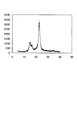
- Bacterial cellulose contains more I ⁇ type crystals than I ⁇ type crystals. Since the cellulose nanofiber of the present invention is obtained using wood or the like, it mainly contains I ⁇ type crystals. Therefore, the cellulose nanofiber of the present invention shows a pattern peculiar to the I ⁇ type crystal in the X-ray diffraction pattern in which the range of ⁇ is 0 to 30 as shown in FIG.
- the cellulose nanofiber of the present invention mainly contains I ⁇ -type crystals, it is excellent in the reinforcing effect as compared with bacterial cellulose containing many I ⁇ -type crystals.
- the cellulose nanofiber of the present invention may be subjected to chemical modification for enhancing functionality.
- chemical modification for enhancing functionality.
- the number of hydrogen bonds generated between cellulose nanofibers can be reduced, and strong adhesion between cellulose nanofibers can be prevented.
- the cellulose nanofiber can be easily dispersed in the polymer material and can form a good interface bond with the polymer material.
- the cellulose nanofiber of this invention has heat resistance by chemical modification. Therefore, heat resistance can be given to other materials by mixing the chemically modified cellulose fiber of the present invention into other materials.
- the proportion of all the hydroxyl groups in the cellulose nanofiber that is chemically modified by the modifying group is preferably 0.01% to 50%, more preferably 10% to 20%.
- the chemical modification only needs to react with a hydroxyl group.
- the etherification or esterification of cellulose nanofibers is preferred because it can be easily and efficiently chemically modified.
- Preferred etherifying agents are alkyl halides such as methyl chloride and ethyl chloride; dialkyl carbonates such as dimethyl carbonate and diethyl carbonate; dialkyl sulfates such as dimethyl sulfate and diethyl sulfate; alkylene oxides such as ethylene oxide and propylene oxide.
- Etherification is not limited to alkyl etherification with the above etherifying agent, and etherification with benzyl bromide or the like, or silyl etherification is also preferred.
- silyl halides such as trimethylsilyl chloride and diphenylbutyl chloride; silyl trifluoromethanesulfonates such as t-butyldimethylsilyl trifluoromethanesulfonate can also be used.
- the esterifying agent include carboxylic acid, carboxylic acid anhydride, and carboxylic acid halide that may contain a hetero atom.
- the esterifying agent is preferably acetic acid, propionic acid, butyric acid, acrylic acid, methacrylic acid, and derivatives thereof, and more preferably acetic acid, acetic anhydride, and butyric anhydride.
- alkyl etherification, alkylsilylation, and alkylesterification are preferable for improving the dispersibility in the resin.
- the cellulose nanofiber of the present invention chemically modified as described above preferably has a saturated absorption rate of 300 to 5000 mass% with respect to an organic solvent having a solubility parameter (hereinafter referred to as SP value) of 8 to 13. .
- Cellulose nanofibers dispersed in an organic solvent having the SP value have a high affinity with a lipophilic resin and a high reinforcing effect.
- Organic solvents having an SP value of 8 to 13 include acetic acid, ethyl acetate, butyl acetate, isobutyl acetate, isopropyl acetate, methyl propyl ketone, methyl isopropyl ketone, xylene, toluene, benzene, ethylbenzene, dibutyl phthalate, acetone, isopropanol, acetonitrile Dimethylformamide, ethanol, tetrahydrofuran, methyl ethyl ketone, cyclohexane, carbon tetrachloride, chloroform, methylene chloride, carbon disulfide, pyridine, n-hexanol, cyclohexanol, n-butanol, nitromethane and the like.
- the organic solvent examples include water-insoluble solvents such as xylene, toluene, benzene, ethylbenzene, dichloromethane, cyclohexane, carbon tetrachloride, methylene chloride, ethyl acetate, carbon disulfide, cyclohexanol, and nitromethane (25 ° C. water and optional Solvents that do not mix in proportion) are more preferred. That is, the cellulose nanofiber of the present invention chemically modified as described above can be dispersed even in a water-insoluble solvent. Therefore, while the conventional cellulose nanofiber is difficult to disperse in the lipophilic resin, the cellulose nanofiber of the present invention chemically modified as described above can be easily dispersed in the lipophilic resin.
- water-insoluble solvents such as xylene, toluene, benzene, ethylbenzene, dichloromethane, cyclohexane, carbon
- the lipophilic resin is preferably one that is hardly soluble in water and widely used as an industrial material that requires water resistance.
- the lipophilic resin may be either a thermoplastic resin or a thermosetting resin.
- plant-derived resins resins made from carbon dioxide, ABS resins, alkylene resins such as polyethylene and polypropylene, styrene resins, vinyl resins, acrylic resins, amide resins, acetal resins, carbonate resins, urethane resins, epoxy resins, Examples include imide resins, urea resins, silicone resins, phenol resins, melamine resins, ester resins, acrylic resins, amide resins, fluorine resins, styrene resins, engineering plastics, and the like.
- Engineering plastics include polyamide, polybutylene terephthalate, polycarbonate, polyacetal, modified polyphenylene oxide, modified polyphenylene ether, polyphenylene sulfide, polyether ether ketone, polyether sulfone, polysulfone, polyamideimide, polyetherimide, polyimide, polyarylate. Polyallyl ether nitrile and the like are preferable. Moreover, you may mix 2 or more types of resin among the said resin. Of the above resins, polycarbonate is particularly good because of its high impact strength.
- polycarbonate those usually used can be used.
- an aromatic polycarbonate produced by a reaction between an aromatic dihydroxy compound and a carbonate precursor is preferred.
- Aromatic dihydroxy compounds include 2,2-bis (4-hydroxyphenyl) propane (“bisphenol A”), bis (4-hydroxyphenyl) methane, 1,1-bis (4-hydroxyphenyl) ethane, 2, 2-bis (4-hydroxy-3,5-dimethylphenyl) propane, 4,4′-dihydroxydiphenyl, bis (4-hydroxyphenyl) cycloalkane, bis (4-hydroxyphenyl) sulfide, bis (4-hydroxyphenyl) ) Sulfone, bis (4-hydroxyphenyl) sulfoxide, bis (4-hydroxyphenyl) ether, bis (4-hydroxyphenyl) ketone and the like.
- Examples of the carbonate precursor include carbonyl halide, carbonyl ester, haloformate and the like. Specifically, phosgene, dihaloformate of dihydric phenol, diphenyl carbonate, dimethyl carbonate, diethyl carbonate and the like.
- the polycarbonate may be a polycarbonate that does not contain aromatics.
- Examples of the polycarbonate not containing aromatics include alicyclic polycarbonates and aliphatic polycarbonates.
- the polycarbonate resin may be linear or branched.
- the polycarbonate resin may be a copolymer of a polymer obtained by polymerizing the aromatic dihydroxy compound and a carbonate precursor and another polymer.
- the polycarbonate resin can be produced by a conventionally known method.
- conventionally known methods include various methods such as an interfacial polymerization method, a melt transesterification method, and a pyridine method.
- a hydrophilic resin can be used in addition to the above-described lipophilic resin.
- unmodified cellulose nanofibers and cellulose nanofibers chemically modified with hydrophilic functional groups such as sulfonic acid groups, carboxylic acid groups, or salts thereof have good dispersibility with respect to hydrophilic resins and are preferably used. it can.
- the hydrophilic resin include polyvinyl alcohol and a hydrophilic resin. Among these, polyvinyl alcohol is particularly preferable because it is inexpensive and has good dispersibility of cellulose nanofibers.
- the composite resin composition of the present invention may further contain additives such as fillers, flame retardant aids, flame retardants, antioxidants, mold release agents, colorants, and dispersants.
- additives such as fillers, flame retardant aids, flame retardants, antioxidants, mold release agents, colorants, and dispersants.
- filler carbon fiber, glass fiber, clay, titanium oxide, silica, talc, calcium carbonate, potassium titanate, mica, montmorillonite, barium sulfate, balloon filler, bead filler, carbon nanotube and the like can be used.
- flame retardant halogen flame retardant, nitrogen flame retardant, metal hydroxide, phosphorus flame retardant, organic alkali metal salt, organic alkaline earth metal salt, silicone flame retardant, expansive graphite and the like can be used.
- the flame retardant aid polyfluoroolefin, antimony oxide or the like can be used.
- antioxidant phosphorus antioxidant, phenolic antioxidant, etc. can be used.
- the mold release agent include higher alcohols, carboxylic acid esters, polyolefin waxes, and polyalkylene glycols.
- the colorant any colorant such as carbon black or phthalocyanine blue can be used.
- the dispersant is not particularly limited as long as cellulose nanofibers can be dispersed in the resin, and examples thereof include anionic, cationic, nonionic and amphoteric surfactants, polymer dispersants, and a combination of both agents.
- the composite resin composition of this invention containing the said cellulose nanofiber is excellent in transparency.
- the average light transmittance at 400 to 700 nm is preferably 60% or more, more preferably 70% or more, and particularly preferably 80% or more.
- the composite resin composition containing the chemically modified cellulose nanofiber can realize a reduction in water absorption and an improvement in heat resistance without reducing the light transmittance.
- another additive is contained in the composite resin composition of the present invention, it is preferable to select one that does not easily lower the transparency.
- the molded product of the present invention is formed by molding the composite resin composition. Since the molded article of the present invention also contains cellulose nanofibers, it is excellent in strength and heat resistance. Although it does not specifically limit as said molded object, It uses for a medical device, an audio equipment, etc. In particular, the molded body is suitably used for a molded body for a camera and a lens frame that require strength.
- the cellulose nanofiber is produced by defibrating and chemically modifying a cellulose raw material in a solution containing an ionic liquid.
- the cellulose raw material is not particularly limited.
- the cellulose raw material include natural cellulose raw materials such as cotton and hemp, wood chemically treated pulp such as kraft pulp and sulfite pulp, semi-chemical pulp, waste paper, and recycled pulp thereof.
- wood chemically treated pulp is preferred from the viewpoint of cost, quality, and environmental impact.
- the shape of the cellulose raw material is not particularly limited. However, the cellulose raw material is preferably used after being appropriately pulverized from the viewpoint of ease of treatment and promotion of solvent penetration.
- the solution containing the ionic liquid (hereinafter, treatment liquid) is a solvent containing an ionic liquid represented by the following chemical formula and an organic solvent.
- R 1 represents an alkyl group having 1 to 4 carbon atoms
- R 2 represents an alkyl group having 1 to 4 carbon atoms or an allyl group.
- X - is a halogen, pseudohalogen, C 1-4 carboxylate carbon or thiocyanate.
- the ionic liquid examples include 1-butyl-3-methylimidazolium chloride, 1-butyl-3-methylimidazolium bromide, 1-allyl-3-methylimidazolium chloride, 1-allyl-3-methylimidazolium bromide. And 1-propyl-3-methylimidazolium bromide.
- the fiber raw material can be defibrated with only the ionic liquid. However, when the dissolving power is too high and the fine fiber may be dissolved, it is preferable to add an organic solvent to the ionic liquid.
- the organic solvent species to be added may be appropriately selected in consideration of compatibility with the ionic liquid, affinity with the cellulose or chitin material, solubility of the mixed solvent, viscosity, and the like.
- the penetration of the ionic liquid between the fine fibers of cellulose is promoted, and the destruction of the crystal structure of the fine fibers by the ionic liquid can be prevented.
- the content of the ionic liquid in the treatment liquid depends on the types of the cellulose raw material, the ionic liquid, and the organic solvent, it may be appropriately adjusted.
- the content of the ionic liquid in the treatment liquid is preferably 20% by mass or more from the viewpoint of swelling and dissolving ability, and more preferably 30% by mass or more when using an organic solvent having a high dissolving power, In the case of using an organic solvent having a low solubility such as methanol, the content is particularly preferably 50% by mass or more.
- the amount of cellulose raw material added to the treatment liquid is preferably in the range of 0.5 to 30% by mass. From the viewpoint of economical efficiency, the amount of the cellulose raw material added to the treatment liquid is preferably 0.5% by mass or more, and more preferably 1% by mass or more. On the other hand, from the viewpoint of uniformity of the degree of defibration, the amount of cellulose raw material added to the treatment liquid is preferably 30% by mass or less, and more preferably 20% by mass.
- the treatment temperature may be selected at an appropriate temperature at which the cellulose raw material swells and the binder between the fine fibers softens and dissolves.
- the treatment temperature is usually 20 to 120 ° C. When the treatment temperature is 20 ° C. or higher, the defibrating effect is not lowered from the viewpoint of the treatment speed and the viscosity of the treatment liquid. When the treatment temperature is 120 ° C. or lower, the bonded material between the fine fibers is not excessively softened / dissolved. Therefore, when the treatment temperature is 20 to 120 ° C., the yield of cellulose nanofiber can be maintained.
- chemical modification is performed following the defibrating treatment in the treatment solution.
- chemical modification etherification, esterification and silylation as described above are preferable.
- cellulose nanofibers having a polymerization degree of 600 or more, which did not exist conventionally, can be obtained.
- Example 1 2 g of a filter paper cut into 3 mm squares with scissors was placed in a 200 ml flask, and then 50 ml of N, N-dimethylacetamide and 60 g of ionic liquid 1-butyl-3-methylimidazolium chloride were added to the flask and stirred. Thereafter, the content in the flask was filtered to obtain cellulose nanofibers. Further, the obtained cellulose nanofibers were washed, dispersed in distilled water, and mixed with an aqueous polyvinyl alcohol solution. This was formed into a film and dried to obtain a polyvinyl alcohol composite resin composition containing cellulose nanofibers. The modification rate of the cellulose nanofiber obtained at this time was 0%.
- Example 2 The cellulose nanofibers obtained in Example 1 were acetylated using acetic anhydride (esterifying agent) to obtain acetylated cellulose nanofibers. The modification rate of the cellulose nanofiber obtained at this time was 10%. Next, the polycarbonate previously dissolved in dichloromethane and this acetylated cellulose nanofiber were mixed in dichloromethane and dried to obtain a polycarbonate composite resin composition containing cellulose nanofiber.
- acetic anhydride esterifying agent
- Example 3 A polycarbonate composite resin composition containing cellulose nanofibers was obtained in the same procedure as in Example 2 except that acetic anhydride was used in an amount twice that of Example 2. The modification rate of the cellulose nanofiber obtained at this time was 18%.
- Example 4 A polycarbonate composite resin composition containing cellulose nanofibers was obtained in the same procedure as in Example 2, except that hexamethyldisilazane (silyl etherifying agent) was added instead of acetic anhydride. The modification rate of the cellulose nanofiber obtained at this time was 15%.
- Example 1 Cellulose was obtained in the same manner as in Example 2 except that bacterial cellulose obtained by drying Nata de Coco (manufactured by Fujicco Co., Ltd., average polymerization degree: 3000 or more, average aspect ratio: 1000 or more, average diameter: 70 nm) was used. A polycarbonate composite resin composition containing nanofibers was obtained.
- Example 2 A polycarbonate containing cellulose nanofibers in the same procedure as in Example 2 except that microcrystalline cellulose (Merck Co., Ltd., average polymerization degree: 250, average aspect ratio: 10, diameter: 1 to 10 ⁇ m mixed) was used. A composite resin composition was obtained.
- microcrystalline cellulose Merck Co., Ltd., average polymerization degree: 250, average aspect ratio: 10, diameter: 1 to 10 ⁇ m mixed
- the number average fiber diameter and number average length of cellulose nanofibers were evaluated by SEM analysis. Specifically, the cellulose nanofiber dispersion was cast on a wafer and observed with an SEM, and the fiber diameter and length values were read for 20 or more fibers obtained per image. This was performed on at least three images of non-overlapping regions, and information on at least 30 fiber diameters and lengths was obtained.
- the number average fiber diameter and the number average length can be calculated from the fiber diameter and length data obtained as described above, and the aspect ratio was calculated from the ratio between the number average length and the number average fiber diameter. When the aspect ratio was 20 or more and 10,000 or less, it was judged as ⁇ , and when it was not 20 or more and 10,000 or less, it was judged as x.
- Crystal structure analysis The crystal structure of cellulose nanofibers was analyzed using a powder X-ray diffractometer Rigaku Ultima IV. The X-ray diffraction pattern has one or two peaks at 14 ⁇ ⁇ ⁇ 18, and one peak at 21 ⁇ ⁇ ⁇ 24. If there is no other peak, ⁇ , otherwise In the case, it was determined to be ⁇ . Further, in Examples and Comparative Examples, the crystal structure of the cellulose nanofiber was indicated as “ ⁇ ” when it was an I ⁇ type crystal type, and “X” when it was not an I ⁇ type crystal type.
- ethyl acetate was 1200 mass% and dichloromethane was 1500 mass%.
- the saturated absorptivity was 300 or more and 5000% by mass or less, it was judged as ⁇ , and when it was not 300 or more and 5000% by mass or less, it was judged as ⁇ .
- the molded product of the present invention was excellent in average light transmittance. Furthermore, Examples 2 to 4 in which the hydroxyl group of the cellulose nanofiber of the present invention was chemically modified were superior in saturated absorption rate as compared with Comparative Examples 1 and 2.
- Thermal linear expansion coefficient (length at 180 ° C. ⁇ length at 40 ° C.) / Length at 40 ° C. ⁇ 100-100 When the coefficient of thermal expansion was 5% or more, it was judged as ⁇ when it was less than 5%.
- the molded products of the present invention obtained in the examples showed excellent moldability and thermal expansion coefficient compared with the comparative examples.
- a cellulose nanofiber having an excellent reinforcing effect a method for producing the cellulose nanofiber, a composite resin composition containing the cellulose nanofiber, and a molded body formed by molding the composite resin composition Can be provided.
Landscapes
- Chemical & Material Sciences (AREA)
- Chemical Kinetics & Catalysis (AREA)
- Medicinal Chemistry (AREA)
- Polymers & Plastics (AREA)
- Organic Chemistry (AREA)
- Health & Medical Sciences (AREA)
- Engineering & Computer Science (AREA)
- Materials Engineering (AREA)
- Nanotechnology (AREA)
- Biochemistry (AREA)
- Life Sciences & Earth Sciences (AREA)
- Manufacturing & Machinery (AREA)
- General Physics & Mathematics (AREA)
- Condensed Matter Physics & Semiconductors (AREA)
- Crystallography & Structural Chemistry (AREA)
- Physics & Mathematics (AREA)
- Compositions Of Macromolecular Compounds (AREA)
- Artificial Filaments (AREA)
- Paper (AREA)
- Polysaccharides And Polysaccharide Derivatives (AREA)
- Reinforced Plastic Materials (AREA)
- Processes Of Treating Macromolecular Substances (AREA)
Abstract
本発明は、600以上30000以下の平均重合度と、20~10000のアスペクト比と、1~800nmの平均直径と、Iβ型の結晶ピークを有するX線回折パターンと、を備えるセルロースナノファイバーである。
Description
本発明は、セルロースナノファイバーとその製造方法、複合樹脂組成物、成形体に関する。
本願は、2010年03月05日に出願された日本国特許出願第2010-049565号に対して優先権を主張し、その内容をここに援用する。
本願は、2010年03月05日に出願された日本国特許出願第2010-049565号に対して優先権を主張し、その内容をここに援用する。
セルロースナノファーバーは、従来から高分子複合材料の補強材として使用されている。前記セルロースナノファイバーは、パルプ等のセルロース繊維を機械的にせん断することにより得られるのが一般的である。
例えば、特許文献1には、セルロースパルプの水懸濁液を高圧ホモジナイザー処理して得られる微小繊維状セルロースが開示されている。
また、特許文献2には、バクテリアに生産させたセルロース超微細繊維をアセチル化させて得られるアセチルセルロース超微細繊維が開示されている。バクテリアに生産させたセルロース超微細繊維の質量平均重合度は、1700以上である。そのため、バクテリアに生産させたセルロース超微細繊維は、ヤング率や引張強度の点で優れている。
しかしながら、特許文献1に記載の方法では、繊維に機械的なせん断力を加えるため、得られる微小繊維状セルロースは、重合度が200前後になり、結果的に十分な機械的強度を得ることができない。
また、特許文献2記載のバクテリアに生産させて得られるセルロースファイバーは、Iα型結晶成分が多いため、補強効果が弱い。
本発明は、上記事情に鑑みてなされたものであって、補強効果に優れたセルロースナノファイバーと、前記セルロースナノファイバーの製造する方法、前記セルロースナノファイバーを含有する複合樹脂組成物、前記複合樹脂組成物を成形してなる成形体を提供することを目的とする。
(1)本発明のセルロースナノファイバーは、平均重合度が600以上30000以下であり、アスペクト比が20~10000であり、平均直径が1~800nmであり、X線回折パターンにおいて、Iβ型の結晶ピークを有する。(2)本発明のセルロースナノファイバーは、水酸基が修飾基により化学修飾されていることが好ましい。(3)本発明のセルロースナノファイバーは、SP値が8~13の有機溶媒における飽和吸収率が300~5000質量%であることが好ましい。(4)本発明のセルロースナノファイバーは、前記有機溶媒が、非水溶性溶媒であることが好ましい。(5)本発明のセルロースナノファイバーは、前記修飾基により、水酸基がエステル化またはエーテル化されていることが好ましい。(6)本発明のセルロースナノファイバーは、θの範囲を0~30とするX線回折パターンが、14≦θ≦18に1つ又は2つのピークと、21≦θ≦24に1つのピークとを有し、他にはピークを有さないことが好ましい。(7)本発明のセルロースナノファイバーは、全体の水酸基のうち0.01%から50%が化学修飾されていることが好ましい。(8)本発明の複合樹脂組成物は、前記セルロースナノファイバーを樹脂中に含有する。(9)本発明の複合樹脂組成物は、400~700nmにおける平均光線透過率が60%以上であることが好ましい。(10)本発明の成形体は、前記複合樹脂組成物を成形してなる。(11)本発明のセルロースナノファイバーの製造方法は、セルロース原料を、イオン液体を含む溶液中で解繊処理及び化学修飾する。
本発明によれば、補強効果に優れたセルロースナノファイバーと、前記セルロースナノファイバーを製造する方法、前記セルロースナノファイバーを含有する複合樹脂組成物、前記複合樹脂組成物を成形してなる成形体を提供することができる。
本発明のセルロースナノファイバーの平均重合度は、600以上30000以下である。好ましくは600以上5000以下であり、より好ましくは800以上5000以下である。平均重合度が600以上であれば、十分な補強効果が得られる。
従来のセルロースナノファイバーは、セルロース繊維原料にホモジナイズ処理等の機械的せん断を施すことにより得られる。そのため、従来のセルロースナノファイバーは、重合度が低く、十分な補強効果を得ることができない。また、前記機械的せん断は、セルロース繊維原料に大きなダメージを与える。そのため、得られたセルロースナノファイバーは、強度やアスペクト比が低い。後述する本発明のセルロースナノファイバーの製造方法によれば、セルロース繊維原料にダメージを与えないため、600以上の重合度を有するセルロースナノファイバーを容易に得ることができる。
十分な補強効果を得るために、本発明のセルロースナノファイバーのアスペクト比は、20~10000であり、好ましくは20~2000である。本明細書および特許請求の範囲において、「アスペクト比」とは、セルロースナノファイバーにおける平均繊維長と平均直径の比(平均繊維長/平均直径)を意味する。上述したように、本発明のセルロースナノファイバーの製造方法によれば、セルロース繊維原料にダメージを与えない。そのため、平均繊維長が長く、アスペクト比が20以上のセルロースナノファイバーを得ることができる。なお、アスペクト比が10000以下のセルロースナノファイバーは、成形性が高い。
本発明のセルロースナノファイバーの平均直径は、1~800nmであり、好ましくは1~300nmであり、より好ましくは1~100nmである。平均直径が1nm以上のセルロースナノファイバーを製造すれば、製造コストを低く抑えることができる。平均直径が800nm以下のセルロースナノファイバーを製造すれば、アスペクト比の低下を抑えることができる。その結果、本発明のセルロースナノファイバーは安価で十分な補強効果を得ることができる。
本発明のセルロースナノファイバーは、X線回折パターンにおいて、Iβ型の結晶ピークを有する。セルロースI型は、Iα型結晶とIβ型結晶の複合結晶である。木綿などの高等植物由来セルロースは、Iα型結晶よりIβ型結晶を多く含む。バクテリアセルロースは、Iβ型結晶よりIα型結晶を多く含む。本発明のセルロースナノファイバーは、木材等を用いて得られるため、Iβ型結晶を主に含んでいる。
従って、本発明のセルロースナノファイバーは、図1に示されるようにθの範囲を0~30とするX線回折パターンにおいて、Iβ型結晶に特有のパターンを示す。具体的には、14≦θ≦18に1つ又は2つのピークと、21≦θ≦24に1つのピークとを有し、他の範囲にはピークを有さない。
また、本発明のセルロースナノファイバーは、Iβ型結晶を主に含んでいるので、Iα型結晶を多く含むバクテリアセルロースに比べて補強効果に優れている。
従って、本発明のセルロースナノファイバーは、図1に示されるようにθの範囲を0~30とするX線回折パターンにおいて、Iβ型結晶に特有のパターンを示す。具体的には、14≦θ≦18に1つ又は2つのピークと、21≦θ≦24に1つのピークとを有し、他の範囲にはピークを有さない。
また、本発明のセルロースナノファイバーは、Iβ型結晶を主に含んでいるので、Iα型結晶を多く含むバクテリアセルロースに比べて補強効果に優れている。
本発明のセルロースナノファイバーは、機能性を高めるための化学修飾を施してもよい。セルロースナノファイバーを複合材料に使用するため、前記セルロースナノファイバーの表面にある水酸基を修飾基により化学修飾し、前記水酸基の数を減らすことが好ましい。これにより、セルロースナノファイバー間で生じる水素結合の数を減らし、セルロースナノファイバー同士の強い密着を防ぐことができる。その結果、セルロースナノファイバーは、高分子材料に容易に分散し、当該高分子材料と良好な界面結合を形成することができる。また、本発明のセルロースナノファイバーは、化学修飾により耐熱性を有する。そのため、化学修飾された本発明のセルロースファイバーを他の材料に混入させることで、他の材料に耐熱性を付与することができる。
前記セルロースナノファイバー中の全ての水酸基のうち修飾基により化学修飾される割合は、好ましくは0.01%~50%であり、より好ましくは10%~20%である。
前記セルロースナノファイバー中の全ての水酸基のうち修飾基により化学修飾される割合は、好ましくは0.01%~50%であり、より好ましくは10%~20%である。
前記化学修飾は、水酸基と反応するものであれば良い。セルロースナノファイバーのエーテル化あるいはエステル化が、簡便に効率よく化学修飾できるので好ましい。
エーテル化剤として、メチルクロライド、エチルクロライド等のハロゲン化アルキル;炭酸ジメチル、炭酸ジエチル等の炭酸ジアルキル;硫酸ジメチル、硫酸ジエチル等の硫酸ジアルキル;エチレンオキサイド、プロピレンオキサイド等のアルキレンオキサイド等が好ましい。また、エーテル化は上記エーテル化剤によるアルキルエーテル化に限定されるものではなく、ベンジルブロマイド等によるエーテル化やシリルエーテル化等も好ましい。例えば、シリルエーテル化剤として、n-ブトキシトリメチルシラン、tert-ブトキシトリメチルシラン、sec-ブトキシトリメチルシラン、イソブトキシトリメチルシラン、エトキシトリエチルシラン、オクチルジメチルエトキシシラン、シクロヘキシルオキシトリメチルシラン等のアルコキシシラン;ブトキシポリジメチルシロキサン等のアルコキシシロキサン;ヘキサメチルジシラザン、テトラメチルジシラザン、ジフェニルテトラメチルジシラザン等のシラザンが挙げられる。また、トリメチルシリルクロライド、ジフェニルブチルクロライド等のシリルハライド;t-ブチルジメチルシリルトリフルオロメタンスルホネート等のシリルトリフルオロメタンスルホネートも使用できる。
エステル化剤として、ヘテロ原子を含んでも良いカルボン酸、カルボン酸無水物、カルボン酸ハロゲン化物が挙げられる。前記エステル化剤は、酢酸、プロピオン酸、酪酸、アクリル酸、メタクリル酸及びこれらの誘導体が好ましく、酢酸、無水酢酸、無水酪酸がより好ましい。
なお、エーテル化、エステル化の中でも、アルキルエーテル化、アルキルシリル化、アルキルエステル化が、樹脂への分散性を向上させるために好ましい。
エーテル化剤として、メチルクロライド、エチルクロライド等のハロゲン化アルキル;炭酸ジメチル、炭酸ジエチル等の炭酸ジアルキル;硫酸ジメチル、硫酸ジエチル等の硫酸ジアルキル;エチレンオキサイド、プロピレンオキサイド等のアルキレンオキサイド等が好ましい。また、エーテル化は上記エーテル化剤によるアルキルエーテル化に限定されるものではなく、ベンジルブロマイド等によるエーテル化やシリルエーテル化等も好ましい。例えば、シリルエーテル化剤として、n-ブトキシトリメチルシラン、tert-ブトキシトリメチルシラン、sec-ブトキシトリメチルシラン、イソブトキシトリメチルシラン、エトキシトリエチルシラン、オクチルジメチルエトキシシラン、シクロヘキシルオキシトリメチルシラン等のアルコキシシラン;ブトキシポリジメチルシロキサン等のアルコキシシロキサン;ヘキサメチルジシラザン、テトラメチルジシラザン、ジフェニルテトラメチルジシラザン等のシラザンが挙げられる。また、トリメチルシリルクロライド、ジフェニルブチルクロライド等のシリルハライド;t-ブチルジメチルシリルトリフルオロメタンスルホネート等のシリルトリフルオロメタンスルホネートも使用できる。
エステル化剤として、ヘテロ原子を含んでも良いカルボン酸、カルボン酸無水物、カルボン酸ハロゲン化物が挙げられる。前記エステル化剤は、酢酸、プロピオン酸、酪酸、アクリル酸、メタクリル酸及びこれらの誘導体が好ましく、酢酸、無水酢酸、無水酪酸がより好ましい。
なお、エーテル化、エステル化の中でも、アルキルエーテル化、アルキルシリル化、アルキルエステル化が、樹脂への分散性を向上させるために好ましい。
上記のように化学修飾された本発明のセルロースナノファイバーは、溶解性パラメータ(以下、SP値)が8~13の有機溶媒に対して、飽和吸収率が300~5000質量%であることが好ましい。前記SP値の有機溶媒に分散させたセルロースナノファイバーは、親油性樹脂との親和性が高く、補強効果が高い。
SP値が8~13の有機溶媒としては、酢酸、酢酸エチル、酢酸ブチル、酢酸イソブチル、酢酸イソプロピル、メチルプロピルケトン、メチルイソプロピルケトン、キシレン、トルエン、ベンゼン、エチルベンゼン、ジブチルフタレート、アセトン、イソプロパノール、アセトニトリル、ジメチルホルムアミド、エタノール、テトラヒドロフラン、メチルエチルケトン、シクロヘキサン、四塩化炭素、クロロホルム、塩化メチレン、二硫化炭素、ピリジン、n-ヘキサノール、シクロヘキサノール、n-ブタノール、ニトロメタン等が挙げられる。
SP値が8~13の有機溶媒としては、酢酸、酢酸エチル、酢酸ブチル、酢酸イソブチル、酢酸イソプロピル、メチルプロピルケトン、メチルイソプロピルケトン、キシレン、トルエン、ベンゼン、エチルベンゼン、ジブチルフタレート、アセトン、イソプロパノール、アセトニトリル、ジメチルホルムアミド、エタノール、テトラヒドロフラン、メチルエチルケトン、シクロヘキサン、四塩化炭素、クロロホルム、塩化メチレン、二硫化炭素、ピリジン、n-ヘキサノール、シクロヘキサノール、n-ブタノール、ニトロメタン等が挙げられる。
前記有機溶媒としては、キシレン、トルエン、ベンゼン、エチルベンゼン、ジクロロメタン、シクロヘキサン、四塩化炭素、塩化メチレン、酢酸エチル、二硫化炭素、シクロヘキサノール、ニトロメタン等の非水溶性溶媒(25℃の水と任意の割合で混合しない溶媒)がより好ましい。すなわち、上記のように化学修飾された本発明のセルロースナノファイバーは、非水溶性溶媒中においても分散することができる。そのため、従来のセルロースナノファイバーが親油性樹脂に分散し難いのに対し、上記のように化学修飾された本発明のセルロースナノファイバーは、親油性樹脂に容易に分散することができる。
前記親油性樹脂としては、水に難溶であり、耐水性が必要とされる工業用材料として広く使われているものが好ましい。前記親油性樹脂は、熱可塑性樹脂と熱硬化性樹脂のどちらでも良い。特に、植物性由来樹脂、二酸化炭素を原料とした樹脂、ABS樹脂、ポリエチレン、ポリプロピレン等のアルキレン樹脂、スチレン樹脂、ビニル樹脂、アクリル樹脂、アミド樹脂、アセタール樹脂、カーボネート樹脂、ウレタン樹脂、エポキシ樹脂、イミド樹脂、ユリア樹脂、シリコーン樹脂、フェノール樹脂、メラミン樹脂、エステル樹脂、アクリル樹脂、アミド樹脂、フッ素樹脂、スチロール樹脂、エンジニアリングプラスチックなどを例示できる。また、エンジニアリングプラスチックとしては、ポリアミド、ポリブチレンテレフタレート、ポリカーボネート、ポリアセタール、変性ポリフェニレンオキサイド、変性ポリフェニレンエーテル、ポリフェニレンサルファイド、ポリエーテルエーテルケトン、ポリエーテルスルホン、ポリスルホン、ポリアミドイミド、ポリエーテルイミド、ポリイミド、ポリアリレート、ポリアリルエーテルニトリル等が好ましい。また、上記樹脂のうち、2種類以上の樹脂を混合しても良い。なお、上記樹脂のうち、ポリカーボネートは衝撃強度が強いため、特に良い。
ポリカーボネートとしては、通常用いられるものを使用できる。例えば、芳香族ジヒドロキシ化合物とカーボネート前駆体との反応により製造される芳香族ポリカーボネートが好ましい。
芳香族ジヒドロキシ化合物としては、2,2-ビス(4-ヒドロキシフェニル)プロパン(「ビスフェノールA」)、ビス(4-ヒドロキシフェニル)メタン、1,1-ビス(4-ヒドロキシフェニル)エタン、2,2-ビス(4-ヒドロキシ-3,5-ジメチルフェニル)プロパン、4,4’-ジヒドロキシジフェニル、ビス(4-ヒドロキシフェニル)シクロアルカン、ビス(4-ヒドロキシフェニル)スルフィド、ビス(4-ヒドロキシフェニル)スルホン、ビス(4-ヒドロキシフェニル)スルホキシド、ビス(4-ヒドロキシフェニル)エーテル、ビス(4-ヒドロキシフェニル)ケトン等が挙げられる。
カーボネート前駆体としては、カルボニルハライド、カルボニルエステル、ハロホルメート等が挙げられる。具体的には、ホスゲン、2価フェノールのジハロホーメート、ジフェニルカーボネート、ジメチルカーボネート、ジエチルカーボネートなどである。
ポリカーボネートとしては、芳香族を含まないポリカーボネートでもよい。芳香族を含まないポリカーボネートとしては、脂環式ポリカーボネートや脂肪族ポリカーボネートなどが挙げられる。前記ポリカーボネート樹脂は、直鎖状あるいは分岐鎖状であってもよい。ポリカーボネート樹脂は、前記芳香族ジヒドロキシ化合物とカーボネート前駆体を重合して得られる重合体と、他の重合体との共重合体であってもよい。
前記ポリカーボネート樹脂は、従来公知の方法で製造できる。例えば、従来公知の方法として、界面重合法、溶融エステル交換法、ピリジン法などの種々の方法が挙げられる。
前記ポリカーボネート樹脂は、従来公知の方法で製造できる。例えば、従来公知の方法として、界面重合法、溶融エステル交換法、ピリジン法などの種々の方法が挙げられる。
本発明の複合樹脂組成物における樹脂の種類としては、前記に上げた親油性樹脂の他に、親水性樹脂も用いることが出来る。例えば、未修飾セルロースナノファイバーや、スルホン酸基、カルボン酸基、またはこれらの塩などの親水性の官能基で化学修飾したセルロースナノファイバーが、親水性の樹脂に対する分散性が良く、好適に使用できる。親水性の樹脂としては、ポリビニルアルコールや、親水化処理した樹脂が挙げられる。この中でもポリビニルアルコールは、安価であり、セルロースナノファイバーの分散性も良く、特に好ましい。
また、本発明の複合樹脂組成物は、さらにフィラー、難燃助剤、難燃剤、酸化防止剤、離形剤、着色剤、分散剤等の添加剤を加えても良い。
フィラーとしては、カーボン繊維、ガラスファイバー、クレー、酸化チタン、シリカ、タルク、炭酸カルシウム、チタン酸カリウム、マイカ、モンモリロナイト、硫酸バリウム、バルーンフィラー、ビーズフィラー、カーボンナノチューブなどを使用できる。
難燃剤としては、ハロゲン系難燃剤、窒素系難燃剤、金属水酸化物、リン系難燃剤、有機アルカリ金属塩、有機アルカリ土類金属塩、シリコーン系難燃剤、膨張性黒鉛などを使用できる。
難燃助剤としては、ポリフルオロオレフィン、酸化アンチモンなどを使用できる。
酸化防止剤としては、リン系酸化防止剤やフェノール系酸化防止剤などを使用できる。
離型剤としては、高級アルコール、カルボン酸エステル、ポリオレフィンワックス及びポリアルキレングリコールなどが挙げられる。
着色剤としては、カーボンブラックやフタロシアニンブルーなどの任意の着色剤を使用できる。
分散剤としては、セルロースナノファイバーが樹脂に分散できるものであればよく、アニオン性、カチオン性、ノニオン性および両性の界面活性剤、高分子型分散剤、および両剤の併用が挙げられる。
フィラーとしては、カーボン繊維、ガラスファイバー、クレー、酸化チタン、シリカ、タルク、炭酸カルシウム、チタン酸カリウム、マイカ、モンモリロナイト、硫酸バリウム、バルーンフィラー、ビーズフィラー、カーボンナノチューブなどを使用できる。
難燃剤としては、ハロゲン系難燃剤、窒素系難燃剤、金属水酸化物、リン系難燃剤、有機アルカリ金属塩、有機アルカリ土類金属塩、シリコーン系難燃剤、膨張性黒鉛などを使用できる。
難燃助剤としては、ポリフルオロオレフィン、酸化アンチモンなどを使用できる。
酸化防止剤としては、リン系酸化防止剤やフェノール系酸化防止剤などを使用できる。
離型剤としては、高級アルコール、カルボン酸エステル、ポリオレフィンワックス及びポリアルキレングリコールなどが挙げられる。
着色剤としては、カーボンブラックやフタロシアニンブルーなどの任意の着色剤を使用できる。
分散剤としては、セルロースナノファイバーが樹脂に分散できるものであればよく、アニオン性、カチオン性、ノニオン性および両性の界面活性剤、高分子型分散剤、および両剤の併用が挙げられる。
本発明のセルロースナノファイバーは、樹脂中での分散性に優れているため、前記セルロースナノファイバーを含有する本発明の複合樹脂組成物は透明性に優れている。セルロースナノファイバーを2質量%含有する厚さ20μmの複合樹脂組成物において、400~700nmにおける平均光線透過率が60%以上であることが好ましく、70%以上がより好ましく、80%以上が特に好ましい。前記平均光線透過率が60%以上の場合、透明性が保たれるため、透明性が要求される用途に対して好適に使用される。
また、前記化学修飾されたセルロースナノファイバーを含有する複合樹脂組成物は、光線透過率を低下させることなく、吸水性の低下、耐熱性の向上を実現することができる。
このとき、本発明の複合樹脂組成物に他の添加物が含有される場合は、透明性を低下させ難いものを選択するのが良い。
また、前記化学修飾されたセルロースナノファイバーを含有する複合樹脂組成物は、光線透過率を低下させることなく、吸水性の低下、耐熱性の向上を実現することができる。
このとき、本発明の複合樹脂組成物に他の添加物が含有される場合は、透明性を低下させ難いものを選択するのが良い。
本発明の成形体は前記複合樹脂組成物を成形してなる。本発明の成形体も、セルロースナノファイバーを含有するため、強度や耐熱性において優れている。前記成形体としては特に限定されないが、医療機器、音響機器等に用いられる。特に強度が求められるカメラ用成形体、鏡枠に前記成形体は好適に用いられる。
本発明のセルロースナノファーバーの製造方法においては、セルロース原料を、イオン液体を含む溶液中で解繊処理及び化学修飾することにより、前記セルロースナノファイバーを製造する。
前記セルロース原料としては、特に限定されない。例えば、前記セルロース原料として、綿、麻などの天然セルロース原料、クラフトパルプ、サルファイトパルプなどの木材化学処理パルプ、セミケミカルパルプ、古紙またはその再生パルプ等が挙げられる。特にコスト、品質、及び環境への影響の観点から、木材化学処理パルプが好ましい。
前記セルロース原料の形状としては、特に限定されない。ただし、処理の容易さ及び溶媒の浸透促進の観点から、前記セルロース原料は適宜粉砕してから用いることが好ましい。
前記セルロース原料の形状としては、特に限定されない。ただし、処理の容易さ及び溶媒の浸透促進の観点から、前記セルロース原料は適宜粉砕してから用いることが好ましい。
前記イオン液体を含む溶液(以下、処理液)とは、下記化学式で表されるイオン液体と有機溶媒を含有する溶媒である。

前記イオン液体としては、塩化1-ブチル-3-メチルイミダゾリウム、臭化1-ブチル-3-メチルイミダゾリウム、塩化1-アリル-3-メチルイミダゾリウム、臭化1-アリル-3-メチルイミダゾリウム、臭化1-プロピル-3-メチルイミダゾリウムが挙げられる。
イオン液体のみで繊維原料を解繊処理することも出来る。しかしながら、溶解力が高すぎで微細繊維まで溶解する可能性がある場合、前記イオン液体に有機溶媒を添加して使用することが好ましい。
添加する有機溶媒種は、イオン液体との相溶性、セルロースまたはキチン材料との親和性、混合溶媒の溶解性、粘度などを考慮し適宜選択すればよい。特に、N,N-ジメチルアセトアミド、N,N-ジメチルホルムアミド、1-メチル-2-ピロリドン、ジメチルスルフォキサイド、アセトニトリル、メタノール、エタノールの内のいずれかの一つ以上を使用することが好ましい。これらの有機溶媒の共存により、セルロースの微細繊維間へのイオン液体の浸透が促進され、イオン液体による微細繊維の結晶構造の破壊を防ぐことが出来る。
イオン液体のみで繊維原料を解繊処理することも出来る。しかしながら、溶解力が高すぎで微細繊維まで溶解する可能性がある場合、前記イオン液体に有機溶媒を添加して使用することが好ましい。
添加する有機溶媒種は、イオン液体との相溶性、セルロースまたはキチン材料との親和性、混合溶媒の溶解性、粘度などを考慮し適宜選択すればよい。特に、N,N-ジメチルアセトアミド、N,N-ジメチルホルムアミド、1-メチル-2-ピロリドン、ジメチルスルフォキサイド、アセトニトリル、メタノール、エタノールの内のいずれかの一つ以上を使用することが好ましい。これらの有機溶媒の共存により、セルロースの微細繊維間へのイオン液体の浸透が促進され、イオン液体による微細繊維の結晶構造の破壊を防ぐことが出来る。
前記処理液中のイオン液体の含有量は、セルロース原料、イオン液体、有機溶媒の種類に依存するため、適宜調整すればよい。前記処理液中のイオン液体の含有量は、膨潤、溶解能力の観点から20質量%以上であることが好ましく、溶解力の高い有機溶媒を用いる場合は30質量%以上であることがより好ましく、メタノール等の溶解力の低い有機溶媒を用いる場合は50質量%以上であることが特に好ましい。
前記処理液に対するセルロース原料の添加量は、0.5~30質量%の範囲にあることが好ましい。経済的な効率の観点から、前記処理液に対するセルロース原料の添加量は0.5質量%以上であることが好ましく、1質量%以上であることがより好ましい。一方、解繊度の均一性の観点から、前記処理液に対するセルロース原料の添加量は30質量%以下であることが好ましく、20質量%であることがより好ましい。
処理温度は、セルロース原料が膨潤し微細繊維間の結合物が軟化・溶解する適切な温度を選択すればよい。前記処理温度は、通常20~120℃がよい。
前記処理温度が20℃以上であれば、処理速度及び処理液の粘度の観点から、解繊効果が低くなることはない。前記処理温度が120℃以下であれば、前記微細繊維間の結合物が過度に軟化・溶解することもない。そのため、前記処理温度が20~120℃の場合、セルロースナノファイバーの収率を保つことができる。
前記処理温度が20℃以上であれば、処理速度及び処理液の粘度の観点から、解繊効果が低くなることはない。前記処理温度が120℃以下であれば、前記微細繊維間の結合物が過度に軟化・溶解することもない。そのため、前記処理温度が20~120℃の場合、セルロースナノファイバーの収率を保つことができる。
本発明のセルロースナノファイバーの製造方法においては、前記処理液中で解繊処理に続いて、化学修飾を行う。化学修飾としては、上述したようなエーテル化、エステル化、シリル化が好ましい。
本発明のセルロースナノファイバーの製造方法によれば、繊維にダメージを与えないため、従来存在しなかった600以上の重合度を有するセルロースナノファイバーを得ることができる。
以下、実施例および比較例により、本発明をさらに具体的に説明する。ただし、本発明は以下の実施例に限定されるものではない。
(実施例1)
ろ紙をハサミで3mm角に切断したもの2gを200mlのフラスコに入れ、次にN,N-ジメチルアセトアミド50mlとイオン液体塩化1-ブチル-3-メチルイミダゾリウム60gを前記フラスコに加え、攪拌した。その後、前記フラスコ内の内容物をろ過し、セルロースナノファイバーを得た。さらに、得られたセルロースナノファイバーを洗浄後、蒸留水に分散させ、ポリビニルアルコール水溶液と混合した。これをフィルムに成形し、乾燥させ、セルロースナノファイバーを含有するポリビニルアルコール複合樹脂組成物を得た。このとき得られたセルロースナノファイバーの修飾率は0%であった。
ろ紙をハサミで3mm角に切断したもの2gを200mlのフラスコに入れ、次にN,N-ジメチルアセトアミド50mlとイオン液体塩化1-ブチル-3-メチルイミダゾリウム60gを前記フラスコに加え、攪拌した。その後、前記フラスコ内の内容物をろ過し、セルロースナノファイバーを得た。さらに、得られたセルロースナノファイバーを洗浄後、蒸留水に分散させ、ポリビニルアルコール水溶液と混合した。これをフィルムに成形し、乾燥させ、セルロースナノファイバーを含有するポリビニルアルコール複合樹脂組成物を得た。このとき得られたセルロースナノファイバーの修飾率は0%であった。
(実施例2)
実施例1で得られたセルロースナノファイバーを無水酢酸(エステル化剤)を用いてアセチル化し、アセチル化セルロースナノファイバーを得た。このとき得られたセルロースナノファイバーの修飾率は10%であった。次に、予めジクロロメタンに溶解させたポリカーボネートと、このアセチル化セルロースナノファイバーとをジクロロメタン中で混合し、乾燥させることで、セルロースナノファイバーを含有するポリカーボネート複合樹脂組成物を得た。
実施例1で得られたセルロースナノファイバーを無水酢酸(エステル化剤)を用いてアセチル化し、アセチル化セルロースナノファイバーを得た。このとき得られたセルロースナノファイバーの修飾率は10%であった。次に、予めジクロロメタンに溶解させたポリカーボネートと、このアセチル化セルロースナノファイバーとをジクロロメタン中で混合し、乾燥させることで、セルロースナノファイバーを含有するポリカーボネート複合樹脂組成物を得た。
(実施例3)
無水酢酸を実施例2の2倍量とした以外は、実施例2と同様の手順でセルロースナノファイバーを含有するポリカーボネート複合樹脂組成物を得た。このとき得られたセルロースナノファイバーの修飾率は18%であった。
無水酢酸を実施例2の2倍量とした以外は、実施例2と同様の手順でセルロースナノファイバーを含有するポリカーボネート複合樹脂組成物を得た。このとき得られたセルロースナノファイバーの修飾率は18%であった。
(実施例4)
無水酢酸の代わりにヘキサメチルジシラザン(シリルエーテル化剤)を加えた以外は、実施例2と同様の手順でセルロースナノファイバーを含有するポリカーボネート複合樹脂組成物を得た。このとき得られたセルロースナノファイバーの修飾率は15%であった。
無水酢酸の代わりにヘキサメチルジシラザン(シリルエーテル化剤)を加えた以外は、実施例2と同様の手順でセルロースナノファイバーを含有するポリカーボネート複合樹脂組成物を得た。このとき得られたセルロースナノファイバーの修飾率は15%であった。
(比較例1)
ナタデココ(株式会社フジッコ製、平均重合度:3000以上、平均アスペクト比:1000以上、平均直径:70nm)を乾燥して得られたバクテリアセルロースを使用した以外は、実施例2と同様の手順でセルロースナノファイバーを含有するポリカーボネート複合樹脂組成物を得た。
ナタデココ(株式会社フジッコ製、平均重合度:3000以上、平均アスペクト比:1000以上、平均直径:70nm)を乾燥して得られたバクテリアセルロースを使用した以外は、実施例2と同様の手順でセルロースナノファイバーを含有するポリカーボネート複合樹脂組成物を得た。
(比較例2)
微結晶セルロース(メルク株式会社製、平均重合度:250、平均アスペクト比:10、直径:1~10μmが混在)を使用した以外は、実施例2と同様の手順でセルロースナノファイバーを含有するポリカーボネート複合樹脂組成物を得た。
微結晶セルロース(メルク株式会社製、平均重合度:250、平均アスペクト比:10、直径:1~10μmが混在)を使用した以外は、実施例2と同様の手順でセルロースナノファイバーを含有するポリカーボネート複合樹脂組成物を得た。
各実施例及び各比較例の成形体を、以下の試験方法で測定し、結果を表1に示した。
(1) 平均重合度
高分子学会編「高分子材料試験法2」、p.267 、共立出版(1965)に記載の銅エチレンジアミン法により測定した。
高分子学会編「高分子材料試験法2」、p.267 、共立出版(1965)に記載の銅エチレンジアミン法により測定した。
(2) アスペクト比と平均直径
セルロースナノファイバーの数平均繊維径と数平均長さについてはSEM解析により評価した。
詳細として、セルロースナノファイバー分散液をウェーハ上にキャストしてSEM観察し、得られた1枚の画像当たり20本以上の繊維について繊維径と長さの値を読み取った。これを少なくとも3枚の重複しない領域の画像について行い、最低30本の繊維径と長さの情報を得た。
以上により得られた繊維径と長さのデータから、数平均繊維径と数平均長さを算出することができ、数平均長さと数平均繊維径との比からアスペクト比を算出した。アスペクト比が、20以上10000以下である場合には○、20以上10000以下でない場合には×と判定した。
セルロースナノファイバーの数平均繊維径と数平均長さについてはSEM解析により評価した。
詳細として、セルロースナノファイバー分散液をウェーハ上にキャストしてSEM観察し、得られた1枚の画像当たり20本以上の繊維について繊維径と長さの値を読み取った。これを少なくとも3枚の重複しない領域の画像について行い、最低30本の繊維径と長さの情報を得た。
以上により得られた繊維径と長さのデータから、数平均繊維径と数平均長さを算出することができ、数平均長さと数平均繊維径との比からアスペクト比を算出した。アスペクト比が、20以上10000以下である場合には○、20以上10000以下でない場合には×と判定した。
(3) 結晶構造解析(XRD)
セルロースナノファイバーの結晶構造を粉末X線回折装置Rigaku Ultima IVを用いて分析した。X線回折パターンが、14≦θ≦18に1つ又は2つのピークと、21≦θ≦24に1つのピークとを有し、他にはピークを有さない場合には○、それ以外の場合には△と判定した。また、実施例及び比較例において、前記セルロースナノファイバーの結晶構造が、Iβ型の結晶型である場合には○、Iβ型の結晶型でない場合には×と表記した。
セルロースナノファイバーの結晶構造を粉末X線回折装置Rigaku Ultima IVを用いて分析した。X線回折パターンが、14≦θ≦18に1つ又は2つのピークと、21≦θ≦24に1つのピークとを有し、他にはピークを有さない場合には○、それ以外の場合には△と判定した。また、実施例及び比較例において、前記セルロースナノファイバーの結晶構造が、Iβ型の結晶型である場合には○、Iβ型の結晶型でない場合には×と表記した。
(4) 水酸基の修飾率A1
水酸基の修飾率は、元素分析により得られた炭素、水素、酸素の元素割合から算出した。
水酸基の修飾率は、元素分析により得られた炭素、水素、酸素の元素割合から算出した。
(5) 飽和吸収率R
はじめに、重さ(W1)のセルロースナノファイバーをジクロロメタン(SP値9.7)に分散させ、2wt%の分散液を調製した。次に、前記分散液を遠心分離瓶に入れ、4500Gで30分の遠心分離を行った。その後、遠心分離された前記分散液の上部の透明な溶剤層を除いてから、下部のゲル層の重さ(W2)を量った。その結果から、下記式により飽和吸収率を算出した。
R=W2/W1×100%
実施例3については、酢酸エチル(SP値9.1)、ジクロロメタン(SP値9.7)の2つの溶媒で評価を行った。このとき、酢酸エチルは1200質量%、ジクロロメタンは1500質量%であった。
飽和吸収率が、300以上5000質量%以下である場合には○、300以上5000質量%以下でない場合には△と判定した。
はじめに、重さ(W1)のセルロースナノファイバーをジクロロメタン(SP値9.7)に分散させ、2wt%の分散液を調製した。次に、前記分散液を遠心分離瓶に入れ、4500Gで30分の遠心分離を行った。その後、遠心分離された前記分散液の上部の透明な溶剤層を除いてから、下部のゲル層の重さ(W2)を量った。その結果から、下記式により飽和吸収率を算出した。
R=W2/W1×100%
実施例3については、酢酸エチル(SP値9.1)、ジクロロメタン(SP値9.7)の2つの溶媒で評価を行った。このとき、酢酸エチルは1200質量%、ジクロロメタンは1500質量%であった。
飽和吸収率が、300以上5000質量%以下である場合には○、300以上5000質量%以下でない場合には△と判定した。
(6) 飽和平均光線透過率
厚さ20μm、セルロースナノファイバー2wt%含有の樹脂フィルムを作製し、株式会社島津製作所製のUV3600を用いて600nmにおける透過率を測定した。セルロースナノファイバーと樹脂が目視で混合していない場合を×と判定した。
厚さ20μm、セルロースナノファイバー2wt%含有の樹脂フィルムを作製し、株式会社島津製作所製のUV3600を用いて600nmにおける透過率を測定した。セルロースナノファイバーと樹脂が目視で混合していない場合を×と判定した。

表1に示すとおり、本発明の成形体は、平均光線透過率において優れていた。さらに、本発明のセルロースナノファイバーの水酸基が化学修飾された実施例2~4は、比較例1~2と比べて、飽和吸収率において優れていた。
各実施例及び各比較例の成形体を、以下の試験方法で測定し、結果を表2に示した。
(1) 成形性
得られたセルロースナノファイバー含有の複合樹脂組成物を熱溶融させて成形し、成形状態を目視で判断した。成形性が良い場合には○、成形性が悪い場合には×と判定した。
得られたセルロースナノファイバー含有の複合樹脂組成物を熱溶融させて成形し、成形状態を目視で判断した。成形性が良い場合には○、成形性が悪い場合には×と判定した。
(2) 熱線膨張率
100℃~180℃間の熱線膨張率を、株式会社リガク製Thermo plus TMA8310を用いて、5℃/分の加熱速度を有する空気雰囲気下で測定した。テストサンプルのサイズを20mm(長)×5mm(幅)とした。まず室温~Tgの温度範囲内でファーストランを行ない、その後室温まで冷却し、セカンドランを行なった。その結果から、下記式により線膨張率を計算した。
熱線膨張率=(180℃時点の長さ-40℃時点の長さ)/40℃時点の長さx100-100
熱線膨張率が、5%以上の場合には○、5%未満の場合には×と判定した。
100℃~180℃間の熱線膨張率を、株式会社リガク製Thermo plus TMA8310を用いて、5℃/分の加熱速度を有する空気雰囲気下で測定した。テストサンプルのサイズを20mm(長)×5mm(幅)とした。まず室温~Tgの温度範囲内でファーストランを行ない、その後室温まで冷却し、セカンドランを行なった。その結果から、下記式により線膨張率を計算した。
熱線膨張率=(180℃時点の長さ-40℃時点の長さ)/40℃時点の長さx100-100
熱線膨張率が、5%以上の場合には○、5%未満の場合には×と判定した。

表2に示すとおり、実施例で得られた本発明の成形体は、比較例と比べて、優れた成形性及び熱線膨張率を示した。
本発明によれば、補強効果に優れたセルロースナノファイバーと、前記セルロースナノファイバーを製造する方法、前記セルロースナノファイバーを含有する複合樹脂組成物、前記複合樹脂組成物を成形してなる成形体を提供することができる。
Claims (11)
- 平均重合度が600以上30000以下であり、
アスペクト比が20~10000であり、
平均直径が1~800nmであり、
X線回折パターンにおいて、Iβ型の結晶ピークを有するセルロースナノファイバー。 - 水酸基が修飾基により化学修飾されている請求項1に記載のセルロースナノファイバー。
- SP値8~13の有機溶媒における飽和吸収率が300~5000質量%である請求項2に記載のセルロースナノファイバー。
- 前記有機溶媒は、非水溶性溶媒である請求項3に記載のセルロースナノファイバー。
- 前記修飾基により、水酸基がエステル化またはエーテル化されている請求項2~4のいずれか一項に記載のセルロースナノファイバー。
- 全体の水酸基のうち0.01%から50%が修飾基により化学修飾されている請求項2~5のいずれか一項に記載のセルロースナノファイバー。
- θの範囲を0~30とするX線回折パターンが、14≦θ≦18に1つ又は2つのピークと、21≦θ≦24に1つのピークとを有し、他にはピークを有さない請求項1~6のいずれか一項に記載のセルロースナノファイバー。
- 請求項1~7のいずれか一項に記載のセルロースナノファイバーを樹脂中に含有する複合樹脂組成物。
- 400~700nmにおける平均光線透過率が60%以上である請求項8に記載の複合樹脂組成物。
- 請求項8又は9に記載の複合樹脂組成物を成形してなる成形体。
- セルロース原料を、イオン液体を含む溶液中で解繊処理及び化学修飾する請求項1~7のいずれか一項に記載のセルロースナノファイバーの製造方法。
Priority Applications (3)
| Application Number | Priority Date | Filing Date | Title |
|---|---|---|---|
| EP11750571.9A EP2543755B1 (en) | 2010-03-05 | 2011-02-25 | Cellulose nanofibers, method for producing same, composite resin composition and molded body |
| CN201180012402.8A CN102791911B (zh) | 2010-03-05 | 2011-02-25 | 纤维素纳米纤维及其制造方法、复合树脂组合物、成型体 |
| US13/603,806 US20120328877A1 (en) | 2010-03-05 | 2012-09-05 | Cellulose nanofibers, method for producing same, composite resin composition and molded body |
Applications Claiming Priority (2)
| Application Number | Priority Date | Filing Date | Title |
|---|---|---|---|
| JP2010-049565 | 2010-03-05 | ||
| JP2010049565A JP5677754B2 (ja) | 2010-03-05 | 2010-03-05 | セルロースナノファイバーとその製造方法、複合樹脂組成物、成形体 |
Related Child Applications (1)
| Application Number | Title | Priority Date | Filing Date |
|---|---|---|---|
| US13/603,806 Continuation US20120328877A1 (en) | 2010-03-05 | 2012-09-05 | Cellulose nanofibers, method for producing same, composite resin composition and molded body |
Publications (1)
| Publication Number | Publication Date |
|---|---|
| WO2011108461A1 true WO2011108461A1 (ja) | 2011-09-09 |
Family
ID=44542114
Family Applications (1)
| Application Number | Title | Priority Date | Filing Date |
|---|---|---|---|
| PCT/JP2011/054325 Ceased WO2011108461A1 (ja) | 2010-03-05 | 2011-02-25 | セルロースナノファイバーとその製造方法、複合樹脂組成物、成形体 |
Country Status (5)
| Country | Link |
|---|---|
| US (1) | US20120328877A1 (ja) |
| EP (1) | EP2543755B1 (ja) |
| JP (1) | JP5677754B2 (ja) |
| CN (1) | CN102791911B (ja) |
| WO (1) | WO2011108461A1 (ja) |
Cited By (7)
| Publication number | Priority date | Publication date | Assignee | Title |
|---|---|---|---|---|
| CN102660050A (zh) * | 2012-05-18 | 2012-09-12 | 北京理工大学 | 一种改善醋酸纤维素力学性能的方法 |
| WO2013031391A1 (ja) * | 2011-08-26 | 2013-03-07 | オリンパス株式会社 | セルロースナノファイバーとその製造方法、複合樹脂組成物、成形体 |
| JP2013155445A (ja) * | 2012-01-26 | 2013-08-15 | Shiga Prefecture | ナノセルロースの製造方法 |
| WO2013133436A1 (ja) * | 2012-03-09 | 2013-09-12 | 国立大学法人京都大学 | 変性ナノセルロース及びその製造方法、並びに変性ナノセルロースを含む樹脂組成物 |
| WO2014054779A1 (ja) * | 2012-10-05 | 2014-04-10 | オリンパス株式会社 | セルロースナノファイバーとその製造方法、複合樹脂組成物、成形体 |
| WO2016148233A1 (ja) * | 2015-03-19 | 2016-09-22 | 国立大学法人京都大学 | 化学修飾セルロースナノファイバー及び熱可塑性樹脂を含有する繊維強化樹脂組成物 |
| JP2016176052A (ja) * | 2015-03-19 | 2016-10-06 | 国立大学法人京都大学 | 化学修飾セルロースナノファイバー及び熱可塑性樹脂を含有する繊維強化樹脂組成物 |
Families Citing this family (50)
| Publication number | Priority date | Publication date | Assignee | Title |
|---|---|---|---|---|
| JP5150792B2 (ja) * | 2011-03-11 | 2013-02-27 | Dic株式会社 | 変性セルロースナノファイバー、その製造方法及びこれを用いた樹脂組成物 |
| JP2013044076A (ja) * | 2011-08-26 | 2013-03-04 | Olympus Corp | セルロースナノファイバーとその製造方法、複合樹脂組成物、成形体 |
| US20140315009A1 (en) * | 2011-12-19 | 2014-10-23 | Sumitomo Bakelite Co., Ltd. | Resin composition and method for producing same |
| CN102622174B (zh) | 2012-02-23 | 2013-12-11 | 中兴通讯股份有限公司 | 一种屏幕的解锁系统和方法 |
| US8957138B2 (en) * | 2012-04-13 | 2015-02-17 | Xerox Corporation | Composition of matter |
| US9328256B2 (en) * | 2012-04-13 | 2016-05-03 | Xerox Corporation | Reinforced fluoropolymer composites comprising surface functionalized nanocrystalline cellulose |
| US10167576B2 (en) | 2012-05-21 | 2019-01-01 | Oji Holdings Corporation | Method of producing fine fiber, and fine fiber, non-woven fabric, and fine fibrous cellulose |
| JP6150569B2 (ja) * | 2012-05-25 | 2017-06-21 | オリンパス株式会社 | 修飾セルロースナノファイバーとその製造方法、樹脂組成物、成形体 |
| JP2014001360A (ja) * | 2012-05-25 | 2014-01-09 | Olympus Corp | エラストマー組成物および成形体 |
| JP6086662B2 (ja) * | 2012-06-01 | 2017-03-01 | オリンパス株式会社 | 成形体およびその製造方法 |
| JP5940386B2 (ja) * | 2012-06-15 | 2016-06-29 | 住友精化株式会社 | 耐ブロッキング性脂肪族ポリカーボネートおよびその製造方法 |
| EP2910574A4 (en) * | 2012-10-16 | 2016-04-27 | Jujo Paper Co Ltd | CELLULOSE NANO FIBERS |
| JP2014156677A (ja) * | 2013-02-18 | 2014-08-28 | Olympus Corp | 変性セルロースナノファイバー、樹脂組成物および成形体 |
| JP6286131B2 (ja) * | 2013-03-19 | 2018-02-28 | 株式会社ダイセル | 微細セルロース繊維及びその製造方法並びに分散液 |
| JP6191179B2 (ja) * | 2013-03-19 | 2017-09-06 | 王子ホールディングス株式会社 | セルロース微細繊維含有樹脂複合体 |
| WO2015033026A1 (en) * | 2013-09-06 | 2015-03-12 | Teknologian Tutkimuskeskus Vtt | Surface-modified cellulose nanofibres, bio composite resin composition and method for producing the same |
| TWI656250B (zh) | 2013-09-11 | 2019-04-11 | 日商日東紡績股份有限公司 | Cellulose nanofiber and its production method, aqueous dispersion using the cellulose nanofiber, and fiber reinforced composite material |
| JP6241849B2 (ja) * | 2014-03-11 | 2017-12-06 | 学校法人加計学園 | シリル化セルロースの製造方法、並びにその製造方法により得られたシリル化セルロース繊維、再生セルロース繊維、及びそれらを配合した繊維強化プラスチック成型体 |
| JP5660513B1 (ja) * | 2014-05-22 | 2015-01-28 | 国立大学法人九州工業大学 | バイオマスナノ繊維の製造方法およびバイオマスナノ繊維・高分子樹脂複合体の製造方法 |
| US9499637B2 (en) * | 2014-06-23 | 2016-11-22 | Api Intellectual Property Holdings, Llc | Nanocellulose compositions and processes to produce same |
| WO2016002688A1 (ja) | 2014-06-30 | 2016-01-07 | 王子ホールディングス株式会社 | 微細セルロース繊維を含む地下層処理用組成物 |
| JP6477702B2 (ja) * | 2014-06-30 | 2019-03-06 | 王子ホールディングス株式会社 | 微細セルロース繊維を含有する組成物 |
| US10906993B2 (en) | 2015-09-07 | 2021-02-02 | Kao Corporation | Modified cellulose fibers |
| JP6809849B2 (ja) | 2015-09-07 | 2021-01-06 | 花王株式会社 | ゴム組成物 |
| JP6845641B2 (ja) | 2015-09-07 | 2021-03-24 | 花王株式会社 | 樹脂組成物 |
| JP6833268B2 (ja) * | 2015-10-22 | 2021-02-24 | 第一工業製薬株式会社 | 親水性樹脂組成物 |
| CN108495958B (zh) * | 2016-01-26 | 2021-06-11 | 富士胶片株式会社 | 纳米纤维及无纺布 |
| US11220763B2 (en) | 2016-03-11 | 2022-01-11 | National University Corporation Hokkaido University | Cellulose acetate fibers, cellulose acetate composition, and method for producing same |
| JP6873425B2 (ja) * | 2016-03-11 | 2021-05-19 | 国立大学法人北海道大学 | セルロースアセテート繊維、セルロースアセテート組成物、およびそれらの製造方法 |
| JP2018065920A (ja) * | 2016-10-19 | 2018-04-26 | 中越パルプ工業株式会社 | セルロースナノファイバー及びセルロースナノファイバーの製造方法 |
| JP2018070851A (ja) * | 2016-11-04 | 2018-05-10 | 株式会社服部商店 | 非水系粘度調整剤 |
| TWI623573B (zh) * | 2016-11-16 | 2018-05-11 | 財團法人工業技術研究院 | 混成樹脂組成物 |
| CN106674357A (zh) * | 2016-12-21 | 2017-05-17 | 广西大学 | 一种在EmimOAc体系中制备纳米纤维素的方法 |
| CN106800604A (zh) * | 2016-12-21 | 2017-06-06 | 广西大学 | 一种在BmimCl体系中制备纳米纤维素的方法 |
| JP6874411B2 (ja) * | 2017-02-17 | 2021-05-19 | 日本製紙株式会社 | ゴム組成物の製造方法 |
| JP6348199B1 (ja) * | 2017-03-13 | 2018-06-27 | 第一工業製薬株式会社 | 化学修飾セルロース繊維集合体の製造方法 |
| CN107236048A (zh) * | 2017-06-12 | 2017-10-10 | 齐鲁工业大学 | 一种离子液体/固体酸体系中制备纳晶纤维素的方法 |
| CN111278942A (zh) * | 2017-10-26 | 2020-06-12 | 3M创新有限公司 | 包含有机硅基粘合剂和纤维素纳米晶体的组合物以及方法和制品 |
| JP7184524B2 (ja) * | 2018-02-23 | 2022-12-06 | スターライト工業株式会社 | 樹脂組成物及び樹脂組成物の製造方法 |
| WO2019208514A1 (ja) | 2018-04-23 | 2019-10-31 | 旭化成株式会社 | セルロース含有ギヤ |
| JP6621956B2 (ja) * | 2018-04-23 | 2019-12-18 | 旭化成株式会社 | セルロース含有樹脂製ギア |
| JP7179495B2 (ja) * | 2018-05-31 | 2022-11-29 | 大王製紙株式会社 | 繊維状セルロース複合樹脂及びその製造方法 |
| JP7162292B2 (ja) * | 2018-06-12 | 2022-10-28 | 国立大学法人北海道大学 | セルロースアセテート、セルロースアセテート繊維、セルロースアセテート組成物、セルロースアセテートの製造方法、及びセルロースアセテート組成物の製造方法 |
| CN109535264A (zh) * | 2018-11-29 | 2019-03-29 | 瑞红锂电池材料(苏州)有限公司 | 一种CMCLi的制备方法和应用 |
| JP7265754B2 (ja) * | 2019-03-08 | 2023-04-27 | 国立大学法人金沢大学 | 多糖類誘導体の製造方法、及びリグニン誘導体の製造方法 |
| TWI855056B (zh) * | 2019-04-23 | 2024-09-11 | 日商三菱瓦斯化學股份有限公司 | 組成物、以及纖維素纖維之製造方法 |
| JP7296771B2 (ja) * | 2019-04-25 | 2023-06-23 | 日本バイリーン株式会社 | 極細短繊維、複合体及び極細短繊維の製造方法 |
| JP2021006628A (ja) * | 2019-06-27 | 2021-01-21 | 花王株式会社 | 改質セルロースの製造方法 |
| CN112679762B (zh) * | 2020-12-14 | 2023-06-02 | 苏州博利迈新材料科技有限公司 | 一种高流动性纤维增强pc复合材料的制备方法 |
| CN115246888A (zh) * | 2022-09-23 | 2022-10-28 | 中国农业科学院农业环境与可持续发展研究所 | 一种疏水性纳米纤维素的制备方法 |
Citations (4)
| Publication number | Priority date | Publication date | Assignee | Title |
|---|---|---|---|---|
| JP2005506401A (ja) * | 2001-10-03 | 2005-03-03 | ザ ユニヴァーシティー オブ アラバマ | イオン性液体を用いたセルロースの溶解及びプロセッシング |
| JP2009144262A (ja) * | 2007-12-11 | 2009-07-02 | Kri Inc | 表面修飾セルロース短繊維およびその製造方法 |
| JP2009179913A (ja) * | 2008-01-31 | 2009-08-13 | Kri Inc | セルロースおよびキチンの微細繊維の製造方法 |
| JP2009203467A (ja) * | 2008-01-31 | 2009-09-10 | Kri Inc | セルロースを溶解する溶媒及びセルロース溶液からの成形体 |
Family Cites Families (14)
| Publication number | Priority date | Publication date | Assignee | Title |
|---|---|---|---|---|
| US5417984A (en) * | 1992-12-14 | 1995-05-23 | Biocontrol, Inc. | Low crystallinity cellulose excipients |
| FR2739383B1 (fr) * | 1995-09-29 | 1997-12-26 | Rhodia Ag Rhone Poulenc | Microfibrilles de cellulose a surface modifiee - procede de fabrication et utilisation comme charge dans les materiaux composites |
| FR2784107B1 (fr) * | 1998-09-15 | 2005-12-09 | Rhodia Chimie Sa | Microfibrilles de cellulose a surface modifiee, leur procede de preparation, et leur utilisation |
| JP4610238B2 (ja) * | 2004-06-21 | 2011-01-12 | ダイセルポリマー株式会社 | 樹脂成形体の接合方法 |
| CN100537603C (zh) * | 2005-11-01 | 2009-09-09 | 中国科学院过程工程研究所 | 利用植物纤维素生产醋酸纤维素酯的方法 |
| CN100572432C (zh) * | 2007-02-08 | 2009-12-23 | 中国纺织科学研究院 | 一种纤维素溶液及其制备方法 |
| WO2008119770A1 (de) * | 2007-03-30 | 2008-10-09 | Basf Se | Verfahren zur modifizierung der struktur eines cellulosematerials durch behandeln mit einer ionischen flüssigkeit |
| CA2705970C (en) * | 2007-11-26 | 2016-05-10 | The University Of Tokyo | Cellulose nanofiber, production method of same and cellulose nanofiber dispersion |
| US8188267B2 (en) * | 2008-02-13 | 2012-05-29 | Eastman Chemical Company | Treatment of cellulose esters |
| JP5676860B2 (ja) * | 2008-10-02 | 2015-02-25 | 株式会社Kri | 多糖類ナノファイバーとその製造方法、多糖類ナノファイバー含むイオン液体溶液と複合材料 |
| CN101497668A (zh) * | 2009-02-24 | 2009-08-05 | 华南理工大学 | 一种离子液体中均相改性纤维素的方法 |
| CN101497667A (zh) * | 2009-02-24 | 2009-08-05 | 华南理工大学 | 一种在离子液体中制备纤维素丁二酸酯的方法 |
| US9845575B2 (en) * | 2009-05-14 | 2017-12-19 | International Paper Company | Fibrillated blend of lyocell low DP pulp |
| CN101560258A (zh) * | 2009-05-22 | 2009-10-21 | 河南师范大学 | 一种纤维素的溶剂 |
-
2010
- 2010-03-05 JP JP2010049565A patent/JP5677754B2/ja not_active Expired - Fee Related
-
2011
- 2011-02-25 WO PCT/JP2011/054325 patent/WO2011108461A1/ja not_active Ceased
- 2011-02-25 CN CN201180012402.8A patent/CN102791911B/zh not_active Expired - Fee Related
- 2011-02-25 EP EP11750571.9A patent/EP2543755B1/en not_active Not-in-force
-
2012
- 2012-09-05 US US13/603,806 patent/US20120328877A1/en not_active Abandoned
Patent Citations (4)
| Publication number | Priority date | Publication date | Assignee | Title |
|---|---|---|---|---|
| JP2005506401A (ja) * | 2001-10-03 | 2005-03-03 | ザ ユニヴァーシティー オブ アラバマ | イオン性液体を用いたセルロースの溶解及びプロセッシング |
| JP2009144262A (ja) * | 2007-12-11 | 2009-07-02 | Kri Inc | 表面修飾セルロース短繊維およびその製造方法 |
| JP2009179913A (ja) * | 2008-01-31 | 2009-08-13 | Kri Inc | セルロースおよびキチンの微細繊維の製造方法 |
| JP2009203467A (ja) * | 2008-01-31 | 2009-09-10 | Kri Inc | セルロースを溶解する溶媒及びセルロース溶液からの成形体 |
Non-Patent Citations (2)
| Title |
|---|
| CAI TAO ET AL.: "Structure and Properties of Cellulose Fibers from Ionic Liquids", JOURNAL OF APPLIED POLYMER SCIENCE, vol. 115, no. 2, 15 January 2010 (2010-01-15), pages 1047 - 1053 * |
| See also references of EP2543755A4 * |
Cited By (10)
| Publication number | Priority date | Publication date | Assignee | Title |
|---|---|---|---|---|
| WO2013031391A1 (ja) * | 2011-08-26 | 2013-03-07 | オリンパス株式会社 | セルロースナノファイバーとその製造方法、複合樹脂組成物、成形体 |
| JP2013155445A (ja) * | 2012-01-26 | 2013-08-15 | Shiga Prefecture | ナノセルロースの製造方法 |
| WO2013133436A1 (ja) * | 2012-03-09 | 2013-09-12 | 国立大学法人京都大学 | 変性ナノセルロース及びその製造方法、並びに変性ナノセルロースを含む樹脂組成物 |
| CN102660050A (zh) * | 2012-05-18 | 2012-09-12 | 北京理工大学 | 一种改善醋酸纤维素力学性能的方法 |
| CN102660050B (zh) * | 2012-05-18 | 2014-11-19 | 山东赫达股份有限公司 | 一种改善醋酸纤维素力学性能的方法 |
| WO2014054779A1 (ja) * | 2012-10-05 | 2014-04-10 | オリンパス株式会社 | セルロースナノファイバーとその製造方法、複合樹脂組成物、成形体 |
| WO2016148233A1 (ja) * | 2015-03-19 | 2016-09-22 | 国立大学法人京都大学 | 化学修飾セルロースナノファイバー及び熱可塑性樹脂を含有する繊維強化樹脂組成物 |
| JP2016176052A (ja) * | 2015-03-19 | 2016-10-06 | 国立大学法人京都大学 | 化学修飾セルロースナノファイバー及び熱可塑性樹脂を含有する繊維強化樹脂組成物 |
| JP2017025338A (ja) * | 2015-03-19 | 2017-02-02 | 国立大学法人京都大学 | 化学修飾セルロースナノファイバー及び熱可塑性樹脂を含有する繊維強化樹脂組成物 |
| US10676615B2 (en) | 2015-03-19 | 2020-06-09 | Kyoto University | Fiber-reinforced resin composition comprising chemically modified cellulose nanofibers and thermoplastic resin |
Also Published As
| Publication number | Publication date |
|---|---|
| JP5677754B2 (ja) | 2015-02-25 |
| JP2011184816A (ja) | 2011-09-22 |
| EP2543755A4 (en) | 2013-08-28 |
| CN102791911A (zh) | 2012-11-21 |
| EP2543755A1 (en) | 2013-01-09 |
| CN102791911B (zh) | 2015-12-09 |
| EP2543755B1 (en) | 2018-02-14 |
| US20120328877A1 (en) | 2012-12-27 |
Similar Documents
| Publication | Publication Date | Title |
|---|---|---|
| JP5677754B2 (ja) | セルロースナノファイバーとその製造方法、複合樹脂組成物、成形体 | |
| JP2013044076A (ja) | セルロースナノファイバーとその製造方法、複合樹脂組成物、成形体 | |
| WO2013031391A1 (ja) | セルロースナノファイバーとその製造方法、複合樹脂組成物、成形体 | |
| EP2905291B1 (en) | Method for producing cellulose nanofibers | |
| Goffin et al. | From interfacial ring-opening polymerization to melt processing of cellulose nanowhisker-filled polylactide-based nanocomposites | |
| JP6086662B2 (ja) | 成形体およびその製造方法 | |
| JP5346449B2 (ja) | 光学用フィルム | |
| JP5838868B2 (ja) | セルロースナノファイバーフィルム | |
| JP2014001361A (ja) | 修飾セルロースナノファイバーとその製造方法、樹脂組成物、成形体 | |
| JP2012167202A (ja) | 複合樹脂組成物及び成形体 | |
| JP2017171698A (ja) | 摺動性樹脂組成物 | |
| JPWO2020145398A1 (ja) | 添加剤組成物、これを含有する熱可塑性樹脂組成物、および、その成形品 | |
| JP2014156677A (ja) | 変性セルロースナノファイバー、樹脂組成物および成形体 | |
| Zheng et al. | Synthesis and characterization of poly (propylene carbonate)/modified sepiolite nanocomposites | |
| JP2013064029A (ja) | ナノファイバーフィルム、およびこれを用いた電子素子用樹脂基板 | |
| WO2011122421A1 (ja) | 樹脂組成物、成形体、及び電気電子機器用筐体 | |
| Shimpi et al. | TiO2/polystyrene core–shell nanoparticles as fillers for LLDPE/PLA blend: development, and morphological, thermal and mechanical properties | |
| CN116057111A (zh) | 含玻璃的阻燃聚碳酸酯组合物 | |
| JP5489788B2 (ja) | 鏡枠用樹脂構造体 | |
| JP2012116902A (ja) | 成形材料、成形体、及びその製造方法、並びに電気電子機器用筐体 | |
| JP2011225786A (ja) | セルロース誘導体、樹脂組成物、成形材料、成形体、成形体の製造方法、及び電気電子機器用筐体 | |
| WO2011078271A1 (ja) | 成形材料、成形体、及びその製造方法、並びに電気電子機器用筐体 | |
| JP2011132327A (ja) | 湿式分散方法及び樹脂成形体の製造方法 | |
| JP2011132442A (ja) | 成形材料、成形体、及びその製造方法、並びに電気電子機器用筐体 | |
| JP2011132449A (ja) | 成形材料、成形体、及びその製造方法、並びに電気電子機器用筐体 |
Legal Events
| Date | Code | Title | Description |
|---|---|---|---|
| WWE | Wipo information: entry into national phase |
Ref document number: 201180012402.8 Country of ref document: CN |
|
| 121 | Ep: the epo has been informed by wipo that ep was designated in this application |
Ref document number: 11750571 Country of ref document: EP Kind code of ref document: A1 |
|
| NENP | Non-entry into the national phase |
Ref country code: DE |
|
| WWE | Wipo information: entry into national phase |
Ref document number: 2011750571 Country of ref document: EP |