WO2011125591A1 - 永久磁石及び永久磁石の製造方法 - Google Patents
永久磁石及び永久磁石の製造方法 Download PDFInfo
- Publication number
- WO2011125591A1 WO2011125591A1 PCT/JP2011/057572 JP2011057572W WO2011125591A1 WO 2011125591 A1 WO2011125591 A1 WO 2011125591A1 JP 2011057572 W JP2011057572 W JP 2011057572W WO 2011125591 A1 WO2011125591 A1 WO 2011125591A1
- Authority
- WO
- WIPO (PCT)
- Prior art keywords
- magnet
- permanent magnet
- sintering
- organometallic compound
- formula
- Prior art date
- Legal status (The legal status is an assumption and is not a legal conclusion. Google has not performed a legal analysis and makes no representation as to the accuracy of the status listed.)
- Ceased
Links
Images


Classifications
-
- H—ELECTRICITY
- H01—ELECTRIC ELEMENTS
- H01F—MAGNETS; INDUCTANCES; TRANSFORMERS; SELECTION OF MATERIALS FOR THEIR MAGNETIC PROPERTIES
- H01F1/00—Magnets or magnetic bodies characterised by the magnetic materials therefor; Selection of materials for their magnetic properties
- H01F1/01—Magnets or magnetic bodies characterised by the magnetic materials therefor; Selection of materials for their magnetic properties of inorganic materials
- H01F1/03—Magnets or magnetic bodies characterised by the magnetic materials therefor; Selection of materials for their magnetic properties of inorganic materials characterised by their coercivity
- H01F1/032—Magnets or magnetic bodies characterised by the magnetic materials therefor; Selection of materials for their magnetic properties of inorganic materials characterised by their coercivity of hard-magnetic materials
- H01F1/04—Magnets or magnetic bodies characterised by the magnetic materials therefor; Selection of materials for their magnetic properties of inorganic materials characterised by their coercivity of hard-magnetic materials metals or alloys
- H01F1/06—Magnets or magnetic bodies characterised by the magnetic materials therefor; Selection of materials for their magnetic properties of inorganic materials characterised by their coercivity of hard-magnetic materials metals or alloys in the form of particles, e.g. powder
- H01F1/08—Magnets or magnetic bodies characterised by the magnetic materials therefor; Selection of materials for their magnetic properties of inorganic materials characterised by their coercivity of hard-magnetic materials metals or alloys in the form of particles, e.g. powder pressed, sintered, or bound together
- H01F1/086—Magnets or magnetic bodies characterised by the magnetic materials therefor; Selection of materials for their magnetic properties of inorganic materials characterised by their coercivity of hard-magnetic materials metals or alloys in the form of particles, e.g. powder pressed, sintered, or bound together sintered
-
- B—PERFORMING OPERATIONS; TRANSPORTING
- B22—CASTING; POWDER METALLURGY
- B22F—WORKING METALLIC POWDER; MANUFACTURE OF ARTICLES FROM METALLIC POWDER; MAKING METALLIC POWDER; APPARATUS OR DEVICES SPECIALLY ADAPTED FOR METALLIC POWDER
- B22F1/00—Metallic powder; Treatment of metallic powder, e.g. to facilitate working or to improve properties
- B22F1/16—Metallic particles coated with a non-metal
-
- B—PERFORMING OPERATIONS; TRANSPORTING
- B22—CASTING; POWDER METALLURGY
- B22F—WORKING METALLIC POWDER; MANUFACTURE OF ARTICLES FROM METALLIC POWDER; MAKING METALLIC POWDER; APPARATUS OR DEVICES SPECIALLY ADAPTED FOR METALLIC POWDER
- B22F3/00—Manufacture of workpieces or articles from metallic powder characterised by the manner of compacting or sintering; Apparatus specially adapted therefor ; Presses and furnaces
- B22F3/12—Both compacting and sintering
-
- B—PERFORMING OPERATIONS; TRANSPORTING
- B22—CASTING; POWDER METALLURGY
- B22F—WORKING METALLIC POWDER; MANUFACTURE OF ARTICLES FROM METALLIC POWDER; MAKING METALLIC POWDER; APPARATUS OR DEVICES SPECIALLY ADAPTED FOR METALLIC POWDER
- B22F9/00—Making metallic powder or suspensions thereof
- B22F9/02—Making metallic powder or suspensions thereof using physical processes
- B22F9/04—Making metallic powder or suspensions thereof using physical processes starting from solid material, e.g. by crushing, grinding or milling
-
- C—CHEMISTRY; METALLURGY
- C22—METALLURGY; FERROUS OR NON-FERROUS ALLOYS; TREATMENT OF ALLOYS OR NON-FERROUS METALS
- C22C—ALLOYS
- C22C33/00—Making ferrous alloys
- C22C33/02—Making ferrous alloys by powder metallurgy
- C22C33/0257—Making ferrous alloys by powder metallurgy characterised by the range of the alloying elements
- C22C33/0278—Making ferrous alloys by powder metallurgy characterised by the range of the alloying elements with at least one alloying element having a minimum content above 5%
-
- C—CHEMISTRY; METALLURGY
- C22—METALLURGY; FERROUS OR NON-FERROUS ALLOYS; TREATMENT OF ALLOYS OR NON-FERROUS METALS
- C22C—ALLOYS
- C22C38/00—Ferrous alloys, e.g. steel alloys
- C22C38/002—Ferrous alloys, e.g. steel alloys containing In, Mg, or other elements not provided for in one single group C22C38/001 - C22C38/60
-
- H—ELECTRICITY
- H01—ELECTRIC ELEMENTS
- H01F—MAGNETS; INDUCTANCES; TRANSFORMERS; SELECTION OF MATERIALS FOR THEIR MAGNETIC PROPERTIES
- H01F1/00—Magnets or magnetic bodies characterised by the magnetic materials therefor; Selection of materials for their magnetic properties
- H01F1/01—Magnets or magnetic bodies characterised by the magnetic materials therefor; Selection of materials for their magnetic properties of inorganic materials
- H01F1/03—Magnets or magnetic bodies characterised by the magnetic materials therefor; Selection of materials for their magnetic properties of inorganic materials characterised by their coercivity
- H01F1/032—Magnets or magnetic bodies characterised by the magnetic materials therefor; Selection of materials for their magnetic properties of inorganic materials characterised by their coercivity of hard-magnetic materials
- H01F1/04—Magnets or magnetic bodies characterised by the magnetic materials therefor; Selection of materials for their magnetic properties of inorganic materials characterised by their coercivity of hard-magnetic materials metals or alloys
- H01F1/047—Alloys characterised by their composition
- H01F1/053—Alloys characterised by their composition containing rare earth metals
- H01F1/055—Alloys characterised by their composition containing rare earth metals and magnetic transition metals, e.g. SmCo5
- H01F1/057—Alloys characterised by their composition containing rare earth metals and magnetic transition metals, e.g. SmCo5 and IIIa elements, e.g. Nd2Fe14B
- H01F1/0571—Alloys characterised by their composition containing rare earth metals and magnetic transition metals, e.g. SmCo5 and IIIa elements, e.g. Nd2Fe14B in the form of particles, e.g. rapid quenched powders or ribbon flakes
- H01F1/0572—Alloys characterised by their composition containing rare earth metals and magnetic transition metals, e.g. SmCo5 and IIIa elements, e.g. Nd2Fe14B in the form of particles, e.g. rapid quenched powders or ribbon flakes with a protective layer
-
- H—ELECTRICITY
- H01—ELECTRIC ELEMENTS
- H01F—MAGNETS; INDUCTANCES; TRANSFORMERS; SELECTION OF MATERIALS FOR THEIR MAGNETIC PROPERTIES
- H01F1/00—Magnets or magnetic bodies characterised by the magnetic materials therefor; Selection of materials for their magnetic properties
- H01F1/01—Magnets or magnetic bodies characterised by the magnetic materials therefor; Selection of materials for their magnetic properties of inorganic materials
- H01F1/03—Magnets or magnetic bodies characterised by the magnetic materials therefor; Selection of materials for their magnetic properties of inorganic materials characterised by their coercivity
- H01F1/032—Magnets or magnetic bodies characterised by the magnetic materials therefor; Selection of materials for their magnetic properties of inorganic materials characterised by their coercivity of hard-magnetic materials
- H01F1/04—Magnets or magnetic bodies characterised by the magnetic materials therefor; Selection of materials for their magnetic properties of inorganic materials characterised by their coercivity of hard-magnetic materials metals or alloys
- H01F1/047—Alloys characterised by their composition
- H01F1/053—Alloys characterised by their composition containing rare earth metals
- H01F1/055—Alloys characterised by their composition containing rare earth metals and magnetic transition metals, e.g. SmCo5
- H01F1/057—Alloys characterised by their composition containing rare earth metals and magnetic transition metals, e.g. SmCo5 and IIIa elements, e.g. Nd2Fe14B
- H01F1/0571—Alloys characterised by their composition containing rare earth metals and magnetic transition metals, e.g. SmCo5 and IIIa elements, e.g. Nd2Fe14B in the form of particles, e.g. rapid quenched powders or ribbon flakes
- H01F1/0575—Alloys characterised by their composition containing rare earth metals and magnetic transition metals, e.g. SmCo5 and IIIa elements, e.g. Nd2Fe14B in the form of particles, e.g. rapid quenched powders or ribbon flakes pressed, sintered or bonded together
- H01F1/0577—Alloys characterised by their composition containing rare earth metals and magnetic transition metals, e.g. SmCo5 and IIIa elements, e.g. Nd2Fe14B in the form of particles, e.g. rapid quenched powders or ribbon flakes pressed, sintered or bonded together sintered
-
- H—ELECTRICITY
- H01—ELECTRIC ELEMENTS
- H01F—MAGNETS; INDUCTANCES; TRANSFORMERS; SELECTION OF MATERIALS FOR THEIR MAGNETIC PROPERTIES
- H01F41/00—Apparatus or processes specially adapted for manufacturing or assembling magnets, inductances or transformers; Apparatus or processes specially adapted for manufacturing materials characterised by their magnetic properties
- H01F41/02—Apparatus or processes specially adapted for manufacturing or assembling magnets, inductances or transformers; Apparatus or processes specially adapted for manufacturing materials characterised by their magnetic properties for manufacturing cores, coils, or magnets
- H01F41/0253—Apparatus or processes specially adapted for manufacturing or assembling magnets, inductances or transformers; Apparatus or processes specially adapted for manufacturing materials characterised by their magnetic properties for manufacturing cores, coils, or magnets for manufacturing permanent magnets
- H01F41/0266—Moulding; Pressing
-
- H—ELECTRICITY
- H01—ELECTRIC ELEMENTS
- H01F—MAGNETS; INDUCTANCES; TRANSFORMERS; SELECTION OF MATERIALS FOR THEIR MAGNETIC PROPERTIES
- H01F41/00—Apparatus or processes specially adapted for manufacturing or assembling magnets, inductances or transformers; Apparatus or processes specially adapted for manufacturing materials characterised by their magnetic properties
- H01F41/02—Apparatus or processes specially adapted for manufacturing or assembling magnets, inductances or transformers; Apparatus or processes specially adapted for manufacturing materials characterised by their magnetic properties for manufacturing cores, coils, or magnets
- H01F41/0253—Apparatus or processes specially adapted for manufacturing or assembling magnets, inductances or transformers; Apparatus or processes specially adapted for manufacturing materials characterised by their magnetic properties for manufacturing cores, coils, or magnets for manufacturing permanent magnets
- H01F41/0293—Apparatus or processes specially adapted for manufacturing or assembling magnets, inductances or transformers; Apparatus or processes specially adapted for manufacturing materials characterised by their magnetic properties for manufacturing cores, coils, or magnets for manufacturing permanent magnets diffusion of rare earth elements, e.g. Tb, Dy or Ho, into permanent magnets
-
- B—PERFORMING OPERATIONS; TRANSPORTING
- B22—CASTING; POWDER METALLURGY
- B22F—WORKING METALLIC POWDER; MANUFACTURE OF ARTICLES FROM METALLIC POWDER; MAKING METALLIC POWDER; APPARATUS OR DEVICES SPECIALLY ADAPTED FOR METALLIC POWDER
- B22F9/00—Making metallic powder or suspensions thereof
- B22F9/02—Making metallic powder or suspensions thereof using physical processes
- B22F9/04—Making metallic powder or suspensions thereof using physical processes starting from solid material, e.g. by crushing, grinding or milling
- B22F2009/042—Making metallic powder or suspensions thereof using physical processes starting from solid material, e.g. by crushing, grinding or milling using a particular milling fluid
-
- B—PERFORMING OPERATIONS; TRANSPORTING
- B22—CASTING; POWDER METALLURGY
- B22F—WORKING METALLIC POWDER; MANUFACTURE OF ARTICLES FROM METALLIC POWDER; MAKING METALLIC POWDER; APPARATUS OR DEVICES SPECIALLY ADAPTED FOR METALLIC POWDER
- B22F2998/00—Supplementary information concerning processes or compositions relating to powder metallurgy
- B22F2998/10—Processes characterised by the sequence of their steps
-
- B—PERFORMING OPERATIONS; TRANSPORTING
- B22—CASTING; POWDER METALLURGY
- B22F—WORKING METALLIC POWDER; MANUFACTURE OF ARTICLES FROM METALLIC POWDER; MAKING METALLIC POWDER; APPARATUS OR DEVICES SPECIALLY ADAPTED FOR METALLIC POWDER
- B22F2999/00—Aspects linked to processes or compositions used in powder metallurgy
Definitions
- the permanent magnet according to the present invention is characterized in that R in the structural formula M- (OR) x is an alkyl group.
- the permanent magnet according to the present invention is characterized in that the amount of carbon remaining after sintering is less than 0.2 wt%.
- the method for producing a permanent magnet according to the present invention is characterized in that R in the structural formula M- (OR) x is an alkyl group.
- the magnet powder is calcined in a hydrogen atmosphere. In this case, it is possible to perform thermal decomposition of the organometallic compound at a low temperature. As a result, the pyrolysis of the organometallic compound can be more easily performed on the entire magnet powder.
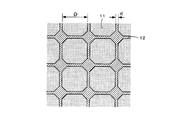
- FIG. 1 is an overall view showing a permanent magnet according to the present invention.
- FIG. 2 is an enlarged schematic view showing the vicinity of the grain boundary of the permanent magnet according to the present invention.
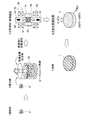
- FIG. 3 is an explanatory view showing a manufacturing process in the first method for manufacturing a permanent magnet according to the present invention.
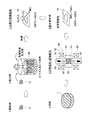
- FIG. 4 is an explanatory view showing a manufacturing process in the second method for manufacturing a permanent magnet according to the present invention.
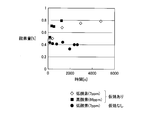
- FIG. 5 is a diagram showing a change in the amount of oxygen when the calcination treatment in hydrogen is performed and when it is not performed.
- FIG. 6 is a diagram showing the amount of carbon remaining in the permanent magnets of the permanent magnets of Examples 1 to 3 and Comparative Examples 1 to 3.
- Dy or Tb can be unevenly distributed in the grain boundaries of the magnet particles. Then, Dy and Tb unevenly distributed at the grain boundaries suppress the generation of reverse magnetic domains at the grain boundaries, so that the coercive force can be improved. In addition, the amount of Dy or Tb added can be reduced as compared with the conventional case, and a decrease in residual magnetic flux density can be suppressed.
- FIG. 10 is a diagram showing an SEM photograph after sintering of the permanent magnet of Example 3 and the elemental analysis results of the grain boundary phase.
- FIG. 11 is a diagram in which the Tb element distribution state is mapped in the same field of view as the SEM photograph and the SEM photograph after sintering of the permanent magnet of Example 3.
- Dy as an oxide or non-oxide is detected from the grain boundary phase. That is, in the permanent magnets of Examples 1 to 3, Dy diffuses from the grain boundary phase to the main phase, and in the surface portion (outer shell) of the main phase particles, a phase in which a part of Nd is substituted with Dy is the main phase. It turns out that it is produced
- the permanent magnet 1 is manufactured by performing vacuum sintering or pressure sintering.
- the organic compound remaining before sintering is pyrolyzed to burn out the carbon contained in the magnet particles in advance (reduce the carbon content).
- the carbide is hardly formed in the sintering process.
- a large number of ⁇ Fe is not precipitated in the main phase of the magnet after sintering, and the magnet characteristics are not greatly deteriorated.
Landscapes
- Engineering & Computer Science (AREA)
- Chemical & Material Sciences (AREA)
- Power Engineering (AREA)
- Mechanical Engineering (AREA)
- Metallurgy (AREA)
- Organic Chemistry (AREA)
- Materials Engineering (AREA)
- Manufacturing & Machinery (AREA)
- Crystallography & Structural Chemistry (AREA)
- Inorganic Chemistry (AREA)
- Hard Magnetic Materials (AREA)
- Powder Metallurgy (AREA)
- Manufacturing Cores, Coils, And Magnets (AREA)
Abstract
Description
また、本発明に係る永久磁石によれば、製造過程で希土類元素が酸素や炭素と結び付いたとしても、化学量論組成に対して希土類元素が不足することなく、焼結後の永久磁石中にαFeが生成されることを抑制することが可能となる。また、粉砕前後で磁石組成が大きく変動しないので粉砕後に磁石組成を変更する必要なく、製造工程を簡略化することができる。
また、本発明に係る永久磁石によれば、製造過程で希土類元素が酸素や炭素と結び付いたとしても、化学量論組成に対して希土類元素が不足することなく、焼結後の永久磁石中にαFeが生成されることを抑制することが可能となる。また、粉砕前後で磁石組成が大きく変動しないので粉砕後に磁石組成を変更する必要なく、製造工程を簡略化することができる。
更に、粉末状の磁石粒子に対して仮焼を行うので、成形後の磁石粒子に対して仮焼を行う場合と比較して、有機化合物の熱分解を磁石粒子全体に対してより容易に行うことができる。即ち、仮焼体中の炭素量をより確実に低減させることが可能となる。
また、本発明に係る永久磁石の製造方法によれば、製造過程で希土類元素が酸素や炭素と結び付いたとしても、化学量論組成に対して希土類元素が不足することなく、焼結後の永久磁石中にαFeが生成されることを抑制することが可能となる。また、粉砕前後で磁石組成が大きく変動しないので粉砕後に磁石組成を変更する必要なく、製造工程を簡略化することができる。
また、本発明に係る永久磁石の製造方法によれば、製造過程で希土類元素が酸素や炭素と結び付いたとしても、化学量論組成に対して希土類元素が不足することなく、焼結後の永久磁石中にαFeが生成されることを抑制することが可能となる。また、粉砕前後で磁石組成が大きく変動しないので粉砕後に磁石組成を変更する必要なく、製造工程を簡略化することができる。
更に、粉末状の磁石粒子に対して仮焼を行うので、成形後の磁石粒子に対して仮焼を行う場合と比較して、有機化合物の熱分解を磁石粒子全体に対してより容易に行うことができる。即ち、仮焼体中の炭素量をより確実に低減させることが可能となる。
先ず、本発明に係る永久磁石1の構成について説明する。図1は本発明に係る永久磁石1を示した全体図である。尚、図1に示す永久磁石1は円柱形状を備えるが、永久磁石1の形状は成形に用いるキャビティの形状によって変化する。
本発明に係る永久磁石1としては例えばNd-Fe-B系磁石を用いる。また、図2に示すように、永久磁石1は磁化作用に寄与する磁性相である主相11と、非磁性で希土類元素の濃縮した低融点のMリッチ相12(Mは希土類元素であるNd、Pr、Dy、Tbの内、少なくとも一種を含む。)とが共存する合金である。図2は永久磁石1を構成するNd磁石粒子を拡大して示した図である。
(1)融点が低く(約600℃)、焼結時に液相となり、磁石の高密度化、即ち磁化の向上に寄与する。(2)粒界の凹凸を無くし、逆磁区のニュークリエーションサイトを減少させ保磁力を高める。(3)主相を磁気的に絶縁し保磁力を増加する。
従って、焼結後の永久磁石1中におけるMリッチ相12の分散状態が悪いと、局部的な焼結不良、磁性の低下をまねくため、焼結後の永久磁石1中にはMリッチ相12が均一に分散していることが重要となる。
次に、本発明に係る永久磁石1の第1の製造方法について図3を用いて説明する。図3は本発明に係る永久磁石1の第1の製造方法における製造工程を示した説明図である。
尚、詳細な分散条件は以下の通りである。
・分散装置:ビーズミル
・分散メディア:ジルコニアビーズ
また、成形装置50には一対の磁界発生コイル55、56がキャビティ54の上下位置に配置されており、磁力線をキャビティ54に充填された磁石粉末43に印加する。印加させる磁場は例えば1MA/mとする。
また、湿式法を用いる場合には、キャビティ54に磁場を印加しながらスラリーを注入し、注入途中又は注入終了後に、当初の磁場より強い磁場を印加して湿式成形しても良い。また、加圧方向に対して印加方向が垂直となるように磁界発生コイル55、56を配置しても良い。
次に、本発明に係る永久磁石1の他の製造方法である第2の製造方法について図4を用いて説明する。図4は本発明に係る永久磁石1の第2の製造方法における製造工程を示した説明図である。
図5は水素中仮焼処理をしたNd磁石粉末と水素中仮焼処理をしていないNd磁石粉末とを、酸素濃度7ppm及び酸素濃度66ppmの雰囲気にそれぞれ暴露した際に、暴露時間に対する磁石粉末内の酸素量を示した図である。図5に示すように水素中仮焼処理した磁石粉末は、高酸素濃度66ppm雰囲気におかれると、約1000secで磁石粉末内の酸素量が0.4%から0.8%まで上昇する。また、低酸素濃度7ppm雰囲気におかれても、約5000secで磁石粉末内の酸素量が0.4%から同じく0.8%まで上昇する。そして、Ndが酸素と結び付くと、残留磁束密度や保磁力の低下の原因となる。
そこで、上記脱水素処理では、水素中仮焼処理によって生成された仮焼体82中のNdH3(活性度大)を、NdH3(活性度大)→NdH2(活性度小)へと段階的に変化させることによって、水素仮焼中処理により活性化された仮焼体82の活性度を低下させる。それによって、水素中仮焼処理によって仮焼された仮焼体82をその後に大気中へと移動させた場合であっても、Ndが酸素と結び付くことを防止し、残留磁束密度や保磁力を低下させることが無い。
一方、第1の製造方法では、成形体71は水素仮焼後に外気と触れさせることなく焼成に移るため、脱水素工程は不要となる。従って、前記第2の製造方法と比較して製造工程を簡略化することが可能となる。但し、前記第2の製造方法においても、水素仮焼後に外気と触れさせることがなく焼成を行う場合には、脱水素工程は不要となる。
(実施例1)
実施例1のネオジム磁石粉末の合金組成は、化学量論組成に基づく分率(Nd:26.7wt%、Fe(電解鉄):72.3wt%、B:1.0wt%)よりもNdの比率を高くし、例えばwt%でNd/Fe/B=32.7/65.96/1.34とする。また、ビーズミル粉砕時において溶媒に添加する有機金属化合物としてジスプロシウムn-プロポキシドを5wt%添加した。また、湿式粉砕を行う際の有機溶媒としてトルエンを用いた。また、仮焼処理は、成形前の磁石粉末を水素雰囲気において600℃で5時間保持することにより行った。仮焼中の水素の供給量は5L/minとする。また、成形された仮焼体の焼結はSPS焼結により行った。尚、他の工程は上述した[永久磁石の製造方法2]と同様の工程とする。
添加する有機金属化合物をテルビウムエトキシドとした。他の条件は実施例1と同様である。
添加する有機金属化合物をジスプロシウムエトキシドとした。他の条件は実施例1と同様である。
成形された仮焼体の焼結をSPS焼結の代わりに真空焼結により行った。他の条件は実施例1と同様である。
添加する有機金属化合物をジスプロシウムn-プロポキシドとし、水素中仮焼処理を行わずに焼結した。他の条件は実施例1と同様である。
添加する有機金属化合物をテルビウムエトキシドとし、水素中仮焼処理を行わずに焼結した。他の条件は実施例1と同様である。
添加する有機金属化合物をジスプロシウムアセチルアセトナートとした。他の条件は実施例1と同様である。
仮焼処理を水素雰囲気ではなくHe雰囲気で行った。また、成形された仮焼体の焼結をSPS焼結の代わりに真空焼結により行った。他の条件は実施例1と同様である。
仮焼処理を水素雰囲気ではなく真空雰囲気で行った。また、成形された仮焼体の焼結をSPS焼結の代わりに真空焼結により行った。他の条件は実施例1と同様である。
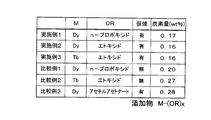
図6は実施例1~3と比較例1~3の永久磁石の永久磁石中の残存炭素量[wt%]をそれぞれ示した図である。
図6に示すように、実施例1~3は比較例1~3と比較して磁石粒子中に残存する炭素量を大きく低減させることができることが分かる。特に、実施例1~3では、磁石粒子中に残存する炭素量を0.2wt%未満とすることができる。
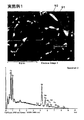
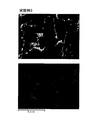
実施例1~3の永久磁石についてXMAによる表面分析を行った。図7は実施例1の永久磁石の焼結後のSEM写真及び粒界相の元素分析結果を示した図である。図8は実施例1の永久磁石の焼結後のSEM写真及びSEM写真と同一視野でDy元素の分布状態をマッピングした図である。図9は実施例2の永久磁石の焼結後のSEM写真及び粒界相の元素分析結果を示した図である。図10は実施例3の永久磁石の焼結後のSEM写真及び粒界相の元素分析結果を示した図である。図11は実施例3の永久磁石の焼結後のSEM写真及びSEM写真と同一視野でTb元素の分布状態をマッピングした図である。
図7、図9、図10に示すように実施例1~3の各永久磁石では、粒界相から酸化物又は非酸化物としてのDyが検出されている。即ち、実施例1~3の永久磁石では、粒界相から主相へとDyが拡散し、主相粒子の表面部分(外殻)において、Ndの一部をDyで置換した相が主相粒子の表面(粒界)に生成されていることが分かる。
以上の結果から、実施例1~3では、磁石の粒界にDyやTbを偏在させることができていることが分かる。
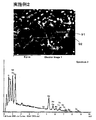
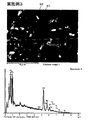
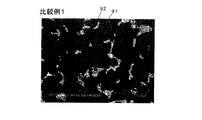
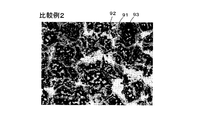
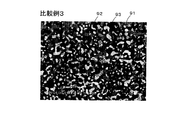
図12は比較例1の永久磁石の焼結後のSEM写真を示した図である。図13は比較例2の永久磁石の焼結後のSEM写真を示した図である。図14は比較例3の永久磁石の焼結後のSEM写真を示した図である。
また、実施例1~3と比較例1~3の各SEM写真を比較すると、残留炭素量が一定量以下(例えば0.2wt%以下)である実施例1~3や比較例1では、基本的にネオジム磁石の主相(Nd2Fe14B)91と白い斑点状に見える粒界相92から焼結後の永久磁石が形成されている。また、少量ではあるがαFe相についても形成されている。それに対して、実施例1~3や比較例1に比べて残留炭素量が多い比較例2、3は、主相91や粒界相92に加えて黒色帯状に見えるαFe相93が多数形成されている。ここで、αFeは焼結時において残留しているカーバイドによって生じるものである。即ち、NdとCとの反応性が非常に高いため、比較例2、3のように焼結工程において高温まで有機化合物中のC含有物が残ると、カーバイドを形成する。その結果、形成されたカーバイドによって焼結後の磁石の主相内にαFeが析出し、磁石特性を大きく低下させることとなる。
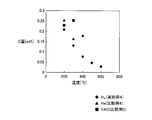
図15は実施例4と比較例4、5の永久磁石について、仮焼温度の条件を変更して製造した複数の永久磁石中の炭素量[wt%]を示した図である。尚、図15では仮焼中の水素及びヘリウムの供給量を1L/minとし、3時間保持した結果を示す。
図15に示すように、He雰囲気や真空雰囲気で仮焼した場合と比較して、水素雰囲気で仮焼した場合には磁石粒子中の炭素量をより大きく低減させることができることが分かる。また、図15からは、磁石粉末を水素雰囲気で仮焼する際の仮焼温度を高温にすれば炭素量がより大きく低減し、特に400℃~900℃とすることによって炭素量を0.2wt%未満とすることが可能であることが分かる。
また、特に添加する有機金属化合物としてアルキル基から構成される有機金属化合物、より好ましくは炭素数2~6のアルキル基から構成される有機金属化合物を用いれば、水素雰囲気で磁石粉末や成形体を仮焼する際に、低温で有機金属化合物の熱分解を行うことが可能となる。それによって、有機金属化合物の熱分解を磁石粉末全体や成形体全体に対してより容易に行うことができる。
更に、成形体や磁石粉末を仮焼する工程は、特に200℃~900℃、より好ましくは400℃~900℃の温度範囲で成形体を所定時間保持することにより行うので、磁石粒子中に含有する炭素を必要量以上焼失させることができる。
その結果、焼結後に磁石に残存する炭素量が0.2wt%未満、より好ましくは0.1wt%未満となるので、磁石の主相と粒界相との間に空隙が生じることなく、また、磁石全体を緻密に焼結した状態とすることが可能となり、残留磁束密度が低下することを防止できる。また、焼結後の磁石の主相内にαFeが多数析出することなく、磁石特性を大きく低下させることがない。
また、ビーズミルによる湿式粉砕時において、磁石粉末に対してM-(OR)x(式中、Mは希土類元素であるNd、Pr、Dy、Tbの内、少なくとも一種を含む。Rは炭化水素からなる置換基であり、直鎖でも分枝でも良い。xは任意の整数である。)で示される有機金属化合物を湿式状態で添加することによって、磁石の粒子表面に対して均一に有機金属化合物を付着させた後に、成形及び焼結を行うので、製造過程で希土類元素が酸素や炭素と結び付いたとしても、化学量論組成に対して希土類元素が不足することなく、焼結後の永久磁石中にαFeが生成されることを抑制することが可能となる。また、粉砕前後で磁石組成が大きく変動しないので粉砕後に磁石組成を変更する必要なく、製造工程を簡略化することができる。
また、特に第2の製造方法では、粉末状の磁石粒子に対して仮焼を行うので、成形後の磁石粒子に対して仮焼を行う場合と比較して、残存する有機化合物の熱分解を磁石粒子全体に対してより容易に行うことができる。即ち、仮焼体中の炭素量をより確実に低減させることが可能となる。また、仮焼処理後に脱水素処理を行うことによって、仮焼処理により活性化された仮焼体の活性度を低下させることができる。それにより、その後に磁石粒子が酸素と結び付くことを防止し、残留磁束密度や保磁力を低下させることが無い。
また、磁石粉末の粉砕条件、混練条件、仮焼条件、脱水素条件、焼結条件などは上記実施例に記載した条件に限られるものではない。
また、脱水素工程については省略しても良い。
11 主相
12 Mリッチ相
91 主相
92 粒界相
93 αFe相
Claims (10)
- 構造式M-(OR)x
(式中、Mは希土類元素であるNd、Pr、Dy、Tbの内、少なくとも一種を含む。Rは炭化水素からなる置換基であり、直鎖でも分枝でも良い。xは任意の整数である。)
で表わされる有機金属化合物を磁石原料と共に有機溶媒中で湿式粉砕して、前記磁石原料を粉砕した磁石粉末を得るとともに前記磁石粉末の粒子表面に前記有機金属化合物を付着させる工程と、
前記有機金属化合物が粒子表面に付着された前記磁石粉末を成形することにより成形体を形成する工程と、
前記成形体を水素雰囲気で仮焼して仮焼体を得る工程と、
前記仮焼体を焼結する工程と、
により製造されることを特徴とする永久磁石。 - 構造式M-(OR)x
(式中、Mは希土類元素であるNd、Pr、Dy、Tbの内、少なくとも一種を含む。Rは炭化水素からなる置換基であり、直鎖でも分枝でも良い。xは任意の整数である。)
で表わされる有機金属化合物を磁石原料と共に有機溶媒中で湿式粉砕して、前記磁石原料を粉砕した磁石粉末を得るとともに前記磁石粉末の粒子表面に前記有機金属化合物を付着させる工程と、
前記有機金属化合物が粒子表面に付着された前記磁石粉末を水素雰囲気で仮焼して仮焼体を得る工程と、
前記仮焼体を成形することにより成形体を形成する工程と、
前記成形体を焼結する工程と、
により製造されることを特徴とする永久磁石。 - 前記有機金属化合物を形成する金属が、焼結後に前記永久磁石の粒界に偏在していることを特徴とする請求項1又は請求項2に記載の永久磁石。
- 前記構造式中のRは、アルキル基であることを特徴とする請求項1乃至請求項3のいずれかに記載の永久磁石。
- 前記構造式中のRは、炭素数2~6のアルキル基のいずれかであることを特徴とする請求項4に記載の永久磁石。
- 焼結後に残存する炭素量が0.2wt%未満であることを特徴とする請求項1乃至請求項5のいずれかに記載の永久磁石。
- 構造式M-(OR)x
(式中、Mは希土類元素であるNd、Pr、Dy、Tbの内、少なくとも一種を含む。Rは炭化水素からなる置換基であり、直鎖でも分枝でも良い。xは任意の整数である。)
で表わされる有機金属化合物を磁石原料と共に有機溶媒中で湿式粉砕して、前記磁石原料を粉砕した磁石粉末を得るとともに前記磁石粉末の粒子表面に前記有機金属化合物を付着させる工程と、
前記有機金属化合物が粒子表面に付着された前記磁石粉末を成形することにより成形体を形成する工程と、
前記成形体を水素雰囲気で仮焼して仮焼体を得る工程と、
前記仮焼体を焼結する工程と、
を有することを特徴とする永久磁石の製造方法。 - 構造式M-(OR)x
(式中、Mは希土類元素であるNd、Pr、Dy、Tbの内、少なくとも一種を含む。Rは炭化水素からなる置換基であり、直鎖でも分枝でも良い。xは任意の整数である。)
で表わされる有機金属化合物を磁石原料と共に有機溶媒中で湿式粉砕して、前記磁石原料を粉砕した磁石粉末を得るとともに前記磁石粉末の粒子表面に前記有機金属化合物を付着させる工程と、
前記有機金属化合物が粒子表面に付着された前記磁石粉末を水素雰囲気で仮焼して仮焼体を得る工程と、
前記仮焼体を成形することにより成形体を形成する工程と、
前記成形体を焼結する工程と、
を有することを特徴とする永久磁石の製造方法。 - 前記構造式中のRは、アルキル基であることを特徴とする請求項7又は請求項8に記載の永久磁石の製造方法。
- 前記構造式中のRは、炭素数2~6のアルキル基のいずれかであることを特徴とする請求項9に記載の永久磁石の製造方法。
Priority Applications (4)
| Application Number | Priority Date | Filing Date | Title |
|---|---|---|---|
| KR1020127007161A KR101201021B1 (ko) | 2010-03-31 | 2011-03-28 | 영구 자석 및 영구 자석의 제조 방법 |
| CN201180003981XA CN102549680A (zh) | 2010-03-31 | 2011-03-28 | 永久磁铁及永久磁铁的制造方法 |
| EP11765491.3A EP2503563B1 (en) | 2010-03-31 | 2011-03-28 | Manufacturing method for permanent magnet |
| US13/499,338 US9053846B2 (en) | 2010-03-31 | 2011-03-28 | Permanent magnet and manufacturing method thereof |
Applications Claiming Priority (2)
| Application Number | Priority Date | Filing Date | Title |
|---|---|---|---|
| JP2010084206 | 2010-03-31 | ||
| JP2010-084206 | 2010-03-31 |
Publications (1)
| Publication Number | Publication Date |
|---|---|
| WO2011125591A1 true WO2011125591A1 (ja) | 2011-10-13 |
Family
ID=44762540
Family Applications (1)
| Application Number | Title | Priority Date | Filing Date |
|---|---|---|---|
| PCT/JP2011/057572 Ceased WO2011125591A1 (ja) | 2010-03-31 | 2011-03-28 | 永久磁石及び永久磁石の製造方法 |
Country Status (7)
| Country | Link |
|---|---|
| US (1) | US9053846B2 (ja) |
| EP (1) | EP2503563B1 (ja) |
| JP (2) | JP4923152B2 (ja) |
| KR (1) | KR101201021B1 (ja) |
| CN (1) | CN102549680A (ja) |
| TW (2) | TW201212058A (ja) |
| WO (1) | WO2011125591A1 (ja) |
Cited By (7)
| Publication number | Priority date | Publication date | Assignee | Title |
|---|---|---|---|---|
| WO2013047467A1 (ja) * | 2011-09-30 | 2013-04-04 | 日東電工株式会社 | 希土類永久磁石及び希土類永久磁石の製造方法 |
| WO2013047469A1 (ja) * | 2011-09-30 | 2013-04-04 | 日東電工株式会社 | 永久磁石及び永久磁石の製造方法 |
| CN103503087A (zh) * | 2011-12-27 | 2014-01-08 | 因太金属株式会社 | NdFeB系烧结磁体 |
| CN103650073A (zh) * | 2011-12-27 | 2014-03-19 | 因太金属株式会社 | NdFeB系烧结磁体和该NdFeB系烧结磁体的制造方法 |
| US9412505B2 (en) | 2011-12-27 | 2016-08-09 | Intermetallics Co., Ltd. | NdFeB system sintered magnet |
| WO2018088393A1 (ja) * | 2016-11-09 | 2018-05-17 | Tdk株式会社 | 希土類磁石の製造方法 |
| US10468166B2 (en) | 2011-12-27 | 2019-11-05 | Intermetallics Co., Ltd. | NdFeB system sintered magnet |
Families Citing this family (9)
| Publication number | Priority date | Publication date | Assignee | Title |
|---|---|---|---|---|
| JP5417632B2 (ja) | 2008-03-18 | 2014-02-19 | 日東電工株式会社 | 永久磁石及び永久磁石の製造方法 |
| US20120181476A1 (en) * | 2010-03-31 | 2012-07-19 | Nitto Denko Corporation | Permanent magnet and manufacturing method thereof |
| CN102549685B (zh) * | 2010-03-31 | 2014-04-02 | 日东电工株式会社 | 永久磁铁及永久磁铁的制造方法 |
| EP2503567B1 (en) * | 2010-03-31 | 2014-07-02 | Nitto Denko Corporation | Manufacturing method for permanent magnet |
| WO2011125584A1 (ja) * | 2010-03-31 | 2011-10-13 | 日東電工株式会社 | 永久磁石及び永久磁石の製造方法 |
| JP5011420B2 (ja) * | 2010-05-14 | 2012-08-29 | 日東電工株式会社 | 永久磁石及び永久磁石の製造方法 |
| US9963344B2 (en) * | 2015-01-21 | 2018-05-08 | National Technology & Engineering Solution of Sandia, LLC | Method to synthesize bulk iron nitride |
| CN112750612B (zh) * | 2020-02-17 | 2022-08-05 | 北京京磁电工科技有限公司 | 钕铁硼表面渗透铽或镝的工艺方法 |
| CN112768169B (zh) * | 2020-12-30 | 2023-01-10 | 包头天和磁材科技股份有限公司 | 预制品及其制备方法和耐腐蚀磁体的生产方法及用途 |
Citations (4)
| Publication number | Priority date | Publication date | Assignee | Title |
|---|---|---|---|---|
| JPH1064746A (ja) * | 1996-08-23 | 1998-03-06 | Sumitomo Special Metals Co Ltd | 薄肉R−Fe−B系焼結磁石の製造方法 |
| JP3298219B2 (ja) | 1993-03-17 | 2002-07-02 | 日立金属株式会社 | 希土類―Fe−Co−Al−V−Ga−B系焼結磁石 |
| JP2005191187A (ja) * | 2003-12-25 | 2005-07-14 | Nissan Motor Co Ltd | 希土類磁石およびその製造方法 |
| WO2009116532A1 (ja) * | 2008-03-18 | 2009-09-24 | 日東電工株式会社 | 永久磁石及び永久磁石の製造方法 |
Family Cites Families (8)
| Publication number | Priority date | Publication date | Assignee | Title |
|---|---|---|---|---|
| JPH07263265A (ja) | 1994-03-18 | 1995-10-13 | Hitachi Metals Ltd | 希土類金属間化合物永久磁石およびその製造方法 |
| JP4525072B2 (ja) | 2003-12-22 | 2010-08-18 | 日産自動車株式会社 | 希土類磁石およびその製造方法 |
| TWI302712B (en) * | 2004-12-16 | 2008-11-01 | Japan Science & Tech Agency | Nd-fe-b base magnet including modified grain boundaries and method for manufacturing the same |
| JP2006270087A (ja) | 2005-02-28 | 2006-10-05 | Tdk Corp | 希土類焼結磁石の製造方法 |
| WO2007010860A1 (ja) | 2005-07-15 | 2007-01-25 | Neomax Co., Ltd. | 希土類焼結磁石及びその製造方法 |
| JP4635832B2 (ja) * | 2005-11-08 | 2011-02-23 | 日立金属株式会社 | 希土類焼結磁石の製造方法 |
| EP2133891B1 (en) * | 2007-03-30 | 2017-03-08 | TDK Corporation | Process for producing magnet |
| JP5266523B2 (ja) * | 2008-04-15 | 2013-08-21 | 日東電工株式会社 | 永久磁石及び永久磁石の製造方法 |
-
2011
- 2011-03-28 JP JP2011069072A patent/JP4923152B2/ja not_active Expired - Fee Related
- 2011-03-28 KR KR1020127007161A patent/KR101201021B1/ko not_active Expired - Fee Related
- 2011-03-28 WO PCT/JP2011/057572 patent/WO2011125591A1/ja not_active Ceased
- 2011-03-28 EP EP11765491.3A patent/EP2503563B1/en not_active Not-in-force
- 2011-03-28 CN CN201180003981XA patent/CN102549680A/zh active Pending
- 2011-03-28 US US13/499,338 patent/US9053846B2/en not_active Expired - Fee Related
- 2011-03-31 TW TW100111451A patent/TW201212058A/zh not_active IP Right Cessation
- 2011-03-31 TW TW101116741A patent/TW201241846A/zh not_active IP Right Cessation
- 2011-12-22 JP JP2011281574A patent/JP4923163B1/ja not_active Expired - Fee Related
Patent Citations (4)
| Publication number | Priority date | Publication date | Assignee | Title |
|---|---|---|---|---|
| JP3298219B2 (ja) | 1993-03-17 | 2002-07-02 | 日立金属株式会社 | 希土類―Fe−Co−Al−V−Ga−B系焼結磁石 |
| JPH1064746A (ja) * | 1996-08-23 | 1998-03-06 | Sumitomo Special Metals Co Ltd | 薄肉R−Fe−B系焼結磁石の製造方法 |
| JP2005191187A (ja) * | 2003-12-25 | 2005-07-14 | Nissan Motor Co Ltd | 希土類磁石およびその製造方法 |
| WO2009116532A1 (ja) * | 2008-03-18 | 2009-09-24 | 日東電工株式会社 | 永久磁石及び永久磁石の製造方法 |
Non-Patent Citations (1)
| Title |
|---|
| See also references of EP2503563A4 |
Cited By (13)
| Publication number | Priority date | Publication date | Assignee | Title |
|---|---|---|---|---|
| WO2013047467A1 (ja) * | 2011-09-30 | 2013-04-04 | 日東電工株式会社 | 希土類永久磁石及び希土類永久磁石の製造方法 |
| WO2013047469A1 (ja) * | 2011-09-30 | 2013-04-04 | 日東電工株式会社 | 永久磁石及び永久磁石の製造方法 |
| US9396851B2 (en) | 2011-12-27 | 2016-07-19 | Intermetallics Co., Ltd. | NdFeB system sintered magnet |
| CN103650073A (zh) * | 2011-12-27 | 2014-03-19 | 因太金属株式会社 | NdFeB系烧结磁体和该NdFeB系烧结磁体的制造方法 |
| US9028624B2 (en) | 2011-12-27 | 2015-05-12 | Intermetallics Co., Ltd. | NdFeB system sintered magnet and method for producing the same |
| CN105206372A (zh) * | 2011-12-27 | 2015-12-30 | 因太金属株式会社 | NdFeB系烧结磁体 |
| CN103503087A (zh) * | 2011-12-27 | 2014-01-08 | 因太金属株式会社 | NdFeB系烧结磁体 |
| US9412505B2 (en) | 2011-12-27 | 2016-08-09 | Intermetallics Co., Ltd. | NdFeB system sintered magnet |
| US10290408B2 (en) | 2011-12-27 | 2019-05-14 | Intermetallics Co., Ltd. | NdFeB system sintered magnet |
| US10468166B2 (en) | 2011-12-27 | 2019-11-05 | Intermetallics Co., Ltd. | NdFeB system sintered magnet |
| WO2018088393A1 (ja) * | 2016-11-09 | 2018-05-17 | Tdk株式会社 | 希土類磁石の製造方法 |
| CN109923629A (zh) * | 2016-11-09 | 2019-06-21 | Tdk株式会社 | 稀土磁铁的制造方法 |
| JPWO2018088393A1 (ja) * | 2016-11-09 | 2019-10-03 | Tdk株式会社 | 希土類磁石の製造方法 |
Also Published As
| Publication number | Publication date |
|---|---|
| KR20120049347A (ko) | 2012-05-16 |
| US9053846B2 (en) | 2015-06-09 |
| EP2503563B1 (en) | 2015-01-21 |
| JP2012119693A (ja) | 2012-06-21 |
| JP4923163B1 (ja) | 2012-04-25 |
| TW201212058A (en) | 2012-03-16 |
| JP2011228664A (ja) | 2011-11-10 |
| JP4923152B2 (ja) | 2012-04-25 |
| TWI378477B (ja) | 2012-12-01 |
| EP2503563A1 (en) | 2012-09-26 |
| TW201241846A (en) | 2012-10-16 |
| US20120181475A1 (en) | 2012-07-19 |
| TWI378476B (ja) | 2012-12-01 |
| KR101201021B1 (ko) | 2012-11-14 |
| EP2503563A4 (en) | 2012-11-07 |
| CN102549680A (zh) | 2012-07-04 |
Similar Documents
| Publication | Publication Date | Title |
|---|---|---|
| JP4923163B1 (ja) | 永久磁石及び永久磁石の製造方法 | |
| JP4923164B1 (ja) | 永久磁石及び永久磁石の製造方法 | |
| JP4865100B2 (ja) | 永久磁石及び永久磁石の製造方法 | |
| JP5969750B2 (ja) | 希土類永久磁石の製造方法 | |
| JP2011228656A (ja) | 永久磁石及び永久磁石の製造方法 | |
| JP4923147B2 (ja) | 永久磁石及び永久磁石の製造方法 | |
| JP4865097B2 (ja) | 永久磁石及び永久磁石の製造方法 | |
| WO2011125583A1 (ja) | 永久磁石及び永久磁石の製造方法 | |
| JP4865099B2 (ja) | 永久磁石及び永久磁石の製造方法 | |
| JP4981182B2 (ja) | 永久磁石及び永久磁石の製造方法 | |
| JP5908247B2 (ja) | 永久磁石の製造方法 | |
| JP4923149B2 (ja) | 永久磁石及び永久磁石の製造方法 | |
| JP4923150B2 (ja) | 永久磁石及び永久磁石の製造方法 | |
| JP5501832B2 (ja) | 永久磁石及び永久磁石の製造方法 | |
| JP5878325B2 (ja) | 永久磁石の製造方法 | |
| JP2011216596A (ja) | 永久磁石及び永久磁石の製造方法 |
Legal Events
| Date | Code | Title | Description |
|---|---|---|---|
| WWE | Wipo information: entry into national phase |
Ref document number: 201180003981.X Country of ref document: CN |
|
| 121 | Ep: the epo has been informed by wipo that ep was designated in this application |
Ref document number: 11765491 Country of ref document: EP Kind code of ref document: A1 |
|
| ENP | Entry into the national phase |
Ref document number: 20127007161 Country of ref document: KR Kind code of ref document: A |
|
| WWE | Wipo information: entry into national phase |
Ref document number: 2869/CHENP/2012 Country of ref document: IN Ref document number: 2011765491 Country of ref document: EP |
|
| WWE | Wipo information: entry into national phase |
Ref document number: 13499338 Country of ref document: US |
|
| NENP | Non-entry into the national phase |
Ref country code: DE |