WO2011155281A1 - 淡水生成装置および淡水生成方法 - Google Patents
淡水生成装置および淡水生成方法 Download PDFInfo
- Publication number
- WO2011155281A1 WO2011155281A1 PCT/JP2011/060914 JP2011060914W WO2011155281A1 WO 2011155281 A1 WO2011155281 A1 WO 2011155281A1 JP 2011060914 W JP2011060914 W JP 2011060914W WO 2011155281 A1 WO2011155281 A1 WO 2011155281A1
- Authority
- WO
- WIPO (PCT)
- Prior art keywords
- water
- seawater
- fresh water
- reverse osmosis
- fresh
- Prior art date
- Legal status (The legal status is an assumption and is not a legal conclusion. Google has not performed a legal analysis and makes no representation as to the accuracy of the status listed.)
- Ceased
Links
- 0 **C1=CC=CC1 Chemical compound **C1=CC=CC1 0.000 description 3
- IIGDQRYOQDVFFK-UHFFFAOYSA-N NC(C1CCCC1)(I)I Chemical compound NC(C1CCCC1)(I)I IIGDQRYOQDVFFK-UHFFFAOYSA-N 0.000 description 1
- VZWBRWPUNRBPOZ-UHFFFAOYSA-N NC1=CCC=C1 Chemical compound NC1=CCC=C1 VZWBRWPUNRBPOZ-UHFFFAOYSA-N 0.000 description 1
Images





Classifications
-
- C—CHEMISTRY; METALLURGY
- C02—TREATMENT OF WATER, WASTE WATER, SEWAGE, OR SLUDGE
- C02F—TREATMENT OF WATER, WASTE WATER, SEWAGE, OR SLUDGE
- C02F1/00—Treatment of water, waste water, or sewage
- C02F1/44—Treatment of water, waste water, or sewage by dialysis, osmosis or reverse osmosis
- C02F1/441—Treatment of water, waste water, or sewage by dialysis, osmosis or reverse osmosis by reverse osmosis
-
- C—CHEMISTRY; METALLURGY
- C02—TREATMENT OF WATER, WASTE WATER, SEWAGE, OR SLUDGE
- C02F—TREATMENT OF WATER, WASTE WATER, SEWAGE, OR SLUDGE
- C02F1/00—Treatment of water, waste water, or sewage
- C02F1/44—Treatment of water, waste water, or sewage by dialysis, osmosis or reverse osmosis
-
- B—PERFORMING OPERATIONS; TRANSPORTING
- B01—PHYSICAL OR CHEMICAL PROCESSES OR APPARATUS IN GENERAL
- B01D—SEPARATION
- B01D61/00—Processes of separation using semi-permeable membranes, e.g. dialysis, osmosis or ultrafiltration; Apparatus, accessories or auxiliary operations specially adapted therefor
- B01D61/02—Reverse osmosis; Hyperfiltration ; Nanofiltration
- B01D61/025—Reverse osmosis; Hyperfiltration
- B01D61/026—Reverse osmosis; Hyperfiltration comprising multiple reverse osmosis steps
-
- B—PERFORMING OPERATIONS; TRANSPORTING
- B01—PHYSICAL OR CHEMICAL PROCESSES OR APPARATUS IN GENERAL
- B01D—SEPARATION
- B01D61/00—Processes of separation using semi-permeable membranes, e.g. dialysis, osmosis or ultrafiltration; Apparatus, accessories or auxiliary operations specially adapted therefor
- B01D61/02—Reverse osmosis; Hyperfiltration ; Nanofiltration
- B01D61/04—Feed pretreatment
-
- B—PERFORMING OPERATIONS; TRANSPORTING
- B01—PHYSICAL OR CHEMICAL PROCESSES OR APPARATUS IN GENERAL
- B01D—SEPARATION
- B01D61/00—Processes of separation using semi-permeable membranes, e.g. dialysis, osmosis or ultrafiltration; Apparatus, accessories or auxiliary operations specially adapted therefor
- B01D61/14—Ultrafiltration; Microfiltration
-
- B—PERFORMING OPERATIONS; TRANSPORTING
- B01—PHYSICAL OR CHEMICAL PROCESSES OR APPARATUS IN GENERAL
- B01D—SEPARATION
- B01D61/00—Processes of separation using semi-permeable membranes, e.g. dialysis, osmosis or ultrafiltration; Apparatus, accessories or auxiliary operations specially adapted therefor
- B01D61/58—Multistep processes
-
- B—PERFORMING OPERATIONS; TRANSPORTING
- B01—PHYSICAL OR CHEMICAL PROCESSES OR APPARATUS IN GENERAL
- B01D—SEPARATION
- B01D21/00—Separation of suspended solid particles from liquids by sedimentation
- B01D21/0012—Settling tanks making use of filters, e.g. by floating layers of particulate material
-
- B—PERFORMING OPERATIONS; TRANSPORTING
- B01—PHYSICAL OR CHEMICAL PROCESSES OR APPARATUS IN GENERAL
- B01D—SEPARATION
- B01D21/00—Separation of suspended solid particles from liquids by sedimentation
- B01D21/24—Feed or discharge mechanisms for settling tanks
- B01D21/2444—Discharge mechanisms for the classified liquid
-
- B—PERFORMING OPERATIONS; TRANSPORTING
- B01—PHYSICAL OR CHEMICAL PROCESSES OR APPARATUS IN GENERAL
- B01D—SEPARATION
- B01D2311/00—Details relating to membrane separation process operations and control
- B01D2311/04—Specific process operations in the feed stream; Feed pretreatment
-
- B—PERFORMING OPERATIONS; TRANSPORTING
- B01—PHYSICAL OR CHEMICAL PROCESSES OR APPARATUS IN GENERAL
- B01D—SEPARATION
- B01D2311/00—Details relating to membrane separation process operations and control
- B01D2311/26—Further operations combined with membrane separation processes
- B01D2311/2688—Biological processes
-
- B—PERFORMING OPERATIONS; TRANSPORTING
- B01—PHYSICAL OR CHEMICAL PROCESSES OR APPARATUS IN GENERAL
- B01D—SEPARATION
- B01D2317/00—Membrane module arrangements within a plant or an apparatus
- B01D2317/02—Elements in series
- B01D2317/022—Reject series
-
- B—PERFORMING OPERATIONS; TRANSPORTING
- B01—PHYSICAL OR CHEMICAL PROCESSES OR APPARATUS IN GENERAL
- B01D—SEPARATION
- B01D2317/00—Membrane module arrangements within a plant or an apparatus
- B01D2317/04—Elements in parallel
-
- C—CHEMISTRY; METALLURGY
- C02—TREATMENT OF WATER, WASTE WATER, SEWAGE, OR SLUDGE
- C02F—TREATMENT OF WATER, WASTE WATER, SEWAGE, OR SLUDGE
- C02F1/00—Treatment of water, waste water, or sewage
- C02F1/44—Treatment of water, waste water, or sewage by dialysis, osmosis or reverse osmosis
- C02F1/444—Treatment of water, waste water, or sewage by dialysis, osmosis or reverse osmosis by ultrafiltration or microfiltration
-
- C—CHEMISTRY; METALLURGY
- C02—TREATMENT OF WATER, WASTE WATER, SEWAGE, OR SLUDGE
- C02F—TREATMENT OF WATER, WASTE WATER, SEWAGE, OR SLUDGE
- C02F2103/00—Nature of the water, waste water, sewage or sludge to be treated
- C02F2103/08—Seawater, e.g. for desalination
-
- C—CHEMISTRY; METALLURGY
- C02—TREATMENT OF WATER, WASTE WATER, SEWAGE, OR SLUDGE
- C02F—TREATMENT OF WATER, WASTE WATER, SEWAGE, OR SLUDGE
- C02F2303/00—Specific treatment goals
- C02F2303/20—Prevention of biofouling
-
- C—CHEMISTRY; METALLURGY
- C02—TREATMENT OF WATER, WASTE WATER, SEWAGE, OR SLUDGE
- C02F—TREATMENT OF WATER, WASTE WATER, SEWAGE, OR SLUDGE
- C02F3/00—Biological treatment of water, waste water, or sewage
- C02F3/02—Aerobic processes
- C02F3/12—Activated sludge processes
- C02F3/1236—Particular type of activated sludge installations
- C02F3/1268—Membrane bioreactor systems
- C02F3/1273—Submerged membrane bioreactors
-
- Y—GENERAL TAGGING OF NEW TECHNOLOGICAL DEVELOPMENTS; GENERAL TAGGING OF CROSS-SECTIONAL TECHNOLOGIES SPANNING OVER SEVERAL SECTIONS OF THE IPC; TECHNICAL SUBJECTS COVERED BY FORMER USPC CROSS-REFERENCE ART COLLECTIONS [XRACs] AND DIGESTS
- Y02—TECHNOLOGIES OR APPLICATIONS FOR MITIGATION OR ADAPTATION AGAINST CLIMATE CHANGE
- Y02A—TECHNOLOGIES FOR ADAPTATION TO CLIMATE CHANGE
- Y02A20/00—Water conservation; Efficient water supply; Efficient water use
- Y02A20/124—Water desalination
- Y02A20/131—Reverse-osmosis
-
- Y—GENERAL TAGGING OF NEW TECHNOLOGICAL DEVELOPMENTS; GENERAL TAGGING OF CROSS-SECTIONAL TECHNOLOGIES SPANNING OVER SEVERAL SECTIONS OF THE IPC; TECHNICAL SUBJECTS COVERED BY FORMER USPC CROSS-REFERENCE ART COLLECTIONS [XRACs] AND DIGESTS
- Y02—TECHNOLOGIES OR APPLICATIONS FOR MITIGATION OR ADAPTATION AGAINST CLIMATE CHANGE
- Y02W—CLIMATE CHANGE MITIGATION TECHNOLOGIES RELATED TO WASTEWATER TREATMENT OR WASTE MANAGEMENT
- Y02W10/00—Technologies for wastewater treatment
- Y02W10/10—Biological treatment of water, waste water, or sewage
Definitions
- the present invention relates to a fresh water generating apparatus and a fresh water generating method, and more particularly to a fresh water generating apparatus and a fresh water generating method for generating fresh water by filtration using a reverse osmosis membrane.
- RO membrane reverse osmosis membrane
- Non-Patent Document 1 a method has been proposed in which concentrated water obtained by membrane treatment of sewage is mixed with seawater as dilution water to obtain mixed water, and this mixed water is subjected to membrane treatment by a reverse osmosis membrane device to obtain fresh water.
- concentrated water having a lower salt concentration than seawater is mixed with seawater as dilution water to obtain mixed water, and this mixed water is subjected to membrane treatment to obtain fresh water, which is mixed with the reverse osmosis membrane device. Since the pressure for pumping water can be suppressed compared to when seawater is pumped, the advantage that the amount of energy required for pumping per unit amount of fresh water obtained can be reduced, and sewage can be effectively used. There is an advantage that it can be utilized. That is, according to such a method, there is an advantage that fresh water can be obtained efficiently and sewage can be effectively utilized.
- the present invention has been made in view of the above demands, and it is an object of the present invention to provide a fresh water generation apparatus and a fresh water generation method capable of efficiently and stably obtaining fresh water.
- the present invention is a fresh water generating device provided with a reverse osmosis membrane device for seawater that obtains fresh water from seawater by a reverse osmosis membrane, A waste water is mixed with seawater as dilution water to obtain mixed water, and the reverse osmosis membrane device for seawater includes a first reverse osmosis membrane device for seawater that performs filtration treatment of the mixed water. Further, the present invention provides a fresh water generating apparatus characterized in that spent water, which is waste water obtained by using fresh water as irrigation water, is mixed with seawater as dilution water in the mixing section.
- fresh water can be obtained efficiently and stably by using the obtained fresh water as dilution water for diluting seawater even to the used water obtained by using as fresh water.
- dilution water for diluting seawater even to the used water obtained by using as fresh water.
- the mixing unit is configured such that a part of seawater to be membrane-treated is mixed with the dilution water to obtain mixed water, and the other part to be membrane-treated
- the seawater reverse osmosis membrane device is provided as the seawater reverse osmosis membrane device for filtering the seawater in an unmixed state with respect to the dilution water.
- fresh water obtained by filtering the seawater of other parts to be membrane-treated in an unmixed state with respect to the diluted water is used for daily life (especially for beverages), for agriculture (for example, , For vegetable factories), food factories, etc., there is an advantage that there is no risk of causing discomfort to the user or the like, or the risk of adversely affecting the human body. That is, there is an advantage that fresh water can be efficiently obtained for each application.
- the fresh water generating apparatus provided with the second seawater reverse osmosis membrane device is preferably wastewater obtained by using fresh water obtained by the first seawater reverse osmosis membrane device as water.
- the used water and the used water which is waste water obtained by using the fresh water obtained by the second reverse osmosis membrane device for seawater as the used water are mixed with the seawater as dilution water in the mixing unit. It is made up of.
- the fresh water generating apparatus is preferably used to obtain permeated water and concentrated water as fresh water by a reverse osmosis membrane from used water as waste water obtained by using the obtained fresh water as irrigation water.
- a water reverse osmosis membrane device is provided, and the concentrated water as used water is mixed with seawater as dilution water in the mixing section.
- the fresh water generating apparatus preferably includes a biological treatment unit that biologically treats the used water to obtain biological treated water, and the biological treated water is
- the mixing unit is configured to be mixed with seawater as dilution water.
- the organic solid substance adheres to the membrane surface of the first seawater reverse osmosis membrane device.
- the fresh water generating apparatus comprising the biological treatment unit and configured to be mixed with seawater as dilution water in the mixing unit is preferably a microfiltration membrane, an ultrafiltration membrane, and A turbidity removing device for filtering the biologically treated water by at least one of sand filtering means is provided, and the permeated water of the turbidity removing device is mixed with seawater as dilution water in the mixing unit.
- the fresh water generating apparatus preferably includes a precipitation processing unit that precipitates and separates used water to obtain a supernatant water that is a precipitated treated water, and the supernatant water is diluted into seawater as dilution water in the mixing unit. It is configured to be mixed.
- the fresh water generating apparatus provided with the precipitation processing unit and configured to mix the supernatant water with seawater as dilution water in the mixing unit is preferably a microfiltration membrane, an ultrafiltration membrane, and A turbidity removing device for filtering the supernatant water by at least one of sand filtering means is provided, and the permeated water of the turbidity removing device is mixed with seawater as dilution water in the mixing section.
- the fresh water generating apparatus provided with the spent water reverse osmosis membrane device is preferably a living body that biologically treats the used water to obtain biological treated water when the used water is organic waste water.
- a treatment unit and a turbidity device for filtering the biologically treated water by at least one of a microfiltration membrane, an ultrafiltration membrane, and a sand filtration means are provided, and the permeated water of the turbidity device is used as used water. It is comprised so that it may filter-process with the said reverse osmosis membrane apparatus for used water.
- the fresh water generating apparatus provided with the above-mentioned reverse osmosis membrane device for used water is preferably a precipitation treatment unit for precipitating and separating used water to obtain supernatant water as a precipitation treated water, a microfiltration membrane, A turbidity device for filtering the supernatant water by at least one of an outer filtration membrane and sand filtration means, and the permeated water of the turbidity device is used as reverse water osmosis membrane device as used water. It is configured to be filtered.
- the fresh water generation apparatus provided with the biological treatment unit and the turbidity removal device is preferably provided with a biological treatment tank for biological treatment, and the turbidity removal device comprises a microfiltration membrane and an ultrafiltration membrane. At least one of them is provided, and the turbidity removal device is installed as an immersion film below the liquid surface in the biological treatment tank.
- a fresh water generating apparatus when activated sludge is used in biological treatment, only the permeated water containing almost no activated sludge can be obtained from the biologically treated water containing activated sludge through the immersion membrane.
- the biological concentration in the inside can be increased and the volume of the biological treatment tank can be made compact.
- the fresh water generator itself can be made more compact than when the turbidizer is installed outside the biological treatment tank, and there is no need for a route for returning the sludge concentrated by the turbidizer to the biological treatment tank.
- the fresh water generating apparatus is preferably provided with an ion exchange apparatus for obtaining ion exchange treated water from fresh water obtained from the seawater reverse osmosis membrane apparatus by ion exchange.
- Such a fresh water generator has the advantage that ion-exchanged water that is fresh water having a low salt concentration can be obtained.
- the fresh water which is a source of water vapor for rotating a steam turbine used in a thermal power plant or the like, has a low salt concentration so that it becomes water vapor efficiently with less heat. Since such ion exchange treated water has a low salt concentration, a fresh water generating device including the ion exchange device can be suitably used to obtain fresh water for a steam turbine.
- the present invention is a method for producing fresh water from seawater with a reverse osmosis membrane device for seawater having a reverse osmosis membrane, Waste water is mixed with seawater as dilution water to obtain mixed water, the mixed water is filtered by the first seawater reverse osmosis membrane device as the seawater reverse osmosis membrane device, and the obtained fresh water is used as water
- the used water which is the waste water obtained by being mixed is mixed with seawater as dilution water.
- fresh water can be obtained efficiently and stably.
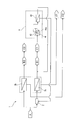
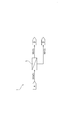
- FIG. 1 is a schematic block diagram of a fresh water generator according to an embodiment of the present invention.
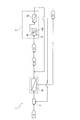
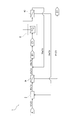
- 1 is a schematic block diagram of a fresh water generator according to an embodiment of the present invention.
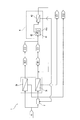
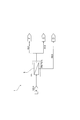
- 1 is a schematic block diagram of a fresh water generator according to an embodiment of the present invention.
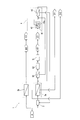
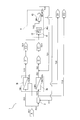
- 1 is a schematic block diagram of a fresh water generator according to an embodiment of the present invention.
- generation apparatus which concerns on the comparative example 1.
- generation apparatus which concerns on the comparative example 2.
- FIG. 1 is a schematic block diagram of a fresh water generator according to Embodiment 1.
- FIG. 5 is a schematic block diagram of a fresh water generating apparatus according to Embodiment 3.
- FIG. 6 is a schematic block diagram of a fresh water generating apparatus according to Embodiment 4.
- the fresh water generator 1 of this embodiment is configured to obtain fresh water B1 and B2 from seawater A by filtration using reverse osmosis membrane devices 3a and 3b.
- generation apparatus 1 of this embodiment is the 1st fresh water by filtering the said mixed water and the mixing part 2 which mixes wastewater with a part of seawater A which should be membrane-processed as dilution water, and obtains mixed water.
- the first seawater reverse osmosis membrane device 3a for obtaining the first permeated water and the first concentrated water D1 as B1 and the other seawater A to be membrane-treated are filtered in an unmixed state with respect to the diluted water.
- a part of seawater A which should be membrane-processed is transferred to the mixing part 2, waste water is transferred to the mixing part 2 as dilution water, and mixed water is reverse osmosis for 1st seawater.
- the other seawater A to be membrane-treated is transferred to the membrane device 3a, transferred to the second seawater reverse osmosis membrane device 3b, and the first concentrated water D1 is transferred to the first concentrated water storage tank (not shown).
- the second concentrated water D2 is configured to be transferred to a second concentrated water storage tank (not shown).
- the fresh water generation apparatus 1 of the present embodiment has at least the microfiltration membrane, the ultrafiltration membrane, and the sand filtration means before the seawater A is transferred to the mixing unit 2 and the second seawater reverse osmosis membrane device 3b. It is comprised so that seawater A may be filtered using the turbidity apparatus (not shown) which has either.
- Seawater A is water containing salt.
- seawater A diluted with dilution water has a salt concentration of 1.0 to 8.0% by mass, and more specifically, the salt concentration is 2. 5 to 6.0% by mass.
- the seawater A is not limited to the water which exists in the sea, If it is water whose salt concentration is 1.0 mass% or more, the water of a lake (salt lake, brackish lake), swamp water, pond water, etc. Including water existing on the land.
- the obtained fresh water B1 and B2 is used as industrial water (water for food factories, pulp factories, steel factories, chemical factories, electronics industry factories, etc.), water for daily use (drinking water, etc.), water for agriculture, etc. can do.
- fresh water B2 is fresh water obtained by filtering seawater A in an unmixed state with wastewater, water for domestic use (drinking water, etc.), agricultural water (for example, vegetable factory water), food factory water, etc. If used, there is an advantage that there is no possibility of causing discomfort to the user or the like, or a possibility of adversely affecting the human body or the like.
- the first fresh water B1 is used as irrigation water, so that first used water C1 as waste water is obtained.
- the first fresh water B2 is used as irrigation water, thereby obtaining second used water C2 as waste water.
- the fresh water generating apparatus 1 of the present embodiment is configured such that the fresh water B1 and B2 are transferred to various places of use as irrigation water.
- the fresh water generating apparatus 1 of the present embodiment includes a purification processing unit 4 that purifies the first used water C1, which is waste water. Moreover, the fresh water generator 1 of this embodiment is comprised so that the 1st used water C1 may be transferred to the purification process part 4.
- FIG. 1 is a schematic diagram of the fresh water generating apparatus 1 of the present embodiment.
- the first used water C1 is organic waste water.
- the organic wastewater is wastewater containing organic matter, for example, wastewater having a BOD (biochemical oxygen demand) as an indicator of organic matter concentration of 2000 mg / L or less, more specifically about 200 mg / L.
- Organic wastewater is water having a lower salt concentration than seawater A diluted with dilution water.
- the organic waste water has, for example, a ratio of the salt concentration of the organic waste water to the salt concentration of the sea water A diluted with the dilution water of 0.1 or less, more specifically, the sea water A diluted with the dilution water.
- the ratio of the salt concentration of organic wastewater to the salt concentration is 0.01 or less.
- the purification treatment unit 4 performs filtration treatment of the biologically treated water by at least one of a biological treatment unit 41 that biologically treats the first used water C1 to obtain biologically treated water, a microfiltration membrane, and an ultrafiltration membrane.
- the turbidity device 42 is turbidized to obtain concentrated water and permeated water, and the permeated water as the first fresh water B1 from the permeated water obtained from the turbidity device 42 as the used water C1 by the reverse osmosis membrane (RO membrane).
- RO membrane reverse osmosis membrane
- a reverse osmosis membrane device 43 for used water for obtaining concentrated water.
- turbidity is filtration that is rougher than reverse osmosis membrane filtration, that is, performed before filtration with a reverse osmosis membrane device, and coarser than separation with a reverse osmosis membrane (RO membrane). It means removing impurities (for example, solid substances).
- the biological treatment unit 41 includes a biological treatment tank 41a for biological treatment.
- the biological treatment is a treatment for decomposing organic substances contained in water by biological species such as bacteria, protozoa, and metazoans. Specifically, an aeration process using activated sludge can be exemplified.
- the purification treatment unit 4 is configured such that the turbidity device 42 is installed as an immersion film below the liquid surface of the biological treatment tank 41a.
- the purification treatment unit 4 is configured such that the first used water C1 is transferred to the biological treatment unit 41, and the permeated water of the turbidity removal device 42 is transferred to the reverse osmosis membrane device 43 for used water. Become.
- generation apparatus 1 of this embodiment is comprised so that the concentrated water of the reverse osmosis membrane apparatus 43 for used water may be mixed with the seawater A as dilution water by the mixing part 2.
- generation apparatus 1 of this embodiment transfers the concentrated water of the reverse osmosis membrane apparatus 43 for used water to the mixing part 2 as dilution water, and the permeated water of the reverse osmosis membrane apparatus 43 for used water is It is configured to be transferred to various places of use as irrigation water.
- the fresh water generating apparatus of the present embodiment is configured as described above. Next, the fresh water generating method of the present embodiment will be described.
- a part of seawater A to be membrane-treated is mixed with waste water as dilution water to obtain mixed water, and the mixed water is filtered by the first seawater reverse osmosis membrane device 3a.
- the first permeated water and the first concentrated water D1 as the first fresh water B1 are obtained and filtered by the second seawater reverse osmosis membrane device 3b in an unmixed state with respect to the diluted water from the seawater A of the other part to be membrane-treated.
- the 2nd permeated water and 2nd concentrated water D2 which are processed and are 2nd fresh water B2 are obtained.
- the seawater A is a turbidity apparatus (at least one of a microfiltration membrane, an ultrafiltration membrane, and a sand filtration means) before being transferred to the mixing unit 2 and the second seawater reverse osmosis membrane device 3b. (Not shown).
- generation method of this embodiment obtains biological treated water by biologically treating the 1st used water C1 obtained by using 1st fresh water B1 as water by the biological treatment part 41, and this biological treatment Water is processed by the turbidity removing device 42 to obtain permeated water and concentrated water as fresh water, and the concentrated water is used as dilution water for diluting a part of the seawater A.
- the mixing volume ratio of the seawater A and the dilution water is preferably 0.1 or more, more preferably seawater with respect to the seawater 1.
- 1 is diluted water 1 or more.
- the salt concentration of the mixed water is preferably 3.0% by mass or less, and more preferably 1.8% by mass or less.
- the salt concentration of dilution water makes the salt concentration of dilution water 1/3 or less of the salt concentration of seawater A diluted with dilution water, and the salt of seawater A diluted with dilution water is used for the freshwater production
- the fresh water with higher purity can be obtained by setting the salt concentration of the dilution water to 1/3 or less of the salt concentration of the seawater A diluted with the dilution water. There is an advantage that you can.
- generation method of this embodiment had the said structure, the fresh water production
- the turbidity device 42 is installed as an immersion film below the liquid surface of the biological treatment tank 41a.
- the thing of the type installed outside the processing tank 41a may be sufficient.
- the fresh water generating apparatus 1 of the present invention is configured such that the biologically treated water obtained in the biological treatment tank 41a is transferred to the turbidity device 42.
- generation apparatus 1 of this embodiment is equipped with the reverse osmosis membrane apparatus 43 for used water
- generation apparatus 1 of this invention is not provided with the reverse osmosis membrane apparatus 43 for used water. Also good.
- the permeated water of the turbidizer 42 is mixed with seawater as dilution water in the mixing unit 2.
- the fresh water generating apparatus 1 of the present invention may not further include the turbidity removing device 42.
- the biological treatment water obtained by the biological treatment unit 41 is configured to be mixed with seawater as dilution water by the mixing unit 2.
- the turbidity device 42 is of the type installed outside the biological treatment tank 41a, the turbidity device 42 of the present invention is replaced with a microfiltration membrane or an ultrafiltration membrane.
- the biologically treated water may be filtered and turbidized by sand filtering means.
- generation apparatus 1 of this embodiment is provided with the biological treatment part 41
- generation apparatus 1 of this invention settles and separates the 1st used water C1 instead of the biological treatment part 41.
- FIG. You may provide the precipitation process part (not shown) which obtains the supernatant water which is precipitation process water.
- the fresh water generating apparatus 1 of the present invention is of a type in which the turbidity device 42 is installed outside the biological treatment tank 41a, and the precipitated treated water obtained in the precipitation treatment unit (not shown) is used. It is configured to be transferred to the turbidity removal device 42.
- an aspect without the spent water reverse osmosis membrane apparatus 43 may be provided, and further, an aspect without the turbidity removing apparatus 42. It may be.
- generation apparatus 1 of this embodiment is 1st used water C1, even if the 1st used water C1 is an inorganic waste water.
- the inorganic wastewater contains an inorganic substance, and is, for example, wastewater having a BOD (biochemical oxygen demand) of 50 mg / L or less, preferably 10 mg / L or less.
- the said inorganic waste water is water whose salt concentration is lower than the seawater A diluted with dilution water.
- the inorganic wastewater is, for example, one having a ratio of the salt concentration of the inorganic wastewater to the salt concentration of the seawater A diluted with the dilution water of 0.1 or less, more specifically, the seawater A diluted with the dilution water.
- the ratio of the salt concentration of inorganic wastewater to the salt concentration is 0.01 or less.
- generation apparatus 1 of this embodiment is equipped with the 2nd reverse osmosis membrane apparatus 3b for seawater, as shown in FIG. 2, the freshwater production
- the apparatus 3b may not be provided.
- the total amount of seawater A is configured to be transferred to the mixing unit 2.
- the fresh water generating apparatus 1 of this embodiment is comprised so that 1st used water C1 may be used as dilution water, as shown in FIG.
- the second used water C2 may be used as dilution water.
- the second used water C2 obtained by using the second fresh water B2 as irrigation water is configured to be transferred to the purification processing unit 4.
- generation apparatus 1 of this invention may be comprised so that 2nd used water C2 may be used as dilution water with 1st used water C1. In this case, as shown in FIG.
- the fresh water generating apparatus 1 of the present invention is a mixture obtained by purifying both the first used water C1 and the second used water C2 as dilution water in the mixing unit 2. It may be configured to be transported. Moreover, even if the fresh water production
- the fresh water generating apparatus 1 of the present invention is filled with a cation exchange resin and an anion exchange resin in a mixed state, and the first reverse osmosis membrane device 3a for seawater by ion exchange with these resins.
- the mixed bed type ion exchange apparatus 91 which obtains ion exchange treated water from the fresh water obtained from is provided.
- the fresh water which is a source of water vapor for rotating a steam turbine used in a thermal power plant or the like, has a low salt concentration so that it becomes water vapor efficiently with less heat. Since such ion exchange treated water has a low salt concentration, the fresh water generating apparatus 1 can be particularly suitably used to obtain ion exchange treated water as fresh water B1 for steam turbines.
- generation apparatus 1 is comprised so that the used water C1 which is waste water can be obtained by using this ion exchange treated water which is the fresh water B1 as water.
- the mixed-bed ion exchange device 91 was obtained by mixing fresh water obtained from the first reverse osmosis membrane device 3a for seawater and fresh water obtained from the reverse osmosis membrane device 43 for used water. It is configured to obtain ion exchange treated water from the mixed fresh water.
- the fresh water generating apparatus 1 includes a mixed fresh water reverse osmosis membrane device 92 that obtains permeated water and concentrated water from the mixed fresh water by a reverse osmosis membrane.
- the fresh water generating apparatus 1 obtains ion exchange treated water from the permeate obtained from the mixed fresh water reverse osmosis membrane device 92 which is fresh water by ion exchange using the mixed bed ion exchange device 91. It is comprised as follows. Usually, the ion exchange function of the ion exchange resin of the mixed bed ion exchange apparatus 91 is lowered by the salt.
- the ion exchange function When the ion exchange function is lowered, it is necessary to regenerate the ion exchange resin by bringing the ion exchange resin into contact with a regenerative chemical (for example, an acid aqueous solution (hydrochloric acid aqueous solution, etc.) or an alkaline aqueous solution (sodium hydroxide aqueous solution, etc.). There is a problem that it occurs. Therefore, it is desirable that the water to be treated introduced into the mixed bed ion exchange device 91 has a predetermined concentration or less (for example, a ppb level or less).
- a regenerative chemical for example, an acid aqueous solution (hydrochloric acid aqueous solution, etc.) or an alkaline aqueous solution (sodium hydroxide aqueous solution, etc.
- the fresh water generating apparatus 1 since the fresh water generating apparatus 1 includes the reverse osmosis membrane device 92 for mixed fresh water, the salt concentration of fresh water introduced into the mixed bed ion exchange device 91 is reduced. There is an advantage that the load due to salt on the ion exchange device 91 can be suppressed and the frequency (regeneration frequency) of regenerating the ion exchange resin can be suppressed.
- the fresh water generating apparatus 1 may be configured such that the concentrated water obtained from the mixed fresh water reverse osmosis membrane device 92 is transferred to the spent water reverse osmosis membrane device 43.
- the fresh water generating apparatus 1 is configured such that the concentrated water is subjected to membrane separation by the spent water reverse osmosis membrane apparatus 43.
- the fresh water generating apparatus 1 is provided with a degassing device 93 for extracting gas (carbon dioxide gas or the like) from the mixed fresh water to obtain degassed treated water.
- the fresh water generating apparatus 1 is configured to obtain ion exchange treated water from the degass treated water that is fresh water by ion exchange using the mixed bed ion exchange apparatus 91.
- a gas that is ionized in water and produces anions is dissolved in fresh water introduced into the mixed bed ion exchanger 91, such as carbon dioxide gas, the gas easily breaks through the anion exchange resin.
- the fresh water generating apparatus 1 has the degassing apparatus 93, the concentration of fresh water introduced into the mixed bed ion exchange apparatus 91 is reduced.
- the reproduction frequency can be reduced.
- the reduction in the regeneration frequency has the advantage that the amount of the regenerative chemical used is reduced, the load due to the regenerative chemical is suppressed, and the life of the ion exchange resin itself can be extended.
- the fresh water generating device 1 obtains permeated water from the mixed fresh water by the reverse osmosis membrane device 92 for mixed fresh water, obtains degassed treated water from the permeated water by the degassing device 93, and removes the degassed water.
- the ion exchange treated water is obtained from the treated water by the mixed bed type ion exchange device 91.
- the fresh water generating apparatus 1 of the present invention may include various deionization apparatuses (ion exchange apparatuses) such as an electric regeneration type ion exchange apparatus instead of the mixed bed type ion exchange apparatus 91.
- deionization apparatuses ion exchange apparatuses
- an electric regeneration type ion exchange apparatus instead of the mixed bed type ion exchange apparatus 91.
- generation apparatus 1 of this invention is separate from the mixed bed type ion exchange apparatus 91 which obtains ion-exchange water from the fresh water obtained from the said 1st reverse osmosis membrane apparatus 3a for seawater, or In addition to the mixed bed type ion exchange device 91, a mixed bed type ion exchange device for obtaining ion exchange water from fresh water obtained from the second reverse osmosis membrane device 3b for seawater may be provided. Further, although not shown in the drawings, the fresh water generating apparatus 1 of the present invention is a mixed bed ion exchange apparatus that obtains ion exchange water from fresh water obtained from a seawater reverse osmosis membrane apparatus in the embodiments of FIGS.
- generation apparatus 1 of this invention is the fresh water obtained from the said 1st reverse osmosis membrane apparatus 3a for seawater, without obtaining the said mixed fresh water in the aspect which is not provided with the said reverse osmosis membrane apparatus 92 for mixed fresh water. May be degassed by the degassing device 93 to obtain degassed treated water.
- Example 1 The power (power index value) necessary to obtain fresh water as industrial water at 1000 m 3 / d was calculated by the methods of Example 1 and Comparative Examples 1 and 2 described later.
- MLR membrane separation activated sludge method
- RO membrane reverse osmosis membrane
- Example 1 Diluted water and seawater A are mixed in the mixing unit 2 to obtain mixed water, and the permeated water and the first concentrated water D1 as the first fresh water B1 are obtained from the mixed water by the first seawater reverse osmosis membrane device 3a, Permeated water is obtained from the first used water C1 as waste water obtained by using the obtained first fresh water B1 as irrigation water by the membrane separation activated sludge treatment device 6, and the permeated water of the membrane separation activated sludge treatment device 6 is obtained.
- the permeated water and the concentrated water are obtained from the reverse osmosis membrane device 43 for used water, and the waste water as the concentrated water is mixed with the seawater A in the mixing unit 2 as the dilution water, and obtained by the reverse osmosis membrane device 43 for used water.
- a power index value necessary for obtaining fresh water 1000 m 3 / d was calculated.
- the results are shown in Table 2.
- the 1st used water C1 is organic waste water.
- Example 1 As shown in Table 2, in Example 1, the used water obtained by using Comparative Example 1 that does not dilute seawater A with a reverse osmosis membrane (RO membrane) and the generated fresh water B is used. It was shown that fresh water can be obtained efficiently and stably as much as the amount of dilution water is obtained as compared with Comparative Example 2 in which reuse is not performed.
- RO membrane reverse osmosis membrane
- energy index energy required in order to obtain the fresh water (what was obtained from used water) as industrial water at 30 t / d.
- Treatment 2-2 when the permeated water obtained by purification treatment by the membrane separation activated sludge method (MBR) is membrane treated with a reverse osmosis membrane (RO membrane), it is expressed as the operating pressure in (treatment 2-3).
- Wastewater E as sewage is purified by the membrane separation activated sludge treatment device 6 to obtain permeated water.
- the permeated water as industrial water G fresh water
- the reverse osmosis membrane device 5a A mode of obtaining concentrated water, mixing the concentrated water and seawater A in the mixing unit 8 to obtain mixed water, and obtaining permeated water and concentrated water D as industrial water G from the mixed water by a reverse osmosis membrane device 5b (FIG. Regarding 10), the necessary power index value was calculated.
- Example 2 Dilution water and a part of seawater A to be membrane-treated are mixed in the mixing unit 2 to obtain mixed water, and permeated water that is industrial water G (fresh water) from the mixed water by the first seawater reverse osmosis membrane device 3a;
- the first concentrated water D1 is obtained, and the membrane separation activated sludge treatment device (the biological treatment unit 41 and the turbidity removal device 42) is obtained from the first used water C1 that is the waste water obtained by using the obtained industrial water G as the use water.
- Example 3 Instead of the first used water C1, the membrane-separated activated sludge treatment device (the biological treatment unit 41 and the turbidity removal device 42) uses the second used water C2 as waste water obtained by using the domestic water F as the use water. Except for obtaining permeated water, the necessary power index value was calculated in the same manner as in Example 2 (FIG. 12).
- Example 4 Not only the first used water C1 but also the second used water C2 which is waste water obtained by using the domestic water F as the water, the membrane separation activated sludge treatment device (the biological treatment unit 41 and the turbidity removal device 42).
- the necessary power index value was calculated in the same manner as in Example 2 (FIG. 13) except that the permeated water was obtained by (1).
- Table 4 shows the energy index and the amount of drainage necessary to obtain the domestic water F and the industrial water G
- Table 5 shows the energy index and the amount of drainage necessary to obtain only the industrial water G.
- the amount of drainage means the amount of water discharged without being reused.
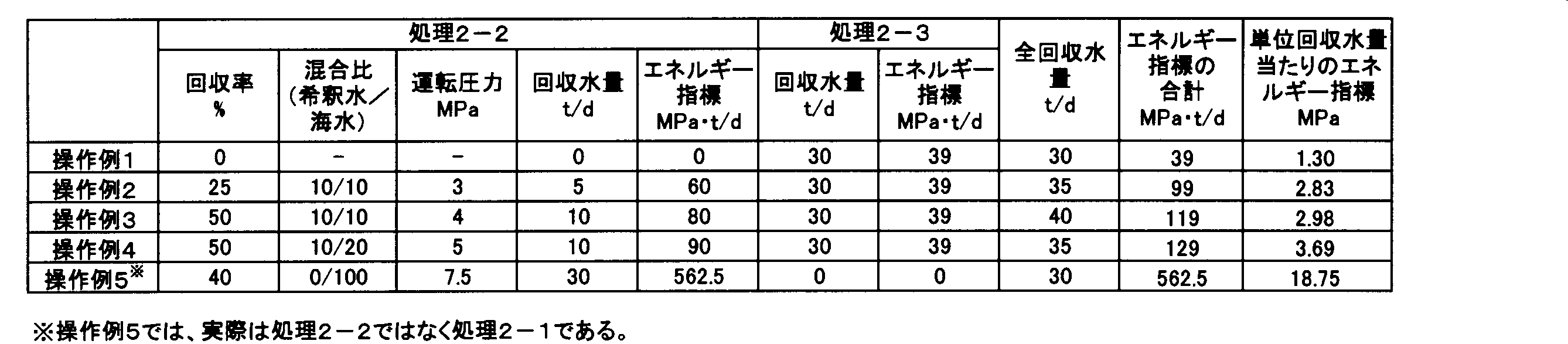
- the energy index per unit amount of recovered water in which the operation example 1 does not use seawater is smaller, but the operation example 2 uses seawater.
- the total recovered water volume increases.
- the energy index per unit amount of recovered water in which the operation example 2 suppresses the recovery rate in the first seawater reverse osmosis membrane device is small.
- the amount of total recovered water increases as the recovery rate of the first seawater reverse osmosis membrane device increases.
- the total amount of recovered water increases in the operation example 3 because the ratio of using diluted water with respect to seawater is larger.
- the amount of seawater processed by the seawater reverse osmosis membrane device is large, and the energy index per unit recovered water amount is large.
Landscapes
- Engineering & Computer Science (AREA)
- Water Supply & Treatment (AREA)
- Chemical & Material Sciences (AREA)
- Chemical Kinetics & Catalysis (AREA)
- Nanotechnology (AREA)
- Life Sciences & Earth Sciences (AREA)
- Hydrology & Water Resources (AREA)
- Environmental & Geological Engineering (AREA)
- Organic Chemistry (AREA)
- Separation Using Semi-Permeable Membranes (AREA)
- Treatment Of Water By Ion Exchange (AREA)
- Activated Sludge Processes (AREA)
Abstract
Description
即ち、斯かる方法によれば、淡水を効率良く得ることができ、且つ下水を有効活用することができるという利点がある。
廃水が希釈水として海水に混合されて混合水を得る混合部と、前記海水用逆浸透膜装置として、前記混合水をろ過処理する第1海水用逆浸透膜装置とが備えられ、前記得られた淡水が用水として使用されることにより得られる廃水たる使用済水が、前記混合部で希釈水として海水に混合されるように構成されてなることを特徴とする淡水生成装置を提供する。
廃水を希釈水として海水に混合して混合水を得、前記海水用逆浸透膜装置としての第1海水用逆浸透膜装置により前記混合水をろ過処理し、前記得られた淡水が用水として使用されることにより得られる廃水たる使用済水を希釈水として海水に混合することを特徴とする淡水生成方法にある。
また、本実施形態の淡水生成装置1は、膜処理すべき海水Aの一部が混合部2に移送され、廃水が希釈水として混合部2に移送され、混合水が第1海水用逆浸透膜装置3aに移送され、膜処理すべき他部の海水Aが第2海水用逆浸透膜装置3bに移送され、第1濃縮水D1が第1濃縮水貯留槽(図示せず)に移送され、第2濃縮水D2が第2濃縮水貯留槽(図示せず)に移送されるように構成されてなる。
また、本実施形態の淡水生成装置1は、海水Aが混合部2及び第2海水用逆浸透膜装置3bに移送される前に、精密ろ過膜、限外ろ過膜、及び砂ろ過手段の少なくとも何れかを有する除濁装置(図示せず)を用いて海水Aがろ過処理されるように構成されてなる。
本明細書において、海水Aは、海に存在する水に限定されず、塩濃度が1.0質量%以上の水であれば、湖(塩湖、汽水湖)の水、沼水、池水等の陸に存在する水も含む。
特に、淡水B2は、海水Aが廃水と未混合状態でろ過処理して得られた淡水であることから、生活用水(飲み水等)、農業用水(例えば、野菜工場用水)、食品工場用水等に用いれば、利用者等に対して不快感を与えてしまう虞や人体等へ悪影響を及ぼしてしまう虞等がないという利点がある。
また、前記第1淡水B1は、用水として使用されることにより、廃水たる第1使用済水C1が得られる。また、前記第1淡水B2は、用水として使用されることにより、廃水たる第2使用済水C2が得られる。
また、本実施形態の淡水生成装置1は、第1使用済水C1が浄化処理部4に移送されるように構成されてなる。
該有機性廃水は、有機物を含む廃水であり、例えば、有機物濃度の指標としてのBOD(生物化学的酸素要求量)が2000mg/L以下の廃水であり、より具体的には、200mg/L程度の廃水である。また、有機性廃水は、希釈水で希釈される海水Aよりも塩濃度が低い水である。有機性廃水は、例えば、希釈水で希釈される海水Aの塩濃度に対する有機性廃水の塩濃度の比が0.1以下のもの、より具体的には、希釈水で希釈される海水Aの塩濃度に対する有機性廃水の塩濃度の比が0.01以下のものである。
尚、本明細書に於いて、除濁とは逆浸透膜ろ過よりも粗いろ過、即ち、逆浸透膜装置でろ過処理する前に実施され、逆浸透膜(RO膜)で分離するよりも粗い不純物(例えば、固形物質等)を除去することを意味する。
前記生物処理は、細菌、原生動物、後生動物等の生物種によって水に含まれる有機物を分解する処理である。具体的には、活性汚泥を用いた曝気処理等を挙げることができる。
また、本実施形態の淡水生成装置1は、使用済水用逆浸透膜装置43の濃縮水が、希釈水として混合部2に移送され、使用済水用逆浸透膜装置43の透過水が、用水として各種使用場所に移送されるように構成されてなる。
また、本発明の淡水生成装置1は、さらに、除濁装置42を備えてなくてもよい。この場合には、生物処理部41で得られた生物処理水が混合部2で希釈水として海水に混合されるように構成されてなる。
前記無機性廃水は、無機物が含まれ、例えば、BOD(生物化学的酸素要求量)が50mg/L以下の廃水であり、好ましくは、10mg/L以下の廃水である。
また、前記無機性廃水は、希釈水で希釈される海水Aよりも塩濃度が低い水である。無機性廃水は、例えば、希釈水で希釈される海水Aの塩濃度に対する無機性廃水の塩濃度の比が0.1以下のもの、より具体的には、希釈水で希釈される海水Aの塩濃度に対する無機性廃水の塩濃度の比が0.01以下のものである。
また、本発明の淡水生成装置1は、図4に示すように、第1使用済水C1とともに第2使用済水C2が希釈水として用いられるように構成されてもよい。この場合には、本発明の淡水生成装置1は、図4に示すように、第1使用済水C1と第2使用済水C2とがともに浄化処理されたものが希釈水として混合部2に移送されるように構成されてもよい。また、本発明の淡水生成装置1は、第1使用済水C1と第2使用済水C2とが別々に浄化処理されたものが希釈水として混合部2に移送されるように構成されてもよい。
本発明の淡水生成装置1は、斯かる構成を有することにより、塩濃度が低い淡水たるイオン交換処理水を得ることができるという利点を有する。例えば、火力発電所等で用いる蒸気タービンを回転させる水蒸気のもととなる淡水は、少ない熱で効率良く水蒸気となるように、塩濃度が低いことが望ましい。斯かるイオン交換処理水は、塩濃度が低いことから、斯かる淡水生成装置1は、蒸気タービン用の淡水B1たるイオン交換処理水を得るのに特に好適に用いることができる。
斯かる淡水生成装置1は、淡水B1たる該イオン交換処理水が用水として使用されることにより、廃水たる使用済水C1が得られるように構成されてなる。
前記混床式イオン交換装置91は、前記第1海水用逆浸透膜装置3aから得られた淡水と、前記使用済水用逆浸透膜装置43から得られた淡水とが混合されて得られた混合淡水から、イオン交換処理水を得るように構成されてなる。
通常、前記混床式イオン交換装置91のイオン交換樹脂は、塩によってイオン交換機能が低下する。そして、イオン交換機能が低下した場合、イオン交換樹脂を再生薬品(例えば、酸水溶液(塩酸水溶液等)、アルカリ水溶液(水酸化ナトリウム水溶液等))に接触させて、イオン交換樹脂を再生する必要が生じてしまうという問題がある。よって、該混床式イオン交換装置91に導入される被処理水は、所定濃度以下(例えば、ppbレベル以下)であることが望ましい。従って、斯かる淡水生成装置1は、前記混合淡水用逆浸透膜装置92を有することにより、前記混床式イオン交換装置91に導入される淡水の塩濃度が低減されるため、前記混床式イオン交換装置91への塩による負荷を抑制し、イオン交換樹脂を再生させる頻度(再生頻度)を抑制しうるという利点がある。
前記混床式イオン交換装置91に導入される淡水に炭酸ガスのように水中で電離してアニオンを生成するガスが溶解されていると、当該ガスにより、アニオン交換樹脂の破過が生じやすくなる虞があるが、斯かる淡水生成装置1は、前記脱ガス装置93を有することにより、前記混床式イオン交換装置91に導入される淡水のガス濃度が低減されるため、イオン交換樹脂の破過が生じ難くなり、再生頻度の低減が可能となるという利点がある。また、再生頻度の低減により、再生薬品の使用量が低減するとともに、再生薬品による負荷が抑制され、イオン交換樹脂自体の寿命の延長が可能となるという利点がある。
さらに、図示していないが、本発明の淡水生成装置1は、図2~4の態様においても、海水用逆浸透膜装置から得られた淡水からイオン交換水を得る混床式イオン交換装置が備えられてもよい。
また、本発明の淡水生成装置1は、前記混合淡水用逆浸透膜装置92を備えない態様の場合、前記混合淡水を得ずに、前記第1海水用逆浸透膜装置3aから得られた淡水を、前記脱ガス装置93によりガス抜きして脱ガス処理水を得るように構成されていてもよい。
後述する実施例1、比較例1、2の方法で、工業用水としての淡水を1000m3 /dで得るのに必要な動力(動力指標値)を算出した。ここで、膜分離活性汚泥法(MBR)で浄化処理して得られた透過水を逆浸透膜(RO膜)で膜処理したとき(処理1-1)、海水と希釈水とを混合した混合水を逆浸透膜(RO膜)で膜処理したとき(処理1-2)、海水を希釈せずに逆浸透膜(RO膜)で膜処理したとき(処理1-3)における、運転圧力、及び回収率(膜に流入される水の量に対する透過水の量の比×100%)として表1に示す値を用いて動力指標値を算出した。動力指標値は、下記式で求めた。
動力指標値 = 単位時間あたりに逆浸透膜(RO)に流入した水の量 × 運転圧力
尚、膜分離活性汚泥法(MBR)での処理、精密ろ過膜(MF膜)での処理において必要な動力は逆浸透膜(RO膜)において必要な動力に比してかなり小さいため、0と仮定した。他の計算例でも同様とする。

海水Aを希釈せずに海水Aから逆浸透膜装置5により淡水B及び濃縮水Dを得る態様(図6)に関して、淡水1000m3 /dを得る際に必要な動力指標値を算出した。結果を表2に示す。
廃水Eたる下水を膜分離活性汚泥処理装置6により浄化処理して透過水を得、該膜分離活性汚泥処理装置6の透過水から逆浸透膜装置5aにより淡水Bたる透過水及び濃縮水を得、海水から精密ろ過装置7により透過水及び濃縮水Dを得、該透過水と逆浸透膜装置5aからの濃縮水とを混合部8で混合して混合水を得、該混合水から逆浸透膜装置5bにより淡水Bたる透過水及び濃縮水Dを得る態様(図7)に関して、淡水1000m3 /dを得る際に必要な動力指標値を算出した。結果を表2に示す。尚、MF膜の回収率は100%とした。
希釈水と海水Aとを混合部2で混合して混合水を得、該混合水から第1海水用逆浸透膜装置3aにより第1淡水B1たる透過水及び第1濃縮水D1を得、該得られた第1淡水B1が用水として使用されることにより得られる廃水たる第1使用済水C1から膜分離活性汚泥処理装置6により透過水を得、該膜分離活性汚泥処理装置6の透過水から使用済水用逆浸透膜装置43により透過水及び濃縮水を得、該濃縮水たる廃水を前記希釈水として混合部2で海水Aと混合し、使用済水用逆浸透膜装置43により得られた透過水を第1淡水B1(用水)として使用する態様(図8)において、淡水1000m3 /dを得る際に必要な動力指標値を算出した。結果を表2に示す。尚、第1使用済水C1は、有機性廃水である。

後述する実施例2~4、比較例3の方法で、生活用水(飲料水を含む)としての淡水を10t/dで得、工業用水としての淡水を30t/dで得るのに必要なエネルギー(エネルギー指標)を算出した。また、後述する比較例4は、工業用水としての淡水(使用済水から得られたもの)を30t/dで得るのに必要なエネルギー(エネルギー指標)を算出した。
ここで、海水を希釈せずに逆浸透膜(RO膜)で膜処理したとき(処理2-1)、海水と希釈水とを混合した混合水を逆浸透膜(RO膜)で膜処理したとき(処理2-2)、膜分離活性汚泥法(MBR)で浄化処理して得られた透過水を逆浸透膜(RO膜)で膜処理したとき(処理2-3)における運転圧力として表3に示す値を用いてエネルギー指標を算出した。エネルギー指標は、下記式で求めた。
エネルギー指標 = 単位時間あたりに膜に流入した水の量(水量) × 運転圧力

海水Aを希釈せずに海水Aから逆浸透膜装置5により淡水及び濃縮水Dを得る態様(図9)に関して、必要なエネルギー指標を算出した。尚、淡水は、生活用水F及び工業用水Gを意味する。
廃水Eたる下水を膜分離活性汚泥処理装置6により浄化処理して透過水を得、該膜分離活性汚泥処理装置6の透過水から逆浸透膜装置5aにより工業用水G(淡水)たる透過水及び濃縮水を得、該濃縮水と海水Aとを混合部8で混合して混合水を得、該混合水から逆浸透膜装置5bにより工業用水Gたる透過水及び濃縮水Dを得る態様(図10)に関して、必要な動力指標値を算出した。
希釈水と膜処理すべき海水Aの一部とを混合部2で混合して混合水を得、該混合水から第1海水用逆浸透膜装置3aにより工業用水G(淡水)たる透過水及び第1濃縮水D1を得、該得られた工業用水Gが用水として使用されることにより得られる廃水たる第1使用済水C1から膜分離活性汚泥処理装置(生物処理部41及び除濁装置42)により透過水を得、該膜分離活性汚泥処理装置の透過水から使用済水用逆浸透膜装置43により透過水及び濃縮水を得、該濃縮水たる廃水を前記希釈水として混合部2で海水Aと混合し、使用済水用逆浸透膜装置43により得られた透過水を工業用水Gとして使用し、膜処理すべき他部の海水Aから第2海水用逆浸透膜装置3bにより生活用水F(淡水)たる透過水及び第2濃縮水D2を得る態様(図11)において、必要な動力指標値を算出した。
第1使用済水C1の代わりに、生活用水Fが用水として使用されることにより得られる廃水たる第2使用済水C2から膜分離活性汚泥処理装置(生物処理部41及び除濁装置42)により透過水を得ること以外は、実施例2と同様な態様(図12)において、必要な動力指標値を算出した。
第1使用済水C1だけでなく、生活用水Fが用水として使用されることにより得られる廃水たる第2使用済水C2からも、膜分離活性汚泥処理装置(生物処理部41及び除濁装置42)により透過水を得ること以外は、実施例2と同様な態様(図13)において、必要な動力指標値を算出した。


上記実施例4の態様で用いた装置を用いて、回収率及び混合比(海水と混合水との混合体積比)を下記表6のようにした場合における、単位回収水量(回収水量とは透過水の量を意味する。)当たりのエネルギー指標を算出した。
Claims (14)
- 逆浸透膜によって海水から淡水を得る海水用逆浸透膜装置が備えられてなる淡水生成装置であって、
廃水が希釈水として海水に混合されて混合水を得る混合部と、前記海水用逆浸透膜装置として、前記混合水をろ過処理する第1海水用逆浸透膜装置とが備えられ、前記得られた淡水が用水として使用されることにより得られる廃水たる使用済水が、前記混合部で希釈水として海水に混合されるように構成されてなることを特徴とする淡水生成装置。 - 前記混合部が、膜処理すべき海水の一部が前記希釈水に混合されて混合水を得るように構成され、膜処理すべき他部の海水を前記希釈水に対して未混合状態でろ過処理する、前記海水用逆浸透膜装置としての第2海水用逆浸透膜装置が備えられてなる請求項1記載の淡水生成装置。
- 前記第1海水用逆浸透膜装置により得られた淡水が用水として使用されることにより得られる廃水たる使用済水と、前記第2海水用逆浸透膜装置により得られた淡水が用水として使用されることにより得られる廃水たる使用済水とが、前記混合部で希釈水として海水に混合されるように構成されてなる請求項2記載の淡水生成装置。
- 前記得られた淡水が用水として使用されることにより得られる廃水たる使用済水から逆浸透膜によって淡水たる透過水及び濃縮水を得る使用済水用逆浸透膜装置が備えられ、使用済水たる該濃縮水が、前記混合部で希釈水として海水に混合されるように構成されてなる請求項1~3の何れかに記載の淡水生成装置。
- 使用済水が有機性廃水であり、該使用済水を生物処理して生物処理水を得る生物処理部を備え、該生物処理水が前記混合部で希釈水として海水に混合されるように構成されてなる請求項1~3の何れかに記載の淡水生成装置。
- 精密ろ過膜、限外ろ過膜、及び砂ろ過手段の少なくとも何れかにより前記生物処理水をろ過処理する除濁装置が備えられ、該除濁装置の透過水が前記混合部で希釈水として海水に混合されるように構成されてなる請求項5記載の淡水生成装置。
- 使用済水を沈殿分離して沈殿処理水たる上澄水を得る沈殿処理部が備えられ、該上澄水が前記混合部で希釈水として海水に混合されるように構成されてなる請求項1~3の何れかに記載の淡水生成装置。
- 精密ろ過膜、限外ろ過膜、及び砂ろ過手段の少なくとも何れかにより前記上澄水をろ過処理する除濁装置が備えられ、該除濁装置の透過水が前記混合部で希釈水として海水に混合されるように構成されてなる請求項7記載の淡水生成装置。
- 使用済水が有機性廃水であり、該使用済水を生物処理して生物処理水を得る生物処理部と、精密ろ過膜、限外ろ過膜、及び砂ろ過手段の少なくとも何れかにより該生物処理水をろ過処理する除濁装置とが備えられ、該除濁装置の透過水が使用済水として前記使用済水用逆浸透膜装置でろ過処理されるように構成されてなる請求項4記載の淡水生成装置。
- 使用済水を沈殿分離して沈殿処理水たる上澄水を得る沈殿処理部と、精密ろ過膜、限外ろ過膜、及び砂ろ過手段の少なくとも何れかにより前記上澄水をろ過処理する除濁装置とが備えられ、該除濁装置の透過水が使用済水として前記使用済水用逆浸透膜装置でろ過処理されるように構成されてなる請求項4記載の淡水生成装置。
- 生物処理するための生物処理槽が備えられ、前記除濁装置が精密ろ過膜及び限外ろ過膜の少なくとも何れかを備え、該除濁装置が前記生物処理槽内の液面下に浸漬膜として設置されてなる請求項6記載の淡水生成装置。
- 生物処理するための生物処理槽が備えられ、前記除濁装置が精密ろ過膜及び限外ろ過膜の少なくとも何れかを備え、該除濁装置が前記生物処理槽内の液面下に浸漬膜として設置されてなる請求項9記載の淡水生成装置。
- イオン交換によって、前記海水用逆浸透膜装置から得られた淡水から、イオン交換処理水を得るイオン交換装置が備えられてなる請求項1~3の何れかに記載の淡水生成装置。
- 逆浸透膜を有する海水用逆浸透膜装置によって海水から淡水を得る淡水生成方法であって、
廃水を希釈水として海水に混合して混合水を得、前記海水用逆浸透膜装置としての第1海水用逆浸透膜装置により前記混合水をろ過処理し、前記得られた淡水が用水として使用されることにより得られる廃水たる使用済水を希釈水として海水に混合することを特徴とする淡水生成方法。
Priority Applications (7)
| Application Number | Priority Date | Filing Date | Title |
|---|---|---|---|
| US13/702,717 US20130206697A1 (en) | 2010-06-09 | 2011-05-12 | Fresh Water Generating Apparatus and Fresh Water Generating Method |
| KR1020137000436A KR20130086202A (ko) | 2010-06-09 | 2011-05-12 | 담수 생성 장치 및 담수 생성 방법 |
| AU2011263113A AU2011263113A1 (en) | 2010-06-09 | 2011-05-12 | Freshwater-generating device, and freshwater-generating method |
| SG2012082525A SG185488A1 (en) | 2010-06-09 | 2011-05-12 | Fresh water generating apparatus and fresh water generating method |
| EP11792239.3A EP2586748A4 (en) | 2010-06-09 | 2011-05-12 | DEVICE FOR PRODUCING FRESH WATER AND METHOD FOR PRODUCING FRESH WATER |
| CN2011800283611A CN102933503A (zh) | 2010-06-09 | 2011-05-12 | 淡水生成装置及淡水生成方法 |
| IL222776A IL222776A0 (en) | 2010-06-09 | 2012-10-31 | Fresh water generating apparatus and fresh water generating method |
Applications Claiming Priority (4)
| Application Number | Priority Date | Filing Date | Title |
|---|---|---|---|
| JP2010132056 | 2010-06-09 | ||
| JP2010-132056 | 2010-06-09 | ||
| JP2011-014390 | 2011-01-26 | ||
| JP2011014390A JP2012016695A (ja) | 2010-06-09 | 2011-01-26 | 淡水生成装置および淡水生成方法 |
Publications (1)
| Publication Number | Publication Date |
|---|---|
| WO2011155281A1 true WO2011155281A1 (ja) | 2011-12-15 |
Family
ID=45097893
Family Applications (1)
| Application Number | Title | Priority Date | Filing Date |
|---|---|---|---|
| PCT/JP2011/060914 Ceased WO2011155281A1 (ja) | 2010-06-09 | 2011-05-12 | 淡水生成装置および淡水生成方法 |
Country Status (9)
| Country | Link |
|---|---|
| US (1) | US20130206697A1 (ja) |
| EP (1) | EP2586748A4 (ja) |
| JP (1) | JP2012016695A (ja) |
| KR (1) | KR20130086202A (ja) |
| CN (1) | CN102933503A (ja) |
| AU (1) | AU2011263113A1 (ja) |
| IL (1) | IL222776A0 (ja) |
| SG (1) | SG185488A1 (ja) |
| WO (1) | WO2011155281A1 (ja) |
Cited By (1)
| Publication number | Priority date | Publication date | Assignee | Title |
|---|---|---|---|---|
| JP4941613B1 (ja) * | 2011-12-26 | 2012-05-30 | 株式会社日立プラントテクノロジー | 海水淡水化システム |
Families Citing this family (8)
| Publication number | Priority date | Publication date | Assignee | Title |
|---|---|---|---|---|
| US9227159B2 (en) * | 2011-11-15 | 2016-01-05 | General Electric Company | Combined microfiltration or ultrafiltration and reverse osmosis processes |
| CN104903247A (zh) * | 2012-12-07 | 2015-09-09 | 东丽株式会社 | 有机性污水的处理方法和处理装置 |
| US9925494B2 (en) * | 2014-11-17 | 2018-03-27 | Massachusetts Institute Of Technology | Concentration control in filtration systems, and associated methods |
| JP6447098B2 (ja) * | 2014-12-19 | 2019-01-09 | 三浦工業株式会社 | 回収ろ過ユニットおよび回収ろ過ユニットを備える水処理システム |
| JP6467911B2 (ja) * | 2014-12-26 | 2019-02-13 | 三浦工業株式会社 | 水処理システム |
| BR112018011080A2 (pt) * | 2015-12-03 | 2018-11-21 | Siemens Energy Inc | processos e sistemas para redução do desperdício de zinco |
| NO345503B1 (no) * | 2017-04-13 | 2021-03-15 | Pw Holding As | Helhetlig system for kontinuerlig drikkevannsproduksjon med optimal eksergiutnyttelse om bord i skip. |
| CN113415856B (zh) * | 2021-08-24 | 2021-11-19 | 郯城博化化工科技有限公司 | 一种小型船舶用海水高效淡化处理设备 |
Citations (7)
| Publication number | Priority date | Publication date | Assignee | Title |
|---|---|---|---|---|
| JPH10216749A (ja) * | 1997-02-05 | 1998-08-18 | Japan Organo Co Ltd | 超純水製造装置 |
| JP2006346543A (ja) * | 2005-06-14 | 2006-12-28 | Asahi Kasei Chemicals Corp | 水処理装置および水処理方法 |
| JP2007000699A (ja) * | 2005-06-21 | 2007-01-11 | Kurita Water Ind Ltd | 窒素ガス溶解水の製造方法 |
| JP2007313445A (ja) * | 2006-05-26 | 2007-12-06 | Nippon Rensui Co Ltd | 排水処理方法、排水処理装置、および排水回収システム |
| JP2008055317A (ja) | 2006-08-31 | 2008-03-13 | Toyobo Co Ltd | 逆浸透膜による海水淡水化設備および淡水化方法 |
| JP2008161797A (ja) * | 2006-12-28 | 2008-07-17 | Toray Ind Inc | 淡水製造装置の運転方法および淡水製造装置 |
| WO2010061879A1 (ja) * | 2008-11-28 | 2010-06-03 | 株式会社神鋼環境ソリューション | 淡水生成方法、淡水生成装置、海水淡水化方法および海水淡水化装置 |
Family Cites Families (5)
| Publication number | Priority date | Publication date | Assignee | Title |
|---|---|---|---|---|
| BR9809944A (pt) * | 1997-06-04 | 2000-08-01 | Ulrich Braun | Processo e aparelho para o tratamento de águas de refugo |
| JP4034668B2 (ja) * | 2003-03-04 | 2008-01-16 | オルガノ株式会社 | 超純水製造システムおよびその運転方法 |
| US8083942B2 (en) * | 2004-12-06 | 2011-12-27 | Board of Regents of the Nevada System of Higher Education, on Behalf of the Universary of Nevada, Reno | Systems and methods for purification of liquids |
| FR2927622B1 (fr) * | 2008-02-14 | 2014-08-01 | Otv Sa | Procede de traitement d'eau par systeme membranaire de type nanofiltration ou osmose inverse permettant des taux de conversion eleves grace a l'elimination de la matiere organique. |
| AU2010325544B2 (en) * | 2009-11-25 | 2014-12-18 | Ide Water Technologies Ltd. | Reciprocal enhancement of reverse osmosis and forward osmosis |
-
2011
- 2011-01-26 JP JP2011014390A patent/JP2012016695A/ja active Pending
- 2011-05-12 WO PCT/JP2011/060914 patent/WO2011155281A1/ja not_active Ceased
- 2011-05-12 KR KR1020137000436A patent/KR20130086202A/ko not_active Withdrawn
- 2011-05-12 EP EP11792239.3A patent/EP2586748A4/en not_active Withdrawn
- 2011-05-12 US US13/702,717 patent/US20130206697A1/en not_active Abandoned
- 2011-05-12 CN CN2011800283611A patent/CN102933503A/zh active Pending
- 2011-05-12 SG SG2012082525A patent/SG185488A1/en unknown
- 2011-05-12 AU AU2011263113A patent/AU2011263113A1/en not_active Abandoned
-
2012
- 2012-10-31 IL IL222776A patent/IL222776A0/en unknown
Patent Citations (7)
| Publication number | Priority date | Publication date | Assignee | Title |
|---|---|---|---|---|
| JPH10216749A (ja) * | 1997-02-05 | 1998-08-18 | Japan Organo Co Ltd | 超純水製造装置 |
| JP2006346543A (ja) * | 2005-06-14 | 2006-12-28 | Asahi Kasei Chemicals Corp | 水処理装置および水処理方法 |
| JP2007000699A (ja) * | 2005-06-21 | 2007-01-11 | Kurita Water Ind Ltd | 窒素ガス溶解水の製造方法 |
| JP2007313445A (ja) * | 2006-05-26 | 2007-12-06 | Nippon Rensui Co Ltd | 排水処理方法、排水処理装置、および排水回収システム |
| JP2008055317A (ja) | 2006-08-31 | 2008-03-13 | Toyobo Co Ltd | 逆浸透膜による海水淡水化設備および淡水化方法 |
| JP2008161797A (ja) * | 2006-12-28 | 2008-07-17 | Toray Ind Inc | 淡水製造装置の運転方法および淡水製造装置 |
| WO2010061879A1 (ja) * | 2008-11-28 | 2010-06-03 | 株式会社神鋼環境ソリューション | 淡水生成方法、淡水生成装置、海水淡水化方法および海水淡水化装置 |
Non-Patent Citations (2)
| Title |
|---|
| "Water circulation in seafront industrial city, Significant reduction of power by membrane treatment, Development of process by KOBELCO ECO-SOLUTION CO., LTD., ET AL., Adopted in the projects of Japan, Ministry of Economy, Trade and Industry", THE CHEMISTRY DAILY, 3 March 2009 (2009-03-03), pages 10 |
| See also references of EP2586748A4 |
Cited By (1)
| Publication number | Priority date | Publication date | Assignee | Title |
|---|---|---|---|---|
| JP4941613B1 (ja) * | 2011-12-26 | 2012-05-30 | 株式会社日立プラントテクノロジー | 海水淡水化システム |
Also Published As
| Publication number | Publication date |
|---|---|
| US20130206697A1 (en) | 2013-08-15 |
| CN102933503A (zh) | 2013-02-13 |
| AU2011263113A1 (en) | 2012-11-29 |
| JP2012016695A (ja) | 2012-01-26 |
| IL222776A0 (en) | 2012-12-31 |
| SG185488A1 (en) | 2012-12-28 |
| EP2586748A1 (en) | 2013-05-01 |
| EP2586748A4 (en) | 2014-09-03 |
| KR20130086202A (ko) | 2013-07-31 |
Similar Documents
| Publication | Publication Date | Title |
|---|---|---|
| EP2537810B1 (en) | Method for generating fresh water and method for desalinating sea water | |
| JP2012016695A (ja) | 淡水生成装置および淡水生成方法 | |
| JP2010188344A (ja) | 海水淡水化方法および海水淡水化装置 | |
| JP2017012985A (ja) | 水処理システム及び水処理方法 | |
| JP4499835B1 (ja) | 淡水生成装置および淡水生成方法 | |
| WO2011155282A1 (ja) | 淡水生成装置および淡水生成方法 | |
| Rao et al. | Review on an integrated pre-treatment system to reduce membrane accelerated biofouling during red tide occurrences in Oman | |
| JP4518435B1 (ja) | 海水淡水化方法および海水淡水化装置 | |
| AU2011253905B8 (en) | Generation of fresh water | |
| JP5119280B2 (ja) | 海水淡水化方法および海水淡水化装置 |
Legal Events
| Date | Code | Title | Description |
|---|---|---|---|
| WWE | Wipo information: entry into national phase |
Ref document number: 201180028361.1 Country of ref document: CN |
|
| 121 | Ep: the epo has been informed by wipo that ep was designated in this application |
Ref document number: 11792239 Country of ref document: EP Kind code of ref document: A1 |
|
| WWE | Wipo information: entry into national phase |
Ref document number: 9761/DELNP/2012 Country of ref document: IN |
|
| WWE | Wipo information: entry into national phase |
Ref document number: 2011792239 Country of ref document: EP |
|
| ENP | Entry into the national phase |
Ref document number: 2011263113 Country of ref document: AU Date of ref document: 20110512 Kind code of ref document: A |
|
| WWE | Wipo information: entry into national phase |
Ref document number: 13702717 Country of ref document: US |
|
| NENP | Non-entry into the national phase |
Ref country code: DE |
|
| ENP | Entry into the national phase |
Ref document number: 20137000436 Country of ref document: KR Kind code of ref document: A |