WO2012022848A1 - Procede d'hydrodesulfuration d'une coupe essence en presence d'un catalyseur sulfure supporte prepare au moyen d'au moins un oligosaccharide cyclique - Google Patents
Procede d'hydrodesulfuration d'une coupe essence en presence d'un catalyseur sulfure supporte prepare au moyen d'au moins un oligosaccharide cyclique Download PDFInfo
- Publication number
- WO2012022848A1 WO2012022848A1 PCT/FR2011/000366 FR2011000366W WO2012022848A1 WO 2012022848 A1 WO2012022848 A1 WO 2012022848A1 FR 2011000366 W FR2011000366 W FR 2011000366W WO 2012022848 A1 WO2012022848 A1 WO 2012022848A1
- Authority
- WO
- WIPO (PCT)
- Prior art keywords
- catalyst
- process according
- oxide
- hydrodesulfurization
- metal
- Prior art date
- Legal status (The legal status is an assumption and is not a legal conclusion. Google has not performed a legal analysis and makes no representation as to the accuracy of the status listed.)
- Ceased
Links
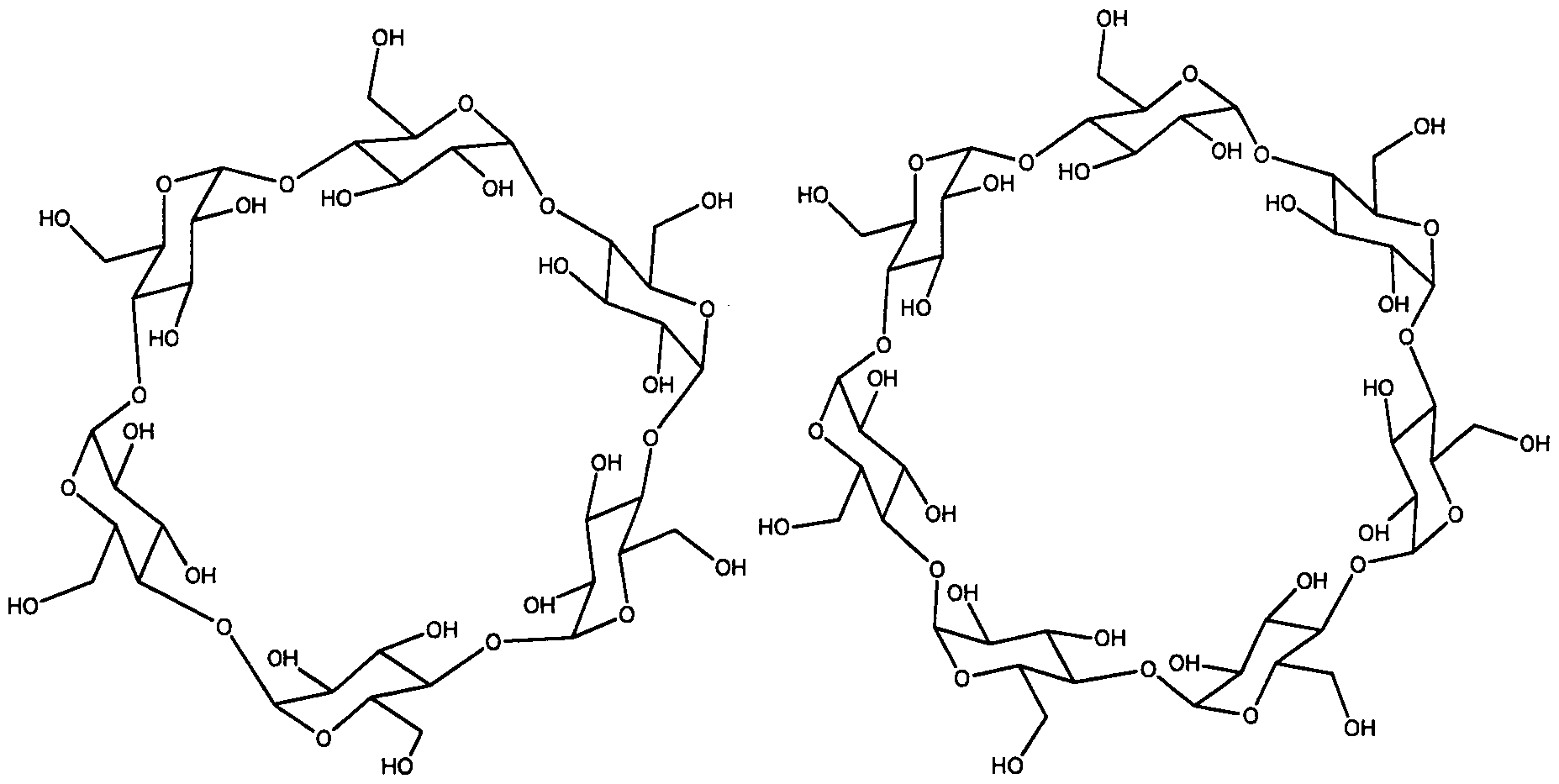
- GDSRMADSINPKSL-UHFFFAOYSA-N OCC(C(C(C1O)O)OC(C(C2O)O)OC(CO)C2OC(C(C2O)O)OC(CO)C2OC(C(C2O)O)OC(CO)C2OC(C(C2O)O)OC(CO)C2OC(C(C2O)O)OC(CO)C2OC(C(C2O)O)OC(CO)C2OC(C2O)OC3CO)OC1OC3C2O Chemical compound OCC(C(C(C1O)O)OC(C(C2O)O)OC(CO)C2OC(C(C2O)O)OC(CO)C2OC(C(C2O)O)OC(CO)C2OC(C(C2O)O)OC(CO)C2OC(C(C2O)O)OC(CO)C2OC(C(C2O)O)OC(CO)C2OC(C2O)OC3CO)OC1OC3C2O GDSRMADSINPKSL-UHFFFAOYSA-N 0.000 description 1
Classifications
-
- C—CHEMISTRY; METALLURGY
- C10—PETROLEUM, GAS OR COKE INDUSTRIES; TECHNICAL GASES CONTAINING CARBON MONOXIDE; FUELS; LUBRICANTS; PEAT
- C10G—CRACKING HYDROCARBON OILS; PRODUCTION OF LIQUID HYDROCARBON MIXTURES, e.g. BY DESTRUCTIVE HYDROGENATION, OLIGOMERISATION, POLYMERISATION; RECOVERY OF HYDROCARBON OILS FROM OIL-SHALE, OIL-SAND, OR GASES; REFINING MIXTURES MAINLY CONSISTING OF HYDROCARBONS; REFORMING OF NAPHTHA; MINERAL WAXES
- C10G45/00—Refining of hydrocarbon oils using hydrogen or hydrogen-generating compounds
- C10G45/02—Refining of hydrocarbon oils using hydrogen or hydrogen-generating compounds to eliminate hetero atoms without changing the skeleton of the hydrocarbon involved and without cracking into lower boiling hydrocarbons; Hydrofinishing
- C10G45/04—Refining of hydrocarbon oils using hydrogen or hydrogen-generating compounds to eliminate hetero atoms without changing the skeleton of the hydrocarbon involved and without cracking into lower boiling hydrocarbons; Hydrofinishing characterised by the catalyst used
- C10G45/06—Refining of hydrocarbon oils using hydrogen or hydrogen-generating compounds to eliminate hetero atoms without changing the skeleton of the hydrocarbon involved and without cracking into lower boiling hydrocarbons; Hydrofinishing characterised by the catalyst used containing nickel or cobalt metal, or compounds thereof
- C10G45/08—Refining of hydrocarbon oils using hydrogen or hydrogen-generating compounds to eliminate hetero atoms without changing the skeleton of the hydrocarbon involved and without cracking into lower boiling hydrocarbons; Hydrofinishing characterised by the catalyst used containing nickel or cobalt metal, or compounds thereof in combination with chromium, molybdenum, or tungsten metals, or compounds thereof
-
- B—PERFORMING OPERATIONS; TRANSPORTING
- B01—PHYSICAL OR CHEMICAL PROCESSES OR APPARATUS IN GENERAL
- B01J—CHEMICAL OR PHYSICAL PROCESSES, e.g. CATALYSIS OR COLLOID CHEMISTRY; THEIR RELEVANT APPARATUS
- B01J23/00—Catalysts comprising metals or metal oxides or hydroxides, not provided for in group B01J21/00
- B01J23/70—Catalysts comprising metals or metal oxides or hydroxides, not provided for in group B01J21/00 of the iron group metals or copper
- B01J23/76—Catalysts comprising metals or metal oxides or hydroxides, not provided for in group B01J21/00 of the iron group metals or copper combined with metals, oxides or hydroxides provided for in groups B01J23/02 - B01J23/36
- B01J23/84—Catalysts comprising metals or metal oxides or hydroxides, not provided for in group B01J21/00 of the iron group metals or copper combined with metals, oxides or hydroxides provided for in groups B01J23/02 - B01J23/36 with arsenic, antimony, bismuth, vanadium, niobium, tantalum, polonium, chromium, molybdenum, tungsten, manganese, technetium or rhenium
- B01J23/85—Chromium, molybdenum or tungsten
-
- B—PERFORMING OPERATIONS; TRANSPORTING
- B01—PHYSICAL OR CHEMICAL PROCESSES OR APPARATUS IN GENERAL
- B01J—CHEMICAL OR PHYSICAL PROCESSES, e.g. CATALYSIS OR COLLOID CHEMISTRY; THEIR RELEVANT APPARATUS
- B01J23/00—Catalysts comprising metals or metal oxides or hydroxides, not provided for in group B01J21/00
- B01J23/70—Catalysts comprising metals or metal oxides or hydroxides, not provided for in group B01J21/00 of the iron group metals or copper
- B01J23/76—Catalysts comprising metals or metal oxides or hydroxides, not provided for in group B01J21/00 of the iron group metals or copper combined with metals, oxides or hydroxides provided for in groups B01J23/02 - B01J23/36
- B01J23/84—Catalysts comprising metals or metal oxides or hydroxides, not provided for in group B01J21/00 of the iron group metals or copper combined with metals, oxides or hydroxides provided for in groups B01J23/02 - B01J23/36 with arsenic, antimony, bismuth, vanadium, niobium, tantalum, polonium, chromium, molybdenum, tungsten, manganese, technetium or rhenium
- B01J23/85—Chromium, molybdenum or tungsten
- B01J23/88—Molybdenum
- B01J23/882—Molybdenum and cobalt
-
- B—PERFORMING OPERATIONS; TRANSPORTING
- B01—PHYSICAL OR CHEMICAL PROCESSES OR APPARATUS IN GENERAL
- B01J—CHEMICAL OR PHYSICAL PROCESSES, e.g. CATALYSIS OR COLLOID CHEMISTRY; THEIR RELEVANT APPARATUS
- B01J27/00—Catalysts comprising the elements or compounds of halogens, sulfur, selenium, tellurium, phosphorus or nitrogen; Catalysts comprising carbon compounds
- B01J27/14—Phosphorus; Compounds thereof
- B01J27/185—Phosphorus; Compounds thereof with iron group metals or platinum group metals
- B01J27/1853—Phosphorus; Compounds thereof with iron group metals or platinum group metals with iron, cobalt or nickel
-
- B—PERFORMING OPERATIONS; TRANSPORTING
- B01—PHYSICAL OR CHEMICAL PROCESSES OR APPARATUS IN GENERAL
- B01J—CHEMICAL OR PHYSICAL PROCESSES, e.g. CATALYSIS OR COLLOID CHEMISTRY; THEIR RELEVANT APPARATUS
- B01J27/00—Catalysts comprising the elements or compounds of halogens, sulfur, selenium, tellurium, phosphorus or nitrogen; Catalysts comprising carbon compounds
- B01J27/14—Phosphorus; Compounds thereof
- B01J27/185—Phosphorus; Compounds thereof with iron group metals or platinum group metals
- B01J27/1856—Phosphorus; Compounds thereof with iron group metals or platinum group metals with platinum group metals
-
- B—PERFORMING OPERATIONS; TRANSPORTING
- B01—PHYSICAL OR CHEMICAL PROCESSES OR APPARATUS IN GENERAL
- B01J—CHEMICAL OR PHYSICAL PROCESSES, e.g. CATALYSIS OR COLLOID CHEMISTRY; THEIR RELEVANT APPARATUS
- B01J27/00—Catalysts comprising the elements or compounds of halogens, sulfur, selenium, tellurium, phosphorus or nitrogen; Catalysts comprising carbon compounds
- B01J27/14—Phosphorus; Compounds thereof
- B01J27/186—Phosphorus; Compounds thereof with arsenic, antimony, bismuth, vanadium, niobium, tantalum, polonium, chromium, molybdenum, tungsten, manganese, technetium or rhenium
- B01J27/188—Phosphorus; Compounds thereof with arsenic, antimony, bismuth, vanadium, niobium, tantalum, polonium, chromium, molybdenum, tungsten, manganese, technetium or rhenium with chromium, molybdenum, tungsten or polonium
-
- B—PERFORMING OPERATIONS; TRANSPORTING
- B01—PHYSICAL OR CHEMICAL PROCESSES OR APPARATUS IN GENERAL
- B01J—CHEMICAL OR PHYSICAL PROCESSES, e.g. CATALYSIS OR COLLOID CHEMISTRY; THEIR RELEVANT APPARATUS
- B01J27/00—Catalysts comprising the elements or compounds of halogens, sulfur, selenium, tellurium, phosphorus or nitrogen; Catalysts comprising carbon compounds
- B01J27/14—Phosphorus; Compounds thereof
- B01J27/186—Phosphorus; Compounds thereof with arsenic, antimony, bismuth, vanadium, niobium, tantalum, polonium, chromium, molybdenum, tungsten, manganese, technetium or rhenium
- B01J27/188—Phosphorus; Compounds thereof with arsenic, antimony, bismuth, vanadium, niobium, tantalum, polonium, chromium, molybdenum, tungsten, manganese, technetium or rhenium with chromium, molybdenum, tungsten or polonium
- B01J27/19—Molybdenum
-
- B—PERFORMING OPERATIONS; TRANSPORTING
- B01—PHYSICAL OR CHEMICAL PROCESSES OR APPARATUS IN GENERAL
- B01J—CHEMICAL OR PHYSICAL PROCESSES, e.g. CATALYSIS OR COLLOID CHEMISTRY; THEIR RELEVANT APPARATUS
- B01J31/00—Catalysts comprising hydrides, coordination complexes or organic compounds
- B01J31/02—Catalysts comprising hydrides, coordination complexes or organic compounds containing organic compounds or metal hydrides
-
- B—PERFORMING OPERATIONS; TRANSPORTING
- B01—PHYSICAL OR CHEMICAL PROCESSES OR APPARATUS IN GENERAL
- B01J—CHEMICAL OR PHYSICAL PROCESSES, e.g. CATALYSIS OR COLLOID CHEMISTRY; THEIR RELEVANT APPARATUS
- B01J31/00—Catalysts comprising hydrides, coordination complexes or organic compounds
- B01J31/02—Catalysts comprising hydrides, coordination complexes or organic compounds containing organic compounds or metal hydrides
- B01J31/0201—Oxygen-containing compounds
-
- B—PERFORMING OPERATIONS; TRANSPORTING
- B01—PHYSICAL OR CHEMICAL PROCESSES OR APPARATUS IN GENERAL
- B01J—CHEMICAL OR PHYSICAL PROCESSES, e.g. CATALYSIS OR COLLOID CHEMISTRY; THEIR RELEVANT APPARATUS
- B01J31/00—Catalysts comprising hydrides, coordination complexes or organic compounds
- B01J31/16—Catalysts comprising hydrides, coordination complexes or organic compounds containing coordination complexes
- B01J31/22—Organic complexes
- B01J31/2204—Organic complexes the ligands containing oxygen or sulfur as complexing atoms
- B01J31/2208—Oxygen, e.g. acetylacetonates
-
- B—PERFORMING OPERATIONS; TRANSPORTING
- B01—PHYSICAL OR CHEMICAL PROCESSES OR APPARATUS IN GENERAL
- B01J—CHEMICAL OR PHYSICAL PROCESSES, e.g. CATALYSIS OR COLLOID CHEMISTRY; THEIR RELEVANT APPARATUS
- B01J37/00—Processes, in general, for preparing catalysts; Processes, in general, for activation of catalysts
- B01J37/02—Impregnation, coating or precipitation
- B01J37/0201—Impregnation
- B01J37/0203—Impregnation the impregnation liquid containing organic compounds
-
- B—PERFORMING OPERATIONS; TRANSPORTING
- B01—PHYSICAL OR CHEMICAL PROCESSES OR APPARATUS IN GENERAL
- B01J—CHEMICAL OR PHYSICAL PROCESSES, e.g. CATALYSIS OR COLLOID CHEMISTRY; THEIR RELEVANT APPARATUS
- B01J37/00—Processes, in general, for preparing catalysts; Processes, in general, for activation of catalysts
- B01J37/20—Sulfiding
-
- C—CHEMISTRY; METALLURGY
- C07—ORGANIC CHEMISTRY
- C07C—ACYCLIC OR CARBOCYCLIC COMPOUNDS
- C07C1/00—Preparation of hydrocarbons from one or more compounds, none of them being a hydrocarbon
- C07C1/32—Preparation of hydrocarbons from one or more compounds, none of them being a hydrocarbon starting from compounds containing hetero-atoms other than or in addition to oxygen or halogen
- C07C1/321—Preparation of hydrocarbons from one or more compounds, none of them being a hydrocarbon starting from compounds containing hetero-atoms other than or in addition to oxygen or halogen the hetero-atom being a non-metal atom
-
- C—CHEMISTRY; METALLURGY
- C10—PETROLEUM, GAS OR COKE INDUSTRIES; TECHNICAL GASES CONTAINING CARBON MONOXIDE; FUELS; LUBRICANTS; PEAT
- C10G—CRACKING HYDROCARBON OILS; PRODUCTION OF LIQUID HYDROCARBON MIXTURES, e.g. BY DESTRUCTIVE HYDROGENATION, OLIGOMERISATION, POLYMERISATION; RECOVERY OF HYDROCARBON OILS FROM OIL-SHALE, OIL-SAND, OR GASES; REFINING MIXTURES MAINLY CONSISTING OF HYDROCARBONS; REFORMING OF NAPHTHA; MINERAL WAXES
- C10G45/00—Refining of hydrocarbon oils using hydrogen or hydrogen-generating compounds
-
- C—CHEMISTRY; METALLURGY
- C10—PETROLEUM, GAS OR COKE INDUSTRIES; TECHNICAL GASES CONTAINING CARBON MONOXIDE; FUELS; LUBRICANTS; PEAT
- C10G—CRACKING HYDROCARBON OILS; PRODUCTION OF LIQUID HYDROCARBON MIXTURES, e.g. BY DESTRUCTIVE HYDROGENATION, OLIGOMERISATION, POLYMERISATION; RECOVERY OF HYDROCARBON OILS FROM OIL-SHALE, OIL-SAND, OR GASES; REFINING MIXTURES MAINLY CONSISTING OF HYDROCARBONS; REFORMING OF NAPHTHA; MINERAL WAXES
- C10G45/00—Refining of hydrocarbon oils using hydrogen or hydrogen-generating compounds
- C10G45/02—Refining of hydrocarbon oils using hydrogen or hydrogen-generating compounds to eliminate hetero atoms without changing the skeleton of the hydrocarbon involved and without cracking into lower boiling hydrocarbons; Hydrofinishing
- C10G45/04—Refining of hydrocarbon oils using hydrogen or hydrogen-generating compounds to eliminate hetero atoms without changing the skeleton of the hydrocarbon involved and without cracking into lower boiling hydrocarbons; Hydrofinishing characterised by the catalyst used
- C10G45/10—Refining of hydrocarbon oils using hydrogen or hydrogen-generating compounds to eliminate hetero atoms without changing the skeleton of the hydrocarbon involved and without cracking into lower boiling hydrocarbons; Hydrofinishing characterised by the catalyst used containing platinum group metals or compounds thereof
-
- B—PERFORMING OPERATIONS; TRANSPORTING
- B01—PHYSICAL OR CHEMICAL PROCESSES OR APPARATUS IN GENERAL
- B01J—CHEMICAL OR PHYSICAL PROCESSES, e.g. CATALYSIS OR COLLOID CHEMISTRY; THEIR RELEVANT APPARATUS
- B01J35/00—Catalysts, in general, characterised by their form or physical properties
- B01J35/60—Catalysts, in general, characterised by their form or physical properties characterised by their surface properties or porosity
- B01J35/61—Surface area
- B01J35/613—10-100 m2/g
-
- B—PERFORMING OPERATIONS; TRANSPORTING
- B01—PHYSICAL OR CHEMICAL PROCESSES OR APPARATUS IN GENERAL
- B01J—CHEMICAL OR PHYSICAL PROCESSES, e.g. CATALYSIS OR COLLOID CHEMISTRY; THEIR RELEVANT APPARATUS
- B01J35/00—Catalysts, in general, characterised by their form or physical properties
- B01J35/60—Catalysts, in general, characterised by their form or physical properties characterised by their surface properties or porosity
- B01J35/61—Surface area
- B01J35/615—100-500 m2/g
-
- B—PERFORMING OPERATIONS; TRANSPORTING
- B01—PHYSICAL OR CHEMICAL PROCESSES OR APPARATUS IN GENERAL
- B01J—CHEMICAL OR PHYSICAL PROCESSES, e.g. CATALYSIS OR COLLOID CHEMISTRY; THEIR RELEVANT APPARATUS
- B01J35/00—Catalysts, in general, characterised by their form or physical properties
- B01J35/60—Catalysts, in general, characterised by their form or physical properties characterised by their surface properties or porosity
- B01J35/63—Pore volume
- B01J35/635—0.5-1.0 ml/g
-
- B—PERFORMING OPERATIONS; TRANSPORTING
- B01—PHYSICAL OR CHEMICAL PROCESSES OR APPARATUS IN GENERAL
- B01J—CHEMICAL OR PHYSICAL PROCESSES, e.g. CATALYSIS OR COLLOID CHEMISTRY; THEIR RELEVANT APPARATUS
- B01J37/00—Processes, in general, for preparing catalysts; Processes, in general, for activation of catalysts
- B01J37/02—Impregnation, coating or precipitation
- B01J37/0201—Impregnation
- B01J37/0205—Impregnation in several steps
-
- C—CHEMISTRY; METALLURGY
- C10—PETROLEUM, GAS OR COKE INDUSTRIES; TECHNICAL GASES CONTAINING CARBON MONOXIDE; FUELS; LUBRICANTS; PEAT
- C10G—CRACKING HYDROCARBON OILS; PRODUCTION OF LIQUID HYDROCARBON MIXTURES, e.g. BY DESTRUCTIVE HYDROGENATION, OLIGOMERISATION, POLYMERISATION; RECOVERY OF HYDROCARBON OILS FROM OIL-SHALE, OIL-SAND, OR GASES; REFINING MIXTURES MAINLY CONSISTING OF HYDROCARBONS; REFORMING OF NAPHTHA; MINERAL WAXES
- C10G2300/00—Aspects relating to hydrocarbon processing covered by groups C10G1/00 - C10G99/00
- C10G2300/10—Feedstock materials
- C10G2300/1037—Hydrocarbon fractions
- C10G2300/104—Light gasoline having a boiling range of about 20 - 100 °C
-
- C—CHEMISTRY; METALLURGY
- C10—PETROLEUM, GAS OR COKE INDUSTRIES; TECHNICAL GASES CONTAINING CARBON MONOXIDE; FUELS; LUBRICANTS; PEAT
- C10G—CRACKING HYDROCARBON OILS; PRODUCTION OF LIQUID HYDROCARBON MIXTURES, e.g. BY DESTRUCTIVE HYDROGENATION, OLIGOMERISATION, POLYMERISATION; RECOVERY OF HYDROCARBON OILS FROM OIL-SHALE, OIL-SAND, OR GASES; REFINING MIXTURES MAINLY CONSISTING OF HYDROCARBONS; REFORMING OF NAPHTHA; MINERAL WAXES
- C10G2300/00—Aspects relating to hydrocarbon processing covered by groups C10G1/00 - C10G99/00
- C10G2300/10—Feedstock materials
- C10G2300/1037—Hydrocarbon fractions
- C10G2300/1044—Heavy gasoline or naphtha having a boiling range of about 100 - 180 °C
-
- C—CHEMISTRY; METALLURGY
- C10—PETROLEUM, GAS OR COKE INDUSTRIES; TECHNICAL GASES CONTAINING CARBON MONOXIDE; FUELS; LUBRICANTS; PEAT
- C10G—CRACKING HYDROCARBON OILS; PRODUCTION OF LIQUID HYDROCARBON MIXTURES, e.g. BY DESTRUCTIVE HYDROGENATION, OLIGOMERISATION, POLYMERISATION; RECOVERY OF HYDROCARBON OILS FROM OIL-SHALE, OIL-SAND, OR GASES; REFINING MIXTURES MAINLY CONSISTING OF HYDROCARBONS; REFORMING OF NAPHTHA; MINERAL WAXES
- C10G2300/00—Aspects relating to hydrocarbon processing covered by groups C10G1/00 - C10G99/00
- C10G2300/20—Characteristics of the feedstock or the products
- C10G2300/201—Impurities
- C10G2300/202—Heteroatoms content, i.e. S, N, O, P
-
- C—CHEMISTRY; METALLURGY
- C10—PETROLEUM, GAS OR COKE INDUSTRIES; TECHNICAL GASES CONTAINING CARBON MONOXIDE; FUELS; LUBRICANTS; PEAT
- C10G—CRACKING HYDROCARBON OILS; PRODUCTION OF LIQUID HYDROCARBON MIXTURES, e.g. BY DESTRUCTIVE HYDROGENATION, OLIGOMERISATION, POLYMERISATION; RECOVERY OF HYDROCARBON OILS FROM OIL-SHALE, OIL-SAND, OR GASES; REFINING MIXTURES MAINLY CONSISTING OF HYDROCARBONS; REFORMING OF NAPHTHA; MINERAL WAXES
- C10G2300/00—Aspects relating to hydrocarbon processing covered by groups C10G1/00 - C10G99/00
- C10G2300/20—Characteristics of the feedstock or the products
- C10G2300/30—Physical properties of feedstocks or products
- C10G2300/301—Boiling range
-
- C—CHEMISTRY; METALLURGY
- C10—PETROLEUM, GAS OR COKE INDUSTRIES; TECHNICAL GASES CONTAINING CARBON MONOXIDE; FUELS; LUBRICANTS; PEAT
- C10G—CRACKING HYDROCARBON OILS; PRODUCTION OF LIQUID HYDROCARBON MIXTURES, e.g. BY DESTRUCTIVE HYDROGENATION, OLIGOMERISATION, POLYMERISATION; RECOVERY OF HYDROCARBON OILS FROM OIL-SHALE, OIL-SAND, OR GASES; REFINING MIXTURES MAINLY CONSISTING OF HYDROCARBONS; REFORMING OF NAPHTHA; MINERAL WAXES
- C10G2300/00—Aspects relating to hydrocarbon processing covered by groups C10G1/00 - C10G99/00
- C10G2300/40—Characteristics of the process deviating from typical ways of processing
- C10G2300/4018—Spatial velocity, e.g. LHSV, WHSV
Definitions
- the present invention relates to the field of hydrotreatment of hydrocarbon feeds containing sulfur, preferably of the gasoline type and in particular of the catalytic cracking gasoline type. More specifically, it relates to the hydrodesulphurization of gasoline cuts whose sulfur content needs to be reduced in order to value said cuts in the gasoline pool while limiting the loss of octane number.
- catalytic activity In addition to selectivity, another catalytic performance that refiners seek to improve is catalytic activity.
- An effective way to increase the activity of the supported catalysts is to increase the amount of active phase in sulphide form, which results in prior to a maximum deposition of the active phase in oxide form associated with the surface of the support.
- this maximum amount (usually deposited by dry impregnation) is limited by the textural properties of the support and in particular its specific surface and its pore volume.
- this high concentration of deposited oxide phase favors the formation of crystalline oxide phases of the type AI 2 (MoO 4 ) 3, CoAl 2 0, NiAl 2 O 4 , etc.
- hydrotreatment catalysts and in particular hydrodesulfurization catalysts are particularly well described in the article by B. S Clausen, HT Topsoe, and FE Massoth, from Catalysis Science and Technology, 1996. , volume 11, Springer-Verlag.
- these catalysts generally comprise at least one Group VIB metal and / or at least one Group VIII metal of the periodic table of the elements.
- the most common formulations are cobalt-molybdenum (CoMo), nickel-molybdenum (NiMo) and nickel-tungsten (NiW). These catalysts can be in mass form or in the supported state.
- the porous matrix is generally an amorphous or poorly crystallized oxide (alumina, silica-alumina, etc.) optionally combined with a zeolitic or non-zeolitic molecular sieve.
- alumina alumina, silica-alumina, etc.
- zeolitic or non-zeolitic molecular sieve a zeolitic or non-zeolitic molecular sieve.
- said catalysts are often in oxide form. Their active and stable form for hydrotreatment processes and especially for processes hydrodesulfurization being the sulfurized form, these catalysts are subjected to a sulphurization step.
- the dispersion of the active phase or of these precursors oxide or oxy-hydroxide is directly related to the specific surface offered by the support: for high densities in molybdenum, the formation of refractory phases to sintering sulfurization has indeed been reported; it is for example in the case of CoMo catalysts phases CoMo0 4 or C0 3 O4 (Clausen B. S, HT Topsoe, and FE Massoth, from Catalysis Science and Technology, volume 11 (1996), Springer -Verlag). New catalyst preparation techniques need to be developed to further improve the performance of these catalysts and meet future legislation.
- any means of limiting the formation of these phases would be advantageous to lead to a significant improvement in the performance of hydrotreatment catalysts and in particular catalysts hydrodesulfurization.
- several lines of research have been developed. Among them, the technical solutions for modifying the support interactions - precursors of oxide phases are promising.
- the patent application WO 2007 / 084438A2 shows that the use of complexing agents, such as nitrilotriacetic acid (ANT) or ethylenediaminetetraacetic acid (EDTA), makes it possible to obtain hydrotreatment catalysts and especially catalysts for hydrodesulfurization of silica-supported species having a very good selectivity with respect to the desulfurization of catalytic cracking gasoline (FCC), by limiting the saturation of olefins.
- complexing agents such as nitrilotriacetic acid (ANT) or ethylenediaminetetraacetic acid (EDTA)
- the subject of the present invention is a process for the hydrodesulfurization of a petrol cut containing hydrocarbons having at least 2 carbon atoms per molecule and having a final boiling point less than or equal to 250 ° C, said process consisting in bringing said gasoline cut into contact with at least one catalyst whose active phase comprises at least one Group VIII metal and at least one Group VIB metal deposited on a support formed of at least one oxide, said catalyst being prepared according to a process comprising at least:
- steps i) and ii) can be performed separately, in any order, or simultaneously.
- said group VIII metal present in the active phase is preferably cobalt and said group VIB metal present in the active phase is preferably molybdenum.
- said catalyst is preferably prepared in the presence of a cyclodextrin as an organic compound.
- a sulfide catalyst whose active phase comprises at least one Group VIII metal, preferably a Group VIII non-noble metal, and at least one Group VIB metal and prepared in the presence of at least one organic compound formed of at least one cyclic oligosaccharide composed of at least 6 ⁇ - (1,4) -linked glucopyranose subunits, preferably a cyclodextrin, which, when used in a method of hydrodesulfurization of a gasoline cut, improved catalytic performance, especially in terms of catalytic activity and / or in terms of selectivity.
- the present invention relates to a process for the hydrodesulfurization of a petrol cut containing hydrocarbons having at least 2 carbon atoms per molecule and having a final boiling point of less than or equal to 250 ° C., said method consisting in in contact with said gasoline cut with at least one catalyst whose active phase comprises at least one Group VIII metal and at least one Group VIB metal deposited on a support formed of at least one oxide, said catalyst being prepared according to a method comprising at least:
- steps i) and ii) can be performed separately, in any order, or simultaneously.
- Said gasoline cut, treated in the hydrodesulfurization process according to the invention is a gasoline cut containing sulfur and olefinic hydrocarbons. It contains hydrocarbons, in particular olefinic hydrocarbons, having at least 2 carbon atoms per molecule, preferably at least 5 carbon atoms per molecule, and has a final boiling point of less than or equal to 250 ° C.
- Said gasoline cutter preferably contains hydrocarbons, in particular olefinic hydrocarbons having from 5 to 8 carbon atoms per molecule.
- Said cut is preferably derived from a coking unit (coking according to the English terminology), a visbreaking unit (visbreaking according to the English terminology), a steam cracking unit (according to English terminology).
- said gasoline cut may optionally be composed of a significant fraction of gasoline from other production processes such as atmospheric distillation (gasoline derived from a straight-run distillation or straight run gasoline according to the English terminology) or conversion processes (essence of coking or steam-cracking).
- Said gasoline cut has a weight content of sulfur of between 200 and 5000 ppm, preferably between 500 and 2000 ppm.
- Said gasoline cut is very preferably a cut from a fluidized bed catalytic cracking unit.
- Such a gasoline cut resulting from a catalytic cracking unit, advantageously treated in the hydrodesulfurization process according to the invention, contains about 20 to 40% by weight of olefinic compounds such as 2,3-dimethyl-1-butene, 4,4-dimethylcyclopentene, 2-methyl-2-heptene, 1-hexene, 30 to 60% by weight of aromatic compounds such as ethylbenzene and orthoxylene, 20 to 50% by weight of saturated paraffins or naphthenes such as as 2-methylhexane and 1-methylcyclopentane.
- olefinic compounds such as 2,3-dimethyl-1-butene, 4,4-dimethylcyclopentene, 2-methyl-2-heptene, 1-hexene
- aromatic compounds such as ethylbenzene and orthoxylene
- saturated paraffins or naphthenes such as as 2-methylhexane and 1-methylcyclopentane.
- the branched olefins in particular 3-methyl-cis-2-pentene and 3-methyl-cis-3-hexene, are predominant with respect to linear and cyclic olefins such as 1-hexene, 1-heptene and cyclopentene.
- Said gasoline cut resulting from a catalytic cracking unit may contain a small amount, that is to say not exceeding 5% by weight of the gasoline cut, of polyunsaturated compounds of diolefinic or acetylenic type, the presence of these polyunsaturated compounds being preferably between 100 ppm and 5% by weight, very preferably between 100 ppm and 2% by weight.
- Said gasoline cutoff from a catalytic cracking unit preferably has a weight content of sulfur of between 200 and 5000 ppm, preferably between 500 and 2000 ppm.
- the sulfur compounds present in the petrol fraction to be treated according to the hydrodesulphurization process according to the invention are in particular thiophenic compounds such as 3-methylthiophene and 3,4-dimethylthiophene and benzothiophene compounds such as benzothiophene, mercaptans (non-cyclic sulfur compounds having SH bonding), for example propanethiol, being present only in small amounts, that is to say in a weight content advantageously varying between 10 and 100 ppm.
- the hydrodesulphurization process according to the invention aims to improve the conversion of the sulfur compounds present in the gasoline cut by an increased catalytic activity of the catalyst so as to reduce the sulfur content in the petrol fraction intended to be integrated into the gasoline pool and / or to improve the selectivity of said catalyst so as to limit the hydrogenation of monoolefinic compounds and aromatic compounds having a high octane number to saturated compounds having a lower octane number.
- the hydrodesulfurization process according to the invention allows an improvement of the catalytic activity without degradation of the selectivity or an improvement of the selectivity without degradation of the catalytic activity.
- the technological implementation of the hydrodesulfurization process according to the invention is carried out, for example, by injecting the gasoline cutter and hydrogen into at least one fixed bed, moving bed or bubbling bed reactor, preferably in a fixed bed reactor.
- the hydrodesulfurization process according to the invention is carried out in the gas phase. It is used under the following operating conditions: a temperature of between 200 and 400 ° C., preferably between 250 and 350 ° C., a total pressure of between 1 and 3.5 MPa and more preferentially between 1 MPa and 2.5 MPa with a volume ratio of hydrogen gasoline cutting volume of between 100 and 600 liters per liter and more preferably between 200 and 400 liters per liter.
- the hourly space velocity (WH) is the inverse of the contact time expressed in hours. It is defined by the ratio of the volume flow rate of the liquid gasoline fraction to the volume of catalyst charged to the reactor. It is generally between 1 and 10 h -1 , preferably between 2 and 8 h -1 .
- the catalyst used for carrying out the hydrodesulfurization process according to the invention comprises an active metal phase deposited on a support, said active phase comprising at least one metal of group VIII of the periodic table of the elements and at least one metal of the group VIB of the Periodic Table of Elements.
- the active phase of said catalyst further comprises phosphorus.
- the metal content (ux) of group VIB in said oxide catalyst resulting from said step iii) is between 1 and 20% by weight of metal oxide (s) (ux) of group VIB, preferably between 1, 5 and 18% by weight of Group VIB metal oxide (s), very preferably between 2.5 and 18% by weight of Group VIB metal oxide (s).
- the Group VIB metal is molybdenum or tungsten or a mixture of these two elements, and more preferably the Group VIB metal consists solely of molybdenum or tungsten.
- the Group VIB metal is very preferably molybdenum.
- the metal content (ux) of group VIII in said oxide catalyst from said step iii) is between 0.1 and 20% by weight of metal oxide (s) (ux) of group VIII, from preferred manner between 0.2 and 10% by weight of metal oxide (s) (ux) of group VIII, very preferably between 0.3 and 5% by weight of metal oxide (s) (ux) Group VIII.
- the Group VIII metal is a non-noble metal of Group VIII of the Periodic Table of Elements.
- said Group VIII metal is cobalt or nickel or a mixture of these two elements, and more preferably the Group VIII metal consists solely of cobalt or nickel.
- the Group VIII metal is very preferably cobalt.
- the molar ratio of metal (ux) of group VIII to metal (ux) of group VIB in the oxide catalyst resulting from said step iii) is preferably between 0.1 and 0.8, very preferably between 0.2 and 0, 6, and even more preferably between 0.3 and 0.5.
- the phosphorus content in said oxide catalyst resulting from said step iii) is preferably between 0.1 and 10% by weight of P 2 0 5 , more preferably between 0.2 and 5% weight of P 2 0 S
- the phosphorus to metal molar ratio (ux) of group VIB in the oxide catalyst resulting from said step iii) is greater than or equal to 0.25, preferably greater than or equal to 0.27, more preferably between 0.27. and 2.00, even more preferably between 0.35 and 1.40.
- the support on which the active phase is deposited is advantageously formed of at least one porous solid in oxide form selected from the group consisting of aluminas, silicas, silica-alumina or titanium or magnesium oxides used (s). ) alone or in admixture with alumina or silica-alumina. It is preferably selected from the group consisting of silicas, transition aluminas and silica-alumina.
- the support consists essentially of a transition alumina or silica.
- a support consisting essentially of a transition alumina comprises at least 51% by weight, preferably at least 60% by weight, very preferably at least 80% by weight, or even at least 90% by weight of said transition alumina.
- transition alumina is meant, for example, an alpha phase alumina, a delta phase alumina, a gamma phase alumina or a mixture of alumina of these different phases.
- a support essentially consisting of silica comprises at least 51% by weight, preferably at least 60% by weight, very preferably at least 80% by weight, or even at least 90% by weight of silica.
- said support consists solely of a transition alumina.
- said support consists solely of silica.
- the pore volume of the support is generally between 0.4 and 1.4 cm 3 / g, preferably between 0.5 and 1.3 cm 3 / g.
- the specific surface area of the support is generally between 40 and 300 m 2 / g, preferably between 60 and 250 m 2 / g.
- said porous support is advantageously in the form of balls, extrudates, pellets, or irregular and non-spherical agglomerates whose specific shape can result from a crushing step.
- said support is in the form of balls or extrudates.
- the catalyst used in the hydrodesulfurization process according to the invention is prepared according to a process comprising at least:
- steps i) and ii) can be performed separately, in any order, or simultaneously.
- step i) The deposition of at least one of said group VIII metal and at least one of said group VIB metal on said support, in accordance with the implementation of said step i), may be carried out by any method well known to the man of the job.
- Said step i) is preferably carried out by impregnation of the support with at least one solution containing at least one precursor of said group VIII metal and at least one precursor of said group VIB metal.
- said step i) can be carried out by dry impregnation, by excess impregnation, or by deposition - precipitation according to methods well known to those skilled in the art.
- said step i) is carried out by dry impregnation, which consists in bringing the catalyst support into contact with at least one solution containing at least one precursor of said group VIII metal and at least one precursor of said group metal.
- VIB whose volume is equal to the pore volume of the support to be impregnated.
- This solution contains the metal precursors of Group VIII metal (s) and Group VIB metal (s) at the desired concentration.
- Said solution may also contain hydrogen peroxide, especially in the case where the metal of group VIII is cobalt and the metal of group VIB is molybdenum.
- Group VIII metal (s) and group VIB metal (s) are brought into contact with said support via any aqueous phase-soluble metal precursor or in the organic phase.
- the said precursor (s) of the group VIII metal (s) and the precursor (s) precursor (s) of the metal (s) of the group VI B are introduced in aqueous solution.
- the group VIII metal is cobalt, cobalt nitrate, cobalt hydroxide or cobalt carbonate are advantageously used as precursors.
- the group VIII metal is nickel, nickel nitrate, nickel hydroxide or nickel carbonate are advantageously used as precursors.
- said group VIB metal is molybdenum, it is advantageous to use ammonium heptamolybdate or molybdenum oxide.
- phosphoric acid is advantageously used as precursor.
- the bringing into contact of said organic compound used for the implementation of said step ii) with said support is carried out by impregnation, in particular by dry impregnation or excess impregnation, preferably by dry impregnation.
- Said organic compound is preferably impregnated on said support after solubilization in aqueous solution.
- the impregnation solution advantageously comprises an acid, for example acetic acid.
- Said organic compound is formed of at least one cyclic oligosaccharide composed of at least 6 ⁇ - (1,4) -linked glucopyranose subunits.
- a spatial representation of a subunit glucopyranose is given below:
- Said organic compound is preferably chosen from cyclodextrins, substituted cyclodextrins, polymerized cyclodextrins and mixtures of cyclodextrins.
- Cyclodextrins are a family of cyclic oligosaccharides composed of ⁇ - (1,4) -linked glucopyranose subunits. It is about molecules-cages.
- the preferred cyclodextrins are ⁇ -cyclodextrin, ⁇ -cyclodextrin and ⁇ -cyclodextrin respectively composed of 6, 7 and 8 ⁇ - (1,4) -linked glucopyranose subunits.
- ⁇ -cyclodextrin composed of 7 ⁇ - (1,4) -linked glucopyranose subunits.
- Cyclodextrins are marketed compounds.
- the substituted cyclodextrins advantageously employed for carrying out said step ii) consist of 6, 7 or 8 ⁇ - (1,4) -linked glucopyranose subunits, at least one of which is mono- or polysubstituted.
- the substituents may be attached to one or more hydroxyl group (s) present in the molecule, namely to the hydroxyl groups directly linked to the ring of a glucopyranose unit and / or to the hydroxyl linked to the CH 2 group itself linked to the cycle of a glucopyranose unit.
- said substituted cyclodextrins carry one or more substituent (s), identical (s) or different (s), selected (s) from saturated or unsaturated alkyl radicals, functionalized or not, and the functions ester, carbonyl, carboxyls, carboxylates, phosphates, ethers, polyethers, ureas, amides, amino, triazoles, ammoniums.
- the mono- or polysubstituent groups of the cyclodextrin may also be a monosaccharide or disaccharide molecule such as a maltose, glucose, fructose or sucrose molecule.
- the substituted cyclodextrins that are particularly advantageous for the implementation of said step ii) are hydroxypropyl beta-cyclodextrin and methylated beta-cyclodextrins.
- the polymerized cyclodextrins advantageously employed for the implementation of said step ii) are polymers whose monomers each consist of a cyclic oligosaccharide composed of 6, 7 or 8 ⁇ - (1,4) -linked glucopyranose subunits. substituted or not.
- a cyclodextrin in polymerized form, crosslinked or otherwise, which can be advantageously used for the implementation of said step ii) is for example of the type obtained by polymerization of beta-cyclodextrin monomers with epichlorohydrin or a polyacid.
- the cyclodextrin mixtures advantageously employed for the implementation of said step ii) use substituted or unsubstituted cyclodextrins.
- Said mixtures may, by way of example, contain jointly and in variable proportions, each of the three types of cyclodextrins (alpha, beta and gamma).
- the introduction of said organic compound, preferentially a cyclodextrin and very preferably beta-cyclodextrin, for the implementation of said step ii) is such that the molar ratio ⁇ (metal (ux) groups (VIII + VIB) in the form of oxide present in the active phase of the catalyst obtained at the end of said step iii) / organic compound ⁇ is between 10 and 300 and preferably between 25 and 180.
- the metals of groups VIII and VIB taken into account for the calculation of said molar ratio are the metals introduced for the implementation of said step i) and being in the form of oxide in the active phase of the catalyst resulting from said step iii). Said metals of group VIII and VIB may in Consequently, they will be in the sulphide form: They will be sulphurized prior to the implementation of the hydrodesulfurization process according to the invention.
- the process for preparing the catalyst used in the hydrodesulfurization process according to the invention comprises several modes of implementation.
- a first embodiment consists of carrying out said steps i) and ii) simultaneously so that said organic compound, preferably a cyclodextrin, and at least said precursor of at least said group VIII metal and at least said precursor of at least said group VIB metal present in the active phase are co-impregnated on said support (co-impregnation step).
- Said first embodiment advantageously comprises the implementation of one or more steps i).
- one or more steps i) advantageously (nt) and / or follow (nt) said co-impregnation step.
- each of the (co) -impregnation steps carried out is preferably followed by a maturation step and then at least one drying step and then optionally at least one calcination step, said step calcination is preferably carried out when the support comprises, preferably consists of alumina.
- said co-impregnation step is followed by at least one drying step in accordance with said step iii).
- Said first embodiment may comprise several steps of co-impregnation.
- a second mode of implementation consists in performing said step i) prior to said step ii).
- one or more steps i) of deposition of at least said group VIII metal and at least said group VIB metal present in the active phase of the catalyst precedes said step ii ).
- each of said steps i) is immediately followed by a maturation step and then at least one drying step.
- the last step i) is advantageously followed by at least one drying step in accordance with said step iii) before carrying out said step ii).
- Said step ii) is advantageously followed by a maturation step and then at least one drying step, which is carried out under the same conditions as those carried out for said step iii), and optionally at least one calcination step, said calcination step being preferably carried out when the support comprises, preferably consists of alumina.
- a third mode of implementation consists in performing said step ii) prior to said step i).
- Said step ii) is preferably immediately followed by a maturation step and then at least one drying step and optionally at least one calcination step before the implementation of said step i).
- said step ii) is followed by several steps i).
- the preparation of the catalyst according to the audit is advantageously terminated by said drying step iii), which is optionally followed by a calcination step.
- each of the three implementation modes described above can be carried out independently so that the catalyst used in the process according to the invention is prepared either according to said first embodiment or according to said second embodiment. implemented again according to said third embodiment. However, it may be advantageous to associate said first mode with said second mode or with said third mode: both the Group VIII and Group VI B metals present in the active phase and the organic compound, preferably a cyclodextrin, are deposited. at least twice on the catalyst support, namely at least once by co-impregnation and at least once by successive impregnation.
- Said drying step iii), implemented for the preparation of the catalyst, prepared according to at least one embodiment described above, is carried out at a temperature of between 80 and 160 ° C. It is preferably carried out for a period of between 1 and 20 hours.
- Said step iii) is advantageously followed by at least one calcination step, in particular when the support preferably comprises alumina.
- the optional calcination step is carried out at a temperature of between 200 and 550 ° C, preferably between 300 and 500 ° C. It is preferably carried out for a period of between 1 and 6 hours.
- the catalyst obtained at the end of said step iii), after carrying out steps i) and ii) according to at least one of the three embodiments described above, is in the oxide state .
- the preparation of the catalyst, used in the hydrodesulfurization process of a gasoline cut according to the invention comprises at least one sulphurization step iv) so that said active phase is in sulphide form.
- Said step iv) is performed after the implementation of steps i), ii) and iii). It is carried out by bringing into contact with said catalyst, obtained at the end of the implementation of said steps i), ii) and iii) and optionally of a subsequent calcination step, with at least one decomposable organic sulfur compound and generating H 2 S or by bringing said catalyst into direct contact with a gas stream of H 2 S diluted in hydrogen.
- Said step iv) of sulfurization can be carried out in situ (that is to say after loading the catalyst in the reaction unit of the hydrodesulfurization process according to the invention) or ex situ (that is to say before loading of the catalyst into the reaction unit of the hydrodesulfurization process according to the invention) at a temperature between 200 and 600 ° C and more preferably between 300 and 500 ° C.
- the catalyst resulting from said step iv) is before the implementation of the hydrodesulfurization process according to the invention, at least partially in sulphurized form. It may also comprise an oxide metal phase, which has not been converted during said sulphurization step iv). Said catalyst may be completely or partially freed from said organic compound formed of at least one cyclic oligosaccharide composed of at least 6 ⁇ - (1,4) -linked glucopyranose subunits.
- the invention is illustrated by the following examples.
- the catalysts A1, A2, A3 and A4 prepared respectively in Examples 1, 2, 3 and 4 are prepared with isoteneur in molybdenum, cobalt and phosphorus elements.
- the support used for the preparation of each of the catalysts A1, A2, A3 and A4 is an alumina bead carrier having a pore volume of 1.08 ml / g and a BET surface area of 81 m 2 / g.
- the catalysts B1, B2 and B3 prepared respectively in Examples 5, 6 and 7 are prepared with isoteneur in molybdenum and cobalt elements.
- the support used for the preparation of catalysts B1, B2 and B3 is a silica extrudate carrier having a pore volume of 0.99 ml / g and a BET surface area of 238 m 2 / g.
- Example 1 (Comparative) Preparation of a Supported Catalyst A1 (Oxide Catalyst) and a Supported Catalyst A1 '(Sulphide Catalyst) of Formula CoMoP / A Og
- the catalyst A1 is obtained by dry impregnation of an aqueous solution prepared from molybdenum oxide, cobalt hydroxide and phosphoric acid, the volume of said solution containing the precursors of cobalt, molybdenum and phosphorus. being strictly equal to the pore volume of the alumina support mass. The concentrations of precursors in the aqueous solution are adjusted so as to deposit on the alumina support the desired weight contents of Co, Mo and P. After a 12 hour maturation step, the solid is dried for 12 hours at 120 ° C. The solid is then calcined under air at 450 ° C. for 2 hours to obtain the catalyst A1.
- the catalyst A1 thus obtained in the oxide state, of CoMoP formulation has a molybdenum content of 7.6 expressed in% by weight of MoO 3 oxide, a cobalt content of 1.4 expressed in% by weight of CoO oxide. and a phosphorus content of 1, 5 expressed as% by weight of oxide P 2 0 5 .
- the molar ratio Co / Mo of this catalyst is 0.35 and the molar ratio P / Mo of 0.40.
- Catalyst A1 is ex situ sulfurized in the gas phase at 500 ° C. for 2 hours under a stream of H 2 S in hydrogen (15% vol H 2 S in H 2 ). A catalyst A1 'in sulphide form is obtained.
- Example 2 Preparation of an A2 supported catalyst (oxide catalyst) and an A2 'supported catalyst (sulfide catalyst) of the formula CoMoP / AkOg in the presence of B-cyclodextrin (co-impregnation)
- the catalyst A2 is obtained by dry impregnation of an aqueous solution prepared from molybdenum oxide, cobalt hydroxide and phosphoric acid, the volume of said solution containing the precursors of cobalt, molybdenum and phosphorus. being strictly equal to the pore volume of the alumina support mass.
- concentrations of precursors in the aqueous solution are adjusted so as to deposit on the alumina support the desired weight contents of Co, Mo and P.
- Said aqueous solution also contains ⁇ -cyclodextrin (SIGMA-ALDRICH, purity of 98%) in a molar ratio (Co + Mo) / p-cyclodextrin of 30.
- SIGMA-ALDRICH ⁇ -cyclodextrin
- the catalyst A2 thus obtained in the oxide state, of CoMoP formulation has a molybdenum content of 7.5 expressed as% by weight of MoO 3 oxide, a cobalt content of 1.5 expressed in% by weight of CoO oxide. and a phosphorus content of 1, 5 expressed as% by weight of P 2 O 5 oxide.
- the molar ratio Co / Mo of this catalyst is 0.38 and the molar ratio P / Mo of 0.38.
- Catalyst A2 is ex sulphurized ex situ in the gas phase at 500 ° C. for 2 hours under a flow of H 2 S in hydrogen (15% vol of H 2 S in H 2 ). A catalyst A2 'in sulphide form is obtained.
- Example 3 Preparation of supported catalyst A3 (oxide catalyst) and supported catalyst A3 '(sulfide catalyst) of formula CoMoP / AI 7 Q3 ⁇ 4 in the presence of ⁇ -cyclodextrin (co-impregnation of Mo. Co , P and then successive impregnation of B-cyclodextrin)
- Catalyst A3 is obtained by dry impregnation of an aqueous solution prepared from molybdenum oxide, cobalt hydroxide and phosphoric acid, the volume of said a solution containing the precursors of cobalt, molybdenum and phosphorus being strictly equal to the pore volume of the alumina support mass.
- concentrations of precursors in the aqueous solution are adjusted so as to deposit on the alumina support the desired weight contents of Co, Mo and P. After a 12-hour maturation step, the solid is dried for 12 hours at 120 ° C.
- a second step of dry impregnation makes it possible to add ⁇ -cyclodextrin (SIGMA-ALDRICH, purity of 98%) dissolved in water to the dried solid obtained beforehand.
- the molar ratio (Co + Mo) / p-cyclodextrin is 30.
- the solid After a 12-hour maturation step, the solid is dried for 12 hours at 120 ° C. The solid is then calcined in air at 450 ° C. for 2 hours to obtain the catalyst A3.
- the catalyst A3 thus obtained in the oxide state, of CoMoP formulation has a molybdenum content of 7.5 expressed as% by weight of MoO 3 oxide, a cobalt content of 1.4 expressed in% by weight of CoO oxide. and a phosphorus content of 1, 4 expressed as% by weight of P 2 O 5 oxide.
- the molar ratio Co / Mo of this catalyst is 0.36 and the molar ratio P / Mo of 0.41.
- the catalyst A3 is ex situ sulfide gas phase at 500 ° C for 2 hours under a flow of H 2 S in hydrogen (15% vol H 2 S in H 2 ). A catalyst A3 'in sulphide form is obtained.
- Example 4 (Comparative) Preparation of a supported catalyst A4 (oxide catalyst) and a supported catalyst A4 '(sulfide catalyst) of formula CoMoP / A Og in the presence of cellobiose (co-impregnation)
- D-glucopyranose is the product of cellulose degradation. It is a diholoside of formula C 12 H 22 0n. It is not a cyclic oligosaccharide.
- the structural formula of cellobiose is given below:
- the catalyst A4 is obtained by dry impregnation of an aqueous solution prepared from molybdenum oxide, cobalt hydroxide and phosphoric acid, the volume of said solution containing the precursors of cobalt, molybdenum and phosphorus. being strictly equal to the pore volume of the support mass.
- the concentrations of precursors in the aqueous solution are adjusted so as to deposit on the support the weight contents of Co, Mo and P desired.
- the aqueous solution also contains cellobiose (marketed by VWR) in a molar ratio (Co + Mo) / cellobiose of 30. After a 12-hour maturation step, the solid is dried for 12 hours at 120 ° C. The solid is then calcined in air at 450 ° C. for 2 hours to obtain the catalyst A4.
- the catalyst A4 thus obtained in the oxide state, of CoMoP formulation has a molybdenum content of 7.4 expressed in% by weight of MoO 3 oxide, a cobalt content of 1.5 expressed in% by weight of CoO oxide. and a phosphorus content of 1, 5 expressed as% by weight of P 2 O 5 oxide.
- the molar ratio Co / Mo of this catalyst is 0.39 and the molar ratio P / Mo of 0.41.
- the catalyst A4 is ex situ sulfurized in the gas phase at 500 ° C. for 2 hours under a stream of H 2 S in hydrogen (15% vol H 2 S in H 2 ).
- a catalyst A4 'in sulphide form is obtained.
- Example 5 (Comparative) Preparation of a supported catalyst B1 (oxide catalyst) and a catalyst B1 '(sulfide catalyst) of formula CoMo / SiO 2
- the catalyst B1 is obtained by dry impregnation of an aqueous solution prepared from molybdenum oxide, cobalt carbonate and hydrogen peroxide, with an H 2 O 2 / MoO 3 molar ratio of 4.5, the volume of the aqueous solution containing the precursors of the metals being strictly equal to the pore volume of the silica support mass.
- the precursor concentrations of Mo and Co in the aqueous solution are adjusted so as to deposit on the silica support the weight contents of Co and Mo desired. After a 12-hour maturation step, the solid is then dried for 12 hours at 120 ° C.
- the catalyst B1 thus obtained in the oxide state, of CoMo formulation has a molybdenum content of 17.8 expressed in% by weight of MoO 3 oxide, and a cobalt content of 4.6 expressed in% by weight of CoO oxide. .
- the molar ratio Co / Mo of this catalyst is 0.50.
- Catalyst B1 is ex sulphurized ex situ in the gas phase at 500 ° C. for 2 hours under a stream of H 2 S in hydrogen (15% vol H 2 S in H 2 ). A catalyst B1 'in sulphide form is obtained.
- Example 6 Preparation of a supported catalyst B2 (oxide catalyst) and a supported catalyst B2 '(sulfide catalyst) of formula CoMo / SiO 2 in the presence of 6-cyclodextrin (co-impregnation)
- the catalyst is obtained by dry impregnation of an aqueous solution prepared from molybdenum oxide, cobalt carbonate and hydrogen peroxide, with a molar ratio H 2 O 2 / MoO 3 of 4.5, the volume of said aqueous solution containing the precursors of metals being strictly equal to the pore volume of the silica support mass.
- the precursor concentrations of Mo and Co in the aqueous solution are adjusted so as to deposit on the silica support the weight contents of Co and Mo desired.
- the aqueous solution also contains ⁇ -cyclodextrin (SIGMA-ALDRICH, purity of 98%) in a molar ratio (Co + Mo) / -cyclodextrin of 30. After a 12-hour maturation step, the solid is then dried. for 12 hours at 120 ° C.
- the catalyst B2 thus obtained in the oxide state, of CoMo formulation has a molybdenum content of 17.7 expressed in% by weight of MoO 3 oxide ) and a cobalt content of 4.6 expressed in% by weight of CoO oxide. .
- the molar ratio Co / Mo of this catalyst is 0.50.
- the catalyst B2 is ex situ sulfurized in the gaseous phase at 500 ° C. for 2 hours under a flow of H 2 S in hydrogen (15% vol of H 2 S in H 2 ).
- a catalyst B2 'in sulphide form is obtained.
- Example 7 (Comparative): Preparation of a supported catalyst B3 (oxide catalyst) and a supported catalyst B3 '(sulfide catalyst) of the formula CoMo / SiO 2 in the presence of cellobiose (co-impregnation)
- the catalyst is obtained by dry impregnation of an aqueous solution prepared from molybdenum oxide, cobalt carbonate and hydrogen peroxide, with a molar ratio H 2 O 2 / MoO 3 of 4.5, the volume said aqueous solution containing the metal precursors being strictly equal to the pore volume of the silica support mass.
- the concentrations of precursors of Co and Mo in the aqueous solution are adjusted so as to deposit on the silica support the weight contents of Co and Mo desired.
- the aqueous solution also contains cellobiose (marketed by VWR) in a molar ratio (Co + Mo) / cellobiose of 30. After a 12-hour maturation step, the solid is then dried for 12 hours at 120 ° C.
- the catalyst B3 thus obtained in the oxide state, of CoMo formulation has a molybdenum content of 17.9 expressed as% by weight of MoO 3 oxide, and a cobalt content of 4.7 expressed as% by weight of CoO oxide. .
- the molar ratio Co / Mo of this catalyst is 0.50.
- Catalyst B3 is ex situ sulphurized in the gas phase at 500 ° C. for 2 hours under a stream of H 2 S in hydrogen (15% vol of H 2 S in H 2 ).
- a catalyst B3 1 in sulphide form is obtained.
- Example 8 Catalytic Performance of Catalysts ⁇ , A2 ', A3' A4 ', B1', B2 'and B3' in a hydrodesulfurization test of a gasoline cut from model molecules representative of a catalytic cracking gasoline
- a representative model load of a catalytic cracking gasoline (FCC) containing 10% by weight of 2,3-dimethylbut-2-ene and 0.33% by weight of 3-methylthiophene (ie 1000 ppm sulfur in the feedstock) is used for evaluating the catalytic performance of the various catalysts.
- the solvent used is heptane.
- the hydrodesulfurization reaction is carried out in a closed Grignard reactor under a total pressure of 3.5 MPa at 250 ° C.
- Each of the catalysts ⁇ 1 ', ⁇ 2', A3 ', A4', ⁇ 1 ', B2' and B3 ' are successively placed in said reactor. Samples are taken at different time intervals and are analyzed by gas chromatography to observe the disappearance of the reagents.
- the catalytic performances of the AT, A2 ', A3', A4 ', B1 ⁇ B2' and B3 'catalysts are evaluated from the catalytic activity and the selectivity.
- the activity of the catalyst is expressed as the rate constant kHDS of the hydrodesulfurization reaction (HDS), normalized by volume of catalyst in sulphide form, assuming an order 1 with respect to the sulfur compounds.
- the selectivity of the catalyst is expressed in normalized ratio of the rate constants kHDS / kHDO, kHDO being the rate constant for the olefin hydrogenation reaction (HDO), namely in this case for the hydrogenation reaction of the 2, 3-dimethylbut-2-ene, normalized by volume of catalyst in sulphide form, assuming an order 1 with respect to olefins.
- the kHDS / kHDO ratio will be higher as the catalyst becomes more selective, meaning a limited hydrogenation of 2,3-dimethylbut-2-ene.
- An increase in the ratio kHDS / kHDO is therefore favorable on the quality of the gasoline obtained after the hydrodesulfurization reaction, since the hydrogenation of the olefins has been limited, the loss of octane number of the resulting essence is greatly minimized.
Landscapes
- Chemical & Material Sciences (AREA)
- Organic Chemistry (AREA)
- Engineering & Computer Science (AREA)
- Chemical Kinetics & Catalysis (AREA)
- Materials Engineering (AREA)
- Oil, Petroleum & Natural Gas (AREA)
- General Chemical & Material Sciences (AREA)
- Inorganic Chemistry (AREA)
- Catalysts (AREA)
- Production Of Liquid Hydrocarbon Mixture For Refining Petroleum (AREA)
Abstract
Description



Claims
Priority Applications (5)
| Application Number | Priority Date | Filing Date | Title |
|---|---|---|---|
| BR112013002157A BR112013002157B1 (pt) | 2010-07-29 | 2011-06-24 | processo de hidrodessulfuração de um corte gasolina em presença de um cat sulfeto suportado preparado por meio de pelo menos um oligossacarídeo cíclico |
| US13/812,711 US8940157B2 (en) | 2010-07-29 | 2011-06-24 | Process for the hydrodesulphurization of a gasoline cut in the presence of a supported sulphide catalyst prepared using at least one cyclic oligosaccharide |
| KR1020137004888A KR101831474B1 (ko) | 2010-07-29 | 2011-06-24 | 1 종 이상의 환형 올리고당을 이용하여 제조된 지지된 황화물 촉매의 존재 하에서의 가솔린 분획물의 수소화탈황 방법 |
| ES11743260.9T ES2463415T3 (es) | 2010-07-29 | 2011-06-24 | Procedimiento de hidrodesulfuración de una fracción de gasolina en presencia de un catalizador sulfuro soportado preparado por medio de al menos un oligosacárido cíclico |
| EP11743260.9A EP2598611B1 (fr) | 2010-07-29 | 2011-06-24 | Procede d'hydrodesulfuration d'une coupe essence en presence d'un catalyseur sulfure supporte prepare au moyen d'au moins un oligosaccharide cyclique |
Applications Claiming Priority (2)
| Application Number | Priority Date | Filing Date | Title |
|---|---|---|---|
| FR1003191A FR2963358B1 (fr) | 2010-07-29 | 2010-07-29 | Procede d'hydrodesulfuration d'une coupe essence en presence d'un catalyseur sulfure supporte prepare au moyen d'au moins un oligosaccharide cyclique |
| FR1003191 | 2010-07-29 |
Publications (1)
| Publication Number | Publication Date |
|---|---|
| WO2012022848A1 true WO2012022848A1 (fr) | 2012-02-23 |
Family
ID=43708840
Family Applications (1)
| Application Number | Title | Priority Date | Filing Date |
|---|---|---|---|
| PCT/FR2011/000366 Ceased WO2012022848A1 (fr) | 2010-07-29 | 2011-06-24 | Procede d'hydrodesulfuration d'une coupe essence en presence d'un catalyseur sulfure supporte prepare au moyen d'au moins un oligosaccharide cyclique |
Country Status (8)
| Country | Link |
|---|---|
| US (1) | US8940157B2 (fr) |
| EP (1) | EP2598611B1 (fr) |
| KR (1) | KR101831474B1 (fr) |
| BR (1) | BR112013002157B1 (fr) |
| ES (1) | ES2463415T3 (fr) |
| FR (1) | FR2963358B1 (fr) |
| SA (1) | SA111320646B1 (fr) |
| WO (1) | WO2012022848A1 (fr) |
Cited By (1)
| Publication number | Priority date | Publication date | Assignee | Title |
|---|---|---|---|---|
| CN102698789A (zh) * | 2012-05-18 | 2012-10-03 | 清华大学 | 一种用于二氧化碳重整甲烷制合成气催化剂的制备方法 |
Families Citing this family (2)
| Publication number | Priority date | Publication date | Assignee | Title |
|---|---|---|---|---|
| CN114196431B (zh) * | 2021-12-09 | 2022-10-21 | 中国科学院山西煤炭化学研究所 | 一种环糊精类低共熔溶剂萃取催化氧化脱硫的方法 |
| FR3137835A1 (fr) | 2022-07-15 | 2024-01-19 | L'oreal | Composition pour la coloration des fibres kératineuses |
Citations (4)
| Publication number | Priority date | Publication date | Assignee | Title |
|---|---|---|---|---|
| US5318690A (en) | 1991-08-15 | 1994-06-07 | Mobil Oil Corporation | Gasoline upgrading process |
| EP0601722A1 (fr) | 1992-11-18 | 1994-06-15 | Sumitomo Metal Mining Company Limited | Catalyseurs d'hydrotraitement d'hydrocarbures et procédés pour leur préparation |
| WO1996041848A1 (fr) * | 1995-06-08 | 1996-12-27 | Sumitomo Metal Mining Company Limited | Catalyseur d'hydrotraitement: composition, preparation et utilisation |
| WO2007084438A2 (fr) | 2006-01-17 | 2007-07-26 | Exxonmobil Research And Engineering Company | Catalyseurs sélectifs pour l'hydrodésulfurisation de naphtha |
Family Cites Families (4)
| Publication number | Priority date | Publication date | Assignee | Title |
|---|---|---|---|---|
| US4426292A (en) | 1982-02-19 | 1984-01-17 | Exxon Research And Engineering Co. | Process for selective separation of molecular species from mixtures thereof using cyclodextrins |
| ES2200701B1 (es) | 2002-07-16 | 2005-05-01 | Universidad Politecnica De Valencia | Catalizador de hidrocraqueo conteniendo un material solido cristalino microporoso y uso de dicho catalizador para el hidrocraqueo de alimentacion de hidrocarburos. |
| JP5031185B2 (ja) | 2004-08-31 | 2012-09-19 | 日揮触媒化成株式会社 | 燃料処理剤の製造方法 |
| US20120093703A1 (en) * | 2010-10-13 | 2012-04-19 | General Electric Company | Catalyst and method of manufacture |
-
2010
- 2010-07-29 FR FR1003191A patent/FR2963358B1/fr not_active Expired - Fee Related
-
2011
- 2011-06-24 BR BR112013002157A patent/BR112013002157B1/pt active IP Right Grant
- 2011-06-24 KR KR1020137004888A patent/KR101831474B1/ko active Active
- 2011-06-24 ES ES11743260.9T patent/ES2463415T3/es active Active
- 2011-06-24 US US13/812,711 patent/US8940157B2/en active Active
- 2011-06-24 EP EP11743260.9A patent/EP2598611B1/fr active Active
- 2011-06-24 WO PCT/FR2011/000366 patent/WO2012022848A1/fr not_active Ceased
- 2011-07-26 SA SA111320646A patent/SA111320646B1/ar unknown
Patent Citations (4)
| Publication number | Priority date | Publication date | Assignee | Title |
|---|---|---|---|---|
| US5318690A (en) | 1991-08-15 | 1994-06-07 | Mobil Oil Corporation | Gasoline upgrading process |
| EP0601722A1 (fr) | 1992-11-18 | 1994-06-15 | Sumitomo Metal Mining Company Limited | Catalyseurs d'hydrotraitement d'hydrocarbures et procédés pour leur préparation |
| WO1996041848A1 (fr) * | 1995-06-08 | 1996-12-27 | Sumitomo Metal Mining Company Limited | Catalyseur d'hydrotraitement: composition, preparation et utilisation |
| WO2007084438A2 (fr) | 2006-01-17 | 2007-07-26 | Exxonmobil Research And Engineering Company | Catalyseurs sélectifs pour l'hydrodésulfurisation de naphtha |
Non-Patent Citations (3)
| Title |
|---|
| B. S CLAUSEN, H. T. TOPSOE, F. E. MASSOTH: "Catalysis Science and Technology", vol. 11, 1996, SPRINGER-VERLAG |
| B. S CLAUSEN, H. T. TOPSOE, F.E. MASSOTH: "Catalysis Science and Technology", vol. 11, 1996, SPRINGER-VERLAG |
| CARO ET AL: "Enhancement of dibenzothiophene biodesulfurization using beta-cyclodextrins in oil-to-water media", FUEL, IPC SCIENCE AND TECHNOLOGY PRESS, GUILDFORD, GB, vol. 86, no. 16, 9 October 2007 (2007-10-09), pages 2632 - 2636, XP022293310, ISSN: 0016-2361, DOI: DOI:10.1016/J.FUEL.2007.02.033 * |
Cited By (1)
| Publication number | Priority date | Publication date | Assignee | Title |
|---|---|---|---|---|
| CN102698789A (zh) * | 2012-05-18 | 2012-10-03 | 清华大学 | 一种用于二氧化碳重整甲烷制合成气催化剂的制备方法 |
Also Published As
| Publication number | Publication date |
|---|---|
| SA111320646B1 (ar) | 2014-07-02 |
| BR112013002157B1 (pt) | 2018-09-18 |
| ES2463415T3 (es) | 2014-05-27 |
| KR101831474B1 (ko) | 2018-02-22 |
| US8940157B2 (en) | 2015-01-27 |
| EP2598611A1 (fr) | 2013-06-05 |
| BR112013002157A2 (pt) | 2016-05-31 |
| KR20140000200A (ko) | 2014-01-02 |
| US20130168292A1 (en) | 2013-07-04 |
| FR2963358A1 (fr) | 2012-02-03 |
| EP2598611B1 (fr) | 2014-04-30 |
| FR2963358B1 (fr) | 2012-07-27 |
Similar Documents
| Publication | Publication Date | Title |
|---|---|---|
| EP2598612B1 (fr) | Procede d'hydrotraitement d'une coupe hydrocarbonee de point d'ebullition superieur a 250 °c en presence d'un catalyseur sulfure prepare au moyen d'un oligosaccharide cyclique | |
| EP3490707B1 (fr) | Catalyseur à base d'un composé organique et son utilisation dans un procédé d'hydrotraitement et/ou d'hydrocraquage | |
| EP3288679B1 (fr) | Catalyseur a base d'acide y-cetovalerique et son utilisation dans un procede d'hydrotraitement et/ou d'hydrocraquage | |
| EP3288678B1 (fr) | Catalyseur a base de gamma-valerolactone et/ou de ses produits d'hydrolyse et son utilisation dans un procede d'hydrotraitement et/ou d'hydrocraquage | |
| EP2161076A1 (fr) | Procédé d'hydrogénation sélective mettant en oeuvre un catalyseur sulfuré de composition spécifique | |
| CA2510668C (fr) | Procede d'hydrodesulfuration des essences mettant en oeuvre un catalyseur a porosite controlee | |
| EP3436190A1 (fr) | Catalyseur a base de catecholamine et son utilisation dans un procede d'hydrotraitement et/ou d'hydrocraquage | |
| EP3713669A1 (fr) | Catalyseur a base d'un compose furanique et son utilisation dans un procede d'hydrotraitement et/ou d'hydrocraquage | |
| EP2598611B1 (fr) | Procede d'hydrodesulfuration d'une coupe essence en presence d'un catalyseur sulfure supporte prepare au moyen d'au moins un oligosaccharide cyclique | |
| EP4171806A1 (fr) | Catalyseur trimetallique a base de nickel, molybdene et tungstene et son utilisation dans un procede d'hydrotraitement et/ou d'hydrocraquage | |
| WO2012022849A1 (fr) | Procede d'hydrogenation selective d une coupe essence en presence d'un catalyseur sulfure supporte prepare au moyen d'au moins un oligosaccharide cyclique | |
| WO2020126679A1 (fr) | Procede de rejuvenation d'un catalyseur use non regenere d'un procede d'hydrodesulfuration d'essences | |
| EP2598614B1 (fr) | Procede d'hydrocraquage d'une charge hydrocarbonee en presence d'un catalyseur sulfure prepare au moyen d'un oligosaccharide cyclique | |
| EP3490708A1 (fr) | Catalyseur a base de 2-acetylbutyrolactone et/ou de ses produits d'hydrolyse et son utilisation dans un procede d'hydrotraitement et/ou d'hydrocraquage | |
| FR3074496A1 (fr) | Hydrotraitement de charges hydrocarbonees avec un catalyseur comprenant un materiau aluminique comprenant du carbone | |
| WO2018059871A1 (fr) | Procede d'hydrotraitement utilisant un catalyseur a base d'un metal du groupe viiib et un metal du groupe vib prepare en milieu fluide supercritique | |
| WO2020002135A1 (fr) | Catalyseur a base de derives d'acide ascorbique et son utilisation dans un procede d'hydrotraitement et/ou d'hydrocraquage |
Legal Events
| Date | Code | Title | Description |
|---|---|---|---|
| 121 | Ep: the epo has been informed by wipo that ep was designated in this application |
Ref document number: 11743260 Country of ref document: EP Kind code of ref document: A1 |
|
| WWE | Wipo information: entry into national phase |
Ref document number: 2011743260 Country of ref document: EP |
|
| NENP | Non-entry into the national phase |
Ref country code: DE |
|
| ENP | Entry into the national phase |
Ref document number: 20137004888 Country of ref document: KR Kind code of ref document: A |
|
| WWE | Wipo information: entry into national phase |
Ref document number: 13812711 Country of ref document: US |
|
| REG | Reference to national code |
Ref country code: BR Ref legal event code: B01A Ref document number: 112013002157 Country of ref document: BR |
|
| ENP | Entry into the national phase |
Ref document number: 112013002157 Country of ref document: BR Kind code of ref document: A2 Effective date: 20130129 |