WO2012029954A1 - 新規Gcグロブリンガラクトース脱糖体の製造方法 - Google Patents
新規Gcグロブリンガラクトース脱糖体の製造方法 Download PDFInfo
- Publication number
- WO2012029954A1 WO2012029954A1 PCT/JP2011/070048 JP2011070048W WO2012029954A1 WO 2012029954 A1 WO2012029954 A1 WO 2012029954A1 JP 2011070048 W JP2011070048 W JP 2011070048W WO 2012029954 A1 WO2012029954 A1 WO 2012029954A1
- Authority
- WO
- WIPO (PCT)
- Prior art keywords
- globulin
- galactose
- amino acid
- acid sequence
- seq
- Prior art date
- Legal status (The legal status is an assumption and is not a legal conclusion. Google has not performed a legal analysis and makes no representation as to the accuracy of the status listed.)
- Ceased
Links
Images







Classifications
-
- C—CHEMISTRY; METALLURGY
- C07—ORGANIC CHEMISTRY
- C07K—PEPTIDES
- C07K14/00—Peptides having more than 20 amino acids; Gastrins; Somatostatins; Melanotropins; Derivatives thereof
- C07K14/435—Peptides having more than 20 amino acids; Gastrins; Somatostatins; Melanotropins; Derivatives thereof from animals; from humans
- C07K14/46—Peptides having more than 20 amino acids; Gastrins; Somatostatins; Melanotropins; Derivatives thereof from animals; from humans from vertebrates
- C07K14/47—Peptides having more than 20 amino acids; Gastrins; Somatostatins; Melanotropins; Derivatives thereof from animals; from humans from vertebrates from mammals
-
- A—HUMAN NECESSITIES
- A61—MEDICAL OR VETERINARY SCIENCE; HYGIENE
- A61K—PREPARATIONS FOR MEDICAL, DENTAL OR TOILETRY PURPOSES
- A61K38/00—Medicinal preparations containing peptides
- A61K38/16—Peptides having more than 20 amino acids; Gastrins; Somatostatins; Melanotropins; Derivatives thereof
- A61K38/17—Peptides having more than 20 amino acids; Gastrins; Somatostatins; Melanotropins; Derivatives thereof from animals; from humans
- A61K38/1703—Peptides having more than 20 amino acids; Gastrins; Somatostatins; Melanotropins; Derivatives thereof from animals; from humans from vertebrates
- A61K38/1709—Peptides having more than 20 amino acids; Gastrins; Somatostatins; Melanotropins; Derivatives thereof from animals; from humans from vertebrates from mammals
-
- A—HUMAN NECESSITIES
- A61—MEDICAL OR VETERINARY SCIENCE; HYGIENE
- A61P—SPECIFIC THERAPEUTIC ACTIVITY OF CHEMICAL COMPOUNDS OR MEDICINAL PREPARATIONS
- A61P29/00—Non-central analgesic, antipyretic or antiinflammatory agents, e.g. antirheumatic agents; Non-steroidal antiinflammatory drugs [NSAID]
-
- A—HUMAN NECESSITIES
- A61—MEDICAL OR VETERINARY SCIENCE; HYGIENE
- A61P—SPECIFIC THERAPEUTIC ACTIVITY OF CHEMICAL COMPOUNDS OR MEDICINAL PREPARATIONS
- A61P35/00—Antineoplastic agents
-
- A—HUMAN NECESSITIES
- A61—MEDICAL OR VETERINARY SCIENCE; HYGIENE
- A61P—SPECIFIC THERAPEUTIC ACTIVITY OF CHEMICAL COMPOUNDS OR MEDICINAL PREPARATIONS
- A61P37/00—Drugs for immunological or allergic disorders
- A61P37/02—Immunomodulators
- A61P37/04—Immunostimulants
-
- A—HUMAN NECESSITIES
- A61—MEDICAL OR VETERINARY SCIENCE; HYGIENE
- A61P—SPECIFIC THERAPEUTIC ACTIVITY OF CHEMICAL COMPOUNDS OR MEDICINAL PREPARATIONS
- A61P9/00—Drugs for disorders of the cardiovascular system
-
- C—CHEMISTRY; METALLURGY
- C12—BIOCHEMISTRY; BEER; SPIRITS; WINE; VINEGAR; MICROBIOLOGY; ENZYMOLOGY; MUTATION OR GENETIC ENGINEERING
- C12P—FERMENTATION OR ENZYME-USING PROCESSES TO SYNTHESISE A DESIRED CHEMICAL COMPOUND OR COMPOSITION OR TO SEPARATE OPTICAL ISOMERS FROM A RACEMIC MIXTURE
- C12P21/00—Preparation of peptides or proteins
- C12P21/005—Glycopeptides, glycoproteins
Definitions
- the present invention relates to a method for producing a galactose deglycoside of Gc globulin derived from plasma or serum and a pharmaceutical composition comprising the deglycoside as an active ingredient.
- Gc globulin which is a glycoprotein in serum, is deglycosylated by an inflammatory reaction and finally converted into GcMAF having N-acetylgalactosamine in the sugar chain structure in vivo.
- This GcMAF activates macrophages. That is, Gc globulin functions as a precursor of GcMAF (Non-patent Document 1).
- Non-patent Document 2 -11, Patent Document 1.
- GcMAF As the anti-tumor effect of GcMAF is clarified, its clinical application is expected, but it has not yet been developed as a therapeutic drug.
- Human Gc globulin has sugar chains of galactose, sialic acid, mannose and N-acetylgalactosamine, but there are at least three subtypes (1f, 1s and 2). One type has three sugars and the second type has two sugars. Furthermore, since human serum contains one Gc globulin species from each parent, the types present in human individuals are (1f, 1f), (1f, 1s), (1f, 2), (1s, 1s), (1s, 2), (2, 2), more specifically, (1f, 1f), (1s, 1s), (2, 2) homotype and (1f, 1s) , (1f, 2), (1s, 2) heterotype subspecies exist.
- threonine is located at positions 418 and 420, and N-acetylgalactosamine is bound to either 418 or 420th threonine, and saccharides of galactose and sialic acid are further added to this N-acetylgalactosamine.
- threonine is located at the 418th and 420th positions, and N-acetylgalactosamine is bound to either the 418th or 420th threonine, and galactose and ⁇ -mannose are further added to this N-acetylgalactosamine.
- threonine is observed at position 418, N-acetylgalactosamine is bound to this position, and galactose is further bound (Non-patent Documents 12 and 13).
- the deglycosylation reaction of 1f1f type human serum Gc globulin has been clarified, that is, when inflammation occurs in vivo, ⁇ -galactosidase of B lymphocytes is activated, which causes degalactose
- the Gc globulin thus obtained is further desialated by sialidase of T cells to become GcMAF having only an N-acetylgalactosamine terminus.
- human serum contains at least three types of Gc globulin subsets, and the process of deglycosylation reaction has not been clarified for all subsets.
- the GcMAF described above is only manufactured using only the 1f and 1f homotypes. For this reason, a technique for producing GcMAF using collected serum, plasma protein, or Gc globulin in a large amount and easily, that is, by a standardized method has not been established, and GcMAF is produced in this field. There was a need for new techniques to do this.
- Yamamoto N. Et al. Proc. Natl. Acad. Sci. USA 88, 8539-8543 (1991).
- Yamamoto N. Et al. Int. J. Cancer. 122 (2), 461-7 (2008).
- Yamamoto N. Et al. Transl. Oncol. , 1 (2), 65-72 (2008).
- Yamamoto N. Et al. Cancer. Immunol. Immunother. , 57 (7), 1007-16 (2008).
- Yamamoto N. Et al., Cancer Res. 57, 2187-92 (1997) Koga et al., Proc. Soc. Exp. Bil. Med. , 220, 20-6 (1999) Korbelik et al., Br. J. Cancer.
- the present invention provides a Gc globulin derivative that can be easily produced from collected serum, plasma protein, or Gc globulin and can be used as GcMAF.
- the present inventors can use a galactose deglycoside obtained by allowing ⁇ -galactosidase to act on Gc globulin regardless of a subset of Gc globulin as GcMAF. In other words, it was found that it can be easily converted into GcMAF by in vivo or in vitro activation, and the present invention has been completed.
- the present invention has the following features.
- a method for producing a galactose deglycoside of Gc globulin by reacting Gc globulin derived from plasma or serum with ⁇ -galactosidase.
- N-acetylgalactosamine is bound to either the threonine at position 418 or 420 in the amino acid sequence represented by SEQ ID NO: 2 and comprising the amino acid sequence represented by SEQ ID NO: 2,
- comprising the amino acid sequence represented by SEQ ID NO: 3 and SEQ ID NO: 3 A galactose deglycoside of Gc globulin having a sugar chain structure in which N-acetylgalactosamine is bound to 418 threonine in the amino acid sequence represented by A pharmaceutical composition for activating macrophages, comprising one or more galactose
- N-acetylgalactosamine is bound to either the threonine at position 418 or 420 in the amino acid sequence represented by SEQ ID NO: 2 and comprising the amino acid sequence represented by SEQ ID NO: 2,
- comprising the amino acid sequence represented by SEQ ID NO: 3 and SEQ ID NO: 3 A galactose deglycoside of Gc globulin having a sugar chain structure in which N-acetylgalactosamine is bound to 418 threonine in the amino acid sequence represented by A pharmaceutical composition for inhibiting angiogenesis, comprising one or more galactose de
- N-acetylgalactosamine is bound to either the threonine at position 418 or 420 in the amino acid sequence represented by SEQ ID NO: 2 and comprising the amino acid sequence represented by SEQ ID NO: 2,
- comprising the amino acid sequence represented by SEQ ID NO: 3 and SEQ ID NO: 3 A galactose deglycoside of Gc globulin having a sugar chain structure in which N-acetylgalactosamine is bound to 418 threonine in the amino acid sequence represented by A pharmaceutical composition for treating cancer, comprising one or more galactose deglyco
- a method for treating cancer comprising the following (i) to (iv): (I) The galactose deglycoside of [4] Gc globulin; (Ii) N-acetylgalactosamine is bound to either the threonine at position 418 or 420 in the amino acid sequence represented by SEQ ID NO: 1 and comprising the amino acid sequence represented by SEQ ID NO: 1.
- N-acetylgalactosamine is bound to either the threonine at position 418 or 420 in the amino acid sequence represented by SEQ ID NO: 2 and comprising the amino acid sequence represented by SEQ ID NO: 2,
- N-acetylgalactosamine is bound to either the threonine at position 418 or 420 in the amino acid sequence represented by SEQ ID NO: 2 and comprising the amino acid sequence represented by SEQ ID NO: 2,
- comprising the amino acid sequence represented by SEQ ID NO: 3 and SEQ ID NO: 3 A galactose deglycoside of Gc globulin having a sugar chain structure in which N-acetylgalactosamine is bound to 418 threonine in the amino acid sequence represented by One or more galactose deglycosides of Gc globulin
- N-acetylgalactosamine is bound to either the threonine at position 418 or 420 in the amino acid sequence represented by SEQ ID NO: 2 and comprising the amino acid sequence represented by SEQ ID NO: 2, A galactose deglycoside of Gc globulin having a sugar chain structure in which ⁇ -mannose is further bonded to acetylgalactosamine; or comprising the amino acid sequence represented by SEQ ID NO: 3 and represented by SEQ ID NO: 3 A galactose deglycoside of Gc globulin having a sugar chain structure in which N-acetylgalactosamine is bound to threonine at position 418 in the amino acid sequence.
- Gc globulin galactose deglycoside that can be easily produced and can be used as GcMAF regardless of the subtype of Gc globulin.
- FIG. 1 shows an SDS-PAGE electrophoresis image of a purified product (1f1fGcX) stained with CBB.
- P Positive control (Gc protein: Sigma)
- GcX Pre-GcMAF purified product (1f1fGcX)
- M Marker
- FIG. 2 shows the results of Western blotting of a pre-GcMAF purified product (1f1fGcX) using a human anti-Gc globulin antibody.
- Primary antibody anti-human Gc globulin (diluted 10,000 times, reacted at room temperature for 1 hour).
- Secondary antibody anti-rabbit HRP-IgG (10,000-fold dilution, reacted for 1 hour at room temperature). Exposure 30 seconds.
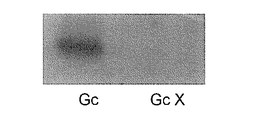
- FIG. 3-1 shows the results of Western blotting of a pre-GcMAF purified product (1f1fGcX) using PNA lectin.
- Primary antibody PNA lectin (diluted 10,000 times, reacted at room temperature for 1 hour).
- Secondary antibody Streptavidin (diluted 10,000 times, reacted at room temperature for 1 hour). 1 minute exposure.
- Gc Gc globulin;
- GcX Pre-GcMAF purified product (1f1fGcX).
- FIG. 3-2 shows the results of Western blotting of a pre-GcMAF purified product (1f1fGcX) using HPA lectin.
- Primary antibody HPA lectin (diluted 10,000 times, reacted for 1 hour at room temperature).
- Secondary antibody Streptavidin (diluted 10,000 times, reacted at room temperature for 1 hour). 1 minute exposure.
- MAF Purified GcMAF
- GcX Pre-GcMAF purified product (1f1fGcX).
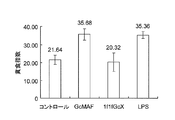
- FIG. 4-1 is a characteristic diagram showing macrophage phagocytic activation ability of pre-GcMAF purified product (1f1fGcX).
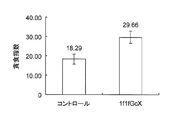
- FIG. 4-2 is a characteristic diagram showing the macrophage phagocytic activation ability of a pre-GcMAF purified product (1f1fGcX) preliminarily cultured with non-peritoneal cells.
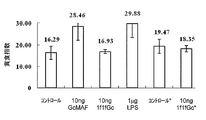
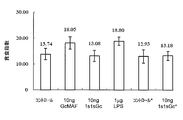
- FIG. 4-3 is a characteristic diagram showing macrophage phagocytic activation ability of 1f1f type Gc globulin (1f1fGc) as a raw material. In the figure, * indicates the result of Experiment 2.
- FIG. 5-1 is a characteristic diagram showing the ability of pre-GcMAF purified product (1s1sGcX) to activate macrophage phagocytosis. In the figure, * indicates the result of Experiment 2.
- FIG. 1s1sGcX 1s1sGcX
- FIG. 5-2 is a characteristic diagram showing macrophage phagocytic activation ability of 1s1s type Gc globulin (1s1sGc) as a raw material. In the figure, * indicates the result of Experiment 2.
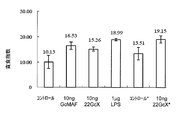
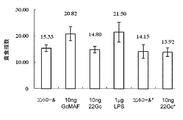
- FIG. 6-1 is a characteristic diagram showing the ability of pre-GcMAF purified product (22GcX) to activate macrophage phagocytosis. In the figure, * indicates the result of Experiment 2.
- FIG. 6-2 is a characteristic diagram showing the macrophage phagocytic activation ability of 22 types of Gc globulin (22Gc) as a raw material. In the figure, * indicates the result of Experiment 2.
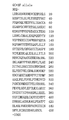
- FIG. 9 shows the amino acid sequence of the 1f subtype Gc globulin (SEQ ID NO: 1).
- FIG. 10 shows the amino acid sequence of the 1s subtype Gc globulin (SEQ ID NO: 2).
- FIG. 11 shows the amino acid sequence of 2 subtypes of Gc globulin (SEQ ID NO: 3).
- the present invention relates to a method for producing a galactose deglycoside (pre-GcMAF) of Gc globulin that can be easily produced and used as GcMAF or has a function of easily converting to GcMAF regardless of Gc type.
- pre-GcMAF galactose deglycoside
- the method of the present invention includes a step of reacting Gc globulin derived from plasma or serum with ⁇ -galactosidase.
- Gc globulin that can be used in the present invention is derived from plasma, preferably serum.
- Gc globulin is contained in the serum at about 300 to 500 mg / l, and is the 20th largest protein in serum proteins. Therefore, Gc globulin can be obtained efficiently and in large quantities by using plasma or serum.
- Gc globulin may be in a form contained in plasma or serum, or may be in the form of a crude product or an isolated form.
- the “form of the crude product” is not a substantially pure Gc globulin but a state containing impurities.
- substantially pure means a purity of 95% or more, preferably 99% or more.
- isolated form means a purity of 95% or more, preferably 99% or more. Preferably, it is in an isolated form.
- Methods for isolating and purifying Gc globulin from plasma or serum include known methods commonly used for protein purification, such as ammonium sulfate salting out, precipitation separation with organic solvents (ethanol, methanol, acetone, etc.), ion exchange chromatography, Isoelectric focusing chromatography, gel filtration chromatography, hydrophobic chromatography, adsorption column chromatography, affinity chromatography using substrates or antibodies, chromatography such as reverse phase column chromatography, microfiltration, ultrafiltration, reverse It can refine
- filtration processing such as osmosis filtration, combining one or more suitably.
- plasma or serum is applied to an affinity column such as an actin binding column, 25-hydroxy-vitamin D 3 binding column, anti-Gc globulin antibody binding column and the like to specifically bind Gc globulin, and another protein is appropriately used.
- an affinity column such as an actin binding column, 25-hydroxy-vitamin D 3 binding column, anti-Gc globulin antibody binding column and the like to specifically bind Gc globulin, and another protein is appropriately used.
- Gc globulin is adsorbed on the resin, washed and then eluted with an acetate buffer or guanidine solution.
- the eluate can be concentrated by substituting the buffer solution using a centricon or the like.
- 25-hydroxy - vitamin D 3 is a vitamin D 3 which position 25 is hydroxide, specific avidity for Gc-globulin is very high, the Gc globulin in plasma or serum by using this It can be separated and purified with high purity.
- a method of dialysis of Gc globulin from plasma is known (for example, Japanese Translation of PCT International Publication No. 2005-508892), and this method can also be used in the present invention.
- the Gc globulin that can be used in the present invention is an appropriate Gc globulin that is artificially produced using a gene recombination technique (for example, JP-A-11-511962), that is, a nucleic acid that encodes Gc globulin. Those obtained by recombinant expression in host cells are also included.
- the amino acid sequence of Gc globulin is known and is registered in a database such as GenBank, and such sequence information can be used.
- the ⁇ -galactosidase that can be used in the present invention may be derived from any organism, or may be a recombinant enzyme obtained by recombinant expression in a suitable host cell using a nucleic acid encoding ⁇ -galactosidase.
- Good. ⁇ -galactosidase can take any form such as a crudely purified form, a purified form, and an immobilized form.
- the crudely purified form includes, for example, a processed product from cell culture (eg, extract, lyophilized product, etc.).
- Commercially available ⁇ -galactosidase for example, Grade III from Bovine Liver (SIGMA) can also be used.
- the immobilized form means a state in which it is immobilized on an appropriate solid phase.
- a solid phase material include, but are not limited to, cellulose derivatives such as cellulose and nitrocellulose, sepharose, agarose, metal, glass, ceramic, resin, and the like.
- the shape and material of the solid phase are not particularly limited.
- the desugaring reaction is carried out at 20 to 60 ° C., preferably 35 to 42 ° C., more preferably 37.5 ° C., for 0.5 to 5 hours, preferably 0.5 to 2 hours, and ⁇ -galactosidase to Gc globulin. This is done by acting.
- the reaction pH is from pH 5 to pH 11, preferably in the neutral range.
- the step of desugaring reaction may be performed by a batch method or a continuous method.
- Gc globulin All subtypes of Gc globulin have a common structure in which galactose is O-glycosidically bonded to N-acetylgalactosamine, which is the center of the sugar chain. Therefore, regardless of which Gc globulin subtype is used, galactose deglycosides can be induced by the action of ⁇ -galactosidase.
- pre-GcMAF the galactose deglycoside is referred to as “pre-GcMAF”.
- pre-GcMAF has a-(SA) -GalNAc sugar chain structure derived from the 1f subtype, a-( ⁇ -MAN) -GalNAc sugar chain structure derived from the 1s subtype, and Those having -GalNAc sugar chain structure derived from 2 subtypes may be included in any combination depending on the subtype included in plasma or serum used as a material.
- pre-GcMAF has the following structure according to the type of Gc globulin subtype.
- Pre-GcMAF derived from the 1f subtype of Gc globulin includes the amino acid sequence represented by SEQ ID NO: 1, and N-acetyl at either 418 or 420th threonine in the amino acid sequence represented by SEQ ID NO: 1.
- Galactosamine is bound, and has a sugar chain structure in which sialic acid is further bound to this N-acetylgalactosamine.
- Pre-GcMAF derived from the 1s subtype Gc globulin includes the amino acid sequence represented by SEQ ID NO: 2, and N-acetyl is added to either 418 or 420th threonine in the amino acid sequence represented by SEQ ID NO: 2.
- Galactosamine is bound, and it has a sugar chain structure in which ⁇ -mannose is further bound to N-acetylgalactosamine.
- Pre-GcMAF derived from two subtypes of Gc globulin includes the amino acid sequence represented by SEQ ID NO: 3, and N-acetylgalactosamine binds to threonine at position 418 in the amino acid sequence represented by SEQ ID NO: 3. It has a sugar chain structure.
- each of the amino acid sequences represented by SEQ ID NOs: 1, 2 and 3 has a deletion, substitution, addition or insertion of 1 to several amino acids in each amino acid sequence
- Gc globulin protein An amino acid sequence encoding a protein having the following activity / function is also included. However, the threonine at position 418 or 420 having the above sugar chain structure in each amino acid sequence is conserved. “Activities and functions of Gc globulin protein” include known ones.
- the detection and measurement method of each function can be performed by a known method.
- the range of “1 to several” is not particularly limited. For example, 1 to 10, more preferably 1 to 7, more preferably 1 to 5, particularly preferably 1 to 3, or 1 or Two.
- amino acid sequences represented by SEQ ID NOs: 1, 2, and 3 are respectively represented by the respective amino acid sequences and BLAST (Basic Local Alignment Search at the National Center for Biological Information) (National Biological Information Center). Including amino acid sequences having 90%, 95%, 99% or more identity when calculated using the default local alignment search tool)) etc. (eg default or default parameters), preferably Includes an amino acid sequence that is composed of the amino acid sequence and encodes a protein having the activity and function of a Gc globulin protein. However, the threonine at position 418 or 420 having the above sugar chain structure in each amino acid sequence is conserved.
- identity refers to identical amino acids and similarities to all overlapping amino acid residues in an optimal alignment when two amino acid sequences are aligned with or without introducing a gap. It means the percentage of amino acid residues.
- identity can be determined using methods well known to those skilled in the art, sequence analysis software, and the like (for example, known algorithms such as BLAST and FASTA).
- Pre-GcMAF can be produced using only one type of enzyme ( ⁇ -galactosidase) even if the material contains multiple Gc globulin subtypes, and the type of enzyme depends on the subtype.
- the pre-GcMAF can be manufactured quickly and in large quantities and on the other hand for the patient individually.
- the manufactured pre-GcMAF may be subjected to further purification steps.
- purification process since pre-GcMAF has the same property as Gc globulin, it can carry out using the method used for the said Gc globulin refinement
- the pre-GcMAF of the present invention has a different effect of activating macrophages depending on the type of Gc globulin subtype used as a material.
- an action that activates macrophages means an action that enhances the phagocytic ability of macrophages (particularly, the phagocytic ability through Fc receptors), the ability to produce active oxygen, and the antigen presenting action.
- macrophage phagocytic ability is sometimes referred to as “macrophage phagocytic activity”, but these terms can be used interchangeably.
- pre-GcMAF itself derived from the 1f subtype of Gc globulin does not have an effect of activating macrophages.
- Pre-GcMAF derived from the 1f subtype of Gc globulin can be converted to GcMAF by contacting with lymphocytes, particularly T lymphocytes, to obtain an action of activating macrophages.
- lymphocytes particularly T lymphocytes
- the effect of activating macrophages in the supernatant can be obtained by contacting pre-GcMAF derived from Gc globulin of the 1f subtype with lymphocytes.
- pre-GcMAF derived from the 1f subtype of Gc globulin can be administered into the patient's living body to contact with lymphocytes in the patient's living body and be converted to GcMAF to activate macrophages. it can.
- pre-GcMAF derived from 1s subtype Gc globulin and pre-GcMAF derived from 2 subtype Gc globulin have the action of activating macrophages by themselves, and the action can be brought into contact with lymphocytes. Retained.
- the pre-GcMAF produced in this way can be used as an active ingredient of a pharmaceutical composition for treating and preventing various diseases and disorders.
- the pre-GcMAF contained in the pharmaceutical composition is produced using plasma or serum as a material.
- plasma or serum containing the same Gc globulin subset as the subject to which the pharmaceutical composition is administered can be produced as a material.
- the pre-GcMAF contained in the pharmaceutical composition is produced from the subject's own plasma or serum as the material to which the pharmaceutical composition is administered.
- the pre-GcMAF produced and the protein and / or derivative thereof contained in the plasma or serum can be transferred to viral infections, production of irregular antibodies, fever / anaphylaxis Can be administered to a subject without causing any problems.
- the “subject” includes human and non-human mammals, but preferably is a human.
- the pre-GcMAF contained in the pharmaceutical composition may not be in contact with the lymphocytes or the cell culture medium, or may be activated by contact with the lymphocytes or the cell culture medium. It may be a state that has been converted (that is, a state converted into GcMAF).
- Diseases / disorders that can be treated using the pharmaceutical composition include, for example, diseases / disorders that are known or can be treated by macrophage activation or angiogenesis inhibition. And wound healing, allergic diseases, autoimmune diseases, side effects due to therapeutic agents, cancer, angiogenic diseases other than cancer, and the like, but are not limited thereto.
- “Cancer” includes melanoma, metastasis, adenocarcinoma, sarcoma, thymoma, lymphoma, lung tumor, liver tumor, colon tumor, kidney tumor, non-Hodgkin lymphoma, Hodgkin lymphoma, leukemia, uterine tumor, breast tumor, prostate tumor , Renal tumors, ovarian tumors, spleen tumors, brain tumors, testicular tumors, bone tumors, muscle tumors, placental tumors, gastric tumors, and the like.
- Angiogenic diseases other than cancer include diabetic retinopathy, post-lens fibroproliferation, trachoma, neovascular glaucoma, psoriasis, immune inflammation (eg, rheumatoid arthritis, systemic lupus erythematosus, thyroiditis, Goodpasture syndrome, systemic vasculitis, scleroderma, Sjogren's syndrome, sarcoidosis, primary biliary cirrhosis, autoimmune disease, etc.), nonimmune inflammation, atherosclerosis and excessive wound repair It is not limited to these.
- the pharmaceutical composition of the present invention is administered orally or parenterally (for example, intravenous administration, intraarterial administration, local administration by injection, administration to the abdominal cavity or thoracic cavity, subcutaneous administration, intramuscular administration, sublingual administration, transdermal For example, by absorption or rectal administration).
- parenterally for example, intravenous administration, intraarterial administration, local administration by injection, administration to the abdominal cavity or thoracic cavity, subcutaneous administration, intramuscular administration, sublingual administration, transdermal
- parenterally for example, intravenous administration, intraarterial administration, local administration by injection, administration to the abdominal cavity or thoracic cavity, subcutaneous administration, intramuscular administration, sublingual administration, transdermal
- parenterally for example, intravenous administration, intraarterial administration, local administration by injection, administration to the abdominal cavity or thoracic cavity, subcutaneous administration, intramuscular administration, sublingual administration, transdermal
- intravenous administration for example, intravenous administration, intraarterial administration, local administration by injection
- the pharmaceutical composition of the present invention can be made into a suitable dosage form according to the administration route. Specifically, injections, suspensions, emulsifiers, ointments, creams, tablets, capsules, granules, powders, pills, fine granules, troches, rectal administration, oily suppositories, water-soluble It can be prepared in various pharmaceutical forms such as suppositories.
- Excipients include, for example, lactose, fructose, glucose, corn starch, sorbit and crystalline cellulose, sterilized water, ethanol, glycerol, saline, buffer, etc.
- disintegrants include, for example, starch, sodium alginate, gelatin
- binders include calcium carbonate, calcium citrate, dextrin, magnesium carbonate, and synthetic magnesium silicate.
- methyl cellulose or a salt thereof, ethyl cellulose, gum arabic, gelatin, hydroxypropyl cellulose, and polyvinylpyrrolidone are lubricants.
- Talc, magnesium stearate, polyethylene glycol and hydrogenated vegetable oil, and stabilizers include amino acids such as arginine, histidine, lysine and methionine, human serum albumin , Gelatin, dextran 40, methylcellulose, sodium sulfite, sodium metasulfite, etc.
- Other additives include syrup, petrolatum, glycerin, ethanol, propylene glycol, citric acid, sodium chloride, sodium nitrite and sodium phosphate Respectively.
- the pharmaceutical composition of the present invention can be produced aseptically by a commonly used technique such as passing through a sterilizing filter.
- the dosage of the pharmaceutical composition of the present invention may vary depending on factors such as patient age, weight, severity of disease, etc., but pre-GcMAF is preferably 0.4 to 4000 ng / kg body weight per administration. Can be administered in an amount appropriately selected from the range of 20 to 2000 ng.
- the effect of the pharmaceutical composition of the present invention can be achieved by evaluating remission, exacerbation, healing, etc. of a diseased site before and after administration of the pharmaceutical composition in an in vivo system.
- the wound healing effect can be performed by evaluating wound size and / or keloid formation before and after administration of the pharmaceutical composition. It can be confirmed that administration of the pharmaceutical composition of the present invention reduces wound size and / or keloid formation.
- the antitumor effect of the pharmaceutical composition can be determined by measuring skin mass before and after administration of the pharmaceutical composition, and evaluating general tumor size and / or keloid formation using X-rays or the like.
- diabetic retinopathy can be performed by diagnosing and evaluating retinal lesions before and after administration of the pharmaceutical composition.
- improvement of retinal lesion, lack of progression, etc. can be confirmed.
- confirmation of the effect of the pharmaceutical composition of this invention can be performed by the method normally used in the effect confirmation by GcMAF administration.
- the effect of pre-GcMAF can be evaluated by macrophage activation.
- the activation of macrophages by GcMAF is obtained by removing mouse peritoneal cells, pre-culturing them in serum-free medium, dividing them into adherent cells and non-adherent cells, adding GcMAF to the adherent cells, and culturing for 3 hours. Can be confirmed by examining phagocytic activity (Nagazawa H. et al. (2004) supra).
- pre-GcMAF derived from Gs globulin of 1s subtype or 2 subtype since pre-GcMAF itself has macrophage activation action, the effect of pre-GcMAF is evaluated using the above method. be able to.
- pre-GcMAF derived from 1f subtype Gc globulin since pre-GcMAF itself does not have a macrophage activation effect, it cannot be evaluated using the above method. Then, after adding pre-GcMAF to non-adherent cells and culturing for 2 hours, it can be confirmed by examining the phagocytic activity in cells cultured for 3 hours after adding the culture solution to the adherent cells.
- the present invention further includes a method for treating and preventing the above-mentioned diseases and disorders using the pharmaceutical composition of the present invention.
- the pre-GcMAF in the present invention is a Gc globulin obtained by removing only galactose from serum Gc globulin.
- it When it is derived from the 1s subtype or the 2 subtype, it can be used in the same manner as GcMAF. Even if it is derived from the 1f subtype, it can be efficiently and easily converted into GcMAF in the in vivo environment. It can be used similarly. For this reason, like GcMAF, administration of pre-GcMAF to a patient can be expected to enhance macrophage activation and angiogenesis, and further enhance patient resistance and repair power.
- Example 1 Synthesis and fractionation of pre-GcMAF using purified Gc globulin as a raw material (I) Recovery of Gc globulin from serum 20 ml of blood collected from a human having 1f1f subtype Gc globulin was allowed to stand at room temperature for 30 minutes Thereafter, the mixture was centrifuged (3,000 rpm) at 4 ° C. for 10 minutes to obtain 10.3 ml of serum.
- the recovered solution is injected into a dialysis membrane clipped on one side, the other side is also clipped, floated and floated in 4 L of 5 mM phosphate buffer (sodium phosphate buffer (SPB)) for dialysis. went. The dialysate was changed 90 minutes, 180 minutes and 270 minutes after the start of dialysis. The third was dialysis overnight.
- 5 mM phosphate buffer sodium phosphate buffer (SPB)
- the liquid was collected and passed through a prepared hydroxyapatite column (BioRad Bio-Scale TM Mini CHT Type III, 40 ⁇ M Cartridge, Catalog # 732-4332, LOT NO. B012409B) at 0.2 ml / min. Thereafter, 5 mM phosphate buffer (SPB) was washed at a flow rate of 2.0 ml / min, and when the baseline was settled, a gradient was made by connecting to 200 mM phosphate buffer (SPB, pH 7.0). Approximately 9 ml was recovered as a contained solution.
- SPB mM phosphate buffer
- purified Gc globulin could be obtained from a human having 1s1s or 22 subtype Gc globulin using the same method as described above.
- the reaction solution was transferred to a 2.0 ml Eppendorf tube containing 1.0 g of 25 (OH) VD 3 binding beads (synthesized at the Hori Laboratory of the University of Tokushima graduate School of Sociotechnoscience) and shaken at 4 ° C. for 1 hour. After that, it was centrifuged (13,000 rpm) at 4 ° C. for 2 minutes, and the supernatant was removed. To the precipitate, 0.5 ml of STE buffer was added, shaken for 60 seconds, centrifuged at 4 ° C. for 2 minutes (13,000 rpm), and the supernatant was removed. This operation was repeated three times.
- the obtained pre-GcMAF-containing extract is put into a prepared microcon (MILLIPORE, Lot NO. R9DN95311, 10000 MVCO), and a recovery cup is attached, followed by centrifugation (13,500 rpm) at 4 ° C. for 10 minutes.
- the buffer solution was replaced with 10 mM SPB to obtain 20 ⁇ l of a pre-GcMAF purified product (1f1fGcX), which was used in the following examples.
- Example 2 Examination of physical properties of purified pre-GcMAF (1f1fGcX) (I) Visualization of protein by SDS-PAGE (CBB staining) of purified pre-GcMAF (1f1fGcX), Western blot and HPLC analysis using human anti-Gc globulin
- the protein concentration of the pre-GcMAF purified product (1f1fGcX) was measured with an acid (BCA) protein measurement kit (PIERCE, Reagent A [Lot NO. HH106101, PROD # 23223], Reagent B [Lot NO. CE49183, PROD # 23224]). However, it was 17.1 ⁇ g / 20 ⁇ l.
- This band was confirmed to be a Gc globulin derivative since it showed a positive reaction in a Western blot using a human anti-Gc globulin antibody (FIG. 2).
- Gc globulin has a Gal- (SA) -GalNAc sugar chain structure
- GcMAF has a GalNAc sugar chain structure, but the sugar chain structure of the pre-GcMAF purified product (1f1fGcX) does not belong to any of them. It became clear.
- Example 3-1 Effect of pre-GcMAF purified product (1f1fGcX) on macrophage phagocytic activity (in vitro) Gc globulin does not affect macrophage phagocytic activity, but GcMAF is known to increase macrophage phagocytic activity in in vitro phagocytosis of sheep erythrocytes (SRBC) via Fc receptors on mouse peritoneal macrophages (N. Yamamoto, NPWillett and DDLindsay. Inflammation 1994; 18 (3): 311-322 .; N. Yamamoto, S. Homma and I. Millman. J. Immunol. 1991; 147: 273-280.). Based on this finding, the effect of pre-GcMAF purified product (1f1fGcX) derived from 1f1f subtype Gc globulin on phagocytic activity of macrophages was examined.
- SRBC sheep erythrocytes
- the purified pre-GcMAF (1f1fGcX) did not directly affect the phagocytic activity of macrophages, but increased the phagocytic activity of macrophages when precultured with non-peritoneal cells.
- the raw material 1f1f type Gc globulin did not increase macrophage phagocytic activity in either Experiment 1 or 2 (FIG. 4-3).
- the pre-GcMAF purified product (1f1fGcX) exhibits GcMAF-like macrophage phagocytic activation ability when it coexists with non-peritoneal non-adherent cells, that is, in the in vivo environment.
- Example 3-2 Effect of pre-GcMAF purified product (1s1sGcX) on macrophage phagocytic activity (in vitro)
- a pre-GcMAF purified product derived from 1s1s subtype Gc globulin was prepared in the same manner as in Example 1 (hereinafter referred to as “pre-GcMAF purified product (1s1sGcX)”), and Experiment 1 of Example 3-1
- the effect of the pre-GcMAF purified product (1s1sGcX) on macrophage phagocytic activity was examined in the same procedure as in Experiment 2.
- p 0.0238 (p ⁇ 0.05) for the GcMAF administration group
- p 0.0463 (p ⁇ 0.05) for the pre-GcMAF purified product (1s1sGcX) administration group.
- Example 3-3 Effect of pre-GcMAF purified product (22GcX) on macrophage phagocytic activity (in vitro)
- a purified pre-GcMAF derived from 22 subtypes of Gc globulin was prepared in the same manner as in Example 1 (hereinafter referred to as “pre-GcMAF purified product (22GcX)”).
- pre-GcMAF purified product (22GcX) was prepared in the same manner as in Example 1 (hereinafter referred to as “pre-GcMAF purified product (22GcX)”.
- Experiment 1 of Example 3-1 In the same procedure as in Experiment 2, the effect of the pre-GcMAF purified product (22GcX) on the phagocytic activity of macrophages was examined.
- the purified pre-GcMAF product (22GcX) exhibits GcMAF-like macrophage phagocytic activation ability.
- the GcMAF-like macrophage phagocytic activation ability of the pre-GcMAF purified product (22GcX) coexists with non-peritoneal non-adherent cells, that is, does not decrease even in the in vivo environment.
- Example 4 Anti-angiogenic activity (in vivo) of pre-GcMAF purified product (1f1fGcX) Whether the pre-GcMAF purified product exhibits angiogenesis inhibitory activity similarly to GcMAF was examined for in vivo angiogenesis inhibitory activity by the chicken embryo chorioallantoic membrane method (CAM method).
- CAM method chicken embryo chorioallantoic membrane method
- CAM chorioallantoic membrane
- GcMAF glycosynthesized in the Hori laboratory of the University of Tokushima graduate School of Sociotechnoscience
- Pre-GcMAF purified product (1f1fGcX) was administered and cultured at 39 ° C. for 1 day and then at 39.5 ° C. for 1 day.
- the eggshell is removed and about 1 ml of Intralipos is injected into the CAM.
- the number and size of capillaries grown on the CAM are visually determined, and the total number of eggs in which the inhibition is observed is used in the experiment.
- the angiogenesis inhibition rate was calculated by dividing by.
- GcMAF has an in vivo angiogenesis inhibition rate of 20%, which is slightly weaker than the positive control TX-1934 (synthesized by the Hori Laboratory of the Sociotechnoscience Department of the University of Tokushima graduate School) (inhibition rate 30%). showed that.
- the inhibition rate of the pre-GcMAF purified product (1f1fGcX) at the same dose (100 ng) was 23%, and that of the 10 ng pre-GcMAF purified product (1f1fGcX) was 31% (significantly different from the control group (p ⁇ 0.05)), a slightly stronger inhibitory activity than TX-1934 (inhibition rate of 25%).
- Example 5-1 Simple synthesis of pre-GcMAF from serum and examination of its physical properties
- 50 ⁇ l of prepared serum derived from a human having the 1f1f subtype
- 175 ⁇ l of 100 mM SPB and 10 mU / ⁇ l of ⁇ -galactosidase were added and incubated at 37.5 ° C. for 1 hour.
- the obtained reaction product was prepared and transferred to a 2.0 ml Eppendorf tube containing 1.0 g of 25 (OH) VD 3 binding beads (synthesized at the Hori Laboratory of the Sociotechnoscience Department of the University of Tokushima graduate School). Shake for an hour. After centrifugation (13,000 rpm) at 4 ° C. for 2 minutes to remove the supernatant, the precipitate was washed by shaking with 0.5 ml of STE buffer for 60 seconds, and further at 4 ° C. for 2 minutes. The supernatant was removed by centrifugation (13,000 rpm).
- the crude product (2) obtained from serum by a simple method contains pre-GcMAF, but also contains serum-derived proteins as contaminants.
- Example 5-2 Western blotting using PNA lectin and HPA lectin of pre-GcMAF crude purified product (2) As a result of Western blotting using PNA lectin and HPA lectin in a band showing a positive reaction, the above example Similar to 2, no staining bands corresponding to Gc globulin and GcMAF were observed.
- 1s1s subtype corresponds to Gc globulin and GcMAF. No staining band was seen.
- Western blotting using PNA lectin no staining band corresponding to Gc globulin was observed in 22 subtypes.
- pre-GcMAF is also contained in a crude product obtained by a simple method from human serum having 1s1s subtype or 22 subtype.
- Example 6 Preparation of pre-GcMAF and examination of its physical properties
- I Synthesis of pre-GcMAF from serum and purification of pre-GcMAF 1.0 ml of STE buffer in 1.0 ml of prepared serum (derived from human having 1f1f subtype) 150 ⁇ l of 10-mU / ⁇ l ⁇ -galactosidase (Grade III from Bovine Liver, SIGMA, Lot NO. 54H7025, G1875) was added and incubated at 37.5 ° C. for 1 hour.
- the collected liquid was transferred to a dialysis membrane clipped on one side, the other side was also clipped, floated, floated in 4 L of 5 mm phosphate buffer (SPB), and dialyzed.
- the dialysate is changed 90 minutes, 180 minutes and 270 minutes after the start of dialysis, and the third time is overnight dialysis.
- the sample was placed in the prepared centricon (MILLIPORE, Lot NO. R0DA20931, 30000 MVCO), a collection chapp was attached, and the mixture was centrifuged (3990 G) for 10 minutes in a centrifuge equipped with an angle rotor, and 200 ⁇ l A final purified product was obtained.
- the protein concentration was 200.6 ⁇ g / 200 ⁇ l by BCA method.
- the final purified product was confirmed to be a single band by visualization of the protein by SDS-PAGE (CBB staining), and the band showed a positive reaction by Western blotting with human antiglobulin.
- Example 7 Control of tumor growth of pre-GcMAF purified product (1f1fGcX) in LLC (Lewis lung carcinoma cells) lung metastasis mice After acclimatization of 5 week old C57BL / 6 mice for a minimum of 7 days, 2 ⁇ 10 5 LLC were Injected from the tail vein. Seven days later, the mice were treated with a non-treated group (control group), a positive control group (4 ng / kg / day of GcMAF) and a treated group (pre-GcMAF purified product (1f1fGcX) 0.04 ⁇ g / kg / day and 0.4 ⁇ g / day). Randomly divided into 4 groups (2 groups). The drug is i. p.
- mice were sacrificed on the 11th day, and the number of tumor nodules formed in the lung (total number and number of sizes less than 2 mm and more than 2 mm) were counted, and the effect of suppressing tumor growth by the pre-GcMAF purified product I investigated.
- the number of tumor nodules formed in the lung was the treatment group (pre-GcMAF purified product (1f1fGcX) produced in Example 1 above) relative to the control group. 2 group) was significantly reduced.
- the treatment group showed a significant difference from the control group (* p ⁇ 0.05). Therefore, it was revealed that the pre-GcMAF purified product (1f1fGcX) was administered at 0.04 ⁇ g / kg or 0.4 ⁇ g / kg and exhibited significant anticancer activity.
- the number of tumor nodules that grew to a size of 2 mm or more decreased depending on the dose of the pre-GcMAF purified product (1f1fGcX), and the pre-GcMAF purified product (1f1fGcX) It was observed that the administration suppressed the growth of tumor nodules.
- a tumor grows to a size of 3 mm 3 (tumor diameter of about 2 mm) or more, angiogenesis is induced because the oxygen concentration in the center of the tumor decreases.
- the suppression of tumor nodule growth observed in the treatment group suggests that the pre-GcMAF purified product (1f1fGcX) suppresses angiogenesis in tumor tissue and inhibits tumor growth.
- a decrease in the number of tumor nodules of less than 2 mm was observed. This is because the primary implantation of cancer cells from the blood vessels into the lung tissue was suppressed from secondary metastasis from the implanted tumor. I suggest that
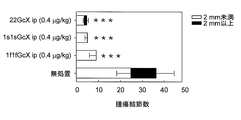
- Example 8 Control of tumor growth by type-specific pre-GcMAF purified product in LLC (Lewis lung carcinoma cells) lung metastasis mice After acclimatization of 5 week old C57BL / 6 mice for a minimum of 7 days, 2 x 10 5 LLCs Injected from the tail vein. Seven days later, the mice were treated with the untreated group (control group) and the treatment group (1f1fGcX, 1s1sGcX or 22GcX administration group, each at 0.4 ⁇ g / kg for 10 days (each pre-GcMAF purified product was obtained in Example 1 above). 3-2 and 3-3) were randomly divided into 4 groups. The drug is i. p.
- mice were sacrificed on the 11th day, and the number of tumor nodules formed in the lung (total number and the number of less than 2 mm and a size of 2 mm or more) were counted, and tumor growth by administration of each pre-GcMAF purified product The inhibitory effect of was investigated.
- the average number of tumor nodules in the treatment group tended to decrease significantly compared to the untreated group.
- the pre-GcMAF purified product (1f1fGcX), pre-GcMAF purified product ( 1s1sGcX) and pre-GcMAF purified product (22GcX) showed a significant reduction in the number of tumor nodules (*** p ⁇ 0.001). This shows the same tendency as the result of the macrophage activation ability of each pre-GcMAF purified product shown in Examples 1 to 3-3.
- the pre-GcMAF purified product is less than the lung cancer untreated group, the pre-GcMAF purified product (1f1fGcX) and the pre-GcMAF purified product (1s1sGcX) are 0 in number, and the pre-GcMAF purified product In (22GcX), the number was 1.
- Gc globulin galactose deglycoside that can be easily produced and can be used as GcMAF regardless of the subtype of Gc globulin. Therefore, like GcMAF, Gc globulin galactose deglycosides are administered to patients to treat various diseases and disorders such as macrophage activation and angiogenesis inhibition, as well as enhancement of patient resistance and repair ability. Can be used to prevent.
Landscapes
- Health & Medical Sciences (AREA)
- Life Sciences & Earth Sciences (AREA)
- Chemical & Material Sciences (AREA)
- Organic Chemistry (AREA)
- General Health & Medical Sciences (AREA)
- Medicinal Chemistry (AREA)
- Veterinary Medicine (AREA)
- Public Health (AREA)
- Chemical Kinetics & Catalysis (AREA)
- Engineering & Computer Science (AREA)
- General Chemical & Material Sciences (AREA)
- Pharmacology & Pharmacy (AREA)
- Animal Behavior & Ethology (AREA)
- Bioinformatics & Cheminformatics (AREA)
- Immunology (AREA)
- Nuclear Medicine, Radiotherapy & Molecular Imaging (AREA)
- Zoology (AREA)
- Wood Science & Technology (AREA)
- Genetics & Genomics (AREA)
- Proteomics, Peptides & Aminoacids (AREA)
- Gastroenterology & Hepatology (AREA)
- Biochemistry (AREA)
- Molecular Biology (AREA)
- Toxicology (AREA)
- Biophysics (AREA)
- Heart & Thoracic Surgery (AREA)
- Biotechnology (AREA)
- Microbiology (AREA)
- Cardiology (AREA)
- General Engineering & Computer Science (AREA)
- Marine Sciences & Fisheries (AREA)
- Epidemiology (AREA)
- Pain & Pain Management (AREA)
- Rheumatology (AREA)
- Medicines That Contain Protein Lipid Enzymes And Other Medicines (AREA)
- Peptides Or Proteins (AREA)
- Preparation Of Compounds By Using Micro-Organisms (AREA)
- Enzymes And Modification Thereof (AREA)
Abstract
Description
(i)[4]のGcグロブリンのガラクトース脱糖体;
(ii)配列番号1で表されるアミノ酸配列を含み、かつ該配列番号1で表されるアミノ酸配列における418または420番目のいずれかのスレオニンに、N-アセチルガラクトサミンが結合しており、このN-アセチルガラクトサミンに対してさらにシアル酸が結合している糖鎖構造を有する、Gcグロブリンのガラクトース脱糖体;
(iii)配列番号2で表されるアミノ酸配列を含み、かつ該配列番号2で表されるアミノ酸配列における418または420番目のいずれかのスレオニンに、N-アセチルガラクトサミンが結合しており、このN-アセチルガラクトサミンに対してさらにα-マンノースが結合している糖鎖構造を有する、Gcグロブリンのガラクトース脱糖体;および
(iv)配列番号3で表されるアミノ酸配列を含み、かつ該配列番号3で表されるアミノ酸配列における418番目のスレオニンに、N-アセチルガラクトサミンが結合している糖鎖構造を有する、Gcグロブリンのガラクトース脱糖体、
からなる群より選択される、一または複数のGcグロブリンのガラクトース脱糖体、を含む、マクロファージを活性化するための医薬組成物。
(i)[4]のGcグロブリンのガラクトース脱糖体;
(ii)配列番号1で表されるアミノ酸配列を含み、かつ該配列番号1で表されるアミノ酸配列における418または420番目のいずれかのスレオニンに、N-アセチルガラクトサミンが結合しており、このN-アセチルガラクトサミンに対してさらにシアル酸が結合している糖鎖構造を有する、Gcグロブリンのガラクトース脱糖体;
(iii)配列番号2で表されるアミノ酸配列を含み、かつ該配列番号2で表されるアミノ酸配列における418または420番目のいずれかのスレオニンに、N-アセチルガラクトサミンが結合しており、このN-アセチルガラクトサミンに対してさらにα-マンノースが結合している糖鎖構造を有する、Gcグロブリンのガラクトース脱糖体;および
(iv)配列番号3で表されるアミノ酸配列を含み、かつ該配列番号3で表されるアミノ酸配列における418番目のスレオニンに、N-アセチルガラクトサミンが結合している糖鎖構造を有する、Gcグロブリンのガラクトース脱糖体、
からなる群より選択される、一または複数のGcグロブリンのガラクトース脱糖体、を含む、血管新生を阻害するための医薬組成物。
(i)[4]のGcグロブリンのガラクトース脱糖体;
(ii)配列番号1で表されるアミノ酸配列を含み、かつ該配列番号1で表されるアミノ酸配列における418または420番目のいずれかのスレオニンに、N-アセチルガラクトサミンが結合しており、このN-アセチルガラクトサミンに対してさらにシアル酸が結合している糖鎖構造を有する、Gcグロブリンのガラクトース脱糖体;
(iii)配列番号2で表されるアミノ酸配列を含み、かつ該配列番号2で表されるアミノ酸配列における418または420番目のいずれかのスレオニンに、N-アセチルガラクトサミンが結合しており、このN-アセチルガラクトサミンに対してさらにα-マンノースが結合している糖鎖構造を有する、Gcグロブリンのガラクトース脱糖体;および
(iv)配列番号3で表されるアミノ酸配列を含み、かつ該配列番号3で表されるアミノ酸配列における418番目のスレオニンに、N-アセチルガラクトサミンが結合している糖鎖構造を有する、Gcグロブリンのガラクトース脱糖体、
からなる群より選択される、一または複数のGcグロブリンのガラクトース脱糖体、を含む、癌を治療するための医薬組成物。
(i)[4]のGcグロブリンのガラクトース脱糖体;
(ii)配列番号1で表されるアミノ酸配列を含み、かつ該配列番号1で表されるアミノ酸配列における418または420番目のいずれかのスレオニンに、N-アセチルガラクトサミンが結合しており、このN-アセチルガラクトサミンに対してさらにシアル酸が結合している糖鎖構造を有する、Gcグロブリンのガラクトース脱糖体;
(iii)配列番号2で表されるアミノ酸配列を含み、かつ該配列番号2で表されるアミノ酸配列における418または420番目のいずれかのスレオニンに、N-アセチルガラクトサミンが結合しており、このN-アセチルガラクトサミンに対してさらにα-マンノースが結合している糖鎖構造を有する、Gcグロブリンのガラクトース脱糖体;および
(iv)配列番号3で表されるアミノ酸配列を含み、かつ該配列番号3で表されるアミノ酸配列における418番目のスレオニンに、N-アセチルガラクトサミンが結合している糖鎖構造を有する、Gcグロブリンのガラクトース脱糖体、
からなる群より選択される、一または複数のGcグロブリンのガラクトース脱糖体、を癌患者に投与することを含む、上記方法。
(i)[4]のGcグロブリンのガラクトース脱糖体;
(ii)配列番号1で表されるアミノ酸配列を含み、かつ該配列番号1で表されるアミノ酸配列における418または420番目のいずれかのスレオニンに、N-アセチルガラクトサミンが結合しており、このN-アセチルガラクトサミンに対してさらにシアル酸が結合している糖鎖構造を有する、Gcグロブリンのガラクトース脱糖体;
(iii)配列番号2で表されるアミノ酸配列を含み、かつ該配列番号2で表されるアミノ酸配列における418または420番目のいずれかのスレオニンに、N-アセチルガラクトサミンが結合しており、このN-アセチルガラクトサミンに対してさらにα-マンノースが結合している糖鎖構造を有する、Gcグロブリンのガラクトース脱糖体;および
(iv)配列番号3で表されるアミノ酸配列を含み、かつ該配列番号3で表されるアミノ酸配列における418番目のスレオニンに、N-アセチルガラクトサミンが結合している糖鎖構造を有する、Gcグロブリンのガラクトース脱糖体、
からなる群より選択される、一または複数のGcグロブリンのガラクトース脱糖体。
配列番号3で表されるアミノ酸配列を含み、かつ該配列番号3で表されるアミノ酸配列における418番目のスレオニンに、N-アセチルガラクトサミンが結合している糖鎖構造を有する、Gcグロブリンのガラクトース脱糖体。
(I)血清からのGcグロブリンの回収
1f1fサブタイプのGcグロブリンを有するヒトより採血した血液20mlを、室温で30分静置後、4℃、10分間遠心分離(3000rpm)し、血清10.3mlを得た。
精製Gcグロブリンの25μgに、10mU/μlのβ-ガラクトシダーゼ(Grade III from Bovine Liver, SIGMA, Lot NO.54H7025, G1875)25μlを加え、さらに100mM SPB(pH7.0)165μlを加えて全量200μlとし、37.5℃で1時間インキュベーションした。反応液を25(OH)VD3結合ビーズ(徳島大学大学院ソシオテクノサイエンス研究部の堀研究室で合成)1.0gを加えた2.0mlのエッペンチューブに移し、4℃にて1時間振とうした後、4℃、2分間遠心分離(13,000rpm)し、上澄み液を除いた。沈殿物にSTE緩衝液0.5mlを加えて60秒間振とうして、4℃、2分間遠心分離(13,000rpm)し上澄み液を除いた。この操作を3回繰り返した。次に、溶出液として0.4mlの6Mグアニジン塩酸塩を加え60秒間振とうし、2分間遠心分離(13,000rpm)した。これを3回繰り返し、液をあわせてプレGcMAF含有抽出液とした。
(I)プレGcMAF精製物(1f1fGcX)のSDS-PAGE(CBB染色)によるタンパク質の可視化、ヒト抗Gcグロブリンを用いたウェスタンブロットおよびHPLC解析
ビシンコニン酸(BCA)タンパク質測定キット(PIERCE, Reagent A [Lot NO.HH106101, PROD # 23223], Reagent B [Lot NO.CE49183, PROD # 23224])でプレGcMAF精製物(1f1fGcX)のタンパク質濃度を測定したところ、17.1μg/20μlとなった。
プレGcMAF精製物(1f1fGcX)の糖鎖構造を調べるため、目的バンド(分子量56kDa付近の濃いバンド)のPNAレクチンを用いたウェスタンブロッティングを行った結果、精製GcグロブリンはPNAレクチンで染まったが、プレGcMAF精製物(1f1fGcX)はPNAレクチンでは染まらなかった(図3-1)。また、目的バンドのHPAレクチンを用いたウェスタンブロッティングを行った結果、精製GcMAF(徳島大学大学院ソシオテクノサイエンス研究部の堀研究室で合成)はHPAレクチンで染まったが、プレGcMAF精製物(1f1fGcX)の分子量56kDa付近のバンドはHPAレクチンでは染まらなかった(図3-2)。
in vitroにおけるマウス腹腔マクロファージのFcレセプターを介するヒツジ赤血球(SRBC)の貪食試験において、Gcグロブリンはマクロファージの貪食活性に影響を与えないが、GcMAFはマクロファージの貪食活性を上昇させることが知られている(N.Yamamoto, N.P.Willett and D.D.Lindsay. Inflammation 1994;18(3):311-322.;N.Yamamoto, S.Homma and I.Millman. J.Immunol.1991;147:273-280.)。この知見に基づいて、1f1fサブタイプのGcグロブリンに由来するプレGcMAF精製物(1f1fGcX)の、マクロファージの貪食活性に及ぼす影響を調べた。
8週齢のICRマウス(雌)の腹腔にPBS 10mlを注入して腹腔内混合細胞を取り出し、4℃、1,000rpmで15分間遠心した。集めた細胞をRPMI1640培地で1.0×10⁶細胞/mlに調節し、カバーグラスを沈めたプレートに5.0×105細胞/wellになるように500μlずつ播種した。当該細胞にRPMI培地を500μl加えて、37.5℃で1時間予備培養して、マクロファージをカバーグラスに定着させた。その後、上清を除き、付着したマクロファージ層を洗浄して、新しいRPMI培地を加えて37℃で15時間培養した。
実験1の予備培養時の上清を回収し、回収した上清液約1mlに10ngのプレGcMAF精製物を加えて、37℃、1時間培養した。その後、培養物を遠心分離して培地に含まれる非付着細胞を除き、この処理液を実験1と同様に準備したマクロファージ層に培養液として加えて、37℃、3時間培養した。続いて、マクロファージに、IgGをコートした0.5%SRBCを加えて90分間貪食させた後、細胞を固定、ギムザ染色した。その後、顕鏡した後、貪食されたSRBCをカウントして貪食指数(ingestion index)を算出し、マクロファージの貪食活性を評価した。
1s1sのサブタイプのGcグロブリンに由来するプレGcMAF精製物を、実施例1と同様の方法で作製し(以下、「プレGcMAF精製物(1s1sGcX)」と記載)、実施例3-1の実験1、実験2と同様の手順で、プレGcMAF精製物(1s1sGcX)がマクロファージの貪食活性に及ぼす影響を調べた。
22のサブタイプのGcグロブリンに由来するプレGcMAF精製物を、実施例1と同様の方法で作製し(以下、「プレGcMAF精製物(22GcX)」と記載)、実施例3-1の実験1、実験2と同様の手順で、プレGcMAF精製物(22GcX)がマクロファージの貪食活性に及ぼす影響を調べた。
プレGcMAF精製物がGcMAFと同様に血管新生阻害活性を示すかについて、鶏胚漿尿膜法(CAM法)によるin vivo血管新生阻害活性を調べた。
孵卵0日目の鶏受精卵を孵卵器で37.6℃、4日間培養し、気室上方部と鶏卵側部の卵殻の2ヶ所に錐で穴をあけ、鶏卵側部の穴から約4mlの卵白を吸引除去した。次いで、気室上方部の穴にシリコンスポイトをあてて吸引し、卵殻膜から卵黄のうや胚を剥離した後、鶏卵側部の穴をオプサイトでシールした。次に、気室上方部の穴の卵殻を一部除去して卵殻膜を露出させ、気室上方部にステンレス製のキャップをかぶせて39℃で24時間培養した。培養後、絨毛尿膜(CAM)が2~3mmになっていることを確認してシリコンリングをCAMの中心に置き、精製GcMAF(徳島大学大学院ソシオテクノサイエンス研究部の堀研究室で合成)およびプレGcMAF精製物(1f1fGcX)を投与して39℃で1日、次いで39.5℃で1日間培養した。培養後、卵殻を取り除いてイントラリポス約1mlをCAMに注入し、CAM上に成長した毛細血管の数や大きさを目視にて判定し、阻害が見られた鶏卵数を実験に使用した全体数で割り、血管新生阻害率を算出した。
100ng GcMAFのin vivo血管新生阻害率は20%であり、ポジティブコントロールのTX-1934(徳島大学大学院ソシオテクノサイエンス研究部の堀研究室で合成)(阻害率30%)と比較してやや弱い阻害活性を示した。
血清から直接、プレGcMAF精製物の合成が可能か否かを調べるため、準備した血清50μl(1f1fサブタイプを有するヒトに由来する)に175μlの100mM SPBおよび10mU/μlのβ-ガラクトシダーゼ(Grade III from Bovine Liver, SIGMA, Lot NO.54H7025, G1875)25μlを加えて37.5℃にて1時間インキュベートした。得られた反応物を準備した25(OH)VD3結合ビーズ(徳島大学大学院ソシオテクノサイエンス研究部の堀研究室で合成)1.0gを入れた2.0mlのエッペンチューブに移し、4℃にて1時間振とうした。4℃にて2分間、遠心分離(13,000rpm)し上澄み液を除いた後、沈殿物をSTE緩衝液0.5mlを用いて60秒間振とうして洗浄し、さらに4℃にて2分間遠心分離(13,000rpm)し上澄み液を除いた。この操作を3回繰り返した後、0.5mlの5.0M 酢酸緩衝液を加え60秒間振盪し、Gcグロブリン誘導体を溶出し、2分間遠心分離(13,000rpm)し、溶出液を取り出す。この操作を3回繰り返し、溶出液をあわせて、microcon (MILLIPORE, Lot NO.R9DN95311, 10000 MVCO)を用いて10mM SPB緩衝液で置換し、プレGcMAFの粗精製物(2)21.64μg/29μlを得た。

陽性反応を示すバンドでのPNAレクチン、HPAレクチンを用いたウェスタンブロットを行なった結果、上記実施例2と同様に、GcグロブリンおよびGcMAFに該当する染色バンドが見られなかった。
(I)血清からのプレGcMAF合成とプレGcMAFの精製
準備した血清1.0ml(1f1fサブタイプを有するヒトに由来する)にSTE緩衝液1.0mlおよび10mU/μlのβ-ガラクトシダーゼ(Grade III from Bovine Liver, SIGMA, Lot NO.54H7025, G1875)150μl加えて37.5℃にて1時間インキュベートした。
試薬などの混入物を除くため、透析後の液を集め、準備したヒドロキシアパタイトカラム(BioRad Bio-ScaleTM Mini CHT Type III, 40μM Cartridge, Catalog #732-4332, Lot NO. B012409B)に0.2ml/mlでサンプルを流した。その後、5mM SPB緩衝液を2.0ml/minで流して洗浄し、ベースラインが落ち着いたところで、200mM SPB緩衝液(pH7.4)につないでグラジエントを行った。Gcグロブリンのほぼ9mlを回収した。これを、準備したcentricon(MILLIPORE, Lot NO.R0DA20931, 30000 MVCO)にサンプルを入れ、回収用チャップを付けて、アングルローターを取り付けた遠心器で10分間、遠心分離(3990G)して、200μlの最終精製物を得た。このタンパク質濃度はBCA法で200.6μg/200μlであった。
5週齢のC57BL/6マウスを最低7日間馴化させたのち、2x105個のLLCを尾部静脈から注入した。7日後のマウスを無処置群(対照群)と陽性対照群(GcMAFの4ng/kg/日投与)および治療群(プレGcMAF精製物(1f1fGcX)の0.04μg/kg/日および0.4μg/kg/日投与の2群)の4群に無作為に分けた。薬剤は10日間i.p.投与した後、11日目にマウスを屠殺し、肺に形成された腫瘍結節の数(全数および2mm未満と2mm以上の大きさの数)を集計し、プレGcMAF精製物による腫瘍生育の抑制効果を調べた。
5週齢のC57BL/6マウスを最低7日間馴化させたのち、2x105個のLLCを尾部静脈から注入した。7日後にマウスを、無処置群(対照群)および治療群(1f1fGcX、1s1sGcXまたは22GcX投与群、各々0.4μg/kgの10日間i.p.投与(各プレGcMAF精製物は上記実施例1、3-2、3-3で製造したもの))の4群に無作為に分けた。薬剤は10日間i.p.投与した後、11日目にマウスを屠殺し、肺に形成された腫瘍結節の数(全数および2mm未満と2mm以上の大きさの数)を集計し、各プレGcMAF精製物の投与による腫瘍育成の抑制効果を調べた。
Claims (13)
- 血漿または血清に由来するGcグロブリンとβ-ガラクトシダーゼを反応させて、該Gcグロブリンのガラクトース脱糖体を製造する方法。
- Gcグロブリンが血漿または血清より単離または粗精製されたものである、請求項1記載の方法。
- さらに、製造されたガラクトース脱糖体をリンパ球またはリンパ球の培養上清と接触させるステップを含む、請求項1または2記載の方法。
- 請求項1~3のいずれか1項記載の方法によって製造された、Gcグロブリンのガラクトース脱糖体。
- 以下の(i)~(iv):
(i)請求項4記載のGcグロブリンのガラクトース脱糖体;
(ii)配列番号1で表されるアミノ酸配列を含み、かつ該配列番号1で表されるアミノ酸配列における418または420番目のいずれかのスレオニンに、N-アセチルガラクトサミンが結合しており、このN-アセチルガラクトサミンに対してさらにシアル酸が結合している糖鎖構造を有する、Gcグロブリンのガラクトース脱糖体;
(iii)配列番号2で表されるアミノ酸配列を含み、かつ該配列番号2で表されるアミノ酸配列における418または420番目のいずれかのスレオニンに、N-アセチルガラクトサミンが結合しており、このN-アセチルガラクトサミンに対してさらにα-マンノースが結合している糖鎖構造を有する、Gcグロブリンのガラクトース脱糖体;および
(iv)配列番号3で表されるアミノ酸配列を含み、かつ該配列番号3で表されるアミノ酸配列における418番目のスレオニンに、N-アセチルガラクトサミンが結合している糖鎖構造を有する、Gcグロブリンのガラクトース脱糖体、
からなる群より選択される、一または複数のGcグロブリンのガラクトース脱糖体、を含む、マクロファージを活性化するための医薬組成物。 - 以下の(i)~(iv):
(i)請求項4記載のGcグロブリンのガラクトース脱糖体;
(ii)配列番号1で表されるアミノ酸配列を含み、かつ該配列番号1で表されるアミノ酸配列における418または420番目のいずれかのスレオニンに、N-アセチルガラクトサミンが結合しており、このN-アセチルガラクトサミンに対してさらにシアル酸が結合している糖鎖構造を有する、Gcグロブリンのガラクトース脱糖体;
(iii)配列番号2で表されるアミノ酸配列を含み、かつ該配列番号2で表されるアミノ酸配列における418または420番目のいずれかのスレオニンに、N-アセチルガラクトサミンが結合しており、このN-アセチルガラクトサミンに対してさらにα-マンノースが結合している糖鎖構造を有する、Gcグロブリンのガラクトース脱糖体;および
(iv)配列番号3で表されるアミノ酸配列を含み、かつ該配列番号3で表されるアミノ酸配列における418番目のスレオニンに、N-アセチルガラクトサミンが結合している糖鎖構造を有する、Gcグロブリンのガラクトース脱糖体、
からなる群より選択される、一または複数のGcグロブリンのガラクトース脱糖体、を含む、血管新生を阻害するための医薬組成物。 - 以下の(i)~(iv):
(i)請求項4記載のGcグロブリンのガラクトース脱糖体;
(ii)配列番号1で表されるアミノ酸配列を含み、かつ該配列番号1で表されるアミノ酸配列における418または420番目のいずれかのスレオニンに、N-アセチルガラクトサミンが結合しており、このN-アセチルガラクトサミンに対してさらにシアル酸が結合している糖鎖構造を有する、Gcグロブリンのガラクトース脱糖体;
(iii)配列番号2で表されるアミノ酸配列を含み、かつ該配列番号2で表されるアミノ酸配列における418または420番目のいずれかのスレオニンに、N-アセチルガラクトサミンが結合しており、このN-アセチルガラクトサミンに対してさらにα-マンノースが結合している糖鎖構造を有する、Gcグロブリンのガラクトース脱糖体;および
(iv)配列番号3で表されるアミノ酸配列を含み、かつ該配列番号3で表されるアミノ酸配列における418番目のスレオニンに、N-アセチルガラクトサミンが結合している糖鎖構造を有する、Gcグロブリンのガラクトース脱糖体、
からなる群より選択される、一または複数のGcグロブリンのガラクトース脱糖体、を含む、癌を治療するための医薬組成物。 - 請求項5~7のいずれか1項記載の医薬組成物であって、Gcグロブリンのガラクトース脱糖体が該医薬組成物を投与される被験体の血漿または血清に由来するGcグロブリンを材料として製造されたものである、上記医薬組成物。
- 癌を治療する方法であって、以下の(i)~(iv):
(i)請求項4記載のGcグロブリンのガラクトース脱糖体;
(ii)配列番号1で表されるアミノ酸配列を含み、かつ該配列番号1で表されるアミノ酸配列における418または420番目のいずれかのスレオニンに、N-アセチルガラクトサミンが結合しており、このN-アセチルガラクトサミンに対してさらにシアル酸が結合している糖鎖構造を有する、Gcグロブリンのガラクトース脱糖体;
(iii)配列番号2で表されるアミノ酸配列を含み、かつ該配列番号2で表されるアミノ酸配列における418または420番目のいずれかのスレオニンに、N-アセチルガラクトサミンが結合しており、このN-アセチルガラクトサミンに対してさらにα-マンノースが結合している糖鎖構造を有する、Gcグロブリンのガラクトース脱糖体;および
(iv)配列番号3で表されるアミノ酸配列を含み、かつ該配列番号3で表されるアミノ酸配列における418番目のスレオニンに、N-アセチルガラクトサミンが結合している糖鎖構造を有する、Gcグロブリンのガラクトース脱糖体、
からなる群より選択される、一または複数のGcグロブリンのガラクトース脱糖体、を癌患者に投与することを含む、上記方法。 - Gcグロブリンのガラクトース脱糖体が、該ガラクトース脱糖体を投与される癌患者の血漿または血清に由来するGcグロブリンを材料として製造されたものである、請求項9記載の方法。
- 癌患者における癌の治療に使用するための、以下の(i)~(iv):
(i)請求項4記載のGcグロブリンのガラクトース脱糖体;
(ii)配列番号1で表されるアミノ酸配列を含み、かつ該配列番号1で表されるアミノ酸配列における418または420番目のいずれかのスレオニンに、N-アセチルガラクトサミンが結合しており、このN-アセチルガラクトサミンに対してさらにシアル酸が結合している糖鎖構造を有する、Gcグロブリンのガラクトース脱糖体;
(iii)配列番号2で表されるアミノ酸配列を含み、かつ該配列番号2で表されるアミノ酸配列における418または420番目のいずれかのスレオニンに、N-アセチルガラクトサミンが結合しており、このN-アセチルガラクトサミンに対してさらにα-マンノースが結合している糖鎖構造を有する、Gcグロブリンのガラクトース脱糖体;および
(iv)配列番号3で表されるアミノ酸配列を含み、かつ該配列番号3で表されるアミノ酸配列における418番目のスレオニンに、N-アセチルガラクトサミンが結合している糖鎖構造を有する、Gcグロブリンのガラクトース脱糖体、
からなる群より選択される、一または複数のGcグロブリンのガラクトース脱糖体。 - 請求項11記載のGcグロブリンのガラクトース脱糖体であって、該ガラクトース脱糖体が該ガラクトース脱糖体を投与される癌患者の血漿または血清に由来するGcグロブリンを材料として製造されたものである、上記Gcグロブリンのガラクトース脱糖体。
- 配列番号2で表されるアミノ酸配列を含み、かつ該配列番号2で表されるアミノ酸配列における418または420番目のいずれかのスレオニンに、N-アセチルガラクトサミンが結合しており、このN-アセチルガラクトサミンに対してさらにα-マンノースが結合している糖鎖構造を有する、Gcグロブリンのガラクトース脱糖体;または
配列番号3で表されるアミノ酸配列を含み、かつ該配列番号3で表されるアミノ酸配列における418番目のスレオニンに、N-アセチルガラクトサミンが結合している糖鎖構造を有する、Gcグロブリンのガラクトース脱糖体。
Priority Applications (2)
| Application Number | Priority Date | Filing Date | Title |
|---|---|---|---|
| EP11821968.2A EP2612921B1 (en) | 2010-09-03 | 2011-09-02 | Method for production of novel degalactosylated gc globulin |
| JP2012531976A JP5860401B2 (ja) | 2010-09-03 | 2011-09-02 | 新規Gcグロブリンガラクトース脱糖体の製造方法 |
Applications Claiming Priority (2)
| Application Number | Priority Date | Filing Date | Title |
|---|---|---|---|
| JP2010197485 | 2010-09-03 | ||
| JP2010-197485 | 2010-09-03 |
Publications (1)
| Publication Number | Publication Date |
|---|---|
| WO2012029954A1 true WO2012029954A1 (ja) | 2012-03-08 |
Family
ID=45773028
Family Applications (1)
| Application Number | Title | Priority Date | Filing Date |
|---|---|---|---|
| PCT/JP2011/070048 Ceased WO2012029954A1 (ja) | 2010-09-03 | 2011-09-02 | 新規Gcグロブリンガラクトース脱糖体の製造方法 |
Country Status (3)
| Country | Link |
|---|---|
| EP (1) | EP2612921B1 (ja) |
| JP (1) | JP5860401B2 (ja) |
| WO (1) | WO2012029954A1 (ja) |
Cited By (4)
| Publication number | Priority date | Publication date | Assignee | Title |
|---|---|---|---|---|
| WO2013038997A1 (ja) * | 2011-09-14 | 2013-03-21 | 医療法人再生未来 | 医薬組成物およびその製造方法 |
| JP2015040183A (ja) * | 2013-08-21 | 2015-03-02 | 亮太 竹内 | β−ガラクトシダーゼで処理されたムチンを含むマクロファージ活性化剤 |
| WO2015087981A1 (ja) * | 2013-12-13 | 2015-06-18 | 医療法人再生未来 | ウシ初乳酵素処理物、その製造方法、組成物および飲食品 |
| JPWO2022124331A1 (ja) * | 2020-12-08 | 2022-06-16 |
Citations (7)
| Publication number | Priority date | Publication date | Assignee | Title |
|---|---|---|---|---|
| JPH06503716A (ja) * | 1990-08-31 | 1994-04-28 | 山本 信人 | 有力なマクロファージ活性化因子へのヒトビタミンd結合蛋白のインビトロ酵素変換 |
| JPH06510908A (ja) * | 1991-09-30 | 1994-12-08 | 信人 山本 | 動物ビタミンd結合性蛋白からのマクロファージ活性化因子 |
| JPH11511962A (ja) | 1995-06-07 | 1999-10-19 | 信人 山本 | クローン化したビタミンd結合タンパク質由来の大食細胞活性化因子 |
| JP2003532682A (ja) | 2000-05-09 | 2003-11-05 | チルドレンズ メディカル センター コーポレーション | 血管新生の治療のための方法および組成物 |
| JP2005508892A (ja) | 2001-08-14 | 2005-04-07 | スタテンズ セーラム インスティテュート | Gc−グロブリンの大規模生産のための精製方法、これにより得られる物質およびそれらの医薬用途 |
| US20060014143A1 (en) * | 1995-06-07 | 2006-01-19 | Nobuto Yamamoto | Preparation of potent macrophage activating factors derived from cloned vitamin D binding protein and its domain and their therapeutic usage for cancer, HIV-infection and osteopetrosis |
| JP2010197485A (ja) | 2009-02-23 | 2010-09-09 | Seiko Epson Corp | 電気光学装置及び電子機器 |
-
2011
- 2011-09-02 JP JP2012531976A patent/JP5860401B2/ja active Active
- 2011-09-02 EP EP11821968.2A patent/EP2612921B1/en active Active
- 2011-09-02 WO PCT/JP2011/070048 patent/WO2012029954A1/ja not_active Ceased
Patent Citations (7)
| Publication number | Priority date | Publication date | Assignee | Title |
|---|---|---|---|---|
| JPH06503716A (ja) * | 1990-08-31 | 1994-04-28 | 山本 信人 | 有力なマクロファージ活性化因子へのヒトビタミンd結合蛋白のインビトロ酵素変換 |
| JPH06510908A (ja) * | 1991-09-30 | 1994-12-08 | 信人 山本 | 動物ビタミンd結合性蛋白からのマクロファージ活性化因子 |
| JPH11511962A (ja) | 1995-06-07 | 1999-10-19 | 信人 山本 | クローン化したビタミンd結合タンパク質由来の大食細胞活性化因子 |
| US20060014143A1 (en) * | 1995-06-07 | 2006-01-19 | Nobuto Yamamoto | Preparation of potent macrophage activating factors derived from cloned vitamin D binding protein and its domain and their therapeutic usage for cancer, HIV-infection and osteopetrosis |
| JP2003532682A (ja) | 2000-05-09 | 2003-11-05 | チルドレンズ メディカル センター コーポレーション | 血管新生の治療のための方法および組成物 |
| JP2005508892A (ja) | 2001-08-14 | 2005-04-07 | スタテンズ セーラム インスティテュート | Gc−グロブリンの大規模生産のための精製方法、これにより得られる物質およびそれらの医薬用途 |
| JP2010197485A (ja) | 2009-02-23 | 2010-09-09 | Seiko Epson Corp | 電気光学装置及び電子機器 |
Non-Patent Citations (20)
| Title |
|---|
| CHRISTIANSEN M. ET AL.: "Protein chemical characterization of Gc globulin (vitamin D-binding protein) isoforms; Gc-lf, Gc-ls and Gc-2.", BIOCHIM. BIOPHYS. ACTA, vol. 1774, 2007, pages 481 - 492, XP022011915 * |
| HASHITANI, S. ET AL., OFFICIAL JOURNAL OF THE JAPANESE STOMATOLOGICAL SOCIETY, vol. 46, no. 5, 1997, pages 532 |
| HORI: "Institute of Technology and Science", UNIVERSITY OF TOKUSHIMA |
| KISER, O. ET AL., NEOPLASIA, vol. 5, 2003, pages 32 - 40 |
| KOGA ET AL., PROC. SOC. EXP. BIL. MED., vol. 220, 1999, pages 20 - 6 |
| KORBELIK ET AL., BR. J. CANCER., vol. 75, 1997, pages 202 - 7 |
| MOHAMAD, S. B. ET AL., ANTICANCER RES., vol. 23, no. 6A, 2003, pages 4451 - 7 |
| N. YAMAMOTO; N. P. WILLETT; D. D. LINDSAY, INFLAMMATION, vol. 18, no. 3, 1994, pages 311 - 322 |
| N. YAMAMOTO; S. HOMMA; 1. MILLMAN, J. IMMUNOL., vol. 147, 1991, pages 273 - 280 |
| NAGASAWA, H. ET AL., ANTICANCER RES., vol. 24, no. 5C, 2004, pages 3361 - 6 |
| ONIZUKA, S. ET AL., PANCREAS, vol. 28, no. 3, 2003, pages 317 - 319 |
| See also references of EP2612921A4 * |
| UTO Y. ET AL.: "Effect of the Gc- derived Macrophage-activating Factor Precursor (preGcMAF) on Phagocytic Activation of Mouse Peritoneal Macrophages.", ANTICANCER RES., vol. 31, no. 7, July 2011 (2011-07-01), pages 2489 - 2492, XP055082396 * |
| YAMAMOTO ET AL., CANCER RES., vol. 56, 1996, pages 2827 - 31 |
| YAMAMOTO N. ET AL.: "Conversion of vitamin D3 binding protein (group-specific component) to a macrophage activating factor by the stepwise action of beta-galactosidase of B cells and sialidase of T cells.", J. IMMUNOL., vol. 151, no. 5, 1993, pages 2794 - 2802, XP055082397 * |
| YAMAMOTO, N. ET AL., CANCER RES., vol. 57, 1997, pages 2187 - 92 |
| YAMAMOTO, N. ET AL., CANCER. INNNUNOL. IMMUNOTHER., vol. 57, no. 7, 2008, pages 1007 - 16 |
| YAMAMOTO, N. ET AL., INT. J. CANCER., vol. 122, no. 2, 2008, pages 461 - 7 |
| YAMAMOTO, N. ET AL., PROC. NATL. ACAD. SCI., U.S.A., vol. 88, 1991, pages 8539 - 8543 |
| YAMAMOTO, N. ET AL., TRANSL. ONCOL., vol. 1, no. 2, 2008, pages 65 - 72 |
Cited By (11)
| Publication number | Priority date | Publication date | Assignee | Title |
|---|---|---|---|---|
| WO2013038997A1 (ja) * | 2011-09-14 | 2013-03-21 | 医療法人再生未来 | 医薬組成物およびその製造方法 |
| US8747919B2 (en) | 2011-09-14 | 2014-06-10 | Saisei Mirai Clinic | Pharmaceutical composition and method of preparing same |
| AU2012309586B2 (en) * | 2011-09-14 | 2016-01-28 | Saisei Mirai Clinic | Pharmaceutical composition and manufacturing method therefor |
| US9409972B2 (en) | 2011-09-14 | 2016-08-09 | Tokushima University | Pharmaceutical composition and method of preparing same |
| US9670268B2 (en) | 2011-09-14 | 2017-06-06 | Saisei Mirai Clinic | Pharmaceutical composition and method of preparing same |
| JP2015040183A (ja) * | 2013-08-21 | 2015-03-02 | 亮太 竹内 | β−ガラクトシダーゼで処理されたムチンを含むマクロファージ活性化剤 |
| WO2015087981A1 (ja) * | 2013-12-13 | 2015-06-18 | 医療法人再生未来 | ウシ初乳酵素処理物、その製造方法、組成物および飲食品 |
| JPWO2015087981A1 (ja) * | 2013-12-13 | 2017-03-16 | 再生ファーマ株式会社 | ウシ初乳酵素処理物、その製造方法、組成物および飲食品 |
| US10322147B2 (en) | 2013-12-13 | 2019-06-18 | Saisei Pharma Co., Ltd. | Enzyme-treated bovine colostrum, preparation method thereof, composition, and foods and beverages |
| JPWO2022124331A1 (ja) * | 2020-12-08 | 2022-06-16 | ||
| WO2022124331A1 (ja) * | 2020-12-08 | 2022-06-16 | 再生ファーマ株式会社 | マクロファージ活性化剤 |
Also Published As
| Publication number | Publication date |
|---|---|
| EP2612921A4 (en) | 2014-01-29 |
| EP2612921A1 (en) | 2013-07-10 |
| EP2612921B1 (en) | 2016-11-02 |
| JP5860401B2 (ja) | 2016-02-16 |
| JPWO2012029954A1 (ja) | 2013-10-31 |
Similar Documents
| Publication | Publication Date | Title |
|---|---|---|
| JP6040212B2 (ja) | 組換えマンネンタケ(Ganodermalucidium)免疫調節タンパク質(rLZ−8)およびその使用 | |
| JP5860401B2 (ja) | 新規Gcグロブリンガラクトース脱糖体の製造方法 | |
| Eap et al. | The α1-acid glycoprotein: structure and possible functions in the acute phase response | |
| JPS61501514A (ja) | 免疫抑制因子 | |
| EP1132402B1 (en) | Peptide fragments having cell death inhibitory activity | |
| JPS6154040B2 (ja) | ||
| EP1809660B1 (en) | A thymus-specific protein | |
| CN111620932A (zh) | 一种多肽及在促进nk细胞增殖和提高其对肿瘤细胞杀伤力方面的应用 | |
| US20170173115A1 (en) | Macrophage activating factor for pharmaceutical compositions | |
| JP2002519303A (ja) | 脂質動員性を有する糖タンパク質およびその治療的適用 | |
| US20260102486A1 (en) | Use of nkg2d-based cell adapter molecule in removal of aging cells | |
| JP3231262B2 (ja) | ヒトTh1特異的タンパク質及びこれをコードする遺伝子、並びにこれに関連する形質転換体、組換えベクター及び抗体 | |
| JPWO2019117295A1 (ja) | 活性型GcMAFの製造方法 | |
| EP4260866A1 (en) | Macrophage activator | |
| AU756260B2 (en) | Method for inducing cellular immunity and cells with induced cellular immunity | |
| JPH08501803A (ja) | アミノ糖および糖蛋白、その製法、それらアミノ糖または糖蛋白を含む医薬製剤およびそれらの製剤の用途 | |
| RU2823530C1 (ru) | Способ получения и определения специфической активности фактора активации макрофагов GcMAF | |
| JP4216950B2 (ja) | インターロイキン−18結合蛋白質 | |
| WO1984002912A1 (fr) | Proteine a effet oncostatique, son procede de preparation et mediament oncostatique la contenant | |
| AU2017254728B2 (en) | Selectively deglycosylated vitamin D-binding protein (GcMAF), cholecalciferol (calciol), and production method | |
| EP0161384A2 (en) | Human endogenous cancer regulatory factors, method of preparing the same, and pharmaceutical compositions containing the same | |
| KR20020084833A (ko) | 한국산 해양 밤게로부터 추출된 렉틴 단백질, 그의제조방법 및 용도 | |
| WO1994006820A1 (en) | Leukinferon preparation | |
| FR2527630A1 (fr) | Enzyme leucocytaire humaine de type pepsique, procede pour sa preparation et agent therapeutique la contenant | |
| AU735990B2 (en) | Amino sugars and glycoproteins |
Legal Events
| Date | Code | Title | Description |
|---|---|---|---|
| 121 | Ep: the epo has been informed by wipo that ep was designated in this application |
Ref document number: 11821968 Country of ref document: EP Kind code of ref document: A1 |
|
| ENP | Entry into the national phase |
Ref document number: 2012531976 Country of ref document: JP Kind code of ref document: A |
|
| NENP | Non-entry into the national phase |
Ref country code: DE |
|
| REEP | Request for entry into the european phase |
Ref document number: 2011821968 Country of ref document: EP |
|
| WWE | Wipo information: entry into national phase |
Ref document number: 2011821968 Country of ref document: EP |