WO2012054835A1 - Bis-azo colorants for use as bluing agents - Google Patents
Bis-azo colorants for use as bluing agents Download PDFInfo
- Publication number
- WO2012054835A1 WO2012054835A1 PCT/US2011/057290 US2011057290W WO2012054835A1 WO 2012054835 A1 WO2012054835 A1 WO 2012054835A1 US 2011057290 W US2011057290 W US 2011057290W WO 2012054835 A1 WO2012054835 A1 WO 2012054835A1
- Authority
- WO
- WIPO (PCT)
- Prior art keywords
- alkyl
- group
- substituted
- composition
- acid
- Prior art date
- Legal status (The legal status is an assumption and is not a legal conclusion. Google has not performed a legal analysis and makes no representation as to the accuracy of the status listed.)
- Ceased
Links
- 0 C*C([C@@](C1O)N=Nc(cc(C)c(N)c2)c2O)=Cc2c1c(NC(C)=*)cc(C1*C1)c2 Chemical compound C*C([C@@](C1O)N=Nc(cc(C)c(N)c2)c2O)=Cc2c1c(NC(C)=*)cc(C1*C1)c2 0.000 description 7
Classifications
-
- C—CHEMISTRY; METALLURGY
- C11—ANIMAL OR VEGETABLE OILS, FATS, FATTY SUBSTANCES OR WAXES; FATTY ACIDS THEREFROM; DETERGENTS; CANDLES
- C11D—DETERGENT COMPOSITIONS; USE OF SINGLE SUBSTANCES AS DETERGENTS; SOAP OR SOAP-MAKING; RESIN SOAPS; RECOVERY OF GLYCEROL
- C11D3/00—Other compounding ingredients of detergent compositions covered in group C11D1/00
- C11D3/40—Dyes ; Pigments
- C11D3/42—Brightening agents ; Blueing agents
-
- C—CHEMISTRY; METALLURGY
- C09—DYES; PAINTS; POLISHES; NATURAL RESINS; ADHESIVES; COMPOSITIONS NOT OTHERWISE PROVIDED FOR; APPLICATIONS OF MATERIALS NOT OTHERWISE PROVIDED FOR
- C09B—ORGANIC DYES OR CLOSELY-RELATED COMPOUNDS FOR PRODUCING DYES, e.g. PIGMENTS; MORDANTS; LAKES
- C09B31/00—Disazo and polyazo dyes of the type A->B->C, A->B->C->D, or the like, prepared by diazotising and coupling
- C09B31/02—Disazo dyes
- C09B31/06—Disazo dyes from a coupling component "C" containing a directive hydroxyl group
- C09B31/068—Naphthols
- C09B31/072—Naphthols containing acid groups, e.g. —CO2H, —SO3H, —PO3H2, —OSO3H, —OPO2H2; Salts thereof
-
- C—CHEMISTRY; METALLURGY
- C09—DYES; PAINTS; POLISHES; NATURAL RESINS; ADHESIVES; COMPOSITIONS NOT OTHERWISE PROVIDED FOR; APPLICATIONS OF MATERIALS NOT OTHERWISE PROVIDED FOR
- C09B—ORGANIC DYES OR CLOSELY-RELATED COMPOUNDS FOR PRODUCING DYES, e.g. PIGMENTS; MORDANTS; LAKES
- C09B31/00—Disazo and polyazo dyes of the type A->B->C, A->B->C->D, or the like, prepared by diazotising and coupling
- C09B31/02—Disazo dyes
- C09B31/08—Disazo dyes from a coupling component "C" containing directive hydroxyl and amino groups
-
- C—CHEMISTRY; METALLURGY
- C09—DYES; PAINTS; POLISHES; NATURAL RESINS; ADHESIVES; COMPOSITIONS NOT OTHERWISE PROVIDED FOR; APPLICATIONS OF MATERIALS NOT OTHERWISE PROVIDED FOR
- C09B—ORGANIC DYES OR CLOSELY-RELATED COMPOUNDS FOR PRODUCING DYES, e.g. PIGMENTS; MORDANTS; LAKES
- C09B69/00—Dyes not provided for by a single group of this subclass
-
- C—CHEMISTRY; METALLURGY
- C09—DYES; PAINTS; POLISHES; NATURAL RESINS; ADHESIVES; COMPOSITIONS NOT OTHERWISE PROVIDED FOR; APPLICATIONS OF MATERIALS NOT OTHERWISE PROVIDED FOR
- C09B—ORGANIC DYES OR CLOSELY-RELATED COMPOUNDS FOR PRODUCING DYES, e.g. PIGMENTS; MORDANTS; LAKES
- C09B69/00—Dyes not provided for by a single group of this subclass
- C09B69/10—Polymeric dyes; Reaction products of dyes with monomers or with macromolecular compounds
-
- C—CHEMISTRY; METALLURGY
- C09—DYES; PAINTS; POLISHES; NATURAL RESINS; ADHESIVES; COMPOSITIONS NOT OTHERWISE PROVIDED FOR; APPLICATIONS OF MATERIALS NOT OTHERWISE PROVIDED FOR
- C09B—ORGANIC DYES OR CLOSELY-RELATED COMPOUNDS FOR PRODUCING DYES, e.g. PIGMENTS; MORDANTS; LAKES
- C09B69/00—Dyes not provided for by a single group of this subclass
- C09B69/10—Polymeric dyes; Reaction products of dyes with monomers or with macromolecular compounds
- C09B69/106—Polymeric dyes; Reaction products of dyes with monomers or with macromolecular compounds containing an azo dye
-
- C—CHEMISTRY; METALLURGY
- C11—ANIMAL OR VEGETABLE OILS, FATS, FATTY SUBSTANCES OR WAXES; FATTY ACIDS THEREFROM; DETERGENTS; CANDLES
- C11D—DETERGENT COMPOSITIONS; USE OF SINGLE SUBSTANCES AS DETERGENTS; SOAP OR SOAP-MAKING; RESIN SOAPS; RECOVERY OF GLYCEROL
- C11D3/00—Other compounding ingredients of detergent compositions covered in group C11D1/00
- C11D3/16—Organic compounds
- C11D3/34—Organic compounds containing sulfur
- C11D3/349—Organic compounds containing sulfur additionally containing nitrogen atoms, e.g. nitro, nitroso, amino, imino, nitrilo, nitrile groups containing compounds or their derivatives or thio urea
-
- C—CHEMISTRY; METALLURGY
- C11—ANIMAL OR VEGETABLE OILS, FATS, FATTY SUBSTANCES OR WAXES; FATTY ACIDS THEREFROM; DETERGENTS; CANDLES
- C11D—DETERGENT COMPOSITIONS; USE OF SINGLE SUBSTANCES AS DETERGENTS; SOAP OR SOAP-MAKING; RESIN SOAPS; RECOVERY OF GLYCEROL
- C11D2111/00—Cleaning compositions characterised by the objects to be cleaned; Cleaning compositions characterised by non-standard cleaning or washing processes
- C11D2111/10—Objects to be cleaned
- C11D2111/12—Soft surfaces, e.g. textile
Definitions
- This invention relates to bis-azo colorants for use as bluing agents, laundry care compositions comprising bis-azo colorants that may serve as bluing agents, processes for making such bluing agents and laundry care compositions and methods of using the same.
- the bluing agents are generally comprised of at least two components: at least one chromophore component and at least one polymeric component These bluing agents are advantageous in providing a whitening effect to fabrics, while not building up over time and causing undesirable blue discoloration to the treated fabrics.
- bluing agents As textile substrates age, their color tends to fade or yellow due to exposure to light, air, soil, and natural degradation of the fibers that comprise the substrates. Thus, the purpose of bluing agents is generally to visually brighten these textile substrates and counteract the fading and yellowing of the substrates. Typically, bluing agents may be found in laundry detergents, fabric softeners, or rinse aids and are therefore applied to textile substrates during the laundering process. However, it is important that bluing agents function to brighten treated textile substrates without causing undesirable staining of the textile substrates. Cellulosic substrates, in particular, tend to exhibit a yellow hue after exposure to light, air, and/or soiling. This yellowness is often difficult to reverse by normal laundering procedures.
- the present invention offers advantages over previous efforts in this area, as this invention takes advantage of compounds having a non-sulfonic acid substituent in the terminal phenyl ring of the bis-azo structure.
- Sulfonic acid groups are known to promote the deposition and staining of acid dyes on cellulosic fabrics. These groups are also essential for the solubility and compatibility of the dyes in laundry formulations. While it is necessary that bluing agents deposit from wash water, it is undesirable that they stain the fabric by inadvertent contact or by building up over time, i.e. overhueing.
- the hueing compounds disclosed herein also absorb light at a wavelength appropriate to neutralize the yellowness of cellulosic substrates. These compounds function ideally as bluing agents for cellulosic substrates and may be incorporated into laundry care compositions for use by consumers.
- This invention relates to laundry care compositions comprising bis-azo colorants that may serve as bluing agents, processes for making such laundry care compositions and methods of using the same.
- the bluing agents are generally comprised of at least two components: at least one chromophore component and at least one polymeric component. These bluing agents are advantageous in providing a whitening effect to fabrics, while not building up over time and causing undesirable blue discoloration to the treated fabrics.
- alkoxy is intended to include C 1 -C 6 alkoxy and alkoxy derivatives of polyols having repeating units such as butylene oxide, glycidol oxide, ethylene oxide or propylene oxide.
- alkyl and alkyl capped are intended to include C 1 -C 6 alkyl groups.
- the term “laundry care composition” includes, unless otherwise indicated, granular, powder, liquid, gel, paste, unit dose bar form and/or flake type washing agents and/or fabric treatment compositions.
- fabric treatment composition includes, unless otherwise indicated, fabric softening compositions, fabric enhancing compositions, fabric freshening compositions and combinations there of. Such compositions may be, but need not be rinse added compositions.
- cellulosic substrates are intended to include any substrate which comprises at least a majority by weight of cellulose.
- Cellulose may be found in wood, cotton, linen, jute, and hemp.
- Cellulosic substrates may be in the form of powders, fibers, pulp and articles formed from powders, fibers and pulp.
- Cellulosic fibers include, without limitation, cotton, rayon (regenerated cellulose), acetate (cellulose acetate), triacetate (cellulose triacetate), and mixtures thereof.
- Articles formed from cellulosic fibers include textile articles such as fabrics.
- Articles formed from pulp include paper.
- test methods disclosed in the Test Methods Section of the present application should be used to determine the respective values of the parameters of Applicants' inventions.
- component or composition levels are in reference to the active portion of that component or composition, and are exclusive of impurities, for example, residual solvents or by-products, which may be present in commercially available sources of such components or compositions.
- the bluing agents employed in the present laundry care compositions may be dyes, pigments, or polymeric colorants, preferably dyes, comprising a chromophore constituent and a polymeric constituent.
- the chromophore constituent is characterized in that it absorbs light in the wavelength range of blue, red, violet, purple, or combinations thereof upon exposure to light
- the chromophore constituent exhibits an absorbance spectrum maximum from about 520 nanometers to about 640 nanometers in water and/or methanol, and in another aspect, from about 560 nanometers to about 610 nanometers in water and/or methanol.
- suitable polymeric constituents include polyoxyalkylene chains having multiple repeating units.
- the polymeric constituents include polyoxyalkylene chains having from 2 to about 30 repeating units, from 2 to about 20 repeating units, from 2 to about 10 repeating units or even from about 3 or 4 to about 6 repeating units.
- Non-limiting examples of polyoxyalkylene chains include ethylene oxide, propylene oxide, glycidol oxide, butylene oxide and mixtures thereof.
- the bluing agent employed in the present laundry care compositions may have the following general structure (I):
- R i and R 2 are independently H, alkyl, alkoxy, alkyleneoxy, alkyl capped alkyleneoxy, polyalkyleneoxy, alkyl capped polyalkyleneoxy, urea, amido or acetamido;
- R3 is an aryl group substituent that may be a substituted phenyl or napthyl moiety
- X is an oxygen, nitrogen or sulfomamido group further substituted with a substituted or unsubstituted amino, or a substituted or unsubstituted sulfonamide group, wherein the substituents are selected from the group consisting of alkyl, alkyleneoxy, polyalkyleneoxy, or phenyl moieties wherein the phenyl group may be further substituted with alkyl, alkyleneoxy or polyalkyleneoxy moieties.
- R 1 and R 2 are independently selected from the group consisting of H, alkyl, alkoxy, alkyleneoxy, alkyl capped alkyleneoxy and amido. Or, R 1 and R 2 are independently H, alkyl, alkoxy, alkyleneoxy, polyalkyleneoxy, or acetamido. In a preferred aspect, R 1 is an alkoxy group and R 2 is an alkyl or alkoxy group. In one preferred aspect, X is an oxygen, nitrogen or sulfonamido group further substituted with alkyl, alkyleneoxy, polyalkyleneoxy, or phenyl moieties wherein the phenyl group may be further substituted with alkyl, alkyleneoxy or polyalkyleneoxy moieties.
- X is a substituted group comprising sulfonamide moiety and optionally alkyl and/or aryl moiety, and wherein the substituent group comprises at least one alkylenoxy chain that comprises at least 4 alkyleneoxy moieties.
- suitable bluing agents may have the following general Structure (II):
- R 1 and R 2 are independently H, alkyl, alkoxy, or acetamido; W is a substituted amino moiety;
- X is a hydrogen, an amino group or an amino group substituted with an acyl group
- Y is a hydrogen or a sulfonic acid moiety
- Z is a sulfonic acid moiety or an amino group substituted with a phenyl group.
- R 1 is alkoxy
- R 2 is alkyl
- W is a substituted amino moiety
- X is a hydrogen, an amino group or an amino group substituted with an acyl group
- Y is a hydrogen or a sulfonic acid moiety
- said bluing agent may comprise:
- the bluing agent has the following structure:
- R 1 and R 2 are independently H, alkyl, alkoxy, alkyleneoxy, alkyl capped alkyleneoxy, polyalkyleneoxy, alkyl capped polyalkyleneoxy, urea, or amido;
- R 3 is an aryl group substituent that may be a substituted phenyl or napthyl moiety
- X is a substituted oxygen, a substituted or unsubstituted amino, or a substituted or unsubstituted sulfonamide group wherein the substituents are selected from the group consisting of alkyl, alkyleneoxy, polyalkyleneoxy, or phenyl moieties wherein the phenyl group may be further substituted with alkyl, alkyleneoxy or polyalkyleneoxy moieties.
- said bluing agent may comprise a polyoxyalkylene chain having from 2 to about 30 repeating units.
- said bluing agent may comprise a polyoxyalkylene chain having from 2 to about 20 repeating units.
- said bluing agent may comprise a polyoxyalkylene chain having from 2 to about 10 repeating units.
- bluing agent may comprise a polyoxyalkylene chain having from about 4 to about 6 repeating units.
- bluing agent may comprise an alkoxylated bis-azo polymeric colorant.
- bluing agent's chromophore may exhibit an absorbance spectrum maximum in water of from about 520 nanometers to about 640 nanometers.
- said bluing agent's chromophore may exhibit an absorbance spectrum maximum in water of from about 560 nanometers to about 610 nanometers.
- said bluing agent may exhibit an absolute hue angle in the range of 265° to
- bluing agent may exhibit an absolute hue angle in the range of 273° to 287°.
- said bluing agent may have the following structure:
- R 1 and R 2 are independently H, alkyl, alklkyl alkyleneoxy, alkyl capped alkyleneoxy, polyalkyleneoxy, alkyl capped polyalkyleneoxy, or amido;
- W is a substituted amino moiety
- U is a hydrogen, an amino group or an amino group substituted with an acyl group
- Y is a hydrogen or a sulfonic acid moiety
- Z is a sulfonic acid moiety or an amino group substituted with a phenyl group.
- R 1 is alkoxy and R 2 is alkyl.
- suitable bluing agents include, but are not limited to the following structures:
- Preferred dyes are selected from the group consisting of BA1, BA2, BA3, BA6, BA10, BA11, BA12, BA1S, BA19, BA20, BA21, BA24, BA28, BA29, BA30, BA33, BA37, BA38, BA39, BA42, BA46, BA47, BA48, BA51, BA55, BA56, BA57, BA60, BA64, BA65, BA66, BA69, BA73, BA74, BA75 and BA78. Particularly preferred are BA10, BA20, BA51, BA55, BA56, BA57, BA60, BA66, BA69 and BA78.
- the blueing agent also defined herein as the dye, is typically formulated to deposit onto fabrics from the wash liquor to provide a relative hue angle of 220-320° on a consumer relevant garment so as to improve fabric whiteness perception.
- This hue angle may be generated by the specified blueing agent essential to the invention alone, or by a combination of the essential bluing agent in combination with an additional hueing agent which together generate the desired hue angle.
- the hueing agent is typically described as blue or violet. It may be suitable that the hueing dye(s) have a peak absorption wavelength of from 550nm to 650nm, or from 570nm to 630nm.
- the hueing agent may be a combination of dyes which together have the visual effect on the human eye as a single dye having a peak absorption wavelength on polyester of from 550nm to 650nm, or from 570nm to 630nm. This may be provided for example by mixing a red and green-blue dye to yield a blue or violet shade.
- Dyes are typically coloured organic molecules which are soluble in aqueous media that contain surfactants. Dyes maybe selected from the classes of basic, acid, hydrophobic, direct and polymeric dyes, and dye-conjugates. Suitable polymeric hueing dyes are commercially available, for example from Milliken, Spartanburg, South Carolina, USA.
- Suitable dyes are Liquitint ® violet DD, direct violet 7 , direct violet 9 , direct violet 11, direct violet 26, direct violet 31, direct violet 35, direct violet 40, direct violet 41, direct violet 51, direct violet 66, direct violet 99, acid violet 50, acid blue 9, acid violet 17, acid black 1 , acid red 17, acid blue 29, solvent violet 13, disperse violet 27 disperse violet 26, disperse violet 28, disperse violet 63 and disperse violet 77, basic blue 16, basic blue 65, basic blue 66, basic blue 67, basic blue 71, basic blue 159, basic violet 19, basic violet 35, basic violet 38, basic violet 48; basic blue 3 , basic blue 75, basic blue 95, basic blue 122, basic blue 124, basic blue 141, thiazolium dyes, reactive blue 19, reactive blue 163, reactive blue 182, reactive blue 96,
- hueing agents are hueing dye-photobleach conjugates, such as the conjugate of sulphonated zinc phthalocyanine with direct violet 99.
- a particularly suitable hueing agent is a combination of acid red 52 and acid blue 80, or the combination of direct violet 9 and solvent violet 13.
- R is selected from the group consisting of alkyl, polyalkyleneoxy, phenyl and substituted phenyl, and
- R' is selected from the group consisting of hydrogen, alkyl, or alkoxy.
- Acid hydrolysis may be carried out utilizing a strong acid such as hydrochloric acid or sulfuric acid.
- the bis-azo colorants disclosed herein may be made according to various procedures known in the art and/or in accordance with the examples of the present invention.
- coupling may be carried out using polyalkyleneoxy substituted aniline compounds derived by known procedures from starting materials such as 4-methyoxy-2-nitrophenol or 4- methyl-2-nitrophenol, both of which are available from VWR International, LLC (West Chester, PA, USA).
- any of the bluing agents described in the present specification may be incorporated into laundry care compositions including but not limited to laundry detergents and fabric care compositions.
- the laundry care compositions including laundry detergents may be in solid or liquid form, including a gel form.
- Such compositions may comprise one or more of said bluing agents and a laundry care ingredient.
- the bluing agents may be added to substrates using a variety of application techniques. For instance, for application to cellulose-containing textile substrates, the bluing agent may be included as a component of a laundry detergent. Thus, application to a cellulose-containing textile substrate actually occurs when a consumer adds laundry detergent to a washing machine.
- the bluing agent may be present in the laundry detergent composition in an amount from about 0.0001% to about 10% by weight of the composition, from about 0.0001% to about 5% by weight of the composition, and even from about 0.0001% to about 1% by weight of the composition.
- the laundry detergent composition typically comprises a surfactant in an amount sufficient to provide desired cleaning properties.
- the laundry detergent composition may comprise, based on total laundry detergent composition weight, from about 5% to about 90% of the surfactant, from about 5% to about 70% of the surfactant, or even from about 5% to about 40% of the surfactant.
- the surfactant may comprise anionic, nonionic, cationic, zwitterionic and/or amphoteric surfactants.
- the detergent composition comprises anionic surfactant, nonionic surfactant, or mixtures thereof.
- Fabric care compositions are typically added in the rinse cycle, which is after the detergent solution has been used and replaced with the rinsing solution in typical laundering processes.
- the fabric care compositions disclosed herein may be comprise a rinse added fabric softening active and a suitable bluing agent as disclosed in the present specification.
- the fabric care composition may comprise, based on total fabric care composition weight, from about 1% to about 90%, or from about 5% to about 50% fabric softening active.
- the bluing agent may be present in the fabric care composition in an amount from about 0.5 ppb to about 50 ppm, or from about 0.5 ppm to about 30 ppm.
- a laundry care composition comprising a laundry care ingredient and a bluing agent comprising:
- the bluing agent has the following structure:
- R 1 and R 2 are independently H, alkyl, alkoxy, alkyleneoxy, alkyl capped alkyleneoxy, polyalkyleneoxy, alkyl capped polyalkyleneoxy, urea, or amido;
- R 3 is an aryl group substituent that may be a substituted phenyl or napthyl moiety
- X is a substituted oxygen, a substituted or unsubstituted amino, or a substituted or unsubstituted sulfonamide group wherein the substituents are selected from the group consisting of alkyl, alkyleneoxy, polyalkyleneoxy, or phenyl moieties wherein the phenyl group may be further substituted with alkyl, alkyleneoxy or polyalkyleneoxy moieties is disclosed.
- said bluing agent comprises a polyoxyalkylene chain having from 2 to about 30 repeating units.
- said bluing agent comprises a polyoxyalkylene chain having from 2 to about 20 repeating units.
- said bluing agent comprises a polyoxyalkylene chain having from 2 to about 10 repeating units.
- bluing agent comprises a polyoxyalkylene chain having from about 4 to about 6 repeating units.
- bluing agent comprises an alkoxylated bis-azo polymeric colorant.
- bluing agent's chromophore exhibits an absorbance spectrum maximum in water of from about 520 nanometers to about 640 nanometers.
- said bluing agent's chromophore exhibits an absorbance spectrum maximum in water of from about 560 nanometers to about 610 nanometers.
- said bluing agent exhibits an absolute hue angle in the range of 265° to
- R 1 and R 2 are independently H, alkyl, alkoxy, alkyleneoxy, alky] capped alkyleneoxy, polyalkyleneoxy, alkyl capped po!yalkyleneoxy, or amido;
- W is a substituted amino moiety
- U is a hydrogen, an amino group or an amino group substituted with an acyl group
- Y is a hydrogen or a sulfonic acid moiety
- Z is a sulfonic acid moiety or an amino group substituted with a phenyl group.
- R 1 is alkoxy and R 2 is alkyl.
- laundry care ingredients While not essential for the purposes of the present invention, the non-limiting list of laundry care ingredients illustrated hereinafter are suitable for use in the laundry care compositions and may be desirably incorporated in certain aspects of the invention, for example to assist or enhance performance, for treatment of the substrate to be cleaned, or to modify the aesthetics of the composition as is the case with perfumes, colorants, dyes or the like. It is understood that such ingredients are in addition to the components that were previously listed for any particular aspect. The total amount of such adjuncts may range, once the amount of dye is taken into consideration from about 90% to about 99.99999995% by weight of the laundry care composition. The precise nature of these additional components, and levels of incorporation thereof, will depend on the physical form of the composition and the nature of the operation for which it is to be used.
- Suitable laundry care ingredients include, but are not limited to, fabric softening actives, polymers, for example canonic polymers, surfactants, builders, chelating agents, dye transfer inhibiting agents, dispersants, enzymes, and enzyme stabilizers, catalytic materials, bleach activators, polymeric dispersing agents, clay soil removal/an ti-redeposition agents, brighteners, suds suppressors, dyes, additional perfume and perfume delivery systems, structure elasticizing agents, fabric softeners, carriers, hydrotropes, processing aids and or pigments.
- suitable examples of such other adjuncts and levels of use are found in U.S. Patent Nos. 5,576,282, 6,306,812 Bl and 6,326,348 Bl that are incorporated by reference.
- the laundry care ingredients are not essential to Applicants' laundry care compositions.
- certain aspects of Applicants' compositions do not contain one or more of the following adjuncts materials: fabric softening actives, bleach activators, surfactants, builders, chelating agents, dye transfer inhibiting agents, dispersants, enzymes, and enzyme stabilizers, catalytic metal complexes, polymeric dispersing agents, clay and soil removal/anti-redeposition agents, brighteners, suds suppressors, dyes, additional perfumes and perfume delivery systems, structure elasticizing agents, fabric softeners, carriers, hydrotropes, processing aids and/or pigments.
- one or more adjuncts may be present as detailed below:
- Suitable anionic surfactants useful herein can comprise any of the conventional anionic surfactant types typically used in liquid detergent products. These include the alkyl benzene sulfonic acids and their salts as well as alkoxylated or non-alkoxylated alkyl sulfate materials.
- Exemplary anionic surfactants are the alkali metal salts of Cio-Cie alkyl benzene sulfonic acids, or Cii-Ci4 alkyl benzene sulfonic acids.
- the alkyl group is linear and such linear alkyl benzene sulfonates are known as "LAS".
- Alkyl benzene sulfonates, and particularly LAS, are well known in the art.
- Such surfactants and their preparation are described for example in U.S. Pat. Nos. 2,220,099 and 2,477,383.
- sodium and potassium linear straight chain alkylbenzene sulfonates in which the average number of carbon atoms in the alkyl group is from about 11 to 14.
- Sodium CH-CM, e.g., Cj2, LAS is a specific example of such surfactants.
- anionic surfactant comprises ethoxylated alkyl sulfate surfactants.
- Such materials also known as alkyl etromher sulfates or alkyl polyethoxylate sulfates, are those which correspond to the formula: '— 0--(C2H40)n— S0 3 M wherein R' is a Cg-Cw alkyl group, n is from about from 0.5 to 20, or from 1 to 20, and M is a salt-forming cation.
- R' is Cio ⁇ Ci8 alkyl, n is from about 1 to 15, and M is sodium, potassium, ammonium, alkylamraonium, or alkanolammonium.
- R' is a C12-C16 1 n is from about 0.5 to 6, or from 1 to 6 and M is sodium.
- non-alkoxylated, e.g., non-ethoxylated, alkyl ether sulfate surfactants are those produced by the sulfation of higher Cg-Cm fatty alcohols.
- Conventional primary alkyl sulfate surfactants have the general formula: ROS0 3 -M + wherein R is typically a linear Cg-Cn hydrocarbyl group, which may be straight chain or branched chain, and M is a water-solubilizing cation.
- R is a CIO-CIS alkyl
- M is alkali metal, more specifically R is C12-C1 and M is sodium.
- anionic surfactants useful herein include: a) Cu-C
- MLAS modified alkylbenzene sulfonate
- MES methyl ester sulfonate
- AOS alpha-olefin sulfonate
- a suitable feedstock for predominantly alkyl Cie alkyl mid-chain branched sulphate is beta-farnesene, such as BioFeneTM supplied by Amyris, Emeryville, California.
- Suitable nonionic surfactants useful herein can comprise any of the conventional nonionic surfactant types typically used in liquid detergent products. These include alkoxylated fatty primary alcohol-based or secondary alcohol-based surfactants and amine oxide surfactants. In one aspect, for use in the liquid detergent products herein are those nonionic surfactants which are normally liquid.
- Suitable nonionic surfactants for use herein include the alcohol alkoxylate nonionic surfactants.
- Alcohol alkoxylates are materials which correspond to the general formula: R'CCnHanO ⁇ OH wherein R 1 is a Cg-C1 ⁇ 2 alkyl group, m is from 2 to 4, and n ranges from about 2 to 12.
- R 1 is an alkyl group, which may be primary or secondary, that comprises from about 9 to 15 carbon atoms, or from about 10 to 14 carbon atoms.
- the alkoxylated fatty alcohols will also be ethoxylated materials that contain from about 2 to 12 ethylene oxide moieties per molecule, or from about 3 to 10 ethylene oxide moieties per molecule.
- alkoxylated fatty alcohol materials useful in the liquid detergent compositions herein will frequently have a hydrophilic-lipophilic balance (HLB) which ranges from about 3 to 17 from about 6 to 15, or from about 8 to 15.
- HLB hydrophilic-lipophilic balance
- Alkoxylated fatty alcohol nonionic surfactants have been marketed under the tradenames Neodol and Dobanol by the Shell Chemical Company.
- Another suitable type of nonionic surfactant useful herein comprises the amine oxide surfactants.
- Amine oxides are materials which are often referred to in the art as "semi-polar" nonionics. Amine oxides have the formula: R(EO) x (PO) y (BO) r N(OXCH2R , )2.qH20.
- R is a relatively long-chain hydrocarbyl moiety which can be saturated or unsaturated, linear or branched, and can contain from 8 to 20, 10 to 16 carbon atoms, or is a C12-C16 primary alkyl.
- R' is a short-chain moiety, in one aspect R' may be selected from hydrogen, methyl and --CH2OH.
- EO is ethyleneoxy
- PO is propyteneneoxy
- BO is butyleneoxy.
- Amine oxide surfactants are illustrated by Cn-ualkyldimethyl amine oxide.
- Non-limiting examples of nonionic surfactants include: a) C12-C18 alkyl ethoxylates, such as, NEODOL® nonionic surfactants from Shell; b) Q-C12 alkyl phenol alkoxylates wherein the alkoxylate units are a mixture of ethyleneoxy and propyleneoxy units; c) C12-C 1 B alcohol and C $ - C12 alkyl phenol condensates with ethylene oxide propylene oxide block polymers such as Pluronic® from BASF; d) C14-C22 mid-chain branched alcohols, BA, as discussed in U.S. Pat. No.
- the detersive surfactant component may comprise combinations of anionic and nonionic surfactant materials.
- the weight ratio of anionic to nonionic will typically range from 10:90 to 90:10, more typically from 30:70 to 70:30.
- Cationic surfactants are well known in the art and non-limiting examples of these include quaternary ammonium surfactants, which can have up to 26 carbon atoms.
- Additional examples include a) alkoxylate quaternary ammonium (AQA) surfactants as discussed in U.S. Pat No. 6,136,769; b) dimethyl hydroxyethyl quaternary ammonium as discussed in U.S. Pat. No. 6,004,922; c) polyamine cationic surfactants as discussed in WO 98 35002, WO 98/35003, WO 98/35004, WO 98/35005, and WO 98/35006; d) cationic ester surfactants as discussed in U.S. Pat. Nos. 4,228,042, 4,239,660 4,260,529 and U.S. Pat. No.
- Non-limiting examples of zwitterionic surfactants include derivatives of secondary and tertiary amines, derivatives of heterocyclic secondary and tertiary amines, or derivatives of quaternary ammonium, quaternary phosphonium or tertiary sulfonium compounds. See U.S. Pat No. 3,929,678 to Laughlin et al, issued Dec.
- betaine including alkyl dimethyl betaine and cocodimethyl amidopropyl betaine, Cg to C
- Non-limiting examples of ampholytic surfactants include aliphatic derivatives of secondary or tertiary amines, or aliphatic derivatives of heterocyclic secondary and tertiary amines in which the aliphatic radical can be straight- or branched-chain.
- One of the aliphatic substituents comprises at least about 8 carbon atoms, typically from about 8 to about 18 carbon atoms, and at least one comprises an anionic water-solubilizing group, e.g. carboxy, sulfonate, sulfate. See U.S. Pat. No. 3,929,678 to Laughlin et al., issued Dec. 30, 1975 at column 19, lines 18-35, for examples of ampholytic surfactants.
- Aqueous, non-surface active liquid carrier Aqueous, non-surface active liquid carrier
- the laundry care compositions may be in the form of a solid, either in tablet or particulate form, including, but not limited to particles, flakes, sheets, or the like, or the compositions may be in the form of a liquid.
- the liquid detergent compositions may comprise an aqueous, non-surface active liquid carrier.
- the amount of the aqueous, non-surface active liquid carrier employed in the compositions herein will be effective to solubilize, suspend or disperse the composition components.
- the liquid detergent compositions may comprise, based on total liquid detergent composition weight, from about 5% to about 90%, from about 1 % to about 70%, or from about 20% to about 70% of the aqueous, non-surface active liquid carrier.
- aqueous, non-surface active liquid carrier is typically water. Accordingly, the aqueous, non-surface active liquid carrier component will generally be mostly, if not completely, comprised of water. While other types of water-miscible liquids, such alkanols, diols, other polyols, ethers, amines, and the like, have been conventionally been added to liquid detergent compositions as co-solvents or stabilizers, for purposes of the present invention, the utilization of such water-miscible liquids typically is minimized to hold down composition cost.
- the aqueous liquid carrier component of the liquid detergent products herein will generally comprise water present in concentrations ranging from about 5% to about 90%, or from about 5% to about 70%, by weight of the liquid detergent composition.
- the liquid compositions may be structured as described in EP-A- 1328616 or EP-A-1396536. Bleaching Agents
- the cleaning compositions of the present invention may comprise one or more bleaching agents.
- Suitable bleaching agents other than bleaching catalysts include photobleaches, bleach activators, hydrogen peroxide, sources of hydrogen peroxide, pre-formed peracids and mixtures thereof.
- the compositions of the present invention may comprise from about 0.1% to about 50% or even from about 0.1% to about 25% bleaching agent by weight of the subject cleaning composition.
- suitable bleaching agents include:
- photobleaches for example sulfonated zinc phthalocyanine
- Suitable preformed peracids include, but are not limited to, compounds selected from the group consisting of percarboxylic acids and salts, percarbonic acids and salts, perimidic acids and salts, peroxymonosulfuric acids and salts, for example, Oxzone ®, and mixtures thereof.
- inorganic perhydrate salts including alkali metal salts such as sodium salts of perborate (usually mono- or tetra-hydrate), percarbonate, persulphate, perphosphate, persilicate salts and mixtures thereof.
- the inorganic perhydrate salts are selected from the group consisting of sodium salts of perborate, percarbonate and mixtures thereof.
- inorganic perhydrate salts are typically present in amounts of from 0.05 to 40 wt%, or 1 to 30 wt% of the overall composition and are typically incorporated into such compositions as a crystalline solid that may be coated. Suitable coatings include, inorganic salts such as alkali metal silicate, carbonate or borate salts or mixtures thereof, or organic materials such as water-soluble or dispersible polymers, waxes, oils or fatty soaps; and
- suitable leaving groups are benzoic acid and derivatives thereof - especially benzene sulphonate.
- Suitable bleach activators include dodecanoyl oxybenzene sulphonate, decanoyl oxybenzene sulphonate, decanoyl oxybenzoic acid or salts thereof, 3,5,5-trimethyl hexanoyloxybenzene sulphonate, tetraacetyl ethylene diamine (TAED) and nonanoyloxybenzene sulphonate (NOBS).
- TAED tetraacetyl ethylene diamine
- NOBS nonanoyloxybenzene sulphonate
- Suitable bleach activators are also disclosed in WO 98/17767. While any suitable bleach activator may be employed, in one aspect of the invention the subject cleaning composition may comprise NOBS, TAED or mixtures thereof.
- the peracid and or bleach activator is generally present in the composition in an amount of from about 0.1 to about 60 wt%, from about 0.5 to about 40 wt % or even from about 0.6 to about 10 wt% based on the composition.
- One or more hydrophobic peracids or precursors thereof may be used in combination with one or more hydrophilic peracid or precursor thereof.
- the amounts of hydrogen peroxide source and peracid or bleach activator may be selected such that the molar ratio of available oxygen (from the peroxide source) to peracid is from 1 : 1 to 35: 1 , or even 2:1 to 10:1.
- the compositions herein may comprise one or more bleach boosting compounds.
- Bleach boosting compounds provide increased bleaching effectiveness in lower temperature applications.
- the bleach boosters act in conjunction with conventional peroxygen bleaching sources to provide increased bleaching effectiveness. This is normally accomplished through in situ formation of an active oxygen transfer agent such as a dioxirane, an oxaziridine, or an oxaziridinium. Alternatively, preformed dioxiranes, oxaziridines and
- oxaziridiniums may be used.
- imine bleach boosting compounds of the present invention include those of the general structure:
- R 1 - may be a hydrogen or an unsubstituted or substituted radical selected front the group consisting of phenyl, aryl, heterocyclic ring, alkyl and cycloalkyl radicals.
- Suitable bleach boosting compounds include zwitterionic bleach boosters z itterionic bleach boosters, which are described in U.S. Patent Nos. 5,576,282 and 5,718,614.
- Other bleach boosting compounds include cationic bleach boosters described in U.S. Patent Nos. 5,360,569; 5,442,066; 5,478,357; 5,370,826; 5,482,515; 5350,256; and WO 95/13351, WO 95/13352, and WO 95/13353.
- the composition may comprise metal bleach catalyst, typically comprising copper, iron, titanium, ruthenium, tungsten, molybdenum, and/or manganese cations.
- Suitable transition metal bleach catalysts include iron-based or manganese-based transition metal bleach catalysts, preferably manganese-based transition metal bleach catalysts.
- Peroxygen sources are well-known in the art and the peroxygen source employed in the present invention may comprise any of these well known sources, including peroxygen compounds as well as compounds, which under consumer use conditions, provide an effective amount of peroxygen in situ.
- the peroxygen source may include a hydrogen peroxide source, the in situ formation of a peracid through the reaction of a hydrogen peroxide source and a bleach activator, preformed peracid compounds or mixtures of suitable peroxygen sources.
- the bleach boosting compounds when present, are typically employed in conjunction with a peroxygen source in the bleaching systems of the present invention.
- a suitable source of available oxygen is a source of hydrogen peroxide, such as percarbonate salts and/or perborate salts, such as sodium percarbonate.
- the source of peroxygen may be at least partially coated, or even completely coated, by a coating ingredient such as a carbonate salt, a sulphate salt, a silicate salt, borosilicate, or any mixture thereof, including mixed salts thereof.
- Suitable percarbonate salts can be prepared by a fluid bed process or by a
- Suitable perborate salts include sodium perborate mono-hydrate (PB1 ), sodium perborate tetra-hydrate (PB4), and anhydrous sodium perborate which is also known as fizzing sodium perborate.
- Other suitable sources of AvOx include persulphate, such as oxone.
- Another suitable source of AvOx is hydrogen peroxide.
- the composition may comprise a reducing bleach. However, the composition may be substantially free of reducing bleach; substantially free means "no deliberately added". Suitable reducing bleach include sodium sulphite and or thiourea dioxide (TDO).
- the composition may comprise a co-bleach particle.
- the co-bleach particle comprises a bleach activator and a source of peroxide. It may be highly suitable for a large amount of bleach activator relative to the source of hydrogen peroxide to be present in the co-bleach particle.
- the weight ratio of bleach activator to source of hydrogen peroxide present in the co- bleach particle can be at least 0.3: 1 , or at least 0.6: 1 , or at least 0.7: 1 , or at least 0.8: 1 , or at least 0.9: 1 , or at least 1.0: 1.0, or even at least 1.2: 1 or higher.
- the co-bleach particle can comprise: (i) bleach activator, such as TAED; and (ii) a source of hydrogen peroxide, such as sodium percarbonate.
- the bleach activator may at least partially, or even completely, enclose the source of hydrogen peroxide.
- the co-bleach particle may comprise a binder. Suitable binders are carboxylate polymers such as polyacrylate polymers, and/or surfactants including non-ionic detersive surfactants and/or anionic detersive surfactants such as linear C11-C13 alkyl benzene sulphonate.
- the co-bleach particle may comprise bleach catalyst, such as an oxaziridium-based bleach catalyst.
- Brightener - Suitable brighteners are stilbenes, such as brightener 15. Other suitable brighteners are hydrophobic brighteners, and brightener 49.
- the brightener may be in micronized particulate form, having a weight average particle size in the range of from 3 to 30 micrometers, or from 3 micrometers to 20 micrometers, or from 3 to 10 micrometers.
- the brightener can be alpha or beta crystalline form.
- the composition preferably comprises brightener, preferably CI. fluorescent brightener 260.
- the brightener preferably has the following structure:
- the C.I. fluorescent brightener 260 is preferably predominantly in alpha-crystalline form.
- Predominantly in alpha-crystalline form means that preferably at least 50wt , or at least 75wt , or even at least 90wt%, or at least 99wt%, or even substantially all, of the C.I. fluorescent brightener 260 is in alpha-crystalline form.
- the C.I. fluorescent brightener 260 brightener may be in micronized particulate form, typically having a weight average primary particle size of from 3 to 30 micrometers, preferably from 3 micrometers to 20 micrometers, and most preferably from 3 to 10 micrometers; this is
- the C.I. fluorescent brightener 260 brightener is predominantly in beta-crystalline form.
- Predominantly in beta-crystalline form means that preferably at least 50wt%, or at least 75wt%, or even at least 90wt , or at least 99wt%, or even substantially all, of the C.I. fluorescent brightener 260 is in beta-crystalline form.
- Enzyme Bleaching - Enzymatic systems may be used as bleaching agents.
- the hydrogen peroxide may also be present by adding an enzymatic system (i.e. an enzyme and a substrate therefore) which is capable of generating hydrogen peroxide at the beginning or during the washing and or rinsing process.
- an enzymatic system i.e. an enzyme and a substrate therefore
- Such enzymatic systems are disclosed in EP Patent Application 91202655.6 filed October 9, 1991.
- compositions and methods may utilize alternative bleach systems such as ozone, chlorine dioxide and the like.
- Bleaching with ozone may be accomplished by introducing ozone-containing gas having ozone content from about 20 to about 300 g m 3 into the solution that is to contact the fabrics.
- the gas. iquid ratio in the solution should be maintained from about 1:2.5 to about 1:6.
- U.S. Patent No. 5,346, 588 describes a process for the utilization of ozone as an alternative to conventional bleach systems and is herein incorporated by reference.
- the fabric softening active (“FSA”) is a quaternary ammonium compound suitable for softening fabric in a rinse step.
- the FSA is formed from a reaction product of a fatty acid and an aminoalcohol obtaining mixtures of mono-, di-, and, in one aspect, triester compounds.
- the FSA comprises one or more softener quaternary ammonium compounds such, but not limited to, as a monoalkyquatemary ammonium compound, a diamido quaternary compound and a diester quaternary ammonium compound, or a combination thereof.
- the FSA comprises a diester quaternary ammonium (hereinafter "DQA") compound composition.
- DQA compounds compositions also encompasses a description of diamido FS As and FSAs with mixed amido and ester linkages as well as the aforementioned diester linkages, all herein referred to as DQA.
- a first type of DQA (“DQA (1)") suitable as a FSA in the present CFSC includes a compound comprising the formula:
- each R substituent is either hydrogen, a short chain Ci « ⁇ 3 ⁇ 4, for example C1-C3 alkyl or hydroxyalkyl group, e.g., methyl, ethyl, propyl, hydroxyethyl, and the like, poly C2.3 alkoxy), for example, polyethoxy, group, benzyl, or mixtures thereof; each m is 2 or 3; each n is from 1 to about 4, or 2; each Y is -0-(0)C-, -C(0 0-, -NR-C(0)-, or -C(0)-NR- and it is acceptable for each Y to be the same or different; the sum of carbons in each R1, plus one when
- Y is -0-(0)C- or -NR-C(0) -, is C12-C22. or C14-C20. with each R1 being a hydrocarbyl, or substituted hydrocarbyl group; it is acceptable for R 1 to be unsaturated or saturated and branched or linear and in one aspect it is linear it is acceptable for each R* to be the same or different and typically these are the same; and X ⁇ can be any softener-compatible anion, suitable anions include, chloride, bromide, methylsulfate, ethylsulfate, sulfate, phosphate, and nitrate, in one aspect the anions are chloride or methyl sulfate.
- Suitable DQA compounds are typically made by reacting alkanolamines such as MDEA (methyldiethanolamine) and TEA (triethanolamine) with fatty acids.
- alkanolamines such as MDEA (methyldiethanolamine) and TEA (triethanolamine)
- Some materials that typically result from such reactions include N,N-di(acyl- oxyethyl)-N,N-dimethylammonium chloride or N,N-di(acyl-oxyethyl)-N,N- methylhydroxyethylammonium methylsulfate
- the acyl group is derived from animal fats, unsaturated, and polyunsaturated, fatty acids, e.g., tallow, hardened tallow, oleic acid, and/or partially hydrogen ated fatty acids, derived from vegetable oils and/or partially hydrogenated vegetable oils, such as, canola oil, safflower oil, peanut oil, sunflower oil, corn oil, soybean oil, tall
- the FSA comprises other actives in addition to DQA (1) or DQA.
- the FSA comprises only DQA (1) or DQA and is free or essentially free of any other quaternary ammonium compounds or other actives.
- the FSA comprises the precursor amine that is used to produce the DQA.
- the FSA comprises a compound, identified as DTTMAC comprising the formula:
- each R1 is a (1 ⁇ 4- ⁇ 22> or Ci4-C20» but no more than one being less than about C ⁇ 2 and then the other is at least about 16, hydrocarbyl, or substituted hydrocarbyl substituent, for example, C10-C20 alkyl or alkenyl (unsaturated alkyl, including polyunsaturated alkyl, also referred to sometimes as "alkylene”), in one aspect C12-C18 alkyl or alkenyl, and branch or unbranched.
- the Iodine Value (IV) of the FSA is from about 1 to 70; each R is H or a short chain Ci-Cg, or C1-C3 alkyl or hydroxyalkyl group, e.g., methyl, ethyl, propyl, hydroxyethyl, and the like, benzyl, or (R 2 0)2 ⁇ H where each R 2 is a Ci_6 alkylene group; and A" is a softener compatible anion, suitable anions include chloride, bromide, methylsulfate, ethylsulfate, sulfate, phosphate, or nitrate; in one aspect the anions are chloride or methyl sulfate.
- FSAs include dialkydimethylammonium salts and dialkylenedimetiiylammonium salts such as ditallowdimethylammonium and ditallowdi methyl ammonium methylsulfate.
- dialkylenedimethylammonium salts usable in the present invention are di-hydrogenated tallow dimethyl ammonium chloride and ditallowdimethyl ammonium chloride available from Degussa under the trade names Adogen® 442 and Adogen® 470 respectively.
- the FSA comprises other actives in addition to DTTMAC.
- the FSA comprises only compounds of the DTTMAC and is free or essentially free of any other quaternary ammonium compounds or other actives.
- the FSA comprises an FSA described in U.S. Pat. Pub. No. 2004/0204337 Al, published Oct. 14, 2004 to Corona et al., from paragraphs 30 - 79.
- the FSA is one described in U.S. Pat. Pub. No. 20040229769 Al, published Nov. 18, 2005, to Smith et al., on paragraphs 26 - 31; or U.S. Pat No. 6,494,920, at column 1, line 51 et seq. detailing an "esterquat" or a quatemized fatty acid triethanolamine ester salt.
- the FSA is chosen from at least one of the following: ditallowoyloxyethyl dimethyl ammonium chloride, dihydrogenated-tallowoyloxyethyl dimethyl ammonium chloride, ditallow dimethyl ammonium chloride, ditallowoyloxyethyl dimethyl ammonium methyl sulfate, dihydrogenated-tallowoyloxyethyl dimethyl ammonium chloride, di hydrogen ated- tallowoyloxyethyl dimethyl ammonium chloride, or combinations thereof.
- the FSA may also include amide containing compound compositions.
- diamide comprising compounds may include but not limited to methyl-bis(tallowamidoethyl)-2- hydroxyethylammonium methyl sulfate (available from Degussa under the trade names Varisoft 110 and Varisoft 222).
- An example of an amide-ester containing compound is N-[3- (stearoylanMno)propyl]-N-[2 stearoyloxy)ethoxy)ethyl)]-N-methylamine.
- Another aspect of the invention provides for a rinse added fabric softening composition further comprising a cationic starch.
- Cationic starches are disclosed in US 2004 0204337 Al.
- the rinse added fabric softening composition comprises from about 0.1% to about 7% of cationic starch by weight of the fabric softening composition.
- the cationic starch is HCP401 from National Starch.
- the fabric softening active is a particle comprising silicone and clay, such as polydimethylsiloxane and bentonite clay.
- the particle may also comprise anionic detersive surfactant, such as linear alkylbenzene sulphonate.
- compositions of the present invention can comprise one or more detergent builders or builder systems. When present, the compositions will typically comprise at least about 1% builder, or from about 5% or 10% to about 80%, 50%, or even 30% by weight, of said builder.
- Builders include, but are not limited to, the alkali metal, ammonium and alkanolammonium salts of polyphosphates, alkali metal silicates, alkaline earth and alkali metal carbonates, aluminosilicate builders polycarboxylate compounds, ether hydroxypolycarboxylates, copolymers of maleic anhydride with ethylene or vinyl methyl ether, 1 ,3,5-trihydroxybenzene- 2,4,6-trisulphonic acid, and carboxymethyl-oxysuccinic acid, the various alkali metal, ammonium and substituted ammonium salts of polyacetic acids such as ethylenediamine tetraacetic acid and nitrilotriacetic acid, as well as pol carbox lates such as mellitic acid, succinic acid, oxydisuccinic acid, potymaleic acid, benzene 1,3,5-tricarboxylic acid, carboxymethyloxysuccinic acid, and soluble salts thereof.
- the laundry care composition is a free-flowing solid particulate laundry detergent composition, and can comprise builders selected from the group consisting of: zeolites; phosphates; citrates; and combinations thereof.
- the composition typically comprises from 0wt% to 1 wt% zeolite builder, or from above 0wt%, and to 8wt%, or to 6wt%, or to 4wt%, or to 3wt%, or to 2wt%, or even to 1 wt% zeolite builder.
- the composition may even be substantially free of zeolite builder; substantially free typically means "no deliberately added".
- Typical zeolite builders include zeolite A, zeolite P, zeolite MAP, zeolite X and zeolite Y.
- the composition typically comprises from 0wt% to 10wt% phosphate builder, or from above Owt%, and to 8wt%, or to 6wt%, or to 4wt%, or to 3wt%, or to 2wt%, or even to lwt% phosphate builder.
- the composition may even be substantially free of phosphate builder; substantially free means "no deliberately added".
- a typical phosphate builder is sodium tri-polyphosphate (STPP).
- a suitable citrate is sodium citrate.
- citric acid may also be incorporated into the composition, which can form citrate in the wash liquor.
- Buffer and alkalinity source include carbonate salts and/or silicate salts and or double salts such as burkeitte.
- a suitable carbonate salt is sodium carbonate and/or sodium bicarbonate.
- the composition may comprise bicarbonate salt. It may be suitable for the composition to comprise low levels of carbonate salt, for example, it may be suitable for the composition to comprise from 0wt% to 10wt% carbonate salt, or to 8wt%, or to 6wt%, or to 4wt%, or to 3 wt%, or to 2wt%, or even to 1 wt% carbonate salt.
- the composition may even be substantially free of carbonate salt; substantially free means "no deliberately added".
- the carbonate salt may have a weight average mean particle size of from 100 to 500 micrometers. Alternatively, the carbonate salt may have a weight average mean particle size of from 10 to 25 micrometers.
- the composition may comprise from 0wt% to 20wt% silicate salt, or to 15wt , or to 10wt%, or to 5wt%, or to 4wt%, or even to 2wt%, and may comprise from above 0wt%, or from 0.5wt%, or even from 1 wt% silicate salt
- the silicate can be crystalline or amorphous. Suitable crystalline silicates include crystalline layered silicate, such as SKS-6. Other suitable silicates include 1.6R silicate and/or 2.0R silicate. A suitable silicate salt is sodium silicate. Another suitable silicate salt is sodium metasilicate.
- the composition may comprise from 0wt% to 70% filler.
- Suitable fillers include sulphate salts and/or bio-filler materials.
- a suitable bio-filler material is alkali and/or bleach treated agricultural waste.
- a suitable sulphate salt is sodium sulphate.
- the sulphate salt may have a weight average mean particle size of from 100 to 500 micrometers, alternatively, the sulphate salt may have a weight average mean particle size of from 10 to 45 micrometers.
- compositions herein may also optionally contain one or more copper, iron and/or manganese chelating agents. If utilized, chelating agents will generally comprise from about 0.1 % by weight of the compositions herein to about 15%, or even from about 3.0% to about 15% by weight of the compositions herein. Suitable chelants may be selected from:
- the laundry detergent composition may comprise ethylene diamine- N'N'- disuccinic acid or salt thereof.
- the ethylene diamine-N'N'-disuccinic acid may be in S,S enantiomeric form.
- the composition may comprise 4,5-dihydroxy-m-benzenedisulfonic acid disodium salt, glutamic acid-N N-diacetic acid (GLDA) and/or salts thereof, 2-hydroxypyridine- 1-oxide, Trilon PTM available from BASF, Ludwigshafen, Germany.
- Suitable chelants may also be calcium carbonate crystal growth inhibitors.
- Suitable calcium carbonate crystal growth inhibitors may be selected from the group consisting of: 1-hydroxyethanediphosphonic acid (HEDP) and salts thereof; N,N-dicarboxymethyl-2-aminopentane-l,5-dioic acid and salts thereof; 2-phosphonobutane-l,2,4-tricarboxylic acid and salts thereof; and any combination thereof.
- the composition may comprise a calcium carbonate crystal growth inhibitor, such as one selected from the group consisting of: 1-hydroxyethanediphosphonic acid (HEDP) and salts thereof; N,N-dicarboxymethyl-2-aminopentane- 1 ,5-dioic acid and salts thereof; 2- phosphonobutane-1 ,2,4-tricarboxylic acid and salts thereof; and any combination thereof.
- HEDP 1-hydroxyethanediphosphonic acid
- N,N-dicarboxymethyl-2-aminopentane- 1 ,5-dioic acid and salts thereof 2- phosphonobutane-1 ,2,4-tricarboxylic acid and salts thereof; and any combination thereof.
- Photobleaches - Suitable photobleaches are zinc and/or aluminium sulphonated phthalocyanines.
- compositions of the present invention may also include one or more dye transfer inhibiting agents.
- Suitable polymeric dye transfer inhibiting agents include, but are not limited to, polyvinylpyrrolidone polymers, polyamine N-oxide polymers, copolymers of N-vinylpyrrolidone and N-vinylimidazole, polyvinyloxazolidones and polyvinylimidazoles or mixtures thereof.
- me dye transfer inhibiting agents include, but are not limited to, polyvinylpyrrolidone polymers, polyamine N-oxide polymers, copolymers of N-vinylpyrrolidone and N-vinylimidazole, polyvinyloxazolidones and polyvinylimidazoles or mixtures thereof.
- compositions of the present invention can also contain dispersants.
- Suitable water-soluble organic materials are the homo- or co-polymeric acids or their salts, in which the polycarboxylic acid may comprise at least two carboxyl radicals separated from each other by not more than two carbon atoms.
- Polymers - Suitable polymers include caiboxylate polymers, polyethylene glycol polymers, polyester soil release polymers such as terephthalate polymers, amine polymers, cellulosic polymers, dye transfer inhibition polymers, dye lock polymers such as a condensation oligomer produced by condensation of imidazole and epichlorhydrin, optionally in ratio of 1:4:1, hexamethylenediamine derivative polymers, and any combination thereof.
- Suitable carboxyl ate polymers include maleate/acrylate random copolymer or polyacrylate homopolymer.
- the caiboxylate polymer may be a polyacrylate homopolymer having a molecular weight of from 4,000 Da to 9,000 Da, or from 6,000 Da to 9,000 Da.
- Other suitable carboxylate polymers are co-polymers of maleic acid and acrylic acid, and may have a molecular weight in the range of from 4,000 Da to 90,000 Da.
- Suitable polyethylene glycol polymers include random graft co-polymers comprising: (i) hydrophilic backbone comprising polyethylene glycol; and (ii) hydrophobic side chain(s) selected from the group consisting of: C4.C29 alkyl group, polypropylene, polybutylene, vinyl ester of a saturated C 1 -C 6 mono-carboxylic acid, Ci-Ce alkyl ester of acrylic or methacrylic acid, and mixtures thereof.
- Suitable polyethylene glycol polymers have a polyethylene glycol backbone with random grafted polyvinyl acetate side chains. The average molecular weight of the polyethylene glycol backbone can be in the range of from 2,000 Da to 20,000 Da, or from 4,000 Da to 8,000 Da.
- the molecular weight ratio of the polyethylene glycol backbone to the polyvinyl acetate side chains can be in the range of from 1 : 1 to 1 :5, or from 1 : 1.2 to 1 :2.
- the average number of graft sites per ethylene oxide units can be less than 1 , or less than 0.8, the average number of graft sites per ethylene oxide units can be in the range of from 0.5 to 0.9, or the average number of graft sites per ethylene oxide units can be in the range of from 0.1 to 0.5, or from 0.2 to 0.4.
- a suitable polyethylene glycol polymer is Sokalan HP22.
- Suitable polyester soil release polymers have a structure as defined by one of the following structures (I), (II) or ( ⁇ ):
- a, b and c are from 1 to 200;
- d, e and f are from 1 to 50;
- Ar is a 1,4-substituted phenylene
- sAr is 1,3-substituted phenylene substituted in position 5 with SOsMe;
- Me is H, Na, , , Mg/2, Ca/2, A 1/3, ammonium, mono-, di-, tri-, or tetraalkylammonium wherein the alkyl groups are Ci-Cie alkyl or C2-C10 hydroxyalkyl, or any mixture thereof;
- R ⁇ R 2 , R 3 , R 4 , R 5 and R 6 are independently selected from H or C
- R 7 is a linear or branched Ci-C
- Suitable polyester soil release polymers are terephthalate polymers having the structure of formula (I) or ( ⁇ ) above.
- Suitable polyester soil release polymers include the Repel-o-tex series of polymers such as Repel-o-tex SF2 (Rhodia) and/or the Texcare series of polymers such as Texcare SRA300 (Clan ant).
- Suitable amine polymers include polyethylene imine polymers, such as alkoxylated
- polyalkyleneimines optionally comprising a polyethylene and/or polypropylene oxide block.
- the composition can comprise cellulosic polymers, such as polymers selected from alkyl cellulose, alkyl alkoxyalkyl cellulose, carboxyalkyl cellulose, alkyl carboxyalkyl, and any combination thereof.
- Suitable cellulosic polymers are selected from carboxymethyl cellulose, methyl cellulose, methyl hydroxyethyl cellulose, methyl carboxymethyl cellulose, and mixtures thereof.
- the carboxymethyl cellulose can have a degree of carboxymethyl substitution from 0.S to 0.9 and a molecular weight from 1 0,000 Da to 300,000 Da.
- Another suitable cellulosic polymer is hydrophobically modified carboxymethyl cellulose, such as Hnnfix SH-1 (CP Kelco).
- suitable cellulosic polymers may have a degree of substitution (DS) of from 0.01 to 0.99 and a degree of blockiness (DB) such that either DS+DB is of at least 1.00 or DB+2DS-DS 2 is at least 1.20.
- the substituted cellulosic polymer can have a degree of substitution (DS) of at least 0.55.
- the substituted cellulosic polymer can have a degree of blockiness (DB) of at least 0.35.
- the substituted cellulosic polymer can have a DS + DB, of from 1.05 to 2.00.
- a suitable substituted cellulosic polymer is carboxymethylcellulose.
- Suitable cellulosic polymer is cationically modified hydroxyethyl cellulose.
- Suitable polymers includehexamethylenediamine derivative polymers, typically having the formula:
- R 2 (CH 3 )N + (CH 2 )6N + (CH3)R 2 . 2X " wherein X ' is a suitable counter-ion, for example chloride, and R is a poly(ethylene glycol) chain having an average degree of ethoxylation of from 20 to 30.
- the polyethylene glycol) chains may be independently capped with sulphate and/or sulphonate groups, typically with the charge being balanced by reducing the number of X' counter-ions, or (in cases where the average degree of sulphation per molecule is greater than two), introduction of Y* counter-ions, for example sodium cations.
- Modified carboxylate polymers - suitable polymers are co- polymers comprising (i) from 50 to less than 98 wt% structural units derived from one or more monomers comprising carboxyl groups, (ii) from 1 to less than 49 wt% structural units derived from one or more monomers comprising sulfonate moieties and (iii) from 1 to 49 wt% structural units derived from one or more types of monomers selected from ether bond-containing monomers represented by
- Ro represents a hydrogen atom or CH3 group
- R represents a CH 2 group, CH2CH2 group or single bond
- X represents a number 0-5 (provided X represents a number 1-5 when R is a single bond)
- R 1 is a hydrogen atom or Q to C2 0 organic group
- Ro represents a hydrogen atom or CH 3 group
- R represents a CH 2 group
- compositions can comprise one or more detergent enzymes which provide cleaning performance and/or fabric care benefits.
- suitable enzymes include, but are not limited to, hemicellulases, peroxidases, proteases, cellulases, xylanases, lipases, phospholipases, esterases, cutinases, pectinases, keratanases, reductases, oxidases, phenoloxidases, lipoxygenases, ligninases, puliulanases, tannases, pentosan ases, malanases, ⁇ - glucanases, arabinosidases, hyaluronidase, chondroitinase, laccase, and amylases, or mixtures thereof.
- a typical combination is a cocktail of conventional applicable enzymes like protea
- the composition may comprise a protease.
- Suitable proteases include metalloproteases and/or serine proteases, including neutral or alkaline microbial serine proteases, such as subtilisins (EC 3.4.21.62).
- Suitable proteases include those of animal, vegetable or microbial origin. In one aspect, such suitable protease may be of microbial origin.
- the suitable proteases include chemically or genetically modified mutants of the aforementioned suitable proteases.
- the suitable protease may be a serine protease, such as an alkaline microbial protease or/and a trypsin-type protease.
- suitable neutral or alkaline proteases include:
- subtilisins (EC 3.4.21.62), including those derived from Bacillus, such as Bacillus lentus, Bacillus alkal philus (P27963, ELYA_BACAO) , Bacillus subtilis, Bacillus
- amyloliquef ciens P00782, SUBT_BACAM.
- trypsin-type or chymotrypsin-type proteases such as trypsin (e.g. of porcine or bovine origin), including the Fusarium protease and the chymotrypsin proteases derived from
- metalloproteases including those derived from Bacillus amyloliquefaciens (P06832, PRE _BACAM).
- Suitable proteases include those derived from Bacillus gibsonii or Bacillus Lentus such as subtilisin 309 (P29600) and or DSM 5483 (P29599).
- Suitable commercially available protease enzymes include: those sold under the trade names Alcalase®, Savtnase®, Primase®, Durazym®, Polarzyme®, Kannase®, Liquanase®, Liquanase Ultra®, Savinase Ultra®, Ovozyme®, Neutrase®, Everlase® and Esperase® by Novozymes A/S (Denmark); those sold under the tradename Maxatase®, Maxacal®,
- Suitable amylases are alpha-amylases, including those of bacterial or fungal origin. Chemically or genetically modified mutants (variants) are included.
- a suitable alkaline alpha-amylase is derived from a strain of Bacillus, such as Bacillus licheniformis, Bacillus amyloliquefaciens. Bacillus stearothermophilus, Bacillus subtilis, or other Bacillus sp., such as Bacillus sp. NOB 12289, NCIB 12512, NCIB 12513, sp 707, DSM 9375, DSM 12368, DSMZ no. 12649, KSM API 378, KSM K36 or KSM K38.
- Suitable amylases include:
- alpha-amylase derived from Bacillus tickeniformis P06278, AM Y_B ACLI
- variants thereof especially the variants with substitutions in one or more of the following positions: 15, 23, 105, 106, 124, 128, 133, 154, 156, 181, 188, 190, 197, 202, 208, 209, 243, 264, 304, 305, 391, 408, and 444.
- AA560 amylase CBU30457, HD066534
- variants thereof especially the variants with one or more substitutions in the following positions: 26, 30, 33, 82, 37, 106, 118, 128, 133, 149, 150, 160, 178, 182, 186, 193, 203, 214, 231, 256, 257, 58, 269, 270, 272, 283, 295, 296, 298, 299, 303, 304, 305, 311, 314, 315, 318, 319, 339, 345, 361, 378, 383, 419, 421, 437, 441, 444, 445, 446, 447, 450, 461 , 471 , 482, 484, optionally that also contain the deletions of D183* and G1S4*.
- SP722 (CBU30453, HD066526), especially variants with deletions in the 183 and 184 positions.
- Suitable commercially available alpha-amylases are Duramyl®, Liquezyme® Termamyl®, Termamyl Ultra®, Natalase®, Supramyl®, Stainzyme®, Stainzyme Plus®, Fungamyl® and BAN® (Novozymes A/S), Bioamylase® and variants thereof (Biocon India Ltd.), Kemzym® AT 9000 (Biozym Ges. m.b.H, Austria), Rapidase® , Purastar®, Optisize HT Plus®, Enzysize®, Powerase® and Purastar Oxam®, Maxamyl® (Genencor International Inc.) and KAM® (KAO, Japan).
- Suitable amylases are Natalase®, Stainzyme® and Stainzyme Plus®.
- the composition may comprise a cellulase.
- Suitable cellulases include those of bacterial or fungal origin. Chemically modified or protein engineered mutants are included. Suitable cellulases include cellulases from the genera Bacillus, Pseudomonas, Humicola, Fusarium, Thielavia, Acremonium, e.g., the fungal cellulases produced from Humicola insolens,
- cellulases include Celluzyme®, and Carezyme® (Novozymes A/S), Clazinase®, and Puradax HA® (Genencor International Inc.). and KAC-500(B)® (Kao
- the cellulase can include microbial-derived endoglucanases exhibiting endo-beta- 1 ,4 ⁇ gl ucanase activity (E.C. 3.2.1.4), including a bacterial polypeptide endogenous to a member of the genus Bacillus sp. AA349 and mixtures thereof. Suitable endoglucanases are sold under the tradenames Celluclean® and Whitezyme® (Novozymes A/S, Bagsvaerd, Denmark).
- the composition may comprise a cleaning cellulase belonging to Glycosyl Hydrolase family 45 having a molecular weight of from 17kDa to 30 kDa, for example the endoglucanases sold under the tradename Biotouch® NCD, DCC and DCL (AB Enzymes, Darmstadt, Germany).
- a cleaning cellulase belonging to Glycosyl Hydrolase family 45 having a molecular weight of from 17kDa to 30 kDa, for example the endoglucanases sold under the tradename Biotouch® NCD, DCC and DCL (AB Enzymes, Darmstadt, Germany).
- Suitable cellulases may also exhibit xyloglucanase activity, such as Whitezyme®.
- the composition may comprise a lipase.
- Suitable lipases include those of bacterial or fungal origin. Chemically modified or protein engineered mutants are included. Examples of useful lipases include lipases from Humicola (synonym Thermomyces), e.g., from H. lanuginosa (T. lanuginosus), or from H, insolens, a Pseudomonas lipase, e.g., from />. alcaligenes or P.
- pseudoalcaligenes P. cepacia, P. stutzeri, P. fluorescens, Pseudomonas sp. strain SD 705, P. wisconsinensis, a Bacillus lipase, e.g., from B. subtilis, B. stearothermophilus or B, pumilus.
- the lipase may be a "first cycle lipase", optionally a variant of the wild-type lipase from
- Thermomyces lanuginosus comprising T231 R and N233R mutations.
- the wild-type sequence is the 269 amino acids (amino acids 23 - 291) of the Swissprot accession number Swiss-Prot 059952 (derived from Thermomyces lanuginosus ⁇ Humicola lanuginosa)).
- Suitable lipases would include those sold under the tradenames Lipex®, Lipolex® and Lipoclean® by Novozymes, Bagsvaerd, Denmark.
- composition may comprise a variant of Thermomyces lanuginosa (059952) lipase having >90% identity with the wild type amino acid and comprising substitution(s) at T231 and or N233, optionally T231R and/or N233R.
- Suitable xyloglucanase enzymes may have enzymatic activity towards both xyloglucan and amorphous cellulose substrates.
- the enzyme may be a glycosyl hydrolase (GH) selected from GH families 5, 12, 44 or 74.
- the glycosyl hydrolase selected from GH family 44 is particularly suitable.
- Suitable glycosyl hydrolases from GH family 44 are the XYG1006 glycosyl hydrolase from PaenibaciUus polyxyma (ATCC 832) and variants thereof.
- Suitable pectate lyases are either wild-types or variants of Bacillus-derived pectate lyases (C AF05441 , AAU25568) sold under the tradenames Pectawash®, Pectaway® and X-Pect® (from Novozymes A/S, Bagsvaerd, Denmark).
- Suitable mannanases are sold under the tradenames Mannaway® (from Novozymes A/S, Bagsvaerd, Denmark), and Purabrite® (Genencor International Inc., Palo Alto, California).
- Suitable bleach enzymes include oxidoreductases, for example oxidases such as glucose, choline or carbohydrate oxidases, oxygenases, catalases, peroxidases, like halo-, chloro-, bromo-, lignin-, glucose- or manganese-peroxidases, dioxygenases or laccases (phenoloxidases,
- Denilite® ranges from Novozymes. It may be advantageous for additional organic compounds, especially aromatic compounds, to be incorporated with the bleaching enzyme; these compounds interact with the bleaching enzyme to enhance the activity of the oxidoreductase (enhancer) or to facilitate the electron flow (mediator) between the oxidizing enzyme and the stain typically over strongly different redox potentials.
- Suitable bleaching enzymes include perhydrolases, which catalyse the formation of peracids from an ester substrate and peroxygen source.
- Suitable perhydrolases include variants of the Mycobacterium smegmatis perhydrolase, variants of so-called CE-7 perhydrolases, and variants of wild-type subtilisin Carlsberg possessing perhydrolase activity.
- Suitable cutinases are defined by E.C. Class 3.1.1.73, optionally displaying at least 90%, or 95%, or most optionally at least 98% identity with a wild-type derived from one of Fusarium solani, Pseudomonas Mendocina or Humicola Insolens.
- the relativity between two amino acid sequences is described by the parameter "identity".
- the alignment of two amino acid sequences is determined by using the Needle program from the EMBOSS package (http://emboss.org) version 2.8.0.
- the Needle program implements the global alignment algorithm described in Needleman, S. B. and Wunsch, C. D. (1970) J. Mol. Biol.48, 443-453.
- the substitution matrix used is BLOSUM62
- gap opening penalty is 10
- gap extension penalty is 0.5.
- Enzyme Stabilizers - Enzymes for use in compositions, for example, detergents can be stabilized by various techniques.
- perfume microcapsules include perfume microcapsules, polymer assisted perfume delivery systems including Schiff base perfume polymer complexes, starch-encapsulated perfume accords, perfume-loaded zeolites, blooming perfume accords, and any combination thereof.
- a suitable perfume microcapsule is melamine formaldehyde based, typically comprising perfume that is encapsulated by a shell comprising melamine formaldehyde. It may be highly suitable for such perfume microcapsules to comprise cationic and or cationic precursor material in the shell, such as polyvinyl formamide (PVF) and or cationically modified hydroxyethyl cellulose
- Suitable fabric-softening agents include clay, silicone and/or quaternary ammonium compounds.
- Suitable clays include montmorillonite clay, hectorite clay and or laponite clay.
- a suitable clay is montmorillonite clay.
- Suitable silicones include amino-silicones and or polydimethylsiloxane (PDMS).
- a suitable fabric softener is a particle comprising clay and silicone, such as a particle comprising montmorillonite clay and PDMS.
- Suitable flocculants include polyethylene oxide; for example having an average molecular weight of from 300,000 Da to 900,000 Da.
- Suitable suds suppressors include silicone and/or fatty acid such as stearic acid.
- Suitable aesthetic particles include soap rings, lamellar aesthetic particles, geltin beads, carbonate and or sulphate salt speckles, coloured clay particles, and any combination thereof.
- pH profile - Typically the composition has a pH profile such that upon dissolution in de-ionized water at 20°C and to a concentration of 2g/L, the composition provides a wash liquor having an equilibrium pH of from 9.5 to 11, preferably 10 to 11.
- the composition may provide a pH profile such that: (i) 3 minutes after contact with water, the pH of the wash liquor is greater than 10; (ii) lOmins after contact with water, the pH of the wash liquor is less than 9.5; (iii) 20mins after contact with water, the pH of the wash liquor is less than 9.0; and (iv) optionally, wherein, the equilibrium pH of the wash liquor is in the range of from above 7.0 to 8.5.
- This dynamic pH profile can be influenced by lowering the reserve alkalinity of the composition, for example such that the composition has a reserve alkalinity to pH 7.5 of less than 15, and by delaying the release of acid into the wash liquor, e.g.
- the composition may have a more neutral pH profile, for example such that upon dilution in de-ionized water to a concentration of 2g L at 20°C, the composition has an equilibrium pH of from 7.6 to 8.8.
- the liquid detergent compositions are in the form of an aqueous solution or uniform dispersion or suspension of surfactant, bluing agent, and certain optional other ingredients, some of which may normally be in solid form, that have been combined with the normally liquid components of the composition, such as the liquid alcohol ethoxylate nonionic, the aqueous liquid carrier, and any other normally liquid optional ingredients.
- a solution, dispersion or suspension will be acceptably phase stable and will typically have a viscosity which ranges from about 100 to 600 cps, or from about 150 to 400 cps. For purposes of this invention, viscosity is measured with a Brookfield LVDV-II+ viscometer apparatus using a #21 spindle.
- the liquid detergent compositions herein can be prepared by combining the components thereof in any convenient order and by mixing, e.g., agitating, the resulting component combination to form a phase stable liquid detergent composition.
- a liquid matrix is formed containing at least a major proportion, or even substantially all, of the liquid components, e.g., nonionic surfactant, the non-surface active liquid carriers and other optional liquid components, with the liquid components being thoroughly admixed by imparting shear agitation to this liquid combination.
- the liquid components e.g., nonionic surfactant, the non-surface active liquid carriers and other optional liquid components
- shear agitation for example, rapid stirring with a mechanical stirrer may usefully be employed. While shear agitation is maintained, substantially all of any anionic surfactants and the solid form ingredients can be added.
- Agitation of the mixture is continued, and if necessary, can be increased at this point to form a solution or a uniform dispersion of insoluble solid phase particulates within the liquid phase.
- particles of any enzyme material to be included e.g., enzyme prills, are incorporated.
- one or more of the solid components may be added to the agitated mixture as a solution or slurry of particles premixed with a minor portion of one or more of the liquid components.
- agitation of the mixture is continued for a period of time sufficient to form compositions having the requisite viscosity and phase stability characteristics. Frequently this will involve agitation for a period of from about 30 to 60 minutes.
- the bluing agent is first combined with one or more liquid components to form a bluing agent premix, and this bluing agent premix is added to a composition formulation containing a substantial portion, for example more than 50% by weight, more specifically, more than 70% by weight, and yet more specifically, more than 90% by weight, of the balance of components of the laundry detergent composition.
- a composition formulation containing a substantial portion, for example more than 50% by weight, more specifically, more than 70% by weight, and yet more specifically, more than 90% by weight, of the balance of components of the laundry detergent composition.
- both the bluing agent premix and the enzyme component are added at a final stage of component additions.
- the bluing agent is encapsulated prior to addition to the detergent composition, the encapsulated bluing agent is suspended in a structured liquid, and the suspension is added to a composition formulation containing a substantial portion of the balance of components of the laundry detergent composition.
- the composition is provided in the form of a unitized dose, either tablet form or preferably comprising composition comprising any form such as liquid/gel/granules held within a water-soluble film in what is known as a pouch or pod.
- the product can be a single or multi-compartment pouch. Multi-compartment pouches are described in more detail in EP-A-2133410.
- Suitable film for forming the pouches is soluble or dispersible in water, and preferably has a water-solubility of at least 50%, preferably at least 75% or even at least 95%, as measured by the method set out here after using a glass-filter with a maximum pore size of 20 microns:
- pouch material 50 grams ⁇ 0.1 gram of pouch material is added in a pre- weighed 400 ml beaker and 245ml ⁇ 1ml of distilled water is added. This is stirred vigorously on a magnetic stirrer set at 600 rpm, for 30 minutes. Then, the mixture is filtered through a folded qualitative sintered-glass filter with a pore size as defined above (max. 20 micron). The water is dried off from the collected filtrate by any conventional method, and the weight of the remaining material is determined (which is the dissolved or dispersed fraction). Then, the percentage solubility or dispers ability can be calculated.
- Preferred film materials are preferably polymeric materials. The film material can, for example, be obtained by casting, blow-moulding, extrusion or blown extrusion of the polymeric material, as known in the art.
- Preferred polymers, copolymers or derivatives thereof suitable for use as pouch material are selected from polyvinyl alcohols, polyvinyl pyrrolidone, polyalkylene oxides, acrylamide, acrylic acid, cellulose, cellulose ethers, cellulose esters, cellulose amides, polyvinyl acetates, polycarboxylic acids and salts, polyaminoacids or peptides, polyamides, polyacrylamide, copolymers of maleic acrylic acids, polysaccharides including starch and gelatine, natural gums such as xanthum and carragum.
- More preferred polymers are selected from polyacrylates and water-soluble acrylate copolymers, methylcellulose, carboxymethylcellulose sodium, dextrin, ethylcellulose, hydroxyethyl cellulose, hydroxypropyl methylcellulose, maltodextrin, polymethacrylates, and most preferably selected from polyvinyl alcohols, polyvinyl alcohol copolymers and hydroxypropyl methyl cellulose (HPMC), and combinations thereof.
- the level of polymer in the pouch material for example a PVA polymer, is at least 60%.
- the polymer can have any weight average molecular weight, preferably from about 1000 to 1,000,000, more preferably from about 10,000 to 300,000 yet more preferably from about 20,000 to 150,000.
- Mixtures of polymers can also be used as the pouch material. This can be beneficial to control the mechanical and or dissolution properties of the compartments or pouch, depending on the application thereof and the required needs.
- Suitable mixtures include for example mixtures wherein one polymer has a higher water-solubility than another polymer, and/or one polymer has a higher mechanical strength than another polymer.
- mixtures of polymers having different weight average molecular weights for example a mixture of PVA or a copolymer thereof of a weight average molecular weight of about 10,000- 40,000, preferably around 20,000, and of PVA or copolymer thereof, with a weight average molecular weight of about 100,000 to 300,000, preferably around 150,000.
- polymer blend compositions for example comprising hydrolyticaUy degradable and water-soluble polymer blends such as polylactide and polyvinyl alcohol, obtained by mixing polylactide and polyvinyl alcohol, typically comprising about 1-35% by weight polylactide and about 65% to 99% by weight polyvinyl alcohol.
- polymers which are from about 60% to about 98% hydrolysed, preferably about 80% to about 90% hydrolysed, to improve the dissolution characteristics of the material.
- different film material and or Alms of different thickness may be employed in making the compartments. A benefit in selecting different films is that the resulting compartments may exhibit different solubility or release characteristics.
- PVA films known under the MonoSol trade reference M8630, M8 00, H8779 (as described in the Applicants co-pending applications ref 44528 and 11599) and those described in US 6 166 117 and US 6 787 512 and PVA films of corresponding solubility and deformability characteristics.
- the film material herein can also comprise one or more additive ingredients.
- plasticisers for example glycerol, ethylene glycol, diethyleneglycol, propylene glycol, sorbitol and mixtures thereof.
- Other additives include functional detergent additives to be delivered to the wash water, for example organic polymeric dispersants, etc.
- the process of the present invention may be made using any suitable equipment and method.
- the multi-compartment pouches are preferably made using the horizontal form filling process.
- the film is preferably wetting, more preferably heated to increase the malleability thereof.
- the method also involves the use of a vacuum to draw the film into a suitable mould.
- the vacuum drawing the film into the mould can be applied for 0.2 to 5 seconds, preferably 0.3 to 3 or even more preferably 0.5 to 1.5 seconds, once the film is on the horizontal portion of the surface.
- This vacuum may preferably be such that it provides an underpressure of between -lOOmbar to -lOOOmbar, or even from -200mbar to -600mbar.
- the moulds in which the pouches are made, can have any shape, length, width and depth, depending on the required dimensions of the pouches.
- the moulds can also vary in size and shape from one to another, if desirable. For example, it may be preferred that the volume of the final pouches is between 5 and 300ml, or even 10 and 150ml or even 20 and 100ml and that the mould sizes are adjusted accordingly.
- Heat can be applied to the film, in the process commonly known as thermoforming, by any means.
- the film may be heated directly by passing it under a heating element or through hot air, prior to feeding it onto the surface or once on the surface.
- it may be heated indirectly, for example by heating the surface or applying a hot item onto the Him.
- the film is heated using an infra red light.
- the film is preferably heated to a temperature of 50 to 120°C, or even 60 to 90°C.
- the film can be wetted by any mean, for example directly by spraying a wetting agent (including water, solutions of the film material or plasticizers for the film material) onto the film, prior to feeding it onto the surface or once on the surface, or indirectly by wetting the surface or by applying a wet item onto the film.
- a wetting agent including water, solutions of the film material or plasticizers for the film material
- each mould comprises one or more holes which are connected to a system which can provide a vacuum through these holes, onto the film above the holes, as described herein in more detail.
- a film Once a film has been heated wetted, it is drawn into an appropriate mould, preferably using a vacuum.
- the filling of the moulded film can be done by any known method for filling (moving) items. The most preferred method will depend on the product form and speed of filling required.
- the moulded film is filled by in-line filling techniques.
- the filled, open pouches are then closed, using a second film, by any suitable method. Preferably, this is also done while in horizontal position and in continuous, constant motion.
- the closing is done by continuously feeding a second material or film, preferably water-soluble film, over and onto the web of open pouches and then preferably sealing the first film and second film together, typically in the area between the moulds and thus between the pouches.
- Preferred methods of sealing include heat sealing, solvent welding, and solvent or wet sealing. It is preferred that only the area which is to form the seal, is treated with heat or solvent
- the heat or solvent can be applied by any method, preferably on the closing material, preferably only on the areas which are to form the seal. If solvent or wet sealing or welding is used, it may be preferred that heat is also applied.
- Preferred wet or solvent sealing/ welding methods include applying selectively solvent onto the area between the moulds, or on the closing material, by for example, spraying or printing this onto these areas, and then applying pressure onto these areas, to form the seal. Sealing rolls and belts as described above (optionally also providing heat) can be used, for example.
- the formed pouches can then be cut by a cutting device. Cutting can be done using any known method. It may be preferred that the cutting is also done in continuous manner, and preferably with constant speed and preferably while in horizontal position.
- the cutting device can, for example, be a sharp item or a hot item, whereby in the latter case, the hot item 'bums' through the film sealing area.
- the different compartments of a multi-compartment pouch may be made together in a side-by- side style and consecutive pouches are not cut. Alternatively, the compartments can be made separately. According to this process and preferred arrangement, the pouches are made according to the process comprising the steps of:
- step (b) forming a recess within some or all of the closed compartment formed in step (a), to generate a second moulded compartment superposed above the first compartment;
- step e cutting the films to produce a multi-compartment pouch.
- Said recess formed in step b is preferably achieved by applying a vacuum to the compartment prepared in step a).
- the second, and optionally third, compartment(s) can be made in a separate step and then combined with the first compartment as described in our co-pending application EP 08101442.5 which is incorporated herein by reference.
- a particularly preferred process comprises the steps of:
- the first and second forming machines are selected based on their suitability to perform the above process.
- the first forming machine is preferably a horizontal forming machine.
- the second forming machine is preferably a rotary drum forming machine, preferably located above the first forming machine. It will be understood moreover that by the use of appropriate feed stations, it is possible to manufacture multi-compartment pouches incorporating a number of different or distinctive compositions and/or different or distinctive liquid, gel or paste compositions.
- the detergent compositions may be in a solid form. Suitable solid forms include tablets and particulate forms, for example, granular particles, flakes or sheets. Various techniques for forming detergent compositions in such solid forms are well known in the art and may be used herein.
- the bluing agent is provided in particulate form, optionally including additional but not all components of the laundry detergent composition.
- the bluing agent particulate is combined with one or more additional particulates containing a balance of components of the laundry detergent composition.
- the bluing agent, optionally including additional but not all components of the laundry detergent composition may be provided in an encapsulated form, and the bluing agent encapsulate is combined with particulates containing a substantial balance of components of the laundry detergent composition.
- compositions of this invention can be used to form aqueous washing solutions for use in the laundering of fabrics.
- an effective amount of such compositions is added to water, for example in a conventional fabric laundering automatic washing machine, to form such aqueous laundering solutions.
- the aqueous washing solution so formed is then contacted, typically under agitation, with the fabrics to be laundered therewith.
- An effective amount of the liquid detergent compositions herein added to water to form aqueous laundering solutions can comprise amounts sufficient to form from about 500 to 7,000 ppm of composition in aqueous washing solution, or from about 1,000 to 3,000 ppm of the detergent compositions herein will be provided in aqueous washing solution.
- the wash liquor is formed by contacting the laundry detergent to water in such an amount so that the concentration of laundry detergent composition in the wash liquor is from above Og/l to 5g l, or from 1 g/1, and to 4.5g/l, or to 4.0g l, or to 3.5g/l, or to 3.0g l, or to 2.5g l, or even to 2.0g l, or even to 1.5g l.
- the method of laundering fabric may be carried out in a top- loading or front-loading automatic washing machine, or can be used in a hand-wash laundry application. In these applications, the wash liquor formed and concentration of laundry detergent composition in the wash liquor is that of the main wash cycle. Any input of water during any optional rinsing step(s) is not included when determining the volume of the wash liquor.
- Hie wash liquor may comprise 40 litres or less of water, or 30 litres or less, or 20 litres or less, or 10 litres or less, or 8 litres or less, or even 6 litres or less of water.
- the wash liquor may comprise from above 0 to IS litres, or from 2 litres, and to 12 litres, or even to 8 litres of water.
- from 0.01kg to 2kg of fabric per litre of wash liquor is dosed into said wash liquor.
- from 0.01kg, or from 0.05kg, or from 0.07kg, or from 0.10kg, or from 0.15kg, or from 0.20kg, or from 0.25kg fabric per litre of wash liquor is dosed into said wash liquor.
- 0.05kg or from 0.07kg, or from 0.10kg, or from 0.15kg, or from 0.20kg, or from 0.25kg fabric per litre of wash liquor is dosed into said wash liquor.
- composition 50g or less, or 45g or less, or 40g or less, or 35g or less, or 30g or less, or 25g or less, or 20g or less, or even 15g or less, or even lOg or less of the composition is contacted to water to form the wash liquor.
- Certain of the consumer products disclosed herein can be used to clean or treat a situs inter alia a surface or fabric.
- a situs is contacted with an embodiment of Applicants' consumer product, in neat form or diluted in a liquor, for example, a wash liquor and then the situs may be optionally washed and/or rinsed.
- a situs is optionally washed and/or rinsed, contacted with an aspect of the consumer product and then optionally washed and/or rinsed.
- washing includes but is not limited to, scrubbing, and mechanical agitation.
- the fabric may comprise most any fabric capable of being laundered or treated in normal consumer use conditions.
- Liquors that may comprise the disclosed compositions may have a pH of from about 3 to about 11.5. Such compositions are typically employed at concentrations of from about 500 ppm to about 15,000 ppm in solution.
- the wash solvent is water
- the water temperature typically ranges from about 5 °C to about 90 °C and, when the situs comprises a fabric, the water to fabric ratio is typically from about 1 : 1 to about 30: 1.
- Employing one or more of the aforementioned methods results in a treated situs.
- the following bis-azo colorants are prepared as described herein.
- the UV-visible spectrum of each colorant is determined by dissolving it in a suitable solvent, typically water or methanol, at a concentration that gives an absorbance at the lambda max of less than 1.0 at a path length of 1.0 cm.
- a Beckman Coulter DU 800 spectrophotometer was used to measure the UV-visible spectrum and determine the lambda max (" ⁇ ⁇ » ") of each sample.
- a suitable solvent typically water or methanol
- the resulting diazonium salt is added to a cooled solution of 6.85 grams of 2-methoxy-5-methylaniline in dilute aqueous hydrochloric acid resulting in a deep orange red product.
- This product is further diazotized at 0-5°C by adding 3.58 grams of sodium nitrite with additional hydrochloric acid as necessary to keep the pH at ⁇ 2.
- the mixture is stirred for 2 hours.
- the resulting diazonium salt is added to a cooled (0-5°C) aqueous solution of H-acid in water containing sufficient sodium hydroxide to dissolve the H-acid.
- the pH of the reaction mixture is kept at 10-12 during the addition of the diazonium salt by adding sodium hydroxide solution as necessary. This resulted in a solution of the deep violet colored product represented as Formula BA4 herein.
- the product has a ⁇ ⁇ » * of 569 nm in water.
- the product represented as Formula BA13 herein is prepared in a similar manner to Example 1 except 7.65 grams of 2,5-dimethoxyaniline are substituted for 2-methoxy-5-methylaniline.
- the product has a ⁇ » of S83 nm in water.
- the product represented as Formula BA31 herein is prepared in a similar manner to Example 1 except 9.75 grams of N-acetyl-H acid are substituted for H acid.
- the product has a Xnmx of 560 nm in water.
- the product represented as Formula BA58 herein is prepared in a similar manner to Example 1 except 15.75 grams of N-phenyl J acid are substituted for H acid.
- the product has a ⁇ » of 545 nm in water.
- the product represented as Formula BA herein is prepared in a similar manner to Example 2 except 15.75 grams of N-phenyl J acid are substituted for H acid.
- the product has a Xmn of 558 nm in water.
- the product represented as Formula BA5 herein is prepared in a similar manner to Example 1 except 8.85 grams of 3-(2-(2-methoxyethoxy)ethoxy)propyIamine are substituted for 3-(2- ⁇ 2- hydroxyethoxy)ethoxy)propylamine.
- the product has a X «a of 577 nm in water.
- the product represented as Formula BA12 herein is prepared in a similar manner to Example 7 except 30.70 grams of Surfbnamine® B60 are substituted for 3- ⁇ 2-(2- methoxyethoxy)ethoxy)propylamine.
- the product has a Xmx of 590 nm in water.
- the product represented as Formula BA2 herein is prepared in a similar manner to Example 6 except 52.90 grams of Surfonamine® L100 are substituted for 3-(2-(2- methoxyethoxy)ethoxy)propylamine.
- the product has a ⁇ of 581 nm in water.
- the product represented as Formula BA11 herein is prepared in a similar manner to Example 8 except 52.90 grams of Surfonamine® LIOO are substituted for 3-(2-(2- methoxyethoxy)ethoxy)propylamine.
- the product has a TM, of 578 nm in water.
- the pH is kept at 10-12 by the addition of aqueous sodium hydroxide solution. This resulted in a violet colored product represented as Formula BA18 herein.
- the product has a of 574 nm in methanol.
- the product represented as Formula BA17 herein is prepared in a similar manner to Example 2 except 5.2S grams of diethanolamine are substituted for 3-(2-(2- hydroxyethoxy)ethoxy)propylamine.
- the product has a ⁇ of 581 nm in water.
- the product represented as Formula BA1 herein is prepared in a similar manner to Example 1 except 35.75 grams of Jeffamine® M715 are substituted for 3-(2-(2- hydroxyethoxy)ethoxy)propylamine.
- the product has a ⁇ of 578 nm in water.
- the product represented as Formula BA28 herein is prepared in a similar manner to Example 3 except 35.75 grams of Jeffamine® M715 are substituted for 3-(2- ⁇ 2- hydroxyethoxy)ethoxy)propylamine.
- the product has a amx of 563 nm in water.
- the product represented as Formula BA55 herein is prepared in a similar manner to Example 4 except 35.75 grams of Jeffamine® M715 are substituted for 3-(2-(2- hydroxyethoxy)ethoxy)propylamine.
- the product has a Xmu f 545 nm in methanol.
- the product represented as Formula BA34 herein is prepared in a similar manner to Example 3 except 3.65 grams of diethylamine are substituted for 3-(2-(2- hydroxyethoxy)ethoxy)propylamine.
- the product has a of 560 nm in water.
- Example 19 The product represented as Formula BA61 herein is prepared in a similar manner to Example 17 except 15.75 grams of N-phenyl J acid are substituted for N-acetyl H acid. The product has a ⁇ , ⁇ of 551 nm in methanol.
- Example 19 The product represented as Formula BA61 herein is prepared in a similar manner to Example 17 except 15.75 grams of N-phenyl J acid are substituted for N-acetyl H acid. The product has a ⁇ , ⁇ of 551 nm in methanol.
- Example 19 The product represented as Formula BA61 herein is prepared in a similar manner to Example 17 except 15.75 grams of N-phenyl J acid are substituted for N-acetyl H acid. The product has a ⁇ , ⁇ of 551 nm in methanol.
- the product represented as Formula BA7 herein is prepared in a similar manner to Example 17 except 15.90 grams of H acid are substituted for N-acetyl H acid.
- the product has a ⁇ ⁇ ⁇ « of 599 nm in methanol.
- the bis-azo colorants set forth in Table A conform generally to Structure (II) and are prepared according to the methods described herein.
- the Molar Absorptivity is determined by dissolving a known amount of the compound in a suitable solvent and measuring the absorbance of the solution on an ultraviolet-visible spectrophotometer. The absorptivity is calculated by dividing the absorbance by the molar concentration in moles/liter and the path length which is typically one centimeter.
- wash solution absorbance vs. Ab* From the plot of wash solution absorbance vs. Ab*, the wash solution absorbance necessary to deliver a Ab* of -2.0 on fabric is determined by linear interpolation of the two data points that bracket the target Ab*.
- the relative hue angle 0 R is then calculated as 270 + arctan(
- the absolute hue angle ⁇ ⁇ is calculated as 270 + arctan(
- the surface color of an article may be quantified using a series of measurements - L*, a*, and b* - generated by measuring the samples using a spectrophotometer.
- the equipment used for this test is a Gretag Macbeth Color Eye 7000A spectrophotometer.
- the software program used is "Color imatch.”
- L is a measure of the amount of white or black in a sample; higher “L” values indicate a lighter colored sample.
- a measure of the amount of red or green in a sample is determined by "a*” values.
- a measure of the amount of blue or yellow in a sample is determined by "b*" values; lower (more negative) b* values indicate more blue on a sample.
- the hueing efficiency, DE* c rr, of the dye is assessed by determining the L*, a 9 ", and b* value measurements of each swatch using a Hunter LabScan XE reflectance spectrophotometer with D65 illumination, 10° observer and UV filter excluded.
- the hueing efficiency of the dye is then calculated using the following equation:
- DE* ⁇ ((L* c - L*,) 2 + (a* c - a*,) 2 + (b* c - b* s ) 2 ) 1/2 wherein the subscripts c and s respectively refer to the L*, a*, and b* values measured for the control, i.e., the fabric sample washed in detergent with no dye, and the fabric sample washed in detergent containing the dye to be screened.
- This procedure uses three fabric types to determine the propensity of a dye dissolved in a detergent matrix to stain fabric in a manner similar to a home laundry pre-treat scenario.
- the three primary fibers examined are cotton, nylon, and spandex (a synthetic polymer having urethane blocks) that comprise the following fabrics: 16 oz cotton interlock knit fabric (270 g/square meter, brightened with Uvitex BNB fluorescent whitening agent, obtained from Test Fabrics. P.O. Box 26, Weston, PA, 18643),
- a one inch diameter circle for each of the dyed detergent samples was drawn using a template and labeled with the dye identification on the test fabrics with a non-staining, acrylic ink textile marker (TEXPEN textile marker made by Mark-tex Corp., Englewood, NJ 07631).
- TEXPEN textile marker made by Mark-tex Corp., Englewood, NJ 07631.
- test fabrics were placed on top of a piece of plastic backed paper counter sheet, or alternatively, a single layer of paper towel over aluminum foil, and stained at the 16 hrs, 1 hr, and 15 min time intervals. Staining was done by placing approximately 0.5g of the dyed detergent on the fabric allowing it to soak through the fabric with the excess being absorbed by the counter sheet so that the circular test area was saturated with detergent without spreading to adjacent test circles. Due to possible light fading of the dyes, they were placed under a covered area to prevent direct exposure to light while allowing air to pass over the fabrics. The 16hr stains were applied in the evening while the lhr and 1 min swatches were stained the following morning prior to washing.
- the approximate total amount of detergent applied is calculated by multiplying the total number of stained areas by the amount of detergent delivered for each stain. If this amount exceeds the recommended dosage for the detergent then divide the total detergent by the recommended dosage to determine the number of wash loads to distribute the stained fabrics. If the stained fabrics do not provide the total recommended amount of detergent for a load, then the balance of the detergent is filled with Tide Free (nil-dye) detergent
- the pretreated fabrics are washed in a full scale Kenmore top loading washer with 5.51bs of terry washcloths used as ballast under median North American conditions of 17 gallons of 90°F/6 grains per gallon of hardness wash water with a rinse of 60°F/6 grains per gallon of hardness water. After the wash is complete the test fabrics are dried with the ballast in a forced heated air drier at the highest temperature setting for 60 minutes, or until completely dry.
- the circled stain areas were analyzed using a Hunter Colorquest or Labscan XE with D6S lighting, UV filter not included and a 0.5" port opening.
- a nil-dye pre-treat control stain was used as the instrument reference standard for calculating the DE* because the detergent contains brightener.
- Visual assessment is done under fluorescent lights with a white paper (92 brightness) background under the swatch.
- the DE*/Visual Scale allows communication of stain intensity in a non-technical manner.
- Test 1 Determination of Component Parts of Bis-Azo Colorants
- Test 2 Determination of Molar Absorptivity of Bis-Azo Colorants
- ⁇ The molar absorptivity ( ⁇ ) of each example is provided in Table 2.
- Table 3 provides the deposition and hue angle for Examples 1 - 19. The data is sorted by variation in Components A, B and C, as determined previously.
- Components A, B and C as determined previously.
- Example 9 2 0.0562 274.9 256.0
- Example 9 1 1 2 0.0562 274.9 256.0
- absolute hue angle describes the actual hue angle of the fabric on the a*, b* plane. This is the angle that a consumer actually sees when looking at the fabric.
- Relative hue angle is determined against a tracer fabric washed in nil-dye HDL (i.e. same detergent, but without dye), and thus gives the movement within the a*, b* plane relative to the nil-dye control.
- the bluing agent of the present invention may have an absolute hue angle in the range of 265° to 310°, 265° to 300°, 265° to 295°, 270° to 295°, 270° to 290°, or even in the range of 273° to 287°.
- Tables 4A and 4B provide examples of liquid detergent formulations which include at least one bluing agent of the present invention.
- the formulations are shown in Table 4A as Formulations la through If and in Table 4B as Formulations lg through 11.
- citric acid 2.0% 2.0% 3.4% 1.9% 1.0% 1.6% fatty acid 3.0% 3.0% 8.3% 16.0% protease 1.0% 1.0% 0.7% 1.0% 2.5% amylase 0.2% 0.2% 0.2% 0.3% lipase 0.2%
- Non-tinting dyes 4 0.0001% 0.001% 0.008% 0.03% 0.015% 0.05%
- Second bis-azo colorant 6 0.013% 0.005% 0.003% 0.001% water balance balance balance balance balance balance balance balance balance balance balance balance balance balance balance balance balance balance balance balance balance balance balance balance balance balance balance balance balance balance balance balance balance balance balance balance balance balance balance balance balance balance balance balance balance balance balance balance balance balance balance balance balance balance balance balance balance balance balance balance balance balance balance balance balance balance balance balance balance balance balance balance balance balance balance balance balance balance balance balance balance balance balance balance balance balance balance balance balance balance balance balance balance balance balance balance balance balance balance balance balance balance balance balance balance balance balance balance balance balance balance balance balance balance balance balance balance balance balance balance balance balance balance balance balance balance balance balance balance balance balance balance balance balance balance balance balance balance balance balance balance balance balance balance balance balance balance balance balance balance balance balance balance balance balance balance balance balance balance balance balance balance balance balance balance balance balance balance balance balance balance balance balance balance balance balance balance balance balance balance balance balance balance balance balance balance balance balance balance balance balance balance balance balance balance balance balance balance balance balance balance balance balance balance balance balance balance balance balance balance balance balance balance balance balance balance balance balance balance balance balance balance balance balance balance balance balance balance balance balance balance balance balance balance
- Tables Sa and 5b provide examples of granular detergent formulations which include at least one bluing agent of the present invention.
- the formulations are shown in Table 5a as Formulations 2a through 2e.
- Anionic detersive surfactant (such as alkyl benzene from 8wt% to sulphonate, alkyl ethoxylated sulphate and mixtures thereof) 15wt
- Non>ionic detersive surfactant (such as alkyl ethoxylated from 0.5wt% to alcohol) 4wt%
- Canonic detersive surfactant (such as quaternary from 0 to 4wt% ammonium compounds)
- detersive surfactant such as zwiterionic detersive from 0wt% to surfactants, amphoteric surfactants and mixtures thereof
- Carboxylate polymer (such as co-polymers of maleic acid from 1 t% to and acrylic acid) 4wt%
- Polyethylene glycol polymer (such as a polyethylene glycol from 0.5wt% to polymer comprising poly vinyl acetate side chains) 4wt
- Polyester soil release polymer (such as Repel-o-tex and or from 0.1 to 2wt% Texcare polymers)
- Cellulosic polymer (such as carboxymethyl cellulose, methyl from 0.5wt% to cellulose and combinations thereof) 2wt%
- polymer such as amine polymers, dye transfer from 0wt% to inhibitor polymers, hexamethylenediamine derivative 4wt%
- Zeolite builder and phosphate builder (such as zeolite 4A from 0wt% to and or sodium tri olyphosphate) 4wt%
- Carbonate salt (such as sodium carbonate and/or sodium from 15wt% to bicarbonate) 30wt
- Silicate salt (such as sodium silicate) from Owt to
- Filler such as sodium sulphate and/or bio-fillers
- Source of available oxygen such as sodium percarbonate
- Bleach activator such as tetraacety (ethylene diamine from 2 t% to (TAED) and/or nonanoyloxybenzenesulphonate (NOBS) 8wt%
- Bleach catalyst (such as oxaziridinium-based bleach catalyst from Owt% to and/or transition metal bleach catalyst) 0.1 wt%
- Chelant such as ethylenediamine-N'N'-disuccinic acid from 0.2wt% to (EDDS) and/or hydroxyethane diphosphonic acid (HEDP) lwt%
- PhotoUeach (such as zinc and/or aluminium sulphonated from Owt to phthalocyanine) 0.1 wt%
- Hueing agent such as direct violet 99, acid red 52, acid blue from 0wt% to 80, direct violet 9, solvent violet 13 and any combination lwt%
- Bluing agent (bluing agent according to any of formula BA1- from 0.00001 wt% BA81 and any combination thereof) to O.lwtffc
- Brightener (such as brightener IS and or brightener 49) from 0.1 wt to
- Protease such as Savinase, Savinase Ultra, Purafect, FN3, from 0.1 wt% to FN4 and any combination thereof
- Amylase (such as Termamyl, Termamyl ultra, Natalase, from 0.05 t% to Optisize, Stainzyme, Stainzyme Plus and any combination 0.2wt% thereof)
- CeUulase (such as Carezyme and or Celluclean) from 0.05wt% to
- Lipase (such as Lipex, Lipolex, Lipoclean and any from 0.2 to lwt% combination thereof)
- enzyme such as xyloglucanase, cutinase, pectate from 0wt% to lyase, mannanase, bleaching enzyme 2wt%
- Fabrk softener such as montmorillonite clay and/or
- Formulations 3a - 3d Liquid Fabric Care Compositions
- Table 6 provides examples of liquid fabric care compositions which include at least one bluing agent of the present invention.
- the compositions are shown in Table 6 as Formulations 3a through 3d.
- Second bis-azo colorant 1 30 ppm
- Cationic starch based on common maize starch or potato starch, containing 25% to 95% amylose and a degree of substitution of from 0.02 to 0.09, and having a viscosity measured as Water Fluidity having a value from 50 to 84.
- Cocomethyl ethoxylated [15] ammonium chloride available from Akzo Nobel.
- Bluing agent 0.1 0.05 0.035 0.12 (such as a
- PAP Phtaloyl-Amino-Peroxycapr ic acid, as a 70% active wet cake
- the present invention provides a bluing agent for textile and/or paper substrates comprising at least one chromophore component that comprises a bis-azo colorant and at least one polymeric component.
- a laundry detergent composition and a rinse added fabric softener containing such a bluing agent is also contemplated herein.
Landscapes
- Chemical & Material Sciences (AREA)
- Organic Chemistry (AREA)
- Life Sciences & Earth Sciences (AREA)
- Engineering & Computer Science (AREA)
- Chemical Kinetics & Catalysis (AREA)
- Oil, Petroleum & Natural Gas (AREA)
- Wood Science & Technology (AREA)
- Detergent Compositions (AREA)
- Treatments For Attaching Organic Compounds To Fibrous Goods (AREA)
Abstract
Description
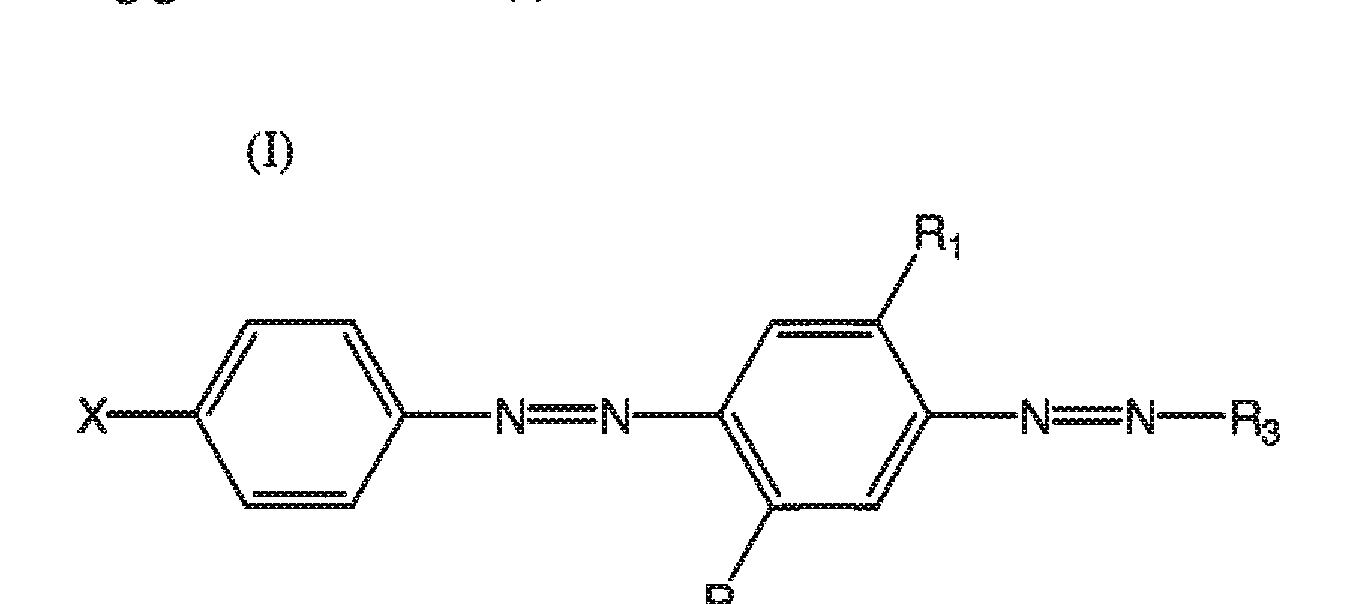


Claims


Priority Applications (11)
| Application Number | Priority Date | Filing Date | Title |
|---|---|---|---|
| CN201180050982XA CN103201370A (en) | 2010-10-22 | 2011-10-21 | Disazo colorants used as bluing agents |
| EP11785825.8A EP2630229B1 (en) | 2010-10-22 | 2011-10-21 | Bis-azo colorants for use as bluing agents |
| PL11785825T PL2630229T3 (en) | 2010-10-22 | 2011-10-21 | Bis-azo colorants for use as bluing agents |
| ES11785825T ES2699751T3 (en) | 2010-10-22 | 2011-10-21 | Diazo dyes for use as bluing agents |
| MX2013004459A MX357341B (en) | 2010-10-22 | 2011-10-21 | Bis-azo colorants for use as bluing agents. |
| CA2815479A CA2815479C (en) | 2010-10-22 | 2011-10-21 | Modified bis-azo colorants for use as bluing agents |
| JP2013535118A JP5833130B2 (en) | 2010-10-22 | 2011-10-21 | Bizazo dyes intended for use as bluing agents |
| BR112013009791-4A BR112013009791B1 (en) | 2010-10-22 | 2011-10-21 | COMPOSITION FOR CARE IN WASHING CLOTHING UNDERSTANDING BIS-AZO DYES FOR USE AS BLUEBERING AGENTS |
| US13/313,256 US10876079B2 (en) | 2010-10-22 | 2011-12-07 | Bis-azo colorants for use as bluing agents |
| ZA2013/02890A ZA201302890B (en) | 2010-10-22 | 2013-04-22 | Bis-azo colorants for use as bluing agents |
| US14/747,099 US20150291918A1 (en) | 2010-10-22 | 2015-06-23 | Bis-azo colorants for use as bluing agents |
Applications Claiming Priority (2)
| Application Number | Priority Date | Filing Date | Title |
|---|---|---|---|
| US12/910,258 US20120101018A1 (en) | 2010-10-22 | 2010-10-22 | Bis-azo colorants for use as bluing agents |
| US12/910,258 | 2010-10-22 |
Related Parent Applications (1)
| Application Number | Title | Priority Date | Filing Date |
|---|---|---|---|
| US12/910,258 Continuation US20120101018A1 (en) | 2010-10-22 | 2010-10-22 | Bis-azo colorants for use as bluing agents |
Related Child Applications (1)
| Application Number | Title | Priority Date | Filing Date |
|---|---|---|---|
| US13/313,256 Continuation US10876079B2 (en) | 2010-10-22 | 2011-12-07 | Bis-azo colorants for use as bluing agents |
Publications (1)
| Publication Number | Publication Date |
|---|---|
| WO2012054835A1 true WO2012054835A1 (en) | 2012-04-26 |
Family
ID=44906443
Family Applications (5)
| Application Number | Title | Priority Date | Filing Date |
|---|---|---|---|
| PCT/US2011/057270 Ceased WO2012054823A1 (en) | 2010-10-22 | 2011-10-21 | Detergent composition comprising bluing agent and clay soil removal / anti-redeposition agent |
| PCT/US2011/057262 Ceased WO2012054820A1 (en) | 2010-10-22 | 2011-10-21 | Detergent composition comprising bluing agent and rapidly water-soluble brightener |
| PCT/US2011/057264 Ceased WO2012054821A1 (en) | 2010-10-22 | 2011-10-21 | Low built detergent composition comprising bluing agent |
| PCT/US2011/057290 Ceased WO2012054835A1 (en) | 2010-10-22 | 2011-10-21 | Bis-azo colorants for use as bluing agents |
| PCT/US2011/057279 Ceased WO2012054827A1 (en) | 2010-10-22 | 2011-10-21 | Detergent composition comprising bluing agent and clay soil removal / anti-redeposition agent |
Family Applications Before (3)
| Application Number | Title | Priority Date | Filing Date |
|---|---|---|---|
| PCT/US2011/057270 Ceased WO2012054823A1 (en) | 2010-10-22 | 2011-10-21 | Detergent composition comprising bluing agent and clay soil removal / anti-redeposition agent |
| PCT/US2011/057262 Ceased WO2012054820A1 (en) | 2010-10-22 | 2011-10-21 | Detergent composition comprising bluing agent and rapidly water-soluble brightener |
| PCT/US2011/057264 Ceased WO2012054821A1 (en) | 2010-10-22 | 2011-10-21 | Low built detergent composition comprising bluing agent |
Family Applications After (1)
| Application Number | Title | Priority Date | Filing Date |
|---|---|---|---|
| PCT/US2011/057279 Ceased WO2012054827A1 (en) | 2010-10-22 | 2011-10-21 | Detergent composition comprising bluing agent and clay soil removal / anti-redeposition agent |
Country Status (12)
| Country | Link |
|---|---|
| US (7) | US20120101018A1 (en) |
| EP (5) | EP2630225A1 (en) |
| JP (2) | JP5833130B2 (en) |
| CN (6) | CN103339245B (en) |
| AR (1) | AR083503A1 (en) |
| BR (5) | BR112013009798A2 (en) |
| CA (1) | CA2815479C (en) |
| ES (1) | ES2699751T3 (en) |
| MX (5) | MX357338B (en) |
| PL (1) | PL2630229T3 (en) |
| WO (5) | WO2012054823A1 (en) |
| ZA (1) | ZA201302890B (en) |
Cited By (120)
| Publication number | Priority date | Publication date | Assignee | Title |
|---|---|---|---|---|
| EP2540825A2 (en) | 2011-06-30 | 2013-01-02 | The Procter & Gamble Company | Cleaning compositions comprising amylase variants reference to a sequence listing |
| EP2551336A1 (en) | 2011-07-25 | 2013-01-30 | The Procter & Gamble Company | Detergent compositions |
| WO2013025742A1 (en) | 2011-08-15 | 2013-02-21 | The Procter & Gamble Company | Detergent compositions containing pyridinol-n-oxide compounds |
| WO2013043852A2 (en) | 2011-09-20 | 2013-03-28 | The Procter & Gamble Company | Easy-rinse detergent compositions comprising isoprenoid-based surfactants |
| WO2013043855A2 (en) | 2011-09-20 | 2013-03-28 | The Procter & Gamble Company | High suds detergent compositions comprising isoprenoid-based surfactants |
| WO2013043805A1 (en) | 2011-09-20 | 2013-03-28 | The Procter & Gamble Company | Detergent compositions comprising primary surfactant systems comprising highly branched surfactants especially isoprenoid - based surfactants |
| WO2013043803A2 (en) | 2011-09-20 | 2013-03-28 | The Procter & Gamble Company | Detergent compositions comprising specific blend ratios of isoprenoid-based surfactants |
| WO2013043857A1 (en) | 2011-09-20 | 2013-03-28 | The Procter & Gamble Company | Detergent compositions comprising sustainable surfactant systems comprising isoprenoid-derived surfactants |
| WO2013142495A1 (en) | 2012-03-19 | 2013-09-26 | Milliken & Company | Carboxylate dyes |
| US20130303429A1 (en) * | 2012-05-09 | 2013-11-14 | The Procter & Gamble Company | Laundry detergent composition comprising a particle having hueing agent and clay |
| US20130303428A1 (en) * | 2012-05-09 | 2013-11-14 | Milliken & Company | Laundry Detergent Composition Comprising A Particle Having Hueing Agent and Clay |
| WO2014018309A1 (en) | 2012-07-26 | 2014-01-30 | The Procter & Gamble Company | Low ph liquid cleaning compositions with enzymes |
| EP2712915A1 (en) | 2012-10-01 | 2014-04-02 | The Procter and Gamble Company | Methods of treating a surface and compositions for use therein |
| WO2014160820A1 (en) | 2013-03-28 | 2014-10-02 | The Procter & Gamble Company | Cleaning compositions containing a polyetheramine |
| EP2862919A1 (en) * | 2013-10-17 | 2015-04-22 | The Procter and Gamble Company | Composition comprising shading dye |
| EP2862920A1 (en) * | 2013-10-17 | 2015-04-22 | The Procter and Gamble Company | Laundry treatment composition comprising a shading dye and chelant |
| EP2862921A1 (en) * | 2013-10-17 | 2015-04-22 | The Procter and Gamble Company | Liquid laundry composition comprising an alkoxylated polymer and a shading dye |
| CN104769094A (en) * | 2012-06-08 | 2015-07-08 | 宝洁公司 | Visually contrasting aesthetic particles having increased water solubility, particularly useful for combination with powdered or granular compositions |
| EP2899260A1 (en) | 2014-01-22 | 2015-07-29 | Unilever PLC | Process to manufacture a liquid detergent formulation |
| WO2015112341A1 (en) | 2014-01-22 | 2015-07-30 | The Procter & Gamble Company | Fabric treatment composition |
| WO2015130669A1 (en) | 2014-02-25 | 2015-09-03 | The Procter & Gamble Company | A process for making renewable surfactant intermediates and surfactants from fats and oils and products thereof |
| WO2015130653A1 (en) | 2014-02-25 | 2015-09-03 | The Procter & Gamble Company | A process for making renewable surfactant intermediates and surfactants from fats and oils and products thereof |
| WO2015148360A1 (en) | 2014-03-27 | 2015-10-01 | The Procter & Gamble Company | Cleaning compositions containing a polyetheramine |
| WO2015148361A1 (en) | 2014-03-27 | 2015-10-01 | The Procter & Gamble Company | Cleaning compositions containing a polyetheramine |
| WO2015171592A1 (en) | 2014-05-06 | 2015-11-12 | Milliken & Company | Laundry care compositions |
| WO2015187757A1 (en) | 2014-06-06 | 2015-12-10 | The Procter & Gamble Company | Detergent composition comprising polyalkyleneimine polymers |
| WO2016032993A1 (en) | 2014-08-27 | 2016-03-03 | The Procter & Gamble Company | Detergent composition comprising a cationic polymer |
| WO2016032991A1 (en) | 2014-08-27 | 2016-03-03 | The Procter & Gamble Company | Detergent composition comprising a cationic polymer |
| WO2016032992A1 (en) | 2014-08-27 | 2016-03-03 | The Procter & Gamble Company | Detergent composition comprising a cationic polymer |
| WO2016032995A1 (en) | 2014-08-27 | 2016-03-03 | The Procter & Gamble Company | Method of treating a fabric |
| WO2016044200A1 (en) | 2014-09-15 | 2016-03-24 | The Procter & Gamble Company | Detergent compositions containing salts of polyetheramines and polymeric acid |
| WO2016048674A1 (en) | 2014-09-25 | 2016-03-31 | The Procter & Gamble Company | Cleaning compositions containing a polyetheramine |
| WO2016049387A1 (en) | 2014-09-26 | 2016-03-31 | The Procter & Gamble Company | Cleaning compositions containing a polyetheramine |
| WO2016049388A1 (en) | 2014-09-25 | 2016-03-31 | The Procter & Gamble Company | Fabric care compositions containing a polyetheramine |
| WO2016048969A1 (en) | 2014-09-25 | 2016-03-31 | The Procter & Gamble Company | Detergent compositions containing a polyetheramine and an anionic soil release polymer |
| EP3075825A1 (en) | 2015-03-30 | 2016-10-05 | The Procter and Gamble Company | Solid free-flowing particulate laundry detergent composition |
| EP3075834A1 (en) | 2015-04-02 | 2016-10-05 | The Procter and Gamble Company | Solid free-flowing particulate laundry detergent composition |
| EP3075824A1 (en) | 2015-03-30 | 2016-10-05 | The Procter and Gamble Company | Solid free-flowing particulate laundry detergent composition |
| EP3075823A1 (en) | 2015-03-30 | 2016-10-05 | The Procter and Gamble Company | A spray-dried laundry detergent base particle |
| EP3075830A2 (en) | 2015-04-02 | 2016-10-05 | The Procter and Gamble Company | Solid free-flowing particulate laundry detergent composition |
| EP3075829A1 (en) | 2015-03-30 | 2016-10-05 | The Procter and Gamble Company | Solid free-flowing particulate laundry detergent composition |
| EP3075828A1 (en) | 2015-03-30 | 2016-10-05 | The Procter and Gamble Company | Solid free-flowing particulate laundry detergent composition |
| EP3075833A2 (en) | 2015-03-30 | 2016-10-05 | The Procter and Gamble Company | Solid free-flowing particulate laundry detergent composition |
| EP3075826A1 (en) | 2015-03-30 | 2016-10-05 | The Procter and Gamble Company | Solid free-flowing particulate laundry detergent composition |
| EP3075827A1 (en) | 2015-03-30 | 2016-10-05 | The Procter and Gamble Company | Solid free-flowing particulate laundry detergent composition |
| EP3075831A1 (en) | 2015-03-30 | 2016-10-05 | The Procter and Gamble Company | Solid free-flowing particulate laundry detergent composition |
| WO2016161219A1 (en) | 2015-04-02 | 2016-10-06 | The Procter & Gamble Company | Solid free-flowing particulate laundry detergent composition |
| WO2016178668A1 (en) | 2015-05-04 | 2016-11-10 | Milliken & Company | Leuco triphenylmethane colorants as bluing agents in laundry care compositions |
| WO2016200440A1 (en) | 2015-06-11 | 2016-12-15 | The Procter & Gamble Company | Device and methods for applying compositions to surfaces |
| EP3153425A1 (en) | 2015-10-06 | 2017-04-12 | The Procter and Gamble Company | Flexible box bag comprising detergent powder and a scoop |
| WO2017131852A1 (en) * | 2016-01-29 | 2017-08-03 | Milliken & Company | Bis-azo colorants for use as bluing agents |
| US9758286B2 (en) | 2015-10-06 | 2017-09-12 | The Procter & Gamble Company | Flexible box bag comprising soluble unit dose detergent pouch |
| EP3243897A1 (en) | 2016-05-09 | 2017-11-15 | The Procter & Gamble Company | Detergent composition comprising a fatty acid-transforming enzyme |
| EP3243896A1 (en) | 2016-05-09 | 2017-11-15 | The Procter and Gamble Company | Detergent composition comprising a fatty acid decarboxylase |
| EP3243898A2 (en) | 2016-05-09 | 2017-11-15 | The Procter & Gamble Company | Detergent composition comprising an oleic acid-transforming enzyme |
| EP3301162A1 (en) * | 2016-10-03 | 2018-04-04 | The Procter & Gamble Company | Low ph laundry detergent composition |
| EP3301163A1 (en) * | 2016-10-03 | 2018-04-04 | The Procter & Gamble Company | Low ph laundry detergent composition |
| EP3301164A1 (en) * | 2016-10-03 | 2018-04-04 | The Procter & Gamble Company | Low ph laundry detergent composition |
| US20180094222A1 (en) * | 2016-10-03 | 2018-04-05 | The Procter & Gamble Company | Laundry detergent composition |
| US20180094220A1 (en) * | 2016-10-03 | 2018-04-05 | The Procter & Gamble Company | Laundry detergent composition |
| US20180094219A1 (en) * | 2016-10-03 | 2018-04-05 | The Procter & Gamble Company | Laundry detergent composition |
| WO2018067485A1 (en) | 2016-10-03 | 2018-04-12 | The Procter & Gamble Company | Low ph laundry detergent composition |
| WO2018067494A1 (en) | 2016-10-03 | 2018-04-12 | The Procter & Gamble Company | Low ph laundry detergent composition |
| WO2018067483A1 (en) | 2016-10-03 | 2018-04-12 | The Procter & Gamble Company | Laundry detergent composition |
| WO2018084930A1 (en) | 2016-11-03 | 2018-05-11 | Milliken & Company | Leuco triphenylmethane colorants as bluing agents in laundry care compositions |
| EP3339416A1 (en) | 2016-12-22 | 2018-06-27 | The Procter & Gamble Company | Laundry detergent composition |
| EP3339414A1 (en) | 2016-12-22 | 2018-06-27 | The Procter & Gamble Company | Laundry detergent composition |
| EP3339419A1 (en) | 2016-12-22 | 2018-06-27 | The Procter & Gamble Company | Laundry detergent composition |
| EP3339418A1 (en) | 2016-12-22 | 2018-06-27 | The Procter & Gamble Company | Laundry detergent composition |
| EP3339420A1 (en) | 2016-12-22 | 2018-06-27 | The Procter & Gamble Company | Laundry detergent composition |
| EP3339413A1 (en) | 2016-12-22 | 2018-06-27 | The Procter & Gamble Company | Laundry detergent composition |
| EP3339417A1 (en) | 2016-12-22 | 2018-06-27 | The Procter & Gamble Company | Laundry detergent composition |
| EP3339415A1 (en) | 2016-12-22 | 2018-06-27 | The Procter & Gamble Company | Laundry detergent composition |
| EP3339407A1 (en) | 2016-12-22 | 2018-06-27 | The Procter & Gamble Company | Laundry detergent composition |
| WO2018118825A1 (en) | 2016-12-22 | 2018-06-28 | The Procter & Gamble Company | Laundry detergent composition |
| EP3546558A1 (en) | 2018-03-28 | 2019-10-02 | The Procter & Gamble Company | Laundry detergent composition |
| EP3546554A1 (en) | 2018-03-28 | 2019-10-02 | The Procter & Gamble Company | Spray-drying process |
| EP3546557A1 (en) | 2018-03-28 | 2019-10-02 | The Procter & Gamble Company | Catalase inhibition during a laundering process |
| EP3546559A1 (en) | 2018-03-28 | 2019-10-02 | The Procter & Gamble Company | Laundry detergent composition |
| WO2019191173A1 (en) | 2018-03-28 | 2019-10-03 | The Procter & Gamble Company | Process for preparing a spray-dried laundry detergent particle |
| WO2019191171A1 (en) | 2018-03-28 | 2019-10-03 | The Procter & Gamble Company | Laundry detergent composition |
| WO2019191172A1 (en) | 2018-03-28 | 2019-10-03 | The Procter & Gamble Company | Process for preparing a spray-dried laundry detergent particle |
| EP3594319A1 (en) | 2018-07-12 | 2020-01-15 | The Procter & Gamble Company | A solid free-flowing particulate laundry detergent composition |
| WO2020020703A1 (en) | 2018-07-27 | 2020-01-30 | Unilever N.V. | Laundry detergent |
| WO2020109227A1 (en) | 2018-11-28 | 2020-06-04 | Unilever N.V. | Large particles |
| WO2020151992A1 (en) | 2019-01-22 | 2020-07-30 | Unilever N.V. | Laundry detergent |
| WO2020222996A1 (en) | 2019-04-29 | 2020-11-05 | The Procter & Gamble Company | A process for making a laundry detergent composition |
| EP3754010A1 (en) | 2019-06-17 | 2020-12-23 | The Procter & Gamble Company | A solid free-flowing particulate laundry detergent composition comprises a detersive surfactant and a linear polyamine salt |
| EP3798290A1 (en) | 2019-09-30 | 2021-03-31 | The Procter & Gamble Company | Use of an anionically-modified cellulosic polymer as a dye transfer inhibitor during a textile laundering process |
| EP3936595A1 (en) | 2020-07-06 | 2022-01-12 | The Procter & Gamble Company | A process for making a particulate laundry detergent composition |
| WO2022077022A1 (en) | 2020-10-09 | 2022-04-14 | The Procter & Gamble Company | Packaged laundry detergent product |
| EP4108754A1 (en) | 2021-06-25 | 2022-12-28 | The Procter & Gamble Company | A process for making a packaged laundry detergent powder |
| EP4108756A1 (en) | 2021-06-25 | 2022-12-28 | The Procter & Gamble Company | A laundry detergent powder |
| EP4123005A1 (en) | 2021-07-19 | 2023-01-25 | The Procter & Gamble Company | Cleaning composition comprising bacterial spores |
| WO2023017794A1 (en) | 2021-08-10 | 2023-02-16 | 株式会社日本触媒 | Polyalkylene-oxide-containing compound |
| EP4212608A1 (en) | 2022-01-14 | 2023-07-19 | The Procter & Gamble Company | A method of making a spray-dried laundry detergent particle |
| WO2023150905A1 (en) | 2022-02-08 | 2023-08-17 | The Procter & Gamble Company | A method of laundering fabric |
| WO2023150903A1 (en) | 2022-02-08 | 2023-08-17 | The Procter & Gamble Company | A method of laundering fabric |
| EP4234666A1 (en) | 2022-02-24 | 2023-08-30 | The Procter & Gamble Company | Water-soluble unit dose article comprising a fibrous non-woven sheet and a surfactant system |
| EP4234672A1 (en) | 2022-02-24 | 2023-08-30 | The Procter & Gamble Company | Water-soluble unit dose article comprising a fibrous non-woven sheet and a hueing dye particle |
| EP4279570A1 (en) | 2022-05-19 | 2023-11-22 | The Procter & Gamble Company | A process for making a particulate laundry detergent composition |
| EP4299703A1 (en) | 2022-06-27 | 2024-01-03 | The Procter & Gamble Company | A solid free-flowing particulate laundry detergent composition |
| EP4299704A1 (en) | 2022-06-27 | 2024-01-03 | The Procter & Gamble Company | A method of laundering and drying fabric |
| EP4299702A1 (en) | 2022-06-27 | 2024-01-03 | The Procter & Gamble Company | A solid free-flowing particulate laundry detergent composition |
| EP4299701A1 (en) | 2022-06-27 | 2024-01-03 | The Procter & Gamble Company | A solid free-flowing particulate laundry detergent composition |
| EP4342969A1 (en) | 2022-09-21 | 2024-03-27 | The Procter & Gamble Company | A solid detergent cleaning composition |
| EP4342970A1 (en) | 2022-09-21 | 2024-03-27 | Milliken & Company | Coloured fabric hueing dye agent particles |
| EP4364929A1 (en) | 2022-11-01 | 2024-05-08 | The Procter & Gamble Company | Sealing jaws and water-soluble unit dose article comprising a fibrous non-woven sheet |
| EP4364930A1 (en) | 2022-11-01 | 2024-05-08 | The Procter & Gamble Company | Sealing jaws and water-soluble unit dose article comprising a fibrous non-woven sheet |
| EP4382592A1 (en) | 2022-12-06 | 2024-06-12 | The Procter & Gamble Company | Water-soluble unit dose article comprising a fibrous non-woven sheet and a surfactant system |
| EP4389866A1 (en) | 2022-12-23 | 2024-06-26 | The Procter & Gamble Company | A process of making a water-soluble detergent unit dose article |
| EP4389867A1 (en) | 2022-12-23 | 2024-06-26 | The Procter & Gamble Company | A process of making a laundry detergent article |
| EP4474453A1 (en) | 2023-06-05 | 2024-12-11 | The Procter & Gamble Company | A method of making a laundry detergent recycle stream composition |
| EP4484539A1 (en) | 2023-06-28 | 2025-01-01 | The Procter & Gamble Company | A method of laundering fabric |
| EP4484134A1 (en) | 2023-06-30 | 2025-01-01 | The Procter & Gamble Company | Dust extraction conducts and processes |
| EP4484538A1 (en) | 2023-06-28 | 2025-01-01 | The Procter & Gamble Company | A method of laundering fabric |
| EP4484530A1 (en) | 2023-06-28 | 2025-01-01 | The Procter & Gamble Company | A solid linear alkyl benzene sulphonate anionic detersive surfactant particle |
| WO2025006209A1 (en) | 2023-06-30 | 2025-01-02 | The Procter & Gamble Company | Biodegradable chelating agents and methods for fabric care |
| EP4512729A1 (en) | 2023-08-23 | 2025-02-26 | The Procter & Gamble Company | Container blanks, methods of folding the same, and uses of a container thereby obtained |
| EP4512730A1 (en) | 2023-08-23 | 2025-02-26 | The Procter & Gamble Company | Consumer products and methods for operating the same |
Families Citing this family (114)
| Publication number | Priority date | Publication date | Assignee | Title |
|---|---|---|---|---|
| US20140014137A1 (en) * | 2009-09-18 | 2014-01-16 | Ecolab Usa Inc. | Treatment of non-trans fats with acidic tetra sodium l-glutamic acid, n, n-diacetic acid (glda) |
| ES2661044T3 (en) | 2010-03-01 | 2018-03-27 | The Procter & Gamble Company | Composition comprising substituted cellulosic polymer and amylase |
| BR112013009279A2 (en) * | 2010-10-19 | 2016-07-26 | Novabay Pharmaceuticals Inc | antimicrobial polyether and polyol compounds |
| US20120101018A1 (en) | 2010-10-22 | 2012-04-26 | Gregory Scot Miracle | Bis-azo colorants for use as bluing agents |
| US9393070B2 (en) | 2012-04-24 | 2016-07-19 | Cibiem, Inc. | Endovascular catheters and methods for carotid body ablation |
| US9402677B2 (en) | 2012-06-01 | 2016-08-02 | Cibiem, Inc. | Methods and devices for cryogenic carotid body ablation |
| EP2854681A4 (en) | 2012-06-01 | 2016-02-17 | Cibiem Inc | Percutaneous methods and devices for carotid body ablation |
| WO2014005155A1 (en) * | 2012-06-30 | 2014-01-03 | Cibiem, Inc. | Carotid body ablation via directed energy |
| US9955946B2 (en) | 2014-03-12 | 2018-05-01 | Cibiem, Inc. | Carotid body ablation with a transvenous ultrasound imaging and ablation catheter |
| US10253281B2 (en) | 2012-08-20 | 2019-04-09 | Ecolab Usa Inc. | Method of washing textile articles |
| WO2014032269A1 (en) * | 2012-08-31 | 2014-03-06 | The Procter & Gamble Company | Laundry detergents and cleaning compositions comprising carboxyl group-containing polymers |
| ES2695105T3 (en) * | 2012-08-31 | 2019-01-02 | Nippon Catalytic Chem Ind | Polymer containing carboxyl groups and composition containing it |
| ES2791849T3 (en) | 2012-08-31 | 2020-11-06 | Procter & Gamble | Laundry detergents and cleaning compositions comprising polymers containing carboxyl groups |
| US9133421B2 (en) | 2012-10-24 | 2015-09-15 | The Procter & Gamble Company | Compositions comprising anti-foams |
| US9095787B2 (en) | 2012-10-24 | 2015-08-04 | The Procter & Gamble Company | Compositions comprising anti-foams |
| BR112015012915A2 (en) | 2012-12-06 | 2017-07-11 | Procter & Gamble | soluble containment bag comprising toning dye |
| EP2740785A1 (en) | 2012-12-06 | 2014-06-11 | The Procter and Gamble Company | Use of composition to reduce weeping and migration through a water soluble film |
| US10184097B2 (en) | 2013-02-08 | 2019-01-22 | Ecolab Usa Inc. | Protective coatings for detersive agents and methods of forming and detecting the same |
| EP2767579B1 (en) | 2013-02-19 | 2018-07-18 | The Procter and Gamble Company | Method of laundering a fabric |
| EP2767582A1 (en) | 2013-02-19 | 2014-08-20 | The Procter and Gamble Company | Method of laundering a fabric |
| PL2767581T3 (en) | 2013-02-19 | 2021-02-08 | The Procter & Gamble Company | Method of laundering a fabric |
| US11118031B2 (en) | 2013-04-12 | 2021-09-14 | The Procter & Gamble Company | Fibrous structures comprising polysaccharide filaments |
| WO2014168775A1 (en) | 2013-04-12 | 2014-10-16 | The Procter & Gamble Company | Fibrous structures exhibiting improved whiteness index values |
| EP2984214A1 (en) | 2013-04-12 | 2016-02-17 | The Procter & Gamble Company | Hydroxyl polymer fiber structures comprising ammonium alkylsulfonate salts and methods for making same |
| WO2014193859A1 (en) | 2013-05-28 | 2014-12-04 | The Procter & Gamble Company | Surface treatment compositions comprising photochromic dyes |
| US9487738B2 (en) * | 2013-10-09 | 2016-11-08 | Ecolab Usa Inc. | Solidification matrix comprising a carboxylic acid terpolymer |
| EP3097173B1 (en) | 2014-01-22 | 2020-12-23 | The Procter and Gamble Company | Fabric treatment composition |
| EP3097172A1 (en) | 2014-01-22 | 2016-11-30 | The Procter & Gamble Company | Method of treating textile fabrics |
| EP3097174A1 (en) | 2014-01-22 | 2016-11-30 | The Procter & Gamble Company | Method of treating textile fabrics |
| US9556406B2 (en) | 2014-02-19 | 2017-01-31 | Milliken & Company | Compositions comprising benefit agent and aprotic solvent |
| WO2015127004A1 (en) | 2014-02-19 | 2015-08-27 | The Procter & Gamble Company | Composition comprising benefit agent and aprotic solvent |
| EP2924102A1 (en) * | 2014-03-24 | 2015-09-30 | The Procter and Gamble Company | Laundry unit dose article |
| CN106255743A (en) * | 2014-05-12 | 2016-12-21 | 宝洁公司 | Ways to Wash Fabrics |
| WO2016023145A1 (en) * | 2014-08-11 | 2016-02-18 | The Procter & Gamble Company | Laundry detergent |
| EP2987848A1 (en) | 2014-08-19 | 2016-02-24 | The Procter & Gamble Company | Method of laundering a fabric |
| EP2987849A1 (en) | 2014-08-19 | 2016-02-24 | The Procter and Gamble Company | Method of Laundering a Fabric |
| BR112017003432A2 (en) * | 2014-09-25 | 2017-11-28 | Procter & Gamble | laundry detergent and cleaning compositions comprising sulfonate group-containing polymers |
| BR112017010239A2 (en) | 2014-11-17 | 2018-01-02 | Procter & Gamble | benefit agent release compositions |
| CN106999618A (en) | 2014-12-08 | 2017-08-01 | 金诺斯公司 | Additive composition and method for pigment disinfection |
| KR102457934B1 (en) * | 2015-01-16 | 2022-10-24 | 로디아 오퍼레이션스 | How to reduce graying of fabrics |
| MX2017009840A (en) | 2015-01-29 | 2017-11-02 | Ecolab Usa Inc | Composition and method for treatment of stains in textiles. |
| US10633617B2 (en) * | 2015-04-23 | 2020-04-28 | The Procter & Gamble Company | Detergent compositions |
| HUE039080T2 (en) | 2015-04-29 | 2018-12-28 | Procter & Gamble | Method of treating a fabric |
| EP3088504B1 (en) | 2015-04-29 | 2021-07-21 | The Procter & Gamble Company | Method of treating a fabric |
| CN107532116B (en) | 2015-04-29 | 2021-05-07 | 宝洁公司 | method of treating fabrics |
| DK3088505T3 (en) | 2015-04-29 | 2020-08-03 | Procter & Gamble | PROCEDURE FOR TREATMENT OF A TEXTILE FABRIC |
| DK3088506T3 (en) | 2015-04-29 | 2018-08-13 | Procter & Gamble | detergent |
| EP3303535B1 (en) | 2015-05-27 | 2018-10-03 | Unilever PLC | Laundry detergent composition |
| BR112017025607B1 (en) | 2015-06-02 | 2022-08-30 | Unilever Ip Holdings B.V. | DETERGENT COMPOSITION FOR WASHING CLOTHES AND DOMESTIC FABRIC TREATMENT METHOD |
| EP3101104B1 (en) * | 2015-06-05 | 2019-04-24 | The Procter and Gamble Company | Compacted liquid laundry detergent composition |
| BR112018006212B1 (en) | 2015-10-01 | 2022-04-12 | Unilever Ip Holdings B.V. | Powder detergent composition formed by phosphate-free carbonate and method of domestic treatment of a fabric |
| JP2019502779A (en) | 2015-11-26 | 2019-01-31 | ザ プロクター アンド ギャンブル カンパニー | Liquid detergent composition containing protease and encapsulated lipase |
| US9719056B1 (en) * | 2016-01-29 | 2017-08-01 | The Procter & Gamble Company | Bis-azo colorants for use as bluing agents |
| EP3414311A4 (en) | 2016-02-12 | 2019-09-04 | Kinnos Inc. | COMPOSITIONS AND METHODS FOR USE IN DECONTAMINATING SURFACES |
| CN108699490B (en) * | 2016-02-17 | 2020-06-02 | 荷兰联合利华有限公司 | whitening composition |
| EP3417039B1 (en) * | 2016-02-17 | 2019-07-10 | Unilever PLC | Whitening composition |
| CN108603140B (en) * | 2016-02-17 | 2020-09-08 | 荷兰联合利华有限公司 | whitening composition |
| CN109196083A (en) | 2016-05-17 | 2019-01-11 | 荷兰联合利华有限公司 | Liquid laundry detergent compositions |
| ES2985315T3 (en) | 2016-05-17 | 2024-11-05 | Unilever Ip Holdings B V | Liquid detergent compositions for laundry |
| US10457900B2 (en) * | 2016-05-20 | 2019-10-29 | The Proctor & Gamble Company | Detergent composition comprising an alkyl ether sulfate-rich surfactant system and coated encapsulates |
| US10494592B2 (en) * | 2016-05-20 | 2019-12-03 | The Procter & Gamble Company | Detergent composition comprising anionic/nonionic/cationic surfactant system and encapsulates |
| CN106349752A (en) * | 2016-08-25 | 2017-01-25 | 山西青山化工有限公司 | Stilbene bis triazine liquid whitener and preparation method thereof |
| EP3519542B1 (en) | 2016-09-27 | 2020-02-19 | Unilever PLC | Domestic laundering method |
| WO2018072979A1 (en) | 2016-10-18 | 2018-04-26 | Unilever Plc | Whitening composition |
| CN109906251A (en) * | 2016-11-01 | 2019-06-18 | 美利肯公司 | As the procrypsis colorant of blueing agent in laundry care composition |
| US10676699B2 (en) * | 2016-11-01 | 2020-06-09 | The Procter & Gamble Company | Leuco colorants as bluing agents in laundry care compositions |
| CN109890949B (en) * | 2016-11-01 | 2021-10-01 | 宝洁公司 | Leuco colorants as bluing agents in laundry care compositions, packaging, kits and methods therefor |
| WO2019075143A1 (en) * | 2017-10-12 | 2019-04-18 | The Procter & Gamble Company | Leuco colorants as bluing agents in laundry care compositions |
| MX2019009275A (en) * | 2017-02-06 | 2019-12-11 | Procter & Gamble | Laundry detergent sheet with printed graphic patterns. |
| CN110892053A (en) | 2017-07-07 | 2020-03-17 | 荷兰联合利华有限公司 | Laundry cleaning compositions |
| EP3649222B1 (en) | 2017-07-07 | 2024-03-13 | Unilever IP Holdings B.V. | Whitening composition |
| EP3717616B1 (en) | 2017-11-30 | 2021-10-13 | Unilever IP Holdings B.V. | Detergent composition comprising protease |
| EP3775121B1 (en) | 2018-04-03 | 2021-11-17 | Unilever Global IP Limited | Dye granule |
| WO2019219531A1 (en) | 2018-05-17 | 2019-11-21 | Unilever Plc | Cleaning composition |
| WO2019219302A1 (en) | 2018-05-17 | 2019-11-21 | Unilever Plc | Cleaning composition comprising rhamnolipid and alkyl ether carboxylate surfactants |
| CA3207822A1 (en) | 2018-06-20 | 2019-12-26 | The Procter & Gamble Company | A fabric care or home care product comprising polysaccharide derivatives |
| BR112021000774A2 (en) | 2018-07-17 | 2021-04-13 | Unilever Ip Holdings B.V. | USE OF RAMNOLIPID IN A SURFACE SYSTEM FOR MANUAL WASHING DETERGENTS |
| BR112021004507A2 (en) | 2018-09-17 | 2021-06-08 | Unilever Ip Holdings B.V. | detergent composition, method of treating a substrate with a detergent composition and use of a bacterial lipase enzyme |
| BR112021009807A2 (en) | 2018-11-20 | 2021-08-17 | Unilever Ip Holdings B.V. | detergent composition, method of treating a fabric substrate and use of an isomerase enzyme |
| CN113056550B (en) | 2018-11-20 | 2022-10-28 | 联合利华知识产权控股有限公司 | Detergent composition |
| WO2020104157A1 (en) | 2018-11-20 | 2020-05-28 | Unilever Plc | Detergent composition |
| EP3884026B1 (en) | 2018-11-20 | 2024-06-26 | Unilever Global Ip Limited | Detergent composition |
| EP3884023B1 (en) | 2018-11-20 | 2024-07-17 | Unilever Global Ip Limited | Detergent composition |
| CN109881500B (en) * | 2019-03-05 | 2020-06-19 | 游晟纺织科技(深圳)有限公司 | Textile fabric without fluorescent whitening agent and preparation method thereof |
| EP3750978A1 (en) | 2019-06-12 | 2020-12-16 | Unilever N.V. | Laundry detergent composition |
| EP3750979A1 (en) | 2019-06-12 | 2020-12-16 | Unilever N.V. | Use of laundry detergent composition |
| EP3990604B1 (en) | 2019-06-28 | 2022-12-14 | Unilever Global IP Limited | Detergent composition |
| EP3990598B1 (en) | 2019-06-28 | 2025-05-07 | Unilever Global IP Limited | Detergent composition |
| US20220364020A1 (en) | 2019-06-28 | 2022-11-17 | Conopco, Inc., D/B/A Unilever | Detergent composition |
| WO2020260006A1 (en) | 2019-06-28 | 2020-12-30 | Unilever Plc | Detergent compositions |
| CN113891930A (en) | 2019-06-28 | 2022-01-04 | 联合利华知识产权控股有限公司 | Detergent composition |
| WO2020259947A1 (en) | 2019-06-28 | 2020-12-30 | Unilever Plc | Detergent composition |
| BR112022003050A2 (en) | 2019-09-02 | 2022-05-17 | Unilever Ip Holdings B V | Aqueous laundry detergent composition and household method for treating a fabric |
| AR120142A1 (en) | 2019-10-07 | 2022-02-02 | Unilever Nv | DETERGENT COMPOSITION |
| WO2021185956A1 (en) | 2020-03-19 | 2021-09-23 | Unilever Ip Holdings B.V. | Detergent composition |
| EP4121502A1 (en) | 2020-03-19 | 2023-01-25 | Unilever IP Holdings B.V. | Detergent composition |
| WO2021249927A1 (en) | 2020-06-08 | 2021-12-16 | Unilever Ip Holdings B.V. | Method of improving protease activity |
| WO2022023250A1 (en) | 2020-07-27 | 2022-02-03 | Unilever Ip Holdings B.V. | Use of an enzyme and surfactant for inhibiting microorganisms |
| CN111849201A (en) * | 2020-07-30 | 2020-10-30 | 江苏华彩化学科技有限公司 | Macromolecular dye and application thereof in super-concentrated efficient antibacterial laundry gel bead |
| WO2022043042A1 (en) | 2020-08-28 | 2022-03-03 | Unilever Ip Holdings B.V. | Detergent composition |
| WO2022043045A1 (en) | 2020-08-28 | 2022-03-03 | Unilever Ip Holdings B.V. | Detergent composition |
| US20230303949A1 (en) | 2020-08-28 | 2023-09-28 | Conopco, Inc., D/B/A Unilever | Surfactant and detergent composition |
| CN116157496A (en) | 2020-08-28 | 2023-05-23 | 联合利华知识产权控股有限公司 | Surfactants and detergent compositions |
| CN116096845B (en) | 2020-08-28 | 2025-08-19 | 联合利华知识产权控股有限公司 | Detergent composition |
| CN116710543A (en) | 2020-12-17 | 2023-09-05 | 联合利华知识产权控股有限公司 | cleaning composition |
| EP4263771B1 (en) | 2020-12-17 | 2025-02-12 | Unilever IP Holdings B.V. | Use of a cleaning composition to improve cold cleaning performance |
| WO2022268657A1 (en) | 2021-06-24 | 2022-12-29 | Unilever Ip Holdings B.V. | Unit dose cleaning composition |
| EP4112707A1 (en) | 2021-06-30 | 2023-01-04 | The Procter & Gamble Company | Fabric treatment |
| EP4399269B1 (en) | 2021-09-09 | 2025-11-05 | Milliken & Company | Phenolic compositions for malodor reduction |
| EP4405450B1 (en) | 2021-09-20 | 2025-01-29 | Unilever IP Holdings B.V. | Detergent composition |
| EP4433568B1 (en) | 2021-10-21 | 2025-02-26 | Unilever IP Holdings B.V. | Detergent compositions |
| CN118647704A (en) | 2022-01-28 | 2024-09-13 | 联合利华知识产权控股有限公司 | Laundry composition |
| EP4574948A1 (en) * | 2023-12-22 | 2025-06-25 | The Procter & Gamble Company | Granular laundry detergent composition comprising an optical brightener and a soil release polymer |
| EP4574950A1 (en) * | 2023-12-22 | 2025-06-25 | The Procter & Gamble Company | Granular laundry detergent composition comprising an optical brightener and a hueing dye |
Citations (61)
| Publication number | Priority date | Publication date | Assignee | Title |
|---|---|---|---|---|
| US2220099A (en) | 1934-01-10 | 1940-11-05 | Gen Aniline & Flim Corp | Sulphonic acids |
| US2477383A (en) | 1946-12-26 | 1949-07-26 | California Research Corp | Sulfonated detergent and its method of preparation |
| US3929678A (en) | 1974-08-01 | 1975-12-30 | Procter & Gamble | Detergent composition having enhanced particulate soil removal performance |
| US4228042A (en) | 1978-06-26 | 1980-10-14 | The Procter & Gamble Company | Biodegradable cationic surface-active agents containing ester or amide and polyalkoxy group |
| US4239660A (en) | 1978-12-13 | 1980-12-16 | The Procter & Gamble Company | Detergent composition comprising a hydrolyzable cationic surfactant and specific alkalinity source |
| US4260529A (en) | 1978-06-26 | 1981-04-07 | The Procter & Gamble Company | Detergent composition consisting essentially of biodegradable nonionic surfactant and cationic surfactant containing ester or amide |
| US4483780A (en) | 1982-04-26 | 1984-11-20 | The Procter & Gamble Company | Detergent compositions containing polyglycoside and polyethoxylate detergent surfactants |
| US4483779A (en) | 1982-04-26 | 1984-11-20 | The Procter & Gamble Company | Detergent compositions comprising polyglycoside and polyethoxylate surfactants and anionic fluorescer |
| US4565647A (en) | 1982-04-26 | 1986-01-21 | The Procter & Gamble Company | Foaming surfactant compositions |
| WO1992006162A1 (en) | 1990-09-28 | 1992-04-16 | The Procter & Gamble Company | Detergent containing alkyl sulfate and polyhydroxy fatty acid amide surfactants |
| WO1993019038A1 (en) | 1992-03-26 | 1993-09-30 | The Procter & Gamble Company | Process for reducing the levels of fatty acid contaminants in polyhydroxy fatty acid amide surfactants |
| WO1993019146A1 (en) | 1992-03-16 | 1993-09-30 | The Procter & Gamble Company | Fluid compositions containing polyhydroxy fatty acid amides |
| WO1994009099A1 (en) | 1992-10-13 | 1994-04-28 | The Procter & Gamble Company | Fluid compositions containing polyhydroxy fatty acid amides |
| US5332528A (en) | 1990-09-28 | 1994-07-26 | The Procter & Gamble Company | Polyhydroxy fatty acid amides in soil release agent-containing detergent compositions |
| US5346588A (en) | 1989-10-30 | 1994-09-13 | Lenzing Aktiengesellschaft | Process for the chlorine-free bleaching of cellulosic materials with ozone |
| US5360569A (en) | 1993-11-12 | 1994-11-01 | Lever Brothers Company, Division Of Conopco, Inc. | Activation of bleach precursors with catalytic imine quaternary salts |
| US5370826A (en) | 1993-11-12 | 1994-12-06 | Lever Brothers Company, Division Of Conopco, Inc. | Quaternay oxaziridinium salts as bleaching compounds |
| WO1995013352A1 (en) | 1993-11-12 | 1995-05-18 | Unilever N.V. | Imine quaternary salts as bleach catalysts |
| WO1995013353A1 (en) | 1993-11-12 | 1995-05-18 | Unilever N.V. | Activation of bleach precursors with imine quaternary salts |
| US5482515A (en) | 1993-11-12 | 1996-01-09 | Lever Brothers Company, Division Of Conopco, Inc. | Imine quaternary salts as bleach catalysts |
| US5576282A (en) | 1995-09-11 | 1996-11-19 | The Procter & Gamble Company | Color-safe bleach boosters, compositions and laundry methods employing same |
| US5718614A (en) | 1995-08-28 | 1998-02-17 | Electro-Matic Products Company | Control apparatus for grinder |
| WO1998017767A1 (en) | 1996-10-18 | 1998-04-30 | The Procter & Gamble Company | Detergent compositions |
| US5759990A (en) | 1996-10-21 | 1998-06-02 | The Procter & Gamble Company | Concentrated fabric softening composition with good freeze/thaw recovery and highly unsaturated fabric softener compound therefor |
| WO1998035002A1 (en) | 1997-02-11 | 1998-08-13 | The Procter & Gamble Company | Cleaning compositions |
| WO1998035003A1 (en) | 1997-02-11 | 1998-08-13 | The Procter & Gamble Company | Detergent compound |
| WO1998035006A1 (en) | 1997-02-11 | 1998-08-13 | The Procter & Gamble Company | Liquid cleaning composition |
| WO1998035005A1 (en) | 1997-02-11 | 1998-08-13 | The Procter & Gamble Company | A cleaning composition |
| WO1998035004A1 (en) | 1997-02-11 | 1998-08-13 | The Procter & Gamble Company | Solid detergent compositions |
| WO1999005084A1 (en) | 1997-07-21 | 1999-02-04 | The Procter & Gamble Company | Process for making alkylbenzenesulfonate surfactants from alcohols and products thereof |
| WO1999005242A1 (en) | 1997-07-21 | 1999-02-04 | The Procter & Gamble Company | Improved alkylbenzenesulfonate surfactants |
| WO1999005082A1 (en) | 1997-07-21 | 1999-02-04 | The Procter & Gamble Company | Improved processes for making alkylbenzenesulfonate surfactants and products thereof |
| WO1999005241A1 (en) | 1997-07-21 | 1999-02-04 | The Procter & Gamble Company | Cleaning products comprising improved alkylarylsulfonate surfactants prepared via vinylidene olefins and processes for preparation thereof |
| WO1999005244A1 (en) | 1997-07-21 | 1999-02-04 | The Procter & Gamble Company | Improved alkyl aryl sulfonate surfactants |
| WO1999005243A1 (en) | 1997-07-21 | 1999-02-04 | The Procter & Gamble Company | Detergent compositions containing mixtures of crystallinity-disrupted surfactants |
| WO1999007656A2 (en) | 1997-08-08 | 1999-02-18 | The Procter & Gamble Company | Improved processes for making surfactants via adsorptive separation and products thereof |
| US6004922A (en) | 1996-05-03 | 1999-12-21 | The Procter & Gamble Company | Laundry detergent compositions comprising cationic surfactants and modified polyamine soil dispersents |
| US6008181A (en) | 1996-04-16 | 1999-12-28 | The Procter & Gamble Company | Mid-Chain branched Alkoxylated Sulfate Surfactants |
| US6020303A (en) | 1996-04-16 | 2000-02-01 | The Procter & Gamble Company | Mid-chain branched surfactants |
| US6022844A (en) | 1996-03-05 | 2000-02-08 | The Procter & Gamble Company | Cationic detergent compounds |
| WO2000023548A1 (en) | 1998-10-20 | 2000-04-27 | The Procter & Gamble Company | Laundry detergents comprising modified alkylbenzene sulfonates |
| WO2000023549A1 (en) | 1998-10-20 | 2000-04-27 | The Procter & Gamble Company | Laundry detergents comprising modified alkylbenzene sulfonates |
| US6060443A (en) | 1996-04-16 | 2000-05-09 | The Procter & Gamble Company | Mid-chain branched alkyl sulfate surfactants |
| US6093856A (en) | 1996-11-26 | 2000-07-25 | The Procter & Gamble Company | Polyoxyalkylene surfactants |
| WO2000047708A1 (en) | 1999-02-10 | 2000-08-17 | The Procter & Gamble Company | Low density particulate solids useful in laundry detergents |
| US6136769A (en) | 1996-05-17 | 2000-10-24 | The Procter & Gamble Company | Alkoxylated cationic detergency ingredients |
| US6150322A (en) | 1998-08-12 | 2000-11-21 | Shell Oil Company | Highly branched primary alcohol compositions and biodegradable detergents made therefrom |
| US6166117A (en) | 1997-06-11 | 2000-12-26 | Kuraray Co., Ltd. | Water-soluble film |
| US6221825B1 (en) | 1996-12-31 | 2001-04-24 | The Procter & Gamble Company | Thickened, highly aqueous liquid detergent compositions |
| WO2001042408A2 (en) | 1999-12-08 | 2001-06-14 | The Procter & Gamble Company | Ether-capped poly(oxyalkylated) alcohol surfactants |
| US6306812B1 (en) | 1997-03-07 | 2001-10-23 | Procter & Gamble Company, The | Bleach compositions containing metal bleach catalyst, and bleach activators and/or organic percarboxylic acids |
| US6326348B1 (en) | 1996-04-16 | 2001-12-04 | The Procter & Gamble Co. | Detergent compositions containing selected mid-chain branched surfactants |
| US6482994B2 (en) | 1997-08-02 | 2002-11-19 | The Procter & Gamble Company | Ether-capped poly(oxyalkylated) alcohol surfactants |
| US6494920B1 (en) | 1999-02-04 | 2002-12-17 | Cognis Deutschland Gmbh & Co. Kg | Detergent mixtures |
| EP1328616A2 (en) | 2000-10-27 | 2003-07-23 | The Procter & Gamble Company | Stabilized liquid compositions |
| EP1396536A1 (en) | 2002-09-05 | 2004-03-10 | The Procter & Gamble Company | Structuring systems for fabric treatment compostions |
| US6787512B1 (en) | 2003-03-19 | 2004-09-07 | Monosol, Llc | Water-soluble copolymer film packet |
| US20040204337A1 (en) | 2003-03-25 | 2004-10-14 | The Procter & Gamble Company | Fabric care compositions comprising cationic starch |
| US20040229769A1 (en) | 2000-12-27 | 2004-11-18 | Colgate-Palmolive Company | Thickened fabric conditioners |
| WO2005040286A1 (en) * | 2003-10-27 | 2005-05-06 | Clariant International Ltd | Storagestable concentrated aqueous solutions of anionic dis- or tetrazo dyestuffs |
| EP2133410A1 (en) | 2008-06-13 | 2009-12-16 | The Procter and Gamble Company | Multi-compartment pouch |
Family Cites Families (43)
| Publication number | Priority date | Publication date | Assignee | Title |
|---|---|---|---|---|
| CH426059A (en) | 1960-02-15 | 1966-12-15 | Sandoz Ag | Process for the preparation of disazo compounds |
| DE1153476B (en) | 1960-02-15 | 1963-08-29 | Sandoz Ag | Process for the preparation of disazo dyes |
| CH532640A (en) * | 1969-04-17 | 1973-01-15 | Ciba Geigy Ag | Use of certain disazo compounds as dyes |
| US3762859A (en) * | 1971-03-15 | 1973-10-02 | Colgate Palmolive Co | Enhancing the apparent whiteness of fabrics by applying an effective amount of an alkali and heat stable water soluble disazo blue dyestuff fabric softening and detergent composition therefor |
| GB2036779B (en) | 1978-11-22 | 1983-03-09 | Bayer Ag | Polyether disazo dyestuffs |
| DE2948456A1 (en) * | 1979-12-01 | 1981-06-11 | Basf Ag, 6700 Ludwigshafen | DISAZO DYES |
| DE3049454A1 (en) * | 1980-12-30 | 1982-07-29 | Bayer Ag, 5090 Leverkusen | LIQUID CRYSTAL MATERIAL CONTAINING DISAZO DYES |
| US4400320A (en) | 1981-07-13 | 1983-08-23 | Milliken Research Corporation | Alkyleneoxy fugitive tints containing a 2-amino, 6-methoxy benzathiazole group and process for preparing such fugitive tints |
| GB2105738B (en) * | 1981-07-20 | 1985-05-22 | Mitsubishi Chem Ind | Reactive disazo dyes |
| JPS5813789A (en) * | 1981-07-20 | 1983-01-26 | 三菱化学株式会社 | Dis-azo dye for cellulose containing fibers |
| JPS5975952A (en) * | 1982-10-25 | 1984-04-28 | Mitsubishi Chem Ind Ltd | Disazo compounds and reactive disazo dyes |
| US4597898A (en) * | 1982-12-23 | 1986-07-01 | The Proctor & Gamble Company | Detergent compositions containing ethoxylated amines having clay soil removal/anti-redeposition properties |
| JPS61151269A (en) * | 1984-12-25 | 1986-07-09 | Mitsubishi Chem Ind Ltd | disazo dye |
| US5332806A (en) * | 1990-05-18 | 1994-07-26 | Ciba-Geigy Corporation | Disazo dyes which contain 2-hydroxynaphthyl moiety |
| GB9217358D0 (en) | 1992-08-14 | 1992-09-30 | Ici Plc | Chemical compounds |
| CA2173136A1 (en) * | 1994-03-31 | 1995-10-12 | Peter Robert Garrett | Detergent compositions |
| US5700386A (en) * | 1996-08-08 | 1997-12-23 | The Procter & Gamble Company | Process for making soil release polymer granules |
| US6031023A (en) | 1997-12-03 | 2000-02-29 | Milliken & Company | Dry erase ink composition |
| CA2325620C (en) * | 1999-11-15 | 2004-05-11 | The Procter & Gamble Company | Bleach-containing non-aqueous detergent formulated to control dye transfer and sudsing in high efficiency washing machines |
| ITMI20010884A1 (en) * | 2001-04-27 | 2002-10-27 | 3V Sigma Spa | DETERGENT COMPOSITIONS |
| CN1397589A (en) * | 2001-07-18 | 2003-02-19 | 三菱瓦斯化学株式会社 | Prodn. method of optical material |
| WO2003020808A1 (en) * | 2001-09-03 | 2003-03-13 | Basf Aktiengesellschaft | Reinforcement of the effect of optical brighteners by means of polymers |
| US20030060387A1 (en) * | 2001-09-20 | 2003-03-27 | Unilever Home And Personal Care, Usa, Division Of Conopco, Inc. | Water-soluble package with fluorescent dye in the film |
| AU2003230410A1 (en) | 2002-05-16 | 2003-12-02 | The Procter And Gamble Company | Rinse-added fabric treatment composition and methods and uses thereof |
| AU2003235517A1 (en) * | 2002-05-16 | 2003-12-02 | The Procter And Gamble Company | Fabric conditioning composition comprising agent for enhancing the appearance of the rinse solution |
| BR0316623A (en) | 2002-11-26 | 2005-10-11 | Hercules Inc | Soluble associative carboxymethylcellulose, method of manufacture and uses thereof |
| GB0314210D0 (en) * | 2003-06-18 | 2003-07-23 | Unilever Plc | Laundry treatment compositions |
| ES2322864T3 (en) * | 2004-09-23 | 2009-06-30 | Unilever N.V. | COMPOSITIONS OF TREATMENT OF DIRTY CLOTHING. |
| US20060122093A1 (en) | 2004-12-07 | 2006-06-08 | Permejo Fides L R | Laundry detergent composition with mixed builder system |
| CN101072859A (en) * | 2004-12-07 | 2007-11-14 | 宝洁公司 | Laundry detergent composition with mixed builder system |
| BRPI0607869B1 (en) | 2005-02-17 | 2018-02-06 | Hercules Incorporated | COMPOSITION OF BLOCK HYDROXYETILCELLULOSIS, DERIVATIVES OF THE SAME AND FLUIDIZATION PROCESS FOR THEIR MANUFACTURING |
| EP1754781B1 (en) * | 2005-08-19 | 2013-04-03 | The Procter and Gamble Company | A solid laundry detergent composition comprising anionic detersive surfactant and a calcium-augmented technology |
| ES2960774T3 (en) * | 2006-01-23 | 2024-03-06 | Procter & Gamble | COMPOSITIONS CONTAINING ENZYME AND TISSUE MATTING AGENT |
| EP1984485B1 (en) * | 2006-02-17 | 2011-08-31 | Unilever PLC | Laundry treatment compositions |
| BRPI0707889B1 (en) * | 2006-02-24 | 2019-07-09 | Unilever N.V. | WATER FORMULATION OF LIQUID DETERGENT FOR WASHING CLOTHES |
| CA2642970C (en) * | 2006-03-22 | 2013-09-24 | The Procter & Gamble Company | Liquid treatment compositions comprising pearlescent agents |
| CA2709609C (en) * | 2008-01-04 | 2013-05-28 | The Procter & Gamble Company | Glycosyl hydrolase enzyme and fabric hueing agent containing compositions |
| EP2135933B1 (en) * | 2008-06-20 | 2013-04-03 | The Procter and Gamble Company | Laundry composition |
| CA2734878C (en) | 2008-09-01 | 2014-10-21 | The Procter & Gamble Company | Laundry detergent or cleaning composition comprising sulfonate group-containing copolymers and manufacturing method thereof |
| EP2166078B1 (en) * | 2008-09-12 | 2018-11-21 | The Procter & Gamble Company | Laundry particle made by extrusion comprising a hueing dye |
| US20120101018A1 (en) | 2010-10-22 | 2012-04-26 | Gregory Scot Miracle | Bis-azo colorants for use as bluing agents |
| US8378083B2 (en) * | 2010-10-22 | 2013-02-19 | Milliken & Company | Bis-azo colorants for use as bluing agents |
| WO2010151906A2 (en) * | 2010-10-22 | 2010-12-29 | Milliken & Company | Bis-azo colorants for use as bluing agents |
-
2010
- 2010-10-22 US US12/910,258 patent/US20120101018A1/en not_active Abandoned
-
2011
- 2011-10-20 AR ARP110103893A patent/AR083503A1/en unknown
- 2011-10-21 MX MX2013004462A patent/MX357338B/en active IP Right Grant
- 2011-10-21 EP EP11778757.2A patent/EP2630225A1/en not_active Ceased
- 2011-10-21 WO PCT/US2011/057270 patent/WO2012054823A1/en not_active Ceased
- 2011-10-21 MX MX2013004463A patent/MX357388B/en active IP Right Grant
- 2011-10-21 BR BR112013009798A patent/BR112013009798A2/en not_active IP Right Cessation
- 2011-10-21 WO PCT/US2011/057262 patent/WO2012054820A1/en not_active Ceased
- 2011-10-21 BR BR112013009792A patent/BR112013009792A2/en not_active IP Right Cessation
- 2011-10-21 ES ES11785825T patent/ES2699751T3/en active Active
- 2011-10-21 CN CN201180050989.1A patent/CN103339245B/en not_active Expired - Fee Related
- 2011-10-21 BR BR112013009791-4A patent/BR112013009791B1/en active IP Right Grant
- 2011-10-21 WO PCT/US2011/057264 patent/WO2012054821A1/en not_active Ceased
- 2011-10-21 MX MX2013004460A patent/MX357342B/en active IP Right Grant
- 2011-10-21 JP JP2013535118A patent/JP5833130B2/en not_active Expired - Fee Related
- 2011-10-21 PL PL11785825T patent/PL2630229T3/en unknown
- 2011-10-21 EP EP11779294.5A patent/EP2630227B1/en not_active Not-in-force
- 2011-10-21 EP EP11778758.0A patent/EP2630226A1/en not_active Ceased
- 2011-10-21 CN CN201180051018.9A patent/CN103168097B/en active Active
- 2011-10-21 CN CN201610101320.5A patent/CN105695160B/en active Active
- 2011-10-21 WO PCT/US2011/057290 patent/WO2012054835A1/en not_active Ceased
- 2011-10-21 WO PCT/US2011/057279 patent/WO2012054827A1/en not_active Ceased
- 2011-10-21 CA CA2815479A patent/CA2815479C/en active Active
- 2011-10-21 BR BR112013009794A patent/BR112013009794A2/en not_active IP Right Cessation
- 2011-10-21 EP EP11785825.8A patent/EP2630229B1/en active Active
- 2011-10-21 MX MX2013004459A patent/MX357341B/en active IP Right Grant
- 2011-10-21 BR BR112013009793A patent/BR112013009793A2/en not_active IP Right Cessation
- 2011-10-21 EP EP11781907.8A patent/EP2630228A1/en not_active Ceased
- 2011-10-21 MX MX2013004461A patent/MX357340B/en active IP Right Grant
- 2011-10-21 CN CN201180050993.8A patent/CN103180425B/en active Active
- 2011-10-21 CN CN201180050982XA patent/CN103201370A/en active Pending
- 2011-10-21 CN CN201180050981.5A patent/CN103180424B/en active Active
- 2011-12-07 US US13/313,283 patent/US9701930B2/en active Active
- 2011-12-07 US US13/313,256 patent/US10876079B2/en active Active
- 2011-12-07 US US13/313,395 patent/US9499775B2/en not_active Expired - Fee Related
- 2011-12-07 US US13/313,310 patent/US9708572B2/en active Active
- 2011-12-07 US US13/313,340 patent/US9708573B2/en active Active
-
2013
- 2013-04-22 ZA ZA2013/02890A patent/ZA201302890B/en unknown
-
2014
- 2014-12-09 JP JP2014249304A patent/JP6049679B2/en not_active Expired - Fee Related
-
2015
- 2015-06-23 US US14/747,099 patent/US20150291918A1/en not_active Abandoned
Patent Citations (67)
| Publication number | Priority date | Publication date | Assignee | Title |
|---|---|---|---|---|
| US2220099A (en) | 1934-01-10 | 1940-11-05 | Gen Aniline & Flim Corp | Sulphonic acids |
| US2477383A (en) | 1946-12-26 | 1949-07-26 | California Research Corp | Sulfonated detergent and its method of preparation |
| US3929678A (en) | 1974-08-01 | 1975-12-30 | Procter & Gamble | Detergent composition having enhanced particulate soil removal performance |
| US4228042A (en) | 1978-06-26 | 1980-10-14 | The Procter & Gamble Company | Biodegradable cationic surface-active agents containing ester or amide and polyalkoxy group |
| US4260529A (en) | 1978-06-26 | 1981-04-07 | The Procter & Gamble Company | Detergent composition consisting essentially of biodegradable nonionic surfactant and cationic surfactant containing ester or amide |
| US4239660A (en) | 1978-12-13 | 1980-12-16 | The Procter & Gamble Company | Detergent composition comprising a hydrolyzable cationic surfactant and specific alkalinity source |
| US4565647A (en) | 1982-04-26 | 1986-01-21 | The Procter & Gamble Company | Foaming surfactant compositions |
| US4483779A (en) | 1982-04-26 | 1984-11-20 | The Procter & Gamble Company | Detergent compositions comprising polyglycoside and polyethoxylate surfactants and anionic fluorescer |
| US4483780A (en) | 1982-04-26 | 1984-11-20 | The Procter & Gamble Company | Detergent compositions containing polyglycoside and polyethoxylate detergent surfactants |
| US4565647B1 (en) | 1982-04-26 | 1994-04-05 | Procter & Gamble | Foaming surfactant compositions |
| US5346588A (en) | 1989-10-30 | 1994-09-13 | Lenzing Aktiengesellschaft | Process for the chlorine-free bleaching of cellulosic materials with ozone |
| WO1992006162A1 (en) | 1990-09-28 | 1992-04-16 | The Procter & Gamble Company | Detergent containing alkyl sulfate and polyhydroxy fatty acid amide surfactants |
| US5332528A (en) | 1990-09-28 | 1994-07-26 | The Procter & Gamble Company | Polyhydroxy fatty acid amides in soil release agent-containing detergent compositions |
| WO1993019146A1 (en) | 1992-03-16 | 1993-09-30 | The Procter & Gamble Company | Fluid compositions containing polyhydroxy fatty acid amides |
| WO1993019038A1 (en) | 1992-03-26 | 1993-09-30 | The Procter & Gamble Company | Process for reducing the levels of fatty acid contaminants in polyhydroxy fatty acid amide surfactants |
| WO1994009099A1 (en) | 1992-10-13 | 1994-04-28 | The Procter & Gamble Company | Fluid compositions containing polyhydroxy fatty acid amides |
| WO1995013352A1 (en) | 1993-11-12 | 1995-05-18 | Unilever N.V. | Imine quaternary salts as bleach catalysts |
| US5360569A (en) | 1993-11-12 | 1994-11-01 | Lever Brothers Company, Division Of Conopco, Inc. | Activation of bleach precursors with catalytic imine quaternary salts |
| WO1995013353A1 (en) | 1993-11-12 | 1995-05-18 | Unilever N.V. | Activation of bleach precursors with imine quaternary salts |
| WO1995013351A1 (en) | 1993-11-12 | 1995-05-18 | Unilever N.V. | Quarternary oxaziridinium salts as bleaching compounds |
| US5442066A (en) | 1993-11-12 | 1995-08-15 | Lever Brothers Company, Division Of Conopco, Inc. | Quaternary oxaziridinium salts as bleaching compounds |
| US5478357A (en) | 1993-11-12 | 1995-12-26 | Lever Brothers Company, Division Of Conopco, Inc. | Activation of bleach precursors with imine quaternary salts |
| US5482515A (en) | 1993-11-12 | 1996-01-09 | Lever Brothers Company, Division Of Conopco, Inc. | Imine quaternary salts as bleach catalysts |
| US5550256A (en) | 1993-11-12 | 1996-08-27 | Lever Brothers Company, Division Of Conopco, Inc. | Imine quaternary salts as bleach catalysts |
| US5370826A (en) | 1993-11-12 | 1994-12-06 | Lever Brothers Company, Division Of Conopco, Inc. | Quaternay oxaziridinium salts as bleaching compounds |
| US5718614A (en) | 1995-08-28 | 1998-02-17 | Electro-Matic Products Company | Control apparatus for grinder |
| US5576282A (en) | 1995-09-11 | 1996-11-19 | The Procter & Gamble Company | Color-safe bleach boosters, compositions and laundry methods employing same |
| US6022844A (en) | 1996-03-05 | 2000-02-08 | The Procter & Gamble Company | Cationic detergent compounds |
| US6326348B1 (en) | 1996-04-16 | 2001-12-04 | The Procter & Gamble Co. | Detergent compositions containing selected mid-chain branched surfactants |
| US6060443A (en) | 1996-04-16 | 2000-05-09 | The Procter & Gamble Company | Mid-chain branched alkyl sulfate surfactants |
| US6020303A (en) | 1996-04-16 | 2000-02-01 | The Procter & Gamble Company | Mid-chain branched surfactants |
| US6008181A (en) | 1996-04-16 | 1999-12-28 | The Procter & Gamble Company | Mid-Chain branched Alkoxylated Sulfate Surfactants |
| US6004922A (en) | 1996-05-03 | 1999-12-21 | The Procter & Gamble Company | Laundry detergent compositions comprising cationic surfactants and modified polyamine soil dispersents |
| US6136769A (en) | 1996-05-17 | 2000-10-24 | The Procter & Gamble Company | Alkoxylated cationic detergency ingredients |
| WO1998017767A1 (en) | 1996-10-18 | 1998-04-30 | The Procter & Gamble Company | Detergent compositions |
| US5759990A (en) | 1996-10-21 | 1998-06-02 | The Procter & Gamble Company | Concentrated fabric softening composition with good freeze/thaw recovery and highly unsaturated fabric softener compound therefor |
| US6093856A (en) | 1996-11-26 | 2000-07-25 | The Procter & Gamble Company | Polyoxyalkylene surfactants |
| US6153577A (en) | 1996-11-26 | 2000-11-28 | The Procter & Gamble Company | Polyoxyalkylene surfactants |
| US6221825B1 (en) | 1996-12-31 | 2001-04-24 | The Procter & Gamble Company | Thickened, highly aqueous liquid detergent compositions |
| WO1998035003A1 (en) | 1997-02-11 | 1998-08-13 | The Procter & Gamble Company | Detergent compound |
| WO1998035006A1 (en) | 1997-02-11 | 1998-08-13 | The Procter & Gamble Company | Liquid cleaning composition |
| WO1998035005A1 (en) | 1997-02-11 | 1998-08-13 | The Procter & Gamble Company | A cleaning composition |
| WO1998035004A1 (en) | 1997-02-11 | 1998-08-13 | The Procter & Gamble Company | Solid detergent compositions |
| WO1998035002A1 (en) | 1997-02-11 | 1998-08-13 | The Procter & Gamble Company | Cleaning compositions |
| US6306812B1 (en) | 1997-03-07 | 2001-10-23 | Procter & Gamble Company, The | Bleach compositions containing metal bleach catalyst, and bleach activators and/or organic percarboxylic acids |
| US6166117A (en) | 1997-06-11 | 2000-12-26 | Kuraray Co., Ltd. | Water-soluble film |
| WO1999005241A1 (en) | 1997-07-21 | 1999-02-04 | The Procter & Gamble Company | Cleaning products comprising improved alkylarylsulfonate surfactants prepared via vinylidene olefins and processes for preparation thereof |
| WO1999005084A1 (en) | 1997-07-21 | 1999-02-04 | The Procter & Gamble Company | Process for making alkylbenzenesulfonate surfactants from alcohols and products thereof |
| WO1999005242A1 (en) | 1997-07-21 | 1999-02-04 | The Procter & Gamble Company | Improved alkylbenzenesulfonate surfactants |
| WO1999005082A1 (en) | 1997-07-21 | 1999-02-04 | The Procter & Gamble Company | Improved processes for making alkylbenzenesulfonate surfactants and products thereof |
| WO1999005243A1 (en) | 1997-07-21 | 1999-02-04 | The Procter & Gamble Company | Detergent compositions containing mixtures of crystallinity-disrupted surfactants |
| WO1999005244A1 (en) | 1997-07-21 | 1999-02-04 | The Procter & Gamble Company | Improved alkyl aryl sulfonate surfactants |
| US6482994B2 (en) | 1997-08-02 | 2002-11-19 | The Procter & Gamble Company | Ether-capped poly(oxyalkylated) alcohol surfactants |
| WO1999007656A2 (en) | 1997-08-08 | 1999-02-18 | The Procter & Gamble Company | Improved processes for making surfactants via adsorptive separation and products thereof |
| US6150322A (en) | 1998-08-12 | 2000-11-21 | Shell Oil Company | Highly branched primary alcohol compositions and biodegradable detergents made therefrom |
| WO2000023548A1 (en) | 1998-10-20 | 2000-04-27 | The Procter & Gamble Company | Laundry detergents comprising modified alkylbenzene sulfonates |
| WO2000023549A1 (en) | 1998-10-20 | 2000-04-27 | The Procter & Gamble Company | Laundry detergents comprising modified alkylbenzene sulfonates |
| US6494920B1 (en) | 1999-02-04 | 2002-12-17 | Cognis Deutschland Gmbh & Co. Kg | Detergent mixtures |
| WO2000047708A1 (en) | 1999-02-10 | 2000-08-17 | The Procter & Gamble Company | Low density particulate solids useful in laundry detergents |
| WO2001042408A2 (en) | 1999-12-08 | 2001-06-14 | The Procter & Gamble Company | Ether-capped poly(oxyalkylated) alcohol surfactants |
| EP1328616A2 (en) | 2000-10-27 | 2003-07-23 | The Procter & Gamble Company | Stabilized liquid compositions |
| US20040229769A1 (en) | 2000-12-27 | 2004-11-18 | Colgate-Palmolive Company | Thickened fabric conditioners |
| EP1396536A1 (en) | 2002-09-05 | 2004-03-10 | The Procter & Gamble Company | Structuring systems for fabric treatment compostions |
| US6787512B1 (en) | 2003-03-19 | 2004-09-07 | Monosol, Llc | Water-soluble copolymer film packet |
| US20040204337A1 (en) | 2003-03-25 | 2004-10-14 | The Procter & Gamble Company | Fabric care compositions comprising cationic starch |
| WO2005040286A1 (en) * | 2003-10-27 | 2005-05-06 | Clariant International Ltd | Storagestable concentrated aqueous solutions of anionic dis- or tetrazo dyestuffs |
| EP2133410A1 (en) | 2008-06-13 | 2009-12-16 | The Procter and Gamble Company | Multi-compartment pouch |
Non-Patent Citations (1)
| Title |
|---|
| NEEDLEMAN, S. B.; WUNSCH, C. D., J. MOL. BIOL., vol. 48, 1970, pages 443 - 453 |
Cited By (203)
| Publication number | Priority date | Publication date | Assignee | Title |
|---|---|---|---|---|
| EP2540825A2 (en) | 2011-06-30 | 2013-01-02 | The Procter & Gamble Company | Cleaning compositions comprising amylase variants reference to a sequence listing |
| EP3121270A2 (en) | 2011-06-30 | 2017-01-25 | The Procter & Gamble Company | Cleaning compositions comprising amylase variants reference to a sequence listing |
| EP2551336A1 (en) | 2011-07-25 | 2013-01-30 | The Procter & Gamble Company | Detergent compositions |
| WO2013016368A1 (en) | 2011-07-25 | 2013-01-31 | The Procter & Gamble Company | Detergent compositions |
| WO2013025742A1 (en) | 2011-08-15 | 2013-02-21 | The Procter & Gamble Company | Detergent compositions containing pyridinol-n-oxide compounds |
| WO2013043857A1 (en) | 2011-09-20 | 2013-03-28 | The Procter & Gamble Company | Detergent compositions comprising sustainable surfactant systems comprising isoprenoid-derived surfactants |
| WO2013043805A1 (en) | 2011-09-20 | 2013-03-28 | The Procter & Gamble Company | Detergent compositions comprising primary surfactant systems comprising highly branched surfactants especially isoprenoid - based surfactants |
| WO2013043803A2 (en) | 2011-09-20 | 2013-03-28 | The Procter & Gamble Company | Detergent compositions comprising specific blend ratios of isoprenoid-based surfactants |
| WO2013043852A2 (en) | 2011-09-20 | 2013-03-28 | The Procter & Gamble Company | Easy-rinse detergent compositions comprising isoprenoid-based surfactants |
| WO2013043855A2 (en) | 2011-09-20 | 2013-03-28 | The Procter & Gamble Company | High suds detergent compositions comprising isoprenoid-based surfactants |
| WO2013142495A1 (en) | 2012-03-19 | 2013-09-26 | Milliken & Company | Carboxylate dyes |
| WO2013142486A1 (en) | 2012-03-19 | 2013-09-26 | The Procter & Gamble Company | Laundry care compositions containing dyes |
| US20130303428A1 (en) * | 2012-05-09 | 2013-11-14 | Milliken & Company | Laundry Detergent Composition Comprising A Particle Having Hueing Agent and Clay |
| JP2015524005A (en) * | 2012-05-09 | 2015-08-20 | ザ プロクター アンド ギャンブルカンパニー | Laundry detergent composition comprising particles having a colorant and clay |
| US20130303429A1 (en) * | 2012-05-09 | 2013-11-14 | The Procter & Gamble Company | Laundry detergent composition comprising a particle having hueing agent and clay |
| US9540599B2 (en) * | 2012-05-09 | 2017-01-10 | Milliken & Company | Laundry detergent composition comprising a particle having hueing agent and clay |
| US9540600B2 (en) * | 2012-05-09 | 2017-01-10 | The Procter & Gamble Company | Laundry detergent composition comprising a particle having hueing agent and clay |
| CN104769094A (en) * | 2012-06-08 | 2015-07-08 | 宝洁公司 | Visually contrasting aesthetic particles having increased water solubility, particularly useful for combination with powdered or granular compositions |
| WO2014018309A1 (en) | 2012-07-26 | 2014-01-30 | The Procter & Gamble Company | Low ph liquid cleaning compositions with enzymes |
| EP2712915A1 (en) | 2012-10-01 | 2014-04-02 | The Procter and Gamble Company | Methods of treating a surface and compositions for use therein |
| WO2014055245A1 (en) | 2012-10-01 | 2014-04-10 | The Procter & Gamble Company | Methods of treating a surface and compositions for use therein |
| WO2014160821A1 (en) | 2013-03-28 | 2014-10-02 | The Procter & Gamble Company | Cleaning compositions containing a polyetheramine, a soil release polymer, and a carboxymethylcellulose |
| WO2014160820A1 (en) | 2013-03-28 | 2014-10-02 | The Procter & Gamble Company | Cleaning compositions containing a polyetheramine |
| EP2862920A1 (en) * | 2013-10-17 | 2015-04-22 | The Procter and Gamble Company | Laundry treatment composition comprising a shading dye and chelant |
| EP2862921A1 (en) * | 2013-10-17 | 2015-04-22 | The Procter and Gamble Company | Liquid laundry composition comprising an alkoxylated polymer and a shading dye |
| WO2015058083A1 (en) * | 2013-10-17 | 2015-04-23 | The Procter & Gamble Company | Laundry treatment composition comprising a shading dye and chelant |
| WO2015058081A1 (en) * | 2013-10-17 | 2015-04-23 | The Procter & Gamble Company | Liquid laundry composition comprising an alkoxylated polymer and a shading dye |
| WO2015058078A1 (en) * | 2013-10-17 | 2015-04-23 | The Procter & Gamble Company | Composition comprising shading dye |
| EP2862919A1 (en) * | 2013-10-17 | 2015-04-22 | The Procter and Gamble Company | Composition comprising shading dye |
| EP2899260A1 (en) | 2014-01-22 | 2015-07-29 | Unilever PLC | Process to manufacture a liquid detergent formulation |
| WO2015112341A1 (en) | 2014-01-22 | 2015-07-30 | The Procter & Gamble Company | Fabric treatment composition |
| WO2015110444A1 (en) | 2014-01-22 | 2015-07-30 | Unilever Plc | Process to manufacture a liquid detergent formulation |
| WO2015130653A1 (en) | 2014-02-25 | 2015-09-03 | The Procter & Gamble Company | A process for making renewable surfactant intermediates and surfactants from fats and oils and products thereof |
| WO2015130669A1 (en) | 2014-02-25 | 2015-09-03 | The Procter & Gamble Company | A process for making renewable surfactant intermediates and surfactants from fats and oils and products thereof |
| EP4530332A2 (en) | 2014-02-25 | 2025-04-02 | The Procter & Gamble Company | A process for making renewable surfactant intermediates and surfactants from fats and oils and products thereof |
| WO2015148361A1 (en) | 2014-03-27 | 2015-10-01 | The Procter & Gamble Company | Cleaning compositions containing a polyetheramine |
| WO2015148360A1 (en) | 2014-03-27 | 2015-10-01 | The Procter & Gamble Company | Cleaning compositions containing a polyetheramine |
| WO2015171592A1 (en) | 2014-05-06 | 2015-11-12 | Milliken & Company | Laundry care compositions |
| WO2015187757A1 (en) | 2014-06-06 | 2015-12-10 | The Procter & Gamble Company | Detergent composition comprising polyalkyleneimine polymers |
| WO2016032993A1 (en) | 2014-08-27 | 2016-03-03 | The Procter & Gamble Company | Detergent composition comprising a cationic polymer |
| WO2016032992A1 (en) | 2014-08-27 | 2016-03-03 | The Procter & Gamble Company | Detergent composition comprising a cationic polymer |
| WO2016032995A1 (en) | 2014-08-27 | 2016-03-03 | The Procter & Gamble Company | Method of treating a fabric |
| WO2016032991A1 (en) | 2014-08-27 | 2016-03-03 | The Procter & Gamble Company | Detergent composition comprising a cationic polymer |
| WO2016044200A1 (en) | 2014-09-15 | 2016-03-24 | The Procter & Gamble Company | Detergent compositions containing salts of polyetheramines and polymeric acid |
| WO2016048674A1 (en) | 2014-09-25 | 2016-03-31 | The Procter & Gamble Company | Cleaning compositions containing a polyetheramine |
| WO2016049388A1 (en) | 2014-09-25 | 2016-03-31 | The Procter & Gamble Company | Fabric care compositions containing a polyetheramine |
| WO2016048969A1 (en) | 2014-09-25 | 2016-03-31 | The Procter & Gamble Company | Detergent compositions containing a polyetheramine and an anionic soil release polymer |
| WO2016049387A1 (en) | 2014-09-26 | 2016-03-31 | The Procter & Gamble Company | Cleaning compositions containing a polyetheramine |
| EP3075833A2 (en) | 2015-03-30 | 2016-10-05 | The Procter and Gamble Company | Solid free-flowing particulate laundry detergent composition |
| WO2016160865A1 (en) | 2015-03-30 | 2016-10-06 | The Procter & Gamble Company | Solid free-flowing particulate laundry detergent composition |
| EP3075829A1 (en) | 2015-03-30 | 2016-10-05 | The Procter and Gamble Company | Solid free-flowing particulate laundry detergent composition |
| EP3075826A1 (en) | 2015-03-30 | 2016-10-05 | The Procter and Gamble Company | Solid free-flowing particulate laundry detergent composition |
| EP3075827A1 (en) | 2015-03-30 | 2016-10-05 | The Procter and Gamble Company | Solid free-flowing particulate laundry detergent composition |
| EP3075831A1 (en) | 2015-03-30 | 2016-10-05 | The Procter and Gamble Company | Solid free-flowing particulate laundry detergent composition |
| WO2016160868A1 (en) | 2015-03-30 | 2016-10-06 | The Procter & Gamble Company | Solid free-flowing particulate laundry detergent composition |
| EP3075823A1 (en) | 2015-03-30 | 2016-10-05 | The Procter and Gamble Company | A spray-dried laundry detergent base particle |
| EP3075824A1 (en) | 2015-03-30 | 2016-10-05 | The Procter and Gamble Company | Solid free-flowing particulate laundry detergent composition |
| EP3075828A1 (en) | 2015-03-30 | 2016-10-05 | The Procter and Gamble Company | Solid free-flowing particulate laundry detergent composition |
| WO2016160867A1 (en) | 2015-03-30 | 2016-10-06 | The Procter & Gamble Company | Solid free-flowing particulate laundry detergent composition |
| WO2016160863A1 (en) | 2015-03-30 | 2016-10-06 | The Procter & Gamble Company | A spray-dried laundry detergent base particle |
| WO2016160870A1 (en) | 2015-03-30 | 2016-10-06 | The Procter & Gamble Company | Solid free-flowing particulate laundry detergent composition |
| EP3075825A1 (en) | 2015-03-30 | 2016-10-05 | The Procter and Gamble Company | Solid free-flowing particulate laundry detergent composition |
| WO2016160869A1 (en) | 2015-03-30 | 2016-10-06 | The Procter & Gamble Company | Solid free-flowing particulate laundry detergent composition |
| WO2016160351A1 (en) | 2015-03-30 | 2016-10-06 | The Procter & Gamble Company | Solid free-flowing particulate laundry detergent composition |
| WO2016160866A1 (en) | 2015-03-30 | 2016-10-06 | The Procter & Gamble Company | Solid free-flowing particulate laundry detergent composition |
| EP3075830A2 (en) | 2015-04-02 | 2016-10-05 | The Procter and Gamble Company | Solid free-flowing particulate laundry detergent composition |
| EP3081625A1 (en) | 2015-04-02 | 2016-10-19 | The Procter and Gamble Company | Solid free-flowing particulate laundry detergent composition |
| WO2016161217A1 (en) | 2015-04-02 | 2016-10-06 | The Procter & Gamble Company | Solid free-flowing particulate laundry detergent composition |
| WO2016161218A1 (en) | 2015-04-02 | 2016-10-06 | The Procter & Gamble Company | Solid free-flowing particulate laundry detergent composition |
| WO2016161219A1 (en) | 2015-04-02 | 2016-10-06 | The Procter & Gamble Company | Solid free-flowing particulate laundry detergent composition |
| EP3075834A1 (en) | 2015-04-02 | 2016-10-05 | The Procter and Gamble Company | Solid free-flowing particulate laundry detergent composition |
| WO2016178668A1 (en) | 2015-05-04 | 2016-11-10 | Milliken & Company | Leuco triphenylmethane colorants as bluing agents in laundry care compositions |
| WO2016200440A1 (en) | 2015-06-11 | 2016-12-15 | The Procter & Gamble Company | Device and methods for applying compositions to surfaces |
| EP3153425A1 (en) | 2015-10-06 | 2017-04-12 | The Procter and Gamble Company | Flexible box bag comprising detergent powder and a scoop |
| US9758286B2 (en) | 2015-10-06 | 2017-09-12 | The Procter & Gamble Company | Flexible box bag comprising soluble unit dose detergent pouch |
| WO2017062560A1 (en) | 2015-10-06 | 2017-04-13 | The Procter & Gamble Company | Flexible box bag comprising detergent powder and a scoop |
| WO2017131852A1 (en) * | 2016-01-29 | 2017-08-03 | Milliken & Company | Bis-azo colorants for use as bluing agents |
| US10633543B2 (en) | 2016-01-29 | 2020-04-28 | Milliken & Company | Bis-azo colorants for use as bluing agents |
| US11078366B2 (en) | 2016-01-29 | 2021-08-03 | Milliken & Company | Bis-azo colorants for use as bluing agents |
| EP3243897A1 (en) | 2016-05-09 | 2017-11-15 | The Procter & Gamble Company | Detergent composition comprising a fatty acid-transforming enzyme |
| EP3540036A1 (en) | 2016-05-09 | 2019-09-18 | The Procter & Gamble Company | Detergent composition comprising a fatty acid lipoxygenase |
| EP3556835A1 (en) | 2016-05-09 | 2019-10-23 | The Procter & Gamble Company | Detergent composition comprising a fatty acid decarboxylase |
| EP3556834A1 (en) | 2016-05-09 | 2019-10-23 | The Procter & Gamble Company | Detergent composition comprising a fatty acid decarboxylase |
| EP3540037A1 (en) | 2016-05-09 | 2019-09-18 | The Procter & Gamble Company | Detergent composition comprising a oleate 10s lipoxygenase |
| EP3243898A2 (en) | 2016-05-09 | 2017-11-15 | The Procter & Gamble Company | Detergent composition comprising an oleic acid-transforming enzyme |
| EP3243896A1 (en) | 2016-05-09 | 2017-11-15 | The Procter and Gamble Company | Detergent composition comprising a fatty acid decarboxylase |
| EP3511403A1 (en) | 2016-05-09 | 2019-07-17 | The Procter & Gamble Company | Detergent composition |
| WO2018067484A1 (en) | 2016-10-03 | 2018-04-12 | The Procter & Gamble Company | Laundry detergent composition |
| US20180094223A1 (en) * | 2016-10-03 | 2018-04-05 | The Procter & Gamble Company | Laundry detergent composition |
| WO2018067494A1 (en) | 2016-10-03 | 2018-04-12 | The Procter & Gamble Company | Low ph laundry detergent composition |
| WO2018067488A1 (en) | 2016-10-03 | 2018-04-12 | The Procter & Gamble Company | Low ph laundry detergent composition |
| WO2018067482A1 (en) | 2016-10-03 | 2018-04-12 | The Procter & Gamble Company | Laundry detergent composition |
| WO2018067483A1 (en) | 2016-10-03 | 2018-04-12 | The Procter & Gamble Company | Laundry detergent composition |
| WO2018067481A1 (en) | 2016-10-03 | 2018-04-12 | The Procter & Gamble Company | Laundry detergent composition |
| WO2018067493A1 (en) | 2016-10-03 | 2018-04-12 | The Procter & Gamble Company | Spray-dried base detergent particle giving rise to a low ph in the wash |
| WO2018067489A1 (en) | 2016-10-03 | 2018-04-12 | The Procter & Gamble Company | Low ph laundry detergent composition |
| WO2018067487A1 (en) | 2016-10-03 | 2018-04-12 | The Procter & Gamble Company | Low ph laundry detergent composition |
| WO2018067486A1 (en) | 2016-10-03 | 2018-04-12 | The Procter & Gamble Company | Low ph laundry detergent composition |
| CN109790488A (en) * | 2016-10-03 | 2019-05-21 | 宝洁公司 | Low PH laundry detergent composition |
| US20180094219A1 (en) * | 2016-10-03 | 2018-04-05 | The Procter & Gamble Company | Laundry detergent composition |
| WO2018067485A1 (en) | 2016-10-03 | 2018-04-12 | The Procter & Gamble Company | Low ph laundry detergent composition |
| US20180094220A1 (en) * | 2016-10-03 | 2018-04-05 | The Procter & Gamble Company | Laundry detergent composition |
| CN109790492B (en) * | 2016-10-03 | 2021-04-27 | 宝洁公司 | laundry detergent composition |
| US10676703B2 (en) | 2016-10-03 | 2020-06-09 | The Procter & Gamble Company | Process for preparing a spray-dried laundry detergent particle |
| US20180094222A1 (en) * | 2016-10-03 | 2018-04-05 | The Procter & Gamble Company | Laundry detergent composition |
| RU2715886C1 (en) * | 2016-10-03 | 2020-03-04 | Дзе Проктер Энд Гэмбл Компани | DETERGENT COMPOSITION WITH LOW pH |
| RU2709518C1 (en) * | 2016-10-03 | 2019-12-18 | Дзе Проктер Энд Гэмбл Компани | DETERGENT COMPOSITION FOR WASHING WITH LOW pH |
| US20180094224A1 (en) * | 2016-10-03 | 2018-04-05 | The Procter & Gamble Company | Laundry detergent composition |
| EP3301164A1 (en) * | 2016-10-03 | 2018-04-04 | The Procter & Gamble Company | Low ph laundry detergent composition |
| EP3301163A1 (en) * | 2016-10-03 | 2018-04-04 | The Procter & Gamble Company | Low ph laundry detergent composition |
| EP3301162A1 (en) * | 2016-10-03 | 2018-04-04 | The Procter & Gamble Company | Low ph laundry detergent composition |
| CN109790490A (en) * | 2016-10-03 | 2019-05-21 | 宝洁公司 | Laundry detergent composition |
| CN109790492A (en) * | 2016-10-03 | 2019-05-21 | 宝洁公司 | Laundry detergent composition |
| WO2018084930A1 (en) | 2016-11-03 | 2018-05-11 | Milliken & Company | Leuco triphenylmethane colorants as bluing agents in laundry care compositions |
| EP3339414A1 (en) | 2016-12-22 | 2018-06-27 | The Procter & Gamble Company | Laundry detergent composition |
| EP3339418A1 (en) | 2016-12-22 | 2018-06-27 | The Procter & Gamble Company | Laundry detergent composition |
| WO2018118825A1 (en) | 2016-12-22 | 2018-06-28 | The Procter & Gamble Company | Laundry detergent composition |
| EP3339421A1 (en) | 2016-12-22 | 2018-06-27 | The Procter & Gamble Company | Laundry detergent composition |
| EP3339407A1 (en) | 2016-12-22 | 2018-06-27 | The Procter & Gamble Company | Laundry detergent composition |
| EP3339415A1 (en) | 2016-12-22 | 2018-06-27 | The Procter & Gamble Company | Laundry detergent composition |
| EP3339417A1 (en) | 2016-12-22 | 2018-06-27 | The Procter & Gamble Company | Laundry detergent composition |
| EP3339413A1 (en) | 2016-12-22 | 2018-06-27 | The Procter & Gamble Company | Laundry detergent composition |
| EP3339419A1 (en) | 2016-12-22 | 2018-06-27 | The Procter & Gamble Company | Laundry detergent composition |
| EP3339416A1 (en) | 2016-12-22 | 2018-06-27 | The Procter & Gamble Company | Laundry detergent composition |
| WO2018118824A1 (en) | 2016-12-22 | 2018-06-28 | The Procter & Gamble Company | Laundry detergent composition |
| EP3339420A1 (en) | 2016-12-22 | 2018-06-27 | The Procter & Gamble Company | Laundry detergent composition |
| WO2019191174A1 (en) | 2018-03-28 | 2019-10-03 | The Procter & Gamble Company | Laundry detergent composition |
| EP3546559A1 (en) | 2018-03-28 | 2019-10-02 | The Procter & Gamble Company | Laundry detergent composition |
| WO2019190794A1 (en) | 2018-03-28 | 2019-10-03 | The Procter & Gamble Company | Spray-drying process |
| WO2019191171A1 (en) | 2018-03-28 | 2019-10-03 | The Procter & Gamble Company | Laundry detergent composition |
| WO2019191172A1 (en) | 2018-03-28 | 2019-10-03 | The Procter & Gamble Company | Process for preparing a spray-dried laundry detergent particle |
| WO2019191170A1 (en) | 2018-03-28 | 2019-10-03 | The Procter & Gamble Company | Laundry detergent composition |
| EP3546558A1 (en) | 2018-03-28 | 2019-10-02 | The Procter & Gamble Company | Laundry detergent composition |
| US11505768B2 (en) | 2018-03-28 | 2022-11-22 | The Procter & Gamble Company | Process for preparing a spray-dried laundry detergent particle |
| EP3546554A1 (en) | 2018-03-28 | 2019-10-02 | The Procter & Gamble Company | Spray-drying process |
| EP3546557A1 (en) | 2018-03-28 | 2019-10-02 | The Procter & Gamble Company | Catalase inhibition during a laundering process |
| WO2019191173A1 (en) | 2018-03-28 | 2019-10-03 | The Procter & Gamble Company | Process for preparing a spray-dried laundry detergent particle |
| WO2020013959A1 (en) | 2018-07-12 | 2020-01-16 | The Procter & Gamble Company | A solid free-flowing particulate laundry detergent composition |
| EP3594319A1 (en) | 2018-07-12 | 2020-01-15 | The Procter & Gamble Company | A solid free-flowing particulate laundry detergent composition |
| WO2020020703A1 (en) | 2018-07-27 | 2020-01-30 | Unilever N.V. | Laundry detergent |
| WO2020109227A1 (en) | 2018-11-28 | 2020-06-04 | Unilever N.V. | Large particles |
| WO2020151992A1 (en) | 2019-01-22 | 2020-07-30 | Unilever N.V. | Laundry detergent |
| WO2020222996A1 (en) | 2019-04-29 | 2020-11-05 | The Procter & Gamble Company | A process for making a laundry detergent composition |
| EP3754010A1 (en) | 2019-06-17 | 2020-12-23 | The Procter & Gamble Company | A solid free-flowing particulate laundry detergent composition comprises a detersive surfactant and a linear polyamine salt |
| EP3798290A1 (en) | 2019-09-30 | 2021-03-31 | The Procter & Gamble Company | Use of an anionically-modified cellulosic polymer as a dye transfer inhibitor during a textile laundering process |
| EP3936595A1 (en) | 2020-07-06 | 2022-01-12 | The Procter & Gamble Company | A process for making a particulate laundry detergent composition |
| WO2022010753A1 (en) | 2020-07-06 | 2022-01-13 | The Procter & Gamble Company | A process for making a particulate laundry detergent composition |
| WO2022077022A1 (en) | 2020-10-09 | 2022-04-14 | The Procter & Gamble Company | Packaged laundry detergent product |
| WO2022271930A1 (en) | 2021-06-25 | 2022-12-29 | The Procter & Gamble Company | A process for making a packaged laundry detergent powder |
| WO2022271931A1 (en) | 2021-06-25 | 2022-12-29 | The Procter & Gamble Company | A laundry detergent powder |
| EP4108756A1 (en) | 2021-06-25 | 2022-12-28 | The Procter & Gamble Company | A laundry detergent powder |
| EP4108754A1 (en) | 2021-06-25 | 2022-12-28 | The Procter & Gamble Company | A process for making a packaged laundry detergent powder |
| EP4123005A1 (en) | 2021-07-19 | 2023-01-25 | The Procter & Gamble Company | Cleaning composition comprising bacterial spores |
| WO2023004213A1 (en) | 2021-07-19 | 2023-01-26 | The Procter & Gamble Company | Cleaning composition comprising bacterial spores |
| WO2023017794A1 (en) | 2021-08-10 | 2023-02-16 | 株式会社日本触媒 | Polyalkylene-oxide-containing compound |
| EP4212608A1 (en) | 2022-01-14 | 2023-07-19 | The Procter & Gamble Company | A method of making a spray-dried laundry detergent particle |
| WO2023137306A1 (en) | 2022-01-14 | 2023-07-20 | The Procter & Gamble Company | A method of making a spray-dried laundry detergent particle |
| WO2023150905A1 (en) | 2022-02-08 | 2023-08-17 | The Procter & Gamble Company | A method of laundering fabric |
| WO2023150903A1 (en) | 2022-02-08 | 2023-08-17 | The Procter & Gamble Company | A method of laundering fabric |
| EP4234672A1 (en) | 2022-02-24 | 2023-08-30 | The Procter & Gamble Company | Water-soluble unit dose article comprising a fibrous non-woven sheet and a hueing dye particle |
| EP4234666A1 (en) | 2022-02-24 | 2023-08-30 | The Procter & Gamble Company | Water-soluble unit dose article comprising a fibrous non-woven sheet and a surfactant system |
| WO2023164353A1 (en) | 2022-02-24 | 2023-08-31 | The Procter & Gamble Company | Water-soluble unit dose article comprising a fibrous non-woven sheet and a hueing dye particle |
| WO2023164354A1 (en) | 2022-02-24 | 2023-08-31 | The Procter & Gamble Company | Water-soluble unit dose article comprising a fibrous non-woven sheet and a surfactant system |
| EP4279570A1 (en) | 2022-05-19 | 2023-11-22 | The Procter & Gamble Company | A process for making a particulate laundry detergent composition |
| WO2023224761A1 (en) | 2022-05-19 | 2023-11-23 | The Procter & Gamble Company | A process for making a particulate laundry detergent composition |
| WO2024006656A1 (en) | 2022-06-27 | 2024-01-04 | The Procter & Gamble Company | A solid free-flowing particulate laundry detergent composition |
| EP4299703A1 (en) | 2022-06-27 | 2024-01-03 | The Procter & Gamble Company | A solid free-flowing particulate laundry detergent composition |
| EP4299701A1 (en) | 2022-06-27 | 2024-01-03 | The Procter & Gamble Company | A solid free-flowing particulate laundry detergent composition |
| WO2024006655A1 (en) | 2022-06-27 | 2024-01-04 | The Procter & Gamble Company | A solid free-flowing particulate laundry detergent composition |
| WO2024006654A1 (en) | 2022-06-27 | 2024-01-04 | The Procter & Gamble Company | A solid free-flowing particulate laundry detergent composition |
| EP4299704A1 (en) | 2022-06-27 | 2024-01-03 | The Procter & Gamble Company | A method of laundering and drying fabric |
| WO2024006658A1 (en) | 2022-06-27 | 2024-01-04 | The Procter & Gamble Company | A method of laundering and drying fabric |
| EP4299702A1 (en) | 2022-06-27 | 2024-01-03 | The Procter & Gamble Company | A solid free-flowing particulate laundry detergent composition |
| EP4342969A1 (en) | 2022-09-21 | 2024-03-27 | The Procter & Gamble Company | A solid detergent cleaning composition |
| WO2024064711A1 (en) | 2022-09-21 | 2024-03-28 | The Procter & Gamble Company | A solid detergent cleaning composition |
| WO2024064184A1 (en) | 2022-09-21 | 2024-03-28 | Milliken & Company | Coloured fabric hueing dye agent particles |
| EP4342970A1 (en) | 2022-09-21 | 2024-03-27 | Milliken & Company | Coloured fabric hueing dye agent particles |
| EP4364929A1 (en) | 2022-11-01 | 2024-05-08 | The Procter & Gamble Company | Sealing jaws and water-soluble unit dose article comprising a fibrous non-woven sheet |
| EP4364930A1 (en) | 2022-11-01 | 2024-05-08 | The Procter & Gamble Company | Sealing jaws and water-soluble unit dose article comprising a fibrous non-woven sheet |
| WO2024097149A1 (en) | 2022-11-01 | 2024-05-10 | The Procter & Gamble Company | Sealing jaws and water-soluble unit dose article comprising a fibrous non-woven sheet |
| WO2024097150A1 (en) | 2022-11-01 | 2024-05-10 | The Procter & Gamble Company | Sealing jaws and water-soluble unit dose article comprising a fibrous non-woven sheet |
| EP4382592A1 (en) | 2022-12-06 | 2024-06-12 | The Procter & Gamble Company | Water-soluble unit dose article comprising a fibrous non-woven sheet and a surfactant system |
| WO2024123757A1 (en) | 2022-12-06 | 2024-06-13 | The Procter & Gamble Company | Water-soluble unit dose article comprising a fibrous non-woven sheet and a surfactant system |
| EP4389866A1 (en) | 2022-12-23 | 2024-06-26 | The Procter & Gamble Company | A process of making a water-soluble detergent unit dose article |
| EP4389867A1 (en) | 2022-12-23 | 2024-06-26 | The Procter & Gamble Company | A process of making a laundry detergent article |
| WO2024137568A1 (en) | 2022-12-23 | 2024-06-27 | The Procter & Gamble Company | A process of making a water-soluble detergent unit dose article |
| WO2024137571A1 (en) | 2022-12-23 | 2024-06-27 | The Procter & Gamble Company | A process of making a laundry detergent article |
| EP4474453A1 (en) | 2023-06-05 | 2024-12-11 | The Procter & Gamble Company | A method of making a laundry detergent recycle stream composition |
| WO2024253994A1 (en) | 2023-06-05 | 2024-12-12 | The Procter & Gamble Company | A method of making a laundry detergent recycle stream composition |
| WO2025006199A1 (en) | 2023-06-28 | 2025-01-02 | The Procter & Gamble Company | A method of laundering fabric |
| EP4484538A1 (en) | 2023-06-28 | 2025-01-01 | The Procter & Gamble Company | A method of laundering fabric |
| EP4484530A1 (en) | 2023-06-28 | 2025-01-01 | The Procter & Gamble Company | A solid linear alkyl benzene sulphonate anionic detersive surfactant particle |
| EP4603570A2 (en) | 2023-06-28 | 2025-08-20 | The Procter & Gamble Company | A solid linear alkyl benzene sulphonate anionic detersive surfactant particle |
| WO2025006197A1 (en) | 2023-06-28 | 2025-01-02 | The Procter & Gamble Company | A solid linear alkyl benzene sulphonate anionic detersive surfactant particle |
| WO2025006198A1 (en) | 2023-06-28 | 2025-01-02 | The Procter & Gamble Company | A method of laundering fabric |
| EP4484539A1 (en) | 2023-06-28 | 2025-01-01 | The Procter & Gamble Company | A method of laundering fabric |
| WO2025006213A1 (en) | 2023-06-30 | 2025-01-02 | The Procter & Gamble Company | Dust extraction conducts and processes |
| WO2025006209A1 (en) | 2023-06-30 | 2025-01-02 | The Procter & Gamble Company | Biodegradable chelating agents and methods for fabric care |
| EP4484134A1 (en) | 2023-06-30 | 2025-01-01 | The Procter & Gamble Company | Dust extraction conducts and processes |
| EP4512729A1 (en) | 2023-08-23 | 2025-02-26 | The Procter & Gamble Company | Container blanks, methods of folding the same, and uses of a container thereby obtained |
| EP4512730A1 (en) | 2023-08-23 | 2025-02-26 | The Procter & Gamble Company | Consumer products and methods for operating the same |
| WO2025042641A1 (en) | 2023-08-23 | 2025-02-27 | The Procter & Gamble Company | Container blanks, methods of folding the same, and uses of a container thereby obtained |
| WO2025042640A1 (en) | 2023-08-23 | 2025-02-27 | The Procter & Gamble Company | Consumer products and methods for operating the same |
Also Published As
Similar Documents
| Publication | Publication Date | Title |
|---|---|---|
| EP2630229B1 (en) | Bis-azo colorants for use as bluing agents | |
| CN103270118B (en) | Bis-azo colorants for use as bluing agents | |
| EP2714880B1 (en) | Laundry care method with dyes | |
| CN104105787B (en) | Fabric care composition containing dyestuff | |
| US9206382B2 (en) | Surface treatment compositions comprising photochromic dyes | |
| WO2012054058A1 (en) | Bis-azo colorants for use as bluing agents | |
| EP3097175B1 (en) | Fabric treatment composition | |
| US11299635B2 (en) | Bis-Azo colorants for use as bluing agents | |
| EP3097172A1 (en) | Method of treating textile fabrics | |
| WO2019075144A1 (en) | Leuco colorants in combination with a second whitening agent as bluing agents in laundry care compositions |
Legal Events
| Date | Code | Title | Description |
|---|---|---|---|
| 121 | Ep: the epo has been informed by wipo that ep was designated in this application |
Ref document number: 11785825 Country of ref document: EP Kind code of ref document: A1 |
|
| WWE | Wipo information: entry into national phase |
Ref document number: 2011785825 Country of ref document: EP |
|
| ENP | Entry into the national phase |
Ref document number: 2013535118 Country of ref document: JP Kind code of ref document: A |
|
| WWE | Wipo information: entry into national phase |
Ref document number: MX/A/2013/004459 Country of ref document: MX |
|
| ENP | Entry into the national phase |
Ref document number: 2815479 Country of ref document: CA |
|
| NENP | Non-entry into the national phase |
Ref country code: DE |
|
| REG | Reference to national code |
Ref country code: BR Ref legal event code: B01A Ref document number: 112013009791 Country of ref document: BR |
|
| ENP | Entry into the national phase |
Ref document number: 112013009791 Country of ref document: BR Kind code of ref document: A2 Effective date: 20130422 |