WO2012070179A1 - 区間作成装置、区間作成方法、及び区間作成プログラム - Google Patents
区間作成装置、区間作成方法、及び区間作成プログラム Download PDFInfo
- Publication number
- WO2012070179A1 WO2012070179A1 PCT/JP2011/005664 JP2011005664W WO2012070179A1 WO 2012070179 A1 WO2012070179 A1 WO 2012070179A1 JP 2011005664 W JP2011005664 W JP 2011005664W WO 2012070179 A1 WO2012070179 A1 WO 2012070179A1
- Authority
- WO
- WIPO (PCT)
- Prior art keywords
- data
- unit
- live data
- live
- time
- Prior art date
- Legal status (The legal status is an assumption and is not a legal conclusion. Google has not performed a legal analysis and makes no representation as to the accuracy of the status listed.)
- Ceased
Links
Images




Classifications
-
- H—ELECTRICITY
- H04—ELECTRIC COMMUNICATION TECHNIQUE
- H04N—PICTORIAL COMMUNICATION, e.g. TELEVISION
- H04N21/00—Selective content distribution, e.g. interactive television or video on demand [VOD]
- H04N21/20—Servers specifically adapted for the distribution of content, e.g. VOD servers; Operations thereof
- H04N21/25—Management operations performed by the server for facilitating the content distribution or administrating data related to end-users or client devices, e.g. end-user or client device authentication, learning user preferences for recommending movies
- H04N21/258—Client or end-user data management, e.g. managing client capabilities, user preferences or demographics, processing of multiple end-users preferences to derive collaborative data
-
- H—ELECTRICITY
- H04—ELECTRIC COMMUNICATION TECHNIQUE
- H04N—PICTORIAL COMMUNICATION, e.g. TELEVISION
- H04N5/00—Details of television systems
- H04N5/76—Television signal recording
-
- G—PHYSICS
- G06—COMPUTING OR CALCULATING; COUNTING
- G06F—ELECTRIC DIGITAL DATA PROCESSING
- G06F17/00—Digital computing or data processing equipment or methods, specially adapted for specific functions
- G06F17/40—Data acquisition and logging
-
- G—PHYSICS
- G11—INFORMATION STORAGE
- G11B—INFORMATION STORAGE BASED ON RELATIVE MOVEMENT BETWEEN RECORD CARRIER AND TRANSDUCER
- G11B27/00—Editing; Indexing; Addressing; Timing or synchronising; Monitoring; Measuring tape travel
- G11B27/02—Editing, e.g. varying the order of information signals recorded on, or reproduced from, record carriers
- G11B27/031—Electronic editing of digitised analogue information signals, e.g. audio or video signals
- G11B27/034—Electronic editing of digitised analogue information signals, e.g. audio or video signals on discs
-
- G—PHYSICS
- G11—INFORMATION STORAGE
- G11B—INFORMATION STORAGE BASED ON RELATIVE MOVEMENT BETWEEN RECORD CARRIER AND TRANSDUCER
- G11B27/00—Editing; Indexing; Addressing; Timing or synchronising; Monitoring; Measuring tape travel
- G11B27/10—Indexing; Addressing; Timing or synchronising; Measuring tape travel
- G11B27/19—Indexing; Addressing; Timing or synchronising; Measuring tape travel by using information detectable on the record carrier
- G11B27/28—Indexing; Addressing; Timing or synchronising; Measuring tape travel by using information detectable on the record carrier by using information signals recorded by the same method as the main recording
- G11B27/32—Indexing; Addressing; Timing or synchronising; Measuring tape travel by using information detectable on the record carrier by using information signals recorded by the same method as the main recording on separate auxiliary tracks of the same or an auxiliary record carrier
- G11B27/327—Table of contents
- G11B27/329—Table of contents on a disc [VTOC]
-
- H—ELECTRICITY
- H04—ELECTRIC COMMUNICATION TECHNIQUE
- H04N—PICTORIAL COMMUNICATION, e.g. TELEVISION
- H04N21/00—Selective content distribution, e.g. interactive television or video on demand [VOD]
- H04N21/20—Servers specifically adapted for the distribution of content, e.g. VOD servers; Operations thereof
- H04N21/21—Server components or server architectures
- H04N21/218—Source of audio or video content, e.g. local disk arrays
- H04N21/2187—Live feed
-
- H—ELECTRICITY
- H04—ELECTRIC COMMUNICATION TECHNIQUE
- H04N—PICTORIAL COMMUNICATION, e.g. TELEVISION
- H04N21/00—Selective content distribution, e.g. interactive television or video on demand [VOD]
- H04N21/40—Client devices specifically adapted for the reception of or interaction with content, e.g. set-top-box [STB]; Operations thereof
- H04N21/43—Processing of content or additional data, e.g. demultiplexing additional data from a digital video stream; Elementary client operations, e.g. monitoring of home network or synchronising decoder's clock; Client middleware
- H04N21/433—Content storage operation, e.g. storage operation in response to a pause request, caching operations
-
- H—ELECTRICITY
- H04—ELECTRIC COMMUNICATION TECHNIQUE
- H04N—PICTORIAL COMMUNICATION, e.g. TELEVISION
- H04N21/00—Selective content distribution, e.g. interactive television or video on demand [VOD]
- H04N21/40—Client devices specifically adapted for the reception of or interaction with content, e.g. set-top-box [STB]; Operations thereof
- H04N21/43—Processing of content or additional data, e.g. demultiplexing additional data from a digital video stream; Elementary client operations, e.g. monitoring of home network or synchronising decoder's clock; Client middleware
- H04N21/433—Content storage operation, e.g. storage operation in response to a pause request, caching operations
- H04N21/4334—Recording operations
-
- H—ELECTRICITY
- H04—ELECTRIC COMMUNICATION TECHNIQUE
- H04N—PICTORIAL COMMUNICATION, e.g. TELEVISION
- H04N21/00—Selective content distribution, e.g. interactive television or video on demand [VOD]
- H04N21/40—Client devices specifically adapted for the reception of or interaction with content, e.g. set-top-box [STB]; Operations thereof
- H04N21/47—End-user applications
- H04N21/488—Data services, e.g. news ticker
- H04N21/4884—Data services, e.g. news ticker for displaying subtitles
-
- H—ELECTRICITY
- H04—ELECTRIC COMMUNICATION TECHNIQUE
- H04N—PICTORIAL COMMUNICATION, e.g. TELEVISION
- H04N21/00—Selective content distribution, e.g. interactive television or video on demand [VOD]
- H04N21/80—Generation or processing of content or additional data by content creator independently of the distribution process; Content per se
- H04N21/83—Generation or processing of protective or descriptive data associated with content; Content structuring
- H04N21/84—Generation or processing of descriptive data, e.g. content descriptors
- H04N21/8402—Generation or processing of descriptive data, e.g. content descriptors involving a version number, e.g. version number of EPG data
-
- H—ELECTRICITY
- H04—ELECTRIC COMMUNICATION TECHNIQUE
- H04N—PICTORIAL COMMUNICATION, e.g. TELEVISION
- H04N21/00—Selective content distribution, e.g. interactive television or video on demand [VOD]
- H04N21/80—Generation or processing of content or additional data by content creator independently of the distribution process; Content per se
- H04N21/83—Generation or processing of protective or descriptive data associated with content; Content structuring
- H04N21/84—Generation or processing of descriptive data, e.g. content descriptors
- H04N21/8405—Generation or processing of descriptive data, e.g. content descriptors represented by keywords
-
- H—ELECTRICITY
- H04—ELECTRIC COMMUNICATION TECHNIQUE
- H04N—PICTORIAL COMMUNICATION, e.g. TELEVISION
- H04N21/00—Selective content distribution, e.g. interactive television or video on demand [VOD]
- H04N21/80—Generation or processing of content or additional data by content creator independently of the distribution process; Content per se
- H04N21/83—Generation or processing of protective or descriptive data associated with content; Content structuring
- H04N21/845—Structuring of content, e.g. decomposing content into time segments
- H04N21/8456—Structuring of content, e.g. decomposing content into time segments by decomposing the content in the time domain, e.g. in time segments
-
- H—ELECTRICITY
- H04—ELECTRIC COMMUNICATION TECHNIQUE
- H04N—PICTORIAL COMMUNICATION, e.g. TELEVISION
- H04N5/00—Details of television systems
- H04N5/76—Television signal recording
- H04N5/765—Interface circuits between an apparatus for recording and another apparatus
-
- H—ELECTRICITY
- H04—ELECTRIC COMMUNICATION TECHNIQUE
- H04N—PICTORIAL COMMUNICATION, e.g. TELEVISION
- H04N9/00—Details of colour television systems
- H04N9/79—Processing of colour television signals in connection with recording
- H04N9/80—Transformation of the television signal for recording, e.g. modulation, frequency changing; Inverse transformation for playback
- H04N9/82—Transformation of the television signal for recording, e.g. modulation, frequency changing; Inverse transformation for playback the individual colour picture signal components being recorded simultaneously only
- H04N9/8205—Transformation of the television signal for recording, e.g. modulation, frequency changing; Inverse transformation for playback the individual colour picture signal components being recorded simultaneously only involving the multiplexing of an additional signal and the colour video signal
Definitions
- the present invention relates to a section creation device, a section creation method, and a section creation program for creating a section for reproducing or editing a range that matches a specified search condition in digital content that is video and audio data. is there.
- Patent Document 1 discloses a technique for determining the start position of a part of interest using caption information attached to digital content.
- Japanese Patent Application Laid-Open No. 2004-228561 detects a digest section that represents the content of a program by analyzing a video, and sets a caption section of a digest section that includes many frequently occurring keywords detected in the entire caption as a heading. Is disclosed.
- No invention has been disclosed that can determine the viewing section of digital content related to a keyword from a specific keyword without using caption information.
- the present invention has been made in consideration of the above points, and provides a technique for determining a viewing section of digital content related to a keyword from a specific keyword.
- an interval creation device acquires character string data transmitted from a plurality of terminals, and also registers data of character string data and date and time when the character string data is acquired.
- a live data acquisition unit that acquires live data including the date and time, and a live data number totaling unit that counts the number of live data that has character string data that matches the search conditions input by the input unit, every predetermined unit time
- a section creation unit A section creation unit.
- a broadcast station information storage unit that stores a combination of a broadcast station ID that is an identifier for uniquely identifying a broadcast station and one or more broadcast station tags that are character strings representing the broadcast station may be further provided.
- the live data may further include a broadcasting station ID of the broadcasting station related to the character string data.
- the live data count totaling unit may count the number of live data per unit time for each broadcasting station ID related to live data.
- the section creation unit is specified by the start time and the end time or the length of the period in which the number of pieces of live data for each broadcasting station ID counted by the live data count totaling unit is equal to or greater than the threshold. Section data may be created.
- a broadcast station information storage unit that stores a combination of a broadcast station ID that is an identifier for uniquely identifying a broadcast station and one or more broadcast station tags that are character strings representing the broadcast station, and one or more broadcasts You may further provide the broadcasting station identification part which matches the actual condition data which has character string data containing a station tag, and the broadcasting station ID matched with the broadcasting station tag.
- the live data count totaling unit may count the number of live data per unit time for each broadcasting station ID related to live data.
- the section creation unit is specified by the start time and the end time or the length of the period in which the number of pieces of live data for each broadcasting station ID counted by the live data count totaling unit is equal to or greater than the threshold. Section data may be created.
- the degree of association between the content information storage unit that stores the broadcast station ID and the content information that is the bibliographic information of the broadcast content, the content information, and the character string data of the live data is greater than or equal to a predetermined set value.
- a broadcast content storage unit that stores a content ID that is an identifier for uniquely identifying broadcast content may be further provided.
- the live data may further include a content ID related to the character string data.
- the live data count counting unit may count the number of live data per unit time for each content ID related to live data.
- the section creation unit is specified by the start time and the end time or the length of the period in which the number of pieces of live data for each content ID collected by the live data count totaling unit is equal to or greater than the threshold. Section data may be created.
- the degree of association between the content information storage unit that stores the content ID and content information that is bibliographic information of the broadcast content corresponding to the content ID, the content information, and the character string data of the live data is predetermined.
- a broadcast station identification unit that selects a content ID that is equal to or greater than the set value as a content ID related to the live data.
- the section creation unit may calculate an average value and a standard deviation of the number of live data aggregated by the live data count totaling unit, and calculate a threshold value from the average value and the standard deviation.
- Another aspect of the present invention is also a section creation device.
- This device acquires character string data transmitted from a plurality of terminals, and also obtains character string data, and a live data acquisition unit including live data including a data registration date and time that is the date and time when the character string data was acquired; The number of live data with the number of live data having character string data that matches the search conditions entered by the input unit, and the number of live data aggregated by the live data number totaling unit.
- a section creating unit that creates section data by adding a predetermined period before and after the unit time with the largest number of times.
- Still another aspect of the present invention is a section creation method.
- This method obtains character string data transmitted from a plurality of terminals, obtains live data including character string data and data registration date and time that is the date and time when the character string data is obtained, and an input unit.
- the step of aggregating the number of live data having character string data that matches the input search condition every predetermined unit time, and the unit time in which the total number of live data is equal to or greater than a predetermined threshold Creating section data specified by the start time of the period and the end time or the length of the period.
- Still another aspect of the present invention is also a section creation method.
- This method obtains character string data transmitted from a plurality of terminals, obtains live data including character string data and data registration date and time that is the date and time when the character string data is obtained, and an input unit.
- any combination of the above-described constituent elements and a representation obtained by converting the expression of the present invention between a method, an apparatus, a system, a recording medium, a computer program, and the like are also effective as an aspect of the present invention.
- FIG. It is a system configuration figure in an embodiment of the present invention. It is a block diagram which shows the structure of the actual condition data server in embodiment of this invention. It is a block diagram which shows the structure of the area creation apparatus in Embodiment 1.
- FIG. It is a flowchart which shows the flow of a process of the area creation apparatus. It is a figure which shows an example of the format of a broadcast station information storage part. It is a figure which shows an example of the format of a broadcast content storage part. It is a figure which shows an example of a format of a topic area storage part. It is a figure which shows an example of the user interface which a condition input part presents. It is a figure which shows an example of the table which totals the number of actual condition data.
- FIG. 1 is a diagram illustrating the entire system according to the first embodiment of the present invention.
- a section creation device 1 and a live data server 100 are connected via a network 1000. Furthermore, the live data server 100 It shows that the posting terminal 200 is connected via the network 1000.
- the live data server 100 accumulates data transmitted from users using services such as so-called SNS (Social Networking Service), BBS (Bulletin Board System), and blogs (including mini-blogs). It is a server for publishing to other users.
- the data accumulated in the live data server is data including character information expressing what the user feels at the time of creating the data.
- the live data server 100 in this embodiment stores character information transmitted by the posting terminal 200 in combination with the date and time when the character information is received. There may be a plurality of live data servers 100.
- FIG. 2 is a block diagram showing the configuration of the live data server 100.
- the live data server 100 is composed of a posting acceptance unit 110, a live data storage unit 120, and a live data transmission unit 130.
- the posting accepting unit 110 receives character information transmitted from the external posting terminal 200 via the network 1000, and stores the character information in the live data storage unit 120 together with the posting date and time when the reception is accepted. To do. Data obtained by combining the character information and the posting date / time of the character information is hereinafter referred to as live data.
- the live data storage unit 120 is a database that stores live data.
- the live data transmission unit 130 transmits live data stored in the live data storage unit 120 via the network 1000.
- the section creation device 1 specifies a live data search condition such as a posting date range or a character string included in the character information
- the live data transmission unit 130 displays only live data that matches the search condition. Is transmitted to the section creating apparatus 1.
- the posting terminal 200 is a terminal such as a general PC or a portable information terminal that includes an input interface and a display for editing character information, and has a communication means for transmitting the character information to the live data server 100.
- a plurality of posting terminals 200 may exist. Further, the number of users using the posting terminal 200 may be one or plural. Further, the user who uses the posting terminal 200 may not be a user who uses the section creation device 1.
- the section creation device 1 detects a section in which broadcast related to a specified keyword is performed for each broadcasting station from the live data. For example, when the keyword “yen appreciation” is designated, a process is performed in which a broadcast section related to “yen appreciation” is detected for each broadcast station ID based on the actual data. As described above, the time width detected by the designated keyword is referred to as a topic section. A keyword used for detecting a topic section is referred to as a topic section keyword. Data obtained by combining a topic section start time, a topic section end time, a topic section keyword, and an identifier for identifying a broadcasting station is referred to as topic section data.
- FIG. 3 is a block diagram showing a preferred configuration of the section creation device 1 in the present embodiment.
- the section creation device 1 includes a central control unit 11, a ROM 12, a main storage unit 13, an input unit 14, a display unit 15, a communication unit 16, an auxiliary storage unit 20, a condition input unit 30, and live data.
- the acquisition unit 40, the broadcast station identification unit 50, the actual data count unit 60, and the topic section creation unit 70 are connected via the bus 10.
- the communication unit 16 is connected to the live data server 100, which is an external device, via a network 1000.
- section creation device 1 is shown as a hardware configuration using a functional block diagram, but the entire section creation device 1 is executed as a software program on a PC having a memory and a CPU. You may do it.
- condition input unit 30 of the section creation device 1 causes the user to input conditions for detecting a topic section (step S10).
- the live data acquisition unit 40 of the section creation device 1 acquires live data from the live data server 100 (step S20).
- the broadcast station identification unit 50 of the section creation device 1 associates the live data acquired in step S20 with the broadcast station (step S30).
- the actual data count totaling unit 60 of the section creation device 1 divides the sections for each broadcasting station and totals the number of actual data (step S40).
- the topic section creation unit 70 of the section creation device 1 detects the topic section based on the number of live data tabulated in step S40 and creates topic section data (step S50).
- the above is the flow of processing for creating topic section data by the section creation device 1.
- the central control unit 11 is a unit that controls the entire operation of the section creation device 1 and includes a CPU (Central Processing Unit), a PLD (Programmable Logic Device), and the like.
- the ROM 12 is a read-only storage medium and stores a basic control program for controlling the entire section creation device 1.
- the main storage unit 13 is a work area for the central control unit 11 to execute a program, and includes a RAM memory or the like.
- the input unit 14 is a keyboard, a mouse, a touch panel, or the like, and is a unit that receives user input.
- the display unit 15 is a CRT or a liquid crystal display, and is a unit for displaying information to the user.
- the communication unit 16 is a unit for communicating with an external network such as a network card.
- the auxiliary storage unit 20 is a large-capacity storage medium such as an HDD (Hard Disk Drive) or SSD (Solid State Drive), and internally includes a broadcast station information storage unit 21, a broadcast content storage unit 22, and a topic section storage unit. 23.
- HDD Hard Disk Drive
- SSD Solid State Drive
- the broadcasting station information storage unit 21 stores a combination of a broadcasting station ID, which is an identifier for uniquely identifying a broadcasting station, a broadcasting station name, a broadcasting station short name, and a broadcasting station tag.
- the broadcasting station abbreviated name is an abbreviation for broadcasting station name.
- the broadcast station tag is a unique name tag for representing a broadcast station, and can store a plurality of tags.
- FIG. 5 is a diagram showing an example of the format of the broadcast station information storage unit 21, which stores a combination of a broadcast station ID and a broadcast station name.
- the broadcasting station name “Broadcasting Station 1” is set to “Zyx TV”, the broadcasting station short name is “ZyxTV”, the broadcasting station tag is “zyx”, and “ztv”. ing.
- the broadcasting station name of the broadcasting station ID “Broadcasting station 2” is “Alps TV”, the broadcasting station abbreviated name is “AlpTV”, and the broadcasting station tag is “alp”.
- the broadcast content storage unit 22 is a content ID that is an identifier for uniquely identifying the broadcast content broadcast by the broadcast station, a broadcast station ID that indicates the broadcast station that broadcast the broadcast content, and a broadcast that is the time when the broadcast is started.
- the start time and the broadcast end time that is the time when the broadcast ends are stored in combination.
- FIG. 6 is a diagram illustrating an example of the format of the broadcast content storage unit 22. According to FIG. 6, “November 11, 2010, 15:00” is set as the broadcast start time of the broadcast content whose content ID is “Content ID1,” and “November 11, 2010, 16:00” is set as the broadcast end time. “Broadcasting station 1” is stored as the broadcasting station ID.
- the broadcast start time indicates the time when broadcast of the broadcast content is started. In other words, the content ID 1 indicates that broadcasting has started at 15:00 on November 11, 2010.
- the broadcast end time indicates the time when broadcast of the broadcast content ends. That is, the content ID 1 indicates that it was broadcast until 16:00 on November 11, 2010.
- the length of time the broadcast content was broadcast may be stored instead of the broadcast end time. If “1 hour” is set as the length of the broadcast time, the broadcast start time is “11/11/2010 15:00” in the example of FIG. From the length of the broadcast time, it can be calculated as “November 11, 2010, 16:00”.
- the broadcast start time and broadcast end time are basically stored as UTC (Universal Time, Coordinated) date / time data, but the date / time data can be converted to UTC even if it is not UTC. I need it.
- UTC Universal Time, Coordinated
- it may be data indicating JST (Japan Standard Time) which is Japan Standard Time, or Unix (registered trademark) time which is a relative time based on 0:00 on January 1, 1970 in UTC. It may be numerical data.
- broadcast station ID and the content ID can be mutually converted from the time information.
- the topic section storage unit 23 stores topic section data.
- the topic section data includes a broadcast station ID for identifying a broadcast station, a topic section keyword, a topic section start time, and a topic section end time.
- FIG. 7 is a diagram illustrating an example of the format of the topic section storage unit 23.
- the topic section is an identifier for identifying topic section data in addition to the broadcast station ID, the topic section keyword, the start time, and the end time. ID is stored.
- the broadcast station ID whose topic section ID is “topic section 1” is “broadcast station 1”
- the topic section keyword is “yen appreciation”
- the start time is “November 11, 2010, 15:10”.
- the end time is “November 11, 2010, 15:20”.
- the topic section data of “Topic section 1” is the section where the broadcast content broadcasted by broadcast station 1 between 15:10 and 15:20 on November 11, 2010 was broadcast related to “Yen appreciation” It shows that it is.
- the length of time of the topic section may be stored instead of the end time of the topic section. If “10 hours” is set as the length of the topic section, the topic section start time is “11/11/2010 15:00” in the example of FIG. From the start time and the length of time of the topic section, it can be calculated as “November 12, 2010 1:00”.
- the topic section start time and topic section end time are basically stored as UTC date and time data, which is the universal agreement time. However, if the date and time data can be converted into UTC, it is not UTC. good. For example, it may be data indicating JST, which is Japan Standard Time, or numerical data indicating Unix (registered trademark) time, which is a relative time based on 0:00 on January 1, 1970 in UTC. Also good.
- the condition input unit 30 allows the user to set a topic segment keyword and a live time in order to create topic segment data.
- the live time is a time width composed of a start time and an end time, and a topic section is detected within the time included in the live time. That is, it is a live time ⁇ topic section.
- a user interface for assisting the input is displayed on the display unit 15 in order to allow the user to input the topic section keyword and the live time. The user inputs conditions using the input unit 14 while referring to the user interface screen.
- FIG. 8 is an example of a user interface presented by the condition input unit 30.
- the start time setting 300 in FIG. 8 is a user interface component for designating the start time of the live time.
- the end time setting 310 is a user interface component for designating the end time of the live time.
- the keyword setting 320 is a user interface component that can input a topic section keyword.
- a topic section creation condition is created from the start time setting 300, the end time setting 310, and the keyword setting 320.
- the start time of the live time is set to 11:00 November 11, 2010 from the start time setting 300, and the end time of the live time is From the end time setting 310, it is set to 1:00 on November 12, 2010.
- the topic segment keyword is set as “yen appreciation”.
- the live data acquisition unit 40 is live data having a posting time within the live time, and acquires live data including the topic section keyword in the character information from the live data server 100 via the communication unit 16.
- the start time of the live time is 11:00 on November 11, 2011, the end time of the live time is 12:00 on November 12, 2011, and the topic section keyword is “yen appreciation” Is set, the live data having the posting date and time within this time, and the live data including “high yen” in the character information is acquired from the live data server 100.
- the broadcast station identification unit 50 determines, from the text information of the live data received by the live data acquisition unit 40, which broadcast station the live data refers to, and the live data and the broadcast station ID. Is associated. Specifically, it is determined by ascertaining whether or not the broadcast station name, the broadcast station short name, and the broadcast station tag stored in the broadcast station information storage unit 21 are included in the text information of the live data.
- the broadcast station information storage unit 21 three specific examples of associating the live data with the broadcast station are shown using the example of FIG. (1)
- the text information of the live data is “I am watching Alps TV now”
- the broadcast station name “Alps TV” whose broadcast station ID is “Broadcasting station 2” is included in the text information of the live data. Therefore, this live data is associated with the broadcasting station 2.
- the text information of the live data is “ZyxTV browsing”, the broadcast station short name “ZyxTV” whose broadcast station ID is “Broadcast station 1” is included in the live data.
- This live data is associated with the broadcasting station 2.
- the text information of the live data is “Watching hyper news. #Ztv”
- the broadcast station tag “ztv” whose broadcast station ID is “Broadcast station 1” is included in the text information of the live data Therefore, this live data is associated with broadcast station 1.
- the actual data and the broadcasting station ID are associated with each other by the broadcasting station name, the broadcasting station short name, and the broadcasting station tag. If the character information of the live data matches a plurality of broadcast station IDs, the live data and the broadcast station ID are associated with each other only for the matching broadcast stations.
- the live data number counting unit 60 counts the live data number that is the number of live data that matches the keyword specified in the condition input unit 30 for each broadcasting station ID. In addition, when counting the number of live data, a live split section is created by splitting the live time set in the condition input unit 30 at predetermined time intervals, and the live data count is calculated for each live split section. Count.
- Figure 9 shows the November 11, 2010, 15:00 to 15:10 live segmentation divided into 5 minute intervals, November 11, 2010, 15:00 to 15:05, and November 11, 2010 15:05 to 15:10 are created, and the actual data number corresponding to the two live station IDs “Broadcasting Station 1” and “Broadcasting Station 2” is further created. It is a figure which shows the result counted. According to FIG. 9, the number of actual data in the live segment division section 15:00 to 15:05 in the broadcasting station 1 is 4, and the actual data number in the live segment section 15:05 to 15:10 is eight. In the broadcast station 2, the number of actual data in the live segmentation section 15:00 to 15:05 is 1, and the actual data number in the live segmentation section 15:05 to 15:10 is two. As described above, the actual data count totaling unit 60 creates a table of the actual data number associated with the actual event division section and the broadcasting station ID.
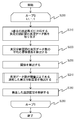
- the live state data count totaling unit 60 divides the live state time set by the condition input unit 30 at predetermined intervals to create live state division sections (step S100). As an example of dividing the live time with a predetermined interval of 5 minutes, if the start time is November 11, 2011, 15:00, the first section is November 11, 2011, 15: 00-15: The second section is 15: 05-15: 10 on the same day, and the third section is 15: 10-15: 15 on the same day. This division is performed until the end time of the live time.
- the actual data count section 60 creates a count table that is a table for counting the actual data number (step S110).
- This table is a table in which the position of the number of live data to be stored is determined by the correspondence between the corresponding broadcasting station ID and the live situation division section as shown in FIG.
- the broadcast station ID stored in the broadcast station information storage unit 21 is used as the broadcast station ID, and the live segment section created in step S100 is used as the live segment section.
- step S120 the actual data count unit 60 starts a loop (step S120).
- the symbol shown in step S120 is a symbol representing the start of the loop, and the loop identifier “loop A” indicates that the loop counter n having a start value of 1 and an increment of 1 loops until the end value N is reached.
- the end value N is the total number of live data acquired by the live data acquisition unit 40.
- the live state data count totaling unit 60 causes the live state data acquiring unit 40 to read the nth live state data (step S130).
- the live data count totaling unit 60 sets the counter of the position of the count table corresponding to the live segment division including the posting date and time of the nth live data and the broadcast station ID associated with the nth live data. It is increased by 1 (step S140). If a plurality of broadcast station IDs are associated with each other, the process is performed for all the associated broadcast station IDs.
- step S150 the actual data count unit 60 checks the loop end condition (step S150).
- the symbol shown in step S150 indicates the end of the loop. It is determined whether or not the loop identifier “loop A” has reached the end condition, that is, whether or not the loop counter n has reached the end value N. If the end condition is satisfied, the actual data count totaling unit 60 ends the process. Otherwise, the loop counter n is incremented by 1 and the process returns to step S120.
- the above is the processing of the live data count totaling unit 60.
- the topic section creation unit 70 detects a topic section for each broadcasting station ID from the number of pieces of actual data calculated by the number of pieces of actual data, and starts and ends the detected topic section.
- the topic section data in which the time, the broadcast station ID, and the topic section keyword are combined is stored in the topic section storage unit 23.
- a method for detecting a representative topic section will be described with reference to the flowchart of FIG.
- the topic section creation unit 70 sets the total number of broadcast station IDs stored in the broadcast station information storage unit 21 to K, sets the loop identifier “loop B” to an initial value 1 and an increment 1 loop counter k to an end value K.
- a loop up to is started (step S200).
- the topic section creation unit 70 extracts the number of live data for each live segment section corresponding to the k-th broadcasting station ID from the counter table created by the live data count totaling unit 60 (step S210).
- the topic section creation unit 70 calculates the average M and the standard deviation S of the number of actual data in the actual condition section extracted in step S210 (step S220).
- the topic section creation unit 70 calculates the threshold ⁇ using the following equation 1 based on the adjustment parameter ⁇ , the average M of the number of live data calculated in step S220, and the standard deviation S (step S230).
- ⁇ M ⁇ S (Formula 1)
- the adjustment parameter ⁇ is a real number of about 0.5 to 2.0 set by the designer in advance, and a value of about 1.0 is recommended.
- ⁇ the length of the detected topic section is increased.
- the topic section creation unit 70 detects a topic section from the live segmentation section in which the number of live data is equal to or greater than the threshold ⁇ (step S240).
- FIG. 12 is a graph of the number of live data when the live time is set to 15:00 to 17:50 on November 11, 2010 and divided into 5-minute units to create live segments. Note that the number of live data is a temporary data sample.
- a continuous live segmentation section having a threshold value of 600 or more is created as a topic section.
- 15:00 shown in the topic section 610 is obtained.
- Up to 15:25 topic sections, 15:35 to 16:25 topic sections shown in the topic section 620, and 16:35 to 17:25 shown in the topic section 630 can be created.
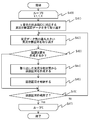
- step S240 The topic section detection process in step S240 will be further described with reference to the sub-flowchart in FIG.
- a start time variable for storing the start time of the topic section is initialized (step S241).
- the topic section creation unit 70 starts the loop of the loop identifier “loop C” until the loop counter j having an initial value of 1 and an increment of 1 reaches the end value J, where J is the number of lively segments. 242).
- step S243 it is determined whether or not the number of live data at the table position determined from the kth broadcast station ID and the jth live segmentation section exceeds the threshold ⁇ (step S243). If so, the process proceeds to step S244. If not, the process proceeds to step S246.
- step S243 when the topic section creation unit 70 determines that the number of live data exceeds the threshold ⁇ , it further determines whether or not the start time is set in the start time variable (step S244). If the start time is set, the process proceeds to step S248 at the end of the loop, and if not set, the process proceeds to step S245.
- the topic section creation unit 70 sets the start time of the jth live segmentation section in the start time variable (step S245).
- step S243 if the topic section creation unit 70 determines that the actual data number does not exceed the threshold value ⁇ , it further determines whether or not the start time is set in the start time variable (step S243). S246). If the start time is not set, the process proceeds to step S248 at the end of the loop, and if the start time is set, the process proceeds to step S247.
- step S246 If it is determined in step S246 that the start time is set, the topic section creation unit 70 creates a topic section (step S247).
- the start time of the topic section is the start time stored in the start time variable
- the end time of the topic section is the start time of the jth live segmentation section.
- the topic section creation unit 70 initializes the start time variable and returns it to an unset state.
- the subsequent step S248 is a terminal symbol of the loop C (step S248).
- the topic section creating unit 70 proceeds to step S249, and when it is determined that the end condition is not satisfied, the process returns to step S242 and repeats the process.
- the topic section creation unit 70 sets the start time stored in the start time variable as the start time of the topic section, and sets the end time of the topic section as the end time of the live time.
- a topic section is created (step S249).
- the topic section creation unit 70 creates topic section data by combining the k-th broadcasting station ID and the topic section keyword for each topic section detected in step S240, and stores the topic section data in the topic section storage unit 23. (Step S250).
- the topic section creation unit 70 determines whether or not the loop B satisfies the termination condition (step S260). If the end condition is satisfied, the topic section creating unit 70 ends the process. If the end condition is not satisfied, the process returns to step S200.
- the threshold ⁇ may be set to a predetermined value without using Equation 1.
- the section creation device 1 can detect the start time and end time of a section in which a specific keyword is spoken, and can further associate the section with a broadcasting station, so that the recorded broadcast content is detected. Thus, it is possible to cut out and edit in the selected section, or to play back only in the detected section.
- a plurality of topic section keywords may be designated so that the live section data matching both topic section keywords can be acquired from the live data server 100.
- the live data server 100 uses the keyword “yen appreciation” and the keyword “dollar depreciation”. To return live data including.
- a topic section keyword that does not include a specific keyword may be set. For example, when a search condition with “NOT” is specified at the beginning of a topic section keyword such as “NOT dollar weak”, the live data server 100 will identify the keyword that follows it, in this case “dollar Return live data that does not include "low”.
- the live data may be associated with a predetermined broadcast station. For example, if there is a live data server that accepts posts related to broadcast content whose broadcast station ID is “broadcast station 1”, all live data acquired from the live data server is broadcast station ID “broadcast station 1”. Associate.
- the topic section is created for each broadcast station ID.
- the conversion from the broadcast station ID to the content ID can be performed by referring to the broadcast content storage unit 22 and specifying the content ID from the topic section and the broadcast station ID.
- Emodiment 2 The system configuration in the present embodiment is the same as the system configuration of the first embodiment shown in FIG. 1, but the configuration content of the section creation device 1 is different. In this embodiment, the section creation device 2 will be described.
- the broadcast station is identified based on whether or not there is a character string for specifying the broadcast station in the character information of the live data.
- the section creation device 2 in FIG. 2 estimates a broadcasting station from character information of live data and broadcast content information broadcast at the time corresponding to the posting date of live data.
- FIG. 14 is a block diagram showing a configuration of the section creation device 2.
- the section creation device 2 is different from the section creation device 1 of the first embodiment in that a content information storage unit 24 is added inside the auxiliary storage unit 20 and the operation of the broadcast station identification unit 50 is different. Therefore, in this embodiment, the broadcasting station identification unit 50 having a different operation is referred to as a broadcasting station identification unit 50A, the content information storage unit 24 and the broadcasting station identification unit 50A will be described, and the other units will be sectioned. Since it is the same as the apparatus 1, description is abbreviate
- the content information storage unit 24 stores a content ID and content information that is subsidiary data of the content ID in combination.
- the content information includes the broadcast content title, performers, subtitles, genre, broadcast content summary, and the like.
- FIG. 15 is a diagram showing an example of the format of the content information storage unit 24, in which a title and a performer are stored as content information.
- the title of content ID 1 is “Hyper News”, and the performer is “Nihon Taro”.
- the broadcast station identification unit 50A determines, based on the text information of the live data received by the live data acquisition unit 40, which broadcast station the live data refers to, and the live data and the broadcast station ID. Is associated. The processing flow of the broadcasting station identification unit 50A will be described with reference to the flowchart shown in FIG.
- the broadcast station identification unit 50A determines whether the character information of the live data includes a broadcast station name for identifying the broadcast station, a broadcast station short name, and a character string that matches the broadcast station tag (Ste S300). If it is included, the process proceeds to step S310; otherwise, the process proceeds to step S320.
- the broadcasting station identification unit 50A associates the broadcasting station with the matching character string (step S310). Since this process is the same process as the broadcasting station identification unit 50 in the first embodiment, the description thereof is omitted.
- step S300 If it is determined in step S300 that the character string for specifying the broadcast station is not included in the character information of the live data, the broadcast station identification unit 50A sets the number of contents stored in the broadcast content storage unit 22 to M, For the loop identifier “loop D”, the loop counter m having an initial value of 1 and an increment of 1 is looped until the end value M is reached (step S320).
- the broadcast station identification unit 50A has the posting date of the live data in the time span from the broadcast start time to the broadcast end time of the m-th content ID (hereinafter referred to as content IDm) in the broadcast content storage unit 22. It is determined whether it is included (step S330). For example, in the example of the broadcast content storage unit 22 shown in FIG. 6, when the content ID m is the content ID 1, the broadcast start time is November 11, 2010, 15:00, and the broadcast end time is November 11, 2010. 0:00. It is determined whether or not the posting date of the live data is included in the time from 15:00 on November 11, 2010 to 11:00 on November 11, 2010. If included, the process proceeds to step S340, and if not included, the process proceeds to step S360.
- content IDm m-th content ID
- step S330 If it is determined in step S330 that the live data is included within the time of the content IDm, the broadcast station identification unit 50A acquires content information corresponding to the content IDm from the content information storage unit 24 (step S330). S340).
- the broadcasting station identification unit 50A calculates the degree of association with the content IDm from the acquired content information and the text information of the live data (step S350).
- the character strings of the content information and the character information of the live data are compared, and if there is a matching character string, the relevance with the content IDm is added by the length of the character string.
- the title of the content ID 1 is “hyper news”.
- the live data includes a title, which is content information of content ID1, as a partial character string.
- the degree of association with the content ID 1 is increased by 8.
- the text information of the live data is “I am watching hyper news now.
- Nihon Taro is cool”, as described above, the degree of relevance to the content ID 1 is set to 8 based on the “hyper news” of the partial character string.
- “Nippon Taro” who is a performer of the content ID 1 is also included as a partial character string, so the length of the character string “Nippon Taro”, that is, 4 is added to the relevance.
- Such a character string comparison process is performed for each type of content information corresponding to the content IDm, thereby calculating the degree of association between the live data and the content IDm.
- step S360 indicates the loop end of the loop identifier “loop D”.
- the process proceeds to step S370. Otherwise, the process returns to step S320 (step S360).
- the broadcast station identification unit 50A selects a content ID having a relevance level equal to or greater than a predetermined threshold, and refers to the broadcast content storage unit 22 to associate a broadcast station associated with the selected content ID.
- An ID is acquired (step S370).
- the broadcast station ID acquired here is associated with the live data.
- the above processing is performed on all the live data acquired by the live data acquisition unit 40, and the live data and the broadcasting station ID are associated with each other.
- a weight may be set for each type of content information. For example, when the title matches, the length of the matched character string is multiplied by 1.2, and when matched with the performer, the length of the character string is multiplied by 1.5.
- a threshold value may be set so as not to increase the degree of association.
- morphological analysis may be performed on character information of live data to compare only nouns.
- the degree of association may be increased when a synonym or association word dictionary is used to match a synonym or association word.
- a synonym or association word dictionary is used to match a synonym or association word.
- the content ID m is content ID 2 and the character string “shopping” is included in the character information of the live data, and “shopping” is acquired from the synonym dictionary, the content in the example of FIG. Since it matches the partial character string “shopping” of the title “shopping information” of ID2, the degree of association between this live data and the content ID2 is increased.
- processing of the broadcasting station identification unit 50A is not limited to the above processing, and other methods may be used as long as the live data and the content ID can be associated.
- the section creation device 2 by associating the live data with the broadcast station from the description content of the live data, the live data in which the broadcast station is not explicitly specified can also be used in this system. Therefore, more accurate topic sections can be detected. Furthermore, since the number of data that can be used increases, live data that matches more various topic section keywords increases, so that various topic sections can be detected.
- FIG. 17 shows the configuration of the section creation device 3 in Embodiment 3 of the present invention.
- the configuration of FIG. 17 differs from the section creation device 1 of the first embodiment shown in FIG. Therefore, the topic section creation unit 70 in this embodiment will be described as the topic section creation unit 70A.
- the parts other than the topic section creation unit 70A are the same as the section creation apparatus 1 shown in FIG.
- the overall system configuration is the same as the system configuration of the first embodiment shown in FIG.
- the processing flow of the section creation device 3 is also the same as the flowchart of the section creation device 1 shown in FIG.
- the topic section creation unit 70A creates a topic section centering on a live segmentation section having a large number of live data. The processing flow of the topic section creation unit 70A will be described with reference to the flowchart of FIG.
- the topic section creation unit 70A sets the total number of broadcast station IDs stored in the broadcast station information storage unit 21 to K, sets the loop identifier “loop E” to an initial value 1 and an increment 1 loop counter k to an end value K.
- a loop up to is started (step S400).
- the topic section creation unit 70A obtains, from the count table created by the live data count totaling unit 60, the live segment section corresponding to the kth broadcasting station ID and the live data number corresponding to the live segment section. All are read (step S410).
- the topic section creation unit 70A selects a live segment division having the largest number of live data from the acquired live segment sections (step S420).
- step S430 it is determined whether or not to create a topic section centered on the live segmentation section selected in step S410 (step S430). Specifically, if the selected live segment section overlaps with any topic section created in step S440 described later, the process proceeds to step S460 without creating a topic section from the live segment section. If the live segment section does not overlap with the topic section, the process proceeds to step S430.
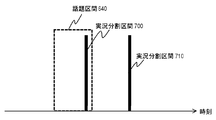
- the determination process in step S430 will be specifically described with reference to FIG.
- the topic section 640 in FIG. 19 is the topic section created in step S440.
- the horizontal axis in FIG. 19 is time.
- the live segment section selected in step S420 is the live segment section 700, since the live segment section 700 overlaps the topic section 640, a topic section is created from the live segment section 700.
- the live segment section selected in step S420 is the live segment section 710, since it does not overlap with the topic section, it is determined that a topic section is created from the live segment section 710.
- step S450 if the maximum number of live data is less than a predetermined threshold, the process proceeds to step S450 without creating a topic section. If the maximum number of actual data is less than the predetermined threshold value, it is obvious that other actual condition division sections similarly do not satisfy the predetermined threshold value, and the process may proceed to step S470.
- the topic section creation unit 70A creates a topic section centered on the live segmentation section selected in step S410 (step S440). Specifically, a section obtained by adding a predetermined amount of time before and after the live segment section is set as a topic section. For example, if the live segmentation section is November 11, 2010, 15:00 to 15:05, and the time to be added before and after is 3 minutes, the topic section to be created will be November 11, 2010, 14:57 15:08.
- the predetermined time to be added is set in advance by the designer.
- the addition time may be different before and after the addition time.
- the addition value may be set to 0, and the live segmentation section may be created as a topic section as it is. Further, the addition value may take a negative value.
- topic section data is created by combining the topic section created in step S440, the k-th broadcasting station ID, and the topic section keyword, and stored in the topic section storage unit 23 (step S450).
- the topic section creation unit 70A determines whether or not to finish the topic section creation processing for the kth broadcasting station ID (step S460). Here, it is determined whether or not a predetermined number of topic sections of the kth broadcasting station ID have been created. If the number of topic sections created is equal to or greater than the predetermined number, the process proceeds to step S470. Moreover, also when all the live condition division
- the topic section creation unit 70A determines the end of the loop E (step S470). When it is determined that the loop E satisfies the end condition, the topic section creation unit 70 ends the topic section creation process. If it is determined that the termination condition is not satisfied, the process returns to step S400 and is repeated.
- the topic section creation unit 70A can create a topic section centered on the peak number of live data.
- the topic section can be created from only the maximum value of the number of live data.
- step S430 if the live segment section overlaps with the topic section that has already been created, the topic section is not created, but the topic section is also created for the live segment section, Alternatively, overlapping topic sections may be combined into one topic section.
- the broadcasting station identification unit 50 of the section creation device 3 may use the broadcasting station identification unit 50A of the section creation device 2.
- digital content has been described as an example of content, but analog content may also be used.
- broadcast content has been described as an example of the broadcast content, it may be a radio broadcast content.
- the present invention can be used when creating a section of a scene related to a specific topic in broadcast content.
Landscapes
- Engineering & Computer Science (AREA)
- Multimedia (AREA)
- Signal Processing (AREA)
- Databases & Information Systems (AREA)
- General Engineering & Computer Science (AREA)
- Physics & Mathematics (AREA)
- Theoretical Computer Science (AREA)
- Computer Hardware Design (AREA)
- Computer Graphics (AREA)
- Data Mining & Analysis (AREA)
- Mathematical Physics (AREA)
- Software Systems (AREA)
- General Physics & Mathematics (AREA)
- Two-Way Televisions, Distribution Of Moving Picture Or The Like (AREA)
- Television Signal Processing For Recording (AREA)
Abstract
Description
図1は、本発明の実施形態1のシステム全体を示す図であり、区間作成装置1と、実況データサーバ100とが、ネットワーク1000を介して接続されており、さらに、実況データサーバ100は、ネットワーク1000を介して投稿端末200と接続されていることを示している。
(1)実況データの文字情報が、「今アルプステレビ見ています。」である場合、放送局IDが「放送局2」である放送局名「アルプステレビ」が実況データの文字情報に含まれているので、この実況データを放送局2と対応付ける。
(2)実況データの文字情報が、「ZyxTV閲覧中」である場合、放送局IDが「放送局1」である放送局短縮名「ZyxTV」が実況データの文字情報に含まれているので、この実況データを放送局2と対応付ける。
(3)実況データの文字情報が、「ハイパーニュースを見ています。#ztv」である場合、放送局IDが「放送局1」である放送局タグ「ztv」が実況データの文字情報に含まれているので、この実況データを放送局1と対応付ける。
θ=M-αS・・・(式1)
本実施形態におけるシステム構成は、図1に示す実施形態1のシステム構成と同様であるが、区間作成装置1の構成内容が異なる。本実施形態では、区間作成装置2として、説明を行う。
本発明の実施形態3における、区間作成装置3の構成を図17に示す。図17の構成は、図1に示す実施形態1の区間作成装置1と比較すると、話題区間作成部70の動作が異なる。そこで、本実施形態における話題区間作成部70を話題区間作成部70Aとして説明を行う。話題区間作成部70A以外の部については、図1に示す区間作成装置1と同様の動作であるため、説明を省略する。
10 バス
11 中央制御装置
12 ROM
13 主記憶部
14 入力部
15 表示部
16 音声出力部
17 通信部
20 補助記憶部
30 条件入力部
40 実況データ取得部
50,50A 放送局同定部
60 実況データ集計部
70,70A 話題区間作成部
100 実況データサーバ
110 投稿受付部
120 実況データ格納部
130 実況データ送信部
200 投稿端末
300 開始時刻設定
310 終了時刻設定
320 キーワード設定
330 実行ボタン
600 閾値
610,620,630,640 話題区間
700,710 実況分割区間
Claims (17)
- 複数の端末から送信される文字列データを取得すると共に、前記文字列データと、前記文字列データを取得した日時であるデータ登録日時とを含む実況データを取得する実況データ取得部と、
入力部によって入力される検索条件に一致する文字列データを有する実況データの個数を、所定の単位時間ごとに集計する実況データ数集計部と、
前記実況データ数集計部によって集計された実況データの個数が、所定の閾値以上である前記単位時間が連続した期間の開始時刻と、終了時刻又は前記期間の長さとにより特定される区間データを作成する区間作成部と、
を備えることを特徴とする区間作成装置。 - 放送局を一意に識別するための識別子である放送局IDと、放送局を表す文字列である1つ以上の放送局タグとを組み合わせて格納する放送局情報格納部、
をさらに備え、
前記実況データは、前記文字列データと関係する放送局の放送局IDをさらに含み、
前記実況データ数集計部は、前記実況データに関連する放送局IDごとに、前記単位時間ごとの実況データの個数を集計し、
前記区間作成部は、前記実況データ数集計部によって集計された前記放送局IDごとの実況データの個数が、前記閾値以上である前記単位時間が連続した期間の開始時刻と、終了時刻又は前記期間の長さとにより特定される区間データを作成する、
ことを特徴とする請求項1に記載の区間作成装置。 - 放送局を一意に識別するための識別子である放送局IDと、放送局を表す文字列である1つ以上の放送局タグとを組み合わせて格納する放送局情報格納部と、
1つ以上の放送局タグを含む文字列データを有する実況データと、前記放送局タグに対応付けられた放送局IDとを対応付ける放送局同定部と、
をさらに備え、
前記実況データ数集計部は、前記実況データに関連する放送局IDごとに、前記単位時間ごとの実況データの個数を集計し、
前記区間作成部は、前記実況データ数集計部によって集計された前記放送局IDごとの実況データの個数が、前記閾値以上である前記単位時間が連続した期間の開始時刻と、終了時刻又は前記期間の長さとにより特定される区間データを作成する、
ことを特徴とする請求項1に記載の区間作成装置。 - 前記放送局IDと、放送コンテンツの書誌的な情報であるコンテンツ情報と、を格納するコンテンツ情報格納部と、
前記コンテンツ情報と、前記実況データの文字列データとの関連度合いが、所定の設定値以上であるコンテンツ情報に対応する放送局IDを、前記実況データに関連する放送局IDとして選出する放送局同定部と、
をさらに備えることを特徴とする請求項2に記載の区間作成装置。 - 放送コンテンツを一意に識別するための識別子であるコンテンツIDを格納する放送コンテンツ格納部、
をさらに備え、
前記実況データは、前記文字列データと関係するコンテンツIDをさらに含み、
前記実況データ数集計部は、前記実況データに関連するコンテンツIDごとに、前記単位時間ごとの実況データの個数を集計し、
前記区間作成部は、前記実況データ数集計部によって集計された前記コンテンツIDごとの実況データの個数が、前記閾値以上である前記単位時間が連続した期間の開始時刻と、終了時刻又は前記期間の長さとにより特定される区間データを作成する、
ことを特徴とする請求項1に記載の区間作成装置。 - 前記コンテンツIDと、前記コンテンツIDに対応する放送コンテンツの書誌的な情報であるコンテンツ情報と、を組み合わせて格納するコンテンツ情報格納部と、
前記コンテンツ情報と、前記実況データの文字列データとの関連度合いが、所定の設定値以上であるコンテンツIDを、前記実況データに関連するコンテンツIDとして選出する放送局同定部と、
をさらに備えることを特徴とする請求項5に記載の区間作成装置。 - 前記区間作成部は、
前記実況データ数集計部によって集計された実況データの個数の平均値、及び標準偏差を求め、前記平均値と、前記標準偏差とから前記閾値を算出する、
ことを特徴とする請求項1から6のいずれかに記載の区間作成装置。 - 複数の端末から送信される文字列データを取得すると共に、前記文字列データと、前記文字列データを取得した日時であるデータ登録日時を含む実況データとを取得する実況データ取得部と、
入力部によって入力される検索条件に一致する文字列データを有する実況データの個数を、所定の単位時間ごとに集計する実況データ数集計部と、
前記実況データ数集計部によって集計された実況データの個数が最も多い単位時間の前後にそれぞれ所定の期間を付加して区間データを作成する区間作成部と、
を備えることを特徴とする区間作成装置。 - 放送局を一意に識別するための識別子である放送局IDと、放送局を表す文字列である1つ以上の放送局タグとを組み合わせて格納する放送局情報格納部、
をさらに備え、
前記実況データは、前記文字列データと関係する放送局の放送局IDをさらに含み、
前記実況データ数集計部は、前記実況データに関連する放送局IDごとに、前記単位時間ごとの実況データの個数を集計し、
前記区間作成部は、前記実況データ数集計部によって集計された前記放送局IDごとの実況データの個数が最も多い単位時間の前後にそれぞれ所定の期間を付加して区間データを作成する、
ことを特徴とする請求項8に記載の区間作成装置。 - 放送局を一意に識別するための識別子である放送局IDと、放送局を表す文字列である1つ以上の放送局タグとを組み合わせて格納する放送局情報格納部と、
1つ以上の放送局タグを含む文字列データを有する実況データと、前記放送局タグに対応付けられた放送局IDとを対応付ける放送局同定部と、
をさらに備え、
前記実況データ数集計部は、前記実況データに関連する放送局IDごとに、前記単位時間ごとの実況データの個数を集計し、
前記区間作成部は、前記実況データ数集計部によって集計された前記放送局IDごとの実況データの個数が最も多い単位時間の前後にそれぞれ所定の期間を付加して区間データを作成する、
ことを特徴とする請求項8に記載の区間作成装置。 - 前記放送局IDと、放送コンテンツの書誌的な情報であるコンテンツ情報と、を格納するコンテンツ情報格納部と、
前記コンテンツ情報と、前記実況データの文字列データとの関連度合いが、所定の設定値以上であるコンテンツ情報に対応する放送局IDを、前記実況データに関連する放送局IDとして選出する放送局同定部と、
をさらに備えることを特徴とする請求項9に記載の区間作成装置。 - 放送コンテンツを一意に識別するための識別子であるコンテンツIDを格納する放送コンテンツ格納部、
をさらに備え、
前記実況データは、前記文字列データと関係するコンテンツIDをさらに含み、
前記実況データ数集計部は、前記実況データに関連するコンテンツIDごとに、前記単位時間ごとの実況データの個数を集計し、
前記区間作成部は、前記実況データ数集計部によって集計された前記コンテンツIDごとの実況データの個数が最も多い単位時間の前後にそれぞれ所定の期間を付加して区間データを作成する、
ことを特徴とする請求項8に記載の区間作成装置。 - 前記コンテンツIDと、前記コンテンツIDに対応する放送コンテンツの書誌的な情報であるコンテンツ情報と、を組み合わせて格納するコンテンツ情報格納部と、
前記コンテンツ情報と、前記実況データの文字列データとの関連度合いが、所定の設定値以上であるコンテンツIDを、前記実況データに関連するコンテンツIDとして選出する放送局同定部と、
をさらに備えることを特徴とする請求項12に記載の区間作成装置。 - 複数の端末から送信される文字列データを取得すると共に、前記文字列データと、前記文字列データを取得した日時であるデータ登録日時とを含む実況データを取得するステップと、
入力部によって入力される検索条件に一致する文字列データを有する実況データの個数を、所定の単位時間ごとに集計するステップと、
集計された実況データの個数が、所定の閾値以上である前記単位時間が連続した期間の開始時刻と、終了時刻又は前記期間の長さとにより特定される区間データを作成するステップと、
を備えることを特徴とする区間作成方法。 - 複数の端末から送信される文字列データを取得すると共に、前記文字列データと、前記文字列データを取得した日時であるデータ登録日時とを含む実況データを取得するステップと、
入力部によって入力される検索条件に一致する文字列データを有する実況データの個数を、所定の単位時間ごとに集計するステップと、
集計された実況データの個数が最も多い単位時間の前後にそれぞれ所定の時間を付加して区間データを作成するステップと、
を備えることを特徴とする区間作成方法。 - 複数の端末から送信される文字列データを取得すると共に、前記文字列データと、前記文字列データを取得した日時であるデータ登録日時とを含む実況データを取得する処理と、
入力部によって入力される検索条件に一致する文字列データを有する実況データの個数を、所定の単位時間ごとに集計する処理と、
集計された実況データの個数が、所定の閾値以上である前記単位時間が連続した期間の開始時刻と、終了時刻又は前記期間の長さにより特定される区間データを作成する処理と、
をコンピュータに実行させることを特徴とする区間作成プログラム。 - 複数の端末から送信される文字列データを取得すると共に、前記文字列データと、前記文字列データを取得した日時であるデータ登録日時とを含む実況データを取得する処理と、
入力部によって入力される検索条件に一致する文字列データを有する実況データの個数を、所定の単位時間ごとに集計する処理と、
集計された実況データの個数が最も多い単位時間の前後にそれぞれ所定の期間を付加して区間データを作成する処理と、
をコンピュータに実行させることを特徴とする区間作成プログラム。
Priority Applications (4)
| Application Number | Priority Date | Filing Date | Title |
|---|---|---|---|
| EP11843632.8A EP2574052A4 (en) | 2010-11-24 | 2011-10-07 | SEGMENTERSTELLUNGSVÄRICHTUNG, SEGMENTERSTELLUNGS PROCEDURE AND SEGMENTERSTORTUNG PROGRAM |
| KR1020127022796A KR101404585B1 (ko) | 2010-11-24 | 2011-10-07 | 구간 작성 장치, 구간 작성 방법 및, 구간 작성 프로그램을 기록한 컴퓨터로 판독 가능한 기록 매체 |
| CN201180037831.0A CN103053156B (zh) | 2010-11-24 | 2011-10-07 | 区间制作装置、区间制作方法、及区间制作程序 |
| US13/614,880 US9191609B2 (en) | 2010-11-24 | 2012-09-13 | Segment creation device, segment creation method, and segment creation program |
Applications Claiming Priority (4)
| Application Number | Priority Date | Filing Date | Title |
|---|---|---|---|
| JP2010-261779 | 2010-11-24 | ||
| JP2010261779 | 2010-11-24 | ||
| JP2011213372A JP2012129979A (ja) | 2010-11-24 | 2011-09-28 | 区間作成装置、区間作成方法、及び区間作成プログラム |
| JP2011-213372 | 2011-09-28 |
Related Child Applications (1)
| Application Number | Title | Priority Date | Filing Date |
|---|---|---|---|
| US13/614,880 Continuation US9191609B2 (en) | 2010-11-24 | 2012-09-13 | Segment creation device, segment creation method, and segment creation program |
Publications (1)
| Publication Number | Publication Date |
|---|---|
| WO2012070179A1 true WO2012070179A1 (ja) | 2012-05-31 |
Family
ID=46145553
Family Applications (1)
| Application Number | Title | Priority Date | Filing Date |
|---|---|---|---|
| PCT/JP2011/005664 Ceased WO2012070179A1 (ja) | 2010-11-24 | 2011-10-07 | 区間作成装置、区間作成方法、及び区間作成プログラム |
Country Status (6)
| Country | Link |
|---|---|
| US (1) | US9191609B2 (ja) |
| EP (1) | EP2574052A4 (ja) |
| JP (1) | JP2012129979A (ja) |
| KR (1) | KR101404585B1 (ja) |
| CN (1) | CN103053156B (ja) |
| WO (1) | WO2012070179A1 (ja) |
Cited By (1)
| Publication number | Priority date | Publication date | Assignee | Title |
|---|---|---|---|---|
| WO2014002728A1 (ja) * | 2012-06-27 | 2014-01-03 | シャープ株式会社 | 録画装置、テレビジョン受信機及び録画方法 |
Families Citing this family (12)
| Publication number | Priority date | Publication date | Assignee | Title |
|---|---|---|---|---|
| US8560604B2 (en) | 2009-10-08 | 2013-10-15 | Hola Networks Ltd. | System and method for providing faster and more efficient data communication |
| US9449002B2 (en) * | 2013-01-16 | 2016-09-20 | Althea Systems and Software Pvt. Ltd | System and method to retrieve relevant multimedia content for a trending topic |
| US9241044B2 (en) | 2013-08-28 | 2016-01-19 | Hola Networks, Ltd. | System and method for improving internet communication by using intermediate nodes |
| CN104090915B (zh) * | 2014-06-12 | 2017-02-15 | 小米科技有限责任公司 | 用户数据更新方法及装置 |
| US11023846B2 (en) | 2015-04-24 | 2021-06-01 | United Parcel Service Of America, Inc. | Location-based pick up and delivery services |
| US11057446B2 (en) | 2015-05-14 | 2021-07-06 | Bright Data Ltd. | System and method for streaming content from multiple servers |
| JP6790613B2 (ja) * | 2016-09-05 | 2020-11-25 | 富士ゼロックス株式会社 | 情報処理装置、情報管理装置、及びプログラム |
| US11190374B2 (en) | 2017-08-28 | 2021-11-30 | Bright Data Ltd. | System and method for improving content fetching by selecting tunnel devices |
| LT3767494T (lt) | 2017-08-28 | 2023-03-10 | Bright Data Ltd. | Būdas pagerinti turinio parsisiuntimą, pasirenkant tunelinius įrenginius |
| EP3780557B1 (en) | 2019-02-25 | 2023-02-15 | Bright Data Ltd. | System and method for url fetching retry mechanism |
| EP4383686A1 (en) | 2019-04-02 | 2024-06-12 | Bright Data Ltd. | System and method for managing non-direct url fetching service |
| JP2024024798A (ja) * | 2022-08-10 | 2024-02-26 | 株式会社ユニゾンシステムズ | 映像編集装置、映像編集プログラム、及び映像編集方法 |
Citations (4)
| Publication number | Priority date | Publication date | Assignee | Title |
|---|---|---|---|---|
| JP2004364183A (ja) * | 2003-06-06 | 2004-12-24 | Nippon Telegr & Teleph Corp <Ntt> | 部分コンテンツ作成方法、部分コンテンツ作成システム、部分コンテンツ作成装置、及び、部分コンテンツ作成プログラム |
| JP2005277531A (ja) * | 2004-03-23 | 2005-10-06 | Seiko Epson Corp | 動画像処理装置 |
| JP2008185626A (ja) * | 2007-01-26 | 2008-08-14 | Toshiba Corp | ハイライトシーン検出装置 |
| JP2009225207A (ja) * | 2008-03-18 | 2009-10-01 | Nec Corp | 情報処理装置 |
Family Cites Families (38)
| Publication number | Priority date | Publication date | Assignee | Title |
|---|---|---|---|---|
| US5481296A (en) * | 1993-08-06 | 1996-01-02 | International Business Machines Corporation | Apparatus and method for selectively viewing video information |
| US6374225B1 (en) * | 1998-10-09 | 2002-04-16 | Enounce, Incorporated | Method and apparatus to prepare listener-interest-filtered works |
| WO2000049803A1 (en) * | 1999-02-18 | 2000-08-24 | Kabushiki Kaisha Toshiba | Medium on which stream data is recorded, its recording method, and its reproducing method |
| AU4200600A (en) * | 1999-09-16 | 2001-04-17 | Enounce, Incorporated | Method and apparatus to determine and use audience affinity and aptitude |
| JP3738631B2 (ja) * | 1999-09-27 | 2006-01-25 | 三菱電機株式会社 | 画像検索システムおよび画像検索方法 |
| JP2001237882A (ja) * | 2000-02-23 | 2001-08-31 | Nec Corp | パケットデータ転送におけるパケットサイズ制御装置及びその制御方法 |
| US20040249642A1 (en) * | 2003-06-03 | 2004-12-09 | The Boeing Company | Systems, methods and computer program products for modeling uncertain future benefits |
| SE522784C2 (sv) * | 2001-10-23 | 2004-03-09 | Ericsson Telefon Ab L M | Förfarande och enhet för att justera en tidsfördjöjning för en högfrekvent application |
| US7006658B2 (en) * | 2001-12-20 | 2006-02-28 | Koninklijke Philips Electronics N.V. | Varying segment sizes to increase security |
| US7064796B2 (en) * | 2001-12-21 | 2006-06-20 | Eloda Inc. | Method and system for re-identifying broadcast segments using statistical profiles |
| US8176186B2 (en) * | 2002-10-30 | 2012-05-08 | Riverbed Technology, Inc. | Transaction accelerator for client-server communications systems |
| JP4193629B2 (ja) * | 2003-07-25 | 2008-12-10 | ソニー株式会社 | 画面表示装置,プログラム,および画面表示方法 |
| US20070039018A1 (en) * | 2005-08-09 | 2007-02-15 | Verance Corporation | Apparatus, systems and methods for broadcast advertising stewardship |
| US7701976B2 (en) * | 2004-12-22 | 2010-04-20 | Exar Corporation | Communications system with segmenting and framing of segments |
| US7590130B2 (en) * | 2004-12-22 | 2009-09-15 | Exar Corporation | Communications system with first and second scan tables |
| JP2007150724A (ja) * | 2005-11-28 | 2007-06-14 | Toshiba Corp | 映像視聴支援システムおよび方法 |
| JP4835321B2 (ja) | 2006-08-21 | 2011-12-14 | ソニー株式会社 | 番組提供方法、番組提供方法のプログラム、番組提供方法のプログラムを記録した記録媒体及び番組提供装置 |
| EP2124443A4 (en) * | 2006-12-25 | 2010-02-24 | Ptp Inc | PROGRAM DATA MANAGEMENT SERVER, IDENTIFICATION DEVICE, PROGRAM DATA MANAGEMENT METHOD, AND COMPUTER PROGRAM |
| US8036124B1 (en) * | 2007-02-09 | 2011-10-11 | Juniper Networks, Inc. | Early load detection system and methods for GGSN processor |
| US7429944B1 (en) * | 2007-03-20 | 2008-09-30 | Analog Devices, Inc. | Converter systems having reduced-jitter, selectively-skewed interleaved clocks |
| US20080270344A1 (en) * | 2007-04-30 | 2008-10-30 | Yurick Steven J | Rich media content search engine |
| JP2008283409A (ja) * | 2007-05-10 | 2008-11-20 | Nippon Hoso Kyokai <Nhk> | メタデータ関連情報生成装置、メタデータ関連情報生成方法およびメタデータ関連情報生成プログラム |
| JP2009004872A (ja) * | 2007-06-19 | 2009-01-08 | Buffalo Inc | ワンセグ放送受信装置、ワンセグ放送受信方法、およびワンセグ放送受信プログラムを記録した媒体 |
| JP2009027260A (ja) | 2007-07-17 | 2009-02-05 | Panasonic Corp | デジタルコンテンツ処理装置 |
| EP2190201A4 (en) * | 2007-09-18 | 2011-07-06 | Panasonic Corp | DISPLAY DEVICE, DISPLAY PROCEDURE AND DISPLAY PROGRAM |
| US20090094631A1 (en) * | 2007-10-01 | 2009-04-09 | Whymark Thomas J | Systems, apparatus and methods to associate related market broadcast detections with a multi-market media broadcast |
| US20090164293A1 (en) * | 2007-12-21 | 2009-06-25 | Keep In Touch Systemstm, Inc. | System and method for time sensitive scheduling data grid flow management |
| US8056086B2 (en) * | 2008-05-19 | 2011-11-08 | International Business Machines Corporation | Load balancing for image processing using multiple processors |
| JP4757900B2 (ja) * | 2008-06-09 | 2011-08-24 | シャープ株式会社 | ネットワーク接続装置、サーバ装置、端末装置、システム、文字入力方法、プログラムおよびコンピュータ読み取り可能な記録媒体 |
| JP4625862B2 (ja) * | 2008-12-24 | 2011-02-02 | 株式会社東芝 | オーサリング装置およびオーサリング方法 |
| US8311330B2 (en) * | 2009-04-06 | 2012-11-13 | Accenture Global Services Limited | Method for the logical segmentation of contents |
| US8498350B2 (en) * | 2009-04-17 | 2013-07-30 | Raytheon Company | Communication system incorporating physical layer waveform structure |
| JP2010288080A (ja) * | 2009-06-11 | 2010-12-24 | Sony Corp | 画像処理装置及び画像処理方法 |
| JP5625290B2 (ja) * | 2009-09-09 | 2014-11-19 | 富士通株式会社 | 信号処理回路、インタフェースユニット、フレーム伝送装置及びセグメントデータの読み出し方法 |
| US7990317B2 (en) * | 2009-12-18 | 2011-08-02 | At&T Mobility Ii Llc | Signal path delay determination |
| US8489600B2 (en) * | 2010-02-23 | 2013-07-16 | Nokia Corporation | Method and apparatus for segmenting and summarizing media content |
| US20110271001A1 (en) * | 2010-04-30 | 2011-11-03 | Herve Brelay | Methods & apparatuses for a projected pvr experience |
| US8423555B2 (en) * | 2010-07-09 | 2013-04-16 | Comcast Cable Communications, Llc | Automatic segmentation of video |
-
2011
- 2011-09-28 JP JP2011213372A patent/JP2012129979A/ja active Pending
- 2011-10-07 EP EP11843632.8A patent/EP2574052A4/en not_active Withdrawn
- 2011-10-07 KR KR1020127022796A patent/KR101404585B1/ko active Active
- 2011-10-07 CN CN201180037831.0A patent/CN103053156B/zh active Active
- 2011-10-07 WO PCT/JP2011/005664 patent/WO2012070179A1/ja not_active Ceased
-
2012
- 2012-09-13 US US13/614,880 patent/US9191609B2/en active Active
Patent Citations (4)
| Publication number | Priority date | Publication date | Assignee | Title |
|---|---|---|---|---|
| JP2004364183A (ja) * | 2003-06-06 | 2004-12-24 | Nippon Telegr & Teleph Corp <Ntt> | 部分コンテンツ作成方法、部分コンテンツ作成システム、部分コンテンツ作成装置、及び、部分コンテンツ作成プログラム |
| JP2005277531A (ja) * | 2004-03-23 | 2005-10-06 | Seiko Epson Corp | 動画像処理装置 |
| JP2008185626A (ja) * | 2007-01-26 | 2008-08-14 | Toshiba Corp | ハイライトシーン検出装置 |
| JP2009225207A (ja) * | 2008-03-18 | 2009-10-01 | Nec Corp | 情報処理装置 |
Non-Patent Citations (4)
| Title |
|---|
| KYOKO ARIYASU: "An Intelligence Circulation System Based on Analyses of Viewer's Comments", IEICE TECHNICAL REPORT, vol. 108, 8 January 2009 (2009-01-08), pages 5 - 9, XP008166601 * |
| KYOKO ARIYASU: "How to Generate Trackback between Text Comments and TV programs", FIT2007 DAI 6 KAI FORUM ON INFORMATION TECHNOLOGY IPPAN KOEN RONBUNSHU, vol. 1, 22 August 2007 (2007-08-22), pages 153 - 154, XP008166683 * |
| KYOKO ARIYASU: "Inference of user's preferences by using live-chat data", FIT2007 DAI 6 KAI FORUM ON INFORMATION TECHNOLOGY IPPAN KOEN RONBUNSHU, vol. 2, 22 August 2007 (2007-08-22), pages 317 - 318, XP055116453 * |
| See also references of EP2574052A4 * |
Cited By (2)
| Publication number | Priority date | Publication date | Assignee | Title |
|---|---|---|---|---|
| WO2014002728A1 (ja) * | 2012-06-27 | 2014-01-03 | シャープ株式会社 | 録画装置、テレビジョン受信機及び録画方法 |
| JP2014030180A (ja) * | 2012-06-27 | 2014-02-13 | Sharp Corp | 録画装置、テレビジョン受信機及び録画方法 |
Also Published As
| Publication number | Publication date |
|---|---|
| KR101404585B1 (ko) | 2014-06-09 |
| JP2012129979A (ja) | 2012-07-05 |
| EP2574052A1 (en) | 2013-03-27 |
| CN103053156A (zh) | 2013-04-17 |
| US9191609B2 (en) | 2015-11-17 |
| EP2574052A4 (en) | 2015-05-27 |
| US20130007031A1 (en) | 2013-01-03 |
| KR20120128653A (ko) | 2012-11-27 |
| CN103053156B (zh) | 2016-08-03 |
Similar Documents
| Publication | Publication Date | Title |
|---|---|---|
| WO2012070179A1 (ja) | 区間作成装置、区間作成方法、及び区間作成プログラム | |
| US9552413B2 (en) | Information-processing apparatus, method, system, computer-readable medium and method for automatically recording or recommending content | |
| US9008489B2 (en) | Keyword-tagging of scenes of interest within video content | |
| US9342584B2 (en) | Server apparatus, information terminal, and program | |
| US9414006B2 (en) | System for generating recommendation keyword of multimedia contents and method thereof | |
| US8181197B2 (en) | System and method for voting on popular video intervals | |
| US20070283392A1 (en) | Program Selecting System | |
| JP4227072B2 (ja) | おすすめ番組提供方法、おすすめ番組提供装置およびおすすめ番組提供プログラム | |
| US9195735B2 (en) | Information extracting server, information extracting client, information extracting method, and information extracting program | |
| JPWO2006019101A1 (ja) | コンテンツ関連情報取得装置、コンテンツ関連情報取得方法、およびコンテンツ関連情報取得プログラム | |
| CN106131703A (zh) | 一种视频推荐的方法和终端 | |
| US8174579B2 (en) | Related scene addition apparatus and related scene addition method | |
| US8352985B2 (en) | Method of storing and displaying broadcast contents and apparatus therefor | |
| JP2006011896A (ja) | 推薦システム、番組推薦システム、およびサービス | |
| JP4698545B2 (ja) | 情報処理装置及び方法及びプログラム並びに記憶媒体 | |
| JP4235949B2 (ja) | テレビジョン番組検索方法及びテレビジョン番組検索装置 | |
| JP5002223B2 (ja) | 情報提供システム、情報提供装置、情報提供プログラム及び情報収集方法 | |
| CN109949078B (zh) | 推广信息处理方法和装置 | |
| CN119211646A (zh) | 一种视频的用户群体确定方法及装置 | |
| WO2017043172A1 (ja) | 情報提供システム、情報提供サーバー、情報提供方法、及び情報提供システム用のプログラム | |
| CN119273420A (zh) | 一种数据处理、召回方法、装置、电子设备及存储介质 | |
| KR20150105134A (ko) | 콘텐츠 추천 장치 및 추천 방법 |
Legal Events
| Date | Code | Title | Description |
|---|---|---|---|
| WWE | Wipo information: entry into national phase |
Ref document number: 201180037831.0 Country of ref document: CN |
|
| 121 | Ep: the epo has been informed by wipo that ep was designated in this application |
Ref document number: 11843632 Country of ref document: EP Kind code of ref document: A1 |
|
| ENP | Entry into the national phase |
Ref document number: 20127022796 Country of ref document: KR Kind code of ref document: A |
|
| WWE | Wipo information: entry into national phase |
Ref document number: 2011843632 Country of ref document: EP |
|
| NENP | Non-entry into the national phase |
Ref country code: DE |