WO2012081533A1 - 乳酸塩の製造方法 - Google Patents
乳酸塩の製造方法 Download PDFInfo
- Publication number
- WO2012081533A1 WO2012081533A1 PCT/JP2011/078655 JP2011078655W WO2012081533A1 WO 2012081533 A1 WO2012081533 A1 WO 2012081533A1 JP 2011078655 W JP2011078655 W JP 2011078655W WO 2012081533 A1 WO2012081533 A1 WO 2012081533A1
- Authority
- WO
- WIPO (PCT)
- Prior art keywords
- lactate
- calcium
- formate
- concentration
- calcium lactate
- Prior art date
- Legal status (The legal status is an assumption and is not a legal conclusion. Google has not performed a legal analysis and makes no representation as to the accuracy of the status listed.)
- Ceased
Links
Images

Classifications
-
- C—CHEMISTRY; METALLURGY
- C12—BIOCHEMISTRY; BEER; SPIRITS; WINE; VINEGAR; MICROBIOLOGY; ENZYMOLOGY; MUTATION OR GENETIC ENGINEERING
- C12P—FERMENTATION OR ENZYME-USING PROCESSES TO SYNTHESISE A DESIRED CHEMICAL COMPOUND OR COMPOSITION OR TO SEPARATE OPTICAL ISOMERS FROM A RACEMIC MIXTURE
- C12P7/00—Preparation of oxygen-containing organic compounds
- C12P7/40—Preparation of oxygen-containing organic compounds containing a carboxyl group including Peroxycarboxylic acids
- C12P7/56—Lactic acid
-
- C—CHEMISTRY; METALLURGY
- C07—ORGANIC CHEMISTRY
- C07C—ACYCLIC OR CARBOCYCLIC COMPOUNDS
- C07C51/00—Preparation of carboxylic acids or their salts, halides or anhydrides
- C07C51/42—Separation; Purification; Stabilisation; Use of additives
- C07C51/43—Separation; Purification; Stabilisation; Use of additives by change of the physical state, e.g. crystallisation
-
- C—CHEMISTRY; METALLURGY
- C07—ORGANIC CHEMISTRY
- C07C—ACYCLIC OR CARBOCYCLIC COMPOUNDS
- C07C51/00—Preparation of carboxylic acids or their salts, halides or anhydrides
- C07C51/42—Separation; Purification; Stabilisation; Use of additives
Definitions
- the present invention relates to a method for producing lactate by crystallization of a lactate aqueous solution.
- Lactic acid is widely applied to industrial uses as a monomer of biodegradable plastics (polylactic acid and the like) in addition to uses such as foods and medicines, and demand is increasing. Lactic acid is known to be produced by fermentation by microorganisms, and microorganisms convert a substrate containing carbohydrates represented by glucose into lactic acid. Lactic acid is classified into (L) -form and (D) -form optical isomers depending on the conformation of the substituent bonded to the carbon at the carbonyl ⁇ -position. By appropriately selecting, (L) -form or (D) -form lactic acid can be selectively produced, or (L) -form and (D) -form mixture (racemic) lactic acid can be produced. .
- the production of lactic acid by microbial fermentation is generally performed by adding an alkaline substance to the culture solution while maintaining the optimum pH for microbial fermentation. Therefore, most of lactic acid is present as lactate in the culture solution. .
- calcium hydroxide is often used as an alkaline substance added to the culture solution.
- lactic acid produced by microbial fermentation exists as calcium lactate in the culture solution.
- calcium lactate since calcium lactate has high calcium absorptivity, it attracts attention for food use as a good quality calcium supply source.
- lactic acid when lactic acid is used as a biodegradable plastic monomer, an acidic substance (for example, sulfuric acid) is added to the culture broth after fermentation, and then free bodies obtained by ordinary purification operations such as membrane separation and ion exchange.
- an acidic substance for example, sulfuric acid
- free bodies obtained by ordinary purification operations such as membrane separation and ion exchange.
- a method of crystallizing the liquid and separating lactate as a solid is used.
- the method of separating the lactate by crystallization of the lactate aqueous solution is to heat the lactate aqueous solution, evaporate the water under reduced pressure conditions to increase the lactate concentration in the culture solution to saturation solubility, and then lower the temperature.
- Patent Documents 1 and 2 There are known methods for crystallization (Patent Documents 1 and 2), and a method for recovering lactate by crystallization of a fermentation culture solution of lactic acid-producing yeast is known (Patent Document 3).
- Patent Document 3 a method for recovering lactate by crystallization of a fermentation culture solution of lactic acid-producing yeast.
- an aqueous lactate solution (microbial fermentation broth) is passed through a reverse osmosis membrane before the crystallization operation while removing organic acids other than lactic acid (acetic acid, formic acid, etc.).
- a method for concentrating lactic acid in the culture broth has been developed (Patent Document 2), the lactate recovery rate is not always sufficient.
- An object of the present invention is to provide a method for recovering lactate with high efficiency in crystallization of lactate from a lactate aqueous solution.
- the present inventors have stabilized the supersaturation of lactate by containing a certain amount or more of formate in the lactate aqueous solution, and the concentration exceeds the saturation solubility. As a result, it was found that there was an effect of improving the recovery rate of lactate in the crystallization operation, and the present invention was completed.
- the present invention comprises the following (1) to (6).
- a method for producing lactate comprising a step of crystallizing a lactate aqueous solution containing 7.0% by weight or more of formate with respect to lactate to recover lactate.
- (3) The method for producing a lactate according to (1) or (2), wherein the lactate is calcium lactate or magnesium lactate.
- supersaturation of lactate in an aqueous solution of lactate can be stabilized, and lactate can be recovered with high efficiency when the lactate is crystallized from the aqueous solution of lactate.
- the present invention is a method for producing lactic acid by crystallizing lactate from a lactate aqueous solution containing formate, wherein the lactate aqueous solution contains 7% by weight or more of formate relative to the lactate. It is said.
- lactate aqueous solution means an aqueous solution containing lactate.
- the aqueous solution containing lactate is not particularly limited, and may be a solution in which lactate is added to water, or lactic acid fermentation produced by lactic acid fermentation culture using lactic acid fermentation microorganisms known to those skilled in the art.
- the lactate fermentation broth may be used as long as lactate is contained in the broth.
- the lactate contained in the lactate aqueous solution is not particularly limited, but specific examples include lithium lactate, sodium lactate, potassium lactate, calcium lactate, magnesium lactate, aluminum lactate or ammonium lactate.
- the lactate is calcium lactate or magnesium lactate, the solubility is relatively small, and therefore, the lactate recovery rate is high in the crystallization operation. Therefore, the lactate is preferably calcium lactate.
- the formate contained in the aqueous lactate solution in the present invention is not particularly limited. Specific examples include sodium formate, potassium formate, lithium formate, calcium formate, magnesium formate, silicon formate, manganese formate, nickel formate, tin formate, and iron formate. , Copper formate, cobalt formate, calcium / magnesium formate or ammonium formate. For example, when lactate is calcium lactate, formate is calcium formate, and when lactate is magnesium lactate, formate is magnesium formate. Thus, formate containing the same metal ion as lactate is preferred.
- an alkaline substance specifically, a basic substance may be added when adjusting the pH of the fermentation broth.
- the alkaline substance to be added is not particularly limited, but lithium hydroxide, sodium hydroxide, potassium hydroxide, calcium hydroxide, magnesium hydroxide, aluminum hydroxide, calcium carbonate, magnesium carbonate, calcium phosphate, magnesium phosphate, calcium oxide Magnesium oxide, calcium acetate, magnesium acetate or ammonia is preferably used.
- the “lactate aqueous solution containing 7.0% by weight or more of formate with respect to lactate” in the present invention refers to 7.0% by weight or more of formate with respect to the lactate contained in the aqueous lactate solution.
- the lactate and formate contained in the lactate aqueous solution can be quantified by high performance liquid chromatography (HPLC). From the weight of the lactate and formate contained in the lactate aqueous solution, The amount of formate can be measured.
- the amount of formate relative to lactate in the lactate aqueous solution is less than 7.0% by weight, the stability of supersaturation of lactate is insufficient, and the effect of improving the lactate recovery rate in the crystallization operation is small.
- the upper limit of the amount of formate relative to lactate in the lactate aqueous solution is not particularly limited as long as the lactate is supersaturated and stabilized, but if it exceeds 40.0% by weight, the lactate crystals recovered in the crystallization operation
- the formate may be entrained in it, and thus it is necessary to repeatedly wash the lactate crystals in order to improve the purity of the lactate, so 7.0 to 40.0% by weight is preferable. More preferably, it is 7.2 to 30.0% by weight.
- “recovering lactate aqueous solution by crystallization of lactate aqueous solution” means that a lactate aqueous solution in which lactate is dissolved is cooled to obtain a lactate slurry, and the resulting lactate slurry is separated by solid-liquid separation. It means to recover the precipitated lactate.
- the temperature at which the aqueous lactate solution is cooled may be controlled to a temperature condition below the saturation solubility at which lactate precipitates, and is specifically preferably 30 ° C. or lower. Further, the lower the temperature, the higher the lactate recovery rate. However, the lower the temperature, the greater the amount of cooling energy required, so it is more preferable to perform crystallization at a temperature of 10 to 30 ° C.
- the lactate slurry obtained by crystallization is separated into crystals and mother liquor by solid-liquid separation operation.
- the solid-liquid separation method is not particularly limited, and specific examples include centrifugal separation, pressure filtration, suction filtration, and cross flow filtration.
- the recovery rate of lactate can be improved by subjecting the mother liquor to the crystallization operation again.
- lactate that could not be recovered by the crystallization operation can be concentrated and recovered by passing the mother liquor through the reverse osmosis membrane, and thus the lactate contained in the mother liquor is recovered by subjecting the concentrate to the crystallization operation. be able to.
- the crystals after solid-liquid separation may adhere to the crystals because fermentation medium components and by-products may adhere to the crystals.
- High purity lactate can be obtained.
- the crystal may be washed either during solid-liquid separation or after solid-liquid separation.
- pure water may be used, but in the case of pure water cleaning, lactate may partially dissolve and the recovery rate may decrease, so the same lactic acid as the lactate to be recovered By washing with a saturated aqueous salt solution, a reduction in the recovery rate can be suppressed.
- the fall of a lactate collection rate can also be suppressed by using for the crystallization operation again the washing
- the lactate concentration of the aqueous lactate solution used for the crystallization operation is not particularly limited, but is preferably 10.0 to 30.0% by weight. If it is 10.0% by weight or more, the recovery rate by crystallization can be increased. However, if it exceeds 30.0% by weight, the inside of the crystallization tank may not be uniformly stirred due to slurrying, which causes a problem in operability. May occur. Moreover, when the lactate concentration of the aqueous lactate solution is less than 10.0% by weight, it is preferable to crystallize after increasing the lactate concentration to 10.0% by weight or more by a concentration operation.
- the liquid temperature of the aqueous lactate solution used for the crystallization operation is not particularly limited as long as the lactate is not lost before the crystallization operation, that is, a temperature at which lactate does not precipitate, but preferably 35 ° C. or higher. More preferably, the temperature is adjusted to 40 ° C. or higher.
- the method of concentrating the lactate aqueous solution can be heated with a concentrator represented by an evaporator, water can be evaporated by decompression, or the lactate concentration can be increased by a reverse osmosis membrane, but the energy required for concentration can be reduced.
- a concentration method using a reverse osmosis membrane is preferred. Concentration of the aqueous lactate solution with a reverse osmosis membrane may be carried out according to the method described in JP 2010-57389 A.
- the liquid temperature when the lactate aqueous solution is concentrated by the reverse osmosis membrane is not particularly limited, but is preferably adjusted to 30 to 60 ° C, more preferably 35 to 55 ° C.
- Concentration with a reverse osmosis membrane can usually be concentrated to a concentration at which solid content does not precipitate, but the saturation solubility of lactate increases as the temperature increases, so the temperature of the culture solution containing lactate should be 30 ° C or higher.
- a highly concentrated concentrate can be prepared without precipitating lactate.
- the operating pressure for passing an aqueous solution containing lactate through the reverse osmosis membrane is in the range of 1 to 8 MPa because the membrane permeation rate decreases if it is lower than 1 MPa, and the membrane damage is affected if it is higher than 8 MPa. Is preferred.
- the membrane permeation flux is high, so that water can be efficiently permeated and the possibility of affecting the membrane damage is less preferable. More preferably, it is in the range of 2 to 6 MPa or less.
- the membrane material of the reverse osmosis membrane used in the present invention generally available polymer materials such as cellulose acetate polymer, polyamide, polyester, polyimide, vinyl polymer, polysulfone, etc. can be used. It is not limited to the film
- the membrane structure has a dense layer on at least one side of the membrane, and on the asymmetric membrane having fine pores gradually increasing from the dense layer to the inside of the membrane or the other side, or on the dense layer of the asymmetric membrane. Either a composite film having a very thin functional layer formed of another material may be used.
- a reverse osmosis membrane preferably used in the present invention, a composite membrane using a cellulose acetate-based polymer as a functional layer (hereinafter also referred to as a cellulose acetate-based reverse osmosis membrane) or a composite membrane using a polyamide as a functional layer (hereinafter, Polyamide-based reverse osmosis membrane).
- a cellulose acetate-based polymer organic acid esters of cellulose such as cellulose acetate, cellulose diacetate, cellulose triacetate, cellulose propionate, cellulose butyrate and the like, or a mixture thereof and those using mixed esters can be mentioned. It is done.
- the polyamide includes a linear polymer or a crosslinked polymer having an aliphatic and / or aromatic diamine as a monomer.
- polyamide-based reverse osmosis membranes have a high lactate rejection and a high lactate recovery rate, and therefore, polyamide-based reverse osmosis membranes are more preferably used in the present invention.
- the membrane form an appropriate form such as a flat membrane type, a spiral type, and a hollow fiber type can be used.
- preferable reverse osmosis membranes used in the present invention include, for example, polyamide-based reverse osmosis membranes UTC-70, SU-710, SU-720, SU-720F, SU-710L, SU- manufactured by Toray Industries, Inc.
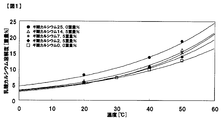
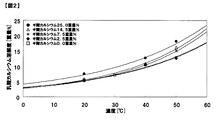
- Reference Example 1 Saturation Solubility Measurement of Calcium Lactate Aqueous Solution Containing Calcium Formate 100 g of pure water was added to 50 g of calcium lactate pentahydrate (manufactured by Sigma Aldrich) to prepare a 23.6 wt% anhydrous calcium lactate aqueous solution. Further, an aqueous calcium lactate solution containing 0%, 2.5%, 7.2%, 14.5%, 25.0% by weight of calcium formate (manufactured by Sigma-Aldrich) with respect to anhydrous calcium lactate. These were prepared and used as test solutions. The prepared test solution was stirred at 400 rpm while being kept at 20 ° C., 30 ° C., 40 ° C., and 50 ° C.
- the calcium lactate slurry after the incubation time of 1, 3 and 6 hours at each temperature was filtered through a 0.2 ⁇ m filter, and the anhydrous calcium lactate concentration in the filtrate was measured to obtain saturated solubility.
- the calcium lactate concentration and the calcium formate concentration in the calcium lactate aqueous solution were measured under the following conditions by high performance liquid chromatography (manufactured by Shimadzu Corporation).
- Examples 1 and 2 Crystallization of an aqueous calcium lactate solution containing 7.5% by weight of calcium formate 100 g of calcium lactate pentahydrate (Sigma Aldrich), 250 g of pure water and 4.5 g of calcium formate (Sigma Aldrich) It was added to prepare a 20.0% by weight calcium lactate aqueous solution. The mixture was stirred at 50 ° C. and 400 rpm for 2 hours, subjected to solid-liquid separation by suction filtration with qualitative filter paper No. 2 (manufactured by Advantech), undissolved calcium lactate was removed, and the mother liquor was recovered. The calcium lactate concentration and calcium formate concentration in the collected mother liquor were measured by high performance liquid chromatography in the same manner as in Reference Example 1.
- the concentration of calcium lactate in the collected mother liquor was 15.1% by weight, and the amount of calcium formate relative to calcium lactate was 7.5% by weight.
- the collected mother liquor was used as a test solution, which was divided into two, cooled to 20 ° C. and 30 ° C., respectively, and stirred at 400 rpm for 2 hours.
- the precipitated slurry was subjected to solid-liquid separation into wet crystals and mother liquor by suction filtration using qualitative filter paper No. 2 (manufactured by Advantech).
- the amount of calcium lactate in the wet crystal was measured by high performance liquid chromatography in the same manner as in Reference Example 1, and the calcium lactate recovery rate was calculated by the method of Formula 1. The results are shown in Tables 1 (a) and (b).
- Calcium lactate recovery rate (%) 100 ⁇ calcium lactate amount in wet crystal (g) / calcium lactate amount in test solution (g) (Formula 1).
- Examples 3 and 4 Crystallization of a calcium lactate aqueous solution containing 14.5% by weight of calcium formate with respect to calcium lactate 100 g of calcium lactate pentahydrate (manufactured by Sigma Aldrich), 240 g of pure water and calcium formate (Sigma Aldrich) 10 g) was added to prepare a 20.2 wt% calcium lactate aqueous solution. The mixture was stirred at 50 ° C. and 400 rpm for 2 hours, subjected to solid-liquid separation by suction filtration with qualitative filter paper No. 2 (manufactured by Advantech), undissolved calcium lactate was removed, and the mother liquor was recovered.
- the calcium lactate concentration and calcium formate concentration in the collected mother liquor were measured by high performance liquid chromatography in the same manner as in Reference Example 1. As a result, the concentration of calcium lactate in the collected mother liquor was 15.5% by weight, and the amount of calcium formate relative to calcium lactate was 14.5% by weight.
- calcium lactate was crystallized and solid-liquid separated by the same method as in Examples 1 and 2, and the calcium lactate recovery rate was calculated by the method of Formula 1. The results are shown in Tables 1 (c) and (d).
- Examples 5 and 6 Crystallization of calcium lactate aqueous solution containing 25% by weight of calcium formate with respect to calcium lactate 100 g of calcium lactate pentahydrate (Sigma Aldrich), 230 g of pure water, calcium formate (Sigma Aldrich) 17.0 g was added to prepare a 20.4 wt% calcium lactate aqueous solution. The mixture was stirred at 50 ° C. and 400 rpm for 2 hours, subjected to solid-liquid separation by suction filtration with qualitative filter paper No. 2 (manufactured by Advantech), undissolved calcium lactate was removed, and the mother liquor was recovered. The calcium lactate concentration and calcium formate concentration in the collected mother liquor were measured by high performance liquid chromatography in the same manner as in Reference Example 1.
- Comparative Examples 1 and 2 Crystallization of an aqueous calcium lactate solution containing 0% by weight of calcium formate relative to calcium lactate 254g of pure water was added to 100g of calcium lactate pentahydrate (manufactured by Sigma Aldrich), and 20.0% by weight of lactic acid. A calcium aqueous solution was prepared. The mixture was stirred at 50 ° C. and 400 rpm for 2 hours, subjected to solid-liquid separation by suction filtration with qualitative filter paper No. 2 (manufactured by Advantech), undissolved calcium lactate was removed, and the mother liquor was recovered. The calcium lactate concentration and calcium formate concentration in the collected mother liquor were measured by high performance liquid chromatography in the same manner as in Reference Example 1.
- the calcium lactate concentration and calcium formate concentration in the collected mother liquor were measured by high performance liquid chromatography in the same manner as in Reference Example 1. As a result, the concentration of calcium lactate in the collected mother liquor was 12.5% by weight, and the amount of calcium formate relative to calcium lactate was 2.5% by weight.
- the recovered mother liquor was crystallized and solid-liquid separated by the same method as in Examples 1 and 2, and the calcium lactate recovery rate was calculated by the method of Formula 1. The results are shown in Tables 1 (i) and (j).
- the calcium lactate concentration and calcium acetate concentration in the collected mother liquor were measured by high performance liquid chromatography as in Reference Example 1. As a result, the concentration of calcium lactate in the collected mother liquor was 12.4% by weight, and the amount of calcium acetate relative to calcium lactate was 14.5% by weight.
- the recovered mother liquor as a test solution, calcium lactate was crystallized and solid-liquid separated by the same method as in Examples 1 and 2, and the calcium lactate recovery rate was calculated by the method of Formula 1. The results are as shown in Table 2. It is shown that crystallization of calcium lactate containing calcium acetate does not change the calcium lactate concentration in the test solution and has no effect on improving the calcium lactate recovery rate. It was.
- LC strain Lactobacillus casei NRIC1941 strain was selected as the L-lactic acid bacterium (hereinafter referred to as LC strain).
- the LC strain was statically cultured at a temperature of 30 ° C. for 24 hours in a culture medium (100 g / L cane juice, 10 g / L yeast extract) before purging with 5 mL of nitrogen gas in a test tube (pre-culture).
- the medium was used after autoclaving (121 ° C., 15 minutes).
- the culture broth was inoculated into 50 mL of the same medium purged with nitrogen gas before and statically cultured at a temperature of 30 ° C. for 24 hours (pre-culture).
- the culture broth was inoculated into 1 L of the same medium purged with nitrogen gas and statically cultured at a temperature of 30 ° C. for 24 hours (pre-culture).
- the preculture was inoculated into the same medium, and cultured with shaking until the end of the culture while adjusting pH by adding calcium hydroxide at 30 ° C. and 300 rpm.
- pH adjustment calcium lactate and calcium formate were produced in the culture solution.
- the calcium lactate concentration was 4.5% by weight, and the amount of calcium formate relative to calcium lactate was 2.7% by weight. Met.
- Examples 7 and 8 Crystallization of calcium lactate from L-lactic acid fermentation broth by LC strain 30 L of lactic acid fermentation broth obtained in Reference Example 2 was passed through a microfiltration membrane ("Microza” manufactured by Asahi Kasei Corporation). The bacterial cells were filtered, and 120 g of calcium formate was added to the resulting clear filtrate, which was then kept at 50 ° C., and the concentration of calcium lactate was 15 with a spiral type 4 inch reverse osmosis membrane element (“TM-810”, manufactured by Toray Industries, Inc.). Concentrated to weight percent. The concentration of calcium lactate and calcium formate in the collected concentrate was measured by high performance liquid chromatography in the same manner as in Reference Example 1.
- SL strain Sporolactobacillus laevolyticus ATCC23492 strain was selected (hereinafter referred to as SL strain).
- Main culture medium (5 g / L calcium carbonate, 10 g / L polypeptone, 3 g / L yeast extract, 0.5 g / L potassium phosphate, 0.5 g / L phosphate) in which SL strain was purged with 5 mL of nitrogen gas in a test tube Potassium dihydrogen, 0.3 g / L magnesium sulfate heptahydrate, 0.01 g / L sodium chloride) was subjected to static culture at a temperature of 30 ° C.
- preculture for 24 hours (preculture).
- the preculture was inoculated with the same medium, and cultured with shaking until the end of the culture while adjusting pH by adding calcium hydroxide at 37 ° C. and 120 rpm.
- ppH calcium lactate and calcium formate were produced in the culture solution.
- the calcium lactate concentration was 6.0 wt%
- the calcium formate amount relative to calcium lactate was 0.8 wt%.
- HI003 strain Production of L-lactic acid fermentation broth using L-lactic acid fermenting yeast L-lactic acid fermenting yeast HI003 strain (hereinafter referred to as HI003 strain) described in WO2009 / 099044 is used as a raw sugar medium (70 g / L).
- a batch fermentation test was carried out using “Yujosei” (manufactured by Muso Co., Ltd., 1.5 g / L ammonium sulfate). The medium was used after autoclaving (121 ° C., 15 minutes).
- Reaction tank capacity (lactic acid fermentation medium amount): 30 (L), temperature adjustment: 32 (° C.), reaction tank aeration rate: 0.1 (L / min), reaction tank stirring speed: 200 (rpm), pH adjustment: Adjusted to pH 6.5 with 1N calcium hydroxide.
- the HI003 strain was cultured with shaking in a 5 ml raw sugar medium overnight in a test tube (pre-culture).
- the culture broth was inoculated into 100 ml of a fresh raw sugar medium and shake-cultured in a 500 ml Sakaguchi flask for 24 hours (pre-culture), and fermentation culture was performed while adjusting the temperature and adjusting the pH with calcium hydroxide.
- pH adjustment calcium lactate and calcium formate were produced in the culture solution.
- the calcium lactate concentration was 4.5% by weight in 50 hours.
- calcium formate was not detected.
- Examples 11 and 12 Crystallization of calcium lactate from L-lactic acid fermentation broth by L-lactic acid fermenting yeast 30 L of the fermentation broth obtained in Reference Example 4 was obtained from a microfiltration membrane ("Microza” manufactured by Asahi Kasei Corporation). ), And after adding 190 g of calcium formate to the resulting clear filtrate, the temperature was kept at 50 ° C., and calcium lactate with a spiral type 4 inch reverse osmosis membrane element (“TM-810”, manufactured by Toray Industries, Inc.) The concentration was 15.0% by weight (calcium formate concentration was 10% by weight relative to calcium lactate concentration). The concentration of calcium lactate and calcium formate in the collected concentrate was measured by high performance liquid chromatography in the same manner as in Reference Example 1.
- Comparative Example 9 10 Crystallization of calcium lactate from D-lactic acid fermentation broth by SL strain To the 30-liter D-lactic acid fermentation broth obtained in Reference Example 3, add calcium formate as in Comparative Examples 7 and 8. Concentration was performed, but the precipitation was completed when calcium lactate concentration reached 12.5% by weight. The collected concentrated liquid was filtered by suction filtration with qualitative filter paper No. 2 (manufactured by Advantech) while keeping the temperature at 50 ° C., and the precipitated calcium lactate crystals were removed. The concentration of calcium lactate and calcium formate in the collected concentrate was measured by high performance liquid chromatography in the same manner as in Reference Example 1.
- Comparative Examples 11 and 12 Crystallization of calcium lactate from the L-lactic acid fermentation broth by L-lactic acid fermentation yeast 30 L of the L-lactic acid fermentation broth obtained in Reference Example 4 was obtained in the same manner as in Comparative Examples 7 and 8. Concentration was carried out without adding, but since the precipitation of calcium lactate was observed when the calcium lactate concentration reached 12.0% by weight, the concentration was terminated.
- the collected concentrated liquid was filtered by suction filtration with qualitative filter paper No. 2 (manufactured by Advantech) while keeping the temperature at 50 ° C., and the precipitated calcium lactate crystals were removed.
- the concentration of calcium lactate and calcium formate in the collected concentrate was measured by high performance liquid chromatography in the same manner as in Reference Example 1.
- the concentration of calcium lactate in the collected concentrated liquid was 12.1% by weight, and the amount of calcium formate relative to calcium lactate was 0% by weight.
- the concentrated solution as a test solution calcium lactate was crystallized and solid-liquid separated in the same manner as in Examples 1 and 2, and the calcium lactate recovery rate was calculated by the method of Formula 1. The results are shown in Tables 3 (k) and (l).
- the lactate obtained by the present invention can be used as a raw material for biodegradable plastics in addition to uses such as food and medicine.
Landscapes
- Chemical & Material Sciences (AREA)
- Organic Chemistry (AREA)
- Engineering & Computer Science (AREA)
- Oil, Petroleum & Natural Gas (AREA)
- Wood Science & Technology (AREA)
- Life Sciences & Earth Sciences (AREA)
- Zoology (AREA)
- Crystallography & Structural Chemistry (AREA)
- General Chemical & Material Sciences (AREA)
- Microbiology (AREA)
- Chemical Kinetics & Catalysis (AREA)
- Biotechnology (AREA)
- Health & Medical Sciences (AREA)
- Biochemistry (AREA)
- Bioinformatics & Cheminformatics (AREA)
- General Engineering & Computer Science (AREA)
- General Health & Medical Sciences (AREA)
- Genetics & Genomics (AREA)
- Preparation Of Compounds By Using Micro-Organisms (AREA)
- Organic Low-Molecular-Weight Compounds And Preparation Thereof (AREA)
Abstract
Description
(1)乳酸塩に対してギ酸塩が7.0重量%以上含まれている乳酸塩水溶液を晶析して乳酸塩を回収する工程を含む、乳酸塩の製造方法。
(2)前記乳酸塩水溶液が乳酸塩に対してギ酸塩が7.0~40.0重量%含まれている乳酸塩水溶液である、(1)に記載の乳酸塩の製造方法。
(3)前記乳酸塩が乳酸カルシウムまたは乳酸マグネシウムである、(1)または(2)に記載の乳酸塩の製造方法。
(4)前記乳酸塩水溶液の乳酸塩濃度が10.0~30.0重量%である、(1)から(3)のいずれかに記載の乳酸塩の製造方法。
(5)前記乳酸塩を晶析する温度が30℃以下である、(1)から(4)のいずれかに記載の乳酸塩の製造方法。
(6)前記乳酸塩水溶液を30~60℃で逆浸透膜に通じて得られる濃縮液を晶析する、(1)から(5)のいずれかに記載の乳酸塩の製造方法。
乳酸カルシウム・5水和物(シグマアルドリッチ社製)50gに純水100g添加し、23.6重量%無水乳酸カルシウム水溶液を調整した。さらに、無水乳酸カルシウムに対してギ酸カルシウム(シグマアルドリッチ社製)が0重量%、2.5重量%、7.2重量%、14.5重量%、25.0重量%含まれる乳酸カルシウム水溶液を調製し、これらを試験液とした。調製した試験液を20℃、30℃、40℃、50℃で保温しながら、400rpmで攪拌した。各温度における保温時間1、3、6時間経過後の乳酸カルシウムスラリーを0.2μmフィルターで濾過し、濾液中の無水乳酸カルシウム濃度を測定し、飽和溶解度とした。なお、乳酸カルシウム水溶液中の乳酸カルシウム濃度およびギ酸カルシウム濃度は、高速液体クロマトグラフィー(株式会社島津製作所製)により以下の条件により測定した。
カラム:Shim-Pack SPR-H(株式会社島津製作所製)
移動相:5mM p-トルエンスルホン酸(流速0.8mL/min)
反応液:5mM p-トルエンスルホン酸、20mM ビストリス、0.1mM EDTA・2Na(流速0.8mL/min)
検出方法:電気伝導度
温度:45℃。
乳酸カルシウム・5水和物(シグマアルドリッチ社製)100gに純水250g、ギ酸カルシウム(シグマアルドリッチ社製)4.5g添加し、20.0重量%乳酸カルシウム水溶液を調整した。50℃、400rpmで2時間攪拌し、定性濾紙No2(アドバンテック社製)で吸引濾過により固液分離し、溶解していない乳酸カルシウムを除去し、母液を回収した。回収した母液中の乳酸カルシウム濃度、ギ酸カルシウム濃度は参考例1と同様に高速液体クロマトグラフィーで測定した。その結果、回収した母液中の乳酸カルシウム濃度は15.1重量%であり、乳酸カルシウムに対するギ酸カルシウム量は7.5重量%であった。回収した母液を試験液とし、これを2つに分けてそれぞれ20℃、30℃に冷却し、400rpm、2時間攪拌した。析出したスラリーを定性濾紙No2(アドバンテック社製)で吸引濾過によりウエット結晶と母液に固液分離した。ウエット結晶中の乳酸カルシウム量は、参考例1と同様に高速液体クロマトグラフィーで測定し、乳酸カルシウム回収率を式1の方法で算出した。結果を表1(a)、(b)に示す。
乳酸カルシウム・5水和物(シグマアルドリッチ社製)100gに純水240g、ギ酸カルシウム(シグマアルドリッチ社製)10g添加し、20.2重量%乳酸カルシウム水溶液を調整した。50℃、400rpmで2時間攪拌し、定性濾紙No2(アドバンテック社製)で吸引濾過により固液分離し、溶解していない乳酸カルシウムを除去し、母液を回収した。回収した母液中の乳酸カルシウム濃度、ギ酸カルシウム濃度は参考例1と同様に高速液体クロマトグラフィーで測定した。その結果、回収した母液中の乳酸カルシウム濃度は15.5重量%であり、乳酸カルシウムに対するギ酸カルシウム量は14.5重量%であった。回収した母液を試験液として、実施例1、2と同様の方法で乳酸カルシウムを晶析・固液分離し、乳酸カルシウム回収率を式1の方法で算出した。結果を表1(c)、(d)に示す。
乳酸カルシウム・5水和物(シグマアルドリッチ社製)100gに純水230g、ギ酸カルシウム(シグマアルドリッチ社製)17.0g添加し、20.4重量%乳酸カルシウム水溶液を調整した。50℃、400rpmで2時間攪拌し、定性濾紙No2(アドバンテック社製)で吸引濾過により固液分離し、溶解していない乳酸カルシウムを除去し、母液を回収した。回収した母液中の乳酸カルシウム濃度、ギ酸カルシウム濃度は参考例1と同様に高速液体クロマトグラフィーで測定した。その結果、回収した母液中の乳酸カルシウム濃度は19.5重量%であり、乳酸カルシウムに対するギ酸カルシウム量は25.0重量%であった。回収した母液を試験液として、実施例1、2と同様の方法で乳酸カルシウムを晶析・固液分離し、乳酸カルシウム回収率を式1の方法で算出した。結果を表1(e)、(f)に示す。
乳酸カルシウム・5水和物(シグマアルドリッチ社製)100gに純水254g添加し、20.0重量%乳酸カルシウム水溶液を調整した。50℃、400rpmで2時間攪拌し、定性濾紙No2(アドバンテック社製)で吸引濾過により固液分離し、溶解していない乳酸カルシウムを除去し、母液を回収した。回収した母液中の乳酸カルシウム濃度、ギ酸カルシウム濃度は参考例1と同様に高速液体クロマトグラフィーで測定した。その結果、回収した母液中の乳酸カルシウム濃度は12.5重量%であり、乳酸カルシウムに対するギ酸カルシウム量は0重量%であった。回収した母液を試験液として、実施例1、2と同様の方法で乳酸カルシウムを晶析・固液分離し、乳酸カルシウム回収率を式1の方法で算出した。結果を表1(g)、(h)に示す。
乳酸カルシウム・5水和物(シグマアルドリッチ社製)100gに純水252g、ギ酸カルシウム(シグマアルドリッチ社製)1.7g添加し、20.0重量%乳酸カルシウム水溶液を調整した。50℃、400rpmで2時間攪拌し、定性濾紙No2(アドバンテック社製)で吸引濾過により固液分離し、溶解していない乳酸カルシウムを除去し、母液を回収した。回収した母液中の乳酸カルシウム濃度、ギ酸カルシウム濃度は参考例1と同様に高速液体クロマトグラフィーで測定した。その結果、回収した母液中の乳酸カルシウム濃度は12.5重量%であり、乳酸カルシウムに対するギ酸カルシウム量は2.5重量%であった。回収した母液を試験液として、実施例1、2と同様の方法で乳酸カルシウムを晶析・固液分離し、乳酸カルシウム回収率を式1の方法で算出した。結果を表1(i)、(j)に示す。

乳酸カルシウム・5水和物(シグマアルドリッチ社製)100gに純水240g、酢酸カルシウム(シグマアルドリッチ社製)10g添加し、20.2重量%乳酸カルシウム水溶液を調整した。50℃、400rpmで2時間攪拌し、定性濾紙No2(アドバンテック社製)で吸引濾過により固液分離し、溶解していない乳酸カルシウムを除去し、母液を回収した。回収した母液中の乳酸カルシウム濃度、酢酸カルシウム濃度は参考例1と同様に高速液体クロマトグラフィーで測定した。その結果、回収した母液中の乳酸カルシウム濃度は12.4重量%であり、乳酸カルシウムに対する酢酸カルシウム量は14.5重量%であった。回収した母液を試験液として、実施例1、2と同様の方法で乳酸カルシウムを晶析・固液分離し、乳酸カルシウム回収率を式1の方法で算出した。結果は表2に示す通りであり、酢酸カルシウムを含んだ乳酸カルシウムを晶析しても、試験液中の乳酸カルシウム濃度に変化はなく、乳酸カルシウム回収率の向上に効果がないことが示された。

L-乳酸菌として、ラクトバシラス・カゼイ(Lactobacillus casei)NRIC1941株を選定した(以下、LC株という。)。LC株を試験管で5mLの窒素ガスでパージした前々々培養培地(100g/L ケーンジュース、10g/L 酵母エキス)で24時間30℃の温度で静置培養した(前々々培養)。該培地は高圧蒸気滅菌(121℃、15分)して用いた。前々々培養液を窒素ガスでパージした同培地50mLに植菌し、24時間30℃の温度で静置培養した(前々培養)。前々培養液を窒素ガスでパージした同培地1Lに植菌し、24時間30℃の温度で静置培養した(前培養)。前培養液を同培地に植菌し、30℃、300rpmで水酸化カルシウムを添加してpH調整しながら培養終了まで振とう培養した。pH調整した結果、培養液中には、乳酸カルシウム、ギ酸カルシウムが生成した。90時間の発酵試験を行い、発酵培養液に含まれる乳酸カルシウム濃度およびギ酸カルシウム濃度を測定した結果、乳酸カルシウム濃度は4.5重量%であり、乳酸カルシウムに対するギ酸カルシウム量は2.7重量%であった。
参考例2で得られた乳酸発酵培養液30Lを、精密濾過膜(“マイクローザ”、旭化成株式会社製)で菌体を濾過し、得られた清澄濾液にギ酸カルシウム120g添加後、50℃に保温し、スパイラル型の4インチ逆浸透膜エレメント(“TM-810”、東レ株式会社製)で乳酸カルシウム濃度15重量%に濃縮した。回収した濃縮液中の乳酸カルシウム濃度、ギ酸カルシウム濃度は参考例1と同様に高速液体クロマトグラフィーで測定した。その結果、回収した濃縮液中の乳酸カルシウム濃度は15.0重量%であり、乳酸カルシウムに対するギ酸カルシウム量は10.5重量%であった。回収した濃縮液を試験液として、実施例1、2と同様の方法で乳酸カルシウムを晶析・固液分離し、乳酸カルシウム回収率を式1の方法で算出した。結果を表3(a)、(b)に示す。
D-乳酸菌として、スポロラクトバチルス・ラエボラクティカス(Sporolactobacillus laevolacticus)ATCC23492株を選定した(以下、SL株という。)。SL株を試験管で5mLの窒素ガスでパージした本培養培地(5g/L 炭酸カルシウム、10g/L ポリペプトン、3g/L 酵母エキス、0.5g/L リン酸カリウム、0.5g/L リン酸二水素カリウム、0.3g/L 硫酸マグネシウム7水和物、0.01g/L 塩化ナトリウム)で24時間30℃の温度で静置培養した(前培養)。前培養液を同培地で植菌し、37℃、120rpmで水酸化カルシウムを添加してpH調整しながら培養終了まで振とう培養した。ppH調整した結果、培養液中には、乳酸カルシウム、ギ酸カルシウムが生成した。160時間の発酵試験を行い、発酵培養液に含まれる乳酸カルシウム濃度およびギ酸カルシウム濃度を測定した結果、乳酸カルシウム濃度は6.0重量%であり、乳酸カルシウムに対するギ酸カルシウム量は0.8重量%であった。
参考例3で得られた乳酸発酵培養液30Lを、精密濾過膜(“マイクローザ”、旭化成株式会社製)で菌体を濾過し、得られた清澄濾液にギ酸カルシウム276g添加後、50℃に保温し、スパイラル型の4インチ逆浸透膜エレメント(“TM-810”、東レ株式会社製)で乳酸カルシウム濃度15.0重量%に濃縮した。回収した濃縮液中の乳酸カルシウム濃度、ギ酸カルシウム濃度は参考例1と同様に高速液体クロマトグラフィーで測定した。その結果、回収した濃縮液中の乳酸カルシウム濃度は15.0重量%であり、乳酸カルシウムに対するギ酸カルシウム量は10.0重量%であった。回収した濃縮液を試験液として、実施例1、2と同様の方法で乳酸カルシウムを晶析・固液分離し、乳酸カルシウム回収率を式1の方法で算出した。結果を表3(c)、(d)に示す。
WO2009/099044号に記載のL-乳酸発酵酵母HI003株(以下、HI003株という。)を用いて、原料糖培地(70g/L “優糖精”(ムソー株式会社製)、1.5g/L 硫酸アンモニウム)を用い、バッチ発酵試験を行った。該培地は高圧蒸気滅菌(121℃、15分)して用いた。生産物である乳酸の濃度の評価には、参考例1に示したHPLCを用いて評価し、グルコース濃度の測定には“グルコーステストワコーC”(和光純薬工業株式会社製)を用いた。参考例2の運転条件を以下に示す。
参考例4で得られた発酵培養液30Lを、精密濾過膜(“マイクローザ”、旭化成株式会社製)で菌体を濾過し、得られた清澄濾液にギ酸カルシウム190g添加後、50℃に保温し、スパイラル型の4インチ逆浸透膜エレメント(“TM-810”、東レ株式会社製)で乳酸カルシウム濃度15.0重量%に濃縮した(乳酸カルシウム濃度に対するギ酸カルシウム濃度は10重量%)。回収した濃縮液中の乳酸カルシウム濃度、ギ酸カルシウム濃度は参考例1と同様に高速液体クロマトグラフィーで測定した。その結果、回収した濃縮液中の乳酸カルシウム濃度は15.0重量%であり、乳酸カルシウムに対するギ酸カルシウム量は10.2重量%であった。回収した濃縮液を試験液として、実施例1、2と同様の方法で乳酸カルシウムを晶析・固液分離し、乳酸カルシウム回収率を式1の方法で算出した。結果を表3(e)、(f)に示す。
参考例2で得られたL-乳酸発酵培養液30Lを、精密濾過膜(“マイクローザ”、旭化成株式会社製)で菌体を濾過し、ギ酸カルシウムを添加せずに50℃に保温してスパイラル型の4インチ逆浸透膜エレメント(“TM-810”、東レ株式会社製)で濃縮を行ったが、乳酸カルシウム濃度12.8重量%に達した時点で乳酸カルシウムの析出が見られたため、濃縮を終了した。回収した濃縮液を50℃に保温したまま定性濾紙No2(アドバンテック社製)で吸引濾過により濾過し、析出した乳酸カルシウム結晶を除去した。回収した濃縮液中の乳酸カルシウム濃度、ギ酸カルシウム濃度は参考例1と同様に高速液体クロマトグラフィーで測定した。その結果、回収した濃縮液中の乳酸カルシウム濃度は12.8重量%であり、乳酸カルシウムに対するギ酸カルシウム量は0.3重量%であった。濃縮液を試験液として、実施例1、2と同様の方法で乳酸カルシウムを晶析・固液分離し、乳酸カルシウム回収率を式1の方法で算出した。結果を表3(g)、(h)に示す。
参考例3で得られたD-乳酸発酵培養液30Lを、比較例7、8と同様にギ酸カルシウムを添加せずに濃縮を行ったが、乳酸カルシウム濃度12.5重量%に達した時点で乳酸カルシウムの析出が見られたため、濃縮を終了した。回収した濃縮液を50℃に保温したまま定性濾紙No2(アドバンテック社製)で吸引濾過により濾過し、析出した乳酸カルシウム結晶を除去した。回収した濃縮液中の乳酸カルシウム濃度、ギ酸カルシウム濃度は参考例1と同様に高速液体クロマトグラフィーで測定した。その結果、回収した濃縮液中の乳酸カルシウム濃度は12.4重量%であり、乳酸カルシウムに対するギ酸カルシウム量は0.4重量%であった。濃縮液を試験液として、実施例1、2と同様の方法で乳酸カルシウムを晶析・固液分離し、乳酸カルシウム回収率を式1の方法で算出した。結果を表3(i)、(j)に示す。
参考例4で得られたL-乳酸発酵培養液30Lを、比較例7、8と同様にギ酸カルシウムを添加せずに濃縮を行ったが、乳酸カルシウム濃度12.0重量%に達した時点で乳酸カルシウムの析出が見られたため、濃縮を終了した。回収した濃縮液を50℃に保温したまま定性濾紙No2(アドバンテック社製)で吸引濾過により濾過し、析出した乳酸カルシウム結晶を除去した。回収した濃縮液中の乳酸カルシウム濃度、ギ酸カルシウム濃度は参考例1と同様に高速液体クロマトグラフィーで測定した。その結果、回収した濃縮液中の乳酸カルシウム濃度は12.1重量%であり、乳酸カルシウムに対するギ酸カルシウム量は0重量%であった。濃縮液を試験液として、実施例1、2と同様の方法で乳酸カルシウムを晶析・固液分離し、乳酸カルシウム回収率を式1の方法で算出した。結果を表3(k)、(l)に示す。

Claims (6)
- 乳酸塩に対してギ酸塩が7.0重量%以上含まれている乳酸塩水溶液を晶析して乳酸塩を回収する工程を含む、乳酸塩の製造方法。
- 前記乳酸塩水溶液が乳酸塩に対してギ酸塩が7.0~40.0重量%含まれている乳酸塩水溶液である、請求項1に記載の乳酸塩の製造方法。
- 前記乳酸塩が乳酸カルシウムまたは乳酸マグネシウムである、請求項1または2に記載の乳酸塩の製造方法。
- 前記乳酸塩水溶液の乳酸塩濃度が10.0~30.0重量%である、請求項1から3のいずれかに記載の乳酸塩の製造方法。
- 前記乳酸塩を晶析する温度が30℃以下である、請求項1から4のいずれかに記載の乳酸塩の製造方法。
- 前記乳酸塩水溶液を30~60℃で逆浸透膜に通じて得られる濃縮液を晶析する、請求項1から5のいずれかに記載の乳酸塩の製造方法。
Priority Applications (9)
| Application Number | Priority Date | Filing Date | Title |
|---|---|---|---|
| EP11849225.5A EP2653550A4 (en) | 2010-12-13 | 2011-12-12 | PROCESS FOR PRODUCING LACTATE |
| RU2013132528/10A RU2013132528A (ru) | 2010-12-13 | 2011-12-12 | Способ получения лактата |
| JP2012501053A JP5088454B2 (ja) | 2010-12-13 | 2011-12-12 | 乳酸塩の製造方法 |
| AU2011342241A AU2011342241A1 (en) | 2010-12-13 | 2011-12-12 | Method for producing lactate |
| KR1020137010437A KR20130139269A (ko) | 2010-12-13 | 2011-12-12 | 락트산염의 제조 방법 |
| CN201180056891.7A CN103249838B (zh) | 2010-12-13 | 2011-12-12 | 乳酸盐的制造方法 |
| CA2820644A CA2820644A1 (en) | 2010-12-13 | 2011-12-12 | Method for producing lactate |
| BR112013014646A BR112013014646A2 (pt) | 2010-12-13 | 2011-12-12 | método para produção de um sal de ácido lático |
| US13/993,385 US20140012041A1 (en) | 2010-12-13 | 2011-12-12 | Method for producing lactate |
Applications Claiming Priority (2)
| Application Number | Priority Date | Filing Date | Title |
|---|---|---|---|
| JP2010-277026 | 2010-12-13 | ||
| JP2010277026 | 2010-12-13 |
Publications (1)
| Publication Number | Publication Date |
|---|---|
| WO2012081533A1 true WO2012081533A1 (ja) | 2012-06-21 |
Family
ID=46244633
Family Applications (1)
| Application Number | Title | Priority Date | Filing Date |
|---|---|---|---|
| PCT/JP2011/078655 Ceased WO2012081533A1 (ja) | 2010-12-13 | 2011-12-12 | 乳酸塩の製造方法 |
Country Status (10)
| Country | Link |
|---|---|
| US (1) | US20140012041A1 (ja) |
| EP (1) | EP2653550A4 (ja) |
| JP (1) | JP5088454B2 (ja) |
| KR (1) | KR20130139269A (ja) |
| CN (1) | CN103249838B (ja) |
| AU (1) | AU2011342241A1 (ja) |
| BR (1) | BR112013014646A2 (ja) |
| CA (1) | CA2820644A1 (ja) |
| RU (1) | RU2013132528A (ja) |
| WO (1) | WO2012081533A1 (ja) |
Families Citing this family (3)
| Publication number | Priority date | Publication date | Assignee | Title |
|---|---|---|---|---|
| US20180069265A1 (en) * | 2016-08-30 | 2018-03-08 | Wildcat Discovery Technologies, Inc | Electrolyte formulations for electrochemical cells containing a silicon electrode |
| IL282900B2 (en) | 2018-11-26 | 2025-02-01 | Triplew Ltd | Magnesium lactate purification from fermentation solutions containing large amounts of impurities |
| JP7720646B2 (ja) | 2021-01-21 | 2025-08-08 | トリプルダブリュー リミテッド | 高純度l-乳酸マグネシウムの結晶化 |
Citations (6)
| Publication number | Priority date | Publication date | Assignee | Title |
|---|---|---|---|---|
| JPS60217897A (ja) | 1984-04-13 | 1985-10-31 | Taki Chem Co Ltd | 乳酸の分離精製方法 |
| WO2007049736A1 (ja) * | 2005-10-28 | 2007-05-03 | Kyowa Hakko Kogyo Co., Ltd. | 濃縮晶析装置および方法 |
| WO2009099044A1 (ja) | 2008-02-04 | 2009-08-13 | Toray Industries, Inc. | 連続発酵による乳酸の製造方法 |
| JP2009201506A (ja) | 2008-01-29 | 2009-09-10 | Toray Ind Inc | 乳酸の製造方法 |
| JP2010057389A (ja) | 2008-09-02 | 2010-03-18 | Toray Ind Inc | 乳酸の製造方法 |
| JP2010189310A (ja) * | 2009-02-18 | 2010-09-02 | Toray Ind Inc | 高純度乳酸の製造方法 |
Family Cites Families (3)
| Publication number | Priority date | Publication date | Assignee | Title |
|---|---|---|---|---|
| US6229046B1 (en) * | 1997-10-14 | 2001-05-08 | Cargill, Incorported | Lactic acid processing methods arrangements and products |
| CA2455249A1 (en) * | 2003-01-17 | 2004-07-17 | Bj Services Company | Crosslinking delaying agents for acid fluids |
| CN101302148B (zh) * | 2008-06-24 | 2010-08-18 | 同济大学 | 甘油水热还原co2生产甲酸的方法 |
-
2011
- 2011-12-12 BR BR112013014646A patent/BR112013014646A2/pt not_active IP Right Cessation
- 2011-12-12 EP EP11849225.5A patent/EP2653550A4/en not_active Withdrawn
- 2011-12-12 JP JP2012501053A patent/JP5088454B2/ja not_active Expired - Fee Related
- 2011-12-12 US US13/993,385 patent/US20140012041A1/en not_active Abandoned
- 2011-12-12 KR KR1020137010437A patent/KR20130139269A/ko not_active Withdrawn
- 2011-12-12 AU AU2011342241A patent/AU2011342241A1/en not_active Abandoned
- 2011-12-12 CN CN201180056891.7A patent/CN103249838B/zh not_active Expired - Fee Related
- 2011-12-12 CA CA2820644A patent/CA2820644A1/en not_active Abandoned
- 2011-12-12 WO PCT/JP2011/078655 patent/WO2012081533A1/ja not_active Ceased
- 2011-12-12 RU RU2013132528/10A patent/RU2013132528A/ru not_active Application Discontinuation
Patent Citations (6)
| Publication number | Priority date | Publication date | Assignee | Title |
|---|---|---|---|---|
| JPS60217897A (ja) | 1984-04-13 | 1985-10-31 | Taki Chem Co Ltd | 乳酸の分離精製方法 |
| WO2007049736A1 (ja) * | 2005-10-28 | 2007-05-03 | Kyowa Hakko Kogyo Co., Ltd. | 濃縮晶析装置および方法 |
| JP2009201506A (ja) | 2008-01-29 | 2009-09-10 | Toray Ind Inc | 乳酸の製造方法 |
| WO2009099044A1 (ja) | 2008-02-04 | 2009-08-13 | Toray Industries, Inc. | 連続発酵による乳酸の製造方法 |
| JP2010057389A (ja) | 2008-09-02 | 2010-03-18 | Toray Ind Inc | 乳酸の製造方法 |
| JP2010189310A (ja) * | 2009-02-18 | 2010-09-02 | Toray Ind Inc | 高純度乳酸の製造方法 |
Non-Patent Citations (1)
| Title |
|---|
| See also references of EP2653550A4 * |
Also Published As
| Publication number | Publication date |
|---|---|
| JPWO2012081533A1 (ja) | 2014-05-22 |
| KR20130139269A (ko) | 2013-12-20 |
| BR112013014646A2 (pt) | 2016-08-02 |
| AU2011342241A1 (en) | 2013-07-11 |
| EP2653550A4 (en) | 2015-11-18 |
| US20140012041A1 (en) | 2014-01-09 |
| JP5088454B2 (ja) | 2012-12-05 |
| CN103249838A (zh) | 2013-08-14 |
| RU2013132528A (ru) | 2015-01-20 |
| CA2820644A1 (en) | 2012-06-21 |
| CN103249838B (zh) | 2015-01-21 |
| EP2653550A1 (en) | 2013-10-23 |
Similar Documents
| Publication | Publication Date | Title |
|---|---|---|
| Pal et al. | Process intensification in lactic acid production: A review of membrane based processes | |
| CN102918017B (zh) | 从含有琥珀酸二铵、琥珀酸一铵和/或琥珀酸的发酵液制备琥珀酸一铵的方法及琥珀酸一铵到琥珀酸的转化 | |
| JP5487617B2 (ja) | 乳酸の製造方法 | |
| CN102952831A (zh) | 精制乳酸的制造方法 | |
| CN111039808A (zh) | 一种从发酵液中提取酪氨酸的方法 | |
| JP5088454B2 (ja) | 乳酸塩の製造方法 | |
| CN104822652B (zh) | 纯化1,4‑二氨基丁烷的方法、由所述方法纯化的1,4‑二氨基丁烷和由其制备的聚酰胺 | |
| JPWO2015034036A1 (ja) | 乳酸およびポリ乳酸の製造方法 | |
| JP2005139156A (ja) | コハク酸モノアンモニウム塩の製造法 | |
| JP2010070474A (ja) | コハク酸の製造方法 | |
| JP2009201506A (ja) | 乳酸の製造方法 | |
| JP5262011B2 (ja) | 乳酸の製造方法および製造装置 | |
| JP2010126512A (ja) | ヒドロキシカルボン酸の製造方法 | |
| JP6613367B2 (ja) | 1,4−ジアミノブタンの精製方法 | |
| JP5458565B2 (ja) | コハク酸塩の製造方法 | |
| JPWO2013042760A1 (ja) | コハク酸の製造方法 | |
| WO2020196460A1 (ja) | カルボン酸の製造方法 | |
| JP2010095450A (ja) | モノカルボン酸の製造方法 | |
| JP2010143888A (ja) | ブタノールの製造方法 | |
| US20120259138A1 (en) | Methods and systems of producing dicarboxylic acids | |
| JP2011172492A (ja) | 乳酸塩の製造方法 | |
| CN116162665B (zh) | 一种由d,l-草铵膦反应液制备l-草铵膦的方法及装置 | |
| JP2012193120A (ja) | 有機酸の製造方法 | |
| JP5593597B2 (ja) | 乳酸の製造方法 | |
| JP2013256459A (ja) | ムコン酸の製造方法 |
Legal Events
| Date | Code | Title | Description |
|---|---|---|---|
| WWE | Wipo information: entry into national phase |
Ref document number: 2012501053 Country of ref document: JP |
|
| 121 | Ep: the epo has been informed by wipo that ep was designated in this application |
Ref document number: 11849225 Country of ref document: EP Kind code of ref document: A1 |
|
| ENP | Entry into the national phase |
Ref document number: 20137010437 Country of ref document: KR Kind code of ref document: A |
|
| REEP | Request for entry into the european phase |
Ref document number: 2011849225 Country of ref document: EP |
|
| WWE | Wipo information: entry into national phase |
Ref document number: 2011849225 Country of ref document: EP |
|
| ENP | Entry into the national phase |
Ref document number: 2820644 Country of ref document: CA |
|
| NENP | Non-entry into the national phase |
Ref country code: DE |
|
| WWE | Wipo information: entry into national phase |
Ref document number: 13993385 Country of ref document: US |
|
| ENP | Entry into the national phase |
Ref document number: 2011342241 Country of ref document: AU Date of ref document: 20111212 Kind code of ref document: A |
|
| ENP | Entry into the national phase |
Ref document number: 2013132528 Country of ref document: RU Kind code of ref document: A |
|
| REG | Reference to national code |
Ref country code: BR Ref legal event code: B01A Ref document number: 112013014646 Country of ref document: BR |
|
| ENP | Entry into the national phase |
Ref document number: 112013014646 Country of ref document: BR Kind code of ref document: A2 Effective date: 20130612 |