WO2012098172A2 - N-arylaminomethylene benzothiophenones for treatment of cardiovascular disease - Google Patents
N-arylaminomethylene benzothiophenones for treatment of cardiovascular disease Download PDFInfo
- Publication number
- WO2012098172A2 WO2012098172A2 PCT/EP2012/050742 EP2012050742W WO2012098172A2 WO 2012098172 A2 WO2012098172 A2 WO 2012098172A2 EP 2012050742 W EP2012050742 W EP 2012050742W WO 2012098172 A2 WO2012098172 A2 WO 2012098172A2
- Authority
- WO
- WIPO (PCT)
- Prior art keywords
- group
- carboxylic acid
- compound
- substituted
- electron
- Prior art date
- Legal status (The legal status is an assumption and is not a legal conclusion. Google has not performed a legal analysis and makes no representation as to the accuracy of the status listed.)
- Ceased
Links
- 0 O=C1c2ccccc2*C1*N[Al] Chemical compound O=C1c2ccccc2*C1*N[Al] 0.000 description 5
- FOXFUGCJJRDBNG-UHFFFAOYSA-N Cc(c1c2cccn1)ccc2Cl Chemical compound Cc(c1c2cccn1)ccc2Cl FOXFUGCJJRDBNG-UHFFFAOYSA-N 0.000 description 1
- NVVFFZQGRKIAPR-LCYFTJDESA-N O=C1c2ccccc2S/C1=C\Nc1cccnc1 Chemical compound O=C1c2ccccc2S/C1=C\Nc1cccnc1 NVVFFZQGRKIAPR-LCYFTJDESA-N 0.000 description 1
- QRPFWVDJZOSFAZ-UHFFFAOYSA-N OC(c1ccccc1SCC=O)=O Chemical compound OC(c1ccccc1SCC=O)=O QRPFWVDJZOSFAZ-UHFFFAOYSA-N 0.000 description 1
- WFEPSOVFDOMUIF-ZROIWOOFSA-N Oc(cc1)ccc1N/C=C1\Sc(cccc2)c2C1=O Chemical compound Oc(cc1)ccc1N/C=C1\Sc(cccc2)c2C1=O WFEPSOVFDOMUIF-ZROIWOOFSA-N 0.000 description 1
Classifications
-
- C—CHEMISTRY; METALLURGY
- C07—ORGANIC CHEMISTRY
- C07D—HETEROCYCLIC COMPOUNDS
- C07D417/00—Heterocyclic compounds containing two or more hetero rings, at least one ring having nitrogen and sulfur atoms as the only ring hetero atoms, not provided for by group C07D415/00
- C07D417/02—Heterocyclic compounds containing two or more hetero rings, at least one ring having nitrogen and sulfur atoms as the only ring hetero atoms, not provided for by group C07D415/00 containing two hetero rings
- C07D417/12—Heterocyclic compounds containing two or more hetero rings, at least one ring having nitrogen and sulfur atoms as the only ring hetero atoms, not provided for by group C07D415/00 containing two hetero rings linked by a chain containing hetero atoms as chain links
-
- A—HUMAN NECESSITIES
- A61—MEDICAL OR VETERINARY SCIENCE; HYGIENE
- A61K—PREPARATIONS FOR MEDICAL, DENTAL OR TOILETRY PURPOSES
- A61K31/00—Medicinal preparations containing organic active ingredients
- A61K31/13—Amines
- A61K31/135—Amines having aromatic rings, e.g. ketamine, nortriptyline
-
- A—HUMAN NECESSITIES
- A61—MEDICAL OR VETERINARY SCIENCE; HYGIENE
- A61K—PREPARATIONS FOR MEDICAL, DENTAL OR TOILETRY PURPOSES
- A61K31/00—Medicinal preparations containing organic active ingredients
- A61K31/33—Heterocyclic compounds
- A61K31/335—Heterocyclic compounds having oxygen as the only ring hetero atom, e.g. fungichromin
- A61K31/34—Heterocyclic compounds having oxygen as the only ring hetero atom, e.g. fungichromin having five-membered rings with one oxygen as the only ring hetero atom, e.g. isosorbide
- A61K31/343—Heterocyclic compounds having oxygen as the only ring hetero atom, e.g. fungichromin having five-membered rings with one oxygen as the only ring hetero atom, e.g. isosorbide condensed with a carbocyclic ring, e.g. coumaran, bufuralol, befunolol, clobenfurol, amiodarone
-
- A—HUMAN NECESSITIES
- A61—MEDICAL OR VETERINARY SCIENCE; HYGIENE
- A61K—PREPARATIONS FOR MEDICAL, DENTAL OR TOILETRY PURPOSES
- A61K31/00—Medicinal preparations containing organic active ingredients
- A61K31/33—Heterocyclic compounds
- A61K31/38—Heterocyclic compounds having sulfur as a ring hetero atom
- A61K31/381—Heterocyclic compounds having sulfur as a ring hetero atom having five-membered rings
-
- A—HUMAN NECESSITIES
- A61—MEDICAL OR VETERINARY SCIENCE; HYGIENE
- A61K—PREPARATIONS FOR MEDICAL, DENTAL OR TOILETRY PURPOSES
- A61K31/00—Medicinal preparations containing organic active ingredients
- A61K31/33—Heterocyclic compounds
- A61K31/395—Heterocyclic compounds having nitrogen as a ring hetero atom, e.g. guanethidine or rifamycins
- A61K31/41—Heterocyclic compounds having nitrogen as a ring hetero atom, e.g. guanethidine or rifamycins having five-membered rings with two or more ring hetero atoms, at least one of which being nitrogen, e.g. tetrazole
- A61K31/425—Thiazoles
- A61K31/428—Thiazoles condensed with carbocyclic rings
-
- A—HUMAN NECESSITIES
- A61—MEDICAL OR VETERINARY SCIENCE; HYGIENE
- A61K—PREPARATIONS FOR MEDICAL, DENTAL OR TOILETRY PURPOSES
- A61K31/00—Medicinal preparations containing organic active ingredients
- A61K31/33—Heterocyclic compounds
- A61K31/395—Heterocyclic compounds having nitrogen as a ring hetero atom, e.g. guanethidine or rifamycins
- A61K31/435—Heterocyclic compounds having nitrogen as a ring hetero atom, e.g. guanethidine or rifamycins having six-membered rings with one nitrogen as the only ring hetero atom
- A61K31/44—Non condensed pyridines; Hydrogenated derivatives thereof
- A61K31/4402—Non condensed pyridines; Hydrogenated derivatives thereof only substituted in position 2, e.g. pheniramine, bisacodyl
-
- A—HUMAN NECESSITIES
- A61—MEDICAL OR VETERINARY SCIENCE; HYGIENE
- A61K—PREPARATIONS FOR MEDICAL, DENTAL OR TOILETRY PURPOSES
- A61K31/00—Medicinal preparations containing organic active ingredients
- A61K31/33—Heterocyclic compounds
- A61K31/395—Heterocyclic compounds having nitrogen as a ring hetero atom, e.g. guanethidine or rifamycins
- A61K31/435—Heterocyclic compounds having nitrogen as a ring hetero atom, e.g. guanethidine or rifamycins having six-membered rings with one nitrogen as the only ring hetero atom
- A61K31/44—Non condensed pyridines; Hydrogenated derivatives thereof
- A61K31/4406—Non condensed pyridines; Hydrogenated derivatives thereof only substituted in position 3, e.g. zimeldine
-
- A—HUMAN NECESSITIES
- A61—MEDICAL OR VETERINARY SCIENCE; HYGIENE
- A61K—PREPARATIONS FOR MEDICAL, DENTAL OR TOILETRY PURPOSES
- A61K31/00—Medicinal preparations containing organic active ingredients
- A61K31/33—Heterocyclic compounds
- A61K31/395—Heterocyclic compounds having nitrogen as a ring hetero atom, e.g. guanethidine or rifamycins
- A61K31/435—Heterocyclic compounds having nitrogen as a ring hetero atom, e.g. guanethidine or rifamycins having six-membered rings with one nitrogen as the only ring hetero atom
- A61K31/44—Non condensed pyridines; Hydrogenated derivatives thereof
- A61K31/4427—Non condensed pyridines; Hydrogenated derivatives thereof containing further heterocyclic ring systems
-
- A—HUMAN NECESSITIES
- A61—MEDICAL OR VETERINARY SCIENCE; HYGIENE
- A61K—PREPARATIONS FOR MEDICAL, DENTAL OR TOILETRY PURPOSES
- A61K31/00—Medicinal preparations containing organic active ingredients
- A61K31/33—Heterocyclic compounds
- A61K31/395—Heterocyclic compounds having nitrogen as a ring hetero atom, e.g. guanethidine or rifamycins
- A61K31/435—Heterocyclic compounds having nitrogen as a ring hetero atom, e.g. guanethidine or rifamycins having six-membered rings with one nitrogen as the only ring hetero atom
- A61K31/47—Quinolines; Isoquinolines
-
- A—HUMAN NECESSITIES
- A61—MEDICAL OR VETERINARY SCIENCE; HYGIENE
- A61K—PREPARATIONS FOR MEDICAL, DENTAL OR TOILETRY PURPOSES
- A61K31/00—Medicinal preparations containing organic active ingredients
- A61K31/33—Heterocyclic compounds
- A61K31/395—Heterocyclic compounds having nitrogen as a ring hetero atom, e.g. guanethidine or rifamycins
- A61K31/435—Heterocyclic compounds having nitrogen as a ring hetero atom, e.g. guanethidine or rifamycins having six-membered rings with one nitrogen as the only ring hetero atom
- A61K31/47—Quinolines; Isoquinolines
- A61K31/4709—Non-condensed quinolines and containing further heterocyclic rings
-
- A—HUMAN NECESSITIES
- A61—MEDICAL OR VETERINARY SCIENCE; HYGIENE
- A61P—SPECIFIC THERAPEUTIC ACTIVITY OF CHEMICAL COMPOUNDS OR MEDICINAL PREPARATIONS
- A61P9/00—Drugs for disorders of the cardiovascular system
-
- C—CHEMISTRY; METALLURGY
- C07—ORGANIC CHEMISTRY
- C07D—HETEROCYCLIC COMPOUNDS
- C07D333/00—Heterocyclic compounds containing five-membered rings having one sulfur atom as the only ring hetero atom
- C07D333/50—Heterocyclic compounds containing five-membered rings having one sulfur atom as the only ring hetero atom condensed with carbocyclic rings or ring systems
- C07D333/52—Benzo[b]thiophenes; Hydrogenated benzo[b]thiophenes
- C07D333/62—Benzo[b]thiophenes; Hydrogenated benzo[b]thiophenes with hetero atoms or with carbon atoms having three bonds to hetero atoms with at the most one bond to halogen, e.g. ester or nitrile radicals, directly attached to carbon atoms of the hetero ring
- C07D333/64—Oxygen atoms
-
- C—CHEMISTRY; METALLURGY
- C07—ORGANIC CHEMISTRY
- C07D—HETEROCYCLIC COMPOUNDS
- C07D403/00—Heterocyclic compounds containing two or more hetero rings, having nitrogen atoms as the only ring hetero atoms, not provided for by group C07D401/00
- C07D403/02—Heterocyclic compounds containing two or more hetero rings, having nitrogen atoms as the only ring hetero atoms, not provided for by group C07D401/00 containing two hetero rings
- C07D403/12—Heterocyclic compounds containing two or more hetero rings, having nitrogen atoms as the only ring hetero atoms, not provided for by group C07D401/00 containing two hetero rings linked by a chain containing hetero atoms as chain links
-
- C—CHEMISTRY; METALLURGY
- C07—ORGANIC CHEMISTRY
- C07D—HETEROCYCLIC COMPOUNDS
- C07D409/00—Heterocyclic compounds containing two or more hetero rings, at least one ring having sulfur atoms as the only ring hetero atoms
- C07D409/02—Heterocyclic compounds containing two or more hetero rings, at least one ring having sulfur atoms as the only ring hetero atoms containing two hetero rings
- C07D409/12—Heterocyclic compounds containing two or more hetero rings, at least one ring having sulfur atoms as the only ring hetero atoms containing two hetero rings linked by a chain containing hetero atoms as chain links
-
- C—CHEMISTRY; METALLURGY
- C07—ORGANIC CHEMISTRY
- C07D—HETEROCYCLIC COMPOUNDS
- C07D413/00—Heterocyclic compounds containing two or more hetero rings, at least one ring having nitrogen and oxygen atoms as the only ring hetero atoms
- C07D413/02—Heterocyclic compounds containing two or more hetero rings, at least one ring having nitrogen and oxygen atoms as the only ring hetero atoms containing two hetero rings
- C07D413/12—Heterocyclic compounds containing two or more hetero rings, at least one ring having nitrogen and oxygen atoms as the only ring hetero atoms containing two hetero rings linked by a chain containing hetero atoms as chain links
Definitions
- the present invention relates to the area of N-arylaminomethylene benzothiophenones for treatment of cardiovascular disease.
- Heart failure and high blood pressure (hypertension) are the most common causes of death worldwide.
- Heart failure in particular represents a widespread disease that is not treatable by pharmaceutical intervention in a satisfactory way.
- the development of new pharmaceuticals with better efficacy and significantly reduced side effects is needed.
- AKAPs A-kinase-anchoring proteins
- PKA protein kinase A
- AKAP18 A-kinase-anchoring proteins
- WO2006122546 shows compounds that were found to disrupt the interaction between the protein
- AKAP186 and the Rll subunit of the PKA in an in-vitro screen are two of the compounds shown therein.
- One of the compounds shown therein is a benzothiophenone compound, 4-[[(z)-(3-oxobenzothiophene-2-ylidene)methyl]amino]phenol.
- the object of the present invention is to provide new compounds that are suitable as drugs for the treatment of cardiovascular diseases.
- a structure-activity study of the previously mentioned benzothiophenone (VI) revealed surprisingly that compounds with the common feature of an aminomethylene-benzothiophenone -or an analogous scaffold- substituted at the amino nitrogen with an aromatic compound having at least one electron- withdrawing group, or with a heteroaromatic compound, inhibit the AKAP-PKA interaction.
- This correlation was initially found in several in-vitro systems that assayed the isolated protein components, and could be confirmed both in cell culture assays that study AKAP-PKA-dependent processes (redistribution of the AQP2 water channel) as well as in indication-relevant animal models.
- the efficacy of the pharmaceutical compounds studied both in the TAC (transverse aortic restriction) model as well as in the SIADH (syndrome of inappropriate antidiuretic hormone secretion) model shows the availability of compounds according to the invention both for the treatment of (even severe) heart failure as well as for the treatment of SIADH (Schwartz-Bartter syndrome).
- the compounds of the invention can be used for all indications that are associated with hyponatremia as a result of excessive water retention.
- Water retention during pregnancy is a further indication.
- Indicated in particular is the treatment of advanced-stage heart failure in Classes I through IV, preferably in Classes II, III, and in particular IV, following the functional classification system developed by the New York Heart Association (NYHA).
- NYHA New York Heart Association
- alkyl or alkyl group means saturated hydrocarbons comprising one to ten carbon atoms, which may be present in a branched, linear, or cyclic structure, or a cyclic structure with side chains.
- alkyl also encompasses partially unsaturated
- alkyls hydrocarbons, e.g., propenyl.
- alkyls are methyl, ethyl, isobutyl, pentyl, n-hexyl or cyclohexyl.
- alkyl also encompasses heteroalkyl groups.
- heteroalkyl or heteroalkyl group mean chains or cycles or combinations of chains and cycles of carbon, oxygen, nitrogen, and sulfur atoms that are bonded by single or double bonds.
- straight alkyl residues are morpholine residue, piperidinyl residue, or cyclic sugars such as ribose.
- C C ⁇ alkyl means an alkyl group containing up to 4 carbon atoms, such as methyl, ethyl, 1 - or 2-propyl, n-, tert- or isobutyl.
- O-alkyl groups are alkyl ethers with the meaning of alkyl given above.
- aryl means a cyclic aromatic unsaturated hydrocarbon.
- Heteroaryl compounds as used in the context of the present description are those aryls that feature nitrogen, oxygen, or sulfur atoms on the ring in addition to carbon atoms.
- heteroaryl residues are pyrrole (azole), 1 ,2- and 1 ,3-diazole, the thiodiazoles (e.g., 1 ,2,5-, 1 ,2,3-), furan, thiophene, indole and its O- and S-homologues, indolizine, or pyridine.
- Alkyl, heteroalkyl, aryl, and heteroaryl can also each be substituted by groups containing nitrogen, e.g., such as primary, secondary, or tertiary amines, imides, amides, isocyanides, isocyanates, or hydrazides; as well as groups containing oxygen such as alcohols, ethers, carbonyls, carboxylic acids and esters, or their sulfur homologues.
- groups containing nitrogen e.g., such as primary, secondary, or tertiary amines, imides, amides, isocyanides, isocyanates, or hydrazides
- groups containing oxygen such as alcohols, ethers, carbonyls, carboxylic acids and esters, or their sulfur homologues.
- Halogens are fluorine, chlorine, bromine and iodine.
- a compound according to General Formula I is provided for use as a drug for the treatment of cardiovascular diseases
- E is S, O, or CH 2 ;
- - E is S (sulfur), O (oxygen), or CH 2 (methylene),
- - D is CH or NH
- - Z is a pentayclic heteroaryl moiety selected from imidazole, oxazole, thiazole, thiadiazole, benzimidazole, benzoxazole, benzothiazole, and wherein the pentacyclic heteroaryl moiety is optionally substituted by one or more substituents selected from the group comprising a halogen, a carboxylic acid or its C1 -, C2-, C3- or C4 alkyl ester, a carboxylic acid amide, carboxamidine, a nitrile, isonitrile, cyanate, isocyanate, thiocyanate, isothiocyanate, a nitro group or a mono-, di- or trifluoromethane group or a C1 -, C2-, C3- or C4 alkoxide moiety.
- the compounds of the second aspect of the invention are provided as such.
- a compound according to General Formula I is provided for use as a drug for the treatment of cardiovascular diseases, one particular indication considered herein being heart failure in New York Heart Association (NYHA) Classes I— IV, Classes 11— IV, or Classes III and IV.
- NYHA New York Heart Association
- the treatment of SIADH or excessive water retention are similarly considered to fall within the scope of the medical indication for which the compounds of the present invention are useful.
- E is S, O, or CH 2 ;
- D is CH, or NH,
- the electron-withdrawing group is selected from halogen, a carboxylic acid or its C1 -C4 alkyl ester, a carboxylic acid amide, a carboxamidine, a nitrile, isonitrile, cyanate, isocyanate, thiocyanate or isothiocyanate, a nitro group or a mono-, di- or trifluoromethane group.
- Ar is an aromatic pentacyclic structure with at least nitrogen as a ring member, in particular an aromatic pentacyclic structure with one nitrogen atom and at least one further heteroatom from the group of nitrogen, oxygen, or sulfur as a member.
- the heteroaryl residue is one of the moieties of Table 1 column A.
- the heteroaryl residue is one of the moieties of Table 1 column B.
- the compounds shown in Table 2 are especially preferred embodiments of this first aspect of the invention.
- E is sulfur and Ar is a mono- or bicyclic heteroaryl residue.
- a compound provided for treatment of heart disease is selected from Table 2, or is any of III and IV:
- - E is S (sulfur), O (oxygen), or CH 2 (methylene), - D is CH or NH, and
- - Z is a pentayclic heteroaryl moiety selected from imidazole, oxazole, thiazole, thiadiazole, benzimidazole, benzoxazole, benzothiazole, and wherein the pentacyclic heteroaryl moiety is optionally substituted by one or more substituents selected from the group comprising a halogen, a carboxylic acid or its C1 -, C2-, C3- or C4 alkyl ester, a carboxylic acid amide, carboxamidine, a nitrile, isonitrile, cyanate, isocyanate, thiocyanate, isothiocyanate, a nitro group or a mono-, di- or trifluoromethane group or a C1 -, C2-, C3- or C4 alkoxide moiety.
- E is sulfur
- D is CH.
- D is N.
- Z is a moiety selected of numbers 1 , 2, 3, 4, 5, 6, 7, 8, 9, 10, 13, 14, 15, 16, 17, 18, or 19 of Table 1 , Column A.
- Z is a moiety selected of numbers 1 , 2, 3, 4, 5, 6, 7, 8, 9, 10, 13, 14, 15, 16, 17, 18, or 19 of Table 1 , Column B.
- the compounds 1 to 32 and 50 to 55 and 57 of Table 2 are especially preferred embodiments of this second aspect of the invention.
- E is S (sulfur), O (oxygen), or CH 2 (methylene),
- D is CH or NH
- Z is a pentayclic heteroaryl moiety selected from imidazole, oxazole, thiazole, thiadiazole, benzimidazole, benzoxazole, benzothiazole, and wherein the pentacyclic heteroaryl moiety is optionally substituted by one or more substituents selected from the group comprising a halogen, a carboxylic acid or its C1 -, C2-, C3- or C4-alkyl ester, a carboxylic acid amide, carboxamidine, a nitrile, isonitrile, cyanate, isocyanate, thiocyanate, isothiocyanate, a nitro group or a mono-, di- or trifluoromethane group or a C1 -, C2-, C3- or C4 alkoxide moiety.
- E is sulfur
- D is CH.
- D is N.
- Z is a moiety selected of numbers 1 , 2, 3, 4, 5, 6, 7, 8, 9, 10, 13, 14, 15, 16, 17, 18, or 19 of Table 1 , Column A.
- Z is a moiety selected of numbers 1 , 2, 3, 4, 5, 6, 7, 8, 9, 10, 13, 14, 15, 16, 17, 18, or 19 of Table 1 , Column B.
- the compounds 1 to 32 and 50 to 55 and 57 of Table 2 are especially preferred embodiments of this third aspect of the invention.
- the formulation of the compounds according to the invention into pharmaceutical preparations is performed in a manner known in the art, by converting the active ingredient or ingredients into the desired dosing form with the adjuvants usual in pharmaceutical formulation (Remington's Pharmaceutical Science, 15th ed. Mack Publishing Company, East Pennsylvania [1980]).
- the pharmaceutical formulations can exist in solid form, for example as tablets, coated tablets, pills, suppositories, capsules, transdermal systems, or in semisolid form, for example as ointments, creams, gels, suppositories, emulsions, or in liquid form, for example as solutions, tinctures, suspensions, or emulsions.
- tablets, coated tablets, capsules, pills, powder, granules, pastilles, suspensions, emulsions, or solutions are a possibility for oral or peroral administration.
- the dosage of the compound according to the invention as an active component of a administration form depends on the age, weight, individual constitution, pharmacokinetic data, the administration form, and the precise indication.
- the daily dose must be measured at approximately 0.1 mg/kg to approximately 1000 mg, preferably from ca. 0.5 mg to ca. 100 mg/kg of the compound according to the invention.
- X and Y each independently of each other can be NH, N-CH3, O, S, or with Ar-NH 2 where Ar is described by one of the formulae of Table 1 , are preferred.
- Compounds for which IC50 values ⁇ 50 ⁇ / ⁇ were determined were assigned AA (if IC50 values of ⁇ 25 ⁇ / ⁇ were determined reproducible with at least one method, compounds were assigned AA+).
- Compounds for which IC50 values ⁇ 150 ⁇ / ⁇ were determined were assigned A; IC50 values ⁇ 250 ⁇ / ⁇ were assigned a B, all others were assigned C.
- the present invention is based on the coincidental identification of benzothiophenone compound VI
- IC50 values were determined for different assays in multiple independent measurements. It appears that while values differ between methods, their ranges and ratios correlate closely between methods. All IC50 values determined were in micromolar range, while in-vivo activities were calculated to have originated from nanomolar or sub-nanomolar concentrations. The inventors presume transport phenomena or solubility issues can explain this apparent contradiction. In the following, reference to a compounds numbered No. Y and Z in Table X is given as ⁇ ⁇ , ⁇ . N-Aryl-substitutions
- All active compounds are substituted by an aromatic ring (or multicyclic system) on the (methylene-) amino nitrogen, wherein the aromatic ring either is a carbocyclic aryl (phenyl or naphtyl) substituted by electron-withdrawing groups such as carboxylic acid, -ester or amide groups, nitrile or nitro groups or halogens (T1/20, 25; T2/59), or wherein the aryl is a heterocycle such as a thiazole or benzothiazole.
- the aromatic ring either is a carbocyclic aryl (phenyl or naphtyl) substituted by electron-withdrawing groups such as carboxylic acid, -ester or amide groups, nitrile or nitro groups or halogens (T1/20, 25; T2/59), or wherein the aryl is a heterocycle such as a thiazole or benzothiazole.
- Hexacyclic heteroaryl compounds showed activity, but generally of type C. Heteropenta cycles generally were found to generate lower IC50 values in the A-range ( ⁇ 150 ⁇ / ⁇ ). Thiazoles were explored most thoroughly, but oxazoles and imidazoles generally gave similar values where tested in surface plasmon resonance and alpha screen assays. Heteroaromatic pentacycles seem to show higher activity consistently compared to substituted phenyls, with T2/6 (unsubstituted thiazole) consistently showing an IC50 of about 50%-25% (two- to fourfold higher affinity) of that of compound T2/59 (4-benzoic acid as substituent). Absolute values for T2/1 ,6 were around 80 ⁇ / ⁇ . Adding another aromatic ring to the aromatic pentacycle generally did not abrogate activity, but generally resulted in higher IC50 values.
- Substitution of the thiazole ring by an electron withdrawing group further increased affinity (decreased IC50 values) by one order of magnitude (1 -5 ⁇ / ⁇ for compd. T2/12; cmpds. T2/13-21 at least equivalent to T2/59, monohalogen and nitrolo-substituted compds. at least half order of magnitude better than T2/59).
- Oxoindanyl and (somewhat inferior: oxobenzofuranyl) analogues of compounds T2/59 and T2/23 showed generally similar activity (see T2/55-58), indicating that the sulfur atom of the benzothiophene ring is not essential for activity. Substitution of hexacycle in the benzothiophenone ring
- Hydrazone derivatives of exemplary active enamine compounds were synthesized (see T2/50 to 54) and found generally at least as, or more active, compared to the methyleneamine compounds.
- Figure 1 shows the effect of a compound according to the invention on cardiac output over time and depending on the dose in the TAC model shown in Example 5.
- Figure 2 shows the effect of a compound according to the invention on heart weight over time and depending on the dose in the TAC model shown in Example 5.
- Figure 3 shows an echocardiographic measurement of the blood flow gradient in the mouse model of Example 5a.
- Figure 4 shows the echocardiographic measurement of wall dimensions in the mouse model of
- Figure 5 shows echocardiographic measurement of cardiac pump function in the mouse model of Example 5a.
- Figure 6 shows results of the morphometric measurement of treated animals
- Example 1 Alpha screen
- the experiment measures the suitability of candidate compounds for the inhibition of the interaction between AKAP and PKA.
- An AKAP-GST fusion construct is immobilized on glutathione donor beads and His-RII-alpha on Ni-chelate acceptor beads. To the extent that the partners interact, singlet oxygen from the donor beads becomes free and activates the fluorescence emission of the acceptor beads.
- the fluorescence emission determined in the microplate reader is proportional to the intensity of interaction of the protein partners.
- the IC50 is determined from the results of the measurement of several concentrations of one candidate compound.
- One volume unit each of protein solution and bead suspension are incorporated, specifically Solution A of the His6-tagged protein with Ni- chelate bead suspension and Solution B of the GST-fusion protein with glutathione beads (Perkin Elmer Product No. 6765302), and in doing so the concentrations are selected according to the manufacturer's information.
- the Mixtures A and B obtained are incubated for one hour at room temperature (RT) in the dark.
- IC50 values were determined for compounds of Table 2 in the range of 10 ⁇ 4 to 10 ⁇ 6 mol/l (see Table 2 for classification of compounds in groups AA+, AA, A, B or C).
- IC 50 values were measured in the range of 10 "4 to 10 "6 mol/l (see Table 2 for classification of compounds in groups AA+, AA, A, B or C).
- Example 3 ELISA-based assay to measure AKAP75-Rlla interaction
- Multititer plates (Corning B.V. Life Sciences, Schiphol-Rijk, Netherlands) were coated with
- GST-AKAP75 (Hundsrucker et al., Biochem. J. 396, 297-306, [2006]; 15 ng/well) was incubated with and without candidate compounds on the plate for 1 h at 22 °C. After washing, it was incubated with antibodies (rabbit) against AKAP75 (A1 853) and then with a peroxidase-conjugated antirabbit antibody and developed with dye substrate (LumiLight Western Blotting Substrate, Roche Diagnostics, Mannheim, Germany). Luminescence activity was determined in a microplate reader (GeniosPro, Tecan, Durham, North Carolina , United States) at 1 0 msec integration.
- mini osmotic pumps were implanted intraperitoneally with a compound to be tested (0.5, 5, 50, and 100 ⁇ / ⁇ , corresponding to 6 ⁇ g/kg/day) (Table 2), a fa- adrenergic receptor antagonist (metoprolol; 24 mg/kg/day), a ⁇ ⁇ -adrenerg c receptor antagonist (dobutamine; 4 ⁇ g/kg/day), a PDE3-inhibitor (milrinone; 3.0 mg/kg/d), and DMSO. Echocardiograms were done two and four weeks after implantation.
- the ejection fraction (ejection fraction; E f ) is the portion of the blood contained in the chambers of the heart that is ejected in comparison with the total volume at the end of diastole of the ventricle.
- Figure 1 shows the improvement achieved by the treatment in the ejection fraction E f in comparison with untreated animals.
- the first (left) group of bars shows the values of the ejection fraction (Y axis: ejected chamber volume in % of total chamber volume), and the second group of bars show the values after 2 weeks of treatment with Compound 59 (Table 2), and the third group of bars shows the values after 4 weeks.
- the following groups were measured :
- the ejection fraction In healthy condition, the ejection fraction is > 60% . Without treatment with the compound according to the invention, the ejection fraction in animals undergoing the operation is 20% ; treatment with a compound according to the invention makes this increase to 40% , depending on the dose. It is also very important that the heart weight, shown in Figure 2 as the ratio of heart weight to the tibia length, falls significantly in the treated animals. This means that the compound according to the invention does not show the classic positive inotropic effect that can be observed in cardiac glycosides, PDE3 inhibitors, or ⁇ -adrenergic agonists such as dobutamine.
- Figure 2 shows the heart weight for animals undergoing sham operations (grey bar) and animals undergoing TAC operations (white bar) in the "Before” group, as well as the values at two and four weeks for the groups indicated in Figure 1 .
- the compound according to the invention does not affect the heart rate.
- Example 5a Echocardiography in the TAC model; in-vivo use of T2/15
- TAC Transverse aortic banding
- mice were anesthetized by 2.4 % isoflurane inhalation and ventricular measurements were done with a VisualSonics Vevo 2100 Imaging System equipped with a 45 MHz MS-550D MicroScan transducer. The observer was unaware of the genotypes and treatments.
- Fig 3 shows how TAC was confirmed by echocardiography and measurement of blood flow gradient 4, 6 and 8 weeks after surgery.
- TAC operated mice have elevated gradients (>35 mm/Hg) vs. Sham operated mice (app. 4 mm/Hg).
- Fig. 4 shows heart wall dimensions. All TAC operated mice show thicker wall dimensions in comparison to sham operated mice assessed by echocardiographic measurement of IVSd (interventricular septum), LVPWd (left ventricular posterior wall), and LVEDd (end-diameter of the left ventricle) at diastole. Treatment with T2/15 had no significant effect on wall dimensions and cavity diameter.
- Echocardiography analysis revealed declined cardiac function of TAC vs. sham operated mice demonstrated by ejection fraction (EF), fractional shortening (FS), and cardiac output.
- HW Heart weight
- BW body weight
- TL tibia length
- mice Twelve-week-old female C57BL/6 mice were treated intraperitoneal ⁇ with desmopressin (100 nmol/l) through a mini osmotic pump (Alzet, Model 1004) over 14 days.
- the animals received a second mini osmotic pump at the same time, with either DMSO (control) or ML-07 with a dose of 12 ⁇ g/kg/day.
- DMSO control
- ML-07 ML-07 with a dose of 12 ⁇ g/kg/day.
- the mice were separated for 24 h into individual cages to collect metabolic data and urine. Then, the animals were killed and the organs removed for further investigations.
- AQP2 detected with a specific anti-AQP2 and Cy3-linked secondary antibody. They appear red on the fluorescent image. Nuclei appear blue after DAPI staining.
- the aldehyde 3 from the previous reaction was dissolved in 20 ml acetic anhydride and heated for 10 min on a preheated oil bath at 145 °C.
- the reaction mixture was poured onto a thick layer of crushed ice and stirred until all of the ice had melted.
- the aqueous phase was triple-extracted with dichloromethane.
- the combined organic phases were dried over magnesium sulfate, concentrated in vacuum, and coevaporated with toluene.
- Microscale Thermophoresis were performed on a monolith NT machine (nano tember technologies, Munich, Germany) with exemplary compounds (T2/1 1 , 15, 59) in 20 mM Phosphate, pH 7,5, 100 mM NaCI, 0,05% Tween 20 and 5% DMSO according to the general protocol provided by the manufacturer.
- Interaction partners were PKA subunit Rlla labelled with blue fluorescent dye NT-495; the parameters were: LED blue, LED Power 80%, Laser Power 20-80%, 25°C.
Landscapes
- Health & Medical Sciences (AREA)
- Chemical & Material Sciences (AREA)
- Organic Chemistry (AREA)
- Life Sciences & Earth Sciences (AREA)
- Pharmacology & Pharmacy (AREA)
- Animal Behavior & Ethology (AREA)
- General Health & Medical Sciences (AREA)
- Public Health (AREA)
- Veterinary Medicine (AREA)
- Medicinal Chemistry (AREA)
- Epidemiology (AREA)
- Bioinformatics & Cheminformatics (AREA)
- Engineering & Computer Science (AREA)
- Cardiology (AREA)
- Heart & Thoracic Surgery (AREA)
- Chemical Kinetics & Catalysis (AREA)
- General Chemical & Material Sciences (AREA)
- Nuclear Medicine, Radiotherapy & Molecular Imaging (AREA)
- Pharmaceuticals Containing Other Organic And Inorganic Compounds (AREA)
- Plural Heterocyclic Compounds (AREA)
Abstract
The invention relates to N-arylaminomethylenebenzothiophenones of General Formula (I) for use as a drug for the treatment of cardiovascular diseases, wherein E is S, O, or CH2, D is CH or NH, and Ar is a phenyl or naphtyl moiety substituted by an electron-withdrawing group, an unsubstituted heteroaryl residue, or a heteroaryl residue substituted by alkyl or an electron-withdrawing group.
Description
N-Arylaminomethylene benzothiophenones for treatment of cardiovascular disease Description
The present invention relates to the area of N-arylaminomethylene benzothiophenones for treatment of cardiovascular disease.
Heart failure and high blood pressure (hypertension) are the most common causes of death worldwide. Heart failure in particular represents a widespread disease that is not treatable by pharmaceutical intervention in a satisfactory way. The development of new pharmaceuticals with better efficacy and significantly reduced side effects is needed.
A-kinase-anchoring proteins (AKAPs) form a group of structurally diverse proteins. They can bind to the regulatory subunit of protein kinase A (PKA), localize intracellularly and are involved in a variety of signal transduction pathways (Skroblin et al., International Review of Cell and Molecular Biology 283, 235-330 [2010]). In particular, the alpha and delta isoforms of AKAP18 have important roles in regulating the contraction of heart muscle cells and the water reabsorption in the main cells of the collecting duct of the kidneys.
WO2006122546 shows compounds that were found to disrupt the interaction between the protein
AKAP186 and the Rll subunit of the PKA in an in-vitro screen. One of the compounds shown therein is a benzothiophenone compound, 4-[[(z)-(3-oxobenzothiophene-2-ylidene)methyl]amino]phenol.
The object of the present invention is to provide new compounds that are suitable as drugs for the treatment of cardiovascular diseases.
A structure-activity study of the previously mentioned benzothiophenone (VI) revealed surprisingly that compounds with the common feature of an aminomethylene-benzothiophenone -or an analogous scaffold- substituted at the amino nitrogen with an aromatic compound having at least one electron- withdrawing group, or with a heteroaromatic compound, inhibit the AKAP-PKA interaction. This correlation was initially found in several in-vitro systems that assayed the isolated protein components, and could be confirmed both in cell culture assays that study AKAP-PKA-dependent processes (redistribution of the AQP2 water channel) as well as in indication-relevant animal models.
The efficacy of the pharmaceutical compounds studied both in the TAC (transverse aortic restriction) model as well as in the SIADH (syndrome of inappropriate antidiuretic hormone secretion) model shows the availability of compounds according to the invention both for the treatment of (even severe) heart failure as well as for the treatment of SIADH (Schwartz-Bartter syndrome).
The compounds of the invention can be used for all indications that are associated with hyponatremia as a result of excessive water retention. This includes in particular heart failure, SIADH and cirrhosis of the liver, which can be triggered by different underlying diseases such as alcoholism, autoimmune diseases of the liver, or tumors. Water retention during pregnancy is a further indication.
Indicated in particular is the treatment of advanced-stage heart failure in Classes I through IV, preferably in Classes II, III, and in particular IV, following the functional classification system developed by the New York Heart Association (NYHA).
In the context of the present description, the term alkyl or alkyl group means saturated hydrocarbons comprising one to ten carbon atoms, which may be present in a branched, linear, or cyclic structure, or a cyclic structure with side chains. The term alkyl also encompasses partially unsaturated
hydrocarbons, e.g., propenyl. Examples of alkyls are methyl, ethyl, isobutyl, pentyl, n-hexyl or cyclohexyl. The term alkyl also encompasses heteroalkyl groups.
In the context of the present description, the terms heteroalkyl or heteroalkyl group mean chains or cycles or combinations of chains and cycles of carbon, oxygen, nitrogen, and sulfur atoms that are bonded by single or double bonds. Examples of straight alkyl residues are morpholine residue, piperidinyl residue, or cyclic sugars such as ribose. C C^alkyl means an alkyl group containing up to 4 carbon atoms, such as methyl, ethyl, 1 - or 2-propyl, n-, tert- or isobutyl.
O-alkyl groups are alkyl ethers with the meaning of alkyl given above.
In the context of the present description, the term aryl means a cyclic aromatic unsaturated hydrocarbon. Heteroaryl compounds as used in the context of the present description are those aryls that feature nitrogen, oxygen, or sulfur atoms on the ring in addition to carbon atoms.
Examples of heteroaryl residues are pyrrole (azole), 1 ,2- and 1 ,3-diazole, the thiodiazoles (e.g., 1 ,2,5-, 1 ,2,3-), furan, thiophene, indole and its O- and S-homologues, indolizine, or pyridine.
Alkyl, heteroalkyl, aryl, and heteroaryl can also each be substituted by groups containing nitrogen, e.g., such as primary, secondary, or tertiary amines, imides, amides, isocyanides, isocyanates, or hydrazides; as well as groups containing oxygen such as alcohols, ethers, carbonyls, carboxylic acids and esters, or their sulfur homologues.
Halogens are fluorine, chlorine, bromine and iodine.
Summary of the invention
According to a first aspect of the invention, a compound according to General Formula I is provided for use as a drug for the treatment of cardiovascular diseases,

(I)
wherein:
E is S, O, or CH2;
D is CH, or NH,
and Ar is
- a phenyl or naphtyl moiety substituted by an electron-withdrawing group,
an unsubstituted heteroaryl residue, or a heteroaryl residue substituted by alkyl or an electron-withdrawing group.
According to a second aspect of the invention, a compound of General Formula V

- E is S (sulfur), O (oxygen), or CH2 (methylene),
- D is CH or NH, and
- Z is a pentayclic heteroaryl moiety selected from imidazole, oxazole, thiazole, thiadiazole, benzimidazole, benzoxazole, benzothiazole, and wherein the pentacyclic heteroaryl moiety is optionally substituted by one or more substituents selected from the group comprising a halogen, a carboxylic acid or its C1 -, C2-, C3- or C4 alkyl ester, a carboxylic acid amide, carboxamidine, a nitrile, isonitrile, cyanate, isocyanate, thiocyanate, isothiocyanate, a nitro group or a mono-, di- or trifluoromethane group or a C1 -, C2-, C3- or C4 alkoxide moiety.
According to a third aspect of the invention, the compounds of the second aspect of the invention are provided as such.
Detailed description of the invention
According to the first aspect of the invention, a compound according to General Formula I is provided for use as a drug for the treatment of cardiovascular diseases, one particular indication considered herein being heart failure in New York Heart Association (NYHA) Classes I— IV, Classes 11— IV, or Classes III and IV. The treatment of SIADH or excessive water retention are similarly considered to fall within the scope of the medical indication for which the compounds of the present invention are useful.

(I)
wherein:
E is S, O, or CH2;
D is CH, or NH,
and Ar is
- a phenyl or naphtyl moiety substituted by an electron-withdrawing group,
an unsubstituted heteroaryl residue, or a heteroaryl residue substituted by alkyl or an electron-withdrawing group.
While studying the structure-activity profile of a compound (VI, see below) comprising a 4-OH-phenyl as Ar group, it was found that the nitrogen substituent must be an aromatic ring, that in the cases where Ar is phenyl, an electron-withdrawing group adds to the activity while electron-donating groups such as OH or O-alkyl abrogate activity, and that generally, five-membered aromatic heterocycles increase activity of the compound. Thiazole rings as Ar may even be substituted by O-alkyl rings without losing all of their activity, however the most active species were found to contain electron- withdrawing groups. The two most active representatives were cyano- and nitro-substituted thiazoles.
According to one embodiment, the electron-withdrawing group is selected from halogen, a carboxylic acid or its C1 -C4 alkyl ester, a carboxylic acid amide, a carboxamidine, a nitrile, isonitrile, cyanate, isocyanate, thiocyanate or isothiocyanate, a nitro group or a mono-, di- or trifluoromethane group.
In one embodiment, Ar is an aromatic pentacyclic structure with at least nitrogen as a ring member, in particular an aromatic pentacyclic structure with one nitrogen atom and at least one further heteroatom from the group of nitrogen, oxygen, or sulfur as a member.
In one embodiment, the heteroaryl residue is one of the moieties of Table 1 column A.
In one embodiment, the heteroaryl residue is one of the moieties of Table 1 column B.
The compounds shown in Table 2 are especially preferred embodiments of this first aspect of the invention.
Table 1:


-2-, -4-, -5-, -6-, or -7-nitrobenzothiazoles
-2-(4,6-fluoro)-1 ,3-benzothiazole pure or mixed -2-, -4-, -5-, -6-, or -7- halogenbenzoxazoles
-2-(6-bromo)-1 ,3-benzothiazole
-3 or-5-(1 ,2,4)thiodiazoles or, -5-(1 ,2,4-thiodiazole)
-4 or-5-(1 ,2,3)thiodazoles;
-2-or-5-(1 ,3,4)thiodiazoles 2-(1 ,3,4-thiodiazole)
-2- or -5-halogenthiadiazoles -2- 5-bromo-1 ,3,4-thiodiazole)

-2, -3-, or -4-nitrophenols -2-(4-nitrophenol)
H O
N<¾
4-benzoic acid
-2-, -3-, or -4-benzoic acid
\=y O H
4-benzoic acid methylester
-2-, -3-, or -4-benzoic acid alkylester \=/ OMe
-2-(1 -chloro)-4- halogenalkyl-halogenphenyls
trifluoromethyl benzene
F3C→^-CI
-8-quinoline
-2-, -3-, -4-, -5-, -6-, -7- or
-8-quinoline
-8-(5 O-chloro)-quinoline
32 pure or mixed -2-, -3-, -4-, -5-, -6-, -7-, or -8- halogenquinolines

-6(3-bromo)-pyridine
33 -2-, -3-, -4-, -5-, or -6-halogenpyridines N— y
-2-pyrimidine
34 -2-, -4-, or -5-pyrimidines
-2 --quOinazoline
35 -2-, -4-, -5-, -6-, -7- or
-8-quinoline
According to one embodiment, E is sulfur and Ar is a mono- or bicyclic heteroaryl residue.

(II)
The representation of the double bond between the pentacyclic structure of the benzothiophene and D in Formulas I and II by an intersecting line signifies that both the E and the Z conformations of the double bond are within the scope of the formula. Where D = CH, for example, both the forms l-E and I- Z are likely to be in equilibrium where possible:

l-E l-Z
For certain embodiments of the invention for which D = CH, equilibrium of the E and Z conformation is presumably reached in aqueous solution by means of an enolate imine intermediate stage, in which the bond between the pentacyclic structure and methylene carbon is freely rotatable (R1 to R4 are not drawn in for clarity):


In water, the equilibrium is on the side of the Z-conformers. Preferred embodiments of all aspects of the invention are compounds for which D = CH and the double bond is present in Z-conformation (see l-Z).
According to one embodiment of the first aspect of the invention, a compound provided for treatment of heart disease is selected from Table 2, or is any of III and IV:

2-[(3-pyridylamino)methylene]benzothiophene-3-one (2E or 2Z) (III);

(2Z)-2-[(8-quinolylamino)methylene]benzothiophene-3-one (IV).
According to a second aspect of the invention, a compound of General Formula V

V
is provided as a drug, where
- E is S (sulfur), O (oxygen), or CH2 (methylene),
- D is CH or NH, and
- Z is a pentayclic heteroaryl moiety selected from imidazole, oxazole, thiazole, thiadiazole, benzimidazole, benzoxazole, benzothiazole, and wherein the pentacyclic heteroaryl moiety is optionally substituted by one or more substituents selected from the group comprising a halogen, a carboxylic acid or its C1 -, C2-, C3- or C4 alkyl ester, a carboxylic acid amide, carboxamidine, a nitrile, isonitrile, cyanate, isocyanate, thiocyanate, isothiocyanate, a nitro group or a mono-, di- or trifluoromethane group or a C1 -, C2-, C3- or C4 alkoxide moiety.
In one embodiment of this aspect of the invention, E is sulfur.
In one embodiment of this aspect of the invention, D is CH.
In one embodiment of this aspect of the invention, D is N.
In one embodiment, Z is a moiety selected of numbers 1 , 2, 3, 4, 5, 6, 7, 8, 9, 10, 13, 14, 15, 16, 17, 18, or 19 of Table 1 , Column A.
In one embodiment, Z is a moiety selected of numbers 1 , 2, 3, 4, 5, 6, 7, 8, 9, 10, 13, 14, 15, 16, 17, 18, or 19 of Table 1 , Column B.
The compounds 1 to 32 and 50 to 55 and 57 of Table 2 are especially preferred embodiments of this second aspect of the invention.
According to a third aspect of the invention, a compound of General Formula V

E is S (sulfur), O (oxygen), or CH2 (methylene),
D is CH or NH, and
Z is a pentayclic heteroaryl moiety selected from imidazole, oxazole, thiazole, thiadiazole, benzimidazole, benzoxazole, benzothiazole, and wherein the pentacyclic heteroaryl moiety is optionally substituted by one or more substituents selected from the group comprising a halogen, a carboxylic acid or its C1 -, C2-, C3- or C4-alkyl ester, a carboxylic acid amide, carboxamidine, a nitrile, isonitrile, cyanate, isocyanate, thiocyanate, isothiocyanate, a nitro group or a mono-, di- or trifluoromethane group or a C1 -, C2-, C3- or C4 alkoxide moiety.
In one embodiment of this aspect of the invention, E is sulfur.
In one embodiment of this aspect of the invention, D is CH.
In one embodiment of this aspect of the invention, D is N.
In one embodiment, Z is a moiety selected of numbers 1 , 2, 3, 4, 5, 6, 7, 8, 9, 10, 13, 14, 15, 16, 17, 18, or 19 of Table 1 , Column A.
In one embodiment, Z is a moiety selected of numbers 1 , 2, 3, 4, 5, 6, 7, 8, 9, 10, 13, 14, 15, 16, 17, 18, or 19 of Table 1 , Column B.
The compounds 1 to 32 and 50 to 55 and 57 of Table 2 are especially preferred embodiments of this third aspect of the invention.
Table 2:

0
yl)amino]methylene]benzothiophene-3-one
Activity: A
(2Z)-2-[[(5-nitrothiazole-2- yl)amino]methylene]benzothiophene-3-one
Activity: AA+
(2Z)-2-[[(5-bromothiazole-2- yl)amino]methylene]benzothiophene-3-one
Activity: AA
(2Z)-2-[[(5-chlorothiazole-2- yl)amino]methylene]benzothiophene-3-one
Activity: A
2-[[(z)-(3-oxobenzothiophene-2- ylidene)methyl]amino]thiazole-5-carbonitrile
Activity: AA+

2-[[(z)-(3-oxobenzothiophene-2-
0
ylidene)methyl]amino]thiazole-5-carboxylic acid
Activity: B
0
2-[[(z)-(3-oxobenzothiophene-2-
0
ylidene)methyl]amino]thiazole-5-carboxylic acid methyl ester
Activity: A(A)
0
2-[[(z)-(3-oxobenzothiophene-2- ylidene)methyl]amino]thiazole-4-carboxylic acid methyl ester
HN-(' y Activity: A
2-[[(z)-(3-oxobenzothiophene-2- ylidene)methyl]amino]thiazole-5- carboxylic acid amide
Activity: A
 n-methyl-2-[[(z)-(3-oxobenzothiophene-2- ylidene)methyl]amino]thiazole-5- carboxylic acid amide
Activity: B

2-[[(Z)-(3-oxobenzothiophen-2- o ylidene)methyl]amino]thiazole-5-carboxamidine
Activity: A/B
N
(2Z)-2-[(1 ,3-benzothiazol-2-ylamino)methylene]-
0 benzothiophen-3-one
Activity A/B
o (2Z)-2-[[(6-methoxy-1 ,3-benzothiazole-2- yl)amino]methylene]benzothiophene-3-one
Activity: A
(2Z)-2-[[(6-nitro-1 ,3-benzothiazole-2-
O
yl)amino]methylene]benzothiophene-3-one
Activity: B o (2Z)-2-[[(4,6-difluoro-1 ,3-benzothiazole-2- yl)amino]methylene]benzothiophene-3-one
Activity: C o (2Z)-2-[[[6-(trifluoromethyl)-1 ,3-benzothiazole-2- yl]amino]methylene]benzothiophene-3-one
Activity: C
0 (2Z)-2-[[(6-bromo-1 ,3-benzothiazole-2- yl)amino]methylene]benzothiophene-3-one
Activity: A


56 0
acid
Activity: A
OH
(2Z)-2-[(1 ,3-benzothiazole-2-
57 O
ylamino)methylene]benzofuran-3-one
Activity: C
4-[[(z)-(3-oxobenzofuran-2-
58 0
ylidene)methyl]amino]benzoic acid
Activity: B/C
OH
4-[[(z)-(3-oxobenzothiophene-2-
59
ylidene)methyl]amino]benzoic acid
Activity: B

End of Table 2
Table 3: compounds with no activity in AKAP-PKA disruption assays of Examples 1 -3


Table 3
The formulation of the compounds according to the invention into pharmaceutical preparations is performed in a manner known in the art, by converting the active ingredient or ingredients into the desired dosing form with the adjuvants usual in pharmaceutical formulation (Remington's Pharmaceutical Science, 15th ed. Mack Publishing Company, East Pennsylvania [1980]). The
pharmaceutical formulations can exist in solid form, for example as tablets, coated tablets, pills, suppositories, capsules, transdermal systems, or in semisolid form, for example as ointments, creams, gels, suppositories, emulsions, or in liquid form, for example as solutions, tinctures, suspensions, or emulsions. In particular tablets, coated tablets, capsules, pills, powder, granules, pastilles, suspensions, emulsions, or solutions are a possibility for oral or peroral administration.
The dosage of the compound according to the invention as an active component of a administration form (application) depends on the age, weight, individual constitution, pharmacokinetic data, the administration form, and the precise indication. For a patient of ca. 70 kg, the daily dose must be measured at approximately 0.1 mg/kg to approximately 1000 mg, preferably from ca. 0.5 mg to ca. 100 mg/kg of the compound according to the invention.
According to another aspect of the compound, a procedure is provided to synthesize compounds of General Formula (X),

in which 2-(2-oxoethylsulfanyl)benzoic acid (XI)

is converted with acetic anhydride into (2-formylbenzothiophene-3-yl) acetate (XII)

and then reacts with lithium hydroxide into 3-oxobenzothiophene-2-carbaldehyde XIII
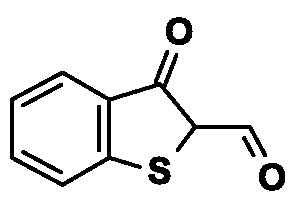 and results in the desired product by converting arylamines of General Formula Ar-NH2.
The reaction with

where X and Y each independently of each other can be NH, N-CH3, O, S, or with Ar-NH2 where Ar is described by one of the formulae of Table 1 , are preferred.
Whereever alternatives for single features such as E, Ar or Z, D etc. are laid out herein as
"embodiments", it is to be understood that such alternatives may be combined freely to form discrete embodiments of the entire molecule provided as such or for use in a method or medical indication herein. Thus, any of the alternative embodiments for Ar may be combined with any of the alternative embodiments of E etc.
Structure-Activity correlation in-vitro
Any compound for which no IC50 value could be determined in any of the assay methods shown in the Examples 1 , 2 or 3, or for which IC50 values > 750μιηοΙ/Ι were determined, were deemed inactive. Compounds for which IC50 values < 50μηηοΙ/Ι were determined were assigned AA (if IC50 values of <25 μιηοΙ/Ι were determined reproducible with at least one method, compounds were assigned AA+). Compounds for which IC50 values < 150 μιηοΙ/Ι were determined were assigned A; IC50 values < 250 μιηοΙ/Ι were assigned a B, all others were assigned C.
The present invention is based on the coincidental identification of benzothiophenone compound VI

((2Z)-2-[(4-hydroxyanilino)methylene]benzothiophen-3-one)
in a screen aimed at finding potential candidates for AKAP-PKA interaction inhibitors (see Klussmann et al., WO2006122546A1). Compound VI and numerous derivatives were synthesized and compared for activity in several different assay systems and in-vivo (see examples).
Despite repeated attempts, newly synthesized batches of compound VI could not be found to show significant reduction of AKAP-PKA interaction in any of the assays described herein. The reason for this discrepancy could not be clarified.
A large number of N-aryl substitutions however did show marked signals in one or more of the assays described in the Examples section. Not all substituents given in Table 1 were tested in all assay systems. From the combined data, it emerges that certain structural features predict activity in the AKAP-PKA interaction assays.
IC50 values were determined for different assays in multiple independent measurements. It appears that while values differ between methods, their ranges and ratios correlate closely between methods. All IC50 values determined were in micromolar range, while in-vivo activities were calculated to have originated from nanomolar or sub-nanomolar concentrations. The inventors presume transport phenomena or solubility issues can explain this apparent contradiction.
In the following, reference to a compounds numbered No. Y and Z in Table X is given as ΤΧ Υ,Ζ. N-Aryl-substitutions
All active compounds are substituted by an aromatic ring (or multicyclic system) on the (methylene-) amino nitrogen, wherein the aromatic ring either is a carbocyclic aryl (phenyl or naphtyl) substituted by electron-withdrawing groups such as carboxylic acid, -ester or amide groups, nitrile or nitro groups or halogens (T1/20, 25; T2/59), or wherein the aryl is a heterocycle such as a thiazole or benzothiazole.
Unsubstituted phenyl or phenly substituted by electron-pushing groups such as OH or O-alkyl were not found to be active (see T3/1 to 4; the naphtyl-substituted T2/39 showed barely detectable activity). A nitro group in ortho-position gave A-type activity (ca. 100 μιηοΙ/Ι), whereas the same group in para resulted in much higher IC50 values. None of the N-phenyl-compounds assayed however exceeded 100 μιηοΙ/Ι.
Hexacyclic heteroaryl compounds showed activity, but generally of type C. Heteropenta cycles generally were found to generate lower IC50 values in the A-range (<150 μιηοΙ/Ι). Thiazoles were explored most thoroughly, but oxazoles and imidazoles generally gave similar values where tested in surface plasmon resonance and alpha screen assays. Heteroaromatic pentacycles seem to show higher activity consistently compared to substituted phenyls, with T2/6 (unsubstituted thiazole) consistently showing an IC50 of about 50%-25% (two- to fourfold higher affinity) of that of compound T2/59 (4-benzoic acid as substituent). Absolute values for T2/1 ,6 were around 80 μιηοΙ/Ι. Adding another aromatic ring to the aromatic pentacycle generally did not abrogate activity, but generally resulted in higher IC50 values.
Substitution of the thiazole ring by an electron withdrawing group further increased affinity (decreased IC50 values) by one order of magnitude (1 -5 μιηοΙ/Ι for compd. T2/12; cmpds. T2/13-21 at least equivalent to T2/59, monohalogen and nitrolo-substituted compds. at least half order of magnitude better than T2/59).
Surprisingly, also alkyl substituents were tolerated on the heteroaromatic pentacycles (Table 2 Cmpds. 10, 1 1) and indeed in these compounds, lowered the IC50 to about 50% of that of the unsubstituted mother compound. Methyl substitutions on the phenyl substituent however (T3/4) abolished activity.
Benzylic analogues of active N-aryl-substituted compounds did not show any activity in the assays performed herein.
Substitutions of sulfur in the benzothiophenone ring
Oxoindanyl and (somewhat inferior: oxobenzofuranyl) analogues of compounds T2/59 and T2/23 showed generally similar activity (see T2/55-58), indicating that the sulfur atom of the benzothiophene ring is not essential for activity. Substitution of hexacycle in the benzothiophenone ring
A small number of fluoro- and ethoxy substitutions were tested in position 5 of the benzothiophenone ring. None were found to add to activity.
Exchange of methylene carbon by nitrogen (hydrazone derivatives)
Hydrazone derivatives of exemplary active enamine compounds were synthesized (see T2/50 to 54) and found generally at least as, or more active, compared to the methyleneamine compounds.
Brief Description of the Figures
Figure 1 shows the effect of a compound according to the invention on cardiac output over time and depending on the dose in the TAC model shown in Example 5.
Figure 2 shows the effect of a compound according to the invention on heart weight over time and depending on the dose in the TAC model shown in Example 5.
Figure 3 shows an echocardiographic measurement of the blood flow gradient in the mouse model of Example 5a.
Figure 4 shows the echocardiographic measurement of wall dimensions in the mouse model of
Example 5a.
Figure 5 shows echocardiographic measurement of cardiac pump function in the mouse model of Example 5a.
Figure 6 shows results of the morphometric measurement of treated animals
Examples
Example 1 : Alpha screen
The inhibition of the interaction of the alpha Rll subunit of protein kinase A with AKAP18-alpha by the compounds according to the invention is determined as follows:
The general description of the alpha screen technology is known to the person skilled in the art and can be learned from the manufacturer's descriptions, which can be found among other places on the Web site of Perkin Elmer at:
http://las. perkinelmer.de/Catalog/CategoryPage. htm?CategorylD=AlphaTech
The experiment measures the suitability of candidate compounds for the inhibition of the interaction between AKAP and PKA. An AKAP-GST fusion construct is immobilized on glutathione donor beads and His-RII-alpha on Ni-chelate acceptor beads. To the extent that the partners interact, singlet oxygen from the donor beads becomes free and activates the fluorescence emission of the acceptor beads. The fluorescence emission determined in the microplate reader is proportional to the intensity of interaction of the protein partners. The IC50 is determined from the results of the measurement of several concentrations of one candidate compound.
The details of the process were as follows: Two protein Solutions A and B are produced in a buffer (phosphate NaCI buffer, 0.1 % polysorbate 80, 0.1 % [= 1 mg/ml BSA]). These contain (A) the histidine-
6-tagged fusion construct RII-alpha-His (3.125 nmol/l) and (B) the glutathione-S-transferase-tagged fusion construct GST-AKAP18-alpha-d2-10 (6.25 nmol/l). One volume unit each of protein solution and bead suspension are incorporated, specifically Solution A of the His6-tagged protein with Ni- chelate bead suspension and Solution B of the GST-fusion protein with glutathione beads (Perkin Elmer Product No. 6765302), and in doing so the concentrations are selected according to the manufacturer's information. The Mixtures A and B obtained are incubated for one hour at room temperature (RT) in the dark.
Then, 5μΙ of Mixture A is laid out for each hole on a 384-hole microtiter plate, and then to start with 0.5 μΙ of a solution of the candidate compound in DMSO is added and then 5 μΙ of Mixture B. The resulting reaction mixture is incubated 1 h at RT in the dark. Then, the reaction is tempered to 28.5 °C, and the emitter intensity of the acceptor is determined in a microtiter plate reader after excitation of the donor at 680 nm.
The relative inhibition of the AKAP-PKA interaction is calculated following the formula:
1 - (xc-y) / (z-y)
where: X = average of readings (n = 3) at concentration c; Y = average of measurement data from bead-bead check (n = 6); Z = average of measurement data from protein-protein check (n = 6).
Results:
IC50 values were determined for compounds of Table 2 in the range of 10~4 to 10~6 mol/l (see Table 2 for classification of compounds in groups AA+, AA, A, B or C).
Example 2: Surface plasmon resonance analysis
Surface plasmon resonance analyses for competition in solution were performed with streptavidin- coated sensor chips (GE Healthcare, Uppsala, Sweden). The N-terminal biotinylated peptide AKAP18d-L314E was used, which is a variant of the RM-binding domains of AKAP185 (Hundsrucker et al., Biochem. J. 396, 297-306, [2006]). The binding of the regulatory subunit of the human PKAII-a or Rll-β onto the peptide surface of the AKAP185-L314E, or the inhibition of this binding to Rll by the compounds of the invention, was measured on a Biacaore 3000 machine (Biacore/GE Healthcare) as previously described (Henn et al., J Biol Chem 279, 26654-26665 [2004]). The compounds were injected for 60 sec at a flow rate of 30 μΙ/min, and the dissociation phase was measured for 180 sec.
Results:
Selected compounds of Table 2 were studied. IC50 values were measured in the range of 10"4 to 10"6 mol/l (see Table 2 for classification of compounds in groups AA+, AA, A, B or C).
Example 3: ELISA-based assay to measure AKAP75-Rlla interaction
Multititer plates (Corning B.V. Life Sciences, Schiphol-Rijk, Netherlands) were coated with
recombinantly produced PKA Rlla (15 ng/hole) by incubation with phosphate buffer containing protease inhibitors (1 h, 22 °C). The plate was then blocked with lactoprotein.
GST-AKAP75 (Hundsrucker et al., Biochem. J. 396, 297-306, [2006]; 15 ng/well) was incubated with and without candidate compounds on the plate for 1 h at 22 °C. After washing, it was incubated with
antibodies (rabbit) against AKAP75 (A1 853) and then with a peroxidase-conjugated antirabbit antibody and developed with dye substrate (LumiLight Western Blotting Substrate, Roche Diagnostics, Mannheim, Germany). Luminescence activity was determined in a microplate reader (GeniosPro, Tecan, Durham, North Carolina , United States) at 1 0 msec integration.
Example 4: Immunofluorescence
The redistribution of AQP-2 channels was determined in the main cells of the collecting duct of the rat kidney (primary culture) under the influence of the compounds according to the invention, as described in Stefan et al. (J. Am. Soc. Nephrol. 18, 199-212 [2007]), Nedvetsky et al. (J. Am. Soc. Nephrol. 21 , 1645-56 [2010]) und Nedvetsky et al. (Traffic 8, 1 10-123 [2007]). Example 5: "Transverse of aortic constriction" (TAC) animal model
In male C57B1 /6 mice (12-14 weeks old, average weight 26 g), high pressure overload induced by restricting the aorta following the method published by de Alameida et al. (J vis exp. 2010 Apr 21 ;[38]). Control animals were treated with sham operations. The animals were observed over a period of 4 weeks after the operation , and then mini osmotic pumps were implanted intraperitoneally with a compound to be tested (0.5, 5, 50, and 100 μιηοΙ/Ι, corresponding to 6 μg/kg/day) (Table 2), a fa- adrenergic receptor antagonist (metoprolol; 24 mg/kg/day), a β ^-adrenerg c receptor antagonist (dobutamine; 4 μg/kg/day), a PDE3-inhibitor (milrinone; 3.0 mg/kg/d), and DMSO. Echocardiograms were done two and four weeks after implantation.
As expected, the narrowing of the aorta leads to cardiac hypertrophy and chronic heart failure in the 4- week period after surgery. The ejection fraction (ejection fraction; Ef) is the portion of the blood contained in the chambers of the heart that is ejected in comparison with the total volume at the end of diastole of the ventricle. Figure 1 shows the improvement achieved by the treatment in the ejection fraction Ef in comparison with untreated animals. As such, the first (left) group of bars shows the values of the ejection fraction (Y axis: ejected chamber volume in % of total chamber volume), and the second group of bars show the values after 2 weeks of treatment with Compound 59 (Table 2), and the third group of bars shows the values after 4 weeks. The following groups were measured :
Animals undergoing sham operations with
- only DMSO as vehicle control (solid black bar);
- Compound 59, 3 μg/kg/day in DMSO (checked bar);
- Compound 59, 6 μg/kg/day in DMSO (bold crosshatched bar);
Animals undergoing TAC operations with
- only DMSO as vehicle control (bold vertically hatched bar);
- Compound 59, 0.03 μg/kg/day in DMSO (bold diagonal hatching to upper right);
- Compound 59, 0.03 μg/kg/day in DMSO (bold diagonal hatching to lower right);
- Compound 59, 3 μg/kg/day in DMSO (thin diagonal hatching to upper right);
- Compound 59, 6 μg/kg/day in DMSO (thin diagonal hatching to lower right);
In healthy condition, the ejection fraction is > 60% . Without treatment with the compound according to the invention, the ejection fraction in animals undergoing the operation is 20% ; treatment with a compound according to the invention makes this increase to 40% , depending on the dose. It is also
very important that the heart weight, shown in Figure 2 as the ratio of heart weight to the tibia length, falls significantly in the treated animals. This means that the compound according to the invention does not show the classic positive inotropic effect that can be observed in cardiac glycosides, PDE3 inhibitors, or β-adrenergic agonists such as dobutamine.
Figure 2 shows the heart weight for animals undergoing sham operations (grey bar) and animals undergoing TAC operations (white bar) in the "Before" group, as well as the values at two and four weeks for the groups indicated in Figure 1 .
Furthermore, the compound according to the invention does not affect the heart rate.
Together these clearly show that the compounds according to the invention constitute prototypes of a new class of drug that reverse heart failure instead of stabilizing the patient's situation for only a limited time.
Example 5a: Echocardiography in the TAC model; in-vivo use of T2/15
Protocol: For intervention 12- to 14-week-old male C57BL/6 mice (Charles River Sulzfeld) were anesthetized by 2.4 % isoflurane inhalation. Transverse aortic banding (TAC) was performed by tying a 7-0 prolene suture (Ethicon) ligature around the aorta and a blunted 26-gauge needle and subsequent removal of the needle. For sham controls the suture was not tied. TAC was confirmed by echocardiography and measurement of blood flow gradient 4 weeks after surgery. Next, mini-osmotic pumps (model 1004, Alzet) with T2/15 compound/vehicle were implanted i.p. Echocardiography was performed 2 and 4 weeks with compound treatment.
For echocardiography analyses mice were anesthetized by 2.4 % isoflurane inhalation and ventricular measurements were done with a VisualSonics Vevo 2100 Imaging System equipped with a 45 MHz MS-550D MicroScan transducer. The observer was unaware of the genotypes and treatments.
Differences between experimental groups were analyzed using ANOVA test followed by Bonferroni's Multiple Comparison Test using Prism Graphpad 4. Data are presented as mean ± SEM. P<0.05 values were considered significant.
n-numbers:
2 weeks 4 weeks
Sham + DMSO 13 13
Sham + 0.03μg/kg/d 5 5
Sham + 0^g/kg/d 5 5
Sham + 3μg/kg/d 6 6
Sham + 6μg/kg/d 7 7
TAC + DMSO 1 1 10
TAC + 0.03μg/kg/d 5 5
TAC + 0^g/kg/d 7 6
TAC + 3μg/kg/d 7 4
TAC + 6μg/kg/d 10 8
The results are shown in Figs. 3 to . Fig 3 shows how TAC was confirmed by echocardiography and measurement of blood flow gradient 4, 6 and 8 weeks after surgery. TAC operated mice have elevated gradients (>35 mm/Hg) vs. Sham operated mice (app. 4 mm/Hg). Fig. 4 shows heart wall dimensions.
All TAC operated mice show thicker wall dimensions in comparison to sham operated mice assessed by echocardiographic measurement of IVSd (interventricular septum), LVPWd (left ventricular posterior wall), and LVEDd (end-diameter of the left ventricle) at diastole. Treatment with T2/15 had no significant effect on wall dimensions and cavity diameter.
Echocardiography analysis (Fig. 5) revealed declined cardiac function of TAC vs. sham operated mice demonstrated by ejection fraction (EF), fractional shortening (FS), and cardiac output.
Heart weight (HW) was normalized against body weight (BW) and tibia length (TL), respectively (Fig. 6). TAC operated mice show the expected elevated heart-to-body weight and -to-tibia length ratios in comparison to Sham operated mice. Treatment with T2/15 vs. DMSO has an effect on HW TL.
In summary, comparison of treatment with T2/15 vs. DMSO showed that concentration ranges of between 0.3 and 3μg/kg/d T2/15 lead to an improved function without increasing heart rate or -mass, critical parameters of therapeutically desirable outcomes.
Example 6: SIADH model
Twelve-week-old female C57BL/6 mice were treated intraperitoneal^ with desmopressin (100 nmol/l) through a mini osmotic pump (Alzet, Model 1004) over 14 days. The animals received a second mini osmotic pump at the same time, with either DMSO (control) or ML-07 with a dose of 12 μg/kg/day. On Day 14, the mice were separated for 24 h into individual cages to collect metabolic data and urine. Then, the animals were killed and the organs removed for further investigations.
To study aquaporin-2 redistribution, the kidneys of the animals were analyzed with
immunofluorescence microscopy after one week. In addition, paraffin sections were produced and
AQP2 detected with a specific anti-AQP2 and Cy3-linked secondary antibody. They appear red on the fluorescent image. Nuclei appear blue after DAPI staining.
Example 7: Preparation of example compounds
Preparation of 3-oxo-2,3-dihydrobenzo[jb]thiophene-2-carbaldehyde (5)


50 %
5
10 g (65 mmol) 2-mercaptobenzoic acid, 13 ml (84 mmol, 1 .3 equiv.) bromoacetaldehydediethylacetal, and 17.6 g (215 mmol, 3.3 equiv.) sodium acetate were dissolved in 100 ml ethanol and mixed with 300 ml water. 19.5 ml (195 mmol, 3 equiv.) ccHCI were added, and the reaction mixture was heated for 1 h on a preheated oil bath at 100 °C. After cooling, about 70% of the solvent distilled off in vacuum, and the remainder was left overnight at 4 °C. The precipitate formed was filtered off, washed with Et20, and dried overnight on the oil pump. The Aldehyde 3 is converted in the next reaction without further purification.
The aldehyde 3 from the previous reaction was dissolved in 20 ml acetic anhydride and heated for 10 min on a preheated oil bath at 145 °C. The reaction mixture was poured onto a thick layer of crushed ice and stirred until all of the ice had melted. The aqueous phase was triple-extracted with dichloromethane. The combined organic phases were dried over magnesium sulfate, concentrated in vacuum, and coevaporated with toluene.
Acetylated 3-oxobenzothiophene-2-carbaldehyde was dissolved in 20 ml ethanol and 30 ml of water, and 4.6 g (195 mmol, 3 equiv.) LiOH was added. The reaction mixture was stirred for 18 h at room temperature and acidified inclusively with 10% HCI (pH = 2-3). The aqueous phase was triple- extracted with dichloromethane. The combined organic phases were dried over magnesium sulfate and the solvent distilled in vacuum. The aldehyde 5 obtained was then utilized as raw product (95% purity per LC-MS) in the next reaction.
General procedure for preparing 2-thioazomethylenebenzothiophenones (AAV1)

1 g 3-0X0-2, 3-dihydrobenzo[jb]thiophene-2-carbaldehyde (5) and 1 .1 equivalents of the corresponding 2-aminothiazoles were dissolved in 30 ml acetone and heated for 10 min in a preheated oil bath at 80 °C. Acetone was distilled in vacuum, and the reaction mixture was smelted for 30 min at 100 °C in vacuum (15 mbar). The solid material obtained was purified with column chromatography. Column chromatography on the silica gel (200 ml, column 4.5 60 cm, CHCI4 / EtOAc [4 : 1 }) produced the desired product at a purity of > 95% per LC-MS.
Preparation of individual compounds
2-((thiazole-Z'-ylamino)methylene)benzo[b]thiophene-3(2H)-one
Per AAV1 , 317.3 mg (1 .78 mmol) Aldehyde 5 and 231 .8 mg (2.31 mmol) 2-aminothiazole were converted in 30 ml acetone. After column chromatography, 337 mg (73%) FMP-API-3/21 (Rf = 0.63, CHCU / EtOAc [4 : 1 ]) was obtained as a yellow-orange solid material.
H-NMR (300 MHz, DMSO-d6): δ = 7.23 (s,1 H, 4"-H), 7.34 (dd, 3 J = 2.14, 3 J = 2.06 Hz, 1 H, 5-H), 7.43 (s,1 H, 5"-H), 7.62 (dd, 3 J = 2.14, 3 J = 2.16 Hz, 1 H, 6-H), 7.80 - 7.34 (m, 2 H, 4-H, 7-H), 8.53 (s,1 H, CHNH), 1 1 .51 (s,1 H, CHNA7).
3C-NMR (75 MHz, DMSO-d6, additional DEPT): δ = 108.13 (Cquart, C-2), 1 13.58 (+, C-4"), 124.36 (+, C-6), 125.1 1 (+, C-5), 125.34 (+, C-7), 132.51 (Cquart, C-7'), 134.02 (+, 2 C, C-4, CHNH), 139.13 (+, C- 4"), 143.94 (Cquart, C-3'), 162.40 (Cquart, C-2"), 186.21 (Cquart, C-3).
HPLC-ESI: TR = 6.3 min; m/z (%): 261 (100) [M+].
2-((4"-methylthiazol-2"-ylamino)methylene)benzolb]thiophene-3(2H Per AAV1 , 384.7 mg (2.16 mmol) Aldehyde 5 and 320.5 mg (2,81 mmol) 4-methyl-2-aminothiazole were converted in 30 ml acetone. After column chromatography, 421 mg (73%) (Rf = 0.63, CHCI4 / EtOAc [4 : 1 ]) was obtained as a yellow-orange solid material. H-NMR (300 MHz, DMSO-d6): δ = 2.27 (s, 3 H, CH3), 6.77 (s, 1 H, 4"-H), 7.32 (dd, 3 J = 2.20, 3 J = 2.21 Hz, 1 H, 5-H), 7.63 (dd, 3 J = 2.20, 3 J = 2.25 Hz, 1 H, 6-H), 7.74 - 7.80 (m, 2 H, 4-H, 7-H), 8.49 (s, 1 H, CHNH), 1 1 .42 (s, 1 H, CHNH).
3C-NMR (75 MHz, DMSO-d6, additional DEPT): δ = 17.05 (+, CH3), 107.59 (+, C-5"), 124.46 (+, C-6), 125.20 (+, C-5), 125.47 (+, C-7), 132.51 (Cquart, C-7'), 134.02 (+, C-4), 134.20 (+ , CHNH), 143.67
(Cquart, C-3'), 161 .04 (Cquart, C-2"), 186.28 (Cquart, C-3).
HPLC-ESI: TR = 7.0 min; m/z (%): 275 (100) [M+].
2-((5"-methylthiazole-2"-ylamino)methylene)benzojb]m Per AAV1 , 224 mg (1 ,26 mmol) Aldehyde 5 and 187 mg (1 ,63 mmol) 5-methyl-2-aminothiazole were converted in 30 ml acetone. After column chromatography, 346 mg (84%) (RF = 0.63, CHCI4 / EtOAc [4 : 1 ]) was obtained as a yellow-orange solid material.
H-NMR (300 MHz, DMSO-d6): δ = 2.34 (s, 3 H, CH3), 7.1 1 (s, 1 H, 4"-H), 7.34 (dd, 3J = 2.12, 3J = 2.13 Hz, 1 H, 5-H), 7.62 (dd, 3 J = 2.12, 3 J = 2.16 Hz, 1 H, 6-H), 7.73 - 7.79 (m, 2 H, 4-H, 7-H), 8.46 (s, 1 H, CHNH), 1 1 .41 (s, 1 H, CHNH).
3C-NMR (75 MHz, DMSO-d6, additional DEPT): δ = 1 1 .60 (+, CH3), ~ 107 (Cquart, C-2), 124.34 (+, C- 6), 125.06 (+, C-5), 125.28 (+, C-7), 127.83 (Cquart, C-5"), 132.20 (Cquart, C-7'), 133.99 (+, 2 C, C-4, CHNH), 136.15 (+, C-4"), 143.55 (Cquart, C-3"), ~ 162 (Cquart, C-2"), 186.16 (Cquart, C-3).
HPLC-ESI: TR = 7.0 min; m/z (%): 275 (100) [M+].
2-((5"-nitrothiazol-2"-ylamino)methylene)benzo[b]thiophene-3(2H Per AAV1 , 2,23 mg (12,53 mmol) Aldehyde 5 and 1 ,81 mg (12,53 mmol) 5-nitro-2-aminothiazole were converted in 70 ml acetone. Acetone was distilled in vacuum and the solid material obtained was mixed with 30 ml methanol and the suspension heated to 80 °C and hot-filtered. 850 mg (23%) was obtained as a red- brown solid material.
H-NMR (300 MHz, DMSO-d6): δ = 7.37 (dd, 3J = 2.16, 3J = 2.29 Hz, 1 H, 5-H), 7.68 (dd, 3 J = 2.16, 3 J = 2.41 Hz, 1 H, 6-H), 7.77 - 7.81 (m, 2 H, 4-H, 7-H), 8.42 (s, 1 H, 4"-H), 8.54 (s,1 H, CHNH).
HPLC-ESI: TR = 7.37 min; m/z (%): 306 (100) [M+].
Example 8: Determination of pK values by Microscale Thermophoresis (MST)
Microscale Thermophoresis (MST) were performed on a monolith NT machine (nano tember technologies, Munich, Germany) with exemplary compounds (T2/1 1 , 15, 59) in 20 mM Phosphate, pH 7,5, 100 mM NaCI, 0,05% Tween 20 and 5% DMSO according to the general protocol provided by the manufacturer. Interaction partners were PKA subunit Rlla labelled with blue fluorescent dye NT-495; the parameters were: LED blue, LED Power 80%, Laser Power 20-80%, 25°C. A constant concentration of compounds was titrated with increasing concentrations of unlabelled PKA Rlla (50 nM, 100 nM, 250 nM, 500 nM, 1 μΜ, 2,5 μΜ, 5 μΜ, 10 μΜ, 25 μΜ, 50 μΜ, 100 μΜ and 200 μΜ). KD-values determined under these conditions:
T2/59: 88,5 μΜ +/- 2,7 μΜ
T2/15: 98,1 μΜ +/- 0,7 μΜ
Τ2/1 1 31 ,9 μΜ +/- 1 ,0 μΜ
Claims
1 . A compound according to the general formula I

(I)
for the treatment of cardiovascular diseases, in particular heart failure, excessive water retention or SIADH, wherein:
E: means S, O, or CH2,
D: means CH or NH, and
Ar is
- a phenyl or naphtyl moiety substituted by an electron-withdrawing group selected from halogen, a carboxylic acid or its C1 -C4 alkyl ester, a carboxylic acid amide, carboxamidine, a nitrile, isonitrile, cyanate, isocyanate, thiocyanate, isothiocyanate, a nitro group or a mono-, di- or trifluoromethane group;
an unsubstituted heteroaryl residue, or a heteroaryl residue substituted by alkyl or an electron-withdrawing group.
2. A compound for the treatment of cardiovascular diseases according to claim 1 , wherein Ar is an aromatic pentacycle with at least nitrogen as a ring member.
3. The compound of claim 2, wherein said aromatic pentacycle is substituted by hydrogen only, or by hydrogen and one electron-withdrawing group selected from halogen, a carboxylic acid or its C1 -C4 alkyl ester, a carboxylic acid amide, carboxamidine, a nitrile, isonitrile, cyanate, isocyanate, thiocyanate, isothiocyanate, a nitro group or a mono-, di- or trifluoromethane group.
4. A compound for the treatment of cardiovascular diseases according to claim 1 , wherein Ar is selected from Table 1 column A.
5. A compound for the treatment of cardiovascular diseases according to claim 1 , wherein Ar is selected from Table 1 column B.
6. A compound of General Formula V 
V
for medical use, wherein
- E is S (sulfur), O (oxygen), or CH2 (methylene),
- D is CH or NH, and
- Z is a pentayclic heteroaryl moiety selected from imidazole, oxazole, thiazole, thiadiazole, benzimidazole, benzoxazole, benzothiazole.
7. A compound for medical use according to claim 6, wherein the pentacyclic heteroaryl moiety is substituted by one or more substituents selected from the group comprising a halogen, a carboxylic acid or its C1 -, C2-, C3- or C4 alkyl ester, a carboxylic acid amide, carboxamidine, a nitrile, isonitrile, cyanate, isocyanate, thiocyanate, isothiocyanate, a nitro group or a mono-, di- or trifluoromethane group or a C1 -, C2-, C3- or C4 alkoxide moiety.
8. A compound of General Formula V

V
wherein
- E is S (sulfur), O (oxygen), or CH2 (methylene),
- D is CH or NH, and
- Z is a pentayclic heteroaryl moiety selected from imidazole, oxazole, thiazole, thiadiazole, benzimidazole, benzoxazole, benzothiazole.
9. A compound according to claim 8, wherein the pentacyclic heteroaryl moiety is substituted by one or more substituents selected from the group comprising a halogen, a carboxylic acid or its C1 -, C2-, C3- or C4 alkyl ester, a carboxylic acid amide, carboxamidine, a nitrile, isonitrile, cyanate, isocyanate, thiocyanate, isothiocyanate, a nitro group or a mono-, di- or trifluoromethane group or a C1 -, C2-, C3- or C4 alkoxide moiety.
10. Any of the following compounds: 


1 1 . A method of treating a patient suffering from cardiovascular disease, in particular heart
failure, excessive water retention, or as SIADH, comprising administering to said patient a compound as defined in any of the preceding Claims.
12. A method of synthesizing compounds of General Formula (X), where Ar designates an aryl or heteroaryl residue, preferably an aryl or heteroaryl residue of Table 1 ,


(XI) is converted with acetic anhydride into (2-formylbenzothiophene-3-yl) acetate (XII)

and then reacts with lithium hydroxide to 3-oxobenzothiophene-2-carbaldehyde XIII

and results in the desired product by converting arylamines of General Formula Ar-NH2., wherein Ar is
- a phenyl or naphtyl moiety substituted by an electron-withdrawing group selected from
halogen, a carboxylic acid or its C1 -C4 alkyl ester, a carboxylic acid amide, carboxamidine, a nitrile, isonitrile, cyanate, isocyanate, thiocyanate, isothiocyanate, a nitro group or a mono-, di- or trifluoromethane group;
an unsubstituted heteroaryl residue, or a heteroaryl residue substituted by alkyl or an electron-withdrawing group.
13. The method according to claim 12, wherein Ar is an aromatic pentacycle with at least nitrogen as a ring member.
14. The method of claim 13, wherein said aromatic pentacycle is substituted by hydrogen only, or by hydrogen and one electron-withdrawing group selected from halogen, a carboxylic acid or its C1 -C4 alkyl ester, a carboxylic acid amide, carboxamidine, a nitrile, isonitrile, cyanate, isocyanate, thiocyanate, isothiocyanate, a nitro group or a mono-, di- or trifluoromethane group.
15. The method according to claim 12, wherein Ar is selected from Table 1 column A.
16. The method according to claim 12, wherein Ar is selected from Table 1 column B.
Priority Applications (2)
| Application Number | Priority Date | Filing Date | Title |
|---|---|---|---|
| EP12701335.7A EP2665475A2 (en) | 2011-01-18 | 2012-01-18 | N-arylaminomethylene benzothiophenones for treatment of cardiovascular disease |
| US13/980,057 US9102667B2 (en) | 2011-01-18 | 2012-01-18 | N-arylaminomethylene benzothiophenones for treatment of cardiovascular disease |
Applications Claiming Priority (2)
| Application Number | Priority Date | Filing Date | Title |
|---|---|---|---|
| DE102011000207.3 | 2011-01-18 | ||
| DE102011000207A DE102011000207A1 (en) | 2011-01-18 | 2011-01-18 | N-Arylaminomethylenbenzothiophenone as a drug |
Publications (2)
| Publication Number | Publication Date |
|---|---|
| WO2012098172A2 true WO2012098172A2 (en) | 2012-07-26 |
| WO2012098172A3 WO2012098172A3 (en) | 2012-10-04 |
Family
ID=45540866
Family Applications (1)
| Application Number | Title | Priority Date | Filing Date |
|---|---|---|---|
| PCT/EP2012/050742 Ceased WO2012098172A2 (en) | 2011-01-18 | 2012-01-18 | N-arylaminomethylene benzothiophenones for treatment of cardiovascular disease |
Country Status (4)
| Country | Link |
|---|---|
| US (1) | US9102667B2 (en) |
| EP (1) | EP2665475A2 (en) |
| DE (1) | DE102011000207A1 (en) |
| WO (1) | WO2012098172A2 (en) |
Cited By (1)
| Publication number | Priority date | Publication date | Assignee | Title |
|---|---|---|---|---|
| US9737522B2 (en) | 2012-08-09 | 2017-08-22 | Emory University | NMDA receptor modulators and uses related thereto |
Citations (1)
| Publication number | Priority date | Publication date | Assignee | Title |
|---|---|---|---|---|
| WO2006122546A1 (en) | 2005-05-18 | 2006-11-23 | Forschungsverbund Berlin E.V. | Non-peptidic inhibitors of akap/pka interaction |
Family Cites Families (10)
| Publication number | Priority date | Publication date | Assignee | Title |
|---|---|---|---|---|
| FR2725989B1 (en) * | 1994-10-20 | 1997-01-10 | Pf Medicament | NEWS 2- (1- (OMEGA-PHENOXYALCOYLPIPERIDIN-4-YL) AMINOMETHYLENE) -2H-BENZOFURAN-3-ONES SUBSTITUTED, THEIR PREPARATION AND THEIR THERAPEUTIC APPLICATION |
| US20040171603A1 (en) * | 2001-05-18 | 2004-09-02 | Janos Pato | Novel therapeutic targets for the treatment of mycobacterial infections and compounds useful therefor |
| US20080031818A1 (en) * | 2004-09-17 | 2008-02-07 | Gilead Colorado, Inc. | Use of Modulators of a Novel Form of Muscle Selective Calcineurin Interacting Protein (Mcip-1-38) as a Treatment for Cardiovascular Diseases |
| JP2006214731A (en) * | 2005-02-01 | 2006-08-17 | Institute Of Physical & Chemical Research | Method for detecting sphingomyelin |
| US7438916B2 (en) * | 2005-10-14 | 2008-10-21 | Virginia Tech Intellectual Properties, Inc. | Therapeutic target for protozoal diseases |
| US8642660B2 (en) * | 2007-12-21 | 2014-02-04 | The University Of Rochester | Method for altering the lifespan of eukaryotic organisms |
| US20110263540A1 (en) * | 2008-07-25 | 2011-10-27 | Yuan-Ping Pang | Small-molecule inhibitors of protein synthesis inactivating toxins |
| US20110218155A1 (en) * | 2008-10-10 | 2011-09-08 | Dana-Farber Cancer Institute, Inc. | Chemical modulators of pro-apoptotic bax and bcl-2 polypeptides |
| US20110077250A1 (en) * | 2009-06-26 | 2011-03-31 | Ryder Sean | Compounds for modulating rna binding proteins and uses therefor |
| FR2949334B1 (en) * | 2009-09-02 | 2015-10-23 | Oreal | COMPOSITION COMPRISING A HYDROPHOBIC COLOR, A PARTICULAR ORGANIC COMPOUND I AND A PARTICULAR COMPOUND II, AND USE IN COLORING |
-
2011
- 2011-01-18 DE DE102011000207A patent/DE102011000207A1/en not_active Withdrawn
-
2012
- 2012-01-18 WO PCT/EP2012/050742 patent/WO2012098172A2/en not_active Ceased
- 2012-01-18 EP EP12701335.7A patent/EP2665475A2/en not_active Withdrawn
- 2012-01-18 US US13/980,057 patent/US9102667B2/en not_active Expired - Fee Related
Patent Citations (1)
| Publication number | Priority date | Publication date | Assignee | Title |
|---|---|---|---|---|
| WO2006122546A1 (en) | 2005-05-18 | 2006-11-23 | Forschungsverbund Berlin E.V. | Non-peptidic inhibitors of akap/pka interaction |
Non-Patent Citations (8)
| Title |
|---|
| "Reminqton's Pharmaceutical Science", 1980, MACK PUBLISHING COMPANY |
| DE ALAMEIDA ET AL., J VIS EXP., 21 April 2010 (2010-04-21) |
| HENN ET AL., J BIOL CHEM, vol. 279, 2004, pages 26654 - 26665 |
| HUNDSRUCKER ET AL., BIOCHEM. J., vol. 396, 2006, pages 297 - 306 |
| NEDVETSKY ET AL., J. AM. SOC. NEPHROL., vol. 21, 2010, pages 1645 - 56 |
| NEDVETSKY ET AL., TRAFFIC, vol. 8, 2007, pages 110 - 123 |
| SKROBLIN ET AL., INTERNATIONAL REVIEW OF CELL AND MOLECULAR BIOLOGY, vol. 283, 2010, pages 235 - 330 |
| STEFAN ET AL., J. AM. SOC. NEPHROL., vol. 18, 2007, pages 199 - 212 |
Cited By (1)
| Publication number | Priority date | Publication date | Assignee | Title |
|---|---|---|---|---|
| US9737522B2 (en) | 2012-08-09 | 2017-08-22 | Emory University | NMDA receptor modulators and uses related thereto |
Also Published As
| Publication number | Publication date |
|---|---|
| WO2012098172A3 (en) | 2012-10-04 |
| EP2665475A2 (en) | 2013-11-27 |
| DE102011000207A1 (en) | 2012-07-19 |
| US9102667B2 (en) | 2015-08-11 |
| US20130289057A1 (en) | 2013-10-31 |
Similar Documents
| Publication | Publication Date | Title |
|---|---|---|
| CN111757875B (en) | Dihydrobenzofurans and indene analogs as cardiomyome inhibitors | |
| AU766790B2 (en) | Benzoic acid derivatives for the treatment of diabetes mellitus | |
| JP5879273B2 (en) | Compounds for treating cancer | |
| CN103442566B (en) | The compound of Therapeutic cancer | |
| SG175877A1 (en) | Compounds and methods for inhibition of renin, and indications therefor | |
| EP3623366B1 (en) | Novel piperidine-2,6-dione derivative and use thereof | |
| JP5897566B2 (en) | Cyclic N, N'-diarylthiourea and N, N'-diarylurea-androgen receptor antagonists, anticancer agents, methods for their preparation and uses | |
| AU2014240003B2 (en) | Coumarin derivatives and methods of use in treating hyperproliferative diseases | |
| JP3602513B2 (en) | Quinoline derivatives and quinazoline derivatives having an azolyl group | |
| WO2007097403A1 (en) | Remedy or preventive for digestive ulcer | |
| US9713613B2 (en) | Methods and compositions for the treatment of cancer and related hyperproliferative disorders | |
| ES2676884T3 (en) | TRPM8 antagonists | |
| CN113906020A (en) | (R) -3- (chloro-5-fluoro-2- ((4- (1H-pyrazol-1-yl) -2-methylquinolin-8-yloxy) methyl) phenyl) morpholine derivatives and related compounds as Bradykinin (BK) B2 receptor antagonists for the treatment of skin disorders | |
| CN107108526A (en) | Bifunctional compounds and use for lowering uric acid levels | |
| WO2011020288A1 (en) | Substituted hydrazide compounds and application thereof | |
| EP2665475A2 (en) | N-arylaminomethylene benzothiophenones for treatment of cardiovascular disease | |
| CA2567352A1 (en) | 5-anilino-4-heteroarylpyrazole derivatives useful for the treatment of diabetes | |
| BRPI0613717A2 (en) | heteroaryl-substituted amides comprising a saturated linker group, and their use as pharmaceuticals | |
| EP4617270A1 (en) | Isoindolinone derivative having quinoline amide structure, and use thereof | |
| DK3027605T3 (en) | Hitherto UNKNOWN INDAZOL RELATIONS AND PROCEDURES FOR PREPARING IT | |
| TW202508585A (en) | Amido pyrido[3,4-b]indole-1,4-dione compounds for treatment of porphyrias | |
| CN116535361A (en) | Substituted hydroxypyrimidine xanthine oxidase inhibitor and preparation method and pharmaceutical application thereof | |
| HK40039882A (en) | Dihydrobenzofuran and inden analogs as cardiac sarcomere inhibitors | |
| JP2005023007A (en) | Heterocyclic compound and its use |
Legal Events
| Date | Code | Title | Description |
|---|---|---|---|
| 121 | Ep: the epo has been informed by wipo that ep was designated in this application |
Ref document number: 12701335 Country of ref document: EP Kind code of ref document: A2 |
|
| WWE | Wipo information: entry into national phase |
Ref document number: 13980057 Country of ref document: US |
|
| NENP | Non-entry into the national phase |
Ref country code: DE |
|
| WWE | Wipo information: entry into national phase |
Ref document number: 2012701335 Country of ref document: EP |