WO2012105521A1 - 皮膚疾患を処置するための外用薬およびその製造方法 - Google Patents
皮膚疾患を処置するための外用薬およびその製造方法 Download PDFInfo
- Publication number
- WO2012105521A1 WO2012105521A1 PCT/JP2012/052047 JP2012052047W WO2012105521A1 WO 2012105521 A1 WO2012105521 A1 WO 2012105521A1 JP 2012052047 W JP2012052047 W JP 2012052047W WO 2012105521 A1 WO2012105521 A1 WO 2012105521A1
- Authority
- WO
- WIPO (PCT)
- Prior art keywords
- sirolimus
- ointment
- skin
- external preparation
- active ingredient
- Prior art date
- Legal status (The legal status is an assumption and is not a legal conclusion. Google has not performed a legal analysis and makes no representation as to the accuracy of the status listed.)
- Ceased
Links
Images











Classifications
-
- A—HUMAN NECESSITIES
- A61—MEDICAL OR VETERINARY SCIENCE; HYGIENE
- A61K—PREPARATIONS FOR MEDICAL, DENTAL OR TOILETRY PURPOSES
- A61K31/00—Medicinal preparations containing organic active ingredients
- A61K31/33—Heterocyclic compounds
- A61K31/395—Heterocyclic compounds having nitrogen as a ring hetero atom, e.g. guanethidine or rifamycins
- A61K31/435—Heterocyclic compounds having nitrogen as a ring hetero atom, e.g. guanethidine or rifamycins having six-membered rings with one nitrogen as the only ring hetero atom
- A61K31/439—Heterocyclic compounds having nitrogen as a ring hetero atom, e.g. guanethidine or rifamycins having six-membered rings with one nitrogen as the only ring hetero atom the ring forming part of a bridged ring system, e.g. quinuclidine
-
- A—HUMAN NECESSITIES
- A61—MEDICAL OR VETERINARY SCIENCE; HYGIENE
- A61K—PREPARATIONS FOR MEDICAL, DENTAL OR TOILETRY PURPOSES
- A61K31/00—Medicinal preparations containing organic active ingredients
- A61K31/33—Heterocyclic compounds
- A61K31/395—Heterocyclic compounds having nitrogen as a ring hetero atom, e.g. guanethidine or rifamycins
- A61K31/435—Heterocyclic compounds having nitrogen as a ring hetero atom, e.g. guanethidine or rifamycins having six-membered rings with one nitrogen as the only ring hetero atom
- A61K31/4353—Heterocyclic compounds having nitrogen as a ring hetero atom, e.g. guanethidine or rifamycins having six-membered rings with one nitrogen as the only ring hetero atom ortho- or peri-condensed with heterocyclic ring systems
- A61K31/436—Heterocyclic compounds having nitrogen as a ring hetero atom, e.g. guanethidine or rifamycins having six-membered rings with one nitrogen as the only ring hetero atom ortho- or peri-condensed with heterocyclic ring systems the heterocyclic ring system containing a six-membered ring having oxygen as a ring hetero atom, e.g. rapamycin
-
- A—HUMAN NECESSITIES
- A61—MEDICAL OR VETERINARY SCIENCE; HYGIENE
- A61K—PREPARATIONS FOR MEDICAL, DENTAL OR TOILETRY PURPOSES
- A61K9/00—Medicinal preparations characterised by special physical form
- A61K9/0012—Galenical forms characterised by the site of application
- A61K9/0014—Skin, i.e. galenical aspects of topical compositions
-
- A—HUMAN NECESSITIES
- A61—MEDICAL OR VETERINARY SCIENCE; HYGIENE
- A61K—PREPARATIONS FOR MEDICAL, DENTAL OR TOILETRY PURPOSES
- A61K9/00—Medicinal preparations characterised by special physical form
- A61K9/06—Ointments; Bases therefor; Other semi-solid forms, e.g. creams, sticks, gels
-
- A—HUMAN NECESSITIES
- A61—MEDICAL OR VETERINARY SCIENCE; HYGIENE
- A61P—SPECIFIC THERAPEUTIC ACTIVITY OF CHEMICAL COMPOUNDS OR MEDICINAL PREPARATIONS
- A61P17/00—Drugs for dermatological disorders
-
- A—HUMAN NECESSITIES
- A61—MEDICAL OR VETERINARY SCIENCE; HYGIENE
- A61P—SPECIFIC THERAPEUTIC ACTIVITY OF CHEMICAL COMPOUNDS OR MEDICINAL PREPARATIONS
- A61P17/00—Drugs for dermatological disorders
- A61P17/02—Drugs for dermatological disorders for treating wounds, ulcers, burns, scars, keloids, or the like
-
- A—HUMAN NECESSITIES
- A61—MEDICAL OR VETERINARY SCIENCE; HYGIENE
- A61P—SPECIFIC THERAPEUTIC ACTIVITY OF CHEMICAL COMPOUNDS OR MEDICINAL PREPARATIONS
- A61P17/00—Drugs for dermatological disorders
- A61P17/08—Antiseborrheics
-
- A—HUMAN NECESSITIES
- A61—MEDICAL OR VETERINARY SCIENCE; HYGIENE
- A61P—SPECIFIC THERAPEUTIC ACTIVITY OF CHEMICAL COMPOUNDS OR MEDICINAL PREPARATIONS
- A61P35/00—Antineoplastic agents
-
- A—HUMAN NECESSITIES
- A61—MEDICAL OR VETERINARY SCIENCE; HYGIENE
- A61P—SPECIFIC THERAPEUTIC ACTIVITY OF CHEMICAL COMPOUNDS OR MEDICINAL PREPARATIONS
- A61P37/00—Drugs for immunological or allergic disorders
- A61P37/08—Antiallergic agents
-
- C—CHEMISTRY; METALLURGY
- C07—ORGANIC CHEMISTRY
- C07D—HETEROCYCLIC COMPOUNDS
- C07D498/00—Heterocyclic compounds containing in the condensed system at least one hetero ring having nitrogen and oxygen atoms as the only ring hetero atoms
- C07D498/12—Heterocyclic compounds containing in the condensed system at least one hetero ring having nitrogen and oxygen atoms as the only ring hetero atoms in which the condensed system contains three hetero rings
- C07D498/18—Bridged systems
-
- A—HUMAN NECESSITIES
- A61—MEDICAL OR VETERINARY SCIENCE; HYGIENE
- A61K—PREPARATIONS FOR MEDICAL, DENTAL OR TOILETRY PURPOSES
- A61K47/00—Medicinal preparations characterised by the non-active ingredients used, e.g. carriers or inert additives; Targeting or modifying agents chemically bound to the active ingredient
- A61K47/06—Organic compounds, e.g. natural or synthetic hydrocarbons, polyolefins, mineral oil, petrolatum or ozokerite
-
- A—HUMAN NECESSITIES
- A61—MEDICAL OR VETERINARY SCIENCE; HYGIENE
- A61K—PREPARATIONS FOR MEDICAL, DENTAL OR TOILETRY PURPOSES
- A61K47/00—Medicinal preparations characterised by the non-active ingredients used, e.g. carriers or inert additives; Targeting or modifying agents chemically bound to the active ingredient
- A61K47/06—Organic compounds, e.g. natural or synthetic hydrocarbons, polyolefins, mineral oil, petrolatum or ozokerite
- A61K47/08—Organic compounds, e.g. natural or synthetic hydrocarbons, polyolefins, mineral oil, petrolatum or ozokerite containing oxygen, e.g. ethers, acetals, ketones, quinones, aldehydes, peroxides
- A61K47/10—Alcohols; Phenols; Salts thereof, e.g. glycerol; Polyethylene glycols [PEG]; Poloxamers; PEG/POE alkyl ethers
-
- A—HUMAN NECESSITIES
- A61—MEDICAL OR VETERINARY SCIENCE; HYGIENE
- A61K—PREPARATIONS FOR MEDICAL, DENTAL OR TOILETRY PURPOSES
- A61K47/00—Medicinal preparations characterised by the non-active ingredients used, e.g. carriers or inert additives; Targeting or modifying agents chemically bound to the active ingredient
- A61K47/06—Organic compounds, e.g. natural or synthetic hydrocarbons, polyolefins, mineral oil, petrolatum or ozokerite
- A61K47/22—Heterocyclic compounds, e.g. ascorbic acid, tocopherol or pyrrolidones
-
- A—HUMAN NECESSITIES
- A61—MEDICAL OR VETERINARY SCIENCE; HYGIENE
- A61K—PREPARATIONS FOR MEDICAL, DENTAL OR TOILETRY PURPOSES
- A61K47/00—Medicinal preparations characterised by the non-active ingredients used, e.g. carriers or inert additives; Targeting or modifying agents chemically bound to the active ingredient
- A61K47/30—Macromolecular organic or inorganic compounds, e.g. inorganic polyphosphates
- A61K47/32—Macromolecular compounds obtained by reactions only involving carbon-to-carbon unsaturated bonds, e.g. carbomers, poly(meth)acrylates, or polyvinyl pyrrolidone
Definitions
- the present invention relates to an external medicine for treating skin diseases and a method for producing the same.
- tuberous sclerosis a genetic disease called tuberous sclerosis (TSC) is known.
- This genetic disease is a disease that causes central nervous system disorders (epilepsy, delayed mental development, autism, etc.) and vitiligo in addition to systemic tumors such as skin tumors.
- the causative gene of this genetic disease is TSC1 encoding a hamartin protein and TSC2 encoding a tuberin protein.
- the complex of hamartin protein and tuberin protein is located upstream of mTOR and suppresses the function of mTOR. It is believed that suppression of mTOR disappears due to the failure of at least one of the hamartin and tuberin proteins, resulting in tuberous sclerosis.
- suppression of mTOR is effective, and attempts have been made to use sirolimus, an inhibitor of mTOR.
- sirolimus was systemically administered to patients with tuberous sclerosis in order to treat brain tumors, kidney tumors and lung tumors, and it was reported that good results were obtained. ing. However, it was confirmed that when the administration of sirolimus was discontinued, the above-mentioned tumor increased again, and it is considered necessary to continue systemic administration of sirolimus for a long time in order to maintain the tumor shrinkage. Yes. This result applies not only to brain tumors, kidney tumors and lung tumors but also to skin tumors, and systemic administration of sirolimus is required over a long period of time to treat this skin tumor.
- Non-Patent Documents 1 to 3 describe applying an external medicine for sirolimus to angiofibromas formed on the face of patients with tuberous sclerosis.
- Non-Patent Document 3 describes that an ointment containing sirolimus is applied to a skin tumor in an animal model of tuberous sclerosis.
- Non-Patent Documents 4 and 5 describe applying a formulation containing sirolimus to human psoriasis vulgaris.
- Non-Patent Document 5 describes that sirolimus is locally applied to human port wine nevus.
- a compound used for an external medicine has a large molecular size and a decrease in diffusibility when the molecular weight is large, so that the absorption of the compound from the skin decreases ( Michiteru Otani, Nuri-Yaku-no-Sakura, Vol. 2, maruho, Maruho Corporation, page 4, 2009). For this reason, it is recommended that the compound used for external medicine has a molecular weight of 500 Dalton or less.
- Non-Patent Documents 1 and 2 describe that angiofibroma has been improved by using a topical sirolimus drug, but it can be said that it is not at a practical level. There is a need for the development of a topical drug that can further increase the absorption of sirolimus from the skin.
- Non-Patent Document 3 the blood concentration of sirolimus 24 hours after applying an ointment containing 0.4% by mass of sirolimus to a skin tumor was 6.3 ⁇ 0.6 ng / mL. It is described. Similarly, it is described that the blood concentration of sirolimus 24 hours after applying an ointment containing 0.8% by mass of sirolimus to a skin tumor was 12.3 ⁇ 1.5 ng / mL. ing. The blood concentration of sirolimus is almost equal to the general blood concentration (5 to 10 ng / mL) when sirolimus is administered systemically. As described above, in the technique described in Non-Patent Document 3, sirolimus migrates into the blood despite being applied locally, and is affected in the same manner as systemic administration of sirolimus. Side effects will occur.
- the concentration of sirolimus in a skin tumor 24 hours after applying an ointment containing 0.4% by mass of sirolimus to a skin tumor is 13.8 ⁇ 0.7 ng / mL. This concentration is about 1.9 to 2.5 times the blood concentration (6.3 ⁇ 0.6 ng / mL).
- the concentration of sirolimus in the skin tumor 24 hours after application of the ointment containing 0.8% by weight of sirolimus to the skin tumor is 59.6 ⁇ 23.5 ng / mL. This concentration is about 2.6 to 7.7 times the blood concentration (12.3 ⁇ 1.5 ng / mL).
- the concentration of sirolimus present in the skin tumor is only a few times the concentration of sirolimus that migrates into the blood. From this, it can be said that the ointment disclosed in Non-Patent Document 3 is not suitable for local application.
- Non-Patent Document 4 is a lotion composed of sirolimus, capric acid, isopropyl myristate and benzyl alcohol.
- the content of sirolimus in this formulation is 2.2% by mass or 8% by mass, and side effects such as contact dermatitis and irritation are caused by applying these formulations to the affected area.
- sirolimus concentration of 8% by mass is a concentration that deviates from the common general knowledge of those skilled in the art, and it is not practical to use a gel having such a concentration as an external preparation.
- Non-Patent Document 5 it is not sufficient to apply sirolimus locally to the affected area in order to treat port wine nevus. In addition to using sirolimus, laser irradiation to the affected area is not sufficient. Irradiation is necessary. Thus, in the techniques described in Non-Patent Documents 4 and 5, as described above, sirolimus is poorly absorbed from the skin, so that the amount applied to the affected area can be increased or combined with another treatment method. Needed.
- Patent Document 1 does not discuss at all whether sirolimus actually exerts a therapeutic effect on various diseases.
- the present invention has been made in view of the above-mentioned problems, and its purpose is to provide an external medicine capable of absorbing a sufficient amount of sirolimus to treat an affected area without causing side effects. It is to provide.
- a solution containing at least one of sirolimus and its derivative (active ingredient) is gelled, or at least one of the active ingredients.
- the present invention has been completed.
- the external preparation for locally treating skin diseases of the present invention includes a gel composition or an ointment composition containing at least one of sirolimus and its derivatives.
- “treating locally” is intended not to indicate a systemic effect due to a locally applied topical drug.
- the external preparation of the present invention When applied to the skin, the external preparation of the present invention has the effect of absorbing at least one of sirolimus and a derivative thereof sufficient to treat a skin disease to the affected area without causing side effects. Demonstrate.
- (A)-(d) is a figure which shows the result obtained using various external preparations.
- (A) is a figure which shows the hemangiofibroma before apply
- (b) is a figure which shows the angiofibroma after applying an external preparation.
- (C) is a partially enlarged view of (a), and (d) is a partially enlarged view of (b).
- (A) is a figure which shows the hemangiofibroma before apply
- (b) is a figure which shows the angiofibroma after applying an external preparation.
- (A) is a figure which shows the hemangiofibroma before apply
- (b) is a figure which shows the angiofibroma after applying an external preparation.
- (A) is a figure which shows the hemangiofibroma before apply
- (b) is a figure which shows the angiofibroma after applying an external preparation.
- (C) is a partially enlarged view of (a), and (d) is a partially enlarged view of (b).
- (A) is a figure which shows the hemangiofibroma before apply
- (b) is a figure which shows the angiofibroma after applying an external preparation.
- (A) to (d) are graphs showing the results obtained using a topical drug.
- (A) to (d) are graphs showing the results obtained using a topical drug. It is a graph which shows the relative expression level of mRNA of MITF. It is a graph which shows the relative expression level of TYR mRNA. It is a graph which shows the relative expression level of TYRP mRNA.
- (A) is a figure which shows the vitiligo before apply
- (b) is a figure which shows the vitiligo after apply
- (A) is a figure which shows the vitiligo before apply
- (b) is a figure which shows the vitiligo after apply
- (A) to (c) are graphs showing the results obtained using a topical drug.
- FIG. 3 is a view of a section of skin stained with toluidine blue.
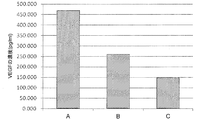
- FIG. 6 shows the concentration of VEGF expressed in cells of severe, moderate, or mild hemangiofibroma.
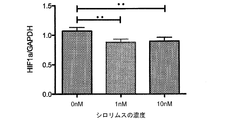
- FIG. 1 is a graph showing the concentration (pg / mL) of VEGF expressed from each cell treated with 0 nM (untreated), 1 nM, and 10 nM sirolimus, respectively, for hemangiofibroma cells, (b) FIG.
- FIG. 2 is a graph showing the concentration (pg / mL) of VEGF expressed from hemangiofibromatous cells (TSC AF fibro), human fibroblasts (normal fibro), and HaCat before and after treatment with sirolimus; c) Percent decrease in concentration of VEGF caused by treatment of these three cells with sirolimus (ratio: concentration of VEGF after treatment with 20 nM sirolimus / VEGF before treatment with 20 nM sirolimus).
- D is a graph showing HaCat of 0 nM (untreated), 1 nM, and 10 nM of white. Is a graph showing the concentration (pg / mL) of VEGF expressed from the cells treated with Mus.
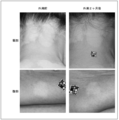
- (A) is a figure which shows the erythema before apply
- (b) is a figure which shows the erythema after apply
- (A) is a figure which shows a mode when propylene carbonate is added to the component of the ointment prepared in the present Example, or white petrolatum
- (b) is the component of the ointment which added propylene carbonate, or It is a figure which shows a mode when white petrolatum to which propylene carbonate is added is stirred.
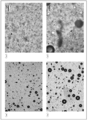
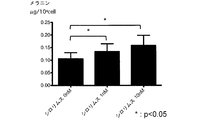
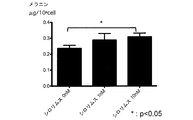
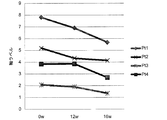
- (A) is the figure which observed the ointment prepared using the component of the ointment prepared in this Example with the microscope, (c) is an enlarged view of (a), (b) is white petrolatum. It is the figure observed with the microscope of the ointment prepared using, (d) is an enlarged view of (b). It is a graph which shows the quantity of the melanin produced by a melanocyte. It is a graph which shows the quantity of the melanin produced by a melanocyte. It is a graph which shows transition of the symptom of four patients who have vitiligo developing in the forehead part (exposure part).
- Embodiment 1 External preparation containing gel composition
- the present invention provides an external medicine for locally treating skin diseases.
- treatment is intended to alleviate or eliminate symptoms and can be performed prophylactically (before onset) as well as what can be done therapeutically (after onset). What is obtained is also encompassed.
- the external preparation of this embodiment includes a gel composition obtained by gelling a solution containing an active ingredient for locally treating a skin disease.
- gel composition is intended to mean a solution in which an active ingredient is dissolved in a solvent in which the active ingredient is dissolved and solidified in a jelly form.
- the active ingredient may be at least one of sirolimus and its derivatives.
- the derivatives of sirolimus are not particularly limited. For example, 42-O- (2-hydroxyethyl) sirolimus (everolimus, RAD001) and sirolimus 42- [3-hydroxy-2- (hydroxymethyl) -2-methylprop Noart (tensirolimus).
- sirolimus and its derivatives are known to exert the following effects by suppressing mTOR: (i) Inhibiting protein translation and synthesis, cell cycle arrest, and apoptosis Suppresses tumors and angiogenesis; (ii) blocks signal transduction pathways involving IL2 receptors, suppresses T cell activation and proliferation, suppresses immunity; (iii) mediated by mast cells Inhibits inflammation.
- sirolimus and everolimus are each taken as an immunosuppressant used after kidney transplantation or heart transplantation.
- Everolimus is also approved in Japan for use as an internal medicine for renal malignant tumors.
- Tensirolimus has been developed as an internal medicine for end-stage liver cancer.
- sirolimus and its derivatives are mainly used as internal medicines.
- sirolimus topical drugs have been developed, but the absorption to the skin is bad, or side effects are caused by the fact that the action is systemic despite being applied locally. Therefore, a practical level of external medicine has not been obtained.
- sirolimus and its derivatives by gelling a solution containing an active ingredient (sirolimus and its derivatives), the absorption efficiency of the active ingredient from the skin to the affected area is improved, and the skin disease caused by the active ingredient is improved. Local treatment is possible.
- the solution containing the active ingredient is gelled.
- the solution may be gelled using a gelling agent.
- Carbopol (registered trademark) 934NF is used as a gelling agent
- Carbopol (registered trademark) 934NF is added to the above solution, and the pH of the solution is neutralized by a pH adjusting agent such as trishydroxymethylaminomethane. By adjusting, gelation of the solution can be induced.
- the external preparation of the present embodiment may be composed of a gel composition, and may further include other components described later as long as the gel form is maintained.
- the gel composition may be composed of a solution containing an active ingredient and a component that induces gelation (such as a gelling agent). These components may be further included.
- the gel composition used in the present embodiment is obtained by gelling a solution containing an active ingredient, and the active ingredient is used as a solvent for dissolving the active ingredient before the gelation is induced.
- a dissolved composition (a solution in which an active ingredient is dissolved) is also included in the present invention.
- a kit including an active ingredient, a solvent for dissolving the active ingredient, and a component for inducing gelation are also included in the present invention.
- Such a composition and kit can be used for preparing the gel composition (and the external preparation of the present embodiment).
- the composition for preparing the gel composition may further include other components
- the kit for preparing the gel composition may further include other components.
- kit is intended to include packaging with containers (eg, bottles, plates, tubes, dishes, etc.) containing specific materials. Preferably, an instruction for using the material is provided.
- container eg, bottles, plates, tubes, dishes, etc.
- “comprising” is intended to mean being contained within any of the individual containers that make up the kit.
- the kit of the present invention may be a package in which a plurality of different compositions are packed together, or may be a solution in a form of a solution contained in a container.
- the kit of the present invention may be prepared by mixing two or more different substances in the same container or in separate containers.
- the “instructions” may be written or printed on paper or other media, or may be affixed to electronic media such as magnetic tape, computer readable disk or tape, CD-ROM, etc. .
- the kit of the present invention may be used to constitute the above-described composition, and may comprise separately the substances contained in the above-described composition, or separately comprise the above-described composition and further components. May be.
- the solvent for dissolving the above-mentioned active ingredient is not particularly limited, and examples thereof include isopropanol, ethanol and propylene carbonate.
- examples thereof include isopropanol, ethanol and propylene carbonate.
- isopropanol and ethanol is preferable.
- the active ingredient is dissolved in a solvent that dissolves the active ingredient, and the resulting solution is gelled, whereby the absorption of the active ingredient from the skin to the affected area is significantly improved.
- the treatment of skin diseases is realized in a much smaller amount than that of conventional sirolimus.
- possibility that an active ingredient may remain in an affected part, without leaking in the blood is also considered.
- the amount of the active ingredient contained in the external preparation of this embodiment is preferably 0.01 to 2% by mass, more preferably 0.03 to 1% by mass, based on the total mass of the external preparation. . If the amount of the active ingredient is within this range, the skin disease can be treated without causing side effects.
- the amount of the active ingredient contained in the composition for preparing the external medicine is the same as the amount of the active ingredient contained in the external medicine.
- the amount of the active ingredient provided in the kit for preparing the external medicine is arbitrary, and the amount of the active ingredient finally contained in the manufactured external medicine should be within the above range.
- the amount of the active ingredient contained in the gel composition may be an amount that allows the amount of the active ingredient contained in the external preparation to be within the above range, and can be appropriately set by those skilled in the art.
- the amount of the solvent for dissolving the active ingredient contained in the external preparation (or gel composition) of the present embodiment is not particularly limited as long as it can sufficiently dissolve the active ingredient.
- the amount of the solvent used is 100 to 300 times the amount of the active ingredient, preferably 120 to 250 times, more preferably 121.5 to 244 times.
- the amount of the solvent for dissolving the active ingredient contained in the composition for preparing the external preparation is the same as the amount of the solvent for dissolving the active ingredient contained in the external preparation.
- the amount of the solvent for dissolving the active ingredient, which is provided in the kit for preparing an external medicine is arbitrary and may be an amount that can sufficiently dissolve the active ingredient.
- the amount of the component for inducing gelation contained in the external medicine (or gel composition) of the present embodiment is not particularly limited, and the solution containing the active ingredient gels (the external medicine or composition is a gel). It is sufficient if the amount is sufficient to form the following.
- a gelling agent such as Carbopol (registered trademark) and a pH adjusting agent (trishydroxymethylaminomethane or the like) for inducing gelation
- the gelling agent Is 1.6% by mass, for example, based on the total mass of the external preparation
- the pH adjuster is, for example, 0.4% by mass, based on the total mass of the external preparation.
- the quantity of the component which induces gelation with which the kit for preparing an external preparation is prepared is arbitrary, and should just be the quantity which makes the external preparation manufactured into the form of a gel.
- the external preparation of this embodiment is used for the treatment of tuberous sclerosis skin tumors, vitiligo and erythema.
- the external preparation in the ointment form shown in Embodiment 2 is used for the treatment of tuberous sclerosis skin tumors, vitiligo and erythema, and the treatment of atopic dermatitis.
- Such an effect is based on the fact that the external preparation of this embodiment (and embodiment 2) efficiently penetrates the active ingredient (sirolimus and its derivatives) into the skin.
- these external medicines are applicable to "any skin disease caused by activation of mTOR".
- Skin diseases to which the external medicine of this embodiment can be applied include not only diseases that occur in skin tissues such as the epidermis, dermis, and subcutaneous tissue, but also diseases that occur in the vascular system in the skin tissue.
- skin diseases include, but are not limited to, skin tumors, atopic dermatitis, rosacea, keloids, pigment spots, depigmentation spots, abnormal formation of vascular system in skin, benign tumor of vascular system in skin , And epithelial nevus.
- the skin tumor is preferably at least one selected from the group consisting of a tuberous sclerosis skin tumor, a seborrheic keratosis, and a Recklinghausen disease skin tumor.
- Vascular dysplasia in the skin is preferably simple hemangioma, spider angioma or horned hemangioma.
- the benign tumor of the vascular system in the skin is preferably strawberry hemangioma or senile hemangioma.
- the epithelial nevus is preferably at least one selected from the group consisting of rod-like nevus, serial nevus, inflammatory linear rod-like nevi, and sebaceous nevus.
- the pigment spots are preferably brown spots, and the brown spots are more preferably flat nevus or cafe au lait spots.
- the depigmentation spots are preferably vitiligo.
- the external preparation of this embodiment can treat various skin diseases.
- the present inventors found for the first time that skin tumors of atopic dermatitis, vitiligo, rosacea, keloid, and seborrheic keratosis can be treated using sirolimus and its derivatives. Yes, not reported so far.
- an ointment containing steroid and tacrolimus As an external medicine for atopic dermatitis, an ointment containing steroid and tacrolimus is known. Steroids cause side effects when used to treat atopic dermatitis. On the other hand, an ointment containing tacrolimus does not cause the side effects of steroids, but causes the side effects of developing tumors.
- the external preparation of this embodiment does not cause side effects of steroids, has almost the same effect as an ointment containing tacrolimus, and also has an antitumor effect. Therefore, if the external preparation of this embodiment is used for atopic dermatitis, side effects of an ointment containing tacrolimus can be avoided.
- the external preparation of this embodiment is an external preparation for atopic dermatitis, which is safer than an ointment containing tacrolimus.
- Atopic dermatitis has been on an increasing trend in recent years, is a disease with a very high frequency of onset, requires long-term treatment, and lowers the patient's QOL.
- the vitiligo targeted by the external medicine of the present embodiment is not limited to congenital vitiligo such as tuberculous sclerosis, but also includes acquired vitiligo such as vulgaris. There are about 50,000 patients with congenital vitiligo in Japan, and 1/3 of those are those with tuberculous sclerosis. There is currently no cure for vitiligo of tuberous sclerosis. Therefore, it is epoch-making that the external medicine of this embodiment can treat vitiligo of tuberous sclerosis.
- a benign tumor of the skin such as seborrheic keratosis, is not life-threatening, but is a lesion that is filed for all humans with age. If the symptoms of this benign tumor are severe, it lowers the patient's QOL.
- atopic dermatitis, vitiligo, rosacea, and benign tumors of the skin reduce the patient's QOL and also reduce the patient's labor productivity. If the external preparation of this embodiment is used, these diseases can be effectively treated without causing side effects, so that the labor productivity of patients can be improved. That is, the external preparation of the present embodiment is useful for socioeconomic and medical economics.
- the external preparation, gel composition of the present embodiment, and the kit for preparing the external preparation (gel composition) of the present embodiment include the active ingredient, a solvent for dissolving the active ingredient, and gelation.
- other components may be included.
- the composition for preparing the external preparation (gel composition) of this embodiment may contain another component other than the said active ingredient and the solvent which dissolves an active ingredient. Examples of such other components include water-soluble polymers, pH adjusting agents, water, and other active ingredients effective for treating the target skin disease.
- water-soluble polymer examples include polyethylene glycol, starch, methyl cellulose, hydroxypropyl cellulose (HPC), polyvinyl alcohol, polyvinyl methyl ether, and polyvinyl pyrrolidone.
- the adhesiveness of the external preparation of this embodiment can be improved by mix
- pH adjuster examples include trishydroxymethylaminomethane.
- Examples of other active ingredients effective for treating skin diseases include steroids and tacrolimus.
- the total amount of the other components contained in the external preparation is, for example, 49% by mass based on the total mass of the external preparation.
- the kit for preparing an external medicine gel composition
- the total amount of these other components is arbitrary, and the total amount of other components finally contained in the manufactured external medicine However, what is necessary is just to become the said amount.
- the present invention also provides a method for producing an external medicine for treating skin diseases.
- the external medicine of this embodiment consists of a gel composition
- the said method may be a method of manufacturing a gel composition.
- the method for producing the gel composition only needs to include a step of producing the gel composition.
- the process of producing a gel composition should just contain gelatinizing the solution containing an active ingredient.
- the active ingredient may be dissolved in a solvent that dissolves the active ingredient, and the resulting solution may be mixed with a component that induces gelation.
- the said composition contain the said other component, what is necessary is just to melt
- the external preparation of this embodiment contains a gel composition and other components
- the gel composition and other components are mixed by a conventionally known method, and the resulting mixture is formulated into a gel form. do it.
- the external preparation of this embodiment can be applied to humans and non-human animals.
- the “non-human animal” include mammals other than humans and birds. Mammals other than humans are not particularly limited. For example, cattle, wild boars, pigs, sheep, goats and other cloven-hoofed animals, horses and other odd-hoofed animals, mice, rats, hamsters, squirrels and other rodents And rabbits such as rabbits, and meat such as dogs, cats, ferrets, and the like.
- birds For example, a duck, a chicken, a pigeon, a parakeet etc. can be mentioned.
- these non-human animals are not limited to domestic animals or companion animals (companion animals), and may be wild animals.
- the present invention also provides a method for treating the above skin diseases.
- the treatment method of this invention should just include the process of applying the external preparation of this embodiment to the affected part of a skin disease.
- “application” is intended to attach the external medicine of the present embodiment to the affected area.
- “Applying an external medicine to the affected area” includes, for example, applying the external medicine to the affected area, spraying the external medicine onto the affected area, and applying the external medicine to the affected area as a patch.
- the external preparation (gel composition) of the present embodiment can be configured as follows, but the present invention is not limited thereto.
- the external preparation (gel composition) of the present embodiment can contain Carbopol (registered trademark) 934NF, water, isopropanol, and trishydroxymethylaminomethane in addition to the active ingredient.
- Carbopol registered trademark 934NF
- water isopropanol
- trishydroxymethylaminomethane in addition to the active ingredient.
- the total of the active ingredient, water and isopropanol is 980.
- ratio 1 and the ratio 2 described above are compared, the external medicine produced at the ratio 2 has higher transparency than the external medicine produced at the ratio 1.
- the external preparation of this embodiment includes an ointment composition containing an active ingredient for locally treating skin diseases.
- ointment composition is intended to have an active ingredient dispersed in a solvent that is incompatible with the active ingredient. It can be said that the external medicine containing the ointment composition is an ointment.
- the external preparation of this embodiment by dispersing the active ingredient in a solvent that is incompatible with the active ingredient, the absorption efficiency of the active ingredient from the skin to the affected area is improved, and the skin disease caused by the active ingredient is improved.
- Local treatment is possible.
- the active ingredient may be dissolved in a solvent that dissolves the active ingredient, and the resulting solution may be mixed with a solvent that is incompatible with the active ingredient.
- the external preparation of this embodiment may be composed of an ointment composition, or may contain other components as described above as long as the ointment form is maintained.
- the ointment composition may be composed of an active ingredient, a solvent that dissolves the active ingredient, and a solvent that is incompatible with the active ingredient, and other ingredients may be added as long as the ointment form is maintained. It may be included.
- the active ingredient is dispersed in a solvent that is incompatible with the active ingredient.
- the present invention includes an active ingredient, a solvent that dissolves the active ingredient, and a solvent that is incompatible with the active ingredient, and a composition before the active ingredient is dispersed in the solvent that is incompatible with the active ingredient.
- kits in which an active ingredient, a solvent that dissolves the active ingredient, and a solvent that is incompatible with the active ingredient are separately included in the present invention.
- Such a composition and kit can be used to prepare the ointment composition (and the external preparation of the present embodiment).
- the composition for preparing the ointment composition may further include other components
- the kit for preparing the ointment composition may further include other components.
- solvent for dissolving the active ingredient described above examples include isopropanol, ethanol and propylene carbonate as described in the first embodiment, but propylene carbonate is preferable in the case of the second embodiment (ointment composition).
- the solvent that is not compatible with the above-mentioned active ingredient is not particularly limited, and examples thereof include waxes, paraffins, and petroleum jelly.
- waxes include natural wax such as white beeswax, lanolin, carnauba wax, and whale wax, mineral wax such as montan wax, and synthetic wax.
- paraffins include liquid paraffin and solid paraffin.
- petrolatum include white petrolatum and yellow petrolatum.
- the active ingredient is dissolved in a solvent that dissolves the active ingredient, and the resulting solution is mixed with a solvent that is incompatible with the active ingredient, so that the active ingredient is not compatible with the active ingredient. Evenly dispersed as fine particles. Such dispersion significantly improves the absorption of the active ingredient from the skin to the affected area.
- treatment of a skin disease is implement
- the active ingredient is dispersed as described above, there is a possibility that the active ingredient may remain in the affected area without leaking into the blood. If the external preparation of this embodiment is used, a skin disease can be treated without causing side effects as in conventional external preparations.
- the amount of the active ingredient contained in the external preparation of this embodiment is preferably 0.01 to 2% by mass, more preferably 0.03 to 1% by mass, based on the total mass of the external preparation. . If the amount of the active ingredient is within this range, the skin disease can be treated without causing side effects.
- the amount of the active ingredient contained in the composition for preparing the external medicine is the same as the amount of the active ingredient contained in the external medicine.
- the amount of the active ingredient provided in the kit for preparing the external medicine is arbitrary, and the amount of the active ingredient finally contained in the manufactured external medicine should be within the above range.
- the amount of the active ingredient contained in the ointment composition may be an amount that allows the amount of the active ingredient contained in the external preparation to be within the above range, and can be appropriately set by those skilled in the art.
- the amount of the solvent for dissolving the active ingredient contained in the external preparation (or ointment composition) of the present embodiment is not particularly limited as long as it can sufficiently dissolve the active ingredient.
- the amount of the solvent in which the active ingredient is dissolved is 2 to 100 times the amount of the active ingredient, preferably 3 to 50 times, more preferably 5 to 29 times.
- the amount of the solvent contained in the composition for preparing an external preparation is also the same as the amount of the solvent that dissolves the active ingredient contained in the external preparation.
- the amount of the solvent for dissolving the active ingredient, which is provided in the kit for preparing an external medicine is arbitrary and may be an amount that can sufficiently dissolve the active ingredient.
- the amount of the solvent incompatible with the active ingredient contained in the external preparation (or ointment composition) of the present embodiment is not particularly limited, and the active ingredient is uniformly dispersed as fine particles in the solvent incompatible with the active ingredient. It is sufficient if the amount is sufficient.
- the amount of the solvent incompatible with the active ingredient used is 50 to 1000 times the amount of the active ingredient, preferably 70 to 500 times, more preferably 94 to 470 times.
- the amount of this solvent contained in the composition for preparing the external preparation is the same as the amount of the solvent incompatible with the active ingredient contained in the external preparation.
- the amount of the solvent incompatible with the active ingredient provided in the kit for preparing a topical drug is arbitrary, and may be an amount that can sufficiently disperse the active ingredient.
- the external preparation, ointment composition of the embodiment, and the composition and kit for preparing the external preparation (ointment composition) of the present embodiment include the active ingredient, the solvent for dissolving the active ingredient, the effective
- other components may be included.
- the description of Embodiment 1 described above can be used, and is omitted here.
- the present invention also provides a method for producing an external medicine for treating skin diseases.
- the external medicine of this embodiment consists of an ointment composition
- the said method may be a method of manufacturing an ointment composition.
- the method for producing an ointment composition only needs to include a step of producing an ointment composition.
- the step of preparing the ointment composition may involve dispersing the active ingredient in a solvent that is incompatible with the active ingredient.
- the active ingredient may be dissolved in a solvent that dissolves the active ingredient, and the resulting solution may be mixed with a solvent that is incompatible with the active ingredient.
- the above solution in which the active ingredient is dissolved is added to a solvent that is incompatible with the active ingredient, and stirred using a rotation and revolution mixer manufactured by Shinki Co., Ltd. or a homomixer manufactured by Primics Co., Ltd.
- the active ingredient can be dispersed in the form of an emulsion.
- the size of the active ingredient particles can be made uniform, and the homogenized active ingredient can be successfully dispersed in a solvent that is incompatible with the active ingredient.
- the mixture may be stirred at 2000 rpm for 1 minute at room temperature, then stirred at 1000 rpm for 5 minutes, and then stirred at 500 rpm for 3 minutes.
- the stirring conditions when using a homomixer can be appropriately set by those skilled in the art based on, for example, instructions attached to the homomixer. In particular, by using this homomixer, a large amount of the external preparation of this embodiment can be prepared.
- the solvent incompatible with the active ingredient is a solid at room temperature
- the solvent is heated until it becomes liquid, and the resulting liquid solvent and the solution in which the active ingredient is dissolved may be mixed.
- various components that are solid at room temperature wax, paraffins, petroleum jelly) and the like are heated to a melting point (for example, 70 ° C.), dissolved, and mixed. And this mixture is cooled to near room temperature (for example, 40 degreeC), this mixture is added to the solution in which the active ingredient melt
- the active ingredient and other components may be dissolved in a solvent that dissolves the active ingredient, and the resulting solution may be mixed with a solvent that is incompatible with the active ingredient.
- the external preparation of this embodiment contains an ointment composition and other components, the ointment composition and other components are mixed by a conventionally known method, and the resulting mixture is formulated into an ointment form. do it.
- Embodiment 2 Active ingredients, kits, other components, diseases to which external medicines are applied, animals to which external medicines are applied, methods for treating skin diseases, etc. It is the same as Embodiment 1 mentioned above, or a person skilled in the art can appropriately modify and use it based on Embodiment 1.
- the external preparation (ointment composition) of the present embodiment can be configured as follows, but the present invention is not limited thereto.
- the external preparation (ointment composition) of the present embodiment can contain propylene carbonate, solid paraffin and white petrolatum in addition to the active ingredient.
- the external preparation (ointment composition) of the present embodiment can further contain liquid paraffin in addition to propylene carbonate, solid paraffin and white petrolatum.
- the external preparation (ointment composition) of the present embodiment can further contain white beeswax in addition to propylene carbonate, solid paraffin, white petrolatum and liquid paraffin.
- the total of the active ingredient, propylene carbonate, solid paraffin and liquid paraffin is 105.
- Active ingredient: propylene carbonate: solid paraffin: white petrolatum: liquid paraffin: white beeswax 2: 58: 45: 895: 0: 0 (hereinafter referred to as ratio 4), active ingredient: carbonic acid
- the external preparation prepared at the ratio 3 has higher transparency than the external preparation prepared at the ratio 4, and exists on the surface of the external preparation.
- the amount of water can be reduced.
- the ratio 3 and the ratio 5 described above are compared, the external medicine produced at the ratio 3 is smoother than the external medicine produced at the ratio 5, and is present on the surface of the external medicine. The amount of water can be reduced.
- the present invention can also be configured as follows.
- the gel composition is preferably a gelled solution containing at least one of sirolimus and its derivatives.
- the solution is preferably a solution in which at least one of sirolimus and its derivative is dissolved in at least one of isopropanol and ethanol.
- Skin diseases to which the present invention is applied include skin tumors, atopic dermatitis, rosacea, keloids, pigment spots, depigmentation spots, vascular dysplasia in the skin, benign tumors of the vascular system in the skin, and epithelial mothers
- at least one selected from the group consisting of plaques and at least one selected from the group consisting of tuberous sclerosis skin tumors, seborrheic keratosis, and Recklinghausen disease skin tumors
- Vascular dysplasia in the skin is preferably simple hemangioma, spider angiomas or horned hemangioma
- the benign tumor of the vasculature in the skin is preferably strawberry hemangioma or senile hemangioma
- the epithelial nevus is preferably at least one selected from the group consisting of rod-shaped nevus, serial nevus, inflammatory linear rod-like nevus, and sebaceous nevi,
- the gel composition preferably contains at least one of Carbopol (registered trademark) 934NF, water, isopropanol, and trishydroxymethylaminomethane.
- the gel composition has a mass ratio of at least one of sirolimus and its derivatives, Carbopol® 934NF, water, isopropanol, and trishydroxymethylaminomethane from 2 to 4: 16: 490 to 833. 145 to 488: 4, and the sum of the ratio of at least one of sirolimus and its derivatives, the ratio of water and the ratio of isopropanol is preferably 980.
- the gel composition has a mass ratio of 2: 16: 490: 488: at least one of the sirolimus and derivatives thereof, Carbopol® 934NF, water, isopropanol, and trishydroxymethylaminomethane. 4 is preferred.
- the ointment composition preferably contains at least one of propylene carbonate, solid paraffin, white petrolatum, liquid paraffin, and honey beeswax.
- the ointment composition has a mass ratio of at least one of sirolimus and its derivatives, propylene carbonate, solid paraffin, white petrolatum, liquid paraffin, and white beeswax from 0.3 to 10:50 to 59.4. : 30 to 45: 895: 0 to 10: 0 to 5, and the ratio of at least one of sirolimus and its derivatives, the ratio of propylene carbonate, the ratio of solid paraffin, the ratio of liquid paraffin, and the ratio of beeswax wax And the total is 105.
- the ointment composition has a mass ratio of 2: 58: 30: 895: 10: 5 of at least one of sirolimus and its derivatives, propylene carbonate, solid paraffin, white petrolatum, liquid paraffin, and white beeswax. It is preferable that
- composition of the present invention is characterized by containing at least one of sirolimus and a derivative thereof for preparing an external medicine for locally treating skin diseases.
- the kit of the present invention is characterized by comprising at least one of sirolimus and its derivatives for preparing a topical medicine for locally treating a skin disease.
- the method for producing an external preparation of the present invention is characterized by including a step of producing a gel composition or an ointment composition containing at least one of sirolimus and a derivative thereof.
- the solution may be prepared using the composition or kit described above.
- Preparation of the external preparation of the present invention ⁇ Preparation Example 1: Preparation of gel containing 0.4% by mass of sirolimus> 4 mg of sirolimus reagent (Calbiochem, 553210) was dissolved in 486 mg of isopropanol (Wako Pure Chemical Industries, 166-04836). 490 mg of the resulting lysate was mixed with a mixture of 16 mg of Carbopol® 934NF polymer (Lubrizol) and 490 mg of H 2 O. To the obtained mixture, 4 mg of trishydroxymethylaminomethane (manufactured by Wako Pure Chemical Industries, Ltd., 203-06272) was mixed. In this way, a gel (gel 1) containing 0.4% by mass of sirolimus was prepared.
- Preparation Example 2 Preparation 1 of gel containing 0.2% by mass of sirolimus> Except that 2 mg of sirolimus reagent was dissolved in 488 mg of isopropanol, the same operation as in Preparation Example 1 was performed to prepare a gel (gel 2) containing 0.2% by mass of sirolimus.
- Preparation 2 of gel containing 0.2% by mass of sirolimus> A gel (gel 3) containing 0.2% by mass of sirolimus was prepared in the same manner as in Preparation Example 2, except that Rapamune was used instead of the sirolimus reagent. Specifically, 2 mg of Rapamune tablets were crushed and passed through a 75 ⁇ m mesh to remove impurities (excipients, etc.), and then the pulverized product was dissolved in 488 mg of isopropanol.
- ⁇ Preparation Example 4 Preparation of an ointment containing 1% by mass of sirolimus> 10 mg of a sirolimus reagent (Calbiochem, 553210) was dissolved in 50 mg of propylene carbonate (Wako Pure Chemical Industries, 168-04972). White beeswax 5 mg, liquid paraffin (Wako Pure Chemical Industries, Ltd., 128-04375) 10 mg, solid paraffin (Wako Pure Chemical Industries, 415-25791) 30 mg, and white petrolatum (propet) (Maruishi Pharmaceutical Co., Ltd.) 895 mg (manufactured by Merck or Astra Japan) was mixed while being heated to 70 ° C. and dissolved.
- a sirolimus reagent Calbiochem, 553210
- Preparation 1 of an ointment containing 0.2% by mass of sirolimus The same operation as in Preparation Example 4 was performed except that 2 mg of sirolimus reagent was dissolved in 58 mg of propylene carbonate to prepare an ointment (ointment 2) containing 0.2% by mass of sirolimus.
- ⁇ Preparation Example 6 Preparation 2 of ointment containing 0.2% by mass of sirolimus> An ointment (ointment 3) containing 0.2% by mass of sirolimus was prepared in the same manner as in Preparation Example 5, except that Rapamune (Pfizer, 29269) was used instead of the sirolimus reagent. Specifically, 2 mg of Rapamune tablets were pulverized, passed through a 75 ⁇ m mesh to remove impurities, and the pulverized product was dissolved in 58 mg of propylene carbonate.
- ⁇ Reference Example 1 Preparation of an ointment containing 0.2% by mass of sirolimus using a commercially available ointment as a base> An ointment (Reference Example 1) containing 0.2% by mass of sirolimus was prepared based on Protopic (registered trademark) ointment 0.03% for children (Astellas Pharma Inc.).
- ⁇ Reference Example 2 Preparation of another ointment containing 0.2% by mass of sirolimus using a commercially available ointment as a base> Protopic (registered trademark) ointment 0.03% Instead of for children, Protopic (registered trademark) ointment was used in the same manner as in Reference Example 1 except that 0.1% was used. An ointment containing sirolimus (Reference Example 2) was prepared.
- the transwell was moved onto an assay tray to which a medium (TESTSKIN (registered trademark) LSE (registered trademark) ASSAY MEDIUM (TOYOBO)) was added, and incubated in an incubator for 24 hours.
- the temperature in the incubator was 37 ° C. and the concentration of CO 2 was 5%.
- the external medicine on the surface of the transwell was wiped off with filter paper, and this surface was further washed with a medium. Thereby, the external medicine remaining on the surface was removed.
- the transwell was placed on a heat tray with a wrap.
- the temperature of the heat tray was set to 60 ° C., and the transwell was heated for 60 seconds to 90 seconds.
- the tissue was removed from the transwell.
- the epidermis was removed from the tissue, and then the dermis layer was collected.
- the collected dermis layer was placed in an Eppendorf tube.
- the concentration of sirolimus in the dermis layer was measured using an LC / ESI / MS system.
- LC / ESI-MS system HPLC P4000, AS3000mostthermostat (Thermo Fisher KK, San Jose, CA, USA) was used.
- LCQSIFinigan Mat (Thermo Fisher KK, San Jose, CA, USA) was used as a detector for ESI / MS.
- HTC-Pal AMR Inc., Tokyo, Japan
- X caliber ver1.2 Thermo Fisher KK, San Jose, CA, USA was used for data analysis.
- the test method described above was performed three times for each topical drug, and the average value and standard deviation of the concentration of sirolimus in the dermis layer were calculated. Whether or not there was a statistically significant difference in the results of the tests obtained using each topical drug was confirmed by calculating the p-value using an unpaired student t test. A p-value less than 0.05 was considered statistically significant.
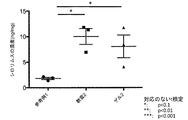
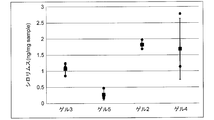
- FIG. 2 shows the results of a test using gel 2, gel 3, ointment 2, and ointment 3.
- the concentration of sirolimus in the dermis is 1.823 ⁇ 0.146 ng / mg
- the concentration of sirolimus is 1.073 ⁇ 0.199 ng / mg
- the concentration of sirolimus in the dermis is 1.087 ⁇ 0.073 ng / mg
- the concentration of sirolimus in the dermis was 0.26 ⁇ 0.098 ng / mg.
- the p value between the gel 2 and the ointment 2 was less than 0.05, and it was confirmed that there was a significant difference between the gel 2 and the ointment 2.
- the p value between the gel 3 and the ointment 3 was less than 0.05, and it was confirmed that there was a significant difference between the gel 3 and the ointment 3. . From these results, it was found that the gel penetrates the skin more efficiently than the ointment. This is considered to be because sirolimus was dissolved in a solvent (isopropanol) when producing the gel.
- an ointment for lesions with a lot of wrinkles, good absorption of external medicine, and easy to receive irritation (such as atopic dermatitis). It is considered preferable to use a gel for (eg, vitiligo).
- the p value between gel 2 and gel 3 was less than 0.05, and it was confirmed that there was a significant difference between gel 2 and gel 3.
- the p value between the ointment 2 and the ointment 3 is less than 0.05, and it was confirmed that there is a significant difference between the ointment 2 and the ointment 3. . From these results, it was found that the external preparation prepared using the reagent sirolimus can penetrate sirolimus into the skin more efficiently than the external preparation prepared using the tablet sirolimus. Therefore, it was found that a more effective external medicine can be prepared by using the reagent sirolimus.
- the amount of sirolimus absorbed into the skin of the ointment 3 prepared using Rapamune and the ointment 2, ointment 4, ointment 5 and ointment 6 prepared using the reagent of sirolimus were applied to the skin of the mouse several times.
- these ointments were applied to mouse skin twice a week for 4 weeks. After 4 weeks, the skin of the mouse was collected, and the amount of sirolimus in the skin was measured using the LC-ESI / MS method.
- the external medicine prepared using the reagent sirolimus is more efficient than the external medicine prepared using the tablet sirolimus.
- the result was that it could penetrate into the skin well.
- the ointment 2 prepared using the sirolimus reagent is absorbed into the dermis by the application to the skin of the mouse a plurality of times, and the amount of the ointment 3 prepared using the sirolimus tablet is absorbed into the dermis. It turns out that it can approach the quantity.
- sirolimus in a tablet, it can be said that a sufficient amount of sirolimus to treat the disease can be delivered to the affected area by applying it multiple times. This is not only true for ointments, but also for gels.
- ⁇ Test method> The patients with tuberous sclerosis were divided into a group of patients treated with the ointment 3 (4 people) and a group of patients treated with the gel 3 (8 people).
- the above-mentioned external medicine was applied twice a day for 12 weeks. Specifically, a topical drug is applied to either the left or right vascular fiber type of the patient's face, and only the base (control) containing no active ingredient (sirolimus) is applied to the other hemangiofibroma. did. Treatment was discontinued 12 weeks after the start of treatment. Then, the follow-up of the angiofibroma was observed for 3 months after the treatment was stopped. Note that one of the patients treated with Gel 3 was excluded during the study because he did not properly perform the topical application as determined.
- angiofibroma was taken to evaluate the angiofibroma. Assessment of hemangiofibroma was performed by assigning a four-point score with a degree of flushing, reduction of papules, and flattening of the aspect, and a comprehensive perspective (overall score).
- the score is 0, and if the flushing is improved 49% compared to before the start of the treatment, the score is set to 1.
- the score is 0 when the papules are not reduced compared to before the start of treatment, and the score is 1 when papules are reduced by 49% compared to before the start of treatment.
- the score was 2 when papule was reduced by more than 80% compared to before the start of treatment, the score was 3.
- the score is 0; if the aspect is flattened 49% compared to before the start of treatment, the score is 1; The score was 2 when the aspect was flattened by 50-80% compared to before the start of treatment, and the score was 3 when flattened by 80% or more.
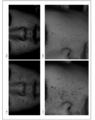
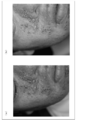
- FIGS. 3 to 5 show photographs of angiofibromas before the start of treatment with gel 3 and 12 weeks after the start of the treatment. As shown in FIGS. 3-5, Gel 3 was applied to the angiofibroma of the patient's left cheek and a control was applied to the angiofibroma of the patient's right cheek.
- FIG. 3 (a), FIG. 4 (a), and FIG. 5 (a) are photographs showing an angiofibroma before the start of treatment using the gel 3
- FIG. 4 (b) and FIG. 5 (b) are photographs showing hemangiofibroma 12 weeks after the start of the treatment using the gel 3.
- FIG. FIGS. 3C and 3D are enlarged views of the left cheek of FIGS. 3A and 3B, respectively. As can be seen by comparing (a) and (b) in FIG. 3, (c) and (d) in FIG. 3, (a) and (b) in FIG. 4, and (a) and (b) in FIG. In addition, the angiofibroma coated with the gel 3 improved, but the angiofibroma coated with the control did not change.
- FIGS. 6 to 7 show photographs of angiofibromas before the start of treatment using ointment 3 and 12 weeks after the start of treatment.
- ointment 3 was applied to the angiofibroma of the patient's left cheek, and a control was applied to the angiofibroma of the patient's right cheek.
- ointment 3 was applied to the angiofibroma on the right cheek of the patient, and control was applied to the angiofibroma on the left cheek of the patient.
- FIG. 6 (a) and FIG. 7 (a) are photographs showing angiofibromas before the start of treatment with the ointment 3
- FIG. 6 (b) and FIG. 7 (b) are ointments.
- 3 is a photograph showing hemangiofibroma 12 weeks after the start of treatment with 3
- 6 (c) and 6 (d) are enlarged views of the left cheek of FIGS. 6 (a) and 6 (b), respectively.
- FIG. 8 is a graph showing the score of each patient 12 weeks after treatment with Gel 3 or control.
- (A) of FIG. 8 is a graph showing an overall score
- (b) is a graph showing a flushed score
- (c) is a graph showing a papule score
- (d) is a graph showing a papule score. It is a graph which shows the score of an aspect. The score obtained by application of gel 3 is shown on the left side of FIGS. 8A to 8D, and the score obtained by application of control is shown on the right side of FIG.
- the average scores of patient 1, patient 2, patient 3, patient 4, and patient 1 to patient 4 are 4, 4, 4, 3 when gel 3 is used, respectively. , And 3.75, both of which were 0 when the control was used.
- the average scores of patient 1, patient 2, patient 3, patient 4, and patient 1 to patient 4 are 4, 4, 4, and 4 when gel 3 is used, respectively. 3 and 3.75, both of which were 0 when the control was used.
- the average scores of patient 1, patient 2, patient 3, patient 4, and patient 1 to patient 4 are 3, 3, 4, 2 and 3, both were 0 when the control was used.
- the average scores of patient 1, patient 2, patient 3, patient 4, and patient 1 to patient 4 are all 4 when gel 3 is used, All were 0 when the control was used.
- FIG. 9 is a graph showing the score of each patient 12 weeks after the treatment using the ointment 3 or the control.
- (A) of FIG. 9 is a graph showing an overall score
- (b) is a graph showing a flushing score
- (c) is a graph showing a papule score
- (d) is It is a graph which shows the score of an aspect. The score obtained by applying the ointment 3 is shown on the left side of FIGS. 9A to 9D, and the score obtained by applying the control is shown on the right side of FIG.
- the average scores of patient 1, patient 2, patient 3, patient 4 and patient 1 to patient 4 are 4, 4, 2, 1 when ointment 3 is used, respectively. .5 and 2.9, both of which were 0 when the control was used.
- the average scores of patient 1, patient 2, patient 3, patient 4, and patient 1 to patient 4 are 4, 4, 2, when ointment 3 is used, respectively. 1.5 and 2.9, both were 0 when the control was used.
- the average scores of patient 1, patient 2, patient 3, patient 4, and patient 1 to patient 4 are 3, 1.5, when ointment 3 is used, respectively. 1, 1, and 1.7, and all were 0 when the control was used.
- the average scores of patient 1, patient 2, patient 3, patient 4, and patient 1 to patient 4 are 4, 4, 2, when ointment 3 is used, respectively. 1.5 and 2.9, both were 0 when the control was used.
- the blood of the patient was collected before the start of treatment using the gel 3 or the ointment 3 and after the end of the treatment (12 weeks after the treatment), a blood test was performed, and the components in the blood were measured.
- the results of blood tests performed on patient 1 and patient 2 are shown in the following table.
- WBC white blood cell count.
- RBC red blood cell count.
- Hb hemoglobin amount.
- Ht indicates hematocrit.
- Plat indicates platelets.
- Neuro indicates neutrophils.
- Lym indicates lymphocytes.
- Eo indicates eosinophils.
- Bo indicates a basophil.
- Cr represents creatinine.
- AST refers to aspartate aminotransferase.
- ALT refers to alanine aminotransferase.
- ⁇ GTP refers to gamma glutamyl transferase.
- Tch1 indicates total cholesterol.
- TG indicates triglyceride.
- Glu indicates blood glucose.
- CRP refers to C-reactive protein.
- each blood component of each patient did not change significantly before the start of treatment and 12 weeks after the start of treatment.
- the external preparation of the present invention can effectively treat tuberous sclerosis hemangiofibroma without causing side effects. This indicates that the external preparation of the present invention is also effective against other skin tumors (for example, benign tumors of the skin) based on dysregulation of mTOR. Moreover, it was shown that the external medicine of the present invention penetrated into the dermis by treating facial angiofibroma of tuberous sclerosis.
- vitiligo using the external preparation of the present invention One of the causes of vitiligo is caused by the fact that melanocytes do not produce melanin. Proteins involved in the production of melanin in melanocytes are MITF, TYR, DCT, TYRP1.
- vitiligo often occurs in patients suffering from diseases (such as tuberous sclerosis) resulting from activation of mTOR.
- diseases such as tuberous sclerosis
- the present inventors consider that the mechanism by which vitiligo occurs in such patients is as follows. As a result of activation of mTOR in the patient's melanocytes, the activity of S6K1 increases. And by this increase in the activity of S6K1, the activity of PI3K is suppressed. Since PI3K not only activates the Akt signaling pathway, but also activates the MAPK signaling pathway, suppression of PI3K activity suppresses the Akt signaling pathway and the MAPK signaling pathway.
- MITF When MITF is not expressed or the activity of MITF is decreased, the activity of TYR and TYRP1 is decreased, and melanin is not produced in melanocytes. In this way, vitiligo occurs.
- the present inventors considered that the activation of mTOR is involved in the occurrence of vitiligo, and therefore the external preparation of the present invention is effective for the treatment of vitiligo. Therefore, in this example, the following test was performed to examine the influence of sirolimus on the expression of the above-described protein, and it was confirmed that activation of mTOR was involved in the occurrence of vitiligo. And the effect with respect to the vitiligo of the external preparation of this invention was confirmed.
- Sirolimus is added at a final concentration of 0 nM (ie, sirolimus is not added to the medium), 1, 10 and 20 nmol / L sirolimus is added to the wells, respectively, and the plate is placed at 37 ° C. and 5% CO 2 for 24 hours Or incubated for 48 hours.
- RNA-lysis buffer 175 ⁇ L was added to the well from which PBS was removed. This RNA-lysis buffer was included in the SV-Total-RNA Solution System kit (Promega, Z3105).
- the melanocytes were peeled off from the plate using a cell scraper.
- RNA lysis buffer containing melanocytes was collected in a 1.5 mL Eppendorf tube. And RNA was extracted from the collect
- RNA Using this RNA, real-time RT-PCR was performed to detect the expression of MITF mRNA, TYR mRNA, TYRP1 mRNA, and GAPDH mRNA.
- the expression levels of MITF mRNA, TYR mRNA, and TYRP1 mRNA were calculated as relative expression levels relative to the GAPD mRNA expression level.
- TagMan registered trademark Gene Expression Assays (Applied Biosystems, Hs00165156_m1) was used.
- TYR mRNA TagMan (registered trademark) Gene® Expression® Assays (Applied® biosystems, Hs00165976_m1) was used.
- TYRP1 mRNA TagMan (registered trademark) Gene® Expression® Assays (Applied® biosystems, Hs00167051_m1) was used.
- GAPDH TagMan (registered trademark) Gene® Expression® Assays (Applied® biosystems, Hs99999905_m1) was used.
- FIG. 10 is a graph showing the average value and standard deviation of the relative expression level of MITF mRNA.
- “1” in FIG. 10 indicates melanocytes incubated for 24 hours without treatment with sirolimus
- “2” means melanocytes treated with 1 nM sirolimus for 24 hours
- “3” indicates 20 nM Means melanocytes treated with sirolimus for 24 hours
- “4” means melanocytes incubated for 48 hours without being treated with sirolimus
- “5” means melanocytes treated with 1 nM sirolimus for 48 hours.
- “6” means melanocytes treated with 20 nM sirolimus for 48 hours.
- the relative expression level of MITF mRNA in “2” and “3” is significantly higher than the relative expression level of MITF mRNA in “1”.
- the relative expression level of MITF mRNA in “5” and “6” is significantly higher than the relative expression level of MITF mRNA in “4”. Therefore, it was confirmed that treatment of melanocytes with 1 nM or 20 nM sirolimus for 24 hours or 48 hours increased the expression level of MITF mRNA.
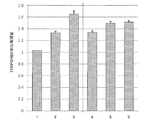
- FIG. 11 and FIG. 12 are graphs showing the average value and standard deviation of the relative expression levels of TYR and TYRP mRNA, respectively.
- “1” in FIGS. 11 and 12 indicates melanocytes incubated for 24 hours without treatment with sirolimus
- “2” indicates melanocytes treated with 1 nM sirolimus for 24 hours
- “3” indicates Means melanocytes treated for 24 hours with 20 nM sirolimus
- “4” means melanocytes treated for 48 hours without being treated with sirolimus
- “5” treated for 48 hours with 1 nM sirolimus It means melanocyte
- “6” means another melanocyte treated with 20 nM sirolimus for 48 hours.
- the relative expression level of TYR is 0.640 ⁇ 0.036, and at “2”, the relative expression level of TYR is 0.820 ⁇ 0.047.
- the relative expression level of TYR is 0.921 ⁇ 0.029, and in “4”, the relative expression level of TYR is 0.771 ⁇ 0.009.
- the relative expression level of TYR was 0.760 ⁇ 0.044, and in “6”, the relative expression level of TYR was 0.858 ⁇ 0.022.
- the relative expression level of TYRP is 1.031 ⁇ 0.027, and in “2”, the relative expression level of TYRP is 1.333 ⁇ 0.055.
- the relative expression level of TYRP is 1.652 ⁇ 0.031, and in “4”, the relative expression level of TYRP is 1.338 ⁇ 0.029.
- the relative expression level of TYRP was 1.450 ⁇ 0.028, and in “6”, the relative expression level of TYRP was 1.514 ⁇ 0.124.
- TYR the expression level of TYR was increased by treating melanocytes with 1 nM or 20 nM sirolimus for 24 hours or treating melanocytes with 20 nM sirolimus for 48 hours.
- FIG. 12 it was confirmed that the expression level of TYRP was increased by treating melanocytes with 1 nM or 20 nM sirolimus for 24 hours or 48 hours.
- Melanocytes (melanocytes derived from two normal persons (hereinafter referred to as melanocyte 1 and melanocyte 2)) were seeded on 6 wells. The number of melanocytes was 2 ⁇ 10 5 per well, and medium 254 / HMGS2 (PMA ( ⁇ ) (no antibiotics) was used as the medium.
- sirolimus was added to each well so as to be 0 nM, 1 nM, or 10 nM, and culture was performed for 4 days.
- the pellet (melanocyte) was suspended in 1 mL of PBS. Using 30 ⁇ L of the suspension, the number of melanocytes in the suspension was counted.
- the remaining 970 ⁇ L of the suspension was centrifuged at 1500 rpm and 4 ° C. for 5 minutes.
- the solution was centrifuged at 16000 g for 20 minutes, and then the absorbance of the supernatant at 400 nm was measured. At the same time, the absorbance of the standard was also measured.
- melanin-containing NaOH 1 ⁇ g / mL to 100 ⁇ g / mL. Standard curves were generated by measuring the absorbance at 400 nm of various concentrations of melanin-containing NaOH.
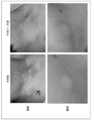
- FIG. 13 shows a photograph (a) of vitiligo before the start of application of gel 3, and a photograph (b) of vitiligo 6 weeks after the start of application of gel 3.
- FIG. 14 the photograph (a) of the vitiligo before the application start of the ointment 3 and the photograph (b) of the vitiligo 6 weeks after the application start of the ointment 3 are shown.
- the arrows in FIGS. 13 and 14 indicate vitiligo.
- FIG. 13B and FIG. 14B the vitiligo shown in FIG. 13A disappears.
- the papules and red aspect are also relieved. Therefore, it was shown that vitiligo can be treated by applying gel 3 or ointment 3.
- the gel 3 or the ointment 3 was applied twice a day for 3 months to vitiligo that developed in the forehead (exposed area) or vitiligo that developed in the abdomen (non-exposed area).
- Vitiligo symptoms were determined with a spectrocolorimeter (spectral colorimeter manufactured by Konica Minolta, Inc .: M-2600d) where vitiligo had developed, and the transition of vitiligo symptoms was confirmed.
- FIG. 25 shows data of four patients with vitiligo on the forehead (exposed part), and FIG. 26 shows data of four patients with vitiligo on the abdomen (non-exposed part). Show.
- the vitiligo became smaller with time in any patient. That is, it has been clarified that the external preparation of the present invention has a therapeutic effect on vitiligo that has developed in various parts of the body. Moreover, it became clear that the external medicine of this invention has a higher therapeutic effect with respect to the vitiligo developing in the forehead part (exposed part) than the vitiligo developing in the abdomen (non-exposed part).
- Tacrolimus or pimecrolimus is used as a treatment for atopic dermatitis. It is known that the effect on atopic dermatitis such as tacrolimus is exhibited by binding tacrolimus or the like to FKBP12 (immunophilin) and suppressing calcineurin. However, tacrolimus has a side effect of causing tumors.
- sirolimus binds to FKBP12 like tacrolimus, but suppresses mTOR rather than calcineurin.
- sirolimus and tacrolimus have different molecules to be suppressed. It is known that suppression of mTOR by sirolimus suppresses inflammation via mast cells. Furthermore, by suppressing mTOR, antitumor effects such as suppression of cell proliferation and induction of apoptosis are also exhibited.
- the present inventors considered that the external preparation of the present invention is effective for the treatment of atopic dermatitis. Unlike the tacrolimus and the like, the topical drug of the present invention does not cause a tumor, and thus can be a safer therapeutic drug for atopic dermatitis. Therefore, in this example, the following test was performed to confirm the effect of the external preparation of the present invention on atopic dermatitis.
- ⁇ Test method> Atopic dermatitis was induced on the skin of the back of the mouse by applying an ointment containing the mite antigen (Biosta AD, manufactured by Biosta, Inc., AD001) for 2 weeks. Specifically, the back hair of the mouse was shaved to expose the back skin. Then, the ointment containing the antigen of mite is applied to the ointment application start date (day 0), and from the application start date, 4, 7, 11, 14, 18, 21 On day and day 25, it was applied to the exposed skin of the back.
- an ointment containing the mite antigen Biosta AD, manufactured by Biosta, Inc., AD001
- the ointment 2 On the 13th day from the start of application of the ointment containing the mite antigen, the ointment 2, the ointment identical to the ointment 2 except that it does not contain sirolimus (control), and 0.1% by mass of tacrolimus (Protopic (registered trademark) ointment 0.1%, positive control) was applied to the site of the skin where atopic dermatitis was induced twice a week for 2 weeks. Specifically, these ointments were applied to the skin site on the 13th, 17th, 20th, 24th and 27th days, respectively. On day 0, day 7, day 13, day 14, day 17, day 21, day 24, and day 28, the site of the skin to which the ointment was applied was observed, and atopic dermatitis Evaluation was performed.
- sirolimus control
- tacrolimus Protopic (registered trademark) ointment 0.1%, positive control
- the evaluation of atopic dermatitis was performed by assigning 4 grade scores to the degree of erythema, edema and wrinkles.
- the score is 0 if the erythema has not changed compared to before the start of treatment, the score is 1 for mild erythema, the score is 2 for moderate erythema, and severe. In the case of erythema, the score was 3. For edema, the score is 0 if edema has not changed compared to before the start of treatment, the score is 1 for mild edema, the score is 2 for moderate edema, and severe edema In this case, the score was 3.
- the score is 0 if the hemorrhoids have not changed compared to before the start of treatment, the score is 1 for mild hemorrhoids, the score is 2 for moderate hemorrhoids, and severe hemorrhoids In this case, the score was 3. The total score of erythema, edema and wrinkles was taken as the overall score.
- the mouse On day 28, the mouse was killed and a picture of the back of the mouse was taken. Moreover, the skin which induced atopic dermatitis was extract
- FIG. 15 is a graph showing the overall score in each of three mice at each time point of treatment with the ointment described above.
- A) of FIG. 15 is a graph which shows the comprehensive score in each mouse
- (b) is a graph which shows the comprehensive score in each mouse
- FIG. (C) is a graph showing an overall score in each mouse when a negative control was used. “A” to “I” in (a) to (c) of FIG. 15 indicate the mice used in the test. In (a) to (c) of FIG.
- “1” to “5” on the horizontal axis indicate the start of treatment (day 0), the seventh day from the start of treatment, the 14th day from the start of treatment, The 21st day from the start of the treatment and the 28th day from the start of the treatment are shown.
- the score of A's mouse is 0, 2, 4.5, 7.5, and 5.5, respectively.
- the mouse scores were 0, 4, 7.5, 7.5, and 5, respectively, and the C mouse scores were 0, 2.5, 7.5, 7.5, and 4, respectively.
- the scores of D mice are 0, 3, 8, 8.5, and 7.5, respectively.
- the mouse scores were 0, 4.5, 5.5, 5.5, and 4.5, respectively, and the F mouse scores were 0, 2, 6, 5, and 5, respectively.
- the scores of G mice are 0, 4, 5, 6, and 7.5, respectively. Scores were 0, 5.5, 7, 9, and 8.5, respectively, and I scores were 0, 3.5, 6.5, 7, and 8, respectively.
- FIG. 16 shows the average value ( ⁇ ) of each score shown in (a) of FIG. 15, the average value (square) of each score shown in (b) of FIG. 15, and (c) of FIG. It is a graph which shows the average value (diamond) of each score.
- the scores of mice using ointment 2 are 0, 3.16, 6.5, 6.3, and 5.66, respectively.
- the scores for mice with positive controls were 0, 2.83, 6.5, 7.5, and 4.83, respectively, and the scores for mice with controls were 0, 4.33, 6 respectively. .16, 7.33, and 8.
- FIG. 17 shows photographs of the backs of mice ((a) to (d)), photographs of skin sections stained with hematoxylin-eosin ((e) to (h)), and sections of skin stained with toluidine blue.
- the photographs ((i) to (l)) are shown.
- (a), (e) and (i) are photographs of an untreated mouse in which neither the ointment containing the mite antigen nor the above-mentioned external medicine was applied
- (f) And (j) are photographs of mice coated with the tick antigen and the control
- (c) (g) and (k) represent the ointment containing the mite antigen and the ointment 2 above.
- FIG. 17 (D), (h) and (l) are photographs of mice applied with an ointment containing a tick antigen and a positive control.
- the epidermis is indicated by an arrow
- cells to the dermis are indicated by an arrowhead.
- the mast cell is indicated by an arrow.
- FIG. 17 (a) to (d) are compared, and erythema, edema, and wrinkles have occurred in the mice to which the ointment containing mite antigen was applied (atopic dermatitis has developed). It can be seen that mice to which ointment 2 or positive control was applied had reduced levels of erythema, edema and wrinkles compared to mice to which negative control was applied.
- FIG. 17 (e) to (h) are compared, in the mice to which the negative control was applied, there was a marked infiltration of cells into the dermis compared to the untreated mice. On the other hand, mice to which ointment 2 or positive control was applied had less cell infiltration into the epidermis than mice to which negative control was applied.
- FIG. 17 (i) to (l) are compared, the mast cell infiltration that is not seen in untreated mice is observed in the mice to which the negative control was applied.
- mice with ointment 2 or positive control have less mast cell infiltration as seen in mice with negative control.
- Erythema is an active site of angiogenesis. It is known that such erythema often occurs in patients suffering from diseases (such as tuberous sclerosis) resulting from activation of mTOR. The present inventors considered that the mechanism by which erythema occurs in such diseases is as follows.
- HIF1 ⁇ As a result of the activation of mTOR in the cells of the patient, the activity of HIF1 ⁇ increases, and the activated HIF1 ⁇ forms a heterodimer with HIF1 ⁇ .
- This heterodimer binds to the HRE sequence of DNA, thereby inducing VEGF transcription and increasing VEGF expression.
- Angiogenesis is caused by the expressed VEGF. In this way, erythema occurs.
- the present inventors considered that the activation of mTOR is involved in the occurrence of erythema, and thus the external preparation of the present invention is effective for the treatment of erythema. Therefore, in this example, the following tests were conducted to find out that VEGF is expressed in cells of patients with tuberous sclerosis and that sirolimus suppresses the expression of VEGF. And the effect with respect to the erythema of the patient of tuberous sclerosis of the external preparation of this invention was confirmed.
- Hemangiofibroma cells are the primary primary culture method of fibroblasts (Toshio Kuroki et al .: New culture cell experiment method for molecular biology research, experimental medicine, separate volume, BioManual UP series, 2nd revised edition, sheep soil Isolated from the face of each patient. All cells obtained from patients were used after obtaining patient consent.
- VEGF vascular endothelial growth factor
- FIG. 18 The result of the test described above is shown in FIG. In FIG. 18, A shows severe hemangiofibroma cells, B shows moderate hemangiofibromas cells, and C shows mild hemangiofibromas cells.
- the concentration of VEGF when using severe angiofibroma cells is 468.857 pg / mL
- the concentration of VEGF when using moderate angiofibroma cells is 260.85. 286 pg / mL
- the concentration of VEGF using mild hemangiofibromatous cells is 147.429 pg / mL.
- VEGF is expressed in hemangiofibroma cells, and the VEGF expression level increases as the symptom of hemangiofibroma increases.
- Angiofibroma cells, human fibroblasts, and HaCat isolated from patients with tuberous sclerosis were used. Isolation of hemangiofibroma cells was performed using the primary culture method described above after excising hemangiofibroma from a patient desiring to excise the hemangiofibroma.
- Human fibroblasts were obtained from tissue of patients who were not tuberous sclerosis (TSC) using the primary culture method described above.
- TSC tuberous sclerosis
- HaCat was purchased from the German Cancer Research Center (dkfz). All cells obtained from patients were used after obtaining patient consent.
- Hemangiofibroma cells, human fibroblasts, and HaCat were cultured in an environment of 37 ° C. and 5% CO 2 using DME medium. During the cultivation of these cells, sirolimus was added to the medium to a final concentration of 0 nM (ie, sirolimus was not added to the medium (control)), 1 nM, 10 nM or 20 nM. Again, the cells were incubated at 37 ° C. and 5% CO 2 , and the culture supernatant was collected 48 hours or 72 hours after the addition of sirolimus. The concentration of VEGF in the collected culture supernatant was measured using a kit for detecting VEGF (Quantikine (registered trademark) Human VEGF, manufactured by R & D SYSTEMS (registered trademark)).
- VEGF Quantantikine (registered trademark) Human VEGF, manufactured by R & D SYSTEMS (registered trademark)
- FIG. 19 (a) is a graph showing the concentration (pg / mL) of VEGF in the culture supernatant 48 hours after sirolimus was added during the culture of hemangiofibroma cells.
- B of FIG. 19 shows VEGF in the culture supernatant 72 hours after sirolimus was added during the culture of HaCat, human fibroblasts (normal fibro), and hemangiofibroma cells (TSC AF fibro). It is a graph which shows the density
- FIG. 19 (c) shows the percentage reduction in the concentration of VEGF caused by treatment of these three types of cells with sirolimus (ratio: concentration of VEGF after treatment with 20 nM sirolimus / treatment with 20 nM sirolimus). It is a graph which shows the density
- FIG. 19 (d) is a graph showing the concentration (pg / mL) of VEGF in the culture supernatant 48 hours after sirolimus was added during the HaCat culture.
- the concentration of VEGF was 260.2857 pg / mL, and the angiofibroma cells were treated with 1 nM sirolimus. In this case, the concentration of VEGF was 113.428 pg / mL, and when the angiofibroma cells were treated with 10 nM sirolimus, the concentration of VEGF was 92.4285 pg / mL.
- FIG. 19 (a) shows that the amount of VEGF expressed decreases as the sirolimus concentration increases.
- FIG. 19 (c) is a graph showing the result of dividing the concentration of VEGF when the cells were treated with 20 nM sirolimus shown in FIG. 19 (b) by the concentration of VEGF when the cells were not treated with sirolimus. is there. As shown in FIG. 19 (c)
- FIG. 19 (d) shows that the VEGF expression level decreases as the sirolimus concentration increases.
- Fig. 29 shows the measurement results. As is clear from FIG. 29, the expression level of HIF1 ⁇ was decreased in melanocytes treated with sirolimus.
- the ointment 3 was applied to the erythema of a patient with tuberous sclerosis twice a day for 12 weeks.
- FIG. 20 the photograph (a) of the erythema before the application start of the ointment 3 and the photograph (b) of the erythema 12 weeks after the application start of the ointment 3 are shown.
- the arrow in FIG. 20 indicates erythema.
- FIG. 20B the erythema shown in FIG. 20A has disappeared. Therefore, it was confirmed that erythema can be treated by applying ointment 3.
- the topical medicine of the present invention is effective against rosacea that is also actively vascularized.
- Propylene carbonate was colored blue. Next, colored propylene carbonate was added to a mixture of liquid paraffin, solid paraffin and white petrolatum, which are components of the ointment prepared in this example. As a control, colored propylene carbonate was added to white petrolatum. When colored propylene carbonate was added to the above mixture, the propylene carbonate became fine particles and precipitated as shown in the reagent bottle on the left side of FIG. On the other hand, when colored propylene carbonate was added to white petrolatum, propylene carbonate precipitated without forming fine particles as shown in the reagent bottle on the right side of FIG.
- the mixture in which colored propylene carbonate was precipitated was stirred at 2000 rpm for 1 minute at room temperature using a rotating and rotating mixer, then stirred at 1000 rpm for 5 minutes, and then stirred at 500 rpm for 3 minutes.
- the same operation was performed on white petrolatum in which colored propylene carbonate was precipitated.
- the result of stirring is shown in FIG.
- the left reagent bottle shows the result of stirring the mixture in which the colored propylene carbonate was precipitated
- the right reagent bottle shows the result of stirring the white petrolatum in which the colored propylene carbonate was precipitated.
- the propylene carbonate particles are larger than the case when propylene carbonate is stirred with the above mixture. I can confirm.
- FIG. 22 (a) is a micrograph of an ointment prepared using the mixture
- FIG. 22 (c) is an enlarged view of FIG. 22 (a)
- FIG. 22 (b) is a photomicrograph of an ointment prepared using white petrolatum
- FIG. 22 (d) is an enlarged view of FIG. 22 (b).
- the bars in (c) and (d) of FIG. 22 indicate 25 ⁇ m.
- propylene carbonate particles are indicated by arrows
- water (black) is indicated by arrows.
- propylene carbonate is dispersed as uniform fine particles of 10 ⁇ m or less in the ointment.
- propylene carbonate is dispersed in fine particles of various sizes in the ointment and is not uniform. .
- sirolimus is considered to be dispersed as uniform fine particles in the ointment prepared in this example.
- sirolimus is dispersed as uniform fine particles, by applying the ointment prepared in this example to the skin, the absorption of sirolimus from the skin to the affected area is significantly improved, and sirolimus is in the blood. It is thought that it stays in the affected part without leaking into the body.
- ⁇ Preparation Example 8 Preparation of gel containing 0.2% by mass of sirolimus> A gel (gel 5) containing 0.2% by mass of sirolimus was prepared in the same manner as in Preparation Example 7, except that Rapamune was used instead of the sirolimus reagent. Specifically, 2 mg of Rapamune tablets were crushed and passed through a 75 ⁇ m mesh to remove impurities (excipients, etc.), and then the pulverized product was dissolved in 145 mg of isopropanol.
- ⁇ Preparation Example 9 Preparation of ointment containing 0.2% by mass of sirolimus> 2 mg of a sirolimus reagent (Calbiochem, 553210) was dissolved in 58 mg of propylene carbonate (Wako Pure Chemical Industries, 168-04972). Solid paraffin (Wako Pure Chemical Industries, Ltd., 415-25791) 45 mg and white petrolatum (propeto) (Maruishi Pharmaceutical Co., Ltd., Merck Co., Ltd. or Astra Japan Co., Ltd.) 895 mg are heated to 70 ° C. and dissolved. And mixed.
- ⁇ Preparation Example 10 Preparation of an ointment containing 0.2% by mass of sirolimus> 2 mg of a sirolimus reagent (Calbiochem, 553210) was dissolved in 50 mg of propylene carbonate (Wako Pure Chemical Industries, 168-04972). Liquid paraffin (manufactured by Wako Pure Chemical Industries, Ltd., 128-04375) 10 mg, solid paraffin (manufactured by Wako Pure Chemical Industries, Ltd., 415-25791), and white petrolatum (propet) (manufactured by Maruishi Pharmaceutical Co., Ltd., Merck) 895 mg or Astra Japan Co., Ltd.) was mixed while heating to 70 ° C. and dissolving.
- Liquid paraffin manufactured by Wako Pure Chemical Industries, Ltd., 128-04375
- solid paraffin manufactured by Wako Pure Chemical Industries, Ltd., 415-25791
- white petrolatum propet
- FIG. 30 shows the results of the test described above, and Table 2 shows actual numerical data of the test.
- FIG. 31 shows the results of the test described above, and Table 3 shows the actual numerical data of the test.
- FIG. 32 shows the result of combining the test results of gels 2 to 5 described in (Test method and test result-1) and (Test method and test result-2) described above into one graph.
- the present invention can treat skin diseases locally. Therefore, it can be used not only in the pharmaceutical industry of the present invention but also in the cosmetics industry.
Landscapes
- Health & Medical Sciences (AREA)
- Chemical & Material Sciences (AREA)
- Public Health (AREA)
- Life Sciences & Earth Sciences (AREA)
- Veterinary Medicine (AREA)
- General Health & Medical Sciences (AREA)
- Medicinal Chemistry (AREA)
- Animal Behavior & Ethology (AREA)
- Pharmacology & Pharmacy (AREA)
- Organic Chemistry (AREA)
- Epidemiology (AREA)
- Dermatology (AREA)
- General Chemical & Material Sciences (AREA)
- Nuclear Medicine, Radiotherapy & Molecular Imaging (AREA)
- Chemical Kinetics & Catalysis (AREA)
- Bioinformatics & Cheminformatics (AREA)
- Engineering & Computer Science (AREA)
- Pulmonology (AREA)
- Immunology (AREA)
- Medicinal Preparation (AREA)
- Pharmaceuticals Containing Other Organic And Inorganic Compounds (AREA)
- Nitrogen And Oxygen Or Sulfur-Condensed Heterocyclic Ring Systems (AREA)
Abstract
Description
本明細書中において、「局所的に処置する」は、局所的に適用された外用薬に起因する全身性の作用が示されないことが意図される。上記構成を有する外用薬を皮膚に適用することによって、シロリムスおよびその誘導体の皮膚から患部への吸収が顕著に向上されるだけでなく、シロリムスおよびその誘導体が血中に漏出することなく患部に留まる。すなわち、本発明の外用薬を用いれば、皮膚疾患を効果的に処置できる上に、シロリムスおよびその誘導体による全身性の作用が示されない(副作用が生じない)。
本発明は、皮膚疾患を局所的に処置するための外用薬を提供する。本明細書中にて使用される場合、用語「処置」は、症状の軽減または排除が意図され、治療的(発症後)に行われ得るものだけでなく、予防的(発症前)に行われ得るものもまた包含される。
本実施形態の外用薬は、皮膚疾患を局所的に処置するための有効成分を含有している軟膏組成物を含んでいる。本明細書中にて使用される場合、「軟膏組成物」は、有効成分が、有効成分と相溶しない溶媒中に分散しているものが意図される。軟膏組成物を含んでいる外用薬は、軟膏剤であるといえる。
<調製例1:0.4質量%のシロリムスを含むゲルの調製>
シロリムスの試薬(Calbiochem社製、553210)4mgをイソプロパノール(和光純薬工業株式会社製、166-04836)486mgに溶解させた。得られた溶解物490mgをカーボポール(登録商標)934NFポリマー(Lubrizol社製)16mgとH2O490mgとの混合物と混合した。得られた混合物に、トリスヒドロキシメチルアミノメタン(和光純薬工業株式会社製、203-06272)4mgを混合した。このようにして、0.4質量%のシロリムスを含むゲル(ゲル1)を調製した。
シロリムスの試薬2mgをイソプロパノール488mgに溶解させたことを除いて、調製例1と同様の作業を行い、0.2質量%のシロリムスを含むゲル(ゲル2)を調製した。
シロリムスの試薬の代わりにRapamuneを用いたことを除いて、調製例2と同様の作業を行い、0.2質量%のシロリムスを含むゲル(ゲル3)を調製した。具体的には、2mgのRapamuneの錠剤を粉砕し、不純物(賦形剤など)を取り除くために75μmのメッシュを通してから、粉砕物をイソプロパノール488mgに溶解させた。
シロリムスの試薬(Calbiochem社製、553210)10mgを炭酸プロピレン(和光純薬工業株式会社製、168-04972)50mgに溶解させた。サラシミツロウ5mg、流動パラフィン(和光純薬工業株式会社製、128-04375)10mg、固形パラフィン(和光純薬工業株式会社製、415-25791)30mg、および白色ワセリン(プロペト)(丸石製薬株式会社製、Merck社製、またはアストラジャパン株式会社製)895mgを、70℃に加熱し溶解させながら混合した。
シロリムスの試薬2mgを炭酸プロピレン58mgに溶解させたことを除いて、調製例4と同様の作業を行い、0.2質量%のシロリムスを含む軟膏(軟膏2)を調製した。
シロリムスの試薬の代わりにRapamune(ファイザー社製、29269)を用いたことを除いて、調製例5と同様の作業を行い、0.2質量%のシロリムスを含む軟膏(軟膏3)を調製した。具体的には、2mgのRapamuneの錠剤を粉砕し、不純物を取り除くために75μmのメッシュを通してから、粉砕物を炭酸プロピレン58mgに溶解させた。
プロトピック(登録商標)軟膏0.03%小児用(アステラス製薬株式会社)を基剤として0.2質量%のシロリムスを含んでいる軟膏(参考例1)を調製した。
プロトピック(登録商標)軟膏0.03%小児用の代わりに、プロトピック(登録商標)軟膏0.1%を用いたことを除いて、参考例1と同様の作業を行い、0.2質量%のシロリムスを含んでいる軟膏(参考例2)を調製した。
本実施例では、以下のような試験を実施して、本発明の外用薬が人工皮膚から吸収される量を確認した。
TESTSKIN(登録商標)LSE-d、およびTESTSKIN(登録商標)LSE-high(TOYOBO)の各トランスウェル内の皮膚に、上述の本発明の外用薬(軟膏2および3、並びに、ゲル2および3)をそれぞれ塗布した。なお、リング内の吸収面の直径は、1cmであった。
ゲル2、軟膏2および参考例1を用いて得られた試験の結果を図1に示す。図1に示すように、ゲル2を用いた場合、真皮中のシロリムスの濃度が8.08±3.85ng/mgであり、軟膏2を用いた場合、真皮中のシロリムスの濃度が10.03±2.68ng/mgであり、タクロリムスの軟膏基剤を用いた場合、真皮中のタクロリムスの濃度が1.82±0.319ng/mgであった。また、ゲル2と参考例1との間のp値および軟膏2と参考例1との間のp値は、どちらも0.05未満であった。このp値から、ゲル2および軟膏2と参考例1との間に有意差があることが確認された。以上のことから、参考例1よりもゲル2および軟膏2の方が、有効成分をより効率よく皮膚へ浸透できることが分かった。
<試験方法>
上述した調製例5に従い、0.03質量%のシロリムスを含む軟膏(軟膏4)、0.06質量%のシロリムスを含む軟膏(軟膏5)、0.1質量%のシロリムスを含む軟膏(軟膏6)を調製した。
軟膏3(0.2質量%)を用いた場合、真皮中のシロリムスの量は、294.2±100.7pg/mLであり、軟膏2(0.2質量%)を用いた場合、真皮中のシロリムスの量は、333.1±123pg/mLであり、軟膏4(0.03質量%)を用いた場合、真皮中のシロリムスの量は、67.59±22.1pg/mLであり、軟膏5(0.06質量%)を用いた場合、真皮中のシロリムスの量は、80.31±20.6pg/mLであり、軟膏6(0.1質量%)を用いた場合、真皮中のシロリムスの量は、103.06±22.3pg/mLであった。
本実施例では、以下のような試験を実施して、本発明の外用薬の、結節性硬化症の皮膚腫瘍に対する効果を確認した。したがって、結節性硬化症以外の皮膚の良性腫瘍(脂漏性角化症など)に対しても効果が期待される。
結節性硬化症の患者を、上記軟膏3を用いて処置される患者のグループ(4人)、および上記ゲル3を用いて処置される患者のグループ(8人)に分けた。各患者に対して、上述した外用薬を1日2回、12週間塗布した。具体的には、患者の顔面の左側および右側のどちらか一方の血管線維種に外用薬を塗布し、他方の血管線維腫に、有効成分(シロリムス)を含まない基剤のみ(コントロール)を塗布した。処置の開始から12週間後に処置を中止した。そして、処置を中止してから3ヶ月間、血管線維腫の経過観察を行った。なお、ゲル3を用いて処置される患者の一人が、決められた通りの外用を適切に行わなかったため、試験中に除外された。
図3~5に、ゲル3を用いた処置の開始前および処置の開始から12週間後の血管線維腫の写真を示す。図3~5に示すように、患者の左頬の血管線維腫には、ゲル3を塗布し、患者の右頬の血管線維腫には、コントロールを塗布した。

白斑が発症する原因の一つは、メラノサイトがメラニンを産生しなくなることによって生じる。メラノサイトにおけるメラニンの産生に関与するタンパク質は、MITF、TYR、DCT、TYRP1である。
(試験方法)
1.4×10⁵個のメラノサイトを6ウェルのカルチャープレートのウェルに播種し、medium 254(倉敷紡績株式会社製、M254500)をウェルに添加した。次いで、このプレートを、37℃および5%CO2の環境下にて24時間インキュベートした。
上述した試験の結果を図10~12に示す。
(試験方法)
6ウェルに対して、メラノサイト(2人の正常な人に由来するメラノサイト(以下、各々をメラノサイト1およびメラノサイト2と呼ぶ))を播種した。なお、メラノサイトの数は、1ウェルあたり2×10⁵個であり、培地としてはmedium254/HMGS2(PMA(-)(抗生剤無し)を用いた。
細胞数1×10⁴当りの量に補正したメラニンの量を、図23および図24に示す。なお、図23は、メラノサイト1のデータを示し、図24は、メラノサイト2のデータを示している。
結節性硬化症の患者における白斑に、上記ゲル3または上記軟膏3を1日当たり2回、6週間塗布した。図13に、ゲル3の塗布開始前の白斑の写真(a)、およびゲル3の塗布開始から6週間後の白斑の写真(b)を示す。図14に、軟膏3の塗布開始前の白斑の写真(a)、および軟膏3の塗布開始から6週間後の白斑の写真(b)を示す。図13および図14中の矢印は白斑を示す。図13の(b)および図14の(b)では、同図の(a)に示された白斑が消退している。また、丘疹および紅色局面も軽快している。よって、ゲル3または軟膏3を塗布することによって白斑を処置できることが示された。
尋常性白斑(頚部または腹部に発症した尋常性白斑)に、上記ゲル3または上記軟膏3を1日当たり2回、2ヶ月間塗布した。図27および図28に、2人の患者の尋常性白斑の写真を示す。図27および図28から明らかなように、2人の患者の何れにおいても、尋常性白斑が消退した。
アトピー性皮膚炎の処置薬としては、タクロリムスまたはピメクロリムスが使用されている。タクロリムスなどのアトピー性皮膚炎に対する効果は、タクロリムスなどがFKBP12(イムノフィリン)と結合して、カルシニューリンを抑制することによって発揮されることが知られている。しかし、タクロリムスなどは、腫瘍を発生させるという副作用を有している。
マウスの背中の皮膚に、ダニの抗原を含んでいる軟膏(ビオスタAD、ビオスタ株式会社製、AD001)を2週間塗布することによってこの皮膚にアトピー性皮膚炎を誘発した。具体的には、マウスの背中の毛を剃り、背中の皮膚を露出させた。そして、ダニの抗原を含んでいる軟膏を、この軟膏の塗布開始日(0日目)、この塗布開始日から4日目、7日目、11日目、14日目、18日目、21日目、および25日目に、背中の露出した皮膚に塗布した。
アトピー性皮膚炎の評価の結果を図15および図16に示す。図15は、上述した軟膏を用いた処置の各時点における、3匹のマウスのそれぞれにおける総合的なスコアを示すグラフである。図15の(a)は、ポジティブコントロールを用いた場合の各マウスにおける総合的なスコアを示すグラフであり、(b)は、軟膏2を用いた場合の各マウスにおける総合的なスコアを示すグラフであり、(c)は、ネガティブコントロールを用いた場合の各マウスにおける総合的なスコアを示すグラフである。図15の(a)~(c)における「A」~「I」は、試験に用いたマウスを示す。図15の(a)~(c)において、横軸の「1」~「5」は、それぞれ処置の開始(0日目)、処置の開始から7日目、処置の開始から14日目、処置の開始から21日目、および処置の開始から28日目を示す。
紅斑は、血管新生の盛んな部位である。このような紅斑が、mTORの活性化に起因する疾患(結節性硬化症など)に罹患した患者においてしばしば発生することが知られている。本発明者らは、このような疾患において紅斑が発生するメカニズムが以下のとおりであると考えた。
(試験方法)
重症の血管線維腫を有する患者、中等症の血管線維腫を有する患者、および軽症の血管線維腫を有する患者からそれぞれ、重症、中等症、または軽症の血管線維腫の細胞を単離した。血管線維腫の細胞は、線維芽細胞の一般的な初代培養法(黒木登志男他編:分子生物学研究のための新培養細胞実験法 実験医学 別冊 バイオマニュアルUPシリーズ 改定第2版、羊土社 参照)にしたがって各患者の顔面から単離した。患者から取得した細胞はいずれも患者の同意を得た上で用いた。
上述した試験の結果を図18に示す。図18において、Aは重症の血管線維腫の細胞を示し、Bは中等症の血管線維腫の細胞を示し、Cは軽症の血管線維腫の細胞を示す。図18に示すように、重症の血管線維腫の細胞を用いた場合のVEGFの濃度は468.857pg/mLであり、中等症の血管線維腫の細胞を用いた場合のVEGFの濃度は260.286pg/mLであり、軽症の血管線維腫の細胞を用いた場合のVEGFの濃度は147.429pg/mLである。このように、血管線維腫の細胞においてVEGFが発現しており、血管線維腫の症状が重くなるほど、VEGFの発現量が高くなることが分かった。
(試験方法)
結節性硬化症の患者から単離した血管線維腫の細胞、ヒト線維芽細胞、HaCatを用いた。血管線維腫の細胞の単離は、この血管線維腫の切除を希望する患者から血管線維腫を切除し、上述した初代培養法を用いて行った。ヒト線維芽細胞は、結節性硬化症(TSC)でない患者の組織から、上述した初代培養法を用いて取得した。HaCatは、ドイツ連邦共和国癌研究センター(dkfz)から購入した。患者から取得した細胞はいずれも患者の同意を得た上で用いた。
上述した試験の結果を図19に示す。
結節性硬化症の患者の紅斑に、上記軟膏3を1日当たり2回、12週間塗布した。図20に、軟膏3の塗布開始前の紅斑の写真(a)、および軟膏3の塗布開始から12週間後の紅斑の写真(b)を示す。図20中の矢印は紅斑を示す。図20(b)では、同図の(a)に示された紅斑が消退している。よって、軟膏3を塗布することによって紅斑を処置できることが確認された。
本実施例にて調製した軟膏中にてシロリムスがどのような状態であるのかを確認するために、シロリムスの溶媒である炭酸プロピレンが軟膏中にてどのような状態であるのかを調べた。
<調製例7:0.2質量%のシロリムスを含むゲルの調製>
シロリムスの試薬(Calbiochem社製、553210)2mgをイソプロパノール(和光純薬工業株式会社製、166-04836)145mgに溶解させた。得られた溶解物147mgをカーボポール(登録商標)934NFポリマー(Lubrizol社製)16mgとH2O833mgとの混合物と混合した。得られた混合物に、トリスヒドロキシメチルアミノメタン(和光純薬工業株式会社製、203-06272)4mgを混合した。このようにして、0.2質量%のシロリムスを含むゲル(ゲル4)を調製した。
シロリムスの試薬の代わりにRapamuneを用いたことを除いて、調製例7と同様の作業を行い、0.2質量%のシロリムスを含むゲル(ゲル5)を調製した。具体的には、2mgのRapamuneの錠剤を粉砕し、不純物(賦形剤など)を取り除くために75μmのメッシュを通してから、粉砕物をイソプロパノール145mgに溶解させた。
シロリムスの試薬(Calbiochem社製、553210)2mgを炭酸プロピレン(和光純薬工業株式会社製、168-04972)58mgに溶解させた。固形パラフィン(和光純薬工業株式会社製、415-25791)45mg、および白色ワセリン(プロペト)(丸石製薬株式会社製、Merck社製、またはアストラジャパン株式会社製)895mgを、70℃に加熱し溶解させながら混合した。
シロリムスの試薬(Calbiochem社製、553210)2mgを炭酸プロピレン(和光純薬工業株式会社製、168-04972)50mgに溶解させた。流動パラフィン(和光純薬工業株式会社製、128-04375)10mg、固形パラフィン(和光純薬工業株式会社製、415-25791)35mg、および白色ワセリン(プロペト)(丸石製薬株式会社製、Merck社製、またはアストラジャパン株式会社製)895mgを、70℃に加熱し溶解させながら混合した。
(試験方法および試験結果-1)
Rapamuneを用いて作製した本発明の外用薬が人工皮膚から吸収される量に対して、基剤の組成が及ぼす影響を検討した。具体的には、軟膏3、軟膏7、ゲル3およびゲル5について、外用薬が人工皮膚から吸収される量を測定した。

シロリムスの試薬を用いて作製した本発明の外用薬が人工皮膚から吸収される量に対して、基剤の組成が及ぼす影響を検討した。具体的には、軟膏2、軟膏8、ゲル2およびゲル4について、外用薬が人工皮膚から吸収される量を測定した。
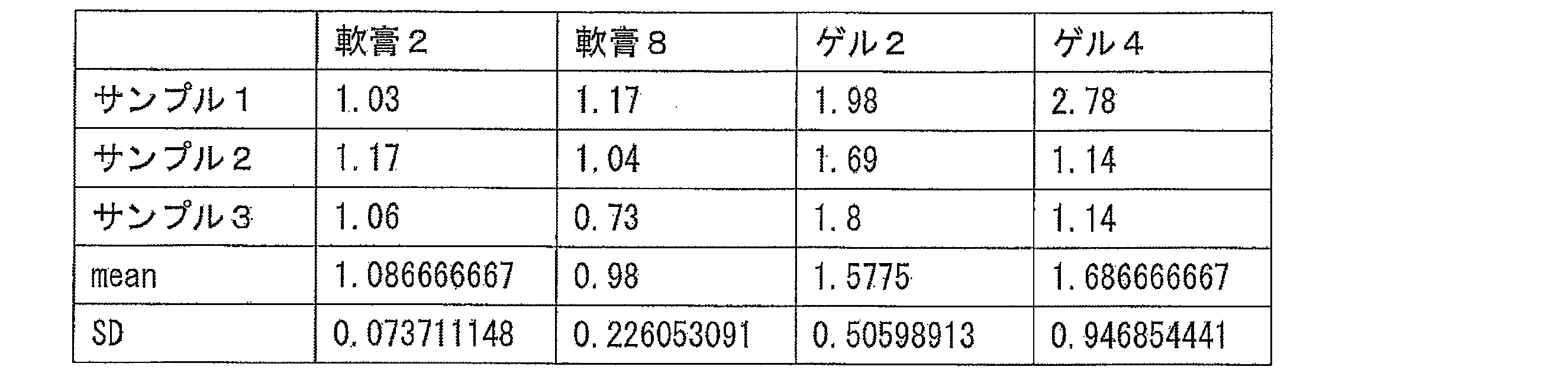
上述した(試験方法および試験結果-1)および(試験方法および試験結果-2)に記載したゲル2~5の試験結果を1つのグラフにまとめた結果を図32に示す。
様々な濃度のシロリムス(0質量%、0.05質量%、0.2質量%、0.4質量%)を含有するゲルおよび軟膏100mgをBALB/cマウスの両耳に単回塗布して、1時間、8時間、24時間、48時間および7日後に炎症を生じているか否か確認した。更に、BALB/cマウスの背部に1日1回、5日間連続塗布して外用による局所の皮膚炎の有無を観察した。
Claims (15)
- シロリムスおよびその誘導体の少なくとも1つを含有しているゲル組成物または軟膏組成物を含んでいることを特徴とする皮膚疾患を局所的に処置するための外用薬。
- 前記ゲル組成物は、シロリムスおよびその誘導体の少なくとも1つを含有している溶液をゲル化したものであることを特徴とする請求項1に記載の外用薬。
- 前記溶液は、シロリムスおよびその誘導体の少なくとも1つを、イソプロパノールおよびエタノールの少なくとも1つに溶解させたものであることを特徴とする請求項2に記載の外用薬。
- 前記皮膚疾患が、皮膚腫瘍、アトピー性皮膚炎、酒さ、ケロイド、色素斑、脱色素斑、皮膚における血管系の形成異常、皮膚における血管系の良性腫瘍、および上皮系母斑からなる群より選択される少なくとも1つであることを特徴とする請求項1~3のいずれか1項に記載の外用薬。
- 前記皮膚腫瘍が、結節性硬化症の皮膚腫瘍、脂漏性角化症、およびレックリングハウゼン病の皮膚腫瘍からなる群より選択される少なくとも1つであることを特徴とする請求項4に記載の外用薬。
- 前記色素斑が褐色斑であることを特徴とする請求項4に記載の外用薬。
- 前記褐色斑が扁平母斑またはカフェオレ斑であることを特徴とする請求項6に記載の外用薬。
- 前記脱色素斑が白斑であることを特徴とする請求項4に記載の外用薬。
- 前記ゲル組成物は、カーボポール(登録商標)934NF、水、イソプロパノールおよびトリスヒドロキシメチルアミノメタンの少なくとも1つを含んでいることを特徴とする請求項1~8のいずれか1項に記載の外用薬。
- 前記シロリムスおよびその誘導体の少なくとも1つと、カーボポール(登録商標)934NFと、水と、イソプロパノールと、トリスヒドロキシメチルアミノメタンとの質量の比が、2~4:16:490~833:145~488:4であり、
前記シロリムスおよびその誘導体の少なくとも1つの比と、前記水の比と、前記イソプロパノールの比との合計が、980であることを特徴とする請求項9に記載の外用薬。 - 前記軟膏組成物は、炭酸プロピレン、固形パラフィン、白色ワセリン、流動パラフィンおよびサラシミツロウの少なくとも1つを含んでいることを特徴とする請求項1~8のいずれか1項に記載の外用薬。
- 前記シロリムスおよびその誘導体の少なくとも1つと、炭酸プロピレンと、固形パラフィンと、白色ワセリンと、流動パラフィンと、サラシミツロウとの質量の比が、0.3~10:50~59.4:30~45:895:0~10:0~5であり、
前記シロリムスおよびその誘導体の少なくとも1つの比と、前記炭酸プロピレンの比と、前記固形パラフィンの比と、前記流動パラフィンの比と、前記サラシミツロウの比との合計が、105であることを特徴とする請求項11に記載の外用薬。 - 請求項1~12のいずれか1項に記載の外用薬を調製するための、
シロリムスおよびその誘導体の少なくとも1つを含んでいることを特徴とする組成物。 - 請求項1~12のいずれか1項に記載の外用薬を調製するための、シロリムスおよびその誘導体の少なくとも1つを備えていることを特徴とするキット。
- シロリムスおよびその誘導体の少なくとも1つを含有しているゲル組成物または軟膏組成物を作製する工程を包含していることを特徴とする請求項1~12のいずれか1項に記載の外用薬を製造する方法。
Priority Applications (5)
| Application Number | Priority Date | Filing Date | Title |
|---|---|---|---|
| CA2825786A CA2825786A1 (en) | 2011-01-31 | 2012-01-30 | Externally-used drug for treating skin disorder and method for producing same |
| US13/982,014 US20130317053A1 (en) | 2011-01-31 | 2012-01-30 | Externally-used drug for treating skin disorder and method for producing same |
| JP2012555873A JP5652795B2 (ja) | 2011-01-31 | 2012-01-30 | 皮膚疾患を処置するための外用薬およびその製造方法 |
| AU2012211809A AU2012211809A1 (en) | 2011-01-31 | 2012-01-30 | Externally-used drug for treating skin disorder and method for producing same |
| EP12742647.6A EP2671583A4 (en) | 2011-01-31 | 2012-01-30 | EXTERNALLY USED MEDICAMENT FOR THE TREATMENT OF SKIN DISEASES AND MANUFACTURING METHOD THEREFOR |
Applications Claiming Priority (2)
| Application Number | Priority Date | Filing Date | Title |
|---|---|---|---|
| JP2011018273 | 2011-01-31 | ||
| JP2011-018273 | 2011-08-10 |
Publications (1)
| Publication Number | Publication Date |
|---|---|
| WO2012105521A1 true WO2012105521A1 (ja) | 2012-08-09 |
Family
ID=46602734
Family Applications (1)
| Application Number | Title | Priority Date | Filing Date |
|---|---|---|---|
| PCT/JP2012/052047 Ceased WO2012105521A1 (ja) | 2011-01-31 | 2012-01-30 | 皮膚疾患を処置するための外用薬およびその製造方法 |
Country Status (6)
| Country | Link |
|---|---|
| US (1) | US20130317053A1 (ja) |
| EP (1) | EP2671583A4 (ja) |
| JP (1) | JP5652795B2 (ja) |
| AU (1) | AU2012211809A1 (ja) |
| CA (1) | CA2825786A1 (ja) |
| WO (1) | WO2012105521A1 (ja) |
Cited By (12)
| Publication number | Priority date | Publication date | Assignee | Title |
|---|---|---|---|---|
| WO2016152519A1 (ja) * | 2015-03-23 | 2016-09-29 | 国立大学法人大阪大学 | びまん性神経線維腫用の外用薬 |
| KR101828631B1 (ko) * | 2013-09-27 | 2018-02-13 | 가톨릭대학교 산학협력단 | 라파마이신 및 미코페놀산을 유효성분으로 포함하는 아토피 피부염 예방 및 치료용 조성물 |
| JP2020504182A (ja) * | 2017-01-06 | 2020-02-06 | パルヴェラ セラピューティクス エルエルシー | mTOR阻害剤の無水組成物およびその使用方法 |
| WO2020175131A1 (ja) * | 2019-02-27 | 2020-09-03 | 国立大学法人大阪大学 | 脈管異常治療用外用剤 |
| WO2020184131A1 (ja) * | 2019-03-08 | 2020-09-17 | 国立大学法人大阪大学 | シロリムスまたはその誘導体を含有する全身作用型外用剤 |
| JPWO2021075328A1 (ja) * | 2019-10-16 | 2021-04-22 | ||
| WO2021225149A1 (ja) * | 2020-05-08 | 2021-11-11 | 国立大学法人熊本大学 | 新規血管障害治療剤 |
| JP2021530463A (ja) * | 2018-07-02 | 2021-11-11 | パルヴェラ セラピューティクス、インク. | mTOR阻害剤の無水組成物および使用方法 |
| JP2022009168A (ja) * | 2015-09-24 | 2022-01-14 | ドレクセル ユニバーシティ | 真皮障害を治療または予防するための新規組成物および方法 |
| JP2022511270A (ja) * | 2018-08-30 | 2022-01-31 | ケミストリーアールエックス. | シロリムス含有組成物 |
| JP2022512671A (ja) * | 2018-10-11 | 2022-02-07 | ドレクセル ユニバーシティ | 皮膚症状を治療または予防する方法 |
| JP2024028808A (ja) * | 2017-11-23 | 2024-03-05 | トルク アーゲー | 皮膚障害の治療 |
Families Citing this family (8)
| Publication number | Priority date | Publication date | Assignee | Title |
|---|---|---|---|---|
| US9205080B2 (en) | 2006-11-16 | 2015-12-08 | Transderm, Inc. | Methods of treating keratin hyperproliferation disorders using mTOR inhibitors |
| AU2014209141B2 (en) * | 2013-01-24 | 2018-05-10 | Palvella Therapeutics, Inc. | Compositions for transdermal delivery of mTOR inhibitors |
| US20200261427A1 (en) * | 2019-02-20 | 2020-08-20 | Al Therapeutics, Inc. | Topical rapamycin formulations and their use in treating facial angiofibromas and other skin disorders |
| CN112439071B (zh) * | 2019-09-04 | 2022-05-20 | 武汉科福新药有限责任公司 | 透皮促渗组合物及其在噻吗洛尔制剂中的应用 |
| EP4114357B1 (en) | 2020-03-02 | 2025-10-01 | Shanghai Aucta Pharmaceuticals Co., Ltd. | Topical formulations containing mtor inhibitors |
| CN113181367A (zh) * | 2021-03-30 | 2021-07-30 | 首都医科大学附属北京儿童医院 | 一种治疗结节性硬化症血管纤维瘤药物的制备方法 |
| EP4085898A1 (en) | 2021-05-05 | 2022-11-09 | Sodha Pharma Consulting GmbH | Topical formulation comprising sirolimus |
| CN116509849B (zh) * | 2023-05-26 | 2025-01-24 | 首都医科大学附属北京儿童医院 | 雷帕霉素在制备辅助治疗咖啡斑药物中的应用 |
Citations (6)
| Publication number | Priority date | Publication date | Assignee | Title |
|---|---|---|---|---|
| JPH0517481A (ja) * | 1990-09-04 | 1993-01-26 | Fujisawa Pharmaceut Co Ltd | 軟膏剤 |
| WO1999055332A1 (en) * | 1998-04-27 | 1999-11-04 | Fujisawa Pharmaceutical Co., Ltd. | Medicinal compositions |
| JP2001522801A (ja) * | 1997-11-07 | 2001-11-20 | アバディーン ユニバーシティ | 皮膚浸透増強成分 |
| JP2008513388A (ja) * | 2004-09-16 | 2008-05-01 | バイエル・ヘルスケア・アクチェンゲゼルシャフト | 動物の皮膚病を処置するための皮膚投与可能な製剤 |
| JP2008533153A (ja) * | 2005-03-14 | 2008-08-21 | マクロケム コーポレイション | ヒトの皮膚を介したマクロライドの浸透増強 |
| JP2009525294A (ja) * | 2006-02-02 | 2009-07-09 | ノバルティス アクチエンゲゼルシャフト | 結節性硬化症処置 |
Family Cites Families (5)
| Publication number | Priority date | Publication date | Assignee | Title |
|---|---|---|---|---|
| PT956034E (pt) * | 1996-07-30 | 2002-12-31 | Novartis Ag | Composicoes farmaceuticas para o tratamento da rejeicao de transplantes estados inflamatorios ou auto-imunes compreendendo ciclosporina a e 40-o-(2-hidroxietil)-rapamicina |
| US6936426B2 (en) * | 2000-10-06 | 2005-08-30 | Harbor-Ucla Research And Education Institute | Detection of antibody mediated inflammatory auto-immune disorders |
| US20040018228A1 (en) * | 2000-11-06 | 2004-01-29 | Afmedica, Inc. | Compositions and methods for reducing scar tissue formation |
| US20050250804A1 (en) * | 2004-05-06 | 2005-11-10 | Glenmark Pharmaceuticals Limited | Pharmaceutical gel formulations |
| WO2011079154A1 (en) * | 2009-12-21 | 2011-06-30 | Sarah Bacus | Compositions and methods for treatment of vitiligo |
-
2012
- 2012-01-30 CA CA2825786A patent/CA2825786A1/en not_active Abandoned
- 2012-01-30 WO PCT/JP2012/052047 patent/WO2012105521A1/ja not_active Ceased
- 2012-01-30 US US13/982,014 patent/US20130317053A1/en not_active Abandoned
- 2012-01-30 EP EP12742647.6A patent/EP2671583A4/en not_active Withdrawn
- 2012-01-30 JP JP2012555873A patent/JP5652795B2/ja active Active
- 2012-01-30 AU AU2012211809A patent/AU2012211809A1/en not_active Abandoned
Patent Citations (6)
| Publication number | Priority date | Publication date | Assignee | Title |
|---|---|---|---|---|
| JPH0517481A (ja) * | 1990-09-04 | 1993-01-26 | Fujisawa Pharmaceut Co Ltd | 軟膏剤 |
| JP2001522801A (ja) * | 1997-11-07 | 2001-11-20 | アバディーン ユニバーシティ | 皮膚浸透増強成分 |
| WO1999055332A1 (en) * | 1998-04-27 | 1999-11-04 | Fujisawa Pharmaceutical Co., Ltd. | Medicinal compositions |
| JP2008513388A (ja) * | 2004-09-16 | 2008-05-01 | バイエル・ヘルスケア・アクチェンゲゼルシャフト | 動物の皮膚病を処置するための皮膚投与可能な製剤 |
| JP2008533153A (ja) * | 2005-03-14 | 2008-08-21 | マクロケム コーポレイション | ヒトの皮膚を介したマクロライドの浸透増強 |
| JP2009525294A (ja) * | 2006-02-02 | 2009-07-09 | ノバルティス アクチエンゲゼルシャフト | 結節性硬化症処置 |
Non-Patent Citations (2)
| Title |
|---|
| ICHIRO KATAYAMA: "Kessetsusei Kokasho no Ganmen Kekkan Sen'isho ni Taisuru Rapamycin Nanko Gaiyo Ryoho ni Kansuru Kenkyu", KOSEI RODO KAGAKU KENKYUHI HOJOKIN NANJISEI SHIKKAN KOKUFUKU KENKYU JIGYO SHINKEI HIFU SHOKOGUN NI KANSURU CHOSA HOKOKU HEISEI 21 NENDO SOKATSU - BUNTAN KENKYU HOKOKUSHO, 31 March 2010 (2010-03-31), pages 63 - 65, XP008169477 * |
| See also references of EP2671583A4 * |
Cited By (29)
| Publication number | Priority date | Publication date | Assignee | Title |
|---|---|---|---|---|
| KR101828631B1 (ko) * | 2013-09-27 | 2018-02-13 | 가톨릭대학교 산학협력단 | 라파마이신 및 미코페놀산을 유효성분으로 포함하는 아토피 피부염 예방 및 치료용 조성물 |
| JP2016175884A (ja) * | 2015-03-23 | 2016-10-06 | 国立大学法人大阪大学 | びまん性神経線維腫用の外用薬 |
| US10117857B2 (en) | 2015-03-23 | 2018-11-06 | Osaka University | External medicine for diffuse plexiform neurofibroma |
| WO2016152519A1 (ja) * | 2015-03-23 | 2016-09-29 | 国立大学法人大阪大学 | びまん性神経線維腫用の外用薬 |
| JP2022009168A (ja) * | 2015-09-24 | 2022-01-14 | ドレクセル ユニバーシティ | 真皮障害を治療または予防するための新規組成物および方法 |
| JP7573078B2 (ja) | 2015-09-24 | 2024-10-24 | ドレクセル ユニバーシティ | 真皮障害を治療または予防するための新規組成物および方法 |
| JP2023154020A (ja) * | 2015-09-24 | 2023-10-18 | ドレクセル ユニバーシティ | 真皮障害を治療または予防するための新規組成物および方法 |
| JP7332666B2 (ja) | 2015-09-24 | 2023-08-23 | ドレクセル ユニバーシティ | 真皮障害を治療または予防するための新規組成物および方法 |
| JP7416849B2 (ja) | 2017-01-06 | 2024-01-17 | パルヴェラ セラピューティクス、インク. | mTOR阻害剤の無水組成物およびその使用方法 |
| JP7108631B2 (ja) | 2017-01-06 | 2022-07-28 | パルヴェラ セラピューティクス、インク. | mTOR阻害剤の無水組成物およびその使用方法 |
| JP7698749B2 (ja) | 2017-01-06 | 2025-06-25 | パルヴェラ セラピューティクス、インク. | mTOR阻害剤の無水組成物およびその使用方法 |
| JP2024041830A (ja) * | 2017-01-06 | 2024-03-27 | パルヴェラ セラピューティクス、インク. | mTOR阻害剤の無水組成物およびその使用方法 |
| JP2020504182A (ja) * | 2017-01-06 | 2020-02-06 | パルヴェラ セラピューティクス エルエルシー | mTOR阻害剤の無水組成物およびその使用方法 |
| JP2022104987A (ja) * | 2017-01-06 | 2022-07-12 | パルヴェラ セラピューティクス、インク. | mTOR阻害剤の無水組成物およびその使用方法 |
| JP2024028808A (ja) * | 2017-11-23 | 2024-03-05 | トルク アーゲー | 皮膚障害の治療 |
| JP2021530463A (ja) * | 2018-07-02 | 2021-11-11 | パルヴェラ セラピューティクス、インク. | mTOR阻害剤の無水組成物および使用方法 |
| JP2022511270A (ja) * | 2018-08-30 | 2022-01-31 | ケミストリーアールエックス. | シロリムス含有組成物 |
| JP2022512671A (ja) * | 2018-10-11 | 2022-02-07 | ドレクセル ユニバーシティ | 皮膚症状を治療または予防する方法 |
| CN113453758A (zh) * | 2019-02-27 | 2021-09-28 | 国立大学法人大阪大学 | 脉管异常治疗用外用剂 |
| JPWO2020175131A1 (ja) * | 2019-02-27 | 2021-12-23 | 国立大学法人大阪大学 | 脈管異常治療用外用剤 |
| WO2020175131A1 (ja) * | 2019-02-27 | 2020-09-03 | 国立大学法人大阪大学 | 脈管異常治療用外用剤 |
| WO2020184131A1 (ja) * | 2019-03-08 | 2020-09-17 | 国立大学法人大阪大学 | シロリムスまたはその誘導体を含有する全身作用型外用剤 |
| WO2021075328A1 (ja) * | 2019-10-16 | 2021-04-22 | 国立大学法人大阪大学 | てんかん治療用又は自閉症スペクトラム障害治療用外用剤 |
| JPWO2021075328A1 (ja) * | 2019-10-16 | 2021-04-22 | ||
| JP7601398B2 (ja) | 2019-10-16 | 2024-12-17 | 国立大学法人大阪大学 | てんかん治療用又は自閉症スペクトラム障害治療用外用剤 |
| JPWO2021225149A1 (ja) * | 2020-05-08 | 2021-11-11 | ||
| WO2021225149A1 (ja) * | 2020-05-08 | 2021-11-11 | 国立大学法人熊本大学 | 新規血管障害治療剤 |
| JP7745891B2 (ja) | 2020-05-08 | 2025-09-30 | 国立大学法人 熊本大学 | 新規血管障害治療剤 |
| US12564576B2 (en) | 2020-05-08 | 2026-03-03 | National University Corporation Kumamoto University | Therapeutic agent for vascular disorder |
Also Published As
| Publication number | Publication date |
|---|---|
| US20130317053A1 (en) | 2013-11-28 |
| AU2012211809A1 (en) | 2013-09-05 |
| EP2671583A1 (en) | 2013-12-11 |
| JP5652795B2 (ja) | 2015-01-14 |
| CA2825786A1 (en) | 2012-08-09 |
| EP2671583A4 (en) | 2014-09-03 |
| JPWO2012105521A1 (ja) | 2014-07-03 |
Similar Documents
| Publication | Publication Date | Title |
|---|---|---|
| JP5652795B2 (ja) | 皮膚疾患を処置するための外用薬およびその製造方法 | |
| Sheng et al. | The application of corticosteroids for pathological scar prevention and treatment: current review and update | |
| Mir-Palomo et al. | Inhibition of skin inflammation by baicalin ultradeformable vesicles | |
| US9839638B2 (en) | Compositions and methods for protecting cells during cancer chemotherapy and radiotherapy | |
| Ge et al. | Naringenin promoted spinal microglia M2 polarization in rat model of cancer-induced bone pain via regulating AMPK/PGC-1α signaling axis | |
| AU2009329035A1 (en) | Topical formulation(s) for the treatment of inflammation, skin and mucosal disorders and other diseases thereof | |
| Wang et al. | The flavonoid baicalein promotes NMDA receptor‐dependent long‐term potentiation and enhances memory | |
| Souto et al. | Lipid nanocarriers for hyperproliferative skin diseases | |
| Alqarni et al. | Exploring acemannan-loaded nanogel formulation for the treatment of IMQ-induced psoriasis-like inflammation: In vitro characterization and in vivo efficacy assessment | |
| Zhou et al. | Improving anti-oxidant stress treatment of subarachnoid hemorrhage through self-assembled nanoparticles of oleanolic acid | |
| EP3275441B1 (en) | External medicine for diffuse plexiform neurofibroma | |
| EP3427733A1 (en) | Agent for treating fabry disease, analgesic for external use and perspiration accelerator | |
| Powale et al. | Preparation and Characterization of Ethosomes for Topical Delivery of Clindamycin. | |
| Kumar et al. | Enhanced Anti‐Psoriasis Efficacy of Curcumin via Optimized Nanostructured Lipid Carrier‐Embedded Nanogel System | |
| Guo et al. | Hydroxypropyl-β-cyclodextrin inclusion complex improves the percutaneous therapeutic effect of eugenol on psoriasis mice | |
| Kaur et al. | Emerging Therapeutic Agents and Nanotechnology-Driven Innovations in Psoriasis Management | |
| KR102071614B1 (ko) | 6-디아조-5-옥소-l-노르루신을 포함하는 염증성 피부 질환 치료용 약제학적 조성물 | |
| JP2018193329A (ja) | トランスグルタミナーゼ発現促進剤 | |
| Khan et al. | Exploring Therapeutic Approaches for Vitiligo: An Inclusive Review from Translational Modalities to Alternative Therapies | |
| WO2020175131A1 (ja) | 脈管異常治療用外用剤 | |
| CN121015680B (zh) | 野黄芩苷与红景天苷联合在治疗日光性皮炎中的应用 | |
| CN101953836A (zh) | 氟非尼酮在制备治疗银屑病的药物中的应用 | |
| CN120154719A (zh) | Bcl2抑制剂在治疗先天性巨大黑痣中的应用 | |
| Dong et al. | Taohong Siwu Decoction Alleviates Hand-Foot Skin Reaction by Regulating RAGE-mediated Keratinocyte Apoptosis and Autophagy | |
| Sood et al. | Zebularine Ameliorates Imiquimod‐Induced Psoriasis by Inhibiting Oxidative Stress and Inflammation With Concomitant Inhibition of NF‐κB/MAPK and DNMT1 |
Legal Events
| Date | Code | Title | Description |
|---|---|---|---|
| 121 | Ep: the epo has been informed by wipo that ep was designated in this application |
Ref document number: 12742647 Country of ref document: EP Kind code of ref document: A1 |
|
| ENP | Entry into the national phase |
Ref document number: 2012555873 Country of ref document: JP Kind code of ref document: A |
|
| ENP | Entry into the national phase |
Ref document number: 2825786 Country of ref document: CA |
|
| WWE | Wipo information: entry into national phase |
Ref document number: 13982014 Country of ref document: US |
|
| NENP | Non-entry into the national phase |
Ref country code: DE |
|
| REEP | Request for entry into the european phase |
Ref document number: 2012742647 Country of ref document: EP |
|
| WWE | Wipo information: entry into national phase |
Ref document number: 2012742647 Country of ref document: EP |
|
| ENP | Entry into the national phase |
Ref document number: 2012211809 Country of ref document: AU Date of ref document: 20120130 Kind code of ref document: A |