WO2012115474A2 - 신규한 수두 대상포진 바이러스주 및 이를 이용한 수두 및 대상포진 바이러스 백신 - Google Patents
신규한 수두 대상포진 바이러스주 및 이를 이용한 수두 및 대상포진 바이러스 백신 Download PDFInfo
- Publication number
- WO2012115474A2 WO2012115474A2 PCT/KR2012/001408 KR2012001408W WO2012115474A2 WO 2012115474 A2 WO2012115474 A2 WO 2012115474A2 KR 2012001408 W KR2012001408 W KR 2012001408W WO 2012115474 A2 WO2012115474 A2 WO 2012115474A2
- Authority
- WO
- WIPO (PCT)
- Prior art keywords
- seq
- mav06
- vzv
- nucleotide sequence
- cells
- Prior art date
- Legal status (The legal status is an assumption and is not a legal conclusion. Google has not performed a legal analysis and makes no representation as to the accuracy of the status listed.)
- Ceased
Links
Images




Classifications
-
- C—CHEMISTRY; METALLURGY
- C07—ORGANIC CHEMISTRY
- C07K—PEPTIDES
- C07K14/00—Peptides having more than 20 amino acids; Gastrins; Somatostatins; Melanotropins; Derivatives thereof
- C07K14/005—Peptides having more than 20 amino acids; Gastrins; Somatostatins; Melanotropins; Derivatives thereof from viruses
- C07K14/01—DNA viruses
- C07K14/03—Herpetoviridae, e.g. pseudorabies virus
-
- C—CHEMISTRY; METALLURGY
- C07—ORGANIC CHEMISTRY
- C07K—PEPTIDES
- C07K14/00—Peptides having more than 20 amino acids; Gastrins; Somatostatins; Melanotropins; Derivatives thereof
- C07K14/005—Peptides having more than 20 amino acids; Gastrins; Somatostatins; Melanotropins; Derivatives thereof from viruses
-
- A—HUMAN NECESSITIES
- A61—MEDICAL OR VETERINARY SCIENCE; HYGIENE
- A61K—PREPARATIONS FOR MEDICAL, DENTAL OR TOILETRY PURPOSES
- A61K39/00—Medicinal preparations containing antigens or antibodies
- A61K39/12—Viral antigens
-
- A—HUMAN NECESSITIES
- A61—MEDICAL OR VETERINARY SCIENCE; HYGIENE
- A61K—PREPARATIONS FOR MEDICAL, DENTAL OR TOILETRY PURPOSES
- A61K39/00—Medicinal preparations containing antigens or antibodies
- A61K39/12—Viral antigens
- A61K39/245—Herpetoviridae, e.g. herpes simplex virus
- A61K39/25—Varicella-zoster virus
-
- A—HUMAN NECESSITIES
- A61—MEDICAL OR VETERINARY SCIENCE; HYGIENE
- A61P—SPECIFIC THERAPEUTIC ACTIVITY OF CHEMICAL COMPOUNDS OR MEDICINAL PREPARATIONS
- A61P31/00—Antiinfectives, i.e. antibiotics, antiseptics, chemotherapeutics
- A61P31/12—Antivirals
- A61P31/20—Antivirals for DNA viruses
- A61P31/22—Antivirals for DNA viruses for herpes viruses
-
- C—CHEMISTRY; METALLURGY
- C07—ORGANIC CHEMISTRY
- C07K—PEPTIDES
- C07K14/00—Peptides having more than 20 amino acids; Gastrins; Somatostatins; Melanotropins; Derivatives thereof
- C07K14/005—Peptides having more than 20 amino acids; Gastrins; Somatostatins; Melanotropins; Derivatives thereof from viruses
- C07K14/01—DNA viruses
- C07K14/03—Herpetoviridae, e.g. pseudorabies virus
- C07K14/04—Varicella-zoster virus
-
- C—CHEMISTRY; METALLURGY
- C12—BIOCHEMISTRY; BEER; SPIRITS; WINE; VINEGAR; MICROBIOLOGY; ENZYMOLOGY; MUTATION OR GENETIC ENGINEERING
- C12N—MICROORGANISMS OR ENZYMES; COMPOSITIONS THEREOF; PROPAGATING, PRESERVING, OR MAINTAINING MICROORGANISMS; MUTATION OR GENETIC ENGINEERING; CULTURE MEDIA
- C12N15/00—Mutation or genetic engineering; DNA or RNA concerning genetic engineering, vectors, e.g. plasmids, or their isolation, preparation or purification; Use of hosts therefor
- C12N15/09—Recombinant DNA-technology
- C12N15/63—Introduction of foreign genetic material using vectors; Vectors; Use of hosts therefor; Regulation of expression
-
- C—CHEMISTRY; METALLURGY
- C12—BIOCHEMISTRY; BEER; SPIRITS; WINE; VINEGAR; MICROBIOLOGY; ENZYMOLOGY; MUTATION OR GENETIC ENGINEERING
- C12N—MICROORGANISMS OR ENZYMES; COMPOSITIONS THEREOF; PROPAGATING, PRESERVING, OR MAINTAINING MICROORGANISMS; MUTATION OR GENETIC ENGINEERING; CULTURE MEDIA
- C12N7/00—Viruses; Bacteriophages; Compositions thereof; Preparation or purification thereof
-
- C—CHEMISTRY; METALLURGY
- C12—BIOCHEMISTRY; BEER; SPIRITS; WINE; VINEGAR; MICROBIOLOGY; ENZYMOLOGY; MUTATION OR GENETIC ENGINEERING
- C12N—MICROORGANISMS OR ENZYMES; COMPOSITIONS THEREOF; PROPAGATING, PRESERVING, OR MAINTAINING MICROORGANISMS; MUTATION OR GENETIC ENGINEERING; CULTURE MEDIA
- C12N2710/00—MICROORGANISMS OR ENZYMES; COMPOSITIONS THEREOF; PROPAGATING, PRESERVING, OR MAINTAINING MICROORGANISMS; MUTATION OR GENETIC ENGINEERING; CULTURE MEDIA dsDNA viruses
- C12N2710/00011—Details
- C12N2710/16011—Herpesviridae
- C12N2710/16711—Varicellovirus, e.g. human herpesvirus 3, Varicella Zoster, pseudorabies
- C12N2710/16721—Viruses as such, e.g. new isolates, mutants or their genomic sequences
-
- C—CHEMISTRY; METALLURGY
- C12—BIOCHEMISTRY; BEER; SPIRITS; WINE; VINEGAR; MICROBIOLOGY; ENZYMOLOGY; MUTATION OR GENETIC ENGINEERING
- C12N—MICROORGANISMS OR ENZYMES; COMPOSITIONS THEREOF; PROPAGATING, PRESERVING, OR MAINTAINING MICROORGANISMS; MUTATION OR GENETIC ENGINEERING; CULTURE MEDIA
- C12N2710/00—MICROORGANISMS OR ENZYMES; COMPOSITIONS THEREOF; PROPAGATING, PRESERVING, OR MAINTAINING MICROORGANISMS; MUTATION OR GENETIC ENGINEERING; CULTURE MEDIA dsDNA viruses
- C12N2710/00011—Details
- C12N2710/16011—Herpesviridae
- C12N2710/16711—Varicellovirus, e.g. human herpesvirus 3, Varicella Zoster, pseudorabies
- C12N2710/16722—New viral proteins or individual genes, new structural or functional aspects of known viral proteins or genes
-
- C—CHEMISTRY; METALLURGY
- C12—BIOCHEMISTRY; BEER; SPIRITS; WINE; VINEGAR; MICROBIOLOGY; ENZYMOLOGY; MUTATION OR GENETIC ENGINEERING
- C12N—MICROORGANISMS OR ENZYMES; COMPOSITIONS THEREOF; PROPAGATING, PRESERVING, OR MAINTAINING MICROORGANISMS; MUTATION OR GENETIC ENGINEERING; CULTURE MEDIA
- C12N2710/00—MICROORGANISMS OR ENZYMES; COMPOSITIONS THEREOF; PROPAGATING, PRESERVING, OR MAINTAINING MICROORGANISMS; MUTATION OR GENETIC ENGINEERING; CULTURE MEDIA dsDNA viruses
- C12N2710/00011—Details
- C12N2710/16011—Herpesviridae
- C12N2710/16711—Varicellovirus, e.g. human herpesvirus 3, Varicella Zoster, pseudorabies
- C12N2710/16734—Use of virus or viral component as vaccine, e.g. live-attenuated or inactivated virus, VLP, viral protein
Definitions
- the present invention relates to a novel varicella zoster virus strain and varicella and shingles virus vaccine using the same, and more particularly, genomic DNA of VZV MAV06 isolated from a Korean patient and attenuated, and an open reading frame thereof.
- the present invention relates to a genomic DNA of VZV MAV06, a protein encoded by ORF thereof, and a vaccine composition containing the protein as an active ingredient.
- VZV Varicella zoster virus
- Dumas strain As the varicella zoster virus strain (Davison, A.J. and Scott, J. E, 1986) isolated from clinical specimens, Dumas strain (Dumas strain) has been reported for the first time complete nucleotides. In addition, to date, complete total nucleotides for 23 varicella zoster virus strains, including parent Oka strains and three vaccine virus strains derived from Oka strains (attenuated vOKa strains, Varibox OKa strains, and Balix OKa strains). Has been reported in the NCBI Genbank database.
- Green Cross Crop. Has been producing “SuduVax” mainly since 1994 as an attenuated vaccine for chickenpox.
- the MAV06 virus strain used for the production of SuduVax was isolated from the blisters of 33-month-old Korean patients infected with chickenpox in 1989, inoculated into human embryonic lung cells, and newly tested varicella zoster virus by testing various varicella virus characteristics. (Park et al., Propagation of Varicella-Zoster Virus isolated in Korea, J Kor Soc Virol 21, 1-9, 1991).
- the molecular biological properties are very important to increase the accuracy of quality control and quality assurance to ensure and guarantee the effectiveness, safety and homogeneity of the attenuated vaccine, which is a problem to be solved urgently.
- the inventors have discovered the genomic sequence of the novel VZV MAV06 isolated from Korean patients, and performed molecular biological analysis including ORF analysis and phylogenetic analysis to complete the present invention. Reached.
- Another object of the present invention is to provide an ORF of VZV MAV06 genomic DNA.
- Another object of the present invention is to provide a protein encoded by the ORF of VZV MAV06 genomic DNA.
- Another object of the present invention is to provide a recombinant expression vector comprising genomic DNA of VZV MAV06 or an ORF thereof.
- Another object of the present invention is to provide a transformant comprising genomic DNA of VZV MAV06 or an ORF thereof.
- Another object of the present invention is to provide a method for producing a protein of VZV MAV06 encoded by genomic DNA of VZV MAV06 or an ORF thereof.
- Another object of the present invention is to provide a vaccine composition comprising the protein of VZV MAV06 as an active ingredient.
- the present invention provides genomic DNA of VZV MAV06 and its ORF.
- the term 'open reading frame' or ORF is a DNA sequence translated into an amino acid sequence, which refers to a nucleotide sequence ranging from a translation initiation codon (eg ATG) to a termination codon (eg TGA, TAA, TAG). will be.
- VZV varicella-zoster virus
- the present invention provides an ORF of VZV MAV06 genomic DNA. More specifically, the ORF is ORF0 consisting of the nucleotide sequence of SEQ ID NO: 2, ORF17 consisting of the nucleotide sequence of SEQ ID NO: 3, ORF29 consisting of the nucleotide sequence of SEQ ID NO: 4, ORF56 consisting of the nucleotide sequence of SEQ ID NO: 5, and SEQ ID NO: It is characterized in that it is selected from ORF60 consisting of the nucleotide sequence of 6.
- the present invention provides a protein encoded by the VZV MAV06 genomic DNA, its open reading frame. More specifically, VZV MAV06 genomic DNA consisting of the nucleotide sequence of SEQ ID NO: 1, ORF0 consisting of the nucleotide sequence of SEQ ID NO: 2, ORF17 consisting of the nucleotide sequence of SEQ ID NO: 3, ORF29 consisting of the nucleotide sequence of SEQ ID NO: 4, SEQ ID NO: 5 Provided is a protein encoded by an open reading frame selected from ORF56 consisting of a nucleotide sequence of and ORF60 consisting of a nucleotide sequence of SEQ ID NO: 6.
- the present invention provides a recombinant expression vector comprising the VZV MAV06 genomic DNA, an open reading frame thereof. More specifically, VZV MAV06 genomic DNA consisting of the nucleotide sequence of SEQ ID NO: 1, ORF0 consisting of the nucleotide sequence of SEQ ID NO: 2, ORF17 consisting of the nucleotide sequence of SEQ ID NO: 3, ORF29 consisting of the nucleotide sequence of SEQ ID NO: 4, SEQ ID NO: 5 Provided is a recombinant expression vector comprising an open reading frame selected from ORF56 consisting of the nucleotide sequence of and ORF60 consisting of the nucleotide sequence of SEQ ID NO: 6.
- a "recombinant vector” refers to a gene construct that is an expression vector capable of expressing a protein of interest in a suitable host cell, and which contains essential regulatory elements operably linked to express the gene insert.
- "operably linked” means that the nucleic acid expression control sequence and the nucleic acid sequence encoding the protein of interest is functionally linked to perform a general function. Operative linkage with recombinant vectors can be prepared using genetic recombination techniques well known in the art, and site-specific DNA cleavage and ligation can be performed using enzymes generally known in the art. Can be easily used
- Suitable expression vectors may include signal sequences for membrane targeting or secretion in addition to expression control elements such as promoters, initiation codons, termination codons, polyadenylation signals, and enhancers. Initiation and termination codons are generally considered to be part of the nucleotide sequence encoding the immunogenic target protein and must be functional in the subject and be in frame with the coding sequence when the gene construct is administered. Generic promoters can be either constitutive or inducible. Prokaryotic cells include, but are not limited to, lac, tac, T3 and T7 promoters.
- Eukaryotic cells include monkey virus 40 (SV40), mouse mammary tumor virus (MMTV) promoter, human immunodeficiency virus (HIV), for example the long terminal repeat (LTR) promoter of HIV, moronivirus, cytomegalovirus (CMV) ), Epstein Barr virus (EBV), Loose sacoma virus (RSV) promoters, as well as promoters derived from ⁇ -actin promoter, human heroglobin, human muscle creatine, human metallothionein, but are not limited thereto.
- the expression vector may comprise a selectable marker for selecting a host cell containing the vector.
- the selection marker is for selecting cells transformed with the vector, and markers conferring a selectable phenotype such as drug resistance, nutritional requirements, resistance to cytotoxic agents or expression of surface proteins can be used. Since only cells expressing a selection marker survive in an environment treated with a selective agent, transformed cells can be selected.
- the vector when the vector is a replicable expression vector, the vector may include a replication origin, which is a specific nucleic acid sequence from which replication is initiated.
- various types of vectors such as plasmids, viruses, and cosmids can be used.
- the type of recombinant vector is not particularly limited as long as it functions to express a desired gene and to produce a desired protein in various host cells of prokaryotic and eukaryotic cells, but has a promoter with strong activity and strong expression, similar to natural state. Vectors that can produce large amounts of foreign protein in form are preferred.
- Suitable expression vectors for eukaryotic hosts may include, but are not limited to, expression control sequences derived from SV40, bovine papilloma virus, adenovirus, adeno-associated virus, cytomegalovirus and retrovirus. no.
- Expression vectors that can be used in bacterial hosts include broader hosts, such as bacterial plasmids obtained from Escherichia coli , such as pET, pRSET, pBluescript, pGEX2T, pUC vectors, col E1, pCR1, pBR322, pMB9, and derivatives thereof.
- Range plasmids, phage DNA that can be exemplified by a wide variety of phage lambda derivatives such as ⁇ gt10 and ⁇ gt11, NM989, and other DNA phages such as M13 and filamentary single-stranded DNA phages.
- Useful expression vectors for yeast cells are 2 ° C. plasmids and derivatives thereof.
- a useful vector for insect cells is pVL941.
- the recombinant vector is inserted into a host cell to form a transformant.
- Suitable host cells are Escherichia coli, Bacillus subtilis , Streptomyces sp., Pseudomonas sp., Proteus Prokaryotic cells such as Proteus mirabilis or Staphylococcus sp.
- fungi such as Aspergillus sp., Pichia pastoris , Saccharomyces cerevisiae , Schizosaccharomyces sp.
- Eukaryotic cells such as yeast, such as Spora crassa , other lower eukaryotic cells, and cells of higher eukaryotes, such as cells from insects.
- the host cell is preferably derived from plants, mammals, monkey kidney cells (COS7) cells, NSO cells, SP2 / 0, Chinese hamster ovary (CHO: Chinese hamster ovary) cells, W138, baby hamster kidney (BHK) cells, MDCK, myeloma cell lines, HuT 78 cells and HEK293 cells and the like are available, but are not limited to these. Particularly preferably CHO cells.
- transformation into a host cell includes any method of introducing a nucleic acid into an organism, cell, tissue, or organ, and may be performed by selecting appropriate standard techniques according to the host cell as known in the art. . These methods include electroporation, plasma fusion, calcium phosphate (CaPO 4 ) precipitation, calcium chloride (CaCl 2 ) precipitation, agitation with silicon carbide fibers, agrobacterial mediated transformation, PEG, dextran sulfate, lipo Pectamine and dry / inhibited mediated transformation methods and the like.
- the protein of VZV MAV06 encoded by the nucleotide sequence in any one selected from SEQ ID NOs: 1 to 6 according to the present invention can be produced in large quantities, and the medium
- the culture conditions may be appropriately selected depending on the host cell. Conditions such as temperature, pH of the medium and incubation time can be appropriately adjusted to be suitable for the growth of cells and the mass production of proteins during the culture.
- the protein of VZV MAV06 encoded by the nucleotide sequence in any one selected from SEQ ID NO: 1 to 6 recombinantly produced as described above can be recovered from the medium or cell lysate, separated by conventional biochemical separation techniques, Purification is possible (Sambrook et al., Molecular Cloning: A laborarory Manual, 2nd Ed., Cold Spring Harbor Laboratory Press (1989); Deuscher, M., Guide to Protein Purification Methods Enzymology, Vol. 182. Academic Press. Inc.) , San Diego, CA (1990).
- the present invention provides a vaccine composition
- a vaccine composition comprising the protein of VZV MAV06 encoded by the nucleotide sequence in any one selected from SEQ ID NOs: 1 to 6.
- the vaccine composition may further include a pharmaceutically acceptable adjuvant or excipient.
- any one can be used as long as it can achieve the object in the present invention by promoting the formation of antibodies in the body, especially aluminum salts (Al (OH) 3 , ALPO 4 ), squalene (squalene)
- Al (OH) 3 , ALPO 4 aluminum salts
- squalene squalene
- One or more selected from sorbitane, sorbitane, polysorbate 80, CpG, liposomes, cholesterol, monophosphoryl lipid A (MPL) and glucopyranosyl lipid A (GLA) is preferred, but is not limited thereto.
- the present invention sequenced the entire genome of varicella-zoster virus (VZV) MAV06 isolated from a Korean patient, and repeated through comparison of the nucleotide sequence of the entire VZV MAV06 sequence with 23 VZV virus lines. Polymorphisms in genomic length for species due to modifications in sequence and replication initiation were identified. In addition, the entire sequence of the VZV MAV06 virus can further help to understand the molecular characteristics of the attenuated VZV vaccine virus strain through bioinformatics studies and comparative genomic studies.
- VZV varicella-zoster virus
- FIG. 1 shows an ORF map of a VZV MAV06 (hereinafter referred to as 'SuduVax' in the drawing) according to the present invention.
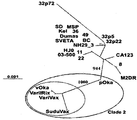
- Figure 3 shows the phylogenetic tree of 24 VZV virus lines based on sequences in non-coding nucleotides
- Figure 6 shows mutations between ORF0 and Oka vaccine virus lines of VZV MAV06 according to the present invention
- Figure 7 shows the deletion region of 3 bp in ORF17 of VZV MAV06 according to the present invention
- Figure 10 shows the insertion site of 3 bp in ORF60 of VZV MAV06 according to the present invention.
- the MAV06 virus strain was isolated from the blisters of 33-month-old Korean patients infected with chickenpox in 1989 and cultured in human embryonic lung cells (Hwang, KK, Park, SY, Kim, SJ, Ryu, YW & Kim, KH ( Restriction Fragment Length Polymorphism Analysis of Varicella-Zoster Virus isolated in Korea.JKorSocVirol21, 201-210.).
- the cultured MAV06 virus line was cultured 55 times in human and guinea pig embryonic diploid Lung cells at 34 ° C. to 36 ° C., and then attenuated by cell sensitivity and temperature sensitivity test (Hwang). et al., Marker test for attenuation of varicella-zoster viruses isolated in Korea), the attenuated virus strain was named 'MAV06' and used for the production of SuduVax.
- the attenuated MAV06 virus strain was serially cultured in human embryonic diploid lung cells to prepare a master virus seed, and serial passage was cultured therefrom to produce a virus seed for production.
- the final vaccine “SuduVax” was produced using subcultured from the virus bank for production, and sequencing was performed using five passaged viruses.
- DNA was extracted from the MAV06 virus strain stock with a QIAamp DNA Mini Kit (QIAGEN) at a concentration of 5.5 ⁇ g / 100 ⁇ l. DNA sequences were determined by Roche Diagnostics' Genome Sequencer FLX Standard System, which is served by QIAGEN, a high-speed mass sequencing method.
- the complete genome sequence of the MAV06 virus line was registered on August 9, 2011 (JF306641) in the NCBI Genbank database and is shown in SEQ ID NO: 1. As shown in SEQ ID NO: 1, the genome of the MAV06 virus strain was found to be 124,759 bp long.
- the resulting data included the first and last nucleotide positions of each ORF in the MAV06 virus genome and the orientation of the ORF.
- ORF information was verified by ORF verification programs such as the CLC Sequence Viewer (version 6.1 http://www.clcbio.com/index.php) and the ORF Finder provided by NCBI. If the results of the blast search do not match the results of the ORF identification program, the nucleotide sequence of the ORF is determined by the BioEdit Sequence Alignment Editor (Department of Microbiology, North Carolina State University, version 5.0.9 http: // www.mbio.ncsu.edu/BioEdit/bioedit.html) and edited by hand to locate initiation and termination codons. Finally all placed ORFs were confirmed by identification of translated amino acid sequences.
- the structure of the MAV06 viral genome was typical of the VZV viral strain in that the genome could be divided into six sites, TRL, UL, IRL, IRS, US and TRS, and the length of each site was 88 bp, 104,799 bp and 88, respectively. bp, 7,267 bp, 5,232 bp and 7,276 bp.
- the G + C content of the MAV06 virus line genome was approximately 46.1% and the total genome length was very similar to the 24 VZV virus lines.
- Table 1 below shows the VZV virus lines and their Genbank accession numbers, genome length and GC content analyzed in the present invention.
- the MAV06 virus line contained 74 ORFs. Of these, 64 were identified as UL genes and 4 were US genes.
- ORFs 62-64 Three genes in the IRS (ORFs 62-64) were present in the reverse direction in the TRS (ORFs 69-71), 70 of the 74 ORFs were in the forward and 34 in the reverse. In addition, the ORF direction was 100% preserved in the VZV strain.
- the ORF map of the MAV06 virus strain is shown in FIG. 1 (in all figures labeled 'SuduVax').
- a phylogenetic tree was prepared using the Naver-Joining method.
- the ORF nucleotide sequence of the MAV06 virus strain was manually edited after aligning the nucleotide sequences and amino acids of the 24 VZV virus strains of Table 1 listed in the NCBI Genebank database with ClustalW (ver 2.0.1).
- the resulting output file was used for the generation of phylogenetic tree using Dnadist and Naver programs included in Phylip package (version 3.69, http://evolution.genetics.washington.edu/phylip.html).
- the distance matrix was obtained by Kimura-2-parameter.
- Cluster analysis is performed by neighbor-joining (NJ) and maximum-likelihood estimation (ML), and the resulting tree file is visualized by the Treeview program (version 1.6.6). It was.
- the significance of the phylogenetic tree was verified by bootstrap analysis.
- the phylogenetic tree was constructed from 1000 replicates generated by the Seqboot program and the consensus tree was confirmed by the Consense program.
- clusters were formed with the virus lines (vOka, VarilRix, VariVax) of four attenuated live virus vaccines including the MAV06 virus line.
- M2DR and 8 virus lines formed adjacent clusters.
- the CA123 virus lines formed alone, 11, 22, 03-500, and HJ0 virus lines formed a cluster, the remaining clinical virus lines together formed a cluster.
- the MAV06 virus strain isolated from Korea and the Oka virus strain isolated from Japan generated unique clusters. Formed.
- the pOka virus line is located between the four vaccine virus lines (vOka, Varilrix, Varivax, MAV06) and 19 clinical virus lines.
- the phylogenetic tree with 24 VZV virus lines based on sequences in non-coding nucleotides was buried between vaccine virus lines.
- the four strains of the virus strains (vOka, Varilrix, Varivax, MAV06) are Japanese-Korean strains (JK-JK) in the phylogeny of 24 VZV virus strains based on the total nucleotide sequence and the common amino acid sequence. It was confirmed that the subclusters were formed in the cluster, but not in the phylogenetic tree with 24 VZV virus lines based on the sequence of non-coding nucleotides.
- ORFs representing such phylogenetic tree include ORF 0, 1, 6, 18, 31, 35, 39, 59, 62, 64, 69 and 71.
- the length of the ORF of the VZV virus lines was little changed.
- the 63rd of 74 ORFs of VZV virus lines showed little difference in length between virus lines.
- three ORFs ORF11, 14, 22
- it was confirmed that the polymorphism of the length is relatively high between the lines because of the length of the repeated sequence.
- R1 is located at ORF11 and consists of a combination of several sequences of 18 bp element (consensus: GGACGCGATCGACGACGA) and 15 bp element (consensus: GGGAGAGGCGGAGGA).
- the MAV06 virus line was different in length from the Oka vaccine virus line because of additional repeated 15 bp elements in ORF11.
- R2 is located at ORF14 and consists of various 42 bp elements (consensus: ACCTCGGCCGCTT / aCCCGAAAG / taCCCGATCCCGCCGTCGCGCCC: lower case represents small deviations of the sum), with its partial 32 bp element added.
- the MAV06 virus line repeated 42 bp elements 7 times in ORF11 like the Oka vaccine virus line.
- R3 is located in the middle of the 3 / terminal end of ORF22, and 9 bp of elements are repeatedly copied.
- the 9 bp consensus sequence is GC / tCCGC / tG / cCA / g (lower case represents a small deviation of the sum).
- the number of repetitions (n) is very different between lines.
- the 03-500 virus strain had 73 repeats and the vOka virus strain had 3 repeats.
- the MAV06 virus line repeats 11 elements of 9 bp, while the VarilRix and Varivax virus lines repeat 8 times.
- R4 and R5 are also non-coding sites.
- R4 consists of a 27 bp element (consensus: CCCCGCCGATGGGGAGGGGGCGCGGTA), with the addition of a partial 11 bp element.
- R4 (R4a) is located between ORF 62 and 63 in the IRS, which is the position of the complementary R4b between ORF 70 and 71 in the TRS.
- the length of R4a is the same as that of R4b, but in the case of HJ0 virus strains, the lengths of R4a and R4b are different.
- the length of R4b of the HJ0 virus strain is 108 bp longer than R4a because the 27 bp element is repeated four more times. In the VarilRix and VariVax virus strains, the 27 bp element was repeated five more times.
- the MAV06 virus line repeats three more elements of 27 bp.
- R5 is located between ORF 60 and 61 and consists of a 88 bp element containing a 24 bp element.
- the two elements differed from those seen in other repeating sequences. There were two types of repeating sequences.
- the MAV06 virus line like most virus lines, contained two 88 bp elements and one 24 bp element, but the vOka and pOka virus lines contained three 88 bp and two 24 bp elements.
- the BC virus line was the longest genome with the longest repeat sequence
- the MAV06 virus line was the shortest genome with the second shortest repeat sequence.
- the length (700 bp) between the longest genome and the shortest genome was about the same as the difference between the longest and the shortest sequence (724 bp). If the repeat sequence is removed from the genome, the length of the genome is shortened, such as a change in CV. If the repeat sequence is removed from the entire genome, the value 0.000129 is deleted and the CV is calculated as 0.00179.
- the correlation coefficient (r 2) has a value of 0.9854, and the relationship between the genome of the VZV virus strains and the length of the repeating sequence is almost linear. Became.
- the origin of replication (ORI) sequence of the VZV virus lines was located between ORF62 and ORF63.
- the length of the ORI sequence was 80 bp in 36 virus strains and 108 bp in HJ0 virus strains because of the difference in the number of repeats of TA and GA dinucleotides in the middle of the ORI sequence.
- the ORI sequence of the MAV06 virus strain was located between 110,080 and 110,183 of the genome, and contained 15 repeat bases of 15 tandem GA and 11 repeat bases of TA.
- the Oka vaccine virus and MAV06 virus strains generally replace A with G in one of the GA repeats at the corresponding nucleotide position of 110,235 in Dumas, the reference virus.
- the GA repeat base was deleted.
- the ORF0 length of the MAV06 virus strain was long because of the mutation.
- the stop codon TGA (nucleotide positions 388-390) was mutated to CGA encoding arginine (Agr).
- the TGA which is thought to be a stop codon, was found in the lower region overlapping with ORF1.
- Extended ORF0 encoded a new protein with 221 amino acid residues. The same mutation could also be identified in other similar vOka, VarilRix, and VariVax vaccine virus lines (FIG. 6).
- the pOka virus line contained an ORF0 of 390 bp long, encoding 129 amino acids.
- ORF17 SEQ ID NO: 3
- ORF56 SEQ ID NO: 5
- All such deletions resulted in the deletion of Serine (S) amino acid residues.
- ORF60 SEQ ID NO: 6 of the MAV06 virus line had three nucleotide ATGs inserted at the 28th position (FIG. 10).
- one insertion and two deletions were found in all Oka vaccine virus lines, including the pOka virus line.
- the MAV06 virus line as well as the Oka vaccine virus line, had a 15 bp shorter ORF29 (SEQ ID NO: 4) (AACATTTCAGGGTCA) than Dumas and most clinical virus lines. The sequence was repeated in series.
- the clinical virus lines of M2DR, CA123 and 8 had the same length of ORF60 as in the Oka vaccine virus and MAV06 virus lines (FIG. 9).
- SEQ ID NO: 1 is VZV MAV06 genomic DNA.
- SEQ ID NO: 2 is the ORF0 of VZV MAV06 genomic DNA.
- SEQ ID NO: 3 is ORF17 of the VZV MAV06 genomic DNA.
- SEQ ID NO: 4 is ORF29 of VZV MAV06 genomic DNA.
- SEQ ID NO: 5 is ORF56 of VZV MAV06 genomic DNA.
- SEQ ID NO: 6 is ORF60 of VZV MAV06 genomic DNA.
Landscapes
- Life Sciences & Earth Sciences (AREA)
- Health & Medical Sciences (AREA)
- Chemical & Material Sciences (AREA)
- Virology (AREA)
- Organic Chemistry (AREA)
- General Health & Medical Sciences (AREA)
- Genetics & Genomics (AREA)
- Medicinal Chemistry (AREA)
- Microbiology (AREA)
- Engineering & Computer Science (AREA)
- Biochemistry (AREA)
- Immunology (AREA)
- Molecular Biology (AREA)
- Zoology (AREA)
- Bioinformatics & Cheminformatics (AREA)
- Veterinary Medicine (AREA)
- Public Health (AREA)
- Wood Science & Technology (AREA)
- Animal Behavior & Ethology (AREA)
- Pharmacology & Pharmacy (AREA)
- Biophysics (AREA)
- Mycology (AREA)
- Biotechnology (AREA)
- Epidemiology (AREA)
- Proteomics, Peptides & Aminoacids (AREA)
- Gastroenterology & Hepatology (AREA)
- Biomedical Technology (AREA)
- General Engineering & Computer Science (AREA)
- Tropical Medicine & Parasitology (AREA)
- General Chemical & Material Sciences (AREA)
- Nuclear Medicine, Radiotherapy & Molecular Imaging (AREA)
- Communicable Diseases (AREA)
- Chemical Kinetics & Catalysis (AREA)
- Physics & Mathematics (AREA)
- Plant Pathology (AREA)
- Oncology (AREA)
- Medicines Containing Antibodies Or Antigens For Use As Internal Diagnostic Agents (AREA)
- Micro-Organisms Or Cultivation Processes Thereof (AREA)
- Peptides Or Proteins (AREA)
- Preparation Of Compounds By Using Micro-Organisms (AREA)
Abstract
Description


Claims (11)
- 서열번호 1의 염기서열로 이루어지는 수두 대상포진 바이러스(Varicella-zoster virus, VZV) MAV06 게놈 DNA.
- 서열번호 2의 염기서열로 이루어지는 ORF0, 서열번호 3의 염기서열로 이루어지는 ORF17, 서열번호 4의 염기서열로 이루어지는 ORF29, 서열번호 5의 염기서열로 이루어지는 ORF56, 및 서열번호 6의 염기서열로 이루어지는 ORF60으로부터 선택되는 것을 특징으로 하는, VZV MAV06 게놈 DNA의 오픈 리딩 프레임(Open Reading Frame, ORF).
- 제 2항 또는 제 3항에 따른 VZV MAV06 게놈 DNA의 오픈 리딩 프레임에 의해 코딩되는 단백질.
- 서열번호 1의 염기서열로 이루어지는 VZV MAV06 게놈 DNA, 서열번호 2의 염기서열로 이루어지는 ORF0, 서열번호 3의 염기서열로 이루어지는 ORF17, 서열번호 4의 염기서열로 이루어지는 ORF29, 서열번호 5의 염기서열로 이루어지는 ORF56, 및 서열번호 6의 염기서열로 이루어지는 ORF60으로부터 선택되는 오픈 리딩 프레임을 포함하는, 재조합 발현 벡터.
- 제 4항에 따른 발현벡터로 형질전환된, 숙주세포.
- 제 5항에 있어서,상기 숙주세포는 동물세포, 식물세포, 효모, 대장균, 곤충세포에서 선택된 것임을 특징으로 하는 숙주세포.
- 제 6항에 있어서,상기 형질전환된 숙주세포는 원숭이 신장 세포7(COS7: monkey kidney cells)세포, NSO 세포, SP2/0 세포, 차이니즈 햄스터 난소(CHO: chinese hamster ovary) 세포, W138, 어린 햄스터 신장(BHK: baby hamster kidney) 세포, MDCK, 골수종 세포주, HuT 78 세포 및 293 세포, 대장균, 바실러스 서브틸리스(Bacillus subtilis), 스트렙토마이세스 속(Streptomyces sp.), 슈도모나스 속(Pseudomonas sp.), 프로테우스 미라빌리스(Proteus mirabilis) 또는 스타필로코쿠스 속(Staphylococcus sp.), 아스페르길러스 속(Aspergillus sp.), 피치아 파스토리스(Pichia pastoris), 사카로마이세스 세레비지애(Saccharomyces cerevisiae), 쉬조사카로마세스 속(Schizosaccharomyces sp.) 및 뉴로스포라 크라사(Neurospora crassa)에서 선택됨을 특징으로 하는 숙주세포.
- 서열번호 1의 내지 6에서 선택되는 어느 하나에 염기서열에 의해 코딩되는 VZV MAV06의 단백질 제조방법.
- 제 8항에 따른 VZV MAV06의 단백질을 유효성분으로 하는 백신 조성물.
- 제 9항에 있어서,체내에 주입시 항체 형성을 증진시키는 역할을 하는 약학적으로 허용가능한 면역보조제(adjuvant)를 추가로 포함하는 것을 특징으로 하는 백신 조성물.
- 제 10항에 있어서,상기 면역보조제는 알루미늄염(Al(OH)3, ALPO4), 스쿠알렌(squalene), 소르비탄(sorbitane), 폴리소르베이트 80(polysorbate 80), CpG, 리포좀, 콜레스테롤, MPL(monophosphoryl lipid A), GLA(glucopyranosyl lipid A)에서 선택된 하나 이상임을 특징으로 하는 백신 조성물.
Priority Applications (8)
| Application Number | Priority Date | Filing Date | Title |
|---|---|---|---|
| KR1020137022427A KR20140022799A (ko) | 2011-02-24 | 2012-02-24 | 신규한 수두 대상포진 바이러스주 및 이를 이용한 수두 및 대상포진 바이러스 백신 |
| MX2013009723A MX2013009723A (es) | 2011-02-24 | 2012-02-24 | Cepas del virus de varicela-zoster novedosas, y vacunas del virus del herpes zoster y varicela usando los mismos. |
| US14/000,770 US20140147458A1 (en) | 2011-02-24 | 2012-02-24 | Novel varicella-zoster virus strains, and chicken pox and herpes zoster virus vaccine using same |
| BR112013027247A BR112013027247A2 (pt) | 2011-02-24 | 2012-02-24 | Cepas do vírus da varicela-zóster e vacina contra o vírus da catapora e herpes zóster usando as mesmas |
| RU2013143146/10A RU2580003C2 (ru) | 2011-02-24 | 2012-02-24 | Новые штаммы вируса ветряной оспы и противовирусная вакцина против ветряной оспы и опоясывающего лишая, в которой применяются такие штаммы |
| CN2012800103717A CN103392001A (zh) | 2011-02-24 | 2012-02-24 | 新型水痘-带状疱疹病毒株以及使用所述毒株的水痘和带状疱疹病毒疫苗 |
| JP2013555367A JP2014508522A (ja) | 2011-02-24 | 2012-02-24 | 新規な水痘帯状疱疹ウイルス株及びそれを用いた水痘及び帯状疱疹ウイルスワクチン |
| EP12749337.7A EP2679683A4 (en) | 2011-02-24 | 2012-02-24 | NEW VARICELLA ZOSTER VIRUSES AND WINDPOCK AND HERPES ZOSTER VIRUS VACCINE THEREOF |
Applications Claiming Priority (2)
| Application Number | Priority Date | Filing Date | Title |
|---|---|---|---|
| US201161446284P | 2011-02-24 | 2011-02-24 | |
| US61/446,284 | 2011-02-24 |
Publications (2)
| Publication Number | Publication Date |
|---|---|
| WO2012115474A2 true WO2012115474A2 (ko) | 2012-08-30 |
| WO2012115474A3 WO2012115474A3 (ko) | 2012-11-22 |
Family
ID=46721358
Family Applications (1)
| Application Number | Title | Priority Date | Filing Date |
|---|---|---|---|
| PCT/KR2012/001408 Ceased WO2012115474A2 (ko) | 2011-02-24 | 2012-02-24 | 신규한 수두 대상포진 바이러스주 및 이를 이용한 수두 및 대상포진 바이러스 백신 |
Country Status (9)
| Country | Link |
|---|---|
| US (1) | US20140147458A1 (ko) |
| EP (1) | EP2679683A4 (ko) |
| JP (1) | JP2014508522A (ko) |
| KR (1) | KR20140022799A (ko) |
| CN (1) | CN103392001A (ko) |
| BR (1) | BR112013027247A2 (ko) |
| MX (1) | MX2013009723A (ko) |
| RU (1) | RU2580003C2 (ko) |
| WO (1) | WO2012115474A2 (ko) |
Cited By (2)
| Publication number | Priority date | Publication date | Assignee | Title |
|---|---|---|---|---|
| WO2018097642A1 (ko) * | 2016-11-25 | 2018-05-31 | 재단법인 목암생명과학연구소 | 바리셀라 조스터 바이러스 백신 |
| US10874734B2 (en) | 2016-11-25 | 2020-12-29 | Mogam Institute For Biomedical Research | Varicella zoster virus vaccine |
Families Citing this family (10)
| Publication number | Priority date | Publication date | Assignee | Title |
|---|---|---|---|---|
| US9504743B2 (en) | 2013-09-25 | 2016-11-29 | Sequoia Sciences, Inc | Compositions of vaccines and adjuvants and methods for the treatment of urinary tract infections |
| US9149522B2 (en) | 2013-09-25 | 2015-10-06 | Sequoia Sciences, Inc. | Compositions of vaccines and adjuvants and methods for the treatment of urinary tract infections |
| US9149521B2 (en) | 2013-09-25 | 2015-10-06 | Sequoia Sciences, Inc. | Compositions of vaccines and adjuvants and methods for the treatment of urinary tract infections |
| US20150086592A1 (en) | 2013-09-25 | 2015-03-26 | Sequoia Sciences, Inc | Compositions of vaccines and adjuvants and methods for the treatment of urinary tract infections |
| KR102416781B1 (ko) | 2015-08-20 | 2022-07-05 | 고려대학교 산학협력단 | 수두 대상포진 바이러스에 의해 유발되는 질병의 치료 또는 예방용 약학 조성물 |
| US10940198B2 (en) * | 2016-12-26 | 2021-03-09 | Mogam Institute For Biomedical Research | Herpes zoster vaccine composition |
| KR102098097B1 (ko) | 2017-08-16 | 2020-05-26 | 주식회사 차백신연구소 | 리포펩티드가 삽입된 리포좀을 유효성분으로 포함하는 백신 아쥬반트 및 이의 용도 |
| WO2019035605A2 (ko) | 2017-08-16 | 2019-02-21 | 주식회사 차백신연구소 | 리포펩티드가 삽입된 리포좀을 유효성분으로 포함하는 백신 아쥬반트 및 이의 용도 |
| BR112020023642A2 (pt) * | 2018-05-23 | 2021-02-17 | Mogam Institute For Biomedical Research | variante de antígeno de vírus de varicela zoster e uso da mesma |
| CN115192703A (zh) * | 2021-04-08 | 2022-10-18 | 长春百克生物科技股份公司 | 一种带状疱疹疫苗及其用途 |
Family Cites Families (7)
| Publication number | Priority date | Publication date | Assignee | Title |
|---|---|---|---|---|
| CA2097019C (en) * | 1992-06-04 | 2007-07-24 | Philip J. Provost | Process for attenuated varicella zoster virus vaccine production |
| KR0135614B1 (ko) * | 1994-11-23 | 1998-04-23 | 허영섭 | 약독화 수두 생바이러스 백신 및 그의 제조방법 |
| US7112331B2 (en) * | 1996-02-09 | 2006-09-26 | Smithkline Beecham Biologicals, S.A. | Vaccines against varicella zoster virus gene 63 product |
| US6528066B1 (en) * | 1999-09-14 | 2003-03-04 | University Of Iowa Research Foundation | Variant varicella-zoster viruses and methods of use |
| AU2002951692A0 (en) * | 2002-09-23 | 2002-10-17 | Vital Biotech (Hong Kong) Limited | Improvements in or relating to vaccines |
| EP2383343A3 (en) * | 2004-03-05 | 2012-01-25 | The Research Foundation for Microbial Diseases of Osaka University | Recombinant varicella-zoster virus |
| US20100119550A1 (en) * | 2005-11-24 | 2010-05-13 | Yasuyuki Gomi | Recombinant multivalent vaccine |
-
2012
- 2012-02-24 CN CN2012800103717A patent/CN103392001A/zh active Pending
- 2012-02-24 KR KR1020137022427A patent/KR20140022799A/ko not_active Ceased
- 2012-02-24 JP JP2013555367A patent/JP2014508522A/ja active Pending
- 2012-02-24 WO PCT/KR2012/001408 patent/WO2012115474A2/ko not_active Ceased
- 2012-02-24 RU RU2013143146/10A patent/RU2580003C2/ru active
- 2012-02-24 BR BR112013027247A patent/BR112013027247A2/pt not_active IP Right Cessation
- 2012-02-24 US US14/000,770 patent/US20140147458A1/en not_active Abandoned
- 2012-02-24 EP EP12749337.7A patent/EP2679683A4/en not_active Withdrawn
- 2012-02-24 MX MX2013009723A patent/MX2013009723A/es not_active Application Discontinuation
Non-Patent Citations (6)
| Title |
|---|
| DEUSCHER, M.: "Guide to Protein Purification Methods Enzymology", vol. 182, 1990, ACADEMIC PRESS, INC. |
| HWANG ET AL., MARKER TEST FOR ATTENUATION OF VARICELLA-ZOSTER VIRUSES ISOLATED IN KOREA |
| HWANG, K.K.; PARK, S.Y.; KIM, S.J.; RYU, Y.W.; KIM, K.H.: "Restriction Fragment Length Polymorphism Analysis of Varicella-Zoster Virus isolated in Korea", J. KOR. SOC. VIROL., vol. 21, 1991, pages 201 - 210 |
| PARK ET AL.: "Propagation of Varicella-Zoster Virus isolated in Korea", J. KOR. SOC. VIROL., vol. 21, 1991, pages 1 - 9 |
| SAMBROOK ET AL.: "Molecular Cloning: A Laboratory Manual", 1989, COLD SPRING HARBOR LABORATORY PRESS |
| See also references of EP2679683A4 |
Cited By (2)
| Publication number | Priority date | Publication date | Assignee | Title |
|---|---|---|---|---|
| WO2018097642A1 (ko) * | 2016-11-25 | 2018-05-31 | 재단법인 목암생명과학연구소 | 바리셀라 조스터 바이러스 백신 |
| US10874734B2 (en) | 2016-11-25 | 2020-12-29 | Mogam Institute For Biomedical Research | Varicella zoster virus vaccine |
Also Published As
| Publication number | Publication date |
|---|---|
| MX2013009723A (es) | 2013-09-16 |
| JP2014508522A (ja) | 2014-04-10 |
| BR112013027247A2 (pt) | 2017-08-22 |
| RU2580003C2 (ru) | 2016-04-10 |
| RU2013143146A (ru) | 2015-03-27 |
| US20140147458A1 (en) | 2014-05-29 |
| CN103392001A (zh) | 2013-11-13 |
| KR20140022799A (ko) | 2014-02-25 |
| WO2012115474A3 (ko) | 2012-11-22 |
| EP2679683A2 (en) | 2014-01-01 |
| EP2679683A4 (en) | 2015-07-15 |
Similar Documents
| Publication | Publication Date | Title |
|---|---|---|
| WO2012115474A2 (ko) | 신규한 수두 대상포진 바이러스주 및 이를 이용한 수두 및 대상포진 바이러스 백신 | |
| Barrett‐Muir et al. | Genetic variation of varicella‐zoster virus: Evidence for geographical separation of strains | |
| US10240131B2 (en) | Type II pseudorabies virus attenuated strain, its preparation method and application | |
| CN110551695A (zh) | 非洲猪瘟病毒四基因缺失弱毒株及其应用 | |
| Yozawa et al. | Two novel multigene families, 530 and 300, in the terminal variable regions of African swine fever virus genome | |
| KR102879825B1 (ko) | 변형된 pedv 스파이크 단백질 | |
| US9474797B1 (en) | African swine fever virus georgia strain adapted to efficiently grow in the vero cell line | |
| Irusta et al. | Amino acid tandem repeats within a late viral gene define the central variable region of African swine fever virus | |
| US11220673B2 (en) | ORF7 deficient varicella virus, vaccine comprising the virus and use thereof | |
| Chen et al. | The whole genomic analysis of orf virus strain HN3/12 isolated from Henan province, central China | |
| US8017317B2 (en) | gM-negative EHV-mutants | |
| Ponnusamy et al. | Characterization of infectious laryngotracheitis virus isolates from laying hens during 2019–2020 outbreaks in Tamil Nadu, India: P. Ponnusamy et al. | |
| EP0538341A1 (en) | EHV-4 GLYCOPROTEIN VAZIN. | |
| US7592169B2 (en) | Methods and compositions for treatment and prevention of HSV-2 infections and conditions | |
| CN1049519A (zh) | 人工培育的伪狂犬病病毒及其疫苗 | |
| WO2025027551A2 (en) | Ibv vaccine with heterologous dmv/1639 spike protein | |
| US5674499A (en) | Equine herpesvirus gene 15 mutants | |
| EP0668355A1 (en) | Vaccine for the protection of horses against equine herpesvirus infection | |
| Feller et al. | Isolation and molecular characterization of the swinepox virus thymidine kinase gene | |
| KR100279395B1 (ko) | 약독수두바이러스oka주또는이로부터유래한주의동정법 | |
| WO2004011677A2 (en) | Viral marker | |
| KR101330054B1 (ko) | 한국인 환자로부터 분리된 인간 사이토메갈로바이러스 균주 jhc의 전장 게놈 dna 및 이의 오픈 리딩 프레임 | |
| Bahr et al. | Molecular anatomy of Tupaia (tree shrew) adenovirus genome; evolution of viral genes and viral phylogeny | |
| CN121450717A (zh) | 一种快速构建广谱交叉保护型ibv嵌套表位疫苗的方法 | |
| WO2006062266A1 (en) | Genes of a korean isolate rbiv and a vaccine against rbiv |
Legal Events
| Date | Code | Title | Description |
|---|---|---|---|
| 121 | Ep: the epo has been informed by wipo that ep was designated in this application |
Ref document number: 12749337 Country of ref document: EP Kind code of ref document: A2 |
|
| ENP | Entry into the national phase |
Ref document number: 2013555367 Country of ref document: JP Kind code of ref document: A |
|
| WWE | Wipo information: entry into national phase |
Ref document number: 14000770 Country of ref document: US |
|
| ENP | Entry into the national phase |
Ref document number: 20137022427 Country of ref document: KR Kind code of ref document: A |
|
| WWE | Wipo information: entry into national phase |
Ref document number: MX/A/2013/009723 Country of ref document: MX |
|
| WWE | Wipo information: entry into national phase |
Ref document number: 1301004592 Country of ref document: TH |
|
| NENP | Non-entry into the national phase |
Ref country code: DE |
|
| REEP | Request for entry into the european phase |
Ref document number: 2012749337 Country of ref document: EP |
|
| WWE | Wipo information: entry into national phase |
Ref document number: 2012749337 Country of ref document: EP |
|
| ENP | Entry into the national phase |
Ref document number: 2013143146 Country of ref document: RU Kind code of ref document: A |
|
| REG | Reference to national code |
Ref country code: BR Ref legal event code: B01A Ref document number: 112013027247 Country of ref document: BR |
|
| ENP | Entry into the national phase |
Ref document number: 112013027247 Country of ref document: BR Kind code of ref document: A2 Effective date: 20130826 |