WO2012116585A1 - 氨基噻唑类MyD88特异性抑制剂的制药用途 - Google Patents
氨基噻唑类MyD88特异性抑制剂的制药用途 Download PDFInfo
- Publication number
- WO2012116585A1 WO2012116585A1 PCT/CN2012/070808 CN2012070808W WO2012116585A1 WO 2012116585 A1 WO2012116585 A1 WO 2012116585A1 CN 2012070808 W CN2012070808 W CN 2012070808W WO 2012116585 A1 WO2012116585 A1 WO 2012116585A1
- Authority
- WO
- WIPO (PCT)
- Prior art keywords
- myd88
- group
- treatment
- mice
- inhibitor
- Prior art date
- Legal status (The legal status is an assumption and is not a legal conclusion. Google has not performed a legal analysis and makes no representation as to the accuracy of the status listed.)
- Ceased
Links
Classifications
-
- A—HUMAN NECESSITIES
- A61—MEDICAL OR VETERINARY SCIENCE; HYGIENE
- A61K—PREPARATIONS FOR MEDICAL, DENTAL OR TOILETRY PURPOSES
- A61K31/00—Medicinal preparations containing organic active ingredients
- A61K31/33—Heterocyclic compounds
- A61K31/395—Heterocyclic compounds having nitrogen as a ring hetero atom, e.g. guanethidine or rifamycins
- A61K31/495—Heterocyclic compounds having nitrogen as a ring hetero atom, e.g. guanethidine or rifamycins having six-membered rings with two or more nitrogen atoms as the only ring heteroatoms, e.g. piperazine or tetrazines
- A61K31/496—Non-condensed piperazines containing further heterocyclic rings, e.g. rifampin, thiothixene or sparfloxacin
-
- C—CHEMISTRY; METALLURGY
- C07—ORGANIC CHEMISTRY
- C07D—HETEROCYCLIC COMPOUNDS
- C07D417/00—Heterocyclic compounds containing two or more hetero rings, at least one ring having nitrogen and sulfur atoms as the only ring hetero atoms, not provided for by group C07D415/00
- C07D417/02—Heterocyclic compounds containing two or more hetero rings, at least one ring having nitrogen and sulfur atoms as the only ring hetero atoms, not provided for by group C07D415/00 containing two hetero rings
- C07D417/12—Heterocyclic compounds containing two or more hetero rings, at least one ring having nitrogen and sulfur atoms as the only ring hetero atoms, not provided for by group C07D415/00 containing two hetero rings linked by a chain containing hetero atoms as chain links
-
- A—HUMAN NECESSITIES
- A61—MEDICAL OR VETERINARY SCIENCE; HYGIENE
- A61P—SPECIFIC THERAPEUTIC ACTIVITY OF CHEMICAL COMPOUNDS OR MEDICINAL PREPARATIONS
- A61P29/00—Non-central analgesic, antipyretic or antiinflammatory agents, e.g. antirheumatic agents; Non-steroidal antiinflammatory drugs [NSAID]
-
- A—HUMAN NECESSITIES
- A61—MEDICAL OR VETERINARY SCIENCE; HYGIENE
- A61P—SPECIFIC THERAPEUTIC ACTIVITY OF CHEMICAL COMPOUNDS OR MEDICINAL PREPARATIONS
- A61P37/00—Drugs for immunological or allergic disorders
- A61P37/02—Immunomodulators
-
- A—HUMAN NECESSITIES
- A61—MEDICAL OR VETERINARY SCIENCE; HYGIENE
- A61P—SPECIFIC THERAPEUTIC ACTIVITY OF CHEMICAL COMPOUNDS OR MEDICINAL PREPARATIONS
- A61P37/00—Drugs for immunological or allergic disorders
- A61P37/02—Immunomodulators
- A61P37/06—Immunosuppressants, e.g. drugs for graft rejection
-
- A—HUMAN NECESSITIES
- A61—MEDICAL OR VETERINARY SCIENCE; HYGIENE
- A61P—SPECIFIC THERAPEUTIC ACTIVITY OF CHEMICAL COMPOUNDS OR MEDICINAL PREPARATIONS
- A61P43/00—Drugs for specific purposes, not provided for in groups A61P1/00-A61P41/00
-
- A—HUMAN NECESSITIES
- A61—MEDICAL OR VETERINARY SCIENCE; HYGIENE
- A61P—SPECIFIC THERAPEUTIC ACTIVITY OF CHEMICAL COMPOUNDS OR MEDICINAL PREPARATIONS
- A61P7/00—Drugs for disorders of the blood or the extracellular fluid
-
- A—HUMAN NECESSITIES
- A61—MEDICAL OR VETERINARY SCIENCE; HYGIENE
- A61P—SPECIFIC THERAPEUTIC ACTIVITY OF CHEMICAL COMPOUNDS OR MEDICINAL PREPARATIONS
- A61P9/00—Drugs for disorders of the cardiovascular system
- A61P9/10—Drugs for disorders of the cardiovascular system for treating ischaemic or atherosclerotic diseases, e.g. antianginal drugs, coronary vasodilators, drugs for myocardial infarction, retinopathy, cerebrovascula insufficiency, renal arteriosclerosis
Definitions
- the present invention relates to a class of aminothiazole-based MyD88-specific inhibitors for use as immunomodulators in medicine and scientific research, especially in anti-transplant rejection, anti-autoimmune diseases, anti-ischemic reperfusion injury and anti-chronic inflammatory response, anti-internal Uses such as toxemia.
- the body's immune response is divided into natural immunity and acquired immunity. Among them, the latter has been regarded as the main research object and intervention target of transplantation immunity because of its highly specific recognition function and high response effect.
- the traditional immune response is thought to be the activation of NF-B by the first and second stimulation signals of the acquired immune system. Activation of NF-B enters the nucleus, initiates transcription, synthesizes and secretes various inflammatory cytokines, triggering the subsequent A series of immune responses.
- Current anti-rejection drugs are all acting on the acquired immune system.
- TLR Toll-like Receptor
- MyD88 is a key molecular node of natural immunity, blocking MyD88 blocks the main response of the innate immune system, and thus produces corresponding immunosuppressive effects. If it can be intervened and blocked with a therapeutic drug, it can block the main signal of the TLR pathway and achieve a series of immune regulation. It is foreseeable that this is an excellent solution for achieving immunotherapy. Thousands of studies around the world have validated the importance of this molecule and blocked the therapeutic effects that can be achieved, but none have found a drug that can inhibit it. Other methods of interference with MyD88 molecules, such as gene knockout, cannot be clinically applied.
- TLR/MyD88 plays an important role in transplantation immunity, and it has been confirmed by blocking MyD88 knockout mice that blocking MyD88 molecules can induce and maintain transplantation immunity. Tolerance, and in the later related research, the designer of the present invention cooperated with the pharmacy team to produce a synthetic and repeated screening to obtain a specific class of MyD88 inhibitors: a class of aminothiazole small molecule compounds (code TJ-M2010 ), such small molecule compounds can specifically bind due to the structural activation site matching the key activation site of MyD88 molecule, so that competitive binding can inhibit the corresponding signal transduction of MyD88.
- code TJ-M2010 a class of aminothiazole small molecule compounds
- the object of the present invention is to provide a class of aminothiazole small molecule compounds as specific inhibitors of MyD88, and to inhibit various MyD88 molecules in innate immunity, and to treat various immune-related diseases.
- the basis of the specific technical scheme for realizing the present invention is that the present invention firstly proposes such aminothiazole MyD88 molecular analogs as anti-graft rejection, anti-autoimmune diseases, anti-ischemic reperfusion injury and anti-chronic inflammatory reaction, anti-endotoxin Applications such as hemolysis use its inhibitory effect on MyD88 molecules in innate immunity.
- the MyD88 protein of the present invention consists of two domains: a TIR (toll/IL-1 recptor domain) domain and a DD domain (TIR domain), which is the material basis for the homodimerization of MyD88, and further Activates downstream kinases such as IRAKI or IRAK4.
- TIR domain a class of MyD88-specific inhibitor TJ-M2010 was synthesized. They specifically bind to the TIR domain of MyD88, interfere with the function of the TIR domain of MyD88, prevent MyD88 from forming homodimers, and disable MyD88, thereby blocking MyD88 pathway transduction, and thus failing to activate NF-B.
- the inflammatory response is broken and thus plays an important role in the treatment of related inflammation and immune diseases.
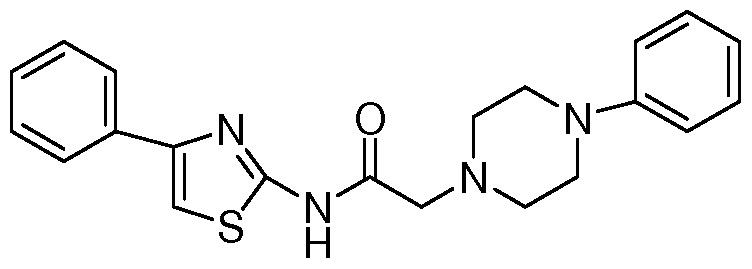
- the molecular structure of the aminothiazole-specific MyD88-specific inhibitor of the present invention is as follows:
- TJ-M2010 3-(4-(4-methoxyphenyl)piperazin-1-yl)-N-(4-phenylthiazol-2-yl)propanamide
- TJ-M2010 has a very small molecule, It is structurally stable, can penetrate cell membranes, and can be applied both in vitro and in vivo.
- the specific inhibitor of the aminothiazole type MyD88, TJ-M2010 is used as an NF-KB inhibitor in the preparation of immunomodulatory drugs.
- the specific inhibitor of the aminothiazole type MyD88, TJ-M2010 is used as an immunomodulator in the treatment of reducing post-transplant rejection and induction and maintenance of transplantation tolerance.
- the specific inhibitor of the aminothiazole type MyD88 of the present invention is an immunomodulator and is used for treating various chronic inflammatory diseases.
- chronic inflammatory bowel disease For example, chronic inflammatory bowel disease, asthma, and the like.
- TJ-M2010 The specific inhibitor of aminothiazoles of the present invention, TJ-M2010, is used as an immunomodulator in the treatment of various autoimmune diseases.
- various autoimmune diseases For example, type I diabetes, multiple sclerosis, lupus erythematosus, and the like.
- the specific inhibitor of the aminothiazole type MyD88 of the present invention is used as an immunomodulator in the treatment of diseases of ischemia-reperfusion injury.
- diseases of ischemia-reperfusion injury For example, prevention and treatment of ischemia-reperfusion injury after myocardial infarction, ischemia-reperfusion injury after replantation of limbs, ischemia-reperfusion injury after graft, preparation of organ preservation solution and cell preservation solution.
- a specific inhibitor of the aminothiazole type MyD88 of the present invention, TJ-M2010 is used as an immunomodulator in the treatment of sepsis and endotoxemia.
- the present invention is advantageous in that a novel class of self-synthesized compound TJ-M2010 is used as a specific inhibitor of MyD88 in an experiment, which fully confirms that it is used for anti-rejection and induction of immune tolerance after transplantation, and treats various inflammations.
- the reaction, prevention and treatment of ischemia-reperfusion injury have obvious effects. It will be an effective immunosuppressive agent, or a transplant tolerance inducing agent, or a transplant tolerance maintenance agent, an anti-inflammatory drug, and an immunomodulator.
- These novel compounds are effective in inhibiting the expression of CD80 and CD86, thereby preventing the maturation of DC cells.
- DC cell maturation has been shown to be one of the key steps in the pathogenesis of a variety of autoimmune diseases such as autoimmune cardiomyopathy, experimental autoimmune grapevine, type I diabetes, multiple sclerosis, and lupus erythematosus. Therefore, this type of MyD88 inhibitor TJ-M2010 can be used for the treatment of such diseases.
- MyD88 pathway blockade can significantly protect against ischemia-reperfusion injury, so the MyD88 inhibitor TJ-M2010 can be used to prevent ischemia-reperfusion injury after myocardial infarction, ischemia-reperfusion injury after replantation of limbs, It has an important role in many aspects such as ischemia-reperfusion injury, organ preservation solution, and cell preservation solution after graft surgery.
- TJ-M2010 dose-dependent reduction of T cell activation map
- TJ-M2010 inhibits up-regulation of co-stimulatory molecule CD80 induced by LPS and CpG
- TJ-M2010 reduces the real-time quantitative PCR analysis of inflammatory factors in the graft (IL- ⁇ , TNF-a, IL-6 relative levels of three inflammatory factors)
- Balb/c heart transplantation for C57W/6 is a common control group
- C57W/6 to C57bl/6 is a homologous control chart
- TJ-M2010 dose-dependently reduced T cell activation
- LPS in Figure 3 (b), LPS, CPG, myocardial tissue homogenate media stimulated DC, and TJ-M2010 down-regulated CD80 expression.
- Figure 3 (c) shows that TJ-M2010 dose-related down-regulation of CD 80 expression on DC surface
- Figure 3 (d) shows that TJ-M2010 dose-related down-regulation of CD80 expression on macrophage surface.
- the experimental group in Figure 4 MyD88KO NOD mice, MyD88KO/+NOD mice, NOD mice TJ-M2010 medication group.
- Fig. 5 shows lymphocyte subset analysis in the spleen of different transplant group receptors (syngene, treatment group, control group), showing CD4 + CD25 + Foxp3 + T in transplant recipients treated with TJ-M2010 Significant up-regulation of cell ratio
- I/R control group I/R CMC is the vehicle control group I/R TJ-M2010 is the experimental group
- & b are the total number of cells in the bronchoalveolar neutrophils, respectively.
- a is the activity of myeloperoxidase in lung tissue
- b is the concentration of interleukin-6 in lung tissue.
- Figure 12 is a survival curve of endotoxin death test
- b is the survival test of sepsis death test.
- TJ-M2010 is used for anti-rejection after transplantation and induction of transplant immune tolerance.
- TJ-M2010 is used in mouse heart transplantation model
- the experiment is divided into four groups, which are:
- the blank control group no treatment, heart transplantation
- CMC group vehicle control group
- homologous heart transplantation group theoretically no rejection, long-term survival
- TJ-M2010 medication group effect detection group
- Blank control group Balb/c mice were transplanted into the peritoneal cavity of C57W/6 mice, and no special treatment was performed after operation.
- CMC control group Balb/c mice were transplanted into the peritoneal cavity of C57W/6 mice. From day 0 to day 6 before transplantation, a solution of sodium carboxymethylcellulose (0.5% CMC) containing no TJ-M2010 was administered intraperitoneally, 200 ⁇ l.
- the same heart transplantation group C57W/6 mice were transplanted into the abdominal cavity of the same C57W/6 mice, and no special treatment was performed after operation.
- TJ-M2010 medication group Balb/c mice were transplanted into the peritoneal cavity of C57W/6 mice. TJ-M2010, 150 mg/kg dissolved in CMC was intraperitoneally injected from day 0 to day 6 before cardiac transplantation.
- the experimental results obtained are shown in the survival curve (see Figure 1).
- the results show that the blank control group and the literature reported that the rejection time was basically the same, about 8 days; there was no difference in the CMC vehicle control group; the heart in the same heart transplantation group survived for a long time.
- the average heart graft survival time of the TJ-M2010 group was about 20 days, which was significantly longer than that of the control group.
- TJ-M2010 combined costimulatory molecule inhibitor-anti-CD154 monoclonal antibody (MR1) used in mouse skin transplantation model experiments were divided into 5 groups: allogeneic skin transplantation control group (reported in the literature for 8-10 days), Single use
- TJ-M2010 group single use MR1 group and combination drug group (TJ-M2010+MR1).
- Allogeneic skin transplantation CMC control group Balb/c mice were transplanted into the back of C57W/6 mice, and 0.5% CMC200/day was injected intraperitoneally on days 0-3, 5, 7, 9, 11, 13, 15 days after operation.
- Isogenic skin transplantation group The skin of C57bl/6 mice was transplanted to the back of C57W/6 mice, and no special treatment was performed after operation.
- TJ-M2010 group alone Balb/c mice were transplanted to the back of C57W/6 mice, and intraperitoneally injected in 0.5% CMC on days 0-3, 5, 7, 9, 11, 13, 15 days after surgery. TJ-M2010, 150mg/kg/d; MR1 group alone: Balb/c mice were transplanted into the back of C57W/6 mice, and intraperitoneal injection of MR1, 200 ⁇ ⁇ / day on the 0th, 1st, 3rd, 7th day after surgery;
- Combination group Balb/c mice were transplanted into the back of C57W/6 mice, and intraperitoneally injected with 0.5% CMC on the 0-3, 5, 7, 9, 11, 13, 15 days postoperatively. TJ-M2010, 150 mg/kg/d, and intraperitoneal injection of MR1, 200 ⁇ ⁇ / day on days 0-3, 5, 7, 9, 11, 13, 15 days.
- the experimental results obtained are shown in the survival curve (see Figure 2).
- the allogeneic skin graft control group had a graft rejection time of about 10 days, which was consistent with the reported time.
- TJ-M2010 and MR1 alone have no obvious effect on tolerance induction, but the combined application effect is remarkable, and it can make long-term survival of skin grafts which are difficult to induce tolerance.
- MyD88 inhibitor has a significant effect on anti-rejection and induction of immune tolerance after transplantation. It will be a special immunosuppressive agent, or a transplant tolerance inducer (a short-term treatment can make long-term survival of a skin graft that is extremely difficult to transplant successfully), or a transplant tolerance maintenance agent (such as a rejection induced by a disease-resistant infection). ). Its unique role is unmatched and replaceable with current immunosuppressive agents.
- Application Example 2 MyD88 inhibitor is used to treat autoimmune diseases.
- DCs were added to 50 mM TJ-M2010 for 1 hour, and nephroblastic myocardium supernatant was added, LPS (200 ng/ml), Poly I:C (20 mg/ml), CpG (10 mg/ml) for 12 hours.
- TJ-M2010 inhibited the up-regulation of co-stimulatory molecule CD80 induced by TLR stimulator (LPS, CpG) in RAW264.7 cells, indicating that TJ-M2010 can effectively block the TLR signaling pathway and inhibit the cellular immune response.
- LPS TLR stimulator
- CpG TLR stimulator
- Raw264.7 The number of cells in the 48-well plate is 9*105/well, and the lml medium per well is first pre-incubated with different concentration gradients TJ-M2010 for 2 h, then CPG is added, the final concentration is 40 ug/ml, 37 ° CC02 incubator Incubate overnight (12 h).
- DC 48-well plate, the number of cells is 1*106/well, 1 ml medium per well, first pre-incubation with different concentration gradient TJ-M2010 for 2 h, then add LPS, final concentration lug/ml, incubate in 37°CC02 incubator Overnight (12h).
- Flow-through antibody FITC-labeled anti-CD80, CD86, on-machine detection The above two images show that TJ-M2010 has a concentration-dependent inhibition of DC and macrophage surface CD80 expression.
- TJ-M2010 inhibits up-regulation of co-stimulatory molecule CD80/CD86 by LPS and CpG.
- MyD88 inhibitor can reduce CD80 expression and prevent DC cell maturation.
- DC cell maturation has been shown to be one of the key steps in the pathogenesis of a variety of autoimmune diseases such as autoimmune cardiomyopathy, experimental autoimmune glucones, type I diabetes, multiple sclerosis, and lupus erythematosus. Therefore, MyD88 inhibitors can be used in the treatment of such diseases.
- Drug group 1 day before antigen injection, 0-3, 5, 7, 9, 11 , 13, 15 days were intraperitoneally injected with TJ-M2010 dissolved in 0.5% CMC, 150mg/kg/d
- Each group was intraperitoneally injected with mycobacterial antigen and continuously monitored its concentration.
- MyD88KO heterozygous group gradually increased type I diabetes with time, while MyD88KO homozygous group did not develop type I diabetes.
- the incidence of type I diabetes in TJ-M2010 group was similar to that of MyD88KO homozygous group, indicating MyD88 pathway and I.
- the occurrence of type 2 diabetes is inextricably linked. Blocking its pathway can reduce the incidence of diabetes. Therefore, the small molecule MyD88 inhibitor TJ-M2010 may become an effective method for prevention and treatment of type I diabetes.
- MyD88 inhibitor is used for the prevention and treatment of ischemia-reperfusion injury.
- In vitro Flow cytometry analysis of CD4+CD25+Foxp3+ T cells in recipients receiving antigen (syngeneic, allogeneic) stimulation of spleen and recipients treated with TJ-M2010
- TJ-M2010 After application of the MyD88 inhibitor TJ-M2010, analysis of lymphocyte subsets in the spleen of transplant recipients and detection of CD4 + CD25 + Foxp3 + T cell ratios revealed that TJ-M2010 was applied by up-regulating CD4 + CD25 + Foxp3 + T cells. The transplant tolerance status of recipient mice was altered.
- a large number of literatures indicate that regulatory T cells can regulate the development of inflammation through its immunosuppressive effects, the release of inflammatory factors, pro-inflammatory factors and cytokines during ischemia-reperfusion, resulting in damage. Therefore, the application of TJ-M2010 By inhibiting TLR signaling, inhibition of NF-activation, and reduction of expression of inflammatory factors (IFN- ⁇ and IL-17), thereby reducing damage.
- MyD88 pathway blocks the reduction of renal ischemia-reperfusion injury:
- Grouping Normal C57W/6 group (Control), CMC vehicle group, MYD88KO group, TJ-M2010 group, 8 groups were treated for ischemia-reperfusion: anesthesia, blood vessel clamp blocked left kidney, thermostat 31° After 80 minutes, open and remove the right kidney and close the abdomen. Blood was taken 24 hours for BUN, Cr detection.
- TJ-M2010 group and CMC group were intraperitoneally injected with TJ-M2010 dissolved in 0.5% CMC, 150 mg/kg/d 1 day before surgery and on the day of surgery.
- CMC group 0.5% CMC solution, 200 ⁇ l.
- mice 3. Observe the survival time of the mice and make a survival curve.
- the blood specimen is sent to the pathology department for BUN and Cr testing.
- MyD88 pathway blockade can obviously protect against ischemia-reperfusion injury, so MyD88 inhibitor can be used to prevent ischemia-reperfusion injury after myocardial infarction, ischemia-reperfusion injury after replantation of limbs, It has an important role in many aspects such as ischemia-reperfusion injury, organ preservation solution, and cell preservation solution after graft surgery.
- Application Example 4 MyD88 inhibitor is used to treat chronic inflammatory diseases.
- mice The spleen of C57W/6 mice was taken, and the spleen lymphocytes were separated by mouse lymphocyte separation solution and counted.
- C57W/6 mouse spleen lymphocytes were labeled with CFSE.
- Balb/c-derived DCs were mixed with C57W/6 mouse lymphocytes for mixed lymphocyte culture. And grouped as follows: Blank group: CPG and TJ-M2010 were not added during the mixed culture.
- Control group CPG was added during the mixed culture without adding TJ-M2010.
- Experimental group 1 CPG and TJ-M2010 were added simultaneously during the mixed culture, and the amount of TJ-M2010 was ⁇ .
- Experimental group 2 CPG and TJ-M2010 were added simultaneously in the process of mixed culture, wherein the amount of TJ-M2010 was experimental group 3: CPG and TJ-M2010 were added simultaneously in the process of mixed culture, wherein the amount of TJ-M2010 was 40 ⁇ .
- TJ-M2010 can attenuate CpG stimulation T cell proliferation induced by DC activation
- Real-time quantitative PCR steps 1. TRIzol method from receptors that receive antigen (isogenic, allogeneic) stimulation Extracting total RA
- Figure 9 is a real-time quantitative PCR analysis of inflammatory factors (IL- ⁇ , TNF-a, IL-6) in grafts.
- MyD88 pathway blockade reduces tracheal inflammatory response in mice
- BLM bleomycin nasal spray pneumonia model: 40 ⁇ ketamine xylazine anesthesia, nasal instillation BLM sulfate (300 ⁇ ⁇ or 15 mg/kg)
- Bronchoalveolar lavage fluid collects cells and cytokines: cut the trachea, insert plastic cannula, lavage at 37 ° C, 0.3 ml PBS, aspirate the lavage fluid (returning more than 95%), repeat 10 Times.
- the lavage fluid is divided into two parts: one part for cytokine detection (600g centrifugation lOmin collection supernatant storage -80 °C for testing) part of the cell count (with the lower layer 0.4ml resuspended) 4 ° C count
- Lung MPO activity test The lungs were fully lavaged through the right heart, the lungs were homogenized, the supernatant was centrifuged, and the precipitate was resuspended in lmlPBS (containing 0.5% HTAB, 5 mM EDTA). Centrifugal, 50 ⁇ 1 supernatant added to the test tube
- Figure 9 shows that MYD88-/- mice recruited concentrated granulocytes and lymphocytes during bronchitis.
- Figure a shows the total number of cells on days 1, 7, and 11, and there were statistical differences between WT mice and TJ-M2010BLM group.
- b The bronchial alveolar neutrophils in WT mice peaked at 24 hours for 7 days and recovered for 11 days.
- the TJ-M2010 group has significantly reduced recruitment
- FIG 11 shows that the TJ-M2010BLM group attenuates BLM-induced pulmonary inflammation, which is manifested by a decrease in inflammatory cells and inflammatory factors.
- Figure b shows the reduction of IL-6 in lung tissue at 24h
- TJ-M2010BLM group significantly attenuated the pulmonary inflammation caused by BLM, thus demonstrating the anti-inflammatory effect of TJ-M2010.
- MyD88 pathway blockade can reduce the inflammatory response. Therefore, MyD88 inhibitors can be used to treat a variety of chronic inflammatory diseases such as chronic inflammatory bowel disease, asthma and the like.
- TJ-M2010 control group was given TJ-M2010 (0.5% CMC solvent, 25mg/ml), the dose was 250mg/kg (200 ⁇ each); the solvent control group was given 0.5% CMC, 20 ( ⁇ L each)
- TJ-M2010 control group was given TJ-M2010 (0.5% CMC solvent, 25mg/ml), the dose was 250mg/kg (200 ⁇ each); the solvent control group was given 0.5% CMC, 20 ( ⁇ L each)
- the two MyD88 inhibitors used are effective in delaying endotoxin lethal events and reducing endotoxin lethality.
Landscapes
- Health & Medical Sciences (AREA)
- Chemical & Material Sciences (AREA)
- Organic Chemistry (AREA)
- Life Sciences & Earth Sciences (AREA)
- General Health & Medical Sciences (AREA)
- Veterinary Medicine (AREA)
- Public Health (AREA)
- Animal Behavior & Ethology (AREA)
- Pharmacology & Pharmacy (AREA)
- Medicinal Chemistry (AREA)
- Bioinformatics & Cheminformatics (AREA)
- Engineering & Computer Science (AREA)
- General Chemical & Material Sciences (AREA)
- Nuclear Medicine, Radiotherapy & Molecular Imaging (AREA)
- Chemical Kinetics & Catalysis (AREA)
- Immunology (AREA)
- Epidemiology (AREA)
- Cardiology (AREA)
- Heart & Thoracic Surgery (AREA)
- Vascular Medicine (AREA)
- Transplantation (AREA)
- Diabetes (AREA)
- Hematology (AREA)
- Pain & Pain Management (AREA)
- Rheumatology (AREA)
- Urology & Nephrology (AREA)
- Pharmaceuticals Containing Other Organic And Inorganic Compounds (AREA)
- Medicines That Contain Protein Lipid Enzymes And Other Medicines (AREA)
Description



Claims


Priority Applications (4)
| Application Number | Priority Date | Filing Date | Title |
|---|---|---|---|
| JP2013555730A JP2014506896A (ja) | 2011-03-02 | 2012-01-31 | アミノチアゾールmyd88特異的阻害剤の薬学的な使用 |
| EP12751830.6A EP2682121B1 (en) | 2011-03-02 | 2012-01-31 | Pharmaceutical use of aminothiazole myd88 specificity inhibitor |
| CA2828796A CA2828796A1 (en) | 2011-03-02 | 2012-01-31 | Pharmaceutical use of aminothiazole myd88 specificity inhibitor |
| US14/016,128 US20140073648A1 (en) | 2011-03-02 | 2013-09-01 | Methods for treating immunologic disease using aminothiazole-based inhibitor of myd88 |
Applications Claiming Priority (2)
| Application Number | Priority Date | Filing Date | Title |
|---|---|---|---|
| CN201110049579.7 | 2011-03-02 | ||
| CN2011100495797A CN102166214B (zh) | 2011-03-02 | 2011-03-02 | 氨基噻唑类MyD88特异性抑制剂在医学上的用途 |
Related Child Applications (1)
| Application Number | Title | Priority Date | Filing Date |
|---|---|---|---|
| US14/016,128 Continuation-In-Part US20140073648A1 (en) | 2011-03-02 | 2013-09-01 | Methods for treating immunologic disease using aminothiazole-based inhibitor of myd88 |
Publications (1)
| Publication Number | Publication Date |
|---|---|
| WO2012116585A1 true WO2012116585A1 (zh) | 2012-09-07 |
Family
ID=44487658
Family Applications (1)
| Application Number | Title | Priority Date | Filing Date |
|---|---|---|---|
| PCT/CN2012/070808 Ceased WO2012116585A1 (zh) | 2011-03-02 | 2012-01-31 | 氨基噻唑类MyD88特异性抑制剂的制药用途 |
Country Status (6)
| Country | Link |
|---|---|
| US (1) | US20140073648A1 (zh) |
| EP (1) | EP2682121B1 (zh) |
| JP (1) | JP2014506896A (zh) |
| CN (1) | CN102166214B (zh) |
| CA (1) | CA2828796A1 (zh) |
| WO (1) | WO2012116585A1 (zh) |
Families Citing this family (8)
| Publication number | Priority date | Publication date | Assignee | Title |
|---|---|---|---|---|
| CN102166214B (zh) * | 2011-03-02 | 2012-12-12 | 华中科技大学同济医学院附属同济医院 | 氨基噻唑类MyD88特异性抑制剂在医学上的用途 |
| CN102336720B (zh) * | 2011-03-02 | 2016-01-13 | 华中科技大学 | 2-氨基噻唑衍生物及制备方法和应用 |
| CN106668022B (zh) * | 2015-11-05 | 2020-09-15 | 武汉应内药业有限公司 | 氨基噻唑类MyD88特异性抑制剂TJM2010-5的应用 |
| CN109394764B (zh) * | 2018-09-03 | 2021-01-15 | 温州医科大学 | 一种n-(噻唑-2-基)-3-(哌嗪-1-基)丙酰胺类化合物在药物制备中的应用 |
| WO2020097344A1 (en) | 2018-11-08 | 2020-05-14 | Arizona Board of Regents on Behalf Arizona State University | Synthetic immunomodulation with a crispr super-repressor in vivo |
| CN111450095A (zh) * | 2020-02-15 | 2020-07-28 | 温州医科大学 | 一种n-(噻唑-2-基)-3-(哌嗪-1-基)丙酰胺类化合物在药物制备中的应用 |
| CN113730410A (zh) * | 2021-08-05 | 2021-12-03 | 武汉应内药业有限公司 | 一种皮炎膏剂及制备方法 |
| CN115710251B (zh) * | 2022-11-16 | 2024-05-28 | 杭州医学院 | 一种髓样分化因子88抑制剂及其制备方法和应用 |
Citations (2)
| Publication number | Priority date | Publication date | Assignee | Title |
|---|---|---|---|---|
| CN102166214A (zh) * | 2011-03-02 | 2011-08-31 | 华中科技大学同济医学院附属同济医院 | 氨基噻唑类MyD88特异性抑制剂在医学上的用途 |
| CN102336720A (zh) * | 2011-03-02 | 2012-02-01 | 华中科技大学 | 2-氨基噻唑衍生物及制备方法和应用 |
Family Cites Families (6)
| Publication number | Priority date | Publication date | Assignee | Title |
|---|---|---|---|---|
| FR2406634A1 (fr) * | 1977-10-19 | 1979-05-18 | Fabre Sa Pierre | Immunostimulants derives d'amino thiazoles |
| WO1993000342A1 (en) * | 1991-06-21 | 1993-01-07 | Boehringer Mannheim Italia S.P.A. | 2-amino-4-aryl-thiazoles with antiasthmatic and anti-inflammatory activities on the respiratory tract |
| US20030138416A1 (en) * | 2001-12-03 | 2003-07-24 | Jesper Lau | Use of glucokinase activator in combination with a glucagon antagonist for treating type 2 diabetes |
| US20050095628A1 (en) * | 2003-09-12 | 2005-05-05 | Krempin David W. | Program for regulating health conditions |
| WO2008116107A2 (en) * | 2007-03-21 | 2008-09-25 | Takeda San Diego, Inc. | Piperazine derivatives as glucokinase activators |
| ATE546441T1 (de) * | 2007-12-05 | 2012-03-15 | Astrazeneca Ab | Piperazinderivate und ihre verwendung als modulatoren des leptinrezeptors |
-
2011
- 2011-03-02 CN CN2011100495797A patent/CN102166214B/zh active Active
-
2012
- 2012-01-31 CA CA2828796A patent/CA2828796A1/en not_active Abandoned
- 2012-01-31 JP JP2013555730A patent/JP2014506896A/ja active Pending
- 2012-01-31 WO PCT/CN2012/070808 patent/WO2012116585A1/zh not_active Ceased
- 2012-01-31 EP EP12751830.6A patent/EP2682121B1/en active Active
-
2013
- 2013-09-01 US US14/016,128 patent/US20140073648A1/en not_active Abandoned
Patent Citations (2)
| Publication number | Priority date | Publication date | Assignee | Title |
|---|---|---|---|---|
| CN102166214A (zh) * | 2011-03-02 | 2011-08-31 | 华中科技大学同济医学院附属同济医院 | 氨基噻唑类MyD88特异性抑制剂在医学上的用途 |
| CN102336720A (zh) * | 2011-03-02 | 2012-02-01 | 华中科技大学 | 2-氨基噻唑衍生物及制备方法和应用 |
Non-Patent Citations (2)
| Title |
|---|
| PAPADOPOULOU, C. ET AL.: "Synthesis and biological evaluation of new thiazolyl/benzothiazolyl-amides, derivatives of 4-phenyl-piperazine.", IL FARMACO., vol. 60, 2005, pages 969 - 973, XP027697620 * |
| See also references of EP2682121A4 * |
Also Published As
| Publication number | Publication date |
|---|---|
| CA2828796A1 (en) | 2012-09-07 |
| EP2682121A4 (en) | 2014-07-30 |
| CN102166214A (zh) | 2011-08-31 |
| EP2682121B1 (en) | 2018-03-14 |
| JP2014506896A (ja) | 2014-03-20 |
| US20140073648A1 (en) | 2014-03-13 |
| EP2682121A1 (en) | 2014-01-08 |
| CN102166214B (zh) | 2012-12-12 |
Similar Documents
| Publication | Publication Date | Title |
|---|---|---|
| CN102166214B (zh) | 氨基噻唑类MyD88特异性抑制剂在医学上的用途 | |
| Song et al. | NETs promote ALI/ARDS inflammation by regulating alveolar macrophage polarization | |
| Macagno et al. | A cyanobacterial LPS antagonist prevents endotoxin shock and blocks sustained TLR4 stimulation required for cytokine expression | |
| Lin et al. | Total glucosides of paeony inhibits Th1/Th17 cells via decreasing dendritic cells activation in rheumatoid arthritis | |
| Wang et al. | Injury-induced MRP8/MRP14 stimulates IP-10/CXCL10 in monocytes/macrophages | |
| Lee et al. | Suppression of the onset and progression of collagen‐induced arthritis by chebulagic acid screened from a natural product library | |
| US10046006B2 (en) | Compounds and methods for reducing the recruitment and/or migration of polymorphonuclear cells | |
| CN106668022B (zh) | 氨基噻唑类MyD88特异性抑制剂TJM2010-5的应用 | |
| EP2368564B1 (en) | Pharmaceutical composition containing SAA for use in the treatment of acute and chronic dysregulated inflammatory diseases or conditions | |
| Ma et al. | Blockade of Glucocorticoid-Induced Tumor Necrosis Factor–Receptor-Related Protein Signaling Ameliorates Murine Collagen-Induced Arthritis by Modulating Follicular Helper T Cells | |
| KR101546482B1 (ko) | 골수유래억제세포 분화 유도용 조성물 및 이의 분화 유도방법 | |
| AU2010320558A1 (en) | Use of macrocyclic lactone derivatives for the treatment of inflammatory disorders | |
| WO2016191811A1 (en) | Mobilizing agents and uses therefor | |
| WO2006046739A1 (ja) | 炎症性疾患治療剤 | |
| Liu et al. | Phosphoinositide 3-kinase inhibitor LY294002 ameliorates the severity of myosin-induced myocarditis in mice | |
| KR101436728B1 (ko) | 골수유래억제세포 및 레바미피드를 유효성분으로 포함하는 면역질환의 예방 또는 치료용 조성물 | |
| CN102206243A (zh) | 熊果酸-NF-kappaB抑制剂在医学上的用途 | |
| Heng et al. | SZ168 treats LPS-induced acute lung injury by inhibiting the activation of NF-κB and MAPKs pathways | |
| KR101273747B1 (ko) | Sta-21을 유효성분으로 함유하는 관절염의 예방 및 치료용 조성물 | |
| Tsai et al. | Polyclonal anticardiolipin antibodies purified from sera of patients with active systemic lupus erythematosus induce apoptosis of the cultured glomerular mesangial cells | |
| CN114712508A (zh) | Pdia3抑制剂在预防和治疗cd4+t细胞主导的相关疾病中的用途 | |
| WO2021231804A2 (en) | Methods and compositions for suppressing inflammation induced by gut microbes | |
| CN113413464A (zh) | 抗pd-l1抗体在急性呼吸窘迫综合征治疗药物中的应用 | |
| KR20230005187A (ko) | 염증성 및 섬유성 질환 및 장애를 치료하기 위한 방법 | |
| CN101745094A (zh) | MyD88拓扑类肽化合物作为免疫抑制剂在医学上的用途 |
Legal Events
| Date | Code | Title | Description |
|---|---|---|---|
| 121 | Ep: the epo has been informed by wipo that ep was designated in this application |
Ref document number: 12751830 Country of ref document: EP Kind code of ref document: A1 |
|
| ENP | Entry into the national phase |
Ref document number: 2013555730 Country of ref document: JP Kind code of ref document: A Ref document number: 2828796 Country of ref document: CA |
|
| NENP | Non-entry into the national phase |
Ref country code: DE |
|
| WWE | Wipo information: entry into national phase |
Ref document number: 2012751830 Country of ref document: EP |