WO2012117715A1 - ゴム組成物、タイヤサイド用ゴム組成物、架橋ゴム組成物、及びタイヤ - Google Patents
ゴム組成物、タイヤサイド用ゴム組成物、架橋ゴム組成物、及びタイヤ Download PDFInfo
- Publication number
- WO2012117715A1 WO2012117715A1 PCT/JP2012/001325 JP2012001325W WO2012117715A1 WO 2012117715 A1 WO2012117715 A1 WO 2012117715A1 JP 2012001325 W JP2012001325 W JP 2012001325W WO 2012117715 A1 WO2012117715 A1 WO 2012117715A1
- Authority
- WO
- WIPO (PCT)
- Prior art keywords
- group
- rubber composition
- conjugated diene
- diene compound
- rubber
- Prior art date
- Legal status (The legal status is an assumption and is not a legal conclusion. Google has not performed a legal analysis and makes no representation as to the accuracy of the status listed.)
- Ceased
Links
Classifications
-
- C—CHEMISTRY; METALLURGY
- C08—ORGANIC MACROMOLECULAR COMPOUNDS; THEIR PREPARATION OR CHEMICAL WORKING-UP; COMPOSITIONS BASED THEREON
- C08L—COMPOSITIONS OF MACROMOLECULAR COMPOUNDS
- C08L9/00—Compositions of homopolymers or copolymers of conjugated diene hydrocarbons
-
- B—PERFORMING OPERATIONS; TRANSPORTING
- B60—VEHICLES IN GENERAL
- B60C—VEHICLE TYRES; TYRE INFLATION; TYRE CHANGING; CONNECTING VALVES TO INFLATABLE ELASTIC BODIES IN GENERAL; DEVICES OR ARRANGEMENTS RELATED TO TYRES
- B60C1/00—Tyres characterised by the chemical composition or the physical arrangement or mixture of the composition
-
- B—PERFORMING OPERATIONS; TRANSPORTING
- B60—VEHICLES IN GENERAL
- B60C—VEHICLE TYRES; TYRE INFLATION; TYRE CHANGING; CONNECTING VALVES TO INFLATABLE ELASTIC BODIES IN GENERAL; DEVICES OR ARRANGEMENTS RELATED TO TYRES
- B60C1/00—Tyres characterised by the chemical composition or the physical arrangement or mixture of the composition
- B60C1/0016—Compositions of the tread
-
- B—PERFORMING OPERATIONS; TRANSPORTING
- B60—VEHICLES IN GENERAL
- B60C—VEHICLE TYRES; TYRE INFLATION; TYRE CHANGING; CONNECTING VALVES TO INFLATABLE ELASTIC BODIES IN GENERAL; DEVICES OR ARRANGEMENTS RELATED TO TYRES
- B60C1/00—Tyres characterised by the chemical composition or the physical arrangement or mixture of the composition
- B60C1/0025—Compositions of the sidewalls
-
- C—CHEMISTRY; METALLURGY
- C08—ORGANIC MACROMOLECULAR COMPOUNDS; THEIR PREPARATION OR CHEMICAL WORKING-UP; COMPOSITIONS BASED THEREON
- C08L—COMPOSITIONS OF MACROMOLECULAR COMPOUNDS
- C08L21/00—Compositions of unspecified rubbers
-
- C—CHEMISTRY; METALLURGY
- C08—ORGANIC MACROMOLECULAR COMPOUNDS; THEIR PREPARATION OR CHEMICAL WORKING-UP; COMPOSITIONS BASED THEREON
- C08L—COMPOSITIONS OF MACROMOLECULAR COMPOUNDS
- C08L23/00—Compositions of homopolymers or copolymers of unsaturated aliphatic hydrocarbons having only one carbon-to-carbon double bond; Compositions of derivatives of such polymers
- C08L23/02—Compositions of homopolymers or copolymers of unsaturated aliphatic hydrocarbons having only one carbon-to-carbon double bond; Compositions of derivatives of such polymers not modified by chemical after-treatment
- C08L23/04—Homopolymers or copolymers of ethene
- C08L23/08—Copolymers of ethene
- C08L23/0807—Copolymers of ethene with unsaturated hydrocarbons only containing four or more carbon atoms
- C08L23/083—Copolymers of ethene with unsaturated hydrocarbons only containing four or more carbon atoms with aliphatic polyenes, i.e. containing two or more carbon-to-carbon double bonds
-
- C—CHEMISTRY; METALLURGY
- C08—ORGANIC MACROMOLECULAR COMPOUNDS; THEIR PREPARATION OR CHEMICAL WORKING-UP; COMPOSITIONS BASED THEREON
- C08L—COMPOSITIONS OF MACROMOLECULAR COMPOUNDS
- C08L7/00—Compositions of natural rubber
Definitions
- the present invention relates to a rubber composition, a tire side rubber composition, a crosslinked rubber composition, and a tire, and is particularly used for producing a rubber having excellent weather resistance, fracture resistance, and crack growth resistance.
- Rubber composition comprising diene compound-non-conjugated olefin copolymer, conjugated diene-based polymer and non-conjugated diene compound-non-conjugated olefin copolymer, and for tire side using the rubber composition as a tire sidewall member
- the present invention relates to a rubber composition, a crosslinked rubber composition obtained by crosslinking the rubber composition, and a tire using the rubber composition or the crosslinked rubber composition.
- the double bond of the conjugated diene part (part derived from the conjugated diene compound) in the copolymer is less than that of the conjugated polymer.
- Ozone resistance is improved.
- the fracture resistance and crack growth resistance should be improved.
- such a polymerization reaction system has a problem that it is difficult to efficiently copolymerize olefin and diene.
- Patent Document 2 discloses a catalyst for conjugated diene polymerization containing a Group IV transition metal compound having a cyclopentadiene ring structure, and a monomer copolymerizable with the conjugated diene.
- ⁇ -olefins such as ethylene are exemplified.
- the copolymerization of the conjugated diene compound and the non-conjugated olefin is not specifically described.
- conjugated diene compound-nonconjugated olefin copolymer a conjugated diene-based polymer, and a nonconjugated diene compound containing an ethylene-propylene-diene rubber-nonconjugated having a conjugated diene compound-derived content of 40 mol% or more.
- a rubber excellent in weather resistance, fracture resistance and crack growth resistance can be obtained by mixing with an olefin copolymer.
- Patent Document 3 discloses an olefin polymerization catalyst comprising a transition metal compound such as a titanium compound and a cocatalyst, and discloses a copolymer of an ⁇ -olefin and a conjugated diene compound.
- a conjugated diene compound-nonconjugated olefin copolymer having a conjugated diene compound-derived content of 40 mol% or more, a conjugated diene polymer, and a nonconjugated diene compound containing ethylene-propylene-diene rubber-nonconjugated Patent Document 3 does not describe or suggest that a rubber excellent in weather resistance, fracture resistance, and crack growth resistance can be obtained by mixing with an olefin copolymer.
- Patent Document 4 discloses a copolymer of ethylene and butadiene synthesized using ethylene and butadiene as starting materials using a special organometallic complex as a catalyst component.
- a conjugated diene compound-nonconjugated olefin copolymer having a conjugated diene compound-derived content of 40 mol% or more, a conjugated diene polymer, and a nonconjugated diene compound containing ethylene-propylene-diene rubber-nonconjugated Patent Document 4 does not describe or suggest that a rubber excellent in weather resistance, fracture resistance and crack growth resistance can be obtained by mixing with an olefin copolymer.
- Patent Document 5 discloses a butadiene polymer having a cis content of 92%, a vinyl content of 6%, and an ethylene content of 3% or 9%.
- a conjugated diene compound-nonconjugated olefin copolymer having a conjugated diene compound-derived content of 40 mol% or more, a conjugated diene polymer, and a nonconjugated diene compound containing ethylene-propylene-diene rubber-nonconjugated Patent Document 5 does not describe or suggest that a rubber excellent in weather resistance, fracture resistance and crack growth resistance can be obtained by mixing with an olefin copolymer.
- Patent Document 6 discloses a butadiene-ethylene block copolymer having a cis content of 92% and an ethylene segment of 4.8% by mass of the whole, a cis content of 95.2%, and a vinyl content of 2.5%.
- a rubber composition comprising polybutadiene and carbon black N220 is disclosed.
- a conjugated diene compound-nonconjugated olefin copolymer having a conjugated diene compound-derived content of 40 mol% or more, a conjugated diene polymer, and a nonconjugated diene compound containing ethylene-propylene-diene rubber-nonconjugated Patent Document 6 does not describe or suggest that a rubber excellent in weather resistance, fracture resistance, and crack growth resistance can be obtained by mixing with an olefin copolymer.
- Patent Document 7 discloses an olefin-rich olefin-diene copolymer.
- a conjugated diene compound-nonconjugated olefin copolymer having a content of a conjugated diene compound-derived moiety of 40 mol% or more, a conjugated diene polymer, and a nonconjugated diene compound containing ethylene-propylene-diene rubber-nonconjugated Patent Document 7 does not describe or suggest that a rubber excellent in weather resistance, fracture resistance, and crack growth resistance can be obtained by mixing with an olefin copolymer.
- JP 2000-063639 A JP 2000-154210 A JP 2006-249442 A JP-T-2006-503141 JP 2000-86857 A JP 2000-154279 A JP-A-11-228743
- an object of the present invention is to produce a rubber having excellent weather resistance, fracture resistance and crack growth resistance, and a conjugated diene compound-nonconjugated olefin copolymer, a conjugated diene polymer, and a nonconjugated Rubber composition containing diene compound-nonconjugated olefin copolymer, rubber composition for tire side to be used for tire sidewall member, and crosslinked rubber composition obtained by crosslinking said rubber composition And a tire using the rubber composition or the crosslinked rubber composition.
- the present inventors have found that a conjugated diene compound-nonconjugated olefin copolymer having a conjugated diene compound-derived content of 40 mol% or more, a conjugated diene polymer, It has been found that a rubber excellent in weather resistance, fracture resistance and crack growth resistance can be obtained by mixing non-conjugated diene compound-non-conjugated olefin copolymer containing ethylene-propylene-diene rubber. The invention has been completed.
- the rubber composition of the present invention comprises a conjugated diene compound-nonconjugated olefin copolymer (A) having a conjugated diene compound-derived content of 40 mol% or more, a conjugated diene polymer (B), ethylene -A non-conjugated diene compound containing propylene-diene rubber-a non-conjugated olefin copolymer (C).
- A conjugated diene compound-nonconjugated olefin copolymer having a conjugated diene compound-derived content of 40 mol% or more
- B conjugated diene polymer
- B ethylene -A non-conjugated diene compound containing propylene-diene rubber-a non-conjugated olefin copolymer
- the olefin component content of the conjugated diene compound-nonconjugated olefin copolymer (A) is preferably 60 mol% or less.
- the ethylene-propylene-diene rubber content of the non-conjugated diene compound-non-conjugated olefin copolymer (C) is preferably 10% by mass or more.
- the rubber composition of the present invention further includes a reinforcing filler (D), and the content of the reinforcing filler (D) is preferably 10 to 70 parts by mass with respect to 100 parts by mass of the rubber component.
- the conjugated diene polymer (B) is preferably at least one selected from the group consisting of natural rubber, isoprene rubber, butadiene rubber and styrene-butadiene rubber.
- the rubber composition of the present invention comprises the conjugated diene compound-nonconjugated olefin copolymer (A), the conjugated diene polymer (B), and the nonconjugated diene compound-nonconjugated olefin copolymer (C). Is preferably 10:80:10 to 60:10:30.
- the conjugated diene compound-nonconjugated olefin copolymer (A) preferably has a polystyrene equivalent weight average molecular weight of 10,000 to 10,000,000.
- the conjugated diene compound-nonconjugated olefin copolymer (A) preferably has a molecular weight distribution (Mw / Mn) of 10 or less.
- the nonconjugated olefin of the conjugated diene compound-nonconjugated olefin copolymer (A) is preferably an acyclic olefin.
- the nonconjugated olefin of the conjugated diene compound-nonconjugated olefin copolymer (A) preferably has 2 to 10 carbon atoms.
- the non-conjugated olefin of the conjugated diene compound-non-conjugated olefin copolymer (A) is preferably at least one selected from the group consisting of ethylene, propylene and 1-butene, wherein ethylene is More preferred.
- the conjugated diene compound of the conjugated diene compound-nonconjugated olefin copolymer (A) is preferably at least one selected from the group consisting of 1,3-butadiene and isoprene. .
- the rubber composition of the present invention preferably further contains 0.1 to 20 parts by mass of a crosslinking agent with respect to 100 parts by mass of the rubber component.
- the rubber composition for a tire side of the present invention is characterized by using the rubber composition of the present invention for a tire sidewall.
- the crosslinked rubber composition of the present invention is obtained by crosslinking the rubber composition of the present invention.
- the tire of the present invention uses the rubber composition of the present invention or the crosslinked rubber composition of the present invention, and is preferably used for a sidewall portion.
- a conjugated diene compound-nonconjugated olefin copolymer, a conjugated diene polymer, and a nonconjugated diene compound are used to produce a rubber having excellent weather resistance, fracture resistance, and crack growth resistance.
- a rubber composition containing a non-conjugated olefin copolymer, a rubber composition for a tire side that uses the rubber composition for a sidewall member of a tire, a crosslinked rubber composition obtained by crosslinking the rubber composition, And the tire using the said rubber composition or the said crosslinked rubber composition can be provided.
- the present invention includes at least a conjugated diene compound-nonconjugated olefin copolymer (A) having a conjugated diene compound-derived content of 40 mol% or more, a conjugated diene polymer (B), ethylene A non-conjugated diene compound containing propylene-diene rubber and a non-conjugated olefin copolymer (C), and, if necessary, a rubber component other than the above, a reinforcing filler such as carbon black, a crosslink Agent and other ingredients.
- A conjugated diene compound-nonconjugated olefin copolymer having a conjugated diene compound-derived content of 40 mol% or more
- B conjugated diene polymer
- C non-conjugated diene compound containing propylene-diene rubber and a non-conjugated olefin copolymer
- a reinforcing filler such as carbon black,
- the rubber composition of the present invention contains a conjugated diene compound-nonconjugated olefin copolymer (A) having a content of a conjugated diene compound-derived moiety of 40 mol%.
- the conjugated diene part of the component (A) improves the compatibility with the component (B), and the nonconjugated olefin part of the component (A) By improving the compatibility with the non-conjugated diene compound-non-conjugated olefin copolymer (C), the conjugated diene polymer (B) having excellent fracture resistance and crack growth resistance, and excellent weather resistance
- the weather resistance, fracture resistance and crack growth resistance of the rubber composition can be improved.
- the conjugated diene compound-nonconjugated olefin copolymer is a copolymer of a conjugated diene compound and a nonconjugated olefin, and includes a nonconjugated olefin as a monomer unit component in the copolymer.
- the reason why the content of the conjugated diene compound-nonconjugated olefin copolymer-derived portion is 40 mol% is that when it is less than 40 mol%, the properties as an elastomer are low because it is close to plastic, and sufficient destruction resistance Phase and a conjugated diene polymer (B) and a nonconjugated diene compound-nonconjugated olefin copolymer (C) containing an ethylene-propylene-diene rubber. This is because the solubility is lowered and the desired weather resistance, fracture resistance and crack growth resistance cannot be obtained.
- the content of the conjugated diene compound-derived portion is preferably 60 mol% or more from the viewpoint of workability and bending fatigue.
- the conjugated diene compound-derived portion refers to a portion corresponding to the conjugated diene compound used as a monomer in the conjugated diene compound-nonconjugated olefin copolymer (A).
- content of the said nonconjugated olefin origin part it is more preferable that it is 60 mol% or less from the point of workability, and it is further more preferable that it is 40 mol% or less.
- the amount of cis-1,4 bonds in the conjugated diene compound-derived portion in the conjugated diene compound-nonconjugated olefin copolymer is not particularly limited and may be appropriately selected depending on the intended purpose. % Or more is preferable.
- the amount of cis 1,4-bond in the conjugated diene compound-derived portion is 50% or more, a low glass transition point (Tg) can be maintained, and thereby, crack growth resistance, wear resistance, etc. Physical properties are improved.
- Tg glass transition point
- by making the amount of cis 1,4-bond of the conjugated diene compound-derived portion more than 92% it becomes possible to improve the crack growth resistance, weather resistance, and heat resistance, and by setting it to 95% or more. Further, the crack growth resistance, weather resistance, and heat resistance can be further improved.
- the amount of cis-1,4 bond is the amount in the portion derived from the conjugated diene compound and is not a ratio to the whole copolymer.
- the weight average molecular weight (Mw) does not cause a problem of lowering the molecular weight, and the weight average molecular weight (Mw) is not particularly limited.
- the polystyrene-converted weight average molecular weight (Mw) of the copolymer is preferably 10,000 to 10,000,000, more preferably 10,000 to 1,000,000 Preferably, 50,000 to 600,000 is more preferable.
- the molecular weight distribution (Mw / Mn) represented by the ratio of the weight average molecular weight (Mw) and the number average molecular weight (Mn) is preferably 10 or less, and more preferably 5 or less. This is because if the molecular weight distribution exceeds 10, the physical properties are not uniform.
- the average molecular weight and the molecular weight distribution can be determined using polystyrene as a standard substance by gel permeation chromatography (GPC).
- the conjugated diene compound used as a monomer preferably has 4 to 12 carbon atoms.
- Specific examples of the conjugated diene compound include 1,3-butadiene, isoprene, 1,3-pentadiene, 2,3-dimethylbutadiene, and among these, 1,3-butadiene and isoprene are preferable.
- these conjugated diene compounds may be used independently and may be used in combination of 2 or more type.
- the block copolymer and the random copolymer can be prepared by the same mechanism.
- the nonconjugated olefin used as a monomer is a nonconjugated olefin other than the conjugated diene compound, and has excellent heat resistance and the main chain of the copolymer. It is possible to increase the degree of design freedom as an elastomer by reducing the proportion of double bonds in the resin and reducing the crystallinity.
- the type of non-conjugated olefin is preferably an acyclic olefin, and the non-conjugated olefin preferably has 2 to 10 carbon atoms.
- non-conjugated olefin examples include ⁇ -olefins such as ethylene, propylene, 1-butene, 1-pentene, 1-hexene, 1-heptene and 1-octene.
- ethylene, propylene And 1-butene are preferred, and ethylene is particularly preferred. Since the ⁇ -olefin has a double bond at the ⁇ -position of the olefin, copolymerization with the conjugated diene can be performed efficiently.
- These non-conjugated olefins may be used alone or in combination of two or more.
- the olefin refers to a compound that is an aliphatic unsaturated hydrocarbon and has one or more carbon-carbon double bonds.
- a block portion composed of a monomer unit of a non-conjugated olefin when provided, it exhibits excellent crystal properties such as breaking strength because it exhibits static crystallinity.
- the conjugated diene compound-nonconjugated olefin copolymer includes a step of polymerizing a conjugated diene compound and a nonconjugated olefin in the presence of the polymerization catalyst or polymerization catalyst composition shown below.
- any method such as a solution polymerization method, a suspension polymerization method, a liquid phase bulk polymerization method, an emulsion polymerization method, a gas phase polymerization method, and a solid phase polymerization method can be used.
- the solvent used should just be inactive in a polymerization reaction, For example, toluene, cyclohexane, normal hexane, mixtures thereof etc. are mentioned.
- the monomer conjugated diene compound and the non-conjugated olefin are produced in the same manner as in the production method of the polymer using the normal coordination ion polymerization catalyst. It can be copolymerized.
- the polymerization catalyst composition includes the following general formula (I): (wherein M represents a lanthanoid element, scandium or yttrium, Cp R each independently represents an unsubstituted or substituted indenyl group, and R a to R f each independently represents an alkyl having 1 to 3 carbon atoms.
- M represents a lanthanoid element, scandium or yttrium
- Cp R each independently represents an unsubstituted or substituted indenyl group
- X ′ represents a hydrogen atom, a halogen atom, an alkoxide group, a thiolate group, an amide group.
- a silyl group or a hydrocarbon group having 1 to 20 carbon atoms L represents a neutral Lewis base, and w represents an integer of 0 to 3, and the following general formula (III ):
- M represents a lanthanoid element, scandium or yttrium
- Cp R ′ represents an unsubstituted or substituted cyclopentadienyl, indenyl or fluorenyl
- X represents a hydrogen atom, a halogen atom, an alkoxide group or a thiolate group.
- a polymerization catalyst composition (hereinafter also referred to as a first polymerization catalyst composition) comprising at least one complex selected from the group consisting of a half metallocene cation complex represented by The product may further contain other components contained in the polymerization catalyst composition containing a normal metallocene complex, such as a promoter.
- the metallocene complex is a complex compound in which one or more cyclopentadienyl or a derivative thereof is bonded to a central metal, and in particular, one cyclopentadienyl or a derivative thereof bonded to the central metal.
- a certain metallocene complex may be called a half metallocene complex.
- the concentration of the complex contained in the first polymerization catalyst composition is preferably in the range of 0.1 to 0.0001 mol / L.
- Cp R in the formula is unsubstituted indenyl or substituted indenyl.
- Cp R having an indenyl ring as a basic skeleton can be represented by C 9 H 7-X R X or C 9 H 11-X R X.
- X is an integer of 0 to 7 or 0 to 11.
- each R is preferably independently a hydrocarbyl group or a metalloid group.
- the hydrocarbyl group preferably has 1 to 20 carbon atoms, more preferably 1 to 10 carbon atoms, and still more preferably 1 to 8 carbon atoms.
- hydrocarbyl group examples include a methyl group, an ethyl group, a phenyl group, and a benzyl group.
- metalloid group metalloids include germyl Ge, stannyl Sn, and silyl Si, and the metalloid group preferably has a hydrocarbyl group, and the hydrocarbyl group that the metalloid group has is the same as the above hydrocarbyl group. is there.
- Specific examples of the metalloid group include a trimethylsilyl group.
- substituted indenyl examples include 2-phenylindenyl, 2-methylindenyl and the like. Note that the two Cp Rs in the general formulas (I) and (II) may be the same as or different from each other.
- Cp R ′ in the formula is unsubstituted or substituted cyclopentadienyl, indenyl or fluorenyl, and among these, unsubstituted or substituted indenyl It is preferable that Cp R ′ having a cyclopentadienyl ring as a basic skeleton is represented by C 5 H 5-X R X. Here, X is an integer of 0 to 5.
- each R is preferably independently a hydrocarbyl group or a metalloid group.
- the hydrocarbyl group preferably has 1 to 20 carbon atoms, more preferably 1 to 10 carbon atoms, and still more preferably 1 to 8 carbon atoms.
- Specific examples of the hydrocarbyl group include a methyl group, an ethyl group, a phenyl group, and a benzyl group.
- examples of metalloid group metalloids include germyl Ge, stannyl Sn, and silyl Si, and the metalloid group preferably has a hydrocarbyl group, and the hydrocarbyl group that the metalloid group has is the same as the above hydrocarbyl group. is there.
- Specific examples of the metalloid group include a trimethylsilyl group.
- Specific examples of Cp R 'having a cyclopentadienyl ring as a basic skeleton include the following. (In the formula, R represents a hydrogen atom, a methyl group or an ethyl group.)
- Cp R ′ having the indenyl ring as a basic skeleton is defined in the same manner as Cp R in the general formula (I), and preferred examples thereof are also the same.
- Cp R ′ having the fluorenyl ring as a basic skeleton can be represented by C 13 H 9-X R X or C 13 H 17-X R X.
- X is an integer of 0 to 9 or 0 to 17.
- each R is preferably independently a hydrocarbyl group or a metalloid group.
- the hydrocarbyl group preferably has 1 to 20 carbon atoms, more preferably 1 to 10 carbon atoms, and still more preferably 1 to 8 carbon atoms.
- Specific examples of the hydrocarbyl group include a methyl group, an ethyl group, a phenyl group, and a benzyl group.
- metalloid group metalloids include germyl Ge, stannyl Sn, and silyl Si, and the metalloid group preferably has a hydrocarbyl group, and the hydrocarbyl group that the metalloid group has is the same as the above hydrocarbyl group. is there.
- Specific examples of the metalloid group include a trimethylsilyl group.
- the central metal M in the general formulas (I), (II), and (III) is a lanthanoid element, scandium, or yttrium.
- the lanthanoid elements include 15 elements having atomic numbers of 57 to 71, and any of these may be used.
- Preferred examples of the central metal M include samarium Sm, neodymium Nd, praseodymium Pr, gadolinium Gd, cerium Ce, holmium Ho, scandium Sc, and yttrium Y.
- the metallocene complex represented by the general formula (I) contains a silylamide ligand [—N (SiR 3 ) 2 ].
- the R groups contained in the silylamide ligand (R a to R f in the general formula (I)) are each independently an alkyl group having 1 to 3 carbon atoms or a hydrogen atom. Further, it is preferable that at least one of R a to R f is a hydrogen atom. By making at least one of R a to R f a hydrogen atom, the synthesis of the catalyst is facilitated, and the bulk height around silicon is reduced, so that non-conjugated olefin is easily introduced.
- At least one of R a to R c is a hydrogen atom and at least one of R d to R f is a hydrogen atom. Furthermore, a methyl group is preferable as the alkyl group.
- the metallocene complex represented by the general formula (II) contains a silyl ligand [—SiX ′ 3 ].
- X ′ contained in the silyl ligand [—SiX ′ 3 ] is a group defined in the same manner as X in the general formula (III) described below, and preferred groups are also the same.
- X is a group selected from the group consisting of a hydrogen atom, a halogen atom, an alkoxide group, a thiolate group, an amide group, a silyl group, and a hydrocarbon group having 1 to 20 carbon atoms.
- examples of the alkoxide group include aliphatic alkoxy groups such as methoxy group, ethoxy group, propoxy group, n-butoxy group, isobutoxy group, sec-butoxy group, tert-butoxy group; phenoxy group, 2,6-dioxy -Tert-butylphenoxy group, 2,6-diisopropylphenoxy group, 2,6-dineopentylphenoxy group, 2-tert-butyl-6-isopropylphenoxy group, 2-tert-butyl-6-neopentylphenoxy group, Examples include aryloxide groups such as 2-isopropyl-6-neopentylphenoxy group, and among these, 2,6-di-tert-butylphenoxy group is preferable.
- the thiolate group represented by X includes a thiomethoxy group, a thioethoxy group, a thiopropoxy group, a thio n-butoxy group, a thioisobutoxy group, a thiosec-butoxy group, a thiotert-butoxy group and the like Group thiolate group; thiophenoxy group, 2,6-di-tert-butylthiophenoxy group, 2,6-diisopropylthiophenoxy group, 2,6-dineopentylthiophenoxy group, 2-tert-butyl-6-isopropyl Arylthiolate groups such as thiophenoxy group, 2-tert-butyl-6-thioneopentylphenoxy group, 2-isopropyl-6-thioneopentylphenoxy group, 2,4,6-triisopropylthiophenoxy group, etc. Among these, 2,4,6-triisopropylthiophenoxy group,
- examples of the amide group represented by X include aliphatic amide groups such as dimethylamide group, diethylamide group, diisopropylamide group; phenylamide group, 2,6-di-tert-butylphenylamide group, 2 , 6-diisopropylphenylamide group, 2,6-dineopentylphenylamide group, 2-tert-butyl-6-isopropylphenylamide group, 2-tert-butyl-6-neopentylphenylamide group, 2-isopropyl- Arylamido groups such as 6-neopentylphenylamide group and 2,4,6-tri-tert-butylphenylamide group; bistrialkylsilylamide groups such as bistrimethylsilylamide group, among them bistrimethylsilylamide Groups are preferred.
- examples of the silyl group represented by X include trimethylsilyl group, tris (trimethylsilyl) silyl group, bis (trimethylsilyl) methylsilyl group, trimethylsilyl (dimethyl) silyl group, triisopropylsilyl (bistrimethylsilyl) silyl group, and the like.
- a tris (trimethylsilyl) silyl group is preferable.
- the halogen atom represented by X may be a fluorine atom, a chlorine atom, a bromine atom or an iodine atom, but a chlorine atom or a bromine atom is preferred.
- Specific examples of the hydrocarbon group having 1 to 20 carbon atoms represented by X include a methyl group, an ethyl group, an n-propyl group, an isopropyl group, an n-butyl group, an isobutyl group, a sec-butyl group, and a tert-butyl group.
- Linear or branched aliphatic hydrocarbon groups such as butyl group, neopentyl group, hexyl group, octyl group; aromatic hydrocarbon groups such as phenyl group, tolyl group, naphthyl group; aralkyl groups such as benzyl group, etc.
- Others include hydrocarbon groups containing silicon atoms such as trimethylsilylmethyl group and bistrimethylsilylmethyl group. Among these, methyl group, ethyl group, isobutyl group, trimethylsilylmethyl group and the like are preferable.
- X is preferably a bistrimethylsilylamide group or a hydrocarbon group having 1 to 20 carbon atoms.
- the non-coordinating anion represented by, for example, a tetravalent boron anion.
- tetravalent boron anion include tetraphenyl borate, tetrakis (monofluorophenyl) borate, tetrakis (difluorophenyl) borate, tetrakis (trifluorophenyl) borate, tetrakis (tetrafluorophenyl) borate, tetrakis ( Pentafluorophenyl) borate, tetrakis (tetrafluoromethylphenyl) borate, tetra (tolyl) borate, tetra (xylyl) borate, (triphenyl, pentafluorophenyl) borate, [tris (pentafluorophenyl), phenyl] borate, tri Decahydride-7,8-dica
- the metallocene complex represented by the above general formulas (I) and (II) and the half metallocene cation complex represented by the above general formula (III) are further 0 to 3, preferably 0 to 1 neutral.
- examples of the neutral Lewis base L include tetrahydrofuran, diethyl ether, dimethylaniline, trimethylphosphine, lithium chloride, neutral olefins, neutral diolefins, and the like.
- the neutral Lewis bases L may be the same or different.
- the metallocene complex represented by the general formula (I) and the formula (II) and the half metallocene cation complex represented by the general formula (III) may exist as a monomer, a dimer or It may be present as a higher multimer.
- the metallocene complex represented by the general formula (I) includes, for example, a lanthanoid trishalide, scandium trishalide, or yttrium trishalide in a solvent, an indenyl salt (for example, potassium salt or lithium salt) and bis (trialkylsilyl). It can be obtained by reacting with an amide salt (for example, potassium salt or lithium salt).
- reaction temperature should just be about room temperature, it can manufacture on mild conditions.
- the reaction time is arbitrary, but is about several hours to several tens of hours.
- the reaction solvent is not particularly limited, but is preferably a solvent that dissolves the raw material and the product. For example, toluene may be used. Below, the reaction example for obtaining the metallocene complex represented by general formula (I) is shown. (In the formula, X ′′ represents a halide.)
- the metallocene complex represented by the general formula (II) includes, for example, a lanthanide trishalide, scandium trishalide, or yttrium trishalide in a solvent, an indenyl salt (for example, potassium salt or lithium salt), and a silyl salt (for example, potassium). Salt or lithium salt).
- reaction temperature should just be about room temperature, it can manufacture on mild conditions.
- the reaction time is arbitrary, but is about several hours to several tens of hours.
- the reaction solvent is not particularly limited, but is preferably a solvent that dissolves the raw material and the product. For example, toluene may be used.
- the reaction example for obtaining the metallocene complex represented by general formula (II) is shown. (In the formula, X ′′ represents a halide.)
- the half metallocene cation complex represented by the general formula (III) can be obtained, for example, by the following reaction.
- M represents a lanthanoid element, scandium or yttrium, and Cp R ′ independently represents unsubstituted or substituted cyclopentadienyl, indenyl or fluorenyl.
- X represents a hydrogen atom, a halogen atom, an alkoxide group, a thiolate group, an amide group, a silyl group, or a hydrocarbon group having 1 to 20 carbon atoms
- L represents a neutral Lewis base
- w represents 0 to 3 Indicates an integer.
- [A] + [B] - in the ionic compound represented by [A] + represents a cation
- [B] - is a non-coordinating anion.
- Examples of the cation represented by [A] + include a carbonium cation, an oxonium cation, an amine cation, a phosphonium cation, a cycloheptatrienyl cation, and a ferrocenium cation having a transition metal.
- Examples of the carbonium cation include trisubstituted carbonium cations such as a triphenylcarbonium cation and a tri (substituted phenyl) carbonium cation.
- the tri (substituted phenyl) carbonyl cation is specifically exemplified by tri (methylphenyl). ) Carbonium cation and the like.
- amine cations include trialkylammonium cations such as trimethylammonium cation, triethylammonium cation, tripropylammonium cation, and tributylammonium cation; N, N-dimethylanilinium cation, N, N-diethylanilinium cation, N, N— N, N-dialkylanilinium cations such as 2,4,6-pentamethylanilinium cation; dialkylammonium cations such as diisopropylammonium cation and dicyclohexylammonium cation.
- trialkylammonium cations such as trimethylammonium cation, triethylammonium cation, tripropylammonium cation, and tributylammonium cation
- Examples of the phosphonium cation include triarylphosphonium cations such as triphenylphosphonium cation, tri (methylphenyl) phosphonium cation, and tri (dimethylphenyl) phosphonium cation.
- triarylphosphonium cations such as triphenylphosphonium cation, tri (methylphenyl) phosphonium cation, and tri (dimethylphenyl) phosphonium cation.
- N, N-dialkylanilinium cation or carbonium cation is preferable, and N, N-dialkylanilinium cation is particularly preferable.
- the ionic compound represented by the general formula [A] + [B] ⁇ used for the above reaction is a compound selected and combined from the above non-coordinating anions and cations, and is an N, N-dimethylaniline. Preference is given to nium tetrakis (pentafluorophenyl) borate, triphenylcarbonium tetrakis (pentafluorophenyl) borate and the like.
- general formula [A] + [B] - ionic compounds represented by is preferably added from 0.1 to 10 mols per mol of the metallocene complex, more preferably added about 1 molar.
- the half metallocene cation complex represented by the general formula (III) may be provided as it is in the polymerization reaction system, or the compound represented by the general formula (IV) and the general formula used in the reaction [a] + [B] - provides an ionic compound represented separately into the polymerization reaction system, the general formula in the reaction system (III You may form the half metallocene cation complex represented by this.
- a half metallocene cation complex represented by the formula (III) can also be formed.
- the structures of the metallocene complex represented by the general formulas (I) and (II) and the half metallocene cation complex represented by the general formula (III) are preferably determined by X-ray structural analysis.
- the co-catalyst that can be used in the first polymerization catalyst composition can be arbitrarily selected from components used as a co-catalyst for a polymerization catalyst composition containing a normal metallocene complex.
- suitable examples of the cocatalyst include aluminoxanes, organoaluminum compounds, and the above ionic compounds. These promoters may be used alone or in combination of two or more.
- the aluminoxane is preferably an alkylaminoxan, and examples thereof include methylaluminoxane (MAO) and modified methylaluminoxane. Further, as the modified methylaluminoxane, MMAO-3A (manufactured by Tosoh Finechem) and the like are preferable.
- the content of aluminoxane in the first polymerization catalyst composition is such that the element ratio Al / M between the central metal M of the metallocene complex and the aluminum element Al of the aluminoxane is about 10 to 1000, preferably about 100. It is preferable to make it.
- the organoaluminum compound the general formula AlRR′R ′′ (wherein R and R ′ are each independently a C1 to C10 hydrocarbon group or a hydrogen atom, and R ′′ is a C1 to C10).
- An organoaluminum compound represented by (a hydrocarbon group) is preferable.
- the organoaluminum compound include trialkylaluminum, dialkylaluminum chloride, alkylaluminum dichloride, and dialkylaluminum hydride. Among these, trialkylaluminum is preferable.
- the trialkylaluminum include triethylaluminum and triisobutylaluminum.
- the content of the organoaluminum compound in the polymerization catalyst composition is preferably 1 to 50 times mol, and more preferably about 10 times mol to the metallocene complex.
- the metallocene complex represented by the general formula (I) and the formula (II) and the half metallocene cation complex represented by the above general formula (III) are each used as an appropriate promoter. By combining them, the amount of cis-1,4 bonds and the molecular weight of the resulting copolymer can be increased.
- a polymerization catalyst composition hereinafter also referred to as a second polymerization catalyst composition
- a second polymerization catalyst composition containing at least one selected from the group consisting of at least one halogen compound (b-3) among organic compounds.
- the polymerization catalyst composition contains at least one of an ionic compound (b-1) and a halogen compound (b-3), the polymerization catalyst composition further comprises: (C) Component: The following general formula (X): YR 1 a R 2 b R 3 c (X) [Wherein Y is a metal selected from Group 1, Group 2, Group 12 and Group 13 of the Periodic Table, and R 1 and R 2 are the same or different and have 1 to 10 carbon atoms. R 3 is a hydrocarbon group or a hydrogen atom, and R 3 is a hydrocarbon group having 1 to 10 carbon atoms, provided that R 3 may be the same as or different from R 1 or R 2, and Y is a periodic table.
- a is 1 and b and c are 0, and when Y is a metal selected from Groups 2 and 12 of the Periodic Table, a and b are 1 and c is 0, and when Y is a metal selected from Group 13 of the Periodic Table, a, b and c are 1]. It is characterized by including.
- the second polymerization catalyst composition used in the method for producing the copolymer needs to contain the component (a) and the component (b), where the polymerization catalyst composition is the ionic compound (b). -1) and at least one of the above halogen compounds (b-3), (C) Component:
- R 3 is a hydrocarbon group or a hydrogen atom, and R 3 is a hydrocarbon group having 1 to 10 carbon atoms, provided that R 3 may be the same as or different from R 1 or R 2, and Y is a periodic table.
- a is 1 and b and c are 0, and when Y is a metal selected from Groups 2 and 12 of the Periodic Table, a and b are 1 and c is 0, and when Y is a metal selected from Group 13 of the Periodic Table, a, b and c are 1]. It is necessary to include.
- the carbon source for the component (a) is the above ( Component C) is required.
- the polymerization catalyst composition contains the aluminoxane (b-2)
- the polymerization catalyst composition can contain the component (c).
- the second polymerization catalyst composition may contain other components, such as a promoter, contained in a normal rare earth element compound-based polymerization catalyst composition.
- the concentration of the component (a) contained in the second polymerization catalyst composition is preferably in the range of 0.1 to 0.0001 mol / l.
- the component (a) used in the second polymerization catalyst composition is a rare earth element compound or a reaction product of the rare earth element compound and a Lewis base.
- the reaction of the rare earth element compound and the rare earth element compound with a Lewis base is performed.
- the object does not have a bond between rare earth element and carbon.
- the rare earth element compound and the reactant do not have a rare earth element-carbon bond, the compound is stable and easy to handle.
- the rare earth element compound is a compound containing a lanthanoid element or scandium or yttrium composed of the elements of atomic numbers 57 to 71 in the periodic table.
- the lanthanoid element examples include lanthanium, cerium, praseodymium, neodymium, promethium, samarium, europium, gadolinium, terbium, dysprosium, holmium, erbium, thulium, ytterbium, and lutetium.
- the said (a) component may be used individually by 1 type, and may be used in combination of 2 or more type.
- the rare earth element compound is preferably a divalent or trivalent salt or complex compound of a rare earth metal, and one or more coordinations selected from a hydrogen atom, a halogen atom and an organic compound residue. More preferably, the rare earth element compound contains a child.
- reaction product of the rare earth element compound or the rare earth element compound and a Lewis base is represented by the following general formula (XI) or (XII): M 11 X 11 2 ⁇ L 11 w ⁇ (XI) M 11 X 11 3 ⁇ L 11 w (XII) [Wherein, M 11 represents a lanthanoid element, scandium or yttrium, and X 11 independently represents a hydrogen atom, a halogen atom, an alkoxide group, a thiolate group, an amide group, a silyl group, an aldehyde residue, a ketone residue. A group, a carboxylic acid residue, a thiocarboxylic acid residue or a phosphorus compound residue, L 11 represents a Lewis base, and w represents 0 to 3.
- the group (ligand) bonded to the rare earth element of the rare earth element compound include a hydrogen atom; a methoxy group, an ethoxy group, a propoxy group, an n-butoxy group, an isobutoxy group, a sec-butoxy group, a tert- Aliphatic alkoxy groups such as butoxy group; phenoxy group, 2,6-di-tert-butylphenoxy group, 2,6-diisopropylphenoxy group, 2,6-dineopentylphenoxy group, 2-tert-butyl-6- Isopropylphenoxy group, 2-tert-butyl-6-neopentylphenoxy group, 2-isopropyl-6-neopentylphenoxy group; thiomethoxy group, thioethoxy group, thiopropoxy group, thio n-butoxy group, thioisobutoxy group, thio an aliphatic thiolate group such as a sec-
- aldehyde residues such as salicylaldehyde, 2-hydroxy-1-naphthaldehyde, 2-hydroxy-3-naphthaldehyde; 2′-hydroxyacetophenone, 2′-hydroxybutyrophenone, 2′-hydroxypropiophenone, etc.
- examples of the Lewis base that reacts with the rare earth element compound include tetrahydrofuran, diethyl ether, dimethylaniline, trimethylphosphine, lithium chloride, neutral olefins, Diolefins and the like.
- the rare earth element compound is reacted with a plurality of Lewis bases (in the formula (XI) and (XII), when w is 2 or 3), the Lewis base L 11 are independently identical or different It may be.
- Component (b) used in the second polymerization catalyst composition is at least one compound selected from the group consisting of ionic compound (b-1), aluminoxane (b-2), and halogen compound (b-3). is there.
- the total content of the component (b) in the second polymerization catalyst composition is preferably 0.1 to 50 times mol with respect to the component (a).
- the ionic compound represented by the above (b-1) comprises a non-coordinating anion and a cation, and reacts with a reaction product of the rare earth element compound or its Lewis base which is the component (a) and becomes cationic.
- Examples thereof include ionic compounds capable of generating a transition metal compound.
- non-coordinating anion for example, tetraphenyl borate, tetrakis (monofluorophenyl) borate, tetrakis (difluorophenyl) borate, tetrakis (trifluorophenyl) borate, tetrakis (tetrafluorophenyl) borate, tetrakis ( Pentafluorophenyl) borate, tetrakis (tetrafluoromethylphenyl) borate, tetra (tolyl) borate, tetra (xylyl) borate, (triphenyl, pentafluorophenyl) borate, [tris (pentafluorophenyl), phenyl] borate, tri Decahydride-7,8-dicarbaound decaborate and the like.
- examples of the cation include a carbonium cation, an oxonium cation, an ammonium cation, a phosphonium cation, a cycloheptatrienyl cation, and a ferrocenium cation having a transition metal.
- Specific examples of the carbonium cation include trisubstituted carbonium cations such as triphenylcarbonium cation and tri (substituted phenyl) carbonium cation, and more specifically, as tri (substituted phenyl) carbonyl cation, Examples include tri (methylphenyl) carbonium cation, tri (dimethylphenyl) carbonium cation, and the like.
- ammonium cations include trialkylammonium cations such as trimethylammonium cation, triethylammonium cation, tripropylammonium cation, and tributylammonium cation (eg, tri (n-butyl) ammonium cation); N, N-dimethylanilinium N, N-dialkylanilinium cation such as cation, N, N-diethylanilinium cation, N, N-2,4,6-pentamethylanilinium cation; dialkylammonium cation such as diisopropylammonium cation and dicyclohexylammonium cation Is mentioned.
- trialkylammonium cations such as trimethylammonium cation, triethylammonium cation, tripropylammonium cation, and tributylammonium cation (eg, tri (n-butyl)
- the phosphonium cation include triarylphosphonium cations such as triphenylphosphonium cation, tri (methylphenyl) phosphonium cation, and tri (dimethylphenyl) phosphonium cation.
- the ionic compound is preferably a compound selected and combined from the above-mentioned non-coordinating anions and cations, specifically, N, N-dimethylanilinium tetrakis (pentafluorophenyl) borate, triphenylcarbohydrate. Preferred is nitrotetrakis (pentafluorophenyl) borate.
- these ionic compounds can be used individually by 1 type, or 2 or more types can be mixed and used for them.
- the content of the ionic compound in the second polymerization catalyst composition is preferably 0.1 to 10 times mol, more preferably about 1 time mol relative to the component (a).
- the aluminoxane represented by the above (b-2) is a compound obtained by bringing an organoaluminum compound and a condensing agent into contact with each other.
- R ′ is a hydrocarbon group having 1 to 10 carbon atoms, and some of the hydrocarbon groups may be substituted with a halogen atom and / or an alkoxy group
- the degree of polymerization of the unit is preferably 5 or more, and more preferably 10 or more.
- R ′ examples include a methyl group, an ethyl group, a propyl group, and an isobutyl group. Among these, a methyl group is preferable.
- the organoaluminum compound used as an aluminoxane raw material include trialkylaluminums such as trimethylaluminum, triethylaluminum, and triisobutylaluminum, and mixtures thereof, and trimethylaluminum is particularly preferable.
- an aluminoxane using a mixture of trimethylaluminum and tributylaluminum as a raw material can be preferably used.
- the content of the aluminoxane in the second polymerization catalyst composition is such that the element ratio Al / M of the rare earth element M constituting the component (a) and the aluminum element Al of the aluminoxane is about 10 to 1000. It is preferable to do.
- the halogen compound represented by (b-3) is composed of at least one of a Lewis acid, a complex compound of a metal halide and a Lewis base, and an organic compound containing an active halogen.
- a Lewis acid a complex compound of a metal halide and a Lewis base
- an organic compound containing an active halogen By reacting with a certain rare earth element compound or a reaction product thereof with a Lewis base, a cationic transition metal compound, a halogenated transition metal compound, or a compound in which the transition metal center is deficient in charge can be generated.
- the total content of halogen compounds in the second polymerization catalyst composition is preferably 1 to 5 moles compared to the component (a).
- boron-containing halogen compounds such as B (C 6 F 5 ) 3 and aluminum-containing halogen compounds such as Al (C 6 F 5 ) 3 can be used.
- a halogen compound containing an element belonging to the group V, VI or VIII can also be used.
- aluminum halide or organometallic halide is used.
- chlorine or bromine is preferable.
- the Lewis acid examples include methyl aluminum dibromide, methyl aluminum dichloride, ethyl aluminum dibromide, ethyl aluminum dichloride, butyl aluminum dibromide, butyl aluminum dichloride, dimethyl aluminum bromide, dimethyl aluminum chloride, diethyl aluminum bromide, diethyl Aluminum chloride, dibutylaluminum bromide, dibutylaluminum chloride, methylaluminum sesquibromide, methylaluminum sesquichloride, ethylaluminum sesquibromide, ethylaluminum sesquichloride, dibutyltin dichloride, aluminum tribromide, antimony trichloride, antimony pentachloride, phosphorus trichloride , Pentachloride , Tin tetrachloride, titanium tetrachloride, tungsten hexachloride, etc., among which diethylaluminum chloride,
- the metal halide constituting the complex compound of the above metal halide and Lewis base includes beryllium chloride, beryllium bromide, beryllium iodide, magnesium chloride, magnesium bromide, magnesium iodide, calcium chloride, calcium bromide, iodine.
- a phosphorus compound, a carbonyl compound, a nitrogen compound, an ether compound, an alcohol, and the like are preferable.
- tri-2-ethylhexyl phosphate, tricresyl phosphate, acetylacetone, 2-ethylhexanoic acid, versatic acid, 2 -Ethylhexyl alcohol, 1-decanol, lauryl alcohol are preferred.
- the Lewis base is reacted at a ratio of 0.01 to 30 mol, preferably 0.5 to 10 mol, per mol of the metal halide.
- the metal remaining in the polymer can be reduced.
- the organic compound containing the active halogen include benzyl chloride.
- the component (c) used in the second polymerization catalyst composition is represented by the following general formula (X): YR 1 a R 2 b R 3 c (X) [Wherein Y is a metal selected from Group 1, Group 2, Group 12 and Group 13 of the Periodic Table, and R 1 and R 2 are the same or different and have 1 to 10 carbon atoms. R 3 is a hydrocarbon group or a hydrogen atom, and R 3 is a hydrocarbon group having 1 to 10 carbon atoms, provided that R 3 may be the same as or different from R 1 or R 2, and Y is a periodic table.
- organoaluminum compound of the formula (X) examples include trimethylaluminum, triethylaluminum, tri-n-propylaluminum, triisopropylaluminum, tri-n-butylaluminum, triisobutylaluminum, tri-t-butylaluminum, tripentylaluminum, Trihexyl aluminum, tricyclohexyl aluminum, trioctyl aluminum; diethyl aluminum hydride, di-n-propyl aluminum hydride, di-n-butyl aluminum hydride, diisobutyl aluminum hydride, dihexyl aluminum hydride, diisohexyl hydride Aluminum, dioctyl aluminum hydride, diisooctyl aluminum hydride; ethyl aluminum dihydride, n-propyl aluminum Hydride, include isobutyl aluminum dihydride and the like, among these, triethylaluminum, triis
- the organoaluminum compound as the component (c) described above can be used singly or in combination of two or more.
- the content of the organoaluminum compound in the second polymerization catalyst composition is preferably 1 to 50 times mol, more preferably about 10 times mol for the component (a).
- the polymerization catalyst is for polymerization of a conjugated diene compound and a non-conjugated olefin, and has the following formula (A): R a MX b QY b (A) [In the formula, each R independently represents unsubstituted or substituted indenyl, the R is coordinated to M, M represents a lanthanoid element, scandium or yttrium, and each X independently represents 1 to 20 represents a hydrocarbon group, X is ⁇ -coordinated to M and Q, Q represents a group 13 element in the periodic table, and Y is independently a hydrocarbon group having 1 to 20 carbon atoms or A hydrogen atom, wherein Y is coordinated to Q and a and b are 2].
- metallocene composite catalyst the following formula (XV): [ Wherein , M 1 represents a lanthanoid element, scandium or yttrium, Cp R independently represents unsubstituted or substituted indenyl, and R a and R b each independently represent 1 to 20 carbon atoms. R a and R b are ⁇ -coordinated to M 1 and Al, and R c and R d each independently represents a hydrocarbon group having 1 to 20 carbon atoms or a hydrogen atom.
- the third polymerization catalyst composition includes the metallocene composite catalyst and a boron anion.
- the metallocene composite catalyst includes a lanthanoid element, a rare earth element of scandium or yttrium, and a Group 13 element of the periodic table, and has the following formula (A): R a MX b QY b (A) [In the formula, each R independently represents unsubstituted or substituted indenyl, the R is coordinated to M, M represents a lanthanoid element, scandium or yttrium, and each X independently represents 1 to 20 represents a hydrocarbon group, X is ⁇ -coordinated to M and Q, Q represents a group 13 element in the periodic table, and Y is independently a hydrocarbon group having 1 to 20 carbon atoms or A hydrogen atom, wherein Y is coordinated to Q, and a and b are 2.]
- a copolymer of a conjugated diene compound and
- the metallocene composite catalyst for example, a catalyst previously combined with an aluminum catalyst, the amount of alkylaluminum used at the time of copolymer synthesis can be reduced or eliminated. If a conventional catalyst system is used, it is necessary to use a large amount of alkylaluminum at the time of copolymer synthesis. For example, in the conventional catalyst system, it is necessary to use 10 equivalents or more of alkylaluminum with respect to the metal catalyst. If the metallocene composite catalyst is used, an excellent catalytic action can be obtained by adding about 5 equivalents of alkylaluminum. Is demonstrated.
- the metal M in the formula (A) is a lanthanoid element, scandium or yttrium.
- the lanthanoid elements include 15 elements having atomic numbers of 57 to 71, and any of these may be used.
- Preferred examples of the metal M include samarium Sm, neodymium Nd, praseodymium Pr, gadolinium Gd, cerium Ce, holmium Ho, scandium Sc, and yttrium Y.
- each R is independently an unsubstituted indenyl or a substituted indenyl, and the R is coordinated to the metal M.
- the substituted indenyl group include 1,2,3-trimethylindenyl group, heptamethylindenyl group, 1,2,4,5,6,7-hexamethylindenyl group, and the like. It is done.
- Q represents a group 13 element of the periodic table, and specific examples include boron, aluminum, gallium, indium, thallium and the like.
- X independently represents a hydrocarbon group having 1 to 20 carbon atoms, and X is ⁇ -coordinated to M and Q.
- the hydrocarbon group having 1 to 20 carbon atoms includes methyl group, ethyl group, propyl group, butyl group, pentyl group, hexyl group, heptyl group, octyl group, decyl group, dodecyl group, tridecyl group, tetradecyl group.
- the ⁇ coordination is a coordination mode having a crosslinked structure.
- each Y independently represents a hydrocarbon group having 1 to 20 carbon atoms or a hydrogen atom, and the Y is coordinated to Q.
- the hydrocarbon group having 1 to 20 carbon atoms includes methyl group, ethyl group, propyl group, butyl group, pentyl group, hexyl group, heptyl group, octyl group, decyl group, dodecyl group, tridecyl group, tetradecyl group.
- the metal M 1 is a lanthanoid element, scandium or yttrium.
- the lanthanoid elements include 15 elements having atomic numbers of 57 to 71, and any of these may be used.
- Preferred examples of the metal M 1 include samarium Sm, neodymium Nd, praseodymium Pr, gadolinium Gd, cerium Ce, holmium Ho, scandium Sc, and yttrium Y.
- Cp R is unsubstituted indenyl or substituted indenyl.
- Cp R having an indenyl ring as a basic skeleton can be represented by C 9 H 7-X R X or C 9 H 11-X R X.
- X is an integer of 0 to 7 or 0 to 11.
- each R is preferably independently a hydrocarbyl group or a metalloid group.
- the hydrocarbyl group preferably has 1 to 20 carbon atoms, more preferably 1 to 10 carbon atoms, and still more preferably 1 to 8 carbon atoms.
- hydrocarbyl group examples include a methyl group, an ethyl group, a phenyl group, and a benzyl group.
- metalloid group metalloids include germyl Ge, stannyl Sn, and silyl Si, and the metalloid group preferably has a hydrocarbyl group, and the hydrocarbyl group that the metalloid group has is the same as the above hydrocarbyl group. is there.
- Specific examples of the metalloid group include a trimethylsilyl group.
- substituted indenyl examples include 2-phenylindenyl, 2-methylindenyl and the like. Incidentally, the two Cp R in the formula (XV) may each be the same or different from each other.
- R A and R B each independently represent a hydrocarbon group having 1 to 20 carbon atoms, said R A and R are coordinated ⁇ to M 1 ⁇ A l.
- the hydrocarbon group having 1 to 20 carbon atoms includes methyl group, ethyl group, propyl group, butyl group, pentyl group, hexyl group, heptyl group, octyl group, decyl group, dodecyl group, tridecyl group, tetradecyl group.
- the ⁇ coordination is a coordination mode having a crosslinked structure.
- R C and R D are each independently a hydrocarbon group having 1 to 20 carbon atoms or a hydrogen atom.
- the hydrocarbon group having 1 to 20 carbon atoms includes methyl group, ethyl group, propyl group, butyl group, pentyl group, hexyl group, heptyl group, octyl group, decyl group, dodecyl group, tridecyl group, tetradecyl group.
- the metallocene composite catalyst is, for example, in a solvent in the following formula (XVI):
- M 2 represents a lanthanoid element, scandium or yttrium
- Cp R independently represents unsubstituted or substituted indenyl
- R E to R J each independently represents 1 to 3 carbon atoms.
- L is a neutral Lewis base
- w is, the metallocene complex represented by an integer of 0-3)
- an organoaluminum compound represented by AlR K R L R M It is obtained by reacting with.
- reaction temperature should just be about room temperature, it can manufacture on mild conditions.
- the reaction time is arbitrary, but is about several hours to several tens of hours.
- the reaction solvent is not particularly limited, but is preferably a solvent that dissolves the raw material and the product.
- a solvent that dissolves the raw material and the product For example, toluene or hexane may be used.
- the structure of the metallocene composite catalyst is preferably determined by 1 H-NMR or X-ray structural analysis.
- Cp R is unsubstituted indenyl or substituted indenyl, and has the same meaning as Cp R in the above formula (XV).
- the metal M 2 is a lanthanoid element, scandium or yttrium, and has the same meaning as the metal M 1 in the above formula (XV).
- the metallocene complex represented by the above formula (XVI) contains a silylamide ligand [—N (SiR 3 ) 2 ].
- the R groups (R E to R J groups) contained in the silylamide ligand are each independently an alkyl group having 1 to 3 carbon atoms or a hydrogen atom. Further, at least one of R E to R J is preferably a hydrogen atom. By making at least one of R E to R J a hydrogen atom, the catalyst can be easily synthesized. Furthermore, a methyl group is preferable as the alkyl group.
- the metallocene complex represented by the above formula (XVI) further contains 0 to 3, preferably 0 to 1 neutral Lewis base L.
- the neutral Lewis base L include tetrahydrofuran, diethyl ether, dimethylaniline, trimethylphosphine, lithium chloride, neutral olefins, neutral diolefins, and the like.
- the neutral Lewis bases L may be the same or different.
- metallocene complex represented by the above formula (XVI) may exist as a monomer, or may exist as a dimer or higher multimer.
- the organoaluminum compound used to produce the metallocene composite catalyst is represented by AlR K R L R M , where R K and R L are each independently a monovalent carbon atom having 1 to 20 carbon atoms.
- R M represents a hydrogen group or a hydrogen atom and is a monovalent hydrocarbon group having 1 to 20 carbon atoms, provided that R M may be the same as or different from R K or R L described above.
- Examples of the monovalent hydrocarbon group having 1 to 20 carbon atoms include methyl group, ethyl group, propyl group, butyl group, pentyl group, hexyl group, heptyl group, octyl group, decyl group, dodecyl group, tridecyl group, tetradecyl group , Pentadecyl group, hexadecyl group, heptadecyl group, stearyl group and the like.
- organoaluminum compound examples include trimethylaluminum, triethylaluminum, tri-n-propylaluminum, triisopropylaluminum, tri-n-butylaluminum, triisobutylaluminum, tri-t-butylaluminum, tripentylaluminum, tri Hexyl aluminum, tricyclohexyl aluminum, trioctyl aluminum; diethyl aluminum hydride, di-n-propyl aluminum hydride, di-n-butyl aluminum hydride, diisobutyl aluminum hydride, dihexyl aluminum hydride, diisohexyl aluminum hydride , Dioctylaluminum hydride, diisooctylaluminum hydride; ethylaluminum dihydride, n-propylaluminum Muzi hydride, isobutylaluminum dihydride and the like.
- triethylaluminum, triisobutylaluminum, hydrogenated diethylaluminum, hydrogenated diisobutylaluminum are preferred.
- these organoaluminum compounds can be used individually by 1 type, or 2 or more types can be mixed and used for them.
- the amount of the organoaluminum compound used for the production of the metallocene composite catalyst is preferably 1 to 50 times mol, more preferably about 10 times mol for the metallocene complex.
- the polymerization catalyst composition contains the metallocene composite catalyst and a boron anion, and further contains other components such as a cocatalyst contained in the polymerization catalyst composition containing a normal metallocene catalyst. Etc. are preferably included.
- the metallocene composite catalyst and boron anion are also referred to as a two-component catalyst. According to the third polymerization catalyst composition, since the boron anion is further contained in the same manner as the metallocene composite catalyst, the content of each monomer component in the copolymer can be arbitrarily controlled. Become.
- boron anion constituting the two-component catalyst in the third polymerization catalyst composition include a tetravalent boron anion.
- tetraphenyl borate tetrakis (monofluorophenyl) borate, tetrakis (difluorophenyl) borate, tetrakis (trifluorophenyl) borate, tetrakis (tetrafluorophenyl) borate, tetrakis (pentafluorophenyl) borate, tetrakis (tetrafluoromethyl) Phenyl) borate, tetra (tolyl) borate, tetra (xylyl) borate, (triphenyl, pentafluorophenyl) borate, [tris (pentafluorophenyl), phenyl] borate, tridecahydride-7,8-dicarboundecaborate Among
- the boron anion can be used as an ionic compound combined with a cation.
- the cation include a carbonium cation, an oxonium cation, an amine cation, a phosphonium cation, a cycloheptatrienyl cation, and a ferrocenium cation having a transition metal.
- the carbonium cation include trisubstituted carbonium cations such as a triphenylcarbonium cation and a tri (substituted phenyl) carbonium cation.
- the tri (substituted phenyl) carbonyl cation is specifically exemplified by tri (methylphenyl).
- amine cations include trialkylammonium cations such as trimethylammonium cation, triethylammonium cation, tripropylammonium cation, and tributylammonium cation; N, N-dimethylanilinium cation, N, N-diethylanilinium cation, N, N— N, N-dialkylanilinium cations such as 2,4,6-pentamethylanilinium cation; dialkylammonium cations such as diisopropylammonium cation and dicyclohexylammonium cation.
- Examples of the phosphonium cation include triarylphosphonium cations such as triphenylphosphonium cation, tri (methylphenyl) phosphonium cation, and tri (dimethylphenyl) phosphonium cation.
- N, N-dialkylanilinium cation or carbonium cation is preferable, and N, N-dialkylanilinium cation is particularly preferable. Therefore, as the ionic compound, N, N-dimethylanilinium tetrakis (pentafluorophenyl) borate, triphenylcarbonium tetrakis (pentafluorophenyl) borate and the like are preferable.
- the ionic compound composed of a boron anion and a cation is preferably added in an amount of 0.1 to 10 times, more preferably about 1 time, with respect to the metallocene composite catalyst.
- the metallocene composite catalyst In the third polymerization catalyst composition, it is necessary to use the metallocene composite catalyst and the boron anion, but a reaction system for reacting the metallocene catalyst represented by the formula (XVI) with an organoaluminum compound. If a boron anion is present, the metallocene composite catalyst of the above formula (XV) cannot be synthesized. Therefore, for the preparation of the third polymerization catalyst composition, it is necessary to synthesize the metallocene composite catalyst in advance, isolate and purify the metallocene composite catalyst, and then combine with the boron anion.
- aluminoxane can be preferably used.
- the aluminoxane is preferably an alkylaminoxan, and examples thereof include methylaluminoxane (MAO) and modified methylaluminoxane.
- MAO methylaluminoxane
- modified methylaluminoxane MMAO-3A (manufactured by Tosoh Finechem) and the like are preferable.
- these aluminoxanes may be used individually by 1 type, and may be used in combination of 2 or more type.
- polymerization is carried out in the same manner as in the method for producing a polymer using a normal coordination ion polymerization catalyst, except that the polymerization catalyst or the polymerization catalyst composition is used.
- the polymerization catalyst or the polymerization catalyst composition is used.
- a component of the polymerization catalyst composition is separately provided in a polymerization reaction system including a conjugated diene compound as a monomer and a non-conjugated olefin other than the conjugated diene compound.
- the polymerization catalyst composition may be used in the reaction system, or (2) a polymerization catalyst composition prepared in advance may be provided in the polymerization reaction system.
- (2) includes providing a metallocene complex (active species) activated by a cocatalyst.
- the amount of the metallocene complex contained in the polymerization catalyst composition is preferably in the range of 0.0001 to 0.01-fold mol with respect to the total of the conjugated diene compound and the non-conjugated olefin other than the conjugated diene compound.
- the polymerization may be stopped using a polymerization terminator such as methanol, ethanol, isopropanol or the like.
- the polymerization reaction of the conjugated diene compound and the non-conjugated olefin is preferably performed in an atmosphere of an inert gas, preferably nitrogen gas or argon gas.
- the polymerization temperature of the polymerization reaction is not particularly limited, but is preferably in the range of ⁇ 100 ° C. to 200 ° C., for example, and can be about room temperature. When the polymerization temperature is raised, the cis-1,4 selectivity of the polymerization reaction may be lowered.
- the pressure for the polymerization reaction is preferably in the range of 0.1 to 10.0 MPa in order to sufficiently incorporate the conjugated diene compound and the non-conjugated olefin into the polymerization reaction system.
- the reaction time of the above polymerization reaction is not particularly limited, and is preferably in the range of, for example, 1 second to 10 days.
- the pressure of the non-conjugated olefin is preferably 0.1 MPa to 10 MPa when the conjugated diene compound is polymerized with a non-conjugated olefin other than the conjugated diene compound.
- the pressure of the non-conjugated olefin is 0.1 MPa or more, the non-conjugated olefin can be efficiently introduced into the reaction mixture.
- the pressure of the non-conjugated olefin is preferably 10 MPa or less.
- the concentration of the conjugated diene compound at the start of polymerization (mol / l) and the concentration of the non-conjugated olefin (Mol / l) means the following formula: Non-conjugated olefin concentration / conjugated diene compound concentration ⁇ 1.0 It is preferable to satisfy the relationship: Non-conjugated olefin concentration / conjugated diene compound concentration ⁇ 1.3 And more preferably the following formula: Non-conjugated olefin concentration / conjugated diene compound concentration ⁇ 1.7 Satisfy the relationship.
- the monomer into the polymerization reaction system can be produced by adjusting the charging method. That is, the second production method of the copolymer is characterized by controlling the chain structure of the copolymer by controlling the introduction of the conjugated diene compound in the presence of the non-conjugated olefin, The arrangement of the monomer units in the copolymer can be controlled.
- a polymerization reaction system means the place where superposition
- the input method of the conjugated diene compound may be either continuous input or split input, and may be a combination of continuous input and split input.
- continuous injection means adding for a fixed time at a fixed addition rate, for example.
- the concentration ratio of monomers in the polymerization reaction system can be controlled by dividing or continuously adding the conjugated diene compound to the polymerization reaction system for polymerizing the conjugated diene compound and the non-conjugated olefin.
- the conjugated diene compound is added, the presence of the non-conjugated olefin in the polymerization reaction system can suppress the formation of a conjugated diene compound homopolymer.
- the addition of the conjugated diene compound may be performed after the polymerization of the nonconjugated olefin is started.
- the copolymer when the copolymer is produced by the second production method, it is effective to continuously add a conjugated diene compound in the presence of the non-conjugated olefin to the polymerization reaction system in which the polymerization of the non-conjugated olefin has been started in advance. It becomes.
- a multi-block copolymer when a multi-block copolymer is produced by the second production method, “a non-conjugated olefin is polymerized in a polymerization reaction system, and then the conjugated diene compound is reacted in the presence of the non-conjugated olefin. It is effective to repeat the operation of “continuous charging into the system” twice or more.
- the second production method is not particularly limited as described above, except that the method of charging the monomer into the polymerization reaction system as described above.
- the solution polymerization method, the suspension polymerization method, the liquid phase bulk polymerization method, Any polymerization method such as an emulsion polymerization method, a gas phase polymerization method, and a solid phase polymerization method can be used.
- the second production method is the same as the first production method, except that the method of charging the monomer into the polymerization reaction system as described above, and the conjugated diene compound as a monomer Non-conjugated olefins can be copolymerized.
- the injection quantity of a conjugated diene compound and the injection frequency of a conjugated diene compound are not limited thereto.
- the method for charging the conjugated diene compound is not particularly limited, and examples thereof include continuous charging and divided charging.
- the number of times of adding the conjugated diene compound is not particularly limited, but a range of 1 to 5 times is preferable. If the conjugated diene compound is charged too many times, it may be difficult to distinguish between a block copolymer and a random copolymer.
- the non-conjugated olefin is continuously supplied to the polymerization reaction system. Is preferred. Moreover, the supply method of a nonconjugated olefin is not specifically limited.
- the rubber composition of the present invention contains a conjugated diene polymer (B).
- the conjugated diene polymer (B) in the present invention refers to a polymer (polymer) that does not contain a non-conjugated olefin as a monomer unit component (part of a copolymer).
- a polymer polymer that does not contain a non-conjugated olefin as a monomer unit component (part of a copolymer).
- natural rubber, butadiene rubber, Diene rubbers such as isoprene rubber and chloroprene rubber are preferred. These may be used individually by 1 type and may use 2 or more types together.
- At least one selected from the group consisting of natural rubber, isoprene rubber, butadiene rubber, and styrene-butadiene rubber is a nonconjugated diene compound-nonconjugated olefin copolymer containing ethylene-propylene-diene rubber, which will be described later. It is suitable in that the compatibility with the polymer (C) is good and the fracture resistance and crack growth resistance can be improved.
- the rubber composition of the present invention contains a non-conjugated diene compound-non-conjugated olefin copolymer (C) containing ethylene-propylene-diene rubber (EPDM).
- EPDM ethylene-propylene-diene rubber
- the non-conjugated diene compound-non-conjugated olefin copolymer (C) is a copolymer of a non-conjugated diene compound and a non-conjugated olefin, and includes a non-conjugated olefin as a monomer unit component in the copolymer. Further, the diene content of the non-conjugated diene compound-non-conjugated olefin copolymer (C) is 10% or less.
- a small amount of a third component is added to the ethylene-propylene rubber (EPM) which is a copolymer of ethylene and propylene. Introduced and provided with a double bond in the main chain.
- EPM ethylene-propylene rubber
- typical third components include ethylidene norbornene (ENB), 1,4-hexadiene (1,4-HD), dicyclopentadiene (DCP). ) And the like.
- ENB ethylidene norbornene
- DCP dicyclopentadiene
- the content of EPDM in the non-conjugated diene compound-non-conjugated olefin copolymer (C) is preferably 10% by mass or more. This is because if the content is less than 10% by mass, the EPDM content is too small, and sufficient weather resistance may not be ensured.
- the conjugated diene compound-non-conjugated It is the same as that of the olefin copolymer (A).
- the mass ratio of the conjugated diene compound-nonconjugated olefin copolymer (A), the conjugated diene polymer (B), and the nonconjugated diene compound-nonconjugated olefin copolymer (C) is particularly limited. However, it is preferably 10:80:10 to 60:10:30 from the viewpoint that the weather resistance, fracture resistance and workability can be exhibited in a balanced manner.
- the mass ratio of the conjugated diene compound-nonconjugated olefin copolymer (A) is less than 10, there is a possibility that a sufficient effect of compatibilization may not be obtained, and the nonconjugated diene compound-nonconjugated olefin copolymer ( If the mass ratio of C) is less than 10, the effect of weather resistance may not be sufficiently obtained. If the mass ratio of the nonconjugated diene compound-nonconjugated olefin copolymer (C) exceeds 30, the crack growth resistance There is a risk that the effect of sex cannot be sufficiently obtained.
- the rubber component is not particularly limited and may be appropriately selected depending on the purpose.
- the conjugated diene compound-nonconjugated olefin copolymer (A), the conjugated diene polymer (B), the above In addition to the non-conjugated diene compound-non-conjugated olefin copolymer (C), other rubber components are included. Examples include butyl rubber, halogenated butyl rubber, sulfurized rubber, silicone rubber, fluorine rubber, and urethane rubber. About another rubber component, it may be used individually by 1 type and may use 2 or more types together.
- the rubber component including the conjugated diene compound-nonconjugated olefin copolymer (A), the conjugated diene polymer (B), and the nonconjugated diene compound-nonconjugated olefin copolymer (C)).
- the content of the conjugated diene compound-nonconjugated olefin copolymer (A) in 100 parts by mass is not particularly limited and may be appropriately selected depending on the intended purpose, but is 10 parts by mass to 90 parts by mass. It is preferably 25 to 75 parts by mass.
- the content of the conjugated diene compound-nonconjugated olefin copolymer in 100 parts by mass of the rubber component is less than 10 parts by mass, the weather resistance may be deteriorated. And workability may deteriorate.
- the content of the conjugated diene compound-nonconjugated olefin copolymer (A) in 100 parts by mass of the rubber component is within the more preferable range, it is advantageous in terms of balance of performances.
- the content of the conjugated diene polymer (B) in 100 parts by mass of the rubber component is not particularly limited and may be appropriately selected depending on the intended purpose, but is preferably 90 parts by mass to 10 parts by mass, More preferably, it is 75 to 25 parts by mass.
- the content of the conjugated diene polymer in 100 parts by mass of the rubber component is less than 10 parts by mass, the fracture resistance and workability may be deteriorated.
- the content exceeds 90 parts by mass the weather resistance is increased. May get worse.
- the content of the conjugated diene polymer in 100 parts by mass of the rubber component is within the more preferable range, it is advantageous in terms of balance of performances.
- the content of the non-conjugated diene compound-non-conjugated olefin copolymer (C) in 100 parts by mass of the rubber component is not particularly limited and may be appropriately selected depending on the intended purpose. It is preferable that it is 30 mass parts.
- the content of the non-conjugated diene compound-non-conjugated olefin copolymer (C) in 100 parts by mass of the rubber component is less than 10 parts by mass, sufficient weather resistance may not be obtained. If it exceeds 1, sufficient crack growth resistance may not be obtained.
- the content of the non-conjugated diene compound-non-conjugated olefin copolymer (C) in 100 parts by mass of the rubber component is within a more preferable range, it is advantageous in terms of weather resistance.
- a reinforcing filler can be blended in the rubber composition of the present invention as necessary.
- the type of the reinforcing filler is not particularly limited as long as a desired reinforcing effect can be obtained.
- carbon black, an inorganic filler, etc. can be mentioned.
- the content of the reinforcing filler is not particularly limited and may be appropriately selected depending on the intended purpose, but is preferably 5 to 200 parts by mass with respect to 100 parts by mass of the rubber component. If the content of the reinforcing filler is less than 5 parts by mass, the reinforcing effect due to the inclusion of the reinforcing filler may not be obtained, and if it exceeds 200 parts by mass, the rubber component has a reinforcing filler. It is because there exists a tendency which is not mixed and there exists a possibility of reducing the performance as a rubber composition.
- the specific type thereof can be appropriately selected according to the purpose.
- the nitrogen adsorption specific surface area of the carbon black is not particularly limited and may be appropriately selected depending on the intended purpose, but is 20 m 2 / g to 100 m. 2 / g is preferable, and 35 m 2 / g to 80 m 2 / g is more preferable.
- the carbon black nitrogen adsorption specific surface area (N 2 SA) is less than 20 m 2 / g, low durability of the resulting rubber, may not sufficiently crack growth resistance is obtained, 100 m 2 / When it exceeds g, low loss property falls and workability
- the nitrogen adsorption specific surface area (N 2 SA) can be measured according to, for example, JIS K 6217-2: 2001.
- the carbon black content with respect to 100 parts by mass of the rubber component is not particularly limited and may be appropriately selected depending on the intended purpose, but is preferably 10 parts by mass to 70 parts by mass, and 20 parts by mass to 60 parts by mass. More preferred.
- the reinforcing property may be insufficient and the fracture resistance may deteriorate, and if it exceeds 70 parts by mass, the workability and low loss property may deteriorate. is there.
- the content of the carbon black is within the more preferable range, it is advantageous in terms of the balance of each performance.
- the specific type is not particularly limited and can be appropriately selected according to the purpose.
- a silane coupling agent can also be used suitably.
- a cross-linking agent can be blended in the rubber composition of the present invention as necessary.
- a sulfur-based crosslinking agent is more preferable.
- the content of the cross-linking agent is not particularly limited and can be appropriately selected according to the purpose. For example, it is preferable to contain 0.1 to 20 parts by mass with respect to 100 parts by mass of the rubber component. When the content of the cross-linking agent is less than 0.1 parts by mass, the cross-linking may hardly proceed. This is because the physical properties of the vulcanizate may be impaired.
- vulcanization accelerators can be used in combination.
- vulcanization accelerators include guanidine, aldehyde-amine, aldehyde-ammonia, thiazole, sulfenamide, thiourea, thiuram, Dithiocarbamate and xanthate compounds can be used.
- Known materials such as ultraviolet ray inhibitors, antistatic agents, anti-coloring agents, and other compounding agents can be used depending on the intended use.
- the crosslinked rubber composition of the present invention is obtained by crosslinking the rubber composition of the present invention.
- the crosslinking conditions are not particularly limited and can be appropriately selected depending on the purpose. For example, a temperature of 120 ° C. to 200 ° C. and a heating time of 1 minute to 900 minutes are preferable.
- the tire of the present invention uses the rubber composition of the present invention or the crosslinked rubber composition of the present invention.
- the application site in the tire of the rubber composition of the present invention or the crosslinked rubber composition of the present invention is not particularly limited and can be appropriately selected according to the purpose.
- it can be used for treads, base treads, sidewalls, side reinforcing rubbers, bead fillers, and the like.
- the rubber composition and the crosslinked rubber composition according to the present invention have excellent weather resistance, fracture resistance, and crack growth resistance, it is preferable to use them in the sidewall portion of the tire.
- a method for manufacturing the tire a conventional method can be used.
- a tire molding drum members usually used for manufacturing a tire such as a carcass layer, a belt layer, and a tread layer made of unvulcanized rubber are sequentially laminated, and the drum is removed to obtain a green tire. Then, a desired tire (for example, a pneumatic tire) can be manufactured by heating and vulcanizing the green tire according to a conventional method.
- a desired tire for example, a pneumatic tire
- the rubber composition of the present invention or the crosslinked rubber composition of the present invention may be used for anti-vibration rubber, seismic isolation rubber, belts (conveyor belts), rubber crawlers, various hoses, Moran and the like. it can.
- the obtained copolymer EBR1 had a yield of 98 g, a diene content of 91 mol%, an ethylene content of 9 mol%, a weight average molecular weight Mw of 358,000, and a molecular weight distribution Mw / Mn of 2.5.
- the yield of the obtained copolymer EBR2 was 248 g, the diene content was 62 mol%, the ethylene content was 38 mol%, the weight average molecular weight Mw was 449000, and the molecular weight distribution Mw / Mn was 4.4.
- Preparation Example 4 Preparation of ethylene-butadiene copolymer (EBR4)- After adding 2,000 g of a toluene solution containing 80 g (1.48 mol) of 1,3-butadiene to a sufficiently dry 4 L stainless steel reactor, ethylene was introduced at 1.72 MPa. On the other hand, in a glove box under a nitrogen atmosphere, 28.5 ⁇ mol of bis (2-phenylindenyl) gadolinium bis (dimethylsilylamide) [(2-PhC 9 H 6 ) 2GdN (SiHMe 2 ) 2 ] in a glass container.
- EBR4 ethylene-butadiene copolymer
- Preparation Example 5 Preparation of propylene-butadiene copolymer (PBR)- A glass bottle with a rubber stopper having a volume of 200 ml was dried and purged with nitrogen, and 0.05 mol of VOCl 3 (oxovanadium trichloride), 0.10 mol of neopentyl alcohol and toluene were added. Thereafter, the hydrochloric acid generated while bubbling with nitrogen was pierced and removed to obtain a toluene solution of dineopentoxyoxovanadium chloride.
- VOCl 3 oxovanadium trichloride
- a glass bottle with a rubber stopper having a volume of about 1 liter was dried and purged with nitrogen, and 250 g of a toluene solution (17.5 wt%) of butadiene that had been purified by drying was added.
- the glass bottle was cooled to ⁇ 78 ° C., and 50 g of propylene gas was fed.
- 2.81 mmol of triisobutylaluminum normal hexane solution 1 mol / L
- 0.47 mmol of the vanadium solution prepared above was added to initiate the polymerization, and the temperature was -78 ° C. The reaction was performed for 4 hours.
- a glass bottle with a rubber stopper having a volume of about 1 liter was dried and purged with nitrogen, and 250 g of a toluene solution (17.5 wt%) of butadiene that had been purified by drying was added.
- the glass bottle was cooled to ⁇ 78 ° C., and 66 g of butene gas was fed.
- 2.81 mmol of triisobutylaluminum normal hexane solution 1 mol / L
- 0.47 mmol of the vanadium solution prepared above was added to initiate the polymerization, and the temperature was -78 ° C. The reaction was performed for 12 hours.
- the yield of the obtained copolymer BBR was about 65% by mass, the diene content was 55 mol%, the butene content was 45 mol%, the weight average molecular weight Mw was 300,000, and the molecular weight distribution Mw / Mn was 2.1. It was.
- Examples 1 to 7 and Comparative Examples 1 to 6 As a sample of the rubber compositions of Examples 1 to 7 and Comparative Examples 1 to 6, the conjugated diene compound-nonconjugated olefin copolymer (A) and the conjugated diene polymer (B) were blended as shown in Table 1. And a rubber composition containing a non-conjugated diene compound-non-conjugated olefin copolymer (C). Then, after using the rubber composition of each sample to prepare a master batch by adding a compound according to the master batch column shown in Table 2, the final batch by adding the compound according to the final batch column shown in Table 2 Then, the adjusted final batch was vulcanized at 160 ° C. for 20 minutes to prepare a vulcanized rubber sample. In addition, “phr” described in Tables 1 and 2 is a ratio with respect to 100 parts by mass of the rubber component.
- Compatibility The rubber composition samples obtained in each of the examples and comparative examples were mixed with polyisoprene and sandwiched between PET films and pressed at 100 ° C. About the obtained sample, transparency (haze value) was measured using the haze meter (made by Nippon Denshoku Industries), and it was set as the compatibility parameter
- the rubber composition of the present invention can produce a rubber having excellent weather resistance, fracture resistance and crack growth resistance, and can be used for elastomer products in general, particularly tire sidewall members. It is useful above.
Landscapes
- Chemical & Material Sciences (AREA)
- Health & Medical Sciences (AREA)
- Chemical Kinetics & Catalysis (AREA)
- Medicinal Chemistry (AREA)
- Polymers & Plastics (AREA)
- Organic Chemistry (AREA)
- Engineering & Computer Science (AREA)
- Mechanical Engineering (AREA)
- Compositions Of Macromolecular Compounds (AREA)
- Tires In General (AREA)
Abstract
Description
この問題に対し、オレフィンを主成分としたエチレン-プロピレン-ジエンゴム(EPDM)を配合することで耐候性が改良されたが、共役ジエンとの相溶性が悪く、耐破壊性及び耐亀裂成長性が低下するという問題があった(例えば、特許文献1参照)。
ここで、チーグラー・ナッタ触媒に代表される触媒系を用いた配位アニオン重合では、オレフィンやジエンの単独重合が可能であることがよく知られている。しかしながら、このような重合反応系では、オレフィンとジエンとを効率良く共重合させることは困難であるという問題があった。
以下に、本発明を詳細に説明する。本発明のゴム組成物は、少なくとも、共役ジエン化合物由来部分の含有量が40mol%以上である共役ジエン化合物-非共役オレフィン共重合体(A)と、共役ジエン系重合体(B)と、エチレン-プロピレン-ジエンゴムを含有する非共役ジエン化合物-非共役オレフィン共重合体(C)と、を含んでなり、さらに必要に応じて、上記以外のゴム成分、カーボンブラック等の補強性充填剤、架橋剤、その他の成分を含んでなる。
本発明のゴム組成物は、共役ジエン化合物由来部分の含有量が40mol%である共役ジエン化合物-非共役オレフィン共重合体(A)を含む。該共役ジエン化合物-非共役オレフィン共重合体(A)を含むことで、 (A)成分の共役ジエン部分が(B)成分との相溶性を向上させ、(A)成分の非共役オレフィン部分が非共役ジエン化合物-非共役オレフィン共重合体(C)との相溶性を向上させることによって、耐破壊性及び耐亀裂成長性に優れた共役ジエン系重合体(B)と、耐候性に優れたエチレン-プロピレン-ジエンゴムを含有する非共役ジエン化合物-非共役オレフィン共重合体(C)との相溶性を向上させることができる結果、ゴム組成物の耐候性、耐破壊性及び耐亀裂成長性を高いレベルで両立できる。なお、前記共役ジエン化合物-非共役オレフィン共重合体とは、共役ジエン化合物と非共役オレフィンとの共重合体であり、共重合体におけるモノマー単位成分として非共役オレフィンを含むものである。
また、前記非共役オレフィン由来部分の含有量としては、加工性の点から、60mol%以下であることがより好ましく、40mol%以下であることがさらに好ましい。
前記共役ジエン化合物由来部分のシス1,4-結合量が、50%以上であれば、低いガラス転移点(Tg)を保持することができ、これにより、耐亀裂成長性や耐摩耗性等の物性が改良される。さらに、前記共役ジエン化合物由来部分のシス1,4-結合量を92%超とすることにより、耐亀裂成長性、耐候性、耐熱性を向上させることが可能となり、95%以上とすることにより、耐亀裂成長性、耐候性、耐熱性をより一層向上させることが可能となる。
なお、前記シス-1,4結合量は、前記共役ジエン化合物由来部分中の量であって、共重合体全体に対する割合ではない。
上述した共役ジエン化合物の具体例のいずれを用いても、同様のメカニズムで前記ブロック共重合体と前記ランダム共重合体とを調製することができる。
次に、前記共役ジエン化合物-非共役オレフィン共重合体を製造することができる製造方法を詳細に説明する。但し、以下に詳述する製造方法は、あくまで例示に過ぎない。
前記共役ジエン化合物-非共役オレフィン共重合体は、下記に示す重合触媒または重合触媒組成物の存在下、共役ジエン化合物と非共役オレフィンとを重合させる工程を含む。なお、重合方法としては、溶液重合法、懸濁重合法、液相塊状重合法、乳化重合法、気相重合法、固相重合法等の任意の方法を用いることができる。また、重合反応に溶媒を用いる場合、用いられる溶媒は重合反応において不活性であればよく、例えば、トルエン、シクロヘキサン、ノルマルヘキサン、またそれらの混合物等が挙げられる。
上記重合触媒組成物としては、下記一般式(I):
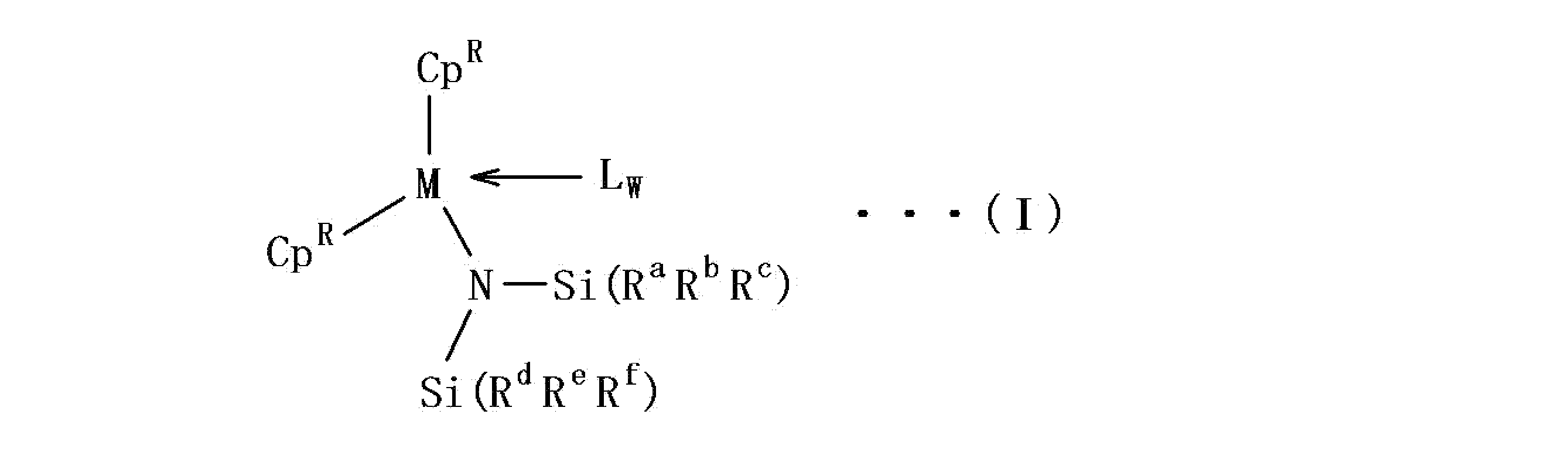





また、上記重合触媒組成物としては、
(a)成分:希土類元素化合物又は該希土類元素化合物とルイス塩基との反応物であって、希土類元素と炭素との結合を有さない該希土類元素化合物又は反応物と、
(b)成分:非配位性アニオンとカチオンとからなるイオン性化合物(b-1)、アルミノキサン(b-2)、並びにルイス酸、金属ハロゲン化物とルイス塩基との錯化合物及び活性ハロゲンを含む有機化合物のうち少なくとも1種のハロゲン化合物(b-3)よりなる群から選択される少なくとも1種とを含む重合触媒組成物(以下、第二重合触媒組成物ともいう)を好適に挙げることができ、
該第二重合触媒組成物が、イオン性化合物(b-1)及びハロゲン化合物(b-3)の少なくとも1種を含む場合、該重合触媒組成物は、更に、
(c)成分:下記一般式(X):
YR1 aR2 bR3 c ・・・ (X)
[式中、Yは、周期律表第1族、第2族、第12族及び第13族から選択される金属であり、R1及びR2は、同一又は異なり、炭素数1~10の炭化水素基又は水素原子で、R3は炭素数1~10の炭化水素基であり、但し、R3は上記R1又はR2と同一又は異なっていてもよく、また、Yが周期律表第1族から選択される金属である場合には、aは1で且つb及びcは0であり、Yが周期律表第2族及び第12族から選択される金属である場合には、a及びbは1で且つcは0であり、Yが周期律表第13族から選択される金属である場合には、a,b及びcは1である]で表される有機金属化合物を含むことを特徴とする。
(c)成分:下記一般式(X):
YR1 aR2 bR3 c ・・・ (X)
[式中、Yは、周期律表第1族、第2族、第12族及び第13族から選択される金属であり、R1及びR2は、同一又は異なり、炭素数1~10の炭化水素基又は水素原子で、R3は炭素数1~10の炭化水素基であり、但し、R3は上記R1又はR2と同一又は異なっていてもよく、また、Yが周期律表第1族から選択される金属である場合には、aは1で且つb及びcは0であり、Yが周期律表第2族及び第12族から選択される金属である場合には、a及びbは1で且つcは0であり、Yが周期律表第13族から選択される金属である場合には、a,b及びcは1である]で表される有機金属化合物を含むことを要する。上記イオン性化合物(b-1)及び上記ハロゲン化合物(b-3)は、(a)成分へ供給するための炭素原子が存在しないため、該(a)成分への炭素供給源として、上記(C)成分が必要となる。なお、上記重合触媒組成物が上記アルミノキサン(b-2)を含む場合であっても、該重合触媒組成物は、上記(c)成分を含むことができる。また、上記第二重合触媒組成物は、通常の希土類元素化合物系の重合触媒組成物に含有される他の成分、例えば助触媒等を含んでいてもよい。なお、重合反応系において、第二重合触媒組成物に含まれる(a)成分の濃度は0.1~0.0001mol/lの範囲であることが好ましい。
M11X11 2・L11w ・・・ (XI)
M11X11 3・L11w ・・・ (XII)
[式中、M11は、ランタノイド元素、スカンジウム又はイットリウムを示し、X11は、それぞれ独立して、水素原子、ハロゲン原子、アルコキシド基、チオラート基、アミド基、シリル基、アルデヒド残基、ケトン残基、カルボン酸残基、チオカルボン酸残基又はリン化合物残基を示し、L11は、ルイス塩基を示し、wは、0~3を示す]で表されることができる。
上記活性ハロゲンを含む有機化合物としては、ベンジルクロライド等が挙げられる。
YR1 aR2 bR3 c ・・・ (X)
[式中、Yは、周期律表第1族、第2族、第12族及び第13族から選択される金属であり、R1及びR2は、同一又は異なり、炭素数1~10の炭化水素基又は水素原子で、R3は炭素数1~10の炭化水素基であり、但し、R3は上記R1又はR2と同一又は異なっていてもよく、また、Yが周期律表第1族から選択される金属である場合には、aは1で且つb及びcは0であり、Yが周期律表第2族及び第12族から選択される金属である場合には、a及びbは1で且つcは0であり、Yが周期律表第13族から選択される金属である場合には、a,b及びcは1である]で表される有機金属化合物であり、下記一般式(Xa):
AlR1R2R3 ・・・ (Xa)
[式中、R1及びR2は、同一又は異なり、炭素数1~10の炭化水素基又は水素原子で、R3は炭素数1~10の炭化水素基であり、但し、R3は上記R1又はR2と同一又は異なっていてもよい]で表される有機アルミニウム化合物であることが好ましい。式(X)の有機アルミニウム化合物としては、トリメチルアルミニウム、トリエチルアルミニウム、トリ-n-プロピルアルミニウム、トリイソプロピルアルミニウム、トリ-n-ブチルアルミニウム、トリイソブチルアルミニウム、トリ-t-ブチルアルミニウム、トリペンチルアルミニウム、トリヘキシルアルミニウム、トリシクロヘキシルアルミニウム、トリオクチルアルミニウム;水素化ジエチルアルミニウム、水素化ジ-n-プロピルアルミニウム、水素化ジ-n-ブチルアルミニウム、水素化ジイソブチルアルミニウム、水素化ジヘキシルアルミニウム、水素化ジイソヘキシルアルミニウム、水素化ジオクチルアルミニウム、水素化ジイソオクチルアルミニウム;エチルアルミニウムジハイドライド、n-プロピルアルミニウムジハイドライド、イソブチルアルミニウムジハイドライド等が挙げられ、これらの中でも、トリエチルアルミニウム、トリイソブチルアルミニウム、水素化ジエチルアルミニウム、水素化ジイソブチルアルミニウムが好ましい。以上に述べた(c)成分としての有機アルミニウム化合物は、1種単独で使用することも、2種以上を混合して用いることもできる。なお、上記第二重合触媒組成物における有機アルミニウム化合物の含有量は、(a)成分に対して1~50倍モルであることが好ましく、約10倍モルであることが更に好ましい。
上記重合触媒としては、共役ジエン化合物と非共役オレフィンとの重合用であり、下記式(A):
RaMXbQYb ・・・ (A)
[式中、Rはそれぞれ独立して無置換もしくは置換インデニルを示し、該RはMに配位しており、Mはランタノイド元素、スカンジウム又はイットリウムを示し、Xはそれぞれ独立して炭素数1~20の炭化水素基を示し、該XはM及びQにμ配位しており、Qは周期律表第13族元素を示し、Yはそれぞれ独立して炭素数1~20の炭化水素基又は水素原子を示し、該YはQに配位しており、a及びbは2である]で表されるメタロセン系複合触媒が挙げられる。

以下に、上記メタロセン系複合触媒を詳細に説明する。上記メタロセン系複合触媒は、ランタノイド元素、スカンジウム又はイットリウムの希土類元素と周期律表第13族元素とを有し、下記式(A):
RaMXbQYb ・・・ (A)
[式中、Rはそれぞれ独立して無置換もしくは置換インデニルを示し、該RはMに配位しており、Mはランタノイド元素、スカンジウム又はイットリウムを示し、Xはそれぞれ独立して炭素数1~20の炭化水素基を示し、該XはM及びQにμ配位しており、Qは周期律表第13族元素を示し、Yはそれぞれ独立して炭素数1~20の炭化水素基又は水素原子を示し、該YはQに配位しており、a及びbは2である]で表されることを特徴とする。上記メタロセン系重合触媒を用いることで、共役ジエン化合物と非共役オレフィンとの共重合体を製造することができる。また、上記メタロセン系複合触媒、例えば予めアルミニウム触媒と複合させてなる触媒を用いることで、共重合体合成時に使用されるアルキルアルミニウムの量を低減したり、無くしたりすることが可能となる。なお、従来の触媒系を用いると、共重合体合成時に大量のアルキルアルミニウムを用いる必要がある。例えば、従来の触媒系では、金属触媒に対して10当量以上のアルキルアルミニウムを用いる必要があるところ、上記メタロセン系複合触媒であれば、5当量程度のアルキルアルミニウムを加えることで、優れた触媒作用が発揮される。
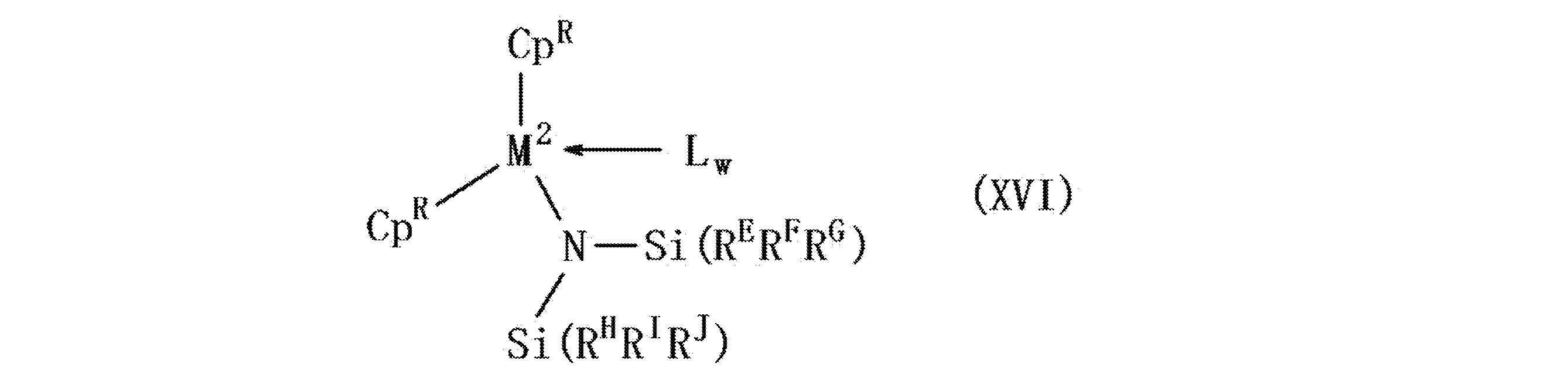
また、上記重合触媒組成物は、上記メタロセン系複合触媒と、ホウ素アニオンとを含むことを特徴とし、更に、通常のメタロセン系触媒を含む重合触媒組成物に含有される他の成分、例えば助触媒等を含むことが好ましい。なお、上記メタロセン系複合触媒とホウ素アニオンとを合わせて2成分触媒ともいう。上記第三重合触媒組成物によれば、上記メタロセン系複合触媒と同様に、更にホウ素アニオンを含有するため、各モノマー成分の共重合体中での含有量を任意に制御することが可能となる。
非共役オレフィンの濃度/共役ジエン化合物の濃度≧1.0
の関係を満たすことが好ましく、更に好ましくは下記式:
非共役オレフィンの濃度/共役ジエン化合物の濃度≧1.3
の関係を満たし、一層好ましくは下記式:
非共役オレフィンの濃度/共役ジエン化合物の濃度≧1.7
の関係を満たす。非共役オレフィンの濃度/共役ジエン化合物の濃度の値を1以上とすることで、反応混合物中に非共役オレフィンを効率的に導入することができる。
本発明のゴム組成物は、共役ジエン系重合体(B)を含む。本発明における共役ジエン系重合体(B)とは、モノマー単位成分(共重合体の一部)として非共役オレフィンを含まない重合体(ポリマー)のことをいい、例えば、天然ゴム、ブタジエンゴム、イソプレンゴム、クロロプレンゴム等のジエン系ゴムであることが好ましい。これらは、1種単独で使用してもよいし、2種以上を併用してもよい。
本発明のゴム組成物は、エチレン-プロピレン-ジエンゴム(EPDM)を含有する非共役ジエン化合物-非共役オレフィン共重合体(C)を含む。該非共役ジエン化合物-非共役オレフィン共重合体(C)に含有されるEPDMによって、優れた耐候性を実現できる。
前記共役ジエン化合物-非共役オレフィン共重合体(A)と、前記共役ジエン系重合体(B)と、前記非共役ジエン化合物-非共役オレフィン共重合体(C)との質量比は、特に制限はなく、目的に応じて適宜選択することができるが、耐候性、耐破壊性及び加工性をバランスよく発揮できる点からは、10:80:10~60:10:30であることが好ましい。
前記共役ジエン化合物-非共役オレフィン共重合体(A)の質量比が10未満の場合、相溶化の効果を十分に得られないおそれがあり、前記非共役ジエン化合物-非共役オレフィン共重合体(C)の質量比が10未満だと耐候性の効果を十分に得られないおそれがあり、前記非共役ジエン化合物-非共役オレフィン共重合体(C)の質量比が30を超えると耐亀裂成長性の効果を十分に得られないおそれがある。
前記ゴム成分としては、特に制限はなく、目的に応じて適宜選択することができ、例えば、前記共役ジエン化合物-非共役オレフィン共重合体(A)、前記共役ジエン系重合体(B)、前記非共役ジエン化合物-非共役オレフィン共重合体(C)に加えて、その他のゴム成分を含まれる。例えブチルゴム、ハロゲン化ブチルゴム他硫化ゴム、シリコーンゴム、フッ素ゴム、ウレタンゴム等が挙げられる。その他のゴム成分については、1種単独で使用してもよいし、2種以上を併用してもよい。
前記ゴム成分100質量部中における記共役ジエン化合物-非共役オレフィン共重合体の含有量が、10質量部未満であると、耐候性が悪化することがあり、90質量部を超えると、耐破壊性や加工性が悪化することがある。
一方、前記ゴム成分100質量部中における前記共役ジエン化合物-非共役オレフィン共重合体(A)の含有量が、前記より好ましい範囲内であると、各性能のバランスの点で有利である。
前記ゴム成分100質量部中における前記共役ジエン系重合体の含有量が、10質量部未満であると、耐破壊性や加工性が悪化することがあり、90質量部を超えると、耐候性が悪化することがある。一方、前記ゴム成分100質量部中における前記共役ジエン系重合体の含有量が、前記より好ましい範囲内であると、各性能のバランスの点で有利である。
前記ゴム成分100質量部中における記非共役ジエン化合物-非共役オレフィン共重合体(C)の含有量が、10質量部未満であると、十分な耐候性が得られないことがあり、 質量部を超えると、十分な耐亀裂成長性が得られないことがある。一方、前記ゴム成分100質量部中における前記非共役ジエン化合物-非共役オレフィン共重合体(C)の含有量が、より好ましい範囲内の場合、耐候性の点で有利である。
本発明のゴム組成物には、必要に応じて補強性充填剤を配合することができる。前記補強性充填剤の種類については、所望の補強効果を得ることができるものであれば特に限定はされない。例えば、カーボンブラック、無機充填剤、などを挙げることができる。
前記補強性充填剤の含有量が、5質量部未満であると、補強性充填剤を含むことによる補強効果が得られないおそれがあり、200質量部を超えると前記ゴム成分に補強性充填剤が混ざり込まなくなる傾向があり、ゴム組成物としての性能を低下させるおそれがあるからである。
前記カーボンブラックの窒素吸着比表面積(N2SA、JIS K 6217-2:2001に準拠する)としては、特に制限はなく、目的に応じて適宜選択することができるが、20m2/g~100m2/gが好ましく、35m2/g~80m2/gがより好ましい。前記カーボンブラックの窒素吸着比表面積(N2SA)が20m2/g未満であると、得られたゴムの耐久性が低く、十分な耐亀裂成長性が得られないことがあり、100m2/gを超えると、低ロス性が低下し、また、作業性が悪いことがある。
なお、前記窒素吸着比表面積(N2SA)は、例えば、JIS K 6217-2:2001に準拠して、測定することができる。
前記ゴム成分100質量部に対するカーボンブラックの含有量としては、特に制限はなく、目的に応じて適宜選択することができるが、10質量部~70質量部が好ましく、20質量部~60質量部がより好ましい。前記カーボンブラックの含有量が、10質量部未満であると、補強性が不十分で耐破壊性が悪化することがあり、70質量部を超えると、加工性および低ロス性が悪化することがある。一方、前記カーボンブラックの含有量が、前記より好ましい範囲内であると、各性能のバランスの点で有利である。
本発明のゴム組成物には、必要に応じて架橋剤を配合することができる。前記架橋剤としては、特に制限はなく、目的に応じて適宜選択することができる。例えば、硫黄系架橋剤、有機過酸化物系架橋剤、無機架橋剤、ポリアミン架橋剤、樹脂架橋剤、硫黄化合物系架橋剤、オキシム-ニトロソアミン系架橋剤硫黄などが挙げられるが、これらの中でもタイヤ用ゴム組成物に用いる場合には硫黄系架橋剤がより好ましい。
その他に加硫促進剤を併用することも可能であり、加硫促進剤としては、グアジニン系、アルデヒド-アミン系、アルデヒド-アンモニア系、チアゾール系、スルフェンアミド系、チオ尿素系、チウラム系、ジチオカルバメート系、ザンテート系等の化合物が使用できる。
また必要に応じて、補強剤、軟化剤、充填剤、加硫助剤、着色剤、難燃剤、滑剤、発泡剤、可塑剤、加工助剤、酸化防止剤、老化防止剤、スコーチ防止剤、紫外線防止剤、帯電防止剤、着色防止剤、その他の配合剤など公知のものをその使用目的に応じて使用することができる。
本発明の架橋ゴム組成物は、本発明のゴム組成物を架橋して得られることを特徴とする。架橋の条件については、特に制限はなく、目的に応じて適宜選択することができる。例えば、温度120℃~200℃、加温時間1分間~900分間が好ましい。
本発明のタイヤは、本発明のゴム組成物、又は、本発明の架橋ゴム組成物を用いたものである。本発明のゴム組成物、又は、本発明の架橋ゴム組成物の、タイヤにおける適用部位については、特に制限はされず、目的に応じて適宜選択することができる。例えば、トレッド、ベーストレッド、サイドウォール、サイド補強ゴム及びビードフィラー等に用いることができる。これらの中でも、本発明によるゴム組成物及び架橋ゴム組成物は、優れた耐候性、耐破壊性及び耐亀裂成長性を有するため、タイヤのサイドウォール部に用いることが好ましい。
前記タイヤを製造する方法としては、慣用の方法を用いることができる。例えば、タイヤ成形用ドラム上に未加硫ゴムからなるカーカス層、ベルト層、トレッド層等の通常タイヤ製造に用いられる部材を順次貼り重ね、ドラムを抜き去ってグリーンタイヤとする。次いで、このグリーンタイヤを常法に従って加熱加硫することにより、所望のタイヤ(例えば、空気入りタイヤ)を製造することができる。
タイヤ用途以外にも、防振ゴム、免震ゴム、ベルト(コンベアベルト)、ゴムクローラ、各種ホース、モランなどに本発明のゴム組成物、又は、本発明の架橋ゴム組成物を使用することができる。
十分に乾燥した4Lステンレス反応器に、1,3-ブタジエン120g(2.22mol)を含むトルエン溶液2,000gを添加した後、エチレンを1.72MPaで導入した。一方、窒素雰囲気下のグローブボックス中で、ガラス製容器にビス(2-フェニルインデニル)ガドリニウムビス(ジメチルシリルアミド)[(2-PhC9H6)2GdN(SiHMe2)2]28.5μmol、ジメチルアニリニウムテトラキス(ペンタフルオロフェニル)ボレート[Me2NHPhB(C6F5)4]28.5μmol、及びジイソブチルアルミニウムハイドライド2.00mmolを仕込み、トルエン40mlに溶解させて触媒溶液とした。その後、グローブボックスから触媒溶液を取り出し、ガドリニウム換算で25.0μmolとなる量をモノマー溶液へ添加し、50℃で90分間重合を行った。重合後、2,2'メチレン-ビス(4-エチル-6-t-ブチルフェノール)(NS-5)5質量%のイソプロパノール溶液5mlを加えて反応を停止させ、さらに大量のメタノールで共重合体を分離し、70℃で真空乾燥し重合体を得た。得られた共重合体EBR1は、収量は98gであり、ジエン含有量が91mol%、エチレン含有量が9mol%、重量平均分子量Mwが358000、分子量分布Mw/Mnが2.5であった。
十分に乾燥した4Lステンレス反応器に、1,3-ブタジエン230g(4.26mol)を含むトルエン溶液2,000gを添加した後、エチレンを1.72MPaで導入した。一方、窒素雰囲気下のグローブボックス中で、ガラス製容器にビス(2-フェニルインデニル)ガドリニウムビス(ジメチルシリルアミド)[(2-PhC9H6)2GdN(SiHMe2)2]145μmol、ジメチルアニリニウムテトラキス(ペンタフルオロフェニル)ボレート[Me2NHPhB(C6F5)4]145μmol、及びジイソブチルアルミニウムハイドライド2.9mmolを仕込み、トルエン100mlに溶解させて触媒溶液とした。その後、グローブボックスから触媒溶液を取り出し、ガドリニウム換算で142μmolとなる量をモノマー溶液へ添加し、60℃で60分間重合を行った。重合後、2,2'-メチレン-ビス(4-エチル-6-t-ブチルフェノール)(NS-5)5質量%のイソプロパノール溶液5mlを加えて反応を停止させ、さらに大量のメタノールで共重合体を分離し、70℃で真空乾燥し重合体を得た。得られた共重合体EBR2の収量は248gであり、ジエン含有量が62mol%、エチレン含有量が38mol%、重量平均分子量Mwが449000、分子量分布Mw/Mnが4.4であった。
十分に乾燥した400ml耐圧ガラス反応器に、1,3-ブタジエン9.36g(0.173mol)を含むトルエン溶液200mlを添加した後、エチレンを0.6MPaで導入した。一方、窒素雰囲気下のグローブボックス中で、ガラス製容器に(2-MeC9H6)2Sc(MeAlMe3)21.0μmol、トリフェニルカルボニウムテトラキス(ペンタフルオロフェニル)ボレート(Ph3CB(C6F5)4)21.0μmol、及びトリイソブチルアルミニウム0.25mmolを仕込み、トルエン5mlに溶解させて触媒溶液とした。その後、グローブボックスから触媒溶液を取り出し、モノマー溶液へ添加し、25℃で50分間重合を行った。重合後、2,2'-メチレン-ビス(4-エチル-6-t-ブチルフェノール)(NS-5)5質量%のイソプロパノール溶液1mlを加えて反応を停止させ、さらに大量のメタノールで共重合体を分離し、70℃で真空乾燥し重合体を得た。得られた共重合体EBR3の収量は9.30gであり、ジエン含有量が95mol%、エチレン含有量が5mol%、重量平均分子量Mwが363000、分子量分布Mw/Mnが2.4であった。
十分に乾燥した4Lステンレス反応器に、1,3-ブタジエン80g(1.48mol)を含むトルエン溶液2,000gを添加した後、エチレンを1.72MPaで導入した。一方、窒素雰囲気下のグローブボックス中で、ガラス製容器にビス(2-フェニルインデニル)ガドリニウムビス(ジメチルシリルアミド)[(2-PhC9H6)2GdN(SiHMe2)2]28.5μmol、ジメチルアニリニウムテトラキス(ペンタフルオロフェニル)ボレート[Me2NHPhB(C6F5)4]28.5μmol、及びジイソブチルアルミニウムハイドライド2.00mmolを仕込み、トルエン40mlに溶解させて触媒溶液とした。その後、グローブボックスから触媒溶液を取り出し、ガドリニウム換算で25.0μmolとなる量をモノマー溶液へ添加し、80℃で90分間重合を行った。重合後、2,2'-メチレン-ビス(4-エチル-6-t-ブチルフェノール)(NS-5)5質量%のイソプロパノール溶液5mlを加えて反応を停止させ、さらに大量のメタノールで共重合体を分離し、70℃で真空乾燥し重合体を得た。得られた共重合体EBR4の収量は78gであり、ジエン含有量が38mol%、エチレン含有量が62mol%、重量平均分子量Mwが281000、分子量分布Mw/Mnが2.4であった。
容積が200mlのゴム栓付きガラスびんを乾燥・窒素置換し、0.05molのVOCl3(オキソバナジウムトリクロライド)とネオペンチルアルコール0.10molとトルエンを加えた。その後、窒素でバブリングさせながら発生した塩酸について、注射針を刺して抜くことでジネオペントキシオキソバナジウムクロライドのトルエン溶液を得た。
約1リットル容積のゴム栓付きガラスびんを乾燥・窒素置換し、乾燥精製されたブタジエンのトルエン溶液(17.5wt%)を250g投入した。次に、このガラス瓶を-78℃に冷却し、プロピレンガスを50g送入した。2.81mmolのトリイソブチルアルミニウム(ノルマルヘキサン溶液1mol/L)を加え、攪拌して約10分放置した後、上記で調整したバナジウム溶液0.47mmolを添加して重合を開始させ、-78℃で4時間反応を行なった。その後、50℃にて老化防止剤2,2’-メチレン-ビス(4-エチル-6-t-ブチルフェノール)(NS-5)のイソプロパノール5%溶液2ミリリットルを加えて反応の停止を行い、さらに微量のNS-5を含むイソプロパノール中で再沈殿した後、ドラムにて乾燥することで、共役ジエン化合物-非共役オレフィン共重合体(A)に該当するプロピレン-ブタジエン共重合体(PBR)を得た。得られた共重合体PBRの収率は約70質量%であり、ジエン含有量は50mol%、重量平均分子量Mwは250000、分子量分布Mw/Mnが2.0であった。
容積が200mlのゴム栓付きガラスびんを乾燥・窒素置換し、0.05molのVOCl3(オキソバナジウムトリクロライド)とネオペンチルアルコール0.10molとトルエンを加えた。その後、窒素でバブリングさせながら発生した塩酸について、注射針を刺して抜くことでジネオペントキシオキソバナジウムクロライドのトルエン溶液を得た。
約1リットル容積のゴム栓付きガラスびんを乾燥・窒素置換し、乾燥精製されたブタジエンのトルエン溶液(17.5wt%)を250g投入した。次に、このガラス瓶を-78℃に冷却し、ブテンガスを66g送入した。2.81mmolのトリイソブチルアルミニウム(ノルマルヘキサン溶液1mol/L)を加え、攪拌して約10分放置した後、上記で調整したバナジウム溶液0.47mmolを添加して重合を開始させ、-78℃で12時間反応を行なった。その後、50℃にて老化防止剤2,2’-メチレン-ビス(4-エチル-6-t-ブチルフェノール)(NS-5)のイソプロパノール5%溶液2ミリリットルを加えて反応の停止を行い、さらに微量のNS-5を含むイソプロパノール中で再沈殿した後、ドラムにて乾燥することで、共役ジエン化合物-非共役オレフィン共重合体(A)に該当するブテン-ブタジエン共重合体(BBR)を得た。得られた共重合体BBRの収率は約65質量%であり、ジエン含有量は55mol%、ブテン含有量は45mol%、重量平均分子量Mwは300000、分子量分布Mw/Mnが2.1であった。
特開2000-063639号公報における合成例1で示されるように、充分に窒素置換した内容積1リットルのガラス製オートクレーブに、トルエン500mlを装入し、さらに系内にエチレン50L/h、プロピレン150L/h及びブタジエン20L/hの混合ガスで液相、及び気相を飽和させた。その後、トリイソブチルアルミニウム0.25mmol、トリフェニルカルベニウムテトラキス(ペンタフルオロフェニル)ボレート0.006mmolのあらかじめ混合した溶液を加え、重合を開始した。50℃にて30分間重合を行った後、少量のイソブタノールを添加することにより重合を停止した。
得られたポリマー溶液を、少量の塩酸を含む1.5Lのメタノール中に加えてポリマーを析出させた。これをメタノールで洗浄後、130℃にて10時間減圧乾燥すると、エチレン-プロピレン-ブタジエン共重合体(EPDM2)3.25gが得られた。
実施例1~7及び比較例1~6のゴム組成物のサンプルとして、表1に示す配合処方で、共役ジエン化合物-非共役オレフィン共重合体(A)と、共役ジエン系重合体(B)と、非共役ジエン化合物-非共役オレフィン共重合体(C)とを含むゴム組成物を調製した。
その後、各サンプルのゴム組成物を用い、表2に示すマスターバッチの欄に従って化合物を添加することでマスターバッチを調製した後、表2に示すファイナルバッチの欄に従って化合物を添加することでファイナルバッチを調整し、その後、調整したファイナルバッチを、160℃で20分間加硫することで、加硫ゴムのサンプルを作製した。なお、表1及び表2中に記載の「phr」とは、ゴム成分100質量部に対する割合のことである。
各実施例及び比較例で得られたゴム組成物及び加硫ゴムのサンプルについて、下記の方法に従って、相溶性、耐候性、耐破壊性及び耐亀裂成長性(指数)を測定した。
各実施例及び比較例で得られたゴム組成物のサンプルとポリイソプレンとを混合させたものを、PETフィルムに挟み、100℃にてプレスした。得られたサンプルについて、ヘイズメーター(日本電色工業製)を用いて透明度(ヘイズ値)を測定し、相溶性の指標とした。評価結果を表1に示す。
なお、表1において、ヘイズ値は比較例2の値を100としたときの指標値として表し、指標値が低いほど相溶性が高く、良好な結果であることを示す。
各実施例及び比較例で得られた加硫ゴムのサンプルについて、JIS K6259に従って、耐オゾン性を測定した。短冊状試験片を30%の動的伸張を与えながら、40℃、オゾン濃度50pphm条件で暴露し、24時間後の試料の状況(亀裂の有無)を目視で判断した。結果を表1に示す。
なお、表1において、○が「亀裂なし」を示し、△が「亀裂あり」を示す。
各実施例及び比較例で得られた加硫ゴムのサンプルについて、JIS K 6251に従って、引っ張り試験による室温での破断点強度および破断点伸びを測定した。比較例2を100として指数表示した。結果を表1に示す。
表1では、比較例2を100としたときの指数で表示し、数値が大きいほど耐破壊性が良好であることを示す。
各実施例及び比較例で得られた加硫ゴムのサンプルについて、JIS3号試験片中心部に0.5mmの亀裂を入れ、室温で0~100%の一定歪みで繰り返し疲労を与え、サンプルが切断するまでの回数を測定し、評価を行った。
表1では、比較例2を100としたときの指数で表示し、指数値が大きい程、耐亀裂成長性(定歪)が良好であることを示す。


*5:N-(1,3-ジメチルブチル)-N’-p-フェニレンジアミン、大内新興化学(株)製、ノックラック6C
*6:C5系及びC9系石油樹脂の混合樹脂
*7:2,2,4-トリメチル-N’-フェニル-p-フェニレンジアミン
*8:N-シクロヘキシル-2-ベンゾチアゾリルスルフェンアミド、大内新興化学(株)製、ノクセラーCZ-G
*9:ジベンゾチアジルジスルフィド、大内新興化学(株)製、ノクセラーDM-P
Claims (19)
- 共役ジエン化合物由来部分の含有量が40mol%以上である共役ジエン化合物-非共役オレフィン共重合体(A)と、
共役ジエン系重合体(B)と、
エチレン-プロピレン-ジエンゴムを含有する非共役ジエン化合物-非共役オレフィン共重合体(C)とを含むことを特徴とするゴム組成物。 - 前記共役ジエン化合物-非共役オレフィン共重合体(A)のオレフィン成分の含有量が、60mol%以下であることを特徴とする請求項1に記載のゴム組成物。
- 前記非共役ジエン化合物-非共役オレフィン共重合体(C)のエチレン-プロピレン-ジエンゴムの含有量が、10質量%以上であることを特徴とする請求項1に記載のゴム組成物。
- 補強性充填材(D)をさらに含むことを特徴とする請求項1に記載のゴム組成物。
- 前記補強性充填材(D)の含有量が、ゴム成分100質量部に対して10~70質量部であることを特徴とする請求項4に記載のゴム組成物。
- 前記共役ジエン系重合体(B)が、天然ゴム、イソプレンゴム、ブタジエンゴム及びスチレン-ブタジエンゴムよりなる群から選択される少なくとも1種であることを特徴とする請求項1に記載のゴム組成物。
- 前記共役ジエン化合物-非共役オレフィン共重合体(A)と、前記共役ジエン系重合体(B)と、前記非共役ジエン化合物-非共役オレフィン共重合体(C)との質量比が、10:80:10~60:10:30であることを特徴とする請求項1に記載のゴム組成物。
- 前記共役ジエン化合物-非共役オレフィン共重合体(A)は、ポリスチレン換算重量平均分子量が10,000~10,000,000であることを特徴とする請求項1に記載のゴム組成物。
- 前記共役ジエン化合物-非共役オレフィン共重合体(A)は、分子量分布(Mw/Mn)が10以下であることを特徴とする請求項1に記載のゴム組成物。
- 前記共役ジエン化合物-非共役オレフィン共重合体(A)の非共役オレフィンが、非環状オレフィンであることを特徴とする請求項1に記載のゴム組成物。
- 前記共役ジエン化合物-非共役オレフィン共重合体(A)の非共役オレフィンは、炭素数が2~10であることを特徴とする請求項1に記載のゴム組成物。
- 前記共役ジエン化合物-非共役オレフィン共重合体(A)の非共役オレフィンが、エチレン、プロピレン及び1-ブテンよりなる群から選択される少なくとも1種であることを特徴とする請求項10又は11に記載のゴム組成物。
- 前記共役ジエン化合物-非共役オレフィン共重合体(A)の非共役オレフィンが、エチレンであることを特徴とする請求項12に記載のゴム組成物。
- 前記共役ジエン化合物-非共役オレフィン共重合体(A)の共役ジエン化合物が、1,3-ブタジエン及びイソプレンよりなる群から選択される少なくとも1種であることを特徴とする請求項1に記載のゴム組成物。
- ゴム成分100質量部に対し、架橋剤0.1質量部~20質量部をさらに含むことを特徴とする請求項1に記載のゴム組成物。
- 請求項1に記載のゴム組成物をタイヤのサイドウォール部に用いることを特徴とするタイヤサイド用ゴム組成物。
- 請求項1に記載のゴム組成物を架橋して得られることを特徴とする架橋ゴム組成物。
- 請求項1に記載のゴム組成物、又は、請求項17に記載の架橋ゴム組成物を用いることを特徴とするタイヤ。
- 請求項1に記載のゴム組成物又は請求項17に記載の架橋ゴム組成物を、サイドウォール部に用いることを特徴とする請求項18に記載のタイヤ。
Priority Applications (4)
| Application Number | Priority Date | Filing Date | Title |
|---|---|---|---|
| JP2013502189A JP5771683B2 (ja) | 2011-03-01 | 2012-02-27 | ゴム組成物、タイヤサイド用ゴム組成物、架橋ゴム組成物、及びタイヤ |
| US13/985,449 US9212274B2 (en) | 2011-03-01 | 2012-02-27 | Rubber composition, rubber composition for tire side use, crosslinked rubber composition and tire |
| CN201280011187.4A CN103403081B (zh) | 2011-03-01 | 2012-02-27 | 橡胶组合物、轮胎胎侧用橡胶组合物、交联橡胶组合物和轮胎 |
| EP12751910.6A EP2682423B1 (en) | 2011-03-01 | 2012-02-27 | Rubber composition, rubber composition for tire sidewall, crosslinked rubber composition, and tire |
Applications Claiming Priority (2)
| Application Number | Priority Date | Filing Date | Title |
|---|---|---|---|
| JP2011-044514 | 2011-03-01 | ||
| JP2011044514 | 2011-03-01 |
Publications (1)
| Publication Number | Publication Date |
|---|---|
| WO2012117715A1 true WO2012117715A1 (ja) | 2012-09-07 |
Family
ID=46757660
Family Applications (1)
| Application Number | Title | Priority Date | Filing Date |
|---|---|---|---|
| PCT/JP2012/001325 Ceased WO2012117715A1 (ja) | 2011-03-01 | 2012-02-27 | ゴム組成物、タイヤサイド用ゴム組成物、架橋ゴム組成物、及びタイヤ |
Country Status (5)
| Country | Link |
|---|---|
| US (1) | US9212274B2 (ja) |
| EP (1) | EP2682423B1 (ja) |
| JP (1) | JP5771683B2 (ja) |
| CN (1) | CN103403081B (ja) |
| WO (1) | WO2012117715A1 (ja) |
Cited By (4)
| Publication number | Priority date | Publication date | Assignee | Title |
|---|---|---|---|---|
| JP2022513571A (ja) * | 2018-10-09 | 2022-02-09 | コンパニー ゼネラール デ エタブリッスマン ミシュラン | ゴム組成物 |
| JP2022513572A (ja) * | 2018-10-09 | 2022-02-09 | コンパニー ゼネラール デ エタブリッスマン ミシュラン | ゴム組成物 |
| CN116635434A (zh) * | 2020-12-23 | 2023-08-22 | 米其林集团总公司 | 橡胶组合物 |
| US20240279370A1 (en) * | 2020-12-23 | 2024-08-22 | Compagnie Generale Des Etablissements Michelin | Rubber composition comprising a highly saturated diene elastomer |
Families Citing this family (22)
| Publication number | Priority date | Publication date | Assignee | Title |
|---|---|---|---|---|
| FR3001223B1 (fr) * | 2013-01-22 | 2015-03-06 | Michelin & Cie | Composition de caoutchouc comprenant un elastomere dienique fortement sature |
| CN105646959B (zh) * | 2016-03-07 | 2018-02-02 | 江苏江昕轮胎有限公司 | 一种橡胶组合物、制备方法及其在3d打印空心轮胎中的应用 |
| FR3065004A1 (fr) * | 2017-04-10 | 2018-10-12 | Compagnie Generale Des Etablissements Michelin | Composition de caoutchouc a base d'un elastomere dienique fortement sature et d'un sel dithiosulfate |
| FR3081877B1 (fr) * | 2018-05-31 | 2020-05-22 | Compagnie Generale Des Etablissements Michelin | Pneumatique pourvu d'un flanc externe comportant un ou plusieurs elastomeres thermoplastiques et un ou plusieurs elastomeres dieniques synthetiques |
| FR3085165B1 (fr) * | 2018-08-23 | 2020-07-17 | Compagnie Generale Des Etablissements Michelin | Pneumatique muni d'une composition comprenant un elastomere riche en ethylene, un peroxyde et un derive d'acrylate specifique |
| FR3085167B1 (fr) | 2018-08-23 | 2020-07-31 | Michelin & Cie | Pneumatique muni d'une composition comprenant un elastomere riche en ethylene, un peroxyde et un derive d'acrylate specifique |
| FR3085166B1 (fr) | 2018-08-23 | 2020-07-17 | Compagnie Generale Des Etablissements Michelin | Pneumatique muni d'une composition comprenant un elastomere riche en ethylene, un peroxyde et un derive d'acrylate specifique |
| FR3085684B1 (fr) * | 2018-09-11 | 2021-06-04 | Michelin & Cie | Composition de caoutchouc |
| FR3090656A3 (fr) * | 2018-12-21 | 2020-06-26 | Michelin & Cie | Bande de roulement pour pneumatique |
| FR3104597B1 (fr) | 2019-12-16 | 2021-11-12 | Michelin & Cie | Composition de caoutchouc |
| FR3104487B1 (fr) | 2019-12-17 | 2021-11-05 | Michelin & Cie | Stratifie elastomerique |
| FR3104596B1 (fr) | 2019-12-17 | 2021-11-12 | Michelin & Cie | Composition de caoutchouc |
| FR3118044B1 (fr) | 2020-12-23 | 2022-12-30 | Michelin & Cie | Composition de caoutchouc |
| EP4230693B1 (en) * | 2022-02-17 | 2025-03-05 | Sumitomo Rubber Industries, Ltd. | Rubber composition for sidewall |
| FR3136773B1 (fr) | 2022-06-21 | 2024-05-10 | Michelin & Cie | Composition de caoutchouc comprenant un élastomère diénique fortement saturé |
| FR3136775B1 (fr) | 2022-06-21 | 2024-05-10 | Michelin & Cie | Composition de caoutchouc comprenant un élastomère diénique fortement saturé |
| FR3136772B1 (fr) | 2022-06-21 | 2024-05-10 | Michelin & Cie | Composition de caoutchouc comprenant un élastomère diénique fortement saturé |
| FR3136774B1 (fr) | 2022-06-21 | 2024-05-10 | Michelin & Cie | Composition de caoutchouc comprenant un élastomère diénique fortement saturé |
| FR3136771B1 (fr) | 2022-06-21 | 2024-05-10 | Michelin & Cie | Composition de caoutchouc comprenant un élastomère diénique fortement saturé |
| FR3136770B1 (fr) | 2022-06-21 | 2024-05-10 | Michelin & Cie | Composition de caoutchouc comprenant un élastomère diénique fortement saturé |
| FR3143033B1 (fr) * | 2022-12-12 | 2024-11-29 | Michelin & Cie | Pneumatique pour véhicule portant de lourdes charges |
| FR3149322B1 (fr) | 2023-05-31 | 2025-05-02 | Michelin & Cie | Composition de caoutchouc comprenant un élastomère diénique fortement saturé |
Citations (10)
| Publication number | Priority date | Publication date | Assignee | Title |
|---|---|---|---|---|
| JPS62148543A (ja) * | 1985-12-19 | 1987-07-02 | ポリサ− リミテツド | エラストマ−組成物 |
| JPH11228743A (ja) | 1997-07-18 | 1999-08-24 | Mitsui Chem Inc | 不飽和性エラストマー組成物およびその加硫ゴム |
| JP2000063639A (ja) | 1998-08-13 | 2000-02-29 | Mitsui Chemicals Inc | α−オレフィン/共役ジエン系共重合体組成物 |
| JP2000086857A (ja) | 1998-09-16 | 2000-03-28 | Nippon Zeon Co Ltd | 補強剤を含む結晶性セグメント含有共役ジエン系ゴム組成物 |
| JP2000154279A (ja) | 1998-09-16 | 2000-06-06 | Nippon Zeon Co Ltd | 結晶性セグメントを含む共役ジエン系ゴム組成物 |
| JP2000154210A (ja) | 1998-09-15 | 2000-06-06 | Agency Of Ind Science & Technol | 共役ジエン重合用触媒、共役ジエン系重合体の製造方法、イソプレン系重合体およびブタジエン系共重合体 |
| JP2004224952A (ja) * | 2003-01-24 | 2004-08-12 | Bridgestone Corp | サイドウォール用ゴム組成物及び空気入りタイヤ |
| JP2006503141A (ja) | 2002-10-16 | 2006-01-26 | ソシエテ ド テクノロジー ミシュラン | エチレン/ブタジエンコポリマー、触媒系及びその合成方法 |
| JP2006249442A (ja) | 1997-04-25 | 2006-09-21 | Mitsui Chemicals Inc | α−オレフィン・共役ジエン共重合体 |
| JP2008001742A (ja) * | 2006-06-20 | 2008-01-10 | Bridgestone Corp | 空気入りタイヤ |
Family Cites Families (9)
| Publication number | Priority date | Publication date | Assignee | Title |
|---|---|---|---|---|
| US3387063A (en) * | 1966-03-29 | 1968-06-04 | Phillips Petroleum Co | Sulfur-vulcanizable blends of ethylene-butadiene copolymer and butyl or epd rubber |
| JPS5347446A (en) | 1976-10-12 | 1978-04-27 | Japan Synthetic Rubber Co Ltd | Thermoplastic elastomer compositions |
| JPS60262842A (ja) | 1984-06-11 | 1985-12-26 | Sumitomo Chem Co Ltd | ゴム組成物 |
| US5225451A (en) * | 1992-08-27 | 1993-07-06 | Astro-Valcour, Inc. | Ultra low density polyolefin foam, foamable polyolefin compositions and process for making same |
| IT1256662B (it) * | 1992-12-15 | 1995-12-12 | Himont Inc | Elastomeri termoplastici olefinici e processo per la loro preparazione |
| CN101274973A (zh) * | 1997-04-25 | 2008-10-01 | 三井化学株式会社 | α-烯烃/共轭二烯共聚物 |
| KR100323116B1 (ko) * | 1997-07-18 | 2002-11-04 | 미쓰이 가가쿠 가부시키가이샤 | 불포화엘라스토머조성물및그의가황고무 |
| CN1206026A (zh) * | 1997-07-18 | 1999-01-27 | 三井化学株式会社 | 不饱和弹性体组合物及其硫化橡胶 |
| US6279633B1 (en) | 1999-03-23 | 2001-08-28 | The Goodyear Tire & Rubber Company | Tire with EPDM-based component |
-
2012
- 2012-02-27 CN CN201280011187.4A patent/CN103403081B/zh active Active
- 2012-02-27 EP EP12751910.6A patent/EP2682423B1/en active Active
- 2012-02-27 JP JP2013502189A patent/JP5771683B2/ja active Active
- 2012-02-27 US US13/985,449 patent/US9212274B2/en active Active
- 2012-02-27 WO PCT/JP2012/001325 patent/WO2012117715A1/ja not_active Ceased
Patent Citations (10)
| Publication number | Priority date | Publication date | Assignee | Title |
|---|---|---|---|---|
| JPS62148543A (ja) * | 1985-12-19 | 1987-07-02 | ポリサ− リミテツド | エラストマ−組成物 |
| JP2006249442A (ja) | 1997-04-25 | 2006-09-21 | Mitsui Chemicals Inc | α−オレフィン・共役ジエン共重合体 |
| JPH11228743A (ja) | 1997-07-18 | 1999-08-24 | Mitsui Chem Inc | 不飽和性エラストマー組成物およびその加硫ゴム |
| JP2000063639A (ja) | 1998-08-13 | 2000-02-29 | Mitsui Chemicals Inc | α−オレフィン/共役ジエン系共重合体組成物 |
| JP2000154210A (ja) | 1998-09-15 | 2000-06-06 | Agency Of Ind Science & Technol | 共役ジエン重合用触媒、共役ジエン系重合体の製造方法、イソプレン系重合体およびブタジエン系共重合体 |
| JP2000086857A (ja) | 1998-09-16 | 2000-03-28 | Nippon Zeon Co Ltd | 補強剤を含む結晶性セグメント含有共役ジエン系ゴム組成物 |
| JP2000154279A (ja) | 1998-09-16 | 2000-06-06 | Nippon Zeon Co Ltd | 結晶性セグメントを含む共役ジエン系ゴム組成物 |
| JP2006503141A (ja) | 2002-10-16 | 2006-01-26 | ソシエテ ド テクノロジー ミシュラン | エチレン/ブタジエンコポリマー、触媒系及びその合成方法 |
| JP2004224952A (ja) * | 2003-01-24 | 2004-08-12 | Bridgestone Corp | サイドウォール用ゴム組成物及び空気入りタイヤ |
| JP2008001742A (ja) * | 2006-06-20 | 2008-01-10 | Bridgestone Corp | 空気入りタイヤ |
Non-Patent Citations (1)
| Title |
|---|
| See also references of EP2682423A4 |
Cited By (7)
| Publication number | Priority date | Publication date | Assignee | Title |
|---|---|---|---|---|
| JP2022513571A (ja) * | 2018-10-09 | 2022-02-09 | コンパニー ゼネラール デ エタブリッスマン ミシュラン | ゴム組成物 |
| JP2022513572A (ja) * | 2018-10-09 | 2022-02-09 | コンパニー ゼネラール デ エタブリッスマン ミシュラン | ゴム組成物 |
| JP7531484B2 (ja) | 2018-10-09 | 2024-08-09 | コンパニー ゼネラール デ エタブリッスマン ミシュラン | ゴム組成物 |
| JP7532348B2 (ja) | 2018-10-09 | 2024-08-13 | コンパニー ゼネラール デ エタブリッスマン ミシュラン | ゴム組成物 |
| CN116635434A (zh) * | 2020-12-23 | 2023-08-22 | 米其林集团总公司 | 橡胶组合物 |
| US20240052142A1 (en) * | 2020-12-23 | 2024-02-15 | Compagnie Generale Des Etablissements Michelin | Rubber composition |
| US20240279370A1 (en) * | 2020-12-23 | 2024-08-22 | Compagnie Generale Des Etablissements Michelin | Rubber composition comprising a highly saturated diene elastomer |
Also Published As
| Publication number | Publication date |
|---|---|
| EP2682423A4 (en) | 2015-11-04 |
| US20130324660A1 (en) | 2013-12-05 |
| EP2682423B1 (en) | 2016-10-19 |
| JPWO2012117715A1 (ja) | 2014-07-07 |
| US9212274B2 (en) | 2015-12-15 |
| CN103403081A (zh) | 2013-11-20 |
| EP2682423A1 (en) | 2014-01-08 |
| CN103403081B (zh) | 2015-11-25 |
| JP5771683B2 (ja) | 2015-09-02 |
Similar Documents
| Publication | Publication Date | Title |
|---|---|---|
| JP5771683B2 (ja) | ゴム組成物、タイヤサイド用ゴム組成物、架橋ゴム組成物、及びタイヤ | |
| JP5918131B2 (ja) | 共役ジエン化合物と非共役オレフィンとの共重合体、ゴム組成物、架橋ゴム組成物、及びタイヤ | |
| JP5918134B2 (ja) | 共役ジエン化合物と非共役オレフィンとの共重合体、ゴム組成物、及びタイヤ | |
| JP5918132B2 (ja) | 共役ジエン化合物と非共役オレフィンとの共重合体、ゴム組成物、架橋ゴム組成物、及びタイヤ | |
| KR101612766B1 (ko) | 공액 디엔 화합물과 비공액 올레핀의 공중합체, 고무 조성물, 타이어 트레드용 고무 조성물, 가교 고무 조성물 및 타이어 | |
| KR101592907B1 (ko) | 공중합체, 고무 조성물, 타이어 사이드용 고무 조성물, 가교 고무 조성물 및 타이어 | |
| JP5909121B2 (ja) | タイヤ用ゴム組成物 | |
| JP5941302B2 (ja) | ゴム組成物、及び、前記ゴム組成物を有するタイヤ | |
| WO2012105272A1 (ja) | 共重合体、ゴム組成物、架橋ゴム組成物、及びタイヤ | |
| JP5899011B2 (ja) | 重合体、前記重合体を含むゴム組成物、及び、前記ゴム組成物を有するタイヤ | |
| WO2012105274A1 (ja) | 共重合体、ゴム組成物、架橋ゴム組成物、及びタイヤ | |
| WO2013132848A1 (ja) | 重合体及びその製造方法、前記重合体を含むゴム組成物、並びに、前記ゴム組成物を有するタイヤ | |
| JP5917810B2 (ja) | 共役ジエン化合物と非共役オレフィンとの共重合体、ゴム組成物、架橋ゴム組成物、及びタイヤ | |
| JP5612511B2 (ja) | ゴム組成物、架橋ゴム組成物、及びタイヤ | |
| JP5917814B2 (ja) | ゴム組成物、タイヤサイド用ゴム組成物、架橋ゴム組成物、及びタイヤ | |
| JP5917813B2 (ja) | ゴム組成物、タイヤトレッド用ゴム組成物、架橋ゴム組成物、及びタイヤ | |
| JP2013151583A (ja) | ゴム組成物、ビードフィラー、チェーファー及びタイヤ | |
| JP5917808B2 (ja) | 共重合体、ゴム組成物、架橋ゴム組成物、及びタイヤ | |
| JP5656687B2 (ja) | ゴム組成物、架橋ゴム組成物、及びタイヤ | |
| JP2013155359A (ja) | 空気入りタイヤ | |
| JP2013155215A (ja) | タイヤ用ゴム組成物、タイヤ用架橋ゴム組成物、及びタイヤ | |
| JP2012162628A (ja) | 共役ジエン化合物と非共役オレフィンとの共重合体、ゴム組成物、架橋ゴム組成物、及びタイヤ |
Legal Events
| Date | Code | Title | Description |
|---|---|---|---|
| 121 | Ep: the epo has been informed by wipo that ep was designated in this application |
Ref document number: 12751910 Country of ref document: EP Kind code of ref document: A1 |
|
| REEP | Request for entry into the european phase |
Ref document number: 2012751910 Country of ref document: EP |
|
| WWE | Wipo information: entry into national phase |
Ref document number: 2012751910 Country of ref document: EP |
|
| WWE | Wipo information: entry into national phase |
Ref document number: 13985449 Country of ref document: US |
|
| ENP | Entry into the national phase |
Ref document number: 2013502189 Country of ref document: JP Kind code of ref document: A |
|
| NENP | Non-entry into the national phase |
Ref country code: DE |