WO2012124520A1 - 改変型α-グルコシダーゼ及びその用途 - Google Patents
改変型α-グルコシダーゼ及びその用途 Download PDFInfo
- Publication number
- WO2012124520A1 WO2012124520A1 PCT/JP2012/055558 JP2012055558W WO2012124520A1 WO 2012124520 A1 WO2012124520 A1 WO 2012124520A1 JP 2012055558 W JP2012055558 W JP 2012055558W WO 2012124520 A1 WO2012124520 A1 WO 2012124520A1
- Authority
- WO
- WIPO (PCT)
- Prior art keywords
- amino acid
- glucosidase
- seq
- acid sequence
- modified
- Prior art date
- Legal status (The legal status is an assumption and is not a legal conclusion. Google has not performed a legal analysis and makes no representation as to the accuracy of the status listed.)
- Ceased
Links
Images








Classifications
-
- C—CHEMISTRY; METALLURGY
- C12—BIOCHEMISTRY; BEER; SPIRITS; WINE; VINEGAR; MICROBIOLOGY; ENZYMOLOGY; MUTATION OR GENETIC ENGINEERING
- C12N—MICROORGANISMS OR ENZYMES; COMPOSITIONS THEREOF; PROPAGATING, PRESERVING, OR MAINTAINING MICROORGANISMS; MUTATION OR GENETIC ENGINEERING; CULTURE MEDIA
- C12N9/00—Enzymes; Proenzymes; Compositions thereof; Processes for preparing, activating, inhibiting, separating or purifying enzymes
- C12N9/14—Hydrolases (3)
- C12N9/24—Hydrolases (3) acting on glycosyl compounds (3.2)
- C12N9/2402—Hydrolases (3) acting on glycosyl compounds (3.2) hydrolysing O- and S- glycosyl compounds (3.2.1)
- C12N9/2405—Glucanases
- C12N9/2408—Glucanases acting on alpha -1,4-glucosidic bonds
-
- C—CHEMISTRY; METALLURGY
- C12—BIOCHEMISTRY; BEER; SPIRITS; WINE; VINEGAR; MICROBIOLOGY; ENZYMOLOGY; MUTATION OR GENETIC ENGINEERING
- C12N—MICROORGANISMS OR ENZYMES; COMPOSITIONS THEREOF; PROPAGATING, PRESERVING, OR MAINTAINING MICROORGANISMS; MUTATION OR GENETIC ENGINEERING; CULTURE MEDIA
- C12N9/00—Enzymes; Proenzymes; Compositions thereof; Processes for preparing, activating, inhibiting, separating or purifying enzymes
- C12N9/10—Transferases (2.)
- C12N9/1048—Glycosyltransferases (2.4)
- C12N9/1051—Hexosyltransferases (2.4.1)
-
- C—CHEMISTRY; METALLURGY
- C12—BIOCHEMISTRY; BEER; SPIRITS; WINE; VINEGAR; MICROBIOLOGY; ENZYMOLOGY; MUTATION OR GENETIC ENGINEERING
- C12N—MICROORGANISMS OR ENZYMES; COMPOSITIONS THEREOF; PROPAGATING, PRESERVING, OR MAINTAINING MICROORGANISMS; MUTATION OR GENETIC ENGINEERING; CULTURE MEDIA
- C12N9/00—Enzymes; Proenzymes; Compositions thereof; Processes for preparing, activating, inhibiting, separating or purifying enzymes
- C12N9/14—Hydrolases (3)
- C12N9/24—Hydrolases (3) acting on glycosyl compounds (3.2)
- C12N9/2402—Hydrolases (3) acting on glycosyl compounds (3.2) hydrolysing O- and S- glycosyl compounds (3.2.1)
- C12N9/2405—Glucanases
- C12N9/2408—Glucanases acting on alpha -1,4-glucosidic bonds
- C12N9/2411—Amylases
- C12N9/2428—Glucan 1,4-alpha-glucosidase (3.2.1.3), i.e. glucoamylase
-
- C—CHEMISTRY; METALLURGY
- C12—BIOCHEMISTRY; BEER; SPIRITS; WINE; VINEGAR; MICROBIOLOGY; ENZYMOLOGY; MUTATION OR GENETIC ENGINEERING
- C12P—FERMENTATION OR ENZYME-USING PROCESSES TO SYNTHESISE A DESIRED CHEMICAL COMPOUND OR COMPOSITION OR TO SEPARATE OPTICAL ISOMERS FROM A RACEMIC MIXTURE
- C12P19/00—Preparation of compounds containing saccharide radicals
- C12P19/04—Polysaccharides, i.e. compounds containing more than five saccharide radicals attached to each other by glycosidic bonds
-
- C—CHEMISTRY; METALLURGY
- C12—BIOCHEMISTRY; BEER; SPIRITS; WINE; VINEGAR; MICROBIOLOGY; ENZYMOLOGY; MUTATION OR GENETIC ENGINEERING
- C12P—FERMENTATION OR ENZYME-USING PROCESSES TO SYNTHESISE A DESIRED CHEMICAL COMPOUND OR COMPOSITION OR TO SEPARATE OPTICAL ISOMERS FROM A RACEMIC MIXTURE
- C12P19/00—Preparation of compounds containing saccharide radicals
- C12P19/16—Preparation of compounds containing saccharide radicals produced by the action of an alpha-1, 6-glucosidase, e.g. amylose, debranched amylopectin
-
- C—CHEMISTRY; METALLURGY
- C12—BIOCHEMISTRY; BEER; SPIRITS; WINE; VINEGAR; MICROBIOLOGY; ENZYMOLOGY; MUTATION OR GENETIC ENGINEERING
- C12P—FERMENTATION OR ENZYME-USING PROCESSES TO SYNTHESISE A DESIRED CHEMICAL COMPOUND OR COMPOSITION OR TO SEPARATE OPTICAL ISOMERS FROM A RACEMIC MIXTURE
- C12P19/00—Preparation of compounds containing saccharide radicals
- C12P19/18—Preparation of compounds containing saccharide radicals produced by the action of a glycosyl transferase, e.g. alpha-, beta- or gamma-cyclodextrins
-
- C—CHEMISTRY; METALLURGY
- C12—BIOCHEMISTRY; BEER; SPIRITS; WINE; VINEGAR; MICROBIOLOGY; ENZYMOLOGY; MUTATION OR GENETIC ENGINEERING
- C12P—FERMENTATION OR ENZYME-USING PROCESSES TO SYNTHESISE A DESIRED CHEMICAL COMPOUND OR COMPOSITION OR TO SEPARATE OPTICAL ISOMERS FROM A RACEMIC MIXTURE
- C12P19/00—Preparation of compounds containing saccharide radicals
- C12P19/20—Preparation of compounds containing saccharide radicals produced by the action of an exo-1,4 alpha-glucosidase, e.g. dextrose
-
- C—CHEMISTRY; METALLURGY
- C12—BIOCHEMISTRY; BEER; SPIRITS; WINE; VINEGAR; MICROBIOLOGY; ENZYMOLOGY; MUTATION OR GENETIC ENGINEERING
- C12Y—ENZYMES
- C12Y302/00—Hydrolases acting on glycosyl compounds, i.e. glycosylases (3.2)
- C12Y302/01—Glycosidases, i.e. enzymes hydrolysing O- and S-glycosyl compounds (3.2.1)
- C12Y302/0102—Alpha-glucosidase (3.2.1.20)
-
- Y—GENERAL TAGGING OF NEW TECHNOLOGICAL DEVELOPMENTS; GENERAL TAGGING OF CROSS-SECTIONAL TECHNOLOGIES SPANNING OVER SEVERAL SECTIONS OF THE IPC; TECHNICAL SUBJECTS COVERED BY FORMER USPC CROSS-REFERENCE ART COLLECTIONS [XRACs] AND DIGESTS
- Y02—TECHNOLOGIES OR APPLICATIONS FOR MITIGATION OR ADAPTATION AGAINST CLIMATE CHANGE
- Y02P—CLIMATE CHANGE MITIGATION TECHNOLOGIES IN THE PRODUCTION OR PROCESSING OF GOODS
- Y02P20/00—Technologies relating to chemical industry
- Y02P20/50—Improvements relating to the production of bulk chemicals
- Y02P20/52—Improvements relating to the production of bulk chemicals using catalysts, e.g. selective catalysts
Definitions
- the present invention relates to a modified ⁇ -glucosidase. Specifically, the present invention relates to a modified ⁇ -glucosidase, a design method and a preparation method of the modified ⁇ -glucosidase, and uses of the modified ⁇ -glucosidase.
- This application claims priority based on Japanese Patent Application No. 2011-057386 filed on March 16, 2011, the entire contents of which are incorporated by reference.
- Sugar hydrolase is an enzyme that cleaves and degrades ester bonds, but many have also been reported to have transglycosylation activity at the same time.
- ⁇ -Glucosidase which is a typical sugar hydrolase, generally has both hydrolytic activity (hydrolysis reaction) and transglycosylation activity (condensation reaction).
- ⁇ -Glucosidase exists in nature from microorganisms to higher animals and higher plants.
- ⁇ -Glucosidase is an industrially useful enzyme and is used for decomposition and synthesis of sugars.
- JP 2003-88365 Japanese Patent Laid-Open No. 2005-253302 JP 2009-22204 A JP 2001-046096 A
- an object of the present invention is to provide an ⁇ -glucosidase suitable for the production of oligosaccharides and having superior transglycosylation activity. It is also an object to provide the usage and the like.
- the present inventors tried to modify the structure of existing ⁇ -glucosidase at the molecular level for the purpose of designing a novel enzyme with improved oligosaccharide production ability. Specifically, the results of X-ray crystal structure analysis of ⁇ -glucosidase derived from human small intestine (human maltase-glucoamylase) were used for computer simulation and alignment comparison with four homologs. As a result, three amino acids constituting the substrate pocket of the enzyme were identified. Next, amino acids corresponding to the amino acids were identified on the amino acid sequence of Aspergillus niger ⁇ -glucosidase, and mutations were introduced into them.
- the present inventors have further studied and decided to examine the mutation introduction point by a new method. Specifically, first, three-dimensional structure models were constructed for Aspergillus niger ⁇ -glucosidase and Aspergillus nidulans ⁇ -glucosidase using another computer simulation software. Subsequently, docking simulation analysis was performed to predict the substrate pocket. And based on the prediction result, the amino acid used as an active center was searched, and the position on each three-dimensional structure model was specified.
- amino acid sequences were compared between Aspergillus niger ⁇ -glucosidase and Aspergillus nidulans ⁇ -glucosidase, and amino acids that did not match among the amino acids constituting the substrate pocket were identified as amino acids suitable for displacement introduction. .
- mutations are actually introduced into two amino acids.
- a modified product was obtained.
- a variant exhibiting a transfer activity specific to ⁇ 1,6 position and a variant exhibiting a transfer activity specific to ⁇ 1,4 position were recognized. This fact confirms that successfully identified amino acid positions are effective for structural modification.
- a modified ⁇ -glucosidase that has been successfully acquired has great industrial value.
- the mutation technique found by the present inventors is applicable not only to ⁇ -glucosidase derived from but also to ⁇ -glucosidase derived from other organisms.
- ⁇ -glucosidase is human maltase-glucoamylase, Aspergillus niger alpha-glucosidase, human neutral ⁇ -glucosidase C (Human Neutral alpha-glucosidase C) ), Mouse lysosomal ⁇ -glucosidase, yeast ⁇ -glucosidase (Yeast GLU2A), Aspergillus nidulans alpha-glucosidase A, Aspergillus nidulans ⁇ -glucosidase B (Aspergillus nidulans Alpha-glucosidase AgdB), Mucor javanicus alpha-glucosidase, Aspergillus oryzae alpha-glucosidase, Mortierella alliacea ⁇ -glucosidase (Mortierella allacea) a-glucosidase), Schizosaccharomyces
- the amino acid sequence of ⁇ -glucosidase is the amino acid sequence of SEQ ID NO: 2,
- the amino acid of (1) is the amino acid at position 343 of the amino acid sequence
- the amino acid of (2) is the amino acid at position 452 of the amino acid sequence
- the amino acid of (3) is the amino acid at position 496 of the amino acid sequence
- the amino acid of (4) is the amino acid
- the amino acid at position (5) is the amino acid at position 495 in the amino acid sequence
- the amino acid at position (6) is the amino acid at position 498 in the amino acid sequence
- the amino acid at position (7) is the amino acid at position 499 in the amino acid sequence
- (8 ) Amino acid at position 531 of the amino acid sequence
- amino acid (12) at position 662 of the amino acid sequence is amino acid at position (13) of the amino acid sequence.
- the amino acid to be substituted is the amino acid of (1), and the amino acid after substitution is cysteine, aspartic acid, methionine, histidine, alanine, phenylalanine, glycine, threonine, glutamic acid, valine, glutamine, asparagine or isoleucine, The modified ⁇ -glucosidase according to [3].
- the amino acid to be substituted is the amino acid (1) and the amino acid (2), The modified ⁇ -glucosidase according to [3], wherein the amino acid after substitution is aspartic acid for the amino acid (1) and alanine or glycine for the amino acid (2).
- the amino acid to be substituted is the amino acid (1) and the amino acid (3),
- the modified ⁇ -glucosidase according to [3], wherein the amino acid to be substituted is the amino acid of (5), and the amino acid after substitution is glycine, proline or valine.
- modified ⁇ -glucosidase and wild-type enzyme described in [9] or [12] are allowed to act on an oligosaccharide or polysaccharide having two or more sugars having an ⁇ -1,4 bond.
- a method for producing an oligosaccharide [22] Pharmaceutical composition, quasi-drug composition, cosmetic composition containing the modified ⁇ -glucosidase according to any one of [1] to [12] or the enzyme agent according to [17] , Food composition or bait composition.
- a method for designing a modified ⁇ -glucosidase comprising the following steps (i) and (ii): (i) A step of identifying one or more amino acids selected from the group consisting of the following (1) to (14) in the amino acid sequence of ⁇ -glucosidase, which is an enzyme to be mutated: (1) an amino acid corresponding to amino acid 385 of the amino acid sequence shown in SEQ ID NO: 1; (2) an amino acid corresponding to the 491st amino acid in the amino acid sequence shown in SEQ ID NO: 1; (3) an amino acid corresponding to amino acid 535 in the amino acid sequence shown in SEQ ID NO: 1; (4) an amino acid corresponding to the 450th amino acid in the amino acid sequence shown in SEQ ID NO: 1; (5) an amino acid corresponding to amino acid 534 of the amino acid sequence shown in SEQ ID NO: 1; (6) an amino acid corresponding to amino acid position 537 of the amino acid sequence shown in SEQ ID NO: 1; (7) an amino acid corresponding to amino acid position
- ⁇ -glucosidase is human maltase-glucoamylase, Aspergillus niger alpha-glucosidase, human neutral ⁇ -glucosidase C (Human Neutral alpha-glucosidase C) ), Mouse lysosomal ⁇ -glucosidase, yeast ⁇ -glucosidase (Yeast GLU2A), Aspergillus nidulans alpha-glucosidase A, Aspergillus nidulans ⁇ -glucosidase B (Aspergillus nidulans Alpha-glucosidase AgdB), Mucor javanicus alpha-glucosidase, Aspergillus oryzae alpha-glucosidase, Mortierella alliacea alpha-glucosidase (Mortierella alli acea alpha-glucosidase), Schizosaccharomyces pom
- the ⁇ -glucosidase has the amino acid sequence of SEQ ID NO: 2, and the amino acid substituted in step (i) is one amino acid selected from (1) to (14), (1) to ( The design method according to [23], which is two amino acids selected from 14) or three amino acids selected from (1) to (14).
- a method for preparing a modified ⁇ -glucosidase comprising the following steps (I) to (III): (I) A nucleic acid encoding an amino acid sequence of any one of SEQ ID NOs: 18 to 42 and 74 to 78, or an amino acid sequence constructed by the design method described in any one of [23] to [26] is prepared. Step; (II) expressing the nucleic acid; and (III) recovering the expression product. [28] An ⁇ -glucosidase having an ⁇ 1,4-position-specific or ⁇ 1,6-position-specific transfer activity.
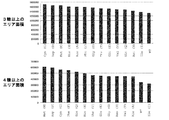
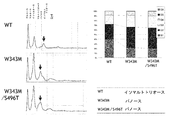
- the amount of oligosaccharide produced was compared between structurally modified TGs with different amino acids after substitution (shown below the graph).
- the amount of oligosaccharide produced was compared between structurally modified TGs with different amino acids after substitution (shown below the graph).
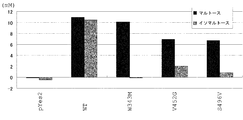
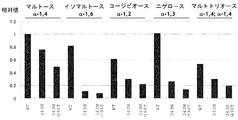
- Comparison of substrate specificity for hydrolytic activity Hydrolysis activity of structurally modified TG by 2 amino acid substitution.
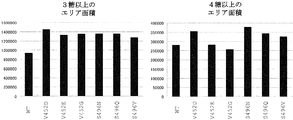
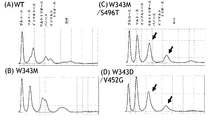
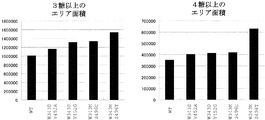
- Oligosaccharide synthesis activity of structurally modified TG by two amino acid substitutions The oligosaccharide synthesis activities of WT (wild type) (A) and structurally modified TG (W343M (B), W343M / S496T (C), W343D / V452G (D)) were compared. Comparison of synthesis amount of oligosaccharides with 3 or more sugars (left) and comparison of synthesis amount of oligosaccharides with 4 or more sugars (right). The amount of oligosaccharide produced was compared between structurally modified TGs with different amino acids after substitution (shown below the graph). Substrate specificity of structurally modified TG by two amino acid substitutions.
- ⁇ -Glucosidase is also called transglucosidase.
- ⁇ -glucosidase and “transglucosidase” are used interchangeably.
- modified ⁇ -glucosidase is an enzyme obtained by modifying or mutating “an underlying ⁇ -glucosidase” by the technique disclosed in this specification.
- modified ⁇ -glucosidase the term “structure-modified ⁇ -glucosidase”
- modified enzyme the term “modified enzyme” and the term “structure-modifying enzyme” are used interchangeably.
- the underlying ⁇ -glucosidase is typically wild type ⁇ -glucosidase. However, this does not preclude application of ⁇ -glucosidase, which has already been subjected to artificial manipulation, to the present invention as a “base ⁇ -glucosidase”.
- the “base ⁇ -glucosidase” is also referred to herein as “mutation target ⁇ -glucosidase” or “mutation target enzyme”.
- the amino acid at the point of mutation introduction is expressed by a combination of one letter representing the type of amino acid and a number representing the position of the amino acid. For example, if tryptophan at position 343 is a mutation introduction point, it is expressed as “W343”.
- the first aspect of the present invention relates to a modified ⁇ -glucosidase (modified enzyme).
- modified enzyme of the present invention has an amino acid sequence in which one or two or more amino acids selected from the group consisting of the following (1) to (14) are substituted with other amino acids in the amino acid sequence of the enzyme to be mutated: .
- Amino acid corresponding to amino acid position 385 of the amino acid sequence shown in SEQ ID NO: 1 (2) Amino acid corresponding to amino acid position 491 of the amino acid sequence shown in SEQ ID NO: 1 (3) Amino acid position 535 of the amino acid sequence shown in SEQ ID NO: 1 (4) amino acid corresponding to amino acid position 450 of the amino acid sequence shown in SEQ ID NO: 1 (5) amino acid corresponding to amino acid position 534 of the amino acid sequence shown in SEQ ID NO: 1 (6) amino acid sequence shown in SEQ ID NO: 1 (7) amino acid corresponding to amino acid position 538 of the amino acid sequence shown in SEQ ID NO: 1 (8) amino acid corresponding to amino acid position 554 of the amino acid sequence shown in SEQ ID NO: 1 (9) SEQ ID NO: 1 (10) amino acid corresponding to amino acid position 579 of the amino acid sequence shown in SEQ ID NO: 2 (11) amino acid position 585 of the amino acid sequence shown in SEQ ID NO: 2 Amino acid corresponding to noic acid (12) Amino acid
- the 385th amino acid, 491st amino acid, and 535rd amino acid are used for three-dimensional structure analysis and function prediction of human maltase-glucoamylase (SEQ ID NO: 1), and alignment comparison with homologues, etc.
- SEQ ID NO: 1 human maltase-glucoamylase
- homologues homologues
- the structure of the enzyme is modified by mutating amino acids corresponding to these amino acids to change the properties of ⁇ -glucosidase.
- the “characteristic” here is transglycosylation activity and hydrolysis activity.
- the balance between the transglycosylation activity and the hydrolysis activity is shifted in a direction in which the transglycosylation activity is dominant based on the pre-modification.
- glycosyltransferase activity is improved and / or hydrolysis activity is reduced, or both of them, and the enzyme is capable of efficient glycosyltransferase.
- amino acids shown in (4) to (14) above were used for structural modification as a result of the comparison of the three-dimensional structure and amino acid sequence of Aspergillus niger ⁇ -glucosidase and Aspergillus nidulans ⁇ -glucosidase. Amino acids predicted to be effective.
- the structure of the enzyme is altered by mutating amino acids corresponding to these amino acids to change the properties of ⁇ -glucosidase.
- the term “corresponding” when used for amino acid residues in the present specification means that the protein (enzyme) to be compared makes an equivalent contribution to the performance of its function.
- the amino acid sequence to be compared with the reference amino acid sequence that is, the amino acid sequence of SEQ ID NO: 1 or the amino acid sequence of SEQ ID NO: 2 is optimal while considering partial homology of the primary structure (amino acid sequence).
- the amino acid at the position corresponding to a specific amino acid in the reference amino acid sequence is Amino acid ".
- the “corresponding amino acid” can also be specified by comparing three-dimensional structures (three-dimensional structures).
- a highly reliable comparison result can be obtained by using the three-dimensional structure information.
- a method of performing alignment while comparing atomic coordinates of the three-dimensional structures of a plurality of enzymes can be employed.
- the three-dimensional structure information of the enzyme to be mutated can be obtained from, for example, Protein Data Bank (http://www.pdbj.org/index_j.html).
- Crystallize the protein is indispensable for determining the three-dimensional structure, but it also has industrial utility as a high purity protein purification method and a high density and stable storage method. In this case, it is preferable to crystallize a protein bound with a substrate or an analog compound thereof as a ligand.
- Diffraction data is collected by irradiating the produced crystal with X-rays. In many cases, protein crystals are damaged by X-ray irradiation and the diffraction ability deteriorates. In that case, a cryogenic measurement technique in which the crystal is rapidly cooled to about ⁇ 173 ° C.
- the heavy atom isomorphous substitution method is a method of obtaining phase information by introducing a metal atom having a large atomic number such as mercury or platinum into a crystal and utilizing the contribution of the metal atom to the X-ray diffraction data of the large X-ray scattering ability. .
- the determined phase can be improved by smoothing the electron density of the solvent region in the crystal. Since water molecules in the solvent region have large fluctuations, almost no electron density is observed, so by approximating the electron density in this region to 0, it is possible to approach the true electron density and thus the phase is improved. . Further, when a plurality of molecules are contained in the asymmetric unit, the phase is further improved by averaging the electron density of these molecules. The protein model is fit to the electron density map calculated using the improved phase in this way. This process is performed on a computer graphic using a program such as QUANTA from MSI (USA). Thereafter, the structure is refined using a program such as X-PLOR of MSI, and the structural analysis is completed.
- crystal structure of a similar protein When the crystal structure of a similar protein is known with respect to the target protein, it can be determined by a molecular replacement method using the atomic coordinates of the known protein. Molecular replacement and structural refinement can be performed using programs such as CNS_SOLVE ver.11.
- Examples of the enzyme to be mutated in the present invention include human maltase-glucoamylase, Aspergillus niger alpha-glucosidase, human neutral alpha-glucosidase C (Human Neutral alpha-glucosidase).
- mice lysosomal alpha-glucosidase mouse lysosomal alpha-glucosidase, yeast ⁇ -glucosidase (Yeast GLU2A), Aspergillus nidulans alpha-glucosidase A, Aspergillus nidulans ⁇ - Glucosidase B (Aspergillus nidulans Alpha-glucosidase AgdB), Mucor javanicus alpha-glucosidase, Aspergillus oryzae alpha-glucosidase, Mortierella alliacea ⁇ -ella alliacea alpha-glucosidase), Schizosaccharomyces pombe alpha-glucosidase, Debaryomyces occidentalis alpha-glucosidase, Barley ⁇ -glucosulase ⁇ -glucosulase -glucosidase), Arabidopsis
- Arabidopsis thaliana alpha-glucosidase SEQ ID NO: 14
- Spina oleracea alpha-glucosidase SEQ ID NO: 15
- Sugar radish alpha-glucosidase SEQ ID NO: 16
- Potato ⁇ -glucosidase SEQ ID NO: 17
- the amino acid of (1) above is the amino acid at position 343 of SEQ ID NO: 2
- the amino acid of (2) above is the sequence
- the amino acid at position 452 of No. 2 is the amino acid at position 496 of SEQ ID NO: 2
- the amino acid at (4) is at position 410 of SEQ ID NO: 2
- the amino acid at (5) is SEQ ID NO: 2.
- the amino acid of (6) above is the 498th amino acid of SEQ ID NO: 2
- the amino acid of (7) above is the 499th amino acid of SEQ ID NO: 2
- the amino acid of (8) above is the 531 amino acid of SEQ ID NO: 2.
- the amino acid of (9) is the amino acid at position 533 of SEQ ID NO. 2
- the amino acid of (10) is the amino acid at position 579 of SEQ ID NO. 2
- the amino acid of (11) is the amino acid at position 585 of SEQ ID NO.
- Amino acid (12) becomes a 662 amino acid positions of SEQ ID NO: 2
- amino acids of the (13) becomes 715 of the amino acid of SEQ ID NO: 2
- amino acids of the above (14) is 721 amino acid positions of SEQ ID NO: 2.
- amino acid after substitution is not particularly limited. Therefore, it may be a conservative amino acid substitution or a non-conservative amino acid substitution.
- conservative amino acid substitution refers to substitution of a certain amino acid residue with an amino acid residue having a side chain having the same properties.
- a basic side chain eg lysine, arginine, histidine
- an acidic side chain eg aspartic acid, glutamic acid
- an uncharged polar side chain eg glycine, asparagine, glutamine, serine, threonine, tyrosine
- Cysteine eg alanine, valine, leucine, isoleucine, proline, phenylalanine, methionine, tryptophan
- ⁇ -branched side chains eg threonine, valine, isoleucine
- aromatic side chains eg tyrosine, phenylalanine, Like tryptophan and histidine.
- Conservative amino acid substitutions are typically substitutions between amino acid residues within the same family.
- amino acids after substitution when ⁇ -glucosidase derived from Aspergillus niger having the amino acid sequence of SEQ ID NO: 2 is used as the enzyme to be mutated include cysteine, aspartic acid, methionine, histidine, alanine for the amino acid of (1) , Phenylalanine, glycine, threonine, glutamic acid, valine, glutamine, asparagine or isoleucine, the amino acid of (2) is glycine, aspartic acid, glutamic acid or alanine, and the amino acid of (3) is valine, asparagine, glutamine, It is isoleucine, arginine, cysteine or threonine, the amino acid (5) is glycine, proline or valine, and the amino acid (6) is leucine or serine.
- amino acids (1) to (14) two or more amino acids may be substituted.
- combinations of amino acids to be substituted include a combination of (1) and (2) and a combination of (1) and (3). These combinations correspond to the structural modification enzymes obtained in the examples described later.
- amino acid sequences of the modified enzymes are shown in SEQ ID NOs: 18 to 42 and 74 to 78. These sequences have 1 amino acid substitution for Aspergillus niger ⁇ -glucosidase (for any of amino acids (1) to (3), (5) and (6)), 2 amino acid substitutions ((1) And (2) amino acids, (1) and (3) amino acids, or (2) and (3) amino acids), or three amino acid substitutions ((1) and (2) And (3) the amino acid sequence of the modified enzyme obtained by subjecting the amino acid to (3).
- the correspondence between SEQ ID NOs and amino acid substitutions is as follows.
- the serine (S496) at position 496 corresponds to the amino acid (3)
- the isoleucine (I410) at position 410 corresponds to the amino acid at (4)
- the glutamic acid at position 531 (E531) corresponds to the amino acid at (8)
- phenylalanine at position 533 (F533) corresponds to the amino acid at (9)
- asparagine at position 585 (N585) corresponds to the amino acid at (11)
- tyrosine at position 662 (Y662) corresponds to the amino acid at (12)
- position 715 Tyrosine (Y715) corresponds to the amino acid (13)
- leucine (L721) at position 721 corresponds to the amino acid (14).
- tyrosine (Y296) at position 296 corresponds to the amino acid (1)
- asparagine (N456) at position 456 corresponds to the amino acid (3)
- the methionine at position 363 (M363) corresponds to the amino acid at (4)
- the alanine at position 455 (A455) corresponds to the amino acid at (5)
- the tyrosine at position 458 (Y458) is the amino acid at (6).
- Asparagine at position 459 corresponds to amino acid (7)
- Aspartic acid at position 488 corresponds to amino acid (8)
- leucine at position 490 L490
- Arginine (R565) at position 565 corresponds to the amino acid at (10)
- glutamine at position 571 corresponds to the amino acid at (11)
- the 700-position phenylalanine (F700) corresponds to the (13) amino acid
- Amino acid sequence Amino acid substitution A.
- the usefulness of the modified ⁇ -glucosidase of A to C, O, and Q to S is particularly high in terms of excellent transglycosylation activity. .
- the usefulness of V and W is high in terms of extremely low hydrolysis activity.
- the usefulness of U, X and Y is high in that the decomposition activity for ⁇ -1,6 bond is extremely low.
- Y is also highly useful in that it has excellent transglycosylation activity.
- a to c are characteristic in that they exhibit ⁇ 1,6-position specific translocation activity.
- d and e are excellent in ⁇ -1,4-position specific transfer activity.
- the protein after the mutation may have the same function as the protein before the mutation. That is, the amino acid sequence mutation does not substantially affect the protein function, and the protein function may be maintained before and after the mutation.
- a modified enzyme consisting of an amino acid sequence in which one or two or more amino acids selected from the group consisting of the above (1) to (14) are substituted with other amino acids.
- “Slight difference in amino acid sequence” as used herein typically means deletion of one to several amino acids (upper limit is 3, 5, 7, 10) constituting an amino acid sequence, It means that a mutation (change) has occurred in the amino acid sequence by substitution or addition, insertion, or a combination of 1 to several amino acids (the upper limit is 3, 5, 7, 10).
- the identity (%) between the amino acid sequence of “substantially identical enzyme” and the amino acid sequence of the modified enzyme as a reference is, for example, 90% or more, preferably 95% or more, more preferably 98%. Or more, and most preferably 99% or more.
- the difference in amino acid sequence may occur at a plurality of positions. “Slight differences in amino acid sequence” are preferably caused by conservative amino acid substitutions.
- the second aspect of the present invention provides a nucleic acid related to the modified enzyme of the present invention. That is, a gene encoding a modified enzyme, a nucleic acid that can be used as a probe for identifying a nucleic acid encoding the modified enzyme, and a primer for amplifying or mutating a nucleic acid encoding the modified enzyme Nucleic acids capable of being provided are provided.
- the gene encoding the modified enzyme is typically used for the preparation of the modified enzyme. According to a genetic engineering preparation method using a gene encoding a modified enzyme, it is possible to obtain a modified enzyme in a more homogeneous state. This method can also be said to be a suitable method when preparing a large amount of modified enzyme.
- the use of the gene encoding the modified enzyme is not limited to the preparation of the modified enzyme.
- the nucleic acid can also be used as an experimental tool for elucidating the mechanism of action of the modified enzyme, or as a tool for designing or preparing a further modified enzyme.
- a “gene encoding a modified enzyme” refers to a nucleic acid obtained by expressing the modified enzyme, and has a base sequence corresponding to the amino acid sequence of the modified enzyme.
- the nucleic acid includes, of course, a nucleic acid obtained by adding a sequence that does not encode an amino acid sequence to such a nucleic acid. Codon degeneracy is also considered.
- SEQ ID NOs: 43 to 67 and 79 to 83 Examples of sequences (base sequences) of genes encoding modified enzymes are shown in SEQ ID NOs: 43 to 67 and 79 to 83. These sequences are genes encoding a modified enzyme in which a specific amino acid substitution is performed on ⁇ -glucosidase of Aspergillus niger.
- the correspondence between SEQ ID NOs and amino acid substitutions is as follows.
- SEQ ID NO: 48: W343F G Examples of sequences (base sequences) of genes encoding modified enzymes are shown in SEQ ID NOs: 43 to 67 and 79 to 83. These sequences are genes encoding
- SEQ ID NO: 63 W343D and V452G V.
- SEQ ID NO: 64 W343D and S496I W.
- SEQ ID NO: 65 W343D and S496R X.
- SEQ ID NO: 66 W343M and S496C Y.
- SEQ ID NO: 67 W343M and S496T a.
- the nucleic acid of the present invention is isolated by using standard genetic engineering techniques, molecular biological techniques, biochemical techniques, etc. with reference to the sequence information disclosed in this specification or the attached sequence listing. Can be prepared.
- a nucleic acid (hereinafter referred to as the following) having a partially different base sequence, although the function of the protein encoded by the same is equivalent to the base sequence of the gene encoding the modified enzyme of the present invention.
- a base sequence defining a homologous nucleic acid is also referred to as “homologous base sequence”).
- a modified enzyme comprising a nucleotide sequence including substitution, deletion, insertion, addition or inversion of one or more bases based on the nucleotide sequence of a nucleic acid encoding the modified enzyme of the present invention.
- DNA encoding a protein having a characteristic enzyme activity that is, glycosyltransferase activity.
- Base substitution or deletion may occur at a plurality of sites.
- the term “plurality” as used herein refers to, for example, 2 to 40 bases, preferably 2 to 20 bases, more preferably 2 to 10 bases, although it varies depending on the position and type of amino acid residues in the three-dimensional structure of the protein encoded by the nucleic acid. It is.
- homologous nucleic acids include, for example, restriction enzyme treatment, treatment with exonuclease, DNA ligase, etc., site-directed mutagenesis (Molecular Cloning, Third Edition, Chapter 13, Cold Spring Harbor Laboratory Press, New York) It can be obtained by introducing mutations by mutation introduction methods (Molecular Cloning, Third Edition, Chapter 13, Cold Spring Harbor Laboratory Press, New York). Homologous nucleic acids can also be obtained by other methods such as ultraviolet irradiation.
- nucleic acid having a base sequence complementary to the base sequence of a gene encoding the modified enzyme of the present invention relates to a nucleic acid having a base sequence complementary to the base sequence of a gene encoding the modified enzyme of the present invention. Still another embodiment of the present invention provides at least about 60%, 70%, 80%, 90%, 95% of the base sequence of the gene encoding the modified enzyme of the present invention or a base sequence complementary thereto. Nucleic acids having 99% and 99.9% identical base sequences are provided.
- Still another embodiment of the present invention is a nucleic acid having a base sequence that hybridizes under stringent conditions to a base sequence of a gene encoding the modified enzyme of the present invention or a base sequence complementary to the base sequence homologous thereto.
- the “stringent conditions” here are conditions under which so-called specific hybrids are formed and non-specific hybrids are not formed. Such stringent conditions are known to those skilled in the art, such as Molecular Cloning (Third Edition, Cold Spring Harbor Laboratory Press, New York) and Current protocols in molecular biology (edited by Frederick M. Ausubel et al., 1987) Can be set with reference to.
- hybridization solution 50% formamide, 10 ⁇ SSC (0.15M NaCl, 15 mM sodium citrate, pH 7.0), 5 ⁇ Denhardt solution, 1% SDS, 10% dextran sulfate, 10 ⁇ g / ml denaturation
- 5 ⁇ Denhardt solution 1% SDS
- 10% dextran sulfate 10 ⁇ g / ml denaturation
- incubation at about 42 ° C to about 50 ° C using salmon sperm DNA, 50 mM phosphate buffer (pH 7.5), followed by washing at about 65 ° C to about 70 ° C using 0.1 x SSC, 0.1% SDS can be mentioned.
- Further preferable stringent conditions include, for example, 50% formamide, 5 ⁇ SSC (0.15M NaCl, 15 mM sodium citrate, pH 7.0), 1 ⁇ Denhardt solution, 1% SDS, 10% dextran sulfate, 10 ⁇ g / ml as a hybridization solution. Of denatured salmon sperm DNA, 50 mM phosphate buffer (pH 7.5)).
- nucleic acid having a base sequence of a gene encoding the modified enzyme of the present invention or a part of a base sequence complementary thereto.
- a nucleic acid fragment can be used for detecting, identifying, and / or amplifying a nucleic acid having a base sequence of a gene encoding the modified enzyme of the present invention.
- the nucleic acid fragment is, for example, a nucleotide portion continuous in the base sequence of the gene encoding the modified enzyme of the present invention (eg, about 10 to about 100 bases in length, preferably about 20 to about 100 bases, more preferably about 30 to about 100). It is designed to include at least a portion that hybridizes (100 base length).
- a nucleic acid fragment can be labeled.
- fluorescent substances, enzymes, and radioisotopes can be used.
- Still another aspect of the present invention relates to a recombinant DNA containing the gene of the present invention (gene encoding a modified enzyme).
- the recombinant DNA of the present invention is provided, for example, in the form of a vector.
- vector refers to a nucleic acid molecule capable of transporting a nucleic acid inserted therein into a target such as a cell.
- An appropriate vector is selected according to the purpose of use (cloning, protein expression) and in consideration of the type of host cell.
- Examples of vectors using insect cells as hosts include pAc and pVL, and examples of vectors using mammalian cells as hosts include pCDM8 and pMT2PC.
- the vector of the present invention is preferably an expression vector.
- “Expression vector” refers to a vector capable of introducing a nucleic acid inserted therein into a target cell (host cell) and allowing expression in the cell.
- Expression vectors usually contain a promoter sequence necessary for the expression of the inserted nucleic acid, an enhancer sequence that promotes expression, and the like.
- An expression vector containing a selectable marker can also be used. When such an expression vector is used, the presence / absence (and extent) of introduction of the expression vector can be confirmed using a selection marker.
- Insertion of the nucleic acid of the present invention into a vector, insertion of a selectable marker gene (if necessary), insertion of a promoter (if necessary), etc. are performed using standard recombinant DNA techniques (for example, Molecular Cloning, Third Edition, 1.84, Cold Spring Harbor Laboratory Press and New York, which can be referred to, are known methods using restriction enzymes and DNA ligases).
- the host cell is preferably a microorganism such as Escherichia coli (Escherichia coli) or budding yeast (Saccharomyces cerevisiae) from the viewpoint of ease of handling. Any host cell capable of expressing can be used.
- E. coli include E. coli BL21 (DE3) pLysS when T7 promoter is used, and E. coli JM109 otherwise.
- budding yeast include budding yeast SHY2, budding yeast AH22, or budding yeast INVSc1 (Invitrogen).
- microorganism that is, a transformant
- the microorganism of the present invention can be obtained by transfection or transformation using the vector of the present invention.
- calcium chloride method Frnal of Molecular Biology (J. Mol. Biol.), Volume 53, pp. 159 (1970)
- Hanahan Method Journal of Molecular Biology, Volume 166, 557) (1983)
- SEM Gene, 96, 23 (1990)
- Chung et al. Proceedings of the National Academy of Sciences of the USA, 86) Vol., P.
- microorganism of the present invention can be used for producing the modified enzyme of the present invention (see the column for the preparation of modified ⁇ -glucosidase described later).
- the modified enzyme of the present invention is provided, for example, in the form of an enzyme agent.
- the enzyme agent may contain excipients, buffers, suspending agents, stabilizers, preservatives, preservatives, physiological saline and the like in addition to the active ingredient (modified enzyme of the present invention).
- excipient starch, dextrin, maltose, trehalose, lactose, D-glucose, sorbitol, D-mannitol, sucrose, glycerol and the like can be used. Phosphate, citrate, acetate, etc. can be used as the buffer.
- propylene glycol, ascorbic acid or the like can be used.
- preservatives phenol, benzalkonium chloride, benzyl alcohol, chlorobutanol, methylparaben, and the like can be used.
- preservatives ethanol, benzalkonium chloride, paraoxybenzoic acid, chlorobutanol and the like can be used.
- a further aspect of the invention relates to the use of the modified enzyme.
- a method for producing an oligosaccharide is provided.
- the first aspect of the method for producing an oligosaccharide of the present invention in order to take advantage of the characteristics of the modified enzyme of the present invention, which is highly specific for ⁇ -1,4 bonds, two or more sugars having ⁇ -1,4 bonds are used. And the modified enzyme of the present invention is allowed to act on the substrate.
- an enzyme having high specificity for ⁇ -1,4 binding such as modified enzymes W343M, W343M / S496T, C498L, C498S and the like shown in Examples described later, is used.
- substrates are maltose, maltotriose, panose, pullulan, maltotetraose, maltopentaose, maltohexaose, maltoheptaose, maltooctaose, dextrin, starch (potato starch, sweet potato starch, coast starch, wheat starch, Tapioca starch, etc.).
- a mixture of two or more kinds of oligosaccharides or polysaccharides may be used as a substrate.
- an oligosaccharide having few branched chains can be produced specifically and efficiently.
- the reaction conditions may be the same as those usually employed for the production of oligosaccharides using ⁇ -glucosidase.
- a modified enzyme exhibiting an ⁇ -1,6 bond-specific transglycosylation activity for example, S495G, S495P, S495V shown in Examples described later
- substrates in this case are isomaltose, isomaltotriose, panose, isopanose, starch (potato starch, sweet potato starch, coast starch, wheat starch, tapioca starch, etc.).
- substrates in this case are isomaltose, isomaltotriose, panose, isopanose, starch (potato starch, sweet potato starch, coast starch, wheat starch, tapioca starch, etc.).
- oligosaccharides with many branched chains can be specifically and efficiently produced.
- Wild-type enzyme may be used.
- the wild-type enzyme is not particularly limited as long as it is suitable for the production of the target oligosaccharide.
- a wild-type enzyme corresponding to the modified enzyme used that is, an enzyme that has been modified to obtain the modified enzyme
- a modified enzyme having a different origin and a wild-type enzyme may be used in combination.
- an enzyme obtained by modifying Aspergillus niger ⁇ -glucosidase (modified enzyme) and Aspergillus nidulans wild-type ⁇ -glucosidase B are used in combination.
- a modified enzyme exhibiting ⁇ -1,6 bond-specific transglycosylation activity and a wild-type enzyme are used in combination, an oligosaccharide is obtained from a substrate having an ⁇ -1,4 bond. It became clear that it could be generated. Therefore, in a further aspect of the present invention, a modified enzyme that exhibits ⁇ -1,6 bond-specific transglycosylation activity for a substrate having an ⁇ -1,4 bond (for example, S495G shown in the Examples below, S495P, S495V) and wild type enzyme are allowed to act to obtain oligosaccharides.
- the modified enzyme of the present invention can be expected to have an anti-aging effect on starch, an improvement in food flavor, an intestinal effect, and the like due to its sugar transfer activity. Therefore, examples of the use of the modified enzyme of the present invention include prevention of starch aging in food, improvement of food flavor, and intestinal regulation. Assuming application to these uses, the present invention provides, as a further aspect, a composition containing a modified enzyme (pharmaceutical composition, quasi-drug composition, cosmetic composition, food composition or bait composition). )I will provide a.
- Preparation of the pharmaceutical composition and quasi-drug composition of the present invention can be performed according to a conventional method.
- other pharmaceutically acceptable ingredients for example, carriers, excipients, disintegrants, buffers, emulsifiers, suspending agents, soothing agents, stabilizers, preservatives, preservatives, physiological Saline solution and the like.
- excipient lactose, starch, sorbitol, D-mannitol, sucrose and the like can be used.
- disintegrant starch, carboxymethylcellulose, calcium carbonate and the like can be used. Phosphate, citrate, acetate, etc. can be used as the buffer.
- emulsifier gum arabic, sodium alginate, tragacanth and the like can be used.
- suspending agent glyceryl monostearate, aluminum monostearate, methyl cellulose, carboxymethyl cellulose, hydroxymethyl cellulose, sodium lauryl sulfate and the like can be used.
- soothing agent benzyl alcohol, chlorobutanol, sorbitol and the like can be used.
- stabilizer propylene glycol, ascorbic acid or the like can be used.
- preservatives phenol, benzalkonium chloride, benzyl alcohol, chlorobutanol, methylparaben, and the like can be used.
- preservatives benzalkonium chloride, paraoxybenzoic acid, chlorobutanol and the like can be used.
- the dosage form in the case of formulating is also not particularly limited, and the pharmaceutical composition or pharmaceutical of the present invention can be used as tablets, powders, fine granules, granules, capsules, syrups, injections, external preparations, suppositories, etc.
- An quasi-drug composition can be provided.
- the pharmaceutical composition of the present invention contains an active ingredient (modified enzyme) in an amount necessary for obtaining an expected therapeutic effect or preventive effect (ie, a therapeutically effective amount).
- the quasi-drug composition of the present invention contains an active ingredient in an amount necessary for obtaining the expected improvement effect, prevention effect and the like.
- the amount of the active ingredient contained in the pharmaceutical composition or quasi-drug composition of the present invention generally varies depending on the dosage form and form, but the amount of the active ingredient is, for example, about 0.1% by weight to achieve a desired dose. Set within the range of about 95% by weight.
- the pharmaceutical composition and quasi-drug composition of the present invention are oral or parenteral (intravenous, intraarterial, subcutaneous, intramuscular, or intraperitoneal injection, transdermal, nasal, transmucosal depending on the dosage form and form. , Application, etc.).
- the “subject” here is not particularly limited, and includes humans and non-human mammals (including pet animals, domestic animals, laboratory animals. Specifically, for example, mice, rats, guinea pigs, hamsters, monkeys, cows, pigs, goats. , Sheep, dogs, cats, chickens, quails, etc.).
- the application subject is a human.
- the dosage and usage of the pharmaceutical composition and quasi-drug composition of the present invention are set so as to obtain the expected effect.
- the symptom, age, sex, weight, etc. of the subject of application are generally considered.
- a person skilled in the art can set an appropriate dose in consideration of these matters.
- the administration schedule for example, once to several times a day, once every two days, or once every three days can be adopted.
- the symptom of the application target, the duration of effect of the active ingredient, and the like can be considered.
- the cosmetic composition of the present invention comprises a modified enzyme and components / bases usually used in cosmetics (for example, various oils and fats, mineral oil, petrolatum, squalane, lanolin, beeswax, denatured alcohol, dextrin palmitate, glycerin). Glycerin fatty acid ester, ethylene glycol, paraben, camphor, menthol, various vitamins, zinc oxide, titanium oxide, benzoic acid, edetic acid, chamomile oil, carrageenan, chitin powder, chitosan, fragrance, coloring agent, etc.) Obtainable.
- the cosmetic composition include emulsions for face or body, lotions, creams, lotions, essences, oils, packs, sheets, and cleaning agents.
- the addition amount of the modified enzyme in the cosmetic composition is not particularly limited.
- the modified enzyme can be added so as to be 0.01 to 10% by weight.
- examples of the “food composition” in the present invention include general foods (rice cooked rice, breads, grains, vegetables, meat, various processed foods, confectionery, milk, soft drinks, alcoholic beverages, etc.), nutritional supplements (Supplements, energy drinks, etc.) and food additives.
- a dietary supplement or food additive it can be provided in the form of powder, granule powder, tablet, paste, liquid or the like.
- Examples of the “food composition” of the present invention are pet food (food for dogs, cats, birds, fish, reptiles, amphibians, rodents, etc.) and feed (food for livestock, poultry, fish farming, etc.).
- a further aspect of the present invention relates to a method for designing a modified enzyme.
- the following steps (i) and (ii) are performed.
- amino acid corresponding to amino acid 385 of the amino acid sequence shown in SEQ ID NO: 1 (2) amino acid corresponding to 491 amino acids of the amino acid sequence shown in SEQ ID NO: 1 (3) amino acid corresponding to 535 amino acid of the amino acid sequence shown in SEQ ID NO: 1
- amino acid corresponding to 535 amino acid of the amino acid sequence shown in SEQ ID NO: 1 Corresponding amino acid (4) Amino acid corresponding to the 450th amino acid of the amino acid sequence shown in SEQ ID NO: 1 (5) Amino acid corresponding to the 534th amino acid of the amino acid sequence shown in SEQ ID NO: 1 (6) Amino acid sequence of the amino acid sequence shown in SEQ ID NO: 1 Amino acid corresponding to amino acid position 537 (7) Amino acid corresponding to amino acid position 538 of the amino acid sequence shown in SEQ ID NO: 1 (8) Amino acid corresponding to amino acid position 554 in the amino acid sequence shown in SEQ ID NO: 1 (9) Amino acid corresponding to amino acid 556 of the
- the substitution target amino acids (1) to (14) are amino acids identified as amino acids important for the properties of the enzyme. Therefore, it can be greatly expected that the substitution of these amino acids will change the properties of ⁇ -glucosidase. Properties that are particularly expected to change are transglycosylation activity and hydrolysis activity.
- the design method of the present invention is particularly useful as a means for designing an enzyme in which the balance between these two activities is changed. For example, the design method of the present invention can be used for the purpose of reducing or eliminating the hydrolysis activity and increasing the transglycosylation activity.
- the enzyme to be mutated in the design method of the present invention is ⁇ -glucosidase.
- the enzyme to be mutated is typically a wild-type enzyme (an enzyme found in nature). However, this does not preclude the use of an enzyme that has already undergone some mutation or modification as the enzyme to be displaced.
- enzymes to be mutated include human maltase-glucoamylase, ⁇ -glucosidase of Aspergillus niger, human neutral ⁇ -glucosidase C (Human Neutral alpha-glucosidase C), Mouse lysosomal ⁇ -glucosidase (Mouse Lysosomal alpha-glucosidase), yeast ⁇ -glucosidase (Yeast GLU2A), Aspergillus nidulans ⁇ -glucosidase A (Aspergillus nidulans Alpha-glucosidase AgdA), Aspergillus nidulans ⁇ -glucosidase B Aspergillus nidulans Alpha-glucosidase AgdB), Mucor Yabanicus ⁇ -glucosidase (Mucor javanicus alpha-glucosidase), Aspergillus oryzae
- amino acid sequences of these ⁇ -glucosidases are registered in public databases (SEQ ID NOs: 1 to 17).
- an enzyme consisting of any one of these amino acid sequences is an enzyme to be mutated.
- step (ii) is performed after step (i).
- the type of amino acid after substitution is not particularly limited. Therefore, it may be a conservative amino acid substitution or a non-conservative amino acid substitution.
- a further aspect of the present invention relates to a method for preparing a modified enzyme.
- a modified enzyme successfully obtained by the present inventors is prepared by a genetic engineering technique.
- a nucleic acid encoding any one of the amino acid sequences of SEQ ID NOs: 18 to 42 and 74 to 78 is prepared (step (I)).
- the “nucleic acid encoding a specific amino acid sequence” is a nucleic acid from which a polypeptide having the amino acid sequence is obtained when it is expressed, not to mention a nucleic acid comprising a base sequence corresponding to the amino acid sequence.
- nucleic acid encoding any amino acid sequence of SEQ ID NOs: 18 to 42, 74 to 78 refers to standard genetic engineering techniques, molecular organisms with reference to the sequence information disclosed in this specification or the attached sequence listing. It can be prepared in an isolated state by using a scientific method, a biochemical method or the like.
- amino acid sequences of SEQ ID NOs: 18 to 42 and 74 to 78 are all amino acid sequences of ⁇ -glucosidase derived from Aspergillus niger.
- a nucleic acid that encodes the amino acid sequence of any one of SEQ ID NOs: 18-42 and 74-78 can be obtained by adding a necessary mutation to the gene (SEQ ID NO: 73) encoding Aspergillus niger-derived ⁇ -glucosidase. Gene).
- a necessary mutation to the gene (SEQ ID NO: 73) encoding Aspergillus niger-derived ⁇ -glucosidase. Gene).
- Many methods for position-specific base sequence substitution are known in the art (see, for example, Molecular Cloning, Third Edition, Cold Spring Harbor Laboratory Press, New York), and an appropriate method is selected from them. Can be used.
- a position-specific mutation introducing method a position-specific amino acid saturation mutation method can be employed.
- the position-specific amino acid saturation mutation method is a “Semi-rational, semi-random” technique in which amino acid saturation mutation is introduced by estimating the position where the desired function is involved based on the three-dimensional structure of the protein (J. Mol. Biol. 331, 585-592 (2003)).
- position-specific amino acid saturation mutation using kits such as KOD-Plus-Mutagenesis Kit (Toyobo), Quick change (Stratagene), Overlap extention PCR (Nucleic Acid Res. 16,7351-7367 (1988)) can be introduced.
- KOD-Plus-Mutagenesis Kit Toyobo
- Quick change Stratagene
- Overlap extention PCR Nucleic Acid Res. 16,7351-7367 (1988)
- a DNA polymerase used for PCR Taq polymerase or the like can be used.
- it is preferable to use a highly accurate DNA polymerase such as KOD-PLUS- (Toyobo), Pfu turbo (Stratagene).
- a modified enzyme is prepared based on the amino acid sequence designed by the design method of the present invention.
- a nucleic acid encoding an amino acid sequence constructed by the designing method of the present invention is prepared.
- a necessary mutation that is, substitution of an amino acid at a specific position in a protein as an expression product
- a nucleic acid (gene) encoding the modified enzyme is obtained.
- step (II) the prepared nucleic acid is expressed (step (II)).
- an expression vector into which the nucleic acid is inserted is prepared, and a host cell is transformed using the expression vector.
- “Expression vector” refers to a vector capable of introducing a nucleic acid inserted therein into a target cell (host cell) and allowing expression in the cell.
- Expression vectors usually contain a promoter sequence necessary for the expression of the inserted nucleic acid, an enhancer sequence that promotes expression, and the like.
- An expression vector containing a selectable marker can also be used. When such an expression vector is used, the presence / absence (and extent) of introduction of the expression vector can be confirmed using a selection marker.
- the transformant is cultured under conditions where the modified enzyme, which is the expression product, is produced.
- the transformant may be cultured according to a conventional method.
- the carbon source used in the medium may be any assimitable carbon compound.
- glucose, sucrose, lactose, maltose, molasses, pyruvic acid and the like are used.
- the nitrogen source may be any nitrogen compound that can be used.
- peptone, meat extract, yeast extract, casein hydrolyzate, soybean cake alkaline extract, and the like are used.
- phosphates, carbonates, sulfates, salts such as magnesium, calcium, potassium, iron, manganese, and zinc, specific amino acids, specific vitamins, and the like are used as necessary.
- the culture temperature can be set within the range of 30 ° C to 40 ° C (preferably around 37 ° C).
- the culture time can be set in consideration of the growth characteristics of the transformant to be cultured and the production characteristics of the modified enzyme.
- the pH of the medium is adjusted so that the transformant grows and the enzyme is produced.
- the pH of the medium is about 6.0 to 9.0 (preferably around pH 7.0).
- the expression product (modified enzyme) is recovered (step (III)).
- the culture solution containing the cultured microbial cells can be used as it is or after concentration, removal of impurities, etc., it can be used as an enzyme solution.
- the expression product is once recovered from the culture solution or microbial cells. If the expression product is a secreted protein, it can be recovered from the culture solution, and if not, it can be recovered from the fungus body.
- the culture supernatant is filtered and centrifuged to remove insolubles, followed by concentration under reduced pressure, membrane concentration, salting out using ammonium sulfate or sodium sulfate, methanol, ethanol, acetone, etc.
- chromatographic methods such as fractional precipitation, dialysis, heat treatment, isoelectric point treatment, gel filtration, adsorption chromatography, ion exchange chromatography, affinity chromatography (eg, Sephadex gel (GE Healthcare Bioscience)) Separation using a combination of gel filtration, DEAE Sepharose CL-6B (GE Healthcare Bioscience), Octyl Sepharose CL-6B (GE Healthcare Bioscience), CM Sepharose CL-6B (GE Healthcare Bioscience) Purified to obtain a purified product of the modified enzyme It is possible.
- DEAE Sepharose CL-6B GE Healthcare Bioscience
- Octyl Sepharose CL-6B GE Healthcare Bioscience
- CM Sepharose CL-6B GE Healthcare Bioscience
- the microbial cells are collected by filtering, centrifuging, etc., and then the microbial cells are subjected to mechanical methods such as pressure treatment, ultrasonic treatment, or enzymatic methods such as lysozyme. After disruption by the method, a purified product of the modified enzyme can be obtained by separation and purification in the same manner as described above.
- the purified enzyme obtained as described above by pulverizing it by, for example, freeze drying, vacuum drying or spray drying.
- the purified enzyme may be dissolved in a phosphate buffer, triethanolamine buffer, Tris-HCl buffer or GOOD buffer in advance.
- a phosphate buffer or a triethanolamine buffer can be used.
- PIPES, MES, or MOPS is mentioned as a GOOD buffer here.
- cell-free synthesis system (cell-free transcription system, cell-free transcription / translation system) refers to a ribosome derived from a live cell (or obtained by a genetic engineering technique), not a live cell. This refers to the in vitro synthesis of mRNA and protein encoded by a template nucleic acid (DNA or mRNA) using transcription / translation factors.
- a cell extract obtained by purifying a cell disruption solution as needed is generally used.
- Cell extracts generally contain ribosomes necessary for protein synthesis, various factors such as initiation factors, and various enzymes such as tRNA.
- ribosomes necessary for protein synthesis
- various factors such as initiation factors
- various enzymes such as tRNA.
- other substances necessary for protein synthesis such as various amino acids, energy sources such as ATP and GTP, and creatine phosphate are added to the cell extract.
- a ribosome, various factors, and / or various enzymes prepared separately may be supplemented as necessary during protein synthesis.
- cell-free transcription / translation system is used interchangeably with a cell-free protein synthesis system, in-vitro translation system or in-vitro transcription / translation system.
- RNA is used as a template to synthesize proteins.
- total RNA, mRNA, in vitro transcript and the like are used.
- the other in vitro transcription / translation system uses DNA as a template.
- the template DNA should contain a ribosome binding region and preferably contain an appropriate terminator sequence.
- conditions to which factors necessary for each reaction are added are set so that the transcription reaction and the translation reaction proceed continuously.
- TG transglucosidase
- protein engineering was used to study one direction technology for hydrolysis reaction and dehydration condensation reaction.
- TG is an enzyme used for oligosaccharide production and has an activity of hydrolyzing a glucoside bond, but also has a transglycosylation activity and produces oligosaccharide from maltose.
- the research was advanced with the aim of developing a TG that performs sugar transfer more efficiently.
- amino acid at point (amino acid at position 385: Y385, amino acid at position 491: V491, amino acid at position 535: N535) was selected. All are in the region in contact with the substrate and can be expected to be involved in the activity of the substrate (FIG. 1, A).
- five types of ⁇ -glucosidase homologues were selected, and the sequences near the mutation introduction point were aligned and compared using CLUSTALW. Y385, V491, and N535 were all highly conserved due to the high homology of neighboring sequences, and thus could be expected to be an important region for enzyme function.
- the amino acids corresponding to these mutagenesis points were identified by Asp. Niger TG (FIG. 1, C).
- the amino acid corresponding to Y385 is W343, the amino acid corresponding to V491 is V452, and the amino acid corresponding to N535 is S496.
- Primers for introducing mutations into these amino acids were designed, and mutations were introduced by inverse PCR using random primers. E. coli was transformed and sequence analysis was performed after miniprep to confirm the introduction of mutation.
- Hydrolysis activity was measured using maltose which is an enzyme substrate. Adjust the substrate to a final concentration of 1% and color the glucose produced by hydrolysis with an aminoantipyrine / phenol coloring solution containing glucose oxidase (GO) and peroxidase (PO), and measure OD500. Quantified with A calibration curve (standard) was prepared from a glucose standard product, and the amount of produced glucose was calculated from the absorbance.
- maltose which is an enzyme substrate. Adjust the substrate to a final concentration of 1% and color the glucose produced by hydrolysis with an aminoantipyrine / phenol coloring solution containing glucose oxidase (GO) and peroxidase (PO), and measure OD500.
- Quantified with A calibration curve (standard) was prepared from a glucose standard product, and the amount of produced glucose was calculated from the absorbance.
- oligosaccharide synthesis activity In order to examine the oligosaccharide synthesis activity, the oligosaccharide produced by HPLC was analyzed. The resulting oligosaccharide was determined using a 50% maltose aqueous solution as a substrate.
- the number of oligosaccharides produced by each was estimated by graphing the area area of HPLC. An outline of the above screening method is shown in FIG.
- oligosaccharide synthesis activity was measured using a high-concentration maltose solution as a substrate.
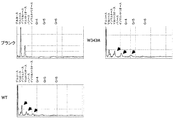
- the resulting typical HPLC pattern is shown in FIG.
- the peak of maltose of the substrate decreased, and peaks of glucose, isomaltose, panose, and isomalt triose were observed (FIG. 3, A).
- two peaks were observed in the tetrasaccharide area (FIG. 3, A).
- the substrate maltose peak decreased and glucose, maltotriose, and panose peaks were observed (FIG. 3, B to D). Furthermore, a solid peak was observed in the tetrasaccharide area (FIG. 3, B to D). Unlike WT, oligosaccharides produced by structurally modified TGs were greatly reduced in the amount of isomalt-type oligosaccharides produced.
- the graph of FIG. 4 shows the total area area of 3 sugars or more. Even in WT, oligosaccharides of 3 or more sugars are generated, but in any structurally modified TG, the area area of the generated oligosaccharides is larger than that of WT (approximately 20% increase).
- amino acid W343C cysteine
- W343D aspartic acid
- W343M methionine
- W343H histidine
- W343A alanine
- W343F phenylalanine
- W343G glycine
- W343T threonine
- the amount of oligosaccharides of three or more sugars produced by the structurally modified TG increased compared to WT (FIG. 5, Up).
- the substituted amino acids are methionine (W343M), aspartic acid (W343D), cysteine (W343C), phenylalanine (W343F), glutamine (W343Q), histidine (W343H).
- the structurally modified TG was superior to WT in its ability to synthesize (Fig. 5, bottom).
- W343M, W343D, W343C, W343F, W343Q, and W343H which have significantly higher amounts of tetrasaccharide or higher oligosaccharide synthesis than WT, can be said to be advantageous for the synthesis of longer-chain oligosaccharides.
- W343D / V452G (343 position W is replaced by D and 452 position V is replaced by G)
- W343M / S496C (343 position W is replaced by M and 496 position S is replaced by C)
- W343M / S496T position 343
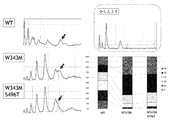
- oligosaccharide synthesis was performed using a mixed solution of maltose and isomaltose as a start substrate.
- the proportion of oligosaccharides produced did not change significantly, but a difference appeared in the type of trisaccharide produced.
- In the WT type a large amount of isomaltotriose having two ⁇ -1,6 bonds was produced (FIG. 13).
- structurally modified TGs (W343M and W343M / S496T) produced the most panoses with ⁇ -1,4 bonds and ⁇ -1,6 bonds (FIG. 13, arrows).
- the starting substrate isomaltose was hardly decomposed.
- the structurally modified TG is oligosaccharide with sugar transfer to the ⁇ -1,4 position. It was suggested to produce specifically.
- Sequence number 18 W343C Sequence number 19: W343D Sequence number 20: W343M Sequence number 21: W343H Sequence number 22: W343A Sequence number 23: W343F Sequence number 24: W343G Sequence number 25: W343T Sequence number 26: W343E Sequence number 27: W343V Sequence number 28: W343Q Sequence number 29: W343N Sequence number 30: W343I Sequence number 31: V452G Sequence number 32: V452D Sequence number 33: V452E Sequence number 34: S496V Sequence number 35: S496N Sequence number 36: S496Q Sequence number 37: W343D / V452A Sequence number 38: W343D / V452G Sequence number 39: W343D / S496I Sequence number 40: W343D / S496R Sequence number 41:
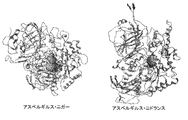
- the amino acid sequences of Aspergillus niger TG and Aspergillus nidulans TG were obtained from a known information database, read into MOE, and subjected to protein modeling on a computer. Based on each amino acid sequence, a highly homologous sequence was searched from the MOE database. As a result, the same sequence was hit in both cases, and human TG was selected. Next, each protein was modeled using this three-dimensional structure as a template. The force field was “AMBER99”, and five intermediate models were created, and finally one model structure was created.
- Fig. 14 shows the three-dimensional structures successfully modeled. Comparing the structure of Aspergillus niger TG and Aspergillus nidulans TG, although they were modeled based on the same three-dimensional structure of human TG, there was a big difference in each three-dimensional structure. Comparing the simulated substrate pocket, the substrate pocket of Aspergillus nidulans was smaller than that of Aspergillus niger. In Aspergillus niger, the substrate pocket was composed of 30 amino acids, whereas in Aspergillus nidulans, it was composed of 22 amino acids (FIG. 14).
- amino acid sequence of Aspergillus niger TG and the amino acid sequence of Aspergillus nidulans TG were aligned by CLASTAL-W. Comparing the entire amino acid sequence, the homology of the two proteins was low, and the percentage of amino acid matches was calculated to be 35%. However, when compared only to the sequence of the substrate pocket, the sequence homology is high, with 19 of 30 amino acid matches in the substrate pocket of Aspergillus niger and 19 of 22 in Aspergillus nidulans. Of amino acids matched (FIG. 15). This result suggests that the amino acids involved in the activity are more highly conserved than the entire sequence.
- primers were designed to introduce mutations into Aspergillus niger TG, and mutations were introduced by the inverse PCR method using random primers. After transformation into E. coli and mini-prep, sequence analysis was performed to confirm the introduction of mutation. Furthermore, it transformed into yeast, expressed recombinant structurally modified TG, and analyzed. The analysis results for two points, S495 and C498, are shown.
- modified TGs were compared by measuring the oligosaccharide synthesis activity using HPLC.
- substrates a 50% maltose aqueous solution, an isomaltose aqueous solution, and a maltopentaose aqueous solution that is a pentasaccharide oligosaccharide were used.
- the reaction was performed at a reaction temperature of 50 ° C. for a predetermined time (48 hours for maltose and maltopentaose, 96 hours for isomaltose).
- the oligosaccharide synthesis activity of the modified TG was compared by quantifying the area area of HPLC.
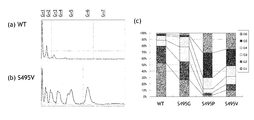
- the total area area of 3 or more sugars and 4 or more sugars was larger in S495G than WT, but decreased in S495P and S495T (FIG. 16).
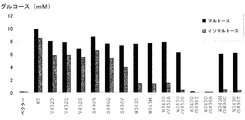
- the structurally modified TG was considered to have different reactivity for glucoside bonds, and the hydrolysis activity for various glucoside bonds was examined (FIG. 18). Hydrolysis activity was evaluated by quantifying the amount of glucose produced using maltose aqueous solution and isomaltose aqueous solution as substrates. WT shows that both ⁇ -1,4 and ⁇ -1,6 bonds have substrate affinity for glucoside bonds.
- the hydrolytic activity of maltose was lower than that of WT, but the hydrolytic activity of isomaltose was relatively increased.
- the structural modification TG substituted with S495 had improved specificity for the ⁇ -1,6 bond.
- oligosaccharide synthesis reaction was carried out using an initial substrate of pentasaccharide maltopentaose, and the resulting oligosaccharides were compared between WT TG and structurally modified TG (FIG. 19).
- WT TG decomposition and production occurred widely from glucose to more than 6 sugars.
- the amount of monosaccharide was the largest, and hydrolysis proceeded during the reaction.
- structurally modified TGs an increase in oligosaccharide was observed.
- structurally modified TGs of S495P type and S495V type had less hydrolyzed saccharides, and more than 6 sugars were produced (FIG. 19c).
- TGs were compared by measuring oligosaccharide synthesis activity using HPLC.
- a 60% maltose aqueous solution was used as the substance, and the mixture was incubated at a reaction temperature of 50 ° C. for 48 hours.
- the oligosaccharide synthesis activity of the structurally modified TG was compared by quantifying the area area of HPLC (FIG. 20). When the total area area of 3 sugars or more was compared, the area area of C498L and C498S was larger than that of WT. Similarly, the total area area of tetrasaccharides or more was increased in C498L and C498S compared to WT.
- SEQ ID NO: 74 S495G Sequence number 75: S495P Sequence number 76: S495V SEQ ID NO: 77: C498L SEQ ID NO: 78: C498S
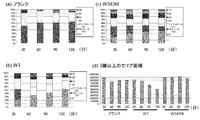
- TG was set to 20 ⁇ g / mL based on the results of preliminary studies. Details of the experimental protocol are shown below.
- (Protocol) (i) Okayu (Ajinomoto Co., Inc.) is crushed with a mixer and 1/20 volume of 1M NaOAc buffer (pH 5.0) is added. (ii) Prepare 340 ⁇ l of enzyme solution (protein concentration: 20 ⁇ g / mL). (iii) Into a glass test tube, add 0.65 g of porridge (i), 1.45 U of amylase and 340 ⁇ l of enzyme solution. (iv) Incubate in a 37 ° C. water bath and sample 200 ⁇ l into a microtest tube every 30 minutes.
- FIG. 22 (a) The result of analyzing the generated oligosaccharide by HPLC is shown in FIG.
- amylase 40-50% of the total sugar becomes maltose (FIG. 22 (a)).
- trisaccharide maltotriose and tetrasaccharide maltotetraose are produced.
- Glucose is hardly produced, and decomposition does not proceed from disaccharides.
- WT wild-type
- WT type TG with enzyme activity that converts maltose to isomaltose is thought to be able to proceed with oligosaccharide synthesis reaction even when maltose is used as a substrate if used in combination with an enzyme that supplies isomaltose.
- Oligosaccharide synthesis was performed using TG and STG (S495P). The resulting oligosaccharide was analyzed by HPLC. The reaction was carried out at 50 ° C. for 48 hours using a 50% maltose aqueous solution as a substrate.
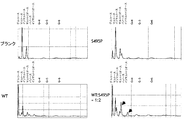
- Oligosaccharide synthesis was performed for S495P alone and when WT type and S495P were mixed (mixing ratio 2: 1, 1: 1, or 1: 2), and the generated oligosaccharide was analyzed by HPLC.
- WT type and S495P were mixed (mixing ratio 2: 1, 1: 1, or 1: 2)
- the generated oligosaccharide was analyzed by HPLC.
- panose which is a trisaccharide
- the production of oligosaccharides having 4 or more sugars is very small. That is, the reaction of 4 or more sugars does not proceed (S495P in FIG. 24, S495P in FIG. 25).
- the modified ⁇ -glucosidase of the present invention has high transglycosylation activity. Utilizing this characteristic, it is expected to be used for the production (synthesis) of oligosaccharides.
- the design method of the present invention is useful as a means for enhancing transglycosylation activity of wild-type enzymes and the like, and can be used for modifying various ⁇ -glucosidases.
Landscapes
- Chemical & Material Sciences (AREA)
- Organic Chemistry (AREA)
- Life Sciences & Earth Sciences (AREA)
- Health & Medical Sciences (AREA)
- Engineering & Computer Science (AREA)
- Zoology (AREA)
- Wood Science & Technology (AREA)
- Genetics & Genomics (AREA)
- Bioinformatics & Cheminformatics (AREA)
- General Health & Medical Sciences (AREA)
- Biochemistry (AREA)
- General Engineering & Computer Science (AREA)
- Microbiology (AREA)
- Biotechnology (AREA)
- Molecular Biology (AREA)
- Chemical Kinetics & Catalysis (AREA)
- General Chemical & Material Sciences (AREA)
- Medicinal Chemistry (AREA)
- Biomedical Technology (AREA)
- Enzymes And Modification Thereof (AREA)
- Preparation Of Compounds By Using Micro-Organisms (AREA)
- Micro-Organisms Or Cultivation Processes Thereof (AREA)
Abstract
Description
[1]α-グルコシダーゼのアミノ酸配列において、以下の(1)~(14)からなる群より選択される一又は二以上のアミノ酸が他のアミノ酸に置換されたアミノ酸配列からなる改変型α-グルコシダーゼ:
(1)配列番号1に示すアミノ酸配列の385位アミノ酸に相当するアミノ酸;
(2)配列番号1に示すアミノ酸配列の491位アミノ酸に相当するアミノ酸;
(3)配列番号1に示すアミノ酸配列の535位アミノ酸に相当するアミノ酸;
(4)配列番号1に示すアミノ酸配列の450位アミノ酸に相当するアミノ酸;
(5)配列番号1に示すアミノ酸配列の534位アミノ酸に相当するアミノ酸;
(6)配列番号1に示すアミノ酸配列の537位アミノ酸に相当するアミノ酸;
(7)配列番号1に示すアミノ酸配列の538位アミノ酸に相当するアミノ酸;
(8)配列番号1に示すアミノ酸配列の554位アミノ酸に相当するアミノ酸;
(9)配列番号1に示すアミノ酸配列の556位アミノ酸に相当するアミノ酸;
(10)配列番号2に示すアミノ酸配列の579位アミノ酸に相当するアミノ酸;
(11)配列番号2に示すアミノ酸配列の585位アミノ酸に相当するアミノ酸;
(12)配列番号1に示すアミノ酸配列の630位アミノ酸に相当するアミノ酸;
(13)配列番号1に示すアミノ酸配列の683位アミノ酸に相当するアミノ酸;
(14)配列番号1に示すアミノ酸配列の689位アミノ酸に相当するアミノ酸。
[2]α-グルコシダーゼが、ヒト・マルターゼ-グルコアミラーゼ(Human Maltase-glucoamylase)、アスペルギルス・ニガーのα-グルコシダーゼ(Aspergillus niger alpha-glucosidase)、ヒト・ニュートラルα-グルコシダーゼC(Human Neutral alpha-glucosidase C)、マウス・リソソームα-グルコシダーゼ(Mouse Lysosomal alpha-glucosidase)、酵母のα-グルコシダーゼ(Yeast GLU2A)、アスペルギルス・ニドランスのα-グルコシダーゼA(Aspergillus nidulans Alpha-glucosidase AgdA)、アスペルギルス・ニドランスのα-グルコシダーゼB(Aspergillus nidulans Alpha-glucosidase AgdB)、ムコール・ヤバニカスのα-グルコシダーゼ(Mucor javanicus alpha-glucosidase)、アスペルギルス・オリゼのα-グルコシダーゼ(Aspergillus oryzae alpha-glucosidase)、Mortierella alliaceaのα-グルコシダーゼ(Mortierella alliacea alpha-glucosidase)、シゾサッカロミセス・ポンベのα-グルコシダーゼ(Schizosaccharomyces pombe alpha-glucosidase)、デバリオミセス・オクシデンタリスのα-グルコシダーゼ(Debaryomyces occidentalis alpha-glucosidase)、大麦のα-グルコシダーゼ(Hordeum vulgare subsp. vulgare alpha-glucosidase)、シロイロナズナのα-グルコシダーゼ(Arabidopsis thaliana alpha-glucosidase)、ほうれん草のα-グルコシダーゼ(Spinacia oleracea alpha-glucosidase)、砂糖大根のα-グルコシダーゼ(Beta vulgaris alpha-glucosidase)又はジャガイモのα-グルコシダーゼ(Solanum tuberosum alpha-glucosidase)ある、[1]に記載の改変型α-グルコシダーゼ。
[3]α-グルコシダーゼのアミノ酸配列が、配列番号2のアミノ酸配列であり、
(1)のアミノ酸が該アミノ酸配列の343位アミノ酸、(2)のアミノ酸が該アミノ酸配列の452位アミノ酸、(3)のアミノ酸が該アミノ酸配列の496位アミノ酸、(4)のアミノ酸が該アミノ酸配列の410位アミノ酸、(5)のアミノ酸が該アミノ酸配列の495位アミノ酸、(6)のアミノ酸が該アミノ酸配列の498位アミノ酸、(7)のアミノ酸が該アミノ酸配列の499位アミノ酸、(8)のアミノ酸が該アミノ酸配列の531位アミノ酸、(9)のアミノ酸が該アミノ酸配列の533位アミノ酸、(12)のアミノ酸が該アミノ酸配列の662位アミノ酸、(13)のアミノ酸が該アミノ酸配列の715位アミノ酸、(14)のアミノ酸が該アミノ酸配列の721位アミノ酸となる、[1]に記載の改変型α-グルコシダーゼ。
[4]置換されるアミノ酸が(1)のアミノ酸であり、置換後のアミノ酸がシステイン、アスパラギン酸、メチオニン、ヒスチジン、アラニン、フェニルアラニン、グリシン、スレオニン、グルタミン酸、バリン、グルタミン、アスパラギン又はイソロイシンである、[3]に記載の改変型α-グルコシダーゼ。
[5]置換されるアミノ酸が(2)のアミノ酸であり、置換後のアミノ酸がグリシン、アスパラギン酸又はグルタミン酸である、[3]に記載の改変型α-グルコシダーゼ。
[6]置換されるアミノ酸が(3)のアミノ酸であり、置換後のアミノ酸がアスパラギン、グルタミン又はバリンである、[3]に記載の改変型α-グルコシダーゼ。
[7]置換されるアミノ酸が(1)のアミノ酸及び(2)のアミノ酸であり、
置換後のアミノ酸が、(1)のアミノ酸についてはアスパラギン酸であり、(2)のアミノ酸についてはアラニン又はグリシンである、[3]に記載の改変型α-グルコシダーゼ。
[8]置換されるアミノ酸が(1)のアミノ酸及び(3)のアミノ酸であり、
置換後のアミノ酸が、(1)のアミノ酸についてはアスパラギン酸又はメチオニンであり、(3)のアミノ酸についてはイソロイシン、アルギニン、システイン又はスレオニンである、[3]に記載の改変型α-グルコシダーゼ。
[9]置換されるアミノ酸が(5)のアミノ酸であり、置換後のアミノ酸がグリシン、プロリン又はバリンである、[3]に記載の改変型α-グルコシダーゼ。
[10]置換されるアミノ酸が(6)のアミノ酸であり、置換後のアミノ酸がロイシン又はセリンである、[3]に記載の改変型α-グルコシダーゼ。
[11]配列番号18~42及び77~78のいずれかのアミノ酸配列からなる、[1]に記載の改変型α-グルコシダーゼ。
[12]配列番号74~76のいずれかのアミノ酸配列からなる、[1]に記載の改変型α-グルコシダーゼ。
[13][1]~[12]のいずれか一項に記載の改変型α-グルコシダーゼをコードする遺伝子。
[14]配列番号43~67及び79~83のいずれかの塩基配列を含む、[13]に記載の遺伝子。
[15][13]又は[14]に記載の遺伝子を含む組換えDNA。
[16][15]に記載の組換えDNAを保有する微生物。
[17][1]~[12]のいずれか一項に記載の改変型α-グルコシダーゼを含む酵素剤。
[18]α-1,4結合を有する2糖以上のオリゴ糖又は多糖に対して、[1]~[8]、[10]及び[11]のいずれか一項に記載の改変型α-グルコシダーゼを作用させることを特徴とする、オリゴ糖の製造方法。
[19]α-1,6結合を有する2糖以上のオリゴ糖又は多糖に対して、[9]又は[12]に記載の改変型α-グルコシダーゼを作用させることを特徴とする、オリゴ糖の製造方法。
[20]野生型酵素を併用することを特徴とする、[18]又は[19]に記載のオリゴ糖の製造方法。
[21]α-1,4結合を有する2糖以上のオリゴ糖又は多糖に対して、[9]又は[12]に記載の改変型α-グルコシダーゼと野生型酵素を作用させることを特徴とする、オリゴ糖の製造方法。
[22][1]~[12]のいずれか一項に記載の改変型α-グルコシダーゼ又は[17]に記載の酵素剤を含有する医薬組成物、医薬部外品組成物、化粧料組成物、食品組成物又は餌組成物。
[23]以下のステップ(i)及び(ii)を含む、改変型α-グルコシダーゼの設計法:
(i)変異対象酵素であるα-グルコシダーゼのアミノ酸配列において、以下の(1)~(14)からなる群より選択される一又は二以上のアミノ酸を特定するステップ:
(1)配列番号1に示すアミノ酸配列の385位アミノ酸に相当するアミノ酸;
(2)配列番号1に示すアミノ酸配列の491位アミノ酸に相当するアミノ酸;
(3)配列番号1に示すアミノ酸配列の535位アミノ酸に相当するアミノ酸;
(4)配列番号1に示すアミノ酸配列の450位アミノ酸に相当するアミノ酸;
(5)配列番号1に示すアミノ酸配列の534位アミノ酸に相当するアミノ酸;
(6)配列番号1に示すアミノ酸配列の537位アミノ酸に相当するアミノ酸;
(7)配列番号1に示すアミノ酸配列の538位アミノ酸に相当するアミノ酸;
(8)配列番号1に示すアミノ酸配列の554位アミノ酸に相当するアミノ酸;
(9)配列番号1に示すアミノ酸配列の556位アミノ酸に相当するアミノ酸;
(10)配列番号2に示すアミノ酸配列の579位アミノ酸に相当するアミノ酸;
(11)配列番号2に示すアミノ酸配列の585位アミノ酸に相当するアミノ酸;
(12)配列番号1に示すアミノ酸配列の630位アミノ酸に相当するアミノ酸;
(13)配列番号1に示すアミノ酸配列の683位アミノ酸に相当するアミノ酸;
(14)配列番号1に示すアミノ酸配列の689位アミノ酸に相当するアミノ酸:
(ii)変異対象酵素のアミノ酸配列を基にして、ステップ(i)で特定されたアミノ酸配列が他のアミノ酸に置換されたアミノ酸配列を構築するステップ。
[24]α-グルコシダーゼが、ヒト・マルターゼ-グルコアミラーゼ(Human Maltase-glucoamylase)、アスペルギルス・ニガーのα-グルコシダーゼ(Aspergillus niger alpha-glucosidase)、ヒト・ニュートラルα-グルコシダーゼC(Human Neutral alpha-glucosidase C)、マウス・リソソームα-グルコシダーゼ(Mouse Lysosomal alpha-glucosidase)、酵母のα-グルコシダーゼ(Yeast GLU2A)、アスペルギルス・ニドランスのα-グルコシダーゼA(Aspergillus nidulans Alpha-glucosidase AgdA)、アスペルギルス・ニドランスのα-グルコシダーゼB(Aspergillus nidulans Alpha-glucosidase AgdB)、ムコール・ヤバニカスのα-グルコシダーゼ(Mucor javanicus alpha-glucosidase)、アスペルギルス・オリゼのα-グルコシダーゼ(Aspergillus oryzae alpha-glucosidase)、Mortierella alliaceaのα-グルコシダーゼ(Mortierella alliacea alpha-glucosidase)、シゾサッカロミセス・ポンベのα-グルコシダーゼ(Schizosaccharomyces pombe alpha-glucosidase)、デバリオミセス・オクシデンタリスのα-グルコシダーゼ(Debaryomyces occidentalis alpha-glucosidase)、大麦のα-グルコシダーゼ(Hordeum vulgare subsp. vulgare alpha-glucosidase)、シロイロナズナのα-グルコシダーゼ(Arabidopsis thaliana alpha-glucosidase)、ほうれん草のα-グルコシダーゼ(Spinacia oleracea alpha-glucosidase)、砂糖大根のα-グルコシダーゼ(Beta vulgaris alpha-glucosidase)又はジャガイモのα-グルコシダーゼ(Solanum tuberosum alpha-glucosidase)である、[23]に記載の設計法。
[25]α-グルコシダーゼが、配列番号1~17のいずれかのアミノ酸配列を含む、[23]に記載の設計法。
[26]α-グルコシダーゼが、配列番号2のアミノ酸配列からなり、ステップ(i)において置換されるアミノ酸が、(1)~(14)の中から選択される一つのアミノ酸、(1)~(14)の中から選択される二つのアミノ酸又は(1)~(14)の中から選択される三つのアミノ酸である、[23]に記載の設計法。
[27]以下のステップ(I)~(III)を含む、改変型α-グルコシダーゼの調製法:
(I)配列番号18~42及び74~78のいずれかのアミノ酸配列、又は[23]~[26]のいずれか一項に記載の設計法によって構築されたアミノ酸配列をコードする核酸を用意するステップ;
(II)前記核酸を発現させるステップ、及び
(III)発現産物を回収するステップ。
[28]α1,4位特異的又はα1,6位特異的な転移活性を有するα-グルコシダーゼ。
(用語)
α-グルコシダーゼはトランスグルコシダーゼとも呼ばれる。本明細書では用語「α-グルコシダーゼ」と用語「トランスグルコシダーゼ」を交換可能に使用する。用語「改変型α-グルコシダーゼ」とは、本明細書が開示する手法によって、「基になるα-グルコシダーゼ」を改変ないし変異して得られる酵素である。本明細書において用語「改変型α-グルコシダーゼ」、用語「構造改変α-グルコシダーゼ」、用語「改変型酵素」及び用語「構造改変酵素」は交換可能に用いられる。基になるα-グルコシダーゼは典型的には野生型α-グルコシダーゼである。但し、既に人為的操作が施されているα-グルコシダーゼを「基になるα-グルコシダーゼ」として本発明に適用することを妨げるものではない。「基になるα-グルコシダーゼ」のことを本明細書では「変異対象α-グルコシダーゼ」又は「変異対象酵素」とも呼ぶ。本明細書では、変異導入点のアミノ酸を、アミノ酸の種類を表す1文字とアミノ酸の位置を表す数字との組合せで表現する。例えば、343位のトリプトファンが変異導入点であれば「W343」と表現される。
本発明の第1の局面は改変型α-グルコシダーゼ(改変型酵素)に関する。本発明の改変型酵素は、変異対象酵素のアミノ酸配列において、以下の(1)~(14)からなる群より選択される一又は二以上のアミノ酸が他のアミノ酸に置換されたアミノ酸配列を有する。
(1)配列番号1に示すアミノ酸配列の385位アミノ酸に相当するアミノ酸
(2)配列番号1に示すアミノ酸配列の491位アミノ酸に相当するアミノ酸
(3)配列番号1に示すアミノ酸配列の535位アミノ酸に相当するアミノ酸
(4)配列番号1に示すアミノ酸配列の450位アミノ酸に相当するアミノ酸
(5)配列番号1に示すアミノ酸配列の534位アミノ酸に相当するアミノ酸
(6)配列番号1に示すアミノ酸配列の537位アミノ酸に相当するアミノ酸
(7)配列番号1に示すアミノ酸配列の538位アミノ酸に相当するアミノ酸
(8)配列番号1に示すアミノ酸配列の554位アミノ酸に相当するアミノ酸
(9)配列番号1に示すアミノ酸配列の556位アミノ酸に相当するアミノ酸
(10)配列番号2に示すアミノ酸配列の579位アミノ酸に相当するアミノ酸
(11)配列番号2に示すアミノ酸配列の585位アミノ酸に相当するアミノ酸
(12)配列番号1に示すアミノ酸配列の630位アミノ酸に相当するアミノ酸
(13)配列番号1に示すアミノ酸配列の683位アミノ酸に相当するアミノ酸
(14)配列番号1に示すアミノ酸配列の689位アミノ酸に相当するアミノ酸
(1)タンパク質を結晶化する。結晶化は、立体構造決定のためには欠かせないが、それ以外にも、タンパク質の高純度の精製法、高密度で安定な保存法として産業上の有用性もある。この場合、リガンドとして基質もしくはそのアナログ化合物を結合したタンパク質を結晶化すると良い。
(2)作製した結晶にX線を照射して回折データを収集する。なお、タンパク質結晶はX線照射によりダメージを受け回折能が劣化するケースが多々ある。その場合、結晶を急激に-173℃程度に冷却し、その状態で回折データを収集する低温測定技術が最近普及してきた。なお、最終的に、構造決定に利用する高分解能データを収集するために、輝度の高いシンクロトロン放射光が利用される。
(3)結晶構造解析を行うには、回折データに加えて、位相情報が必要になる。目的のタンパク質に対して、類縁のタンパク質の結晶構造が未知の場合、分子置換法で構造決定することは不可能であり、重原子同型置換法により位相問題が解決されなくてはならない。重原子同型置換法は、水銀や白金等原子番号が大きな金属原子を結晶に導入し、金属原子の大きなX線散乱能のX線回折データへの寄与を利用して位相情報を得る方法である。決定された位相は、結晶中の溶媒領域の電子密度を平滑化することにより改善することが可能である。溶媒領域の水分子は揺らぎが大きいために電子密度がほとんど観測されないので、この領域の電子密度を0に近似することにより、真の電子密度に近づくことができ、ひいては位相が改善されるのである。また、非対称単位に複数の分子が含まれている場合、これらの分子の電子密度を平均化することにより位相が更に大幅に改善される。このようにして改善された位相を用いて計算した電子密度図にタンパク質のモデルをフィットさせる。このプロセスは、コンピューターグラフィックス上で、MSI社(アメリカ)のQUANTA等のプログラムを用いて行われる。この後、MSI社のX-PLOR等のプログラムを用いて、構造精密化を行い、構造解析は完了する。目的のタンパク質に対して、類縁のタンパク質の結晶構造が既知の場合は、既知タンパク質の原子座標を用いて分子置換法により決定できる。分子置換と構造精密化はプログラム CNS_SOLVE ver.11などを用いて行うことができる。
ヒト・マルターゼ-グルコアミラーゼ(Human Maltase-glucoamylase):配列番号1
アスペルギルス・ニガーのα-グルコシダーゼ(Aspergillus niger alpha-glucosidase:配列番号2
ヒト・ニュートラルα-グルコシダーゼC(Human Neutral alpha-glucosidase C):配列番号3
マウス・リソソームα-グルコシダーゼ(Mouse Lysosomal alpha-glucosidase):配列番号4
酵母のα-グルコシダーゼ(Yeast GLU2A):配列番号5
アスペルギルス・ニドランスのα-グルコシダーゼA(Aspergillus nidulans Alpha-glucosidase AgdA):配列番号6
アスペルギルス・ニドランスのα-グルコシダーゼB(Aspergillus nidulans Alpha-glucosidase AgdB):配列番号7
ムコール・ヤバニカスのα-グルコシダーゼ(Mucor javanicus alpha-glucosidase):配列番号8
アスペルギルス・オリゼのα-グルコシダーゼ(Aspergillus oryzae alpha-glucosidase):配列番号9
Mortierella alliaceaのα-グルコシダーゼ(Mortierella alliacea alpha-glucosidase):配列番号10
シゾサッカロミセス・ポンベのα-グルコシダーゼ(Schizosaccharomyces pombe alpha-glucosidase):配列番号11
デバリオミセス・オクシデンタリスのα-グルコシダーゼ(Debaryomyces occidentalis alpha-glucosidase):配列番号12
大麦のα-グルコシダーゼ(Hordeum vulgare subsp. vulgare alpha-glucosidase):配列番号13
シロイロナズナのα-グルコシダーゼ(Arabidopsis thaliana alpha-glucosidase):配列番号14
ほうれん草のα-グルコシダーゼ(Spinacia oleracea alpha-glucosidase):配列番号15
砂糖大根のα-グルコシダーゼ(Beta vulgaris alpha-glucosidase):配列番号16
ジャガイモのα-グルコシダーゼ(Solanum tuberosum alpha-glucosidase):配列番号17
アミノ酸配列 : アミノ酸置換
A. 配列番号18 : W343C
B. 配列番号19 : W343D
C. 配列番号20 : W343M
D. 配列番号21 : W343H
E. 配列番号22 : W343A
F. 配列番号23 : W343F
G. 配列番号24 : W343G
H. 配列番号25 : W343T
I. 配列番号26 : W343E
J. 配列番号27 : W343V
K. 配列番号28 : W343Q
L. 配列番号29 : W343N
M. 配列番号30 : W343I
N. 配列番号31 : V452G
O. 配列番号32 : V452D
P. 配列番号33 : V452E
Q. 配列番号34 : S496V
R. 配列番号35 : S496N
S. 配列番号36 : S496Q
T. 配列番号37 : W343DとV452A
U. 配列番号38 : W343DとV452G
V. 配列番号39 : W343DとS496I
W. 配列番号40 : W343DとS496R
X. 配列番号41 : W343MとS496C
Y. 配列番号42 : W343MとS496T
a. 配列番号74 : S495G
b. 配列番号75 : S495P
c. 配列番号76 : S495V
d. 配列番号77 : C498L
e. 配列番号78 : C498S
本発明の第2の局面は本発明の改変型酵素に関連する核酸を提供する。即ち、改変型酵素をコードする遺伝子、改変型酵素をコードする核酸を同定するためのプローブとして用いることができる核酸、改変型酵素をコードする核酸を増幅又は突然変異等させるためのプライマーとして用いることができる核酸が提供される。
塩基配列 : アミノ酸置換
A. 配列番号43 : W343C
B. 配列番号44 : W343D
C. 配列番号45 : W343M
D. 配列番号46 : W343H
E. 配列番号47 : W343A
F. 配列番号48 : W343F
G. 配列番号49 : W343G
H. 配列番号50 : W343T
I. 配列番号51 : W343E
J. 配列番号52 : W343V
K. 配列番号53 : W343Q
L. 配列番号54 : W343N
M. 配列番号55 : W343I
N. 配列番号56 : V452G
O. 配列番号57 : V452D
P. 配列番号58 : V452E
Q. 配列番号59 : S496V
R. 配列番号60 : S496N
S. 配列番号61 : S496Q
T. 配列番号62 : W343DとV452A
U. 配列番号63 : W343DとV452G
V. 配列番号64 : W343DとS496I
W. 配列番号65 : W343DとS496R
X. 配列番号66 : W343MとS496C
Y. 配列番号67 : W343MとS496T
a. 配列番号79 : S495G
b. 配列番号80 : S495P
c. 配列番号81 : S495V
d. 配列番号82 : C498L
e. 配列番号83 : C498S
本発明の改変型酵素は例えば酵素剤の形態で提供される。酵素剤は、有効成分(本発明の改変型酵素)の他、賦形剤、緩衝剤、懸濁剤、安定剤、保存剤、防腐剤、生理食塩水などを含有していてもよい。賦形剤としてはデンプン、デキストリン、マルトース、トレハロース、乳糖、D-グルコース、ソルビトール、D-マンニトール、白糖、グリセロール等を用いることができる。緩衝剤としてはリン酸塩、クエン酸塩、酢酸塩等を用いることができる。安定剤としてはプロピレングリコール、アスコルビン酸等を用いることができる。保存剤としてはフェノール、塩化ベンザルコニウム、ベンジルアルコール、クロロブタノール、メチルパラベン等を用いることができる。防腐剤としてはエタノール、塩化ベンザルコニウム、パラオキシ安息香酸、クロロブタノール等と用いることができる。
本発明の更なる局面は改変型酵素の用途に関する。当該用途の一つとして、オリゴ糖の製造方法が提供される。本発明のオリゴ糖の製造方法の第1態様では、α-1,4結合に対する特異性が高いという、本発明の改変型酵素の特徴を活かすため、α-1,4結合を有する2糖以上のオリゴ糖又は多糖を基質として用い、当該基質に対して本発明の改変型酵素を作用させる。当該態様には、後述の実施例に示す改変型酵素W343M、W343M/S496T、C498L、C498S等、α-1,4結合に対する特異性の高い酵素が使用される。基質の例はマルトース、マルトトリオース、パノース、プルラン、マルトテトラオース、マルトペンタオース、マルトヘキサオース、マルトヘプタオース、マルトオクタオース、デキストリン、デンプン(馬鈴薯澱粉、甘藷澱粉、コースターチ、小麦澱粉、タピオカ澱粉等)などである。二種類以上のオリゴ糖又は多糖の混合物を基質にしてもよい。本発明の製造方法によれば分岐鎖が少ないオリゴ糖を特異的且つ効率的に製造可能である。反応条件は、α-グルコシダーゼを用いたオリゴ糖の生成に通常採用されるものに準じればよい。
本発明の更なる局面は改変型酵素の設計法に関する。本発明の設計法では、以下のステップ(i)及び(ii)を実施する。
ステップ(i):変異対象酵素であるα-グルコシダーゼのアミノ酸配列において、以下の(1)~(14)からなる群より選択される一又は二以上のアミノ酸を特定する。
(1)配列番号1に示すアミノ酸配列の385位アミノ酸に相当するアミノ酸
(2)配列番号1に示すアミノ酸配列の491アミノ酸に相当するアミノ酸
(3)配列番号1に示すアミノ酸配列の535位アミノ酸に相当するアミノ酸
(4)配列番号1に示すアミノ酸配列の450位アミノ酸に相当するアミノ酸
(5)配列番号1に示すアミノ酸配列の534位アミノ酸に相当するアミノ酸
(6)配列番号1に示すアミノ酸配列の537位アミノ酸に相当するアミノ酸
(7)配列番号1に示すアミノ酸配列の538位アミノ酸に相当するアミノ酸
(8)配列番号1に示すアミノ酸配列の554位アミノ酸に相当するアミノ酸
(9)配列番号1に示すアミノ酸配列の556位アミノ酸に相当するアミノ酸
(10)配列番号2に示すアミノ酸配列の579位アミノ酸に相当するアミノ酸
(11)配列番号2に示すアミノ酸配列の585位アミノ酸に相当するアミノ酸
(12)配列番号1に示すアミノ酸配列の630位アミノ酸に相当するアミノ酸
(13)配列番号1に示すアミノ酸配列の683位アミノ酸に相当するアミノ酸
(14)配列番号1に示すアミノ酸配列の689位アミノ酸に相当するアミノ酸
ステップ(ii):変異対象酵素のアミノ酸配列を基にして、ステップ(i)で特定されたアミノ酸配列が他のアミノ酸に置換されたアミノ酸配列を構築する。
本発明の更なる局面は改変型酵素の調製法に関する。本発明の調製法の一態様では、本発明者らが取得に成功した改変型酵素を遺伝子工学的手法で調製する。この態様の場合、配列番号18~42、74~78のいずれかのアミノ酸配列をコードする核酸を用意する(ステップ(I))。ここで、「特定のアミノ酸配列をコードする核酸」は、それを発現させた場合に当該アミノ酸配列を有するポリペプチドが得られる核酸であり、当該アミノ酸配列に対応する塩基配列からなる核酸は勿論のこと、そのような核酸に余分な配列(アミノ酸配列をコードする配列であっても、アミノ酸配列をコードしない配列であってもよい)が付加されていてもよい。また、コドンの縮重も考慮される。「配列番号18~42、74~78のいずれかのアミノ酸配列をコードする核酸」は、本明細書又は添付の配列表が開示する配列情報を参考にし、標準的な遺伝子工学的手法、分子生物学的手法、生化学的手法などを用いることによって、単離された状態に調製することができる。ここで、配列番号18~42、74~78のアミノ酸配列はいずれも、アスペルギルス・ニガー由来α-グルコシダーゼのアミノ酸配列に変異を施したものである。従って、アスペルギルス・ニガー由来α-グルコシダーゼをコードする遺伝子(配列番号73)に対して必要な変異を加えることによっても、配列番号18~42、74~78のいずれかのアミノ酸配列をコードする核酸(遺伝子)を得ることができる。位置特異的塩基配列置換のための方法は当該技術分野において数多く知られており(例えば、Molecular Cloning, Third Edition, Cold Spring Harbor Laboratory Press, New Yorkを参照)、その中から適切な方法を選択して用いることができる。位置特異的変異導入法として、位置特異的アミノ酸飽和変異法を採用することができる。位置特異的アミノ酸飽和変異法は、タンパクの立体構造を基に、求める機能の関与する位置を推定し、アミノ酸飽和変異を導入する「Semi-rational,semi-random」手法である(J.Mol.Biol.331,585-592(2003))。例えば、KOD-Plus-Mutagenesis Kit (東洋紡社)、Quick change(ストラタジーン社)等のキット、Overlap extention PCR(Nucleic Acid Res. 16,7351-7367(1988))を用いて位置特異的アミノ酸飽和変異を導入することが可能である。PCRに用いるDNAポリメラーゼはTaqポリメラーゼ等を用いることができる。但し、KOD-PLUS-(東洋紡社)、Pfu turbo(ストラタジーン社)などの精度の高いDNAポリメラーゼを用いることが好ましい。
α-グルコシダーゼ(別名トランスグルコシダーゼ。以下、「TG」と略称する)をモデルにとり、タンパク質工学を用いて、加水分解反応と脱水縮合反応を一方向化する技術(One direction technology)について検討した。TGはオリゴ糖製造に使用される酵素であり、グルコシド結合を加水分解する活性を有しているが、同時に糖転移活性も有し、マルトースからオリゴ糖類を生成する。より効率的に糖転移を行うTGの開発を目指し、研究を進めた。
TGを分子レベルで構造改変し、オリゴ糖生成能が向上した新規酵素を設計することを目的として、コンピュータシュミレーションを実施した。X線結晶構造解析が報告されているヒト小腸由来のα-グルコシダーゼ(配列番号1)に関し、TGの立体構造や進化的な知見に基づいた機能予測を基に、コンピュータシュミレーションにより変異導入点を決定した。具体的には、HotSpot Wizardプログラム(非特許文献Pavelkaら Nucleic Acids Res. 37 W376-83. (2009))を用い、ヒトα-グルコシダーゼにおいて変異導入点になると予想されるアミノ酸を計算したところ、3点のアミノ酸(385位アミノ酸:Y385、491位アミノ酸:V491、535位アミノ酸:N535)が選ばれた。いずれも基質に接する領域にあり、基質の活性に関わると予想出来る(図1、A)。次に、α-グルコシダーゼホモログを5種類選び、CLUSTALWを用いて上記変異導入点の近傍の配列をアライメント比較した。Y385、V491及びN535はいずれも近傍の配列の相同性が高く高度に保存されていたことから、酵素の機能に重要な領域であると予想できた。これらの変異導入点に対応するアミノ酸をアスペルギルス・ニガー(Asp. Niger)のTGで同定した(図1、C)。Y385に対応するアミノ酸はW343であり、V491に対応するアミノ酸はV452であり、N535に対応するアミノ酸はS496である。これらのアミノ酸に変異を導入するためのプライマーを設計し、ランダムプライマーを用いたインバースPCR法で変異導入を行った。大腸菌に形質転換し、ミニプレップの後にシーケンス解析を行い、変異導入を確認した。
作成したプラスミドを酵母INVsc1株に形質転換し培養した。培養上清を遠心処理で回収し、分泌された酵素を構造改変TGのサンプルとした。スピンカラムを用いた限外ろ過によりブロスの濃縮と脱塩を行った。その結果、およそ10~50倍に濃縮した酵素サンプルが得られた。
カラム:TSKGEL Amido-80 (東ソー)
溶媒:MeCN/H2O = 2/1
検出:RI
アスペルギルス・ニガーのα-グルコシダーゼ(配列番号2)において、上記変異導入点(Y385、V491、N535)に対応する位置、即ち、W343、V452又はS496にPCR法でランダム変異を導入した(1アミノ酸置換)。変異導入後、シーケンスを行い、導入した点変異を同定した。得られた3種類の構造改変TG(W343M、V452G、S496V)について解析した。尚、予備実験を行い、プラスミド由来のタンパク質が培養上清に発現していること、その酵素に加水分解活性があることを確認した。
343位トリプトファンを置換した構造改変TGに、更なる変異(トンネル構造の表面に存在する2つのアミノ酸(V452、S496)のいずれか)を導入することによって、2アミノ酸に変異を導入した構造改変TGを作成した。得られた構造改変TGの加水分解活性測定を行った。図8に示すように、W343D/S496I(343位WをDで置換且つ496位SをIで置換)、W343D/S496R(343位WをDで置換且つ496位SをRで置換)では全く活性が検出できなかった。一方、W343D/V452G(343位WをDで置換且つ452位VをGで置換)、W343M/S496C(343位WをMで置換且つ496位SをCで置換)、W343M/S496T(343位WをMで置換且つ496位SをTで置換)の3種の構造改変TGはイソマルトースの加水分解活性が大きく低下した(およそ1/20)。
過去の報告によれば、オリゴ糖合成時に使用する初期基質の糖数を増やすと、TGが生成するオリゴ糖におけるα-1,6結合の割合が増加する。そこで、5糖のマルトペンタオースを基質にしてオリゴ糖合成反応を行い、生成するオリゴ糖をWT型と構造改変TGの間で比較した。まず、スタンダードとしてグルコース(G=1)、マルトース(G=2)、マルトトリオース(G=3)、マルトペンタオース(G=5)を測定してピークの位置を確認した(図12)。WT型TGではグルコースから7糖以上のエリアまで幅広く分解と生産が起きていた(図12)。但し、5糖以下の割合が多く、オリゴ糖合成よりも加水分解が進行したと予想された。一方、の構造改変TG(W343MとW343M/S496T)では1糖、2糖まで加水分解されたものは少なく、6糖以上の生成が多くなっていた(図12)。図12の矢印で示したエリアは、WTと構造改変TGの間で特に差が大きい。
配列番号18 : W343C
配列番号19 : W343D
配列番号20 : W343M
配列番号21 : W343H
配列番号22 : W343A
配列番号23 : W343F
配列番号24 : W343G
配列番号25 : W343T
配列番号26 : W343E
配列番号27 : W343V
配列番号28 : W343Q
配列番号29 : W343N
配列番号30 : W343I
配列番号31 : V452G
配列番号32 : V452D
配列番号33 : V452E
配列番号34 : S496V
配列番号35 : S496N
配列番号36 : S496Q
配列番号37 : W343D/V452A
配列番号38 : W343D/V452G
配列番号39 : W343D/S496I
配列番号40 : W343D/S496R
配列番号41 : W343M/S496C
配列番号42 : W343M/S496T
(1)コンピューターシミュレーションソフトMOEを使った変異導入点の検討
新しい手法で変異導入点を同定することを目的にして、コンピューターシミュレーションソフトであるMOE(Chemical Computing Group社)を使ってTGの変異導入点を検討した。この際に、類縁のこうじ菌であるアスペルギルス・ニガーとアスペルギルス・ニドランスの配列を比較することで、変異導入点に関する推察を行った。
アスペルギルス・ニガーのTGにおいて、495番目のセリン(S495)にPCR法でランダム変異を導入した(1アミノ酸置換)。シーケンスを行い、導入した点変異を同定し、改変型TGについて解析を行った。
アスペルギルス・ニガーのTGにおいて、498番目のシステイン(C498)にPCR法でランダム変異を導入した(1アミノ酸置換)。シーケンスを行い導入した点変異を同定して、改変型TGについて解析を行った。
配列番号74 : S495G
配列番号75 : S495P
配列番号76 : S495V
配列番号77 : C498L
配列番号78 : C498S
健康食品分野への構造改変TGの応用可能性を評価するため、人工消化モデル系を用いた実験を行った。このモデル系では、おかゆを唾液由来のアミラーゼで分解して生じるオリゴ糖に対してTGがどのように作用するのかを評価する。市販品のおかゆに対して、胃液のpHに近い酸性領域でアミラーゼとTGを作用させ(30分~2時間、37℃で加温)、その後、サンプリングして酵素反応を停止した。そして、生成したオリゴ糖をHPLCで分析した。添加するアミラーゼ量は、唾液中のアミラーゼの量に相当する1.45 U/mlとした。また、事前の予備検討の結果を踏まえ、TG量は20μg/mLとした。以下、実験プロトコールの詳細を示す。
(プロトコール)
(i) おかゆ(味の素株式会社)をミキサーにかけて破砕し、1M NaOAcバッファー(pH5.0)を1/20量を加える。
(ii) 340μlの酵素液を作製する(タンパク濃度:20μg/mL)。
(iii) ガラス試験管に、(i)のおかゆ 0.65 g、アミラーゼ 1.45 U及び酵素液340μlを投入する。
(iv) 37℃の湯浴でインキュベートし、30分ごとに200μlをマイクロテストチューブにサンプリングする。
(v) 5分間ボイルして酵素反応を停止させる。
(vi) 12000rpmで遠心処理した後、上清を新しいチューブに移す。
(vii) 120μlを分取し、MilliQ(登録商標)水で3倍に希釈する。
(viii) 以下の条件でHPLC解析する。
(カラム条件)
カラム; TSKGEL Amido-80
溶媒; MeCN/H2O = 2/1
検出器; RI
流速; 1 ml/分
(1)マルトースを基質としたオリゴ糖合成
α1,6位特異的な転移活性を有する構造改変TGを用い、α1,4結合の2糖であるマルトースを基質にしてオリゴ糖合成反応を試みたところ、オリゴ糖合成が進まなかった。その理由は、α1,6位特異的な転移活性を有する構造改変TGはα1,4結合に対する反応性が低く、マルトースを基質にしてもオリゴ糖合成反応が十分に進まないことにあると思われた。そこで、イソマルトースを供給する酵素と併用すれば、マルトースを基質にした場合であってもオリゴ糖合成反応を進められるのではないかと考え、マルトースをイソマルトースに変換する酵素活性を持つWT型TGと構造改変TG(S495P)を併用してオリゴ糖合成を行った。生成するオリゴ糖はHPLCで解析した。尚、基質として50%マルトース水溶液を用い、50℃で48時間反応を行うこととした。
α1,6位特異的な転移活性を有する構造改変TGについて、人工消化モデル系を用いた実験を行った。プロトコールは上記C.の場合と同様である。
Claims (28)
- α-グルコシダーゼのアミノ酸配列において、以下の(1)~(14)からなる群より選択される一又は二以上のアミノ酸が他のアミノ酸に置換されたアミノ酸配列からなる改変型α-グルコシダーゼ:
(1)配列番号1に示すアミノ酸配列の385位アミノ酸に相当するアミノ酸;
(2)配列番号1に示すアミノ酸配列の491位アミノ酸に相当するアミノ酸;
(3)配列番号1に示すアミノ酸配列の535位アミノ酸に相当するアミノ酸;
(4)配列番号1に示すアミノ酸配列の450位アミノ酸に相当するアミノ酸;
(5)配列番号1に示すアミノ酸配列の534位アミノ酸に相当するアミノ酸;
(6)配列番号1に示すアミノ酸配列の537位アミノ酸に相当するアミノ酸;
(7)配列番号1に示すアミノ酸配列の538位アミノ酸に相当するアミノ酸;
(8)配列番号1に示すアミノ酸配列の554位アミノ酸に相当するアミノ酸;
(9)配列番号1に示すアミノ酸配列の556位アミノ酸に相当するアミノ酸;
(10)配列番号2に示すアミノ酸配列の579位アミノ酸に相当するアミノ酸;
(11)配列番号2に示すアミノ酸配列の585位アミノ酸に相当するアミノ酸;
(12)配列番号1に示すアミノ酸配列の630位アミノ酸に相当するアミノ酸;
(13)配列番号1に示すアミノ酸配列の683位アミノ酸に相当するアミノ酸;
(14)配列番号1に示すアミノ酸配列の689位アミノ酸に相当するアミノ酸。 - α-グルコシダーゼが、ヒト・マルターゼ-グルコアミラーゼ(Human Maltase-glucoamylase)、アスペルギルス・ニガーのα-グルコシダーゼ(Aspergillus niger alpha-glucosidase)、ヒト・ニュートラルα-グルコシダーゼC(Human Neutral alpha-glucosidase C)、マウス・リソソームα-グルコシダーゼ(Mouse Lysosomal alpha-glucosidase)、酵母のα-グルコシダーゼ(Yeast GLU2A)、アスペルギルス・ニドランスのα-グルコシダーゼA(Aspergillus nidulans Alpha-glucosidase AgdA)、アスペルギルス・ニドランスのα-グルコシダーゼB(Aspergillus nidulans Alpha-glucosidase AgdB)、ムコール・ヤバニカスのα-グルコシダーゼ(Mucor javanicus alpha-glucosidase)、アスペルギルス・オリゼのα-グルコシダーゼ(Aspergillus oryzae alpha-glucosidase)、Mortierella alliaceaのα-グルコシダーゼ(Mortierella alliacea alpha-glucosidase)、シゾサッカロミセス・ポンベのα-グルコシダーゼ(Schizosaccharomyces pombe alpha-glucosidase)、デバリオミセス・オクシデンタリスのα-グルコシダーゼ(Debaryomyces occidentalis alpha-glucosidase)、大麦のα-グルコシダーゼ(Hordeum vulgare subsp. vulgare alpha-glucosidase)、シロイロナズナのα-グルコシダーゼ(Arabidopsis thaliana alpha-glucosidase)、ほうれん草のα-グルコシダーゼ(Spinacia oleracea alpha-glucosidase)、砂糖大根のα-グルコシダーゼ(Beta vulgaris alpha-glucosidase)又はジャガイモのα-グルコシダーゼ(Solanum tuberosum alpha-glucosidase)ある、請求項1に記載の改変型α-グルコシダーゼ。
- α-グルコシダーゼのアミノ酸配列が、配列番号2のアミノ酸配列であり、
(1)のアミノ酸が該アミノ酸配列の343位アミノ酸、(2)のアミノ酸が該アミノ酸配列の452位アミノ酸、(3)のアミノ酸が該アミノ酸配列の496位アミノ酸、(4)のアミノ酸が該アミノ酸配列の410位アミノ酸、(5)のアミノ酸が該アミノ酸配列の495位アミノ酸、(6)のアミノ酸が該アミノ酸配列の498位アミノ酸、(7)のアミノ酸が該アミノ酸配列の499位アミノ酸、(8)のアミノ酸が該アミノ酸配列の531位アミノ酸、(9)のアミノ酸が該アミノ酸配列の533位アミノ酸、(12)のアミノ酸が該アミノ酸配列の662位アミノ酸、(13)のアミノ酸が該アミノ酸配列の715位アミノ酸、(14)のアミノ酸が該アミノ酸配列の721位アミノ酸となる、請求項1に記載の改変型α-グルコシダーゼ。 - 置換されるアミノ酸が(1)のアミノ酸であり、置換後のアミノ酸がシステイン、アスパラギン酸、メチオニン、ヒスチジン、アラニン、フェニルアラニン、グリシン、スレオニン、グルタミン酸、バリン、グルタミン、アスパラギン又はイソロイシンである、請求項3に記載の改変型α-グルコシダーゼ。
- 置換されるアミノ酸が(2)のアミノ酸であり、置換後のアミノ酸がグリシン、アスパラギン酸又はグルタミン酸である、請求項3に記載の改変型α-グルコシダーゼ。
- 置換されるアミノ酸が(3)のアミノ酸であり、置換後のアミノ酸がバリン、アスパラギン又はグルタミンである、請求項3に記載の改変型α-グルコシダーゼ。
- 置換されるアミノ酸が(1)のアミノ酸及び(2)のアミノ酸であり、
置換後のアミノ酸が、(1)のアミノ酸についてはアスパラギン酸であり、(2)のアミノ酸についてはアラニン又はグリシンである、請求項3に記載の改変型α-グルコシダーゼ。 - 置換されるアミノ酸が(1)のアミノ酸及び(3)のアミノ酸であり、
置換後のアミノ酸が、(1)のアミノ酸についてはアスパラギン酸又はメチオニンであり、(3)のアミノ酸についてはイソロイシン、アルギニン、システイン又はスレオニンである、請求項3に記載の改変型α-グルコシダーゼ。 - 置換されるアミノ酸が(5)のアミノ酸であり、置換後のアミノ酸がグリシン、プロリン又はバリンである、請求項3に記載の改変型α-グルコシダーゼ。
- 置換されるアミノ酸が(6)のアミノ酸であり、置換後のアミノ酸がロイシン又はセリンである、請求項3に記載の改変型α-グルコシダーゼ。
- 配列番号18~42及び77~78のいずれかのアミノ酸配列からなる、請求項1に記載の改変型α-グルコシダーゼ。
- 配列番号74~76のいずれかのアミノ酸配列からなる、請求項1に記載の改変型α-グルコシダーゼ。
- 請求項1~12のいずれか一項に記載の改変型α-グルコシダーゼをコードする遺伝子。
- 配列番号43~67及び79~83のいずれかの塩基配列を含む、請求項13に記載の遺伝子。
- 請求項13又は14に記載の遺伝子を含む組換えDNA。
- 請求項15に記載の組換えDNAを保有する微生物。
- 請求項1~12のいずれか一項に記載の改変型α-グルコシダーゼを含む酵素剤。
- α-1,4結合を有する2糖以上のオリゴ糖又は多糖に対して、請求項1~8、10及び11のいずれか一項に記載の改変型α-グルコシダーゼを作用させることを特徴とする、オリゴ糖の製造方法。
- α-1,6結合を有する2糖以上のオリゴ糖又は多糖に対して、請求項9又は12に記載の改変型α-グルコシダーゼを作用させることを特徴とする、オリゴ糖の製造方法。
- 野生型酵素を併用することを特徴とする、請求項18又は19に記載のオリゴ糖の製造方法。
- α-1,4結合を有する2糖以上のオリゴ糖又は多糖に対して、請求項9又は12に記載の改変型α-グルコシダーゼと野生型酵素を作用させることを特徴とする、オリゴ糖の製造方法。
- 請求項1~12のいずれか一項に記載の改変型α-グルコシダーゼ又は請求項17に記載の酵素剤を含有する医薬組成物、医薬部外品組成物、化粧料組成物、食品組成物又は餌組成物。
- 以下のステップ(i)及び(ii)を含む、改変型α-グルコシダーゼの設計法:
(i)変異対象酵素であるα-グルコシダーゼのアミノ酸配列において、以下の(1)~(14)からなる群より選択される一又は二以上のアミノ酸を特定するステップ:
(1)配列番号1に示すアミノ酸配列の385位アミノ酸に相当するアミノ酸;
(2)配列番号1に示すアミノ酸配列の491位アミノ酸に相当するアミノ酸;
(3)配列番号1に示すアミノ酸配列の535位アミノ酸に相当するアミノ酸;
(4)配列番号1に示すアミノ酸配列の450位アミノ酸に相当するアミノ酸;
(5)配列番号1に示すアミノ酸配列の534位アミノ酸に相当するアミノ酸;
(6)配列番号1に示すアミノ酸配列の537位アミノ酸に相当するアミノ酸;
(7)配列番号1に示すアミノ酸配列の538位アミノ酸に相当するアミノ酸;
(8)配列番号1に示すアミノ酸配列の554位アミノ酸に相当するアミノ酸;
(9)配列番号1に示すアミノ酸配列の556位アミノ酸に相当するアミノ酸;
(10)配列番号2に示すアミノ酸配列の579位アミノ酸に相当するアミノ酸;
(11)配列番号2に示すアミノ酸配列の585位アミノ酸に相当するアミノ酸;
(12)配列番号1に示すアミノ酸配列の630位アミノ酸に相当するアミノ酸;
(13)配列番号1に示すアミノ酸配列の683位アミノ酸に相当するアミノ酸;
(14)配列番号1に示すアミノ酸配列の689位アミノ酸に相当するアミノ酸:
(ii)変異対象酵素のアミノ酸配列を基にして、ステップ(i)で特定されたアミノ酸配列が他のアミノ酸に置換されたアミノ酸配列を構築するステップ。 - α-グルコシダーゼが、ヒト・マルターゼ-グルコアミラーゼ(Human Maltase-glucoamylase)、アスペルギルス・ニガーのα-グルコシダーゼ(Aspergillus niger alpha-glucosidase)、ヒト・ニュートラルα-グルコシダーゼC(Human Neutral alpha-glucosidase C)、マウス・リソソームα-グルコシダーゼ(Mouse Lysosomal alpha-glucosidase)、酵母のα-グルコシダーゼ(Yeast GLU2A)、アスペルギルス・ニドランスのα-グルコシダーゼA(Aspergillus nidulans Alpha-glucosidase AgdA)、アスペルギルス・ニドランスのα-グルコシダーゼB(Aspergillus nidulans Alpha-glucosidase AgdB)、ムコール・ヤバニカスのα-グルコシダーゼ(Mucor javanicus alpha-glucosidase)、アスペルギルス・オリゼのα-グルコシダーゼ(Aspergillus oryzae alpha-glucosidase)、Mortierella alliaceaのα-グルコシダーゼ(Mortierella alliacea alpha-glucosidase)、シゾサッカロミセス・ポンベのα-グルコシダーゼ(Schizosaccharomyces pombe alpha-glucosidase)、デバリオミセス・オクシデンタリスのα-グルコシダーゼ(Debaryomyces occidentalis alpha-glucosidase)、大麦のα-グルコシダーゼ(Hordeum vulgare subsp. vulgare alpha-glucosidase)、シロイロナズナのα-グルコシダーゼ(Arabidopsis thaliana alpha-glucosidase)、ほうれん草のα-グルコシダーゼ(Spinacia oleracea alpha-glucosidase)、砂糖大根のα-グルコシダーゼ(Beta vulgaris alpha-glucosidase)又はジャガイモのα-グルコシダーゼ(Solanum tuberosum alpha-glucosidase)ある、請求項23に記載の設計法。
- α-グルコシダーゼが、配列番号1~17のいずれかのアミノ酸配列を含む、請求項23に記載の設計法。
- α-グルコシダーゼが、配列番号2のアミノ酸配列からなり、ステップ(i)において置換されるアミノ酸が、(1)~(14)の中から選択される一つのアミノ酸、(1)~(14)の中から選択される二つのアミノ酸又は(1)~(14)の中から選択される三つのアミノ酸である、請求項23に記載の設計法。
- 以下のステップ(I)~(III)を含む、改変型α-グルコシダーゼの調製法:
(I)配列番号18~42及び74~78のいずれかのアミノ酸配列、又は請求項23~26のいずれか一項に記載の設計法によって構築されたアミノ酸配列をコードする核酸を用意するステップ;
(II)前記核酸を発現させるステップ、及び
(III)発現産物を回収するステップ。 - α1,4位特異的又はα1,6位特異的な転移活性を有するα-グルコシダーゼ。
Priority Applications (6)
| Application Number | Priority Date | Filing Date | Title |
|---|---|---|---|
| JP2013504659A JP5992902B2 (ja) | 2011-03-16 | 2012-03-05 | 改変型α−グルコシダーゼ及びその用途 |
| US14/005,076 US9493753B2 (en) | 2011-03-16 | 2012-03-05 | Modified α-glucosidase and applications of same |
| CN201280013352.XA CN103443273B (zh) | 2011-03-16 | 2012-03-05 | 修饰型α-葡萄糖苷酶及其用途 |
| DK12758032.2T DK2687597T3 (en) | 2011-03-16 | 2012-03-05 | MODIFIED ALPHA-GLUCOSIDASE AND USES OF SAME |
| EP12758032.2A EP2687597B1 (en) | 2011-03-16 | 2012-03-05 | Modified alpha-glucosidase and applications of same |
| US15/278,556 US9650619B2 (en) | 2011-03-16 | 2016-09-28 | Modified alpha-glucosidase and applications of same |
Applications Claiming Priority (2)
| Application Number | Priority Date | Filing Date | Title |
|---|---|---|---|
| JP2011057386 | 2011-03-16 | ||
| JP2011-057386 | 2011-03-16 |
Related Child Applications (2)
| Application Number | Title | Priority Date | Filing Date |
|---|---|---|---|
| US14/005,076 A-371-Of-International US9493753B2 (en) | 2011-03-16 | 2012-03-05 | Modified α-glucosidase and applications of same |
| US15/278,556 Division US9650619B2 (en) | 2011-03-16 | 2016-09-28 | Modified alpha-glucosidase and applications of same |
Publications (1)
| Publication Number | Publication Date |
|---|---|
| WO2012124520A1 true WO2012124520A1 (ja) | 2012-09-20 |
Family
ID=46830595
Family Applications (1)
| Application Number | Title | Priority Date | Filing Date |
|---|---|---|---|
| PCT/JP2012/055558 Ceased WO2012124520A1 (ja) | 2011-03-16 | 2012-03-05 | 改変型α-グルコシダーゼ及びその用途 |
Country Status (6)
| Country | Link |
|---|---|
| US (2) | US9493753B2 (ja) |
| EP (1) | EP2687597B1 (ja) |
| JP (1) | JP5992902B2 (ja) |
| CN (1) | CN103443273B (ja) |
| DK (1) | DK2687597T3 (ja) |
| WO (1) | WO2012124520A1 (ja) |
Cited By (3)
| Publication number | Priority date | Publication date | Assignee | Title |
|---|---|---|---|---|
| JPWO2016063331A1 (ja) * | 2014-10-20 | 2017-07-27 | 昭和産業株式会社 | 新規α−グルコシダーゼ |
| CN110004128A (zh) * | 2019-03-18 | 2019-07-12 | 中粮集团有限公司 | 复合糖化酶制剂和淀粉糖化的方法 |
| WO2025164587A1 (ja) * | 2024-01-29 | 2025-08-07 | 天野エンザイム株式会社 | 改変型トランスグルコシダーゼ |
Families Citing this family (12)
| Publication number | Priority date | Publication date | Assignee | Title |
|---|---|---|---|---|
| CN104480127B (zh) * | 2014-12-14 | 2017-04-05 | 长春中医药大学 | 超嗜热糖苷酶突变体及其在人参皂苷ck制备中的应用 |
| CN105925550B (zh) * | 2016-06-23 | 2019-06-04 | 福州大学 | α-葡萄糖苷酶及同步糖化转苷制备低聚异麦芽糖的方法 |
| DK3635009T3 (da) | 2017-06-07 | 2026-03-30 | Regeneron Pharma | Sammensætninger og fremgangsmåder til internalisering af enzymer |
| US12258597B2 (en) | 2018-02-07 | 2025-03-25 | Regeneron Pharmaceuticals, Inc. | Methods and compositions for therapeutic protein delivery |
| BR112020021962A2 (pt) | 2018-04-30 | 2021-01-26 | Amicus Therapeutics, Inc. | construtos para terapia gênica e métodos de uso |
| MY207355A (en) | 2018-05-16 | 2025-02-21 | Spark Therapeutics Inc | Codon-optimized acid lpha-glucosidase expression cassettes and methods of using same |
| BR112020023145A2 (pt) | 2018-05-17 | 2021-02-02 | Regeneron Pharmaceuticals, Inc. | anticorpo anti-cd63 ou fragmento de ligação ao antígeno do mesmo, molécula de ligação ao antígeno biespecífica, proteína terapêutica de múltiplos domínios, polinucleotídeo composição farmacêutica, e, composto |
| CN113631182B (zh) | 2018-10-10 | 2025-03-21 | 阿米库斯治疗学公司 | 二硫键稳定的多肽组合物和使用方法 |
| CN109576246B (zh) * | 2019-01-11 | 2021-01-29 | 江南大学 | 一种α-葡萄糖苷酶突变体及其应用 |
| CN111500558B (zh) * | 2019-01-31 | 2022-01-25 | 东莞泛亚太生物科技有限公司 | 具提升活性的葡萄糖苷酶 |
| CN112695021B (zh) * | 2020-12-02 | 2023-02-28 | 南京工业大学 | 一种α-糖苷酶基因突变体及在制备2-O-α-D-葡萄糖基-L-抗坏血酸中的应用 |
| CN113980932B (zh) * | 2021-07-15 | 2023-08-01 | 暨南大学 | 一种定点突变的α-葡萄糖苷酶 |
Citations (8)
| Publication number | Priority date | Publication date | Assignee | Title |
|---|---|---|---|---|
| JP2001046096A (ja) | 1999-08-09 | 2001-02-20 | Lotte Co Ltd | α−グルコシダーゼによる配糖体の製造方法及び新規なα−グルコシダーゼ並びにその製造方法 |
| JP2001302440A (ja) * | 2000-04-17 | 2001-10-31 | Masaaki Okubo | 化粧料 |
| JP2002531581A (ja) * | 1998-12-07 | 2002-09-24 | ファーミング インテレクチュアル プロパティー ベー.フェー. | ポンペ病の処置 |
| JP2003088365A (ja) | 2001-09-20 | 2003-03-25 | Nippon Shokuhin Kako Co Ltd | 改変α−グルコシダーゼ及びオリゴ糖の製造方法 |
| JP2005253302A (ja) | 2004-03-04 | 2005-09-22 | Nippon Shokuhin Kako Co Ltd | アノマー保持型糖加水分解酵素変異体及びその製造方法 |
| JP2009022267A (ja) * | 2007-06-21 | 2009-02-05 | Ajinomoto Co Inc | 米飯食品の製造方法及び米飯食品改質用の酵素製剤 |
| JP2009022204A (ja) | 2007-07-19 | 2009-02-05 | Hokkaido Univ | 改変デキストラングルコシダーゼ及びその製造方法 |
| WO2010010463A2 (en) * | 2008-07-24 | 2010-01-28 | Danisco A/S | Transfer method |
Family Cites Families (1)
| Publication number | Priority date | Publication date | Assignee | Title |
|---|---|---|---|---|
| WO2001092990A2 (en) | 2000-06-01 | 2001-12-06 | Variagenics, Inc. | Structure-based methods for assessing amino acid variances |
-
2012
- 2012-03-05 CN CN201280013352.XA patent/CN103443273B/zh not_active Expired - Fee Related
- 2012-03-05 DK DK12758032.2T patent/DK2687597T3/en active
- 2012-03-05 WO PCT/JP2012/055558 patent/WO2012124520A1/ja not_active Ceased
- 2012-03-05 US US14/005,076 patent/US9493753B2/en not_active Expired - Fee Related
- 2012-03-05 JP JP2013504659A patent/JP5992902B2/ja not_active Expired - Fee Related
- 2012-03-05 EP EP12758032.2A patent/EP2687597B1/en not_active Not-in-force
-
2016
- 2016-09-28 US US15/278,556 patent/US9650619B2/en not_active Expired - Fee Related
Patent Citations (8)
| Publication number | Priority date | Publication date | Assignee | Title |
|---|---|---|---|---|
| JP2002531581A (ja) * | 1998-12-07 | 2002-09-24 | ファーミング インテレクチュアル プロパティー ベー.フェー. | ポンペ病の処置 |
| JP2001046096A (ja) | 1999-08-09 | 2001-02-20 | Lotte Co Ltd | α−グルコシダーゼによる配糖体の製造方法及び新規なα−グルコシダーゼ並びにその製造方法 |
| JP2001302440A (ja) * | 2000-04-17 | 2001-10-31 | Masaaki Okubo | 化粧料 |
| JP2003088365A (ja) | 2001-09-20 | 2003-03-25 | Nippon Shokuhin Kako Co Ltd | 改変α−グルコシダーゼ及びオリゴ糖の製造方法 |
| JP2005253302A (ja) | 2004-03-04 | 2005-09-22 | Nippon Shokuhin Kako Co Ltd | アノマー保持型糖加水分解酵素変異体及びその製造方法 |
| JP2009022267A (ja) * | 2007-06-21 | 2009-02-05 | Ajinomoto Co Inc | 米飯食品の製造方法及び米飯食品改質用の酵素製剤 |
| JP2009022204A (ja) | 2007-07-19 | 2009-02-05 | Hokkaido Univ | 改変デキストラングルコシダーゼ及びその製造方法 |
| WO2010010463A2 (en) * | 2008-07-24 | 2010-01-28 | Danisco A/S | Transfer method |
Non-Patent Citations (18)
| Title |
|---|
| "Molecular Cloning", COLD SPRING HARBOR LABORATORY PRESS |
| CHUNG ET AL., PROC. NATL. ACAD. SCI. U.S.A., vol. 86, 1989, pages 2172 |
| FELGNER, P.L. ET AL., PROC. NATL. ACAD. SCI. U.S.A., vol. 84, 1984, pages 7413 - 7417 |
| FREDERICK M. AUSUBEL ET AL.,: "Current protocols in molecular biology", 1987 |
| GENE, vol. 96, 1990, pages 23 |
| HIRONORI HONDO ET AL.: "Dextran glucosidase no Kasui Bunkai Oyobi To Ten'i Hanno ni Okeru Kishitsu Tokuisei no Henkan", J.APPL.GLYCOSCI., vol. 55, 2008, pages 62, S-6, XP008170883 * |
| J. MOL. BIOL., vol. 166, 1983, pages 557 |
| J. MOL. BIOL., vol. 331, 2003, pages 585 - 592 |
| J. MOL. BIOL., vol. 53, 1970, pages 159 |
| MARIKO NISHIMURA ET AL.: "Schwanniomyces occidentalis Yurai GH31 a-glucosidase eno Hen'i Donyu ni yoru Glucoside Ketsugo Sentakusei no Henkan", JAPAN SOCIETY FOR BIOSCIENCE, BIOTECHNOLOGY, AND AGROCHEMISTRY 2008 NENDO (HEISEI 20 NENDO) TAIKAI KOEN YOSHISHU, vol. 2A09A13, 2008, pages 33, XP008167193 * |
| MASAYUKI OKUYAMA: "Glycosidase that lost hydrolytic activity catalyzes oligosaccharide synthesis. Efficient synthesis of oligosaccharides by glycosynthase", KAGAKU TO SEIBUTSU, vol. 41, no. 7, 2003, pages 422 - 425, XP008170938 * |
| NAKAI H. ET AL.: "Molecular analysis of alpha- glucosidase belonging to GH-family 31.", BIOLOGIA, BRATISLAVA, vol. 60, no. 16, 2005, pages 131 - 135, XP055125363 * |
| NICHOLS B.L. ET AL.: "Human small intestinal maltase-glucoamylase cDNA cloning. Homology to sucrase-isomaltase.", J.BIOL.CHEM., vol. 273, no. 5, 30 January 1998 (1998-01-30), pages 3076 - 81, XP002449287 * |
| NUCLEIC ACID RES., vol. 16, 1988, pages 7351 - 7367 |
| PAVELKA ET AL., NUCLEIC ACIDS RES., vol. 37, 2009, pages W376 - 83 |
| POTTER, H. ET AL., PROC. NATL. ACAD. SCI. U.S.A., vol. 81, 1984, pages 7161 - 7165 |
| SATO F. ET AL.: "Glucoamylase originating from Schwanniomyces occidentalis is a typical alpha-glucosidase.", BIOSCI.BIOTECHNOL.BIOCHEM., vol. 69, no. 10, 6 October 2005 (2005-10-06), pages 1905 - 1913, XP055125361 * |
| SHIMIZU, Y. ET AL., NATURE BIOTECH., vol. 19, 2001, pages 751 - 755 |
Cited By (3)
| Publication number | Priority date | Publication date | Assignee | Title |
|---|---|---|---|---|
| JPWO2016063331A1 (ja) * | 2014-10-20 | 2017-07-27 | 昭和産業株式会社 | 新規α−グルコシダーゼ |
| CN110004128A (zh) * | 2019-03-18 | 2019-07-12 | 中粮集团有限公司 | 复合糖化酶制剂和淀粉糖化的方法 |
| WO2025164587A1 (ja) * | 2024-01-29 | 2025-08-07 | 天野エンザイム株式会社 | 改変型トランスグルコシダーゼ |
Also Published As
| Publication number | Publication date |
|---|---|
| JPWO2012124520A1 (ja) | 2014-07-17 |
| US9493753B2 (en) | 2016-11-15 |
| US9650619B2 (en) | 2017-05-16 |
| DK2687597T3 (en) | 2019-02-25 |
| JP5992902B2 (ja) | 2016-09-14 |
| US20170009218A1 (en) | 2017-01-12 |
| EP2687597A4 (en) | 2014-12-10 |
| EP2687597B1 (en) | 2018-12-26 |
| CN103443273A (zh) | 2013-12-11 |
| EP2687597A1 (en) | 2014-01-22 |
| US20140087405A1 (en) | 2014-03-27 |
| CN103443273B (zh) | 2016-10-26 |
Similar Documents
| Publication | Publication Date | Title |
|---|---|---|
| JP5992902B2 (ja) | 改変型α−グルコシダーゼ及びその用途 | |
| Gänzle | Enzymatic synthesis of galacto-oligosaccharides and other lactose derivatives (hetero-oligosaccharides) from lactose | |
| JP5042431B2 (ja) | Bifidobacteriumから単離された新たな酵素 | |
| JP6706636B2 (ja) | マルトトリオシル転移酵素の新規用途 | |
| CN102510900B (zh) | 麦芽三糖基转移酶及其制备方法和用途 | |
| Yin et al. | Engineering of the Bacillus circulans β-galactosidase product specificity | |
| CN108699549B (zh) | β-半乳糖苷酶 | |
| EP3209772B1 (en) | Mutated fucosidase | |
| Fujita et al. | Molecular cloning and characterization of a β-L-arabinobiosidase in Bifidobacterium longum that belongs to a novel glycoside hydrolase family | |
| CN110819611B (zh) | 壳聚糖酶突变体及其编码基因和应用 | |
| JP5094461B2 (ja) | ヒアルロン酸加水分解酵素をコードする遺伝子 | |
| Martel et al. | Expression, purification and use of the soluble domain of Lactobacillus paracasei β-fructosidase to optimise production of bioethanol from grass fructans | |
| US20230279368A1 (en) | Compositions and methods for producing human milk oligosaccharides | |
| Kang et al. | The first α-1, 3-glucosidase from bacterial origin belonging to glycoside hydrolase family 31 | |
| Wu et al. | Revealing the critical role of Leucine145 of α-glucosidase AglA for enhancing α-arbutin production | |
| Han et al. | High level production of a β-fructofuranosidase in Aspergillus niger for the preperation of prebiotic bread using in situ enzymatic conversion | |
| WO2008062555A1 (en) | Novel polypeptide having epimerase activity and use thereof | |
| WO2021019912A1 (ja) | α-1,6-グルコシル転移反応を触媒する活性を有するタンパク質 | |
| CN104877984A (zh) | 一种嗜氯节杆菌海藻糖合成酶及其编码基因和应用 | |
| JP7592539B2 (ja) | 糖のエピメリ化反応触媒用の酵素剤、エピメリ化反応生成物の製造方法およびエピメリ化反応生成物 | |
| CN105695431A (zh) | 一种酯酶及其应用 | |
| KR20130139439A (ko) | 동애등에 장 내 미생물 유래의 신규 만노시다제 | |
| CN105754967A (zh) | 一种酯酶及其应用 |
Legal Events
| Date | Code | Title | Description |
|---|---|---|---|
| 121 | Ep: the epo has been informed by wipo that ep was designated in this application |
Ref document number: 12758032 Country of ref document: EP Kind code of ref document: A1 |
|
| ENP | Entry into the national phase |
Ref document number: 2013504659 Country of ref document: JP Kind code of ref document: A |
|
| WWE | Wipo information: entry into national phase |
Ref document number: 14005076 Country of ref document: US |
|
| NENP | Non-entry into the national phase |
Ref country code: DE |
|
| WWE | Wipo information: entry into national phase |
Ref document number: 2012758032 Country of ref document: EP |