WO2012124743A1 - 藍葉エキス製造方法 - Google Patents
藍葉エキス製造方法 Download PDFInfo
- Publication number
- WO2012124743A1 WO2012124743A1 PCT/JP2012/056598 JP2012056598W WO2012124743A1 WO 2012124743 A1 WO2012124743 A1 WO 2012124743A1 JP 2012056598 W JP2012056598 W JP 2012056598W WO 2012124743 A1 WO2012124743 A1 WO 2012124743A1
- Authority
- WO
- WIPO (PCT)
- Prior art keywords
- indigo
- extract
- tryptanthrin
- skin
- leaf extract
- Prior art date
- Legal status (The legal status is an assumption and is not a legal conclusion. Google has not performed a legal analysis and makes no representation as to the accuracy of the status listed.)
- Ceased
Links
Images


Classifications
-
- A—HUMAN NECESSITIES
- A61—MEDICAL OR VETERINARY SCIENCE; HYGIENE
- A61K—PREPARATIONS FOR MEDICAL, DENTAL OR TOILETRY PURPOSES
- A61K31/00—Medicinal preparations containing organic active ingredients
- A61K31/33—Heterocyclic compounds
- A61K31/395—Heterocyclic compounds having nitrogen as a ring hetero atom, e.g. guanethidine or rifamycins
- A61K31/495—Heterocyclic compounds having nitrogen as a ring hetero atom, e.g. guanethidine or rifamycins having six-membered rings with two or more nitrogen atoms as the only ring heteroatoms, e.g. piperazine or tetrazines
- A61K31/505—Pyrimidines; Hydrogenated pyrimidines, e.g. trimethoprim
- A61K31/519—Pyrimidines; Hydrogenated pyrimidines, e.g. trimethoprim ortho- or peri-condensed with heterocyclic rings
-
- A—HUMAN NECESSITIES
- A61—MEDICAL OR VETERINARY SCIENCE; HYGIENE
- A61K—PREPARATIONS FOR MEDICAL, DENTAL OR TOILETRY PURPOSES
- A61K36/00—Medicinal preparations of undetermined constitution containing material from algae, lichens, fungi or plants, or derivatives thereof, e.g. traditional herbal medicines
- A61K36/18—Magnoliophyta (angiosperms)
- A61K36/185—Magnoliopsida (dicotyledons)
- A61K36/70—Polygonaceae (Buckwheat family), e.g. spineflower or dock
- A61K36/704—Polygonum, e.g. knotweed
-
- A—HUMAN NECESSITIES
- A61—MEDICAL OR VETERINARY SCIENCE; HYGIENE
- A61K—PREPARATIONS FOR MEDICAL, DENTAL OR TOILETRY PURPOSES
- A61K8/00—Cosmetics or similar toiletry preparations
- A61K8/18—Cosmetics or similar toiletry preparations characterised by the composition
- A61K8/30—Cosmetics or similar toiletry preparations characterised by the composition containing organic compounds
- A61K8/49—Cosmetics or similar toiletry preparations characterised by the composition containing organic compounds containing heterocyclic compounds
- A61K8/494—Cosmetics or similar toiletry preparations characterised by the composition containing organic compounds containing heterocyclic compounds with more than one nitrogen as the only hetero atom
- A61K8/4953—Cosmetics or similar toiletry preparations characterised by the composition containing organic compounds containing heterocyclic compounds with more than one nitrogen as the only hetero atom containing pyrimidine ring derivatives, e.g. minoxidil
-
- A—HUMAN NECESSITIES
- A61—MEDICAL OR VETERINARY SCIENCE; HYGIENE
- A61K—PREPARATIONS FOR MEDICAL, DENTAL OR TOILETRY PURPOSES
- A61K8/00—Cosmetics or similar toiletry preparations
- A61K8/18—Cosmetics or similar toiletry preparations characterised by the composition
- A61K8/96—Cosmetics or similar toiletry preparations characterised by the composition containing materials, or derivatives thereof of undetermined constitution
- A61K8/97—Cosmetics or similar toiletry preparations characterised by the composition containing materials, or derivatives thereof of undetermined constitution from algae, fungi, lichens or plants; from derivatives thereof
- A61K8/9783—Angiosperms [Magnoliophyta]
- A61K8/9789—Magnoliopsida [dicotyledons]
-
- A—HUMAN NECESSITIES
- A61—MEDICAL OR VETERINARY SCIENCE; HYGIENE
- A61P—SPECIFIC THERAPEUTIC ACTIVITY OF CHEMICAL COMPOUNDS OR MEDICINAL PREPARATIONS
- A61P17/00—Drugs for dermatological disorders
-
- A—HUMAN NECESSITIES
- A61—MEDICAL OR VETERINARY SCIENCE; HYGIENE
- A61P—SPECIFIC THERAPEUTIC ACTIVITY OF CHEMICAL COMPOUNDS OR MEDICINAL PREPARATIONS
- A61P31/00—Antiinfectives, i.e. antibiotics, antiseptics, chemotherapeutics
- A61P31/10—Antimycotics
-
- A—HUMAN NECESSITIES
- A61—MEDICAL OR VETERINARY SCIENCE; HYGIENE
- A61P—SPECIFIC THERAPEUTIC ACTIVITY OF CHEMICAL COMPOUNDS OR MEDICINAL PREPARATIONS
- A61P37/00—Drugs for immunological or allergic disorders
- A61P37/08—Antiallergic agents
-
- A—HUMAN NECESSITIES
- A61—MEDICAL OR VETERINARY SCIENCE; HYGIENE
- A61Q—SPECIFIC USE OF COSMETICS OR SIMILAR TOILETRY PREPARATIONS
- A61Q17/00—Barrier preparations; Preparations brought into direct contact with the skin for affording protection against external influences, e.g. sunlight, X-rays or other harmful rays, corrosive materials, bacteria or insect stings
- A61Q17/005—Antimicrobial preparations
-
- A—HUMAN NECESSITIES
- A61—MEDICAL OR VETERINARY SCIENCE; HYGIENE
- A61Q—SPECIFIC USE OF COSMETICS OR SIMILAR TOILETRY PREPARATIONS
- A61Q19/00—Preparations for care of the skin
-
- A—HUMAN NECESSITIES
- A61—MEDICAL OR VETERINARY SCIENCE; HYGIENE
- A61K—PREPARATIONS FOR MEDICAL, DENTAL OR TOILETRY PURPOSES
- A61K2236/00—Isolation or extraction methods of medicinal preparations of undetermined constitution containing material from algae, lichens, fungi or plants, or derivatives thereof, e.g. traditional herbal medicine
- A61K2236/30—Extraction of the material
Definitions
- the present invention relates to a method for producing indigo leaf extract. More specifically, the present invention relates to a method for producing tryptanthrin-containing indigo leaf extract.
- Indigo (indigo raw material) is included in indigo leaves (indigo leaves), and for this reason, it has been used extensively as a raw material for blue dyes around the world. At present, chemically synthesized indigo dyes are often used industrially, but they are still cultivated for use as dyes.
- the leaves of Polygonum tinctorum which is an indigo plant mainly cultivated in Japan, contain various useful components in addition to indican .
- the indigo leaf contains a large amount of tryptanthrin (the structural formula is shown below).
- tryptanthrin has a useful effect particularly when applied to the skin, and its demand is increasing.
- a method for extracting tryptanthrin from Tade indigo a method for extracting from Tade indigo with an organic solvent is known.
- an extraction method using dichloromethane Patent Document 1
- a method using 1,3-butylene glycol or the like is known as an extract.
- JP 2004-189732 A Japanese Patent Laid-Open No. 2006-24410
- An object of the present invention is to provide a tryptanthrin-containing indigo leaf extract particularly suitable for skin application.
- the present inventors surprisingly have no irritation to the skin (especially no skin sensitization) by filtering a mixture containing an ethanol extract of indigo leaves and a polyhydric alcohol and collecting the filtrate. It has been found that a tryptanthrin-containing indigo leaf extract can be produced, and further improvements have been made to complete the present invention.
- the present invention includes, for example, the methods, extracts, compositions and the like described in the following items.
- Item 1 A method for producing a tryptanthrin-containing indigo leaf extract, comprising a step of filtering a mixture of an indigo ethanol extract and a polyhydric alcohol to collect a filtrate.
- Item 2. Item 2. The method for producing a tryptanthrin-containing indigo leaf extract according to Item 1, wherein the mixture further contains water.
- Item 3. Item 3.
- Method. Item 4. Item 1-3 comprising a step of mixing the ethanol extract concentrate of Aiba with a water-containing polyhydric alcohol, and a step of filtering the obtained mixture of ethanol extract of Aiba and the polyhydric alcohol to collect a filtrate. A method for producing a tryptanthrin-containing indigo leaf extract according to any one of the above. Item 5. Item 5.
- a method for improving the photostability of tryptanthrin contained in an indigo leaf extract A method for improving the photostability of tryptanthrin contained in an indigo leaf extract, comprising a step of filtering the mixture containing the ethanol extract of the indigo leaf and the polyhydric alcohol to collect the filtrate.
- Term B A method for improving the amount of tryptanthrin contained in an indigo leaf extract, A method comprising the step of extracting an indigo leaf extract from sun-dried indigo leaf.
- Term C A method for improving the amount of tryptanthrin contained in indigo leaves, comprising a step of drying indigo leaves in the sun.
- Term D A solution-like tryptanthrin-containing indigo leaf extract containing 80% or more of the tryptanthrin content after irradiation with white light for 2 weeks.
- the tryptanthrin contained in the indigo leaf extract produced by the indigo leaf extract production method of the present invention is excellent not only in temperature stability but also in light stability. Moreover, the indigo leaf extract has reduced skin irritation (particularly skin sensitization) as compared with conventionally produced indigo leaf extract. Further, the indigo leaf extract has a very excellent antibacterial activity. Therefore, the indigo leaf extract is suitable for use as a composition for external use on the skin and for producing a general skin composition.
- an indigo leaf extract of the present invention it is possible to improve the amount of tryptanthrin contained in the obtained indigo leaf extract and adjust the amount as compared with the conventional method.
- the outline of an example of the manufacturing method of the tryptanthrin containing indigo leaf extract of this invention is shown.
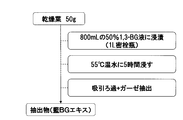
- the outline of an example of the manufacturing method of the conventional tryptanthrin containing indigo leaf extract is shown.
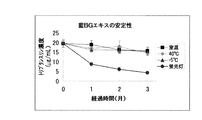
- the result of having examined the stability of tryptanthrin contained in the indigo Et-BG extract obtained by the production method of FIG. 1 is shown.
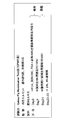
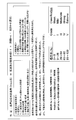
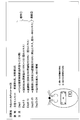
- the outline of the procedure at the time of examining the skin sensitization of indigo BG extract in Study Example 1 is shown. In the examination example, the explanation of the judgment criteria when examining the skin sensitization of each indigo leaf extract is shown.
- the method for producing a tryptanthrin-containing indigo leaf extract of the present invention includes a step of filtering a mixture containing indigo ethanol extract and polyhydric alcohol to collect the filtrate. Moreover, this invention also includes the tryptanthrin-containing indigo leaf extract manufactured with the said manufacturing method.
- Ethanol extract concentrate of indigo leaves An ethanol extract of indigo leaves is obtained by concentrating indigo ethanol extract.
- An indigo ethanol extract is obtained by extracting indigo leaves with ethanol.
- indigo containing tryptanthrin in the leaves is preferable, and among them, polygonum tinctorum is preferable.
- the indigo leaves used are preferably dried indigo leaves. Examples of the dried indigo leaves include freeze-dried indigo leaves, heat-dried indigo leaves, and sun-dried indigo leaves. In particular, use of sun-dried indigo leaves is preferable because the tryptanthrin content of the indigo leaf extract obtained is significantly increased.
- the method for obtaining the dried indigo leaves is not particularly limited.
- the leaves when the indigo leaves are dried, the leaves may be picked and then dried, or the whole grass may be dried and then the leaves may be collected.
- the drying time can be appropriately set according to conditions such as the weather. For example, in September to November, when indigo leaves can usually be harvested in Japan, they can be dried by exposure to the sun for about 2 to 7 days.
- the ethanol extraction method is not particularly limited, and a known method can be selected as appropriate. For example, it can be performed by reflux extraction of indigo leaves using ethanol. More specifically, a method is exemplified in which a condenser is connected to the flask, and indigo leaves and ethanol are placed in the flask and refluxed for about 1 to 6 hours.
- the amount of indigo leaves added to ethanol can be set as appropriate. For example, an amount of 1 to 10 g of indigo leaves in terms of dry mass is added to 100 mL of ethanol.
- water-containing ethanol mixed solution of water and ethanol
- the volume ratio of ethanol is preferably 70% or more, more preferably 90% or more, still more preferably 95% or more, and even more preferably 99% or more.
- An ethanol extract concentrate is obtained by concentrating an ethanol extract.
- the method for concentrating the ethanol extract is not particularly limited, and a known method can be selected as appropriate. For example, it can be preferably carried out by distillation under reduced pressure. That is, a vacuum distillation concentrate is suitable as the ethanol extraction concentrate.
- the vacuum distillation can be performed using, for example, a vacuum distillation concentration apparatus or a vacuum distillation concentration apparatus.
- the degree of concentration is not particularly limited, and examples thereof include the degree to which 90% or more (preferably about 90 to 99.99%) of the mass of the ethanol extract is removed. As described above, the removal can be performed by, for example, vacuum distillation or vacuum distillation. For example, it may be concentrated to such an extent that a change in mass hardly (substantially) occurs by distillation under reduced pressure.
- polyhydric alcohol used for this invention will not be restrict
- monohydric alcohols or dihydric alcohols are preferred.
- glycol or glycerin is preferable. More specifically, 1,3-butylene glycol, propylene glycol, pentylene glycol (1,2-pentanediol), glycerin, dipropylene glycol, 1,3-propanediol, isoprene glycol (isopentyldiol), etc.
- 1,3-butylene glycol, propylene glycol, pentylene glycol, or isoprene glycol is preferable, and 1,3-butylene glycol is particularly preferable.
- a polyhydric alcohol can be used individually by 1 type or in combination of 2 or more types.
- the mixture of the ethanol extract of blue leaves and the polyhydric alcohol used in the present invention comprises, for example, mixing the ethanol extract of blue leaves and the polyhydric alcohol described above. Is obtained.
- the mixing ratio of the ethanol extract concentrate and the polyhydric alcohol is not particularly limited, and can be set as appropriate.
- ethanol extract concentrate: polyhydric alcohol is preferably 1:16 to 2: 1, more preferably 1:13 to 1: 1, and more preferably 1:10 to 1: 5 by mass ratio. More preferably.
- a Surin-containing indigo leaf extract can be obtained. That is, it is possible to increase or adjust the tryptanthrin concentration in the solution of indigo leaf extract. Thereby, extraction efficiency can be improved.
- the mixture containing the ethanol extract of Aiba and the polyhydric alcohol may further contain water.
- a mixture can be obtained by mixing an ethanol extract concentrate of Aiba and a polyhydric alcohol, and further adding water. It can also be obtained by mixing an ethanol extract of indigo leaves and a hydrous polyhydric alcohol (mixed solution of water and polyhydric alcohol).
- the mixing ratio of water and polyhydric alcohol in the mixture is not particularly limited and can be set as appropriate.
- the weight ratio of water: polyhydric alcohol is preferably 25:75 to 75:25, and 40: It is more preferably 60 to 60:40, and further preferably 45:55 to 55:45.
- hydrous polyhydric alcohol when using a hydrous polyhydric alcohol, it is preferable to use the hydrous alcohol whose mixing ratio of water and a polyhydric alcohol is the said mass ratio. Further, after mixing the hydrous polyhydric alcohol, water and / or polyhydric alcohol or ethanol may be further added.
- the method for producing an extract of the present invention includes (i) a step of extracting ethanol from indigo leaves, (ii) a step of concentrating the indigo ethanol extract, (iii) indigo ethanol extract and polyhydric alcohol or water containing 4) a step of mixing with a polyhydric alcohol (and further mixing water if necessary), and (iv) a step of filtering the mixture containing the ethanol extract concentrate of polychlorophyll and the polyhydric alcohol to recover the filtrate.
- the method including (iv), the method including (iii) and (iv), the method including (ii) to (iv), and the method including (i) to (iv) are preferably included. .
- the above mixture is filtered and the filtrate is recovered.
- the method for filtering the mixture is not particularly limited, and a known method can be appropriately selected and used.
- filter paper, filter cloth, wedge wire screen, urethane screen, filtration membrane, filter using a glass filter, pressure filter, filter press, cooling filter, suction filter, etc. can be used alone or in combination.
- a method in which a filtrate obtained by filtering with a filter cloth filter (such as a leaf filter or a hundback filter) is further filtered using a filter membrane or a glass filter is preferably exemplified.
- a method in which particles of about 15 ⁇ m or more (more preferably about 10 ⁇ m or more) can be removed by filtration for example, suction filtration using a filter paper that can hold particles of about 10 ⁇ m or more (for example, Qualitative Filter Paper No. 1 manufactured by Advantech) is also preferable. Illustrated.
- the filtrate obtained by filtration can be used as a tryptanthrin-containing indigo leaf extract as it is.
- the obtained filtrate dried (for example, drying under reduced pressure or freeze-drying), and making it solid (for example, powder form) can also be used as a tryptanthrin containing cyanobacteria extract.
- tryptanthrin-containing indigo leaf extract is also included in the present invention.
- Tryptanthrin-containing indigo leaf extract of the present invention has high photostability in a solution state and has almost no irritation to the skin (especially skin sensitization), so it is particularly excellent for application to the skin. ing.
- the concentration hardly changes even when left for 2 weeks under white light.
- the amount of tryptanthrin contained before irradiation with white light is preferably 80% or more (more preferably 90% or more) after irradiation.
- the white light irradiation refers to white light irradiation of about 10,000 lux, and the irradiation can be performed using a normal white fluorescent lamp or the like.
- the filtrate is concentrated or dried to make it into a paste or solid (for example, powder)
- the same effect as described above can be obtained when it is dissolved again in an appropriate solvent.
- a suitable solvent here, at least 1 sort (s) selected from the group which consists of water, ethanol, and the polyhydric alcohol mentioned above can be illustrated.
- the above-described filtrate itself may be used, or the filtrate is dried (for example, freeze-dried), etc., and dissolved in a suitable solvent (for example, powder). May be used.
- indigo leaves contain various skin irritants, including those that dissolve in ethanol and those that dissolve in polyhydric alcohols.
- skin stimulants that dissolve in polyhydric alcohol are not contained in indigo leaves, and it is assumed that such an effect can be obtained. According to the inference, it is considered preferable to use an ethanol extract obtained by removing ethanol from the ethanol extract as much as possible.
- an indigo leaf extract having the same effect can be produced by mixing the indigo polyhydric alcohol extract concentrate and ethanol, filtering this, and collecting the filtrate.
- the present invention also includes an external composition for skin containing the above-mentioned tryptanthrin-containing indigo leaf extract.
- the tryptanthrin-containing indigo leaf extract of the present invention is excellent in light stability (photostability) and temperature stability of tryptanthrin and has low skin irritation and is excellent for application to the skin.
- an external composition for skin the effects of tryptanthrin can be enjoyed preferably.
- the amount of tryptanthrin is hardly decreased by temperature and light even after long-term storage, and the skin irritation is low, and the anti-inflammatory and anti-allergic effects of tryptanthrin. Such effects can be preferably exhibited.
- the composition for external use of the skin of the present invention may be the above-mentioned tryptanthrin-containing indigo leaf extract (including a solution form) itself, or in addition to the tryptanthrin-containing indigo leaf extract as long as the effect of the present invention is not impaired.
- What blended the publicly known arbitrary ingredient used for may be used.
- the compounding quantity of an arbitrary component can be suitably set in the range which does not impair the effect of this invention. For example, 0.1 to 99% is exemplified with respect to the entire external composition for skin.
- known surfactants water-soluble polymers, colorants, antioxidants, sequestering agents, preservatives, pH adjusting agents, cooling agents, fragrances, moisturizing agents, ultraviolet absorbers, ultraviolet scattering agents And antioxidants, ester oils, animal and vegetable oils, and the like.
- active ingredients used for external application to the skin can be blended within a range in which the effects of the present invention are exhibited. Examples of such active ingredients include known whitening agents, anti-inflammatory agents, wrinkle formation inhibitors, lipolytic agents, hair restorers and the like.
- the skin external composition of the present invention can be used, for example, as a skin external preparation (pharmaceutical, quasi-drug) or cosmetic.
- the external preparation for skin is a dosage form suitable for application to the skin, for example, gel, cream, ointment, liniment, lotion, emulsion, powder, suspension, aerosol, plaster, poultice, tape Can be used as a plaster agent.
- Cosmetics include lotion, milky lotion, cream, serum, pack, makeup base lotion, makeup base cream, foundation, eye color, cheek color, lipstick, sunscreen and other skin cosmetics, cleansing lotion, It can be used as a cleansing cream, a cleansing foam, a facial soap, a facial cleanser, a body cleanser such as a body shampoo, a hair shampoo, a hair rinse, a hair cosmetic such as a hair treatment, and a bath preparation.
- Creams, serums and sunscreens are preferred. These can be produced by a known method using the above-mentioned tryptanthrin-containing indigo leaf extract and, if necessary, the above-mentioned optional components and active ingredients.
- indigo Et extract About 530 g of indigo Et extract was distilled under reduced pressure using a rotary evaporator and concentrated until the total amount was 7.9 g or less.
- the concentrate thus obtained is hereinafter also referred to as “indigo Et concentrate extract”.
- indigo Et concentrated extract 80 mL of 50% (w / w) water-containing 1,3-butylene glycol was added to about 5 g of the indigo Et concentrated extract to dissolve the extract.
- the solution in which the indigo Et concentrated extract thus obtained was dissolved was filtered to collect the filtrate.
- the filtration is suction filtration using a filter paper (Qualitative filter paper No. 1 manufactured by Advantech) that can hold particles of about 10 ⁇ m or more. When the examination for obtaining this filtrate was repeated 22 times, the average weight of the obtained filtrate was about 74 g.
- the filtrate is hereinafter also referred to as “indigo Et-BG extract”.
- Indigo Et-BG extract is an example of a preferred embodiment of the tryptanthrin-containing indigo leaf extract of the present invention.
- two white fluorescent lamps (FL40SS-EX-D / 37 (long), manufactured by Panasonic Corporation: length 1198 mm, glass tube diameter 28 mm) were installed in parallel (interval of about 30 cm), in the middle
- Each extract was placed at a position (that is, the distance from each white fluorescent lamp to the extract was about 15 cm), and irradiation was performed.
- Store at room temperature under constant white fluorescent light irradiation The content was measured by comparing with a standard product under the following conditions using HPLC.
- indigo Et-BG extract is shown in FIG. 3, and the result of indigo BG extract is shown in FIG. From FIG. 3 and FIG. 4, indigo Et-BG extract is excellent in light stability (at least for one month even by light irradiation), whereas indigo BG extract decomposes tryptanthrin by light, It was confirmed that the tryptanthrin content was decreased. In addition, all the extracts were excellent in temperature stability. It was also found that the indigo Et-BG extract has a significantly higher tryptanthrin concentration than the indigo BG extract. This indicates that the indigo Et-BG extract is an extract in which tryptanthrin is highly concentrated. In addition, it is estimated that one month of the above (4) light irradiation conditions corresponds to about one year of light irradiation when the product is displayed in a store, and it is considered that the product has sufficient light stability when commercialized. .
- the intradermal sensitization was performed as follows. That is, on the sensitization start day, the following (a), (b), and (c) are applied to the sensitized group in this order, and the following (a), (d), and (a) are applied to the control group in this order.
- 0.1 mL each was administered intradermally at two locations on the left and right, with the administration position shifted slightly. That is, for any guinea pig, three intradermal administrations were performed on the left and right sides of the neck skin.
- ⁇ (b) administration interval distance at the time of administration in the sensitized group is shorter than (b) ⁇ (c) administration interval distance, and (a) ⁇ (d) administration interval at the time of administration in the control group The distance was made shorter than (d) ⁇ (a) administration interval distance.
- (a) ⁇ (b) administration interval distance in the sensitization group and (a) ⁇ (d) administration interval distance in the control group, and (b) ⁇ (c) administration interval distance in the sensitization group and control group D) ⁇ (a) The administration interval distance was set to be substantially the same.
- FCA Equivalent emulsion of Freund's complete adjuvant
- b 30 w / w% solution of indigo BG extract (solvent: physiological saline)
- C 60 w / w% solution of indigo BG extract (solvent: physiological saline) and FCA equivalent emulsion
- d physiological saline
- Induction is carried out by impregnating 0.1 mL of a 50% w / w solution of indigo BG extract (solvent: water for injection) on the fabric part of the patch bandage for patch testing, and obstructing the guinea pig for 24 hours on the ventral side. went. The skin reaction was observed 24 hours and 48 hours after removal of the induced patch. The outline of the examination is shown in FIG.
- Test method Guinea Pig Maximization Test method (GPMT method) Animals used: White guinea pigs (5 sensitized groups, 3 control groups) Sample: Indigo BG extract Method: Day0: FCA, sample (30%), FCA + sample (60%) administered intracervical dorsal skin [sensitization] Day 7: Sample was obstructed for 48h (100%) [sensitization] Day21: Attaching the sample to the ventral region (50%) [Cause] Day 22-23: Observed after 24 h and 48 h Note that there was no abnormality in the general condition during the test period, and the body weight showed a steady increase. The results of the skin findings (48 hours after removal of the sticking) are shown in Table 1.
- FIG. 6 and the next show about the calculation method etc. of the "positive rate” in Table 1, and an "average score”.
- the difference between the positive rate of the sensitization group and the positive rate of the control group was defined as the sensitization rate, and the sensitization evaluation category was in accordance with the above criteria. However, when the sensitization was 0%, no sensitization was assumed. Moreover, the average score was also calculated from the following formula. Moreover, the sensitization rate was computed from the following formula.
- Sensitization rate (%) Positive rate of sensitized group-Positive rate of target group From the obtained sensitization rate, the sensitization evaluation category can be obtained as follows.
- the sensitization evaluation category was Grade IV (Extreme) at an induced concentration of 50 w / w%.
- Sensitization of the sensitization group was performed as follows. On day 0 of sensitization, an equivalent emulsion of Freund's complete adjuvant (FCA) and physiological saline was administered intradermally at the four corners of the administration site (cervical skin), and then a # -shaped wound was made using an injection needle at the administration site. Was attached. Then, using a 2 ⁇ 4 cm lint cloth impregnated with 0.1 mL of indigo Et extract, all four # -shaped wounds were covered and pasted for 24 hours. On the first and second days, the same procedure was performed except for intradermal administration. On the seventh day, a 2 ⁇ 4 cm lint cloth impregnated with 0.2 mL of indigo Et extract was occluded for 48 hours on the same site. The control group was similarly treated with water for injection instead of the extract.
- FCA Freund's complete adjuvant
- physiological saline was administered intradermally at the four corners of the administration site (cerv
- the administration position is indicated by # at the four corners of 1 (neck) of the guinea pig)
- Day 0-2 24 hours occlusion of sample (100%) x 3 days
- Day 7-9 A sample was obstructed for 48h on the ventral side (100%)
- Day 21-22 A sample was obstructed for 24 hours on the ventral side (50%)
- Al Et extract, Ai Et-BG extract Day 23-24: Observed at 24 and 48h after removal of the patch
- the schematic diagram of the mouse in Fig. 7 shows the outline of the # -shaped wounds (4 places), the site of occlusion applied during sensitization, and the site of occlusion applied during induction .
- Table 2 shows the results of the skin findings (after 48 hours after removal of the sticking) when induced with 50 w / w% solution.
- the calculation methods of “positive rate” and “average score” in Table 2 are the same as in Study Example 1 (that is, shown in FIG. 6 or above).
- the sensitization evaluation category of indigo Et extract was Grade III (Moderate) at an induced concentration of 50 w / w%.
- indigo BG extract and indigo Et extract have skin sensitization, and indigo Et-BG extract has no skin sensitization and is therefore preferable for application to skin. .
- Tade indigo whole grass (above ground) was harvested, transported in a refrigerator while being inserted into a water supply sponge, and then dried as described below.
- Fresh leaves (no drying treatment) 2) After collecting leaves from whole grass, freeze-dried (12 hours) 3) After collecting leaves from whole grass, heat drying (80 ° C, 24 hours) 4) After collecting leaves from the whole plant, sun-dried (2 days, before flowering) 5) Leaves collected from the whole plant and dried in the sun (2 days after flowering) 6) After the whole plant was dried in the sun (7 days), the leaves were collected. After drying, all became about 7.5 g of dried leaves.
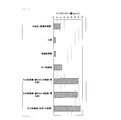
- Indigo Et extract was produced in the same manner as described in Production Example 1 using the fresh or dried leaves of 1) to 6) and commercially available dried indigo leaves. And the amount of tryptanthrin contained in the said extract was measured by said [HPLC conditions].
- the strength of antibacterial activity of various indigo leaf extracts was examined as follows.
- the SCD liquid medium and SCDLP agar medium used in the examination were purchased from Merck. Specifically, “Soybean casein digest” (manufactured by Merck) was used as the SCD liquid medium, and “Polysorbate 80 and soybean casein digest with lecithin” (manufactured by Merck) were used as the SCDLP agar medium.
- the “indigo water extract” used in the study is 50% (w / w) hydrous 1,3-butylene in the method of producing indigo BG extract (that is, the method described in the above [Comparative Production Example]).
- S. aureus (Staphyrococcus aureus NBRC 13276) was suspended in 5 mL of SCD liquid medium and cultured overnight at 30 ° C. with shaking. This was diluted with SCD liquid medium to prepare McFarland 0.5 (corresponding to viable cell count concentration of about 1.5 x 10 8 CFU / mL), and further diluted 100 times with SCD liquid medium to inoculate Liquid.
- the cultured bacterial solution added with indigo Et-BG extract prepare a solution diluted 10 4 times or 10 5 times, and spread each solution on 2 agar media (4 in total). And cultured. Moreover, about the culture
- CFU / mL viable bacteria
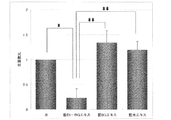
- FIG. 9 is a graph showing the ratio of the number of viable bacteria when each green leaf extract is used when the number of viable cells when water is used instead of the green leaf extract is 1.
- * indicates p ⁇ 0.05
- ** indicates p ⁇ 0.005.
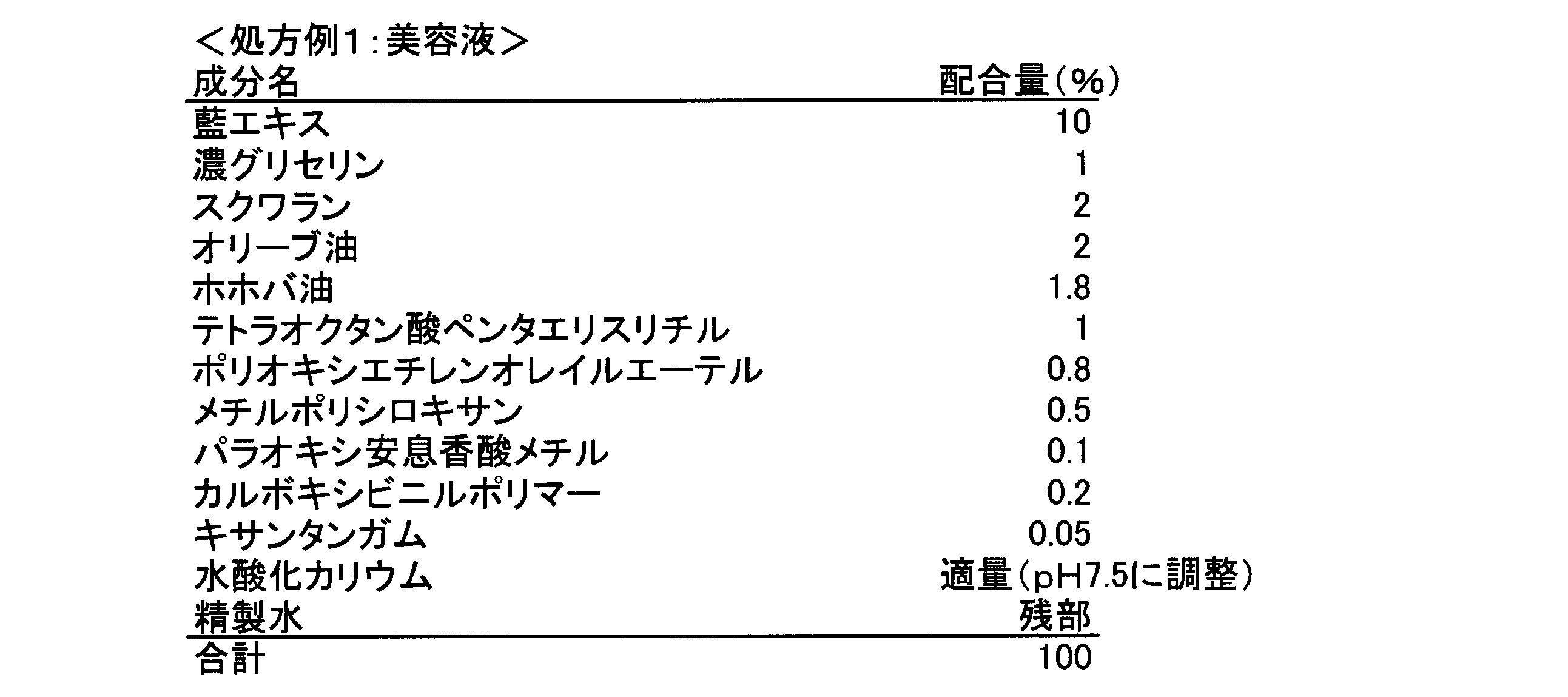
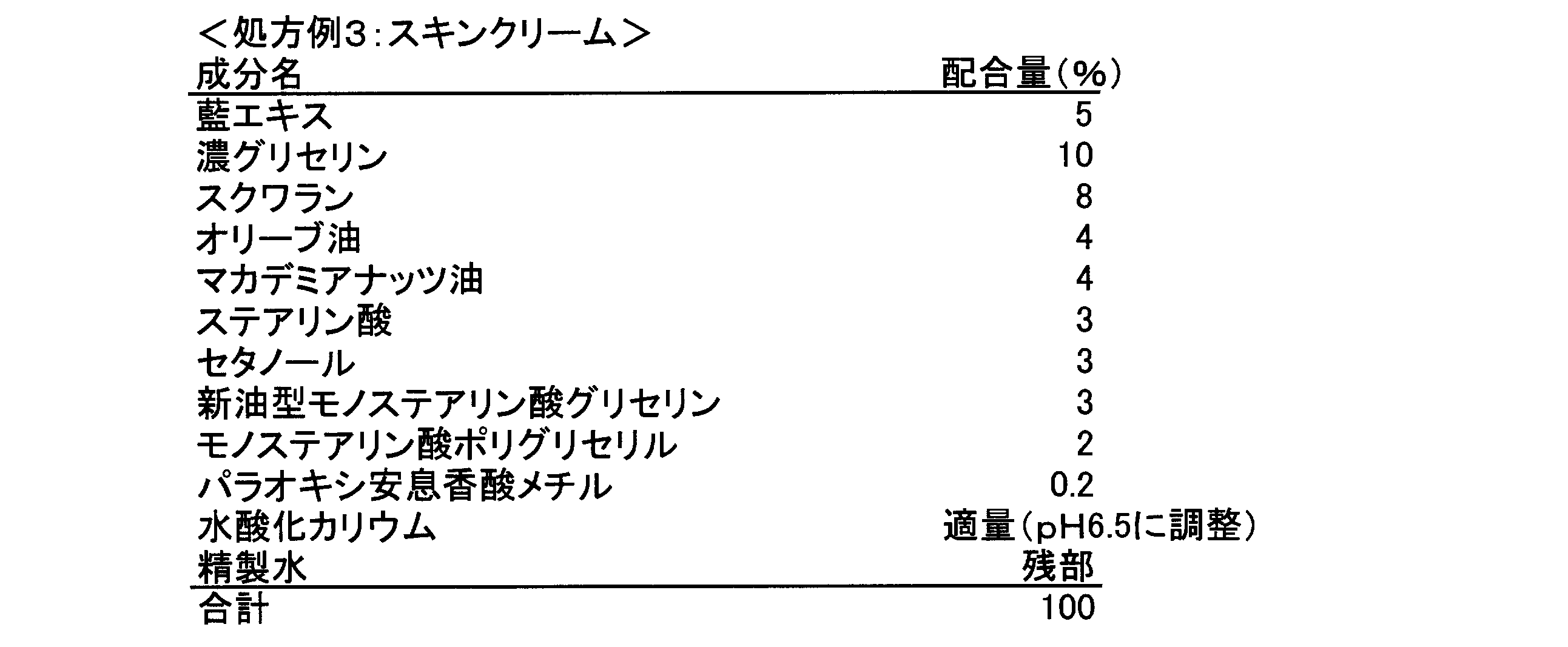
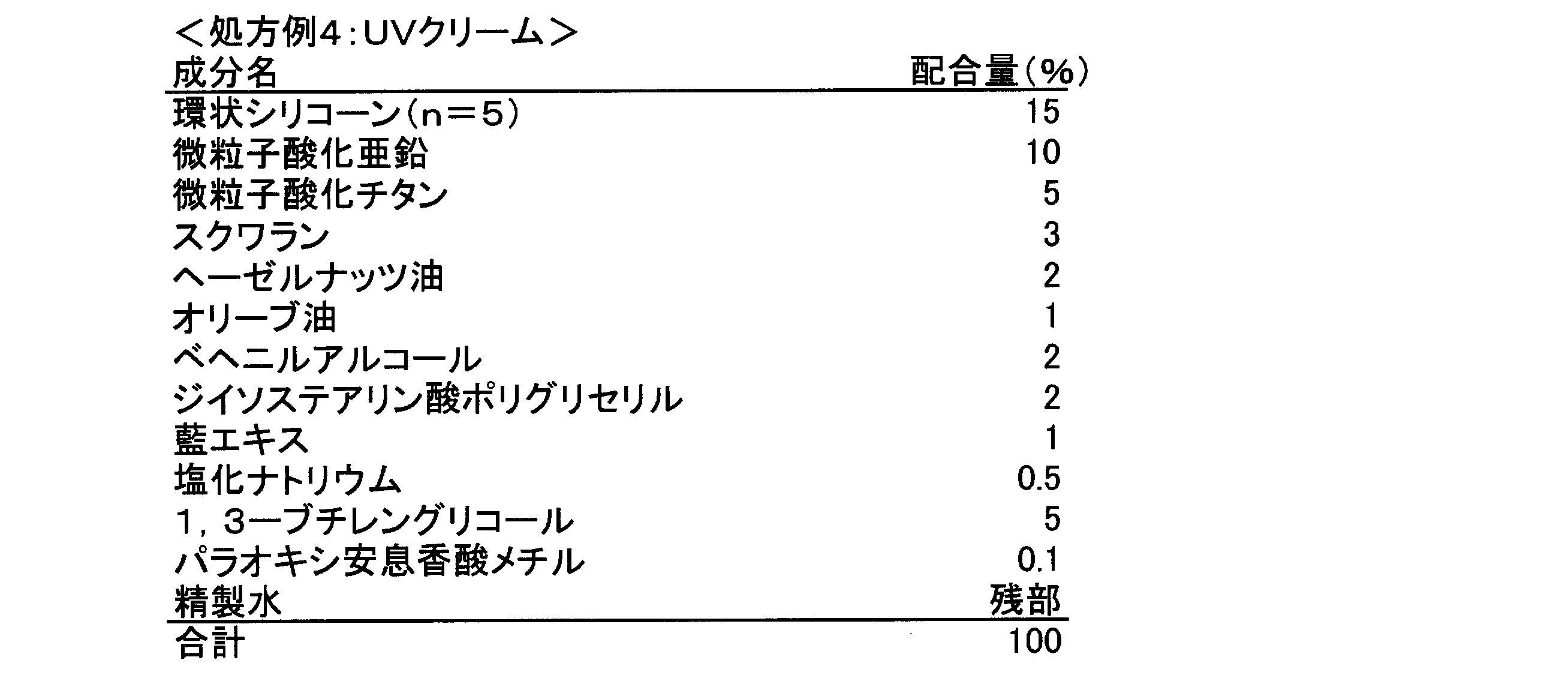
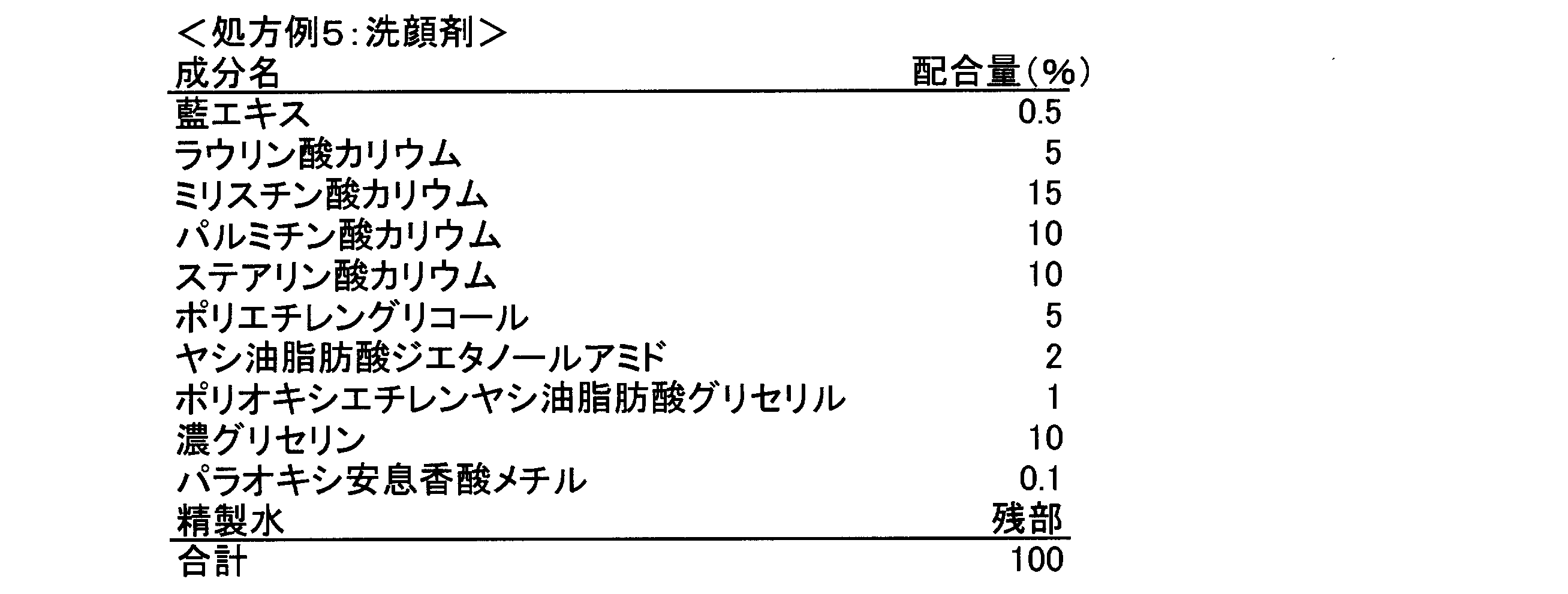
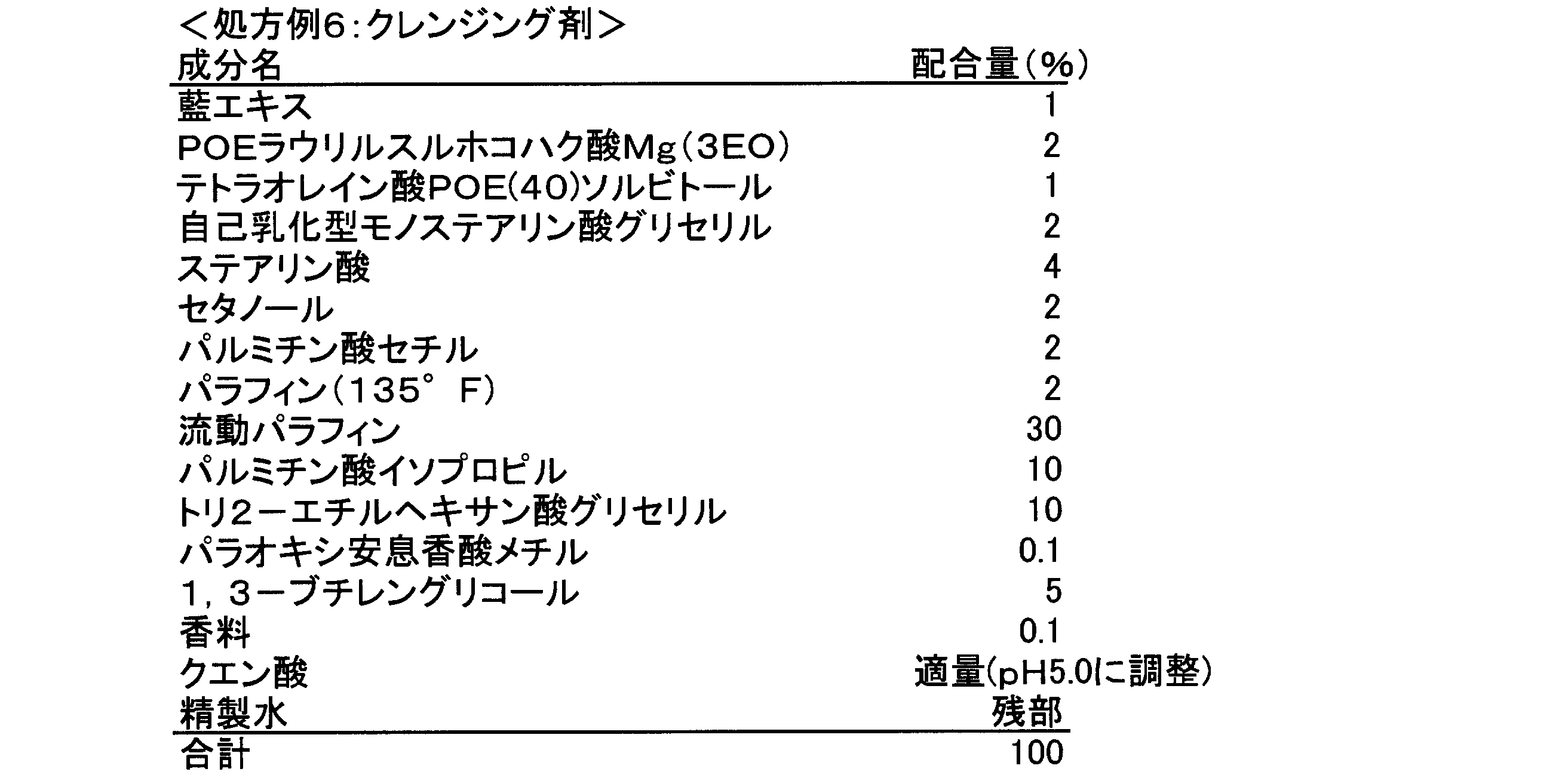
- formulation examples of the external composition for skin of the present invention will be shown.
- Each formulation example was prepared according to a conventional method.
- the “indigo extract” in the prescription examples is indigo Et-BG extract.
- % represents the mass%.
Landscapes
- Health & Medical Sciences (AREA)
- Life Sciences & Earth Sciences (AREA)
- Veterinary Medicine (AREA)
- Public Health (AREA)
- General Health & Medical Sciences (AREA)
- Animal Behavior & Ethology (AREA)
- Epidemiology (AREA)
- Natural Medicines & Medicinal Plants (AREA)
- Medicinal Chemistry (AREA)
- Chemical & Material Sciences (AREA)
- Pharmacology & Pharmacy (AREA)
- Engineering & Computer Science (AREA)
- Dermatology (AREA)
- Birds (AREA)
- Mycology (AREA)
- Microbiology (AREA)
- Biotechnology (AREA)
- Botany (AREA)
- General Chemical & Material Sciences (AREA)
- Chemical Kinetics & Catalysis (AREA)
- Nuclear Medicine, Radiotherapy & Molecular Imaging (AREA)
- Organic Chemistry (AREA)
- Medical Informatics (AREA)
- Alternative & Traditional Medicine (AREA)
- Bioinformatics & Cheminformatics (AREA)
- Communicable Diseases (AREA)
- Pulmonology (AREA)
- Oncology (AREA)
- Immunology (AREA)
- Cosmetics (AREA)
- Medicines Containing Plant Substances (AREA)
- Pharmaceuticals Containing Other Organic And Inorganic Compounds (AREA)
Abstract
Description

項1.
藍葉のエタノール抽出濃縮物及び多価アルコールを含む混合物を、濾過して濾液を回収する工程を含む、トリプタンスリン含有藍葉エキス製造方法。
項2.
前記混合物が、さらに水を含む、項1に記載のトリプタンスリン含有藍葉エキス製造方法。
項3.
多価アルコールが、1,3-ブチレングリコール、プロピレングリコール、イソプレングリコール、及びペンチレングリコールからなる群より選択される少なくとも1種のグリコールである、項1又は2に記載のトリプタンスリン含有藍葉エキス製造方法。
項4.
藍葉のエタノール抽出濃縮物を含水多価アルコールと混合する工程、及び
得られた藍葉のエタノール抽出濃縮物及び多価アルコールを含む混合物を、濾過して濾液を回収する工程を含む、項1~3のいずれかに記載のトリプタンスリン含有藍葉エキス製造方法。
項5.
前記藍葉が、乾燥藍葉である、項1~4のいずれかに記載のトリプタンスリン含有藍葉エキス製造方法。
項6.
前記藍葉が、天日乾燥藍葉である、項5に記載のトリプタンスリン含有藍葉エキス製造方法。
項7.
項1~6のいずれかに記載のトリプタンスリン含有藍葉エキス製造方法で製造されたトリプタンスリン含有藍葉エキス。
項8.
項7に記載のトリプタンスリン含有藍葉エキスを含む皮膚外用組成物。
項A.
藍葉エキスに含まれるトリプタンスリンの光安定性を向上させる方法であって、
当該藍葉のエタノール抽出濃縮物及び多価アルコールを含む混合物を、濾過して濾液を回収する工程を有することを特徴とする、藍葉エキスに含まれるトリプタンスリンの光安定性向上方法。
項B.
藍葉エキスに含まれるトリプタンスリン量を向上させる方法であって、
天日乾燥藍葉から藍葉エキスを抽出する工程を含むことを特徴とする、方法。
項C.
藍葉を天日で乾燥させる工程を含む、藍葉に含まれるトリプタンスリン量を向上させる方法。
項D.
2週間白色光照射後の含有トリプタンスリン量が照射前の8割以上である、溶液形態のトリプタンスリン含有藍葉エキス。
藍葉のエタノール抽出濃縮物は、藍葉エタノール抽出物を、濃縮することにより得られる。
本発明に用いる多価アルコールは、通常、外用剤(例えば化粧品、医薬部外品又は外用医薬品)に使用されるものであれば、特に制限されない。多価アルコールの中でも1価アルコール又は2価アルコールが好ましい。具体的には、例えば、グリコール又はグリセリンが好ましい。より具体的には、1,3-ブチレングリコール、プロピレングリコール、ペンチレングリコール(1,2-ペンタンジオール)、グリセリン、ジプロピレングリコール、1,3-プロパンジオール、イソプレングリコール(イソペンチルジオール)等が好ましく例示される。中でも1,3-ブチレングリコール、プロピレングリコール、ペンチレングリコール、又はイソプレングリコールが好ましく、1,3-ブチレングリコールが特に好ましい。多価アルコールは、1種単独で又は2種以上を組み合わせて用いることができる。
本発明に用いる、藍葉のエタノール抽出濃縮物及び多価アルコールを含む混合物は、例えば上述の藍葉のエタノール抽出濃縮物及び多価アルコールを混合することにより得られる。エタノール抽出濃縮物と多価アルコールとの混合割合は特に制限されず、適宜設定することができる。例えば質量比でエタノール抽出濃縮物:多価アルコールが、1:16~2:1であることが好ましく、1:13~1:1であることがより好ましく、1:10~1:5であることがさらに好ましい。
本発明のエキス製造方法では、上記の混合物は濾過され、濾液が回収される。混合物の濾過の方法は特に制限されず、公知の方法を適宜選択して用いることができる。例えば、濾紙、濾布、ウェッジワイヤースクリーン、ウレタンスクリーン、濾過膜、ガラスフィルター等を用いた濾過機、加圧濾過機、フィルタープレス機、冷却濾過機、吸引濾過器等を単独若しくは組み合わせて利用できる。例えば、濾布濾過機(リーフフィルターやフンダバックフィルターなど)で濾過して得られた濾過液を、さらに濾過膜やガラスフィルターを用いて濾過する方法が好ましく例示される。あるいはまた、約15μm以上(より好ましくは約10μm以上)の粒子を濾過除去できる方法、例えば約10μm以上の粒子を保留できる濾紙(例えばアドバンテック社製 定性濾紙No.1)を用いた吸引濾過も好ましく例示される。
本発明のトリプタンスリン含有藍葉エキスは、溶液状態における光安定性が高く、また、皮膚への刺激(特に皮膚感作性)もほとんど無いため、特に皮膚に適用するのに優れている。特に、上述の濾過により得られる濾液そのものをトリプタンスリン含有藍葉エキスとして用いる場合、白色光下で2週間静置した場合でも、その濃度はほとんど変化しない。具体的には、好ましくは白色光照射前に含まれるトリプタンスリン量の8割以上(より好ましくは9割以上)の量が照射後に存在する。ここでの白色光照射とは、約10000ルクスの白色光照射をいい、当該照射は通常の白色蛍光灯等を用いて行い得る。
本発明は、上述のトリプタンスリン含有藍葉エキスを含む皮膚外用組成物も包含する。本発明のトリプタンスリン含有藍葉エキスは、トリプタンスリンの光に対する安定性(光安定性)及び温度安定性が優れており、かつ、皮膚刺激性が低く皮膚へ適用するのに優れているため、当該皮膚外用組成物を用いることで、トリプタンスリンが奏する効果を好ましく享受することができる。すなわち、本発明の皮膚外用組成物であれば、長期間保存しても温度や光によりトリプタンスリン量が減少することがほとんどなく、かつ皮膚刺激が低く、トリプタンスリンの抗炎症効果、抗アレルギー効果等の効果が好ましく発揮され得る。
〔製造例〕:概略を図1に示す
タデ藍の天日乾燥葉(全草を7日間天日乾燥後葉を採取)50gを、99.5%エタノール800mL(740g)に加え、2時間還流することによりエタノール抽出を行った。抽出後、室温になるまで自然冷却し、#300メッシュのステンレス製濾過具を用いた濾過により、葉を除去した。このようにして得られた濾液(藍葉エタノール抽出液)を以下「藍Etエキス」ともいう。
タデ藍の天日乾燥葉(全草を7日間天日乾燥後葉を採取)50gを、50%(w/w)含水1,3-ブチレングリコールに浸積させ、55℃で5時間静置した。これを吸引濾過(アドバンテック社製 定性濾紙No.1使用)により濾過し、濾液を回収した。当該濾液を以下「藍BGエキス」ともいう。
藍Et-BGエキス、及び藍BGエキスを以下の(1)~(4)の4種類の条件下で保存し、保存開始から1ヶ月後、2ヶ月後、3ヶ月後に、それぞれ、トリプタンスリンの含有量を計測した。なお、藍Et-BGエキスについては保存開始から2週間後にも計測した。また、白色蛍光灯の照射では、約10000ルクスの白色光を各エキスに照射した。具体的には、二本の白色蛍光灯(FL40SS-EX-D/37(長尺状)パナソニック社製:長さ1198mm、ガラス管口径28mm)を並行に設置し(間隔約30cm)、その中間位置に各エキスを設置して(すなわち、各白色蛍光灯からエキスまでの距離は約15cm)照射を行った。
(1)暗所にて室温保存
(2)暗所にて40℃で保存
(3)暗所にて-5℃で保存
(4)白色蛍光灯常時照射下にて室温保存
なお、トリプタンスリンの含有量の測定は、HPLCを用いて、以下の条件で標準品との比較をすることにより行った。
[HPLC条件]
カラム:Cosmosil5C18 MS-II 4.6X150mm (5μm)
移動相:水/メタノール=50/50
流速:1mL/min
カラム温度:40℃
検出波長:254nm
注入量:20μL
〔検討例1:藍BGエキスの皮膚感作性〕
藍BGエキスの皮膚感作性について、モルモット(感作群5匹、対照群3匹:日本SLCから購入)を用いてGuinea Pig Maximization Test法(GPMT法)により検討した。なお、当該検討に用いた藍BGエキスのトリプタンスリン濃度は20.4μg/mLであった。また、検討に用いたフロイントの完全アジュバント(FCA)はDIFCO LABORATORIESから購入した。
(a):フロイントの完全アジュバント(FCA)と生理食塩液の当量乳化物
(b):藍BGエキスの30w/w%液(溶媒:生理食塩水)
(c):藍BGエキスの60w/w%液(溶媒:生理食塩水)とFCAの当量乳化物
(d):生理食塩水
接触感作は、皮内感作(0日目)から7日目に藍BGエキス0.2mLを2×4cmのリント布に含浸させ、皮内投与部位に48時間閉塞貼付して行った。
試験法:Guinea Pig Maximization Test法(GPMT法)
使用動物:白色モルモット(感作群5匹、対照群3匹)
試料:藍BGエキス
方法:Day0:FCA、試料(30%)、FCA+試料(60%)を頚部背側部皮内投与 〔感作〕
Day7:試料を48h閉塞貼付(100%) 〔感作〕
Day21:腹側部に試料を閉塞貼付(50%) 〔惹起〕
Day22-23:24h、48h後に観察
なお、試験期間中の一般状態に異常は認められず、体重においても順調な増加推移を示した。皮膚所見(貼付除去48時間後)の結果を表1に示す。

判定:皮膚反応判定基準(Draize法)
紅斑及び痂皮形成0-4+浮腫0-4=合計0-8(評点)
<紅班及び痂皮形成>
0:紅班なし
1:ごく軽度の紅班(やっと認められる程度)
2:明らかな紅班
3:中等度から強い紅班
4:深紅色の強い紅班に痂皮形成(傷害は深部に及ぶ)
<浮腫形成>
0:浮腫なし
1:ごく軽度の浮腫(やっと認められる程度)
2:軽度の浮腫(周囲と明らかに区分可能)
3:中等度の浮腫(1mm程盛り上がっている)
4:強い浮腫(1mm以上盛り上がり、周囲にも広がる)
各判定時における「紅斑及び痂皮形成」並びに「浮腫」の合計点が1以上を陽性とし、下記式から陽性率を求めた。感作群の陽性率と対照群の陽性率の差を感作率とし、感作性評価区分は上記基準に従った。但し、感作性が0%の場合は、感作性無しとした。また、下記式から平均評点も算出した。また、下記式から感作率を算出した。
平均評点=(紅斑及び浮腫の合計点)/動物数
感作率(%)=感作群の陽性率-対象群の陽性率
求めた感作率から、以下のように感作性評価区分を求めることができる。
0~8 I Weak
9~28 II Mild
29~64 III Moderate
65~80 IV Strong
81~100 V Extreme
藍Etエキス及び藍Et-BGエキスの皮膚感作性について、モルモット(感作群5匹、対照群3匹:日本SLCから購入)を用いてAdjuvant and Patch Test法により検討した。なお、当該検討に用いた藍Etエキスのトリプタンスリン濃度は17.0μg/mL、藍Et-BGエキスのトリプタンスリン濃度は17.2μg/mLであった。また、検討に用いたフロイントの完全アジュバント(FCA)はDIFCO LABORATORIESから購入した。
試験法:Adjuvant&Patch-test法
使用動物:白色モルモット(処置群5匹、対照群3匹)
方法:Day 0:FCAを頚部背側部皮内投与(図7では、モルモット模式図の1(頸部)の4隅の#で投与位置が示される)
Day 0-2:試料を24h閉塞貼付(100%)×3日(藍Etエキス)
Day 7-9:腹側部に試料を48h閉塞貼付(100%)(藍Etエキス)
Day 21-22:腹側部に試料を24h閉塞貼付(50%)(藍Etエキス、藍Et-BGエキス)
Day 23-24:貼付除去後24、48hに観察
図7中のマウス模式図には#型の傷(4ヶ所)、感作時の閉塞貼付部位、及び惹起時の閉塞貼付部位の概略を示す。

用いる藍葉の状態により、得られる藍葉エキスに含まれるトリプタンスリン量が変化するかを検討した。
1)生葉(乾燥処理行わず)
2)全草より葉を採取後、凍結乾燥(12時間)
3)全草より葉を採取後、加熱乾燥(80℃、24時間)
4)全草より葉を採取後、天日乾燥(2日間、開花前)
5)全草より葉を採取後、天日乾燥(2日間、開花後)
6)全草を天日乾燥(7日間)後、葉を採取
いずれの処理においても、タデ藍生葉40gを用いた。乾燥後は、いずれも7.5g程度の乾燥葉となった。
以下のようにして、各種藍葉エキスの抗菌活性の強さを検討した。なお、当該検討で用いたSCD液体培地及びSCDLP寒天培地は、メルク社から購入した。具体的には、SCD液体培地は「ソイビーンカゼインダイジェスト」(メルク社製)を、SCDLP寒天培地は「ポリソルベート80及びレシチン加ソイビーンカゼインダイジェスト」(メルク社製)を、それぞれ用いた。また、当該検討に用いた「藍水エキス」は、藍BGエキスを製造した方法(つまり、上記〔比較製造例〕に記載の方法)において、50%(w/w)含水1,3-ブチレングリコールの代わりに水を用いて得た藍葉エキスである。

Claims (8)
- 藍葉のエタノール抽出濃縮物及び多価アルコールを含む混合物を、濾過して濾液を回収する工程を含む、トリプタンスリン含有藍葉エキス製造方法。
- 前記混合物が、さらに水を含む、請求項1に記載のトリプタンスリン含有藍葉エキス製造方法。
- 多価アルコールが、1,3-ブチレングリコール、プロピレングリコール、イソプレングリコール、及びペンチレングリコールからなる群より選択される少なくとも1種のグリコールである、請求項1又は2に記載のトリプタンスリン含有藍葉エキス製造方法。
- 藍葉のエタノール抽出濃縮物を含水多価アルコールと混合する工程、及び
得られた藍葉のエタノール抽出濃縮物及び多価アルコールを含む混合物を、濾過して濾液を回収する工程を含む、請求項1~3のいずれかに記載のトリプタンスリン含有藍葉エキス製造方法。 - 前記藍葉が、乾燥藍葉である、請求項1~4のいずれかに記載のトリプタンスリン含有藍葉エキス製造方法。
- 前記藍葉が、天日乾燥藍葉である、請求項5に記載のトリプタンスリン含有藍葉エキス製造方法。
- 請求項1~6のいずれかに記載のトリプタンスリン含有藍葉エキス製造方法で製造されたトリプタンスリン含有藍葉エキス。
- 請求項7に記載のトリプタンスリン含有藍葉エキスを含む皮膚外用組成物。
Priority Applications (5)
| Application Number | Priority Date | Filing Date | Title |
|---|---|---|---|
| EP12757148.7A EP2700406B1 (en) | 2011-03-14 | 2012-03-14 | Method for producing indigo-plant leaf extract |
| JP2013504760A JP5933525B2 (ja) | 2011-03-14 | 2012-03-14 | 藍葉エキス製造方法 |
| ES12757148.7T ES2653917T3 (es) | 2011-03-14 | 2012-03-14 | Procedimiento para producir un extracto de hojas de planta de índigo |
| CN201280013048.5A CN103429249B (zh) | 2011-03-14 | 2012-03-14 | 用于制造靛蓝植物叶提取物的方法 |
| US14/000,748 US9700556B2 (en) | 2011-03-14 | 2012-03-14 | Method for producing indigo-plant leaf extract |
Applications Claiming Priority (2)
| Application Number | Priority Date | Filing Date | Title |
|---|---|---|---|
| JP2011055942 | 2011-03-14 | ||
| JP2011-055942 | 2011-03-14 |
Publications (1)
| Publication Number | Publication Date |
|---|---|
| WO2012124743A1 true WO2012124743A1 (ja) | 2012-09-20 |
Family
ID=46830808
Family Applications (1)
| Application Number | Title | Priority Date | Filing Date |
|---|---|---|---|
| PCT/JP2012/056598 Ceased WO2012124743A1 (ja) | 2011-03-14 | 2012-03-14 | 藍葉エキス製造方法 |
Country Status (6)
| Country | Link |
|---|---|
| US (1) | US9700556B2 (ja) |
| EP (1) | EP2700406B1 (ja) |
| JP (1) | JP5933525B2 (ja) |
| CN (1) | CN103429249B (ja) |
| ES (1) | ES2653917T3 (ja) |
| WO (1) | WO2012124743A1 (ja) |
Cited By (7)
| Publication number | Priority date | Publication date | Assignee | Title |
|---|---|---|---|---|
| JP2013213018A (ja) * | 2012-03-09 | 2013-10-17 | Sunstar Inc | 藍葉エキス及びヨモギエキスを含有する組成物 |
| WO2018062543A1 (ja) * | 2016-09-29 | 2018-04-05 | 久幸 吉田 | トリプタンスリン含有藍葉溶液製造方法 |
| JP2018510891A (ja) * | 2015-04-09 | 2018-04-19 | ガルデルマ・ソシエテ・アノニム | 抗菌性インジゴナチュラリス又はインジゴ産生植物抽出物及びその使用 |
| US20190160128A1 (en) | 2015-04-09 | 2019-05-30 | Galderma S.A. | Pharmaceutical composition comprising refined indigo naturalis extracts and the use thereof |
| JP2019182745A (ja) * | 2018-03-31 | 2019-10-24 | 久幸 吉田 | ノロウイルス不活性化方法 |
| US10695391B2 (en) | 2015-04-09 | 2020-06-30 | Galderma S.A. | Extract from Indigo Naturalis and a process for preparing the same |
| JP2022043964A (ja) * | 2020-09-04 | 2022-03-16 | エムワイ カンパニー,リミテッド | 天然抗菌物質の製造方法及び該製造方法により製造された天然抗菌物質を含む抗菌剤 |
Families Citing this family (5)
| Publication number | Priority date | Publication date | Assignee | Title |
|---|---|---|---|---|
| JP6803849B2 (ja) | 2015-04-09 | 2020-12-23 | ガルデルマ・ソシエテ・アノニム | インジゴナチュラリス又はインジゴ産生植物の抽出物を用いたアトピー性皮膚炎の処置 |
| CN105295435A (zh) * | 2015-11-24 | 2016-02-03 | 常州美胜生物材料有限公司 | 一种蓝靛草提取物的制备方法及应用 |
| BR112019011845A2 (pt) * | 2016-12-16 | 2020-03-03 | Aak Ab | Preparação de substituto de petrolato e método de fabricação de uma preparação |
| DE102020201045A1 (de) | 2020-01-29 | 2021-07-29 | Beiersdorf Aktiengesellschaft | Sonnenschutzmittel mit Pigment-Filtersystem |
| KR102861223B1 (ko) * | 2022-02-10 | 2025-09-17 | 동의대학교 산학협력단 | 청대를 유효성분으로 포함하는 암 성장 또는 암 전이 억제용 조성물 |
Citations (4)
| Publication number | Priority date | Publication date | Assignee | Title |
|---|---|---|---|---|
| JP2001031581A (ja) * | 1998-06-30 | 2001-02-06 | Hayashibara Biochem Lab Inc | 生理活性抽出物 |
| JP2004189732A (ja) | 2002-11-28 | 2004-07-08 | Tohoku Techno Arch Co Ltd | 藍草から得られた抗菌活性物質及びこれを含有する各種組成物 |
| JP2005281253A (ja) * | 2004-03-30 | 2005-10-13 | Nof Corp | 皮膚化粧料 |
| JP2006241080A (ja) | 2005-03-03 | 2006-09-14 | Hirosaki Univ | Iv型アレルギー反応抑制剤 |
Family Cites Families (11)
| Publication number | Priority date | Publication date | Assignee | Title |
|---|---|---|---|---|
| US5116997A (en) * | 1991-04-15 | 1992-05-26 | Basf Aktiengesellschaft | Purification of indigo |
| DE4220804A1 (de) | 1992-06-25 | 1994-01-05 | Basf Ag | Verfahren zur Reinigung von Indigo |
| US6524625B2 (en) | 1998-06-30 | 2003-02-25 | Kabushiki Kaisha Hayashibara Seibutsu Kagaku Kenkyuto | Physiologically active extract obtained from indigo plant polygonum tinctorium |
| JP2005081253A (ja) * | 2003-09-09 | 2005-03-31 | Kansai Paint Co Ltd | 塗料供給システム及び塗料供給方法 |
| CN1250240C (zh) * | 2003-09-30 | 2006-04-12 | 广州白云山制药股份有限公司广州白云山中药厂 | 板蓝根提取物及制备方法和它的应用 |
| TW200716198A (en) | 2005-05-27 | 2007-05-01 | Hayashibara Biochem Lab | Agent for external application to the skin |
| CN101541340A (zh) * | 2006-11-24 | 2009-09-23 | 株式会社林原生物化学研究所 | 蓝草提取物粉末及其制造方法、以及该蓝草提取物粉末的用途 |
| JP2009149596A (ja) | 2007-11-29 | 2009-07-09 | Aiiro Kobo:Kk | 藍葉中の有用成分の新規な迅速抽出法 |
| CN101701028B (zh) * | 2009-10-26 | 2012-03-14 | 新疆奥斯曼生物资源有限公司 | 一种吲哚苷的制备方法 |
| CN102351863A (zh) * | 2011-10-10 | 2012-02-15 | 南京泽朗医药科技有限公司 | 一种从菘蓝中提取青黛酮的方法 |
| CN103497222B (zh) * | 2013-09-29 | 2016-04-27 | 重庆市中药研究院 | 一种从鲜活大青叶中提取菘蓝苷的方法 |
-
2012
- 2012-03-14 EP EP12757148.7A patent/EP2700406B1/en active Active
- 2012-03-14 US US14/000,748 patent/US9700556B2/en active Active
- 2012-03-14 JP JP2013504760A patent/JP5933525B2/ja active Active
- 2012-03-14 CN CN201280013048.5A patent/CN103429249B/zh active Active
- 2012-03-14 ES ES12757148.7T patent/ES2653917T3/es active Active
- 2012-03-14 WO PCT/JP2012/056598 patent/WO2012124743A1/ja not_active Ceased
Patent Citations (4)
| Publication number | Priority date | Publication date | Assignee | Title |
|---|---|---|---|---|
| JP2001031581A (ja) * | 1998-06-30 | 2001-02-06 | Hayashibara Biochem Lab Inc | 生理活性抽出物 |
| JP2004189732A (ja) | 2002-11-28 | 2004-07-08 | Tohoku Techno Arch Co Ltd | 藍草から得られた抗菌活性物質及びこれを含有する各種組成物 |
| JP2005281253A (ja) * | 2004-03-30 | 2005-10-13 | Nof Corp | 皮膚化粧料 |
| JP2006241080A (ja) | 2005-03-03 | 2006-09-14 | Hirosaki Univ | Iv型アレルギー反応抑制剤 |
Cited By (13)
| Publication number | Priority date | Publication date | Assignee | Title |
|---|---|---|---|---|
| JP2013213018A (ja) * | 2012-03-09 | 2013-10-17 | Sunstar Inc | 藍葉エキス及びヨモギエキスを含有する組成物 |
| US10555985B2 (en) | 2015-04-09 | 2020-02-11 | Galderma S.A. | Pharmaceutical composition comprising refined Indigo naturalis extracts and the use thereof |
| JP2018510891A (ja) * | 2015-04-09 | 2018-04-19 | ガルデルマ・ソシエテ・アノニム | 抗菌性インジゴナチュラリス又はインジゴ産生植物抽出物及びその使用 |
| US20190160128A1 (en) | 2015-04-09 | 2019-05-30 | Galderma S.A. | Pharmaceutical composition comprising refined indigo naturalis extracts and the use thereof |
| US10668120B2 (en) | 2015-04-09 | 2020-06-02 | Galderma Sa | Antibacterial indigo naturalis or indigo-producing plant extract and use thereof |
| US10695391B2 (en) | 2015-04-09 | 2020-06-30 | Galderma S.A. | Extract from Indigo Naturalis and a process for preparing the same |
| US11116811B2 (en) | 2015-04-09 | 2021-09-14 | Galderma S.A. | Pharmaceutical composition comprising refined indigo naturalis extracts and the use thereof |
| JP2018052877A (ja) * | 2016-09-29 | 2018-04-05 | 久幸 吉田 | トリプタンスリン含有藍葉溶液製造方法 |
| WO2018062543A1 (ja) * | 2016-09-29 | 2018-04-05 | 久幸 吉田 | トリプタンスリン含有藍葉溶液製造方法 |
| JP2019182745A (ja) * | 2018-03-31 | 2019-10-24 | 久幸 吉田 | ノロウイルス不活性化方法 |
| JP7321410B2 (ja) | 2018-03-31 | 2023-08-07 | 久幸 吉田 | ノロウイルス不活性化方法 |
| JP2022043964A (ja) * | 2020-09-04 | 2022-03-16 | エムワイ カンパニー,リミテッド | 天然抗菌物質の製造方法及び該製造方法により製造された天然抗菌物質を含む抗菌剤 |
| JP7219491B2 (ja) | 2020-09-04 | 2023-02-08 | エムワイ カンパニー,リミテッド | 天然抗菌物質の製造方法及び該製造方法により製造された天然抗菌物質を含む抗菌剤 |
Also Published As
| Publication number | Publication date |
|---|---|
| ES2653917T3 (es) | 2018-02-09 |
| EP2700406A1 (en) | 2014-02-26 |
| EP2700406A4 (en) | 2014-10-22 |
| US9700556B2 (en) | 2017-07-11 |
| CN103429249A (zh) | 2013-12-04 |
| JP5933525B2 (ja) | 2016-06-08 |
| CN103429249B (zh) | 2015-12-23 |
| US20130331400A1 (en) | 2013-12-12 |
| JPWO2012124743A1 (ja) | 2014-07-24 |
| EP2700406B1 (en) | 2017-10-11 |
Similar Documents
| Publication | Publication Date | Title |
|---|---|---|
| JP5933525B2 (ja) | 藍葉エキス製造方法 | |
| TWI495488B (zh) | 用於刺激magp-1以改善皮膚外觀之組合物及方法 | |
| JP7566894B2 (ja) | プニカ・グラナツム抽出物及びその美容的使用 | |
| CN107666901A (zh) | 含有被喂食浆果的蜗牛的黏液的化妆品组合物及其制备方法 | |
| CN111973641A (zh) | 去头屑组合物和其使用方法 | |
| KR102333580B1 (ko) | 히비스커스꽃 추출물을 함유하는 에센스 조성물, 및 이를 포함하고 스피루리나 천연활성 물질을 담지한 나노 섬유 전기방사층을 가지는 미백 및 주름개선 기능성 마스크팩 | |
| KR20190006888A (ko) | 황근 추출물, 황근 추출물의 분획물 및 황근 추출물의 분획물로부터 분리된 화합물을 포함하는 피부 안티폴루션용 조성물 | |
| JP6057610B2 (ja) | 藍葉エキス及びヨモギエキスを含有する組成物 | |
| CN1870971A (zh) | 用于改善皮肤皱纹的包含野桐提取物的化妆品组合物 | |
| JP2009149562A (ja) | 皮膚外用剤 | |
| KR101404460B1 (ko) | 어류 추출물을 포함하는 화장료 조성물 | |
| JP2014172859A (ja) | 化粧料 | |
| KR20130068320A (ko) | 제주광나무 추출물을 함유하는 보습용 화장료 조성물 | |
| KR20240067190A (ko) | 석류꽃 추출물을 유효성분으로 함유하는 피지 분비 억제 및 모공케어용 화장료 조성물 | |
| JP2012171949A (ja) | メラトニン受容体発現増強剤及びその製造方法 | |
| JP4167247B2 (ja) | 皮膚外用剤 | |
| KR100946584B1 (ko) | 지실 추출물 및 블루로터스 추출물을 함유하는 수렴 및 피부 자극 완화용 화장료 조성물 | |
| KR100702331B1 (ko) | 백굴채 추출물을 유효성분으로 함유하는 피부 주름 개선용 화장료 조성물 | |
| KR20210095341A (ko) | 스피룰리나 추출물을 포함하는 피부재생용 조성물 | |
| KR102793571B1 (ko) | 블랙 올리브에서 유래된 pdrn 추출물을 포함하는 화장료 조성물 및 그 제조 방법 | |
| KR102843044B1 (ko) | 토마토 과실 추출물 유래 엑소좀을 유효 성분으로 포함하는 조성물 | |
| KR20150081530A (ko) | 버섯 동충하초 발효액 또는 추출물을 포함하는 화장료 조성물 및 이것의 제조방법 | |
| JP2006160629A (ja) | コラーゲン産生促進剤、及びそれを含有する皮膚外用剤 | |
| KR102654317B1 (ko) | 검은귀리 추출물을 유효성분으로 포함하는 피부보습 및 피부장벽강화용 조성물 | |
| JP2014198670A (ja) | 樹状突起負制御剤 |
Legal Events
| Date | Code | Title | Description |
|---|---|---|---|
| 121 | Ep: the epo has been informed by wipo that ep was designated in this application |
Ref document number: 12757148 Country of ref document: EP Kind code of ref document: A1 |
|
| ENP | Entry into the national phase |
Ref document number: 2013504760 Country of ref document: JP Kind code of ref document: A |
|
| REEP | Request for entry into the european phase |
Ref document number: 2012757148 Country of ref document: EP |
|
| WWE | Wipo information: entry into national phase |
Ref document number: 14000748 Country of ref document: US |
|
| NENP | Non-entry into the national phase |
Ref country code: DE |