WO2012132255A1 - 情報表示システムおよび車両用装置 - Google Patents
情報表示システムおよび車両用装置 Download PDFInfo
- Publication number
- WO2012132255A1 WO2012132255A1 PCT/JP2012/001580 JP2012001580W WO2012132255A1 WO 2012132255 A1 WO2012132255 A1 WO 2012132255A1 JP 2012001580 W JP2012001580 W JP 2012001580W WO 2012132255 A1 WO2012132255 A1 WO 2012132255A1
- Authority
- WO
- WIPO (PCT)
- Prior art keywords
- vehicle
- vehicle device
- portable
- information
- smartphone
- Prior art date
- Legal status (The legal status is an assumption and is not a legal conclusion. Google has not performed a legal analysis and makes no representation as to the accuracy of the status listed.)
- Ceased
Links
Images





Classifications
-
- H—ELECTRICITY
- H04—ELECTRIC COMMUNICATION TECHNIQUE
- H04M—TELEPHONIC COMMUNICATION
- H04M1/00—Substation equipment, e.g. for use by subscribers
- H04M1/72—Mobile telephones; Cordless telephones, i.e. devices for establishing wireless links to base stations without route selection
- H04M1/724—User interfaces specially adapted for cordless or mobile telephones
- H04M1/72448—User interfaces specially adapted for cordless or mobile telephones with means for adapting the functionality of the device according to specific conditions
- H04M1/72463—User interfaces specially adapted for cordless or mobile telephones with means for adapting the functionality of the device according to specific conditions to restrict the functionality of the device
- H04M1/724631—User interfaces specially adapted for cordless or mobile telephones with means for adapting the functionality of the device according to specific conditions to restrict the functionality of the device by limiting the access to the user interface, e.g. locking a touch-screen or a keypad
- H04M1/724634—With partially locked states, e.g. when some telephonic functional locked states or applications remain accessible in the locked states
-
- G—PHYSICS
- G06—COMPUTING OR CALCULATING; COUNTING
- G06F—ELECTRIC DIGITAL DATA PROCESSING
- G06F3/00—Input arrangements for transferring data to be processed into a form capable of being handled by the computer; Output arrangements for transferring data from processing unit to output unit, e.g. interface arrangements
- G06F3/14—Digital output to display device ; Cooperation and interconnection of the display device with other functional units
- G06F3/1423—Digital output to display device ; Cooperation and interconnection of the display device with other functional units controlling a plurality of local displays, e.g. CRT and flat panel display
-
- G—PHYSICS
- G06—COMPUTING OR CALCULATING; COUNTING
- G06F—ELECTRIC DIGITAL DATA PROCESSING
- G06F13/00—Interconnection of, or transfer of information or other signals between, memories, input/output devices or central processing units
- G06F13/14—Handling requests for interconnection or transfer
-
- H—ELECTRICITY
- H04—ELECTRIC COMMUNICATION TECHNIQUE
- H04M—TELEPHONIC COMMUNICATION
- H04M1/00—Substation equipment, e.g. for use by subscribers
- H04M1/72—Mobile telephones; Cordless telephones, i.e. devices for establishing wireless links to base stations without route selection
- H04M1/724—User interfaces specially adapted for cordless or mobile telephones
- H04M1/72403—User interfaces specially adapted for cordless or mobile telephones with means for local support of applications that increase the functionality
- H04M1/72409—User interfaces specially adapted for cordless or mobile telephones with means for local support of applications that increase the functionality by interfacing with external accessories
- H04M1/72412—User interfaces specially adapted for cordless or mobile telephones with means for local support of applications that increase the functionality by interfacing with external accessories using two-way short-range wireless interfaces
-
- H—ELECTRICITY
- H04—ELECTRIC COMMUNICATION TECHNIQUE
- H04M—TELEPHONIC COMMUNICATION
- H04M1/00—Substation equipment, e.g. for use by subscribers
- H04M1/72—Mobile telephones; Cordless telephones, i.e. devices for establishing wireless links to base stations without route selection
- H04M1/724—User interfaces specially adapted for cordless or mobile telephones
- H04M1/72448—User interfaces specially adapted for cordless or mobile telephones with means for adapting the functionality of the device according to specific conditions
- H04M1/72463—User interfaces specially adapted for cordless or mobile telephones with means for adapting the functionality of the device according to specific conditions to restrict the functionality of the device
Definitions
- the present disclosure relates to an information display system and a vehicle device that connect a vehicle device and a mobile terminal and display a screen of the mobile terminal on the vehicle device.
- Patent Documents 1 to 3 a vehicle device having a display is connected to a mobile phone, and the screen of the mobile phone is displayed on the display of the vehicle device, or the mobile phone is operated by an operation input to the vehicle device.
- Techniques for operating are disclosed.
- Patent Document 3 discloses that image data received from a mobile phone is not displayed on the screen of the vehicle device during a sharp curve or the like.
- Patent Documents 4 to 8 disclose techniques for connecting a vehicle device provided with a display and a mobile phone, and displaying the screen of the mobile phone on the display of the vehicle device.
- Patent Document 7 discloses that moving image data output from a mobile phone is prohibited from being displayed on the screen of a front seat vehicle device while the vehicle is running.
- Patent Document 8 discloses that when the vehicle is running, the operation on the vehicle device side is restricted and the operation on the mobile phone side is also restricted.
- Patent Document 8 it is considered that the display on the vehicle device is regulated according to the running state of the vehicle.
- the technique disclosed in Patent Document 8 regulates the operation of the vehicle device while the vehicle is traveling, it restricts even the operation of the mobile terminal. Therefore, even when an occupant other than the driver tries to operate the mobile terminal, the operation of the mobile terminal is restricted, and convenience is impaired.
- Patent Documents 1 to 7 do not describe which operation is given priority when the mobile terminal and the vehicle device are connected, and the mobile terminal and the vehicle device are shared by the two. It does not consider the case where it is operated during the time zone. Therefore, in the technologies disclosed in Patent Documents 1 to 7, when the portable terminal and the vehicle device are connected and the screen of the portable terminal is displayed on the vehicle device, the portable terminal and the vehicle device are connected at the same time by the two parties. There is a possibility of malfunction when operated on the belt.
- the following examples can be considered as specific examples of malfunctions when the mobile terminal and the vehicle device are operated by the same person during the same time period.
- a screen menu for selecting one point from a plurality of searched candidate points is displayed in the process of setting the destination on the vehicle device so that the driver uses the navigation function of the portable terminal.
- the driver selects a different candidate point on the same time zone on the mobile device and the passenger on the mobile terminal.
- the driver registers the candidate point selected by the driver. It can be assumed that it was done. And if a driver
- An object of the present invention is to provide an information display system and a vehicular device that make it possible not to impede the concentration of driving operations but to further reduce the convenience for passengers.
- the information display system includes a portable terminal that displays a screen indicated by the generated image data on the portable display unit.
- the information display system further includes a vehicle device that is mounted on the vehicle so as to be fixed or portable.
- the portable terminal includes a portable communication unit for communicating with the vehicle device.
- the portable terminal further includes a portable side operation input unit through which a user performs an operation input.
- the vehicle device includes a vehicle-side communication unit for communicating with the mobile terminal.
- the vehicle apparatus further includes a vehicle-side operation input unit through which a user inputs an operation.
- the information display system connects the vehicle device and the portable terminal by communication, transmits the image data from the portable terminal to the vehicle device, and displays a screen indicated by the image data of the vehicle device. Display on the vehicle side display. In the information display system, when the device for a vehicle and the mobile terminal are being connected by communication, during the operation on the side on which the operation input is first performed between the mobile terminal and the device for a vehicle Only the side on which the operation input has been performed can
- the vehicle device includes a portable-side operation input unit that is mounted on the vehicle so as to be fixed or portable and allows a user to input an operation.
- the vehicle apparatus receives image data generated by the portable terminal from the portable terminal for display on the screen of the portable terminal from the portable terminal, and displays the screen indicated by the received image data on the vehicle-side display unit. indicate.
- an operation input is first performed between the portable terminal and the vehicle device. During the operation on the performed side, only the side on which the operation input has been performed can be operated.
- the vehicle device disables the vehicle device while operating the portable terminal. Make it possible.
- FIG. 1 is a block diagram showing a schematic configuration of the information display system 100.
- FIG. 2 is a block diagram illustrating a schematic configuration of the smartphone 1.
- FIG. 3 is a block diagram illustrating a schematic configuration of the vehicle device 2.
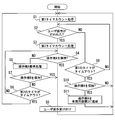
- FIG. 4 is a flowchart illustrating an example of a flow in the main control unit 16 of the smartphone 1.
- FIG. 5 is a flowchart illustrating an example of a flow of management of the operation right A and the operation right B in the control device 25 of the vehicle device 2.
- FIG. 6 is a flowchart illustrating an example of a flow in the control device 25 of the vehicle device 2.
- FIG. 7B, FIG. 7C, and FIG. 7D are schematic diagrams for explaining the effects of the present disclosure.
- FIG. 8 is a sequence diagram illustrating an example of operations and processing in the information display system 100 when the vehicle is parked or stopped.
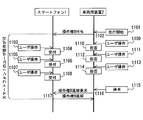
- FIG. 9 is a sequence diagram illustrating an example of operations and processes in the information display system 100 from the start of travel of the vehicle to the stop of the vehicle.
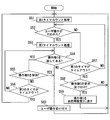
- FIG. 10 is a flowchart illustrating an example of a flow in the main control unit 16 of the smartphone 1 in the first modification.
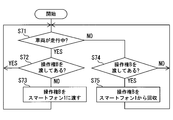
- FIG. 11 is a flowchart illustrating an example of a flow of management of the operation right B of the vehicle device 2 according to the first modification.
- FIG. 12 is a flowchart illustrating an example of a flow in the control device 25 of the vehicle device 2 according to the first modification.
- FIG. 1 is a block diagram illustrating a schematic configuration of an information display system 100 to which the present disclosure is applied.
- An information display system 100 shown in FIG. 1 includes a smartphone 1 and a vehicle device 2.
- image data generated by the smartphone 1 to be displayed on the screen of the smartphone 1 is transmitted to the vehicle device 2, and the vehicle device 2 displays a screen indicated by the image data, or the vehicle device.
- the smartphone 1 is operated by an operation input to 2.
- the smartphone 1 is a so-called touch panel mobile phone that performs operation input using a touch panel (that is, a smartphone equipped with a touch panel in which operation portions are aggregated on a screen). It has a mail function, a music function, a map function, and the like.
- the smartphone 1 corresponds to a mobile terminal.
- FIG. 2 is a block diagram illustrating a schematic configuration of the smartphone 1.
- the smartphone 1 includes a mobile communication unit 11, a touch panel unit 14 including a mobile display unit 12 and an operation detection unit 13, a server communication unit 15, and a main control unit 16.
- the mobile communication unit 11 performs communication (hereinafter referred to as BT communication) with the vehicle device 2 according to, for example, Bluetooth (registered trademark).
- Communication between the smartphone 1 and the vehicle device 2 is performed according to a short-range wireless communication standard such as ZigBee (registered trademark), a wireless LAN standard such as IEEE 802.11, or the like, in addition to performing according to Bluetooth (registered trademark), for example. It is good also as a structure.
- the communication between the smartphone 1 and the vehicle device 2 is not necessarily limited to a configuration that performs wireless communication, and may be configured to perform wired communication such as USB connection.
- the mobile-side display unit 12 displays a screen or the like according to various application programs (hereinafter referred to as applications) of the smartphone 1 and can display, for example, a full color display, such as a liquid crystal display, an organic EL display, or a plasma display. Etc. can be used.
- the operation detection unit 13 uses a touch switch integrated with the mobile-side display unit 12, detects that the switch corresponding to the touch position is operated, and inputs the position information to the main control unit 16. In other words, the operation detection unit 13 detects which position on the screen displayed on the portable display unit 12 is operated, and inputs the position information to the main control unit 16.
- the operation detection unit 13 corresponds to a portable side operation input unit.
- the position information referred to here is, for example, coordinates on the screen of the mobile-side display unit 12.
- the touch switch may be based on a capacitance method, may be based on a resistance film method, or may be based on another method.
- the position information may be an identifier such as an ID for identifying each area.
- the touch panel unit 14 is an integration of the mobile side display unit 12 and the operation detection unit 13, and causes the mobile side display unit 12 to display a screen including, for example, a button display in accordance with an instruction from the main control unit 16. Further, when an operation for the button display is performed, the touch panel unit 14 detects the position of the button display where the operation is performed by the operation detection unit 13 and inputs the position information to the main control unit 16. The touch panel unit 14 corresponds to a mobile touch panel.
- the server communication unit 15 performs wireless communication with the mobile phone base station 3 and performs communication with the server 4 via the mobile phone base station 3 and a communication network such as a mobile phone network or the Internet.
- the main control unit 16 is configured as a normal computer, and includes, for example, a well-known CPU, ROM, EEPROM, RAM, I / O, and a bus line (none of which is shown) for connecting these configurations. Is provided.
- the main control unit 16 executes various processes based on various information input from the mobile communication unit 11, the touch panel unit 14, and the server communication unit 15.
- the main control unit 16 executes an application program (hereinafter referred to as an application), generates image data for causing the touch panel unit 14 to display a screen according to the application, and displays the screen according to the image data on the touch panel unit 14.
- an application may be configured to be stored in the ROM in advance, or may be downloaded from the server 4 via the communication network such as the mobile phone base station 3 or the network by the server communication unit 15.
- the main control unit 16 determines which button display on the screen being displayed on the touch panel unit 14 is operated based on the position information input from the touch panel unit 14, and performs the operation. The process corresponding to the displayed button is executed.
- the main control unit 16 performs a pairing process so that BT communication can be performed via the vehicle device 2 and the mobile communication unit 11. And when BT communication with the smart phone 1 and the apparatus 2 for vehicles is established and terminal mode will be used, the image data and display area information which were produced
- the image data referred to here is, for example, color information for each pixel.
- the terminal mode referred to here is a mode in which the screen of the smartphone 1 is displayed on the vehicle device 2 and the smartphone 1 is operated by an operation input to the vehicle device 2.
- the terminal mode may be configured to be selectable for use by an operation input from the user to the touch panel unit 14, and BT communication between the smartphone 1 and the vehicle device 2 is established and the smartphone 1 It may be configured to be automatically used when the vehicle device 2 is connected.
- the main control unit 16 uses the touch panel unit 14 based on position information input from the vehicle device 2 via the portable communication unit 11. It is determined which button display on the currently displayed screen is operated, and processing corresponding to the button display on which the operation is performed is executed.
- the vehicle device 2 is mounted on a vehicle such as an automobile so as to be fixed or portable, and displays an image.
- the vehicle device 2 include a vehicle display device and a vehicle navigation device.
- a vehicle navigation device integrated with a display may be used as the vehicle device 2, or a combination of a vehicle navigation device and a display that does not include a display may be used as the vehicle device 2. .
- the following description will be given on the assumption that the vehicle device 2 is a vehicle navigation device integrated with a display.
- FIG. 3 is a block diagram showing a schematic configuration of the vehicle device 2.
- the vehicle device 2 includes a vehicle-side communication unit 21, a vehicle-side display unit 22, an operation input unit 23, an external input interface (I / F) 24, and a control device 25.
- I / F external input interface
- the vehicle side communication unit 21 performs, for example, BT communication with the smartphone 1. Communication between the vehicle device 2 and the smartphone 1 may be performed by wireless communication as described above, or may be performed by wired communication.
- the vehicle-side communication unit 21 receives display area information and image data transmitted from the mobile-side communication unit 11 and inputs them to the control device 25. In addition, the vehicle side communication unit 21 transmits position information output from the control device 25 to the portable side communication unit 11 in accordance with an instruction from the control device 25.
- the vehicle-side display unit 22 displays a screen or the like according to an instruction from the control device 25 and can display, for example, a full color, and is configured using a liquid crystal display, an organic EL display, a plasma display, or the like. be able to.
- the operation input unit 23 uses, for example, a touch switch or a mechanical switch integrated with the vehicle-side display unit 22, a remote switch, or the like, and instructs the control device 25 to perform various functions by operating the switch. Therefore, the operation input unit 23 corresponds to a vehicle-side operation input unit. Note that the operation input unit 23 may be configured by a touch switch partly integrated with the vehicle-side display unit 22 and the other part by a mechanical switch.
- the operation input unit 23 includes a touch switch (that is, an in-vehicle touch panel) integrated with the vehicle-side display unit 22. Therefore, the vehicle side display part 22 and the operation input part 23 are equivalent to a vehicle-mounted touch panel.
- the operation input unit 23 that functions as a touch switch detects which position on the screen displayed on the vehicle-side display unit 22 has been operated in the same manner as the operation detection unit 13 described above. The position information is input to the control device 25.
- the external input I / F 24 is an interface for the control device 25 to acquire information from various sensor groups of the vehicle.
- the control device 25 acquires information on the vehicle speed (that is, the vehicle speed) detected by a vehicle speed sensor (not shown) via the external input I / F 24.
- the vehicle speed information may be obtained directly from a vehicle speed sensor, or may be obtained indirectly via an ECU or an in-vehicle LAN.
- the control device 25 is configured as a normal computer, and includes, for example, a well-known CPU, ROM, EEPROM, RAM, I / O, a bus line (none of which is shown) for connecting these configurations, and the like. It has been.
- the control device 25 executes various processes based on various information input from the vehicle side communication unit 21, the operation input unit 23, and the external input I / F 24.
- control device 25 When the control device 25 receives an input of image data (hereinafter, portable-derived image data) transmitted from the smartphone 1 via the vehicle-side communication unit 21, an image (hereinafter, vehicle) according to the portable-derived image data is received. Side-generated image) is generated and output to the vehicle-side display unit 22, and the vehicle-side display unit 22 displays the screen indicated by the portable image data.
- the control device 25 generates, for example, a vehicle-side generated image obtained by converting the size or resolution of portable-derived image data into the screen size or resolution of the vehicle-side display unit 22 based on display area information transmitted from the smartphone 1. It shall be.
- the configuration in which the size and resolution of the mobile-derived image data is converted to the size and resolution of the screen of the vehicle-side display unit 22 based on the display area information transmitted from the smartphone 1 is shown.
- the conversion ratio of the size and resolution of the image data derived from the portable device may be held in advance in a nonvolatile memory such as a ROM of the control device 25 as a fixed value, and conversion may be performed according to the fixed value.
- the display area information may not be transmitted from the smartphone 1.
- the control device 25 inputs the position information indicating which position on the screen displayed on the vehicle-side display unit 22 is operated from the operation input unit 23.
- the coordinates on the screen of the touch panel unit 14 (specifically, the mobile-side display unit 12) of the smartphone 1 corresponding to the position information are specified as the operation target area.
- a configuration may be used in which the size is determined by performing a reverse conversion to the conversion performed when the size of the mobile phone-derived image data is converted to generate the vehicle-side generated image. .
- the information display system 100 while the terminal mode is being used, while the operation is performed by one of the smartphone 1 and the vehicle device 2, the operation by the other is prohibited. In addition, while the vehicle is traveling, forcible travel that prohibits the operation by the vehicle device 2 is performed, while the operation from the smartphone 1 is enabled. In the information display system 100, in order to enable the above two points, a right “operation right” for accepting a user operation is set while the smartphone 1 and the vehicle device 2 are connected and the terminal mode is used.
- operation right is managed by the vehicle device 2 and is held by the vehicle device 2 by default, and the vehicle device 2 gives the smartphone 1 depending on conditions. It is assumed that there are two types of operation rights, for example, operation right A and operation right B.
- operation right A is a request that the smartphone 1 requests and grants to the vehicle device 2 when the user operates the smartphone 1, and returns the vehicle right to the vehicle device 2 after the operation is completed. Note that after the operation described here is completed, for example, an operation of button display of the touch panel unit 14 is taken as an example, and after the processing set for each button display is completed.
- the process set for each button display may be a process from when the button display operation is performed until another button display operation is performed. Also, a series of processes may be performed that are performed including other button display operations when the button display operation is performed. For example, taking destination setting as an example, when the destination setting button display operation is performed, the destination setting including the button display operation for inputting the destination 50-sound is completed. This series of processes is applicable.
- the operation right B is given by the vehicle device 2 to the smartphone 1 when the above-mentioned driving compulsion is performed, and the vehicle device 2 requests the smartphone 1 to return when the driving compulsion is canceled.
- the operation right A and the operation right B are information (hereinafter, authority information) indicating the right to accept an operation from the user, for example.
- the smartphone 1 can be operated when it has at least one of the operation right A and the operation right B, and the vehicle device 2 has both the operation right A and the operation right B. It shall be operable.
- the operation authority A corresponds to the first authority information
- the operation authority B corresponds to the second authority information.
- FIG. 4 is a flowchart illustrating an example of a flow in the main control unit 16 of the smartphone 1.
- the flow in FIG. 4 is started when, for example, the smartphone 1 and the vehicle device 2 are connected and the use of the terminal mode is started, and is ended when the use of the terminal mode is finished.
- the smartphone 1 is in a state where it cannot accept a user operation and execute a process according to the user operation (that is, the operation cannot be performed).
- step S1 the first timer count process is executed, and the process proceeds to step S2.
- the count of the first timer is initialized, and the count of the first timer is started.
- a timer circuit (not shown) provided in the main control unit 16 may be used.
- step S2 it is determined whether or not an operation input (that is, user operation) from the user to the smartphone 1 has been performed. Whether or not a user operation has been performed may be determined according to the presence or absence of a signal from the operation detection unit 13. And when it determines with user operation having been performed (it is YES at step S2), it moves to step S3. If it is not determined that a user operation has been performed (NO in step S2), the process proceeds to step S9.
- an operation input that is, user operation
- step S3 the second timer count process is executed, and the process proceeds to step S4.
- the count of the second timer is initialized, and the count of the second timer is started.
- a timer circuit (not shown) provided in the main control unit 16 may be used.
- step S4 it is determined whether or not the operation right A is held. Whether or not the operation right A is held may be determined according to whether or not the operation right A is stored in a memory area such as a RAM that is a storage location of the operation right A. If it is determined that the operation right A is held (YES in step S4), the process proceeds to step S5. If it is not determined that the operation right A is held (NO in step S4), the process proceeds to step S6. In step S5, a user operation on touch panel unit 14 is accepted, a process according to the user operation is executed, and the flow returns to step S1 to repeat the flow.
- step S6 the operation right A request process is executed, and the process proceeds to step S7.
- a signal requesting the operation right A is transmitted from the mobile communication unit 11 to the vehicle device 2, and the operation right A is transmitted from the vehicle device 2. Then, the operation right A transmitted from the vehicle device 2 is acquired via the portable communication unit 11.
- step S7 it is determined whether or not the operation right B is held. Whether or not the operation right B is held may be determined according to whether or not the operation right B is stored in a memory area such as a RAM that is a storage location of the operation right B. If it is determined that the operation right B is held (YES in step S7), the process proceeds to step S5. If it is not determined that the operation right B is held (NO in step S7), the process proceeds to step S8.
- step S8 it is determined whether or not the second timer has timed out. Whether the second timer has timed out may be determined based on whether the count of the second timer is equal to or greater than a predetermined value.
- the predetermined value mentioned here is a value that can be arbitrarily set, for example, a count value for several seconds.
- step S8 If it is determined that the second timer has timed out (YES in step S8), the process returns to step S1 and the flow is repeated. If it is not determined that the second timer has timed out (NO in step S8), the flow returns to step S4 to repeat the flow.
- step S9 it is determined whether or not the first timer has timed out. Whether the first timer has timed out may be determined based on whether the count of the first timer is equal to or greater than a predetermined value.
- the predetermined value mentioned here is a value that can be arbitrarily set, for example, a count value for several seconds.
- step S9 If it is determined that the first timer has timed out (YES in step S9), the process proceeds to step S10. If it is not determined that the first timer has timed out (NO in step S9), the flow returns to step S2 to repeat the flow.
- step S10 it is determined whether or not the operation right A is held. Whether or not the operation right A is held may be determined in the same manner as in step S4. If it is determined that the operation right A is held (YES in step S10), the process proceeds to step S11. If it is not determined that the operation right A is held (NO in step S10), the process returns to step S1 and the flow is repeated. In step S11, the operation right A held is transmitted from the portable communication unit 11 to the vehicle device 2 to return the operation right A to the vehicle device 2, and the flow returns to step S1 to repeat the flow.
- FIG. 5 is a flowchart illustrating an example of a flow of management of the operation right A and the operation right B in the control device 25 of the vehicle device 2.
- the flow in FIG. 5 is started when, for example, the smartphone 1 and the vehicle device 2 are connected and the use of the terminal mode is started, and is ended when the use of the terminal mode is finished.
- the vehicle device 2 generates the operation right A and the operation right B when, for example, use of the terminal mode is started, and each of the memories such as a RAM serving as a storage location of the operation right A and the operation right B is stored. It is assumed that the operation right A and the operation right B are stored in the area. Then, when the use of the terminal mode ends, the operation right A and the operation right B are deleted from the storage location.
- step S31 it is determined whether or not a request for the operation right A has been received from the smartphone 1. Whether or not the request for the operation right A has been received from the smartphone 1 may be determined according to whether or not an input of a signal requesting the operation right A has been received via the vehicle-side communication unit 21.
- step S31 If it is determined that the request for the operation right A has been received (YES in step S31), the process proceeds to step S32. If it is not determined that the request for the operation right A has been received (NO in step S31), the process proceeds to step S33. In step S32, the operation right A is transferred to the smartphone 1 by transmitting the held operation right A from the vehicle-side communication unit 21 to the smartphone 1, and the process proceeds to step S33.
- step S33 it is determined whether or not the vehicle is traveling. Whether or not the vehicle is running is determined based on the vehicle speed information input via the external input I / F 24, whether or not the vehicle speed is substantially 0 (for example, 5 km / h or less). Etc.). If it is determined that the vehicle is traveling (YES in step S33), the process proceeds to step S34. If it is not determined that the vehicle is traveling (NO in step S33), the process proceeds to step S36.
- step S34 it is determined whether or not the operation right B has been passed to the smartphone 1.
- the operation right B may be determined to have been passed to the smartphone 1 when the operation right B is not stored in a memory area such as a RAM that is the storage location of the operation right B. If it is determined that the operation right B has been passed (YES in step S34), the process returns to step S31 and the flow is repeated. If it is not determined that the operation right B has been handed over (NO in step S34), the process proceeds to step S35.
- step S35 the operation right B is transmitted to the smartphone 1 by transmitting the held operation right B from the vehicle-side communication unit 21 to the smartphone 1, and the flow returns to step S31 to repeat the flow.
- step S36 it is determined in the same manner as in step S35 whether or not the operation right B has been given to the smartphone 1. If it is determined that the operation right B has been handed over (YES in step S36), the process proceeds to step S37. If it is not determined that the operation right B has been handed over (NO in step S36), the process returns to step S31 and the flow is repeated.
- step S37 a signal requesting the operation right B from the vehicle-side communication unit 21 is transmitted to the smartphone 1, and the operation right B is returned from the smartphone 1. And the operation right B returned from the smart phone 1 is acquired via the vehicle side communication part 21.
- FIG. 6 is a flowchart illustrating an example of a flow in the control device 25 of the vehicle device 2.
- the flow in FIG. 6 is started when, for example, the smartphone 1 and the vehicle device 2 are connected and the use of the terminal mode is started, and is ended when the use of the terminal mode is ended.
- the vehicle device 2 is in a state in which it cannot accept a user operation and execute a process according to the user operation (that is, the operation cannot be performed) by default. .
- step S51 it is determined whether or not an operation input from the user (that is, a user operation) is performed on the vehicle device 2. Whether or not a user operation has been performed may be determined according to the presence or absence of a signal from the operation input unit 23. And when it determines with user operation having been performed (it is YES at step S51), it moves to step S2. If it is not determined that a user operation has been performed (NO in step S51), the flow in step S51 is repeated.
- step S52 it is determined whether or not the operation right A has been given to the smartphone 1.
- the operation right A may be determined to have been given to the smartphone 1 when the operation right A is not stored in a memory area such as a RAM serving as a storage location of the operation right A. If it is determined that the operation right A has been passed (YES in step S52), the process returns to step S51 and the flow is repeated. If it is not determined that the operation right A has been handed over (NO in step S52), the process proceeds to step S53.
- step S53 it is determined whether or not the operation right B has been passed to the smartphone 1.
- the operation right B may be determined to have been passed to the smartphone 1 when the operation right B is not stored in a memory area such as a RAM that is the storage location of the operation right B. If it is determined that the operation right B has been passed (YES in step S53), the flow returns to step S51 to repeat the flow. If it is not determined that the operation right B has been handed over (NO in step S53), the process proceeds to step S54.
- step S54 a user operation to the operation input unit 23 is accepted, a process according to the user operation is executed, and the flow returns to step S51 to repeat the flow.
- an operation input is first performed between the smartphone 1 and the vehicle device 2.
- the smartphone 1 and the vehicle device 2 are operated by the same person during the same time period. Therefore, even when the smartphone 1 and the vehicle device 2 are operated by the same person during the same time period, only the side operated first can be operated. It becomes possible to prevent malfunction due to simultaneous operation.
- the smartphone 1 when the communication is connected and the vehicle is traveling, only the smartphone 1 can be operated, so that it is possible to prevent malfunction due to simultaneous operation of two persons regardless of whether the vehicle is traveling. It becomes possible.
- in operation here refers to, for example, the operation of button display on the touch panel, from the start to the end of the processing set for each button display.
- a mechanical switch for example, the period from the start to the end of processing executed for one switch operation is shown.
- the vehicle device 2 cannot be operated, so that the driver is prevented from operating the vehicle device 2 while driving the vehicle, and the concentration of the driving operation is prevented. Can be prevented.
- the smartphone 1 can be operated even when communication is connected and the vehicle is running, an occupant other than the driver operates the smartphone 1 to display the screen of the smartphone 1 on the vehicle device 2. The convenience for passengers is less likely to be lost.
- FIG. 7A, FIG. 7B, FIG. 7C, and FIG. 7D are schematic diagrams for explaining the operational effects in the present disclosure.
- the smartphone 1 and the vehicle device 2 are in communication connection.
- the smartphone 1 When the vehicle is not running (that is, parked and stopped) and an operation input is made to the smartphone 1, the smartphone 1 has the operation right A and the vehicle device 2 has the operation right B. Therefore, only the smartphone 1 can be operated (see FIG. 7A). Further, when the vehicle is stopped and an operation input is made to the vehicular device 2, since the vehicular device 2 has both the operation right A and the operation right B, only the vehicular device 2 can be operated. (See FIG. 7B).
- the smartphone 1 since the smartphone 1 has the operation right A and the operation right B, only the smartphone 1 can be operated. Further, when the vehicle is running and an operation input is performed on the vehicle device 2, the smartphone 1 has the operation right B and the vehicle device 2 has the operation right A. Only the smartphone 1 can be operated.
- FIG. 8 is a sequence diagram illustrating an example of operations and processing in the information display system 100 while the vehicle is parked or stopped.
- FIG. 9 is a sequence diagram illustrating an example of operations and processes in the information display system 100 from the start of travel of the vehicle to the stop of the vehicle.
- a signal requesting the operation right A from the smartphone 1 to the vehicle device 2 is received. It is transmitted (t2). Subsequently, when receiving the request for the operation right A from the smartphone 1, the vehicular device 2 grants the operation right A by passing the operation right A to the smartphone 1 (t3).
- the smartphone 1 that has been given the operation right A receives the operation input because the user operation is possible (t4).
- the operation input by the user operation (t5, t7) is sequentially received (t6, t8).
- the vehicular device 2 that gives the operation right A to the smartphone 1 has only the operation right B, and thus cannot be operated by the user. Accordingly, the operation input by the user operation (t9, t11, t13) is sequentially rejected (t10, t12, t14). That is, since no operation input from the vehicle device 2 is accepted, only passengers can operate.
- the operation right A is returned from the smartphone 1 to the vehicle device 2 (t15).
- the vehicular device 2 has the operation right A and the operation right B, so that the vehicular device 2 can be operated by the user.
- the user operation of the vehicle device 2 is performed first among the user operation of the smartphone 1 and the user operation of the vehicle device 2 (t16).
- the vehicle device 2 accepts an operation input by a user operation (t17). Even if the user operation of the smartphone 1 is performed after the user operation of the vehicle device 2 (t18), a signal requesting the operation right A is transmitted from the smartphone 1 to the vehicle device 2 (t19). The vehicle device 2 ignores the signal (t20).
- the operation input by the user operation (t21, t23) is sequentially received (t22, t24).
- a signal requesting the operation right A is transmitted from the smartphone 1 to the vehicle device 2 by the user operation (t25) of the smartphone 1.
- the vehicular device 2 ignores the signal (t27). That is, since the operation input from the smartphone 1 is not accepted, only the driver can operate.
- the user operation on the smartphone 1 is the first of the user operation on the smartphone 1 and the user operation on the vehicle device 2. (T28).
- the signal requesting the operation right A is transmitted from the smartphone 1 to the vehicle device 2 (t29)
- the operation right A is given from the vehicle device 2 to the smartphone 1 (t30).
- the smartphone 1 that has received the operation right A receives a user operation, and receives an operation input (t31).
- the operation input by the user operation (t32) is sequentially received (t33).
- the vehicle device 2 When the vehicle starts to travel (t101), the vehicle device 2 gives the operation right B by passing the operation right B to the smartphone 1 (t102).
- the smartphone 1 that has received the operation right B can perform user operations.
- the operation input by user operation (t103, t105, t107) will be received sequentially (t104, t106, t108).
- the vehicle device 2 that has been given the operation right B to the smartphone 1 does not have at least the operation right B, so that the user cannot operate. Accordingly, operation inputs by user operations (t109, t111, t113) are sequentially rejected (t110, t112, t114). That is, since no operation input from the vehicle device 2 is accepted, only passengers can operate.
- a signal requesting the return of the operation right B is transmitted from the vehicle device 2 to the smartphone 1 (t116).
- the smartphone 1 receives a request for returning the operation right B from the vehicle device 2, the operation right B is returned to the vehicle device 2 (t117).
- the configuration using the operation right A and the operation right B is shown, but the present invention is not necessarily limited thereto.
- information indicating that the operation from the user is prohibited hereinafter, prohibition information
- the operation right A may be used instead of using the operation right A and the operation right B.
- the smartphone 1 can be operated when it has the operation right A
- the vehicle device 2 can be operated when it has the operation right A and no prohibition information. It shall be possible.
- the operation right A corresponds to authority information.
- the prohibition information is generated and held by the vehicle device 2 when the vehicle is traveling, and is deleted when the vehicle is not traveling, for example, a flag.
- a flag hereinafter referred to as a prohibition flag C
- a prohibition flag C indicating prohibition of accepting an operation from the user when the vehicle is traveling is set, and when the vehicle is not traveling, a prohibition flag C is set. Shall be reset.
- the smartphone 1 when communication input is performed and the vehicle is not running, and an operation input is performed on the smartphone 1, the smartphone 1 has the operation right A and is operated by the vehicle device 2. Since it does not have the right, only the smartphone 1 can be operated.
- the vehicular device 2 when the communication connection is established and the vehicle is not running and an operation input is made to the vehicular device 2, the vehicular device 2 has the operation right A and is prohibited. While the flag C is reset (that is, it does not have prohibition information), since the smartphone 1 does not have the operation right A, only the vehicle device 2 can be operated.
- the smartphone 1 when communication is connected and the vehicle is running and an operation input is performed on the smartphone 1, the smartphone 1 has the operation right A and the vehicle device 2 has the operation right A. Therefore, only the mobile terminal can be operated. Further, when the communication is connected and the vehicle is running, and the operation input is performed to the vehicle device 2, the vehicle device 2 has the operation right A, and Since the prohibition flag C is set (that is, the prohibition information is included), the vehicle device 2 cannot be operated. Further, since the smartphone 1 does not have the operation right A, the smartphone 1 cannot be operated.
- the vehicular device 2 may be configured to estimate that an operation input from the user has been performed on the smartphone 1 and prevent malfunction due to simultaneous operation. Specifically, the vehicular device 2 analyzes the mobile-derived image data received from the smartphone 1 and operates, for example, even though no operation input is performed from the operation input unit 23 of the vehicular device 2. When the screen transitions, it is estimated that a user operation input has been performed on the smartphone 1, and the operation input from the operation input unit 23 of the vehicle device 2 is invalidated for a predetermined time. Also good.
- the operation of the vehicle device 2 during the operation of the smartphone 1 can be prohibited only by the vehicle device 2, the smartphone 1 is incompatible with the vehicle device 2, and both devices jointly manage the operation authority. Even in situations where it is difficult to perform such operations, malfunctions caused by simultaneous operations can be suppressed.
- the vehicle device 2 is configured such that both the above-described devices jointly control the operation effectively or ineffectively according to the situation of the smartphone 1, and the mode in which the operation is effectively or invalidally controlled only by the vehicle device 2. And can be used properly.
- FIG. For example, usually, the operation detected by the operation detection unit 13 of the smartphone 1 is preferentially adopted, and the position information that is the operation information received from the vehicle device 2 is not adopted.
- the operation received from the vehicular device 2 is preferentially adopted, and the operation detection unit 13 of the smartphone 1 is used. The operation may be switched so as to invalidate the operation detected in step (b).
- the operation of the vehicle device 2 during the operation of the smartphone 1 can be prohibited only by the smartphone 1, and even if there is no treatment in the vehicle device 2, only the change on the smartphone 1 side causes a malfunction due to the simultaneous operation. Can be suppressed.
- the “operation right” is managed only by the vehicle device 2.
- the present invention is not limited to this.
- the “operation right” may be managed by the smartphone 1 as well.
- it is good also as a structure (henceforth modification 1) which uses the operation right C which the smart phone 1 manages instead of the above-mentioned operation right A which the apparatus 2 for vehicles manages.
- Modification 1 will be described.
- members having the same functions as those shown in the drawings used in the description of the above-described embodiment are denoted by the same reference numerals, and description thereof is omitted.
- operation right B is the same as the operation right B described above.
- operation right C is a request that the vehicular device 2 requests and gives to the smartphone 1 when the user operates the vehicular device 2 and returns it to the smartphone 1 after the operation is completed.
- the button display operation of the in-vehicle touch panel is taken as an example, and after the processing set for each button display is completed.
- the processing set for each button display may be processing from when the button display operation is performed until another button display operation is performed.
- a series of processes may be performed that are performed including other button display operations when the button display operation is performed. For example, taking destination setting as an example, when the destination setting button display operation is performed, the destination setting including the button display operation for inputting the destination 50-sound is completed. This series of processes is applicable.
- the transfer of the operation right B and the transfer of the operation right C are performed independently of each other. It is assumed that the operation right B and the operation right C are the above-described authority information.
- the smartphone 1 can be operated when it has either the operation right B or the operation right C, and the vehicle device 2 can be operated when it has both the operation right B and the operation right C. It shall be possible.
- FIG. 10 is a flowchart illustrating an example of a flow in the main control unit 16 of the smartphone 1 in the first modification.
- the flow in FIG. 10 is started when, for example, the smartphone 1 and the vehicle device 2 are connected and the use of the terminal mode is started, and is ended when the use of the terminal mode is finished.
- the smartphone 1 is in a state where it cannot accept a user operation and execute a process according to the user operation (that is, the operation cannot be performed).
- the smartphone 1 generates the operation right C when, for example, use of the terminal mode is started, and stores the operation right C in a memory area such as a RAM serving as a storage location of the operation right C. Then, when the use of the terminal mode ends, the operation right C is deleted from the storage location.
- step S51 the first timer count process is executed in the same manner as in step S1, and the process proceeds to step S52.
- step S52 similarly to step S2, it is determined whether or not a user operation on the smartphone 1 has been performed. And when it determines with user operation having been performed (it is YES at step S52), it moves to step S53. If it is not determined that a user operation has been performed (NO in step S52), the process proceeds to step S57.
- step S53 the second timer count process is executed in the same manner as in step S3, and the process proceeds to step S54.
- step S54 it is determined whether or not the operation right C has been passed to the vehicle device 2. For example, when the operation right C is not stored in a memory area such as a RAM where the operation right C is stored, it may be determined that the operation right C has been transferred to the vehicle device 2. If it is determined that the operation right C has been given (YES in step S54), the process proceeds to step S55. If it is not determined that the operation right C has been given (NO in step S54), the process proceeds to step S60.
- step S55 as in step S7, it is determined whether or not the operation right B is held. If it is determined that the operation right B is held (YES in step S55), the process proceeds to step S60. If it is not determined that the operation right B is held (NO in step S55), the process proceeds to step S56.
- step S56 as in step S8, it is determined whether or not the second timer has timed out. And when it determines with the 2nd timer having timed out (it is YES at step S56), it returns to step S51 and repeats a flow. If it is not determined that the second timer has timed out (NO in step S56), the flow returns to step S54 to repeat the flow.
- step S57 as in step S9, it is determined whether or not the first timer has timed out. And when it determines with the 1st timer having timed out (it is YES at step S57), it moves to step S58. If it is not determined that the first timer has timed out (NO in step S57), the flow returns to step S52 to repeat the flow.
- step S58 it is determined whether a request for the operation right C has been received from the vehicle device 2. Whether or not the request for the operation right C has been received from the vehicle device 2 is determined depending on whether or not the input of the signal requesting the operation right C has been received via the mobile communication unit 11. Good. And when it determines with having received the request
- step S59 the operating right C is transmitted to the vehicular apparatus 2 by transmitting the held operating right C from the mobile communication unit 11 to the vehicular apparatus 2, and the flow returns to step S51 to repeat the flow.
- step S60 a user operation on touch panel unit 14 is accepted, a process according to the user operation is executed, and the flow returns to step S51 to repeat the flow.
- FIG. 11 is a flowchart illustrating an example of a flow of management of the operation right B in the control device 25 of the vehicle device 2 in the first modification.
- the flow in FIG. 11 is started when, for example, the smartphone 1 and the vehicle device 2 are connected and the use of the terminal mode is started, and is ended when the use of the terminal mode is finished.
- the vehicle device 2 generates the operation right B when, for example, use of the terminal mode is started, and stores the operation right B in a memory area such as a RAM serving as a storage location of the operation right B. . Then, when the use of the terminal mode ends, the operation right B is deleted from the storage location.
- step S71 as in step S33, it is determined whether or not the vehicle is traveling. If it is determined that the vehicle is traveling (YES in step S71), the process proceeds to step S72. If it is not determined that the vehicle is traveling (NO in step S71), the process proceeds to step S74.
- step S72 as in step S34, it is determined whether or not the operation right B has been passed to the smartphone 1. If it is determined that the operation right B has been handed over (YES in step S72), the process returns to step S71 to repeat the flow. If it is not determined that the operation right B has been handed over (NO in step S72), the process proceeds to step S73.
- step S73 the operation right B is transmitted to the smartphone 1 by transmitting the held operation right B from the vehicle-side communication unit 21 to the smartphone 1, and the flow returns to step S71 to repeat the flow.
- step S74 it is determined whether or not the operation right B has been given to the smartphone 1 in the same manner as in step S36. If it is determined that the operation right B has been handed over (YES in step S74), the process proceeds to step S75. If it is not determined that the operation right B has been handed over (NO in step S74), the flow returns to step S71 to repeat the flow.
- step S75 a signal requesting the operation right B from the vehicle-side communication unit 21 is transmitted to the smartphone 1, and the operation right B is returned from the smartphone 1. And the operation right B returned from the smart phone 1 is acquired via the vehicle side communication part 21.
- FIG. 12 is a flowchart illustrating an example of a flow in the control device 25 of the vehicle device 2 according to the first modification.
- the flow in FIG. 12 is started when, for example, the smartphone 1 and the vehicle device 2 are connected and the use of the terminal mode is started, and is ended when the use of the terminal mode is ended.
- the vehicle device 2 is in a state where it cannot accept a user operation and execute a process according to the user operation (that is, the operation cannot be performed) by default. .
- step S91 the third timer count process is executed, and the process proceeds to step S92.
- the third timer count process the count of the third timer is initialized, and the count of the third timer is started.
- a timer circuit (not shown) provided in the control device 25 may be used.
- step S92 it is determined whether or not a user operation has been performed on the vehicle device 2 in the same manner as in step S51. And when it determines with user operation having been performed (it is YES at step S92), it moves to step S93. If it is not determined that a user operation has been performed (NO in step S92), the process proceeds to step S99.
- step S93 the fourth timer count process is executed, and the process proceeds to step S94.
- the count of the fourth timer is initialized, and the count of the fourth timer is started.
- a timer circuit (not shown) provided in the control device 25 may be used.
- step S94 it is determined whether or not the operation right C is held. Whether or not the operation right C is held may be determined according to whether or not the operation right C is stored in a memory area such as a RAM that is a storage location of the operation right C. If it is determined that the operation right C is held (YES in step S94), the process proceeds to step S95. If it is not determined that the operation right C is held (NO in step S94), the process proceeds to step S96.
- step S95 as in step S53, it is determined whether or not the operation right B has been passed to the smartphone 1. If it is determined that the operation right B has been passed (YES in step S95), the process proceeds to step S97. If it is not determined that the operation right B has been handed over (NO in step S95), the process proceeds to step S98.
- step S96 the operation right C request process is executed, and the process proceeds to step S97.
- the operation right C request process a signal requesting the operation right C from the vehicle-side communication unit 21 is transmitted to the smartphone 1, and the operation right C is transmitted from the smartphone 1. Then, the operation right C transmitted from the smartphone 1 is acquired via the vehicle-side communication unit 21.
- step S97 it is determined whether or not the fourth timer has timed out. Whether the fourth timer has timed out may be determined based on whether the count of the fourth timer is equal to or greater than a predetermined value.
- the predetermined value mentioned here is a value that can be arbitrarily set, for example, a count value for several seconds.
- step S97 If it is determined that the fourth timer has timed out (YES in step S97), the process returns to step S91 to repeat the flow. If it is not determined that the fourth timer has timed out (NO in step S97), the flow returns to step S94 to repeat the flow.
- step S98 a user operation to the operation input unit 23 is accepted, a process according to the user operation is executed, and the flow returns to step S91 to repeat the flow.
- step S99 it is determined whether or not the third timer has timed out. Whether the third timer has timed out may be determined based on whether the count of the third timer is equal to or greater than a predetermined value.
- the predetermined value mentioned here is a value that can be arbitrarily set, for example, a count value for several seconds.
- step S99 If it is determined that the third timer has timed out (YES in step S99), the process proceeds to step S100. If it is not determined that the third timer has timed out (NO in step S99), the flow returns to step S92 to repeat the flow.
- step S100 it is determined whether or not the operation right C is held in the same manner as in step S94. If it is determined that the operation right C is held (YES in step S100), the process proceeds to step S101. If it is not determined that the operation right C is held (NO in step S100), the process returns to step S91 to repeat the flow.
- step S101 the operation right C that is held is transmitted from the vehicle-side communication unit 21 to the smartphone 1, whereby the operation right C is returned to the smartphone 1, and the process returns to step S91 to repeat the flow.
- the mobile terminal a configuration using a so-called touch panel type mobile phone that performs operation input using a touch panel is shown as the mobile terminal, but the configuration is not necessarily limited thereto.
- the mobile terminal may be configured to use another mobile terminal such as a mobile phone or a PDA that does not use a touch panel.
- the side of the mobile terminal and the vehicle device on which the operation input is first performed when the vehicle device and the mobile terminal are connected by communication (hereinafter referred to as “communication connection”), the side of the mobile terminal and the vehicle device on which the operation input is first performed. During the operation of, only the side on which the operation input was performed first can be operated, so even if the mobile terminal and the vehicle device are operated at the same time by two parties, only the side operated first It is possible to prevent the malfunction caused by simultaneous operation of the two parties.
- the vehicle device when the vehicle device and the portable terminal are connected by communication and the vehicle is running, the vehicle device may be made inoperable while the portable terminal is operable. According to this, when the communication is connected and the vehicle is traveling, only the mobile terminal can be operated, so that it is possible to prevent malfunction due to simultaneous operation by two persons regardless of whether the vehicle is traveling or not. It becomes possible to do. In addition, when the vehicle is running, the operation of the vehicle device cannot be performed, so that the driver is prevented from operating the vehicle device while driving the vehicle, and the concentration of the driving operation is hindered. Can not be. Further, since the mobile terminal can be operated even when the communication is connected and the vehicle is running, an occupant other than the driver operates the mobile terminal to display the screen of the mobile terminal on the vehicle device. And convenience for passengers is less likely to be lost.
- the vehicle device holds the first authority information and the second authority information as authority information that is information indicating a right to accept an operation from the user.
- the mobile terminal acquires the first authority information held in the vehicle device via the mobile side communication unit when an operation input from the user is performed on the mobile side operation input unit, After the process in accordance with the input is completed, the first authority information is returned to the vehicle device via the portable communication unit, and the vehicle device passes through the vehicle communication unit when the vehicle is running.
- the second authority information that has been held is passed to the mobile terminal, and the vehicle is no longer running, the second authority information is returned from the mobile terminal via the vehicle-side communication unit.
- the vehicular apparatus can be operated, and the portable terminal can store the first authority information and the second authority information. It is good also as an aspect which enables operation of a portable terminal, when it has at least any.
- the mobile terminal when a communication connection is made and the vehicle is not running and an operation input is made to the mobile terminal, the mobile terminal has the first authority information, and the vehicle device is the first device. Since it has two authority information, only the portable terminal can be operated. Further, when the communication connection is established and the vehicle is not running, and the operation input is performed on the vehicle device, the vehicle device has both the first authority information and the second authority information. Only the vehicle device can be operated.
- the mobile terminal has the first authority information and the second authority information. Only can be operated.
- the mobile terminal has the second authority information, and the vehicle device is the first device. Since it has authority information, only the mobile terminal can be operated.
- authority information that is information indicating the right to accept an operation from the user is held in the vehicle device, and the mobile terminal is connected to the mobile side operation input unit by the user.
- the authority information held in the vehicular device is acquired via the mobile communication unit, and after the processing according to the operation input is completed, the mobile communication unit
- the authority information is returned to the vehicle device via the vehicle device, and the vehicle device generates and holds prohibition information that is information indicating that the operation from the user is prohibited when the vehicle is running.
- the prohibition information is deleted, the vehicle device and the mobile terminal are connected by communication, the vehicle device has authority information, and the prohibition is performed.
- the mobile terminal has the authority information may be a mode that allows operating the mobile terminal.
- the mobile terminal when a communication connection is made and the vehicle is not running and an operation input is performed on the mobile terminal, the mobile terminal has authority information, and the vehicle device receives the authority information. Since it does not have, only a portable terminal can be operated.
- the vehicle device when the communication connection is established and the vehicle is not running and an operation input is made to the vehicle device, the vehicle device has authority information and prohibition information. On the other hand, since the portable terminal does not have authority information, only the vehicle device can be operated.
- the mobile terminal when communication connection is being made and the vehicle is running and an operation input is made to the mobile terminal, the mobile terminal has authority information, and the vehicle device has authority information. Only the mobile terminal can be operated. Further, when the communication connection is established and the vehicle is running and an operation input is made to the vehicle device, the vehicle device has authority information and prohibition information, and the mobile terminal has authority. Since it has no information, neither the mobile terminal nor the vehicle device can be operated.
- the vehicle apparatus estimates whether or not an operation input has been performed on the mobile terminal by the user based on the image data received from the mobile terminal and the presence or absence of an operation by the user on the vehicle-side operation input unit, and the estimation Based on the result, the operation input from the vehicle-side operation input unit may be invalidated during the operation of the mobile terminal. According to this, the operation of the vehicle device during the operation of the mobile terminal can be prohibited only by the vehicle device, the mobile terminal is not compatible with the vehicle device, and it is difficult for both devices to manage the operation authority together. Even in a difficult situation, malfunction due to simultaneous operation can be suppressed.
- the portable terminal acquires vehicle-side operation information input to the vehicle-side operation input unit from the vehicle device, and validates the operation input to the portable-side operation input unit and invalidates the vehicle-side operation information.
- the mobile side display unit may be a mobile touch panel that is a touch panel integrated with at least a part of the mobile side operation input unit.
- the vehicle-side display unit is a vehicle-mounted touch panel that is a touch panel integrated with at least a part of the vehicle-side operation input unit
- the vehicle device is image data received from the portable terminal by the vehicle-side communication unit.
- Is displayed on the in-vehicle touch panel and when an operation from the user is performed on the in-vehicle touch panel, on the screen of the mobile touch panel corresponding to the area on the screen of the in-vehicle touch panel in which the operation is performed Is specified as an operation target area, and a signal indicating the operation target area is transmitted from the vehicle-side communication unit to the mobile terminal, and the mobile terminal transmits a signal indicating the operation target area transmitted from the vehicle device to the mobile side.
- the vehicle device includes a portable-side operation input unit that is mounted on a vehicle and allows a user to perform an operation input, and image data generated by the portable terminal to be displayed on the screen of the portable terminal is transmitted to the portable terminal by the vehicle-side communication unit.
- a vehicle device that displays the screen indicated by the received image data on the vehicle-side display unit, the vehicle device and the mobile terminal are connected by communication, and the vehicle is not running, During the operation on the side where the operation input has been performed first between the mobile terminal and the vehicle device, only the side on which the operation input has been performed can be operated, and the vehicle device and the mobile terminal are communicated with each other.
- the mobile device may be disabled while the mobile terminal may be operated.
Landscapes
- Engineering & Computer Science (AREA)
- Human Computer Interaction (AREA)
- Computer Networks & Wireless Communication (AREA)
- Theoretical Computer Science (AREA)
- Signal Processing (AREA)
- Physics & Mathematics (AREA)
- General Engineering & Computer Science (AREA)
- General Physics & Mathematics (AREA)
- Telephone Function (AREA)
Abstract
Description
2から受信した操作情報である位置情報は採用しない。一方、車両用装置2の操作中(車両用装置2から位置情報を受信してから所定時間)だけは、車両用装置2から受信した操作を優先して採用し、スマートフォン1の操作検出部13で検出された操作を無効とするように切り換える構成としてもよい。
を禁止でき、車両用装置2での処置はなくても、スマートフォン1側の変更だけで、同時操作による誤作動を抑制することができる。
Claims (9)
- 生成した画像データが示す画面を携帯側表示部に表示する携帯端末(1)と、
車両に固定、或いは、持ち運び可能に搭載される車両用装置(2)とを含み、
前記携帯端末(1)は、
前記車両用装置(2)と通信するための携帯側通信部(11)と、
ユーザが操作入力を行う携帯側操作入力部(13)とを備え、
前記車両用装置(2)は、
前記携帯端末(1)と通信するための車両側通信部(21)と、
ユーザが操作入力を行う車両側操作入力部(23)とを備え、
前記車両用装置(2)と前記携帯端末(1)とを通信によって接続し、前記画像データを前記携帯端末(1)から前記車両用装置(2)に送信して、当該画像データが示す画面を前記車両用装置(2)の車両側表示部に表示させる情報表示システムであって、
前記車両用装置(2)と前記携帯端末(1)とを通信によって接続中の場合には、前記携帯端末(1)と前記車両用装置(2)とのうち、先に操作入力が行われた側の操作中は、当該先に操作入力が行われた側のみを操作可能とする情報表示システム。
- 請求項1において、
前記車両用装置(2)と前記携帯端末(1)とを通信によって接続中、且つ、前記車両が走行中である場合には、前記車両用装置(2)を操作不能とする一方、前記携帯端末(1)を操作可能とする情報表示システム。
- 請求項1または2において、
前記車両用装置(2)と前記携帯端末(1)とを通信によって接続する場合に、ユーザからの操作を受け付ける権利を示す情報である権限情報として、第1権限情報および第2権限情報を前記車両用装置(2)に保持させ、
前記携帯端末(1)は、
前記携帯側操作入力部(13)にユーザからの操作入力が行われた場合に、前記携帯側通信部(11)を介して、前記車両用装置(2)に保持されている前記第1権限情報を取得する一方、
当該操作入力に従った処理が終了した後に、前記携帯側通信部(11)を介して当該第1権限情報を前記車両用装置(2)に返却し、
前記車両用装置(2)は、
前記車両が走行中の場合に、前記車両側通信部(21)を介して、保持していた前記第2権限情報を前記携帯端末(1)に渡す一方、
前記車両が走行中でなくなった場合には、前記車両側通信部(21)を介して前記携帯端末(1)から当該第2権限情報の返却を受けるものとし、
前記車両用装置(2)と前記携帯端末(1)とを通信によって接続中、前記車両用装置(2)が前記第1権限情報および前記第2権限情報の両方を有している場合には前記車両用装置(2)を操作可能とし、前記携帯端末(1)が前記第1権限情報および前記第2権限情報の少なくともいずれかを有している場合には前記携帯端末(1)を操作可能とする情報表示システム。
- 請求項1または2において、
前記車両用装置(2)と前記携帯端末(1)とを通信によって接続する場合に、ユーザからの操作を受け付ける権利を示す情報である権限情報を前記車両用装置(2)に保持させ、
前記携帯端末(1)は、
前記携帯側操作入力部(13)にユーザからの操作入力が行われた場合に、前記携帯側通信部(11)を介して、前記車両用装置(2)に保持されている前記権限情報を取得する一方、
当該操作入力に従った処理が終了した後に、前記携帯側通信部(11)を介して当該権限情報を前記車両用装置(2)に返却し、
前記車両用装置(2)は、
前記車両が走行中の場合に、ユーザからの操作を受け付けるのを禁止することを示す情報である禁止情報を生成して保持する一方、
前記車両が走行中でなくなった場合には、前記禁止情報を消去するものとし、
前記車両用装置(2)と前記携帯端末(1)とを通信によって接続中、前記車両用装置(2)が前記権限情報を有しており、且つ、前記禁止情報を有していない場合には前記車両用装置(2)を操作可能とし、前記携帯端末(1)が前記権限情報を有している場合には前記携帯端末(1)を操作可能とする情報表示システム。
- 請求項1または2において、
前記車両用装置(2)は、前記携帯端末(1)から受信した前記画像データおよび前記車両側操作入力部(23)へのユーザによる操作の有無に基づいて、ユーザによって前記携帯端末(1)に対して操作入力が行われたか否かを推定し、当該推定結果に基づき、前記携帯端末(1)の操作中は、前記車両側操作入力部(23)からの操作入力を無効とする情報表示システム。
- 請求項1または2において、
前記携帯端末(1)は、
前記車両側操作入力部(23)に入力された車両側操作情報を前記車両用装置(2)から取得するものであるとともに、
前記携帯側操作入力部(13)に入力された操作を有効として前記車両側操作情報を無効とする第1の状態と、
前記第1の状態と排他的に設けられた状態であって、前記車両側操作情報に基づいて、前記車両用装置(2)の操作中は、前記車両側操作情報を有効として前記携帯側操作入力部(13)に入力された操作を無効とする第2の状態とを切り換える情報表示システム。
- 請求項1~6のいずれか1項において、
前記携帯側表示部は、前記携帯側操作入力部(13)の少なくとも一部と一体となったタッチパネルである携帯タッチパネルである情報表示システム。
- 請求項7において、
前記車両側表示部は、前記車両側操作入力部(23)の少なくとも一部と一体となったタッチパネルである車載タッチパネルであって、
前記車両用装置(2)は、
前記車両側通信部(21)で前記携帯端末(1)から受信した前記画像データが示す画面を前記車載タッチパネルに表示するとともに、当該車載タッチパネルに対してユーザからの操作が行われた場合に、操作が行われた当該車載タッチパネルの画面上の領域に対応する前記携帯タッチパネルの画面上での領域を操作対象領域として特定して、当該操作対象領域を示す信号を前記車両側通信部(21)から前記携帯端末(1)に送信し、
前記携帯端末(1)は、
前記車両用装置(2)から送信された前記操作対象領域を示す信号を前記携帯側通信部(11)で受信した場合に、前記携帯タッチパネルの画面上の当該操作対象領域を操作した場合と同様の入力を行う情報表示システム。
- 車両に固定、或いは、持ち運び可能に搭載され、
ユーザが操作入力を行う携帯側操作入力部(13)を備え、
携帯端末(1)の画面に表示させるために前記携帯端末(1)で生成された画像データを車両側通信部(21)で前記携帯端末(1)から受信し、受信した画像データが示す画面を車両側表示部に表示する車両用装置(2)であって、
前記車両用装置(2)と前記携帯端末(1)とを通信によって接続中、且つ、前記車両が走行中でない場合には、前記携帯端末(1)と前記車両用装置(2)とのうち、先に操作入力が行われた側の操作中は、当該先に操作入力が行われた側のみを操作可能とし、
前記車両用装置(2)と前記携帯端末(1)とを通信によって接続中、且つ、前記車両が走行中である場合には、前記車両用装置(2)を操作不能とする一方、前記携帯端末(1)を操作可能とする車両用装置(2)。
Priority Applications (4)
| Application Number | Priority Date | Filing Date | Title |
|---|---|---|---|
| KR1020137023059A KR101501618B1 (ko) | 2011-03-28 | 2012-03-08 | 정보 표시 시스템 및 차량용 장치 |
| EP12763692.6A EP2693720B1 (en) | 2011-03-28 | 2012-03-08 | Information presentation system and in-vehicle apparatus |
| CN201280016000.XA CN103444157B (zh) | 2011-03-28 | 2012-03-08 | 信息呈现系统和车载装置 |
| US14/001,070 US9037345B2 (en) | 2011-03-28 | 2012-03-08 | Information presentation system and in-vehicle apparatus |
Applications Claiming Priority (4)
| Application Number | Priority Date | Filing Date | Title |
|---|---|---|---|
| JP2011070332 | 2011-03-28 | ||
| JP2011-070332 | 2011-03-28 | ||
| JP2011-225168 | 2011-10-12 | ||
| JP2011225168A JP5582125B2 (ja) | 2011-03-28 | 2011-10-12 | 情報表示システムおよび車両用装置 |
Publications (1)
| Publication Number | Publication Date |
|---|---|
| WO2012132255A1 true WO2012132255A1 (ja) | 2012-10-04 |
Family
ID=46930050
Family Applications (1)
| Application Number | Title | Priority Date | Filing Date |
|---|---|---|---|
| PCT/JP2012/001580 Ceased WO2012132255A1 (ja) | 2011-03-28 | 2012-03-08 | 情報表示システムおよび車両用装置 |
Country Status (6)
| Country | Link |
|---|---|
| US (1) | US9037345B2 (ja) |
| EP (1) | EP2693720B1 (ja) |
| JP (1) | JP5582125B2 (ja) |
| KR (1) | KR101501618B1 (ja) |
| CN (1) | CN103444157B (ja) |
| WO (1) | WO2012132255A1 (ja) |
Cited By (2)
| Publication number | Priority date | Publication date | Assignee | Title |
|---|---|---|---|---|
| CN103702288A (zh) * | 2013-12-27 | 2014-04-02 | 深圳市国华光电研究所 | 车载终端与移动终端间的数据传输方法及装置 |
| JP2016061635A (ja) * | 2014-09-17 | 2016-04-25 | 怡利電子工業股▲ふん▼有限公司 | クラウドによる経路策定方法 |
Families Citing this family (21)
| Publication number | Priority date | Publication date | Assignee | Title |
|---|---|---|---|---|
| JP5582125B2 (ja) * | 2011-03-28 | 2014-09-03 | 株式会社デンソー | 情報表示システムおよび車両用装置 |
| US9469193B2 (en) * | 2011-12-22 | 2016-10-18 | Pioneer Corporation | Information processing terminal, display device, information processing method, display method, information processing program and display program |
| US20140378063A1 (en) * | 2013-06-20 | 2014-12-25 | Research In Motion Limited | Behavior Based on Paired Device Identification |
| CN104751031A (zh) * | 2013-12-31 | 2015-07-01 | 中国移动通信集团公司 | 一种信息交互控制方法及装置 |
| JP6256083B2 (ja) * | 2014-02-18 | 2018-01-10 | 株式会社デンソー | 車両装置の遠隔操作システム |
| JP6295924B2 (ja) * | 2014-03-18 | 2018-03-20 | 株式会社デンソー | 車両用報知制御装置、及び車両用報知制御システム |
| US9747739B2 (en) | 2014-08-18 | 2017-08-29 | Noke, Inc. | Wireless locking device |
| US9728022B2 (en) | 2015-01-28 | 2017-08-08 | Noke, Inc. | Electronic padlocks and related methods |
| US10514878B2 (en) | 2015-10-30 | 2019-12-24 | Mitsubishi Electric Corporation | Display controller, display system, and display control method |
| CN105611357A (zh) * | 2015-12-25 | 2016-05-25 | 百度在线网络技术(北京)有限公司 | 图像处理方法及装置 |
| CN105898044B (zh) * | 2016-03-31 | 2019-07-30 | 百度在线网络技术(北京)有限公司 | 与车载终端连接时移动终端的控制方法和装置 |
| JP6940506B2 (ja) * | 2016-08-22 | 2021-09-29 | ソニーグループ株式会社 | 車両、および制御方法 |
| US11390262B2 (en) * | 2016-12-15 | 2022-07-19 | Polaris Industries Inc. | Device and method for supervising and modifying vehicle operation |
| CN106911842B (zh) * | 2017-01-22 | 2021-10-08 | 斑马信息科技有限公司 | 通信控制方法、通信控制装置、车载设备和交通运输工具 |
| CN109067970A (zh) * | 2018-06-27 | 2018-12-21 | 上海擎感智能科技有限公司 | 基于车载仪表屏的智能手机显示方法及系统、车载终端 |
| US11352817B2 (en) | 2019-01-25 | 2022-06-07 | Noke, Inc. | Electronic lock and interchangeable shackles |
| JP7310705B2 (ja) * | 2020-05-18 | 2023-07-19 | トヨタ自動車株式会社 | エージェント制御装置、エージェント制御方法、及びエージェント制御プログラム |
| EP4381477A4 (en) | 2021-08-05 | 2025-06-11 | Vinli, Inc. | Normalizing and securely transmitting telematics data |
| JP2024139277A (ja) | 2023-03-27 | 2024-10-09 | フォルシアクラリオン・エレクトロニクス株式会社 | 制御装置及び制御方法 |
| JP2024158819A (ja) * | 2023-04-28 | 2024-11-08 | トヨタ車体株式会社 | 車載機器操作装置及び車載機器制御システム |
| US12136397B1 (en) * | 2023-10-18 | 2024-11-05 | Ford Global Technologies, Llc | Brightness management for a vehicle environment |
Citations (13)
| Publication number | Priority date | Publication date | Assignee | Title |
|---|---|---|---|---|
| JP2003244343A (ja) | 2002-02-21 | 2003-08-29 | Toyota Motor Corp | 表示装置、携帯端末及び情報表示システム |
| JP2005354269A (ja) * | 2004-06-09 | 2005-12-22 | Denso Corp | 自動車電話装置 |
| JP2007195144A (ja) | 2005-12-21 | 2007-08-02 | Masahiro Izutsu | 車載情報通信システム |
| JP2008003093A (ja) | 2005-12-21 | 2008-01-10 | Masahiro Izutsu | 携帯情報通信装置、該携帯情報通信装置用外部出力ユニット又は入出力ユニット、該携帯情報通信装置を中核とする車載情報通信システム及び該車載情報通信システムに情報を提供する道路交通情報提供システム |
| JP2008306769A (ja) * | 2008-09-11 | 2008-12-18 | Denso Corp | ハンズフリー装置 |
| JP2008309794A (ja) | 2005-12-21 | 2008-12-25 | Masahiro Izutsu | 携帯情報通信装置、該携帯情報通信装置用外部出力ユニット又は入出力ユニット、該携帯情報通信装置を中核とする車載情報通信システム及び該車載情報通信システムに情報を提供する道路交通情報提供システム |
| JP2009135764A (ja) * | 2007-11-30 | 2009-06-18 | Pioneer Electronic Corp | 機器制御装置、機器制御方法、機器制御プログラムおよび記録媒体 |
| JP2009139347A (ja) | 2007-12-11 | 2009-06-25 | Mazda Motor Corp | 車両の携帯機器接続装置 |
| JP2009281991A (ja) | 2008-05-26 | 2009-12-03 | Fujitsu Ten Ltd | 車載ディスプレイ制御装置および車載ディスプレイ制御方法 |
| JP2009296518A (ja) * | 2008-06-09 | 2009-12-17 | Kenwood Corp | 表示装置および表示内容の切換え方法ならびにプログラム |
| JP2010127781A (ja) * | 2008-11-27 | 2010-06-10 | Fujitsu Ten Ltd | 車載装置および同装置を有する車載システム |
| JP2010130670A (ja) | 2008-12-01 | 2010-06-10 | Fujitsu Ten Ltd | 車載システム |
| JP2010130674A (ja) | 2008-12-01 | 2010-06-10 | Fujitsu Ten Ltd | 車載装置 |
Family Cites Families (17)
| Publication number | Priority date | Publication date | Assignee | Title |
|---|---|---|---|---|
| JP2007022520A (ja) * | 2004-12-14 | 2007-02-01 | Fujitsu Ten Ltd | 車載装置 |
| JP2006339690A (ja) * | 2005-05-31 | 2006-12-14 | Hitachi Ltd | 情報表示装置 |
| JP4636381B2 (ja) | 2005-10-24 | 2011-02-23 | 株式会社デンソー | 車載用電子機器制御システム |
| US20070124043A1 (en) * | 2005-11-29 | 2007-05-31 | Ayoub Ramy P | System and method for modifying the processing of content in vehicles based on vehicle conditions |
| US7742857B2 (en) | 2005-12-07 | 2010-06-22 | Mazda Motor Corporation | Automotive information display system |
| JP2007161064A (ja) * | 2005-12-13 | 2007-06-28 | Mazda Motor Corp | 車両用情報表示装置 |
| JP2007232729A (ja) * | 2007-03-30 | 2007-09-13 | Kenwood Corp | 車載用情報入出力システム |
| US20090248244A1 (en) | 2008-03-27 | 2009-10-01 | Mazda Motor Corporation | Onboard device control apparatus |
| US8649973B2 (en) | 2008-06-09 | 2014-02-11 | Kabushiki Kaisha Kenwood | Guide display device and guide display method, and display device and method for switching display contents |
| US20100127996A1 (en) | 2008-11-27 | 2010-05-27 | Fujitsu Ten Limited | In-vehicle device, remote control system, and remote control method |
| US9600153B2 (en) * | 2010-07-05 | 2017-03-21 | Lg Electronics Inc. | Mobile terminal for displaying a webpage and method of controlling the same |
| JP5582125B2 (ja) * | 2011-03-28 | 2014-09-03 | 株式会社デンソー | 情報表示システムおよび車両用装置 |
| US20130006674A1 (en) * | 2011-06-29 | 2013-01-03 | State Farm Insurance | Systems and Methods Using a Mobile Device to Collect Data for Insurance Premiums |
| US20110307188A1 (en) * | 2011-06-29 | 2011-12-15 | State Farm Insurance | Systems and methods for providing driver feedback using a handheld mobile device |
| US10977601B2 (en) * | 2011-06-29 | 2021-04-13 | State Farm Mutual Automobile Insurance Company | Systems and methods for controlling the collection of vehicle use data using a mobile device |
| JP5811935B2 (ja) * | 2012-04-11 | 2015-11-11 | 株式会社デンソー | 車両用通信システム、車両用通信装置及び携帯通信端末 |
| US9335910B2 (en) * | 2012-04-23 | 2016-05-10 | Tandem Diabetes Care, Inc. | System and method for reduction of inadvertent activation of medical device during manipulation |
-
2011
- 2011-10-12 JP JP2011225168A patent/JP5582125B2/ja not_active Expired - Fee Related
-
2012
- 2012-03-08 CN CN201280016000.XA patent/CN103444157B/zh not_active Expired - Fee Related
- 2012-03-08 KR KR1020137023059A patent/KR101501618B1/ko not_active Expired - Fee Related
- 2012-03-08 US US14/001,070 patent/US9037345B2/en active Active
- 2012-03-08 WO PCT/JP2012/001580 patent/WO2012132255A1/ja not_active Ceased
- 2012-03-08 EP EP12763692.6A patent/EP2693720B1/en not_active Not-in-force
Patent Citations (13)
| Publication number | Priority date | Publication date | Assignee | Title |
|---|---|---|---|---|
| JP2003244343A (ja) | 2002-02-21 | 2003-08-29 | Toyota Motor Corp | 表示装置、携帯端末及び情報表示システム |
| JP2005354269A (ja) * | 2004-06-09 | 2005-12-22 | Denso Corp | 自動車電話装置 |
| JP2008309794A (ja) | 2005-12-21 | 2008-12-25 | Masahiro Izutsu | 携帯情報通信装置、該携帯情報通信装置用外部出力ユニット又は入出力ユニット、該携帯情報通信装置を中核とする車載情報通信システム及び該車載情報通信システムに情報を提供する道路交通情報提供システム |
| JP2007195144A (ja) | 2005-12-21 | 2007-08-02 | Masahiro Izutsu | 車載情報通信システム |
| JP2008003093A (ja) | 2005-12-21 | 2008-01-10 | Masahiro Izutsu | 携帯情報通信装置、該携帯情報通信装置用外部出力ユニット又は入出力ユニット、該携帯情報通信装置を中核とする車載情報通信システム及び該車載情報通信システムに情報を提供する道路交通情報提供システム |
| JP2009135764A (ja) * | 2007-11-30 | 2009-06-18 | Pioneer Electronic Corp | 機器制御装置、機器制御方法、機器制御プログラムおよび記録媒体 |
| JP2009139347A (ja) | 2007-12-11 | 2009-06-25 | Mazda Motor Corp | 車両の携帯機器接続装置 |
| JP2009281991A (ja) | 2008-05-26 | 2009-12-03 | Fujitsu Ten Ltd | 車載ディスプレイ制御装置および車載ディスプレイ制御方法 |
| JP2009296518A (ja) * | 2008-06-09 | 2009-12-17 | Kenwood Corp | 表示装置および表示内容の切換え方法ならびにプログラム |
| JP2008306769A (ja) * | 2008-09-11 | 2008-12-18 | Denso Corp | ハンズフリー装置 |
| JP2010127781A (ja) * | 2008-11-27 | 2010-06-10 | Fujitsu Ten Ltd | 車載装置および同装置を有する車載システム |
| JP2010130670A (ja) | 2008-12-01 | 2010-06-10 | Fujitsu Ten Ltd | 車載システム |
| JP2010130674A (ja) | 2008-12-01 | 2010-06-10 | Fujitsu Ten Ltd | 車載装置 |
Non-Patent Citations (1)
| Title |
|---|
| See also references of EP2693720A4 |
Cited By (2)
| Publication number | Priority date | Publication date | Assignee | Title |
|---|---|---|---|---|
| CN103702288A (zh) * | 2013-12-27 | 2014-04-02 | 深圳市国华光电研究所 | 车载终端与移动终端间的数据传输方法及装置 |
| JP2016061635A (ja) * | 2014-09-17 | 2016-04-25 | 怡利電子工業股▲ふん▼有限公司 | クラウドによる経路策定方法 |
Also Published As
| Publication number | Publication date |
|---|---|
| US9037345B2 (en) | 2015-05-19 |
| JP5582125B2 (ja) | 2014-09-03 |
| CN103444157B (zh) | 2016-08-17 |
| KR101501618B1 (ko) | 2015-03-11 |
| US20140015737A1 (en) | 2014-01-16 |
| KR20130132594A (ko) | 2013-12-04 |
| EP2693720A4 (en) | 2014-10-08 |
| EP2693720B1 (en) | 2015-10-14 |
| CN103444157A (zh) | 2013-12-11 |
| EP2693720A1 (en) | 2014-02-05 |
| JP2012217129A (ja) | 2012-11-08 |
Similar Documents
| Publication | Publication Date | Title |
|---|---|---|
| JP5582125B2 (ja) | 情報表示システムおよび車両用装置 | |
| US10356093B2 (en) | Connection management of smart devices with automobile head unit | |
| US20230106867A1 (en) | Cloud-based management of user accounts, user profiles and user devices associated with a vehicle | |
| US10431086B2 (en) | Vehicle, mobile terminal and method for controlling the same | |
| JP6828740B2 (ja) | 車両の電子インタフェースを介した通信を容易にするためのシステム及び方法 | |
| US9247005B2 (en) | Mobile terminal, image display apparatus mounted in car and data processing method using the same | |
| US20180357898A1 (en) | Vehicle locator and guide | |
| US20210229597A1 (en) | Vehicle puddle lamp control | |
| US20200186730A1 (en) | In-vehicle device, program, and vehicle | |
| US20230087202A1 (en) | Augmented Reality And Touch-Based User Engagement Parking Assist | |
| JP6819086B2 (ja) | 車両用表示制御装置 | |
| US20180070388A1 (en) | System and method for vehicular and mobile communication device connectivity | |
| CN114882579A (zh) | 车载屏幕的控制方法、装置及车辆 | |
| US20190304306A1 (en) | Parking scheduler and car router system | |
| US9297665B2 (en) | System and method for sending a destination point to a vehicle navigation system from a portable electronic device | |
| CN112954661B (zh) | 共享设备、蓝牙控制方法、存储介质和计算机程序产品 | |
| CN107172118A (zh) | 通过车辆计算平台和副连接装置的对主连接装置的控制 | |
| KR20170114051A (ko) | 차량의 멀티미디어 장치 | |
| US12614475B2 (en) | Systems and methods for facilitating touring in a vehicle | |
| US20250078686A1 (en) | Systems and methods for facilitating touring in a vehicle | |
| KR20140128807A (ko) | 차량 설정 방법 및 그 장치 | |
| WO2019207621A1 (ja) | 車両制御装置及び車両制御方法 | |
| US20130324088A1 (en) | Communication device, method and vehicle | |
| KR20240053821A (ko) | 차량의 관리와 관련된 정보를 제공하기 위한 방법 및 장치 | |
| JP5998873B2 (ja) | 通信制御装置、通信システム、および通信装置 |
Legal Events
| Date | Code | Title | Description |
|---|---|---|---|
| 121 | Ep: the epo has been informed by wipo that ep was designated in this application |
Ref document number: 12763692 Country of ref document: EP Kind code of ref document: A1 |
|
| WWE | Wipo information: entry into national phase |
Ref document number: 14001070 Country of ref document: US Ref document number: 2012763692 Country of ref document: EP |
|
| ENP | Entry into the national phase |
Ref document number: 20137023059 Country of ref document: KR Kind code of ref document: A |
|
| NENP | Non-entry into the national phase |
Ref country code: DE |