WO2012137896A1 - シート状の膵島の製造方法 - Google Patents
シート状の膵島の製造方法 Download PDFInfo
- Publication number
- WO2012137896A1 WO2012137896A1 PCT/JP2012/059441 JP2012059441W WO2012137896A1 WO 2012137896 A1 WO2012137896 A1 WO 2012137896A1 JP 2012059441 W JP2012059441 W JP 2012059441W WO 2012137896 A1 WO2012137896 A1 WO 2012137896A1
- Authority
- WO
- WIPO (PCT)
- Prior art keywords
- islet
- islets
- cadherin
- culture
- sheet
- Prior art date
- Legal status (The legal status is an assumption and is not a legal conclusion. Google has not performed a legal analysis and makes no representation as to the accuracy of the status listed.)
- Ceased
Links
Images



Classifications
-
- C—CHEMISTRY; METALLURGY
- C12—BIOCHEMISTRY; BEER; SPIRITS; WINE; VINEGAR; MICROBIOLOGY; ENZYMOLOGY; MUTATION OR GENETIC ENGINEERING
- C12N—MICROORGANISMS OR ENZYMES; COMPOSITIONS THEREOF; PROPAGATING, PRESERVING, OR MAINTAINING MICROORGANISMS; MUTATION OR GENETIC ENGINEERING; CULTURE MEDIA
- C12N5/00—Undifferentiated human, animal or plant cells, e.g. cell lines; Tissues; Cultivation or maintenance thereof; Culture media therefor
- C12N5/06—Animal cells or tissues; Human cells or tissues
- C12N5/0602—Vertebrate cells
- C12N5/0676—Pancreatic cells
-
- C—CHEMISTRY; METALLURGY
- C07—ORGANIC CHEMISTRY
- C07K—PEPTIDES
- C07K14/00—Peptides having more than 20 amino acids; Gastrins; Somatostatins; Melanotropins; Derivatives thereof
- C07K14/435—Peptides having more than 20 amino acids; Gastrins; Somatostatins; Melanotropins; Derivatives thereof from animals; from humans
- C07K14/705—Receptors; Cell surface antigens; Cell surface determinants
-
- C—CHEMISTRY; METALLURGY
- C07—ORGANIC CHEMISTRY
- C07K—PEPTIDES
- C07K2319/00—Fusion polypeptide
- C07K2319/30—Non-immunoglobulin-derived peptide or protein having an immunoglobulin constant or Fc region, or a fragment thereof, attached thereto
-
- C—CHEMISTRY; METALLURGY
- C12—BIOCHEMISTRY; BEER; SPIRITS; WINE; VINEGAR; MICROBIOLOGY; ENZYMOLOGY; MUTATION OR GENETIC ENGINEERING
- C12N—MICROORGANISMS OR ENZYMES; COMPOSITIONS THEREOF; PROPAGATING, PRESERVING, OR MAINTAINING MICROORGANISMS; MUTATION OR GENETIC ENGINEERING; CULTURE MEDIA
- C12N2500/00—Specific components of cell culture medium
- C12N2500/02—Atmosphere, e.g. low oxygen conditions
-
- C—CHEMISTRY; METALLURGY
- C12—BIOCHEMISTRY; BEER; SPIRITS; WINE; VINEGAR; MICROBIOLOGY; ENZYMOLOGY; MUTATION OR GENETIC ENGINEERING
- C12N—MICROORGANISMS OR ENZYMES; COMPOSITIONS THEREOF; PROPAGATING, PRESERVING, OR MAINTAINING MICROORGANISMS; MUTATION OR GENETIC ENGINEERING; CULTURE MEDIA
- C12N2533/00—Supports or coatings for cell culture, characterised by material
- C12N2533/50—Proteins
Definitions
- the present invention relates to a method for producing a sheet islet resistant to hypoxic conditions, an islet culture, and a kit for producing a sheet islet.
- pancreatic islets have been developed as a promising new approach to treat insulin-dependent diabetes mellitus (DM).
- DM insulin-dependent diabetes mellitus
- islet cell-based treatment is advantageous in that it is minimally invasive and requires a shorter hospital stay following treatment.
- 44% of DM patients one year after islet cell transplantation successfully recovered insulin production and maintained a stable glycemic profile.
- the survival rate of the transplanted islet cells has greatly decreased to 14%.
- the conditions that maximize the life extension of the transplanted cell line need to be optimized. Therefore, various culture methods for improving the function and survival rate of islets subjected to transplantation have been studied.
- Non-patent Document 1 a technique for transplanting a sheet of islet cells subcutaneously has been developed (Non-patent Document 1).
- isolated islets are treated with trypsin-EDTA to disperse the islet cells to a single cell state, and the obtained islet cells are plated on a laminin-5-coated plate. After the cells reach confluence, the culture temperature is lowered to 20 ° C. for 20 minutes, whereby islet cells can be collected as a uniformly spread tissue sheet.
- E-cadherin is a Ca 2+ -dependent cell-cell adhesion molecule (Non-Patent Documents 2 and 3), and is used for cell-cell adhesion and colony formation of mouse embryonic stem cells (ES cells). Essential (Non-Patent Documents 4 and 5).
- Non-patent Document 6 Non-patent documents 7, 8, and 9
- Non-patent Document 7 Non-patent documents 7, 8, and 9
- ES cells made into single cells the cells adhere to each other on the culture dish to form an aggregate, while the culture dish coated with E-cad-Fc fusion protein.
- mouse ES cells were differentiated into liver cells on a culture dish coated with mouse E-cad-Fc fusion protein (Non-patent Document 10).
- pancreatic islet when a pancreatic islet is planarized and a sheet-like islet is prepared, it has been essential to treat the islet to a single cell with trypsin-EDTA because of physical requirements.
- pancreatic islets have a problem that glucose responsiveness is significantly reduced by the effect of trypsin (Non-Patent Document 11), and the sugar responsiveness of sheet-like pancreatic islets obtained by this method is reported. May decrease.
- An object of the present invention is to provide a method for producing a sheet-like pancreatic islet having resistance to hypoxic conditions by eliminating the problem of decreased glucose responsiveness.
- the present inventors first cultured pancreatic islets on a non-treated plate in a lump without trypsin treatment.
- the islets did not take a sheet-like structure in the form of aggregates.
- cell death was likely to be induced under hypoxic conditions because the oxygen supply system to cells in the pancreatic islet that existed in vivo was lost. Therefore, a sheet-like structure resistant to low oxygen conditions is preferable.
- normal trypsin-EDTA treatment is performed to form a single cell by creating a sheet-like pancreatic islet, the glucose-responsive function is remarkably reduced because the cell-cell adhesion that controls the glucose-responsive function is lost.
- the islets were cultured on a culture dish containing the E1 cadherin EC1 domain and a polypeptide having an ability to bind to the E-cadherin fixed or coated on the solid phase surface. Even if the pancreatic islets are not decomposed into single cells by trypsin treatment, the islets have a sheet-like structure, and further, the islets with a sheet-like tissue morphology exhibit higher glucose responsiveness than the islets that form aggregates. As a result of further finding out that it has resistance to low oxygen conditions, the present invention was completed.
- the present invention relates to the following.
- An isolated pancreatic islet is placed on a solid phase surface in a culture vessel in which a polypeptide containing the EC1 domain of E-cadherin and having a binding ability to the E-cadherin is immobilized or coated on the solid phase surface.
- a method for producing a sheet-like pancreatic islet comprising culturing the islet for a period of time sufficient to exhibit a sheet-like form in a bonded state.
- the production method of [1] wherein the polypeptide contains an extracellular domain of E-cadherin.
- polypeptide is a fusion polypeptide comprising an extracellular domain of E-cadherin and an Fc region of an immunoglobulin.
- a culture vessel containing an EC1 domain of E-cadherin and having a polypeptide capable of binding to E-cadherin fixed or coated on a solid phase surface, and a sheet-like islet, and the sheet-like islet A pancreatic islet culture that can be cultured while adhering to the surface of the solid phase.
- a sheet-like islet including a culture vessel containing an EC1 domain of E-cadherin and having a solid phase surface fixed or coated with a polypeptide having a binding ability to the E-cadherin, and an isolated islet Kit for manufacturing.
- the method of the present invention it is possible to produce a sheet-like pancreatic islet that is resistant to hypoxic conditions while suppressing a decrease in glucose response function as compared with the conventional culture method, without performing trypsin treatment. It is.
- blood vessels are induced into the islet tissue, so that the islet does not suffer from oxygen deficiency.
- cell death of the islets is induced by lack of oxygen under the hypoxic condition environment at the transplant site.
- the sheet-like islets obtained by the method of the present invention When the sheet-like islets obtained by the method of the present invention are used, oxygen can be efficiently supplied to each cell even in a hypoxic state, cell death of the islets is suppressed even under hypoxic conditions, and the form of the islets is formed into a sheet. Since it is considered that the glucose response function is increased by making it into a shape, it is advantageous for transplantation medicine.
- the islet morphology in each culture day of trypsin-treated or untreated cultured on E-cad-Fc coated dishes and untreated dishes is shown.
- the ischemic index of each islet in each culture day on an untreated dish or an E-cad-Fc coated dish is shown.
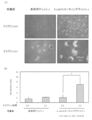
- (A) Cell morphology of islets and (B) Stimulation Index (n 3, mean ⁇ SD, * p ⁇ 0.05) in each culture condition after 11 days of culture.
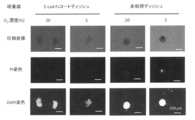
- the results of observation of pancreatic islet phase contrast and cell death at each oxygen concentration by PI staining and the total number of cells by DAPI staining are shown.
- the cell death rate of islets cultured on E-cad-Fc coated dishes and untreated dishes is shown.
- the present invention provides an isolated pancreatic islet in a culture vessel in which the polypeptide containing the EC1 domain of E-cadherin and having a binding ability to the E-cadherin is immobilized or coated on the solid phase surface.
- the present invention provides a method for producing a sheet-like islet, comprising culturing the islet for a period of time sufficient to exhibit a sheet-like form in a state where the islet is adhered.
- An islet is a cell mass scattered in the parenchyma of the pancreas, including ⁇ cells (A cells) that secrete glucagon, ⁇ cells (B cells) that secrete insulin, and ⁇ cells (D cells) that secrete somatostatin. is there.
- the islets used in the present invention are isolated from mammals.
- mammals include, for example, laboratory animals such as rodents and rabbits such as mice, rats, hamsters, and guinea pigs, domestic animals such as pigs, cows, goats, horses, sheep and minks, pets such as dogs and cats, humans, Examples include, but are not limited to, primates such as monkeys, cynomolgus monkeys, rhesus monkeys, marmosets, orangutans and chimpanzees.
- the mammal is preferably a rodent (such as a mouse) or a primate (such as a human).
- Isolation of islets from mammalian pancreas can be performed according to a method known per se using collagenase digestion. For example, it can be isolated by static collagenase digestion followed by centrifugation in a Ficoll-Conray gradient (Sutton, R., 1986, Transplantation, 42: 689-691 / Ohtsuka, K., et . Al., 1997, Transplantation, 64: 633-639).
- the islets are contained in an EC1 domain of E-cadherin in a cell mass state without being dispersed into a single cell state by proteolytic enzyme, and the E-cadherin
- the polypeptide having the binding ability is subjected to culture in a culture vessel in which the solid phase surface is fixed or coated.
- the cell mass means a state in which a plurality of cells are bonded together to form one mass.
- about 10 to 10,000 islet cells are usually contained per islet. Therefore, the number of islet cells contained in the islet (cell mass) subjected to the culture is usually within the range of 10 to 10,000.
- an isolated islet is cultured in a culture vessel in which the polypeptide containing the EC1 domain of E-cadherin and having the ability to bind to E-cadherin is fixed or coated on the solid surface.
- E-cadherin expressed on the surface of the cells constituting the islets binds to the polypeptide, and as a result, the islets adhere to the solid phase surface.
- E-cadherin is a known adhesion molecule involved in Ca 2+ -dependent cell-cell adhesion / binding called adhesion bonding or adherence junction. E-cadherin is widely expressed in parenchymal cells of visceral organs such as the liver, kidney, and lung, and epithelial cells such as keratinocytes, and is known to be an important adhesion molecule responsible for cell-cell adhesion (Mareel et al. ., Int. J. Dev. Biol. 37: 227, 1993; Mays et al., Cord Spring Harb. Symp. Quant. Biol. 60: 763, 1995; El-Bahrawy & Pignatelli, Microsc. Res. Tech. 43 : 224, 1998; Nollet et al., Mol. Cell. Biol. Res. Commun. 2: 77, 1999).
- the E-cadherin used in the method of the present invention is usually derived from a mammal.
- mammals include, for example, laboratory animals such as rodents and rabbits such as mice, rats, hamsters, and guinea pigs, domestic animals such as pigs, cows, goats, horses, sheep and minks, pets such as dogs and cats, humans, Examples include, but are not limited to, primates such as monkeys, cynomolgus monkeys, rhesus monkeys, marmosets, orangutans and chimpanzees.
- the mammal is preferably a rodent (such as a mouse) or a primate (such as a human).
- “from organism X” means that the polypeptide or polynucleotide amino acid sequence or nucleic acid sequence naturally expressed in organism X or It means having the same or substantially the same amino acid sequence or nucleic acid sequence as the amino acid sequence or nucleic acid sequence of the polynucleotide. “Substantially the same” means that the focused amino acid sequence or nucleic acid sequence is 70% or more (preferably 80% or more, more preferably 90%) of the amino acid sequence or nucleic acid sequence of the factor naturally expressed in the organism X Or more, more preferably 95% or more, most preferably 99% or more), and the function of the factor is maintained.
- the E-cadherin used in the present invention is preferably an animal derived from the same species as the species from which the pancreatic islet to be cultured is derived.
- the use of mouse E-cadherin is desirable.
- E-cadherin derived from a different animal can also be used.
- E-cadherin derived from mammals.
- Representative cDNA sequences and amino acids of human E-cadherin are shown in SEQ ID NOs: 1 and 2
- typical cDNA sequences and amino acids of mouse E-cadherin are shown in SEQ ID NOs: 3 and 4, respectively.
- E-cadherin binds homophilicly (ie, with the same molecule) via the extracellular region.
- Extracellular Cadherin (EC) domains there are five regions called repetitive structures consisting of about 110 amino acid residues, so-called Extracellular Cadherin (EC) domains.
- EC1 Extracellular Cadherin
- the domains of EC1, EC2, EC3, EC4, and EC5 correspond to 157 to 262, 265 to 375, 378 to 486, 487 to 595, and 596 to 700, respectively.
- the numerical value is the number of the residue in the amino acid sequence shown in SEQ ID NO: 2).
- the domains of EC1, EC2, EC3, EC4, and EC5 correspond to 159 to 264, 267 to 377, 380 to 488, 489 to 597, and 598 to 702, respectively.
- the numerical value is the number of the residue in the amino acid sequence shown in SEQ ID NO: 4).
- the domain (EC1) located at the most N-terminal side defines the binding specificity of the molecule, that is, homophilic binding (Nose et al., Cell 61: 147, 1990). Therefore, the polypeptide used in the present invention contains at least the EC1 domain of E-cadherin and has an ability to bind to the E-cadherin.
- the polypeptide used in the present invention comprises one, preferably two, more preferably three, and even more preferably four domains selected from EC2-5 in addition to the EC1 domain.
- the polypeptide used in the present invention comprises the extracellular region of E-cadherin.
- the extracellular region corresponds to the 1st to 697th amino acids in the amino acid sequence represented by SEQ ID NO: 2.
- the extracellular region corresponds to the first to 699th amino acids in the amino acid sequence represented by SEQ ID NO: 4.
- the polypeptide used in the present invention may be a fusion polypeptide comprising a sequence derived from E-cadherin and a sequence derived from another protein or peptide.
- the polypeptide includes an immunoglobulin Fc region, a GST (Glutathione-S-Transferase) protein, an MBP (Mannose-Binding Protein) protein, an avidin protein, a His (oligo-histidine) tag, an HA (Hemagglutinin) tag, Produced as a fusion polypeptide with a Myc tag, VSV-G (Vesicular, Stromatis, Virus, Glycoprotein) tag, etc., and by using a protein A / G column, a specific antibody column, etc., purification of the polypeptide is easy and efficient. Can be done.
- Fc fusion polypeptides are suitable in the practice of the present invention because their ability to adsorb to a culture substrate made of polystyrene or the
- the gene encoding the Fc region to be used is not particularly limited to animal species and subtypes, but Fc such as human IgG1 and IgG2 or mouse IgG2a and IgG2b having strong binding to protein A / G.
- Fc such as human IgG1 and IgG2 or mouse IgG2a and IgG2b having strong binding to protein A / G.
- a gene encoding the region is preferred.
- a method for enhancing the binding to protein A by introducing mutations into the Fc region (Nagaoka et al., Protein Eng. 16: 243, 2003). Proteins can also be used.
- polypeptides preferably used in the present invention include the extracellular region of E-cadherin disclosed in Nagaoka et al., Biotechnol. Lett. 24: 1857, 2002 and Protein Eng. 16: 243, 2003. Mention may be made of polypeptides comprising.
- a fusion gene in which a cDNA encoding the extracellular region of mouse or human E-cadherin and a cDNA encoding the Fc region portion of human IgG and a cDNA of a His tag sequence are introduced into mouse cells, and this is introduced.
- Purified recombinant proteins Recombinant Human / Mouse E-cadherin-Fc Chimera; R & D systems, Genzyme Techne
- a culture dish coated with E-cadherin-Fc on the bottom is also commercially available from Sumitomo Bakelite Co., Ltd., and can be applied to the present invention.
- the polypeptide is preferably isolated or purified.
- isolated or purified means that the artificially placed in a state different from the naturally occurring state, for example, an operation to remove components other than the desired component from the naturally occurring state.
- purity of the isolated or purified polypeptide is usually 30% or more, preferably 50% or more, more preferably 70% or more, and still more preferably 90%. Above (for example, 100%).
- the polypeptide is obtained by culturing COS cells, 293 cells, CHO cells, or other mammalian cells into which an expression vector capable of expressing the polypeptide is introduced, and then using the biochemical technique known per se from the culture. It can be produced by isolation or purification.
- a nucleic acid (such as DNA) encoding the polypeptide contains a nucleic acid sequence that enables transcription and expression of a gene in a wide range of mammalian cells, a so-called promoter sequence, and transcription and control under the control of the promoter. They are linked in such a way that expression is possible. It is desirable that the gene to be transcribed and expressed is further linked to a poly A addition signal.
- Suitable promoters include promoters derived from viruses such as SV (Simon Virus) 40 virus, cytomegalo virus (CMV), Rous sarcoma virus (Rous sarcoma virus), ⁇ -actin promoter, EF (Elongation). Factor) 1 ⁇ promoter and the like.
- SV Synmon Virus
- CMV cytomegalo virus
- Rous sarcoma virus Rous sarcoma virus
- ⁇ -actin promoter EF (Elongation). Factor) 1 ⁇ promoter and the like.
- the members constituting the solid phase in the culture vessel are not particularly limited as long as the production of the sheet-like pancreatic islets can be achieved when used in the production method of the present invention, and usually have no cytotoxicity and can be sterilized.
- a member having affinity for protein can be used.
- plastic or glass members are preferred.
- the member may be metal or ceramic, and is not limited to a certain material.
- Plastic members are thermosetting and thermoplastic polymers having excellent moldability, such as polystyrene, methacrylic resin, polymethylpentene, ethylene vinyl alcohol copolymer, polypropylene, cellulose, polyethylene, polysulfone, polyacrylonitrile. However, it is not limited to these.
- the glass-based member means a material in which silicate, borate, phosphate or the like is vitrified without being crystallized.
- Silicate glass is preferred because of its strong vitrification tendency.
- crystallized glass which is a kind of composite material produced by heat-treating silicate glass, is more preferable because of its high formability and high impact resistance.
- Examples of the culture container include petri dishes, plates, flasks, bottles and the like, but are not limited thereto.
- the form of the culture vessel is not particularly limited as long as the islet adheres to the solid phase surface when subjected to the method of the present invention, and production of a sheet-like islet can be achieved.
- the surface of the solid phase refers to a portion that enables adhesion of the cultured islets to the solid phase when the islets are cultured in a state of being adhered to the solid phase in the culture vessel.
- a method for immobilizing or coating the polypeptide on the solid phase surface generally, a method using a non-covalent bond (hydrogen bond, ionic bond, hydrophobic bond, etc.), covalent bond or the like can be used.
- Examples of the method of immobilizing or coating the polypeptide on the solid phase surface by non-covalent bonding include a method of allowing the solid phase surface to stand in an appropriate buffer solution (eg, phosphate buffer solution) containing the polypeptide. .
- buffer solution eg, phosphate buffer solution
- the conditions of the method are within the range where the production of sheet-like islets can be achieved when used in the production method of the present invention. It is possible to set appropriately.
- the polypeptide is a fusion polypeptide containing the extracellular region of mouse or human E-cadherin and the Fc region portion of mouse or human IgG, and the member constituting the solid phase is plastic (eg, polystyrene)
- the solid phase is usually added in neutral phosphate buffered saline containing the polypeptide at a concentration of 0.01 to 1000 ⁇ g / mL (preferably 0.1 to 200 ⁇ g / mL, more preferably 1 to 50 ⁇ g / mL).
- the polypeptide is fixed or coated on the surface of the solid phase.
- the surface of a solid phase is treated with a silane coupling agent having a functional group to introduce a functional group into the surface of the solid phase, and the cross-linking agent is used.
- a silane coupling agent having a functional group to introduce a functional group into the surface of the solid phase
- the cross-linking agent is used.
- Examples thereof include a method of binding a polypeptide to a functional group (see, for example, JP-A No. 2003-189843).
- functional groups that can be introduced include amino groups, aldehyde groups, epoxy groups, carboxyl groups, hydroxyl groups, and thiol groups.
- silane coupling agents include ⁇ -aminopropyltriethoxysilane, N- ⁇ - (aminoethyl) ⁇ -aminopropyltrimethoxysilane, N- ⁇ - (aminoethyl) ⁇ -aminopropylmethyldimethoxysilane, and the like. I can list them.
- cross-linking agents include diethylene glycol diglycidyl ether, 1-ethyl-3- (3-dimethylaminopropyl) -carbodiimide, N, N′-carbodiimidazole, glutaraldehyde, succinic anhydride, phthalic anhydride, hexamethylene A diisocyanate etc. can be mentioned.
- the strength of the adhesion of the islet to the solid phase surface is not particularly limited as long as the production method of the present invention can achieve the production of a sheet-like islet, but it is usually dissociated unless subjected to physical and / or chemical treatment. It is the strength that does not.
- Examples of the physical processing include processing by pipetting and tapping.
- Examples of the chemical treatment include treatment with a chelating agent such as EDTA and EGTA, treatment with a proteolytic enzyme such as trypsin, and the like.
- a basal medium of a medium used for culturing pancreatic islets a per se known medium that can be used for in vitro culturing of islets can be used.
- DMEM, EMEM, RPMI-1640, ⁇ -MEM, F-12, F-10, M-199, HAM and the like can be mentioned.
- a medium modified for islet culture or the like may be used, or a mixture of the above basal medium may be used.
- the medium used for the culture of islets in the production method of the present invention may contain additives known per se used in normal islet tissue culture.
- the additive is not particularly limited as long as the production of the sheet-like islet can be achieved by the production method of the present invention.
- the growth factor eg, insulin
- the iron source eg, transferrin
- polyamines eg, putrescine
- minerals eg sodium selenate etc.
- saccharides eg glucose etc.
- organic acids eg pyruvic acid, lactic acid etc.
- serum proteins eg albumin etc.
- amino acids eg L-glutamine etc.
- reducing agents eg For example, 2-mercaptoethanol etc.
- vitamins eg ascorbic acid, d-biotin etc.
- antibiotics eg streptomycin, penicillin, gentamicin etc.
- buffering agents eg HEPES etc.
- the medium used for the culture of islets in the production method of the present invention may contain serum.
- the serum concentration is not particularly limited as long as the production of the sheet-like islets can be achieved by the production method of the present invention, but is usually in the range of 0.1 to 30 (v / v)%.
- culture conditions usually used in the tissue culture technique for islets can be used.
- the culture temperature is usually in the range of about 30-40 ° C., preferably about 37 ° C.
- the CO 2 concentration is usually in the range of about 1 to 10%, preferably about 5%.
- the humidity is usually in the range of about 70 to 100%, preferably about 95 to 100%.
- the isolated islet is in a sheet-like form in a state where it is adhered to the solid phase surface in a culture vessel in which the polypeptide is fixed or coated on the solid phase surface. Incubated for a sufficient period of time.
- the isolated islets are cultured in a culture vessel in which the polypeptide is fixed or coated on the solid phase surface, the islets adhere on the solid phase surface and eventually extend on the solid phase surface to form a sheet-like shape. It takes on a form.
- “Sheet” refers to a shape having a sufficiently large length or width (preferably both of them) relative to the thickness of the islet.
- the length or width (preferably both of them) of a sheet-like islet is usually 3 times or more, preferably 10 times or more of the thickness.
- the “thickness” of the islet means the thickness of the thickest portion in the direction perpendicular to the solid phase surface of the culture vessel.
- the “length” of the islets means the maximum value of the lengths in the direction perpendicular to the thickness direction of the islets.
- the “width” of the islets means the maximum value of the lengths in the direction perpendicular to both the thickness direction and the length direction of the islets.
- the sheet-like islet comprises a monolayer of islet cells.
- pancreatic islet extension begins about 3 days after the start of the culture, and from about 6 days. It takes on a sheet form in about 10 days. Even in the case of using islets of other animal species or polypeptides having other configurations, those skilled in the art can appropriately set a period sufficient for the islets to exhibit a sheet-like form with reference to this culture period. Can be set.
- the upper limit of the culture period is not particularly limited as long as the obtained sheet-like islet maintains glucose responsiveness, but since the insulin secretion ability may decrease when the culture period is prolonged, the culture period is Usually within 8 weeks, preferably within 4 weeks, more preferably within 1 week.
- the sheet-like islets obtained by the production method of the present invention have good glucose responsiveness.
- Glucose responsiveness refers to the ability to sense an increase in glucose concentration and secrete insulin.
- a sheet-like islet obtained by the production method of the present invention has an insulin concentration of 1000 mg after culturing at 37 ° C. and 5% CO 2 for 1 hour in DMEM containing 4500 mg / l glucose.
- Insulin concentration in culture medium after 1 hour culture at 37 ° C., 5% CO 2 in DMEM containing 1 / l glucose is usually 1.5 times or more, preferably 2 times or more, more preferably 3 times That's it.
- the present invention also includes a culture vessel containing the EC1 domain of E-cadherin and having a polypeptide capable of binding to E-cadherin fixed or coated on a solid surface, and a sheet-like islet, It is possible to provide a pancreatic islet culture that can be cultured in a state where the islet is adhered to the solid surface.
- the sheet-like pancreatic islets are alive and function in a state of being adhered to the solid phase surface.
- the culture is alive with the sheet-like islets adhered to the solid surface.
- the sheet-like pancreatic islets proliferate in a state of being adhered to the solid phase surface.
- the culture refers to a result obtained by culturing tissue or cells.
- the culture of the present invention may contain, in addition to the culture vessel and sheet-like islets, a medium used in the above-described method of the present invention, insulin secreted by the islets, and the like.
- the islet culture of the present invention is useful for the implementation of regenerative medicine using sheet islets.
- kits For producing a sheet-like islet including a culture vessel containing a polypeptide containing the EC1 domain of E-cadherin and having a binding ability to the E-cadherin fixed or coated on a solid phase surface, and an isolated islet
- a kit is provided. When the kit of the present invention is used, a sheet-like islet can be easily produced by the production method of the present invention.
- the kit of the present invention may further contain a reagent used in the production method of the present invention.
- a reagent used in the production method of the present invention examples include proteolytic enzymes such as collagenase used for isolation of islets, culture media, serum, and the like.
- Islet was isolated from male mice (C57BL / 6J; Charles River, Japan) having an islet culture weight of 20 to 25 g (9 to 10 weeks of age) by digestion using collagenase from clostridium histypicum Type V (GIBCO).
- the islets were separated by performing a density gradient method using Biocoll Separation Solution (Biochem AG) and hand-pickup using Pipetteman on the islets.
- the isolated islets were placed on a 3.5 cm E-cad-Fc coated dish (Sumitomo Bakelite Co., Ltd.) and an untreated dish (IWAKI) with 10 (v / v)% FBS (GIBCO) and 1 (v / v) as an antibiotic.
- DMEM Dulbecco's Modified Eagle's Medium
- GEBCO % Anti-Anti
- pancreatic islet morphology Isolated islets were seeded on 3.5 cm E-cad-Fc coated dishes (Sumitomo Bakelite) and non-treated dishes (IWAKI). Furthermore, the islet cells that were dispersed in a single cell state were similarly seeded by treating the islet to be singled with trypsin-EDTA (GIBCO) for 5 minutes at 37 ° C. Islet and trypsin-EDTA treated pancreatic islet cells use 10% FBS (GIBCO) and Dulbecco's Modified Eagle's Medium (DMEM; SIGMA) supplemented with 1% Anti-Anti (GIBCO) as an antibiotic. (37 ° C. CO 2 ; 5%). The islets were seeded on the incubator and the medium was changed after 7 days. Thereafter, the medium was changed every 3 days.
- GEBCO trypsin-EDTA
- Example 3 Evaluation of glucose response function by Stimulation Index Under the same culture conditions as in Example 1, islets (40 pieces) isolated from mice were seeded on 3.5 cm E-cad-Fc coated dishes or non-treated dishes and cultured. did. It was investigated whether the insulin secretion amount of the islets can be controlled by the glucose concentration in the culture solution after the start of the culture. Islets cultured on E-cad-Fc coated dishes or non-treated dishes were washed twice with low glucose medium (1,000 mg / l DMEM) and then in low glucose medium (1,000 mg / l DMEM). The amount of insulin secreted in the supernatant was defined as the amount of insulin secreted at low glucose.
- the islets On each culture day, the islets showed glucose responsiveness on untreated dishes and on E-cad-Fc coated dishes, confirming insulin secretion ability. As a result of calculating the stimulation index, the islets cultured on the E-cad-Fc coat incubator showed islet function equal to or higher than that of the islets cultured on the untreated dish (FIG. 2).
- Example 4 Effect of trypsin treatment on glucose response function
- Mouse islets 40 mice were seeded on 3.5 cm E-cad-Fc coated dishes or non-treated dishes. Furthermore, islet cells in a single cell state were prepared by incubating the mouse-derived islets with trypsin-EDTA (GIBCO) at 37 ° C. for 5 minutes, and seeded in the same manner as the islets. After 11 days from the start of culture, the glucose response function of islets and islet cells was examined by SI. Evaluation by ELISA was performed in the same manner as in Example 3. Moreover, SI in each culture day was calculated.
- the amount of insulin secreted by islet cells dispersed by trypsin-EDTA treatment was lower in both non-treated dishes and E-cad-Fc coated dishes compared to untreated islets.
- the stimulation index of islet cells dispersed by trypsin-EDTA treatment on the E-cad-Fc coated dish was also lower than that of non-treated islets (FIG. 3). Therefore, it was suggested that trypsin-EDTA treatment decreases the glucose response function.
- Example 5 Measurement of cell death induction rate in pancreatic islets under hypoxic conditions
- Pancreatic islets isolated from mice were seeded on 3.5 cm E-cad-Fc coated dishes or non-treated dishes under the same culture conditions as in Example 1. Cultured for 1 week. The islets on the E-cad-Fc coated dish were collected with PBS (GIBCO) containing 1 mM EDTA (ethylenediaminetetraacetic acid), and in a floating state in the same manner as the islets on the untreated dish, hypoxic conditions (O 2 ; 5%) and high oxygen conditions (O 2 ; 20%) for 1 hour incubation (37 ° C.).
- PBS GBBCO
- DAPI DAPI Nucleic Acid Stain
- PI Propium iodide
- the method of the present invention it is possible to produce a sheet-like islet that is resistant to hypoxic conditions while suppressing a decrease in glucose-responsive function without performing trypsin treatment.
- blood vessels are induced into the islet tissue, so that the islet does not suffer from oxygen deficiency.
- cell death of the islets is induced by lack of oxygen under the hypoxic condition environment at the transplant site. If the sheet-like islets obtained by the method of the present invention are used, oxygen can be efficiently supplied to each cell even in a hypoxic state, and cell death of the islets is suppressed even under hypoxic conditions, which is advantageous for transplantation medicine. It is.
Landscapes
- Health & Medical Sciences (AREA)
- Life Sciences & Earth Sciences (AREA)
- Chemical & Material Sciences (AREA)
- Engineering & Computer Science (AREA)
- Organic Chemistry (AREA)
- Biomedical Technology (AREA)
- Genetics & Genomics (AREA)
- Zoology (AREA)
- Bioinformatics & Cheminformatics (AREA)
- Wood Science & Technology (AREA)
- Biotechnology (AREA)
- General Health & Medical Sciences (AREA)
- Biochemistry (AREA)
- Cell Biology (AREA)
- Microbiology (AREA)
- General Engineering & Computer Science (AREA)
- Gastroenterology & Hepatology (AREA)
- Proteomics, Peptides & Aminoacids (AREA)
- Molecular Biology (AREA)
- Medicinal Chemistry (AREA)
- Biophysics (AREA)
- Toxicology (AREA)
- Immunology (AREA)
- Micro-Organisms Or Cultivation Processes Thereof (AREA)
- Medicines Containing Material From Animals Or Micro-Organisms (AREA)
- Peptides Or Proteins (AREA)
Abstract
Description
[1]単離された膵島を、E-カドヘリンのEC1ドメインを含み、且つ当該E-カドヘリンへの結合能を有するポリペプチドを固相表面に固定又はコーティングした培養容器中、該固相表面に接着した状態で、当該膵島がシート状の形態を呈するのに十分な期間培養することを含む、シート状の膵島の製造方法。
[2]当該ポリペプチドがE-カドヘリンの細胞外ドメインを含む、[1]記載の製造方法。
[3]当該ポリペプチドがE-カドヘリンの細胞外ドメイン及びイムノグロブリンのFc領域を含む融合ポリペプチドである、[1]記載の製造方法。
[4]E-カドヘリンのEC1ドメインを含み、且つ当該E-カドヘリンへの結合能を有するポリペプチドを固相表面に固定又はコーティングした培養容器、及びシート状の膵島を含み、該シート状の膵島が該固相表面に接着した状態で培養可能となる、膵島培養物。
[5]E-カドヘリンのEC1ドメインを含み、且つ当該E-カドヘリンへの結合能を有するポリペプチドを固相表面に固定又はコーティングした培養容器、及び単離された膵島を含む、シート状の膵島の製造用キット。
通常、体内であれば膵島組織内への血管誘導が生じるため、膵島が酸素不足に陥ることはない。しかしながら、移植した膵島の場合、移植部位における低酸素条件環境下では、酸素不足によって膵島の細胞死が誘導される懸念がある。本発明の方法により得られるシート状の膵島を用いれば、低酸素状態でも効率的にそれぞれの細胞へ酸素供給が可能となり、低酸素条件でも膵島の細胞死が抑制され、かつ膵島の形態をシート状にすることによってグルコース応答機能が増加することが考えられるので、移植医療に有利である。
膵島培養
体重20~25g(9~10週齢)の雄性マウス(C57BL/6J;日本チャールスリバー)から、collagenase from clostridium histdyticum Type V(GIBCO)を用いた消化法により膵島を分離した。この膵島に対してBiocoll Separating Solution(Biocheom AG)を用いた密度勾配法およびピペットマンを用いたハンドピックアップを行って、膵島を分離した。分離した膵島を3.5cm E-cad-Fcコートディッシュ(住友ベークライト株式会社)及び非処理ディッシュ(IWAKI)上で、10(v/v)% FBS(GIBCO)、抗生剤として1(v/v)% Anti-Anti(GIBCO)を添加したDulbecco’s Modified Eagle’s Medium(DMEM;SIGMA)中で培養した(37℃/CO2;5%)。膵島を培養器上に播種して7日後に培地交換を行い、以後3日毎に培地交換を行った。
膵島の形態観察
分離した膵島を3.5cm E-cad-Fcコートディッシュ(住友ベークライト)及び非処理ディッシュ(IWAKI)上に播種した。さらに、シングル化する膵島をトリプシン-EDTA(GIBCO)にて5分間、37℃にて処理することにより、シングルセルの状態に分散した膵島細胞を同様に播種した。膵島及びトリプシン-EDTA処理にてシングル化した膵島細胞は10% FBS(GIBCO)、抗生剤として1% Anti-Anti(GIBCO)を添加したDulbecco’s Modified Eagle’s Medium(DMEM; SIGMA)を用いて培養した(37℃ CO2;5%)。膵島を培養器上に播種して7日後に培地交換を行い、以後3日毎に培地交換を行った。
グルコース応答機能のStimulation Indexによる評価
実施例1と同一の培養条件下で、マウスより分離した膵島(40ピース)を、3.5cm E-cad-Fcコートディッシュ又は非処理ディッシュ上に播種し、培養した。培養開始後に培養液中のグルコース濃度によって膵島のインスリン分泌量を制御できるかを検討した。E-cad-Fcコートディッシュ又は非処理ディッシュ上で培養した膵島を低グルコース培地(1,000 mg/l DMEM)にて2回洗浄し、その後低グルコース培地(1,000 mg/l DMEM)中にて1時間培養し、上清中に分泌されたインスリン量を低濃度グルコースにおけるインスリン分泌量とした。その後、高グルコース培地(4,500 mg/l DMEM)にて2回洗浄し、その後高グルコース培地(4,500 mg/l DMEM)中にて1時間培養し、上清中に分泌されたインスリン量を高濃度グルコースにおけるインスリン分泌量とした。回収した上清を、ELISA(Enzyme-Linked ImmunoSorbent Assay)キットであるレビス インスリン-マウス((株)シバヤキ)を用いて非処理ディッシュ上およびE-cad-Fcコートディッシュ上における膵島のインスリン分泌量を測定し、膵島の機能を評価するためにStimulation Index (SI; 低濃度グルコース環境下でのインスリン分泌量に対する、高濃度グルコース環境下でのインスリン分泌量の比)を算出した(図2)。
グルコース応答機能に対するトリプシン処理の影響
マウス由来膵島(40個)を3.5cm E-cad-Fcコートディッシュもしくは非処理ディッシュ上に播種した。さらに、マウス由来膵島をトリプシン-EDTA(GIBCO)にて37℃、5分間インキュベートすることによりシングルセルの状態の膵島細胞を調製し、これを膵島と同様に播種した。培養開始日から11日後に、膵島及び膵島細胞のグルコース応答機能をSIによって検討した。ELISAによる評価は実施例3と同様の方法により行った。また、各培養日におけるSIを算出した。
低酸素条件における膵島内での細胞死誘導率の測定
実施例1と同一の培養条件下で、マウスより分離した膵島を、3.5cm E-cad-Fcコートディッシュ又は非処理ディッシュ上に播種し、1週間培養した。E-cad-Fcコートディッシュ上の膵島は1mM EDTA(エチレンジアミン四酢酸)を含むPBS(GIBCO)にて回収し、非処理ディッシュ上の膵島と同様に浮遊状態にて、低酸素条件(O2;5%)および高酸素条件(O2;20%)で1時間インキュベート(37℃)した。その後、DAPI Nucleic Acid Stain(DAPI;Lonza) 5μg/mlおよびPropidium iodide(PI;Roche) 0.5μg/mlを含むDMEM中で膵島を30分インキュベート(37℃)することで染色し、顕微鏡にて観察した(図4)。
細胞死率(%)=(PIで染色された細胞数/DAPIで染色された細胞数)×100
通常、体内であれば膵島組織内への血管誘導が生じるため、膵島が酸素不足に陥ることはない。しかしながら、移植した膵島の場合、移植部位における低酸素条件環境下では、酸素不足によって膵島の細胞死が誘導される懸念がある。本発明の方法により得られるシート状の膵島を用いれば、低酸素状態でも効率的にそれぞれの細胞へ酸素供給が可能となり、低酸素条件でも膵島の細胞死が抑制されるので、移植医療に有利である。
Claims (5)
- 単離された膵島を、E-カドヘリンのEC1ドメインを含み、且つ当該E-カドヘリンへの結合能を有するポリペプチドを固相表面に固定又はコーティングした培養容器中、該固相表面に接着した状態で、当該膵島がシート状の形態を呈するのに十分な期間培養することを含む、シート状の膵島の製造方法。
- 当該ポリペプチドがE-カドヘリンの細胞外ドメインを含む、請求項1記載の製造方法。
- 当該ポリペプチドがE-カドヘリンの細胞外ドメイン及びイムノグロブリンのFc領域を含む融合ポリペプチドである、請求項1記載の製造方法。
- E-カドヘリンのEC1ドメインを含み、且つ当該E-カドヘリンへの結合能を有するポリペプチドを固相表面に固定又はコーティングした培養容器、及びシート状の膵島を含み、該シート状の膵島が該ポリペプチドに接着した状態で培養可能となる、膵島培養物。
- E-カドヘリンのEC1ドメインを含み、且つ当該E-カドヘリンへの結合能を有するポリペプチドを固相表面に固定又はコーティングした培養容器、及び単離された膵島を含む、シート状の膵島の製造用キット。
Priority Applications (7)
| Application Number | Priority Date | Filing Date | Title |
|---|---|---|---|
| SG2013075296A SG194151A1 (en) | 2011-04-08 | 2012-04-06 | Method for producing sheet-like pancreatic islet |
| JP2013508938A JP5889283B2 (ja) | 2011-04-08 | 2012-04-06 | シート状の膵島の製造方法 |
| CA2833866A CA2833866C (en) | 2011-04-08 | 2012-04-06 | Method for producing sheet-like pancreatic islet |
| AU2012239183A AU2012239183B2 (en) | 2011-04-08 | 2012-04-06 | Method for producing sheet-like pancreatic islet |
| EP12767379.6A EP2695935B1 (en) | 2011-04-08 | 2012-04-06 | Method for producing sheet-like pancreatic islet |
| US14/110,638 US10995319B2 (en) | 2011-04-08 | 2012-04-06 | Method for producing sheet-like pancreatic islet |
| NZ616727A NZ616727B2 (en) | 2011-04-08 | 2012-04-06 | Method for producing sheet-like pancreatic islet |
Applications Claiming Priority (2)
| Application Number | Priority Date | Filing Date | Title |
|---|---|---|---|
| JP2011086336 | 2011-04-08 | ||
| JP2011-086336 | 2011-04-08 |
Publications (1)
| Publication Number | Publication Date |
|---|---|
| WO2012137896A1 true WO2012137896A1 (ja) | 2012-10-11 |
Family
ID=46969284
Family Applications (1)
| Application Number | Title | Priority Date | Filing Date |
|---|---|---|---|
| PCT/JP2012/059441 Ceased WO2012137896A1 (ja) | 2011-04-08 | 2012-04-06 | シート状の膵島の製造方法 |
Country Status (7)
| Country | Link |
|---|---|
| US (1) | US10995319B2 (ja) |
| EP (1) | EP2695935B1 (ja) |
| JP (1) | JP5889283B2 (ja) |
| AU (1) | AU2012239183B2 (ja) |
| CA (1) | CA2833866C (ja) |
| SG (1) | SG194151A1 (ja) |
| WO (1) | WO2012137896A1 (ja) |
Citations (3)
| Publication number | Priority date | Publication date | Assignee | Title |
|---|---|---|---|---|
| JP2003189843A (ja) | 2001-10-17 | 2003-07-08 | Taiko Denki Co Ltd | 細胞培養器材 |
| WO2005090557A1 (ja) | 2004-03-23 | 2005-09-29 | Daiichi Asubio Pharma Co., Ltd. | 多能性幹細胞の増殖方法 |
| WO2011016423A1 (ja) * | 2009-08-02 | 2011-02-10 | 学校法人 東京女子医科大学 | 膵島細胞シート、製造方法及びその利用方法 |
Family Cites Families (4)
| Publication number | Priority date | Publication date | Assignee | Title |
|---|---|---|---|---|
| EP1844071A2 (en) * | 2005-01-21 | 2007-10-17 | The Babraham Institute | Cell adhesion by modified cadherin molecules |
| US7807459B2 (en) * | 2005-09-27 | 2010-10-05 | Reneuron, Inc. | EphA4-positive human adult pancreatic endocrine progenitor cells |
| US20080103606A1 (en) | 2006-10-30 | 2008-05-01 | Cory Berkland | Templated islet cells and small islet cell clusters for diabetes treatment |
| JP2010183974A (ja) * | 2009-02-10 | 2010-08-26 | Kochi Univ Of Technology | 分泌細胞を包埋した細胞シート及び該細胞シートの作製方法 |
-
2012
- 2012-04-06 CA CA2833866A patent/CA2833866C/en active Active
- 2012-04-06 WO PCT/JP2012/059441 patent/WO2012137896A1/ja not_active Ceased
- 2012-04-06 EP EP12767379.6A patent/EP2695935B1/en active Active
- 2012-04-06 US US14/110,638 patent/US10995319B2/en active Active
- 2012-04-06 AU AU2012239183A patent/AU2012239183B2/en active Active
- 2012-04-06 SG SG2013075296A patent/SG194151A1/en unknown
- 2012-04-06 JP JP2013508938A patent/JP5889283B2/ja active Active
Patent Citations (3)
| Publication number | Priority date | Publication date | Assignee | Title |
|---|---|---|---|---|
| JP2003189843A (ja) | 2001-10-17 | 2003-07-08 | Taiko Denki Co Ltd | 細胞培養器材 |
| WO2005090557A1 (ja) | 2004-03-23 | 2005-09-29 | Daiichi Asubio Pharma Co., Ltd. | 多能性幹細胞の増殖方法 |
| WO2011016423A1 (ja) * | 2009-08-02 | 2011-02-10 | 学校法人 東京女子医科大学 | 膵島細胞シート、製造方法及びその利用方法 |
Non-Patent Citations (26)
| Title |
|---|
| BIOMATERIALS, vol. 30, 2009, pages 5943 - 5949 |
| BIOMATERIALS, vol. 32, no. 8, 2011, pages 2032 - 2042 |
| BMC DEVELOPMENTAL BIOLOGY, vol. 10, 2010, pages 60 |
| CELL TRANSPLANT., vol. 18, no. 5, 2009, pages 541 - 547 |
| CURR OPIN CELL BIOL, vol. 7, 1995, pages 619 - 627 |
| DEVELOPMENT, vol. 122, 1996, pages 3185 - 3194 |
| EL-BAHRAWY; PIGNATELLI, MICROSC. RES. TECH., vol. 43, 1998, pages 224 |
| MAREEL ET AL., INT. J. DEV. BIOL., vol. 37, 1993, pages 227 |
| MAYS ET AL., CORD SPRING HARB. SYMP. QUANT. BIOL., vol. 60, 1995, pages 763 |
| NAGAOKA ET AL., BIOTECHNOL. LETT., vol. 24, 2002, pages 1857 |
| NAGAOKA,M. ET AL.: "Culture of human pluripotent stem cells using completely defined conditions on a recombinant E-cadherin substratum. art. 60", BMC DEV. BIOL., vol. 10, 2 June 2010 (2010-06-02), XP055127261 * |
| NAGAOKA,M. ET AL.: "Design of the artificial a cellular feeder layer for the efficient propagation of mouse embryonic stem cells.", J. BIOL. CHEM., vol. 283, no. 39, 26 September 2008 (2008-09-26), pages 26468 - 26476, XP055127258 * |
| NAGAOKA,M. ET AL.: "E-cadherin-coated plates maintain pluripotent ES cells without colony formation. art e15", PLOS ONE, 20 December 2006 (2006-12-20), pages 1 - 7, XP002445429 * |
| NOLLET ET AL., MOL. CELL. BIOL. RES. COMMUN., vol. 2, 1999, pages 77 |
| OHTSUKA, K., TRANSPLANTATION, vol. 64, 1997, pages 633 - 639 |
| PARNAUD,G. ET AL.: "Cadherin engagement protects human p-cells from apoptosis.", ENDOCRINOLOGY, vol. 152, no. 12, December 2011 (2011-12-01), pages 4601 - 4609, XP055127264 * |
| PLOS ONE, vol. 1, 2006, pages E15 |
| PROTEIN ENG., vol. 16, 2003, pages 243 |
| PROTEIN ENGINEERING, vol. 6, no. 4, 2003, pages 243 - 245 |
| See also references of EP2695935A4 * |
| SHIMIZU,H. ET AL.: "Bioengineering of a functional sheet of islet cells for the treatment of diabetes mellitus.", BIOMATERIALS, vol. 30, no. 30, October 2009 (2009-10-01), pages 5943 - 5949, XP026524659 * |
| STEM CELLS, vol. 22, 2004, pages 275 - 282 |
| SUTTON, R, TRANSPLANTATION, vol. 42, 1986, pages 689 - 691 |
| THE JOURNAL OF BIOLOGICAL CHEMISTRY, vol. 283, no. 39, 2008, pages 26468 - 26476 |
| THE JOURNAL OF CELL BIOLOGY, vol. 148, 2000, pages 399 - 404 |
| YAMAOKA,T. ET AL.: "Development of pancreatic islets (review).", INT. J. MOL. MED., vol. 3, no. 3, March 1999 (1999-03-01), pages 247 - 261, XP009037276 * |
Also Published As
| Publication number | Publication date |
|---|---|
| US10995319B2 (en) | 2021-05-04 |
| CA2833866C (en) | 2019-05-21 |
| SG194151A1 (en) | 2013-11-29 |
| NZ616727A (en) | 2014-08-29 |
| EP2695935A1 (en) | 2014-02-12 |
| JP5889283B2 (ja) | 2016-03-22 |
| CA2833866A1 (en) | 2012-11-11 |
| JPWO2012137896A1 (ja) | 2014-07-28 |
| AU2012239183A1 (en) | 2013-11-07 |
| US20140073051A1 (en) | 2014-03-13 |
| AU2012239183B2 (en) | 2016-08-25 |
| EP2695935A4 (en) | 2014-11-26 |
| EP2695935B1 (en) | 2016-01-06 |
Similar Documents
| Publication | Publication Date | Title |
|---|---|---|
| KR101966033B1 (ko) | 재조합 라미닌-521 | |
| KR102048464B1 (ko) | 라미닌 및 카데린를 포함하는 세포 배양 기질 | |
| CN104884468A (zh) | 附加有胶原结合性分子的改造层粘连蛋白及其利用 | |
| Kang et al. | An epidermal growth factor derivative with binding affinity for hydroxyapatite and titanium surfaces | |
| EP2845862B1 (en) | Method for incubating pluripotent stem cells and polypeptide to be used therefor | |
| Choi et al. | Polymer-coated surface as an enzyme-free culture platform to improve human mesenchymal Stem Cell (hMSC) characteristics in extended passaging | |
| EP1930413B1 (en) | Technique for culture of mesenchymal stem cell utilizing laminin-5 | |
| JP5889283B2 (ja) | シート状の膵島の製造方法 | |
| Vallmajo‐Martin et al. | Undifferentiated human amniotic fluid progenitor cells promote bone regeneration in vivo | |
| KR102930705B1 (ko) | 피브리노겐 단편 및 라미닌 단편을 포함하는 융합단백질 및 그 이용 | |
| JP7434358B2 (ja) | 血清由来蛋白質を含む多孔性細胞支持体及びその製造方法 | |
| NZ616727B2 (en) | Method for producing sheet-like pancreatic islet | |
| JP5882198B2 (ja) | ラミニン5を含んだ系で細胞を培養する方法 | |
| JP2010004796A (ja) | 分化抑制剤、分化抑制基材及び分化抑制方法並びにその使用 | |
| JP4374454B2 (ja) | タンパク質の生産に用いることが可能なf9胚性腫瘍細胞、およびその利用 | |
| Torizal et al. | Generation of high-density human induced pluripotent stem cell derived-liver organoid by enabling growth factors accumulation in a simple dialysis medium refinement culture platform | |
| Mochitate et al. | Bared Basement Membrane Substrata: Design, Cellular Assembly, Decellularization and Application to Tissue Regeneration and Stem Cell Differentiation | |
| KR20210047839A (ko) | 혈청유래 단백질을 포함하는 다공성 세포지지체 | |
| HK40077873A (en) | Chimeric protein containing fibrinogen fragment and laminin fragment, and use thereof | |
| KR20210047840A (ko) | 조직공학적 사용 또는 질병 치료적 사용을 위한 다공성 세포지지체 | |
| Allavena et al. | Bone marrow mesenchymal stem cells express a restricted set of | |
| AU2016213884A1 (en) | Recombinant laminin-511 | |
| HK1178568A1 (en) | Differentiated pluripotent stem cell progeny depleted of extraneous phenotypes |
Legal Events
| Date | Code | Title | Description |
|---|---|---|---|
| 121 | Ep: the epo has been informed by wipo that ep was designated in this application |
Ref document number: 12767379 Country of ref document: EP Kind code of ref document: A1 |
|
| ENP | Entry into the national phase |
Ref document number: 2833866 Country of ref document: CA |
|
| ENP | Entry into the national phase |
Ref document number: 2013508938 Country of ref document: JP Kind code of ref document: A |
|
| NENP | Non-entry into the national phase |
Ref country code: DE |
|
| WWE | Wipo information: entry into national phase |
Ref document number: 2012767379 Country of ref document: EP |
|
| ENP | Entry into the national phase |
Ref document number: 2012239183 Country of ref document: AU Date of ref document: 20120406 Kind code of ref document: A |
|
| WWE | Wipo information: entry into national phase |
Ref document number: 14110638 Country of ref document: US |