WO2012154353A1 - Macrocyclic triazine compounds for the treatment of hepatitis c - Google Patents
Macrocyclic triazine compounds for the treatment of hepatitis c Download PDFInfo
- Publication number
- WO2012154353A1 WO2012154353A1 PCT/US2012/032674 US2012032674W WO2012154353A1 WO 2012154353 A1 WO2012154353 A1 WO 2012154353A1 US 2012032674 W US2012032674 W US 2012032674W WO 2012154353 A1 WO2012154353 A1 WO 2012154353A1
- Authority
- WO
- WIPO (PCT)
- Prior art keywords
- hcv
- compound
- inhibitors
- pharmaceutically acceptable
- acceptable salt
- Prior art date
- Legal status (The legal status is an assumption and is not a legal conclusion. Google has not performed a legal analysis and makes no representation as to the accuracy of the status listed.)
- Ceased
Links
Classifications
-
- A—HUMAN NECESSITIES
- A61—MEDICAL OR VETERINARY SCIENCE; HYGIENE
- A61K—PREPARATIONS FOR MEDICAL, DENTAL OR TOILETRY PURPOSES
- A61K31/00—Medicinal preparations containing organic active ingredients
- A61K31/33—Heterocyclic compounds
- A61K31/395—Heterocyclic compounds having nitrogen as a ring hetero atom, e.g. guanethidine or rifamycins
- A61K31/53—Heterocyclic compounds having nitrogen as a ring hetero atom, e.g. guanethidine or rifamycins having six-membered rings with three nitrogens as the only ring hetero atoms, e.g. chlorazanil, melamine
-
- A—HUMAN NECESSITIES
- A61—MEDICAL OR VETERINARY SCIENCE; HYGIENE
- A61K—PREPARATIONS FOR MEDICAL, DENTAL OR TOILETRY PURPOSES
- A61K45/00—Medicinal preparations containing active ingredients not provided for in groups A61K31/00 - A61K41/00
- A61K45/06—Mixtures of active ingredients without chemical characterisation, e.g. antiphlogistics and cardiaca
-
- A—HUMAN NECESSITIES
- A61—MEDICAL OR VETERINARY SCIENCE; HYGIENE
- A61P—SPECIFIC THERAPEUTIC ACTIVITY OF CHEMICAL COMPOUNDS OR MEDICINAL PREPARATIONS
- A61P31/00—Antiinfectives, i.e. antibiotics, antiseptics, chemotherapeutics
- A61P31/12—Antivirals
- A61P31/14—Antivirals for RNA viruses
-
- C—CHEMISTRY; METALLURGY
- C07—ORGANIC CHEMISTRY
- C07D—HETEROCYCLIC COMPOUNDS
- C07D487/00—Heterocyclic compounds containing nitrogen atoms as the only ring hetero atoms in the condensed system, not provided for by groups C07D451/00 - C07D477/00
- C07D487/12—Heterocyclic compounds containing nitrogen atoms as the only ring hetero atoms in the condensed system, not provided for by groups C07D451/00 - C07D477/00 in which the condensed system contains three hetero rings
- C07D487/16—Peri-condensed systems
-
- C—CHEMISTRY; METALLURGY
- C07—ORGANIC CHEMISTRY
- C07D—HETEROCYCLIC COMPOUNDS
- C07D487/00—Heterocyclic compounds containing nitrogen atoms as the only ring hetero atoms in the condensed system, not provided for by groups C07D451/00 - C07D477/00
- C07D487/12—Heterocyclic compounds containing nitrogen atoms as the only ring hetero atoms in the condensed system, not provided for by groups C07D451/00 - C07D477/00 in which the condensed system contains three hetero rings
- C07D487/18—Bridged systems
-
- C—CHEMISTRY; METALLURGY
- C07—ORGANIC CHEMISTRY
- C07D—HETEROCYCLIC COMPOUNDS
- C07D498/00—Heterocyclic compounds containing in the condensed system at least one hetero ring having nitrogen and oxygen atoms as the only ring hetero atoms
- C07D498/12—Heterocyclic compounds containing in the condensed system at least one hetero ring having nitrogen and oxygen atoms as the only ring hetero atoms in which the condensed system contains three hetero rings
- C07D498/16—Peri-condensed systems
-
- C—CHEMISTRY; METALLURGY
- C07—ORGANIC CHEMISTRY
- C07D—HETEROCYCLIC COMPOUNDS
- C07D498/00—Heterocyclic compounds containing in the condensed system at least one hetero ring having nitrogen and oxygen atoms as the only ring hetero atoms
- C07D498/12—Heterocyclic compounds containing in the condensed system at least one hetero ring having nitrogen and oxygen atoms as the only ring hetero atoms in which the condensed system contains three hetero rings
- C07D498/18—Bridged systems
Definitions
- the disclosure generally relates to the novel compounds of formula I including pharmaceutically acceptable salts, which have activity against hepatitis C virus (HCV) and are useful in treating those infected with HCV.
- HCV hepatitis C virus
- the disclosure also relates to compositions and methods of using these compounds.
- Hepatitis C virus (HCV) chronically infects an estimated 170 million people worldwide, with 3 to 4 million infected individuals in the United States alone (Boyer, N. and Marcellin, P. J. Hepatology. 2000, 32:98-1 12; Alter, M. J., et al. Engl. J. Med. 1999, 341 :556-562).
- transfusion with infected blood products was the main route of HCV transmission. Following the introduction of blood screening methods, transmission via injection drug use became the primary risk factor. Chronic infection often leads to the development of severe liver
- HCV infection is also the leading cause of orthotopic liver transplantation in the United States. The degree to which disease progression is related to viral and cellular factors is not completely understood.
- Genotype 1 HCV is the most difficult to treat and elimination of the virus (sustained viro logic response) is achieved for only approximately 50% of patients (Fried, M. W. et al. N. Engl. J. Med. 2002, 347:975-982; Zeumzem, S. Nature Clinical Practice. 2008, 5:610-622). This poor treatment response, combined with often severe side effects induced by therapy, highlight a need for improved antiviral drugs with better efficacy and safety profiles.
- HCV is a member of the Flaviviridae family of viruses with a single-stranded positive-sense RNA genome. Following infection of host cells, the 9.6 Kb genome is translated into a polyprotein precursor of approximately 3,000 amino acids (reviewed in Lindenbach, B. D. and Rice, C. M. Nature. 2005, 436:933-938; Moradpour, D, Penin, F., and Rice, C. M. Nature Reviews. 2007, 5:453-463). Post-translational processing by both cellular and viral proteases results in the generation of at least 10 separate viral proteins. The structural proteins (which by definition are found in mature virions) include core, El, E2, and possibly p7, and originate from the amino- terminal region of the polyprotein.
- the core protein assembles into the viral nucleocapsid.
- the El and E2 glycoproteins form heterodimers that are found within the lipid envelope surrounding the viral particles, and mediate host cell receptor binding and entry of the virus into cells. It is unclear if p7 is a structural protein, and its role in replication has yet to be defined. However p7 is believed to form an ion channel in cellular membranes, preventing acidification of intracellular compartments in which virions are assembled, and it has been shown to be essential for viral replication and assembly.
- the nonstructural proteins NS2, NS3, NS4A, NS4B, NS5A, and NS5B are produced through maturational cleavages of the carboxy- terminal region of the polyprotein.
- NS2 along with the amino terminus of NS3 form the NS2-3 metalloprotease which cleaves at the NS2-NS3 junction. Additionally, NS2 is involved in assembly and egress of nascent virions.
- the NS3 protein contains both a serine protease in its amino-terminal region, and a nucleotide-dependent RNA helicase in its carboxy-terminal region.
- NS3 forms a heterodimer with the NS4A protein, constituting the active protease which mediates cleavages of the polyprotein downstream of NS3, both in cis, at the NS3-NS4A cleavage site, and in trans, for the remaining NS4A-NS4B, NS4B-NS5A, NS5A-NS5B sites.
- the complex formation of the NS3 protein with NS4A seems necessary to the processing events, enhancing the proteolytic efficiency at all of the sites.
- the NS3 protein also exhibits nucleoside triphosphatase and RNA helicase activities.
- the NS4B protein has been shown to be important for localization of HCV proteins into replication complexes in altered membranous structures within the cell.
- NS5B encodes an RNA-dependent RNA polymerase that is involved in the replication of HCV.
- Subgenomic HCV replicons containing the untranslated regions 5' and 3' to the coding sequence fused to the nonstructural proteins or the full-length polyprotein, are competent for translation, viral protein expression, and replication within cultured cells (Lohmann, V. et al. Science. 1999, 285: 1 10-1 13; Moradpour, D, Penin, F., and Rice, C. M. Nature Reviews. 2007, 5:453-463).
- the replicon system has proven valuable for the identification of inhibitors targeting the nonstructural proteins associated with these functions. However, only limited subsets of HCV genotypes have been used to generate functional replicons.
- HCV pseudoparticles that bind to and enter host cells in a manner which is believed to be analogous to the natural virus, thus making them a convenient tool to study the viral entry steps as well as to identify inhibitors block this process.
- the infectious virus is useful for studying the complete HCV replication cycle, including identifying inhibitors of not only the replication proteins, but those involved in early steps in virus infection (entry and uncoating) and production of progeny viruses (genome packaging, nucleocapsid assembly, virion envelopment and egress).
- Triazines have been disclosed. See WO 2009/091388 and US 2009/0286778.
- the invention provides technical advantages, for example, the compounds are novel and are effective against hepatitis C. Additionally, the compounds provide advantages for pharmaceutical uses, for example, with regard to one or more of their mechanism of action, binding, inhibition efficacy, target selectivity, solubility, safety profiles, or bioavailability.
- R 1 is alkyl, hydroxyalkyl, alkoxyalkyl, haloalkyl, cycloalkyl, hydroxycycloalkyl, alkoxycycloalkyl, halocycloalkyl, cycloalkenyl, benzyl, indanyl, or alkylcarbonyl;
- R 2 is hydrogen, alkyl, alkylcarbonyl, alkoxycarbonyl, aminocarbonyl,
- R 3 is hydrogen, alkyl, alkylcarbonyl, alkoxycarbonyl, aminocarbonyl,
- alkylaminocarbonyl or dialkyaminocarbonyl
- R 4 is hydrogen or alkyl
- Ar 1 is pyridindiyl, pyrimidindiyl, pyrazindiyl, pyridazindiyl, pyrazoldiyl, or imidazoldiyl;
- X is O or R 2 ;
- Y is an alkylene or alkenylene chain containing 0-6 groups selected from the group consisting of O, NR 3 , C(O), C(0)0, C(0)NR 4 , OC(0)NR 4 , NR 4 C(0)NR 4 ,
- NR 4 C( R 12 )NR 4 and Z, provided that O, NR 3 , C(O), C(0)0, C(0)NR 4 , OC(0)NR 4 , NR 4 C(0)NR 4 , and NR 4 C(NR 12 )NR 4 do not directly bond to each other, such that ring A is 14-36 membered; and where the alkylene or alkenylene chain is substituted with 0-6 alkyl substituents; and
- Z is C3-7cycloalkylene or phenylene; or a pharmaceutically acceptable salt therof.
- R 1 is haloalkyl
- R 2 is hydrogen
- R 3 is hydrogen
- R 4 is hydrogen
- Ar 1 is pyridindiyl, pyrimidindiyl, or pyrazoldiyl
- X is O or NR 2
- Y is an alkylene or alkenylene chain containing 0-6 groups selected from the group consisting of O, NR 3 , C(O), C(0)0, C(0)NR 4 , OC(0)NR 4 , NR 4 C(0)NR 4 , NR 4 C(NR 12 )NR 4 , and Z, provided that O, NR 3 , C(O), C(0)0, C(0)NR 4 , OC(0)NR 4 , NR 4 C(0)NR 4 , and NR 4 C(NR 12 )NR 4 do not directly bond to each other, such that ring A is 14-36 membered; and where the alkylene or alkenylene chain is substituted with 0-6 alkyl substituents; and
- Another aspect of the invention is a compound of formula I where R 1 is haloalkyl.
- Another aspect of the invention is a compound of formula I where R 1 is trifluoroethyl.
- Another aspect of the invention is a compound of formula I where Ar 1 is pyridindiyl, pyrimidindiyl, or pyrazoldiyl.
- Another aspect of the invention is a compound of formula I where Ar 1 is pyridindiyl.
- Another aspect of the invention is a compound of formula I where Ar 1 is pyrimidindiyl.
- Another aspect of the invention is a compound of formula I where Ar 1 is pyrazoldiyl.
- Another aspect of the invention is a compound of formula I where X is O. Another aspect of the invention is a compound of formula I where X is NR 2 . Another aspect of the invention is a compound of formula I where Y is an alkylene or alkenylene chain containing 0-6 groups selected from the group consisting of O, NR 3 , C(O), C(0)0, C(0)NR 4 , OC(0)NR 4 , NR 4 C(0)NR 4 ,
- NR 4 C(NR 12 )NR 4 and Z, provided that O, NR 3 , C(O), C(0)0, C(0)NR 4 , OC(0)NR 4 , NR 4 C(0)NR 4 , and NR 4 C(NR 12 )NR 4 do not directly bond to each other, such that ring A is 14-36 membered; and where the alkylene or alkenylene chain is substituted with 0-6 alkyl substituents.
- any scope of any variable including R 1 , R 2 , R 3 , R 4 , Ar 1 , X, Y, and Z, can be used independently with the scope of any other instance of a variable.
- Alkyl means a straight or branched alkyl group composed of 1 to 6 carbons.
- Alkenyl means a straight or branched alkyl group composed of 2 to 6 carbons with at least one double bond.
- Cycloalkyl means a monocyclic ring system composed of 3 to 7 carbons.
- Alkylene means a straight or branched divalent alkyl group composed of 2 to 36 carbons.
- Alkenylene means a straight or branched divalent alkyl group composed of 2 to 36 carbons with at least one double bond.
- Y is an alkylene or alkenylene chain with sufficient carbons and optionally other defined groups to form a 13-36 membered ring.
- Cycloalkylene means a divalent cycloalkane moiety composed of 3 to 7 carbons and includes gem-divalency (for example 1, 1-cyclopropanediyl) as well as non-gem-divalency (for example, 1,4- cyclohexanediyl).
- Alkylidinyl means a divalent alkene substituent where the divalency occurs on the same carbon of the alkene.
- “Hydroxy alkyl,” “alkoxy” and other terms with a substituted alkyl moiety include straight and branched isomers composed of 1 to 6 carbon atoms for the alkyl moiety.
- Halo means fluor, chloro, bromo, or iodo.
- Haloalkyl and haloalkoxy include all halogenated isomers from monohalo substituted alkyl to perhalo substituted alkyl.
- Aryl includes carbocyclic and heterocyclic aromatic substituents. Phenylene is a divalent benzene ring. Ar x is a divalent heteroaryl ring with respect to forming ring A as in formula I. Parenthetic and multiparenthetic terms are intended to clarify bonding relationships to those skilled in the art. For example, a term such as ((R)alkyl) means an alkyl substituent further substituted with the substituent R.
- the invention includes all pharmaceutically acceptable salt forms of the compounds.
- Pharmaceutically acceptable salts are those in which the counter ions do not contribute significantly to the physiological activity or toxicity of the compounds and as such function as pharmacological equivalents. These salts can be made according to common organic techniques employing commercially available reagents. Some anionic salt forms include acetate, acistrate, besylate, bromide, camsylate, chloride, citrate, fumarate, glucouronate, hydrobromide, hydrochloride, hydroiodide, iodide, lactate, maleate, mesylate, nitrate, pamoate, phosphate, succinate, sulfate, tartrate, tosylate, and xinofoate.
- Some cationic salt forms include ammonium, aluminum, benzathine, bismuth, calcium, choline, diethylamine, diethanolamine, lithium, magnesium, meglumine, 4-phenylcyclohexylamine, piperazine, potassium, sodium, tromethamine, and zinc.
- the invention includes all stereoisomeric forms, including enantiomers and diastereomers as well as mixtures of stereoisomers such as racemates. Some stereoisomers can be made using methods known in the art. Stereoisomeric mixtures of the compounds and related intermediates can be separated into individual isomers according to methods commonly known in the art. The use of wedges or hashes in the depictions of molecular structures in the following schemes and tables is intended only to indicate relative stereochemistry, and should not be interpreted as implying absolute stereochemical assignments.
- the invention is intended to include all isotopes of atoms occurring in the present compounds.
- Isotopes include those atoms having the same atomic number but different mass numbers.
- isotopes of hydrogen include deuterium and tritium.
- Isotopes of carbon include 13 C and 14 C.
- Isotopically-labeled compounds of the invention can generally be prepared by conventional techniques known to those skilled in the art or by processes analogous to those described herein, using an appropriate isotopically-labeled reagent in place of the non-labeled reagent otherwise employed. Such compounds may have a variety of potential uses, for example as standards and reagents in determining biological activity. In the case of stable isotopes, such compounds may have the potential to favorably modify biological, pharmacological, or pharmacokinetic properties.
- Biological Methods include those atoms having the same atomic number but different mass numbers.
- isotopes of hydrogen include deuterium and tritium.
- HCV pseudoparticles produced using standardized methodology (Bartosch, B., Dubuisson, J. and Cosset, F.-L. J. Exp. Med. 2003, 197:633-642) were made via a liposome-based transfection procedure of 293T cells with plasmids expressing the murine leukemia virus capsid and polymerase proteins, an MLV genome encoding the luciferase reporter gene, and envelope glycoproteins from either HCV or vesicular stomatitis virus (VSV).
- the genotype la HCV El and E2 envelope coding sequences were derived from the H77C isolate (GenBank accession number AF009606).
- Media containing pseudoparticles was collected 3 days following transfection, filtered, and stored at -20°C as a viral stock. Infections were performed in 384-well plates by mixing pseudovirus with 1 x 10 4 Huh7 cells/well in the presence or absence of test inhibitors, followed by incubation at 37°C. Luciferase activity, reflecting the degree of entry of the pseudoparticles into host cells, was measured 2 days after infection. The specificity of the compounds for inhibiting HCV was determined by evaluating inhibition of VSV pseudoparticle infection.
- Test compounds were serially diluted 3 -fold in dimethyl sulfoxide (DMSO) to give a final concentration range in the assay of 50.0 ⁇ to 0.04 pM.
- Maximum activity (100% of control) and background were derived from control wells containing DMSO but no inhibitor or from uninfected wells, respectively.
- the individual signals in each of the compound test wells were then divided by the averaged control values after background subtraction and multiplied by 100% to determine percent activity.
- Assays were performed in duplicate and average EC5 0 values (reflecting the concentration at which 50% inhibition of virus replication was achieved) were calculated.
- compositions comprising a compound, or a pharmaceutically acceptable salt thereof, and a pharmaceutically acceptable carrier.
- compositions further comprising a compound having anti-HCV activity.
- Another aspect of the invention is a composition where the compound having anti-HCV activity is an interferon.
- the interferon is selected from interferon alpha 2B, pegylated interferon alpha, consensus interferon, interferon alpha 2A, and lymphoblastoid interferon tau.
- compositions where the compound having anti-HCV activity is a cyclosporin.
- cyclosporin is cyclosporin A.
- compositions where the compound having anti-HCV activity is selected from the group consisting of interleukin 2, interleukin 6, interleukin 12, a compound that enhances the development of a type 1 helper T cell response, interfering RNA, anti-sense R A, Imiqimod, ribavirin, an inosine 5'- monophospate dehydrogenase inhibitor, amantadine, and rimantadine.
- Another aspect of the invention is a composition where the compound having anti-HCV activity is effective to inhibit the function of a target selected from HCV metalloprotease, HCV serine protease, HCV polymerase, HCV helicase, HCV NS4B protein, HCV entry, HCV assembly, HCV egress, HCV NS5A protein, IMPDH, and a nucleoside analog for the treatment of an HCV infection.
- a target selected from HCV metalloprotease, HCV serine protease, HCV polymerase, HCV helicase, HCV NS4B protein, HCV entry, HCV assembly, HCV egress, HCV NS5A protein, IMPDH, and a nucleoside analog for the treatment of an HCV infection.
- compositions comprising a compound, or a pharmaceutically acceptable salt thereof, a pharmaceutically acceptable carrier, an interferon and ribavirin.
- Another aspect of the invention is a method of inhibiting the function of the HCV replicon comprising contacting the HCV replicon with a compound or a pharmaceutically acceptable salt thereof.
- Another aspect of the invention is a method of inhibiting the function of the HCV NS5B protein comprising contacting the HCV NS5B protein with a compound or a pharmaceutically acceptable salt thereof.
- Another aspect of the invention is a method of treating an HCV infection in a patient comprising administering to the patient a therapeutically effective amount of a compound or a pharmaceutically acceptable salt thereof.
- the compound is effective to inhibit the function of the HCV replicon.
- the compound is effective to inhibit the function of the HCV NS5B protein.
- Another aspect of the invention is a method of treating an HCV infection in a patient comprising administering to the patient a therapeutically effective amount of a compound, or a pharmaceutically acceptable salt thereof, in conjunction with (prior to, after, or concurrently) another compound having anti-HCV activity.
- Another aspect of the invention is the method where the other compound having anti-HCV activity is an interferon.
- Another aspect of the invention is the method where the interferon is selected from interferon alpha 2B, pegylated interferon alpha, consensus interferon, interferon alpha 2A, and lymphoblastoid interferon tau.
- Another aspect of the invention is the method where the other compound having anti-HCV activity is a cyclosporin.
- Another aspect of the invention is the method where the cyclosporin is cyclosporin A.
- Another aspect of the invention is the method where the other compound having anti-HCV activity is selected from interleukin 2, interleukin 6, interleukin 12, a compound that enhances the development of a type 1 helper T cell response, interfering RNA, anti-sense RNA, Imiqimod, ribavirin, an inosine 5'-monophospate dehydrogenase inhibitor, amantadine, and rimantadine.
- Another aspect of the invention is the method where the other compound having anti-HCV activity is effective to inhibit the function of a target selected from the group consisting of HCV metalloprotease, HCV serine protease, HCV polymerase, HCV helicase, HCV NS4B protein, HCV entry, HCV assembly, HCV egress, HCV NS5A protein, IMPDH, and a nucleoside analog for the treatment of an HCV infection.
- a target selected from the group consisting of HCV metalloprotease, HCV serine protease, HCV polymerase, HCV helicase, HCV NS4B protein, HCV entry, HCV assembly, HCV egress, HCV NS5A protein, IMPDH, and a nucleoside analog for the treatment of an HCV infection.
- Another aspect of the invention is the method where the other compound having anti-HCV activity is effective to inhibit the function of target in the HCV life cycle other than the HCV NS5B protein.
- “Therapeutically effective” means the amount of agent required to provide a meaningful patient benefit as understood by practitioners in the field of hepatitis and HCV infection.
- Patient means a person infected with the HCV virus and suitable for therapy as understood by practitioners in the field of hepatitis and HCV infection.
- Treatment means a person infected with the HCV virus and suitable for therapy as understood by practitioners in the field of hepatitis and HCV infection.
- Treatment means a person infected with the HCV virus and suitable for therapy as understood by practitioners in the field of hepatitis and HCV infection.
- Treatment "therapy,” “regimen,” “HCV infection,” and related terms are used as understood by practitioners in the field of hepatitis and HCV infection.
- compositions comprised of a therapeutically effective amount of a compound or its pharmaceutically acceptable salt and a pharmaceutically acceptable carrier and may contain conventional excipients.
- Pharmaceutically acceptable carriers are those conventionally known carriers having acceptable safety profiles.
- Compositions encompass all common solid and liquid forms including for example capsules, tablets, losenges, and powders as well as liquid suspensions, syrups, elixers, and solutions. Compositions are made using common formulation techniques, and conventional excipients (such as binding and wetting agents) and vehicles (such as water and alcohols) are generally used for compositions. See, for example,
- compositions are normally formulated in dosage units and compositions providing from about 1 to 1000 mg of the active ingredient per dose are preferred. Some examples of dosages are 1 mg, 10 mg, 100 mg, 250 mg, 500 mg, and 1000 mg. Generally, other agents will be present in a unit range similar to agents of that class used clinically. Typically, this is 0.25-1000 mg/unit.
- Liquid compositions are usually in dosage unit ranges. Generally, the liquid composition will be in a unit dosage range of 1-100 mg/mL. Some examples of dosages are 1 mg/mL, 10 mg/mL, 25 mg/mL, 50 mg/mL, and 100 mg/mL.
- agents will be present in a unit range similar to agents of that class used clinically. Typically, this is 1-100 mg/mL.
- the invention encompasses all conventional modes of administration; oral and parenteral methods are preferred.
- the dosing regimen will be similar to other agents used clinically.
- the daily dose will be 1-100 mg/kg body weight daily.
- more compound is required orally and less parenterally.
- the specific dosing regime will be determined by a physician using sound medical judgement.
- the invention also encompasses methods where the compound is given in combination therapy. That is, the compound can be used in conjunction with, but separately from, other agents useful in treating hepatitis and HCV infection. In these combination methods, the compound will generally be given in a daily dose of 1-100 mg kg body weight daily in conjunction with other agents. The other agents generally will be given in the amounts used therapeutically.
- the specific dosing regime will be determined by a physician using sound medical judgement.
- the compounds may be made by methods known in the art including those described below and including variations within the skill of the art. Some reagents and intermediates are known in the art. Other reagents and intermediates can be made by methods known in the art using readily available materials.
- the variables (e.g. numbered "R" substituents) used to describe the synthesis of the compounds are intended only to illustrate how to make the compounds and are not to be confused with variables used in the claims or in other sections of the specification. The following methods are for illustrative purposes and are not intended to limit the scope of the invention.
- iPr 2 NEt (1.83 mL) was added to each of these suspensions.
- Suspensions were applied to 6-ml silica SPE cartridges, eluting w/ 4 mis MeOH each, collecting into 16x100 mm culture tubes. Samples were blown down in the Zymark tabletop dryer at 40° C for 3 hours. 1 mL DMF was added to each vial. Contents were transferred to 96 well 25 ⁇ filter plate collecting into a 96 well deep-well plate. Vials was rinsed and transferred to the appropriate wells of the filter plate. 30 ⁇ , of contents was removed from each well and diluted to 1000 ⁇ for LC/MS analysis. The mixtures were purified by preparative HPLC.
- Waters 515 pumps for Makeup, At-Column-Dilution, and Dial-A-Mix flows (resp.)
- Step 1 To a solution of 2,4-dichloro-6-(2,2,2-trifluoroethoxy)-l,3,5-triazine (0.496 g, 2 mmol) and Hunig'sBase (0.699 niL, 4.00 mmol) in THF (8 niL) was added 1H- pyrazol-3 -amine (0.174 g, 2.100 mmol) and stirred for 16 h. The solution will be used in the next step as it is. To the above solution was added Hunig'sBase (699 ⁇ , 4.00 mmol) followed by 4-(aminomethyl)phenol (246 mg, 2.000 mmol) and stirred for 16 h. Concentration and purification by Biotage eluting with 2.5%-5% MeOH in CH 2 C1 2 gave 600 mg of the desired product as a solid. MS m/z (M+H) + 382.08.
- Step 2 To a solution of 4-((4-(lH-pyrazol-3-ylamino)-6-(2,2,2-trifluoroethoxy)- l,3,5-triazin-2-ylamino)methyl)phenol (66 mg, 0.173 mmol) and l,2-bis(2- iodoethoxy)ethane (64.0 mg, 0.173 mmol) in DMF (10 mL) was added Cs 2 C0 3 (226 mg, 0.692 mmol). The resulting mixture was stirred at rt for 16 hrs. DMF was removed under vacuum. The residue was purified by prep HPLC to give 5 mg of the desired product compound 2001 as a solid. MS m/z (M+H) + 496.01.
- Step 1 To slurry of 5-amino-lH-pyrazole-3-carboxylic acid (0.318 g, 2.5 mmol), tert-butyl 3-aminopropylcarbamate (0.479 g, 2.75 mmol) and Hunig'sBase (2.183 mL, 12.50 mmol) in CH 2 C1 2 (8 mL) was added PyBOP (1.561 g, 3.00 mmol) and tin- resulting solution was stirred for 16 h. After concentration, the residue was purified by Biotage eluting with 5%-20% MeOH in CH 2 C1 2 to give 700 mg of a crude product that will be used as it is in the next step. MS m/z (M+H) + 284.10.
- Step 2 To a solution of 2,4-dichloro-6-(2,2,2-trifluoroethoxy)-l,3,5-triazine (0.620 g, 2.5 mmol) and Hunig'sBase (1.747 mL, 10.00 mmol) in THF (8 mL) was added tert-butyl 3-(5-amino-lH-pyrazole-3-carboxamido)propylcarbamate (0.708 g, 2.500 mmol) and stirred for 16 h. To the above solution was added Hunig'sBase (873 ⁇ , 5.00 mmol) followed by 4-(aminomethyl)phenol (308 mg, 2.500 mmol) and stirred for 16 h.
- Hunig'sBase 873 ⁇ , 5.00 mmol
- Step 3 A solution of tert-butyl 3-(5-(4-(4-hydroxybenzylamino)-6-(2,2,2- trifluoroethoxy)- 1 ,3 ,5 -triazin-2-ylamino)- 1 H-pyrazole-3 - carboxamido)propylcarbamate (116 mg, 0.2 mmol) in TFA (1ml, 12.98 mmol) was stirred for 4h. TFA was removed under vacuum. The residue wiil be used in the next step as it is.
- Step 4 To a solution of N-(3-aminopropyl)-5-(4-(4-hydroxybenzylamino)-6-(2,2,2- trifluoroethoxy)-l,3,5-triazin-2-ylamino)-lH-pyrazole-3-carboxamide, 2 HC1 (111 mg, 0.2 mmol) and 1,4-diiodobutane (62.0 mg, 0.200 mmol) in DMF (20 mL) was added CS2CO 3 (261 mg, 0.800 mmol). The resulting mixture was stirred at rt for 16 hrs. DMF was removed under vacuum. The residue was purified by prep HPLC to give 50 mg starting material, 2 mg of compound 2003
- Step 1 To a solution of 2,4-dichloro-6-(2,2,2-trifluoroethoxy)-l,3,5-triazine (0.496 g, 2 mmol) and Hunig'sBase (0.699 mL, 4.00 mmol) in THF ( 8 mL) was added methyl 2-(4-amino-lH-pyrazol-l-yl)acetate (0.326 g, 2.100 mmol) and stirred for 16 h. The solution will be used in the next step as it is. To the above solution was added Hunig'sBase (699 ⁇ , 4.00 mmol) followed by 4-(aminomethyl)phenol (246 mg, 2.000 mmol) and stirred for 16 h. After concentration, the solid was collected washing with CH2CI2 to give 700 mg of the desired product as a solid. MS m/z (M+H) + 453.97.
- Step 2 To a solution of methyl 2-(4-(4-(4-(4-hydroxybenzylamino)-6-(2,2,2- trifluoroethoxy)-l,3,5-triazin-2-ylamino)-lH-pyrazol-l-yl)acetate (91 mg, 0.2 mmol) and tert-butyl 4-bromobutylcarbamate (50.4 mg, 0.200 mmol) in DMF (1 mL) was added CS2CO 3 (261 mg, 0.800 mmol). The resulting mixture was stirred at 60°C for 0.5h in microwave. DMF was removed under vacuum. The residue was purified by prep HPLC to give 22 mg of the desired product. MS m/z (M+H) + 611.03.
- Step 3 A solution of 2-(4-(4-(4-(4-(4-(tert- butoxycarbonylamino)butoxy)benzylamino)-6-(2,2,2-trifluoroethoxy)-l,3,5-triazin-2- ylamino)-lH-pyrazol-l-yl)acetic acid (45 mg, 0.074 mmol) and 4 M hydrogen chloride in dioxane (1 ml, 4.00 mmol) was stirred for 4h. The solvent was removed under vacuum. The residue wiil be used in the next step as it is. MS m/z (M+H) + 510.96.
- Step 4 To slurry of 2-(4-(4-(4-(4-(4-aminobutoxy)benzylamino)-6-(2,2,2- trifluoroethoxy)-l,3,5-triazin-2-ylamino)-lH-pyrazol-l-yl)acetic acid, 2 HC1 (21.00 mg, 0.036 mmol) and Hunig'sBase (0.031 mL, 0.180 mmol) in CH2C12 (Volume: 8 mL) was added PyBOP (28.1 mg, 0.054 mmol) and thr resulting solution was stirred for 16 h. After concentration, the residue was purified by prep HPLC to give 5 mg of the desired product as a solid. MS m/z (M+H) + 492.96.
- Step 1 To a solution of tert-butyl 2-(4-nitro-lH-pyrazol-l-yl)ethylcarbamate (1.7 g, 6.63 mmol) in EtOH (Volume: 30 mL) was added 5% Pt(S) on carbon (340 mg, 0.087 mmol) and the suspesion was hydrogenated at 50 PSI for 16 h. After filtration through a DClite plug washing with ethyl acetate, filtrate was concentrated, purified by Biotage eluting with 5% MeOH in CH2C12 to give 580 mg of desired product. MS m/z (M+Na) + 249.09.
- Step 2 To a solution of tert-butyl 2-(4-amino-l H-pyrazol- l-yl)ethylcarbamate (0.566 g, 2.500 mmol) and Hunig'sBase (0.873 mL, 5.00 mmol) in THF (8 mL) was added tert-butyl 2-(4-amino-l H-pyrazol- l-yl)ethylcarbamate (0.566 g, 2.500 mmol) and stirred for 16 h. The solution will be used in the next step as it is. To the above solution was added Hunig'sBase (873 ⁇ , 5.00 mmol) followed by 4- (aminomethyl)phenol (308 mg, 2.500 mmol) and stirred for 16 h. After
- Step 4 To a solution of tert-butyl 2-(4-(4-(4-(3-bromopropoxy)benzylamino)-6- (2,2,2-trifluoroethoxy)- 1 ,3 ,5-triazin-2-ylamino)- 1 H-pyrazol- 1 -yl)ethylcarbamate (10 mg, 0.015 mmol) in CH2C12 (1 mL) was added TFA (0.2 ⁇ , 2.60 ⁇ ). The resulting solution was stirred for 1 h. The solvents were removed and the residue was used as it was without any further purification.MS m/z (M+H) + 546.86.
- Step 5 To a solution of N2-(l-(2-aminoethyl)-lH-pyrazol-4-yl)-N4-(4-(3- bromopropoxy)benzyl)-6-(2,2,2-trifluoroethoxy)-l,3,5-triazine-2,4-diamine (5 mg, 9.17 ⁇ ) in 7 mL microwave vial in MeCN (2 mL) was added K2CO 3 (1.267 mg, 9.17 ⁇ ). The resulting mixture was stirred in microwave at 120°C for 1 h. The solvents were removed and the residuewas was purified by prep HPLC to give 3.4 mg of the product as TFA salt. MS m/z (M+H) + 645.00. Examples 2007: Preparation of Compound 2007
Landscapes
- Chemical & Material Sciences (AREA)
- Organic Chemistry (AREA)
- Health & Medical Sciences (AREA)
- Life Sciences & Earth Sciences (AREA)
- General Health & Medical Sciences (AREA)
- Pharmacology & Pharmacy (AREA)
- Animal Behavior & Ethology (AREA)
- Medicinal Chemistry (AREA)
- Public Health (AREA)
- Veterinary Medicine (AREA)
- Epidemiology (AREA)
- Virology (AREA)
- Molecular Biology (AREA)
- Communicable Diseases (AREA)
- Oncology (AREA)
- Chemical Kinetics & Catalysis (AREA)
- General Chemical & Material Sciences (AREA)
- Nuclear Medicine, Radiotherapy & Molecular Imaging (AREA)
- Pharmaceuticals Containing Other Organic And Inorganic Compounds (AREA)
Abstract
The disclosure provides compounds of formula I, including pharmaceutically acceptable salts, as well as compositions and methods of using compounds for the treatment of hepatitis cthe compounds. The compounds have activity against hepatitis C virus (HCV) and may be useful in treating those infected with HCV.
Description
MACROCYCLIC TRIAZINE COMPOUNDS FOR THE TREATMENT OF HEPATITIS C
CROSS REFERENCE TO RELATED APPLICATIONS This patent application claims the benefit of U.S. provisional patent application no. 61/475,484 filed April 14, 201 1.
BACKGROUND OF THE INVENTION The disclosure generally relates to the novel compounds of formula I including pharmaceutically acceptable salts, which have activity against hepatitis C virus (HCV) and are useful in treating those infected with HCV. The disclosure also relates to compositions and methods of using these compounds. Hepatitis C virus (HCV) chronically infects an estimated 170 million people worldwide, with 3 to 4 million infected individuals in the United States alone (Boyer, N. and Marcellin, P. J. Hepatology. 2000, 32:98-1 12; Alter, M. J., et al. Engl. J. Med. 1999, 341 :556-562). Prior to the mid 1990s, transfusion with infected blood products was the main route of HCV transmission. Following the introduction of blood screening methods, transmission via injection drug use became the primary risk factor. Chronic infection often leads to the development of severe liver
complications, including fibrosis, cirrhosis, and hepatocellular carcinoma. HCV infection is also the leading cause of orthotopic liver transplantation in the United States. The degree to which disease progression is related to viral and cellular factors is not completely understood.
Considerable heterogeneity is found within the nucleotide and encoded amino acid sequence of the HCV genome (Simmonds, P. J. Gen. Virology. 2004, 85:3173- 3188). Based on this sequence diversity, six major genotypes and multiple associated subtypes have been described. The genotypes of HCV differ in their worldwide distribution, and the clinical significance of the genetic heterogeneity of HCV remains elusive despite numerous studies of the possible effect of genotypes on pathogenesis and therapy.
Medical treatment for HCV is limited by the lack of a vaccine or approved therapies that specifically target the virus. Currently, patients undergo treatment with a combination of parenterally administered pegylated alpha- interferon and oral ribavirin. Genotype 1 HCV is the most difficult to treat and elimination of the virus (sustained viro logic response) is achieved for only approximately 50% of patients (Fried, M. W. et al. N. Engl. J. Med. 2002, 347:975-982; Zeumzem, S. Nature Clinical Practice. 2008, 5:610-622). This poor treatment response, combined with often severe side effects induced by therapy, highlight a need for improved antiviral drugs with better efficacy and safety profiles.
HCV is a member of the Flaviviridae family of viruses with a single-stranded positive-sense RNA genome. Following infection of host cells, the 9.6 Kb genome is translated into a polyprotein precursor of approximately 3,000 amino acids (reviewed in Lindenbach, B. D. and Rice, C. M. Nature. 2005, 436:933-938; Moradpour, D, Penin, F., and Rice, C. M. Nature Reviews. 2007, 5:453-463). Post-translational processing by both cellular and viral proteases results in the generation of at least 10 separate viral proteins. The structural proteins (which by definition are found in mature virions) include core, El, E2, and possibly p7, and originate from the amino- terminal region of the polyprotein. The core protein assembles into the viral nucleocapsid. The El and E2 glycoproteins form heterodimers that are found within the lipid envelope surrounding the viral particles, and mediate host cell receptor binding and entry of the virus into cells. It is unclear if p7 is a structural protein, and its role in replication has yet to be defined. However p7 is believed to form an ion channel in cellular membranes, preventing acidification of intracellular compartments in which virions are assembled, and it has been shown to be essential for viral replication and assembly. The nonstructural proteins NS2, NS3, NS4A, NS4B, NS5A, and NS5B are produced through maturational cleavages of the carboxy- terminal region of the polyprotein. NS2 along with the amino terminus of NS3 form the NS2-3 metalloprotease which cleaves at the NS2-NS3 junction. Additionally, NS2 is involved in assembly and egress of nascent virions. The NS3 protein contains both a serine protease in its amino-terminal region, and a nucleotide-dependent RNA helicase in its carboxy-terminal region. NS3 forms a heterodimer with the NS4A protein, constituting the active protease which mediates cleavages of the polyprotein
downstream of NS3, both in cis, at the NS3-NS4A cleavage site, and in trans, for the remaining NS4A-NS4B, NS4B-NS5A, NS5A-NS5B sites. The complex formation of the NS3 protein with NS4A seems necessary to the processing events, enhancing the proteolytic efficiency at all of the sites. The NS3 protein also exhibits nucleoside triphosphatase and RNA helicase activities. The NS4B protein has been shown to be important for localization of HCV proteins into replication complexes in altered membranous structures within the cell. NS5B encodes an RNA-dependent RNA polymerase that is involved in the replication of HCV. Subgenomic HCV replicons, containing the untranslated regions 5' and 3' to the coding sequence fused to the nonstructural proteins or the full-length polyprotein, are competent for translation, viral protein expression, and replication within cultured cells (Lohmann, V. et al. Science. 1999, 285: 1 10-1 13; Moradpour, D, Penin, F., and Rice, C. M. Nature Reviews. 2007, 5:453-463). The replicon system has proven valuable for the identification of inhibitors targeting the nonstructural proteins associated with these functions. However, only limited subsets of HCV genotypes have been used to generate functional replicons.
Other systems have been used to study the biology of the HCV structural proteins that mediate the entry into host cells. For example, virus-like-particles made in recombinant baculovirus-infected cells with the HCV core, El and E2 proteins have also been used to study the function of the HCV El and E2 proteins (Barth, H., et al. J. Biol. Chem. 2003, 278:41003-41012). In addition, pseudotyping systems where the El and E2 glycoproteins are used to functionally replace the glycoproteins of retroviruses have been developed (Bartosch, B., Dubuisson, J. and Cosset, F.-L. J. Exp. Med. 2003, 197:633-642; Hsu, M. et al. Proc. Natl. Acad. Sci. USA. 2003, 100:7271-7276). These systems yield HCV pseudoparticles that bind to and enter host cells in a manner which is believed to be analogous to the natural virus, thus making them a convenient tool to study the viral entry steps as well as to identify inhibitors block this process.
Recently, a full-length genotype 2a HCV clone, JFH1, was isolated and demonstrated the ability to replicate in vitro. Through repeated passage and
adaptation in cell culture increased titers of infectious virus were produced
(Lindenbach, B. D., et al. Science. 2005, 309:623-626; Wakita, T. et al. Nature Med. 2005, 1 1 :791-796). In contrast to the HCV replicon or pseudotyping systems, the infectious virus is useful for studying the complete HCV replication cycle, including identifying inhibitors of not only the replication proteins, but those involved in early steps in virus infection (entry and uncoating) and production of progeny viruses (genome packaging, nucleocapsid assembly, virion envelopment and egress).
Triazines have been disclosed. See WO 2009/091388 and US 2009/0286778.
The invention provides technical advantages, for example, the compounds are novel and are effective against hepatitis C. Additionally, the compounds provide advantages for pharmaceutical uses, for example, with regard to one or more of their mechanism of action, binding, inhibition efficacy, target selectivity, solubility, safety profiles, or bioavailability.
DESCRIPTION OF THE INVENTION One aspect of the invention is a compound of formula I

I
where R1 is alkyl, hydroxyalkyl, alkoxyalkyl, haloalkyl, cycloalkyl, hydroxycycloalkyl, alkoxycycloalkyl, halocycloalkyl, cycloalkenyl, benzyl, indanyl, or alkylcarbonyl;
R2 is hydrogen, alkyl, alkylcarbonyl, alkoxycarbonyl, aminocarbonyl,
alkylaminocarbonyl, or dialkyaminocarbonyl;
R3 is hydrogen, alkyl, alkylcarbonyl, alkoxycarbonyl, aminocarbonyl,
alkylaminocarbonyl, or dialkyaminocarbonyl;
R4 is hydrogen or alkyl;
Ar1 is pyridindiyl, pyrimidindiyl, pyrazindiyl, pyridazindiyl, pyrazoldiyl, or imidazoldiyl;
X is O or R2;
Y is an alkylene or alkenylene chain containing 0-6 groups selected from the group consisting of O, NR3, C(O), C(0)0, C(0)NR4, OC(0)NR4, NR4C(0)NR4,
NR4C( R12)NR4, and Z, provided that O, NR3, C(O), C(0)0, C(0)NR4, OC(0)NR4, NR4C(0)NR4, and NR4C(NR12)NR4 do not directly bond to each other, such that ring A is 14-36 membered; and where the alkylene or alkenylene chain is substituted with 0-6 alkyl substituents; and
Z is C3-7cycloalkylene or phenylene; or a pharmaceutically acceptable salt therof.
Another aspect of the invention is a compound of formula I where R1 is haloalkyl; R2 is hydrogen; R3 is hydrogen; R4 is hydrogen; Ar1 is pyridindiyl, pyrimidindiyl, or pyrazoldiyl; X is O or NR2; Y is an alkylene or alkenylene chain containing 0-6 groups selected from the group consisting of O, NR3, C(O), C(0)0, C(0)NR4, OC(0)NR4, NR4C(0)NR4, NR4C(NR12)NR4, and Z, provided that O, NR3, C(O), C(0)0, C(0)NR4, OC(0)NR4, NR4C(0)NR4, and NR4C(NR12)NR4 do not directly bond to each other, such that ring A is 14-36 membered; and where the alkylene or alkenylene chain is substituted with 0-6 alkyl substituents; and Z is phenylene; or a pharmaceutically acceptable salt therof.
Another aspect of the invention is a compound of formula I where R1 is haloalkyl.
Another aspect of the invention is a compound of formula I where R1 is trifluoroethyl.
Another aspect of the invention is a compound of formula I where Ar1 is pyridindiyl, pyrimidindiyl, or pyrazoldiyl.
Another aspect of the invention is a compound of formula I where Ar1 is pyridindiyl. Another aspect of the invention is a compound of formula I where Ar1 is pyrimidindiyl.
Another aspect of the invention is a compound of formula I where Ar1 is pyrazoldiyl.
Another aspect of the invention is a compound of formula I where X is O. Another aspect of the invention is a compound of formula I where X is NR2. Another aspect of the invention is a compound of formula I where Y is an alkylene or alkenylene chain containing 0-6 groups selected from the group consisting of O, NR3, C(O), C(0)0, C(0)NR4, OC(0)NR4, NR4C(0)NR4,
NR4C(NR12)NR4, and Z, provided that O, NR3, C(O), C(0)0, C(0)NR4, OC(0)NR4, NR4C(0)NR4, and NR4C(NR12)NR4 do not directly bond to each other, such that ring A is 14-36 membered; and where the alkylene or alkenylene chain is substituted with 0-6 alkyl substituents.
Any scope of any variable, including R1, R2, R3, R4, Ar1, X, Y, and Z, can be used independently with the scope of any other instance of a variable.
Unless specified otherwise, these terms have the following meanings.
"Alkyl" means a straight or branched alkyl group composed of 1 to 6 carbons.
"Alkenyl" means a straight or branched alkyl group composed of 2 to 6 carbons with
at least one double bond. "Cycloalkyl" means a monocyclic ring system composed of 3 to 7 carbons. "Alkylene" means a straight or branched divalent alkyl group composed of 2 to 36 carbons. "Alkenylene" means a straight or branched divalent alkyl group composed of 2 to 36 carbons with at least one double bond. For ring A, Y is an alkylene or alkenylene chain with sufficient carbons and optionally other defined groups to form a 13-36 membered ring. "Cycloalkylene" means a divalent cycloalkane moiety composed of 3 to 7 carbons and includes gem-divalency (for example 1, 1-cyclopropanediyl) as well as non-gem-divalency (for example, 1,4- cyclohexanediyl). "Alkylidinyl" means a divalent alkene substituent where the divalency occurs on the same carbon of the alkene. "Hydroxy alkyl," "alkoxy" and other terms with a substituted alkyl moiety include straight and branched isomers composed of 1 to 6 carbon atoms for the alkyl moiety. "Halo" means fluor, chloro, bromo, or iodo. "Haloalkyl" and "haloalkoxy" include all halogenated isomers from monohalo substituted alkyl to perhalo substituted alkyl. "Aryl" includes carbocyclic and heterocyclic aromatic substituents. Phenylene is a divalent benzene ring. Arx is a divalent heteroaryl ring with respect to forming ring A as in formula I. Parenthetic and multiparenthetic terms are intended to clarify bonding relationships to those skilled in the art. For example, a term such as ((R)alkyl) means an alkyl substituent further substituted with the substituent R.
The substituents described above may be attached at any suitable point of attachment unless otherwise specified. However, it is understood that the compounds encompassed by the present invention are those that are chemically stable as understood by those skilled in the art. Additionally, the compounds encompassed by the present disclosure are those that are suitably stable for use as a pharmaceutical agent.
The invention includes all pharmaceutically acceptable salt forms of the compounds. Pharmaceutically acceptable salts are those in which the counter ions do not contribute significantly to the physiological activity or toxicity of the compounds and as such function as pharmacological equivalents. These salts can be made according to common organic techniques employing commercially available reagents. Some anionic salt forms include acetate, acistrate, besylate, bromide,
camsylate, chloride, citrate, fumarate, glucouronate, hydrobromide, hydrochloride, hydroiodide, iodide, lactate, maleate, mesylate, nitrate, pamoate, phosphate, succinate, sulfate, tartrate, tosylate, and xinofoate. Some cationic salt forms include ammonium, aluminum, benzathine, bismuth, calcium, choline, diethylamine, diethanolamine, lithium, magnesium, meglumine, 4-phenylcyclohexylamine, piperazine, potassium, sodium, tromethamine, and zinc.
Some of the compounds of the invention possess asymmetric carbon atoms (see, for example, the structures below). The invention includes all stereoisomeric forms, including enantiomers and diastereomers as well as mixtures of stereoisomers such as racemates. Some stereoisomers can be made using methods known in the art. Stereoisomeric mixtures of the compounds and related intermediates can be separated into individual isomers according to methods commonly known in the art. The use of wedges or hashes in the depictions of molecular structures in the following schemes and tables is intended only to indicate relative stereochemistry, and should not be interpreted as implying absolute stereochemical assignments.
The invention is intended to include all isotopes of atoms occurring in the present compounds. Isotopes include those atoms having the same atomic number but different mass numbers. By way of general example and without limitation, isotopes of hydrogen include deuterium and tritium. Isotopes of carbon include 13C and 14C. Isotopically-labeled compounds of the invention can generally be prepared by conventional techniques known to those skilled in the art or by processes analogous to those described herein, using an appropriate isotopically-labeled reagent in place of the non-labeled reagent otherwise employed. Such compounds may have a variety of potential uses, for example as standards and reagents in determining biological activity. In the case of stable isotopes, such compounds may have the potential to favorably modify biological, pharmacological, or pharmacokinetic properties.
Biological Methods
Infection assays. HCV pseudoparticles, produced using standardized methodology (Bartosch, B., Dubuisson, J. and Cosset, F.-L. J. Exp. Med. 2003, 197:633-642) were made via a liposome-based transfection procedure of 293T cells with plasmids expressing the murine leukemia virus capsid and polymerase proteins, an MLV genome encoding the luciferase reporter gene, and envelope glycoproteins from either HCV or vesicular stomatitis virus (VSV). The genotype la HCV El and E2 envelope coding sequences were derived from the H77C isolate (GenBank accession number AF009606). Media containing pseudoparticles was collected 3 days following transfection, filtered, and stored at -20°C as a viral stock. Infections were performed in 384-well plates by mixing pseudovirus with 1 x 10⁴ Huh7 cells/well in the presence or absence of test inhibitors, followed by incubation at 37°C. Luciferase activity, reflecting the degree of entry of the pseudoparticles into host cells, was measured 2 days after infection. The specificity of the compounds for inhibiting HCV was determined by evaluating inhibition of VSV pseudoparticle infection.
Compounds and data analysis. Test compounds were serially diluted 3 -fold in dimethyl sulfoxide (DMSO) to give a final concentration range in the assay of 50.0 μΜ to 0.04 pM. Maximum activity (100% of control) and background were derived from control wells containing DMSO but no inhibitor or from uninfected wells, respectively. The individual signals in each of the compound test wells were then divided by the averaged control values after background subtraction and multiplied by 100% to determine percent activity. Assays were performed in duplicate and average EC50 values (reflecting the concentration at which 50% inhibition of virus replication was achieved) were calculated. Compound EC50 data is expressed as A: = 0.10-500 nM; B = 500-5000 nM; C = 5000-50000 nM). Representative data for compounds are reported in Table 1.
Table 1.

Ex.
Range (nM)
2001
2002 A
2003
2005
2006 A
2007 A 105.40
3001 A
3002 A 134.00
Pharmaceutical Compositions and Methods of Treatment
The compounds demonstrate activity against HCV NS5B and can be useful in treating HCV and HCV infection. Therefore, another aspect of the invention is a composition comprising a compound, or a pharmaceutically acceptable salt thereof, and a pharmaceutically acceptable carrier.
Another aspect of the invention is a composition further comprising a compound having anti-HCV activity.
Another aspect of the invention is a composition where the compound having anti-HCV activity is an interferon. Another aspect of the invention is where the interferon is selected from interferon alpha 2B, pegylated interferon alpha, consensus interferon, interferon alpha 2A, and lymphoblastoid interferon tau.
Another aspect of the invention is a composition where the compound having anti-HCV activity is a cyclosporin. Another aspect of the invention is where the cyclosporin is cyclosporin A.
Another aspect of the invention is a composition where the compound having anti-HCV activity is selected from the group consisting of interleukin 2, interleukin 6, interleukin 12, a compound that enhances the development of a type 1 helper T cell response, interfering RNA, anti-sense R A, Imiqimod, ribavirin, an inosine 5'- monophospate dehydrogenase inhibitor, amantadine, and rimantadine.
Another aspect of the invention is a composition where the compound having anti-HCV activity is effective to inhibit the function of a target selected from HCV metalloprotease, HCV serine protease, HCV polymerase, HCV helicase, HCV NS4B protein, HCV entry, HCV assembly, HCV egress, HCV NS5A protein, IMPDH, and a nucleoside analog for the treatment of an HCV infection.
Another aspect of the invention is a composition comprising a compound, or a pharmaceutically acceptable salt thereof, a pharmaceutically acceptable carrier, an interferon and ribavirin.
Another aspect of the invention is a method of inhibiting the function of the HCV replicon comprising contacting the HCV replicon with a compound or a pharmaceutically acceptable salt thereof.
Another aspect of the invention is a method of inhibiting the function of the HCV NS5B protein comprising contacting the HCV NS5B protein with a compound or a pharmaceutically acceptable salt thereof.
Another aspect of the invention is a method of treating an HCV infection in a patient comprising administering to the patient a therapeutically effective amount of a compound or a pharmaceutically acceptable salt thereof. In another embodiment the compound is effective to inhibit the function of the HCV replicon. In another embodiment the compound is effective to inhibit the function of the HCV NS5B protein.
Another aspect of the invention is a method of treating an HCV infection in a patient comprising administering to the patient a therapeutically effective amount of a compound, or a pharmaceutically acceptable salt thereof, in conjunction with (prior to, after, or concurrently) another compound having anti-HCV activity.
Another aspect of the invention is the method where the other compound having anti-HCV activity is an interferon.
Another aspect of the invention is the method where the interferon is selected from interferon alpha 2B, pegylated interferon alpha, consensus interferon, interferon alpha 2A, and lymphoblastoid interferon tau. Another aspect of the invention is the method where the other compound having anti-HCV activity is a cyclosporin.
Another aspect of the invention is the method where the cyclosporin is cyclosporin A.
Another aspect of the invention is the method where the other compound having anti-HCV activity is selected from interleukin 2, interleukin 6, interleukin 12, a compound that enhances the development of a type 1 helper T cell response, interfering RNA, anti-sense RNA, Imiqimod, ribavirin, an inosine 5'-monophospate dehydrogenase inhibitor, amantadine, and rimantadine.
Another aspect of the invention is the method where the other compound having anti-HCV activity is effective to inhibit the function of a target selected from the group consisting of HCV metalloprotease, HCV serine protease, HCV polymerase, HCV helicase, HCV NS4B protein, HCV entry, HCV assembly, HCV egress, HCV NS5A protein, IMPDH, and a nucleoside analog for the treatment of an HCV infection.
Another aspect of the invention is the method where the other compound having anti-HCV activity is effective to inhibit the function of target in the HCV life cycle other than the HCV NS5B protein.
"Therapeutically effective" means the amount of agent required to provide a meaningful patient benefit as understood by practitioners in the field of hepatitis and HCV infection.
"Patient" means a person infected with the HCV virus and suitable for therapy as understood by practitioners in the field of hepatitis and HCV infection.
"Treatment," "therapy," "regimen," "HCV infection," and related terms are used as understood by practitioners in the field of hepatitis and HCV infection.
The compounds of this invention are generally given as pharmaceutical compositions comprised of a therapeutically effective amount of a compound or its pharmaceutically acceptable salt and a pharmaceutically acceptable carrier and may contain conventional excipients. Pharmaceutically acceptable carriers are those conventionally known carriers having acceptable safety profiles. Compositions encompass all common solid and liquid forms including for example capsules, tablets, losenges, and powders as well as liquid suspensions, syrups, elixers, and solutions. Compositions are made using common formulation techniques, and conventional excipients (such as binding and wetting agents) and vehicles (such as water and alcohols) are generally used for compositions. See, for example,
Remington 's Pharmaceutical Sciences, Mack Publishing Company, Easton, PA, 17th edition, 1985.
Solid compositions are normally formulated in dosage units and compositions providing from about 1 to 1000 mg of the active ingredient per dose are preferred. Some examples of dosages are 1 mg, 10 mg, 100 mg, 250 mg, 500 mg, and 1000 mg. Generally, other agents will be present in a unit range similar to agents of that class used clinically. Typically, this is 0.25-1000 mg/unit.
Liquid compositions are usually in dosage unit ranges. Generally, the liquid composition will be in a unit dosage range of 1-100 mg/mL. Some examples of dosages are 1 mg/mL, 10 mg/mL, 25 mg/mL, 50 mg/mL, and 100 mg/mL.
Generally, other agents will be present in a unit range similar to agents of that class used clinically. Typically, this is 1-100 mg/mL.
The invention encompasses all conventional modes of administration; oral and parenteral methods are preferred. Generally, the dosing regimen will be similar to other agents used clinically. Typically, the daily dose will be 1-100 mg/kg body weight daily. Generally, more compound is required orally and less parenterally. The specific dosing regime, however, will be determined by a physician using sound medical judgement.
The invention also encompasses methods where the compound is given in combination therapy. That is, the compound can be used in conjunction with, but separately from, other agents useful in treating hepatitis and HCV infection. In these combination methods, the compound will generally be given in a daily dose of 1-100 mg kg body weight daily in conjunction with other agents. The other agents generally will be given in the amounts used therapeutically. The specific dosing regime, however, will be determined by a physician using sound medical judgement.
Some examples of compounds suitable for compositions and methods are listed in Table 2.
Table 2.

Brand Name Source Company
Target
Human Genome
Albuferon - a albumin IFN-a2b Sciences Inc., Rockville,
MD
ICN Pharmaceuticals,
Levovirin ribavirin
Costa Mesa, CA
Idun Pharmaceuticals
IDN-6556 caspase inhibitor
Inc., San Diego, CA
Indevus Pharmaceuticals
IP-501 antifibrotic
Inc., Lexington, MA
InterMune Inc.,
Actimmune INF-γ
Brisbane, CA
InterMune
Infergen A IF alfacon-1 Pharmaceuticals Inc.,
Brisbane, CA
ISIS Pharmaceuticals Inc, Carlsbad, CA/Elan
ISIS 14803 antisense
Phamaceuticals Inc., New York, NY
Japan Tobacco Inc.,
JTK-003 RdRp inhibitor
Tokyo, Japan
PEGylated IFN-a2a/ Maxim Pharmaceuticals
Pegasys and Ceplene
immune modulator Inc., San Diego, CA
Maxim Pharmaceuticals
Ceplene immune modulator
Inc., San Diego, CA
Nabi
HCV IgG
Civacir Biopharmaceuticals Inc., immunosuppressant
Boca Raton, FL
Type of Inhibitor or
Brand Name Source Company
Target
RegeneRx
Biopharmiceuticals Inc., Bethesda, MD/
Intron A and Zadaxin IFN-a2b/al -thymosin
SciClone
Pharmaceuticals Inc, San Mateo, CA
Ribapharm Inc., Costa
Levovirin IMPDH inhibitor
Mesa, CA
Ribapharm Inc., Costa
Viramidine Ribavirin Prodrug
Mesa, CA
Ribozyme
Heptazyme ribozyme Pharmaceuticals Inc.,
Boulder, CO
Schering-Plough
Intron A IFN-a2b Corporation,
Kenilworth, NJ
Schering-Plough
PEG-Intron PEGylated IFN-a2b Corporation,
Kenilworth, NJ
Schering-Plough
Rebetron IFN-a2b/ribavirin Corporation,
Kenilworth, NJ
Schering-Plough
Ribavirin ribavirin Corporation,
Kenilworth, NJ
Schering-Plough
PEGylated IFN-
PEG-Intron / Ribavirin Corporation,
a2b/ribavirin
Kenilworth, NJ
Type of Inhibitor or
Brand Name Source Company
Target
SciClone
Zadazim Immune modulator Pharmaceuticals Inc.,
San Mateo, CA
Serono, Geneva,
Rebif IFN-pia
Switzerland
Transition Therapeutics
IFN-β and EMZ701 IFN-P and EMZ701
Inc., Ontario, Canada
Tularik Inc., South San
Batabulin (T67) β-tubulin inhibitor
Francisco, CA
Merimepodib Vertex Pharmaceuticals
IMPDH inhibitor
(VX-497) Inc., Cambridge, MA
Vertex Pharmaceuticals
Telaprevir NS3 serine protease Inc., Cambridge, MA/
(VX-950, LY-570310) inhibitor Eli Lilly and Co. Inc.,
Indianapolis, IN
Viragen Inc., Plantation,
Omniferon natural IFN-a
FL
XTL
XTL-6865 (XTL-002) monoclonal antibody Biopharmaceuticals
Ltd., Rehovot, Isreal
NS5B Replicase
HCV-796 Wyeth / Viropharma
Inhibitor
NS5B Replicase
NM-283 Idenix / Novartis
Inhibitor
NS5B Replicase
GL-59728 Gene Labs / Novartis
Inhibitor
NS5B Replicase
GL-60667 Gene Labs / Novartis
Inhibitor
NS5B Replicase
2'C MeA Gilead
Inhibitor
Type of Inhibitor or
Brand Name Source Company
Target
NS5B Replicase
PSI 6130 Roche
Inhibitor
NS5B Replicase
R1626 Roche
Inhibitor
SCH 503034 serine protease inhibitor Schering Plough
NIM81 1 Cyclophilin Inhibitor Novartis
Suvus Methylene blue Bioenvision
Multiferon Long lasting IFN Viragen/V alentis
Actilon (CPG10101) TLR9 agonist Coley
Interferon-β Interferon-P-la Serono
Zadaxin Immunomodulator Sciclone
Pyrazolopyrimidine
compounds and salts
From WO- HCV Inhibitors Arrow Therapeutics Ltd. 2005047288
26 May 2005
NS5B Replicase
2'C Methyl adenosine Merck
Inhibitor
GS-9132 (ACH-806) HCV Inhibitor Achillion / Gilead
Synthetic Methods
The compounds may be made by methods known in the art including those described below and including variations within the skill of the art. Some reagents and intermediates are known in the art. Other reagents and intermediates can be made by methods known in the art using readily available materials. The variables (e.g. numbered "R" substituents) used to describe the synthesis of the compounds are intended only to illustrate how to make the compounds and are not to be confused with variables used in the claims or in other sections of the specification. The
following methods are for illustrative purposes and are not intended to limit the scope of the invention.
Abbreviations used in the schemes generally follow conventions used in the art. Chemical abbreviations used in the specification and examples are defined as follows: "NaHMDS" for sodium bis(trimethylsilyl)amide; "DMF" for ,N- dimethylformamide; "MeOH" for methanol; "NBS" for N-bromosuccinimide; "Ar" for aryl; "TFA" for trifluoroacetic acid; "LAH" for lithium aluminum hydride;
"BOC", "DMSO" for dimethylsulfoxide; "h" for hours; "rt" for room temperature or retention time (context will dictate); "min" for minutes; "EtOAc" for ethyl acetate; "THF" for tetrahydrofuran; "EDTA" for ethylenediaminetetraacetic acid; "Et20" for diethyl ether; "DMAP" for 4-dimethylaminopyridine; "DCE" for 1,2-dichloroethane; "ACN" for acetonitrile; "DME" for 1,2-dimethoxyethane; "HOBt" for 1- hydroxybenzotriazole hydrate; "DIEA" for diisopropylethylamine, "Nf ' for
CF3(CF2)3S02-; and "TMOF" for trimethylorthoformate.
Abbreviations are defined as follows: "1 x" for once, "2 x" for twice, "3 x" for thrice, "°C" for degrees Celsius, "eq" for equivalent or equivalents, "g" for gram or grams, "mg" for milligram or milligrams, "L" for liter or liters, "mL" for milliliter or milliliters, "μΕ" for microliter or microliters, "N" for normal, "M" for molar, "mmol" for millimole or millimoles, "min" for minute or minutes, "h" for hour or hours, "rt" for room temperature, "RT" for retention time, "atm" for atmosphere, "psi" for pounds per square inch, "cone." for concentrate, "sat" or "sat'd " for saturated, "MW" for molecular weight, "mp" for melting point, "ee" for enantiomeric excess, "MS" or "Mass Spec" for mass spectrometry, "ESI" for electrospray ionization mass spectroscopy, "HR" for high resolution, "HRMS" for high resolution mass spectrometry , "LCMS" for liquid chromatography mass spectrometry, "HPLC" for high pressure liquid chromatography, "RP HPLC" for reverse phase HPLC, "TLC" or "tic" for thin layer chromatography, "NMR" for nuclear magnetic resonance spectroscopy, '^H" for proton, "δ" for delta, "s" for singlet, "d" for doublet, "t" for triplet, "q" for quartet, "m" for multiplet, "br" for broad, "Hz" for
hertz, and "α", "β", "R", "S", "E", and "Z" are stereochemical designations familiar to one skilled in the art.
Chemistry Experimental (1000 series)
LC/MS Method (i.e., compound identification)
All Liquid Chromatography (LC) data were recorded on a Shimadzu LC- 10AS or LC-20AS liquid chromotograph using a SPD-10AV or SPD-20A UV-Vis detector and Mass Spectrometry (MS) data were determined with a Micromass Platform for LC in electrospray mode.
HPLC Method (i.e., compound isolation) Compounds purified by preparative HPLC were diluted in methanol (1.2 mL) and purified using a Shimadzu LC-8A or LC-IOA automated preparative HPLC system.
The general procedures below pertain to the experimental procedure for library compounds: Compounds 1002 - 1012


To the diamine core (50 mg, 1 eq.) was added pyridine (10 mL) and diisocyanates (1 eq.) and the reaction mixture was stirred at room temperature for 30 minutes. The reaction was monitored by LCMS analysis. The crude product was purified by reverse phase preparative HPLC.
Prep. HPLC method:
Column: Phenomenex Axia Luna C18, (250x 21.2) mm; 10 μιη
Mobile Phase: 0.05% TFA in water / Acetonitrile
Flow Rate: 15 mL/min.
Gradient: 0-10 min; %B: 10-50
Analytical LCMS Method 1: Ascentis Express C18 4.6 x 50 mm, 2.7 um column; 4 min gradient from 0%B to 100%B; flow rate 4 mL/min; A = 5% AcN- 95% H20 lOmM NH4OAc, B = 95% AcN - 5% H20 10 mM NH4OAc; UV detection at 220 nm; and a column heater set at 45° C.

ass+
1006
1.552 Method 1
05.2
1008
1.848 Method 1
32.4
1009
1.656 Method 1
04.2
1012
2.073 Method 1
60.4
General procedure for the following compounds:

A stock suspensions of the N2-(4-aminobenzyl)-N4-(2-(3- aminopropylamino)pyrimidin-5-yl)-6-(2,2,2-trifluoroethoxy)-l,3,5-triazine-2,4- diamine HC1 salt (1.05 g) and the N2-(4-aminobenzyl)-N4-(6-(3- aminopropylamino)pyridin-3-yl)-6-(2,2,24rifluoroethoxy)-l,3,54riazine-2,4-diamine HC1 salt (1.05 g) in DMF(21 mL) was prepared. iPr2NEt (1.83 mL) was added to each of these suspensions. To each of the bis acid chlorides weighed into 16x100 threaded Wheaton vials was added 6 mL of dichloroethane. To each of the acid
chlorides was added 1 m L of the appropriate diamine / iPr2NEt suspension. Vials were capped and allowed to shake at 350 rpm on an Innova platform shaker at room temperature for 18 hours. Samples were blown down in the Zymark tabletop dryer at 40°C for 3 hours. 1 mL of DMF was added to each vial. Suspend contents were vortexed well. Suspensions were applied to 6-ml silica SPE cartridges, eluting w/ 4 mis MeOH each, collecting into 16x100 mm culture tubes. Samples were blown down in the Zymark tabletop dryer at 40° C for 3 hours. 1 mL DMF was added to each vial. Contents were transferred to 96 well 25 μιη filter plate collecting into a 96 well deep-well plate. Vials was rinsed and transferred to the appropriate wells of the filter plate. 30 μΐ, of contents was removed from each well and diluted to 1000 μΐ^ for LC/MS analysis. The mixtures were purified by preparative HPLC.
Initial Analysis:
WFD-446-UPLC4:
MassLynx 4.1
Waters 2777 Sample Manager (CTC MXY01-01B)
Waters Acquity Binary UPLC pump
Waters Acquity TUV detector (220 nm)
Waters SD mass spectrometer with ESI probe
Column- Waters Xbridge 2.1x50mm 1.7 um CI 8 (BEH-C18 for UPLC) Mobile Phase- A = 5:95 SS:Water; B = 95:5 SS:Water; Modifier = 10 mM
NH4OAc
Methods
WFD-UPLC-001 MeOH (2x50mm, 1.7um, 5min):
Time B% Flow Time B% Flow
_0.00' _0 _0.5 1 _5.50' _0 _0.5
_4.00' 100 _0.5 1
_5.00' 100 _0.5 1
5.10' 0 0.5 I
WFD-UPLC-002 ACN (2x50mm, 1.7um, 5min):
Time B% Flow Time B% Flow
_0.00' _0 J).83 1 _5.50' _0 _0.83
_4.00' 100 J).83 1
_5.00' 100 J).83 1
_5.10' _0 J).83 1
Prep Method
WFD-LCMS-003 MeOH (4.6x50mm, 5um, 9min)
Time B% Flow Time B% Flow
_0.00' _0 _2.0 1 10.00' _0 _2.0
_8.00' 100 _2.0 1
_9.00' 100 _2.0 1
9.10' 0 2.0 1
Prep
WFD-445-PMS1 (Waters):
Masslynx 4.0 SP2
Waters 2767 Sample Manager (autosampler / fraction collector)
Waters Column Fluidics Organizer
Waters 2525 binary pump
Waters 515 pumps for Makeup, At-Column-Dilution, and Dial-A-Mix flows (resp.)
Waters 2787 UV detector
Waters ZQ with ESCi mass spectrometer
Column- Waters Xbridge 19x200mm 5 um C18
Guard Column- Waters Xbridge 19x10mm 5 um CI 8
Mobile Phase- A = Water; B = 95:5 Acetonitrile; Water; Modifier = 20 mM NH4OAc
Method
WFD-PMSl-Nwxl4aA (19x200mm): for B = ACN
25 mL/min, 0' = 20% B, 0.5' (12.5 mL/min) = 20% B, 2' (12.5 mL/min) = 20% B, 2.5' = 20% B, 23' = 95% B, 30' = 95% B
Sample Drying- GeneVac Program HT-24 - ACN-H20-Buffer in 16x100 TT & AL blocks: Temp = 45 C, 0.3 h @ 175 to 40 bar, 1.7 h @ 40 bar, defrost, 6 h @ 8 bar, 6 h @ Full Vac, defrost.
Final Analysis
WFD-446-MUX1:
Masslynx 4.0 SP4
CTC-Leap HTS-PAL autosampler with Harney 4-port injection module
Waters 1525 binary pump Waters 2488 UV detector Polymer Lab 1000 ELS detector (Evap. Temp. = 90°C, Neb. Temp. = 80°C) Waters LCT mass spectrometer with 4 way MUX source
Column- Supelco Ascentis Express 4.6x50mm 2.7 um CI 8
Mobile Phase- A = 5:95 ACN:Water; B = 95:5 ACN:Water; Modifier = 10 mM NH4OAc
Method WFD-MUX-004 (4.6x50mm):
Time B% Flow Time B% Flow
_0.00' _0 _2.0 1 10.00' _0 _2.0
_8.00' 100 _2.0 1
_9.00' 100 _2.0 1
9.10' 100 2.0 I
Compd# HPLC Rt Obs. MS Ion
1013 3.9 588.3
1014 3.98 622.24
1016 3.8 574.27
1017 3.88 578.2
1018 4.85 658.47
1019 4.24 616.33
1021 4.05 594.26
1022 3.83 594.2
1023 4.03 602.3
1024 4.43 630.38
1025 4.12 666.3
1027 3.86 560.23
1028 3.43 623.41
1030 2.99 575.41
1031 2.91 545.36
1032 3.31 579.36
1033 3.58 617.46
1035 3.17 595.39
1036 3.35 603.44
1037 3.86 631.48
1038 3.56 667.44
1039 3.02 563.38
1040 3.26 561.37
Chemistry Experimental (2000) series
Example 2001: Preparation of Compound 2001

Step 2: To a solution of 4-((4-(lH-pyrazol-3-ylamino)-6-(2,2,2-trifluoroethoxy)- l,3,5-triazin-2-ylamino)methyl)phenol (66 mg, 0.173 mmol) and l,2-bis(2- iodoethoxy)ethane (64.0 mg, 0.173 mmol) in DMF (10 mL) was added Cs2C03 (226 mg, 0.692 mmol). The resulting mixture was stirred at rt for 16 hrs. DMF was removed under vacuum. The residue was purified by prep HPLC to give 5 mg of the desired product compound 2001 as a solid. MS m/z (M+H) + 496.01.
Example 2002: Preparation of Compound 2002

The Compound 2002 was synthesized following the procedure reported in Example 2001. lH-pyrazol-4-amine HCl salt was used as starting material instead of lH-pyrazol-3 -amine in step 1. MS m/z (M+H) + 496.01.
Example 2003: Preparation of Compound 2003

Step 1 : To slurry of 5-amino-lH-pyrazole-3-carboxylic acid (0.318 g, 2.5 mmol), tert-butyl 3-aminopropylcarbamate (0.479 g, 2.75 mmol) and Hunig'sBase (2.183 mL, 12.50 mmol) in CH2C12 (8 mL) was added PyBOP (1.561 g, 3.00 mmol) and tin- resulting solution was stirred for 16 h. After concentration, the residue was purified by Biotage eluting with 5%-20% MeOH in CH2C12 to give 700 mg of a crude product that will be used as it is in the next step. MS m/z (M+H) + 284.10.
Step 2: To a solution of 2,4-dichloro-6-(2,2,2-trifluoroethoxy)-l,3,5-triazine (0.620 g, 2.5 mmol) and Hunig'sBase (1.747 mL, 10.00 mmol) in THF (8 mL) was added tert-butyl 3-(5-amino-lH-pyrazole-3-carboxamido)propylcarbamate (0.708 g, 2.500 mmol) and stirred for 16 h. To the above solution was added Hunig'sBase (873 μΐ, 5.00 mmol) followed by 4-(aminomethyl)phenol (308 mg, 2.500 mmol) and stirred for 16 h. Concentration and purification by Biotage eluting with 2.5%-5% MeOH in CH2C12 gave 700 mg of the desired product as a solid. MS m/z (M+H) + 582.12. Step 3: A solution of tert-butyl 3-(5-(4-(4-hydroxybenzylamino)-6-(2,2,2- trifluoroethoxy)- 1 ,3 ,5 -triazin-2-ylamino)- 1 H-pyrazole-3 - carboxamido)propylcarbamate (116 mg, 0.2 mmol) in TFA (1ml, 12.98 mmol) was stirred for 4h. TFA was removed under vacuum. The residue wiil be used in the next step as it is. MS m/z (M+H) + 481.99.
Step 4: To a solution of N-(3-aminopropyl)-5-(4-(4-hydroxybenzylamino)-6-(2,2,2- trifluoroethoxy)-l,3,5-triazin-2-ylamino)-lH-pyrazole-3-carboxamide, 2 HC1 (111 mg, 0.2 mmol) and 1,4-diiodobutane (62.0 mg, 0.200 mmol) in DMF (20 mL) was added CS2CO3 (261 mg, 0.800 mmol). The resulting mixture was stirred at rt for 16 hrs. DMF was removed under vacuum. The residue was purified by prep HPLC to give 50 mg starting material, 2 mg of compound 2003
Compound 2003: MS m/z (M+H) + 536.06;
Examples 2005: Preparation of Compound 2005

Step 1: To a solution of 2,4-dichloro-6-(2,2,2-trifluoroethoxy)-l,3,5-triazine (0.496 g, 2 mmol) and Hunig'sBase (0.699 mL, 4.00 mmol) in THF ( 8 mL) was added methyl 2-(4-amino-lH-pyrazol-l-yl)acetate (0.326 g, 2.100 mmol) and stirred for 16 h. The solution will be used in the next step as it is. To the above solution was added Hunig'sBase (699 μΐ, 4.00 mmol) followed by 4-(aminomethyl)phenol (246 mg, 2.000 mmol) and stirred for 16 h. After concentration, the solid was collected washing with CH2CI2 to give 700 mg of the desired product as a solid. MS m/z (M+H) + 453.97.
Step 2: To a solution of methyl 2-(4-(4-(4-hydroxybenzylamino)-6-(2,2,2- trifluoroethoxy)-l,3,5-triazin-2-ylamino)-lH-pyrazol-l-yl)acetate (91 mg, 0.2 mmol) and tert-butyl 4-bromobutylcarbamate (50.4 mg, 0.200 mmol) in DMF (1 mL) was added CS2CO3 (261 mg, 0.800 mmol). The resulting mixture was stirred at 60°C for
0.5h in microwave. DMF was removed under vacuum. The residue was purified by prep HPLC to give 22 mg of the desired product. MS m/z (M+H) + 611.03.
Step 3: A solution of 2-(4-(4-(4-(4-(tert- butoxycarbonylamino)butoxy)benzylamino)-6-(2,2,2-trifluoroethoxy)-l,3,5-triazin-2- ylamino)-lH-pyrazol-l-yl)acetic acid (45 mg, 0.074 mmol) and 4 M hydrogen chloride in dioxane (1 ml, 4.00 mmol) was stirred for 4h. The solvent was removed under vacuum. The residue wiil be used in the next step as it is. MS m/z (M+H) + 510.96.
Step 4: To slurry of 2-(4-(4-(4-(4-aminobutoxy)benzylamino)-6-(2,2,2- trifluoroethoxy)-l,3,5-triazin-2-ylamino)-lH-pyrazol-l-yl)acetic acid, 2 HC1 (21.00 mg, 0.036 mmol) and Hunig'sBase (0.031 mL, 0.180 mmol) in CH2C12 (Volume: 8 mL) was added PyBOP (28.1 mg, 0.054 mmol) and thr resulting solution was stirred for 16 h. After concentration, the residue was purified by prep HPLC to give 5 mg of the desired product as a solid. MS m/z (M+H) + 492.96.
Examples 2006: Preparation of Compound 2006

Step 1: To a solution of tert-butyl 2-(4-nitro-lH-pyrazol-l-yl)ethylcarbamate (1.7 g, 6.63 mmol) in EtOH (Volume: 30 mL) was added 5% Pt(S) on carbon (340 mg, 0.087 mmol) and the suspesion was hydrogenated at 50 PSI for 16 h. After filtration through a ceilite plug washing with ethyl acetate, filtrate was concentrated, purified by Biotage eluting with 5% MeOH in CH2C12 to give 580 mg of desired product. MS m/z (M+Na) + 249.09.
Step 2: To a solution of tert-butyl 2-(4-amino-l H-pyrazol- l-yl)ethylcarbamate (0.566 g, 2.500 mmol) and Hunig'sBase (0.873 mL, 5.00 mmol) in THF (8 mL) was added tert-butyl 2-(4-amino-l H-pyrazol- l-yl)ethylcarbamate (0.566 g, 2.500 mmol) and stirred for 16 h. The solution will be used in the next step as it is. To the above solution was added Hunig'sBase (873 μΐ, 5.00 mmol) followed by 4- (aminomethyl)phenol (308 mg, 2.500 mmol) and stirred for 16 h. After
concentration, the solid was collected washing with (¾(¾ to give 700 mg of the desired product as a solid. MS m/z (M+H) + 524.94. Step 3: To a solution of
tert-butyl 2-(4-(4-(4-hydroxybenzylamino)-6-(2,2,2-trifluoroethoxy)-l,3,5-triazin-2- ylamino)-l H-pyrazol- l-yl)ethylcarbamate (105 mg, 0.2 mmol), 3-bromopropan-l-ol (38.9 mg, 0.280 mmol), and PPh3(84 mg, 0.320 mmol) in THF (2 mL) at 0°C was added DEAD (0.062 mL, 0.320 mmol). The resulting solution was srtirred for 16h at rt. After concentration, purification by Biotage eluting with 50% ethyl acetate in hexane to give 25 mg of the desired product as an oil. MS m/z (M+H) + 646.91.
Step 4: To a solution of tert-butyl 2-(4-(4-(4-(3-bromopropoxy)benzylamino)-6- (2,2,2-trifluoroethoxy)- 1 ,3 ,5-triazin-2-ylamino)- 1 H-pyrazol- 1 -yl)ethylcarbamate (10 mg, 0.015 mmol) in CH2C12 (1 mL) was added TFA (0.2 μΐ, 2.60 μιηοΐ). The resulting solution was stirred for 1 h. The solvents were removed and the residue was used as it was without any further purification.MS m/z (M+H) + 546.86.
Step 5: To a solution of N2-(l-(2-aminoethyl)-lH-pyrazol-4-yl)-N4-(4-(3- bromopropoxy)benzyl)-6-(2,2,2-trifluoroethoxy)-l,3,5-triazine-2,4-diamine (5 mg, 9.17 μιηοΐ) in 7 mL microwave vial in MeCN (2 mL) was added K2CO3 (1.267 mg, 9.17 μιηοΐ). The resulting mixture was stirred in microwave at 120°C for 1 h. The solvents were removed and the residuewas was purified by prep HPLC to give 3.4 mg of the product as TFA salt. MS m/z (M+H) + 645.00.
Examples 2007: Preparation of Compound 2007

1 (23),3 ,5,8(27), 10(26), 11,21,24-octaene (10 mg, 0.022 mmol) in MeCN (1 mL) was added 2-isocyanato-2-methylpropane (10.67 mg, 0.108 mmol). The resulting mixture was stirred at rt for 16 h. The solvents were removed and the residuewas was purified by prep HPLC to give 5 mg of the product as TFA salt. MS m/z (M+Na) + 564.21. ¾ NMR (400MHz, METHANOL-d4) δ 7.34 (d, J=0.5 Hz, 1H), 7.28 (d, J=8.5 Hz, 2H), 7.09 (d, J=8.8 Hz, 2H), 6.54 (s, 1H), 4.94-4.90 (m,2H), 4.58 (s, 2H), 4.26 - 4.19 (m, 2H), 3.81 - 3.73 (m, 2H), 3.68 - 3.60 (m, 2H), 3.29 - 3.21 (m, 2H), 1.81 (d, J=5.3 Hz, 2H), 1.25 (s, 9H). Chemistry Experimental (3000) series
LC/MS Method (i.e., compound identification)
All Liquid Chromatography (LC) data were recorded on a Shimadzu LC- 10AS or LC-20AS liquid chromotograph using a SPD- 10AV or SPD-20A UV-Vis detector and Mass Spectrometry (MS) data were determined with a Micromass Platform for LC in electrospray mode.
HPLC Method (i.e., compound isolation)
Compounds purified by preparative HPLC were diluted in methanol (1.2 mL) and purified using a Shimadzu LC-8A or LC-IOA automated preparative HPLC system.
Synthesis of Compound 3001:

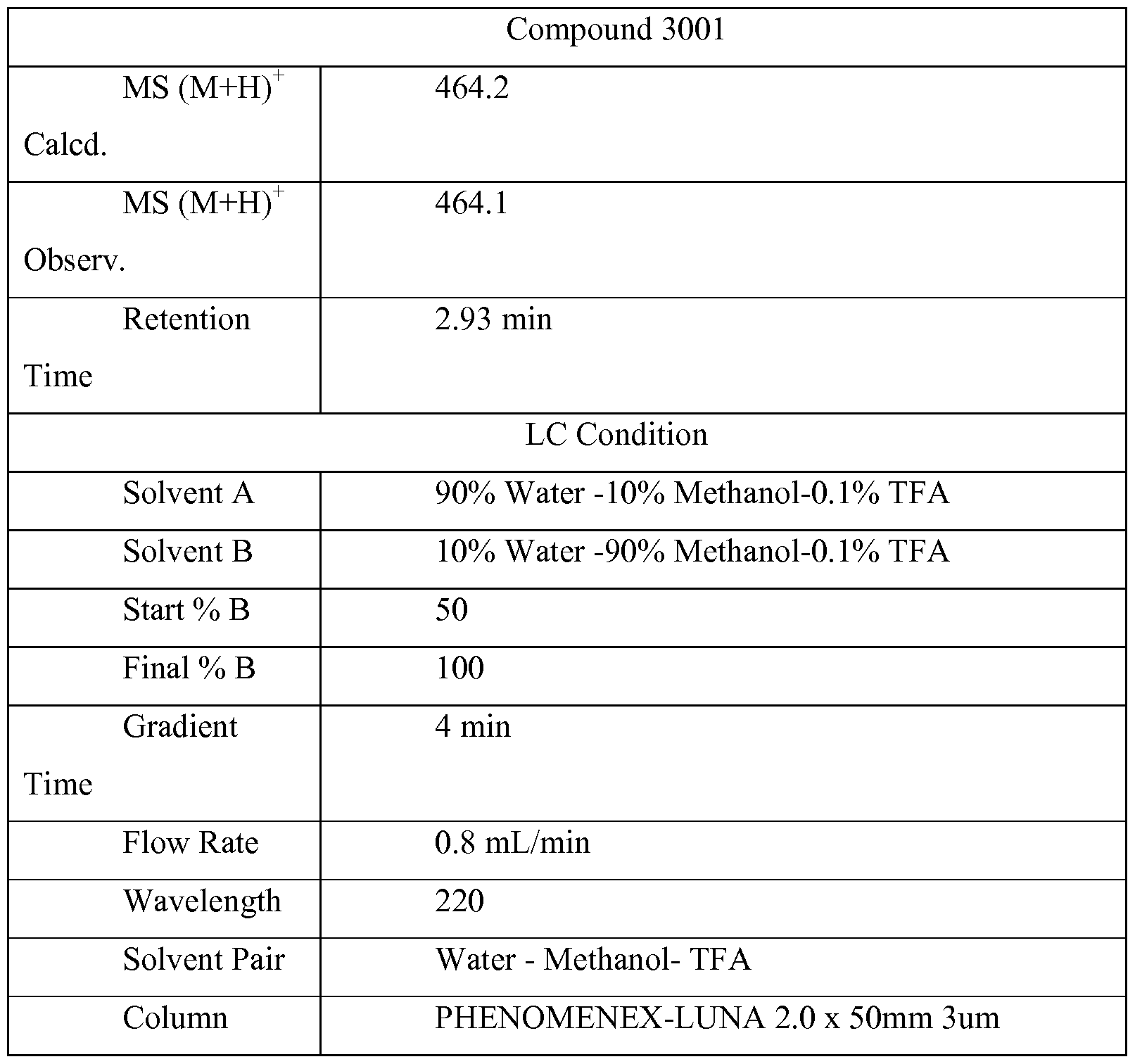
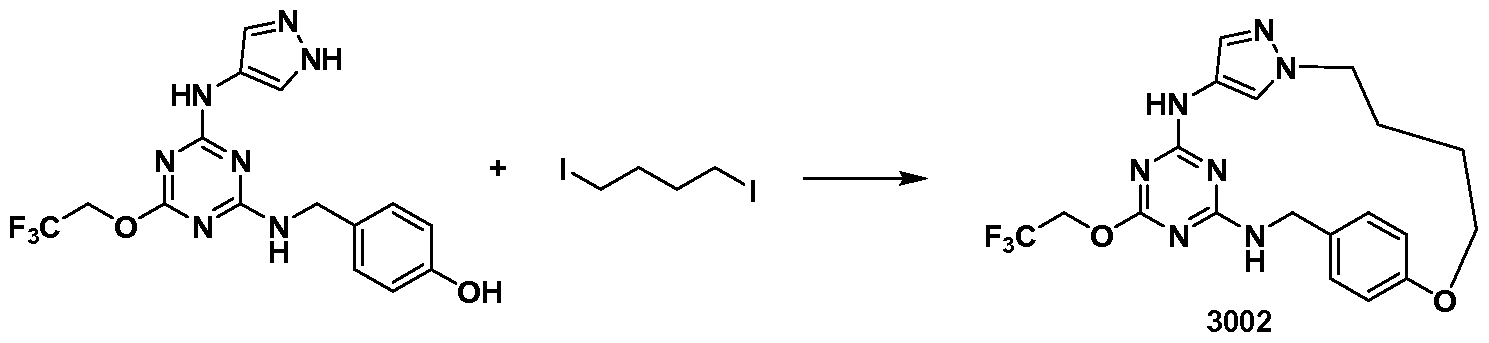
To a solution of 4-((4-(lH-pyrazol-4-ylamino)-6-(2,2,2-trifluoroethoxy)- l,3,5-triazin-2-ylamino)methyl)phenol (50 mg) and 1,4-diiodobutane (40.6 mg) DMF (10 mL) was added CS2CO3 (171 mg). The mixture was stirred at room temperature for 16 hours. DMF was removed under vacuum. The residue was purified by preparative HPLC to give Compound 3002 (1.2 mg).

Claims
We claim: 1. A compound of formula I
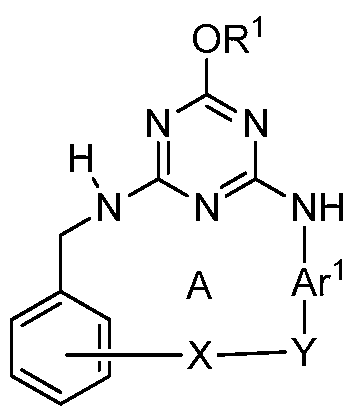
I
where R1 is alkyl, hydroxyalkyl, alkoxyalkyl, haloalkyl, cycloalkyl, hydroxycycloalkyl, alkoxycycloalkyl, halocycloalkyl, cycloalkenyl, benzyl, indanyl, or alkylcarbonyl;
R2 is hydrogen, alkyl, alkylcarbonyl, alkoxycarbonyl, aminocarbonyl,
alkylaminocarbonyl, or dialkyaminocarbonyl;
R3 is hydrogen, alkyl, alkylcarbonyl, alkoxycarbonyl, aminocarbonyl,
alkylaminocarbonyl, or dialkyaminocarbonyl;
R4 is hydrogen or alkyl;
Ar1 is pyridindiyl, pyrimidindiyl, pyrazindiyl, pyridazindiyl, pyrazoldiyl, or imidazoldiyl;
X is O or R2;
Y is an alkylene or alkenylene chain containing 0-6 groups selected from the group consisting of O, NR3, C(O), C(0)0, C(0)NR4, OC(0)NR4, NR4C(0)NR4,
NR4C( R12)NR4, and Z, provided that O, NR3, C(O), C(0)0, C(0)NR4, OC(0)NR4, NR4C(0)NR4, and NR4C(NR12)NR4 do not directly bond to each other, such that ring A is 14-36 membered; and where the alkylene or alkenylene chain is substituted with 0-6 alkyl substituents; and
Z is C3-7cycloalkylene or phenylene; or a pharmaceutically acceptable salt therof.
2. A compound of claim 1 where R1 is haloalkyl; R2 is hydrogen; R3 is hydrogen; R4 is hydrogen; Ar1 is pyridindiyl, pyrimidindiyl, or pyrazoldiyl; X is O or NR2; Y is an alkylene or alkenylene chain containing 0-6 groups selected from the group consisting of O, NR3, C(O), C(0)0, C(0)NR4, OC(0)NR4, NR4C(0)NR4, NR4C(NR12)NR4, and Z, provided that O, NR3, C(O), C(0)0, C(0)NR4, OC(0)NR4, NR4C(0)NR4, and NR4C(NR12)NR4 do not directly bond to each other, such that ring A is 14-36 membered; and where the alkylene or alkenylene chain is substituted with 0-6 alkyl substituents; and Z is phenylene; or a pharmaceutically acceptable salt therof.
3. A compound of claim 2 where R1 is trifluoroethyl or a pharmaceutically acceptable salt therof.
4. A compound of claim 2 where Ar1 is pyridindiyl or a pharmaceutically acceptable salt therof.
5. A compound of claim 2 where Ar1 is pyrimidindiyl or a pharmaceutically acceptable salt therof.
6. A compound of claim 2 where Ar1 is pyrazoldiyl or a pharmaceutically acceptable salt therof.
7. A compound of claim 2 where X is O or a pharmaceutically acceptable salt therof.
8. A compound of claim 2 where X is NR2 or a pharmaceutically acceptable salt therof.
9. A composition comprising a compound of claim 1, or a pharmaceutically acceptable salt thereof, and a pharmaceutically acceptable carrier.
10. The composition of claim 9 further comprising at least one additional compound having therapeutic benefits for HCV wherein the compound is selected from the group consisting of interferons, cyclosporins, interleukins, HCV
metalloprotease inhibitors, HCV serine protease inhibitors, HCV polymerase inhibitors, HCV helicase inhibitors, HCV NS4B protein inhibitors, HCV entry inhibitors, HCV assembly inhibitors, HCV egress inhibitors, HCV NS5A protein inhibitors, HCV NS5B protein inhibitors, and HCV replicon inhibitors.
11. A method of treating hepatitis C infection comprising administering a therapeutically effective amount of a compound of claim 1 to a patient.
12. The method of claim 11 further comprising administering at least one additional compound having therapeutic benefits for HCV wherein the compound is selected from the group consisting of interferons, cyclosporins, interleukins, HCV metalloprotease inhibitors, HCV serine protease inhibitors, HCV polymerase inhibitors, HCV helicase inhibitors, HCV NS4B protein inhibitors, HCV entry inhibitors, HCV assembly inhibitors, HCV egress inhibitors, HCV NS5A protein inhibitors, HCV NS5B protein inhibitors, and HCV replicon inhibitors.
Priority Applications (1)
| Application Number | Priority Date | Filing Date | Title |
|---|---|---|---|
| EP12715793.1A EP2697233B1 (en) | 2011-04-14 | 2012-04-09 | Macrocyclic triazine compounds for the treatment of hepatitis c |
Applications Claiming Priority (2)
| Application Number | Priority Date | Filing Date | Title |
|---|---|---|---|
| US201161475484P | 2011-04-14 | 2011-04-14 | |
| US61/475,484 | 2011-04-14 |
Publications (1)
| Publication Number | Publication Date |
|---|---|
| WO2012154353A1 true WO2012154353A1 (en) | 2012-11-15 |
Family
ID=45992861
Family Applications (1)
| Application Number | Title | Priority Date | Filing Date |
|---|---|---|---|
| PCT/US2012/032674 Ceased WO2012154353A1 (en) | 2011-04-14 | 2012-04-09 | Macrocyclic triazine compounds for the treatment of hepatitis c |
Country Status (3)
| Country | Link |
|---|---|
| US (1) | US8933066B2 (en) |
| EP (1) | EP2697233B1 (en) |
| WO (1) | WO2012154353A1 (en) |
Cited By (1)
| Publication number | Priority date | Publication date | Assignee | Title |
|---|---|---|---|---|
| RU2730016C2 (en) * | 2015-02-05 | 2020-08-14 | Мерк Патент Гмбх | Macrocyclic compounds as irak1/4 inhibitors and use thereof |
Families Citing this family (7)
| Publication number | Priority date | Publication date | Assignee | Title |
|---|---|---|---|---|
| US8629150B2 (en) | 2011-09-28 | 2014-01-14 | Bristol-Myers Squibb Company | Compounds for the treatment of hepatitis C |
| US8697706B2 (en) | 2011-10-14 | 2014-04-15 | Bristol-Myers Squibb Company | Compounds for the treatment of hepatitis C |
| US8916702B2 (en) | 2012-02-06 | 2014-12-23 | Bristol-Myers Squibb Company | Compounds for the treatment of hepatitis C |
| US9422311B2 (en) | 2012-10-18 | 2016-08-23 | Bristol-Myers Squibb Company | Compounds for the treatment of hepatitis C |
| WO2014123892A1 (en) | 2013-02-07 | 2014-08-14 | Bristol-Myers Squibb Company | Macrocyclic molecules as hcv entry inhibitors |
| JP2016507560A (en) | 2013-02-07 | 2016-03-10 | ブリストル−マイヤーズ スクイブ カンパニーBristol−Myers Squibb Company | Macrocyclic compounds as HCV entry inhibitors |
| CN105143233A (en) | 2013-03-07 | 2015-12-09 | 百时美施贵宝公司 | Compounds for the treatment of hepatitis C |
Citations (4)
| Publication number | Priority date | Publication date | Assignee | Title |
|---|---|---|---|---|
| WO2002079187A1 (en) * | 2001-03-31 | 2002-10-10 | Dong Wha Pharm. Ind. Co., Ltd | Methoxy-1,3,5-triazine derivatives as antiviral agents |
| WO2004026881A1 (en) * | 2002-08-21 | 2004-04-01 | Schering Aktiengesellschaft | Macrocyclic pyrimidines, the production thereof and the use of the same as medicaments |
| WO2009091388A2 (en) | 2007-12-21 | 2009-07-23 | Progenics Pharmaceuticals, Inc. | Triazines and related compounds having antiviral activity, compositions and methods thereof |
| WO2009132202A2 (en) * | 2008-04-24 | 2009-10-29 | Incyte Corporation | Macrocyclic compounds and their use as kinase inhibitors |
Family Cites Families (15)
| Publication number | Priority date | Publication date | Assignee | Title |
|---|---|---|---|---|
| JPS62126178A (en) | 1985-11-26 | 1987-06-08 | Mitsubishi Petrochem Co Ltd | New triazine derivatives and herbicides containing them |
| US7163943B2 (en) | 2001-09-21 | 2007-01-16 | Reddy Us Therapeutics, Inc. | Methods and compositions of novel triazine compounds |
| US7169785B2 (en) | 2001-09-21 | 2007-01-30 | Reddy Us Therapeutics, Inc. | Methods and compositions of novel triazine compounds |
| KR100490893B1 (en) | 2002-10-11 | 2005-05-23 | (주) 비엔씨바이오팜 | 2-methoxy-1,3,5-triazine derivatives, method for preparing thereof and antiviral pharmaceutical composition comprising the same |
| US20050014753A1 (en) | 2003-04-04 | 2005-01-20 | Irm Llc | Novel compounds and compositions as protein kinase inhibitors |
| WO2008057209A1 (en) | 2006-10-27 | 2008-05-15 | Merck & Co., Inc. | Hcv ns3 protease inhibitors |
| US8044087B2 (en) | 2008-09-29 | 2011-10-25 | Bristol-Myers Squibb Company | Hepatitis C virus inhibitors |
| WO2010118367A2 (en) | 2009-04-10 | 2010-10-14 | Progenics Pharmaceuticals, Inc. | Antiviral pyrimidines |
| US8445490B2 (en) | 2009-10-14 | 2013-05-21 | Bristol-Myers Squibb Company | Compounds for the treatment of hepatitis C |
| AU2010306803A1 (en) | 2009-10-14 | 2012-05-03 | Bristol-Myers Squibb Company | Compounds for the treatment of hepatitis C |
| WO2011139513A1 (en) | 2010-05-04 | 2011-11-10 | Bristol-Myers Squibb Company | Compounds for the treatment of hepatitis c |
| US8765944B2 (en) | 2010-08-19 | 2014-07-01 | Bristol-Myers Squibb Company | Compounds for the treatment of hepatitis C |
| US8629150B2 (en) | 2011-09-28 | 2014-01-14 | Bristol-Myers Squibb Company | Compounds for the treatment of hepatitis C |
| US8697706B2 (en) | 2011-10-14 | 2014-04-15 | Bristol-Myers Squibb Company | Compounds for the treatment of hepatitis C |
| US8916702B2 (en) | 2012-02-06 | 2014-12-23 | Bristol-Myers Squibb Company | Compounds for the treatment of hepatitis C |
-
2012
- 2012-04-05 US US13/440,003 patent/US8933066B2/en active Active
- 2012-04-09 EP EP12715793.1A patent/EP2697233B1/en not_active Not-in-force
- 2012-04-09 WO PCT/US2012/032674 patent/WO2012154353A1/en not_active Ceased
Patent Citations (5)
| Publication number | Priority date | Publication date | Assignee | Title |
|---|---|---|---|---|
| WO2002079187A1 (en) * | 2001-03-31 | 2002-10-10 | Dong Wha Pharm. Ind. Co., Ltd | Methoxy-1,3,5-triazine derivatives as antiviral agents |
| WO2004026881A1 (en) * | 2002-08-21 | 2004-04-01 | Schering Aktiengesellschaft | Macrocyclic pyrimidines, the production thereof and the use of the same as medicaments |
| WO2009091388A2 (en) | 2007-12-21 | 2009-07-23 | Progenics Pharmaceuticals, Inc. | Triazines and related compounds having antiviral activity, compositions and methods thereof |
| WO2009132202A2 (en) * | 2008-04-24 | 2009-10-29 | Incyte Corporation | Macrocyclic compounds and their use as kinase inhibitors |
| US20090286778A1 (en) | 2008-04-24 | 2009-11-19 | Incyte Corporation | Macrocyclic compounds and their use as kinase inhibitors |
Non-Patent Citations (14)
| Title |
|---|
| "Remington's Pharmaceutical Sciences", 1985, MACK PUBLISHING COMPANY |
| ALTER, M. J. ET AL., ENGL. J. MED., vol. 341, 1999, pages 556 - 562 |
| BARTH, H. ET AL., J. BIOL. CHEM., vol. 278, 2003, pages 41003 - 41012 |
| BARTOSCH, B.; DUBUISSON, J.; COSSET, F.-L., J. EXP. MED., vol. 197, 2003, pages 633 - 642 |
| BOYER, N.; MARCELLIN, P. J., HEPATOLOGY, vol. 32, 2000, pages 98 - 112 |
| FRIED, M. W. ET AL., N ENGL. J. MED., vol. 347, 2002, pages 975 - 982 |
| HSU, M. ET AL., PROC. NATL. ACAD. SCI. USA., vol. 100, 2003, pages 7271 - 7276 |
| LINDENBACH, B. D. ET AL., SCIENCE, vol. 309, 2005, pages 623 - 626 |
| LINDENBACH, B. D.; RICE, C. M., NATURE, vol. 436, 2005, pages 933 - 938 |
| LOHMANN, V. ET AL., SCIENCE, vol. 285, 1999, pages 110 - 113 |
| MORADPOUR, D; PENIN, F.; RICE, C. M., NATURE REVIEWS, vol. 5, 2007, pages 453 - 463 |
| SIMMONDS, P. J., GEN. VIROLOGY., vol. 85, 2004, pages 3173 - 3188 |
| WAKITA, T. E, NATURE MED., vol. 11, 2005, pages 791 - 796 |
| ZEUMZEM, S., NATURE CLINICAL PRACTICE., vol. 5, 2008, pages 610 - 622 |
Cited By (1)
| Publication number | Priority date | Publication date | Assignee | Title |
|---|---|---|---|---|
| RU2730016C2 (en) * | 2015-02-05 | 2020-08-14 | Мерк Патент Гмбх | Macrocyclic compounds as irak1/4 inhibitors and use thereof |
Also Published As
| Publication number | Publication date |
|---|---|
| EP2697233B1 (en) | 2015-01-14 |
| US8933066B2 (en) | 2015-01-13 |
| US20130095066A1 (en) | 2013-04-18 |
| EP2697233A1 (en) | 2014-02-19 |
Similar Documents
| Publication | Publication Date | Title |
|---|---|---|
| US8586584B2 (en) | Compounds for the treatment of hepatitis C | |
| US8933066B2 (en) | Compounds for the treatment of hepatitis C | |
| EP2760872B1 (en) | Compounds for the treatment of hepatitis c | |
| US8697706B2 (en) | Compounds for the treatment of hepatitis C | |
| EP2948434B1 (en) | Squaric derivatives for the treatment of hepatitis c | |
| EP2953954B1 (en) | Macrocyclic compounds as hcv entry inhibitors | |
| US8987264B2 (en) | 1,3,5-triazine derivatives of spiro bicyclic oxalamide-compounds for treatment of hepatitis C | |
| US9745322B2 (en) | Compounds for the treatment of hepatitis C | |
| US8987265B2 (en) | Substituted 1,3,5-triazine derivatives of fused bicyclic oxalamide compounds for treatment of Hepatitis C | |
| EP2964630B9 (en) | Pyrimidine compounds for the treatment of hepatitis c | |
| EP2948151B1 (en) | Ammonium derivatives for the treatment of hepatitis c | |
| US9422311B2 (en) | Compounds for the treatment of hepatitis C | |
| EP2948445B1 (en) | Guanidine derivatives for the treatment of hepatitis c |
Legal Events
| Date | Code | Title | Description |
|---|---|---|---|
| 121 | Ep: the epo has been informed by wipo that ep was designated in this application |
Ref document number: 12715793 Country of ref document: EP Kind code of ref document: A1 |
|
| NENP | Non-entry into the national phase |
Ref country code: DE |
|
| WWE | Wipo information: entry into national phase |
Ref document number: 2012715793 Country of ref document: EP |