WO2012164970A1 - 情報処理システム、情報処理方法、情報処理装置、プログラム及び記録媒体 - Google Patents
情報処理システム、情報処理方法、情報処理装置、プログラム及び記録媒体 Download PDFInfo
- Publication number
- WO2012164970A1 WO2012164970A1 PCT/JP2012/052013 JP2012052013W WO2012164970A1 WO 2012164970 A1 WO2012164970 A1 WO 2012164970A1 JP 2012052013 W JP2012052013 W JP 2012052013W WO 2012164970 A1 WO2012164970 A1 WO 2012164970A1
- Authority
- WO
- WIPO (PCT)
- Prior art keywords
- information
- user
- password
- range
- information processing
- Prior art date
- Legal status (The legal status is an assumption and is not a legal conclusion. Google has not performed a legal analysis and makes no representation as to the accuracy of the status listed.)
- Ceased
Links
Images


Classifications
-
- G—PHYSICS
- G06—COMPUTING OR CALCULATING; COUNTING
- G06F—ELECTRIC DIGITAL DATA PROCESSING
- G06F21/00—Security arrangements for protecting computers, components thereof, programs or data against unauthorised activity
- G06F21/30—Authentication, i.e. establishing the identity or authorisation of security principals
- G06F21/31—User authentication
-
- G—PHYSICS
- G06—COMPUTING OR CALCULATING; COUNTING
- G06F—ELECTRIC DIGITAL DATA PROCESSING
- G06F2221/00—Indexing scheme relating to security arrangements for protecting computers, components thereof, programs or data against unauthorised activity
- G06F2221/03—Indexing scheme relating to G06F21/50, monitoring users, programs or devices to maintain the integrity of platforms
- G06F2221/032—Protect output to user by software means
-
- G—PHYSICS
- G06—COMPUTING OR CALCULATING; COUNTING
- G06F—ELECTRIC DIGITAL DATA PROCESSING
- G06F2221/00—Indexing scheme relating to security arrangements for protecting computers, components thereof, programs or data against unauthorised activity
- G06F2221/21—Indexing scheme relating to G06F21/00 and subgroups addressing additional information or applications relating to security arrangements for protecting computers, components thereof, programs or data against unauthorised activity
- G06F2221/2105—Dual mode as a secondary aspect
-
- G—PHYSICS
- G06—COMPUTING OR CALCULATING; COUNTING
- G06F—ELECTRIC DIGITAL DATA PROCESSING
- G06F2221/00—Indexing scheme relating to security arrangements for protecting computers, components thereof, programs or data against unauthorised activity
- G06F2221/21—Indexing scheme relating to G06F21/00 and subgroups addressing additional information or applications relating to security arrangements for protecting computers, components thereof, programs or data against unauthorised activity
- G06F2221/2123—Dummy operation
-
- G—PHYSICS
- G06—COMPUTING OR CALCULATING; COUNTING
- G06F—ELECTRIC DIGITAL DATA PROCESSING
- G06F2221/00—Indexing scheme relating to security arrangements for protecting computers, components thereof, programs or data against unauthorised activity
- G06F2221/21—Indexing scheme relating to G06F21/00 and subgroups addressing additional information or applications relating to security arrangements for protecting computers, components thereof, programs or data against unauthorised activity
- G06F2221/2149—Restricted operating environment
Definitions
- the present invention relates to an information processing system, an information processing method, an information processing apparatus, a program, and a recording medium.
- Patent Document 1 evaluates whether or not to use information based on the confidentiality of information, and if it is determined that the use should be restricted, the use of information is prohibited.
- An information processing apparatus that can be restricted is disclosed.
- the present invention has been made in view of the above problems, and one of the purposes is to make it difficult for others to know that the range of information that is the basis of the screen provided to the user is limited. It is in.
- an information processing system includes a control information specifying unit that specifies control information that is information different from a password, based on the operation content of an input device performed on a password input field.
- a disclosureable range specifying unit that specifies a disclosureable range of information about the user, and a range of information that is a basis of a screen provided to the user is specified by the disclosureable range specifying unit.
- Limiting means for limiting within the disclosed disclosure range.
- the information processing method includes a control information specifying step for specifying control information that is information different from a password based on the operation content of the input device performed on the password input field, and the control information Based on the disclosure possible range specifying step that specifies the disclosure possible range of information related to the user and the range of information that is the basis of the screen provided to the user within the disclosure possible range specified by the disclosure possible range specifying step And a limiting step for limiting to.
- the information processing apparatus can disclose information about the user based on the control information that is specified based on the operation content of the input device performed on the password input field and is different from the password.
- Discloseable range specifying means for specifying a range
- restricting means for limiting the range of information that is the basis of the screen provided to the user within the disclosed range specified by the discloseable range specifying means. It is characterized by that.
- the program according to the present invention provides a disclosure range of information about the user based on control information that is specified based on the operation content of the input device performed on the password input field and is different from the password.
- a computer functioning as a disclosureable range specifying unit to be specified, and a limiting unit for limiting a range of information serving as a basis of a screen provided to the user within a disclosureable range specified by the disclosureable range specifying unit. It is characterized by.
- the recording medium according to the present invention is disclosed based on the control information that is information different from the password, which is specified based on the operation content of the input device performed on the password input field.
- the computer functions as a disclosureable range specifying means for specifying the limit, and a limiting means for limiting the range of information that is the basis of the screen provided to the user within the disclosureable range specified by the disclosureable range specifying means.
- This is a recording medium on which a program characterized by the above is recorded.
- control information is specified based on the operation content of the input device performed on the password input field.
- range of the information used as the basis of the screen provided to a user is restrict
- the disclosure possible range specifying means specifies at least one information element from among one or more information elements related to a user, and the restriction means has a basis of a screen provided to the user.
- the range of information is limited to specified information elements.
- each information element is set with a confidentiality level indicating the level of confidentiality of information
- the control information specifying unit specifies the confidentiality and specifies the disclosure possible range.
- the means is characterized by identifying an information element in which a confidentiality representing a confidentiality lower than the confidentiality represented by the identified confidentiality is set.
- the restriction means restricts a range of information displayed on a screen provided to the user.
- control unit that controls information included in the screen provided to the user so that alternative information is arranged instead of information that is restricted from being included in the screen. It is characterized by.
- the restriction unit when the password input to the input device satisfies a condition that a character string set in advance by a user is satisfied, is information that is a basis of the screen.
- the range is limited.
- the restricting unit when any of a plurality of passwords associated with different information ranges is input to the input device, the restricting unit is based on a screen provided to the user.
- the range of information is limited to the range of information associated with the password input to the input device.
- the plurality of passwords have the same number of characters.
- At least a part of keys used for inputting characters having the same number of characters from the beginning included in each of the plurality of passwords is the same.
- control information specifying unit is configured such that the input interval of characters included in the password, or the time when the password can be input and the time when the characters included in the password are input.
- the control information is specified based on a time calculated based on the time.
- it further includes an authentication unit that authenticates the user by using a password input to the input device, and the limiting unit is configured when the authentication of the user by the authentication unit is successful.
- the range of information serving as a basis of the provided screen is limited to the disclosure possible range specified by the disclosure possible range specifying means.
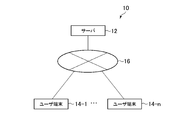
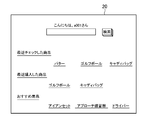
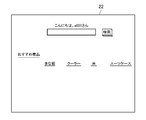
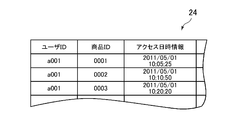
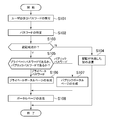
- FIG. 1 is an overall configuration diagram of a computer network according to an embodiment of the present invention. It is a figure which shows an example of the portal page of a private mode. It is a figure which shows an example of the portal page of a public mode. It is a figure which shows an example of access history data. It is a figure which shows an example of purchase history data. It is a functional block diagram which shows an example of the function implement
- FIG. 1 is an overall configuration diagram of an information processing system 10 according to an embodiment of the present invention.
- the information processing system 10 includes a server 12 and user terminals 14 (14-1 to 14-n), each of which is configured with a computer at the center.
- the server 12 and the user terminal 14 can communicate with each other via a computer network 16 such as the Internet.
- the server 12 includes a control unit that is a program control device such as a CPU that operates according to a program installed in the server 12, a storage unit such as a ROM or RAM, a storage unit such as a hard disk drive, a network board, and the like.
- An information processing apparatus including a communication unit that is a communication interface. These elements are connected via a bus.
- a program executed by the control unit of the server 12 is stored in the storage unit of the server 12.
- the storage unit of the server 12 also operates as a work memory of the server 12.
- the server 12 which concerns on this embodiment can provide a user with services, such as a shopping site which can perform goods and service purchase online using a web technique.
- the user terminal 14 is an information processing apparatus such as a personal computer, a mobile phone, a personal digital assistant (PDA), or a smartphone.
- the user terminal 14 is, for example, a control unit such as a CPU, a storage element such as a ROM or a RAM, a storage unit such as a hard disk drive, an output unit such as a display, an input unit such as a mouse, keyboard, touch pad, or button, a network board, etc.
- the communication part is provided.
- a web browser is preinstalled in the user terminal 14 according to the present embodiment, and a web browser program is executed.
- the user terminal 14 receives a service provided by the server 12 through a web browser.
- the server 12 when the user terminal 14 accesses a Web page disposed on the server 12 through a Web browser, the Web page is displayed on the display of the user terminal 14. Further, after the server 12 executes the user authentication process, the server 12 can specify the identifier (user ID) of the user who uses the user terminal 14.
- a login page (not shown) provided with a user ID input field, a password input field, and a login button provided by the server 12 according to this embodiment is displayed on the display of the user terminal 14. Displayed via a web browser. Then, after the user clicks on the user ID input field so that a prompt is displayed in the user ID input field, the user ID is input into the user ID input field using an input device such as a keyboard. To do. Then, the user clicks on the password input field so that a prompt is displayed in the password input field, and inputs the password in the password input field using an input device such as a keyboard. When the user clicks the login button, the input user ID and password are transmitted to the server 12.
- the server 12 executes an authentication process based on the user ID and password transmitted from the user terminal 14. If the authentication is successful, the server 12 determines the portal page of the shopping site (in this embodiment, the private mode portal page 20, shown in FIG. 2) according to the password input mode received from the user terminal 14. Alternatively, one of the public mode portal pages 22 shown in FIG. 3 is generated and transmitted to the user terminal 14. Then, the user terminal 14 displays and outputs the received page on the display via the web browser.
- the portal page of the shopping site in this embodiment, the private mode portal page 20, shown in FIG. 2
- the server 12 determines the portal page of the shopping site (in this embodiment, the private mode portal page 20, shown in FIG. 2) according to the password input mode received from the user terminal 14.
- one of the public mode portal pages 22 shown in FIG. 3 is generated and transmitted to the user terminal 14. Then, the user terminal 14 displays and outputs the received page on the display via the web browser.
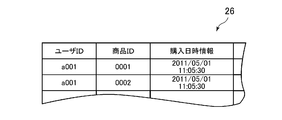
- the server 12 when a user accesses a page that introduces a product or service sold on a shopping site, the server 12 displays the user ID of the user who accessed the page and the product introduced on the page. 4, including access date and time information indicating the date and time when the page is accessed, is generated and stored in the storage unit included in the server 12.
- the server 12 uses the user ID of the user who purchased the product or service, the product ID of the product or service, the product or service.
- the purchase history data 26 illustrated in FIG. 5 including information indicating the purchase date and time is generated and stored in the storage unit included in the server 12.
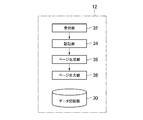
- FIG. 6 is a functional block diagram showing an example of functions realized by the server 12 according to the present embodiment.
- the server 12 according to the present embodiment functionally includes a data storage unit 30, a reception unit 32, an authentication unit 34, a page generation unit 36, and a page output unit 38.
- the data storage unit 30 is realized mainly by the storage unit of the server 12.
- the receiving unit 32 and the page output unit 38 are realized mainly by the control unit and the communication unit of the server 12. Other elements are realized mainly by the control unit of the server 12.
- These elements are realized by executing a program installed in the server 12, which is a computer, by the control unit of the server 12.
- This program is supplied to the server 12 via a computer-readable recording medium such as a CD-ROM or DVD-ROM, or via a communication network such as the Internet.
- the access history data 24, the purchase history data 26, the account data 40 illustrated in FIG. 7, the product master data 42 illustrated in FIG. 8, and the machine illustrated in FIG. Density setting data 44 and the like are stored.
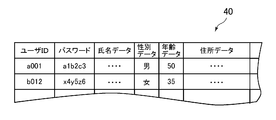
- the account data 40 is data for managing the users who use the shopping site.
- the user identifier user ID
- the password set by the user the name data indicating the name of the user
- the gender data indicating the gender.
- Data representing attributes related to the user such as age data indicating the age and address data indicating the address.
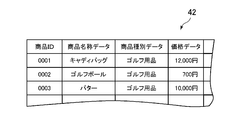
- the product master data 42 is data for managing products and services sold on the shopping site implemented in the server 12.
- the product master data 42 is a product ID, product or service identifier that is an identifier of the product or service being sold.
- Product name data indicating the name of the service
- product type data indicating the type of the product or service
- price data indicating the price of the product or service, and the like are included.
- the confidentiality setting data 44 is data for managing the setting of the confidentiality of the user-related elements such as the user access history, the user purchase history, the user attribute, and the like.
- the confidentiality setting ID, the data for which the confidentiality is set, the setting attribute data indicating the attribute of the data for which the confidentiality is set, and the confidentiality data indicating the confidentiality indicating the level of confidentiality are included. It is.
- the confidentiality is expressed by any integer between 1 and 5, and the greater the number, the higher the confidentiality.
- the value of confidentiality data may be arbitrarily settable by the user. Further, the value of confidentiality data may be set based on the confidentiality previously set for each product type and the type of product or service introduced on the page newly browsed by the user.
- the correspondence between the combination of the product type and the user attribute and the value of the confidentiality data may be set in advance. Then, the value of confidentiality data may be set based on the type of the product or service introduced on the page newly browsed by the user and the attribute of the user. For example, it is assumed that the product types of the products introduced on the page viewed by the user are “cosmetics”, “men's shoes”, and “drinking water”.
- the value of confidentiality data is set to “cosmetics”, “drinking water”, “male shoes” in order from the highest, and viewed
- the value of confidentiality data may be set to “male shoes”, “drinking water”, and “cosmetics” in descending order.
- the value of confidentiality data set by the user before browsing the new page for the specified product or the like is the value of confidentiality data of the product or the like introduced on the page that the user has newly browsed. It may be set.
- the value “4” is set as the sensitivity data value for all the attributes of the access history data 24, and the value “5” is set for the sensitivity data for all the attributes of the purchase history data 26. It is set as a value.
- the value “1” for the user ID, the name data, the sex data, the value “2” for the age data, the value “3” for the address data Is set as
- the accepting unit 32 accepts the user ID and password input from the user terminal 14 to the login page by the user (S101). And the authentication part 34 specifies the password matched with the user ID received by the process shown to S101 in the account data 40 memorize
- the authentication unit 34 determines the success or failure of the authentication (S103).
- the authentication unit 34 specifies the password received in the process shown in S101 as a character string in which “1” is added to the beginning or end of the password specified in the process shown in S102, and the process shown in S102. If the password is either a character string with “0” added to the beginning or end of the password or the password character string itself specified in the process shown in S102, it is determined that the authentication has succeeded. It is determined that the authentication has failed.
- a character string in which “1” is added to the beginning or end of the password specified in the process shown in S102 is referred to as a public password, and “0” is added to the beginning or end of the password specified in the process shown in S102.
- the character string or the password character string itself specified in the process shown in S102 is called a private password.
- the authentication unit 34 transmits the fact that the authentication has failed to the user terminal 14 (S104).
- the processing shown in FIG. for example, the user terminal 14 displays and outputs a login page including the fact that the authentication has failed on the display via the Web browser.
- the authentication unit 34 determines whether the password accepted in the process shown in S101 is a private password or a public password. Is determined (S105). If the password is a private password, the page generation unit 36 associates each attribute included in the account data 40, the access history data 24, and the purchase history data 26 associated with the user ID received in the process shown in S101. A portal page 20 in the private mode shown in FIG. 2 is generated based on (S106).
- the page generation unit 36 sets each attribute, access history data 24, and purchase history data 26 included in the account data 40 associated with the user ID received in the process shown in S101. Among them, information whose specified confidentiality data value is equal to or less than a predetermined threshold value (“3” in the present processing example) is identified, and the public mode portal page shown in FIG. 3 based on the identified information. 22 is generated (S107).
- a predetermined threshold value (“3” in the present processing example)
- the data related to the user A that is the basis for generating the portal page 20 in the private mode is not limited, but the data related to the user A that is the basis for generating the portal page 22 in the public mode is This means that the information is limited to information having a confidentiality level lower than the confidentiality determined based on the type of the input password.
- the page output unit 38 transmits the portal page generated in the process shown in S106 or S107 to the user terminal 14 (S108), and the process shown in the present process example ends.
- the user terminal 14 receives the portal page transmitted in the process shown in S108, the user terminal 14 displays and outputs the received portal page on the display.
- this password is the password set in the account data 40 “ Since the character string has “1” added to the end of “a1b2c3”, the authentication unit 34 determines that the input password is a private password.
- the page generator 36 generates the private mode portal page 20 illustrated in FIG. 2 in response to the input of the password.
- the data related to the user A is the basis for generating the portal page 20 in the private mode.
- a link to a page introducing a product or service identified by the product ID associated with the user ID of the user A in the access history data 24 is “ It is arranged in an area where “recently checked products” is shown.
- a link to a page introducing a product or service identified by the product ID associated with the user ID of the user A in the purchase history data 26 is “Recently purchased. Arranged in the area where "product” is shown.
- a link to a page that introduces a product or service recommended by the user A is arranged in an area where “recommended product” is shown.
- a product or service recommended to the user A is specified based on the product ID associated with the user ID of the user A in the access history data 24 and the purchase history data 26.
- “recommended product” for example, a link to a page introducing a product or service that is not purchased by the user A even though the product type is the same is arranged.
- the portal page 20 in the private mode is provided with a link to a page for introducing a product whose product type is “golf equipment”.
- the authentication unit 34 determines that the input password is a public password.
- the page generation unit 36 generates the public mode portal page 22 illustrated in FIG. 3 in response to the input of the password.
- the data regarding the user A which is the basis for generating the portal page 22 in the public mode, is limited to information whose confidentiality data value is “3” or less.
- the public mode portal page 22 does not include an area indicating “Recently Checked Products” or an area indicating “Recently Purchased Products”.
- the public mode portal page 22 includes, for example, a product or service identified in the area where “recommended product” is indicated, regardless of the purchase history or access history of the user A (for example, the most recently within one week).
- a link to a page introducing a product group or service group that is selling) is arranged.
- information arranged in an area indicating “Recently Checked Products” or an area indicating “Recently Purchased Products” may be set as hidden data.
- information arranged in the area indicating “Recently Checked Products” or the area indicating “Recently Purchased Products” is transmitted from the server 12 to the user terminal 14 but is not displayed on the user terminal 14. May be.
- information for example, personal information
- Information about A for example, personal information
- the range of information displayed as a portal page and the basis of information included in the portal page are more limited than when a private password is entered. .
- the password input field is activated (for example, a prompt is displayed), and the input device performed on the password input field performed by the user based on the operation content.
- Control information different from the password in the above example, confidentiality
- the disclosure possible range of information about the user is specified.
- the range of information serving as a basis for generating the portal page is limited to the specified disclosure possible range. Therefore, it is difficult for others to know that the range of information that is the basis of the screen provided to the user is limited.
- the password input form on the login page is displayed in a hidden form, so it is a situation where the user is looking into others when entering the password on the login page.
- the password input when the private mode portal page 20 is displayed and the password input when the public mode portal page 22 is displayed have the same number of characters. It is expected that the possibility that the user controls the range of information that is the basis for generating the portal page will be further reduced. Note that the control information described above need not be confidential.
- the page generation unit 36 completely matches the password included in the account data 40 and the password input by the user as a character string regardless of the case, and each character included in the character string is
- the portal page 20 in the private mode is generated, and the password included in the account data 40 and the password input by the user are not limited to uppercase and lowercase letters. If there is a complete match as a non-existent character string, and if it is not a complete match as to whether it is an uppercase letter or a lowercase letter, a public mode portal page 22 may be generated.
- the page generation unit 36 when “a1b2c3” is input as the password, the page generation unit 36 generates the portal page 20 in the private mode, and inputs each of “a”, “b”, and “c”. Instead of the key, the key generation of the shift key + “a”, the shift key + “b”, and the shift key + “c” is performed, and when “A1B2C3” is input as the password, the page generation unit 36 is in the public mode.
- the portal page 22 may be generated. As described above, the number of characters from the beginning is the same between the password input when the private mode portal page 20 is generated and the password input when the public mode portal page 22 is generated. A relationship in which at least some of the keys used for inputting characters match may be established.
- two passwords may be set for one user in the account data 40.
- the page generation unit 36 When the first password is input by the user, the page generation unit 36 generates the portal page 20 in the private mode.
- the page generation unit 36 When the user inputs the second password, the page generation unit 36 The portal page 22 in the public mode may be generated.
- the page generation unit 36 when the page generation unit 36 generates the portal page 22 in the public mode, an area indicating “Recently Checked Products” or an area indicating “Recently Purchased Products” is displayed.
- Alternative information may be arranged.
- the page generation unit 36 may arrange information related to a predetermined dummy product or service in these areas instead of the information that is not included in the portal page.
- confidentiality may be set in association with a combination of a product attribute (for example, product type) and a user attribute (for example, gender).
- a product attribute for example, product type
- a user attribute for example, gender
- “5” may be set as the sensitivity value for the combination of the product type “female bag” and the gender “male”.
- the value of the gender data included in the account data 40 of the logged-in user is “male” and the purchase history data 26 of the user includes a product ID corresponding to the female bag.
- the link for introducing the product may not be arranged in the portal page 22 in the public mode.
- the page generation unit 36 may generate the private mode portal page 20. Otherwise, the page generation unit 36 may generate the public mode portal page 22.
- the page generation unit 36 For example, if the time from the time when the first character of the password is input to the time when the last character of the password is input is longer than a predetermined time, the page generation unit 36 generates the portal page 20 in the private mode. Otherwise, the page generation unit 36 may generate the public mode portal page 22. Further, for example, if the average value of the time intervals for inputting characters included in the password is longer than a predetermined time, the page generation unit 36 generates the private mode portal page 20; otherwise, the page generation unit 36 The portal page 22 in the public mode may be generated.
- the page generation unit 36 determines whether to generate the private mode portal page 20 or the public mode portal page 22.
- the standard value of the input time interval for each user is stored in advance in the data storage unit 30, and whether or not the average value of the time interval for inputting characters included in the password is longer than the above-described standard value. Accordingly, the page generation unit 36 may determine whether to generate the private mode portal page 20 or the public mode portal page 22.
- the timing at which a password or the like is input can be specified by the server 12 when the user terminal 14 transmits information indicating the input time to the server 12 and the server 12 receives the information, for example.
- the user terminal 14 sends a message to that effect to the server 12, and even if the server 12 treats the reception timing as such as the password entry timing, the password has been entered.
- the timing can be specified by the server 12.
- the timing at which the login page is displayed can be specified by the server 12 by treating the timing at which the server 12 transmits the login page to the user terminal 14 as the timing at which the login page is displayed.
- a program installed in the user terminal 14 monitors the time when the password is input or the time when the login button is clicked, such as the function of the toolbar of the Web browser, and the program sends these to the server 12. Information indicating the time may be transmitted.
- the authentication unit 34 determines that the user has been successfully authenticated. You may do it. In this case, the page is generated according to the length of the added or character string, the order of arrangement, the added position (whether it was added before or after the password set by the user), etc.
- the unit 36 may determine whether to generate the private mode portal page 20 or the public mode portal page 22.
- the page generation unit 36 uses the received password input mode to narrow down the information range that is the basis for generating the portal page (which range of information is used as the basis for generating the portal page). Any one of a plurality of public mode portal pages 22 having different criteria) may be generated. For example, when the first password is accepted, the access history is arranged on the portal page, but the purchase history is not arranged. When the second password is accepted, the purchase history is arranged on the portal page. However, the access history may not be arranged.
- the page generation unit 36 generates the portal page 20 in the private mode or the portal page 22 in the public mode according to the number of repetitions of the character string preset by the user in the character string input as the password. May be determined. Specifically, for example, when the receiving unit 32 receives a character string that is the same as a character string preset by the user as a password, the page generating unit 36 generates the private mode portal page 20, and the receiving unit When 32 receives a character string obtained by concatenating a plurality of character strings preset by the user as a password, the page generation unit 36 may generate the portal page 22 in the public mode.
- the information used as the basis for generating the portal page is not limited to the above-described information, and includes, for example, the user's telephone number, bookmarks set by the user, e-mail, address book, schedule data, photos, programs, and the like. May be.
- the information that is the basis for generating the portal page may be information stored in the server 12 or information stored in the user terminal 14.
- the division of roles between the server 12 and the user terminal 14 is not limited to the above-described embodiment.
- the user terminal 14 may specify control information such as confidentiality based on the operation content of the input device performed on the password input field and transmit the control information to the server 12.
- the server 12 may specify the disclosure possible range of the information regarding the user.
- the specific numerical values and character strings described above and the specific numerical values and character strings in the drawings are examples, and are not limited to these numerical values and character strings.
Landscapes
- Engineering & Computer Science (AREA)
- Computer Security & Cryptography (AREA)
- Theoretical Computer Science (AREA)
- Computer Hardware Design (AREA)
- Software Systems (AREA)
- Physics & Mathematics (AREA)
- General Engineering & Computer Science (AREA)
- General Physics & Mathematics (AREA)
- Information Transfer Between Computers (AREA)
- Storage Device Security (AREA)
- Management, Administration, Business Operations System, And Electronic Commerce (AREA)
Abstract
ユーザに提供される画面の基礎となる情報の範囲を制限していることを他人に知られにくくする。ページ生成部(36)は、パスワード入力欄に対して行った入力装置の操作内容に基づいて特定される、パスワードとは異なる情報である制御情報に基づいて、ユーザに関する情報の開示可能範囲を特定する。ページ生成部(36)は、ユーザに提供される画面の基礎となる情報の範囲を、ページ生成部(36)により特定される開示可能範囲内に制限する。
Description
本発明は、情報処理システム、情報処理方法、情報処理装置、プログラム及び記録媒体に関する。
購入履歴、閲覧履歴、性別、年齢などに応じてユーザ毎にカスタマイズされた画面を提供するショッピングサイトその他のウェブサイトが存在する。
こうしたウェブサイトにおけるプライバシー保護技術として、特許文献1には、情報の秘匿性などから情報の利用を行うか制限するかを評価し、利用を制限すべきと判断した場合には、情報の利用を制限することができる情報処理装置が開示されている。
ユーザ毎にカスタマイズされた画面の基礎となる情報の範囲を、ユーザが自らの意思で制限できれば便利である。しかし、カスタマイズされた画面の基礎となる情報の範囲を制限するために明示的な操作を要求すると、その明示的な操作を行っているということが他人に知られやすくなる。その結果、ユーザには隠すべき情報があるということがその他人に気付かれてしまうおそれがある。
本発明は、上記課題に鑑みてなされたものであって、その目的の1つは、ユーザに提供される画面の基礎となる情報の範囲を制限していることを他人に知られにくくすることにある。
上記課題を解決するために、本発明に係る情報処理システムは、パスワード入力欄に対して行った入力装置の操作内容に基づいて、パスワードとは異なる情報である制御情報を特定する制御情報特定手段と、前記制御情報に基づいて、ユーザに関する情報の開示可能範囲を特定する開示可能範囲特定手段と、前記ユーザに提供される画面の基礎となる情報の範囲を、前記開示可能範囲特定手段により特定される開示可能範囲内に制限する制限手段と、を含むことを特徴とする。
また、本発明に係る情報処理方法は、パスワード入力欄に対して行った入力装置の操作内容に基づいて、パスワードとは異なる情報である制御情報を特定する制御情報特定ステップと、前記制御情報に基づいて、ユーザに関する情報の開示可能範囲を特定する開示可能範囲特定ステップと、前記ユーザに提供される画面の基礎となる情報の範囲を、前記開示可能範囲特定ステップにより特定される開示可能範囲内に制限する制限ステップと、を含むことを特徴とする。
また、本発明に係る情報処理装置は、パスワード入力欄に対して行った入力装置の操作内容に基づいて特定される、パスワードとは異なる情報である制御情報に基づいて、ユーザに関する情報の開示可能範囲を特定する開示可能範囲特定手段と、前記ユーザに提供される画面の基礎となる情報の範囲を、前記開示可能範囲特定手段により特定される開示可能範囲内に制限する制限手段と、を含むことを特徴とする。
また、本発明に係るプログラムは、パスワード入力欄に対して行った入力装置の操作内容に基づいて特定される、パスワードとは異なる情報である制御情報に基づいて、ユーザに関する情報の開示可能範囲を特定する開示可能範囲特定手段、前記ユーザに提供される画面の基礎となる情報の範囲を、前記開示可能範囲特定手段により特定される開示可能範囲内に制限する制限手段、としてコンピュータを機能させることを特徴とする。
また、本発明に係る記録媒体は、パスワード入力欄に対して行った入力装置の操作内容に基づいて特定される、パスワードとは異なる情報である制御情報に基づいて、ユーザに関する情報の開示可能範囲を特定する開示可能範囲特定手段、前記ユーザに提供される画面の基礎となる情報の範囲を、前記開示可能範囲特定手段により特定される開示可能範囲内に制限する制限手段、としてコンピュータを機能させることを特徴とするプログラムを記録した記録媒体である。
本発明では、パスワード入力欄に対して行った入力装置の操作内容に基づいて制御情報が特定される。そして、ユーザに提供される画面の基礎となる情報の範囲が、制御情報に基づいて特定される開示可能範囲に制限される。よって、本発明によれば、ユーザに提供される画面の基礎となる情報の範囲を制限していることが他人に知られにくくなる。
本発明の一態様では、前記開示可能範囲特定手段は、ユーザに関する1又は複数の情報要素のうちから少なくとも1つの情報要素を特定し、前記制限手段は、前記ユーザに提供される画面の基礎となる情報の範囲を、特定される情報要素に制限することを特徴とする。
また、本発明の一態様では、前記各情報要素には、情報の機密性の高低を表す機密度が設定されており、前記制御情報特定手段は、機密度を特定し、前記開示可能範囲特定手段は、特定される機密度が表す機密性よりも低い機密性を表す機密度が設定されている情報要素を特定することを特徴とする。
また、本発明の一態様では、前記制限手段は、前記ユーザに提供される画面に表示される情報の範囲を制限することを特徴とする。
また、本発明の一態様では、画面に含まれないよう制限された情報の代わりに代替情報が配置されるよう、ユーザに提供される画面に含まれる情報を制御する制御手段、をさらに含むことを特徴とする。
また、本発明の一態様では、前記入力装置に入力されたパスワードにユーザにより予め設定された文字列が含まれているという条件を満足する場合に、前記制限手段が前記画面の基礎となる情報の範囲を制限することを特徴とする。
また、本発明の一態様では、互いに異なる情報の範囲に対応付けられる複数のパスワードのいずれかが前記入力装置に入力された場合に、前記制限手段が、前記ユーザに提供される画面の基礎となる情報の範囲を、前記入力装置に入力されたパスワードに対応付けられる情報の範囲に制限することを特徴とする。
また、本発明の一態様では、前記複数のパスワードは、文字数が同じであることを特徴とする。
また、本発明の一態様では、前記複数のパスワードのそれぞれに含まれる先頭からの文字数が同じである文字の入力に使用されるキーのうちの少なくとも一部が一致することを特徴とする。
また、本発明の一態様では、前記制御情報特定手段は、前記パスワードに含まれる文字の入力間隔、又は、前記パスワードが入力可能となる時間と前記パスワードに含まれる文字が入力された時間とに基づいて算出される時間、に基づいて前記制御情報を特定することを特徴とする。
また、本発明の一態様では、前記入力装置に入力されたパスワードを用いて前記ユーザを認証する認証手段、をさらに含み、前記制限手段は、前記認証手段による前記ユーザの認証が成功した場合に提供される画面の基礎となる情報の範囲を、前記開示可能範囲特定手段により特定される開示可能範囲内に制限することを特徴とする。
以下、本発明の一実施形態について図面に基づき詳細に説明する。
図1は、本発明の一実施形態に係る情報処理システム10の全体構成図である。図1に示すように、情報処理システム10は、いずれもコンピュータを中心に構成されたサーバ12とユーザ端末14(14-1~14-n)とを含んでいる。そして、サーバ12とユーザ端末14は、インターネットなどのコンピュータネットワーク16を介して互いに通信可能になっている。
本実施形態に係るサーバ12は、サーバ12にインストールされるプログラムに従って動作するCPU等のプログラム制御デバイスである制御部、ROMやRAM等の記憶素子やハードディスクドライブなどである記憶部、ネットワークボードなどの通信インタフェースである通信部、を含んでいる情報処理装置である。これらの要素は、バスを介して接続される。サーバ12の記憶部には、サーバ12の制御部によって実行されるプログラムが記憶される。また、サーバ12の記憶部は、サーバ12のワークメモリとしても動作する。そして、本実施形態に係るサーバ12は、ウェブ技術を用いて、商品やサービスの購入をオンラインで行うことができるショッピングサイトなどのサービスをユーザに提供することができるようになっている。
ユーザ端末14は、例えば、パーソナルコンピュータ、携帯電話機、携帯情報端末(PDA)、スマートフォンなどの情報処理装置である。ユーザ端末14は、例えば、CPU等の制御部、ROMやRAM等の記憶素子やハードディスクドライブ等の記憶部、ディスプレイ等の出力部、マウス、キーボード、タッチパッド、ボタン等の入力部、ネットワークボード等の通信部を備えている。また、本実施形態に係るユーザ端末14には、ウェブブラウザが予めインストールされており、ウェブブラウザのプログラムが実行される。ユーザ端末14は、ウェブブラウザを通じてサーバ12が提供するサービスを受ける。
本実施形態では、ユーザ端末14が、ウェブブラウザを通じてサーバ12に配置されているWebページにアクセスすると、ユーザ端末14のディスプレイにそのWebページが表示される。また、サーバ12がユーザの認証処理を実行した後については、サーバ12は、ユーザ端末14を利用するユーザの識別子(ユーザID)を特定することができるようになっている。
そして、本実施形態では、本実施形態に係るサーバ12により提供される、ユーザID入力欄、パスワード入力欄、及び、ログインボタンが配置されたログインページ(図示せず)がユーザ端末14のディスプレイにWebブラウザを介して表示される。そして、ユーザは、ユーザID入力欄をクリックするなどして、ユーザID入力欄にプロンプトが表示される状態とした上で、キーボードなどの入力装置を用いて、ユーザID入力欄にユーザIDを入力する。そして、ユーザは、パスワード入力欄をクリックするなどして、パスワード入力欄にプロンプトが表示される状態とした上で、キーボードなどの入力装置を用いて、パスワード入力欄にパスワードを入力する。そして、ユーザが、ログインボタンをクリックすると、入力されたユーザIDとパスワードとがサーバ12に送信される。そして、サーバ12は、ユーザ端末14から送信されたユーザIDとパスワードとに基づいて認証処理を実行する。そして、認証に成功した場合には、サーバ12は、ユーザ端末14から受け付けたパスワードの入力態様に応じて、ショッピングサイトのポータルページ(本実施形態では、図2に示すプライベートモードのポータルページ20、又は、図3に示すパブリックモードのポータルページ22のいずれか)を生成し、ユーザ端末14に送信する。そして、ユーザ端末14は、受信したページをWebブラウザを介してディスプレイに表示出力する。
また、本実施形態では、ユーザが、ショッピングサイトにおいて販売されている商品やサービスを紹介するページにアクセスすると、サーバ12は、そのページにアクセスしたユーザのユーザID、そのページにおいて紹介されている商品やサービスの識別子(商品ID)、そのページにアクセスした日時を示すアクセス日時情報などが含まれる、図4に例示するアクセス履歴データ24を生成して、サーバ12が備える記憶部に記憶させる。また、ユーザが、ショッピングサイトにおいて販売されている商品やサービスを購入した際には、サーバ12は、その商品やサービスを購入したユーザのユーザID、その商品やサービスの商品ID、商品やサービスの購入日時を示す情報などが含まれる、図5に例示する購入履歴データ26を生成して、サーバ12が備える記憶部に記憶させる。
図6は、本実施形態に係るサーバ12で実現される機能の一例を示す機能ブロック図である。本実施形態に係るサーバ12は、機能的には、データ記憶部30、受付部32、認証部34、ページ生成部36、ページ出力部38、を含んで構成される。データ記憶部30は、サーバ12の記憶部を主として実現される。受付部32、ページ出力部38は、サーバ12の制御部及び通信部を主として実現される。その他の要素は、サーバ12の制御部を主として実現される。
これらの要素は、コンピュータであるサーバ12にインストールされたプログラムを、サーバ12の制御部で実行することにより実現されている。なお、このプログラムは、例えば、CD-ROM、DVD-ROMなどのコンピュータ読み取り可能な記録媒体を介して、あるいは、インターネットなどの通信ネットワークを介してサーバ12に供給される。
なお、本実施形態に係るサーバ12では、図6に示す機能以外の機能(例えば、オンラインショッピングに関する機能など)も実現されている。
本実施形態では、予め、データ記憶部30に、上述のアクセス履歴データ24、購入履歴データ26、図7に例示するアカウントデータ40、図8に例示する商品マスタデータ42、図9に例示する機密度設定データ44、などが記憶されている。
アカウントデータ40は、ショッピングサイトを利用するユーザを管理するためのデータであり、例えば、ユーザの識別子(ユーザID)、ユーザにより設定されたパスワード、ユーザの氏名を表す氏名データ、性別を示す性別データ、年齢を示す年齢データ、住所を示す住所データなど、ユーザに関する属性を表すデータが含まれている。
商品マスタデータ42は、サーバ12において実現されているショッピングサイトにおいて販売されている商品やサービスを管理するためのデータであり、例えば、販売されている商品やサービスの識別子である商品ID、商品やサービスの名称を示す商品名称データ、商品やサービスの種別を示す商品種別データ、商品やサービスの価格を示す価格データ、などが含まれている。
機密度設定データ44は、ユーザのアクセス履歴、ユーザの購入履歴、ユーザの属性、などといったユーザに関する要素の機密性についての設定を管理するためのデータであり、例えば、機密度設定データ44の識別子である機密度設定ID、機密度を設定する対象となるデータ及び機密度を設定する対象となるデータの属性を示す設定属性データ、機密性の高低を表す機密度を示す機密度データ、が含まれている。本実施形態では、機密度は、1から5までの間のいずれかの整数によって表現されており、数字が大きいほど機密性が高い。
機密度データの値は、ユーザにより任意に設定可能であってもよい。また、機密度データの値は、予め商品種別毎に設定された機密度と、ユーザにより新たに閲覧されたページで紹介されている商品やサービスの種別とに基づいて設定されてもよい。
また、商品種別とユーザの属性との組合せと機密度データの値との対応関係が予め設定されていてもよい。そして、ユーザが新たに閲覧したページで紹介されている商品やサービスの種別とユーザの属性とに基づいて機密度データの値が設定されてもよい。例えば、ユーザが閲覧したページで紹介されている商品の商品種別が「化粧品」、「男性用靴」、「飲料水」であることとする。この場合、閲覧したユーザの性別が「男」である場合は、機密度データの値は高いものから順に、「化粧品」、「飲料水」、「男性用靴」となるよう設定され、閲覧したユーザの性別が「女」である場合は、機密度データの値は高いものから順に、「男性用靴」、「飲料水」、「化粧品」となるよう設定されるようにしてもよい。
また、例えば、ユーザが新たにページを閲覧した際に、そのページで紹介されている商品等と同一の商品等又は関連する商品等が特定されてもよい。そして、特定された商品等にこのユーザによって新たなページの閲覧以前に設定されていた機密度データの値が、ユーザが新たに閲覧したページで紹介されている商品等の機密度データの値として設定されるようにしてもよい。
本実施形態では、アクセス履歴データ24のすべての属性については値「4」が機密度データの値として設定されており、購入履歴データ26のすべての属性について値が「5」が機密度データの値として設定されている。また、アカウントデータ40に含まれる属性については、ユーザIDに値「1」、氏名データ、性別データ、及び、年齢データに値「2」、住所データに値「3」が、機密度データの値として設定されている。
ここで、本実施形態に係るサーバ12で行われる処理の流れの一例を図10に示すフロー図を参照しながら説明する。
まず、受付部32が、ユーザ端末14から、ユーザによりログインページに入力されたユーザIDとパスワードとを受け付ける(S101)。そして、認証部34が、データ記憶部30に記憶されているアカウントデータ40において、S101に示す処理で受け付けたユーザIDに対応付けられているパスワードを特定する(S102)。
認証部34は、認証の成否を判定する(S103)。本実施形態では、認証部34は、S101に示す処理で受け付けたパスワードが、S102に示す処理で特定されたパスワードの先頭又は末尾に「1」を付加した文字列、S102に示す処理で特定されたパスワードの先頭又は末尾に「0」を付加した文字列、又は、S102に示す処理で特定されたパスワード文字列自体のいずれかである場合に、認証に成功したと判定し、そうでない場合に、認証に失敗したと判定する。以下、S102に示す処理で特定されたパスワードの先頭又は末尾に「1」を付加した文字列をパブリックパスワードと呼び、S102に示す処理で特定されたパスワードの先頭又は末尾に「0」を付加した文字列、又は、S102に示す処理で特定されたパスワード文字列自体をプライベートパスワードと呼ぶこととする。
そして、S103に示す処理で認証に失敗したと判定された場合は、(S103:N)、認証部34は、認証が失敗した旨をユーザ端末14に送信して(S104)、本処理例に示す処理を終了する。この場合は、ユーザ端末14は、例えば、認証が失敗した旨が含まれるログインページをWebブラウザを介してディスプレイに表示出力する。
一方、S103に示す処理で認証に成功したと判定された場合は(S103:Y)、認証部34は、S101に示す処理で受け付けたパスワードが、プライベートパスワードであるのか、パブリックパスワードであるのか、を判定する(S105)。そして、プライベートパスワードである場合は、ページ生成部36が、S101に示す処理で受け付けたユーザIDに関連付けられている、アカウントデータ40に含まれる各属性、アクセス履歴データ24、及び、購入履歴データ26に基づく、図2に示すプライベートモードのポータルページ20を生成する(S106)。
一方、パブリックパスワードである場合は、ページ生成部36が、S101に示す処理で受け付けたユーザIDに関連付けられているアカウントデータ40に含まれる各属性、アクセス履歴データ24、及び、購入履歴データ26のうち、設定されている機密度データの値が所定の閾値(本処理例では、「3」)以下である情報を特定し、特定された情報に基づいて、図3に示すパブリックモードのポータルページ22を生成する(S107)。このように、本処理例では、プライベートモードのポータルページ20の生成の基礎となるユーザAに関するデータは制限されないが、パブリックモードのポータルページ22の生成の基礎となるユーザAに関するデータは、ユーザに入力されたパスワードの種類に基づいて決定される機密性よりも低い機密性を表す機密度が設定されている情報に制限されることとなる。
そして、ページ出力部38が、S106又はS107に示す処理で生成されたポータルページをユーザ端末14に送信して(S108)、本処理例に示す処理を終了する。S108に示す処理で送信されたポータルページをユーザ端末14が受信すると、ユーザ端末14は、ディスプレイに受信したポータルページを表示出力する。
例えば、ユーザIDが「a001」であるユーザ(以下、ユーザAと呼ぶ)が、ログインページにおいてパスワード「a1b2c31」を入力した場合には、このパスワードはアカウントデータ40に設定されているパスワードである「a1b2c3」の末尾に「1」を付加した文字列であるので、認証部34は、この入力されたパスワードをプライベートパスワードと判定する。その結果、ページ生成部36は、このパスワードの入力に応じて、図2に例示するプライベートモードのポータルページ20を生成する。上述のように、プライベートモードのポータルページ20の生成の基礎となるユーザAに関するデータには制限がない。
本実施形態では、プライベートモードのポータルページ20には、アクセス履歴データ24において、ユーザAのユーザIDに対応付けられている商品IDにより識別される商品やサービスを紹介するページへのリンクが、「最近チェックした商品」が示される領域に配置される。また、プライベートモードのポータルページ20には、購入履歴データ26において、ユーザAのユーザIDに対応付けられている商品IDにより識別される商品やサービスを紹介するページへのリンクが、「最近購入した商品」が示される領域に配置される。また、プライベートモードのポータルページ20には、ユーザAにリコメンドされる商品やサービスを紹介するページへのリンクが、「おすすめ商品」が示される領域に配置される。ここで、ユーザAにリコメンドされる商品やサービスは、本実施形態では、アクセス履歴データ24及び購入履歴データ26において、ユーザAのユーザIDに対応付けられている商品IDに基づいて特定される。「おすすめ商品」が示される領域には、例えば、商品種別が同じであるにも関わらず、ユーザAが未購入である商品やサービスを紹介するページへのリンクが配置される。本実施形態では、図2に示すように、プライベートモードのポータルページ20には、商品種別が「ゴルフ用品」である商品を紹介するページへのリンクが配置されている。
一方、ユーザAが、ログインページにおいてパスワード「a1b2c30」を入力した場合には、このパスワードはアカウントデータ40に設定されているパスワードである「a1b2c3」の末尾に「0」を付加した文字列であるので、認証部34は、この入力されたパスワードをパブリックパスワードと判定する。その結果、ページ生成部36は、このパスワードの入力に応じて、図3に例示するパブリックモードのポータルページ22を生成する。上述のように、パブリックモードのポータルページ22の生成の基礎となる、ユーザAに関するデータは、機密度データの値が「3」以下である情報に制限される。そして、本実施形態では、パブリックモードのポータルページ22には「最近チェックした商品」が示される領域や「最近購入した商品」が示される領域が存在しない。また、パブリックモードのポータルページ22には、「おすすめ商品」が示される領域に、例えば、ユーザAの購入履歴やアクセス履歴とは無関係に特定される商品やサービス(例えば、最近一週間以内に最も売れている商品群やサービス群)を紹介するページへのリンクが配置される。なお、例えば、パブリックモードのポータルページ22において、「最近チェックした商品」が示される領域や「最近購入した商品」が示される領域に配置される情報が、隠しデータとして設定されていてもよい。すなわち、「最近チェックした商品」が示される領域や「最近購入した商品」が示される領域に配置される情報は、サーバ12からユーザ端末14に送信されるが、ユーザ端末14に表示されないようにしてもよい。具体的には、例えば、パブリックモードのポータルページ22における「最近チェックした商品」が示される領域や「最近購入した商品」が示される領域に配置される情報が、<div style="visibility:hidden">タグと</div>タグとで囲まれるようにしてもよい。
このように、本実施形態では、ユーザAにより入力されたパスワードに応じて、ポータルページに配置されるユーザAに関する情報(例えば、個人情報)や、ポータルページに配置される情報の基礎となるユーザAに関する情報(例えば、個人情報)が決定される。また、パブリックパスワードが入力された場合には、プライベートパスワードが入力された場合よりも、ポータルページとして表示される情報の範囲や、ポータルページに含まれる情報の基礎となる情報の範囲が制限される。
以上のように、本実施形態では、パスワード入力欄をアクティブにした状態(例えば、プロンプトが表示された状態)で、ユーザが行ったパスワード入力欄に対して行った入力装置に操作内容に基づいて、パスワードとは異なる制御情報(上述の例では、機密度)を特定する。そして、制御情報に基づいて、ユーザに関する情報の開示可能範囲が特定される。そして、ポータルページの生成の基礎となる情報の範囲が、特定された開示可能範囲に制限される。そのため、ユーザに提供される画面の基礎となる情報の範囲を制限していることが他人に知られにくくなる。特に、ログインページにおいてパスワードを入力するフォームには、入力される文字列が伏せ字で表示されるので、ユーザがログインページにパスワードを入力している際に他人にのぞきこまれているような状況であっても、ポータルページの生成の基礎となる情報の範囲をユーザが制御しているとその人にばれる可能性は低いと期待される。また、本実施形態では、プライベートモードのポータルページ20が表示される際に入力されるパスワードと、パブリックモードのポータルページ22が表示される際に入力されるパスワードと、が同じ文字数であるので、ポータルページの生成の基礎となる情報の範囲をユーザが制御していることが他人にばれる可能性がより一層低くなると期待される。なお、上述の制御情報は、機密度である必要はない。
なお、本発明は上述の実施形態に限定されるものではない。
例えば、ページ生成部36は、アカウントデータ40に含まれるパスワードとユーザにより入力されたパスワードとが、大文字・小文字を問わない文字列としては完全に一致し、且つ、文字列に含まれる各文字が大文字であるか小文字であるかについても完全に一致する場合には、プライベートモードのポータルページ20を生成し、アカウントデータ40に含まれるパスワードとユーザにより入力されたパスワードとが、大文字・小文字を問わない文字列としては完全に一致し、且つ、大文字であるか小文字であるかについては完全には一致していない場合には、パブリックモードのポータルページ22を生成するようにしてもよい。具体的には、例えば、パスワードとして「a1b2c3」が入力された際には、ページ生成部36がプライベートモードのポータルページ20を生成し、「a」、「b」、「c」それぞれのキー入力の代わりに、シフトキー+「a」、シフトキー+「b」、シフトキー+「c」のキー入力がされることで、パスワードとして「A1B2C3」が入力された際には、ページ生成部36がパブリックモードのポータルページ22を生成するようにしてもよい。このように、プライベートモードのポータルページ20が生成される際に入力されるパスワードと、パブリックモードのポータルページ22が生成される際に入力されるパスワードの間に、先頭からの文字数が同じである文字の入力に使用されるキーのうちの少なくとも一部が一致するという関係が成立していてもよい。
また、例えば、アカウントデータ40に、1のユーザについて2つのパスワード(例えば、第1のパスワードと第2のパスワード)が設定されていても構わない。そして、ユーザにより第1のパスワードが入力された際には、ページ生成部36がプライベートモードのポータルページ20を生成し、ユーザにより第2のパスワードが入力された際には、ページ生成部36がパブリックモードのポータルページ22を生成するようにしてもよい。
また、図11に例示するように、ページ生成部36が、パブリックモードのポータルページ22を生成する際に、「最近チェックした商品」が示される領域や「最近購入した商品」が示される領域に代替情報を配置するようにしてもよい。ページ生成部36は、例えば、これらの領域に、ポータルページに含まれないよう制限された情報の代わりに、予め定められたダミーの商品やサービスなどに関する情報を配置するようにしてもよい。
また、例えば、機密度が、商品の属性(例えば、商品の種別等)とユーザの属性(例えば、性別等)との組合せに対応付けて設定されていてもよい。具体的には、例えば、商品種別「女性用バッグ」と性別「男」との組合せに対して、機密度の値として「5」が設定されていてもよい。そして、この場合に、ログインを行ったユーザのアカウントデータ40に含まれる性別データの値が「男」であり、このユーザの購入履歴データ26に女性用バッグに対応する商品IDが含まれていたら、この商品を紹介するリンクが、パブリックモードのポータルページ22内に配置されないようにしてもよい。
また、例えば、ページ生成部36が、パスワードに含まれる文字の入力間隔や、パスワードが入力可能となった時間とパスワードに含まれる文字が入力される時間とに基づいて算出される時間、に基づいて、プライベートモードのポータルページ20を生成するか、パブリックモードのポータルページ22を生成するか、を決定するようにしてもよい。具体的には、例えば、パスワードの1文字目が入力された時間から、ログインボタンがクリックされた時間までの時間が所定時間よりも長ければ、ページ生成部36がプライベートモードのポータルページ20を生成し、そうでなければ、ページ生成部36がパブリックモードのポータルページ22を生成するようにしてもよい。また、例えば、パスワードの1文字目が入力された時間から、パスワードの最後の文字が入力された時間までの時間が所定時間よりも長ければ、ページ生成部36がプライベートモードのポータルページ20を生成し、そうでなければ、ページ生成部36がパブリックモードのポータルページ22を生成するようにしてもよい。また、例えば、パスワードに含まれる文字を入力する時間間隔の平均値が所定時間よりも長ければ、ページ生成部36がプライベートモードのポータルページ20を生成し、そうでなければ、ページ生成部36がパブリックモードのポータルページ22を生成するようにしてもよい。また、例えば、ログインページが表示された時間から、パスワードの1文字目が入力された時間までの時間が所定時間よりも長ければ、ページ生成部36がプライベートモードのポータルページ20を生成し、そうでなければ、ページ生成部36がパブリックモードのポータルページ22を生成するようにしてもよい。また、例えば、ログインページをサーバ12が受け付けた時間(又は、ログインページがユーザ端末14に表示された時間)から、パスワードの入力が完了した時間までの経過時間が所定時間よりも長いか否かに応じて、ページ生成部36がプライベートモードのポータルページ20を生成するかパブリックモードのポータルページ22を生成するかを決定するようにしてもよい。また、例えば、データ記憶部30に、ユーザ毎の入力時間間隔の標準値を予め記憶しておき、パスワードに含まれる文字を入力する時間間隔の平均値が、上述の標準値よりも長いか否かに応じて、ページ生成部36がプライベートモードのポータルページ20を生成するかパブリックモードのポータルページ22を生成するかを決定するようにしてもよい。
なお、パスワード等が入力されたタイミングは、例えば、入力時刻を示す情報をユーザ端末14がサーバ12に送信し、この情報をサーバ12が受信することで、サーバ12により特定可能である。もちろん、パスワードの入力が行われる度にユーザ端末14がその旨をサーバ12に送信して、サーバ12がその旨の受信タイミングをパスワードの入力タイミングとして取り扱うようにしても、パスワード等が入力されたタイミングのサーバ12による特定は可能である。また、ログインページが表示されたタイミングは、サーバ12がログインページをユーザ端末14に送信するタイミングをログインページが表示されたタイミングとして取り扱うことなどでサーバ12により特定可能である。また、例えば、Webブラウザのツールバーの機能のように、ユーザ端末14にインストールされたプログラムが、パスワードが入力された時間やログインボタンがクリックされた時間を監視して、このプログラムがサーバ12にこれらの時間を示す情報を送信するようにしてもよい。
また、例えば、受付部32が、ユーザにより設定されたパスワードに任意の文字又は文字列が付加された文字列をパスワードとして受け付けた場合に、認証部34が、ユーザの認証に成功したと判定するようにしてもよい。そして、この場合、付加された又は文字列の長さ、並び順、付加された位置(ユーザにより設定されたパスワードの前に付加されたのか後ろに付加されたのか)などに応じて、ページ生成部36が、プライベートモードのポータルページ20を生成するか、パブリックモードのポータルページ22を生成するか、を決定するようにしてもよい。
また、例えば、ページ生成部36が、受け付けたパスワードの入力態様に応じて、ポータルページの生成の基礎となる情報の範囲の絞り込み基準(どの範囲の情報をポータルページの生成の基礎として利用するかに関する基準)が互いに異なる複数のパブリックモードのポータルページ22のいずれかを生成するようにしてもよい。例えば、第1のパスワードを受け付けた際には、ポータルページにアクセス履歴が配置されるが購入履歴は配置されず、第2のパスワードを受け付けた際には、ポータルページに購入履歴が配置されるがアクセス履歴は配置されないようにしてもよい。
また、例えば、パスワードとして入力された文字列におけるユーザにより予め設定された文字列の繰り返し回数に応じて、ページ生成部36が、プライベートモードのポータルページ20を生成するか、パブリックモードのポータルページ22を生成するか、を決定するようにしてもよい。具体的には、例えば、受付部32がユーザにより予め設定された文字列と同一の文字列をパスワードとして受け付けた場合には、ページ生成部36がプライベートモードのポータルページ20を生成し、受付部32がユーザにより予め設定された文字列を複数個連結した文字列をパスワードとして受け付けた場合には、ページ生成部36がパブリックモードのポータルページ22を生成するようにしてもよい。また、ポータルページの生成の基礎となる情報は、上述の情報に限定されず、例えば、ユーザの電話番号、ユーザにより設定されたブックマーク、電子メール、アドレス帳、スケジュールデータ、写真、プログラムなどであってもよい。また、ポータルページの生成の基礎となる情報は、サーバ12に保存された情報であっても、ユーザ端末14に保存された情報であってもよい。
また、サーバ12とユーザ端末14の役割分担は上述の実施形態には限定されない。例えば、ユーザ端末14が、パスワード入力欄に対して行った入力装置の操作内容に基づいて機密度等の制御情報を特定して、サーバ12に送信するようにしてもよい。そして、サーバ12が、ユーザ端末14から受信する制御情報に基づいて、ユーザに関する情報の開示可能範囲を特定するようにしてもよい。また、本実施形態を、ショッピングサイトとは異なるサービスを提供するサーバ12に応用しても構わない。また、上記の具体的な数値や文字列、及び、図面中の具体的な数値や文字列は例示であり、これらの数値や文字列には限定されない。
Claims (15)
- パスワード入力欄に対して行った入力装置の操作内容に基づいて、パスワードとは異なる情報である制御情報を特定する制御情報特定手段と、
前記制御情報に基づいて、ユーザに関する情報の開示可能範囲を特定する開示可能範囲特定手段と、
前記ユーザに提供される画面の基礎となる情報の範囲を、前記開示可能範囲特定手段により特定される開示可能範囲内に制限する制限手段と、
を含むことを特徴とする情報処理システム。 - 前記開示可能範囲特定手段は、ユーザに関する1又は複数の情報要素のうちから少なくとも1つの情報要素を特定し、
前記制限手段は、前記ユーザに提供される画面の基礎となる情報の範囲を、前記特定される情報要素に制限する、
ことを特徴とする請求項1に記載の情報処理システム。 - 前記各情報要素には、情報の機密性の高低を表す機密度が設定されており、
前記制御情報特定手段は、機密度を特定し、
前記開示可能範囲特定手段は、前記特定される機密度が表す機密性よりも低い機密性を表す機密度が設定されている情報要素を特定する、
ことを特徴とする請求項2に記載の情報処理システム。 - 前記制限手段は、前記ユーザに提供される画面に表示される情報の範囲を制限する、
ことを特徴とする請求項1から3のいずれか一項に記載の情報処理システム。 - 画面に含まれないよう制限された情報の代わりに代替情報が配置されるよう、ユーザに提供される画面に含まれる情報を制御する制御手段、をさらに含む、
ことを特徴とする請求項4に記載の情報処理システム。 - 前記入力装置に入力されたパスワードにユーザにより予め設定された文字列が含まれているという条件を満足する場合に、前記制限手段が前記画面の基礎となる情報の範囲を制限する、
ことを特徴とする請求項1から5のいずれか一項に記載の情報処理システム。 - 互いに異なる情報の範囲に対応付けられる複数のパスワードのいずれかが前記入力装置に入力された場合に、前記制限手段が、前記ユーザに提供される画面の基礎となる情報の範囲を、前記入力装置に入力されたパスワードに対応付けられる情報の範囲に制限する、
ことを特徴とする請求項1から6のいずれか一項に記載の情報処理システム。 - 前記複数のパスワードは、文字数が同じである、
ことを特徴とする請求項7に記載の情報処理システム。 - 前記複数のパスワードのそれぞれに含まれる先頭からの文字数が同じである文字の入力に使用されるキーのうちの少なくとも一部が一致する、
ことを特徴とする請求項8に記載の情報処理システム。 - 前記制御情報特定手段は、前記パスワードに含まれる文字の入力間隔、又は、前記パスワードが入力可能となる時間と前記パスワードに含まれる文字が入力された時間とに基づいて算出される時間、に基づいて前記制御情報を特定する、
ことを特徴とする請求項1から9のいずれか一項に記載の情報処理システム。 - 前記入力装置に入力されたパスワードを用いて前記ユーザを認証する認証手段、をさらに含み、
前記制限手段は、前記認証手段による前記ユーザの認証が成功した場合に提供される画面の基礎となる情報の範囲を、前記開示可能範囲特定手段により特定される開示可能範囲内に制限する、
ことを特徴とする請求項1から10のいずれか一項に記載の情報処理システム。 - パスワード入力欄に対して行った入力装置の操作内容に基づいて、パスワードとは異なる情報である制御情報を特定する制御情報特定ステップと、
前記制御情報に基づいて、ユーザに関する情報の開示可能範囲を特定する開示可能範囲特定ステップと、
前記ユーザに提供される画面の基礎となる情報の範囲を、前記開示可能範囲特定ステップにより特定される開示可能範囲内に制限する制限ステップと、
を含むことを特徴とする情報処理方法。 - パスワード入力欄に対して行った入力装置の操作内容に基づいて特定される、パスワードとは異なる情報である制御情報に基づいて、ユーザに関する情報の開示可能範囲を特定する開示可能範囲特定手段と、
前記ユーザに提供される画面の基礎となる情報の範囲を、前記開示可能範囲特定手段により特定される開示可能範囲内に制限する制限手段と、
を含むことを特徴とする情報処理装置。 - パスワード入力欄に対して行った入力装置の操作内容に基づいて特定される、パスワードとは異なる情報である制御情報に基づいて、ユーザに関する情報の開示可能範囲を特定する開示可能範囲特定手段、
前記ユーザに提供される画面の基礎となる情報の範囲を、前記開示可能範囲特定手段により特定される開示可能範囲内に制限する制限手段、
としてコンピュータを機能させることを特徴とするプログラム。 - パスワード入力欄に対して行った入力装置の操作内容に基づいて特定される、パスワードとは異なる情報である制御情報に基づいて、ユーザに関する情報の開示可能範囲を特定する開示可能範囲特定手段、
前記ユーザに提供される画面の基礎となる情報の範囲を、前記開示可能範囲特定手段により特定される開示可能範囲内に制限する制限手段、
としてコンピュータを機能させることを特徴とするプログラムを記録した記録媒体。
Priority Applications (4)
| Application Number | Priority Date | Filing Date | Title |
|---|---|---|---|
| US14/119,447 US9202030B2 (en) | 2011-05-31 | 2012-01-30 | Information processing system, information processing method, information processing device, program and storage medium |
| ES12792699T ES2753147T3 (es) | 2011-05-31 | 2012-01-30 | Sistema de procesamiento de información, procedimiento de procesamiento de información, dispositivo de procesamiento de información, programa y medio de almacenamiento |
| EP12792699.6A EP2717183B1 (en) | 2011-05-31 | 2012-01-30 | Information processing system, information processing method, information processing device, program and storage medium |
| CN201280024961.5A CN103562925B (zh) | 2011-05-31 | 2012-01-30 | 信息处理系统、信息处理方法及信息处理装置 |
Applications Claiming Priority (2)
| Application Number | Priority Date | Filing Date | Title |
|---|---|---|---|
| JP2011122968A JP5679327B2 (ja) | 2011-05-31 | 2011-05-31 | 情報処理システム、情報処理方法、情報処理装置、プログラム及び記録媒体 |
| JP2011-122968 | 2011-05-31 |
Publications (1)
| Publication Number | Publication Date |
|---|---|
| WO2012164970A1 true WO2012164970A1 (ja) | 2012-12-06 |
Family
ID=47258838
Family Applications (1)
| Application Number | Title | Priority Date | Filing Date |
|---|---|---|---|
| PCT/JP2012/052013 Ceased WO2012164970A1 (ja) | 2011-05-31 | 2012-01-30 | 情報処理システム、情報処理方法、情報処理装置、プログラム及び記録媒体 |
Country Status (6)
| Country | Link |
|---|---|
| US (1) | US9202030B2 (ja) |
| EP (1) | EP2717183B1 (ja) |
| JP (1) | JP5679327B2 (ja) |
| CN (1) | CN103562925B (ja) |
| ES (1) | ES2753147T3 (ja) |
| WO (1) | WO2012164970A1 (ja) |
Families Citing this family (19)
| Publication number | Priority date | Publication date | Assignee | Title |
|---|---|---|---|---|
| JP5638593B2 (ja) * | 2012-11-30 | 2014-12-10 | ヤフー株式会社 | 管理装置、会員管理プログラム、会員管理方法、サービス提供装置、会員カード管理プログラム及び会員管理システム |
| JP6206082B2 (ja) * | 2013-10-18 | 2017-10-04 | コニカミノルタ株式会社 | 画像処理装置、表示画面制御方法及びプログラム |
| JP6068328B2 (ja) * | 2013-12-27 | 2017-01-25 | 株式会社ソニー・インタラクティブエンタテインメント | 情報処理装置および情報処理方法 |
| WO2015166552A1 (ja) | 2014-04-30 | 2015-11-05 | 楽天株式会社 | 情報処理装置、情報処理方法、プログラム、記憶媒体及びパスワード入力装置 |
| JP6213405B2 (ja) * | 2014-07-11 | 2017-10-18 | 京セラドキュメントソリューションズ株式会社 | 情報処理装置、画像処理装置、外部サービス利用方法 |
| CN105471823B (zh) * | 2014-09-03 | 2018-10-26 | 阿里巴巴集团控股有限公司 | 一种敏感信息处理方法、装置、服务器及安全判定系统 |
| US10210544B2 (en) * | 2014-12-17 | 2019-02-19 | Paypal, Inc. | Displaying merchandise with avatars |
| JP6551351B2 (ja) * | 2016-09-28 | 2019-07-31 | 京セラドキュメントソリューションズ株式会社 | パスワード認証装置 |
| JP6907058B2 (ja) * | 2017-07-14 | 2021-07-21 | キヤノン株式会社 | 情報処理装置、情報処理装置の制御方法、及び、プログラム |
| JP7451911B2 (ja) * | 2019-09-18 | 2024-03-19 | 富士フイルムビジネスイノベーション株式会社 | 情報処理装置及び情報処理プログラム |
| WO2022043675A2 (en) | 2020-08-24 | 2022-03-03 | Unlikely Artificial Intelligence Limited | A computer implemented method for the automated analysis or use of data |
| US11989527B2 (en) | 2021-08-24 | 2024-05-21 | Unlikely Artificial Intelligence Limited | Computer implemented methods for the automated analysis or use of data, including use of a large language model |
| US11977854B2 (en) | 2021-08-24 | 2024-05-07 | Unlikely Artificial Intelligence Limited | Computer implemented methods for the automated analysis or use of data, including use of a large language model |
| US12067362B2 (en) | 2021-08-24 | 2024-08-20 | Unlikely Artificial Intelligence Limited | Computer implemented methods for the automated analysis or use of data, including use of a large language model |
| US12073180B2 (en) | 2021-08-24 | 2024-08-27 | Unlikely Artificial Intelligence Limited | Computer implemented methods for the automated analysis or use of data, including use of a large language model |
| US11989507B2 (en) | 2021-08-24 | 2024-05-21 | Unlikely Artificial Intelligence Limited | Computer implemented methods for the automated analysis or use of data, including use of a large language model |
| JP2023142553A (ja) * | 2022-03-25 | 2023-10-05 | Necソリューションイノベータ株式会社 | 情報保護装置、情報保護方法、プログラム及び記録媒体 |
| JP2024010269A (ja) * | 2022-07-12 | 2024-01-24 | 東芝テック株式会社 | 情報処理装置および商品情報提供システム |
| CN118890170A (zh) * | 2024-06-28 | 2024-11-01 | 中国电信股份有限公司 | 登录验证方法、装置、电子设备及非易失性存储介质 |
Citations (6)
| Publication number | Priority date | Publication date | Assignee | Title |
|---|---|---|---|---|
| JPH09114745A (ja) * | 1995-10-20 | 1997-05-02 | Olympus Optical Co Ltd | 情報記録再生方法 |
| JPH11134301A (ja) * | 1997-10-31 | 1999-05-21 | Fujitsu Ltd | パスワード処理装置および記録媒体 |
| JP2003203139A (ja) | 2002-01-08 | 2003-07-18 | Hitachi Ltd | 情報処理装置 |
| JP2005208763A (ja) * | 2004-01-20 | 2005-08-04 | Kyocera Mita Corp | パスワード認証方法 |
| JP2009545897A (ja) * | 2006-07-18 | 2009-12-24 | ケーティーフリーテル・カンパニー・リミテッド | 移動端末器のパスワードを使用する安全保障サービス提供方法及びその移動端末器 |
| JP2011191850A (ja) * | 2010-03-12 | 2011-09-29 | Konami Digital Entertainment Co Ltd | 情報処理装置、処理方法、ならびに、プログラム |
Family Cites Families (7)
| Publication number | Priority date | Publication date | Assignee | Title |
|---|---|---|---|---|
| US5764789A (en) * | 1994-11-28 | 1998-06-09 | Smarttouch, Llc | Tokenless biometric ATM access system |
| JP2002358418A (ja) * | 2001-05-31 | 2002-12-13 | Eitetsu Moto | 取引システム |
| JP2003280970A (ja) * | 2002-03-20 | 2003-10-03 | Fuji Photo Film Co Ltd | データ読み出し装置、データ読み出しプログラム、及びデータ読みだしシステム |
| JP2004259195A (ja) * | 2003-02-27 | 2004-09-16 | Fuji Xerox Co Ltd | 文書処理装置、文書処理方法、およびプログラム |
| US7552467B2 (en) * | 2006-04-24 | 2009-06-23 | Jeffrey Dean Lindsay | Security systems for protecting an asset |
| US8381279B2 (en) | 2009-02-13 | 2013-02-19 | Microsoft Corporation | Constraining a login to a subset of access rights |
| EP2416273A4 (en) * | 2009-03-30 | 2012-12-19 | Fujitsu Ltd | ACCESS AUTHENTICATION PROCEDURE AND INFORMATION PROCESSOR |
-
2011
- 2011-05-31 JP JP2011122968A patent/JP5679327B2/ja active Active
-
2012
- 2012-01-30 WO PCT/JP2012/052013 patent/WO2012164970A1/ja not_active Ceased
- 2012-01-30 US US14/119,447 patent/US9202030B2/en active Active
- 2012-01-30 EP EP12792699.6A patent/EP2717183B1/en active Active
- 2012-01-30 CN CN201280024961.5A patent/CN103562925B/zh active Active
- 2012-01-30 ES ES12792699T patent/ES2753147T3/es active Active
Patent Citations (6)
| Publication number | Priority date | Publication date | Assignee | Title |
|---|---|---|---|---|
| JPH09114745A (ja) * | 1995-10-20 | 1997-05-02 | Olympus Optical Co Ltd | 情報記録再生方法 |
| JPH11134301A (ja) * | 1997-10-31 | 1999-05-21 | Fujitsu Ltd | パスワード処理装置および記録媒体 |
| JP2003203139A (ja) | 2002-01-08 | 2003-07-18 | Hitachi Ltd | 情報処理装置 |
| JP2005208763A (ja) * | 2004-01-20 | 2005-08-04 | Kyocera Mita Corp | パスワード認証方法 |
| JP2009545897A (ja) * | 2006-07-18 | 2009-12-24 | ケーティーフリーテル・カンパニー・リミテッド | 移動端末器のパスワードを使用する安全保障サービス提供方法及びその移動端末器 |
| JP2011191850A (ja) * | 2010-03-12 | 2011-09-29 | Konami Digital Entertainment Co Ltd | 情報処理装置、処理方法、ならびに、プログラム |
Non-Patent Citations (1)
| Title |
|---|
| See also references of EP2717183A4 |
Also Published As
| Publication number | Publication date |
|---|---|
| EP2717183A1 (en) | 2014-04-09 |
| ES2753147T3 (es) | 2020-04-07 |
| JP5679327B2 (ja) | 2015-03-04 |
| EP2717183A4 (en) | 2014-10-22 |
| JP2012252425A (ja) | 2012-12-20 |
| CN103562925B (zh) | 2016-10-12 |
| CN103562925A (zh) | 2014-02-05 |
| US20140150117A1 (en) | 2014-05-29 |
| EP2717183B1 (en) | 2019-08-28 |
| US9202030B2 (en) | 2015-12-01 |
Similar Documents
| Publication | Publication Date | Title |
|---|---|---|
| JP5679327B2 (ja) | 情報処理システム、情報処理方法、情報処理装置、プログラム及び記録媒体 | |
| AU2012253411B2 (en) | System and method for web-based security authentication | |
| US8438382B2 (en) | Credential management system and method | |
| JP5867875B2 (ja) | 署名検証プログラム | |
| CN103078830B (zh) | 网址信息提供及分享方法、好友添加方法、以及相应设备 | |
| US20110202982A1 (en) | Methods And Systems For Management Of Image-Based Password Accounts | |
| JP2015103078A (ja) | 端末装置、メール配信システム、及び安全確認方法 | |
| US20100031328A1 (en) | Site-specific credential generation using information cards | |
| CN106888086A (zh) | 一种管理账号密码的系统及方法 | |
| JP5643716B2 (ja) | 情報処理システム、情報処理方法、情報処理装置、情報処理端末、プログラム及び記録媒体 | |
| JP5981663B2 (ja) | 情報処理装置、情報処理方法、プログラム、記憶媒体及びパスワード入力装置 | |
| KR102164301B1 (ko) | 서버기반의 간편 로그인 시스템 및 간편 로그인 방법 | |
| TW201635210A (zh) | 資訊處理裝置、資訊處理方法、記憶媒體 | |
| JP2007206850A (ja) | ログイン管理装置及びプログラム | |
| JP6907455B1 (ja) | 情報処理装置,コンピュータの制御方法及び制御プログラム | |
| CN103312674B (zh) | 一种网站登录方法及装置 | |
| JP4009246B2 (ja) | 情報処理方法、情報処理システム、プログラムおよび記録媒体 | |
| KR20120088236A (ko) | 콘텐츠 서비스를 위한 사용자 인증 시스템 및 그 방법 | |
| JP2007065789A (ja) | 認証システム及び方法 | |
| Kim | Message Protector: Demonstrating that Manual Encryption Improves Usability |
Legal Events
| Date | Code | Title | Description |
|---|---|---|---|
| 121 | Ep: the epo has been informed by wipo that ep was designated in this application |
Ref document number: 12792699 Country of ref document: EP Kind code of ref document: A1 |
|
| WWE | Wipo information: entry into national phase |
Ref document number: 14119447 Country of ref document: US |
|
| NENP | Non-entry into the national phase |
Ref country code: DE |