WO2013018577A1 - 化学蒸着原料用の有機ルテニウム化合物及び該有機ルテニウム化合物の製造方法 - Google Patents
化学蒸着原料用の有機ルテニウム化合物及び該有機ルテニウム化合物の製造方法 Download PDFInfo
- Publication number
- WO2013018577A1 WO2013018577A1 PCT/JP2012/068654 JP2012068654W WO2013018577A1 WO 2013018577 A1 WO2013018577 A1 WO 2013018577A1 JP 2012068654 W JP2012068654 W JP 2012068654W WO 2013018577 A1 WO2013018577 A1 WO 2013018577A1
- Authority
- WO
- WIPO (PCT)
- Prior art keywords
- dcr
- vapor deposition
- chemical vapor
- compound
- ruthenium compound
- Prior art date
- Legal status (The legal status is an assumption and is not a legal conclusion. Google has not performed a legal analysis and makes no representation as to the accuracy of the status listed.)
- Ceased
Links
Classifications
-
- C—CHEMISTRY; METALLURGY
- C23—COATING METALLIC MATERIAL; COATING MATERIAL WITH METALLIC MATERIAL; CHEMICAL SURFACE TREATMENT; DIFFUSION TREATMENT OF METALLIC MATERIAL; COATING BY VACUUM EVAPORATION, BY SPUTTERING, BY ION IMPLANTATION OR BY CHEMICAL VAPOUR DEPOSITION, IN GENERAL; INHIBITING CORROSION OF METALLIC MATERIAL OR INCRUSTATION IN GENERAL
- C23C—COATING METALLIC MATERIAL; COATING MATERIAL WITH METALLIC MATERIAL; SURFACE TREATMENT OF METALLIC MATERIAL BY DIFFUSION INTO THE SURFACE, BY CHEMICAL CONVERSION OR SUBSTITUTION; COATING BY VACUUM EVAPORATION, BY SPUTTERING, BY ION IMPLANTATION OR BY CHEMICAL VAPOUR DEPOSITION, IN GENERAL
- C23C16/00—Chemical coating by decomposition of gaseous compounds, without leaving reaction products of surface material in the coating, i.e. chemical vapour deposition [CVD] processes
- C23C16/06—Chemical coating by decomposition of gaseous compounds, without leaving reaction products of surface material in the coating, i.e. chemical vapour deposition [CVD] processes characterised by the deposition of metallic material
- C23C16/16—Chemical coating by decomposition of gaseous compounds, without leaving reaction products of surface material in the coating, i.e. chemical vapour deposition [CVD] processes characterised by the deposition of metallic material from metal carbonyl compounds
-
- C—CHEMISTRY; METALLURGY
- C23—COATING METALLIC MATERIAL; COATING MATERIAL WITH METALLIC MATERIAL; CHEMICAL SURFACE TREATMENT; DIFFUSION TREATMENT OF METALLIC MATERIAL; COATING BY VACUUM EVAPORATION, BY SPUTTERING, BY ION IMPLANTATION OR BY CHEMICAL VAPOUR DEPOSITION, IN GENERAL; INHIBITING CORROSION OF METALLIC MATERIAL OR INCRUSTATION IN GENERAL
- C23C—COATING METALLIC MATERIAL; COATING MATERIAL WITH METALLIC MATERIAL; SURFACE TREATMENT OF METALLIC MATERIAL BY DIFFUSION INTO THE SURFACE, BY CHEMICAL CONVERSION OR SUBSTITUTION; COATING BY VACUUM EVAPORATION, BY SPUTTERING, BY ION IMPLANTATION OR BY CHEMICAL VAPOUR DEPOSITION, IN GENERAL
- C23C16/00—Chemical coating by decomposition of gaseous compounds, without leaving reaction products of surface material in the coating, i.e. chemical vapour deposition [CVD] processes
- C23C16/06—Chemical coating by decomposition of gaseous compounds, without leaving reaction products of surface material in the coating, i.e. chemical vapour deposition [CVD] processes characterised by the deposition of metallic material
- C23C16/18—Chemical coating by decomposition of gaseous compounds, without leaving reaction products of surface material in the coating, i.e. chemical vapour deposition [CVD] processes characterised by the deposition of metallic material from metallo-organic compounds
-
- C—CHEMISTRY; METALLURGY
- C07—ORGANIC CHEMISTRY
- C07F—ACYCLIC, CARBOCYCLIC OR HETEROCYCLIC COMPOUNDS CONTAINING ELEMENTS OTHER THAN CARBON, HYDROGEN, HALOGEN, OXYGEN, NITROGEN, SULFUR, SELENIUM OR TELLURIUM
- C07F15/00—Compounds containing elements of Groups 8, 9, 10 or 18 of the Periodic Table
- C07F15/0006—Compounds containing elements of Groups 8, 9, 10 or 18 of the Periodic Table compounds of the platinum group
- C07F15/0046—Ruthenium compounds
-
- C—CHEMISTRY; METALLURGY
- C23—COATING METALLIC MATERIAL; COATING MATERIAL WITH METALLIC MATERIAL; CHEMICAL SURFACE TREATMENT; DIFFUSION TREATMENT OF METALLIC MATERIAL; COATING BY VACUUM EVAPORATION, BY SPUTTERING, BY ION IMPLANTATION OR BY CHEMICAL VAPOUR DEPOSITION, IN GENERAL; INHIBITING CORROSION OF METALLIC MATERIAL OR INCRUSTATION IN GENERAL
- C23C—COATING METALLIC MATERIAL; COATING MATERIAL WITH METALLIC MATERIAL; SURFACE TREATMENT OF METALLIC MATERIAL BY DIFFUSION INTO THE SURFACE, BY CHEMICAL CONVERSION OR SUBSTITUTION; COATING BY VACUUM EVAPORATION, BY SPUTTERING, BY ION IMPLANTATION OR BY CHEMICAL VAPOUR DEPOSITION, IN GENERAL
- C23C16/00—Chemical coating by decomposition of gaseous compounds, without leaving reaction products of surface material in the coating, i.e. chemical vapour deposition [CVD] processes
- C23C16/22—Chemical coating by decomposition of gaseous compounds, without leaving reaction products of surface material in the coating, i.e. chemical vapour deposition [CVD] processes characterised by the deposition of inorganic material, other than metallic material
- C23C16/30—Deposition of compounds, mixtures or solid solutions, e.g. borides, carbides, nitrides
-
- H—ELECTRICITY
- H10—SEMICONDUCTOR DEVICES; ELECTRIC SOLID-STATE DEVICES NOT OTHERWISE PROVIDED FOR
- H10D—INORGANIC ELECTRIC SEMICONDUCTOR DEVICES
- H10D64/00—Electrodes of devices having potential barriers
- H10D64/01—Manufacture or treatment
- H10D64/011—Manufacture or treatment of electrodes ohmically coupled to a semiconductor
-
- H—ELECTRICITY
- H10—SEMICONDUCTOR DEVICES; ELECTRIC SOLID-STATE DEVICES NOT OTHERWISE PROVIDED FOR
- H10P—GENERIC PROCESSES OR APPARATUS FOR THE MANUFACTURE OR TREATMENT OF DEVICES COVERED BY CLASS H10
- H10P14/00—Formation of materials, e.g. in the shape of layers or pillars
- H10P14/40—Formation of materials, e.g. in the shape of layers or pillars of conductive or resistive materials
- H10P14/42—Formation of materials, e.g. in the shape of layers or pillars of conductive or resistive materials using a gas or vapour
- H10P14/43—Chemical deposition, e.g. chemical vapour deposition [CVD]
Definitions
- the present invention relates to an organic ruthenium compound suitable as a raw material for producing a ruthenium thin film or a ruthenium compound thin film by a chemical vapor deposition method such as a CVD method.
- Ruthenium or a ruthenium compound is used as a thin film material for forming a copper wiring base in a semiconductor.
- a chemical vapor deposition method such as a CVD method (chemical vapor deposition method) or an ALD method (atomic layer vapor deposition method) is applied.
- Non-Patent Document 1 dodecacarbonyltriruthenium (hereinafter referred to as DCR) represented by the following formula (Non-Patent Document 1,).
- DCR dodecacarbonyltriruthenium
- DCR is a solid (orange crystal) substance at room temperature with a melting point of 154 to 155 ° C.
- the chemical vapor deposition raw material is preferably liquid at room temperature from the viewpoint of handleability during vaporization of the raw material.
- impurities such as hydrocarbons are formed in the formed thin film from the viewpoint that a simple molecular structure composed of Ru and CO and that a film can be formed only by thermal decomposition without using a reaction gas. It is expected to be utilized because it has the advantage that it is difficult to remain, and even if it is a solid material, there is no adverse effect on the production efficiency of the thin film by adjusting the specifications of the material container and appropriate process control.
- a solid DCR is appropriately placed in a raw material container, and this is heated and introduced into a reaction chamber together with a reaction gas (for example, hydrogen, oxygen) to react and form a film. Is made.
- a reaction gas for example, hydrogen, oxygen
- DCR can be said to be a raw material compound capable of producing a good ruthenium thin film with an appropriate apparatus configuration as described above.
- DCR can be said to be a raw material compound capable of producing a good ruthenium thin film with an appropriate apparatus configuration as described above.
- As a request for improvement to DCR first, the quality of a thin film to be formed is improved. This is an improvement that can be cited for any raw material compound, but a ruthenium film using DCR has a very low probability, but a film formation failure such as disconnection may occur, which is necessary for product yield. There is a need for improvement.
- the present invention has been made under the above-mentioned problems, and is an organic ruthenium composed of DCR that is capable of producing a high-quality ruthenium thin film or ruthenium compound thin film as well as ensuring safety without causing an ignition phenomenon.
- a compound is provided.
- the present inventors examined the state of the raw material compound before and after the film formation reaction based on the DCR that has been conventionally available. As a result, when film formation was performed using the conventional DCR, it was confirmed that a residue remained in the raw material container even when film formation was performed until the raw material compound was completely sublimated.
- the residue after sublimation of DCR is considered to be an impurity in the raw material compound if considered simply, but in this examination stage, consideration is given to the compound of the impurity generated by heating and the possibility of alteration of DCR. That is not a good idea. Therefore, the present inventors conducted detailed component analysis of the conventional DCR, and investigated and examined the conventional DCR manufacturing process, the state of the raw material compound during thin film manufacturing (vaporization), etc. And the relation with the ignition phenomenon was discussed.
- the present inventors obtained a consideration that the DC concentration as a raw material for forming a ruthenium film requires regulation of iron concentration.
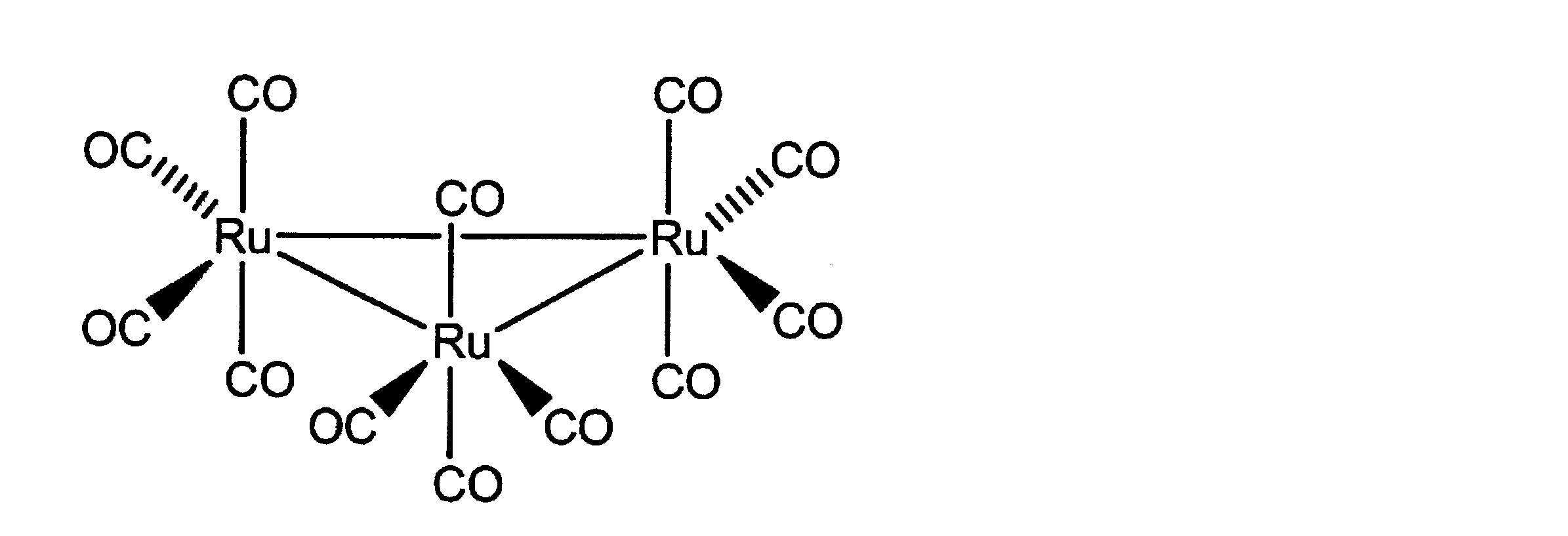
- the present invention for solving the above-mentioned problems is an organic ruthenium compound for chemical vapor deposition raw material consisting of dodecacarbonyltriruthenium represented by the following chemical formula, wherein the concentration of iron (Fe) is 1 ppm or less. It is an organic ruthenium compound.
- the organoruthenium compound for chemical vapor deposition material according to the present invention regulates the concentration of iron.
- the upper limit of the iron concentration of 1 ppm is an upper limit value for suppressing the generation of residues that cause the ignition phenomenon and for ensuring the quality of the ruthenium thin film. More preferably, the iron concentration is reduced to 0.5 ppm or less. This is for more reliable suppression of residue generation.
- the impurities to be regulated include lithium (Li), sodium (Na), magnesium (Mg), aluminum (Al), calcium (Ca), potassium (K), titanium (Ti), vanadium (V), chromium ( Cr), manganese (Mn), cobalt (Co), nickel (Ni), copper (Cu), zinc (Zn), strontium (Sr), yttrium (Y), molybdenum (Mo), iridium (Ir), platinum ( Pt), gold (Au), lead (Pb), thorium (Th), and uranium (U).
- the impurities to be regulated include lithium (Li), sodium (Na), magnesium (Mg), aluminum (Al), calcium (Ca), potassium (K), titanium (Ti), vanadium (V), chromium ( Cr), manganese (Mn), cobalt (Co), nickel (Ni), copper (Cu), zinc (Zn), strontium (Sr), yttrium (Y), molybdenum (Mo),
- the impurity element concentration other than iron is preferably 1 ppm or less. More preferably, the impurity element concentration other than iron is also set to 0.5 ppm or less. In addition, the total concentration of the impurity elements including iron is particularly preferably 1 ppm or less.
- the thin film formation method using the organic ruthenium compound according to the present invention as a raw material compound is the same as a general chemical vapor deposition method (CVD method, ALD method). That is, a raw material compound is vaporized to form a reaction gas, and ruthenium or a ruthenium compound is deposited by heating while introducing the reaction gas to the substrate surface.
- CVD method general chemical vapor deposition method
- ALD method atomic layer deposition method
- the method for producing DCR according to the present invention comprises a synthesis step in which a ruthenium salt and carbon monoxide are reacted in a solvent, and a purification step in which the crude DCR obtained in the synthesis step is purified by a sublimation method.
- the method according to the present invention comprises two steps: a DCR synthesis step and a DCR purification step obtained.
- the synthesis process of DCR is based on a method of directly carbonylating a ruthenium salt with carbon monoxide (hereinafter referred to as a direct method).
- a direct method As a method for producing DCR, in addition to the direct method, for example, a method in which a ruthenium salt is used as a raw material and acetylacetonatoruthenium obtained by reacting this with an acetylacetonate salt is used as an intermediate, and the intermediate is carbonylated is also known.
- the direct method is adopted since the method via an intermediate is not preferable because the number of steps increases and the chance of impurity contamination increases.
- the conditions for DCR synthesis by the direct method are set such that the reaction pressure is 3.0 to 6.5 MPa, the reaction temperature is 75 to 125 ° C., and the reaction time is 8 to 20 hours.
- the reaction pressure is a condition that requires attention. This takes into account the corrosion of the constituent materials of the reactor by carbon monoxide. That is, the corrosiveness of carbon monoxide is normally considered negligible, but it reacts with metals such as iron, nickel, and chromium, which are materials for high-pressure vessels, under high pressure to produce metal carbonyl compounds. Tend.
- the reaction pressure in the above range is set as a pressure that allows the carbonylation reaction to proceed and does not cause the corrosivity of carbon monoxide.
- the reason why the above conditions are set for the reaction temperature and reaction time is that the yield is drastically reduced outside this range.
- the ruthenium salt that is a raw material in the synthesis step is preferably ruthenium chloride, ruthenium oxide, ruthenium nitrate, hexaammineruthenium chloride, or ruthenium acetate. This is because these are commercially available substances and can be easily obtained. In particular, ruthenium chloride is preferable. Of course, this raw material is preferably highly pure. Moreover, since acetylacetonatoruthenium (tris (acetylacetonato) ruthenium (III)) also has a commercial item, if it is a high purity thing, it can be used as a starting material.
- an auxiliary metal having a catalytic action is often used.
- the application of the auxiliary metal causes contamination of impurities, the addition of the auxiliary metal is not performed in the present invention. It is unnecessary.
- the above DCR synthesis process is a process in which the content of impurities (particularly iron) is reduced.
- the DCR in this synthesis step is referred to as crude DCR, but the iron concentration of the crude DCR is preferably 10 ppm or less.
- the purification step is a step of further reducing the iron concentration in the crude DCR.
- This purification process is based on the sublimation method.
- compound purification, distillation, recrystallization, column chromatography, etc. are known in addition to the sublimation method.
- DCR is solid and has a high melting point, low solubility in a solvent, and contamination. Since separation from impurities cannot be achieved by recrystallization or the like, the sublimation method is optimal.
- the conditions for purification by the sublimation method are a vacuum degree of 50 Pa or less, a heating temperature of 80 ° C. to 110 ° C., and a cooling temperature of 20 ° C. or less.
- the degree of vacuum exceeds 50 Pa, the sublimation speed decreases and the sublimation time becomes significantly longer.
- the heating temperature is less than 80 ° C., the sublimation time is significantly delayed.
- the heating temperature is more than 110 ° C., the sublimation rate is increased.
- thermal decomposition of DCR may partially occur, resulting in a significant reduction in yield. Because.
- the DCR after purification by the sublimation method is purified again by using another purification method (recrystallization, column chromatography, etc.). May be performed.
- purification may be performed again by a recrystallization method.
- the iron concentration itself can be sufficiently reduced by purification by the sublimation method.
- repurification may be performed by recrystallization.
- the organic ruthenium compound according to the present invention is composed of DCR with a reduced iron concentration.
- the present invention does not generate a residue after use and suppresses an ignition phenomenon due to the residue. Thereby, the safety
- the organic ruthenium compound according to the present invention in which the iron concentration is limited makes it possible to produce a high-quality ruthenium thin film.
- Second Embodiment 25.4 g of ruthenium chloride was dissolved in 300 mL of methanol as a solvent. This solution was put into an autoclave (made of steel) having a capacity of 1 L, and carbon monoxide was sealed therein up to a reaction pressure of 6.5 MPa. Thereafter, the reaction was conducted by heating at 125 ° C. for 8 hours. After the synthesis reaction, the reaction solution was cooled and filtered to take out a filtered product, thereby obtaining 15.4 g of orange DCR crude crystals. When the iron concentration of the synthesized DCR crude crystal was measured by ICP, it was 7 ppm.
- the DCR crude crystal obtained in the synthesis step was purified by a sublimation method.
- DCR crude crystals were put into a pear-type sublimator, and sublimation was performed under the following conditions.
- DCR was produced by a method via acetylacetonatoruthenium (Patent Document 2).
- Ruthenium chloride (15 g) and acetylacetonato sodium (22 g) were dissolved in 600 mL of methanol.
- the solution was put into an autoclave (made of steel) and pressurized to 12 MPa with a mixed gas of carbon monoxide: hydrogen (molar ratio 3: 1). Then, it heated at 160 degreeC for 4 hours.
- the reaction solution was purified by recrystallization.
- the reaction solution was cooled, filtered, and the filtered product was put into 1000 mL of benzene and heated to be completely dissolved. Thereafter, it was left in a refrigerator at 0 ° C. After 12 hours, the precipitated crystals were filtered to obtain 9.4 g of orange DCR crystals.
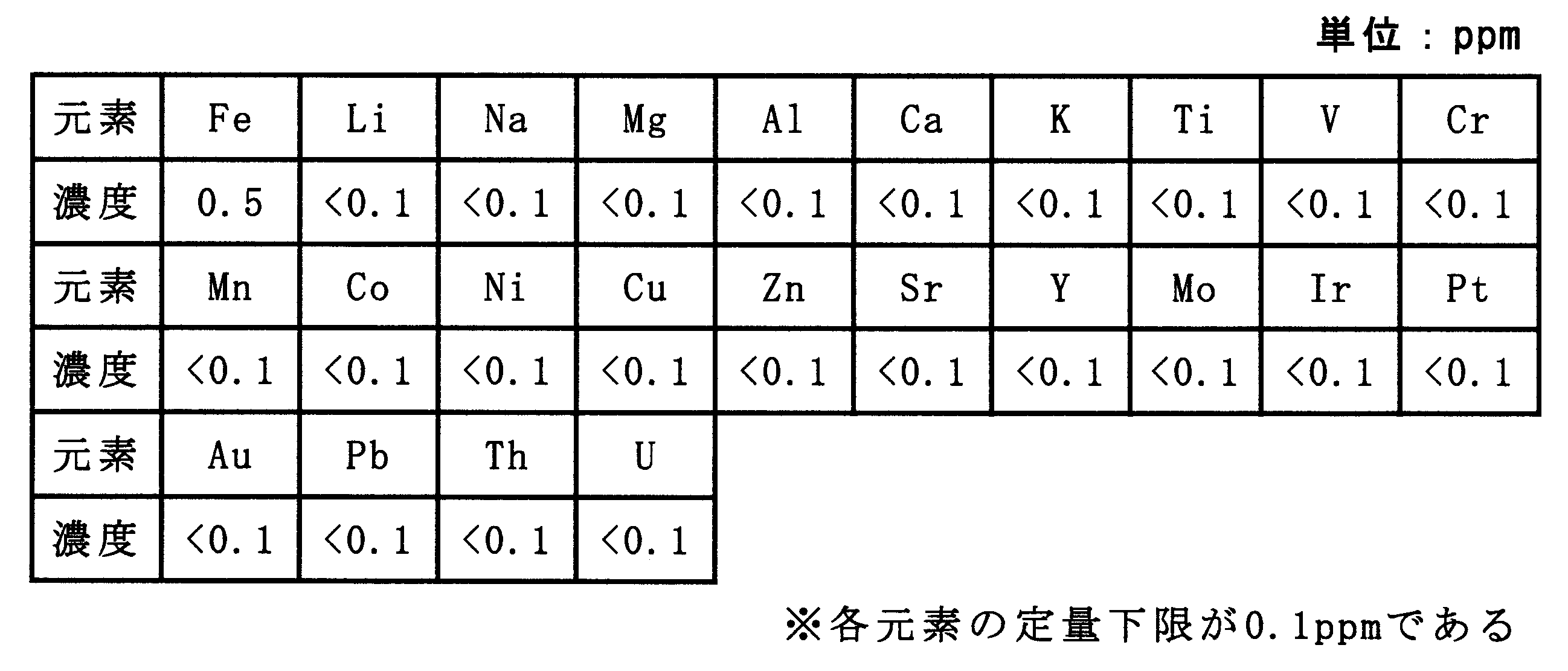
- the impurity concentration of the synthesized DCR crystal was measured by ICP-MS, the following results were obtained.
- the first embodiment in which the ruthenium compound is directly carbonylated while regulating the reaction pressure has a relatively low Fe concentration in the crude DCR, and is combined with purification by a sublimation method.
- the Fe concentration can be reduced to 1 ppm or less.
- the Fe concentration is considerably higher than 120 ppm even when refining by recrystallization is taken into consideration.
- the comparative example uses ruthenium chloride as a starting material as in the first embodiment, but has many reaction steps because it passes through acetylacetonatoruthenium, and there is a high possibility of contamination by impurities, and acetylacetonato The reason is considered to be that the reaction pressure of ruthenium carbonylation is relatively high and iron is easily mixed from the reaction vessel.
- Second Embodiment A ruthenium thin film was formed by CVD using the DCR manufactured in the first embodiment and the comparative example. 10 g of DCR was sealed in a solid source container, and as film formation conditions, the heating temperature in the source container was set to 80 ° C., the carrier gas was carbon monoxide, and the reaction gas was hydrogen. This film formation test was performed five times, and the presence or absence of ignition when the raw material container was opened after film formation and the amount of residue in the raw material container were evaluated. The results are shown in Table 3. In this test, the crude DCR crystal not subjected to the purification process of the first embodiment was used as a raw material for evaluation.
- the comparative example with an iron concentration of 120 ppm has a large amount of residue and shows an ignition phenomenon 3 times out of 5 times.
- the first embodiment there is no residue and no ignition phenomenon is observed.
- the crude DCR crystal (reference example) that does not perform the purification process was also inferior to the first embodiment in which the purification was performed, although it was a better result than the comparative example. Therefore, it can be confirmed that thorough reduction of the iron concentration is necessary.
- the organic ruthenium compound composed of DCR according to the present invention has a reduced iron concentration, and makes it possible to produce a high-quality ruthenium thin film. In addition, there is no generation of residue after use, and the ignition phenomenon due to the residue is suppressed, which promotes the availability of DCR that has hindered handling by the ignition phenomenon.
Landscapes
- Chemical & Material Sciences (AREA)
- Organic Chemistry (AREA)
- General Chemical & Material Sciences (AREA)
- Chemical Kinetics & Catalysis (AREA)
- Engineering & Computer Science (AREA)
- Materials Engineering (AREA)
- Mechanical Engineering (AREA)
- Metallurgy (AREA)
- Inorganic Chemistry (AREA)
- Chemical Vapour Deposition (AREA)
- Organic Low-Molecular-Weight Compounds And Preparation Thereof (AREA)
- Electrodes Of Semiconductors (AREA)
Abstract
本発明は、ドデカカルボニルトリルテニウム(DCR)からなる化学蒸着原料用の有機ルテニウム化合物において、鉄(Fe)の濃度が1ppm以下であることを特徴とする化学蒸着原料用の有機ルテニウム化合物である。本発明におけるDCRは、ルテニウム塩と一酸化炭素と反応させてルテニウムを直接カルボニル化して粗DCRをすると共に、粗DCRを昇華法により精製することで製造することができる。この合成工程においては、得られる粗DCRのFe濃度を10ppm以下とするのが好ましい。
Description
本発明は、CVD法等の化学蒸着法によりルテニウム薄膜又はルテニウム化合物薄膜を製造するための原料として好適な有機ルテニウム化合物に関する。
半導体における銅配線の下地形成のための薄膜材料としてルテニウム又はルテニウム化合物が使用されている。これらの薄膜の製造法としては、CVD法(化学気相蒸着法)、ALD法(原子層蒸着法)といった化学蒸着法が適用されている。
化学蒸着法で使用される原料化合物として、従来から多くの有機ルテニウム化合物が知られている。そして、有機ルテニウム化合物の中で、近年実用化が検討されているものの一つとして、下記式で示されるドデカカルボニルトリルテニウム(Dodecacarbonyl Triruthenium:以下、DCRと称する。)がある(非特許文献1、特許文献1)。
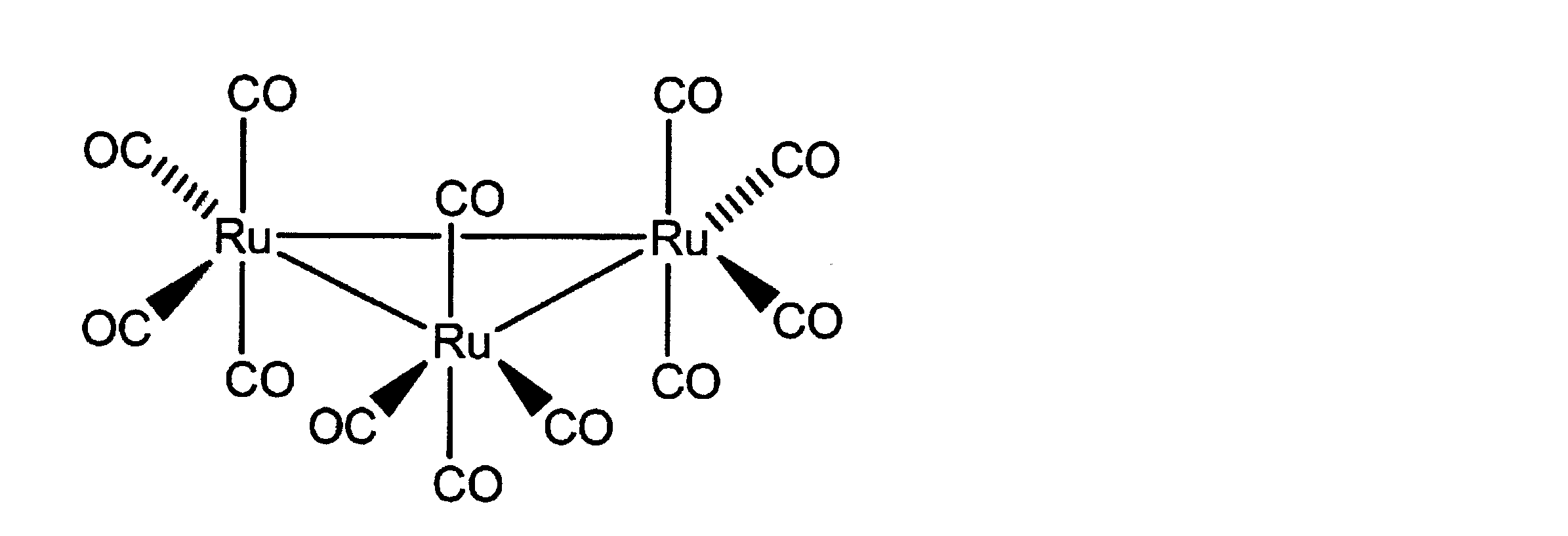
DCRは、融点154~155℃の常温で固体(橙色結晶)の物質である。通常、化学蒸着用原料は、原料気化時の取扱い性等の観点から常温で液体であるものが好ましいとされている。しかし、DCRの場合、RuとCOとから構成されるシンプルな分子構造と、反応ガスを使用することなく熱分解のみで成膜できるという点から、成膜された薄膜中にハイドロカーボンなどの不純物を残留させ難いという利点があること、及び、固体原料であっても原料容器の仕様調整や適切なプロセス制御により薄膜の製造効率にも悪影響がない、といった理由からその活用が期待されている。DCRを用いたルテニウム薄膜の製造にあたっては、固体のDCRを原料容器内に適宜に配置し、これを加熱しつつ反応ガス(例えば、水素、酸素)と共に反応室に導入して、反応・成膜がなされる。
M.L.Green et. al.,J.Electrochem. Soc. Vol.132(No.11),1985,p2677-2685.
DCRは、上記の通り、適切な装置構成により良好なルテニウム薄膜を製造可能な原料化合物といえる。もっとも、実用化に向けた改良要求もいまだなされているところである。DCRへの改良要求としては、まず、形成される薄膜の高品質化が挙げられる。これは、どの原料化合物に対しても挙げられる改良事項であるが、DCRを用いたルテニウム膜は、極めて低い確率であるが、断線等の成膜不良が生じることがあり、製品歩留まりのための改善が求められている。
そして、DCR特有の改良要求として、薄膜製造後に原料容器を開放する際に発火するという現象がたまに見られる点がある。この発火現象は、使用前の原料化合物には見られないが、一度使用された後の残物が発火性を有するというものである。そして、かかる発火現象は、作業の安全性を損ない、装置保安のコスト高にも繋がることから防ぐことが好ましい。
本発明は、上記課題のもとになされたものであり、発火現象が生じ難く安全性が確保されていると共に、高品質なルテニウム薄膜又はルテニウム化合物薄膜を製造することができるDCRからなる有機ルテニウム化合物を提供する。
本発明者等は、上記課題を解決するため、従来から入手可能であるDCRを基に成膜反応前後の原料化合物の状態を検討した。その結果、これまでのDCRを使用して成膜を行った場合、原料化合物が昇華しきるまで成膜を行っても、原料容器中に残渣が残留することを確認した。このDCR昇華後の残渣については、単純に考えるならば原料化合物中の不純物と考えられるが、この検討段階において、加熱により生じた不純物の化合物や、DCRの変質の可能性についての考察を排除することは得策ではない。そこで、本発明者等は、従来のDCRの詳細な成分分析を行うと共に、従来のDCRの製造工程、薄膜製造中(気化中)の原料化合物の状態等について調査・検討し、残渣の発生要因及び発火現象との関連についての考察を行った。
その結果、まず、従来のDCRには、数10~100ppm前後の不純物質が含まれており、特に鉄(Fe)が多く含有されていることを見出した。そして、本発明者等は、鉄が残渣の主要因であるとした場合、発火現象の要因はこの残渣にあると考えた。即ち、鉄は、DCRの合成過程で混入したと推定できるが、混入する鉄はペンタカルボニル鉄(Fe(CO)5)を生成する。ペンタカルボニル鉄は、光により自然発火性のあるカルボニル鉄(Fe2(CO)9)と一酸化炭素に分解する物質であり、原料容器開封時の光がこの分解反応を生じさせ、発火現象が生じると考えられる。また、合成時のDCRは発火しないのに、使用後に発火が生じるのは、生成時のペンタカルボニル鉄はDCR結晶中に包まれているが、使用後ではDCR結晶表面でペンタカルボニル鉄が濃縮され、空気に接触しやすくなるためと考えられる。
以上の検討結果から、本発明者等はルテニウム膜形成用原料としてのDCRには、鉄濃度の規制が必要であるとの考察を得た。
上記課題を解決する本発明は、下記化学式で示されるドデカカルボニルトリルテニウムからなる化学蒸着原料用の有機ルテニウム化合物において、鉄(Fe)の濃度が1ppm以下であることを特徴とする化学蒸着原料用の有機ルテニウム化合物である。
上記の通り、本発明に係る化学蒸着原料用有機ルテニウム化合物は、鉄の濃度を規制するものである。この鉄濃度の上限を1ppmとするのは、発火現象の要因となる残渣の発生を抑制するため、及び、ルテニウム薄膜の品質確保のための上限値である。より好ましくは、鉄濃度は0.5ppm以下に低減するのが好ましい。残渣発生のより確実な抑制のためである。
また、化学蒸着原料用有機ルテニウム化合物として、他の不純物が低減されていることがより好ましい。この規制すべき不純物としては、リチウム(Li)、ナトリウム(Na)、マグネシウム(Mg)、アルミニウム(Al)、カルシウム(Ca)、カリウム(K)、チタン(Ti)、バナジウム(V)、クロム(Cr)、マンガン(Mn)、コバルト(Co)、ニッケル(Ni)、銅(Cu)、亜鉛(Zn)、ストロンチウム(Sr)、イットリウム(Y)、モリブデン(Mo)、イリジウム(Ir)、白金(Pt)、金(Au)、鉛(Pb)、トリウム(Th)、ウラン(U)が挙げられる。これらの鉄以外の不純物元素濃度は、いずれも1ppm以下であることが好ましい。より好ましくは、鉄以外の不純物元素濃度も0.5ppm以下とする。また、鉄を含めた上記不純物元素濃度の合計が、1ppm以下であることが特に好ましい。
本発明に係る有機ルテニウム化合物を原料化合物とする薄膜形成法は、一般的な化学蒸着法(CVD法、ALD法)と同様である。即ち、原料化合物を気化して反応ガスとし、前記反応ガスを基板表面に導入しつつ加熱することによりルテニウム又はルテニウム化合物を析出させるものである。
次に、本発明に係る有機ルテニウム化合物であるDCRの製造方法について説明する。本発明に係るDCRの製造方法は、ルテニウム塩と一酸化炭素とを溶媒中で反応させる合成工程と、前記合成工程で得られる粗DCRを昇華法により精製する精製工程とからなるものである。
本発明に係る方法は、DCRの合成工程と得られたDCRの精製工程の2つの工程よりなるものである。ここで、DCRの合成工程としては、ルテニウム塩を一酸化炭素により直接カルボニル化する方法(以下、直接法と称する)を基礎とする。DCRの製造方法としては、直接法のほか、例えば、ルテニウム塩を原料とし、これをアセチルアセトナト塩と反応させて得られるアセチルアセトナトルテニウムを中間体とし、中間体をカルボニル化する方法も知られているが、中間体を経由する方法は工程数が多くなり不純物混入の機会が増えるため好ましくないことから直接法を採用するものである。
そして、本発明では、直接法によるDCR合成の条件として、反応圧3.0~6.5MPa、反応温度75~125℃、反応時間8~20時間と設定する。これらの反応条件の中でも特に反応圧については、注意を要する条件である。これは、一酸化炭素による反応装置の構成材料への腐食を考慮するものである。即ち、一酸化炭素の腐食性は、通常は無視できる程度と考えられているが、高圧下では高圧容器の材料である鉄・ニッケル・クロム等の金属と反応して、金属カルボニル化合物を生成する傾向がある。工業的なDCR合成装置は、ステンレス等の鋼製の高圧容器を使用することが想定されることから、反応圧を上昇させると装置腐食による鉄の混入が懸念される。かかる観点より、本発明では、カルボニル化反応を進行させることができ、かつ、一酸化炭素の腐食性を生じさせない圧力として、上記範囲の反応圧を設定している。尚、反応温度、反応時間について上記条件を設定するのは、この範囲を逸脱すると収率が大幅に低減するからである。
合成工程における原料であるルテニウム塩は、塩化ルテニウム、酸化ルテニウム、硝酸ルテニウム、ヘキサアンミンルテニウムクロライド、酢酸ルテニウムが好ましい。これらは市販されている物質であり、容易に手に入れることができるからである。特に、塩化ルテニウムが好ましい。尚、この原料は高純度のものが当然好ましい。また、アセチルアセトナトルテニウム(トリス(アセチルアセトナト)ルテニウム(III))も市販品が存在することから、高純度のものであれば出発原料として使用可能である。
尚、DCR等の有機金属化合物の合成においては、触媒作用を有する補助金属を用いることが多いが、補助金属の適用は、不純物の混入の要因となることから、本発明では補助金属の添加は不要である。
以上のDCRの合成工程は、この工程自体が不純物(特に鉄)の含有量が低減された工程である。この合成工程におけるDCRは粗DCRと称するが、粗DCRの鉄濃度は、10ppm以下とするのが好ましい。
精製工程は、粗DCR中の鉄濃度を更に低減させる工程である。この精製工程は昇華法による。一般的な化合物精製においては、昇華法の他、蒸留、再結晶、カラムクロマト等が知られているが、DCRについては固体であり融点が高く、溶媒への溶解度が低いことに加え、混入する不純物との分離が再結晶などでは達成できないため、昇華法が最適である。
昇華法による精製の条件は、真空度50Pa以下、加熱温度80℃~110℃、冷却温度20℃以下とする。真空度は50Paを超えると昇華速度が低下し、昇華時間が大幅に長くなる。加熱温度は80℃未満では昇華時間が大幅に遅くなり、110℃を超えると昇華速度は速くなるものの、DCRの熱分解が部分的に生じるおそれがあり、結果的に収率が大幅に低減するからである。
尚、本発明では、合成された粗DCRを昇華法で精製することを必須とするが、昇華法による精製後のDCRに他の精製法(再結晶、カラムクロマトグラフィー等)を用いて再度精製を行っても良い。例えば、昇華法により精製を行った後、再結晶法で再度精製を行っても良い。鉄濃度自体は、昇華法による精製で十分低減されるが、昇華の際に微量同伴する有機物等を十分除去する場合には、再結晶により再精製を行うと良い。
以上説明したように、本発明に係る有機ルテニウム化合物は、鉄濃度が低減されたDCRからなるものである。本発明は、使用後の残渣を発生させることがなく、残渣による発火現象を抑制する。これにより、薄膜製造の安全性が確保され作業性が良好となる。
また、不純物である鉄は、原料気化の際にDCRと同伴して気化するとルテニウム薄膜に混入するおそれがあり、これが断線や電気特性低下の要因となると考えられる。従って、鉄濃度が制限された本発明に係る有機ルテニウム化合物は、高品質のルテニウム薄膜を製造することを可能とする。
第1実施形態:塩化ルテニウム25.4gを溶媒である300mLのメタノールに溶解した。この溶液を容量1Lのオートクレーブ(鋼製)に投入し、ここに反応圧6.5MPaまで一酸化炭素を封入した。その後125℃で8時間加熱して反応させた。合成反応後、反応液を冷却し、濾過して濾取物を取り出し、橙色のDCR粗結晶15.4gを得た。合成したDCR粗結晶をICPにて鉄濃度を測定したところ、7ppmであった。
上記合成工程で得たDCR粗結晶を昇華法にて精製した。精製工程は梨型昇華器にDCR粗結晶を投入し、下記条件にて昇華を行なった。
真空度:1Pa
温度:95℃
昇華時間:6時間
冷却水温度:8℃
真空度:1Pa
温度:95℃
昇華時間:6時間
冷却水温度:8℃
昇華終了後冷却部に採取されたDCR結晶について、ICP-MSにて不純物元素を測定したところ、下記結果を得た。
比較例:ここでは、従来のDCRの製造方法として、アセチルアセトナトルテニウムを経由する方法にてDCRを製造した(特許文献2)。塩化ルテニウム15gとアセチルアセトナトナトリウム22gを600mLのメタノールに溶解した。溶液をオートクレーブ(鋼製)に投入し、一酸化炭素:水素(モル比3:1)の混合ガスで12MPaに加圧した。その後、160℃で4時間加熱した。
合成反応後、反応液を再結晶により精製した。反応液を冷却し、濾過して濾取物をベンゼン1000mLに投入し、加熱を行い完全に溶解させた。その後、0℃の冷蔵庫に放置した。12時間後、析出した結晶を濾過し、橙色のDCR結晶9.4gを得た。合成したDCR結晶をICP-MSにて不純物濃度を測定したところ、下記結果を得た。
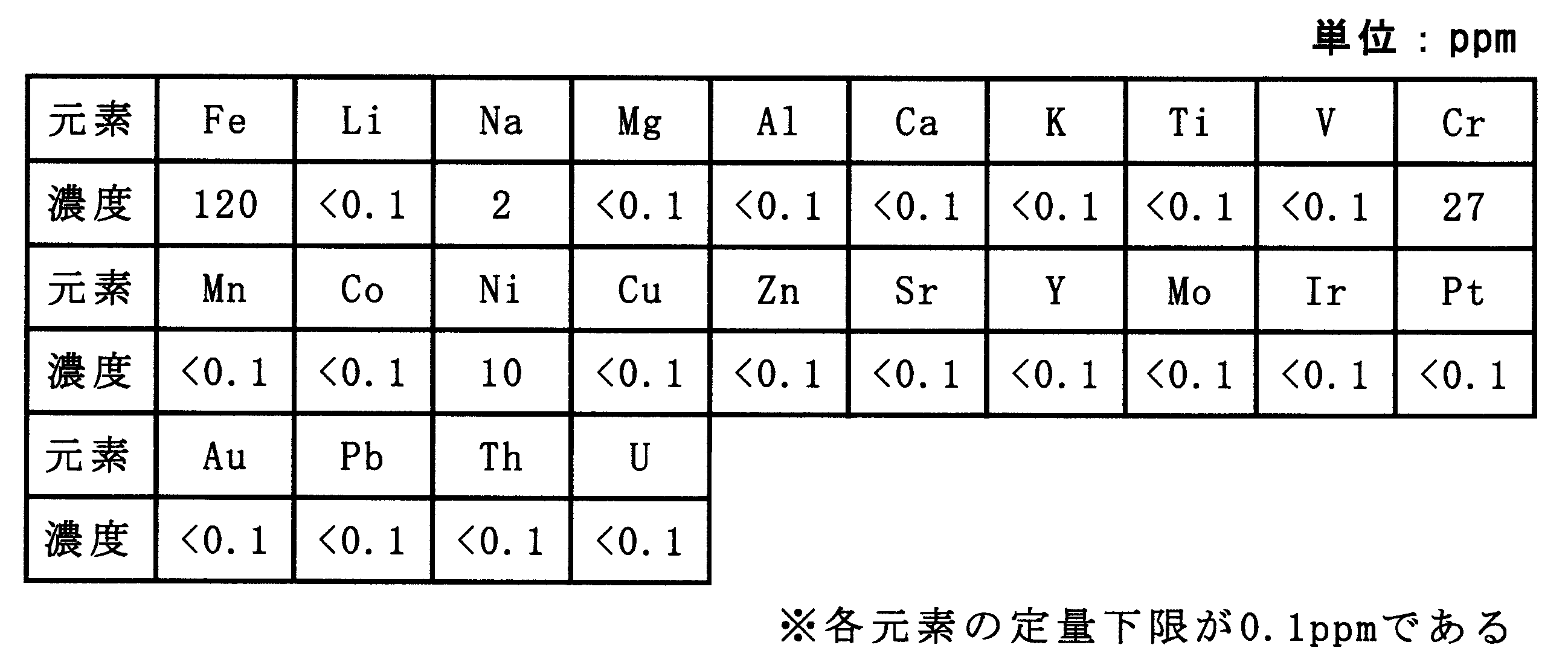
上記第1実施形態と比較例とを対比すると、反応圧を規制しつつルテニウム化合物を直接カルボニル化する第1実施形態は、粗DCRのFe濃度も比較的低く、また、昇華法による精製と組み合わせることでFe濃度を1ppm以下にすることができる。一方、比較例は、再結晶による精製を考慮してもFe濃度が120ppmよりかなり高いものとなっている。これは、比較例は、第1実施形態と同じく塩化ルテニウムを出発原料としつつも、アセチルアセトナトルテニウムを経由するため反応工程が多くその分不純物混入の可能性が高いこと、及び、アセチルアセトナトルテニウムのカルボニル化の反応圧が比較的高く反応容器からの鉄の混入が生じやすくなっていること、が要因と考えられる。
第2実施形態:上記第1実施形態及び比較例で製造したDCRを用いて、CVD法によりルテニウム薄膜を作成した。固体原料容器にDCR10gを封入し、成膜条件として、原料容器における加熱温度を80℃とし、キャリアガスを一酸化炭素、反応ガスを水素とした。この成膜試験を5回行い、成膜後原料容器を開封したときの発火の有無、更に、原料容器中の残渣量を評価した。その結果を表3に示す。尚、この試験は、第1実施形態の精製工程を行なっていない粗DCR結晶も原料として使用して評価した。
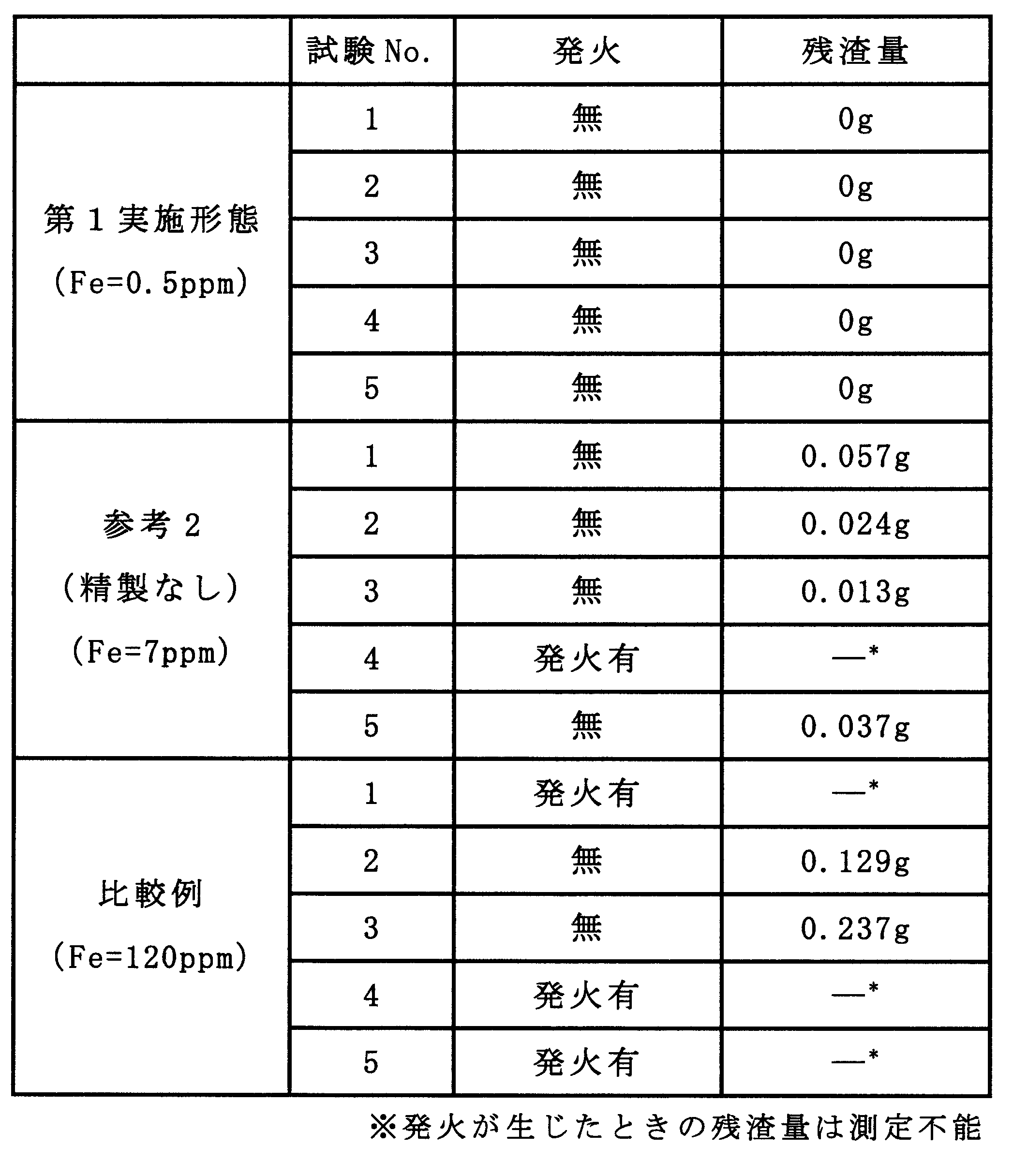
表3から、鉄濃度が120ppmの比較例は、残渣量が多く、また5回中3回の発火現象を示している。対して第1実施形態は、残渣が全くなく発火現象も観察されない。尚、精製工程を行なわない粗DCR結晶(参考例)も、比較例よりは好適な結果であったものの、精製を行なう第1実施形態よりは劣る。従って、鉄濃度の徹底的な低減が必要であることが確認できる。
第3実施形態:第1実施形態のDCR合成工程を基に、合成反応(カルボニル化)の反応条件に関し検討を行った。ここでは、反応圧、反応温度、反応時間を変化させてDCR(粗DCR)を合成し、収率及びFe濃度を評価した。尚、その他の反応条件(原料、溶媒)は、第1実施形態と同様とした。この結果を表4に示す。
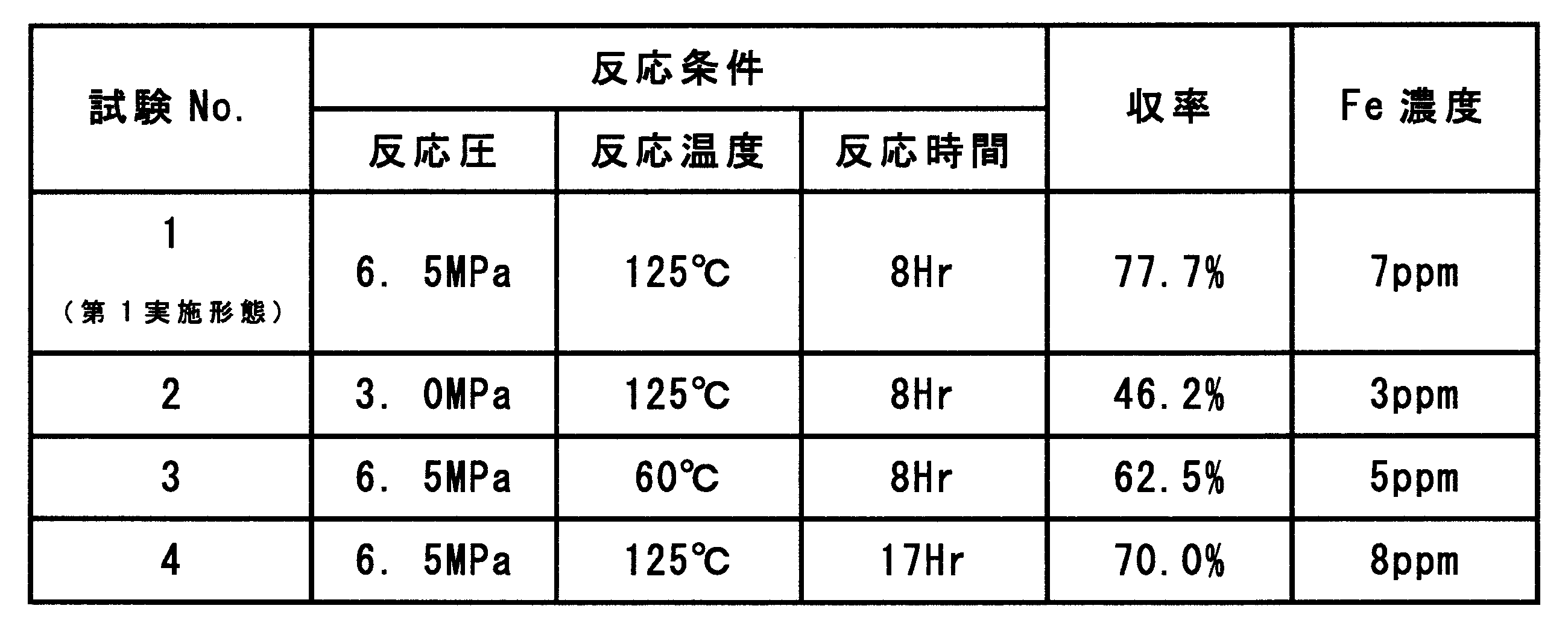
表4から、反応圧を低くすることは、Fe濃度の低減に有効であるといえる。反応温度も同様の傾向がある。しかし、これらを低くすることは同時に収率を低下させるといえる。従って、合成反応後の粗DCRについては、精製(昇華)工程をしなければならないことを考慮し、収率と純度とのバランスを考慮した条件設定が好ましいといえる。
第4実施形態:ここでは、第1実施形態のDCR製造工程を基に、精製工程(昇華工程)の条件についての検討を行った。第1実施形態で合成された粗DCR(Fe濃度7ppm)について、昇華工程の真空度、昇華温度を変化させて粗DCRの精製を行なった。その他の条件(昇華時間、冷却温度)は、第1実施形態と同様とした。この結果を表5に示す。
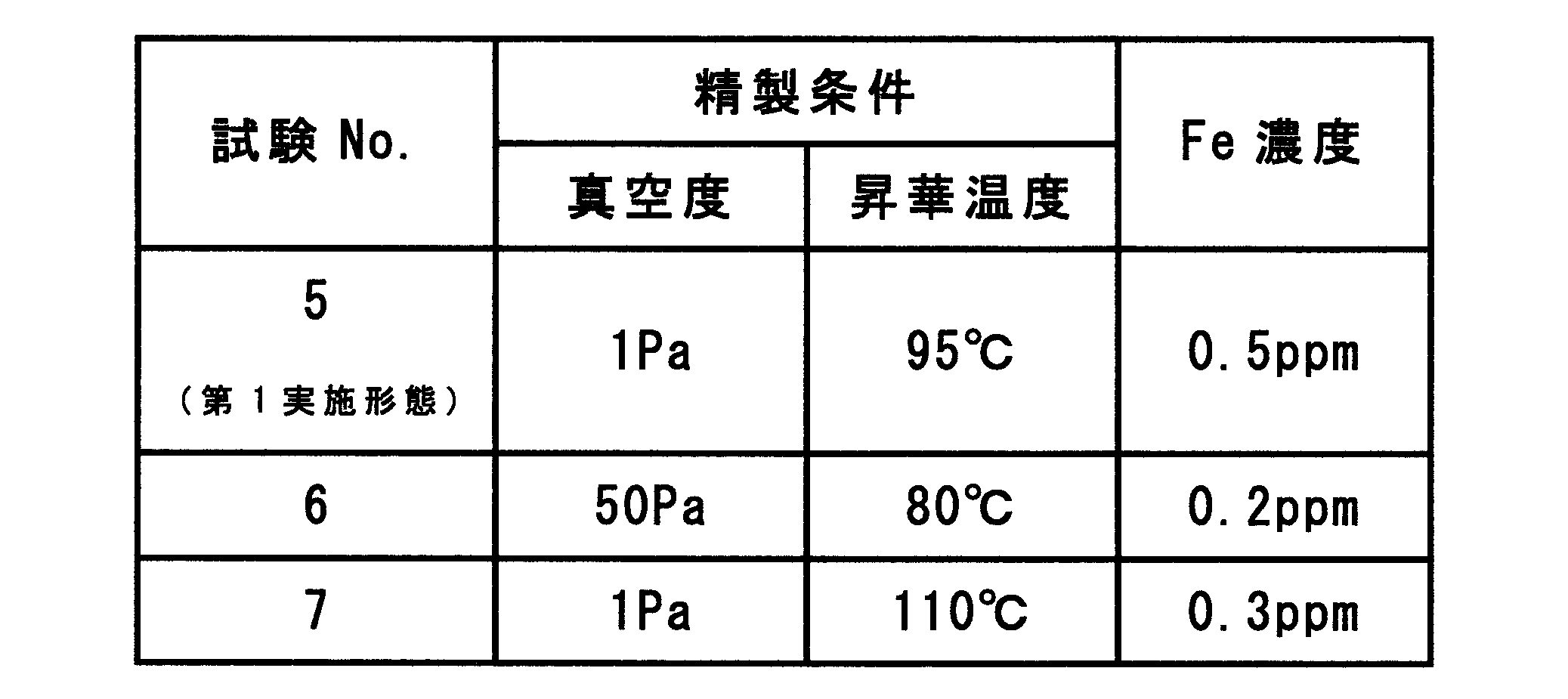
表5から、いずれの精製条件でも、Fe濃度が0.5ppm以下の好適なDCRが得られることが確認できた。
本発明に係るDCRからなる有機ルテニウム化合物は、鉄濃度が低減さており、高品質のルテニウム薄膜を製造することを可能とする。また、使用後の残渣を発生させることもなく、残渣による発火現象を抑制されており、発火現象により取扱い性に支障があったDCRの利用可能性を促進するものである。
Claims (7)
- 下記化学式で示されるドデカカルボニルトリルテニウム(DCR)からなる化学蒸着原料用の有機ルテニウム化合物において、

- 更に、リチウム(Li)、ナトリウム(Na)、マグネシウム(Mg)、アルミニウム(Al)、カルシウム(Ca)、カリウム(K)、チタン(Ti)、バナジウム(V)、クロム(Cr)、マンガン(Mn)、コバルト(Co)、ニッケル(Ni)、銅(Cu)、亜鉛(Zn)、ストロンチウム(Sr)、イットリウム(Y)、モリブデン(Mo)、イリジウム(Ir)、白金(Pt)、金(Au)、鉛(Pb)、トリウム(Th)、ウラン(U)の濃度がいずれも1ppm以下である請求項1記載の化学蒸着原料用の有機ルテニウム化合物。
- 鉄(Fe)、リチウム(Li)、ナトリウム(Na)、マグネシウム(Mg)、アルミニウム(Al)、カルシウム(Ca)、カリウム(K)、チタン(Ti)、バナジウム(V)、クロム(Cr)、マンガン(Mn)、コバルト(Co)、ニッケル(Ni)、銅(Cu)、亜鉛(Zn)、ストロンチウム(Sr)、イットリウム(Y)、モリブデン(Mo)、イリジウム(Ir)、白金(Pt)、金(Au)、鉛(Pb)、トリウム(Th)、ウラン(U)の濃度の合計が1ppm以下である請求項1又は請求項2記載の化学蒸着用ルテニウム化合物
- 原料化合物となる有機ルテニウム化合物を気化して反応ガスとし、前記反応ガスを基板表面に導入しつつ加熱する、ルテニウム薄膜又はルテニウム化合物薄膜の化学蒸着法において、
前記有機ルテニウム化合物として請求項1~請求項3のいずれかに記載の有機ルテニウム化合物を用いる化学蒸着法。 - 請求項1~請求項3のいずれかに記載の化学蒸着原料用の有機ルテニウム化合物の製造方法であって、
ルテニウム塩と一酸化炭素とを溶媒中で反応させてルテニウムを直接カルボニル化して粗DCRを得る合成工程と、前記合成工程で得られる粗DCRを昇華法により精製する精製工程とからなり、
前記合成工程は、反応条件を反応圧3.0~6.5MPa、反応温度75~125℃、反応時間8~20時間とし、
前記精製工程は、条件を真空度50Pa以下、加熱温度80℃~110℃、冷却温度20℃以下とする方法。 - 合成工程により得られる粗DCRのFe濃度を10ppm以下とする請求項5記載の化学蒸着原料用の有機ルテニウム化合物の製造方法。
- 昇華法による精製工程の後、更に、再結晶法によりDCRを精製する請求項5又は請求項6記載の化学蒸着原料用の有機ルテニウム化合物の製造方法。
Priority Applications (5)
| Application Number | Priority Date | Filing Date | Title |
|---|---|---|---|
| US14/007,763 US9290841B2 (en) | 2011-08-03 | 2012-07-24 | Organoruthenium compound for chemical vapor deposition raw material and production method for the organoruthenium compound |
| CN201280024469.8A CN103582718B (zh) | 2011-08-03 | 2012-07-24 | 化学蒸镀原料用的有机钌化合物及该有机钌化合物的制造方法 |
| KR1020147004648A KR101630098B1 (ko) | 2011-08-03 | 2012-07-24 | 화학 증착 원료용 유기 루테늄 화합물 및 그 유기 루테늄 화합물의 제조방법 |
| EP12819564.1A EP2740816B1 (en) | 2011-08-03 | 2012-07-24 | Organic ruthenium compound for chemical vapor deposition raw material and production method for said organic ruthenium compound |
| KR1020167014241A KR20160066005A (ko) | 2011-08-03 | 2012-07-24 | 화학 증착 원료용 유기 루테늄 화합물 및 그 유기 루테늄 화합물의 제조방법 |
Applications Claiming Priority (2)
| Application Number | Priority Date | Filing Date | Title |
|---|---|---|---|
| JP2011-170242 | 2011-08-03 | ||
| JP2011170242A JP5140184B1 (ja) | 2011-08-03 | 2011-08-03 | 化学蒸着原料用の有機ルテニウム化合物及び該有機ルテニウム化合物の製造方法 |
Publications (1)
| Publication Number | Publication Date |
|---|---|
| WO2013018577A1 true WO2013018577A1 (ja) | 2013-02-07 |
Family
ID=47629104
Family Applications (1)
| Application Number | Title | Priority Date | Filing Date |
|---|---|---|---|
| PCT/JP2012/068654 Ceased WO2013018577A1 (ja) | 2011-08-03 | 2012-07-24 | 化学蒸着原料用の有機ルテニウム化合物及び該有機ルテニウム化合物の製造方法 |
Country Status (6)
| Country | Link |
|---|---|
| US (1) | US9290841B2 (ja) |
| EP (1) | EP2740816B1 (ja) |
| JP (1) | JP5140184B1 (ja) |
| KR (2) | KR20160066005A (ja) |
| CN (1) | CN103582718B (ja) |
| WO (1) | WO2013018577A1 (ja) |
Cited By (1)
| Publication number | Priority date | Publication date | Assignee | Title |
|---|---|---|---|---|
| WO2015186679A1 (ja) * | 2014-06-04 | 2015-12-10 | 田中貴金属工業株式会社 | ドデカカルボニルトリルテニウムの精製方法 |
Families Citing this family (4)
| Publication number | Priority date | Publication date | Assignee | Title |
|---|---|---|---|---|
| JP5732512B2 (ja) * | 2013-10-29 | 2015-06-10 | 田中貴金属工業株式会社 | ドデカカルボニルトリルテニウムの製造方法及び製造装置 |
| JP2022031988A (ja) | 2018-11-08 | 2022-02-24 | 株式会社Adeka | 原子層堆積法による金属ルテニウム薄膜の製造方法 |
| CN111054444B (zh) * | 2019-12-30 | 2023-04-07 | 苏州鼎驰金属材料有限公司 | 一种二羰基二亚硝基合钌及其制备方法和应用 |
| CN116282240A (zh) * | 2023-05-12 | 2023-06-23 | 研峰科技(北京)有限公司 | 一种十二羰基三钌的纯化方法 |
Citations (2)
| Publication number | Priority date | Publication date | Assignee | Title |
|---|---|---|---|---|
| WO2006109860A1 (ja) * | 2005-04-08 | 2006-10-19 | Sumitomo Chemical Company, Limited | 担持酸化ルテニウムの製造方法及び塩素の製造方法 |
| WO2010101191A1 (ja) * | 2009-03-03 | 2010-09-10 | 東京エレクトロン株式会社 | 載置台構造、成膜装置、及び、原料回収方法 |
Family Cites Families (12)
| Publication number | Priority date | Publication date | Assignee | Title |
|---|---|---|---|---|
| GB1047794A (en) * | 1963-02-01 | 1966-11-09 | Lonza Ag | Process for the production of trimeric ruthenium tetracarbonyl |
| GB1160765A (en) | 1966-08-10 | 1969-08-06 | Ici Ltd | Process for the Preparation of Ruthenium Carbonyl |
| JP2002212112A (ja) * | 2001-01-22 | 2002-07-31 | Tanaka Kikinzoku Kogyo Kk | 化学気相蒸着用のルテニウム化合物並びにルテニウム薄膜及びルテニウム化合物薄膜の化学気相蒸着方法。 |
| KR20040072701A (ko) * | 2002-01-08 | 2004-08-18 | 미쓰비시 마테리알 가부시키가이샤 | 루테늄 화합물 및 그 제조 방법 그리고 그 화합물에 의해얻어진 루테늄 함유 박막 |
| JP4051532B2 (ja) * | 2002-01-08 | 2008-02-27 | 三菱マテリアル株式会社 | 有機金属化学蒸着法用ルテニウム化合物の製造方法及び該方法により得られた有機金属化学蒸着法用ルテニウム化合物並びに該化合物により得られたルテニウム含有薄膜 |
| CN101057438A (zh) | 2004-10-12 | 2007-10-17 | 阿瓦雷公司 | 电信环境中的资源共享 |
| US7459395B2 (en) * | 2005-09-28 | 2008-12-02 | Tokyo Electron Limited | Method for purifying a metal carbonyl precursor |
| US7297719B2 (en) * | 2006-03-29 | 2007-11-20 | Tokyo Electron Limited | Method and integrated system for purifying and delivering a metal carbonyl precursor |
| JP5032085B2 (ja) * | 2006-10-06 | 2012-09-26 | 田中貴金属工業株式会社 | 化学蒸着用の有機ルテニウム化合物及び該有機ルテニウム化合物を用いた化学蒸着方法 |
| US20100116738A1 (en) * | 2008-05-08 | 2010-05-13 | Air Liquide Electronics U.S. Lp | Process Of Purifying Ruthenium Precursors |
| US20100081274A1 (en) * | 2008-09-29 | 2010-04-01 | Tokyo Electron Limited | Method for forming ruthenium metal cap layers |
| US8329569B2 (en) | 2009-07-31 | 2012-12-11 | Asm America, Inc. | Deposition of ruthenium or ruthenium dioxide |
-
2011
- 2011-08-03 JP JP2011170242A patent/JP5140184B1/ja active Active
-
2012
- 2012-07-24 WO PCT/JP2012/068654 patent/WO2013018577A1/ja not_active Ceased
- 2012-07-24 EP EP12819564.1A patent/EP2740816B1/en active Active
- 2012-07-24 US US14/007,763 patent/US9290841B2/en active Active
- 2012-07-24 CN CN201280024469.8A patent/CN103582718B/zh active Active
- 2012-07-24 KR KR1020167014241A patent/KR20160066005A/ko not_active Ceased
- 2012-07-24 KR KR1020147004648A patent/KR101630098B1/ko active Active
Patent Citations (2)
| Publication number | Priority date | Publication date | Assignee | Title |
|---|---|---|---|---|
| WO2006109860A1 (ja) * | 2005-04-08 | 2006-10-19 | Sumitomo Chemical Company, Limited | 担持酸化ルテニウムの製造方法及び塩素の製造方法 |
| WO2010101191A1 (ja) * | 2009-03-03 | 2010-09-10 | 東京エレクトロン株式会社 | 載置台構造、成膜装置、及び、原料回収方法 |
Non-Patent Citations (3)
| Title |
|---|
| BANDITELLI, P. ET AL.: "Decomposition studies of triruthenium dodecacarbonyl and triosmium dodecacarbonyl.", THERMOCHIMICA ACTA, vol. 16, no. 1, 1976, pages 89 - 93, XP055137219 * |
| M. L. GREEN ET AL., J. ELECTROCHEM. SOC., vol. 132, no. 11, 1985, pages 2677 - 2685 |
| See also references of EP2740816A4 |
Cited By (3)
| Publication number | Priority date | Publication date | Assignee | Title |
|---|---|---|---|---|
| WO2015186679A1 (ja) * | 2014-06-04 | 2015-12-10 | 田中貴金属工業株式会社 | ドデカカルボニルトリルテニウムの精製方法 |
| JP2015229639A (ja) * | 2014-06-04 | 2015-12-21 | 田中貴金属工業株式会社 | ドデカカルボニルトリルテニウムの精製方法 |
| US9783429B2 (en) | 2014-06-04 | 2017-10-10 | Tanaka Kikinzoku Kogyo K.K. | Method for purifying dodecacarbonyl triruthenium |
Also Published As
| Publication number | Publication date |
|---|---|
| CN103582718B (zh) | 2015-12-09 |
| JP5140184B1 (ja) | 2013-02-06 |
| EP2740816A1 (en) | 2014-06-11 |
| KR101630098B1 (ko) | 2016-06-13 |
| CN103582718A (zh) | 2014-02-12 |
| EP2740816B1 (en) | 2016-05-04 |
| US20140057050A1 (en) | 2014-02-27 |
| US9290841B2 (en) | 2016-03-22 |
| KR20160066005A (ko) | 2016-06-09 |
| KR20140051349A (ko) | 2014-04-30 |
| JP2013036054A (ja) | 2013-02-21 |
| EP2740816A4 (en) | 2015-01-21 |
Similar Documents
| Publication | Publication Date | Title |
|---|---|---|
| JP5857970B2 (ja) | (アミドアミノアルカン)金属化合物、及び当該金属化合物を用いた金属含有薄膜の製造方法 | |
| JP5140184B1 (ja) | 化学蒸着原料用の有機ルテニウム化合物及び該有機ルテニウム化合物の製造方法 | |
| TWI532869B (zh) | 由釕錯合物所構成的化學蒸鍍原料及其製造方法和化學蒸鍍法 | |
| JP5531120B1 (ja) | ドデカカルボニルトリルテニウムの製造方法 | |
| WO2015076156A1 (ja) | ギ酸の脱水素化に用いる触媒、ギ酸の脱水素化方法、水素製造方法 | |
| CN106458637B (zh) | 十二羰基三钌的纯化方法 | |
| CN110431253B (zh) | 由铱配合物构成的化学气相沉积用原料及使用该化学气相沉积用原料的化学气相沉积法 | |
| JP5732512B2 (ja) | ドデカカルボニルトリルテニウムの製造方法及び製造装置 | |
| JP4512248B2 (ja) | ビス(アルキルシクロペンタジエニル)ルテニウムの製造方法及びその方法により製造されるビス(アルキルシクロペンタジエニル)ルテニウム並びにルテニウム薄膜又はルテニウム化合物薄膜の化学気相蒸着方法 | |
| CN119930708A (zh) | 一种(3,3-二甲基-1-丁炔)六羰基二钴的制备方法 | |
| JP5213408B2 (ja) | 水素化ホウ素アルカリの取扱方法及びボラジン化合物の製造法 | |
| JP2004018468A (ja) | ルテニウム化合物及びその製造方法並びに該化合物により得られたルテニウム含有薄膜 | |
| JP2006213631A (ja) | 化学気相成長法によるpzt成膜用の原料溶液の製造方法およびpzt膜の形成方法 |
Legal Events
| Date | Code | Title | Description |
|---|---|---|---|
| 121 | Ep: the epo has been informed by wipo that ep was designated in this application |
Ref document number: 12819564 Country of ref document: EP Kind code of ref document: A1 |
|
| WWE | Wipo information: entry into national phase |
Ref document number: 14007763 Country of ref document: US |
|
| NENP | Non-entry into the national phase |
Ref country code: DE |
|
| ENP | Entry into the national phase |
Ref document number: 20147004648 Country of ref document: KR Kind code of ref document: A |