WO2013043964A1 - Acyclic cyanoethylpyrazoles as janus kinase inhibitors - Google Patents
Acyclic cyanoethylpyrazoles as janus kinase inhibitors Download PDFInfo
- Publication number
- WO2013043964A1 WO2013043964A1 PCT/US2012/056481 US2012056481W WO2013043964A1 WO 2013043964 A1 WO2013043964 A1 WO 2013043964A1 US 2012056481 W US2012056481 W US 2012056481W WO 2013043964 A1 WO2013043964 A1 WO 2013043964A1
- Authority
- WO
- WIPO (PCT)
- Prior art keywords
- alkyl
- amino
- pyrazole
- carboxamide
- cyano
- Prior art date
- Legal status (The legal status is an assumption and is not a legal conclusion. Google has not performed a legal analysis and makes no representation as to the accuracy of the status listed.)
- Ceased
Links
- 0 *C(*)(C(*)(*)[n]1nc(*)c(C(*)=O)c1)C#N Chemical compound *C(*)(C(*)(*)[n]1nc(*)c(C(*)=O)c1)C#N 0.000 description 5
- BLJUVNDPECHVTH-UHFFFAOYSA-N CCC/[O]=C(/N(CC1)CCC1=C(C)C#N)\OC(C)(C)C Chemical compound CCC/[O]=C(/N(CC1)CCC1=C(C)C#N)\OC(C)(C)C BLJUVNDPECHVTH-UHFFFAOYSA-N 0.000 description 1
- VWVZNEJHFOFOQP-UHFFFAOYSA-N C[n]1ncc(-c2cccc(Br)c2)c1 Chemical compound C[n]1ncc(-c2cccc(Br)c2)c1 VWVZNEJHFOFOQP-UHFFFAOYSA-N 0.000 description 1
- LTLYLXQVGLZIAJ-UHFFFAOYSA-N NC(c1c[nH]nc1Nc1ccccc1)=O Chemical compound NC(c1c[nH]nc1Nc1ccccc1)=O LTLYLXQVGLZIAJ-UHFFFAOYSA-N 0.000 description 1
- YYXNKQKTOKXTFW-UHFFFAOYSA-N NC(c1c[n](C(CC#N)C2CC2)nc1Nc(cc1)cc(CC2)c1S2(=O)=O)=O Chemical compound NC(c1c[n](C(CC#N)C2CC2)nc1Nc(cc1)cc(CC2)c1S2(=O)=O)=O YYXNKQKTOKXTFW-UHFFFAOYSA-N 0.000 description 1
- VKBTWKQPJNEYTL-UHFFFAOYSA-N O=C1N(CC(F)(F)F)Cc2c1ccc(Br)c2 Chemical compound O=C1N(CC(F)(F)F)Cc2c1ccc(Br)c2 VKBTWKQPJNEYTL-UHFFFAOYSA-N 0.000 description 1
- YOBMQMBUISPIKN-UHFFFAOYSA-N OCc(cc(cc1)Br)c1SC(F)F Chemical compound OCc(cc(cc1)Br)c1SC(F)F YOBMQMBUISPIKN-UHFFFAOYSA-N 0.000 description 1
Classifications
-
- C—CHEMISTRY; METALLURGY
- C07—ORGANIC CHEMISTRY
- C07D—HETEROCYCLIC COMPOUNDS
- C07D405/00—Heterocyclic compounds containing both one or more hetero rings having oxygen atoms as the only ring hetero atoms, and one or more rings having nitrogen as the only ring hetero atom
- C07D405/02—Heterocyclic compounds containing both one or more hetero rings having oxygen atoms as the only ring hetero atoms, and one or more rings having nitrogen as the only ring hetero atom containing two hetero rings
- C07D405/08—Heterocyclic compounds containing both one or more hetero rings having oxygen atoms as the only ring hetero atoms, and one or more rings having nitrogen as the only ring hetero atom containing two hetero rings linked by a carbon chain containing alicyclic rings
-
- A—HUMAN NECESSITIES
- A61—MEDICAL OR VETERINARY SCIENCE; HYGIENE
- A61P—SPECIFIC THERAPEUTIC ACTIVITY OF CHEMICAL COMPOUNDS OR MEDICINAL PREPARATIONS
- A61P11/00—Drugs for disorders of the respiratory system
-
- A—HUMAN NECESSITIES
- A61—MEDICAL OR VETERINARY SCIENCE; HYGIENE
- A61P—SPECIFIC THERAPEUTIC ACTIVITY OF CHEMICAL COMPOUNDS OR MEDICINAL PREPARATIONS
- A61P11/00—Drugs for disorders of the respiratory system
- A61P11/06—Antiasthmatics
-
- A—HUMAN NECESSITIES
- A61—MEDICAL OR VETERINARY SCIENCE; HYGIENE
- A61P—SPECIFIC THERAPEUTIC ACTIVITY OF CHEMICAL COMPOUNDS OR MEDICINAL PREPARATIONS
- A61P11/00—Drugs for disorders of the respiratory system
- A61P11/08—Bronchodilators
-
- A—HUMAN NECESSITIES
- A61—MEDICAL OR VETERINARY SCIENCE; HYGIENE
- A61P—SPECIFIC THERAPEUTIC ACTIVITY OF CHEMICAL COMPOUNDS OR MEDICINAL PREPARATIONS
- A61P19/00—Drugs for skeletal disorders
- A61P19/02—Drugs for skeletal disorders for joint disorders, e.g. arthritis, arthrosis
-
- A—HUMAN NECESSITIES
- A61—MEDICAL OR VETERINARY SCIENCE; HYGIENE
- A61P—SPECIFIC THERAPEUTIC ACTIVITY OF CHEMICAL COMPOUNDS OR MEDICINAL PREPARATIONS
- A61P29/00—Non-central analgesic, antipyretic or antiinflammatory agents, e.g. antirheumatic agents; Non-steroidal antiinflammatory drugs [NSAID]
-
- A—HUMAN NECESSITIES
- A61—MEDICAL OR VETERINARY SCIENCE; HYGIENE
- A61P—SPECIFIC THERAPEUTIC ACTIVITY OF CHEMICAL COMPOUNDS OR MEDICINAL PREPARATIONS
- A61P35/00—Antineoplastic agents
-
- A—HUMAN NECESSITIES
- A61—MEDICAL OR VETERINARY SCIENCE; HYGIENE
- A61P—SPECIFIC THERAPEUTIC ACTIVITY OF CHEMICAL COMPOUNDS OR MEDICINAL PREPARATIONS
- A61P37/00—Drugs for immunological or allergic disorders
-
- A—HUMAN NECESSITIES
- A61—MEDICAL OR VETERINARY SCIENCE; HYGIENE
- A61P—SPECIFIC THERAPEUTIC ACTIVITY OF CHEMICAL COMPOUNDS OR MEDICINAL PREPARATIONS
- A61P37/00—Drugs for immunological or allergic disorders
- A61P37/02—Immunomodulators
- A61P37/06—Immunosuppressants, e.g. drugs for graft rejection
-
- A—HUMAN NECESSITIES
- A61—MEDICAL OR VETERINARY SCIENCE; HYGIENE
- A61P—SPECIFIC THERAPEUTIC ACTIVITY OF CHEMICAL COMPOUNDS OR MEDICINAL PREPARATIONS
- A61P37/00—Drugs for immunological or allergic disorders
- A61P37/08—Antiallergic agents
-
- A—HUMAN NECESSITIES
- A61—MEDICAL OR VETERINARY SCIENCE; HYGIENE
- A61P—SPECIFIC THERAPEUTIC ACTIVITY OF CHEMICAL COMPOUNDS OR MEDICINAL PREPARATIONS
- A61P43/00—Drugs for specific purposes, not provided for in groups A61P1/00-A61P41/00
-
- C—CHEMISTRY; METALLURGY
- C07—ORGANIC CHEMISTRY
- C07D—HETEROCYCLIC COMPOUNDS
- C07D231/00—Heterocyclic compounds containing 1,2-diazole or hydrogenated 1,2-diazole rings
- C07D231/02—Heterocyclic compounds containing 1,2-diazole or hydrogenated 1,2-diazole rings not condensed with other rings
- C07D231/10—Heterocyclic compounds containing 1,2-diazole or hydrogenated 1,2-diazole rings not condensed with other rings having two or three double bonds between ring members or between ring members and non-ring members
- C07D231/14—Heterocyclic compounds containing 1,2-diazole or hydrogenated 1,2-diazole rings not condensed with other rings having two or three double bonds between ring members or between ring members and non-ring members with hetero atoms or with carbon atoms having three bonds to hetero atoms with at the most one bond to halogen, e.g. ester or nitrile radicals, directly attached to ring carbon atoms
- C07D231/38—Nitrogen atoms
-
- C—CHEMISTRY; METALLURGY
- C07—ORGANIC CHEMISTRY
- C07D—HETEROCYCLIC COMPOUNDS
- C07D401/00—Heterocyclic compounds containing two or more hetero rings, having nitrogen atoms as the only ring hetero atoms, at least one ring being a six-membered ring with only one nitrogen atom
- C07D401/02—Heterocyclic compounds containing two or more hetero rings, having nitrogen atoms as the only ring hetero atoms, at least one ring being a six-membered ring with only one nitrogen atom containing two hetero rings
- C07D401/04—Heterocyclic compounds containing two or more hetero rings, having nitrogen atoms as the only ring hetero atoms, at least one ring being a six-membered ring with only one nitrogen atom containing two hetero rings directly linked by a ring-member-to-ring-member bond
-
- C—CHEMISTRY; METALLURGY
- C07—ORGANIC CHEMISTRY
- C07D—HETEROCYCLIC COMPOUNDS
- C07D401/00—Heterocyclic compounds containing two or more hetero rings, having nitrogen atoms as the only ring hetero atoms, at least one ring being a six-membered ring with only one nitrogen atom
- C07D401/02—Heterocyclic compounds containing two or more hetero rings, having nitrogen atoms as the only ring hetero atoms, at least one ring being a six-membered ring with only one nitrogen atom containing two hetero rings
- C07D401/06—Heterocyclic compounds containing two or more hetero rings, having nitrogen atoms as the only ring hetero atoms, at least one ring being a six-membered ring with only one nitrogen atom containing two hetero rings linked by a carbon chain containing only aliphatic carbon atoms
-
- C—CHEMISTRY; METALLURGY
- C07—ORGANIC CHEMISTRY
- C07D—HETEROCYCLIC COMPOUNDS
- C07D401/00—Heterocyclic compounds containing two or more hetero rings, having nitrogen atoms as the only ring hetero atoms, at least one ring being a six-membered ring with only one nitrogen atom
- C07D401/02—Heterocyclic compounds containing two or more hetero rings, having nitrogen atoms as the only ring hetero atoms, at least one ring being a six-membered ring with only one nitrogen atom containing two hetero rings
- C07D401/12—Heterocyclic compounds containing two or more hetero rings, having nitrogen atoms as the only ring hetero atoms, at least one ring being a six-membered ring with only one nitrogen atom containing two hetero rings linked by a chain containing hetero atoms as chain links
-
- C—CHEMISTRY; METALLURGY
- C07—ORGANIC CHEMISTRY
- C07D—HETEROCYCLIC COMPOUNDS
- C07D401/00—Heterocyclic compounds containing two or more hetero rings, having nitrogen atoms as the only ring hetero atoms, at least one ring being a six-membered ring with only one nitrogen atom
- C07D401/14—Heterocyclic compounds containing two or more hetero rings, having nitrogen atoms as the only ring hetero atoms, at least one ring being a six-membered ring with only one nitrogen atom containing three or more hetero rings
-
- C—CHEMISTRY; METALLURGY
- C07—ORGANIC CHEMISTRY
- C07D—HETEROCYCLIC COMPOUNDS
- C07D403/00—Heterocyclic compounds containing two or more hetero rings, having nitrogen atoms as the only ring hetero atoms, not provided for by group C07D401/00
- C07D403/02—Heterocyclic compounds containing two or more hetero rings, having nitrogen atoms as the only ring hetero atoms, not provided for by group C07D401/00 containing two hetero rings
- C07D403/04—Heterocyclic compounds containing two or more hetero rings, having nitrogen atoms as the only ring hetero atoms, not provided for by group C07D401/00 containing two hetero rings directly linked by a ring-member-to-ring-member bond
-
- C—CHEMISTRY; METALLURGY
- C07—ORGANIC CHEMISTRY
- C07D—HETEROCYCLIC COMPOUNDS
- C07D403/00—Heterocyclic compounds containing two or more hetero rings, having nitrogen atoms as the only ring hetero atoms, not provided for by group C07D401/00
- C07D403/02—Heterocyclic compounds containing two or more hetero rings, having nitrogen atoms as the only ring hetero atoms, not provided for by group C07D401/00 containing two hetero rings
- C07D403/06—Heterocyclic compounds containing two or more hetero rings, having nitrogen atoms as the only ring hetero atoms, not provided for by group C07D401/00 containing two hetero rings linked by a carbon chain containing only aliphatic carbon atoms
-
- C—CHEMISTRY; METALLURGY
- C07—ORGANIC CHEMISTRY
- C07D—HETEROCYCLIC COMPOUNDS
- C07D403/00—Heterocyclic compounds containing two or more hetero rings, having nitrogen atoms as the only ring hetero atoms, not provided for by group C07D401/00
- C07D403/02—Heterocyclic compounds containing two or more hetero rings, having nitrogen atoms as the only ring hetero atoms, not provided for by group C07D401/00 containing two hetero rings
- C07D403/08—Heterocyclic compounds containing two or more hetero rings, having nitrogen atoms as the only ring hetero atoms, not provided for by group C07D401/00 containing two hetero rings linked by a carbon chain containing alicyclic rings
-
- C—CHEMISTRY; METALLURGY
- C07—ORGANIC CHEMISTRY
- C07D—HETEROCYCLIC COMPOUNDS
- C07D403/00—Heterocyclic compounds containing two or more hetero rings, having nitrogen atoms as the only ring hetero atoms, not provided for by group C07D401/00
- C07D403/02—Heterocyclic compounds containing two or more hetero rings, having nitrogen atoms as the only ring hetero atoms, not provided for by group C07D401/00 containing two hetero rings
- C07D403/12—Heterocyclic compounds containing two or more hetero rings, having nitrogen atoms as the only ring hetero atoms, not provided for by group C07D401/00 containing two hetero rings linked by a chain containing hetero atoms as chain links
-
- C—CHEMISTRY; METALLURGY
- C07—ORGANIC CHEMISTRY
- C07D—HETEROCYCLIC COMPOUNDS
- C07D405/00—Heterocyclic compounds containing both one or more hetero rings having oxygen atoms as the only ring hetero atoms, and one or more rings having nitrogen as the only ring hetero atom
- C07D405/02—Heterocyclic compounds containing both one or more hetero rings having oxygen atoms as the only ring hetero atoms, and one or more rings having nitrogen as the only ring hetero atom containing two hetero rings
- C07D405/04—Heterocyclic compounds containing both one or more hetero rings having oxygen atoms as the only ring hetero atoms, and one or more rings having nitrogen as the only ring hetero atom containing two hetero rings directly linked by a ring-member-to-ring-member bond
-
- C—CHEMISTRY; METALLURGY
- C07—ORGANIC CHEMISTRY
- C07D—HETEROCYCLIC COMPOUNDS
- C07D405/00—Heterocyclic compounds containing both one or more hetero rings having oxygen atoms as the only ring hetero atoms, and one or more rings having nitrogen as the only ring hetero atom
- C07D405/02—Heterocyclic compounds containing both one or more hetero rings having oxygen atoms as the only ring hetero atoms, and one or more rings having nitrogen as the only ring hetero atom containing two hetero rings
- C07D405/06—Heterocyclic compounds containing both one or more hetero rings having oxygen atoms as the only ring hetero atoms, and one or more rings having nitrogen as the only ring hetero atom containing two hetero rings linked by a carbon chain containing only aliphatic carbon atoms
-
- C—CHEMISTRY; METALLURGY
- C07—ORGANIC CHEMISTRY
- C07D—HETEROCYCLIC COMPOUNDS
- C07D405/00—Heterocyclic compounds containing both one or more hetero rings having oxygen atoms as the only ring hetero atoms, and one or more rings having nitrogen as the only ring hetero atom
- C07D405/02—Heterocyclic compounds containing both one or more hetero rings having oxygen atoms as the only ring hetero atoms, and one or more rings having nitrogen as the only ring hetero atom containing two hetero rings
- C07D405/12—Heterocyclic compounds containing both one or more hetero rings having oxygen atoms as the only ring hetero atoms, and one or more rings having nitrogen as the only ring hetero atom containing two hetero rings linked by a chain containing hetero atoms as chain links
-
- C—CHEMISTRY; METALLURGY
- C07—ORGANIC CHEMISTRY
- C07D—HETEROCYCLIC COMPOUNDS
- C07D405/00—Heterocyclic compounds containing both one or more hetero rings having oxygen atoms as the only ring hetero atoms, and one or more rings having nitrogen as the only ring hetero atom
- C07D405/14—Heterocyclic compounds containing both one or more hetero rings having oxygen atoms as the only ring hetero atoms, and one or more rings having nitrogen as the only ring hetero atom containing three or more hetero rings
-
- C—CHEMISTRY; METALLURGY
- C07—ORGANIC CHEMISTRY
- C07D—HETEROCYCLIC COMPOUNDS
- C07D409/00—Heterocyclic compounds containing two or more hetero rings, at least one ring having sulfur atoms as the only ring hetero atoms
- C07D409/02—Heterocyclic compounds containing two or more hetero rings, at least one ring having sulfur atoms as the only ring hetero atoms containing two hetero rings
- C07D409/04—Heterocyclic compounds containing two or more hetero rings, at least one ring having sulfur atoms as the only ring hetero atoms containing two hetero rings directly linked by a ring-member-to-ring-member bond
-
- C—CHEMISTRY; METALLURGY
- C07—ORGANIC CHEMISTRY
- C07D—HETEROCYCLIC COMPOUNDS
- C07D409/00—Heterocyclic compounds containing two or more hetero rings, at least one ring having sulfur atoms as the only ring hetero atoms
- C07D409/02—Heterocyclic compounds containing two or more hetero rings, at least one ring having sulfur atoms as the only ring hetero atoms containing two hetero rings
- C07D409/12—Heterocyclic compounds containing two or more hetero rings, at least one ring having sulfur atoms as the only ring hetero atoms containing two hetero rings linked by a chain containing hetero atoms as chain links
-
- C—CHEMISTRY; METALLURGY
- C07—ORGANIC CHEMISTRY
- C07D—HETEROCYCLIC COMPOUNDS
- C07D413/00—Heterocyclic compounds containing two or more hetero rings, at least one ring having nitrogen and oxygen atoms as the only ring hetero atoms
- C07D413/02—Heterocyclic compounds containing two or more hetero rings, at least one ring having nitrogen and oxygen atoms as the only ring hetero atoms containing two hetero rings
- C07D413/12—Heterocyclic compounds containing two or more hetero rings, at least one ring having nitrogen and oxygen atoms as the only ring hetero atoms containing two hetero rings linked by a chain containing hetero atoms as chain links
-
- C—CHEMISTRY; METALLURGY
- C07—ORGANIC CHEMISTRY
- C07D—HETEROCYCLIC COMPOUNDS
- C07D413/00—Heterocyclic compounds containing two or more hetero rings, at least one ring having nitrogen and oxygen atoms as the only ring hetero atoms
- C07D413/14—Heterocyclic compounds containing two or more hetero rings, at least one ring having nitrogen and oxygen atoms as the only ring hetero atoms containing three or more hetero rings
-
- C—CHEMISTRY; METALLURGY
- C07—ORGANIC CHEMISTRY
- C07D—HETEROCYCLIC COMPOUNDS
- C07D417/00—Heterocyclic compounds containing two or more hetero rings, at least one ring having nitrogen and sulfur atoms as the only ring hetero atoms, not provided for by group C07D415/00
- C07D417/14—Heterocyclic compounds containing two or more hetero rings, at least one ring having nitrogen and sulfur atoms as the only ring hetero atoms, not provided for by group C07D415/00 containing three or more hetero rings
Definitions
- Protein kinases are a group of enzymes that regulate the activity of their target proteins by the addition of phosphate groups to the protein substrate. Kinases play an essential role in many physiological processes including cell division, differentiation, cellular homeostasis and signal transduction. Kinases can be subdivided by their target into Serine/Threonine kinases and Tyrosine kinases. Tyrosine kinases are further subdivided into receptor tyrosine kinases and non-receptor tyrosine kinases. The mammalian Janus kinase (JAK) family members are nonreceptor tyrosine kinases.
- JAK Janus kinase
- JAK family has four members; JAKl, JAK2, JAK3 and TYK2. JAKl, JAK2 and TYK2 are universally expressed, whereas JAK3 expression is limited to hematopoetic cells.
- the JAK family is involved in intracellular signal transduction from >70 different cytokines. Cytokines bind to their cell surface receptors resulting in receptor dimerization and subsequent activation/phosphorylation of JAK tyrosine kinases.
- the JAKs are either constitutively associated with the receptor or are recruited upon cytokine binding. Specific tyrosine residues on the receptor are then phosphorylated by activated JAKs and serve as docking sites for STAT proteins. STATs are phosphorylated by JAKs, dimerize, then translocate to the nucleus where they bind specific DNA elements and activate gene transcription.
- JAKl signals in conjunction with all JAK isoforms in a cytokine dependent manner.
- JAKs are essential for multiple physiological functions. This has been demonstrated using genetically engineered mouse models that are deficient in specific JAKs. Jakl "A mice die perinatally, while Jak2 " _ mice have deficiencies in erythropoesis and die around day El 2. 3a 3 ⁇ ' ⁇ mice are viable, but have a SCID phenotype with deficiencies in T cells, B cells and NK cells. ⁇ 2 " ⁇ mice exhibit features of hyper IgE syndrome. These phenotypes demonstrate the essential and non-redundant roles of JAK activity in vivo (K. Ghoreschi, A. Laurence, J. J. O'Shea, Immunol. Rev. 228, 273 (2009)).
- JAK3 or the cognate common gamma chain cytokine receptor
- J. J. O'Shea M. Pesu, D. C. Borie, P. S. Changelian, Nat. Rev. Drug Discov. 3, 555 (2004)
- Deletions of TYK2 result in hyper IgG syndrome and increased infection risk (Y. Minegishi et al, Immunity. 25, 745 (2006)).
- No inactivating mutations have been reported for JAKl or JAK2, consistent with the data from mice that demonstrates that JAKl and JAK2 deficient mice are not viable.
- JAK2 is the sole JAK family member involved in signal transduction of the critical hematopoetic cytokines IL-3, GMCSF, EPO and TPO.
- the present invention provides novel compounds which are inhibitors of JAKs.
- the invention also provides a method for the treatment and prevention of JAK-mediated diseases and disorders using the novel compounds, as well as pharmaceutical compositions containing the compounds.
- the present invention provides compounds of formula I or pharmaceutically acceptable stereoisomer thereof:
- R a and R 4 are each independently selected from hydrogen and C ⁇ alkyl;
- R 5 is selected from aryl and heteroaryl, wherein R 5 is substituted with 0, 1, 2, 3, or 4, substituents, R 5a ;
- R 1 , R 2 , and R 3 are each independently selected from
- R 1 , R 2 , and R 3 are independently substituted with 0, 1, 2, 3, or 4, substituents
- R 5a is selected from:
- Ci-io heteroalkyl(oxy) 0-1 (carbonyl)0-lCo-10 alkyl Ci-io heteroalkyl(oxy) 0-1 (carbonyl)0-lCo-10 alkyl
- Ci-io alkyl(carbonyl)0-loxyCo-10 alkyl Ci-io alkyl(carbonyl)0-loxyCo-10 alkyl
- Ci-io heteroalkyl(carbonyl)o-loxyCo-10 alkyl Ci-io heteroalkyl(carbonyl)o-loxyCo-10 alkyl
- Ci-io heteroalkyl(carbonyl)0-loxyCo-10 alkyl Ci-io heteroalkyl(carbonyl)0-loxyCo-10 alkyl
- Ci-io alkylamino(oxy)o-icarbonylCo-10 alkyl Ci-io alkylamino(oxy)o-icarbonylCo-10 alkyl
- Ci-io alkyl(oxy)o-icarbonylaminoCo-10 alkyl Ci-io alkyl(oxy)o-icarbonylaminoCo-10 alkyl
- R 5a is each optionally substituted with 0, 1, 2, 3, or 4 R 6 substituents and R 6 independently selected from:
- Ci-io heteroalkyl(oxy) 0-1 (carbonyl)0-lCo-10 alkyl Ci-io heteroalkyl(oxy) 0-1 (carbonyl)0-lCo-10 alkyl
- Ci-io heteroalkyl(carbonyl)0-loxyCo-10 alkyl Ci-io heteroalkyl(carbonyl)0-loxyCo-10 alkyl
- Ci-io alkylamino(oxy)o-icarbonylCo-10 alkyl Ci-io alkylamino(oxy)o-icarbonylCo-10 alkyl
- Ci-io alkyl (oxy)o -1 carbonylaminoCo-10 alkyl Ci-io alkyl (oxy)o -1 carbonylaminoCo-10 alkyl
- C3-8 cycloheteroalkylsulfonyl, heteroarylsulfonyl, arylsulfonyl, aminosulfonyl, -S02N(Ci-6alkyl) 1-2 , -S02Ci-6alkyl, -SO2CF3, -SO2CF2H, -C O alkylsulfinyl, -OSi(Ci_ioalkyl) 3 , -O(0-l)(Cl-10)haloalkyl, and NH2 ;
- Representative compounds of the instant invention include, but are not limited to the following compounds and their pharmaceutically acceptable salts and stereoisomers thereof: 1 -(2-cyano- 1 -cyclopropylethyl)-3 -(phenylamino)- 1 H-pyrazole-4-carboxamide;
- oxetan-3 -yl 4-[(lS)-l- ⁇ 4-carbamoyl-3 - [(4-fluorophenyl)amino] - 1 H-pyrazol- 1 -yl ⁇ -2- cyanoethyl]piperidine- 1 -carboxylate;
- 2,2,2-trifIuoroethyl 4-[l- ⁇ 4-carbamoyl-3-[(4-fluorophenyl)amino]-lH-pyrazol-l-yl ⁇ -2- cyanoethyl]piperidine- 1 -carboxylate;
- cyclopropylmethyl 4-[l - ⁇ 4-carbamoyl-3-[(4-fluorophenyl)amino]- 1 H-pyrazol- 1 -yl ⁇ -2- cyanoethyljpiperidine- 1 -carboxylate; cyclopropylmethyl 4-[( 1 S)- 1 - ⁇ 4-carbamoyl-3 - [(4-fluorophenyl)amino]- 1 H-pyrazol- 1 -yl ⁇ -2- cyanoethyl]piperidine- 1 -carboxylate;
- representative compounds include, but are not limited to, the following compounds and their pharmaceutically acceptable salts and stereoisomers thereof: l-(2-cyano-l-cyclopentylethyl)-3-( ⁇ 4-[(l,l-dioxidothiom
- cyclopropylmethyl 4-[ 1 - ⁇ 4-carbamoyl-3-[(4-fluorophenyl)amino]- 1 H-pyrazol- 1 -yl ⁇ -2- cyanoethyl]piperidine- 1 -carboxylate; 2,2,2-trifluoro- 1 -methylethyl 4-[l - ⁇ 4-carbamoyl-3-[(4-fluorophenyl)amino]- 1 H-pyrazol- 1 -yl ⁇ -2- cyanoethyl]piperidine- 1 -carboxylate;
- the invention also encompasses pharmaceutical compositions containing a compound of formula I, and methods for treatment or prevention of JAK mediated diseases using compounds of formula I.
- Acyl means a -C(0)R radical Where R is optionally substituted alkyl, alkenyl, cycloalkyl, heterocycloalkyl, aryl heteroaryl, etc.
- Acylamino means a -NRR' radical where R is ⁇ , ⁇ , or alkoxy and R' is acyl, as defined herein.
- alkyl is intended to include both branched- and straight-chain saturated aliphatic hydrocarbon groups, including all isomers, having the specified number of carbon atoms. Commonly used abbreviations for alkyl groups are used throughout the specification, e.g. methyl may be represented by “Me” or CH 3 , ethyl may be represented by “Et” or CH 2 CH 3 , propyl may be represented by “Pr” or CH2CH2CH3, butyl may be represented by "Bu” or CH 2 CH 2 CH 2 CH 3 , etc.
- Ci-6 alkyl (or “C1-C6 alkyl”) for example, means linear or branched chain alkyl groups, including all isomers, having the specified number of carbon atoms.
- Ci-6 alkyl includes all of the hexyl alkyl and pentyl alkyl isomers as well as n-, iso-, sec- and t- butyl, n- and isopropyl, ethyl and methyl.
- Ci-4 alkyl means n-, iso-, sec- and t-butyl, n- and isopropyl, ethyl and methyl.
- alkylene refers to both branched- and straight-chain saturated aliphatic hydrocarbon groups, including all isomers, having the specified number of carbons, and having two terminal end chain attachments. For illustration, the term
- unsubstituted A-C4alkylene-B represents A-CH2-CH2-CH2-CH2-B.
- alkoxy represents a linear or branched alkyl group of indicated number of carbon atoms attached through an oxygen bridge.
- alkyl refers to an aliphatic hydrocarbon group which may be straight or branched and having the indicated number of carbon atoms.
- alkyl groups include methyl, ethyl, propyl, isopropyl, butyl, s- and t-butyl, pentyl, hexyl, and the like.
- heteroalkyl refers to an alkyl group where 1, 2, or 3 of the carbon atoms is substituted by a heteroatom independently selected from N, O, or S.
- alkenyl refers to an aliphatic hydrocarbon group containing at least one carbon- carbon double bond and which may be straight or branched and having the indicated number of carbon atoms. Preferably alkenyl contains one carbon to carbon double bond, and up to four nonaromatic carbon-carbon double bonds may be present. Examples of alkenyl groups include ethenyl, propenyl, n-butenyl, 2-methyl-l-butenyl, 3-methylbut-2-enyl, n-pentenyl, octenyl and decenyl.
- Alkynyl refers to an aliphatic hydrocarbon group containing at least one carbon- carbon triple bond and which may be straight or branched and having the indicated number of carbon atoms.
- suitable alkynyl groups include ethynyl, propynyl, 2- butynyl and 3-methylbutynyl.
- Alkoxy refers to an alkyl-O- group in which the alkyl group is as described above.
- Ci-6alkoxy for example, includes methoxy, ethoxy, propoxy, isopropoxy, and the like.
- Alkoxyalkyl refers to an alkyl group as described above in which one or more
- Aminoalkyl refers to an alkyl group as described above in which one hydrogen atom has been replaced by an amino, monoalkylamino or dialkylamino group. Examples include CH2NH2, CH2CH2NHCH3 and CH(N(CH3)2)CH3.
- Co-6 alkyl means a direct covalent bond; or when the term appears at the terminus of a substituent, CO-6 alkyl means hydrogen or Cl-6alkyl.
- an integer defining the presence of a certain number of atoms in a group is equal to connected directly by a bond. For example, in equal to zero, 1 or
- C3-8 cycloalkyl (or “C3-C8 cycloalkyl”) means a cyclic ring of an alkane having three to eight total carbon atoms (i.e., cyclopropyl, cyclobutyl, cyclopentyl, cyclohexyl, cycloheptyl, or cyclooctyl).
- C3-7 cycloalkyl "C3-6 cycloalkyl”
- C5-7 cycloalkyl and the like have analogous meanings.
- halogen refers to fluorine, chlorine, bromine and iodine (alternatively referred to as fluoro (F), chloro (CI), bromo (Br), and iodo (I)).
- aryl refers to aromatic mono- and poly-carbocyclic ring systems, wherein the individual carbocyclic rings in the polyring systems are fused or attached to each other via a single bond.
- Suitable aryl groups include phenyl, naphthyl, 2,3-dihydro-lH-indenyl, and biphenyl.
- Carbocyclyl as used herein, unless otherwise indicated, refers to (i) a C3 to C8 monocyclic, saturated or unsaturated ring or (ii) a C7 to C 2 bicyclic saturated or unsaturated ring system. Each ring in (ii) is either independent of, or fused to, the other ring, and each ring is saturated or unsaturated.
- the carbocycle may be attached to the rest of the molecule at any carbon atom which results in a stable compound.
- fused bicyclic carbocycles are a subset of the carbocycles; i.e., the term "fused bicyclic carbocycle” generally refers to a C7 to Cio bicyclic ring system in which each ring is saturated or unsaturated and two adjacent carbon atoms are shared by each of the rings in the ring system.
- a fused bicyclic carbocycle in which one ring is saturated and the other is saturated is a saturated bicyclic ring system.
- a fused bicyclic carbocycle in which one ring is benzene and the other is saturated is an unsaturated bicyclic ring system.
- a fused bicyclic carbocycle in which one ring is benzene and the other is unsaturated is an unsaturated ring system.
- Saturated carbocyclic rings are also referred to as cycloalkyl rings, e.g., cyclopropyl, cyclobutyl, etc.
- carbocycle is unsubstituted or substituted with Ci-6 alkyl, Ci-6 alkenyl, Ci-6 alkynyl, aryl, halogen, ⁇ 3 ⁇ 4 or ⁇ .
- a subset of the fused bicyclic unsaturated carbocycles are those bicyclic carbocycles in which one ring is a benzene ring and the other ring is saturated or unsaturated, with attachment via any carbon atom that results in a stable compound. Representative examples of this subset include the following:
- Cyanoalkyl refers to an alkyl group as described above in which one hydrogen atom has been replaced by a cyano group. Examples include CH2CN, CH2CH2CN and
- Cycloalkyl means a carbocyclic ring system having 3 to 12 ring carbon atoms; said ring system may be (a) a monocyclic saturated carbocycle optionally fused to a benzene or a partially unsaturated carbocycle, or (b) a bicyclic saturated carbocycle.
- the rings are fused across two adjacent ring carbon atoms (e.g., decalin), at one ring carbon atom (e.g., spiro[2.2]pentane), or are bridged groups (e.g., norbornane).
- Haloalkyl refers to an alkyl group as described above wherein one or more (in particular 1 to 5) hydrogen atoms have been replaced by halogen atoms, with up to complete substitution of all hydrogen atoms with halo groups.
- Ci_6haloalkyl for example, includes -CF3, -CF2CF3, CHFCH3, and the like.
- Heterocycle represents a monocyclic or bicyclic 3-12 membered ring system in which at least one ring is non-aromatic (saturated or partially unsaturated) and containing at least one heteroatom selected from O, S and N.
- the second ring may be a heteroaryl, heterocycle or a saturated, partially unsaturated or aromatic carbocycle, and the point(s) of attachment to the rest of the molecule may be on either ring.
- Heterocyclyl therefore includes heteroaryls, as well as dihydro and tetrathydro analogs thereof. Attachment of a heterocyclyl substituent can occur via a carbon atom or via a heteroatom.
- heterocycles include, but are not limited to, azetidinyl, pyrrolidinyl, piperidinyl, piperazinyl, morpholinyl, thiamorpholinyl, tetrahydrofuranyl, dihydrofuranyl, tetrahydrothienyl, tetrahydropyranyl, dihydropyranyl, dihydroimidazolyl, dihydroindolyl, 1,2,3,4-tetrahydroisoquinolinyl, 5,6,7,8-tetrahydroimidazo[l,2-a]pyrazine, 2,3- dihydrobenzofuranyl, benzo-1 ,4-dioxanyl, benzoimidazolyl, benzofuranyl, benzofurazanyl, benzopyrazolyl, benzotriazolyl, benzothiophenyl, benzoxazolyl, carbazolyl, carboliny
- tetrahydropyranyl tetrazolyl, tetrazolopyridyl, thiadiazolyl, thiazolyl, thienyl, triazolyl, azetidinyl, aziridinyl, 1,4-dioxanyl, hexahydroazepinyl, piperazinyl, piperidinyl, pyrrolidinyl, morpholinyl, thiomorpholinyl, dihydrobenzoimidazolyl, dihydrobenzofuranyl,
- dihydroindolyl dihydroisooxazolyl, dihydroisothiazolyl, dihydrooxadiazolyl, dihydrooxazolyl, dihydropyrazinyl, dihydropyrazolyl, dihydropyridinyl, dihydropyrimidinyl, dihydropyrrolyl, dihydroquinolinyl, dihydrotetrazolyl, dihydrothiadiazolyl, dihydrothiazolyl, dihydrothienyl, dihydrotriazolyl, dihydroazetidinyl, methylenedioxybenzoyl, tetrahydrofuranyl, and
- Saturated heterocyclics form a subset of the heterocycles; i.e., the terms “saturated heterocyclic and (C3-i2)heterocycloalkyl” generally refers to a heterocycle as defined above in which the entire ring system (whether mono- or poly-cyclic) is saturated.
- saturated heterocyclic ring refers to a 4- to 8-membered saturated monocyclic ring or a stable 7- to 12- membered bicyclic ring system which consists of carbon atoms and one or more heteroatoms selected from N, O and S.
- Representative examples include piperidinyl, piperazinyl, azepanyl, pyrrolidinyl, pyrazolidinyl, imidazolidinyl, oxazolidinyl, isoxazolidinyl, morpholinyl, thiomorpholinyl, thiazolidinyl, isothiazolidinyl, and tetrahydrofuryl (or tetrahydrofuranyl)
- Heteroaromatics form another subset of the heterocycles; i.e., the term “heteroaromatic” (alternatively “heteroaryl”) generally refers to a heterocycle as defined above in which the entire ring system (whether mono- or poly-cyclic) is an aromatic ring system.
- heteroaryl generally refers to a heterocycle as defined above in which the entire ring system (whether mono- or poly-cyclic) is an aromatic ring system.
- heteroaryl refers a 5- or 6-membered monocyclic aromatic ring or a 7- to 12- membered bicyclic which consists of carbon atoms and one or more heteroatoms selected from N, O and S.
- the second ring may be a heteroaromatic or an aromatic, saturated, or partially unsatuated carbocycle, and the point(s) of attachment to the rest of the molecule may be on either ring.
- substituted heteroaryl rings containing at least one nitrogen atom e.g., pyridine
- substitutions can be those resulting in N-oxide formation.
- heteroaryl examples include, but are not limited to, furanyl, thienyl (or thiophenyl), pyrrolyl, imidazolyl, pyrazolyl, oxazolyl, thiazolyl, isoxazolyl, isothiazolyl, triazolyl, oxadiazolyl, thiadiazolyl, tetrazolyl, pyridyl, pyrimidinyl, pyrazinyl, pyridazinyl, triazinyl, quinolinyl, isoquinolinyl, naphthyridinyl, benzothienyl, benzofuranyl, benzimidazole, benzpyrazolyl, indolyl, isoindolyl, indolizinyl, indazolyl, purinyl, quinolizinyl, phthalazinyl, quinoxalinyl, quinazolinyl, benzoxazo
- bicyclic heterocycles include benzotriazolyl, indolyl, isoindolyl, indazolyl, indolinyl, isoindolinyl, quinoxalinyl, quinazolinyl, cinnolinyl, chromanyl, isochromanyl, tetrahydroquinolinyl, quinolinyl, tetrahydroisoquinolinyl, isoquinolinyl,
- Hydroalkyl refers to an alkyl group as described above in which one or more
- alkylene alkenylene
- alkynylene alkynylene
- cycloalkylene arylene
- heteroarylene and “heterocyclylene” refer to a divalent radical obtained by the removal of one hydrogen atom from an alkyl, alkenyl, alkynyl, cycloalkyl, aryl, heteroaryl, and heterocyclyl group, respectively, each of which is as defined above.
- an “unsaturated” ring is a partially or fully unsaturated ring.
- an “unsaturated monocyclic C6 carbocycle” refers to
- heterocycle described as containing from “1 to 4 heteroatoms” means the heterocycle can contain 1 , 2, 3 or 4 heteroatoms.
- substituted e.g., as in "aryl which is optionally substituted with one or more substituents "
- substituents include mono- and poly-substitution by a named substituent to the extent such single and multiple substitution (including multiple substitution at the same site) is chemically allowed.
- oxy means an oxygen (O) atom.
- thio means a sulfur (S) atom.
- Structural representations of compounds having substituents terminating with a methyl group may display the terminal methyl group either using the characters "CH3", e.g. "- n
- CH3 or using a straight line representing the presence of the methyl group, e.g. , i.e., CH 3 and £ ,
- Ri is a defined variable
- Rj is a defined variable
- the value of Ri may differ in each instance in which it occurs, and the value of Rj may differ in each instance in which it occurs.
- Ri and Rj are independently selected from the group consisting of methyl, ethyl, propyl and butyl
- (CRiRj)2 can be
- R a is hydrogen, ethyl, propyl, butyl, pentyl, or methyl. In a variant of this embodiment, R a is hydrogen or methyl. In another variant, R a is hydrogen.
- R 4 is hydrogen, ethyl, propyl, butyl, pentyl, or methyl. In a variant of this embodiment, R 4 is hydrogen. In another variant, R 4 is methyl, or propyl.
- R 5 is aryl or heteroaryl, wherein R 5 is substituted with 0, 1, 2,
- R 5 is selected from: furanyl, thienyl, pyrrolyl, imidazolyl, pyrazolyl, oxazolyl, thiazolyl, isoxazolyl, isothiazolyl, triazolyl, oxadiazolyl, thiadiazolyl, tetrazolyl, pyridyl, pyrimidinyl, pyrazinyl, pyridazinyl, triazinyl, quinolinyl, isoquinolinyl, naphthyridinyl, benzothienyl, benzofuranyl, benzimidazole, benzpyrazolyl, indolyl, isoindolyl, indolizinyl, indazolyl, purinyl, quinolizinyl, quinoxalinyl, quinazolinyl, benzoxazolyl, benzisoxazolyl, 5,6,7,8-t
- R 5 is selected from: phenyl, l,3-dihydro-2H-isoindole, pyridinyl, quinolinyl, indoxplyl, isoquinolinyl, 2,3-dihydro-l-benzofuranyl, benzofuranyl, dihydro-lH- indenyl, indenyl, 2,3-dihydro-l,4-benzodioxinyl, 2,3,dihydro-lH-isoindolyl, isoindolyl, and benzo[b]thiophene, wherein R s is substituted with 0, 1, 2, 3, or 4 R 5a substituents.
- R 5 is selected from: phenyl, l,3-dihydro-2H-isoindole, pyridinyl, isoquinolinyl, 2,3-dihydro-l-benzofuranyl, dihydro-lH-indenyl, 2,3-dihydro-l,4- benzodioxinyl, 2,3,dihydro-lH-isoindolyl, and benzo[b]thiophene, wherein R 5 is substituted with 0, 1, 2, 3, or 4 R a substituents
- R , R , and R is selected from hydrogen, Ci-io alkyl, aryl CO-10 alkylCo-10 alkyl, (C3-8)heterocycloalkyl Co-10 alkyl> c 3-8 cycloalkylCO-10 alkyl, and heteroaryl CO-10 alkyl, wherein each of R 1 , R 2 , and R 3 are independently substituted with 0,
- R , R , and R are selected from hydrogen, Ci-io alkyl, (C3-8)heterocycloalkyl Co-10 alkyl, and C3-8 cycloalkylCO-10 alkyl, wherein each of R 1 , R 2 , and R 3 are independently substituted with 0, 1, 2, 3, or 4 R 5a substituents.
- R 1 , R 2 , and R 3 are independently selected from hydrogen, piperidinyl, cyclopropyl, pyrrolidinyl, cyclopentyl, methyl, ethyl, tetrahydro-2H-pyranyl, (tetrahydro-2H-pyranyl)methyl, propyl, tert-butyl, isopropyl,
- R 1 , R 2 , and R 3 are independently substituted with 0, 1, 2, 3, or 4 R 5a substituents.
- R 1 and R 2 are independently selected from hydrogen, piperidinyl, cyclopropyl, pyrrolidinyl, cyclopentyl, methyl, ethyl, tetrahydro-2H- pyranyl, (tetrahydro-2H-pyranyl)methyl, propyl, tert-butyl, isopropyl, dimethylpropyl,
- R and R are independently substituted with 0, 1, 2, 3, or 4, R 5a substituents.
- R 3 is hydrogen, methyl, ethyl, or butyl. In a variant of this embodiment, R is hydrogen or methyl.
- R 1 is hydrogen, Ci_io heteroalkyl, or cyclopropyl.
- R 2 is selected from hydrogen, Ci-io alkyl, Ci-io heteroalkyl, (C3-8)heterocycloalkyl Co-10 alkyl, and C3-8 cycloalkylCo-10 alkyl.
- R 2 is hydrogen, C 1 - 10 heteroalkyl, or cyclopropyl.
- R 2 and R 1 are each independently selected from Cl-10 alkyl, C2-10 alkenyl, and Ci-io heteroalkyl, and R 2 and R 1 and the atom to which they are attached together form a 4-, 5-, or 6-membered saturated ring system and each of R 1 , R 2 , and R 3 are independently substituted with 0, 1, 2, 3, or 4 R 5a substituents.
- the saturated ring is selected from piperidinyl, piperidino, and aziretidinyl.
- R 3 is selected from hydrogen, Cl-10 alkyl, Ci-io
- heteroalkyl C3.8 cycloalkylCo-10 alkyl, and (C3_8)heterocycloalkyl Co-10 alkyl.
- R ⁇ d R 3 are each independently selected from Ci-io alkyl, C2-10 alkenyl, and Ci-io heteroalkyl, and R*and R 3 and the atom to which they are attached together form a 4-, 5-, or 6-membered saturated ring system and each of R 1 , R 2 , and R 3 are independently substituted with 0, 1, 2, 3, or 4 R 5a substituents.
- the saturated ring is selected from cyclohexyl, piperidinyl and piperidino.
- R 5a is selected from: halogen
- Ci-io alkylamino(oxy) 0-1 carbonylCo- 10 alkyl Ci-io alkylamino(oxy) 0-1 carbonylCo- 10 alkyl
- R 5a is each optionally substituted with 0, 1, 2, 3, or 4 R 6 substituents.
- R 5a is selected from: halogen, Ci-io alkyl(oxy) 0- ⁇ carbony ⁇ O-lCo-lO alkyl, Ci-io heteroalkyl(oxy) 0- i(carbonyl)0-lCo-10 alkyl, aryl Co-10 alkyl(oxy) 0- i(carbonyl)0-lCo-10 alkyl, C3-8 cycloalkyl Co-10 alkyl(oxy) 0-1 (carbonyl)0-lCo-10 alkyl, (C3_8)heteroaryl Co-10 alkyl(oxy) 0-1 (carbonyl)o-lCo-10 alkyl,
- Ci-io alkyl(carbonyl)0-loxyCo-10 alkyl Ci_io heteroalkyl(carbonyl)0-loxyC0-10 alkyl, Ci-io heteroalkyl(carbonyl)o-loxyCo-10 alkyl, aryl Co-10 alkyl (carbonyl)o-loxyCo-lO alkyl,
- R 5a is selected from: halogen
- R 5a is selected from: tert-butyl formate, tert-butylcarbonyloxy; halogen, thiomorpholinylcarbonyl, triazolylmethyl, tert-butyloxycarbonyl, methylsulfonyl, oxo, trifluoromethyl, cyanoethyl, cyanomethyl, hydroxymethyl, methoxy, methylcarbamoyl, cyano, morpholinyl, 2,3-dihydrobenzofuranyl, acetylamino,
- 1,3-oxazolyl imidazolyl, trifluoromethylsulfonyl, difluromethylsulfonyl, methyl, trifluoroethyl, methylsulfinyl, tert-butyloxycarbonylmethyl, oxadiazolyl, l-ethoxy-2,2-dimethylpropanyl, sulfamoyl, dimethylsulfamoyl, aceticacid, methylsulfonyl, ethyloxycarbonyl, methyloxycarbonyl, oxetan-3yloxycarbonyl, cyclobutyloxycarbonyl, cyclopentyloxycarbonyl, methyloxycarbonyl, tetrahydro-2H-pyran-4-yloxycarbonyl, methylethyloxycarbonyl, cyclopropylmethyloxycarbonyl, tetrahydrofuran-3 -ylmethyloxycarbonyl, 2-morpholin
- R 6 is independently selected from:
- alkyl(oxy)o-i(carbonyl)o-lCo-10 alkyl heteroaryl Co-10 alkyl(oxy) 0- i(carbonyl)0-lCo-10 alkyl, (C3-8)heterocycloalkyl Co-10 alkyl(oxy) 0 .i(carbonyl)0-lCo-10 alkyl, Ci-io alkyl (oxy) 0- icarbonylaminoCo-10 alkyl, C3.8 cycloalkyl Co-10 alkyl (oxy) 0-1 carbonylaminoCo-10 alkyl, aryl Co-10 alkyl(oxy)o -1 carbonylaminoCO-10 alkyl, heteroaryl Co-10 alkyl(oxy) 0- icarbonylaminoCO-10 alkyl, (C3-8)heterocycloalkyl Co-10 alkyl(oxy)o.icarbonylaminoCo-10 alkyl, -CO2(C0-10 alkyl), Oxo, Cl-10 alkylsulfon
- C3-8 cycloalkylsulfonyl (C3-8) cycloheteroalkylsulfonyl, heteroarylsulfonyl, arylsulfonyl, aminosulfonyl, -S02Ci_6alkyl, amino, (CO-10 alkyl) 1-2 amino, hydroxy, Ci-io alkoxy, cyano, and Ci_6haloalkyl; wherein R 6 is optionally substituted.
- R 6 is independently selected from: halogen, Ci-io alkyl(oxy)o-i(carbonyl)o-lCo-10 alkyl, Oxo, Ci-io alkylsulfonyl, (Co-10 alkyl) 1-2 amino, hydroxy, C i . i o alkoxy, and C i _6haloalkyl; wherein R 6 is optionally substituted.
- R 6 is independently selected from: Oxo, methyl, 1 -hydroxy- 1-methylethyl, chloro, fluoro, trimethylfluoro, difluoromethyl, hydroxyl,
- the compounds of the instant invention are selective JAK1 inhibitors relative to JAK2.
- the determination of relative selectivity for a given compound of JAK1 inhibition is defined as the relative ratio of the (JAK2 ICso value/JAKl IC 50 value) is at least 2.
- the relative ratios of the (JAK2 IC50 value/JAKl IC 50 value) is at least 5.
- Patient includes both human and animals.
- “Mammal” means humans and other mammalian animals.
- “Therapeutically effective amount” means that amount of a drug or pharmaceutical agent that will elicit the biological or medical response of a tissue, a system, animal or human that is being sought by a researcher, veterinarian, medical doctor or other clinician.
- treatment or “treating” includes alleviating, ameliorating, relieving or otherwise reducing the signs and symptoms associated with a disease or disorder.
- composition as in pharmaceutical composition, is intended to encompass a product comprising the active ingredient(s), and the inert ingredient(s)
- compositions of the present invention encompass any composition made by admixing a compound of formula I, and pharmaceutically acceptable excipients.
- optionally substituted means "unsubstituted or substituted," and therefore, the generic structural formulas described herein encompasses compounds containing the specified optional substituent as well as compounds that do not contain the optional substituent.
- each variable is independently defined each time it occurs within the generic structural formula definitions. For example, when there is more than one substituent for aryl/heteroaryl, each substituent is independently selected at each occurrence, and each substituent can be the same or different from the other(s). As another example, for the group -(CR3R3)2-, each occurrence of the two R3 groups may be the same or different. As used herein, unless explicitly stated to the contrary, each reference to a specific compound of the present invention or a generic formula of compounds of the present invention is intended to include the compound(s) as well as pharmaceutically acceptable salts and stereoisomers thereof.
- Compounds of formula I contain one or more asymmetric centers and can thus occur as racemates and racemic mixtures, single enantiomers, diastereomeric mixtures and individual diastereomers.
- the present invention is meant to comprehend all such isomeric forms of the compounds of formula I, either as single species or mixtures thereof.
- tautomers Some of the compounds described herein may exist with different points of attachment of hydrogen, referred to as tautomers. Such an example may be a ketone and its enol form known as keto-enol tautomers. The individual tautomers as well as mixture thereof are encompassed with compounds of formula I. Specific embodiments of the present invention include a compound which is selected from the group consisting of the subject compounds of the Examples herein or a pharmaceutically acceptable salt thereof.
- the compounds of the present invention may contain one or more asymmetric centers and can thus occur as "stereoisomers” including racemates and racemic mixtures, enantiomeric mixtures, single enantiomers, diastereomeric mixtures and individual
- the compounds of Formula (I) may contain asymmetric or chiral centers, and, therefore, exist in different stereoisomeric forms. It is intended that all stereoisomeric forms of the compounds of Formula (I) as well as mixtures thereof, including racemic mixtures, form part of the present invention.
- the present invention embraces all geometric and positional isomers. For example, if a compound of Formula (I) incorporates a double bond or a fused ring, both the cis- and trans-forms, as well as mixtures, are embraced within the scope of the invention.
- Diastereomeric mixtures can be separated into their individual diastereomers on the basis of their physical chemical differences by methods well known to those skilled in the art, such as, for example, by chromatography and/or fractional crystallization.
- Enantiomers can be separated by converting the enantiomeric mixture into a diastereomeric mixture by reaction with an appropriate optically active compound (e.g., chiral auxiliary such as a chiral alcohol or Mosher's acid chloride), separating the diastereomers and converting (e.g., hydrolyzing) the individual diastereomers to the corresponding pure enantiomers.
- an appropriate optically active compound e.g., chiral auxiliary such as a chiral alcohol or Mosher's acid chloride
- the compounds of Formula (I) may be atropisomers (e.g., substituted biaryls) and are considered as part of this invention. Enantiomers can also be separated by use of chiral HPLC column. It is also possible that the compounds of Formula (I) may exist in different tautomeric forms, and all such forms are embraced within the scope of the invention. Also, for example, all keto-enol and imine-enamine forms of the compounds are included in the invention.
- All stereoisomers for example, geometric isomers, optical isomers and the like
- of the present compounds including those of the salts, solvates, esters and prodrugs of the compounds as well as the salts, solvates and esters of the prodrugs
- those which may exist due to asymmetric carbons on various substituents including enantiomeric forms (which may exist even in the absence of asymmetric carbons), rotameric forms, atropisomers, and diastereomeric forms, are contemplated within the scope of this invention, as are positional isomers (such as, for example, 4-pyridyl and 3-pyridyl).
- stereomeric nomenclature includes “or”, for example, 1-(2S, 3S or 2R, 3R)-3-cyclobutan-2-yl]-3-(phenylamino)-lH-pyrazole-4-carboxamide, the "or” indicates that chiral resolution of racemate into individual enantiomers was accomplished but the actual optical activity of the specific enantiomer was not determined.
- any enantiomer of a compound can be obtained by stereoselective synthesis using optically pure starting materials or reagents of known configuration by methods well known in the art.
- salts refers to salts prepared from pharmaceutically acceptable non-toxic bases including inorganic bases and organic bases. Salts derived from inorganic bases include aluminum, ammonium, calcium, copper, ferric, ferrous, lithium, magnesium, manganic salts, manganous, potassium, sodium, zinc, and the like.
- Salts derived from pharmaceutically acceptable organic non-toxic bases include salts of primary, secondary, and tertiary amines, substituted amines including naturally occurring substituted amines, cyclic amines, and basic ion exchange resins, such as arginine, betaine, caffeine, choline, ⁇ , ⁇ '-dibenzylethylenediamine, diethylamine, 2-diethylaminoethanol, 2-dimethylaminoethanol, ethanolamine, ethylenediamine, N-ethyl-morpholine, N-ethylpiperidine, glucamine, glucosamine, histidine, hydrabamine, isopropylamine, lysine, methylglucamine, morpholine, piperazine, piperidine, polyamine resins, procaine, purines, theobromine, triethylamine, trimethylamine, tripropylamine,
- salts may be prepared from pharmaceutically acceptable non-toxic acids, including inorganic and organic acids.
- acids include acetic, benzenesulfonic, benzoic, camphorsulfonic, citric, ethanesulfonic, fumaric, gluconic, glutamic, hydrobromic, hydrochloric, isethionic, lactic, maleic, malic, mandelic, methanesulfonic, mucic, nitric, pamoic, pantothenic, phosphoric, succinic, sulfuric, tartaric, p- toluenesulfonic acid, and the like.
- Particularly preferred are citric, hydrobromic, hydrochloric, maleic, phosphoric, sulfuric, and tartaric acids.
- references to the compound of formula I subsets thereof, embodiments thereof, as well as specific compounds are meant to also include the pharmaceutically acceptable salts and stereoisomers thereof.
- some of the crystalline forms for compounds of the present invention may exist as polymorphs and as such all forms are intended to be included in the present invention.
- some of the compounds of the instant invention may form solvates with water (hydrates) or common organic solvents. Such solvates are encompassed within the scope of this invention.
- the atoms may exhibit their natural isotopic abundances, or one or more of the atoms may be artificially enriched in a particular isotope having the same atomic number, but an atomic mass or mass number different from the atomic mass or mass number predominantly found in nature.
- the present invention is meant to include all suitable isotopic variations of the compounds of generic Formula I.
- different isotopic forms of hydrogen (H) include protium (lH) and deuterium ( ⁇ H).
- Protium is the predominant hydrogen isotope found in nature. Enriching for deuterium may afford certain therapeutic advantages, such as increasing in vivo half-life or reducing dosage requirements, or may provide a compound useful as a standard for characterization of biological samples.
- Isotopically-enriched compounds within generic Formula I can be prepared without undue experimentation by conventional techniques well known to those skilled in the art or by processes analogous to those described in the Schemes and Examples herein using appropriate isotopically-enriched reagents and/or intermediates.
- Compound of formula I or its pharmaceutically acceptable salts and pharmaceutical compositions can be used to treat or prevent a variety of conditions or diseases mediated by Janus kinases, in particular diseases or conditions that can be ameliorated by the inhibition of a Janus kinase such as JAK1, JAK2 or JAK3, and TYK2.
- Such conditions and diseases include, but are not limited to:
- arthritis including rheumatoid arthritis, juvenile arthritis, and psoriatic arthritis
- asthma and other obstructive airways diseases including chronic asthma, late asthma, airway hyper-responsiveness, bronchitis, bronchial asthma, allergic asthma, intrinsic asthma, extrinsic asthma, dust asthma, recurrent airway obstruction, and chronic obstruction pulmonary disease including emphysema
- autoimmune diseases or disorders including those designated as single organ or single cell-type autoimmune disorders, for example Hashimoto's thyroiditis, autoimmune hemolytic anemia, autoimmune atrophic gastritis of pernicious anemia, autoimmune encephalomyelitis, autoimmune orchitis, Goodpasture's disease, autoimmune thrombocytopenia, sympathetic ophthalmia, myasthenia gravis, Graves' disease, primary biliary cirrhosis, chronic aggressive hepatitis, ulcerative colitis and membranous glomerulopathy, those designated as involving systemic
- neurodegenerative diseases including motor neuron disease, Alzheimer's disease, Parkinson's disease, amyotrophic lateral sclerosis, Huntington's disease, cerebral ischemia, or
- ischemic/reperfusion injury in stroke myocardial ischemica, renal ischemia, heart attacks, cardiac hypertrophy, atherosclerosis and arteriosclerosis, organ hypoxia, and platelet aggregation
- skin diseases, conditions or disorders including atopic dermatitis, eczema, psoriasis, scleroderma, pruritus and other pruritic conditions
- allergic reactions including anaphylaxis, allergic rhinitis, allergic dermatitis, allergic urticaria, angioedema, allergic asthma, or allergic reaction to insect bites, food, drugs, or pollen
- transplant rejection including pancreas islet transplant rejection, bone marrow transplant rejection, graft- versus-host disease, organ and cell transplant rejection such as bone marrow, cartilage, cornea, heart, intervertebral disc, islet, kidney, limb, liver, lung, muscle, my
- another aspect of the present invention provides a method for the treatment or prevention of a JAK-mediated disease or disorder comprising administering to a mammal in need thereof a therapeutically effective amount of a compound of formula I.
- diseases include asthma and rheumatoid arthritis.
- Another aspect of the present invention provides for the use of a compound of formula I in the manufacture of a medicament for the treatment or prevention of a JAK-mediated diseases or disorder.
- One aspect of the invention is the use of a compound of formula I or a
- Another aspect of the invention is the use of a compound of Formula I or a pharmaceutically acceptable salt or a stereoisomer thereof and a second active agent in the manufacture of a medicament for the treatment of a desease or a disorder ameliorated by the selective inhibition of a Janus kinase JAK1 relative to JAK 2.
- prophylactic or therapeutic dose of a compound of formula I will, of course, vary with the nature and the severity of the condition to be treated and with the particular compound of formula I and its route of administration. It will also vary according to a variety of factors including the age, weight, general health, sex, diet, time of administration, rate of excretion, drug combination and response of the individual patient. In general, the daily dose from about 0.001 mg to about 100 mg per kg body weight of a mammal, preferably 0.01 mg to about 10 mg per kg. On the other hand, it may be necessary to use dosages outside these limits in some cases.
- a formulation intended for the oral administration of humans may contain from 0.05 mg to 5 g of active agent compounded with an appropriate and convenient amount of carrier material which may vary from about 5 to about 99.95 percent of the total composition.
- Dosage unit forms will generally contain between from about 0.1 mg to about 0.4 g of an active ingredient, typically 0.5 mg, 1 mg, 2 mg, 5 mg, 10 mg, 25 mg, 50 mg, 100 mg, 200 mg, or 400 mg.
- compositions comprising a compound of formula I with a pharmaceutically acceptable carrier.
- a pharmaceutically acceptable carrier for the treatment of any of the prostanoid mediated diseases compounds of formula I may be
- parenteral as used herein includes subcutaneous injections, intravenous, intramuscular, intrasternal injection or infusion techniques.
- warmblooded animals such as mice, rats, horses, cattle, sheep, dogs, cats, etc.
- the compound of the invention is effective in the treatment of humans.
- compositions containing the active ingredient may be in a form suitable for oral use, for example, as tablets, troches, lozenges, aqueous or oily suspensions, dispersible powders or granules, emulsions, hard or soft capsules, or syrups or elixirs.
- compositions intended for oral use may be prepared according to any method known to the art for the manufacture of pharmaceutical compositions and such compositions may contain one or more agents selected from the group consisting of sweetening agents, flavoring agents, coloring agents and preserving agents in order to provide pharmaceutically elegant and palatable preparations.
- Tablets contain the active ingredient in admixture with non-toxic pharmaceutically acceptable excipients which are suitable for the manufacture of tablets.
- excipients may be for example, inert diluents, such as calcium carbonate, sodium carbonate, lactose, calcium phosphate or sodium phosphate; granulating and disintegrating agents, for example, corn starch, or alginic acid; binding agents, for example starch, gelatin or acacia, and lubricating agents, for example, magnesium stearate, stearic acid or talc.
- the tablets may be uncoated or they may be coated by known techniques to delay disintegration and absorption in the gastrointestinal tract and thereby provide a sustained action over a longer period.
- a time delay material such as glyceryl monostearate or glyceryl distearate may be employed. They may also be coated by the technique described in the U.S. Patent 4,256,108; 4,166,452; and 4,265,874 to form osmotic therapeutic tablets for control release.
- Formulations for oral use may also be presented as hard gelatin capsules wherein the active ingredient is mixed with an inert solid diluent, for example, calcium carbonate, calcium phosphate or kaolin, or as soft gelatin capsules wherein the active ingredients is mixed with water-miscible solvents such as propylene glycol, PEGs and ethanol, or an oil medium, for example peanut oil, liquid paraffin, or olive oil.
- an inert solid diluent for example, calcium carbonate, calcium phosphate or kaolin
- water-miscible solvents such as propylene glycol, PEGs and ethanol
- an oil medium for example peanut oil, liquid paraffin, or olive oil.
- Aqueous suspensions contain the active material in admixture with excipients suitable for the manufacture of aqueous suspensions.
- excipients are suspending agents, for example sodium carboxymethylcellulose, methylcellulose, hydroxypropyl methylcellulose, sodium alginate, polyvinylpyrrolidone, gum tragacanth and gum acacia; dispersing or wetting agents may be a naturally-occurring phosphatide, for example lecithin, or condensation products of an alkylene oxide with fatty acids, for example polyoxyethylene stearate, or condensation products of ethylene oxide with long chain aliphatic alcohols, for example heptadecaethylene- oxycetanol, or condensation products of ethylene oxide with partial esters derived from fatty acids and a hexitol such as polyoxyethylene sorbitol monooleate, or condensation products of ethylene oxide with partial esters derived from fatty acids and hexitol anhydrides, for example polyethylene sorbitan mono
- the aqueous suspensions may also contain one or more preservatives, for example ethyl, or n-propyl, p-hydroxybenzoate, one or more coloring agents, one or more flavoring agents, and one or more sweetening agents, such as sucrose, saccharin or aspartame.
- preservatives for example ethyl, or n-propyl, p-hydroxybenzoate
- coloring agents for example ethyl, or n-propyl, p-hydroxybenzoate
- coloring agents for example ethyl, or n-propyl, p-hydroxybenzoate
- flavoring agents such as sucrose, saccharin or aspartame.
- sweetening agents such as sucrose, saccharin or aspartame.
- Oily suspensions may be formulated by suspending the active ingredient in a vegetable oil, for example arachis oil, olive oil, sesame oil or coconut oil, or in mineral oil such as liquid paraffin.
- the oily suspensions may contain a thickening agent, for example beeswax, hard paraffin or cetyl alcohol. Sweetening agents such as those set forth above, and flavoring agents may be added to provide a palatable oral preparation. These compositions may be preserved by the addition of an anti-oxidant such as ascorbic acid.
- Dispersible powders and granules suitable for preparation of an aqueous suspension by the addition of water provide the active ingredient in admixture with a dispersing or wetting agent, suspending agent and one or more preservatives.
- a dispersing or wetting agent e.g., glycerol, glycerol, glycerol, glycerol, glycerol, glycerol, glycerin, glycerin, glycerin, glycerin, glycerin, sorbitol, sorbitol, sorbitol, sorbitol, sorbitol, sorbitol, sorbitol, sorbitol, sorbitol, sorbitol, glycerol, glycerol, glycerol, glycerol, glycerol, glycerol, glycerol, glycerol, glycerol
- the pharmaceutical compositions of the invention may also be in the form of an oil-in- water emulsion.
- the oily phase may be a vegetable oil, for example olive oil or arachis oil, or a mineral oil, for example liquid paraffin or mixtures of these.
- Suitable emulsifying agents may be naturally-occurring phosphatides, for example soy bean, lecithin, and esters or partial esters derived from fatty acids and hexitol anhydrides, for example sorbitan monooleate, and condensation products of the said partial esters with ethylene oxide, for example polyoxyethylene sorbitan monooleate.
- the emulsions may also contain sweetening and flavoring agents.
- Syrups and elixirs may be formulated with sweetening agents, for example glycerol, propylene glycol, sorbitol or sucrose. Such formulations may also contain a demulcent, a preservative, and flavoring and coloring agents.
- the pharmaceutical compositions may be in the form of a sterile injectable aqueous or oleagenous suspension. This suspension may be formulated according to the known art using those suitable dispersing or wetting agents and suspending agents which have been mentioned above.
- the sterile injectable preparation may also be a sterile injectable solution or suspension in a non-toxic parenterally-acceptable diluent or solvent, for example as a solution in 1 ,3 -butane diol.
- acceptable vehicles and solvents that may be employed are water, Ringer's solution and isotonic sodium chloride solution. Cosolvents such as ethanol, propylene glycol or polyethylene glycols may also be used.
- sterile, fixed oils are conventionally employed as a solvent or suspending medium. For this purpose any bland fixed oil may be employed including synthetic mono- or diglycerides.
- fatty acids such as oleic acid find use in the preparation of injectables.
- Dosage forms for inhaled administration may conveniently be formulated as aerosols or dry powders.
- the active substance is in a particle-size-reduced form, and more preferably the size-reduced form is obtained or obtainable by micronization.
- the medicinal preparation is adapted for use with a pressurized metered dose inhaler (pMDI) which releases a metered dose of medicine upon each actuation.
- pMDI pressurized metered dose inhaler
- the formulation for pMDIs can be in the form of solutions or suspensions in halogenated hydrocarbon propellants.
- the type of propellant being used in pMDIs is being shifted to hydro fluoroalkanes (HFAs), also known as hydrofluorocarbons (HFCs).
- HFAs hydro fluoroalkanes
- HFCs hydrofluorocarbons
- 1,1,1,2- tetrafluoroethane (HFA 134a) and 1,1,1,2,3,3,3-heptafluoropropane (HFA 227) are used in several currently marketed pharmaceutical inhalation products.
- the composition may include other pharmaceutically acceptable excipients for inhalation use such as ethanol, oleic acid, polyvinylpyrrolidon
- Pressurized MDIs typically have two components. Firstly, there is a canister component in which the drug particles are stored under pressure in a suspension or solution form. Secondly, there is a receptacle component used to hold and actuate the canister. Typically, a canister will contain multiple doses of the formulation, although it is possible to have single dose canisters as well.
- the canister component typically includes a valve outlet from which the contents of the canister can be discharged.
- Aerosol medication is dispensed from the pMDI by applying a force on the canister component to push it into the receptacle component thereby opening the valve outlet and causing the medication particles to be conveyed from the valve outlet through the receptacle component and discharged from an outlet of the receptacle.
- the medication particles are "atomized", forming an aerosol. It is intended that the patient coordinate the discharge of aerosolized medication with his or her inhalation, so that the medication particles are entrained in the patient's aspiratory flow and conveyed to the lungs.
- pMDIs use propellants to pressurize the contents of the canister and to propel the medication particles out of the outlet of the receptacle component.
- the formulation is provided in a liquid or suspension form, and resides within the container along with the propellant.
- the propellant can take a variety of forms.
- the propellant can comprise a compressed gas or liquefied gas.
- the medicinal preparation is adapted for use with a dry powder inhaler (DPI).
- DPI dry powder inhaler
- the inhalation composition suitable for use in DPIs typically comprises particles of the active ingredient and particles of a pharmaceutically acceptable carrier.
- the particle size of the active material may vary from about 0.1 ⁇ to about 10 ⁇ ; however, for effective delivery to the distal lung, at least 95 percent of the active agent particles are 5 ⁇ or smaller.
- Each of the active agent can be present in a concentration of 0.01 - 99%. Typically however, each of the active agents is present in a concentration of about 0.05 to 50%, more typically about 0.2 - 20% of the total weight of the composition.
- the inhalable powder preferably includes pharmaceutically acceptable carrier, which may be composed of any pharmacologically inert material or combination of materials which is acceptable for inhalation.
- the carrier particles are composed of one or more crystalline sugars; the carrier particles may be composed of one or more sugar alcohols or polyols.
- the carrier particles are particles of dextrose or lactose, especially lactose.
- the particle size of the carrier particles may range from about 10 microns to about 1000 microns.
- the particle size of the carrier particles may range from about 20 microns to about 120 microns. In certain other embodiments, the size of at least 90% by weight of the carrier particles is less than 1000 microns and preferably lies between 60 microns and 1000 microns. The relatively large size of these carrier particles gives good flow and entrainment characteristics. Where present, the amount of carrier particles will generally be up to 95%, for example, up to 90%, advantageously up to 80% and preferably up to 50% by weight based on the total weight of the powder. The amount of any fine excipient material, if present, may be up to 50% and advantageously up to 30%, especially up to 20%, by weight, based on the total weight of the powder.
- the powder may optionally contain a performance modifier such as L-leucine or another amino acid, and/or metals salts of stearic acid such as magnesium or calcium stearate.
- compositions may also be administered in the form of suppositories for rectal administration of the drug.
- These compositions can be prepared by mixing the drug with a suitable non-irritating excipient which is solid at ambient temperatures but liquid at the rectal temperature and will therefore melt in the rectum to release the drug.
- suitable non-irritating excipient which is solid at ambient temperatures but liquid at the rectal temperature and will therefore melt in the rectum to release the drug.
- suitable non-irritating excipient which is solid at ambient temperatures but liquid at the rectal temperature and will therefore melt in the rectum to release the drug.
- Such materials are cocoa butter and polyethylene glycols.
- Topical formulations may generally be comprised of a pharmaceutical carrier, cosolvent, emulsifier, penetration enhancer, preservative system, and emollient.
- compound of formula I may be co-administered with other therapeutic agents.
- the present invention provides pharmaceutical compositions for treating JAK mediated diseases comprising a therapeutically effective amount of a compound of formula I and one or more other therapeutic agents.
- a compound of formula I may be combined with agents such as: (1) TNF-a inhibitors such as Remicade® and Enbrel®); (2) non-selective COX-I/COX-2 inhibitors (such as piroxicam, diclofenac, propionic acids such as naproxen, fiubiprofen, fenoprofen, ketoprofen and ibuprofen, fenamates such as mefenamic acid, indomethacin, sulindac, apazone, pyrazolones such as phenylbutazone, salicylates such as aspirin); (3) COX-2 inhibitors (such as meloxicam, celecoxib, rofecoxib, valdecoxib and etoricoxib); (4) other agents for treatment of rheumato
- TNF-a inhibitors such as Remicade® and Enbrel®
- COX-I/COX-2 inhibitors such as piroxicam, diclofenac, prop
- al- and ⁇ x2- adrenoceptor agonist vasoconstrictor sympathomimetic agent such as propylhexedrine, phenylephrine, phenylpropanolamine, pseudoephedrine, naphazoline hydrochloride,
- anticholinergic agents such as ipratropium bromide, tiotropium bromide, oxitropium bromide, aclindinium bromide, glycopyrrolate, pirenzepine, and telenzepine;
- ⁇ -adrenoceptor agonists such as metaproterenol, isoproterenol, isoprenaline, albuterol, salbutamol, formoterol, salmeterol, terbutaline, orciprenaline, bitolterol mesylate, and pirbuterol, or methylxanthanines including theophylline and aminophylline, sodium
- IGF-1 insulin-like growth factor type I mimetic
- IGF-1 insulin-like growth factor type I mimetic
- IGF-1 insulin-like growth factor type I mimetic
- IGF-1 insulin-like growth factor type I
- inhaled glucocorticoid with reduced systemic side effects such as prednisone, prednisolone, flunisolide, triamcinolone acetonide, beclomethasone dipropionate, budesonide, fluticasone propionate, ciclesonide and mometasone furoate.
- the compounds of the present invention can be prepared according to the following general schemes using appropriate materials, and are further exemplified by the subsequent specific examples.
- the compounds illustrated in the examples are not to be construed as forming the only genus that is considered as the invention.
- Ambient temperature is 15-25 °C.
- Urea derivatives XXVIII are formed by reacting deprotected optionally substituted acrylonitriles with a doubly activated carbonyl equivalent, such as DSC, and optionally substituted alcohols in the presence of a suitable base, such as TEA.
- N-arylated derivatives XXIX are formed by reacting deprotected optionally substituted acrylonitriles with optionally substituted aryl halides using a suitable palladium- ligand system, such as Pd 2 (dba)3 and X-Phos, an appropriate base, such as Cs 2 C0 3 , in a solvent, such as t-BuOH, at or around 90 °C.
- This substituted cyclohexanone XXXIX is protected with ethylene glycol under acidic conditions, such as TsOH, in an appropriate solvent, such as benzene, at elevated temperatures, e.g. at or around 110 °C.
- an appropriate solvent such as benzene
- the acetal substituted acrylonitrile XL is obtained after elimination of the benzosulfone with an appropriate base, such as potassium tert-butoxide.
- the intermediate nitriles XL VII and XL VIII are oxidized to the corresponding amides using an appropriate oxidant, such as hydrogen peroxide mixed with sodium hydroxide, and the SEM group is then removed by acid hydrolysis to yield pyrazole XLIII, an intermediate in the synthesis of examples of the instant invention.
- an appropriate oxidant such as hydrogen peroxide mixed with sodium hydroxide
- Methyl 5-amino-lH-pyrazole-4-carboxylate L is conjugatively added to substituted acrylonitriles including but not limited to those illustrated in Schemes # 12- 18 in the presence of a suitable base, such as catalytic sodium methoxide.
- the resulting intermediates LI are cross coupled to (hetero)aryl halides XLII using an appropriate catalytic palladium-ligand system, such as Pd 2 (dba) 3 and X-Phos, and an appropriate base, such as K 3 P0 4 .
- Saponification of LII using aqueous hydroxide, such as LiOH, followed by amide formation using standard conditions, such as EDC, HOBT, and optionally substituted primary and secondary amines yields examples LIV of the instant invention.
- Alkylated 3-amino pyrazole carboxamides XLIX are cross coupled to (hetero)aryl halides XLII using an appropriate catalytic palladium-ligand system, such as Pd 2 (dba) 3 and X- Phos or Me 4 3 ⁇ 4u-X-Phos, and a suitable base, such as K 3 P0 4 or KOAc, in solvent, such as dioxane, to yield examples LV of the instant invention.
- an appropriate catalytic palladium-ligand system such as Pd 2 (dba) 3 and X- Phos or Me 4 3 ⁇ 4u-X-Phos
- a suitable base such as K 3 P0 4 or KOAc
- N-(hetero)arylated pyrazole carboxamides XLIII can be alkylated with optionally substituted alkyl halides LXI using heat and an appropriate base, such as CS2CO3, to afford examples LXII of the instant invention.
- Methyl 5-bromopicolinate 500 mg, 2.31 mmol was dissolved in THF (7.0 mL) and the flask was sealed with a septum and flushed with argon. The mixture was cooled to 0 °C and methylmagnesium bromide (3.1 mL, 9.3 mmol, 3M in THF) was added. The resulting mixture was allowed to stir at 0 °C for 1 hour before the reaction was quenched with saturated aqueous ammonium chloride and extracted with EtOAc. The organic layer was then washed with brine, dried over anhydrous MgS0 4 , filtered, and concentrated in vacuo to afford the title compound, which was used without further purification.
- 5-Bromopicolinaldehyde 500 mg, 2.70 mmol was dissolved in THF (9.0 mL) and the flask was then sealed with a septum, flushed with argon, and cooled to 0 °C.
- 1,3-Dibromobenzene (0.38 mL, 3.2 mmol), l-methyl-4-(4,4,5,5-tetramethyl-l,3,2- dioxaborolan-2-yl)- lH-pyrazole (595 mg, 2.86 mmol), Pd(dppf)Cl 2 (260 mg, 0.320 mmol), and potassium phosphate (2.0 g, 9.5 mmol) were combined in a flask and dissolved in dioxane (16 mL) and water (1.6 mL). The flask was then sealed and flushed with argon. The reaction mixture was allowed to stir at 90 °C for 90 minutes. The mixture was then cooled to ambient temperature and diluted with EtOAc. The organic layer was washed with water, brine, dried over anhydrous MgS0 4 , and concentrated in vacuo. The residue was purified by MPLC on silica gel (50% EtOAc/hexanes) to afford the title compound.
- Step B 5-Bromo-2.3-dihvdro-l-benzothiophene-3-ol l.l-dioxide (Intermediate #13)
- Methyl hydroxyacetate (0.80 g, 8.8 mmol) was dissolved in THF (10 mL) and allowed to stir at 0 °C under a nitrogen atmosphere. NaH (0.40 g, 9.6 mmol, 60% dispersion in oil) was added portionwise over approximately 5 minutes. The cooling bath was removed and the reaction mixture was allowed to warm to ambient temperature. l-Bromo-3- (bromomethyl)benzene (2.0 g, 8.0 mmol) was added in a single portion and the resulting mixture was heated to 40 °C. After 4 hours, the reaction mixture was allowed to cool to ambient temperature and partitioned between water and EtOAc.
- Methyl [(3 -bromobenzyl)oxy] acetate (2.0 g, 7.7 mmol) was dissolved in THF (10 mL) and was allowed to stir under a nitrogen atmosphere. Methylmagnesium bromide (7.7 mL, 23 mmol, 3.0 M in THF) was added dropwise. The reaction mixture was allowed to stir at ambient temperature for 4 hours before the reaction was quenched with water and the mixture was extracted with EtOAc. The organic layer was washed with saturated aqueous NaHC0 3 , brine, dried over anhydrous Na 2 S0 4 , filtered, and concentrated in vacuo.
- Step A-B 2-ri-(3-Bromobenzyl)-lfl r -1.2 -triazol-4-vIlpropan-2-oUIntermediate #18)
- Step A-B H-(Ethylsulfonyl)azetidin-3-v idenelacetonitrilc (Intermediate # 23)
- tgrt-Butyl 3-(cyanomethylidene)azetidine-l-carboxylate (5.0 g, 26 mmol) was dissolved in 4M HC1 in dioxane (25.7 mL) and allowed to stir at ambient temperature for 16 hours. The mixture was concentrated to dryness in vacuo, then dissolved in DCM (30.0 mL) and cooled to -10 °C. DIPEA (11.6 g, 90.0 mmol) was added followed by ethanesulfonyl chloride (5.0 g, 39 mmol). The resulting mixture was allowed to stir for 7 hours before the mixture was diluted with water and extracted with DCM.
- Step A 4-(Cvanomethylidene)piperidinium trifluoroacetate (Step A).
- 2,2,2-Trifluoroethanol (1.6 mL, 22 mmol) and TEA (6.2 mL, 45 mmol) were dissolved in acetonitrile (200 mL).
- ⁇ , ⁇ -disuccinimidyl carbonate (8.6 g, 34 mmol) was added and the resulting mixture was stirred at ambient temperature for 90 minutes.
- tert-Butyl 4-(cyanomethylidene)piperidine-l-carboxylate (20 g, 90 mmol) was dissolved in 4M HC1 in dioxane and allowed to stir at ambient temperature for 2 hours. The mixture was then concentrated in vacuo to afford the title compound.
- Step A-C tert- utyl 3-cvanocvcIohex-3-ene-l-carboxylate (Intermediate # 26-1)
- tert-Butyl 3-oxocyclohexanecarboxylate (1.35 g, 6.81 mmol) was taken up in water (11.4 mL) and stirred at ambient temperature. Sodium metabisulfite (0.75 g, 3.9 mmol) was added and the mixture was allowed to stir for 40 minutes. Diethyl ether (11.4 mL) was added, followed by potassium cyanide (0.70 g, 11 mmol). The resulting mixture was allowed to stir vigorously for 1 hour before it was partitioned between diethyl ether and water. The organic layer was washed with water, brine, dried over anhydrous MgS0 4 , filtered, and concentrated in vacuo.
- Step A-B 4-Methylcyclohex-l-ene-l-carbonitrile (Intermediate # 27-1)
- the organic layer was dried over anhydrous Na 2 S0 4 , filtered, and concentrated in vacuo (23 °C water bath) to afford 4-methyl -1-hydroxycyclohexanecarbonitrile as a crude residue, which was carried forward without further purification.
- the crude residue (0.50 g, 3.6 mmol) was combined with pyridine (18.3 mL, 226 mmol), and POCl 3 (1.34 mL, 14.4 mmol) in a microwave vial and sealed.
- the reaction mixture was heated to reflux for 16 hours.
- the reaction mixture was then cooled to ambient temperature, diluted with diethyl ether, and washed with 2N aqueous HC1 saturated with sodium chloride (3x).
- the organic layer was washed with brine, dried over anhydrous MgS0 , filtered, and concentrated in vacuo (23 °C water bath) to afford the title compound as an oil.
- Step A-C (1R.2S and lS,2R)-4-Oxo-2-fphenylsulfonylkvclohexanecarbonitriIe
- Benzenesulfinic acid sodium salt (9.4 g, 57 mmol) was dissolved in a mixture of water (18.3 mL) and acetic acid (9.1 mL). 2-Chloroprop-2-enenitrile (4.6 mL, 57 mmol) was added, followed by MeOH (18.3 mL). The resulting mixture was allowed to stir for 10 minutes before the solid product was collected by filtration and rinsed with minimal water. The majority of the solid filtered through with the rinse and so all material was rinsed through the filter.
- reaction mixture was then concentrated in vacuo to afford an oily mixture of the intermediate adducts.
- the residue was dissolved in aqueous acetic acid (80%) and allowed to stir. After 1 hour at ambient temperature, the mixture was diluted with water and extracted with DCM (2x). The combined organic extracts were concentrated in vacuo and the residue was dissolved in DCM. A solid precipitated from the solution and was collected by filtration to afford the title compound.
- Step D-E 1 ,4-Dioxaspiro [4.51 dec-7-ene-8-car bonitrile (Intermediate #30)
- the title compound, Intermediate #32 can also be prepared by dissolving 3-( ⁇ 4-[(trifluoromethyl)sulfanyl]phenyl ⁇ amino)-lH-pyrazole-4-carboxamide (0.50 g, 1.6 mmol) in acetic acid (5.0 mL) followed by the addition of hydrogen peroxide (0.87 mL, 9.9 mmol, 35 wt% in water). The resulting mixture was heated to 50 °C for 18 hours before additional hydrogen peroxide (0.87 mL, 9.9 mmol, 35 wt% in water) was added and the mixture was heated to 80 °C for 8 hours. The mixture was cooled to ambient temperature, concentrated in vacuo and diluted with EtOAc.
- Step A 3-Amino-l-(f2-(trimethylsilyl)ethoxy1methyll-l J H-Pyrazole-4-carbonitrile
- Step B 3-(Pyridin-4-ylamino - ⁇ [2-(trimethv
- Step C 3-(Pyridin-4-ylamino)-li3 ⁇ 4 l -pyrazole-4-carboxaniide (Intermediate #34-1)
Landscapes
- Organic Chemistry (AREA)
- Chemical & Material Sciences (AREA)
- Health & Medical Sciences (AREA)
- Veterinary Medicine (AREA)
- Medicinal Chemistry (AREA)
- Nuclear Medicine, Radiotherapy & Molecular Imaging (AREA)
- General Chemical & Material Sciences (AREA)
- Pharmacology & Pharmacy (AREA)
- Life Sciences & Earth Sciences (AREA)
- Animal Behavior & Ethology (AREA)
- General Health & Medical Sciences (AREA)
- Public Health (AREA)
- Chemical Kinetics & Catalysis (AREA)
- Bioinformatics & Cheminformatics (AREA)
- Engineering & Computer Science (AREA)
- Immunology (AREA)
- Pulmonology (AREA)
- Rheumatology (AREA)
- Transplantation (AREA)
- Pain & Pain Management (AREA)
- Orthopedic Medicine & Surgery (AREA)
- Physical Education & Sports Medicine (AREA)
- Pharmaceuticals Containing Other Organic And Inorganic Compounds (AREA)
- Plural Heterocyclic Compounds (AREA)
- Medicines That Contain Protein Lipid Enzymes And Other Medicines (AREA)
- Nitrogen Condensed Heterocyclic Rings (AREA)
Abstract
Description


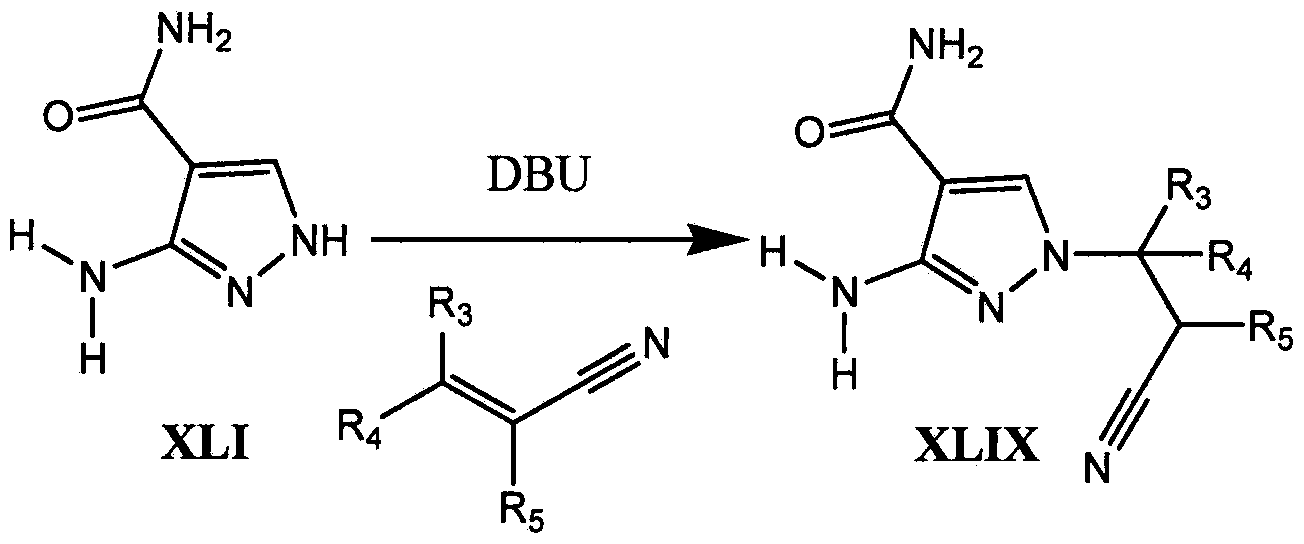


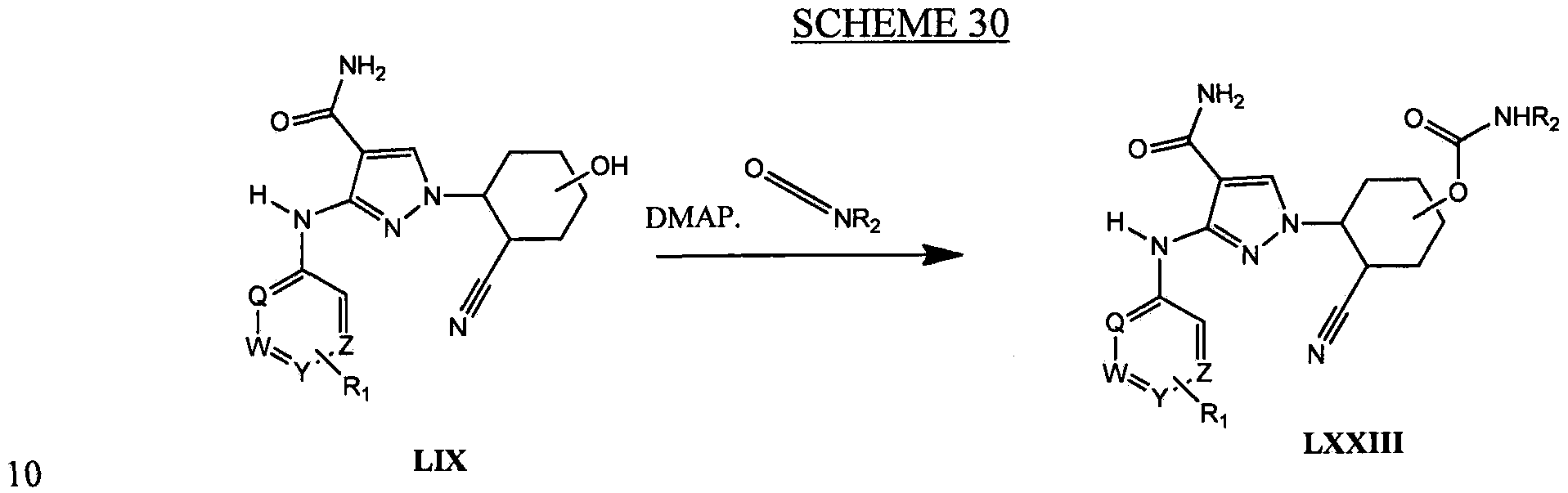


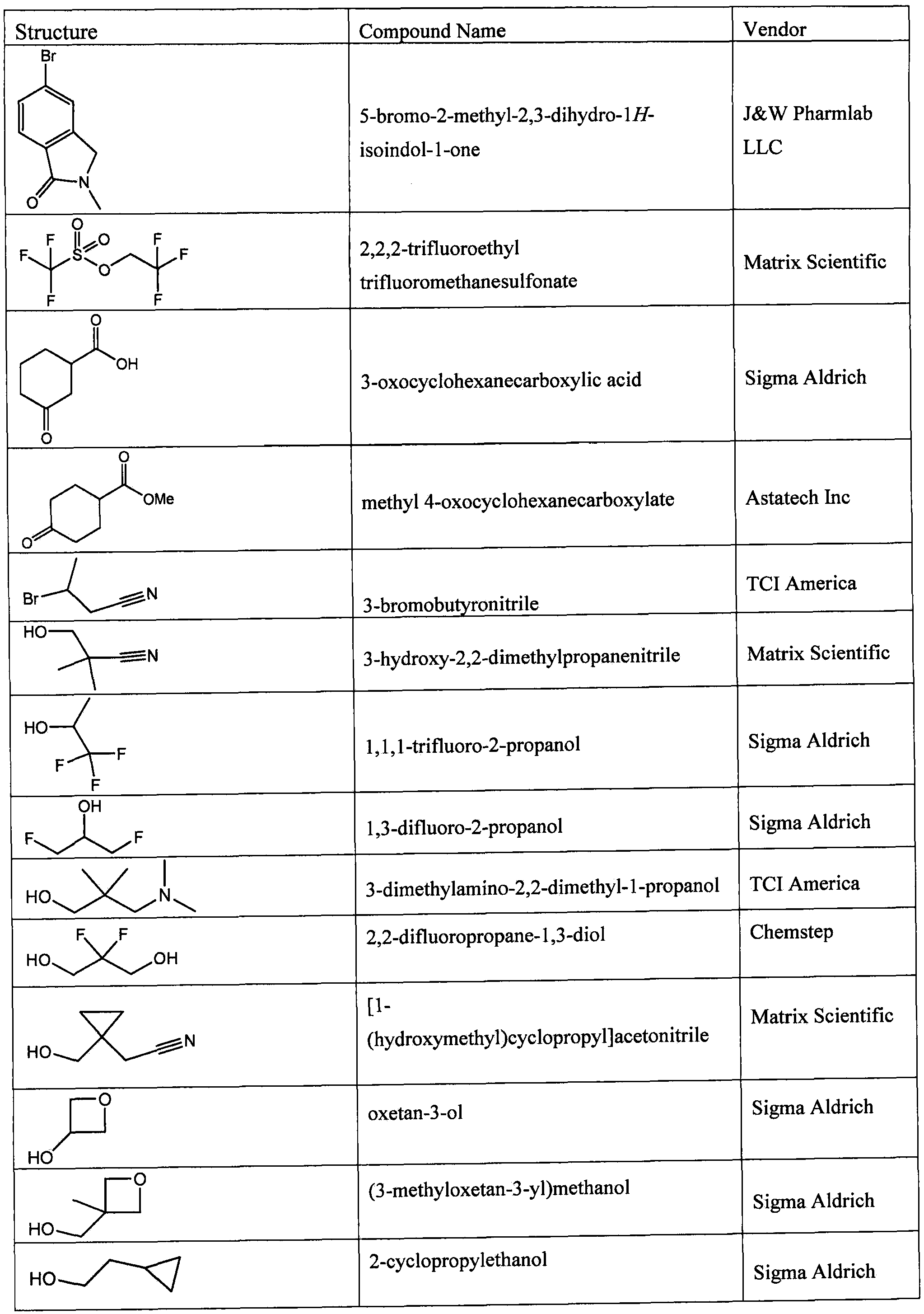


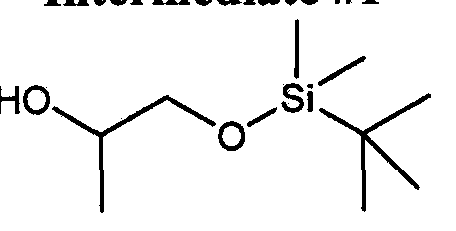


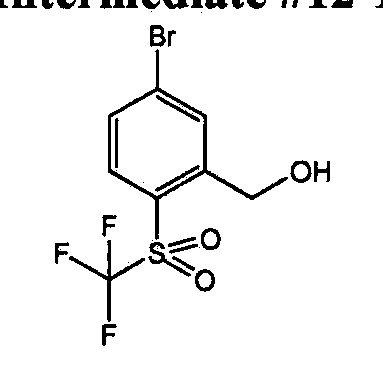


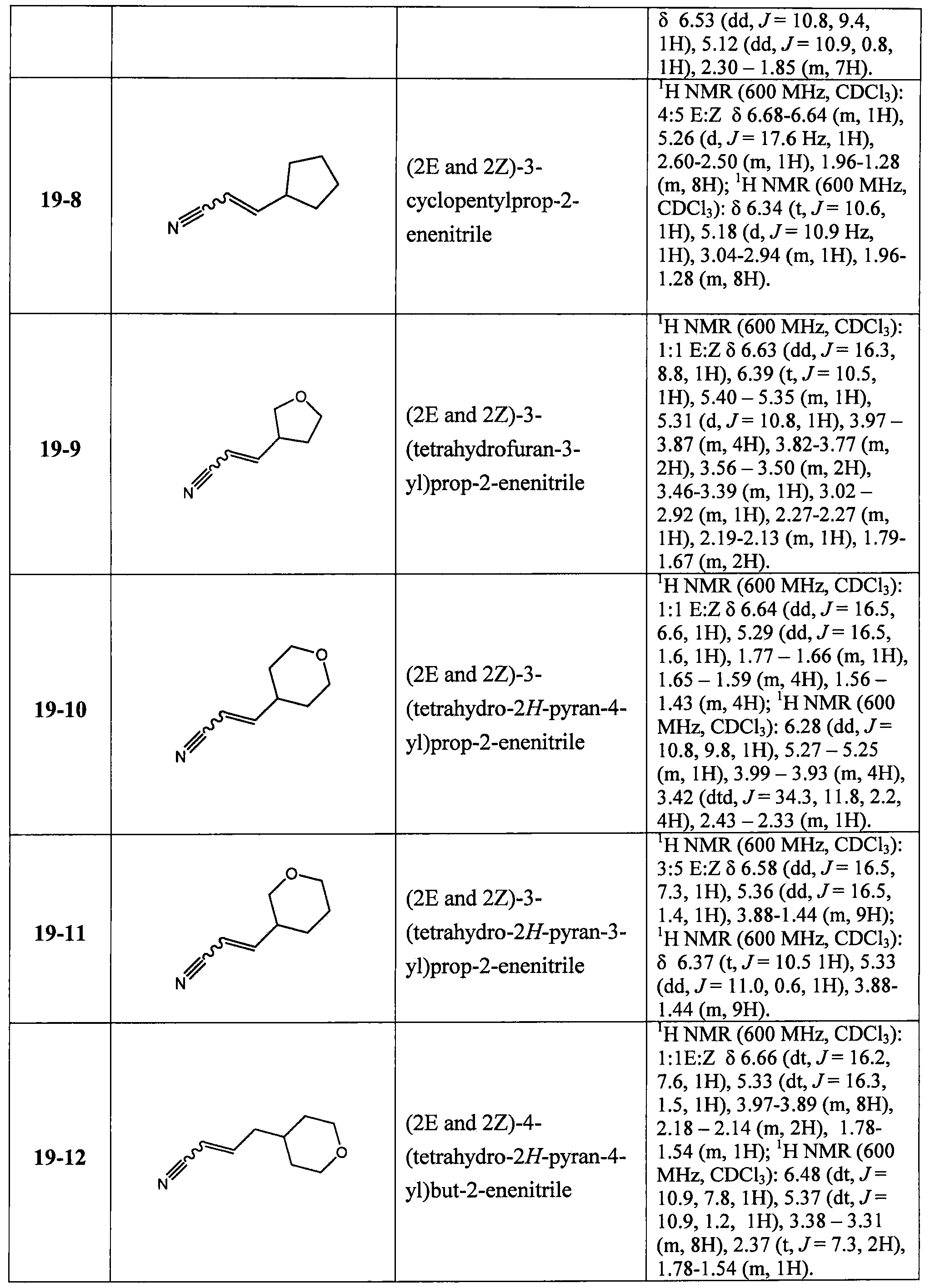
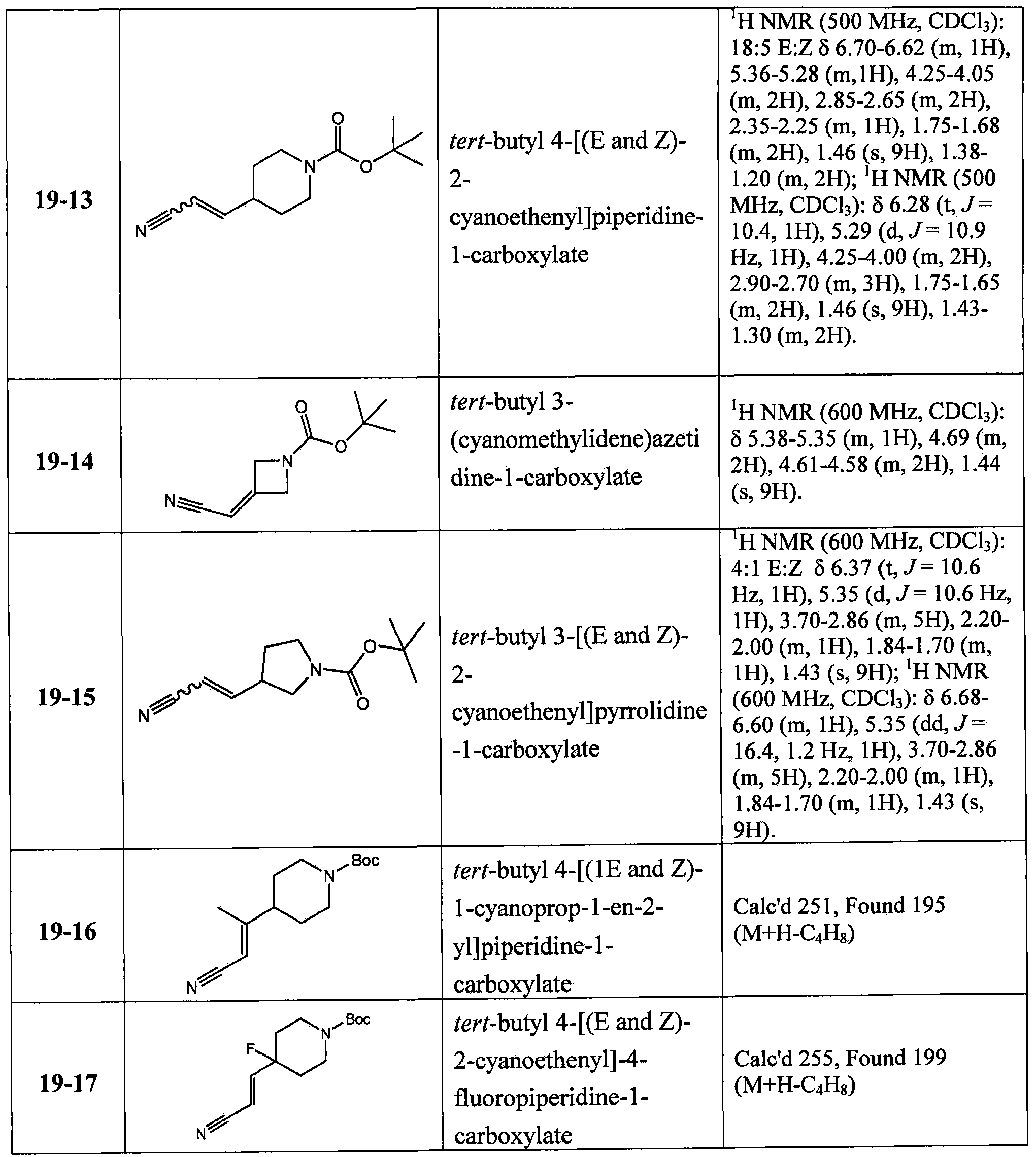

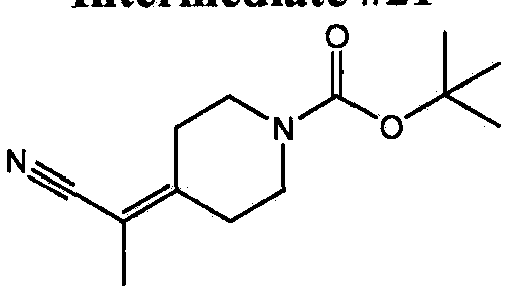


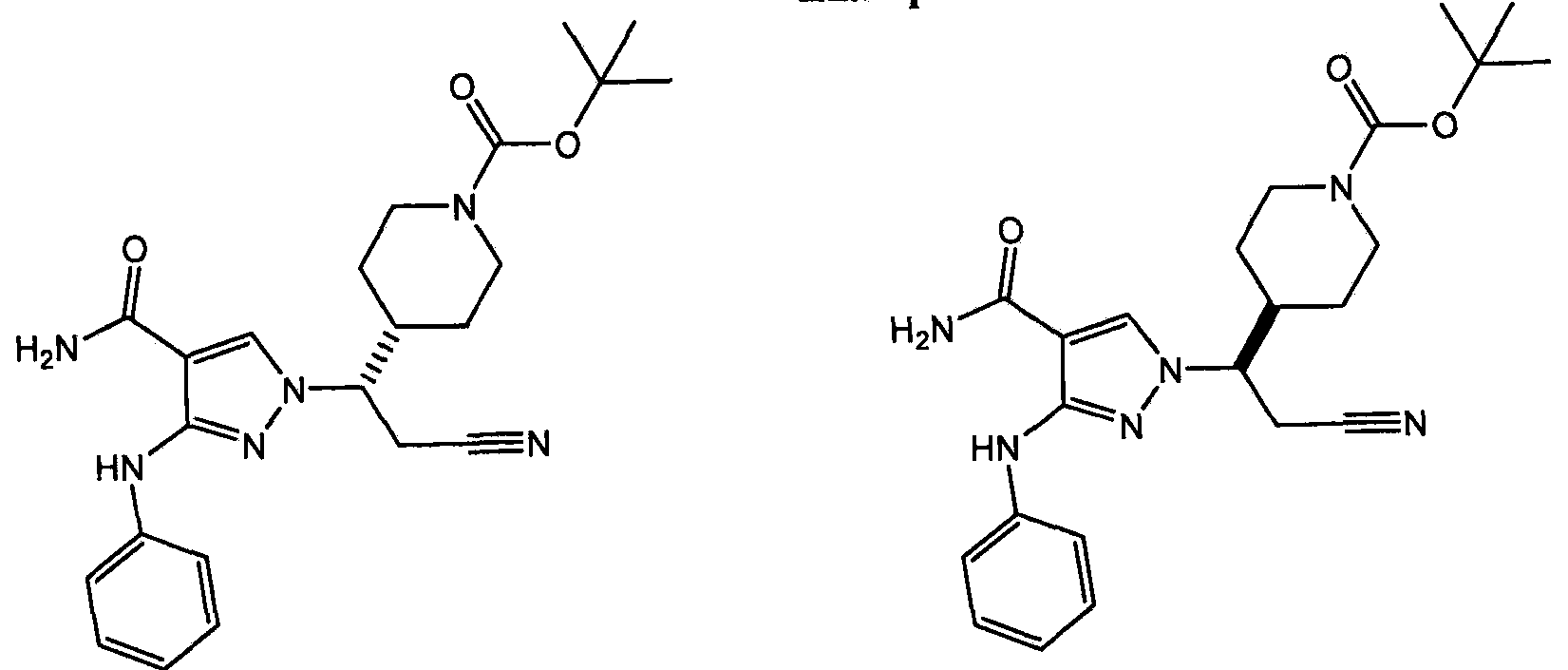
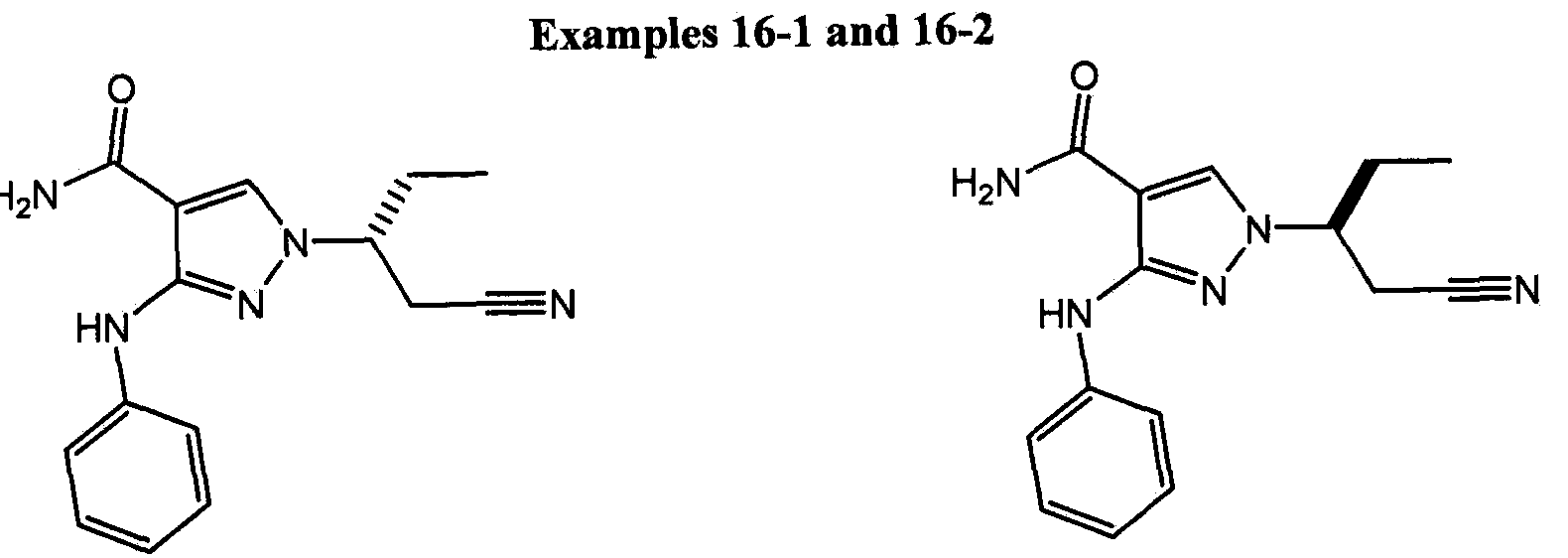


Claims


Priority Applications (5)
| Application Number | Priority Date | Filing Date | Title |
|---|---|---|---|
| US14/345,977 US9493441B2 (en) | 2011-09-22 | 2012-09-21 | Acyclic cyanoethylpyrazoles as janus kinase inhibitors |
| JP2014531994A JP6014149B2 (en) | 2011-09-22 | 2012-09-21 | Acyclic cyanoethylpyrazoles as Janus kinase inhibitors |
| CA2849357A CA2849357A1 (en) | 2011-09-22 | 2012-09-21 | Acyclic cyanoethylpyrazoles as janus kinase inhibitors |
| AU2012312305A AU2012312305B2 (en) | 2011-09-22 | 2012-09-21 | Acyclic cyanoethylpyrazoles as janus kinase inhibitors |
| EP12834358.9A EP2758050B1 (en) | 2011-09-22 | 2012-09-21 | Acyclic cyanoethylpyrazoles as janus kinase inhibitors |
Applications Claiming Priority (2)
| Application Number | Priority Date | Filing Date | Title |
|---|---|---|---|
| US201161537978P | 2011-09-22 | 2011-09-22 | |
| US61/537,978 | 2011-09-22 |
Publications (1)
| Publication Number | Publication Date |
|---|---|
| WO2013043964A1 true WO2013043964A1 (en) | 2013-03-28 |
Family
ID=47913815
Family Applications (4)
| Application Number | Title | Priority Date | Filing Date |
|---|---|---|---|
| PCT/CN2012/081723 Ceased WO2013041042A1 (en) | 2011-09-22 | 2012-09-21 | Pyrazole carboxamides as janus kinase inhibitors |
| PCT/US2012/056478 Ceased WO2013043962A1 (en) | 2011-09-22 | 2012-09-21 | Cyanomethylpyrazole carboxamides as janus kinase inhibitors |
| PCT/US2012/056481 Ceased WO2013043964A1 (en) | 2011-09-22 | 2012-09-21 | Acyclic cyanoethylpyrazoles as janus kinase inhibitors |
| PCT/CN2012/001291 Ceased WO2013040863A1 (en) | 2011-09-22 | 2012-09-21 | Cycloalkylnitrile pyrazole carboxamides as janus kinase inhibitors |
Family Applications Before (2)
| Application Number | Title | Priority Date | Filing Date |
|---|---|---|---|
| PCT/CN2012/081723 Ceased WO2013041042A1 (en) | 2011-09-22 | 2012-09-21 | Pyrazole carboxamides as janus kinase inhibitors |
| PCT/US2012/056478 Ceased WO2013043962A1 (en) | 2011-09-22 | 2012-09-21 | Cyanomethylpyrazole carboxamides as janus kinase inhibitors |
Family Applications After (1)
| Application Number | Title | Priority Date | Filing Date |
|---|---|---|---|
| PCT/CN2012/001291 Ceased WO2013040863A1 (en) | 2011-09-22 | 2012-09-21 | Cycloalkylnitrile pyrazole carboxamides as janus kinase inhibitors |
Country Status (8)
| Country | Link |
|---|---|
| US (4) | US9394282B2 (en) |
| EP (4) | EP2758389B1 (en) |
| JP (4) | JP6014148B2 (en) |
| AU (4) | AU2012313254B8 (en) |
| CA (4) | CA2849169C (en) |
| ES (3) | ES2640911T3 (en) |
| TR (1) | TR201807973T4 (en) |
| WO (4) | WO2013041042A1 (en) |
Cited By (2)
| Publication number | Priority date | Publication date | Assignee | Title |
|---|---|---|---|---|
| WO2016027195A1 (en) | 2014-08-21 | 2016-02-25 | Pfizer Inc. | Aminopyrimidinyl compounds as jak inhibitors |
| US10961247B2 (en) | 2016-06-30 | 2021-03-30 | Daewoong Pharmaceutical Co., Ltd. | Pyrazolopyrimidine derivatives as kinase inhibitor |
Families Citing this family (39)
| Publication number | Priority date | Publication date | Assignee | Title |
|---|---|---|---|---|
| WO2013041042A1 (en) * | 2011-09-22 | 2013-03-28 | Merck Sharp & Dohme Corp. | Pyrazole carboxamides as janus kinase inhibitors |
| KR20150130311A (en) | 2013-03-19 | 2015-11-23 | 머크 샤프 앤드 돔 코포레이션 | N-(2-cyano heterocyclyl)pyrazolo pyridones as janus kinase inhibitors |
| WO2014146249A1 (en) * | 2013-03-19 | 2014-09-25 | Merck Sharp & Dohme Corp. | Geminally substituted cyanoethylpyrazolo pyridones as janus kinase inhibitors |
| SMT201900223T1 (en) | 2013-05-17 | 2019-07-11 | Incyte Corp | Bipyrazole salt as jak inhibitor |
| WO2015035223A1 (en) | 2013-09-09 | 2015-03-12 | Peloton Therapeutics, Inc. | Aryl ethers and uses thereof |
| ES2737148T3 (en) * | 2013-12-16 | 2020-01-10 | Peloton Therapeutics Inc | Cyclic sulfone and sulfoximin analogs and uses thereof |
| HRP20201384T1 (en) * | 2014-01-01 | 2020-11-27 | Medivation Technologies Llc | Compounds and methods of use |
| KR102359214B1 (en) | 2014-04-04 | 2022-02-07 | 델 마 파마슈티컬스 | Use of dianhydrogalactitol and analogs or derivatives thereof to treat non-small-cell carcinoma of the lung and ovarian cancer |
| WO2016088094A1 (en) * | 2014-12-05 | 2016-06-09 | Sun Pharmaceutical Industries Limited | Process for the preparation of baricitinib and an intermediate thereof |
| US9980945B2 (en) * | 2015-01-13 | 2018-05-29 | Vanderbilt University | Benzoisoxazole-substituted compounds as MGLUR4 allosteric potentiators, compositions, and methods of treating neurological dysfunction |
| US10807948B2 (en) | 2015-03-11 | 2020-10-20 | Peloton Therapeutics, Inc. | Aromatic compounds and uses thereof |
| US10278942B2 (en) | 2015-03-11 | 2019-05-07 | Peloton Therapeutics, Inc. | Compositions for use in treating pulmonary arterial hypertension |
| WO2016144826A1 (en) | 2015-03-11 | 2016-09-15 | Peloton Therapeutics, Inc. | Substituted pyridines and uses thereof |
| WO2016145045A1 (en) | 2015-03-11 | 2016-09-15 | Peloton Therapeutics, Inc. | Compositions for use in treating glioblastoma |
| WO2016168510A1 (en) | 2015-04-17 | 2016-10-20 | Peloton Therapeutics, Inc. | Combination therapy of a hif-2-alpha inhibitor and an immunotherapeutic agent and uses thereof |
| TW201705961A (en) * | 2015-06-11 | 2017-02-16 | 阿爾米雷爾有限公司 | 2-(pyrazolopyridin-3-yl)pyrimidine derivatives as JAK inhibitors |
| US9796697B2 (en) | 2015-06-12 | 2017-10-24 | Peloton Therapeutics, Inc. | Tricyclic inhibitors of HIF-2-alpha and uses thereof |
| JP7034942B2 (en) * | 2016-05-05 | 2022-03-14 | エフ.ホフマン-ラ ロシュ アーゲー | Pyrazole derivatives, their compositions and therapeutic uses |
| RS61991B1 (en) * | 2016-07-14 | 2021-07-30 | Lilly Co Eli | Pyrazolylaminobenzimidazole derivatives as jak inhibitors |
| AU2017376398B2 (en) * | 2016-12-14 | 2021-07-15 | Intervet International B.V. | Aminopyrazoles as selective janus kinase inhibitors |
| US10766883B2 (en) | 2016-12-14 | 2020-09-08 | Merck Sharp & Dohme Corp. | Aminopyrazoles as janus kinase inhibitors |
| IL311485B1 (en) | 2018-02-16 | 2026-01-01 | Incyte Corp | Jak1 pathway inhibitors for the treatment of cytokine-related disorders |
| MD3773593T2 (en) | 2018-03-30 | 2024-10-31 | Incyte Corp | Treatment of hidradenitis suppurativa using JAK inhibitors |
| CN109575301A (en) * | 2018-11-15 | 2019-04-05 | 三明学院 | A kind of method of catalysis oxidation synthesis conduction MOF |
| US12018020B2 (en) | 2018-12-13 | 2024-06-25 | Intervet Inc. | Crystalline forms of 1-[(3R,4S)-4-cyanotetrahydropyran-3-yl]-3-[(2-fluoro-6-methoxy-4-pyridyl)amino]pyrazole-4-carboxamide |
| WO2020118597A1 (en) * | 2018-12-13 | 2020-06-18 | Intervet International B.V. | Process for making 1- [ (3r, 4s) -4-cyanotetrahydropyran-3-yl] -3- [ (2-fluoro-6-methoxy-4-pyridyl) amino] pyrazole-4-carboxamide |
| CN119350306A (en) | 2018-12-13 | 2025-01-24 | 英特维特国际股份有限公司 | Preparation method of 1-[(3R, 4S)-4-cyanotetrahydropyran-3-yl]-3-[(2-fluoro-6-methoxy-4-pyridinyl)amino]pyrazole-4-carboxamide |
| WO2020187292A1 (en) * | 2019-03-19 | 2020-09-24 | 北京赛特明强医药科技有限公司 | 2-substituted pyrazoleamino-4-substituted amino-5-pyrimidine formamide compound, composition and use thereof |
| CA3137986A1 (en) | 2019-05-02 | 2020-11-05 | Intervet International B.V. | Process for the production of ethyl 3-amino-1-[(3r,4s)-4-cyanotetrahydropyran-3-yl]pyrazole-4-carboxylate through chiral separation of a racemic mixture |
| EP4076407B1 (en) | 2019-12-20 | 2023-08-23 | Intervet International B.V. | A pharmaceutical composition of a pyrazole compound dispersed in a polymer matrix |
| WO2021123108A1 (en) | 2019-12-20 | 2021-06-24 | Intervet International B.V. | A pyrazole pharmaceutical composition |
| FI4157831T3 (en) | 2020-06-02 | 2024-12-02 | Incyte Corp | Processes of preparing a jak1 inhibitor |
| BR112023000626A2 (en) * | 2020-07-16 | 2023-01-31 | Merck Sharp & Dohme Llc | CYCLIC CYANOENONE DERIVATIVES AS KEAP1 MODULATORS |
| CN111960983A (en) * | 2020-08-31 | 2020-11-20 | 南通大学 | N-methyl-3- (1-methylpyrrolidine-3-yl) propyl-1-amine and synthetic method thereof |
| WO2022125670A1 (en) | 2020-12-08 | 2022-06-16 | Incyte Corporation | Jak1 pathway inhibitors for the treatment of vitiligo |
| CN117242080A (en) * | 2020-12-18 | 2023-12-15 | 勃林格殷格翰动物保健美国公司 | Boron-containing pyrazole compounds, compositions including the same, methods and uses thereof |
| RS67455B1 (en) | 2021-05-03 | 2025-12-31 | Incyte Corp | Jak1 pathway inhibitors for the treatment of prurigo nodularis |
| JP2024545293A (en) | 2021-12-24 | 2024-12-05 | インターベット インターナショナル ベー. フェー. | Uses of aminopyrazole compounds |
| CN114933528B (en) * | 2022-05-30 | 2024-03-29 | 湖南大学 | A new method for preparing aroyloxyalkyl iodide and its transformation and application method |
Citations (2)
| Publication number | Priority date | Publication date | Assignee | Title |
|---|---|---|---|---|
| US20100022522A1 (en) * | 2005-12-13 | 2010-01-28 | Incyte Corporationn, a Delaware corporation | HETEROARYL SUBSTITUTED PYRROLO[2,3-b]PYRIDINES AND PYRROLO[2,3-b]PYRIMIDINES AS JANUS KINASE INHIBITORS |
| WO2010014453A1 (en) * | 2008-07-31 | 2010-02-04 | Merck & Co., Inc. | Inhibitors of janus kinases |
Family Cites Families (16)
| Publication number | Priority date | Publication date | Assignee | Title |
|---|---|---|---|---|
| US4166452A (en) | 1976-05-03 | 1979-09-04 | Generales Constantine D J Jr | Apparatus for testing human responses to stimuli |
| US4256108A (en) | 1977-04-07 | 1981-03-17 | Alza Corporation | Microporous-semipermeable laminated osmotic system |
| US4265874A (en) | 1980-04-25 | 1981-05-05 | Alza Corporation | Method of delivering drug with aid of effervescent activity generated in environment of use |
| WO2008132502A1 (en) * | 2007-04-25 | 2008-11-06 | Astrazeneca Ab | Pyrazolyl-amino-substituted pyrimidines and their use for the treatment of cancer |
| WO2009064835A1 (en) * | 2007-11-16 | 2009-05-22 | Incyte Corporation | 4-pyrazolyl-n-arylpyrimidin-2-amines and 4-pyrazolyl-n-heteroarylpyrimidin-2-amines as janus kinase inhibitors |
| US8158616B2 (en) * | 2008-03-11 | 2012-04-17 | Incyte Corporation | Azetidine and cyclobutane derivatives as JAK inhibitors |
| US8515627B2 (en) * | 2008-12-23 | 2013-08-20 | Caterpillar Inc. | Method and apparatus for calculating payload weight |
| AR075633A1 (en) * | 2009-02-27 | 2011-04-20 | Ambit Biosciences Corp | MODULATING COMPOUNDS OF JAK QUINASA AND ITS METHODS OF USE |
| JP5775070B2 (en) | 2009-05-22 | 2015-09-09 | インサイト・コーポレイションIncyte Corporation | N- (hetero) aryl-pyrrolidine derivatives of pyrazol-4-yl-pyrrolo [2,3-d] pyrimidine and pyrrol-3-yl-pyrrolo [2,3-d] pyrimidine as Janus kinase inhibitors |
| SG176111A1 (en) * | 2009-05-22 | 2011-12-29 | Incyte Corp | 3-[4-(7h-pyrrolo[2,3-d]pyrimidin-4-yl)-1h-pyrazol-1-yl]octane- or heptane-nitrile as jak inhibitors |
| TW201111385A (en) * | 2009-08-27 | 2011-04-01 | Biocryst Pharm Inc | Heterocyclic compounds as janus kinase inhibitors |
| AR078012A1 (en) * | 2009-09-01 | 2011-10-05 | Incyte Corp | HETEROCICLIC DERIVATIVES OF PIRAZOL-4-IL-PIRROLO (2,3-D) PYRIMIDINS AS INHIBITORS OF THE QUANASA JANUS |
| ES2461967T3 (en) | 2009-12-18 | 2014-05-21 | Pfizer Inc. | Pyrrolo [2,3-d] pyrimidine compounds |
| EP2536729A1 (en) * | 2010-02-18 | 2012-12-26 | Incyte Corporation | Cyclobutane and methylcyclobutane derivatives as janus kinase inhibitors |
| PT3354652T (en) * | 2010-03-10 | 2020-07-20 | Incyte Holdings Corp | Piperidin-4-yl azetidine derivatives as jak1 inhibitors |
| WO2013041042A1 (en) * | 2011-09-22 | 2013-03-28 | Merck Sharp & Dohme Corp. | Pyrazole carboxamides as janus kinase inhibitors |
-
2012
- 2012-09-21 WO PCT/CN2012/081723 patent/WO2013041042A1/en not_active Ceased
- 2012-09-21 ES ES12833410.9T patent/ES2640911T3/en active Active
- 2012-09-21 ES ES12834379T patent/ES2670878T3/en active Active
- 2012-09-21 EP EP12834277.1A patent/EP2758389B1/en active Active
- 2012-09-21 WO PCT/US2012/056478 patent/WO2013043962A1/en not_active Ceased
- 2012-09-21 EP EP12834358.9A patent/EP2758050B1/en active Active
- 2012-09-21 AU AU2012313254A patent/AU2012313254B8/en not_active Ceased
- 2012-09-21 JP JP2014531073A patent/JP6014148B2/en not_active Expired - Fee Related
- 2012-09-21 AU AU2012313094A patent/AU2012313094B2/en active Active
- 2012-09-21 CA CA2849169A patent/CA2849169C/en active Active
- 2012-09-21 US US14/345,982 patent/US9394282B2/en active Active
- 2012-09-21 WO PCT/US2012/056481 patent/WO2013043964A1/en not_active Ceased
- 2012-09-21 TR TR2018/07973T patent/TR201807973T4/en unknown
- 2012-09-21 JP JP2014531090A patent/JP6110859B2/en active Active
- 2012-09-21 WO PCT/CN2012/001291 patent/WO2013040863A1/en not_active Ceased
- 2012-09-21 CA CA2849336A patent/CA2849336A1/en not_active Abandoned
- 2012-09-21 EP EP12834379.5A patent/EP2758051B1/en active Active
- 2012-09-21 CA CA2849357A patent/CA2849357A1/en not_active Abandoned
- 2012-09-21 JP JP2014531994A patent/JP6014149B2/en not_active Expired - Fee Related
- 2012-09-21 AU AU2012312303A patent/AU2012312303B2/en not_active Ceased
- 2012-09-21 US US14/345,976 patent/US8962608B2/en active Active
- 2012-09-21 US US14/345,978 patent/US9328099B2/en active Active
- 2012-09-21 JP JP2014531993A patent/JP6034869B2/en not_active Expired - Fee Related
- 2012-09-21 ES ES12834277.1T patent/ES2633793T3/en active Active
- 2012-09-21 US US14/345,977 patent/US9493441B2/en active Active
- 2012-09-21 CA CA2849168A patent/CA2849168A1/en not_active Abandoned
- 2012-09-21 AU AU2012312305A patent/AU2012312305B2/en not_active Ceased
- 2012-09-21 EP EP12833410.9A patent/EP2758377B1/en active Active
Patent Citations (2)
| Publication number | Priority date | Publication date | Assignee | Title |
|---|---|---|---|---|
| US20100022522A1 (en) * | 2005-12-13 | 2010-01-28 | Incyte Corporationn, a Delaware corporation | HETEROARYL SUBSTITUTED PYRROLO[2,3-b]PYRIDINES AND PYRROLO[2,3-b]PYRIMIDINES AS JANUS KINASE INHIBITORS |
| WO2010014453A1 (en) * | 2008-07-31 | 2010-02-04 | Merck & Co., Inc. | Inhibitors of janus kinases |
Non-Patent Citations (1)
| Title |
|---|
| See also references of EP2758050A4 * |
Cited By (6)
| Publication number | Priority date | Publication date | Assignee | Title |
|---|---|---|---|---|
| WO2016027195A1 (en) | 2014-08-21 | 2016-02-25 | Pfizer Inc. | Aminopyrimidinyl compounds as jak inhibitors |
| US9663526B2 (en) | 2014-08-21 | 2017-05-30 | Pfizer Inc. | Aminopyrimidinyl compounds |
| US10463675B2 (en) | 2014-08-21 | 2019-11-05 | Pfizer Inc. | Aminopyrimidinyl compounds |
| US10980815B2 (en) | 2014-08-21 | 2021-04-20 | Pfizer Inc. | Aminopyrimidinyl compounds |
| US11197867B2 (en) | 2014-08-21 | 2021-12-14 | Pfizer Inc. | Aminopyrimidinyl compounds |
| US10961247B2 (en) | 2016-06-30 | 2021-03-30 | Daewoong Pharmaceutical Co., Ltd. | Pyrazolopyrimidine derivatives as kinase inhibitor |
Also Published As
Similar Documents
| Publication | Publication Date | Title |
|---|---|---|
| AU2012312305B2 (en) | Acyclic cyanoethylpyrazoles as janus kinase inhibitors | |
| JP6412102B2 (en) | Cycloalkylnitrile pyrazolopyridones as Janus kinase inhibitors | |
| JP6305510B2 (en) | Acyclic cyanoethylpyrazolopyridone as a Janus kinase inhibitor | |
| AU2014234907B2 (en) | Geminally substituted cyanoethylpyrazolo pyridones as Janus kinase inhibitors | |
| CN105189498B (en) | Gemini-substituted cyanoethylpyrazolopyridones as JANUS kinase inhibitors |
Legal Events
| Date | Code | Title | Description |
|---|---|---|---|
| 121 | Ep: the epo has been informed by wipo that ep was designated in this application |
Ref document number: 12834358 Country of ref document: EP Kind code of ref document: A1 |
|
| ENP | Entry into the national phase |
Ref document number: 2849357 Country of ref document: CA Ref document number: 2014531994 Country of ref document: JP Kind code of ref document: A |
|
| WWE | Wipo information: entry into national phase |
Ref document number: 14345977 Country of ref document: US |
|
| NENP | Non-entry into the national phase |
Ref country code: DE |
|
| ENP | Entry into the national phase |
Ref document number: 2012312305 Country of ref document: AU Date of ref document: 20120921 Kind code of ref document: A |
|
| REEP | Request for entry into the european phase |
Ref document number: 2012834358 Country of ref document: EP |
|
| WWE | Wipo information: entry into national phase |
Ref document number: 2012834358 Country of ref document: EP |