WO2013065541A1 - 新規酵母及びこれを用いたエタノールの生産方法 - Google Patents
新規酵母及びこれを用いたエタノールの生産方法 Download PDFInfo
- Publication number
- WO2013065541A1 WO2013065541A1 PCT/JP2012/077428 JP2012077428W WO2013065541A1 WO 2013065541 A1 WO2013065541 A1 WO 2013065541A1 JP 2012077428 W JP2012077428 W JP 2012077428W WO 2013065541 A1 WO2013065541 A1 WO 2013065541A1
- Authority
- WO
- WIPO (PCT)
- Prior art keywords
- xylose
- glucose
- ethanol
- yeast
- raw material
- Prior art date
- Legal status (The legal status is an assumption and is not a legal conclusion. Google has not performed a legal analysis and makes no representation as to the accuracy of the status listed.)
- Ceased
Links
Images
Classifications
-
- C—CHEMISTRY; METALLURGY
- C12—BIOCHEMISTRY; BEER; SPIRITS; WINE; VINEGAR; MICROBIOLOGY; ENZYMOLOGY; MUTATION OR GENETIC ENGINEERING
- C12P—FERMENTATION OR ENZYME-USING PROCESSES TO SYNTHESISE A DESIRED CHEMICAL COMPOUND OR COMPOSITION OR TO SEPARATE OPTICAL ISOMERS FROM A RACEMIC MIXTURE
- C12P7/00—Preparation of oxygen-containing organic compounds
- C12P7/02—Preparation of oxygen-containing organic compounds containing a hydroxy group
- C12P7/04—Preparation of oxygen-containing organic compounds containing a hydroxy group acyclic
- C12P7/06—Ethanol, i.e. non-beverage
- C12P7/08—Ethanol, i.e. non-beverage produced as by-product or from waste or cellulosic material substrate
- C12P7/10—Ethanol, i.e. non-beverage produced as by-product or from waste or cellulosic material substrate substrate containing cellulosic material
-
- C—CHEMISTRY; METALLURGY
- C12—BIOCHEMISTRY; BEER; SPIRITS; WINE; VINEGAR; MICROBIOLOGY; ENZYMOLOGY; MUTATION OR GENETIC ENGINEERING
- C12N—MICROORGANISMS OR ENZYMES; COMPOSITIONS THEREOF; PROPAGATING, PRESERVING, OR MAINTAINING MICROORGANISMS; MUTATION OR GENETIC ENGINEERING; CULTURE MEDIA
- C12N1/00—Microorganisms; Compositions thereof; Processes of propagating, maintaining or preserving microorganisms or compositions thereof; Processes of preparing or isolating a composition containing a microorganism; Culture media therefor
- C12N1/14—Fungi; Culture media therefor
- C12N1/16—Yeasts; Culture media therefor
- C12N1/165—Yeast isolates
-
- C—CHEMISTRY; METALLURGY
- C12—BIOCHEMISTRY; BEER; SPIRITS; WINE; VINEGAR; MICROBIOLOGY; ENZYMOLOGY; MUTATION OR GENETIC ENGINEERING
- C12P—FERMENTATION OR ENZYME-USING PROCESSES TO SYNTHESISE A DESIRED CHEMICAL COMPOUND OR COMPOSITION OR TO SEPARATE OPTICAL ISOMERS FROM A RACEMIC MIXTURE
- C12P7/00—Preparation of oxygen-containing organic compounds
- C12P7/02—Preparation of oxygen-containing organic compounds containing a hydroxy group
- C12P7/04—Preparation of oxygen-containing organic compounds containing a hydroxy group acyclic
- C12P7/06—Ethanol, i.e. non-beverage
-
- C—CHEMISTRY; METALLURGY
- C12—BIOCHEMISTRY; BEER; SPIRITS; WINE; VINEGAR; MICROBIOLOGY; ENZYMOLOGY; MUTATION OR GENETIC ENGINEERING
- C12R—INDEXING SCHEME ASSOCIATED WITH SUBCLASSES C12C - C12Q, RELATING TO MICROORGANISMS
- C12R2001/00—Microorganisms ; Processes using microorganisms
- C12R2001/645—Fungi ; Processes using fungi
- C12R2001/72—Candida
-
- Y—GENERAL TAGGING OF NEW TECHNOLOGICAL DEVELOPMENTS; GENERAL TAGGING OF CROSS-SECTIONAL TECHNOLOGIES SPANNING OVER SEVERAL SECTIONS OF THE IPC; TECHNICAL SUBJECTS COVERED BY FORMER USPC CROSS-REFERENCE ART COLLECTIONS [XRACs] AND DIGESTS
- Y02—TECHNOLOGIES OR APPLICATIONS FOR MITIGATION OR ADAPTATION AGAINST CLIMATE CHANGE
- Y02E—REDUCTION OF GREENHOUSE GAS [GHG] EMISSIONS, RELATED TO ENERGY GENERATION, TRANSMISSION OR DISTRIBUTION
- Y02E50/00—Technologies for the production of fuel of non-fossil origin
- Y02E50/10—Biofuels, e.g. bio-diesel
Definitions
- Bioethanol raw materials are mostly edible biomass such as corn and sugarcane.
- competition between the use as bioethanol raw material and the use as food becomes a problem.
- the development of technology to produce ethanol from cellulosic biomass such as wood and non-edible herbs that are not used as food is required. ing.
- cellulose, hemicellulose, and polysaccharides which are partially decomposed products of these, are hydrolyzed, and hexose glucose, mannose, galactose, and pentose sugar xylose are mainly used.
- Ethanol is obtained by obtaining a saccharified solution as a component and fermenting the sugar in the saccharified solution with a microorganism.
- Saccharomyces cerevisiae is known as a yeast that can efficiently produce ethanol from glucose and mannose
- microorganisms that can efficiently produce ethanol from xylose and galactose.
- Pichia stipitis As a few examples of microorganisms that can produce ethanol not only from glucose but also from xylose, Pichia stipitis, Candida shehatae and Pachysolen tannophilus (Non-patent Document 1)
- Candida intermedia is known (Non-Patent Document 2).
- Non-Patent Document 1 when the yeast described in Non-Patent Document 1 is subjected to ethanol fermentation in the presence of both glucose and xylose contained in the raw material liquid derived from cellulosic biomass, glucose is inhibited by catabolite repression (catabolic metabolite suppression) by glucose. Since xylose is hardly consumed until almost completely consumed, fermentation takes time and ethanol productivity is reduced.
- the inventors of the non-patent document 2 have examined the present inventors and found that catabolite repression due to glucose hardly occurs depending on the production conditions, and both of them are carried out in ethanol fermentation in the presence of both glucose and xylose. Although ethanol fermentation may be possible, there is a problem that xylose consumption efficiency is poor and the ability to produce ethanol from xylose is not sufficient.
- a specific yeast has the ability to efficiently produce ethanol from glucose and xylose in a short time in the presence of glucose and xylose, thereby completing the present invention.
- the present invention provides a yeast named Candida intermedia 4-6-4T2 and deposited as FERM BP-11509.
- the present invention also provides an ethanol production method comprising a step of fermenting a raw material liquid containing one or more monosaccharides selected from glucose and xylose using the yeast. .
- the yeast of the present invention has an ability to efficiently produce ethanol from glucose and xylose in a short time in the presence of glucose and xylose. In addition, if such yeast is used, ethanol can be efficiently produced in a short time even when a raw material derived from cellulose biomass containing glucose or xylose is used. Therefore, according to the ethanol production method of the present invention, ethanol can be efficiently produced in a short time using a raw material derived from cellulosic biomass.
- the yeast of the present invention has the ability to efficiently produce ethanol from glucose and xylose in a short time in the presence of glucose and xylose.
- coexistence with glucose and xylose means that the yeast of the present invention coexists in a raw material liquid (fermented liquid) containing at least glucose and xylose.
- the conventional yeast has insufficient xylose consumption efficiency, or has ethanol-producing ability from either glucose or xylose, but when both glucose and xylose are present, catabolite repression
- the yeast of the present invention efficiently and efficiently consumes ethanol from both of them in a short time. Has the ability to produce.
- the ethanol production method of the present invention comprises a step of fermenting a raw material liquid containing one or more monosaccharides selected from glucose and xylose using the yeast (hereinafter also referred to as a fermentation step). To do. According to such a production method, ethanol can be produced efficiently in a short time.
- the amount of yeast to be used is not particularly limited, but is usually about 0.01 to 100 parts by mass, preferably 0.1 to 10 parts by mass with respect to 1 part by mass of the monosaccharide.
- the total content of monosaccharides contained in the raw material liquid is preferably 1 to 100 g / L.
- the raw material liquid used for ethanol production may be any of animal-derived, plant-derived, industrial waste-derived, etc., but is preferably plant-derived and used as a bioethanol raw material.
- a hydrolyzate of cellulosic biomass is more preferable.
- the cellulosic biomass refers to biomass containing cellulose and hemicellulose. Glucose is obtained by hydrolysis of cellulose in such biomass, while glucose, xylose, mannose, and galactose are obtained by hydrolysis of hemicellulose.
- Such cellulosic biomass is preferably obtained from agricultural residues (rice straw, straw, etc.), forestry residues (timber, etc.), etc., from the viewpoint of economic superiority in ethanol production.
- the pH of the raw material liquid (30 ° C.) is preferably 3.5 to 6.5, more preferably 4 to 6, still more preferably 4.5 to 5.5, and particularly preferably 4.5-5.
- ethanol can be produced even in such a low pH region, and ethanol can be produced even when a saccharified solution (acid hydrolyzate of biomass cellulose) containing acetic acid or the like is used. it can.
- a saccharified solution acid hydrolyzate of biomass cellulose
- acetic acid containing acetic acid or the like
- microorganisms capable of producing ethanol from xylose are reported to inhibit ethanol fermentation in a low pH range of pH 5 or less (Palmqvist E., Hahn-Hagardal B. Bioresource Technology Vol. 74, 25-33 (2000)).
- the production method is preferably performed at 20 to 35 ° C, more preferably at 25 to 30 ° C.
- ethanol may be produced while the yeast is grown under growth conditions, and the resting cell state, that is, the nitrogen source is limited to an extent insufficient for the growth of the yeast, and It is also possible to produce ethanol in a state where the growth of yeast is stopped under conditions where the carbon source as a raw material for ethanol is abundant. Among these, it is preferable to produce ethanol in the state of resting cells from the viewpoint that it is not easily affected by ethanol production inhibitors such as acetic acid and sulfurous acid.
- the yeast concentration is preferably 5 to 100 g / L.
- ethanol when ethanol is produced by resting cells, it is not necessary to contain a nitrogen source, yeast extract, or the like, but it is preferable to adjust to the above pH with a phosphate buffer or sodium hydroxide. In addition, what is necessary is just to perform collection
- the acclimatized strain solution was diluted 1000 times and applied to a medium of YNB agar medium (glucose: 5%, yeast extract: 1%, amino acid-free yeast nitrogen base: 2%, agar: 2%) at 25 ° C. After culturing for 4 days, a strain having formed a colony was obtained.
- Candida intermedia 4-6-4T2 This strain has been deposited with the Patent Organism Depository Center (IPOD) of the National Institute for Product Evaluation Technology, and the deposit number is FERM BP-11509.
- Dry cell weight (g / mL) 0.00032 ⁇ OD 660 ⁇ 0.00017 (1)
- ethanol can be efficiently produced by using the yeast of the present invention because the influence of catabolite repression by glucose is small and the production of xylitol is suppressed, so that ethanol productivity by xylitol is hardly inhibited. It is speculated that this also has an effect.
- Example 3 Yeast shown in the same table was added in an amount corresponding to 2% dry weight to a fermentation solution containing a sugar shown in Table 5 (phosphate buffer solution: 0.01M, pH 5.0), and ethanol production (% ( v / v)) was measured. The results are shown in Table 5.
Landscapes
- Life Sciences & Earth Sciences (AREA)
- Chemical & Material Sciences (AREA)
- Organic Chemistry (AREA)
- Engineering & Computer Science (AREA)
- Wood Science & Technology (AREA)
- Zoology (AREA)
- Health & Medical Sciences (AREA)
- Genetics & Genomics (AREA)
- Bioinformatics & Cheminformatics (AREA)
- Biotechnology (AREA)
- Microbiology (AREA)
- Biochemistry (AREA)
- General Engineering & Computer Science (AREA)
- General Health & Medical Sciences (AREA)
- Mycology (AREA)
- General Chemical & Material Sciences (AREA)
- Chemical Kinetics & Catalysis (AREA)
- Botany (AREA)
- Medicinal Chemistry (AREA)
- Tropical Medicine & Parasitology (AREA)
- Virology (AREA)
- Biomedical Technology (AREA)
- Preparation Of Compounds By Using Micro-Organisms (AREA)
- Micro-Organisms Or Cultivation Processes Thereof (AREA)
Abstract
Description
斯かる問題を回避するために、食糧として使用されない木材や非可食性の草本等のセルロース系バイオマス(特に、農業残渣、林業残渣等から得られるもの)からエタノールを生産する技術の開発が求められている。
斯かる技術においては、セルロース系バイオマスに含まれるセルロースや、ヘミセルロース、これらの一部分解物である多糖類を加水分解し、六炭糖であるグルコース、マンノース及びガラクトースや五炭糖であるキシロースを主成分とする糖化液を得、この糖化液中の糖を微生物で発酵させることでエタノールが得られる。
例えば、グルコースだけでなくキシロースからもエタノールを生産可能な微生物の数少ない例として、ピキア・スティピティス(Pichia stipitis)、カンジダ・シハタエ(Candida shehatae)及びパチソレン・タノフィルス(Pachysolen tannophilus)や(非特許文献1)、カンジダ・インターメディア(Candida intermedia)が知られている(非特許文献2)。
また、非特許文献2に記載の酵母は、本発明者が検討したところ、製造条件によってはグルコースによるカタボライトリプレッションが生じにくく、グルコース及びキシロースの両方の存在下でエタノール発酵を行ってもその両方からエタノール発酵をすることが可能な場合もあるものの、キシロースの消費効率が悪く、キシロースからエタノールを生産する能力が十分でないという問題がある。
したがって、本発明のエタノールの生産方法によれば、セルロース系バイオマス由来の原料を用いて短時間で効率よくエタノールを生産することができる。
本発明の酵母は、カンジダ・インターメディア(Candida intermedia)4-6-4T2と命名され、FERM BP-11509として独立行政法人 製品評価技術基盤機構 特許生物寄託センター(IPOD)(住所:日本国茨城県つくば市東1丁目1番地1 中央第6 〒305-8566)に平成24年9月20日に寄託された酵母である。斯かる酵母は、カンジタ・インターメディア(Candida intermedia)「NBRC10601」を親株として、常法に従い自然変異させ、親株よりもエタノール生産能が高い株を選抜することにより取得したものである。なお、上記「NBRC10601」は独立行政法人 製品評価技術基盤機構 特許生物寄託センター(IPOD)から入手可能な酵母である。
そして、本発明の酵母は、グルコース及びキシロースとの共存下で、グルコース及びキシロースから短時間で効率良くエタノールを生産する能力を有する。
ここで、グルコース及びキシロースとの共存下とは、少なくともグルコースとキシロースを含む原料液体(発酵液)中に本発明の酵母が共存することを意味する。従来の酵母は、前述のようにキシロースの消費効率が十分でないもの、或いはグルコース又はキシロースのうちいずれか一方からのエタノール生産能を有するものの、グルコース及びキシロースの両方が存在する場合は、カタボライトリプレッションによりグルコースが完全に消費されるまでキシロースがほとんど消費されないものであったが、本発明の酵母は、グルコース及びキシロースの両方が存在する場合であっても、その両方から短時間で効率よくエタノールを生産する能力を有する。
また、本発明の酵母は、グルコース及びキシロースを含有する原料液体から短時間で効率良くエタノールを生産するが、このとき副生成物としてのキシリトールがほとんど生成されない。また、本発明の酵母は、このような糖からのエタノールの生産能力以外については親株と同等の性質を有する。
本発明のエタノールの生産方法は、グルコース及びキシロースから選ばれる1種以上の単糖を含有する原料液体を、上記酵母を用いて発酵させる工程(以下、発酵工程ともいう)を含むことを特徴とする。斯かる生産方法によれば、短時間で効率良くエタノールを生産できる。
斯かるセルロース系バイオマスとしては、エタノール生産における経済的優位性の観点から、農業残渣(稲わら、麦わら等)、林業残渣(材木等)等から得られるものが好ましい。
なお、酸を用いてセルロース系バイオマスを加水分解することによって得られる低pHの糖化液には、微生物によるエタノール生産を阻害する酢酸等の阻害物質が含まれることが報告されており(Nigam JN. Journal of Applied Microbiology, Vol.90,208-215 (2001))、特に、キシロースからエタノール生産可能な微生物は、pH5以下という低pH領域ではエタノール発酵が阻害されることが報告されている(Palmqvist E., Hahn-Hagardal B. Bioresource Technology Vol.74,25-33 (2000))。
また、上記生産方法は、好ましくは20~35℃、より好ましくは25~30℃で行われる。
また、上記糖の濃度としては、合計で1~100g/Lが好ましく、10~50g/Lがより好ましい。なお、マンノース、ガラクトース及びキシロースから選ばれる1種以上とグルコースとの含有量の比率は特に限定されない。
また、上記前培養において、セルロース系バイオマス加水分解物を炭素源として用いる場合、斯かる加水分解物の使用量は、通常、培地容量の20容量%以下であるが、好ましくは10容量%以下である。なお、培地に含まれる他の成分は特に限定されるものではないが、生育に適したアミノ酸、尿素、ポリペプトン、アミノ酸不含ニトロゲンベース等の窒素源;酵母エキス等が挙げられる。前培養の温度は、好ましくは10℃~37℃であり、より好ましくは25℃~30℃である。一方、pHは、好ましくは4~7、より好ましくは4.5~6.5である。また、前培養は好気条件で行うことが好ましい。
以下の手順に従い、独立行政法人 製品評価技術基盤機構 特許生物寄託センター(IPOD)に保存されている酵母カンジタ・インターメディア(Candida intermedia)「NBRC10601」を親株として、馴養及び自然変異により4-6-4T2株を取得した。
次いで、上記と同様にしてpHを5.0に調整したグルコース及びキシロースをそれぞれ1質量%含有する酢酸水溶液と液体培地を50%ずつ混合し、この混合液10mLに上記3日間培養した培養液を100μL添加し、更に7日間培養した。更に、上記と同様にしてpHを5.0に調整したグルコース及びキシロースをそれぞれ1質量%含有する酢酸水溶液80%と培地20%を混合し、この混合液10mLに上記7日間培養した培養液を100μL加え30日間更に培養し、馴養株液とした。
上記馴養株液を1000倍希釈し、YNB寒天培地(グルコース:5%、酵母エキス:1%、アミノ酸不含酵母ニトロゲンベース:2%、寒天:2%)の培地に塗布し、25℃で4日間培養した後、コロニーを形成した株を取得した。
親株(NBRC10601株)及び4-6-4T2株をYNB培地(グルコース:0.5%、キシロース:2%、酵母エキス:1%、アミノ酸不含酵母ニトロゲンベース:2%)にそれぞれ植菌し、30℃、120rpmで振とう培養を行った(24~48時間、OD660=18~25)。培養液1mL中の乾燥菌体重量は経験的に得られた以下の関係式(1)にて算出した(式(1)によれば、例えばOD660=20のとき乾燥菌体重量は0.0062gに相当すると算出できる)。

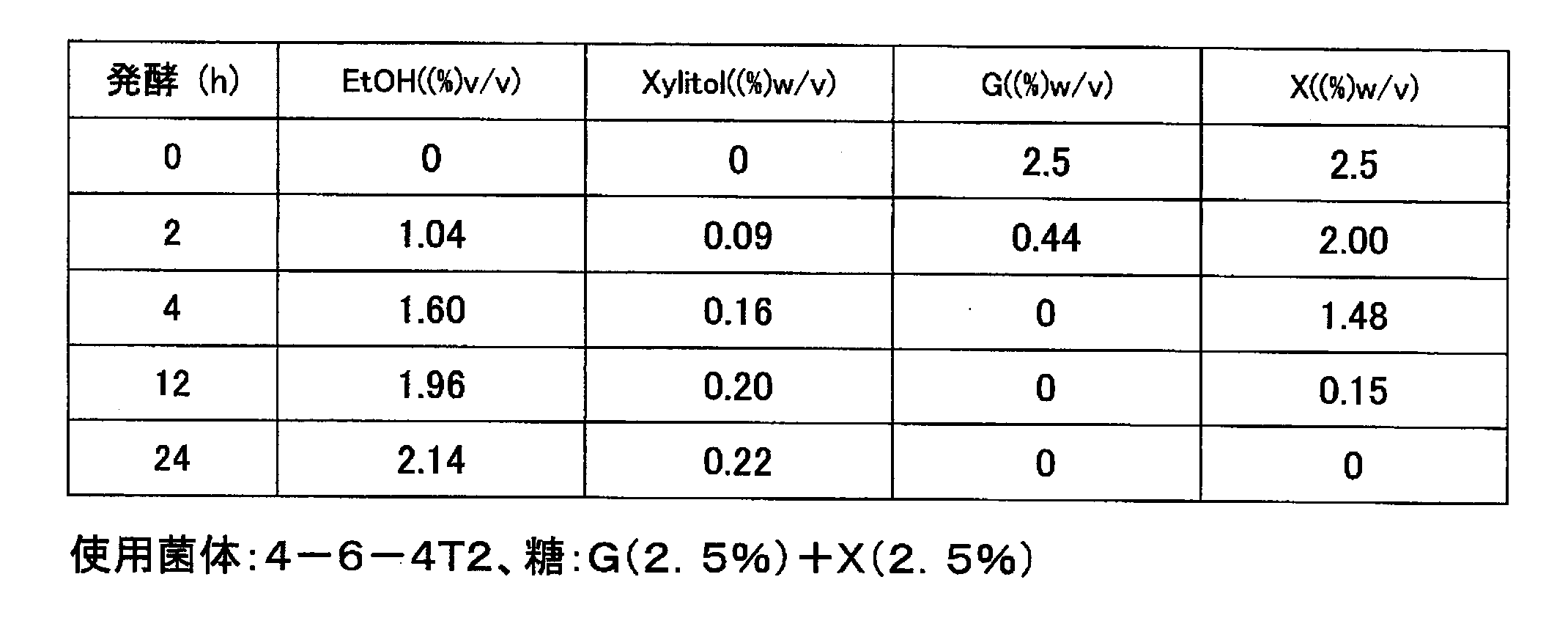
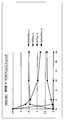
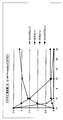
これに対し、表2及び図2に示すように、4-6-4T2株(2%)を用いて、グルコースとキシロース(それぞれ2.5%)を炭素源としてエタノールを生産させた場合は、親株と同様に発酵初期でグルコースとキシロースの双方が消費されエタノールが生産されているだけでなく、グルコース消費後もキシロースの消費がほとんど変わらない速度で進行しており、グルコースだけでなくキシロースも充分に消費され、それに伴いエタノール生産量も増加している。このことから、4-6-4T2株は、グルコースによるカタボライトリプレッションの影響を受けにくい性質を親株から受け継ぎつつ、キシロースからのエタノール生産能が親株と比較して格段に向上したものであることがわかる。
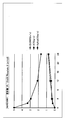
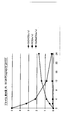
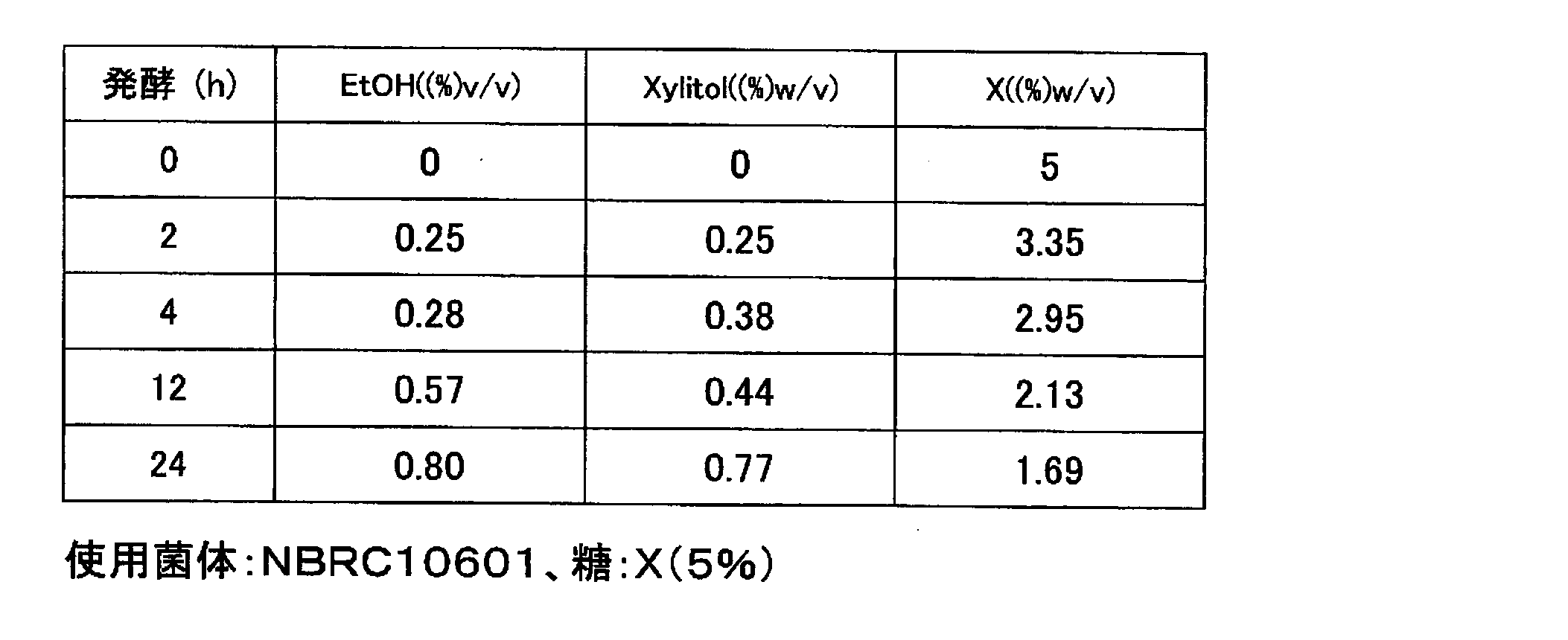
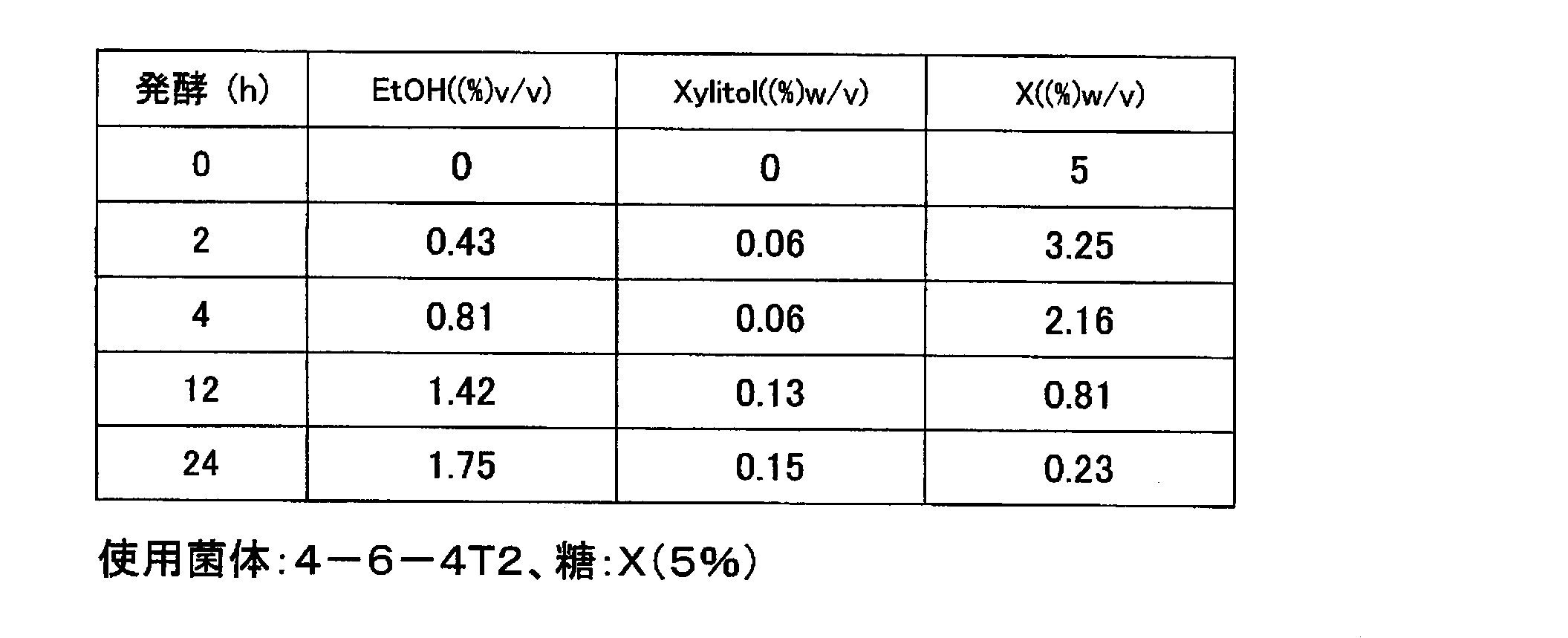
これに対し、表4及び図4に示すように、4-6-4T2株(2%)を用いて、キシロース(5%)を炭素源としてエタノールを生産させた場合は、発酵時間24時間で90%以上のキシロースが消費され、親株と比較して約1.4倍のエタノールが生産されていた。
すなわち、上記親株を用いた発酵の経時変化を追った図1及び3と4-6-4T2株を用いた発酵の経時変化を追った図2及び4との比較から、いずれも親株ではキシリトールの生産量が多く、このキシリトールの増加に伴うようにしてキシロース消費が低下し、エタノール生産が停止する傾向があると考えられる。
表5に示す糖を含む発酵用液(リン酸緩衝液:0.01M、pH5.0)に同表に示す酵母をそれぞれ2%乾燥重量相当添加し、12時間後のエタノール生産量(%(v/v))を測定した。結果を表5に示す。

Claims (5)
- カンジダ・インターメディア(Candida intermedia)4-6-4T2と命名され、FERM BP-11509として寄託された酵母。
- グルコース及びキシロースから選ばれる1種以上の単糖を含有する原料液体を、請求項1に記載の酵母を用いて発酵させる工程を含むことを特徴とするエタノールの生産方法。
- 原料液体として、グルコースとキシロースとを含有するものを用いる請求項2に記載の生産方法。
- 原料液体のpHが3.5~6.5である請求項2又は3に記載の生産方法。
- 原料液体として、セルロース系バイオマスの加水分解物を用いる請求項2~4のいずれか1項に記載の生産方法。
Priority Applications (9)
| Application Number | Priority Date | Filing Date | Title |
|---|---|---|---|
| NZ621711A NZ621711B2 (en) | 2011-11-01 | 2012-10-24 | Novel yeast and method for producing ethanol using same |
| BR112014005767A BR112014005767A2 (pt) | 2011-11-01 | 2012-10-24 | levedura e método para produzir etanol usando a mesma |
| EP12846026.8A EP2774980B1 (en) | 2011-11-01 | 2012-10-24 | Novel yeast and method for producing ethanol using same |
| PH1/2014/500830A PH12014500830A1 (en) | 2011-11-01 | 2012-10-24 | Novel yeast and method for producing ethanol using same |
| US14/345,067 US20140342424A1 (en) | 2011-11-01 | 2012-10-24 | Novel yeast and method for producing ethanol using same |
| CN201280053372.XA CN104736693B (zh) | 2011-11-01 | 2012-10-24 | 新型酵母及使用其的乙醇的生产方法 |
| AU2012333738A AU2012333738B2 (en) | 2011-11-01 | 2012-10-24 | Novel yeast and method for producing ethanol using same |
| ES12846026.8T ES2613810T3 (es) | 2011-11-01 | 2012-10-24 | Levadura novedosa y método para la producción de etanol usando la misma |
| US15/284,963 US20170051321A1 (en) | 2011-11-01 | 2016-10-04 | Novel yeast and method for producing ethanol using same |
Applications Claiming Priority (2)
| Application Number | Priority Date | Filing Date | Title |
|---|---|---|---|
| JP2011240158A JP5715930B2 (ja) | 2011-11-01 | 2011-11-01 | 新規酵母及びこれを用いたエタノールの生産方法 |
| JP2011-240158 | 2011-11-01 |
Related Child Applications (2)
| Application Number | Title | Priority Date | Filing Date |
|---|---|---|---|
| US14/345,067 A-371-Of-International US20140342424A1 (en) | 2011-11-01 | 2012-10-24 | Novel yeast and method for producing ethanol using same |
| US15/284,963 Division US20170051321A1 (en) | 2011-11-01 | 2016-10-04 | Novel yeast and method for producing ethanol using same |
Publications (1)
| Publication Number | Publication Date |
|---|---|
| WO2013065541A1 true WO2013065541A1 (ja) | 2013-05-10 |
Family
ID=48191895
Family Applications (1)
| Application Number | Title | Priority Date | Filing Date |
|---|---|---|---|
| PCT/JP2012/077428 Ceased WO2013065541A1 (ja) | 2011-11-01 | 2012-10-24 | 新規酵母及びこれを用いたエタノールの生産方法 |
Country Status (9)
| Country | Link |
|---|---|
| US (2) | US20140342424A1 (ja) |
| EP (1) | EP2774980B1 (ja) |
| JP (1) | JP5715930B2 (ja) |
| CN (1) | CN104736693B (ja) |
| AU (1) | AU2012333738B2 (ja) |
| BR (1) | BR112014005767A2 (ja) |
| ES (1) | ES2613810T3 (ja) |
| PH (1) | PH12014500830A1 (ja) |
| WO (1) | WO2013065541A1 (ja) |
Cited By (1)
| Publication number | Priority date | Publication date | Assignee | Title |
|---|---|---|---|---|
| WO2014141896A1 (ja) * | 2013-03-15 | 2014-09-18 | コスモ石油株式会社 | セルロース系バイオマスからのエタノール生産方法 |
Citations (1)
| Publication number | Priority date | Publication date | Assignee | Title |
|---|---|---|---|---|
| JPS5828289A (ja) * | 1981-08-12 | 1983-02-19 | Kyowa Hakko Kogyo Co Ltd | 発酵法によるアルコ−ルの製造法 |
Family Cites Families (1)
| Publication number | Priority date | Publication date | Assignee | Title |
|---|---|---|---|---|
| CN101165166B (zh) * | 2007-10-10 | 2010-08-25 | 首都师范大学 | 热带假丝酵母的新用途 |
-
2011
- 2011-11-01 JP JP2011240158A patent/JP5715930B2/ja active Active
-
2012
- 2012-10-24 ES ES12846026.8T patent/ES2613810T3/es active Active
- 2012-10-24 AU AU2012333738A patent/AU2012333738B2/en not_active Ceased
- 2012-10-24 WO PCT/JP2012/077428 patent/WO2013065541A1/ja not_active Ceased
- 2012-10-24 US US14/345,067 patent/US20140342424A1/en not_active Abandoned
- 2012-10-24 CN CN201280053372.XA patent/CN104736693B/zh not_active Expired - Fee Related
- 2012-10-24 BR BR112014005767A patent/BR112014005767A2/pt not_active IP Right Cessation
- 2012-10-24 EP EP12846026.8A patent/EP2774980B1/en not_active Not-in-force
- 2012-10-24 PH PH1/2014/500830A patent/PH12014500830A1/en unknown
-
2016
- 2016-10-04 US US15/284,963 patent/US20170051321A1/en not_active Abandoned
Patent Citations (1)
| Publication number | Priority date | Publication date | Assignee | Title |
|---|---|---|---|---|
| JPS5828289A (ja) * | 1981-08-12 | 1983-02-19 | Kyowa Hakko Kogyo Co Ltd | 発酵法によるアルコ−ルの製造法 |
Non-Patent Citations (10)
| Title |
|---|
| GARDONYI,M. ET AL.: "High capacity xylose transport in Candida intermedia PYCC 4715", FEMS YEAST RESEARCH, vol. 3, no. 1, 2003, pages 45 - 52, XP002431281 * |
| MORIKAWA,Y. ET AL.: "Ethanol productions from D-xylose and cellobiose by Kluyveromyces cellobiovorus", BIOTECHNOLOGY AND BIOENGINEERING, vol. 27, no. 4, 1985, pages 509 - 13, XP055067468 * |
| NIDETZKY,B. ET AL.: "Multiple Forms of Xylose Reductase in Candida intermedia: Comparison of Their Functional Properties Using Quantitative Structure-Activity Relationships, Steady-State Kinetic Analysis, and pH Studies", J AGRIC FOOD CHEM, vol. 51, no. 27, 2003, pages 7930 - 7935, XP055067471 * |
| NIGAM JN, JOURNAL OF APPLIED MICROBIOLOGY, vol. 90, 2001, pages 208 - 215 |
| PALMQVIST E.; HAHN-HAGARDAL B, BIORESOURCE TECHNOLOGY, vol. 74, 2000, pages 25 - 33 |
| RAJESHAM,S.: "Ethanol production from D-xylose by Candida intermedia MTCC-1404: Parameter optimization using Taguchi's overall evaluation criteria technique", ASIAN JOURNAL OF MICROBIOLOGY, BIOTECHNOLOGY AND ENVIRONMENTAL SCIENCES, vol. 7, no. 4, 2005, pages 679 - 684, XP008173321 * |
| See also references of EP2774980A4 |
| VENKATESWAR,R.L.: "Isolation and screening of yeast for ethanol and xylitol production from D-xylose", ASIAN JOURNAL OF MICROBIOLOGY, BIOTECHNOLOGY AND ENVIRONMENTAL SCIENCES, vol. 8, no. 4, 2006, pages 785 - 789, XP008173320 * |
| Y. MORIKAWA ET AL., BIOTECHNOLOGY AND BIOENGINEERING, vol. XXVII, 1984, pages 509 - 513 |
| YABLOCHKOVA, EN.; BOLOTNIKOVA, OI.; MIKHAILOVA, NP.; NEMOVA, NN.; GINAK, AI, APPLIED BIOCHEMISTRY AND MICROBIOLOGY, vol. 39, 2003, pages 302 - 306 |
Cited By (1)
| Publication number | Priority date | Publication date | Assignee | Title |
|---|---|---|---|---|
| WO2014141896A1 (ja) * | 2013-03-15 | 2014-09-18 | コスモ石油株式会社 | セルロース系バイオマスからのエタノール生産方法 |
Also Published As
| Publication number | Publication date |
|---|---|
| AU2012333738A1 (en) | 2014-03-13 |
| JP5715930B2 (ja) | 2015-05-13 |
| CN104736693B (zh) | 2017-09-01 |
| EP2774980A1 (en) | 2014-09-10 |
| EP2774980B1 (en) | 2017-01-04 |
| ES2613810T3 (es) | 2017-05-26 |
| EP2774980A4 (en) | 2015-06-10 |
| US20140342424A1 (en) | 2014-11-20 |
| BR112014005767A2 (pt) | 2017-06-13 |
| NZ621711A (en) | 2015-05-29 |
| US20170051321A1 (en) | 2017-02-23 |
| PH12014500830A1 (en) | 2014-05-26 |
| JP2013094123A (ja) | 2013-05-20 |
| CN104736693A (zh) | 2015-06-24 |
| AU2012333738B2 (en) | 2017-06-22 |
Similar Documents
| Publication | Publication Date | Title |
|---|---|---|
| Xiros et al. | Comparison of strategies to overcome the inhibitory effects in high-gravity fermentation of lignocellulosic hydrolysates | |
| WO2010104896A9 (en) | Production of fermentive end products from clostridium sp. | |
| Hawaz et al. | Bioethanol production from sugarcane molasses by co-fermentation of Saccharomyces cerevisiae isolate TA2 and Wickerhamomyces anomalus isolate HCJ2F-19 | |
| Xue et al. | Microbial lipid production from AFEX™ pretreated corn stover | |
| US12152233B2 (en) | Methods for propagating microorganisms for fermentation and related methods and systems | |
| Buyukoztekin et al. | Enzymatic hydrolysis of organosolv-pretreated corncob and succinic acid production by Actinobacillus succinogenes | |
| TWI540208B (zh) | 用於培養酵母菌細胞的種菌培養基及其用途 | |
| WO2010103530A1 (en) | Method for producing ethanol by c-5 sugar fermenting saccharomyces strain | |
| JP5715930B2 (ja) | 新規酵母及びこれを用いたエタノールの生産方法 | |
| Chapla et al. | Enhanced cellulosic ethanol production from mild-alkali pretreated rice straw in SSF using Clavispora NRRL Y-50464 | |
| Kriger et al. | Bioethanol production from Miscanthus sinensis cellulose by bioconversion | |
| JP2014176351A (ja) | エタノールの生産方法 | |
| Yudianto et al. | Bioconversion of pretreated wheat straw to ethanol by monascus purpureus CBS 109.07 and fusarium venenatum ATCC 20334 using simultaneous saccharification and fermentation | |
| JP6322187B2 (ja) | セルロース系バイオマスからのエタノール生産方法 | |
| JPWO2013005595A1 (ja) | エタノールの新規生産方法 | |
| JP2015107088A (ja) | 酵母変異株を用いたエタノール製造方法 | |
| CN112143761A (zh) | 改进的二次产生乙醇的制备方法 | |
| WO2013027282A1 (ja) | ブタノールの新規な生産方法 | |
| Saito et al. | Ethanol production from sugars in hydrolysates of cellulosic biomass resources with xylose-fermenting yeast Candida intermedia 4-6-4T2 | |
| JP6327822B2 (ja) | 糸状菌を用いる木質系バイオマスからのエタノールの製造方法 | |
| Zerva et al. | The filamentous fungus Paecilomyces variotii as a potential candidate for bioethanol production via consolidated bioprocessing of lignocellulosics | |
| Maciel et al. | Ethanol production from sugarcane bagasse hydrolysate using newly adapted strains of Meyerozyma guilliermondi CBA-524 and Pichia kudriavzevii CBA-519 | |
| NZ621711B2 (en) | Novel yeast and method for producing ethanol using same | |
| Teresa | Fermentation of sugarcane bagasse hydrolysates by Mucor indicus | |
| Borisjuk et al. | Metabolic engineering of tobacco biomass for production of biofuel |
Legal Events
| Date | Code | Title | Description |
|---|---|---|---|
| 121 | Ep: the epo has been informed by wipo that ep was designated in this application |
Ref document number: 12846026 Country of ref document: EP Kind code of ref document: A1 |
|
| REEP | Request for entry into the european phase |
Ref document number: 2012846026 Country of ref document: EP |
|
| WWE | Wipo information: entry into national phase |
Ref document number: 2012846026 Country of ref document: EP |
|
| ENP | Entry into the national phase |
Ref document number: 2012333738 Country of ref document: AU Date of ref document: 20121024 Kind code of ref document: A |
|
| WWE | Wipo information: entry into national phase |
Ref document number: 14345067 Country of ref document: US |
|
| NENP | Non-entry into the national phase |
Ref country code: DE |
|
| REG | Reference to national code |
Ref country code: BR Ref legal event code: B01A Ref document number: 112014005767 Country of ref document: BR |
|
| ENP | Entry into the national phase |
Ref document number: 112014005767 Country of ref document: BR Kind code of ref document: A2 Effective date: 20140312 |
|
| ENP | Entry into the national phase |
Ref document number: 112014005767 Country of ref document: BR Kind code of ref document: A2 Effective date: 20140312 |