WO2013072921A2 - Process for preparation of substituted 3'-hydrazino-biphenyl-3-carboxylic acid compounds - Google Patents
Process for preparation of substituted 3'-hydrazino-biphenyl-3-carboxylic acid compounds Download PDFInfo
- Publication number
- WO2013072921A2 WO2013072921A2 PCT/IN2012/000610 IN2012000610W WO2013072921A2 WO 2013072921 A2 WO2013072921 A2 WO 2013072921A2 IN 2012000610 W IN2012000610 W IN 2012000610W WO 2013072921 A2 WO2013072921 A2 WO 2013072921A2
- Authority
- WO
- WIPO (PCT)
- Prior art keywords
- compound
- formula
- acid
- eltrombopag
- preparation
- Prior art date
- Legal status (The legal status is an assumption and is not a legal conclusion. Google has not performed a legal analysis and makes no representation as to the accuracy of the status listed.)
- Ceased
Links
- IZAFYMTXCYHMCR-UZYVYHOESA-N CC(/C(/C1=O)=N/Nc(cccc2)c2OC)=NN1c1ccc(C)c(C)c1 Chemical compound CC(/C(/C1=O)=N/Nc(cccc2)c2OC)=NN1c1ccc(C)c(C)c1 IZAFYMTXCYHMCR-UZYVYHOESA-N 0.000 description 1
- XDXWLKQMMKQXPV-QYQHSDTDSA-N CC(/C(/C1=O)=N/Nc2cccc(-c3cccc(C(O)=O)c3)c2O)=NN1c1ccc(C)c(C)c1 Chemical compound CC(/C(/C1=O)=N/Nc2cccc(-c3cccc(C(O)=O)c3)c2O)=NN1c1ccc(C)c(C)c1 XDXWLKQMMKQXPV-QYQHSDTDSA-N 0.000 description 1
- 0 C[*@@](*=C(C1=O)C(N(C)C)=**1c(cc1)cc(NC)c1NC)c1cccc(-c2cccc(C(OC)=O)c2)c1ONC Chemical compound C[*@@](*=C(C1=O)C(N(C)C)=**1c(cc1)cc(NC)c1NC)c1cccc(-c2cccc(C(OC)=O)c2)c1ONC 0.000 description 1
Classifications
-
- C—CHEMISTRY; METALLURGY
- C07—ORGANIC CHEMISTRY
- C07D—HETEROCYCLIC COMPOUNDS
- C07D231/00—Heterocyclic compounds containing 1,2-diazole or hydrogenated 1,2-diazole rings
- C07D231/02—Heterocyclic compounds containing 1,2-diazole or hydrogenated 1,2-diazole rings not condensed with other rings
- C07D231/10—Heterocyclic compounds containing 1,2-diazole or hydrogenated 1,2-diazole rings not condensed with other rings having two or three double bonds between ring members or between ring members and non-ring members
- C07D231/14—Heterocyclic compounds containing 1,2-diazole or hydrogenated 1,2-diazole rings not condensed with other rings having two or three double bonds between ring members or between ring members and non-ring members with hetero atoms or with carbon atoms having three bonds to hetero atoms with at the most one bond to halogen, e.g. ester or nitrile radicals, directly attached to ring carbon atoms
- C07D231/44—Oxygen and nitrogen or sulfur and nitrogen atoms
- C07D231/46—Oxygen atom in position 3 or 5 and nitrogen atom in position 4
-
- C—CHEMISTRY; METALLURGY
- C07—ORGANIC CHEMISTRY
- C07C—ACYCLIC OR CARBOCYCLIC COMPOUNDS
- C07C251/00—Compounds containing nitrogen atoms doubly-bound to a carbon skeleton
- C07C251/72—Hydrazones
- C07C251/74—Hydrazones having doubly-bound carbon atoms of hydrazone groups bound to hydrogen atoms or to acyclic carbon atoms
- C07C251/76—Hydrazones having doubly-bound carbon atoms of hydrazone groups bound to hydrogen atoms or to acyclic carbon atoms to carbon atoms of a saturated carbon skeleton
Definitions
- the present invention relates to a process for the preparation of substituted 3'- hydrazino-biphenyl-3-carboxylic acid compounds.
- the present invention relates to a process for the preparation of 3'- ⁇ N , -[ l -(3,4-dimethylphenyl)-3-methyl-5-oxo-l ,5- dihydro-pyrazol-4-yIidene]hydrazino ⁇ -2'-hydroxybiphenyl-3-carboxylic acid, its intermediate compounds and pharmaceutically acceptable salts thereof.
- Eltrombopag also known as 3'- ⁇ N'-[l -(3,4-dimethylphenyl)-3-methyI-5-oxo- l ,5-dihydro-pyrazol-4-ylidene]-hydrazino ⁇ -2'-hydroxybiphenyl-3-carboxylic acid is represented b the structure of formula la.
- Eltrombopag olamine is a thrombopoietin receptor agonist indicated for the treatment of thrombocytopenia in patients with chronic immune (idiopathic) thrombocytopenic purpura who have had an insufficient response to corticosteroids, immunoglobulins, or splenectomy.
- Eltrombopag olamine is marketed under the brand name PROMACTA ® in the United States (approved in November 2008) and under the brand nan 2 ' EVOLADE ® in Europe (approved in March 2010).
- Eltrombopag belongs to a class of substituted 3'-hydrazino-biphenyl-3- carboxylic acid compounds f formula I,
- United States Patent No. 7160870 discloses eltrombopag and its salts.
- United States Patent No. 7547719 discloses eltrombopag olamine, bisethanolamine salt of eltrombopag.
- the ' 870 patent discloses a process for the reparation of eltrombopag as schematically represented by Scheme I.
- the object of the present invention is to provide a novel method, wh ich is more convenient and more efficient than the previously known method for the synthesis of substituted 3'-hydrazino-biphenyl-3-carboxy! ic acid compounds.
- the present invention provides a process for the preparation of substituted 3'- hydrazino-biphenyl-3-carbox lic acid compounds of formula I and salts thereof,
- R represents hydrogen, l inear or branched C
- R is as defined above, X is selected from the group consisting of CI, Br, I, w ith a com pound o f form u la I V.
- R' represents boronic acid, boronic acid ester or halogen in the presence of a metal catalyst; and (b) optional ly, deprotecting the compound of formula I.
- the present invention provides a compound of formula
- the present invention provides a compound of formula V,
- the present invention provides a process for the preparation of eltrombopag, compound of formula la,
- the present invention provides a process for the preparation of eltrombopag, a com ound of formula la,
- R represents linear or branched Ci_ 6 alkyl, C3.8 cycloalkyl, optionally substituted benzyl, linear or branched alkylalkoxy, tetrahydrofuranyl, tetrahydropyranyl, methyloxybenzyl, trialkylsilyl, acyl, trit ' yl.
- the present invention provides use of compound of formula Ilia, Va, or lb in the preparation of eltrombopag or salt thereof.
- the present invention provides an eltrombopag ammonium salt.
- the present invention provides a process for the preparation of eltrombopag ammonium salt comprising reacting eltrombopag with a source of ammonia.
- the present invention provides a process for the preparation of eltrombopag olamine comprising reacting eltrombopag or a salt thereof with excess of ethanolamine without using any additional reaction solvent.
- the present invention provides a process for the preparation of eltrombopag olamine comprising eltrombopag or a salt thereof with ethanolamine in an aqueous medium.
- the present invention provides a process for the preparation of eltrombopag olamine comprising reacting eltrombopag ammonium salt with ethanolam ine.
- the present invention provides use of eltrombopag ammonium salt in the preparation of eltrombopag olamine.
- Figure 1 is the proton NMR spectrum of ethyl 2-[(3-bromo-2- methoxyphenyl)hydrazono]-3-oxobutanoate, compound of formula Va.
- Figure 2 is the proton NMR spectrum of l -(3,4-dimethylphenyl)-3-methyl-4-
- Figure 3 is the proton NMR spectrum of 3'- ⁇ -2-[ l -(ethoxycarbonyl)-2- oxopropylidene]hydrazino ⁇ -2'-methoxybiphenyl-3-carboxylic acid.
- Figure 4 is the proton NMR spectrum of eltrombopag ammonium salt as obtained in Example 14c. .
- the present invention provides a process for the preparation of substituted 3'- hydrazino-biphenyl-3-carboxylic acid compounds of formula I and salts thereof,
- R represents hydrogen, linear or branched Ci -6 alkyl, C3.8 cycloalkyl, optionally substituted benzyl, linear or branched alkylalkoxy, tetrahydrofuranyl, tetrahydropyranyl, methyloxybenzyl, trialkylsilyl, acyl, trityl; the process comprising: a) reacting a comp
- R is as defined above, X is selected from the group consisting of CI, Br, I, with a compound of formula IV, wherein R' represents boronic acid, boronic acid ester or halogen in the presence of a metal catalyst; and
- room temperature means a temperature of about 25°C to about 30°C.
- linear or branched C i. 6 alkyl includes groups such as methyl, ethyl, n-propyi, isopropyl, n-butyl, isobutyl, tert-butyl, n-pentyl.
- C3-8 cycloalkyl includes groups such as cyclopropyl, cyclobutyl, cyclopentyl, cyclohexyl, cycloheptyl.
- optionally substituted benzyl means benzyl which is optionally substituted with halo, alkyl, alkoxy or nitro group wherein halo includes C I. Br.
- a l ky l includes methyl, ethyl, propyl, butyl ; alkoxy includes methoxy, ethoxy. propoxy.
- l inear or branched alkylalkoxy includes groups such as inethy lmethoxy, methylethoxy, ethylethoxy.
- trialkylsi lyl includes groups such as trimethylsi lyl, triethylsilyl, tri isopropylsilyl, tert-butyldimethylsilyl.
- acyl includes groups such as acetyl, optionally substituted benzoyl, pivaloyl.
- optionally substituted benzoyl means benzoyl which is optionally substituted with halo or nitro group wherein halo includes CI, Br, I.
- the compound of formula III wherein R is Ci. 6 alkyl, X is Br, is reacted with the compound of formula IV; wherein R' is boronic acid in the presence of a metal catalyst.
- a suitable metal catalyst includes but is not limited to Pd(PPh 3 ) 4 , PdCl 2 (PPh 3 ) 2 , PdCl 2 (dppf), Pd(OAc) 2 , NiCl 2 (PPh 3 ) 2 , PdCl 2 (dppb).
- the metal catalyst selected is PdCl 2 (PPh 3 ) .
- the reaction of compound of formula III with compound of formula IV may be carried out in the presence of base which includes organic base such as triethylam ine. N-methylmorpholine, DBU; inorganic base such as lithium hydroxide, sodium hydroxide, potassium hydroxide, sodium carbonate, potassium carbonate, sodium bicarbonate, potassium bicarbonate.
- organic base such as triethylam ine. N-methylmorpholine, DBU
- inorganic base such as lithium hydroxide, sodium hydroxide, potassium hydroxide, sodium carbonate, potassium carbonate, sodium bicarbonate, potassium bicarbonate.
- the base is selected from inorganic base and more preferably the base is potassium hydroxide.
- the reaction of compound of formula III with compound of formula IV may be carried out in the presence of a suitable solvent.
- the suitable solvent includes but is not limited to ethanol, methanol, 2-propanol, methyl acetate, ethyl acetate, acetone, ethylmethylketone, tetrahydrofuran, dioxane, toluene, dimethoxyethane, acetonitrile, dimethylformamide, dimethyl sulfoxide; water or mixtures thereof.
- the solvent selected is ethanol-water mixture.
- the reaction of compound of formula III with compound of formula IV may be carried out at a temperature in the range of about 25°C to about the reflux temperature of the solvent.
- the reaction is carried out for a period of about 3 hours to about 40 hours.
- Preferably the reaction is carried out at a temperature of about 70°C to about 85°C for a period of about 1 5 hour to about 30 hours.
- the compound of formula II I wherein X is Br and R is methyl, is reacted with the compound of formula IV; wherein R' is boronic acid, in the presence of PdCl 2 (PPh 3 ) 2 catalyst and potassium hydroxide as base.
- the compound of formula III, wherein X and R are as defined above, is reacted with the compound of formula IV; wherein R' is halogen in the presence of a metal catalyst.
- a suitable metal catalyst includes but is not l im ited to Pd(PPh 3 ) 4 , . PdC l : (PPh 3 ) 2 . N iC I 2 (PPh )2- N i(PPhj) 2 .
- the metal catalyst selected is PdCl 2 ( PPh 3 ) 2 .
- the compound of formula II I wherein R is C
- the compound of formula III wherein X is Br and R is methyl, is reacted with the compound of formula IV; wherein R' is Br, in the presence of PdCl 2 (PPh 3 ) 2 catalyst.
- the reaction may be carried out in the presence of a suitable solvent.
- the suitable solvent includes but is not limited to ethanol, methanol, 1 -propanol, 2- propanol, ethyl acetate, tetrahydrofuran, dioxane, acetone, toluene, dimethoxyethane, acetonitrile, dimethylformamide, dimethyl sulfoxide or mixtures thereof.
- the solvent selected is ethanol.
- the deprotection reaction process includes any of the fol lowing:
- R is linear or branched alkylalkoxy, tetrahydrofuranyl, tetrahydropyranyl, trityl
- the deprotection of the compound of formula I is performed using an inorganic acid selected from the group consisting of hydrochloric acid, hydrobromic acid, sulfuric acid, phosphoric acid; organic acid such as acetic acid; or
- the deprotection of the compound of formula I is performed using an inorganic acid selected from the group consisting of hydrochloric acid, hydrobromic acid, sulfuric acid, phosphoric acid; inorganic base selected from the group consisting of sodium hydroxide, potassium hydroxide, sodium carbonate, potassium carbonate.
- inorganic acid selected from the group consisting of hydrochloric acid, hydrobromic acid, sulfuric acid, phosphoric acid
- inorganic base selected from the group consisting of sodium hydroxide, potassium hydroxide, sodium carbonate, potassium carbonate.
- the compound of formula I wherein R is methyl is deprotected using aqueous hydrobromic acid to give eltrombopag, compound of formula la.
- the reaction may be carried out at a temperature in the range of about 25°C to about 125°C.
- the reaction is carried out for a period of about 2 hours to about 80 , hours.
- Preferably the reaction is carried out at a temperature of about 1 10°C to about I I 5"C for a period of about 35 hours to about 65 hours.
- the compound of formula I wherein R is methyl is deprotected using Lewis acid such as aluminium chloride to give eltrombopag, compound of formula la.
- the compound of formula I wherein R is methyl is deprotected using Lewis acid such as aluminium chloride to give solid eltrombopag- aluminium complex which on acid treatment gives eltrombopag, compound of formula la.
- the reaction may be carried out in the presence of a suitable solvent.
- suitable solvent includes but is not limited to chloroform, dichloromethane, dichloroethane, toluene, xylene, chlorobenzene, tetrahydrofuran, dioxane, tert- butylmethyl ether, dimethoxyethane.
- the solvent selected is toluene, tetrahydrofuran.
- the reaction may be carried out at a temperature in the range of about 20°C to about I 25°C.
- the reaction is carried out for a period of about 2 hours to about 80 hours.
- the reaction is carried out at a temperature of about 25°C to about 40°C for a period of about 35 hour to about 65 hours to give eltrombopag-aluminium complex.
- the .eltrombopag-aluminium complex on acid treatment gives eltrombopag, compound of formula la.
- the acid used includes hydrochloric acid, hydrobromic acid, sulfuric acid, nitric acid, phosphoric acid, acetic acid.
- the acid used is acetic acid.
- the reaction may be carried out in the presence of a suitable solvent.
- the suitable solvent includes but is not limited to tetrahydrofuran, methanol, ethanol, 2- propanol.
- the reaction may be carried out at a temperature in the range of about 25°C to about I 25°C.
- the reaction is carried out for a period of about 2 hours to about 80 hours.
- Preferably the reaction is carried out at a temperature of about 40°C to about 120°C for a period of about 2 hour to about 24 hours.
- the present invention provides a process for the preparation of compound of formula I wherein R is H, the process comprising reacting compound of formula III wherein R is Ci-6 alkyl and X is CI, Br, I, with compound of formula IV wherein R' is boronic acid in the presence of a metal catalyst to give compound of formula I wherein R is Ci_6 alkyl followed by deprotecting the compound of formula I wherein R is Ci-6 alkyl to give compound of formula I wherein R is H.
- the present invention provides a process for the preparation of compound of formula I wherein R is H, the process comprising reacting compound of formula I I I wherein R is methyl and X is Br. with compound of formula I V wherein R' is boronic acid in the presence of dCI 2 (PPh3)2 catalyst, to give compound of formula 1 wherein R is methyl followed by deprotecting the compound of formula I wherein R is methyl using aqueous hydrobromic acid to give compound of formula I wherein R is H.
- the present invention provides a process for the preparation of compound of formula I wherein R is H, the process comprising reacting compound of formula III wherein R is methyl and X is Br, with compound of formula IV wherein R' is boronic acid in the presence of PdCl 2 (PPh3)2 catalyst to give compound of formula I wherein R is methyl followed by deprotecting the compound of formula I wherein R is methyl using Lewis acid such as aluminium chloride to give compound of formula I wherein R is H.
- the present invention provides a process for isolating eltrombopag from an aqueous medium.
- the present invention provides a compound of formula III, wherein X is Br and R is methyl.
- the present invention provides a process for the preparation of compound of formula III which comprises re d of formula V,
- reaction may be carried out in the presence of alkali metal acetate such as sodium acetate, potassium acetate and the like; potassium carbonate, sodium carbonate.
- alkali metal acetate is used; more preferably, sodium acetate is used.
- the reaction may be carried out in the presence of a suitable solvent.
- the suitable solvent includes but is not limited to acetic acid, methanol, ethanol, 2- propanol or mixtures thereof.
- the solvent selected is acetic acid.
- the reaction may be carried out at a temperature in the range of about 25°C to about the reflux temperature of the solvent.
- the reaction is carried out for a period of about 1 hour to about 10 hours.
- Preferably the reaction is carried out at about the reflux temperature of the solvent for a period of about 2 hours to about 5 hours.
- the present invention provides a process for the preparation of compound of formula III, the process comprising reacting a compound of formula V with 3,4-dimethylphenylhydrazine or salt thereof to give the compound of formula III, wherein X is Br, R is methyl and R" is ethyl.
- the present invention provides a compound of formula V,
- the present invention provides a compound of formula V, wherein X is Br, R is methyl and R" is ethyl.
- the present invention provides a process for the preparation of compound of formula V which comprises reactin und of formula VI or its salt thereof, VI
- the reaction may be carried out in the presence of alkali metal nitrite such as sodium nitrite, potassium nitrite and the like; alkaline earth metal nitrite such as calc ium nitrite and the like.
- alkali metal nitrite such as sodium nitrite, potassium nitrite and the like
- alkaline earth metal nitrite such as calc ium nitrite and the like.
- sodium nitrite is used.
- the inorgan ic acid is selected from the group consisting of hydrochloric acid, nitric acid, sulfuric acid, hydrobromic acid.
- hydrochloric acid is used.
- the reaction may be carried out in the presence of a suitable solvent.
- the suitable solvent includes but is not limited to methanol, ethanol, 1 -propanol, 2- propanol, water or mixtures thereof.
- the solvent selected is methanol, water, ethanol-water mixture.
- the reaction may be carried out at a temperature in the range of about 0°C to about 10°C.
- the reaction is carried out for a period of about 2 hours to about 8 hours.
- Preferably the reaction is carried out at a temperature about 0°C to about 5°C for a period of about 2 hours to about 6 hours.
- the present invention provides a process for the preparation of compound of formula V, the process comprising reacting a compound of formula VI with alkyl acetoacetate in presence of sodium nitrite and hydrochloric acid to yield the compound of formula V, wherein X is Br, R is methyl and R" is ethyl.
- the present invention provides a process for the preparation of eltrombopag, compound of formula la,
- the reaction may be carried out in the presence of alkali metal nitrite such as sodium nitrite, potassium nitrite and the like; alkaline earth metal nitrite such as ca lc ium nitrite and the like.
- alkali metal nitrite such as sodium nitrite, potassium nitrite and the like
- alkaline earth metal nitrite such as ca lc ium nitrite and the like.
- sodium nitrite is used.
- the inorganic acid is selected from the group consisting of hydrochloric acid, nitric acid, sulfuric acid, hydrobromic acid.
- hydrochloric acid is used.
- the reaction may be carried out in the presence of a suitable solvent.
- the suitable solvent includes but is not limited to methanol, ethanol, 1 -propanol, 2-propanol, water or mixtures thereof.
- the solvent selected is methanol, water, ethanol-water mixture.
- the reaction may be carried out in the presence of alkali metal acetate such as sodium acetate, potassium acetate and the like; sodium carbonate, potassium carbonate.
- alkali metal acetate used is sodium acetate.
- the reaction may be carried out in the presence of a suitable solvent.
- the suitable solvent includes but is not limited to acetic acid, methanol, ethanol or mixtures thereof.
- the solvent selected is acetic acid.
- the reaction may be carried out at a temperature in the range of about 25°C to about the reflux temperature of the solvent.
- the reaction is carried out for a period of about 1 hour to about 10 hours.
- the reaction is carried out at to about the reflux temperature of the solvent for a period of about 2h to about 5h.
- a suitable metal catalyst includes but is not limited to Pd( Ph 3 )4, PdCl 2 (PPh 3 ) 2 , PdCl 2 (dppf), Pd(OAc) 2 , NiCl 2 (PPh 3 ) 2 , PdCl 2 (dppb).
- the metal catalyst selected is PdCl 2 (PPh 3 ) 2 .
- the reaction may carried out in the presence of base which includes organic base such as triethylamine, N-methylmorpholine, DBU; inorganic base such as lithium hydroxide, sodium hydroxide, potassium hydroxide, sodium carbonate, potassium carbonate, sodium bicarbonate, potassium bicarbonate.
- the base is selected from inorganic base and more preferably the base is potassium hydroxide.
- the reaction may carried out in the presence of a suitable solvent.
- the suitable solvent includes but is not limited to ethanol, methanol, 2-propanol, methyl acetate, ethyl acetate, acetone, ethylmethylketone, tetrahydrofuran, dioxane, toluene, dimethoxyethane, acetonitrile, dimethylformamide; water or mixtures thereof.
- the solvent selected is ethanol-water mixture.
- the reaction ma be carried out at a temperature in the range of about 25°C to about the reflux temperature of the solvent.
- the reaction is carried out for a period of about 3 hours to about 40 hours.
- the reaction is carried out at a temperature of about 70°C to about 85°C for a period of about 15 hours to about 30 hours.
- the compound of formula lb is deprotected using Lewis acid selected from the group consisting of aluminium chloride, aluminium bromide, aluminium iodide, stannous chloride, stannous bromide, titanium chloride, boron trifluoride, boron tribromide, boron trifluoride-dimethylsulfide complex, beryllium chloride, beryllium bromide, zinc chloride, zinc bromide, trimethylsilylchloride, trimethylsilylbromide, trimethylsilyliodide.
- Lewis acid selected from the group consisting of aluminium chloride, aluminium bromide, aluminium iodide, stannous chloride, stannous bromide, titanium chloride, boron trifluoride, boron tribromide, boron trifluoride-dimethylsulfide complex, beryllium chloride, beryllium bromide, zinc chloride, zinc bromide, trimethylsilylchlor
- the compound of formula lb is deprotected using Lewis acid such as aluminium chloride to give solid eltrombopag-aluminium complex which on acid treatment gives eltrombopag.
- Lewis acid such as aluminium chloride
- the present invention provides a process for the preparation of eltrombopag, a compound of formula la,
- R represents l inear or branched C
- the present invention provides a process for the preparation of eltrombopag comprising subjecting the compound of formula I wherein R is C K6 alkyl, C 3 .g cycloalkyl, to a deprotection reaction using protic acid such as hydroiodic acid, hydrobromic acid, hydrobromic acid/acetic acid, methanesulfonic acid, trifluoroacetic acid; Lewis acid selected from the group consisting of aluminium chloride, aluminium bromide, aluminium iodide, stannous chloride, stannous bromide, titanium chloride, boron trifluoride, boron tribromide, boron trifluoride- dimethylsulfide complex, beryllium chloride, beryll ium bromide, zinc chloride, zinc brom ide, trimeth Isi i lch ioride.
- protic acid such as hydroiodic acid, hydrobromic acid, hydrobromic acid/acetic acid, methanesulf
- trimethylsi !ylbromide trimethylsi lyliod ide, lithium iod ide, l i th i um iod ide i n re fluxing 2.4.6-col l id ine, pyridine hydroch loride; sulphur compounds such as sodium ethylmercaptide, sodium tri methylsi !aneth iolate; alkal i organom ides such as sodium bis(trimethylsilyl)amide and lithium d i isopropylam ide.
- the present invention provides a process for the preparation of eltrombopag, the process comprising subjecting the compound of formula I wherein where R is optionally substituted benzyl, methyloxybenzyl, to a deprotection reaction by hydrogenation using hydrogen in the presence of a metal catalyst.
- the present invention provides a process for the preparation of eltrombopag, the process comprising subjecting the compound of formula I wherein R is linear or branched alkylalkoxy, tetrahydrofuranyl, tetrahydropyranyl, trityl, to a deprotection reaction using an inorganic acid selected from the group consisting of hydrochloric acid, hydrobromic acid, sulfuric acid, phosphoric acid; organic acid such as acetic acid.
- the present invention provides a process for the preparation of eltrombopag, the process comprising subjecting the compound of formula I wherein R is trialkylsilyl, to a deprotection reaction using acids such as acetic acid or fluorides such as tetrabutylammonium fluoride.
- the present invention provides a process for the preparation of eltrombopag, the process comprising subjecting the compound of formu la 1 wherein R is acyl. to a deprotection reaction using an inorganic acid selected from the group consisting of hydrochloric acid, hydrobromic acid, sulfuric acid, phosphoric acid; inorganic base selected from the group consisting of sodium hydroxide, potassium hydroxide, sodium carbonate, potassium carbonate.
- inorganic acid selected from the group consisting of hydrochloric acid, hydrobromic acid, sulfuric acid, phosphoric acid
- inorganic base selected from the group consisting of sodium hydroxide, potassium hydroxide, sodium carbonate, potassium carbonate.
- the present invention provides a process for the preparation of eltrombopag, the process comprising subjecting the compound of formula I wherein R is methyl, to a deprotection reaction using hydrobromic acid.
- the present invention provides a process for the preparation of eltrombopag, the process comprising subjecting the compound of formula I wherein R is methyl, to a deprotection reaction using Lewis acid.
- the present invention provides a process for the preparation of eltrombopag, compound of formula la, the process comprising deprotecting the compound of formula I wherein R is methyl, using a Lewis acid such as aluminium chloride to give solid eltrombopag-aluminium complex, then on acid treatment gives eltrombopag. compound of formula la.
- the reaction may be carried out in the presence of a suitable solvent.
- the suitable solvent includes but is not lim ited to chloroform, dichloromethane, dichloroethane, toluene, xylene, chlorobenzene, tetrahydrofuran, dioxane, tert- butylmethyl ether, dimethoxyethane.
- the solvent selected is toluene, tetrahydrofuran.
- the reaction may be carried out at a temperature in the range of about 20°C to about 125°C.
- the reaction is carried out for a period of about 2 hours to about 80 hours.
- the reaction is carried out at a temperature of about 25°C to about 40°C for a period of about 35 hours to about 65 hours to give eltrombopag-aluminium complex.
- the eltrombopag-aluminium complex on acid treatment gives eltrombopag, compound of formula la.
- the acid used includes hydrochloric acid, hydrobromic acid, sulfuric acid, nitric acid, phosphoric acid, acetic acid.
- the acid used is acetic acid.
- the suitable solvent includes but is not limited to tetrahydrofuran, methanol, ethanol, 2-propanol.
- the reaction may be carried out at a temperature in the range of about 25°C to about 125°C.
- the reaction is carried out for a period of about 2 hours to about 80 hours.
- Preferably the reaction is carried out at a temperature of about 40°C to about 120°C for a period of about 2 hour to about 24 hours.
- the present invention provides an eltrombopag-aluminium complex.
- the present invention provides a solid eltrombopag-aluminium complex.
- the present invention provides use of compound of formula 111, or V in the preparation of eltrombopag or sa lt thereof.
- the present invention provides use of compound of formula I, wherein R represents linear or branched C
- the present invention provides use of compound of formula Ilia, Va, or lb in the preparation of eltrombopag and salt thereof.
- the present invention provides a process for the preparation of substituted 3'- hydrazino-biphenyl-3-carboxylic acid compounds of formula 1 and salts thereof,
- R represents hydrogen, linear or branched C
- R is as defined above and R" represents hydrogen, Ci_6 alkyl,
- the reaction may be carried out in the presence of alkali metal acetate such as sodium acetate, potassium acetate and the like; potassium carbonate, sodium carbonate.
- alkali metal acetate is used; more preferably, sodium acetate is used.
- the reaction may be carried out in the presence of a suitable solvent.
- the suitable solvent includes but is not limited to acetic acid, methanol, ethanol, 2-propanol or mixtures thereof.
- the solvent selected is acetic acid.
- the reaction may be carried out at a temperature in the range of about 25°C to about the reflux temperature of the solvent.
- the reaction is carried out for a period of about 1 hour to about 10 hours.
- the reaction is carried out at about the reflux temperature of the solvent for a period of about 2h to about 5h.
- the compound of formula VII is reacted with 3,4- dimethylphenylhydrazine or salt thereof to give the compound of formula I, wherein R is methyl and R" is ethyl.
- the present invention provides a process for the preparation of compound of formula 1 wherein R is H, the process comprising reacting compound of formula VI I wherein R is C
- the present invention rovides a compound of formula VII,
- R represents hydrogen, linear or branched Cue alkyl, C3.8 cycloalkyl, optionally substituted benzyl, linear or branched alkylalkoxy, tetrahydrofuranyl, tetrahydropyranyl, methyloxybenzyl, trialkylsilyl, acyl, trityl; and R" represents hydrogen, Ci-6 alkyl.
- the present invention provides a compound of formula V, wherein R is methyl and R" is ethyl.
- the present invention provides a process for the preparation of compound of formula VII. the process comprising:
- a suitable metal catalyst includes but is not limited to Pd(PPh 3 ) 4 , PdCI 2 (PPh 3 ) 2 .
- the metal catalyst selected is PdCI 2 (PPh ) 2 .
- the reaction of compound of formula VI with compound of formula IV may be carried out in the presence of base which includes organic base such as triethylamine, N-methylmorpholine, DBU; inorganic base such as lithium hydroxide, sodium hydroxide, potassium hydroxide, sodium carbonate, potassium carbonate, sodium bicarbonate, potassium bicarbonate.
- the base is selected from inorganic base and more preferably the base is potassium hydroxide, potassium carbonate.
- the reaction of compound of formula VI with compound of formula IV may be carried out in the presence of a suitable solvent.
- the suitable solvent includes but is not limited to ethanol, methanol, 2-propanol, methyl acetate, ethyl acetate, acetone, ethylmethylketone, tetrahydrofuran, dioxane, toluene, dimethoxyethane, acetonitrile, dimethylformamide, dimethyl sulfoxide; water or mixtures thereof.
- the solvent selected is ethanol-water mixture.
- the reaction of compound of formula VI with compound of formula I V may be carried out at a temperature in the range of about 25°C to about the reflux temperature of the solvent.
- the reaction is carried out for a period of about 3 hours to about 40 hours.
- Preferably the reaction is carried out at a temperature of about 70°C to about 85°C for a period of about 1 5 hour to about 30 hours.
- the compound of formula VI wherein R is Ci. 6 alkyl, X is Br, is reacted with the compound of formula IV; wherein R' is boronic acid in the presence of a metal catalyst.
- the compound of formula VI wherein X is Br and R is methyl, is reacted with the compound of formula IV; wherein R' is boronic acid, in the presence of PdCl 2 (PPh 3 )2 catalyst and potassium carbonate as base.
- the compound of formula VI wherein R is Ci -6 alkyl, X is Br is reacted with the compound of formula IV; wherein R' is halogen selected from the group consisting of CI, Br, I.
- the reaction may be carried out in the presence of alkal i metal nitrite such as sodium nitrite, potassium nitrite and the like; alkaline earth meta l nitrite such as calcium nitrite and the l ike.
- alkal i metal nitrite such as sodium nitrite, potassium nitrite and the like
- alkaline earth meta l nitrite such as calcium nitrite and the l ike.
- sodium nitrite is used.
- the inorganic acid is selected from the group consisting of hydrochloric acid, nitric acid, sulfuric acid, hydrobromic acid.
- hydrochloric acid is used.
- the reaction may be carried out in the presence of a suitable solvent.
- the suitable solvent includes but is not limited to methanol, ethanol, 1 -propanol, 2-propanol, water or mixtures thereof.
- the solvent selected is methanol-water mixture.
- the compound of formula VIII, wherein R is C ⁇ . alkyl is reacted with al kyl acetoacetate or acetoacetic acid in presence of sodium nitrite and hydroch loric ac id to y ield the com pound of formu la V I I, wherein R is Ci _6 alkyl and R" is hydrogen. C i .6 alkyl.
- the present invention provides a process for the preparation of compound of formula VII which comprises reacting a compound of formula V,
- the com pound of formula V wherein X and R are as defined above, is reacted with the compound of formula I V; wherein R' is boronic acid or boronic acid ester or halogen in the presence of a metal catalyst.
- a suitable metal catalyst includes but is not limited to Pd(PPh 3 ) 4 , PdCl 2 (PPh 3 ) 2 , PdCl 2 (dppf), Pd(OAc) 2 , NiCl 2 (PPh 3 ) 2; PdCl 2 (dppb).
- the metal catalyst selected is PdCl 2 (PPh3) 2 .
- the reaction of compound of formula V with compound of formula IV may be carried out in the presence of base which includes organic base such as triethylamine, N-methylmorphol ine, DBU; inorganic base such as lithium hydroxide, sodium hydroxide, potassium hydroxide, sodium carbonate, potassium carbonate, sodium bicarbonate, potassium bicarbonate.
- the base is selected from inorganic base and more preferably the base is potassium hydroxide, potassium carbonate.
- the reaction of compound of formula V with compound of formula IV may be carried out in the presence of a suitable solvent.
- the suitable solvent incl udes but is not l im ited to ethanol. methanol. 2-propanol, methyl acetate, ethyl acetate, acetone, ethylmethylketone, tetrahydrofuran, dioxane, toluene, dimethoxyethane, acetonitri le, dimethylformamide, dimethyl sulfoxide; water or m ixtures thereof.
- the solvent selected is ethanol-water mixture.
- the reaction of compound of formula V with compound of formula IV may be carried out at a temperature in the range of about 25°C to about the reflux temperature of the solvent.
- the reaction is carried out for a period of about 3 hours to about 40 hours.
- Preferably the reaction is carried out at a temperature of about 70°C to about 85°C for a period of about 1 5 hour to about 30 hours.
- the compound of formu la V wherein X is Br and R is methyl, is reacted with the compound of formula IV; wherein R' is boronic acid, in the presence of PdCI 2 (PPh3) 2 catalyst and potassium carbonate as base.
- the compound of formula V wherein R is C
- the present invention provides a process for the deprotection of a compound of formula III,
- R represents linear or branched C
- the deprotection of compound of formula III may be carried out as described for compound of formula I wherein R H, as discussed supra.
- the present invention provides a process for the deprotection of the compound of formula III, the process comprising subjecting the compound of formula III wherein R is methyl, to a deprotection reaction using hydrobromic acid, Lewis acid such as aluminium chloride.
- the present invention provides an eltrombopag ammonium salt.
- the present invention provides an eltrombopag ammonium salt characterized by a proton NMR spectrum having peaks at ⁇ 14.81 (brs, l H), 8. 17 (s, l H), 7.80- 7.82(m,3H), 7.65-7.68 (d, l H), 7.34-7.42 (m,2H), 7.01 -7.07 (m,2H), 6.87 (t, l H), 2.37 (s,3 H), 2.22 (s,3H), 2.1 8 (s,3H).
- the present invention provides an eltrombopag ammonium salt with ammonia content i n the range o f about 3.5% to about 8.5%.
- the present i nvention provides an eltrombopag ammonium salt which may be mono-am mon i um salt or d i-ammon i um salt, preferably in crystal line form or amorphous form.
- the present invention provides a process for the preparation of eltrombopag ammonium salt comprising reacting eltrombopag with a source of ammonia.
- a suitable source of ammonia includes but is not limited to ammonia water (aqueous ammonia), ammonium carbonate, ammonia gas, liquid ammonia.
- the source of ammonia selected is ammonia water.
- the reaction may be carried out in the presence of a suitable solvent.
- the suitable solvent includes but is not limited to methanol, ethanol, 1 -propanol, 2- propanol, 1 -butanol, 2-butanol, methyl acetate, ethyl acetate, n-propyl acetate, tert- butyl acetate, acetone, ethylmethylketone, methyl isobutyl ketone, chloroform, d ich loromethane. d ich loroethane.
- tetrahydrofuran d ioxane, tert-butylmethyl ether, to l uene.- xylene, ch lorobenzene. d i methoxyethane, aceton itri le, d imethylformam ide; water or m ixtures thereof.
- the solvent selected is tetrahydrofuran .
- the reaction may be carried out at a temperature in the range of about 10°C to about 40°C.
- the reaction is carried out for a period of about 1 hour to about 20 hours.
- Preferably the reaction is carried out at a temperature of about 20°C to about 35°C for a period of about 1 hour to about 5 hours.
- the present invention provides a process for isolating eltrombopag as an eltrombopag ammonium salt.
- E ltrom bopag may be converted to its pharmaceutically acceptable salts such as its monoethanolamine, bisethanolamine salts.
- eltrombopag is converted to its bisethanolamine salt namely, eltrombopag olamine " , compound of formula II.
- the present invention provides a process for the preparation of eltrombopag olamine comprising reacting eltrombopag or a salt thereof with excess of ethanolamine without using any additional reaction solvent.
- the present invention provides a process for the preparation of eltrombopag olamine comprising reacting eltrombopag or a salt thereof with ethanolamine in an aqueous medium.
- the present invention provides a process for the preparation of eltrombopag olamine comprising reacting eltrombopag or a salt thereof with ethanolam ine in water.
- the present invention provides a process for the preparation of eltrombopag olam ine comprising reacting eltrombopag or a salt thereof with ethanolam ine in a solvent and isolating eltrom bopag olam ine by add ition of anti- solvent.
- the solvent that may be utilized for this step includes, but is not l im ited to alcohols such as methanol, ethanol, 1 -propanol, 2-propanol, 1 -butanol, 2-butanol, 1 - .
- ethers such as tert-butylmethyl ether, tetrahydrofuran, dioxane and the like
- esters such as methyl acetate, ethyl acetate, n- propyl acetate, and tert-butyl acetate and the like
- ketones such as acetone, ethyl methyl ketone and methyl isobutyl ketone and the like
- dimethyl sulfoxide dimethyl formamide; dimethyl acetamide; water and mixtures thereof.
- the anti-solvent that may be utilized for this step includes, but is not lim ited to ethers such as diethyl ether, dimethyl ether, diisopropyl ether, tetrahydrofuran, dioxane; hydrocarbons such as n-hexane, n-heptane, cyclohexane; water and m ixtures thereof: preferably non-polar anti-solvent is used.
- the present i nvention provides a process for the preparation of eltrombopag olamine comprising reacting eltrombopag ammonium salt with ethanolam ine.
- the present invention provides a process for the preparation of eltrombopag olamine comprising reacting eltrombopag ammonium salt with ethanolamine, preferably, without using any additional reaction solvent.
- In one embodiment, the present invention provides a process for the preparation of eltrombopag olam ine comprising reacting eltrombopag ammonium salt with ethanolamine in the presence of a solvent.
- the solvent that may be utilized for this step includes, but is not limited to methanol, ethanol, 1 -propanol, 2-propanol, 1 -butanol, 2-butanol, methyl acetate, ethyl acetate, n-propyl acetate, tert-butyl acetate, acetone, ethylmethylketone, methyl isobutyl ketone, tetrahydrofuran, dioxane, tert-butylmethyl ether, toluene, dimethoxyethane, acetonitrile, dimethylformamide; water or mixtures thereof.
- the present invention provides use of eltrombopag ammonium salt in the preparation of eltrombopag olamine.
- the present invention provides a process for the preparation of eltrombopag olamine, the process comprising: (a) treating a reaction mixture containing. eltrombopag with a base to give eltrombopag salt, and (b) reacting the eltrombopag salt with ethanolamine to give eltrombopag olamine directly, wherein eltrombopag is formed in-situ in the reaction.
- the eltrombopag salt obtained in this step includes, but is not l imited to eltrombopag sodium salt, eltrombopag potassium salt, eltrombopag ammonium salt.
- the present invention provides a process for the preparation of eltrombopag olamine, the process comprising: (a) treating a reaction mixture containing eltrombopag with a source of ammonia to give eltrombopag ammonium salt, and (b) reacting the eltrombopag ammonium salt with ethanolamine to give eitrombopag olamine directly, wherein eltrombopag is formed in-situ in the reaction.
- the present invention provides eltrombopag and a salt thereof, having a compound of formula Ilia in less than about 0.5%, preferably less than about 0.15%, more preferably less than about 0.05%.
- the present invention provides eltrombopag and a salt thereof, having a compound of formula Illb in less than about 0.5%, preferably less than about 0.15%, more preferably less than about 0.05%.
- the present invention provides eltrombopag and a salt thereof, having a compound of formula IXa in less than about 0.5%, preferably less than about 0. 15%, more preferably less than about 0.05%.
- the present invention provides eltrombopag and a salt thereof, having a compound of formula lXb in less than about 0.5%, preferably less than about 0. 1 5%, more preferably less than ab t 0.05%.
- the present invention provides substituted 3'-hydrazino-biphenyl-3-carboxylic acid compounds of formula I. salts thereof and intermediate compounds, obtained by the above processes, as characterized and analyzed by fol lowing techniques:
- EXAMPLE 3 Preparation of 3 N'-[l-(3,4-dimethylphenyl)-3-methyI-5- oxo-1, 5-dihydro-pyrazol-4-ylidene]hydrazino ⁇ -2'-methoxybiphenyl-3-carboxylic acid
- EXAMPLE 7 Preparation of 3'- ⁇ -2-[l-(ethoxycarbonyl)-2- oxopropylidene]hydrazino ⁇ -2'-methoxybiphenyl-3-carboxyIic acid
- EXAMPLE 8 Preparation of 3'- ⁇ N'-[l-(3,4-dimethylphenyl)-3-methyl-5- oxo-l,5-dihydro-pyrazol-4-ylidene]hydrazino ⁇ -2'-methoxybiphenyl-3-carboxylic acid
- EXAMPLE 10 Preparation of l-(3,4-dimethylphenyI)-3-methyI-4-(3- bromo-2-hydroxyphenyl)hydrazono-5-pyrazolone A solution of l -(3,4-dimethylphenyl)-3-methyl-4-(3-bromo-2- methoxyphenyl)hydrazono-5-pyrazolone(5g) prepared as in Example 2, in 48% aqueous hydrobromic acid (200mL) and glacial acetic acid (50mL) was stirred and heated under reflux for about 80 hours. The reaction mixture was concentrated under vacuum to obtain a thick residue.
- EXAMPLE 11 Preparation of 3'- ⁇ N'-[l-(3,4-dimethylphenyl)-3-methyl-5- oxo-1, 5-dihydro-pyrazol-4-yIidene]hydrazino ⁇ -2'-hydroxybiphenyl-3-carboxylic acid
- EXAMPLE 16 Preparation of Ethyl 2-[(3-bromo-2- methoxyphenyl)hydrazono]-3-oxobutanoate
- hydrochloric acid 13.5mL of concentrated hydrochloric acid in 136.5mL of water
- sodium nitrite 3.47g in l OmLof water
- ethylacetoacetate (6.55g) was added to the reaction mixture and stirred for about 3 hours at about -5°C to about 5°C.
- Sodium bicarbonate and methanol was then added to the reaction mixture.
- the reaction mixture was stirred at about -5°C to about 5°C for about 1 hour.
- the mixture was fi ltered to give a sol id, which was washed with water and dried at about 50°C to about 1 0 55 °C.
- Y ie ld I 3.3 g
- EXAMPLE 18 Preparation of 3'- ⁇ N'-[l-(3,4-dimethylphenyl)-3-methyI-5- oxo-l,5-dihydro-pyrazol-4-ylidene]hydrazino ⁇ -2'-methoxybiphenyl-3-carboxylic acid
- the reaction mixture was cooled to about 30°C to about 35°C and 0 stirred for about 4 hours at about the same temperature.
- the reaction mixture was treated with NoritTM charcoal and filtered over celite bed.
- the filtrate was treated with EDTA and Scavenger Type 2S.
- the mixture was stirred at about 30°C to about 40°C for about 20 hours and filtered over celite bed.
- hydrochloric acid was added to adjust the pH to about 3 to about 5.
- the m ixture was stirred for about 2 hours at about 80°C to about 85°C.
- the mixture was cooled to about 40°C to about 45°C and filtered.
- the wet cake was treated with potassium hydroxide in methanol and stirred to give a clear solution.
- the above solid cake was added in tetrahydrofuran (200mL), acetic acid (50mL) and water (30mL).
- EDTA was added to the reaction mixture and the reaction mixture was heated to about 60°C to about 70°C and stirred for about 12 hours.
- the reaction mixture was cooled to about 30°C to about 40°C and 15% sodium chloride solution was added to it.
- the reaction mass was stirred and the two layers were separated.
- the organic layer was treated with Scavenger Type 2S and 50% tributylphosphene in ethyl acetate, stirred for about 15 hours at about 30°C to about 40°C and filtered over celite bed.
- the filtrate contained the title compound.
Landscapes
- Chemical & Material Sciences (AREA)
- Organic Chemistry (AREA)
- Organic Low-Molecular-Weight Compounds And Preparation Thereof (AREA)
- Low-Molecular Organic Synthesis Reactions Using Catalysts (AREA)
- Pharmaceuticals Containing Other Organic And Inorganic Compounds (AREA)
Abstract
The present invention provides a process for the preparation of substituted 3'-hydrazino-biphenyl-3-carboxylic acid compounds. The present invention further provides a process for the preparation of 3'-{N'-[1-(3,4-dimethylphenyl)-3-methyl-5-oxo-1,5-dihydro-pyrazol-4-ylidene]hydrazino}-2'-hydroxybiphenyl-3-carboxylic acid, its intermediate compounds and pharmaceutically acceptable salts thereof.
Description
PROCESS FOR PREPARATION OF SUBSTITUTED 3'-HYDRAZINO- BIPHENYL-3-CARBOXYLIC ACID COMPOUNDS
PRIORITY
[0001 ] This application claims the benefit to Indian Provisional Applications 2570/MUM/201 1 filed on September 13, 201 1 , 2898/MUM/201 1 filed on October 17, 201 1 and 582/MUM/201 2 filed on March 5, 201 2 entitled "PROCESS FOR PREPA RATION OF SUBSTITUTED 3'-HYDRAZINO-BIPHENYL-3- CARBOXYLIC ACI D COMPOUN DS", which are incorporated herein by reference. BACKGROUND OF TH E INVENTION
Technical Field
[0002] The present invention relates to a process for the preparation of substituted 3'- hydrazino-biphenyl-3-carboxylic acid compounds. The present invention relates to a process for the preparation of 3'-{N,-[ l -(3,4-dimethylphenyl)-3-methyl-5-oxo-l ,5- dihydro-pyrazol-4-yIidene]hydrazino} -2'-hydroxybiphenyl-3-carboxylic acid, its intermediate compounds and pharmaceutically acceptable salts thereof.
Description of the Related Art
[0003] Eltrombopag, also known as 3'-{N'-[l -(3,4-dimethylphenyl)-3-methyI-5-oxo- l ,5-dihydro-pyrazol-4-ylidene]-hydrazino}-2'-hydroxybiphenyl-3-carboxylic acid is represented b the structure of formula la.

la II
[0004] Eltrombopag olamine, compound of formula II, is a thrombopoietin receptor agonist indicated for the treatment of thrombocytopenia in patients with chronic immune (idiopathic) thrombocytopenic purpura who have had an insufficient response to corticosteroids, immunoglobulins, or splenectomy. Eltrombopag olamine is marketed under the brand name PROMACTA® in the United States (approved in
November 2008) and under the brand nan 2' EVOLADE® in Europe (approved in March 2010).
[0005] Eltrombopag belongs to a class of substituted 3'-hydrazino-biphenyl-3- carboxylic acid compounds f formula I,

(0006| United States Patent No. 7160870 (the '870 patent) discloses eltrombopag and its salts. United States Patent No. 7547719 discloses eltrombopag olamine, bisethanolamine salt of eltrombopag. The ' 870 patent discloses a process for the reparation of eltrombopag as schematically represented by Scheme I.
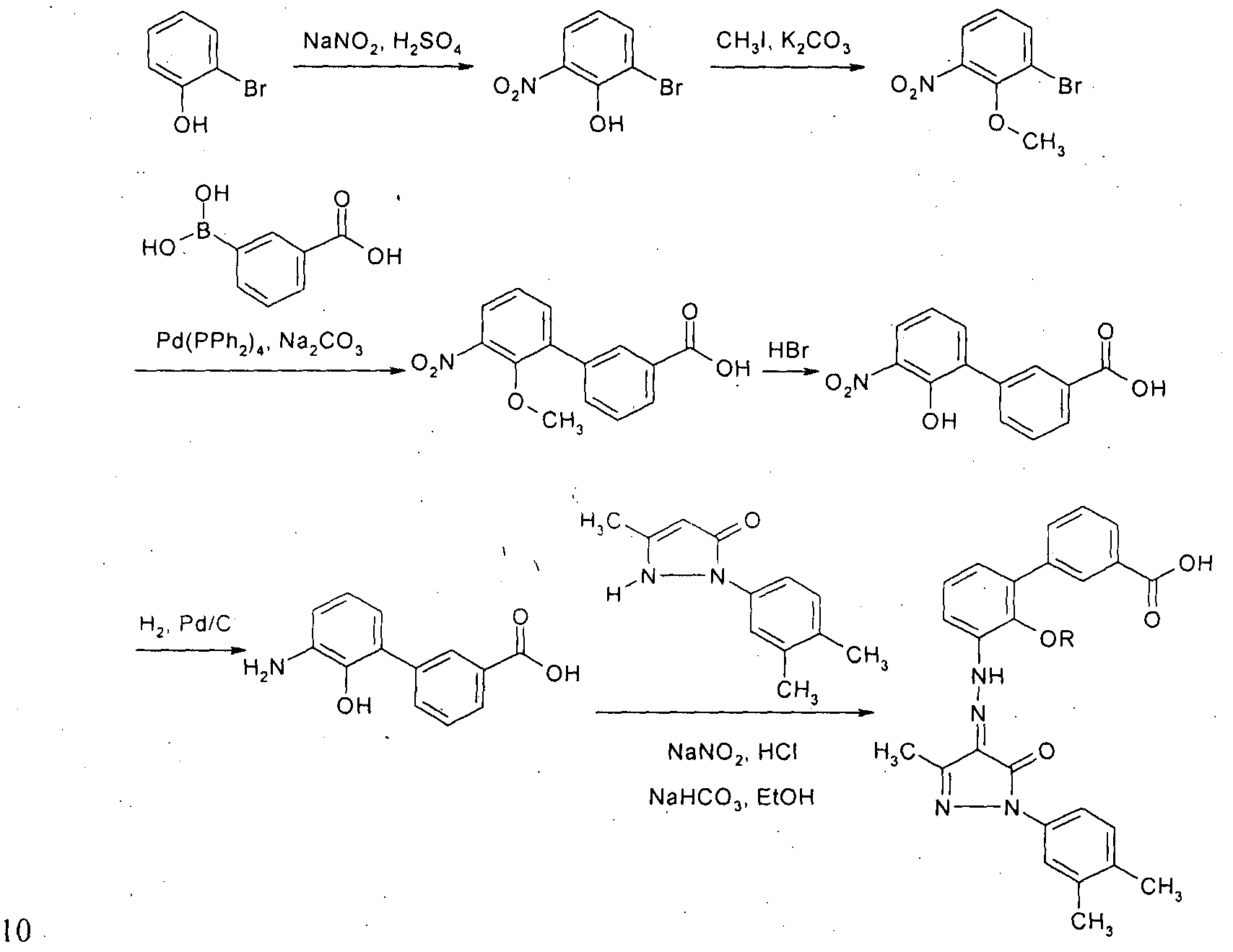
Scheme I
|0007 | The object of the present invention is to provide a novel method, wh ich is more convenient and more efficient than the previously known method for the synthesis of substituted 3'-hydrazino-biphenyl-3-carboxy! ic acid compounds.
SUMMARY OF THE INVENTION
[0008] The present invention provides a process for the preparation of substituted 3'- hydrazino-biphenyl-3-carbox lic acid compounds of formula I and salts thereof,

w herein R represents hydrogen, l inear or branched C | _6 alkyl, C3.8 cycloalkyl, optional l substituted benzyl, l inear or branched alkylalkoxy, tetrahydrofuranyl, tetrahydropyranyl, methyloxybenzyl, triaikylsilyl, acyl, trityl; the process comprising: a) reacting a compound of formula III,

wherein R is as defined above, X is selected from the group consisting of CI, Br, I, w ith a com pound o f form u la I V.
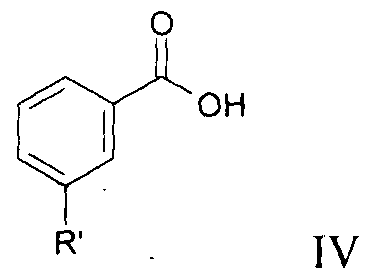
wherein R' represents boronic acid, boronic acid ester or halogen in the presence of a metal catalyst; and
(b) optional ly, deprotecting the compound of formula I.
|0009 | In another embodiment, the present invention provides a compound of formula

wherein X and R are as defined above.
[0010] In another embodiment, the present invention provides a compound of formula V,

wherein X, R and R" are as defined above.
[0011] In another embodiment, the present invention provides a process for the preparation of eltrombopag, compound of formula la,

and pharmaceutically acceptable salts thereof, the process comprising:
(a) reacting 3-bromo-2-methoxyaniiine with ethyl ace toacetate in the presence of alkali or alkaline earth metal nitrite and inorganic acid to give ethyl 2-[(3-bromo-2- methoxyphenyl)hydrazono]-3-oxobutanoate, compound of formula Va;

(b) reacting the compound of formula Va with 3,4-dimethylphenylhydrazine or salt thereof to - give l -(3,4-dimethylphenyl)-3-methyl-4-(3-bromo-2- methoxyphenyl)hydrazono- -pyrazolone, compound of formula Ilia;

(c) reacting the compound of formula I lia with 3-carboxyphenylboronic acid in the presence of a metal catalyst to give 3'-{N'-[ l -(3,4-dimethylphenyI)-3-methyl-5-oxo- 1 ,5-dihydro-pyrazol-4-ylidene]hydrazino}-2'-methoxybiphenyl-3-carboxylic acid, compound of formula lb;

(d) deprotecting the compound of formula lb using Lewis acid to give eltrombopag; and optionally, converting to its pharmaceutically acceptable salt.
[0012] In another embodiment, the present invention provides a process for the preparation of eltrombopag, a com ound of formula la,

the process comprising subjecting the compound of formula I to a deprotection reaction,

wherein R represents linear or branched Ci_6 alkyl, C3.8 cycloalkyl, optionally substituted benzyl, linear or branched alkylalkoxy, tetrahydrofuranyl, tetrahydropyranyl, methyloxybenzyl, trialkylsilyl, acyl, trit'yl.
[0013] In another embodiment, the present invention provides use of compound of formula Ilia, Va, or lb in the preparation of eltrombopag or salt thereof.
[0014] In another embodiment, the present invention provides an eltrombopag ammonium salt.
[0015] In another embodiment, the present invention provides a process for the preparation of eltrombopag ammonium salt comprising reacting eltrombopag with a source of ammonia.
[0016] In another embodiment, the present invention provides a process for the preparation of eltrombopag olamine comprising reacting eltrombopag or a salt thereof with excess of ethanolamine without using any additional reaction solvent.
[0017] In another embodiment, the present invention provides a process for the preparation of eltrombopag olamine comprising eltrombopag or a salt thereof with ethanolamine in an aqueous medium.
[0018] In another embodiment, the present invention provides a process for the preparation of eltrombopag olamine comprising reacting eltrombopag ammonium salt with ethanolam ine.
[0019) In another embodiment, the present invention provides use of eltrombopag ammonium salt in the preparation of eltrombopag olamine.
BRIEF DESCRIPTION OF THE DRAWINGS
[0020] Figure 1 is the proton NMR spectrum of ethyl 2-[(3-bromo-2- methoxyphenyl)hydrazono]-3-oxobutanoate, compound of formula Va.
[0021] Figure 2 is the proton NMR spectrum of l -(3,4-dimethylphenyl)-3-methyl-4-
(3-bromo-2-methoxyphenyl)hydrazono-5-pyrazolone, compound of formula Ilia.
[0022] Figure 3 is the proton NMR spectrum of 3'-{-2-[ l -(ethoxycarbonyl)-2- oxopropylidene]hydrazino}-2'-methoxybiphenyl-3-carboxylic acid.
[0023] Figure 4 is the proton NMR spectrum of eltrombopag ammonium salt as obtained in Example 14c. .
DETAILED DESCRIPTION OF THE INVENTION
(00241 The present invention provides a process for the preparation of substituted 3'- hydrazino-biphenyl-3-carboxylic acid compounds of formula I and salts thereof,


I I I IV
wherein R is as defined above, X is selected from the group consisting of CI, Br, I, with a compound of formula IV, wherein R' represents boronic acid, boronic acid ester or halogen in the presence of a metal catalyst; and
(b) optionally, deprotecting the compound of formula I.
[0025] In the present application, the term "room temperature" means a temperature of about 25°C to about 30°C.
[0026] The term "linear or branched C i.6 alkyl" includes groups such as methyl, ethyl, n-propyi, isopropyl, n-butyl, isobutyl, tert-butyl, n-pentyl. The term "C3-8 cycloalkyl" includes groups such as cyclopropyl, cyclobutyl, cyclopentyl, cyclohexyl, cycloheptyl. The term "optionally substituted benzyl" means benzyl which is optionally substituted with halo, alkyl, alkoxy or nitro group wherein halo includes C I. Br. I ; a l ky l includes methyl, ethyl, propyl, butyl ; alkoxy includes methoxy, ethoxy. propoxy. The term "l inear or branched alkylalkoxy" includes groups such as inethy lmethoxy, methylethoxy, ethylethoxy. The term "trialkylsi lyl" includes groups such as trimethylsi lyl, triethylsilyl, tri isopropylsilyl, tert-butyldimethylsilyl. The term "acyl" includes groups such as acetyl, optionally substituted benzoyl, pivaloyl. The term "optionally substituted benzoyl" means benzoyl which is optionally substituted with halo or nitro group wherein halo includes CI, Br, I.
[0027] In (a) of the above process, the compound of formula III, wherein X and R are as defined above is reacted with the compound of formula IV; wherein R' is as defined above, in the presence of a metal catalyst.
[0028) In one embodiment, the compound of formula II I, wherein X and R are as defined above, is reacted with the compound of formula IV; wherein R' is boronic acid of boronic acid ester in the presence of a metal catalyst.
[0029] In one preferred embodiment, the compound of formula III, wherein R is Ci.6 alkyl, X is Br, is reacted with the compound of formula IV; wherein R' is boronic acid in the presence of a metal catalyst.
[0030] A suitable metal catalyst includes but is not limited to Pd(PPh3)4, PdCl2(PPh3)2, PdCl2(dppf), Pd(OAc)2, NiCl2(PPh3)2, PdCl2(dppb). Preferably, the metal catalyst selected is PdCl2(PPh3) .
[0031 ] The reaction of compound of formula III with compound of formula IV may be carried out in the presence of base which includes organic base such as triethylam ine. N-methylmorpholine, DBU; inorganic base such as lithium hydroxide, sodium hydroxide, potassium hydroxide, sodium carbonate, potassium carbonate, sodium bicarbonate, potassium bicarbonate. Preferably, the base is selected from inorganic base and more preferably the base is potassium hydroxide.
[0032] The reaction of compound of formula III with compound of formula IV may be carried out in the presence of a suitable solvent. The suitable solvent includes but is not limited to ethanol, methanol, 2-propanol, methyl acetate, ethyl acetate, acetone, ethylmethylketone, tetrahydrofuran, dioxane, toluene, dimethoxyethane, acetonitrile, dimethylformamide, dimethyl sulfoxide; water or mixtures thereof. Preferably the solvent selected is ethanol-water mixture.
[0033] The reaction of compound of formula III with compound of formula IV may be carried out at a temperature in the range of about 25°C to about the reflux temperature of the solvent. The reaction is carried out for a period of about 3 hours to about 40 hours. Preferably the reaction is carried out at a temperature of about 70°C to about 85°C for a period of about 1 5 hour to about 30 hours.
1 0341 In one embodiment, the compound of formula II I, wherein X is Br and R is methyl, is reacted with the compound of formula IV; wherein R' is boronic acid, in the presence of PdCl2(PPh3)2 catalyst and potassium hydroxide as base.
[0035] In one embodiment, the compound of formula III, wherein X and R are as defined above, is reacted with the compound of formula IV; wherein R' is halogen in the presence of a metal catalyst.
|0036 | A suitable metal catalyst includes but is not l im ited to Pd(PPh3)4, . PdC l:(PPh3)2. N iC I2(PPh )2- N i(PPhj)2. Preferably, the metal catalyst selected is PdCl2( PPh3)2.
[0037 ] In one embodiment, the compound of formula II I, wherein R is C | .6 alkyl, X is 5 Br is reacted with the compound of formula IV; wherein R' is halogen selected from the group consisting of CI, Br, 1.
[0038] In one embodiment, the compound of formula III, wherein X is Br and R is methyl, is reacted with the compound of formula IV; wherein R' is Br, in the presence of PdCl2(PPh3)2 catalyst.
10 [0039] The reaction may be carried out in the presence of a suitable solvent. The suitable solvent includes but is not limited to ethanol, methanol, 1 -propanol, 2- propanol, ethyl acetate, tetrahydrofuran, dioxane, acetone, toluene, dimethoxyethane, acetonitrile, dimethylformamide, dimethyl sulfoxide or mixtures thereof. Preferably the solvent selected is ethanol.
I ? [0040 | I n fb) of the above process, the compound of formula I wherein R≠H, is cleprotected to gi ve el trom bopag. com pound of form u la la.
[00411 The deprotection reaction process includes any of the fol lowing:
(a) where R is C | _ alkyl, C3.8 cycloalkyl, the deprotection of the compound of formula I is performed using protic acid such as hydroiodic acid, hydrobromic acid, 0 hydrobromic acid/acetic acid, methanesulfonic acid, trifluoroacetic acid; Lewis acid selected from the group consisting of aluminium chloride, aluminium bromide, aluminium iodide, stannous chloride, stannous bromide, titanium chloride, boron trifluoride, boron tribromide, boron trifluoride-dimethylsulfide complex, beryllium chloride, beryllium bromide, zinc chloride, zinc bromide, trimethylsilylchloride, 5 trimethylsilylbromide, trimethylsilyliodide, lithium iodide, lithium iodide in refluxing 2,4,6-coll idine, pyridine hydrochloride; sulphur compounds such as sodium ethylmercaptide, sodium trimethylsilanethiolate; alkal i organomides such as sodium bis(trimethylsilyl)amide and lithium diisopropylamide; or
(b) where R is optiona l ly substituted benzyl, methyloxybenzyl, the deprotection of the 0 com pound of formu la I is performed via hydrogenation reaction using hydrogen in the presence of a metal catalyst; or
(c) where R is linear or branched alkylalkoxy, tetrahydrofuranyl, tetrahydropyranyl, trityl, the deprotection of the compound of formula I is performed using an inorganic
acid selected from the group consisting of hydrochloric acid, hydrobromic acid, sulfuric acid, phosphoric acid; organic acid such as acetic acid; or
(d) where R is trialkylsilyl, the deprotection of the compound of formula I is performed using acids such as acetic acid or fluorides such as tetrabuty!ammonium fluoride; or
(e) where R is acyl, the deprotection of the compound of formula I is performed using an inorganic acid selected from the group consisting of hydrochloric acid, hydrobromic acid, sulfuric acid, phosphoric acid; inorganic base selected from the group consisting of sodium hydroxide, potassium hydroxide, sodium carbonate, potassium carbonate.
[0042] In one embodiment, the compound of formula I wherein R is methyl is deprotected using aqueous hydrobromic acid to give eltrombopag, compound of formula la.
[0043] The reaction may be carried out at a temperature in the range of about 25°C to about 125°C. The reaction is carried out for a period of about 2 hours to about 80 , hours. Preferably the reaction is carried out at a temperature of about 1 10°C to about I I 5"C for a period of about 35 hours to about 65 hours.
|0()44 | In one embodiment, the compound of formula I wherein R is methyl is deprotected using Lewis acid such as aluminium chloride to give eltrombopag, compound of formula la.
[0045] In one embodiment, the compound of formula I wherein R is methyl is deprotected using Lewis acid such as aluminium chloride to give solid eltrombopag- aluminium complex which on acid treatment gives eltrombopag, compound of formula la.
[0046] The reaction may be carried out in the presence of a suitable solvent. The suitable solvent includes but is not limited to chloroform, dichloromethane, dichloroethane, toluene, xylene, chlorobenzene, tetrahydrofuran, dioxane, tert- butylmethyl ether, dimethoxyethane. Preferably the solvent selected is toluene, tetrahydrofuran.
[0047] The reaction may be carried out at a temperature in the range of about 20°C to about I 25°C. The reaction is carried out for a period of about 2 hours to about 80 hours. Preferably the reaction is carried out at a temperature of about 25°C to about 40°C for a period of about 35 hour to about 65 hours to give eltrombopag-aluminium complex.
[0048] The .eltrombopag-aluminium complex on acid treatment gives eltrombopag, compound of formula la. The acid used includes hydrochloric acid, hydrobromic acid, sulfuric acid, nitric acid, phosphoric acid, acetic acid. Preferably, the acid used is acetic acid. The reaction may be carried out in the presence of a suitable solvent. The suitable solvent includes but is not limited to tetrahydrofuran, methanol, ethanol, 2- propanol. The reaction may be carried out at a temperature in the range of about 25°C to about I 25°C. The reaction is carried out for a period of about 2 hours to about 80 hours. Preferably the reaction is carried out at a temperature of about 40°C to about 120°C for a period of about 2 hour to about 24 hours.
[0049] In one embodiment, the present invention provides a process for the preparation of compound of formula I wherein R is H, the process comprising reacting compound of formula III wherein R is Ci-6 alkyl and X is CI, Br, I, with compound of formula IV wherein R' is boronic acid in the presence of a metal catalyst to give compound of formula I wherein R is Ci_6 alkyl followed by deprotecting the compound of formula I wherein R is Ci-6 alkyl to give compound of formula I wherein R is H.
[0050] In one embodiment, the present invention provides a process for the preparation of compound of formula I wherein R is H, the process comprising reacting compound of formula I I I wherein R is methyl and X is Br. with compound of formula I V wherein R' is boronic acid in the presence of dCI2(PPh3)2 catalyst, to give compound of formula 1 wherein R is methyl followed by deprotecting the compound of formula I wherein R is methyl using aqueous hydrobromic acid to give compound of formula I wherein R is H.
[0051 ] In one embodiment, the present invention provides a process for the preparation of compound of formula I wherein R is H, the process comprising reacting compound of formula III wherein R is methyl and X is Br, with compound of formula IV wherein R' is boronic acid in the presence of PdCl2(PPh3)2 catalyst to give compound of formula I wherein R is methyl followed by deprotecting the compound of formula I wherein R is methyl using Lewis acid such as aluminium chloride to give compound of formula I wherein R is H.
[0052] In one embodiment, the present invention provides a process for isolating eltrombopag from an aqueous medium.
[0053 J The present invention provides a compound of formula I II,

wherein X and R are as defined above.
f 00,541 In one embodiment, the present invention provides a compound of formula III, wherein X is Br and R is methyl.
[0055] The present invention provides a process for the preparation of compound of formula III which comprises re d of formula V,

wherein X and R are as defined above and R" represents hydrogen, Ci-& alkyl, with 3,4-dimethylphenylhydrazine or salt thereof to give the compound of formula III. 1 056 j The reaction may be carried out in the presence of alkali metal acetate such as sodium acetate, potassium acetate and the like; potassium carbonate, sodium carbonate. Preferably, alkali metal acetate is used; more preferably, sodium acetate is used.
[0057] The reaction may be carried out in the presence of a suitable solvent. The suitable solvent includes but is not limited to acetic acid, methanol, ethanol, 2- propanol or mixtures thereof. Preferably the solvent selected is acetic acid.
[0058] The reaction may be carried out at a temperature in the range of about 25°C to about the reflux temperature of the solvent. The reaction is carried out for a period of about 1 hour to about 10 hours. Preferably the reaction is carried out at about the reflux temperature of the solvent for a period of about 2 hours to about 5 hours.
[0059] In one embodiment, the present invention provides a process for the preparation of compound of formula III, the process comprising reacting a compound
of formula V with 3,4-dimethylphenylhydrazine or salt thereof to give the compound of formula III, wherein X is Br, R is methyl and R" is ethyl.
[0060] The present invention provides a compound of formula V,

wherein X. R and R" are as defined above.
|0061 1 In one embodiment, the present invention provides a compound of formula V, wherein X is Br, R is methyl and R" is ethyl.
[0062) The present invention provides a process for the preparation of compound of formula V which comprises reactin und of formula VI or its salt thereof,
 VI
wherein X and R are as defined above,
with alkyl acetoacetate or acetoacetic acid in the presence of alkali or alkaline earth metal nitrite and an inorganic acid in a solvent system to yield the compound of formula V.
[0063] The reaction may be carried out in the presence of alkali metal nitrite such as sodium nitrite, potassium nitrite and the like; alkaline earth metal nitrite such as calc ium nitrite and the like. Preferably, sodium nitrite is used.
|0064 | The inorgan ic acid is selected from the group consisting of hydrochloric acid, nitric acid, sulfuric acid, hydrobromic acid. Preferably, hydrochloric acid is used.
[0065] The reaction may be carried out in the presence of a suitable solvent. The suitable solvent includes but is not limited to methanol, ethanol, 1 -propanol, 2- propanol, water or mixtures thereof. Preferably the solvent selected is methanol, water, ethanol-water mixture.
[0066] The reaction may be carried out at a temperature in the range of about 0°C to about 10°C. The reaction is carried out for a period of about 2 hours to about 8 hours. Preferably the reaction is carried out at a temperature about 0°C to about 5°C for a period of about 2 hours to about 6 hours.
[0067] In one embodiment, the present invention provides a process for the preparation of compound of formula V, the process comprising reacting a compound of formula VI with alkyl acetoacetate in presence of sodium nitrite and hydrochloric acid to yield the compound of formula V, wherein X is Br, R is methyl and R" is ethyl.
[0068] The present invention provides a process for the preparation of eltrombopag, compound of formula la,

and pharmaceutically acceptable salts thereof, the process comprising:
(a) reacting 3-bromo-2-methoxyaniline with ethylacetoacetate in the presence of alkali or alkaline earth metal nitrite and inorganic acid to give ethyl 2-[(3-bromo-2- methoxyphenyl)hydrazono]-3 ound of formula Va;

(b) reacting the compound of formu la Va with 3.4-dimethylphenylhydrazine or salt thereof to give l -(3,4-dimethylphenyl)-3-methyl-4-(3-bromo-2- methoxyphenyl)hydrazono-5-pyrazolone, compound of formula Ilia;

(c) reacting the compound of formula Ilia with 3-carboxyphenylboronic acid in the presence of a metal catalyst to give 3'-{N'-[l -(3,4-dimethylphenyl)-3-methyl-5-oxo- 1 ,5-dihydro-pyrazol-4-ylidene]hydrazino}-2'-methoxybiphenyl-3-carboxylic acid, compound of formula lb;

(d) deprotecting the compound of formula lb using Lewis acid to give eltrombopag; and optionally, converting to its pharmaceutically acceptable salt.
[0069] In (a) of the above process, 3-bromo-2-methoxyaniline is reacted with ethylacetoacetate in presence of alkali or alkaline earth metal nitrite and inorganic acid to give ethyl 2-[(3-bromo-2-methoxyphenyI)hydrazono]-3-oxobutanoate, compound of formula Va.
[0070] The reaction may be carried out in the presence of alkali metal nitrite such as sodium nitrite, potassium nitrite and the like; alkaline earth metal nitrite such as ca lc ium nitrite and the like. Preferably, sodium nitrite is used. The inorganic acid is selected from the group consisting of hydrochloric acid, nitric acid, sulfuric acid, hydrobromic acid. Preferably, hydrochloric acid is used. The reaction may be carried out in the presence of a suitable solvent. The suitable solvent includes but is not
limited to methanol, ethanol, 1 -propanol, 2-propanol, water or mixtures thereof. Preferably the solvent selected is methanol, water, ethanol-water mixture.
[0071 ] In (b) of the above process, the compound of formula Va is reacted with 3,4- dimethylphen lhydrazine or salt thereof to give I -(3.4-dimethylphenyl)-3-methyl-4- (3-bromo-2-methoxyphenyl)hydrazono-5-pyrazolone, compound of formula Il ia.
[0072 ) The reaction may be carried out in the presence of alkali metal acetate such as sodium acetate, potassium acetate and the like; sodium carbonate, potassium carbonate. Preferably, the alkali metal acetate used is sodium acetate. The reaction may be carried out in the presence of a suitable solvent. The suitable solvent includes but is not limited to acetic acid, methanol, ethanol or mixtures thereof. Preferably the solvent selected is acetic acid. The reaction may be carried out at a temperature in the range of about 25°C to about the reflux temperature of the solvent. The reaction is carried out for a period of about 1 hour to about 10 hours. Preferably the reaction is carried out at to about the reflux temperature of the solvent for a period of about 2h to about 5h.
[0073] In (c) of the above process, the compound of formula Ilia with 3- carboxyphenylboronic acid in presence of metal catalyst to give 3'-{N'-[ l -(3,4- dimethylphenyl)-3-methyl-5-oxo- l .5-dihydro-pyrazol-4-ylidene]hydrazino} -2'- methoxybiphenyl-3-carboxylic acid, compound of formula lb.
[0074| A suitable metal catalyst includes but is not limited to Pd( Ph3)4, PdCl2(PPh3)2, PdCl2(dppf), Pd(OAc)2, NiCl2(PPh3)2, PdCl2(dppb). Preferably, the metal catalyst selected is PdCl2(PPh3)2. The reaction may carried out in the presence of base which includes organic base such as triethylamine, N-methylmorpholine, DBU; inorganic base such as lithium hydroxide, sodium hydroxide, potassium hydroxide, sodium carbonate, potassium carbonate, sodium bicarbonate, potassium bicarbonate. Preferably, the base is selected from inorganic base and more preferably the base is potassium hydroxide. The reaction may carried out in the presence of a suitable solvent. The suitable solvent includes but is not limited to ethanol, methanol, 2-propanol, methyl acetate, ethyl acetate, acetone, ethylmethylketone, tetrahydrofuran, dioxane, toluene, dimethoxyethane, acetonitrile, dimethylformamide; water or mixtures thereof. Preferably the solvent selected is ethanol-water mixture. The reaction ma be carried out at a temperature in the range of about 25°C to about the reflux temperature of the solvent. The reaction is carried out for a period of about
3 hours to about 40 hours. Preferably the reaction is carried out at a temperature of about 70°C to about 85°C for a period of about 15 hours to about 30 hours.
[0075] In (d) of the above process, the compound of formula lb is deprotected using Lewis acid to give eltrombopag.
[00761 In one embodiment, the compound of formula lb is deprotected using Lewis acid selected from the group consisting of aluminium chloride, aluminium bromide, aluminium iodide, stannous chloride, stannous bromide, titanium chloride, boron trifluoride, boron tribromide, boron trifluoride-dimethylsulfide complex, beryllium chloride, beryllium bromide, zinc chloride, zinc bromide, trimethylsilylchloride, trimethylsilylbromide, trimethylsilyliodide.
[0077] In one embodiment, the compound of formula lb is deprotected using Lewis acid such as aluminium chloride to give solid eltrombopag-aluminium complex which on acid treatment gives eltrombopag. The deprotection reaction process is as discussed supra.
[0078] The present invention provides a process for the preparation of eltrombopag, a compound of formula la,
the process comprising subjecting the compound of formula I to a deprotection reaction,

wherein R represents l inear or branched C |-6 alkyl, Cj.g cycloalkyl, optionally substituted benzyl, linear or branched alkylalkoxy, tetrahydrofuranyl, tetrahydropyranyl, methyloxybenzyl, trialkylsilyl, acyl, trityl.
[0079] In one embodiment, the present invention provides a process for the preparation of eltrombopag comprising subjecting the compound of formula I wherein R is C K6 alkyl, C3.g cycloalkyl, to a deprotection reaction using protic acid such as hydroiodic acid, hydrobromic acid, hydrobromic acid/acetic acid, methanesulfonic acid, trifluoroacetic acid; Lewis acid selected from the group consisting of aluminium chloride, aluminium bromide, aluminium iodide, stannous chloride, stannous bromide, titanium chloride, boron trifluoride, boron tribromide, boron trifluoride- dimethylsulfide complex, beryllium chloride, beryll ium bromide, zinc chloride, zinc brom ide, trimeth Isi i lch ioride. trimethylsi !ylbromide, trimethylsi lyliod ide, lithium iod ide, l i th i um iod ide i n re fluxing 2.4.6-col l id ine, pyridine hydroch loride; sulphur compounds such as sodium ethylmercaptide, sodium tri methylsi !aneth iolate; alkal i organom ides such as sodium bis(trimethylsilyl)amide and lithium d i isopropylam ide.
[0080] In one embodiment, the present invention provides a process for the preparation of eltrombopag, the process comprising subjecting the compound of formula I wherein where R is optionally substituted benzyl, methyloxybenzyl, to a deprotection reaction by hydrogenation using hydrogen in the presence of a metal catalyst.
[0081 ] In one embodiment, the present invention provides a process for the preparation of eltrombopag, the process comprising subjecting the compound of formula I wherein R is linear or branched alkylalkoxy, tetrahydrofuranyl, tetrahydropyranyl, trityl, to a deprotection reaction using an inorganic acid selected
from the group consisting of hydrochloric acid, hydrobromic acid, sulfuric acid, phosphoric acid; organic acid such as acetic acid.
[0082] In one embodiment, the present invention provides a process for the preparation of eltrombopag, the process comprising subjecting the compound of formula I wherein R is trialkylsilyl, to a deprotection reaction using acids such as acetic acid or fluorides such as tetrabutylammonium fluoride.
[0083] In one embodiment, the present invention provides a process for the preparation of eltrombopag, the process comprising subjecting the compound of formu la 1 wherein R is acyl. to a deprotection reaction using an inorganic acid selected from the group consisting of hydrochloric acid, hydrobromic acid, sulfuric acid, phosphoric acid; inorganic base selected from the group consisting of sodium hydroxide, potassium hydroxide, sodium carbonate, potassium carbonate.
[0084] In one embodiment, the present invention provides a process for the preparation of eltrombopag, the process comprising subjecting the compound of formula I wherein R is methyl, to a deprotection reaction using hydrobromic acid.
[0085] In one embodiment, the present invention provides a process for the preparation of eltrombopag, the process comprising subjecting the compound of formula I wherein R is methyl, to a deprotection reaction using Lewis acid.
[0086] In one embodiment, the present invention provides a process for the preparation of eltrombopag, compound of formula la, the process comprising deprotecting the compound of formula I wherein R is methyl, using a Lewis acid such as aluminium chloride to give solid eltrombopag-aluminium complex, then on acid treatment gives eltrombopag. compound of formula la.
100871 The reaction may be carried out in the presence of a suitable solvent. The suitable solvent includes but is not lim ited to chloroform, dichloromethane, dichloroethane, toluene, xylene, chlorobenzene, tetrahydrofuran, dioxane, tert- butylmethyl ether, dimethoxyethane. Preferably the solvent selected is toluene, tetrahydrofuran.
[0088] The reaction may be carried out at a temperature in the range of about 20°C to about 125°C. The reaction is carried out for a period of about 2 hours to about 80 hours. Preferably the reaction is carried out at a temperature of about 25°C to about 40°C for a period of about 35 hours to about 65 hours to give eltrombopag-aluminium complex.
[0089] The eltrombopag-aluminium complex on acid treatment gives eltrombopag, compound of formula la. The acid used includes hydrochloric acid, hydrobromic acid, sulfuric acid, nitric acid, phosphoric acid, acetic acid. Preferably, the acid used is acetic acid. The suitable solvent includes but is not limited to tetrahydrofuran, methanol, ethanol, 2-propanol. The reaction may be carried out at a temperature in the range of about 25°C to about 125°C. The reaction is carried out for a period of about 2 hours to about 80 hours. Preferably the reaction is carried out at a temperature of about 40°C to about 120°C for a period of about 2 hour to about 24 hours.
[0090] The present invention provides an eltrombopag-aluminium complex.
[0091 ] The present invention provides a solid eltrombopag-aluminium complex. (0092 J The present invention provides use of compound of formula 111, or V in the preparation of eltrombopag or sa lt thereof.
[0093| The present invention provides use of compound of formula I, wherein R represents linear or branched C|_s alkyl, C3.8 cyc!oalkyl, optionally substituted benzyl, linear or branched alkylalkoxy, tetrahydrofuranyl, tetrahydropyranyl, methyloxybenzyl, trialky Isilyi, acyl, trityl in the preparation of eltrombopag or salt thereof.
[0094] In one embodiment, the present invention provides use of compound of formula Ilia, Va, or lb in the preparation of eltrombopag and salt thereof.
[0095] The present invention provides a process for the preparation of substituted 3'- hydrazino-biphenyl-3-carboxylic acid compounds of formula 1 and salts thereof,


wherein R is as defined above and R" represents hydrogen, Ci_6 alkyl,
with 3,4-dimethylphenylhydrazine or salt thereof to give the compound of formula I; and
b) optionally, deprotecting the compound of formula I.
[0096] In (a) of the above process, the reaction may be carried out in the presence of alkali metal acetate such as sodium acetate, potassium acetate and the like; potassium carbonate, sodium carbonate. Preferably, alkali metal acetate is used; more preferably, sodium acetate is used. The reaction may be carried out in the presence of a suitable solvent. The suitable solvent includes but is not limited to acetic acid, methanol, ethanol, 2-propanol or mixtures thereof. Preferably the solvent selected is acetic acid. The reaction may be carried out at a temperature in the range of about 25°C to about the reflux temperature of the solvent. The reaction is carried out for a period of about 1 hour to about 10 hours. Preferably the reaction is carried out at about the reflux temperature of the solvent for a period of about 2h to about 5h.
[0097] In one embodiment, the compound of formula VII is reacted with 3,4- dimethylphenylhydrazine or salt thereof to give the compound of formula I, wherein R is methyl and R" is ethyl.
[0098] In (b) of the above process, the compound of formula I wherein. R≠ , is deprotected to give eltrombopag, compound of formula la. The deprotection reaction process is as discussed supra.
[0099] In one embodiment, the present invention provides a process for the preparation of compound of formula 1 wherein R is H, the process comprising reacting compound of formula VI I wherein R is C |-6 alkyl and R" is hydrogen, C|.6 alkyl with 3,4-dimethylphenylhydrazine or salt thereof to give the compound of formula I wherein R is Ci-6 alkyl followed by deprotecting the compound of formula I wherein R is C| _6 alkyl using aqueous hydrobromic acid, Lewis acid such as aluminium chloride to give compound of formula I wherein R is H.
[0100] The present invention rovides a compound of formula VII,

wherein R represents hydrogen, linear or branched Cue alkyl, C3.8 cycloalkyl, optionally substituted benzyl, linear or branched alkylalkoxy, tetrahydrofuranyl, tetrahydropyranyl, methyloxybenzyl, trialkylsilyl, acyl, trityl; and R" represents hydrogen, Ci-6 alkyl.
[0101] In one embodiment, the present invention provides a compound of formula V, wherein R is methyl and R" is ethyl.
[0102] The present invention provides a process for the preparation of compound of formula VII. the process comprising:
a) reacting a compound of formula VI, wherein X and R are as defined above, with a compound of formula IV, wherein R' is as defined above,

VI IV
the presence of a metal catal st to give a compound of formula VIII,

wherein R is as defined above; and
b) reacting the compound of formula VIII with alkyl acetoacetate or acetoacetic acid in the presence of alkali or alkaline earth metal nitrite and an inorganic acid to yield the compound of formula VII.
[0103] In (a) of the above process, the compound of formula VI, wherein X and R are as defined above, is reacted with the compound of formula IV; wherein R' is boronic
acid or boronic acid ester or halogen in the presence of a metal catalyst to give the compound of formula VIII, wherein R is as defined above.
[0104] A suitable metal catalyst includes but is not limited to Pd(PPh3)4, PdCI2(PPh3)2. PdCI2(dppf), Pd(OAc)2, NiCl2(PPh3)2, PdCl2(dppb). Preferably, the metal catalyst selected is PdCI2(PPh )2. The reaction of compound of formula VI with compound of formula IV may be carried out in the presence of base which includes organic base such as triethylamine, N-methylmorpholine, DBU; inorganic base such as lithium hydroxide, sodium hydroxide, potassium hydroxide, sodium carbonate, potassium carbonate, sodium bicarbonate, potassium bicarbonate. Preferably, the base is selected from inorganic base and more preferably the base is potassium hydroxide, potassium carbonate. The reaction of compound of formula VI with compound of formula IV may be carried out in the presence of a suitable solvent. The suitable solvent includes but is not limited to ethanol, methanol, 2-propanol, methyl acetate, ethyl acetate, acetone, ethylmethylketone, tetrahydrofuran, dioxane, toluene, dimethoxyethane, acetonitrile, dimethylformamide, dimethyl sulfoxide; water or mixtures thereof. Preferably the solvent selected is ethanol-water mixture. The reaction of compound of formula VI with compound of formula I V may be carried out at a temperature in the range of about 25°C to about the reflux temperature of the solvent. The reaction is carried out for a period of about 3 hours to about 40 hours. Preferably the reaction is carried out at a temperature of about 70°C to about 85°C for a period of about 1 5 hour to about 30 hours.
[0105] In one embodiment, the compound of formula VI, wherein R is Ci.6 alkyl, X is Br, is reacted with the compound of formula IV; wherein R' is boronic acid in the presence of a metal catalyst.
[0106] In one embodiment, the compound of formula VI, wherein X is Br and R is methyl, is reacted with the compound of formula IV; wherein R' is boronic acid, in the presence of PdCl2(PPh3)2 catalyst and potassium carbonate as base.
[0107] In one embodiment, the compound of formula VI, wherein R is Ci-6 alkyl, X is Br is reacted with the compound of formula IV; wherein R' is halogen selected from the group consisting of CI, Br, I.
[0108] In (b) of the above process, the reaction may be carried out in the presence of alkal i metal nitrite such as sodium nitrite, potassium nitrite and the like; alkaline earth meta l nitrite such as calcium nitrite and the l ike. Preferably, sodium nitrite is used. The inorganic acid is selected from the group consisting of hydrochloric acid, nitric
acid, sulfuric acid, hydrobromic acid. Preferably, hydrochloric acid is used. The reaction may be carried out in the presence of a suitable solvent. The suitable solvent includes but is not limited to methanol, ethanol, 1 -propanol, 2-propanol, water or mixtures thereof. Preferably the solvent selected is methanol-water mixture.
[0109] In one embodiment, the compound of formula VIII, wherein R is C\. alkyl, is reacted with al kyl acetoacetate or acetoacetic acid in presence of sodium nitrite and hydroch loric ac id to y ield the com pound of formu la V I I, wherein R is Ci _6 alkyl and R" is hydrogen. C i .6 alkyl.
[01 10 j The present invention provides a process for the preparation of compound of formula VII which comprises reacting a compound of formula V,

V IV
wherein X, R and R" are as defined above, with a compound of formula IV, wherein R' is as defined above, in the presence of a metal catalyst to give the compound of formu la VI I .
|0 I 1 I | I n one embodiment, the com pound of formula V, wherein X and R are as defined above, is reacted with the compound of formula I V; wherein R' is boronic acid or boronic acid ester or halogen in the presence of a metal catalyst.
[0112] A suitable metal catalyst includes but is not limited to Pd(PPh3)4, PdCl2(PPh3)2, PdCl2(dppf), Pd(OAc)2, NiCl2(PPh3)2; PdCl2(dppb). Preferably, . the metal catalyst selected is PdCl2(PPh3)2. The reaction of compound of formula V with compound of formula IV may be carried out in the presence of base which includes organic base such as triethylamine, N-methylmorphol ine, DBU; inorganic base such as lithium hydroxide, sodium hydroxide, potassium hydroxide, sodium carbonate, potassium carbonate, sodium bicarbonate, potassium bicarbonate. Preferably, the base is selected from inorganic base and more preferably the base is potassium hydroxide, potassium carbonate. The reaction of compound of formula V with compound of formula IV may be carried out in the presence of a suitable solvent. The suitable solvent incl udes but is not l im ited to ethanol. methanol. 2-propanol, methyl acetate,
ethyl acetate, acetone, ethylmethylketone, tetrahydrofuran, dioxane, toluene, dimethoxyethane, acetonitri le, dimethylformamide, dimethyl sulfoxide; water or m ixtures thereof. Preferably the solvent selected is ethanol-water mixture. The reaction of compound of formula V with compound of formula IV may be carried out at a temperature in the range of about 25°C to about the reflux temperature of the solvent. The reaction is carried out for a period of about 3 hours to about 40 hours. Preferably the reaction is carried out at a temperature of about 70°C to about 85°C for a period of about 1 5 hour to about 30 hours.
J 1 1 J I n one embod iment, the com pound of form u la V, wherein R is Q .6 alkyl, X is Br, is reacted with the compound of formula I V; wherein R' is boronic acid in the presence of a metal catalyst.
[0114] In one embodiment, the compound of formu la V, wherein X is Br and R is methyl, is reacted with the compound of formula IV; wherein R' is boronic acid, in the presence of PdCI2(PPh3)2 catalyst and potassium carbonate as base.
[0115] In one embodiment, the compound of formula V, wherein R is C| _6 alkyl, X is Br is reacted with the compound of formula IV; wherein R' is halogen selected from the group consisting of CI, Br, I.
[01 16] The present invention provides a process for the deprotection of a compound of formula III,
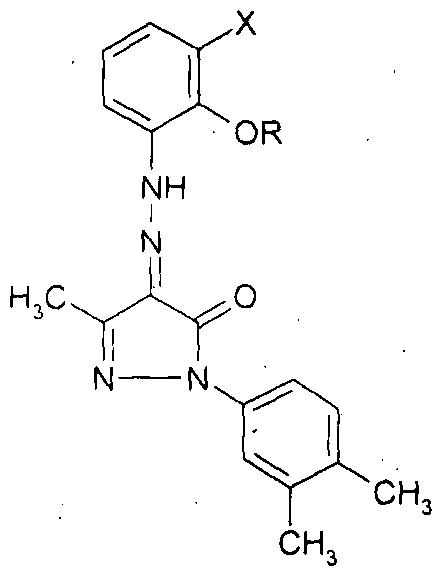
wherein R represents linear or branched C| -6 alkyl, C3.8 cycloalkyl, optionally substituted benzyl, linear or branched alkylalkoxy, tetrahydrofuranyl, tetrahydropyranyl, methyloxybenzyl, trialkylsilyl, acyl, trityl, and X is selected from the group. consisting of CI, Br, I.
[01 17] The deprotection of compound of formula III may be carried out as described for compound of formula I wherein R H, as discussed supra.
[0118] In one embodiment, the present invention provides a process for the deprotection of the compound of formula III, the process comprising subjecting the compound of formula III wherein R is methyl, to a deprotection reaction using hydrobromic acid, Lewis acid such as aluminium chloride.
[0119] The present invention provides an eltrombopag ammonium salt.
[0120] The present invention provides an eltrombopag ammonium salt characterized by a proton NMR spectrum having peaks at δ 14.81 (brs, l H), 8. 17 (s, l H), 7.80- 7.82(m,3H), 7.65-7.68 (d, l H), 7.34-7.42 (m,2H), 7.01 -7.07 (m,2H), 6.87 (t, l H), 2.37 (s,3 H), 2.22 (s,3H), 2.1 8 (s,3H).
[0121 ] The present invention provides an eltrombopag ammonium salt with ammonia content i n the range o f about 3.5% to about 8.5%.
( 122 J The present i nvention provides an eltrombopag ammonium salt which may be mono-am mon i um salt or d i-ammon i um salt, preferably in crystal line form or amorphous form.
[0123] The present invention provides a process for the preparation of eltrombopag ammonium salt comprising reacting eltrombopag with a source of ammonia.
[0124] A suitable source of ammonia includes but is not limited to ammonia water (aqueous ammonia), ammonium carbonate, ammonia gas, liquid ammonia. Preferably, the source of ammonia selected is ammonia water.
[0125] The reaction may be carried out in the presence of a suitable solvent. The suitable solvent includes but is not limited to methanol, ethanol, 1 -propanol, 2- propanol, 1 -butanol, 2-butanol, methyl acetate, ethyl acetate, n-propyl acetate, tert- butyl acetate, acetone, ethylmethylketone, methyl isobutyl ketone, chloroform, d ich loromethane. d ich loroethane. tetrahydrofuran, d ioxane, tert-butylmethyl ether, to l uene.- xylene, ch lorobenzene. d i methoxyethane, aceton itri le, d imethylformam ide; water or m ixtures thereof. Preferably the solvent selected is tetrahydrofuran .
[0126] The reaction may be carried out at a temperature in the range of about 10°C to about 40°C. The reaction is carried out for a period of about 1 hour to about 20 hours. Preferably the reaction is carried out at a temperature of about 20°C to about 35°C for a period of about 1 hour to about 5 hours.
[0127] In one embodiment, the present invention provides a process for isolating eltrombopag as an eltrombopag ammonium salt.
f01281 E ltrom bopag may be converted to its pharmaceutically acceptable salts such as its monoethanolamine, bisethanolamine salts. Preferably, eltrombopag is converted to its bisethanolamine salt namely, eltrombopag olamine", compound of formula II.
[0129] In one embodiment, the present invention provides a process for the preparation of eltrombopag olamine comprising reacting eltrombopag or a salt thereof with excess of ethanolamine without using any additional reaction solvent.
[0130] In one embodiment, the present invention provides a process for the preparation of eltrombopag olamine comprising reacting eltrombopag or a salt thereof with ethanolamine in an aqueous medium.
[0131] In one embodiment, the present invention provides a process for the preparation of eltrombopag olamine comprising reacting eltrombopag or a salt thereof with ethanolam ine in water.
1 132 J I n one embod iment, the present invention provides a process for the preparation of eltrombopag olam ine comprising reacting eltrombopag or a salt thereof with ethanolam ine in a solvent and isolating eltrom bopag olam ine by add ition of anti- solvent.
[0133] The solvent that may be utilized for this step includes, but is not l im ited to alcohols such as methanol, ethanol, 1 -propanol, 2-propanol, 1 -butanol, 2-butanol, 1 - . pentanol, l -octanol and the like; ethers such as tert-butylmethyl ether, tetrahydrofuran, dioxane and the like; esters such as methyl acetate, ethyl acetate, n- propyl acetate, and tert-butyl acetate and the like; ketones such as acetone, ethyl methyl ketone and methyl isobutyl ketone and the like; dimethyl sulfoxide; dimethyl formamide; dimethyl acetamide; water and mixtures thereof.
[0134] The anti-solvent that may be utilized for this step includes, but is not lim ited to ethers such as diethyl ether, dimethyl ether, diisopropyl ether, tetrahydrofuran, dioxane; hydrocarbons such as n-hexane, n-heptane, cyclohexane; water and m ixtures thereof: preferably non-polar anti-solvent is used.
|0135| The present i nvention provides a process for the preparation of eltrombopag olamine comprising reacting eltrombopag ammonium salt with ethanolam ine.
[0136] In one embodiment, the present invention provides a process for the preparation of eltrombopag olamine comprising reacting eltrombopag ammonium salt with ethanolamine, preferably, without using any additional reaction solvent.
|0 I 37| In one embodiment, the present invention provides a process for the preparation of eltrombopag olam ine comprising reacting eltrombopag ammonium salt with ethanolamine in the presence of a solvent.
[0138) The solvent that may be utilized for this step includes, but is not limited to methanol, ethanol, 1 -propanol, 2-propanol, 1 -butanol, 2-butanol, methyl acetate, ethyl acetate, n-propyl acetate, tert-butyl acetate, acetone, ethylmethylketone, methyl isobutyl ketone, tetrahydrofuran, dioxane, tert-butylmethyl ether, toluene, dimethoxyethane, acetonitrile, dimethylformamide; water or mixtures thereof.
[0139] The present invention provides use of eltrombopag ammonium salt in the preparation of eltrombopag olamine.
[0140] In one embodiment, the present invention provides a process for the preparation of eltrombopag olamine, the process comprising: (a) treating a reaction mixture containing. eltrombopag with a base to give eltrombopag salt, and (b) reacting the eltrombopag salt with ethanolamine to give eltrombopag olamine directly, wherein eltrombopag is formed in-situ in the reaction. The eltrombopag salt obtained in this step includes, but is not l imited to eltrombopag sodium salt, eltrombopag potassium salt, eltrombopag ammonium salt.
[0141 ] In one preferred embodiment, the present invention provides a process for the preparation of eltrombopag olamine, the process comprising: (a) treating a reaction mixture containing eltrombopag with a source of ammonia to give eltrombopag ammonium salt, and (b) reacting the eltrombopag ammonium salt with ethanolamine to give eitrombopag olamine directly, wherein eltrombopag is formed in-situ in the reaction.
[0142] The present invention provides eltrombopag and a salt thereof, having a compound of formula Ilia in less than about 0.5%, preferably less than about 0.15%, more preferably less than about 0.05%.
[0143] The present invention provides eltrombopag and a salt thereof, having a compound of formula Illb in less than about 0.5%, preferably less than about 0.15%, more preferably less than about 0.05%.

[0144] The present invention provides eltrombopag and a salt thereof, having a compound of formula IXa in less than about 0.5%, preferably less than about 0. 15%, more preferably less than about 0.05%.

|0145 j The present invention provides eltrombopag and a salt thereof, having a compound of formula lXb in less than about 0.5%, preferably less than about 0. 1 5%, more preferably less than ab t 0.05%.

(0146] The present invention provides substituted 3'-hydrazino-biphenyl-3-carboxylic acid compounds of formula I. salts thereof and intermediate compounds, obtained by the above processes, as characterized and analyzed by fol lowing techniques:
A .' Proton N M R spectra were recorded in CDC13 and DM SO-d6 using NMR instrument- Varian 300 M HZ
B. IR spectra were recorded using IR instrument- Perkin Elmer Spectrum One FTIR and all the samples prepared in Br.
C. Mass spectra were recorded using instrument- Thermofinnigan, LCQ DECA XP MAX
D. HPLC
E. Melting point
| 147| The following examples are provided to enable one skilled in the art to practice the invention and are merely illustrative of the invention. The examples should not be read as limiting the scope of the invention, as defined in the features and advantages.
EXAMPLES
[0148] EXAMPLE 1 : Preparation of Ethyl 2-[(3-bromo-2- methoxyphenyl)hydrazono]-3-oxobutanoate
To a solution of 3-bromo-2-methoxyaniline (20g) in IN hydrochloric acid (400mL) was added a solution of sodium nitrite (7.2g in 720mL of water) at about 0°C to about 5°C under stirring. The reaction mixture was stirred for about 15 minutes at about 5°C. Then ethylacetoacetate (12.9g) was added to the reaction mixture and stirred for about 1 5 m inutes' at about 0°C to about 5°C. Sodium bicarbonate solution (27.5g in 300m L water) and ethanol (400m L) was then added to the reaction mixture. The reaction mixture was allowed to warm to about room temperature and stirred for about 2 hours. The mixture was filtered, washed with water (200mL) and dried to get yellowish solid. Yield: 33g; Melting point: 75.9-77.1 °C; Purity (HPLC): 99.12% IR: 3421 , 1 706, 1684, 1517, 1215, 1093, 980cm" 1 ; Mass: m/z 342.88 [M+] and 344.86 [M+2]
Ή NMR (300 MHz in CDC13): δ 12.86 (s, l H), 7:58-7.61 (d. l H), 7.30-7.33 (d, l H), 7.02-7.07 (m, l H), 4.31 -4.43 (q,2H), 3.95 (s,3H),2.5 (s,3H), l .38-1 .43 (t,3H)
[0149] EXAMPLE 2: Preparation of l-(3,4-dimethylphenyi)-3-methyI-4-(3- bromo-2-methoxyphenyl)hydrazono-5-pyrazolone
A solution of ethyl-2-[(3-bromo-2-methoxyphenyl)hydrazono]-3-oxobutanoate (5g) prepared as in Example 1 , and 3,4-dimethylphenylhydrazine hydrochloride (2.48g) and sodium acetate (1.4g) in glacial acetic acid (l OOmL) was stirred and heated to reflux for about 3 hours. The m ixture was cooled to about room temperature and sti rred for about I hour. It was filtered, washed with water (25m L) and dried in an oven at about 55°C to about 60°C for about 12 hours to obtain an orange sol id product. Yield: 4. 1 5g; Melting point: 197.4- 198.2°C; Purity (HPLC): 99.33%
IR: 3444, 1559, 1337, 1256, 1 1 14, 1019cm" 1 ; Mass: m/z 415 [M+] and 417 [M+2] Ή NMR (300 MHz in CDC13): δ 13.7 (brs, l H), 7.64-7.73 (m,3H), 7.32-7.35 (d, l H), 7.16-7.19 (d, l H), 7.07-7.16 (t, l H), 4.01 (s,3H), 2.36 (s,3H), 2.3 1 (s,3H), 2.27 (s,3H)
[0150] EXAMPLE 3: Preparation of 3 N'-[l-(3,4-dimethylphenyl)-3-methyI-5- oxo-1, 5-dihydro-pyrazol-4-ylidene]hydrazino}-2'-methoxybiphenyl-3-carboxylic acid
A mixture of l-(3,4-dimethylphenyl)-3-methyl-4-(3-bromo-2- methoxyphenyl)hydrazono-5-pyrazolone (5g) prepared as in Example 2, and 3- carboxyphenylboronic acid (2.99g), bis(triphenyIphosphine)palladium(II)chloride
[PdCl2(PPh3)2] (0.42g), potassium hydroxide (1.74g) in ethanol (250mL) and water (30mL) was heated to about reflux temperature and stirred for about 24 hours. The hot mixture was filtered to remove the catalyst. The clear filtrate was concentrated under vacuum. To the residue, water (lOOmL) was added; acidified to pH 3-5 using hydrochloric acid and stirred for about 30 minutes at about room temperature. The slurry was filtered to give a yellowish orange solid product, which was washed with water (50mL) and dried in an oven at about 55°C to about 60°C for about 12 hours. Yield: 4g; Melting point: 256.5-257.2°C; Mass: m/z 455.61 [M-l]
IR: 3413, 1687, 1546, 1501, 1258, 1003cm"1
Ή NMR (300 MHz in DMSO-d6): δ 13.7 (brs,lH), 13 (brs,IH), 8.17 (s,lH), 7.98- 8.01 (d.lH).7.87-7.96 (d.lH), 7.78-7.84 (dJH), 7.58-7.75 (m.3H).7.36-7.52 (m,lH), 7.29-7.34 (d.lH).7.18-7.26 (d.lH).3.44 (s,3H).2.32 (s,3H), 2.25 (s,3H), 2.21 (s,3H) |015I| EXAMPLE 4: Preparation of 3*-{N'-[l-(3,4-dimethylphenyl)-3-methyl-5- oxo-l,5-dihydro-pyrazol-4-ylidene]hydrazino}-2'-hydroxybiphenyI-3-carboxylic acid
A solution of 3'-{N'-[l-(3,4-dimethylphenyI)-3-methyl-5-oxo-l,5-dihydro-pyrazol-4- ylidene]hydrazino}-2'-methoxybiphenyl-3-carboxylic acid (4g), prepared as in Example 3, in 48% aqueous hydrobromic acid (35mL) and glacial acetic acid (35mL) was stirred and heated under reflux for about 60 hours. The reaction mixture was concentrated under vacuum to a thick residue. Water (40mL) was added and basified to pH 7-8 using saturated solution of sodium bicarbonate (20mL). The mixture was filtered to give an orange solid, which was washed with water (25mL) and dried in an oven at 55°C about to about 60°C for about 12 hours.
Yield: 3g; Melting point: 231.6-232:9°C; Mass: m/z 443.16 [M+l]
IR: 3292.1707.1 41.1503.1223.1118.1000cm'1
Ι NMR (300 MHz in DMSO-d6): δ 13.75 (brsJH), 13.09 (brsJH), 9.69 (sJH), 8.13 (s,!H), 7.94-7.97 (dJH), 7.79-7.82 (dJH), 7.62-7.71 (m,3H), 7.16-7.21 (m,3H), 2.32 (s,3H), 2.26 (s,3H), 2.22 (s,3H)
[0152] EXAMPLE 5: Preparation of eltrombopag olamine
To a solution of ethanolamine (0.9g) in ethanol (lOOmL) was added a solution of 3'- {N'-[l-(3,4-dimethylphenyl)-3-methyl-5-oxo-l,5-dihydro-pyrazol-4- ylidene]hydrazino}-2'-hydroxybiphenyl-3-carboxylic acid (3g), prepared as in Example 4, in tetrahydrofuran (40mL) at about room temperature over about 30 to 40 minutes and stirred for about 3 hours at about room temperature. The mixture was
filtered, washed with ethanol (25mL) and dried in an oven at about 55°C to about 60°C for about 1 2 hours. Yield: 3.7g
I : 342 1 . 1 637. 1 508. 1 377, 1 347, 1293, 1273, 1255, 1227, 1 193, 1 1 1 7, 1064, 1015, 766, 747cm"'
Ή NMR (300 MHz in DMSO-d6): δ 14.81 (brs, l H), 8.20(s, l H), 7.77-7.83 (m,4H), 7.64-7.67 (d,2H), 7.32-7.42 (m,4H), 7.01 -7.07 (t, 3H), 6.87 (d,2H) 3.56(t, ,4H), 2.82 (m, 4H), 2.37 (s,3H), 2.22 (s,3H), 2.18 (s,3H).
[0153] EXAMPLE 6: Preparation of S'-amino- '-methoxybiphenyl-S-carboxylic acid
A mixture of 3-bromo-2-methoxyaniline (3g), 3-carboxyphenylboronic acid (2.94g), bis(triphenylphosphine)palladium(II)chloride [PdCl2(PPh3)2] (0.30g) and potassium carbonate (5.2g) in ethanol ( l OOmL) and water (20mL) was heated to about reflux temperature and stirred for about 28 hours. The hot mixture was filtered to remove the catalyst. The clear filtrate was concentrated under vacuum. To the residue, water (50m L) and methanol (50mL) was added, acidified to pH 3-5 using hydrochloric acid and st irred for about 30 m inutes at about room temperature. The slurry was filtered, washed with n-hexane (50mL) and dried in an oven at about 55°C to about 60°C for about 12 hours. Y ield: 1 .8g
Ή NMR (300 MHz in DMSO-d6): δ 8.08 (s, l H), 7.89-7.92 (d, l H), 7.73-7.75 (d, l H), 7.5 1 -7.56 (t,l H), 6.87-6.92 (t, l H), 6.72-6.74 (d.l H), 6.50-6.53 (d, l H), 3.27 (s,3H)
[0154] EXAMPLE 7: Preparation of 3'-{-2-[l-(ethoxycarbonyl)-2- oxopropylidene]hydrazino}-2'-methoxybiphenyl-3-carboxyIic acid
To a solution of 3'-amino-2'-methoxybiphenyl-3-carboxyIic acid (5g) prepared as in Example 6, in hydrochloric acid (8.5mL) and methanol (90mL) was added a solution of sodium nitrite ( 1 .41 g in 400mL of water) at about 0°C to about 5°C under stirring. The reaction mixture was stirred for about 15 minutes at about 5°C. Then ethyl acetoacetate (2.7g) was added and the reaction mixture was stirred for about 15 minutes at about 0°C to about 5°C. Solid sodium bicarbonate (15g) and ethanol (30m L) was added and the reaction m ixture was allowed to warm to about room temperature and stirred for about 2 hours. The mixture was fi ltered, washed with water (50mL) and dried under vacuum at about 35°C to about 40°G for about 6 hours. Yield: 4.2g; Mass: m/z 383.15 [M- l ]
Ή N R (300 MHz in DMSO-d6): δ 14.74 (s,!H), 12.56 (s,lH), 8.14 (s,lH), 7.97- 8.00 (d.lH). 7.83-7.85 (d.lH). 7.60-7.71 (m, 2H), 7.26-7.34 (m, 1H), 7.19-7.23 (m.1 H), 4.10-4.34 (m.2H).3.40 (s, 3H), 2.52 (s,3H), 1.32 (t, 3H)
[0155] EXAMPLE 8: Preparation of 3'-{N'-[l-(3,4-dimethylphenyl)-3-methyl-5- oxo-l,5-dihydro-pyrazol-4-ylidene]hydrazino}-2'-methoxybiphenyl-3-carboxylic acid
A solution of 3'-{-2-[l-(ethoxycarbonyl)-2-oxopropylidene]hydrazino}-2'- methoxybiphenyl-3-carboxylic acid (3.5g) prepared as in Example 7, and 3,4- dimethylphenylhydrazine hydrochloride (1.72g) and sodium acetate(0.9g) in glacial acetic acid (120mL) was stirred and heated to about reflux temperature for about 4 hours. The mixture was cooled, to about room temperature and stirred for about 1 hour. It was filtered, washed with water (25mL) and dried in an oven at about 55°C to about 60°C for about 12 hours to an orange solid.
Yield: 2.5g; Mass: m/z 55.61 [M-l]
Ή NMR (300 MHz in DMSO-d6): δ 13.75 (brs, 1H).8.17(sJH), 7.99-8.01 (d,1H), 7.84-7.87 (d.lH). 7.64-7.79 (d.lH). 7.62-7.67 (t. 1H), 7.34-7.40 (t, 1 H), 7.27-7.29 (d. I I I).7.19-7.22 (d, 1 H), 3.34 (s, 3H), 2.32 (s,3H), 2.26 (s,3H), 2.22 (s,3H)
[0156J EXAMPLE 9: Preparation of 3'-{-2-[l-(ethoxycarbonyl)-2- oxopropyIidene]hydrazino}-2'-methoxybiphenyl-3-carboxyIic acid
A mixture of ethyl-2-[(3-bromo-2-methoxyphenyI)hydrazono]-3-oxobutanoate (4g) prepared as in Example 1, 3-carboxyphenylboronic acid (2.30g), bis(triphenylphosphine)palladium(II)chloride [PdCl2(PPh3)2] (0.30g), potassium carbonate (4.023 g) in ethanol (lOOmL) and water (30mL) was heated to about reflux temperature and stirred for about 20 hours. The hot mixture was filtered to remove the catalyst. The clear filtrate was concentrated under vacuum. To the residue, water (lOOmL) was added, acidified to pH 3-5 using hydrochloric acid and stirred for about 30 minutes at about room temperature. The slurry was filtered, washed with water (25ml) and dried in an oven at about 55°C to about 60°C for about 12 hours. .
Yield: 1.9g; Mass: m/z 383.1 [M-l]
1H NMR (300 MHz in CDCh): δ 13.7 (brs.lH).8.36 (s,lH), 8.13-8.16 (d,lH), 7.88- 7.91 (d.lH).7.68-7.71 (d.lH).7.55-7.60 (m.lH), 7.24-7.29 (m,IH), 7.15-7.18 (d, 1 H), 4.36-4.44 (m,2H), 3.49 (s,3H), 2.62 (s,3H), 1.41 (t,3H)
[0157] EXAMPLE 10: Preparation of l-(3,4-dimethylphenyI)-3-methyI-4-(3- bromo-2-hydroxyphenyl)hydrazono-5-pyrazolone
A solution of l -(3,4-dimethylphenyl)-3-methyl-4-(3-bromo-2- methoxyphenyl)hydrazono-5-pyrazolone(5g) prepared as in Example 2, in 48% aqueous hydrobromic acid (200mL) and glacial acetic acid (50mL) was stirred and heated under reflux for about 80 hours. The reaction mixture was concentrated under vacuum to obtain a thick residue. Water (40mL) was added and basified to pH 7-8 using saturated solution of sodium bicarbonate (20m L). The mixture was filtered to give an orange solid, which was washed with water (25m L) and dried in an oven at about 55°C to about 60°C for about 12 hours. Yield: 3.5g
' H NMR (300 MHz in DMSO-d6): δ 13.45 (brs, l H), 10.98 (brs, l H), 7.69-7.71 (d, l H), 7.59-7.62 (d,2H), 7.12-7.21 (m,2H), 6.92-6.95 (d, l H), 2.3 1 (s,3H), 2.26 (s,3H), 2.22 (s,3H)
[0158] EXAMPLE 11: Preparation of 3'-{N'-[l-(3,4-dimethylphenyl)-3-methyl-5- oxo-1, 5-dihydro-pyrazol-4-yIidene]hydrazino}-2'-hydroxybiphenyl-3-carboxylic acid
A ^ mixture of l -(3,4-dimethylphenyl)-3-methyl-4-(3-bromo-2- hydroxyphenyl)hydrazono-5-pyrazolone (2g) prepared as in Example 10, 3- carboxyphenylboronic acid (l g), bis(triphenylphosphine)palladium(II)chloride [PdC iPPh^] (0.2g), potassium hydroxide ( 1 .50g) in ethanol (50mL) and water (20m l .) was heated to about re flux temperature and stirred for about 20 hours. The hot m ixture was fi ltered to remove the catalyst. The clear fi ltrate was concentrated under vacuum . To the residue, water ( l OOmL) was added, acidified to pH 3-5 using hydrochloric acid and stirred for about 30 minutes at about room temperature. The slurry was filtered to give an orange solid, which was washed with water (20mL) and dried in an oven at about 55°C to about 60°C for about 12 hours.
Yield: 1 .8g; Melting point: 231.6-232.9°C; Mass: m/z 443.16 [M+ l ]
TR: 3292, 1707, 1541 , 1503, 1223, 1 1 18, 1000cm"1
Ή NMR (300 MHz in DMSO-d6): δ 13.75 (brs,lH), 13.09 (brs, lH), 9.69 (s, lH), 8.13 (s, l H), 7.94-7.97 (d, l H), 7.79-7.82 (d, l H), 7.62-7.71 (m,3H), 7.16-7.21 (m,3H), 2.32 (s,3H), 2.26 (s,3H), 2.22 (s,3H)
[0159] EXAMPLE 12: Preparation of e!trombopag olamine
To a mixture of 3'-{N'-[ l -(3,4-dimethylphenyl)-3-methyl-5-oxo- l ,5-dihydro-pyrazol- 4-yl idene]hydrazino } -2'-hydroxybiphenyl-3-carboxylic acid (2g) in water (40mL), ethanolam ine (2.5g) was added and heated to about reflux temperature for about 2 hours. The mixture was cooled to about 0°C to about I 0°C and stirred for about 1
hour. The reaction mixture was filtered, washed with water (lOmL) and dried in an oven at about 55°C to about 60°C for about 12 hours to get purple solid.
Yield: 1.8g; Melting point: 237.3-237.6°C
IR: 3421, 1637, 1508, 1377, 1347, 1293, 1273, 1255, 1227, 1193, 1117, 1064, 1015, 766.747cm"1
Ή NM (300 MHz in DMSO-d ): δ 14.81 (brs.lH), 8.20 (s,IH), 7.77-7.83 (m,4H), 7.64-7.67 (d.2H).7.32-7.42 (m,4H).7.01-7.07 (t.3H), 6.87 (d.2H) 3.56(t, 4H), 2.82 (m.4H), 2.37 (s,3H), 2.22 (s,3H), 2.18 (s,3H)
[0160] EXAMPLE 13: Preparation of eltrombopag olamine
A mixture of 3'-{N'-[l-(3,4-dimethylphenyl)-3-methyl-5-oxo-l,5-dihydro-pyrazol-4- ylidene]hydrazino}-2'-hydroxybiphenyl-3-carboxylic acid (2g) and ethanolamine (lOmL) was heated at about 55°C to about 60°C for 2 hours. The mixture was cooled to about room temperature and stirred for about 1 hour. It was filtered, washed with ethanol (lOmL) and dried in an oven at about 55°C to about 60°C for about 12 hours to get purple solid. Yield: 1.7 g; Melting point: 237.3-237.6°C
IR: 3421, 1637, 1508, 1377, 1347, 1293, 1273, 1255, 1227, 1193, 1117, 1064, 1015, 766, 747cm"1
Ή NMR (300 MHz in DMSO-d6): δ 14.81 (brs,lH), 8.20 (s,lH), 7.77-7.83 (m,4H), 7.64-7.67 (d.2H).7.32-7.42 (m,4H), 7.01-7.07 (t, 3H), 6.87 (d,2H) 3.56(t, 4H), 2.82 (m.4H).2.37 (s.3H).2.22 (S.3H).2.18 (s.3H)
[01611 EXAMPLE 14: Preparation of eltrombopag olamine
a) Preparation of eltrombpag-aluminium complex
A mixture of 3'-{N'-[l-(3,4-dimethyIphenyl)-3-methyl-5-oxo-l,5-dihydro-pyrazol-4- ylidene]hydrazino}-2'-methoxybiphenyl-3-carboxylic acid (lOg) and aluminium chloride (20.4g) in toluene (50mL) was stirred for about 40 hours at about room temperature under nitrogen atmosphere. The reaction mass was poured into dilute hydrochloric acid (lOOmL) at about 10°C to about 15°C. The mixture was filtered to give a solid, which was washed with toluene (20mL) and dried under vacuum.
IR : 3418, 2924, 1588, 1490, 1407, 1349, 1288, 1172, 1123, 1072, 744,603 cm-1 Ή NMR (300 MHz in DMSO-d6): 13 (brs, 1H), 8.57 (s,lH), 8.0-8.02 (d,lH), 7.88-7.91 (d,lH), 7.54-7.63 (m,4H), 7.41-7.44 (d,lH), 7.23-7.26 (d,lH), 6.80-6.85 (t, 1 H), 2.33 (s,3H), 2.28 (s,3H), 2.25 (s,3H)
Aluminum content: 3.52% by W/W
b) Preparation of eltrombopag
The above solid cake was added in tetrahydrofuran (l OOmL), acetic acid (50mL) and water (30mL). The reaction mixture was heated to about reflux temperature and stirred for about 6 hours. The reaction mixture was cooled to about room temperature and 20% sodium chloride solution (50mL) was added to it. The reaction mass was stirred and the two layers were separated. The organic layer contained the title compound.
c) Preparation of eltrombopag ammonium salt
25% aqueous ammonia ( 1 50mL) was added to the above organic layer and stirred for about 2 hours at about room temperature. The m ixture was filtered to give a sol id which was washed w ith water (20m L) and dried under vacuum.
Yield: 7g; HPLC Purity : 97.91 %
IR: 3368, 3155, 1648, 1546, 1501, 1399, 1382, 1343, 1268, 1226, 1 193, 1 156, 1053, 1002, 790, 767. 741cm"'
Ή NMR (300 MHz in DMSO-d6): δ 14.81 (brs, l H), 8.17 (s, l H), 7.80-7.82(m,3H), 7.65-7.68 (d, l H), 7.34-7.42 (m,2H), 7.01-7.07 (m,2H), 6.87 (t, l H), 2.37 (s,3H), 2.22 (s,3H), 2.18 (s,3H)
Ammonia content: 4.7% by W/W
d) Preparation of eltrombopag olamine
To the above solid cake, ethanolamine (50mL) was added and stirred at about room temperature for about 2 hours. Ethanol (200mL) was then added to the reaction mixture. The reaction mixture was stirred and filtered to give eltrombopag olamine as a solid, which was washed with ethanol (20mL) and dried in vacuum oven at about 55°C to about 60°C for about 12 hours.- Yield: 8g
I R: 3421 , 1637, 1 508, 1 377, 1347, 1293, 1273, 1255, 1227, 1 193, 1 1 17, 1064, 101 5, 766, 747cm"'
Ή NMR (300 MHz in DMSO-d6): δ 14.81 (brs, l H), 8.20(s, l H), 7.77-7.83 (m,3H), 7.64-7.67 (d, l H), 7.32-7.42 (m,2H), 7.01 -7.07 (t, 2H), 6.87 (m, l H) 3,56(t, 4H), 2.82 (m, 4H), 2.37 (s,3H), 2.22 (s,3H), 2.18 (s,3H)
[0162] EXAMPLE 15: Preparation of 3-bromo-2-methoxyaniline hydrochloride
To a stirred solution of 3-bromo-2-methoxyaniline (l'Og) in ethyl acetate (l OOmL) was added concentrated hydrochloric acid (7mL) at about room temperature. The reaction mixture was stirred for about 2 hours and filtered to give a solid, which was washed with ethyl acetate and dried at about 50°C to about 55°C. Yield: lOg
[0163] EXAMPLE 16: Preparation of Ethyl 2-[(3-bromo-2- methoxyphenyl)hydrazono]-3-oxobutanoate
To a solution of 3-bromo-2-methoxyaniline hydrochloride (l Og) prepared as in Example 15, in hydrochloric acid ( 13.5mL of concentrated hydrochloric acid in 136.5mL of water) was added a solution of sodium nitrite (3.47g in l OmLof water) at about -5°C to about 5°C under stirring. The reaction mixture was stirred for about 1 5 hour at about -5°C to about 5°C. Then ethylacetoacetate (6.55g) was added to the reaction mixture and stirred for about 3 hours at about -5°C to about 5°C. Sodium bicarbonate and methanol was then added to the reaction mixture. The reaction mixture was stirred at about -5°C to about 5°C for about 1 hour. The mixture was fi ltered to give a sol id, which was washed with water and dried at about 50°C to about 1 0 55 °C. Y ie ld : I 3.3 g
| 164| EXAMPLE 17 : Preparation of l-(3,4-dimethylphenyl)-3-methyl-4-(3- bromo-2-methoxyphenyI)hydrazono-5-pyrazolone
A solution of ethyl-2-[(3-bromo-2-methoxyphenyl)hydrazono]-3-oxobutanoate ( l Og) prepared as in Example 15, and 3,4-dimethylphenylhydrazine hydrochloride (6.05g)
1 5 and sodium acetate (2.63g) in acetic acid (150mL) was stirred and heated to about 80°C to about 90°C for about 3 hours. The reaction mixture was cooled to about room temperature and stirred for about I hour. The reaction mixture was filtered to give a solid, which was washed with acetic acid. The solid obtained was stirred in water for about 30 minutes at about room temperature, which was then filtered, washed with 0 water and dried at about 55°C to about 60°C. Yield: 1 1 g
[0165] EXAMPLE 18: Preparation of 3'-{N'-[l-(3,4-dimethylphenyl)-3-methyI-5- oxo-l,5-dihydro-pyrazol-4-ylidene]hydrazino}-2'-methoxybiphenyl-3-carboxylic acid
A m ixture of I -(3,4-di methylphenyl)-3-methyl-4-(3-bromo-2- 5 tnethoxyphenyl )hydrazono-5-pyrazolone ( l Og) prepared as in Example 1 6, 3- carboxyphenylboronic acid (5.2g), bis(triphenylphosph ine)palladium(I I)chloride [PdC I2(PPh3)2] (0.84g), potassium hydroxide (6.72g) in ethanol (200mL) and water ( 1 5mL) was heated to about reflux temperature under nitrogen atmosphere and stirred for about 8 hours. The reaction mixture was cooled to about 30°C to about 35°C and 0 stirred for about 4 hours at about the same temperature. The reaction mixture was treated with Norit™ charcoal and filtered over celite bed. The filtrate was treated with EDTA and Scavenger Type 2S. The mixture was stirred at about 30°C to about 40°C for about 20 hours and filtered over celite bed. To the filtrate, hydrochloric acid was added to adjust the pH to about 3 to about 5. The m ixture was stirred for about 2
hours at about 80°C to about 85°C. The mixture was cooled to about 40°C to about 45°C and filtered. The wet cake was treated with potassium hydroxide in methanol and stirred to give a clear solution. The solution was treated with 50% tributylphosphene in ethyl acetate and stirred for about 20 hours at about room ' temperature. The pH of the solution was adjusted to about 2 to about 4 using hydrochloric acid and the solid obtained was filtered and purified using tetrahydrofuran. Yield: 9.3g
[0166] EXAMPLE 19: Preparation of eltrombopag olamine
a) Preparation of eltrombpag-aluminium complex
A mixture of 3'-{N'-[l -(3,4-dimethylphenyl)-3-methyl-5-oxo-l,5-dihydro-pyrazol-4- ylidene]hydrazino}-2'-methoxybiphenyl-3-carboxylic acid ( l Og) and aluminium chloride (29.3g) in toluene (50mL) was stirred for about 30 hours at about room temperature under nitrogen atmosphere. The reaction mass was poured into dilute hydrochloric acid (200mL) at about 25°C to about 45°C. The mixture was filtered to give a solid, which was washed with toluene (20mL) and dried under vacuum.
b) Preparation of eltrombopag
The above solid cake was added in tetrahydrofuran (200mL), acetic acid (50mL) and water (30mL). EDTA was added to the reaction mixture and the reaction mixture was heated to about 60°C to about 70°C and stirred for about 12 hours. The reaction mixture was cooled to about 30°C to about 40°C and 15% sodium chloride solution was added to it. The reaction mass was stirred and the two layers were separated. The organic layer was treated with Scavenger Type 2S and 50% tributylphosphene in ethyl acetate, stirred for about 15 hours at about 30°C to about 40°C and filtered over celite bed. The filtrate contained the title compound.
c) Preparation of eltrombopag ammonium salt
25% aqueous ammonia ( ! Om L) was added to the above filtrate at about 30°C to about 40°C. The mixture was concentrated under vacuum at about 45°C to about 50°C. The residue obtained was degassed for about 1 hour,
d) Preparation of eltrombopag olamine ,
To the residue, ethanolamine (50mL) was added and stirred at about 20°C to about 30°C for about 2 hours. Methanol was then added to the reaction mixture. The reaction mixture was stirred and filtered to give eltrombopag olamine as solid which was washed with methanol and dried at about 55°C to about 60°C. Yield: 8g
Claims
CLAIMS:
I . A process for the preparation of substituted 3'-hydrazino-biphenyl-3- carboxylic acid compounds of formula I and salts thereof

wherein R represents hydrogen, linear or branched C|_6, alkyl, C3-8 cycloalkyl, optionally substituted benzyl, linear or branched alkylalkoxy, tetrahydrofuranyl, tetrahydropyranyl. methyloxybenzyi. trialkylsilyl, acyl. trityl; the process comprising: a) reading a compound of formul

wherein R is as defined above, X is selected from the group consisting of CI, Br, I, with a compound of formula I V,

wherein R' represents boronic acid, boronic acid ester or halogen in the presence of a metal catalyst; and
(b) optionally, deprotecting the compound of formula I.
2. The process of claim 1, wherein R is C alkyl, X is Br and R' is boronic acid.
3. The process of claim 1 , wherein R is Ci-6 alkyl, X is Br and R' is halogen selected from the group consisting of CI, Br, I.
4. The process of claim 1 , wherein the metal catalyst is selected from the group consisting of Pd(PPh3)4, PdCI2(PPh3)2. PdCI2(dppf), Pd(OAc)2, NiCl2(PPh3)2,
? PdCl:(dppb).
5. A compound of formula III,

wherein X and R are as defined above.
6. The compound of claim 5, wherein X is Br and R is methyl.
0 7. The process of claim 1 , wherein the compound of formula III is obtained by reacting a compound of formula
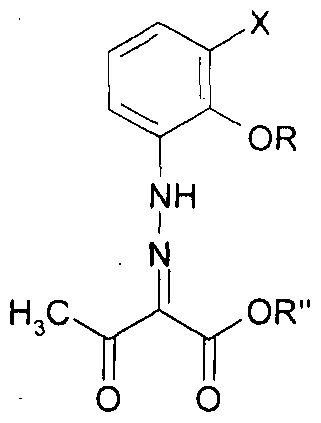
wherein X and R are as defined above and R" represents hydrogen, Ci-6 alkyl, with 3,4-dimethylphenylhydrazine or salt thereof to give the compound of formula III.5
8. The process of claim 7, wherein X is Br, R is methyl and R" is ethyl.
9. A compound of formula

wherein X. R and R" are as defined above.
10. The compound of claim 9, wherein X is Br, R is methyl and R" is ethyl.
1 1 . The process of claim 7, wherein the compound of formula V is obtained by reacting a compound of formula VI or its salt thereof, 
wherein X and are as defined above,
with alkyl acetoacetate or acetoacetic acid in the presence of alkali or alkaline earth metal nitrite and an inorganic acid in a solvent system to yield the compound of formula V.
12. The process of claim 1 1 , wherein the inorganic acid is selected from the group consisting of hydrochloric acid, nitric acid, sulfuric acid.
13. The process of claim 1 1 , wherein the solvent system is selected form methanol, ethanol, water and mixtures thereof.
14. A process for the pre aration of eltrombopag, compound of formula la,
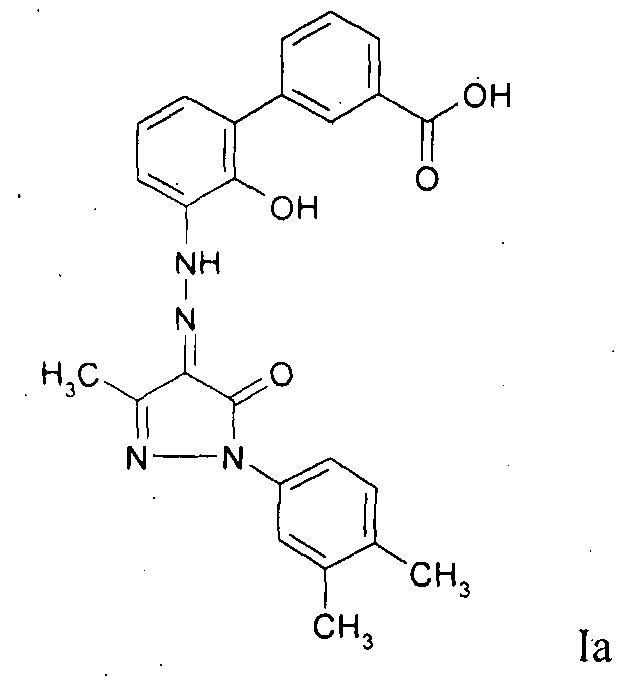
and pharmaceutically acceptable salts thereof, the process comprising:
(a) reacting 3-bromo-2-methoxyaniline with ethylacetoacetate in the presence of alkali or alkaline earth metal nitrite and inorganic acid to give ethyl 2-[(3-bromo-2- methoxyphenyl)hydrazono]-3-oxobutanoate, compound of formula Va;


(c) reacting the compound of formula Ilia with 3-carboxyphenylboronic acid in the presence of a metal catalyst to give 3'-{N'-[ l -(3,4-dimethylphenyl)-3-methyI-5-oxo- l ,5-dihydro-pyrazol-4-yIidene]hydrazino} -2'-methoxybiphenyl-3-carboxylic acid, compound of formula lb;

(d) deprotecting the compound of formula lb using Lewis acid to give eltrombopag; and optionally, converting to its pharmaceutically acceptable salt.
15. The process of claim 14, wherein the Lewis acid used in (d) is selected from the group consisting of aluminium chloride, aluminium bromide, aluminium iodide, stannous chloride, stannous bromide, titanium chloride, boron trifluoride, boron tribromide, boron trifluoride-dimethylsulfide complex, beryllium chloride, beryllium bromide, zinc chloride, zinc bromide, trimethylsilylchloride, trimethylsilylbromide, trimethylsilyliodide.
16. The process of claim 15, wherein the Lewis acid used is aluminium chloride.
1 7. A process for the preparation of eltrombopag, a compound of formula la,

the process comprising subjecting the compound of formula I to a deprotection react ion.

wherein R represents linear or branched C| _6 alkyl, C3.8 cycloalkyl, optionally substituted benzyl, linear or branched alkylalkoxy, tetrahydrofuranyl, tetrahydropyranyl. methyloxybenzyl, trialkylsi lyl, acyl, trityl.
1 8. The process of c la im I and claim 1 7, wherei n the deprotection reaction process inc ludes any of the fol low ing:
(a) where R is C | .6 alkyl, C3.8 cycloalkyl, the deprotection of the compound of form ula I is performed using protic acid such as hydroiodic acid, hydrobromic acid, hydrobromic acid/acetic acid, methanesulfonic acid, trifluoroacetic acid; Lewis acid selected from the group consisting of aluminium chloride, aluminium bromide, alum inium iodide, stannous chloride, stannous bromide, titanium chloride, boron trifluoride, boron tribromide, boron trifluoride-dimethylsulfide complex, beryl lium chloride, beryllium bromide, zinc chloride, zinc bromide, trimethylsilylchloride, trimethylsilylbromide, trimethylsilyliodide, lithium iodide, lithium iodide in refluxing 2,4,6-coll idine, pyridine hydrochloride; sulphur compounds such as sodium ethylmercaptide, sodium trimeth lsilanethiolate; alkali organomides such as sodium bis(trimethylsilyl)amide and lithium diisopropylamide; or
(b) where R is optionally substituted benzyl, methyloxybenzyl, the deprotection of the compound of formula I is performed via-hydrogenation reaction using hydrogen in the presence of a metal catalyst; or
(c) where R is linear or branched alkylalkoxy, tetrahydrofuranyl, tetrahydropyranyl, trityl, the deprotection of the compound of formula I is performed using an inorganic acid selected from the group consisting of hydrochloric acid, hydrobromic acid, sulfuric acid, phosphoric acid; organic acid such as acetic acid; or
(d) where R is trialkylsilyl, the deprotection of the compound of formula I is performed using acids such as acetic acid or fluorides such as tetrabutylammonium fluoride; or
(e) where R is acyl. the deprotection of the compound of formula I is performed using an inorganic acid selected from the group consisting of hydrochloric acid, hydrobromic acid, sulfuric acid, phosphoric acid; inorganic base selected from the group consisting of sodium hydroxide, potassium hydroxide, sodium carbonate, potassium carbonate:
19. The use of compound of formula Ilia, Va, or lb in the preparation of eltrombopag or salt thereof.
20. Eltrombopag ammonium salt.
21 . A process for the preparation of eltrombopag ammonium salt comprising reacting eltrombopag with a source of ammonia.
22. The process of claim 21 , wherein the source of ammonia is selected from the group consisting of ammonia water or ammonium carbonate or ammonia gas or liquid ammonia.
23. A process for the preparation of eltrombopag olam ine comprising reacting eltrombopag or a salt thereof with excess of ethanolamine without using any additional reaction solvent.
24. A process for the preparation of eltrombopag olamine comprising reacting eltrombopag or a salt thereof with ethanolamine in an aqueous medium.
25. A process for the preparation of eltrombopag olamine comprising reacting eltrombopag ammonium salt with ethanolamine.
26. The use of eltrombopag ammonium salt in the preparation of eltrombopag olamine.
Priority Applications (2)
| Application Number | Priority Date | Filing Date | Title |
|---|---|---|---|
| EP12848943.2A EP2755955A4 (en) | 2011-09-13 | 2012-09-12 | Process for preparation of substituted 3'-hydrazino-biphenyl-3-carboxylic acid compounds |
| US14/344,393 US9440927B2 (en) | 2011-09-13 | 2012-09-12 | Process for preparation of substituted 3'-hydroazino-diphenyl-3-carboxylic acid compounds |
Applications Claiming Priority (6)
| Application Number | Priority Date | Filing Date | Title |
|---|---|---|---|
| IN2570/MUM/2011 | 2011-09-13 | ||
| IN2570MU2011 | 2011-09-13 | ||
| IN2898MU2011 | 2011-10-17 | ||
| IN2898/MUM/2011 | 2011-10-17 | ||
| IN582MU2012 | 2012-03-05 | ||
| IN582/MUM/2012 | 2012-03-05 |
Publications (2)
| Publication Number | Publication Date |
|---|---|
| WO2013072921A2 true WO2013072921A2 (en) | 2013-05-23 |
| WO2013072921A3 WO2013072921A3 (en) | 2013-07-25 |
Family
ID=48430293
Family Applications (1)
| Application Number | Title | Priority Date | Filing Date |
|---|---|---|---|
| PCT/IN2012/000610 Ceased WO2013072921A2 (en) | 2011-09-13 | 2012-09-12 | Process for preparation of substituted 3'-hydrazino-biphenyl-3-carboxylic acid compounds |
Country Status (3)
| Country | Link |
|---|---|
| US (1) | US9440927B2 (en) |
| EP (1) | EP2755955A4 (en) |
| WO (1) | WO2013072921A2 (en) |
Cited By (16)
| Publication number | Priority date | Publication date | Assignee | Title |
|---|---|---|---|---|
| CN103819406A (en) * | 2014-03-17 | 2014-05-28 | 苏州明锐医药科技有限公司 | Preparation method of eltrombopag olamine |
| CN104151247A (en) * | 2014-08-23 | 2014-11-19 | 桂林理工大学 | 4-aminoantipyrine-isovanillin Schiff base and application thereof |
| CN104151246A (en) * | 2014-08-23 | 2014-11-19 | 桂林理工大学 | 4-aminoantipyrine-2-naphthaldehyde Schiff base and application thereof |
| CN104193684A (en) * | 2014-08-23 | 2014-12-10 | 桂林理工大学 | 4-aminoantipyrine 2,5-dihydroxybenzaldehyde Schiff base and its application |
| CN106966984A (en) * | 2017-04-01 | 2017-07-21 | 常州制药厂有限公司 | The preparation method of eltrombopag olamine diethanolamine salt |
| CN107021928A (en) * | 2017-04-01 | 2017-08-08 | 常州制药厂有限公司 | New intermediate of eltrombopag olamine and its preparation method and application |
| CN108191763A (en) * | 2018-02-10 | 2018-06-22 | 扬子江药业集团四川海蓉药业有限公司 | A kind of synthetic method of Ai Qu pools pa ethanol amine |
| US20180273490A1 (en) * | 2015-11-10 | 2018-09-27 | Amneal Pharmaceuticals Company Gmbh | Process for the Preparation of Eltrombopag Olamine |
| US10336706B2 (en) | 2014-09-05 | 2019-07-02 | Hetero Research Foundation | Crystalline form of Eltrombopag free acid |
| WO2019229572A1 (en) | 2018-06-01 | 2019-12-05 | Aurobindo Pharma Ltd | An improved process for the preparation of eltrombopag olamine and its intermediates |
| EP3604284A1 (en) * | 2018-08-02 | 2020-02-05 | F.I.S.- Fabbrica Italiana Sintetici S.p.A. | Crystalline eltrombopag monoethanolamine salt form d |
| WO2021078076A1 (en) * | 2019-10-21 | 2021-04-29 | 广东东阳光药业有限公司 | Novel crystalline form of acetylated eltrombopag and preparation method thereof |
| WO2021078077A1 (en) * | 2019-10-21 | 2021-04-29 | 广东东阳光药业有限公司 | New crystal form of acetylated eltrombopag and preparation method therefor |
| CN117024348A (en) * | 2023-06-20 | 2023-11-10 | 南通常佑药业科技有限公司 | A new method for preparing eltrombopag |
| JP2024175803A (en) * | 2023-06-07 | 2024-12-19 | 白鳥製薬株式会社 | Manufacturing method of eltrombopag olamine |
| WO2025140275A1 (en) * | 2023-12-25 | 2025-07-03 | 江苏恒瑞医药股份有限公司 | Phosphate compound of substituted pyrazoline azo derivative or pharmaceutically acceptable salt thereof |
Families Citing this family (2)
| Publication number | Priority date | Publication date | Assignee | Title |
|---|---|---|---|---|
| CN108101845B (en) * | 2016-11-25 | 2020-05-15 | 苏州科伦药物研究有限公司 | Preparation method of eltrombopag |
| CN112321454B (en) * | 2020-11-25 | 2023-03-17 | 长沙创新药物工业技术研究院有限公司 | Eltrombopag intermediate, preparation method thereof and method for preparing Ai Qubo Pa by using same |
Citations (3)
| Publication number | Priority date | Publication date | Assignee | Title |
|---|---|---|---|---|
| WO2001089457A2 (en) | 2000-05-25 | 2001-11-29 | Smithkline Beecham Corporation | Thrombopoietin mimetics |
| WO2005118551A2 (en) | 2004-05-28 | 2005-12-15 | Ligand Pharmaceuticals Inc. | Thrombopoietin activity modulating compounds and methods |
| US7547719B2 (en) | 2002-05-22 | 2009-06-16 | Smithkline Beecham Corp. | 3′-[(2z)-[1-(3,4-Dimethylphenyl)-1,5-dihydro-3-methyl-5-oxo-4h-pyrazol-4-ylidene]hy-drazino]-2′-hydroxy-[1,1′-piphenyl]-acid bis-(monoethanolamine) |
Family Cites Families (4)
| Publication number | Priority date | Publication date | Assignee | Title |
|---|---|---|---|---|
| US2753336A (en) * | 1952-11-28 | 1956-07-03 | Sandoz Ag | Cobalt-containing azo dyestuffs |
| JP2010511631A (en) * | 2006-12-01 | 2010-04-15 | ステイテジックス・インコーポレイテッド | Thrombopoietin mimetic |
| US20090076112A1 (en) * | 2007-09-13 | 2009-03-19 | Protia, Llc | Deuterium-enriched eltrombopag |
| US7956048B2 (en) * | 2009-04-01 | 2011-06-07 | Pliva Hrvatska D.O.O. | Polymorphs of eltrombopag and eltrombopag salts and processes for preparation thereof |
-
2012
- 2012-09-12 EP EP12848943.2A patent/EP2755955A4/en not_active Withdrawn
- 2012-09-12 US US14/344,393 patent/US9440927B2/en not_active Expired - Fee Related
- 2012-09-12 WO PCT/IN2012/000610 patent/WO2013072921A2/en not_active Ceased
Patent Citations (4)
| Publication number | Priority date | Publication date | Assignee | Title |
|---|---|---|---|---|
| WO2001089457A2 (en) | 2000-05-25 | 2001-11-29 | Smithkline Beecham Corporation | Thrombopoietin mimetics |
| US7160870B2 (en) | 2000-05-25 | 2007-01-09 | Smithkline Beecham Corporation | Thrombopoietin mimetics |
| US7547719B2 (en) | 2002-05-22 | 2009-06-16 | Smithkline Beecham Corp. | 3′-[(2z)-[1-(3,4-Dimethylphenyl)-1,5-dihydro-3-methyl-5-oxo-4h-pyrazol-4-ylidene]hy-drazino]-2′-hydroxy-[1,1′-piphenyl]-acid bis-(monoethanolamine) |
| WO2005118551A2 (en) | 2004-05-28 | 2005-12-15 | Ligand Pharmaceuticals Inc. | Thrombopoietin activity modulating compounds and methods |
Non-Patent Citations (2)
| Title |
|---|
| LIU, K K-C ET AL.: "Synthetic approaches to the 2009 new drugs", BIOORG. MED. CHEM, vol. 19, 2011, pages 1136 - 1154 |
| See also references of EP2755955A2 |
Cited By (25)
| Publication number | Priority date | Publication date | Assignee | Title |
|---|---|---|---|---|
| WO2015139536A1 (en) * | 2014-03-17 | 2015-09-24 | 苏州明锐医药科技有限公司 | Method for preparing eltrombopag |
| KR101919097B1 (en) * | 2014-03-17 | 2018-11-15 | 쑤저우 미라크파르마 테크놀로지 컴퍼니 리미티드 | Method for preparing eltrombopag |
| KR20170005404A (en) * | 2014-03-17 | 2017-01-13 | 쑤저우 미라크파르마 테크놀로지 컴퍼니 리미티드 | Method for preparing eltrombopag |
| CN103819406A (en) * | 2014-03-17 | 2014-05-28 | 苏州明锐医药科技有限公司 | Preparation method of eltrombopag olamine |
| CN103819406B (en) * | 2014-03-17 | 2015-04-08 | 苏州明锐医药科技有限公司 | Preparation method of eltrombopag olamine |
| CN104193684B (en) * | 2014-08-23 | 2016-06-29 | 桂林理工大学 | 4-AA contracting 2,5-4-dihydroxy benzaldehyde Schiff's base and application |
| CN104151246A (en) * | 2014-08-23 | 2014-11-19 | 桂林理工大学 | 4-aminoantipyrine-2-naphthaldehyde Schiff base and application thereof |
| CN104151247A (en) * | 2014-08-23 | 2014-11-19 | 桂林理工大学 | 4-aminoantipyrine-isovanillin Schiff base and application thereof |
| CN104193684A (en) * | 2014-08-23 | 2014-12-10 | 桂林理工大学 | 4-aminoantipyrine 2,5-dihydroxybenzaldehyde Schiff base and its application |
| US10336706B2 (en) | 2014-09-05 | 2019-07-02 | Hetero Research Foundation | Crystalline form of Eltrombopag free acid |
| US20180273490A1 (en) * | 2015-11-10 | 2018-09-27 | Amneal Pharmaceuticals Company Gmbh | Process for the Preparation of Eltrombopag Olamine |
| CN107021928B (en) * | 2017-04-01 | 2022-11-18 | 常州制药厂有限公司 | Eltrombopag intermediate, preparation method and application thereof |
| CN106966984A (en) * | 2017-04-01 | 2017-07-21 | 常州制药厂有限公司 | The preparation method of eltrombopag olamine diethanolamine salt |
| CN107021928A (en) * | 2017-04-01 | 2017-08-08 | 常州制药厂有限公司 | New intermediate of eltrombopag olamine and its preparation method and application |
| CN108191763A (en) * | 2018-02-10 | 2018-06-22 | 扬子江药业集团四川海蓉药业有限公司 | A kind of synthetic method of Ai Qu pools pa ethanol amine |
| WO2019229572A1 (en) | 2018-06-01 | 2019-12-05 | Aurobindo Pharma Ltd | An improved process for the preparation of eltrombopag olamine and its intermediates |
| EP3604284A1 (en) * | 2018-08-02 | 2020-02-05 | F.I.S.- Fabbrica Italiana Sintetici S.p.A. | Crystalline eltrombopag monoethanolamine salt form d |
| WO2021078076A1 (en) * | 2019-10-21 | 2021-04-29 | 广东东阳光药业有限公司 | Novel crystalline form of acetylated eltrombopag and preparation method thereof |
| WO2021078077A1 (en) * | 2019-10-21 | 2021-04-29 | 广东东阳光药业有限公司 | New crystal form of acetylated eltrombopag and preparation method therefor |
| CN114341113A (en) * | 2019-10-21 | 2022-04-12 | 广东东阳光药业有限公司 | Novel crystal form of acetylated eltrombopag and preparation method thereof |
| CN114341112A (en) * | 2019-10-21 | 2022-04-12 | 广东东阳光药业有限公司 | A new crystal form of acetylated Eltrombopag and its preparation method |
| JP2024175803A (en) * | 2023-06-07 | 2024-12-19 | 白鳥製薬株式会社 | Manufacturing method of eltrombopag olamine |
| CN117024348A (en) * | 2023-06-20 | 2023-11-10 | 南通常佑药业科技有限公司 | A new method for preparing eltrombopag |
| CN117024348B (en) * | 2023-06-20 | 2026-06-02 | 南通常佑药业科技有限公司 | A method for preparing eltrombopag |
| WO2025140275A1 (en) * | 2023-12-25 | 2025-07-03 | 江苏恒瑞医药股份有限公司 | Phosphate compound of substituted pyrazoline azo derivative or pharmaceutically acceptable salt thereof |
Also Published As
| Publication number | Publication date |
|---|---|
| EP2755955A2 (en) | 2014-07-23 |
| EP2755955A4 (en) | 2015-08-19 |
| WO2013072921A3 (en) | 2013-07-25 |
| US20150087845A1 (en) | 2015-03-26 |
| US9440927B2 (en) | 2016-09-13 |
Similar Documents
| Publication | Publication Date | Title |
|---|---|---|
| EP2755955A2 (en) | Process for preparation of substituted 3'-hydrazino-biphenyl-3-carboxylic acid compounds | |
| JP2023078251A (en) | Method for producing acrylic acid derivative | |
| KR101283109B1 (en) | Process for the Synthesis of Organic Compounds | |
| CN108137535B (en) | Method for preparing pyridyl pyrazolidinone carboxylic acid compounds | |
| JP2018538366A (en) | 4-((6- (2- (2,4-difluorophenyl) -1,1-difluoro-2-hydroxy-3- (1H-1,2,4-triazol-1-yl) propyl) pyridine-3 -Yl) oxy) benzonitrile and preparation method | |
| WO2007121390A1 (en) | Process for making cytokine inhibiting compounds containing 4- and 5- imidazolyl rings and the intermediates thereof | |
| KR20070114126A (en) | Process for preparing pyrazolo [3,4-D] pyrimidine ether | |
| JP2018535262A (en) | 4-((6- (2- (2,4-difluorophenyl) -1,1-difluoro-2-oxoethyl) pyridin-3-yl) oxy) benzonitrile and production method | |
| KR20190013555A (en) | Intermediates useful for the synthesis of a selective inhibitor against protein kinase and processes for preparing the same | |
| KR20160089509A (en) | Process for the preparation of 5-fluoro-1h-pyrazoles | |
| JP2010202648A (en) | 4-amino pyrazole derivatives, those production intermediates, and production methods therfor | |
| JP6251197B2 (en) | Process for preparing substituted phenylpropanones | |
| JPS63310865A (en) | Manufacture of 3-cyano-4-aryl-pyrroles | |
| JPH0784423B2 (en) | 3-Amino-2-substituted benzoyl acrylic acid derivative | |
| JP4727576B2 (en) | Process for preparing alkyl esters of difluoroacetoacetic acid | |
| CN104163800A (en) | Preparation method of 3-difluoromethyl-1-methyl-1H-pyrazolyl-4-carboxylic acid | |
| US20140275563A1 (en) | Preparation of 1,3-(substituted-diaryl)-1,2,4-triazoles and intermediates therefrom | |
| CN110740995B (en) | Process for preparing substituted phenoxyphenyl alcohols | |
| JP2025526902A (en) | Elimination reactions for the preparation of substituted alkenes | |
| WO2020196327A1 (en) | Production method of quinolinecarboxamide derivative or production intermediate thereof | |
| DK2571854T3 (en) | PROCESS FOR THE PREPARATION OF 1-alkyl-3-difluoromethyl-5-hydroxypyrazoles | |
| KR101226332B1 (en) | New preparation of 2-(2-n-butyl-4-hydroxy-6-methyl-pyrimidin-5-yl)-N,N-dimethylacetamide | |
| JP2527220B2 (en) | Process for producing pyrazolcarboxylic acid amides | |
| JP2018087142A (en) | Method for producing 3-halogenated alkylpyrazole derivative | |
| JP4144223B2 (en) | Method for producing chromone derivative |
Legal Events
| Date | Code | Title | Description |
|---|---|---|---|
| REEP | Request for entry into the european phase |
Ref document number: 2012848943 Country of ref document: EP |
|
| WWE | Wipo information: entry into national phase |
Ref document number: 2012848943 Country of ref document: EP |
|
| 121 | Ep: the epo has been informed by wipo that ep was designated in this application |
Ref document number: 12848943 Country of ref document: EP Kind code of ref document: A2 |
|
| WWE | Wipo information: entry into national phase |
Ref document number: 14344393 Country of ref document: US |