WO2013080526A1 - フェライト系ステンレス鋼 - Google Patents
フェライト系ステンレス鋼 Download PDFInfo
- Publication number
- WO2013080526A1 WO2013080526A1 PCT/JP2012/007614 JP2012007614W WO2013080526A1 WO 2013080526 A1 WO2013080526 A1 WO 2013080526A1 JP 2012007614 W JP2012007614 W JP 2012007614W WO 2013080526 A1 WO2013080526 A1 WO 2013080526A1
- Authority
- WO
- WIPO (PCT)
- Prior art keywords
- less
- corrosion resistance
- nitrogen
- stainless steel
- range
- Prior art date
- Legal status (The legal status is an assumption and is not a legal conclusion. Google has not performed a legal analysis and makes no representation as to the accuracy of the status listed.)
- Ceased
Links
Images


Classifications
-
- C—CHEMISTRY; METALLURGY
- C22—METALLURGY; FERROUS OR NON-FERROUS ALLOYS; TREATMENT OF ALLOYS OR NON-FERROUS METALS
- C22C—ALLOYS
- C22C38/00—Ferrous alloys, e.g. steel alloys
- C22C38/18—Ferrous alloys, e.g. steel alloys containing chromium
- C22C38/40—Ferrous alloys, e.g. steel alloys containing chromium with nickel
- C22C38/52—Ferrous alloys, e.g. steel alloys containing chromium with nickel with cobalt
-
- C—CHEMISTRY; METALLURGY
- C21—METALLURGY OF IRON
- C21D—MODIFYING THE PHYSICAL STRUCTURE OF FERROUS METALS; GENERAL DEVICES FOR HEAT TREATMENT OF FERROUS OR NON-FERROUS METALS OR ALLOYS; MAKING METAL MALLEABLE, e.g. BY DECARBURISATION OR TEMPERING
- C21D9/00—Heat treatment, e.g. annealing, hardening, quenching or tempering, adapted for particular articles; Furnaces therefor
- C21D9/46—Heat treatment, e.g. annealing, hardening, quenching or tempering, adapted for particular articles; Furnaces therefor for sheet metals
-
- C—CHEMISTRY; METALLURGY
- C22—METALLURGY; FERROUS OR NON-FERROUS ALLOYS; TREATMENT OF ALLOYS OR NON-FERROUS METALS
- C22C—ALLOYS
- C22C38/00—Ferrous alloys, e.g. steel alloys
-
- C—CHEMISTRY; METALLURGY
- C22—METALLURGY; FERROUS OR NON-FERROUS ALLOYS; TREATMENT OF ALLOYS OR NON-FERROUS METALS
- C22C—ALLOYS
- C22C38/00—Ferrous alloys, e.g. steel alloys
- C22C38/001—Ferrous alloys, e.g. steel alloys containing N
-
- C—CHEMISTRY; METALLURGY
- C22—METALLURGY; FERROUS OR NON-FERROUS ALLOYS; TREATMENT OF ALLOYS OR NON-FERROUS METALS
- C22C—ALLOYS
- C22C38/00—Ferrous alloys, e.g. steel alloys
- C22C38/004—Very low carbon steels, i.e. having a carbon content of less than 0,01%
-
- C—CHEMISTRY; METALLURGY
- C22—METALLURGY; FERROUS OR NON-FERROUS ALLOYS; TREATMENT OF ALLOYS OR NON-FERROUS METALS
- C22C—ALLOYS
- C22C38/00—Ferrous alloys, e.g. steel alloys
- C22C38/005—Ferrous alloys, e.g. steel alloys containing rare earths, i.e. Sc, Y, Lanthanides
-
- C—CHEMISTRY; METALLURGY
- C22—METALLURGY; FERROUS OR NON-FERROUS ALLOYS; TREATMENT OF ALLOYS OR NON-FERROUS METALS
- C22C—ALLOYS
- C22C38/00—Ferrous alloys, e.g. steel alloys
- C22C38/02—Ferrous alloys, e.g. steel alloys containing silicon
-
- C—CHEMISTRY; METALLURGY
- C22—METALLURGY; FERROUS OR NON-FERROUS ALLOYS; TREATMENT OF ALLOYS OR NON-FERROUS METALS
- C22C—ALLOYS
- C22C38/00—Ferrous alloys, e.g. steel alloys
- C22C38/04—Ferrous alloys, e.g. steel alloys containing manganese
-
- C—CHEMISTRY; METALLURGY
- C22—METALLURGY; FERROUS OR NON-FERROUS ALLOYS; TREATMENT OF ALLOYS OR NON-FERROUS METALS
- C22C—ALLOYS
- C22C38/00—Ferrous alloys, e.g. steel alloys
- C22C38/06—Ferrous alloys, e.g. steel alloys containing aluminium
-
- C—CHEMISTRY; METALLURGY
- C22—METALLURGY; FERROUS OR NON-FERROUS ALLOYS; TREATMENT OF ALLOYS OR NON-FERROUS METALS
- C22C—ALLOYS
- C22C38/00—Ferrous alloys, e.g. steel alloys
- C22C38/18—Ferrous alloys, e.g. steel alloys containing chromium
- C22C38/40—Ferrous alloys, e.g. steel alloys containing chromium with nickel
- C22C38/42—Ferrous alloys, e.g. steel alloys containing chromium with nickel with copper
-
- C—CHEMISTRY; METALLURGY
- C22—METALLURGY; FERROUS OR NON-FERROUS ALLOYS; TREATMENT OF ALLOYS OR NON-FERROUS METALS
- C22C—ALLOYS
- C22C38/00—Ferrous alloys, e.g. steel alloys
- C22C38/18—Ferrous alloys, e.g. steel alloys containing chromium
- C22C38/40—Ferrous alloys, e.g. steel alloys containing chromium with nickel
- C22C38/44—Ferrous alloys, e.g. steel alloys containing chromium with nickel with molybdenum or tungsten
-
- C—CHEMISTRY; METALLURGY
- C22—METALLURGY; FERROUS OR NON-FERROUS ALLOYS; TREATMENT OF ALLOYS OR NON-FERROUS METALS
- C22C—ALLOYS
- C22C38/00—Ferrous alloys, e.g. steel alloys
- C22C38/18—Ferrous alloys, e.g. steel alloys containing chromium
- C22C38/40—Ferrous alloys, e.g. steel alloys containing chromium with nickel
- C22C38/46—Ferrous alloys, e.g. steel alloys containing chromium with nickel with vanadium
-
- C—CHEMISTRY; METALLURGY
- C22—METALLURGY; FERROUS OR NON-FERROUS ALLOYS; TREATMENT OF ALLOYS OR NON-FERROUS METALS
- C22C—ALLOYS
- C22C38/00—Ferrous alloys, e.g. steel alloys
- C22C38/18—Ferrous alloys, e.g. steel alloys containing chromium
- C22C38/40—Ferrous alloys, e.g. steel alloys containing chromium with nickel
- C22C38/48—Ferrous alloys, e.g. steel alloys containing chromium with nickel with niobium or tantalum
-
- C—CHEMISTRY; METALLURGY
- C22—METALLURGY; FERROUS OR NON-FERROUS ALLOYS; TREATMENT OF ALLOYS OR NON-FERROUS METALS
- C22C—ALLOYS
- C22C38/00—Ferrous alloys, e.g. steel alloys
- C22C38/18—Ferrous alloys, e.g. steel alloys containing chromium
- C22C38/40—Ferrous alloys, e.g. steel alloys containing chromium with nickel
- C22C38/50—Ferrous alloys, e.g. steel alloys containing chromium with nickel with titanium or zirconium
-
- C—CHEMISTRY; METALLURGY
- C22—METALLURGY; FERROUS OR NON-FERROUS ALLOYS; TREATMENT OF ALLOYS OR NON-FERROUS METALS
- C22C—ALLOYS
- C22C38/00—Ferrous alloys, e.g. steel alloys
- C22C38/18—Ferrous alloys, e.g. steel alloys containing chromium
- C22C38/40—Ferrous alloys, e.g. steel alloys containing chromium with nickel
- C22C38/54—Ferrous alloys, e.g. steel alloys containing chromium with nickel with boron
-
- C—CHEMISTRY; METALLURGY
- C21—METALLURGY OF IRON
- C21D—MODIFYING THE PHYSICAL STRUCTURE OF FERROUS METALS; GENERAL DEVICES FOR HEAT TREATMENT OF FERROUS OR NON-FERROUS METALS OR ALLOYS; MAKING METAL MALLEABLE, e.g. BY DECARBURISATION OR TEMPERING
- C21D2211/00—Microstructure comprising significant phases
- C21D2211/005—Ferrite
Definitions
- the present invention relates to a ferritic stainless steel (ferritic ⁇ stainless steel) that is unlikely to cause a decrease in corrosion resistance due to nitrogen entering from a welding ⁇ ⁇ gas to a weld bead. .
- Ferritic stainless steel has higher cost performance and higher thermal conductivity and lower coefficient of thermal expansion (coefficient of thermalcoexpansion) compared to austenitic stainless steel, stress corrosion It has been used in a wide range of applications such as automobile exhaust system members, roofing and building materials, and water-related materials such as kitchens, water storage and hot water storage tanks, etc. due to various excellent characteristics such as cracking (Stress Corrosion Cracking). .
- Patent Document 1 discloses steel in which intergranular corrosion resistance of ferritic stainless steel is improved by adding Ti and Nb in a composite manner.
- ferritic stainless steels having excellent corrosion resistance of welded parts include, for example, Patent Document 2 discloses ferritic stainless steels having excellent corrosion resistance of welded parts, and Patent Document 3 discloses ferritic stainless steels having excellent corrosion resistance of weld gaps.
- Patent Document 4 discloses ferritic stainless steels each having excellent corrosion resistance of the welded portion with austenitic stainless steel. However, even if these ferritic stainless steels are used, the shielding gas is changed to welding beads. Sufficient corrosion resistance is not always ensured under welding conditions in which nitrogen penetrates.
- An object of the present invention is to provide a ferritic stainless steel having excellent corrosion resistance and good welding workability under welding conditions in which crystallization occurs.
- the nitrogen content of the weld bead increased in proportion to the increase in the nitrogen concentration of the shield gas when nitrogen was mixed into the front shield gas.
- the nitrogen content of the weld bead hardly changed even when the nitrogen concentration of the shield gas increased. This is considered to be due to the fact that the front shield gas is constantly blown from the nozzle toward the molten pool, whereas the back shield gas is only in gentle contact. Sensitization of the weld bead became more pronounced with an increase in nitrogen entering the weld bead. Therefore, it is considered that the sensitization of the weld bead occurs when nitrogen mixed in the surface shield gas enters the weld bead.
- the logarithm of the reactivation rate decreased in proportion to Nb + 1.3Ti + 0.9V + 0.2Al (wherein the element symbol represents the content (% by mass) of each element) (hereinafter referred to as the N value).
- N value the degree of sensitization.
- the reactivation rate is 0.01% or less, and good resistance to corrosion even under welding conditions in which the weld bead becomes sensitized with normal ferritic stainless steel due to nitrogen intrusion from the shielding gas. It became clear to show.
- temper color an oxide layer called temper color on the weld bead causes Cr deficiency as well as sensitization, which lowers the corrosion resistance.
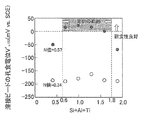
- the effects of various elements on the corrosion resistance of temper collars under welding conditions where sensitization occurred were evaluated by pitting potential measurement.
- Various ferritic stainless steels are subjected to bead-on TIG welding using Ar gas with a nitrogen concentration of 2 vol% as the front shield gas, and the temper collar formed on the front side (torch side) of the weld bead is not removed by welding.
- the pitting potential was measured in a 3.5 mass% NaCl solution at 30 ° C. The results are shown in FIG.
- the pitting potential is -200 to -150 mV regardless of the contents of Si, Al, and Ti, and the corrosion resistance is low.
- Si + Al + Ti (where the element symbol in the formula represents the content (% by mass) of each element) (hereinafter referred to as the S value) is in the range of 0.6 to 1.8.
- the pitting corrosion potential was 0 mV or more, and the corrosion resistance was improved.
- Si, Al and Ti are concentrated in the temper collar, it becomes a dense oxide film with good protective properties, and the amount of oxidation by welding is suppressed, so the Cr on the surface of the weld bead is reduced by oxidation.
- the reduction of Cr by the temper color has a synergistic effect on top of the reduction of Cr around the Cr carbonitride caused by sensitization by nitrogen intrusion. Therefore, it is considered that the N value and the S value are in appropriate ranges, respectively, in order to ensure the corrosion resistance of the weld bead under the welding conditions in which nitrogen enters from the shield gas.
- the present invention has been made on the basis of the above-described knowledge and has been further studied.
- the gist of the present invention is as follows.
- C 0.001 to 0.030%
- Si more than 0.3 to 0.55%
- Mn 0.05 to 0.50%
- P 0.05% or less
- S 0.01% or less
- Cr 19.0 to 28.0%
- Ni 0.01 to less than 0.30%
- Mo 0.2 to 3.0%
- Al more than 0.08 to 1.
- V 0.02 to 0.50%
- Cu less than 0.1%
- Nb 0.005 to 0.50%
- Ti 0.05 to 0.50%
- N 0.001 to A ferritic stainless steel containing 0.030%, satisfying the following formulas (1) and (2), the balance being made of Fe and inevitable impurities, and excellent in corrosion resistance of welds.
- a ferritic stainless steel having excellent corrosion resistance can be obtained even under welding conditions in which sensitization due to nitrogen penetration from the shielding gas into the welding bead occurs. Further, the ferritic stainless steel of the present invention is as good in welding work as the conventional steel.
- C 0.001 to 0.030%
- C is an element inevitably contained in steel.
- the amount of C is large, the strength is improved, and when it is small, workability is improved.
- addition of 0.001% or more is appropriate. If it exceeds 0.030%, the workability is remarkably deteriorated, and Cr carbide is precipitated, and the corrosion resistance is likely to be lowered due to local Cr deficiency. Therefore, the C content is in the range of 0.001 to 0.030%.
- it is 0.002 to 0.018% of range. More preferably, it is in the range of 0.003 to 0.015%. More preferably, it is 0.003 to 0.010% of range.
- Si more than 0.3 to 0.55% Si is an element useful for deoxidation, but in the present invention, the temper collar formed by welding is concentrated together with Al and Ti to improve the protective property of the oxide film and to improve the corrosion resistance of the welded portion. It is an important element. Under welding conditions in which nitrogen penetrates from the shielding gas, Al and Ti are combined with the penetrated nitrogen and deposited, so the concentration to the temper color is reduced. Therefore, in the present invention, Si plays a relatively large role in improving the protection of the temper color. The effect is obtained by adding more than 0.3%. However, if it exceeds 0.55%, the workability is significantly lowered, and the molding process becomes difficult. Therefore, the Si content is in the range of more than 0.3 to 0.55%. Preferably, it is in the range of 0.33 to 0.50%. More preferably, it is in the range of 0.35 to 0.48%.
- Mn 0.05 to 0.50%
- Mn is an element inevitably contained in steel and has an effect of increasing strength. The effect can be obtained by addition of 0.05% or more. However, excessive addition promotes precipitation of MnS, which is a starting point of corrosion, and lowers the corrosion resistance. Therefore, the Mn content is in the range of 0.05 to 0.50%. Preferably, it is 0.08 to 0.40% of range. More preferably, it is in the range of 0.09 to 0.35%.
- P 0.05% or less
- the P content is 0.05% or less.
- S 0.01% or less S is an element inevitably contained in steel, but if it exceeds 0.01%, the corrosion resistance is lowered. Therefore, the S content is 0.01% or less. More preferably, it is 0.006% or less.
- Cr 19.0 to 28.0% Cr is the most important element for ensuring the corrosion resistance of stainless steel. If the addition is less than 19.0%, sufficient corrosion resistance cannot be obtained at or around the weld bead in which Cr on the surface layer decreases due to oxidation by welding. On the other hand, if over 28.0% is added, workability and manufacturability are reduced, so the Cr content is in the range of 19.0 to 28.0%. Preferably, it is in the range of 21.0 to 26.0%. More preferably, it is 21.0 to 24.0%.
- Ni 0.01 to less than 0.30%
- Ni is an element that improves the corrosion resistance of stainless steel. It is an element that suppresses the progress of corrosion in a corrosive environment where a passive film cannot be formed and active dissolution occurs. is there. The effect can be obtained by adding 0.01% or more. However, addition of 0.30% or more causes an increase in cost because it is an expensive element in addition to lowering workability. Therefore, the Ni content is in the range of 0.01 to less than 0.30%. Preferably, it is 0.03 to 0.24% of range.
- Mo 0.2-3.0%
- Mo is an element that promotes repassivation of the passive film and improves the corrosion resistance of stainless steel. The effect becomes more remarkable by containing with Cr. The effect of improving the corrosion resistance by Mo can be obtained by adding 0.2% or more. However, if it exceeds 3.0%, the strength increases, and the rolling load increases, so the productivity decreases. Therefore, the Mo content is in the range of 0.2 to 3.0%. Preferably, it is in the range of 0.6 to 2.4%. More preferably, it is in the range of 0.6 to 2.0%.
- Al more than 0.08 to 1.2%
- Al is an element useful for deoxidation, and in the present invention, it is an element that concentrates in a temper collar formed by welding together with Si and Ti and improves the corrosion resistance of the welded portion.
- nitrogen penetrates into the weld bead from the shielding gas it is also an element that has an effect of suppressing the sensitization caused by the combined precipitation of Cr and nitrogen. This is presumably because Al, which has a higher affinity with nitrogen than Cr, forms nitrogen and AlN that have entered the weld bead from the shield gas and prevents the formation of Cr nitride. This effect is obtained with additions exceeding 0.08%.
- the Al content is in the range of more than 0.08 to 1.2%. Preferably, it is 0.09 to 0.8% of range. More preferably, it is in the range of 0.10 to 0.40%.
- V 0.02 to 0.50%
- V is an element that improves corrosion resistance and workability.
- V when nitrogen enters the welding bead from the shielding gas, V is an element that suppresses sensitization by combining with nitrogen to become VN. The effect can be obtained by adding 0.02% or more. However, if added over 0.50%, the processability is reduced. Therefore, the V amount is in the range of 0.02 to 0.50%. Preferably, it is 0.03 to 0.40% of range.
- Cu Less than 0.1% Cu is an impurity that may be mixed in from raw scrap, but the ferritic stainless steel with Cr content and Mo content of the present invention, which has excellent corrosion resistance, increases the passive maintenance current. It has the effect of destabilizing the passive film and reducing the corrosion resistance. This corrosion resistance lowering effect becomes significant when the Cu content is 0.1% or more. Therefore, the Cu amount is less than 0.1%.
- Nb 0.005 to 0.50%
- Nb is an element that binds preferentially to C and N and suppresses a decrease in corrosion resistance due to precipitation of Cr carbonitride. Therefore, in this invention, it is an important element in order to suppress the sensitization by nitrogen penetration
- the addition exceeding 0.50% increases the hot strength, increases the hot rolling load, and decreases the productivity. Further, it is liable to precipitate at the crystal grain boundary of the weld and cause a weld crack. Therefore, the Nb content is in the range of 0.005 to 0.50%. Preferably, it is in the range of 0.01 to 0.38%. More preferably, it is in the range of 0.01 to 0.38%. More preferably, it is 0.05 to 0.35% of range.
- Ti 0.05 to 0.50%
- Ti is an element that binds preferentially to C and N and suppresses a decrease in corrosion resistance due to precipitation of Cr carbonitride.
- it is an important element for suppressing sensitization due to nitrogen intrusion from the shielding gas.
- Si and Al in the temper collar of the welded portion to improve the protective properties of the oxide film. The effect is obtained at 0.05% or more.
- the Ti amount is in the range of 0.05 to 0.50%. Preferably, it is 0.08 to 0.38% of range.
- N 0.001 to 0.030%
- N is an element that is inevitably contained in steel like C, and has the effect of increasing the strength of the steel by solid solution strengthening. The effect is obtained at 0.001% or more.
- Cr nitride when Cr nitride is deposited, addition of 0.030% or less is appropriate in order to reduce the corrosion resistance. Therefore, the N content is in the range of 0.001 to 0.030%. Preferably, it is 0.002 to 0.018% of range.
- Si + Al + Ti (S value): 0.6 or more and 1.8 or less
- the element symbol in a formula represents content (mass%) of each element.
- Si, Al, and Ti all have a strong affinity for oxygen, and when stainless steel is oxidized to form an oxide scale, it is concentrated in the lower layer of the oxide scale (base metal side).
- the concentrated layer of Si, Al, and Ti formed by complex oxidation of Si, Al, and Ti becomes a dense and protective oxide film. Therefore, compared with the case where content of these elements is low, it becomes an oxide film excellent in corrosion resistance. The effect is obtained when the S value is 0.6 or more. However, as shown in FIG.
- the S value exceeds 1.8, the crystallinity of the oxide film increases, and the effect of suppressing the transmission of metal ions and the like decreases. Therefore, as shown in FIG. 3, when the S value exceeds 1.8, the corrosion resistance decreases again. From the above results, the S value is 0.6 or more and 1.8 or less. Preferably they are 0.6 or more and 1.4 or less.
- the element symbol in a formula represents content (mass%) of each element.
- the sensitization of the weld bead handled in the present invention is mainly caused by the fact that nitrogen entering the weld bead from the shield gas combines with Cr to form Cr nitride, and a local Cr-depleted region is generated. It is. In order to suppress this, it is considered that the addition of an element having a greater affinity for N than Cr is effective.
- Ti and Nb are well known as stabilizing elements for C and N. However, in welding beads under welding conditions in which nitrogen intrudes from the shielding gas, Al and V have a new C and N stabilizing effect this time.
- the above are the basic chemical components of the present invention, and the balance consists of Fe and inevitable impurities. Further, the amount of Cu may be limited from the viewpoint of corrosion resistance. Further, Zr, W, REM, Co, and B may be added as selective elements for the purpose of improving corrosion resistance and toughness.
- Zr 1.0% or less Zr combines with C and N and has an effect of suppressing sensitization. The effect can be obtained by adding 0.01% or more. However, excessive addition reduces workability and increases the cost because it is a very high element. Therefore, when adding Zr, the amount of Zr is preferably 1.0% or less. More preferably, it is 0.2% or less.
- W 1.0% or less W, like Mo, has the effect of improving corrosion resistance.
- the effect can be obtained by adding 0.01% or more.
- excessive addition increases strength and decreases manufacturability. Therefore, when adding W, it is preferable to make W amount into 1.0% or less. More preferably, it is 0.2% or less.
- REM 0.1% or less REM (rare earth element) improves oxidation resistance, suppresses formation of oxide scale, and suppresses formation of a Cr-deficient region immediately below the temper collar of the weld. The effect is obtained by adding 0.0001% or more. However, excessive addition reduces productivity, such as pickling, and increases costs. Therefore, when REM is added, the REM content is preferably 0.1% or less. More preferably, it is 0.05% or less.
- Co 0.3% or less
- Co is an element that improves toughness. The effect can be obtained by adding 0.001% or more. However, excessive addition reduces manufacturability. Therefore, when adding Co, the amount of Co is preferably 0.3% or less. More preferably, it is 0.1% or less.
- B 0.1% or less
- B is an element that improves the secondary work brittleness. In order to obtain the effect, the content of 0.0001% or more is appropriate. However, excessive inclusion causes a decrease in ductility due to solid solution strengthening. Therefore, when it contains B, it is preferable to make B amount into 0.1% or less. More preferably, it is 0.05% or less.
- the steel having the above composition is melted by a known method such as a converter furnace, an electric furnace, a vacuum melting furnace, etc., and continuous casting or ingot casting. (ingot casting)-Steel material (slab slab) by slabbing.
- the steel material is then heated to 1100 to 1300 ° C., and then hot rolled to a plate thickness of 2.0 mm to 5.0 mm with a finishing temperature of 700 ° C. to 1000 ° C. and a winding temperature of 500 ° C. to 850 ° C.
- the hot rolled strip thus produced is annealed at a temperature of 800 ° C.
- Cold-rolled sheet annealing is performed at a temperature of. After cold-rolled sheet annealing, pickling is performed to remove scale. Skin pass rolling may be performed on the cold-rolled steel strip from which the scale has been removed.
- Stainless steel shown in Table 1 was melted in vacuum, heated to 1200 ° C., hot-rolled to a thickness of 4 mm, annealed in the range of 850 to 1050 ° C., and the scale was removed by pickling. Further, it was cold-rolled to a thickness of 0.8 mm, annealed in the range of 800 ° C. to 1000 ° C., pickled, and used as a test material.
- the S value is defined as Si + Al + Ti
- the N value is defined as Nb + 1.3Ti + 0.9V + 0.2Al (elements in the formula are mass%).
- TIG welding of the bead-on-plate was performed on the prepared test material.
- the welding current was 90 A and the welding speed was 60 cm / min.
- Ar gas containing 2 vol% nitrogen was used at a flow rate of 15 L / min on the front side (torch side), and 100% Ar gas was used at a flow rate of 10 L / min on the back side.
- the width of the front side weld bead was approximately 4 mm.
- a 20 mm square test piece containing the prepared weld bead was collected, covered with a sealing material leaving a 10 mm square measurement surface, and pitting corrosion in a 3.5% NaCl solution at 30 ° C. with a temper collar by welding. The potential was measured.
- the specimen was not polished or passivated.
- the other measurement methods conformed to JIS G 0577 (2005).
- the measured pitting potential V ′ C100 is shown in Table 2.
- V ′ C100 was 0 mV or more, whereas in the comparative examples, V ′ C100 was less than 0 mV, indicating that the corrosion resistance of the inventive examples is excellent.
- a 60 ⁇ 80 mm test piece including a weld bead was collected, and a neutral salt spray cyclic corrosion test was performed according to JIS H 8502 (1999) using the front side as a test surface. The number of cycles was 3 cycles. After the test, the weld bead was visually checked for corrosion. The results are shown in Table 2. Corrosion was not confirmed in any of the inventive examples, whereas corrosion was confirmed in any of the comparative examples. It turns out that the corrosion resistance of the weld bead of the invention example is excellent.
- Ferritic stainless steel obtained by the present invention is used for the production of structures by welding, such as automobile exhaust system materials such as mufflers, hot water can body materials for electric water heaters, fittings, ventilation openings, ducts, etc. It is suitable for application to building materials.
Landscapes
- Chemical & Material Sciences (AREA)
- Engineering & Computer Science (AREA)
- Materials Engineering (AREA)
- Mechanical Engineering (AREA)
- Metallurgy (AREA)
- Organic Chemistry (AREA)
- Physics & Mathematics (AREA)
- Thermal Sciences (AREA)
- Crystallography & Structural Chemistry (AREA)
- Heat Treatment Of Sheet Steel (AREA)
Abstract
Description
そこで、本発明は、フェライト系ステンレス鋼の溶接で、溶接部材の形状などが原因で十分なガスシールドを行えないために、シールドガスに窒素が混入し溶接ビードの窒素含有量が増加して鋭敏化が発生するような溶接条件において、優れた耐食性を有し、溶接施工性も良好なフェライト系ステンレス鋼を提供することを目的とする。
はじめに、溶接ビードの窒素含有量におよぼすシールドガスの窒素濃度の影響を調査した。表1のNo.1に示すフェライト系ステンレス鋼を用いて、Arベースのシールドガスの窒素濃度を0~2vol%の範囲で変化させてビードオンプレート(Bead on Plate)のTIG溶接(溶接電流90A、溶接速度60cm/min、板厚0.8mm、表シールドガス流量15L/min、裏シールドガス流量10L/min)を行い、溶接ビードの窒素含有量を測定した。結果を図1に示す。
本発明は、上記の得られた知見に基づき、更に検討を加えてなされたもので、本発明の要旨は以下の通りである。
0.6≦Si+Al+Ti≦1.8 ・・・・(1)
Nb+1.3Ti+0.9V+0.2Al>0.55 ・・・・(2)
なお、式中の元素記号は各元素の含有量(質量%)を表わす。
[2]更に、質量%で、Zr:1.0%以下、W:1.0%以下、REM:0.1%以下、Co:0.3%以下、B:0.1%以下の中から選ばれる1種以上を含有することを特徴とする上記[1]に記載の溶接部の耐食性に優れたフェライト系ステンレス鋼。
1.成分組成について
はじめに、本発明の鋼の成分組成を規定した理由を説明する。なお、成分%は、すべて質量%を意味する。
Cは鋼に不可避的に含まれる元素である。C量が多いと強度が向上し、少ないと加工性が向上する。十分な強度を得るためには0.001%以上の添加が適当である。0.030%を超えると加工性の低下が顕著となるうえ、Cr炭化物を析出して局所的なCr欠乏による耐食性の低下を起こしやすくなる。よって、C量は0.001~0.030%の範囲とする。好ましくは、0.002~0.018%の範囲である。より好ましくは0.003~0.015%の範囲である。さらに好ましくは0.003~0.010%の範囲である。
Siは脱酸に有用な元素であるが、本発明では、溶接によって形成されるテンパーカラーにAlやTiとともに濃縮して酸化皮膜の保護性を向上させ、溶接部の耐食性を良好なものとする重要な元素である。シールドガスから窒素が侵入するような溶接条件においては、AlとTiは侵入した窒素と結合して析出してしまうため、テンパーカラーへの濃縮は減少する。そのため、本発明においてはテンパーカラーの保護性向上にSiが果たす役割は相対的に大きなものとなる。その効果は0.3%超の添加で得られる。しかし、0.55%を超えると、加工性の低下が顕著となり、成型加工が困難となる。よって、Si量は0.3超~0.55%の範囲とする。好ましくは、0.33~0.50%の範囲である。より好ましくは、0.35~0.48%の範囲である。
Mnは鋼に不可避的に含まれる元素であり、強度を高める効果がある。その効果は0.05%以上の添加で得られるが、過剰の添加は腐食の起点となるMnSの析出を促進し、耐食性を低下させるため、0.50%以下とするのが適当である。よって、Mn量は0.05~0.50%の範囲とする。好ましくは、0.08~0.40%の範囲である。より好ましくは0.09~0.35%の範囲である。
Pは鋼に不可避的に含まれる元素であり、過剰な含有は溶接性を低下させ、粒界腐食を生じやすくさせる。その傾向は0.05%を超えると顕著となる。よって、P量は0.05%以下とした。好ましくは0.04%以下である。
Sは鋼に不可避的に含まれる元素であるが、0.01%を超えると耐食性を低下させる。よって、S量は0.01%以下とする。より好ましくは0.006%以下である。
Crはステンレス鋼の耐食性を確保するために最も重要な元素である。19.0%未満の添加では溶接による酸化で表層のCrが減少する溶接ビードやその周辺において十分な耐食性が得られない。一方28.0%を超えて添加すると、加工性、製造性が低下するため、Cr量は19.0~28.0%の範囲とする。好ましくは、21.0~26.0%の範囲である。より好ましくは21.0~24.0%である。
Niはステンレス鋼の耐食性を向上させる元素であり、不動態皮膜(passivation film)が形成できず活性溶解が起こる腐食環境において腐食の進行を抑制する元素である。その効果は0.01%以上の添加で得られる。しかし、0.30%以上の添加では、加工性を低下させることに加えて、高価な元素であるためコストの増大を招く。よって、Ni量は0.01~0.30%未満の範囲とする。好ましくは、0.03~0.24%の範囲である。
Moは不動態皮膜の再不動態化を促進し、ステンレス鋼の耐食性を向上する元素である。Crとともに含有することによってその効果はより顕著となる。Moによる耐食性向上効果は0.2%以上の添加で得られる。しかし、3.0%を超えると強度が増加し、圧延負荷が大きくなるため製造性が低下する。よって、Mo量は0.2~3.0%の範囲とする。好ましくは、0.6~2.4%の範囲である。さらに好ましくは0.6~2.0%の範囲である。
Alは脱酸に有用な元素であり、本発明ではSi、Tiとともに溶接によって形成されるテンパーカラーに濃縮し、溶接部の耐食性を向上させる元素である。加えて、シールドガスから溶接ビードに窒素が侵入した場合に、Crと窒素が結合して析出し鋭敏化が起こることを抑制する効果がある元素でもある。これは、Crよりも窒素との親和力が大きいAlがシールドガスから溶接ビードに侵入した窒素とAlNを形成して、Cr窒化物の形成を妨げるためと考えられる。この効果は、0.08%超の添加で得られる。しかし、1.2%を超えて添加するとフェライト結晶粒が増大し、加工性や製造性が低下する。よって、Al量は0.08超~1.2%の範囲とする。好ましくは、0.09~0.8%の範囲である。更に好ましくは0.10~0.40%の範囲である。
Vは耐食性や加工性を向上させる元素であり、本発明では、シールドガスから溶接ビードに窒素が侵入した場合に、窒素と結合してVNとなることによって鋭敏化を抑制する元素である。その効果は、0.02%以上の添加で得られる。しかし、0.50%を超えて添加すると、逆に加工性を低下させる。よって、V量は0.02~0.50%の範囲とする。好ましくは、0.03~0.40%の範囲である。
Cuは原料スクラップから混入する可能性のある不純物であるが、本発明のCr含有量、Mo含有量を有する耐食性に優れたフェライト系ステンレス鋼では不動態維持電流を増加させて不動態皮膜を不安定とし、耐食性を低下させる作用がある。この耐食性低下作用はCu量が0.1%以上で顕著となる。そのため、Cu量は0.1%未満とする。
NbはC,Nと優先的に結合してCr炭窒化物の析出による耐食性の低下を抑制する元素である。そのため、本発明では、シールドガスからの窒素侵入による鋭敏化を抑制するために重要な元素であり、その効果は0.005%以上で得られる。しかし、0.50%を超える添加は熱間強度が増加して熱間圧延の負荷が増大し、製造性が低下する。また、溶接部の結晶粒界に析出して溶接割れを起こしやすくなる。よって、Nb量は0.005~0.50%の範囲とする。好ましくは、0.01~0.38%の範囲である。さらに好ましくは0.01~0.38%の範囲である。さらに好ましくは0.05~0.35%の範囲である。
TiはC,Nと優先的に結合してCr炭窒化物の析出による耐食性の低下を抑制する元素である。本発明では、シールドガスからの窒素侵入による鋭敏化を抑制するために重要な元素である。さらに溶接部のテンパーカラーにSi、Alとともに複合的に濃縮し、酸化皮膜の保護性を向上させる元素でもある。その効果は、0.05%以上で得られる。しかし、0.50%を超えて添加すると加工性が低下するとともに、Ti炭窒化物が粗大化し、表面欠陥を引き起こす。よって、Ti量は0.05~0.50%の範囲とする。好ましくは、0.08~0.38%の範囲である。
Nは、Cと同様に鋼に不可避的に含まれる元素であり、固溶強化により鋼の強度を上昇させる効果がある。その効果は0.001%以上で得られる。しかし、Cr窒化物を析出した場合には、耐食性を低下させるため、0.030%以下の添加が適当である。よって、N量は0.001~0.030%の範囲とする。好ましくは、0.002~0.018%の範囲である。
なお、式中の元素記号は各元素の含有量(質量%)を表わす。
Si、Al、Tiはいずれも酸素との親和力が強く、ステンレス鋼が酸化されて酸化スケールが形成された場合には酸化スケールの下層(地鉄側)に濃縮して存在する。ステンレス鋼にこれらの元素がいずれも含有されている場合、Si、Al、Tiが複合的に酸化されて形成されるSi、Al、Tiの濃化層は緻密で保護性のよい酸化皮膜となるため、これらの元素の含有量が低い場合と比較して、耐食性に優れた酸化皮膜となる。その効果はS値が0.6以上で得られる。しかし、図3に示したように、シールドガスから溶接ビードに窒素が侵入するような溶接条件では、後述するN値が0.55以上のときにはじめて溶接部のテンパーカラーの耐食性を向上させる効果が明確となる。このことから、Si、Al、Tiの保護効果はN値の効果と複合的に作用して溶接部の耐食性を向上させることが示唆される。一方、S値が1.8を超えると、酸化皮膜の結晶性が高まり、金属イオンなどの透過を抑制する効果が低下する。そのため、図3に示したようにS値が1.8を超えると耐食性が再び低下する。以上の結果から、S値は0.6以上1.8以下とする。好ましくは0.6以上1.4以下である。
なお、式中の元素記号は各元素の含有量(質量%)を表わす。
本発明で取り扱っている溶接ビードの鋭敏化は、シールドガスから溶接ビードに侵入する窒素がCrと結合してCr窒化物を形成し、局所的なCr欠乏領域が生成されることが主な原因である。これを抑制するためにはCrよりもNとの親和力の大きい元素の添加が有効であると考えられる。TiやNbはC、Nの安定化元素としてよく知られているが、シールドガスから窒素侵入が起こる溶接条件における溶接ビードでは、今回新たにAlやVにC、Nの安定化効果があることが明らかとなった。図2に示したように溶接ビードの再活性化率の対数がN値に比例することから、それぞれの元素の質量%に対する効果はTi>Nb>V>Alの順に強い。N値が0.55超では溶接ビードの再活性化率は0.01%以下となりほとんど鋭敏化が起こっていない。よってN値は0.55超とする。
溶接ビードの析出物を、SEM(Scanning Electron Microscope)を用いて観察したところ、TiやNbの炭窒化物に複合して、AlやVが存在していることが確認された。このようにTiやNbの炭窒化物を核にしてAlN、VNの析出が促進されることで、VやAlが窒素の安定化元素としての作用をより発揮できるようになったと考えられる。
ZrはC、Nと結合して、鋭敏化を抑制する効果がある。その効果は0.01%以上の添加で得られる。しかし、過剰の添加は加工性を低下させるうえ、非常に高い元素であるためコストの増大を招く。よって、Zrを添加する場合は、Zr量は1.0%以下とすることが好ましい。さらに好ましくは0.2%以下である。
WはMoと同様に耐食性を向上する効果がある。その効果は0.01%以上の添加で得られる。しかし、過剰の添加は強度を上昇させ、製造性を低下させる。よって、Wを添加する場合は、W量は1.0%以下とすることが好ましい。さらに好ましくは0.2%以下である。
REM(希土類元素)は耐酸化性を向上して、酸化スケールの形成を抑制し、溶接部のテンパーカラー直下のCr欠乏領域の形成を抑制する。その効果は0.0001%以上の添加で得られる。しかし、過剰の添加は酸洗性などの製造性を低下させるうえ、コストの増大を招く。よって、REMを添加する場合は、REM量は0.1%以下とすることが好ましい。さらに好ましくは0.05%以下である。
Coは靭性を向上させる元素である。その効果は0.001%以上の添加で得られる。しかし、過剰の添加は製造性を低下させる。よって、Coを添加する場合は、Co量は0.3%以下とすることが好ましい。さらに好ましくは0.1%以下である。
Bは二次加工脆性を改善する元素であり、その効果を得るためには、0.0001%以上の含有が適当である。しかし、過剰の含有は、固溶強化による延性低下を引き起こす。よって、Bを含有する場合は、B量は0.1%以下とすることが好ましい。さらに好ましくは0.05%以下である。
次に本発明鋼の好適製造方法について説明する。上記した成分組成の鋼を、転炉(converter furnace)、電気炉(electric furnace)、真空溶解炉(vacuum melting furnace)等の公知の方法で溶製し、連続鋳造法(continuous casting)あるいは造塊(ingot casting)-分塊法(slabbing)により鋼素材(スラブ slab)とする。この鋼素材を、その後1100~1300℃に加熱後、仕上温度を700℃~1000℃、巻取温度を500℃~850℃として板厚2.0mm~5.0mmに熱間圧延を施す。こうして作製した熱間圧延鋼帯(hot rolled strip)を800℃~1200℃の温度で焼鈍(anneal)し酸洗(acid picking)を行い、次に、冷間圧延を行い、700℃~1100℃の温度で冷延板焼鈍を行う。冷延板焼鈍後には酸洗を行い、スケールを除去する。スケールを除去した冷間圧延鋼帯にはスキンパス圧延を行ってもよい。
表1に示すステンレス鋼を真空溶製し、1200℃に加熱したのち、板厚4mmまで熱間圧延し、850~1050℃の範囲で焼鈍し、酸洗によりスケールを除去した。さらに、板厚0.8mmまで冷間圧延し、800℃~1000℃の範囲で焼鈍し、酸洗を行い、供試材とした。なお、表1のS値はSi+Al+Tiで、N値はNb+1.3Ti+0.9V+0.2Al(式中の元素は質量%)で、それぞれ定義される。

作製した溶接ビードを含む20mm角の試験片を採取し、10mm角の測定面を残してシール材で被覆し、溶接によるテンパーカラーを付けたまま30℃の3.5%NaCl溶液中で孔食電位を測定した。試験片の研磨や不動態化処理は行わなかった。それ以外の測定方法はJIS G 0577(2005)に準拠した。測定した孔食電位V’C100を表2に示す。

本発明例ではいずれも腐食が確認されなかったのに対して、比較例ではいずれも腐食が確認された。発明例の溶接ビードの耐食性が優れていることが分かる。
No.4、No.13からCrが本発明の範囲内であれば溶接部の耐食性が良好であることが分かる。No.6、No.8からMoが本発明の範囲内であれば溶接部の耐食性が良好であることが分かる。No.5~7からAlが本発明の範囲内であれば溶接部の耐食性が良好であることが分かる。No.8、No.9からVが本発明の範囲内であれば溶接部の耐食性が良好であることが分かる。
No.10~No.12 からNbおよびTiが本発明の範囲内であれば溶接部の耐食性が良好であることが分かる。No.4、No.5、No.11、No.13~18からCu、Zr、W、REM、Co、Bが本発明の範囲内であれば溶接部の耐食性が良好であることが分かる。
Claims (2)
- 質量%で、C:0.001~0.030%、Si:0.3超~0.55%、Mn:0.05~0.50%、P:0.05%以下、S:0.01%以下、Cr:19.0~28.0%、Ni:0.01~0.30%未満、Mo:0.2~3.0%、Al:0.08超~1.2%、V:0.02~0.50%、Cu:0.1%未満、Nb:0.005~0.50%、Ti:0.05~0.50%、N:0.001~0.030%を含有し、下記式(1)および式(2)を満たし、残部がFeおよび不可避的不純物からなることを特徴とするフェライト系ステンレス鋼。
0.6≦Si+Al+Ti≦1.8 ・・・・(1)
Nb+1.3Ti+0.9V+0.2Al>0.55 ・・(2)
なお、式中の元素記号は各元素の含有量(質量%)を表わす。 - 更に、質量%で、Zr:1.0%以下、W:1.0%以下、REM:0.1%以下、Co:0.3%以下、B:0.1%以下の中から選ばれる1種以上を含有することを特徴とする請求項1に記載のフェライト系ステンレス鋼。
Priority Applications (6)
| Application Number | Priority Date | Filing Date | Title |
|---|---|---|---|
| ES12853515.0T ES2657023T3 (es) | 2011-11-30 | 2012-11-28 | Acero inoxidable ferrítico |
| EP12853515.0A EP2787097B1 (en) | 2011-11-30 | 2012-11-28 | Ferritic stainless steel |
| CN201280059099.1A CN103958717B (zh) | 2011-11-30 | 2012-11-28 | 铁素体系不锈钢 |
| KR1020147015802A KR101669740B1 (ko) | 2011-11-30 | 2012-11-28 | 페라이트계 스테인리스강 |
| JP2013523396A JP5387802B1 (ja) | 2011-11-30 | 2012-11-28 | フェライト系ステンレス鋼 |
| US14/360,192 US9487849B2 (en) | 2011-11-30 | 2012-11-28 | Ferritic stainless steel |
Applications Claiming Priority (2)
| Application Number | Priority Date | Filing Date | Title |
|---|---|---|---|
| JP2011-261094 | 2011-11-30 | ||
| JP2011261094 | 2011-11-30 |
Publications (1)
| Publication Number | Publication Date |
|---|---|
| WO2013080526A1 true WO2013080526A1 (ja) | 2013-06-06 |
Family
ID=48535020
Family Applications (1)
| Application Number | Title | Priority Date | Filing Date |
|---|---|---|---|
| PCT/JP2012/007614 Ceased WO2013080526A1 (ja) | 2011-11-30 | 2012-11-28 | フェライト系ステンレス鋼 |
Country Status (8)
| Country | Link |
|---|---|
| US (1) | US9487849B2 (ja) |
| EP (1) | EP2787097B1 (ja) |
| JP (1) | JP5387802B1 (ja) |
| KR (1) | KR101669740B1 (ja) |
| CN (1) | CN103958717B (ja) |
| ES (1) | ES2657023T3 (ja) |
| TW (1) | TWI496899B (ja) |
| WO (1) | WO2013080526A1 (ja) |
Cited By (9)
| Publication number | Priority date | Publication date | Assignee | Title |
|---|---|---|---|---|
| WO2014064920A1 (ja) * | 2012-10-22 | 2014-05-01 | Jfeスチール株式会社 | フェライト系ステンレス鋼およびその製造方法 |
| JP2016079437A (ja) * | 2014-10-14 | 2016-05-16 | 山陽特殊製鋼株式会社 | 耐高温酸化性、高温クリープ強度および高温引張強度に優れたフェライト系ステンレス鋼 |
| EP3064606A4 (en) * | 2013-11-01 | 2017-03-29 | Nippon Steel & Sumikin Stainless Steel Corporation | Ferritic stainless steel for use in fuel reformer and method of manufacturing ferritic stainless steel |
| EP3187609A4 (en) * | 2014-08-29 | 2017-12-06 | JFE Steel Corporation | Ferritic stainless steel foil and production method for same |
| KR20180043359A (ko) * | 2015-09-29 | 2018-04-27 | 제이에프이 스틸 가부시키가이샤 | 페라이트계 스테인리스강 |
| JP2021065904A (ja) * | 2019-10-23 | 2021-04-30 | 株式会社デンソー | 接合構造体 |
| JP2021070857A (ja) * | 2019-11-01 | 2021-05-06 | 山陽特殊製鋼株式会社 | 高温クリープ強度と優れた加工性を有するフェライト系ステンレス鋼 |
| JP2021091938A (ja) * | 2019-12-11 | 2021-06-17 | Jfeスチール株式会社 | 土木用フェライト系ステンレス鋼板およびその製造方法ならびに前記鋼板を用いてなる土木構造物 |
| JP7486673B1 (ja) * | 2023-01-30 | 2024-05-17 | 三菱電機株式会社 | 貯湯タンク、その製造方法、及び給湯機 |
Families Citing this family (6)
| Publication number | Priority date | Publication date | Assignee | Title |
|---|---|---|---|---|
| RU2603519C2 (ru) * | 2012-09-03 | 2016-11-27 | Аперам Стейнлесс Франс | Листовая ферритная нержавеющая сталь, способ ее производства и ее применение, особенно в выхлопных системах |
| WO2016017053A1 (ja) * | 2014-07-31 | 2016-02-04 | Jfeスチール株式会社 | プラズマ溶接用フェライト系ステンレス鋼板およびその溶接方法 |
| CN105018850A (zh) * | 2014-08-21 | 2015-11-04 | 太仓钧浩自行车科技有限公司 | 一种低钨钼耐热耐腐蚀不锈钢及其制备方法 |
| CN105506502A (zh) * | 2014-09-25 | 2016-04-20 | 宝钢不锈钢有限公司 | 一种耐硫酸用铁素体不锈钢及其制造方法 |
| CN107747050A (zh) * | 2017-09-29 | 2018-03-02 | 江苏理工学院 | 一种铁素体不锈钢合金材料及其制备方法 |
| CN107541662A (zh) * | 2017-09-29 | 2018-01-05 | 江苏理工学院 | 一种耐腐蚀的铁素体不锈钢合金材料及其制备方法 |
Citations (7)
| Publication number | Priority date | Publication date | Assignee | Title |
|---|---|---|---|---|
| JPS5188413A (en) | 1975-02-01 | 1976-08-03 | Kotaishokuseifueraitosutenresuko | |
| JP2007270290A (ja) | 2006-03-31 | 2007-10-18 | Jfe Steel Kk | 溶接部の耐食性に優れたフェライト系ステンレス鋼。 |
| JP2008190035A (ja) * | 2007-01-12 | 2008-08-21 | Jfe Steel Kk | 温水器用フェライト系ステンレス鋼板 |
| JP2009161836A (ja) | 2008-01-09 | 2009-07-23 | Nisshin Steel Co Ltd | 溶接隙間部の耐食性に優れるフェライト系ステンレス鋼板 |
| JP2009174046A (ja) * | 2007-12-28 | 2009-08-06 | Nippon Steel & Sumikin Stainless Steel Corp | ろう付け性に優れたフェライト系ステンレス鋼 |
| JP2010202916A (ja) | 2009-03-02 | 2010-09-16 | Nisshin Steel Co Ltd | オーステナイト系ステンレス鋼との溶接部の耐食性に優れたフェライト系ステンレス鋼 |
| JP2011190524A (ja) * | 2010-03-17 | 2011-09-29 | Nisshin Steel Co Ltd | 耐酸化性、二次加工脆性および溶接部の靭性に優れたフェライト系ステンレス鋼 |
Family Cites Families (10)
| Publication number | Priority date | Publication date | Assignee | Title |
|---|---|---|---|---|
| GB2173816B (en) * | 1985-03-28 | 1989-06-21 | Sumitomo Metal Ind | Superplastic ferrous duplex-phase alloy and a hot working method therefor |
| CA2123470C (en) * | 1993-05-19 | 2001-07-03 | Yoshihiro Yazawa | Ferritic stainless steel exhibiting excellent atmospheric corrosion resistance and crevice corrosion resistance |
| JPH11323502A (ja) * | 1998-05-12 | 1999-11-26 | Sumitomo Metal Ind Ltd | 加工性と靭性に優れたフェライト系ステンレス鋼およびその鋳片 |
| US6786981B2 (en) * | 2000-12-22 | 2004-09-07 | Jfe Steel Corporation | Ferritic stainless steel sheet for fuel tank and fuel pipe |
| WO2003106722A1 (ja) * | 2002-06-14 | 2003-12-24 | Jfeスチール株式会社 | 耐熱性フェライト系ステンレス鋼およびその製造方法 |
| US7494551B2 (en) * | 2002-06-17 | 2009-02-24 | Jfe Steel Corporation | Ferritic stainless steel plate with Ti and method for production thereof |
| JP4949124B2 (ja) * | 2007-05-22 | 2012-06-06 | 新日鐵住金ステンレス株式会社 | 形状凍結性に優れた高強度複相ステンレス鋼板及びその製造方法 |
| JP5420292B2 (ja) * | 2008-05-12 | 2014-02-19 | 日新製鋼株式会社 | フェライト系ステンレス鋼 |
| JP2010116622A (ja) | 2008-11-14 | 2010-05-27 | Nisshin Steel Co Ltd | ヒートパイプ用フェライト系ステンレス鋼および鋼板並びにヒートパイプおよび高温排熱回収装置 |
| CN102741445B (zh) * | 2010-02-02 | 2014-12-17 | 杰富意钢铁株式会社 | 韧性优异的高耐腐蚀性铁素体系不锈钢冷轧钢板及其制造方法 |
-
2012
- 2012-11-28 US US14/360,192 patent/US9487849B2/en active Active
- 2012-11-28 ES ES12853515.0T patent/ES2657023T3/es active Active
- 2012-11-28 KR KR1020147015802A patent/KR101669740B1/ko active Active
- 2012-11-28 WO PCT/JP2012/007614 patent/WO2013080526A1/ja not_active Ceased
- 2012-11-28 CN CN201280059099.1A patent/CN103958717B/zh active Active
- 2012-11-28 EP EP12853515.0A patent/EP2787097B1/en active Active
- 2012-11-28 JP JP2013523396A patent/JP5387802B1/ja active Active
- 2012-11-30 TW TW101145044A patent/TWI496899B/zh active
Patent Citations (7)
| Publication number | Priority date | Publication date | Assignee | Title |
|---|---|---|---|---|
| JPS5188413A (en) | 1975-02-01 | 1976-08-03 | Kotaishokuseifueraitosutenresuko | |
| JP2007270290A (ja) | 2006-03-31 | 2007-10-18 | Jfe Steel Kk | 溶接部の耐食性に優れたフェライト系ステンレス鋼。 |
| JP2008190035A (ja) * | 2007-01-12 | 2008-08-21 | Jfe Steel Kk | 温水器用フェライト系ステンレス鋼板 |
| JP2009174046A (ja) * | 2007-12-28 | 2009-08-06 | Nippon Steel & Sumikin Stainless Steel Corp | ろう付け性に優れたフェライト系ステンレス鋼 |
| JP2009161836A (ja) | 2008-01-09 | 2009-07-23 | Nisshin Steel Co Ltd | 溶接隙間部の耐食性に優れるフェライト系ステンレス鋼板 |
| JP2010202916A (ja) | 2009-03-02 | 2010-09-16 | Nisshin Steel Co Ltd | オーステナイト系ステンレス鋼との溶接部の耐食性に優れたフェライト系ステンレス鋼 |
| JP2011190524A (ja) * | 2010-03-17 | 2011-09-29 | Nisshin Steel Co Ltd | 耐酸化性、二次加工脆性および溶接部の靭性に優れたフェライト系ステンレス鋼 |
Non-Patent Citations (1)
| Title |
|---|
| See also references of EP2787097A4 |
Cited By (15)
| Publication number | Priority date | Publication date | Assignee | Title |
|---|---|---|---|---|
| WO2014064920A1 (ja) * | 2012-10-22 | 2014-05-01 | Jfeスチール株式会社 | フェライト系ステンレス鋼およびその製造方法 |
| US9863023B2 (en) | 2012-10-22 | 2018-01-09 | Jfe Steel Corporation | Ferritic stainless steel and method for manufacturing the same |
| EP3064606A4 (en) * | 2013-11-01 | 2017-03-29 | Nippon Steel & Sumikin Stainless Steel Corporation | Ferritic stainless steel for use in fuel reformer and method of manufacturing ferritic stainless steel |
| EP3187609A4 (en) * | 2014-08-29 | 2017-12-06 | JFE Steel Corporation | Ferritic stainless steel foil and production method for same |
| JP2016079437A (ja) * | 2014-10-14 | 2016-05-16 | 山陽特殊製鋼株式会社 | 耐高温酸化性、高温クリープ強度および高温引張強度に優れたフェライト系ステンレス鋼 |
| KR102067482B1 (ko) | 2015-09-29 | 2020-02-11 | 제이에프이 스틸 가부시키가이샤 | 페라이트계 스테인리스강 |
| KR20180043359A (ko) * | 2015-09-29 | 2018-04-27 | 제이에프이 스틸 가부시키가이샤 | 페라이트계 스테인리스강 |
| JP2021065904A (ja) * | 2019-10-23 | 2021-04-30 | 株式会社デンソー | 接合構造体 |
| JP7392387B2 (ja) | 2019-10-23 | 2023-12-06 | 株式会社デンソー | 接合構造体 |
| US11897053B2 (en) | 2019-10-23 | 2024-02-13 | Denso Corporation | Joining structure |
| JP2021070857A (ja) * | 2019-11-01 | 2021-05-06 | 山陽特殊製鋼株式会社 | 高温クリープ強度と優れた加工性を有するフェライト系ステンレス鋼 |
| JP2021091938A (ja) * | 2019-12-11 | 2021-06-17 | Jfeスチール株式会社 | 土木用フェライト系ステンレス鋼板およびその製造方法ならびに前記鋼板を用いてなる土木構造物 |
| JP7099436B2 (ja) | 2019-12-11 | 2022-07-12 | Jfeスチール株式会社 | 土木用フェライト系ステンレス鋼板およびその製造方法ならびに前記鋼板を用いてなる土木構造物 |
| JP7486673B1 (ja) * | 2023-01-30 | 2024-05-17 | 三菱電機株式会社 | 貯湯タンク、その製造方法、及び給湯機 |
| WO2024161450A1 (ja) * | 2023-01-30 | 2024-08-08 | 三菱電機株式会社 | 貯湯タンク、その製造方法、及び給湯機 |
Also Published As
| Publication number | Publication date |
|---|---|
| EP2787097B1 (en) | 2018-01-10 |
| KR101669740B1 (ko) | 2016-10-27 |
| EP2787097A4 (en) | 2015-10-21 |
| TW201339324A (zh) | 2013-10-01 |
| EP2787097A1 (en) | 2014-10-08 |
| ES2657023T3 (es) | 2018-03-01 |
| JPWO2013080526A1 (ja) | 2015-04-27 |
| CN103958717B (zh) | 2016-05-18 |
| US20140308154A1 (en) | 2014-10-16 |
| KR20140091744A (ko) | 2014-07-22 |
| JP5387802B1 (ja) | 2014-01-15 |
| TWI496899B (zh) | 2015-08-21 |
| CN103958717A (zh) | 2014-07-30 |
| US9487849B2 (en) | 2016-11-08 |
Similar Documents
| Publication | Publication Date | Title |
|---|---|---|
| JP5387802B1 (ja) | フェライト系ステンレス鋼 | |
| JP5435179B2 (ja) | フェライト系ステンレス鋼 | |
| JP5534119B1 (ja) | フェライト系ステンレス鋼 | |
| US20190106775A1 (en) | Ferritic stainless steel sheet | |
| JP2011190524A (ja) | 耐酸化性、二次加工脆性および溶接部の靭性に優れたフェライト系ステンレス鋼 | |
| JP5903881B2 (ja) | 溶接部の耐食性に優れたフェライト系ステンレス鋼 | |
| JP5867243B2 (ja) | 溶接部の耐食性に優れるフェライト系ステンレス鋼 | |
| JP6390594B2 (ja) | フェライト系ステンレス鋼 | |
| JP6354772B2 (ja) | フェライト系ステンレス鋼 | |
| JP5556951B2 (ja) | フェライト系ステンレス鋼 | |
| JP5838929B2 (ja) | オーステナイト系ステンレス鋼との溶接部の耐食性に優れたフェライト系ステンレス鋼 | |
| JP2000273591A (ja) | 高温強度および耐粒界腐食性に優れた高耐食性クロム含有鋼 |
Legal Events
| Date | Code | Title | Description |
|---|---|---|---|
| ENP | Entry into the national phase |
Ref document number: 2013523396 Country of ref document: JP Kind code of ref document: A |
|
| 121 | Ep: the epo has been informed by wipo that ep was designated in this application |
Ref document number: 12853515 Country of ref document: EP Kind code of ref document: A1 |
|
| WWE | Wipo information: entry into national phase |
Ref document number: 14360192 Country of ref document: US |
|
| NENP | Non-entry into the national phase |
Ref country code: DE |
|
| ENP | Entry into the national phase |
Ref document number: 20147015802 Country of ref document: KR Kind code of ref document: A |