WO2013089428A1 - 전기화학소자용 전극 및 이를 구비한 전기화학소자 - Google Patents
전기화학소자용 전극 및 이를 구비한 전기화학소자 Download PDFInfo
- Publication number
- WO2013089428A1 WO2013089428A1 PCT/KR2012/010791 KR2012010791W WO2013089428A1 WO 2013089428 A1 WO2013089428 A1 WO 2013089428A1 KR 2012010791 W KR2012010791 W KR 2012010791W WO 2013089428 A1 WO2013089428 A1 WO 2013089428A1
- Authority
- WO
- WIPO (PCT)
- Prior art keywords
- electrode
- active material
- electrochemical device
- cellulose acetate
- electrode active
- Prior art date
- Legal status (The legal status is an assumption and is not a legal conclusion. Google has not performed a legal analysis and makes no representation as to the accuracy of the status listed.)
- Ceased
Links
Images



Classifications
-
- H—ELECTRICITY
- H01—ELECTRIC ELEMENTS
- H01M—PROCESSES OR MEANS, e.g. BATTERIES, FOR THE DIRECT CONVERSION OF CHEMICAL ENERGY INTO ELECTRICAL ENERGY
- H01M50/00—Constructional details or processes of manufacture of the non-active parts of electrochemical cells other than fuel cells, e.g. hybrid cells
- H01M50/40—Separators; Membranes; Diaphragms; Spacing elements inside cells
- H01M50/409—Separators, membranes or diaphragms characterised by the material
- H01M50/446—Composite material consisting of a mixture of organic and inorganic materials
-
- H—ELECTRICITY
- H01—ELECTRIC ELEMENTS
- H01M—PROCESSES OR MEANS, e.g. BATTERIES, FOR THE DIRECT CONVERSION OF CHEMICAL ENERGY INTO ELECTRICAL ENERGY
- H01M50/00—Constructional details or processes of manufacture of the non-active parts of electrochemical cells other than fuel cells, e.g. hybrid cells
- H01M50/40—Separators; Membranes; Diaphragms; Spacing elements inside cells
- H01M50/46—Separators, membranes or diaphragms characterised by their combination with electrodes
-
- H—ELECTRICITY
- H01—ELECTRIC ELEMENTS
- H01M—PROCESSES OR MEANS, e.g. BATTERIES, FOR THE DIRECT CONVERSION OF CHEMICAL ENERGY INTO ELECTRICAL ENERGY
- H01M4/00—Electrodes
- H01M4/02—Electrodes composed of, or comprising, active material
-
- H—ELECTRICITY
- H01—ELECTRIC ELEMENTS
- H01M—PROCESSES OR MEANS, e.g. BATTERIES, FOR THE DIRECT CONVERSION OF CHEMICAL ENERGY INTO ELECTRICAL ENERGY
- H01M4/00—Electrodes
- H01M4/02—Electrodes composed of, or comprising, active material
- H01M4/36—Selection of substances as active materials, active masses, active liquids
-
- H—ELECTRICITY
- H01—ELECTRIC ELEMENTS
- H01M—PROCESSES OR MEANS, e.g. BATTERIES, FOR THE DIRECT CONVERSION OF CHEMICAL ENERGY INTO ELECTRICAL ENERGY
- H01M4/00—Electrodes
- H01M4/02—Electrodes composed of, or comprising, active material
- H01M4/62—Selection of inactive substances as ingredients for active masses, e.g. binders, fillers
-
- H—ELECTRICITY
- H01—ELECTRIC ELEMENTS
- H01M—PROCESSES OR MEANS, e.g. BATTERIES, FOR THE DIRECT CONVERSION OF CHEMICAL ENERGY INTO ELECTRICAL ENERGY
- H01M4/00—Electrodes
- H01M4/02—Electrodes composed of, or comprising, active material
- H01M4/64—Carriers or collectors
- H01M4/66—Selection of materials
-
- H—ELECTRICITY
- H01—ELECTRIC ELEMENTS
- H01M—PROCESSES OR MEANS, e.g. BATTERIES, FOR THE DIRECT CONVERSION OF CHEMICAL ENERGY INTO ELECTRICAL ENERGY
- H01M50/00—Constructional details or processes of manufacture of the non-active parts of electrochemical cells other than fuel cells, e.g. hybrid cells
- H01M50/40—Separators; Membranes; Diaphragms; Spacing elements inside cells
- H01M50/409—Separators, membranes or diaphragms characterised by the material
- H01M50/411—Organic material
- H01M50/414—Synthetic resins, e.g. thermoplastics or thermosetting resins
-
- Y—GENERAL TAGGING OF NEW TECHNOLOGICAL DEVELOPMENTS; GENERAL TAGGING OF CROSS-SECTIONAL TECHNOLOGIES SPANNING OVER SEVERAL SECTIONS OF THE IPC; TECHNICAL SUBJECTS COVERED BY FORMER USPC CROSS-REFERENCE ART COLLECTIONS [XRACs] AND DIGESTS
- Y02—TECHNOLOGIES OR APPLICATIONS FOR MITIGATION OR ADAPTATION AGAINST CLIMATE CHANGE
- Y02E—REDUCTION OF GREENHOUSE GAS [GHG] EMISSIONS, RELATED TO ENERGY GENERATION, TRANSMISSION OR DISTRIBUTION
- Y02E60/00—Enabling technologies; Technologies with a potential or indirect contribution to GHG emissions mitigation
- Y02E60/10—Energy storage using batteries
-
- Y—GENERAL TAGGING OF NEW TECHNOLOGICAL DEVELOPMENTS; GENERAL TAGGING OF CROSS-SECTIONAL TECHNOLOGIES SPANNING OVER SEVERAL SECTIONS OF THE IPC; TECHNICAL SUBJECTS COVERED BY FORMER USPC CROSS-REFERENCE ART COLLECTIONS [XRACs] AND DIGESTS
- Y02—TECHNOLOGIES OR APPLICATIONS FOR MITIGATION OR ADAPTATION AGAINST CLIMATE CHANGE
- Y02P—CLIMATE CHANGE MITIGATION TECHNOLOGIES IN THE PRODUCTION OR PROCESSING OF GOODS
- Y02P70/00—Climate change mitigation technologies in the production process for final industrial or consumer products
- Y02P70/50—Manufacturing or production processes characterised by the final manufactured product
Definitions
- the present invention relates to an electrode having a separation layer that can replace the separator and an electrochemical device having the same, and more particularly, to an electrode comprising a filling layer for safety of the electrochemical device.
- lithium secondary batteries developed in the early 1990s have a higher operating voltage and greater energy density than conventional batteries such as Ni-MH, Ni-Cd, and sulfuric acid-lead batteries that use an aqueous electrolyte solution. I am in the spotlight.
- lithium ion batteries have safety problems such as ignition and explosion due to the use of the organic electrolyte, and are difficult to manufacture.
- the lithium ion polymer battery has been considered as one of the next generation batteries by improving the weakness of the lithium ion battery, but the capacity of the battery is still relatively low compared to the lithium ion battery, and the discharge capacity is improved due to insufficient discharge capacity at low temperatures. This is urgently needed.
- electrochemical devices are produced by many companies, but their safety characteristics show different aspects. It is very important to evaluate the safety and secure the safety of these electrochemical devices. The most important consideration is that an electrochemical device should not cause injury to the user in case of malfunction. For this purpose, safety standards strictly regulate the ignition and smoke in the electrochemical device. In the safety characteristics of the electrochemical device, there is a high possibility that an explosion occurs when the electrochemical device is overheated to cause thermal runaway or the separator penetrates. In particular, polyolefin-based porous membranes commonly used as separators for electrochemical devices exhibit extreme heat shrinkage behavior at temperatures of 100 ° C. or higher due to material and stretching characteristics. There is a problem that causes.
- an electrode having a porous coating layer formed by combining inorganic particles with a binder on the surface of the active material layer of the electrode has been proposed.
- the problem to be solved by the present invention is to provide an electrode for an electrochemical device having a porous coating layer with improved stability.
- the present invention is an electrode current collector; An electrode active material layer formed on a portion of at least one surface of the electrode current collector and including an electrode active material; Filling comprising a mixture of the first inorganic particles and the first polymer binder formed in both non-coating areas of the electrode current collector in which the electrode active material layer is not formed and coated so as to be continuous with the electrode active material layer. layer; And it is formed on the surface of the electrode active material layer and the filling layer at the same time, provides an electrode for an electrochemical device having a separation layer comprising a mixture of the second inorganic particles and the second polymer binder.
- the kind is not specifically limited as the said electrode collector, stainless steel, aluminum, nickel, titanium, calcined carbon, copper; Stainless steel surface-treated with carbon, nickel, titanium, or silver; Or an aluminum-cadmium alloy or the like may be used.
- a negative electrode active material or a positive electrode active material may be used as the electrode active material.
- a negative electrode active material is not particularly limited in kind, but may include natural graphite, artificial graphite, and carbonaceous materials; Metals (Me) that are lithium-containing titanium composite oxide (LTO), Si, Sn, Li, Zn, Mg, Cd, Ce, Ni, or Fe; Alloys composed of the metals (Me); Oxides of the metals (Me) (MeOx); And any one active material particles selected from the group consisting of a complex of the metals (Me) and carbon.
- Such a positive electrode active material is not particularly limited in kind, but LiCoO 2 , LiNiO 2 , LiMn 2 O 4 , LiCoPO 4 , LiFePO 4 , LiNiMnCoO 2 and LiNi 1-xyz Co x M1 y M2 z O 2 (M1 and M2 Are independently selected from Al, Ni, Co, Fe, Mn, V, Cr, Ti, W, Ta, Mg and Mo, and x, y and z are atoms of oxide composition elements independently of each other.
- any one active material particles selected from the group consisting of 0 ⁇ x ⁇ 0.5, 0 ⁇ y ⁇ 0.5, 0 ⁇ z ⁇ 0.5, and x + y + z ⁇ 1) and the like may be used.
- the first inorganic particles used in the packing layer of the present invention are not particularly limited in kind but are Al 2 O 3 , BaTiO 3 , TiO 2 , CeO 2 , SiO 2 , ZrO 2 , SnO 2 , CuO and ZnO Etc. can be used.
- the first polymer binder In the case of using a polar solvent as the solvent for preparing the packed layer, Polyvinyl alcohol, styrene butadiene rubber, polyethylene oxide, carboxyl methyl cellulose, cellulose acetate, cellulose acetate butylate ), Cellulose acetate propionate, cyanoethylpullulan, cyanoethyl polyvinylalcohol, cyanoethyl cellulose, cyanoethyl sucrose , Selected from the group consisting of pullulan and low molecular weight compounds having a molecular weight of 10,000 g / mol or less Polymers or compounds thereof may be used, but are not particularly limited thereto.
- a polar solvent Polyvinyl alcohol, styrene butadiene rubber, polyethylene oxide, carboxyl methyl cellulose, cellulose acetate, cellulose acetate butylate ), Cellulose acetate propionate, cyanoethylpull
- a nonpolar solvent used as the solvent for preparing the packed layer, polyvinylidene fluoride-co-hexafluoropropylene, polyvinylidene fluoride-trichloroethylene trichloroethylene), polymethylmethacrylate, polybutylacrylate, polyacrylonitrile, polyvinylpyrrolidone, polyvinylacetate, ethylene vinyl acetate copolymer ( polyethylene-co-vinyl acetate, polyethylene oxide, polyarylate, cellulose acetate, cellulose acetate butyrate, cellulose acetate propionate, Cyanoethylpluran (cyanoethylp selected from the group consisting of ullulan, cyanoethylpolyvinylalcohol, cyanoethylcellulose, cyanoethylsucrose, pullulan, and low molecular weight compounds having a molecular weight of 10,000 g
- the second inorganic particles used in the separation layer of the present invention are not particularly limited in kind, but may be Al 2 O 3 , BaTiO 3 , TiO 2 , CeO 2 , SiO 2 , ZrO 2 , SnO 2 , CuO, and the like. ZnO and the like can be used.
- the second polymer binder In the case of using a polar solvent as the solvent for preparing the separation layer, Polyvinyl alcohol, styrene butadiene rubber, polyethylene oxide, carboxyl methyl cellulose, cellulose acetate, cellulose acetate butylate ), Cellulose acetate propionate, cyanoethylpullulan, cyanoethyl polyvinylalcohol, cyanoethyl cellulose, cyanoethyl sucrose , Selected from the group consisting of pullulan and low molecular weight compounds having a molecular weight of 10,000 g / mol or less Polymers or compounds thereof may be used, but are not particularly limited thereto.
- a polar solvent Polyvinyl alcohol, styrene butadiene rubber, polyethylene oxide, carboxyl methyl cellulose, cellulose acetate, cellulose acetate butylate ), Cellulose acetate propionate, cyanoethylpull
- the present invention in the electrochemical device comprising a positive electrode, a negative electrode and an electrolyte, it is possible to provide an electrochemical device wherein the positive electrode, the negative electrode or the positive electrode is the electrode described above, such an electrochemical device may be a lithium secondary battery have.
- the electrode for an electrochemical device of the present invention has a filling layer continuous with the electrode active material layer, it is easy to coat the entire surface of the separation layer on the surface of the electrode active material layer. In addition, since the electrode active material layer is not exposed to the outside even after coating the separation layer, it is possible to ensure the safety of the electrochemical device.
- FIG. 1 is a cross-sectional view of an electrode formed with a separation layer according to an embodiment of the present invention.
- FIG. 2 is a cross-sectional view of an electrode assembly using an electrode having a filling layer and a separation layer according to an exemplary embodiment of the present invention.
- FIG 3 is a cross-sectional view of an electrode assembly using an electrode having a filling layer and a separation layer according to an exemplary embodiment of the present invention.
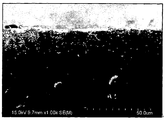
- Figure 4 is a cross-sectional SEM photograph of the cathode prepared according to Example 1 of the present invention.
- Example 5 is a cross-sectional SEM photograph of a bicell completed according to Example 1 of the present invention.
- FIG. 1 schematically shows an embodiment of an electrode according to the invention.
- the configuration described in the embodiments and drawings described below are only the most preferred embodiment of the present invention and do not represent all of the technical idea of the present invention, which can be replaced at the time of the present application It should be understood that there may be various equivalents and variations.
- an electrode 100 for an electrochemical device includes an electrode current collector 110; An electrode active material layer 120 formed on a portion of at least one surface of the electrode current collector 110 and including an electrode active material;
- the filling layer 130 is formed on both unsupported portions of the electrode current collector in which the electrode active material layer is not formed, and is coated to be continuous with the electrode active material layer 120.
- the filling layer 130 includes a mixture of first inorganic material particles and a first polymer binder. ); And a separation layer 140 formed on the surfaces of the electrode active material layer 120 and the filling layer 130 at the same time, and including a mixture of the second inorganic particles and the second polymer binder.
- the electrode of the present invention since the electrode of the present invention includes a filling layer continuously formed at both ends or corners of the electrode active material layer, a separation layer may be formed on the surface of the filling layer to prevent the electrode active material layer from being exposed to the outside. . Therefore, since the electrode for an electrochemical device of the present invention has a filling layer continuous with the electrode active material layer, it is easy to coat the entire surface of the separation layer on the surface of the electrode active material layer. In addition, since the electrode active material layer is not exposed to the outside even after coating the separation layer, it is possible to ensure the safety of the electrochemical device.
- the type of the electrode current collector 110 is not particularly limited, but the electrode current collector may include stainless steel, aluminum, nickel, titanium, calcined carbon, copper; Stainless steel surface-treated with carbon, nickel, titanium, or silver; Or an aluminum-cadmium alloy or the like may be used.
- the electrode active material layer is formed on a surface of the electrode current collector, and is formed on a portion of the electrode current collector so that both ends or corners of the electrode current collector have an uncoated portion that is not formed or coated with an electrode active material layer. do.
- a filling layer is formed on the uncoated portion so as to be continuous with the electrode active material layer. Thereafter, the separation layer is coated to be simultaneously formed on the surface of the electrode active material layer and the filling layer.
- the electrode active material layer of the present invention may be a negative electrode active material layer or a positive electrode active material layer.
- the electrode active material layer of the present invention is a negative electrode active material layer, natural graphite, artificial graphite, carbonaceous material; Metals (Me) that are lithium-containing titanium composite oxide (LTO), Si, Sn, Li, Zn, Mg, Cd, Ce, Ni, or Fe; Alloys composed of the metals (Me); Oxides of the metals (Me) (MeOx); And it can be prepared using the active material particles consisting of a composite of the metals (Me) and carbon and the like.
- the electrode active material layer of the present invention is a positive electrode active material layer
- M1 and M2 is any one selected from the group consisting of Al, Ni, Co, Fe, Mn, V, Cr, Ti, W, Ta, Mg and Mo independently of each other, x, y and z are independently of each other
- an active material particle composed of 0 ⁇ x ⁇ 0.5, 0 ⁇ y ⁇ 0.5, 0 ⁇ z ⁇ 0.5, and x + y + z ⁇ 1 as the atomic fraction.
- the filling layer of the present invention includes the first inorganic particles and the first polymer binder.
- the first inorganic particles used in the packing layer of the present invention are not particularly limited in kind but are Al. 2 O 3 , BaTiO 3 , TiO 2 , CeO 2 , SiO 2 , ZrO 2 , SnO 2 , CuO and ZnO
- One kind of compound selected from the like, or a mixture of two or more kinds can be used.
- a polar solvent as a solvent for preparing the filling layer.
- a nonpolar solvent as a solvent for preparing the packed layer, in which case, polyvinylidene fluoride-co-hexafluoropropylene, polyvinylidene fluoride-trichloroethylene -co-trichloroethylene, polymethylmethacrylate, polybutylacrylate, polyacrylonitrile, polyvinylpyrrolidone, polyvinylacetate, ethylene vinyl acetate Copolymer (polyethylene-co-vinyl acetate), polyethylene oxide, polyarylate, cellulose acetate, cellulose acetate butyrate, cellulose acetate propionate propionate), cyano Composed of cyanoethylpullulan, cyanoethylpolyvinylalcohol, cyanoethylcellulose, cyanoethylsucrose, pullulan
- the separation layer of the present invention includes the second inorganic particles and the second polymer binder.
- the kind is not specifically limited as such a 2nd inorganic particle, Al 2 O 3 , BaTiO 3 , TiO 2 , CeO 2 , SiO 2 , ZrO 2 , SnO 2 , CuO and ZnO
- a 2nd inorganic particle Al 2 O 3 , BaTiO 3 , TiO 2 , CeO 2 , SiO 2 , ZrO 2 , SnO 2 , CuO and ZnO
- a polar solvent as a solvent for preparing the separation layer.
- a nonpolar solvent as a solvent for preparing the separation layer, in which case, polyvinylidene fluoride-co-hexafluoropropylene, polyvinylidene fluoride-trichloroethylene -co-trichloroethylene, polymethylmethacrylate, polybutylacrylate, polyacrylonitrile, polyvinylpyrrolidone, polyvinylacetate, ethylene vinyl acetate Copolymer (polyethylene-co-vinyl acetate), polyethylene oxide, polyarylate, cellulose acetate, cellulose acetate butyrate, cellulose acetate propionate propionate), cyano Composed of cyanoethylpullulan, cyanoethylpolyvinylalcohol, cyanoethylcellulose, cyanoethylsucrose, pullulan
- the present invention is an electrochemical device comprising a positive electrode, a negative electrode, and an electrolyte, wherein the positive electrode, the negative electrode or the positive electrode is an electrode formed with a porous coating layer of inorganic particles and a polymer binder that can replace the separator on the electrode surface It provides an electrochemical device.
- the electrochemical device includes all devices that undergo an electrochemical reaction, and specific examples thereof include all kinds of primary cells, secondary batteries, fuel cells, solar cells, or capacitors.
- a method of manufacturing an electrochemical device using the electrode manufactured as described above, without using a conventional polyolefin-based microporous separator, winding using only the electrode having the porous coating layer prepared as described above may be manufactured by injecting an electrolyte after assembling through a process such as winding or stacking.
- Electrolyte that may be used in the electrochemical device of the present invention is A + B - A salt of the structure, such as, A + comprises a Li +, Na +, an alkali metal cation or an ion composed of a combination thereof, such as K + B - it is PF 6 -, BF 4 -, Cl -, Br -, I -, ClO 4 -, AsF 6 -, CH 3 CO 2 -, CF 3 SO 3 -, N (CF 3 SO 2) 2 -, C Salts containing ions consisting of anions such as (CF 2 SO 2 ) 3 - or a combination thereof are propylene carbonate (PC), ethylene carbonate (EC), diethyl carbonate (DEC), dimethyl carbonate (DMC), dipropyl Carbonate (DPC), dimethylsulfoxide, acetonitrile, dimethoxyethane, diethoxyethane, tetrahydrofuran, N-methyl-2-pyrrolidone
- the electrolyte injection may be performed at an appropriate stage of the battery manufacturing process, depending on the manufacturing process and the required physical properties of the final product. That is, it may be applied before the battery assembly or at the end of battery assembly.
- FIGS. 2 and 3 are schematic cross-sectional views of an electrode assembly for an electrochemical device according to a preferred embodiment of the present invention.
- the electrode assembly 200 of the present invention includes the filling layers 230 and 280 and the separating layers 240 and 290 of both the anode and the cathode.
- another electrode assembly 300 may be formed of an electrode having a filling layer 330 and a separation layer 340, and electrodes 360 and 370 not having them.
- Aqueous negative electrode active material slurry was prepared using graphite as a negative electrode active material. Then, styrene-butadiene rubber (SBR) and carboxymethyl cellulose (CMC) are mixed 2: 1 as the first polymer binder, dissolved in water, and titanium dioxide (TiO 2 ) is dispersed as the first inorganic particles for the filling layer. The slurry was prepared. In addition, alumina (Al 2 O 3 ) and barium titanate (BaTiO 3 ) are mixed at 8: 2 as the second inorganic particles, and the mixture is mixed with styrenebutadiene rubber (SBR) and carboxymethyl as the second polymer binder. Cellulose (CMC) was mixed at 2: 1 and dispersed in an aqueous solution dissolved in water to prepare a slurry for the separation layer.
- SBR styrene-butadiene rubber
- CMC carboxymethyl cellulose
- an anode active material is injected into the center of the electrode current collector made of copper to form a cathode active material layer, and the prepared filling layer slurry is injected into both corners of the electrode current collector. And dried to form a filling layer to prepare a negative electrode.
- a cross-sectional SEM photograph of the prepared negative electrode is shown in FIG. 4.
- the negative electrode was prepared by simultaneously applying the prepared slurry for the separation layer on the surface of the active material layer and the filling layer of the negative electrode thus prepared and drying to form a separation layer.
- the bicell was completed by laminating the positive electrode to the negative electrode provided with the filling layer and the separation layer prepared by the method described above.
- the cross-sectional SEM photograph of the completed bicell is shown in FIG.
- the insulation resistance of the completed bi-cell is 1M ⁇ or more, it was confirmed that only the ceramic filling layer and the separation layer plays a role of sufficient electrical short circuit protection.
- LiCoO 2 was dispersed in N-methyl pyrrolidone (NMP) as a cathode active material to prepare a cathode active material slurry. Then, a slurry for the packed layer was prepared using a solution in which alumina (Al 2 O 3 ) as the first inorganic particles and polyvinylidene fluoride (PVdF) as the polymer binder were dissolved in N-methyl pyrrolidone (NMP).
- NMP N-methyl pyrrolidone
- alumina (Al 2 O 3 ) and barium titanate (BaTiO 3 ) are mixed at 8: 2 as the second inorganic particles, and polyvinylidene fluoride-hexafluoropropylene (PVdF-HFP) is used as the second polymer binder.
- PVdF-HFP polyvinylidene fluoride-hexafluoropropylene
- cyanoethyl polyvinylalcohol were mixed at 9: 1 to prepare a slurry for the separation layer using a solution dissolved in acetone.
- the positive electrode active material was injected into an electrode current collector made of aluminum and dried to form a positive electrode active material layer.
- a positive electrode was prepared by applying the prepared slurry for the filling layer to a non-coated portion existing at both ends or corners of the electrode current collector and drying it to form a filling layer.
- the positive electrode was manufactured by simultaneously applying the prepared slurry for the separation layer and drying the surface to form the separation layer on the surfaces of the active material layer and the filling layer of the positive electrode thus prepared.
- the bicell was completed by laminating the negative electrode to the positive electrode provided with the filling layer and the separation layer prepared by the method described above.
- the insulation resistance of the completed bi-cell is 1M ⁇ or more, it was confirmed that the filling layer and the separation layer containing the inorganic particles only play a role of sufficient electrical short circuit protection.
Landscapes
- Chemical & Material Sciences (AREA)
- Chemical Kinetics & Catalysis (AREA)
- Electrochemistry (AREA)
- General Chemical & Material Sciences (AREA)
- Engineering & Computer Science (AREA)
- Materials Engineering (AREA)
- Composite Materials (AREA)
- Inorganic Chemistry (AREA)
- Battery Electrode And Active Subsutance (AREA)
- Secondary Cells (AREA)
- Electric Double-Layer Capacitors Or The Like (AREA)
- Cell Electrode Carriers And Collectors (AREA)
- Inert Electrodes (AREA)
- Cell Separators (AREA)
Abstract
본 발명은 전극 집전체; 상기 전극 집전체의 적어도 일면의 일부분에 형성되며, 전극 활물질을 포함하는 전극 활물질층; 상기 전극 활물질층이 형성되지 아니한 상기 전극 집전체의 양쪽 무지부에 형성되며 상기 전극 활물질층과 연속되도록 코팅된, 제1 무기물 입자와 제1 고분자 바인더의 혼합물을 포함하는 충진층; 및 상기 전극 활물질층과 충진층의 표면에 동시에 형성되며, 제2 무기물 입자와 제2 고분자 바인더의 혼합물을 포함하는 분리층을 구비하는 전기화학소자용 전극에 관한 것이다. 본 발명의 전기화학소자용 전극은 전극 활물질층과 연속되는 충진층을 구비하고 있으므로, 전극 활물질층의 표면에 대한 분리층의 전면코팅이 용이하다. 또한, 상기 분리층을 코팅한 후에도 전극 활물질층이 외부로 노출되지 않으므로, 전기화학소자의 안전성을 확보할 수 있다.
Description
본 발명은 세퍼레이터를 대체할 수 있는 분리층을 구비하는 전극 및 이를 구비하는 전기화학소자에 관한 것으로, 더 자세하게는 전기화학소자의 안전성을 위한 충진층을 구비하는 것을 특징으로 하는 전극에 대한 것이다.
본 출원은 2011년 12월 14일에 출원된 한국특허출원 제10-2011-0134490호에 기초한 우선권을 주장하며, 해당 출원의 명세서 및 도면에 개시된 모든 내용은 본 출원에 원용된다.
최근 에너지 저장 기술에 대한 관심이 갈수록 높아지고 있다. 휴대폰, 캠코더 및 노트북 PC, 나아가서는 전기 자동차의 에너지까지 적용분야가 확대되면서 전기화학소자의 연구와 개발에 대한 노력이 점점 구체화되고 있다. 전기화학소자는 이러한 측면에서 가장 주목받고 있는 분야이고 그 중에서도 충방전이 가능한 이차전지의 개발은 관심의 초점이 되고 있으며, 최근에는 이러한 전지를 개발함에 있어서 용량 밀도 및 비에너지를 향상시키기 위하여 새로운 전극과 전지의 설계에 대한 연구개발로 진행되고 있다.
현재 적용되고 있는 이차전지 중에서 1990 년대 초에 개발된 리튬 이차전지는 수용액 전해액을 사용하는 Ni-MH, Ni-Cd, 황산-납 전지 등의 재래식 전지에 비해서 작동 전압이 높고 에너지 밀도가 월등히 크다는 장점으로 각광을 받고 있다. 그러나 이러한 리튬 이온 전지는 유기 전해액을 사용하는 데 따르는 발화 및 폭발 등의 안전 문제가 존재하고, 제조가 까다로운 단점이 있다. 최근의 리튬 이온 고분자 전지는 이러한 리튬 이온 전지의 약점을 개선하여 차세대 전지의 하나로 꼽히고 있으나 아직까지 전지의 용량이 리튬 이온 전지와 비교하여 상대적으로 낮고, 특히 저온에서의 방전 용량이 불충분하여 이에 대한 개선이 시급히 요구되고 있다.
상기와 같은 전기화학소자는 많은 회사에서 생산되고 있으나 그들의 안전성 특성은 각각 다른 양상을 보인다. 이러한 전기화학소자의 안전성 평가 및 안전성 확보는 매우 중요하다. 가장 중요한 고려사항은 전기화학소자가 오작동시 사용자에게 상해를 입혀서는 안된다는 것이며, 이러한 목적으로 안전규격은 전기화학소자 내의 발화 및 발연 등을 엄격히 규제하고 있다. 전기화학소자의 안전성 특성에 있어서, 전기화학소자가 과열되어 열폭주가 일어나거나 세퍼레이터가 관통될 경우에는 폭발을 일으키게 될 우려가 크다. 특히, 전기화학소자의 세퍼레이터로서 통상적으로 사용되는 폴리올레핀계 다공성 막은 재료적 특성과 연신을 포함하는 제조공정 상의 특성으로 인하여 100℃ 이상의 온도에서 극심한 열 수축 거동을 보임으로써, 양극과 음극 사이의 단락을 일으키는 문제점이 있다.
이와 같은 전기화학소자의 안전성 문제를 해결하기 위하여, 전극의 활물질층의 표면에 무기물 입자가 바인더와 결합되어 이루어지는 다공성 코팅층을 가지는 전극을 제안하게 되었다. 그러나, 이러한 전극에 있어서 활물질층의 표면에는 다공성 코팅층의 전면 코팅이 어렵고, 또한 전극의 옆면이 노출되는 현상으로 인하여 안전성이 여전히 문제되고 있다.
따라서 본 발명이 해결하고자 하는 과제는, 안정성이 향상된 다공성 코팅층을 구비하는 전기화학소자용 전극을 제공하는 것이다.
상기 과제를 해결하기 위하여, 본 발명은 전극 집전체; 상기 전극 집전체의 적어도 일면의 일부분에 형성되며, 전극 활물질을 포함하는 전극 활물질층; 상기 전극 활물질층이 형성되지 아니한 상기 전극 집전체의 양쪽 무지부(non-coating area)에 형성되며 상기 전극 활물질층과 연속되도록 코팅된, 제1 무기물 입자와 제1 고분자 바인더의 혼합물을 포함하는 충진층; 및 상기 전극 활물질층과 충진층의 표면에 동시에 형성되며, 제2 무기물 입자와 제2 고분자 바인더의 혼합물을 포함하는 분리층을 구비하는 전기화학소자용 전극을 제공한다.
상기 전극 집전체로는 그 종류를 특별히 한정하는 것은 아니지만, 스테인리스스틸, 알루미늄, 니켈, 티탄, 소성탄소, 구리; 카본, 니켈, 티탄 또는 은으로 표면처리된 스테인리스스틸; 또는 알루미늄-카드뮴 합금 등으로 제조된 것을 사용할 수 있다.
상기 전극 활물질로는 음극 활물질 또는 양극 활물질을 사용할 수 있다. 이러한 음극 활물질로는 그 종류를 특별히 한정하는 것은 아니지만, 천연흑연, 인조흑연, 탄소질재료; 리튬 함유 티타늄 복합 산화물(LTO), Si, Sn, Li, Zn, Mg, Cd, Ce, Ni 또는 Fe인 금속류(Me); 상기 금속류(Me)로 구성된 합금류; 상기 금속류(Me)의 산화물(MeOx); 및 상기 금속류(Me)와 탄소와의 복합체로 이루어진 군으로부터 선택된 어느 하나의 활물질 입자 등을 사용할 수 있다. 이러한 양극 활물질로는 그 종류를 특별히 한정하는 것은 아니지만, LiCoO2, LiNiO2, LiMn2O4, LiCoPO4, LiFePO4, LiNiMnCoO2 및 LiNi 1-x-y-zCoxM1yM2zO2(M1 및 M2는 서로 독립적으로 Al, Ni, Co, Fe, Mn, V, Cr, Ti, W, Ta, Mg 및 Mo로 이루어진 군으로부터 선택된 어느 하나이고, x, y 및 z는 서로 독립적으로 산화물 조성 원소들의 원자 분율로서 0 ≤ x < 0.5, 0 ≤ y < 0.5, 0 ≤ z < 0.5, x+y+z ≤ 1임)로 이루어진 군으로부터 선택된 어느 하나의 활물질 입자 등을 사용할 수 있다.
본 발명의 충진층에 사용되는 제1 무기물 입자로는 그 종류를 특별히 제한하는 것은 아니지만 Al2O3, BaTiO3, TiO2, CeO2, SiO2, ZrO2, SnO2, CuO 및 ZnO 등을 사용할 수 있다.
제1 고분자 바인더로는, 충진층을 제조하기 위한 용매로서 극성 용매를 사용하는 경우에는, 폴리비닐알콜(polyvinyl alcohol), 스타이렌부타디엔 고무(styrene butadiene rubber), 폴리에틸렌옥사이드(polyethylene oxide), 카르복실 메틴 셀룰로오스(carboxyl methyl cellulose), 셀룰로오스 아세테이트(cellulose acetate), 셀룰로오스 아세테이트 부틸레이트(cellulose acetate butylate), 셀룰로오스 아세테이트 프로피오네이트(cellulose acetate propionate), 시아노에틸플루란(cyanoethylpullulan), 시아노에틸폴리비닐알콜(cyanoethyl polyvinylalcohol), 시아노에틸셀룰로오스(cyanoethyl cellulose), 시아노에틸수크로오스(cyanoethyl sucrose), 플루란(pullulan) 및 분자량 10,000 g/mol 이하의 저분자 화합물 등으로 이루어진 군으로부터 선택된 고분자 또는 이들의 화합물 등을 사용할 수 있으며, 특별히 이에 한정되는 것은 아니다.
그리고, 제1 고분자 바인더로는, 충진층을 제조하기 위한 용매로서 비극성 용매를 사용하는 경우에는, 폴리비닐리덴 플루오라이드-헥사플루오로프로필렌 (polyvinylidene fluoride-co-hexafluoropropylene), 폴리비닐리덴 플루오라이드-트리클로로에틸렌 (polyvinylidene fluoride-co-trichloroethylene), 폴리메틸메타크릴레이트 (polymethylmethacrylate), 폴리부틸아크릴레이트 (polybutylacrylate), 폴리아크릴로니트릴 (polyacrylonitrile), 폴리비닐피롤리돈 (polyvinylpyrrolidone), 폴리비닐아세테이트 (polyvinylacetate), 에틸렌 비닐 아세테이트 공중합체 (polyethylene-co-vinyl acetate), 폴리에틸렌옥사이드 (polyethylene oxide), 폴리아릴레이트(polyarylate), 셀룰로오스 아세테이트 (cellulose acetate), 셀룰로오스 아세테이트 부틸레이트 (cellulose acetate butyrate), 셀룰로오스 아세테이트 프로피오네이트 (cellulose acetate propionate), 시아노에틸플루란 (cyanoethylpullulan), 시아노에틸폴리비닐알콜 (cyanoethylpolyvinylalcohol), 시아노에틸셀룰로오스 (cyanoethylcellulose), 시아노에틸수크로오스 (cyanoethylsucrose), 플루란 (pullulan) 및 분자량 10,000 g/mol 이하의 저분자 화합물 등으로 이루어진 군으로부터 선택된 고분자 또는 이들의 화합물 등을 사용할 수 있으며, 특별히 이에 한정되는 것은 아니다.
그리고, 본 발명의 분리층에 사용되는 제2 무기물 입자로는 그 종류를 특별히 한정하는 것은 아니지만, Al2O3, BaTiO3, TiO2, CeO2, SiO2, ZrO2, SnO2, CuO 및 ZnO 등을 사용할 수 있다.
제2 고분자 바인더로는, 분리층을 제조하기 위한 용매로서 극성 용매를 사용하는 경우에는, 폴리비닐알콜(polyvinyl alcohol), 스타이렌부타디엔 고무(styrene butadiene rubber), 폴리에틸렌옥사이드(polyethylene oxide), 카르복실 메틴 셀룰로오스(carboxyl methyl cellulose), 셀룰로오스 아세테이트(cellulose acetate), 셀룰로오스 아세테이트 부틸레이트(cellulose acetate butylate), 셀룰로오스 아세테이트 프로피오네이트(cellulose acetate propionate), 시아노에틸플루란(cyanoethylpullulan), 시아노에틸폴리비닐알콜(cyanoethyl polyvinylalcohol), 시아노에틸셀룰로오스(cyanoethyl cellulose), 시아노에틸수크로오스(cyanoethyl sucrose), 플루란(pullulan) 및 분자량 10,000 g/mol 이하의 저분자 화합물 등으로 이루어진 군으로부터 선택된 고분자 또는 이들의 화합물 등을 사용할 수 있으며, 특별히 이에 한정되는 것은 아니다.
그리고, 제2 고분자 바인더로는, 분리층을 제조하기 위한 용매로서 비극성 용매를 사용하는 경우에는, 폴리비닐리덴 플루오라이드-헥사플루오로프로필렌 (polyvinylidene fluoride-co-hexafluoropropylene), 폴리비닐리덴 플루오라이드-트리클로로에틸렌 (polyvinylidene fluoride-co-trichloroethylene), 폴리메틸메타크릴레이트 (polymethylmethacrylate), 폴리부틸아크릴레이트 (polybutylacrylate), 폴리아크릴로니트릴 (polyacrylonitrile), 폴리비닐피롤리돈 (polyvinylpyrrolidone), 폴리비닐아세테이트 (polyvinylacetate), 에틸렌 비닐 아세테이트 공중합체 (polyethylene-co-vinyl acetate), 폴리에틸렌옥사이드 (polyethylene oxide), 폴리아릴레이트(polyarylate), 셀룰로오스 아세테이트 (cellulose acetate), 셀룰로오스 아세테이트 부틸레이트 (cellulose acetate butyrate), 셀룰로오스 아세테이트 프로피오네이트 (cellulose acetate propionate), 시아노에틸플루란 (cyanoethylpullulan), 시아노에틸폴리비닐알콜 (cyanoethylpolyvinylalcohol), 시아노에틸셀룰로오스 (cyanoethylcellulose), 시아노에틸수크로오스 (cyanoethylsucrose), 플루란 (pullulan) 및 분자량 10,000 g/mol 이하의 저분자 화합물 등으로 이루어진 군으로부터 선택된 고분자 또는 이들의 화합물 등을 사용할 수 있으며, 특별히 이에 한정되는 것은 아니다.
또한, 본 발명은 양극, 음극 및 전해액을 포함하는 전기화학소자에 있어서, 상기 양극, 음극 또는 양 전극이 전술된 전극인 전기화학소자를 제공할 수 있으며, 이러한 전기화학소자는 리튬 이차전지일 수 있다.
본 발명의 전기화학소자용 전극은 전극 활물질층과 연속되는 충진층을 구비하고 있으므로, 전극 활물질층의 표면에 대한 분리층의 전면 코팅이 용이하다. 또한, 상기 분리층을 코팅한 후에도 전극 활물질층이 외부로 노출되지 않으므로, 전기화학소자의 안전성을 확보할 수 있다.
본 명세서에 첨부되는 다음의 도면들은 본 발명의 바람직한 실시예를 예시하는 것이며, 전술한 발명의 내용과 함께 본 발명의 기술사상을 더욱 이해시키는 역할을 하는 것이므로, 본 발명은 그러한 도면에 기재된 사항에만 한정되어 해석되어서는 아니된다.
도 1은 본 발명의 바람직한 일 실시예에 따른 분리층이 형성된 전극의 단면도이다.
도 2는 본 발명의 바람직한 일 실시예에 따른 충진층과 분리층을 구비하는 전극을 사용한 전극 조립체의 단면도이다.
도 3은 본 발명의 바람직한 일 실시예에 따른 충진층과 분리층을 구비하는 전극을 사용한 전극 조립체의 단면도이다.
도 4는 본 발명의 실시예 1에 따라 제조한 음극의 단면 SEM 사진이다.
도 5는 본 발명의 실시예 1에 따라 완성한 바이셀의 단면 SEM 사진이다.
이하, 본 발명을 도면을 참조하여 상세히 설명하기로 한다. 본 명세서 및 청구범위에 사용된 용어나 단어는 통상적이거나 사전적인 의미로 한정해서 해석되어서는 아니 되며, 발명자는 그 자신의 발명을 가장 최선의 방법으로 설명하기 위해 용어의 개념을 적절하게 정의할 수 있다는 원칙에 입각하여 본 발명의 기술적 사상에 부합하는 의미와 개념으로 해석되어야만 한다.
도 1에는 본 발명에 따른 전극의 일 실시예가 개략적으로 도시되어 있다. 하지만, 이하 본 명세서에 기재된 실시예와 도면에 도시된 구성은 본 발명의 가장 바람직한 일 실시예에 불과할 뿐이고 본 발명의 기술적 사상을 모두 대변하는 것은 아니므로, 본 출원시점에 있어서 이들을 대체할 수 있는 다양한 균등물과 변형예들이 있을 수 있음을 이해하여야 한다.
도 1을 참조하면, 본 발명의 전기화학소자용 전극(100)은 전극 집전체(110); 상기 전극 집전체(110)의 적어도 일면의 일부분에 형성되며, 전극 활물질을 포함하는 전극 활물질층(120); 상기 전극 활물질층이 형성되지 아니한 상기 전극 집전체의 양쪽 무지부에 형성되며 상기 전극 활물질층(120)과 연속되도록 코팅된, 제1 무기물 입자와 제1 고분자 바인더의 혼합물을 포함하는 충진층(130); 및 상기 전극 활물질층(120)과 충진층(130)의 표면에 동시에 형성되며, 제2 무기물 입자와 제2 고분자 바인더의 혼합물을 포함하는 분리층(140)을 구비한다.
일반적으로, 세퍼레이터로서 통상적인 막 또는 필름을 사용하는 경우에는 열적 안전성이 저하되므로 전극의 표면에 무기물 입자를 포함하는 분리층을 형성하여 열적 안전성을 확보할 수 있다. 그러나, 무기물 입자를 포함하는 분리층을 전극 활물질층의 표면에 형성하는 경우에는 전극 활물질층의 끝단(end) 또는 모서리(edge) 부분에서는 상기 분리층의 형성이 어려우므로 전극 조립체의 형성시에 전극의 끝단 또는 모서리 부분의 전극 활물질층이 외부로 노출되어 단락의 위험성이 존재한다.
반면, 본 발명의 전극은 전극 활물질층의 양 끝단 또는 모서리에 연속적으로 형성된 충진층을 구비하므로, 분리층이 상기 충진층의 표면에도 형성되어 상기 전극 활물질층이 외부로 노출되는 것을 방지할 수 있다. 따라서, 본 발명의 전기화학소자용 전극은 전극 활물질층과 연속되는 충진층을 구비하고 있으므로, 전극 활물질층의 표면에 대한 분리층의 전면 코팅이 용이하다. 또한, 상기 분리층을 코팅한 후에도 전극 활물질층이 외부로 노출되지 않으므로, 전기화학소자의 안전성을 확보할 수 있다.
상기 전극 집전체(110)로는 그 종류를 특별히 한정하는 것은 아니지만, 상기 전극 집전체는 스테인리스스틸, 알루미늄, 니켈, 티탄, 소성탄소, 구리; 카본, 니켈, 티탄 또는 은으로 표면처리된 스테인리스스틸; 또는 알루미늄-카드뮴 합금 등으로 제조된 것을 사용할 수 있다.
상기 전극 활물질층은 상기 전극 집전체의 표면에 형성되며, 상기 전극 집전체의 일부분에 형성되어 상기 전극 집전체의 양 끝단 또는 모서리에는 전극 활물질층이 형성되지 않은 또는 코팅되어 있지 않은 무지부가 존재하게 된다. 그리고, 이러한 무지부에 전극 활물질층과 연속되도록 충진층을 형성한다. 이후에, 상기 전극 활물질층과 상기 충진층의 표면에 동시에 형성되도록 분리층을 코팅한다.
본 발명의 전극 활물질층은 음극 활물질층 또는 양극 활물질층일 수 있다.
본 발명의 전극 활물질층이 음극 활물질층인 경우에는 천연흑연, 인조흑연, 탄소질재료; 리튬 함유 티타늄 복합 산화물(LTO), Si, Sn, Li, Zn, Mg, Cd, Ce, Ni 또는 Fe인 금속류(Me); 상기 금속류(Me)로 구성된 합금류; 상기 금속류(Me)의 산화물(MeOx); 및 상기 금속류(Me)와 탄소와의 복합체 등으로 이루어진 활물질 입자를 사용하여 제조할 수 있다. 그리고, 본 발명의 전극 활물질층이 양극 활물질층인 경우에는 LiCoO2, LiNiO2, LiMn2O4, LiCoPO4, LiFePO4, LiNiMnCoO2 및 LiNi 1-x-y-zCoxM1yM2zO2(M1 및 M2는 서로 독립적으로 Al, Ni, Co, Fe, Mn, V, Cr, Ti, W, Ta, Mg 및 Mo로 이루어진 군으로부터 선택된 어느 하나이고, x, y 및 z는 서로 독립적으로 산화물 조성 원소들의 원자 분율로서 0 ≤ x < 0.5, 0 ≤ y < 0.5, 0 ≤ z < 0.5, x+y+z ≤ 1임) 등으로 이루어진 활물질 입자를 사용하여 제조할 수 있다.
본 발명의 충진층은 제1 무기물 입자와 제1 고분자 바인더를 포함한다.
이러한 본 발명의 충진층에 사용되는 제1 무기물 입자로는 그 종류를 특별히 제한하는 것은 아니지만 Al2O3, BaTiO3, TiO2, CeO2, SiO2, ZrO2, SnO2, CuO 및 ZnO 등 중에서 선택된 1종의 화합물 또는 2종 이상의 혼합물을 사용할 수 있다.
그리고, 제1 고분자 바인더로는 수계 용매와 같이 사용하는 음극인 경우에는 충진층을 제조하기 위한 용매로서 극성 용매를 사용하는 것이 바람직하며 이때에는, 폴리비닐알콜(polyvinyl alcohol), 스타이렌부타디엔 고무(styrene butadiene rubber), 폴리에틸렌옥사이드(polyethylene oxide), 카르복실 메틴 셀룰로오스(carboxyl methyl cellulose), 셀룰로오스 아세테이트(cellulose acetate), 셀룰로오스 아세테이트 부틸레이트(cellulose acetate butylate), 셀룰로오스 아세테이트 프로피오네이트(cellulose acetate propionate), 시아노에틸플루란(cyanoethylpullulan), 시아노에틸폴리비닐알콜(cyanoethyl polyvinylalcohol), 시아노에틸셀룰로오스(cyanoethyl cellulose), 시아노에틸수크로오스(cyanoethyl sucrose), 플루란(pullulan) 및 분자량 10,000 g/mol 이하의 저분자 화합물 등으로 이루어진 군으로부터 선택된 고분자 또는 이들의 화합물 등을 사용할 수 있으며, 특별히 이에 한정되는 것은 아니다.
또한, 제1 고분자 바인더로는 비수계 용매와 같이 사용하게 되는 양극인 경우에는 충진층을 제조하기 위한 용매로서 비극성 용매를 사용하는 것이 바람직하며 이때에는, 폴리비닐리덴 플루오라이드-헥사플루오로프로필렌 (polyvinylidene fluoride-co-hexafluoropropylene), 폴리비닐리덴 플루오라이드-트리클로로에틸렌 (polyvinylidene fluoride-co-trichloroethylene), 폴리메틸메타크릴레이트 (polymethylmethacrylate), 폴리부틸아크릴레이트 (polybutylacrylate), 폴리아크릴로니트릴 (polyacrylonitrile), 폴리비닐피롤리돈 (polyvinylpyrrolidone), 폴리비닐아세테이트 (polyvinylacetate), 에틸렌 비닐 아세테이트 공중합체 (polyethylene-co-vinyl acetate), 폴리에틸렌옥사이드 (polyethylene oxide), 폴리아릴레이트(polyarylate), 셀룰로오스 아세테이트 (cellulose acetate), 셀룰로오스 아세테이트 부틸레이트 (cellulose acetate butyrate), 셀룰로오스 아세테이트 프로피오네이트 (cellulose acetate propionate), 시아노에틸플루란 (cyanoethylpullulan), 시아노에틸폴리비닐알콜 (cyanoethylpolyvinylalcohol), 시아노에틸셀룰로오스 (cyanoethylcellulose), 시아노에틸수크로오스 (cyanoethylsucrose), 플루란 (pullulan) 및 분자량 10,000 g/mol 이하의 저분자 화합물 등으로 이루어진 군으로부터 선택된 고분자 또는 이들의 화합물 등을 사용할 수 있으며, 특별히 이에 한정되는 것은 아니다.
본 발명의 분리층은 제2 무기물 입자와 제2 고분자 바인더를 포함한다.
이러한 제2 무기물 입자로는 그 종류를 특별히 한정하는 것은 아니지만, Al2O3, BaTiO3, TiO2, CeO2, SiO2, ZrO2, SnO2, CuO 및 ZnO 등 중에서 선택된 1종의 화합물 또는 2종 이상의 혼합물을 사용할 수 있다.
그리고, 제2 고분자 바인더로는 수계 용매와 같이 사용하는 음극인 경우에는 분리층을 제조하기 위한 용매로서 극성 용매를 사용하는 것이 바람직하며 이때에는, 폴리비닐알콜(polyvinyl alcohol), 스타이렌부타디엔 고무(styrene butadiene rubber), 폴리에틸렌옥사이드(polyethylene oxide), 카르복실 메틴 셀룰로오스(carboxyl methyl cellulose), 셀룰로오스 아세테이트(cellulose acetate), 셀룰로오스 아세테이트 부틸레이트(cellulose acetate butylate), 셀룰로오스 아세테이트 프로피오네이트(cellulose acetate propionate), 시아노에틸플루란(cyanoethylpullulan), 시아노에틸폴리비닐알콜(cyanoethyl polyvinylalcohol), 시아노에틸셀룰로오스(cyanoethyl cellulose), 시아노에틸수크로오스(cyanoethyl sucrose), 플루란(pullulan) 및 분자량 10,000 g/mol 이하의 저분자 화합물 등으로 이루어진 군으로부터 선택된 고분자 또는 이들의 화합물 등을 사용할 수 있으며, 특별히 이에 한정되는 것은 아니다.
또한, 제2 고분자 바인더로는 비수계 용매와 같이 사용하게 되는 양극인 경우에는 분리층을 제조하기 위한 용매로서 비극성 용매를 사용하는 것이 바람직하며 이때에는, 폴리비닐리덴 플루오라이드-헥사플루오로프로필렌 (polyvinylidene fluoride-co-hexafluoropropylene), 폴리비닐리덴 플루오라이드-트리클로로에틸렌 (polyvinylidene fluoride-co-trichloroethylene), 폴리메틸메타크릴레이트 (polymethylmethacrylate), 폴리부틸아크릴레이트 (polybutylacrylate), 폴리아크릴로니트릴 (polyacrylonitrile), 폴리비닐피롤리돈 (polyvinylpyrrolidone), 폴리비닐아세테이트 (polyvinylacetate), 에틸렌 비닐 아세테이트 공중합체 (polyethylene-co-vinyl acetate), 폴리에틸렌옥사이드 (polyethylene oxide), 폴리아릴레이트(polyarylate), 셀룰로오스 아세테이트 (cellulose acetate), 셀룰로오스 아세테이트 부틸레이트 (cellulose acetate butyrate), 셀룰로오스 아세테이트 프로피오네이트 (cellulose acetate propionate), 시아노에틸플루란 (cyanoethylpullulan), 시아노에틸폴리비닐알콜 (cyanoethylpolyvinylalcohol), 시아노에틸셀룰로오스 (cyanoethylcellulose), 시아노에틸수크로오스 (cyanoethylsucrose), 플루란 (pullulan) 및 분자량 10,000 g/mol 이하의 저분자 화합물 등으로 이루어진 군으로부터 선택된 고분자 또는 이들의 화합물 등을 사용할 수 있으며, 특별히 이에 한정되는 것은 아니다.
본 발명은 양극, 음극, 및 전해액을 포함하는 전기화학소자에 있어서, 상기 양극, 음극 또는 양 전극은 전극 표면에 세퍼레이터를 대체할 수 있는 무기물 입자 및 고분자 바인더의 다공성 코팅층이 형성된 전극인 것을 특징으로 하는 전기화학 소자를 제공한다. 상기 전기화학소자는 전기화학 반응을 하는 모든 소자를 포함하며, 구체적인 예를 들면, 모든 종류의 일차전지, 이차전지, 연료전지, 태양전지 또는 캐퍼시터(capacitor) 등이 있다.
상기와 같이 제조된 전극을 사용하여 전기화학소자를 제조하는 방법의 일 실시예를 들면, 통상적인 폴리올레핀 계열 미세 기공 세퍼레이터를 사용하지 않고, 상기와 같이 제조된 다공성 코팅층이 형성된 전극만을 이용하여 권취(winding) 또는 스택킹(stacking) 등의 공정을 통해 조립한 후 전해액을 주입함으로써 제조될 수 있다.
본 발명의 전기화학소자에서 사용될 수 있는 전해액은 A+B-와 같은 구조의 염으로서, A+는 Li+, Na+, K+와 같은 알칼리 금속 양이온 또는 이들의 조합으로 이루어진 이온을 포함하고 B-는 PF6
-, BF4
-, Cl-, Br-, I-, ClO4
-, AsF6
-, CH3CO2
-, CF3SO3
-, N(CF3SO2)2
-, C(CF2SO2)3
-와 같은 음이온 또는 이들의 조합으로 이루어진 이온을 포함하는 염이 프로필렌 카보네이트(PC), 에틸렌 카보네이트(EC), 디에틸카보네이트(DEC), 디메틸카보네이트(DMC), 디프로필카보네이트(DPC), 디메틸설폭사이드, 아세토니트릴, 디메톡시에탄, 디에톡시에탄, 테트라하이드로퓨란, N-메틸-2-피롤리돈(NMP), 에틸메틸카보네이트(EMC), 감마 부티로락톤 또는 이들의 혼합물로 이루어진 유기 용매에 용해 또는 해리된 것이 있으나, 이에만 한정되는 것은 아니다.
상기 전해액 주입은 최종 제품의 제조 공정 및 요구 물성에 따라, 전지 제조 공정 중 적절한 단계에서 행해질 수 있다. 즉, 전지 조립 전 또는 전지 조립 최종 단계 등에서 적용될 수 있다.
도 2 및 도 3에는 본 발명의 바람직한 일 실시예에 따른 전기화학소자를 위한 전극 조립체의 단면도가 개략적으로 도시되어 있다.
도 2를 참조하면, 본 발명의 전극 조립체(200)는 양극과 음극이 모두 충진층(230,280)과 분리층(240,290)을 구비하고 있다. 반면에, 도 3을 참조하면 또 다른 전극 조립체(300)는 충진층(330)과 분리층(340)을 구비하는 전극과 이들을 구비하지 않는 전극(360,370)으로 이루어 질 수 있다.
이하, 본 발명을 구체적으로 설명하기 위해 실시예를 들어 상세하게 설명하기로 한다. 그러나, 본 발명에 따른 실시예는 여러 가지 다른 형태로 변형될 수 있으며, 본 발명의 범위가 아래에서 기술하는 실시예에 한정되는 것으로 해석되어서는 안 된다. 본 발명의 실시예는 당업계에서 평균적인 지식을 가진 자에게 본 발명을 보다 완전하게 설명하기 위해서 제공되는 것이다.
실시예
실시예 1. 전극의 제조
음극 활물질로서 흑연을 사용하여 수계 음극 활물질 슬러리를 제조하였다. 그리고, 제1 고분자 바인더로서 스타이렌부타디엔 고무(SBR)와 카르복실 메틸 셀룰로오스(CMC)를 2:1로 혼합하여 물에 녹인 후, 제1 무기물 입자로서 티타늄다이옥사이드(TiO2)를 분산시켜 충진층용 슬러리를 준비하였다. 또한, 제2 무기물 입자로서 알루미나(Al2O3)와 바륨타이타네이트(BaTiO3)를 8:2로 혼합하고, 이 혼합물을 제2 고분자 바인더로서 스타이렌부타디엔 고무(SBR)와 카르복실 메틸 셀룰로오스(CMC)를 2:1로 혼합하여 물에 녹인 수용액에 분산하여 분리층용 슬러리를 준비하였다.
그리고, 인캡슐레이션 다이(encapsulation die)를 사용하여, 구리로 이루어진 전극 집전체의 중심부에는 음극 활물질을 주입하여 음극 활물질층을 형성하고, 상기 전극 집전체의 양 모서리에는 상기 준비된 충진층용 슬러리를 주입하고 건조하여 충진층을 형성함으로써 음극을 제조하였다. 제조된 음극의 단면 SEM 사진을 도 4에 나타냈다.
이렇게 제조된 음극의 활물질층과 충진층의 표면에 동시에 상기 준비된 분리층용 슬러리를 도포하고 건조하여 분리층을 형성함으로써 음극을 제조하였다.
전술한 방법으로 제조한 충진층 및 분리층이 구비된 음극에 양극을 라미네이션하여 바이셀을 완성하였다. 완성한 바이셀의 단면 SEM 사진을 도 5에 나타냈다.
완성된 바이셀의 절연저항은 1MΩ 이상으로서, 세라믹 충진층과 분리층 만으로도 충분한 수준의 전기적 단락 방지의 역할을 수행하고 있음을 확인하였다.
실시예 2. 전극의 제조
양극 활물질로서 LiCoO2를 N-메틸 피롤리돈(NMP)에 분산시켜 양극 활물질 슬러리를 제조하였다. 그리고, 제1 무기물 입자로서의 알루미나(Al2O3)와 고분자 바인더로서의 폴리비닐리덴 플루오라이드(PVdF)를 N-메틸 피롤리돈(NMP)에 녹인 용액을 사용하여 충진층용 슬러리를 준비하였다. 또한, 제2 무기물 입자로서 알루미나(Al2O3)와 바륨타이타네이트(BaTiO3)를 8:2로 혼합하고, 제2 고분자 바인더로서 폴리비닐리덴 플루오라이드-헥사플루오로프로필렌 (PVdF-HFP)과 시아노에틸폴리비닐알콜 (cyanoethyl polyvinylalcohol)을 9:1로 혼합하여 아세톤에 녹인 용액을 사용하여 분리층용 슬러리를 준비하였다.
그리고, 알루미늄로 이루어진 전극 집전체에 양극 활물질을 주입하고 건조하여 양극 활물질층을 형성하였다. 잉크젯 방법을 사용하여 전극 집전체의 양 끝단 또는 모서리에 존재하는 무지부에 상기 준비된 충진층용 슬러리를 도포하고 건조하여 충진층을 형성함으로써 양극을 제조하였다.
이렇게 제조된 양극의 활물질층과 충진층의 표면에 동시에 상기 준비된 분리층용 슬러리를 도포하고 건조하여 분리층을 형성함으로써 양극을 제조하였다.
전술한 방법으로 제조한 충진층 및 분리층이 구비된 양극에 음극을 라미네이션하여 바이셀을 완성하였다. 완성된 바이셀의 절연저항은 1MΩ 이상으로서, 무기물 입자를 포함하는 충진층과 분리층 만으로도 충분한 수준의 전기적 단락 방지의 역할을 수행하고 있음을 확인하였다.
Claims (12)
- 전극 집전체;상기 전극 집전체의 적어도 일면의 일부분에 형성되며, 전극 활물질을 포함하는 전극 활물질층;상기 전극 활물질층이 형성되지 아니한 상기 전극 집전체의 양쪽 무지부에 형성되며 상기 전극 활물질층과 연속되도록 코팅된, 제1 무기물 입자와 제1 고분자 바인더의 혼합물을 포함하는 충진층; 및상기 전극 활물질층과 충진층의 표면에 동시에 형성되며, 제2 무기물 입자와 제2 고분자 바인더의 혼합물을 포함하는 분리층을 구비하는 전기화학소자용 전극.
- 제1항에 있어서,상기 전극 집전체는 스테인리스스틸, 알루미늄, 니켈, 티탄, 소성탄소, 구리; 카본, 니켈, 티탄 또는 은으로 표면처리된 스테인리스스틸; 또는 알루미늄-카드뮴 합금으로 제조된 것을 특징으로 하는 전기화학소자용 전극.
- 제1항에 있어서,상기 전극 활물질은 천연흑연, 인조흑연, 탄소질재료; 리튬 함유 티타늄 복합 산화물(LTO), Si, Sn, Li, Zn, Mg, Cd, Ce, Ni 또는 Fe인 금속류(Me); 상기 금속류(Me)로 구성된 합금류; 상기 금속류(Me)의 산화물(MeOx); 및 상기 금속류(Me)와 탄소와의 복합체로 이루어진 군으로부터 선택된 어느 하나의 활물질 입자 또는 이들 중 2종 이상의 혼합물로 이루어진 것을 특징으로 하는 전기화학소자용 전극.
- 제1항에 있어서,상기 전극 활물질은 LiCoO2, LiNiO2, LiMn2O4, LiCoPO4, LiFePO4, LiNiMnCoO2 및 LiNi 1-x-y-zCoxM1yM2zO2(M1 및 M2는 서로 독립적으로 Al, Ni, Co, Fe, Mn, V, Cr, Ti, W, Ta, Mg 및 Mo로 이루어진 군으로부터 선택된 어느 하나이고, x, y 및 z는 서로 독립적으로 산화물 조성 원소들의 원자 분율로서 0 ≤ x < 0.5, 0 ≤ y < 0.5, 0 ≤ z < 0.5, x+y+z ≤ 1임)로 이루어진 군으로부터 선택된 어느 하나의 활물질 입자 또는 이들 중 2종 이상의 혼합물로 이루어진 것을 특징으로 하는 전기화학소자용 전극.
- 제1항에 있어서,제1 무기물 입자는 Al2O3, BaTiO3, TiO2, CeO2, SiO2, ZrO2, SnO2, CuO 및 ZnO 중에서 선택된 1종의 화합물 또는 2종의 이상의 혼합물을 포함하는 것을 특징으로 하는 전기화학소자용 전극.
- 제1항에 있어서,제1 고분자 바인더는 폴리비닐알콜(polyvinyl alcohol), 스타이렌부타디엔 고무(styrene butadiene rubber), 폴리에틸렌옥사이드(polyethylene oxide), 카르복실 메틴 셀룰로오스(carboxyl methyl cellulose), 셀룰로오스 아세테이트(cellulose acetate), 셀룰로오스 아세테이트 부틸레이트(cellulose acetate butylate), 셀룰로오스 아세테이트 프로피오네이트(cellulose acetate propionate), 시아노에틸플루란(cyanoethylpullulan), 시아노에틸폴리비닐알콜(cyanoethyl polyvinylalcohol), 시아노에틸셀룰로오스(cyanoethyl cellulose), 시아노에틸수크로오스(cyanoethyl sucrose), 플루란(pullulan) 및 분자량 10,000 g/mol 이하의 저분자 화합물로 이루어진 군으로부터 선택된 어느 하나의 고분자 바인더 또는 이들 중 2종 이상의 혼합물인 것을 특징으로 하는 전기화학소자용 전극.
- 제1항에 있어서,상기 제1 고분자 바인더는 폴리비닐리덴 플루오라이드-헥사플루오로프로필렌 (polyvinylidene fluoride-co-hexafluoropropylene), 폴리비닐리덴 플루오라이드-트리클로로에틸렌 (polyvinylidene fluoride-co-trichloroethylene), 폴리메틸메타크릴레이트 (polymethylmethacrylate), 폴리부틸아크릴레이트 (polybutylacrylate), 폴리아크릴로니트릴 (polyacrylonitrile), 폴리비닐피롤리돈 (polyvinylpyrrolidone), 폴리비닐아세테이트 (polyvinylacetate), 에틸렌 비닐 아세테이트 공중합체 (polyethylene-co-vinyl acetate), 폴리에틸렌옥사이드 (polyethylene oxide), 폴리아릴레이트(polyarylate), 셀룰로오스 아세테이트 (cellulose acetate), 셀룰로오스 아세테이트 부틸레이트 (cellulose acetate butyrate), 셀룰로오스 아세테이트 프로피오네이트 (cellulose acetate propionate), 시아노에틸플루란 (cyanoethylpullulan), 시아노에틸폴리비닐알콜 (cyanoethylpolyvinylalcohol), 시아노에틸셀룰로오스 (cyanoethylcellulose), 시아노에틸수크로오스 (cyanoethylsucrose), 플루란 (pullulan) 및 분자량 10,000 g/mol 이하의 저분자 화합물로 이루어진 군으로부터 선택된 어느 하나의 고분자 바인더 또는 이들 중 2종 이상의 혼합물인 것을 특징으로 하는 전기화학소자용 전극.
- 제1항에 있어서,상기 제2 무기물 입자는 Al2O3, BaTiO3, TiO2, CeO2, SiO2, ZrO2, SnO2, CuO 및 ZnO 중에서 선택된 1종의 화합물 또는 2종의 이상의 혼합물을 포함하는 것을 특징으로 하는 전기화학소자용 전극.
- 제1항에 있어서,제2 고분자 바인더는 폴리비닐알콜(polyvinyl alcohol), 스타이렌부타디엔 고무(styrene butadiene rubber), 폴리에틸렌옥사이드(polyethylene oxide), 카르복실 메틴 셀룰로오스(carboxyl methyl cellulose), 셀룰로오스 아세테이트(cellulose acetate), 셀룰로오스 아세테이트 부틸레이트(cellulose acetate butylate), 셀룰로오스 아세테이트 프로피오네이트(cellulose acetate propionate), 시아노에틸플루란(cyanoethylpullulan), 시아노에틸폴리비닐알콜(cyanoethyl polyvinylalcohol), 시아노에틸셀룰로오스(cyanoethyl cellulose), 시아노에틸수크로오스(cyanoethyl sucrose), 플루란(pullulan) 및 분자량 10,000 g/mol 이하의 저분자 화합물로 이루어진 군으로부터 선택된 어느 하나의 고분자 바인더 또는 이들 중 2종 이상의 혼합물인 것을 특징으로 하는 전기화학소자용 전극.
- 제1항에 있어서,상기 제2 고분자 바인더는 폴리비닐리덴 플루오라이드-헥사플루오로프로필렌 (polyvinylidene fluoride-co-hexafluoropropylene), 폴리비닐리덴 플루오라이드-트리클로로에틸렌 (polyvinylidene fluoride-co-trichloroethylene), 폴리메틸메타크릴레이트 (polymethylmethacrylate), 폴리부틸아크릴레이트 (polybutylacrylate), 폴리아크릴로니트릴 (polyacrylonitrile), 폴리비닐피롤리돈 (polyvinylpyrrolidone), 폴리비닐아세테이트 (polyvinylacetate), 에틸렌 비닐 아세테이트 공중합체 (polyethylene-co-vinyl acetate), 폴리에틸렌옥사이드 (polyethylene oxide), 폴리아릴레이트(polyarylate), 셀룰로오스 아세테이트 (cellulose acetate), 셀룰로오스 아세테이트 부틸레이트 (cellulose acetate butyrate), 셀룰로오스 아세테이트 프로피오네이트 (cellulose acetate propionate), 시아노에틸플루란 (cyanoethylpullulan), 시아노에틸폴리비닐알콜 (cyanoethylpolyvinylalcohol), 시아노에틸셀룰로오스 (cyanoethylcellulose), 시아노에틸수크로오스 (cyanoethylsucrose), 플루란 (pullulan) 및 분자량 10,000 g/mol 이하의 저분자 화합물로 이루어진 군으로부터 선택된 어느 하나의 고분자 바인더 또는 이들 중 2종 이상의 혼합물인 것을 특징으로 하는 전기화학소자용 전극.
- 양극, 음극 및 전해액을 포함하는 전기화학소자에 있어서, 상기 양극, 음극 또는 양 전극은 제1항 내지 제10항 중 어느 한 항의 전극인 것을 특징으로 하는 전기화학소자.
- 제11항에 있어서,상기 전기화학소자는 리튬 이차전지인 전기화학소자.
Priority Applications (5)
| Application Number | Priority Date | Filing Date | Title |
|---|---|---|---|
| CN201280059585.3A CN103988341A (zh) | 2011-12-14 | 2012-12-12 | 用于电化学设备的电极和包含所述电极的电化学设备 |
| PL12856903T PL2793299T3 (pl) | 2011-12-14 | 2012-12-12 | Elektroda do urządzenia elektrochemicznego i urządzenie elektrochemiczne ją zawierające |
| EP12856903.5A EP2793299B1 (en) | 2011-12-14 | 2012-12-12 | Electrode for an electrochemical device, and electrochemical device having same |
| JP2014542257A JP6329905B2 (ja) | 2011-12-14 | 2012-12-12 | 電気化学素子用電極及びこれを備えた電気化学素子 |
| US14/285,849 US9741986B2 (en) | 2011-12-14 | 2014-05-23 | Electrode for electrochemical device and electrochemical device comprising the same |
Applications Claiming Priority (2)
| Application Number | Priority Date | Filing Date | Title |
|---|---|---|---|
| KR1020110134490A KR101378074B1 (ko) | 2011-12-14 | 2011-12-14 | 전기화학소자용 전극 및 이를 구비한 전기화학소자 |
| KR10-2011-0134490 | 2011-12-14 |
Related Child Applications (1)
| Application Number | Title | Priority Date | Filing Date |
|---|---|---|---|
| US14/285,849 Continuation US9741986B2 (en) | 2011-12-14 | 2014-05-23 | Electrode for electrochemical device and electrochemical device comprising the same |
Publications (2)
| Publication Number | Publication Date |
|---|---|
| WO2013089428A1 true WO2013089428A1 (ko) | 2013-06-20 |
| WO2013089428A8 WO2013089428A8 (ko) | 2014-03-27 |
Family
ID=48612811
Family Applications (1)
| Application Number | Title | Priority Date | Filing Date |
|---|---|---|---|
| PCT/KR2012/010791 Ceased WO2013089428A1 (ko) | 2011-12-14 | 2012-12-12 | 전기화학소자용 전극 및 이를 구비한 전기화학소자 |
Country Status (7)
| Country | Link |
|---|---|
| US (1) | US9741986B2 (ko) |
| EP (1) | EP2793299B1 (ko) |
| JP (2) | JP6329905B2 (ko) |
| KR (1) | KR101378074B1 (ko) |
| CN (1) | CN103988341A (ko) |
| PL (1) | PL2793299T3 (ko) |
| WO (1) | WO2013089428A1 (ko) |
Cited By (1)
| Publication number | Priority date | Publication date | Assignee | Title |
|---|---|---|---|---|
| CN119852092A (zh) * | 2025-01-24 | 2025-04-18 | 中物院成都科学技术发展中心 | 一种板式电容器及其制备方法 |
Families Citing this family (14)
| Publication number | Priority date | Publication date | Assignee | Title |
|---|---|---|---|---|
| KR101378074B1 (ko) * | 2011-12-14 | 2014-03-28 | 주식회사 엘지화학 | 전기화학소자용 전극 및 이를 구비한 전기화학소자 |
| KR20150106810A (ko) | 2013-11-21 | 2015-09-22 | 삼성에스디아이 주식회사 | 분리막 및 이를 이용한 이차 전지 |
| WO2015076573A1 (ko) * | 2013-11-21 | 2015-05-28 | 삼성에스디아이 주식회사 | 이차 전지 |
| US9099740B1 (en) * | 2014-10-24 | 2015-08-04 | Alveo Energy, Inc. | Homometallic cyanide-containing inorganic polymers and related compounds |
| JP6519571B2 (ja) * | 2016-11-25 | 2019-05-29 | トヨタ自動車株式会社 | リチウムイオン二次電池およびその製造方法 |
| JP6702903B2 (ja) * | 2017-03-06 | 2020-06-03 | 株式会社東芝 | 二次電池 |
| KR102434067B1 (ko) * | 2017-09-08 | 2022-08-22 | 주식회사 엘지에너지솔루션 | 리튬 이차전지용 음극, 및 이를 포함하는 리튬 이차전지 |
| KR102220531B1 (ko) | 2018-04-23 | 2021-02-24 | 삼성에스디아이 주식회사 | 전극 형성용 조성물 및 이로부터 제조된 전극과 태양전지 |
| CN109273668B (zh) | 2018-09-27 | 2021-04-06 | 宁德新能源科技有限公司 | 负极极片及包含其的电化学装置 |
| CN110021753B (zh) * | 2019-02-12 | 2022-07-05 | 合肥国轩高科动力能源有限公司 | 一种高粘结强度负极浆料及其制备方法 |
| JP7211528B2 (ja) * | 2019-09-30 | 2023-01-24 | 株式会社村田製作所 | 二次電池 |
| EP4542718A4 (en) * | 2022-07-21 | 2026-03-04 | Lg Energy Solution Ltd | ELECTRODE ARRANGEMENT AND LITHIUM SECONDARY BATTERY SO THAT |
| US20260031477A1 (en) * | 2022-07-21 | 2026-01-29 | Lg Energy Solution, Ltd. | Electrode assembly and lithium secondary battery including the same |
| US20260011868A1 (en) * | 2024-07-05 | 2026-01-08 | Samsung Sdi Co., Ltd. | Electrode-separator structures and rechargeable lithium batteries including the same |
Citations (4)
| Publication number | Priority date | Publication date | Assignee | Title |
|---|---|---|---|---|
| JPH0620707A (ja) * | 1992-07-02 | 1994-01-28 | Hitachi Maxell Ltd | 渦巻形リチウム電池 |
| JP2004063343A (ja) * | 2002-07-30 | 2004-02-26 | Toshiba Corp | リチウムイオン二次電池 |
| KR20090129937A (ko) * | 2008-06-13 | 2009-12-17 | 삼성에스디아이 주식회사 | 전극조립체 및 이를 구비하는 이차전지 |
| KR20100071941A (ko) * | 2008-12-19 | 2010-06-29 | 주식회사 엘지화학 | 고출력 리튬 이차 전지 |
Family Cites Families (13)
| Publication number | Priority date | Publication date | Assignee | Title |
|---|---|---|---|---|
| CN1139142C (zh) * | 1997-02-28 | 2004-02-18 | 旭化成株式会社 | 无水二次电池及其制造方法 |
| JP2005019241A (ja) | 2003-06-26 | 2005-01-20 | Matsushita Electric Ind Co Ltd | 非水電解液二次電池の製造方法 |
| JP4972862B2 (ja) | 2005-01-25 | 2012-07-11 | 日産自動車株式会社 | 電池用電極の製造方法 |
| JP4839111B2 (ja) * | 2005-04-04 | 2011-12-21 | パナソニック株式会社 | リチウム二次電池 |
| JP5135822B2 (ja) | 2006-02-21 | 2013-02-06 | 日産自動車株式会社 | リチウムイオン二次電池およびこれを用いた組電池 |
| KR100876268B1 (ko) * | 2007-10-09 | 2008-12-26 | 삼성에스디아이 주식회사 | 리튬 이차전지 |
| KR20090103010A (ko) * | 2008-03-27 | 2009-10-01 | 삼성에스디아이 주식회사 | 전극조립체 및 이를 구비하는 리튬 이차 전지 |
| CN101604767A (zh) * | 2008-06-13 | 2009-12-16 | 三星Sdi株式会社 | 电极组件及包括该电极组件的二次电池 |
| JP2010102868A (ja) * | 2008-10-22 | 2010-05-06 | Toyota Motor Corp | リチウム二次電池 |
| JP5189048B2 (ja) * | 2009-08-07 | 2013-04-24 | 旭化成イーマテリアルズ株式会社 | 捲回体 |
| KR20110064689A (ko) * | 2009-12-08 | 2011-06-15 | 삼성에스디아이 주식회사 | 리튬 이차 전지 |
| JP2011146219A (ja) * | 2010-01-14 | 2011-07-28 | Panasonic Corp | 非水系二次電池用電極群およびこれを用いた非水系二次電池 |
| KR101378074B1 (ko) | 2011-12-14 | 2014-03-28 | 주식회사 엘지화학 | 전기화학소자용 전극 및 이를 구비한 전기화학소자 |
-
2011
- 2011-12-14 KR KR1020110134490A patent/KR101378074B1/ko active Active
-
2012
- 2012-12-12 JP JP2014542257A patent/JP6329905B2/ja active Active
- 2012-12-12 CN CN201280059585.3A patent/CN103988341A/zh active Pending
- 2012-12-12 PL PL12856903T patent/PL2793299T3/pl unknown
- 2012-12-12 EP EP12856903.5A patent/EP2793299B1/en active Active
- 2012-12-12 WO PCT/KR2012/010791 patent/WO2013089428A1/ko not_active Ceased
-
2014
- 2014-05-23 US US14/285,849 patent/US9741986B2/en active Active
-
2016
- 2016-05-19 JP JP2016100438A patent/JP6371331B2/ja active Active
Patent Citations (4)
| Publication number | Priority date | Publication date | Assignee | Title |
|---|---|---|---|---|
| JPH0620707A (ja) * | 1992-07-02 | 1994-01-28 | Hitachi Maxell Ltd | 渦巻形リチウム電池 |
| JP2004063343A (ja) * | 2002-07-30 | 2004-02-26 | Toshiba Corp | リチウムイオン二次電池 |
| KR20090129937A (ko) * | 2008-06-13 | 2009-12-17 | 삼성에스디아이 주식회사 | 전극조립체 및 이를 구비하는 이차전지 |
| KR20100071941A (ko) * | 2008-12-19 | 2010-06-29 | 주식회사 엘지화학 | 고출력 리튬 이차 전지 |
Non-Patent Citations (1)
| Title |
|---|
| See also references of EP2793299A4 * |
Cited By (1)
| Publication number | Priority date | Publication date | Assignee | Title |
|---|---|---|---|---|
| CN119852092A (zh) * | 2025-01-24 | 2025-04-18 | 中物院成都科学技术发展中心 | 一种板式电容器及其制备方法 |
Also Published As
| Publication number | Publication date |
|---|---|
| WO2013089428A8 (ko) | 2014-03-27 |
| JP2014534600A (ja) | 2014-12-18 |
| KR101378074B1 (ko) | 2014-03-28 |
| KR20130067684A (ko) | 2013-06-25 |
| JP2016219418A (ja) | 2016-12-22 |
| CN103988341A (zh) | 2014-08-13 |
| US9741986B2 (en) | 2017-08-22 |
| JP6329905B2 (ja) | 2018-05-23 |
| PL2793299T3 (pl) | 2019-05-31 |
| EP2793299B1 (en) | 2018-09-12 |
| EP2793299A1 (en) | 2014-10-22 |
| EP2793299A4 (en) | 2015-09-02 |
| US20140255751A1 (en) | 2014-09-11 |
| JP6371331B2 (ja) | 2018-08-08 |
Similar Documents
| Publication | Publication Date | Title |
|---|---|---|
| WO2013089428A1 (ko) | 전기화학소자용 전극 및 이를 구비한 전기화학소자 | |
| KR101312431B1 (ko) | 세퍼레이터 및 이를 구비한 전기화학소자 | |
| US20080311479A1 (en) | Electrode With Enhanced Safety and Electrochemical Device Having the Same | |
| WO2016093589A1 (ko) | 안전성이 향상된 전극조립체, 그의 제조방법 및 상기 전극조립체를 포함하는 전기화학소자 | |
| JP7213990B2 (ja) | リチウム二次電池及びリチウム二次電池の製造方法 | |
| WO2012128440A1 (ko) | 전극조립체 및 이의 제조방법 | |
| WO2011105866A2 (ko) | 세퍼레이터의 제조방법, 이로부터 형성된 세퍼레이터 및 이를 포함하는 전기화학소자의 제조방법 | |
| KR101465173B1 (ko) | 다공성 코팅층을 포함하는 세퍼레이터 및 그를 포함하는 전기화학소자 | |
| WO2015065118A1 (ko) | 전극조립체 및 그를 포함하는 리튬 이차전지 | |
| WO2011105865A2 (ko) | 세퍼레이터의 제조방법, 이로부터 형성된 세퍼레이터 및 이를 포함하는 전기화학소자의 제조방법 | |
| WO2012046966A2 (ko) | 사이클 특성이 개선된 전기화학소자 | |
| WO2013058421A1 (ko) | 세퍼레이터의 제조방법, 이로부터 형성된 세퍼레이터 및 이를 구비한 전기화학소자 | |
| WO2019221410A1 (ko) | 전극 보호층을 포함하는 음극 및 이를 적용한 리튬 이차전지 | |
| KR20220140005A (ko) | 전극어셈블리 및 상기 전극어셈블리를 포함하는 전기화학 디바이스와 전자 디바이스 | |
| KR100735486B1 (ko) | 2종 분리막을 사용한 전기화학소자 | |
| WO2015065116A1 (ko) | 유기-무기 복합 다공성 막, 이를 포함하는 세퍼레이터 및 전극 구조체 | |
| WO2019022474A1 (ko) | 불산을 저감하는 물질을 포함하는 전지 분리막 | |
| KR101642334B1 (ko) | 이차전지용 세퍼레이터 | |
| KR101507499B1 (ko) | 이차전지용 전극조립체 | |
| WO2019013478A2 (ko) | 리튬 금속을 음극으로 하는 이차전지의 제조방법 | |
| KR20180127759A (ko) | 리튬 이차전지용 세퍼레이터 및 그를 포함하는 리튬 이차전지 | |
| WO2020251295A1 (ko) | 바이폴라 리튬 이차전지 | |
| JP2025524092A (ja) | 電気化学素子用分離膜及びこれを含む電気化学素子 | |
| KR102953596B1 (ko) | 절연층을 포함하는 리튬 이차전지용 전극 및 이의 제조방법 | |
| WO2015065126A1 (ko) | 리튬 이차전지용 양극 및 이를 포함하는 리튬 이차전지 |
Legal Events
| Date | Code | Title | Description |
|---|---|---|---|
| 121 | Ep: the epo has been informed by wipo that ep was designated in this application |
Ref document number: 12856903 Country of ref document: EP Kind code of ref document: A1 |
|
| WWE | Wipo information: entry into national phase |
Ref document number: 2012856903 Country of ref document: EP |
|
| ENP | Entry into the national phase |
Ref document number: 2014542257 Country of ref document: JP Kind code of ref document: A |
|
| NENP | Non-entry into the national phase |
Ref country code: DE |