WO2013100055A1 - 情報処理サーバ、情報処理方法、情報処理プログラム、情報処理プログラムが記録された記録媒体、携帯端末、携帯型コンピュータによる情報処理方法、携帯端末用プログラム、及び携帯端末用プログラムが記録された記録媒体 - Google Patents
情報処理サーバ、情報処理方法、情報処理プログラム、情報処理プログラムが記録された記録媒体、携帯端末、携帯型コンピュータによる情報処理方法、携帯端末用プログラム、及び携帯端末用プログラムが記録された記録媒体 Download PDFInfo
- Publication number
- WO2013100055A1 WO2013100055A1 PCT/JP2012/083884 JP2012083884W WO2013100055A1 WO 2013100055 A1 WO2013100055 A1 WO 2013100055A1 JP 2012083884 W JP2012083884 W JP 2012083884W WO 2013100055 A1 WO2013100055 A1 WO 2013100055A1
- Authority
- WO
- WIPO (PCT)
- Prior art keywords
- balance
- terminal
- information processing
- electronic money
- payment
- Prior art date
- Legal status (The legal status is an assumption and is not a legal conclusion. Google has not performed a legal analysis and makes no representation as to the accuracy of the status listed.)
- Ceased
Links
Images


Classifications
-
- G—PHYSICS
- G06—COMPUTING OR CALCULATING; COUNTING
- G06Q—INFORMATION AND COMMUNICATION TECHNOLOGY [ICT] SPECIALLY ADAPTED FOR ADMINISTRATIVE, COMMERCIAL, FINANCIAL, MANAGERIAL OR SUPERVISORY PURPOSES; SYSTEMS OR METHODS SPECIALLY ADAPTED FOR ADMINISTRATIVE, COMMERCIAL, FINANCIAL, MANAGERIAL OR SUPERVISORY PURPOSES, NOT OTHERWISE PROVIDED FOR
- G06Q20/00—Payment architectures, schemes or protocols
- G06Q20/22—Payment schemes or models
-
- G—PHYSICS
- G06—COMPUTING OR CALCULATING; COUNTING
- G06Q—INFORMATION AND COMMUNICATION TECHNOLOGY [ICT] SPECIALLY ADAPTED FOR ADMINISTRATIVE, COMMERCIAL, FINANCIAL, MANAGERIAL OR SUPERVISORY PURPOSES; SYSTEMS OR METHODS SPECIALLY ADAPTED FOR ADMINISTRATIVE, COMMERCIAL, FINANCIAL, MANAGERIAL OR SUPERVISORY PURPOSES, NOT OTHERWISE PROVIDED FOR
- G06Q20/00—Payment architectures, schemes or protocols
- G06Q20/04—Payment circuits
- G06Q20/06—Private payment circuits, e.g. involving electronic currency used among participants of a common payment scheme
- G06Q20/065—Private payment circuits, e.g. involving electronic currency used among participants of a common payment scheme using e-cash
- G06Q20/0655—Private payment circuits, e.g. involving electronic currency used among participants of a common payment scheme using e-cash e-cash managed centrally
-
- G—PHYSICS
- G06—COMPUTING OR CALCULATING; COUNTING
- G06Q—INFORMATION AND COMMUNICATION TECHNOLOGY [ICT] SPECIALLY ADAPTED FOR ADMINISTRATIVE, COMMERCIAL, FINANCIAL, MANAGERIAL OR SUPERVISORY PURPOSES; SYSTEMS OR METHODS SPECIALLY ADAPTED FOR ADMINISTRATIVE, COMMERCIAL, FINANCIAL, MANAGERIAL OR SUPERVISORY PURPOSES, NOT OTHERWISE PROVIDED FOR
- G06Q20/00—Payment architectures, schemes or protocols
- G06Q20/08—Payment architectures
- G06Q20/20—Point-of-sale [POS] network systems
-
- G—PHYSICS
- G06—COMPUTING OR CALCULATING; COUNTING
- G06Q—INFORMATION AND COMMUNICATION TECHNOLOGY [ICT] SPECIALLY ADAPTED FOR ADMINISTRATIVE, COMMERCIAL, FINANCIAL, MANAGERIAL OR SUPERVISORY PURPOSES; SYSTEMS OR METHODS SPECIALLY ADAPTED FOR ADMINISTRATIVE, COMMERCIAL, FINANCIAL, MANAGERIAL OR SUPERVISORY PURPOSES, NOT OTHERWISE PROVIDED FOR
- G06Q20/00—Payment architectures, schemes or protocols
- G06Q20/30—Payment architectures, schemes or protocols characterised by the use of specific devices or networks
- G06Q20/32—Payment architectures, schemes or protocols characterised by the use of specific devices or networks using wireless devices
-
- G—PHYSICS
- G06—COMPUTING OR CALCULATING; COUNTING
- G06Q—INFORMATION AND COMMUNICATION TECHNOLOGY [ICT] SPECIALLY ADAPTED FOR ADMINISTRATIVE, COMMERCIAL, FINANCIAL, MANAGERIAL OR SUPERVISORY PURPOSES; SYSTEMS OR METHODS SPECIALLY ADAPTED FOR ADMINISTRATIVE, COMMERCIAL, FINANCIAL, MANAGERIAL OR SUPERVISORY PURPOSES, NOT OTHERWISE PROVIDED FOR
- G06Q20/00—Payment architectures, schemes or protocols
- G06Q20/30—Payment architectures, schemes or protocols characterised by the use of specific devices or networks
- G06Q20/34—Payment architectures, schemes or protocols characterised by the use of specific devices or networks using cards, e.g. integrated circuit [IC] cards or magnetic cards
- G06Q20/352—Contactless payments by cards
Definitions
- the present invention records an information processing server, an information processing method, an information processing program, a recording medium on which an information processing program is recorded, a portable terminal, an information processing method using a portable computer, a portable terminal program, and a portable terminal program.
- the present invention relates to a processing medium for processing electronic money.
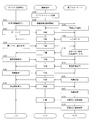
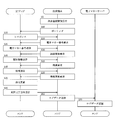
- FIG. 15 is a diagram for explaining a conventional electronic money system.
- the electronic money card 92 is an IC card carried by the user, and a balance of value, an IC chip ID for specifying the IC chip, an electronic money number, and the like are recorded on a built-in IC chip.
- the payment terminal 91 is installed in a store or the like, performs short-distance wireless communication with the electronic money card 92, and executes payment by value by decreasing or increasing the value of the electronic money card 92.
- the settlement terminal 91 records a transaction history with the electronic money card 92 as log data, and transmits the log data to the electronic money server 2 at once or irregularly.
- FIG. 16 is a flowchart for explaining a settlement process by a conventional electronic money system.
- the user installs in the payment terminal 91 an electronic money card 92 on which a value used for payment is recorded.
- the payment terminal 91 receives input of payment amount information from an employee of the store (step 5).
- the payment terminal 91 polls the IC chip of the electronic money card 92 (step 10).
- the IC chip returns a response to the settlement terminal 91 (step 15).
- the IC chip transmits its own IC chip ID to the settlement terminal 91.
- the payment terminal 91 When receiving the response from the IC chip, the payment terminal 91 requests an electronic money number from the IC chip (step 20).
- the electronic money number is information for specifying an IC chip in the electronic money server 2.
- the IC chip When the IC chip is requested by the payment terminal 91 for an electronic money number, the IC chip transmits it to the payment terminal 91 (step 25).
- the payment terminal 91 When receiving the electronic money number from the IC chip, the payment terminal 91 requests authentication information from the IC chip (step 30). On the other hand, the IC chip transmits authentication information to the payment terminal 91 (step 35). The settlement terminal 91 receives the authentication information from the IC chip, authenticates the IC chip, and requests the IC chip to notify the balance of value (step 40). When receiving the balance request from the payment terminal 91, the IC chip transmits the currently recorded value balance to the payment terminal 91 (step 45).
- the payment terminal 91 When the payment terminal 91 receives the balance from the IC chip, it requests the IC chip to update the balance so that the value balance is updated to the amount after payment (step 50). When receiving the balance update request from the payment terminal 91, the IC chip updates the value balance (step 55) and transmits an update completion notification to the payment terminal 91 (step 60). When the payment terminal 91 receives the update completion notification from the IC chip, the payment terminal 91 creates log data relating to the payment performed this time, and ends the payment processing.
- the settlement terminal 91 stores the log data in this way, and later transmits the log data to the electronic money server 2 by batch processing (for example, about once a day) (step 65).
- the electronic money server 2 receives and records log data from the payment terminal 91 (step 70).
- the value balance is recorded on the electronic money card 92 and processed locally with the payment terminal 91. Therefore, the conventional example does not manage the balance in real time on the electronic money server 2 side.
- the balance of electronic value is recorded in a server in association with a prepaid card
- the prepaid card is read by a card reader installed in a store, and is associated with the prepaid card.
- a technique for making a payment with a balance of electronic value recorded on a server is disclosed.
- Patent Document 1 in order to check the balance managed on the server side, the payment terminal is connected online to the server at the time of payment. Therefore, this technique cannot be applied when a payment terminal having an online connection function cannot be installed from the viewpoint of physical environment, cost performance, and the like.
- An object of the present invention is to enable a money transfer transaction with a value whose balance is managed by a server with a terminal that does not have an online connection function.
- a balance updating means for updating the balance stored in association with the payment terminal in the storage means for storing the balance of the electronic value, and a balance change response to the acquired balance change command via the payment terminal.
- a balance change response replying means for replying to the receiving terminal.
- the paying side comprising means for reading response information corresponding to the request information from the temporary storage means and returning the response information to the receiving side terminal
- Identification information acquisition means for acquiring identification information from the terminal; means for transmitting data stored in the storage means in association with the acquired identification information to the payment side terminal and storing the data in the temporary storage means;
- the information processing server further comprising:
- the storage means is capable of storing a balance for each type of electronic value, and a type that specifies the type of electronic value based on data transmitted from the receiving terminal.
- the balance update means updates the balance of the electronic value corresponding to the specified type among the electronic values stored in the storage means in association with the payment side terminal.
- An information processing server according to claim 1 or claim 2 is provided.
- the storage means is capable of storing a balance for each type of electronic value, and a type for specifying the type of electronic value based on data transmitted from the receiving terminal.
- the balance updating unit updates a balance of electronic value that does not correspond to the specified type among electronic values stored in the storage unit in association with the payment side terminal, and
- the information processing server according to claim 1 or 2 further comprising fund transfer information output means for outputting fund transfer information including the type of the electronic value.
- a balance update function for updating a balance stored in association with the payment-side terminal in the storage means for storing the balance of the electronic value, and a balance change response to the acquired balance change command via the payment-side terminal
- a balance change response reply function for replying to the receiving terminal, and a recording medium on which an information processing program for causing a computer to realize is recorded.
- the identification information transmitting means for transmitting the unique identification information to the information processing server, and the balance change command transmitted from the receiving side terminal are transferred to the information processing server, and the balance of the electronic value is determined.
- Balance change command transfer means for updating the balance stored in association with the identification information in the storage means for storing, and the balance change response transmitted from the information processing server in response to the balance change command, on the receiving terminal
- a balance change response transfer means for transferring to the mobile terminal.
- the mobile terminal according to claim 8 further comprising means for reading response information corresponding to the request information from the temporary storage means and returning the response information to the receiving terminal in the event that the request information is received.
- the invention according to claim 10 further comprises an authentication means for authenticating a payment source based on authentication information input from the outside, and the identification information transmitting means is only when authentication by the authentication means is successful.
- the identification information transmitting step for transmitting the unique identification information to the information processing server, the balance change command transmitted from the receiving terminal is transferred to the information processing server, and the balance of the electronic value is determined.
- a balance change command transfer step for updating a balance stored in association with the identification information in a storage means for storing, and a balance change response transmitted from the information processing server in response to the balance change command, on the receiving side terminal
- a balance change response transfer step for transferring to the mobile phone.
- An information processing method using a portable computer is provided.
- the identification information transmission function for transmitting the unique identification information to the information processing server, and the balance change command transmitted from the receiving terminal are transferred to the information processing server, and the balance of the electronic value is determined.
- a balance change command transfer function for updating the balance stored in association with the identification information in the storage means for storing, and a balance change response transmitted from the information processing server in response to the balance change command, on the receiving side terminal There is provided a portable terminal program that causes a portable computer to realize a balance change response transfer function for transferring to a portable computer.
- the identification information transmission function for transmitting the unique identification information to the information processing server and the balance change command transmitted from the receiving terminal are transferred to the information processing server, and the balance of the electronic value is determined.
- a balance change command transfer function for updating the balance stored in association with the identification information in the storage means for storing, and a balance change response transmitted from the information processing server in response to the balance change command, on the receiving side terminal There is provided a recording medium in which a portable terminal program that causes a portable computer to realize a balance change response transfer function for transferring to a mobile terminal is recorded.
- the balance can be managed by the server even when a terminal having no online connection function is used.
- the electronic money server 2 records a value balance in association with the electronic money card 4 and the portable terminal 5.
- the online payment terminal 6 has a function of connecting to the electronic money server 2 via the communication line 8 and a function of connecting to the electronic money card 4 and the portable terminal 5 by short-range wireless communication. Then, the electronic money server 2 connects to the electronic money card 4 and the portable terminal 5 via the online payment terminal 6 at the time of payment, specifies the account of the electronic money card 4 and the portable terminal 5, and uses the value of the account To settle.
- communication network technology has progressed, it has become possible to manage the balance of value by the server in this way.
- the offline payment terminal 7 does not have a constant connection function and cannot communicate directly with the electronic money server 2 every time payment is made.
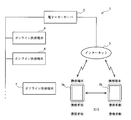
- the portable terminal 5 can be connected to the electronic money server 2 via the Internet 3. Therefore, the offline payment terminal 7 uses the communication network connection function of the mobile terminal 5 at the time of payment, and connects the mobile terminal 5 to the electronic money server 2 as a relay device. In this way, the electronic money server 2 can connect to the offline payment terminal 7 and make a payment using the value of the account of the mobile terminal 5.
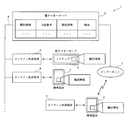
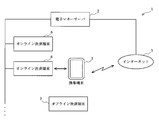
- FIG. 1 is a diagram for explaining a network configuration of an electronic money system 1 according to the first embodiment.
- the electronic money system 1 is configured using an electronic money server 2, the Internet 3, an electronic money card 4, a mobile terminal 5, an online payment terminal 6, an offline payment terminal 7, a communication line 8, and the like.
- the electronic money server 2 is a server that manages the movement of money value by value.
- the value is electronic information corresponding to the monetary value
- the electronic money system 1 moves the monetary value by increasing or decreasing the balance of the value.
- the business entity of the electronic money system 1 causes the value and the movement of the actual money to correspond by moving the actual money corresponding to the movement of the value.
- the electronic money server 2 records the identification number for identifying the electronic money card 4 and the portable terminal 5 by the user DB (database) in association with the account number of the electronic money account, authentication information, the balance of value, and the like. As described above, the electronic money server 2 records the value balance corresponding to the electronic money card 4 and the portable terminal 5.
- the electronic money card 4 is an IC card incorporating an IC chip.
- This IC chip may be either a non-contact type or a contact type, but in this embodiment mode, it is a non-contact type.
- the IC chip includes a CPU (Central Processing Unit), a ROM (Read Only Memory), a RAM (Random Access Memory), an EEPROM (Electrically Erasable and Programmable ROM), and the like.
- the IC chip records identification information for the electronic money server 2 to identify the IC chip in an EEPROM or the like.
- This identification information may be an IC chip ID given to the IC chip by the IC chip manufacturer, or may be ID information given by the electronic money server 2.
- the electronic money card 4 has an antenna connected to a high-frequency circuit of the IC chip, and generates electric power for driving the IC chip by the antenna or performs short-range wireless communication with the online payment terminal 6. .
- the mobile terminal 5 is, for example, a mobile terminal configured by a smartphone, a mobile phone, a game machine, a tablet computer, and the like, and has a function of connecting to the Internet 3 and an online payment terminal 6 or an offline payment terminal 7 and short-range wireless communication It has a function to connect by.
- the portable terminal 5 records identification information for the electronic money server 2 to identify the portable terminal 5.
- the online payment terminal 6 is installed in, for example, an accounting counter or a vending machine of a member store such as a convenience store (a store of a business that uses the electronic money system 1), the electronic money card 4 or a portable terminal. 5, short distance wireless communication is performed, and the identification information and the payment amount are transmitted to the electronic money server 2 via the communication line 8.
- the communication line 8 is a line connecting the electronic money server 2 and the online payment terminal 6.
- a dedicated line may be used as the communication line 8 or a general-purpose line such as the Internet 3 may be used.
- the offline payment terminal 7 is installed, for example, in a store or vending machine with insufficient network facilities, and has a function of performing short-range wireless communication with the mobile terminal 5.
- the offline payment terminal 7 is not always connected to the communication line 8.
- the offline payment terminal 7 is connected to the electronic money server 2 via the portable terminal 5 every time payment processing is performed.
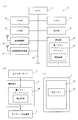
- FIG. 2A is a diagram illustrating a hardware configuration of the mobile terminal 5.
- a CPU 11, a ROM 12, a RAM 13, an input unit 14, an output unit 15, a communication control unit 16, a short-range communication control unit 17, a storage unit 18, and the like are connected by a bus line 19.
- the CPU 11 executes programs recorded in the ROM 12 and the storage unit 18 to control various information processing and the entire portable terminal 5.
- the electronic money application program 20 is executed to mediate communication between the offline payment terminal 7 and the electronic money server 2 to support payment processing by value.
- the ROM 12 is a read-only memory in which basic programs, parameters, data, and the like for operating the mobile terminal 5 are recorded.
- the RAM 13 is a readable / writable memory, and provides a working memory when the CPU 11 performs information processing.
- the output unit 15 is a functional unit that outputs information to the user, and includes a liquid crystal display for screen display, a speaker that outputs sound, and the like. For example, an icon for starting the electronic money application program 20 and a screen provided by the electronic money application 21 are displayed on the liquid crystal display.
- the input unit 14 is a functional unit that inputs information from the outside, and includes a touch panel installed on a liquid crystal display, a microphone that inputs sound, a camera that shoots a subject, and the like. The user can input information by touching the touch panel corresponding to the display on the liquid crystal display.
- the storage unit 18 is configured using, for example, a recording medium such as an EEPROM or a hard disk.
- the storage unit 18 is an OS (Operating System) that is a basic program for controlling the mobile terminal 5, an electronic money application program 20, other programs, Data is being recorded.
- OS Operating System
- the communication control unit 16 includes an antenna for wireless communication with a base station antenna of a mobile phone network, and connects the mobile terminal 5 to the Internet 3 or a telephone line.
- the short-range communication control unit 17 includes an antenna for short-range wireless communication with the reader / writer of the online payment terminal 6 or the offline payment terminal 7 and connects the portable terminal 5 to the online payment terminal 6 or the offline payment terminal 7. .
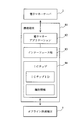
- FIG. 2B is a block diagram illustrating functions of the mobile terminal 5.
- the CPU 11 executes the electronic money application program 20
- an electronic money application 21 is formed on the portable terminal 5.
- the electronic money application 21 transmits identification information to the electronic money server 2 so that the electronic money server 2 identifies the portable terminal 5 and relays communication between the electronic money server 2 and the offline payment terminal 7.
- the offline payment terminal 7 having no network communication function can be connected to the electronic money server 2 using the mobile terminal 5 as a relay machine.
- FIG. 2C is a diagram showing the appearance of the mobile terminal 5.
- a touch panel 25 is installed on one side.
- an icon 26 for starting the electronic money application 21 is displayed, and an icon for starting a browser, a game, and other applications (not shown) is displayed.
- an application corresponding to the icon can be activated.
- the user touches the icon 26 for starting the electronic money application 21 the electronic money application 21 is started.
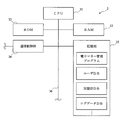
- FIG. 3 is a diagram for explaining the configuration of the electronic money server 2.
- a CPU 31, a ROM 32, a RAM 33, a communication control unit 34, a storage unit 35 and the like are connected by a bus line 36.
- the CPU 31 executes programs recorded in the ROM 32 and the storage unit 35 to control various information processing and the entire electronic money server 2.
- value-based payment processing is performed by updating the user's value balance in real time while communicating with the online payment terminal 6, offline payment terminal 7, electronic money card 4, and portable terminal 5.
- the ROM 32 is a read-only memory in which basic programs, parameters, data, and the like for operating the electronic money server 2 are recorded.
- the RAM 33 is a readable / writable memory and provides a working memory when the CPU 31 performs information processing.
- the communication control unit 34 communicates the electronic money server 2 with the online payment terminal 6, the electronic money card 4, and the mobile terminal 5 through the communication line 8, and communicates with the offline payment terminal 7 and the mobile terminal 5 through the Internet 3.
- the storage unit 35 is composed of, for example, a large-capacity hard disk, and an electronic money management program and other programs for the CPU 31 to perform settlement processing with value, a user DB for managing the balance of the user, and the value of the member store.
- a member store DB that manages settlement, a log data DB that stores log data recording each settlement process, and the like are recorded.
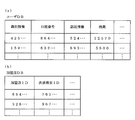
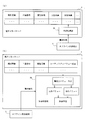
- FIG. 4A is a diagram for explaining a logical configuration of the user DB.
- the user DB includes items such as “identification information”, “account number”, “authentication information”, and “balance”.
- the item “identification information” is information for specifying the mobile terminal 5 or the electronic money card 4 associated with the electronic money account.
- the item “account number” is an account number of an electronic money account.
- the balance update is performed for an electronic money account.
- the item “authentication information” is information for the online payment terminal 6 and the offline payment terminal 7 to authenticate the authenticity of the electronic money account of the payment destination. Although common authentication information can be used, different information is used for each identification information in this embodiment.
- the item “balance” represents the balance amount of value stored in the electronic money account.
- each item of “identification information”, “account number”, “authentication information”, and “balance” has a one-to-one correspondence. For example, a plurality of identification information is assigned to one account number. By making it correspond, various modifications such as settlement from one electronic money account using a plurality of portable terminals 5 are possible.
- FIG. 4B is a diagram for explaining the logical configuration of the member store DB.
- the member store DB includes items such as “member store ID” and “settlement terminal ID”.
- the item “member store ID” is information for identifying a business operator who receives a settlement service using electronic money of the electronic money system 1.
- the item “payment terminal ID” is information for specifying the online payment terminal 6 and the offline payment terminal 7.
- the online payment terminal 6 and the offline payment terminal 7 notify the electronic money server 2 of their payment terminal IDs when connecting. Thereby, the electronic money server 2 can specify the member store ID of the member store related to the fund transfer.
- the member store ID functions as an account number for the member store.
- FIG. 5 is a diagram for explaining the configuration of the offline payment terminal 7.
- the offline payment terminal 7 includes a CPU 41, a ROM 42, a RAM 43, an input unit 44, an output unit 45, a reader / writer 46, a storage unit 47, and a communication control unit 48.
- the CPU 41 executes programs recorded in the ROM 42 and the storage unit 47 to control various information processing and the entire offline payment terminal 7.
- communication with the electronic money server 2 is performed via the mobile terminal 5, the payment amount is notified to the electronic money server 2, and the payment processing of the electronic money server 2 is supported.
- the ROM 42 is a read-only memory in which basic programs, parameters, data, and the like for operating the offline payment terminal 7 are recorded.
- the RAM 43 is a readable / writable memory, and provides a working memory when the CPU 41 performs information processing.
- the input unit 44 includes, for example, an input device such as a touch panel or a keyboard installed on the liquid crystal display, and accepts input of a settlement amount.
- the output unit 45 includes a liquid crystal display that displays an image for touch panel input, a speaker that outputs sound such as sound effects during settlement, and the like.
- the reader / writer 46 transmits / receives data to / from the portable terminal 5 by short-range communication with a built-in antenna.
- the storage unit 47 stores a program for the CPU 41 to perform a payment process with the electronic money server 2, security data (for example, key data) (not shown) used for authentication of the electronic money card, and the like. ing. Note that security data is not recorded in a general online payment terminal.
- the communication control unit 48 connects the electronic money server 2 and the offline payment terminal 7 via the communication line 8 at regular intervals, for example.
- the communication control unit of the online payment terminal always connects the electronic money server and the online payment terminal via a communication line.
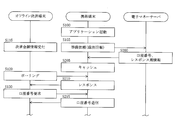
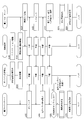
- FIG. 6 is a flowchart for explaining a payment process performed by the electronic money server 2 when the offline payment terminal 7 is connected to the electronic money server 2 via the portable terminal 5. The following processing is performed by the CPU 41 of the offline payment terminal 7, the CPU 11 of the portable terminal 5, and the CPU 31 of the electronic money server 2 according to a predetermined program.
- a user who makes a payment by shopping or charging touches the icon 26 of the mobile terminal 5 to activate the electronic money application 21.
- This can also be configured to start after the user is authenticated by entering a user ID, password, or the like. Moreover, you may comprise so that it may start, after authenticating using biometric personal authentication, such as a fingerprint.
- charging may be automatically performed by credit settlement or the like when the balance of the user DB becomes a certain amount or less.
- the electronic money application 21 accesses the electronic money server 2 via the Internet 3 and transmits identification information to the electronic money server 2 to make a preparation request (step 105).
- the electronic money server 2 receives the identification information from the mobile terminal 5
- the electronic money server 2 searches the user DB for the identification information, specifies the electronic money account number, authentication information, value balance, etc. associated with the mobile terminal 5,
- a preparation completion notification is transmitted to the portable terminal 5 (step 110).
- the mobile terminal 5 receives the preparation completion notification, the mobile terminal 5 enters a relay mode for relaying communication between the offline payment terminal 7 and the electronic money server 2.
- the offline payment terminal 7 receives payment amount information (step 115).
- the payment amount information includes whether the amount is transferred from the user to the member store (when the user purchases a product) or whether the amount is transferred from the member store to the user (when charging). Directions are also included.
- the offline payment terminal 7 polls the portable terminal 5 (step 120). This polling is relayed (transferred) to the electronic money server 2 by the portable terminal 5. That is, the offline payment terminal 7 polls the electronic money server 2 via the mobile terminal 5.
- the electronic money server 2 accepts polling from the offline payment terminal 7 using the mobile terminal 5 as a relay, and returns a response to the mobile terminal 5 (step 125). Then, the portable terminal 5 relays this response to the offline payment terminal 7. That is, the electronic money server 2 returns a response to the offline payment terminal 7 using the mobile terminal 5 as a relay machine.
- the offline payment terminal 7 and the electronic money server 2 communicate with the portable terminal 5 as a relay.
- the electronic money card 92 transmits an IC chip ID in response to the polling of the payment terminal 91.
- the electronic money server 2 is configured to transmit the IC chip ID to the offline payment terminal 7 as a response so as to be compatible with the conventional payment terminal 91 (if it is compatible, the specification change of the payment terminal 91 can be minimized). be able to.
- the mobile terminal 5 records the pseudo IC chip ID imitating the IC chip ID together with the identification information, and transmits the pseudo IC chip ID to the electronic money server 2 in response to the preparation request in step 105 or the user DB of the electronic money server 2
- the pseudo IC chip ID is recorded in association with the identification information, and the electronic money server 2 can be configured to transmit this to the offline settlement terminal 7 at the time of response.
- the offline payment terminal 7 When receiving the response from the electronic money server 2, the offline payment terminal 7 requests the electronic money number from the electronic money server 2 (step 130). On the other hand, the electronic money server 2 transmits the account number specified by the identification information of the portable terminal 5 to the offline payment terminal 7 as an electronic money number (step 135).
- the offline payment terminal 7 requests authentication information from the electronic money server 2 (step 140), and the electronic money server 2 transmits the authentication information to the offline payment terminal 7 (step 145).
- the offline payment terminal 7 confirms the authenticity of the communication partner (that is, the electronic money server 2) using the authentication information, and requests a balance of value from the electronic money server 2 (step 150).
- the electronic money server 2 transmits the value balance to the offline payment terminal 7 (step 155).
- the offline payment terminal 7 requests the electronic money server 2 to update the balance (step 160). For example, the following method can be considered for this request.
- Method 1 When an overwrite command is transmitted as an update request.
- the offline payment terminal 7 performs addition / subtraction on the balance received from the electronic money server 2 based on the payment amount information, and calculates the balance after payment.
- the offline settlement terminal 7 transmits an overwrite command for overwriting the calculated balance as a balance update request.
- the electronic money server 2 overwrites the balance of the user DB according to the overwrite command.
- Method 2 When an addition / subtraction instruction is transmitted.
- the offline payment terminal 7 transmits an addition command or a subtraction command based on the payment amount information to the electronic money server 2 as a balance update request.
- the electronic money server 2 performs addition / subtraction on the balance of the user DB in accordance with the instruction, and updates the balance to the balance after addition / subtraction.
- Method 3 Mixing of method 1 and method 2. For example, when the balance is increased, an overwrite command is used, and when the balance is decreased, a subtraction command is used. Alternatively, an addition command is used to increase the balance, and an overwrite command is used to decrease the balance.
- the electronic money server 2 When receiving the balance update request from the offline payment terminal 7, the electronic money server 2 updates the balance of the user DB (step 165). Then, the electronic money server 2 transmits an update completion notification to the offline payment terminal 7 (step 170). Furthermore, the electronic money server 2 transmits an update completion notification to the mobile terminal 5 (step 175).
- the update completion notification for the mobile terminal 5 may display that the update has been completed by the electronic money application 21 or may use e-mail.
- the electronic money server 2 After the balance update is completed, the electronic money server 2 generates log data related to the transaction and records it in the log data DB.
- the log data includes history information such as identification information of the mobile terminal 5, terminal ID of the offline payment terminal 7, payment amount information, and payment date and time. Funds will be settled later for log-in data for member stores.
- the offline payment terminal 7 does not have a constant connection function, but can be connected to the electronic money server 2 by using the network connection function of the mobile terminal 5. Further, since the electronic money server 2 returns the same information as the electronic money card 92 of the conventional example to the offline payment terminal 7, the offline payment terminal 7 is as if communicating with the conventional electronic money card 92. The same is true. That is, the offline payment terminal 7 can communicate using a conventional protocol. Therefore, the settlement terminal 91 of the conventional example can be used as the offline settlement terminal 7 and the cost of capital investment can be reduced.
- the payment amount information is generated by the offline payment terminal 7 and transmitted to the electronic money server 2, but the payment amount information may be generated by the mobile terminal 5.
- the settlement amount is input to the mobile terminal 5.
- the balance is recorded in the user DB, and the balance is increased or decreased.
- this balance may be prepaid by the user by a prepaid method, or may be the amount of credit given to the user. .
- the account is settled later by, for example, withdrawing a deposit from the user's bank account.
- the electronic money server 2 accumulates transactions performed between the mobile terminal 5, the online payment terminal 6, and the offline payment terminal 7 as log data, aggregates the log data on the closing date, and joins the user. Outputs the exchange of store funds. Then, the user and the member store pay separately based on the output data.
- Modification 1 In this modification, a part of information (such as an account number) is cached when the mobile terminal 5 starts connection with the electronic money server 2. Using the cached information, the mobile terminal 5 can respond to the offline payment terminal 7 itself. Therefore, when the offline payment terminal 7 requests cached information, the mobile terminal 5 responds to the offline payment terminal 7 using the cached information without relaying the request to the electronic money server 2. Thus, the portable terminal 5 can respond to a command that can respond itself, and can transfer a command that cannot be answered to the electronic money server 2 to reduce the amount of data communication and shorten the turnaround time. .
- FIG. 7 is a flowchart for explaining a payment processing procedure according to the first modification.
- the mobile terminal 5 activates the electronic money application 21 (step 100), and transmits a preparation request to the electronic money server 2 (step 105).
- the electronic money server 2 receives the preparation request from the portable terminal 5
- the account number associated with the identification information in the user DB and information necessary for the response (for example, a pseudo IC chip ID) together with the preparation completion notification are included in the portable terminal. 5 (step 200).
- the portable terminal 5 receives the account number and the information necessary for the response from the electronic money server 2
- the portable terminal 5 caches it by recording it in the RAM 13 (step 205).
- the offline payment terminal 7 receives the payment amount information (step 115) and polls the portable terminal 5 (step 120).
- the portable terminal 5 responds instead of the electronic money server 2 using the information cached in the RAM 13 without relaying polling to the electronic money server 2 (step 210).
- the offline payment terminal 7 requests an account number from the portable terminal 5 (step 130).
- the portable terminal 5 transmits the account number cached in the RAM 13 to the offline settlement terminal 7 without relaying the request to the electronic money server 2 (step 215).
- the subsequent processing is the same as in FIG.
- Modification 2 When there are a plurality of entities that provide settlement services based on value, it is common that the value issued by each entity cannot be used in an electronic money system of another entity. In this case, incompatible values such as the value of Company A, the value of Company B,. In this modified example, a case will be described in which an attribute indicating a type is attached to a value and it is necessary to perform settlement for each type. Note that this modification can be widely applied to cases where values are incompatible with each other, in addition to cases where values are provided by business entity.
- FIG. 8A is a diagram for explaining the second modification.
- balances are recorded for each type of value, such as A company balance (value balance for company A), B company balance (value balance for company B), and so on.
- the offline payment terminal 7 (the same applies to the online payment terminal 6) transmits a value attribute to the electronic money server 2 to notify which type of value is to be paid when requesting payment.
- the settlement processing unit 51 of the electronic money server 2 settles the value from the type of balance specified by the attribute information.
- FIG. 8B is a diagram for explaining another example of the second modification.
- utility value is used.
- the utility value is a value that can be converted into various values (for example, a deposit and savings account balance, a creditable balance, a prepaid payment means that can be converted into other types of electronic money, and the like).
- the utility value can be converted into the value of company A or the value of company B can be converted.
- a utility value balance is recorded as a balance.
- the offline payment terminal 7 (the same applies to the online payment terminal 6) transmits a value attribute to the electronic money server 2 to notify which type of value is to be paid when requesting payment.
- the settlement processing unit 51 of the electronic money server 2 When performing the reduction process, the settlement processing unit 51 of the electronic money server 2 generates a value for each attribute specified by the attribute information from the utility value (for example, the value of Company A, the value of Company B) and performs the settlement process.
- the utility value balance is reduced by the payment amount regardless of the type of value used for the payment.
- the settlement processing unit 51 In the case of an increase process, the settlement processing unit 51 generates a utility value from the value for each type and increases the balance of the utility value.
- the electronic money server 2 records in the log data which type of value is generated from the utility value, and sums up this later to perform settlement for each value.
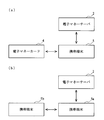
- FIG. 9A is a diagram for explaining a case where payment is made between the electronic money card 4 and the mobile terminal 5.
- the portable terminal 5 has a reader / writer function, and can drive the electronic money card 4 by transmitting radio waves to the electronic money card 4.
- the electronic money card 4 transmits identification information to the electronic money server 2 via the portable terminal 5, and the portable terminal 5 transmits its own identification information and payment amount information to the electronic money server 2.
- the electronic money server 2 specifies two electronic money accounts to be settled based on the identification information of the electronic money card 4 and the portable terminal 5, and transfers funds between the two accounts according to the settlement amount information. That is, the value of the remittance source account is reduced by the settlement amount, and the value of the remittance destination account is increased by the settlement amount.
- FIG. 9B is a diagram for explaining a case where payment is made between two portable terminals 5.
- the mobile terminal 5a and the mobile terminal 5b perform near field communication by, for example, Bluetooth (registered trademark) or infrared communication.
- the mobile terminal 5a transmits its own identification information to the electronic money server 2, and the mobile terminal 5b transmits its own identification information to the electronic money server 2 using the mobile terminal 5a as a relay.
- the payment amount information may be generated by either the mobile terminal 5a or the mobile terminal 5b.
- the mobile terminal 5a When the mobile terminal 5a generates, the payment amount information is directly transmitted to the electronic money server 2, and when the mobile terminal 5b generates, the mobile terminal 5a is generated. It transmits to the electronic money server 2 as a relay machine.
- the electronic money server 2 specifies two electronic money accounts for settlement based on the identification information of the portable terminals 5a and 5b, and transfers funds between the two accounts according to the settlement amount information.
- Modification 4 a non-contact type IC chip is mounted on a portable terminal.
- the use of electronic money by value began with the electronic money card 4 having a non-contact type IC chip built therein. Therefore, the non-contact type IC chip is built in and the same as the electronic money card 4 by the IC chip. There are mobile terminals that are effective.
- FIG. 10 is a diagram for explaining a portable terminal equipped with a non-contact type IC chip.
- the portable terminal 81 has a non-contact type IC chip 84 mounted thereon.
- the non-contact type IC chip 84 can communicate with the electronic money application 82 via the interface unit 83.
- the IC chip 84 records an IC chip ID, which is identification information of the IC chip 84 itself, and identification information for specifying an electronic money account.
- the reader / writer 46 of the offline payment terminal 7 can communicate with the IC chip 84.
- the electronic money card 92 responds to the polling of the electronic money card 92 using the IC chip ID.
- the electronic money application 82 in the portable terminal 81 reads the IC chip ID and the identification information from the IC chip 84 and transmits them to the electronic money server 2 in step 105 of FIG. .
- the electronic money server 2 transmits the IC chip ID as a response to the offline payment terminal 7 in response to the polling in step 120.
- an IC chip ID can be used as identification information.
- the offline payment terminal 7 communicates with the electronic money server 2 using the IC chip 84, the interface unit 83, and the electronic money application 82 as a relay machine.
- the procedure of payment processing performed in cooperation by the electronic money server 2, the portable terminal 81, and the offline payment terminal 7 is the same as that in the embodiment.
- the mobile terminal 5 is connected to the online payment terminal 6 by short-range wireless communication and also connected to the electronic money server 2 via the Internet 3. .
- the electronic money server 2 is connected to the online payment terminal 6 via the portable terminal 5 and is also connected to the portable terminal 5 via the online payment terminal 6, the balance request is made.
- the subsequent processing is performed in the electronic money server 2 without performing the above.
- the electronic money server 2 matches the online payment terminal 6 and the mobile terminal 5 connected to itself in real time, and identifies the online payment terminal 6 and the mobile terminal 5 that are connected to each other. be able to.
- FIG. 11 is a diagram for explaining a network configuration of the electronic money system according to the second embodiment.
- the same components as those in the first embodiment are denoted by the same reference numerals.
- the portable terminal 5 can be connected to the online payment terminal 6 by performing short-range wireless communication with the reader / writer 46 of the online payment terminal 6.
- the mobile terminal 5 can also be connected to the electronic money server 2 via the Internet 3.
- the online payment terminal 6 can be connected to the electronic money server 2 using the mobile terminal 5 as a relay machine, and the mobile terminal 5 can be connected to the electronic money server 2 using the online payment terminal 6 as a relay machine.
- the electronic money server 2 when the electronic money server 2 is connected to the mobile terminal 5 via the online payment terminal 6 and is connected to the online payment terminal 6 via the mobile terminal 5, the electronic money server 2 is connected to the electronic money server 2.
- Those that can be processed inside are processed internally without communicating with the mobile terminal 5 or the online payment terminal 6, thereby reducing the turnaround time and the occurrence of trouble.
- FIG. 12 is a flowchart for explaining the settlement processing of the present embodiment.
- two electronic money servers 2 are described for ease of illustration, but these are the same electronic money server 2.
- Two electronic money servers 2 may be used. In this case, it is possible to always communicate between the two electronic money servers 2 and to function as one electronic money server 2.
- the electronic money application 21 is activated (step 100), and the portable terminal 5 transmits identification information to the electronic money server 2 (step 105).
- the electronic money server 2 transmits a preparation completion notification to the mobile terminal 5 (step 110).
- the online payment terminal 6 receives payment amount information (step 115) and transmits a payment request to the electronic money server 2 (step 250).
- the electronic money server 2 polls the portable terminal 5 via the online payment terminal 6 (step 255).
- the portable terminal 5 relays the polling to the electronic money server 2.
- the electronic money server 2 When the electronic money server 2 receives polling from the mobile terminal 5, the electronic money server 2 returns a response to the mobile terminal 5 (step 125). This response is transmitted to the electronic money server 2 via the online payment terminal 6.
- the portable terminal 5 transfers this to the electronic money server 2.
- the electronic money server 2 transmits the account number as an electronic money number to the portable terminal 5 (step 135). The account number is transferred to the electronic money server 2 via the mobile terminal 5 and the online payment terminal 6.
- the online payment terminal 6 and the mobile terminal 5 that are connected to each other are simultaneously online with itself, that is, the mobile terminal 5 is connected to the electronic money server 2 via the online payment terminal 6. Then, it is determined whether or not the online payment terminal 6 is connected to the electronic money server 2 via the portable terminal 5 (step 265).
- This determination is made by confirming that the account number transmitted from the electronic money server 2 to the portable terminal 5 is transmitted from the online payment terminal 6 within a predetermined time.
- a certain amount of time is required until the account number transmitted from the electronic money server 2 to the portable terminal 5 is transmitted from the online payment terminal 6 due to network delay. Therefore, it is necessary to set the predetermined time longer than this delay time.
- the predetermined time is set too long, there is a possibility that the portable terminal 5 is detached from the online payment terminal 6 during that time. Therefore, in the electronic money system 1, the predetermined time is set to be longer than the delay time and the shortest time.
- step 265; N When it is determined that both terminals are not in an online state (step 265; N), the electronic money server 2 shifts to a normal online payment terminal 6 process. If it is determined that both terminals are online (step 265; Y), the electronic money server 2 performs a balance update process and settles (step 270). Then, the electronic money server 2 transmits an update completion notification to the online payment terminal 6 (step 275), and further transmits an update completion notification to the mobile terminal 5 (step 280).
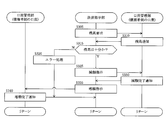
- FIG. 13 is a flowchart for explaining the balance update processing in (Step 270).
- This flowchart shows processing performed by the settlement instruction unit and the account management unit formed in the electronic money server 2.
- the member store in addition to the user account balance, the member store is also registered as a user, and the member store account balance is recorded in the user DB.
- the debtor is a source of funds (value), and the creditor is a destination of funds.
- the member store is a creditor and the user is a debtor, and when charging, the member store is a debtor and the user is a creditor.
- the settlement instruction unit requests an account balance on the debtor side from the account management unit (step 305).
- the account management unit reads the balance of the debtor side account from the user DB and transmits it to the settlement instruction unit (step 310).
- the settlement instruction unit receives the balance from the account management unit and determines whether or not the balance is sufficient (step 315). For example, it is determined that the balance is sufficient when the balance is equal to or more than the settlement amount.
- step 315; N If it is determined that the balance is not sufficient (step 315; N), the settlement instruction unit performs error processing (step 320) and ends the processing.
- the settlement instruction unit instructs the account management unit to reduce the settlement amount (step 325).
- the account management unit reduces the account balance on the debtor side by the settlement amount, and transmits a reduction completion notice to the settlement instruction unit (step 330).
- the account management unit Upon receipt of the reduction completion notification, the account management unit instructs the account management unit to increase the creditor's account balance by the settlement amount (step 335). In response to the instruction, the account management unit increases the balance of the creditor's account by the settlement amount, and transmits an increase completion notice to the settlement instruction unit (step 340).
- the monetary value (value) corresponding to the settlement amount is transferred from the debtor side to the creditor side.
- the subsequent processing is performed inside the electronic money server 2, so that data transmission is omitted and the turnaround time is reduced. Is shortened. Further, since the internal processing of the electronic money server 2 is unlikely to cause a failure, the possibility of failure in settlement is reduced.
- both the member store and the user have a balance in the account, but various modifications are possible.
- the member store may accumulate the log data instead of updating the balance of the account and settle it later.
- the user side may accumulate the log data instead of updating the balance, and settle later.
- the second embodiment since the data transmission processing is reduced, it is possible to obtain the effects that the processing speed can be increased and the failure occurrence can be reduced.
- Modification 1 In this modification, when the electronic money server 2 transmits a pseudo IC chip ID to the portable terminal 5 at the time of polling response, and the online payment terminal 6 receives this from the portable terminal 5 and transfers it to the electronic money server 2, The electronic money server 2 determines that both terminals are in an online state, and performs subsequent payment processing within the electronic money server 2.
- the turnaround time is further shortened and the occurrence of failure is further suppressed.
- Modification 2 when it is determined in step 315 (FIG. 13) that the debtor side has a sufficient balance, the completion notification is sent to the mobile terminal 5 and the online payment terminal 6 before the account management unit increases or decreases the balance. Send to.
- the case where the balance is sufficient is an amount with a sufficiently low possibility that the balance will be insufficient for the settlement amount.
- a general payment amount can be calculated from an average value or the like, and a predetermined multiple of the average value can be set as a sufficient balance. Specifically, if the settlement amount per transaction is 1000 yen, and the balance is 30 times more than 30000 yen, it is very unlikely that there will be a shortage of the balance. it can.
- a sufficient balance amount can be dynamically set for each type of business of the member store when the user makes a payment.
- FIG. 14 is a diagram for explaining the third modification.
- the mobile terminal 5a and the mobile terminal 5b are connected to each other using short-range wireless communication such as Bluetooth or infrared communication. Furthermore, the mobile terminal 5 a and the mobile terminal 5 b are both connected to the electronic money server 2 via the Internet 3.
- the portable terminal 5a is made to correspond to the online payment terminal 6 (FIG. 11) of the second embodiment and the portable terminal 5b is made to correspond to the portable terminal 5
- funds are transferred between the portable terminal 5a and the portable terminal 5b. Can move.
- the electronic money server 2 is connected to the mobile terminal 5a via the mobile terminal 5b and is connected to the mobile terminal 5b via the mobile terminal 5a
- the electronic money server 2 Processing is performed inside the money server 2, and funds are transferred between the account of the mobile terminal 5a and the account of the mobile terminal 5b.
- Either the mobile terminal 5a or the mobile terminal 5b may send the payment amount information to the electronic money server 2. According to this modification, value can be transferred between users, and more flexible use of value can be performed.
- the electronic money server 2 includes a first connection unit that connects to the payment-side terminal, and a second connection unit that connects to the reception-side terminal via the connected payment-side terminal. ing.
- the electronic money server 2 is connected to identify an account (account number in the case of the portable terminal 5 or member store ID in the case of the offline payment terminal 7) that is information for identifying the source and destination of the funds transfer.
- Account specifying means for specifying a first account associated with the payment-side terminal and a second account associated with the connected receiving-side terminal is provided.
- the electronic money server 2 acquires the transfer source, transfer destination, and amount of funds from the settlement amount information, and therefore, the funds transfer between the specified first account and the specified second account is performed.
- Fund transfer information acquisition means for acquiring fund transfer information including direction and amount is provided.
- the electronic money server 2 records the transfer source, transfer destination, and amount of funds in the log data, so that the transfer of funds between the first account and the second account is performed according to the acquired funds transfer information.
- a fund transfer recording means for recording is provided.
- the electronic money server 2 records the balance for each electronic money account in the user DB, and updates the balance with payment amount information, so that the first balance recording means for recording the balance of the first account And updating means for updating the recorded first balance in accordance with the acquired funds transfer information.
- the electronic money server 2 acquires the type of value related to payment from the offline payment terminal 7 or the online payment terminal 6 and updates the value balance for each type. It comprises a type acquisition means for acquiring, and the update means updates a balance of monetary value corresponding to the acquired type among the balances of the first account.
- the type of value related to payment is acquired from the offline payment terminal 7 or the online payment terminal 6, and payment is made using the utility value. Then, the type of value converted to the utility value is recorded in the log data.
- the electronic money server 2 includes a type acquisition unit that acquires the type of monetary value used for the money transfer, and the update unit stores the first balance regardless of the type of the acquired monetary value.
- the funds transfer recording means records the funds transfer for each of the acquired types.
- the balance of the electronic money card 4 connected to the electronic money server 2 via the portable terminal 5 or another portable terminal 5 is recorded and updated.
- the electronic money server 2 includes a second balance recording unit that records the balance of the second account, and the updating unit is configured to record the second recorded value according to the acquired funds transfer information. Update balance.
- the mobile terminal 5 of the first embodiment transmits its own identification information to the electronic money server 2 and makes it communicate with the offline settlement terminal 7 and the electronic money server 2 using itself as a relay,
- mediating means for mediating communication of the predetermined server.
- the mobile terminal 5 caches the account number and responds to the offline payment terminal 7 instead of the electronic money server 2, so that the predetermined server Information recording means for acquiring and recording predetermined information requested by the receiving terminal from the predetermined server when connected, and the receiving terminal storing the predetermined information in the predetermined server And responding means for responding the recorded predetermined information in place of the predetermined server.
- the electronic money server 2 of the second embodiment can be connected to the online payment terminal 6 via the mobile terminal 5 and can be connected to the mobile terminal 5 via the online payment terminal 6, the payment side terminal And a second connection means for connecting to the payment terminal via the receiving terminal.
- the electronic money server 2 is connected to at least one of the first connection means and the second connection means to identify the account number of the mobile terminal 5 and the payment terminal ID of the online payment terminal 6.
- Account specifying means for specifying an account associated with the terminal and an account associated with the receiving terminal is provided.
- the electronic money server 2 acquires funds transfer information including the direction and amount of money transfer performed between the specified payer account and the specified receiver account in order to acquire payment amount information.
- Information acquisition means is provided.
- the electronic money server 2 is connected to the online payment terminal 6 via the mobile terminal 5 and confirms in real time that the electronic money server 2 is connected to the mobile terminal 5 via the online payment terminal 6.
- the first connecting means is connected to the receiving terminal via the paying terminal
- the second connecting means is connected to the paying terminal via the receiving terminal.
- Confirmation means for confirming is provided. Then, the electronic money server 2 performs the subsequent settlement processing in the electronic money server 2 when the confirmation is made. When the confirmation is made, the electronic money server 2 performs the first account according to the acquired money transfer information. And fund transfer recording means for recording the fund transfer between the second account and the second account. (9) The electronic money server 2 records the balance of the account corresponding to the portable terminal 5, and updates the first balance recording means for recording the balance of the first account in order to update the balance. Updating means for updating the recorded first balance according to the fund transfer information. (10) In the second embodiment, the account number of the electronic money account is used as the terminal specifying information, and in the first modification, the pseudo IC chip ID is used as the terminal specifying information.
- the update means immediately receives the first balance when the payment terminal identification information acquired from the payment terminal matches the payment terminal identification information acquired from the payment terminal via the reception terminal. Has been updated.
- the completion notification is issued without waiting for the completion of the settlement.
- an update for transmitting an update completion notification to the payment terminal after completion of the update by the update means after confirmation by the confirmation means when the acquired balance is equal to or greater than a predetermined amount Completion notification transmission means is provided.
- the electronic money server 2 stores the second balance in which the balance of the second account is recorded.
- the update means updates the recorded second balance in accordance with the acquired funds transfer information.
Landscapes
- Business, Economics & Management (AREA)
- Engineering & Computer Science (AREA)
- Accounting & Taxation (AREA)
- Strategic Management (AREA)
- Physics & Mathematics (AREA)
- General Business, Economics & Management (AREA)
- General Physics & Mathematics (AREA)
- Theoretical Computer Science (AREA)
- Finance (AREA)
- Computer Networks & Wireless Communication (AREA)
- Microelectronics & Electronic Packaging (AREA)
- Financial Or Insurance-Related Operations Such As Payment And Settlement (AREA)
Description
図15は、従来の電子マネーシステムを説明するための図である。
電子マネーカード92は、ユーザが携帯するICカードであり、内蔵するICチップにバリューの残高、ICチップを特定するICチップID、電子マネー番号などが記録されている。
決済端末91は、店舗などに設置されており、電子マネーカード92と近距離の無線通信を行い、電子マネーカード92のバリューを減額、又は増額することによりバリューによる決済を実行する。決済端末91は、電子マネーカード92との取引履歴をログデータとして記録しておき、定期、又は不定期にログデータを一括して電子マネーサーバ2に送信する。
まず、ユーザは、決済に用いるバリューが記録された電子マネーカード92を決済端末91に設置する。
次に、決済端末91は、店舗の従業員などから決済金額情報の入力を受け付ける(ステップ5)。すると、決済端末91は、電子マネーカード92のICチップをポーリングする(ステップ10)。
これに対し、ICチップは、決済端末91にレスポンスを返す(ステップ15)。その際に、ICチップは、自己のICチップIDを決済端末91に送信する。
ICチップは、決済端末91から電子マネー番号を要求されると、これを決済端末91に送信する(ステップ25)。
これに対し、ICチップは、決済端末91に認証情報を送信する(ステップ35)。
決済端末91は、ICチップから認証情報を受信してICチップを認証し、ICチップにバリューの残高を通知するように要求する(ステップ40)。
ICチップは、決済端末91から残高要求を受けると、現在記録しているバリューの残高を決済端末91に送信する(ステップ45)。
ICチップは、決済端末91から残高更新要求を受信すると、バリューの残高を更新し(ステップ55)、決済端末91に更新完了通知を送信する(ステップ60)。
決済端末91は、ICチップから更新完了通知を受信すると、今回行った決済に関するログデータを作成し、決済処理を終了する。
このように、従来例では、バリューの残高を電子マネーカード92に記録しておき、これを決済端末91との間でローカルに処理していた。したがって、従来例は、電子マネーサーバ2側で残高をリアルタイムで管理していない。
請求項2に記載の発明では、前記受取側端末から要求情報を取得した場合に該要求情報に対応する応答情報を一時記憶手段から読み出して該受取側端末に返信する手段を具備する前記支払側端末から、識別情報を取得する識別情報取得手段と、前記取得した識別情報に対応付けて前記記憶手段に記憶しているデータを前記支払側端末に送信し、前記一時記憶手段に記憶させる手段と、をさらに具備したことを特徴とする請求項1に記載の情報処理サーバを提供する。
請求項3に記載の発明では、前記記憶手段は、電子バリューの種類ごとに残高を記憶することが可能であり、前記受取側端末から送信されるデータに基づいて電子バリューの種類を特定する種類特定手段をさらに具備し、前記残高更新手段が、前記支払側端末に対応付けて前記記憶手段に記憶されている電子バリューのうち前記特定した種類に対応する電子バリューの残高を更新する、ことを特徴とする請求項1又は請求項2に記載の情報処理サーバを提供する。
請求項4に記載の発明では、前記記憶手段は、電子バリューの種類ごとに残高を記憶することが可能であり、前記受取側端末から送信されるデータに基づいて電子バリューの種類を特定する種類特定手段をさらに具備し、前記残高更新手段が、前記支払側端末に対応付けて前記記憶手段に記憶されている電子バリューのうち前記特定した種類に対応しない電子バリューの残高を更新し、前記特定した電子バリューの種類を含む資金移動情報を出力する資金移動情報出力手段をさらに具備する、ことを特徴とする請求項1又は請求項2に記載の情報処理サーバを提供する。
請求項5に記載の発明では、受取側端末から支払側端末に対して送信された残高変更命令を、該支払側端末から取得する残高変更命令取得ステップと、前記取得した残高変更命令に基づいて、電子バリューの残高を記憶する記憶手段に前記支払側端末に対応付けて記憶されている残高を更新する残高更新ステップと、前記取得した残高変更命令に対する残高変更応答を、前記支払側端末を介して前記受取側端末に返信する残高変更応答返信ステップと、を具備したことを特徴とする、コンピュータによる情報処理方法を提供する。
請求項6に記載の発明では、受取側端末から支払側端末に対して送信された残高変更命令を、該支払側端末から取得する残高変更命令取得機能と、前記取得した残高変更命令に基づいて、電子バリューの残高を記憶する記憶手段に前記支払側端末に対応付けて記憶されている残高を更新する残高更新機能と、前記取得した残高変更命令に対する残高変更応答を、前記支払側端末を介して前記受取側端末に返信する残高変更応答返信機能と、をコンピュータに実現させる情報処理プログラムを提供する。
請求項7に記載の発明では、受取側端末から支払側端末に対して送信された残高変更命令を、該支払側端末から取得する残高変更命令取得機能と、前記取得した残高変更命令に基づいて、電子バリューの残高を記憶する記憶手段に前記支払側端末に対応付けて記憶されている残高を更新する残高更新機能と、前記取得した残高変更命令に対する残高変更応答を、前記支払側端末を介して前記受取側端末に返信する残高変更応答返信機能と、をコンピュータに実現させる情報処理プログラムが記録された記録媒体を提供する。
請求項8に記載の発明では、固有の識別情報を情報処理サーバに送信する識別情報送信手段と、受取側端末から送信された残高変更命令を前記情報処理サーバに転送し、電子バリューの残高を記憶する記憶手段に前記識別情報に対応付けて記憶されている残高を更新させる残高変更命令転送手段と、前記残高変更命令に対して前記情報処理サーバから送信された残高変更応答を前記受取側端末に転送する残高変更応答転送手段と、を具備したことを特徴とする携帯端末を提供する。
請求項9に記載の発明では、前記識別情報に対応付けて記憶手段に記憶されているデータを前記情報処理サーバから取得し一時記憶手段に記憶させる手段と、前記受取側端末から要求情報を取得した場合に該要求情報に対応する応答情報を前記一時記憶手段から読み出して該受取側端末に返信する手段と、をさらに具備したことを特徴とする請求項8に記載の携帯端末を提供する。
請求項10に記載の発明では、外部から入力される認証情報に基づいて支払元を認証する認証手段をさらに具備し、前記識別情報送信手段は、前記認証手段による認証が成功した場合に限り、前記識別情報を前記情報処理サーバに送信する、ことを特徴とする請求項8又は請求項9に記載の携帯端末を提供する。
請求項11に記載の発明では、固有の識別情報を情報処理サーバに送信する識別情報送信ステップと、受取側端末から送信された残高変更命令を前記情報処理サーバに転送し、電子バリューの残高を記憶する記憶手段に前記識別情報に対応付けて記憶されている残高を更新させる残高変更命令転送ステップと、前記残高変更命令に対して前記情報処理サーバから送信された残高変更応答を前記受取側端末に転送する残高変更応答転送ステップと、を具備したことを特徴とする、携帯型コンピュータによる情報処理方法を提供する。
請求項12に記載の発明では、固有の識別情報を情報処理サーバに送信する識別情報送信機能と、受取側端末から送信された残高変更命令を前記情報処理サーバに転送し、電子バリューの残高を記憶する記憶手段に前記識別情報に対応付けて記憶されている残高を更新させる残高変更命令転送機能と、前記残高変更命令に対して前記情報処理サーバから送信された残高変更応答を前記受取側端末に転送する残高変更応答転送機能と、を携帯型コンピュータに実現させる携帯端末用プログラムを提供する。
請求項13に記載の発明では、固有の識別情報を情報処理サーバに送信する識別情報送信機能と、受取側端末から送信された残高変更命令を前記情報処理サーバに転送し、電子バリューの残高を記憶する記憶手段に前記識別情報に対応付けて記憶されている残高を更新させる残高変更命令転送機能と、前記残高変更命令に対して前記情報処理サーバから送信された残高変更応答を前記受取側端末に転送する残高変更応答転送機能と、を携帯型コンピュータに実現させる携帯端末用プログラムが記録された記録媒体を提供する。
電子マネーサーバ2は、電子マネーカード4や携帯端末5に対応づけてバリューの残高を記録している。
オンライン決済端末6は、通信回線8を介して電子マネーサーバ2と接続する機能と、電子マネーカード4、及び携帯端末5と近距離無線通信により接続する機能を備えている。
そして、電子マネーサーバ2は、決済時にオンライン決済端末6を介して電子マネーカード4や携帯端末5と接続し、電子マネーカード4や携帯端末5の口座を特定して、当該口座のバリューを用いて決済する。
近年では、通信ネットワーク技術が進歩したため、このようにサーバでバリューの残高を管理することが可能となってきている。
そこで、オフライン決済端末7は、決済時に携帯端末5の通信ネットワーク接続機能を用い、携帯端末5を中継機として電子マネーサーバ2に接続する。
このようにして電子マネーサーバ2は、オフライン決済端末7と接続し、携帯端末5の口座のバリューを用いて決済することができる。
図1は、第1の実施の形態に係る電子マネーシステム1のネットワーク構成を説明するための図である。
電子マネーシステム1は、電子マネーサーバ2、インターネット3、電子マネーカード4、携帯端末5、オンライン決済端末6、オフライン決済端末7、通信回線8などを用いて構成されている。
そして、電子マネーシステム1の事業体は、バリューの移動に対応させて実際の貨幣を移動させることによりバリューと実際の貨幣の移動を対応させる。
ICチップには、CPU(Central Processing Unit)、ROM(Read Only Memory)、RAM(Random Access Memory)、EEPROM(Electrically Erasable and Programmable ROM)などが形成されており小型のコンピュータを構成している。
電子マネーカード4には、ICチップの高周波回路に接続するアンテナが内蔵されており、当該アンテナによりICチップを駆動するための電力を発電したり、オンライン決済端末6と近距離無線通信したりする。
携帯端末5は、電子マネーサーバ2が携帯端末5を特定するための識別情報を記録している。
通信回線8は、電子マネーサーバ2とオンライン決済端末6を接続する回線である。通信回線8として専用回線を用いることもできるし、インターネット3などの汎用の回線を用いてもよい。
図2(a)は、携帯端末5のハードウェア的な構成を示した図である。携帯端末5は、CPU11、ROM12、RAM13、入力部14、出力部15、通信制御部16、近距離通信制御部17、記憶部18などがバスライン19によって接続している。
ROM12は、読み取り専用のメモリであって、携帯端末5が動作するための基本的なプログラム、パラメータ、データなどが記録されている。
RAM13は、読み書きが可能なメモリであって、CPU11が情報処理を行う際のワーキングメモリを提供する。
入力部14は、外部からの情報を入力する機能部であって、液晶ディスプレイ上に設置されたタッチパネル、音声を入力するマイクロフォン、被写体を撮影するカメラなどを備えている。ユーザは、液晶ディスプレイ上の表示に対応してタッチパネルにタッチすることにより情報を入力することができる。
電子マネーアプリケーションプログラム20には、電子マネーサーバ2が携帯端末5を特定するための識別情報が記録されている。
近距離通信制御部17は、オンライン決済端末6やオフライン決済端末7のリーダライタと近距離無線通信するためのアンテナを備えており、携帯端末5をオンライン決済端末6やオフライン決済端末7に接続する。
CPU11が電子マネーアプリケーションプログラム20を実行すると携帯端末5に電子マネーアプリケーション21が形成される。
電子マネーアプリケーション21は、識別情報を電子マネーサーバ2に送信して、電子マネーサーバ2に携帯端末5を特定させるほか、電子マネーサーバ2とオフライン決済端末7の通信を中継する。このようにして、ネットワーク通信機能を有しないオフライン決済端末7は、携帯端末5を中継機として電子マネーサーバ2に接続することができる。
携帯端末5の液晶ディスプレイ上には一面にタッチパネル25が設置されている。液晶ディスプレイには、電子マネーアプリケーション21を起動するアイコン26が表示されるほか、図示しないがブラウザ、ゲーム、その他のアプリケーションを起動するためのアイコンが表示されている。
これらアイコンをタッチすると、当該アイコンに対応するアプリケーションを起動することができる。本実施の形態では、電子マネーアプリケーション21起動用のアイコン26をユーザがタッチすると、電子マネーアプリケーション21が起動する。
電子マネーサーバ2は、CPU31、ROM32、RAM33、通信制御部34、記憶部35などがバスライン36によって接続している。
CPU31は、ROM32や記憶部35に記録したプログラムを実行して各種の情報処理や電子マネーサーバ2全体の制御を行う。
本実施の形態では、オンライン決済端末6、オフライン決済端末7、電子マネーカード4、携帯端末5と通信しながらユーザのバリュー残高をリアルタイムで更新することによりバリューによる決済処理を行う。
RAM33は、読み書きが可能なメモリであって、CPU31が情報処理を行う際のワーキングメモリを提供する。
記憶部35は、例えば、大容量のハードディスクで構成されており、CPU31がバリューによる決済処理を行うための電子マネー管理プログラムやその他のプログラムや、ユーザの残高を管理するユーザDB、加盟店のバリュー決済を管理する加盟店DB、各決済処理を記録したログデータを格納するログデータDBなどを記録している。
図4(a)は、ユーザDBの論理的な構成を説明するための図である。
ユーザDBは、「識別情報」、「口座番号」、「認証情報」、「残高」などの項目から構成されている。
項目「識別情報」は、電子マネー口座に対応づけられた携帯端末5や電子マネーカード4を特定する情報である。
項目「口座番号」は、電子マネー口座の口座番号である。残高更新は、電子マネー口座を対象に行われる。
項目「認証情報」は、オンライン決済端末6やオフライン決済端末7が決済先の電子マネー口座の真性を認証するための情報である。認証情報は共通のものを用いることもできるが、本実施形態では識別情報ごとに異なるものを用いている。
本実施の形態では、「識別情報」、「口座番号」、「認証情報」、「残高」の各項目を1対1に対応させているが、例えば、1つの口座番号に複数の識別情報を対応させることにより、複数の携帯端末5を用いて1つの電子マネー口座から決済するなど各種の変形が可能である。
加盟店DBは、「加盟店ID」、「決済端末ID」などの項目から構成されている。
項目「加盟店ID」は、電子マネーシステム1の電子マネーによる決済サービスを受ける事業者を特定する情報である。
項目「決済端末ID」は、オンライン決済端末6やオフライン決済端末7を特定する情報である。
オンライン決済端末6やオフライン決済端末7は、接続する際に自己の決済端末IDを電子マネーサーバ2に通知する。これによって、電子マネーサーバ2は、資金移動に係る加盟店の加盟店IDを特定することができる。
また、加盟店で行われた商取引の決済金額は加盟店IDと対応づけてログデータに記録されるため、加盟店IDが加盟店にとっての口座番号として機能している。
オフライン決済端末7は、CPU41、ROM42、RAM43、入力部44、出力部45、リーダライタ46、記憶部47、通信制御部48を備えている。
本実施の形態では、携帯端末5を介して電子マネーサーバ2と通信し、電子マネーサーバ2に決済金額を通知して電子マネーサーバ2の決済処理を支援する。
RAM43は、読み書きが可能なメモリであって、CPU41が情報処理を行う際のワーキングメモリを提供する。
出力部45は、タッチパネル入力用の画像を表示する液晶ディスプレイや決済時の効果音などの音声を出力するスピーカなどを備えている。
リーダライタ46は、内蔵しているアンテナとの近距離通信により携帯端末5とデータの送受信を行う。
記憶部47には、CPU41が電子マネーサーバ2と共に決済処理を行う機能を発揮するためのプログラムや、電子マネーカードの認証に用いるセキュリティデータ(例えば、鍵データ)(図示せず)などが記録されている。なお、一般的なオンライン決済端末には、セキュリティデータは記録されていない。
以下の処理は、オフライン決済端末7のCPU41、携帯端末5のCPU11、電子マネーサーバ2のCPU31が所定のプログラムに従って行うものである。
これは、ユーザがユーザIDやパスワードなどを入力して認証された後に起動するように構成することもできる。また、指紋などの生体個人認証を用いて、認証された後に起動するように構成してもよい。
なお、チャージには、このように店舗で行う場合のほか、ユーザDBの残高が一定金額以下になった場合に、クレジット決済などによって自動的に行う場合もある。
電子マネーサーバ2は、携帯端末5から識別情報を受信すると、これをユーザDBで検索し、当該携帯端末5に対応づけられている電子マネー口座番号、認証情報、バリューの残高などを特定し、携帯端末5に準備完了通知を送信する(ステップ110)。携帯端末5は、準備完了通知を受信すると、オフライン決済端末7と電子マネーサーバ2の通信を中継する中継モードとなる。
次に、オフライン決済端末7が決済金額情報を受け付ける(ステップ115)。決済金額情報は、決済金額のほか、金額がユーザから加盟店側に移動するのか(ユーザが商品を購入した場合)、あるいは、加盟店側からユーザに移動するのか(チャージする場合)といった資金移動の方向も含まれている。
そして、携帯端末5は、このレスポンスをオフライン決済端末7に中継する。即ち、電子マネーサーバ2は、携帯端末5を中継機としてオフライン決済端末7にレスポンスを返す。
以下、同様にしてオフライン決済端末7と電子マネーサーバ2は、携帯端末5を中継機として通信する。
これに対して、電子マネーサーバ2は、携帯端末5の識別情報で特定される口座番号を電子マネー番号としてオフライン決済端末7に送信する(ステップ135)。
オフライン決済端末7は、認証情報を用いて通信相手(即ち電子マネーサーバ2)の真性を確認し、電子マネーサーバ2に対してバリューの残高を要求する(ステップ150)。
オフライン決済端末7は、電子マネーサーバ2からバリューの残高を受信すると、電子マネーサーバ2に当該残高の更新を要求する(ステップ160)。
この要求は、例えば、次のような方式が考えられる。
この場合、オフライン決済端末7は、電子マネーサーバ2から受信した残高に対して決済金額情報に基づく加減算を行い、決済後の残高を算出する。そして、オフライン決済端末7は、残高更新要求として、当該算出後の残高に上書きする上書き命令を送信する。電子マネーサーバ2は、当該上書き命令に従ってユーザDBの残高を上書きする。
この場合、オフライン決済端末7は、決済金額情報に基づく加算命令、又は減算命令を残高更新要求として電子マネーサーバ2に送信する。電子マネーサーバ2は、当該命令に従ってユーザDBの残高に対して加減算を行い、残高を加減算後の残高に更新する。
例えば、残高を増額する場合は上書き命令を使用し、残高を減額する場合は減算命令を使用する。又は、残高を増額する場合は加算命令を使用し、残高を減額する場合は上書き命令を使用する。
そして、電子マネーサーバ2は、オフライン決済端末7に対して更新完了通知を送信する(ステップ170)。更に、電子マネーサーバ2は、携帯端末5に対しても更新完了通知を送信する(ステップ175)。
携帯端末5に対する更新完了通知は、電子マネーアプリケーション21によって更新が完了した旨を表示するものであってもよいし、あるいは、電子メールを用いてもよい。
また、電子マネーサーバ2は、オフライン決済端末7に対して従来例の電子マネーカード92と同様の情報を返すため、オフライン決済端末7は、あたかも従来の電子マネーカード92と通信しているのと同様となる。即ち、オフライン決済端末7は、従来のプロトコルを用いて通信することができる。そのため、従来例の決済端末91をオフライン決済端末7として利用することが可能となり、設備投資のコストを低減することができる。
ユーザDBの残高が与信の額である場合、後ほどユーザの銀行口座から預金を引き落とすなどして精算を行う。
本変形例では、携帯端末5が電子マネーサーバ2と接続を開始した時点で一部の情報(口座番号など)をキャッシュする。キャッシュした情報を用いて、携帯端末5が自らオフライン決済端末7に応答することができる。
そこで、オフライン決済端末7がキャッシュ済みの情報を要求した場合、携帯端末5は、当該要求を電子マネーサーバ2に中継せずに、キャッシュ済みの情報を用いて、オフライン決済端末7に応答する。
このように携帯端末5は、自ら応答することができる命令は自ら応答し、自ら応答できない命令を電子マネーサーバ2に転送することによりデータ通信量を削減し、ターンアラウンドタイムを短縮することができる。
第1の実施の形態と同じ動作には、同じステップを付し、説明を簡略化する。
まず、携帯端末5では電子マネーアプリケーション21を起動し(ステップ100)、電子マネーサーバ2に準備依頼を送信する(ステップ105)。
電子マネーサーバ2は、携帯端末5から準備依頼を受信すると、ユーザDBで識別情報に対応づけられている口座番号とレスポンスに必要な情報(例えば、疑似ICチップID)を準備完了通知と共に携帯端末5に送信する(ステップ200)。
携帯端末5は、電子マネーサーバ2から口座番号とレスポンスに必要な情報を受信すると、これをRAM13に記録することによりキャッシュする(ステップ205)。
これに対し、携帯端末5は、ポーリングを電子マネーサーバ2に中継せずにRAM13にキャッシュした情報を用いて電子マネーサーバ2の代わりにレスポンスする(ステップ210)。
次に、オフライン決済端末7は、携帯端末5に口座番号を要求する(ステップ130)。
これに対し、携帯端末5は、当該要求を電子マネーサーバ2に中継せずにRAM13にキャッシュした口座番号をオフライン決済端末7に送信する(ステップ215)。
以下の処理は、図6と同じである。
バリューによる決済サービスを提供する事業体が複数ある場合、各事業体が発行するバリューは、他の事業体の電子マネーシステムでは使用できないのが一般的である。この場合、A社のバリュー、B社のバリュー、・・・など、事業体ごとに互いに互換性のないバリューが流通することになる。
本変形例では、このようにバリューに種類を表す属性が付随しており、種類ごとに決済を行う必要がある場合について説明する。なお、この変形例は、バリューが事業体別にある場合のほか、互いに互換性のないバリューを利用する場合に広く適用することができる。
ユーザDBには、A社残高(A社用のバリュー残高)、B社残高(B社用のバリュー残高)、・・・といったようにバリューの種類別に残高が記録されている。
オフライン決済端末7(オンライン決済端末6でも同様である)は、決済を要求する際に、何れの種類のバリューで決済するかをバリューの属性を電子マネーサーバ2に送信して通知する。
電子マネーサーバ2の決済処理部51は、属性情報で特定される種類の残高からバリューを決済する。
本変形例では、ユーティリティバリューを用いる。ユーティリティバリューとは、各種のバリューに変換可能なバリュー(例えば、預貯金口座の残高、与信可能枠の残高、他の種別の電子マネーに変換可能な前払式支払手段など)である。例えば、ユーティリティバリューをA社のバリューに変換したり、B社のバリューに変換したりすることができる。
オフライン決済端末7(オンライン決済端末6でも同様である)は、決済を要求する際に、何れの種類のバリューで決済するかをバリューの属性を電子マネーサーバ2に送信して通知する。
増額処理する場合、決済処理部51は、種類別のバリューからユーティリティバリューを生成してユーティリティバリューの残高を増額する。
電子マネーサーバ2は、ユーティリティバリューから何れの種類のバリューを生成したかをログデータに記録しておき、これを後に集計してバリューごとの精算を行う。
第1の実施の形態では、オフライン決済端末7と携帯端末5の間で決済したが、電子マネーカード4と携帯端末5、又は2台の携帯端末5の間で決済することも可能である。
図9(a)は、電子マネーカード4と携帯端末5の間で決済する場合を説明するための図である。
携帯端末5は、リーダライタ機能を有しており、電子マネーカード4に電波を送信して電子マネーカード4を駆動することができる。
電子マネーサーバ2は、電子マネーカード4と携帯端末5の識別情報により決済を行う2つの電子マネー口座を特定し、決済金額情報に従って2つの口座間で資金移動を行う。即ち、送金元の口座のバリューを決済金額分だけ減額し、送金先の口座のバリューを決済金額分だけ増額する。
携帯端末5a、携帯端末5bは、例えば、ブルートゥース(Bluetooth(登録商標))や赤外線通信により近距離無線通信を行う。携帯端末5aは、自己の識別情報を電子マネーサーバ2に送信し、携帯端末5bは、携帯端末5aを中継機として自己の識別情報を電子マネーサーバ2に送信する。
決済金額情報は、携帯端末5aと携帯端末5bの何れが生成してもよく、携帯端末5aが生成する場合は直接電子マネーサーバ2に送信し、携帯端末5bが生成する場合は携帯端末5aを中継機として電子マネーサーバ2に送信する。
電子マネーサーバ2は、携帯端末5aと携帯端末5bの識別情報により決済を行う2つの電子マネー口座を特定し、決済金額情報に従って2つの口座間で資金移動を行う。
本変形例では携帯端末に非接触型ICチップを搭載する。
バリューによる電子マネーの利用は、非接触型のICチップを内蔵した電子マネーカード4から始まった経緯があり、そのため非接触型のICチップを内蔵し、当該ICチップにより電子マネーカード4と同様の効果を発揮する携帯端末が存在する。
携帯端末81は、非接触型のICチップ84を搭載している。非接触型のICチップ84は、インターフェース部83を介して電子マネーアプリケーション82と通信することができる。
ICチップ84は、ICチップ84自体の識別情報であるICチップIDと電子マネー口座を特定するための識別情報を記録している。
オフライン決済端末7のリーダライタ46は、ICチップ84と通信することができる。
これに適合するように本変形例では、例えば、携帯端末81において電子マネーアプリケーション82が、図6のステップ105で、ICチップIDと識別情報をICチップ84から読み出して電子マネーサーバ2に送信する。
そして、電子マネーサーバ2は、ステップ120のポーリングに対して当該ICチップIDをレスポンスとしてオフライン決済端末7に送信する。あるいは、識別情報としてICチップIDを用いることも可能である。
電子マネーサーバ2、携帯端末81、オフライン決済端末7が協働して行う決済処理の手順は実施の形態と同様である。
図11に示したように、携帯端末5は、オンライン決済端末6と近距離無線通信によって接続すると共にインターネット3を介して電子マネーサーバ2にも接続する。
電子マネーサーバ2は、携帯端末5を介してオンライン決済端末6に接続しており、かつ、当該オンライン決済端末6を介して当該携帯端末5にも接続していることを確認すると、残高の要求など行わずに以降の処理を電子マネーサーバ2の内部で決済処理をしてしまう。このようにしてデータ伝送量を削減することにより、決済に要する時間の短縮、及び障害の発生の低減を図ることができる。
このように、本実施の形態の電子マネーサーバ2は、自己に接続しているオンライン決済端末6と携帯端末5をリアルタイムでマッチングし、互いに接続中のオンライン決済端末6と携帯端末5を特定することができる。
電子マネーシステム1(図1)で携帯端末5をオンライン決済端末6に接続して決済処理を行う場合、残高は電子マネーシステム1が記録しているため、電子マネーサーバ2とオンライン決済端末6をリアルタイムで接続する必要がある。
しかし、通信ネットワークを介してオンラインで接続する場合、データの伝送に相応の時間を要する。また、データ伝送途中で何らかの障害が発生し、決済処理が正常に完結しない可能性もある。
そこで、本実施の形態では、オンライン決済端末6や携帯端末5の環境に応じて電子マネーサーバ2側が柔軟に対処することにより処理時間の短縮、及び障害の発生を軽減する。
携帯端末5は、オンライン決済端末6のリーダライタ46と近距離無線通信を行うことによりオンライン決済端末6と接続することができる。また、携帯端末5は、インターネット3を介して電子マネーサーバ2に接続することもできる。
そして、オンライン決済端末6は、携帯端末5を中継機として電子マネーサーバ2に接続することができ、携帯端末5は、オンライン決済端末6を中継機として電子マネーサーバ2と接続することができる。
なお、フローチャートでは、図示を容易にするため2つの電子マネーサーバ2が記載されているが、これは同一の電子マネーサーバ2である。なお、2台の電子マネーサーバ2とすることも可能である。この場合は、2台の電子マネーサーバ2の間で常時通信できるようにし、1台の電子マネーサーバ2として機能できるようにしておく。
電子マネーサーバ2は、決済依頼を受けると、オンライン決済端末6を介して携帯端末5をポーリングする(ステップ255)。携帯端末5は、当該ポーリングを電子マネーサーバ2に中継する。
次に、電子マネーサーバ2は、オンライン決済端末6を介して携帯端末5に対して電子マネー番号を要求すると(ステップ260)、携帯端末5は、これを電子マネーサーバ2に転送する。
電子マネーサーバ2は、この要求に対して口座番号を電子マネー番号として携帯端末5に送信する(ステップ135)。当該口座番号は、携帯端末5、及びオンライン決済端末6を介して電子マネーサーバ2に転送される。
電子マネーサーバ2が携帯端末5に送信した口座番号がオンライン決済端末6から送信されてくるまでにはネットワークの遅延によりある程度の時間を要する。そのため、所定時間をこの遅延時間よりも長く設定する必要がある。
一方、この所定時間をあまり長く設定すると、その間に携帯端末5がオンライン決済端末6から取り外されている可能性が生じる。
そこで、電子マネーシステム1では、遅延時間よりも長く、かつ、最短時間となるように所定時間を設定している。
両端末がオンライン状態であると判断した場合(ステップ265;Y)、電子マネーサーバ2は、残高更新処理を行って決済する(ステップ270)。
そして、電子マネーサーバ2は、オンライン決済端末6に対して更新完了通知を送信し(ステップ275)、更に、携帯端末5にも更新完了通知を送信する(ステップ280)。
このフローチャートは、電子マネーサーバ2に形成された決済指示部と口座管理部が行う処理を示している。
また、本実施の形態では、ユーザの口座の残高のほか、加盟店もユーザとして登録されており、加盟店の口座の残高がユーザDBに記録されている。
なお、債務者とは、資金(バリュー)の移動元であり、債権者とは資金の移動先である。商品の代金精算の場合は、加盟店が債権者、ユーザが債務者となり、チャージする場合は、加盟店が債務者、ユーザが債権者となる。
口座管理部は、債務者側の口座の残高をユーザDBから読み出して決済指示部に送信する(ステップ310)。
決済指示部は、口座管理部から残高を受信し、残高が十分か否かを判断する(ステップ315)。十分か否かの判断は、例えば、残高が決済金額以上である場合に十分であると判断する。
残高が十分であると判断した場合(ステップ315;Y)、決済指示部は、口座管理部に対して決済金額分の減額を指示する(ステップ325)。
口座管理部は、当該指示を受けて債務者側の口座の残高を決済金額分だけ減額し、減額完了通知を決済指示部に送信する(ステップ330)。
口座管理部は、当該指示を受けて債権者側の口座の残高を決済金額分だけ増額し、増額完了通知を決済指示部に送信する(ステップ340)。
このように本実施の形態では、両端末がオンライン状態にあると電子マネーサーバ2が判断した場合に、以降の処理を電子マネーサーバ2の内部で行うのでデータの伝送が省略され、ターンアラウンドタイムが短縮する。更に、電子マネーサーバ2の内部処理は障害が発生する可能性が低いため、決済に失敗する可能性が低減する。
また、ユーザ側も残高を更新するのではなくログデータを蓄積しておいて後ほど精算してもよい。
この第2の実施形態によれば、データ伝送処理を削減するため、処理の高速化、障害発生の低減を図ることができるという効果を得ることができる。
本変形例では、ポーリングのレスポンス時に電子マネーサーバ2が携帯端末5に擬ICチップIDを送信し、オンライン決済端末6がこれを携帯端末5から受信して電子マネーサーバ2に転送した際に、電子マネーサーバ2は、両端末がオンライン状態にあると判断し、以降の決済処理を電子マネーサーバ2の内部で行う。
本実施の形態では、通信ネットワークを介した実質的なデータ伝送がポーリングとレスポンスだけで済むため、ターンアラウンドタイムが更に短縮され、障害の発生も更に抑制される。
本変形例では、ステップ315(図13)で、債務者側の残高が十分であると判断した場合に、口座管理部による残高の増減を行う前に完了通知を携帯端末5とオンライン決済端末6に送信する。
ここで、残高が十分な場合とは、残高が決済金額に足りなくなる可能性が十分に低い金額である。
例えば、一般的な決済金額を平均値などから算出し、この平均値の所定倍を十分な残高とすることができる。具体的には、1回当たりの決済金額が1000円であった場合に、残高がその30倍である30000円以上ある場合、残高不足になる可能性が極めて低いため十分な残高とすることができる。
あるいは、コンビニエンスストアやレストランなど、加盟店の業種ごとにも決済金額が異なってくるため、ユーザが決済する際に加盟店の業種ごとに十分な残高を動的に設定することも可能である。
本変形例では2台の携帯端末5の間で資金移動を行う。
図14は、変形例3を説明するための図である。
携帯端末5aと携帯端末5bは、例えば、ブルートゥースや赤外線通信などの近距離無線通信を用いて互いに接続している。
更に、携帯端末5aと携帯端末5bは、共にインターネット3を介して電子マネーサーバ2に接続している。
この場合、携帯端末5aを、第2の実施の形態のオンライン決済端末6(図11)に対応させ、携帯端末5bを携帯端末5に対応させると、携帯端末5aと携帯端末5bの間で資金移動することができる。
決済金額情報は、携帯端末5aと携帯端末5bの何れが電子マネーサーバ2に送ってよい。
本変形例によれば、ユーザ間でもバリューの移転を行うことができ、より柔軟なバリューの活用を行うことができる。
(1)携帯端末5は、支払側端末として機能し、オフライン決済端末7や電子マネーカード4は、受取側端末として機能している。
そのため、第1の実施の形態の電子マネーサーバ2は、支払側端末と接続する第1の接続手段と、前記接続した支払側端末を介して受取側端末と接続する第2の接続手段を備えている。
電子マネーサーバ2は、資金移動の移動元と移動先を特定する情報である口座(携帯端末5の場合は口座番号、オフライン決済端末7の場合は加盟店ID)を特定するため、前記接続した支払側端末に対応づけられた第1の口座と前記接続した受取側端末に対応づけられた第2の口座を特定する口座特定手段を備えている。
また、電子マネーサーバ2は、決済金額情報により資金の移動元、移動先、及び金額を取得するため、前記特定した第1の口座と前記特定した第2の口座の間で行われる資金移動の方向及び金額を含む資金移動情報を取得する資金移動情報取得手段を備えている。
また、電子マネーサーバ2は、資金の移動元、移動先、及び金額をログデータに記録するため、前記取得した資金移動情報に従って前記第1の口座と前記第2の口座の間の資金移動を記録する資金移動記録手段を備えている。
(2)電子マネーサーバ2は、ユーザDBに電子マネー口座ごとの残高を記録しており、決済金額情報によりこれを更新するため、前記第1の口座の残高を記録した第1の残高記録手段と、前記取得した資金移動情報に従って前記記録した第1の残高を更新する更新手段を備えている。
(3)第1の実施の形態の変形例2では、ユーザDBに残高をバリューの種類ごとに記録しているため、前記第1の口座は、貨幣価値の種類ごとに残高が設定されている。
また、電子マネーサーバ2は、オフライン決済端末7やオンライン決済端末6から決済に係るバリューの種類を取得し、種類ごとにバリューの残高を更新するため、前記資金移動に用いられる貨幣価値の種類を取得する種類取得手段を備え、前記更新手段は、前記第1の口座の残高のうち、前記取得した種類に対応する貨幣価値の残高を更新している。
(4)第1の形態の変形例2では、オフライン決済端末7やオンライン決済端末6から決済に係るバリューの種類を取得し、ユーティリティバリューを用いて決済する。そして、ユーティリティバリューを何れの種類のバリューに変換したかをログデータに記録する。そのため、電子マネーサーバ2は、前記資金移動に用いられる貨幣価値の種類を取得する種類取得手段を具備し、前記更新手段は、前記取得した貨幣価値の種類によらずに前記第1の残高を更新し、前記資金移動記録手段は、前記取得した種類ごとに資金移動を記録している。
(5)第1の実施の形態の変形例3では、携帯端末5を介して電子マネーサーバ2に接続する電子マネーカード4、又は他の携帯端末5の残高を記録しておき、これを更新して決済するので、電子マネーサーバ2は、前記第2の口座の残高を記録した第2の残高記録手段を具備し、前記更新手段は、前記取得した資金移動情報に従って前記記録した第2の残高を更新する。
(6)第1の実施の形態の携帯端末5は、自己の識別情報を電子マネーサーバ2に送信すると共に、自己を中継機としてオフライン決済端末7と電子マネーサーバ2に通信させるので、支払側端末と接続し、前記接続した支払側端末を介して受取側端末と接続し、前記接続した支払側端末に対応する口座と前記受取側端末に対応する口座との間で資金移動を行う所定のサーバに対して前記支払側端末として接続するサーバ接続手段と、前記接続した所定のサーバに自己を特定する特定情報を送信する特定情報送信手段と、前記受取側端末と接続し、当該受取側端末と前記所定のサーバの通信を仲介する仲介手段を備えている。
(7)第1の実施の形態の変形例1では、携帯端末5は、口座番号などをキャッシュして電子マネーサーバ2の代わりにオフライン決済端末7に対して応答するので、前記所定のサーバに接続した際に、前記受取側端末が前記所定のサーバに要求する所定の情報を前記所定のサーバから取得して記録する情報記録手段と、前記受取側端末が前記所定の情報を前記所定のサーバに要求した際に、前記記録した所定の情報を前記所定のサーバの代わりに応答する応答手段を備えている。
(8)第2の実施の形態の電子マネーサーバ2は、携帯端末5を介してオンライン決済端末6に接続し、また、オンライン決済端末6を介して携帯端末5に接続できるため、支払側端末を介して受取側端末と接続する第1の接続手段と、受取側端末を介して支払側端末と接続する第2の接続手段を備えている。
また、電子マネーサーバ2は、携帯端末5の口座番号とオンライン決済端末6の決済端末IDを特定するため、前記第1の接続手段、及び前記第2の接続手段の少なくとも一方によって接続した支払側端末に対応づけられた口座と前記受取側端末に対応づけられた口座を特定する口座特定手段を備えている。
また、電子マネーサーバ2は、決済金額情報を取得するため、前記特定した支払側口座と前記特定した受取側口座の間で行われる資金移動の方向及び金額を含む資金移動情報を取得する資金移動情報取得手段を備えている。
また、電子マネーサーバ2は、携帯端末5を介してオンライン決済端末6に接続しており、かつ、オンライン決済端末6を介して携帯端末5に接続していることをリアルタイムに確認するため、前記第1の接続手段によって前記支払側端末を介して前記受取側端末に接続しており、かつ、前記第2の接続手段によって前記受取側端末を介して前記支払側端末に接続していることを確認する確認手段を備えている。
そして、電子マネーサーバ2は、当該確認ができた場合に、以降の決済処理を電子マネーサーバ2内で行うため、前記確認ができた場合に、前記取得した資金移動情報に従って前記第1の口座と前記第2の口座の間の資金移動を記録する資金移動記録手段を備えている。
(9)電子マネーサーバ2は、携帯端末5に対応する口座の残高を記録しており、これを更新するため、前記第1の口座の残高を記録した第1の残高記録手段と、前記取得した資金移動情報に従って前記記録した第1の残高を更新する更新手段を備えている。
(10)第2の実施の形態では、電子マネー口座の口座番号を端末特定情報として用い、変形例1では、疑似ICチップIDを端末特定情報として用いている。
そのため、前記更新手段は、前記支払側端末から取得した支払側端末特定情報と前記受取側端末を介して前記支払側端末から取得した支払側端末特定情報が一致する場合に直ちに前記第1の残高を更新している。
(11)第2の実施の形態の変形例2では、携帯端末5の残高が十分な場合に決済完了を待たずに完了通知を発行するため、前記第1の口座の残高を取得する第1の残高取得手段と、前記取得した残高が所定の金額以上である場合に、前記確認手段が確認した後で前記更新手段による更新が完了する前に前記支払側端末に更新完了通知を送信する更新完了通知送信手段を備えている。
(12)第2の実施の形態の変形例3では、2台の携帯端末5を用いて資金移動を行うため、電子マネーサーバ2は、前記第2の口座の残高を記録した第2の残高記録手段を備え、前記更新手段は、前記取得した資金移動情報に従って前記記録した第2の残高を更新している。
2 電子マネーサーバ
3 インターネット
4 電子マネーカード
5 携帯端末
6 オンライン決済端末
7 オフライン決済端末
8 通信回線
11 CPU
12 ROM
13 RAM
14 入力部
15 出力部
16 通信制御部
17 近距離通信制御部
18 記憶部
19 バスライン
20 電子マネーアプリケーションプログラム
21 電子マネーアプリケーション
25 タッチパネル
26 アイコン
31 CPU
32 ROM
33 RAM
34 通信制御部
35 記憶部
36 バスライン
41 CPU
42 ROM
43 RAM
44 入力部
45 出力部
46 リーダライタ
47 記憶部
48 通信制御部
51 決済処理部
82 電子マネーアプリケーション
83 インターフェース部
84 ICチップ
91 決済端末
92 電子マネーカード
Claims (13)
- 受取側端末から支払側端末に対して送信された残高変更命令を、該支払側端末から取得する残高変更命令取得手段と、
前記取得した残高変更命令に基づいて、電子バリューの残高を記憶する記憶手段に前記支払側端末に対応付けて記憶されている残高を更新する残高更新手段と、
前記取得した残高変更命令に対する残高変更応答を、前記支払側端末を介して前記受取側端末に返信する残高変更応答返信手段と、
を具備したことを特徴とする情報処理サーバ。 - 前記受取側端末から要求情報を取得した場合に該要求情報に対応する応答情報を一時記憶手段から読み出して該受取側端末に返信する手段を具備する前記支払側端末から、識別情報を取得する識別情報取得手段と、
前記取得した識別情報に対応付けて前記記憶手段に記憶しているデータを前記支払側端末に送信し、前記一時記憶手段に記憶させる手段と、
をさらに具備したことを特徴とする請求項1に記載の情報処理サーバ。 - 前記記憶手段は、電子バリューの種類ごとに残高を記憶することが可能であり、
前記受取側端末から送信されるデータに基づいて電子バリューの種類を特定する種類特定手段をさらに具備し、
前記残高更新手段が、前記支払側端末に対応付けて前記記憶手段に記憶されている電子バリューのうち前記特定した種類に対応する電子バリューの残高を更新する、
ことを特徴とする請求項1又は請求項2に記載の情報処理サーバ。 - 前記記憶手段は、電子バリューの種類ごとに残高を記憶することが可能であり、
前記受取側端末から送信されるデータに基づいて電子バリューの種類を特定する種類特定手段をさらに具備し、
前記残高更新手段が、前記支払側端末に対応付けて前記記憶手段に記憶されている電子バリューのうち前記特定した種類に対応しない電子バリューの残高を更新し、
前記特定した電子バリューの種類を含む資金移動情報を出力する資金移動情報出力手段をさらに具備する、
ことを特徴とする請求項1又は請求項2に記載の情報処理サーバ。 - 受取側端末から支払側端末に対して送信された残高変更命令を、該支払側端末から取得する残高変更命令取得ステップと、
前記取得した残高変更命令に基づいて、電子バリューの残高を記憶する記憶手段に前記支払側端末に対応付けて記憶されている残高を更新する残高更新ステップと、
前記取得した残高変更命令に対する残高変更応答を、前記支払側端末を介して前記受取側端末に返信する残高変更応答返信ステップと、
を具備したことを特徴とする、コンピュータによる情報処理方法。 - 受取側端末から支払側端末に対して送信された残高変更命令を、該支払側端末から取得する残高変更命令取得機能と、
前記取得した残高変更命令に基づいて、電子バリューの残高を記憶する記憶手段に前記支払側端末に対応付けて記憶されている残高を更新する残高更新機能と、
前記取得した残高変更命令に対する残高変更応答を、前記支払側端末を介して前記受取側端末に返信する残高変更応答返信機能と、
をコンピュータに実現させる情報処理プログラム。 - 受取側端末から支払側端末に対して送信された残高変更命令を、該支払側端末から取得する残高変更命令取得機能と、
前記取得した残高変更命令に基づいて、電子バリューの残高を記憶する記憶手段に前記支払側端末に対応付けて記憶されている残高を更新する残高更新機能と、
前記取得した残高変更命令に対する残高変更応答を、前記支払側端末を介して前記受取側端末に返信する残高変更応答返信機能と、
をコンピュータに実現させる情報処理プログラムが記録された記録媒体。 - 固有の識別情報を情報処理サーバに送信する識別情報送信手段と、
受取側端末から送信された残高変更命令を前記情報処理サーバに転送し、電子バリューの残高を記憶する記憶手段に前記識別情報に対応付けて記憶されている残高を更新させる残高変更命令転送手段と、
前記残高変更命令に対して前記情報処理サーバから送信された残高変更応答を前記受取側端末に転送する残高変更応答転送手段と、
を具備したことを特徴とする携帯端末。 - 前記識別情報に対応付けて記憶手段に記憶されているデータを前記情報処理サーバから取得し一時記憶手段に記憶させる手段と、
前記受取側端末から要求情報を取得した場合に該要求情報に対応する応答情報を前記一時記憶手段から読み出して該受取側端末に返信する手段と、
をさらに具備したことを特徴とする請求項8に記載の携帯端末。 - 外部から入力される認証情報に基づいて支払元を認証する認証手段をさらに具備し、
前記識別情報送信手段は、前記認証手段による認証が成功した場合に限り、前記識別情報を前記情報処理サーバに送信する、
ことを特徴とする請求項8又は請求項9に記載の携帯端末。 - 固有の識別情報を情報処理サーバに送信する識別情報送信ステップと、
受取側端末から送信された残高変更命令を前記情報処理サーバに転送し、電子バリューの残高を記憶する記憶手段に前記識別情報に対応付けて記憶されている残高を更新させる残高変更命令転送ステップと、
前記残高変更命令に対して前記情報処理サーバから送信された残高変更応答を前記受取側端末に転送する残高変更応答転送ステップと、
を具備したことを特徴とする、携帯型コンピュータによる情報処理方法。 - 固有の識別情報を情報処理サーバに送信する識別情報送信機能と、
受取側端末から送信された残高変更命令を前記情報処理サーバに転送し、電子バリューの残高を記憶する記憶手段に前記識別情報に対応付けて記憶されている残高を更新させる残高変更命令転送機能と、
前記残高変更命令に対して前記情報処理サーバから送信された残高変更応答を前記受取側端末に転送する残高変更応答転送機能と、
を携帯型コンピュータに実現させる携帯端末用プログラム。 - 固有の識別情報を情報処理サーバに送信する識別情報送信機能と、
受取側端末から送信された残高変更命令を前記情報処理サーバに転送し、電子バリューの残高を記憶する記憶手段に前記識別情報に対応付けて記憶されている残高を更新させる残高変更命令転送機能と、
前記残高変更命令に対して前記情報処理サーバから送信された残高変更応答を前記受取側端末に転送する残高変更応答転送機能と、
を携帯型コンピュータに実現させる携帯端末用プログラムが記録された記録媒体。
Priority Applications (4)
| Application Number | Priority Date | Filing Date | Title |
|---|---|---|---|
| US14/369,499 US10546286B2 (en) | 2011-12-28 | 2012-12-27 | Information processing server, information processing method, information processing program product, recording medium on which information processing program product is recorded, portable terminal, information processing method executed by handheld computer, program product for portable terminal, and recording medium on which program product for portable terminal is recorded |
| CN201280064935.5A CN104025133A (zh) | 2011-12-28 | 2012-12-27 | 信息处理服务器、信息处理方法、信息处理程序、记录了信息处理程序的记录介质、便携终端、便携式计算机的信息处理方法、便携终端用程序、以及记录了便携终端用程序的记录介质 |
| KR1020147017883A KR101652840B1 (ko) | 2011-12-28 | 2012-12-27 | 정보 처리 서버, 정보 처리 방법, 정보 처리 프로그램이 기록된 기록 매체, 휴대 단말기, 휴대형 컴퓨터에 의한 정보 처리 방법, 및 휴대 단말기용 프로그램이 기록된 기록 매체 |
| EP12861460.9A EP2800039A4 (en) | 2011-12-28 | 2012-12-27 | INFORMATION PROCESSING SERVER, INFORMATION PROCESSING METHOD, INFORMATION PROCESSING PROGRAM, RECORDING MEDIUM CONTAINING INFORMATION PROCESSING PROGRAM, PORTABLE TERMINAL, INFORMATION PROCESSING METHOD USING PORTABLE COMPUTER, PROGRAM D PORTABLE COMPUTER AND RECORDING MEDIUM CONTAINING A PORTABLE COMPUTER PROGRAM |
Applications Claiming Priority (2)
| Application Number | Priority Date | Filing Date | Title |
|---|---|---|---|
| JP2011-290191 | 2011-12-28 | ||
| JP2011290191A JP5553821B2 (ja) | 2011-12-28 | 2011-12-28 | 情報処理サーバ、情報処理方法、情報処理プログラム、情報処理プログラムが記録された記録媒体、携帯端末、携帯端末用プログラム、及び携帯端末用プログラムが記録された記録媒体 |
Publications (1)
| Publication Number | Publication Date |
|---|---|
| WO2013100055A1 true WO2013100055A1 (ja) | 2013-07-04 |
Family
ID=48697534
Family Applications (1)
| Application Number | Title | Priority Date | Filing Date |
|---|---|---|---|
| PCT/JP2012/083884 Ceased WO2013100055A1 (ja) | 2011-12-28 | 2012-12-27 | 情報処理サーバ、情報処理方法、情報処理プログラム、情報処理プログラムが記録された記録媒体、携帯端末、携帯型コンピュータによる情報処理方法、携帯端末用プログラム、及び携帯端末用プログラムが記録された記録媒体 |
Country Status (7)
| Country | Link |
|---|---|
| US (1) | US10546286B2 (ja) |
| EP (1) | EP2800039A4 (ja) |
| JP (1) | JP5553821B2 (ja) |
| KR (1) | KR101652840B1 (ja) |
| CN (1) | CN104025133A (ja) |
| MY (1) | MY175907A (ja) |
| WO (1) | WO2013100055A1 (ja) |
Cited By (1)
| Publication number | Priority date | Publication date | Assignee | Title |
|---|---|---|---|---|
| JP2018077641A (ja) * | 2016-11-08 | 2018-05-17 | 株式会社ブイシンク | 決済システム |
Families Citing this family (22)
| Publication number | Priority date | Publication date | Assignee | Title |
|---|---|---|---|---|
| KR101534146B1 (ko) * | 2013-05-22 | 2015-07-14 | 박복태 | 데이터로 관리되는 무형화폐인 비트머니의 생성 방법과 제공서비스 시스템 |
| JP6109675B2 (ja) * | 2013-08-05 | 2017-04-05 | 株式会社ぐるなび | 決済システム及び決済方法 |
| US10977650B2 (en) * | 2013-10-30 | 2021-04-13 | Tencent Technology (Shenzhen) Company Limited | Information transmission method, apparatus and system |
| JP6384137B2 (ja) * | 2014-03-03 | 2018-09-05 | 大日本印刷株式会社 | 情報処理装置、情報処理方法、情報処理プログラム、及び情報処理システム |
| US10706403B2 (en) | 2014-12-08 | 2020-07-07 | Nintendo Co., Ltd. | Settlement system, information processing device and server device |
| JP6648964B2 (ja) * | 2014-12-08 | 2020-02-19 | 任天堂株式会社 | 決済システム及び不正取得防止方法 |
| JP6567829B2 (ja) * | 2015-01-16 | 2019-08-28 | Line株式会社 | 決済サーバ装置、決済システム、及びプログラム |
| US20180012218A1 (en) * | 2015-02-06 | 2018-01-11 | Huawei Technologies Co., Ltd. | Payment Method, Payer Terminal, and Payee Terminal |
| WO2016127407A1 (zh) * | 2015-02-13 | 2016-08-18 | 华为技术有限公司 | 一种账户信息管理的方法及装置 |
| WO2016132458A1 (ja) | 2015-02-17 | 2016-08-25 | 楽天株式会社 | 携帯端末、制御方法およびプログラム |
| JP2016207043A (ja) | 2015-04-24 | 2016-12-08 | Line株式会社 | 端末装置、決済サーバ、決済システム、決済方法、及びプログラム |
| JP6359488B2 (ja) * | 2015-06-10 | 2018-07-18 | 株式会社 ゆうちょ銀行 | 情報処理システム、情報処理装置、ユーザ端末、情報処理方法及びプログラム |
| CN105118159A (zh) * | 2015-09-18 | 2015-12-02 | 杭州锦业科技有限公司 | 一种基于嵌入式和移动互联网的自动售货机的售货系统 |
| US20170140358A1 (en) * | 2015-11-18 | 2017-05-18 | Andrew Orrock | Network Bridge for Local Transaction Authorization |
| CN107230068B (zh) * | 2016-03-25 | 2021-03-16 | 中国人民银行数字货币研究所 | 使用可视数字货币芯片卡支付数字货币的方法和系统 |
| CN107230050B (zh) * | 2016-03-25 | 2021-05-25 | 中国人民银行数字货币研究所 | 基于可视数字货币芯片卡进行数字货币支付的方法和系统 |
| CN107230067B (zh) * | 2016-03-25 | 2021-04-09 | 中国人民银行数字货币研究所 | 基于数字货币芯片卡的兑换和支付方法以及数字货币系统 |
| JP6854684B2 (ja) * | 2017-03-30 | 2021-04-07 | Tfペイメントサービス株式会社 | 決済システム、決済端末、および決済方法 |
| CN111340479A (zh) * | 2020-02-24 | 2020-06-26 | 支付宝(杭州)信息技术有限公司 | 业务处理方法及装置 |
| JP7371579B2 (ja) * | 2020-07-03 | 2023-10-31 | トヨタ自動車株式会社 | 情報処理装置、情報処理プログラム及び情報処理システム |
| CN114327316B (zh) * | 2020-09-30 | 2024-04-19 | 伊姆西Ip控股有限责任公司 | 获取视觉内容的方法、设备和计算机程序产品 |
| JP7005802B1 (ja) | 2021-03-02 | 2022-01-24 | 株式会社 みずほ銀行 | 支払管理システム及び支払管理方法 |
Citations (5)
| Publication number | Priority date | Publication date | Assignee | Title |
|---|---|---|---|---|
| JPH0887655A (ja) * | 1994-09-19 | 1996-04-02 | Toshiba Corp | 情報処理システム |
| JP2002298041A (ja) * | 2001-03-29 | 2002-10-11 | J-Phone East Co Ltd | 決済方法、決済用情報処理方法、決済用情報処理システム及びプログラム |
| JP2004133693A (ja) * | 2002-10-10 | 2004-04-30 | Casio Comput Co Ltd | プリペイド型電子マネー決済システム、方法、及びプログラム |
| JP2004171527A (ja) | 2002-11-06 | 2004-06-17 | Jcb:Kk | サーバ管理型決済システム |
| JP2005115876A (ja) * | 2003-10-10 | 2005-04-28 | Kenichi Oga | 携帯端末を利用した決済処理システム、店舗装置、サーバ、携帯端末 |
Family Cites Families (58)
| Publication number | Priority date | Publication date | Assignee | Title |
|---|---|---|---|---|
| JP3594180B2 (ja) | 1999-02-18 | 2004-11-24 | 松下電器産業株式会社 | コンテンツ提供方法 |
| JP3848799B2 (ja) | 1999-07-06 | 2006-11-22 | 株式会社日本コンラックス | 自動販売機の制御方法およびシステム |
| US7729986B1 (en) | 1999-07-30 | 2010-06-01 | Visa International Service Association | Smart card transactions using wireless telecommunications network |
| US6584309B1 (en) * | 1999-12-16 | 2003-06-24 | The Coca-Cola Company | Vending machine purchase via cellular telephone |
| KR100314174B1 (ko) * | 1999-12-28 | 2001-11-16 | 이종일 | 이동 통신 단말기를 이용한 전자 화폐 운용 방법 및 시스템 |
| US7203158B2 (en) | 2000-12-06 | 2007-04-10 | Matsushita Electric Industrial Co., Ltd. | OFDM signal transmission system, portable terminal, and e-commerce system |
| US20040111365A1 (en) * | 2001-03-29 | 2004-06-10 | Yong-Nam Hong | Card transaction system and method on on-line and /or off-line |
| US20030078895A1 (en) | 2001-10-19 | 2003-04-24 | Mackay George | Use of cellular phones for payment of vending machines |
| JP2003281397A (ja) | 2002-03-20 | 2003-10-03 | Nippon Conlux Co Ltd | キャッシュレス自動販売機システム |
| JP2003317020A (ja) | 2002-04-23 | 2003-11-07 | Nec Infrontia Corp | 個人認証システム及びこれに用いられる個人認証プログラム |
| JP2004062511A (ja) | 2002-07-29 | 2004-02-26 | Magic Software Japan Kk | 認証処理機能付き携帯電話及びその認証システム |
| JP2004240858A (ja) * | 2003-02-07 | 2004-08-26 | Nec Corp | 電子マネーシステム、電子マネー交換サーバ及び携帯端末 |
| JP2004272561A (ja) * | 2003-03-07 | 2004-09-30 | Bitwallet Inc | 携帯端末装置、携帯端末方法、携帯端末プログラム、提供サーバ装置、提供サーバ方法、及び提供サーバプログラム |
| JP2004348325A (ja) | 2003-05-21 | 2004-12-09 | Nec Corp | 電子マネーシステム及び装置並びに電子マネーの発行・決済方法 |
| JP2005251056A (ja) | 2004-03-08 | 2005-09-15 | Matsushita Electric Ind Co Ltd | 決済システムおよび決済端末および決済確認方法 |
| FR2870067B1 (fr) | 2004-05-05 | 2006-06-16 | Radiotelephone Sfr | Procede de rechargement d'une carte d'abonnement grace a un equipement sans fil |
| JP4516399B2 (ja) * | 2004-10-08 | 2010-08-04 | フェリカネットワークス株式会社 | 情報処理装置および方法、並びにプログラム |
| JPWO2006082907A1 (ja) * | 2005-02-04 | 2008-06-26 | ソフトバンクBb株式会社 | 電子マネー決済システムおよび電子マネー決済方法 |
| JP2006301780A (ja) * | 2005-04-18 | 2006-11-02 | Sanden Corp | 電子マネー端末 |
| US7635083B2 (en) * | 2005-09-20 | 2009-12-22 | American Express Travel Related Services Company, Inc. | System and method for utilizing a mobile device to obtain a balance on a financial transaction instrument |
| JP2007219656A (ja) * | 2006-02-14 | 2007-08-30 | Sanden Corp | 電子マネー入金システム |
| JP2007241448A (ja) * | 2006-03-06 | 2007-09-20 | Matsushita Electric Ind Co Ltd | ユーザ端末、決済端末、決済方法、決済証書配送方法および譲渡方法 |
| US8095475B2 (en) * | 2006-03-23 | 2012-01-10 | Exceleron Software, Inc. | System and method for prepay account management system |
| JP5130469B2 (ja) * | 2006-08-10 | 2013-01-30 | 楽天Edy株式会社 | 情報処理装置、情報処理方法及び情報処理プログラム |
| US20080126261A1 (en) * | 2006-11-25 | 2008-05-29 | Robert Lovett | Cashless vending system and method |
| JP5396001B2 (ja) * | 2006-12-13 | 2014-01-22 | 楽天Edy株式会社 | 情報処理装置、情報処理装置の制御方法、及び情報処理装置の制御プログラム |
| US8045956B2 (en) * | 2007-01-05 | 2011-10-25 | Macronix International Co., Ltd. | System and method of managing contactless payment transactions using a mobile communication device as a stored value device |
| JP2008186297A (ja) * | 2007-01-30 | 2008-08-14 | Kyocera Corp | 電子マネー決済システムおよび携帯端末 |
| US7926713B2 (en) * | 2007-02-16 | 2011-04-19 | Sony Corporation | Settlement server, settlement request server and settlement execution terminal |
| US9483757B2 (en) * | 2007-02-16 | 2016-11-01 | Sony Corporation | Monetary information processing server and monetary information processing method |
| US20080208741A1 (en) * | 2007-02-22 | 2008-08-28 | First Data Corporation | Account information lookup systems and methods in mobile commerce |
| US20080208762A1 (en) * | 2007-02-22 | 2008-08-28 | First Data Corporation | Payments using a mobile commerce device |
| US20080208743A1 (en) * | 2007-02-22 | 2008-08-28 | First Data Corporation | Transfer of value between mobile devices in a mobile commerce system |
| US7946475B2 (en) * | 2007-03-23 | 2011-05-24 | Sony Corporation | Financial server, IC card terminal, and financial information processing method |
| US20080272189A1 (en) * | 2007-05-03 | 2008-11-06 | Keisuke Shite | Amount-of-money processing apparatus and amount-of-money processing method |
| JP2008305112A (ja) | 2007-06-07 | 2008-12-18 | Actsystem Co Ltd | 会員制Web電子マネーサイト管理システム |
| US20090112709A1 (en) * | 2007-10-29 | 2009-04-30 | Barhydt William J | Mobile Value Transfer System |
| EP2061001A1 (de) | 2007-11-12 | 2009-05-20 | Swisscom (Schweiz) AG | Zahlungsverfahren, Zahlungssystem und dazu geeignete Vorrichtungen |
| US8762240B2 (en) * | 2007-11-21 | 2014-06-24 | Nec Corporation | Electronic value exchange system, terminal device, recovery device and method of exchanging electronic value adoptable thereto |
| US20090281947A1 (en) * | 2008-05-06 | 2009-11-12 | Comverse Ltd. | Method and system for mobile commerce |
| US8307410B2 (en) * | 2008-08-12 | 2012-11-06 | Mastercard International Incorporated | Systems, methods, and computer readable media for providing for secure offline data transfer between wireless smart devices |
| US20100125510A1 (en) * | 2008-11-17 | 2010-05-20 | Smith Steven M | System and method of conducting transactions using a mobile wallet system |
| KR20100114477A (ko) * | 2009-04-15 | 2010-10-25 | 에스케이 텔레콤주식회사 | 전자화폐 충전서비스 시스템, 전자화폐 충전서버 및 그 충전방법 |
| JP4951648B2 (ja) * | 2009-04-30 | 2012-06-13 | 株式会社コナミデジタルエンタテインメント | 仮想通貨を利用した料金支払いシステム |
| JP2010277527A (ja) * | 2009-06-01 | 2010-12-09 | Sony Corp | 通信装置、携帯端末、通信システム、非接触通信デバイス、ネットワーク接続方法、及びプログラム |
| US20100317318A1 (en) * | 2009-06-10 | 2010-12-16 | Carter Ronald D | Methods and apparatus for providing pre-paid payment capability on mobile telephone |
| JP2011081498A (ja) * | 2009-10-05 | 2011-04-21 | Ntt Docomo Inc | 電子決済のための携帯端末及びサーバ並びに電子決済方法 |
| KR101088029B1 (ko) * | 2009-11-19 | 2011-11-29 | 최운호 | 스마트카드와 통신단말기를 이용한 전자화폐 인증 시스템 |
| CN102081769A (zh) | 2009-11-27 | 2011-06-01 | 阿里巴巴集团控股有限公司 | 支付数据处理方法、系统、支付终端及支付服务器 |
| US20110166992A1 (en) * | 2010-01-06 | 2011-07-07 | Firethorn Holdings, Llc | System and method for creating and managing a stored value account associated with a client unique identifier |
| JP2011141853A (ja) * | 2010-01-11 | 2011-07-21 | Girunetto Kk | 携帯端末を用いたオフライン取引の決済方法、プログラム、決済用近距離無線通信機器。 |
| JP2011186660A (ja) | 2010-03-05 | 2011-09-22 | Yasushi Sato | 電子商取引システム、決済サーバ、およびプログラム |
| US20120136780A1 (en) * | 2010-08-27 | 2012-05-31 | Khalid El-Awady | Account number based bill payment platform apparatuses, methods and systems |
| JP5364680B2 (ja) * | 2010-11-18 | 2013-12-11 | 株式会社コナミデジタルエンタテインメント | 電子通貨による料金徴収システム |
| US9292870B2 (en) * | 2010-12-13 | 2016-03-22 | Qualcomm Incorporated | System and method for point of service payment acceptance via wireless communication |
| US20120330830A1 (en) * | 2011-06-23 | 2012-12-27 | Mason James P | System and method for creating and managing a stored value account associated with a client unique identifier |
| US20130103524A1 (en) | 2011-10-24 | 2013-04-25 | Michael William Springer | System for offline processing of purchases |
| US8972297B2 (en) * | 2011-11-15 | 2015-03-03 | Citibank, N.A. | System and method for conducting a transaction at a financial transaction terminal using a mobile device |
-
2011
- 2011-12-28 JP JP2011290191A patent/JP5553821B2/ja active Active
-
2012
- 2012-12-27 KR KR1020147017883A patent/KR101652840B1/ko active Active
- 2012-12-27 WO PCT/JP2012/083884 patent/WO2013100055A1/ja not_active Ceased
- 2012-12-27 MY MYPI2014701779A patent/MY175907A/en unknown
- 2012-12-27 US US14/369,499 patent/US10546286B2/en active Active
- 2012-12-27 CN CN201280064935.5A patent/CN104025133A/zh active Pending
- 2012-12-27 EP EP12861460.9A patent/EP2800039A4/en not_active Ceased
Patent Citations (5)
| Publication number | Priority date | Publication date | Assignee | Title |
|---|---|---|---|---|
| JPH0887655A (ja) * | 1994-09-19 | 1996-04-02 | Toshiba Corp | 情報処理システム |
| JP2002298041A (ja) * | 2001-03-29 | 2002-10-11 | J-Phone East Co Ltd | 決済方法、決済用情報処理方法、決済用情報処理システム及びプログラム |
| JP2004133693A (ja) * | 2002-10-10 | 2004-04-30 | Casio Comput Co Ltd | プリペイド型電子マネー決済システム、方法、及びプログラム |
| JP2004171527A (ja) | 2002-11-06 | 2004-06-17 | Jcb:Kk | サーバ管理型決済システム |
| JP2005115876A (ja) * | 2003-10-10 | 2005-04-28 | Kenichi Oga | 携帯端末を利用した決済処理システム、店舗装置、サーバ、携帯端末 |
Non-Patent Citations (1)
| Title |
|---|
| See also references of EP2800039A4 |
Cited By (1)
| Publication number | Priority date | Publication date | Assignee | Title |
|---|---|---|---|---|
| JP2018077641A (ja) * | 2016-11-08 | 2018-05-17 | 株式会社ブイシンク | 決済システム |
Also Published As
| Publication number | Publication date |
|---|---|
| JP2013140453A (ja) | 2013-07-18 |
| KR20140097509A (ko) | 2014-08-06 |
| CN104025133A (zh) | 2014-09-03 |
| US20140379566A1 (en) | 2014-12-25 |
| KR101652840B1 (ko) | 2016-08-31 |
| US10546286B2 (en) | 2020-01-28 |
| JP5553821B2 (ja) | 2014-07-16 |
| EP2800039A1 (en) | 2014-11-05 |
| EP2800039A4 (en) | 2015-06-24 |
| MY175907A (en) | 2020-07-15 |
Similar Documents
| Publication | Publication Date | Title |
|---|---|---|
| JP5553821B2 (ja) | 情報処理サーバ、情報処理方法、情報処理プログラム、情報処理プログラムが記録された記録媒体、携帯端末、携帯端末用プログラム、及び携帯端末用プログラムが記録された記録媒体 | |
| JP5492182B2 (ja) | 情報処理システム、情報処理方法、及び情報処理プログラム | |
| JP5595434B2 (ja) | 情報処理サーバ、情報処理方法、情報処理プログラム及び情報処理プログラムを記録した記録媒体 | |
| CN109690599B (zh) | 资源交易的方法、节点、装置及存储介质 | |
| JP6839170B2 (ja) | 安全なリアルタイムの支払取引 | |
| JP4334247B2 (ja) | 携帯端末装置および電子マネーサーバ | |
| KR102409888B1 (ko) | 근접장 통신(nfc)에 기반한 거래 방법 및 디바이스 | |
| JP6182527B2 (ja) | 決済端末、情報処理サーバ、決済端末の制御方法、及びプログラム | |
| US20110125598A1 (en) | System and method for managing electronic receipts of sales transactions using mobile devices | |
| JP2011141902A (ja) | 貨幣端末処理サーバ、貨幣端末処理方法、貨幣端末、演算命令入力装置、及び金額変更情報入力装置 | |
| CN104200362A (zh) | 基于nfc智能卡的支付处理方法和移动互联终端 | |
| WO2014068737A1 (ja) | 携帯端末、携帯端末の制御方法、プログラム及び記録媒体 | |
| US20140089186A1 (en) | Mobile payment service for small financial institutions | |
| JP5815139B2 (ja) | 情報配信装置、情報配信方法、プログラム及び記録媒体 | |
| JP2008003950A (ja) | 情報処理装置、及び情報処理方法 | |
| KR20170110466A (ko) | 전자 결제 시스템, 장치 및 방법 | |
| JP6298260B2 (ja) | 認証処理システム及び認証処理方法 | |
| KR20010007685A (ko) | 이동식 휴대용전화를 이용한 인터넷 전자결제 시스템과 그전자결제 방법 | |
| CN103123705A (zh) | 一种电子支付系统及方法 | |
| KR20070040182A (ko) | 은행에서 발행하는 상품권 운용 시스템과 이를 위한 상품권운용 장치 및 기록매체 |
Legal Events
| Date | Code | Title | Description |
|---|---|---|---|
| 121 | Ep: the epo has been informed by wipo that ep was designated in this application |
Ref document number: 12861460 Country of ref document: EP Kind code of ref document: A1 |
|
| WWE | Wipo information: entry into national phase |
Ref document number: 2012861460 Country of ref document: EP |
|
| ENP | Entry into the national phase |
Ref document number: 20147017883 Country of ref document: KR Kind code of ref document: A |
|
| WWE | Wipo information: entry into national phase |
Ref document number: 14369499 Country of ref document: US |
|
| NENP | Non-entry into the national phase |
Ref country code: DE |