WO2013114970A1 - 電子キー登録方法及び電子キー登録システム - Google Patents
電子キー登録方法及び電子キー登録システム Download PDFInfo
- Publication number
- WO2013114970A1 WO2013114970A1 PCT/JP2013/050914 JP2013050914W WO2013114970A1 WO 2013114970 A1 WO2013114970 A1 WO 2013114970A1 JP 2013050914 W JP2013050914 W JP 2013050914W WO 2013114970 A1 WO2013114970 A1 WO 2013114970A1
- Authority
- WO
- WIPO (PCT)
- Prior art keywords
- electronic key
- key
- encryption key
- registration
- control device
- Prior art date
- Legal status (The legal status is an assumption and is not a legal conclusion. Google has not performed a legal analysis and makes no representation as to the accuracy of the status listed.)
- Ceased
Links
Images


Classifications
-
- H—ELECTRICITY
- H04—ELECTRIC COMMUNICATION TECHNIQUE
- H04L—TRANSMISSION OF DIGITAL INFORMATION, e.g. TELEGRAPHIC COMMUNICATION
- H04L9/00—Cryptographic mechanisms or cryptographic arrangements for secret or secure communications; Network security protocols
- H04L9/08—Key distribution or management, e.g. generation, sharing or updating, of cryptographic keys or passwords
- H04L9/0816—Key establishment, i.e. cryptographic processes or cryptographic protocols whereby a shared secret becomes available to two or more parties, for subsequent use
- H04L9/0819—Key transport or distribution, i.e. key establishment techniques where one party creates or otherwise obtains a secret value, and securely transfers it to the other(s)
- H04L9/0822—Key transport or distribution, i.e. key establishment techniques where one party creates or otherwise obtains a secret value, and securely transfers it to the other(s) using key encryption key
-
- B—PERFORMING OPERATIONS; TRANSPORTING
- B60—VEHICLES IN GENERAL
- B60R—VEHICLES, VEHICLE FITTINGS, OR VEHICLE PARTS, NOT OTHERWISE PROVIDED FOR
- B60R25/00—Fittings or systems for preventing or indicating unauthorised use or theft of vehicles
- B60R25/20—Means to switch the anti-theft system on or off
- B60R25/24—Means to switch the anti-theft system on or off using electronic identifiers containing a code not memorised by the user
-
- H—ELECTRICITY
- H04—ELECTRIC COMMUNICATION TECHNIQUE
- H04L—TRANSMISSION OF DIGITAL INFORMATION, e.g. TELEGRAPHIC COMMUNICATION
- H04L9/00—Cryptographic mechanisms or cryptographic arrangements for secret or secure communications; Network security protocols
- H04L9/08—Key distribution or management, e.g. generation, sharing or updating, of cryptographic keys or passwords
- H04L9/0861—Generation of secret information including derivation or calculation of cryptographic keys or passwords
- H04L9/0866—Generation of secret information including derivation or calculation of cryptographic keys or passwords involving user or device identifiers, e.g. serial number, physical or biometrical information, DNA, hand-signature or measurable physical characteristics
-
- H—ELECTRICITY
- H04—ELECTRIC COMMUNICATION TECHNIQUE
- H04L—TRANSMISSION OF DIGITAL INFORMATION, e.g. TELEGRAPHIC COMMUNICATION
- H04L9/00—Cryptographic mechanisms or cryptographic arrangements for secret or secure communications; Network security protocols
- H04L9/08—Key distribution or management, e.g. generation, sharing or updating, of cryptographic keys or passwords
- H04L9/0861—Generation of secret information including derivation or calculation of cryptographic keys or passwords
- H04L9/0869—Generation of secret information including derivation or calculation of cryptographic keys or passwords involving random numbers or seeds
-
- H—ELECTRICITY
- H04—ELECTRIC COMMUNICATION TECHNIQUE
- H04L—TRANSMISSION OF DIGITAL INFORMATION, e.g. TELEGRAPHIC COMMUNICATION
- H04L9/00—Cryptographic mechanisms or cryptographic arrangements for secret or secure communications; Network security protocols
- H04L9/08—Key distribution or management, e.g. generation, sharing or updating, of cryptographic keys or passwords
- H04L9/0894—Escrow, recovery or storing of secret information, e.g. secret key escrow or cryptographic key storage
- H04L9/0897—Escrow, recovery or storing of secret information, e.g. secret key escrow or cryptographic key storage involving additional devices, e.g. trusted platform module [TPM], smartcard or USB
-
- G—PHYSICS
- G07—CHECKING-DEVICES
- G07C—TIME OR ATTENDANCE REGISTERS; REGISTERING OR INDICATING THE WORKING OF MACHINES; GENERATING RANDOM NUMBERS; VOTING OR LOTTERY APPARATUS; ARRANGEMENTS, SYSTEMS OR APPARATUS FOR CHECKING NOT PROVIDED FOR ELSEWHERE
- G07C9/00—Individual registration on entry or exit
- G07C9/00174—Electronically operated locks; Circuits therefor; Nonmechanical keys therefor, e.g. passive or active electrical keys or other data carriers without mechanical keys
- G07C9/00857—Electronically operated locks; Circuits therefor; Nonmechanical keys therefor, e.g. passive or active electrical keys or other data carriers without mechanical keys where the code of the data carrier can be programmed
-
- H—ELECTRICITY
- H04—ELECTRIC COMMUNICATION TECHNIQUE
- H04L—TRANSMISSION OF DIGITAL INFORMATION, e.g. TELEGRAPHIC COMMUNICATION
- H04L2209/00—Additional information or applications relating to cryptographic mechanisms or cryptographic arrangements for secret or secure communication H04L9/00
- H04L2209/24—Key scheduling, i.e. generating round keys or sub-keys for block encryption
-
- H—ELECTRICITY
- H04—ELECTRIC COMMUNICATION TECHNIQUE
- H04L—TRANSMISSION OF DIGITAL INFORMATION, e.g. TELEGRAPHIC COMMUNICATION
- H04L2209/00—Additional information or applications relating to cryptographic mechanisms or cryptographic arrangements for secret or secure communication H04L9/00
- H04L2209/84—Vehicles
Definitions
- the present invention relates to an electronic key registration method and an electronic key registration system for registering an electronic key in a communication target control device.
- the common key encryption method is adopted as the encryption method for the encryption communication.
- the same encryption key is used for encryption and decryption. For this reason, it is necessary to have the same encryption key in both the electronic key and the vehicle.
- the registration of the electronic key and the encryption key to the vehicle is performed in the process of registering the electronic key in the vehicle control device.
- the control device authenticates the electronic key by collating the identification information wirelessly transmitted from the electronic key with the identification information stored in itself.
- any electronic key can be registered in the control device if there is no association between the control device and the electronic key. For this reason, an electronic key other than the regular electronic key may be registered in the control device. Therefore, the present inventor considers shipping the control device and the electronic key in a state where the vehicle ID, which is identification information unique to the vehicle (communication target) to which the electronic key is registered, is stored in the control device and the electronic key in advance. It was. However, when the vehicle ID is falsified, the control device determines that the unauthorized electronic key is the authorized electronic key. Further, it may be possible to ship the control device and the electronic key together, but it is complicated, and the electronic key cannot be additionally registered later. In addition, the electronic key system used not only for the electronic key system used for a vehicle but also for a building such as a house has the same problem. Therefore, an electronic key registration system that can easily register an electronic key while maintaining security has been desired.
- the present invention has been made in view of such circumstances, and an object of the present invention is to provide an electronic key registration method and an electronic key registration system capable of easily registering an electronic key while maintaining security.
- the first aspect is an electronic key registration method in which a first electronic key that can control a communication target is registered in the communication target control device.
- the method stores identification information specific to the communication target in the control device, and stores an encryption key generation code unique to the first electronic key and an encryption key used for authentication of the first electronic key.
- An initial manufacturing step for storing in the first electronic key, and writing the identification information stored in the control device into the first electronic key, obtaining the encryption key generation code from the first electronic key, Initially generating the encryption key by an encryption key generation logic using the encryption key generation code, storing the encryption key in the control device, and storing the encryption key information related to the encryption key in the database in association with the identification information A registration step.
- identification information unique to a communication target is stored in the control device, but an encryption key is not stored.
- the first electronic key for initial registration stores the encryption key generation code and the encryption key, but does not store the identification information. That is, since the data stored in the first electronic key and the control device are not the same, they need not be shipped together.
- the identification information stored in the control device is stored in the first electronic key.
- an encryption key generation code is obtained from the first electronic key, an encryption key is generated by an encryption key generation logic that uses this encryption key generation code, and the encryption key is stored in the control device.
- the electronic key corresponds only to the control device in which the identification information and the encryption key are registered, and does not correspond to other communication target control devices. Further, after the initial registration, encryption key information related to the encryption key registered in the control device is stored in the database. Therefore, when manufacturing the exchanged control device, it is possible to easily register the encryption key by extracting the encryption key information from the database and storing the encryption key in the control device. Therefore, it is possible to eliminate the registration of the electronic key for initial registration in another communication target control device, and it is not necessary to ship the electronic key and the control device together while maintaining security, and it is easy. An electronic key can be registered.
- the initial registration step includes the step of storing the encryption key of the first electronic key in the control device and then storing the encryption key in the first electronic key. Including deleting the encryption key generation code.
- the encryption key generation code is deleted from the first electronic key after the initial registration. For this reason, even if an attempt is made to register an initially registered electronic key in another communication target control device, an encryption key cannot be generated, and the initial registration of an electronic key registered in another communication target control device Can be eliminated.
- the initial manufacturing step includes storing an encryption key used for authentication of a second electronic key for additional registration in the control device, and the electronic key registration method Further includes an additional key manufacturing step of storing the identification information and the encryption key of the second electronic key associated with the identification information and stored in the database in the second electronic key.
- control device can authenticate the second electronic key without directly acquiring the encryption key from the second electronic key for additional registration. Therefore, registration of the second electronic key to another communication target control device can be eliminated, and the second electronic key can be easily added and registered while maintaining security.
- the electronic key registration method reads the encryption key information from the database, and stores the encryption key of the first electronic key and the identification information in an exchanged control device A control device manufacturing step; and an exchange control device registration step for confirming that the identification information stored in the control device is registered in the first electronic key.
- the electronic key registration method further comprises setting the key generation logic to be prohibited after use.
- the encryption key generation logic is disabled after the first electronic key for initial registration is registered, another electronic key using the same encryption key is newly registered in the control device. Can be prevented.
- identification information that differs for each communication target is based on order information generated by confirming the identification information preset for the communication target. Stored in the controller and the second electronic key before shipping.
- identification information that differs for each communication target is stored in the control device for replacement or the second electronic key for additional registration. For this reason, it is possible to prevent an electronic key from being registered in a control device different from the ordering or an electronic key different from the ordering from being registered in the control device when the control device or the electronic key is on the market. .
- the seventh aspect is an electronic key registration system.
- the system includes a control device that is provided in a communication target and stores identification information unique to the communication target, and an electronic key that can control the communication target and stores an encryption key generation code and an encryption key.
- the control device writes the identification information to the electronic key, obtains the encryption key generation code from the electronic key, calculates the encryption key by an encryption key generation logic using the encryption key generation code, Encryption key information related to the encryption key is stored in a database in association with the identification information.
- an electronic key can be easily registered while maintaining security.
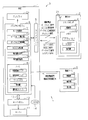
- the block diagram which shows schematic structure of an electronic key registration system The figure which shows the initial manufacture of an electronic key registration system. The figure which shows the initial registration of an electronic key registration system.
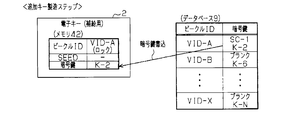
- the sequence chart which shows the registration operation in the factory of an electronic key registration system The figure which shows manufacture of the additional key of an electronic key registration system.
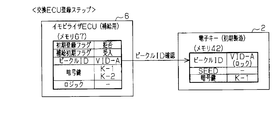
- the figure which shows manufacture of exchange ECU of an electronic key registration system The figure which shows registration of exchange ECU of an electronic key registration system.
- the vehicle 1 is provided with an immobilizer system 3 that performs ID collation using the electronic key 2 via, for example, short-range wireless communication (wireless communication with a communication distance of about several centimeters).
- the electronic key 2 is provided with an ID tag, so-called transponder 4.
- the transponder 4 is activated by the driving radio wave transmitted from the coil antenna 5 of the vehicle 1. And ID collation is performed based on the ID code signal transmitted from the transponder 4.
- the vehicle 1 is an example of a communication target.
- the immobilizer system 3 is an example of an electronic key system.
- the vehicle 1 is provided with an immobilizer ECU 6 that controls the immobilizer system 3.
- the immobilizer ECU 6 is connected to an engine ECU 12 that controls the operation of the engine 11 via an in-vehicle LAN 13.
- the immobilizer ECU 6 includes a memory 67 that stores an ID code of the electronic key 2 corresponding to the vehicle 1.
- the immobilizer ECU 6 is connected to a coil antenna 5 that can transmit and receive radio waves in, for example, an LF (Low Frequency) band and an HF (High Frequency) band.
- the coil antenna 5 is a magnetic field antenna that transmits radio waves using a magnetic field component, and is provided in a key cylinder.
- the immobilizer ECU 6 is an example of a control device.
- the transponder 4 includes a control unit 41 that controls the communication operation of the transponder 4 and a memory 42 that stores an ID code (transponder code) unique to the electronic key 2. Similar to the coil antenna 5, the transponder 4 is connected to a transmission / reception antenna 21 capable of transmitting and receiving LF band and HF band radio waves.
- the electronic key 2 is inserted into the key cylinder to perform a turning operation.
- the immobilizer ECU 6 detects that the electronic key 2 is inserted into the key cylinder, the immobilizer ECU 6 intermittently transmits drive radio waves from the coil antenna 5.
- the transponder 4 receives the driving radio wave transmitted from the coil antenna 5 by the transmission / reception antenna 21 and is activated by this driving radio wave.
- the transponder 4 transmits an ID code signal including the ID code stored in the memory 42 from the transmission / reception antenna 21.
- the immobilizer ECU 6 receives the ID code signal transmitted from the transponder 4 by the coil antenna 5 and executes ID verification (immobilizer verification) using the ID code included in the ID code signal.
- ID verification immobilizer verification
- the immobilizer ECU 6 confirms the establishment of the ID collation
- the immobilizer ECU 6 holds a flag indicating the establishment of the ID collation in the memory 67.
- an ignition switch (IGSW) 14 for detecting the rotation position of the electronic key 2 is provided.
- the engine ECU 12 checks whether the immobilizer ECU 6 holds a flag indicating that ID verification is established.
- the engine ECU 12 confirms that ID verification is established, the engine ECU 12 starts ignition control and fuel injection control for the engine 11 and starts the engine 11.
- challenge response authentication is also performed in addition to the code verification for confirming the ID code of the electronic key 2.
- the vehicle 1 generates a challenge code as a random number code, for example, and transmits this challenge code to the electronic key 2.
- the electronic key 2 calculates a response code based on the challenge code and returns this response code to the vehicle 1.
- the vehicle 1 also calculates a response code based on the challenge code. Then, the vehicle 1 determines whether or not the response code calculated by the vehicle 1 matches the response code received from the electronic key 2.
- a common key encryption method using a common encryption key is adopted for the authentication between the immobilizer ECU 6 (vehicle 1) and the transponder 4 (electronic key 2), a common key encryption method using a common encryption key is adopted.
- the transponder 4 and the immobilizer ECU 6 calculate a response code from the challenge code using a common encryption key.
- the memory 42 of the transponder 4 is unique to the vehicle ID (VID), which is identification information unique to the vehicle 1, the encryption key K used for authentication of the electronic key 2, and the electronic key 2 used when generating the encryption key K.
- VID vehicle ID
- SC SEED code
- the memory 67 of the immobilizer ECU 6 holds an initial registration flag and a replenishment initial flag.
- the initial registration flag indicates whether or not initial registration of the electronic key 2 to the immobilizer ECU 6 is permitted.
- the replenishment initial flag indicates whether or not initial registration of the electronic key 2 to the immobilizer ECU 6 replenished as a replacement product is permitted.
- the memory 67 of the immobilizer ECU 6 also includes a vehicle ID (VID) that is identification information unique to the vehicle 1, an encryption key K used for authentication of the electronic key 2, and an encryption key generation used when generating the encryption key K. Saving logic and.
- the immobilizer system 3 includes an electronic key registration system 7 for registering the electronic key 2 in the immobilizer ECU 6.
- the electronic key registration system 7 newly registers the electronic key 2 in the immobilizer ECU 6 or registers the electronic key 2 in the replaced immobilizer ECU 6.
- the electronic key registration system 7 includes a database 9 that stores one or more encryption keys in association with one vehicle ID.
- the encryption key or SEED code is read from the database 9 and the encryption key is stored in the immobilizer ECU 6 and the electronic key 2.
- the database 9 stores an encryption key (K-2) corresponding to a vehicle ID (VID-A) unique to the vehicle 1 (see FIG. 2).
- the electronic key 2 is registered in the immobilizer ECU 6 by storing the encryption key K used for authentication of the electronic key 2 in the immobilizer ECU 6.
- the immobilizer ECU 6 acquires the SEED code from the electronic key 2 instead of the encryption key K itself, and generates the encryption key K.
- an ID code unique to the electronic key 2 together with the encryption key K is acquired from the electronic key 2 and stored in the immobilizer ECU 6.
- the electronic key registration system 7 includes a registration tool 8 that can be connected to the vehicle 1.
- the operation mode of the immobilizer ECU 6 is switched to the registration mode by the registration tool 8 connected to the vehicle 1.
- the registration tool 8 includes a control unit 81 that controls the registration tool 8, an operation unit 82 that detects a registration operation by a user, and a display unit 83 that displays registration contents.
- the registration tool 8 transmits an initial registration signal for changing the operation mode of the immobilizer ECU 6 to the initial registration mode to the vehicle 1.
- the registration tool 8 transmits a replenishment initial registration signal for changing the operation mode of the immobilizer ECU 6 to the replenishment initial registration mode. Send to.
- the immobilizer ECU 6 includes a mode switching unit 61 that switches the operation mode.
- the mode switching unit 61 receives an initial registration signal from the registration tool 8
- the mode switching unit 61 switches the operation mode to the initial registration mode.
- the mode switching unit 61 receives the replenishment initial registration signal from the registration tool 8
- the mode switching unit 61 switches the operation mode to the replenishment initial registration mode.
- the immobilizer ECU 6 includes a vehicle ID confirmation unit 63 that confirms whether or not the vehicle ID stored in the electronic key 2 is correct.
- the vehicle ID confirmation unit 63 transmits a vehicle ID confirmation signal from the coil antenna 5 to the electronic key 2. Then, the vehicle ID confirmation unit 63 confirms whether or not the vehicle ID included in the vehicle ID signal transmitted from the electronic key 2 is the same as the vehicle ID stored in the memory 67.
- the immobilizer ECU 6 includes a SEED reading unit 64 that reads SEED from the electronic key 2 in order to generate the encryption key K stored in the electronic key 2.
- the SEED reading unit 64 transmits a SEED request signal for requesting a SEED code from the coil antenna 5 when the operation mode is switched to the initial registration mode or the replenishment initial registration mode, and from the SEED signal transmitted from the electronic key 2. Remove the SEED code.
- the immobilizer ECU 6 includes an encryption key generation unit 65 that generates an encryption key K.
- the encryption key generation unit 65 generates the encryption key K by the key generation logic f that uses the SEED code acquired by the SEED reading unit 64 in the initial registration mode.
- the immobilizer ECU 6 includes an encryption key registration unit 66 that registers the encryption key K and changes the flag.
- the encryption key registration unit 66 stores the encryption key K generated by the encryption key generation unit 65 in the memory 67 to complete registration of the encryption key K in the immobilizer ECU 6.
- the encryption key registration unit 66 detects the initial registration rejection operation after storing the encryption key K in the initial registration mode, the encryption key registration unit 66 disables the key generation logic f and rejects subsequent initial registration.
- the initial registration refusal operation is, for example, an operation in which the ignition switch 14 is turned on and off 20 times.
- the encryption key registration unit 66 disables the key generation logic f and rejects subsequent resupply initial registration.
- the electronic key 2 acquires the vehicle ID of the vehicle 1 from the vehicle 1 in advance. For example, when a specific operation for requesting a vehicle ID is performed on the vehicle 1, the vehicle ID is displayed on the display 15. When the electronic key 2 is additionally registered, the vehicle ID may be displayed on the display 15 when the existing electronic key 2 is inserted into the key cylinder and immobilizer collation is established.
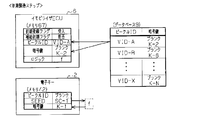
- the key generation logic f is stored in the memory 67 of the immobilizer ECU 6. Further, the memory 67 stores the vehicle ID (VID-A) of the vehicle 1 and the encryption key (K-2) of the electronic key 2 for additional registration from the database 9. Further, in the memory 67, the initial registration flag is set to an acceptance state permitting the registration of the electronic key 2, and the replenishment initial flag is set to a rejection state rejecting the registration of the electronic key 2.
- the memory 42 of the electronic key 2 for initial registration is stored in the SEED code (SC-1) and the encryption key (SC-1) generated by the key generation logic f using the SEED code (SC-1). K-1) is stored.
- Initial registration of the electronic key 2 to the immobilizer ECU 6 is performed by connecting the registration tool 8 to the vehicle 1 in the initial registration step.
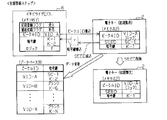
- the immobilizer ECU 6 writes a vehicle ID (VID-A) in the electronic key 2. Further, the immobilizer ECU 6 reads the SEED code (SC-1) from the electronic key 2 and generates the encryption key (K-1) by the key generation logic f using the SEED code (SC-1). (K-1) is stored in the memory 67. Then, the immobilizer ECU 6 deletes the SEED code stored in the memory 42 of the electronic key 2 and uses the SEED code (SC-) as encryption key information relating to the encryption key (K-1) corresponding to the vehicle ID (ID-A). 1) is stored in the database 9.
- the immobilizer ECU 6 deletes the SEED code stored in the memory 42 of the electronic key 2 and uses the SEED code (SC-) as encryption key information relating to the encryption key (K-1) corresponding to the vehicle ID (ID-A).
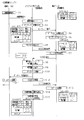
- the registration tool 8 transmits an initial registration signal to the immobilizer ECU 6 as an initial registration command (step S1).
- the immobilizer ECU 6 switches the operation mode to the initial registration mode (step S2).
- the mode switching unit 61 sets the initial registration mode in response to the initial registration signal.
- the immobilizer ECU 6 writes the vehicle ID stored in the memory 67 to the electronic key 2 (step S3).
- the vehicle ID writing unit 62 transmits a vehicle ID signal including the vehicle ID (VID-A) stored in the memory 67 from the coil antenna 5 to the electronic key 2.
- the electronic key 2 When receiving the vehicle ID signal, the electronic key 2 writes the vehicle ID into the memory 42 (step S4).
- the transponder 4 stores the vehicle ID (VID-A) in the memory 42. Thereafter, the electronic key 2 locks the writing of the vehicle ID (step S5). That is, the transponder 4 prohibits overwriting of the vehicle ID in the memory 42.
- the immobilizer ECU 6 reads the SEED code from the electronic key 2 following the writing of the vehicle ID (step S6).
- the SEED reading unit 64 transmits a SEED request signal for requesting a SEED code from the coil antenna 5.
- the electronic key 2 When receiving the SEED request signal, the electronic key 2 transmits a SEED signal (step S7).
- the transponder 4 transmits a SEED signal including the SEED code (SC-1) stored in the memory 42.
- the immobilizer ECU 6 calculates the encryption key (K-1) by the key generation logic f (step S8).
- the SEED reading unit 64 acquires the SEED code (SC-1) from the SEED signal.
- the encryption key generation unit 65 generates the encryption key (K-1) by the key generation logic f using the SEED code (SC-1). Therefore, the immobilizer ECU 6 does not directly acquire the encryption key (K-1) from the electronic key 2, but generates the encryption key (K-1) by acquiring the SEED code (SC-1).
- the immobilizer ECU 6 stores the encryption key (K-1) in the memory 67 (step S9).
- the encryption key registration unit 66 stores the encryption key (K-1) generated by the encryption key generation unit 65 in the memory 67, thereby registering the encryption key (K-1) in the immobilizer ECU 6.
- the immobilizer ECU 6 performs immobilizer verification of the electronic key 2 using the registered encryption key (K-1).
- the immobilizer ECU 6 updates the information in the database 9 (step S10).
- the immobilizer ECU 6 transmits a database update signal to the registration tool 8.
- the database update signal includes the SEED code (SC-1) used to generate the encryption key (K-1) registered in the immobilizer ECU 6.
- the registration tool 8 that has received the database update signal updates the information in the database 9 via a network (not shown) (step S11).
- the database 9 stores the SEED code (SC-1) as information on the encryption key (K-1) corresponding to the vehicle ID (VID-A) based on the database update signal.
- the immobilizer ECU 6 transmits a SEED deletion signal to the electronic key 2 (step S13).
- the electronic key 2 deletes the SEED code (SC-1) from the memory 42 in response to the SEED deletion signal.
- the immobilizer ECU 6 detects an initial registration rejection operation (step S14)
- the immobilizer ECU 6 disables the key generation logic f and rejects subsequent initial registration (step S15).
- the encryption key registration unit 66 determines that an initial registration rejection operation has been performed. Thereby, the initial registration of the electronic key 2 to the immobilizer ECU 6 cannot be performed.
- the additional registration of the electronic key 2 will be described.
- the vehicle ID (VID-A) of the vehicle 1 is written in the memory 42 of the electronic key 2 in accordance with the purchase order (ordering information).
- an additional registration encryption key (K-2) corresponding to the vehicle ID (V-ID) is acquired from the database 9 and stored in the memory 42. Therefore, the electronic key 2 in which the vehicle ID (ID-A) and the encryption key (K-2) are stored can be used for immobilizer verification by the immobilizer ECU 6 without performing additional registration of the electronic key in the immobilizer ECU 6. Is possible.
- the memory 67 of the immobilizer ECU 6 stores the vehicle ID (VID-A) of the vehicle 1 in accordance with the purchase order. ) Is written.
- the encryption key (K-2) corresponding to the vehicle ID (V-ID) is acquired from the database 9 and stored in the memory 67.
- the SEED code (SC-1) for generating the encryption key (K-1) stored in the database 9 at the time of initial registration is acquired from the database 9 as encryption key information corresponding to the vehicle ID (VID-A). .
- the encryption key (K-1) is generated by the key generation logic f using this SEED code (SC-1) and stored in the memory 67 of the immobilizer ECU 6.
- the initial registration flag is set to a rejection state in which registration of the electronic key 2 is rejected, and the replenishment initial flag is set to an acceptance state in which registration of the electronic key 2 is permitted.
- the memory 42 of the electronic key 2 that is initially manufactured and registered in the vehicle 1 is generated by the key generation logic f that uses the vehicle ID (VID-A) of the vehicle 1 and the SEED code (SC-1). And an encryption key (K-1).
- the registration tool 8 is connected to the vehicle 1 to perform a registration operation.
- the immobilizer ECU 6 determines that the vehicle ID stored in the electronic key 2 is the vehicle ID of the vehicle 1 in which the immobilizer ECU 6 is mounted ( VID-A).
- the registration tool 8 when the user selects the replenishment initial registration by operating the operation unit 82, the registration tool 8 outputs a replenishment initial registration signal as the replenishment initial registration command. (Step S41).
- the immobilizer ECU 6 receives the replenishment initial registration signal, the immobilizer ECU 6 switches the operation mode to the replenishment initial registration mode (step S42).
- the mode switching unit 61 switches to the replenishment initial registration mode in which the electronic key 2 is registered for the first time in the replaced immobilizer ECU 6.
- the immobilizer ECU 6 confirms the vehicle ID stored in the electronic key 2 (step S43).
- the vehicle ID confirmation unit 63 sends a vehicle ID confirmation signal from the coil antenna 5 in order to confirm whether the vehicle ID stored in the memory 67 is the same as the vehicle ID stored in the electronic key 2. Send to the electronic key 2.
- the electronic key 2 When receiving the vehicle ID confirmation signal, the electronic key 2 transmits a vehicle ID signal (step S44).
- the transponder 4 transmits a vehicle ID signal including the vehicle ID (VID-A) stored in the memory 42.
- the immobilizer ECU 6 (vehicle ID confirmation unit 63) confirms whether or not the vehicle ID received from the electronic key 2 matches the vehicle ID stored in the memory 67. When the two vehicle IDs match (step S45), the registration of the electronic key 2 to the immobilizer ECU 6 is completed (step S46).
- the SEED code (SC-1) used to generate the encryption key (K-1) is stored in the database 9, and the SEED code (SC-1) stored in the electronic key 2 is stored. -1) is deleted. For this reason, since the SEED code (SC-1) does not exist in the electronic key 2, the initially registered electronic key 2 cannot be registered in another vehicle. Therefore, security can be improved. Further, when the immobilizer ECU 6 is exchanged in the same vehicle, the SEED code (SC-1) is extracted from the database 9, and the encryption key (K ⁇ ) is obtained by the key generation logic f using the SEED code (SC-1). 1) is generated and stored in the memory 67.
- the vehicle ID (VID-A) unique to the vehicle 1 is stored in the immobilizer ECU 6, but the encryption key (K-1) corresponding to the electronic key 2 for initial registration is stored. It has not been.
- the electronic key 2 for initial registration stores the SEED code (SC-1) and the encryption key (K-1), but does not store the vehicle ID (VID-A). Therefore, since the data stored in the electronic key 2 and the immobilizer ECU 6 are not the same, they need not be shipped together.
- the vehicle ID (VID-A) stored in the immobilizer ECU 6 is stored in the electronic key 2.
- the SEED code (SC-1) is acquired from the electronic key 2, and the encryption key (K-1) is generated by the key generation logic f using the SEED code (SC-1) and stored in the immobilizer ECU 6. . Therefore, the electronic key 2 corresponds only to the immobilizer ECU 6 in which the vehicle ID (VID-A) and the encryption key (K-1) are registered, and does not correspond to the immobilizer ECUs of other vehicles. Further, after the initial registration, the SEED code (SC-1) is stored in the database 9 as the encryption key information related to the encryption key (K-1) stored in the immobilizer ECU 6. Therefore, when the replacement immobilizer ECU 6 is manufactured, the encryption key (K-1) is generated from the SEED code (SC-1) stored in the database 9.
- the electronic key 2 having the encryption key (K-1) can be registered in the exchanged immobilizer ECU 6. According to this method, registration of the electronic key 2 for initial registration in the immobilizer ECU of another vehicle can be excluded. Therefore, it is possible to easily register the electronic key 2 without having to ship the electronic key 2 and the immobilizer ECU 6 together while maintaining security.
- the initially registered SEED code (SC-1) of the electronic key 2 is deleted. For this reason, even if the electronic key 2 initially registered is registered in the immobilizer ECU of another vehicle, the encryption key K cannot be generated, and the electronic key 2 initially registered in the immobilizer ECU of the other vehicle cannot be generated. Registration can be eliminated.
- the encryption key (K-2) of the electronic key 2 for additional registration is stored in the immobilizer ECU 6 in advance. Further, in the additional key manufacturing step, the vehicle ID (VID-A) is stored in the electronic key 2 for additional registration, and the encryption key (K-2) stored in the database 9 is stored in the electronic key 2. . Therefore, when the electronic key 2 is additionally registered, the immobilizer ECU 6 can authenticate the electronic key 2 without directly acquiring the encryption key (K-2) from the electronic key 2. Therefore, registration of the electronic key 2 for additional registration to the immobilizer ECU of another vehicle can be eliminated, and additional registration can be easily performed while maintaining security.
- the encryption keys (K-1, K-2) acquired based on the information in the database 9 are stored in the exchanged immobilizer ECU 6. Thereafter, in the replacement ECU registration step, the replaced immobilizer ECU 6 confirms that the vehicle ID (VID-A) is written in the electronic key 2. For this reason, it is not necessary to exchange the encryption keys (K-1, K-2) between the immobilizer ECU 6 and the electronic key 2, and the immobilizer ECU 6 of the electronic key 2 in which the vehicle ID (VID-A) is not stored. Registration can be eliminated.
- the key generation logic f is prohibited. Accordingly, it is possible to prevent another electronic key that uses the same encryption key as the electronic key 2 that is initially registered from being newly registered in the immobilizer ECU 6.
- the vehicle ID (VID-A) is stored in the replacement immobilizer ECU 6 or the electronic key 2 for additional registration at the time of shipment. For this reason, it is possible to prevent the electronic key 2 from being registered in the immobilizer ECU 6 different from the ordering or the electronic key 2 different from the ordering from being registered in the immobilizer ECU 6 when they are on the market.
- the key generation logic f is prohibited from being used after the initial registration, but may be usable after the initial registration.
- the SEED code stored in the memory 42 of the electronic key 2 is deleted after the initial registration. However, if there is no possibility of generating an encryption key by obtaining the SEED code, the SEED code may be deleted. Good.
- the encryption key may be registered after performing challenge response authentication in the initial registration step and the key addition registration step.
- the SEED code (SC-1) is stored in the database 9 as the encryption key information related to the encryption key (K-1) registered in the immobilizer ECU 6, but the encryption key (K-1) May be stored in the database 9 as encryption key information.
- the encryption key K is stored from the database 9 to the replacement immobilizer ECU 6, the calculation by the key generation logic f can be omitted.
- the vehicle ID when the vehicle ID is acquired, the vehicle ID is displayed on the display 15 of the vehicle 1.
- the vehicle address is specified by the user. An ID may be transmitted. In this way, only the user who receives the mail can check the vehicle ID, and the confidentiality is excellent.
- the ignition switch 14 is operated as the initial registration rejection operation.
- the operation is not limited to the operation of the ignition switch 14, and other operations may be set.
- the present invention is applied to the type of immobilizer system 3 in which the electronic key 2 is inserted into the key cylinder.
- the electronic key enters the communication area created by the vehicle 1, communication is possible.
- the present invention may be applied to an electronic key system.
- the present invention is adopted in the electronic key system of the vehicle 1, but the present invention may be adopted in an electronic key system of a building such as a house.
Landscapes
- Engineering & Computer Science (AREA)
- Computer Security & Cryptography (AREA)
- Computer Networks & Wireless Communication (AREA)
- Signal Processing (AREA)
- Mechanical Engineering (AREA)
- Lock And Its Accessories (AREA)
Description
この発明は、電子キーを通信対象の制御装置に登録する電子キー登録方法及び電子キー登録システムに関する。
従来、車両のユーザにより所持される電子キーと車両との間で無線通信を行い、電子キーの認証が成立することに基づいて、ドアの施解錠やエンジンの始動停止等を行う電子キーシステムが知られている。このような電子キーシステムでは、セキュリティ性を維持するために、電子キーと車両との間の通信を保護する必要がある。このため、電子キーシステムでは、電子キーと車両との間で暗号通信が行われている(例えば、特許文献1参照)。暗号通信では、通信内容が暗号化されるので、秘匿性に優れる。
上記暗号通信の暗号方式としては、共通鍵暗号方式が採用される。共通鍵暗号方式では、暗号化と復号化に同一の暗号鍵を使用する。このため、電子キーと車両との両方に同一の暗号鍵を持たせておく必要がある。電子キー及び車両への暗号鍵の登録は、電子キーを車両の制御装置に登録する過程で行われる。制御装置は、電子キーから無線送信された識別情報と自身に記憶された識別情報との照合によって電子キーとの認証を行う。
ところで、電子キーを制御装置に登録する電子キー登録システムにおいては、制御装置と電子キーとの間で紐付けがなければ、どの電子キーでも制御装置に登録することが可能となる。このため、正規の電子キー以外の電子キーが制御装置に登録されるおそれがある。そこで、本願発明者は、電子キーが登録される車両(通信対象)に固有の識別情報であるビークルIDを制御装置及び電子キーに予め保存した状態で制御装置及び電子キーを出荷することを考えた。しかしながら、ビークルIDが改ざんされた場合には、非正規の電子キーが正規の電子キーであると制御装置が判定してしまうこととなる。また、制御装置と電子キーとをまとめて出荷することも考えられるが煩雑であり、また、電子キーを後から追加登録できなくなってしまう。なお、車両に使用される電子キーシステムに限らず、住宅等の建物に使用される電子キーシステムにおいても同様の課題がある。このため、セキュリティ性を維持しながら、容易に電子キーを登録できる電子キー登録システムが望まれていた。
この発明は、こうした実情に鑑みてなされたものであり、その目的は、セキュリティ性を維持しながら、容易に電子キーを登録できる電子キー登録方法及び電子キー登録システムを提供することにある。
第1の側面は、通信対象を制御可能な第1の電子キーを前記通信対象の制御装置に登録する電子キー登録方法である。当該方法は、前記通信対象に固有の識別情報を前記制御装置に保存し、前記第1の電子キーに固有の暗号鍵生成コードと前記第1の電子キーの認証に用いられる暗号鍵とを前記第1の電子キーに保存する初期製造ステップと、前記制御装置に保存された前記識別情報を前記第1の電子キーに書き込み、前記第1の電子キーから前記暗号鍵生成コードを取得して、前記暗号鍵生成コードを使用する暗号鍵生成ロジックによって前記暗号鍵を生成するとともに前記暗号鍵を前記制御装置に保存し、前記暗号鍵に関する暗号鍵情報を前記識別情報に関連付けてデータベースに保存する初期登録ステップとを備える。
第1の側面によれば、初期製造ステップにおいて、制御装置には、通信対象に固有の識別情報が保存されるが、暗号鍵は保存されない。また、初期登録用の第1の電子キーには、暗号鍵生成コードと暗号鍵とが保存されるが、識別情報は保存されない。すなわち、第1の電子キーと制御装置とに保存されるデータが同じではないので、それらをまとめて出荷しなくてもよい。そして、初期登録ステップにおいて、制御装置に保存された識別情報が第1の電子キーに保存される。また、第1の電子キーから暗号鍵生成コードが取得され、この暗号鍵生成コードを使用する暗号鍵生成ロジックによって暗号鍵が生成され、暗号鍵が制御装置に保存される。このため、電子キーは、識別情報と暗号鍵とが登録された制御装置にのみ対応し、他の通信対象の制御装置に対応しない。さらに、初期登録後に、制御装置に登録された暗号鍵に関する暗号鍵情報がデータベースに保存される。このため、交換された制御装置を製造する際には、データベースから暗号鍵情報を取り出して暗号鍵を制御装置に保存することで、暗号鍵を容易に登録することが可能である。よって、他の通信対象の制御装置への初期登録用の電子キーの登録を排除可能であって、セキュリティ性を維持しながら、電子キーと制御装置とをまとめて出荷する必要がなく、容易に電子キーを登録可能である。
第2の側面では、前記電子キー登録方法において、前記初期登録ステップは、前記第1の電子キーの前記暗号鍵が前記制御装置に保存された後、前記第1の電子キーに保存された前記暗号鍵生成コードを削除することを含む。
第2の側面によれば、初期登録ステップにおいて、初期登録後に第1の電子キーから暗号鍵生成コードが削除される。このため、初期登録された電子キーを他の通信対象の制御装置に登録しようとしても、暗号鍵を生成することができず、他の通信対象の制御装置への初期登録された電子キーの登録を排除可能である。
第3の側面では、前記電子キー登録方法において、前記初期製造ステップは、追加登録用の第2の電子キーの認証に用いる暗号鍵を前記制御装置に保存することを含み、当該電子キー登録方法は更に、前記識別情報と、前記識別情報に関連付けられ、前記データベースに保存された前記第2の電子キーの前記暗号鍵とを前記第2の電子キーに保存する追加キー製造ステップを備える。
第3の側面によれば、制御装置は、追加登録用の第2の電子キーから暗号鍵を直接取得することなく、第2の電子キーの認証を行うことが可能となる。よって、他の通信対象の制御装置への第2の電子キーの登録を排除可能であって、セキュリティ性を維持しながら、容易に第2の電子キーを追加登録可能である。
第4の側面では、前記電子キー登録方法は、前記データベースから前記暗号鍵情報を読み出し、前記第1の電子キーの前記暗号鍵と、前記識別情報とを、交換された制御装置に保存する交換制御装置製造ステップと、前記制御装置に保存された前記識別情報が前記第1の電子キーに登録されていることを確認する交換制御装置登録ステップとを備える。
第4の側面によれば、制御装置と電子キーとの間で暗号鍵をやりとりする必要がなく、識別情報が保存されていない電子キーの制御装置への登録を排除可能である。
第5の側面では、前記電子キー登録方法は更に、前記鍵生成ロジックを使用後に使用禁止に設定することを備える。
第5の側面によれば、初期登録用の第1の電子キーを登録した後に暗号鍵生成ロジックが使用禁止になるので、同じ暗号鍵を使用する別の電子キーが制御装置に新たに登録されることを防ぐことが可能となる。
第6の側面では、前記電子キー登録方法において、前記通信対象に予め設定された前記識別情報を確認することにより生成された発注情報に基づいて、前記通信対象毎に異なる識別情報が、前記交換される制御装置及び前記第2の電子キーにそれらの出荷前に保存される。
第6の側面によれば、出荷時に、通信対象毎に異なる識別情報が、交換用の制御装置や追加登録用の第2の電子キーに保存される。このため、制御装置や電子キーが市場に出回った段階で、発注と異なる制御装置に電子キーを登録したり、発注と異なる電子キーを制御装置に登録したりすることを防ぐことが可能となる。
第7の側面は、電子キー登録システムである。当該システムは、通信対象に設けられ、前記通信対象に固有の識別情報を記憶する制御装置と、前記通信対象を制御可能であり、暗号鍵生成コードと暗号鍵とを記憶する電子キーとを備え、前記制御装置は、前記識別情報を前記電子キーに書き込み、前記電子キーから前記暗号鍵生成コードを取得して、前記暗号鍵生成コードを使用する暗号鍵生成ロジックによって前記暗号鍵を演算し、前記暗号鍵に関する暗号鍵情報を前記識別情報に関連付けてデータベースに保存する。
本発明によれば、セキュリティ性を維持しながら、容易に電子キーを登録できる。
以下、電子キー登録システムを車両に具体化した一実施形態について図1~図8を参照して説明する。
図1に示されるように、車両1には、例えば近距離無線通信(通信距離が約数cmの無線通信)を介して電子キー2によるID照合を実行するイモビライザシステム3が設けられている。電子キー2には、IDタグ、いわゆるトランスポンダ4が設けられている。イモビライザシステム3では、車両1のコイルアンテナ5から送信される駆動電波によりトランスポンダ4が起動する。そして、このトランスポンダ4から送信されるIDコード信号を基にID照合が行われる。なお、車両1は通信対象の一例である。また、イモビライザシステム3は電子キーシステムの一例である。
車両1には、イモビライザシステム3を制御するイモビライザECU6が設けられている。イモビライザECU6は、エンジン11の動作を制御するエンジンECU12に車内LAN13を介して接続されている。イモビライザECU6は、車両1に対応する電子キー2のIDコードを記憶するメモリ67を含む。さらに、イモビライザECU6は、例えばLF(Low Frequency)帯やHF(High Frequency)帯の電波を送受信可能なコイルアンテナ5に接続されている。コイルアンテナ5は、磁界成分により電波を送信する磁界アンテナであり、キーシリンダに設けられている。なお、イモビライザECU6は制御装置の一例である。
トランスポンダ4は、トランスポンダ4の通信動作を制御する制御部41と、電子キー2に固有のIDコード(トランスポンダコード)を記憶するメモリ42とを含む。トランスポンダ4は、コイルアンテナ5と同様にLF帯やHF帯の電波を送受信可能な送受信アンテナ21に接続されている。
本実施形態の車両1では、乗車したユーザがエンジン11を始動する際には、電子キー2をキーシリンダに挿入して回動操作を行う。イモビライザECU6は、電子キー2がキーシリンダに挿入されたことを検出すると、コイルアンテナ5から駆動電波を断続的に送信する。このとき、トランスポンダ4は、コイルアンテナ5から送信される駆動電波を送受信アンテナ21で受信し、この駆動電波によって起動する。トランスポンダ4は、起動状態に切り換わると、メモリ42に記憶されたIDコードを含むIDコード信号を送受信アンテナ21から送信する。イモビライザECU6は、トランスポンダ4から送信されたIDコード信号をコイルアンテナ5で受信し、そのIDコード信号に含まれるIDコードによりID照合(イモビライザ照合)を実行する。イモビライザECU6は、ID照合の成立を確認すると、ID照合成立を示すフラグをメモリ67に保持する。
キーシリンダ内には、電子キー2の回動位置を検出するイグニッションスイッチ(IGSW)14が設けられている。そして、例えば、イグニッションスイッチ14がエンジンスタート位置まで操作されると、エンジンECU12は、ID照合の成立を示すフラグがイモビライザECU6に保持されているかを確認する。エンジンECU12は、ID照合成立を確認すると、エンジン11への点火制御及び燃料噴射制御を開始し、エンジン11を始動させる。
イモビライザ照合の認証では、電子キー2のIDコードを確認するコード照合の他に、チャレンジレスポンス認証も実行されている。チャレンジレスポンス認証では、車両1が例えば乱数コードとしてチャレンジコードを生成し、このチャレンジコードを電子キー2に送信する。電子キー2は、チャレンジコードに基づいてレスポンスコードを演算し、このレスポンスコードを車両1に返信する。また、車両1も、チャレンジコードに基づいてレスポンスコードを演算する。そして、車両1は、車両1で演算されたレスポンスコードが電子キー2から受信したレスポンスコードと一致するか否かを判断する。イモビライザECU6(車両1)とトランスポンダ4(電子キー2)との認証には、共通の暗号鍵を用いる共通鍵暗号方式が採用されている。トランスポンダ4及びイモビライザECU6は、共通の暗号鍵を使用してチャレンジコードからレスポンスコードを演算する。
トランスポンダ4のメモリ42は、車両1に固有の識別情報であるビークルID(VID)と、電子キー2の認証に用いる暗号鍵Kと、暗号鍵Kを生成する際に使用する電子キー2に固有の暗号鍵生成コードとしてのSEEDコード(SC)とを記憶する。
イモビライザECU6のメモリ67は、初期登録フラグと、補給初期フラグとを保持している。初期登録フラグは、イモビライザECU6への電子キー2の初期登録を許可するか否かを示す。補給初期フラグは、交換品として補給されたイモビライザECU6への電子キー2の初期登録を許可するか否かを示す。また、イモビライザECU6のメモリ67は、車両1に固有の識別情報であるビークルID(VID)と、電子キー2の認証に用いる暗号鍵Kと、暗号鍵Kを生成する際に使用する暗号鍵生成ロジックとを保存している。
また、イモビライザシステム3は、電子キー2をイモビライザECU6に登録する電子キー登録システム7を備えている。電子キー登録システム7は、新規に電子キー2をイモビライザECU6に登録したり、交換されたイモビライザECU6に電子キー2を登録したりする。電子キー登録システム7は、1つのビークルIDに対して1つ又は複数の暗号鍵を関連付けて記憶するデータベース9を含む。このデータベース9から暗号鍵又はSEEDコードが読み出されて、イモビライザECU6と電子キー2に暗号鍵が保存される。例えば、データベース9には、車両1に固有のビークルID(VID-A)に対応する暗号鍵(K-2)が保存されている(図2参照)。
電子キー登録システム7では、電子キー2の認証に用いる暗号鍵KをイモビライザECU6に保存することで、電子キー2をイモビライザECU6に登録する。このとき、イモビライザECU6は、暗号鍵Kそのものではなく、SEEDコードを電子キー2から取得して暗号鍵Kを生成する。また、暗号鍵Kとともに電子キー2に固有のIDコードが電子キー2から取得され、イモビライザECU6に保存される。
電子キー登録システム7は、車両1に接続可能な登録ツール8を備えている。電子キー2をイモビライザECU6に登録する際には、車両1に接続された登録ツール8によってイモビライザECU6の動作モードが登録モードに切り替えられる。登録ツール8は、登録ツール8を制御する制御部81と、ユーザによる登録操作を検出する操作部82と、登録内容を表示する表示部83とを含む。登録ツール8は、新規に電子キー2を登録する初期登録モードが設定されると、イモビライザECU6の動作モードを初期登録モードに変更する初期登録信号を車両1に送信する。また、登録ツール8は、交換されたイモビライザECU6に電子キー2を初期登録する補給初期登録モードが設定されると、イモビライザECU6の動作モードを補給初期登録モードに変更する補給初期登録信号を車両1に送信する。
イモビライザECU6は、動作モードを切り替えるモード切替部61を含む。モード切替部61は、登録ツール8から初期登録信号を受信すると、動作モードを初期登録モードに切り替える。モード切替部61は、登録ツール8から補給初期登録信号を受信すると、動作モードを補給初期登録モードに切り替える。
また、イモビライザECU6は、初期登録する電子キー2にビークルIDを書き込むビークルID書込部62を含む。ビークルID書込部62は、動作モードが初期登録モードに切り替えられると、メモリ67に記憶されたビークルIDを含むビークルID信号をコイルアンテナ5から電子キー2に送信する。
また、イモビライザECU6は、電子キー2に保存されたビークルIDが正しいか否かを確認するビークルID確認部63を含む。ビークルID確認部63は、動作モードが補給初期モードに切り替えられると、ビークルID確認信号をコイルアンテナ5から電子キー2に送信する。そして、ビークルID確認部63は、電子キー2から送信されたビークルID信号に含まれるビークルIDがメモリ67に保存されたビークルIDと同じであるか否かを確認する。
また、イモビライザECU6は、電子キー2に保存された暗号鍵Kを生成するために、SEEDを電子キー2から読み込むSEED読込部64を含む。SEED読込部64は、動作モードが初期登録モード又は補給初期登録モードに切り替えられた際に、SEEDコードを要求するSEED要求信号をコイルアンテナ5から送信し、電子キー2から送信されたSEED信号からSEEDコードを取り出す。
また、イモビライザECU6は、暗号鍵Kを生成する暗号鍵生成部65を含む。暗号鍵生成部65は、初期登録モードにおいて、SEED読込部64により取得されたSEEDコードを使用する鍵生成ロジックfによって暗号鍵Kを生成する。
また、イモビライザECU6は、暗号鍵Kを登録するとともに、フラグを変更する暗号鍵登録部66を含む。初期登録モードにおいて、暗号鍵登録部66は、暗号鍵生成部65により生成された暗号鍵Kをメモリ67に保存することでイモビライザECU6への暗号鍵Kの登録を完了する。暗号鍵登録部66は、初期登録モードで暗号鍵Kを保存した後に初期登録拒否操作を検出すると、鍵生成ロジックfを使用禁止にしてその後の初期登録を拒否する。なお、初期登録拒否操作は、例えばイグニッションスイッチ14のオンオフを20回繰り返す操作である。同様に、暗号鍵登録部66は、補給初期登録モードで暗号鍵Kを保存した後、鍵生成ロジックfを使用禁止にしてその後の補給初期登録を拒否する。
電子キー2は、車両1のビークルIDを車両1から事前に取得する。例えば、ビークルIDを要求する特定操作が車両1に行われると、ディスプレイ15にビークルIDが表示される。なお、電子キー2を追加登録する場合には、既存の電子キー2をキーシリンダに挿入し、イモビライザ照合が成立した際に、ビークルIDをディスプレイ15に表示してもよい。
次に、電子キー登録システム7によるイモビライザECU6への電子キー2の登録動作について図2~図8を参照して説明する。
まず、図2に示されるように、初期製造ステップにおいて、イモビライザECU6のメモリ67には、鍵生成ロジックfが保存される。さらに、メモリ67には、データベース9から車両1のビークルID(VID-A)と、追加登録用の電子キー2の暗号鍵(K-2)とが保存される。また、メモリ67において、初期登録フラグは電子キー2の登録を許可する受入状態に設定され、補給初期フラグは電子キー2の登録を拒否する拒否状態に設定される。また、初期製造ステップにおいて、初期登録用の電子キー2のメモリ42には、SEEDコード(SC-1)と、SEEDコード(SC-1)を使用する鍵生成ロジックfによって生成された暗号鍵(K-1)とが保存される。
次に、工場における電子キー2の登録について説明する。電子キー2のイモビライザECU6への初期登録は、初期登録ステップにおいて登録ツール8を車両1に接続して行う。
図3に示されるように、初期登録ステップでは、イモビライザECU6は、電子キー2にビークルID(VID-A)を書き込む。また、イモビライザECU6は、電子キー2からSEEDコード(SC-1)を読み込み、このSEEDコード(SC-1)を使用する鍵生成ロジックfによって暗号鍵(K-1)を生成し、この暗号鍵(K-1)をメモリ67に保存する。そして、イモビライザECU6は、電子キー2のメモリ42に保存されたSEEDコードを削除し、ビークルID(ID-A)に対応する暗号鍵(K-1)に関する暗号鍵情報として、SEEDコード(SC-1)をデータベース9に保存する。
詳しくは、図4に示されるように、ユーザが操作部82を操作して初期登録モードを選択すると、登録ツール8は、初期登録命令として初期登録信号をイモビライザECU6に送信する(ステップS1)。イモビライザECU6は、初期登録信号を受信すると、動作モードを初期登録モードに切り替える(ステップS2)。本実施形態では、モード切替部61が、初期登録信号に応答して初期登録モードを設定する。
初期登録モードにおいて、イモビライザECU6は、メモリ67に保存されたビークルIDを電子キー2に書き込む(ステップS3)。本実施形態では、ビークルID書込部62が、メモリ67に記憶されたビークルID(VID-A)を含むビークルID信号をコイルアンテナ5から電子キー2に送信する。
電子キー2は、ビークルID信号を受信すると、ビークルIDをメモリ42に書き込む(ステップS4)。本実施形態では、トランスポンダ4が、ビークルID(VID-A)をメモリ42に保存する。その後、電子キー2は、ビークルIDの書き込みをロックする(ステップS5)。すなわち、トランスポンダ4は、メモリ42のビークルIDの上書きを禁止する。
イモビライザECU6は、ビークルIDの書き込みに続いて、SEEDコードを電子キー2から読み込む(ステップS6)。本実施形態では、SEED読込部64が、SEEDコードを要求するSEED要求信号をコイルアンテナ5から送信する。
電子キー2は、SEED要求信号を受信すると、SEED信号を送信する(ステップS7)。本実施形態では、トランスポンダ4が、メモリ42に保存されたSEEDコード(SC-1)を含むSEED信号を送信する。
次いで、イモビライザECU6は、鍵生成ロジックfで暗号鍵(K-1)を算出する(ステップS8)。本実施形態では、SEED読込部64が、SEED信号からSEEDコード(SC-1)を取得する。続いて、暗号鍵生成部65が、SEEDコード(SC-1)を使用する鍵生成ロジックfによって暗号鍵(K-1)を生成する。よって、イモビライザECU6は、電子キー2から暗号鍵(K-1)を直接取得するのではなく、SEEDコード(SC-1)を取得することで暗号鍵(K-1)を生成する。
続いて、イモビライザECU6は、暗号鍵(K-1)をメモリ67に保存する(ステップS9)。本実施形態では、暗号鍵登録部66が、暗号鍵生成部65により生成された暗号鍵(K-1)をメモリ67に保存することで、イモビライザECU6への暗号鍵(K-1)の登録を完了する。イモビライザECU6は、この登録された暗号鍵(K-1)を使用して、電子キー2のイモビライザ照合を行う。
続いて、イモビライザECU6は、データベース9の情報を更新する(ステップS10)。例えば、イモビライザECU6は、データベース更新信号を登録ツール8に送信する。データベース更新信号は、イモビライザECU6に登録された暗号鍵(K-1)を生成するために使用されたSEEDコード(SC-1)を含む。データベース更新信号を受信した登録ツール8は、図示しないネットワークを介してデータベース9の情報を更新する(ステップS11)。
ここで、データベース9は、データベース更新信号に基づいて、ビークルID(VID-A)に対応する暗号鍵(K-1)に関する情報としてSEEDコード(SC-1)を保存する。
次いで、イモビライザECU6は、SEED削除信号を電子キー2に送信する(ステップS13)。電子キー2は、このSEED削除信号に応答して、メモリ42からSEEDコード(SC-1)を削除する。その後、イモビライザECU6は、初期登録拒否操作を検出する(ステップS14)と、鍵生成ロジックfを使用禁止にしてその後の初期登録を拒否する(ステップS15)。本実施形態では、イグニッションスイッチ14のオンオフが20回繰り返されると、暗号鍵登録部66は初期登録拒否操作が行われたと判断する。これにより、イモビライザECU6への電子キー2の初期登録ができなくなる。
次に、電子キー2の追加登録について説明する。図5に示されるように、追加キー製造ステップにおいて、電子キー2のメモリ42には、発注書(発注情報)に従って、車両1のビークルID(VID-A)が書き込まれる。また、このビークルID(V-ID)に対応する追加登録用の暗号鍵(K-2)が、データベース9から取得されてメモリ42に保存される。従って、ビークルID(ID-A)と暗号鍵(K-2)とが保存された電子キー2は、イモビライザECU6への電子キー追加登録をすることなく、イモビライザECU6によるイモビライザ照合に使用することが可能である。
次に、イモビライザECU6を交換した際における電子キー2の登録について説明する。図6に示されるように、交換されるイモビライザECU6を製造する交換制御装置製造ステップ(交換ECU製造ステップ)において、イモビライザECU6のメモリ67には、発注書に従って、車両1のビークルID(VID-A)が書き込まれる。また、このビークルID(V-ID)に対応する暗号鍵(K-2)がデータベース9から取得され、メモリ67に保存される。さらに、初期登録時にデータベース9に保存された暗号鍵(K-1)を生成するSEEDコード(SC-1)が、ビークルID(VID-A)に対応する暗号鍵情報としてデータベース9から取得される。そして、このSEEDコード(SC-1)を使用する鍵生成ロジックfによって暗号鍵(K-1)が生成され、イモビライザECU6のメモリ67に保存される。また、メモリ67において、初期登録フラグは、電子キー2の登録を拒否する拒否状態に設定され、補給初期フラグは電子キー2の登録を許可する受入状態に設定されている。一方、車両1に登録済みの初期製造された電子キー2のメモリ42には、車両1のビークルID(VID-A)と、SEEDコード(SC-1)を使用する鍵生成ロジックfによって生成された暗号鍵(K-1)とが保存されている。そして、登録ツール8を車両1に接続して、登録操作を行う。
図7に示されるように、交換制御装置登録ステップ(交換ECU登録ステップ)では、イモビライザECU6は、電子キー2に保存されたビークルIDが、そのイモビライザECU6を搭載している車両1のビークルID(VID-A)であるかを確認する。
詳しくは、図8に示されるように、交換ECU登録ステップにおいて、ユーザが操作部82を操作して補給初期登録を選択すると、登録ツール8は、補給初期登録命令として補給初期登録信号をイモビライザECU6に送信する(ステップS41)。イモビライザECU6は、補給初期登録信号を受信すると、動作モードを補給初期登録モードに切り替える(ステップS42)。本実施形態では、モード切替部61が、交換されたイモビライザECU6に初めて電子キー2を登録する補給初期登録モードに切り替える。
そして、イモビライザECU6は、電子キー2に保存されたビークルIDを確認する(ステップS43)。本実施形態では、ビークルID確認部63が、メモリ67に保存されたビークルIDと電子キー2に保存されたビークルIDとが同じであるかを確認するためにビークルID確認信号をコイルアンテナ5から電子キー2に送信する。
電子キー2は、ビークルID確認信号を受信すると、ビークルID信号を送信する(ステップS44)。本実施形態では、トランスポンダ4が、メモリ42に保存されたビークルID(VID-A)を含むビークルID信号を送信する。
イモビライザECU6(ビークルID確認部63)は、電子キー2から受信したビークルIDがメモリ67に保存されたビークルIDと一致するか否かを確認する。2つのビークルIDが一致する(ステップS45)と、イモビライザECU6への電子キー2の登録が完了する(ステップS46)。
以上のように、電子キー登録システム7では、イモビライザECU6は、イモビライザECU6に予め登録されたビークルID(VID-A)を電子キー2に書き込み、電子キー2からSEEDコード(SC-1)を取得する。そして、イモビライザECU6は、SEEDコード(SC-1)を使用する鍵生成ロジックfによって暗号鍵(K-1)を生成して、この暗号鍵(K-1)をイモビライザECU6に保存する。従って、初期登録前の電子キー2にはビークルID(VID-A)が保存されていない。また、初期登録前にはイモビライザECU6には暗号鍵(K-1)が保存されていない。従って、電子キー2とイモビライザECU6とをまとめて出荷しなくてもよい。また、初期登録後の電子キー2にはビークルID(VID-A)が保存されているので、他のイモビライザECU6に初期登録後の電子キー2を登録することはできない。
また、電子キー2の初期登録後、暗号鍵(K-1)を生成するために使用したSEEDコード(SC-1)がデータベース9に保存され、電子キー2に保存されていたSEEDコード(SC-1)が削除される。このため、SEEDコード(SC-1)が電子キー2に存在しないので、初期登録された電子キー2を他の車両に登録することはできない。従って、セキュリティ性を向上できる。また、同じ車両にてイモビライザECU6を交換する際には、データベース9からSEEDコード(SC-1)が取り出され、このSEEDコード(SC-1)を使用する鍵生成ロジックfによって暗号鍵(K-1)が生成され、メモリ67に保存される。このため、初期登録された電子キー2を、交換されたイモビライザECU6に容易に登録できる。さらに、追加登録用の電子キー2には、発注書に従ってビークルID(VID-A)が書き込まれるとともに、データベース9から暗号鍵(K-2)が保存される。従って、追加登録用の電子キー2をイモビライザECU6に登録する場合には、SEEDコードの読み出しや暗号鍵の生成が不要である。よって、セキュリティ性を維持しながら、容易に電子キー2を追加登録することができる。
以上、説明した実施形態によれば、以下の効果を奏することができる。
(1)初期製造ステップにおいて、イモビライザECU6には、車両1に固有のビークルID(VID-A)が保存されるが、初期登録用の電子キー2に対応する暗号鍵(K-1)が保存されていない。また、初期登録用の電子キー2には、SEEDコード(SC-1)と暗号鍵(K-1)とが保存されるが、ビークルID(VID-A)が保存されていない。従って、電子キー2とイモビライザECU6とに保存されるデータが同じではないので、それらをまとめて出荷しなくてもよい。そして、初期登録ステップにおいて、イモビライザECU6に保存されたビークルID(VID-A)が電子キー2に保存される。また、電子キー2からSEEDコード(SC-1)が取得され、このSEEDコード(SC-1)を使用する鍵生成ロジックfによって暗号鍵(K-1)が生成され、イモビライザECU6に保存される。このため、電子キー2はビークルID(VID-A)と暗号鍵(K-1)とが登録されたイモビライザECU6にのみ対応し、他の車両のイモビライザECUに対応しない。さらに、初期登録後には、イモビライザECU6に保存された暗号鍵(K-1)に関する暗号鍵情報としてSEEDコード(SC-1)がデータベース9に保存される。このため、交換用のイモビライザECU6を製造する際には、データベース9に保存されたSEEDコード(SC-1)から暗号鍵(K-1)が生成される。このため、交換されたイモビライザECU6に、暗号鍵(K-1)を有する電子キー2を登録することができる。この方法によれば、他の車両のイモビライザECUへの初期登録用の電子キー2の登録を排除可能である。このため、セキュリティ性を維持しながら、電子キー2とイモビライザECU6とをまとめて出荷する必要なしに、容易に電子キー2を登録することができる。
(2)初期登録ステップにおいて、初期登録された電子キー2のSEEDコード(SC-1)が削除される。このため、初期登録された電子キー2を他の車両のイモビライザECUに登録しようとしても、暗号鍵Kを生成することができず、他の車両のイモビライザECUへの初期登録された電子キー2の登録を排除できる。
(3)初期製造ステップにおいて、追加登録用の電子キー2の暗号鍵(K-2)が予めイモビライザECU6に保存される。また、追加キー製造ステップにおいて、追加登録用の電子キー2にビークルID(VID-A)が保存されるとともに、データベース9に保存された暗号鍵(K-2)が電子キー2に保存される。このため、電子キー2を追加登録する場合、イモビライザECU6は、電子キー2から暗号鍵(K-2)を直接取得することなく、電子キー2の認証を行うことができる。よって、他の車両のイモビライザECUへの追加登録用の電子キー2の登録を排除でき、セキュリティ性を維持しながら、容易に追加登録できる。
(4)交換ECU製造ステップにおいて、データベース9の情報に基づいて取得された暗号鍵(K-1,K-2)が、交換されたイモビライザECU6に保存される。その後、交換ECU登録ステップにおいて、交換されたイモビライザECU6は、ビークルID(VID-A)が電子キー2に書き込まれていることを確認する。このため、イモビライザECU6と電子キー2との間で暗号鍵(K-1,K-2)をやりとりする必要がなく、ビークルID(VID-A)が保存されていない電子キー2のイモビライザECU6への登録を排除できる。
(5)初期登録用の電子キー2を登録した後に鍵生成ロジックfが使用禁止になる。従って、初期登録された電子キー2と同じ暗号鍵を使用する他の電子キーがイモビライザECU6に新たに登録されることを防ぐことができる。
(6)出荷時にビークルID(VID-A)が交換用のイモビライザECU6や追加登録用の電子キー2に保存される。このため、それらが市場に出回った段階で、発注と異なるイモビライザECU6に電子キー2を登録したり、発注と異なる電子キー2をイモビライザECU6に登録したりすることを防ぐことができる。
なお、上記実施形態は、これを適宜変更した以下の形態にて実施することができる。
・上記実施形態では、初期登録後に鍵生成ロジックfを使用禁止としたが、鍵生成ロジックf自体を消去してもよい。
・上記実施形態では、初期登録後に鍵生成ロジックfを使用禁止としたが、初期登録後も使用可能としてもよい。
・上記実施形態の初期登録ステップにおいて、初期登録後に電子キー2のメモリ42に保存されたSEEDコードを削除したが、SEEDコードの取得による暗号鍵の生成の可能性がなければ削除しなくてもよい。
・上記実施形態では、初期登録ステップ及びキー追加登録ステップにおいて、チャレンジレスポンス認証を行った後に、暗号鍵を登録してもよい。
・上記実施形態では、初期登録後に、イモビライザECU6に登録された暗号鍵(K-1)に関する暗号鍵情報としてSEEDコード(SC-1)をデータベース9に保存したが、暗号鍵(K-1)を暗号鍵情報としてデータベース9に保存してもよい。このようにすれば、データベース9から交換用のイモビライザECU6に暗号鍵Kを保存する際に、鍵生成ロジックfによる演算を省略することができる。
・上記実施形態では、ビークルIDを取得する際に、車両1のディスプレイ15にビークルIDを表示させたが、ビークルIDを要求する特定操作を車両1に行うと、ユーザが指定したメールアドレスにビークルIDを送信してもよい。このようにすれば、メールを受信したユーザのみビークルIDを確認することができ、秘匿性に優れる。
・上記実施形態では、初期登録拒否操作としてイグニッションスイッチ14を操作したが、イグニッションスイッチ14の操作に限らず、他の操作を設定してもよい。
・上記実施形態では、キーシリンダに電子キー2を挿入するタイプのイモビライザシステム3に本発明を適用したが、車両1によって作られる通信エリアに電子キーが進入することで、通信が可能なタイプの電子キーシステムに本発明を適用してもよい。
・上記実施形態では、車両1の電子キーシステムに本発明を採用したが、住宅等の建物の電子キーシステムに本発明を採用してもよい。
Claims (7)
- 通信対象を制御可能な第1の電子キーを前記通信対象の制御装置に登録する電子キー登録方法であって、
前記通信対象に固有の識別情報を前記制御装置に保存し、前記第1の電子キーに固有の暗号鍵生成コードと前記第1の電子キーの認証に用いられる暗号鍵とを前記第1の電子キーに保存する初期製造ステップと、
前記制御装置に保存された前記識別情報を前記第1の電子キーに書き込み、前記第1の電子キーから前記暗号鍵生成コードを取得して、前記暗号鍵生成コードを使用する暗号鍵生成ロジックによって前記暗号鍵を生成するとともに前記暗号鍵を前記制御装置に保存し、前記暗号鍵に関する暗号鍵情報を前記識別情報に関連付けてデータベースに保存する初期登録ステップと
を備える電子キー登録方法。 - 請求項1に記載の電子キー登録方法において、
前記初期登録ステップは、前記第1の電子キーの前記暗号鍵が前記制御装置に保存された後、前記第1の電子キーに保存された前記暗号鍵生成コードを削除することを含む、電子キー登録方法。 - 請求項1又は2に記載の電子キー登録方法において、
前記初期製造ステップは、追加登録用の第2の電子キーの認証に用いられる暗号鍵を前記制御装置に保存することを含み、
当該電子キー登録方法は更に、
前記識別情報と、前記識別情報に関連付けられて前記データベースに保存された前記第2の電子キーの前記暗号鍵とを、前記第2の電子キーに保存する追加キー製造ステップを備える、電子キー登録方法。 - 請求項1~3のいずれか一項に記載の電子キー登録方法において、
前記データベースから前記暗号鍵情報を読み出し、前記第1の電子キーの前記暗号鍵と前記識別情報とを、新たに交換された制御装置に保存する交換制御装置製造ステップと、
前記交換された制御装置に保存された前記識別情報が前記第1の電子キーに登録されていることを確認する交換制御装置登録ステップと
を備える電子キー登録方法。 - 請求項1~4のいずれか一項に記載の電子キー登録方法において、
前記暗号鍵生成ロジックをその使用後に使用禁止に設定することを備える電子キー登録方法。 - 請求項3に記載の電子キー登録方法において、
前記通信対象に予め設定された前記識別情報を確認することにより生成された発注情報に基づいて、前記通信対象毎に異なる識別情報が、前記交換される制御装置及び前記第2の電子キーにそれらの出荷前に保存される、電子キー登録方法。 - 電子キー登録システムであって、
通信対象に設けられ、前記通信対象に固有の識別情報を記憶する制御装置と、
前記通信対象を制御可能であり、暗号鍵生成コードと暗号鍵とを記憶する電子キーとを備え、
前記制御装置は、前記識別情報を前記電子キーに書き込み、前記電子キーから前記暗号鍵生成コードを取得して、前記暗号鍵生成コードを使用する暗号鍵生成ロジックによって前記暗号鍵を演算し、前記暗号鍵に関する暗号鍵情報を前記識別情報に関連付けてデータベースに保存する、電子キー登録システム。
Priority Applications (3)
| Application Number | Priority Date | Filing Date | Title |
|---|---|---|---|
| EP13743743.0A EP2811687B1 (en) | 2012-01-31 | 2013-01-18 | Electronic key registration method and electronic key registration system |
| US14/373,240 US9509499B2 (en) | 2012-01-31 | 2013-01-18 | Electronic key registration method and electronic key registration system |
| CN201380007142.4A CN104106234B (zh) | 2012-01-31 | 2013-01-18 | 电子钥匙登录方法及电子钥匙登录系统 |
Applications Claiming Priority (2)
| Application Number | Priority Date | Filing Date | Title |
|---|---|---|---|
| JP2012-018439 | 2012-01-31 | ||
| JP2012018439A JP6093503B2 (ja) | 2012-01-31 | 2012-01-31 | 電子キー登録方法 |
Publications (1)
| Publication Number | Publication Date |
|---|---|
| WO2013114970A1 true WO2013114970A1 (ja) | 2013-08-08 |
Family
ID=48905012
Family Applications (1)
| Application Number | Title | Priority Date | Filing Date |
|---|---|---|---|
| PCT/JP2013/050914 Ceased WO2013114970A1 (ja) | 2012-01-31 | 2013-01-18 | 電子キー登録方法及び電子キー登録システム |
Country Status (5)
| Country | Link |
|---|---|
| US (1) | US9509499B2 (ja) |
| EP (1) | EP2811687B1 (ja) |
| JP (1) | JP6093503B2 (ja) |
| CN (1) | CN104106234B (ja) |
| WO (1) | WO2013114970A1 (ja) |
Cited By (2)
| Publication number | Priority date | Publication date | Assignee | Title |
|---|---|---|---|---|
| CN112715018A (zh) * | 2018-09-20 | 2021-04-27 | 索尼公司 | 信息处理装置、信息处理方法和程序 |
| JP2023100815A (ja) * | 2016-09-23 | 2023-07-19 | アップル インコーポレイテッド | ネットワークトラフィックのセキュア通信 |
Families Citing this family (20)
| Publication number | Priority date | Publication date | Assignee | Title |
|---|---|---|---|---|
| US10460314B2 (en) * | 2013-07-10 | 2019-10-29 | Ca, Inc. | Pre-generation of session keys for electronic transactions and devices that pre-generate session keys for electronic transactions |
| CN105365774A (zh) * | 2014-09-01 | 2016-03-02 | 比亚迪股份有限公司 | 车钥匙的匹配方法、装置和车辆 |
| JP6079768B2 (ja) * | 2014-12-15 | 2017-02-15 | トヨタ自動車株式会社 | 車載通信システム |
| CN107113174B (zh) * | 2015-01-16 | 2020-04-21 | 株式会社自动网络技术研究所 | 通信系统及对照方法 |
| CN105844738B (zh) | 2015-02-02 | 2018-04-24 | 株式会社东海理化电机制作所 | 电子钥匙登录系统 |
| US9526010B2 (en) | 2015-05-14 | 2016-12-20 | Yuan-Chou Chung | System for controlling key access using an internet-connected key box device |
| US9704315B2 (en) * | 2015-06-11 | 2017-07-11 | Sentrilock, Llc | Contextual data delivery to other users at an electronic lockbox |
| US10200371B2 (en) * | 2015-11-09 | 2019-02-05 | Silvercar, Inc. | Vehicle access systems and methods |
| JP6683588B2 (ja) * | 2016-11-10 | 2020-04-22 | Kddi株式会社 | 再利用システム、サーバ装置、再利用方法、及びコンピュータプログラム |
| US10339739B2 (en) * | 2017-01-26 | 2019-07-02 | SmartBox Technology, LLC | Vehicle key programming system and method |
| US10491392B2 (en) * | 2017-03-01 | 2019-11-26 | Ford Global Technologies, Llc | End-to-end vehicle secure ECU unlock in a semi-offline environment |
| JP6717793B2 (ja) * | 2017-10-10 | 2020-07-08 | 株式会社東海理化電機製作所 | カーシェアリングシステム及びカーシェア装置 |
| JP6638945B2 (ja) * | 2018-03-20 | 2020-02-05 | 本田技研工業株式会社 | 電子キー管理システム補助装置、電子キー管理システム、方法、およびプログラム |
| JP6603970B2 (ja) * | 2018-03-20 | 2019-11-13 | 本田技研工業株式会社 | 電子キー管理装置、電子キー管理システム、電子キー管理方法、およびプログラム |
| US10846964B2 (en) | 2018-06-01 | 2020-11-24 | Sentrilock, Llc | Electronic lockbox with interface to other electronic locks |
| KR20200090490A (ko) * | 2019-01-21 | 2020-07-29 | 삼성전자주식회사 | 디지털 키 공유 시스템에서 이모빌라이저 토큰을 업데이트하는 장치 및 방법 |
| US11761236B2 (en) | 2019-03-27 | 2023-09-19 | Sentrilock, Llc | Electronic lockbox |
| WO2024054573A2 (en) | 2022-09-08 | 2024-03-14 | Sentrilock, Llc | Electronic lockbox with sensor and removable magnetic key fob |
| WO2025024194A1 (en) * | 2023-07-24 | 2025-01-30 | Sentrilock, Llc | Lockbox with double bend shackle |
| KR20250082193A (ko) * | 2023-11-30 | 2025-06-09 | 삼성전자주식회사 | 스마트 키를 이용하여 차량 데이터의 접근을 제어하는 차량 데이터 접근 시스템 |
Citations (6)
| Publication number | Priority date | Publication date | Assignee | Title |
|---|---|---|---|---|
| JPH10175512A (ja) * | 1996-10-14 | 1998-06-30 | Denso Corp | 暗号型トランスポンダを用いた盗難防止装置 |
| JP2001301572A (ja) * | 2000-04-19 | 2001-10-31 | Denso Corp | 車載用ecuの識別コード付与方法と車載用ecu装置 |
| JP2001323704A (ja) * | 2000-05-12 | 2001-11-22 | Fujitsu Ten Ltd | キーレスエントリー装置 |
| JP2009271936A (ja) * | 2009-08-05 | 2009-11-19 | Ntt Docomo Inc | 通信端末装置 |
| JP2009302848A (ja) | 2008-06-12 | 2009-12-24 | Tokai Rika Co Ltd | 暗号通信システム及び暗号鍵更新方法 |
| JP2010206383A (ja) * | 2009-03-02 | 2010-09-16 | Tokai Rika Co Ltd | 秘密鍵登録システム及び秘密鍵登録方法 |
Family Cites Families (37)
| Publication number | Priority date | Publication date | Assignee | Title |
|---|---|---|---|---|
| JP3667760B2 (ja) * | 1994-11-11 | 2005-07-06 | 株式会社 東海理化電機製作所 | 車両用始動許可装置及び識別コード登録方法 |
| US20050285716A1 (en) * | 2001-12-27 | 2005-12-29 | Triteq Lock And Security, Llc | Electronic key control and management system for vending machines and the like |
| US5689564A (en) * | 1995-02-13 | 1997-11-18 | Eta Technologies Corporation | Personal access management system |
| DE69726681T2 (de) | 1996-10-14 | 2004-10-07 | Denso Corp | Diebstahlsicherung mit kodiertem Transponder |
| US6429773B1 (en) | 2000-10-31 | 2002-08-06 | Hewlett-Packard Company | System for remotely communicating with a vehicle |
| GB0115730D0 (en) * | 2001-06-28 | 2001-08-22 | Ford Global Tech Inc | Securing vehicles |
| US20040128508A1 (en) * | 2001-08-06 | 2004-07-01 | Wheeler Lynn Henry | Method and apparatus for access authentication entity |
| JP4358483B2 (ja) * | 2002-06-21 | 2009-11-04 | 株式会社東海理化電機製作所 | 電子キーシステム |
| KR101051844B1 (ko) * | 2002-08-28 | 2011-07-25 | 파나소닉 주식회사 | 키 전달장치, 단말장치, 기록매체, 및 키 전달 시스템 |
| CN100587649C (zh) * | 2002-09-05 | 2010-02-03 | 松下电器产业株式会社 | 组形成/管理系统,组管理装置,以及成员装置 |
| US6737955B2 (en) * | 2002-10-03 | 2004-05-18 | Lear Corporation | Method and system for passive entry and passive anti-theft |
| JP2005083011A (ja) * | 2003-09-05 | 2005-03-31 | Denso Corp | 車両用電子キーシステムの携帯機及び車両用電子キーシステム |
| US7042333B2 (en) * | 2003-11-12 | 2006-05-09 | Cnh America Llc | Central access control system |
| CN100387798C (zh) | 2004-11-01 | 2008-05-14 | 华为技术有限公司 | 一种电子钥匙和电子锁装置及其实现方法 |
| JP4595691B2 (ja) * | 2005-06-14 | 2010-12-08 | トヨタ自動車株式会社 | 電子キーシステム |
| US7999656B2 (en) * | 2005-10-26 | 2011-08-16 | Sentrilock, Llc | Electronic lock box with key presence sensing |
| US8089339B2 (en) * | 2006-12-21 | 2012-01-03 | Cingular Wireless Ii, Llc | Wireless device as programmable vehicle key |
| JP2009030312A (ja) * | 2007-07-26 | 2009-02-12 | Alps Electric Co Ltd | 1個の携帯機で複数車両を選択可能なキーレスシステム |
| US8237554B2 (en) * | 2008-06-13 | 2012-08-07 | Ford Global Technologies, Llc | System and method for programming keys to vehicle to establish primary and secondary drivers |
| US8761390B2 (en) * | 2008-06-30 | 2014-06-24 | Gm Global Technology Operations | Production of cryptographic keys for an embedded processing device |
| US8305189B2 (en) * | 2009-11-24 | 2012-11-06 | Ford Global Technologies, Llc | System and method for changing key status in a vehicle based on driver status |
| US8593252B2 (en) * | 2010-09-16 | 2013-11-26 | Sentrilock, Llc | Electronic lock box proximity access control |
| US8912884B2 (en) * | 2010-09-16 | 2014-12-16 | Sentrilock, Llc | Electronic key lockout control in lockbox system |
| CN103098108B (zh) * | 2010-11-25 | 2017-09-08 | 松下电器(美国)知识产权公司 | 通信设备 |
| JP5918004B2 (ja) | 2012-04-27 | 2016-05-18 | 株式会社東海理化電機製作所 | 電子キー登録システム |
| JP5973224B2 (ja) | 2012-05-10 | 2016-08-23 | 株式会社東海理化電機製作所 | 電子キー登録方法 |
| JP5969263B2 (ja) | 2012-05-10 | 2016-08-17 | 株式会社東海理化電機製作所 | 電子キー登録システム |
| JP5985894B2 (ja) | 2012-06-06 | 2016-09-06 | 株式会社東海理化電機製作所 | 電子キー登録方法 |
| JP5990406B2 (ja) | 2012-06-06 | 2016-09-14 | 株式会社東海理化電機製作所 | 電子キー登録方法 |
| EP2869492B1 (en) * | 2012-06-29 | 2017-05-24 | Fujitsu Limited | Communication program, recording medium, communication apparatus, and communication method |
| US8799657B2 (en) * | 2012-08-02 | 2014-08-05 | Gm Global Technology Operations, Llc | Method and system of reconstructing a secret code in a vehicle for performing secure operations |
| JP5902597B2 (ja) | 2012-10-10 | 2016-04-13 | 株式会社東海理化電機製作所 | 電子キー登録システム |
| JP6147983B2 (ja) | 2012-10-10 | 2017-06-14 | 株式会社東海理化電機製作所 | 電子キー登録システム |
| JP5964726B2 (ja) | 2012-11-02 | 2016-08-03 | 株式会社東海理化電機製作所 | 電子キー登録システム |
| JP6050136B2 (ja) | 2013-02-15 | 2016-12-21 | 株式会社東海理化電機製作所 | 電子キー登録方法 |
| JP6050137B2 (ja) | 2013-02-15 | 2016-12-21 | 株式会社東海理化電機製作所 | 電子キー登録方法 |
| US9571284B2 (en) * | 2014-03-13 | 2017-02-14 | GM Global Technology Operations LLC | Controlling access to personal information stored in a vehicle using a cryptographic key |
-
2012
- 2012-01-31 JP JP2012018439A patent/JP6093503B2/ja active Active
-
2013
- 2013-01-18 EP EP13743743.0A patent/EP2811687B1/en active Active
- 2013-01-18 WO PCT/JP2013/050914 patent/WO2013114970A1/ja not_active Ceased
- 2013-01-18 CN CN201380007142.4A patent/CN104106234B/zh active Active
- 2013-01-18 US US14/373,240 patent/US9509499B2/en not_active Expired - Fee Related
Patent Citations (6)
| Publication number | Priority date | Publication date | Assignee | Title |
|---|---|---|---|---|
| JPH10175512A (ja) * | 1996-10-14 | 1998-06-30 | Denso Corp | 暗号型トランスポンダを用いた盗難防止装置 |
| JP2001301572A (ja) * | 2000-04-19 | 2001-10-31 | Denso Corp | 車載用ecuの識別コード付与方法と車載用ecu装置 |
| JP2001323704A (ja) * | 2000-05-12 | 2001-11-22 | Fujitsu Ten Ltd | キーレスエントリー装置 |
| JP2009302848A (ja) | 2008-06-12 | 2009-12-24 | Tokai Rika Co Ltd | 暗号通信システム及び暗号鍵更新方法 |
| JP2010206383A (ja) * | 2009-03-02 | 2010-09-16 | Tokai Rika Co Ltd | 秘密鍵登録システム及び秘密鍵登録方法 |
| JP2009271936A (ja) * | 2009-08-05 | 2009-11-19 | Ntt Docomo Inc | 通信端末装置 |
Cited By (4)
| Publication number | Priority date | Publication date | Assignee | Title |
|---|---|---|---|---|
| JP2023100815A (ja) * | 2016-09-23 | 2023-07-19 | アップル インコーポレイテッド | ネットワークトラフィックのセキュア通信 |
| JP7595698B2 (ja) | 2016-09-23 | 2024-12-06 | アップル インコーポレイテッド | ネットワークトラフィックのセキュア通信 |
| CN112715018A (zh) * | 2018-09-20 | 2021-04-27 | 索尼公司 | 信息处理装置、信息处理方法和程序 |
| CN112715018B (zh) * | 2018-09-20 | 2024-04-16 | 索尼公司 | 信息处理装置、信息处理方法和程序 |
Also Published As
| Publication number | Publication date |
|---|---|
| US20140359292A1 (en) | 2014-12-04 |
| CN104106234A (zh) | 2014-10-15 |
| JP6093503B2 (ja) | 2017-03-08 |
| EP2811687A4 (en) | 2015-11-25 |
| EP2811687B1 (en) | 2018-05-30 |
| JP2013155555A (ja) | 2013-08-15 |
| CN104106234B (zh) | 2018-05-29 |
| US9509499B2 (en) | 2016-11-29 |
| EP2811687A1 (en) | 2014-12-10 |
Similar Documents
| Publication | Publication Date | Title |
|---|---|---|
| JP6093503B2 (ja) | 電子キー登録方法 | |
| JP5866216B2 (ja) | 電子キー登録システム | |
| JP5990406B2 (ja) | 電子キー登録方法 | |
| JP5922419B2 (ja) | 無線通信システム | |
| US9137658B2 (en) | Electronic key registration system | |
| JP5685211B2 (ja) | 携帯機登録システム及び携帯機登録方法 | |
| US9020147B2 (en) | Electronic key registration method, electronic key registration system, and controller | |
| JP5437948B2 (ja) | 電子キーの登録システム | |
| JP6093502B2 (ja) | 電子キー登録方法 | |
| JP5855958B2 (ja) | 携帯機登録システム | |
| JP5767129B2 (ja) | 電子キー登録システム | |
| JP5855957B2 (ja) | 携帯機登録システム |
Legal Events
| Date | Code | Title | Description |
|---|---|---|---|
| 121 | Ep: the epo has been informed by wipo that ep was designated in this application |
Ref document number: 13743743 Country of ref document: EP Kind code of ref document: A1 |
|
| WWE | Wipo information: entry into national phase |
Ref document number: 14373240 Country of ref document: US |
|
| WWE | Wipo information: entry into national phase |
Ref document number: 2013743743 Country of ref document: EP |
|
| NENP | Non-entry into the national phase |
Ref country code: DE |