WO2013115196A1 - 含フッ素共重合体およびその製造方法、ならびに撥水撥油剤組成物 - Google Patents
含フッ素共重合体およびその製造方法、ならびに撥水撥油剤組成物 Download PDFInfo
- Publication number
- WO2013115196A1 WO2013115196A1 PCT/JP2013/051931 JP2013051931W WO2013115196A1 WO 2013115196 A1 WO2013115196 A1 WO 2013115196A1 JP 2013051931 W JP2013051931 W JP 2013051931W WO 2013115196 A1 WO2013115196 A1 WO 2013115196A1
- Authority
- WO
- WIPO (PCT)
- Prior art keywords
- group
- fluorine
- monomer
- containing copolymer
- meth
- Prior art date
- Legal status (The legal status is an assumption and is not a legal conclusion. Google has not performed a legal analysis and makes no representation as to the accuracy of the status listed.)
- Ceased
Links
Classifications
-
- C—CHEMISTRY; METALLURGY
- C08—ORGANIC MACROMOLECULAR COMPOUNDS; THEIR PREPARATION OR CHEMICAL WORKING-UP; COMPOSITIONS BASED THEREON
- C08F—MACROMOLECULAR COMPOUNDS OBTAINED BY REACTIONS ONLY INVOLVING CARBON-TO-CARBON UNSATURATED BONDS
- C08F220/00—Copolymers of compounds having one or more unsaturated aliphatic radicals, each having only one carbon-to-carbon double bond, and only one being terminated by only one carboxyl radical or a salt, anhydride ester, amide, imide or nitrile thereof
- C08F220/02—Monocarboxylic acids having less than ten carbon atoms; Derivatives thereof
- C08F220/10—Esters
- C08F220/22—Esters containing halogen
- C08F220/24—Esters containing halogen containing perhaloalkyl radicals
-
- C—CHEMISTRY; METALLURGY
- C08—ORGANIC MACROMOLECULAR COMPOUNDS; THEIR PREPARATION OR CHEMICAL WORKING-UP; COMPOSITIONS BASED THEREON
- C08F—MACROMOLECULAR COMPOUNDS OBTAINED BY REACTIONS ONLY INVOLVING CARBON-TO-CARBON UNSATURATED BONDS
- C08F20/00—Homopolymers and copolymers of compounds having one or more unsaturated aliphatic radicals, each having only one carbon-to-carbon double bond, and only one being terminated by only one carboxyl radical or a salt, anhydride, ester, amide, imide or nitrile thereof
- C08F20/02—Monocarboxylic acids having less than ten carbon atoms, Derivatives thereof
- C08F20/10—Esters
- C08F20/22—Esters containing halogen
- C08F20/24—Esters containing halogen containing perhaloalkyl radicals
-
- C—CHEMISTRY; METALLURGY
- C08—ORGANIC MACROMOLECULAR COMPOUNDS; THEIR PREPARATION OR CHEMICAL WORKING-UP; COMPOSITIONS BASED THEREON
- C08F—MACROMOLECULAR COMPOUNDS OBTAINED BY REACTIONS ONLY INVOLVING CARBON-TO-CARBON UNSATURATED BONDS
- C08F290/00—Macromolecular compounds obtained by polymerising monomers on to polymers modified by introduction of aliphatic unsaturated end or side groups
- C08F290/02—Macromolecular compounds obtained by polymerising monomers on to polymers modified by introduction of aliphatic unsaturated end or side groups on to polymers modified by introduction of unsaturated end groups
- C08F290/04—Polymers provided for in subclasses C08C or C08F
-
- C—CHEMISTRY; METALLURGY
- C08—ORGANIC MACROMOLECULAR COMPOUNDS; THEIR PREPARATION OR CHEMICAL WORKING-UP; COMPOSITIONS BASED THEREON
- C08K—Use of inorganic or non-macromolecular organic substances as compounding ingredients
- C08K5/00—Use of organic ingredients
- C08K5/04—Oxygen-containing compounds
- C08K5/07—Aldehydes; Ketones
-
- D—TEXTILES; PAPER
- D06—TREATMENT OF TEXTILES OR THE LIKE; LAUNDERING; FLEXIBLE MATERIALS NOT OTHERWISE PROVIDED FOR
- D06M—TREATMENT, NOT PROVIDED FOR ELSEWHERE IN CLASS D06, OF FIBRES, THREADS, YARNS, FABRICS, FEATHERS OR FIBROUS GOODS MADE FROM SUCH MATERIALS
- D06M15/00—Treating fibres, threads, yarns, fabrics, or fibrous goods made from such materials, with macromolecular compounds; Such treatment combined with mechanical treatment
- D06M15/19—Treating fibres, threads, yarns, fabrics, or fibrous goods made from such materials, with macromolecular compounds; Such treatment combined with mechanical treatment with synthetic macromolecular compounds
- D06M15/21—Macromolecular compounds obtained by reactions only involving carbon-to-carbon unsaturated bonds
- D06M15/263—Macromolecular compounds obtained by reactions only involving carbon-to-carbon unsaturated bonds of unsaturated carboxylic acids; Salts or esters thereof
-
- D—TEXTILES; PAPER
- D06—TREATMENT OF TEXTILES OR THE LIKE; LAUNDERING; FLEXIBLE MATERIALS NOT OTHERWISE PROVIDED FOR
- D06M—TREATMENT, NOT PROVIDED FOR ELSEWHERE IN CLASS D06, OF FIBRES, THREADS, YARNS, FABRICS, FEATHERS OR FIBROUS GOODS MADE FROM SUCH MATERIALS
- D06M15/00—Treating fibres, threads, yarns, fabrics, or fibrous goods made from such materials, with macromolecular compounds; Such treatment combined with mechanical treatment
- D06M15/19—Treating fibres, threads, yarns, fabrics, or fibrous goods made from such materials, with macromolecular compounds; Such treatment combined with mechanical treatment with synthetic macromolecular compounds
- D06M15/21—Macromolecular compounds obtained by reactions only involving carbon-to-carbon unsaturated bonds
- D06M15/263—Macromolecular compounds obtained by reactions only involving carbon-to-carbon unsaturated bonds of unsaturated carboxylic acids; Salts or esters thereof
- D06M15/267—Macromolecular compounds obtained by reactions only involving carbon-to-carbon unsaturated bonds of unsaturated carboxylic acids; Salts or esters thereof of unsaturated carboxylic esters having amino or quaternary ammonium groups
-
- D—TEXTILES; PAPER
- D06—TREATMENT OF TEXTILES OR THE LIKE; LAUNDERING; FLEXIBLE MATERIALS NOT OTHERWISE PROVIDED FOR
- D06M—TREATMENT, NOT PROVIDED FOR ELSEWHERE IN CLASS D06, OF FIBRES, THREADS, YARNS, FABRICS, FEATHERS OR FIBROUS GOODS MADE FROM SUCH MATERIALS
- D06M15/00—Treating fibres, threads, yarns, fabrics, or fibrous goods made from such materials, with macromolecular compounds; Such treatment combined with mechanical treatment
- D06M15/19—Treating fibres, threads, yarns, fabrics, or fibrous goods made from such materials, with macromolecular compounds; Such treatment combined with mechanical treatment with synthetic macromolecular compounds
- D06M15/21—Macromolecular compounds obtained by reactions only involving carbon-to-carbon unsaturated bonds
- D06M15/263—Macromolecular compounds obtained by reactions only involving carbon-to-carbon unsaturated bonds of unsaturated carboxylic acids; Salts or esters thereof
- D06M15/277—Macromolecular compounds obtained by reactions only involving carbon-to-carbon unsaturated bonds of unsaturated carboxylic acids; Salts or esters thereof containing fluorine
-
- C—CHEMISTRY; METALLURGY
- C08—ORGANIC MACROMOLECULAR COMPOUNDS; THEIR PREPARATION OR CHEMICAL WORKING-UP; COMPOSITIONS BASED THEREON
- C08F—MACROMOLECULAR COMPOUNDS OBTAINED BY REACTIONS ONLY INVOLVING CARBON-TO-CARBON UNSATURATED BONDS
- C08F220/00—Copolymers of compounds having one or more unsaturated aliphatic radicals, each having only one carbon-to-carbon double bond, and only one being terminated by only one carboxyl radical or a salt, anhydride ester, amide, imide or nitrile thereof
- C08F220/02—Monocarboxylic acids having less than ten carbon atoms; Derivatives thereof
- C08F220/10—Esters
- C08F220/12—Esters of monohydric alcohols or phenols
- C08F220/14—Methyl esters, e.g. methyl (meth)acrylate
-
- D—TEXTILES; PAPER
- D06—TREATMENT OF TEXTILES OR THE LIKE; LAUNDERING; FLEXIBLE MATERIALS NOT OTHERWISE PROVIDED FOR
- D06M—TREATMENT, NOT PROVIDED FOR ELSEWHERE IN CLASS D06, OF FIBRES, THREADS, YARNS, FABRICS, FEATHERS OR FIBROUS GOODS MADE FROM SUCH MATERIALS
- D06M2200/00—Functionality of the treatment composition and/or properties imparted to the textile material
- D06M2200/10—Repellency against liquids
- D06M2200/11—Oleophobic properties
-
- D—TEXTILES; PAPER
- D06—TREATMENT OF TEXTILES OR THE LIKE; LAUNDERING; FLEXIBLE MATERIALS NOT OTHERWISE PROVIDED FOR
- D06M—TREATMENT, NOT PROVIDED FOR ELSEWHERE IN CLASS D06, OF FIBRES, THREADS, YARNS, FABRICS, FEATHERS OR FIBROUS GOODS MADE FROM SUCH MATERIALS
- D06M2200/00—Functionality of the treatment composition and/or properties imparted to the textile material
- D06M2200/10—Repellency against liquids
- D06M2200/12—Hydrophobic properties
Definitions
- the present invention relates to a fluorine-containing copolymer, a method for producing the same, and a water / oil repellent composition containing the fluorine-containing copolymer.
- Fluoropolymers are used as surface treating agents such as water and oil repellents.
- an inorganic substrate metal, glass, etc.
- resin substrate polycarbonate, etc.
- an article having water and oil repellency can be obtained.
- a fluorine-containing polymer a fluorine-containing polymer having a fluoroalkyl group having 8 or more carbon atoms (hereinafter referred to as “R f group”) is known.
- R f group a fluorine-containing polymer having an Rf group having 7 or more carbon atoms
- fluoropolymer having an R f group having 6 or less carbon atoms examples include a unit derived from a monomer having a perfluoroalkyl group having 6 or less carbon atoms (hereinafter referred to as “RF group”); A fluorine-containing copolymer having a unit derived from (meth) acrylate having an alkyl group having 15 or more carbon atoms is known (see Patent Document 1).
- fluorine-containing polymer used for a soil release agent having a hydrophilic non-fluorine moiety and a fluorine moiety a unit derived from a fluorine-containing macromonomer having an R f group having less than 8 carbon atoms, polyalkylene glycol (A fluorine-containing copolymer having a unit derived from (meth) acrylate is known (see Patent Document 2).
- the article treated with the water / oil repellent composition using the fluorine-containing copolymer of Patent Document 1 has a water / oil repellent property (hereinafter referred to as “washing durability”) after drying without being forcibly heated after washing. ”) Is insufficient.
- the fluorine-containing copolymer of patent document 2 has many units derived from polyalkylene glycol (meth) acrylate having hydrophilicity, it is difficult to obtain sufficient water repellency.
- the present invention relates to a fluorine-containing copolymer that can provide sufficient water and oil repellency and excellent washing durability, a method for producing the same, and a water and oil repellent that has a low environmental impact, including the fluorine-containing copolymer.
- the purpose is to provide a composition.
- R 1 is a hydrogen atom, a methyl group or a halogen atom
- Y is a divalent aliphatic group having 1 to 4 carbon atoms
- R 2 is a straight chain having 1 to 6 carbon atoms. (It is a chain or branched fluoroalkyl group.)
- R 1 is a hydrogen atom or a methyl group
- Y is a polymethylene group having 2 to 4 carbon atoms
- R 2 is a linear or branched perfluoroalkyl group having 4 to 6 carbon atoms.
- the fluorine-containing copolymer [3] The fluorine-containing copolymer of [1] or [2], wherein the monomer (x) is at least one selected from the group consisting of 2-perfluorohexylethyl acrylate and 2-perfluorohexylethyl methacrylate .
- the monomer (b) is the number of carbon atoms in the alkyl group is an alkyl (meth) acrylates having 1 to 4, [1] to one of the fluorine-containing copolymer [3].
- the monomer (c) is a monomer having a crosslinkable functional group selected from a hydroxyl group, a blocked isocyanate group, an amino group and an epoxy group. Fluorine-containing copolymer.
- the monomer (c) is selected from the group consisting of 3,5-dimethylpyrazole adducts of 2-hydroxyethyl (meth) acrylate, diethylaminoethyl (meth) acrylate and 2-isocyanatoethyl (meth) acrylate.
- a water / oil repellent composition comprising the fluorine-containing copolymer of any one of [1] to [8] and a medium.
- a method for imparting water and oil repellency to an article characterized by treating with water [13]
- a macromonomer precursor is produced by polymerizing the monomer (x) in the presence of a chain transfer agent and a polymerization initiator at a molar ratio of 2 times or more with respect to the chain transfer agent, and the macromonomer precursor is polymerizable. Group is introduced to produce a macromonomer (a), and then the resulting macromonomer (a), the monomer (b) and the monomer (c) are copolymerized to form a fluorine-containing copolymer.
- the chain transfer agent is a mercaptan having a reactive group
- the macromonomer precursor is allowed to react with a compound having a functional group that reacts with the reactive group and a polymerizable group to obtain a macromonomer (a).
- the fluorine-containing copolymer of the present invention is a component of a water / oil repellent composition having a low environmental load, sufficient water / oil repellency, and excellent washing durability. Further, according to the method for producing a fluorine-containing copolymer of the present invention, it becomes a component of a water / oil repellent composition having a low environmental load, which can provide sufficient water / oil repellency and excellent washing durability. A fluorine-containing copolymer can be produced. Since the water / oil repellent composition of the present invention contains the fluorine-containing copolymer of the present invention, the environmental load is low, sufficient water / oil repellency is obtained, and excellent washing durability is obtained.
- (Meth) acrylate in the present specification means acrylate or methacrylate, and the same applies to (meth) acryloyl chloride, (meth) acrylic acid and the like.
- the monomer in this specification means the compound which has a polymeric group.
- the polymerizable group means a group having a carbon-carbon double bond capable of addition polymerization.
- the R f group is a group in which some or all of the hydrogen atoms of the alkyl group are substituted with fluorine atoms
- the R F group is a group in which all of the hydrogen atoms of the alkyl group are substituted with fluorine atoms. It is a group.
- the repeating unit derived from the monomer in a polymer is only described as a unit.
- the fluorine-containing copolymer of the present invention comprises a unit (A) derived from a macromonomer (a) having an average of two or more units (X) derived from a monomer (x) described later, an R f group and a crosslink A unit (B) derived from the monomer (b) having no functional functional group and having a glass transition temperature (hereinafter referred to as “Tg”) of 50 to 150 ° C. as a homopolymer; A copolymer having a unit (C) derived from the monomer (c) having no f group and having a crosslinkable functional group, and a unit (D) based on the monomer (d) as necessary. is there.
- the macromonomer (a) refers to a monomer having an average of two or more units derived from the monomer (x) and a polymerizable group.
- the unit (A) is a unit derived from the macromonomer (a) having an average of two or more units (X) derived from the monomer (x) represented by the following formula (1).
- R 1 is a hydrogen atom, a methyl group or a halogen atom
- Y is a divalent aliphatic group having 1 to 4 carbon atoms
- R 2 is a straight chain having 1 to 6 carbon atoms. It is a chain or branched R f group.
- R 1 examples include a chlorine atom and a fluorine atom.
- R 1 is preferably a hydrogen atom or a methyl group from the viewpoint of water and oil repellency.
- Y is from the viewpoint of water and oil repellency, preferably an alkylene group having 1 to 4 carbon atoms, more preferably a polymethylene group having 2 to 4 carbon atoms, a dimethylene group is particularly preferred.
- R 2 is preferably a linear or branched R F group having 4 to 6 carbon atoms, and more preferably a R F group having 6 carbon atoms.
- -CF 2 CF 2 CF 2 CF 3, -CF 2 CF (CF 3) 2, -C (CF 3) 3, - (CF 2) 4 CF 3, - (CF 2) 2 CF ( CF 3 ) 2 , —CF 2 C (CF 3 ) 3 , —CF (CF 3 ) CF 2 CF 2 CF 3 , — (CF 2 ) 5 CF 3 , — (CF 2 ) 3 CF (CF 3 ) 2 -(CF 2 ) 5 CF 3 and-(CF 2 ) 3 CF (CF 3 ) 2 are more preferable, and-(CF 2 ) 5 CF 3 is particularly preferable.
- the monomer (x) include, for example, 2-perfluorohexylethyl acrylate (hereinafter referred to as “C6FA”), 2-perfluorohexylethyl methacrylate (hereinafter referred to as “C6FMA”), 2-perfluorobutyl.
- C6FA 2-perfluorohexylethyl acrylate
- C6FMA 2-perfluorohexylethyl methacrylate
- 2-perfluorobutyl examples include ethyl acrylate, 3,3,4,4,5,5,6,7,7,7-decafluoro-6- (trifluoromethyl) heptyl acrylate and the like.
- the unit (X) derived from the monomer (x) in the macromonomer (a) may be one type or two or more types, and preferably only one type.
- the polymerizable group in the macromonomer (a) is preferably at least one selected from a (meth) acryloyl group, an acrylamide group and a vinyl ether group, and more preferably a (meth) acryloyl group.
- the degree of polymerization of the monomer (x) in the macromonomer (a) is 2 or more from the viewpoint of obtaining good water and oil repellency.
- the degree of polymerization is preferably 2 to 50, more preferably 10 to 40, and still more preferably 20 to 30.
- the degree of polymerization of the monomer (x) in the macromonomer (a) means the average number of units (X) derived from the macromonomer (a) monomers per molecule (x).
- the unit (A) may be formed of one type of macromonomer (a) or may be formed of two or more types of macromonomer (a).
- the Tg of the homopolymer obtained by polymerizing the monomer (b) is preferably from 65 to 140 ° C, more preferably from 80 to 130 ° C, from the viewpoint that a coating film excellent in washing durability can be easily formed.
- the Tg of the homopolymer refers to a homopolymer obtained by polymerizing the monomer (b) and having a number average molecular weight (Mn) of 10,000 or more by differential scanning calorimetry (DSC method). It is the midpoint glass transition temperature calculated
- the monomer (b) is preferably at least one selected from the group consisting of (meth) acrylate monomers, aromatic hydrocarbon vinyl monomers, and vinyl ether monomers.
- examples of the (meth) acrylate monomer include methyl methacrylate (hereinafter referred to as “MMA”) [Tg (Tg when a homopolymer is used; the same applies hereinafter): 105 ° C.], ethyl methacrylate [Tg: 65 ° C.
- Examples of the aromatic hydrocarbon-based vinyl monomer include styrene [Tg: 100 ° C.].
- Examples of the vinyl ether monomer include t-butyl vinyl ether [Tg: 88 ° C.], cyclohexyl vinyl ether [Tg: 81 ° C.], and the like.
- the main chain skeleton of the fluorinated copolymer becomes harder, so that the water and oil repellency and the washing durability become better, so that the alkyl group has 1 to 4 carbon atoms.
- It is preferably an alkyl (meth) acrylate (having a homopolymer having a Tg of 50 to 150 ° C.), more preferably at least one selected from the group consisting of MMA, isobutyl methacrylate and t-butyl methacrylate.
- the unit (B) may be formed from one type of monomer (b) or may be formed from two or more types of monomers (b).
- the unit (C) is a unit derived from the monomer (c) having no Rf group and having a crosslinkable functional group. Since the fluorine-containing copolymer of the present invention has the unit (C), the adhesion to the substrate is enhanced, and excellent washing durability is obtained.
- the crosslinkable functional group include a functional group capable of forming at least one bond selected from the group consisting of a covalent bond, an ionic bond and a hydrogen bond, or a function capable of forming a crosslinked structure by interaction with the bond. Groups are preferred. Further, it may be an active organic group or a group having an active element such as hydrogen or halogen.
- Crosslinkable functional groups include hydroxyl group, isocyanate group, blocked isocyanate group, alkoxysilyl group, amino group, N-alkoxymethylamide group, silanol group, ammonium group, amide group, epoxy group, oxazoline group, carboxy group , A sulfo group is preferable, and a hydroxyl group, a blocked isocyanate group, an amino group and an epoxy group are particularly preferable.
- (meth) acrylates, acrylamides, vinyl ethers and vinyl esters having a crosslinkable functional group are preferable.
- the following compounds are mentioned.
- t-butyl (meth) acrylamide sulfonic acid (meth) acrylamide, N-methyl (meth) acrylamide, N-methylol (meth) acrylamide, N-butoxymethyl (meth) acrylamide, diacetone (meth) acrylamide, glycidyl (meth) Acrylate, 2-hydroxyethyl (meth) acrylate, 2-hydroxypropyl (meth) acrylate, 4-hydroxybutyl (meth) acrylate, 3-chloro-2-hydroxypropyl methacrylate, polyoxyalkylene glycol mono (meth) acrylate, (Meth) acrylic acid, 2- (meth) acryloyloxyethyl succinic acid, 2- (meth) acryloyloxyhexahydrophthalic acid, 2- (meth) acryloyloxyethyl acid phosphate, allyl ) Acrylate, 2-vinyl-2-oxazoline, 2-vinyl-4-
- the monomer (c) is at least one selected from the group consisting of 3,5-dimethylpyrazole adducts of 2-hydroxyethyl (meth) acrylate, diethylaminoethyl (meth) acrylate and 2-isocyanatoethyl (meth) acrylate. Species are particularly preferred.
- the unit (C) may be one type or two or more types.
- the unit (D) is a unit other than the unit (A), the unit (B) and the unit (C), and is the same as those other than the macromonomer (a), the monomer (b) and the monomer (c). It is a unit derived from the polymerizable monomer (d).
- the fluorine-containing copolymer of the present invention has a unit (D), so that dispersion stability and coating upon processing on a substrate can be achieved. Improves.
- the monomer (d) is preferably a (meth) acrylate having a homopolymer Tg of 50 to 150 ° C., more preferably an alkyl (meth) acrylate having a Tg of 50 to 150 ° C. -Butyl methacrylate is particularly preferred.
- the fluorine-containing copolymer of the present invention has a unit (A), a unit (B) and a unit (C), and may have a unit (D) as necessary. That is, the fluorine-containing copolymer of the present invention is a copolymer comprising units (A), units (B) and units (C) as units, or units (A), units (B), units ( C) and a copolymer comprising units (D).
- “total unit” indicates the total of unit (X), unit (B), unit (C) and unit (D).
- the molar ratio ((X) / (B)) of the unit (X) derived from the monomer (x) and the unit (B) derived from the monomer (b) in the fluorine-containing copolymer of the present invention is:
- the ratio is preferably 2/98 to 50/50, more preferably 10/90 to 50/50, and particularly preferably 15/85 to 45/65.
- the molar ratio ((X) / (B)) is in the above range, the water / oil repellency and the washing durability become better.
- Proportion of the units of the fluorine-containing copolymer of the present invention (X) in the total units is preferably from 2 to 50 mol%, more preferably 10 to 40 mol%, more preferably 15 to 35 mol%.
- the proportion of the unit (X) is at least the lower limit value, the water / oil repellency is further improved. If the ratio of the unit (X) is not more than the upper limit value, the washing durability is further improved.
- the ratio of the unit (A) in all the units can be calculated from the ratio of the unit (X) in all the units and the degree of polymerization, and is unit (X) / degree of polymerization.
- the proportion of the unit (B) in the fluorine-containing copolymer of the present invention is preferably 49 to 97 mol%, more preferably 59 to 89 mol%, based on the total unit, because washing durability is improved. More preferred is 64 to 84 mol%.
- the proportion of the unit (C) in the fluorinated copolymer of the present invention is 1 to 10 mol% with respect to the total units since the adhesion to the substrate is improved and the washing durability becomes better. 2 to 8 mol% is more preferable.
- Proportion of the units of the fluorine-containing copolymer (D) of the present invention since the coating of the dispersibility and the substrate to the medium such as water is improved, relative to the total units, 0 to 20 mol %, More preferably 2 to 10 mol%, particularly preferably 3 to 8 mol%.
- the proportion of units derived from each monomer in the present invention can be determined from 1 H-NMR analysis and elemental analysis. If it is not obtained from 1 H-NMR analysis and elemental analysis, it may be calculated based on the charged amount of each monomer when producing the fluorine-containing copolymer.
- the number average molecular weight (Mn) of the fluorine-containing copolymer of the present invention is preferably 1,000 to 100,000, more preferably 20,000 to 80,000.
- the weight average molecular weight (Mw) of the fluorinated copolymer of the present invention is preferably from 2,000 to 200,000, more preferably from 30,000 to 100,000.
- the fluorine-containing copolymer of the present invention preferably has a dispersity (Mn / Mw) of 1.5 or more.
- Mn and Mw in the present invention are values calculated by gel permeation chromatography (GPC) under the following measurement conditions.
- Apparatus HLC-8220GPC (manufactured by Tosoh Corporation).
- Column TSK-GEL Super Multipore HZ (manufactured by Tosoh Corporation).
- Measurement temperature 40 ° C.
- Injection volume 25 ⁇ L.
- Outflow rate 1 mL / min.
- Standard sample Standard polystyrene (manufactured by Tosoh Corporation).
- Eluent Tetrahydrofuran for high performance liquid chromatography.
- the fluorine-containing copolymer of the present invention is referred to as a glass transition temperature derived from the unit (A) (hereinafter referred to as “Tg 1 ”) and a glass transition temperature derived from the unit (B) (hereinafter referred to as “Tg 2 ”). It is preferable that Tg 1 ⁇ Tg 2 .
- Tg 1 is preferably ⁇ 20 to 40 ° C.
- Tg 2 is preferably 50 to 150 ° C.
- Tg 1 is -20 ⁇ 40 ° C.
- more preferably Tg 2 is 60 ⁇ 140 °C
- Tg 1 is -20 ⁇ 40 ° C.
- it is particularly preferable Tg 2 is 80 ⁇ 130 ° C.
- Tg 1 and Tg 2 are intermediate glass transition temperatures obtained based on JIS K 7121: 1987 by the differential scanning calorimetry (DSC method), respectively.
- the fluorine-containing copolymer of the present invention has sufficient water and oil repellency is not necessarily clear, but when Tg 1 ⁇ Tg 2 , the unit (B) having a Tg higher than that of the unit (A) It is thought that this is because the packing between the R f groups of the side chain of the unit (A) is fixed. Furthermore, in addition to the unit (A) and the unit (B), by having the unit (C), it is considered that the adhesion to the substrate is improved and excellent washing durability is obtained. In addition, since the fluorine-containing copolymer of the present invention uses an Rf group having 6 or less carbon atoms, there is a concern about influence on the environment. Perfluorooctanoic acid (PFOA), perfluorooctanesulfonic acid (PFOS) , And the content of these derivatives can be made below the lower limit of detection, so the environmental burden can be reduced.
- PFOA Perfluorooctanoic acid
- PFOS perflu
- a macromonomer precursor is produced by polymerizing the monomer (x) in an amount of 2 times or more with respect to the chain transfer agent in the presence of a chain transfer agent and a polymerization initiator. Then, a macromonomer (a) is produced by introducing a polymerizable group into the macromonomer precursor, and then the obtained macromonomer (a), the monomer (b), and the monomer (c) To produce a fluorinated copolymer.
- step (I) the step of polymerizing the monomer (x) in the presence of a chain transfer agent and a polymerization initiator to produce a macromonomer precursor by polymerizing the monomer (x) twice or more with respect to the chain transfer agent is the step (I), the macromonomer precursor.
- step (III) A step of producing a macromonomer (a) by introducing a polymerizable group into the product, comprising step (II), copolymerizing the macromonomer (a), the monomer (b) and the monomer (c).
- step (III) The step of producing the fluorine copolymer is referred to as step (III).
- the monomer (x) is polymerized twice or more moles with respect to the chain transfer agent to obtain a macromonomer precursor.
- the ratio of the monomer (x) is preferably 2 to 50 times mol, more preferably 10 to 40 times mol, and still more preferably 20 to 30 times mol based on the chain transfer agent.
- the smaller the proportion of monomer (x) the easier it is to obtain a fluorinated copolymer with excellent washing durability.
- Chain transfer agent used in the present invention has a reactive group for introducing a polymerizable group group involved in chain transfer (e.g., mercapto group) with the macromonomer precursor.
- the end of the macromonomer precursor obtained in step (I) has a chain transfer agent residue, and in step (II) a polymerizable group is introduced into the reactive group of the chain transfer agent residue, (A) is manufactured.
- the reactive group of the chain transfer agent is preferably a group having active hydrogen, and examples of the group having active hydrogen include a hydroxyl group, a carboxy group, and an amino group.
- the reactive group a hydroxyl group and a carboxylic acid group are preferable.
- the chain transfer agent is preferably a mercaptan having a group having active hydrogen, and examples thereof include hydroxyalkyl mercaptan and mercaptocarboxylic acid. Specific examples of preferred chain transfer agents include 2-mercaptoethanol, mercaptopropionic acid, mercaptoacetic acid and the like.
- polymerization initiator general-purpose initiators such as an azo polymerization initiator, a peroxide polymerization initiator, and a redox initiator can be employed depending on the polymerization temperature.
- an azo compound is preferable, and ⁇ , ⁇ ′-azobisisobutyronitrile is particularly preferable.
- the proportion of the polymerization initiator is preferably 0.001 to 1 mol, more preferably 0.001 to 0.1 mol, and still more preferably 0.002 to 0.05 mol with respect to 1 mol of the monomer (x). .
- a polymerization solvent may be used as necessary.
- a fluorine-based solvent is preferable because the solubility of the monomer (x) is high.
- the fluorine-based solvent include hydrofluorocarbon and hydrofluoroether. Of these, dichloropentafluoropropane (AK-225) is particularly preferable.
- the amount of the polymerization solvent is preferably 20 to 90% by mass, more preferably 40 to 70% by mass, and more preferably 45 to 60% by mass with respect to the total of the polymerization initiator, chain transfer agent, monomer (x) and polymerization solvent. % Is particularly preferred.
- the polymerization time is preferably 6 to 50 hours, particularly preferably 12 to 48 hours.
- the polymerization temperature is preferably 50 to 80 ° C, more preferably 60 to 70 ° C.
- a macromonomer (a) is produced by reacting the macromonomer precursor obtained in step (I) with a compound having a functional group that reacts with the reactive group of the chain transfer agent and a polymerizable group. Thereby, the macromonomer (a) which has an average of 2 or more units derived from the monomer (x) and has a polymerizable group is obtained.
- the functional group in the compound having a functional group that reacts with the reactive group of the chain transfer agent and a polymerizable group is a group selected depending on the type of the reactive group of the chain transfer agent.
- the reactive group of the chain transfer agent is a hydroxyl group
- examples of the functional group include a carboxy group, a chloroformyl group, an epoxy group, an isocyanate group, and the like.
- the reactive group is a carboxy group, a hydroxyl group, An epoxy group, an amino group, an isocyanate group, etc. are mentioned.
- examples of the polymerizable group include a (meth) acryloyl group, a (meth) acryloyloxy group, and a vinyloxy group.
- the polymerizable group a group in which the polymerizable group of the macromonomer (a) is a (meth) acryloyloxy group is preferable because of high copolymerizability with the monomer (b) or the monomer (c).
- the reactive group of the chain transfer agent is a hydroxyl group
- the compound having a functional group and a polymerizable group that reacts with the reactive group of the chain transfer agent is preferably (meth) acryloyl chloride and (meth) acrylic acid, Particularly preferred is (meth) acryloyl chloride.
- step (II) when a macromonomer precursor and (meth) acryloyl chloride are reacted, it is preferable to use a base.
- the base include an amine compound. Of these, triethylamine is preferable because it is easily available and easy to handle.
- the proportion of (meth) acryloyl chloride is preferably at least 1 equivalent, more preferably 2 to 3 equivalents relative to the macromonomer precursor obtained in step (I).
- the base ratio is preferably 1 equivalent or more, more preferably 2.5 to 3.5 equivalents, relative to the macromonomer precursor obtained in step (1).
- step (II) when the macromonomer precursor and (meth) acrylic acid are reacted, it is preferable to use a condensing agent.
- the condensing agent include dicyclohexylcarbodiimide (DCC).
- the proportion of (meth) acrylic acid is preferably 1 equivalent or more, more preferably 1 to 1.2 equivalents, and particularly preferably 1 equivalent, with respect to the macromonomer precursor obtained in step (I).
- the proportion of the condensing agent is preferably 1 equivalent or more, more preferably 1 to 1.1 equivalent, and particularly preferably 1 equivalent, relative to the macromonomer precursor obtained in step (I).
- step (II) it is preferable to use a reaction solvent.
- a fluorine-based solvent is preferable and AK-225 is particularly preferable because the macromonomer precursor obtained in the step (I) has high solubility.
- the amount of the reaction solvent is preferably 10 to 50% by mass, more preferably 20 to 40% by mass, and particularly preferably 25 to 35% by mass based on the total mass of the components used in the reaction.
- Step (III) In the presence of a polymerization initiator, the macromonomer (a), monomer (b) and monomer (c) obtained in step (II), and monomer (d) to be used as necessary By copolymerizing, a fluorine-containing copolymer is obtained.
- the molar ratio ((x) / (b)) of monomer (x) used in step (I) and monomer (b) used in step (III) is 2 / It is preferably 98 to 50/50, more preferably 5/95 to 45/65, and even more preferably 10/90 to 40/60.
- the molar ratio (x) / (b) is in the above range, the dynamic water repellency and washing durability of the resulting fluorine-containing copolymer are improved.
- Ratio of step (III) macromonomer based on the total amount of the monomers used in (a) is preferably from 10 to 90 mass%, more preferably 20 to 80 mass%, more preferably 40 to 70 wt%.
- proportion of the macromonomer (a) is at least the lower limit, a fluorine-containing copolymer with better water / oil repellency can be obtained.
- proportion of the macromonomer (a) is not more than the upper limit value, a fluorine-containing copolymer with better washing durability can be obtained.
- the ratio of the monomer (b) to the total amount of monomers used in the step (III) is preferably 9 to 89% by mass because a fluorine-containing copolymer having better washing durability can be obtained. It is more preferably 79% by mass, and even more preferably 29-59% by mass.
- the ratio of the monomer (c) to the total amount of the monomers used in the step (III) is 1 because a fluorine-containing copolymer having high adhesion to the base material and better washing durability can be obtained. -20% by mass is preferable, and 2-10% by mass is more preferable.
- the ratio of the monomer (d) to the total amount of the monomer used in the step (III) is such that a fluorine-containing copolymer having better dispersibility in a medium such as water and coatability on a substrate is obtained. Therefore, 0 to 20% by mass is preferable, and 2 to 10% by mass is more preferable.
- the ratio of the total amount of the macromonomer (a), the monomer (b) and the monomer (c) to the total amount of the monomer used in the step (III) is preferably 80 to 100 mol%, and 90 to 98 More preferred is mol%, particularly preferred is 93 to 97 mol%.
- the polymerization initiator quoted by process (I) is mentioned, for example.
- the amount of the polymerization initiator is preferably 0.001 to 1 mol with respect to 1 mol in total of the macromonomer (a), the monomer (b), the monomer (c) and the monomer (d), 0.001 to 0.1 mol is more preferable, and 0.002 to 0.05 mol is more preferable.
- a polymerization solvent may be used.
- the polymerization solvent include a mixed solvent of a fluorine-based solvent and a hydrocarbon-based solvent.
- the fluorine-based solvent is a mass ratio corresponding to the charged amount of the macromonomer (a)
- the hydrocarbon-based solvent is a mass ratio corresponding to the charged amounts of the monomer (b), the monomer (c) and the monomer (d).
- a mixed solvent mixture is preferred.
- fluorine-based solvent examples include AK-225, 1,1,2,2-tetrafluoroethyl-trifluoroethyl ether (AE-3000, manufactured by Asahi Glass), n-tridecafluorohexane (AC-2000, Asahi Glass). And xylene hexafluoride).
- hydrocarbon solvent examples include acetone, tetrahydrofuran, methyl ethyl ketone, 1-methoxypropyl-2-acetate (PEGMEA) and the like.
- the mixed solvent examples include a mixed solvent of AK-225 and acetone from the viewpoint of solubility and handleability of the macromonomer (a), the monomer (b), the monomer (c), and the monomer (d). Is preferred.
- the polymerization time is preferably 6 to 30 hours, more preferably 12 to 24 hours.
- the polymerization temperature is preferably 50 to 80 ° C, more preferably 60 to 70 ° C.
- the method for producing the fluorine-containing copolymer of the present invention is not limited to the production method described above.
- the macromonomer (a) having an acrylamide group as a polymerizable group the macromonomer precursor having a carboxy group may be reacted with acrylamide in the step (II).
- the macromonomer (a) which has a vinyl ether group as a polymeric group what is necessary is just to make the macromonomer precursor which has a carboxy group, and ethylene glycol monovinyl ether react in the said process (II).
- the water / oil repellent composition of the present invention is a composition comprising the fluorinated copolymer of the present invention and a medium as essential components, and optionally containing a surfactant and an additive.
- the water / oil repellent composition of the present invention can be used in any form such as a solution, emulsion, aerosol and the like. 1 type may be sufficient as the fluorine-containing copolymer of this invention used for the water / oil repellent composition of this invention, and 2 or more types may be sufficient as it.
- Examples of the medium include an aqueous medium and an organic solvent, and an aqueous medium is preferable.
- An aqueous medium means the medium which consists only of water, or the medium containing 80 mass parts or less of organic solvents with respect to 100 mass parts of water.
- Examples of the organic solvent include a fluorinated organic solvent or a non-fluorinated organic solvent. Among these, a fluorine-based organic solvent is preferable because it is nonflammable and can form a uniform coating film with low surface tension and small film thickness unevenness.
- Examples of the fluorine-based organic solvent include AK-225, metaxylene hexafluoride (mxHF, manufactured by Tokyo Chemical Industry Co., Ltd.), and the like.
- Examples of non-fluorine organic solvents include acetone, toluene, tetrahydrofuran, chlorobenzene, and the like.
- An organic solvent may be used individually by 1 type, and may use 2 or more types together.
- the water / oil repellent composition is stored in a high concentration state immediately after production until before processing the article, and diluted with an aqueous medium or an organic solvent before processing the article. It is customary to treat articles using a water / oil repellent composition.
- the content of the fluorine-containing copolymer of the present invention in the water / oil repellent composition (100% by mass) of the present invention immediately after production is preferably 20 to 40% by mass.
- the content of the fluorine-containing copolymer of the present invention water and oil repellent composition of the (100 mass%) of the present invention in processing the article preferably 0.2 to 5 mass%.
- the surfactant examples include a hydrocarbon-based surfactant and a fluorine-based surfactant, and an anionic surfactant, a nonionic surfactant, a cationic surfactant, and an amphoteric surfactant, respectively.
- the surfactant from the viewpoint of dispersion stability, it is preferable to use a nonionic surfactant in combination with a cationic surfactant or an amphoteric surfactant, or to use an anionic surfactant alone. A combination of an agent and a cationic surfactant is more preferred.
- the content of the surfactant in the water / oil repellent composition (100% by mass) of the present invention is preferably 0 to 20% by mass, and more preferably 0 to 15% by mass.
- Additives include penetrants, antifoaming agents, water absorbing agents, antistatic agents, antistatic polymers, antifungal agents, texture modifiers, film-forming aids, water-soluble polymers (polyacrylamide, polyvinyl alcohol, etc.) , Thermosetting agent (melamine resin, urethane resin, triazine ring-containing compound, isocyanate compound, etc.), epoxy curing agent (isophthalic acid dihydrazide, adipic acid dihydrazide, sebacic acid dihydrazide, dodecanedioic acid dihydrazide, 1,6-hexamethylenebis (N, N-dimethylsemicarbazide), 1,1,1 ′, 1′-tetramethyl-4,4 ′-(methylene-di-para-phenylene) disemicarbazide, spiroglycol, etc.), thermosetting catalyst, crosslinking catalyst (Organic acids, ammonium chloride, etc.), synthetic resins, fiber
- the water / oil repellent composition of the present invention is a polymer that can exhibit water repellency and / or oil repellency other than the fluorine-containing copolymer of the present invention (for example, a commercially available water repellent, (Commercially available oil repellent, commercially available water / oil repellent, commercially available antifouling agent, etc.), water repellent compounds having no fluorine atom, and the like.
- the fluorine atom having no water-repellent compound for example, paraffin-based compounds, aliphatic amide compounds, alkyl ethylene urea compound, and silicone-based compounds.
- the water / oil repellent composition of the present invention can be applied to the surface of a base material to form a coating film, thereby imparting sufficient water / oil repellency to the base material and providing excellent washing durability.
- a base material an inorganic base material (metal, glass, etc.), a resin base material (polycarbonate, etc.), a stone material, etc. are mentioned, for example.
- a method for applying the water / oil repellent composition of the present invention a known method such as a roll coating method, a casting method, a dip coating method, a spin coating method, or a spray coating method can be employed.
- Examples 1, 2, and 7 to 11 are examples, and examples 3 to 6 and 12 to 15 are comparative examples.
- [Raw materials] The raw materials used in this example are shown below.
- C6FA 2-perfluorohexylethyl acrylate (synthesized by a known method using 2-perfluorohexylethanol as a raw material).
- C6FMA 2-perfluorohexylethyl methacrylate (synthesized by a known method using 2-perfluorohexylethanol as a raw material).
- MMA Methyl methacrylate (manufactured by Tokyo Chemical Industry Co., Ltd., purified by simple distillation).
- DEAEMA diethylaminoethyl methacrylate (manufactured by Tokyo Chemical Industry Co., Ltd.).
- nBMA normal butyl methacrylate (Tg: 20 ° C., manufactured by Tokyo Chemical Industry Co., Ltd., purified by simple distillation).
- iBMA Isobutyl methacrylate (Tg: 60 ° C., manufactured by Tokyo Chemical Industry Co., Ltd., purified by simple distillation).
- the degree of polymerization of C6FMA in the macromonomer (a) having units derived from C6FMA was calculated by 1 H-NMR measurement of the macromonomer precursor. And proton, -CF 2 near 4.4 ppm - - -CH 2 adjacent to -OH near 3.7ppm was calculated by integration ratio of protons - -CH 2 adjacent to.
- composition of fluorinated copolymer The composition of the fluorine-containing copolymer recovered in each example was measured and calculated by 1 H-NMR.
- the ratio (mol%) of C6FA unit, MMA unit, DEAEMA unit, nBMA unit and iBMA unit is about 4.3 ppm of proton of C6FA unit, about 3.6 ppm of MMA unit, and about 4.1 ppm of DEAEMA. It was calculated by the integral ratio of the unit, the nBMA unit near 4.0 ppm, and the iBMA unit near 3.8 ppm.
- the ratio (mol%) of C6FMA unit, MMA unit, DEAEMA unit, nBMA unit and iBMA unit is approximately 4.3 ppm of C6FMA unit proton, 3.6 ppm of MMA unit proton, and 4.1 ppm. It was calculated by an integration ratio of a nearby DEAEMA unit, an nBMA unit near 4.0 ppm, and an iBMA unit near 3.8 ppm.
- Tg of the fluorine-containing copolymer recovered in each example was measured by differential scanning calorimetry (DSC method).
- Tg was a midpoint glass transition temperature determined based on JIS K 7121: 1987, and was read from a curve at a heating rate of 10 ° C./min.
- Apparatus DSC Q100 (manufactured by TA Instrument). Scanning temperature range: -80 to 200 ° C. Scan rate: 10 ° C / min. Tg was measured twice with the same sample, and the second measurement data was used.
- Oil repellency evaluation method Oil repellency grade (OR) The test fabric prepared by the above method was evaluated for oil repellency by the AATCC standard-TM118 method, and expressed by the oil repellency grade shown in Table 1. This oil repellency rating is based on the wettability of eight types of hydrocarbon solvents (test liquids) having different surface tensions to a cloth. It shows that oil repellency is so high that this oil repellency grade is large. However, oil repellent grades marked with + ( ⁇ ) indicate that each performance is slightly better (bad). Hereinafter, this oil repellency grade is indicated as “OR”. 3.
- water repellency grade (WR) About the test cloth created by the said method, the water repellency was evaluated in accordance with the spray test of JIS L 1092: 1992. The water repellency was expressed in 5 grades of 1-5. The larger the score, the better the water repellency. A grade marked with + (-) indicates that each property is slightly better (bad) than the standard grade. Hereinafter, this water repellency rating is indicated as “WR”.
- the test fabric prepared by the above method was washed according to JIS L 0217 103.
- the detergent used was a weak alkaline detergent and was not ironed.
- the evaluation of OR and WR before washing is the initial evaluation (HL (0)), and after the washing is repeated 5 times (HL (5)) and after 20 times (HL (20)) And WR were evaluated.
- the obtained crude liquid was dropped into about 20 times mass cooled methanol and stirred to precipitate a macromonomer precursor.
- the obtained macromonomer precursor was filtered and vacuum-dried at 50 ° C. overnight to obtain a macromonomer precursor (1) having units derived from C6FA.
- the degree of polymerization of the obtained macromonomer precursor (1) was determined by 1 H-NMR measurement.
- the reaction solution was cooled, the ampule was opened, and the reaction solution was added dropwise to 20 times mass cooled hexane, followed by stirring to precipitate a solid.
- the obtained solid was filtered and vacuum-dried at 40 ° C. overnight to obtain a fluorinated copolymer (1).
- the obtained fluorine-containing copolymer (1) was subjected to 1 H-NMR measurement and its composition was calculated.
- the resulting fluorinated copolymer (1) was a white solid and was soluble in acetone and AK-225.
- a product (1) was obtained.
- Example 2 to 6 The fluorine-containing copolymers (2) to (6) were prepared in the same manner as in Example 1 except that the composition ratio of each component used in the synthesis in the step (I) and the step (III) was changed as shown in Table 2. ) was synthesized. In the same manner as in Example 1, water / oil repellent compositions (2) to (6) containing fluorine-containing copolymers (2) to (6) were prepared. Table 3 shows the evaluation results of water and oil repellency and washing durability in Examples 1 to 6.
- the water / oil repellent composition (1), (2) comprising a fluorine-containing copolymer having units (A), units (B) and units (C) which are units having a unit X
- Example 1 and Example 2 using the water, sufficient water and oil repellency was obtained, and the decrease in water and oil repellency was suppressed even after washing, and excellent washing durability was obtained.
- Example 3 using water / oil repellent compositions (3) to (6) containing a fluorinated copolymer having unit (A) and unit (B) but not having unit (C) In -6, sufficient water and oil repellency was obtained in the initial stage, and although the decrease in oil repellency was suppressed after washing, the water repellency was greatly lowered after washing.
- Example 1 except that C6FMA was used instead of C6FA in the step (I), and the composition ratio of each component used for synthesis in the step (I) and the step (III) was changed as shown in Table 4.
- fluorine-containing copolymers (7) to (15) were synthesized.
- water / oil repellent compositions (7) to (15) containing these fluorocopolymers (7) to (15) were prepared.
- the evaluation results of water / oil repellency and washing durability in Examples 7 to 15 are shown in Table 5.
- water / oil repellent compositions (7) to (11) comprising a fluorine-containing copolymer having units (A), units (B) and units (C), which are units having unit X
- Example 7 to 11 using the above sufficient water and oil repellency was obtained, and the decrease in the water and oil repellency was suppressed even after washing, and excellent washing durability was obtained.
- Example 12 using the water / oil repellent composition (12) containing the fluorine-containing copolymer having no units (B) and (C) sufficient water / oil repellency was obtained in the initial stage. However, water and oil repellency was almost lost after washing.
- the fluorine-containing copolymer of the present invention is used for textile products (clothing articles (sportswear, coats, blousons, work clothing, uniforms, etc.), bags, industrial materials, etc.), non-woven fabrics, leather products, stone materials, concrete architecture. It is useful for water and oil repellent compositions such as materials. Moreover, it is useful also as a coating agent for filter materials, and a surface protection agent. Furthermore, it is also useful for applications that impart water repellency by mixing with polypropylene, nylon, etc. to form and fiberize.
- the entire content of the specification, claims and abstract of Japanese Patent Application No. 2012-018469 filed on January 31, 2012 is incorporated herein as the disclosure of the specification of the present invention. It is.
Landscapes
- Chemical & Material Sciences (AREA)
- Chemical Kinetics & Catalysis (AREA)
- Health & Medical Sciences (AREA)
- Medicinal Chemistry (AREA)
- Polymers & Plastics (AREA)
- Organic Chemistry (AREA)
- Engineering & Computer Science (AREA)
- Textile Engineering (AREA)
- Macromonomer-Based Addition Polymer (AREA)
- Materials Applied To Surfaces To Minimize Adherence Of Mist Or Water (AREA)
- Addition Polymer Or Copolymer, Post-Treatments, Or Chemical Modifications (AREA)
Abstract
充分な撥水撥油性を有し、かつ優れた洗濯耐久性を有する環境負荷が低い含フッ素共重合体および撥水撥油剤組成物を提供する。 2-ペルフルオロヘキシルエチル(メタ)アクリレート等に由来する単位を平均2個以上有するマクロモノマー(a)に由来する単位(A)と、フルオロアルキル基および架橋性官能基を有さず、単独重合体としたときのガラス転移温度が50~150℃である単量体(b)に由来する単位(B)と、フルオロアルキル基を有さず、架橋性官能基を有する単量体(c)に由来する単位(C)と、を有する含フッ素共重合体。また、該含フッ素共重合体を含む撥水撥油剤組成物。
Description
本発明は、含フッ素共重合体およびその製造方法、ならびに該含フッ素共重合体を含有する撥水撥油剤組成物に関する。
含フッ素重合体は、撥水撥油剤等の表面処理剤として利用されている。該表面処理剤を無機基材(金属、ガラス等)、樹脂基材(ポリカーボネート等)等の表面に塗布して塗膜を形成することによって、撥水撥油性を有する物品が得られる。含フッ素重合体としては、炭素数8以上のフルオロアルキル基(以下、「Rf基」という。)を有する含フッ素重合体が知られている。しかし、炭素数7以上のRf基を有する含フッ素重合体は、環境負荷が高い点で懸念がある。そのため、炭素数6以下のRf基を有し、炭素数7以上のRf基を有さない含フッ素重合体を使用することが求められている。
炭素数6以下のRf基を有する含フッ素重合体としては、例えば、炭素数が6以下のペルフルオロアルキル基(以下、「RF基」という。)を有する単量体に由来する単位と、炭素数が15以上のアルキル基を有する(メタ)アクリレートに由来する単位を有する含フッ素共重合体が知られている(特許文献1参照)。
また、親水性の非フッ素部位とフッ素部位を有する、汚れ脱離剤に用いる含フッ素重合体として、炭素数8未満のRf基を有する含フッ素マクロモノマーに由来する単位と、ポリアルキレングリコール(メタ)アクリレートに由来する単位を有する含フッ素共重合体が知られている(特許文献2参照)。
また、親水性の非フッ素部位とフッ素部位を有する、汚れ脱離剤に用いる含フッ素重合体として、炭素数8未満のRf基を有する含フッ素マクロモノマーに由来する単位と、ポリアルキレングリコール(メタ)アクリレートに由来する単位を有する含フッ素共重合体が知られている(特許文献2参照)。
しかし、特許文献1の含フッ素共重合体を用いた撥水撥油剤組成物で処理した物品は、洗濯後に強制的に加熱せずに乾燥した後の撥水撥油性(以下、「洗濯耐久性」という。)が不充分である。
また、特許文献2の含フッ素共重合体は、親水性を有するポリアルキレングリコール(メタ)アクリレートに由来する単位を多く有することから、充分な撥水性を得ることが困難である。
また、特許文献2の含フッ素共重合体は、親水性を有するポリアルキレングリコール(メタ)アクリレートに由来する単位を多く有することから、充分な撥水性を得ることが困難である。
本発明は、充分な撥水撥油性が得られ、かつ優れた洗濯耐久性が得られる含フッ素共重合体およびその製造方法、ならびに該含フッ素共重合体を含む環境負荷が低い撥水撥油剤組成物の提供を目的とする。
本発明は、前記課題を解決するために以下の構成を採用した。
[1]下式(1)で表される単量体(x)に由来する単位(X)を平均2個以上有するマクロモノマー(a)に由来する単位(A)と、
フルオロアルキル基および架橋性官能基を有さず、単独重合体としたときのガラス転移温度が50~150℃である単量体(b)に由来する単位(B)と、
フルオロアルキル基を有さず、架橋性官能基を有する単量体(c)に由来する単位(C)と、を有する含フッ素共重合体。

(ただし、式(1)中、R1は水素原子、メチル基またはハロゲン原子であり、Yは炭素数1~4の2価の脂肪族基であり、R2は炭素数1~6の直鎖状または分岐状のフルオロアルキル基である。)
[1]下式(1)で表される単量体(x)に由来する単位(X)を平均2個以上有するマクロモノマー(a)に由来する単位(A)と、
フルオロアルキル基および架橋性官能基を有さず、単独重合体としたときのガラス転移温度が50~150℃である単量体(b)に由来する単位(B)と、
フルオロアルキル基を有さず、架橋性官能基を有する単量体(c)に由来する単位(C)と、を有する含フッ素共重合体。
[2]R1が水素原子またはメチル基であり、Yが炭素数2~4のポリメチレン基であり、R2は炭素数4~6の直鎖状または分岐状のペルフルオロアルキル基である、[1]の含フッ素共重合体。
[3]前記単量体(x)が、2-ペルフルオロヘキシルエチルアクリレートおよび2-ペルフルオロヘキシルエチルメタクリレートからなる群から選ばれる少なくとも1種である、[1]または[2]の含フッ素共重合体。
[4]前記単量体(b)が、アルキル基の炭素数が1~4のアルキル(メタ)アクリレートである、[1]~[3]のいずれかの含フッ素共重合体。
[5]前記単量体(b)が、メチルメタクリレート、イソブチルメタクリレートおよびt-ブチルメタクリレートからなる群から選ばれる少なくとも1種である、[4]の含フッ素共重合体。
[6]前記単量体(c)が、水酸基、ブロックドイソシアナート基、アミノ基およびエポキシ基から選ばれる架橋性官能基を有する単量体である、[1]~[5]のいずれかの含フッ素共重合体。
[7]前記単量体(c)が、2-ヒドロキシエチル(メタ)アクリレート、ジエチルアミノエチル(メタ)アクリレートおよび2-イソシアネートエチル(メタ)アクリレートの3,5-ジメチルピラゾール付加体からなる群から選ばれる少なくとも1種である、[6]の含フッ素共重合体。
[8]マクロモノマー(a)における単量体(x)の重合度が2~50である、[1]~[7]のいずれかの含フッ素共重合体。
[3]前記単量体(x)が、2-ペルフルオロヘキシルエチルアクリレートおよび2-ペルフルオロヘキシルエチルメタクリレートからなる群から選ばれる少なくとも1種である、[1]または[2]の含フッ素共重合体。
[4]前記単量体(b)が、アルキル基の炭素数が1~4のアルキル(メタ)アクリレートである、[1]~[3]のいずれかの含フッ素共重合体。
[5]前記単量体(b)が、メチルメタクリレート、イソブチルメタクリレートおよびt-ブチルメタクリレートからなる群から選ばれる少なくとも1種である、[4]の含フッ素共重合体。
[6]前記単量体(c)が、水酸基、ブロックドイソシアナート基、アミノ基およびエポキシ基から選ばれる架橋性官能基を有する単量体である、[1]~[5]のいずれかの含フッ素共重合体。
[7]前記単量体(c)が、2-ヒドロキシエチル(メタ)アクリレート、ジエチルアミノエチル(メタ)アクリレートおよび2-イソシアネートエチル(メタ)アクリレートの3,5-ジメチルピラゾール付加体からなる群から選ばれる少なくとも1種である、[6]の含フッ素共重合体。
[8]マクロモノマー(a)における単量体(x)の重合度が2~50である、[1]~[7]のいずれかの含フッ素共重合体。
[9]前記[1]~[8]のいずれかの含フッ素共重合体と媒体を含むことを特徴とする撥水撥油剤組成物。
[10]媒体が水性媒体または有機溶媒である、[9]の撥水撥油剤組成物。
[11]撥水撥油剤組成物(100質量%)における含フッ素共重体の含有量が20~40質量%である、[9]または[10]の撥水撥油剤組成物。
[12]撥水撥油剤組成物(100質量%)における含フッ素共重体の含有量が0.2~5質量%である[9]または[10]の撥水撥油剤組成物を用いて物品を処理することを特徴とする物品に撥水撥油性を付与する方法。
[13]連鎖移動剤および重合開始剤の存在下に単量体(x)を連鎖移動剤に対して2倍モル以上重合させてマクロモノマー前駆体を製造し、前記マクロモノマー前駆体に重合性基を導入してマクロモノマー(a)を製造し、次いで、得られたマクロモノマー(a)と前記単量体(b)と前記単量体(c)とを共重合させて含フッ素共重合体を製造することを特徴とする、[1]~[8]のいずれかの含フッ素共重合体を製造する方法。
[14]前記連鎖移動剤が反応性基を有するメルカプタンであり、前記マクロモノマー前駆体に前記反応性基に反応する官能基と重合性基とを有する化合物を反応させてマクロモノマー(a)を製造する、[13]の含フッ素共重合体の製造方法。
[15]前記連鎖移動剤が水酸基を有するメルカプタンであり、前記マクロモノマー前駆体に(メタ)アクリル酸クロライドを反応させてマクロモノマー(a)を製造する、[13]または[14]の含フッ素共重合体の製造方法。
[10]媒体が水性媒体または有機溶媒である、[9]の撥水撥油剤組成物。
[11]撥水撥油剤組成物(100質量%)における含フッ素共重体の含有量が20~40質量%である、[9]または[10]の撥水撥油剤組成物。
[12]撥水撥油剤組成物(100質量%)における含フッ素共重体の含有量が0.2~5質量%である[9]または[10]の撥水撥油剤組成物を用いて物品を処理することを特徴とする物品に撥水撥油性を付与する方法。
[13]連鎖移動剤および重合開始剤の存在下に単量体(x)を連鎖移動剤に対して2倍モル以上重合させてマクロモノマー前駆体を製造し、前記マクロモノマー前駆体に重合性基を導入してマクロモノマー(a)を製造し、次いで、得られたマクロモノマー(a)と前記単量体(b)と前記単量体(c)とを共重合させて含フッ素共重合体を製造することを特徴とする、[1]~[8]のいずれかの含フッ素共重合体を製造する方法。
[14]前記連鎖移動剤が反応性基を有するメルカプタンであり、前記マクロモノマー前駆体に前記反応性基に反応する官能基と重合性基とを有する化合物を反応させてマクロモノマー(a)を製造する、[13]の含フッ素共重合体の製造方法。
[15]前記連鎖移動剤が水酸基を有するメルカプタンであり、前記マクロモノマー前駆体に(メタ)アクリル酸クロライドを反応させてマクロモノマー(a)を製造する、[13]または[14]の含フッ素共重合体の製造方法。
本発明の含フッ素共重合体は、環境負荷が低く、充分な撥水撥油性が得られ、かつ優れた洗濯耐久性が得られる、撥水撥油剤組成物の成分となる。
また、本発明の含フッ素共重合体の製造方法によれば、充分な撥水撥油性が得られ、かつ優れた洗濯耐久性が得られる環境負荷が低い撥水撥油剤組成物の成分となる、含フッ素共重合体を製造できる。
本発明の撥水撥油剤組成物は、本発明の含フッ素共重合体を含むため、環境負荷が低く、充分な撥水撥油性が得られ、かつ優れた洗濯耐久性が得られる。
また、本発明の含フッ素共重合体の製造方法によれば、充分な撥水撥油性が得られ、かつ優れた洗濯耐久性が得られる環境負荷が低い撥水撥油剤組成物の成分となる、含フッ素共重合体を製造できる。
本発明の撥水撥油剤組成物は、本発明の含フッ素共重合体を含むため、環境負荷が低く、充分な撥水撥油性が得られ、かつ優れた洗濯耐久性が得られる。
本明細書における(メタ)アクリレートは、アクリレートまたはメタクリレートを意味し、(メタ)アクリロイルクロリド、(メタ)アクリル酸等についても同様である。また、本明細書における単量体は、重合性基を有する化合物を意味する。重合性基とは付加重合しうる炭素-炭素二重結合を有する基をいう。また、本明細書におけるRf基は、アルキル基の水素原子の一部またはすべてがフッ素原子に置換された基であり、RF基は、アルキル基の水素原子のすべてがフッ素原子に置換された基である。また、本明細書では、重合体における単量体に由来する繰り返し単位を単に単位と記す。
<含フッ素共重合体>
本発明の含フッ素共重合体は、後述の単量体(x)に由来する単位(X)を平均2個以上有するマクロモノマー(a)に由来する単位(A)と、Rf基および架橋性官能基を有さず、単独重合体としたときのガラス転移温度(以下、「Tg」という。)が50~150℃である単量体(b)に由来する単位(B)と、Rf基を有さず、架橋性官能基を有する単量体(c)に由来する単位(C)と、必要に応じて単量体(d)に基づく単位(D)を有する共重合体である。本明細書において、マクロモノマー(a)とは、単量体(x)に由来する単位を平均2個以上と、重合性基を有する単量体をいう。
本発明の含フッ素共重合体は、後述の単量体(x)に由来する単位(X)を平均2個以上有するマクロモノマー(a)に由来する単位(A)と、Rf基および架橋性官能基を有さず、単独重合体としたときのガラス転移温度(以下、「Tg」という。)が50~150℃である単量体(b)に由来する単位(B)と、Rf基を有さず、架橋性官能基を有する単量体(c)に由来する単位(C)と、必要に応じて単量体(d)に基づく単位(D)を有する共重合体である。本明細書において、マクロモノマー(a)とは、単量体(x)に由来する単位を平均2個以上と、重合性基を有する単量体をいう。
[単位(A)]
単位(A)は、下式(1)で表される単量体(x)に由来する単位(X)を平均2個以上有するマクロモノマー(a)に由来する単位である。
ただし、下式(1)中、R1は水素原子、メチル基またはハロゲン原子であり、Yは炭素数1~4の2価の脂肪族基であり、R2は炭素数1~6の直鎖状または分岐状のRf基である。
単位(A)は、下式(1)で表される単量体(x)に由来する単位(X)を平均2個以上有するマクロモノマー(a)に由来する単位である。
ただし、下式(1)中、R1は水素原子、メチル基またはハロゲン原子であり、Yは炭素数1~4の2価の脂肪族基であり、R2は炭素数1~6の直鎖状または分岐状のRf基である。

R1のハロゲン原子としては、塩素原子、フッ素原子等が挙げられる。
R1は、撥水撥油性の点から、水素原子またはメチル基が好ましい。
Yは、撥水撥油性の点から、炭素数1~4のアルキレン基が好ましく、炭素数2~4のポリメチレン基がより好ましく、ジメチレン基が特に好ましい。
R2は、撥水撥油性の点から、炭素数4~6の直鎖状または分岐状のRF基が好ましく、炭素数6のRF基がより好ましい。具体的には、-CF2CF2CF2CF3、-CF2CF(CF3)2、-C(CF3)3、-(CF2)4CF3、-(CF2)2CF(CF3)2、-CF2C(CF3)3、-CF(CF3)CF2CF2CF3、-(CF2)5CF3、-(CF2)3CF(CF3)2が好ましく、-(CF2)5CF3、-(CF2)3CF(CF3)2がより好ましく、-(CF2)5CF3が特に好ましい。
R1は、撥水撥油性の点から、水素原子またはメチル基が好ましい。
Yは、撥水撥油性の点から、炭素数1~4のアルキレン基が好ましく、炭素数2~4のポリメチレン基がより好ましく、ジメチレン基が特に好ましい。
R2は、撥水撥油性の点から、炭素数4~6の直鎖状または分岐状のRF基が好ましく、炭素数6のRF基がより好ましい。具体的には、-CF2CF2CF2CF3、-CF2CF(CF3)2、-C(CF3)3、-(CF2)4CF3、-(CF2)2CF(CF3)2、-CF2C(CF3)3、-CF(CF3)CF2CF2CF3、-(CF2)5CF3、-(CF2)3CF(CF3)2が好ましく、-(CF2)5CF3、-(CF2)3CF(CF3)2がより好ましく、-(CF2)5CF3が特に好ましい。
単量体(x)の具体例としては、例えば、2-ペルフルオロヘキシルエチルアクリレート(以下、「C6FA」という。)、2-ペルフルオロヘキシルエチルメタクリレート(以下、「C6FMA」という。)、2-ペルフルオロブチルエチルアクリレート、3,3,4,4,5,5,6,7,7,7-デカフルオロ-6-(トリフルオロメチル)ヘプチルアクリレート等が挙げられる。なかでも、撥水撥油性の点から、C6FA、C6FMAおよび3,3,4,4,5,5,6,7,7,7-デカフルオロ-6-(トリフルオロメチル)ヘプチルアクリレートが好ましく、C6FAおよびC6FMAがより好ましい。
マクロモノマー(a)における単量体(x)に由来する単位(X)は、1種であっても2種以上であってもよく、1種のみであることが好ましい。
マクロモノマー(a)における単量体(x)に由来する単位(X)は、1種であっても2種以上であってもよく、1種のみであることが好ましい。
マクロモノマー(a)における重合性基としては、(メタ)アクリロイル基、アクリルアミド基およびビニルエーテル基から選ばれる少なくとも1種が好ましく、(メタ)アクリロイル基がより好ましい。
マクロモノマー(a)における単量体(x)の重合度は、良好な撥水撥油性が得られる点から、2以上である。前記重合度は、2~50が好ましく、10~40がより好ましく、20~30がさらに好ましい。前記重合度が高いほど、撥水撥油性がより良好になり、前記重合度が低いほど洗濯耐久性がより良好になる。なお、マクロモノマー(a)における単量体(x)の重合度とは、マクロモノマー(a)1分子あたりの単量体(x)に由来する単位(X)の平均数を意味する。
単位(A)は、1種のマクロモノマー(a)で形成されてもよく、2種以上のマクロモノマー(a)で形成されてもよい。
単位(A)は、1種のマクロモノマー(a)で形成されてもよく、2種以上のマクロモノマー(a)で形成されてもよい。
[単位(B)]
単位(B)は、Rf基および架橋性官能基を有さず、単独重合体としたときのTgが50~150℃である単量体(b)に由来する単位である。
単量体(b)を重合して得た単独重合体のTgは、洗濯耐久性に優れた塗膜が形成されやすくなる点から、65~140℃が好ましく、80~130℃がより好ましい。
なお、単独重合体のTgとは、単量体(b)を重合して得られる、数平均分子量(Mn)が10,000以上の単独重合体について、示差走査熱量測定法(DSC法)によってJIS K 7121:1987に基づいて求めた中間点ガラス転移温度である。
単位(B)は、Rf基および架橋性官能基を有さず、単独重合体としたときのTgが50~150℃である単量体(b)に由来する単位である。
単量体(b)を重合して得た単独重合体のTgは、洗濯耐久性に優れた塗膜が形成されやすくなる点から、65~140℃が好ましく、80~130℃がより好ましい。
なお、単独重合体のTgとは、単量体(b)を重合して得られる、数平均分子量(Mn)が10,000以上の単独重合体について、示差走査熱量測定法(DSC法)によってJIS K 7121:1987に基づいて求めた中間点ガラス転移温度である。
単量体(b)としては、(メタ)アクリレート系単量体、芳香族炭化水素系ビニル単量体およびビニルエーテル系単量体からなる群から選ばれる少なくとも1種が好ましい。
(メタ)アクリレート系単量体としては、メチルメタクリレート(以下、「MMA」という。)[Tg(単独重合体としたときのTg。以下同じ。):105℃]、エチルメタクリレート[Tg:65℃]、イソプロピルメタクリレート[Tg:81℃]、イソブチルメタクリレート[Tg:60℃]、t-ブチルメタクリレート[Tg:118℃]、t-ブチルアクリレート[Tg:73℃]、ベヘニルアクリレート[Tg:86℃]、フェニルメタクリレート[Tg:110℃]、フェニルアクリレート[Tg:57℃]、イソオクチル(メタ)アクリレート、イソデシル(メタ)アクリレート、シクロヘキシルメタクリレート[Tg:83℃]、ベンジルメタクリレート[Tg:54℃]等が挙げられる。
芳香族炭化水素系ビニル単量体としては、スチレン[Tg:100℃]等が挙げられる。
ビニルエーテル系単量体としては、t-ブチルビニルエーテル[Tg:88℃]、シクロヘキシルビニルエーテル[Tg:81℃]等が挙げられる。
(メタ)アクリレート系単量体としては、メチルメタクリレート(以下、「MMA」という。)[Tg(単独重合体としたときのTg。以下同じ。):105℃]、エチルメタクリレート[Tg:65℃]、イソプロピルメタクリレート[Tg:81℃]、イソブチルメタクリレート[Tg:60℃]、t-ブチルメタクリレート[Tg:118℃]、t-ブチルアクリレート[Tg:73℃]、ベヘニルアクリレート[Tg:86℃]、フェニルメタクリレート[Tg:110℃]、フェニルアクリレート[Tg:57℃]、イソオクチル(メタ)アクリレート、イソデシル(メタ)アクリレート、シクロヘキシルメタクリレート[Tg:83℃]、ベンジルメタクリレート[Tg:54℃]等が挙げられる。
芳香族炭化水素系ビニル単量体としては、スチレン[Tg:100℃]等が挙げられる。
ビニルエーテル系単量体としては、t-ブチルビニルエーテル[Tg:88℃]、シクロヘキシルビニルエーテル[Tg:81℃]等が挙げられる。
単量体(b)としては、含フッ素共重合体の主鎖骨格がより硬くなることで撥水撥油性および洗濯耐久性がより良好になることから、アルキル基の炭素数が1~4のアルキル(メタ)アクリレート(単独重合体のTgが50~150℃となるもの)であることが好ましく、MMA、イソブチルメタクリレートおよびt-ブチルメタクリレートからなる群から選ばれる少なくとも1種がより好ましく、MMAが特に好ましい。
単位(B)は、1種の単量体(b)から形成されてもよく、2種以上の単量体(b)から形成されてもよい。
単位(B)は、1種の単量体(b)から形成されてもよく、2種以上の単量体(b)から形成されてもよい。
[単位(C)]
単位(C)は、Rf基を有さず、架橋性官能基を有する単量体(c)に由来する単位である。
本発明の含フッ素共重合体は、単位(C)を有することで基材への密着性が高まり、優れた洗濯耐久性が得られる。
架橋性官能基としては、共有結合、イオン結合および水素結合からなる群から選ばれる少なくとも1つ以上の結合を形成し得る官能基、または、前記結合との相互作用によって架橋構造を形成し得る官能基が好ましい。また、活性な有機基、活性な水素やハロゲン等の元素を有する基であってもよい。
単位(C)は、Rf基を有さず、架橋性官能基を有する単量体(c)に由来する単位である。
本発明の含フッ素共重合体は、単位(C)を有することで基材への密着性が高まり、優れた洗濯耐久性が得られる。
架橋性官能基としては、共有結合、イオン結合および水素結合からなる群から選ばれる少なくとも1つ以上の結合を形成し得る官能基、または、前記結合との相互作用によって架橋構造を形成し得る官能基が好ましい。また、活性な有機基、活性な水素やハロゲン等の元素を有する基であってもよい。
架橋性官能基としては、水酸基、イソシアナート基、ブロックドイソシアナート基、アルコキシシリル基、アミノ基、N-アルコキシメチルアミド基、シラノール基、アンモニウム基、アミド基、エポキシ基、オキサゾリン基、カルボキシ基、スルホ基が好ましく、水酸基、ブロックドイソシアナート基、アミノ基およびエポキシ基が特に好ましい。
単量体(c)としては、架橋性官能基を有する、(メタ)アクリレート類、アクリルアミド類、ビニルエーテル類およびビニルエステル類が好ましい。例えば、下記の化合物が挙げられる。
2-イソシアネートエチル(メタ)アクリレート、3-イソシアネートプロピル(メタ)アクリレート、4-イソシアネートブチル(メタ)アクリレート、2-イソシアネートエチル(メタ)アクリレートの2-ブタノンオキシム付加体、2-イソシアネートエチル(メタ)アクリレートのピラゾール付加体、2-イソシアネートエチル(メタ)アクリレートの3,5-ジメチルピラゾール付加体、2-イソシアネートエチル(メタ)アクリレートの3-メチルピラゾール付加体、2-イソシアネートエチル(メタ)アクリレートのε-カプロラクタム付加体、3-イソシアネートプロピル(メタ)アクリレートの2-ブタノンオキシム付加体、3-イソシアネートプロピル(メタ)アクリレートのピラゾール付加体。
3-イソシアネートプロピル(メタ)アクリレートの3,5-ジメチルピラゾール付加体、3-イソシアネートプロピル(メタ)アクリレートの3-メチルピラゾール付加体、3-イソシアネートプロピル(メタ)アクリレートのε-カプロラクタム付加体、4-イソシアネートブチル(メタ)アクリレートの2-ブタノンオキシム付加体、4-イソシアネートブチル(メタ)アクリレートのピラゾール付加体、4-イソシアネートブチル(メタ)アクリレートの3,5-ジメチルピラゾール付加体、4-イソシアネートブチル(メタ)アクリレートの3-メチルピラゾール付加体、4-イソシアネートブチル(メタ)アクリレートのε-カプロラクタム付加体。
メトキシメチル(メタ)アクリルアミド、エトキシメチル(メタ)アクリルアミド、ブトキシメチル(メタ)アクリルアミド、ジアセトンアクリルアミド、3-メタクリロイルオキシプロピルトリメトキシシラン、トリメトキシビニルシラン、ビニルトリメトキシシラン、ジメチルアミノエチル(メタ)アクリレート、ジエチルアミノエチル(メタ)アクリレート、ジプロピルアミノエチル(メタ)アクリレート、ジブチルアミノエチル(メタ)アクリレート、ジメチルアミノプロピル(メタ)アクリレート、(メタ)アクリロイルモルホリン、(メタ)アクリロイルオキシエチルトリメチルアンモニウムクロライド、(メタ)アクリロイルオキシプロピルトリメチルアンモニウムクロライド、(メタ)アクリルアミドエチルトリメチルアンモニウムクロライド、(メタ)アクリルアミドプロピルトリメチルアンモニウムクロライド、(メタ)アクリル酸ジエチルアミノエチルの四級アンモニウム塩、2-ヒドロキシ-3-メタクリルオキシプロピルアンモニウムクロライド等の(メタ)アクリル酸から誘導される四級アンモニウム塩。
t-ブチル(メタ)アクリルアミドスルホン酸、(メタ)アクリルアミド、N-メチル(メタ)アクリルアミド、N-メチロール(メタ)アクリルアミド、N-ブトキシメチル(メタ)アクリルアミド、ジアセトン(メタ)アクリルアミド、グリシジル(メタ)アクリレート、2-ヒドロキシエチル(メタ)アクリレート、2-ヒドロキシプロピル(メタ)アクリレート、4-ヒドロキシブチル(メタ)アクリレート、3-クロロ-2-ヒドロキシプロピルメタクリレート、ポリオキシアルキレングリコールモノ(メタ)アクリレート、(メタ)アクリル酸、2-(メタ)アクリロイルキシエチルコハク酸、2-(メタ)アクリロイルキシヘキサヒドロフタル酸、2-(メタ)アクリロイルオキシエチルアシッドフォスフェート、アリル(メタ)アクリレート、2-ビニル-2-オキサゾリン、2-ビニル-4-メチル-(2-ビニルオキサゾリン)ヒドロキシエチル(メタ)アクリレートのポリカプロラクトンエステル。
トリ(メタ)アリルイソシアヌレート(T(M)AIC、日本化成社製)、トリアリルシアヌレート(TAC、日本化成社製)、フェニルグリシジルエチルアクリレートトリレンジイソシアネート(AT-600、共栄社化学社製)、3-(メチルエチルケトオキシム)イソシアネートメチル-3,5,5-トリメチルシクロヘキシル(2-ヒドロキシエチルメタクリレート)シアネート(テックコートHE-6P、京絹化成社製)。
ジエチレングリコールモノ(メタ)アクリレート、トリエチレングリコールモノ(メタ)アクリレート、テトラエチレングリコールモノ(メタ)アクリレート、ポリエチレングリコールモノ(メタ)アクリレート、ジプロピレングリコールモノ(メタ)アクリレート、トリプロピレングリコールモノ(メタ)アクリレート、テトラプロピレングリコールモノ(メタ)アクリレート、ポリプロピレングリコール(メタ)アクリレート、4-(メタ)アクリロイルオキシ-2,2,6,6-テトラメチルピペリジン、4-(メタ)アクリロイルアミノ-2,2,6,6-テトラメチルピペリジン、4-(メタ)アクリロイルオキシ-1,2,2,6,6-ペンタメチルピペリジン、4-(メタ)アクリロイルアミノ-1,2,2,6,6-ペンタメチルピペリジン、2-ヒドロキシ-4-[2-(メタ)アクリルオキシエトキシ]ベンゾフェノン、2-ヒドロキシ-[3-(メタ)アクリルオキシ-2-ヒドロキシプロポキシ]ベンゾフェノン、2,2’-ジヒドロキシ-4-[3-(メタ)アクリルオキシ-2-ヒドロキシプロポキシ]ベンゾフェノン。
2-イソシアネートエチル(メタ)アクリレート、3-イソシアネートプロピル(メタ)アクリレート、4-イソシアネートブチル(メタ)アクリレート、2-イソシアネートエチル(メタ)アクリレートの2-ブタノンオキシム付加体、2-イソシアネートエチル(メタ)アクリレートのピラゾール付加体、2-イソシアネートエチル(メタ)アクリレートの3,5-ジメチルピラゾール付加体、2-イソシアネートエチル(メタ)アクリレートの3-メチルピラゾール付加体、2-イソシアネートエチル(メタ)アクリレートのε-カプロラクタム付加体、3-イソシアネートプロピル(メタ)アクリレートの2-ブタノンオキシム付加体、3-イソシアネートプロピル(メタ)アクリレートのピラゾール付加体。
3-イソシアネートプロピル(メタ)アクリレートの3,5-ジメチルピラゾール付加体、3-イソシアネートプロピル(メタ)アクリレートの3-メチルピラゾール付加体、3-イソシアネートプロピル(メタ)アクリレートのε-カプロラクタム付加体、4-イソシアネートブチル(メタ)アクリレートの2-ブタノンオキシム付加体、4-イソシアネートブチル(メタ)アクリレートのピラゾール付加体、4-イソシアネートブチル(メタ)アクリレートの3,5-ジメチルピラゾール付加体、4-イソシアネートブチル(メタ)アクリレートの3-メチルピラゾール付加体、4-イソシアネートブチル(メタ)アクリレートのε-カプロラクタム付加体。
メトキシメチル(メタ)アクリルアミド、エトキシメチル(メタ)アクリルアミド、ブトキシメチル(メタ)アクリルアミド、ジアセトンアクリルアミド、3-メタクリロイルオキシプロピルトリメトキシシラン、トリメトキシビニルシラン、ビニルトリメトキシシラン、ジメチルアミノエチル(メタ)アクリレート、ジエチルアミノエチル(メタ)アクリレート、ジプロピルアミノエチル(メタ)アクリレート、ジブチルアミノエチル(メタ)アクリレート、ジメチルアミノプロピル(メタ)アクリレート、(メタ)アクリロイルモルホリン、(メタ)アクリロイルオキシエチルトリメチルアンモニウムクロライド、(メタ)アクリロイルオキシプロピルトリメチルアンモニウムクロライド、(メタ)アクリルアミドエチルトリメチルアンモニウムクロライド、(メタ)アクリルアミドプロピルトリメチルアンモニウムクロライド、(メタ)アクリル酸ジエチルアミノエチルの四級アンモニウム塩、2-ヒドロキシ-3-メタクリルオキシプロピルアンモニウムクロライド等の(メタ)アクリル酸から誘導される四級アンモニウム塩。
t-ブチル(メタ)アクリルアミドスルホン酸、(メタ)アクリルアミド、N-メチル(メタ)アクリルアミド、N-メチロール(メタ)アクリルアミド、N-ブトキシメチル(メタ)アクリルアミド、ジアセトン(メタ)アクリルアミド、グリシジル(メタ)アクリレート、2-ヒドロキシエチル(メタ)アクリレート、2-ヒドロキシプロピル(メタ)アクリレート、4-ヒドロキシブチル(メタ)アクリレート、3-クロロ-2-ヒドロキシプロピルメタクリレート、ポリオキシアルキレングリコールモノ(メタ)アクリレート、(メタ)アクリル酸、2-(メタ)アクリロイルキシエチルコハク酸、2-(メタ)アクリロイルキシヘキサヒドロフタル酸、2-(メタ)アクリロイルオキシエチルアシッドフォスフェート、アリル(メタ)アクリレート、2-ビニル-2-オキサゾリン、2-ビニル-4-メチル-(2-ビニルオキサゾリン)ヒドロキシエチル(メタ)アクリレートのポリカプロラクトンエステル。
トリ(メタ)アリルイソシアヌレート(T(M)AIC、日本化成社製)、トリアリルシアヌレート(TAC、日本化成社製)、フェニルグリシジルエチルアクリレートトリレンジイソシアネート(AT-600、共栄社化学社製)、3-(メチルエチルケトオキシム)イソシアネートメチル-3,5,5-トリメチルシクロヘキシル(2-ヒドロキシエチルメタクリレート)シアネート(テックコートHE-6P、京絹化成社製)。
ジエチレングリコールモノ(メタ)アクリレート、トリエチレングリコールモノ(メタ)アクリレート、テトラエチレングリコールモノ(メタ)アクリレート、ポリエチレングリコールモノ(メタ)アクリレート、ジプロピレングリコールモノ(メタ)アクリレート、トリプロピレングリコールモノ(メタ)アクリレート、テトラプロピレングリコールモノ(メタ)アクリレート、ポリプロピレングリコール(メタ)アクリレート、4-(メタ)アクリロイルオキシ-2,2,6,6-テトラメチルピペリジン、4-(メタ)アクリロイルアミノ-2,2,6,6-テトラメチルピペリジン、4-(メタ)アクリロイルオキシ-1,2,2,6,6-ペンタメチルピペリジン、4-(メタ)アクリロイルアミノ-1,2,2,6,6-ペンタメチルピペリジン、2-ヒドロキシ-4-[2-(メタ)アクリルオキシエトキシ]ベンゾフェノン、2-ヒドロキシ-[3-(メタ)アクリルオキシ-2-ヒドロキシプロポキシ]ベンゾフェノン、2,2’-ジヒドロキシ-4-[3-(メタ)アクリルオキシ-2-ヒドロキシプロポキシ]ベンゾフェノン。
単量体(c)としては、2-ヒドロキシエチル(メタ)アクリレート、ジエチルアミノエチル(メタ)アクリレートおよび2-イソシアネートエチル(メタ)アクリレートの3,5-ジメチルピラゾール付加体からなる群から選ばれる少なくとも1種が特に好ましい。
単位(C)は、1種であってもよく、2種以上であってもよい。
単位(C)は、1種であってもよく、2種以上であってもよい。
[単位(D)]
単位(D)は、単位(A)、単位(B)および単位(C)以外の単位であり、マクロモノマー(a)、単量体(b)および単量体(c)以外でそれらと共重合できる単量体(d)に由来する単位である。
後述する撥水撥油剤組成物に使用する媒体が水を含む場合、本発明の含フッ素共重合体が単位(D)を有することで、分散安定性や、基材に処理する際の塗工性が向上する。
単量体(d)としては、単独重合体のTgが50~150℃とならない(メタ)アクリレートが好ましく、単独重合体のTgが50~150℃とならないアルキル(メタ)アクリレートがより好ましく、n-ブチルメタクリレートが特に好ましい。
単位(D)は、単位(A)、単位(B)および単位(C)以外の単位であり、マクロモノマー(a)、単量体(b)および単量体(c)以外でそれらと共重合できる単量体(d)に由来する単位である。
後述する撥水撥油剤組成物に使用する媒体が水を含む場合、本発明の含フッ素共重合体が単位(D)を有することで、分散安定性や、基材に処理する際の塗工性が向上する。
単量体(d)としては、単独重合体のTgが50~150℃とならない(メタ)アクリレートが好ましく、単独重合体のTgが50~150℃とならないアルキル(メタ)アクリレートがより好ましく、n-ブチルメタクリレートが特に好ましい。
[含フッ素共重合体]
本発明の含フッ素共重合体は、単位(A)、単位(B)および単位(C)を有し、必要に応じて単位(D)を有していてもよい。すなわち、本発明の含フッ素共重合体は、単位として単位(A)、単位(B)および単位(C)からなる共重合体、または、単位として単位(A)、単位(B)、単位(C)および単位(D)からなる共重合体である。なお、本明細書においては、「全単位」とは、単位(X)、単位(B)、単位(C)および単位(D)の合計を示すものとする。
本発明の含フッ素共重合体における単量体(x)に由来する単位(X)と単量体(b)に由来する単位(B)のモル比((X)/(B))は、2/98~50/50が好ましく、10/90~50/50がより好ましく、15/85~45/65が特に好ましい。モル比((X)/(B))が前記範囲であれば、撥水撥油性と洗濯耐久性がより良好になる。
本発明の含フッ素共重合体は、単位(A)、単位(B)および単位(C)を有し、必要に応じて単位(D)を有していてもよい。すなわち、本発明の含フッ素共重合体は、単位として単位(A)、単位(B)および単位(C)からなる共重合体、または、単位として単位(A)、単位(B)、単位(C)および単位(D)からなる共重合体である。なお、本明細書においては、「全単位」とは、単位(X)、単位(B)、単位(C)および単位(D)の合計を示すものとする。
本発明の含フッ素共重合体における単量体(x)に由来する単位(X)と単量体(b)に由来する単位(B)のモル比((X)/(B))は、2/98~50/50が好ましく、10/90~50/50がより好ましく、15/85~45/65が特に好ましい。モル比((X)/(B))が前記範囲であれば、撥水撥油性と洗濯耐久性がより良好になる。
本発明の含フッ素共重合体中の単位(X)の割合は、全単位に対して、2~50モル%が好ましく、10~40モル%がより好ましく、15~35モル%がさらに好ましい。単位(X)の割合が下限値以上であれば、撥水撥油性がより向上する。単位(X)の割合が上限値以下であれば、洗濯耐久性がより向上する。なお、全単位における単位(A)の割合は、全単位における単位(X)の割合と重合度とから計算することができ、単位(X)/重合度となる。
本発明の含フッ素共重合体中の単位(B)の割合は、洗濯耐久性が向上することから、全単位に対して、49~97モル%が好ましく、59~89モル%がより好ましく、64~84モル%がさらに好ましい。
本発明の含フッ素共重合体中の単位(C)の割合は、基材への密着性が向上して洗濯耐久性がより良好になることから、全単位に対して、1~10モル%が好ましく、2~8モル%がより好ましい。
本発明の含フッ素共重合体中の単位(D)の割合は、水等の媒体への分散性や基材への塗工性が向上することから、全単位に対して、0~20モル%が好ましく、2~10モル%がより好ましく、3~8モル%が特に好ましい。
本発明の含フッ素共重合体中の単位(X)、単位(B)および単位(C)の合計の割合は、全単位に対して、80~100モル%が好ましく、90~98モル%がより好ましく、93~97モル%が特に好ましい。
本発明の含フッ素共重合体中の単位(B)の割合は、洗濯耐久性が向上することから、全単位に対して、49~97モル%が好ましく、59~89モル%がより好ましく、64~84モル%がさらに好ましい。
本発明の含フッ素共重合体中の単位(C)の割合は、基材への密着性が向上して洗濯耐久性がより良好になることから、全単位に対して、1~10モル%が好ましく、2~8モル%がより好ましい。
本発明の含フッ素共重合体中の単位(D)の割合は、水等の媒体への分散性や基材への塗工性が向上することから、全単位に対して、0~20モル%が好ましく、2~10モル%がより好ましく、3~8モル%が特に好ましい。
本発明の含フッ素共重合体中の単位(X)、単位(B)および単位(C)の合計の割合は、全単位に対して、80~100モル%が好ましく、90~98モル%がより好ましく、93~97モル%が特に好ましい。
本発明における各々の単量体に由来する単位の割合は、1H-NMR分析および元素分析から求められる。なお、1H-NMR分析および元素分析から求められない場合は、含フッ素共重合体を製造する際の各単量体の仕込み量に基づいて算出してもよい。
本発明の含フッ素共重合体の数平均分子量(Mn)は、1,000~100,000が好ましく、20,000~80,000がより好ましい。
本発明の含フッ素共重合体の重量平均分子量(Mw)は、2,000~200,000が好ましく、30,000~100,000がより好ましい。
本発明の含フッ素共重合体は、分散度(Mn/Mw)が1.5以上であることが好ましい。
本発明の含フッ素共重合体の重量平均分子量(Mw)は、2,000~200,000が好ましく、30,000~100,000がより好ましい。
本発明の含フッ素共重合体は、分散度(Mn/Mw)が1.5以上であることが好ましい。
本発明におけるMnおよびMwは、下記測定条件のゲルパーミエーションクロマトグラフィ(GPC)により算出した値である。
装置:HLC-8220GPC(東ソー社製)。
カラム:TSK-GEL Super MultiporeHZ(東ソー社製)。
測定温度:40℃。
注入量:25μL。
流出速度:1mL/分。
標準試料:標準ポリスチレン(東ソー社製)。
溶離液:高速液体クロマト用テトラヒドロフラン。
装置:HLC-8220GPC(東ソー社製)。
カラム:TSK-GEL Super MultiporeHZ(東ソー社製)。
測定温度:40℃。
注入量:25μL。
流出速度:1mL/分。
標準試料:標準ポリスチレン(東ソー社製)。
溶離液:高速液体クロマト用テトラヒドロフラン。
本発明の含フッ素共重合体は、単位(A)に由来するガラス転移温度(以下、「Tg1」という。)と単位(B)に由来するガラス転移温度(以下、「Tg2」という。)とを有し、Tg1<Tg2であることが好ましい。Tg1は-20~40℃が好ましく、Tg2は50~150℃が好ましい。Tg1が-20~40℃、かつ、Tg2が60~140℃であることがより好ましく、Tg1が-20~40℃、かつ、Tg2が80~130℃であることが特に好ましい。
Tg1およびTg2は、それぞれ示差走査熱量測定法(DSC法)によりJIS K 7121:1987に基づいて求めた中間点ガラス転移温度である。
Tg1およびTg2は、それぞれ示差走査熱量測定法(DSC法)によりJIS K 7121:1987に基づいて求めた中間点ガラス転移温度である。
本発明の含フッ素共重合体が、充分な撥水撥油性を有する理由は必ずしも明らかではないが、Tg1<Tg2である場合、単位(A)よりもTgが高い単位(B)によって、単位(A)の側鎖が有するRf基同士のパッキングが固定化されるためであると考えられる。さらに、単位(A)および単位(B)に加えて、単位(C)を有していることによって、基材に対する密着性が向上し、優れた洗濯耐久性が得られると考えられる。
また、本発明の含フッ素共重合体は、炭素数6以下のRf基を用いることから、環境への影響が懸念される、パーフルオロオクタン酸(PFOA)、パーフルオロオクタンスルホン酸(PFOS)、およびこれらの誘導体の含有量を検出下限以下にできるので、環境負荷を低減できる。
また、本発明の含フッ素共重合体は、炭素数6以下のRf基を用いることから、環境への影響が懸念される、パーフルオロオクタン酸(PFOA)、パーフルオロオクタンスルホン酸(PFOS)、およびこれらの誘導体の含有量を検出下限以下にできるので、環境負荷を低減できる。
<含フッ素共重合体の製造方法>
本発明の含フッ素共重合体の製造方法は、連鎖移動剤および重合開始剤の存在下に単量体(x)を連鎖移動剤に対して2倍モル以上重合させてマクロモノマー前駆体を製造し、前記マクロモノマー前駆体に重合性基を導入してマクロモノマー(a)を製造し、次いで、得られたマクロモノマー(a)と前記単量体(b)と前記単量体(c)とを共重合させて含フッ素共重合体を製造することを特徴とする方法である。
以下、連鎖移動剤および重合開始剤の存在下に単量体(x)を連鎖移動剤に対して2倍モル以上重合させてマクロモノマー前駆体を製造する工程を工程(I)、マクロモノマー前駆体に重合性基を導入してマクロモノマー(a)を製造する工程を工程(II)、マクロモノマー(a)と単量体(b)と単量体(c)とを共重合させて含フッ素共重合体を製造する工程を工程(III)という。
本発明の含フッ素共重合体の製造方法は、連鎖移動剤および重合開始剤の存在下に単量体(x)を連鎖移動剤に対して2倍モル以上重合させてマクロモノマー前駆体を製造し、前記マクロモノマー前駆体に重合性基を導入してマクロモノマー(a)を製造し、次いで、得られたマクロモノマー(a)と前記単量体(b)と前記単量体(c)とを共重合させて含フッ素共重合体を製造することを特徴とする方法である。
以下、連鎖移動剤および重合開始剤の存在下に単量体(x)を連鎖移動剤に対して2倍モル以上重合させてマクロモノマー前駆体を製造する工程を工程(I)、マクロモノマー前駆体に重合性基を導入してマクロモノマー(a)を製造する工程を工程(II)、マクロモノマー(a)と単量体(b)と単量体(c)とを共重合させて含フッ素共重合体を製造する工程を工程(III)という。
[工程(I)]
連鎖移動剤および重合開始剤の存在下、連鎖移動剤に対して2倍モル以上の単量体(x)を重合させてマクロモノマー前駆体を得る。
単量体(x)の割合は、連鎖移動剤に対して、2~50倍モルが好ましく、10~40倍モルがより好ましく、20~30倍モルがさらに好ましい。単量体(x)の割合が多いほど、撥水撥油性が良好な含フッ素共重合体が得られやすくなる。単量体(x)の割合が少ないほど、洗濯耐久性に優れた含フッ素共重合体が得られやすくなる。
連鎖移動剤および重合開始剤の存在下、連鎖移動剤に対して2倍モル以上の単量体(x)を重合させてマクロモノマー前駆体を得る。
単量体(x)の割合は、連鎖移動剤に対して、2~50倍モルが好ましく、10~40倍モルがより好ましく、20~30倍モルがさらに好ましい。単量体(x)の割合が多いほど、撥水撥油性が良好な含フッ素共重合体が得られやすくなる。単量体(x)の割合が少ないほど、洗濯耐久性に優れた含フッ素共重合体が得られやすくなる。
本発明において使用する連鎖移動剤は、連鎖移動にかかわる基(例えば、メルカプト基)とともにマクロモノマー前駆体に重合性基を導入するための反応性基を有する。工程(I)で得られるマクロモノマー前駆体の末端には連鎖移動剤の残基を有し、工程(II)において連鎖移動剤残基の反応性基に重合性基を導入して、マクロモノマー(a)を製造する。連鎖移動剤の反応性基としては、活性水素を有する基が好ましく、活性水素を有する基としては水酸基、カルボキシ基、アミノ基等が挙げられる。反応性基としては、水酸基とカルボキシ酸基が好ましい。
連鎖移動剤としては、活性水素を有する基を有するメルカプタンが好ましく、例えば、ヒドロキシアルキルメルカプタンやメルカプトカルボン酸等が挙げられる。好ましい連鎖移動剤としては、具体的には、2-メルカプトエタノール、メルカプトプロピオン酸、メルカプト酢酸等が挙げられる。
連鎖移動剤としては、活性水素を有する基を有するメルカプタンが好ましく、例えば、ヒドロキシアルキルメルカプタンやメルカプトカルボン酸等が挙げられる。好ましい連鎖移動剤としては、具体的には、2-メルカプトエタノール、メルカプトプロピオン酸、メルカプト酢酸等が挙げられる。
重合開始剤としては、重合温度に応じて、アゾ系重合開始剤、過酸化物系重合開始剤、レドックス系開始剤等の汎用の開始剤を採用できる。重合開始剤としては、アゾ系化合物が好ましく、α,α’-アゾビスイソブチロニトリルが特に好ましい。
重合開始剤の割合は、単量体(x)1モルに対して0.001~1モルが好ましく、0.001~0.1モルがより好ましく、0.002~0.05モルがさらに好ましい。
重合開始剤の割合は、単量体(x)1モルに対して0.001~1モルが好ましく、0.001~0.1モルがより好ましく、0.002~0.05モルがさらに好ましい。
工程(I)の重合は、必要に応じて重合溶媒を使用してもよい。
重合溶媒としては、単量体(x)の溶解性が高いことからフッ素系溶媒が好ましい。フッ素系溶媒としては、ハイドロフルオロカーボン、ハイドロフルオロエーテル等が挙げられる。なかでも、ジクロロペンタフルオロプロパン(AK-225)が特に好ましい。
重合溶媒の量は、重合開始剤、連鎖移動剤、単量体(x)および重合溶媒の合計に対して、20~90質量%が好ましく、40~70質量%がより好ましく、45~60質量%が特に好ましい。
重合溶媒としては、単量体(x)の溶解性が高いことからフッ素系溶媒が好ましい。フッ素系溶媒としては、ハイドロフルオロカーボン、ハイドロフルオロエーテル等が挙げられる。なかでも、ジクロロペンタフルオロプロパン(AK-225)が特に好ましい。
重合溶媒の量は、重合開始剤、連鎖移動剤、単量体(x)および重合溶媒の合計に対して、20~90質量%が好ましく、40~70質量%がより好ましく、45~60質量%が特に好ましい。
重合時間は、6~50時間が好ましく、12~48時間が特に好ましい。
重合温度は、50~80℃が好ましく、60~70℃がより好ましい。
重合温度は、50~80℃が好ましく、60~70℃がより好ましい。
[工程(II)]
工程(I)で得られたマクロモノマー前駆体に、前記連鎖移動剤の反応性基に反応する官能基と重合性基とを有する化合物を反応させて、マクロモノマー(a)を製造する。これにより、単量体(x)に由来する単位を平均2個以上有し、かつ重合性基を有するマクロモノマー(a)が得られる。
連鎖移動剤の反応性基に反応する官能基と重合性基とを有する化合物における官能基としては、連鎖移動剤の反応性基の種類によって選択される基である。例えば、連鎖移動剤の反応性基が水酸基である場合、官能基としては、カルボキシ基、クロロホルミル基、エポキシ基、イソシアナート基等が挙げられ、反応性基がカルボキシ基である場合、水酸基、エポキシ基、アミノ基、イソシアナート基等が挙げられる。重合性基としては、(メタ)アクリロイル基、(メタ)アクリロイルオキシ基、ビニルオキシ基等が挙げられる。重合性基としては、単量体(b)や単量体(c)との共重合性が高いことより、マクロモノマー(a)の重合性基が(メタ)アクリロイルオキシ基となる基が好ましい。
連鎖移動剤の反応性基が水酸基である場合、連鎖移動剤の反応性基に反応する官能基と重合性基とを有する化合物としては、(メタ)アクリロイルクロリドと(メタ)アクリル酸が好ましく、特に(メタ)アクリロイルクロリドが好ましい。
以下、連鎖移動剤がヒドロキシアルキルメルカプタンであり、連鎖移動剤の反応性基に反応する官能基と重合性基とを有する化合物が(メタ)アクリロイルクロリドおよび(メタ)アクリル酸である場合を具体例として工程(II)を説明する。
工程(I)で得られたマクロモノマー前駆体に、前記連鎖移動剤の反応性基に反応する官能基と重合性基とを有する化合物を反応させて、マクロモノマー(a)を製造する。これにより、単量体(x)に由来する単位を平均2個以上有し、かつ重合性基を有するマクロモノマー(a)が得られる。
連鎖移動剤の反応性基に反応する官能基と重合性基とを有する化合物における官能基としては、連鎖移動剤の反応性基の種類によって選択される基である。例えば、連鎖移動剤の反応性基が水酸基である場合、官能基としては、カルボキシ基、クロロホルミル基、エポキシ基、イソシアナート基等が挙げられ、反応性基がカルボキシ基である場合、水酸基、エポキシ基、アミノ基、イソシアナート基等が挙げられる。重合性基としては、(メタ)アクリロイル基、(メタ)アクリロイルオキシ基、ビニルオキシ基等が挙げられる。重合性基としては、単量体(b)や単量体(c)との共重合性が高いことより、マクロモノマー(a)の重合性基が(メタ)アクリロイルオキシ基となる基が好ましい。
連鎖移動剤の反応性基が水酸基である場合、連鎖移動剤の反応性基に反応する官能基と重合性基とを有する化合物としては、(メタ)アクリロイルクロリドと(メタ)アクリル酸が好ましく、特に(メタ)アクリロイルクロリドが好ましい。
以下、連鎖移動剤がヒドロキシアルキルメルカプタンであり、連鎖移動剤の反応性基に反応する官能基と重合性基とを有する化合物が(メタ)アクリロイルクロリドおよび(メタ)アクリル酸である場合を具体例として工程(II)を説明する。
工程(II)において、マクロモノマー前駆体と(メタ)アクリロイルクロリドを反応させる場合は、塩基を使用することが好ましい。塩基としては、例えば、アミン化合物が挙げられる。なかでも、入手が容易で取り扱いやすい点から、トリエチルアミンが好ましい。
(メタ)アクリロイルクロリドの割合は、工程(I)で得られたマクロモノマー前駆体に対して、1当量以上が好ましく、2~3当量がより好ましい。
塩基の割合は、工程(1)で得られたマクロモノマー前駆体に対して、1当量以上が好ましく、2.5~3.5当量がより好ましい。
(メタ)アクリロイルクロリドの割合は、工程(I)で得られたマクロモノマー前駆体に対して、1当量以上が好ましく、2~3当量がより好ましい。
塩基の割合は、工程(1)で得られたマクロモノマー前駆体に対して、1当量以上が好ましく、2.5~3.5当量がより好ましい。
工程(II)において、マクロモノマー前駆体と(メタ)アクリル酸を反応させる場合は、縮合剤を使用することが好ましい。縮合剤としては、例えば、ジシクロヘキシルカルボジイミド(DCC)が挙げられる。
(メタ)アクリル酸の割合は、工程(I)で得られたマクロモノマー前駆体に対して、1当量以上が好ましく、1~1.2当量がより好ましく、1当量が特に好ましい。
縮合剤の割合は、工程(I)で得られたマクロモノマー前駆体に対して1当量以上が好ましく、1~1.1当量がより好ましく、1当量が特に好ましい。
縮合剤の割合は、工程(I)で得られたマクロモノマー前駆体に対して1当量以上が好ましく、1~1.1当量がより好ましく、1当量が特に好ましい。
工程(II)では、反応溶媒を使用することが好ましい。
反応溶媒としては、工程(I)で得られたマクロモノマー前駆体の溶解性が高いことから、フッ素系溶媒が好ましく、AK-225が特に好ましい。
反応溶媒の量は、反応に使用する成分の総質量に対して、10~50質量%が好ましく、20~40質量%がより好ましく、25~35質量%が特に好ましい。
反応溶媒としては、工程(I)で得られたマクロモノマー前駆体の溶解性が高いことから、フッ素系溶媒が好ましく、AK-225が特に好ましい。
反応溶媒の量は、反応に使用する成分の総質量に対して、10~50質量%が好ましく、20~40質量%がより好ましく、25~35質量%が特に好ましい。
[工程(III)]
重合開始剤の存在下、工程(II)で得られたマクロモノマー(a)、単量体(b)および単量体(c)と、必要に応じて使用する単量体(d)とを共重合させて含フッ素共重合体を得る。
工程(III)では、工程(I)で使用した単量体(x)と、工程(III)で使用する単量体(b)のモル比((x)/(b))を、2/98~50/50とすることが好ましく、5/95~45/65とすることがより好ましく、10/90~40/60とすることがさらに好ましい。モル比(x)/(b)が前記範囲であれば、得られる含フッ素共重合体の動的撥水性および洗濯耐久性が向上する。
重合開始剤の存在下、工程(II)で得られたマクロモノマー(a)、単量体(b)および単量体(c)と、必要に応じて使用する単量体(d)とを共重合させて含フッ素共重合体を得る。
工程(III)では、工程(I)で使用した単量体(x)と、工程(III)で使用する単量体(b)のモル比((x)/(b))を、2/98~50/50とすることが好ましく、5/95~45/65とすることがより好ましく、10/90~40/60とすることがさらに好ましい。モル比(x)/(b)が前記範囲であれば、得られる含フッ素共重合体の動的撥水性および洗濯耐久性が向上する。
工程(III)に使用する単量体の全量に対するマクロモノマー(a)の割合は、10~90質量%が好ましく、20~80質量%がより好ましく、40~70質量%がさらに好ましい。マクロモノマー(a)の割合が下限値以上であれば、撥水撥油性がより良好な含フッ素共重合体が得られる。マクロモノマー(a)の割合が上限値以下であれば、洗濯耐久性がより良好な含フッ素共重合体が得られる。
工程(III)に使用する単量体の全量に対する単量体(b)の割合は、洗濯耐久性がより良好な含フッ素共重合体が得られることから、9~89質量%が好ましく、19~79質量%がより好ましく、29~59質量%がさらに好ましい。
工程(III)に使用する単量体の全量に対する単量体(c)の割合は、基材への密着性が高く洗濯耐久性がより良好な含フッ素共重合体が得られることから、1~20質量%が好ましく、2~10質量%がより好ましい。
工程(III)に使用する単量体の全量に対する単量体(d)の割合は、水等の媒体への分散性や基材への塗工性がより良好な含フッ素共重合体が得られることから、0~20質量%が好ましく、2~10質量%がより好ましい。
工程(III)に使用する単量体の全量に対するマクロモノマー(a)、単量体(b)および単量体(c)の合計量の割合は、80~100モル%が好ましく、90~98モル%がより好ましく、93~97モル%が特に好ましい。
工程(III)に使用する単量体の全量に対する単量体(b)の割合は、洗濯耐久性がより良好な含フッ素共重合体が得られることから、9~89質量%が好ましく、19~79質量%がより好ましく、29~59質量%がさらに好ましい。
工程(III)に使用する単量体の全量に対する単量体(c)の割合は、基材への密着性が高く洗濯耐久性がより良好な含フッ素共重合体が得られることから、1~20質量%が好ましく、2~10質量%がより好ましい。
工程(III)に使用する単量体の全量に対する単量体(d)の割合は、水等の媒体への分散性や基材への塗工性がより良好な含フッ素共重合体が得られることから、0~20質量%が好ましく、2~10質量%がより好ましい。
工程(III)に使用する単量体の全量に対するマクロモノマー(a)、単量体(b)および単量体(c)の合計量の割合は、80~100モル%が好ましく、90~98モル%がより好ましく、93~97モル%が特に好ましい。
重合開始剤としては、例えば、工程(I)で挙げた重合開始剤が挙げられる。
重合開始剤の量は、マクロモノマー(a)、単量体(b)、単量体(c)および単量体(d)の合計1モルに対して、0.001~1モルが好ましく、0.001~0.1モルがより好ましく、0.002~0.05モルがさらに好ましい。
重合開始剤の量は、マクロモノマー(a)、単量体(b)、単量体(c)および単量体(d)の合計1モルに対して、0.001~1モルが好ましく、0.001~0.1モルがより好ましく、0.002~0.05モルがさらに好ましい。
工程(III)では、重合溶媒を使用してもよい。
重合溶媒としては、例えば、フッ素系溶媒と炭化水素系溶媒の混合溶媒が挙げられる。なかでも、フッ素系溶媒はマクロモノマー(a)の仕込み量、炭化水素系溶媒は単量体(b)、単量体(c)および単量体(d)の仕込み量に対応する質量比で混合した混合溶媒が好ましい。
フッ素系溶媒としては、例えば、AK-225、1,1,2,2-テトラフルオロエチル-トリフルオロエチルエーテル(AE-3000、旭硝子社製)、n-トリデカフルオロヘキサン(AC-2000、旭硝子社製)、メタキシレンヘキサフルオライド等が挙げられる。
炭化水素系溶媒としては、例えば、アセトン、テトラヒドロフラン、メチルエチルケトン、1-メトキシプロピル-2-アセテート(PEGMEA)等が挙げられる。
前記混合溶媒としては、マクロモノマー(a)、単量体(b)、単量体(c)および単量体(d)の溶解性や取扱い性の点から、AK-225とアセトンの混合溶媒が好ましい。
重合溶媒としては、例えば、フッ素系溶媒と炭化水素系溶媒の混合溶媒が挙げられる。なかでも、フッ素系溶媒はマクロモノマー(a)の仕込み量、炭化水素系溶媒は単量体(b)、単量体(c)および単量体(d)の仕込み量に対応する質量比で混合した混合溶媒が好ましい。
フッ素系溶媒としては、例えば、AK-225、1,1,2,2-テトラフルオロエチル-トリフルオロエチルエーテル(AE-3000、旭硝子社製)、n-トリデカフルオロヘキサン(AC-2000、旭硝子社製)、メタキシレンヘキサフルオライド等が挙げられる。
炭化水素系溶媒としては、例えば、アセトン、テトラヒドロフラン、メチルエチルケトン、1-メトキシプロピル-2-アセテート(PEGMEA)等が挙げられる。
前記混合溶媒としては、マクロモノマー(a)、単量体(b)、単量体(c)および単量体(d)の溶解性や取扱い性の点から、AK-225とアセトンの混合溶媒が好ましい。
重合時間は、6~30時間が好ましく、12~24時間がより好ましい。
重合温度は、50~80℃が好ましく、60~70℃がより好ましい。
重合温度は、50~80℃が好ましく、60~70℃がより好ましい。
なお、本発明の含フッ素共重合体を製造する方法は、前記した製造方法には限定されない。例えば、重合性基としてアクリルアミド基を有するマクロモノマー(a)を使用する場合は、前記工程(II)において、カルボキシ基を有するマクロモノマー前駆体とアクリルアミドを反応させればよい。また、重合性基としてビニルエーテル基を有するマクロモノマー(a)を使用する場合は、前記工程(II)において、カルボキシ基を有するマクロモノマー前駆体とエチレングリコールモノビニルエーテルを反応させればよい。
<撥水撥油剤組成物>
本発明の撥水撥油剤組成物は、本発明の含フッ素共重合体および媒体を必須成分として含み、必要に応じて、界面活性剤および添加剤を含む組成物である。本発明の撥水撥油剤組成物は、溶液、乳濁液、エアゾール等の任意の形態で使用できる。
本発明の撥水撥油剤組成物に使用する本発明の含フッ素共重合体は、1種でもよく、2種以上でもよい。
本発明の撥水撥油剤組成物は、本発明の含フッ素共重合体および媒体を必須成分として含み、必要に応じて、界面活性剤および添加剤を含む組成物である。本発明の撥水撥油剤組成物は、溶液、乳濁液、エアゾール等の任意の形態で使用できる。
本発明の撥水撥油剤組成物に使用する本発明の含フッ素共重合体は、1種でもよく、2種以上でもよい。
媒体としては、水性媒体または有機溶媒が挙げられ、水性媒体が好ましい。水性媒体とは、水のみからなる媒体、または水100質量部に対して80質量部以下の有機溶媒を含む媒体を意味する。
有機溶媒としては、フッ素系有機溶媒または非フッ素系有機溶媒が挙げられる。なかでも、不燃性の点、および表面張力が低く膜厚斑の小さい均一な塗膜を形成できる点から、フッ素系有機溶媒が好ましい。
フッ素系有機溶媒としては、例えば、AK-225、メタキシレンヘキサフルオライド(mxHF、東京化成工業社製)等が挙げられる。
非フッ素系有機溶媒としては、例えば、アセトン、トルエン、テトラヒドロフラン、クロロベンゼン等が挙げられる。
有機溶媒は、1種を単独で使用してもよく、2種以上を併用してもよい。
有機溶媒としては、フッ素系有機溶媒または非フッ素系有機溶媒が挙げられる。なかでも、不燃性の点、および表面張力が低く膜厚斑の小さい均一な塗膜を形成できる点から、フッ素系有機溶媒が好ましい。
フッ素系有機溶媒としては、例えば、AK-225、メタキシレンヘキサフルオライド(mxHF、東京化成工業社製)等が挙げられる。
非フッ素系有機溶媒としては、例えば、アセトン、トルエン、テトラヒドロフラン、クロロベンゼン等が挙げられる。
有機溶媒は、1種を単独で使用してもよく、2種以上を併用してもよい。
撥水撥油剤組成物は、経済性の点から、製造直後から物品を処理する前までの間は高濃度の状態で保存され、物品を処理するにあたり水性媒体や有機溶媒で希釈し、希釈された撥水撥油剤組成物を使用して物品を処理することが通例である。
製造直後の本発明の撥水撥油剤組成物(100質量%)における本発明の含フッ素共重体の含有量は、20~40質量%が好ましい。
また、物品に処理する際の本発明の撥水撥油剤組成物(100質量%)における本発明の含フッ素共重合体の含有量は、0.2~5質量%が好ましい。
製造直後の本発明の撥水撥油剤組成物(100質量%)における本発明の含フッ素共重体の含有量は、20~40質量%が好ましい。
また、物品に処理する際の本発明の撥水撥油剤組成物(100質量%)における本発明の含フッ素共重合体の含有量は、0.2~5質量%が好ましい。
界面活性剤としては、炭化水素系界面活性剤またはフッ素系界面活性剤が挙げられ、それぞれ、アニオン性界面活性剤、ノニオン性界面活性剤、カチオン性界面活性剤、または両性界面活性剤が挙げられる。
界面活性剤としては、分散安定性の点から、ノニオン性界面活性剤とカチオン性界面活性剤もしくは両性界面活性剤との併用、または、アニオン性界面活性剤の単独使用が好ましく、ノニオン性界面活性剤とカチオン性界面活性剤との併用がより好ましい。
本発明の撥水撥油剤組成物(100質量%)中の界面活性剤の含有量は、0~20質量%が好ましく、0~15質量%がより好ましい。
界面活性剤としては、分散安定性の点から、ノニオン性界面活性剤とカチオン性界面活性剤もしくは両性界面活性剤との併用、または、アニオン性界面活性剤の単独使用が好ましく、ノニオン性界面活性剤とカチオン性界面活性剤との併用がより好ましい。
本発明の撥水撥油剤組成物(100質量%)中の界面活性剤の含有量は、0~20質量%が好ましく、0~15質量%がより好ましい。
添加剤としては、浸透剤、消泡剤、吸水剤、帯電防止剤、制電性重合体、防皺剤、風合い調整剤、造膜助剤、水溶性高分子(ポリアクリルアミド、ポリビニルアルコール等)、熱硬化剤(メラミン樹脂、ウレタン樹脂、トリアジン環含有化合物、イソシアネート系化合物等)、エポキシ硬化剤(イソフタル酸ジヒドラジド、アジピン酸ジヒドラジド、セバチン酸ジヒドラジド、ドデカン二酸ジヒドラジド、1,6-ヘキサメチレンビス(N,N-ジメチルセミカルバジド)、1,1,1’,1’-テトラメチル-4,4’-(メチレン-ジ-パラ-フェニレン)ジセミカルバジド、スピログリコール等)、熱硬化触媒、架橋触媒(有機酸類、塩化アンモニウム等)、合成樹脂、繊維安定剤、無機微粒子等が挙げられる。
また、本発明の撥水撥油剤組成物は、必要に応じて、本発明の含フッ素共重合体以外の、撥水性および/または撥油性を発現できる重合体(例えば、市販の撥水剤、市販の撥油剤、市販の撥水撥油剤、市販の防汚剤等)、フッ素原子を有しない撥水性化合物等を含んでもよい。
フッ素原子を有しない撥水性化合物としては、例えば、パラフィン系化合物、脂肪族アマイド系化合物、アルキルエチレン尿素化合物、シリコーン系化合物等が挙げられる。
フッ素原子を有しない撥水性化合物としては、例えば、パラフィン系化合物、脂肪族アマイド系化合物、アルキルエチレン尿素化合物、シリコーン系化合物等が挙げられる。
本発明の撥水撥油剤組成物は、基材の表面に塗布して塗膜を形成することで、該基材に充分な撥水撥油性を付与でき、また優れた洗濯耐久性が得られる。
基材としては、例えば、無機基材(金属、ガラス等)、樹脂基材(ポリカーボネート等)、石材等が挙げられる。
本発明の撥水撥油剤組成物を塗布する方法としては、ロールコート法、キャスト法、ディップコート法、スピンコート法、スプレーコート法等の公知の方法を採用できる。
基材としては、例えば、無機基材(金属、ガラス等)、樹脂基材(ポリカーボネート等)、石材等が挙げられる。
本発明の撥水撥油剤組成物を塗布する方法としては、ロールコート法、キャスト法、ディップコート法、スピンコート法、スプレーコート法等の公知の方法を採用できる。
以下、実施例によって本発明を詳細に説明するが、本発明は以下の記載によっては限定されない。例1、2、7~11は実施例、例3~6、12~15は比較例である。
[原料等]
本実施例で使用した原料等を以下に示す。
(単量体)
C6FA:2-ペルフルオロヘキシルエチルアクリレート(2-ペルフルオロヘキシルエタノールを原料として公知の方法で合成したもの。)。
C6FMA:2-ペルフルオロヘキシルエチルメタクリレート(2-ペルフルオロヘキシルエタノールを原料として公知の方法で合成したもの。)。
MMA:メチルメタクリレート(東京化成社製。単蒸留精製したもの)。
DEAEMA:ジエチルアミノエチルメタクリレート(東京化成社製)。
nBMA:ノルマルブチルメタクリレート(Tg:20℃、東京化成社製。単蒸留精製したもの)。
iBMA:イソブチルメタクリレート(Tg:60℃、東京化成社製。単蒸留精製したもの)。(重合開始剤)
AIBN:α,α’-アゾビスイソブチロニトリル(関東化学社製。)。
(その他の試薬)
アセトン、テトラヒドロフラン、メタノール、ヘキサン、トリエチルアミン、塩化アンモニウム、無水硫酸マグネシウム(以上、関東化学社製)、ジクロロペンタフルオロプロパン(AK-225、旭硝子社製)、メルカプトエタノール、メタクリロイルクロリド(以上、東京化成社製)。
[原料等]
本実施例で使用した原料等を以下に示す。
(単量体)
C6FA:2-ペルフルオロヘキシルエチルアクリレート(2-ペルフルオロヘキシルエタノールを原料として公知の方法で合成したもの。)。
C6FMA:2-ペルフルオロヘキシルエチルメタクリレート(2-ペルフルオロヘキシルエタノールを原料として公知の方法で合成したもの。)。
MMA:メチルメタクリレート(東京化成社製。単蒸留精製したもの)。
DEAEMA:ジエチルアミノエチルメタクリレート(東京化成社製)。
nBMA:ノルマルブチルメタクリレート(Tg:20℃、東京化成社製。単蒸留精製したもの)。
iBMA:イソブチルメタクリレート(Tg:60℃、東京化成社製。単蒸留精製したもの)。(重合開始剤)
AIBN:α,α’-アゾビスイソブチロニトリル(関東化学社製。)。
(その他の試薬)
アセトン、テトラヒドロフラン、メタノール、ヘキサン、トリエチルアミン、塩化アンモニウム、無水硫酸マグネシウム(以上、関東化学社製)、ジクロロペンタフルオロプロパン(AK-225、旭硝子社製)、メルカプトエタノール、メタクリロイルクロリド(以上、東京化成社製)。
[マクロモノマー(a)における単量体(x)の重合度]
C6FAに由来する単位を有するマクロモノマー(a)におけるC6FAの重合度は、そのマクロモノマー前駆体を1H-NMR測定することにより算出した。
なお、1H-NMRの測定方法は、以下の通りである。
装置;JEOL社製 300MHz。
溶媒;CDCl3。
内部標準;トリメチルシラン。
すなわち、3.7ppm付近の-OHに隣接する-CH2-のプロトンと、4.4ppm付近の-CF2-に隣接する-CH2-のプロトンの積分比により算出した。
同様に、C6FMAに由来する単位を有するマクロモノマー(a)におけるC6FMAの重合度は、そのマクロモノマー前駆体を1H-NMR測定することにより算出した。3.7ppm付近の-OHに隣接する-CH2-のプロトンと、4.4ppm付近の-CF2-に隣接する-CH2-のプロトンの積分比により算出した。
C6FAに由来する単位を有するマクロモノマー(a)におけるC6FAの重合度は、そのマクロモノマー前駆体を1H-NMR測定することにより算出した。
なお、1H-NMRの測定方法は、以下の通りである。
装置;JEOL社製 300MHz。
溶媒;CDCl3。
内部標準;トリメチルシラン。
すなわち、3.7ppm付近の-OHに隣接する-CH2-のプロトンと、4.4ppm付近の-CF2-に隣接する-CH2-のプロトンの積分比により算出した。
同様に、C6FMAに由来する単位を有するマクロモノマー(a)におけるC6FMAの重合度は、そのマクロモノマー前駆体を1H-NMR測定することにより算出した。3.7ppm付近の-OHに隣接する-CH2-のプロトンと、4.4ppm付近の-CF2-に隣接する-CH2-のプロトンの積分比により算出した。
[含フッ素共重合体の組成]
各例で回収した含フッ素共重合体の組成は、1H-NMRにより測定し、算出した。C6FA単位、MMA単位、DEAEMA単位、nBMA単位およびiBMA単位の比率(モル%)は、4.3ppm付近のC6FA単位のプロトンと、3.6ppm付近のMMA単位のプロトンと、4.1ppm付近のDEAEMA単位と、4.0ppm付近のnBMA単位と、3.8ppm付近のiBMA単位との積分比により算出した。
同様に、C6FMA単位、MMA単位、DEAEMA単位、nBMA単位およびiBMA単位の比率(モル%)は、4.3ppm付近のC6FMA単位のプロトンと、3.6ppm付近のMMA単位のプロトンと、4.1ppm付近のDEAEMA単位と、4.0ppm付近のnBMA単位と、3.8ppm付近のiBMA単位との積分比により算出した。
各例で回収した含フッ素共重合体の組成は、1H-NMRにより測定し、算出した。C6FA単位、MMA単位、DEAEMA単位、nBMA単位およびiBMA単位の比率(モル%)は、4.3ppm付近のC6FA単位のプロトンと、3.6ppm付近のMMA単位のプロトンと、4.1ppm付近のDEAEMA単位と、4.0ppm付近のnBMA単位と、3.8ppm付近のiBMA単位との積分比により算出した。
同様に、C6FMA単位、MMA単位、DEAEMA単位、nBMA単位およびiBMA単位の比率(モル%)は、4.3ppm付近のC6FMA単位のプロトンと、3.6ppm付近のMMA単位のプロトンと、4.1ppm付近のDEAEMA単位と、4.0ppm付近のnBMA単位と、3.8ppm付近のiBMA単位との積分比により算出した。
[数平均分子量(Mn)および重量平均分子量(Mw)]
高速液体クロマトグラフィー用テトラヒドロフランに、各例で回収した含フッ素共重合体を0.5質量%となるように溶解し、孔径0.2μmのフィルタで濾過して分析サンプルとした。該分析サンプルについて、GPCにより下記測定条件で数平均分子量(Mn)および重量平均分子量(Mw)を測定した。
装置:HLC-8220GPC(東ソー社製)。
カラム:TSK-GEL Super MultiporeHZ(東ソー社製)。
測定温度:40℃。
注入量:25μL。
流出速度:1mL/分。
標準試料:標準ポリスチレン(東ソー社製)。
溶離液:高速液体クロマト用テトラヒドロフラン。
高速液体クロマトグラフィー用テトラヒドロフランに、各例で回収した含フッ素共重合体を0.5質量%となるように溶解し、孔径0.2μmのフィルタで濾過して分析サンプルとした。該分析サンプルについて、GPCにより下記測定条件で数平均分子量(Mn)および重量平均分子量(Mw)を測定した。
装置:HLC-8220GPC(東ソー社製)。
カラム:TSK-GEL Super MultiporeHZ(東ソー社製)。
測定温度:40℃。
注入量:25μL。
流出速度:1mL/分。
標準試料:標準ポリスチレン(東ソー社製)。
溶離液:高速液体クロマト用テトラヒドロフラン。
[ガラス転移温度]
示差走査熱量測定法(DSC法)により、各例で回収した含フッ素共重合体のTgを測定した。Tgは、JIS K 7121:1987に基づいて求めた中間点ガラス転移温度とし、10℃/分の加熱速度における曲線から読み取った。
装置:DSC Q100(TA Instrument社製)。
走査温度範囲:-80~200℃。
走査速度:10℃/分。
Tgは、同じサンプルで2度測定し、2度目の測定データを採用した。
示差走査熱量測定法(DSC法)により、各例で回収した含フッ素共重合体のTgを測定した。Tgは、JIS K 7121:1987に基づいて求めた中間点ガラス転移温度とし、10℃/分の加熱速度における曲線から読み取った。
装置:DSC Q100(TA Instrument社製)。
走査温度範囲:-80~200℃。
走査速度:10℃/分。
Tgは、同じサンプルで2度測定し、2度目の測定データを採用した。
[撥水撥油性の評価]
撥水撥油性の評価は以下のように行った。
1.試験布の作成
各例で得られた撥水撥油剤組成物57g中に基材布(ナイロンタスラン、未加工布)を浸漬した後、マングルで絞り、ウエットピックアップを80~90%として常温で1時間風乾し、さらに170℃で60秒間キュアリング熱処理を行って試験布を得た。
2.撥油性の評価方法:撥油性等級(OR)
前記方法で作成した試験布について、AATCC規格-TM118法で撥油性を評価し、表1に示す撥油性等級で表した。この撥油性等級は、表面張力の異なる8種類の炭化水素系溶媒(試験液)の布に対する濡れ性を基準としている。この撥油性等級が大きいほど撥油性が高いことを示す。ただし、撥油性等級に+(-)を記したものは、それぞれの性能がわずかに良い(悪い)ことを示す。以下、この撥油性等級を「OR」と示す。
3.撥水性の評価方法:撥水性等級(WR)
前記方法で作成した試験布について、JIS L 1092:1992のスプレー試験にしたがって撥水性を評価した。撥水性は1~5の5段階の等級で表した。点数が大きいほど撥水性が良好であることを示す。等級に+(-)を記したものは、当該等級の標準的なものと比べてそれぞれの性質がわずかに良い(悪い)ことを示す。以下、この撥水性等級を「WR」と示す。
撥水撥油性の評価は以下のように行った。
1.試験布の作成
各例で得られた撥水撥油剤組成物57g中に基材布(ナイロンタスラン、未加工布)を浸漬した後、マングルで絞り、ウエットピックアップを80~90%として常温で1時間風乾し、さらに170℃で60秒間キュアリング熱処理を行って試験布を得た。
2.撥油性の評価方法:撥油性等級(OR)
前記方法で作成した試験布について、AATCC規格-TM118法で撥油性を評価し、表1に示す撥油性等級で表した。この撥油性等級は、表面張力の異なる8種類の炭化水素系溶媒(試験液)の布に対する濡れ性を基準としている。この撥油性等級が大きいほど撥油性が高いことを示す。ただし、撥油性等級に+(-)を記したものは、それぞれの性能がわずかに良い(悪い)ことを示す。以下、この撥油性等級を「OR」と示す。
3.撥水性の評価方法:撥水性等級(WR)
前記方法で作成した試験布について、JIS L 1092:1992のスプレー試験にしたがって撥水性を評価した。撥水性は1~5の5段階の等級で表した。点数が大きいほど撥水性が良好であることを示す。等級に+(-)を記したものは、当該等級の標準的なものと比べてそれぞれの性質がわずかに良い(悪い)ことを示す。以下、この撥水性等級を「WR」と示す。
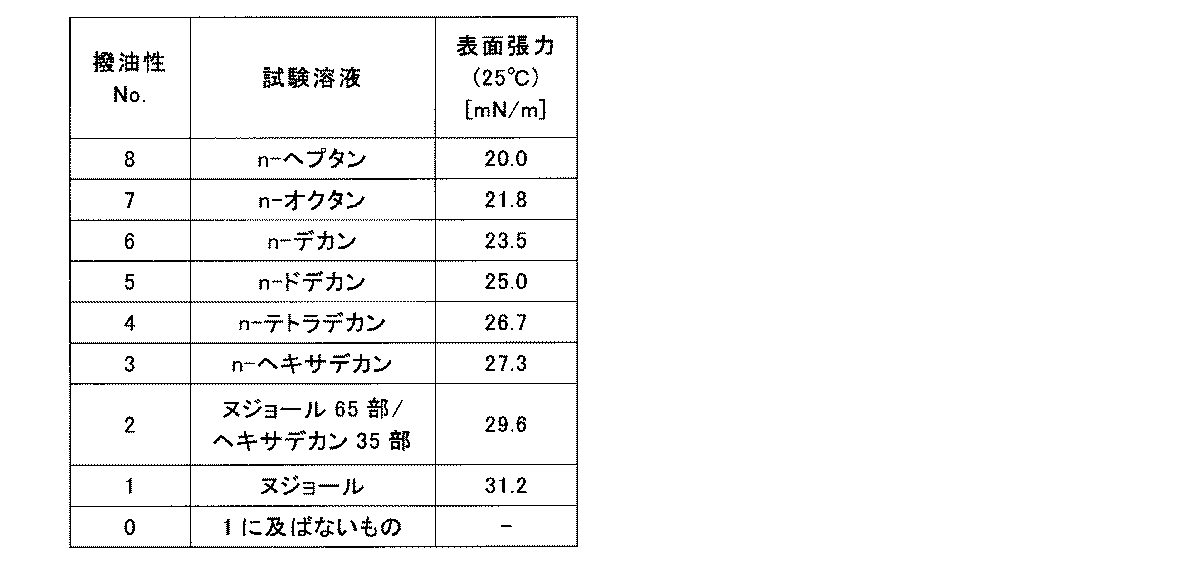
[洗濯耐久性の評価]
前記方法で作成した試験布を、JIS L 0217 103の洗い方に従って洗濯した。なお、洗剤は弱アルカリ性洗剤を使用し、アイロン仕上げは行わなかった。洗濯を行う前のORおよびWRの評価を初期評価(HL(0))とし、前記洗濯を5回繰り返した後(HL(5))と、20回繰り返した後(HL(20))のORおよびWRを評価した。
前記方法で作成した試験布を、JIS L 0217 103の洗い方に従って洗濯した。なお、洗剤は弱アルカリ性洗剤を使用し、アイロン仕上げは行わなかった。洗濯を行う前のORおよびWRの評価を初期評価(HL(0))とし、前記洗濯を5回繰り返した後(HL(5))と、20回繰り返した後(HL(20))のORおよびWRを評価した。
[例1]
工程(I):マクロモノマー前駆体の合成
300mLの3つ口フラスコに、C6FA(109g、261mmoL)、連鎖移動剤である2-メルカプトエタノール(1g、12.3mmoL)、重合開始剤であるAIBN(0.2g、1.3mmoL)、および溶媒であるAK-225(110g、533mmoL)を仕込み、循環式冷却機を取り付けたジムロート、および撹拌翼を取り付け、窒素雰囲気下で60℃まで徐々に昇温し、撹拌した。18時間後(終夜撹拌後)、室温下で冷却して重合粗液を得た。得られた粗液をおよそ20倍質量の冷却したメタノールに滴下し、撹拌してマクロモノマー前駆体を析出させた。得られたマクロモノマー前駆体をろ過し、50℃で一晩真空乾燥して、C6FAに由来する単位を有するマクロモノマー前駆体(1)を得た。得られたマクロモノマー前駆体(1)の重合度は、1H-NMR測定で求めた。
工程(I):マクロモノマー前駆体の合成
300mLの3つ口フラスコに、C6FA(109g、261mmoL)、連鎖移動剤である2-メルカプトエタノール(1g、12.3mmoL)、重合開始剤であるAIBN(0.2g、1.3mmoL)、および溶媒であるAK-225(110g、533mmoL)を仕込み、循環式冷却機を取り付けたジムロート、および撹拌翼を取り付け、窒素雰囲気下で60℃まで徐々に昇温し、撹拌した。18時間後(終夜撹拌後)、室温下で冷却して重合粗液を得た。得られた粗液をおよそ20倍質量の冷却したメタノールに滴下し、撹拌してマクロモノマー前駆体を析出させた。得られたマクロモノマー前駆体をろ過し、50℃で一晩真空乾燥して、C6FAに由来する単位を有するマクロモノマー前駆体(1)を得た。得られたマクロモノマー前駆体(1)の重合度は、1H-NMR測定で求めた。
工程(II):マクロモノマー(a)の合成
100mLの二つ口フラスコに、マクロモノマー前駆体(1)(30g、3.2mmoL)とAK-225(60mL)を仕込み、マクロモノマー前駆体(1)の濃度が30質量%程度になるようにして窒素雰囲気下で氷浴につけて撹拌した。そこに、トリエチルアミン(1.8mL、6.5mmoL)を滴下して30分撹拌した後、メタクリロイルクロリド(1.1mL、3.9mmoL)をゆっくり滴下した。氷浴中で1時間撹拌した後、さらに室温下で2時間撹拌を行い、飽和塩化アンモニウム水溶液を反応液がpH7になるまで加え、反応を停止させた。得られた反応液を水とAK-225で洗浄し、得られた有機層を無水硫酸マグネシウムによって脱水した。その後、ろ過を行い、得られた有機層から減圧下でAK-225を留去し、孔径0.5μmのポリテトラフルオロエチレン(PTFE)フィルタを用いてろ過した。さらに、50℃で一晩真空乾燥して完全に溶媒を除き、C6FAに由来する単位を有するマクロモノマー(a-1)を得た。
100mLの二つ口フラスコに、マクロモノマー前駆体(1)(30g、3.2mmoL)とAK-225(60mL)を仕込み、マクロモノマー前駆体(1)の濃度が30質量%程度になるようにして窒素雰囲気下で氷浴につけて撹拌した。そこに、トリエチルアミン(1.8mL、6.5mmoL)を滴下して30分撹拌した後、メタクリロイルクロリド(1.1mL、3.9mmoL)をゆっくり滴下した。氷浴中で1時間撹拌した後、さらに室温下で2時間撹拌を行い、飽和塩化アンモニウム水溶液を反応液がpH7になるまで加え、反応を停止させた。得られた反応液を水とAK-225で洗浄し、得られた有機層を無水硫酸マグネシウムによって脱水した。その後、ろ過を行い、得られた有機層から減圧下でAK-225を留去し、孔径0.5μmのポリテトラフルオロエチレン(PTFE)フィルタを用いてろ過した。さらに、50℃で一晩真空乾燥して完全に溶媒を除き、C6FAに由来する単位を有するマクロモノマー(a-1)を得た。
工程(III):含フッ素共重合体の合成
30mLのガラス製重合用アンプルに、マクロモノマー(a-1)(2.6g)、単量体(b)であるMMA(1.6g)、単量体(c)であるDEAEMA(0.08g)、および重合開始剤であるAIBN(0.03g)、ならびに溶媒であるAK-225(5g)および脱水アセトン(4g)を仕込んだ。その後、アンプル内に窒素ガスを吹き込んで密栓し、60℃のインキュベーターで18時間(終夜)加熱し、含フッ素共重合体を含む反応液を得た。反応液を冷却した後にアンプルを開放し、反応液を20倍質量の冷却したヘキサンに滴下し、撹拌して固体を析出させた。得られた固体をろ過し、40℃で一晩真空乾燥して含フッ素共重合体(1)を得た。得られた含フッ素共重合体(1)は1H-NMR測定を行い、その組成を算出した。
得られた含フッ素共重合体(1)は白色固体であり、アセトン、AK-225に可溶であった。
30mLのガラス製重合用アンプルに、マクロモノマー(a-1)(2.6g)、単量体(b)であるMMA(1.6g)、単量体(c)であるDEAEMA(0.08g)、および重合開始剤であるAIBN(0.03g)、ならびに溶媒であるAK-225(5g)および脱水アセトン(4g)を仕込んだ。その後、アンプル内に窒素ガスを吹き込んで密栓し、60℃のインキュベーターで18時間(終夜)加熱し、含フッ素共重合体を含む反応液を得た。反応液を冷却した後にアンプルを開放し、反応液を20倍質量の冷却したヘキサンに滴下し、撹拌して固体を析出させた。得られた固体をろ過し、40℃で一晩真空乾燥して含フッ素共重合体(1)を得た。得られた含フッ素共重合体(1)は1H-NMR測定を行い、その組成を算出した。
得られた含フッ素共重合体(1)は白色固体であり、アセトン、AK-225に可溶であった。
得られた含フッ素共重合体(1)0.7gをアセトン40gに溶解させた溶液に、リチウムジイソプロピルアミド(LAD)0.14gをアセトン16gに溶解させた溶液を添加し、撥水撥油剤組成物(1)を得た。
[例2~6]
前記工程(I)および前記工程(III)において合成に使用する各成分の組成比を表2に示す通りに変更した以外は、例1と同様にして含フッ素共重合体(2)~(6)を合成した。また、例1と同様にして含フッ素共重合体(2)~(6)をそれぞれ含む撥水撥油剤組成物(2)~(6)を調製した。
例1~6における撥水撥油性および洗濯耐久性の評価結果を表3に示す。
前記工程(I)および前記工程(III)において合成に使用する各成分の組成比を表2に示す通りに変更した以外は、例1と同様にして含フッ素共重合体(2)~(6)を合成した。また、例1と同様にして含フッ素共重合体(2)~(6)をそれぞれ含む撥水撥油剤組成物(2)~(6)を調製した。
例1~6における撥水撥油性および洗濯耐久性の評価結果を表3に示す。
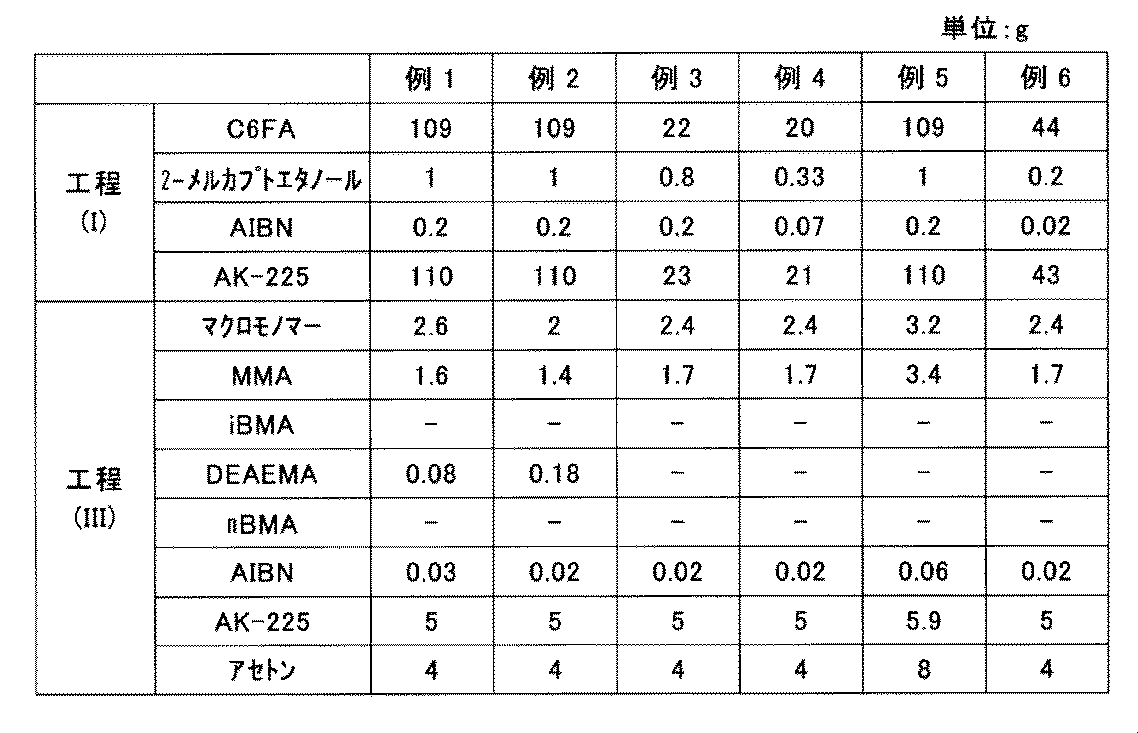

表3に示すように、単位Xを有する単位である単位(A)、単位(B)および単位(C)を有する含フッ素共重合体を含む撥水撥油剤組成物(1)、(2)を用いた例1および例2では、充分な撥水撥油性が得られ、また洗濯後にも撥水撥油性の低下が抑制されており、優れた洗濯耐久性が得られた。
一方、単位(A)および単位(B)は有しているが単位(C)を有さない含フッ素共重合体を含む撥水撥油剤組成物(3)~(6)を用いた例3~6では、初期には充分な撥水撥油性が得られ、洗濯後に撥油性の低下は抑えられているものの、洗濯後に撥水性が大きく低下した。
一方、単位(A)および単位(B)は有しているが単位(C)を有さない含フッ素共重合体を含む撥水撥油剤組成物(3)~(6)を用いた例3~6では、初期には充分な撥水撥油性が得られ、洗濯後に撥油性の低下は抑えられているものの、洗濯後に撥水性が大きく低下した。
[例7~15]
前記工程(I)においてC6FAに代えてC6FMAを使用し、前記工程(I)および前記工程(III)において合成に使用する各成分の組成比を表4に示す通りに変更した以外は、例1と同様にして含フッ素共重合体(7)~(15)を合成した。また、例1と同様にしてそれら含フッ素共重合体(7)~(15)をそれぞれ含む撥水撥油剤組成物(7)~(15)を調製した。
例7~15における撥水撥油性および洗濯耐久性の評価結果を表5に示す。
前記工程(I)においてC6FAに代えてC6FMAを使用し、前記工程(I)および前記工程(III)において合成に使用する各成分の組成比を表4に示す通りに変更した以外は、例1と同様にして含フッ素共重合体(7)~(15)を合成した。また、例1と同様にしてそれら含フッ素共重合体(7)~(15)をそれぞれ含む撥水撥油剤組成物(7)~(15)を調製した。
例7~15における撥水撥油性および洗濯耐久性の評価結果を表5に示す。
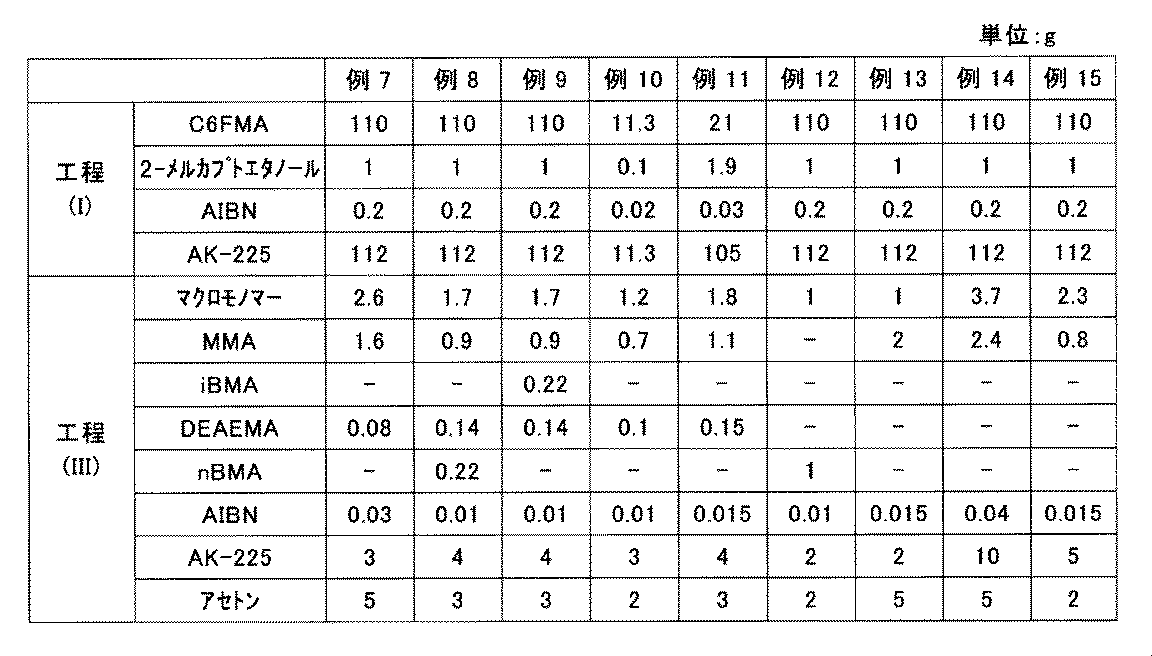
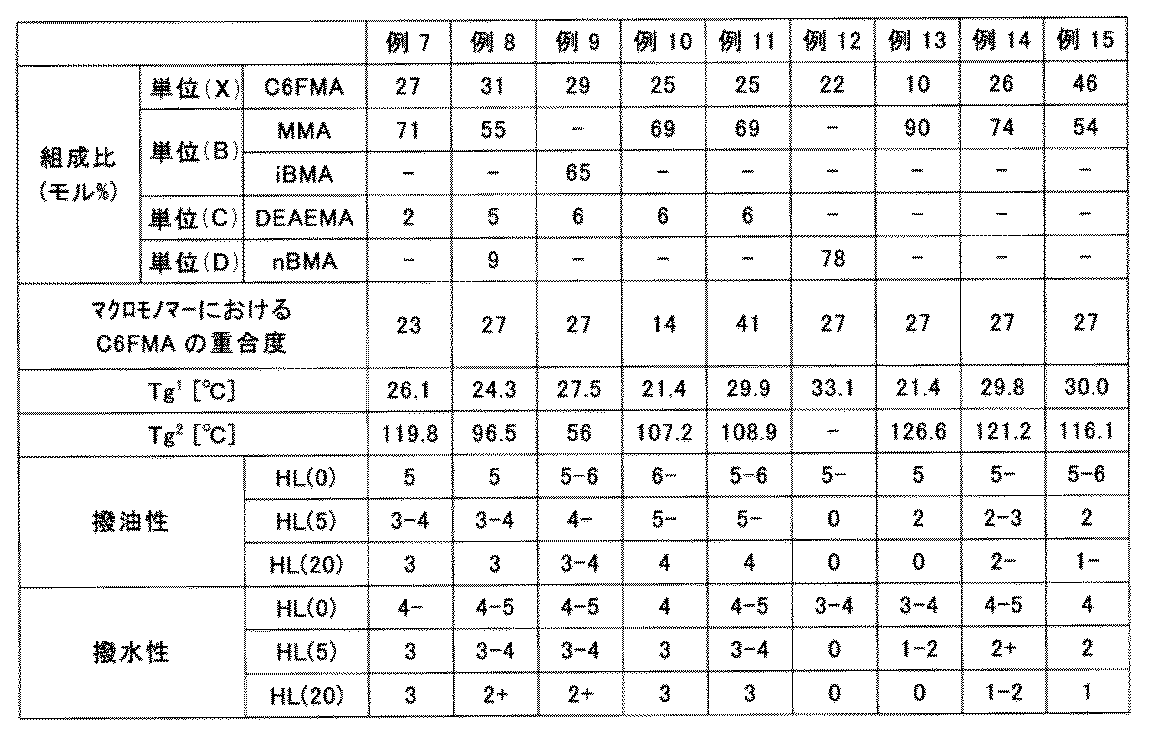
表5に示すように、単位Xを有する単位である単位(A)、単位(B)および単位(C)を有する含フッ素共重合体を含む撥水撥油剤組成物(7)~(11)を用いた例7~11では、充分な撥水撥油性が得られ、また洗濯後にもその撥水撥油性の低下が抑制されており、優れた洗濯耐久性が得られた。
一方、単位(B)および単位(C)を有さない含フッ素共重合体を含む撥水撥油剤組成物(12)を用いた例12では、初期には充分な撥水撥油性が得られたものの、洗濯後には撥水撥油性がほとんどなくなっていた。
単位(A)および単位(B)は有しているが単位(C)を有さない含フッ素共重合体を含む撥水撥油剤組成物(13)~(15)を用いた例13~15では、特に洗濯後に撥水性が大きく低下した。
一方、単位(B)および単位(C)を有さない含フッ素共重合体を含む撥水撥油剤組成物(12)を用いた例12では、初期には充分な撥水撥油性が得られたものの、洗濯後には撥水撥油性がほとんどなくなっていた。
単位(A)および単位(B)は有しているが単位(C)を有さない含フッ素共重合体を含む撥水撥油剤組成物(13)~(15)を用いた例13~15では、特に洗濯後に撥水性が大きく低下した。
本発明の含フッ素共重合体は、繊維製品(衣料物品(スポーツウェア、コート、ブルゾン、作業用衣料、ユニフォーム等。)、かばん、産業資材等。)、不織布、皮革製品、石材、コンクリート系建築材料等の撥水撥油剤組成物に有用である。また、濾過材料用コーティング剤、表面保護剤としても有用である。さらに、ポリプロピレン、ナイロン等と混合して成形、繊維化することにより撥水性を付与する用途にも有用である。
なお、2012年1月31日に出願された日本特許出願2012-018469号の明細書、特許請求の範囲および要約書の全内容をここに引用し、本発明の明細書の開示として、取り入れるものである。
なお、2012年1月31日に出願された日本特許出願2012-018469号の明細書、特許請求の範囲および要約書の全内容をここに引用し、本発明の明細書の開示として、取り入れるものである。
Claims (15)
- 下式(1)で表される単量体(x)に由来する単位(X)を平均2個以上有するマクロモノマー(a)に由来する単位(A)と、
フルオロアルキル基および架橋性官能基を有さず、単独重合体としたときのガラス転移温度が50~150℃である単量体(b)に由来する単位(B)と、
フルオロアルキル基を有さず、架橋性官能基を有する単量体(c)に由来する単位(C)と、を有する含フッ素共重合体。

- R1が水素原子またはメチル基であり、Yが炭素数2~4のポリメチレン基であり、R2は炭素数4~6の直鎖状または分岐状のペルフルオロアルキル基である、請求項1に記載の含フッ素共重合体。
- 前記単量体(x)が、2-ペルフルオロヘキシルエチルアクリレートおよび2-ペルフルオロヘキシルエチルメタクリレートからなる群から選ばれる少なくとも1種である、請求項1または2に記載の含フッ素共重合体。
- 前記単量体(b)が、アルキル基の炭素数が1~4のアルキル(メタ)アクリレートである、請求項1~3のいずれか一項に記載の含フッ素共重合体。
- 前記単量体(b)が、メチルメタクリレート、イソブチルメタクリレートおよびt-ブチルメタクリレートからなる群から選ばれる少なくとも1種である、請求項4に記載の含フッ素共重合体。
- 前記単量体(c)が、水酸基、ブロックドイソシアナート基、アミノ基およびエポキシ基から選ばれる架橋性官能基を有する単量体である、請求項1~5のいずれか一項に記載の含フッ素共重合体。
- 前記単量体(c)が、2-ヒドロキシエチル(メタ)アクリレート、ジエチルアミノエチル(メタ)アクリレートおよび2-イソシアネートエチル(メタ)アクリレートの3,5-ジメチルピラゾール付加体からなる群から選ばれる少なくとも1種である、請求項6に記載の含フッ素共重合体。
- マクロモノマー(a)における単量体(x)の重合度が2~50である、請求項1~7のいずれか一項に記載の含フッ素共重合体。
- 請求項1~8のいずれか一項に記載の含フッ素共重合体と媒体を含むことを特徴とする撥水撥油剤組成物。
- 媒体が水性媒体または有機溶媒である、請求項9に記載の撥水撥油剤組成物。
- 撥水撥油剤組成物(100質量%)における含フッ素共重体の含有量が20~40質量%である、請求項9または10に記載の撥水撥油剤組成物。
- 撥水撥油剤組成物(100質量%)における含フッ素共重体の含有量が0.2~5質量%である請求項9または10に記載の撥水撥油剤組成物を用いて物品を処理することを特徴とする物品に撥水撥油性を付与する方法。
- 連鎖移動剤および重合開始剤の存在下に単量体(x)を連鎖移動剤に対して2倍モル以上重合させてマクロモノマー前駆体を製造し、前記マクロモノマー前駆体に重合性基を導入してマクロモノマー(a)を製造し、次いで、得られたマクロモノマー(a)と前記単量体(b)と前記単量体(c)とを共重合させて含フッ素共重合体を製造することを特徴とする、請求項1~8のいずれか一項に記載の含フッ素共重合体を製造する方法。
- 前記連鎖移動剤が反応性基を有するメルカプタンであり、前記マクロモノマー前駆体に前記反応性基に反応する官能基と重合性基とを有する化合物を反応させてマクロモノマー(a)を製造する、請求項13に記載の含フッ素共重合体の製造方法。
- 前記連鎖移動剤が水酸基を有するメルカプタンであり、前記マクロモノマー前駆体に(メタ)アクリル酸クロライドを反応させてマクロモノマー(a)を製造する、請求項13または14に記載の含フッ素共重合体の製造方法。
Priority Applications (3)
| Application Number | Priority Date | Filing Date | Title |
|---|---|---|---|
| EP13743181.3A EP2810966A4 (en) | 2012-01-31 | 2013-01-29 | FLUOROUS COPOLYMER AND METHOD FOR THE PRODUCTION THEREOF AND WATER- / OIL-REPELLING COMPOSITION |
| CN201380007283.6A CN104093757A (zh) | 2012-01-31 | 2013-01-29 | 含氟共聚物及其制造方法以及拒水拒油剂组合物 |
| US14/448,250 US20140343207A1 (en) | 2012-01-31 | 2014-07-31 | Fluorinated copolymer and process for its production, and water/oil repellent composition |
Applications Claiming Priority (2)
| Application Number | Priority Date | Filing Date | Title |
|---|---|---|---|
| JP2012-018469 | 2012-01-31 | ||
| JP2012018469 | 2012-01-31 |
Related Child Applications (1)
| Application Number | Title | Priority Date | Filing Date |
|---|---|---|---|
| US14/448,250 Continuation US20140343207A1 (en) | 2012-01-31 | 2014-07-31 | Fluorinated copolymer and process for its production, and water/oil repellent composition |
Publications (1)
| Publication Number | Publication Date |
|---|---|
| WO2013115196A1 true WO2013115196A1 (ja) | 2013-08-08 |
Family
ID=48905231
Family Applications (1)
| Application Number | Title | Priority Date | Filing Date |
|---|---|---|---|
| PCT/JP2013/051931 Ceased WO2013115196A1 (ja) | 2012-01-31 | 2013-01-29 | 含フッ素共重合体およびその製造方法、ならびに撥水撥油剤組成物 |
Country Status (5)
| Country | Link |
|---|---|
| US (1) | US20140343207A1 (ja) |
| EP (1) | EP2810966A4 (ja) |
| JP (1) | JPWO2013115196A1 (ja) |
| CN (1) | CN104093757A (ja) |
| WO (1) | WO2013115196A1 (ja) |
Cited By (3)
| Publication number | Priority date | Publication date | Assignee | Title |
|---|---|---|---|---|
| WO2016027841A1 (ja) * | 2014-08-19 | 2016-02-25 | 株式会社クラレ | 紙複合体、包装材料及び紙複合体の製造方法 |
| JPWO2017033893A1 (ja) * | 2015-08-24 | 2018-06-28 | 旭硝子株式会社 | 撥液性成形体の製造方法および撥液剤組成物 |
| JP2022007595A (ja) * | 2020-06-26 | 2022-01-13 | 東亞合成株式会社 | フッ素系グラフト共重合体又はその塩、及びコーティング剤 |
Families Citing this family (5)
| Publication number | Priority date | Publication date | Assignee | Title |
|---|---|---|---|---|
| CN106632886B (zh) * | 2016-11-14 | 2020-04-24 | 北京水木佳维科技有限公司 | 一种聚合物及其制备方法和应用 |
| CN106967191B (zh) * | 2017-04-13 | 2019-11-19 | 佛山科学技术学院 | 一种超双疏含氟聚合物纳米材料的绿色制备方法 |
| EP3741805B1 (en) * | 2018-01-15 | 2022-07-20 | Agc Inc. | Fluorinated copolymer dispersion, method for its production and article |
| JPWO2021117687A1 (ja) * | 2019-12-13 | 2021-06-17 | ||
| CN116536929A (zh) * | 2023-05-12 | 2023-08-04 | 安徽三宝棉纺针织投资有限公司 | 一种弹力腰带及其制备方法 |
Citations (6)
| Publication number | Priority date | Publication date | Assignee | Title |
|---|---|---|---|---|
| WO2002083809A1 (en) | 2001-04-13 | 2002-10-24 | Asahi Glass Company, Limited | Water-and-oil repellant composition |
| JP2003149877A (ja) * | 2001-11-09 | 2003-05-21 | Fuji Photo Film Co Ltd | 静電写真用液体現像剤 |
| JP2008189826A (ja) | 2007-02-06 | 2008-08-21 | Daikin Ind Ltd | 含フッ素重合体からなる汚れ脱離剤 |
| WO2009041648A1 (ja) * | 2007-09-28 | 2009-04-02 | Asahi Glass Company, Limited | 撥水撥油剤組成物および物品 |
| WO2009054176A1 (ja) * | 2007-10-22 | 2009-04-30 | Unimatec Co., Ltd. | 撥水撥油剤 |
| JP2009108296A (ja) * | 2007-10-11 | 2009-05-21 | Yunimatekku Kk | 撥水撥油剤 |
Family Cites Families (13)
| Publication number | Priority date | Publication date | Assignee | Title |
|---|---|---|---|---|
| US5310813A (en) * | 1990-08-24 | 1994-05-10 | Toagosei Chemical Industry Co., Ltd. | Thermosetting coating resin and process for producing the same |
| CN1077935C (zh) * | 1995-03-31 | 2002-01-16 | 美国3M公司 | 防油和防水的水性组合物 |
| JP4066497B2 (ja) * | 1998-03-23 | 2008-03-26 | ダイキン工業株式会社 | 含フッ素共重合体を含んでなる化粧品 |
| KR100343549B1 (ko) * | 2000-07-26 | 2002-07-20 | 한국화학연구원 | 불소계 수분산성 폴리우레탄 |
| DE10331484A1 (de) * | 2003-07-11 | 2005-03-03 | Construction Research & Technology Gmbh | Polyurethan-Polymer-Hybrid-Dispersion mit verbesserten Oberflächeneigenschaften, Verfahren zu ihrer Herstellung sowie deren Verwendung |
| CN1493601A (zh) * | 2003-07-23 | 2004-05-05 | 华东理工大学 | 一种水乳型含氟拒水拒油剂及其制备方法 |
| KR100549289B1 (ko) * | 2003-10-29 | 2006-02-03 | 한국화학연구원 | 표면 코팅용 불소계 양성 고분자 및 이의 제조방법 |
| CA2677192C (en) * | 2007-02-02 | 2011-12-20 | Daikin Industries, Ltd. | Fluorine-containing copolymer having excellent washing resistance and soil release agent |
| EP2206735B1 (en) * | 2007-11-01 | 2012-03-21 | Asahi Glass Company, Limited | Fluorinated copolymer, water-proof and oil-proof agent composition, and their production methods |
| WO2009148098A1 (ja) * | 2008-06-04 | 2009-12-10 | 旭硝子株式会社 | 共重合体、その製造方法および撥水撥油剤組成物 |
| KR20110085974A (ko) * | 2008-10-24 | 2011-07-27 | 아사히 가라스 가부시키가이샤 | 발수발유제 조성물 및 그 제조 방법 |
| JP5700049B2 (ja) * | 2010-03-30 | 2015-04-15 | ダイキン工業株式会社 | グラフト共重合体および撥剤組成物 |
| JPWO2013027679A1 (ja) * | 2011-08-24 | 2015-03-19 | 旭硝子株式会社 | 含フッ素ブロック共重合体およびその製造方法、ならびに表面処理剤 |
-
2013
- 2013-01-29 JP JP2013556421A patent/JPWO2013115196A1/ja active Pending
- 2013-01-29 EP EP13743181.3A patent/EP2810966A4/en not_active Withdrawn
- 2013-01-29 CN CN201380007283.6A patent/CN104093757A/zh active Pending
- 2013-01-29 WO PCT/JP2013/051931 patent/WO2013115196A1/ja not_active Ceased
-
2014
- 2014-07-31 US US14/448,250 patent/US20140343207A1/en not_active Abandoned
Patent Citations (6)
| Publication number | Priority date | Publication date | Assignee | Title |
|---|---|---|---|---|
| WO2002083809A1 (en) | 2001-04-13 | 2002-10-24 | Asahi Glass Company, Limited | Water-and-oil repellant composition |
| JP2003149877A (ja) * | 2001-11-09 | 2003-05-21 | Fuji Photo Film Co Ltd | 静電写真用液体現像剤 |
| JP2008189826A (ja) | 2007-02-06 | 2008-08-21 | Daikin Ind Ltd | 含フッ素重合体からなる汚れ脱離剤 |
| WO2009041648A1 (ja) * | 2007-09-28 | 2009-04-02 | Asahi Glass Company, Limited | 撥水撥油剤組成物および物品 |
| JP2009108296A (ja) * | 2007-10-11 | 2009-05-21 | Yunimatekku Kk | 撥水撥油剤 |
| WO2009054176A1 (ja) * | 2007-10-22 | 2009-04-30 | Unimatec Co., Ltd. | 撥水撥油剤 |
Non-Patent Citations (1)
| Title |
|---|
| See also references of EP2810966A4 |
Cited By (6)
| Publication number | Priority date | Publication date | Assignee | Title |
|---|---|---|---|---|
| WO2016027841A1 (ja) * | 2014-08-19 | 2016-02-25 | 株式会社クラレ | 紙複合体、包装材料及び紙複合体の製造方法 |
| JPWO2016027841A1 (ja) * | 2014-08-19 | 2017-06-01 | 株式会社クラレ | 紙複合体、包装材料及び紙複合体の製造方法 |
| US10370796B2 (en) | 2014-08-19 | 2019-08-06 | Kuraray Co., Ltd. | Paper composite, packaging material, and production method of paper composite |
| JPWO2017033893A1 (ja) * | 2015-08-24 | 2018-06-28 | 旭硝子株式会社 | 撥液性成形体の製造方法および撥液剤組成物 |
| JP2022007595A (ja) * | 2020-06-26 | 2022-01-13 | 東亞合成株式会社 | フッ素系グラフト共重合体又はその塩、及びコーティング剤 |
| JP7686946B2 (ja) | 2020-06-26 | 2025-06-03 | 東亞合成株式会社 | フッ素系グラフト共重合体又はその塩、及びコーティング剤 |
Also Published As
| Publication number | Publication date |
|---|---|
| CN104093757A (zh) | 2014-10-08 |
| EP2810966A1 (en) | 2014-12-10 |
| EP2810966A4 (en) | 2015-09-30 |
| US20140343207A1 (en) | 2014-11-20 |
| JPWO2013115196A1 (ja) | 2015-05-11 |
Similar Documents
| Publication | Publication Date | Title |
|---|---|---|
| TWI507514B (zh) | A water repellent and oil repellent composition, a method for producing the same, and an article | |
| CN102395644B (zh) | 斥水斥油剂组合物、其制造方法及物品的处理方法 | |
| TWI468503B (zh) | Water repellent composition and articles | |
| WO2013115196A1 (ja) | 含フッ素共重合体およびその製造方法、ならびに撥水撥油剤組成物 | |
| TWI460192B (zh) | Copolymer and method for producing the same | |
| JP6070546B2 (ja) | 撥水撥油剤組成物、その製造方法および物品 | |
| TWI468421B (zh) | Copolymer, a method for producing the same, and a water repellent composition | |
| KR102665898B1 (ko) | 발수제 조성물, 발수제 조성물의 제조 방법 및 물품 | |
| US8853337B2 (en) | Water/oil repellent composition and article | |
| CN102459494B (zh) | 斥水斥油剂组合物、其制造方法及物品的处理方法 | |
| US20120259045A1 (en) | Water/oil repellent composition, method for its production and method for treating article | |
| WO2010047258A1 (ja) | 撥水撥油剤組成物およびその製造方法 | |
| JPWO2012147573A1 (ja) | 撥水撥油剤組成物、その製造方法および物品 | |
| WO2012147625A1 (ja) | 撥水撥油剤組成物、その製造方法および物品 | |
| WO2013115197A1 (ja) | 含フッ素共重合体およびその製造方法、ならびに撥水撥油剤組成物 | |
| JP2010100766A (ja) | 撥水撥油剤組成物およびその製造方法 | |
| JP2016190957A (ja) | 撥水撥油剤組成物、その製造方法および物品 |
Legal Events
| Date | Code | Title | Description |
|---|---|---|---|
| 121 | Ep: the epo has been informed by wipo that ep was designated in this application |
Ref document number: 13743181 Country of ref document: EP Kind code of ref document: A1 |
|
| ENP | Entry into the national phase |
Ref document number: 2013556421 Country of ref document: JP Kind code of ref document: A |
|
| WWE | Wipo information: entry into national phase |
Ref document number: 2013743181 Country of ref document: EP |
|
| NENP | Non-entry into the national phase |
Ref country code: DE |