WO2013150880A1 - 暗号化装置、復号化装置、暗号化方法、復号化方法、及びプログラム - Google Patents
暗号化装置、復号化装置、暗号化方法、復号化方法、及びプログラム Download PDFInfo
- Publication number
- WO2013150880A1 WO2013150880A1 PCT/JP2013/057509 JP2013057509W WO2013150880A1 WO 2013150880 A1 WO2013150880 A1 WO 2013150880A1 JP 2013057509 W JP2013057509 W JP 2013057509W WO 2013150880 A1 WO2013150880 A1 WO 2013150880A1
- Authority
- WO
- WIPO (PCT)
- Prior art keywords
- bit string
- vector
- matrix
- encryption
- commutative
- Prior art date
- Legal status (The legal status is an assumption and is not a legal conclusion. Google has not performed a legal analysis and makes no representation as to the accuracy of the status listed.)
- Ceased
Links
Images


Classifications
-
- H—ELECTRICITY
- H04—ELECTRIC COMMUNICATION TECHNIQUE
- H04L—TRANSMISSION OF DIGITAL INFORMATION, e.g. TELEGRAPHIC COMMUNICATION
- H04L9/00—Cryptographic mechanisms or cryptographic arrangements for secret or secure communications; Network security protocols
- H04L9/08—Key distribution or management, e.g. generation, sharing or updating, of cryptographic keys or passwords
- H04L9/0861—Generation of secret information including derivation or calculation of cryptographic keys or passwords
- H04L9/0869—Generation of secret information including derivation or calculation of cryptographic keys or passwords involving random numbers or seeds
-
- H—ELECTRICITY
- H04—ELECTRIC COMMUNICATION TECHNIQUE
- H04L—TRANSMISSION OF DIGITAL INFORMATION, e.g. TELEGRAPHIC COMMUNICATION
- H04L9/00—Cryptographic mechanisms or cryptographic arrangements for secret or secure communications; Network security protocols
- H04L9/06—Cryptographic mechanisms or cryptographic arrangements for secret or secure communications; Network security protocols the encryption apparatus using shift registers or memories for block-wise or stream coding, e.g. DES systems or RC4; Hash functions; Pseudorandom sequence generators
- H04L9/065—Encryption by serially and continuously modifying data stream elements, e.g. stream cipher systems, RC4, SEAL or A5/3
- H04L9/0656—Pseudorandom key sequence combined element-for-element with data sequence, e.g. one-time-pad [OTP] or Vernam's cipher
-
- H—ELECTRICITY
- H04—ELECTRIC COMMUNICATION TECHNIQUE
- H04L—TRANSMISSION OF DIGITAL INFORMATION, e.g. TELEGRAPHIC COMMUNICATION
- H04L9/00—Cryptographic mechanisms or cryptographic arrangements for secret or secure communications; Network security protocols
- H04L9/06—Cryptographic mechanisms or cryptographic arrangements for secret or secure communications; Network security protocols the encryption apparatus using shift registers or memories for block-wise or stream coding, e.g. DES systems or RC4; Hash functions; Pseudorandom sequence generators
- H04L9/065—Encryption by serially and continuously modifying data stream elements, e.g. stream cipher systems, RC4, SEAL or A5/3
- H04L9/0656—Pseudorandom key sequence combined element-for-element with data sequence, e.g. one-time-pad [OTP] or Vernam's cipher
- H04L9/0662—Pseudorandom key sequence combined element-for-element with data sequence, e.g. one-time-pad [OTP] or Vernam's cipher with particular pseudorandom sequence generator
- H04L9/0668—Pseudorandom key sequence combined element-for-element with data sequence, e.g. one-time-pad [OTP] or Vernam's cipher with particular pseudorandom sequence generator producing a non-linear pseudorandom sequence
Definitions
- the present invention relates to an encryption device, a decryption device, an encryption method, a decryption method, and a program.
- an encryption device that speeds up encryption processing and increases the strength of decryption is known (Japanese Patent Laid-Open No. 2003-241656).
- the plaintext D is divided and output as a plurality of divided data by an initial processing function, the plurality of divided data is expanded and replaced to the same size as the encryption key K by an arithmetic function, and a coefficient is mediated. Make the arithmetic function variable. The coefficient is generated by the parameter generation unit.
- the non-linear encryption block processing unit performs non-linear encryption using the divided data and the encryption key K as variables, and outputs a plurality of pieces of encrypted encrypted data.
- the post-processing function uses the inverse function of the arithmetic function to reduce and replace the divided encrypted data to the same size as the divided data, synthesize the divided data and output it as ciphertext, and mediate the coefficient to the inverse function. Make the arithmetic function variable.
- the secret information a and b and the random number information m1 and m2 are added by exclusive OR, the secret information a and b are masked, and the masked secret information A and B are calculated.
- Means for calculating intermediate values Temp1 to Temp3 for removing the mask of masked secret information A and B using secret information A and B and random number information m1 and m2, masked secret information A and B And an intermediate value Temp1 to Temp3, a cryptographic processing device is known (Japanese Patent Laid-Open No. 2009-005164).
- Cryptographic processing techniques disclosed in Japanese Patent Laid-Open Nos. 2003-241656 and 2009-005164 are intended to improve the speed and security of encryption processing, but can be decrypted theoretically. Have a potential danger.
- the capacity is increased and high speed is sacrificed, and there is no technology that comprehensively satisfies the encryption processing requirements of “high speed”, “safety”, and “lightweight”. It was. Therefore, cryptographic methods based on noncommutative functions that are theoretically indecipherable have been proposed (L.Accardi, M.Regoli, M.Ohya, “The QP-DYN Algorithm”, QP-PQ 28, Quantum). Bio-Informatics IV, IV-16, 2011).
- the present invention has been made in view of the above problems.
- the encryption device is based on a d ⁇ d matrix A that is private data and two prime numbers p1 and p2, which are set in common with the decryption device.
- a matrix generation unit that generates two non-commutative matrices A1 and A2, and a d-dimensional initial vector v 0 set in common with the decoding device or a d-dimensional vector v i ⁇ 1 1 previously obtained , by the action of non-commutative matrix A1, with obtaining the vector v i 1, the initial vector v 0, or previous to the vector v i-1 2 d-dimensional obtained, by applying the non-commutative matrix A2
- a matrix operation unit for obtaining a vector v i 2 , wherein at least one of a sum operation and a product operation when operating the non-commutative matrices A1 and A2 is combined with a plurality of predetermined operators.
- Substituting non-commutative matrices A1 and A2 with calculation methods A matrix working part that use, the matrix is converted into a bit string by performing a nonlinear transformation to the vector v i 1 determined by the working portion, the converted said bit string is coupled to a bit string W1 previously obtained bit sequence W1
- a bit string conversion unit that performs nonlinear conversion on the vector v i 2 to convert the vector v i 2 into a bit string, and combines the converted bit string with the previously obtained bit string W2 to obtain the bit string W2, and the bit string conversion unit
- the operation by the matrix operation unit and the conversion and combination by the bit sequence conversion unit are repeated until the number of bits of each of the bit sequence W1 and the bit sequence W2 obtained by the above becomes the number of bits of the bit sequence representing the data to be encrypted.
- a bit number determination unit calculates an exclusive OR of the bit string W1 and the bit string W2, By calculating an exclusive OR of a pseudo random number sequence generation unit for obtaining a random number bit sequence, a pseudo random number bit sequence obtained by the pseudo random number sequence generation unit, and a bit sequence representing the data to be encrypted, the encryption target And an encryption unit for encrypting data.
- the program according to the second aspect includes a computer and two non-commutative matrices based on a d ⁇ d matrix A that is private data and two prime numbers p1 and p2, which are set in common with a decoding device.
- a non-commutative matrix A1 is applied to a matrix generation unit that generates A1 and A2, a d-dimensional initial vector v 0 set in common with the decoding device, or a d-dimensional vector v i-1 1 obtained previously.
- At least one of the sum operation and the product operation when operating the non-commutative matrices A1, A2 is replaced with an operation method combining a plurality of types of operators, and the vector is replaced with the non-commutative matrix A1, A2 is repeatedly applied and nonlinear transformation is performed, and the exclusive OR of the obtained bit strings W1 and W2 is calculated to obtain a pseudo random number bit string.
- Matrix acting portion the initial vector v 0, or vectors v i-1 1 previously obtained, by applying the non-commutative matrix A1, in determining said vectors v i 1, for each element of the vector v i 1, the initial vector v 0 or the vector v i-1 1 was replaced by previously computed vector v i 1 element, by applying a non-commutative matrix A1, a vector v i 1 of the element calculated, the initial vector v 0, or previous to the vector v i-1 2 obtained, by applying the non-commutative matrix A2, in determining said vectors v i 2, the vector v i every two elements, already computed vector v the replaced element of i 2 initial vector v 0 or the vector v i-1 2, by the action of non-commutative matrix A2, the vector v i 2 Elements can be calculated. As a result, the decryption strength can be further increased.
- the bit string conversion unit converts, as the nonlinear conversion, the vector v i 1 obtained by the matrix operation unit into a bit string, and the converted bit string is a head satisfying a predetermined condition.
- a cut-off process for cutting a bit string is performed, the bit string with the leading bit string cut is coupled to the previously obtained bit string W1, and the vector v i 2 is converted into a bit string.
- a cut-off process may be performed so that the bit string from which the leading bit string has been cut is coupled to the previously obtained bit string W2. As a result, the decryption strength can be further increased.
- bit string conversion unit includes, as the preceding cut-off process, for the converted bit string, as a leading bit string satisfying the predetermined condition, 0 continuous from the beginning, and from the leading It is possible to perform a process of cutting a leading bit string of a predetermined number of bits from the bit string from which the leading bit string is cut while cutting the leading bit string consisting of 1 that appears first. As a result, the decryption strength can be further increased.
- the decryption device includes two non-commutative matrices A1 based on a d ⁇ d matrix A that is private data and two prime numbers p1 and p2, which are set in common with the encryption device.
- the non-commutative matrix A1 is applied to the matrix generation unit for generating A2, and the d-dimensional initial vector v 0 set in common with the encryption apparatus or the d-dimensional vector v i-1 1 obtained previously.
- a program includes a computer and two non-commutative matrices based on a d ⁇ d matrix A that is private data and two prime numbers p1 and p2, which are set in common with an encryption device.
- At least one of the sum operation and the product operation when operating the non-commutative matrices A1, A2 is replaced with an operation method combining a plurality of types of operators, and the vector is replaced with the non-commutative matrix A1, A2 is repeatedly applied and nonlinear transformation is performed, and the exclusive OR of the obtained bit strings W1 and W2 is calculated to obtain a pseudo random number bit string.
- the encryption device the decryption device, the encryption method, the decryption method, and the program according to one aspect of the present invention
- at least one of a sum operation and a product operation when operating the noncommutative matrices A1 and A2 is performed.
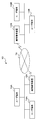
- an encryption processing system 10 includes encryption / decryption devices 12A and 12B, a plurality of user terminals 14A, a plurality of user terminals 14B, and an Internet access network 16. I have.
- the encryption / decryption devices 12A and 12B are examples of an encryption device and a decryption device.
- the plurality of user terminals 14A are connected to the encryption / decryption device 12A, and the encryption / decryption device 12A is connected to the Internet access network 16.
- the plurality of user terminals 14B are connected to the encryption / decryption device 12B, and the encryption / decryption device 12B is connected to the Internet access network 16.
- the encryption / decryption devices 12A and 12B are connected to each other via the Internet access network 16.
- the transmission data is output to the Internet access network 16 via the encryption / decryption device 12A, while receiving data via the Internet access network 16 is received.
- received data is input from the Internet access network 16 via the encryption / decryption device 12A.
- the transmission data is output to the Internet access network 16 via the encryption / decryption device 12B, while data transmitted via the Internet access network 16 is transmitted.
- received data is input from the Internet access network 16 via the encryption / decryption device 12B.
- the encryption / decryption devices 12A and 12B include a CPU (Central Processing Unit), a RAM (Random Access Memory), and a ROM (Read Only Memory) that stores a program for executing a pseudo-random number sequence generation processing routine described later.
- the computer is functionally configured as shown below.
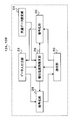
- the encryption / decryption devices 12A and 12B include a communication unit 20, a data input / output unit 22, a common data setting unit 24, a pseudo random number sequence generation unit 26, an encryption unit 28, and a decryption unit 30.
- the pseudo random number sequence generation unit 26 is an example of a matrix generation unit, a matrix operation unit, a bit string conversion unit, a bit number determination unit, and a pseudo random number generation sequence unit.
- the communication unit 20 transmits and receives data via the Internet access network 16.
- the data input / output unit 22 receives data output from the user terminals 14A and 14B and outputs data to the user terminals 14A and 14B.
- the common data setting unit 24 sets common data in the encryption / decryption devices 12A and 12B. Specifically, d ⁇ d matrix A, prime numbers p1, p2, and initial vector v0, which are private data, are set as common data.
- the pseudo random number sequence generation unit 26 generates a pseudo random number bit sequence using a d ⁇ d matrix A, prime numbers p1 and p2, and an initial vector v0, which are private data, by a method described later.
- the encryption unit 28 uses the pseudo random number bit string generated by the pseudo random number sequence generation unit 26 as a key for the one-time pad encryption, thereby encrypting the data to be encrypted input by the data input / output unit 22 with a stream cipher. I do. For example, as shown in FIG. 3A, by calculating the XOR of the plain text represented by the bit string and the pseudo random number bit string as the encryption key, every bit from the front (or every byte) ) Encrypt. The data encrypted by the encryption unit 28 is transmitted by the communication unit 20.
- the decryption unit 30 decrypts the data to be decrypted received by the communication unit 20 by using the pseudo random number bit sequence generated by the pseudo random number sequence generation unit 26 as a key for the one-time pad encryption. . For example, as shown in FIG. 3B, by calculating the XOR of the encrypted text (cypher text) represented by a bit string and the pseudo random number bit string as the encryption key, one bit at a time (or one byte) Decrypt every).
- the data decrypted by the decryption unit 30 is output to the data terminals 14A and 14B by the data input / output unit 22.
- the pseudorandom number sequence generation unit 26 generates two non-commutative matrices A1 and A2 using the d ⁇ d matrix A and the prime numbers p1 and p2 set as common private data as follows. To do.
- the matrix A is a 2 ⁇ 2 matrix will be described as an example.
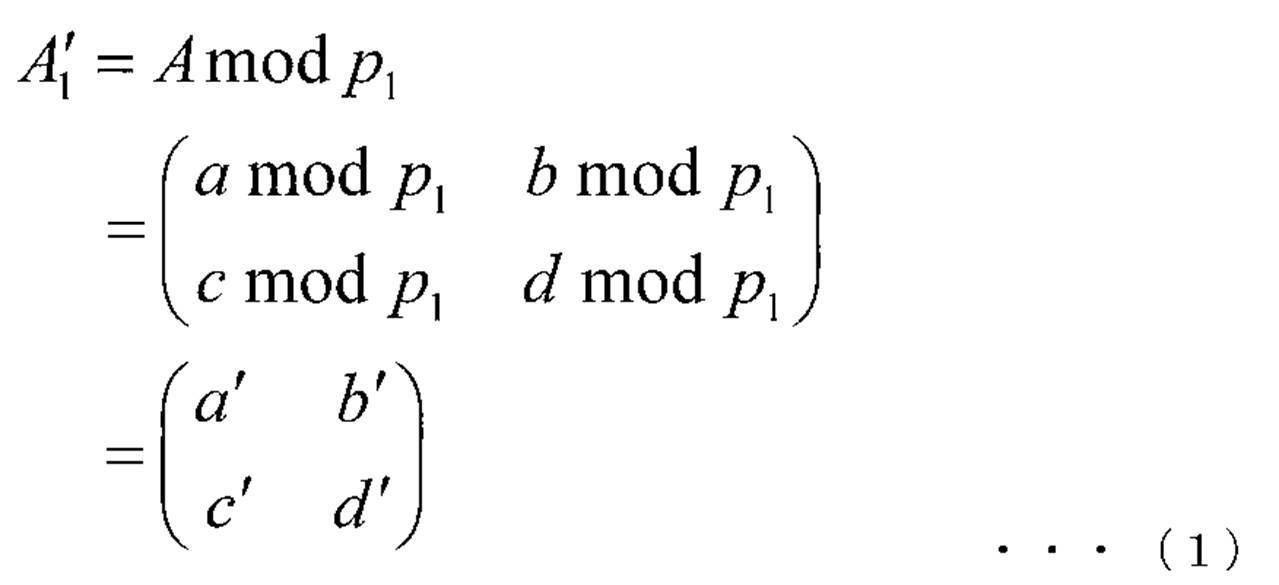
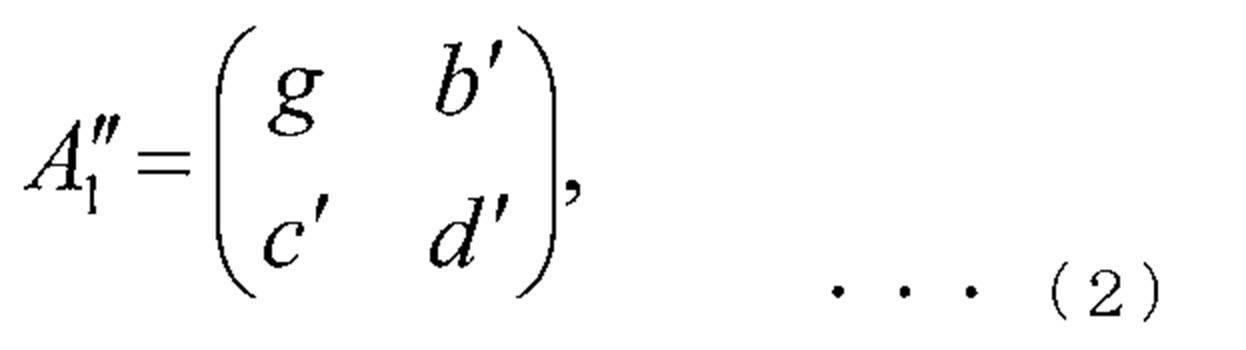
- the pseudo-random number generator 26 calculates a matrix A1 'using the matrix A and the prime number p1, as shown in the following equation (1).
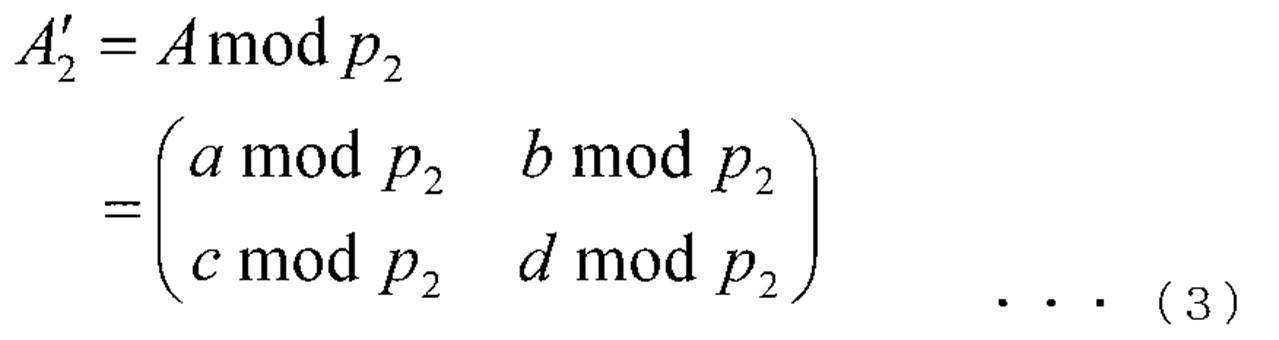
- the pseudo random number sequence generation unit 26 calculates the matrix A2 ′ using the matrix A and the prime number p2, and generates the non-commutative matrix A2 as described above. To do.
- the period length O (A) of the pseudo-random number sequence generated using the non-commutative matrices A1 and A2 is an arbitrary prime number p used for generating the non-commutative matrices A1 and A2. It can be written as the following equation (4).
- the period of A becomes longer than that.
- v i A 1 i v 0 .
- the pseudo random number sequence generation unit 26 obtains the bit sequence W 1 from the obtained vector sequence V by non-linear transformation.
- a cut-off process is performed to remove the leading bit string including the bit string composed of 0 and the next 1 appearing from the leading bit.
- the cut-off it is known that the remaining bit string has high randomness.
- Random cut as described above, the leading bit string consisting of the consecutive 0 that appears first and the 1 that appears next is cut.
- Fixed cut the number of bits set in advance is cut. For example, when the number of bits to be cut by Fixed cut is 3, the first 3 bits of the bit string obtained as a result of Random cut are cut.
- This cut-off process is performed on all the elements of v i , and W is a bit string in which all the elements after the cut-off process are arranged.
- the attacker cannot restore the non-commutative matrices A 1 and A 2 without verifying the possibility of all cutoffs, the attacker can improve the strength against the attack.
- the vector v i by the action of non-commutative matrix A1, A2, in obtaining the new vector v i + 1, a sum operation and product operation number between, as follows Replace with an operation that combines multiple operators.
- a and b are 32-bit numbers, and the symbol a ⁇ k is a symbol for shifting a by k bits, (sum operation) a + b is replaced with a + b mod 2 32 .
- (product operation) a ⁇ b is replaced with a ⁇ (b / 2 27 ) xor b.
- a ⁇ (b / 2 27 ) represents that a is shifted by a quotient obtained by dividing b by 2 27
- xor represents a bitwise exclusive OR.
- the matrix operation method may be further replaced as follows.
- v i (v i 1 , v i 2 ,..., V i d ) is obtained by applying the matrix A to the initial vector v 0 i times (d is the dimension of A)
- v i A method for obtaining + 1 (v i + 1 1 , v i + 1 2 ,..., V i + 1 d ) is as follows.
- v i + 1 2 (A (v i + 1 1 , v i 2 ,..., V i d )) 2 .
- This a non-commutative matrix A the first element of v i is applied to replaced with a v i + 1 1, in which removal of the second element. Note that the calculation required here is only the calculation of the second element.
- v i + 1 3 (A (v i + 1 1 , v i + 1 2 ,..., V i d )) 2 .
- the first and second elements of v i are replaced, the non-commutative matrix A is applied, and the third element is extracted.
- the processing for the bit string W1 is interrupted at the moment when the bit number of the bit string W1 reaches n, and the remaining part of the bit string W1 is discarded.
- PRBS generation unit 26 similarly for non-commutative matrix A 2, repeats the action of the vector and the cut-off process, to generate a bit string W 2. Also, at the moment when the number of bits of the bit string W2 reaches n, the processing for the bit string W2 is interrupted and the remaining part of the bit string W2 is discarded.
- the pseudo random number sequence generation unit 26 calculates the XOR of the finally obtained bit sequence W 1 and the bit sequence W 2, and sets the obtained bit sequence as the pseudo random number bit sequence.
- the bit string obtained by XOR of the bit string W 1 and the bit string W 2 may be further subjected to nonlinear transformation, and the result may be a pseudo-random bit string.
- the pseudo random number sequence generation unit 26 generates a pseudo random number bit sequence having the same number of bits as the number of bits of the encryption target data or the number of bits of the decryption target data.
- the user terminal 14A when data is transmitted from the user terminal 14A to the user terminal 14B, the user terminal 14A outputs the transmission data to the encryption / decryption device 12A.
- the pseudo-random number sequence generation processing routine shown in FIG. 4 is executed in the encryption / decryption device 12A.
- the encryption / decryption device 12A generates non-commutative matrices A1 and A2 using the non-commutative matrix A and primes p1 and p2 set in common with the encryption / decryption device 12B.
- the encryption / decryption device 12A sets a variable i for identifying a vector to 0, which is an initial value. Also, an initial vector v0 is set.
- step 104 the decryption unit 12A is in the vector v i, respectively by the action of non-commutative matrix A1, A2, to calculate the vector v i + 1 1, v i + 1 2.
- step 106 each of the vectors v i + 1 1 and v i + 1 2 calculated in step 104 is converted into a bit string, and a cut-off process is performed on each bit string to cut the leading bit string. Turn off.
- step 108 the encryption / decryption device 12A adds each of the bit strings obtained in step 106 so as to be further aligned with the bit strings W1 and W2.
- step 110 the encryption / decryption device 12A determines whether or not the number of bits of each of the bit strings W1 and W2 has reached the number of bits of the bit string of the transmission data (encryption target data). If the number of bits of each of the bit strings W1 and W2 has not reached the bit number of the bit string of the transmission data (data to be encrypted) input from the user terminal 14A, in step 112, the encryption / decryption device 12A The variable i is incremented by 1, and the process returns to step 104 to repeat the processes after step 104.
- the encryption / decryption device 12A performs the process using the non-commutative matrix A1 in the processes after step 104. Not performed.
- the encryption / decryption device 12A performs the process using the non-commutative matrix A2 in the processes after step 104 above. Absent.
- step 110 if it is determined that the number of bits of both the bit strings W1 and W2 has reached the bit number of the bit string of the transmission data, the encryption / decryption device 12A proceeds to step 114.
- step 114 the encryption / decryption device 12A calculates the XOR of the bit strings W1 and W2, generates a pseudo random number bit string S, and ends the pseudo random number sequence generation processing routine.
- the encryption / decryption device 12A is encrypted by calculating the XOR between the pseudo random number bit sequence S generated by the pseudo random number sequence generation processing routine and the bit sequence of the transmission data input from the user terminal 14. Generate transmission data. Also, the encryption / decryption device 12A transmits the encrypted transmission data to the user terminal 14B via the Internet access network 16.
- the encrypted transmission data is received by the encryption / decryption device 12B, and the pseudo-random number sequence generation processing routine of FIG. 4 is executed in the encryption / decryption device 12B in the same manner, and the pseudo-random number having the same number of bits as the encrypted transmission data is executed.
- a random bit string S is generated.
- the encryption / decryption device 12B generates a plaintext of the encrypted transmission data by calculating an XOR between the generated pseudo random number bit string S and the bit string of the encrypted transmission data. Also, the encryption / decryption device 12B outputs the plaintext of the transmission data to the user terminal B designated as the transmission destination.
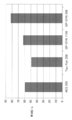
- the pseudo-random number sequence corresponding to one component of the above-described embodiment is subjected to a statistical test (NISTU01 test) in the process of creating the present invention (F. Giuseppe, “Benchmarking for the QP Cryptographic Diformate, Dipartmento Informate, e Production, Universita di Roma “Tor Vergata” (Italian), see 2009).
- NISTU01 test is performed by acquiring only the input / output state with the program source closed.
- NIST is the National Institute of Standards and Technology.
- the NISTU01 test is one of the tests performed by NIST to impose cryptographic algorithms and implementation requirements that are approved for use by US government agencies. Yes, it evaluates the safety of pseudo-random number sequences.
- Tests include SmallCrush, BigCrush, Rabbit, Alphabit, FIPS-140-2, pseudoDIEHARD.
- the pseudo-random number sequence generation algorithm RC4 that is widely used at present is used as a comparison target.
- the pseudo-random number sequence corresponding to one component of the above-described embodiment passed all statistical tests, but the comparison target RC4 failed to pass many tests.
- the pseudo-random number sequence generation algorithm described in the embodiment can generate a statistically safe pseudo-random number sequence.
- the encryption / decryption device replaces the sum operation and product operation when operating the non-commutative matrices A1 and A2 with an operation method combining a plurality of types of operators. Then, the non-commutative matrices A1 and A2 are repeatedly applied to the initial vector and nonlinear transformation is performed, and the XOR of the obtained bit strings W1 and W2 is calculated to obtain a pseudo-random bit string.
- the encryption / decryption device performs encryption or decryption using a pseudo random number bit string, thereby speeding up the encryption process or the decryption process when the number of bits of the data to be encrypted or the data to be decrypted is variable, In addition, the decryption strength can be increased.
- pseudo random number sequence generation algorithm statistical randomness and long period of the pseudo random number sequence can be guaranteed by using some non-linear transformation, and by using the generated pseudo random number sequence, a safe A disposable encryption key (One-Time-Pad key) can be generated.
- streaming encryption can be realized, multimedia files such as audio and video can be transferred safely and at high speed.
- the present invention may be applied, or may be applied to keyless entry of automobiles. Further, the present invention may be applied to HDD (hard disk disk drive) encryption. For example, all data stored in the HDD may be encrypted by the encryption method described in the present embodiment so that only authorized users can read it. Further, the present invention may be applied to the security of the Cloud service.
- HDD hard disk disk drive
- the program has been described as an embodiment in which the program is installed in advance.
- the program can be provided by being stored in a computer-readable recording medium.
- the computer-readable medium includes two non-permitted computers based on a d ⁇ d matrix A that is private data and two prime numbers p1 and p2, which are set in common with a decoding device.
- a matrix generation unit that generates a permutation matrix A1, A2, a non-commutative matrix A1 into a d-dimensional initial vector v 0 set in common with the decoding device or a d-dimensional vector v i-1 1 obtained previously.
- Matrix working part that, the matrix is converted into a bit string by performing a nonlinear transformation to the vector v i 1 determined by the working portion, the converted by the bit string is coupled to a bit string W1 previously obtained determining the bit string W1
- a non-linear conversion is performed on the vector v i 2 to convert it into a bit string
- the bit string conversion unit that obtains the bit string W2 by combining the converted bit string with the previously obtained bit string W2 is obtained by the bit string conversion unit.
- the bit number determination of repeating the action by the matrix action unit and the conversion and combination by the bit string conversion unit until the number of bits of the bit string W1 and the bit string W2 reaches the bit number of the bit string representing the data to be encrypted.
- a pseudo-random number sequence generation unit for obtaining a target sequence and calculating the exclusive OR of the pseudo-random number bit sequence obtained by the pseudo-random number sequence generation unit and the bit sequence representing the encryption target data. It is a computer readable medium storing a program for functioning as an encryption unit for encrypting data.
- the computer-readable medium includes two non-permitted computers based on a d ⁇ d matrix A that is private data and two prime numbers p1 and p2 that are set in common with an encryption device.
- Matrix working part that, the matrix is converted into a bit string by performing a nonlinear transformation to the vector v i 1 determined by the working portion, the converted by the bit string is coupled to a bit string W1 previously obtained determining the bit string W1
- a non-linear conversion is performed on the vector v i 2 to convert it into a bit string, and the bit string conversion unit that obtains the bit string W2 by combining the converted bit string with the previously obtained bit string W2 is obtained by the bit string conversion unit.
- bit number determination of repeating the operation by the matrix operation unit and the conversion and combination by the bit string conversion unit until the number of bits of each of the bit string W1 and the bit string W2 reaches the bit number of the bit string representing the data to be decoded.
- calculating an exclusive OR of the bit string W1 and the bit string W2 A pseudo-random number sequence generation unit for obtaining a target sequence, and calculating the exclusive OR of the pseudo-random number bit sequence obtained by the pseudo-random number sequence generation unit and the bit sequence representing the decryption target data.
- the computer-readable medium stores a program for functioning as a decryption unit that decrypts data.
Landscapes
- Engineering & Computer Science (AREA)
- Computer Security & Cryptography (AREA)
- Computer Networks & Wireless Communication (AREA)
- Signal Processing (AREA)
- Physics & Mathematics (AREA)
- Nonlinear Science (AREA)
- Storage Device Security (AREA)
- Complex Calculations (AREA)
- Mobile Radio Communication Systems (AREA)
Abstract
Description
図1に示すように、本発明の実施の形態に係る暗号化処理システム10は、暗号復号装置12A、12Bと、複数のユーザ端末14Aと、複数のユーザ端末14Bと、インターネットアクセス網16とを備えている。なお、暗号復号装置12A、12Bは、暗号化装置、復号化装置の一例である。
35=243mod7=5,・・・
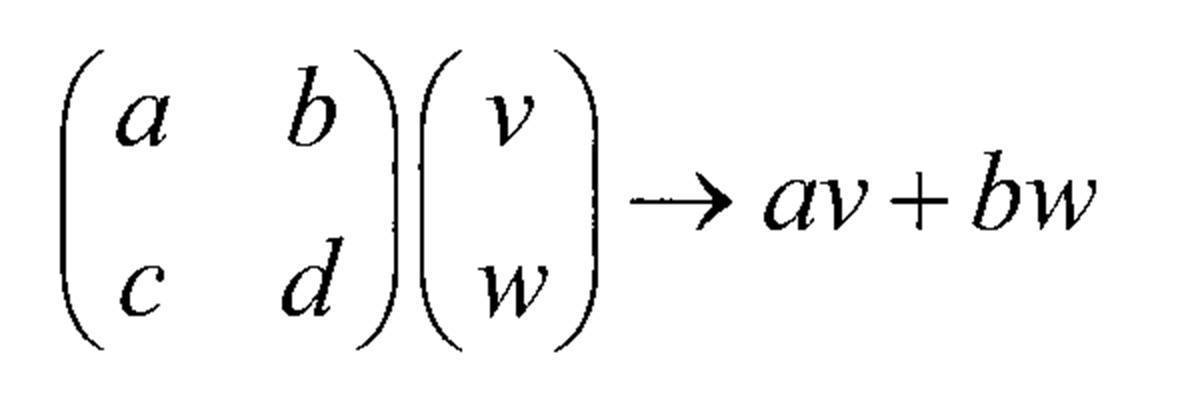
となるが、和演算と積演算は、上述したように、別の演算で置き換えられている。
次に、本実施の形態に係る暗号化処理システム10の動作について説明する。


Claims (9)
- 復号化装置と共通に設定された、プライベートデータであるd×dの行列A、及び2つの素数p1、p2に基づいて、2つの非可換行列A1、A2を生成する行列生成部と、
前記復号化装置と共通に設定されたd次元の初期ベクトルv0又は前回求められたd次元のベクトルvi-1 1に、非可換行列A1を作用させて、ベクトルvi 1を求めると共に、前記初期ベクトルv0、又は前回求められたd次元のベクトルvi-1 2に、非可換行列A2を作用させて、ベクトルvi 2を求める行列作用部であって、前記非可換行列A1、A2を作用させる際の和演算及び積演算の少なくとも一方を、予め定められた、複数種類の演算子を組み合わせた演算方法に置換して、非可換行列A1、A2を作用させる行列作用部と、
前記行列作用部によって求められたベクトルvi 1に対して非線形変換を行ってビット列に変換し、前記変換したビット列を前回求められたビット列W1に結合させて前記ビット列W1を求めると共に、ベクトルvi 2に対して非線形変換を行ってビット列に変換し、前記変換したビット列を前回求められたビット列W2に結合させて前記ビット列W2を求めるビット列変換部と、
前記ビット列変換部によって求められた前記ビット列W1及び前記ビット列W2の各々のビット数が、暗号化対象データを表わすビット列のビット数になるまで、前記行列作用部による作用と前記ビット列変換部による変換及び結合とを繰り返すビット数判定部と、
前記ビット列W1及び前記ビット列W2の排他的論理和を計算して、擬似乱数ビット列を求める擬似乱数列発生部と、
前記擬似乱数列発生部によって求められた擬似乱数ビット列と、前記暗号化対象データを表わすビット列との排他的論理和を計算することにより、前記暗号化対象データを暗号化する暗号化部と、
を含む暗号化装置。 - 前記行列作用部は、
前記初期ベクトルv0、又は前回求められたベクトルvi-1 1に、非可換行列A1を作用させて、前記ベクトルvi 1を求める際に、ベクトルvi 1の要素毎に、既に計算されたベクトルvi 1の要素に置き換えた前記初期ベクトルv0又は前記ベクトルvi-1 1に、非可換行列A1を作用させて、ベクトルvi 1の前記要素を計算し、
前記初期ベクトルv0、又は前回求められたベクトルvi-1 2に、非可換行列A2を作用させて、前記ベクトルvi 2を求める際に、ベクトルvi 2の要素毎に、既に計算されたベクトルvi 2の要素に置き換えた前記初期ベクトルv0又は前記ベクトルvi-1 2に、非可換行列A2を作用させて、ベクトルvi 2の前記要素を計算する請求項1記載の暗号化装置。 - 前記ビット列変換部は、
前記非線形変換として、前記行列作用部によって求められたベクトルvi 1をビット列に変換し、変換されたビット列に対して、予め定められた条件を満たす先頭ビット列をカットするカットオフ処理を行い、前記先頭ビット列がカットされた前記ビット列を前回求められたビット列W1に結合させると共に、ベクトルvi 2をビット列に変換し、変換されたビット列に対して、前記カットオフ処理を行い、前記先頭ビット列がカットされた前記ビット列を前回求められたビット列W2に結合させる請求項1又は2記載の暗号化装置。 - 前記ビット列変換部は、前記カットオフ処理として、前記変換されたビット列に対して、前記予め定められた条件を満たす先頭ビット列として、先頭から連続する0と、先頭から最初に出現する1とからなる先頭ビット列をカットすると共に、前記先頭ビット列がカットされた前記ビット列から、予め定められたビット数の先頭ビット列をカットする処理を行う請求項3記載の暗号化装置。
- 暗号化装置と共通に設定された、プライベートデータであるd×dの行列A、及び2つの素数p1、p2に基づいて、2つの非可換行列A1、A2を生成する行列生成部と、
前記暗号化装置と共通に設定されたd次元の初期ベクトルv0又は前回求められたd次元のベクトルvi-1 1に、非可換行列A1を作用させて、ベクトルvi 1を求めると共に、前記初期ベクトルv0、又は前回求められたd次元のベクトルvi-1 2に、非可換行列A2を作用させて、ベクトルvi 2を求める行列作用部であって、前記非可換行列A1、A2を作用させる際の和演算及び積演算の少なくとも一方を、予め定められた、複数種類の演算子を組み合わせた演算方法に置換して、非可換行列A1、A2を作用させる行列作用部と、
前記行列作用部によって求められたベクトルvi 1に対して非線形変換を行ってビット列に変換し、前記変換したビット列を前回求められたビット列W1に結合させて前記ビット列W1を求めると共に、ベクトルvi 2に対して非線形変換を行ってビット列に変換し、前記変換したビット列を前回求められたビット列W2に結合させて前記ビット列W2を求めるビット列変換部と、
前記ビット列変換部によって求められた前記ビット列W1及び前記ビット列W2の各々のビット数が、復号化対象データを表わすビット列のビット数になるまで、前記行列作用部による作用と前記ビット列変換部による変換及び結合とを繰り返すビット数判定部と、
前記ビット列W1及び前記ビット列W2の排他的論理和を計算して、擬似乱数ビット列を求める擬似乱数列発生部と、
前記擬似乱数列発生部によって求められた擬似乱数ビット列と、前記復号化対象データを表わすビット列との排他的論理和を計算することにより、前記復号化対象データを復号化する復号化部と、
を含む復号化装置。 - コンピュータを、
復号化装置と共通に設定された、プライベートデータであるd×dの行列A、及び2つの素数p1、p2に基づいて、2つの非可換行列A1、A2を生成する行列生成部、
前記復号化装置と共通に設定されたd次元の初期ベクトルv0又は前回求められたd次元のベクトルvi-1 1に、非可換行列A1を作用させて、ベクトルvi 1を求めると共に、前記初期ベクトルv0、又は前回求められたd次元のベクトルvi-1 2に、非可換行列A2を作用させて、ベクトルvi 2を求める行列作用部であって、前記非可換行列A1、A2を作用させる際の和演算及び積演算の少なくとも一方を、予め定められた、複数種類の演算子を組み合わせた演算方法に置換して、非可換行列A1、A2を作用させる行列作用部、
前記行列作用部によって求められたベクトルvi 1に対して非線形変換を行ってビット列に変換し、前記変換したビット列を前回求められたビット列W1に結合させて前記ビット列W1を求めると共に、ベクトルvi 2に対して非線形変換を行ってビット列に変換し、前記変換したビット列を前回求められたビット列W2に結合させて前記ビット列W2を求めるビット列変換部、
前記ビット列変換部によって求められた前記ビット列W1及び前記ビット列W2の各々のビット数が、暗号化対象データを表わすビット列のビット数になるまで、前記行列作用部による作用と前記ビット列変換部による変換及び結合とを繰り返すビット数判定部、
前記ビット列W1及び前記ビット列W2の排他的論理和を計算して、擬似乱数ビット列を求める擬似乱数列発生部、及び
前記擬似乱数列発生部によって求められた擬似乱数ビット列と、前記暗号化対象データを表わすビット列との排他的論理和を計算することにより、前記暗号化対象データを暗号化する暗号化部
として機能させるためのプログラム。 - コンピュータを、
暗号化装置と共通に設定された、プライベートデータであるd×dの行列A、及び2つの素数p1、p2に基づいて、2つの非可換行列A1、A2を生成する行列生成部、
前記暗号化装置と共通に設定されたd次元の初期ベクトルv0又は前回求められたd次元のベクトルvi-1 1に、非可換行列A1を作用させて、ベクトルvi 1を求めると共に、前記初期ベクトルv0、又は前回求められたd次元のベクトルvi-1 2に、非可換行列A2を作用させて、ベクトルvi 2を求める行列作用部であって、前記非可換行列A1、A2を作用させる際の和演算及び積演算の少なくとも一方を、予め定められた、複数種類の演算子を組み合わせた演算方法に置換して、非可換行列A1、A2を作用させる行列作用部、
前記行列作用部によって求められたベクトルvi 1に対して非線形変換を行ってビット列に変換し、前記変換したビット列を前回求められたビット列W1に結合させて前記ビット列W1を求めると共に、ベクトルvi 2に対して非線形変換を行ってビット列に変換し、前記変換したビット列を前回求められたビット列W2に結合させて前記ビット列W2を求めるビット列変換部、
前記ビット列変換部によって求められた前記ビット列W1及び前記ビット列W2の各々のビット数が、復号化対象データを表わすビット列のビット数になるまで、前記行列作用部による作用と前記ビット列変換部による変換及び結合とを繰り返すビット数判定部、
前記ビット列W1及び前記ビット列W2の排他的論理和を計算して、擬似乱数ビット列を求める擬似乱数列発生部、及び
前記擬似乱数列発生部によって求められた擬似乱数ビット列と、前記復号化対象データを表わすビット列との排他的論理和を計算することにより、前記復号化対象データを復号化する復号化部
として機能させるためのプログラム。 - 行列生成部によって、復号化装置と共通に設定された、プライベートデータであるd×dの行列A、及び2つの素数p1、p2に基づいて、2つの非可換行列A1、A2を生成するステップと、
行列作用部によって、前記復号化装置と共通に設定されたd次元の初期ベクトルv0又は前回求められたd次元のベクトルvi-1 1に、非可換行列A1を作用させて、ベクトルvi 1を求めると共に、前記初期ベクトルv0、又は前回求められたd次元のベクトルvi-1 2に、非可換行列A2を作用させて、ベクトルvi 2を求めるステップであって、前記非可換行列A1、A2を作用させる際の和演算及び積演算の少なくとも一方を、予め定められた、複数種類の演算子を組み合わせた演算方法に置換して、非可換行列A1、A2を作用させるステップと、
ビット列変換部によって、前記行列作用部によって求められたベクトルvi 1に対して非線形変換を行ってビット列に変換し、前記変換したビット列を前回求められたビット列W1に結合させて前記ビット列W1を求めると共に、ベクトルvi 2に対して非線形変換を行ってビット列に変換し、前記変換したビット列を前回求められたビット列W2に結合させて前記ビット列W2を求めるステップと、
ビット数判定部によって、前記ビット列変換部によって求められた前記ビット列W1及び前記ビット列W2の各々のビット数が、暗号化対象データを表わすビット列のビット数になるまで、前記行列作用部による作用と前記ビット列変換部による変換及び結合とを繰り返すステップと、
擬似乱数列発生部によって、前記ビット列W1及び前記ビット列W2の排他的論理和を計算して、擬似乱数ビット列を求めるステップと、
暗号化部によって、前記擬似乱数列発生部によって求められた擬似乱数ビット列と、前記暗号化対象データを表わすビット列との排他的論理和を計算することにより、前記暗号化対象データを暗号化するステップと、
を含む暗号化方法。 - 行列生成部によって、暗号化装置と共通に設定された、プライベートデータであるd×dの行列A、及び2つの素数p1、p2に基づいて、2つの非可換行列A1、A2を生成するステップと、
行列作用部によって、前記暗号化装置と共通に設定されたd次元の初期ベクトルv0又は前回求められたd次元のベクトルvi-1 1に、非可換行列A1を作用させて、ベクトルvi 1を求めると共に、前記初期ベクトルv0、又は前回求められたd次元のベクトルvi-1 2に、非可換行列A2を作用させて、ベクトルvi 2を求めるステップであって、前記非可換行列A1、A2を作用させる際の和演算及び積演算の少なくとも一方を、予め定められた、複数種類の演算子を組み合わせた演算方法に置換して、非可換行列A1、A2を作用させるステップと、
ビット列変換部によって、前記行列作用部によって求められたベクトルvi 1に対して非線形変換を行ってビット列に変換し、前記変換したビット列を前回求められたビット列W1に結合させて前記ビット列W1を求めると共に、ベクトルvi 2に対して非線形変換を行ってビット列に変換し、前記変換したビット列を前回求められたビット列W2に結合させて前記ビット列W2を求めるステップと、
ビット数判定部によって、前記ビット列変換部によって求められた前記ビット列W1及び前記ビット列W2の各々のビット数が、復号化対象データを表わすビット列のビット数になるまで、前記行列作用部による作用と前記ビット列変換部による変換及び結合とを繰り返すステップと、
擬似乱数列発生部によって、前記ビット列W1及び前記ビット列W2の排他的論理和を計算して、擬似乱数ビット列を求めるステップと、
復号化部によって、前記擬似乱数列発生部によって求められた擬似乱数ビット列と、前記復号化対象データを表わすビット列との排他的論理和を計算することにより、前記復号化対象データを復号化するステップと
を含む復号化方法。
Priority Applications (4)
| Application Number | Priority Date | Filing Date | Title |
|---|---|---|---|
| CN201380018975.0A CN104303453B (zh) | 2012-04-02 | 2013-03-15 | 加密装置、解密装置、加密方法、解密方法 |
| EP13773112.1A EP2835932B1 (en) | 2012-04-02 | 2013-03-15 | Encryption device, decryption device, encryption method, decryption method, and program |
| KR1020147030403A KR102033196B1 (ko) | 2012-04-02 | 2013-03-15 | 암호화 장치, 복호화 장치, 암호화 방법, 복호화 방법, 및 프로그램 |
| US14/390,204 US9467286B2 (en) | 2012-04-02 | 2013-03-15 | Encryption device, decryption device, encryption method, decryption method, and program |
Applications Claiming Priority (2)
| Application Number | Priority Date | Filing Date | Title |
|---|---|---|---|
| JP2012084113A JP6035459B2 (ja) | 2012-04-02 | 2012-04-02 | 暗号化装置、復号化装置、及びプログラム |
| JP2012-084113 | 2012-04-02 |
Publications (1)
| Publication Number | Publication Date |
|---|---|
| WO2013150880A1 true WO2013150880A1 (ja) | 2013-10-10 |
Family
ID=49300374
Family Applications (1)
| Application Number | Title | Priority Date | Filing Date |
|---|---|---|---|
| PCT/JP2013/057509 Ceased WO2013150880A1 (ja) | 2012-04-02 | 2013-03-15 | 暗号化装置、復号化装置、暗号化方法、復号化方法、及びプログラム |
Country Status (7)
| Country | Link |
|---|---|
| US (1) | US9467286B2 (ja) |
| EP (1) | EP2835932B1 (ja) |
| JP (1) | JP6035459B2 (ja) |
| KR (1) | KR102033196B1 (ja) |
| CN (1) | CN104303453B (ja) |
| TW (1) | TWI606714B (ja) |
| WO (1) | WO2013150880A1 (ja) |
Cited By (3)
| Publication number | Priority date | Publication date | Assignee | Title |
|---|---|---|---|---|
| CN105721148A (zh) * | 2016-04-12 | 2016-06-29 | 武汉优信众网科技有限公司 | 一种基于双随机数的数据文件加密方法及系统 |
| CN105799620A (zh) * | 2014-12-29 | 2016-07-27 | 上海通用汽车有限公司 | 车辆电子控制模块的安全代码计算 |
| CN109478999A (zh) * | 2016-04-05 | 2019-03-15 | 罗之落有限责任公司 | 用于从在网络上传输并存储在数据存储设施中的数据中移除信息的反式加密方法和设备 |
Families Citing this family (12)
| Publication number | Priority date | Publication date | Assignee | Title |
|---|---|---|---|---|
| TWI554073B (zh) * | 2014-07-28 | 2016-10-11 | 柯呈翰 | 供加密檔案和/或通訊協定之多重加密方法與系統 |
| CN105076959A (zh) * | 2015-07-15 | 2015-11-25 | 王永帮 | 一种薏米木瓜猪蹄粥及其制备方法 |
| TWI575925B (zh) * | 2015-11-11 | 2017-03-21 | 大宏數創意股份有限公司 | 資料加解密的方法及系統 |
| DE102019214379B4 (de) * | 2019-09-20 | 2023-03-09 | Hans-Joachim Bentz | Vorrichtung und Verfahren zur Verschlüsselung |
| CN110855423A (zh) * | 2019-09-23 | 2020-02-28 | 深圳市智讯互动体育科技有限公司 | 加密解密有序数值串的方法、装置及存储介质 |
| CN111191272A (zh) * | 2019-11-20 | 2020-05-22 | 航天信息股份有限公司 | 数据脱敏方法、电子设备及存储介质 |
| CN113766242B (zh) * | 2020-06-01 | 2023-05-05 | 中国移动通信有限公司研究院 | 水印嵌入方法、水印提取方法及装置 |
| EP4292237A1 (en) * | 2021-02-10 | 2023-12-20 | Rampart Communications, Inc. | Automorphic transformations of signal samples within a transmitter or receiver |
| CN112887079B (zh) * | 2021-03-11 | 2022-10-04 | 中国石油大学(华东) | 基于一段随机比特序列生成的变换加密算法 |
| US12328210B1 (en) | 2021-10-06 | 2025-06-10 | Rampart Communications, Inc. | Methods and apparatus for signal correlation using a quadratic form |
| CN115795515B (zh) * | 2022-12-22 | 2026-04-14 | 美的集团股份有限公司 | 数据加密方法和数据加密装置 |
| CN116094690B (zh) * | 2023-04-07 | 2023-06-06 | 中铁工程设计咨询集团有限公司 | 几何图形数字资产加密方法、装置、设备及可读存储介质 |
Citations (5)
| Publication number | Priority date | Publication date | Assignee | Title |
|---|---|---|---|---|
| JP2001358709A (ja) * | 2000-06-13 | 2001-12-26 | Casio Comput Co Ltd | 暗号化装置、復号化装置、その方法及び記録媒体 |
| JP2003241656A (ja) | 2002-02-19 | 2003-08-29 | Sony Corp | 暗号化装置および暗号化方法 |
| JP2007264147A (ja) * | 2006-03-27 | 2007-10-11 | Fukuoka Institute Of Technology | 疑似乱数列生成装置、暗号化復号化装置、疑似乱数列生成方法、暗号化復号化方法、疑似乱数列生成プログラムおよび暗号化復号化プログラム |
| JP2009005164A (ja) | 2007-06-22 | 2009-01-08 | Dainippon Printing Co Ltd | 暗号処理装置,暗号処理プログラム及び暗号処理方法 |
| JP2012084113A (ja) | 2010-09-17 | 2012-04-26 | Jtekt Corp | 遠隔操作装置及び工作機械 |
Family Cites Families (7)
| Publication number | Priority date | Publication date | Assignee | Title |
|---|---|---|---|---|
| JP3773226B2 (ja) * | 1997-10-06 | 2006-05-10 | カシオ計算機株式会社 | 暗号化装置 |
| JP2001016196A (ja) * | 1999-04-28 | 2001-01-19 | Fuji Soft Abc Inc | 多重アファイン鍵を用いる暗号化・復号化方法、認証方法、及びこれを用いる各装置 |
| US20040086117A1 (en) * | 2002-06-06 | 2004-05-06 | Petersen Mette Vesterager | Methods for improving unpredictability of output of pseudo-random number generators |
| JP2007288254A (ja) * | 2006-04-12 | 2007-11-01 | Sony Corp | 通信システム、通信装置および方法、並びにプログラム |
| US8781117B2 (en) * | 2007-08-29 | 2014-07-15 | Red Hat, Inc. | Generating pseudo random bits from polynomials |
| JP5489696B2 (ja) * | 2009-12-21 | 2014-05-14 | Kddi株式会社 | ストリーム暗号の暗号化装置、ストリーム暗号の復号化装置、ストリーム暗号の暗号化方法、ストリーム暗号の復号化方法およびプログラム |
| TWI406138B (zh) * | 2010-04-01 | 2013-08-21 | Ind Tech Res Inst | 循序運算的伽羅瓦乘法架構與方法 |
-
2012
- 2012-04-02 JP JP2012084113A patent/JP6035459B2/ja not_active Expired - Fee Related
-
2013
- 2013-03-15 CN CN201380018975.0A patent/CN104303453B/zh not_active Expired - Fee Related
- 2013-03-15 US US14/390,204 patent/US9467286B2/en not_active Expired - Fee Related
- 2013-03-15 KR KR1020147030403A patent/KR102033196B1/ko not_active Expired - Fee Related
- 2013-03-15 EP EP13773112.1A patent/EP2835932B1/en not_active Not-in-force
- 2013-03-15 WO PCT/JP2013/057509 patent/WO2013150880A1/ja not_active Ceased
- 2013-03-15 TW TW102109287A patent/TWI606714B/zh not_active IP Right Cessation
Patent Citations (5)
| Publication number | Priority date | Publication date | Assignee | Title |
|---|---|---|---|---|
| JP2001358709A (ja) * | 2000-06-13 | 2001-12-26 | Casio Comput Co Ltd | 暗号化装置、復号化装置、その方法及び記録媒体 |
| JP2003241656A (ja) | 2002-02-19 | 2003-08-29 | Sony Corp | 暗号化装置および暗号化方法 |
| JP2007264147A (ja) * | 2006-03-27 | 2007-10-11 | Fukuoka Institute Of Technology | 疑似乱数列生成装置、暗号化復号化装置、疑似乱数列生成方法、暗号化復号化方法、疑似乱数列生成プログラムおよび暗号化復号化プログラム |
| JP2009005164A (ja) | 2007-06-22 | 2009-01-08 | Dainippon Printing Co Ltd | 暗号処理装置,暗号処理プログラム及び暗号処理方法 |
| JP2012084113A (ja) | 2010-09-17 | 2012-04-26 | Jtekt Corp | 遠隔操作装置及び工作機械 |
Non-Patent Citations (6)
| Title |
|---|
| ACCARDI, L ET AL.: "The QP-DYN algorithms", 2011, XP007919884, Retrieved from the Internet <URL:http://www.cryptalarm.it/ca/documenti/upload2set/8125_chap01,pdf> [retrieved on 20130408] * |
| F. GIUSEPPE: "Benchmarking for the QP Cryptographic Suite", DIPARTMENTO DI INFORMATICA, SISTEMI E PRODUZIONE, UNIVERSITA DI ROMA, 2009 |
| L. ACCARDI; M. REGOLI; M. OHYA: "The QP-DYN Algorithm", QP-PQ 28, QUANTUM BIO-INFORMATICS IV, 2011, pages 1 - 16 |
| L. ACCARDI; M. REGOLI; M.OHYA: "The QP-DYN Algorithm", QP-PQ 28, QUANTUM BIO-INFORMATICS IV, 2011, pages 1 - 16 |
| M. ABUNDO ET AL.: "Hyperbolic automorphisms of tori and pseudo-random sequences", CALCOLO, vol. 29, 1 September 1992 (1992-09-01), pages 213 - 240, XP055169269 * |
| PERFORMANCE ANALYSIS OF ALGORITHMS AND STATISTICAL TESTS, (IN ITALIAN, 2011 |
Cited By (5)
| Publication number | Priority date | Publication date | Assignee | Title |
|---|---|---|---|---|
| CN105799620A (zh) * | 2014-12-29 | 2016-07-27 | 上海通用汽车有限公司 | 车辆电子控制模块的安全代码计算 |
| CN109478999A (zh) * | 2016-04-05 | 2019-03-15 | 罗之落有限责任公司 | 用于从在网络上传输并存储在数据存储设施中的数据中移除信息的反式加密方法和设备 |
| CN109478999B (zh) * | 2016-04-05 | 2021-12-03 | 罗之落有限责任公司 | 用于从在网络上传输并存储在数据存储设施中的数据中移除信息的反式加密方法和设备 |
| CN105721148A (zh) * | 2016-04-12 | 2016-06-29 | 武汉优信众网科技有限公司 | 一种基于双随机数的数据文件加密方法及系统 |
| CN105721148B (zh) * | 2016-04-12 | 2019-01-18 | 武汉珈铭汉象教育科技有限公司 | 一种基于双随机数的数据文件加密方法及系统 |
Also Published As
| Publication number | Publication date |
|---|---|
| EP2835932A4 (en) | 2015-12-23 |
| TW201404107A (zh) | 2014-01-16 |
| JP6035459B2 (ja) | 2016-11-30 |
| EP2835932A1 (en) | 2015-02-11 |
| EP2835932B1 (en) | 2020-09-30 |
| KR20140143210A (ko) | 2014-12-15 |
| CN104303453B (zh) | 2017-07-04 |
| US9467286B2 (en) | 2016-10-11 |
| US20150110269A1 (en) | 2015-04-23 |
| CN104303453A (zh) | 2015-01-21 |
| KR102033196B1 (ko) | 2019-11-29 |
| JP2013213930A (ja) | 2013-10-17 |
| TWI606714B (zh) | 2017-11-21 |
Similar Documents
| Publication | Publication Date | Title |
|---|---|---|
| JP6035459B2 (ja) | 暗号化装置、復号化装置、及びプログラム | |
| JP5402632B2 (ja) | 共通鍵ブロック暗号化装置、共通鍵ブロック暗号化方法及びプログラム | |
| JP6019453B2 (ja) | 暗号化装置、復号化装置、及びプログラム | |
| CN107637010B (zh) | 数据加密装置及方法和数据解密装置及方法 | |
| EP2911138A2 (en) | Variable-length block cipher apparatus and method capable of format preserving encryption | |
| JP6575532B2 (ja) | 暗号化装置、復号装置、暗号処理システム、暗号化方法、復号方法、暗号化プログラム、及び復号プログラム | |
| WO2017056150A1 (ja) | メッセージ認証子生成装置、メッセージ認証子生成方法及びメッセージ認証子生成プログラム | |
| JP5689826B2 (ja) | 秘密計算システム、暗号化装置、秘密計算装置及びその方法、プログラム | |
| Sharma et al. | Analysis of AES Encryption with ECC | |
| JP5992651B2 (ja) | 暗号化方法、プログラム、および、システム | |
| Waqas et al. | Generation of AES-like S-boxes by replacing affine matrix | |
| JP7226829B2 (ja) | データ処理装置、方法及びコンピュータプログラム | |
| CN109714154B (zh) | 一种代码体积困难白盒安全模型下的白盒密码算法的实现方法 | |
| US20250015984A1 (en) | Use Of Quantum Resistant Iterative Keypads For Large Files | |
| JP2017038336A (ja) | 復号方法 | |
| Mohammed et al. | Evaluation of rijndael algorithm for audio encryption by brute force attack | |
| Abdulrazaq | A novel approach for safeguarding Kurdish text files via modified AES-OTP and enhanced RSA cryptosystem on unreliable networks | |
| JP2015082077A (ja) | 暗号化装置、制御方法、及びプログラム | |
| JP5293612B2 (ja) | 暗号化装置、復号装置、暗号化方法、復号方法およびプログラム | |
| Padhi et al. | Modified version of XTS (XOR-Encrypt-XOR with Ciphertext Stealing) using tweakable enciphering scheme | |
| Welekar et al. | A novel approach for file encryption | |
| RU2694336C1 (ru) | Способ аутентифицированного шифрования | |
| Rupa | Performance Evaluation of Message Security Using Fractal Sieve with MMD | |
| Vajargah et al. | Implementation of Chaotic Henon Congruential Generator (CHCG) for Message Encryption | |
| KR20150111785A (ko) | 포멧유지 컴포넌트 기반 포멧 유지 암호화 방법 |
Legal Events
| Date | Code | Title | Description |
|---|---|---|---|
| 121 | Ep: the epo has been informed by wipo that ep was designated in this application |
Ref document number: 13773112 Country of ref document: EP Kind code of ref document: A1 |
|
| NENP | Non-entry into the national phase |
Ref country code: DE |
|
| WWE | Wipo information: entry into national phase |
Ref document number: 14390204 Country of ref document: US |
|
| WWE | Wipo information: entry into national phase |
Ref document number: 2013773112 Country of ref document: EP |
|
| ENP | Entry into the national phase |
Ref document number: 20147030403 Country of ref document: KR Kind code of ref document: A |