WO2013156858A1 - Materials and methods for prevention and treatment of viral infections - Google Patents
Materials and methods for prevention and treatment of viral infections Download PDFInfo
- Publication number
- WO2013156858A1 WO2013156858A1 PCT/IB2013/001074 IB2013001074W WO2013156858A1 WO 2013156858 A1 WO2013156858 A1 WO 2013156858A1 IB 2013001074 W IB2013001074 W IB 2013001074W WO 2013156858 A1 WO2013156858 A1 WO 2013156858A1
- Authority
- WO
- WIPO (PCT)
- Prior art keywords
- compound
- formula
- alkyl
- haloalkyl
- amino
- Prior art date
- Legal status (The legal status is an assumption and is not a legal conclusion. Google has not performed a legal analysis and makes no representation as to the accuracy of the status listed.)
- Ceased
Links
- JGCMBUAYCCXTSF-QAMBRROOSA-N C[C@@H]([C@@H]([C@H]([C@H]1O)O)O)O[C@H]1OC[C@H](C[C@@H]1O)OC[C@@H]1O Chemical compound C[C@@H]([C@@H]([C@H]([C@H]1O)O)O)O[C@H]1OC[C@H](C[C@@H]1O)OC[C@@H]1O JGCMBUAYCCXTSF-QAMBRROOSA-N 0.000 description 2
- 0 *C1C(*)C(OCC(C(*)C(*)C2*)OC2=*)OC(*)C1* Chemical compound *C1C(*)C(OCC(C(*)C(*)C2*)OC2=*)OC(*)C1* 0.000 description 1
- PMHMDNFMKTWENN-DSMZTOPNSA-N C[C@H](C[C@@H]([C@H]1O)O)O[C@H]1OCCc(cc1O)ccc1O Chemical compound C[C@H](C[C@@H]([C@H]1O)O)O[C@H]1OCCc(cc1O)ccc1O PMHMDNFMKTWENN-DSMZTOPNSA-N 0.000 description 1
Classifications
-
- C—CHEMISTRY; METALLURGY
- C07—ORGANIC CHEMISTRY
- C07H—SUGARS; DERIVATIVES THEREOF; NUCLEOSIDES; NUCLEOTIDES; NUCLEIC ACIDS
- C07H15/00—Compounds containing hydrocarbon or substituted hydrocarbon radicals directly attached to hetero atoms of saccharide radicals
- C07H15/18—Acyclic radicals, substituted by carbocyclic rings
-
- A—HUMAN NECESSITIES
- A61—MEDICAL OR VETERINARY SCIENCE; HYGIENE
- A61K—PREPARATIONS FOR MEDICAL, DENTAL OR TOILETRY PURPOSES
- A61K31/00—Medicinal preparations containing organic active ingredients
- A61K31/33—Heterocyclic compounds
- A61K31/335—Heterocyclic compounds having oxygen as the only ring hetero atom, e.g. fungichromin
- A61K31/35—Heterocyclic compounds having oxygen as the only ring hetero atom, e.g. fungichromin having six-membered rings with one oxygen as the only ring hetero atom
- A61K31/351—Heterocyclic compounds having oxygen as the only ring hetero atom, e.g. fungichromin having six-membered rings with one oxygen as the only ring hetero atom not condensed with another ring
-
- A—HUMAN NECESSITIES
- A61—MEDICAL OR VETERINARY SCIENCE; HYGIENE
- A61K—PREPARATIONS FOR MEDICAL, DENTAL OR TOILETRY PURPOSES
- A61K31/00—Medicinal preparations containing organic active ingredients
- A61K31/70—Carbohydrates; Sugars; Derivatives thereof
-
- A—HUMAN NECESSITIES
- A61—MEDICAL OR VETERINARY SCIENCE; HYGIENE
- A61K—PREPARATIONS FOR MEDICAL, DENTAL OR TOILETRY PURPOSES
- A61K31/00—Medicinal preparations containing organic active ingredients
- A61K31/70—Carbohydrates; Sugars; Derivatives thereof
- A61K31/7012—Compounds having a free or esterified carboxyl group attached, directly or through a carbon chain, to a carbon atom of the saccharide radical, e.g. glucuronic acid, neuraminic acid
-
- A—HUMAN NECESSITIES
- A61—MEDICAL OR VETERINARY SCIENCE; HYGIENE
- A61K—PREPARATIONS FOR MEDICAL, DENTAL OR TOILETRY PURPOSES
- A61K31/00—Medicinal preparations containing organic active ingredients
- A61K31/70—Carbohydrates; Sugars; Derivatives thereof
- A61K31/7024—Esters of saccharides
-
- A—HUMAN NECESSITIES
- A61—MEDICAL OR VETERINARY SCIENCE; HYGIENE
- A61K—PREPARATIONS FOR MEDICAL, DENTAL OR TOILETRY PURPOSES
- A61K31/00—Medicinal preparations containing organic active ingredients
- A61K31/70—Carbohydrates; Sugars; Derivatives thereof
- A61K31/7028—Compounds having saccharide radicals attached to non-saccharide compounds by glycosidic linkages
- A61K31/7032—Compounds having saccharide radicals attached to non-saccharide compounds by glycosidic linkages attached to a polyol, i.e. compounds having two or more free or esterified hydroxy groups, including the hydroxy group involved in the glycosidic linkage, e.g. monoglucosyldiacylglycerides, lactobionic acid, gangliosides
-
- A—HUMAN NECESSITIES
- A61—MEDICAL OR VETERINARY SCIENCE; HYGIENE
- A61K—PREPARATIONS FOR MEDICAL, DENTAL OR TOILETRY PURPOSES
- A61K31/00—Medicinal preparations containing organic active ingredients
- A61K31/70—Carbohydrates; Sugars; Derivatives thereof
- A61K31/7042—Compounds having saccharide radicals and heterocyclic rings
-
- A—HUMAN NECESSITIES
- A61—MEDICAL OR VETERINARY SCIENCE; HYGIENE
- A61K—PREPARATIONS FOR MEDICAL, DENTAL OR TOILETRY PURPOSES
- A61K31/00—Medicinal preparations containing organic active ingredients
- A61K31/70—Carbohydrates; Sugars; Derivatives thereof
- A61K31/7042—Compounds having saccharide radicals and heterocyclic rings
- A61K31/7048—Compounds having saccharide radicals and heterocyclic rings having oxygen as a ring hetero atom, e.g. leucoglucosan, hesperidin, erythromycin, nystatin, digitoxin or digoxin
-
- A—HUMAN NECESSITIES
- A61—MEDICAL OR VETERINARY SCIENCE; HYGIENE
- A61P—SPECIFIC THERAPEUTIC ACTIVITY OF CHEMICAL COMPOUNDS OR MEDICINAL PREPARATIONS
- A61P1/00—Drugs for disorders of the alimentary tract or the digestive system
- A61P1/16—Drugs for disorders of the alimentary tract or the digestive system for liver or gallbladder disorders, e.g. hepatoprotective agents, cholagogues, litholytics
-
- A—HUMAN NECESSITIES
- A61—MEDICAL OR VETERINARY SCIENCE; HYGIENE
- A61P—SPECIFIC THERAPEUTIC ACTIVITY OF CHEMICAL COMPOUNDS OR MEDICINAL PREPARATIONS
- A61P31/00—Antiinfectives, i.e. antibiotics, antiseptics, chemotherapeutics
-
- A—HUMAN NECESSITIES
- A61—MEDICAL OR VETERINARY SCIENCE; HYGIENE
- A61P—SPECIFIC THERAPEUTIC ACTIVITY OF CHEMICAL COMPOUNDS OR MEDICINAL PREPARATIONS
- A61P31/00—Antiinfectives, i.e. antibiotics, antiseptics, chemotherapeutics
- A61P31/12—Antivirals
-
- A—HUMAN NECESSITIES
- A61—MEDICAL OR VETERINARY SCIENCE; HYGIENE
- A61P—SPECIFIC THERAPEUTIC ACTIVITY OF CHEMICAL COMPOUNDS OR MEDICINAL PREPARATIONS
- A61P31/00—Antiinfectives, i.e. antibiotics, antiseptics, chemotherapeutics
- A61P31/12—Antivirals
- A61P31/14—Antivirals for RNA viruses
- A61P31/16—Antivirals for RNA viruses for influenza or rhinoviruses
-
- C—CHEMISTRY; METALLURGY
- C07—ORGANIC CHEMISTRY
- C07D—HETEROCYCLIC COMPOUNDS
- C07D309/00—Heterocyclic compounds containing six-membered rings having one oxygen atom as the only ring hetero atom, not condensed with other rings
- C07D309/02—Heterocyclic compounds containing six-membered rings having one oxygen atom as the only ring hetero atom, not condensed with other rings having no double bonds between ring members or between ring members and non-ring members
- C07D309/08—Heterocyclic compounds containing six-membered rings having one oxygen atom as the only ring hetero atom, not condensed with other rings having no double bonds between ring members or between ring members and non-ring members with hetero atoms or with carbon atoms having three bonds to hetero atoms with at the most one bond to halogen, e.g. ester or nitrile radicals, directly attached to ring carbon atoms
- C07D309/10—Oxygen atoms
-
- C—CHEMISTRY; METALLURGY
- C07—ORGANIC CHEMISTRY
- C07H—SUGARS; DERIVATIVES THEREOF; NUCLEOSIDES; NUCLEOTIDES; NUCLEIC ACIDS
- C07H15/00—Compounds containing hydrocarbon or substituted hydrocarbon radicals directly attached to hetero atoms of saccharide radicals
- C07H15/26—Acyclic or carbocyclic radicals, substituted by hetero rings
-
- Y—GENERAL TAGGING OF NEW TECHNOLOGICAL DEVELOPMENTS; GENERAL TAGGING OF CROSS-SECTIONAL TECHNOLOGIES SPANNING OVER SEVERAL SECTIONS OF THE IPC; TECHNICAL SUBJECTS COVERED BY FORMER USPC CROSS-REFERENCE ART COLLECTIONS [XRACs] AND DIGESTS
- Y02—TECHNOLOGIES OR APPLICATIONS FOR MITIGATION OR ADAPTATION AGAINST CLIMATE CHANGE
- Y02A—TECHNOLOGIES FOR ADAPTATION TO CLIMATE CHANGE
- Y02A50/00—TECHNOLOGIES FOR ADAPTATION TO CLIMATE CHANGE in human health protection, e.g. against extreme weather
- Y02A50/30—Against vector-borne diseases, e.g. mosquito-borne, fly-borne, tick-borne or waterborne diseases whose impact is exacerbated by climate change
Definitions
- Viral infections are responsible for many acute and chronic life-threatening diseases. It is estimated that about 33.4 million people are living with human immunodeficiency virus (HIV) worldwide. In addition, an estimated 2 billion people have been infected with hepatitis B virus, and 600,000 people die each year due to the acute or chronic consequences of the infection. Influenza is one of the most widely spread viral infections worldwide.
- Major influenza A pandemics include the Asian flu pandemic in 1957 (H2N2), the Hong Kong flu pandemic in 1968 (H3N2), the re-emergence of HlNl (Russian flu) in 1970, the H5N1 bird flu in 1997 and 2003, and the outbreak of the swine flu (HlNl) in April 2009.
- the present invention provides novel and advantageous materials and methods for preventing and/or treating viral infection.
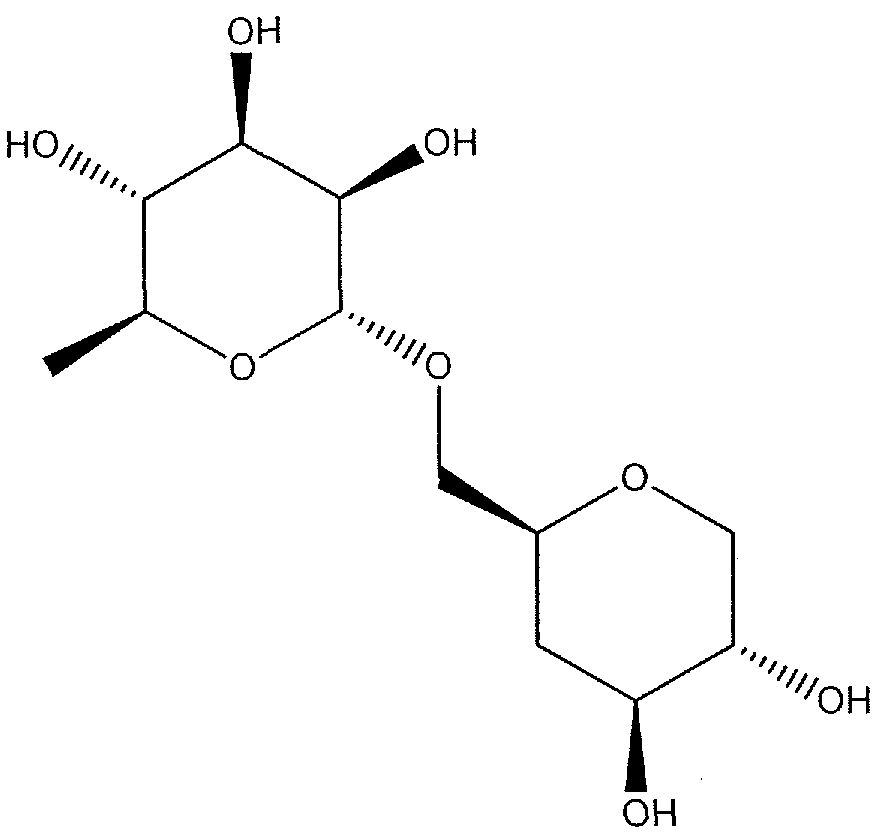
- the present invention provides compounds of formula I, having the following structure:
- Rj - Rj 3 are, independently -H, -OH, acyl, halo, haloalkyl, amino, alkylamino, hydroxyl, alkyl, hydroxylalkyl, alkoxy, thiol, cyano or -COOH.
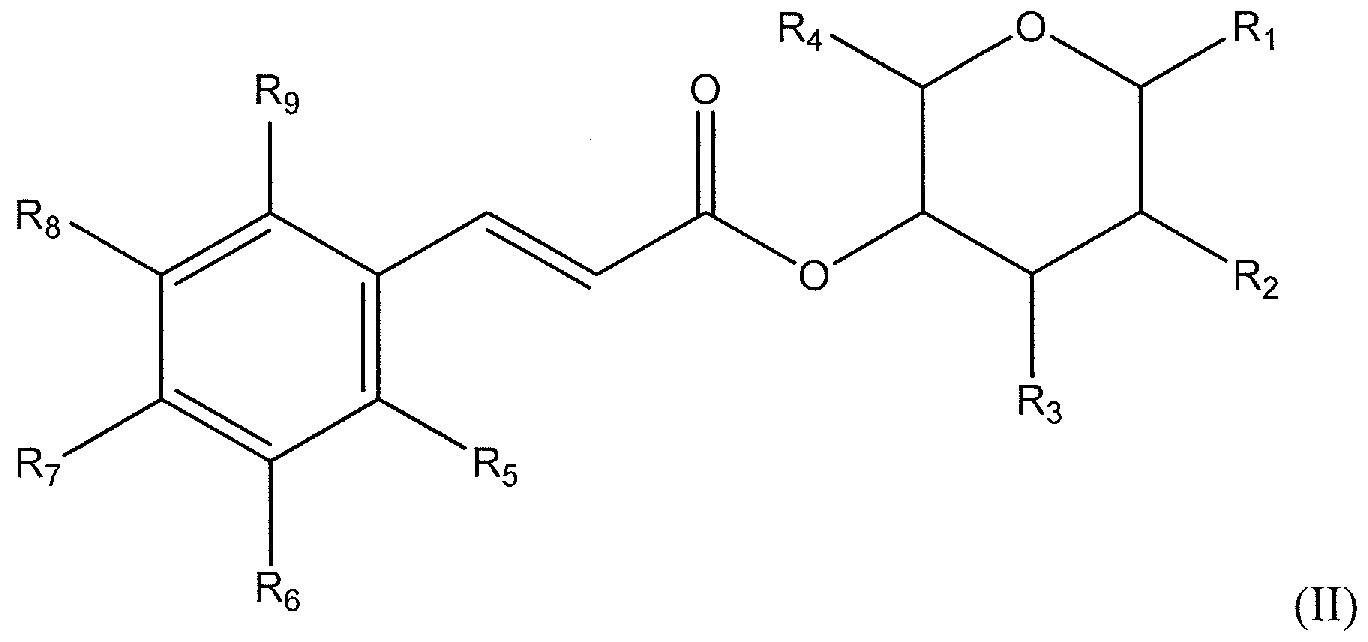
- the present invention provides compounds of formula II, having the following structure:
- R] - R are, independently -H, -OH, acyl, halo, haloalkyl, amino, alkylamino, hydroxyl, alkyl, hydroxylalkyl, alkoxy, thiol, cyano or -COOH.
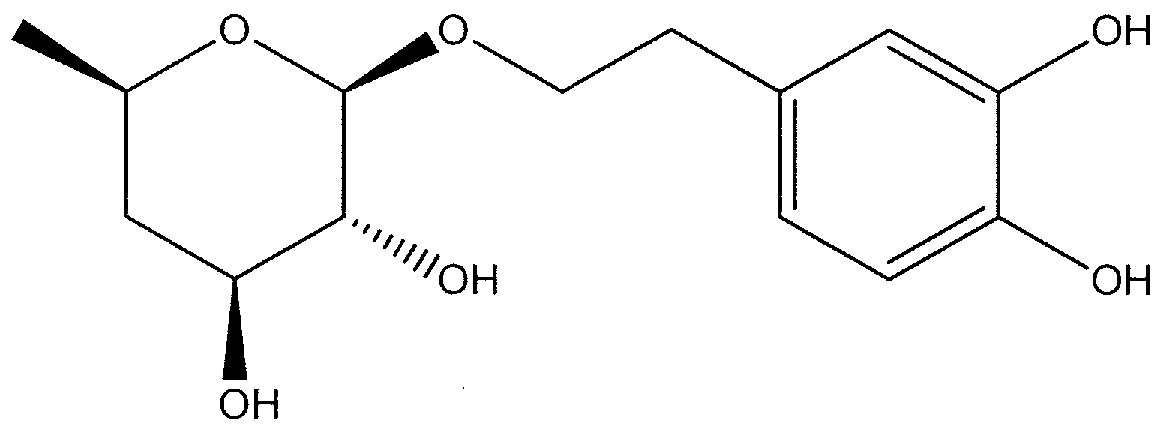
- the compound of formula II is:
- the present invention provides compounds of fomiula III, having the following structure:
- Ri - R ⁇ are, independently -H, -OH, acyl, halo, haloalkyl, amino, alkylamino, hydroxyl, alkyl, hydroxylalkyl, alkoxy, thiol, cyano or -COOH.
- the compound of formula III is:
- the present invention provides compounds of formula IV, having the following structure:
- i - R 8 are, independently -H, -OH, acyl, halo, haloalkyl, amino, alkylamino, hydroxyl, alkyl, hydroxylalkyl, alkoxy, thiol, cyano or -COOH.
- the compound of formula IV is:
- the present invention also provides therapeutic compositions, comprising an isolated or substantially pure compound selected from formula I to formula IV, or a salt thereof, and optionally, a pharmaceutically acceptable carrier. Also provided are uses of the compounds and compositions of the present invention for prevention and/or treatment of viral infection.
- the present invention provides novel and advantageous materials and methods for preventing and/or treating viral infection in a subject.
- the compounds and compositions of the present invention are formulated for oral administration.
- the present invention provides compounds having a chemical structure represented by formula I to formula IV.
- the present invention provides compounds of formula I, having the following structure:
- R - R 13 are, independently -H, -OH, acyl, halo, haloalkyl, amino, alkylamino, hydroxyl, alkyl, hydroxylalkyl, alkoxy, thiol, cyano or -COOH.
- one or more of R] - Ri 3 of formula 1 are selected from -H, -OH, -CH 3 , or -OCH 3 .
- the compound of formula I is:
- the present invention provides compounds of formula II, having the following structure:
- R ⁇ - R 9 are, independently -H, -OH, acyl, halo, haloalkyl, amino, alkylamino, hydroxyl, alkyl, hydroxylalkyl, alkoxy, thiol, cyano or -COOH.
- one or more of Ri - R 9 of formula II are selected from -H, -OH, -CH 3 , or -OCH 3 .
- the compound of formula II is:
- Ri - R are, independently -H, -OH, acyl, halo, haloalkyl, amino, alkylamino, hydroxyl, alkyl, hydroxylalkyl, alkoxy, thiol, cyano or -COOH.
- one or more of Ri - R9 of formula III are selected from -H, -OH, -CH 3 , or -OCH3.
- the compound of formula III is:
- the compound of formula III is:
- the present invention provides compounds of formula IV, having the following structure:
- Ri - R 8 are, independently -H, -OH, acyl, halo, haloalkyl, amino, alkylamino, hydroxyl, alkyl, hydroxylalkyl, alkoxy, thiol, cyano or -COOH.
- one or more of Ri - R 8 of formula IV are selected from -H, -OH, -CH 3 , or -OCH 3 .
- the compound of formula IV is:
- the compound of formula IV is:
- Alkyl means linear saturated monovalent radicals of one to eight carbon atoms or a branched saturated monovalent of three to eight carbon atoms. It may include hydrocarbon radicals of one to four or one to three carbon atoms, which may be linear. Examples include methyl, ethyl, propyl, 2-propyl, isopropyl, n-butyl, iso-butyl, tert-butyl, pentyl, and the like.
- the alkyl group is a linear or branched chain C] to C 6 alkyl group, Q to C5 alkyl group, Q to C 4 alkyl group, Cj to C 3 alkyl group, ethyl, or methyl group.
- hydrocarbon or “hydrocarbyl” refers to organic compounds or radicals consisting exclusively of the elements carbon and hydrogen. Hydrocarbyl includes alkyl, alkenyl, and alkynyl moieties.
- acyl means a radical -C(0)R wherein R is hydrogen, alkyl or cycloalkyl, or heterocycloalkyl.
- R group of the radical -C(0)R is a Cj to C 4 alkyl.
- acyl groups include, but are not limited to, formyl, acetyl, and ethylcarbonyl.
- halo means fluoro, chloro, bromo, and iodo.
- hydroxy means the radical -OH.
- substituted refers to an embodiment wherein at least one hydrogen atom of a compound or chemical moiety is replaced with a second chemical moiety.
- substituents are those found in the exemplary compounds and embodiments disclosed herein, as well as halogen; alkyl; alkenyl; alkynyl; hydroxy; alkoxyl; amino; haloalkyl (e.g., trifluoromethyl); and -COOH. All chemical groups disclosed herein can be substituted, unless it is specified otherwise.
- substituted alkyl, alkenyl, or alkynyl moieties described herein are moieties that are substituted with a second chemical moiety such as a hydrocarbyl moiety, halo, alkoxy, and -COOH.
- Substituted alkyl groups include, but are not limited to, haloalkyl, hydroxyalkyl, carboxylalkyl, and aminoalkyl.
- haloalkyl means alkyl substituted with one or more same or different halo atoms.
- Representative examples of haloalkyl groups include, but are not limited to, -CH 2 C1, -C3 ⁇ 4Br, -CF 3 , -CH2CH2CI, and -CH 2 CC1 3 .
- amino refers to -NH 2 .
- alkylamino means a radical -NHR or -NR 2 where each R is independently an alkyl group.
- the alkyl group of alkylamino is a Ci to C 4 alkyl.
- Representative examples of alkylamino groups include, but are not limited to, methylamino, (l-methylethyl)amino, methylamino, dimethylamino, methylethyl amino, and di(l-methyethyl)amino.
- hydroxyalkyl means an alkyl radical as defined herein, substituted with one or more, preferably one, two or three hydroxy groups.
- hydroxyalkyl is a C ⁇ to C 6 alkyl, or preferably a C ⁇ to C 4 alkyl, substituted with one or more hydroxy groups.
- Representative examples of hydroxyalkyl include, but are not limited to, hydroxymethyl, 2-hydroxyethyl, 2-hydroxypropyl, 3-hydroxypropyl, l -(hydroxymethy])-2-methylpropyl, 2 -hydroxy butyl, 3-hydroxybutyl, 4-hydroxybutyl,
- alkoxy refers to the radical -OR x , wherein R x is a Cj to C 6 alkyl group. In one embodiment, R x is a Ci to C 4 alkyl group. Exemplary alkoxy groups include, but are not limited to, methoxy, ethoxy, and propoxy.
- the present invention pertains to isolated or substantially pure compounds represented by formula I to formula IV.
- isolated refers to compounds that have been removed from any environment in which they may exist in nature. For example, an isolated compound would not refer to the compound as it exists in plants from which the compound can be isolated.
- the compounds of the present invention are at least 75% pure, preferably at least 90% pure, more preferably are more than 95% pure, and most preferably are more than 99% pure (substantially pure).
- the present invention further embodies stereoisomers of the compounds.
- stereoisomer encompasses all enantiomerically/stereomerically pure and enantiomerically/stereomerically enriched compounds disclosed herein.
- the present invention pertains to enantiomeric forms of the compounds.
- the enantiomeric forms of the compounds of the invention are substantially free from one another (i.e., in enantiomeric excess).
- the "R” forms of the compounds are substantially free from the “S” forms of the compounds and are, thus, in enantiomeric excess of the "S” forms.
- "S” forms of the compounds are substantially free of "R” forms of the compounds and are, thus, in enantiomeric excess of the "R” forms.
- the enantiomeric compounds are at least about in 80% enantiomeric excess. In a preferred embodiment, the compounds are in at least about 90% enantiomeric excess.
- the compounds are in at least about 95% enantiomeric excess. In an even more preferred embodiment, the compounds are in at least about 97.5% enantiomeric excess. In a most preferred embodiment, the compounds are in at least about 99% enantiomeric excess.
- the present invention also encompasses salts, solvates, hydrates, and polymorphs of the compounds of formula I to formula IV, and uses thereof.
- the compounds useful according to the present invention do not include the compounds disclosed in International Application No.: PCT/IB2010/003482, entitled “Materials and Methods for Prevention and Treatment of Viral Infections.”
- the compounds of formula I to formula IV have anti-viral activity.
- the present invention provides uses of the compounds of formula I to formula IV, and salts, solvates, hydrates, polymorphs thereof, as well as compositions comprising these compounds, for preventing and/or treating viral infection.
- the method comprises administering, to a subject in need of such prevention and/or a treatment, an effective amount of a composition comprising a compound selected from formula I or formula IV, or a salt, solvate, hydrate, or polymorph thereof.
- subject describes an organism, including mammals such as primates, to which treatment with the compositions according to the present invention can be provided.
- Mammalian species that can benefit from the disclosed methods of treatment include, but are not limited to, apes, chimpanzees, orangutans, humans, monkeys; and other animals such as dogs, cats, horses, cattle, pigs, sheep, goats, chickens, mice, rats, guinea pigs, and hamsters.
- antiviral includes but is not limited to, preventing, inhibiting, suppressing, reducing, adversely impacting, and/or interfering with the growth, survival, replication, function, and/or dissemination of a virus.
- treatment includes but is not limited to, alleviating or ameliorating a symptom of a disease or condition, and/or reducing the severity of a disease or condition.
- prevention or any grammatical variation thereof (e.g. , prevent, preventing, etc.), as used herein, includes but is not limited to, delaying the onset of symptoms, preventing relapse to a disease, decreasing the number or frequency of relapse episodes, increasing latency between symptomatic episodes, or a combination thereof.
- an effective amount refers to an amount that is capable of treating, ameliorating, or preventing a disease or condition or otherwise capable of producing an intended therapeutic effect.
- the compounds and compositions of the present invention are useful for preventing and/or treating infections caused by influenza viruses, including but not limited to, any of the subtypes of influenza A, influenza B, or influenza C.
- the subject compounds, pharmaceutical compositions, and therapeutic methods are useful for preventing and/or treating infections caused by influenza A viruses, including but not limited to, any of the strains of H1N1 , H1N2, H1N3 , H1N4, H1N5, H1N6, H1N7, H1N8, H1N9, H2N1 , H2N2, H2N3, H2N4, H2N5, H2N6, H2N7, H2N8, H2N9, H3N1 , H3N2, H3N3, H3N4, H3N5, H3N6, H3N7, H3N8, H3N9, H4N 1 , H5N2, H5N3, H5N4, H5N5, H5N6, H5N7, H5N8, H5N9, H6N1 , H6N2, H6N3, H6N4, H6N5, H6N6, H6N7, H6N8, H6N9, H7N1 , H6N2, H6N
- the compounds and compositions of the present invention are useful for preventing and/or treating infections caused by influenza A viruses, including but not limited to, H1N1 (A/HK/54/98, oseltamivir-sensitive strain), H1N1 (A/Vicotria/07159200/07, oseltamivir-resistant strain), H9N2 (A/Quail/HK Gl/97), H3N2 (A/H3N2/1174/99), H5Nl (A/H5Nl/97), H1N1 (A/54/98), H9N2/G1 , and H6N 1 (A/Teal/HK W312/97).
- H1N1 A/HK/54/98, oseltamivir-sensitive strain
- H1N1 A/Vicotria/07159200/07, oseltamivir-resistant strain
- H9N2 A/Quail/HK Gl/97
- H3N2 A/H3N2
- the compounds and compositions of the present invention are useful for preventing and/or treating infections caused by viruses, including but not limited to, respiratory syncytial virus, rhinovirus, HIV virus; hepatitis viruses including hepatitis A virus, hepatitis B virus, hepatitis C virus, hepatitis D virus, hepatitis E virus, hepatitis F virus, and hepatitis G virus; oncoviruses; human papilloma virus (HPV); human T-lymphotropic virus Type I (HTLV-1); bovine leukemia virus (BIN); Epstein-Barr virus; herpes simplex virus 1 ; herpes simplex virus 2; coronavirus; and poliovirus.
- viruses including but not limited to, respiratory syncytial virus, rhinovirus, HIV virus; hepatitis viruses including hepatitis A virus, hepatitis B virus, hepatitis C virus, hepatitis D virus, hepatitis E virus
- the compounds and compositions of the present invention are useful for preventing and/or treating infections caused by pathogens, including but not limited to, bacteria, fungi, parasitic microorganisms, and protozoan.
- the compounds and compositions of the present invention are useful for treating fever in a subject.
- the present invention also provides for a therapeutic method by administering therapeutic or pharmaceutical compositions in a form that can be combined with a pharmaceutically acceptable carrier.
- the compound may be, for example, isolated or substantially pure.
- carrier refers to a diluent, adjuvant, excipient, or vehicle with which the compound is administered.
- Such pharmaceutical carriers can be sterile liquids, such as water and oils, including those of petroleum oil such as mineral oil, vegetable oil such as peanut oil, soybean oil, and sesame oil, animal oil, or oil of synthetic origin. Saline solutions and aqueous dextrose and glycerol solutions can also be employed as liquid carriers, particularly for injectable solutions.
- Suitable methods of administration include, but are not limited to, oral, inhalation, or parenteral administration including intravenous, subcutaneous, topical, transdermal, intradermal, transmucosal, intraperitoneal, intramuscular, intracapsular, intraorbital, intracardiac, transtracheal, subcutaneous, subcuticular, intraarticular, subcapsular, subarachnoid, intraspinal, epidural and intrasternal injection, infusion, and electroporation, as well as co-administration as a component of any medical device or object to be inserted (temporarily or permanently) into a subject.
- parenteral administration including intravenous, subcutaneous, topical, transdermal, intradermal, transmucosal, intraperitoneal, intramuscular, intracapsular, intraorbital, intracardiac, transtracheal, subcutaneous, subcuticular, intraarticular, subcapsular, subarachnoid, intraspinal, epidural and intrasternal injection, infusion
- the subject method further comprises administering to a subject a second anti-viral agent, including but not limited to, compounds such as adamantanes and neuraminidase inhibitors, zanamivir, oseltamivir, peramivir, and seltamivir; interferons: nucleotides; siRNAs; or any of the combination thereof; and wherein the second antiviral agent can be administered prior to, subsequent to, or simultaneous with the compounds or pharmaceutical compositions of the subject invention.
- a second anti-viral agent including but not limited to, compounds such as adamantanes and neuraminidase inhibitors, zanamivir, oseltamivir, peramivir, and seltamivir; interferons: nucleotides; siRNAs; or any of the combination thereof.
- the subject method further comprises administering to a subject a second anti-viral agent, selected from the group consisting of zanamivir, oseltamivir, peramivir, seltamivir, and any of the combination thereof; wherein the second antiviral agent can be administered prior to, subsequent to, or simultaneous with the compounds or pharmaceutical compositions of the subject invention.
- a second anti-viral agent selected from the group consisting of zanamivir, oseltamivir, peramivir, seltamivir, and any of the combination thereof; wherein the second antiviral agent can be administered prior to, subsequent to, or simultaneous with the compounds or pharmaceutical compositions of the subject invention.
- Suitable pharmaceutical excipients include starch, glucose, lactose, sucrose, gelatin, malt, rice, flour, chalk, silica gel, sodium stearate, glycerol monostearate, talc, sodium chloride, dried skim milk, glycerol, propylene, glycol, water, ethanol and the like.
- the therapeutic composition if desired, can also contain minor amounts of wetting or emulsifying agents, or pH buffering agents. These compositions can take the form of solutions, suspensions, emulsion, tablets, capsules, powders, sustained-release formulations and the like.
- the composition can be formulated with traditional binders and carriers such as triglycerides.
- compositions contain a therapeutically effective amount of the therapeutic composition, together with a suitable amount of carrier so as to provide the form for proper administration to the patient.
- suitable pharmaceutical carriers are described in "Remington's Pharmaceutical Sciences” by E. W. Martin.
- Such compositions contain a therapeutically effective amount of the therapeutic composition, together with a suitable amount of carrier so as to provide the form for proper administration to the patient.
- the formulation should suit the mode of administration.
- the composition is formulated in accordance with routine procedures as a pharmaceutical composition adapted for local injection administration to human beings.
- compositions for local injection administration are solutions in sterile isotonic aqueous buffer.
- the composition may also include a solubilizing agent and a local anesthetic such as lidocaine to ease pain at the site of the injection.
- the ingredients are supplied either separately or mixed together in unit dosage form, for example, as a dry lyophilized powder or water free concentrate in a hermetically sealed container such as an ampoule or sachette indicating the quantity of active agent.
- an ampoule of sterile water for injection or saline can be provided so that the ingredients may be mixed prior to administration.
- compositions of the invention can be formulated as neutral or salt forms.
- Pharmaceutically acceptable salts include, but are not limited to, sodium, potassium, magnesium, ammonium, calcium, ferric hydroxides, isopropylamine, triethylamine, 2-ethylamino ethanol, histidine, procaine, acetate, aspartate, citrate, fumarate, hippurate, hydrochloride, lactate salt, malate salt, phosphate, sulfate, hemi-sulfate, tartrate, gluconate, maleate, and succinate salt.
- the present invention also provides for the modification of the compound such that it is more stable once administered to a subject, i.e., once administered it has a longer time period of effectiveness as compared to the unmodified compound.
- modifications are well known to those of skill in the art, e.g., microencapsulation, etc.
- the amount of the therapeutic or pharmaceutical composition of the invention which is effective in the treatment of a particular disease, condition or disorder will depend on the nature of the disease, condition or disorder and can be determined by standard clinical techniques. In general, the dosage ranges from about 0.001 mg/kg to about 2 mg/kg. In addition, in vitro assays may optionally be employed to help identify optimal dosage ranges. The precise dose to be employed in the formulation will also depend on the route of administration, and the seriousness of the disease, condition or disorder, and should be decided according to the judgment of the practitioner and each patient's circumstances. Effective doses may be extrapolated from dose-response curves derived from in vitro or animal model test systems.
- the effective mg/kg dosage in rats is divided by six.
- the invention also provides a pharmaceutical pack or kit comprising one or more containers filled with one or more of the ingredients, e.g., compound, carrier suitable for administration.
Landscapes
- Health & Medical Sciences (AREA)
- Chemical & Material Sciences (AREA)
- Life Sciences & Earth Sciences (AREA)
- Organic Chemistry (AREA)
- General Health & Medical Sciences (AREA)
- Molecular Biology (AREA)
- Veterinary Medicine (AREA)
- Public Health (AREA)
- Animal Behavior & Ethology (AREA)
- Pharmacology & Pharmacy (AREA)
- Medicinal Chemistry (AREA)
- Epidemiology (AREA)
- Engineering & Computer Science (AREA)
- Biochemistry (AREA)
- Genetics & Genomics (AREA)
- Biotechnology (AREA)
- General Chemical & Material Sciences (AREA)
- Chemical Kinetics & Catalysis (AREA)
- Nuclear Medicine, Radiotherapy & Molecular Imaging (AREA)
- Virology (AREA)
- Oncology (AREA)
- Communicable Diseases (AREA)
- Pulmonology (AREA)
- Gastroenterology & Hepatology (AREA)
- Bioinformatics & Cheminformatics (AREA)
- Pharmaceuticals Containing Other Organic And Inorganic Compounds (AREA)
- Saccharide Compounds (AREA)
Description




Claims




Priority Applications (8)
| Application Number | Priority Date | Filing Date | Title |
|---|---|---|---|
| CA2867257A CA2867257A1 (en) | 2012-04-20 | 2013-04-16 | Materials and methods for prevention and treatment of viral infections |
| AU2013250891A AU2013250891B2 (en) | 2012-04-20 | 2013-04-16 | Materials and methods for prevention and treatment of viral infections |
| KR20147032375A KR20150030643A (en) | 2012-04-20 | 2013-04-16 | Materials and methods for prevention and treatment of viral infections |
| HK15107041.7A HK1206594A1 (en) | 2012-04-20 | 2013-04-16 | Materials and methods for prevention and treatment of viral infections |
| CN201380020901.0A CN104244943A (en) | 2012-04-20 | 2013-04-16 | Materials and methods for preventing and treating viral infections |
| HK15105629.1A HK1205676A1 (en) | 2012-04-20 | 2013-04-16 | Materials and methods for prevention and treatment of viral infections |
| EP13778767.7A EP2838526A4 (en) | 2012-04-20 | 2013-04-16 | Materials and methods for prevention and treatment of viral infections |
| JP2015506320A JP6195902B2 (en) | 2012-04-20 | 2013-04-16 | Materials and methods for prevention and treatment of viral infections |
Applications Claiming Priority (2)
| Application Number | Priority Date | Filing Date | Title |
|---|---|---|---|
| US201261636184P | 2012-04-20 | 2012-04-20 | |
| US61/636,184 | 2012-04-20 |
Publications (1)
| Publication Number | Publication Date |
|---|---|
| WO2013156858A1 true WO2013156858A1 (en) | 2013-10-24 |
Family
ID=49380661
Family Applications (1)
| Application Number | Title | Priority Date | Filing Date |
|---|---|---|---|
| PCT/IB2013/001074 Ceased WO2013156858A1 (en) | 2012-04-20 | 2013-04-16 | Materials and methods for prevention and treatment of viral infections |
Country Status (10)
| Country | Link |
|---|---|
| US (1) | US9156871B2 (en) |
| EP (1) | EP2838526A4 (en) |
| JP (1) | JP6195902B2 (en) |
| KR (1) | KR20150030643A (en) |
| CN (1) | CN104244943A (en) |
| AU (1) | AU2013250891B2 (en) |
| CA (1) | CA2867257A1 (en) |
| HK (2) | HK1206594A1 (en) |
| TW (1) | TW201345903A (en) |
| WO (1) | WO2013156858A1 (en) |
Families Citing this family (2)
| Publication number | Priority date | Publication date | Assignee | Title |
|---|---|---|---|---|
| ES2710322T3 (en) * | 2012-08-28 | 2019-04-24 | Univ Tuebingen Medizinische Fakultaet | Tracers of senescence |
| CN114507264B (en) * | 2022-01-06 | 2024-10-25 | 湖南中医药大学 | Extraction monomer chrysanthemin A of golden silk chrysanthemums, extraction method and application thereof |
Citations (5)
| Publication number | Priority date | Publication date | Assignee | Title |
|---|---|---|---|---|
| CN1424318A (en) * | 2002-12-11 | 2003-06-18 | 中国科学院南海海洋研究所 | Structure of phenethyl alcohol glycoside compound and its use |
| EP1736166A2 (en) * | 2005-06-20 | 2006-12-27 | I.R.B. Istituto Di Ricerche Biotecnologiche S.r.l. | Extracts from Ajuga reptans cell lines, their preparation and use |
| US20070004011A1 (en) * | 2005-06-20 | 2007-01-04 | I.R.B. Istituto Di Ricerche Biotecnologiche S.R.I. | Extracts obtained from cell line cultures from plants belonging to the Oleaceae family (e.g. Syringa vulgaris), their preparation and use |
| US20080261896A1 (en) * | 2007-04-11 | 2008-10-23 | Sinphar Pharmaceutical Co., Ltd. | Testosterone generating and metabolizing enhancer |
| CN102304156A (en) * | 2011-06-24 | 2012-01-04 | 浙江大东吴药业有限公司 | Phenylethanoid glycoside components, and preparation method and application thereof |
Family Cites Families (6)
| Publication number | Priority date | Publication date | Assignee | Title |
|---|---|---|---|---|
| JP2912843B2 (en) * | 1995-03-17 | 1999-06-28 | 東洋水産株式会社 | Process for producing alkyl β-rutinoside and novel alkyl β-rutinoside |
| JP2005162756A (en) * | 2003-11-05 | 2005-06-23 | Katsutoshi Terasawa | beta-GLUCURONIDASE INHIBITOR |
| US20100016244A1 (en) * | 2006-06-23 | 2010-01-21 | Robert Vachy | D-glucopyranose 1-[3,5-bis (1,1-dimethylethy)-4-hydroxybenzoate] and its derivatives, preparation and use thereof |
| CN101519457B (en) * | 2009-03-17 | 2011-04-13 | 徐德平 | Method for preparing beta-ethoxy rutinose and application thereof for reducing blood glucose |
| CN102883727B (en) * | 2009-12-30 | 2016-09-21 | 培力有限公司 | Methods and materials for the prevention and treatment of viral infections |
| CN101897715B (en) * | 2010-08-16 | 2012-07-11 | 江西山香药业有限公司 | Compositions of privetin and rhoiferin and their use in the preparation of medicines |
-
2013
- 2013-04-16 WO PCT/IB2013/001074 patent/WO2013156858A1/en not_active Ceased
- 2013-04-16 HK HK15107041.7A patent/HK1206594A1/en unknown
- 2013-04-16 JP JP2015506320A patent/JP6195902B2/en active Active
- 2013-04-16 EP EP13778767.7A patent/EP2838526A4/en not_active Withdrawn
- 2013-04-16 HK HK15105629.1A patent/HK1205676A1/en unknown
- 2013-04-16 CN CN201380020901.0A patent/CN104244943A/en active Pending
- 2013-04-16 AU AU2013250891A patent/AU2013250891B2/en active Active
- 2013-04-16 US US13/863,781 patent/US9156871B2/en active Active
- 2013-04-16 CA CA2867257A patent/CA2867257A1/en not_active Abandoned
- 2013-04-16 KR KR20147032375A patent/KR20150030643A/en not_active Ceased
- 2013-04-18 TW TW102113845A patent/TW201345903A/en unknown
Patent Citations (5)
| Publication number | Priority date | Publication date | Assignee | Title |
|---|---|---|---|---|
| CN1424318A (en) * | 2002-12-11 | 2003-06-18 | 中国科学院南海海洋研究所 | Structure of phenethyl alcohol glycoside compound and its use |
| EP1736166A2 (en) * | 2005-06-20 | 2006-12-27 | I.R.B. Istituto Di Ricerche Biotecnologiche S.r.l. | Extracts from Ajuga reptans cell lines, their preparation and use |
| US20070004011A1 (en) * | 2005-06-20 | 2007-01-04 | I.R.B. Istituto Di Ricerche Biotecnologiche S.R.I. | Extracts obtained from cell line cultures from plants belonging to the Oleaceae family (e.g. Syringa vulgaris), their preparation and use |
| US20080261896A1 (en) * | 2007-04-11 | 2008-10-23 | Sinphar Pharmaceutical Co., Ltd. | Testosterone generating and metabolizing enhancer |
| CN102304156A (en) * | 2011-06-24 | 2012-01-04 | 浙江大东吴药业有限公司 | Phenylethanoid glycoside components, and preparation method and application thereof |
Non-Patent Citations (9)
| Title |
|---|
| AWE E. O. ET AL.: "Antinociceptive effect of Russelia equisetiformis leave extracts: Identification of its active constituents", PHYTOMEDICINE, vol. 15, 2008, pages 301 - 305, XP022560201 * |
| DUAN Y. H. ET AL.: "A new phenylpropanoid glucoside from the aerial parts of Lygodium japonicum", JOURNAL OF ASIAN NATURAL PRODUCTS RESEARCH, vol. 14, no. 3, March 2012 (2012-03-01), pages 286 - 292, XP055164914 * |
| JENNINGS H. J.: "Synthesis of6-O-alpha- and beta-D-xylopyranosyl-D-mannopyranose. (Glycosidation of alpha- and beta-D-xylopyranosyl chloride 2,3,4-tri(chlorosulfate))", CANADIAN JOURNAL OF CHEMISTRY, vol. 46, 1968, pages 2799 - 2805, XP055164916 * |
| LAI Y C. ET AL.: "A comprehensive investigation of anti-inflammatory diarylheptanoids from the leaves of Alnus formosana", PHYTOCHEMISTRY, vol. 73, 2012, pages 84 - 94, XP028350308 * |
| LI Q. ET AL.: "Total synthesis of syringalide B, a phenylpropanoid glycoside", CARBOHYDRATE RESEARCH, vol. 340, 2005, pages 1601 - 1604, XP055164906 * |
| LOPEZ R. ET AL.: "Enzymatic beta-Galactosidation of Modified Monosaccharides: Study of the Enzyme Selectivity for the Acceptor and Its Application to the Synthesis of Disaccharides", J. ORG. CHEM., vol. 59, no. 4, 1994, pages 737 - 745, XP000602198 * |
| See also references of EP2838526A4 * |
| WADA H. ET AL.: "Chemical and Chemotaxonomical Studies of Ferns. LXXXVII. Constituents of Trichomanes reniforme", CHEM. PHARM. BULL., vol. 43, no. 3, 1995, pages 461 - 465, XP055165623 * |
| ZHANG S.Q. ET AL.: "Total synthesis of the phenylpropanoid glycoside, grayanoside A", CARBOHYDRATE RESEARCH, vol. 299, 1997, pages 281 - 285, XP022218006 * |
Also Published As
| Publication number | Publication date |
|---|---|
| US20130281393A1 (en) | 2013-10-24 |
| TW201345903A (en) | 2013-11-16 |
| CA2867257A1 (en) | 2013-10-24 |
| HK1205676A1 (en) | 2015-12-24 |
| AU2013250891A1 (en) | 2014-10-02 |
| US9156871B2 (en) | 2015-10-13 |
| EP2838526A1 (en) | 2015-02-25 |
| CN104244943A (en) | 2014-12-24 |
| EP2838526A4 (en) | 2016-03-30 |
| HK1206594A1 (en) | 2016-02-05 |
| JP6195902B2 (en) | 2017-09-13 |
| AU2013250891B2 (en) | 2017-11-02 |
| JP2015514744A (en) | 2015-05-21 |
| KR20150030643A (en) | 2015-03-20 |
Similar Documents
| Publication | Publication Date | Title |
|---|---|---|
| EA201500266A1 (en) | ANTI-FLY VIRUS REPLICATION INHIBITORS | |
| RU2008127750A (en) | ANTI-VIRUS NUCLEOSIDES | |
| EA037372B1 (en) | Inhibitors of influenza viruses replication | |
| JP6153569B2 (en) | Materials and methods for prevention and treatment of viral infections | |
| WO2021207060A1 (en) | Methods of treatment of coronavirus-induced inflammation conditions | |
| JP2012531420A5 (en) | ||
| US10273233B2 (en) | Inhibitors of influenza viruses replication | |
| AU2013250891B2 (en) | Materials and methods for prevention and treatment of viral infections | |
| JP2022529343A5 (en) | ||
| US20090318379A1 (en) | Statins for the Treatment of Viral Influenza Infections | |
| RU2008151516A (en) | METHOD FOR INCREASING THE BIOLOGICAL ACTIVITY OF PURIFIED HSPE7 PROTEIN | |
| CN111961110A (en) | Oleanolic acid C-3 sugar conjugate, preparation method thereof and application thereof in resisting influenza virus | |
| Liu et al. | Synthesis and anti-influenza activities of carboxyl alkoxyalkyl esters of 4-guanidino-Neu5Ac2en (zanamivir) | |
| CN104784166A (en) | Antiviral compound, dosage form including same, and uses thereof | |
| HK1212250A1 (en) | Antiviral compounds, unit dosage form comprising said compounds and use thereof | |
| RU2016101929A (en) | ANTIVIRAL EFFECTIVE PHARMACEUTICAL COMPOSITION | |
| CN101420948A (en) | Intravenous antiviral treatment | |
| US8673884B2 (en) | Anti-influenza compounds | |
| RU2664331C1 (en) | 6,13,13-trimethyl-6,8,9,12-tetrahydro-6,9-methanosepino[2,1-b]hinazolin-10(7h)-one as the inhibitor of influenza viruses | |
| KR102049140B1 (en) | Isoquinolinone derivatives, preparation method thereof and pharmaceutical composition for treating influenza virus containing the same | |
| KR101978541B1 (en) | Pharmaceutical composition for treating influenza virus containing the quinazoline derivatives | |
| EA046313B1 (en) | DOSAGE FORMS OF THERAPEUTIC DRUGS FOR FLU |
Legal Events
| Date | Code | Title | Description |
|---|---|---|---|
| 121 | Ep: the epo has been informed by wipo that ep was designated in this application |
Ref document number: 13778767 Country of ref document: EP Kind code of ref document: A1 |
|
| ENP | Entry into the national phase |
Ref document number: 2867257 Country of ref document: CA |
|
| REEP | Request for entry into the european phase |
Ref document number: 2013778767 Country of ref document: EP |
|
| WWE | Wipo information: entry into national phase |
Ref document number: 2013778767 Country of ref document: EP |
|
| ENP | Entry into the national phase |
Ref document number: 2013250891 Country of ref document: AU Date of ref document: 20130416 Kind code of ref document: A |
|
| ENP | Entry into the national phase |
Ref document number: 2015506320 Country of ref document: JP Kind code of ref document: A |
|
| NENP | Non-entry into the national phase |
Ref country code: DE |
|
| ENP | Entry into the national phase |
Ref document number: 20147032375 Country of ref document: KR Kind code of ref document: A |