WO2013190794A1 - 有機化合物の濃縮水溶液の製造方法 - Google Patents
有機化合物の濃縮水溶液の製造方法 Download PDFInfo
- Publication number
- WO2013190794A1 WO2013190794A1 PCT/JP2013/003604 JP2013003604W WO2013190794A1 WO 2013190794 A1 WO2013190794 A1 WO 2013190794A1 JP 2013003604 W JP2013003604 W JP 2013003604W WO 2013190794 A1 WO2013190794 A1 WO 2013190794A1
- Authority
- WO
- WIPO (PCT)
- Prior art keywords
- concentration
- aqueous solution
- organic compound
- mass
- raw material
- Prior art date
- Legal status (The legal status is an assumption and is not a legal conclusion. Google has not performed a legal analysis and makes no representation as to the accuracy of the status listed.)
- Ceased
Links
Images


Classifications
-
- B—PERFORMING OPERATIONS; TRANSPORTING
- B01—PHYSICAL OR CHEMICAL PROCESSES OR APPARATUS IN GENERAL
- B01D—SEPARATION
- B01D1/00—Evaporating
-
- B—PERFORMING OPERATIONS; TRANSPORTING
- B01—PHYSICAL OR CHEMICAL PROCESSES OR APPARATUS IN GENERAL
- B01D—SEPARATION
- B01D3/00—Distillation or related exchange processes in which liquids are contacted with gaseous media, e.g. stripping
- B01D3/006—Distillation or related exchange processes in which liquids are contacted with gaseous media, e.g. stripping by vibration
-
- B—PERFORMING OPERATIONS; TRANSPORTING
- B01—PHYSICAL OR CHEMICAL PROCESSES OR APPARATUS IN GENERAL
- B01D—SEPARATION
- B01D1/00—Evaporating
- B01D1/0011—Heating features
- B01D1/0017—Use of electrical or wave energy
-
- B—PERFORMING OPERATIONS; TRANSPORTING
- B01—PHYSICAL OR CHEMICAL PROCESSES OR APPARATUS IN GENERAL
- B01D—SEPARATION
- B01D17/00—Separation of liquids, not provided for elsewhere, e.g. by thermal diffusion
- B01D17/02—Separation of non-miscible liquids
-
- B—PERFORMING OPERATIONS; TRANSPORTING
- B01—PHYSICAL OR CHEMICAL PROCESSES OR APPARATUS IN GENERAL
- B01J—CHEMICAL OR PHYSICAL PROCESSES, e.g. CATALYSIS OR COLLOID CHEMISTRY; THEIR RELEVANT APPARATUS
- B01J19/00—Chemical, physical or physico-chemical processes in general; Their relevant apparatus
- B01J19/08—Processes employing the direct application of electric or wave energy, or particle radiation; Apparatus therefor
- B01J19/10—Processes employing the direct application of electric or wave energy, or particle radiation; Apparatus therefor employing sonic or ultrasonic vibrations
-
- C—CHEMISTRY; METALLURGY
- C02—TREATMENT OF WATER, WASTE WATER, SEWAGE, OR SLUDGE
- C02F—TREATMENT OF WATER, WASTE WATER, SEWAGE, OR SLUDGE
- C02F1/00—Treatment of water, waste water, or sewage
- C02F1/34—Treatment of water, waste water, or sewage with mechanical oscillations
- C02F1/36—Treatment of water, waste water, or sewage with mechanical oscillations ultrasonic vibrations
-
- C—CHEMISTRY; METALLURGY
- C07—ORGANIC CHEMISTRY
- C07C—ACYCLIC OR CARBOCYCLIC COMPOUNDS
- C07C7/00—Purification; Separation; Use of additives
- C07C7/005—Processes comprising at least two steps in series
-
- B—PERFORMING OPERATIONS; TRANSPORTING
- B01—PHYSICAL OR CHEMICAL PROCESSES OR APPARATUS IN GENERAL
- B01J—CHEMICAL OR PHYSICAL PROCESSES, e.g. CATALYSIS OR COLLOID CHEMISTRY; THEIR RELEVANT APPARATUS
- B01J2219/00—Chemical, physical or physico-chemical processes in general; Their relevant apparatus
- B01J2219/08—Processes employing the direct application of electric or wave energy, or particle radiation; Apparatus therefor
- B01J2219/0873—Materials to be treated
- B01J2219/0877—Liquid
Definitions
- the present invention relates to a method for producing a concentrated aqueous solution of an organic compound and a method for dehydrating and concentrating the same.
- Patent Documents 1 and 2 disclose a technique for separating lactic acid by irradiating a fermented plant-based raw material with ultrasonic waves to atomize water.
- Patent Document 3 discloses a method for producing concentrated glycerin, in which water is atomized by irradiating ultrasonic waves onto a glycerin aqueous solution having a viscosity of 25 mPa ⁇ s or less to dehydrate and concentrate.
- the present invention provides a concentration adjusting step for adjusting an aqueous solution containing an organic compound having two or more hydrophilic groups in a molecule at a concentration of less than 40% by mass so that the concentration of the organic compound is 40% by mass or more,
- a method for producing a concentrated aqueous solution of an organic compound comprising: a dehydration concentration step of dehydrating and concentrating the aqueous solution in which the concentration of the organic compound is adjusted to 40% by mass or more by irradiating ultrasonic waves to atomize water is there.
- an aqueous solution containing an organic compound having two or more hydrophilic groups in the molecule at a concentration of less than 40% by mass is adjusted so that the concentration of the organic compound is 40% by mass or more.
- This is a dehydration concentration method in which dehydration concentration is performed by irradiating an aqueous solution adjusted to a concentration of 40% by mass or more to atomize water.
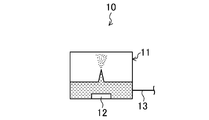
- FIG. It is a block diagram which shows the structure of the ultrasonic atomizer used in aspect 1.
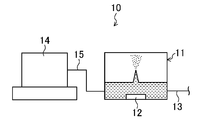
- FIG. It is a block diagram which shows the structure of the ultrasonic atomizer used by the aspect 2 and 3.
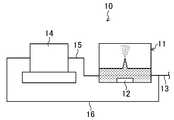
- FIG. It is a block diagram which shows the structure of the ultrasonic atomizer used by aspect 2A and 3A.
- (A)-(c) is a block diagram which shows the structure of another ultrasonic atomizer used by aspect 2A and 3A. It is a block diagram which shows the structure of the ultrasonic atomizer for experiment used in the Example.
- the method for producing a concentrated aqueous solution of an organic compound includes a concentration adjustment step and a dehydration concentration step.
- concentration adjustment step an aqueous solution containing an organic compound having two or more hydrophilic groups in the molecule (hereinafter also referred to as “organic compound A”) at a concentration of less than 40% by mass is used as a raw material.
- organic compound A an organic compound having two or more hydrophilic groups in the molecule
- the aqueous solution is adjusted so that the concentration of the organic compound A is 40% by mass or more.
- water is atomized by irradiating the aqueous solution (hereinafter, also referred to as “high concentration raw material aqueous solution”) in which the concentration of the organic compound A is adjusted to 40% by mass or more in the concentration adjustment step.
- high concentration raw material aqueous solution water is atomized by irradiating the aqueous solution in which the concentration of the organic compound A is adjusted to 40% by mass or more in the concentration adjustment step.
- the organic compound having two or more hydrophilic groups in the molecule has a concentration of the organic compound in the aqueous solution.
- concentration of organic compounds contained in the mist generated when ultrasonic waves are irradiated increases with increasing concentration, while the concentration of organic compounds in the aqueous solution irradiated with ultrasonic waves exceeds the boundary concentration.
- produces when an ultrasonic wave was irradiated falls.
- the concentration of the organic compound contained in the mist droplets is low is not clear, but an organic compound having two or more hydrophilic groups in the molecule has many hydrophilic groups. There are many molecules of an organic compound that interact with each other as compared with one organic compound, and the interaction between the organic compounds is strong, so that it is difficult to atomize. In addition, when the concentration of the organic compound in the aqueous solution increases, the frequency of interaction between the organic compounds is higher than the frequency of interaction between the organic compound and water, and thus the organic compound is less likely to be atomized.
- the concentration of the organic compound A in the raw material aqueous solution is adjusted from less than 40% by mass to 40% by mass or more before dehydration and concentration.
- the concentration of the organic compound A contained in the mist droplets generated when the high-concentration raw material aqueous solution whose concentration is adjusted is irradiated with ultrasonic waves is thereby reduced, and water is selectively removed from the high-concentration raw material aqueous solution.
- the efficiency of dehydration concentration by ultrasonic irradiation that is, the dehydration efficiency per energy when irradiated with ultrasonic waves can be increased.
- the raw material aqueous solution contains an organic compound A having two or more hydrophilic groups in the molecule.
- the number of carbon atoms in the molecule of the organic compound A is preferably 2 or more, more preferably 3 or more, from the viewpoint that dehydration concentration by ultrasonic irradiation is highly efficient. From the viewpoint of solubility in water, the number of carbon atoms in the molecule of the organic compound A is preferably 22 or less, more preferably 12 or less, and even more preferably 6 or less.
- the molecular weight of the organic compound A is preferably 50 or more, more preferably 60 or more, and still more preferably 70 or more from the viewpoint that dehydration concentration by ultrasonic irradiation is highly efficient.
- the molecular weight of the organic compound A is preferably 400 or less, more preferably 300 or less, and still more preferably 200 or less, from the viewpoint of solubility in water.
- Organic compound A has two or more hydrophilic groups in the molecule.
- the hydrophilic group is a functional group having an ionicity or a high polarity that forms a weak bond with a water molecule by electrostatic interaction, hydrogen bonding, or the like and has an affinity for water.
- the hydrophilic group for example, hydroxyl group, carboxyl group, carbonyl group, ester group, acetal group, hemiacetal group, ether group, amino group, ammonium group, amide group, sulfonic acid group, sulfate ester group, A phosphonic acid group, a phosphoric acid group, a ureido group, etc. are mentioned.
- the hydrophilic group is preferably a hydroxyl group, carboxyl group, carbonyl group, acetal group, hemiacetal group, amino group, ammonium group, sulfonic acid group, sulfate group. 1 or more selected from the group consisting of phosphonic acid groups and phosphoric acid groups, more preferably consisting of hydroxyl groups, carboxyl groups, carbonyl groups, acetal groups, hemiacetal groups, amino groups and sulfonic acid groups. One or more selected from the group, more preferably one or more selected from the group consisting of a hydroxyl group and a carboxyl group.
- the number of hydrophilic groups in the molecule of the organic compound A is 2 or more from the viewpoint that dehydration concentration by ultrasonic irradiation is highly efficient.
- the number of hydrophilic groups in the organic compound A is preferably 10 or less, more preferably 8 or less, still more preferably 5 or less, and still more preferably 3 or less, from the same viewpoint and economical efficiency.
- a plurality of hydrophilic groups may be bonded to the same carbon atom, and a hydrophilic group is bonded to a carbon atom separating adjacent carbon atoms or one or a plurality of methylene groups. It is also possible to have both of these features.
- preferred organic compounds A are organic compounds in which a plurality of hydrophilic groups are bonded to the same carbon atom, and organic compounds in which hydrophilic groups are bonded to adjacent carbon atoms.
- the organic compound A may have two or more of one kind of hydrophilic group in the molecule, may have two or more kinds of hydrophilic groups in the molecule, and further has both of these characteristics. You may have.
- the solubility of organic compound A per 100 g of water at 25 ° C. is preferably 67 g or more, more preferably 100 g or more, from the viewpoint that dehydration concentration by ultrasonic irradiation is highly efficient. More preferably, it is 150 g or more, and it is still more preferable that the solubility is such that the organic compound A and water are compatible at any ratio.
- Examples of the organic compound A having two or more types of hydrophilic groups in the molecule include polyhydric alcohols having two or more hydroxyl groups, polyvalent carboxylic acids having two or more carboxyl groups, and two or more amino groups. Examples include polyvalent amines.
- polyhydric alcohol examples include diols such as ethylene glycol, diethylene glycol, 1,2-propanediol (propylene glycol), and 1,3-propanediol having two hydroxyl groups in the molecule; having three hydroxyl groups in the molecule.
- diols such as ethylene glycol, diethylene glycol, 1,2-propanediol (propylene glycol), and 1,3-propanediol having two hydroxyl groups in the molecule; having three hydroxyl groups in the molecule.
- triols such as glycerin, trimethylolpropane, and 1,2,4-butanetriol
- tetraols such as pentaerythritol having four hydroxyl groups in the molecule
- sugars such as glucose and xylose.
- polyvalent carboxylic acid examples include dicarboxylic acids such as oxalic acid, malonic acid, succinic acid, maleic acid, fumaric acid, phthalic acid, isophthalic acid, terephthalic acid, furandicarboxylic acid; citric acid, trimellitic acid (benzene- 1,2,4-tricarboxylic acid), tricarboxylic acids such as benzene-1,3,5-tricarboxylic acid; tetracarboxylic acids such as ethylenetetracarboxylic acid, benzene-1,2,4,5-tetracarboxylic acid, etc. Can be mentioned.
- dicarboxylic acids such as oxalic acid, malonic acid, succinic acid, maleic acid, fumaric acid, phthalic acid, isophthalic acid, terephthalic acid, furandicarboxylic acid
- citric acid trimellitic acid (benzene- 1,2,4-tricarboxylic acid), tricarboxy
- polyvalent amine examples include diamines such as ethylenediamine and paraphenylenediamine; triamines such as diethylenetriamine; tetraamines such as triethylenetetraamine.
- Examples of the organic compound A having two or more hydrophilic groups in the molecule include a hydroxy acid having a hydroxyl group and a carboxyl group, an amino acid having a carboxyl group and an amino group, and a hydroxy aldehyde having a hydroxyl group and a carbonyl group.
- the hydroxy acid may be an ⁇ -hydroxy acid such as lactic acid or 2-hydroxybutyric acid in which the hydroxyl group and the carboxyl group are bonded to the same carbon atom, and the 3-hydroxy group in which the hydroxyl group and the carboxyl group are bonded to different carbon atoms. It may be a ⁇ -hydroxy acid such as butyric acid or a ⁇ -hydroxy acid such as 4-hydroxybutyric acid.
- the hydroxy acid may be an aliphatic hydroxy acid or an aromatic hydroxy acid.
- the aliphatic hydroxy acid include 2-hydroxybutyric acid, glycolic acid, lactic acid, glyceric acid, malic acid, tartaric acid, citric acid and the like.
- the aromatic hydroxy acid include salicylic acid.
- the amino acid may be an ⁇ -amino acid such as glycine, ⁇ -alanine, glutamine, glutamic acid, aspartic acid or the like in which a carboxyl group and an amino group are bonded to the same carbon atom, and carbon atoms having different carboxyl groups and amino groups. It may be a ⁇ -amino acid such as ⁇ -alanine or ⁇ -amino acid such as ⁇ -aminobutyric acid bound to.
- ⁇ -amino acid such as glycine, ⁇ -alanine, glutamine, glutamic acid, aspartic acid or the like in which a carboxyl group and an amino group are bonded to the same carbon atom, and carbon atoms having different carboxyl groups and amino groups. It may be a ⁇ -amino acid such as ⁇ -alanine or ⁇ -amino acid such as ⁇ -aminobutyric acid bound to.
- the amino acid may be an aliphatic amino acid or an aromatic amino acid.
- the aliphatic amino acid include glycine, alanine, glutamic acid, aspartic acid and the like.
- the aromatic amino acid include phenylalanine.
- hydroxy aldehyde examples include hydroxymethylfurfural.
- a polyhydric alcohol having two or more hydroxyl groups, a hydroxy acid having a hydroxyl group and a carboxyl group, and a hydroxy aldehyde having a hydroxyl group and a carbonyl group preferably a polyhydric alcohol having two or more hydroxyl groups, a hydroxy acid having a hydroxyl group and a carboxyl group, and a hydroxy aldehyde having a hydroxyl group and a carbonyl group
- a heterocyclic aldehyde having a heterocyclic ring and a carbonyl group more preferably glycerin (solubility: ⁇ ), lactic acid (solubility: 614 g or more), glucose (solubility: 91 g), and hydroxymethylfurfural (solubility: ⁇ ).
- the concentration of the organic compound A in the raw material aqueous solution is less than 40% by mass, it is preferably 35% by mass or less, more preferably 30% by mass or less, and still more preferably 25% by mass from the viewpoint that the concentration adjustment step becomes highly efficient. Hereinafter, it is more preferably 20% by mass or less. From the same viewpoint, the concentration of the organic compound A in the raw material aqueous solution is preferably 0.1% by mass or more, more preferably 0.5% by mass or more, still more preferably 1% by mass or more, and further preferably 3% by mass or more. More preferably, it is 5 mass% or more.
- components such as methanol that are removed by ultrasonic irradiation or residual components that remain without being removed, as long as the effect of increasing the efficiency of dehydration and concentration by ultrasonic irradiation is not impaired. Ingredients may be included.
- the means for adjusting the raw material aqueous solution having a concentration of the organic compound A of less than 40% by mass to a high concentration raw material aqueous solution having a concentration of 40% by mass or more is not particularly limited.
- the concentration adjusting means for example, (a) a raw material aqueous solution having a concentration of organic compound A of less than 40% by mass and an aqueous solution having a concentration of organic compound A or organic compound A higher than 40% by mass (hereinafter referred to in this application) And (b) a method of dehydrating and concentrating a raw material aqueous solution having an organic compound A concentration of less than 40% by mass.
- the method (a) is preferable from the viewpoint of high process efficiency.
- the concentration of the organic compound A in the high-concentration aqueous solution is preferably 45% by mass or more, more preferably 50% by mass or more, and still more preferably from the viewpoint that the concentration adjustment of the raw material aqueous solution becomes highly efficient. 60% by mass or more.
- the concentration of the organic compound A in the high-concentration aqueous solution is preferably 99% by mass or less, more preferably from the viewpoint that dehydration concentration by ultrasonic irradiation is highly efficient and a high-concentration aqueous solution can be easily obtained. It is 95 mass% or less, More preferably, it is 90 mass% or less, More preferably, it is 80 mass% or less, More preferably, it is 70 mass% or less.
- the product of the process that is, the concentration of the organic compound A dehydrated and concentrated by ultrasonic irradiation It is preferable to use an aqueous solution.
- the concentration of the high-concentration raw material aqueous solution may be adjusted by dehydrating and concentrating the raw material aqueous solution to increase the concentration of the organic compound A to 40% by mass or more.
- the dehydrating and concentrating means may be ultrasonic irradiation, or may be evaporation of water by other heating.
- the concentration adjustment step even if the high-concentration raw material aqueous solution in which the concentration of the organic compound A is adjusted to 40% by mass or more by the method (a) or (b) is charged into the atomization tank provided with the ultrasonic vibrator.
- the concentration adjustment by the method (a) or the method (b) may be performed in an ultrasonic atomizer provided with an atomization tank provided with an ultrasonic transducer.
- the concentration of the organic compound A in the high-concentration raw material aqueous solution after concentration adjustment is 40% by mass or more, but preferably 45% by mass or more, more preferably 50% from the viewpoint that dehydration concentration by ultrasonic irradiation is highly efficient. It is at least mass%, more preferably at least 60 mass%. From the same viewpoint, the concentration of the organic compound A in the high-concentration raw material aqueous solution after concentration adjustment is preferably 99% by mass or less, more preferably 95% by mass or less, still more preferably 90% by mass or less, and further preferably 80% by mass. Hereinafter, it is still more preferably 70% by mass or less.
- ⁇ Dehydration concentration step> When ultrasonic waves are radiated to the high-concentration raw material aqueous solution whose concentration is adjusted, a liquid column of the high-concentration raw material aqueous solution stands from the liquid surface, and water is atomized from the liquid column. As a result, the high-concentration raw material aqueous solution is dehydrated and concentrated.
- This dehydration concentration step may be performed at a time interval after the concentration adjustment step, or may be performed simultaneously with the concentration adjustment step.
- the frequency of the ultrasonic wave applied to the high-concentration raw material aqueous solution is preferably 20 kHz or higher, more preferably 1 MHz or higher, from the viewpoint that dehydration concentration by ultrasonic irradiation is highly efficient.
- the frequency of the ultrasonic wave irradiated to the high-concentration raw material aqueous solution is preferably 10 MHz or less, more preferably 5 MHz or less.
- Ultrasound irradiation to the high concentration raw material aqueous solution can be performed by an ultrasonic vibrator provided in an atomization tank storing the high concentration raw material aqueous solution.
- the temperature of the high-concentration raw material aqueous solution at the time of ultrasonic irradiation is not particularly limited as long as the high-concentration raw material aqueous solution is in a liquid state, but increases the efficiency of atomization by ultrasonic irradiation and reduces energy consumption. From the viewpoint, it is preferably 10 ° C. or higher, more preferably 20 ° C. or higher, further preferably 30 ° C. or higher, still more preferably 40 ° C. or higher, and still more preferably 50 ° C. or higher.
- the temperature of the high-concentration raw material aqueous solution at the time of ultrasonic irradiation is preferably 100 ° C. or less, more preferably 90 ° C.
- the temperature adjustment of the high-concentration raw material aqueous solution can be performed by a temperature control mechanism attached to the atomization tank that stores the high-concentration raw material aqueous solution.
- the droplets atomized from the high-concentration raw material aqueous solution by ultrasonic irradiation can be discharged together with the carrier gas.
- carrier gas For example, air, nitrogen gas, other inert gas, etc. can be used.
- the temperature of the carrier gas is not particularly limited as long as there is no extreme difference from the temperature of the high-concentration raw material aqueous solution that is radiated with ultrasonic waves, but is preferably room temperature or the same temperature as the high-concentration raw material aqueous solution.
- the concentration of the organic compound A in the high-concentration raw material aqueous solution at the time of ultrasonic irradiation is preferably 40% by mass or more, more preferably 45% by mass or more, from the viewpoint that dehydration concentration by ultrasonic irradiation is highly efficient. Preferably it is 50 mass% or more, More preferably, it is 60 mass%. From the same viewpoint, the concentration of the organic compound A in the high-concentration raw material aqueous solution at the time of ultrasonic irradiation is preferably 99% by mass or less, more preferably 90% by mass or less, still more preferably 80% by mass or less, and still more preferably. 70% by mass or less. In the dehydration and concentration step, the concentration range may be outside the above range as long as the effect of dehydration and concentration by irradiation with ultrasonic waves is not affected.
- the concentration of the organic compound A in the atomized droplets is preferably 5% by mass or less, more preferably 3% by mass or less, and still more preferably 1% by mass from the viewpoint that dehydration concentration by ultrasonic irradiation is highly efficient.
- it is more preferably 0.5% by mass or less, and still more preferably 0.25% by mass or less.
- the viscosity of the high-concentration raw material aqueous solution at the time of ultrasonic irradiation is preferably 25 mPa ⁇ s or less, more preferably 20 mPa ⁇ s at the temperature at the time of ultrasonic irradiation, from the viewpoint of high efficiency of dehydration and concentration by ultrasonic irradiation.
- it is more preferably 15 mPa ⁇ s or less.
- the viscosity of the high-concentration raw material aqueous solution at the time of ultrasonic irradiation is preferably 25 mPa ⁇ s or less, more preferably 20 mPa ⁇ s or less, still more preferably 15 mPa ⁇ s or less at 50 ° C.
- the viscosity of the high-concentration raw material aqueous solution at the time of ultrasonic irradiation can be determined in accordance with International Organization for Standardization ISO12058.
- the viscosity of the high-concentration raw material aqueous solution can be determined based on the time required for the ball to fall under the influence of gravity by tilting the capillary filled with the high-concentration raw material aqueous solution. it can.
- the concentration of the organic compound A in the concentrated aqueous solution after dehydration and concentration is preferably 40% by mass or more, more preferably 45% by mass or more, and still more preferably 50% from the viewpoint of high efficiency of dehydration and concentration by ultrasonic irradiation. It is at least 60% by mass, more preferably at least 60% by mass.
- the concentration of the organic compound A in the concentrated aqueous solution after dehydration and concentration is preferably 100% by mass or less, more preferably 98% by mass or less, and still more preferably 95% by mass or less, from the viewpoint of reducing environmental burden and increasing economic efficiency. It is.
- the viscosity of the concentrated aqueous solution after dehydration and concentration is preferably 25 mPa ⁇ s or less, more preferably 20 mPa ⁇ s or less, more preferably 20 mPa ⁇ s or less, more preferably 20 mPa ⁇ s or less at a temperature at which ultrasonic waves are applied from the viewpoint of economically performing dehydration and concentration by ultrasonic irradiation.
- it is 15 mPa ⁇ s or less.
- the viscosity of the concentrated aqueous solution after dehydration and concentration is preferably 25 mPa ⁇ s or less, more preferably 20 mPa ⁇ s or less, still more preferably 15 mPa ⁇ s or less at 50 ° C.
- the method for producing a concentrated aqueous solution of an organic compound according to this embodiment may further include a recovery step of recovering the concentrated aqueous solution of the organic compound A that has been dehydrated and concentrated in the dehydration and concentration step.
- This recovery step may be performed after the dehydration concentration step, or may be performed simultaneously with the dehydration concentration step, and further performed simultaneously with the concentration adjustment step and the dehydration concentration step. May be.
- a concentrated aqueous solution of the organic compound A can be continuously produced.
- the collection of the concentrated aqueous solution in this collection step may be performed continuously or intermittently.
- the concentrated aqueous solution of organic compound A obtained by the recovery in the recovery step can be used as a high-concentration aqueous solution used for concentration adjustment in the concentration adjustment step as described above.
- the high-concentration raw material aqueous solution is charged into the atomization tank 11 of the ultrasonic atomizer 10 (concentration adjustment step).
- concentration adjustment step examples include atomization of water by ultrasonic irradiation, evaporation of moisture by heating, and the like.
- dehydration and concentration are performed by irradiating the high-concentration raw material aqueous solution with ultrasonic waves by the ultrasonic vibrator 12 provided in the atomization tank 11 to atomize water (dehydration concentration step).
- the ultrasonic atomizer 10 shown in FIG. 1 is used, the organic compound A or the high-concentration aqueous solution is charged into the atomization tank 11, and the raw material aqueous solution is added thereto to add the organic compound A.
- a high-concentration raw material aqueous solution with a concentration adjusted to 40 mass% or more is prepared (concentration adjustment step).
- dehydration and concentration are performed by irradiating the high-concentration raw material aqueous solution with ultrasonic waves by the ultrasonic vibrator 12 to atomize water (dehydration concentration step).
- the raw material aqueous solution is charged into the atomization tank 11 using the ultrasonic atomizer 10 shown in FIG. 1, and the organic compound A or the high concentration aqueous solution is added thereto to add the organic compound A.
- a high-concentration raw material aqueous solution with a concentration adjusted to 40 mass% or more is prepared (concentration adjustment step).
- dehydration and concentration are performed by irradiating the high-concentration raw material aqueous solution with ultrasonic waves by the ultrasonic vibrator 12 to atomize water (dehydration concentration step).
- Examples of the latter dehydration concentration method for adjusting the concentration include atomization of water by ultrasonic irradiation, evaporation of moisture by heating, and the like.
- an aqueous solution containing the organic compound A at a concentration of less than 40% by mass was adjusted so that the concentration of the organic compound A was 40% by mass or more.
- a high-concentration raw material aqueous solution is prepared (concentration adjustment step).
- the high-concentration raw material aqueous solution is continuously supplied from the raw material tank 14 through the raw material supply pipe 15 connected to the atomization tank 11 or While intermittently supplying, the ultrasonic vibrator 12 provided in the atomization tank 11 irradiates the high-concentration raw material aqueous solution with ultrasonic waves to atomize water, thereby performing dehydration concentration (dehydration concentration step).
- the organic compound A or the high concentration aqueous solution is mixed with the raw material aqueous solution outside the raw material tank 14.
- a high-concentration raw material aqueous solution with a concentration adjusted to 40% by mass or more is prepared, or a high-concentration raw material aqueous solution with a concentration of organic compound A adjusted to 40% by mass or more by dehydrating and concentrating the raw material aqueous solution is prepared.
- the raw material aqueous solution may be stored in the raw material tank 14 (Aspect 2A- (i) -a).
- the concentration adjustment step of the high-concentration raw material aqueous solution in this embodiment 2A- (i) -a may be performed simultaneously with the dehydration concentration step.
- a part or all of the high-concentration aqueous solution mixed with the raw material aqueous solution may be a concentrated aqueous solution of the organic compound A obtained in the dehydration concentration step.
- Examples of the latter dehydration concentration method for adjusting the concentration include atomization of water by ultrasonic irradiation, evaporation of moisture by heating, and the like.
- the high-concentration raw material aqueous solution charged in the raw material tank 14 may be the same as the high-concentration raw material aqueous solution initially charged in the atomization tank 11.
- a high concentration raw material aqueous solution in which the concentration of the organic compound A is adjusted to 40% by mass or more may be prepared by charging the raw material tank 14 with the organic compound A or the high concentration aqueous solution and adding the raw material aqueous solution thereto (Aspect 2A- (I) -b).
- the concentration adjustment step of the high-concentration raw material aqueous solution in this embodiment 2A- (i) -b may be performed in conjunction with the dehydration concentration step simultaneously.
- the concentrated aqueous solution of the organic compound A obtained in the dehydration concentration step may be part or all of the high concentration aqueous solution mixed with the raw material aqueous solution. For example, using the ultrasonic atomizer 10 shown in FIG.
- the organic compound A obtained in the dehydration concentration step is concentrated through the return pipe 16 branched from the concentrated aqueous solution discharge pipe 13 and connected to the raw material tank 14.
- the aqueous solution may be supplied to the raw material tank 14 so that part or all of the high concentration aqueous solution charged into the raw material tank 14 may be a concentrated aqueous solution of the organic compound A (Aspect 2A- (i) -b ′). .
- a high concentration raw material aqueous solution in which the concentration of the organic compound A is adjusted to 40% by mass or more may be prepared by charging the raw material aqueous solution into the raw material tank 14 and adding the organic compound A or the high concentration aqueous solution thereto (Aspect 2A- (I) -c).
- the concentration adjustment step of the high-concentration raw material aqueous solution in this embodiment 2A- (i) -c may be performed simultaneously with the dehydration concentration step.
- the concentrated aqueous solution of the organic compound A obtained in the dehydration concentration step may be part or all of the high concentration aqueous solution mixed with the raw material aqueous solution. For example, using the ultrasonic atomizer 10 shown in FIG.
- the organic compound A obtained in the dehydration concentration step is concentrated through the return pipe 16 branched from the concentrated aqueous solution discharge pipe 13 and connected to the raw material tank 14.
- the aqueous solution may be supplied to the raw material tank 14 so that a part or all of the high concentration aqueous solution added to the raw material aqueous solution charged in the raw material tank 14 may be a concentrated aqueous solution of the organic compound A (Aspect 2A- ( i) -c ').
- a raw material aqueous solution may be charged into the raw material tank 14 and dehydrated and concentrated to adjust the concentration of the organic compound A to 40% by mass or more to prepare a high concentration raw material aqueous solution (Aspect 2A- (i) -d).
- Examples of the dehydration concentration method for adjusting the concentration include atomization of water by ultrasonic irradiation, evaporation of water by heating, and the like.
- the high concentration raw material aqueous solution may be prepared in the process of supplying the raw material aqueous solution from the raw material tank 14 to the atomization tank 11 through the raw material supply pipe 15.
- a high concentration raw material aqueous solution is prepared by adjusting the concentration of the organic compound A to 40% by mass or more by merging the organic compound A or the high concentration aqueous solution through the organic compound A supply tube 17 connected to the supply pipe 15.
- the concentration adjustment step of the high-concentration raw material aqueous solution in this embodiment 2A- (i) -e is performed simultaneously with the dehydration concentration step.
- a high-concentration raw material aqueous solution may be prepared by adjusting as described above (Aspect 2A- (i) -f).
- the concentration adjustment step of the high-concentration raw material aqueous solution in this embodiment 2A- (i) -f is performed in conjunction with the dehydration concentration step.
- the concentrated aqueous solution of the organic compound A obtained in the dehydration concentration step is used as the high concentration aqueous solution to be mixed with the raw material aqueous solution.
- the concentration adjusting unit 19 interposed in the high-concentration raw material aqueous solution the concentration of the organic compound A may be adjusted to 40% by mass or more (Aspect 2A- (i) -g).
- the concentration adjusting step of the high-concentration raw material aqueous solution in this embodiment 2A- (i) -g is performed in conjunction with the dehydration concentration step simultaneously.
- the concentration adjusting unit 19 may adjust the concentration using the concentrated aqueous solution of the organic compound A obtained in the dehydration concentration step.
- the concentration adjusting unit 19 may be composed of an atomization tank that dehydrates and concentrates the raw material aqueous solution by ultrasonic atomization.
- each atomization tank provided with an ultrasonic transducer is connected in series, and the concentration of the raw material aqueous solution is adjusted in the atomization tank constituting the upstream concentration adjusting unit 19, and the downstream atomization tank In step 11, the concentration-adjusted high concentration raw material aqueous solution is dehydrated and concentrated.
- the concentration adjusting unit 19 may be a means other than the dehydrating and concentrating means by ultrasonic atomization, and may be configured by a heating tank that dehydrates and concentrates by evaporation of moisture by heating the raw material aqueous solution, for example.
- a high-concentration raw material aqueous solution is prepared (concentration adjustment step), and in the atomization tank 11, the high-concentration raw material aqueous solution is supplied by the ultrasonic vibrator 12 while being supplied continuously or intermittently via the raw material supply pipe 15.
- the concentrated raw material aqueous solution is dehydrated and concentrated by irradiating ultrasonic waves to atomize water (dehydration concentration step).
- the raw material aqueous solution is charged into the atomization tank 11 using the ultrasonic atomizer 10 shown in FIGS. 2 to 4, and the organic compound A or the high concentration aqueous solution is added thereto.
- a high concentration raw material aqueous solution is prepared by adjusting the concentration of the organic compound A to 40% by mass or more (concentration adjustment step—initial stage).
- concentration adjustment step—initial stage In addition to the high-concentration raw material aqueous solution initially charged in the atomization tank 11, an aqueous solution containing the organic compound A at a concentration of less than 40% by mass was adjusted so that the concentration of the organic compound A was 40% by mass or more.
- a high-concentration raw material aqueous solution is prepared (concentration adjustment step), and in the atomization tank 11, the high-concentration raw material aqueous solution is supplied by the ultrasonic vibrator 12 while being supplied continuously or intermittently via the raw material supply pipe 15.
- the concentrated raw material aqueous solution is dehydrated and concentrated by irradiating ultrasonic waves to atomize water (dehydration concentration step).
- the concentrated aqueous solution of the organic compound A obtained in the dehydration concentration step is used as the high concentration aqueous solution mixed with the raw material aqueous solution.
- the concentrated aqueous solution of the obtained organic compound A is discharged through the concentrated aqueous solution discharge pipe 13 extending from the atomization tank 11. You may collect
- fog Dehydration and concentration are performed by irradiating the high-concentration raw material aqueous solution with ultrasonic waves by the ultrasonic vibrator 12 provided in the chemical conversion tank 11 to atomize water (dehydration concentration step).
- the supply flow rate of raw material aqueous solution is controlled so that the density
- the concentration adjustment step and the dehydration concentration step are performed simultaneously and interlocked in the atomization tank 11.
- the concentration of the organic compound A in the high-concentration raw material aqueous solution increases due to dehydration concentration by ultrasonic irradiation, and thus the supply flow rate of the raw material aqueous solution to the atomization tank 11 through the raw material supply pipe 15.
- the concentration of the high-concentration aqueous solution may be adjusted in the atomization tank 11 in the initial stage. However, from the viewpoint of shortening the operation time, the concentration adjustment is performed outside the organic compound A or the ultrasonic atomizer 10 in the atomization tank 11. It is preferable to prepare a high concentration aqueous solution.
- the obtained concentrated aqueous solution of organic compound A may be discharged and recovered through the concentrated aqueous solution discharge pipe 13 extending from the atomization tank 11 (recovery step).
- an aqueous solution containing the organic compound A at a concentration of less than 40% by mass was adjusted so that the concentration of the organic compound A was 40% by mass or more.
- a high-concentration raw material aqueous solution is prepared (concentration adjustment step).
- the high-concentration raw material aqueous solution is continuously supplied from the raw material tank 14 through the raw material supply pipe 15 connected to the atomization tank 11 or While intermittently supplying, the ultrasonic vibrator 12 provided in the atomization tank 11 irradiates the high-concentration raw material aqueous solution with ultrasonic waves to atomize water, thereby performing dehydration concentration (dehydration concentration step).
- the concentrated aqueous solution of the organic compound A after dehydration and concentration is discharged and recovered continuously or intermittently through the concentrated aqueous solution discharge pipe 13 extending from the atomization tank 11 (recovery step).
- the organic compound A or the high concentration aqueous solution is mixed with the raw material aqueous solution outside the raw material tank 14.
- a high-concentration raw material aqueous solution with a concentration adjusted to 40% by mass or more is prepared, or a high-concentration raw material aqueous solution with a concentration of organic compound A adjusted to 40% by mass or more by dehydrating and concentrating the raw material aqueous solution is prepared.
- the raw material aqueous solution may be stored in the raw material tank 14 (Aspect 3A- (i) -a).
- the concentration adjustment step of the high-concentration raw material aqueous solution in this embodiment 3A- (i) -a may be performed simultaneously with the dehydration concentration step.
- a part or all of the high-concentration aqueous solution mixed with the raw material aqueous solution may be a concentrated aqueous solution of the organic compound A obtained in the dehydration concentration step.
- Examples of the latter dehydration concentration method for adjusting the concentration include atomization of water by ultrasonic irradiation, evaporation of moisture by heating, and the like.
- the high-concentration raw material aqueous solution charged in the raw material tank 14 may be the same as the high-concentration raw material aqueous solution initially charged in the atomization tank 11.
- a high-concentration raw material aqueous solution in which the concentration of the organic compound A is adjusted to 40% by mass or more may be prepared by charging the raw material tank 14 with the organic compound A or the high-concentration aqueous solution and adding the raw material aqueous solution thereto (Aspect 3A- (I) -b).
- the concentration adjustment step of the high-concentration raw material aqueous solution in this embodiment 3A- (i) -b may be performed simultaneously with the dehydration concentration step.
- the concentrated aqueous solution of the organic compound A obtained in the dehydration concentration step may be part or all of the high concentration aqueous solution mixed with the raw material aqueous solution. For example, using the ultrasonic atomizer 10 shown in FIG.
- the organic compound A obtained in the dehydration concentration step is concentrated through the return pipe 16 branched from the concentrated aqueous solution discharge pipe 13 and connected to the raw material tank 14.
- the aqueous solution may be supplied to the raw material tank 14 so that part or all of the high concentration aqueous solution charged into the raw material tank 14 may be a concentrated aqueous solution of the organic compound A (Aspect 3A- (i) -b ′). .
- a high-concentration raw material aqueous solution in which the concentration of the organic compound A is adjusted to 40% by mass or more may be prepared by charging the raw material aqueous solution into the raw material tank 14 and adding the organic compound A or the high-concentration aqueous solution thereto (Aspect 3A- (I) -c).
- the concentration adjustment step of the high-concentration raw material aqueous solution in this embodiment 3A- (i) -c may be performed simultaneously with the dehydration concentration step.
- the concentrated aqueous solution of the organic compound A obtained in the dehydration concentration step may be part or all of the high concentration aqueous solution mixed with the raw material aqueous solution. For example, using the ultrasonic atomizer 10 shown in FIG.
- the organic compound A obtained in the dehydration concentration step is concentrated through the return pipe 16 branched from the concentrated aqueous solution discharge pipe 13 and connected to the raw material tank 14.
- the aqueous solution may be supplied to the raw material tank 14 so that part or all of the high concentration aqueous solution added to the raw material aqueous solution charged in the raw material tank 14 may be a concentrated aqueous solution of the organic compound A (Aspect 3A- ( i) -c ').
- the raw material aqueous solution may be charged into the raw material tank 14 and dehydrated and concentrated to adjust the concentration of the organic compound A to 40% by mass or more to prepare a high concentration raw material aqueous solution (Aspect 3A- (i) -d).
- Examples of the dehydration concentration method for adjusting the concentration include atomization of water by ultrasonic irradiation, evaporation of water by heating, and the like.
- the high concentration raw material aqueous solution may be prepared in the process of supplying the raw material aqueous solution from the raw material tank 14 to the atomization tank 11 through the raw material supply pipe 15.
- a high concentration raw material aqueous solution is prepared by adjusting the concentration of the organic compound A to 40% by mass or more by merging the organic compound A or the high concentration aqueous solution through the organic compound A supply tube 17 connected to the supply pipe 15.
- the concentration adjustment step of the high concentration raw material aqueous solution in this embodiment 3A- (i) -e is performed in conjunction with the dehydration concentration step simultaneously.
- a high-concentration raw material aqueous solution may be prepared by adjusting as described above (Aspect 3A- (i) -f).
- the concentration adjustment step of the high-concentration raw material aqueous solution in this embodiment 3A- (i) -f is performed simultaneously with the dehydration concentration step.
- the concentrated aqueous solution of the organic compound A obtained in the dehydration concentration step is used as the high concentration aqueous solution to be mixed with the raw material aqueous solution.
- the concentration adjusting unit 19 interposed in the high-concentration raw material aqueous solution the concentration of the organic compound A may be adjusted to 40% by mass or more (Aspect 3A- (i) -g).
- the concentration adjustment step of the high-concentration raw material aqueous solution in this embodiment 3A- (i) -g is performed simultaneously with the dehydration concentration step.
- the concentration adjusting unit 19 may adjust the concentration using the concentrated aqueous solution of the organic compound A obtained in the dehydration concentration step.
- the concentration adjusting unit 19 may be composed of an atomization tank that dehydrates and concentrates the raw material aqueous solution by ultrasonic atomization.
- each atomization tank provided with an ultrasonic transducer is connected in series, and the concentration of the raw material aqueous solution is adjusted in the atomization tank constituting the upstream concentration adjusting unit 19, and the downstream atomization tank In step 11, the concentration-adjusted high concentration raw material aqueous solution is dehydrated and concentrated.
- the concentration adjusting unit 19 may be a means other than the dehydrating and concentrating means by ultrasonic atomization, and may be configured by a heating tank that dehydrates and concentrates by evaporation of moisture by heating the raw material aqueous solution, for example.
- the organic atomization tank 11 is charged with the organic compound A or the high-concentration aqueous solution using the ultrasonic atomizer 10 shown in FIGS.
- a high concentration raw material aqueous solution is prepared by adjusting the concentration of Compound A to 40% by mass or more (concentration adjustment step—initial stage).
- concentration adjustment step—initial stage In addition to the high-concentration raw material aqueous solution initially charged in the atomization tank 11, an aqueous solution containing the organic compound A at a concentration of less than 40% by mass was adjusted so that the concentration of the organic compound A was 40% by mass or more.
- a high-concentration raw material aqueous solution is prepared (concentration adjustment step), and in the atomization tank 11, the high-concentration raw material aqueous solution is supplied by the ultrasonic vibrator 12 while being supplied continuously or intermittently via the raw material supply pipe 15.
- the concentrated raw material aqueous solution is dehydrated and concentrated by irradiating ultrasonic waves to atomize water (dehydration concentration step). Further, the concentrated aqueous solution of the organic compound A after dehydration and concentration is discharged and recovered continuously or intermittently through the concentrated aqueous solution discharge pipe 13 (recovery step).
- the raw material aqueous solution is charged into the atomization tank 11 using the ultrasonic atomizer 10 shown in FIGS.
- a high concentration raw material aqueous solution is prepared by adjusting the concentration of Compound A to 40% by mass or more (concentration adjustment step—initial stage).
- concentration adjustment step—initial stage In addition to the high-concentration raw material aqueous solution initially charged in the atomization tank 11, an aqueous solution containing the organic compound A at a concentration of less than 40% by mass was adjusted so that the concentration of the organic compound A was 40% by mass or more.
- a high-concentration raw material aqueous solution is prepared (concentration adjustment step), and in the atomization tank 11, the high-concentration raw material aqueous solution is supplied by the ultrasonic vibrator 12 while being supplied continuously or intermittently via the raw material supply pipe 15.
- the concentrated raw material aqueous solution is dehydrated and concentrated by irradiating ultrasonic waves to atomize water (dehydration concentration step). Further, the concentrated aqueous solution of the organic compound A after dehydration and concentration is discharged and recovered continuously or intermittently through the concentrated aqueous solution discharge pipe 13 (recovery step).
- the high-concentration raw material aqueous solution prepared outside the atomization tank 11 is converted into the atomization tank through the raw material supply pipe 15 using the ultrasonic atomization apparatus 10 shown in FIGS. 11 (density adjustment step). Subsequently, the high-concentration raw material aqueous solution is irradiated with ultrasonic waves by the ultrasonic vibrator 12 while continuously or intermittently supplying the high-concentration raw material aqueous solution through the raw material supply pipe 15 in the atomization tank 11. Then, the water is atomized and concentrated by dehydration (dehydration concentration step).
- the high-concentration raw material aqueous solution initially charged in the atomization tank 11 and the high-concentration aqueous solution supplied in the dehydration concentration step are the same. Further, the concentrated aqueous solution of the organic compound A after dehydration and concentration is discharged and recovered continuously or intermittently through the concentrated aqueous solution discharge pipe 13 (recovery step).
- a concentrated aqueous solution of the organic compound A obtained in the dehydration concentration step is used as a high concentration aqueous solution to be mixed with the raw material aqueous solution.
- Aspect 3A- (i) -b ′, Aspect 3A- (i) -c ′, Aspect 3A- (iv) -b ′, Aspect 3A- (iv) according to Aspect 3A- (i) -f -c 'and the method of the embodiment 3A- (iv) -f can also be adopted.
- fog Dehydration and concentration are performed by irradiating the high-concentration raw material aqueous solution with ultrasonic waves by the ultrasonic vibrator 12 provided in the chemical conversion tank 11 to atomize water (dehydration concentration step). Further, the concentrated aqueous solution of the organic compound A after dehydration and concentration is discharged and recovered continuously or intermittently through the concentrated aqueous solution discharge pipe 13 extending from the atomization tank 11 (recovery step).
- the supply flow rate of the raw material aqueous solution and the recovery flow rate of the concentrated aqueous solution are controlled so that the concentration of the organic compound A in the high concentration raw material aqueous solution in the atomization tank 11 is 40% by mass or more.
- the concentration adjustment step and the dehydration concentration step are performed simultaneously in the atomization tank 11 in conjunction with each other.
- the concentration of the organic compound A in the high-concentration raw material aqueous solution increases due to dehydration concentration by ultrasonic irradiation, and thus the supply flow rate of the raw material aqueous solution to the atomization tank 11 through the raw material supply pipe 15.
- the concentration of the high-concentration aqueous solution may be adjusted in the atomization tank 11 in the initial stage. However, from the viewpoint of shortening the operation time, the concentration adjustment is performed outside the organic compound A or the ultrasonic atomizer 10 in the atomization tank 11. It is preferable to prepare a high concentration aqueous solution.
- a concentration adjusting step for adjusting an aqueous solution containing an organic compound having two or more hydrophilic groups in the molecule at a concentration of less than 40% by mass so that the concentration of the organic compound is 40% by mass or more;
- a dehydration-concentration step of dehydrating and concentrating the aqueous solution in which the concentration of the organic compound is adjusted to 40% by mass or more in the adjusting step by irradiating ultrasonic waves to atomize water;
- a method for producing a concentrated aqueous solution of an organic compound comprising:
- the concentration of the organic compound in the raw material aqueous solution is preferably 35% by mass or less, more preferably 30% by mass or less, still more preferably 25% by mass or less, and still more preferably 20% by mass or less, preferably It is 0.1% by mass or more, more preferably 0.5% by mass or more, further preferably 1% by mass or more, further preferably 3% by mass or more, and still more preferably 5% by mass or more, as described in ⁇ 1>.
- the concentration of the organic compound in the aqueous solution whose concentration is adjusted in the concentration adjusting step is preferably 45% by mass or more, more preferably 50% by mass or more, still more preferably 60% by mass or more, and preferably 99%. It is described in the above ⁇ 1> or ⁇ 2>, which is not more than mass%, more preferably not more than 95 mass%, still more preferably not more than 90 mass%, still more preferably not more than 80 mass%, and still more preferably not more than 70 mass%.
- a method for producing a concentrated aqueous solution of an organic compound is not more than mass%, more preferably not more than 95 mass%, still more preferably not more than 90 mass%, still more preferably not more than 80 mass%, and still more preferably not more than 70 mass%.
- Concentration adjustment in the concentration adjustment step is performed by mixing an aqueous solution containing the organic compound at a concentration of less than 40% by mass with an aqueous solution having a concentration of the organic compound or the organic compound higher than 40% by mass.
- the concentration of the organic compound or the organic compound is higher than 40% by weight, preferably 45% by weight or higher, more preferably 50% by weight or higher, still more preferably 60% by weight or higher, and preferably 99% by weight.
- % Or less more preferably 95% by mass or less, further preferably 90% by mass or less, further preferably 80% by mass or less, and still more preferably 70% by mass or less, by mixing with the aqueous solution ⁇ 1>
- ⁇ 5> The concentrated aqueous solution of an organic compound according to any one of ⁇ 1> to ⁇ 4>, further including a recovery step of recovering the concentrated aqueous solution of the organic compound obtained by dehydration and concentration in the dehydration and concentration step. Manufacturing method.
- ⁇ 6> The organic material according to any one of ⁇ 1> to ⁇ 5>, wherein the concentration adjustment in the concentration adjustment step is performed in an ultrasonic atomizer including an atomization tank provided with an ultrasonic transducer.
- a method for producing a concentrated aqueous solution of a compound is performed in an ultrasonic atomizer including an atomization tank provided with an ultrasonic transducer.
- ⁇ 7> Any one of ⁇ 1> to ⁇ 6>, wherein in the concentration adjustment step, an aqueous solution in which the concentration of the organic compound is adjusted to 40% by mass or more is charged into an atomization tank provided with an ultrasonic vibrator.
- ⁇ 8> The method for producing a concentrated aqueous solution of an organic compound according to any one of ⁇ 1> to ⁇ 7>, wherein the production of the concentrated aqueous solution of the organic compound is performed by a batch operation.
- aqueous solution containing the organic compound at a concentration of less than 40% by mass in the concentration adjusting step is added to an aqueous solution of the organic compound to be dehydrated and concentrated in the dehydration / concentration step, so that the concentration of the organic compound is 40% by mass or more.
- the aqueous solution of the organic compound to be dehydrated and concentrated in the dehydration and concentration step is an aqueous solution containing the organic compound at a concentration of less than 40% by mass in the concentration adjustment step, and the concentration of the organic compound is 40% by mass or more.
- the aqueous solution adjusted as described above is supplied continuously or intermittently, and the concentrated aqueous solution of the organic compound is recovered continuously or intermittently, and the concentrated aqueous solution of the organic compound is produced in a continuous operation, ⁇ 1>
- Concentration adjustment in the concentration adjustment step of the aqueous solution supplied continuously or intermittently to the aqueous solution of the organic compound in the dehydration concentration step is performed at the same time as the dehydration concentration step, and the concentration of the organic compound is 40 mass.
- the concentration of the organic compound is higher than 40% by weight, preferably 45% by weight or more, more preferably 50% by weight or more, further preferably 60% by weight or more, and preferably 99% by mass or less, more preferably 95% by mass or less, further preferably 90% by mass or less, more preferably 80% by mass or less, and still more preferably 70% by mass or less, by mixing with an aqueous solution ⁇
- a part or all of an aqueous solution having a concentration of the organic compound higher than 40% by mass is a concentrated aqueous solution of the organic compound obtained by dehydration and concentration in the dehydration and concentration step.
- a concentrated aqueous solution of a prepared organic compound For producing a concentrated aqueous solution of a prepared organic compound.
- An aqueous solution containing the organic compound at a concentration of less than 40% by mass is continuously or intermittently supplied to the aqueous solution of the organic compound to be dehydrated and concentrated in the dehydration and concentration step.
- the concentration adjustment step is carried out by controlling the supply flow rate of the aqueous solution containing less than 1% so that the concentration of the organic compound in the aqueous solution of the organic compound to be dehydrated and concentrated is 40% by mass or more,
- the method for producing a concentrated aqueous solution of an organic compound according to any one of ⁇ 1> to ⁇ 7>, wherein the production of the concentrated aqueous solution is performed in a semi-batch operation.
- An aqueous solution containing the organic compound at a concentration of less than 40% by mass is continuously or intermittently supplied to the aqueous solution of the organic compound to be dehydrated and concentrated in the dehydration and concentration step, and is dehydrated and concentrated in the dehydration and concentration step.
- the concentrated aqueous solution of the organic compound thus obtained is recovered continuously or intermittently.
- the supply flow rate of the aqueous solution containing the organic compound at a concentration of less than 40% by mass and the recovery flow rate of the concentrated aqueous solution are set to the dehydration.
- the concentration adjustment step is performed by controlling the concentration of the organic compound in the aqueous solution of the organic compound to be concentrated to 40% by mass or more, and the production of the concentrated aqueous solution of the organic compound is performed in a continuous operation.
- the concentration of the organic compound in the aqueous solution at the time of ultrasonic irradiation is preferably 40% by mass or more, more preferably 45% by mass or more, still more preferably 50% by mass or more, and still more preferably. Is 60% by mass, preferably 99% by mass or less, more preferably 90% by mass or less, still more preferably 80% by mass or less, and still more preferably 70% by mass or less.
- ⁇ 1> to ⁇ 14 The manufacturing method of the concentrated aqueous solution of the organic compound described in any one of>.
- the concentration of the organic compound in the atomized droplets is preferably 5% by mass or less, more preferably 3% by mass or less, still more preferably 1% by mass or less, and still more preferably 0.8%.
- the viscosity of the aqueous solution at the time of ultrasonic irradiation is preferably 25 mPa ⁇ s or less, more preferably 20 mPa ⁇ s or less, and still more preferably 15 mPa ⁇ s or less, ⁇ 1> to ⁇ 16>
- the concentration of the organic compound in the concentrated aqueous solution after dehydration and concentration is preferably 40% by mass or more, more preferably 45% by mass or more, still more preferably 50% by mass or more, and still more preferably. Is 60% by mass or more, preferably 100% by mass or less, more preferably 98% by mass or less, and still more preferably 95% by mass or less, as described in any one of ⁇ 1> to ⁇ 17> above.
- a method for producing a concentrated aqueous solution of an organic compound is preferably 40% by mass or more, more preferably 45% by mass or more, still more preferably 50% by mass or more, and still more preferably. Is 60% by mass or more, preferably 100% by mass or less, more preferably 98% by mass or less, and still more preferably 95% by mass or less, as described in any one of ⁇ 1> to ⁇ 17> above.
- the viscosity of the concentrated aqueous solution of the organic compound after dehydration and concentration is preferably 25 mPa ⁇ s or less, more preferably 20 mPa ⁇ s or less, and even more preferably 15 mPa ⁇ s or less. 1.
- the temperature of the aqueous solution irradiated with ultrasonic waves in the dehydration and concentration step is preferably 10 ° C. or higher, more preferably 20 ° C. or higher, still more preferably 30 ° C. or higher, still more preferably 40 ° C. or higher, and preferably Of the concentrated aqueous solution of an organic compound according to any one of the above ⁇ 1> to ⁇ 19>, which is 100 ° C. or lower, more preferably 90 ° C. or lower, still more preferably 80 ° C. or lower, and still more preferably 70 ° C. or lower. Production method.
- ⁇ 21> The method for producing a concentrated aqueous solution of an organic compound according to ⁇ 20>, wherein the temperature of the aqueous solution irradiated with ultrasonic waves in the dehydration and concentration step is 50 ° C. or higher and 100 ° C. or lower.
- the frequency of the ultrasonic wave applied to the aqueous solution in the dehydration concentration step is preferably 20 kHz or more, more preferably 1 MHz or more, and preferably 10 MHz or less, more preferably 5 MHz or less.
- the organic compound is a hydrophilic group such as a hydroxyl group, carboxyl group, carbonyl group, ester group, acetal group, hemiacetal group, ether group, amino group, ammonium group, amide group, sulfonic acid group, sulfate ester group, One or more selected from the group consisting of phosphonic acid groups, phosphoric acid groups, and ureido groups, preferably hydroxyl groups, carboxyl groups, carbonyl groups, acetal groups, hemiacetal groups, amino groups, ammonium groups, sulfonic acid groups , One or more selected from the group consisting of a sulfate group, a phosphonic acid group, and a phosphoric acid group, and more preferably a hydroxyl group, a carboxyl group, a carbonyl group, an acetal group, a hemiacetal group, an amino group, and a sulfone One or more selected from the group consisting
- the polyhydric alcohol which is the organic compound is selected from the group consisting of a diol having two hydroxyl groups in the molecule, a triol having three hydroxyl groups in the molecule, a tetraol having four hydroxyl groups in the molecule, and a saccharide.
- the manufacturing method of the concentrated aqueous solution of the organic compound as described in said ⁇ 24> which is 1 type, or 2 or more types chosen.
- ⁇ 26> The method for producing a concentrated aqueous solution of an organic compound according to any one of ⁇ 23> to ⁇ 25>, wherein the organic compound includes an organic compound having a carboxyl group.
- the organic compound having a carboxyl group has a polyvalent carboxylic acid having two or more carboxyl groups in the molecule, a hydroxy acid having a hydroxyl group and a carboxyl group in the molecule, and a carboxyl group and an amino group in the molecule.
- the manufacturing method of the concentrated aqueous solution of the organic compound as described in said ⁇ 26> which is 1 type, or 2 or more types chosen from the group which consists of amino acids.
- the number of carbon atoms contained in the molecule of the organic compound is preferably 2 or more, more preferably 3 or more, and preferably 22 or less, more preferably 12 or less, still more preferably 6 or less, ⁇ 1>
- the molecular weight of the organic compound is preferably 50 or more, more preferably 60 or more, still more preferably 70 or more, and preferably 400 or less, more preferably 300 or less, still more preferably 200 or less.
- the number of hydrophilic groups in the molecule of the organic compound is preferably 10 or less, more preferably 8 or less, still more preferably 5 or less, and even more preferably 3 or less, ⁇ 1>
- the organic compound is an organic compound in which a plurality of hydrophilic groups are bonded to the same carbon atom, or an organic compound in which a hydrophilic group is bonded to each adjacent carbon atom.
- the solubility of the organic compound per 100 g of water at 25 ° C. is preferably 67 g or more, more preferably 100 g or more, still more preferably 150 g or more, described in any one of ⁇ 1> to ⁇ 31>
- a method for producing a concentrated aqueous solution of an organic compound is preferably 67 g or more, more preferably 100 g or more, still more preferably 150 g or more, described in any one of ⁇ 1> to ⁇ 31>.
- FIG. 5 shows an experimental ultrasonic atomizer 20 used in the following experiment.
- the experimental ultrasonic atomizer 20 includes an atomization tank 21 provided with a temperature control mechanism, and an ultrasonic vibrator 22 (frequency: 2.4 MHz, output: 30 W) in the atomization tank 21. Is provided.
- a raw material supply pipe 25 extending from the raw material tank 24 is coupled to the lower part of the atomizing tank 21, and a return pipe 26 provided with a liquid feed pump (not shown) extends from the lower part of the atomizing tank 21 to form the raw material.
- the tank 24 is connected to the tank 24, whereby the aqueous solution is circulated between the raw material tank 24 and the atomization tank 21 via the raw material supply pipe 25 and the return pipe 26.
- a carrier gas supply pipe 27 extending from a gas source (not shown) is coupled to the upper part of the atomization tank 21.
- a mist collecting pipe 28 extends from the top of the atomizing tank 21 and is connected to a mist collecting device 29.
- Example 1 The concentration of glycerin (carbon number: 3, molecular weight: 92, hydrophilic group: 3) was adjusted to 48% by mass by adding glycerin to a glycerin aqueous solution having a concentration of 20.7% by mass. And 841g of glycerol aqueous solution which adjusted this density
- Example 2 Glycerin was added to a glycerin aqueous solution having a glycerin concentration of 10.1% by mass to adjust the concentration to 59% by mass. Then, 804 g of the glycerin aqueous solution whose concentration is adjusted to 59% by mass is charged into the raw material tank 24 of the ultrasonic atomizing device 20 for the experiment, and the temperature of the glycerin aqueous solution is adjusted to 50 ° C. While circulating between the tank 21 via the raw material supply pipe 25 and the return pipe 26, dehydration concentration by ultrasonic irradiation was performed for 2.5 hours by batch operation.
- Example 2 the quantity of the droplet collect
- Example 3 The concentration of lactic acid (carbon number: 3, molecular weight: 90, hydrophilic group: 2) was adjusted to 44% by mass by adding lactic acid to a lactic acid aqueous solution having a concentration of 5.00% by mass. Then, 805 g of the lactic acid aqueous solution whose concentration is adjusted to 44% by mass is charged into the raw material tank 24 of the ultrasonic atomizing apparatus 20 for the experiment, and the temperature of the lactic acid aqueous solution is adjusted to 50 ° C. While circulating between the tank 21 via the raw material supply pipe 25 and the return pipe 26, dehydration concentration by ultrasonic irradiation was performed for 6.0 hours by batch operation. Then, as in Example 1, the amount of droplets collected in the mist collector 29, the concentration of lactic acid in the droplets, and the concentration of lactic acid in the concentrated aqueous solution dehydrated and concentrated in the atomization tank 21 are measured. did.
- Example 4 The concentration of glucose (carbon number: 6, molecular weight: 180, hydrophilic group: 5) was adjusted to 62% by mass by adding glucose to an aqueous glucose solution having a concentration of 5.00% by mass. Then, 800 g of the glucose aqueous solution whose concentration was adjusted to 62% by mass was charged into the raw material tank 24 of the above-described experimental ultrasonic atomizer 20, and the temperature of the glucose aqueous solution was adjusted to 50 ° C. to atomize the raw material tank 24 and the atomized water. While circulating between the tank 21 via the raw material supply pipe 25 and the return pipe 26, dehydration concentration by ultrasonic irradiation was performed for 1.0 hour by batch operation. Then, as in Example 1, the amount of droplets collected in the mist collecting device 29, the concentration of glucose in the droplets, and the concentration of glucose in the concentrated aqueous solution dehydrated and concentrated in the atomization tank 21 are measured. did.
- 1,2-propanediol is added to 1,2-propanediol aqueous solution having a concentration of 5.00% by mass of 1,2-propanediol (carbon number: 3, molecular weight: 76, hydrophilic group: 2).
- 1,2-propanediol aqueous solution having a concentration of 5.00% by mass of 1,2-propanediol (carbon number: 3, molecular weight: 76, hydrophilic group: 2).
- 504 g of a 1,2-propanediol aqueous solution whose concentration was adjusted to 51% by mass was charged into the raw material tank 24 of the ultrasonic atomizing apparatus 20 for the experiment, and the temperature of the 1,2-propanediol aqueous solution was adjusted to 50 ° C.
- Example 6 The concentration of xylose (carbon number: 5, molecular weight: 150, hydrophilic group: 4) was adjusted to 42% by mass by adding xylose to an aqueous solution of xylose having a concentration of 5.00% by mass. Then, 801 g of the xylose aqueous solution whose concentration is adjusted to 42% by mass is charged into the raw material tank 24 of the ultrasonic atomizing apparatus 20 for the experiment, and the temperature of the xylose aqueous solution is adjusted to 50 ° C. While circulating between the tank 21 via the raw material supply pipe 25 and the return pipe 26, dehydration concentration by ultrasonic irradiation was performed for 0.4 hours by batch operation. Then, as in Example 1, the amount of droplets collected in the mist collector 29, the concentration of xylose in the droplets, and the concentration of xylose in the concentrated aqueous solution dehydrated in the atomization tank 21 are measured. did.
- Example 7 Hydroxymethylfurfural was added to a hydroxymethylfurfural aqueous solution having a hydroxymethylfurfural (carbon number: 6, molecular weight: 126, hydrophilic group: 3) concentration of 5.00% by mass to adjust the concentration to 51% by mass. Then, 600 g of the hydroxymethylfurfural aqueous solution whose concentration was adjusted to 51 mass% was charged into the raw material tank 24 of the experimental ultrasonic atomizer 20, and the temperature of the hydroxymethylfurfural aqueous solution was adjusted to 50 ° C. Dehydration concentration by ultrasonic irradiation was carried out for 1.5 hours by batch operation while circulating between 24 and the atomization tank 21 via the raw material supply pipe 25 and the return pipe 26.
- a hydroxymethylfurfural carbon number: 6, molecular weight: 126, hydrophilic group: 3
- Example 1 As in Example 1, the amount of droplets collected in the mist collecting device 29, the concentration of 1,2-propanediol in the droplets, and the dehydrated and concentrated concentrated aqueous solution in the atomizing tank 21 The concentration of 1,2-propanediol was measured.
- the amount of droplets collected in the mist collector 29 is 413 g in Example 1, 83.8 g in Example 2, 414 g in Example 3, 54.8 g in Example 4, 27.4 g in Example 5, Example 6 is 73.0 g, Example 7 is 58.2 g, Comparative Example 1 is 434 g, Comparative Example 2 is 444 g, Comparative Example 3 is 311 g, Comparative Example 4 is 110 g, and Comparative Example 5 is 51.0 g. Comparative Example 6 was 41.0 g, and Comparative Example 7 was 86.0 g.
- the concentration of the organic compound contained in the droplets collected in the mist collector 29 is 0.19% by mass for glycerin in Example 1, 0% by mass for glycerin in Example 2, and 0.64 for lactic acid in Example 3.
- % By weight, 0% by weight of glucose of Example 4, 0.91% by weight of 1,2-propanediol of Example 5, 0.91% by weight of xylose of Example 6, and hydroxymethylfurfural of Example 7 0.11% by mass, glycerin of Comparative Example 1 is 8.8% by mass, lactic acid of Comparative Example 2 is 2.4% by mass, lactic acid of Comparative Example 3 is 12% by mass, and glucose of Comparative Example 4 is 6%.
- 0.8 mass% glycerin of Comparative Example 5 was 4.2 mass%
- 1,2-propanediol of Comparative Example 6 was 3.1 mass%
- xylose of Comparative Example 7 was 3.0 mass%.
- the concentration of the organic compound in the concentrated aqueous solution dehydrated and concentrated in the atomization tank 21 is 93% by mass of glycerin of Example 1, 66% by mass of glycerin of Example 2, and 83% by mass of lactic acid of Example 3.
- Examples 1 to 7 have a lower concentration of organic compounds contained in the recovered droplets than Comparative Examples 1 to 7, and accordingly, the organic compounds in the atomization tank 21 are low.
- the aqueous solution of is efficiently dehydrated and concentrated. That is, the dehydration efficiency per energy when the ultrasonic wave is irradiated can be increased.
- Example 8 Glycerin was added to a glycerin aqueous solution having a glycerin concentration of 20% by mass to adjust the concentration to 60% by mass. Then, 300 g of the glycerin aqueous solution whose concentration was adjusted to 60% by mass and 200 g of the glycerin aqueous solution were charged in the raw material tank 24 of the ultrasonic atomizer 20 and 200 g in the atomization tank 21, respectively.
- the supply flow rate was adjusted so that the supply rate of the glycerin aqueous solution from the tank 24 to the atomization tank 21 was 113 g / hr, and dehydration concentration by ultrasonic irradiation was performed for 1.0 hour in a semi-batch operation (mode) 2A- (i) -a).
- mode semi-batch operation
- concentration of the glycerin in the dehydrated concentrated aqueous solution in the atomization tank 21 are measured. did.
- Example 9 201 g of a glycerin aqueous solution having a glycerin concentration of 30% by mass was charged in the raw material tank 24 of the ultrasonic atomizer 20, and 251g of a 60% by mass glycerin aqueous solution was charged in the atomization tank 21, respectively. Then, the temperature of the glycerin aqueous solution is adjusted to 50 ° C., and the supply flow rate of the glycerin aqueous solution from the raw material tank 24 to the atomization tank 21 is adjusted to 37 g / hr, whereby the atomization tank 21 is adjusted.
- the concentration of glycerin in the aqueous glycerin solution was maintained at 40% by mass or more, and dehydration concentration was performed for 1.1 hours by ultrasonic irradiation in a semi-batch operation (Aspect 2B). And like Example 1, the quantity of the droplet collect
- Example 10 Glycerin was added to a glycerin aqueous solution having a glycerin concentration of 20% by mass to adjust the concentration to 60% by mass. Then, 300 g of the glycerin aqueous solution whose concentration was adjusted to 60% by mass and 201 g of the glycerin aqueous solution were charged in the raw material tank 24 of the ultrasonic atomizer 20 and 201 g in the atomization tank 21, respectively.
- the supply flow rate is adjusted so that the supply rate of the glycerin aqueous solution from 24 to the atomization tank 21 becomes 104 g / hr, and the discharge rate of the concentrated glycerin aqueous solution from the atomization tank 21 becomes 74 g / hr.
- the recovered flow rate was adjusted to perform dehydration concentration by ultrasonic irradiation for 1.0 hour in a continuous operation (Aspect 3A- (i) -a). And like Example 1, the quantity of the droplet collect
- Example 11 A glycerin aqueous solution (262 g) having a glycerin concentration of 30% by mass was charged into the raw material tank 24 of the ultrasonic atomizer 20 and a 60% by mass glycerin aqueous solution (251 g) was charged into the atomization tank 21. Then, the temperature of the glycerin aqueous solution is adjusted to 50 ° C., and the supply flow rate is adjusted so that the supply rate of the glycerin aqueous solution from the raw material tank 24 to the atomization tank 21 is 40 g / hr.
- the amount of droplets collected in the mist collector 29 was 18 g in Example 8, 16 g in Example 9, 26 g in Example 10, and 21 g in Example 11.
- the concentration of the organic compound contained in the droplets collected in the fog collector 29 is 0% by mass for glycerin in Example 8, 0% by mass for glycerin in Example 9, 0% by mass for glycerin in Example 10, and The glycerin of Example 11 was 0 mass%.
- the concentration of the organic compound in the concentrated aqueous solution dehydrated and concentrated in the atomization tank 21 is 67% by mass of glycerin in Example 8, 64% by mass of glycerin in Example 9, and 71% by mass of glycerin in Example 10. And the glycerin of Example 11 was 65 mass%.
- the concentration of glycerin contained in the recovered droplets is low in the case of dehydrating and concentrating the glycerin aqueous solution by ultrasonic irradiation in either half-batch operation or continuous operation.
- the glycerin aqueous solution is efficiently dehydrated and concentrated in the tank 21.
- the present invention is useful for a method for producing a concentrated aqueous solution of an organic compound and a method for dehydrating and concentrating the same.
Landscapes
- Chemical & Material Sciences (AREA)
- Chemical Kinetics & Catalysis (AREA)
- Organic Chemistry (AREA)
- Engineering & Computer Science (AREA)
- Mechanical Engineering (AREA)
- Water Supply & Treatment (AREA)
- Toxicology (AREA)
- Health & Medical Sciences (AREA)
- General Health & Medical Sciences (AREA)
- Life Sciences & Earth Sciences (AREA)
- Physics & Mathematics (AREA)
- Hydrology & Water Resources (AREA)
- Environmental & Geological Engineering (AREA)
- Oil, Petroleum & Natural Gas (AREA)
- Thermal Sciences (AREA)
- Analytical Chemistry (AREA)
- Organic Low-Molecular-Weight Compounds And Preparation Thereof (AREA)
- Saccharide Compounds (AREA)
- Vaporization, Distillation, Condensation, Sublimation, And Cold Traps (AREA)
- Furan Compounds (AREA)
Abstract
分子内に親水基を2個以上有する有機化合物を濃度40質量%未満で含有する水溶液を、前記有機化合物の濃度が40質量%以上となるように調整した後、前記有機化合物の濃度が40質量%以上となるように調整した水溶液に超音波を照射して水を霧化させることにより脱水濃縮する。
Description
本発明は、有機化合物の濃縮水溶液の製造方法及びその脱水濃縮方法に関する。
有機化合物の水溶液に超音波を照射して水を霧化させることにより脱水する技術が研究開発されている。
例えば、特許文献1及び2には、植物系原料の発酵物に超音波を照射して水を霧化させることにより乳酸を分離する技術が開示されている。
また、特許文献3には、粘度が25mPa・s以下のグリセリン水溶液に超音波を照射することにより水を霧化させて脱水濃縮する濃縮グリセリンの製造方法が開示されている。
本発明は、分子内に親水基を2個以上有する有機化合物を濃度40質量%未満で含有する水溶液を、前記有機化合物の濃度が40質量%以上となるように調整する濃度調整ステップと、前記濃度調整ステップにおいて前記有機化合物の濃度を40質量%以上に調整した水溶液に超音波を照射して水を霧化させることにより脱水濃縮する脱水濃縮ステップとを含む有機化合物の濃縮水溶液の製造方法である。
本発明は、分子内に親水基を2個以上有する有機化合物を濃度40質量%未満で含有する水溶液を、前記有機化合物の濃度が40質量%以上となるように調整した後、前記有機化合物の濃度が40質量%以上となるように調整した水溶液に超音波を照射して水を霧化させることにより脱水濃縮する脱水濃縮方法である。
以下、実施形態について詳細に説明する。
本実施形態に係る有機化合物の濃縮水溶液の製造方法は、濃度調整ステップと脱水濃縮ステップとを含む。そして、濃度調整ステップでは、分子内に親水基を2個以上有する有機化合物(以下、本出願では「有機化合物A」とも称する。)を濃度40質量%未満で含有する水溶液を原料とし、その原料水溶液を、有機化合物Aの濃度が40質量%以上となるように調整する。脱水濃縮ステップでは、濃度調整ステップにおいて有機化合物Aの濃度を40質量%以上に調整した水溶液(以下、本出願では「高濃度原料水溶液」とも称する。)に超音波を照射して水を霧化させることにより脱水濃縮する。
本発明者らは、有機化合物の水溶液に超音波を照射して水を霧化させることにより脱水濃縮する場合、分子内に親水基を2個以上有する有機化合物では、水溶液における有機化合物の濃度が一定の境界濃度までは濃度上昇と共に超音波を照射した際に発生する霧滴に含まれる有機化合物の濃度も上昇し、一方、超音波を照射する水溶液における有機化合物の濃度がその境界濃度を超えると、超音波を照射した際に発生する霧滴に含まれる有機化合物の濃度が低下するということを見出した。そして、有機化合物が分子内に親水基を2個以上有する場合、水溶液における有機化合物の濃度が40質量%以上であれば、超音波を照射した際に発生する霧滴に含まれる有機化合物の濃度が極めて低いことを発見した。
このように霧滴に含まれる有機化合物の濃度が低くなる理由は定かではないが、分子内に親水基を2個以上有する有機化合物は、親水基を多く持つことから、分子内に親水基を1個有する有機化合物に比べて相互作用する有機化合物の分子が多く、また、有機化合物同士の相互作用が強く、そのために霧化されにくくなる。また、有機化合物は、水溶液中の濃度が高くなると、有機化合物同士の相互作用の頻度が有機化合物と水の相互作用の頻度よりも多くなり、そのために霧化されにくくなる。これらの因子の相乗効果により、分子内に親水基を2個以上有する有機化合物の場合、水溶液における有機化合物の濃度が40質量%以上であれば、超音波を照射した際に発生する霧滴に含まれる有機化合物の濃度が極めて低くなり、水溶液からは水が選択的に除去され、その結果として、超音波の照射による脱水濃縮の効率を高めることができるのであると考えられる。
以上のことから、本実施形態に係る有機化合物の濃縮水溶液の製造方法によれば、脱水濃縮前に、原料水溶液における有機化合物Aの濃度を、40質量%未満から40質量%以上に調整するので、それによってその濃度調整した高濃度原料水溶液に超音波を照射した際に発生する霧滴に含まれる有機化合物Aの濃度が低下し、高濃度原料水溶液からは水が選択的に除去されることとなり、その結果として、超音波の照射による脱水濃縮の効率、すなわち、超音波を照射した際のエネルギーあたりの脱水効率を高めることができる。
<原料水溶液>
原料水溶液は、分子内に親水基を2個以上有する有機化合物Aを含有する。
原料水溶液は、分子内に親水基を2個以上有する有機化合物Aを含有する。
有機化合物Aの分子内の炭素数は、超音波の照射による脱水濃縮が高効率であるという観点から、好ましくは2以上、より好ましくは3以上である。有機化合物Aの分子内の炭素数は、水への溶解性の観点から、好ましくは22以下、より好ましくは12以下、更に好ましくは6以下である。
有機化合物Aの分子量は、超音波の照射による脱水濃縮が高効率であるという観点から、好ましくは50以上、より好ましくは60以上、更に好ましくは70以上である。有機化合物Aの分子量は、水への溶解性の観点から、好ましくは400以下、より好ましくは300以下、更に好ましくは200以下である。
有機化合物Aは分子内に親水基を2個以上有する。親水基とは、静電的相互作用や水素結合等によって水分子と弱い結合を作り、水に対して親和性を示すイオン性或いは高度の極性を有する官能基である。具体的には、親水基としては、例えば、水酸基、カルボキシル基、カルボニル基、エステル基、アセタール基、ヘミアセタール基、エーテル基、アミノ基、アンモニウム基、アミド基、スルホン酸基、硫酸エステル基、ホスホン酸基、リン酸基、ウレイド基等が挙げられる。
超音波の照射による脱水濃縮が高効率であるという観点から、親水基は、好ましくは水酸基、カルボキシル基、カルボニル基、アセタール基、ヘミアセタール基、アミノ基、アンモニウム基、スルホン酸基、硫酸エステル基、ホスホン酸基、及びリン酸基からなる群から選ばれる1種又は2種以上であり、より好ましくは水酸基、カルボキシル基、カルボニル基、アセタール基、ヘミアセタール基、アミノ基及びスルホン酸基からなる群から選ばれる1種又は2種以上、更に好ましくは水酸基及びカルボキシル基からなる群から選ばれる1種又は2種以上である。
有機化合物Aの分子内の親水基の個数は、超音波の照射による脱水濃縮が高効率であるという観点から2個以上である。有機化合物Aの親水基の個数は、同様の観点及び経済効率の観点から、好ましくは10個以下、より好ましくは8個以下、更に好ましくは5個以下、より更に好ましくは3個以下である。
有機化合物Aは、同一の炭素原子に複数の親水基が結合していてもよく、また、隣接した炭素原子又は1個若しくは複数個のメチレン基等を隔てた炭素原子にそれぞれ親水基が結合していてもよく、更にこれらの両方の特徴を備えていてもよい。これらのうち好ましい有機化合物Aは、同一の炭素原子に複数の親水基が結合している有機化合物、隣接した炭素原子にそれぞれ親水基が結合している有機化合物である。
有機化合物Aは、分子内に1種の親水基を2個以上有していてもよく、また、分子内に2種以上の親水基を有していてもよく、更にこれらの両方の特徴を備えていてもよい。
また、有機化合物Aは、任意に水と相溶するものである場合、超音波の照射による脱水濃縮の効果が顕著である。有機化合物Aの25℃における水100g当たりの溶解度(以下「溶解度」と略す。)は、超音波の照射による脱水濃縮が高効率であるという観点から、好ましくは67g以上、より好ましくは100g以上、更に好ましくは150g以上であり、有機化合物Aと水とがあらゆる比率で相溶する溶解度であることがより更に好ましい。
分子内に1種の親水基を2個以上有する有機化合物Aとしては、例えば、水酸基を2個以上有する多価アルコール、カルボキシル基を2個以上有する多価カルボン酸、アミノ基を2個以上有する多価アミン等が挙げられる。
多価アルコールとしては、例えば、分子内に水酸基を2個有するエチレングリコール、ジエチレングリコール、1,2-プロパンジオール(プロピレングリコール)、1,3-プロパンジオールなどのジオール;分子内に水酸基を3個有するグリセリン、トリメチロールプロパン、1,2,4-ブタントリオールなどのトリオール;分子内に水酸基を4個有するペンタエリスリトールなどのテトラオール;グルコースやキシロースなどの糖類等が挙げられる。
多価カルボン酸としては、例えば、シュウ酸、マロン酸、コハク酸、マレイン酸、フマル酸、フタル酸、イソフタル酸、テレフタル酸、フランジカルボン酸などのジカルボン酸;クエン酸、トリメリット酸(ベンゼン-1,2,4-トリカルボン酸)、ベンゼン-1,3,5-トリカルボン酸などのトリカルボン酸;エチレンテトラカルボン酸、ベンゼン-1,2,4,5-テトラカルボン酸などのテトラカルボン酸等が挙げられる。
多価アミンとしては、例えば、エチレンジアミン、パラフェニレンジアミンなどのジアミン;ジエチレントリアミンなどのトリアミン;トリエチレンテトラアミンなどのテトラアミン等が挙げられる。
分子内に2種以上の親水基を有する有機化合物Aとしては、例えば、水酸基及びカルボキシル基を有するヒドロキシ酸、カルボキシル基及びアミノ基を有するアミノ酸、水酸基及びカルボニル基を有するヒドロキシアルデヒド等が挙げられる。
ヒドロキシ酸は、水酸基及びカルボキシル基が同一の炭素原子に結合した乳酸や2-ヒドロキシ酪酸などのα-ヒドロキシ酸であってもよく、また、水酸基及びカルボキシル基が異なる炭素原子に結合した3-ヒドロキシ酪酸などのβ-ヒドロキシ酸や4-ヒドロキシ酪酸などのγ-ヒドロキシ酸であってもよい。
ヒドロキシ酸は、脂肪族ヒドロキシ酸であってもよく、また、芳香族ヒドロキシ酸であってもよい。脂肪族ヒドロキシ酸としては、例えば、2-ヒドロキシ酪酸、グリコール酸、乳酸、グリセリン酸、リンゴ酸、酒石酸、クエン酸等が挙げられる。芳香族ヒドロキシ酸としては、例えば、サリチル酸等が挙げられる。
アミノ酸は、カルボキシル基及びアミノ基が同一の炭素原子に結合したグリシンやα-アラニン、グルタミン、グルタミン酸、アスパラギン酸などのα-アミノ酸であってもよく、また、カルボキシル基及びアミノ基が異なる炭素原子に結合したβ-アラニンなどのβ-アミノ酸やγ-アミノ酪酸などのγ-アミノ酸であってもよい。
アミノ酸は、脂肪族アミノ酸であってもよく、また、芳香族アミノ酸であってもよい。脂肪族アミノ酸としては、例えば、グリシン、アラニン、グルタミン酸、アスパラギン酸等が挙げられる。芳香族アミノ酸としては、例えば、フェニルアラニン等が挙げられる。
ヒドロキシアルデヒドとしては、例えば、ヒドロキシメチルフルフラールなどが挙げられる。
これらのうち、超音波の照射による脱水濃縮が高効率であるという観点から、好ましくは、水酸基を2個以上有する多価アルコール、水酸基及びカルボキシル基を有するヒドロキシ酸、水酸基及びカルボニル基を有するヒドロキシアルデヒド、複素環及びカルボニル基を有する複素環アルデヒドであり、より好ましくはグリセリン(溶解度:∞)、乳酸(溶解度:614g以上)、グルコース(溶解度:91g)、ヒドロキシメチルフルフラール(溶解度:∞)である。
原料水溶液における有機化合物Aの濃度は40質量%未満であるが、濃度調整ステップが高効率になるという観点から、好ましくは35質量%以下、より好ましくは30質量%以下、更に好ましくは25質量%以下、より更に好ましくは20質量%以下である。原料水溶液における有機化合物Aの濃度は、同様の観点から、好ましくは0.1質量%以上、より好ましくは0.5質量%以上、更に好ましくは1質量%以上、更に好ましくは3質量%以上、より更に好ましくは5質量%以上である。
なお、原料水溶液には、超音波の照射による脱水濃縮の効率を高める効果を損なわない範囲において、有機化合物Aの他に、メタノール等、超音波の照射によって除去される成分や除去されずに残留する成分が含まれていてもよい。
<濃度調整ステップ>
有機化合物Aの濃度が40質量%未満の原料水溶液を、その濃度が40質量%以上の高濃度原料水溶液に調整する手段は特に限定されない。
有機化合物Aの濃度が40質量%未満の原料水溶液を、その濃度が40質量%以上の高濃度原料水溶液に調整する手段は特に限定されない。
その濃度調整手段としては、例えば、(a)有機化合物Aの濃度が40質量%未満の原料水溶液と、有機化合物A又は有機化合物Aの濃度が40質量%よりも高い水溶液(以下、本出願では「高濃度水溶液」とも称する。)とを混合する方法、(b)有機化合物Aの濃度が40質量%未満の原料水溶液を脱水濃縮する方法が挙げられる。これらのうちプロセスの効率が高いという観点からは(a)の方法が好ましい。
(a)の方法では、高濃度水溶液における有機化合物Aの濃度は、原料水溶液の濃度調整が高効率になるという観点から、好ましくは45質量%以上、より好ましくは50質量%以上、更に好ましくは60質量%以上である。また、高濃度水溶液における有機化合物Aの濃度は、超音波の照射による脱水濃縮が高効率であるという観点及び高濃度水溶液を容易に入手できるという観点から、好ましくは99質量%以下、より好ましくは95質量%以下、更に好ましくは90質量%以下、更に好ましくは80質量%以下、より更に好ましくは70質量%以下である。
また、本実施形態に係る有機化合物の濃縮水溶液の製造方法におけるプロセスの効率を高める観点からは、高濃度水溶液として、当該プロセスによる生成物、すなわち超音波の照射により脱水濃縮した有機化合物Aの濃縮水溶液を使用することが好ましい。
(b)の方法では、原料水溶液を脱水濃縮して有機化合物Aの濃度を40質量%以上に上昇させることにより高濃度原料水溶液の濃度調整を行えばよい。脱水濃縮手段は、超音波の照射であってもよく、また、それ以外の加熱による水分の蒸発等であってもよい。
濃度調整ステップでは、(a)の方法又は(b)の方法により有機化合物Aの濃度を40質量%以上に調整した高濃度原料水溶液を、超音波振動子が設けられた霧化槽に仕込んでもよく、また、(a)の方法又は(b)の方法による濃度調整を、超音波振動子が設けられた霧化槽を備えた超音波霧化装置において行ってもよい。
濃度調整後の高濃度原料水溶液における有機化合物Aの濃度は40質量%以上であるが、超音波の照射による脱水濃縮が高効率であるという観点から、好ましくは45質量%以上、より好ましくは50質量%以上、更に好ましくは60質量%以上である。濃度調整後の高濃度原料水溶液における有機化合物Aの濃度は、同様の観点から、好ましくは99質量%以下、より好ましくは95質量%以下、更に好ましくは90質量%以下、更に好ましくは80質量%以下、より更に好ましくは70質量%以下である。
<脱水濃縮ステップ>
濃度調整した高濃度原料水溶液に超音波を照射すると、液面から高濃度原料水溶液の液柱が立ち、その液柱から水が霧化し、その結果、高濃度原料水溶液が脱水濃縮される。なお、この脱水濃縮ステップは、濃度調整ステップ後に時間間隔をおいて行ってもよく、また、濃度調整ステップと同時進行的に連動して行ってもよい。
濃度調整した高濃度原料水溶液に超音波を照射すると、液面から高濃度原料水溶液の液柱が立ち、その液柱から水が霧化し、その結果、高濃度原料水溶液が脱水濃縮される。なお、この脱水濃縮ステップは、濃度調整ステップ後に時間間隔をおいて行ってもよく、また、濃度調整ステップと同時進行的に連動して行ってもよい。
ここで、高濃度原料水溶液に照射する超音波の振動数は、超音波の照射による脱水濃縮が高効率であるという観点から、好ましくは20kHz以上、より好ましくは1MHz以上である。高濃度原料水溶液に照射する超音波の振動数は、同様の観点から、好ましくは10MHz以下、より好ましくは5MHz以下である。高濃度原料水溶液への超音波の照射は、高濃度原料水溶液を貯留する霧化槽に設けた超音波振動子により行うことができる。
超音波照射時における高濃度原料水溶液の温度は、高濃度原料水溶液が液体の状態であれば特に制限されるものではないが、超音波の照射による霧化の効率を高めると共にエネルギー消費を軽減する観点から、好ましくは10℃以上、より好ましくは20℃以上、更に好ましくは30℃以上、更に好ましくは40℃以上、より更に好ましくは50℃以上である。超音波照射時における高濃度原料水溶液の温度は、加圧や温調等の設備負荷を低減する観点から、好ましくは100℃以下、より好ましくは90℃以下、更に好ましくは80℃以下、より更に好ましくは70℃以下である。高濃度原料水溶液の温度調整は、高濃度原料水溶液を貯留する霧化槽に付設された温調機構により行うことができる。
超音波の照射により高濃度原料水溶液から霧化した液滴はキャリアガスと共に排出することができる。キャリアガスとしては、特に限定されるものではないが、例えば、空気、窒素ガス、その他の不活性ガス等を用いることができる。キャリアガスの温度は、超音波を照射している高濃度原料水溶液の温度と極端な差がなければ特に制限されないが、常温又は高濃度原料水溶液と同じ温度であることが好ましい。
超音波照射時における高濃度原料水溶液中の有機化合物Aの濃度は、超音波の照射による脱水濃縮が高効率であるという観点から、好ましくは40質量%以上、より好ましくは45質量%以上、更に好ましくは50質量%以上、より更に好ましくは60質量%である。超音波照射時における高濃度原料水溶液中の有機化合物Aの濃度は、同様の観点から、好ましくは99質量%以下、より好ましくは90質量%以下、更に好ましくは80質量%以下、より更に好ましくは70質量%以下である。なお、脱水濃縮ステップでは、超音波の照射による脱水濃縮の効果に影響がない範囲で、上記の濃度範囲を外れても構わない。
霧化した液滴における有機化合物Aの濃度は、超音波の照射による脱水濃縮が高効率であるという観点から、好ましくは5質量%以下、より好ましくは3質量%以下、更に好ましくは1質量%以下、更に好ましくは0.5質量%以下、より更に好ましくは0.25質量%以下である。
超音波照射時における高濃度原料水溶液の粘度は、超音波の照射による脱水濃縮が高効率であるという観点から、超音波照射時における温度において、好ましくは25mPa・s以下、より好ましくは20mPa・s以下、更に好ましくは15mPa・s以下である。超音波照射時における高濃度原料水溶液の粘度は、同様の観点から、より好ましくは50℃において、好ましくは25mPa・s以下、より好ましくは20mPa・s以下、更に好ましくは15mPa・s以下である。超音波照射時における高濃度原料水溶液の粘度は、国際標準化機構ISO12058に準拠して求めることができる。具体的には、高濃度原料水溶液の粘度は、高濃度原料水溶液で満たしたキャピラリーを傾斜させて重力の影響下でボールが落下するのに要する時間を測定し、その時間に基づいて求めることができる。
脱水濃縮後における濃縮水溶液中の有機化合物Aの濃度は、超音波の照射による脱水濃縮が高効率であるという観点から、好ましくは40質量%以上、より好ましくは45質量%以上、更に好ましくは50質量%以上、より更に好ましくは60質量%以上である。脱水濃縮後における濃縮水溶液中の有機化合物Aの濃度は、環境負荷を低減すると共に経済効率を高める観点から、好ましくは100質量%以下、より好ましくは98質量%以下、更に好ましくは95質量%以下である。
脱水濃縮後における濃縮水溶液の粘度は、超音波の照射による脱水濃縮を経済的に行うという観点から、超音波を照射する温度において、好ましくは25mPa・s以下、より好ましくは20mPa・s以下、更に好ましくは15mPa・s以下である。脱水濃縮後における濃縮水溶液の粘度は、同様の観点から、より好ましくは50℃において、好ましくは25mPa・s以下、より好ましくは20mPa・s以下、更に好ましくは15mPa・s以下である。
<回収ステップ>
本実施形態に係る有機化合物の濃縮水溶液の製造方法は、脱水濃縮ステップにおいて脱水濃縮した有機化合物Aの濃縮水溶液を回収する回収ステップを更に含んでいてもよい。
本実施形態に係る有機化合物の濃縮水溶液の製造方法は、脱水濃縮ステップにおいて脱水濃縮した有機化合物Aの濃縮水溶液を回収する回収ステップを更に含んでいてもよい。
この回収ステップは、脱水濃縮ステップ後に行ってもよく、また、脱水濃縮ステップと同時進行的に連動して行ってもよく、さらに、濃度調整ステップ及び脱水濃縮ステップと同時進行的に連動して行ってもよい。回収ステップを、脱水濃縮ステップ、或いは、濃度調整ステップ及び脱水濃縮ステップと同時進行的に連動して行うことにより、有機化合物Aの濃縮水溶液を連続的に製造することができる。この回収ステップでの濃縮水溶液の回収は連続的に行ってもよく、また、間欠的に行ってもよい。
なお、回収ステップで回収して得られた有機化合物Aの濃縮水溶液は、上述した通り、濃度調整ステップにおいて、濃度調整のために用いる高濃度水溶液として用いることができる。
(具体的実施態様)
本実施形態に係る有機化合物の濃縮水溶液の製造方法の具体的態様について説明する。
本実施形態に係る有機化合物の濃縮水溶液の製造方法の具体的態様について説明する。
<態様1:回分操作>
態様1-(i)の回分操作では、図1に示す超音波霧化装置10を用い、霧化槽11外において、有機化合物Aの濃度が40質量%未満の原料水溶液と有機化合物A又は有機化合物Aの濃度が40質量%よりも高い高濃度水溶液とを混合して、有機化合物Aの濃度を40質量%以上に調整した高濃度原料水溶液を調製した後、或いは、原料水溶液を脱水濃縮して有機化合物Aの濃度を40質量%以上に調整した高濃度原料水溶液を調製した後、その高濃度原料水溶液を超音波霧化装置10の霧化槽11に仕込む(濃度調整ステップ)。後者の濃度調整のための脱水濃縮方法としては、例えば、超音波の照射による水の霧化、加熱による水分の蒸発等が挙げられる。そして、霧化槽11において、霧化槽11内に設けられた超音波振動子12により高濃度原料水溶液に超音波を照射して水を霧化させることにより脱水濃縮する(脱水濃縮ステップ)。
態様1-(i)の回分操作では、図1に示す超音波霧化装置10を用い、霧化槽11外において、有機化合物Aの濃度が40質量%未満の原料水溶液と有機化合物A又は有機化合物Aの濃度が40質量%よりも高い高濃度水溶液とを混合して、有機化合物Aの濃度を40質量%以上に調整した高濃度原料水溶液を調製した後、或いは、原料水溶液を脱水濃縮して有機化合物Aの濃度を40質量%以上に調整した高濃度原料水溶液を調製した後、その高濃度原料水溶液を超音波霧化装置10の霧化槽11に仕込む(濃度調整ステップ)。後者の濃度調整のための脱水濃縮方法としては、例えば、超音波の照射による水の霧化、加熱による水分の蒸発等が挙げられる。そして、霧化槽11において、霧化槽11内に設けられた超音波振動子12により高濃度原料水溶液に超音波を照射して水を霧化させることにより脱水濃縮する(脱水濃縮ステップ)。
態様1-(ii)の回分操作では、図1に示す超音波霧化装置10を用い、霧化槽11に有機化合物A又は高濃度水溶液を仕込み、そこに原料水溶液を添加して有機化合物Aの濃度を40質量%以上に調整した高濃度原料水溶液を調製する(濃度調整ステップ)。そして、霧化槽11において、超音波振動子12により高濃度原料水溶液に超音波を照射して水を霧化させることにより脱水濃縮する(脱水濃縮ステップ)。
態様1-(iii)の回分操作では、図1に示す超音波霧化装置10を用い、霧化槽11に原料水溶液を仕込み、そこに有機化合物A又は高濃度水溶液を添加して有機化合物Aの濃度を40質量%以上に調整した高濃度原料水溶液を調製する(濃度調整ステップ)。そして、霧化槽11において、超音波振動子12により高濃度原料水溶液に超音波を照射して水を霧化させることにより脱水濃縮する(脱水濃縮ステップ)。
態様1-(i)~(iii)のいずれの回分操作でも、脱水濃縮後、得られた有機化合物Aの濃縮水溶液を、霧化槽11から延びる濃縮水溶液排出管13を介して排出して回収してもよい(回収ステップ)。
<態様2:半回分操作>
[態様2A]
―態様2A-(i)―
態様2A-(i)の半回分操作では、図2~4に示す超音波霧化装置10を用い、霧化槽11外において、有機化合物Aの濃度が40質量%未満の原料水溶液と有機化合物A又は有機化合物Aの濃度が40質量%よりも高い高濃度水溶液とを混合して、有機化合物Aの濃度を40質量%以上に調整した高濃度原料水溶液を調製した後、或いは、原料水溶液を脱水濃縮して有機化合物Aの濃度を40質量%以上に調整した高濃度原料水溶液を調製した後、それを直接超音波霧化装置10の霧化槽11に仕込む(濃度調整ステップ-初期)。後者の濃度調整のための脱水濃縮方法としては、例えば、超音波の照射による水の霧化、加熱による水分の蒸発等が挙げられる。そして、霧化槽11に初期に仕込んだ高濃度原料水溶液とは別に、有機化合物Aを濃度40質量%未満で含有する水溶液を、有機化合物Aの濃度が40質量%以上となるように調整した高濃度原料水溶液を調製し(濃度調整ステップ)、霧化槽11において、その高濃度原料水溶液を、原料槽14から延びて霧化槽11に接続された原料供給管15を介して連続的又は間欠的に供給しながら、霧化槽11内に設けられた超音波振動子12により高濃度原料水溶液に超音波を照射して水を霧化させることにより脱水濃縮する(脱水濃縮ステップ)。
原料供給管15を介して霧化槽11に供給するための高濃度原料水溶液の調製方法として、原料槽14外において、原料水溶液に有機化合物A又は高濃度水溶液を混合して、有機化合物Aの濃度を40質量%以上に調整した高濃度原料水溶液を調製し、或いは、原料水溶液を脱水濃縮して有機化合物Aの濃度を40質量%以上に調整した高濃度原料水溶液を調製し、その高濃度原料水溶液を原料槽14に仕込んで貯留してもよい(態様2A-(i)-a)。この態様2A-(i)-aにおける高濃度原料水溶液の濃度調整ステップは、脱水濃縮ステップと同時進行的に連動して行ってもよい。その場合、前者の方法において、原料水溶液に混合する高濃度水溶液の一部又は全部が、脱水濃縮ステップにおいて得られた有機化合物Aの濃縮水溶液であってもよい。また、後者の濃度調整のための脱水濃縮方法としては、例えば、超音波の照射による水の霧化、加熱による水分の蒸発等が挙げられる。原料槽14に仕込む高濃度原料水溶液は、初期に霧化槽11に仕込む高濃度原料水溶液と同一であってもよい。
原料槽14に有機化合物A又は高濃度水溶液を仕込み、そこに原料水溶液を添加することにより有機化合物Aの濃度を40質量%以上に調整した高濃度原料水溶液を調製してもよい(態様2A-(i)-b)。この態様2A-(i)-bにおける高濃度原料水溶液の濃度調整ステップは、脱水濃縮ステップと同時進行的に連動して行ってもよい。その場合、原料水溶液に混合する高濃度水溶液の一部又は全部が、脱水濃縮ステップにおいて得られた有機化合物Aの濃縮水溶液であってもよい。例えば、図3に示す超音波霧化装置10を用い、濃縮水溶液排出管13から分岐して原料槽14に接続された戻り管16を介して、脱水濃縮ステップにおいて得られた有機化合物Aの濃縮水溶液を原料槽14に供給し、それによって原料槽14に仕込む高濃度水溶液の一部又は全部が、有機化合物Aの濃縮水溶液になるようにしてもよい(態様2A-(i)-b’)。
原料槽14に原料水溶液を仕込み、そこに有機化合物A又は高濃度水溶液を添加することにより有機化合物Aの濃度を40質量%以上に調整した高濃度原料水溶液を調製してもよい(態様2A-(i)-c)。この態様2A-(i)-cにおける高濃度原料水溶液の濃度調整ステップは、脱水濃縮ステップと同時進行的に連動して行ってもよい。その場合、原料水溶液に混合する高濃度水溶液の一部又は全部が、脱水濃縮ステップにおいて得られた有機化合物Aの濃縮水溶液であってもよい。例えば、図3に示す超音波霧化装置10を用い、濃縮水溶液排出管13から分岐して原料槽14に接続された戻り管16を介して、脱水濃縮ステップにおいて得られた有機化合物Aの濃縮水溶液を原料槽14に供給し、それによって原料槽14に仕込んだ原料水溶液に添加する高濃度水溶液の一部又は全部が、有機化合物Aの濃縮水溶液になるようにしてもよい(態様2A-(i)-c’)。
原料槽14に原料水溶液を仕込み、それを脱水濃縮して有機化合物Aの濃度を40質量%以上に調整して高濃度原料水溶液を調製してもよい(態様2A-(i)-d)。濃度調整のための脱水濃縮方法としては、例えば、超音波の照射による水の霧化、加熱による水分の蒸発等が挙げられる。
この高濃度原料水溶液の調製は、原料水溶液を原料槽14から原料供給管15を介して霧化槽11に供給する過程において行ってもよい。
例えば、図4(a)に示す超音波霧化装置10を用い、原料槽14に原料水溶液を仕込み、その原料水溶液を、原料供給管15を介して霧化槽11に供給する過程において、原料供給管15に接続された有機化合物A供給管17を介して有機化合物A又は高濃度水溶液を合流させることにより、その有機化合物Aの濃度を40質量%以上に調整して高濃度原料水溶液を調製してもよい(態様2A-(i)-e)。この態様2A-(i)-eにおける高濃度原料水溶液の濃度調整ステップは、脱水濃縮ステップと同時進行的に連動して行われる。
図4(b)に示す超音波霧化装置10を用い、原料槽14に原料水溶液を仕込み、その原料水溶液を、原料供給管15を介して霧化槽11に供給する過程において、濃縮水溶液排出管13から分岐して原料供給管15に接続された戻り管18を介して、脱水濃縮ステップにおいて得られた有機化合物Aの濃縮水溶液を合流させることにより、その有機化合物Aの濃度を40質量%以上に調整して高濃度原料水溶液を調製してもよい(態様2A-(i)-f)。この態様2A-(i)-fにおける高濃度原料水溶液の濃度調整ステップは、脱水濃縮ステップと同時進行的に連動して行われる。また、原料水溶液に混合する高濃度水溶液として、脱水濃縮ステップにおいて得られた有機化合物Aの濃縮水溶液が用いられる。
図4(c)に示す超音波霧化装置10を用い、原料槽14に原料水溶液を仕込み、その原料水溶液を、原料供給管15を介して霧化槽11に供給する過程における原料供給管15に介設された濃度調整部19において、その有機化合物Aの濃度を40質量%以上に調整して高濃度原料水溶液を調製してもよい(態様2A-(i)-g)。この態様2A-(i)-gにおける高濃度原料水溶液の濃度調整ステップは、脱水濃縮ステップと同時進行的に連動して行われる。また、濃度調整部19では、脱水濃縮ステップにおいて得られた有機化合物Aの濃縮水溶液を用いて濃度調整を行ってもよい。
濃度調整部19は、原料水溶液を超音波霧化により脱水濃縮する霧化槽で構成されていてもよい。その場合、各々、超音波振動子が設けられた霧化槽が連設され、上流側の濃度調整部19を構成する霧化槽では原料水溶液の濃度調整を行うと共に、下流側の霧化槽11において、濃度調整した高濃度原料水溶液の脱水濃縮を行う。また、濃度調整部19は、超音波霧化による脱水濃縮手段以外の手段であってもよく、例えば、原料水溶液の加熱による水分の蒸発により脱水濃縮する加熱槽で構成されていてもよい。
-態様2A-(ii)-
態様2A-(ii)の半回分操作では、図2~4に示す超音波霧化装置10を用い、霧化槽11に有機化合物A又は高濃度水溶液を仕込み、そこに原料水溶液を添加して有機化合物Aの濃度を40質量%以上に調整して高濃度原料水溶液を調製する(濃度調整ステップ-初期)。そして、霧化槽11に初期に仕込んだ高濃度原料水溶液とは別に、有機化合物Aを濃度40質量%未満で含有する水溶液を、有機化合物Aの濃度が40質量%以上となるように調整した高濃度原料水溶液を調製し(濃度調整ステップ)、霧化槽11において、その高濃度原料水溶液を、原料供給管15を介して連続的又は間欠的に供給しながら、超音波振動子12により高濃度原料水溶液に超音波を照射して水を霧化させることにより脱水濃縮する(脱水濃縮ステップ)。
態様2A-(ii)の半回分操作では、図2~4に示す超音波霧化装置10を用い、霧化槽11に有機化合物A又は高濃度水溶液を仕込み、そこに原料水溶液を添加して有機化合物Aの濃度を40質量%以上に調整して高濃度原料水溶液を調製する(濃度調整ステップ-初期)。そして、霧化槽11に初期に仕込んだ高濃度原料水溶液とは別に、有機化合物Aを濃度40質量%未満で含有する水溶液を、有機化合物Aの濃度が40質量%以上となるように調整した高濃度原料水溶液を調製し(濃度調整ステップ)、霧化槽11において、その高濃度原料水溶液を、原料供給管15を介して連続的又は間欠的に供給しながら、超音波振動子12により高濃度原料水溶液に超音波を照射して水を霧化させることにより脱水濃縮する(脱水濃縮ステップ)。
原料供給管15を介して霧化槽11に供給するための高濃度原料水溶液の調製方法としては、態様2A-(i)-a、態様2A-(i)-b、態様2A-(i)-b’、態様2A-(i)-c、態様2A-(i)-c’、態様2A-(i)-d、態様2A-(i)-e、態様2A-(i)-f、及び態様2A-(i)-gに準じた態様2A-(ii)-a、態様2A-(ii)-b、態様2A-(ii)-b’、態様2A-(ii)-c、態様2A-(ii)-c’、態様2A-(ii)-d、態様2A-(ii)-e、態様2A-(ii)-f、及び態様2A-(ii)-gの方法が挙げられる。
-態様2A-(iii)-
態様2A-(iii)の半回分操作では、図2~4に示す超音波霧化装置10を用い、霧化槽11に原料水溶液を仕込み、そこに有機化合物A又は高濃度水溶液を添加して有機化合物Aの濃度を40質量%以上に調整して高濃度原料水溶液を調製する(濃度調整ステップ-初期)。そして、霧化槽11に初期に仕込んだ高濃度原料水溶液とは別に、有機化合物Aを濃度40質量%未満で含有する水溶液を、有機化合物Aの濃度が40質量%以上となるように調整した高濃度原料水溶液を調製し(濃度調整ステップ)、霧化槽11において、その高濃度原料水溶液を、原料供給管15を介して連続的又は間欠的に供給しながら、超音波振動子12により高濃度原料水溶液に超音波を照射して水を霧化させることにより脱水濃縮する(脱水濃縮ステップ)。
態様2A-(iii)の半回分操作では、図2~4に示す超音波霧化装置10を用い、霧化槽11に原料水溶液を仕込み、そこに有機化合物A又は高濃度水溶液を添加して有機化合物Aの濃度を40質量%以上に調整して高濃度原料水溶液を調製する(濃度調整ステップ-初期)。そして、霧化槽11に初期に仕込んだ高濃度原料水溶液とは別に、有機化合物Aを濃度40質量%未満で含有する水溶液を、有機化合物Aの濃度が40質量%以上となるように調整した高濃度原料水溶液を調製し(濃度調整ステップ)、霧化槽11において、その高濃度原料水溶液を、原料供給管15を介して連続的又は間欠的に供給しながら、超音波振動子12により高濃度原料水溶液に超音波を照射して水を霧化させることにより脱水濃縮する(脱水濃縮ステップ)。
原料供給管15を介して霧化槽11に供給するための高濃度原料水溶液の調製方法としては、態様2A-(i)-a、態様2A-(i)-b、態様2A-(i)-b’、態様2A-(i)-c、態様2A-(i)-c’、態様2A-(i)-d、態様2A-(i)-e、態様2A-(i)-f、及び態様2A-(i)-gに準じた態様2A-(iii)-a、態様2A-(iii)-b、態様2A-(iii)-b’、態様2A-(iii)-c、態様2A-(iii)-c’、態様2A-(iii)-d、態様2A-(iii)-e、態様2A-(iii)-f、及び態様2A-(iii)-gの方法が挙げられる。
-態様2A-(iv)-
態様2A-(iv)の半回分操作では、図2~4に示す超音波霧化装置10を用い、霧化槽11外で調製した高濃度原料水溶液を、原料供給管15を介して霧化槽11に仕込む(濃度調整ステップ)。そして、それに引き続き、霧化槽11において、高濃度原料水溶液を、原料供給管15を介して連続的又は間欠的に供給しながら、超音波振動子12により高濃度原料水溶液に超音波を照射して水を霧化させることにより脱水濃縮する(脱水濃縮ステップ)。従って、この態様2A-(iv)の半回分操作では、霧化槽11に初期に仕込む高濃度原料水溶液と脱水濃縮ステップにおいて供給する高濃度水溶液とが同一となる。
態様2A-(iv)の半回分操作では、図2~4に示す超音波霧化装置10を用い、霧化槽11外で調製した高濃度原料水溶液を、原料供給管15を介して霧化槽11に仕込む(濃度調整ステップ)。そして、それに引き続き、霧化槽11において、高濃度原料水溶液を、原料供給管15を介して連続的又は間欠的に供給しながら、超音波振動子12により高濃度原料水溶液に超音波を照射して水を霧化させることにより脱水濃縮する(脱水濃縮ステップ)。従って、この態様2A-(iv)の半回分操作では、霧化槽11に初期に仕込む高濃度原料水溶液と脱水濃縮ステップにおいて供給する高濃度水溶液とが同一となる。
高濃度原料水溶液の調製方法としては、態様2A-(i)-a、態様2A-(i)-b、態様2A-(i)-c、態様2A-(i)-d、態様2A-(i)-e、及び態様2A-(i)-gに準じた態様2A-(iv)-a、態様2A-(iv)-b、態様2A-(iv)-c、態様2A-(iv)-d、態様2A-(iv)-e、及び態様2A-(iv)-gの方法が挙げられる。また、濃度調整ステップと脱水濃縮ステップとを同時進行的に連動して行う場合には、原料水溶液と混合する高濃度水溶液として、脱水濃縮ステップにおいて得られた有機化合物Aの濃縮水溶液を用いる態様2A-(i)-b’、態様2A-(i)-c’、及び態様2A-(i)-fに準じた態様2A-(iv)-b’、態様2A-(iv)-c’、及び態様2A-(iv)-fの方法を採用することもできる。
態様2A-(i)~(iv)のいずれの半回分操作でも、脱水濃縮後、得られた有機化合物Aの濃縮水溶液を、霧化槽11から延びる濃縮水溶液排出管13を介して排出して回収してもよい(回収ステップ)。
[態様2B]
態様2Bの半回分操作では、図2に示す超音波霧化装置10を用い、霧化槽11に有機化合物A又は有機化合物Aの濃度が40質量%よりも高い高濃度水溶液を貯留する。そして、霧化槽11において、原料槽14に貯留された有機化合物Aの濃度が40質量%未満の原料水溶液を、原料槽14から延びて霧化槽11に接続された原料供給管15を介して連続的又は間欠的に供給し、原料水溶液と高濃度水溶液とを混合させることにより有機化合物Aの濃度を40質量%以上に調整した高濃度原料水溶液を調製しながら(濃度調整ステップ)、霧化槽11内に設けられた超音波振動子12により高濃度原料水溶液に超音波を照射して水を霧化させることにより脱水濃縮する(脱水濃縮ステップ)。このとき、原料水溶液の供給流量を、霧化槽11内の高濃度原料水溶液における有機化合物Aの濃度が40質量%以上となるように制御する。
態様2Bの半回分操作では、図2に示す超音波霧化装置10を用い、霧化槽11に有機化合物A又は有機化合物Aの濃度が40質量%よりも高い高濃度水溶液を貯留する。そして、霧化槽11において、原料槽14に貯留された有機化合物Aの濃度が40質量%未満の原料水溶液を、原料槽14から延びて霧化槽11に接続された原料供給管15を介して連続的又は間欠的に供給し、原料水溶液と高濃度水溶液とを混合させることにより有機化合物Aの濃度を40質量%以上に調整した高濃度原料水溶液を調製しながら(濃度調整ステップ)、霧化槽11内に設けられた超音波振動子12により高濃度原料水溶液に超音波を照射して水を霧化させることにより脱水濃縮する(脱水濃縮ステップ)。このとき、原料水溶液の供給流量を、霧化槽11内の高濃度原料水溶液における有機化合物Aの濃度が40質量%以上となるように制御する。
この態様2Bの半回分操作では、霧化槽11内で濃度調整ステップと脱水濃縮ステップとを同時進行的に連動して行う。このとき、霧化槽11では、超音波の照射による脱水濃縮により高濃度原料水溶液における有機化合物Aの濃度が上昇するため、原料供給管15を介した霧化槽11への原料水溶液の供給流量を少なくすることにより、霧化槽11内の高濃度原料水溶液における有機化合物Aの濃度を高く維持することができる。なお、初期に霧化槽11において高濃度水溶液の濃度調整を行ってもよいが、操作時間を短縮する観点からは、霧化槽11に有機化合物A又は超音波霧化装置10外で濃度調整した高濃度水溶液を仕込むことが好ましい。
態様2Bの半回分操作では、脱水濃縮後、得られた有機化合物Aの濃縮水溶液を、霧化槽11から延びる濃縮水溶液排出管13を介して排出して回収してもよい(回収ステップ)。
<態様3:連続操作>
[態様3A]
―態様3A-(i)―
態様3A-(i)の連続操作では、図2~4に示す超音波霧化装置10を用い、霧化槽11外において、有機化合物Aの濃度が40質量%未満の原料水溶液と有機化合物A又は有機化合物Aの濃度が40質量%よりも高い高濃度水溶液とを混合して、有機化合物Aの濃度を40質量%以上に調整した高濃度原料水溶液を調製した後、或いは、原料水溶液を脱水濃縮して有機化合物Aの濃度を40質量%以上に調整した高濃度原料水溶液を調製した後、それを直接超音波霧化装置10の霧化槽11に仕込む(濃度調整ステップ-初期)。後者の濃度調整のための脱水濃縮方法としては、例えば、超音波の照射による水の霧化、加熱による水分の蒸発等が挙げられる。そして、霧化槽11に初期に仕込んだ高濃度原料水溶液とは別に、有機化合物Aを濃度40質量%未満で含有する水溶液を、有機化合物Aの濃度が40質量%以上となるように調整した高濃度原料水溶液を調製し(濃度調整ステップ)、霧化槽11において、その高濃度原料水溶液を、原料槽14から延びて霧化槽11に接続された原料供給管15を介して連続的又は間欠的に供給しながら、霧化槽11内に設けられた超音波振動子12により高濃度原料水溶液に超音波を照射して水を霧化させることにより脱水濃縮する(脱水濃縮ステップ)。また、脱水濃縮後の有機化合物Aの濃縮水溶液を、霧化槽11から延びる濃縮水溶液排出管13を介して連続的又は間欠的に排出して回収する(回収ステップ)。
原料供給管15を介して霧化槽11に供給するための高濃度原料水溶液の調製方法として、原料槽14外において、原料水溶液に有機化合物A又は高濃度水溶液を混合して、有機化合物Aの濃度を40質量%以上に調整した高濃度原料水溶液を調製し、或いは、原料水溶液を脱水濃縮して有機化合物Aの濃度を40質量%以上に調整した高濃度原料水溶液を調製し、その高濃度原料水溶液を原料槽14に仕込んで貯留してもよい(態様3A-(i)-a)。この態様3A-(i)-aにおける高濃度原料水溶液の濃度調整ステップは、脱水濃縮ステップと同時進行的に連動して行ってもよい。その場合、前者の方法において、原料水溶液に混合する高濃度水溶液の一部又は全部が、脱水濃縮ステップにおいて得られた有機化合物Aの濃縮水溶液であってもよい。また、後者の濃度調整のための脱水濃縮方法としては、例えば、超音波の照射による水の霧化、加熱による水分の蒸発等が挙げられる。原料槽14に仕込む高濃度原料水溶液は、初期に霧化槽11に仕込む高濃度原料水溶液と同一であってもよい。
原料槽14に有機化合物A又は高濃度水溶液を仕込み、そこに原料水溶液を添加することにより有機化合物Aの濃度を40質量%以上に調整した高濃度原料水溶液を調製してもよい(態様3A-(i)-b)。この態様3A-(i)-bにおける高濃度原料水溶液の濃度調整ステップは、脱水濃縮ステップと同時進行的に連動して行ってもよい。その場合、原料水溶液に混合する高濃度水溶液の一部又は全部が、脱水濃縮ステップにおいて得られた有機化合物Aの濃縮水溶液であってもよい。例えば、図3に示す超音波霧化装置10を用い、濃縮水溶液排出管13から分岐して原料槽14に接続された戻り管16を介して、脱水濃縮ステップにおいて得られた有機化合物Aの濃縮水溶液を原料槽14に供給し、それによって原料槽14に仕込む高濃度水溶液の一部又は全部が、有機化合物Aの濃縮水溶液になるようにしてもよい(態様3A-(i)-b’)。
原料槽14に原料水溶液を仕込み、そこに有機化合物A又は高濃度水溶液を添加することにより有機化合物Aの濃度を40質量%以上に調整した高濃度原料水溶液を調製してもよい(態様3A-(i)-c)。この態様3A-(i)-cにおける高濃度原料水溶液の濃度調整ステップは、脱水濃縮ステップと同時進行的に連動して行ってもよい。その場合、原料水溶液に混合する高濃度水溶液の一部又は全部が、脱水濃縮ステップにおいて得られた有機化合物Aの濃縮水溶液であってもよい。例えば、図3に示す超音波霧化装置10を用い、濃縮水溶液排出管13から分岐して原料槽14に接続された戻り管16を介して、脱水濃縮ステップにおいて得られた有機化合物Aの濃縮水溶液を原料槽14に供給し、それによって原料槽14に仕込んだ原料水溶液に添加する高濃度水溶液の一部又は全部が、有機化合物Aの濃縮水溶液になるようにしてもよい(態様3A-(i)-c’)。
原料槽14に原料水溶液を仕込み、それを脱水濃縮して有機化合物Aの濃度を40質量%以上に調整して高濃度原料水溶液を調製してもよい(態様3A-(i)-d)。濃度調整のための脱水濃縮方法としては、例えば、超音波の照射による水の霧化、加熱による水分の蒸発等が挙げられる。
この高濃度原料水溶液の調製は、原料水溶液を原料槽14から原料供給管15を介して霧化槽11に供給する過程において行ってもよい。
例えば、図4(a)に示す超音波霧化装置10を用い、原料槽14に原料水溶液を仕込み、その原料水溶液を、原料供給管15を介して霧化槽11に供給する過程において、原料供給管15に接続された有機化合物A供給管17を介して有機化合物A又は高濃度水溶液を合流させることにより、その有機化合物Aの濃度を40質量%以上に調整して高濃度原料水溶液を調製してもよい(態様3A-(i)-e)。この態様3A-(i)-eにおける高濃度原料水溶液の濃度調整ステップは、脱水濃縮ステップと同時進行的に連動して行われる。
図4(b)に示す超音波霧化装置10を用い、原料槽14に原料水溶液を仕込み、その原料水溶液を、原料供給管15を介して霧化槽11に供給する過程において、濃縮水溶液排出管13から分岐して原料供給管15に接続された戻り管18を介して、脱水濃縮ステップにおいて得られた有機化合物Aの濃縮水溶液を合流させることにより、その有機化合物Aの濃度を40質量%以上に調整して高濃度原料水溶液を調製してもよい(態様3A-(i)-f)。この態様3A-(i)-fにおける高濃度原料水溶液の濃度調整ステップは、脱水濃縮ステップと同時進行的に連動して行われる。また、原料水溶液に混合する高濃度水溶液として、脱水濃縮ステップにおいて得られた有機化合物Aの濃縮水溶液が用いられる。
図4(c)に示す超音波霧化装置10を用い、原料槽14に原料水溶液を仕込み、その原料水溶液を、原料供給管15を介して霧化槽11に供給する過程における原料供給管15に介設された濃度調整部19において、その有機化合物Aの濃度を40質量%以上に調整して高濃度原料水溶液を調製してもよい(態様3A-(i)-g)。この態様3A-(i)-gにおける高濃度原料水溶液の濃度調整ステップは、脱水濃縮ステップと同時進行的に連動して行われる。また、濃度調整部19では、脱水濃縮ステップにおいて得られた有機化合物Aの濃縮水溶液を用いて濃度調整を行ってもよい。
濃度調整部19は、原料水溶液を超音波霧化により脱水濃縮する霧化槽で構成されていてもよい。その場合、各々、超音波振動子が設けられた霧化槽が連設され、上流側の濃度調整部19を構成する霧化槽では原料水溶液の濃度調整を行うと共に、下流側の霧化槽11において、濃度調整した高濃度原料水溶液の脱水濃縮を行う。また、濃度調整部19は、超音波霧化による脱水濃縮手段以外の手段であってもよく、例えば、原料水溶液の加熱による水分の蒸発により脱水濃縮する加熱槽で構成されていてもよい。
-態様3A-(ii)-
態様3A-(ii)の連続操作では、図2~4に示す超音波霧化装置10を用い、霧化槽11に有機化合物A又は高濃度水溶液を仕込み、そこに原料水溶液を添加して有機化合物Aの濃度を40質量%以上に調整して高濃度原料水溶液を調製する(濃度調整ステップ-初期)。そして、霧化槽11に初期に仕込んだ高濃度原料水溶液とは別に、有機化合物Aを濃度40質量%未満で含有する水溶液を、有機化合物Aの濃度が40質量%以上となるように調整した高濃度原料水溶液を調製し(濃度調整ステップ)、霧化槽11において、その高濃度原料水溶液を、原料供給管15を介して連続的又は間欠的に供給しながら、超音波振動子12により高濃度原料水溶液に超音波を照射して水を霧化させることにより脱水濃縮する(脱水濃縮ステップ)。また、脱水濃縮後の有機化合物Aの濃縮水溶液を、濃縮水溶液排出管13を介して連続的又は間欠的に排出して回収する(回収ステップ)。
態様3A-(ii)の連続操作では、図2~4に示す超音波霧化装置10を用い、霧化槽11に有機化合物A又は高濃度水溶液を仕込み、そこに原料水溶液を添加して有機化合物Aの濃度を40質量%以上に調整して高濃度原料水溶液を調製する(濃度調整ステップ-初期)。そして、霧化槽11に初期に仕込んだ高濃度原料水溶液とは別に、有機化合物Aを濃度40質量%未満で含有する水溶液を、有機化合物Aの濃度が40質量%以上となるように調整した高濃度原料水溶液を調製し(濃度調整ステップ)、霧化槽11において、その高濃度原料水溶液を、原料供給管15を介して連続的又は間欠的に供給しながら、超音波振動子12により高濃度原料水溶液に超音波を照射して水を霧化させることにより脱水濃縮する(脱水濃縮ステップ)。また、脱水濃縮後の有機化合物Aの濃縮水溶液を、濃縮水溶液排出管13を介して連続的又は間欠的に排出して回収する(回収ステップ)。
原料供給管15を介して霧化槽11に供給するための高濃度原料水溶液の調製方法としては、態様3A-(i)-a、態様3A-(i)-b、態様3A-(i)-b’、態様3A-(i)-c、態様3A-(i)-c’、態様3A-(i)-d、態様3A-(i)-e、態様3A-(i)-f、及び態様3A-(i)-gに準じた態様3A-(ii)-a、態様3A-(ii)-b、態様3A-(ii)-b’、態様3A-(ii)-c、態様3A-(ii)-c’、態様3A-(ii)-d、態様3A-(ii)-e、態様3A-(ii)-f、及び態様3A-(ii)-gの方法が挙げられる。
-態様3A-(iii)-
態様3A-(iii)の連続操作では、図2~4に示す超音波霧化装置10を用い、霧化槽11に原料水溶液を仕込み、そこに有機化合物A又は高濃度水溶液を添加して有機化合物Aの濃度を40質量%以上に調整して高濃度原料水溶液を調製する(濃度調整ステップ-初期)。そして、霧化槽11に初期に仕込んだ高濃度原料水溶液とは別に、有機化合物Aを濃度40質量%未満で含有する水溶液を、有機化合物Aの濃度が40質量%以上となるように調整した高濃度原料水溶液を調製し(濃度調整ステップ)、霧化槽11において、その高濃度原料水溶液を、原料供給管15を介して連続的又は間欠的に供給しながら、超音波振動子12により高濃度原料水溶液に超音波を照射して水を霧化させることにより脱水濃縮する(脱水濃縮ステップ)。また、脱水濃縮後の有機化合物Aの濃縮水溶液を、濃縮水溶液排出管13を介して連続的又は間欠的に排出して回収する(回収ステップ)。
態様3A-(iii)の連続操作では、図2~4に示す超音波霧化装置10を用い、霧化槽11に原料水溶液を仕込み、そこに有機化合物A又は高濃度水溶液を添加して有機化合物Aの濃度を40質量%以上に調整して高濃度原料水溶液を調製する(濃度調整ステップ-初期)。そして、霧化槽11に初期に仕込んだ高濃度原料水溶液とは別に、有機化合物Aを濃度40質量%未満で含有する水溶液を、有機化合物Aの濃度が40質量%以上となるように調整した高濃度原料水溶液を調製し(濃度調整ステップ)、霧化槽11において、その高濃度原料水溶液を、原料供給管15を介して連続的又は間欠的に供給しながら、超音波振動子12により高濃度原料水溶液に超音波を照射して水を霧化させることにより脱水濃縮する(脱水濃縮ステップ)。また、脱水濃縮後の有機化合物Aの濃縮水溶液を、濃縮水溶液排出管13を介して連続的又は間欠的に排出して回収する(回収ステップ)。
原料供給管15を介して霧化槽11に供給するための高濃度原料水溶液の調製方法としては、態様3A-(i)-a、態様3A-(i)-b、態様3A-(i)-b’、態様3A-(i)-c、態様3A-(i)-c’、態様3A-(i)-d、態様3A-(i)-e、態様3A-(i)-f、及び態様3A-(i)-gに準じた態様3A-(iii)-a、態様3A-(iii)-b、態様3A-(iii)-b’、態様3A-(iii)-c、態様3A-(iii)-c’、態様3A-(iii)-d、態様3A-(iii)-e、態様3A-(iii)-f、及び態様3A-(iii)-gの方法が挙げられる。
-態様3A-(iv)-
態様3A-(iv)の連続操作では、図2~4に示す超音波霧化装置10を用い、霧化槽11外で調製した高濃度原料水溶液を、原料供給管15を介して霧化槽11に仕込む(濃度調整ステップ)。そして、それに引き続き、霧化槽11において、高濃度原料水溶液を、原料供給管15を介して連続的又は間欠的に供給しながら、超音波振動子12により高濃度原料水溶液に超音波を照射して水を霧化させることにより脱水濃縮する(脱水濃縮ステップ)。従って、この態様3A-(iv)の連続操作では、霧化槽11に初期に仕込む高濃度原料水溶液と脱水濃縮ステップにおいて供給する高濃度水溶液とが同一となる。また、脱水濃縮後の有機化合物Aの濃縮水溶液を、濃縮水溶液排出管13を介して連続的又は間欠的に排出して回収する(回収ステップ)。
態様3A-(iv)の連続操作では、図2~4に示す超音波霧化装置10を用い、霧化槽11外で調製した高濃度原料水溶液を、原料供給管15を介して霧化槽11に仕込む(濃度調整ステップ)。そして、それに引き続き、霧化槽11において、高濃度原料水溶液を、原料供給管15を介して連続的又は間欠的に供給しながら、超音波振動子12により高濃度原料水溶液に超音波を照射して水を霧化させることにより脱水濃縮する(脱水濃縮ステップ)。従って、この態様3A-(iv)の連続操作では、霧化槽11に初期に仕込む高濃度原料水溶液と脱水濃縮ステップにおいて供給する高濃度水溶液とが同一となる。また、脱水濃縮後の有機化合物Aの濃縮水溶液を、濃縮水溶液排出管13を介して連続的又は間欠的に排出して回収する(回収ステップ)。
高濃度原料水溶液の調製方法としては、態様3A-(i)-a、態様3A-(i)-b、態様3A-(i)-c、態様3A-(i)-d、態様3A-(i)-e、及び態様3A-(i)-gに準じた態様3A-(iv)-a、態様3A-(iv)-b、態様3A-(iv)-c、態様3A-(iv)-d、態様3A-(iv)-e、及び態様3A-(iv)-gの方法が挙げられる。また、定常時において、濃度調整ステップと脱水濃縮ステップとを同時進行的に連動して行う場合には、原料水溶液と混合する高濃度水溶液として、脱水濃縮ステップにおいて得られた有機化合物Aの濃縮水溶液を用いる態様3A-(i)-b’、態様3A-(i)-c’、及び態様3A-(i)-fに準じた態様3A-(iv)-b’、態様3A-(iv)-c’、及び態様3A-(iv)-fの方法を採用することもできる。
[態様3B]
態様3Bの連続操作では、図2に示す超音波霧化装置10を用い、霧化槽11に有機化合物A又は有機化合物Aの濃度が40質量%よりも高い高濃度水溶液を貯留する。そして、霧化槽11において、原料槽14に貯留された有機化合物Aの濃度が40質量%未満の原料水溶液を、原料槽14から延びて霧化槽11に接続された原料供給管15を介して連続的又は間欠的に供給し、原料水溶液と高濃度水溶液とを混合させることにより有機化合物Aの濃度を40質量%以上に調整した高濃度原料水溶液を調製しながら(濃度調整ステップ)、霧化槽11内に設けられた超音波振動子12により高濃度原料水溶液に超音波を照射して水を霧化させることにより脱水濃縮する(脱水濃縮ステップ)。また、脱水濃縮後の有機化合物Aの濃縮水溶液を、霧化槽11から延びる濃縮水溶液排出管13を介して連続的又は間欠的に排出して回収する(回収ステップ)。このとき、原料水溶液の供給流量及び濃縮水溶液の回収流量を、霧化槽11内の高濃度原料水溶液における有機化合物Aの濃度が40質量%以上となるように制御する。
態様3Bの連続操作では、図2に示す超音波霧化装置10を用い、霧化槽11に有機化合物A又は有機化合物Aの濃度が40質量%よりも高い高濃度水溶液を貯留する。そして、霧化槽11において、原料槽14に貯留された有機化合物Aの濃度が40質量%未満の原料水溶液を、原料槽14から延びて霧化槽11に接続された原料供給管15を介して連続的又は間欠的に供給し、原料水溶液と高濃度水溶液とを混合させることにより有機化合物Aの濃度を40質量%以上に調整した高濃度原料水溶液を調製しながら(濃度調整ステップ)、霧化槽11内に設けられた超音波振動子12により高濃度原料水溶液に超音波を照射して水を霧化させることにより脱水濃縮する(脱水濃縮ステップ)。また、脱水濃縮後の有機化合物Aの濃縮水溶液を、霧化槽11から延びる濃縮水溶液排出管13を介して連続的又は間欠的に排出して回収する(回収ステップ)。このとき、原料水溶液の供給流量及び濃縮水溶液の回収流量を、霧化槽11内の高濃度原料水溶液における有機化合物Aの濃度が40質量%以上となるように制御する。
この態様3Bの連続操作では、霧化槽11内で濃度調整ステップと脱水濃縮ステップとを同時進行的に連動して行う。このとき、霧化槽11では、超音波の照射による脱水濃縮により高濃度原料水溶液における有機化合物Aの濃度が上昇するため、原料供給管15を介した霧化槽11への原料水溶液の供給流量を少なくすることにより、霧化槽11内の高濃度原料水溶液における有機化合物Aの濃度を高く維持することができる。なお、初期に霧化槽11において高濃度水溶液の濃度調整を行ってもよいが、操作時間を短縮する観点からは、霧化槽11に有機化合物A又は超音波霧化装置10外で濃度調整した高濃度水溶液を仕込むことが好ましい。
上述した実施形態に関し、更に以下の濃縮水溶液の製造方法及び濃縮方法を開示する。
<1>分子内に親水基を2個以上有する有機化合物を濃度40質量%未満で含有する水溶液を、前記有機化合物の濃度が40質量%以上となるように調整する濃度調整ステップと、前記濃度調整ステップにおいて前記有機化合物の濃度を40質量%以上に調整した水溶液に超音波を照射して水を霧化させることにより脱水濃縮する脱水濃縮ステップと、
を含む、有機化合物の濃縮水溶液の製造方法。
を含む、有機化合物の濃縮水溶液の製造方法。
<2>前記原料水溶液における前記有機化合物の濃度が、好ましくは35質量%以下、より好ましくは30質量%以下、更に好ましくは25質量%以下、より更に好ましくは20質量%以下であり、好ましくは0.1質量%以上、より好ましくは0.5質量%以上、更に好ましくは1質量%以上、更に好ましくは3質量%以上、より更に好ましくは5質量%以上である、前記<1>に記載された有機化合物の濃縮水溶液の製造方法。
<3>前記濃度調整ステップにおいて濃度調整した水溶液における前記有機化合物の濃度が、好ましくは45質量%以上、より好ましくは50質量%以上、更に好ましくは60質量%以上であり、また、好ましくは99質量%以下、より好ましくは95質量%以下、更に好ましくは90質量%以下、更に好ましくは80質量%以下、より更に好ましくは70質量%以下である、前記<1>又は<2>に記載された有機化合物の濃縮水溶液の製造方法。
<4>前記濃度調整ステップにおける濃度調整を、前記有機化合物を濃度40質量%未満で含有する水溶液と、前記有機化合物又は前記有機化合物の濃度が40質量%よりも高い水溶液とを混合することにより行う、前記有機化合物又は前記有機化合物の濃度が40質量%よりも高く、好ましくは45質量%以上、より好ましくは50質量%以上、更に好ましくは60質量%以上であり、また、好ましくは99質量%以下、より好ましくは95質量%以下、更に好ましくは90質量%以下、更に好ましくは80質量%以下、より更に好ましくは70質量%以下である水溶液とを混合することにより行う、前記<1>~<3>のいずれかに記載された有機化合物の濃縮水溶液の製造方法。
<5>前記脱水濃縮ステップにおいて脱水濃縮して得られた前記有機化合物の濃縮水溶液を回収する回収ステップを更に含む、前記<1>~<4>のいずれかに記載された有機化合物の濃縮水溶液の製造方法。
<6>前記濃度調整ステップにおける濃度調整を、超音波振動子が設けられた霧化槽を備えた超音波霧化装置において行う、前記<1>~<5>のいずれかに記載された有機化合物の濃縮水溶液の製造方法。
<7>前記濃度調整ステップにおいて、前記有機化合物の濃度を40質量%以上に調整した水溶液を、超音波振動子が設けられた霧化槽に仕込む、前記<1>~<6>のいずれかに記載された有機化合物の濃縮水溶液の製造方法。
<8>前記有機化合物の濃縮水溶液の製造を回分操作で行う、前記<1>~<7>のいずれかに記載された有機化合物の濃縮水溶液の製造方法。
<9>前記脱水濃縮ステップにおいて脱水濃縮する前記有機化合物の水溶液に、前記濃度調整ステップにおいて前記有機化合物を濃度40質量%未満で含有する水溶液を、前記有機化合物の濃度が40質量%以上となるように調整した水溶液を連続的又は間欠的に供給し、前記有機化合物の濃縮水溶液の製造を半回分操作で行う、前記<1>~<7>のいずれかに記載された有機化合物の濃縮水溶液の製造方法。
<10>前記脱水濃縮ステップにおいて脱水濃縮する前記有機化合物の水溶液に、前記濃度調整ステップにおいて前記有機化合物を濃度40質量%未満で含有する水溶液を、前記有機化合物の濃度が40質量%以上となるように調整した水溶液を連続的又は間欠的に供給すると共に、前記有機化合物の濃縮水溶液を連続的又は間欠的に回収し、前記有機化合物の濃縮水溶液の製造を連続操作で行う、前記<1>~<7>のいずれかに記載された有機化合物の濃縮水溶液の製造方法。
<11>前記脱水濃縮ステップにおいて前記有機化合物の水溶液に連続的又は間欠的に供給する水溶液の前記濃度調整ステップにおける濃度調整を、前記脱水濃縮ステップと同時進行的に、前記有機化合物を濃度40質量%未満で含有する水溶液と、前記有機化合物の濃度が40質量%よりも高く、好ましくは45質量%以上、より好ましくは50質量%以上、更に好ましくは60質量%以上であり、また、好ましくは99質量%以下、より好ましくは95質量%以下、更に好ましくは90質量%以下、更に好ましくは80質量%以下、より更に好ましくは70質量%以下である水溶液とを混合することにより行う、前記<9>又は<10>に記載された有機化合物の濃縮水溶液の製造方法。
<12>前記有機化合物の濃度が40質量%よりも高い水溶液の一部又は全部が、前記脱水濃縮ステップにおいて脱水濃縮して得られた前記有機化合物の濃縮水溶液である、前記<11>に記載された有機化合物の濃縮水溶液の製造方法。
<13>前記脱水濃縮ステップにおいて脱水濃縮する前記有機化合物の水溶液に、前記有機化合物を濃度40質量%未満で含有する水溶液を連続的又は間欠的に供給し、このとき、有機化合物を濃度40質量%未満で含有する水溶液の供給流量を、前記脱水濃縮する前記有機化合物の水溶液における前記有機化合物の濃度が40質量%以上となるように制御することにより前記濃度調整ステップを実施し、前記有機化合物の濃縮水溶液の製造を半回分操作で行う、前記<1>~<7>のいずれかに記載された有機化合物の濃縮水溶液の製造方法。
<14>前記脱水濃縮ステップにおいて脱水濃縮する前記有機化合物の水溶液に、前記有機化合物を濃度40質量%未満で含有する水溶液を連続的又は間欠的に供給すると共に、前記脱水濃縮ステップにおいて脱水濃縮して得られた前記有機化合物の濃縮水溶液を連続的又は間欠的に回収し、このとき、前記有機化合物を濃度40質量%未満で含有する水溶液の供給流量及び前記濃縮水溶液の回収流量を、前記脱水濃縮する前記有機化合物の水溶液における前記有機化合物の濃度が40質量%以上となるように制御することにより前記濃度調整ステップを実施し、前記有機化合物の濃縮水溶液の製造を連続操作で行う、前記<1>~<7>のいずれかに記載された有機化合物の濃縮水溶液の製造方法。
<15>前記脱水濃縮ステップにおいて、超音波照射時における水溶液中の前記有機化合物の濃度が、好ましくは40質量%以上、より好ましくは45質量%以上、更に好ましくは50質量%以上、より更に好ましくは60質量%であり、また、好ましくは99質量%以下、より好ましくは90質量%以下、更に好ましくは80質量%以下、より更に好ましくは70質量%以下である、前記<1>~<14>のいずれかに記載された有機化合物の濃縮水溶液の製造方法。
<16>前記脱水濃縮ステップにおいて、霧化した液滴における前記有機化合物の濃度が、好ましくは5質量%以下、より好ましくは3質量%以下、更に好ましくは1質量%以下、更に好ましくは0.5質量%以下、より更に好ましくは0.25質量%以下である、前記<1>~<15>のいずれかに記載された有機化合物の濃縮水溶液の製造方法。
<17>前記脱水濃縮ステップにおいて、超音波照射時における水溶液の粘度が、好ましくは25mPa・s以下、より好ましくは20mPa・s以下、更に好ましくは15mPa・s以下である、前記<1>~<16>のいずれかに記載された有機化合物の濃縮水溶液の製造方法。
<18>前記脱水濃縮ステップにおいて、脱水濃縮後における濃縮水溶液中の前記有機化合物の濃度が、好ましくは40質量%以上、より好ましくは45質量%以上、更に好ましくは50質量%以上、より更に好ましくは60質量%以上であり、また、好ましくは100質量%以下、より好ましくは98質量%以下、更に好ましくは95質量%以下である、前記<1>~<17>のいずれかに記載された有機化合物の濃縮水溶液の製造方法。
<19>前記脱水濃縮ステップにおいて、脱水濃縮後における前記有機化合物の濃縮水溶液の粘度が、好ましくは25mPa・s以下、より好ましくは20mPa・s以下、更に好ましくは15mPa・s以下である、前記<1>~<18>のいずれかに記載された有機化合物の濃縮水溶液の製造方法。
<20>前記脱水濃縮ステップにおいて超音波を照射する水溶液の温度を、好ましくは10℃以上、より好ましくは20℃以上、更に好ましくは30℃以上、より更に好ましくは40℃以上とし、また、好ましくは100℃以下、より好ましくは90℃以下、更に好ましくは80℃以下、より更に好ましくは70℃以下とする、前記<1>~<19>のいずれかに記載された有機化合物の濃縮水溶液の製造方法。
<21>前記脱水濃縮ステップにおいて超音波を照射する水溶液の温度を50℃以上100℃以下とする、前記<20>に記載された有機化合物の濃縮水溶液の製造方法。
<22>前記脱水濃縮ステップにおいて水溶液に照射する超音波の振動数が、好ましくは20kHz以上、より好ましくは1MHz以上であり、また、好ましくは10MHz以下、より好ましくは5MHz以下である、前記<1>~<21>のいずれかに記載された有機化合物の濃縮水溶液の製造方法。
<23>前記有機化合物が、親水基として、水酸基、カルボキシル基、カルボニル基、エステル基、アセタール基、ヘミアセタール基、エーテル基、アミノ基、アンモニウム基、アミド基、スルホン酸基、硫酸エステル基、ホスホン酸基、リン酸基、及びウレイド基からなる群から選ばれる1種又は2種以上、好ましくは水酸基、カルボキシル基、カルボニル基、アセタール基、ヘミアセタール基、アミノ基、アンモニウム基、スルホン酸基、硫酸エステル基、ホスホン酸基、及びリン酸基からなる群から選ばれる1種又は2種以、上、より好ましくは水酸基、カルボキシル基、カルボニル基、アセタール基、ヘミアセタール基、アミノ基及びスルホン酸基からなる群から選ばれる1種又は2種以上、更に好ましくは水酸基及びカルボキシル基からなる群から選ばれる1種又は2種以上を有する、前記<1>~<22>のいずれかに記載された有機化合物の濃縮水溶液の製造方法。
<24>前記有機化合物が多価アルコールを含む、前記<23>に記載された有機化合物の濃縮水溶液の製造方法。
<25>前記有機化合物である多価アルコールが、分子内に水酸基を2個有するジオール、分子内に水酸基を3個有するトリオール、分子内に水酸基を4個有するテトラオール、及び糖類からなる群から選ばれる1種又は2種以上である、前記<24>に記載された有機化合物の濃縮水溶液の製造方法。
<26>前記有機化合物がカルボキシル基を有する有機化合物を含む、前記<23>~<25>のいずれかに記載された有機化合物の濃縮水溶液の製造方法。
<27>前記カルボキシル基を有する有機化合物が、分子内にカルボキシル基を2個以上有する多価カルボン酸、分子内に水酸基及びカルボキシル基を有するヒドロキシ酸、並びに分子内にカルボキシル基及びアミノ基を有するアミノ酸からなる群から選ばれる1種又は2種以上である、前記<26>に記載された有機化合物の濃縮水溶液の製造方法。
<28>前記有機化合物の分子に含まれる炭素数が、好ましくは2以上、より好ましくは3以上であり、また、好ましくは22以下、より好ましくは12以下、更に好ましくは6以下である、前記<1>~<27>のいずれかに記載された有機化合物の濃縮水溶液の製造方法。
<29>前記有機化合物の分子量が、好ましくは50以上、より好ましくは60以上、更に好ましくは70以上であり、また、好ましくは400以下、より好ましくは300以下、更に好ましくは200以下である、前記<1>~<28>のいずれかに記載された有機化合物の濃縮水溶液の製造方法。
<30>前記有機化合物の分子内の親水基の個数が、好ましくは10個以下、より好ましくは8個以下、更に好ましくは5個以下、より更に好ましくは3個以下である、前記<1>~<29>のいずれかに記載された有機化合物の濃縮水溶液の製造方法。
<31>前記有機化合物は、同一の炭素原子に複数の親水基が結合している有機化合物、又は、隣接した炭素原子にそれぞれ親水基が結合している有機化合物である、前記<1>~<30>のいずれかに記載された有機化合物の濃縮水溶液の製造方法。
<32>前記有機化合物の25℃における水100g当たりの溶解度が、好ましくは67g以上、より好ましくは100g以上、更に好ましくは150g以上である、前記<1>~<31>のいずれかに記載された有機化合物の濃縮水溶液の製造方法。
<33>分子内に親水基を2個以上有する有機化合物を濃度40質量%未満で含有する水溶液を、前記有機化合物の濃度が40質量%以上となるように調整した後、前記有機化合物の濃度が40質量%以上となるように調整した水溶液に超音波を照射して水を霧化させることにより脱水濃縮する脱水濃縮方法。
(分析方法)
[高速液体クロマトグラフ(HPLC)の測定条件]
採取した有機化合物水溶液中の有機化合物の濃度を、高速液体クロマトグラフ(HPLC)を用いて定量した。HPLCの分析条件は、次の通りである。
・装置名:LaChrom Elite (HITACHI製)
・カラム:ICSep ICE-ION-300
・溶離液:0.0085規定 硫酸、0.4mL/min
・検出法:RI(HITACHI、L-2490)
・カラム温度:40℃
・注入液量:20μL
・保持時間:40min
(実験用超音波霧化装置)
図5は、下記の実験で用いた実験用の超音波霧化装置20を示す。
[高速液体クロマトグラフ(HPLC)の測定条件]
採取した有機化合物水溶液中の有機化合物の濃度を、高速液体クロマトグラフ(HPLC)を用いて定量した。HPLCの分析条件は、次の通りである。
・装置名:LaChrom Elite (HITACHI製)
・カラム:ICSep ICE-ION-300
・溶離液:0.0085規定 硫酸、0.4mL/min
・検出法:RI(HITACHI、L-2490)
・カラム温度:40℃
・注入液量:20μL
・保持時間:40min
(実験用超音波霧化装置)
図5は、下記の実験で用いた実験用の超音波霧化装置20を示す。
この実験用の超音波霧化装置20は、温調機構が付設された霧化槽21を備え、霧化槽21内には超音波振動子22(振動数:2.4MHz、出力:30W)が設けられている。霧化槽21の下部には原料槽24から延びる原料供給管25が結合していると共に、霧化槽21の下部からは、図示しない送液ポンプが介設された戻り管26が延びて原料槽24に結合しており、これにより原料槽24と霧化槽21との間を原料供給管25及び戻り管26を介して水溶液が循環するように構成されている。霧化槽21の上部には図示しないガス源から延びるキャリアガス供給管27が結合している。霧化槽21の天部からは霧回収管28が延びて霧回収器29に結合している。
(実験1)
<実施例1>
グリセリン(炭素数:3、分子量:92、親水基:3個)の濃度が20.7質量%のグリセリン水溶液にグリセリンを添加して濃度を48質量%に調整した。そして、この濃度を48質量%に調整したグリセリン水溶液841gを上記実験用の超音波霧化装置20の原料槽24に仕込み、グリセリン水溶液の温度を60℃に調温して原料槽24と霧化槽21との間を原料供給管25及び戻り管26を介して循環させながら、回分操作で超音波の照射による脱水濃縮を9.0時間行った。そして、霧回収器29に回収された液滴の量及びその液滴中のグリセリンの濃度、並びに霧化槽21内の脱水濃縮された濃縮水溶液中のグリセリンの濃度を測定した。
<実施例2>
グリセリンの濃度が10.1質量%のグリセリン水溶液にグリセリンを添加して濃度を59質量%に調整した。そして、この濃度を59質量%に調整したグリセリン水溶液804gを上記実験用の超音波霧化装置20の原料槽24に仕込み、グリセリン水溶液の温度を50℃に調温して原料槽24と霧化槽21との間を原料供給管25及び戻り管26を介して循環させながら、回分操作で超音波の照射による脱水濃縮を2.5時間行った。そして、実施例1と同様、霧回収器29に回収された液滴の量及びそこに含まれるグリセリンの濃度、並びに霧化槽21内の脱水濃縮された濃縮水溶液中のグリセリンの濃度を測定した。
グリセリンの濃度が10.1質量%のグリセリン水溶液にグリセリンを添加して濃度を59質量%に調整した。そして、この濃度を59質量%に調整したグリセリン水溶液804gを上記実験用の超音波霧化装置20の原料槽24に仕込み、グリセリン水溶液の温度を50℃に調温して原料槽24と霧化槽21との間を原料供給管25及び戻り管26を介して循環させながら、回分操作で超音波の照射による脱水濃縮を2.5時間行った。そして、実施例1と同様、霧回収器29に回収された液滴の量及びそこに含まれるグリセリンの濃度、並びに霧化槽21内の脱水濃縮された濃縮水溶液中のグリセリンの濃度を測定した。
<実施例3>
乳酸(炭素数:3、分子量:90、親水基:2個)の濃度が5.00質量%の乳酸水溶液に乳酸を添加して濃度を44質量%に調整した。そして、この濃度を44質量%に調整した乳酸水溶液805gを上記実験用の超音波霧化装置20の原料槽24に仕込み、乳酸水溶液の温度を50℃に調温して原料槽24と霧化槽21との間を原料供給管25及び戻り管26を介して循環させながら、回分操作で超音波の照射による脱水濃縮を6.0時間行った。そして、実施例1と同様、霧回収器29に回収された液滴の量及びその液滴中の乳酸の濃度、並びに霧化槽21内の脱水濃縮された濃縮水溶液中の乳酸の濃度を測定した。
乳酸(炭素数:3、分子量:90、親水基:2個)の濃度が5.00質量%の乳酸水溶液に乳酸を添加して濃度を44質量%に調整した。そして、この濃度を44質量%に調整した乳酸水溶液805gを上記実験用の超音波霧化装置20の原料槽24に仕込み、乳酸水溶液の温度を50℃に調温して原料槽24と霧化槽21との間を原料供給管25及び戻り管26を介して循環させながら、回分操作で超音波の照射による脱水濃縮を6.0時間行った。そして、実施例1と同様、霧回収器29に回収された液滴の量及びその液滴中の乳酸の濃度、並びに霧化槽21内の脱水濃縮された濃縮水溶液中の乳酸の濃度を測定した。
<実施例4>
グルコース(炭素数:6、分子量:180、親水基:5個)の濃度が5.00質量%のグルコース水溶液にグルコースを添加して濃度を62質量%に調整した。そして、この濃度を62質量%に調整したグルコース水溶液800gを上記実験用の超音波霧化装置20の原料槽24に仕込み、グルコース水溶液の温度を50℃に調温して原料槽24と霧化槽21との間を原料供給管25及び戻り管26を介して循環させながら、回分操作で超音波の照射による脱水濃縮を1.0時間行った。そして、実施例1と同様、霧回収器29に回収された液滴の量及びその液滴中のグルコースの濃度、並びに霧化槽21内の脱水濃縮された濃縮水溶液中のグルコースの濃度を測定した。
グルコース(炭素数:6、分子量:180、親水基:5個)の濃度が5.00質量%のグルコース水溶液にグルコースを添加して濃度を62質量%に調整した。そして、この濃度を62質量%に調整したグルコース水溶液800gを上記実験用の超音波霧化装置20の原料槽24に仕込み、グルコース水溶液の温度を50℃に調温して原料槽24と霧化槽21との間を原料供給管25及び戻り管26を介して循環させながら、回分操作で超音波の照射による脱水濃縮を1.0時間行った。そして、実施例1と同様、霧回収器29に回収された液滴の量及びその液滴中のグルコースの濃度、並びに霧化槽21内の脱水濃縮された濃縮水溶液中のグルコースの濃度を測定した。
<実施例5>
1,2-プロパンジオール(炭素数:3、分子量:76、親水基:2個)の濃度が5.00質量%の1,2-プロパンジオール水溶液に1,2-プロパンジオールを添加して濃度を51質量%に調整した。そして、この濃度を51質量%に調整した1,2-プロパンジオール水溶液504gを上記実験用の超音波霧化装置20の原料槽24に仕込み、1,2-プロパンジオール水溶液の温度を50℃に調温して原料槽24と霧化槽21との間を原料供給管25及び戻り管26を介して循環させながら、回分操作で超音波の照射による脱水濃縮を0.5時間行った。そして、実施例1と同様、霧回収器29に回収された液滴の量及びその液滴中の1,2-プロパンジオールの濃度、並びに霧化槽21内の脱水濃縮された濃縮水溶液中の1,2-プロパンジオールの濃度を測定した。
1,2-プロパンジオール(炭素数:3、分子量:76、親水基:2個)の濃度が5.00質量%の1,2-プロパンジオール水溶液に1,2-プロパンジオールを添加して濃度を51質量%に調整した。そして、この濃度を51質量%に調整した1,2-プロパンジオール水溶液504gを上記実験用の超音波霧化装置20の原料槽24に仕込み、1,2-プロパンジオール水溶液の温度を50℃に調温して原料槽24と霧化槽21との間を原料供給管25及び戻り管26を介して循環させながら、回分操作で超音波の照射による脱水濃縮を0.5時間行った。そして、実施例1と同様、霧回収器29に回収された液滴の量及びその液滴中の1,2-プロパンジオールの濃度、並びに霧化槽21内の脱水濃縮された濃縮水溶液中の1,2-プロパンジオールの濃度を測定した。
<実施例6>
キシロース(炭素数:5、分子量:150、親水基:4個)の濃度が5.00質量%のキシロース水溶液にキシロースを添加して濃度を42質量%に調整した。そして、この濃度を42質量%に調整したキシロース水溶液801gを上記実験用の超音波霧化装置20の原料槽24に仕込み、キシロース水溶液の温度を50℃に調温して原料槽24と霧化槽21との間を原料供給管25及び戻り管26を介して循環させながら、回分操作で超音波の照射による脱水濃縮を0.4時間行った。そして、実施例1と同様、霧回収器29に回収された液滴の量及びその液滴中のキシロースの濃度、並びに霧化槽21内の脱水濃縮された濃縮水溶液中のキシロースの濃度を測定した。
キシロース(炭素数:5、分子量:150、親水基:4個)の濃度が5.00質量%のキシロース水溶液にキシロースを添加して濃度を42質量%に調整した。そして、この濃度を42質量%に調整したキシロース水溶液801gを上記実験用の超音波霧化装置20の原料槽24に仕込み、キシロース水溶液の温度を50℃に調温して原料槽24と霧化槽21との間を原料供給管25及び戻り管26を介して循環させながら、回分操作で超音波の照射による脱水濃縮を0.4時間行った。そして、実施例1と同様、霧回収器29に回収された液滴の量及びその液滴中のキシロースの濃度、並びに霧化槽21内の脱水濃縮された濃縮水溶液中のキシロースの濃度を測定した。
<実施例7>
ヒドロキシメチルフルフラール(炭素数:6、分子量:126、親水基:3個)の濃度が5.00質量%のヒドロキシメチルフルフラール水溶液にヒドロキシメチルフルフラールを添加して濃度を51質量%に調整した。そして、この濃度を51質量%に調整したヒドロキシメチルフルフラール水溶液600gを上記実験用の超音波霧化装置20の原料槽24に仕込み、ヒドロキシメチルフルフラール水溶液の温度を50℃に調温して原料槽24と霧化槽21との間を原料供給管25及び戻り管26を介して循環させながら、回分操作で超音波の照射による脱水濃縮を1.5時間行った。そして、実施例1と同様、霧回収器29に回収された液滴の量及びその液滴中のヒドロキシメチルフルフラールの濃度、並びに霧化槽21内の脱水濃縮された濃縮水溶液中のヒドロキシメチルフルフラールの濃度を測定した。
ヒドロキシメチルフルフラール(炭素数:6、分子量:126、親水基:3個)の濃度が5.00質量%のヒドロキシメチルフルフラール水溶液にヒドロキシメチルフルフラールを添加して濃度を51質量%に調整した。そして、この濃度を51質量%に調整したヒドロキシメチルフルフラール水溶液600gを上記実験用の超音波霧化装置20の原料槽24に仕込み、ヒドロキシメチルフルフラール水溶液の温度を50℃に調温して原料槽24と霧化槽21との間を原料供給管25及び戻り管26を介して循環させながら、回分操作で超音波の照射による脱水濃縮を1.5時間行った。そして、実施例1と同様、霧回収器29に回収された液滴の量及びその液滴中のヒドロキシメチルフルフラールの濃度、並びに霧化槽21内の脱水濃縮された濃縮水溶液中のヒドロキシメチルフルフラールの濃度を測定した。
<比較例1>
グリセリンの濃度が22質量%のグリセリン水溶液801gを上記実験用の超音波霧化装置20の原料槽24に仕込み、グリセリン水溶液の温度を50℃に調温して原料槽24と霧化槽21との間を原料供給管25及び戻り管26を介して循環させながら、回分操作で超音波の照射による脱水濃縮を2.3時間行った。そして、実施例1と同様、霧回収器29に回収された液滴の量及びその液滴中のグリセリンの濃度、並びに霧化槽21内の脱水濃縮された濃縮水溶液中のグリセリンの濃度を測定した。
グリセリンの濃度が22質量%のグリセリン水溶液801gを上記実験用の超音波霧化装置20の原料槽24に仕込み、グリセリン水溶液の温度を50℃に調温して原料槽24と霧化槽21との間を原料供給管25及び戻り管26を介して循環させながら、回分操作で超音波の照射による脱水濃縮を2.3時間行った。そして、実施例1と同様、霧回収器29に回収された液滴の量及びその液滴中のグリセリンの濃度、並びに霧化槽21内の脱水濃縮された濃縮水溶液中のグリセリンの濃度を測定した。
<比較例2>
乳酸の濃度が4.8質量%の乳酸水溶液857gを上記実験用の超音波霧化装置20の原料槽24に仕込み、乳酸水溶液の温度を70℃に調温して原料槽24と霧化槽21との間を原料供給管25及び戻り管26を介して循環させながら、回分操作で超音波の照射による脱水濃縮を1.7時間行った。そして、実施例1と同様、霧回収器29に回収された液滴の量及びその液滴中の乳酸の濃度、並びに霧化槽21内の脱水濃縮された濃縮水溶液中の乳酸の濃度を測定した。
乳酸の濃度が4.8質量%の乳酸水溶液857gを上記実験用の超音波霧化装置20の原料槽24に仕込み、乳酸水溶液の温度を70℃に調温して原料槽24と霧化槽21との間を原料供給管25及び戻り管26を介して循環させながら、回分操作で超音波の照射による脱水濃縮を1.7時間行った。そして、実施例1と同様、霧回収器29に回収された液滴の量及びその液滴中の乳酸の濃度、並びに霧化槽21内の脱水濃縮された濃縮水溶液中の乳酸の濃度を測定した。
<比較例3>
乳酸の濃度が20質量%の乳酸水溶液701gを上記実験用の超音波霧化装置20の原料槽24に仕込み、乳酸水溶液の温度を50℃に調温して原料槽24と霧化槽21との間を原料供給管25及び戻り管26を介して循環させながら、回分操作で超音波の照射による脱水濃縮を2.0時間行った。そして、実施例1と同様、霧回収器29に回収された液滴の量及びその液滴中の乳酸の濃度、並びに霧化槽21内の脱水濃縮された濃縮水溶液中の乳酸の濃度を測定した。
乳酸の濃度が20質量%の乳酸水溶液701gを上記実験用の超音波霧化装置20の原料槽24に仕込み、乳酸水溶液の温度を50℃に調温して原料槽24と霧化槽21との間を原料供給管25及び戻り管26を介して循環させながら、回分操作で超音波の照射による脱水濃縮を2.0時間行った。そして、実施例1と同様、霧回収器29に回収された液滴の量及びその液滴中の乳酸の濃度、並びに霧化槽21内の脱水濃縮された濃縮水溶液中の乳酸の濃度を測定した。
<比較例4>
グルコースの濃度が20質量%のグルコース水溶液801gを上記実験用の超音波霧化装置20の原料槽24に仕込み、乳酸水溶液の温度を50℃に調温して原料槽24と霧化槽21との間を原料供給管25及び戻り管26を介して循環させながら、回分操作で超音波の照射による脱水濃縮を0.9時間行った。そして、実施例1と同様、霧回収器29に回収された液滴の量及びその液滴中のグルコースの濃度、並びに霧化槽21内の脱水濃縮された濃縮水溶液中のグルコースの濃度を測定した。
グルコースの濃度が20質量%のグルコース水溶液801gを上記実験用の超音波霧化装置20の原料槽24に仕込み、乳酸水溶液の温度を50℃に調温して原料槽24と霧化槽21との間を原料供給管25及び戻り管26を介して循環させながら、回分操作で超音波の照射による脱水濃縮を0.9時間行った。そして、実施例1と同様、霧回収器29に回収された液滴の量及びその液滴中のグルコースの濃度、並びに霧化槽21内の脱水濃縮された濃縮水溶液中のグルコースの濃度を測定した。
<比較例5>
グリセリンの濃度が30質量%のグリセリン水溶液801gを上記実験用の超音波霧化装置20の原料槽24に仕込み、乳酸水溶液の温度を50℃に調温して原料槽24と霧化槽21との間を原料供給管25及び戻り管26を介して循環させながら、回分操作で超音波の照射による脱水濃縮を0.3時間行った。そして、実施例1と同様、霧回収器29に回収された液滴の量及びその液滴中のグリセリンの濃度、並びに霧化槽21内の脱水濃縮された濃縮水溶液中のグリセリンの濃度を測定した。
グリセリンの濃度が30質量%のグリセリン水溶液801gを上記実験用の超音波霧化装置20の原料槽24に仕込み、乳酸水溶液の温度を50℃に調温して原料槽24と霧化槽21との間を原料供給管25及び戻り管26を介して循環させながら、回分操作で超音波の照射による脱水濃縮を0.3時間行った。そして、実施例1と同様、霧回収器29に回収された液滴の量及びその液滴中のグリセリンの濃度、並びに霧化槽21内の脱水濃縮された濃縮水溶液中のグリセリンの濃度を測定した。
<比較例6>
1,2-プロパンジオールの濃度が31質量%の1,2-プロパンジオール水溶液402gを上記実験用の超音波霧化装置20の原料槽24に仕込み、乳酸水溶液の温度を50℃に調温して原料槽24と霧化槽21との間を原料供給管25及び戻り管26を介して循環させながら、回分操作で超音波の照射による脱水濃縮を0.4時間行った。そして、実施例1と同様、霧回収器29に回収された液滴の量及びその液滴中の1,2-プロパンジオールの濃度、並びに霧化槽21内の脱水濃縮された濃縮水溶液中の1,2-プロパンジオールの濃度を測定した。
1,2-プロパンジオールの濃度が31質量%の1,2-プロパンジオール水溶液402gを上記実験用の超音波霧化装置20の原料槽24に仕込み、乳酸水溶液の温度を50℃に調温して原料槽24と霧化槽21との間を原料供給管25及び戻り管26を介して循環させながら、回分操作で超音波の照射による脱水濃縮を0.4時間行った。そして、実施例1と同様、霧回収器29に回収された液滴の量及びその液滴中の1,2-プロパンジオールの濃度、並びに霧化槽21内の脱水濃縮された濃縮水溶液中の1,2-プロパンジオールの濃度を測定した。
<比較例7>
キシロースの濃度が30質量%のキシロース水溶液802gを上記実験用の超音波霧化装置20の原料槽24に仕込み、乳酸水溶液の温度を50℃に調温して原料槽24と霧化槽21との間を原料供給管25及び戻り管26を介して循環させながら、回分操作で超音波の照射による脱水濃縮を0.5時間行った。そして、実施例1と同様、霧回収器29に回収された液滴の量及びその液滴中のキシロースの濃度、並びに霧化槽21内の脱水濃縮された濃縮水溶液中のキシロースの濃度を測定した。
キシロースの濃度が30質量%のキシロース水溶液802gを上記実験用の超音波霧化装置20の原料槽24に仕込み、乳酸水溶液の温度を50℃に調温して原料槽24と霧化槽21との間を原料供給管25及び戻り管26を介して循環させながら、回分操作で超音波の照射による脱水濃縮を0.5時間行った。そして、実施例1と同様、霧回収器29に回収された液滴の量及びその液滴中のキシロースの濃度、並びに霧化槽21内の脱水濃縮された濃縮水溶液中のキシロースの濃度を測定した。
(実験結果1)
表1及び2は上記の実験結果を示す。
表1及び2は上記の実験結果を示す。

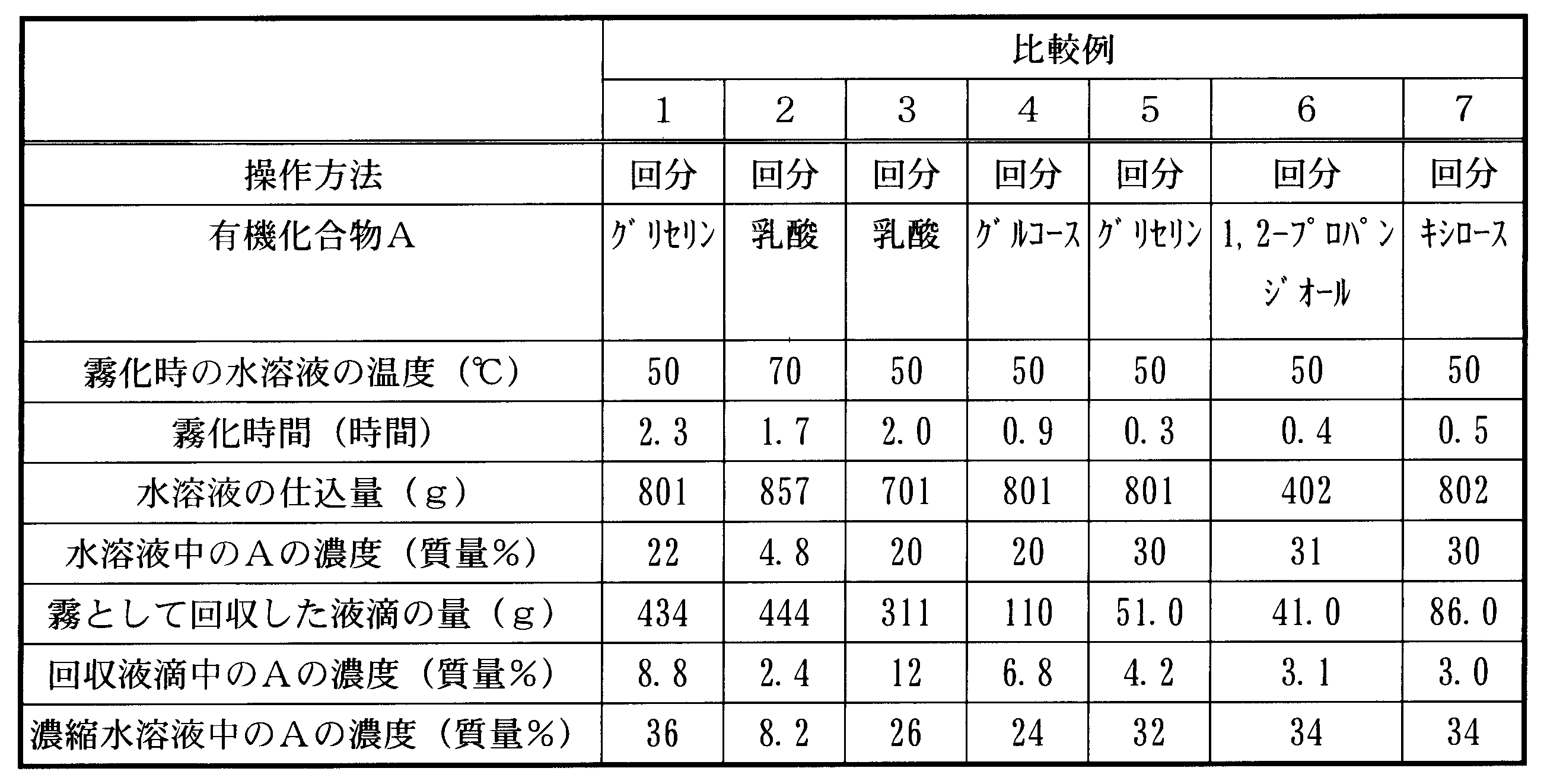
霧回収器29に回収された液滴の量は、実施例1が413g、実施例2が83.8g、実施例3が414g、実施例4が54.8g、実施例5が27.4g、実施例6が73.0g、及び実施例7が58.2g、並びに、比較例1が434g、比較例2が444g、比較例3が311g、比較例4が110g、比較例5が51.0g、比較例6が41.0g、及び比較例7が86.0gであった。
霧回収器29に回収された液滴に含まれる有機化合物の濃度は、実施例1のグリセリンが0.19質量%、実施例2のグリセリンが0質量%、実施例3の乳酸が0.64質量%、実施例4のグルコースが0質量%、実施例5の1,2-プロパンジオールが0.91質量%、実施例6のキシロースが0.91質量%、及び実施例7のヒドロキシメチルフルフラールが0.11質量%、並びに、比較例1のグリセリンが8.8質量%、比較例2の乳酸が2.4質量%、比較例3の乳酸が12質量%、比較例4のグルコースが6.8質量%、比較例5のグリセリンが4.2質量%、比較例6の1,2-プロパンジオールが3.1質量%、及び比較例7のキシロースが3.0質量%であった。
霧化槽21内の脱水濃縮された濃縮水溶液中の有機化合物の濃度は、実施例1のグリセリンが93質量%、実施例2のグリセリンが66質量%、実施例3の乳酸が83質量%、実施例4のグルコースが67質量%、実施例5の1,2-プロパンジオールが55質量%、実施例6のキシロースが49質量%、及びに実施例7のヒドロキシメチルフルフラールが58質量%、並びに、比較例1のグリセリンが36質量%、比較例2の乳酸が8.2質量%、比較例3の乳酸が26質量%、比較例4のグルコースが24質量%、比較例5のグリセリンが32質量%、比較例6の1,2-プロパンジオールが34質量%、及びに比較例7のキシロースが34質量%であった。
表1及び2から明らかなように、実施例1~7は、比較例1~7に比べ、回収された液滴中に含まれる有機化合物の濃度は低く、従って、霧化槽21において有機化合物の水溶液が効率よく脱水濃縮されている。すなわち、超音波を照射した際のエネルギーあたりの脱水効率を高めることができる。
(実験2)
<実施例8>
グリセリンの濃度が20質量%のグリセリン水溶液にグリセリンを添加して濃度を60質量%に調整した。そして、この濃度を60質量%に調整したグリセリン水溶液を、超音波霧化装置20の原料槽24に300g及び霧化槽21に200gそれぞれ仕込み、グリセリン水溶液の温度を50℃に調温し、原料槽24から霧化槽21へのグリセリン水溶液の供給速度が113g/hrになるようにその供給流量を調整して、半回分操作で超音波の照射による脱水濃縮を1.0時間行った(態様2A-(i)-a)。そして、実施例1と同様、霧回収器29に回収された液滴の量及びその液滴中のグリセリンの濃度、並びに霧化槽21内の脱水濃縮された濃縮水溶液中のグリセリンの濃度を測定した。
<実施例9>
グリセリンの濃度が30質量%のグリセリン水溶液201gを超音波霧化装置20の原料槽24に、及び60質量%のグリセリン水溶液251gを霧化槽21にそれぞれ仕込んだ。そして、グリセリン水溶液の温度を50℃に調温し、原料槽24から霧化槽21へのグリセリン水溶液の供給速度が37g/hrになるようにその供給流量を調整することにより、霧化槽21内のグリセリン水溶液のグリセリンの濃度を40質量%以上に維持し、半回分操作で超音波の照射による脱水濃縮を1.1時間行った(態様2B)。そして、実施例1と同様、霧回収器29に回収された液滴の量及びその液滴中のグリセリンの濃度、並びに霧化槽21内の脱水濃縮された濃縮水溶液中のグリセリンの濃度を測定した。
グリセリンの濃度が30質量%のグリセリン水溶液201gを超音波霧化装置20の原料槽24に、及び60質量%のグリセリン水溶液251gを霧化槽21にそれぞれ仕込んだ。そして、グリセリン水溶液の温度を50℃に調温し、原料槽24から霧化槽21へのグリセリン水溶液の供給速度が37g/hrになるようにその供給流量を調整することにより、霧化槽21内のグリセリン水溶液のグリセリンの濃度を40質量%以上に維持し、半回分操作で超音波の照射による脱水濃縮を1.1時間行った(態様2B)。そして、実施例1と同様、霧回収器29に回収された液滴の量及びその液滴中のグリセリンの濃度、並びに霧化槽21内の脱水濃縮された濃縮水溶液中のグリセリンの濃度を測定した。
<実施例10>
グリセリンの濃度が20質量%のグリセリン水溶液にグリセリンを添加して濃度を60質量%に調整した。そして、この濃度を60質量%に調整したグリセリン水溶液を超音波霧化装置20の原料槽24に300g及び霧化槽21に201gそれぞれ仕込み、グリセリン水溶液の温度を50℃に調温し、原料槽24から霧化槽21へのグリセリン水溶液の供給速度が104g/hrになるようにその供給流量を調整すると共に、霧化槽21からの濃縮されたグリセリン水溶液の排出速度が74g/hrになるようにその回収流量を調整して、連続操作で超音波の照射による脱水濃縮を1.0時間行った(態様3A-(i)-a)。そして、実施例1と同様、霧回収器29に回収された液滴の量及びその液滴中のグリセリンの濃度、並びに霧化槽21内の脱水濃縮された濃縮水溶液中のグリセリンの濃度を測定した。
グリセリンの濃度が20質量%のグリセリン水溶液にグリセリンを添加して濃度を60質量%に調整した。そして、この濃度を60質量%に調整したグリセリン水溶液を超音波霧化装置20の原料槽24に300g及び霧化槽21に201gそれぞれ仕込み、グリセリン水溶液の温度を50℃に調温し、原料槽24から霧化槽21へのグリセリン水溶液の供給速度が104g/hrになるようにその供給流量を調整すると共に、霧化槽21からの濃縮されたグリセリン水溶液の排出速度が74g/hrになるようにその回収流量を調整して、連続操作で超音波の照射による脱水濃縮を1.0時間行った(態様3A-(i)-a)。そして、実施例1と同様、霧回収器29に回収された液滴の量及びその液滴中のグリセリンの濃度、並びに霧化槽21内の脱水濃縮された濃縮水溶液中のグリセリンの濃度を測定した。
<実施例11>
グリセリンの濃度が30質量%のグリセリン水溶液262gを超音波霧化装置20の原料槽24に、及び60質量%のグリセリン水溶液251gを霧化槽21にそれぞれ仕込んだ。そして、グリセリン水溶液の温度を50℃に調温し、原料槽24から霧化槽21へのグリセリン水溶液の供給速度が40g/hrになるようにその供給流量を調整すると共に、霧化槽21からの濃縮されたグリセリン水溶液の排出速度が61g/hrになるようにその回収流量を調整することにより、霧化槽21内のグリセリン水溶液のグリセリンの濃度を40質量%以上に維持し、連続操作で超音波の照射による脱水濃縮を1.1時間行った(態様3B)。そして、実施例1と同様、霧回収器29に回収された液滴の量及びその液滴中のグリセリンの濃度、並びに霧化槽21内の脱水濃縮された濃縮水溶液中のグリセリンの濃度を測定した。
グリセリンの濃度が30質量%のグリセリン水溶液262gを超音波霧化装置20の原料槽24に、及び60質量%のグリセリン水溶液251gを霧化槽21にそれぞれ仕込んだ。そして、グリセリン水溶液の温度を50℃に調温し、原料槽24から霧化槽21へのグリセリン水溶液の供給速度が40g/hrになるようにその供給流量を調整すると共に、霧化槽21からの濃縮されたグリセリン水溶液の排出速度が61g/hrになるようにその回収流量を調整することにより、霧化槽21内のグリセリン水溶液のグリセリンの濃度を40質量%以上に維持し、連続操作で超音波の照射による脱水濃縮を1.1時間行った(態様3B)。そして、実施例1と同様、霧回収器29に回収された液滴の量及びその液滴中のグリセリンの濃度、並びに霧化槽21内の脱水濃縮された濃縮水溶液中のグリセリンの濃度を測定した。
(実験結果2)
表3は実施例8~11の実験結果を示す。
表3は実施例8~11の実験結果を示す。
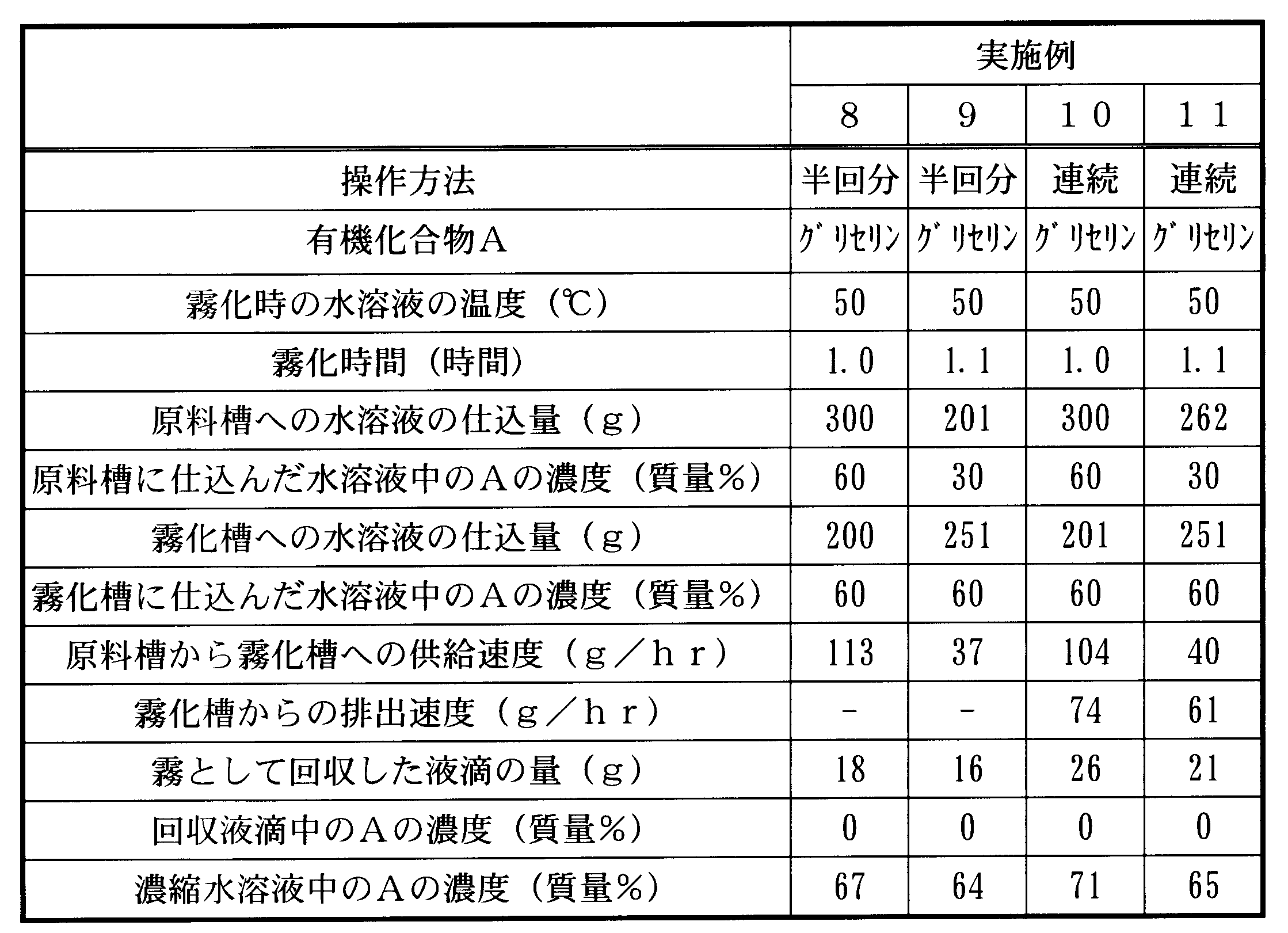
霧回収器29に回収された液滴の量は、実施例8が18g、実施例9が16g、実施例10が26g、及び実施例11が21gであった。
霧回収器29に回収された液滴に含まれる有機化合物の濃度は、実施例8のグリセリンが0質量%、実施例9のグリセリンが0質量%、実施例10のグリセリンが0質量%、及び実施例11のグリセリンが0質量%であった。
霧化槽21内の脱水濃縮された濃縮水溶液中の有機化合物の濃度は、実施例8のグリセリンが67質量%、実施例9のグリセリンが64質量%、実施例10のグリセリンが71質量%、及び実施例11のグリセリンが65質量%であった。
表3から明らかなように、半回分操作及び連続操作のいずれの超音波の照射によるグリセリン水溶液の脱水濃縮の場合も、回収された液滴中に含まれるグリセリンの濃度は低く、従って、霧化槽21においてグリセリン水溶液が効率よく脱水濃縮されている。
本発明は、有機化合物の濃縮水溶液の製造方法及びその脱水濃縮方法について有用である。
10,20 超音波霧化装置
11,21 霧化槽
12,22 超音波振動子
13 濃縮水溶液排出管
14,24 原料槽
15,25 原料供給管
16,18,26 戻り管
17 有機化合物A供給管
19 濃度調整部
27 キャリアガス供給管
28 霧回収管
29 霧回収器
11,21 霧化槽
12,22 超音波振動子
13 濃縮水溶液排出管
14,24 原料槽
15,25 原料供給管
16,18,26 戻り管
17 有機化合物A供給管
19 濃度調整部
27 キャリアガス供給管
28 霧回収管
29 霧回収器
Claims (19)
- 分子内に親水基を2個以上有する有機化合物を濃度40質量%未満で含有する水溶液を、前記有機化合物の濃度が40質量%以上となるように調整する濃度調整ステップと、
前記濃度調整ステップにおいて前記有機化合物の濃度を40質量%以上に調整した水溶液に超音波を照射して水を霧化させることにより脱水濃縮する脱水濃縮ステップと、
を含む、有機化合物の濃縮水溶液の製造方法。 - 前記濃度調整ステップにおける濃度調整を、前記有機化合物を濃度40質量%未満で含有する水溶液と、前記有機化合物又は前記有機化合物の濃度が40質量%よりも高い水溶液とを混合することにより行う、請求項1に記載された有機化合物の濃縮水溶液の製造方法。
- 前記脱水濃縮ステップにおいて脱水濃縮して得られた前記有機化合物の濃縮水溶液を回収する回収ステップを更に含む、請求項1又は2に記載された有機化合物の濃縮水溶液の製造方法。
- 前記濃度調整ステップにおける濃度調整を、超音波振動子が設けられた霧化槽を備えた超音波霧化装置において行う、請求項1~3のいずれかに記載された有機化合物の濃縮水溶液の製造方法。
- 前記濃度調整ステップにおいて、前記有機化合物の濃度を40質量%以上に調整した水溶液を、超音波振動子が設けられた霧化槽に仕込む、請求項1~4のいずれかに記載された有機化合物の濃縮水溶液の製造方法。
- 前記有機化合物の濃縮水溶液の製造を回分操作で行う、請求項1~5のいずれかに記載された有機化合物の濃縮水溶液の製造方法。
- 前記脱水濃縮ステップにおいて脱水濃縮する前記有機化合物の水溶液に、前記濃度調整ステップにおいて前記有機化合物を濃度40質量%未満で含有する水溶液を、前記有機化合物の濃度が40質量%以上となるように調整した水溶液を連続的又は間欠的に供給し、前記有機化合物の濃縮水溶液の製造を半回分操作で行う、請求項1~5のいずれかに記載された有機化合物の濃縮水溶液の製造方法。
- 前記脱水濃縮ステップにおいて脱水濃縮する前記有機化合物の水溶液に、前記濃度調整ステップにおいて前記有機化合物を濃度40質量%未満で含有する水溶液を、前記有機化合物の濃度が40質量%以上となるように調整した水溶液を連続的又は間欠的に供給すると共に、前記有機化合物の濃縮水溶液を連続的又は間欠的に回収し、前記有機化合物の濃縮水溶液の製造を連続操作で行う、請求項1~5のいずれかに記載された有機化合物の濃縮水溶液の製造方法。
- 前記脱水濃縮ステップにおいて前記有機化合物の水溶液に連続的又は間欠的に供給する水溶液の前記濃度調整ステップにおける濃度調整を、前記脱水濃縮ステップと同時進行的に、前記有機化合物を濃度40質量%未満で含有する水溶液と、前記有機化合物の濃度が40質量%よりも高い水溶液とを混合することにより行う、請求項7又は8に記載された有機化合物の濃縮水溶液の製造方法。
- 前記有機化合物の濃度が40質量%よりも高い水溶液の一部又は全部が、前記脱水濃縮ステップにおいて脱水濃縮して得られた前記有機化合物の濃縮水溶液である、請求項9に記載された有機化合物の濃縮水溶液の製造方法。
- 前記脱水濃縮ステップにおいて脱水濃縮する前記有機化合物の水溶液に、前記有機化合物を濃度40質量%未満で含有する水溶液を連続的又は間欠的に供給し、このとき、有機化合物を濃度40質量%未満で含有する水溶液の供給流量を、前記脱水濃縮する前記有機化合物の水溶液における前記有機化合物の濃度が40質量%以上となるように制御することにより前記濃度調整ステップを実施し、前記有機化合物の濃縮水溶液の製造を半回分操作で行う、請求項1~5のいずれかに記載された有機化合物の濃縮水溶液の製造方法。
- 前記脱水濃縮ステップにおいて脱水濃縮する前記有機化合物の水溶液に、前記有機化合物を濃度40質量%未満で含有する水溶液を連続的又は間欠的に供給すると共に、前記脱水濃縮ステップにおいて脱水濃縮して得られた前記有機化合物の濃縮水溶液を連続的又は間欠的に回収し、このとき、前記有機化合物を濃度40質量%未満で含有する水溶液の供給流量及び前記濃縮水溶液の回収流量を、前記脱水濃縮する前記有機化合物の水溶液における前記有機化合物の濃度が40質量%以上となるように制御することにより前記濃度調整ステップを実施し、前記有機化合物の濃縮水溶液の製造を連続操作で行う、請求項1~5のいずれかに記載された有機化合物の濃縮水溶液の製造方法。
- 前記脱水濃縮ステップにおいて超音波を照射する水溶液の温度を10℃以上100℃以下とする、請求項1~12のいずれかに記載された有機化合物の濃縮水溶液の製造方法。
- 前記有機化合物が、親水基として、水酸基、カルボキシル基、カルボニル基、エステル基、アセタール基、ヘミアセタール基、エーテル基、アミノ基、アンモニウム基、アミド基、スルホン酸基、硫酸エステル基、ホスホン酸基、リン酸基、及びウレイド基のうちから選ばれる1種又は2種以上を有する、請求項1~13のいずれかに記載された有機化合物の濃縮水溶液の製造方法。
- 前記有機化合物が多価アルコールを含む、請求項14に記載された有機化合物の濃縮水溶液の製造方法。
- 前記有機化合物がカルボキシル基を有する有機化合物を含む、請求項14又は15に記載された有機化合物の濃縮水溶液の製造方法。
- 前記有機化合物の分子内の炭素数が2以上、22以下である、請求項1~16のいずれかに記載された有機化合物の濃縮水溶液の製造方法。
- 前記有機化合物の分子量が50以上、400以下である、請求項1~17のいずれかに記載された有機化合物の濃縮水溶液の製造方法。
- 分子内に親水基を2個以上有する有機化合物を濃度40質量%未満で含有する水溶液を、前記有機化合物の濃度が40質量%以上となるように調整した後、前記有機化合物の濃度が40質量%以上となるように調整した水溶液に超音波を照射して水を霧化させることにより脱水濃縮する脱水濃縮方法。
Priority Applications (5)
| Application Number | Priority Date | Filing Date | Title |
|---|---|---|---|
| US14/409,915 US9855513B2 (en) | 2012-06-19 | 2013-06-07 | Method for producing concentrated aqueous solution of organic compound |
| EP13806641.0A EP2862607B1 (en) | 2012-06-19 | 2013-06-07 | Method for preparing concentrated aqueous solution of organic compound |
| CN201380032485.6A CN104394954B (zh) | 2012-06-19 | 2013-06-07 | 有机化合物的浓缩水溶液的制造方法 |
| ES13806641.0T ES2689442T3 (es) | 2012-06-19 | 2013-06-07 | Método para preparar una disolución acuosa concentrada de compuesto orgánico |
| PH12014502844A PH12014502844B1 (en) | 2012-06-19 | 2014-12-19 | Method for producing concentrated aqueous solution of organic compound |
Applications Claiming Priority (2)
| Application Number | Priority Date | Filing Date | Title |
|---|---|---|---|
| JP2012137907 | 2012-06-19 | ||
| JP2012-137907 | 2012-06-19 |
Publications (1)
| Publication Number | Publication Date |
|---|---|
| WO2013190794A1 true WO2013190794A1 (ja) | 2013-12-27 |
Family
ID=49768409
Family Applications (1)
| Application Number | Title | Priority Date | Filing Date |
|---|---|---|---|
| PCT/JP2013/003604 Ceased WO2013190794A1 (ja) | 2012-06-19 | 2013-06-07 | 有機化合物の濃縮水溶液の製造方法 |
Country Status (8)
| Country | Link |
|---|---|
| US (1) | US9855513B2 (ja) |
| EP (1) | EP2862607B1 (ja) |
| JP (1) | JP6095492B2 (ja) |
| CN (1) | CN104394954B (ja) |
| ES (1) | ES2689442T3 (ja) |
| MY (1) | MY178383A (ja) |
| PH (1) | PH12014502844B1 (ja) |
| WO (1) | WO2013190794A1 (ja) |
Families Citing this family (3)
| Publication number | Priority date | Publication date | Assignee | Title |
|---|---|---|---|---|
| JP2022065220A (ja) * | 2019-03-06 | 2022-04-27 | シャープ株式会社 | 海水淡水化装置および海水淡水化方法 |
| JP7181142B2 (ja) | 2019-03-28 | 2022-11-30 | 株式会社フジミインコーポレーテッド | シリカゾルの製造方法 |
| CN113694547B (zh) * | 2021-09-28 | 2023-01-24 | 乐得清药业扬州有限公司 | 一种超声波雾化浓缩装置 |
Citations (4)
| Publication number | Priority date | Publication date | Assignee | Title |
|---|---|---|---|---|
| JP2010115165A (ja) | 2008-11-13 | 2010-05-27 | Fujiko Omoto | ポリ乳酸の製造方法、ポリ乳酸の製造装置、生分解性プラスチックの製造方法および生分解性プラスチックの製造装置 |
| JP2010233543A (ja) | 2009-03-31 | 2010-10-21 | Fujiko Omoto | ポリ乳酸の製造方法、ポリ乳酸の製造装置、生分解性プラスチックの製造方法および生分解性プラスチックの製造装置 |
| JP2012096206A (ja) * | 2010-11-05 | 2012-05-24 | Ebara Corp | 熱輸送媒体の再生装置 |
| JP2012144530A (ja) | 2010-12-20 | 2012-08-02 | Kao Corp | 濃縮グリセリンの製造方法 |
Family Cites Families (18)
| Publication number | Priority date | Publication date | Assignee | Title |
|---|---|---|---|---|
| US2400409A (en) * | 1942-09-05 | 1946-05-14 | Nat Agrol Company Inc | Methods for dehydration of alcohols |
| US4599459A (en) * | 1984-08-31 | 1986-07-08 | Masanao Hirose | Method for the ultrasonic treatment of a dilute alcoholic solution |
| US5395592A (en) * | 1993-10-04 | 1995-03-07 | Bolleman; Brent | Acoustic liquid processing device |
| JP3459458B2 (ja) | 1993-11-17 | 2003-10-20 | 大関株式会社 | 蒸留装置、それを用いる蒸留方法、酒類の製造方法およびそれから得られる酒類 |
| JPH0819735A (ja) * | 1994-07-06 | 1996-01-23 | Oozeki Kk | 濃縮・分画装置およびそれを用いる濃縮・分画方法ならびに酒類の製造方法 |
| JPH08131701A (ja) * | 1994-11-11 | 1996-05-28 | Fukoku Co Ltd | 溶液濃度制御器 |
| JP2002224502A (ja) * | 2001-01-31 | 2002-08-13 | Honda Electronic Co Ltd | 超音波による2種混合溶液の分離方法及びその装置 |
| JP2003200031A (ja) * | 2001-12-28 | 2003-07-15 | Nakakin:Kk | 濃度調整用混合装置 |
| JP3782029B2 (ja) * | 2002-03-19 | 2006-06-07 | 株式会社小山本家酒造 | 清酒の製造方法 |
| JP2003289847A (ja) * | 2002-04-05 | 2003-10-14 | Honda Electronic Co Ltd | 日本酒カクテルベース及びその製造装置 |
| GB2404880B (en) * | 2003-07-25 | 2005-10-12 | Ultrasound Brewery | Ultrasonic solution separator |
| WO2006070839A1 (ja) * | 2004-12-28 | 2006-07-06 | Ultrasound Brewery | 溶液の超音波分離方法とこの方法に使用される超音波分離装置 |
| ATE533544T1 (de) * | 2004-12-29 | 2011-12-15 | Ultrasound Brewery | Verfahren zur ultraschalltrennung einer lösung und ultraschalltrennvorrichtung zur verwendung bei dem verfahren |
| JP5246907B2 (ja) * | 2005-08-23 | 2013-07-24 | ナノミストテクノロジーズ株式会社 | 溶液の分離方法とこの方法に使用される分離装置 |
| US7834225B1 (en) * | 2006-03-07 | 2010-11-16 | Nanomist Systems, Llc | Method and device for separation of liquid mixtures without thermal distillation |
| JP5565849B2 (ja) * | 2007-12-12 | 2014-08-06 | ナノミストテクノロジーズ株式会社 | 溶液の超音波分離方法 |
| EP2213351A1 (en) * | 2009-02-03 | 2010-08-04 | Carl-Johan Lindquist | A distillation system and a method |
| JP5797015B2 (ja) * | 2011-05-26 | 2015-10-21 | 三菱重工業株式会社 | 水分含有油の脱水処理装置及び方法 |
-
2013
- 2013-06-05 JP JP2013119195A patent/JP6095492B2/ja active Active
- 2013-06-07 ES ES13806641.0T patent/ES2689442T3/es active Active
- 2013-06-07 EP EP13806641.0A patent/EP2862607B1/en not_active Not-in-force
- 2013-06-07 MY MYPI2014703844A patent/MY178383A/en unknown
- 2013-06-07 WO PCT/JP2013/003604 patent/WO2013190794A1/ja not_active Ceased
- 2013-06-07 US US14/409,915 patent/US9855513B2/en not_active Expired - Fee Related
- 2013-06-07 CN CN201380032485.6A patent/CN104394954B/zh not_active Expired - Fee Related
-
2014
- 2014-12-19 PH PH12014502844A patent/PH12014502844B1/en unknown
Patent Citations (4)
| Publication number | Priority date | Publication date | Assignee | Title |
|---|---|---|---|---|
| JP2010115165A (ja) | 2008-11-13 | 2010-05-27 | Fujiko Omoto | ポリ乳酸の製造方法、ポリ乳酸の製造装置、生分解性プラスチックの製造方法および生分解性プラスチックの製造装置 |
| JP2010233543A (ja) | 2009-03-31 | 2010-10-21 | Fujiko Omoto | ポリ乳酸の製造方法、ポリ乳酸の製造装置、生分解性プラスチックの製造方法および生分解性プラスチックの製造装置 |
| JP2012096206A (ja) * | 2010-11-05 | 2012-05-24 | Ebara Corp | 熱輸送媒体の再生装置 |
| JP2012144530A (ja) | 2010-12-20 | 2012-08-02 | Kao Corp | 濃縮グリセリンの製造方法 |
Non-Patent Citations (2)
| Title |
|---|
| KEIJI YASUDA ET AL.: "Separation by Ultrasonic Atomization", KAGAKU KOGYO, vol. 56, no. 2, 1 February 2005 (2005-02-01), pages 34 - 37, XP008175903 * |
| See also references of EP2862607A4 |
Also Published As
| Publication number | Publication date |
|---|---|
| JP6095492B2 (ja) | 2017-03-15 |
| US20150151213A1 (en) | 2015-06-04 |
| CN104394954B (zh) | 2016-03-09 |
| EP2862607B1 (en) | 2018-08-01 |
| EP2862607A1 (en) | 2015-04-22 |
| PH12014502844B1 (en) | 2019-03-06 |
| CN104394954A (zh) | 2015-03-04 |
| US9855513B2 (en) | 2018-01-02 |
| MY178383A (en) | 2020-10-10 |
| JP2014024057A (ja) | 2014-02-06 |
| EP2862607A4 (en) | 2016-03-16 |
| ES2689442T3 (es) | 2018-11-14 |
| PH12014502844A1 (en) | 2015-02-09 |
Similar Documents
| Publication | Publication Date | Title |
|---|---|---|
| JP6095492B2 (ja) | 有機化合物の濃縮水溶液の製造方法 | |
| TWI360574B (en) | Fuel production | |
| US9868682B2 (en) | Production of partially refined waste glycerol | |
| Ruiz-Bermejo et al. | Prebiotic microreactors: a synthesis of purines and dihydroxy compounds in aqueous aerosol | |
| KR20150096714A (ko) | 발효액으로부터의 카르복실산 회수 및 사용 | |
| CN109762559A (zh) | 一种基于离子液体的氮掺杂碳量子点的制备方法 | |
| JP2010011787A (ja) | エタノール濃縮方法および熱利用システム | |
| CN104822643B (zh) | 来自生物衍生的羧酸酯的氢化产物 | |
| CN104854222B (zh) | 从生物衍生的羧酸酯生产生物燃料 | |
| Liu et al. | Ultrasonic separation in bioethanol refining | |
| CN103261135A (zh) | 浓缩甘油的制造方法 | |
| AU2014390004B2 (en) | Removal of target compounds from gases | |
| JP2013151490A (ja) | 有機化合物の製造方法 | |
| CN201988203U (zh) | 钛液浓缩装置 | |
| JPH0819735A (ja) | 濃縮・分画装置およびそれを用いる濃縮・分画方法ならびに酒類の製造方法 | |
| Pan et al. | Ionically conductive materials for energy-efficient succinic acid recovery towards electrified circular bioeconomy | |
| JP2009173550A (ja) | 多価アルコールの水素化分解物の製造方法 | |
| CN105273838B (zh) | 一种生物柴油吸附脱酸方法 | |
| CN102311309A (zh) | 一种超声浓缩乙醇溶液的方法 | |
| CN101417197A (zh) | 二聚酸蒸馏工艺中异味消除方法及装置 | |
| CN115651037B (zh) | 从白酒副产物丢糟中提取神经酰胺和鞘糖脂的方法 | |
| US9469586B2 (en) | Production of partially refined waste glycerol | |
| TW202017896A (zh) | 一種使用環氧脂肪酸烷基酯類製備生質多元醇之方法 | |
| JP2014177411A (ja) | 濃縮グリセリンの製造方法 | |
| JP2022065220A (ja) | 海水淡水化装置および海水淡水化方法 |
Legal Events
| Date | Code | Title | Description |
|---|---|---|---|
| WWE | Wipo information: entry into national phase |
Ref document number: 201380032485.6 Country of ref document: CN |
|
| 121 | Ep: the epo has been informed by wipo that ep was designated in this application |
Ref document number: 13806641 Country of ref document: EP Kind code of ref document: A1 |
|
| NENP | Non-entry into the national phase |
Ref country code: DE |
|
| WWE | Wipo information: entry into national phase |
Ref document number: 14409915 Country of ref document: US |
|
| WWE | Wipo information: entry into national phase |
Ref document number: IDP00201408116 Country of ref document: ID |