WO2014007274A1 - 移動通信システム、ホーム基地局装置、位置管理装置、通信方法及び移動局装置 - Google Patents
移動通信システム、ホーム基地局装置、位置管理装置、通信方法及び移動局装置 Download PDFInfo
- Publication number
- WO2014007274A1 WO2014007274A1 PCT/JP2013/068213 JP2013068213W WO2014007274A1 WO 2014007274 A1 WO2014007274 A1 WO 2014007274A1 JP 2013068213 W JP2013068213 W JP 2013068213W WO 2014007274 A1 WO2014007274 A1 WO 2014007274A1
- Authority
- WO
- WIPO (PCT)
- Prior art keywords
- access control
- lgw
- sipto
- control device
- information
- Prior art date
- Legal status (The legal status is an assumption and is not a legal conclusion. Google has not performed a legal analysis and makes no representation as to the accuracy of the status listed.)
- Ceased
Links
Images







Classifications
-
- H—ELECTRICITY
- H04—ELECTRIC COMMUNICATION TECHNIQUE
- H04W—WIRELESS COMMUNICATION NETWORKS
- H04W12/00—Security arrangements; Authentication; Protecting privacy or anonymity
- H04W12/08—Access security
-
- H—ELECTRICITY
- H04—ELECTRIC COMMUNICATION TECHNIQUE
- H04W—WIRELESS COMMUNICATION NETWORKS
- H04W28/00—Network traffic management; Network resource management
- H04W28/02—Traffic management, e.g. flow control or congestion control
- H04W28/08—Load balancing or load distribution
- H04W28/082—Load balancing or load distribution among bearers or channels
-
- H—ELECTRICITY
- H04—ELECTRIC COMMUNICATION TECHNIQUE
- H04W—WIRELESS COMMUNICATION NETWORKS
- H04W36/00—Hand-off or reselection arrangements
- H04W36/12—Reselecting a serving backbone network switching or routing node
- H04W36/125—Reselecting a serving backbone network switching or routing node involving different types of service backbones
-
- H—ELECTRICITY
- H04—ELECTRIC COMMUNICATION TECHNIQUE
- H04W—WIRELESS COMMUNICATION NETWORKS
- H04W76/00—Connection management
- H04W76/10—Connection setup
-
- H—ELECTRICITY
- H04—ELECTRIC COMMUNICATION TECHNIQUE
- H04W—WIRELESS COMMUNICATION NETWORKS
- H04W76/00—Connection management
- H04W76/10—Connection setup
- H04W76/12—Setup of transport tunnels
-
- H—ELECTRICITY
- H04—ELECTRIC COMMUNICATION TECHNIQUE
- H04W—WIRELESS COMMUNICATION NETWORKS
- H04W8/00—Network data management
- H04W8/02—Processing of mobility data, e.g. registration information at HLR [Home Location Register] or VLR [Visitor Location Register]; Transfer of mobility data, e.g. between HLR, VLR or external networks
- H04W8/08—Mobility data transfer
- H04W8/082—Mobility data transfer for traffic bypassing of mobility servers, e.g. location registers, home PLMNs or home agents
-
- H—ELECTRICITY
- H04—ELECTRIC COMMUNICATION TECHNIQUE
- H04W—WIRELESS COMMUNICATION NETWORKS
- H04W84/00—Network topologies
- H04W84/02—Hierarchically pre-organised networks, e.g. paging networks, cellular networks, WLAN [Wireless Local Area Network] or WLL [Wireless Local Loop]
- H04W84/04—Large scale networks; Deep hierarchical networks
- H04W84/042—Public Land Mobile systems, e.g. cellular systems
- H04W84/045—Public Land Mobile systems, e.g. cellular systems using private Base Stations, e.g. femto Base Stations, home Node B
-
- H—ELECTRICITY
- H04—ELECTRIC COMMUNICATION TECHNIQUE
- H04W—WIRELESS COMMUNICATION NETWORKS
- H04W88/00—Devices specially adapted for wireless communication networks, e.g. terminals, base stations or access point devices
- H04W88/12—Access point controller devices
-
- H—ELECTRICITY
- H04—ELECTRIC COMMUNICATION TECHNIQUE
- H04W—WIRELESS COMMUNICATION NETWORKS
- H04W88/00—Devices specially adapted for wireless communication networks, e.g. terminals, base stations or access point devices
- H04W88/16—Gateway arrangements
Definitions
- the present invention relates to a mobile communication system in which a home network to which a home base station device and an access control device to which a mobile station device is connected is connected, and a core network to which a location management device is connected are connected via an external network.
- the standardization organization 3GPP The 3rd Generation Generation Partnership Project
- EPS Evolved Packet System
- Non-Patent Document 1 the next generation mobile communication system.
- a HeNB Home eNodeB: home base station
- a small base station installed in a house or the like has been studied.
- the HeNB constructs a small-scale radio cell called a femto cell and accommodates a UE (User : Equipment: mobile terminal device) using the same radio access technology as that of a normal base station. And it connects to the core network of a mobile communication system via a broadband network, and the communication data of UE accommodated can be relayed.
- a UE User : Equipment: mobile terminal device
- Non-Patent Document 2 discloses a candidate architecture for realizing SIPTO (Selected IP Traffic Offload).
- SIPTO provides data communication to a UE accommodated in an eNB via a broadband network without passing through a core network of a mobile communication system while the UE is connected to a base station (eNB).
- eNB base station
- Non-Patent Document 2 discloses a candidate for an architecture for realizing LIPA.
- the UE connects to a home base station (HeNB) and provides the UE with a connection to a home network to which the HeNB connects.
- HeNB home base station
- Non-Patent Document 3 describes the SIPTO, and the UE is connected to the HeNB, and the UE accommodated in the HeNB via the broadband network without going through the core network of the mobile communication system. Provide data communication.
- SIPTO shown here access in the home network cannot be performed. That is, SIPTO provided to UE accommodated in HeNB is provided as data communication different from the above-mentioned LIPA.
- Non-Patent Document 3 a method in which a UE performs data communication from an eNB or HeNB via an offload point (TOF) in a mobile communication network and a broadband network is defined as SIPTO @ RN (RadioSAccess Network: wireless access). Network), and a method for performing data communication from the HeNB via the LGW via the broadband network is described as SIPTO @ LN (Local Network).
- SIPTO @ RN RadioSAccess Network: wireless access. Network
- LN Local Network
- SIPTO @ RN is an offload service using TOF arranged in the core network
- SIPTO @ LN LGW is used. It is an off-road service.
- Non-Patent Document 4 describes a procedure for establishing a SIPTO PDN connection.
- the PDN connection is a communication path established between the access control apparatus and the UE for each service.
- the PDN connection used for the offload service is established.
- a location management device MME: Mobility Management Entity
- MME Mobility Management Entity
- LGW and HeNB are configured in the same device, LGW and HeNB correspond one-to-one, and if MME can detect the HeNB address, LGW @ CN address can be determined at the same time, and GW is appropriately I was able to make a selection.
- 3GPP TS23.401 General Packet Radio Service (GPRS) enhancements for Evolved Universal Terrestrial Radio Access Network (E-UTRAN) access 3GPP TR 23.829 Local IP Access and Selected IP IP Traffic Offload 3GPP TR 23.859 LiPA Mobility and SIPTO at local Local Network “User interactions for SIPTO @ LN acceptance”, 3GPP TSG SA WG2 # 85, S2-112455
- GPRS General Packet Radio Service
- the UE can move between HeNBs using the LGW as an anchor.
- the MME since the LGW and the HeNB are different devices, even if the MME can detect the HeNB address, it cannot detect the LGW address at the same time. Therefore, when the HeNB and the LGW are configured by the same device, the MME can easily detect the LGW from the HeNB address. However, in the configuration in which the HeNB and the LGW are separated, the LME is detected from the HeNB address. New means are needed.
- the LGW @ CN address MME can detect the LGW @ CN address of the LGW to which the HeNB is connected, it cannot determine whether the detected LGW can use the SIPTO @ LN.
- the MME cannot complete the PDN connection establishment procedure for performing SIPTO @ LN because it cannot select the SIPTO @ LN-capable LGW during the GW selection process in the PDN connection establishment procedure.
- a PDN connection in SIPTO @ LN could not be established.
- the present invention has been made in view of such circumstances, and an object thereof is to establish a PDN connection by selecting a SIPTO @ LN-capable LGW at the time of MME GW selection processing in the PDN connection establishment procedure. It is to provide a system and the like.
- the mobile communication system of the present invention In a mobile communication system in which a home network to which a mobile station device is connected and a home network to which an access control device is connected and a core network to which a location management device is connected are connected via an external network.
- the home base station device Obtaining the identification information of the access control device and information on whether or not the access control device can be offloaded through a local network; Managing the identification information of the access control device and information on whether or not the access control device can be offloaded, Notifying the location management device of identification information of the access control device and information on whether or not the access control device can be offloaded,
- the location management device includes: Receiving information including identification information of the access control device and offload availability information of the access control device from the home base station device; Managing the identification information of the access control device, offload availability information of the access control device, and information of the home base station device in association with each other,
- the mobile station device requests establishment of a PDN connection for offloading via a local network,
- the location management device can be offloaded based on a request from the mobile station device, identification information of the access control device, offload availability information of the access control device, and information of the home base station device
- the access control apparatus is selected, and a PDN connection between the access control apparatus and
- the home base station apparatus of the present invention Home base station apparatus in a mobile communication system in which a home network to which a mobile station apparatus is connected and a home network to which an access control apparatus is connected and a core network to which a position management apparatus is connected are connected via an external network
- the location management device is a device that selects an access control device and establishes a PDN connection between the access control device and the mobile station device, Obtaining the identification information of the access control device and information on whether or not the access control device can be offloaded through a local network; Managing the identification information of the access control device and information on whether or not the access control device can be offloaded, When the location management device establishes a PDN connection for offload via a local network by notifying the location management device of identification information of the access control device and information on whether or not the access control device can be offloaded.
- the location management device is requested to register information used for selecting the access control device.
- the position management device of the present invention is A location management device in a mobile communication system in which a home base station device to which a mobile station device is connected and a home network to which an access control device is connected and a core network to which the location management device is connected are connected via an external network.
- the location management device includes: Receiving information including identification information of the access control device and offload availability information of the access control device from the home base station device; Managing the identification information of the access control device, offload availability information of the access control device, and information of the home base station device in association with each other,
- the mobile station device requests establishment of a PDN connection for offloading via a local network,
- the location management device can be offloaded based on a request from the mobile station device, identification information of the access control device, offload availability information of the access control device, and information of the home base station device
- the access control apparatus is selected, and a PDN connection between the access control apparatus and the mobile station apparatus is established.
- the communication method of the present invention includes: A communication method in a mobile communication system in which a home network to which a home base station device and an access control device to which a mobile station device is connected is connected and a core network to which a location management device is connected are connected via an external network.
- the home base station device Obtaining the identification information of the access control device and information on whether or not the access control device can be offloaded through a local network; Managing the identification information of the access control device and information on whether or not the access control device can be offloaded, Notifying the location management device of identification information of the access control device and information on whether or not the access control device can be offloaded,
- the location management device includes: Receiving information including identification information of the access control device and offload availability information of the access control device from the home base station device; Managing the identification information of the access control device, offload availability information of the access control device, and information of the home base station device in association with each other,
- the mobile station device requests establishment of a PDN connection for offloading via a local network,
- the location management device can be offloaded based on a request from the mobile station device, identification information of the access control device, offload availability information of the access control device, and information of the home base station device
- the access control apparatus is selected, and a PDN connection between the access control apparatus and
- the MME can manage the LGW capable of SIPTO @ LN. Thereby, MME can select LGW which can be SIPTO @ LN at the time of GW selection processing in a PDN connection establishment procedure.
- the MME can complete the PDN connection establishment procedure for establishing the SIPTO @ LN PDN connection by being able to select a SIPTO @ LN-capable LGW during the GW selection process. Furthermore, the user (UE) can start data communication using SIPTO @ LN by establishing a SIPTO @ LN PDN connection.
- the mobile communication carrier can start data communication using SIPTO @ LN by establishing a SIPTO @ LN PDN connection.
- FIG. 1 is a diagram for explaining an outline of a mobile communication system 1 in the present embodiment.
- the mobile communication system 1 includes a core network 3, a home network 5, and a broadband network 7.
- the broadband network 7 is a wired access network that realizes broadband communication, and is constructed by, for example, ADSL (Asymmetric Digital Subscriber Line) or an optical fiber.
- ADSL Asymmetric Digital Subscriber Line
- optical fiber an optical fiber.
- the present invention is not limited to this, and a wireless access network such as WiMAX (Worldwide Interoperability for Microwave Access) may be used.
- the core network 3 is a mobile communication network operated by a mobile communication provider, and includes an MME 10 (Mobility Management Entity) and an SGW 40.
- MME 10 Mobility Management Entity
- SGW 40 Serving Gateway
- the MME 10 is an entity that performs signaling, and is a location management device that leads the location management of the mobile station device (UE 50) and the procedure for establishing the PDN connection.
- the PDN connection is a logical path for transferring a user IP packet established between the PGW and the UE or between the LGW 20 and the UE in the home network for each UE.
- the MME 10 determines to establish a SIPTO @ LN PDN connection
- the MME 10 performs GW selection processing.
- the MME selects a SIP GW capable of SIPTO @ LN.
- the establishment of a PDN connection includes the establishment of an EPS bearer or a radio bearer, and each bearer can set a specific QoS level with factors such as communication speed and bandwidth.
- an address “2001: 100: 200: 300 :: 3” is assigned to the MME 10.
- the address assigned here is not limited to the IPv6 address, but may be an IPv4 address.
- the SGW 40 is used for transmission / reception transfer of user data via the core network.
- the SGW 40 is a conventional device accommodated in the core network. Therefore, the description is omitted.
- the home network 5 is a home network in a home, a corporate network such as a company, and the like, and includes an LGW 20, a HeNB 30, and a UE 50. Further, the home network 5 is connected to the broadband network 7.
- the LGW 20 is a gateway device between the home network 5 and the broadband network 7 and has a function as a conventional broadband router such as a router with a built-in ADSL modem.
- the LGW 20 is assigned an address “2001: 100: 200: 400 :: 3” on the broadband network 7 side, and an address “2001: 100: 200: 500 :: 2” on the HeNB 30 side. Assigned.
- the LGW @ CN address LGW's Core Network side address
- LGW 20's HeNB side address LGW 20's HeNB side address
- the address assigned here is not limited to the IPv6 address, but may be an IPv4 address.
- the HeNB 30 can accommodate the UE 50 as a base station provided by the core network operator while being installed in the home network 5. Typically, this is a 3GPP LTE (Long Term Evolution) base station that forms a femto cell.
- An address of “2001: 100: 200: 500 :: 3” is assigned to the HeNB 30.
- the address assigned here is not limited to the IPv6 address, but may be an IPv4 address.
- the UE 50 is a mobile station device that can be accommodated in the HeNB 30 or the like.
- FIG. 2 shows a configuration of the MME 10 in the present embodiment.
- a transmission / reception unit 110 an LGW detection unit 140, and a storage unit 150 are connected to the control unit 100 via a bus.
- the control unit 100 is a functional unit for controlling the MME 10.
- the control unit 100 implements various functions by reading and executing various programs stored in the storage unit 150.
- the transmission / reception unit 110 is a functional unit that is wired to a router or a switch and transmits and receives packets.
- transmission / reception is performed by Ethernet (registered trademark) or the like generally used as a network connection method.
- the storage unit 150 is a functional unit in which various programs necessary for the operation of the MME 10 and various data are stored.
- the storage unit 150 includes, for example, a semiconductor memory, an HDD (Hard Disk Drive), or the like. Furthermore, the storage unit 150 stores a HeNB address management table 152, an LHN management table 154, and an APN management table 156.
- the address of the HeNB 30 for example, “2001: 100: 200: 500 :: 3”
- the LGW @ CN address of the LGW 20 for example, “2001: 100: 200: 400 :: 3 ” and associated (managed).
- a SIPTO @ LN flag for managing the availability of SIPTO @ LN in the LGW 20 is stored. If the SIPTO @ LN flag is “ON”, SIPTO @ LN can be used, and if it is “OFF”, SIPTO @ LN cannot be used. For example, whether or not SIPTO @ LN can be used in LGW 20 may be determined based on whether or not SIPTO @ LN has a function for establishing a PDN connection, or LGW 20 may use SIPTO @ LN's function. May be determined based on the on / off setting by the operator.
- a plurality of HeNB addresses may be managed for a single LGW @ CN address. Even when a plurality of HeNB addresses are managed, the LGW @ CN address and the SIPTO @ LN flag (ON / OFF) in the LGW 20 are managed for each HeNB address.
- the HeNB address management table 152 manages APN identifiers that can be used in the LGW 20. This indicates that the MME 10 can select the LGW 20 and establish a PDN connection for the UE 50 connected using this APN.
- the LGW detection unit 140 determines the SIPTO @ LN flag of the LGW 20 notified from the HeNB 30, and includes ON / OFF of the SIPTO @ LN flag in the LGW 20 in the HeNB address management table 152.
- the LGW 20 sets the SIPTO @ LN to “OFF” as it cannot be used.
- SIPTO @ LN In the SIPTO @ LN flag shown here, another service such as LIPA (Local IP Access) cannot be used, and when LGW 20 that can use LIPA is detected, information indicating ON / OFF in LIPA Need. This indicates that LGW 20 capable of SIPTO @ LN cannot always use LIPA. Also, it is indicated that SIPTO @ LN is not always available in LIPA capable LIP20. Also, the LGW 20 may be able to use both SIPTO @ LN and LIPA.
- LIPA Local IP Access
- the LHN management table 154 is configured to include an LHN identifier, an LGW identifier, and a HeNB identifier, as shown in FIG.
- the LHN management table 154 shown in FIG. 3B shows that LGW20 and HeNB30 are included in LHN1, and LGW20 and HeNB30 belong to LHN1.
- the LHN identifier is transmitted from the HeNB 30 and managed in the LHN management table 154 in association with the LGW 20.
- the LGW identifier may be indicated by an IPv4 address or an IPv6 address.
- the HeNB identifier may be indicated by an IPv4 address or an IPv6 address.
- the APN management table 156 is subscriber information managed for each UE. As illustrated in FIG. 3C, the APN management table 156 includes an APN identifier (for example, “APN1”) and permission information (for example, “APN1”). SIPTO @ LN allowed only ”) for each user.
- APN1 APN identifier
- API1 permission information
- SIPTO @ LN allowed only SIPTO @ LN allowed only
- APN Access Point Name
- PDN connection destination information in the mobile communication carrier managed as shown in FIG.
- the UE Prior to communication, the UE needs to establish a connection destination for each service (PDN), and in order to acquire the PDN connection destination, the PDN connection destination is notified by notifying the APN to the MME in the PDN connection establishment procedure. Can be established.
- the APN is associated with the mobile carrier's permission information, for example, SIPTO @ LN SIPTO @ LN can be used in the APN associated with the permitted information “allowed only”.
- SIPTO @ RN can be used in that APN as well as SIPTO @ LN.
- APN1 shown here cannot use another service such as LIPA, and when detecting LGW 20 that can use LIPA, it is necessary to indicate the APN corresponding to LIPA using another APN. There is. This indicates that LGW 20 capable of SIPTO @ LN cannot always use LIPA. Also, it is indicated that SIPTO @ LN is not always available in LIPA capable LIP20. Furthermore, the LGW 20 may be able to use both SIPTO @ LN and LIPA.
- FIG. 20 the configuration of the LGW 20 in this embodiment is shown in FIG.
- a broadband network interface unit 220 a home network interface unit 230, and a storage unit 250 are connected to the control unit 200 via a bus.
- the control unit 200 is a functional unit for controlling the entire LGW 20.
- the control unit 200 implements various functions by reading and executing various programs stored in the storage unit 250, and includes, for example, a CPU (Central Process Unit).
- a CPU Central Process Unit
- the broadband network interface unit 220 is a network interface unit connected to the broadband network 7, receives a packet from the broadband network interface unit 220, and transfers the packet to the home network interface unit 230.
- the packet received from the home network interface unit 230 is transferred to the broadband network interface unit 220.
- the home network interface unit 230 is a network interface unit connected to the home network 5, and transfers the packet to the broadband network interface unit 220, or conversely transfers a packet received by the broadband network interface unit 220.
- the storage unit 250 is a functional unit that stores various programs and various data necessary for the operation of the LGW 20.
- the storage unit 250 includes, for example, a semiconductor memory, an HDD (Hard Disk Drive), or the like.
- the storage unit 250 stores an LGW @ CN address 252, an LGW @ LN address 254, a HeNB address 256, a SIPTO @ LN ON / OFF 258, and an APN 260.
- FIG. 5 shows an example of LGW @ CN address 252, LGW @ LN address 254, HeNB address 256, SIPTO @ LN flag 258, and APN 260.
- the LGW @ CN address 252 manages “2001: 100: 200: 400 :: 3” as an address assigned to the interface on the broadband network side in the LGW.
- the LGW @ CN address 252 may be set in advance, or may be notified from a broadband network operator, a mobile communication operator, or the HeNB 30.
- an IPv6 address an IPv4 address may be used.
- the LGW @ LN address 254 includes “2001: 100: 200: 500 :: 2” as an address assigned to the interface on the broadband network side in the LGW.
- the LGW @ LN address 254 may be set in advance, or may be notified from a broadband network operator, a mobile communication operator, or the HeNB 30.
- an IPv6 address an IPv4 address may be used.
- the HeNB address 256 includes “2001: 100: 200: 500 :: 3” as the address of the HeNB 30.
- the SIPTO @ LN flag 258 is “ON” as shown in FIG.
- the SIPTO @ LN flag 258 may be set at the time of shipment, or may be set in advance by a mobile communication carrier.
- SIPTO @ LN flag shown here another service such as LIPA cannot be used, and when LGW 20 that can use LIPA is detected, information indicating ON / OFF in LIPA is required. This indicates that LGW 20 capable of SIPTO @ LN cannot always use LIPA. Also, it is indicated that SIPTO @ LN is not always available in LIPA capable LIP20. Furthermore, the LGW 20 may be able to use both SIPTO @ LN and LIPA.
- the APN 260 manages an APN (APN1) that can be used in the LGW 20, as shown in FIG. As the APN managed here, the same APN is managed in the MME 10. Further, when a plurality of APNs are supported, a plurality of APNs may be managed. Here, the APN 260 may be set at the time of shipment, or may be set in advance by a mobile communication carrier.
- LGW 20 cannot be used only with APN1 shown here.
- APN1 APN corresponding to LIPA using another APN can be used. Need to show. This indicates that LGW 20 capable of SIPTO @ LN is not necessarily able to use LIPA. Further, it is indicated that SIPTO @ LN cannot always be used in LIP20 capable of LIPA. Furthermore, the LGW 20 may be able to use both SIPTO @ LN and LIPA.
- FIG. 6 shows a configuration of the HeNB 30 in the present embodiment.
- an LTE base station unit 310 a home network interface unit 320, and a storage unit 350 are connected to the control unit 300 via a bus.
- the control unit 300 is a functional unit for controlling the entire HeNB 30.
- the control unit 300 realizes various functions by reading and executing various programs stored in the storage unit 350, and includes, for example, a CPU (Central Process Unit).
- a CPU Central Process Unit
- the LTE base station unit 310 functions as an E-UTRAN base station and is a functional unit for accommodating UEs.
- the LTE base station unit 310 is connected to an external antenna 312.
- the home network interface unit 320 is a functional unit that receives a packet from the home network 5, rewrites the transmission destination IP address, and transfers the packet to the LTE base station unit 310.
- the home network interface unit 320 transfers the packet received from the LTE base station unit 310 to the home network interface unit 320.
- the storage unit 350 is a functional unit that stores programs and data necessary for various operations of the HeNB 30, and stores a HeNB address 352, an LGW management table 354, and an LHN identifier 356.
- FIG. 7 shows a HeNB address 352, an LGW management table 354, and an LHN identifier 356.
- the HeNB address 352 includes the address of the HeNB 30 (for example, “2001: 100: 200: 500 :: 3”).
- the HeNB address 352 may be set in advance, or may be notified from a broadband network operator, a mobile communication operator, or the LGW 20.
- an IPv6 address an IPv4 address may be used.
- the LGW management table 354 manages the LGW @ LN address, the LGW @ CN address, and the SIPTO @ LN flag of the LGW 20 connected to the HeNB 30 in association with each other.
- the LGW @ CN address and the LGW @ LN address may be set in advance, or may be notified from a broadband network operator, a mobile communication operator, or the LGW 20.
- an IPv6 address an IPv4 address may be used.
- the SIPTO @ LN flag is received by the HeNB 30 from the LGW 20 and managed. Further, when the HeNB 30 connects to a plurality of LGWs, a plurality of LGW management tables 354 may be managed.
- the LGW management table 354 may manage the LGW @ LN address, the LGW @ CN address, and the APN identifier of the LGW 20 connected to the HeNB 30 in association with each other. Further, the LGW @ CN address and the LGW @ LN address may be set in advance, or may be notified from a broadband network operator, a mobile communication operator, or the LGW 20. Further, although described as an IPv6 address, an IPv4 address may be used.
- APN cannot use another service such as LIPA
- LGW 20 when detecting LGW 20 that can use LIPA, it is necessary to indicate the APN corresponding to LIPA using another APN.
- LGW 20 capable of SIPTO @ LN cannot always use LIPA.
- SIPTO @ LN is not always available in LIPA capable LIP20.
- the LGW 20 may be able to use both SIPTO @ LN and LIPA.
- the LHN identifier 356 is an identifier (LHN identifier) for identifying a local HeNB network (LHN), and the same LHN identifier is assigned to the HeNB 30 and the LGW 20 belonging to the same LHN.
- LHN identifier can be manually set in the HeNB 30 by the mobile communication carrier.
- the LGW 20 notifies the HeNB 30 of the SIPTO @ LN flag (information regarding ON / OFF of the SIPTO @ LN), and the HeNB 30 that detects that the SIPTO @ LN is supported supports the SIPTO @ LN flag to the MME 10. Notice.
- the HeNB 30 receives the LGW @ CN address of the LGW 20 and the SIPTO @ LN flag of the LGW 20 in the LGW 20 from the LGW 20. Further, the HeNB 30 notifies the MME 10 of the LGW @ CN address of the LGW 20 and the SIPTO @ LN flag of the LGW 20 to the MME, so that the MME 10 can detect a SIPTO @ LN-capable LGW for each HeNB.
- the SIPTO @ LN flag cannot detect that another service such as LIPA can be used, and when LGW 20 that can use LIPA is detected, information indicating ON / OFF in LIPA is required. To do.
- LGW 20 capable of SIPTO @ LN is not necessarily able to use LIPA. Also, it is indicated that SIPTO @ LN is not always available in LIPA capable LIP20. Furthermore, the LGW 20 may be able to use both SIPTO @ LN and LIPA.
- the HeNB address of HeNB30 and the address of LGW @ LN of LGW20 can be obtained by using an already defined method such as a local discovery procedure, and data can be transmitted and received between HeNB30 and LGW20.
- the HeNB 30 After confirming that data can be transmitted and received between the HeNB 30 and the LGW 20, the HeNB 30 inquires the LGW 20 about the LGW @ CN address (S1002).
- the LGW 20 that has received the inquiry about the LGW @ CN address from the HeNB 30 notifies the LGW @ CN address of the LGW 20 and the SIPTO @ LN flag in the LGW 20 (S1004).
- the method of notifying the LGW @ CN address and SIPTO @ LN flag is not limited to the method of inquiring to the LGW 20, for example, the LGW 20 registers the LGW @ CN address and SIPTO @ LN flag information in advance to the DNS server.
- the HeNB 30 may acquire information on the LGW @ CN address and the SIPTO @ LN flag of the LGW 20 by making an inquiry to the DNS server using the FQDN as a key.
- the SIPTO @ LN flag cannot notify another service such as LIPA, and when notifying the HeNB 30 that LIPA can be used, it is necessary to notify information indicating ON / OFF in LIPA. is there.
- LGW 20 capable of SIPTO @ LN cannot always use LIPA.
- SIPTO @ LN is not always available in LIPA capable LIP20.
- the LGW 20 may be able to use both SIPTO @ LN and LIPA.
- the HeNB 30 that has received the LGW @ CN address stores the LGW @ CN address and the SIPTO @ LN flag in the LGW management table 354 (S1006).
- S1006 the LGW management table 354
- a plurality of LGW addresses are managed.
- the HeNB 30 storing the LGW @ CN address of the LGW 20 and the SIPTO @ LN flag transmits a UPLINK NAS TRANSPORT message to the MME 10 (S1008).
- the HeNB 30 requests the MME 10 to register information used for GW selection when the MME 10 establishes a PDN connection for offloading via the local network.
- FIG. 9 shows information elements included in the UPLINK NAS TRANSPORT message.
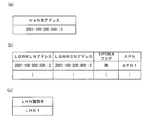
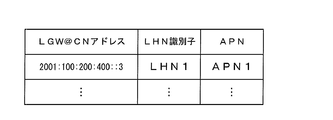
- the UPLNK NAS TRANSPORT message includes an LGW @ CN address (for example, “2001: 100: 200: 400 :: 3”), an LHN identifier (for example, “LHN1”), and SIPTO @ LN. And a flag (for example, “ON”).
- the LHN identifier one set in advance in the HeNB is used.
- the HeNB 30 is connected to a plurality of LGWs, a plurality of LGW addresses and SIPTO @ LN flags corresponding to the LGW addresses may be notified.
- SIPTO @ LN another service such as LIPA cannot be notified, and when the fact that LIPA can be used is included in the UPLNK NAS TRANPORT message, it is necessary to include information indicating ON / OFF in LIPA. There is. This indicates that LGW 20 capable of SIPTO @ LN cannot always use LIPA. Also, it is indicated that SIPTO @ LN is not always available in LIPA capable LIP20. Further, the LGW 20 may be able to use both SIPTO @ LN and LIPA.
- the MME 10 that has received the information of the LGW @ CN address and the SIPTO @ LN flag of the LGW 20 from the HeNB 30 adds the LGW @ CN address transmitted from the HeNB 20 and the SIPTO @ LN flag of the LGW 20 as a list of LGWs capable of SIPTO @ LN.
- the transmission source IP address of the HeNB 30 is associated and managed as in the HeNB address management table 152 (S1010).
- SIPTO @ LN flag another service such as LIPA cannot be used.
- LIPA low-power organic radicals
- the HeNB 30 notifies the SIPTO @ LN flag in the LGW 20, whereby the MME 10 can detect a SIPGW capable of SIPTO @ LN.
- FIG. 10 shows a process in which the MME 10 selects a SIPTO @ LN-capable LGW in the PDN connection procedure using the SIPTO @ LN-capable LGW detected above.
- the UE 50 transmits a PDN connection request including the APN 1 to the MME 10 (S2002).
- the APN 1 included here is associated with permission information of SIPTO @ LN allowed only in the MME.
- the PDN connection request is transmitted via the HeNB 30. Thereby, UE50 requests
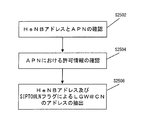
- the MME 10 that has received the PDN connection request from the UE 50 performs GW selection (S2004). GW selection in MME10 is demonstrated using FIG. First, the MME 10 confirms the HeNB 30 and the APN included in the PDN connection request (S2502).
- the APN management table 156 is confirmed, and it is confirmed that SIPTO @ LN allowed only is permitted as permission information of the mobile communication carrier in the APN1. Confirmation is made (S2504).
- permission information corresponding to APN1 broadband operator permission information or UE permission information managed in a server in the core network may be confirmed in advance.
- the MME 10 has an LGW @ CN address in which “ON” is managed in the HeNB address of the HeNB 30 and the SIPITO @ LN flag that are passed in the PDN connection request (for example, “2001: 100: 200: 400 :: 3 ") is extracted (S2506).
- the MME 10 can arbitrarily select the LGW 30.
- the SIPTO @ LN determines that the PDN connection cannot be made, and transmits a notification indicating that the PDN connection cannot be established to the UE 50.
- the MME 10 transmits a session generation request to the SGW 40 (S2006).
- the MME 10 includes information indicating the LGW @ CN address and SIPTO @ LN detected in S2004.
- the SGW 40 that has received the session generation request transmits the session generation request to the LGW 20 corresponding to the LGW @ CN address included in the session generation request (S2008).
- the SGW 40 includes information indicating SIPTO @ LN notified from the MME 10 in the session generation request.
- requirement from SGW40 judges whether SIPTO @ LN can be used with the information which shows SIPTO @ LN.
- the SGW 40 When this SIPTO @ LN is available, the SGW 40 is transmitted including information indicating that SIPTO @ LN is possible in the session generation response (S2010). If SIPTO @ LN is not possible, information indicating that SIPTO @ LN is not possible is included.
- SGW30 which received the session production
- generation response from SGW40 confirms the information which shows whether LGW20 can utilize SIPTO @ LN. If LGW20 can use SIPTO @ LN, a bearer setting request is transmitted to HeNB30 (S2014). At this time, the MME 10 includes information indicating SIPTO @ LN and the LGW @ CN address detected in S2004.
- the information indicating SIPTO @ LN may be an APN.
- requirement from MME10 transmits RRC connection reset to UE50 (S2016).
- the UE 50 that has received the RRC connection resetting from the HeNB 30 resets the RRC connection in the HeNB 30 that has transmitted the RRC connection resetting.
- the UE 50 that has completed the RRC connection reconfiguration transmits RRC connection reconfiguration completion to the HeNB 30 (S2018).
- HeNB which received the completion of RRC connection reset transmits a bearer setting response to MME10 (S2020).
- the UE 50 performs direct communication to confirm whether communication can be performed (SS022).
- the HeNB 30 that has received the direct communication transmits a PDN connection completion to the MME 10 (S2024).
- MME10 which received the PDN connection completion transmits a bearer setting request to SGW40 (S2026).
- SGW40 which received the bearer setting request
- the HeNB 30 transmits a SIPTO @ LN session generation request to the LGW 20 based on the information indicating SIPTO @ LN in the bearer setting request received in S3014 (S2030).
- the LGW 20 that has received the SIPTO @ LN session generation request from the HeNB 30 generates a session to the HeNB 30.
- a SIPTO @ LN session generation response is transmitted to the HeNB 30 to the LGW 20 that has confirmed that the session generation request has been completed (S 2032).
- the PDN connection procedure in SIPTO @ LN can be completed, and the PDN connection in SIPTO @ LN can be established between UE 50 and LGW 20.
- permission information such as SIPTO allowed included SIPTO @ LN and SIPTO @ LN allowed only can be set as permission information to be set in APN, and SIPTO allowed included SIPTO @ LN is added to SIPTO @ LN.
- SIPTO @ RN can also be used, and SIPTO @ LN only indicates that only SIPTO @ LN is permitted.
- the MME 10 can arbitrarily select not only the SIPTO @ LN-capable LGW 20 but also the SIPTO @ RN-capable TOF.
- the MME 10 receives the LGW address notified from the HeNB, the SIPTO @ LN flag, the LGW address, the HeNB address of the HeNB when notifying the SIPTO @ LN flag, and the UE in the PDN connection procedure during the GW selection process. Based on the APN included in the PDN connection request and the HeNB address of the HeNB through which the PDN connection request is transmitted from the UE to the MME, a SIPTO @ LN-capable LGW can be selected.
- the MME 10 can complete the PDN connection establishment procedure for establishing the SIPTO @ LN PDN connection by selecting the SIPTO @ LN-capable LGW during the GW selection process.
- the user can start data communication using SIPTO @ LN by establishing a SIPTO @ LN PDN connection.
- the mobile communication carrier can start data communication using SIPTO @ LN by establishing a SIPTO @ LN PDN connection.
- the HeNB 30 has received the SIPTO @ LN flag from the LGW 20 and transmitted it to the MME 10, but is not limited to the SIPTO @ LN flag, and notifies the information (flag) indicating LIPA ON / OFF. Also good.
- LIPA whether or not LIPA can be used in the LGW 20 is set.
- “ON” is set.
- “OFF” is set.
- LGW 20 capable of LIPA cannot always use SIPTO @ LN. Further, it is indicated that LIPA cannot always be used in the LGW 20 capable of SIPTO @ LN. Further, the LGW 20 may be able to use both LIPA and SIPTO @ LN.
- LGW20 which set LIPA ON / OFF transmits the information of LIPA ON / OFF to HeNB30 with LGW @ CN address.
- the HeNB that has received the LGW @ CN address and LIPA ON / OFF information from the LGW 20 is the UPLINK NAS.
- the LGW LGW @ CN address and the LIPA ON / OFF information are transmitted together with the LHN identifier.
- LIPA is not always available in the LGW 20 capable of SIPTO @ LN. Further, the LGW 20 may be able to use both LIPA and SIPTO @ LN.
- the MME that has received the LHN identifier, LGW @ CN address, and LIPA ON / OFF (ON) in the UPLINK NAS TRANSPORT message from the HeNB 30 manages the HeNB address, the LGW @ CN address, and the LHN identifier as LIPA-capable LGW.
- LIPA is not always available in the LGW 20 capable of SIPTO @ LN. Further, the LGW 20 may be able to use both LIPA and SIPTO @ LN.
- the LGW 20 detects the LIPA ON / OFF flag, so that the MME 10 can select a LGW capable of LIPA.
- the MME 10 can select an LGW capable of LIPA during the GW selection process in the PDN connection establishment procedure.
- the MME 10 can establish a PDN connection for establishing a LIPA PDN connection by selecting an LGW capable of LIPA during the GW selection process.
- the user can start data communication using LIPA by establishing a SIPTO @ LN PDN connection.
- the mobile communication carrier can start data communication using LIPA by establishing a PDN connection of LIPA.
- the SIPTO @ LN flag is notified from the HeNB 30 to the MME 10 in the UPLINK NAS TRANSPORT message.
- the MME 10 performs the LGW 20 by notifying the APN from the HeNB 30 to the MME 10. Is detected to support SIPTO @ LN.
- the APN that the LGW 20 notifies to the HeNB 30 is set in advance to the APN supported in the LGW 20, and the LGW notifies the HeNB 30 of the set APN. Moreover, HeNB30 notifies APN which LGW20 supports to MME10 using APN received from LGW20.
- the new information element called the SIPTO @ LN flag is used to notify the MME 10 of whether the SIPTO @ LN of the LGW 20 is acceptable.
- the PDN is conventionally used by the APN. Notify the identifier used in the connection establishment procedure.
- the APN is SIPTO @ LN as an LGW capable of SIPTO @ LN. Include in possible LGW list.
- permission information such as SIPTO allowed included SIPTO @ LN and SIPTO @ LN allowed only can be set as the permission information set in APN.
- SIPTO allowed included SIPTO @ LN SIPTO @ RN also includes SIPTO @ RN. It shows that it can be used, and SIPTO @ LN only indicates that only SIPTO @ LN is permitted.
- the MME 10 notifies the LGW 20 of the LGW @ CN address and the supported APN from the LGW 20 to the HeNB 30 in order for the HeNB 30 to create a SIPTO @ LN-capable LGW list, and the HeNB supports and supports the LGW @ CN address and the LGW.
- the MME 10 detects a SIPTO @ LN-capable LGW to which the HeNB 30 is connected by transmitting an LHN identifier, an LGW @ CN address, and an APN to the MME. explain.
- the mobile communication system in this embodiment can use FIG. 1 demonstrated in 1st Embodiment similarly, the detailed description is abbreviate
- the MME 10 in the core network 3, the LGW 20 in the home network 5, and the HeNB 30 have the same configurations as those in the first embodiment, and thus detailed description thereof is omitted.
- the HeNB address of HeNB30 and the address of LGW @ LN of LGW20 can be obtained by using an already defined method such as a local discovery procedure, and data can be transmitted and received between HeNB30 and LGW20.
- the HeNB 30 After confirming that data can be transmitted and received between the HeNB 30 and the LGW 20, the HeNB 30 inquires of the LGW 20 about the LGW @ CN address (S3002).
- LGW20 which received the inquiry of LGW @ CN address from HeNB30 notifies LGW @ CN address of LGW20 (for example, "2001: 100: 200: 400 :: 3") and notification of APN (APN1) supported in LGW20. This is performed (S3004).
- APN1 is an identifier of an APN supported by the LGW 20.
- the LGW 20 when the LGW 20 supports a plurality of APNs, a plurality of APNs may be notified.
- the method of notifying the LGW 20 of the LGW @ CN address and the APN supported by the LGW 20 is not limited to the method of inquiring the LGW 20.
- the LGW 20 previously registers the LGW @ CN address and the APN information of the LGW 20 to the DNS server.
- the HeNB 30 may acquire the LGW @ CN address and the APN information of the LGW 20 by making an inquiry to the DNS server.
- LGW 20 capable of SIPTO @ LN cannot always use LIPA. Also, it is indicated that SIPTO @ LN is not always available in LIPA capable LIP20. Furthermore, the LGW 20 may be able to use both SIPTO @ LN and LIPA.
- the HeNB 30 that has received the LGW @ CN address stores the LGW @ CN address and APN information in the LGW management table 354 (S3006).
- LGW 20 supports a plurality of APNs
- a plurality of APNs may be stored.
- the HeNB 30 is connected to a plurality of LGWs, the plurality of LGW addresses and APNs are managed.
- LGW 20 capable of SIPTO @ LN cannot always use LIPA. Also, it is indicated that SIPTO @ LN is not always available in LIPA capable LIP20. Furthermore, the LGW 20 may be able to use both SIPTO @ LN and LIPA.
- the HeNB 30 storing the LGW @ CN address and the APN information of the LGW 20 transmits a UPLINK NAS TRANSPORT message to the MME 10 (S3008).
- the HeNB 30 requests the MME 10 to register information used for GW selection when the MME 10 establishes a PDN connection for offloading via the local network.
- FIG. 13 shows information elements included in the UPLINK NAS TRANSPORT message.
- the UPLNK NAS TRANSPORT message includes an LGW @ CN address (for example, “2001: 100: 200: 400 :: 3”), an LHN identifier (for example, “LHN1”), and an APN (for example, “APN1”). included.
- the LHN identifier uses what is set in advance in the HeNB.
- the LGW 20 may notify the plurality of APNs.
- the HeNB 30 is connected to a plurality of LGWs, a plurality of LGW @ CN addresses and APNs corresponding to the LGW addresses may be notified.
- LGW 20 capable of SIPTO @ LN cannot always use LIPA. Also, it is indicated that SIPTO @ LN is not always available in LIPA capable LIP20. Furthermore, the LGW 20 may be able to use both SIPTO @ LN and LIPA.
- the MME 10 that has received the LGW @ CN address and the APN supported by the LGW 20 from the HeNB 30, in addition to the LGW @ CN address transmitted from the HeNB 20 and the information of the APN supported by the LGW 20, as a list of LGWs that can be SIPTO @ LN, Are associated and managed as in the HeNB address management table 152 (S2010).
- LGW 20 capable of SIPTO @ LN cannot always use LIPA. Also, it is indicated that SIPTO @ LN is not always available in LIPA capable LIP20. Furthermore, the LGW 20 may be able to use both SIPTO @ LN and LIPA.
- the MME 10 can detect the corresponding LGW for each APN.
- the process in which the MME 10 selects the SIPTO @ LN-capable LGW in the PDN connection procedure using the SIPTO @ LN-capable LGW detected above is the same as the method described in FIG. 10 of the first embodiment. Available.
- the MME 10 can use the LGW corresponding to each APN to select the LGW corresponding to the APN at the time of the GW selection process for the APN included in the PDN connection establishment procedure.
- permission information such as SIPTO allowed included SIPTO @ LN and SIPTO @ LN allowed only can be set as permission information to be set in APN, and SIPTO allowed included SIPTO @ LN is added to SIPTO @ LN.
- SIPTO @ RN can also be used, and SIPTO @ LN only indicates that only SIPTO @ LN is permitted.
- the MME 10 can arbitrarily select not only the SIPTO @ LN-capable LGW 20 but also the SIPTO @ RN-capable TOF.
- the MME 10 responds to the PDN connection request from the UE in the PDN connection procedure, the LGW address and APN information notified from the HeNB, the HeNB HeNB address when notifying the LGW address and APN information, and the PDN connection procedure.
- SIPTO @ LN-capable LGW can be selected by using the included APN and the HeNB address of the HeNB that is passed when transmitting the PDN connection request from the UE to the MME.
- the permission information (SIPTO allowed includingTOSIPTO @ LN or SIPTO @ LN allowed only) that allows SIPTO @ LN is set for the APN
- the user UE
- SIPTO @ LN PDN connection By establishing this, data communication using SIPTO @ LN can be started.
- SIPTO allowed included SIPTO @ LN or SIPTO @ LN allowed that permits SIPTO @ LN to APN. If “only” is set, the mobile communication carrier can start data communication using SIPTO @ LN by establishing a PDN connection of SIPTO @ LN.
- LGW @ CN address and information indicating whether SIPTO @ LN is possible are notified to MME from LGW via HeNB.
- LGW @ CN address and information indicating whether SIPTO @ LN is possible are transmitted directly from the LGW to the MME.
- the SIPTO @ LN flag cannot detect that another service such as LIPA can be used, and when detecting LGW 20 that can use LIPA, information indicating ON / OFF in LIPA is required. To do. This indicates that LGW 20 capable of SIPTO @ LN cannot always use LIPA. Also, it is indicated that SIPTO @ LN is not always available in LIPA capable LIP20. Furthermore, the LGW 20 may be able to use both SIPTO @ LN and LIPA.
- the HeNB transmits the HeNB address to the LGW, and the LGW transmits the HeNB address to the MME, so that the MME detects the LGW to which the HeNB is connected.
- the HeNB 30 notifies the HeNB address to the LGW 20 to which the HeNB 30 is connected (S4002).
- there are various methods for detecting the LGW 20 to which the HeNB 30 is connected but it can be obtained by setting a name for detecting the LGW 20 in advance, such as FQDN, and inquiring the DNS.
- the LGW 20 that has received the HeNB address from the HeNB 30 transmits the HeNB address (2001: 100: 200: 500 :: 3) of the HeNB 30 and the SIPTO @ LN flag (ON) in the LGW 20 (S4004).
- the HeNB 30 requests the MME 10 to register information used for GW selection when the MME 10 establishes a PDN connection for offloading via the local network.
- the method of notifying the HeNB address and the SIPTO @ LN flag is not limited to the method of directly transmitting to the MME 10, for example, the LGW 20 sends information to the DNS server about the HeNB address, LGW @ CN address, and SIPTO @ LN flag of the LGW.
- the MME 10 may inquire of the DNS server to acquire information on the HeGW 30 and the LGW @ CN address of the LGW 20 and the SIPTO @ LN flag.
- the SIPTO @ LN flag cannot notify another service such as LIPA, and when notifying the HeNB 30 that LIPA can be used, it is necessary to notify information indicating ON / OFF in LIPA. .
- LGW 20 capable of SIPTO @ LN is not necessarily able to use LIPA. Also, it is indicated that SIPTO @ LN is not always available in LIPA capable LIP20. Also, the LGW 20 may be able to use both SIPTO @ LN and LIPA.
- the MME 10 that has received the HeNB address and the SIPTO @ LN flag of the LGW 20 from the LGW 20 transmits the LGW 20 in addition to the HeNB address transmitted from the LGW 20 and the SIPTO @ LN flag information of the LGW 20 as a list of LGWs capable of SIPTO @ LN.
- the original IP address is associated and managed as in the HeNB address management table 152 (S4006).
- SIPTO @ LN flag another service such as LIPA cannot be used.
- LIPA low-power organic radicals
- the HeNB 30 notifies the SIPTO @ LN flag in the LGW 20, whereby the MME 10 can detect a SIPGW capable of SIPTO @ LN.
- SIPTO @ LN flag has been described as information indicating whether SIPTO @ LN is possible
- APN may be used as information indicating whether SIPTO @ LN is possible.
- the process of selecting the SIPTO @ LN-capable LGW by the MME 10 in the PDN connection procedure using the SIPTO @ LN-capable LGW detected above can similarly use the method described in FIG. 10 of the first embodiment.
- the PDN connection procedure in SIPTO @ LN can be completed, and the PDN connection in SIPTO @ LN can be established between UE 50 and LGW 20.
- the MME 10 transmits the HeNB address, the SIPTO @ LN flag information, the HeNB address, and the LGW LGW address when notifying the SIPTO @ LN flag information, and the PDN connection procedure.
- the LGW capable of SIPTO @ LN can be selected by using the APN included in the PDN connection request from the UE and the HeNB address of the HeNB that is passed when transmitting the PDN connection request from the UE to the MME.
- the MME 10 can complete the PDN connection establishment procedure for establishing the SIPTO @ LN PDN connection by selecting the SIPTO @ LN-capable LGW during the GW selection process.
- the user can start data communication using SIPTO @ LN by establishing a SIPTO @ LN PDN connection.
- the mobile communication carrier can start data communication using SIPTO @ LN by establishing a SIPTO @ LN PDN connection.
- the program that operates in each device is a program that controls the CPU and the like (a program that causes the computer to function) so as to realize the functions of the above-described embodiments.
- Information handled by these devices is temporarily stored in a temporary storage device (for example, RAM) at the time of processing, then stored in various ROM or HDD storage devices, and read and corrected by the CPU as necessary. • Writing is performed.
- a recording medium for storing the program a semiconductor medium (for example, ROM, a non-volatile memory card, etc.), an optical recording medium / a magneto-optical recording medium (for example, DVD (Digital Versatile Disc), MO (Magneto Optical) Disc), MD (Mini Disc), CD (Compact Disc), BD, etc.), magnetic recording medium (eg, magnetic tape, flexible disk, etc.), etc.
- a semiconductor medium for example, ROM, a non-volatile memory card, etc.
- an optical recording medium / a magneto-optical recording medium for example, DVD (Digital Versatile Disc), MO (Magneto Optical) Disc), MD (Mini Disc), CD (Compact Disc), BD, etc.
- magnetic recording medium eg, magnetic tape, flexible disk, etc.
- the program when distributing to the market, can be stored in a portable recording medium for distribution, or transferred to a server computer connected via a network such as the Internet.
- a server computer connected via a network such as the Internet.
- the storage device of the server computer is also included in the present invention.
- each device in the above-described embodiment may be realized as an LSI (Large Scale Integration) which is typically an integrated circuit.
- LSI Large Scale Integration
- Each functional block of each device may be individually chipped, or a part or all of them may be integrated into a chip.
- the method of circuit integration is not limited to LSI, and may be realized by a dedicated circuit or a general-purpose processor.
- integrated circuit technology that replaces LSI appears due to progress in semiconductor technology, it is of course possible to use an integrated circuit based on this technology.
- Mobile communication system 3 Core network 5: Home network 7: Broadband network 100: Control unit 110: Transmission / reception unit 140: LGW detection unit 150: Storage unit 152: HeNB address management table 154: LHN management table 156: APN management table 200: Control unit 220: Broadband network interface unit 230: Home network interface unit 240: OFF switching unit 250: Storage unit 252: LGW @ CN address 254: LGW @ LN address 256: HeNB address 300: Control unit 310: LTE base station unit 312: External antenna 320: Home network interface unit 350: Storage unit 352: HeNB address 354: LGW management table 356: LHN identification
Landscapes
- Engineering & Computer Science (AREA)
- Computer Networks & Wireless Communication (AREA)
- Signal Processing (AREA)
- Computer Security & Cryptography (AREA)
- Mobile Radio Communication Systems (AREA)
Abstract
PDNコネクション確立手続きにおけるMMEのGW選択処理時において、SIPTO@LN可能なLGWを選択してPDNコネクションを確立する移動通信システム等を提供する。ホーム基地局装置が、アクセス制御装置の識別情報及びアクセス制御装置のローカルネットワーク経由のオフロードの可否の情報を取得し、位置管理装置が、アクセス制御装置の識別情報及び当該アクセス制御装置のオフロードの可否情報を含む情報をホーム基地局から受信し、PDNコネクションの確立を要求し、位置管理装置は、移動局装置の要求と、アクセス制御装置の識別情報と、当該アクセス制御装置のオフロードの可否情報と、前記ホーム基地局装置の情報とに基づいて、前記オフロード可能なアクセス制御装置を選択し、を前記アクセス制御装置と、前記移動局装置間のPDNコネクションを確立する。
Description
本発明は、移動局装置が接続するホーム基地局装置及びアクセス制御装置が接続されるホームネットワークと、位置管理装置が接続されるコアネットワークとが外部ネットワークを介して接続されている移動通信システム等に関する
移動通信システムの標準化団体3GPP(The 3rd Generation Partnership Project)では、次世代の移動体通信システムとして以下の非特許文献1に記載のEPS(Evolved Packet System)の仕様化作業を進めており、EPSの構成装置として、宅内等に設置する小型基地局であるHeNB(Home eNodeB:ホーム基地局)について検討がなされている。
HeNBは、フェムトセルと呼ばれる小規模の無線セルを構築し、通常の基地局と同じ無線アクセス技術を用いて、UE(User Equipment:移動端末装置)を収容する。そして、ブロードバンドネットワークを経由して移動通信システムのコアネットワークに接続し、収容しているUEの通信データを中継することができる。
また、以下の非特許文献2には、SIPTO(Selected IP Traffic Offload)を実現するためのアーキテクチャの候補が開示されている。SIPTOとは、UEが基地局(eNB)に接続しつつ、移動通信システムのコアネットワークを介さずにブロードバンドネットワーク経由で、eNBに収容しているUEにデータ通信を提供する。
さらに、非特許文献2では、LIPAを実現するためのアーキテクチャの候補が開示されている。LIPAとは、UEがホーム基地局(HeNB)に接続し、HeNBが接続するホームネットワークへの接続をUEへ提供する。
また、以下の非特許文献3には、SIPTOの記載があり、UEがHeNBに接続しつつ、移動通信システムのコアネットワークを介さずに、ブロードバンドネットワーク経由して、HeNBに収容しているUEにデータ通信を提供する。ここで示されるSIPTOでは、ホームネットワークにおけるアクセスを行うことはできない。つまり、HeNBに収容されるUEに提供するSIPTOは、前述のLIPAとは異なるデータ通信として提供される。
非特許文献3では、UEがeNBまたはHeNBから移動通信ネットワーク内のオフロードポイント(TOF:Traffic Offload Function)及びブロードバンドネットワークを経由してデータ通信を行う方法をSIPTO@RN(Radio Access Network:無線アクセスネットワーク)と記載し、HeNBからLGWを経由してブロードバンドネットワーク経由でデータ通信を行う方法をSIPTO@LN(Local Network:ローカルネットワーク)と記載している。
ここで、SIPTO@RNとSIPTO@LNは異なるサービスであり、SIPTO@RNでは、コアネットワーク内に配置されるTOFを利用したオフロードサービスであるのに対し、SIPTO@LNでは、LGWを利用したオフロードサービスである。
また、非特許文献4には、SIPTOのPDNコネクションを確立するための手続きが記載されている。PDNコネクションには、サービス毎にアクセス制御装置とUEとの間に確立される通信路である。ここでは、SIPTO@LNにおいても、オフロードサービスに利用されるPDNコネクションが確立される。
PDNコネクションを確立する際には、コアネットワーク内の位置管理装置(MME:Mobility Management Entity)が、PDNコネクションの端点となるアクセス制御装置を選択するというGW選択を行う。
また、従来、LGWとHeNBは同一の装置内で構成され、LGWとHeNBは1対1に対応し、MMEはHeNBアドレスが検知できれば、LGW@CNアドレスも同時に判断することができ、適切にGW選択を行うことができた。
3GPP TS23.401 General Packet Radio Service (GPRS) enhancements for Evolved Universal Terrestrial Radio Access Network (E-UTRAN) access
3GPP TR 23.829 Local IP Access and Selected IP Traffic Offload
3GPP TR 23.859 LIPA Mobility and SIPTO at the Local Network
"User interactions for SIPTO@LN acceptance"、 3GPP TSG SA WG2 #85、S2-112455
ここで、ホームネットワークの構成として、単一のLGWに対して複数のHeNBが接続するアーキテクチャが検討されている。これにより、UEはLGWをアンカーとしてHeNB間の移動を行うことができるようになる。
この場合、LGWとHeNBが異なる装置となるため、MMEは、HeNBのアドレスを検知できたとしてもLGWのアドレスを同時に検知することはできない。したがって、HeNBとLGWが同一の装置で構成された場合には、MMEはHeNBアドレスから容易にLGWを検知することができたが、HeNBとLGWが分離した構成では、HeNBアドレスからLGWを検知する新たな手段が必要となる。
また、LGW@CNアドレスMMEは、HeNBが接続するLGWのLGW@CNアドレスを検知できたとしても、検知されたLGWがSIPTO@LNを利用できるかどうかは判断することができなかった。
つまり、PDNコネクション確立手続き時に、MMEがGW選択処理時にLGWを選択するためには、複数のHeNBから単一のホームネットワークへ接続する新たなアーキテクチャにおいて、MMEにLGWを検知させる手段が必要となる。
さらに、HeNBが接続するLGWを検知することができたとしても、PDNコネクション確立手続き時において、MMEにSIPTO可能なLGWを検知させ、GW選択処理時にSIPTO@LN可能なLGWを選択させる手段が必要となる。
つまり、MMEは、PDNコネクション確立手続きにおけるGW選択処理時において、SIPTO@LN可能なLGWを選択することができないために、SIPTO@LNを行うためのPDNコネクション確立手続きを完了することができず、SIPTO@LNにおけるPDNコネクションを確立することができなかった。
また、SIPTO@LNにおけるPDNコネクション確立手続きを完了することができず、PDNコネクションを確立できないために、SIPTO@LNによるデータの送受信を行うことができなかった。
本発明は、このような事情を鑑みてなされたもので、その目的は、PDNコネクション確立手続きにおけるMMEのGW選択処理時において、SIPTO@LN可能なLGWを選択してPDNコネクションを確立する移動通信システム等を提供することである。
上記課題を解決するために、本発明の移動通信システムは、
移動局装置が接続するホーム基地局装置及びアクセス制御装置が接続されるホームネットワークと、位置管理装置が接続されるコアネットワークとが外部ネットワークを介して接続されている移動通信システムにおいて、
前記ホーム基地局装置は、
前記アクセス制御装置の識別情報及び当該アクセス制御装置のローカルネットワーク経由のオフロードの可否の情報を取得し、
前記アクセス制御装置の識別情報及び当該アクセス制御装置のオフロードの可否の情報を管理し、
前記アクセス制御装置の識別情報及び当該アクセス制御装置のオフロードの可否の情報を前記位置管理装置に通知し、
前記位置管理装置は、
前記アクセス制御装置の識別情報及び当該アクセス制御装置のオフロードの可否情報を含む情報を前記ホーム基地局装置から受信し、
前記アクセス制御装置の識別情報と、当該アクセス制御装置のオフロードの可否情報と、前記ホーム基地局装置の情報と、を関連付けて管理し、
前記移動局装置は、ローカルネットワーク経由のオフロードのためのPDNコネクションの確立を要求し、
前記位置管理装置は、前記移動局装置の要求と、前記アクセス制御装置の識別情報と、当該アクセス制御装置のオフロードの可否情報と、前記ホーム基地局装置の情報とに基づいて、オフロード可能なアクセス制御装置を選択し、前記アクセス制御装置と前記移動局装置間のPDNコネクションを確立することを特徴とする。
移動局装置が接続するホーム基地局装置及びアクセス制御装置が接続されるホームネットワークと、位置管理装置が接続されるコアネットワークとが外部ネットワークを介して接続されている移動通信システムにおいて、
前記ホーム基地局装置は、
前記アクセス制御装置の識別情報及び当該アクセス制御装置のローカルネットワーク経由のオフロードの可否の情報を取得し、
前記アクセス制御装置の識別情報及び当該アクセス制御装置のオフロードの可否の情報を管理し、
前記アクセス制御装置の識別情報及び当該アクセス制御装置のオフロードの可否の情報を前記位置管理装置に通知し、
前記位置管理装置は、
前記アクセス制御装置の識別情報及び当該アクセス制御装置のオフロードの可否情報を含む情報を前記ホーム基地局装置から受信し、
前記アクセス制御装置の識別情報と、当該アクセス制御装置のオフロードの可否情報と、前記ホーム基地局装置の情報と、を関連付けて管理し、
前記移動局装置は、ローカルネットワーク経由のオフロードのためのPDNコネクションの確立を要求し、
前記位置管理装置は、前記移動局装置の要求と、前記アクセス制御装置の識別情報と、当該アクセス制御装置のオフロードの可否情報と、前記ホーム基地局装置の情報とに基づいて、オフロード可能なアクセス制御装置を選択し、前記アクセス制御装置と前記移動局装置間のPDNコネクションを確立することを特徴とする。
本発明のホーム基地局装置は、
移動局装置が接続するホーム基地局装置及びアクセス制御装置が接続されるホームネットワークと、位置管理装置が接続されるコアネットワークとが外部ネットワークを介して接続されている移動通信システムにおけるホーム基地局装置において、
前記位置管理装置は、アクセス制御装置を選択し、前記アクセス制御装置と前記移動局装置間のPDNコネクションを確立する装置であって、
前記アクセス制御装置の識別情報及び当該アクセス制御装置のローカルネットワーク経由のオフロードの可否の情報を取得し、
前記アクセス制御装置の識別情報及び当該アクセス制御装置のオフロードの可否の情報を管理し、
前記アクセス制御装置の識別情報及び当該アクセス制御装置のオフロードの可否の情報を前記位置管理装置に通知することにより、前記位置管理装置がローカルネットワーク経由のオフロードのためのPDNコネクションを確立する際のアクセス制御装置の選択に用いる情報を登録することを前記位置管理装置に要求することを特徴とする。
移動局装置が接続するホーム基地局装置及びアクセス制御装置が接続されるホームネットワークと、位置管理装置が接続されるコアネットワークとが外部ネットワークを介して接続されている移動通信システムにおけるホーム基地局装置において、
前記位置管理装置は、アクセス制御装置を選択し、前記アクセス制御装置と前記移動局装置間のPDNコネクションを確立する装置であって、
前記アクセス制御装置の識別情報及び当該アクセス制御装置のローカルネットワーク経由のオフロードの可否の情報を取得し、
前記アクセス制御装置の識別情報及び当該アクセス制御装置のオフロードの可否の情報を管理し、
前記アクセス制御装置の識別情報及び当該アクセス制御装置のオフロードの可否の情報を前記位置管理装置に通知することにより、前記位置管理装置がローカルネットワーク経由のオフロードのためのPDNコネクションを確立する際のアクセス制御装置の選択に用いる情報を登録することを前記位置管理装置に要求することを特徴とする。
本発明の位置管理装置は、
移動局装置が接続するホーム基地局装置及びアクセス制御装置が接続されるホームネットワークと、位置管理装置が接続されるコアネットワークとが外部ネットワークを介して接続されている移動通信システムにおける位置管理装置であって、
前記位置管理装置は、
アクセス制御装置の識別情報及び当該アクセス制御装置のオフロードの可否情報を含む情報を前記ホーム基地局装置から受信し、
アクセス制御装置の識別情報と、当該アクセス制御装置のオフロードの可否情報と、前記ホーム基地局装置の情報と、を関連付けて管理し、
前記移動局装置は、ローカルネットワーク経由のオフロードのためのPDNコネクションの確立を要求し、
前記位置管理装置は、前記移動局装置の要求と、前記アクセス制御装置の識別情報と、当該アクセス制御装置のオフロードの可否情報と、前記ホーム基地局装置の情報とに基づいて、オフロード可能なアクセス制御装置を選択し、前記アクセス制御装置と前記移動局装置間のPDNコネクションを確立することを特徴とする。
移動局装置が接続するホーム基地局装置及びアクセス制御装置が接続されるホームネットワークと、位置管理装置が接続されるコアネットワークとが外部ネットワークを介して接続されている移動通信システムにおける位置管理装置であって、
前記位置管理装置は、
アクセス制御装置の識別情報及び当該アクセス制御装置のオフロードの可否情報を含む情報を前記ホーム基地局装置から受信し、
アクセス制御装置の識別情報と、当該アクセス制御装置のオフロードの可否情報と、前記ホーム基地局装置の情報と、を関連付けて管理し、
前記移動局装置は、ローカルネットワーク経由のオフロードのためのPDNコネクションの確立を要求し、
前記位置管理装置は、前記移動局装置の要求と、前記アクセス制御装置の識別情報と、当該アクセス制御装置のオフロードの可否情報と、前記ホーム基地局装置の情報とに基づいて、オフロード可能なアクセス制御装置を選択し、前記アクセス制御装置と前記移動局装置間のPDNコネクションを確立することを特徴とする。
本発明の通信方法は、
移動局装置が接続するホーム基地局装置及びアクセス制御装置が接続されるホームネットワークと、位置管理装置が接続されるコアネットワークとが外部ネットワークを介して接続されている移動通信システムにおける通信方法であって、
前記ホーム基地局装置は、
前記アクセス制御装置の識別情報及び当該アクセス制御装置のローカルネットワーク経由のオフロードの可否の情報を取得し、
前記アクセス制御装置の識別情報及び当該アクセス制御装置のオフロードの可否の情報を管理し、
前記アクセス制御装置の識別情報及び当該アクセス制御装置のオフロードの可否の情報を前記位置管理装置に通知し、
前記位置管理装置は、
前記アクセス制御装置の識別情報及び当該アクセス制御装置のオフロードの可否情報を含む情報を前記ホーム基地局装置から受信し、
前記アクセス制御装置の識別情報と、当該アクセス制御装置のオフロードの可否情報と、前記ホーム基地局装置の情報と、を関連付けて管理し、
前記移動局装置は、ローカルネットワーク経由のオフロードのためのPDNコネクションの確立を要求し、
前記位置管理装置は、前記移動局装置の要求と、前記アクセス制御装置の識別情報と、当該アクセス制御装置のオフロードの可否情報と、前記ホーム基地局装置の情報とに基づいて、オフロード可能なアクセス制御装置を選択し、前記アクセス制御装置と前記移動局装置間のPDNコネクションを確立することを特徴とする。
移動局装置が接続するホーム基地局装置及びアクセス制御装置が接続されるホームネットワークと、位置管理装置が接続されるコアネットワークとが外部ネットワークを介して接続されている移動通信システムにおける通信方法であって、
前記ホーム基地局装置は、
前記アクセス制御装置の識別情報及び当該アクセス制御装置のローカルネットワーク経由のオフロードの可否の情報を取得し、
前記アクセス制御装置の識別情報及び当該アクセス制御装置のオフロードの可否の情報を管理し、
前記アクセス制御装置の識別情報及び当該アクセス制御装置のオフロードの可否の情報を前記位置管理装置に通知し、
前記位置管理装置は、
前記アクセス制御装置の識別情報及び当該アクセス制御装置のオフロードの可否情報を含む情報を前記ホーム基地局装置から受信し、
前記アクセス制御装置の識別情報と、当該アクセス制御装置のオフロードの可否情報と、前記ホーム基地局装置の情報と、を関連付けて管理し、
前記移動局装置は、ローカルネットワーク経由のオフロードのためのPDNコネクションの確立を要求し、
前記位置管理装置は、前記移動局装置の要求と、前記アクセス制御装置の識別情報と、当該アクセス制御装置のオフロードの可否情報と、前記ホーム基地局装置の情報とに基づいて、オフロード可能なアクセス制御装置を選択し、前記アクセス制御装置と前記移動局装置間のPDNコネクションを確立することを特徴とする。
HeNBがLGWのSIPTO@LNフラグをMMEに通知することにより、MMEは、SIPTO@LN可能なLGWを管理することができる。これにより、MMEは、PDNコネクション確立手続きにおいて、GW選択処理時においてSIPTO@LN可能なLGWを選択することができる。
さらに、MMEは、GW選択処理時において、SIPTO@LN可能なLGWを選択することができることにより、SIPTO@LNのPDNコネクションを確立するためのPDNコネクション確立手続きを完了することができる。
さらに、ユーザ(UE)は、SIPTO@LNのPDNコネクションを確立することにより、SIPTO@LNを利用したデータ通信を開始することができる。
さらに、ユーザ(UE)は、SIPTO@LNのPDNコネクションを確立することにより、SIPTO@LNを利用したデータ通信を開始することができる。
また、移動通信事業者は、SIPTO@LNのPDNコネクションを確立することにより、SIPTO@LNを利用したデータ通信を開始することができる。
以下、図面を参照して本発明を実施するための最良の形態について説明する。なお、本実施形態では、一例として、本発明を適用した場合の移動通信システムの実施形態について、図を用いて詳細に説明する。
[1.第1実施形態]
まず、本発明を適用した第1実施形態について、図面を参照して説明する。
まず、本発明を適用した第1実施形態について、図面を参照して説明する。
[1.1 移動通信システムの概要]
図1は、本実施形態における移動通信システム1の概略を説明するための図である。本図に示すように、移動通信システム1は、コアネットワーク3と、ホームネットワーク5と、ブロードバンドネットワーク7とを含んで構成される。
図1は、本実施形態における移動通信システム1の概略を説明するための図である。本図に示すように、移動通信システム1は、コアネットワーク3と、ホームネットワーク5と、ブロードバンドネットワーク7とを含んで構成される。
ブロードバンドネットワーク7は、広帯域の通信を実現する有線アクセスネットワークであり、例えばADSL(Asymmetric Digital Subscriber Line)や光ファイバー等によって構築される。ただし、これに限らずWiMAX(Worldwide Interoperability for Microwave Access)などの無線アクセスネットワークであっても良い。
コアネットワーク3は、移動通信事業者が運用する移動通信ネットワークであり、MME10(Mobility Management Entity)とSGW40とを含んで構成されている。
MME10は、シグナリングを行うエンティティであり、移動局装置(UE50)の位置管理及びPDNコネクションの確立手続きを主導する位置管理装置である。PDNコネクションとは、UE毎にPGWとUEとの間、もしくは、ホームネットワーク内のLGW20とUEとの間で確立されるユーザIPパケットを転送する論理パスのことである。PDNコネクションを確立手続きにおいて、MME10は、SIPTO@LNのPDNコネクションを確立することを決定した場合、GW選択処理を行う。GW選択においては、MMEは、SIPTO@LN可能なLGWを選択する。
PDNコネクションの確立には、EPSベアラや無線ベアラの確立も含まれ、各ベアラは通信速度や帯域等を要素として特定のQoSレベルを設定することができる。なお、MME10には、一例として「2001:100:200:300::3」のアドレスを割り当てている。なお、ここで割り当てられるアドレスはIPv6アドレスに限らず、IPv4アドレスでもよい。
SGW40は、コアネットワークを経由するユーザデータの送受信の転送に利用される。なお、SGW40は、コアネットワークに収容される従来型の装置である。したがって、その説明は省略する。
ホームネットワーク5は、家庭内のホームネットワークや企業などのコーポレートネットワークなどであり、LGW20と、HeNB30と、UE50とを含んで構成されている。さらに、ホームネットワーク5は、ブロードバンドネットワーク7に接続されている。
LGW20は、ホームネットワーク5とブロードバンドネットワーク7間のゲートウェイ装置であり、ADSLモデム内蔵ルータ等の従来のブロードバンドルータとしての機能を備える装置である。なお、LGW20には、一例として、ブロードバンドネットワーク7側に、「2001:100:200:400::3」のアドレスを割り当て、HeNB30側に「2001:100:200:500::2」のアドレスを割り当てている。
ここで、ブロードバンド側に割り当てているアドレス(2001:100:200:400::3)をHeNB30側のアドレス(2001:100:200:500::2)と区別するために、LGW@CNアドレス(LGWのCore Network側のアドレス)と呼び、LGW20のHeNB側のアドレス(2001:100:200:500::2)をLGW@LNアドレス(LGWのLocal Network側のアドレス)と呼ぶ。なお、ここで割り当てられるアドレスはIPv6アドレスに限らず、IPv4アドレスでもよい。
HeNB30はホームネットワーク5に設置されながら、コアネットワーク事業者の提供する基地局としてUE50を収容可能である。典型的には、フェムトセルを形成する3GPP LTE(Long Term Evolution)の基地局などである。HeNB30には、「2001:100:200:500::3」のアドレスを割り当てている。なお、ここで割り当てられるアドレスはIPv6アドレスに限らず、IPv4アドレスでもよい。なお、UE50は、HeNB30等に収容可能な移動局装置である。
[1.2 装置構成]
続いて、各装置構成について図を用いて簡単に説明する。
続いて、各装置構成について図を用いて簡単に説明する。
[1.2.1 MMEの構成]
図2は、本実施形態におけるMME10の構成を示す。MME10は、制御部100に、送受信部110と、LGW検出部140と、記憶部150とがバスを介して接続されている。
図2は、本実施形態におけるMME10の構成を示す。MME10は、制御部100に、送受信部110と、LGW検出部140と、記憶部150とがバスを介して接続されている。
制御部100は、MME10を制御するための機能部である。制御部100は、記憶部150に記憶されている各種プログラムを読み出して実行することにより各種機能を実現する。
送受信部110は、ルータもしくはスイッチに有線接続され、パケットの送受信を行う機能部である。例えば、ネットワークの接続方式として一般的に利用されているEthernet(登録商標)等により送受信する。
記憶部150は、MME10の動作に必要な各種プログラムや、各種データが記憶されている機能部である。記憶部150は、例えば、半導体メモリや、HDD(Hard Disk Drive)等により構成されている。さらに、記憶部150には、HeNBアドレス管理表152と、LHN管理表154と、APN管理表156と、が記憶されている。
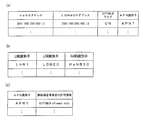
HeNBアドレス管理表152では、図3(a)に示すように、HeNB30のアドレス(例えば、「2001:100:200:500::3」)と、LGW20のLGW@CNアドレス(例えば、「2001:100:200:400::3」)とが関連付けて管理(記憶)されている。
更に、HeNBアドレス管理表152では、LGW20におけるSIPTO@LNの可否を管理するためのSIPTO@LNフラグが記憶されている。SIPTO@LNフラグが「ON」であれば、SIPTO@LNを利用可能であり、「OFF」であればSIPTO@LNを利用可能でないことを示している。例えば、LGW20においてSIPTO@LNが利用可能か否かは、SIPTO@LNのPDNコネクション確立のための機能の有無により利用可能か否かが決定されてもよいし、もしくはLGW20がSIPTO@LNの機能をオンオフする設定を有し、事業者によるオンオフの設定に基づいて利用可能か否かが決定されても良い。
ここで、HeNBアドレス管理表152では、単一のLGW@CNアドレスに対して複数のHeNBアドレスが管理されていても良い。複数のHeNBアドレスが管理される場合であっても、HeNBアドレス毎にLGW@CNアドレス及びLGW20におけるSIPTO@LNフラグ(ON/OFF)が管理される。
またHeNBアドレス管理表152では、LGW20において利用可能なAPN識別子を管理している。これは、このAPNを利用して接続するUE50に対して、MME10は、LGW20を選択してPDNコネクションを確立することができることを表している。
LGW検出部140は、HeNB30から通知されたLGW20のSIPTO@LNフラグを判断し、LGW20におけるSIPTO@LNフラグのON/OFFをHeNBアドレス管理表152へ含める。ここで、SIPTO@LNフラグが通知されない場合には、LGW20がSIPTO@LNを利用可能でないとして、「OFF」に設定する。
ここで示されるSIPTO@LNフラグでは、LIPA(Local IP Access)のような別のサービスを利用することはできず、LIPAを利用できるLGW20を検出する場合には、LIPAにおけるON/OFFを示す情報を必要とする。これは、SIPTO@LN可能なLGW20は、必ずしもLIPAを利用できるとは限らないことを示している。また、LIPA可能なLGW20において、必ずしもSIPTO@LNを利用できるとは限らないことを示している。また、LGW20は、SIPTO@LNもLIPAも両方利用できる場合もある。
LHN管理表154は、図3(b)に示すように、LHN識別子、LGW識別子、HeNB識別子を含んで構成されている。図3(b)に示すLHN管理表154では、LHN1にLGW20とHeNB30が含まれており、LHN1にLGW20とHeNB30が属していることを示している。なお、LHN識別子は、HeNB30から送信されることにより、LGW20と関連付けてLHN管理表154で管理される。また、LGW識別子は、IPv4アドレスやIPv6アドレスで示されても良い。さらに、HeNB識別子は、IPv4アドレスやIPv6アドレスで示されても良い。
APN管理表156は、UE毎に管理される加入者情報であり、図3(c)に示すように、APN識別子(例えば、「APN1」)と、移動通信事業者の許可情報(例えば、「SIPTO@LN allowed only」)とをユーザ毎に管理している。
ここで、APN(Access Point Name)は、図3(c)のように管理する移動通信事業者における接続先情報である。UEは、通信に先だって、サービス毎(PDN)の接続先を確立する必要があり、PDNの接続先を取得するために、PDNコネクション確立手続きにおいてAPNをMMEへ通知することにより、PDNの接続先を確立することができる。
APNは移動通信事業者の許可情報と関連付けられており、例えば、SIPTO@LN
allowed onlyという許可情報に関連付けられたAPNにおいて、SIPTO@LNを利用可能である。ここで、SIPTO@LN allowed onlyではなく、SIPTO allowed SIPTO@LNの許可情報とAPNが関連付けられた場合、そのAPNにおいて、SIPTO@LNだけでなく、SIPTO@RNを利用することができる。
allowed onlyという許可情報に関連付けられたAPNにおいて、SIPTO@LNを利用可能である。ここで、SIPTO@LN allowed onlyではなく、SIPTO allowed SIPTO@LNの許可情報とAPNが関連付けられた場合、そのAPNにおいて、SIPTO@LNだけでなく、SIPTO@RNを利用することができる。
また、移動通信時儀者の許可情報には複数の種類があり、SIPTO@LN allowed onlyでなく、SIPTO allowed including SIPTO@LNであっても良く、LIPA allowedやLIPA conditionalであっても良い。
ここで示されるAPN1のみでは、LIPAのような別のサービスを利用することはできず、LIPAを利用できるLGW20を検出する場合には、別のAPNを利用してLIPAに対応するAPNを示す必要がある。これは、SIPTO@LN可能なLGW20は、必ずしもLIPAを利用できるとは限らないことを示している。また、LIPA可能なLGW20において、必ずしもSIPTO@LNを利用できるとは限らないことを示している。さらに、LGW20は、SIPTO@LNもLIPAも両方利用できる場合もある。
[1.2.2 LGWの構成]
続いて、本実施形態におけるLGW20の構成を図4に示す。LGW20は、制御部200に、ブロードバンドネットワークインタフェース部220と、ホームネットワークインタフェース部230と、記憶部250とがバスを介して接続されている。
続いて、本実施形態におけるLGW20の構成を図4に示す。LGW20は、制御部200に、ブロードバンドネットワークインタフェース部220と、ホームネットワークインタフェース部230と、記憶部250とがバスを介して接続されている。
制御部200は、LGW20の全体を制御するための機能部である。制御部200は、記憶部250に記憶されている各種プログラムを読み出して実行することにより各種機能を実現しており、例えばCPU(Central Process Unit)等により構成されている。
ブロードバンドネットワークインタフェース部220は、ブロードバンドネットワーク7と接続されるネットワークインタフェース部であり、ブロードバンドネットワークインタフェース部220からパケットを受信し、ホームネットワークインタフェース部230へ転送する。また、ホームネットワークインタフェース部230から受信したパケットをブロードバンドネットワークインタフェース部220へ転送する。
ホームネットワークインタフェース部230は、ホームネットワーク5と接続されるネットワークインタフェース部であり、ブロードバンドネットワークインタフェース部220に転送したり、逆にブロードバンドネットワークインタフェース部220により受信されたパケットが転送されたりする。
記憶部250は、LGW20の動作に必要な各種プログラムや、各種データが記憶されている機能部である。記憶部250は、例えば、半導体メモリや、HDD(Hard Disk Drive)等により構成されている。
また、記憶部250には、LGW@CNアドレス252と、LGW@LNアドレス254と、HeNBアドレス256と、SIPTO@LNのON/OFF258と、APN260とが記憶されている。図5に、LGW@CNアドレス252、LGW@LNアドレス254、HeNBアドレス256、SIPTO@LNフラグ258及びAPN260の例を示す。
図5(a)に示すように、LGW@CNアドレス252には、LGWにおけるブロードバンドネットワーク側のインタフェースに割り当てられたアドレスとして「2001:100:200:400::3」が管理されている。ここで、LGW@CNアドレス252は、あらかじめ設定されていてもいいし、ブロードバンドネットワーク事業者や、移動通信事業者、HeNB30から通知されても良い。また、IPv6アドレスとして記載しているが、IPv4アドレスを利用しても良い。
LGW@LNアドレス254は、図5(b)に示すように、LGWにおけるブロードバンドネットワーク側のインタフェースに割り当てられたアドレスとして「2001:100:200:500::2」が含められている。ここで、LGW@LNアドレス254は、あらかじめ設定されていてもいいし、ブロードバンドネットワーク事業者や、移動通信事業者、HeNB30から通知されても良い。また、IPv6アドレスとして記載しているが、IPv4アドレスを利用しても良い。
HeNBアドレス256は、図5(c)に示すように、HeNB30のアドレスとして、「2001:100:200:500::3」が含められている。
SIPTO@LNフラグ258は、図5(d)に示すように、「ON」となっている。また、SIPTO@LNフラグ258は、出荷時に設定されていても良いし、移動通信事業者によってあらかじめ設定していても良い。
ここで示されるSIPTO@LNフラグでは、LIPAのような別のサービスを利用することはできず、LIPAを利用できるLGW20を検出する場合には、LIPAにおけるON/OFFを示す情報を必要とする。これは、SIPTO@LN可能なLGW20は、必ずしもLIPAを利用できるとは限らないことを示している。また、LIPA可能なLGW20において、必ずしもSIPTO@LNを利用できるとは限らないことを示している。さらに、LGW20は、SIPTO@LNもLIPAも両方利用できる場合もある。
APN260は、図5(e)に示すように、LGW20において利用可能なAPN(APN1)を管理している。ここで管理されるAPNは、MME10において同じAPNが管理されている。また、複数のAPNに対応する場合、複数のAPNを管理しても良い。ここで、APN260は、出荷時に設定されていても良いし、移動通信事業者によってあらかじめ設定していても良い。
また、ここで示されるAPN1のみでは、LIPAのような別のサービスを利用することはできず、LIPAを利用できるLGW20を検出する場合には、別のAPNを利用してLIPAに対応するAPNを示す必要がある。これは、SIPTO@LN可能なLGW20は、必ずしもLIPAを利用できとは限らないことを示している。また、LIPA可能なLGW20において、必ずしもSIPTO@LNを利用できとは限らないことを示している。さらに、LGW20は、SIPTO@LNもLIPAも両方利用できる場合もある。
[1.2.3 HeNBの構成]
図6は、本実施形態におけるHeNB30の構成を示す。HeNB30は、制御部300に、LTE基地局部310と、ホームネットワークインタフェース部320と、記憶部350とがバスを介して接続されている。
図6は、本実施形態におけるHeNB30の構成を示す。HeNB30は、制御部300に、LTE基地局部310と、ホームネットワークインタフェース部320と、記憶部350とがバスを介して接続されている。
制御部300は、HeNB30の全体を制御するための機能部である。制御部300は、記憶部350に記憶されている各種プログラムを読み出して実行することにより各種機能を実現しており、例えばCPU(Central Process Unit)等で構成されている。
LTE基地局部310は、E-UTRANの基地局として機能し、UEを収容するための機能部である。また、LTE基地局部310には、外部アンテナ312が接続されている。
ホームネットワークインタフェース部320は、ホームネットワーク5からパケットを受信し、送信先IPアドレスを書き換えてLTE基地局部310に転送する機能部である。
また、ホームネットワークインタフェース部320は、LTE基地局部310から受信したパケットをホームネットワークインタフェース部320へ転送する。
記憶部350は、HeNB30の各種動作に必要なプログラム、データ等を記憶する機能部であり、HeNBアドレス352と、LGW管理表354と、LHN識別子356とが記憶されている。図7に、HeNBアドレス352、LGW管理表354、LHN識別子356を示す。
図7(a)に示すように、HeNBアドレス352は、HeNB30のアドレス(例えば、「2001:100:200:500::3」)が含められている。ここで、HeNBアドレス352は、あらかじめ設定されていてもいいし、ブロードバンドネットワーク事業者や、移動通信事業者、LGW20から通知されても良い。また、IPv6アドレスとして記載しているが、IPv4アドレスを利用しても良い。
図7(b)に示すように、LGW管理表354は、HeNB30に接続されたLGW20のLGW@LNアドレスと、LGW@CNアドレスと、SIPTO@LNフラグとを関連付けて管理している。ここで、LGW@CNアドレス及びLGW@LNアドレスは、あらかじめ設定されていてもいいし、ブロードバンドネットワーク事業者や、移動通信事業者、LGW20から通知されても良い。また、IPv6アドレスとして記載しているが、IPv4アドレスを利用しても良い。
また、SIPTO@LNフラグでは、LIPAのような別のサービスを利用することはできず、LIPAを利用できるLGW20を検出する場合には、LIPAにおけるON/OFFを示す情報を必要とする。
更に、SIPTO@LNフラグは、HeNB30がLGW20から受信し、管理しておく。さらに、HeNB30が複数のLGWに接続する場合、LGW管理表354に複数管理されていても良い。
ここで、LGW管理表354は、HeNB30に接続されたLGW20のLGW@LNアドレスと、LGW@CNアドレスと、APN識別子とを関連付けて管理していても良い。また、LGW@CNアドレス及びLGW@LNアドレスは、あらかじめ設定されていてもいいし、ブロードバンドネットワーク事業者や、移動通信事業者、LGW20から通知されても良い。また、IPv6アドレスとして記載しているが、IPv4アドレスを利用しても良い。
さらに、APNでは、LIPAのような別のサービスを利用することはできず、LIPAを利用できるLGW20を検出する場合には、別のAPNを利用してLIPAに対応するAPNを示す必要がある。これは、SIPTO@LN可能なLGW20は、必ずしもLIPAを利用できるとは限らないことを示している。また、LIPA可能なLGW20において、必ずしもSIPTO@LNを利用できるとは限らないことを示している。さらに、LGW20は、SIPTO@LNもLIPAも両方利用できる場合もある。
LHN識別子356は、図7(c)に、示すように、Local HeNB Network(LHN)を識別するための識別子(LHN識別子)であり、同じLHNに属するHeNB30やLGW20は同じLHN識別子が割り当てられる。なお、LHN識別子は、移動通信事業者がHeNB30において手動で設定できるものである。
[1.3 処理の説明]
続いて、本実施形態における処理の説明をする。本実施形態では、LGW20がSIPTO@LNフラグ(SIPTO@LNのON/OFFに関する情報)をHeNB30へ通知し、SIPTO@LNをサポートしていることを検知したHeNB30は、MME10へSIPTO@LNフラグを通知する。
続いて、本実施形態における処理の説明をする。本実施形態では、LGW20がSIPTO@LNフラグ(SIPTO@LNのON/OFFに関する情報)をHeNB30へ通知し、SIPTO@LNをサポートしていることを検知したHeNB30は、MME10へSIPTO@LNフラグを通知する。
本実施形態では、HeNB30は、LGW20からLGW20のLGW@CNアドレス及びLGW20におけるLGW20のSIPTO@LNフラグを受信する。また、HeNB30は、MME10へLGW20のLGW@CNアドレス及びLGW20のSIPTO@LNフラグをMMEへ通知することにより、MME10は、HeNB毎に、SIPTO@LN可能なLGWを検知することができる。
ここで、SIPTO@LNフラグでは、LIPAのような別のサービスを利用できることを検知することはできず、LIPAを利用できるLGW20を検出する場合には、LIPAにおけるON/OFFを示す情報を必要とする。
これは、SIPTO@LN可能なLGW20は、必ずしもLIPAを利用できるとは限らないことを示している。また、LIPA可能なLGW20において、必ずしもSIPTO@LNを利用できるとは限らないことを示している。さらに、LGW20は、SIPTO@LNもLIPAも両方利用できる場合もある。
SIPTO@LN可能なLGWを検知するための一連の手続きについて、図8を用いて説明する。
なお、HeNB30のHeNBアドレス及びLGW20のLGW@LNのアドレスは、ローカルディカバリー手続きのような既に定義された方法を利用することで取得でき、HeNB30及びLGW20間におけるデータの送受信はできるものとする。
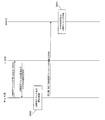
HeNB30及びLGW20間においてデータの送受信ができることを確認し、HeNB30は、LGW20へ、LGW@CNアドレスの問い合わせを行う(S1002)。HeNB30からLGW@CNアドレスの問い合わせを受信したLGW20は、LGW20のLGW@CNアドレス及びLGW20におけるSIPTO@LNフラグの通知を行う(S1004)。
ここで、LGW@CNアドレス及びSIPTO@LNフラグを通知する方法はLGW20へ問い合わせる方法に限るものでなく、例えば、LGW20がDNSサーバへLGWのLGW@CNアドレス及びSIPTO@LNフラグの情報をあらかじめ登録しておき、HeNB30がFQDNをキーにしてDNSサーバへ問い合わせることで、LGW20のLGW@CNアドレス及びSIPTO@LNフラグの情報を取得しても良い。
ここで、SIPTO@LNフラグでは、LIPAのような別のサービスを通知することはできず、LIPAを利用できることをHeNB30へ通知する場合には、LIPAにおけるON/OFFを示す情報を通知する必要がある。これは、SIPTO@LN可能なLGW20は、必ずしもLIPAを利用できるとは限らないことを示している。また、LIPA可能なLGW20において、必ずしもSIPTO@LNを利用できるとは限らないことを示している。また、LGW20は、SIPTO@LNもLIPAも両方利用できてもよい。
LGW@CNアドレスを受信したHeNB30は、LGW@CNアドレス及びSIPTO@LNフラグをLGW管理表354に格納する(S1006)。ここで、HeNB30が複数のLGWに接続している場合には、複数のLGWアドレスを管理する。
LGW20のLGW@CNアドレス及びSIPTO@LNフラグを格納したHeNB30は、MME10へUPLINK NAS TRANSPORTメッセージを送信する(S1008)。
これにより、HeNB30は、MME10がローカルネットワーク経由のオフロードのためのPDNコネクションを確立する際のGW選択に用いる情報を登録することをMME10に要求する。
図9に、UPLINK NAS TRANSPORTメッセージに含まれる情報要素を示す。図9に示すように、UPLNK NAS TRANSPORTメッセージには、LGW@CNアドレス(例えば、「2001:100:200:400::3」)と、LHN識別子(例えば、「LHN1」)と、SIPTO@LNフラグ(例えば、「ON」)とが含まれる。
ここで、LHN識別子は、HeNBにおいてあらかじめ設定されているものを利用する。なお、HeNB30が複数のLGWに接続している場合には、複数のLGWアドレス及びLGWアドレスに対応するSIPTO@LNフラグを通知しても良い。
ここで、SIPTO@LNフラグでは、LIPAのような別のサービスを通知することはできず、LIPAを利用できることをUPLNK NAS TRANPORTメッセージへ含める場合には、LIPAにおけるON/OFFを示す情報を含める必要がある。これは、SIPTO@LN可能なLGW20は、必ずしもLIPAを利用できるとは限らないことを示している。また、LIPA可能なLGW20において、必ずしもSIPTO@LNを利用できるとは限らないことを示している。さらに、LGW20は、SIPTO@LNもLIPAも両方利用できてもよい。
HeNB30からLGW@CNアドレス及びLGW20のSIPTO@LNフラグの情報を受信したMME10は、SIPTO@LN可能なLGWのリストとして、HeNB20から送信されてきたLGW@CNアドレス及びLGW20のSIPTO@LNフラグに加え、HeNB30の送信元IPアドレスを関連付けてHeNBアドレス管理表152のように管理する(S1010)。
ここで、SIPTO@LNフラグでは、LIPAのような別のサービスを利用することはできず、LIPAを利用できることを管理する場合には、LIPAにおけるON/OFFを示す情報を管理する必要がある。これは、SIPTO@LN可能なLGW20は、必ずしもLIPAを利用できるとは限らないことを示している。また、LIPA可能なLGW20において、必ずしもSIPTO@LNを利用できるとは限らないことを示している。さらに、LGW20は、SIPTO@LNもLIPAも両方利用できる場合もある。
以上の手続きにより、HeNB30がLGW20においてSIPTO@LNフラグの通知を行うことによって、MME10は、SIPTO@LN可能なLGWを検知することができる。
続いて、上記で検知したSIPTO@LN可能なLGWにより、MME10がPDNコネクション手続きにおいて、SIPTO@LN可能なLGWを選択する処理を図10に示す。
まず、UE50は、APN1を含めて、PDN接続要求をMME10へ送信する(S2002)。ここで含められるAPN1は、MMEにおいて、SIPTO@LN allowed onlyという許可情報とともに関連付けられている。また、PDN接続要求は、HeNB30を経由して送信される。これにより、UE50はSIPTO@LNに用いるPNDコネクションの確立を要求する。
UE50からPDN接続要求を受信したMME10は、GW選択を行う(S2004)。図11を用いて、MME10におけるGW選択の説明を行う。まず、MME10は、PDN接続要求に含まれたHeNB30とAPNの確認を行う(S2502)。
続いて、UE50におけるPDN接続要求に含まれるAPN(APN1)に基づいて、APN管理表156を確認し、APN1において、移動通信事業者の許可情報としてSIPTO@LN allowed onlyが許可されていることを確認する(S2504)。ここで、APN1に対応する許可情報として、あらかじめ、コアネットワーク内のサーバにおいて管理されているブロードバンド事業者の許可情報やUEの許可情報を確認しても良い。
さらに、MME10は、HeNBアドレス管理表152において、PDN接続要求において経由してきたHeNB30のHeNBアドレス及びSIPITO@LNフラグにおいて、「ON」が管理されているLGW@CNアドレス(例えば、「2001:100:200:400::3」)を抽出する(S2506)。ここで、抽出されるLGW30が複数である場合、MME10は任意にLGW30を選択することができる。
なお、LGW@CNアドレスが検出できなかった場合には、SIPTO@LNにおいて、PDN接続できないと判断し、UE50へPDN接続を確立できないことを示す通知を送信する。
図10に戻り、続いて、MME10は、SGW40へセッション生成要求を送信する(S2006)。このとき、MME10は、S2004において検出したLGW@CNアドレス及びSIPTO@LNを示す情報を含める。ここで、SIPTO@LNを示す情報として、UE50から通知されたAPNを含めてもよい。
セッション生成要求を受信したSGW40は、セッション生成要求において含められたLGW@CNアドレスに対応するLGW20へセッション生成要求を送信する(S2008)。このとき、SGW40は、MME10から通知されたSIPTO@LNを示す情報をセッション生成要求に含める。SGW40からセッション生成要求を受信したLGW20は、SIPTO@LNを示す情報により、SIPTO@LNを利用可能かどうかを判断する。
このSIPTO@LNの利用可能である場合には、SGW40へセッション生成応答にSIPTO@LN可能であることを示す情報を含めて送信する(S2010)。なお、SIPTO@LN可能でない場合には、SIPTO@LN可能でないことを示す情報を含める。
LGW20からセッション生成応答を受信したSGW30は、セッション生成応答をMME10へ送信する(S2012)。このとき、LGW20がSIPTO@LN可能であるかどうかを示す情報を含める。
SGW40からセッション生成応答を受信したMME10は、LGW20がSIPTO@LNを利用可能かどうかを示す情報を確認する。LGW20がSIPTO@LNを利用可能であれば、ベアラ設定要求をHeNB30へ送信する(S2014)。なお、このとき、MME10は、SIPTO@LNを示す情報及びS2004で検出したLGW@CNアドレスを含める。ここで、SIPTO@LNを示す情報は、APNであっても良い。
MME10からベアラ設定要求を受信したHeNB30は、RRC接続再設定をUE50へ送信する(S2016)。HeNB30からRRC接続再設定を受信したUE50は、RRC接続再設定を送信してきたHeNB30においてRRC接続を再設定する。RRC接続再設定を完了したUE50は、RRC接続再設定完了をHeNB30へ送信する(S2018)。
RRC接続再設定完了を受信したHeNBは、ベアラ設定応答をMME10へ送信する(S2020)。
さらに、UE50は、通信を行えるかを確認するために、直接通信を行う(SS022)。直接通信を受信したHeNB30は、PDN接続完了をMME10へ送信する(S2024)。PDN接続完了を受信したMME10は、ベアラ設定要求をSGW40へ送信する(S2026)。なお、ここでは、UE50及びLGW20間において、PDN接続が完了したことを通知するためのメッセージである。ベアラ設定要求を受信したSGW40は、UE50及びLGW20間において、PDN接続が完了したことを確認し、ベアラ変更応答をMME10へ返信する(S2028)。
さらに、HeNB30は、S3014で受信したベアラ設定要求におけるSIPTO@LNを示す情報に基づき、LGW20へSIPTO@LNセッション生成要求を送信する(S2030)。HeNB30からSIPTO@LNセッション生成要求を受信したLGW20は、HeNB30へセッション生成を行う。セッション生成要求を完了したことを確認したLGW20へSIPTO@LNセッション生成応答をHeNB30へ送信する(S2032)。
以上の手続きにより、SIPTO@LNにおけるPDNコネクション手続きを完了することができ、UE50とLGW20間において、SIPTO@LNにおけるPDNコネクションを確立することができる。
ここで、APNに設定する許可情報は、SIPTO allowed including SIPTO@LNやSIPTO@LN allowed onlyといった許可情報が設定可能であり、SIPTO allowed including SIPTO@LNを設定されたAPNでは、SIPTO@LNに加え、SIPTO@RNも利用可能であり、SIPTO@LN onlyでは、SIPTO@LNだけを許可していることを示している。
なお、SIPTO allowed including SIPTO@LNを設定されたAPNでは、MME10は、GW選択において、SIPTO@LN可能なLGW20だけでなく、SIPTO@RN可能なTOFからも任意に選択することができる。
MME10は、GW選択処理時において、HeNBから通知されるLGWアドレスと、SIPTO@LNフラグと、LGWアドレスと、SIPTO@LNフラグを通知する際のHeNBのHeNBアドレスと、PDNコネクション手続きにおけるUEからのPDN接続要求に含まれるAPNとUEからMMEへPDN接続要求を送信する際に経由するHeNBのHeNBアドレスとに基づいて、SIPTO@LN可能なLGWを選択することができる。
また、MME10は、GW選択処理時において、SIPTO@LN可能なLGWを選択することができることにより、SIPTO@LNのPDNコネクションを確立するためのPDNコネクション確立手続きを完了することができる。
さらに、ユーザ(UE)は、SIPTO@LNのPDNコネクションを確立することにより、SIPTO@LNを利用したデータ通信を開始することができる。
また、移動通信事業者は、SIPTO@LNのPDNコネクションを確立することにより、SIPTO@LNを利用したデータ通信を開始することができる。
[1.4 変形例]
上述した実施形態では、HeNB30は、SIPTO@LNフラグをLGW20から受信し、MME10へ送信していたが、SIPTO@LNフラグに限らず、LIPAのON/OFFをしめす情報(フラグ)を通知しても良い。
上述した実施形態では、HeNB30は、SIPTO@LNフラグをLGW20から受信し、MME10へ送信していたが、SIPTO@LNフラグに限らず、LIPAのON/OFFをしめす情報(フラグ)を通知しても良い。
つまり、LGW20においてLIPAを利用できるかどうかを設定し、LIPAを利用できるように設定する場合、「ON」に設定し、LIPAを利用できないように設定する場合、「OFF」に設定する。
ここで、LIPAのON/OFFを示す情報では、SIPTO@LNのような別のサービスを利用することはできず、SIPTO@LNを利用できるLGW20を設定する場合には、LIPAにおけるON/OFFを示す情報を必要とする。
これは、LIPA可能なLGW20は、必ずしもSIPTO@LNを利用できるとは限らないことを示している。また、SIPTO@LN可能なLGW20において、必ずしもLIPAを利用できるとは限らないことを示している。また、LGW20は、LIPAもSIPTO@LNも両方利用できる場合もある。
LIPAのON/OFFを設定したLGW20は、HeNB30へLGW@CNアドレスとともに、LIPAのON/OFFの情報を送信する。LGW20からLGW@CNアドレス及びLIPAのON/OFFの情報を受信したHeNBは、UPLINK NAS
TRANSPORTメッセージにおいて、LHN識別子とともに、LGWのLGW@CNアドレス及びLIPAのON/OFF情報を送信する。
TRANSPORTメッセージにおいて、LHN識別子とともに、LGWのLGW@CNアドレス及びLIPAのON/OFF情報を送信する。
ここで、LIPAのON/OFFを示す情報では、SIPTO@LNのような別のサービスを通知することはできず、SIPTO@LNを利用できることをHeNB30へ通知する場合には、SIPTO@LNにおけるON/OFFを示す情報(SIPTO@LNフラグ)を通知する必要がある。これは、LIPA可能なLGW20は、必ずしもSIPTO@LNを利用できるとは限らないことを示している。
また、SIPTO@LN可能なLGW20において、必ずしもLIPAを利用できるとは限らないことを示している。また、LGW20は、LIPAもSIPTO@LNも両方利用できる場合もある。
HeNB30からUPLINK NAS TRANSPORTメッセージにおいて、LHN識別子、LGW@CNアドレス、LIPAのON/OFF(ON)を受信したMMEは、LIPA可能なLGWとして、HeNBアドレス及びLGW@CNアドレス、LHN識別子を管理する。
ここで、LIPAのON/OFFを示す情報では、SIPTO@LNのような別のサービスを利用することはできず、SIPTO@LNを利用できることを管理する場合には、SIPTO@LNにおけるON/OFFを示す情報(SIPTO@LNフラグ)を管理する必要がある。これは、LIPA可能なLGW20は、必ずしもSIPTO@LNを利用できるとは限らないことを示している。
また、SIPTO@LN可能なLGW20において、必ずしもLIPAを利用できるとは限らないことを示している。さらに、LGW20は、LIPAもSIPTO@LNも両方利用できる場合もある。
以上の手続きにより、LGW20は、LIPAのON/OFFフラグを検知することにより、MME10は、LIPA可能なLGWを選択することができる。
また、MME10は、PDNコネクション確立手続きにおいて、GW選択処理時においてLIPA可能なLGWを選択することができる。
さらに、MME10は、GW選択処理時において、LIPA可能なLGWを選択することができることにより、LIPAのPDNコネクションを確立するためのPDNコネクションを確立することができる。
さらに、ユーザ(UE)は、SIPTO@LNのPDNコネクションを確立することにより、LIPAを利用したデータ通信を開始することができる。
また、移動通信事業者は、LIPAのPDNコネクションを確立することにより、LIPAを利用したデータ通信を開始することができる。
[2.第2実施形態]
続いて、第2実施形態について説明する。第1実施形態では、HeNB30からMME10へUPLINK NAS TRANSPORTメッセージにおいて、SIPTO@LNフラグの通知を行っていたが、第2実施形態では、HeNB30からMME10へAPNの通知を行うことによって、MME10は、LGW20がSIPTO@LNをサポートしていることを検知する。
続いて、第2実施形態について説明する。第1実施形態では、HeNB30からMME10へUPLINK NAS TRANSPORTメッセージにおいて、SIPTO@LNフラグの通知を行っていたが、第2実施形態では、HeNB30からMME10へAPNの通知を行うことによって、MME10は、LGW20がSIPTO@LNをサポートしていることを検知する。
ここで、LGW20がHeNB30へ通知するAPNは、LGW20においてサポートされているAPNがあらかじめ設定されており、LGWは設定されているAPNをHeNB30へ通知することとなる。また、HeNB30は、LGW20から受信したAPNを利用して、MME10へLGW20がサポートしているAPNを通知する。
なお、第1実施形態では、SIPTO@LNフラグという新たな情報要素を利用して、MME10へLGW20のSIPTO@LNの可否を通知していたが、第2実施形態では、APNのよる従来からPDNコネクション確立手続きなどで利用されている識別子を通知する。
また、APNは、SIPTO@LNへの許可情報がMMEにおいて管理されており、そのAPNに対応する許可情報において、SIPTO@LNが許可されていれば、SIPTO@LN可能なLGWとして、SIPTO@LN可能なLGWリストへ含める。
ここで、APNに設定する許可情報は、SIPTO allowed including SIPTO@LNやSIPTO@LN allowed onlyといった許可情報が設定可能であり、SIPTO allowed including SIPTO@LNでは、SIPTO@LNに加え、SIPTO@RNも利用可能であることを示し、SIPTO@LN onlyでは、SIPTO@LNだけを許可していることを示している。
なお、1つのAPNのみでは、LIPAのような別のサービスを示すことはできず、LIPAを利用できるLGW20を示す場合には、別のAPNとしてLIPAに対応するAPNを示す必要がある。これは、SIPTO@LN可能なLGW20は、必ずしもLIPAを利用できるとは限らないことを示している。また、LIPA可能なLGW20において、必ずしもSIPTO@LNを利用できるとは限らないことを示している。さらに、LGW20は、SIPTO@LNもLIPAも両方利用できる場合もある。
以下、MME10は、HeNB30がSIPTO@LN可能なLGWリストを作成するために、LGW20からHeNB30へLGW@CNアドレス及びサポートしているAPNを通知し、HeNBは、LGWからLGW@CNアドレス及びサポートしているAPNを受信し、MMEへLHN識別子、LGW@CNアドレス、APNを送信することによって、MME10は、HeNB30が接続するSIPTO@LN可能なLGWを検知する一連の手続きについて、図12を用いて説明する。
なお、本実施形態における移動通信システムは第1実施形態で説明した図1を同様に利用できるため、その詳細な説明を省略する。また、コアネットワーク3におけるMME10、ホームネットワーク5におけるLGW20、HeNB30は、それぞれ第1実施形態と同様の構成であるため、詳細な説明を省略する。
なお、HeNB30のHeNBアドレス及びLGW20のLGW@LNのアドレスは、ローカルディカバリー手続きのような既に定義された方法を利用することで取得でき、HeNB30及びLGW20間におけるデータの送受信はできるものとする。
HeNB30及びLGW20間においてデータの送受信ができることを確認し、HeNB30は、LGW20へ、LGW@CNアドレスの問い合わせを行う(S3002)。HeNB30からLGW@CNアドレスの問い合わせを受信したLGW20は、LGW20のLGW@CNアドレス(例えば、「2001:100:200:400::3」)及びLGW20においてサポートしているAPN(APN1)の通知を行う(S3004)。
ここで、APN1は、LGW20においてサポートしているAPNの識別子である。
ここで、APN1は、LGW20においてサポートしているAPNの識別子である。
また、LGW20において複数のAPNをサポートする場合には、複数のAPNを通知しても良い。更に、LGW@CNアドレス及びLGW20がサポートするAPNを通知する方法はLGW20へ問い合わせる方法に限るものでなく、例えば、LGW20がDNSサーバへLGW20のLGW@CNアドレス及びAPNの情報を予め登録しておき、HeNB30がDNSサーバへ問い合わせることで、LGW20のLGW@CNアドレス及びAPNの情報を取得しても良い。
ここで、1つのAPNのみでは、LIPAのような別のサービスを示すことはできず、LIPAを利用できるLGW20を示す場合には、別のAPNとしてLIPAに対応するAPNを示す必要がある。これは、SIPTO@LN可能なLGW20は、必ずしもLIPAを利用できるとは限らないことを示している。また、LIPA可能なLGW20において、必ずしもSIPTO@LNを利用できるとは限らないことを示している。さらに、LGW20は、SIPTO@LNもLIPAも両方利用できる場合もある。
LGW@CNアドレスを受信したHeNB30は、LGW@CNアドレス及びAPNの情報をLGW管理表354に格納する(S3006)。ここで、LGW20において、複数のAPNに対応する場合には、複数のAPNを格納しても良い。また、HeNB30が複数のLGWに接続している場合には、複数のLGWアドレス及びAPNを管理する。
ここで、1つのAPNのみでは、LIPAのような別のサービスを示すことはできず、LIPAを利用できるLGW20を示す場合には、別のAPNとしてLIPAに対応するAPNを管理する必要がある。これは、SIPTO@LN可能なLGW20は、必ずしもLIPAを利用できるとは限らないことを示している。また、LIPA可能なLGW20において、必ずしもSIPTO@LNを利用できるとは限らないことを示している。さらに、LGW20は、SIPTO@LNもLIPAも両方利用できる場合もある。
LGW20のLGW@CNアドレス及びAPNの情報を格納したHeNB30は、MME10へUPLINK NAS TRANSPORTメッセージを送信する(S3008)。
これにより、HeNB30は、MME10がローカルネットワーク経由のオフロードのためのPDNコネクションを確立する際のGW選択に用いる情報を登録することをMME10に要求する。
図13に、UPLINK NAS TRANSPORTメッセージに含まれる情報要素を示す。UPLNK NAS TRANSPORTメッセージには、LGW@CNアドレス(例えば、「2001:100:200:400::3」)と、LHN識別子(例えば、「LHN1」)と、APN(例えば、「APN1」)とが含まれる。ここで、LHN識別子は、HeNBにおいてあらかじめ設定されているものを利用する。また、LGW20は、複数のAPNに対応する場合、複数のAPNを通知しても良い。更に、HeNB30が複数のLGWに接続している場合には、複数のLGW@CNアドレス及びLGWアドレスに対応するAPNを通知しても良い。
ここで、1つのAPNのみでは、LIPAのような別のサービスを示すことはできず、LIPAを利用できるLGW20を示す場合には、別のAPNとしてLIPAに対応するAPNを含める必要がある。これは、SIPTO@LN可能なLGW20は、必ずしもLIPAを利用できるとは限らないことを示している。また、LIPA可能なLGW20において、必ずしもSIPTO@LNを利用できるとは限らないことを示している。さらに、LGW20は、SIPTO@LNもLIPAも両方利用できる場合もある。
HeNB30からLGW@CNアドレス及びLGW20がサポートするAPNを受信したMME10は、SIPTO@LN可能なLGWのリストとして、HeNB20から送信されてきたLGW@CNアドレス及びLGW20がサポートするAPNの情報に加え、HeNB30のIPアドレスを関連付けてHeNBアドレス管理表152のように、管理する(S2010)。
ここで、1つのAPNのみでは、LIPAのような別のサービスを示すことはできず、LIPAを利用できるLGW20を示す場合には、別のAPNとしてLIPAに対応するAPNを管理する必要がある。これは、SIPTO@LN可能なLGW20は、必ずしもLIPAを利用できるとは限らないことを示している。また、LIPA可能なLGW20において、必ずしもSIPTO@LNを利用できるとは限らないことを示している。さらに、LGW20は、SIPTO@LNもLIPAも両方利用できる場合もある。
以上の手続きにより、HeNB30がLGW20においてAPNの通知を行うことによって、MME10は、APN毎に対応するLGWを検知することができる。
さらに、上記で検知したSIPTO@LN可能なLGWを利用して、MME10がPDNコネクション手続きにおいて、SIPTO@LN可能なLGWを選択する処理は、第1実施形態の図10で説明した方法を同様に利用できる。
以上の手続きにより、MME10は、APN毎に対応するLGWを利用して、PDNコネクション確立手続きにおいて含められたAPNに対して、GW選択処理時において、APNに対応するLGWを選択することができる。
ここで、APNに設定する許可情報は、SIPTO allowed including SIPTO@LNやSIPTO@LN allowed onlyといった許可情報が設定可能であり、SIPTO allowed including SIPTO@LNを設定されたAPNでは、SIPTO@LNに加え、SIPTO@RNも利用可能であり、SIPTO@LN onlyでは、SIPTO@LNだけを許可していることを示している。
なお、SIPTO allowed including SIPTO@LNを設定されたAPNでは、MME10は、GW選択において、SIPTO@LN可能なLGW20だけでなく、SIPTO@RN可能なTOFからも任意に選択することができる。
MME10は、GW選択処理時において、HeNBから通知されるLGWアドレスとAPNの情報と、LGWアドレスとAPNの情報を通知する際のHeNBのHeNBアドレスと、PDNコネクション手続きにおけるUEからのPDN接続要求に含まれるAPNと、UEからMMEへPDN接続要求を送信する際に経由するHeNBのHeNBアドレスとを利用して、SIPTO@LN可能なLGWを選択することができる。
ここで、APNに対してSIPTO@LNを許可された許可情報(SIPTO allowed including SIPTO@LNや、SIPTO@LN allowed only)が設定されていれば、ユーザ(UE)は、SIPTO@LNのPDNコネクションを確立することにより、SIPTO@LNを利用したデータ通信を開始することができる。
また、APNに対してSIPTO@LNを許可された許可情報(SIPTO allowed including SIPTO@LNや、SIPTO@LN allowed
only)が設定されていれば、移動通信事業者は、SIPTO@LNのPDNコネクションを確立することにより、SIPTO@LNを利用したデータ通信を開始することができる。
only)が設定されていれば、移動通信事業者は、SIPTO@LNのPDNコネクションを確立することにより、SIPTO@LNを利用したデータ通信を開始することができる。
[3.第3の実施形態]
第1の実施形態、第2の実施形態では、LGWからHeNBを経由して、MMEへLGW@CNアドレス及びSIPTO@LN可能かどうかを示す情報(SIPTO@LNフラグ又はAPN)を通知していたが、第3の実施形態では、LGWから直接MMEへLGW@CNアドレス及びSIPTO@LN可能かどうかを示す情報を送信する。
第1の実施形態、第2の実施形態では、LGWからHeNBを経由して、MMEへLGW@CNアドレス及びSIPTO@LN可能かどうかを示す情報(SIPTO@LNフラグ又はAPN)を通知していたが、第3の実施形態では、LGWから直接MMEへLGW@CNアドレス及びSIPTO@LN可能かどうかを示す情報を送信する。
ここで、SIPTO@LNフラグでは、LIPAのような別のサービスを利用できることを検出することはできず、LIPAを利用できるLGW20を検出する場合には、LIPAにおけるON/OFFを示す情報を必要とする。これは、SIPTO@LN可能なLGW20は、必ずしもLIPAを利用できるとは限らないことを示している。また、LIPA可能なLGW20において、必ずしもSIPTO@LNを利用できるとは限らないことを示している。さらに、LGW20は、SIPTO@LNもLIPAも両方利用できる場合もある。
また、第3実施形態では、HeNBは、HeNBアドレスをLGWへ送信し、LGWは、HeNBアドレスをMMEへ送信することにより、MMEは、HeNBが接続するLGWを検出することとなる。
図14を用いて、MMEにおいてSIPTO@LN可能なLGWを検知する手続きについて説明する。
まず、HeNB30は、HeNB30が接続するLGW20へHeNBアドレスを通知する(S4002)。ここで、HeNB30が接続するLGW20を検出する方法は種々存在するが、FQDNのように、あらかじめLGW20を検出するための名前を設定しておき、DNSへ問い合わせることにより、取得することができる。
HeNB30からHeNBアドレスを受信したLGW20は、HeNB30のHeNBアドレス(2001:100:200:500::3)と、LGW20におけるSIPTO@LNフラグ(ON)と、を送信する(S4004)。
これにより、HeNB30は、MME10がローカルネットワーク経由のオフロードのためのPDNコネクションを確立する際のGW選択に用いる情報を登録することをMME10に要求する。
ここで、HeNBアドレス及びSIPTO@LNフラグを通知する方法はMME10へ直接送信する方法に限るものでなく、例えば、LGW20がDNSサーバへLGWのHeNBアドレス、LGW@CNアドレス、SIPTO@LNフラグに関する情報をあらかじめ登録しておき、MME10がDNSサーバへ問い合わせることで、HeNB30、LGW20のLGW@CNアドレス、SIPTO@LNフラグの情報を取得しても良い。
また、SIPTO@LNフラグでは、LIPAのような別のサービスを通知することはできず、LIPAを利用できることをHeNB30へ通知する場合には、LIPAにおけるON/OFFを示す情報を通知する必要がある。
これは、SIPTO@LN可能なLGW20は、必ずしもLIPAを利用できるとは限らないことを示している。また、LIPA可能なLGW20において、必ずしもSIPTO@LNを利用できるとは限らないことを示している。また、LGW20は、SIPTO@LNもLIPAも両方利用できてもよい。
LGW20からHeNBアドレス、LGW20のSIPTO@LNフラグを受信したMME10は、SIPTO@LN可能なLGWのリストとして、LGW20から送信されてきたHeNBアドレス及びLGW20のSIPTO@LNフラグの情報に加え、LGW20の送信元IPアドレスを関連付けてHeNBアドレス管理表152のように管理する(S4006)。
ここで、SIPTO@LNフラグでは、LIPAのような別のサービスを利用することはできず、LIPAを利用できることを管理する場合には、LIPAにおけるON/OFFを示す情報を管理する必要がある。これは、SIPTO@LN可能なLGW20は、必ずしもLIPAを利用できるとは限らないことを示している。また、LIPA可能なLGW20において、必ずしもSIPTO@LNを利用できるとは限らないことを示している。さらに、LGW20は、SIPTO@LNもLIPAも両方利用できる場合もある。
以上の手続きにより、HeNB30がLGW20においてSIPTO@LNフラグの通知を行うことによって、MME10は、SIPTO@LN可能なLGWを検知することができる。
なお、SIPTO@LN可能の可否を示す情報として、SIPTO@LNフラグを利用して説明したが、SIPTO@LN可能の可否を示す情報として、APNを利用しても良い。
さらに、上記で検知したSIPTO@LN可能なLGWにより、MME10がPDNコネクション手続きにおいて、SIPTO@LN可能なLGWを選択する処理は、第1実施形態の図10で説明した方法を同様に利用できる。
以上の手続きにより、SIPTO@LNにおけるPDNコネクション手続きを完了することができ、UE50とLGW20間において、SIPTO@LNにおけるPDNコネクションを確立することができる。
MME10は、GW選択処理時において、LGWから通知されるHeNBアドレスと、SIPTO@LNフラグの情報と、HeNBアドレスと、SIPTO@LNフラグの情報を通知する際のLGWのLGWアドレスと、PDNコネクション手続きにおけるUEからのPDN接続要求に含まれるAPNと、UEからMMEへPDN接続要求を送信する際に経由するHeNBのHeNBアドレスと、を利用してSIPTO@LN可能なLGWを選択することができる。
また、MME10は、GW選択処理時において、SIPTO@LN可能なLGWを選択することができることにより、SIPTO@LNのPDNコネクションを確立するためのPDNコネクション確立手続きを完了することができる。
さらに、ユーザ(UE)は、SIPTO@LNのPDNコネクションを確立することにより、SIPTO@LNを利用したデータ通信を開始することができる。
また、移動通信事業者は、SIPTO@LNのPDNコネクションを確立することにより、SIPTO@LNを利用したデータ通信を開始することができる。
[3.変形例]
以上、この発明の実施形態について図面を参照して詳述してきたが、具体的な構成はこの実施形態に限られるものではなく、この発明の要旨を逸脱しない範囲の設計等も特許請求の範囲に含まれる。
以上、この発明の実施形態について図面を参照して詳述してきたが、具体的な構成はこの実施形態に限られるものではなく、この発明の要旨を逸脱しない範囲の設計等も特許請求の範囲に含まれる。
また、実施形態において各装置で動作するプログラムは、上述した実施形態の機能を実現するように、CPU等を制御するプログラム(コンピュータを機能させるプログラム)である。そして、これら装置で取り扱われる情報は、その処理時に一時的に一時記憶装置(例えば、RAM)に蓄積され、その後、各種ROMやHDDの記憶装置に格納され、必要に応じてCPUによって読み出し、修正・書き込みが行なわれる。
ここで、プログラムを格納する記録媒体としては、半導体媒体(例えば、ROMや、不揮発性のメモリカード等)、光記録媒体・光磁気記録媒体(例えば、DVD(Digital Versatile Disc)、MO(Magneto Optical Disc)、MD(Mini Disc)、CD(Compact Disc)、BD等)、磁気記録媒体(例えば、磁気テープ、フレキシブルディスク等)等の何れであってもよい。また、ロードしたプログラムを実行することにより、上述した実施形態の機能が実現されるだけでなく、そのプログラムの指示に基づき、オペレーティングシステムあるいは他のアプリケーションプログラム等と共同して処理することにより、本発明の機能が実現される場合もある。
また、市場に流通させる場合には、可搬型の記録媒体にプログラムを格納して流通させたり、インターネット等のネットワークを介して接続されたサーバコンピュータに転送したりすることができる。この場合、サーバコンピュータの記憶装置も本発明に含まれるのは勿論である。
また、上述した実施形態における各装置の一部又は全部を典型的には集積回路であるLSI(Large Scale Integration)として実現してもよい。各装置の各機能ブロックは個別にチップ化してもよいし、一部又は全部を集積してチップ化してもよい。また、集積回路化の手法はLSIに限らず専用回路又は汎用プロセッサで実現しても良い。また、半導体技術の進歩によりLSIに代替する集積回路化の技術が出現した場合、当該技術による集積回路を用いることも可能であることは勿論である。
1 :移動通信システム
3 :コアネットワーク
5 :ホームネットワーク
7 :ブロードバンドネットワーク
100 :制御部
110 :送受信部
140 :LGW検出部
150 :記憶部
152 :HeNBアドレス管理表
154 :LHN管理表
156 :APN管理表
200 :制御部
220 :ブロードバンドネットワークインタフェース部
230 :ホームネットワークインタフェース部
240 :OFF切り替え部
250 :記憶部
252 :LGW@CNアドレス
254 :LGW@LNアドレス
256 :HeNBアドレス
300 :制御部
310 :LTE基地局部
312 :外部アンテナ
320 :ホームネットワークインタフェース部
350 :記憶部
352 :HeNBアドレス
354 :LGW管理表
356 :LHN識別子
3 :コアネットワーク
5 :ホームネットワーク
7 :ブロードバンドネットワーク
100 :制御部
110 :送受信部
140 :LGW検出部
150 :記憶部
152 :HeNBアドレス管理表
154 :LHN管理表
156 :APN管理表
200 :制御部
220 :ブロードバンドネットワークインタフェース部
230 :ホームネットワークインタフェース部
240 :OFF切り替え部
250 :記憶部
252 :LGW@CNアドレス
254 :LGW@LNアドレス
256 :HeNBアドレス
300 :制御部
310 :LTE基地局部
312 :外部アンテナ
320 :ホームネットワークインタフェース部
350 :記憶部
352 :HeNBアドレス
354 :LGW管理表
356 :LHN識別子
Claims (5)
- 移動局装置が接続するホーム基地局装置及びアクセス制御装置が接続されるホームネットワークと、位置管理装置が接続されるコアネットワークとが外部ネットワークを介して接続されている移動通信システムにおいて、
前記ホーム基地局装置は、
前記アクセス制御装置の識別情報及び当該アクセス制御装置のローカルネットワーク経由のオフロードの可否の情報を取得し、
前記アクセス制御装置の識別情報及び当該アクセス制御装置のオフロードの可否の情報を管理し、
前記アクセス制御装置の識別情報及び当該アクセス制御装置のオフロードの可否の情報を前記位置管理装置に通知し、
前記位置管理装置は、
前記アクセス制御装置の識別情報及び当該アクセス制御装置のオフロードの可否情報を含む情報を前記ホーム基地局装置から受信し、
前記アクセス制御装置の識別情報と、当該アクセス制御装置のオフロードの可否情報と、前記ホーム基地局装置の情報と、を関連付けて管理し、
前記移動局装置は、ローカルネットワーク経由のオフロードのためのPDNコネクションの確立を要求し、
前記位置管理装置は、前記移動局装置の要求と、前記アクセス制御装置の識別情報と、当該アクセス制御装置のオフロードの可否情報と、前記ホーム基地局装置の情報とに基づいて、オフロード可能なアクセス制御装置を選択し、前記アクセス制御装置と前記移動局装置間のPDNコネクションを確立することを特徴とする移動通信システム。 - 移動局装置が接続するホーム基地局装置及びアクセス制御装置が接続されるホームネットワークと、位置管理装置が接続されるコアネットワークとが外部ネットワークを介して接続されている移動通信システムにおけるホーム基地局装置において、
前記位置管理装置は、アクセス制御装置を選択し、前記アクセス制御装置と前記移動局装置間のPDNコネクションを確立する装置であって、
前記アクセス制御装置の識別情報及び当該アクセス制御装置のローカルネットワーク経由のオフロードの可否の情報を取得し、
前記アクセス制御装置の識別情報及び当該アクセス制御装置のオフロードの可否の情報を管理し、
前記アクセス制御装置の識別情報及び当該アクセス制御装置のオフロードの可否の情報を前記位置管理装置に通知することにより、前記位置管理装置がローカルネットワーク経由のオフロードのためのPDNコネクションを確立する際のアクセス制御装置の選択に用いる情報を登録することを前記位置管理装置に要求することを特徴とするホーム基地局装置。 - 移動局装置が接続するホーム基地局装置及びアクセス制御装置が接続されるホームネットワークと、位置管理装置が接続されるコアネットワークとが外部ネットワークを介して接続されている移動通信システムにおける位置管理装置であって、
前記位置管理装置は、
アクセス制御装置の識別情報及び当該アクセス制御装置のオフロードの可否情報を含む情報を前記ホーム基地局装置から受信し、
アクセス制御装置の識別情報と、当該アクセス制御装置のオフロードの可否情報と、前記ホーム基地局装置の情報と、を関連付けて管理し、
前記移動局装置は、ローカルネットワーク経由のオフロードのためのPDNコネクションの確立を要求し、
前記位置管理装置は、前記移動局装置の要求と、前記アクセス制御装置の識別情報と、当該アクセス制御装置のオフロードの可否情報と、前記ホーム基地局装置の情報とに基づいて、オフロード可能なアクセス制御装置を選択し、前記アクセス制御装置と前記移動局装置間のPDNコネクションを確立することを特徴とする位置管理装置。 - 移動局装置が接続するホーム基地局装置及びアクセス制御装置が接続されるホームネットワークと、位置管理装置が接続されるコアネットワークとが外部ネットワークを介して接続されている移動通信システムにおける通信方法であって、
前記ホーム基地局装置は、
前記アクセス制御装置の識別情報及び当該アクセス制御装置のローカルネットワーク経由のオフロードの可否の情報を取得し、
前記アクセス制御装置の識別情報及び当該アクセス制御装置のオフロードの可否の情報を管理し、
前記アクセス制御装置の識別情報及び当該アクセス制御装置のオフロードの可否の情報を前記位置管理装置に通知し、
前記位置管理装置は、
前記アクセス制御装置の識別情報及び当該アクセス制御装置のオフロードの可否情報を含む情報を前記ホーム基地局装置から受信し、
前記アクセス制御装置の識別情報と、当該アクセス制御装置のオフロードの可否情報と、前記ホーム基地局装置の情報と、を関連付けて管理し、
前記移動局装置は、ローカルネットワーク経由のオフロードのためのPDNコネクションの確立を要求し、
前記位置管理装置は、前記移動局装置の要求と、前記アクセス制御装置の識別情報と、当該アクセス制御装置のオフロードの可否情報と、前記ホーム基地局装置の情報とに基づいて、オフロード可能なアクセス制御装置を選択し、前記アクセス制御装置と前記移動局装置間のPDNコネクションを確立することを特徴とする通信方法。 - 請求項1に記載の移動通信システムに接続されることを特徴とする移動局装置。
Priority Applications (3)
| Application Number | Priority Date | Filing Date | Title |
|---|---|---|---|
| US14/412,131 US20150146533A1 (en) | 2012-07-03 | 2013-07-03 | Mobile communication system, home base station device, position managing device, communication method, and mobile station device |
| CN201380035378.9A CN104471977A (zh) | 2012-07-03 | 2013-07-03 | 移动通信系统、家庭基站装置、位置管理装置、通信方法及移动台装置 |
| EP13812709.7A EP2871884A4 (en) | 2012-07-03 | 2013-07-03 | MOBILE COMMUNICATION SYSTEM, DOMESTIC BASE STATION DEVICE, POSITION MANAGEMENT DEVICE, COMMUNICATION METHOD, AND MOBILE STATION DEVICE |
Applications Claiming Priority (2)
| Application Number | Priority Date | Filing Date | Title |
|---|---|---|---|
| JP2012-149119 | 2012-07-03 | ||
| JP2012149119A JP2014011759A (ja) | 2012-07-03 | 2012-07-03 | 移動通信システム、ホーム基地局装置、位置管理装置、通信方法及び移動局装置 |
Publications (1)
| Publication Number | Publication Date |
|---|---|
| WO2014007274A1 true WO2014007274A1 (ja) | 2014-01-09 |
Family
ID=49882026
Family Applications (1)
| Application Number | Title | Priority Date | Filing Date |
|---|---|---|---|
| PCT/JP2013/068213 Ceased WO2014007274A1 (ja) | 2012-07-03 | 2013-07-03 | 移動通信システム、ホーム基地局装置、位置管理装置、通信方法及び移動局装置 |
Country Status (5)
| Country | Link |
|---|---|
| US (1) | US20150146533A1 (ja) |
| EP (1) | EP2871884A4 (ja) |
| JP (1) | JP2014011759A (ja) |
| CN (1) | CN104471977A (ja) |
| WO (1) | WO2014007274A1 (ja) |
Cited By (1)
| Publication number | Priority date | Publication date | Assignee | Title |
|---|---|---|---|---|
| CN113873596A (zh) * | 2015-01-23 | 2021-12-31 | 北京三星通信技术研究有限公司 | 双连接架构下支持业务本地分流的方法及设备 |
Families Citing this family (4)
| Publication number | Priority date | Publication date | Assignee | Title |
|---|---|---|---|---|
| EP3063988A1 (en) | 2013-10-30 | 2016-09-07 | Interdigital Patent Holdings, Inc. | Coordinated packet data network change for selected internet protocol traffic offload |
| CN112911726B (zh) * | 2014-06-19 | 2023-04-07 | 北京三星通信技术研究有限公司 | 一种用户平面承载建立的方法及装置 |
| CN105472764A (zh) * | 2014-08-20 | 2016-04-06 | 深圳市中兴微电子技术有限公司 | 一种接入lte网络的方法及电子设备 |
| TWI632481B (zh) * | 2017-05-24 | 2018-08-11 | 系微股份有限公司 | 受控裝置及其安全管理方法 |
Citations (1)
| Publication number | Priority date | Publication date | Assignee | Title |
|---|---|---|---|---|
| WO2011069119A2 (en) * | 2009-12-04 | 2011-06-09 | Qualcomm Incorporated | Managing a data network connection for mobile communications based on user location |
-
2012
- 2012-07-03 JP JP2012149119A patent/JP2014011759A/ja active Pending
-
2013
- 2013-07-03 US US14/412,131 patent/US20150146533A1/en not_active Abandoned
- 2013-07-03 CN CN201380035378.9A patent/CN104471977A/zh active Pending
- 2013-07-03 EP EP13812709.7A patent/EP2871884A4/en not_active Withdrawn
- 2013-07-03 WO PCT/JP2013/068213 patent/WO2014007274A1/ja not_active Ceased
Patent Citations (1)
| Publication number | Priority date | Publication date | Assignee | Title |
|---|---|---|---|---|
| WO2011069119A2 (en) * | 2009-12-04 | 2011-06-09 | Qualcomm Incorporated | Managing a data network connection for mobile communications based on user location |
Non-Patent Citations (3)
| Title |
|---|
| "Proposed solution for L-GW selection", SA WG2 MEETING #91 S2-122217, 25 May 2012 (2012-05-25), pages 1 - 3, XP050632726 * |
| 3GPP TR 23.859 V0.5.0, 31 May 2012 (2012-05-31), pages 1 - 55, XP050580661 * |
| See also references of EP2871884A4 * |
Cited By (2)
| Publication number | Priority date | Publication date | Assignee | Title |
|---|---|---|---|---|
| CN113873596A (zh) * | 2015-01-23 | 2021-12-31 | 北京三星通信技术研究有限公司 | 双连接架构下支持业务本地分流的方法及设备 |
| CN113873596B (zh) * | 2015-01-23 | 2024-04-12 | 北京三星通信技术研究有限公司 | 双连接架构下支持业务本地分流的方法及设备 |
Also Published As
| Publication number | Publication date |
|---|---|
| JP2014011759A (ja) | 2014-01-20 |
| CN104471977A (zh) | 2015-03-25 |
| EP2871884A1 (en) | 2015-05-13 |
| EP2871884A4 (en) | 2016-03-30 |
| US20150146533A1 (en) | 2015-05-28 |
Similar Documents
| Publication | Publication Date | Title |
|---|---|---|
| JP6483617B2 (ja) | 端末装置、リレー端末装置および通信制御方法 | |
| JP6392831B2 (ja) | 選択されたインターネットプロトコルトラフィックオフロードのサポートをブロードキャストするための方法および装置 | |
| US20180270741A1 (en) | Terminal device, base station device, mme, and communication control method | |
| US20180234792A1 (en) | Terminal device, base station device, mme, and communication control method | |
| WO2011055787A1 (ja) | 制御局装置、移動局装置、ゲートウェイ装置、移動通信システム及び通信方法 | |
| US20160353498A1 (en) | Communication control method, position management device, base station device, terminal device, and communication system | |
| WO2014007274A1 (ja) | 移動通信システム、ホーム基地局装置、位置管理装置、通信方法及び移動局装置 | |
| WO2015068732A1 (ja) | 通信制御方法、リレー端末装置、端末装置、基地局装置、制御装置、サーバ装置および移動通信システム | |
| CN107431874A (zh) | 终端装置、移动性管理实体及分组数据网络网关 | |
| JP5889607B2 (ja) | ホーム基地局装置、位置管理装置及び移動通信システム | |
| CN107431875A (zh) | 终端装置、分组数据网络网关及移动性管理实体 | |
| JP6728139B2 (ja) | Ue、twag、ueの通信制御方法及びtwagの通信制御方法 | |
| US20200314616A1 (en) | Method and nodes for handling connectivity to a data network | |
| CN107432045A (zh) | 终端装置、可信无线区域网络接入网关、增强分组数据网关及分组数据网络网关 | |
| CN108307698A (zh) | 终端装置、分组数据网络网关及可信无线区域网络接入网关 | |
| JP7014600B2 (ja) | Ue、twag、及び通信方法 | |
| JPWO2014054644A1 (ja) | 移動通信システム、第2の基地局装置、移動局装置及び移動通信システムの通信方法 | |
| JP2013017093A (ja) | 移動局装置、位置管理装置、lgw、アクセス制御装置、移動通信システム及び移動通信方法 | |
| WO2014050607A1 (ja) | 移動通信システム、位置管理装置、ホーム基地局装置、移動局装置及び移動通信システムにおける通信方法 | |
| WO2013005786A1 (ja) | 移動局装置、位置管理装置、lgw、アクセス制御装置、移動通信システム及び移動通信方法 |
Legal Events
| Date | Code | Title | Description |
|---|---|---|---|
| 121 | Ep: the epo has been informed by wipo that ep was designated in this application |
Ref document number: 13812709 Country of ref document: EP Kind code of ref document: A1 |
|
| WWE | Wipo information: entry into national phase |
Ref document number: 14412131 Country of ref document: US |
|
| NENP | Non-entry into the national phase |
Ref country code: DE |
|
| REEP | Request for entry into the european phase |
Ref document number: 2013812709 Country of ref document: EP |
|
| WWE | Wipo information: entry into national phase |
Ref document number: 2013812709 Country of ref document: EP |