WO2014055672A1 - Clay product and uses thereof - Google Patents

Clay product and uses thereof Download PDF

Info

Publication number
WO2014055672A1
WO2014055672A1 PCT/US2013/063102 US2013063102W WO2014055672A1 WO 2014055672 A1 WO2014055672 A1 WO 2014055672A1 US 2013063102 W US2013063102 W US 2013063102W WO 2014055672 A1 WO2014055672 A1 WO 2014055672A1
Authority
WO
WIPO (PCT)
Prior art keywords
yeast
product
clay
birds
feed
Prior art date
Legal status (The legal status is an assumption and is not a legal conclusion. Google has not performed a legal analysis and makes no representation as to the accuracy of the status listed.)
Ceased
Application number
PCT/US2013/063102
Other languages
French (fr)
Inventor
Jonathan BROOMHEAD
Fang Chi
Ron CRAVENS
George Robert GOSS
Richard JAFFEE
Sara LeAnn JOHNSTON
Michael Mcpherson
Ronda Jean WILLIAMS
Current Assignee (The listed assignees may be inaccurate. Google has not performed a legal analysis and makes no representation or warranty as to the accuracy of the list.)
Oil Dri Corp of America
Original Assignee
Oil Dri Corp of America
Priority date (The priority date is an assumption and is not a legal conclusion. Google has not performed a legal analysis and makes no representation as to the accuracy of the date listed.)
Filing date
Publication date
Priority to MX2015004254A priority Critical patent/MX2015004254A/en
Priority to BR112015007549-5A priority patent/BR112015007549B1/en
Priority to JP2015535763A priority patent/JP2015532302A/en
Priority to ES13843869T priority patent/ES2823951T3/en
Priority to EP13843869.2A priority patent/EP2906238B1/en
Priority to KR1020207034648A priority patent/KR102295411B1/en
Priority to RU2015116892A priority patent/RU2673233C2/en
Priority to CA2896698A priority patent/CA2896698A1/en
Priority to KR1020157011636A priority patent/KR102188209B1/en
Priority to CN201380063040.4A priority patent/CN105163752B/en
Application filed by Oil Dri Corp of America filed Critical Oil Dri Corp of America
Priority to PL13843869T priority patent/PL2906238T3/en
Priority to EP20175100.5A priority patent/EP3711774A1/en
Publication of WO2014055672A1 publication Critical patent/WO2014055672A1/en
Anticipated expiration legal-status Critical
Priority to PH12015500757A priority patent/PH12015500757A1/en
Ceased legal-status Critical Current

Links

Classifications

    • AHUMAN NECESSITIES
    • A61MEDICAL OR VETERINARY SCIENCE; HYGIENE
    • A61KPREPARATIONS FOR MEDICAL, DENTAL OR TOILETRY PURPOSES
    • A61K33/00Medicinal preparations containing inorganic active ingredients
    • A61K33/06Aluminium, calcium or magnesium; Compounds thereof, e.g. clay
    • AHUMAN NECESSITIES
    • A61MEDICAL OR VETERINARY SCIENCE; HYGIENE
    • A61KPREPARATIONS FOR MEDICAL, DENTAL OR TOILETRY PURPOSES
    • A61K31/00Medicinal preparations containing organic active ingredients
    • A61K31/11Aldehydes
    • AHUMAN NECESSITIES
    • A61MEDICAL OR VETERINARY SCIENCE; HYGIENE
    • A61KPREPARATIONS FOR MEDICAL, DENTAL OR TOILETRY PURPOSES
    • A61K31/00Medicinal preparations containing organic active ingredients
    • A61K31/185Acids; Anhydrides, halides or salts thereof, e.g. sulfur acids, imidic, hydrazonic or hydroximic acids
    • A61K31/19Carboxylic acids, e.g. valproic acid
    • A61K31/195Carboxylic acids, e.g. valproic acid having an amino group
    • A61K31/197Carboxylic acids, e.g. valproic acid having an amino group the amino and the carboxyl groups being attached to the same acyclic carbon chain, e.g. gamma-aminobutyric acid [GABA], beta-alanine, epsilon-aminocaproic acid or pantothenic acid
    • A61K31/198Alpha-amino acids, e.g. alanine or edetic acid [EDTA]
    • AHUMAN NECESSITIES
    • A61MEDICAL OR VETERINARY SCIENCE; HYGIENE
    • A61KPREPARATIONS FOR MEDICAL, DENTAL OR TOILETRY PURPOSES
    • A61K33/00Medicinal preparations containing inorganic active ingredients
    • A61K33/06Aluminium, calcium or magnesium; Compounds thereof, e.g. clay
    • A61K33/12Magnesium silicate
    • AHUMAN NECESSITIES
    • A61MEDICAL OR VETERINARY SCIENCE; HYGIENE
    • A61KPREPARATIONS FOR MEDICAL, DENTAL OR TOILETRY PURPOSES
    • A61K35/00Medicinal preparations containing materials or reaction products thereof with undetermined constitution
    • A61K35/02Medicinal preparations containing materials or reaction products thereof with undetermined constitution from inanimate materials
    • AHUMAN NECESSITIES
    • A61MEDICAL OR VETERINARY SCIENCE; HYGIENE
    • A61KPREPARATIONS FOR MEDICAL, DENTAL OR TOILETRY PURPOSES
    • A61K35/00Medicinal preparations containing materials or reaction products thereof with undetermined constitution
    • A61K35/66Microorganisms or materials therefrom
    • AHUMAN NECESSITIES
    • A61MEDICAL OR VETERINARY SCIENCE; HYGIENE
    • A61KPREPARATIONS FOR MEDICAL, DENTAL OR TOILETRY PURPOSES
    • A61K36/00Medicinal preparations of undetermined constitution containing material from algae, lichens, fungi or plants, or derivatives thereof, e.g. traditional herbal medicines
    • A61K36/06Fungi, e.g. yeasts
    • AHUMAN NECESSITIES
    • A61MEDICAL OR VETERINARY SCIENCE; HYGIENE
    • A61KPREPARATIONS FOR MEDICAL, DENTAL OR TOILETRY PURPOSES
    • A61K38/00Medicinal preparations containing peptides
    • A61K38/16Peptides having more than 20 amino acids; Gastrins; Somatostatins; Melanotropins; Derivatives thereof
    • A61K38/43Enzymes; Proenzymes; Derivatives thereof
    • A61K38/46Hydrolases (3)
    • A61K38/47Hydrolases (3) acting on glycosyl compounds (3.2), e.g. cellulases, lactases
    • AHUMAN NECESSITIES
    • A61MEDICAL OR VETERINARY SCIENCE; HYGIENE
    • A61PSPECIFIC THERAPEUTIC ACTIVITY OF CHEMICAL COMPOUNDS OR MEDICINAL PREPARATIONS
    • A61P1/00Drugs for disorders of the alimentary tract or the digestive system
    • AHUMAN NECESSITIES
    • A61MEDICAL OR VETERINARY SCIENCE; HYGIENE
    • A61PSPECIFIC THERAPEUTIC ACTIVITY OF CHEMICAL COMPOUNDS OR MEDICINAL PREPARATIONS
    • A61P1/00Drugs for disorders of the alimentary tract or the digestive system
    • A61P1/12Antidiarrhoeals
    • AHUMAN NECESSITIES
    • A61MEDICAL OR VETERINARY SCIENCE; HYGIENE
    • A61PSPECIFIC THERAPEUTIC ACTIVITY OF CHEMICAL COMPOUNDS OR MEDICINAL PREPARATIONS
    • A61P31/00Antiinfectives, i.e. antibiotics, antiseptics, chemotherapeutics
    • A61P31/10Antimycotics

Definitions

  • the application relates to a mixture of clay, a yeast product and optionally, glutamate, and uses thereof, in particular for decreasing effects of an enteric disease.
  • Clostridium is a bacterial genus that secrets toxins causing disease in poultry, animals, and humans. Anaerobic bacterial pathogens are a serious economic burden on the agricultural industry. Bacteria of the Clostridium family represent a particular burden, because these bacteria cause serious diseases in poultry and other economically valuable domestic animals. Previous efforts to control these organisms have relied upon sanitary measures and the administration of antibiotics in the animal feed.
  • Necrotic enteritis is the most common and financially devastating bacterial disease in modem broiler flocks. It is an infectious disease caused by Clostridium, perfiingens, which is a gram-positive, anaerobic bacterium that can be found in soil, litter, dust and at low
  • Clostridium perfringens only causes NE when it transforms from non-toxin producing type to toxin producing type.
  • C. perfringens There are five types of C. perfringens (A, B, C, D and E) which produce a number of toxins (alpha, beta, epsilon, iota and CPE).
  • the a-toxin an enzyme (phospholipase Q is believed to be a key to the occurrence of NE.
  • NetB a new toxin called NetB has been recently identified in disease causing C. perfringens isolates.
  • the intestine of infected birds is friable and distended with gas and gross lesions caused by toxins.
  • birds In the acute form of NE, birds often die before showing clinical signs.
  • the disease is much more financially damaging for the producer.
  • the commonly observed symptoms of the disease vary wi th the age of birds.
  • Clostridium species include avians, such as chickens, from infection by Clostridium species.
  • Clostridia caused diseases cause both human suffering and economic loss in livestock.
  • a cost-effective manner to intervene in these diseases would aid in disease management systems.
  • the present invention relates to an anti-toxin, an immunomodulator, a component that provides energy to mucosal cells, or a combination thereof, which may be useful for decreasing effects of Clostridia or coccidia based diseases or other enteric diseases or by generally improving gastro intestinal health or function.
  • Applicants have shown in vitro that certain clays can adsorb toxins from Clostridium difficile and Clostridium perfringens. Applicants have shown in vivo that certain clays or clay formulations can alleviate necrotic enteritis in chickens, a disease associated with Clostridium perfringens . Applicants find that clays or clay formulations may bind clostridial toxins in vitro and that clays or clay formulations may alleviate disease caused by Clostridium perfringens, and likely other clostridial caused diseases. [0011] Applicants also found that clays can adsorb exotoxin produced by Clostridium difficile and Clostridium perfringens .
  • the present invention relates to an anti-toxin, an immunomodulator and a component that provides energy to mucosal ceils, or a combination thereof.
  • the anti-toxin may be a clay
  • an immunomodulator may be a yeast product and a component that provides energy to ceils may be a functional amino acid such as a glutamate.
  • the clay may be a calcium montmorillonite clay
  • the yeast product may be a Pichia guilliermondii yeast product
  • the functional amino acid may be monosodium glutamate ("MSG").
  • the mixture may comprise about 50 to 90% (w/w) of an anti-toxin, about 10 to 50% (w/w) of an immunomodulator which may be a yeast product and about 0.01 to 15% (w/w) of a glutamate.
  • the composition or mixture may be about 80%) (w/w) clay, about 10% (w/w) of a yeast product and about 10% (w/w) of a glutamate or 60% (w/w) clay, about 35% (w/w) of a yeast product and about 5% (w/w) to about 10% (w/w) of a glutamate.
  • the prese t invention also encompasses the herei -disclosed compositions and/or mixtures utilized as dietary supplements.
  • the supplement may be about 0.05% (w/w) to about 0.35% (w/w) of the feed, about 0.15% (w/w) to about 0.25% (w w) of the feed or about 0.25% (w/w) of the feed.
  • FIG. 1 depicts a schematic outline of an experimental design.
  • FIG. 2 depicts a comparison of the body weight gains in broiler chickens fed with Oil-Dri Corporation of America's Amlan International branded ("Amlan") products such as a 100% clay product, (B), the clay product blended with an organic acid and a plant extract (Y), a blend of the clay and a yeast product (C), a blend of the clay, the yeast product, and monosodium glutamate (D), compared to the antibiotic virginiamycin (VM) and challenged with Clostridium perfriiigens (CP) to Induce necrotic enteritis.
  • Body weights were determined from the day of E. maxima infection to 2 days post CP infection. Birds were infected with 10,000 sporulated oocysts of E. maxima at day 14 post hatch. After 4 days E. maxima infection, birds except those in the Control treatment were inoculated with lxlO 9 CFU CP.
  • FIG. 3 depicts a comparison of the body weight gains in broiler chickens fed with Amlan products such as B, Y, C, D, and compared to the antibiotic VM.
  • Body weight gains were determined from the day of CP infection to 7 days post CP infection. Birds were infected with 10,000 sporulated oocysts of E. maxima at day 14 post hatch. After 4 days E, maxima infection, birds were inoculated with 1 lO CFU CP.
  • FIG, 4 depicts an effect of dietary Amlan products on intestinal lesion scores.
  • FIG. 5A depicts a serum antibody response against a-toxin antigen at 7 days post C. perfringens infection.
  • FIG. 5B depicts a serum antibody response against a-toxin antigen at 14 days post C. perfringens infection.
  • FIG. 6A depicts a serum antibody response against NetB toxin antigen at 7 days post C. perfringens infection.
  • FIG. 6B depicts a serum antibody response against NetB toxin antigen at 14 days post C. perfringens infection.
  • FIG. 7A depicts an effect of dietary supplementation with Amlan products on serum toxin. Sera were collected at 2 days post C. perfringens infection and used to measure the levels of a-toxin by ELISA.
  • FIG. 7B depicts a effect of dietary supplementation with Amlan products on serum toxin. Sera were collected at 2 days post C. perfringens infection and used to measure the levels of NetB-tGxin by ELISA.
  • FIG. 8A depicts a comparison of feed conversion from Day 0-21 in an second in vivo experiment.
  • broiler chickens except those on the non-challenged (No NE)were challenged to induce necrotic enteritis and fed no product (NE), a blend of the clay, the yeast product, and monosodium glutamate as in the previous experiment (D), a clay, yeast product, and mo osodium glutamate with different inclusion rates (D8) and those two formulations using a different yeast product (DX and D8X), these products were compared to the antibiotic virginiamycin (VM),
  • VM antibiotic virginiamycin
  • broilers were orally challenged with approximately 5,000 oocysts of E.
  • FIG. 8B depicts feed conversion from Day 14 - 21.
  • Feed conversion for challenged birds fed Treatment DX was sienificantlv better tha birds on the NE treatment (challe ged but fed no product) for the day 14 - 21 time period and was statistically equal to the diet with VM added.
  • FIG. 8C depicts feed conversio from Day 0-28. All products except D8X were significantly better than NE with no product. The products D and DX were the best, of the tested products, similar to the birds on the VM treatment, and not statistically different than the birds given no NE challenge.
  • F G. 9A depicts weight gain from Day 0-28. Gain was improved by VM compared to the NE control without any product. D8 was statistically equal and numerically better when compared to VM. All other products were intermediate between NE with no product and VM.
  • FIG. 9B depicts weight gain from Day 14-28. Gain followed similar patterns for day 14 - 28 as for day 0 - 28, except, that D8 was numerically equal to VM.
  • FIG. 10 depicts lesion scores. Lesion scores for birds fed D8 and D8X were lower than for birds fed VM and may not have been statistically different than those birds not challenged with NE,
  • FIG. 11 depicts NE mortality. All products except for D decreased Mortality compared to NE challenged birds with no product and were equal to those fed VM.
  • FIG. 12A depicts a comparison of the body weight gains in broiler chickens in a third in vivo study determined from day of Eimeria maxima infection to 2 days post C. perfringens infection. Birds were infected with 10,000 sporulated oocysts of E. maxima at day 14 post hatch. After 4 days Eimeria maxima infection, birds were inoculated wit l x l 0 9 CFU C. perfringens. iln this experiment there is a non-challenged control (Cont) a group challenged to induce necrotic enteritis but fed no product.
  • Const non-challenged control
  • NE the product D formulation at 0.35, 0.25, 0.15, and 0.05% inclusion
  • D35, D25, D15, and D05 also included are products that combine the ingredients at different rates (DS, DSF, D8 DSF), and the final group received 20 g/ton of virginiamycin in the diet (VM).
  • FIG. 12B depicts a comparison of the percentage increase in body weight gains relative to the birds on the necrotic enteritis challenge control wit no product.
  • NE is the group challenged to induce necrotic enteritis but fed no product;
  • VM is the group that received 20 g ton of virginiamycin in the diet).
  • FIG. 13 A depicts a comparison of the body weight gains in broiler chickens. Body weights gains were determined starting the day of C. perfringens infection and ending at 7 days post C. perfringens infection.
  • FIG. 13B depicts a comparison of the percentage increase in body weight gains relative to the necrotic enteritis challenge control with no product
  • FIG. 14 depicts an effect of Products on intestinal lesion scores, scores are an average of 5 birds per group examined on d 2 post C. perfringens infection .
  • FIG. ISA depicts a serum antibody response against a-toxin antigen at 2 days post C. perfringens infection.
  • FIG. 15B depicts a serum antibody response against ⁇ -toxin antigen at 7 days post C. perfringens infectio .
  • FIG. 16A depicts a serum antibody response against NetB toxin antigen at 2 days post C, perfringens infection.
  • FIG. 16B depicts a serum antibody response against NetB toxin antigen at 7 days post C. perfringens infection.
  • FIG. 17A depicts an effect of dietary supplementation on serum a-toxin levels.
  • Sera were collected at d-2 post C. perfringens infection and used to measure the levels of a-toxin by enzyme-linked immunosorbent assay (ELISA).
  • ELISA enzyme-linked immunosorbent assay
  • FIG. 17B depicts an effect of dietary supplementation on serum NetB-toxin levels .
  • Sera were collected at d-2 post C. perfringens infection and used to measure the levels of NetB- toxin by ELISA.
  • FIGS. 18A-B depict cytokine production in the jejunum intraepithelial lymphocytes at 2 days post C. perfringens infection.
  • FIG. 18C-D depict cytokine production in the jejunum intraepithelial lymphocytes of birds at 2 days post C. perfringens infection.
  • FIGS. 19A-C depict cytokine production in the spleen of birds at 2 days post C. perfringens infection.
  • FIGS. 19D-F depict cytokine production in the spleen of birds at 2 days post C. perfringens infectio , DETAILED DESCRIPTION OF THE INVENTION
  • the present invention relates to an anti-toxin, an inrmunomodulator and a component that provides energy to mucosal cells, or a combination thereof, which may be useful for decreasing effects of Clostridial disease.
  • Clostridium is a bacterial genus that secrets toxins causing disease in poultry, animals, and humans. Applicants examined two Clostridium species, Clostridium difficile and Clostridium perfringens, and found that days can adsorb exotoxin produced by both. Diseases from C. difficile are common in humans and pigs and disease from C. perfringens is common in cattle and is especially prominent in chickens and known as Necrotic Enteritis (N E). A blend that is a combination of clay, a yeast product, and a form of a functional amino acid, was examined and found to help decrease the effects of Necrotic Enteritis in broilers when a challenge model that included C. perfringens and coccidiosis (Eimeria maxima) was used.
  • N E Necrotic Enteritis
  • feed conversion feed:gain
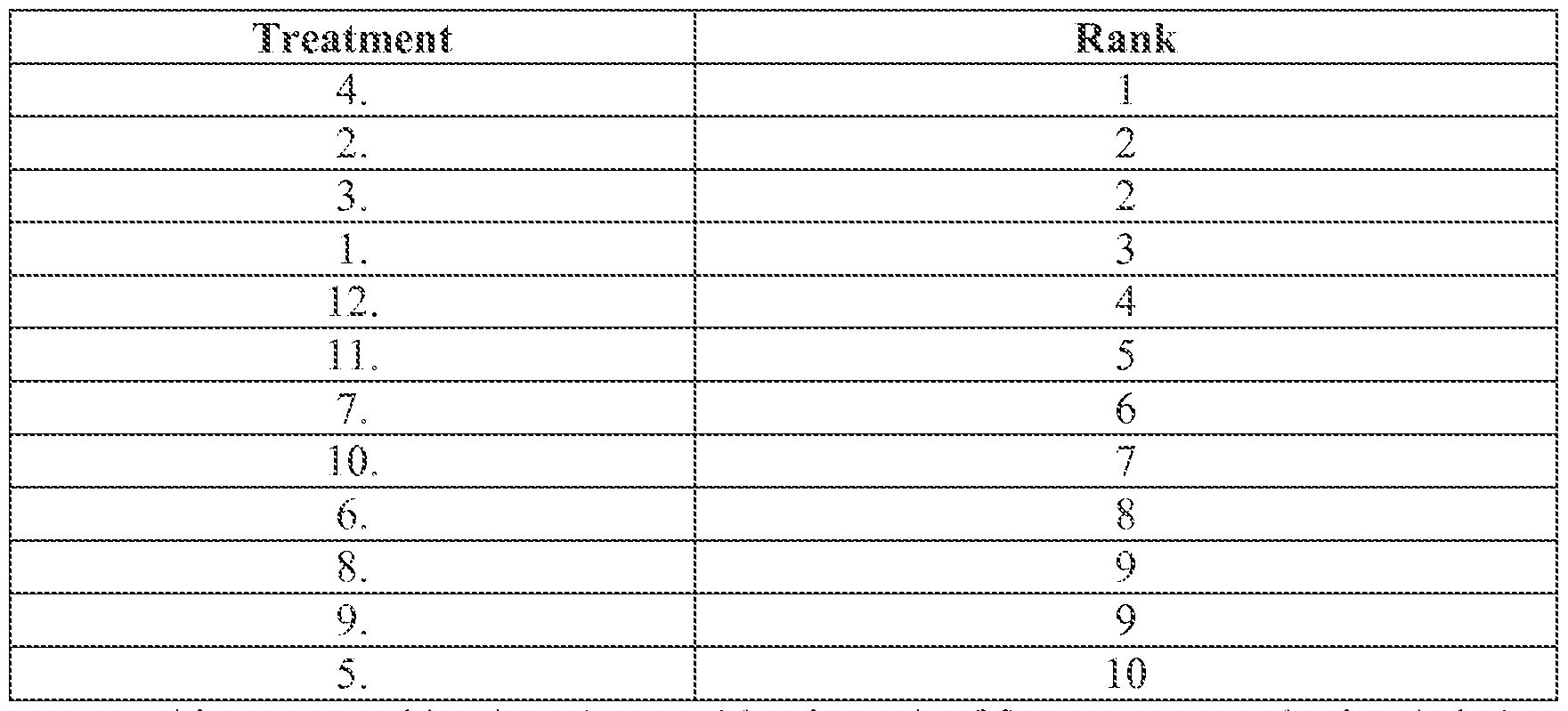
  • Table A Simple ranking of treatments based on lesion score, necrotic enteritis mortality, and d 14 - 28 weight gain and feed conversion ratio of birds with a Clostridium perfringens challenge ,
  • a follow-up experiment was conducted which looked at birds challenged with C. perfringens or C. perfringens + aflatoxin.
  • the three test products were: B, Y, or C.
  • the three test products lessened disease. This was mainly shown in gain during the challenge period from day 10 - 24 in birds that had been challenged with C, Perfringens as the B, Y, or virginiamycin products improved gain compared to the diet with no product, with Y being statistically equal to feeding virgiiiiamyciii. With this challenge, there were no significant differences for the feed: gain ratio between products except for virgmiamycin.
  • the present invention also encompasses anti-toxins, yeasts, yeast products, or yeastlike products, and MSG-like materials in addition to the preferred embodiments disclosed herein.
  • Other materials believed to be anti-toxins may also include other clays or minerals, yeasts or yeast products or yeast components, or yeast-like products such as other sources of fiber, beta glucans, or enzymes.
  • clay may refer to any types of clay such as silicates.
  • Silicates may include phyllosici Sates, nesosilicates, cyclosilicates, sorosilicat.es, inosiSicates and tectosilicates.
  • Phyllosilicates may include micas, chlorites, kaolinites, smectites (bentonite clays), hormites, talcs and serpentinites.
  • Tectosilicates may include quartz, zeolites and feldspars.
  • the clay is a smectite (bentonite clay).
  • Smectites include, but are not limited to trioctahedral smectites and dioctahedral smectites.
  • Trioctahedral smectites include, but are not limited to, saponite, hectorite, Steven site and sauconite.
  • Dioctahedral smectites include, but are not limited to, montmorillonite, beidellite and nontronite.
  • Montmorillonite includes, but is not limited to sodium montmoril lonite and calcium montmorillonite .
  • yeast may refer to yeasts (such as Ascomycota and Basidiomycota), yeast fragments, yeast products or yeast-like products.
  • yeast encompasses not only yeasts (such as Ascomycota and Basidiomycota), yeast fragments, yeast products or yeast-like products but also anything that may act like a yeast.
  • yeast may also refer to yeast product sources, or yeast fermentation products, yeast marmans, or whole yeast or components of the yeast cel l (such as, but not limited to, the yeast cel l wall) or mixtures of the same, or yeasts or yeast components from other species of yeast.
  • the beta gluears may be a beta 1, 3 glucan.
  • the beta glucan may be a bacterial beta glucan or a bacterial beta 1, 3 glucan.
  • Other immunomodulators may also include yeasts or yeast products or yeast components, or other fibers, immunoglobulins, or sources of immunoglobulins, ciiitins, or corticosteroids.
  • Other sources of energy to the gut mucosa may also include functional proteins, glutamic acid, threonine, or sources of functional protem such as plasma, or functional peptides.
  • peptides may be a short chain of amino acids, such as 2-4 molecules of glutamate or combinations of different amino acids with or without glutamate
  • the present invention also involves adding heat at between 300 and 800 degrees C for up to an hour to the clay.
  • the present invention also involves heating the clay, as it may impact the effectiveness of the clay. This may be done either statically using a muffle furnace or dynamically in a rotary kiln or flash dryer.
  • the preferred embodiment of this product may be about 50 to 90% (w/w) of an antitoxin, such as clay, about 5 to 50% (w/w) of an immunomodulatory which may be a yeast product, and about 0.01 to 15% (w/w) of a glutamate.
  • the product may be about 80% (w/w) of an anti-toxin, such as clay, about 10% (w w) of an immunomodulator, which may be a yeast product, and about 10% w/w) of a glutamate.
  • the anti-toxin may be a calcium montmorilionite clay, advantageously heated to a temperature at between 100 - 800 degrees C, advantageously between 400 - 800 degrees C, to decrease moisture and ground to a fine particle size.
  • This processing, heating to between 100 - 800 degrees C, and/or fine grinding (with an average particle size of approximately between 20 and 50 microns) has been shown to increase the toxin binding ability of the clay across multiple toxins.
  • the yeast product may be a Pichia guilliermondii or a Saccharomyces cerevisiae yeast product or a product from another specie of yeast.
  • Monosodium glutamate is a form of the amino acid glutamate.
  • the mixture may be about 80% (w/w) clay, about 30% (w/w) to about 35% (w/w) of a yeast product and about 5% (w/w) to about 10% (w/w) of a glutamate.
  • the clay may be a montmorilionite clay, preferably a highly-refined montmorilionite sorbent clay, and more preferably Ca!ibrin®-Z.
  • the yeast product may be preferably yeast mannan product.
  • the glutamate is monosodium glutamate.
  • the mixture may be about 60% (w/w) clay, about 30% (w/w) of a yeast product and about 10% (w/w) of a glutamate or 60% (w w) clay, about about 35% (w/w) of a yeast product and about 5% (w/w) to about 10% (w/w) of a glutamate,
  • the clay may be a montmorillonite clay, preferably a highly-refined montmorillonite sorbent clay, and more preferably Calibrin®-Z.
  • the yeast product may be a yeast mannan product, including Pichia guiUiermondii mannan products or Saccharomyces cerevisiae yeast products.
  • the glutamate is monosodium glutamate.
  • the present invention also encompasses the herein-disclosed mixtures utilized as dietary supplements.
  • the supplement may be about 0.05% (w/w) to about 0.35% (w/w) of the feed, about 0.15% (w/w) to about 0.25% (w/w) of the feed or about 0,25% (w/w) of the feed.
  • other materials capable of binding toxins may be substituted for Amlan's products, such as other clays or sorbent minerals, diatomaceous earths, silicates, zeolites, attapulgites, hormites, or these materials or combinations of these materials (including the base material for A lan products) manufactured with other processes (including increased or decreased drying temperature or time or final moisture content, calcined materials, or materials ground to a larger or smaller particle size) may be used with the caveat that more of the non-Amlan product may be required and or the non-Amlan product may result in less efficacy.
  • Amlan's products such as other clays or sorbent minerals, diatomaceous earths, silicates, zeolites, attapulgites, hormites, or these materials or combinations of these materials (including the base material for A lan products) manufactured with other processes (including increased or decreased drying temperature or time or final moisture content, calcined materials, or materials ground to a larger or smaller particle size) may be used with the cave
  • the clay may be heated to about 100° €, about 125°C, about 150°C, about 175°C, about 200°C, about 225°C, about 250°C, about 275°C, about 300°C, about 325°C, about 350°C, about 375°C, about 400°C, about 425°C, about 450°C, about 475°C, about 500°C, about 525°C, about 550°C, about 575°C, about 600°C, about 625°C, about 650°C, about 675°C, about 700°C, about 725°C, about 750°C, about 775°C, about 800°C, about 825°C, about 850°C, about 875°C, about 900°C, about 925°C, about 950°C, or about 1000°C. It may be heated for 1 minute up to 4 hours.
  • the average particle size of the clay may be as small as 1 micron to as large as 500 microns.
  • yeast product sources or yeast fermentation products, yeast mannans, or whole yeast or components of the yeast cell (such as, but not limited to, the yeast cell wall) or mixtures of the same, or yeasts or yeast components from other species of yeast may also be used .
  • Sources for mannars oligosaccharides, and/or beta g!ucaas, or other major components of yeast could also be used, including but not limited to, other fiber or carbohydrate sources.
  • Other sources of prebiotics or blends of prebiottcs may also be used for the present invention.
  • the percent inclusion of the materials may increase or decrease from those in the preferred embod iment .
  • Clostridia difficile infection of man and animal chronic bowel disease of man, hemorrhagic bowel disease of cows, enterotoxcimia of calves, pigs and sheep, shigalosis of man and animal, or travelers diarrhea, or other diseases caused by bacterial or food and or water borne endotoxin or exotoxins of animal or man.
  • Virginiamycin 22 ppm
  • the clay, yeast product and optionally, glutamate, mixture of the present i ve tion into an animal feed or water this may be do e in a manner known to one of skill in the art.
  • the clay, yeast product and optionally, glutamate, mixture of the invention is incorporated in a premix.
  • the premix preferably includes the clay, yeast product and optionally, glutamate, mixture, a physiologically acceptable carrier and optionally a feedstuff.
  • the premix is generally in a relatively concentrated form and is adapted to be diluted with other material such as one or more of the other carriers, vitamins and mineral supplements and feedstuff to form the final animal feed.
  • the premix preferably includes the clay, yeast product and optionally, glutamate, mixture in a concentration in the range of from 0.1 to 70% by weight, preferably 0.5 to 50% by weight, more preferably about 0.25% by weight.
  • concentration will depend on whether the treatment is preventative, for control or remedial and whether the clay, yeast product and optionally, glutamate, mixture of the invention is the only active or whether it is used in concomitant therapy with other materials and the specie and age or stage of life of the recipient.
  • the concentrated composition of the clay, yeast product and optionally, glutamate, mixture is in a controiied-release form.
  • the controlled release form will include the clay, yeast product and optional ly, glutamate, mixture and a polymeric material for providing controlled release of the clay, yeast product and optionally, glutamate, mixture from the controiied-release system and is particularly useful in compositions for addition to solid feed material.
  • the release of the clay, yeast product and optionally, glutamate, mixture may be delayed so as to occur mainly in the duodenum.
  • a controlled release polymer may also minimize rejection of the composition due to taste or be used for rectal suppositories.
  • controlled release system is used in the same context as that in, and includes the same range of examples as quoted in "Controlled Drug Deliver)'" (Robinson & Lee, 1987).
  • Many other pH -sensitive controlied-release systems which are known in the art (Robinson and Lee, 1987) .may be substituted for the polymer of acrylic acid or copolymer of acrylamide and acrylic acid.
  • Such cross-linked and insoluble polymers are preferred since they swell and also are less likely to be metabolized.
  • the invention also provides an animal feed composition
  • an animal feed composition comprising the clay, yeast product and optionally, glutamate, mixture of the invention and a feedstuff.
  • the clay, yeast product and optionally, glutamate, mixture is preferably present in an amount of from 0.0001 to 25% of the total feed composition and preferably from 0.0001 to 5% of the total feed composition, more preferably about 0.25% of the total feed composition.
  • the clay, yeast product and optionally, glutamate, mixture of the invention may be formulated for addition to the drinking water of animals.
  • the clay, yeast product and optionally, glutamate, mixture of the invention is preferably administered in amounts of from 0.05 to 5000 mg/kg of body weight/day more preferably from 100 to 1000 mg/kg/ day.
  • suitable inert earners for use in compositions for administration of the clay, yeast product and optionally, glutamate, mixture of the invention include, but are not limited to, water, olive oil, peanut oil, sesame oil, sunflower oil, safflower oil, arachis oil, coconut oil, liquid paraffin, ethylene glycol, propylene glycol, polyethylene glycol, ethanol, propanol, isopropanol, glycerol, fatty alcohols, triglycerides, polyvinyl alcohol, partially hydroiyzed polyvinyl acetate and mixtures thereof.
  • Solid forms for oral or rectal administration may contain pharmaceutically or veterinarally acceptable binders, sweeteners, disintegrating agents, diluents, flavorings, coating agents, preservatives, lubricants and/or time delay agents.
  • Suitable binders include gum acacia, gelatin, corn starch, gum tragacanth, sodium alginate, carboxymethyicelluiose or polyethylene glycol.
  • Suitable sweeteners include sucrose, lactose, glucose or flavonoid glycosides such as neohesperidine dihydrochaleone.
  • Suitable disintegrating agents may include com starch, methylcellulose, polyvinlypyrrolidone, xanthan gum, bentonite, alginic acid or agar.
  • Suitable diluents include lactose, sorbitol, mannitol, dextrose, kaolin, cellulose, calcium carbonate, calcium silicate or dicalcium phosphate.
  • Suitable flavormg agents include peppermmt oil, oil of wintergreen, cherry, orange or raspberry flavorings.
  • Suitable coating agents include polymers or copolymers of acrylic acid and/or methacrylic acid and/or their esters, and/or their amides, waxes, fatty alcohols, zein, shellac or gluten.
  • Suitable preservatives include sodium benzoate, vitamin E, .a!pha.-tocopheroi, ascorbic acid, methyl parabens, propyl parabens or sodium bisuiphate.
  • Suitable lubricants include magnesium stearate, stearic acid, sodium oleate, sodium chloride or talc.
  • Suitable time delay agents include glyceryl monostearate or glyceryl distearate.
  • Suspensions for oral or rectal administration may further comprise dispersing agents and/or suspending agents.
  • Suitable suspending agents include sodium carboxylmethyl cellulose, methylcellulose, hydroxypropylmethylcellulose, poly-vinyl-pyrrolidone, sodium alginate or cetyl alcohol.
  • Suitable dispersing agents include lecithin, polyoxyethylene esters or fatty acids such as stearic acid, polyoxyethylene sorbitol mono- or di -oleate, -stearate or -laurate, polyoxyethylene sorbitaii mono- or di-oieate, -stearate or -laurate and the like.
  • composition of the clay, yeast product and optionally, glutamate, mixture may further comprise one or more emulsifying agents.
  • Suitable emulsifying agents include dispersing agents as exemplified above or natural gums such as gum acacia or gum tragacanth.
  • compositions for administration in the method of the invention may be prepared by means known in the art for the preparation of compositions (such as in the art of veterinary and pharmaceutical compositions) including blending, grinding, homogenizing, suspending, dissolving, emulsifying, dispersing and where appropriate, mixing of the active ingredients together with selected excipients, diluents, carriers and adjuvants.
  • the pharmaceutical or veterinary composition may be in the form of tablets, lozenges, pills, troches, capsules, elixirs, powders, including lyophilised powders, solutions, granules, suspensions, emulsions, syrups and tinctures.
  • Slow-release, or delayed-release, forms may also be prepared, for example in the form of coated particles, multilayer tablets or micro granules.
  • T -Means within a main effect within a column with no common superscripts differ significantly (P ⁇ 0.05).
  • 'Means were the average of 8 replicate pens with 22 birds initially (equalized to 20 on d-7); 5 birds/pen were euthanized on d-20 for lesion scoring.
  • Example 1 Summary of Clostridial Toxins / Disease, Prototype Product Efficacy
  • Aipha-toxin is produced by C, perfringens, in the intestines of poultry during stressed conditions, resulting in necrotic enteritis.
  • the supernatant (liquid leftover, where still active toxin would remain) was added to a cell culture (Chinese Hamster Ovary cel ls) and damage recorded. More cell damage meant less clay activity. Less ceil damage meant more activity against the toxin.
  • Results No product adsorbed Toxin B (which was used at lOx the rate of Toxi A). Table 2 gives example data. AFE and an ATA adsorbed some Toxin A. The following table provides an example of the results. A 100 means there was no measured lessening of toxin adsorption. A 0 means there was no toxin activity.
  • strain JGS4143 a vimlent NE field strain
  • Newly-hatched Cornish x Rock chicks were fed an antibiotic-free chick starter diet with 16% protein for 7 days.
  • the diet was changed to a wheat-based, high protein (28%) feed containing 60%) fishmeai and zinc at 400 ppm.
  • Clays HCBEN, CBEN, and CBEN + probiotic were added at 1% or 2% to the feed of individual groups Before challenge (Day 14), feed was withdrawn for 20 h. Beginning on day 15, birds were fed (every 12 h for 3.5 days) a 1.25:1 feed: culture mixture. Surviving birds were necropsied on the days 18 and 19).
  • C. perfringens Gram-positive, anaerobic rods with double-zone hemolysis.
  • Estimates of C. perfringens concentration were done by rating the colonies from sequential streaks (e.g. a 4 represents colonies on streak 4).
  • Treatment mortality is percent of birds that died during the Clostridium treatment, not including those that died before Clostridium treatment.
  • TRT twelve treatments
  • NE necrotic enteritis
  • Six products were evaluated with a Clostridium perfringens challenge and two of these products were also evaluated without a Clostridium perfringens (CP) challenge.
  • Chickens were fed treatment diets from 0 - 28 day of age with all birds receiving an oral coccidia challenge on day 14 with a mixed coccidia inoculum (-5000 oocysts of E. maxima per bird).
  • Challenged birds also received a broth culture of CP (10" cfu/ml) to induce NE on d 19, 20, and 21.
  • Results All the products reduced disease in some fashion, depending on the measurement. Tabl e 6 shows a ranked order of performance. While virginiamycm (the drug used to control necrotic enteritis) was numerically the best, the clay products generally were not significantly different from it.
  • Table 6 Simple ranking of treatments based on lesion score, necrotic enteritis mortality, and d 14 - 28 weight gain and feed conversion ratio of birds with or without a Clostridium perfringens challenge**.
  • b Scoring was based on a 0 to 3 score, with 0 being normal and 3 being the most severe.
  • Weights were taken on d-0, 10, and 24 for calculation of feed intake, gain, and feed:gain. Birds consumed feed and water ad libitum. Increased negative responses to the combination of NE and AFL were seen in this study as Fl (d-0-10), gain (d- 10-24, d-0-24), and F:G (d- 10-24) were increasingly poorer as challenge level went from no-challenge to CPP challenge to CPP+AFL challenge (P ⁇ .05). Other growth responses were worse than non- or CPP-challenges when both CPP+AFL were applied (P ⁇ .05). Lesion score was higher in CPP challenged birds with or without AFL (P ⁇ .05).
  • Feeding VM improved performance in no -challenged birds (P ⁇ .05).
  • CPP challenged birds adding B or Y improved Fi and gain compared to NP; with Y being equal to those fed VM during the challenge period (P ⁇ 05).
  • Birds given B had the highest gain and feed conversion when challenged with both CPP and AFL; feeding Y, C, and VM had higher gains than adding NP (P ⁇ 05).
  • increasing challenge level decreased bird performance.
  • Birds with necrotic enteritis fed Y had gain that was equal to those fed VM during the challenge period.
  • Feeding the clay- based products improved performance during a CPP+AFL challenge.
  • CPP birds were challenged by being placed on dirty litter obtained from broilers that had undergone a recent Clostridium perfringens chalienge, they were then given a 10 x dose of coccidia vaccine on d 10 to simulate conditions that cause necrotic enteritis.
  • B LVM clay
  • Y B + organic acid + plant extract
  • C B + yeast product
  • VM Virgin jatnycitt
  • CPP birds were challenged by being placed on dirty litter obtained from broilers that had undergone a recent Clostridium perfringens challenge, they were then given a 10 x dose of coccidia vaccine on d 10 to simulate conditions that cause necrotic enteritis.
  • B LVM clay
  • Y B + organic acid ⁇ plant extract
  • C B+ yeast product
  • Example 3 The effects of necrotic enteritis and aOatoxin oi3 ⁇ 4 growth performance, lesion scores, and mortality isi young broilers and products to alleviate them.
  • Feeding VM improved performance in non-chal lenged birds P ⁇ except05.
  • CPP challenged birds adding B or Y improved FI and gain compared to NP; with Y being equal to those fed VM during the challenge period (P ⁇ .05).
  • Birds given B had the highest gain and feed conversion when challenged with both CPP and AFL; feeding Y, CL3, and VM had higher gains than adding NP (P ⁇ .05).
  • increasing challenge level decreased bird performance.
  • Birds with necrotic enteritis fed Y had gain that was equal to those fed VM during the challenge period.
  • Feeding the clay- based products improved performance during a CPP+AFL challenge.
  • a total of 2,112, male, Cobb 500 chicks were used to determine the effects of increasing afiatoxin concentration (AFL; 0, 0.75, 1 .5 ppm) on broilers with or without necrotic enteritis or virginiamycin (VM).
  • AFL afiatoxin concentration
  • VM virginiamycin
  • 22 chicks (equalized to 20 on d-7) per pen were allotted to 12 treatments (3x2x2 factorial arrangement) with 8 replications in a randomized complete block design; pen was the experimental unit. Significant difference was set at P ⁇ .05. Weights were taken on d-0, 16, and 23 for calculation of feed intake, gain, and feed: gain. Birds consumed feed and water ad libitum.
  • Aflatoxin decreased gain and feed intake and resulted in poorer feed:gain, mortality, and lesion scores (P ⁇ ,05), Inducing necrotic enteritis (CPP) using Clostridium perfringens contaminated litter and a 10 x dose of coccidiosis vaccine administered on day- 10 increased lesion score and decreased feed intake and gain (P ⁇ Q5). Adding VM to the diets improved gain, feed intake, and feed conversion, and decreased mortality (P ⁇ .05).
  • Example 5 Effects of the Aeilais products against the effects of Necrotic Enteritis in broiler birds
  • Amlan Products were a 100% clay product (B), the clay product blended with an organic acid and a plant extract (Y), a blend of the clay and a yeast product (C), a blend of the clay, the yeast product, and monosodium. glutamate (D) and the antibiotic virginiamycin (VM).
  • the chickens were one-day-old Broiler birds (Ross/Ross) hatched at the Longeneckers Hatcher ⁇ 7 (Elizabethtown, PA) transported by mail truck and housed in starter brooder units.
  • the birds were kept in brooder pens in Eimeria-fx facility and transferred into large hanging cages in a separate location where they were infected and kept until the end of experimental period for the live challenge infection study. All procedures regarding transportation, measuring body weight, infection, and collecting blood and spleen were in accordance with established guidelines for animal experiments.
  • Eimeria spp. were maintained and propagated in accordance with established procedure.
  • E. maxima (41 A) were cleaned by floatation on 5 % sodium hypochlorite, washed three times with PBS, and viability was enumerated by trypan blue using a hemocytometer. The oocyst number is based on only sporulated oocysts.
  • chickens were inoculated esophageaily with 10,000 of E. Maxima using an inoculation needle.
  • Serum samples were tested for antibodies against Clostridium using an established ELISA, Briefly, microtiter plates were coated overnight with 200ng/well of the recombinant Clostridium antigen, washed with PBS-0.05% Tween, and blocked with PBS-1% BS.A. Serum dilutions added, incubated with continuous gentle shaking, washed, and bound Ab detected with peroxidase-conjugated rabbit anti-chicken IgG (Sigma) and peroxidase-specific substrate. Optical density (OD) was determined at 450nm using a microplate reader (Bio-Rad, Richmond, CA).
  • Serum samples were tested for antigens against a -toxin or NetB using an established ELISA. Briefly, microtiter plates were coated overnight with 0.5 p.g/well of the mAb to a -toxin or NetB toxin, washed with PBS-0.05% Tween, and blocked with PBS-1% BSA. Chicken serum dilutions added, incubated with continuous gentle shaking, washed, and bound Ab detected with peroxidase-conjugated rabbit ami- a -toxin or NetB toxin and peroxidase-specific substrate. Optical density (OD) was determined at 450nm using a microplate reader (Bio-Rad, Richmond, CA).
  • Chickens were orally infected with. 1.0 * 10 oocysts/bird of E. maxima (EM) at day 15 post- hatch and with 1.0 * 10 9 CFU/bird of C. perfringens (CP) at day 19.
  • EM E. maxima
  • CP C. perfringens
  • broiler birds (20/group) were used and housed in brooder pens with 2 brooder Petersime per unit.
  • the finisher unit was an 80 hanging cage unit where the birds were transferred at 18 days of age.
  • Experimental Ration An unmedicated commercial type chicken starter ration compounded with feedstuffs commonly used in the United States was formulated. This ration (in mash form) was fed ad libitum from the date of chick arrival until Day 28 of the study. The diet formulation was included in the source data. Experimental treatment feeds were prepared from this basal starter feed. Quantities of al l basal feed and test articles used to prepare treatment batches were documented. Treatment feeds were mixed to assure a uniform distribution of respecti ve test article. The feed was distributed among cages of the same treatment.
  • DOT 0, 14, 21 , and 28 Weights All birds were weighed by cage on DOT 0, 14, 21 and 28. Feed was weighed in on DOT 0 and remaining feed was weighed on DOT 14, 21 , and 28. The trial was terminated on DOT 28.
  • Necrotic Enteritis Intestinal Lesion Scoring On DOT 2.1 , three birds from each cage were selected, sacrificed, weighed, and examined for the degree of presence of Necrotic Enteritis lesions. The scoring w r as based on a 0 to 3 score, with 0 being normal and 3 being the most severe.
  • FIG. 8A depicts feed conversion from Day 0-21.
  • feed conversion for birds fed the different treatments was intermediate between those on the NE (birds challenged to induce necrotic enteritis but fed no product) or VM (birds challenged to induce necrotic enteritis and fed virginiamycin) treatments from day 0 to 21.
  • VM birds challenged to induce necrotic enteritis and fed virginiamycin
  • FIG, 8B depicts feed conversion from Day 14 - 21 .
  • Feed conversion for challenged birds fed Treatment DX was significantly better than birds on the NE treatment (challenged but fed no product) for the day 14 - 21 time period and was statistically equal to the diet wit VM added.
  • FIG, 8C depicts feed conversion from Day 0-28. All products except D8X were significantly better than NE with no product. The products D and DX were the best of the tested products, similar to the birds on the VM treatment, and not statistically different from the birds given no NE challenge.
  • FIG, 9A depicts weight gain from Day 0-28. Gain was improved by VM compared to the NE control without any product. D8 was statistically equal and numerically better when compared to VM, Ail other products were intermediate between NE with no product and VM.
  • FIG. 9B depicts weight gain from Day 14-28. Gain followed similar patterns for day 14 - 28 as they did for day 0 - 28, except that D8 was numerically equal to VM.
  • FIG, 10 depicts lesion scores. Lesion scores for birds fed D8 and D8X were lower than for birds fed VM and may not have been statistically different than those birds not challenged with NE,
  • FIG. 11 depicts NE mortality. All products except for D decreased Mortality compared to NE challenged birds with no product and were statistically equal to those fed VM.
  • Example 7 Effects of products against the effects of Necrotic Enteritis isi broiler birds
  • NE Necrotic Enteritis
  • the purpose of this Example was to evaluate different formulas and dosages of the previously discovered products on Necrotic Enteritis (NE) clinical signs, immunopathology and cytokine responses in broiler chickens co-infected with Eimeria maxima and Clostridium perfringens in a Necrotic Enteritis (NE) Disease Model.
  • the NE disease model used for this trial (Park SS, Lillehoj HS, et al. Immunopathology and cytokine responses in broiler chickens coinfected wit Eimeria maxima and Clostridium perfringens with the use of an animal model of necrotic enteritis.
  • the products were a blend of clay, a yeast product, and monosodium glutamate in a formula previously found to be effective (D), in the current experiment it was included at four different inclusion rates (0.35, 0.25, 0.15 and 0.05%), also included were products containing the same ingredients as the previous product but with four different formulations of ingredients in the formula of the Product (designated DS, DSF, D8, and D8F5).
  • the antibiotic virginiamycin (VM) was also included as a treatment.
  • the chickens were one-day-old broiler birds (Ross/Ross) hatched at the Longeneekers Hatchery (Elizabethtown, PA) transported by mail truck and housed in starter brooder units.
  • the birds were kept in brooder pens in an Eimeria-fxee facility and transferred into large hanging cages in a separate location where they were infected and kept until the end of experimental period for the live challenge infection study. All procedures regarding transportation, measuring body weight, infection, and collecting blood and spleen were in accordance with established guidelines for animal experiments.
  • the antibiotic VM 22 ppm was also included as a treatment.
  • E. maxima 41 A
  • PBS phosphatidylcholine
  • viability was enumerated by trypan blue using a hemocytometer.
  • the oocyst number is based on only sporulated oocysts.
  • chickens were inoculated esophageally with 10,000 of E. Maxima using an inoculation needle.
  • Serum samples were tested for antibodies against Clostridium using an established ELISA. Briefly, microti ter plates were coated overnight with 200ng/weli of the recombinant Clostridium antigen, washed with PBS-0.05% Tween, and blocked with PBS-1% BSA. Serum dilutions added, incubated with continuous gentle shaking, washed, and bound Ab detected with peroxidase-conjugated rabbit anti-chicken IgG (Sigma) and peroxidase-specifie substrate. Optical density (OD) was determined at 450nm using a micropiate reader (Bio-Rad, Richmond, CA).
  • Serum samples were tested for antigens against a -toxin or NetB using an established ELISA. Briefly, microti ter plates were coated overnight with 0.5 ⁇ ' ⁇ 11 of the mAb to a -toxin or NetB toxin, washed with PBS-0.05% Tween, and blocked with PBS-1% BSA. Chicken serum dilutions added, incubated with continuous gentle shaking, washed, and bound Ab detected with peroxidase-conjugated rabbit anii- a -toxin or NetB toxin and peroxidase-specifie substrate. Optical density (OD) was determined at 45()nm using a micropiate reader (Bio-Rad, Richmond, CA).
  • Chickens were orally infected with 1.0 x 10 ' oocysts/bird of E. maxima (EM) at day 15 post- hatch and with 1.0 x 10 9 CFU/bird of C. perfringens (CP) at day 19 post hatch (experimental day 14 and 18, respectively).
  • EM E. maxima
  • CP CFU/bird of C. perfringens
  • intraepithelial lymphocytes IL8 expression decreased in the groups supplemented with all products D, DS, DSF, D8 or VM compared with NE control birds.
  • Intraepithelial lymphocytes (LITAF) expression decreased in the group supplemented with product D at the 0.35, 0.25, or 0.15% inclusion levels, or products DSF, D8, DSF or the antibiotic VM. Adding DS at 0.25%> of the diet showed decreased LJTAF level.
  • IL-6 and iNOS expression generally decreased in the groups supplemented with ail products D, DS, DSF, D8 or the antibiotic VM compared with NE control birds. In general, these results i dicate beneficial effects of feeding young broiler chickens with these products.
  • FIGS. 19A-C in the spleen IL8 expression increased in the groups supplemented with D8F. While LITAF expression decreased in the group supplemented with Amlan product D8 (0.25%) and D8F,. However, DSF group showed increased LITAF level. TNFSF15 expression decreased in the group supplemented with Amlan product D at all inclusion levels or the D8 or DSF products, or the antibiotic VM,
  • FIG, 12A depicts a comparison of the bod)' weight gains in broiler chickens determined from day of Eimeria maxima infection to 2 days post C. perfringens infection. Birds were infected with 10,000 sporulated oocysts of E. maxima at day 14 post hatch. After 4 days Eimeria maxima infection, birds were inoculated with l l0 9 CFU C.PCP. (Cont is non- challenged control group; NE is the group challenged to induce necrotic enteritis but fed no product; VM is the group that received 20 g/ton of virginiamycin in the diet)
  • FIG. I2B depicts a comparison of the percentage increase in body weight gains relative to the birds on the necrotic enteritis chal lenge control with no product based on I .
  • FIG. 13 A depicts a comparison of the body weight gains in broiler chickens Body weights gains were determined starting the day of C, perfringens infection and ending at 7 days post C. perfringens infection.
  • FIG. -13B depicts a comparison of the percentage increase in body weight gains relative to the necrotic enterits challenge control with no product based on Fig. 3-1
  • FIG. 14 depicts an effect of Products on intestinal lesion scores, scores are an average of 5 birds per group examined on d 2 post C. perfringens infection
  • FIG. 15A depicts a serum antibody response against a-toxin antigen at 2 days post C. perfringens infection.
  • FIG. 15B depicts a serum antibody response against a-toxin antigen at 7 days post C. perfringens infectio .
  • FIG. 16A depicts a serum antibody response against NetB toxin antigen at 2 days post C. perfringens infection..
  • FIG. 16B depicts a serum antibody response against NetB toxin antigen at 7 days post C. perfringens infection.
  • FIG. 17A depicts an effect of dietary supplementation on serum a-toxin levels.
  • Sera were col lected at d-2 post C. perfringens infection and used to measure the levels of a-toxin by [ .USA.
  • FIG. 17B depicts an effect of dietary supplementation on serum NetB-toxin levels .
  • Sera were collected at d-2 post C. perfringens infection and used to measure the levels of NetB- toxin by EL ISA.
  • FIGS. 18A-B depict cytokine production in the jejunum intraepithelial lymphocytes at 2 days post C. perfringens infection.
  • FIG. I8C-D depict cytokine production in the jejunum intraepithelial lymphocytes of birds at 2 days post C, perfringens infection .
  • FIGS. 19A-C depict cytokine production in the spleen of birds at 2 days post C. perfringens infection.
  • FIGS. 19D-F depict cytokine production in the spleen of birds at 2 days post C. perfringens infection
  • a method for treating an enteric disease in an animal in need thereof comprising administering a mixture comprising a clay, a yeast product and a glutamate to the animal, thereby treating the enteric disease.
  • enteric disease is necrotic enteritis, coccidiosis, Clostridia difficile infection, chronic or hemorrhagic bowel disease, enterotoxemia, shigalosis, diarrhea or a disease caused by bacterial or food or water born endotoxins and/or exotoxins.
  • yeast product is a yeast Sermon iation product.
  • yeast component is a yeast mannan, a yeast ceil wall, a mannan oligosaccharide, a beta glucan, a fiber, a carbohydrate source, a prehiotic, or a combination thereof.
  • yeast product is a yeast femientaiion prod u ct.

Landscapes

  • Health & Medical Sciences (AREA)
  • Life Sciences & Earth Sciences (AREA)
  • Animal Behavior & Ethology (AREA)
  • Veterinary Medicine (AREA)
  • Public Health (AREA)
  • General Health & Medical Sciences (AREA)
  • Chemical & Material Sciences (AREA)
  • Medicinal Chemistry (AREA)
  • Pharmacology & Pharmacy (AREA)
  • Epidemiology (AREA)
  • Mycology (AREA)
  • Engineering & Computer Science (AREA)
  • Inorganic Chemistry (AREA)
  • Microbiology (AREA)
  • Natural Medicines & Medicinal Plants (AREA)
  • Nuclear Medicine, Radiotherapy & Molecular Imaging (AREA)
  • General Chemical & Material Sciences (AREA)
  • Chemical Kinetics & Catalysis (AREA)
  • Organic Chemistry (AREA)
  • Bioinformatics & Cheminformatics (AREA)
  • Alternative & Traditional Medicine (AREA)
  • Biotechnology (AREA)
  • Botany (AREA)
  • Medical Informatics (AREA)
  • Communicable Diseases (AREA)
  • Oncology (AREA)
  • Gastroenterology & Hepatology (AREA)
  • Immunology (AREA)
  • Proteomics, Peptides & Aminoacids (AREA)
  • Fodder In General (AREA)
  • Medicines Containing Material From Animals Or Micro-Organisms (AREA)
  • Medicinal Preparation (AREA)
  • Pharmaceuticals Containing Other Organic And Inorganic Compounds (AREA)
  • Feed For Specific Animals (AREA)
  • Medicines That Contain Protein Lipid Enzymes And Other Medicines (AREA)
  • Acyclic And Carbocyclic Compounds In Medicinal Compositions (AREA)

Description

CLAY PRODUCT AND USES THEREOF
R ELATED A PPLICATIONS AND INCORPORATION BY REFERENCE OOOlj This application claims benefit of and priority to US provisional patent application Serial Nos. 61/708,763 and 61/792,382 filed October 2, 2012 and March 15, 2013, respectively and entitled "CLAY -CONTAINING COMPOSITION THAT ALLEVIATES EFFECTS OF BACTERIAL EXOTOX1N-ASSOCIATED DISEASE" and "CLAY, A YEAST PRODUCT AND GLUTAMATE BLENDED PRODUCT AND USES THEREOF", respectively.
10002] The foregoing applications, and all documents cited therein or during their prosecution ("appln cited documents") and all documents cited or referenced in the appln cited documents, and all documents cited or referenced herein ("'herein cited documents"), and all documents cited or referenced in herein cited documents, together with any manufacturer's instructions, descriptions, product specifications, and product sheets for any products mentioned herein or in any document incorporated by reference herein, are hereby incorporated herein by reference, and may be employed in the practice of the invention. More specifically, all referenced documents are incorporated by reference to the same extent as if each individual document was specifically and individually indicated to be incorporated by reference,
FI ELD OF THE INVENTION
[0003] The application relates to a mixture of clay, a yeast product and optionally, glutamate, and uses thereof, in particular for decreasing effects of an enteric disease.
BACKGROUND OF THE INVENTION
[0004} Clostridium is a bacterial genus that secrets toxins causing disease in poultry, animals, and humans. Anaerobic bacterial pathogens are a serious economic burden on the agricultural industry. Bacteria of the Clostridium family represent a particular burden, because these bacteria cause serious diseases in poultry and other economically valuable domestic animals. Previous efforts to control these organisms have relied upon sanitary measures and the administration of antibiotics in the animal feed.
[0005] Necrotic enteritis (NE) is the most common and financially devastating bacterial disease in modem broiler flocks. It is an infectious disease caused by Clostridium, perfiingens, which is a gram-positive, anaerobic bacterium that can be found in soil, litter, dust and at low
I levels in the intestine of healthy birds, Clostridium perfringens only causes NE when it transforms from non-toxin producing type to toxin producing type.
[0006] There are five types of C. perfringens (A, B, C, D and E) which produce a number of toxins (alpha, beta, epsilon, iota and CPE). The a-toxin, an enzyme (phospholipase Q is believed to be a key to the occurrence of NE. However, a recent study has shown that an isolate that does not produce a-toxin can still cause disease, in addition, a new toxin called NetB has been recently identified in disease causing C. perfringens isolates. The intestine of infected birds is friable and distended with gas and gross lesions caused by toxins. In the acute form of NE, birds often die before showing clinical signs. However, in its subclinical form the disease is much more financially damaging for the producer. The commonly observed symptoms of the disease vary wi th the age of birds.
[0007] There remains a need in the art for a safe, economical and effective method of protecting intensively cultivated domestic animals, including avians, such as chickens, from infection by Clostridium species. Clostridia caused diseases cause both human suffering and economic loss in livestock. A cost-effective manner to intervene in these diseases would aid in disease management systems.
[0008] Citation or identification of any document in this application is not an admission that such document is available as prior art to the present invention.
SUMMARY OF THE INVENTION
[0009] The present invention relates to an anti-toxin, an immunomodulator, a component that provides energy to mucosal cells, or a combination thereof, which may be useful for decreasing effects of Clostridia or coccidia based diseases or other enteric diseases or by generally improving gastro intestinal health or function.
[0010] Applicants have shown in vitro that certain clays can adsorb toxins from Clostridium difficile and Clostridium perfringens. Applicants have shown in vivo that certain clays or clay formulations can alleviate necrotic enteritis in chickens, a disease associated with Clostridium perfringens . Applicants find that clays or clay formulations may bind clostridial toxins in vitro and that clays or clay formulations may alleviate disease caused by Clostridium perfringens, and likely other clostridial caused diseases. [0011] Applicants also found that clays can adsorb exotoxin produced by Clostridium difficile and Clostridium perfringens . A blend that is a combination of clay, a yeast product, and a form of a functional amino acid, was found to help decrease the effects of Necrotic Enteritis in broilers when a challenge model that included C. perfringens and coccidia (Eimeria maxima) was used,
[0012] The present invention relates to an anti-toxin, an immunomodulator and a component that provides energy to mucosal ceils, or a combination thereof. Advantageously, the anti-toxin may be a clay, an immunomodulator may be a yeast product and a component that provides energy to ceils may be a functional amino acid such as a glutamate. In a particular advantageous embodiment, the clay may be a calcium montmorillonite clay, the yeast product may be a Pichia guilliermondii yeast product, and the functional amino acid may be monosodium glutamate ("MSG"). I another advantageous embodime t, the mixture may comprise about 50 to 90% (w/w) of an anti-toxin, about 10 to 50% (w/w) of an immunomodulator which may be a yeast product and about 0.01 to 15% (w/w) of a glutamate.
[0013] In a particularly preferred embodiment, the composition or mixture may be about 80%) (w/w) clay, about 10% (w/w) of a yeast product and about 10% (w/w) of a glutamate or 60% (w/w) clay, about 35% (w/w) of a yeast product and about 5% (w/w) to about 10% (w/w) of a glutamate.
[0014] The prese t invention also encompasses the herei -disclosed compositions and/or mixtures utilized as dietary supplements. In one embodiment, the supplement may be about 0.05% (w/w) to about 0.35% (w/w) of the feed, about 0.15% (w/w) to about 0.25% (w w) of the feed or about 0.25% (w/w) of the feed.
[0015] Accordingly, it is an object of the invention to not encompass within the invention any previously known product, process of making the product, or method of using the product such that Applicants reserve the right and hereby disclose a disclaimer of any previously known product, process, or method. It is further noted that the invention does not intend to encompass within the scope of the invention any product, process, or making of the product or method of using the product, which does not meet the writte description and enableme t requirements of the USPTO (35 U.S.C. § 1 12, first paragraph) or the EPO (Article 83 of the EPC), such that Applicants reserve the right and hereby disclose a disclaimer of any previously described product, process of making the product, or method of using the product. [0016] It is noted that in this disclosure and particularly in the claims and/or paragraphs, terms such as "comprises", "comprised", "comprising" and the like can have the meaning attributed to it in U.S. Patent law; e.g., they can mean "includes", "included", "including", and the like; and that terms such as "consistmg essentially of and "consists essential!)? of have the meaning ascribed to them in U.S. Patent law, e.g., they allow for elements not explicitly recited, but exclude elements that are found in the prior art or that affect a basic or novel characteristic of the invention.
[0017] These and other embodiments are disclosed or are obvious from and encompassed by, the following Detailed Description.
BRIEF DESCRIPTION OF THE DRAWINGS
[0018] The following detailed description, given by way of example, but not intended to limit the invention solely to the specific embodiments described, may best be understood in conjunction with the accompanying drawings.
[0019] FIG. 1 depicts a schematic outline of an experimental design.
[0020] FIG. 2 depicts a comparison of the body weight gains in broiler chickens fed with Oil-Dri Corporation of America's Amlan International branded ("Amlan") products such as a 100% clay product, (B), the clay product blended with an organic acid and a plant extract (Y), a blend of the clay and a yeast product (C), a blend of the clay, the yeast product, and monosodium glutamate (D), compared to the antibiotic virginiamycin (VM) and challenged with Clostridium perfriiigens (CP) to Induce necrotic enteritis. Body weights were determined from the day of E. maxima infection to 2 days post CP infection. Birds were infected with 10,000 sporulated oocysts of E. maxima at day 14 post hatch. After 4 days E. maxima infection, birds except those in the Control treatment were inoculated with lxlO9 CFU CP.
[0021] FIG. 3 depicts a comparison of the body weight gains in broiler chickens fed with Amlan products such as B, Y, C, D, and compared to the antibiotic VM. Body weight gains were determined from the day of CP infection to 7 days post CP infection. Birds were infected with 10,000 sporulated oocysts of E. maxima at day 14 post hatch. After 4 days E, maxima infection, birds were inoculated with 1 lO CFU CP.
[0022] FIG, 4 depicts an effect of dietary Amlan products on intestinal lesion scores. [0023] FIG. 5A depicts a serum antibody response against a-toxin antigen at 7 days post C. perfringens infection.
[0024] FIG. 5B depicts a serum antibody response against a-toxin antigen at 14 days post C. perfringens infection.
[0025] FIG. 6A depicts a serum antibody response against NetB toxin antigen at 7 days post C. perfringens infection.
[0026] FIG. 6B depicts a serum antibody response against NetB toxin antigen at 14 days post C. perfringens infection.
[0027] FIG. 7A depicts an effect of dietary supplementation with Amlan products on serum toxin. Sera were collected at 2 days post C. perfringens infection and used to measure the levels of a-toxin by ELISA.
[0028] FIG. 7B depicts a effect of dietary supplementation with Amlan products on serum toxin. Sera were collected at 2 days post C. perfringens infection and used to measure the levels of NetB-tGxin by ELISA.
[0029] FIG. 8A depicts a comparison of feed conversion from Day 0-21 in an second in vivo experiment. In this experiment broiler chickens, except those on the non-challenged (No NE)were challenged to induce necrotic enteritis and fed no product (NE), a blend of the clay, the yeast product, and monosodium glutamate as in the previous experiment (D), a clay, yeast product, and mo osodium glutamate with different inclusion rates (D8) and those two formulations using a different yeast product (DX and D8X), these products were compared to the antibiotic virginiamycin (VM), In this experiment on day 14 broilers were orally challenged with approximately 5,000 oocysts of E. maxima (a strain of coccidia) on days 19, 20, and 21 they were given a broth culture of C perfringens 10" cfu/ml isolated from a clinical case of necrotic enteritis that produces both alpha and Net B toxins (except for the unchallenged control treatment (No NE)). The experiment lasted 28 days. In general, feed conversion for birds fed the different Amlan products was intermediate between those on the NE or VM treatments from day 0 to 21. Flowever, birds fed product D8X did not fol low this pattern having feed conversion that was as poor, statistically and numerically, as those on the NE treatment for this time period.
[0030] FIG. 8B depicts feed conversion from Day 14 - 21. Feed conversion for challenged birds fed Treatment DX was sienificantlv better tha birds on the NE treatment (challe ged but fed no product) for the day 14 - 21 time period and was statistically equal to the diet with VM added.
[0031] FIG. 8C depicts feed conversio from Day 0-28. All products except D8X were significantly better than NE with no product. The products D and DX were the best, of the tested products, similar to the birds on the VM treatment, and not statistically different than the birds given no NE challenge.
[0032] F G. 9A depicts weight gain from Day 0-28. Gain was improved by VM compared to the NE control without any product. D8 was statistically equal and numerically better when compared to VM. All other products were intermediate between NE with no product and VM.
[0033] FIG. 9B depicts weight gain from Day 14-28. Gain followed similar patterns for day 14 - 28 as for day 0 - 28, except, that D8 was numerically equal to VM.
[0034] FIG. 10 depicts lesion scores. Lesion scores for birds fed D8 and D8X were lower than for birds fed VM and may not have been statistically different than those birds not challenged with NE,
[0035] FIG. 11 depicts NE mortality. All products except for D decreased Mortality compared to NE challenged birds with no product and were equal to those fed VM.
[0036] FIG. 12A depicts a comparison of the body weight gains in broiler chickens in a third in vivo study determined from day of Eimeria maxima infection to 2 days post C. perfringens infection. Birds were infected with 10,000 sporulated oocysts of E. maxima at day 14 post hatch. After 4 days Eimeria maxima infection, birds were inoculated wit l x l 09CFU C. perfringens. iln this experiment there is a non-challenged control (Cont) a group challenged to induce necrotic enteritis but fed no product. (NE), the product D formulation at 0.35, 0.25, 0.15, and 0.05% inclusion (D35, D25, D15, and D05) also included are products that combine the ingredients at different rates (DS, DSF, D8 DSF), and the final group received 20 g/ton of virginiamycin in the diet (VM).
[0037] FIG. 12B depicts a comparison of the percentage increase in body weight gains relative to the birds on the necrotic enteritis challenge control wit no product. NE is the group challenged to induce necrotic enteritis but fed no product; VM is the group that received 20 g ton of virginiamycin in the diet). [0038] FIG. 13 A depicts a comparison of the body weight gains in broiler chickens. Body weights gains were determined starting the day of C. perfringens infection and ending at 7 days post C. perfringens infection.
[0039] FIG. 13B depicts a comparison of the percentage increase in body weight gains relative to the necrotic enteritis challenge control with no product,
[0040] FIG. 14 depicts an effect of Products on intestinal lesion scores, scores are an average of 5 birds per group examined on d 2 post C. perfringens infection .
[0041] FIG. ISA depicts a serum antibody response against a-toxin antigen at 2 days post C. perfringens infection.
[0042] FIG. 15B depicts a serum antibody response against α-toxin antigen at 7 days post C. perfringens infectio ,
[0043] FIG. 16A depicts a serum antibody response against NetB toxin antigen at 2 days post C, perfringens infection.
[0044] FIG. 16B depicts a serum antibody response against NetB toxin antigen at 7 days post C. perfringens infection.
[ΌΘ45] FIG. 17A depicts an effect of dietary supplementation on serum a-toxin levels. Sera were collected at d-2 post C. perfringens infection and used to measure the levels of a-toxin by enzyme-linked immunosorbent assay (ELISA).
[0046] FIG. 17B depicts an effect of dietary supplementation on serum NetB-toxin levels . Sera were collected at d-2 post C. perfringens infection and used to measure the levels of NetB- toxin by ELISA.
[0047] FIGS. 18A-B depict cytokine production in the jejunum intraepithelial lymphocytes at 2 days post C. perfringens infection.
[0048] FIG. 18C-D depict cytokine production in the jejunum intraepithelial lymphocytes of birds at 2 days post C. perfringens infection.
[0049] FIGS. 19A-C depict cytokine production in the spleen of birds at 2 days post C. perfringens infection.
[0050] FIGS. 19D-F depict cytokine production in the spleen of birds at 2 days post C. perfringens infectio , DETAILED DESCRIPTION OF THE INVENTION
[0051] The present invention relates to an anti-toxin, an inrmunomodulator and a component that provides energy to mucosal cells, or a combination thereof, which may be useful for decreasing effects of Clostridial disease.
[0052] Clostridium is a bacterial genus that secrets toxins causing disease in poultry, animals, and humans. Applicants examined two Clostridium species, Clostridium difficile and Clostridium perfringens, and found that days can adsorb exotoxin produced by both. Diseases from C. difficile are common in humans and pigs and disease from C. perfringens is common in cattle and is especially prominent in chickens and known as Necrotic Enteritis (N E). A blend that is a combination of clay, a yeast product, and a form of a functional amino acid, was examined and found to help decrease the effects of Necrotic Enteritis in broilers when a challenge model that included C. perfringens and coccidiosis (Eimeria maxima) was used.
[0053] It was previously reported that high concentrations of dietary fiber, or whole wheat diets, diets high in crude protein, especially from high concentrations of animal protein or fishmeal, or high concentrations of the amino acids glycine or methionine increased the risk of high levels of the C, perfringens bacteria and thus increased likelihood of necrotic enteritis (Williams, R. B. 2005 Intercurrent coccidiosis and necrotic enteritis of chickens: rational, integrated disease management by maintenance of gut integrity. Avian Path. 34: 159-180). In Applicants' research, products that were a blend of a clay, a complex reduced carbon source, and an organic acid, or were an organoclay did not improve broiler performance over clay alone when challenged to induce necrotic enteritis.
[0054] Applicants conducted several in vivo experiments examining products to help alleviate necrotic enteritis. Applicants looked at the effects of six different products compared to no product or virginiamycin. In one experiment, when birds were challenged with Clostridium perfringens all products decreased lesion scores compared to birds challenged with C. perfringens that were not treated with any product. One product (Y) was equal to virginiamycin and two products (CC, B) were not significantly different than virginiamycin. When mortality was compared in birds that were challenged with C. perfringens only the virginiamycin was significantly beiter than no product, but the CC product was not significantly different than the virginiamycin. Looking at feed conversion (feed:gain) from day 14 - 28 (the period of time mainly affected by the C perfringens challenge) two products evaluated (BFA, BT) had numerically poorer feed conversion than challenged birds with no product, while the remaining products were numerically but not significantly poorer than virgimamyein. For weight gain from day 14 - 28 only birds fed B had significantly higher weight gain than the birds fed no product. Because there was not a product that was consistent!)' the best across response criteria in this experiment products were ranked by how they performed across major response criteria (Table A), This was a ranking based on the product ranking in each of four response criteria; 1) day 14 - 28 weight gain; 2) day 14 - 28 feed conversion; 3) lesion score; and 4) mortality from necrotic enteritis. There was no attempt to weight one response criteria more than another or any attempt at statistical analysis in this ranking.
[0055] Table A. Simple ranking of treatments based on lesion score, necrotic enteritis mortality, and d 14 - 28 weight gain and feed conversion ratio of birds with a Clostridium perfringens challenge ,
Product ank
Virgi!!um cin 1
CC 2
B 3
Y 4
CA 5
BT 6
BFA 6
No product 7
[0056] Based off of the results of this and previous in vitro and in vivo work Applicants believed that clay-based products could help decrease the effects of necrotic enteritis in poultry but did not have a specific product that was obviously better than the rest. Thus, another in vivo study was conducted. In this study, the products CA, BT, and BFA were no longer used because of their ranking. Because B ranked higher than CA, the blend of CC was changed to use B and the ratio of the blend was changed for the next experiment (the new product C).
[0057] A follow-up experiment was conducted which looked at birds challenged with C. perfringens or C. perfringens + aflatoxin. The three test products were: B, Y, or C. The three test products lessened disease. This was mainly shown in gain during the challenge period from day 10 - 24 in birds that had been challenged with C, Perfringens as the B, Y, or virginiamycin products improved gain compared to the diet with no product, with Y being statistically equal to feeding virgiiiiamyciii. With this challenge, there were no significant differences for the feed: gain ratio between products except for virgmiamycin. When the necrotic enteritis challenge was coupled with the aflatoxin (1 ppm) challenge, there was more effect of products. For weight gain during the challenge period (d 14 - 24) birds fed any product had higher weight gain than did those fed no product. Feeding B had the most effect on gain, significantly higher than the other products including virginiamyein. The feed: gain ratio was also better for birds fed B or the C product than those fed no product (Table B).
[0058] The present invention also encompasses anti-toxins, yeasts, yeast products, or yeastlike products, and MSG-like materials in addition to the preferred embodiments disclosed herein. Other materials believed to be anti-toxins may also include other clays or minerals, yeasts or yeast products or yeast components, or yeast-like products such as other sources of fiber, beta glucans, or enzymes.
[0059] As used herein, clay may refer to any types of clay such as silicates. Silicates may include phyllosici Sates, nesosilicates, cyclosilicates, sorosilicat.es, inosiSicates and tectosilicates. Phyllosilicates may include micas, chlorites, kaolinites, smectites (bentonite clays), hormites, talcs and serpentinites. Tectosilicates may include quartz, zeolites and feldspars.
[0060] In an advantageous embodiment, the clay is a smectite (bentonite clay). Smectites include, but are not limited to trioctahedral smectites and dioctahedral smectites. Trioctahedral smectites include, but are not limited to, saponite, hectorite, Steven site and sauconite. Dioctahedral smectites include, but are not limited to, montmorillonite, beidellite and nontronite. Montmorillonite includes, but is not limited to sodium montmoril lonite and calcium montmorillonite .
[0061 ] As used herein, yeast may refer to yeasts (such as Ascomycota and Basidiomycota), yeast fragments, yeast products or yeast-like products. In particular, the term yeast encompasses not only yeasts (such as Ascomycota and Basidiomycota), yeast fragments, yeast products or yeast-like products but also anything that may act like a yeast. As used herein, yeast may also refer to yeast product sources, or yeast fermentation products, yeast marmans, or whole yeast or components of the yeast cel l (such as, but not limited to, the yeast cel l wall) or mixtures of the same, or yeasts or yeast components from other species of yeast.
[0062] In an advantageous embodiment, the beta gluears may be a beta 1, 3 glucan. In another advantageous embodiment, the beta glucan may be a bacterial beta glucan or a bacterial beta 1, 3 glucan. [0063] Other immunomodulators may also include yeasts or yeast products or yeast components, or other fibers, immunoglobulins, or sources of immunoglobulins, ciiitins, or corticosteroids. Other sources of energy to the gut mucosa may also include functional proteins, glutamic acid, threonine, or sources of functional protem such as plasma, or functional peptides. As used herein, peptides may be a short chain of amino acids, such as 2-4 molecules of glutamate or combinations of different amino acids with or without glutamate
10064] The present invention also involves adding heat at between 300 and 800 degrees C for up to an hour to the clay.
[0065] The present invention also involves heating the clay, as it may impact the effectiveness of the clay. This may be done either statically using a muffle furnace or dynamically in a rotary kiln or flash dryer.
[0066] The preferred embodiment of this product may be about 50 to 90% (w/w) of an antitoxin, such as clay, about 5 to 50% (w/w) of an immunomodulatory which may be a yeast product, and about 0.01 to 15% (w/w) of a glutamate. In an especially preferred embodiment, the product may be about 80% (w/w) of an anti-toxin, such as clay, about 10% (w w) of an immunomodulator, which may be a yeast product, and about 10% w/w) of a glutamate.
[0067] The anti-toxin may be a calcium montmorilionite clay, advantageously heated to a temperature at between 100 - 800 degrees C, advantageously between 400 - 800 degrees C, to decrease moisture and ground to a fine particle size. This processing, heating to between 100 - 800 degrees C, and/or fine grinding (with an average particle size of approximately between 20 and 50 microns) has been shown to increase the toxin binding ability of the clay across multiple toxins. The yeast product may be a Pichia guilliermondii or a Saccharomyces cerevisiae yeast product or a product from another specie of yeast. Monosodium glutamate is a form of the amino acid glutamate.
[0068] In an advantageous embodiment, the mixture may be about 80% (w/w) clay, about 30% (w/w) to about 35% (w/w) of a yeast product and about 5% (w/w) to about 10% (w/w) of a glutamate.
[0069] In a particularly advantageous embodiment, the clay may be a montmorilionite clay, preferably a highly-refined montmorilionite sorbent clay, and more preferably Ca!ibrin®-Z. in another particularly advantageous embodiment, the yeast product may be preferably yeast mannan product. In another particularly advantageous embodiment, the glutamate is monosodium glutamate.
[0070] In a particularly preferred embodiment, the mixture may be about 60% (w/w) clay, about 30% (w/w) of a yeast product and about 10% (w/w) of a glutamate or 60% (w w) clay, about about 35% (w/w) of a yeast product and about 5% (w/w) to about 10% (w/w) of a glutamate,
10071 J In a particularly advantageous embodiment, the clay may be a montmorillonite clay, preferably a highly-refined montmorillonite sorbent clay, and more preferably Calibrin®-Z. In another particularly advantageous embodiment, the yeast product may be a yeast mannan product, including Pichia guiUiermondii mannan products or Saccharomyces cerevisiae yeast products. Irs another particularly advantageous embodiment, the glutamate is monosodium glutamate.
[CI072] The present invention also encompasses the herein-disclosed mixtures utilized as dietary supplements. In one embodiment, the supplement may be about 0.05% (w/w) to about 0.35% (w/w) of the feed, about 0.15% (w/w) to about 0.25% (w/w) of the feed or about 0,25% (w/w) of the feed.
[0073] In addition to the preferred embodiment other materials capable of binding toxins may be substituted for Amlan's products, such as other clays or sorbent minerals, diatomaceous earths, silicates, zeolites, attapulgites, hormites, or these materials or combinations of these materials (including the base material for A lan products) manufactured with other processes (including increased or decreased drying temperature or time or final moisture content, calcined materials, or materials ground to a larger or smaller particle size) may be used with the caveat that more of the non-Amlan product may be required and or the non-Amlan product may result in less efficacy.
[0074] The clay may be heated to about 100°€, about 125°C, about 150°C, about 175°C, about 200°C, about 225°C, about 250°C, about 275°C, about 300°C, about 325°C, about 350°C, about 375°C, about 400°C, about 425°C, about 450°C, about 475°C, about 500°C, about 525°C, about 550°C, about 575°C, about 600°C, about 625°C, about 650°C, about 675°C, about 700°C, about 725°C, about 750°C, about 775°C, about 800°C, about 825°C, about 850°C, about 875°C, about 900°C, about 925°C, about 950°C, or about 1000°C. It may be heated for 1 minute up to 4 hours. [0075] The average particle size of the clay may be as small as 1 micron to as large as 500 microns. The average particle size may advantageously be between 20 and 50 microns.
[0076] Other yeast product sources, or yeast fermentation products, yeast mannans, or whole yeast or components of the yeast cell (such as, but not limited to, the yeast cell wall) or mixtures of the same, or yeasts or yeast components from other species of yeast may also be used . Sources for mannars oligosaccharides, and/or beta g!ucaas, or other major components of yeast could also be used, including but not limited to, other fiber or carbohydrate sources. Other sources of prebiotics or blends of prebiottcs may also be used for the present invention.
[0077] Other sources of glutamate, glutamic acid, or any of their salts, or other energy generating amino acids (including but not limited to: -keioglutarate, gliUamine, aspartate or the branch-chain amino acids, L~glutamie acid or L-g!utamme) other functional amino acids, functional peptides, or functional proteins, or nucleotides are also contemplated for the present invention.
[0078] The percent inclusion of the materials may increase or decrease from those in the preferred embod iment .
[0079] While the preferred embodiment has been shown to have value against necrotic enteritis induced by esophageal inoculation with cocci diosis (Eimeria maxima) and Clostridium perfringens , it could have similar effects against other Clostridia sp. or coccidia sp based diseases or other enteric diseases or by generally improving gastro intestinal health or function in any poultry species, or other species such as dogs, cats, pigs, cattle, sheep, goats, horses, and humans and aquatic species such as shrimp or farmed fish. Other possible diseases helped could be Clostridia difficile infection of man and animal, chronic bowel disease of man, hemorrhagic bowel disease of cows, enterotoxcimia of calves, pigs and sheep, shigalosis of man and animal, or travelers diarrhea, or other diseases caused by bacterial or food and or water borne endotoxin or exotoxins of animal or man.
[0080] A study was conducted to examine the effects of several products on the clinical signs of necrotic enteritis in broiler chickens. The products included some that Applicants had previously tested and a new combination product that Applicants had not used previously in animals. The previously tested products were: 1) a 100% clay product, (B); 2) the clay product blended with an organic acid and a plant extract (Y); 3) a blend of the clay and a yeast product (C). The previously untested product was a blend of the clay, the yeast product, and monosodium glutamate (D). These products were all tested at two concentrations, 0.25% and 0,5% of the diet. Virginiamycin (22 ppm), an antibiotic that is commonly used to prevent necrotic enteritis in poultry was also included as a treatment for comparison.
[0081 ] Chickens fed the diet supplemented with a combination of clay, a yeast product, and moiiosodium glutamate and co-infected with E. maxima and C. perfringens to induce necrotic enteritis showed significantly increased body weight gain, reduced lesion score, enhancement of the serum antibody levels to a-toxin or NetB toxin, and decreased serum a-toxin levels. This was not only significantly better compared to no product but often better compared to other tested products.
[0082] General ly, the addition of D at 0.25% of the diet showed better performance than D at 0.5% of the diets, this indicates that there is a need to balance these ingredients to provide the optimal response.
[0083] Incorporation of the clay, yeast product and optionally, glutamate, mixture of the present i ve tion into an animal feed or water this may be do e in a manner known to one of skill in the art. In a preferred embodiment, the clay, yeast product and optionally, glutamate, mixture of the invention is incorporated in a premix. The premix preferably includes the clay, yeast product and optionally, glutamate, mixture, a physiologically acceptable carrier and optionally a feedstuff. The premix is generally in a relatively concentrated form and is adapted to be diluted with other material such as one or more of the other carriers, vitamins and mineral supplements and feedstuff to form the final animal feed. The premix preferably includes the clay, yeast product and optionally, glutamate, mixture in a concentration in the range of from 0.1 to 70% by weight, preferably 0.5 to 50% by weight, more preferably about 0.25% by weight. The optimum concentration will depend on whether the treatment is preventative, for control or remedial and whether the clay, yeast product and optionally, glutamate, mixture of the invention is the only active or whether it is used in concomitant therapy with other materials and the specie and age or stage of life of the recipient.
[0084] in a preferred embodiment the concentrated composition of the clay, yeast product and optionally, glutamate, mixture is in a controiied-release form. The controlled release form will include the clay, yeast product and optional ly, glutamate, mixture and a polymeric material for providing controlled release of the clay, yeast product and optionally, glutamate, mixture from the controiied-release system and is particularly useful in compositions for addition to solid feed material. As a result of the controlled release formulation the release of the clay, yeast product and optionally, glutamate, mixture may be delayed so as to occur mainly in the duodenum. A controlled release polymer may also minimize rejection of the composition due to taste or be used for rectal suppositories.
[0085] In this invention, the term, "controlled release system" is used in the same context as that in, and includes the same range of examples as quoted in "Controlled Drug Deliver)'" (Robinson & Lee, 1987). Many other pH -sensitive controlied-release systems which are known in the art (Robinson and Lee, 1987) .may be substituted for the polymer of acrylic acid or copolymer of acrylamide and acrylic acid. For example, soluble and anionic, or insoluble cross- linked and anionic, cellulosic systems; or soluble and anionic, or insoluble cross-linked and anionic polymers derived from any generic acrylic acid polymer and/or its derivatives. Such cross-linked and insoluble polymers are preferred since they swell and also are less likely to be metabolized.
[0086] The invention also provides an animal feed composition comprising the clay, yeast product and optionally, glutamate, mixture of the invention and a feedstuff. The clay, yeast product and optionally, glutamate, mixture is preferably present in an amount of from 0.0001 to 25% of the total feed composition and preferably from 0.0001 to 5% of the total feed composition, more preferably about 0.25% of the total feed composition.
[0087] In another preferred embodiment, the clay, yeast product and optionally, glutamate, mixture of the invention may be formulated for addition to the drinking water of animals.
[0088] The clay, yeast product and optionally, glutamate, mixture of the invention is preferably administered in amounts of from 0.05 to 5000 mg/kg of body weight/day more preferably from 100 to 1000 mg/kg/ day.
[0089] Examples of suitable inert earners for use in compositions for administration of the clay, yeast product and optionally, glutamate, mixture of the invention include, but are not limited to, water, olive oil, peanut oil, sesame oil, sunflower oil, safflower oil, arachis oil, coconut oil, liquid paraffin, ethylene glycol, propylene glycol, polyethylene glycol, ethanol, propanol, isopropanol, glycerol, fatty alcohols, triglycerides, polyvinyl alcohol, partially hydroiyzed polyvinyl acetate and mixtures thereof.
[0090] Solid forms for oral or rectal administration may contain pharmaceutically or veterinarally acceptable binders, sweeteners, disintegrating agents, diluents, flavorings, coating agents, preservatives, lubricants and/or time delay agents. Suitable binders include gum acacia, gelatin, corn starch, gum tragacanth, sodium alginate, carboxymethyicelluiose or polyethylene glycol. Suitable sweeteners include sucrose, lactose, glucose or flavonoid glycosides such as neohesperidine dihydrochaleone. Suitable disintegrating agents may include com starch, methylcellulose, polyvinlypyrrolidone, xanthan gum, bentonite, alginic acid or agar. Suitable diluents include lactose, sorbitol, mannitol, dextrose, kaolin, cellulose, calcium carbonate, calcium silicate or dicalcium phosphate. Suitable flavormg agents include peppermmt oil, oil of wintergreen, cherry, orange or raspberry flavorings. Suitable coating agents include polymers or copolymers of acrylic acid and/or methacrylic acid and/or their esters, and/or their amides, waxes, fatty alcohols, zein, shellac or gluten. Suitable preservatives include sodium benzoate, vitamin E, .a!pha.-tocopheroi, ascorbic acid, methyl parabens, propyl parabens or sodium bisuiphate. Suitable lubricants include magnesium stearate, stearic acid, sodium oleate, sodium chloride or talc. Suitable time delay agents include glyceryl monostearate or glyceryl distearate.
[0091] Suspensions for oral or rectal administration may further comprise dispersing agents and/or suspending agents. Suitable suspending agents include sodium carboxylmethyl cellulose, methylcellulose, hydroxypropylmethylcellulose, poly-vinyl-pyrrolidone, sodium alginate or cetyl alcohol. Suitable dispersing agents include lecithin, polyoxyethylene esters or fatty acids such as stearic acid, polyoxyethylene sorbitol mono- or di -oleate, -stearate or -laurate, polyoxyethylene sorbitaii mono- or di-oieate, -stearate or -laurate and the like.
] 0092 j The composition of the clay, yeast product and optionally, glutamate, mixture may further comprise one or more emulsifying agents. Suitable emulsifying agents include dispersing agents as exemplified above or natural gums such as gum acacia or gum tragacanth.
[0093] Compositions for administration in the method of the invention may be prepared by means known in the art for the preparation of compositions (such as in the art of veterinary and pharmaceutical compositions) including blending, grinding, homogenizing, suspending, dissolving, emulsifying, dispersing and where appropriate, mixing of the active ingredients together with selected excipients, diluents, carriers and adjuvants.
[0094] For oral administration, the pharmaceutical or veterinary composition may be in the form of tablets, lozenges, pills, troches, capsules, elixirs, powders, including lyophilised powders, solutions, granules, suspensions, emulsions, syrups and tinctures. Slow-release, or delayed-release, forms .may also be prepared, for example in the form of coated particles, multilayer tablets or micro granules.
;0095{ Table B. interaction of treatment effect of broilers fed a challenge from Clostridium perfrmgens pathogen (CPP) without and with Aflatoxin and products intended to decrease the challenge effect '·
Feed intake Gain, ?. Feed Conversion Ratio Mortality. % Lesions
Day 0- 10 10 - 24 0-24 0- 30 10-24 0-24 0- 10 10-24 0-24 0- 10 10-24 20
No Challenge
None 21.8bc 70.5ca 163t¾1 783abc 946c 1.36a 1.38ae 3. 8abcd 5.63bcde 0C 0.075"
B 21.3cd 71.3bca ! 59cde¾ 780* 93 bc i.35a i.38de 1.38abK! 7,5bcd 0.63bc 0.125b
Y 2 i η bcd 49.7ab (M 790ab 954ab i.35a i.37e i.36ie 3.13dei 0.63bc 0.025" c 23. Is 709b«; 50.3s 16 bc 791ab 95Ssb i 4ia 1.36s 1. 7ccl 13.13s 0.63bo 0.050b
VM 22.6* 50.5a 180a 804a 983a 1.28b 1.36e 1.34ef 0f 0.63bc 0.125"
CPP CI ii alienee
None 69. d 48.0C 730d 895d I.23 ; ···!!· · i.3?cd 5cdrf 2 0.950a
B 20.5t]rf ; a;b«i 49.6ab [62t 766bc 9281"' !.28b i dibc' 3. a c 10.63'b 3.75a S.075a
Y 20.3arf 499* 162cdct 784abc 946bt I.27b lA(fa i. 7bcd 3,7 cdef 0.63bc 1.250a c 7¾ {)bcd
19.9e'8 "87bc 159-'ael8 757ca 916"' 1.28s 1 ,40cd 3.37cd 4.38cdef 1.25abc 1.025a
VM 20.9cde 73.6* 50.5a 174ab 8063 980a i.36e 1.33'' 0,63ei 0.63bc 1.025a
CPP + AFL Challenge
None 19.08 7 ?8 40.8f 157¾ 5848 7408 ■ T ' i.45a 1.40ab 10.63sb 1.25abc 1.175s-
B i-W'< 6 '2e 45.6d 695s 853e L28 1.40cci L37c 6.88bcd 255bc 0.975a
Y ! i 61.if 43.3e 157 636f 793= 1.28b i .43ab 1.40ab j, c-?.bc L25abc 1.025s
19.0s 62.0f 43 ,4l !538 647f 800f i.27 1.3 '3bc" 8.75abe 3.13ab 0.900a
>^abcd
VM 20.0dg 5S.78 : 71 1 6'" 622' 788'" i.22b 1.43a j - 0.63ef 0.63bc 1.150a
P< 0.0241 0.001 0,001 0.299 0.001 0,001 0.552 0.003 0.043 0.02.4 0.509 0.962.
SE 0,513 0.967 0.639 3.9 15.4 16.7 0.336 0.013 0.012
T-Means within a main effect within a column with no common superscripts differ significantly (P < 0.05).
'Means were the average of 8 replicate pens with 22 birds initially (equalized to 20 on d-7); 5 birds/pen were euthanized on d-20 for lesion scoring.
[0096] Although the present invention and its advantages have been described in detail, it should be understood that various changes, substitutions and alterations can be made herein without departing from the spiri t and scope of the invention as defined in the appended claims.
[0097] The present invention will be further illustrated in the following Examples which are given for illustration purposes only and are not intended to limit the invention in any way.
Example 1: Summary of Clostridial Toxins / Disease, Prototype Product Efficacy
[0098] Several toxin adsorbents against 2 Clostridium spp. were tested in vitro and in vivo.
[0099] An in vitro adsorption assay with alpha-toxin was conducted with three samples of pulverized clays: a calcium bentonite (CBEN), an attapulgite-type Fullers Earth (AFE), and a hea treated Fullers Earth (HTF). Aipha-toxin is produced by C, perfringens, in the intestines of poultry during stressed conditions, resulting in necrotic enteritis. Five levels of toxin (0, 5, 10, 50, & 100 Lig/mi) and three levels of each clay (0, 0.5%, & 1.0%) were tested together in 50 μΐ of phosphate buffer solution, incubated, centrifuged, and binding was determined by measuring hydrolysis of egg yolk lecithin agar resulting from the unbound alpha-toxin. All the products bound the toxin at some level. Table 1 shows summary resultsDecreasing the binder to toxin ratio resulted in separation of binding efficiencies of the clays, with CBEN having greater binding efficiency than the other two clays (approximately 2 times more efficient). Overall, the alpha-toxin in vitro binding was best for CBEN,, followed by AFE, and HIT'..
Table 1 - Adsorption of C. perfringens Alpha Toxin
Figure imgf000020_0001
[00100] Several clays were tested for activity against 2 C. difficile toxins A and B (AFE, an acid-treated attapulgite (ATA),, CBEN, and a heat treated calcium bentonite(HCBN). Both the clays (as fine powders) and the toxins (Purified toxins were diluted to final concentrations of 2000 cytotoxicity units per ml for toxin A. and 10,000 cytotoxicity units per ml for toxin B.) were added at several different concentrations. Clays were put in a suspension with toxin and incubated . Solids were then removed by centrifugation. The supernatant (liquid leftover, where still active toxin would remain) was added to a cell culture (Chinese Hamster Ovary cel ls) and damage recorded. More cell damage meant less clay activity. Less ceil damage meant more activity against the toxin.
[00101] Results: No product adsorbed Toxin B (which was used at lOx the rate of Toxi A). Table 2 gives example data. AFE and an ATA adsorbed some Toxin A. The following table provides an example of the results. A 100 means there was no measured lessening of toxin adsorption. A 0 means there was no toxin activity.
Table 2 - Adsorption of C difficile Toxin A and B
attapulgite-type Toxin A Toxin B
Fullers Earth
(AFE)
Clay dilution
Figure imgf000021_0001
[00102] A follow-up round of testing using o ly Toxi B, where 2% clay was used and the toxins quantified by weight (not cytotoxicity units) showed that all the products tested had activity to some degree (Table 3). In this table, the definition of activity is reversed from that of Table 2. A 100 means there was no toxin activity. A 0 means there was much toxin activity (i.e. cytotoxicity).
Table 3 - Adsorption of C. difficile Toxin B, University of Arizona, 2010
Binder (%) Toxin B Concentration (p,g/mil
9 0.0977 0.0488 0.0244 ! 0.0122 0.0061 0.0031 0.0015
CBEN 0 0 10 ! 50 100 100 100 Binder (%) Toxin B Concentration (ag/mi! )
HCBEN 0 0 50 100 100 100 100
AFE 0 0 0 10 50 100 100
ATA 0 0 50 100 100 100 100
Toxin only 0 0 0 0 25 75 100
BindenToxin 204,800 409,600 819,200 1,638,400 3,276,800 6,553,600 13,107,200
[00103] For in vivo studies, strain JGS4143, a vimlent NE field strain, was used for challenge. Newly-hatched Cornish x Rock chicks were fed an antibiotic-free chick starter diet with 16% protein for 7 days. On day 8, the diet was changed to a wheat-based, high protein (28%) feed containing 60%) fishmeai and zinc at 400 ppm. Clays HCBEN, CBEN, and CBEN + probiotic were added at 1% or 2% to the feed of individual groups Before challenge (Day 14), feed was withdrawn for 20 h. Beginning on day 15, birds were fed (every 12 h for 3.5 days) a 1.25:1 feed: culture mixture. Surviving birds were necropsied on the days 18 and 19). Gross lesions were counted and scored, and duplicate specimens were col lected fresh for bacterio logic culture and fixed in 10% phosphate -buffered formalin for histopatiiology. Paraffin-embedded tissues were sectioned (5 μιη), stained with hematoxylin and eosin, examined by light microscopy, and assigned lesion scores based on the degree of necrosis. For semi-quantitative bacteriological results, segments of jejunum collected from necropsied chicks were opened aseptically on sterile foil and the mucosa removed by scraping with sterile microscope slides. Scrapings from areas with gross lesions were streak-plated on tryptose blood agar. All colonies with typical morphology and hemolytic pattern were streaked for isolation on blood agar and confirmed as C. perfringens (Gram-positive, anaerobic rods with double-zone hemolysis). Estimates of C. perfringens concentration were done by rating the colonies from sequential streaks (e.g. a 4 represents colonies on streak 4).
[00104] Results: Both clays without the probiotic showed a significant reduction of either lesion score or plate score. Chickens were all quite diseased, which was suspected to be due to the heavy inoculum and feed used.
Table 4■■■■ Necrotic Enteritis in vivo results
Lesion and plate scores from Necrotic Enteritis in vivo chicken study*
Clay Clostridium # Birds Treatment- Lesion Plate
Perfringens Necropsied Mortality** Score Score
None No 10 29% 0.10c 030c
None Yes 1 1 27% 2.14a 4.003
1% CBEN Yes 12 20% i .K.V"' 3.17b 1% HCBEN Yes 14 7% 1.76b 3.64ab l% CBEN+Probiotic Yes 1 1 31% 1 .96ab 3.64"
2% CBEN Yes 9 3 1 % 1.94ab 3.78a
2% HCBEN Yes 1 1 31% 1 ,95a" 3.82a
2% CBEN+Probiotic Yes 9 44% 2.06ab 3.78a
Different letters are significantly different at the p=0.05 level.
Treatment mortality is percent of birds that died during the Clostridium treatment, not including those that died before Clostridium treatment.
[00105] Since no coccidia were used in disease development (necrotic enteritis is associated with coccidia! infection), a study was performed using a coccidial model.
[00106] Method: Twelve treatments (TRT) with 8 replications of 8 birds were used in an experiment to evaluate the effects of different products on gut health, growth performance, and the effects of necrotic enteritis (NE) in chickens. Six products were evaluated with a Clostridium perfringens challenge and two of these products were also evaluated without a Clostridium perfringens (CP) challenge. Chickens were fed treatment diets from 0 - 28 day of age with all birds receiving an oral coccidia challenge on day 14 with a mixed coccidia inoculum (-5000 oocysts of E. maxima per bird). Challenged birds also received a broth culture of CP (10" cfu/ml) to induce NE on d 19, 20, and 21.
[00107] Treatments are listed in Table 5.
Table 5 - Treatments for Necrotic Enteritis Study
Treatments and description
Figure imgf000023_0001
Figure imgf000024_0001
[00108] Results: All the products reduced disease in some fashion, depending on the measurement. Tabl e 6 shows a ranked order of performance. While virginiamycm (the drug used to control necrotic enteritis) was numerically the best, the clay products generally were not significantly different from it.
Table 6 - Simple ranking of treatments based on lesion score, necrotic enteritis mortality, and d 14 - 28 weight gain and feed conversion ratio of birds with or without a Clostridium perfringens challenge**.
Figure imgf000024_0002
a This was a ranking based on ranking in each of four response criteria: 1) dl4 - 28 weight gain; 2) dl4 - 28 feed conversion; 3) lesion score; and 4) mortality from necrotic enteritis. There was no attempt to weight one response criteria more than another nor any attempt at statistical analysis.
[00109] Since the number of parameters measured and the results are somewhat complicated, the following Tables merely list them.
Table 7. Lesion score and necrotic enteritis mortality In birds.
Treatment Lesion Scoreb Neer t iHj, /o
1. No Product, No CP 0.0 d 0.0 c
2. Product 5, No CP 0.0 d 0.0 c
3. Product 6, No CP 0.0 d 0.0 c
4. Virginiamycm, No CP 0.0 d 0.0 c
5. No Product, CP 0.8 a 15.6 a
6. Product 1 , CP 0.5 b 15.6 a
7. Product 2, CP 0.3 bc 14.1 ab Treatment Lesion Scoreb Ne< erotic Enteritis Mortality, %c
8. Product 3, CP 0.5 0 15.6 a
9. Product 4, CP 0.5 b 9.4 ab
10. Product 5, CP 0.1 cd 9.4 ab
1 1. Product 6, CP 0.4 bc .' .0
12. Virginiamycin, CP 0.2 cd 0.3
a Numbers with different letters are significant at the p:::0.05 level
b Scoring was based on a 0 to 3 score, with 0 being normal and 3 being the most severe.
c Mortality determined to have been caused by necrotic enteritis divided by the number of birds that started the experiment (8/pen).
Table 8. Growth performance of birds.
Figure imgf000025_0001
scores, and mortality in young broilers and products to alleviate them [00110] Little is known about possible necrotic enteritis / aflatoxin interactions. A study was conducted to investigate possible interactions, and the ability of several prototype products to lessen disease. The product key B = LVM clay; Y= B + organic acid +plant extract; C = B + yeast product; The 3 test materials lessened disease.
[001 1] Cobb 500 chicks (2,640, male) were used to determine the effects of disease challenge and products to decrease those effects. Three challenge levels were used; 1) no challenge; 2) necrotic enteritis (CPP) challenge; and 3) CPP+1 ppm aflatoxin Bl . Products tested to alleviate disease challenges were: 1) no product (NP); 2) a proprietary clay-based product (B); 3) (Y); 4) C); and 5) virginiamycm (VM). In the 24 d study, 22 chicks (equalized to 20 on d-7) per pen were allotted to 15 treatments (3x5 factorial arrangement) with 8 replications (experimental unit = pen). Significant difference was set at P<.05. Weights were taken on d-0, 10, and 24 for calculation of feed intake, gain, and feed:gain. Birds consumed feed and water ad libitum. Increased negative responses to the combination of NE and AFL were seen in this study as Fl (d-0-10), gain (d- 10-24, d-0-24), and F:G (d- 10-24) were increasingly poorer as challenge level went from no-challenge to CPP challenge to CPP+AFL challenge (P<.05). Other growth responses were worse than non- or CPP-challenges when both CPP+AFL were applied (P<.05). Lesion score was higher in CPP challenged birds with or without AFL (P<.05). Feeding VM improved performance in no -challenged birds (P<.05). In CPP challenged birds, adding B or Y improved Fi and gain compared to NP; with Y being equal to those fed VM during the challenge period (P< 05). Birds given B had the highest gain and feed conversion when challenged with both CPP and AFL; feeding Y, C, and VM had higher gains than adding NP (P< 05). in conclusion, increasing challenge level decreased bird performance. Birds with necrotic enteritis fed Y had gain that was equal to those fed VM during the challenge period. Feeding the clay- based products improved performance during a CPP+AFL challenge.
Tables 9 and 10- Data Tables, CQ
Tabic 9. Main effect of increasing challenge from Clostridium perfringens pathogen (CPP) without and with Aflatoxin and five products intended to decrease the challenge effect.
Challenge Products-'
None CPP CPP A.FL P value SF. None B Y C VM P value SF.
Daily Feed Intake, g
0-10 22.1 " 20.3" 19.6" 0.001 0.230 20.5" 20.6" 20.7*" 20.7*" 21.2* 0.046 0.296
10-24 d .2" 71.7" 60.8" 0.001 0,432 65, C 69,3* 68.3* 68.0" 68.2" 0.001 0.558
0-24 d 49.9* 49.4* 43.0" 0.001 0.286 46. 48.3* 47.6*" 47.5" 47,5'" 0.001 0.369
Gain. 8
Q-S.G <i 166" 164* 158" 0.001 1.7 1 61" 1 60" 161" 159" 173» 0,001 2.2
10-24 d 790* 769" 63 C 0.001 6.9 699" 747* 737* 732* 744* 0.001 8.9
0-24 956" 933!' 795c 0.001 7,5 860" 907*" 898" 891 !' 91 7' 0.001 9, 7
FCR (F:G)
0-iO d 1.35s 1.26" 1.26" 0.001 0, 15 1.28"c 1.30*" 1.30*" 1.32* 1.24° 0.001 0.019
10-24 d ■ .37" 1.40" 1.42* 0,001 0.006 1 ,41* 1.41* 1 ,40*" 1.40" 1.39" 0,004 0.008
0-24 d 1.37" ; .37" .39° 0,002 0.005 1 ,38" 1.38" 1.38' 1.38' .35" 0,003 0.007
Mortality, %
0-10 5.88 4.88 7.1 3 0.1 8 7.08*" 8.33*" 5.21" 8.75* 0,42" 0.001
10-24 d 0.50 i .7 ..50 0.137 1 ,25 1 ,88 0.89 1.67 0.63 0.537
Lesion Score at d -20 0.080" 1 ,065* 1.045* 0.001 0.733 0.725 0.767 0.658 0.767 0.953
From cultured material from Veterinary Medical Diagnostic Laboratory, College of Veterinary Medicine, University of Missouri, Columbia, Missouri.
CPP birds were challenged by being placed on dirty litter obtained from broilers that had undergone a recent Clostridium perfringens chalienge, they were then given a 10 x dose of coccidia vaccine on d 10 to simulate conditions that cause necrotic enteritis.
3 B = LVM clay; Y= B + organic acid + plant extract; C = B + yeast product; VM = Virgin jatnycitt
Table 10. Interaction of treatment effect of broilers fed an increasing challenge from Clostridium perfringens pathogen (CPP) without and with Aflatoxin a d 5 products intended to decrease the challenge effect.
;i c
2023"
Cultured material from Veterinary Medical Diagnostic Laboratory, College of Veterinary Medicine, University of Missouri,
Columbia, Missouri.
CPP birds were challenged by being placed on dirty litter obtained from broilers that had undergone a recent Clostridium perfringens challenge, they were then given a 10 x dose of coccidia vaccine on d 10 to simulate conditions that cause necrotic enteritis.
B = LVM clay; Y= B + organic acid ÷ plant extract; C = B+ yeast product; VM - Virginiamycin
Dashes = no Ailatoxin B-, detected
Example 3: The effects of necrotic enteritis and aOatoxin oi¾ growth performance, lesion scores, and mortality isi young broilers and products to alleviate them.
[00112] Cobb 500 chicks (2,640, male) were used to determine the effects of disease challenge and products to decrease those effects. Three challenge levels were used; 1) no challenge; 2) necrotic enteritis (CPP) challenge; and 3) CPP+1 ppm afiatoxin Bj. Products tested to alleviate disease challenges were: 1 ) no product (NP); 2) a proprietary clay-based product (B); 3) a second proprietary clay-based product (Y); 4) a third proprietary clay-based product (C); and 5) virginiamycin (VM). In the 24 d study, 22 chicks (equalized to 20 on day?) per pen were allotted to 15 treatments (3x5 factorial arrangement) with 8 replications (experimental unit = pen). Significant difference was set at P<„05. Weights were taken on d ayO, 10, and 24 for calculation of feed intake, gain, and feed:gain. Birds consumed feed and water ad libitum. Increased negative responses to the combination of NE and AFL were seen in this study as FI (d- 0- 10), gain (d- 10-24, d-Q-24), and F;G (d- 10-24) were increasingly poorer as challenge level went from no-challenge to CPP challenge to CPPrAFL challenge (P<.05). Other growth responses were worse than non- or CPP -challenges when both CPP+AFL were applied (P<.05). Lesion score was higher in CPP challenged birds with or without AFL (P<.05). Feeding VM improved performance in non-chal lenged birds (P<„05). In CPP challenged birds, adding B or Y improved FI and gain compared to NP; with Y being equal to those fed VM during the challenge period (P<.05). Birds given B had the highest gain and feed conversion when challenged with both CPP and AFL; feeding Y, CL3, and VM had higher gains than adding NP (P<.05). In conclusion, increasing challenge level decreased bird performance. Birds with necrotic enteritis fed Y had gain that was equal to those fed VM during the challenge period. Feeding the clay- based products improved performance during a CPP+AFL challenge.
Exam le 4: The effects of necrotic enteritis, afiatoxin, and virginiamycin on growth performance, lesion scores, asid mortality in young broilers
[00113] A total of 2,112, male, Cobb 500 chicks were used to determine the effects of increasing afiatoxin concentration (AFL; 0, 0.75, 1 .5 ppm) on broilers with or without necrotic enteritis or virginiamycin (VM). In the 23 day study, 22 chicks (equalized to 20 on d-7) per pen were allotted to 12 treatments (3x2x2 factorial arrangement) with 8 replications in a randomized complete block design; pen was the experimental unit. Significant difference was set at P<.05. Weights were taken on d-0, 16, and 23 for calculation of feed intake, gain, and feed: gain. Birds consumed feed and water ad libitum. Aflatoxin decreased gain and feed intake and resulted in poorer feed:gain, mortality, and lesion scores (P<,05), Inducing necrotic enteritis (CPP) using Clostridium perfringens contaminated litter and a 10 x dose of coccidiosis vaccine administered on day- 10 increased lesion score and decreased feed intake and gain (P< Q5). Adding VM to the diets improved gain, feed intake, and feed conversion, and decreased mortality (P<.05). However, there were interactions (P<,05) as challenging birds in the second period with CPP and feeding 0.75 ppm AFL had a negative synergistic effect on gain while even an additive effect was not seen when birds were fed 1 ,5 ppm AFL, At 1.5 ppm AFL non CPP-challenged birds fed VM had higher gain that those birds not fed VM, which was equal to gain from challenged birds with or without VM. A similar interaction (P<.05) was seen in the overall feeding period although VM helped CPP challenged birds at 0.75 ppm overall. Virginiamycin improved feed conversion with the greatest improvement at 1.5 ppm. Aflatoxin increased lesion scores in unchallenged but not in challenged birds, VM increased lesion scores in challenged but not in unchallenged birds (P<.05). Aflatoxin and necrotic enteritis decrease broiler performance and interact to decrease weight gain; VM helps improve gain in challenged birds at 0,75 ppm AFL but not at 1 .5 ppm A FL.
Example 5: Effects of the Aeilais products against the effects of Necrotic Enteritis in broiler birds
[00114] The purpose of this Example was to evaluate the effect of Amlan products on NE clinical signs, immunopathology and cytokine responses in broiler chickens co-infected with Eimeria maxima and Clostridium perfringens in Necrotic Enteritis (NE) Disease Model. NE disease model used for this trial (Park SS, Lillehoj HS, et ai. Immunopathology and cytokine responses in broiler chickens coinfected with Eimeria maxima and Clostridium perfringens with the use of an animal model of necrotic enteritis. Avian Diseases 2008; 52: 14-22; Jang SI, Lillehoj HS, et al. Vaccination with Clostridium perfringens recombinant proteins in combination with Montanide™ ISA 71 VG adjuvant increase protection against experimental necrotic enteritis in commercial broiler chickens. Vaccine 2012; 30:5401-5406).
[00115] Materials and Methods. Amlan Products were a 100% clay product (B), the clay product blended with an organic acid and a plant extract (Y), a blend of the clay and a yeast product (C), a blend of the clay, the yeast product, and monosodium. glutamate (D) and the antibiotic virginiamycin (VM). The chickens were one-day-old Broiler birds (Ross/Ross) hatched at the Longeneckers Hatcher}7 (Elizabethtown, PA) transported by mail truck and housed in starter brooder units. The birds were kept in brooder pens in Eimeria-fx facility and transferred into large hanging cages in a separate location where they were infected and kept until the end of experimental period for the live challenge infection study. All procedures regarding transportation, measuring body weight, infection, and collecting blood and spleen were in accordance with established guidelines for animal experiments.
[00116] All birds were fed a non-medicated commercial basal ration of 17% crude protein from 1-18 days of age. The feed was mixed with the products B, Y, C, D, and VM respectively. At 18 days of age, the feed was replaced with commercial non-medicated feed containing 24% crude protein starter feed.
[00117] Strains of Eimeria spp. were maintained and propagated in accordance with established procedure. E. maxima (41 A) were cleaned by floatation on 5 % sodium hypochlorite, washed three times with PBS, and viability was enumerated by trypan blue using a hemocytometer. The oocyst number is based on only sporulated oocysts. At day 14, chickens were inoculated esophageaily with 10,000 of E. Maxima using an inoculation needle.
[00118] Four days after Eimeria infection, birds of NE Groups were inoculated esophageai ly with l x 109 CPU Clostridium perfringens each using an inoculation needle.
[00119] Birds were weighed just before challenge with E. Maxima (EM), 0, and 2nd days post
C. perfringens challenge to calculate the weight gain.
[00120] To determine a lesion score, birds (5 birds/group) were sacrificed at 2 day post C. perfringens (CP) infection. Approximately 20 cm intestinal segments extending 10 cm anterior and posterior to diverticulum obtained and cut longitudinally. Lesion scores were evaluated by 3 independent observers from 0 to 4 in ascending order of severity of the lesion.
[00121] On each of 0, 2, 7 and 14 days post CP infection, a total of 12 birds (5/group) were sampled for serum for antibody titers (collect individually). For sera, blood samples were obtained from individual birds (3 ml/bird), allowed to clot overnight at 4° C, and the sera were collected.
[00122] Serum samples were tested for antibodies against Clostridium using an established ELISA, Briefly, microtiter plates were coated overnight with 200ng/well of the recombinant Clostridium antigen, washed with PBS-0.05% Tween, and blocked with PBS-1% BS.A. Serum dilutions added, incubated with continuous gentle shaking, washed, and bound Ab detected with peroxidase-conjugated rabbit anti-chicken IgG (Sigma) and peroxidase-specific substrate. Optical density (OD) was determined at 450nm using a microplate reader (Bio-Rad, Richmond, CA).
[00123] Serum samples were tested for antigens against a -toxin or NetB using an established ELISA. Briefly, microtiter plates were coated overnight with 0.5 p.g/well of the mAb to a -toxin or NetB toxin, washed with PBS-0.05% Tween, and blocked with PBS-1% BSA. Chicken serum dilutions added, incubated with continuous gentle shaking, washed, and bound Ab detected with peroxidase-conjugated rabbit ami- a -toxin or NetB toxin and peroxidase-specific substrate. Optical density (OD) was determined at 450nm using a microplate reader (Bio-Rad, Richmond, CA).
[00124] For statistical analysis, all values were expressed as mean ± SEM. Mean values for body weight gain and lesion score were compared among groups by the Duncan's Multiple Range test following ANOVA using SPSS 15.0 for Windows (SPSS Inc., Chicago, IL).
Differences among means were considered significant at p < 0.05.
[00125] Table 11. Experimental Design
Figure imgf000032_0001
Chickens were orally infected with. 1.0 * 10 oocysts/bird of E. maxima (EM) at day 15 post- hatch and with 1.0 * 109 CFU/bird of C. perfringens (CP) at day 19.
[00126] 220 broiler birds (20/group) were used and housed in brooder pens with 2 brooder Petersime per unit. The finisher unit was an 80 hanging cage unit where the birds were transferred at 18 days of age.
j l [00127] Chickens arrived on day 0 and moved to Petersime units the same day. The chickens were moved to large cages on day 18. Birds were infected with 10,000 sporulated oocysts of E. Maxima at day 14 and infected with 1 x 10⁹ CFU of C. perfringens on day 18. Blood was collected on day 14, 18, 20, 25 and 32. Lesions were scored on day 20. Body weight was determined on day 14, 20 and 25 (see, e.g., FIG. 1).
[00128] As show in FIG. 2, chickens were fed the 0.25% of D and 0.5% of D -suppleme ted diet and co-infected with E. maxima and C. perfringens exhibited increased body weight compared with the infected animals given the non-supplemented diet.
[00129] As shown in FIG. 3, chickens fed the 0.25% of D -supplemented diet and co-infected with E. maxima and C. perfringens exhibited increased body weight compared with the infected animals given the non-supplemented diet (control NE group).
[001301 As shown in FIG. 4., birds fed with D (0.25%), D (0.5%) and Y (0.5%) groups showed significantly reduced lesion score compare to control NE group.
[00131] As shown in FIG. 5A, serum antibody levels against a-toxin (7 days post C. perfringens infection) were significantly higher in the D (0.25%) group compared with the infected NE control group. However, there was no significant difference in antibody levels between other diet groups and infected NE control group.
[00132] As shown in FIG. 5B, in birds fed the D (0.25%) and D (0.5%)~supplemented diet, serum antibody response against a-toxin (14 days post C. perfringens infection) showed notable increases compared with NE control group.
[00133] As shown in FIG. 6A, in birds fed with D (0.25%), the serum antibody against NetB toxin (7 days post C. perfringens infection) showed increases compared with NE co trol group.
[00134] As shown in FIG. 6B, in birds fed with D (0.25%), the serum antibody level against NetB toxin (14 days post C, perfringens infection) showed notable increases compared with NE control group.
[00135] As shown in FIG. 7A, serum a-toxin levels were significantly lower in the infected with D (0.25%) and B (0.5%) groups compared with the non-supplemented and infected NE controls.
[00136] As shown i FIG. 7B, serum NetB-toxin levels were lower in the infected with D (0.25%, 0.5%) and B (0,25%, 0.5%) groups compared with the non-supplemented and infected NE controls. However, there is no significant difference between groups. [00137] To summarize this Example, chickens fed from hatch with a normal diet or with a diet supplemented with Amlan products (C, Y, B, D, and compared to the antibiotic VM), and immunity against NE was compared between the experimental and NE control groups. Chickens fed the D-supplemented diet and co-infected with E. maxima and C, perfringens showed significantly increased body weight gain, reduced lesion score, enhancement of the serum antibody levels to a-toxin or NetB toxin, and decreased serum a-toxin levels.
Example : COK iiparative Effi ieacy of Prod nets to Virgii iiamycin at iministere d in the fee d for the Control of ecrotic Ei d by C!ostrid iium perfringens in B roller Chic kesis
[001381 Table 12: Summary
Feed Consii Feed Convc irsion Weight C NE (0-3)
ivesi n
Treatment DO-21 D14-21 DO-21 014-21 DO-21 D14-21 Score
1) Nonmed, noninfeet 5.480 a 2.870 a 1 .773 c 1.685 0.386 a 0.212 a 0.0
2) Nonmed, infect 5.220 a 2.714 ab 2.183 a 2.464 a 0.307 b 0.145 b 0.5 a
3) D infect 4.959 ab 2.590 abc 2.086 ab 2.199 ab 0.305 b 0.156 b 0.3 abc
4} D8, infect 5.310 ab 2.731 a 2.091 ab 2.331 a .327 b 0.153 b 0.3 bed
5) DX, infect 4.763 ab 2.347 be 2.011 ab 1.964 be 0.303 b 0.152 b 0.4 abc
6) D8X, infect 5.191 ab 2.553 abc 2.185 a 2.276 a 0.319 b 0.157 ab 0.2 cd
7) VM. 20g/t, infect 4.733 b 1 C 1.947 be 1.752 c 0.316 b 0.171 a 0.5 ab
Feed COSISJJ i!BptiO!! Feed Cosivs irsiosi Weight C iaiii % NE
Treatment DO-28 D14-28 D0-2S 014-28 DO-28 D14-28 Mortality
1) Nonmed, noninfeet 7.474 a 4.863 a 1 .807 c 1.781 c 0.621 a 0.447 a 0.0 c "
2) Nonmed, infect 7.022 ab 4.516 ab 2.254 a 2.470 a 0.465 c 0.303 c 10.9 a
3) D infect 6.561 ab 4.192 be 1 .984 be 1 .994 be 0.482 be 0.333 be 6.3 ab
4} D8, infect 7.074 ab 4.495 ab 2.031 b 2.131 b 0.541 b 0.367 b 3.1 be
5) DX, infect 6.410 b 3.994 be 1.992 be 1.962 be 0.495 be 0.344 be 4.7 be
6) D8X, infect 6.499 b 3.861 c 2.108 ab 2.096 b 0.489 be 0.327 be 4.7 be
7) VM. 20g/t, infect 6.313 b 2.891 be 1.929 be 1.797 c 0.512 b 0.367 b 1.6 be
[00139] The product key is:
|NE Challenged birds no product fed
P a blend of the clay, the yeast product, and
monosodmm glutaraate, as in the previous study
D8 A different formulation of the D product
DX The formula of the D product using a different
yeast product
D8X Th e formula of the D8 product using a different
yeast product
VM 20 g/ton virginiamycin [00140] The study duration was 28 days and the target animal was a broiler chicken. Table 13: Treatments
Figure imgf000035_0001
[00142] Materials and Methods:
[001431 Experimental Ration: An unmedicated commercial type chicken starter ration compounded with feedstuffs commonly used in the United States was formulated. This ration (in mash form) was fed ad libitum from the date of chick arrival until Day 28 of the study. The diet formulation was included in the source data. Experimental treatment feeds were prepared from this basal starter feed. Quantities of al l basal feed and test articles used to prepare treatment batches were documented. Treatment feeds were mixed to assure a uniform distribution of respecti ve test article. The feed was distributed among cages of the same treatment.
[00144] Three samples were collected: one each from the beginning, middle, and end of the batch of treatment diet and mixed to form a composite sample. One composite sample was taken from the composite for each treatment.
[00145] Animals: One-day-old broiler male chicks were purchased from Cobb-Vantress hatcher)?, Cleveland, GA. The strain was Cobb X Cobb. Breeder flock information was recorded. At the hatcher}', the birds were sexed and received routine vaccinations. Only healthy appearing chicks were used in the study. Number and disposition of al l birds not used for allocation were documented.
[00146] Housing: Upon arrival, chicks were raised in Petersime battery cages. At placement the birds were fed the treatment feeds. The floor space per animal was 0.63 sq.ft/bird. The feeder space per bird was 8 birds 43 cm x 6.8 cm feeder. Thermostatically controlled gas furnace/air conditioner maintained uniform temperature. Even illumination was provided. The cage diagram was documented. [00147] Bird Allocation and Cage Randomization: Cages were blocked by location in the battery with block size equal to treatments (7 cages per block). The study began when the birds were placed (day of hatch) (DOT 0) at which time they were allocated to the experimental cages. Only healthy birds were selected. On DOT 0, group body weights were recorded by cage. No birds were replaced during the course of the study.
[00148] Disease Induction: Feed and water were available ad libitum throughout the trial. On DOT 14, all birds were orally inoculated with a coccidial inoculum containing approximately 5,000 oocysts of E, maxima per bird. Coccidial oocyst inoculation procedures are described in SPR SOP. Starting on DOT 19, ail birds, except Treatment 1 , were given a broth culture of C. perfringens 108 efu/mi. The birds were administered a fresh broth culture once daily for 3 days (on DOTs 19, 20, and 21 ).
[001491 DOT 0, 14, 21 , and 28 Weights: All birds were weighed by cage on DOT 0, 14, 21 and 28. Feed was weighed in on DOT 0 and remaining feed was weighed on DOT 14, 21 , and 28. The trial was terminated on DOT 28.
[00150] Necrotic Enteritis Intestinal Lesion Scoring: On DOT 2.1 , three birds from each cage were selected, sacrificed, weighed, and examined for the degree of presence of Necrotic Enteritis lesions. The scoring wras based on a 0 to 3 score, with 0 being normal and 3 being the most severe.
[00151] Management: The facility was checked thoroughly to assure that all cages had water and that feed was available in every cage. The building temperature's range was maintained at an appropriate temperature for the age of the birds. Even, continuous illumination was provided by fluorescent lamps hung vertically along the wall. Feed and water were given ad libitum.
[00152] In accordance with standard operating procedures (SOPs), the cages were checked twice daily. Observations included were the availability of feed and water, temperature control, and any unusual conditions. The birds were watched closely for any abnormal reactions.
[001531 When mortality birds were removed from cages, the cage number, date, weight of the bird, sex, and probable cause of death were recorded.
[00154] Data Analysis: Means for cage weight gain, feed consumption, feed conversion, lesion scores, and mortality were calculated.
[ 00155] FIG. 8A depicts feed conversion from Day 0-21. In general, feed conversion for birds fed the different treatments was intermediate between those on the NE (birds challenged to induce necrotic enteritis but fed no product) or VM (birds challenged to induce necrotic enteritis and fed virginiamycin) treatments from day 0 to 21. However, birds fed product D8X did not follow this pattern having feed conversion that was as poor, statistically and numerically, as those on the NE treatment with no product for this time period,
[00156] FIG, 8B depicts feed conversion from Day 14 - 21 . Feed conversion for challenged birds fed Treatment DX was significantly better than birds on the NE treatment (challenged but fed no product) for the day 14 - 21 time period and was statistically equal to the diet wit VM added.
[00157] FIG, 8C depicts feed conversion from Day 0-28. All products except D8X were significantly better than NE with no product. The products D and DX were the best of the tested products, similar to the birds on the VM treatment, and not statistically different from the birds given no NE challenge.
[00158] FIG, 9A depicts weight gain from Day 0-28. Gain was improved by VM compared to the NE control without any product. D8 was statistically equal and numerically better when compared to VM, Ail other products were intermediate between NE with no product and VM.
[00159] FIG. 9B depicts weight gain from Day 14-28. Gain followed similar patterns for day 14 - 28 as they did for day 0 - 28, except that D8 was numerically equal to VM.
[00160] FIG, 10 depicts lesion scores. Lesion scores for birds fed D8 and D8X were lower than for birds fed VM and may not have been statistically different than those birds not challenged with NE,
[00161] FIG. 11 depicts NE mortality. All products except for D decreased Mortality compared to NE challenged birds with no product and were statistically equal to those fed VM.
Example 7: Effects of products against the effects of Necrotic Enteritis isi broiler birds
[00162] The purpose of this Example was to evaluate different formulas and dosages of the previously discovered products on Necrotic Enteritis (NE) clinical signs, immunopathology and cytokine responses in broiler chickens co-infected with Eimeria maxima and Clostridium perfringens in a Necrotic Enteritis (NE) Disease Model. The NE disease model used for this trial (Park SS, Lillehoj HS, et al. Immunopathology and cytokine responses in broiler chickens coinfected wit Eimeria maxima and Clostridium perfringens with the use of an animal model of necrotic enteritis. Avian Diseases 2008; 52:14-22; Jang SI, Lillehoj HS, et al. Vaccination with Clostridium perfringens recombinant proteins in combination with Montanide™ ISA 71 VG adjuvant increase protection against experimental necrotic enteritis in commercial broiler chickens. Vaccine 2012; 30:5401 -5406).
[00163] Materials and Methods. The products were a blend of clay, a yeast product, and monosodium glutamate in a formula previously found to be effective (D), in the current experiment it was included at four different inclusion rates (0.35, 0.25, 0.15 and 0.05%), also included were products containing the same ingredients as the previous product but with four different formulations of ingredients in the formula of the Product (designated DS, DSF, D8, and D8F5). The antibiotic virginiamycin (VM) was also included as a treatment. The chickens were one-day-old broiler birds (Ross/Ross) hatched at the Longeneekers Hatchery (Elizabethtown, PA) transported by mail truck and housed in starter brooder units. The birds were kept in brooder pens in an Eimeria-fxee facility and transferred into large hanging cages in a separate location where they were infected and kept until the end of experimental period for the live challenge infection study. All procedures regarding transportation, measuring body weight, infection, and collecting blood and spleen were in accordance with established guidelines for animal experiments.
[00164] All birds were fed a non-medicated commercial basal ration of 17% crude protein from 1-18 days of age. The feed was mixed with the D at different inclusion rates (0.35, 0.25,
0.15, and 0.05% of the diet) or different formulations of the product (DS, DSF, D8, DSF) included at 0.25% of the diet. The antibiotic VM (22 ppm) was also included as a treatment. At
18 days, the feed was replaced with commercial non-medicated feed containing 24% crude protein starter feed with treatment products added as in the 17% CP ration.
[00165] Strains of Eimeria spp. were maintained and propagated in accordance with established procedure. E. maxima (41 A) were cleaned by floatation on 5 % sodium hypochlorite, washed three times with PBS, and viability was enumerated by trypan blue using a hemocytometer. The oocyst number is based on only sporulated oocysts. At day 14, chickens were inoculated esophageally with 10,000 of E. Maxima using an inoculation needle.
[00166] Four days after Eimeria infection, birds of NE Groups were inoculated esophageally with 1x10' CFU Clostridium perfringens each using an inoculation needle.
[00167] Birds were weighed just before challenge with E. Maxima (EM), 0, and 2nd days post
C. perfringens challenge to calculate the weight, gain.
3 / [00168] To determine a lesion score, birds (5 birds/group) were sacrificed at 2 day post C. perfringens (CP) infection. Approximately 20 cm intestinal segments extending 10 cm anterior and posterior to diverticulum obtained and cut longitudinally. Lesion scores were evaluated by 3 independent observers from 0 to 4 in ascending order of severity of the lesion.
[00169] On each of 0, 2, 7 and 14 days post CP infection, a total of 12 birds (5/group) were sampled for serum for antibody titers (collect individually). For sera, blood samples were obtained from individual birds (3 ml/bird), allowed to clot overnight at 4° C, and the sera were collected.
[00170] Serum samples were tested for antibodies against Clostridium using an established ELISA. Briefly, microti ter plates were coated overnight with 200ng/weli of the recombinant Clostridium antigen, washed with PBS-0.05% Tween, and blocked with PBS-1% BSA. Serum dilutions added, incubated with continuous gentle shaking, washed, and bound Ab detected with peroxidase-conjugated rabbit anti-chicken IgG (Sigma) and peroxidase-specifie substrate. Optical density (OD) was determined at 450nm using a micropiate reader (Bio-Rad, Richmond, CA).
[00171] Serum samples were tested for antigens against a -toxin or NetB using an established ELISA. Briefly, microti ter plates were coated overnight with 0.5 ^'\νε11 of the mAb to a -toxin or NetB toxin, washed with PBS-0.05% Tween, and blocked with PBS-1% BSA. Chicken serum dilutions added, incubated with continuous gentle shaking, washed, and bound Ab detected with peroxidase-conjugated rabbit anii- a -toxin or NetB toxin and peroxidase-specifie substrate. Optical density (OD) was determined at 45()nm using a micropiate reader (Bio-Rad, Richmond, CA).
[00172] For statistical analysis, all values were expressed as mean ± SEM. Mean values for body weight gain and lesion score were compared among groups by the Duncan's Multiple Range test following ANOVA using SPSS 15.0 for Windows (SPSS Inc., Chicago, IL). Differences among means were considered significant at p < 0.05.
[00173] Table 14. Experimental Design
Figure imgf000039_0001
Figure imgf000040_0001
Chickens were orally infected with 1.0 x 10' oocysts/bird of E. maxima (EM) at day 15 post- hatch and with 1.0 x 10⁹ CFU/bird of C. perfringens (CP) at day 19 post hatch (experimental day 14 and 18, respectively).
[00174] 220 broiler birds (20/group) were used and housed in Petersime brooder pens. The finisher unit was an 80 hanging cage unit where the birds were transferred at day 18.
[00175] Chickens arrived on day 0 and moved to Petersime units the same day. The chickens were moved to large cages on day 18. Birds were infected with 10,000 sporulated oocysts of E. Maxima at day 14 and infected with lxlO9 CPU of C, perfringens on day 18. Blood was collected on day 14, 18, 20, 25 and 32. Lesions were scored on day 20. Body weight was determined on day 14, 20 and 25 (see, e.g., FIG. 1).
[00176] As shown in FIGS. 12A-B, chickens fed with diets containing 0.25% of product D, or 0.25% of D8 showed increased body weight gains from the day of the Eimeria challenge to 2 days post CP infection, of 25.4% or 29.3%, respectively, compared with the infected birds given the non-supplemented diet (NE control group).
[00177] As shown in FIGS. 13A-B, chickens fed the 0.25% of D8 or DSF supplemented diet showed 20.18% and 18.29% increase in body weight gains, respectively, compared with the infected birds given the non-supplemented diet (NE control group).
[00178] As shown in FIG. 14, birds fed with D at the 0.25, 0. 15, or 0.Q5%> inclusion levels, or DSF, D8, and DSF groups showed significantly reduced lesion score compared with the infected birds given the non-supplemented diet.
[00179] As shown in FIG. 15A serum antibody levels against a-toxin were significantly higher in birds fed D at the 0.05 or 0.25% inclusion rate or DSF, D8, or DSF at the 0.25% inclusion rate or the VM groups compared with the infected birds given the non-supplemented diet (NE control group) on d 2 post C. perfringens infection. [00180] As shown in FIG. 15B on d 7 post C perfringens infection In birds fed the D formula at 0,25 or 0.05% inclusion or the D8 or DSF at 0.25% inclusion or the VM -supplemented diet, optical density showed notable increases in antibodies to a-toxin compared with the NE control group.
[00181] As shown in FIG 16A, serum antibody levels against the NetB toxin antigen were higher at day 2 post C. perfringens infection in birds that were fed product D at 0.05 or 0.25% inclusion rate or D8 or D8F at the 0.25% inclusion, or VM, as the optical density showed increases compared with the NE control group.
[00182] As shown in FIG 16B, birds fed the D formula at 0.05 and 0.25% inclusion rate or DS, DSF, D8, and VM all showed increased serum antibody response against NetB toxin antigen at 7 days post C, perfringens infection.
[00183] As shown in FIG 17A, serum a-toxin levels at day 2 post C. Perfringens infection were significantly lower in the infected birds fed with D (0.25%) compared with the non- supplemented, NE infected controls. The level of serum alpha toxin indicates severity of Clostridium infection. This result may indicate reduction of C. perfringens alpha toxin level by the product via direct or indirect action.
[00184] As shown in FIG. 17B, serum NetB-toxin levels at d 2 post C. perfringens infection were substantially lower (although not statistically significant) in the NE infected birds fed D (0.25%) and D8 (0.25%) compared with the non-supplemented and infected NE controls. The level of NetB toxin indicates severity of Clostridium infection. This result may indicate reduction of C. perfringens NetB toxin level by the product via direct or indirect action.
[00185] As shown in FIGS. 18A-B, intraepithelial lymphocytes IL8 expression decreased in the groups supplemented with all products D, DS, DSF, D8 or VM compared with NE control birds. Intraepithelial lymphocytes (LITAF) expression decreased in the group supplemented with product D at the 0.35, 0.25, or 0.15% inclusion levels, or products DSF, D8, DSF or the antibiotic VM. Adding DS at 0.25%> of the diet showed decreased LJTAF level.
[00186] As shown in FIGS. 18C-D, IL-6 and iNOS expression generally decreased in the groups supplemented with ail products D, DS, DSF, D8 or the antibiotic VM compared with NE control birds. In general, these results i dicate beneficial effects of feeding young broiler chickens with these products. [00187] As shown in FIGS. 19A-C, in the spleen IL8 expression increased in the groups supplemented with D8F. While LITAF expression decreased in the group supplemented with Amlan product D8 (0.25%) and D8F,. However, DSF group showed increased LITAF level. TNFSF15 expression decreased in the group supplemented with Amlan product D at all inclusion levels or the D8 or DSF products, or the antibiotic VM,
[00188] As shown in FIGS. 19D-F, in the spleen there was no significant difference between groups in IL-6 cytokine expression. While iNOS expression decreased in the groups supplemented with product D at the 0.25% or 0.05%) inclusion rates, or the product DSF, or the antibiotic VM. Additionally, IL-Ιβ expression decreased in the group supplemented with product D at the 0.35 or 0.15% inclusions, or the product DS, or D8.
[00189] To summarize this Example, chickens were fed from hatch with a normal diet or a diet that had additions of the products D, DS, DSF, D8, DSF, or VM, and immunity against NE was compared among the experimental and NE control groups. Chickens fed the 0.25% of D, or 0.25% of D8 supplemented diet and co-infected E. maxima and C. perfringens showed significantly increased body weight gain, reduced gut lesion scores, enhancement of the serum antibody levels to a-toxin or NetB toxin, and decreased semm a-toxin levels. The gene transcript levels for IL-6, IL8, iNOS, and TNFSF15 in the intestine were reduced in the group supplemented with 0.25% of product D, DS, DSF, D8, and DSF, respectively. When 0.25% of product D was added to the diet birds showed a decreased level on cytokine expression such as TNFSF15, and iNOS in spleen. These results indicate the beneficial effects of the addition of 0.25% of product D, or 0.25% supplementation of D8 on mitigating the harmful effects of NE disease in broiler chickens,
[00190] FIG, 12A depicts a comparison of the bod)' weight gains in broiler chickens determined from day of Eimeria maxima infection to 2 days post C. perfringens infection. Birds were infected with 10,000 sporulated oocysts of E. maxima at day 14 post hatch. After 4 days Eimeria maxima infection, birds were inoculated with l l09CFU C.PCP. (Cont is non- challenged control group; NE is the group challenged to induce necrotic enteritis but fed no product; VM is the group that received 20 g/ton of virginiamycin in the diet)
[00191] FIG. I2B depicts a comparison of the percentage increase in body weight gains relative to the birds on the necrotic enteritis chal lenge control with no product based on I . [00192] FIG. 13 A depicts a comparison of the body weight gains in broiler chickens Body weights gains were determined starting the day of C, perfringens infection and ending at 7 days post C. perfringens infection.
[001 3] FIG. -13B depicts a comparison of the percentage increase in body weight gains relative to the necrotic enterits challenge control with no product based on Fig. 3-1
[00194] FIG. 14 depicts an effect of Products on intestinal lesion scores, scores are an average of 5 birds per group examined on d 2 post C. perfringens infection
[00195] FIG. 15A depicts a serum antibody response against a-toxin antigen at 2 days post C. perfringens infection.
[00196] FIG. 15B depicts a serum antibody response against a-toxin antigen at 7 days post C. perfringens infectio .
[00197] FIG. 16A depicts a serum antibody response against NetB toxin antigen at 2 days post C. perfringens infection..
[00 8] FIG. 16B depicts a serum antibody response against NetB toxin antigen at 7 days post C. perfringens infection.
[00199] FIG. 17A depicts an effect of dietary supplementation on serum a-toxin levels. Sera were col lected at d-2 post C. perfringens infection and used to measure the levels of a-toxin by [ .USA.
[00200] FIG. 17B depicts an effect of dietary supplementation on serum NetB-toxin levels . Sera were collected at d-2 post C. perfringens infection and used to measure the levels of NetB- toxin by EL ISA.
[00201] FIGS. 18A-B depict cytokine production in the jejunum intraepithelial lymphocytes at 2 days post C. perfringens infection.
[00202] FIG. I8C-D depict cytokine production in the jejunum intraepithelial lymphocytes of birds at 2 days post C, perfringens infection .
[00203] FIGS. 19A-C depict cytokine production in the spleen of birds at 2 days post C. perfringens infection.
[00204] FIGS. 19D-F depict cytokine production in the spleen of birds at 2 days post C. perfringens infection,
[ 00205] The invention is further described by the following numbered paragraphs: [00206] 1. A method for treating an enteric disease in an animal in need thereof comprising administering a mixture comprising a clay, a yeast product and a glutamate to the animal, thereby treating the enteric disease.
[00207] 2, The method of paragraph 1 wherein the enteric disease is caused by a Clostridium bacteria or an Eimeriaprotazoa.
[00208] 3. The method of paragraph 1 or 2, wherein the enteric disease is necrotic enteritis, coccidiosis, Clostridia difficile infection, chronic or hemorrhagic bowel disease, enterotoxemia, shigalosis, diarrhea or a disease caused by bacterial or food or water born endotoxins and/or exotoxins.
[00209] 4. The method of any one of paragraphs 1 to 3, wherein the animal is a poultry species, a dog, a cat, a pig, a cattle, a sheep, a goat, a horse or a human .
[00210] 5. The method of any one of paragraphs 1 to 3, wherein the animal is an aquatic species.
[00211] 6. The method of paragraph 5, wherein the aquatic species is a shrimp or a fanned fish.
[00212] 7. The method of any one of paragraphs 1 to 6, wherein the mixture is administered as a diet sup lement.
[00213] 8. The method of any one of paragraphs 1 to 7, wherein the mixture is about 50 to 90% (w/w) of the cl ay, about 10 to 50% (w/w) of the yeast product and about 0.01 to 15% (w w) of the glutamate.
[00214] 9. The method of any one of paragraphs 1 to 8, wherein the clay is a calcium montmorilionite clay.
[0021 S] 10. The method of any one of paragraphs 1 to 8, wherein the clay is a sorbent mineral, a diatomaceous earth, a silicate, a zeolite, an attapuigite, or a combination thereof,
[00216] 1 1 . The method of any one of paragraphs 1 to 10, wherein the clay is heated to between about 100° C to about 800° C.
[00217] 12. The method of any one of paragraphs I to 11 , wherem the clay is ground to a particle size of about 20 to 50 microns.
[00218] 13. The method of any one of paragraphs 1 to 12, wherein the yeast product is a Pichia guilliermondii yeast product.
[00219] 14. The method of paragraph 13, wherem the yeast product is a citric acid press cake.
4^
. [00220] 15. The method of any one of paragraphs 1 to 12, wherein the yeast product is a yeast Sermon iation product.
[00221] 16. The method of any one of paragraphs 1 to 15, wherein the yeast product is a yeast component.
[00222] 17. The method of paragraph 16, wherein the yeast component is a yeast mannan, a yeast ceil wall, a mannan oligosaccharide, a beta glucan, a fiber, a carbohydrate source, a prehiotic, or a combination thereof.
[00223] 18. The method of any one of paragraphs 1 to 17, wherein the yeast product is a yeast femientaiion prod u ct.
[00224] 19. The method of any one of paragraphs 1 to 18, wherein the glutamate is monosodi um glutamate .
[00225] 20. The method of any one of paragraphs 1 to 18, wherein the glutamate is a glutamic acid, a-ketoglutarate, glutamine, L-glutamic acid or L-glutamine or a derivative thereof.
^
[00226] Having thus described in detail preferred embodiments of the present invention, it is to be understood that the invention defined by the above paragraphs is not to be limited to particular details set forth in the above description as many apparent "variations thereof are possible without departing from the spirit or scope of the present invention.

Claims

WHAT IS CLAIMED IS:
1. A method for treating an enteric disease in an animal in need thereof comprising administering a mixture comprising a clay and a yeast, a yeast product, or a yeast-like product to the animal, thereby treating the enteric disease.
2. The method of claim 1 wherein the enteric disease is caused by a Clostridium bacteria or an Eimeriaprotazoa.
3. The method of claim 1, wherein the enteric disease is necrotic enteritis, coccidiosis, Clostridia difficile infection, chronic or hemorrhagic bowel disease, enterotoxemia, shigalosis, diarrhea or a disease caused by bacterial or food or water bom endotoxins and/or exotoxins.
4. The method of claim 1 , wherein the animal is a poultry species, a dog, a cat, a pig, a cattle, a sheep, a goat, a horse or a human.
5. The method of claim 1, wherein the animal is an aquatic species.
6. The method of claim 5, wherein the aquatic species is a shrimp or a farmed fish.
7. The method of claim 1 , wherein the mixture is administered as a diet supplement.
8. The method of claim 7, wherein the supplement is about 0.05% (w/w) to about 0.35% (w/w) of feed, about 0.15% (w/w) to about 0.25% (w/w) of feed or about 0.25% (w/w) of feed.
9. The method of claim 1 , wherein the mixture is about 50 to 90% (w/w) of the clay and about 5 to 50% (w/w) of the yeast product.
10. The method of claim 9, wherein the mixture is about 80%) (w/w) of the clay a d about 10% (w/w) of the yeast, yeast product, or yeast-like product.
11. The method of claim 1 , wherein the clay is a calcium montmorillonite clay.
12. The method of claim 12, wherein the clay is Calibrin®~Z.
13. The method of claim 1 , wherein the clay is a sorbent mineral, a diatomaceous earth, a silicate, a zeolite, an attapu!gite, a smectite (bentonite clay) or a combination thereof.
14. The method of claim 13, wherein the smectite (bentonite clay) is a saponite, hectorite, stevensite, sauconite, montmorillonite or a salt thereof, beidellite or nontronite.
15. The method of claim 1, wherein the clay is heated to between about 100° C to about 800° C.
16. The method of claim 1 , wherein the clay is ground to a particle size of about 20 to 50 microns.
17. The method of claim 1 , wherein the yeast product is a Pichia g illiermondii or Saccharomyces cerevisiae yeast product.
1 8. The method of claim 17, wherein the yeast product is a citric acid press cake.
19. The method of claim 1, wherein the yeast product is a yeast fermentation product.
20. The method of claim 1 , wherein the yeast product is a yeast component.
21. The method of claim 20, wherein the yeast component is a yeast maniian, a yeast cell wall, a mannan oligosaccharide, a beta glucan, a fiber, a carbohydrate source, a prebiotie, or a combination thereof.
22. The method of claim 1 , wherein the yeast product is a yeast fermentation product.
23. A method for treating an enteric disease in an animal in need thereof comprising administering a mixture comprising a clay and a yeast, a yeast product, or a yeast-like product and a glutamate to the animal, shes cb treating the enteric disease.
24. The method of claim 23 wherein the enteric disease is caused by a Clostridium bacteria or an Eimeriaprotazoa.
25. The method of claim 23, wherein the enteric disease is necrotic enteritis, coccidiosis, Clostridia difficile mfection, chronic or hemoiThagic bowel disease, enterotoxemia, shigalosis, diarrhea or a disease caused by bacterial or food or water born endotoxins and/or exotoxins.
26. The method of claim 23, wherein the animal is a poultry species, a dog, a cat, a pig, a cattle, a sheep, a goat, a horse or a human.
27. The method of claim 23, wherein the animal is an aquatic species.
28. The method of claim 27, wherein the aquatic species is a shrimp or a farmed fish.
29. The method of claim 23, wherein the mixture is administered as a diet supplement.
30. The method of claim 29, wherein the supplement is about 0.05% (w/w) to about 0.35% (w/w) of feed, about 0.15% (w/w) to about 0.25%. (w/w) of feed or about 0.25% (w/w) of feed.
31. The method of claim 23, wherein the mixture is about 50 to 90% (w/w) of the clay, about 5 to 50%) (w/w) of the yeast product and about 0.01 to 15% (w/w) of the glutamate.
32. The method of claim 31, wherein the mixture is about 80% (w/w) of the clay, about 10% (w/w) of the yeast, yeast product, or yeast-like product and about 10% (w/w) of the glutamate.
33. The method of claim 23, wherein the clay is a calcium montmorilionite clay.
34. The method of claim 33, wherein the clay is Ca!ibrin®-Z.
35. The method of claim 23, wherein the clay is a sorbent mi eral, a diatomaeeous earth, a silicate, a zeolite, an attapulgite, a smectite (bentonite clay) or a combination thereof.
36. The method of claim 35, wherei the smectite (bentonite clay) is a saponite, hectorite, stevensite, sauconite, montmorilionite or a salt thereof, beideilite or nontronite.
37. The method of claim 23, wherem the clay is heated to between about 100° C to about 800° C.
38. The method of claim 23, wherein the clay is ground to a particle size of about 20 to 50 microns.
39. The method of claim 23, wherein the yeast product is a Pichia guiUiermondu or Saccharomyces cerevisiae yeast product.
40. The method of claim 39, wherein the yeast product is a citric acid press cake.
41. The method of claim 23, wherein the yeast product is a yeast fermentation product.
42. The method of claim 23, wherein the yeast product is a yeast component.
43. The method of claim 42, wherein the yeast component is a yeast mannan, a yeast cell wal l, a mannan oligosaccharide, a beta glucan, a fiber, a carbohydrate source, a prebiotic, or a combination thereof.
44. The method of claim 23, wherein the yeast product is a yeast fermentation product.
45. The method of claim 23, wherein the glutamate is monosodium glutamate.
46. The method of claim 23, wherein the glutamate is a glutamic acid, a- ketoglutarate, glutamine, L-glutamic acid or L-glutamine or a derivative thereof.
PCT/US2013/063102 2012-10-02 2013-10-02 Clay product and uses thereof Ceased WO2014055672A1 (en)

Priority Applications (13)

Application Number Priority Date Filing Date Title
KR1020157011636A KR102188209B1 (en) 2012-10-02 2013-10-02 Clay product and uses thereof
JP2015535763A JP2015532302A (en) 2012-10-02 2013-10-02 Clay products and their use
ES13843869T ES2823951T3 (en) 2012-10-02 2013-10-02 Clay product and uses of it
EP13843869.2A EP2906238B1 (en) 2012-10-02 2013-10-02 Clay product and uses thereof
KR1020207034648A KR102295411B1 (en) 2012-10-02 2013-10-02 Clay product and uses thereof
RU2015116892A RU2673233C2 (en) 2012-10-02 2013-10-02 Clay product and uses thereof
CA2896698A CA2896698A1 (en) 2012-10-02 2013-10-02 Clay product and uses thereof
MX2015004254A MX2015004254A (en) 2012-10-02 2013-10-02 Clay product and uses thereof.
BR112015007549-5A BR112015007549B1 (en) 2012-10-02 2013-10-02 Clay product and its uses
CN201380063040.4A CN105163752B (en) 2012-10-02 2013-10-02 Clay Products and Their Uses
PL13843869T PL2906238T3 (en) 2012-10-02 2013-10-02 Clay product and uses thereof
EP20175100.5A EP3711774A1 (en) 2012-10-02 2013-10-02 Clay product and uses thereof
PH12015500757A PH12015500757A1 (en) 2012-10-02 2015-04-06 Clay product and uses thereof

Applications Claiming Priority (4)

Application Number Priority Date Filing Date Title
US201261708763P 2012-10-02 2012-10-02
US61/708,763 2012-10-02
US201361792382P 2013-03-15 2013-03-15
US61/792,382 2013-03-15

Publications (1)

Publication Number Publication Date
WO2014055672A1 true WO2014055672A1 (en) 2014-04-10

Family

ID=50432843

Family Applications (1)

Application Number Title Priority Date Filing Date
PCT/US2013/063102 Ceased WO2014055672A1 (en) 2012-10-02 2013-10-02 Clay product and uses thereof

Country Status (15)

Country Link
US (2) US10568903B2 (en)
EP (2) EP2906238B1 (en)
JP (1) JP2015532302A (en)
KR (2) KR102295411B1 (en)
CN (1) CN105163752B (en)
BR (1) BR112015007549B1 (en)
CA (1) CA2896698A1 (en)
ES (1) ES2823951T3 (en)
HU (1) HUE052368T2 (en)
MX (1) MX2015004254A (en)
PH (1) PH12015500757A1 (en)
PL (1) PL2906238T3 (en)
PT (1) PT2906238T (en)
RU (1) RU2673233C2 (en)
WO (1) WO2014055672A1 (en)

Cited By (4)

* Cited by examiner, † Cited by third party
Publication number Priority date Publication date Assignee Title
WO2015017336A1 (en) * 2013-07-29 2015-02-05 OmniGen Research, L.L.C. Combination and method for administration to an animal
CN105055441A (en) * 2015-07-27 2015-11-18 江西六合生物科技有限公司 Compound medicine for treating diarrhea of piglets
CN105708856A (en) * 2016-03-17 2016-06-29 广州格雷特生物科技有限公司 Attapulgite containing pharmaceutical composition for preventing and treating chicken coccidiosis and preparation thereof
CN112755048A (en) * 2021-02-05 2021-05-07 吉林大学 Medical application of active mica composition in preventing and treating chicken coccidiosis

Families Citing this family (22)

* Cited by examiner, † Cited by third party
Publication number Priority date Publication date Assignee Title
CA2896698A1 (en) * 2012-10-02 2014-04-10 Oil-Dri Corporation Of America Clay product and uses thereof
US20150017144A1 (en) * 2013-07-10 2015-01-15 Platinum Performance, Inc. Compositions for the treatment of clostridium difficile associated disease, methods of their use and methods of making the same
CN106488705A (en) * 2014-05-09 2017-03-08 海凯尔保健食品私人有限公司 Digestive Supplements to Reduce Side Effects
US20230404110A1 (en) * 2014-05-09 2023-12-21 Hicare Health Foods Pty Limited Digestive supplement to mitigate adverse reactions
MX2017001426A (en) * 2014-08-01 2017-08-02 Oil-Dri Corp Of America Use of a clay product to decrease the effects of bacterial disease in shrimp.
US20170095508A1 (en) * 2015-09-15 2017-04-06 Nutriquest, Llc Antimicrobial clay compositions and methods of using
CN105639191B (en) * 2015-12-31 2019-08-30 西南大学 A feed additive for protecting the intestinal health of hybrid snakeheads and its preparation method
KR101884520B1 (en) * 2016-07-29 2018-08-02 한국식품연구원 Pharmaceutical compositions comprising bentonite for preventing or treating inflammatory bowel disease
US10842809B2 (en) * 2016-12-16 2020-11-24 Hills Pet Nutrition, Inc. Pet food compositions
PL3622082T3 (en) * 2017-05-12 2023-07-31 Evonik Operations Gmbh Method for detecting c. perfringens induced disases in an avian flock
WO2018206690A1 (en) * 2017-05-12 2018-11-15 Evonik Degussa Gmbh Method for detecting c. perfringens induced diseases in animals
JP2019077653A (en) * 2017-10-26 2019-05-23 クニミネ工業株式会社 Anti-protein toxin agent for farm animal and fish, affection prevention method of protein toxin and feed or food for farm animal and fish
WO2019082339A1 (en) * 2017-10-26 2019-05-02 クニミネ工業株式会社 Anti-protein-toxin agent for livestock and fish, method for preventing action of protein toxin, and diet or feed for livestock and fish
US12031991B2 (en) 2018-03-02 2024-07-09 Evonik Operations Gmbh In vitro method for detecting intestinal barrier failure in animals
CN108543060B (en) * 2018-03-30 2019-04-09 内蒙古拜克生物有限公司 A method of improving enramycin premix stability
AU2019326455A1 (en) * 2018-08-20 2021-03-04 Phillips, Timothy D. Edible enterosorbents used to mitigate acute exposures to ingestible environmental toxins following outbreaks, natural disasters and emergencies
DK3894863T3 (en) 2018-12-14 2023-02-20 Evonik Operations Gmbh In vitro-fremgangsmåde til påvisning af aviær intestinal dysbiose
US11738045B2 (en) 2019-05-31 2023-08-29 Elanco Us Inc. Therapeutic clay compositions and methods of using
KR102487338B1 (en) * 2020-12-18 2023-01-12 한국지질자원연구원 A pharmaceutical composition and a method for treatment of Clostridioides difficile infection comprising a clay mineral complex
CN115501246B (en) * 2022-10-31 2023-08-08 湖南天根乐微君科技有限公司 Composition capable of effectively repairing, desalting and removing scars and preparation method and application thereof
NL2034971B1 (en) * 2023-06-01 2024-12-10 Orffa Additives B V Composition for use in treatment and/or prevention of necrotic enteritis
KR102870069B1 (en) * 2025-05-22 2025-10-14 김지선 Modeling material containing brewer’s yeast powder

Citations (6)

* Cited by examiner, † Cited by third party
Publication number Priority date Publication date Assignee Title
US20060239992A1 (en) 2002-09-27 2006-10-26 Puntenney Steven B Methods and compositions for the inhibition of growth of infectious aspergillus fumigatus and other mycotic organisms in the gut of mammalian and avian species
US20080020095A1 (en) * 2005-01-28 2008-01-24 Adm Alliance Nutrition Inc. Animal feed compositions capable of reducing the incidence of fescue toxicosis in mammals
WO2010083336A2 (en) 2009-01-14 2010-07-22 Alltech, Inc. Clay interlaced yeast compositions and methods of utilizing the same
US20100189871A1 (en) 2007-08-10 2010-07-29 Angel Yeast Co., Ltd Biotoxin sorbent and method for preparing the same
EP2314172A1 (en) 2009-06-12 2011-04-27 Ajinomoto Co., Inc. Livestock feed additive and livestock feed composition
CN101878865B (en) * 2010-06-28 2012-09-05 南乐县金地饲料有限公司 Milk cow feed attractant and preparation method thereof

Family Cites Families (12)

* Cited by examiner, † Cited by third party
Publication number Priority date Publication date Assignee Title
GB8512345D0 (en) 1985-05-15 1985-06-19 Scras Anti-diarrhea compositions
JP4421777B2 (en) * 1998-04-17 2010-02-24 オールテック インコーポレイテッド Composition for demycotoxin of feed
US7295783B2 (en) 2001-10-09 2007-11-13 Infinera Corporation Digital optical network architecture
WO2006001492A1 (en) 2004-06-28 2006-01-05 Ajinomoto Co., Inc. Nutrient composition and composition for prevention/mitigation of digestive tract depression
JP2006101784A (en) 2004-10-06 2006-04-20 Santasha:Kk New yeast and its utilization
US20100272769A1 (en) * 2005-08-03 2010-10-28 Amcol International Virus-, Bacteria-, and Fungi-Interacting Layered Phyllosilicates and Methods of Use
CA2620832C (en) * 2005-08-25 2012-01-24 Archer-Daniels-Midland Company Use of dextrin in animal feeds
WO2007150052A1 (en) * 2006-06-23 2007-12-27 Equine Research Associates, Ltd Animal nutritional supplement and method
JP2007217435A (en) 2007-06-01 2007-08-30 Kirin Holdings Co Ltd Constipation prevention and / or symptom improvement agent comprising yeast cell wall fraction
US8318475B2 (en) * 2009-01-14 2012-11-27 Alltech, Inc. Clay interlaced yeast compositions and methods of utilizing the same
CA2896698A1 (en) * 2012-10-02 2014-04-10 Oil-Dri Corporation Of America Clay product and uses thereof
MX2017001426A (en) * 2014-08-01 2017-08-02 Oil-Dri Corp Of America Use of a clay product to decrease the effects of bacterial disease in shrimp.

Patent Citations (6)

* Cited by examiner, † Cited by third party
Publication number Priority date Publication date Assignee Title
US20060239992A1 (en) 2002-09-27 2006-10-26 Puntenney Steven B Methods and compositions for the inhibition of growth of infectious aspergillus fumigatus and other mycotic organisms in the gut of mammalian and avian species
US20080020095A1 (en) * 2005-01-28 2008-01-24 Adm Alliance Nutrition Inc. Animal feed compositions capable of reducing the incidence of fescue toxicosis in mammals
US20100189871A1 (en) 2007-08-10 2010-07-29 Angel Yeast Co., Ltd Biotoxin sorbent and method for preparing the same
WO2010083336A2 (en) 2009-01-14 2010-07-22 Alltech, Inc. Clay interlaced yeast compositions and methods of utilizing the same
EP2314172A1 (en) 2009-06-12 2011-04-27 Ajinomoto Co., Inc. Livestock feed additive and livestock feed composition
CN101878865B (en) * 2010-06-28 2012-09-05 南乐县金地饲料有限公司 Milk cow feed attractant and preparation method thereof

Non-Patent Citations (4)

* Cited by examiner, † Cited by third party
Title
"Company Profiles and Products", AGRI TRADING INVESTMENT, CALIBRIN-Z., 16 April 2011 (2011-04-16), XP055255112, Retrieved from the Internet <URL:http://agritrading-investment.com/?p=16> [retrieved on 20131231] *
FRERICKS, J. BREWERS: "Yeast As A Supplement In Aquaculture.", IAF FEATURES: THE MOBILE FRIENDLY VERSION OF INTERNATIONAL AQUAFEED MAGAZINE., 16 May 2012 (2012-05-16), XP008179253, Retrieved from the Internet <URL:http:/fiaffeatures.wordpress.com/2012/05/16/brewers-yeast-as-a-supplement-in-aquaculture> [retrieved on 20131231] *
JAYNES, WF ET AL.: "Aflatoxin Toxicity Reduction In Feed By Enhanced Binding To Surface-Modified Clay Additives.", TOXINS, vol. 3, no. 6, 10 June 2011 (2011-06-10), pages 551 - 565, XP055254457 *
VONDRUSKOVA, H ET AL.: "Alternatives To Antibiotic Growth Promoters In Prevention Of Diarrhoea In Weaned Piglets: A Review.", VETERINARNI MEDICINA, vol. 55, no. 5, May 2010 (2010-05-01), pages 199 - 224, XP055243807 *

Cited By (5)

* Cited by examiner, † Cited by third party
Publication number Priority date Publication date Assignee Title
WO2015017336A1 (en) * 2013-07-29 2015-02-05 OmniGen Research, L.L.C. Combination and method for administration to an animal
CN105055441A (en) * 2015-07-27 2015-11-18 江西六合生物科技有限公司 Compound medicine for treating diarrhea of piglets
CN105055441B (en) * 2015-07-27 2018-03-09 江西六合生物科技有限公司 A kind of compound medicine for treating grice diarrhoea
CN105708856A (en) * 2016-03-17 2016-06-29 广州格雷特生物科技有限公司 Attapulgite containing pharmaceutical composition for preventing and treating chicken coccidiosis and preparation thereof
CN112755048A (en) * 2021-02-05 2021-05-07 吉林大学 Medical application of active mica composition in preventing and treating chicken coccidiosis

Also Published As

Publication number Publication date
KR20150095623A (en) 2015-08-21
HUE052368T2 (en) 2021-04-28
PL2906238T3 (en) 2021-06-28
RU2673233C2 (en) 2018-11-23
CN105163752B (en) 2018-01-02
BR112015007549A2 (en) 2017-08-08
RU2015116892A (en) 2016-11-27
KR102188209B1 (en) 2020-12-08
CA2896698A1 (en) 2014-04-10
MX2015004254A (en) 2016-02-11
EP2906238A4 (en) 2016-05-25
CN105163752A (en) 2015-12-16
BR112015007549B1 (en) 2022-04-05
EP2906238A1 (en) 2015-08-19
JP2015532302A (en) 2015-11-09
US20200155595A1 (en) 2020-05-21
PH12015500757A1 (en) 2015-05-25
US20140099373A1 (en) 2014-04-10
EP3711774A1 (en) 2020-09-23
US10568903B2 (en) 2020-02-25
KR20200138832A (en) 2020-12-10
US11337996B2 (en) 2022-05-24
PT2906238T (en) 2020-10-12
ES2823951T3 (en) 2021-05-10
KR102295411B1 (en) 2021-08-27
EP2906238B1 (en) 2020-07-08

Similar Documents

Publication Publication Date Title
US11337996B2 (en) Clay product and uses thereof
Chand et al. Anticoccidial effect of mananoligosacharide against experimentally induced coccidiosis in broiler
Wu et al. Effects of the antimicrobial peptide cecropin AD on performance and intestinal health in weaned piglets challenged with Escherichia coli
Knap et al. Bacillus subtilis (DSM17299) significantly reduces Salmonella in broilers
Abudabos et al. Bacillus subtilis PB6 based-probiotic (CloSTATTM) improves intestinal morphological and microbiological status of broiler chickens under Clostridium Perfringens challenge.
Karamzadeh-Dehaghani et al. Combined effect of probiotics and specific immunoglobulin Y directed against Escherichia coli on growth performance, diarrhea incidence, and immune system in calves
JP4584577B2 (en) Methods and compositions for the control of coccidium
JP2017517570A (en) Combinations, compositions and methods of administering combinations or compositions to animals
Heim et al. Effect of maternal supplementation with seaweed extracts on growth performance and aspects of gastrointestinal health of newly weaned piglets after challenge with enterotoxigenic Escherichia coli K88
EP2376618A1 (en) Compositions and methods for controlling disease in animals
Ribeiro et al. Effects of prebiotics and probiotics on the colonization and immune response of broiler chickens challenged with Salmonella Enteritidis
JP2023532029A (en) Potential positive effects of animal diets for the prevention and treatment of coccidiosis
Chaney et al. Impact of a postbiotic containing saponin, with or without vaccination, on the mitigation of colibacillosis in broilers challenged with avian pathogenic Escherichia coli serotype O78
US20160030475A1 (en) Use of a clay product or a clay blend product to decrease the effects of bacterial disease in shrimp
Abudabos Use of a competitive exclusion product (Aviguard®) to prevent Clostridium perfringens colonization in broiler chicken under induced challenge
KR102197664B1 (en) Product, making method and composites for Antibiosis
Spring The move away from antibiotic growth promoters in Europe.
WO2017173393A1 (en) Clay-based materials for animal feeding and care
US20230082935A1 (en) In ovo vaccines in combination with probiotics
Abudabos et al. The effect of feeding a commercial essential oil product to broilers challenged with Clostridium perfringens
Islam et al. Dietary manipulation to improve the gut health of poultry
Abo-Sriea et al. International Journal of Veterinary Science and Medicine
RAMESH EVALUATION OF LYSOZYME AS POTENTIAL FEED SUPPLEMENTS FOR GROWTH PERFORMANCE AND GUT DEVELOPMENT IN BROILER BIRDS
Raheel et al. Action Mechanism and Immunity Status of Broiler Chickens after Spray and Drinking Water Administration of Kanne-Brottrunk®
Turner Effects of natural alternatives to conventional antimicrobials on growth performance and immune function of nursery pigs during an acute enteric disease challenge with Salmonella typhimurium

Legal Events

Date Code Title Description
WWE Wipo information: entry into national phase

Ref document number: 201380063040.4

Country of ref document: CN

121 Ep: the epo has been informed by wipo that ep was designated in this application

Ref document number: 13843869

Country of ref document: EP

Kind code of ref document: A1

WWE Wipo information: entry into national phase

Ref document number: MX/A/2015/004254

Country of ref document: MX

ENP Entry into the national phase

Ref document number: 2896698

Country of ref document: CA

Ref document number: 2015535763

Country of ref document: JP

Kind code of ref document: A

NENP Non-entry into the national phase

Ref country code: DE

WWE Wipo information: entry into national phase

Ref document number: 12015500757

Country of ref document: PH

WWE Wipo information: entry into national phase

Ref document number: 2013843869

Country of ref document: EP

WWE Wipo information: entry into national phase

Ref document number: IDP00201502345

Country of ref document: ID

REG Reference to national code

Ref country code: BR

Ref legal event code: B01A

Ref document number: 112015007549

Country of ref document: BR

ENP Entry into the national phase

Ref document number: 20157011636

Country of ref document: KR

Kind code of ref document: A

ENP Entry into the national phase

Ref document number: 2015116892

Country of ref document: RU

Kind code of ref document: A

ENP Entry into the national phase

Ref document number: 112015007549

Country of ref document: BR

Kind code of ref document: A2

Effective date: 20150402