WO2014069058A1 - 通信制御装置、プログラム、通信制御方法及び端末装置 - Google Patents
通信制御装置、プログラム、通信制御方法及び端末装置 Download PDFInfo
- Publication number
- WO2014069058A1 WO2014069058A1 PCT/JP2013/070210 JP2013070210W WO2014069058A1 WO 2014069058 A1 WO2014069058 A1 WO 2014069058A1 JP 2013070210 W JP2013070210 W JP 2013070210W WO 2014069058 A1 WO2014069058 A1 WO 2014069058A1
- Authority
- WO
- WIPO (PCT)
- Prior art keywords
- system information
- pico
- cell
- macro cell
- macro
- Prior art date
- Legal status (The legal status is an assumption and is not a legal conclusion. Google has not performed a legal analysis and makes no representation as to the accuracy of the status listed.)
- Ceased
Links
Images








Classifications
-
- H—ELECTRICITY
- H04—ELECTRIC COMMUNICATION TECHNIQUE
- H04W—WIRELESS COMMUNICATION NETWORKS
- H04W36/00—Hand-off or reselection arrangements
- H04W36/0005—Control or signalling for completing the hand-off
- H04W36/0055—Transmission or use of information for re-establishing the radio link
- H04W36/0072—Transmission or use of information for re-establishing the radio link of resource information of target access point
-
- H—ELECTRICITY
- H04—ELECTRIC COMMUNICATION TECHNIQUE
- H04W—WIRELESS COMMUNICATION NETWORKS
- H04W48/00—Access restriction; Network selection; Access point selection
- H04W48/08—Access restriction or access information delivery, e.g. discovery data delivery
- H04W48/10—Access restriction or access information delivery, e.g. discovery data delivery using broadcasted information
-
- H—ELECTRICITY
- H04—ELECTRIC COMMUNICATION TECHNIQUE
- H04W—WIRELESS COMMUNICATION NETWORKS
- H04W48/00—Access restriction; Network selection; Access point selection
- H04W48/08—Access restriction or access information delivery, e.g. discovery data delivery
- H04W48/12—Access restriction or access information delivery, e.g. discovery data delivery using downlink control channel
-
- H—ELECTRICITY
- H04—ELECTRIC COMMUNICATION TECHNIQUE
- H04W—WIRELESS COMMUNICATION NETWORKS
- H04W72/00—Local resource management
- H04W72/04—Wireless resource allocation
- H04W72/044—Wireless resource allocation based on the type of the allocated resource
- H04W72/0453—Resources in frequency domain, e.g. a carrier in FDMA
-
- H—ELECTRICITY
- H04—ELECTRIC COMMUNICATION TECHNIQUE
- H04W—WIRELESS COMMUNICATION NETWORKS
- H04W16/00—Network planning, e.g. coverage or traffic planning tools; Network deployment, e.g. resource partitioning or cells structures
- H04W16/24—Cell structures
- H04W16/32—Hierarchical cell structures
-
- H—ELECTRICITY
- H04—ELECTRIC COMMUNICATION TECHNIQUE
- H04W—WIRELESS COMMUNICATION NETWORKS
- H04W36/00—Hand-off or reselection arrangements
- H04W36/16—Performing reselection for specific purposes
- H04W36/22—Performing reselection for specific purposes for handling the traffic
-
- H—ELECTRICITY
- H04—ELECTRIC COMMUNICATION TECHNIQUE
- H04W—WIRELESS COMMUNICATION NETWORKS
- H04W72/00—Local resource management
- H04W72/20—Control channels or signalling for resource management
- H04W72/27—Control channels or signalling for resource management between access points
-
- H—ELECTRICITY
- H04—ELECTRIC COMMUNICATION TECHNIQUE
- H04W—WIRELESS COMMUNICATION NETWORKS
- H04W84/00—Network topologies
- H04W84/02—Hierarchically pre-organised networks, e.g. paging networks, cellular networks, WLAN [Wireless Local Area Network] or WLL [Wireless Local Loop]
- H04W84/04—Large scale networks; Deep hierarchical networks
- H04W84/042—Public Land Mobile systems, e.g. cellular systems
- H04W84/045—Public Land Mobile systems, e.g. cellular systems using private Base Stations, e.g. femto Base Stations, home Node B
Definitions
- the present disclosure relates to a communication control device, a program, a communication control method, and a terminal device.
- system information of the macro cell is transmitted by the base station of the macro cell.
- system information of the small cell is transmitted by the base station of the small cell. Techniques relating to such small cell system information transmission techniques have also been proposed.
- a femtocell base station configures a subframe set including a plurality of types of subframes in order to prevent degradation in system performance, and the subframe sets are arranged in a predetermined order.
- Techniques for transmitting included subframes are disclosed.
- the small cell system information is only transmitted by the small cell base station. Therefore, the area where the terminal device can receive the system information of the smoke cell is limited. Therefore, the terminal device may not yet acquire the system information of the small cell when entering or approaching the small cell. As a result, there is a concern that it takes a long time to connect the terminal device in the small cell. For example, there is a concern that it takes a lot of time to specify a cell in cell search, receive system information after cell search, and the like. Because the small cell is smaller than the macro cell, the frequency with which the terminal device enters and exits the small cell is considered to be higher than the frequency with which the terminal device enters and exits the macro cell. Is not preferred.
- an acquisition unit that acquires system information of a frequency band used in a small cell that partially or entirely overlaps with a macro cell, and a control unit that controls downlink transmission of the system information in the macro cell; are provided.
- the said control part notifies the radio
- the computer is configured to acquire the system information of the frequency band used in the small cell partially or wholly overlapping with the macro cell, and to perform downlink transmission of the system information in the macro cell.
- a control unit for controlling and a program for functioning as a control unit are provided. The said control part notifies the radio
- a generation unit that generates system information of a frequency band used in a small cell partially or entirely overlapped with a macro cell, and an apparatus that controls downlink transmission of the system information in the macro cell.
- a communication control device includes a providing unit that provides the system information to the device that notifies the terminal device located in the macro cell of the radio resource used for the downlink transmission.
- the computer generates a system unit for generating system information of a frequency band used in a small cell partially or entirely overlapped with the macro cell, and performs downlink transmission of the system information in the macro cell.
- a program for causing a control device to function as a providing unit that provides the system information to the device that notifies a terminal device located in the macro cell of a radio resource used for downlink transmission Provided.
- an apparatus for generating system information of a frequency band used in a small cell partially or wholly overlapping with a macro cell, and for controlling downlink transmission of the system information in the macro cell There is provided a communication control method including providing the system information to the device that notifies a terminal device located in the macro cell of a radio resource used for the downlink transmission.
- a terminal device when a terminal device is located in a macro cell, wireless communication that receives system information of a frequency band used in a small cell partially or entirely overlapped with the macro cell.
- the radio resource used for downlink transmission of the system information is notified when the terminal and the terminal device are located in the macro cell, the information transmitted using the radio resource is used as the system information.
- An acquisition unit is provided.
- a terminal device when a terminal device is located in a macro cell, receiving system information of a frequency band used in a small cell partially or entirely overlapped with the macro cell, and the terminal device Including, when located in a macro cell, being notified of radio resources used for downlink transmission of the system information, acquiring information transmitted using the radio resources as the system information.
- a communication control method is provided.
- 3GPP Release 10 and Release 11 also have references to small cells (specifically pico cells).
- the base station is referred to as an eNodeB, and in particular, the macrocell eNodeB is referred to as a macro eNodeB, and the picocell eNodeB is referred to as a pico eNodeB.
- the pico cell partially or entirely overlaps with the macro cell.
- the macro eNodeB and the pico eNodeB use the same frequency band.
- Such a network is called a Het-Net (Heterogeneous network).
- Het-Net Heterogeneous network
- ABS Almost Blank Subframe
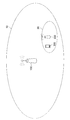
- FIG. 1 is an explanatory diagram for explaining an example of a scenario in which different frequency bands are used for a macro cell and a small cell.
- a macro cell 10 and a macro eNodeB 11 are shown.
- a pico cell 20 and a pico eNodeB 21 that overlap with the macro cell 10 as a whole are shown.
- a UE (User Equipment) 31 that communicates with the macro eNodeB and the pico eNodeB is shown.
- the macro eNodeB 11 performs radio communication with the UE 31 using a frequency band of 2 GHz band in the macro cell 10.
- the pico eNodeB 21 performs radio communication with the UE 31 using a frequency band of 5 GHz band in the pico cell 20.
- CC Component Carrier
- Each component carrier is a band having a maximum width of 20 MHz.
- carrier aggregation there are cases where CCs that are continuous in the frequency direction are used and CCs that are separated in the frequency direction are used.
- carrier aggregation it is possible to set the CC to be used for each UE.
- one of a plurality of CCs used by the UE is a special CC.
- the one special CC is called a primary CC (PCC).
- the remaining of the plurality of CCs is called a secondary CC (SCC).
- the PCC may vary from UE to UE.
- FIG. 2 is an explanatory diagram for explaining an example of the PCC of each UE.
- UE 31a and UE 31b and five CCs 1 to 5 are shown.
- the UE 31a uses two CCs, CC1 and CC2.
- UE31a is using CC2 as PCC.
- the UE 31b uses two CCs, CC2 and CC4.
- UE31b is using CC4 as PCC. In this way, each UE may use a different CC as the PCC.
- the PCC is the most important CC among a plurality of CCs, it is desirable that the communication quality is the most stable CC. Note that which CC is used as a PCC actually depends on how it is mounted.
- the CC where the UE first establishes a connection is the PCC for the UE.
- the SCC is added to the PCC. That is, PCC is a main frequency band, and SCC is an auxiliary frequency band.
- the SCC is changed by deleting an existing SCC and adding a new SCC.
- the PCC is changed by a conventional inter-frequency handover procedure. In the carrier aggregation, the UE cannot use only the SCC, and always uses one PCC.
- PCC is sometimes called a primary cell.
- SCC may be called a secondary cell (Secondary Cell).
- the system information includes a master information block (MIB) and a system information block (SIB).
- MIB includes information essential for receiving data in the first stage, such as the bandwidth to be used, the system frame number (SFN), and the configuration of Hybrid ACK.
- SIB includes other system information.
- the information included in the MIB is more important information than the information included in the SIB.
- the MIB is transmitted on a physical broadcast channel (PBCH).
- PBCH physical broadcast channel
- FIG. 3 is an explanatory diagram for explaining a physical broadcast channel (PBCH) in which the MIB is transmitted.
- PBCH physical broadcast channel
- the subframe # 0 is one of 10 subframes (subframes # 0 to # 9) included in a 10 ms radio frame (Radio Frame).
- the subframe includes two slots. Each slot includes 7 OFDM symbols.
- the first to third OFDM symbols in the first slot are PDCCH (Physical Downlink Control CHannel), and the fourth to seventh OFDM symbols in the first slot and the second slot are PDSCH (Physical Downlink Shared CHannel).
- PDCCH Physical Downlink Control CHannel
- PDSCH Physical Downlink Shared CHannel
- the PBCH is located in the range of 72 subcarriers at the center of the frequency band in the frequency direction and 1 to 4 OFDM symbols in the second slot in the time direction. That is, the PBCH is arranged over 6 resource blocks.
- the MIB is transmitted on such a PBCH.
- the SIB is transmitted on the physical downlink shared channel (Physical Downlink Shared CHannel).
- SIB1 of the SIBs is transmitted in the subframe # 5 of the radio frame having an even SFN.
- FIG. 4 is an explanatory diagram for explaining a subframe in which SIB1 is transmitted.
- two consecutive radio frames that is, a radio frame with an even SFN and a radio frame with an odd SFN are shown.
- SIB1 is transmitted in the subframe # 5 of the radio frame having an even SFN.
- SIB1 is not transmitted in a radio frame having an odd SFN.
- SIB1 is transmitted in a fixed subframe.
- SIB1 is not transmitted at a completely fixed position, but is transmitted at a semi-fixed position. Note that the position in the time direction (ie, the OFDM symbol) where SIB1 is transmitted in the subframe # 5 is fixed.
- SIBs 2 to 11 of SIBs are not transmitted in fixed subframes like SIB1.
- SIB2 to SIB11 are transmitted using the radio resource indicated by SIB1.
- RRC_Connected an RRC connected (RRC_Connected) mode and an RRC idle (RRC_Idle) mode as UE modes.
- RRC_Idle an RRC idle
- the UE mode is the RRC connection mode
- a connection is established between the UE and the eNodeB, and uplink signals and downlink signals can be transmitted and received.
- the UE mode is the RRC idle mode
- the tracking area in which the UE exists is registered in the MME (Mobility Management Entity).
- the MME is a node connected to the eNodeB by an S1-MME interface by wire.
- the tracking area is an area including several tens to about 100 cells that are close to each other.
- the MME When there is an incoming call to the UE, the MME performs a call on the paging channel in all the cells included in the tracking area of the UE. That is, the UE in the RRC idle mode monitors the paging channel, and if there is an incoming call to the UE, the UE moves from the RRC idle mode to the RRC connection mode.
- the UE in the RRC idle mode performs power saving such as stopping the clock to the hardware and stopping the power supply in order to reduce the power consumption except the time when information is transmitted through the paging channel.
- power saving such as stopping the clock to the hardware and stopping the power supply in order to reduce the power consumption except the time when information is transmitted through the paging channel.
- the UE turns on the power, receives the information on the paging channel, and performs power saving again after reception.
- System information update is notified through the paging channel.
- the update of the system information is also notified by SIB1 of the system information.
- system information and updates in carrier aggregation In carrier aggregation, system information is provided in all component carriers (CC). Moreover, since SIB1 is transmitted by all CC, the update of system information is notified by all CC. However, the carrier aggregation-compatible UE can know the update of the system information of all CCs by monitoring only the PCC.
- system information of the macro cell is transmitted by a macro eNodeB.
- the system information of the pico cell is transmitted by the pico eNodeB. Techniques relating to such small cell system information transmission techniques have also been proposed.
- a femtocell base station configures a subframe set including a plurality of types of subframes in order to prevent degradation of system performance.
- a technique of transmitting a subframe included in a subframe set is disclosed.
- the system information of the pico cell is transmitted only by the pico eNodeB. Therefore, for example, due to low transmission power, a high frequency band, and the like, a region where the UE can receive the pico cell system information is limited. Therefore, when the UE enters or approaches the pico cell, the UE may not yet acquire the system information of the pico cell. For example, when a UE enters a pico cell at a high speed, the UE may not yet acquire system information of the pico cell. As a result, there is a concern that it takes a long time to connect the UE in the small cell.
- the UE specifies a pico cell among all the pico cell candidates based on PSS (Primary Synchronization Signal) and SSS (Secondary Synchronization Signal) in the cell search, and it takes a lot of time to specify the cell. Can be costly. Further, for example, since the UE newly receives system information after cell search, it may take a lot of time to receive the system information. Because the small cell is smaller than the macro cell, it is considered that the frequency with which the UE enters and exits the small cell is higher than the frequency with which the UE enters and exits the macro cell. Absent.
- PSS Primary Synchronization Signal
- SSS Secondary Synchronization Signal
- FIG. 5 is an explanatory diagram illustrating an example of a schematic configuration of the wireless communication system according to the present embodiment.
- wireless communications system is a radio
- the wireless communication system includes a macro eNodeB 100 of the macro cell 10, a pico eNodeB 200 of the pico cell 20, and a UE 300.
- the macro eNodeB 100 performs radio communication with the UE 300 within the macro cell 10.
- a frequency band of 2 MHz is used for radio communication between the macro eNodeB 100 and the UE 300.
- the pico eNodeB 200 performs radio communication with the UE 300 within the pico cell 20.
- the pico cell 20 partially or entirely overlaps with the macro cell 10.
- a frequency band different from the frequency band used in the macro cell 10 is used.
- the frequency band used in the pico cell 20 is a higher frequency band than the frequency band used in the macro cell 10.
- a frequency band of 5 MHz band is used for radio communication between the pico eNodeB 200 and the UE 300.
- the UE 300 performs radio communication with macro eNodeB 100 within macro cell 10. Further, the UE 300 performs radio communication with the pico eNodeB 200 in the pico cell 20.
- FIG. 6 is a block diagram illustrating an example of the configuration of the macro eNodeB 100 according to the present embodiment.
- the macro eNodeB 100 includes an antenna unit 110, a wireless communication unit 120, a network communication unit 130, a storage unit 140, and a control unit 150.
- the antenna unit 110 receives a radio signal and outputs the received radio signal to the radio communication unit 120.
- the antenna unit 110 transmits the transmission signal output from the wireless communication unit 120.
- the radio communication unit 120 performs radio communication with the UE 300 located in the macro cell 10. As an example, the radio communication unit 120 performs radio communication with the UE 300 using a frequency band of 2 MHz.
- the wireless communication unit 120 includes, for example, an RF (Radio Frequency) circuit and other circuits.
- the network communication unit 130 communicates with other devices.
- the network communication unit 130 communicates with the pico eNodeB 200.
- the network communication unit 130 includes, for example, a communication interface for any wired communication.
- the storage unit 140 stores a program and data for the operation of the macro eNodeB 100.
- the storage unit 140 includes a storage medium such as a hard disk or a semiconductor memory.
- Control unit 150 The control unit 150 provides various functions of the macro eNodeB 100.
- the control unit 150 corresponds to a processor such as a CPU or a DSP, and provides the various functions described above by executing a program stored in the storage unit 140 or another storage medium.
- the control unit 150 includes an information acquisition unit 151 and a communication control unit 153.
- the information acquisition unit 151 acquires system information (hereinafter referred to as “pico system information”) in the frequency band used in the pico cell 20. For example, when the network communication unit 130 receives pico system information transmitted by the pico eNodeB 200, the information acquisition unit 151 acquires the pico system information.
- pico system information system information
- the network communication unit 130 receives pico system information transmitted by the pico eNodeB 200
- the information acquisition unit 151 acquires the pico system information.
- the communication control unit 153 controls wireless communication within the macro cell 10.
- the communication control unit 153 controls downlink transmission of the pico system information in the macro cell 10.
- the wireless communication unit 153 causes the wireless communication unit 120 to perform downlink transmission of the pico system information in the macro cell 10. That is, the wireless communication unit 153 causes the wireless communication unit 120 to transmit the pico system information using the macro cell 10.
- the radio resource used for the downlink transmission of the pico system information (hereinafter referred to as “pico system information resource”) is a frequency band resource used in the macro cell 10.
- the pico system information resource is a resource that is not used for transmission of system information in the frequency band used in the macro cell 10 (hereinafter referred to as “macro system information”). That is, the communication control unit 153 causes the radio communication unit 120 to transmit pico system information using a radio resource different from the radio resource used to transmit macro system information.
- the macro cell 10 includes, for example, a plurality of pico cells 20.
- the resource for pico system information is not used for transmission of system information of a frequency band used in another pico cell 20 (that is, pico system information of another pico cell 20). That is, the communication control unit 153 causes the radio communication unit 120 to transmit pico system information for each pico cell 20 using different radio resources.
- the pico system information resource is a physical downlink shared channel (PDSCH) resource.
- PDSCH physical downlink shared channel
- the communication control unit 153 also controls, for example, downlink transmission of the macro system information in the macro cell 10. For example, the communication control unit 153 generates macro system information. Then, the communication control unit 153 causes the wireless communication unit 120 to transmit the macro system information using the macro cell 10.
- the communication control unit 153 notifies the UE 300 located in the macro cell 10 of the resource for pico system information. More specifically, for example, the communication control unit 153 causes the radio communication unit 120 to transmit information for identifying the pico system information resource to the UE 300 located in the macro cell 10.
- the information is, for example, information indicating the location of the pico system information resource in the frequency direction and the time direction (hereinafter referred to as LPSI (Location of Pico System Information)).
- LPSI Location of Pico System Information
- the LPSI includes, for example, a period, a subframe number, a position of the resource block in the frequency direction and time direction, and the like.
- the communication control unit 153 notifies the pico cell ID for identifying the pico cell 20 together with the pico system information resource. Specifically, for example, the communication control unit 153 causes the wireless communication unit 120 to transmit a combination of a pico cell ID and LPSI.
- the communication control unit 153 causes the wireless communication unit 120 to transmit a combination of a pico cell ID and LPSI.
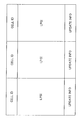
- FIG. 7 is an explanatory diagram for explaining an example of information transmitted for notification of radio resources used for transmission of system information on the pico cell side. Referring to FIG. 7, three combinations of picocell ID and LPSI are shown. For example, when there are three pico cells 20 in the macro cell 10, the pico cell ID and LPSI for each of the three pico cells 20 are transmitted.
- FIG. 8 is an explanatory diagram for explaining an example of a correspondence relationship between LPSI and radio resources.
- a correspondence relationship between the combination of the pico cell ID and LPSI shown in FIG. 7 and the radio resource indicated by LPSI is shown.
- system information including MIB and SIB is transmitted.
- the UE 300 can specify where the pico system information of each pico cell is located.
- the pico system information resource is notified by signaling to the UE 300 in the connected state in the macro cell 10. More specifically, for example, the communication control unit 153 causes the radio communication unit 120 to transmit the combination of the pico cell ID and the LPSI by RRC signaling to the UE 300 that is in the RRC connection mode in the macro cell 10. The communication control unit 153 may cause the wireless communication unit 120 to transmit each combination of the picocell ID and LPSI separately, or may transmit two or more of the combinations together.
- FIG. 9 is a block diagram illustrating an example of the configuration of the pico eNodeB 200 according to the present embodiment.
- the pico eNodeB 200 includes an antenna unit 210, a wireless communication unit 220, a network communication unit 230, a storage unit 240, and a control unit 250.
- the antenna unit 210 receives a radio signal and outputs the received radio signal to the radio communication unit 220.
- the antenna unit 210 transmits the transmission signal output from the wireless communication unit 220.
- the radio communication unit 220 performs radio communication with the UE 300 located in the pico cell 20. As an example, the radio communication unit 220 performs radio communication with the UE 300 using a frequency band of 5 MHz.
- the wireless communication unit 120 includes, for example, an RF circuit and other circuits.
- the network communication unit 230 communicates with other devices.
- the network communication unit 230 communicates with the macro eNodeB 100.
- the network communication unit 230 includes, for example, a communication interface for any wired communication.
- storage part 240 memorize
- the storage unit 240 includes a storage medium such as a hard disk or a semiconductor memory.
- the control unit 250 provides various functions of the pico eNodeB 200.
- the control unit 250 corresponds to a processor such as a CPU or a DSP, and provides the various functions described above by executing a program stored in the storage unit 240 or another storage medium.
- the control unit 250 includes a communication control unit 251 and an information providing unit 253.
- the communication control unit 251 controls wireless communication within the pico cell 20. Specifically, for example, the communication control unit 251 generates system information (that is, pico system information) of a frequency band used in the pico cell 20.
- the system information includes, for example, MIB and SIB.
- the communication control unit 251 outputs the generated pico system information to the information providing unit 253.
- the pico system information is not transmitted in the pico cell 20. That is, the communication control unit 251 does not cause the wireless communication unit 220 to transmit pico system information using the pico cell 20.
- the information providing unit 253 provides the pico system information to the macro eNodeB 100. Specifically, when the pico system information is output by the communication control unit 251, the information providing unit 253 acquires the pico system information. Then, the information providing unit 253 causes the network communication unit 230 to transmit the pico system information to the macro eNodeB 100.
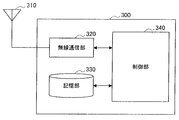
- FIG. 10 is a block diagram illustrating an example of the configuration of the UE 300 according to the present embodiment.
- the UE 300 includes an antenna unit 310, a radio communication unit 320, a storage unit 330, and a control unit 340.
- the antenna unit 310 receives a radio signal and outputs the received radio signal to the radio communication unit 220. Further, the antenna unit 310 transmits the transmission signal output from the wireless communication unit 320.
- the radio communication unit 320 communicates with the macro eNodeB 100 when it is located in the macro cell 10. In addition, the wireless communication unit 320 wirelessly communicates with the pico eNodeB 200 when located in the pico cell 20.
- the radio communication unit 320 receives system information (that is, pico system information) of a frequency band used in the pico cell 20 when the UE 300 is located in the macro cell 10. More specifically, for example, the radio communication unit 320 receives pico system information transmitted by the macro eNodeB 100 when the UE 300 is located in the macro cell.
- system information that is, pico system information
- the radio communication unit 320 receives information for specifying a pico system information resource.
- the information is, for example, LPSI.
- the wireless communication unit 320 receives the pico cell ID together with the LPSI.
- the storage unit 330 stores a program and data for the operation of the UE 300.
- the storage unit 330 includes a storage medium such as a hard disk or a semiconductor memory.
- Control unit 340 provides various functions of the UE 300.
- the control unit 340 corresponds to a processor such as a CPU or a DSP, and provides the various functions described above by executing a program stored in the storage unit 330 or another storage medium.
- the control unit 340 acquires control information transmitted by the macro eNodeB 100 and the pico eNodeB 200. More specifically, for example, when the control information is received by the wireless communication unit 320, the control unit 340 acquires the control information. As an example, the position in the frequency direction and the time direction of the radio resource to which each control information is transmitted is known to the control unit 340. And the control part 340 acquires the information transmitted using the radio
- the control unit 340 when the UE 300 is located in the macro cell 10, when the radio resource used for downlink transmission of the pico system information is notified, the control unit 340 is transmitted using the radio resource. Information is acquired as the pico system information.
- the control unit 340 acquires the pico cell ID and the LPSI.
- the control unit 340 can know which pico system information of which pico cell 20 is transmitted using which radio resource. And if the information transmitted using the said radio
- the picocell 20 found as a result of the cell search and the system information acquired based on LPSI are transmitted via the picocell ID. Can be associated.
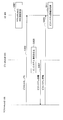
- FIG. 11 is a sequence diagram illustrating an example of a schematic flow of a communication control process according to the present embodiment.
- step S401 the UE 300 is in the RRC connection mode for the macro eNodeB 100.
- the communication control unit 153 of the macro eNodeB 100 causes the wireless communication unit 120 to transmit the combination of the pico cell ID and the LPSI. More specifically, the communication control unit 153 causes the radio communication unit 120 to transmit the combination of the pico cell ID and the LPSI by RRC signaling to the UE 300 that is in the RRC connection mode in the macro cell 10. And the radio
- step S405 the communication control unit 251 of the pico eNodeB 200 generates frequency band system information (ie, pico system information) used in the pico cell 20. Thereafter, in step S407, the information providing unit 253 of the pico eNodeB 200 causes the network communication unit 230 to transmit the pico system information to the macro eNodeB 100. Then, the network communication unit 130 of the macro eNodeB 100 receives the pico system information, and the information acquisition unit 151 acquires the pico system information.
- frequency band system information ie, pico system information
- step S409 the communication control unit 153 of the macro eNodeB 100 causes the radio communication unit 120 to transmit the pico system information in the macro cell 10 using the radio resource indicated by the LPSI. And the radio
- step S411 the control unit 340 of the UE 300 acquires information transmitted / received using the radio resource indicated by the LPSI as the pico system information.
- the UE 300 can acquire the pico system information in the macro cell 10 by notifying the UE 300 of the radio resource in the macro cell 10 and transmitting the pico system information in the macro cell 10 using the radio resource. Become. That is, the area where the pico system information can be acquired is not limited to the pico cell 20 but extends to the macro cell 10. Therefore, before the UE 300 approaches the pico cell 20, the UE 300 acquires the pico system information of the pico cell 20. As a result, the time required for connection of the UE 300 in the pico cell is shortened.
- the UE 300 specifies the pico cell 20 based on the PSS and SSS from the limited pico cells 20 corresponding to the pico system information acquired in advance. For this reason, the time required to specify the cell is shortened. Further, for example, the UE 300 does not need to receive the system information again after the cell search. Therefore, the time required for connection with the pico cell 20 becomes shorter.
- the PDCCH that is a control channel in the macro cell 10 and the pico cell 20 exists in both the macro cell 10 and the pico cell 20 as in the past.
- resource allocation information that is, scheduling information
- the scheduling information includes downlink assignment (Uplink Grant) and uplink grant (Uplink Grant).
- the downlink assignment indicates which RB of the downlink resource block (RB) is the RB to be received by the UE.
- the uplink grant indicates which RB of the uplink RB is the RB that the UE should use for transmission.
- each eNodeB that is, each macro eNodeB 100 and each pico eNodeB 200.
- the pico eNodeB 200 is mounted as RRH (Remote Radio Head)
- RRH Remote Radio Head
- the pico eNodeB 200 is not implemented as an RRH, it is natural that a PDCCH exists in each cell (that is, each macro cell and each pico cell).
- the PSS and SSS synchronization signals are also transmitted by the pico eNodeB 200.
- the pico cell 20 is transmitted by the macro cell 10 instead of the pico cell 20 in consideration of the small area of the pico cell 20.
- the radio resource that is, the pico system information resource
- the radio resource that is, the pico system information resource
- the pico system information resource used for transmitting the pico system information is notified by signaling (for example, RRC signaling) to the UE 300 in the connected state in the macro cell 10. Is done.
- the UE 300 that is not in the connected state in the macro cell 10 that is, the UE 300 that is in the idle state
- the pico system information resource is a notification resource having a predetermined positional relationship with another radio resource used for transmission of a predetermined information block included in the macro system information. Notification is made using radio resources. Specifically, for example, LPSI is transmitted using a radio resource for notification having a predetermined positional relationship with another radio resource used for transmitting a predetermined information block included in macro system information.
- the system information of the macro cell 10 can be acquired. Therefore, according to the first modification, the UE 300 that is not connected in the macro cell 10 has a predetermined positional relationship with the radio resource for transmitting the information block when acquiring the predetermined information block.
- Information transmitted using the radio resource can be acquired as information indicating the pico system information resource (ie, LPSI). And UE300 can acquire the information transmitted with the resource for pico system information shown by the said information as pico system information. That is, even if the UE 300 is not connected in the macro cell 10, the UE 300 can acquire pico system information.
- the pico system information resource is notified using a notification radio resource having a predetermined positional relationship with another radio resource used for transmission of a predetermined information block included in the macro system information.
- the resource is used to transmit the pico cell ID and LPSI.
- the another radio resource used for transmitting the predetermined information block included in the macro system information is a resource located within a predetermined range in the time direction and the frequency direction.
- the predetermined information block is SIB1 in the system information block (SIB).
- the other radio resource is a resource used for transmission of SIB1. That is, the communication control unit 153 causes the radio communication unit 120 to transmit the pico cell ID and LPSI using radio resources having a predetermined positional relationship with radio resources used for transmission of the SIB1.
- the position of the radio resource used for transmission of SIB1 will be described with reference to FIG.
- FIG. 12 is an explanatory diagram for explaining an example of a position of a radio resource used for transmission of SIB1.
- SIB1 is transmitted in the subframe # 5 of the radio frame having an even SFN. More specifically, SIB1 is transmitted by PDSCH in the # 5 subframe. More specifically, the position of SIB1 is fixed in the time direction in the subframe # 5, but is variable in the frequency direction. The position of SIB1 in the frequency direction is notified by MIB1.
- LPSI is transmitted using radio resources having a predetermined positional relationship with quasi-fixed radio resources used for transmission of SIB1.
- the predetermined positional relationship is a positional relationship having a predetermined offset in the time direction or frequency direction with the other radio resource.
- the predetermined positional relationship is a positional relationship having a predetermined offset in a time direction or a frequency direction with a radio resource used for transmission of SIB1. That is, the communication control unit 153 causes the radio communication unit 120 to transmit the pico cell ID and LPSI using the radio resource used for transmission of the SIB1 and the radio resource having a predetermined offset in the time direction or the frequency direction.
- radio resources having a predetermined offset will be specifically described with reference to FIGS.
- FIG. 13 is an explanatory diagram for describing a first example of radio resources used for LPSI transmission according to the first modification of the present embodiment.
- the radio resource of the macro cell 10 in the subframe # 5 of the radio frame having an even SFN is shown.
- the radio resource used for LPSI transmission has a predetermined offset in the frequency direction with the radio resource used for SIB1 transmission.
- FIG. 14 is an explanatory diagram for describing a second example of radio resources used for LPSI transmission according to the first modification of the present embodiment.
- the radio resource of the macro cell 10 in the # 5 subframe of the radio frame having an even SFN is shown.
- the radio resource used for LPSI transmission has a predetermined offset in the time direction with the radio resource used for SIB1 transmission. More specifically, the radio resource used for LPSI transmission is transmitted in the subframe # 5, but is transmitted using an OFDM symbol different from the radio resource used for SIB1 transmission.
- FIG. 15 is an explanatory diagram for explaining a third example of radio resources used for LPSI transmission according to the first modification of the present embodiment.
- two consecutive radio frames that is, a radio frame with an even number of SFN and a radio frame with an odd number of SFN are shown.
- SIB1 is transmitted in the subframe # 5 of the radio frame having an even SFN.
- LPSI is transmitted in a subframe # 5 of a radio frame having an odd SFN.
- the radio resource used for LPSI transmission has an offset of one radio frame in the time direction with the radio resource used for SIB1 transmission.
- the radio resource used for LPSI transmission has a predetermined offset in the frequency direction or the time direction with the radio resource used for SIB1 transmission.
- the predetermined offset is not limited to the above-described example, and various offsets can be applied.
- the predetermined offset is not limited to one of the frequency direction and the time direction, and a predetermined offset in both the frequency direction and the time direction can be applied.
- the pico cell ID is also transmitted using the radio resource having the predetermined offset together with the LSPI.
- UE300 Control unit 340
- control unit 340 uses the radio resource.
- Information to be transmitted is acquired as the pico system information.
- the pico system information resource has a predetermined positional relationship with another radio resource used for transmission of a predetermined information block included in the macro system information. Notification is made using the notification radio resource that the user has. That is, the control unit 340 is notified of the pico system information resource using the notification radio resource.
- the radio communication unit 320 receives a pico cell ID and LSPI transmitted using radio resources having a predetermined positional relationship with radio resources used for transmission of the SIB1. And the control part 340 acquires the information transmitted using the radio
- the specific contents of the predetermined positional relationship are as described above.
- FIG. 16 is a sequence diagram illustrating an example of a schematic flow of a communication control process according to the first modification of the present embodiment.
- step S501 the communication control unit 153 of the macro eNodeB 100 generates macro system information.
- the communication control unit 153 of the macro eNodeB 100 causes the wireless communication unit 120 to transmit macro system information using the macro cell 10. Further, the communication control unit 153 causes the wireless communication unit 120 to transmit the pico cell ID and LPSI using the wireless resource used for transmitting the SIB1 and the wireless resource having a predetermined offset in the macro system information.
- the radio communication unit 320 of the UE 300 receives the macro system information, and receives the pico cell ID and LPSI using the radio resource having the predetermined offset.
- control unit 340 of the UE 300 acquires macro system information.
- control part 340 acquires pico cell ID and LPSI. Specifically, for example, the control unit 340 acquires information transmitted using radio resources used for transmission of SIB1 and radio resources having a predetermined offset as a pico cell ID and LPSI.
- step S509 the communication control unit 251 of the pico eNodeB 200 generates pico system information. Thereafter, in step S511, the information providing unit 253 of the pico eNodeB 200 causes the network communication unit 230 to transmit the pico system information to the macro eNodeB 100. Then, the network communication unit 130 of the macro eNodeB 100 receives the pico system information, and the information acquisition unit 151 acquires the pico system information.
- step S513 the communication control unit 153 of the macro eNodeB 100 causes the radio communication unit 120 to transmit the pico system information in the macro cell 10 using the radio resource indicated by the LPSI. And the radio
- step S515 the control unit 340 of the UE 300 acquires information transmitted / received using the radio resource indicated by the LPSI as the pico system information.
- the pico system information is transmitted by the macro eNodeB 100 in the present embodiment and the first modification of the present embodiment. Therefore, basically, the update of the system information is also transmitted by the macro eNodeB 100.
- the frequency of the system information update becomes very high. For example, if there are 20 picocells 20 in the macrocell 10, the system information is frequently updated. Each time the system information is updated, processing on the UE 300 side occurs. As a result, the power consumption of the UE 300 increases.
- the update of the system information (that is, pico system information) of the frequency band used in the pico cell 20 is performed by updating the system information of the frequency band used in the macro cell 10 (that is, the pico system information). Notification is made independently of the update of the macro system information). For example, the update of the pico system information is notified together with the pico system information resource. More specifically, for example, information indicating update of pico system information is transmitted together with LPSI.
- the system information is notified as an update. Therefore, the UE 300 that performs radio communication using only the macro cell 10 confirms the update of the system information even when only the pico system information is updated. As a result, the load on the UE 300 increases. Therefore, as described above, the update of the macro system information and the update of the pico system information are notified separately, so that the UE 300 that performs radio communication only with the macro cell 10 can update the system information only when the macro system information is updated. It will be possible to check for updates. As a result, it is possible to suppress the frequency with which the UE 300 that performs radio communication only with the macro cell 10 confirms the update of the system information.
- the communication control unit 153 notifies the update of the system information. For example, the communication control unit 153 notifies the update of the macro system information. More specifically, for example, the communication control unit 153 notifies the macro system information update through the paging channel. Further, the communication control unit 153 notifies the update of the macro system information by SIB1 in the macro system information.
- the communication control unit 153 notifies the update of the pico system information independently of the macro system information update. More specifically, for example, the communication control unit 153 does not notify the update of the pico system information through the paging channel and SIB1.
- the update of the system information (that is, pico system information) of the frequency band used in the pico cell 20 is performed by updating the system information of the frequency band used in another pico cell 20 (that is, the pico system information of another cell 20). ) Update is also notified independently. That is, the communication control unit 153 notifies the pico system information update separately for each pico cell 20.
- the update of the pico system information is notified together with the radio resource (that is, the pico system information resource) used for the downlink transmission of the pico system information. That is, the communication control unit 153 notifies the update of the pico system information together with the pico system information resource. More specifically, for example, the communication control unit 153 sends information indicating whether or not the pico system information has been updated to the wireless communication unit 120 (hereinafter referred to as “pico system information update information”) Transmit with LPSI.
- pico system information update information information indicating whether or not the pico system information has been updated to the wireless communication unit 120
- FIG. 17 is an explanatory diagram for explaining an example of information transmitted for notification of update of system information on the pico cell side.
- FIG. 17 three combinations of a pico cell ID, LPSI, and pico system information update information (UPDATE INFO) are shown.
- the pico cell ID, LPSI, and pico system information update information for each of the three pico cells 20 are transmitted.
- FIG. 18 is an explanatory diagram for explaining an example of a correspondence relationship between pico system information and information transmitted to notify the update of the pico system information.
- a correspondence relationship between the combination of the pico cell ID, LPSI, and pico system information update information shown in FIG. 17 and the radio resource indicated by LPSI is shown.
- system information including MIB and SIB is transmitted.
- the UE 300 can individually know whether or not the pico system information for each pico cell 20 has been updated.
- the pico system information resource includes another radio resource used for transmission of a predetermined information block included in the macro system information and a predetermined position. Notification is made using a related radio resource for notification. Therefore, the update of the pico system information is also notified using another radio resource for notification having a predetermined positional relationship with another radio resource used for transmission of the predetermined information block.
- the communication control unit 153 uses the radio communication unit 120 for a notification radio resource having a predetermined positional relationship with another radio resource used for transmission of the predetermined information block. , Pico cell ID, LPSI and pico system information update information are transmitted.
- the predetermined information block is SIB1 in the macro system information.
- the predetermined positional relationship is a positional relationship having a predetermined offset in the time direction or the frequency direction with the other radio resource used for transmission of the predetermined information block. That is, the communication control unit 153 uses the radio resource having the predetermined offset and the radio resource used for transmission of the SIB1 in the macro system information to the radio communication unit 120, and the pico cell ID, LPSI, and pico system information. Send update information.
- the control unit 340 is notified of the update of the system information by the macro eNodeB.
- the control unit 340 is notified of the update of the macro system information. More specifically, for example, the control unit 340 is notified of the update of the macro system information by the paging channel and the SIB1 of the macro system information.
- control unit 340 is notified of the update of the pico system information independently of the macro system information update. More specifically, for example, the control unit 340 is not notified of the update of the pico system information in the paging channel and SIB1. Further, for example, the control unit 340 is notified separately of the update of the pico system information for each pico cell 20.
- control unit 340 is notified of the update of the pico system information together with the pico system information resource. More specifically, for example, when the pico system information update information is received by the wireless communication unit 320 together with the cell ID and LPSI, the control unit 340 acquires the pico system information update information together with the cell ID and LPSI.
- the cell ID, the LPSI, and the pico system information update information are transmitted using, for example, a radio resource having a predetermined positional relationship with a radio resource used for transmission of the SIB1, and the radio communication unit 320 is received.
- the control part 340 acquires the information transmitted using the radio
- FIG. 19 is a sequence diagram illustrating an example of a schematic flow of a communication control process according to the second modification of the present embodiment.
- FIG. 16 an example of a schematic flow of the communication control process according to the first modification shown in FIG. 16 and an example of a schematic flow of the communication control process according to the second modification shown in FIG. Only steps S521, S523, S525, and S527, which are the differences between the two, will be described.
- the communication control unit 153 of the macro eNodeB 100 causes the wireless communication unit 120 to transmit macro system information in the macro cell 10.
- the communication control unit 153 uses the radio resource having the predetermined offset and the radio resource used for transmission of the SIB1 in the macro system information to the radio communication unit 120, and the pico cell ID, LPSI, and pico system information. Send update information.
- the radio communication unit 320 of the UE 300 receives the macro system information, and receives the pico cell ID, LPSI, and pico system information update information using the radio resource having the predetermined offset.
- step S523 the control unit 340 of the UE 300 acquires the pico cell ID, LPSI, and pico system information update information. Specifically, for example, the control unit 340 uses, as the pico cell ID, LPSI, and pico system information update information, information transmitted using radio resources used for transmission of SIB1 and radio resources having a predetermined offset. get.
- step S525 the control unit 340 of the UE 300 confirms whether or not the pico system information is updated from the pico system information update information.
- step S527 when the pico system information is updated, the control unit 340 of the UE 300 confirms the update location of the pico system information.
- system information that is, pico system information
- a frequency band used in the pico cell 20 is acquired, and downlink transmission of the pico system information in the macro cell 10 is controlled.
- wireless resource namely, resource for pico system information
- wireless resource used for the said downlink transmission of pico system information is notified to UE300 located in the macrocell 10.
- the radio resource in the macro cell 10 is notified to the UE 300, and the pico system information is transmitted in the macro cell 10 using the radio resource, so that the UE 300 can acquire the pico system information in the macro cell 10.
- the area where the pico system information can be acquired is not limited to the pico cell 20 but extends to the macro cell 10. Therefore, before the UE 300 approaches the pico cell 20, the UE 300 acquires the pico system information of the pico cell 20.
- the time required for connection of the UE 300 in the pico cell is shortened.
- the UE 300 specifies the pico cell 20 based on the PSS and SSS from the limited pico cells 20 corresponding to the pico system information acquired in advance. For this reason, the time required to specify the cell is shortened. Further, for example, the UE 300 does not need to receive the system information again after the cell search. Therefore, the time required for connection with the pico cell 20 becomes shorter.
- a radio resource that is, a pico system information resource
- a pico system information resource used for the downlink transmission of the pico system information is a frequency band resource used in the macro cell 10.
- the pico system information resource is a resource that is not used for transmission of system information (that is, macro system information) in the frequency band used in the macro cell 10.
- the radio resources used for transmitting macro system information do not have a margin bit for transmitting other information. Therefore, when the pico system information is also transmitted using the radio resource, the radio resource may be insufficient. Or it is necessary to expand the said radio
- the macro system information and the pico system information are transmitted separately, only one of the macro system information and the pico system information can be selectively acquired. Therefore, since UE 300 only needs to acquire necessary system information, the load on UE 300 can be suppressed.
- the pico system information is included as part of the macro system information
- the macro system information is updated more frequently. That is, when the pico system information of any pico cell 20 is updated, the macro system information is updated.
- the UE 300 that performs radio communication only with the macro cell 10 confirms the update of the system information more than necessary, and the load on the UE 300 increases. Therefore, as described above, the macro system information and the pico system information are transmitted separately, so that the update frequency of the macro system information can be suppressed. As a result, it is possible to suppress the frequency with which the UE 300 that performs radio communication only with the macro cell 10 confirms the update of the system information.
- the resource for pico system information is not used for transmission of system information of a frequency band used in another pico cell 20 (that is, pico system information of another pico cell 20).
- the pico system information of a plurality of pico cells 20 is transmitted collectively, the update of the pico system information is notified when the pico system information of any pico cell 20 is updated.
- the UE 300 confirms the update of the pico system information every time the pico system information of any pico cell 20 is updated, regardless of whether the pico system information of the pico cell 20 related to the own device is updated. Will do. Therefore, the load on the UE 300 increases. Therefore, since the pico system information for each pico cell 20 is transmitted separately, the frequency with which the UE 300 confirms the update of the pico system information can be suppressed.
- the pico system information resource is a physical downlink shared channel resource.
- the macro cell 10 can transmit the pico system information even if the number of the pico cells 20 is increased.
- pico system information is transmitted on the physical downlink shared channel, the UE that does not need to acquire the pico system information is not affected at all, and thus the UE is not loaded.
- the pico system information resource is notified by signaling to the UE 300 in the connected state in the macro cell 10.
- the pico system information resource can be specified without the UE 300 performing a special operation.
- the pico cell ID for identifying the pico cell 20 is notified together with the pico system information resource.
- the UE 300 can know which pico cell 20 corresponds to each pico system information resource notified of the pico system information. Therefore, the UE 300 can easily acquire the pico system information of the desired pico cell 20.
- the pico system information of the frequency band used in the pico cell 20 is not transmitted in the pico cell.
- the pico system information resource is in a predetermined positional relationship with another radio resource used for transmitting a predetermined information block included in the macro system information. Notification is performed using a radio resource for notification having
- the system information of the macro cell 10 can be acquired. Therefore, according to the first modification, the UE 300 that is not connected in the macro cell 10 has a predetermined positional relationship with the radio resource for transmitting the information block when acquiring the predetermined information block.
- Information transmitted using the radio resource can be acquired as information indicating the pico system information resource (ie, LPSI). And UE300 can acquire the information transmitted with the resource for pico system information shown by the said information as pico system information. That is, even if the UE 300 is not connected in the macro cell 10, the UE 300 can acquire pico system information.
- the another radio resource used for transmitting the predetermined information block included in the macro system information is a resource located within a predetermined range in the time direction and the frequency direction.
- the radio resource having the predetermined positional relationship for example, the radio resource used for transmitting LPSI
- the radio resource having the predetermined positional relationship may become a radio resource used for transmission of another information block or other important control information. Therefore, as described above, if the radio resource used for transmitting the information block is a resource transmitted at a quasi-fixed position, the radio resource having the predetermined positional relationship can be freely used.
- the predetermined positional relationship can be set so that
- the predetermined positional relationship is a positional relationship having a predetermined offset in the time direction or the frequency direction with the other radio resource.
- UE300 is the position of the radio
- wireless resource for example, radio
- the said information block for example, SIB1.
- the update of the system information of the frequency band used in the pico cell 20 (that is, the pico system information) is updated in the frequency band used in the macro cell 10. Notification is made independently of the update of system information (ie, macro system information).
- the system information is notified as an update. Therefore, the UE 300 that performs radio communication using only the macro cell 10 confirms the update of the system information even when only the pico system information is updated. As a result, the load on the UE 300 increases. Therefore, as described above, the update of the macro system information and the update of the pico system information are notified separately, so that the UE 300 that performs radio communication only with the macro cell 10 can update the system information only when the macro system information is updated. It will be possible to check for updates. As a result, it is possible to suppress the frequency with which the UE 300 that performs radio communication only with the macro cell 10 confirms the update of the system information.
- the update of the system information (that is, pico system information) of the frequency band used in the pico cell 20 is performed by updating the system information of the frequency band used in another pico cell 20 (that is, the pico system information of another cell 20). ) Update is also notified independently.
- the update of the pico system information of the plurality of pico cells 20 is notified collectively, if the pico system information of any one of the plurality of pico cells 20 is updated, the update is notified as system information update. Is done. Therefore, UE 300 confirms the update of the pico system information even when the pico system information of the pico cell 20 not related to the own device is updated. As a result, the load on the UE 300 increases. Therefore, the UE 300 can confirm the update of the system information only when the pico system information of the pico cell 20 related to the own device is updated by separately reporting the update of the pico system information for each pico cell 20. It becomes possible. As a result, the frequency with which the UE 300 confirms the update of the system information can be suppressed.
- the update of the pico system information is notified together with the radio resource (that is, the pico system information resource) used for the downlink transmission of the pico system information.
- LPSI and pico system information update information uses radio resources having a predetermined offset and radio resources used for transmission of SIB1.
- this indication is not restricted to this.
- LPSI and pico system information update information may be transmitted by RRC signaling.
- the present disclosure is not limited thereto.
- Multiple frequency bands may be used in one or both of the macro cell and the pico cell.
- carrier aggregation may be applied in a pico cell.
- the system information of each CC used with a pico cell may be transmitted using the frequency band used with a macro cell.
- the pico system information for each CC may be transmitted in units of pico cells.
- the LPSI may indicate a position of a radio resource used to collectively transmit pico system information in units of pico cells.
- the pico system information for each CC may be individually transmitted for each CC.
- the LPSI may indicate a position of a radio resource used for individually transmitting pico system information in units of CC.
- carrier aggregation may be applied in a macro cell.
- the system information of the frequency band used by a pico cell may be transmitted using either CC used by a macro cell.
- the CC used in the macro cell is a frequency band of 2 MHz band and the frequency band used in the pico cell is a frequency band of 5 GHz band
- the present disclosure is not limited thereto.
- the same frequency band (for example, 2 GHz band) may be used in both the macro cell and the pico cell.
- the frequency band used in the macro cell and the frequency band used in the pico cell may be separate frequency bands or the same frequency band.
- wireless communication for example, microwave communication
- the pico eNodeB may be implemented as an RRH.
- the control unit of the pico eNodeB may be provided in the macro eNodeB or another communication control device.
- the macro eNodeB may be composed of a plurality of devices instead of a single device.
- the macro eNodeB may include a communication control device including at least a control unit as one of the plurality of devices.
- the present disclosure is not limited thereto.
- the technology according to the present disclosure may be applied to a wireless communication system of another communication standard that transmits system information.
- eNodeB has been described as an example of a base station and UE as an example of a terminal device, the present disclosure is not limited thereto.
- the technology according to the present disclosure may be applied to a base station and a terminal device that comply with another communication standard.
- the small cell may be a femtocell, a nanocell, or a microcell.
- processing steps in the communication control processing of this specification do not necessarily have to be executed in time series in the order described in the flowchart.
- the processing steps in the communication control process may be executed in an order different from the order described in the flowchart, or may be executed in parallel.
- a storage medium storing the computer program is also provided.
- wireless resource is a communication control apparatus as described in said (2) which is not used also for transmission of the system information of the frequency band used by another small cell.
- the communication control apparatus according to (2) or (3), wherein the radio resource is a resource of a physical downlink shared channel.
- the update of the system information in the frequency band used in the small cell is notified independently of the update of the system information in the frequency band used in the macro cell.
- the communication control apparatus according to any one of the above.
- the said control of the said system information of the said frequency band used with the said small cell is a communication control apparatus as described in said (5) or (6) with which the information regarding the said update is notified with the said radio
- the radio resource uses a notification radio resource having a predetermined positional relationship with another radio resource used for transmission of a predetermined information block included in the system information of the frequency band used in the macro cell.
- the communication control device according to any one of (2) to (7), which is notified in the above.
- the communication control apparatus according to (8), wherein the another radio resource is a resource located within a predetermined range in a time direction and a frequency direction.
- the communication control apparatus according to any one of (2) to (7), wherein the radio resource is notified by signaling to a terminal apparatus in a connected state in the macro cell. (12) The communication control apparatus according to any one of (2) to (11), wherein the control unit also notifies small cell identification information for identifying the small cell together with the radio resource. (13) The communication control apparatus according to any one of (1) to (12), wherein the system information of the frequency band used in the small cell is not transmitted in the small cell.
- a generating unit that generates system information of a frequency band used in a small cell partially or entirely overlapped with a macro cell; An apparatus for controlling downlink transmission of the system information in the macro cell, the system information being provided to the apparatus for notifying a terminal device located in the macro cell of radio resources used for the downlink transmission A providing department to A communication control device comprising: (17) Computer A generating unit that generates system information of a frequency band used in a small cell partially or entirely overlapped with a macro cell; An apparatus for controlling downlink transmission of the system information in the macro cell, the system information being provided to the apparatus for notifying a terminal device located in the macro cell of radio resources used for the downlink transmission A providing department to Program to function as.
- a terminal device comprising: (20) Receiving a system information of a frequency band used in a small cell partially or entirely overlapped with the macro cell when the terminal device is located in the macro cell; When the terminal device is located in a macro cell, when notified of a radio resource used for downlink transmission of the system information, information transmitted using the radio resource is acquired as the system information.
- Including a communication control method When, Including a communication control method.
Landscapes
- Engineering & Computer Science (AREA)
- Computer Networks & Wireless Communication (AREA)
- Signal Processing (AREA)
- Computer Security & Cryptography (AREA)
- Mobile Radio Communication Systems (AREA)
Abstract
Description
1.はじめに
1.1.3GPPにおける無線通信の技術
1.2.技術的課題
2.無線通信システムの概略的な構成
3.各装置の構成
3.1.マクロeNodeBの構成
3.2.ピコeNodeBの構成
3.3.UEの構成
4.処理の流れ
5.変形例
5.1.第1の変形例
5.1.1.概略
5.1.2.各装置の構成
5.1.3.処理の流れ
5.2.第2の変形例
5.2.1.概略
5.2.2.各装置の構成
5.2.3.処理の流れ
6.まとめ
まず、3GPP(3rd Generation Partnership Project)における無線通信の技術、及び技術的課題を説明する。
以下、図1~図4を参照して、3GPPにおける無線通信の技術を説明する。
3GPPのリリース10及びリリース11でも、スモールセル(具体的には、ピコセル)への言及がある。リリース10及びリリース11では、基地局はeNodeBと呼ばれるが、とりわけ、マクロセルのeNodeBはマクロeNodeBと呼ばれ、ピコセルのeNodeBはピコeNodeBと呼ばれる。
一方、マクロeNodeBとピコeNodeBとが別々の周波数帯域を用いるというシナリオが、リリース12のシナリオとして検討されると予想される。以下、この点について図1を参照してより具体的に説明する。
リリース10のキャリアアグリゲーションでは、最大で5つのコンポーネントキャリア(CC:Component Carrier)が束ねられて、UEにより使用される。各コンポーネントキャリアは、最大20MHz幅の帯域である。キャリアアグリゲーションでは、周波数方向で連続するCCが使用される場合と、周波数方向で離れたCCが使用される場合とがある。キャリアアグリゲーションでは、使用されるCCをUE毎に設定することが可能である。
キャリアアグリゲーションでは、UEにより使用される複数のCCのうちの1つが特別なCCである。当該1つの特別なCCは、プライマリ(Primary)CC(PCC)と呼ばれる。また、上記複数のCCのうちの残りは、セカンダリ(Secondary)CC(SCC)と呼ばれる。PCCは、UEによって異なり得る。以下、この点について図2を参照してより具体的に説明する。
システム情報の更新(System Information Update)は、ページングチャネルで通知される。また、システム情報の更新は、システム情報のSIB1でも通知される。
キャリアアグリゲーションでは、システム情報は、全てのコンポーネントキャリア(CC)で提供される。また、SIB1は、全てのCCで送信されるので、システム情報の更新は、全てのCCで通知される。しかし、キャリアアグリゲーション対応のUEは、PCCだけを監視することにより、全てのCCのシステム情報の更新を知ることができる。
次に、上述した技術にも関連する技術的課題を説明する。
図5を参照して、本開示の実施形態に係る無線通信システムの概略的な構成を説明する。図5は、本実施形態に係る無線通信システムの概略的な構成の一例を示す説明図である。当該無線通信システムは、例えば、LTEに準拠する無線通信システムである。図5を参照すると、無線通信システムは、マクロセル10のマクロeNodeB100、ピコセル20のピコeNodeB200、及びUE300を含む。
続いて、図6~図10を参照して、マクロeNodeB100、ピコeNodeB200及びUE300の各々の構成の一例を説明する。
まず、図6~図8を参照して、マクロeNodeB100の構成の一例を説明する。図6は、本実施形態に係るマクロeNodeB100の構成の一例を示すブロック図である。図6を参照すると、マクロeNodeB100は、アンテナ部110、無線通信部120、ネットワーク通信部130、記憶部140及び制御部150を備える。
アンテナ部110は、無線信号を受信し、受信された無線信号を無線通信部120へ出力する。また、アンテナ部110は、無線通信部120により出力された送信信号を送信する。
無線通信部120は、マクロセル10内に位置するUE300と無線通信する。一例として、無線通信部120は、2MHz帯の周波数帯域を使用して、UE300と無線通信する。無線通信部120は、例えば、RF(Radio Frequency)回路及びその他の回路を含む。
ネットワーク通信部130は、他の装置と通信する。例えば、ネットワーク通信部130は、ピコeNodeB200と通信する。ネットワーク通信部130は、例えば、いずれかの有線通信のための通信インターフェースを含む。
記憶部140は、マクロeNodeB100の動作のためのプログラム及びデータを記憶する。記憶部140は、例えばハードディスク又は半導体メモリ等の記憶媒体を含む。
制御部150は、マクロeNodeB100の様々な機能を提供する。例えば、制御部150は、CPU又はDSP等のプロセッサに相当し、記憶部140又は他の記憶媒体に記憶されるプログラムを実行することにより、上記様々な機能を提供する。制御部150は、情報取得部151及び通信制御部153を含む。
情報取得部151は、ピコセル20で使用される周波数帯域のシステム情報(以下、「ピコシステム情報」と呼ぶ)を取得する。例えば、ネットワーク通信部130が、ピコeNodeB200により送信されたピコシステム情報を受信すると、情報取得部151は、当該ピコシステム情報を取得する。
通信制御部153は、マクロセル10内での無線通信を制御する。
とりわけ本実施形態では、通信制御部153は、マクロセル10での上記ピコシステム情報のダウンリンク送信を制御する。例えば、無線通信部153は、無線通信部120に、マクロセル10での上記ピコシステム情報のダウンリンク送信を行わせる。即ち、無線通信部153は、無線通信部120に、マクロセル10で上記ピコシステム情報を送信させる。
また、本実施形態では、通信制御部153は、マクロセル10内に位置するUE300に、上記ピコシステム情報用リソースを通知する。より具体的には、例えば、通信制御部153は、無線通信部120に、マクロセル10内に位置するUE300に、ピコシステム情報用リソースを特定するための情報を送信させる。当該情報は、例えば、ピコシステム情報用リソースの周波数方向及び時間方向の位置を示す情報(以下、LPSI(Location of Pico System Information)と呼ぶ)である。LPSIは、例えば、周期、サブフレーム番号、リソースブロックの周波数方向及び時間方向における位置等を含む。
次に、図9を参照して、ピコeNodeB200の構成の一例を説明する。図9は、本実施形態に係るピコeNodeB200の構成の一例を示すブロック図である。図9を参照すると、ピコeNodeB200は、アンテナ部210、無線通信部220、ネットワーク通信部230、記憶部240及び制御部250を備える。
アンテナ部210は、無線信号を受信し、受信された無線信号を無線通信部220へ出力する。また、アンテナ部210は、無線通信部220により出力された送信信号を送信する。
無線通信部220は、ピコセル20内に位置するUE300と無線通信する。一例として、無線通信部220は、5MHz帯の周波数帯域を使用して、UE300と無線通信する。無線通信部120は、例えば、RF回路及びその他の回路を含む。
ネットワーク通信部230は、他の装置と通信する。例えば、ネットワーク通信部230は、マクロeNodeB100と通信する。ネットワーク通信部230は、例えば、いずれかの有線通信のための通信インターフェースを含む。
記憶部240は、ピコeNodeB200の動作のためのプログラム及びデータを記憶する。記憶部240は、例えばハードディスク又は半導体メモリ等の記憶媒体を含む。
制御部250は、ピコeNodeB200の様々な機能を提供する。例えば、制御部250は、CPU又はDSP等のプロセッサに相当し、記憶部240又は他の記憶媒体に記憶されるプログラムを実行することにより、上記様々な機能を提供する。制御部250は、通信制御部251及び情報提供部253を含む。
通信制御部251は、ピコセル20内での無線通信を制御する。具体的には、例えば、通信制御部251は、ピコセル20で使用される周波数帯域のシステム情報(即ち、ピコシステム情報)を生成する。当該システム情報は、例えば、MIB及びSIBを含む。通信制御部251は、生成されたピコシステム情報を情報提供部253へ出力する。
情報提供部253は、マクロeNodeB100へ上記ピコシステム情報を提供する。具体的には、ピコシステム情報が、通信制御部251により出力されると、情報提供部253は、当該ピコシステム情報を取得する。そして、情報提供部253は、ネットワーク通信部230に、当該ピコシステム情報をマクロeNodeB100へ送信させる。
次に、図10を参照して、UE300の構成の一例を説明する。図10は、本実施形態に係るUE300の構成の一例を示すブロック図である。図10を参照すると、UE300は、アンテナ部310、無線通信部320、記憶部330及び制御部340を備える。
アンテナ部310は、無線信号を受信し、受信された無線信号を無線通信部220へ出力する。また、アンテナ部310は、無線通信部320により出力された送信信号を送信する。
無線通信部320は、マクロセル10内に位置する場合に、マクロeNodeB100と無線通信する。また、無線通信部320は、ピコセル20内に位置する場合に、ピコeNodeB200と無線通信する。
記憶部330は、UE300の動作のためのプログラム及びデータを記憶する。記憶部330は、例えばハードディスク又は半導体メモリ等の記憶媒体を含む。
制御部340は、UE300の様々な機能を提供する。例えば、制御部340は、CPU又はDSP等のプロセッサに相当し、記憶部330又は他の記憶媒体に記憶されるプログラムを実行することにより、上記様々な機能を提供する。
続いて、図11を参照して、本実施形態に係る通信制御処理の一例を説明する。図11は、本実施形態に係る通信制御処理の概略的な流れの一例を示すシーケンス図である。
続いて、図12~図19を参照して、本実施形態に係る第1の変形例及び第2の変形例を説明する。
まず、図12~図16を参照して、本実施形態に係る第1の変形例を説明する。
上述した本実施形態の例では、ピコシステム情報の送信に使用される無線リソース(即ち、ピコシステム情報用リソース)は、マクロセル10において接続状態にあるUE300へのシグナリング(例えば、RRCシグナリング)により通知される。この場合に、マクロセル10において接続状態にないUE300(即ち、アイドル状態にあるUE300)は、シグナリングによる通知を受けないので、結果として、ピコシステム情報を取得することができない。そのため、例えば、UE300が特定のピコセル20で無線通信したいという意図をもってからマクロセル10において接続状態になるようなケースには、上述した例は対応できない。
次に、図12~15を参照して、本実施形態の第1の変形例に係る各装置の構成を説明する。ここでは、図6、図9及び図10を参照して既に説明した内容からの変更点のみを説明する。
-通信制御部153
上述したように、ピコシステム情報用リソースは、マクロシステム情報に含まれる所定の情報ブロックの送信に使用される別の無線リソースと所定の位置関係を有する通知用の無線リソースを使用して通知される。具体的には、例えば、通信制御部153は、無線通信部120に、マクロシステム情報に含まれる所定の情報ブロックの送信に使用される別の無線リソースと所定の位置関係を有する通知用の無線リソースを使用して、ピコセルID及びLPSIを送信させる。
-制御部340
制御部340は、UE300がマクロセル10内に位置する場合に、ピコシステム情報のダウンリンク送信に使用される無線リソース(即ち、ピコシステム情報用リソース)を通知されると、当該無線リソースを使用して送信される情報を上記ピコシステム情報として取得する。とりわけ本実施形態の第1の変形例では、上述したように、ピコシステム情報用リソースは、マクロシステム情報に含まれる所定の情報ブロックの送信に使用される別の無線リソースと所定の位置関係を有する通知用の無線リソースを使用して通知される。即ち、制御部340は、上記通知用の無線リソースを使用してピコシステム情報用リソースを通知される。具体的には、例えば、SIB1の送信に使用される無線リソースと所定の位置関係を有する無線リソースを使用して送信されるピコセルID及びLSPIが、無線通信部320により受信される。そして、制御部340は、上記所定の位置関係を有する無線リソースを使用して送信される情報を、ピコセルID及びLSPIとして取得する。なお、上記所定の位置関係の具体的な内容は、上述したとおりである。
次に、図16を参照して、本実施形態の第1の変形例に係る通信制御処理の一例を説明する。図16は、本実施形態の第1の変形例に係る通信制御処理の概略的な流れの一例を示すシーケンス図である。
続いて、図17~図19を参照して、本実施形態に係る第2の変形例を説明する。
上述したように、本実施形態及び本実施形態の第1の変形例では、ピコシステム情報がマクロeNodeB100により送信される。そのため、基本的には、システム情報の更新も、マクロeNodeB100により送信される。この場合に、システム情報更新の通知として、マクロシステム情報及びピコシステム情報の両方の更新を通知すると、システム情報更新の頻度が非常に高くなる。例えば、マクロセル10内に20個のピコセル20があるとすると、システム情報の更新が頻繁に行われることになる。そして、システム情報の更新の度に、UE300側の処理が発生する。その結果、UE300の消費電力が大きくなってしまう。
次に、図17及び図18を参照して、本実施形態の第2の変形例に係る各装置の構成を説明する。ここでは、本実施形態の第1の変形例からの変更点のみを説明する。
-通信制御部153
通信制御部153は、システム情報の更新を通知する。例えば、通信制御部153は、マクロシステム情報の更新を通知する。より具体的には、例えば、通信制御部153は、ページングチャネルでマクロシステム情報の更新を通知する。また、通信制御部153は、マクロシステム情報のうちのSIB1でマクロシステム情報の更新を通知する。
-制御部340
制御部340は、マクロeNodeBによりシステム情報の更新を通知される。例えば、制御部340は、マクロシステム情報の更新を通知される。より具体的には、例えば、制御部340は、ページングチャネル、及びマクロシステム情報のうちのSIB1で、マクロシステム情報の更新を通知される。
次に、図19を参照して、本実施形態の第2の変形例に係る通信制御処理の一例を説明する。図19は、本実施形態の第2の変形例に係る通信制御処理の概略的な流れの一例を示すシーケンス図である。ここでは、図16に示される第1の変形例に係る通信制御処理の概略的な流れの一例と、図19に示される第2の変形例に係る通信制御処理の概略的な流れの一例との差分である、ステップS521、S523、S525、S527のみを説明する。
ここまで、図1~図19を用いて、本開示の実施形態に係る通信装置及び各処理を説明した。本開示に係る実施形態によれば、ピコセル20で使用される周波数帯域のシステム情報(即ち、ピコシステム情報)が取得され、マクロセル10での上記ピコシステム情報のダウンリンク送信が制御される。また、マクロセル10内に位置するUE300に、ピコシステム情報の上記ダウンリンク送信に使用される無線リソース(即ち、ピコシステム情報用リソース)が通知される。
(1)
マクロセルと一部又は全体で重複するスモールセルで使用される周波数帯域のシステム情報を取得する取得部と、
前記マクロセルでの前記システム情報のダウンリンク送信を制御する制御部と、
を備え、
前記制御部は、前記マクロセル内に位置する端末装置に、前記ダウンリンク送信に使用される無線リソースを通知する、
通信制御装置。
(2)
前記無線リソースは、前記マクロセルで使用される周波数帯域のリソースであって、当該周波数帯域のシステム情報の送信には使用されない前記リソースである、前記(1)に記載の通信制御装置。
(3)
前記無線リソースは、別のスモールセルで使用される周波数帯域のシステム情報の送信にも使用されない、前記(2)に記載の通信制御装置。
(4)
前記無線リソースは、物理ダウンリンク共有チャネルのリソースである、前記(2)又は(3)に記載の通信制御装置。
(5)
前記スモールセルで使用される前記周波数帯域の前記システム情報の更新は、前記マクロセルで使用される前記周波数帯域の前記システム情報の更新とは独立して通知される、前記(2)~(4)のいずれか1項に記載の通信制御装置。
(6)
前記スモールセルで使用される前記周波数帯域の前記システム情報の更新は、別のスモールセルで使用される周波数帯域のシステム情報の更新とも独立して通知される、前記(5)に記載の通信制御装置。
(7)
前記スモールセルで使用される前記周波数帯域の前記システム情報の前記更新は、当該更新に関する情報を前記無線リソースとともに通知される、前記(5)又は(6)に記載の通信制御装置。
(8)
前記無線リソースは、前記マクロセルで使用される前記周波数帯域の前記システム情報に含まれる所定の情報ブロックの送信に使用される別の無線リソースと所定の位置関係を有する通知用の無線リソースを使用して通知される、前記(2)~(7)のいずれか1項に記載の通信制御装置。
(9)
前記別の無線リソースは、時間方向及び周波数方向の所定の範囲内に位置するリソースである、前記(8)に記載の通信制御装置。
(10)
前記所定の位置関係は、前記別の無線リソースと時間方向又は周波数方向において所定のオフセットを有する位置関係である、前記(8)又は(9)に記載の通信制御装置。
(11)
前記無線リソースは、前記マクロセルにおいて接続状態にある端末装置へのシグナリングにより通知される、前記(2)~(7)のいずれか1項に記載の通信制御装置。
(12)
前記制御部は、前記無線リソースとともに、前記スモールセルを識別するためのスモールセル識別情報も通知する、前記(2)~(11)のいずれか1項に記載の通信制御装置。
(13)
前記スモールセルで使用される前記周波数帯域の前記システム情報は、前記スモールセルでは送信されない、前記(1)~(12)のいずれか1項に記載の通信制御装置。
(14)
コンピュータを、
マクロセルと一部又は全体で重複するスモールセルで使用される周波数帯域のシステム情報を取得する取得部と、
前記マクロセルでの前記システム情報のダウンリンク送信を制御する制御部と、
として機能させ、
前記制御部は、前記マクロセル内に位置する端末装置に、前記ダウンリンク送信に使用される無線リソースを通知する、
プログラム。
(15)
マクロセルと一部又は全体で重複するスモールセルで使用される周波数帯域のシステム情報を取得することと、
前記マクロセルでの前記システム情報のダウンリンク送信を制御することと、
前記マクロセル内に位置する端末装置に、前記ダウンリンク送信に使用される無線リソースを通知することと、
を含む通信制御方法。
(16)
マクロセルと一部又は全体で重複するスモールセルで使用される周波数帯域のシステム情報を生成する生成部と、
前記マクロセルでの前記システム情報のダウンリンク送信を制御する装置であって、当該ダウンリンク送信に使用される無線リソースを前記マクロセル内に位置する端末装置に通知する前記装置へ、前記システム情報を提供する提供部と、
を備える通信制御装置。
(17)
コンピュータを、
マクロセルと一部又は全体で重複するスモールセルで使用される周波数帯域のシステム情報を生成する生成部と、
前記マクロセルでの前記システム情報のダウンリンク送信を制御する装置であって、当該ダウンリンク送信に使用される無線リソースを前記マクロセル内に位置する端末装置に通知する前記装置へ、前記システム情報を提供する提供部と、
として機能させるためのプログラム。
(18)
マクロセルと一部又は全体で重複するスモールセルで使用される周波数帯域のシステム情報を生成することと、
前記マクロセルでの前記システム情報のダウンリンク送信を制御する装置であって、当該ダウンリンク送信に使用される無線リソースを前記マクロセル内に位置する端末装置に通知する前記装置へ、前記システム情報を提供することと、
を含む通信制御方法。
(19)
端末装置であって、
前記端末装置がマクロセル内に位置する場合に、当該マクロセルと一部又は全体で重複するスモールセルで使用される周波数帯域のシステム情報を受信する無線通信部と、
前記端末装置がマクロセル内に位置する場合に、前記システム情報のダウンリンク送信に使用される無線リソースを通知されると、当該無線リソースを使用して送信される情報を前記システム情報として取得する取得部と、
を備える端末装置。
(20)
端末装置がマクロセル内に位置する場合に、当該マクロセルと一部又は全体で重複するスモールセルで使用される周波数帯域のシステム情報を受信することと、
前記端末装置がマクロセル内に位置する場合に、前記システム情報のダウンリンク送信に使用される無線リソースを通知されると、当該無線リソースを使用して送信される情報を前記システム情報として取得することと、
を含む通信制御方法。
20 ピコセル
100 マクロeNodeB
110 アンテナ部
120 無線通信部
130 ネットワーク制御部
140 記憶部
150 制御部
151 情報取得部
153 通信制御部
200 ピコeNodeB
210 アンテナ部
220 無線通信部
230 ネットワーク制御部
240 記憶部
250 制御部
251 通信制御部
253 情報提供部
300 ピコeNodeB
310 アンテナ部
320 無線通信部
330 記憶部
340 制御部
Claims (20)
- マクロセルと一部又は全体で重複するスモールセルで使用される周波数帯域のシステム情報を取得する取得部と、
前記マクロセルでの前記システム情報のダウンリンク送信を制御する制御部と、
を備え、
前記制御部は、前記マクロセル内に位置する端末装置に、前記ダウンリンク送信に使用される無線リソースを通知する、
通信制御装置。 - 前記無線リソースは、前記マクロセルで使用される周波数帯域のリソースであって、当該周波数帯域のシステム情報の送信には使用されない前記リソースである、請求項1に記載の通信制御装置。
- 前記無線リソースは、別のスモールセルで使用される周波数帯域のシステム情報の送信にも使用されない、請求項2に記載の通信制御装置。
- 前記無線リソースは、物理ダウンリンク共有チャネルのリソースである、請求項2に記載の通信制御装置。
- 前記スモールセルで使用される前記周波数帯域の前記システム情報の更新は、前記マクロセルで使用される前記周波数帯域の前記システム情報の更新とは独立して通知される、請求項2に記載の通信制御装置。
- 前記スモールセルで使用される前記周波数帯域の前記システム情報の更新は、別のスモールセルで使用される周波数帯域のシステム情報の更新とも独立して通知される、請求項5に記載の通信制御装置。
- 前記スモールセルで使用される前記周波数帯域の前記システム情報の前記更新は、当該更新に関する情報を前記無線リソースとともに通知される、請求項5に記載の通信制御装置。
- 前記無線リソースは、前記マクロセルで使用される前記周波数帯域の前記システム情報に含まれる所定の情報ブロックの送信に使用される別の無線リソースと所定の位置関係を有する通知用の無線リソースを使用して通知される、請求項2に記載の通信制御装置。
- 前記別の無線リソースは、時間方向及び周波数方向の所定の範囲内に位置するリソースである、請求項8に記載の通信制御装置。
- 前記所定の位置関係は、前記別の無線リソースと時間方向又は周波数方向において所定のオフセットを有する位置関係である、請求項8に記載の通信制御装置。
- 前記無線リソースは、前記マクロセルにおいて接続状態にある端末装置へのシグナリングにより通知される、請求項2に記載の通信制御装置。
- 前記制御部は、前記無線リソースとともに、前記スモールセルを識別するためのスモールセル識別情報も通知する、請求項2に記載の通信制御装置。
- 前記スモールセルで使用される前記周波数帯域の前記システム情報は、前記スモールセルでは送信されない、請求項1に記載の通信制御装置。
- コンピュータを、
マクロセルと一部又は全体で重複するスモールセルで使用される周波数帯域のシステム情報を取得する取得部と、
前記マクロセルでの前記システム情報のダウンリンク送信を制御する制御部と、
として機能させ、
前記制御部は、前記マクロセル内に位置する端末装置に、前記ダウンリンク送信に使用される無線リソースを通知する、
プログラム。 - マクロセルと一部又は全体で重複するスモールセルで使用される周波数帯域のシステム情報を取得することと、
前記マクロセルでの前記システム情報のダウンリンク送信を制御することと、
前記マクロセル内に位置する端末装置に、前記ダウンリンク送信に使用される無線リソースを通知することと、
を含む通信制御方法。 - マクロセルと一部又は全体で重複するスモールセルで使用される周波数帯域のシステム情報を生成する生成部と、
前記マクロセルでの前記システム情報のダウンリンク送信を制御する装置であって、当該ダウンリンク送信に使用される無線リソースを前記マクロセル内に位置する端末装置に通知する前記装置へ、前記システム情報を提供する提供部と、
を備える通信制御装置。 - コンピュータを、
マクロセルと一部又は全体で重複するスモールセルで使用される周波数帯域のシステム情報を生成する生成部と、
前記マクロセルでの前記システム情報のダウンリンク送信を制御する装置であって、当該ダウンリンク送信に使用される無線リソースを前記マクロセル内に位置する端末装置に通知する前記装置へ、前記システム情報を提供する提供部と、
として機能させるためのプログラム。 - マクロセルと一部又は全体で重複するスモールセルで使用される周波数帯域のシステム情報を生成することと、
前記マクロセルでの前記システム情報のダウンリンク送信を制御する装置であって、当該ダウンリンク送信に使用される無線リソースを前記マクロセル内に位置する端末装置に通知する前記装置へ、前記システム情報を提供することと、
を含む通信制御方法。 - 端末装置であって、
前記端末装置がマクロセル内に位置する場合に、当該マクロセルと一部又は全体で重複するスモールセルで使用される周波数帯域のシステム情報を受信する無線通信部と、
前記端末装置がマクロセル内に位置する場合に、前記システム情報のダウンリンク送信に使用される無線リソースを通知されると、当該無線リソースを使用して送信される情報を前記システム情報として取得する取得部と、
を備える端末装置。 - 端末装置がマクロセル内に位置する場合に、当該マクロセルと一部又は全体で重複するスモールセルで使用される周波数帯域のシステム情報を受信することと、
前記端末装置がマクロセル内に位置する場合に、前記システム情報のダウンリンク送信に使用される無線リソースを通知されると、当該無線リソースを使用して送信される情報を前記システム情報として取得することと、
を含む通信制御方法。
Priority Applications (5)
| Application Number | Priority Date | Filing Date | Title |
|---|---|---|---|
| JP2014544350A JPWO2014069058A1 (ja) | 2012-10-30 | 2013-07-25 | 通信制御装置、プログラム、通信制御方法及び端末装置 |
| US14/428,098 US20150237545A1 (en) | 2012-10-30 | 2013-07-25 | Communication control device, program, communication control method, and terminal device |
| EP19177068.4A EP3554141A1 (en) | 2012-10-30 | 2013-07-25 | System information update notification |
| EP13851043.3A EP2916575A4 (en) | 2012-10-30 | 2013-07-25 | COMMUNICATION CONTROL DEVICE, PROGRAM, COMMUNICATION CONTROL METHOD AND END DEVICE |
| US16/395,307 US10638382B2 (en) | 2012-10-30 | 2019-04-26 | Communication control device, program, communication control method, and terminal device |
Applications Claiming Priority (2)
| Application Number | Priority Date | Filing Date | Title |
|---|---|---|---|
| JP2012-238813 | 2012-10-30 | ||
| JP2012238813 | 2012-10-30 |
Related Child Applications (2)
| Application Number | Title | Priority Date | Filing Date |
|---|---|---|---|
| US14/428,098 A-371-Of-International US20150237545A1 (en) | 2012-10-30 | 2013-07-25 | Communication control device, program, communication control method, and terminal device |
| US16/395,307 Continuation US10638382B2 (en) | 2012-10-30 | 2019-04-26 | Communication control device, program, communication control method, and terminal device |
Publications (1)
| Publication Number | Publication Date |
|---|---|
| WO2014069058A1 true WO2014069058A1 (ja) | 2014-05-08 |
Family
ID=50626983
Family Applications (1)
| Application Number | Title | Priority Date | Filing Date |
|---|---|---|---|
| PCT/JP2013/070210 Ceased WO2014069058A1 (ja) | 2012-10-30 | 2013-07-25 | 通信制御装置、プログラム、通信制御方法及び端末装置 |
Country Status (4)
| Country | Link |
|---|---|
| US (2) | US20150237545A1 (ja) |
| EP (2) | EP2916575A4 (ja) |
| JP (2) | JPWO2014069058A1 (ja) |
| WO (1) | WO2014069058A1 (ja) |
Cited By (2)
| Publication number | Priority date | Publication date | Assignee | Title |
|---|---|---|---|---|
| WO2016153399A1 (en) * | 2015-03-24 | 2016-09-29 | Telefonaktiebolaget Lm Ericsson (Publ) | Methods and arrangements for managing access information enabling a wireless device to access a wireless communication network |
| JP2018521561A (ja) * | 2015-05-29 | 2018-08-02 | 華為技術有限公司Huawei Technologies Co.,Ltd. | セルクラスタ内でシステム情報を取得する方法、関連するデバイス、およびシステム |
Families Citing this family (5)
| Publication number | Priority date | Publication date | Assignee | Title |
|---|---|---|---|---|
| EP2966912A1 (en) * | 2014-07-09 | 2016-01-13 | Nederlandse Organisatie voor toegepast- natuurwetenschappelijk onderzoek TNO | Method of, and transceiver station and mobile terminal for, distributing system information in a cellular telecommunications network. |
| US20160105813A1 (en) * | 2014-10-08 | 2016-04-14 | Samsung Electronics Co., Ltd. | Method for cell selection in a heterogeneous network by user equipment in a cre region |
| US10492172B2 (en) * | 2015-08-05 | 2019-11-26 | Telefonaktiebolaget Lm Ericsson (Publ) | System information block enhancements |
| WO2018034603A1 (en) * | 2016-08-17 | 2018-02-22 | Telefonaktiebolaget Lm Ericsson (Publ) | Risk aware validity assessment of system information |
| EP3905745A4 (en) * | 2018-12-27 | 2022-02-16 | Sony Group Corporation | COMMUNICATION CONTROL DEVICE, COMMUNICATION DEVICE, AND PROXY DEVICE |
Citations (4)
| Publication number | Priority date | Publication date | Assignee | Title |
|---|---|---|---|---|
| JP2011142550A (ja) * | 2010-01-08 | 2011-07-21 | Sharp Corp | 無線通信システム、移動局装置、基地局装置、無線通信方法および集積回路 |
| JP2012104959A (ja) * | 2010-11-08 | 2012-05-31 | Ntt Docomo Inc | 通知方法、ユーザ端末及び無線基地局 |
| JP2012512591A (ja) * | 2008-12-17 | 2012-05-31 | アイベックス ピーティー ホールディングス カンパニー リミテッド | 無線通信システムにおけるフェムトセルの運営方法 |
| JP2012523745A (ja) | 2009-04-13 | 2012-10-04 | サムスン エレクトロニクス カンパニー リミテッド | 広帯域無線通信システムにおけるシステム情報ブロック送信装置及びその方法 |
Family Cites Families (60)
| Publication number | Priority date | Publication date | Assignee | Title |
|---|---|---|---|---|
| US7142861B2 (en) * | 2003-12-12 | 2006-11-28 | Telefonaktiebolaget Lm Ericsson (Publ) | Mobile communications in a hierarchical cell structure |
| US7912471B2 (en) * | 2006-01-04 | 2011-03-22 | Wireless Technology Solutions Llc | Initial connection establishment in a wireless communication system |
| KR100933160B1 (ko) * | 2006-10-02 | 2009-12-21 | 삼성전자주식회사 | 무선통신 시스템에서의 페이징 정보의 송수신 방법 및 장치 |
| US8059582B2 (en) * | 2006-12-29 | 2011-11-15 | Nokia Corporation | Pico cell system access using cellular communications network |
| KR100986141B1 (ko) * | 2007-06-29 | 2010-10-07 | 삼성전자주식회사 | 광대역 무선통신 시스템의 핸드오버 지원 장치 및 방법 |
| KR101479340B1 (ko) * | 2007-09-18 | 2015-01-06 | 엘지전자 주식회사 | 무선통신 시스템에서 셀 재선택 과정을 수행하는 방법 |
| KR20090029623A (ko) * | 2007-09-18 | 2009-03-23 | 엘지전자 주식회사 | 무선통신 시스템에서 시스템 정보 획득 방법 |
| EP2206387B1 (en) * | 2007-10-29 | 2020-07-08 | Telefonaktiebolaget LM Ericsson (publ) | Handling location information for femto cells |
| US7978733B2 (en) * | 2008-03-13 | 2011-07-12 | Lg Electronics Inc. | Method for generating subframe including resource distribution information |
| US8676220B2 (en) * | 2008-04-03 | 2014-03-18 | Samsung Electronics Co., Ltd. | Apparatus and method for operating hierarchical cell in broadband wireless communication system |
| KR20120040230A (ko) * | 2008-04-18 | 2012-04-26 | 인터디지탈 패튼 홀딩스, 인크 | 시스템 정보 송신 윈도우의 브로드캐스트를 위한 방법 및 장치 |
| US8948768B2 (en) * | 2008-04-28 | 2015-02-03 | Intel Mobile Communications GmbH | Radio communication device and method for controlling resource allocations |
| JP5104949B2 (ja) * | 2008-07-07 | 2012-12-19 | 富士通株式会社 | 無線ネットワーク制御装置および無線ネットワーク制御方法 |
| US8428016B2 (en) * | 2008-07-11 | 2013-04-23 | Qualcomm Incorporated | Method and apparatus for communicating in a dominant interference scenario |
| US9237598B2 (en) * | 2008-07-23 | 2016-01-12 | Lg Electronics Inc. | Method for self-configuring a cellular infrastructure as desired, and a device therefor |
| KR101520708B1 (ko) * | 2008-08-12 | 2015-05-15 | 엘지전자 주식회사 | 다중반송파 무선통신시스템에서 하향링크 제어정보를 송수신하는 방법 및 장치 |
| US20110151867A1 (en) * | 2008-09-19 | 2011-06-23 | Panasonic Corporation | Mobile terminal, macro base station, and cell selection system |
| KR101547544B1 (ko) * | 2008-09-24 | 2015-08-27 | 삼성전자주식회사 | 펨토 기지국으로의 핸드 오버를 위한 통신 시스템 및 이를 위한 방법 |
| US8289889B2 (en) * | 2008-10-30 | 2012-10-16 | Electronics And Telecommunications Research Institute | Method and device for management of femto base station |
| KR101494406B1 (ko) * | 2008-11-05 | 2015-02-23 | 삼성전자주식회사 | 계층적 셀 구조의 무선 통신 시스템에서 시스템 정보 송수신 장치 및 방법 |
| CN101448268B (zh) * | 2008-12-26 | 2012-01-25 | 华为技术有限公司 | 邻区配置方法及装置和家庭基站配置方法及装置 |
| JP5180109B2 (ja) * | 2009-01-26 | 2013-04-10 | 株式会社エヌ・ティ・ティ・ドコモ | 移動通信方法及び無線基地局 |
| EP2408236A1 (en) * | 2009-03-13 | 2012-01-18 | Nec Corporation | Wireless communication system, base station apparatus, wireless communication terminal, gateway apparatus and communication method |
| WO2010137698A1 (ja) * | 2009-05-29 | 2010-12-02 | 株式会社エヌ・ティ・ティ・ドコモ | 移動通信方法、制御装置及び交換局 |
| US8311545B2 (en) | 2009-06-24 | 2012-11-13 | Intel Corporation | Macro-to-femto cell reselection |
| WO2011005019A2 (ko) | 2009-07-06 | 2011-01-13 | 한국전자통신연구원 | 무선 통신 시스템에서 매크로 기지국에 의해 수행되는 주변 기지국 정보 전송 방법 및 장치 |
| US8897258B2 (en) * | 2009-07-15 | 2014-11-25 | Electronics And Telecommunications Research Institute | Method of transmitting data for reducing interference in hierarchical cell structure |
| US9491648B2 (en) * | 2009-07-21 | 2016-11-08 | Lg Electronics Inc. | Apparatus and method for transmitting channel state information in a wireless communication system |
| JP5555705B2 (ja) * | 2009-08-11 | 2014-07-23 | 京セラ株式会社 | 小セル基地局及び割り当て制御方法 |
| CN102026324B (zh) * | 2009-09-18 | 2014-01-29 | 电信科学技术研究院 | 一种聚合小区的重配置方法、设备和系统 |
| KR101524752B1 (ko) * | 2009-10-23 | 2015-06-10 | 삼성전자주식회사 | 셀간 협력을 위한 통신 시스템 |
| KR101819739B1 (ko) * | 2009-10-28 | 2018-01-19 | 엘지전자 주식회사 | 무선통신 시스템에서 셀간 간섭을 완화하는 장치 및 방법 |
| KR20110049623A (ko) * | 2009-11-04 | 2011-05-12 | 엘지전자 주식회사 | 이동통신 시스템에서의 상향링크 코디네이션 방법 및 그 단말 |
| KR101571904B1 (ko) * | 2009-11-09 | 2015-11-27 | 연세대학교 산학협력단 | 이동통신 시스템에서 마이크로 단말에게 주파수 자원을 할당하기 위한 장치 및 방법 |
| JP5395641B2 (ja) * | 2009-11-30 | 2014-01-22 | シャープ株式会社 | 通信システム及び移動局装置及び基地局装置及び処理方法 |
| KR101770209B1 (ko) * | 2009-12-03 | 2017-08-22 | 엘지전자 주식회사 | 무선 통신 시스템에서 셀간 간섭 저감 방법 및 장치 |
| CN102104931B (zh) * | 2009-12-16 | 2015-05-13 | 中兴通讯股份有限公司 | 网络拓扑信息的分片、发送和接收的方法及装置 |
| JP5203400B2 (ja) * | 2010-01-14 | 2013-06-05 | 株式会社エヌ・ティ・ティ・ドコモ | 基地局装置およびシステムインフォメーションの通知方法 |
| JP2011155335A (ja) * | 2010-01-26 | 2011-08-11 | Sharp Corp | 通信システム及び移動局装置及び基地局装置及び処理方法 |
| KR101613845B1 (ko) * | 2010-03-11 | 2016-04-20 | 삼성전자주식회사 | 무선통신 시스템에서 펨토 기지국이 효율적으로 비코닝 하기 위한 장치 및 방법 |
| US20110237239A1 (en) * | 2010-03-25 | 2011-09-29 | Industrial Technology Research Institiute | Method and apparatus for selectively muting a control channel for a femtocell for interference avoidance |
| KR101724371B1 (ko) * | 2010-05-28 | 2017-04-10 | 삼성전자주식회사 | 셀들이 중첩되는 무선통신 시스템에서 이동성을 지원하기 위한 장치 및 방법 |
| CN102346092A (zh) * | 2010-07-29 | 2012-02-08 | 鸿富锦精密工业(深圳)有限公司 | 跌落测试装置 |
| CN102469568A (zh) * | 2010-11-03 | 2012-05-23 | 大唐移动通信设备有限公司 | 信息通知及定时提前量获取方法、系统和设备 |
| US9161370B2 (en) * | 2011-01-06 | 2015-10-13 | Lg Electronics Inc. | Method and device for resolving interference between cells |
| WO2012092719A1 (zh) * | 2011-01-07 | 2012-07-12 | 富士通株式会社 | 对干扰进行协调的方法和装置及通信系统、移动台和基站 |
| KR20120083192A (ko) * | 2011-01-17 | 2012-07-25 | 주식회사 팬택 | 무선통신 시스템에서 채널 상태 정보의 전송 장치 및 방법 |
| WO2012106849A1 (zh) * | 2011-02-12 | 2012-08-16 | 富士通株式会社 | 信道状态信息的测量方法、用户设备及基站 |
| KR20120095018A (ko) * | 2011-02-18 | 2012-08-28 | 삼성전자주식회사 | 계층적 셀 구조의 무선통신 시스템에서 초기 접속을 위한 장치 및 방법 |
| CN107580376B (zh) * | 2011-04-01 | 2021-08-20 | 交互数字专利控股公司 | 移动性管理实体及用于提供连接性信息的方法 |
| KR20120111834A (ko) * | 2011-04-02 | 2012-10-11 | 주식회사 팬택 | 무선통신시스템에서 이종셀간 간섭조정을 위한 제어정보의 전송장치 및 방법 |
| EP2737768A1 (en) * | 2011-07-29 | 2014-06-04 | Interdigital Patent Holdings, Inc. | Method and apparatus for radio resources management in multi-radio access technology wireless systems |
| US9025476B2 (en) * | 2011-08-10 | 2015-05-05 | Blackberry Limited | Method and system for random access interference mitigation in heterogeneous cellular networks |
| US8892109B2 (en) * | 2012-05-02 | 2014-11-18 | Alcatel Lucent | Method and apparatus of dynamic spectrum sharing in cellular networks |
| US8731477B2 (en) * | 2011-10-26 | 2014-05-20 | Blackberry Limited | Performing inter-frequency measurements in a mobile network |
| GB2497734B (en) * | 2011-12-16 | 2014-11-26 | Broadcom Corp | Method and apparatus for mapping to an uplink resource |
| CN104205914B (zh) * | 2012-03-21 | 2018-11-06 | 瑞典爱立信有限公司 | 用于操作异构部署网络中的网络节点的技术 |
| US9300451B2 (en) * | 2013-03-13 | 2016-03-29 | Samsung Electronics Co., Ltd. | Transmission of sounding reference signals for adaptively configured TDD communication systems |
| EP2983405B1 (en) * | 2013-04-05 | 2018-01-03 | Kyocera Corporation | Transmissions between radio base stations and dual connectivity release |
| KR101706195B1 (ko) * | 2013-04-11 | 2017-02-15 | 한국전자통신연구원 | 다중 반송파 및 이종망 통합 무선 액세스 환경에서의 무선 자원 관리 방법 및 그 장치 |
-
2013
- 2013-07-25 US US14/428,098 patent/US20150237545A1/en not_active Abandoned
- 2013-07-25 WO PCT/JP2013/070210 patent/WO2014069058A1/ja not_active Ceased
- 2013-07-25 EP EP13851043.3A patent/EP2916575A4/en not_active Withdrawn
- 2013-07-25 JP JP2014544350A patent/JPWO2014069058A1/ja active Pending
- 2013-07-25 EP EP19177068.4A patent/EP3554141A1/en not_active Withdrawn
-
2019
- 2019-04-26 US US16/395,307 patent/US10638382B2/en active Active
- 2019-09-05 JP JP2019162458A patent/JP2019205207A/ja active Pending
Patent Citations (4)
| Publication number | Priority date | Publication date | Assignee | Title |
|---|---|---|---|---|
| JP2012512591A (ja) * | 2008-12-17 | 2012-05-31 | アイベックス ピーティー ホールディングス カンパニー リミテッド | 無線通信システムにおけるフェムトセルの運営方法 |
| JP2012523745A (ja) | 2009-04-13 | 2012-10-04 | サムスン エレクトロニクス カンパニー リミテッド | 広帯域無線通信システムにおけるシステム情報ブロック送信装置及びその方法 |
| JP2011142550A (ja) * | 2010-01-08 | 2011-07-21 | Sharp Corp | 無線通信システム、移動局装置、基地局装置、無線通信方法および集積回路 |
| JP2012104959A (ja) * | 2010-11-08 | 2012-05-31 | Ntt Docomo Inc | 通知方法、ユーザ端末及び無線基地局 |
Cited By (6)
| Publication number | Priority date | Publication date | Assignee | Title |
|---|---|---|---|---|
| WO2016153399A1 (en) * | 2015-03-24 | 2016-09-29 | Telefonaktiebolaget Lm Ericsson (Publ) | Methods and arrangements for managing access information enabling a wireless device to access a wireless communication network |
| KR20170127016A (ko) * | 2015-03-24 | 2017-11-20 | 텔레폰악티에볼라겟엘엠에릭슨(펍) | 무선 장치를 무선 통신 네트워크에 액세스할 수 있게 하는 액세스 정보를 관리하기 위한 방법 및 배열 |
| KR101996162B1 (ko) | 2015-03-24 | 2019-07-03 | 텔레폰악티에볼라겟엘엠에릭슨(펍) | 무선 장치를 무선 통신 네트워크에 액세스할 수 있게 하는 액세스 정보를 관리하기 위한 방법 및 배열 |
| US10383040B2 (en) | 2015-03-24 | 2019-08-13 | Telefonaktiebolaget Lm Ericsson (Publ) | Methods and arrangements for managing access information enabling a wireless device to access a wireless communication network |
| JP2018521561A (ja) * | 2015-05-29 | 2018-08-02 | 華為技術有限公司Huawei Technologies Co.,Ltd. | セルクラスタ内でシステム情報を取得する方法、関連するデバイス、およびシステム |
| US10440562B2 (en) | 2015-05-29 | 2019-10-08 | Huawei Technologies Co., Ltd. | System information obtaining method in cell cluster, related device, and system |
Also Published As
| Publication number | Publication date |
|---|---|
| US20150237545A1 (en) | 2015-08-20 |
| US10638382B2 (en) | 2020-04-28 |
| JPWO2014069058A1 (ja) | 2016-09-08 |
| EP2916575A1 (en) | 2015-09-09 |
| JP2019205207A (ja) | 2019-11-28 |
| US20190253940A1 (en) | 2019-08-15 |
| EP2916575A4 (en) | 2016-07-06 |
| EP3554141A1 (en) | 2019-10-16 |
Similar Documents
| Publication | Publication Date | Title |
|---|---|---|
| US11848884B2 (en) | System and methods for support of frequency hopping for UES with reduced bandwidth support | |
| US20240381319A1 (en) | Paging occasion design in new radio | |
| KR102587174B1 (ko) | 디스커버리 신호의 송수신 방법 및 장치 | |
| US10064064B2 (en) | LTE-U communication devices and methods for aperiodic beacon and reference signal transmission | |
| EP3255910B1 (en) | Method and apparatus for using different radio interface technologies in a cell | |
| US10638382B2 (en) | Communication control device, program, communication control method, and terminal device | |
| EP2984888B1 (en) | Systems and methods for network adaptation support in wireless network | |
| CN109845358B (zh) | 用于下一代无线网络中的可配置同步的方法和装置 | |
| EP3641402B1 (en) | Exchange of synchronisation signal block transmission periods between neighboring base stations | |
| EP3031232B1 (en) | Methods, apparatuses, and computer-readable storage media for inter-frequency small cell detection and reporting | |
| US9706554B2 (en) | Communication control apparatus, terminal apparatus, and communication control method | |
| CN104170510B (zh) | 用于无线通信系统的干扰指示符 | |
| JPWO2017122752A1 (ja) | ユーザ端末、無線基地局及び無線通信方法 | |
| US20150085677A1 (en) | Systems and methods for band-limited subframes in wireless networks | |
| US10952168B2 (en) | Method for transmitting downlink control signal and apparatus | |
| WO2014069057A1 (ja) | 通信制御装置、端末装置、プログラム及び通信制御方法 | |
| WO2015151293A1 (ja) | システム、基地局および端末 | |
| JPWO2015155898A1 (ja) | 無線通信システム、基地局および端末 | |
| EP4319399A1 (en) | Electronic device, communication method, storage medium and computer program product | |
| CN114467336A (zh) | 终端和基站装置 | |
| JP2025525143A (ja) | 情報処理方法、情報送受信方法及び装置 | |
| CN114503698A (zh) | 终端 | |
| CN114451026A (zh) | 终端以及接收方法 | |
| JP7823770B2 (ja) | ビーム障害検出基準信号の構成方法及び装置 | |
| WO2026071961A1 (en) | Indication for contention free random access |
Legal Events
| Date | Code | Title | Description |
|---|---|---|---|
| 121 | Ep: the epo has been informed by wipo that ep was designated in this application |
Ref document number: 13851043 Country of ref document: EP Kind code of ref document: A1 |
|
| WWE | Wipo information: entry into national phase |
Ref document number: 14428098 Country of ref document: US |
|
| ENP | Entry into the national phase |
Ref document number: 2014544350 Country of ref document: JP Kind code of ref document: A |
|
| WWE | Wipo information: entry into national phase |
Ref document number: 2013851043 Country of ref document: EP |
|
| NENP | Non-entry into the national phase |
Ref country code: DE |